
Running a genebank for rice . . .

The International Rice Genebank is housed in the NC Brady building, third from the left.

In March this year, I posted a story about the International Rice Genebank (IRG) at the International Rice Research Institute (IRRI) in Los Baños, the Philippines. Now, I thought it would be interesting to describe some of my early challenges when I joined IRRI as head of the Genetic Resources Center (GRC) in July 1991.

Running a genebank is not one of your run-of-the-mill endeavors even though the individual technical aspects that make up genebank operations are relatively straightforward – for rice, at least. It’s their integration into a seamless, smooth and efficient whole, to ensure long-term genetic conservation, that is so demanding.

This is how the genebank is running, more or less, today:

Before I joined IRRI I’d never actually managed a genebank, although I had trained in genetic conservation, worked in South America on potato genetic resources, and spent a decade teaching various aspects of genetic resources conservation and use at the University of Birmingham.

My predecessor at IRRI was Dr Te-Tzu Chang (right), known to everyone as ‘TT’. He joined IRRI in 1962 and over the years had built the germplasm collection to about 75,000 or so accessions by the time I joined the institute, as well as leading IRRI’s upland rice breeding efforts.

Following in the footsteps of such a renowned scientist was, to say the least, quite a challenge. I was also very conscious of the great loyalty that the genebank staff had to TT. But I had to look at the genebank through a fresh pair of eyes, and make changes I thought necessary and appropriate to what it did and how it was managed.

Upping-the-game
I spent several months learning about rice (since I’d never worked on this important crop until then), about the workings of the genebank  (in July 1991 it was still called the International Rice Germplasm Center), and assessing the genebank staff for possible new roles. I asked a lot of questions, and slowly formulated a plan of the changes I thought were necessary to significantly up-the-game, so to speak, of genetic resources conservation at IRRI.

From the outset, the local staff were rather wary of this assertive Brit who IRRI Management had brought in to deliver change. After all, most of them had only ever worked for TT. Here I was, asking lots of questions and expecting straight answers. But until I arrived on the scene – with rather a different management approach and style – they’d been used to a regime under which they were merely expected to follow instructions, and were given little if any individual responsibility.

Elaborating the best personnel structure with sufficient staff was a critical issue from the outset, just as important as upgrading genebank operations and the physical infrastructure. I was determined to eliminate duplication of effort across staff working in different (sometimes overlapping) areas of the genebank, who seemed to be treading on each other’s toes, with little or no accountability for their actions. In 1991, it was clear to me that making progress in areas such as seed viability testing, germplasm regeneration, data management, and curation of the wild rices would be hard going if we had to depend on just the existing staff. Furthermore, many of the genebank facilities were showing their age.

So I was fortunate to persuade IRRI Management that the genebank should be one of its priorities in the institute-wide plan for an infrastructure upgrade. I developed several initiatives to enhance the conservation of rice, eliminate geographical gaps in the collection, as far as possible, through a major collecting program, as well as begin research about on farm conservation, seed conservation, and the taxonomy of the wild rices. In November 1993, the Swiss Development Cooperation (SDC) approved a five year project, which eventually ran until early 2000, and provided a grant of more than USD 3.2 million. Click on the CD image to read the Final Report published in July 2000, just a few weeks after the project ended. We also released this on an interactive CD, with the Final, Annual and Interim Reports, copies of published papers, etc., all collecting trip reports, and those about the various training courses, as well as some 1000 images showing all aspects of the project.

I should add that starting research on rice genetic resources had been one of the conditions I made when accepting the headship of GRC.

Quite quickly I’d also come to the conclusion that I needed a focal person in the genebank who would in effect become the genebank manager, as well as other staff having responsibility for the different genebank operations, such as seed viability testing, regeneration, characterization, the wild rices, and data management. I just felt that I needed to be able to go to a single person to get information and answers rather than several staff each with only part of what I needed.

By the end of 1991 I’d named Flora ‘Pola’ de Guzman (right) as the genebank manager. She had a background in seed technology, so seemed the right person to take on this important role. Pola is now a Senior Manager, the highest level among the national staff, although in 1991 she was only a Research Assistant.

I placed all field operations under Renato ‘Ato’ Reaño (right), who also took direct responsibility for germplasm multiplication and regeneration, while Tom Clemeno managed the characterization efforts of GRC.

Socorro ‘Soccie’ Almazan (right) became the curator of the wild rice collection and manager of the special quarantine screenhouses where all the wild rices had to be grown – at a site about 4.5 km away across the IRRI experiment station.

Adelaida ‘Adel’ Alcantara became the lead database specialist (supported by Myrna Oliva, Evangeline ‘Vangie’ Guevarra, and Nelia Resurreccion).

Yvette studying natural populations of Oryza rufipogon in Vietnam

And two staff, Amita ‘Amy’ Juliano (who sadly succumbed to cancer in 2004) and Ma. Elizabeth ‘Yvette’ Naredo (now Dr Naredo since 16 October 2012) moved over to full-time research activities related to rice taxonomy.

One of my staff concerns was what to do with Genoveva ‘Eves’ Loresto. I needed to find her a role that took her away from any direct supervision over the others. She helped me with the overall infrastructure changes, liaising with contractors, but once we had the SDC funding secured, I was able to ask Eves to take on a major project management role, as well having her lead the germplasm conservation training courses we organized in many of the 23 countries that were project partners. Eves eventually retired from IRRI in 2000.

A ‘new’ genebank
In terms of infrastructure, we had opportunity to make many changes. We remodelled the data management suite, giving each staff member proper workstations, and constantly upgrading when possible the computers they used. I made it clear to everyone that the database staff would have first access to any computer upgrades, and their machines would filter down to other staff whose work depended less on using a computer. And of course in 1991 (and for some years afterwards) the PC revolution was only just beginning to have an effect on everyone’s day-to-day activities.

Seed drying was one of my concerns. Before my arrival seed drying was done on batch driers immediately after harvest, with no precise temperature control but certainly above 40°C; or in ovens well over the same temperature. We designed and had installed a seed drying room with a capacity for 15 tonnes of seeds, at 15°C and 15% RH, and seeds dried slowly over about two weeks to reach equilibrium moisture content suitable for long-term conservation.

Fiona Hay

Incidentally, in recent research [1] supervised by Dr Fiona Hay, GRC’s resident seed physiologist, initial drying for up to four days in a batch drier before slower drying at 15°C and 15% RH seems to have a beneficial effect on viability.

We doubled the size of the wild rices screenhouses, and converted the large short-term storage room in the genebank to a seed cleaning and sorting laboratory for about 20 technicians. Previously they’d been squeezed into a small room not much more that 4m square. Another general purpose room was converted to a dedicated seed testing laboratory, and a bank of the latest spec incubators installed. We converted a couple of other rooms to cytology and tissue culture (for low viability seeds or for embryo rescue) laboratories. Finally, in the mid 90s we opened a molecular marker laboratory, initially studying RAPD and RFLP/AFLP markers, but it’s now taken off in a big way, and a whole range of markers are used [2, 3], led by Dr Ken McNally (right) who was my last appointment to GRC before I moved from there to become one of IRRI’s directors in 2001).

We were also fortunate in the mid 90s to have a very successful collaboration with the University of Birmingham (and the John Innes Centre in Norwich, UK) to explore the use of molecular markers to study rice germplasm, funded in the UK by the Department for International Development (DfID). One of the most significant achievements was to demonstrate – in one of the first studies of its kind – the predictive value of molecular markers (RAPD) for quantitative traits, the basis of what is now known as association genetics [4]

In the Active Collection

Today, the genebank has an Active Collection (using hermetically-sealed high quality aluminium foil packs, based on advice from seed physiology colleagues Roger Smith and Simon Linington at Kew’s Wakehurst Place) at about 2-3°C, and a Base Collection (a much smaller room, with two sealed aluminium cans, about 150 g, per accession) maintained at -18°C. In recent years a third cold room has been added.

The herbarium of the wild species was also expanded significantly, and provides an invaluable resource for both the conservation and taxonomy research of the wild rices.

The challenge of data management
There are two cultivated species of rice: Oryza sativa (commonly referred to as Asian rice) and O. glaberrima, found mainly in West Africa. There are also more 20 species of wild Oryza, and several genera in the same broad taxonomic group as rice, some of which have been looked by breeders as sources of useful genes; because of their genetic distance from rice, however, their use in breeding is both complex and complicated.

I discovered – to my great surprise – that, in effect, there were three rice collections in the genebank, all managed differently. One of the fundamental issues I grappled with immediately was the need for a functional database system encompassing all the germplasm, not three separate systems that could hardly communicate with each other. These had been developed on an Oracle platform (and an old version that we didn’t have the resources to upgrade). But more fundamentally, database structures and data coding were neither compatible nor consistent across the cultivated and wild species. Many database field names were not the same, nor were the field lengths. Let me give just one fundamental example – the accession number. For O. sativa and the wild species this was a numeric field (but not the same length) while for O. glaberrima, it was alphanumeric! Even the crop descriptors (now updated) were not the same across the collection. For example, the code value for ‘white’ was not consistent. As you can imagine making all the database conversions to achieve consistency and harmony was not without its pitfalls – without losing any data – but we did it. We also went on to develop a comprehensive genebank data management system, the IRGCIS, linking germplasm and genebank management modules with passport, characterization, and evaluation data.

Seed conservation
The FAO Genebank Standards provide guidelines to manage many different operations of a genebank, including seed drying. The drying of rice seeds to a low moisture content and storage at

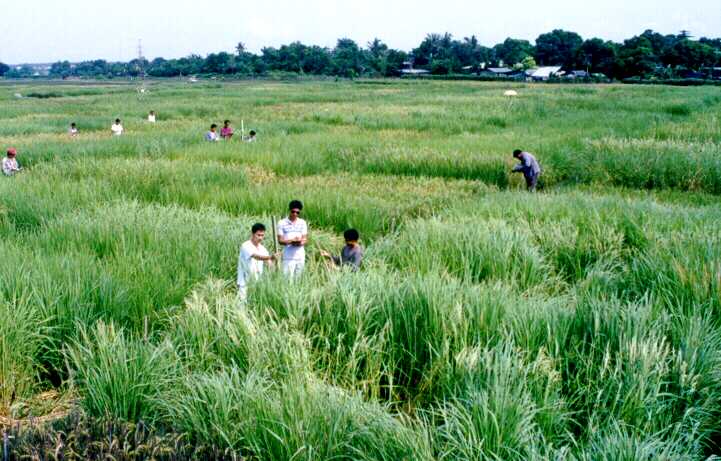
low temperature (as indicated earlier) presents few problems, as such. What is more of a challenge is the multiplication and regeneration of rice germplasm in a single environment at Los Baños in the Philippines, especially for less adapted lines like the japonica rices that are more temperate adapted. We began a collaboration with Professor Richard Ellis (right) at the University of Reading and a leading expert in the whole area of seed conservation. To assist with this research looking at the seed production environment and its effect on seed quality and viability in storage, I hired a germplasm expert from ICRISAT in Hyderabad, Dr N Kameswara Rao (right below), who had completed his PhD with Richard and Professor Eric Roberts a few years earlier. We had already decided to multiply or regenerate germplasm only during the Los Baños dry season (from December to May) when the nights are cooler in the first part of this growing season, and the days are generally bright and sunny. We had anecdotal evidence that seed quality was higher from rice grown at this time of the year than in the so-called wet season, from about July onwards (and the main rice growing season in the Philippines) which is characterized by overcast and wet days, often with a much higher pest and disease pressure. In parallel approaches at Reading (in more or less controlled environments) and in Los Baños, we looked at the response of different rice lines to the growing conditions, and their viability after seed ageing treatments, and confirmed the regeneration approach we had taken on pragmatic grounds. Incidentally, we also moved all field characterization to the wet season, which gave us the advantage of having the field technicians concentrating on only one major operation in each growing season, rather than being split between two or more per season and at different sites on the experiment station.
Germplasm collecting
In 1992 the Convention on Biological Diversity was agreed at the Rio Earth Summit, and is now the legal basis for the biodiversity activities of 193 parties (192 countries plus the European Union) that have ratified the convention, or formally agreed to accept its provisions. For many years, uncertainty over access to and use of biodiversity placed a major block on germplasm collecting activities – but not for rice. Through the SDC-funded project referred to above, we successfully sponsored collecting missions in most of the 23 countries, mainly for traditional varieties in the Asian countries and Madagascar, and for wild rices in these, several eastern and southern African countries, and Costa Rica. We based one staff member, Dr Seepana Appa Rao in the Lao People’s Democratic Republic (Lao PDR). Over more than four years, the various teams collected more than 25,000 samples of rice, and with other donations to the IRG, the collection now stands at more than 110,000 accessions.

Appa Rao and his Lao counterparts visited almost every part of that country, and collected more than 13,000 samples, and in the process learned a great deal about rice variety names and management approaches used by Lao farmers. Duplicates of this valuable germplasm were sent to IRRI, and Lao breeders immediately began to study these varieties with a view to using them to increase the productivity of rice varieties grown by Lao farmers. I believe this is one of the few good examples, within a national program, of an organic link between conservation and use. Regrettably in many national programs conservation and use efforts are often quite separated, so germplasm remains locked up in genebanks that some commentators refer to as ‘germplasm mausoleums’, fortunately not the case with IRRI nor the other CGIAR Consortium centers.

An active research program
In addition to the molecular marker research described earlier, our research focus was on the AA genome wild and cultivated rices, germination standards for wild rices, and on farm conservation.

Bao-Rong Lu

In 1991, there was a British researcher in the IRGC, Dr Duncan Vaughan, who undertook collecting trips for wild rices, and made some preliminary taxonomic studies. When Duncan moved to the National Institute of Agrobiological Sciences in Tsukuba, Japan in 1993, I hired Dr Bao-Rong Lu, a Chinese national who had completed his PhD on wheat cytogenetics with Professor Roland von Bothmer at the Swedish University of Agricultural Sciences. Bao-Rong stayed at IRRI until 2000, when he moved to Shanghai to become Professor in Biology/Genetics, and Chairman of the Department of Ecology and Evolutionary Biology at Fudan University. He developed an active group working on the wild rices, and also made several collecting trips to Indonesia, Cambodia, and Australia, among other countries, to collect wild rice species.

Jean-Louis Pham

In 1995 the genetic resources literature was full of papers advocating the virtues and necessity of both in situ conservation of wild species, and the on farm conservation or management of farmers’ varieties as a parallel to conservation, ex situ, in a genebank. While I was neither for or against on farm conservation, I was very concerned that this approach was being ‘pushed’ – at the expense of ex situ conservation, or so it seemed – without really having any empirical evidence to support the various ideas being put around. So I decided to do something about this, and hired a population geneticist and a social anthropologist to study the dynamics of farmer-managed systems in the Philippines, Vietnam, and eastern India. Geneticist Dr Jean-Louis Pham joined IRRI on secondment from IRD (Institut de recherche pour le développement, formerly ORSTOM) in Montpellier, France until 2000 when he returned to IRD.

Mauricio Bellon

There were two social anthropologists. Dr Mauricio Bellon, from Mexico, joined in 1995 and stayed for a couple of years before moving to CIMMYT in Mexico; he’s currently with Bioversity International in Rome. He was replaced by Dr Steve Morin (below right) from Nebraska in the USA. When the SDC-funded rice biodiversity project ended in 2000, Steve stayed on for a couple of years in IRRI’s Social Sciences Department, but is now with USAID in the Middle East.

Two important findings from this on farm research concern development of different cropping systems options to permit farmers to continue to grow their own ‘traditional’ varieties while increasing productivity; and responses of farmers to loss of diversity after natural disasters (such as typhoons in the case of the Philippines), and how different approaches are applicable for long-term conservation and adaptation.

Click here to see a full list of publications.

Ruaraidh Sackville Hamilton

The new century
After I left GRC in May 2001 to become IRRI’s Director for Program Planning and Communications, my successor as head of GRC, Dr Ruaraidh Sackville Hamilton, joined IRRI in August 2002. An evolutionary biologist, Ruaraidh is a graduate of Cambridge University, and came to IRRI from the Institute for Grassland and Environmental Research (IGER), now part of the Institute of Biological, Environmental and Rural Sciences at Aberystwyth University.

Fiona Hay joined IRRI in 2009 from the Millennium Seed Bank at Kew, and Ken McNally, who originally joined IRRI in the 1990s as a post-doctoral fellow working on perennial rice, has taken GRC’s molecular research from strength to strength for over a decade, and this has been accelerated by the completion of the rice genome and identification of whole suites of molecular markers.

I am gratified to know that many of the changes I made in GRC are still in place today, even though Ruaraidh has made further improvements, such as the bar coding of all germplasm accessions, and a re-jigging of some of the laboratories to accommodate greater priority on seed physiology and molecular research. Ruaraidh has further championed links with the International Treaty on Plant Genetic Resources for Food and Agriculture, and securing long-term financial support.

A major step forward came about three to four years ago when the Global Crop Diversity Trust began to support the International Rice Genebank. When the Global Seed Vault at Svalbard was opened in 2008, the first samples placed inside were from the International Rice Genebank. In this photo, at the opening of the Svalbard Global Seed Vault in February 2008, IRRI DG Bob Zeigler is second from the left, and GCDT Executive Director Cary Fowler second from the right.


[1] Crisostomo, S., Hay, F.R., Reaño, R. and Borromeo, T. (2011) Are the standard conditions for genebank drying optimal for rice seed quality? Seed Science and Technology 39, 666-672.

[2] McCouch, S.R., McNally, K.L., Wang, W. and Sackville Hamilton, R. (2012) Genomics of gene banks: a case study in rice. American Journal of Botany 99, 407-423.

[3] McNally, K.L., Bruskiewich, R., Mackill, D., Buell, C.R., Leach, J.E. and Leung, H. (2006) Sequencing multiple and diverse rice varieties. Connecting whole-genome variation with phenotypes. Plant Physiology 141, 26–31.

[4] Virk, P.S., Ford-Lloyd, B.V., Jackson, M.T., Pooni, H.S., Clemeno, T.P. and Newbury, H.J. (1996) Predicting quantitative variation within rice using molecular markers. Heredity 76, 296-304.

Proud to be a botanist

Amaryllis sp., from Curtis’ Botanical Magazine

Botanist. That’s right. Not plant scientist or plant biologist. Botanist!

Call me old-fashioned, but I prefer the term ‘botany’ to ‘plant sciences’ or ‘plant biology’ that are now preferentially used to give the study of plants a more ‘modern’ image.

And I’m proud that I received my university education in botany: BSc at Southampton (combined with geography, 1970), and MSc (in genetic resources, 1971) and PhD (botany – biosystematics of potatoes, 1975) at Birmingham. By the time I returned to teach at the University of Birmingham in 1981, the Department of Botany had already become the Department of Plant Biology, a decision made in the late 1970s in the hope of attracting more undergraduates to study plant courses offered as part of the biological sciences degree.

Botany has had a bit of a bad press, I guess. And there has been a significant decline in teaching plant sciences at university level in the UK.

For one thing there’s an image issue. It’s often seen as old-fashioned, the purview of enthusiastic Victorian amateurs like country parsons collecting and studying wild flowers, and perhaps not relevant for today’s society. Nothing could be further from the truth. Given that food security is dependent upon the productivity of agricultural systems – all life depends on plants in one way or another – the study of plants is essential for humanity’s survival.

In an interesting article [1], Grierson et al. (2011) ask what are the 100 most important questions for plant science research. They also propose that “We need to radically change our culture so that ‘plant scientist’ (or, if we can rehabilitate the term, ‘botanist’) can join ‘doctor’, ‘vet’ and ‘lawyer’ in the list of top professions to which our most capable young people aspire.”

I’ve had a successful career over 40 years based on botany, one way or the other. So why did I become a botanist in the first place? In high school, I didn’t study biology until I began my GCE Advanced Level courses in 1965. Biology was not taught at my school in earlier years, and only accepted a handful of students for the advanced course. I’d always had an interest in natural history, particularly bird watching, and had harboured ideas at one time of becoming a professional ornithologist. But over the two years of the biology ‘A level’, I came to realize there was likely to be a more secure future in plants, and even the possibility of getting into agriculture in some way, better still if that would take me overseas.

Southampton University was not my first choice, but once I’d attended an interview there, I knew that was where I wanted to study. As a botany-geography undergraduate, I knew that there would be a focus on plant ecology, even though we took the full honours course for two years, and selected modules in the final year. My tutor was Dr Joyce Lambert, Reader in Ecology, who had studied the origin of the Norfolk Broads in the east of England, and shown that they were actually man-made, the result of medieval peat diggings that became flooded. Just before I went to Southampton (and for the rest of her career at Southampton – she retired in 1979) she began working on multivariate methods to study plant communities (with former head of department Bill Williams, who had left Southampton in 1966 to join CSIRO in Australia). I even completed my dissertation on an assessment of vegetation sampling techniques based on quadrat size related to the height of the vegetation (not really a success). I made this study in the Back Forest area of the Roaches in the Staffordshire Moorlands. I measured quadrats along a 200 m transect from open heath to larch-oak woodland dropping steeply to the Black Brook and River Dane. I used a tape recorder with a thumb switch microphone to record the presence and absence of species in each quadrat, using a checklist of species.

Joe Smartt

As a final year student, however, my interests had already begun to turn from ecology. I took courses on plant speciation and plant breeding with geneticist Dr Joe Smartt, and a special course in flowering plant taxonomy offered by Professor Vernon Heywood of Reading University. Southampton’s own taxonomist, Leslie Watson had emigrated to Australia in 1969, and it was felt that a botany degree without any taxonomy component was not complete. Heywood travelled down from Reading once a week for 10 weeks, giving two lectures each time. This was not one of my specific elective courses for examination, but I decided to sit in and listen – and I was hooked. Linking what I heard in Heywood’s lectures with the plant speciation and plant breeding courses, and ecology was the foundation for my career-long study of plant variation, and entry into the world of plant genetic resources.

But there was one research endeavour that really fired my imagine – and it’s as good today as when it was originally published in the 1930s, 40s and 50s. In a ground-breaking series of experiments, geneticist/ecologist Jens Clausen, taxonomist David Keck, and plant physiologist William Hiesey, from the Carnegie Institute of Washington located on the campus of Stanford University, studied the adaptation of plants to their environments, the variation in plant populations, and the genetical and physiological basis of the variation they observed.

Establishing a series of experimental stations across California, they undertook transplant experiments in a range of species such as Achillea and Potentilla, to understand the nature of variation and species, and published in a series of monographs Experimental Studies on the Nature of Species.

Similar work had been carried out in Scandinavia by Turesson and in Scotland by Gregor, but the Californian group was, in my estimation, pre-eminent. Thus was the concept of the ecotype established. And the methods of experimental taxonomy and genecology which they developed are used to study the nature of variation in the genetic resources of crop plants conserved in genebanks around the world – and certainly the approach I took with my own work on lentils and grasspea (Lathryus sativus), potatoes, and rice.

Diversity in rice seeds

Another influence was Missouri Botanical Garden geneticist Edgar Anderson (left). If you’ve not read his highly entertaining and readable Plants, Man & Life, then grab yourself a copy.

But the most influential concept he developed was introgressive hybridization, the merging of plant species populations through crossing and backcrossing – a phenomenon we believe to have played a major role in the evolution of many crop plants.

Joe Smartt encouraged me to follow a career in plant genetic resources. In fact he was the one who suggested I should apply for a place on the Birmingham MSc course on Conservation and Utilization of Plant Genetic Resources, founded by Jack Hawkes in 1969. Joe had studied the cytogenetics of groundnut (= peanut, Arachis spp.) under Walter C Gregory at North Carolina State University, and joined the Department of Botany at Southampton in 1967. He had also spent time in Northern Rhodesia (= Zambia) working on groundnuts in the 1950s.

And the rest is history, as they say, and I spent the rest of my career studying genetic resources and agriculture in many different countries (Peru, Costa Rica, Canary Islands, Philippines and other countries in Asia).

Some of my own interests have included the species relationships of triploid potatoes, and we have looked at the compatibility relationships between wild and cultivated forms.

These photos show the growth of pollen tubes in compatible (left) and incompatible (right) crosses between wild potato species.

Pollen tubes growing in compatible and incompatible crosses between potato species.

In potatoes and rice we made tens of thousands of crosses to understand the biological relationships between different species.

It’s important to make many crosses when the chances of success are quite low. And we have looked at the morphological and biochemical variation in different plant populations – the ability to study species relationships at the molecular level is throwing a whole new perspective on plant speciation; applications of GIS permit easier mapping of diversity.

One of the concepts that has guided much of my work with genetic resources is the genepool concept developed by Illinois geneticists Harlan and de Wet in 1971 [2]. This allows one to assess the relationship between crops and their wild relatives based on crossability, and the accessibility of different genetic resources that can be used in crop improvement.

I’ve been very fortunate in my career choices – all because of my decision to become a botanist. Who says that botany is an old-fashioned science? Just look through the 100 science challenges I referred to earlier on and you will see just how and why it’s ever more important that we invest in the study of plants.


[1] C. S. Grierson, S. R. Barnes, M. W. Chase, M. Clarke, D. Grierson, K. J. Edwards, G. J. Jellis, J. D. Jones, S. Knapp, G. Oldroyd, G. Poppy, P. Temple, R. Williams, and R. Bastow, 2011. One hundred important questions facing plant science research. New Phytologist 192 (1): 6-12.

[2] J.R. Harlan and J.M.J. de Wet, 1971. Toward a rational classification of cultivated plants. Taxon 20: 509-517.

All about Eves . . .

Ms. Genoveva ‘Eves’ Loresto passed away in Cebu on 5 April after a long battle with cancer.

In 2000, Eves retired after 37 years of outstanding, long, and valuable service to the International Rice Research Institute (IRRI). Her many contributions to the well-being of the Institute and the awards she received are too numerous to recount. She was ever-willing to share her experience with colleagues. She will be missed by her many friends and former colleagues.

Eves joined IRRI in January 1963 (less than three years after the institute had been founded) as a Student Assistant in Plant Breeding, and rose through the ranks over the years to the position of Senior Associate Scientist in 1994 in the TT Chang Genetic Resources Center (GRC). In May 1997, she was appointed as Project Scientist and Assistant Coordinator of the SDC-funded project Safeguarding and Preservation of the Biodiversity of the Rice Genepool. Throughout her career at IRRI, she trained more than 400 national program staff in different aspects of germplasm conservation and use.

For many years, Eves worked as assistant to the late Dr TT Chang in upland rice breeding, conducting studies on drought tolerance and developing methodologies involving patterns of root development to screen germplasm for drought. She was a member of the team that bred the upland rice variety Makiling that was released in 1990.

When I joined IRRI in July 1991 I had been set a major goal by IRRI management to bring about significant changes to the operations of the International Rice Genebank (International Rice Germplasm Center as it was called then) and, with the creation of the Genetic Resources Center, the whole field of genetic resources conservation received a much higher profile in the institute and internationally. After a period of observation and analysis, it became clear to me that the changes needed could be made if we had a flatter management structure in GRC, with individual members of staff given responsibility and accountability for the different genebank operations, such as germplasm multiplication, characterization, and conservation per se, shown in this short video.

This is what we did, but it left me with the issue of how best to employ Eves’ considerable experience and expertise since other staff took on the genebank operations.

I asked Eves to take a broader strategic responsibility, and act as a liaison with many of our national partners. Once we received financial support through the SDC-funded biodiversity project, Eves moved into a project management role, helping to monitor progress as well taking a major role in training. In particular, she was responsible for conducting training courses on rice germplasm collection and conservation in Bangladesh, Bhutan, Cambodia, Indonesia, Lao PDR, Madagascar, Malaysia, Mozambique, Myanmar, Nepal, Philippines, and Vietnam. Her involvement in these activities was invaluable and much appreciated by those who participated.

Eves training Bhutanese staff in rice collecting

We certainly felt a gap in the GRC team when Eves retired in 2000. It would have been very difficult for me to make the needed changes to GRC and successfully wrap-up the biodiversity project without Eves’ support. And for that I shall forever remain grateful to her.


Investing in diversity . . . the IRRI genebank

During the mid-90s, the International Rice Research Institute (IRRI) coordinated a major program (funded by the Swiss Agency for Development and Cooperation or SDC) to collect and conserve rice varieties in more than 20 countries by visiting areas that had not been extensively collected in previous decades. The aim was to ensure the long-term survival of varieties that had been nurtured by farmers and their husbands for generations. Over a five year period from 1996, more than 25,000 rice samples were collected, and stored in the International Rice Genebank at IRRI, increasing the collection there by approximately 25%. About half of the samples (some 13,000) came from the Lao People’s Democratic Republic (Lao PDR). An IRRI staff member, Dr Seepana Appa Rao (formerly with the International Crops Research Institute for the Semi-Arid Tropics – ICRISAT) spent four years traveling throughout the country, alongside Lao scientists, to make the first comprehensive collections of rice germplasm.

Appa Rao and Lao scientists collecting upland rice in the Lao PDR

Duplicates samples are now conserved at IRRI, but very quickly after collection, Lao breeders started to screen the germplasm for useful traits, and use different materials to increase productivity.

Rice farmers in the Lao PDR still grow thousands of different rice varieties, from the lowland paddy fields with their patchwork of varieties to the sloping fields of the uplands where one can see many different varieties grown in complex mixtures, shown in the photos below. The complexity of varieties is also reflected in the names given by farmers [1].

A patchwork of rice varieties in a farmer’s field in the Lao PDR.

A Lao rice farmer showing some of the rice varieties she grows

And germplasm collecting was repeated in Bangladesh, Bhutan, Cambodia, Indonesia, Malaysia, Myanmar, Nepal, Philippines, Thailand and Vietnam in Asia, and countries in East and southern Africa including Uganda and Madagascar, as well as Costa Rica in Central America (for wild rices). We invested a lot of efforts to train local scientists in germplasm collecting methods. Long-time IRRI employee (now retired) and genetic resources specialist, Eves Loresto (right), visited Bhutan on several occasions.


IRRI from the air

When I first joined IRRI in July 1991—to head the Genetic Resources Center—I discovered that many aspects of the genebank procedures and operations were outdated or inefficient, and we set about a program of renovation and upgrading (that has been a continuous process ever since, as new technologies supersede those used before). The genebank holds more than 113,000 samples, mainly of cultivated rice varieties, with perhaps as many as 70% or so unique. Duplicate safety samples are stored at the USDA National Center for Genetic Resources Preservation in Fort Collins, Colorado, and at the Svalbard Global Seed Vault (which is owned by Norway and managed in partnership between the Norwegian Ministry of Agriculture and Food, the regional genebank NordGen, and the Crop Trust). In fact, the first seeds into the Svalbard vault came from IRRI when it opened in February 2008!

The genebank now has three storage vaults (one was added in the last couple of years) for medium-term (Active) and long-term (Base) conservation. Rice varieties are grown on the IRRI farm, and carefully dried before storage. Seed viability and health is always checked, and resident seed physiologist, Fiona Hay (right, formerly at the Millennium Seed Bank at Kew) is investigating factors which affect long-term storage of rice seeds.

They say a picture is worth a thousand words – so rather than describe how this genebank runs, do take the time to watch a 14 minute video which shows all the various operations for both cultivated and wild rices.

In 1994 there was a major review of CGIAR center genebanks. In preparation for that review we wrote a genebank operations manual, which still describes how and why the genebank works. I felt that this would be a useful legacy for whoever came after my tenure as head of the genebank. Operations can always evolve and change – but here is a basis for how rice is conserved in the most important genebank for this crop.


[1] Appa Rao, S, C Bounphanousay, JM Schiller & MT Jackson, 2002. Naming of traditional rice varieties by farmers in the Lao PDR. Genetic Resources and Crop Evolution 49, 83‐88.

Norman Borlaug – tireless advocate of research for development

In the 1960s the world faced a huge challenge: how to feed an ever-increasing population, especially in the poorer, developing countries with large agriculture-based societies.

One man, Dr Norman Borlaug (1914-2009), had the vision – and the energy – to do something about this, and spent his entire career, right up until the day he died at the age of 94, applying the best of plant science, and being a tireless advocate for agricultural research for development.

Widely hailed as one of the greatest Americans of the 20th century, Borlaug was awarded the Nobel Peace Prize in 1970 for his work in breeding and releasing high-yielding varieties of wheat, in what became known as the Green Revolution. In 2007 he was awarded the US Congressional Gold Medal.

For many years Borlaug was head of the Wheat Program at the International Maize and Wheat Improvement Center (CIMMYT) near Mexico City (a sister center to the International Rice Research Institute, IRRI, where I worked for 19 years). Exploiting wheat genetic resources, and producing short-strawed wheat varieties that yielded much higher than farmers’ landrace varieties, Borlaug has been credited with saving over a billion lives.

Even after retiring from CIMMYT he continued to travel the world, pushing for the resources to make a difference to people’s lives. And in the last years of his life he pushed for a greater effort to bring a Green Revolution to Africa that had largely been bypassed in earlier decades.

Borlaug often said that he’d been awarded the Nobel Peace Prize because there was no such prize for agriculture. So he set about to rectify that and helped to set up the World Food Prize in 1986, which has been recognizing laureates each year since 1987 (five scientists associated with the International Rice Research Institute – IRRI – have won the prize including two former directors general, two plant breeders, and a member of the institute’s Board of Trustees).

In April 1999, I met Norman Borlaug for the first and only time, during his visit to IRRI. As one of IRRI’s department heads I was invited to an ‘audience’ with Dr Borlaug. I remember it was a Friday morning, and a group of us met with him – maybe 10 or so staff – ostensibly for a round-table discussion. However, the meeting turned into what I thought was a rambling and confused monologue by Borlaug, and we all came away rather disappointed and disillusioned. Quite frankly, I had the distinct impression that Borlaug (who was about 80 at the time) had lost his marbles. Consequently, I was not looking forward to a one-on-one session the following day to show him around the rice genebank (something I was expected to do rather often whenever VIPs visited the institute), especially since there would be no support staff on duty to show how we ran things.

With Norman Borlaug inside the cold room of the International Rice Genebank at IRRI.

How wrong first impressions can be! Our meeting had been scheduled for just 30 minutes. After 3 hours we decided to call a halt and let him move on to other colleagues who were waiting (im)patiently to meet him.

Discussing genetic conservation and related issues with Dr Borlaug was a delight. He was no longer ‘the great man’ expected to ‘perform’ in front of an audience, so-to-speak. Instead, we met as fellow scientists with a passion for agricultural research, for the conservation of genetic resources, and how these could be used for the benefit of humanity.

Dr Richard L Sawyer, Director General of CIP, 1971-1991

It also helped that we knew several people in common, such as Jack Hawkes and John Niederhauser (who had been a Rockefeller Foundation colleague of Borlaug’s in Mexico), and of course Richard Sawyer (right), the first Director General of the International Potato Center (CIP) in Peru, where I had worked from 1973-1981.

The memory of that meeting has stayed with me. Borlaug’s energy and vision has inspired many scientists to embrace the challenge of agricultural research for development. His legacy endures through the World Food Prize Foundation and several other awards that bear his name.

In an interesting twist to the Borlaug story, American illusionists and comedians, Penn and Teller, have taken a sceptical look – through their Showtime network television show Bullshit! – at the role of pressure groups who are against the use of genetic modification (GM) to produce more food. In the video below (which contains some STRONG language) both pro- and anti-GM views are presented, and Norman Borlaug is featured (starting at about 1:50). It’s well worth spending 10 minutes to listen to the different perspectives. Borlaug’s arguments are compelling.

They’re changing the guard at Buckingham Palace . . .

On a bright, sunny day last November (my birthday, actually) I was outside cleaning the car, when the postman passed by. He handed me several envelopes and my immediate reaction was that this was another load of the usual junk mail. So you can imagine my surprise when I came across one that seemed rather official looking. And I was even more surprised when I read what it had to say – that I had been nominated to become an Officer of the Most Excellent Order of the British Empire, or OBE, for services to international food science. Well, I was gob-smacked, quite emotional really. I rushed inside to tell Steph – who was equally stunned, and we set to ponder how on earth this had come about. I did some Google detective work, and was able to find out a little more about the nomination process, and how successful nominees are chosen. But beyond that, I had no idea. Subsequently (in early January 2012), there was a press release from the British Embassy in the Philippines. There is some more information about the British honours system on the BBC website.

And then began six weeks of purgatory – nominees are sworn to secrecy until the honours list is published officially in The London Gazette, scheduled for 31 December! Anyway, on the 31st I came down for breakfast, and went to the website to see my name in print. And I couldn’t find it! I began to wonder if I had ticked the right box when I sent the form back. But then I found it (page N24) – under the Diplomatic Service and Overseas list. And looking down the list, it was then that I discovered that my good friend and former colleague at IRRI, John Sheehy, had also been made an OBE. A great day for IRRI!


Not long after the New Year, I received a package of information from the Central Chancery of the Orders of Knighthood, with the date of the investiture: 29 February. I applied for tickets – for Steph, daughter Philippa, and my closest colleague in the DPPC at IRRI, Corinta Guerta.

Not long afterwards, the tickets arrived in the mail.

Corinta arrived to the UK on 26 February, and after her meeting at DfID in London on the Monday morning, came up to Bromsgrove to spend a couple of nights with us, and to join us for the investiture. We agreed to meet Philippa in London.

One other issue for me was what to wear: morning dress (top hat and tails) or lounge suit (and even which tie to choose).* I finally settled on my lounge suit and pink tie.


Then came the day of the investiture. It was an early start on the 29th: up at 5 am, and off to Solihull to catch the 7:41 am Chiltern Railways service from Solihull (about 25 minutes from Bromsgrove by car) to London Marylebone. The train eventually was very crowded, with some passengers standing all the way from Banbury to London; but we had good seats. We met up with Philippa at Marylebone, had a quick cup of coffee, and then took a taxi to the Palace.

Security was extremely tight, and we had to show photo IDs and our tickets for access. It’s quite some feeling walking through the gates of the Palace (made in Bromsgrove), past the guards, and through into the inner quadrangle. At the main entrance, under a glass canopy, our tickets were again checked, and we headed inside. What a spectacle: guardsmen in their metal breastplates and equerries in morning suits; everyone was very polite and friendly. After a quick comfort stop, Steph, Philippa, and Corinta headed for the Ballroom, and I headed off in another direction to meet the other honours recipients. The recipients of knighthoods and CBEs were together in one room, the OBEs and MBEs in another. Mineral water and juices were provided – in bottles with The Queen’s crest, and little goblets with EIIR engraved (not to be left on a mantelpiece next to a priceless ceramic vase). We waited in a long gallery full of the most incredible pieces of art – goodness knows what their value was.

One of the Officers on Duty gave a briefing about the ceremony, that it would be held by HRH The Prince of Wales (not HM The Queen, much to my initial disappointment). It began precisely at 11 am, and the first batch of recipients was called away. I was in the second batch. Click on the image below to read the investiture program.

I guess I must have been called to receive my OBE at around 11:15; and afterwards the recipients returned to the back of the ballroom and took their seats to watch the rest of the proceedings. Immediately after the presentation, the insignia was removed and placed in a special case.

I was intrigued to see that the insignia was made by a company based in Bromsgrove, the Worcestershire Medal Service Ltd.

The medals are actually manufactured at a site in Birmingham’s Jewellery Quarter, but the head office is a small shop on one of my daily walk routes!

Head office of Worcestershire Medal Service Ltd. in Bromsgrove.

Anyway, to get back to the ceremony. Each batch of recipients crossed the ballroom at the rear, to enter a corridor on the other side. And it was from there that each recipient was called forward, to wait beside one of the Officers on Duty, and then move forward again as the surname was announced (and the reason for the honour). Turning towards HRH, men gave a small bow from the neck and women a curtsy. The insignia was pinned on, and a few words exchanged.

HRH asked if I was still working in the Philippines – he had been well briefed, and then we spoke briefly about different varieties of rice. Then, after some words of thanks from HRH and a warm handshake that was it – my moment of glory all over, and I exited through a door on the opposite side from where I had entered. The ballroom itself was quite dimly lit, from several huge chandeliers. On the video footage I have seen, and on the close circuit TV that was broadcast to waiting recipients, the ballroom look very bright indeed.

Considering the number of honours recipients and that HRH spoke to each person individually, the investiture was over just after 12 noon. Then we were able to meet up with our guests. Steph, Philippa, and Corinta had found seats at the back of the ballroom. We then made our way outside for picture taking.

Here are just a few, but click on the image immediately below and a web album of the best photographs will open.

Philippa, me, and Steph

Corinta, me, and Steph

Corinta and me

Steph and me outside Buckingham Palace

Unfortunately we were not able to stay long in London, since Corinta was due to fly back to the Philippines from Birmingham Airport (BHX) at 8:30 pm. So, once we had taken all the photographs we wanted, I hailed a taxi (much easier outside the Palace than I had envisaged) and we set off for Marylebone and the train. We had a quick bite to eat at the station, and our train to Solihull departed at 2:37 pm, arriving in Solihull on time just after 4 pm. Corinta had plenty of time to get changed, complete some last minute packing, and even enjoy a cup of tea and some home-made Victoria sponge before heading off to BHX in an Emirates Airlines limo.


Originally we thought about driving to London for the investiture. Hindsight is a wonderful thing. I would have been stupid to have attempted this trip by car, even though we could have parked right inside Buckingham Palace. On the afternoon of 29 February there were serious traffic incidents on one of the main motorways (M40) into London that we would have used, and there were holdups for several hours. So instead of an anticipated stressed journey by car, we let the train take the strain.

As Steph and I reflected on the day over dinner and a cup of tea that same evening, it was quite surreal to think we had been inside Buckingham Palace just a few hours before. But what a privilege it was, and what a fantastic honour to have received in recognition of the work I did in agricultural research, especially the conservation and use of crop genetic resources.

My former staff in the International Rice Genebank at IRRI sent me this photo – a very thoughtful touch.


On 22 May I received my Warrant of Appointment as an Officer of the Most Excellent Order of the British Empire. This is printed on parchment, has an embossed Seal of the Order in the top left corner, and measures 11.5 x 16.5 inches approx.


* Over the past year since I first posted this story, lots of other recipients of awards have also worried about what to wear to an investiture, and their web searches have often led to my blog. I hope my advice has been useful. I know in at least one case that it has been, since there are a couple of comments to that effect.

50 years, and still going strong . . .

In 2009-2010, the International Rice Research Institute (IRRI), located in Los Baños, the Philippines (my home and workplace for almost 19 years) celebrated its 50th Jubilee. As Director for Program Planning and Communications, I was asked to plan and develop all the IRRI golden jubilee activities and events.

But first, a little background. On 9 December 1959, the Philippines government and the Ford and Rockefeller Foundations signed a Memorandum of Understanding in New York that established IRRI as an organization to do basic research on the rice plant and applied research on all phases of rice production, management, distribution and utilization.

A few months later, on 14 April 1960, the first Board of Trustees met in Manila and approved the constitution and bye-laws that gave the institute its legal status. IRRI was born, and has been making a significant contribution ever since to:
  • reducing poverty;
  • increasing food security;
  • improving health and nutrition; and
  • sustaining the agricultural environment.

The Philippine Postal Corporation recognized IRRI’s golden jubilee by issuing four commemorative stamps on 14 April 2010, for which I coordinated the design from the IRRI side with Gene Hettel and designer Boyet Lazaro of the Communication and Publications Services (CPS). Boyet also designed the 50th logo above. I produced this video using old photographs of the construction of the IRRI research center and staff housing in the early 60s, as well as some footage of Boyet designing the stamps and selecting the final four.

To develop the themes and format of the golden jubilee celebrations, IRRI signed a contract with entertainment company Filmex who organized two major events in December 2009, around the 50th anniversary of the 1959 Memorandum of Understanding. On Thursday 10 December 2009, IRRI hosted the President of the Republic of the Philippines (then H.E. Gloria Macapagal Arroyo), members of the diplomatic corps and Manila business community, and IRRI staff at a reception held at the Ramon Magsaysay Center in Manila. The event was catered by Italian restaurant chain Cibo di M, with excellent Chilean wines supplied by up-and-coming wine merchants Wine Depot.

Checking everything’s in place, IRRI reception, 10 December 2009

Entrance to the IRRI reception, Ramon Magsaysay Center, Manila, 10 December 2009

Meeting H.E. Gloria Macapagal Arroyo, President of the Philippines and the IRRI reception, 10 December 2009

Following the formalities, we were treated to an evening of entertainment from Isay Alvarez (who was a member of the original London cast of Miss Saigon), and retro-60s and Beatles cover band, Area One.

With the Filmex crew after the IRRI reception, 10 December 2009

Then on Sunday 13 December, we held an all-day party at IRRI for all staff and families members. The day kicked-off with a street-dancing competition between teams from the communities (known as barangays) surrounding IRRI where many of the local staff live. This culminated in the grand final on the IRRI campus, shown in this video.

As the street dancing was ending it started to rain, and this continued for about 2-3 hours. Fortunately, it had eased off by about 3 pm . Ironic really, because the day before had been gloriously hot, with hardly a cloud in a clear blue sky.

In the afternoon, there was an open-air market, with stalls selling all sorts of novelties and handicrafts, as well as lots of fast-food vendors. There were street performers, such as magicians and stilt-men keeping everyone amused, until the main event of the day, a 4-hour concert beginning in the daylight at 5 pm. Between the Manila event on the previous Thursday night, the Filmex crew had come down to IRRI and constructed this stage on the IRRI sports field – a stage any big rock band would have been proud to perform on.

The stage for The BIG Show, 13 December 2009

More than 3,000 people attended the concert. The concert included local and national performers, several stars of Philippine TV, including the hots for the event, comedians Wally and Jose.

The BIG Show – Masters of Ceremonies Jose and Wally

Jose and Wally entertaining the audience at the BIG Show, 13 December 2009

Tagalog was the language for most of the event, which excluded the foreign staff of IRRI to some extent, but the concert was IRRI’s way of thanking  its Filipino staff, and celebrating IRRI’s 50 years in the Philippines.

Among the acts performing were students from the Philippine High School for the Arts, located near IRRI in Los Baños, folk rock group Makiling, girl band The Mocha Girls (whose participation caused some rumpus among several straight-laced IRRI international staff), and national singing idols Karylle and Christian Bautista.

Just hear all the girls scream (at 1:30) as Christian comes out on stage.

The concert ended with a glorious firework display. What a day!

Afterwards I joined the Filmex crew (particularly Bing, Mel, Em, Fides and Ginny) on stage to thank them for all their efforts. By 8 am the following morning, the stage had been completely removed – you wouldn’t think there’d been a concert there just a few hours before.

On 14 April 2010, we held three events. For about 18 months prior to this date I had been negotiating with the National Historical Institute of the Philippines to have an historical marker erected at IRRI. In the end, there were two; this video shows the unveiling ceremony. The markers (in English and Tagalog) indicate that IRRI is a site of national historical importance for the Philippines.

The historical marker in English, with IRRI DG Bob Zeigler

The commemorative stamps were then released in a simple ceremony shown in the next video. At the beginning of the ceremony we showed the video It was 50 years ago today . . . 

These are the two First Day Covers, each signed by the IRRI design team – the only ones in the world with these signatures!

First day cover, IRRI commemorative stamps, v. 1, 14 April 2010

First day cover, IRRI commemorative stamps, v. 2, 14 April 2010

In the evening, IRRI held a golden jubilee dinner under the stars, around the decorative pond in front of the FF Hill, Harrar, and Chandler administration buildings.

And the dinner also became the farewell party (despedida) for Steph and me.

At the podium making my farewell speech

The dinner ended with yet another fireworks display, this time over the rice paddies. It was a wonderful end to a wonderful (and at times, emotional) evening.

‘Thank you, Margaret Thatcher’ – my Pioneer Interview with Gene Hettel

The head of IRRI’s Communication and Publications Services (CPS), Gene Hettel, is compiling a set of Pioneer Interviews with IRRI staff, past and present. These have been published in IRRI’s in house magazine for the past decade, Rice Today. In addition he usually also makes a video.

Recording my Pioneer Interview, with Gene Hettel and Joe Ibabao.

In mid-February 2010, just over two months before I retired from the institute, Gene and I found a time for my Pioneer Interview. If you want to know about many of the things I did at IRRI, and elsewhere – and some of my opinions about international agricultural research and how it’s organized, just watch the videos.

DPPC . . . beginning and end

One morning in mid-January 2001, I received a phone call from then IRRI Director General, Ron Cantrell, asking me to drop by his office later that day. I had no idea what it was all about, so I was rather surprised to enter his office and find that the two Deputy Directors General, Ren Wang (Research) and Willy Padolina (Operations and Support Services) were also there.

Well, to cut a long story short, Ron asked me to give up my work as head of the institute’s Genetic Resources Center (GRC) and take up a new position as Director for Program Planning and Communications (DPPC – originally Planning and Coordination). The rationale behind this was the somewhat dire funding situation of the institute then, and the almost complete lack of comprehensive information about the sources, amounts, and use of the research grants that IRRI had received. What Ron said to me was this: Mike, if a donor offered IRRI USD5 million tomorrow I wouldn’t want to refuse it, but there again I have no idea how it fits into the overall funding picture and commitments of the institute. We need someone to set up a new office whose role will be to bring some order and cohesion to this important set of activities. It appears that some visiting consultants had apparently whispered in Ron’s ear that I might be the sort of person to take on this role.

Well, I had to go away and think about this, and talk it over with Steph. Did I really want to move away from my work in rice genetic resources conservation? Well, for one reason or another, I turned him down – there were several of the terms of reference that I really couldn’t go along with. About six weeks later, one of my senior colleagues let me know that the DG was still interested in having me in the senior management team, so I decided to go and see Ron and discuss some of my concerns. We managed to reach a compromise, and on 1 May 2001 I moved from my office and labs in IRRI Brady Building (where the genebank is housed) to the main administration, FF Hill Building, across the campus.

While there had been an office taking care of donors and funding, I was decidedly unimpressed with what they had achieved, and saw little evidence from my first discussions with them that they would be likely to change. I had already agreed with Ron that I could make some staff changes. My GRC secretary, Zeny Federico, moved over to the DPPC office with me in May, and I began to replace and recruit new staff. One of my first objectives was to try to persuade a soil chemist, Corinta Guerta (whom I had never worked with but who had impressed me immensely when I was on a promotion panel to which she had applied in 1998) to give up her science and join me in a purely administrative role. It took me a couple of months or so, but Corinta joined me in August 2001.

Corints and I set about hiring new staff for the office. Of the original staff when I took over, only Marisol ‘Sol’ Camasin stayed on as the office clerk, until September 2002. Sol was replaced by Analyn Jopia until early 2004, when Vel Hernandez joined the office on a half-time basis (shared with the DDG-Research office). Vel became full time with DPPC in April 2007. In September 2001 we hired Monina La’O as an assistant manager to help develop the donor database. She left in December 2002 to get married and moved away from Los Baños, and was replaced by Sol Ogatis.

L to r: Monina, Corints, Zeny, Sol Camasin, Eric – DPPC lunch at Ugo’s Pottery, Tiaong, Quezon, December 200.

Building on Monina’s work, Sol expanded the donor database enormously, and working with Eric Clutario, a database developer, who we hired in October 2001, helped to develop in-house what became the most comprehensive project and donor management system among the CGIAR centers. Sol also left in September 2008 to work for the US Embassy in Manila (I used to tease her that she was going to work for the CIA), and then Marileth ‘Yeyet’ Enriquez joined DPPC in December 2008, and took the project management system from strength-to-strength.

Sol Ogatis’ despedida, with me, Corints, Zeny and Vel.

By the time I retired in 2010, there were four full-time staff in the office: Corinta, who as senior manager had been my 2-I-C, assumed leadership for DPPC in January 2010; Zeny, my secretary (now Specialist-Administrative Coordination); Yeyet (now Assistant Manager II); and Vel (now Officer – Database Administration). Our database developer Eric had moved from DPPC to IT Services (ITS) in 2004 to become coordinator of Management Information Systems, but working 35% of his time for DPPC. We felt that this move to ITS would help facilitate and strengthen the links between the various information systems at IRRI and the project management system in DPPC. And it did!

Corinta was made head of a new Office for External Relations after my retirement, encompassing the old DPPC (now renamed DRPC) as well as the Development Office, Public Relations Office, and National Programs Relations (although there have recently been – mid-2012 – some organizational changes after the appointment of a new DDG-Communications and Partnerships). In January 2012, Corinta was appointed a Director of the institute – a fitting recognition for someone who joined IRRI as a research assistant in 1975!

The processes and procedures we put in place, the databases and web site we built, and the rigorous assessment of donors and funding opportunities permitted DPPC to facilitate the generation of significant funding for IRRI. We developed a close and clear relationship with the donor community, and they got to know us as well, such that we could send an email or pick up the phone and get an immediate response (or more or less). IRRI’s reputation with the donors rose significantly, and the institute moved from a USD30 million to a USD65 million organization, raising funds from a wider pool of donors including the Bill & Melinda Gates Foundation.

As Director for Program Planning and Communications I also had line management responsibility for five units: Communication & Publication Services (CPS), headed by Gene Hettel from the USA; the Library & Documentation Services (LDS), headed by Mila Ramos (now retired), Philippines; ITS, headed by Marco van den Berg, the Netherlands; the Development Office, which is the philanthropy side of IRRI, headed by Duncan Macintosh, Australia; and Program Planning, headed by Corinta Guerta, Philippines, seen left to right in the photo below.

On my last day at IRRI, 30 April 2010, the DPPC staff enjoyed a last merienda together at IRRI’s coffee shop, The Bean Hub, shown in the photo below, L-R: Eric, Zeny, Corinta, me, Vel, and Yeyet.

The DPPC team on 30 April 2010, my last day of work!

Each Christmas, we’d get together as an office group and head off to a nice restaurant somewhere, or to my home for a barbecue, to enjoy each other’s company over a meal. In 2004, I took the team to Antonio’s, rated as one of the finest restaurants in Asia, in Tagaytay overlooking Lake Taal and its volcano. We had a wonderful meal, and this is one of my favorite photos of the DPPC team at that time (L to R: me, Sol, Eric, Corints, Vel, and Zeny).

The DPPC team, Christmas 2004 at Antonio’s, Tagaytay.