
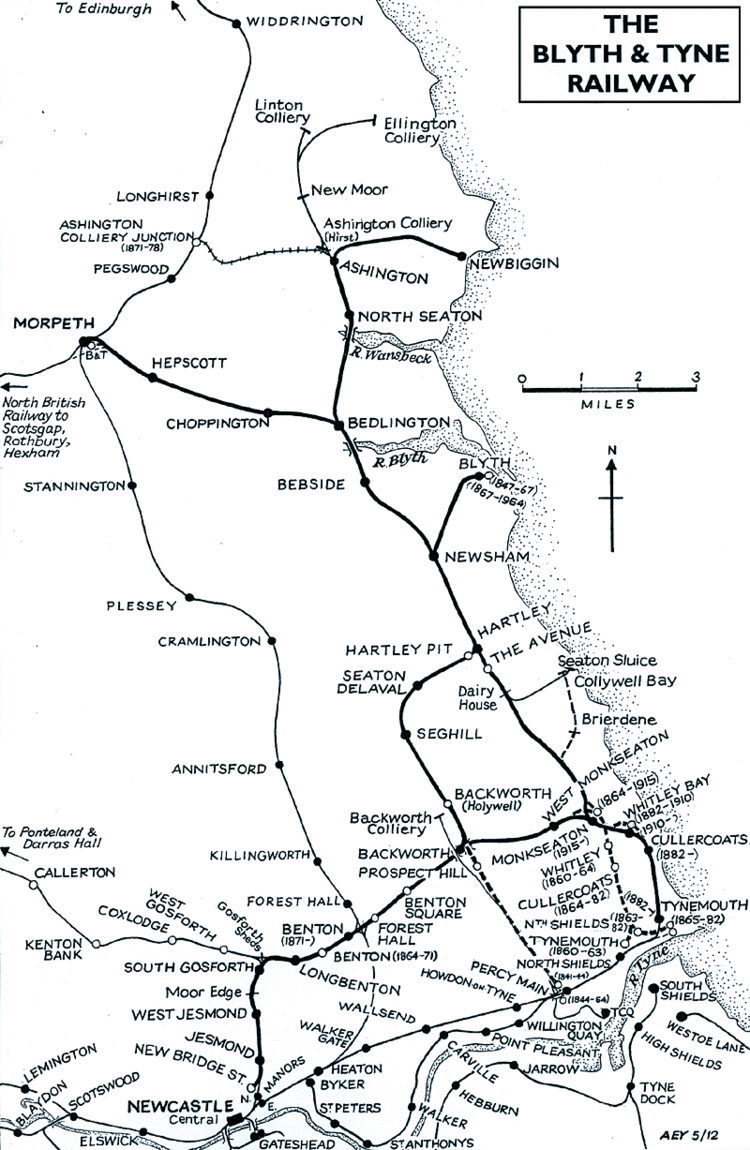
 The Blyth and Tyne Railway was an important railway in Northumberland, built in the early 19th century to transport coal from inland mines to the port at Blyth, thereby helping the region become a major coal-exporting area.
The railway began as a wagonway in the early 1800s. It officially developed into the Blyth and Tyne Railway in 1854, connecting coal mines around Blyth, Bedlington, and Seaton Delaval to shipping docks. Later, passenger services were introduced, linking mining communities to Newcastle upon Tyne.
The railway became part of the larger North Eastern Railway network in 1874. Many of its routes later became part of the modern rail system, and some former Blyth and Tyne routes are now used by the Tyne and Wear Metro.
Passenger services to Ashington (about 18 miles northeast from Newcastle) were axed in 1964 during the Beeching cuts, a major restructuring of Britain’s railways in the 1960s, resulting in the closure of over 2000 stations and 5000 miles of track to “improve economic efficiency”.
However, not all was lost, so to speak. Between January and February 1978, passenger services on the old routes to the coast east of Newcastle were closed for conversion to Metro, much of today’s Yellow Line.
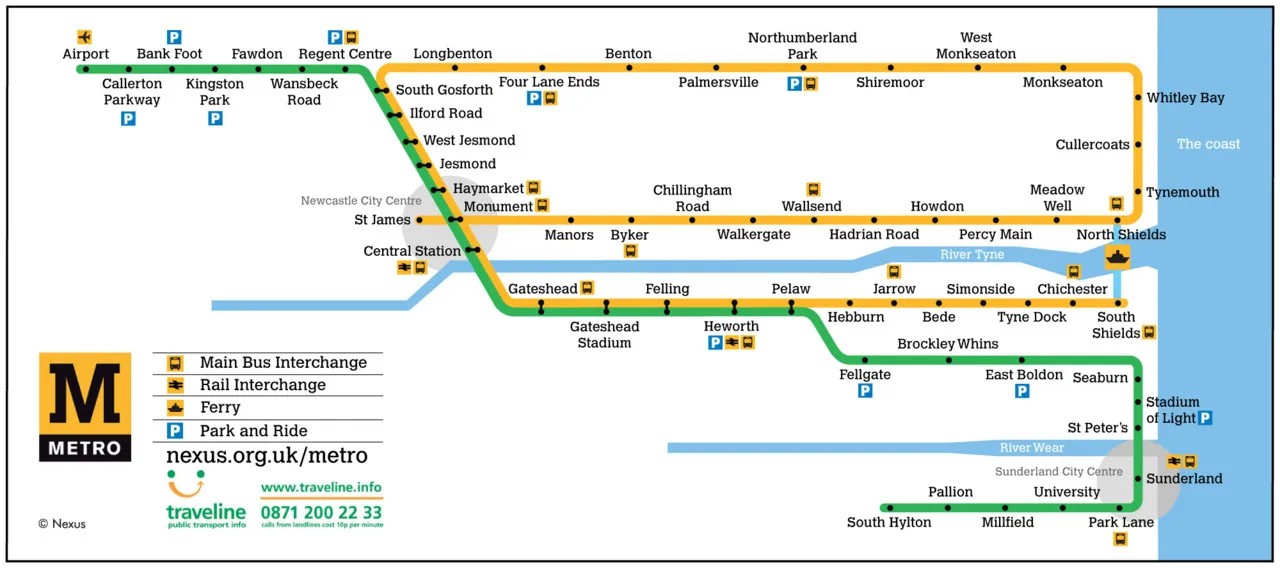
Over the next year, tracks and stations were rebuilt and electrified for Metro operation, and in August 1980, the first Metro services began running on these converted lines (Haymarket–Tynemouth section).
In 1972, the Lynemouth Power Station opened just north of Newbiggin-by-the-Sea to supply electricity to the nearby Alcan Lynemouth Aluminium Smelter (which closed in 2012). Originally powered by coal brought from the Port of Tyne on the south side of the river, the fuel reached the power station along the northern branch of the former Blyth and Tyne Railway, through Backworth, Seaton Delaval and on to Ashington and beyond. The power station now supplies electrcity to the National Grid.
And had it not been for the survival of the freight services supplying coal (and then biofuel in the form of wood pellets) to Lynemouth Power Station, the reopening of the line to passenger services—now the Northumberland Line—would not have been feasible, practically or economically.
A proposal to restore passenger services to Ashington was first made in 1996. Government funding was in place by 2021, and the line reopened to great fanfare on 15 December 2024. But only two of the planned six new stations, at Ashington and Seaton Delaval were ready, besides existing Newcastle Central and Manors of course.
During 2025 two more stations, at Newsham and Blyth Bebside were opened. And just a week ago, on Sunday 22 February, the penutimate station at Northumberland Park (close to the site of the former Backworth station on the Blyth and Tyne Railway network) opened to passenger services, just opposite its namesake Metro station, and thus providing an important interchange from mainline passenger services on to the Tyne and Wear Metro system. The remaining station, at Bedlington, is scheduled to open on 29 March.

So, at just after 08:00, the first train—a Class 158 DMU Sprinter—to stop at Northumberland Park with fare-paying passengers rolled into the station. And I was there to check it out.
Northern Trains chose to operate its services on the Northumberland Line using the Class 158 DMUs because their performance (especially acceleration) suits the partly single-track route and timetable requirements. Normally the consist is a two carriage formation, but on this Sunday opening (and when services are expected to be heavily subscribed) Northern did deploy a four carriage set-up. Click here for the current timetable.
The station is pretty impressive, and took almost three years to build. It’s located between the bridge carrying the A186 (to Whitley Bay) over the tracks) and Algernon Drive (where access to the station and Metro is located), the latter being, I believe, the former route of the Backworth waggonway. This is what the site looked like before construction commenced (taken from the top level of the adjacent multistorey car park). The image on the left shows the A186 bridge, and that on the right Northumberland Park Metro station, and Algernon Drive.


There were some significant engineering challenges, given the underground network of old mining shafts and galleries, and the opening of the station was delayed by almost 14 months. There are stairs and a lift for access to the single platform (used in both directions) alongside this section of single track, and a ticket machine.


Passengers can also avail of cross-system fares between the Metro and Northumberland Line.
Since opening in 2024, the Northumberland Line has recorded more than 1 million passenger journeys apparently, thus vindicating the vision of those supporters of the expansion three decades ago. A success indeed.
Another challenge that the Line faces is the dual operation of passenger and freight services. Passenger trains operate twice an hour in both directions, and freight about four trains a day. During the refurbishment of the line, it was necessary to reinstitute double tracking in some sections to permit trains to pass, signalling and the like had to be upgraded, and a rigorous timetable established. And that’s of particular significance because the first few miles of the route out of Newcastle Central is along the East Coast Mainline (on which services between London and Edinburgh run). Not only that, but at Benton Junction (what3words: ///vase.month.preoccupied), trains taking the Northumberland Line have to cross from the northbound to the southbound lines for about 200 m, before branching off to the east.
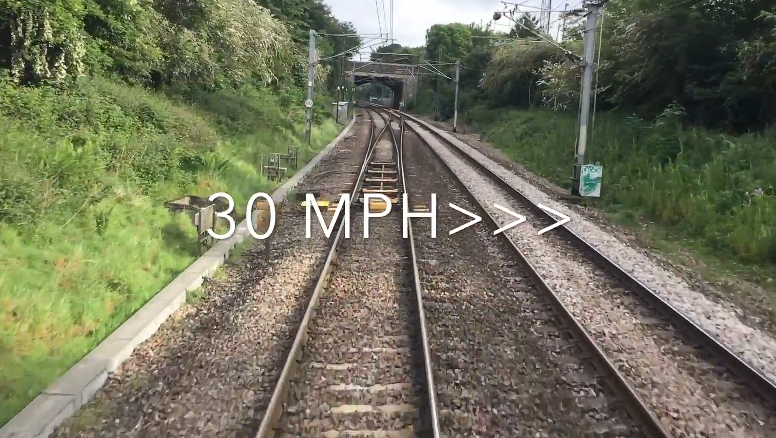
In this video clip, taken before the Northumberland Line was opened for passenger services, you can see what a potential bottleneck Benton Junction could be, with mainline services obviously taking precedence at all times.
Freight services are provided by GB Railfreight (GBRf), running Class 66 diesel locomotives, and hauling 24 wagon rakes specially designed for delivering wood pellets to Lynemouth Power Station. Each wagon carries 70 tonnes of biomass pellets, 1680 tonnes per journey, unloaded automatically on arrival at Lynemouth. That’s around 37,000 tonnes per week. Think of the number of articulated lorry trips that would incur.
Anyway, here is a short video of some action on the Northumberland Line, taken at Backworth FP (what3words: ///grins.lots.necklaces) on Monday 23 February over a 30 minute period from around 10:30.
 A balanced diet . . .