There’s water everywhere, notwithstanding all the lakes that characterise Minnesota. It’s not for nothing that Minnesota is known as ‘The Land of 10,000 Lakes’.
The Minneapolis-St Paul metro area (the Twin Cities) is surrounded (almost) by water. I’m talking about rivers. Large rivers.
The mighty Mississippi River bisects the cities. The Minnesota River is a southern boundary to Minneapolis. And the St Croix River is the state line between Minnesota and Wisconsin just east of St Paul, and its confluence with the Mississippi is just south of St Paul.
The Twin Cities (and surrounding areas) have their fair share of bridges – road and rail – that cross all of these rivers. There are twenty six highway bridges across the Mississippi, eight across the Minnesota River, and five across the St Croix (and another being constructed to relieve Stillwater of its congestion at the Lift Bridge.
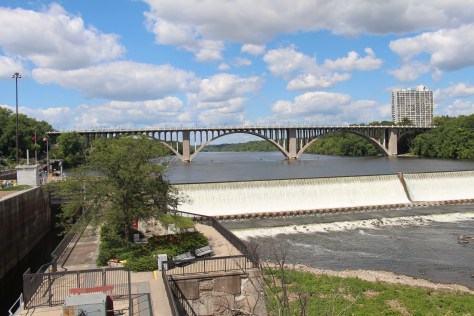
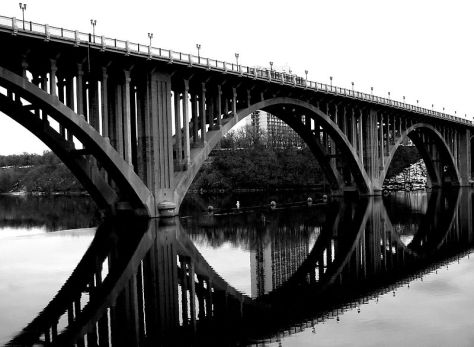
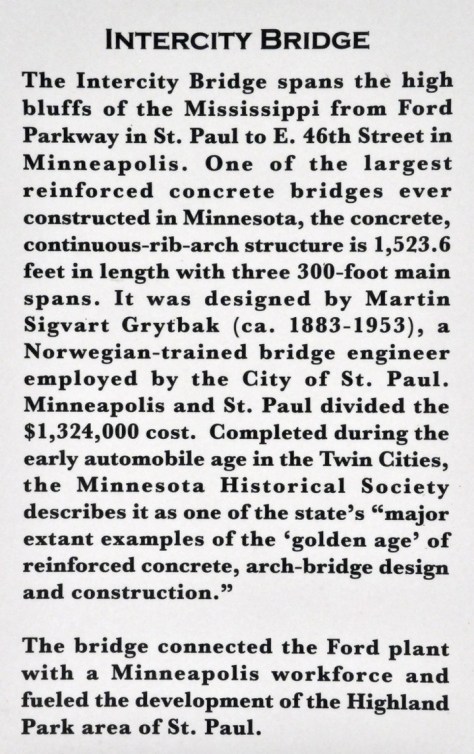
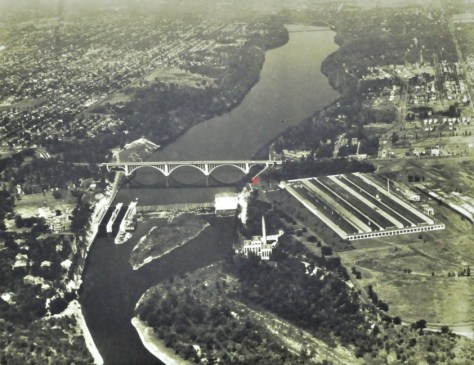
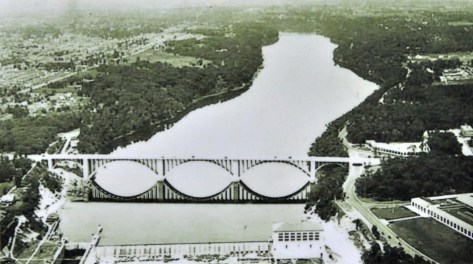
Closest to where our daughter and her family live in the Highland Park neighbourhood of St Paul is the Mississippi River Bridge. Or should that be the Intercity Bridge, the Ford Parkway Bridge, or even the 46th Street Bridge? Its official name is ‘Intercity Bridge’, but at both ends there is a plate stating that the name is ‘Mississippi River Bridge’.
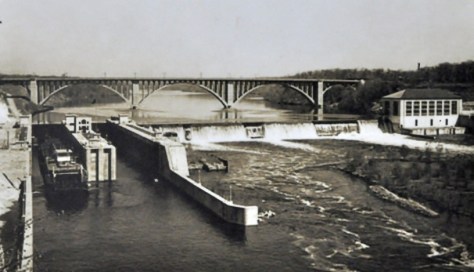
The Intercity Bridge, looking north from the Lock and Dam 1. Photo downloaded from the Minnesota Department of Transportation website.
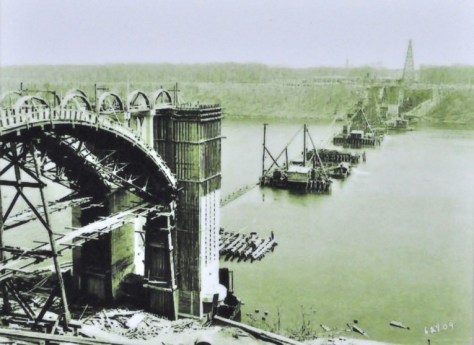
Work began on this beautiful bridge in 1925, and it was completed two years later. It connected Minneapolis with the Ford Motor plant on the St Paul side of the river, now closed and demolished.
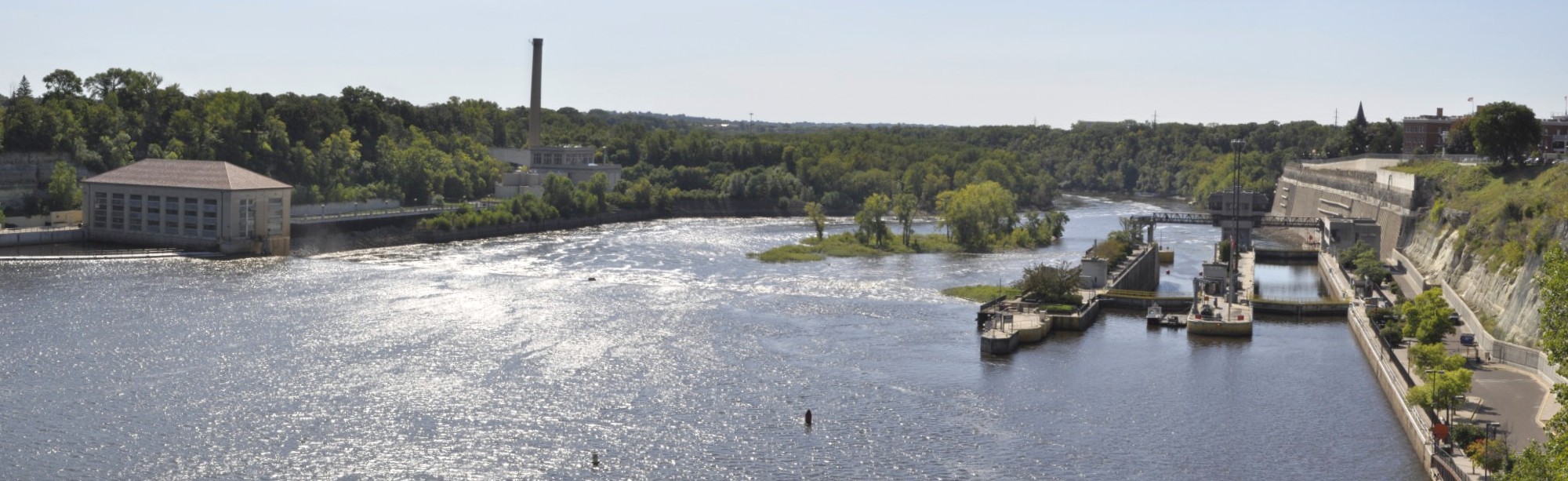
The following five photos were taken from an information booth above the old hydroelectric plant.
The Ford Motor plant is on the eastern side of the Intercity Bridge. Below the bridge is the hydroelectric plant that provided power for Ford.
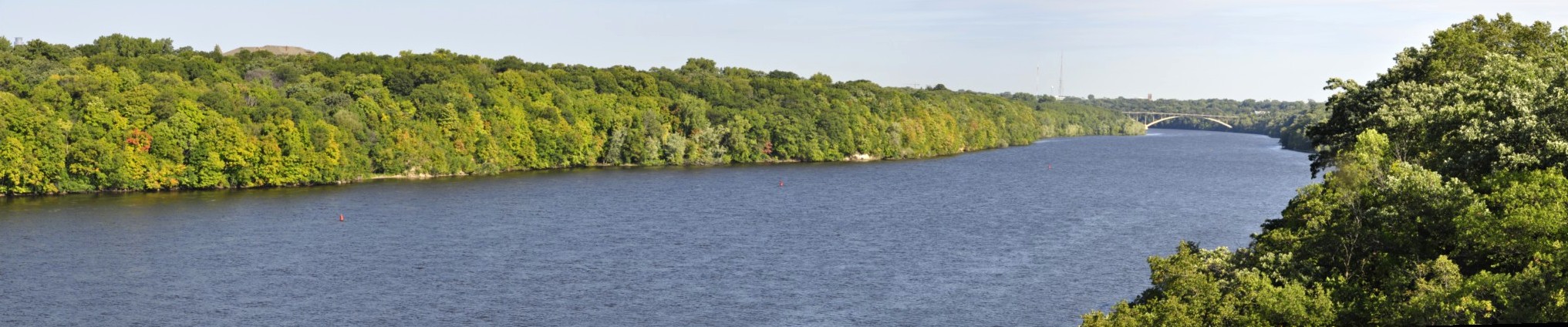
Now that the trees have matured along the banks of the Mississippi, there are few clear views of the bridge from the banks, even from the viewpoints.
The next bridge upstream is the Marshall Avenue bridge, and can just be seen from the Intercity Bridge. Our daughter Hannah now lives just beyond the river bank treeline on the right of these photos, on Mississippi River Boulevard.
This is the view today of the hydroelectric power station, the dam and lock below the bridge.
About a mile further down river is Hidden Falls Regional Park. The road drops steeply down the bluff to the water’s edge. And there you get a real appreciation of the majesty and power of the flow of the Mississippi, even though it’s over 1200 miles to the ocean at the Gulf of Mexico.
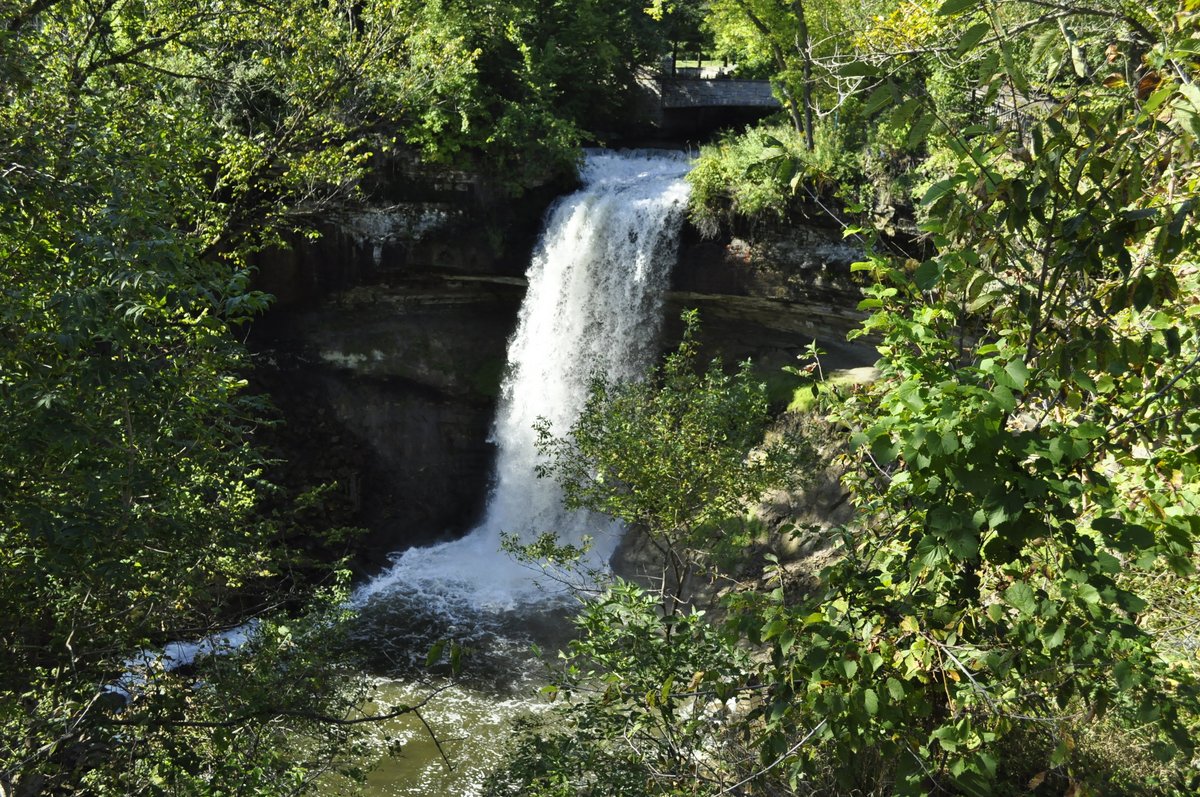
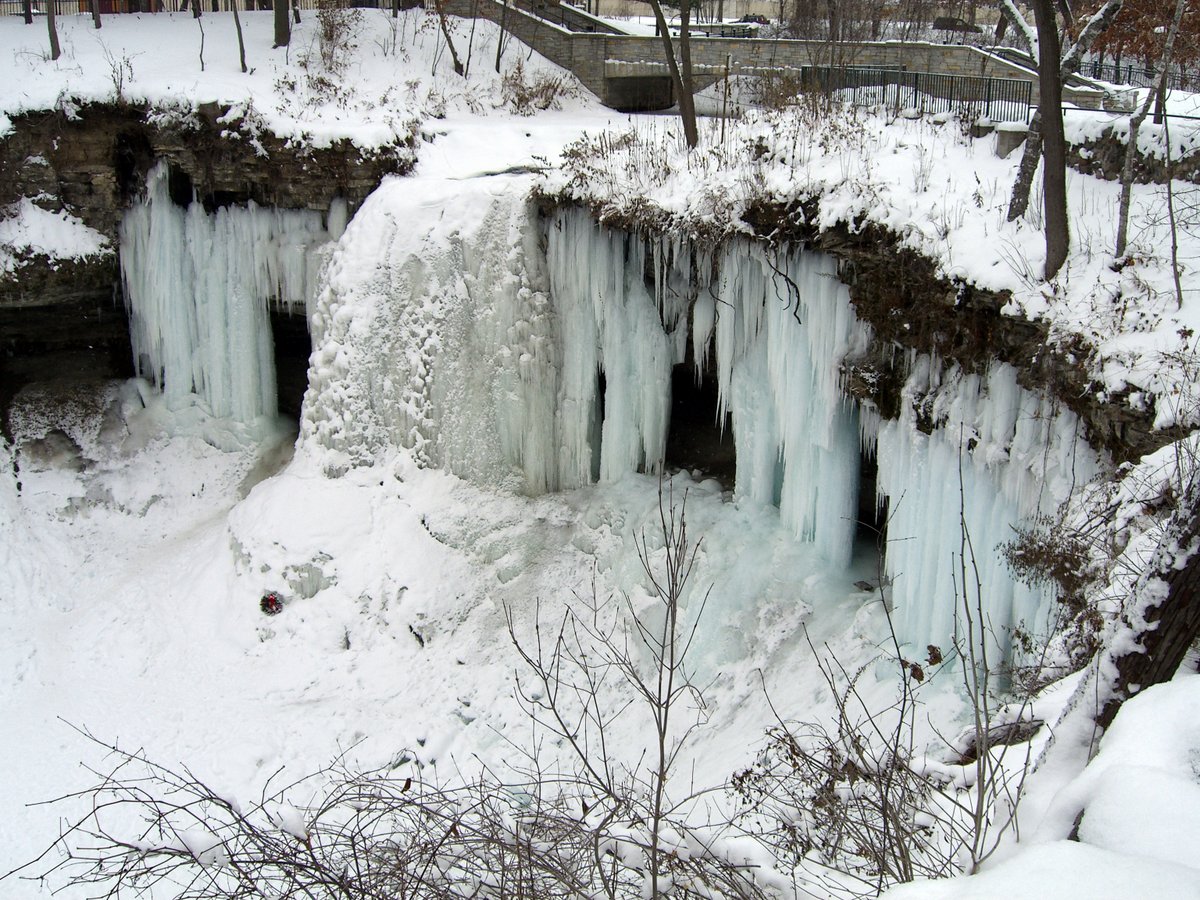
Just over the Intercity Bridge on the Minneapolis side is Minnehaha Regional Park, and the beautiful Minnehaha Falls. On a visit to St Paul at Christmas 2007 we saw these Falls under very different circumstances: completely frozen. But not yesterday.
For one weekend last September, I almost felt like a ‘latter-day Johnny Appleseed‘. I hadn’t seen so many apples in a long time, nor been apple picking before. Seems it’s quite a family outing sort of thing in Minnesota, towards the end of September, and especially if the weather is fine—maybe an Indian Summer day even.
But I’m getting a little ahead of myself.
Steph and I flew to the USA on 10 September to spend almost three weeks with our daughter Hannah, son-in-law Michael, and grandchildren Callum and Zoë in St Paul, Minnesota. And we still can’t believe how lucky we were with the weather this vacation. Almost every day for the entirety of our stay (including a side trip to Chicago), the weather was bright and sunny, hot even with days often in the low 80sF.
The first weekend in St Paul, Hannah and Michael took us to the Minnesota Landscape Arboretum (part of the University of Minnesota), around 23 miles due east of Minneapolis-St Paul International Airport, along I-494 W and MN-5 W. There are miles and miles of roads and trails to explore, but with two small children of 5 and 3 in tow, we limited our visit to a walk through the various glades and gardens close to the arboretum’s Oswald Visitor Center (map).
The Perennial Garden (9)
Entrance to the Rose Garden (7)
The Herb Garden (4)
The Green Heron Pond
The Japanese Garden (7 on the map)
Hannah and Michael had taken Callum and Zoë to the arboretum on 4 July, when there was an impressive display of Lego sculptures around the gardens.
On the Sunday of our second weekend in St Paul, we met up with Hannah and Michael’s lovely friends, Katie and Chris and their daughters Nora and Annie, to go apple picking at a farm in the valley of the St Croix River (that joins the mighty Mississippi just five miles south), about 30 miles southeast from their home in the Highland district of St Paul. Thanks to Katie for several of the photos below.
Hannah and Michael with Katie (and Callum and Nora)
Michael and Hannah with Chris
The Whistling Well Farm offers several apple varieties for picking, as well as pumpkins and pot chrysanthemums for sale, and chickens to feed.
Chrysanthemums almost ready for sale.
It’s a great place for the children to explore, and to get thoroughly wet. There was a heavy dew!
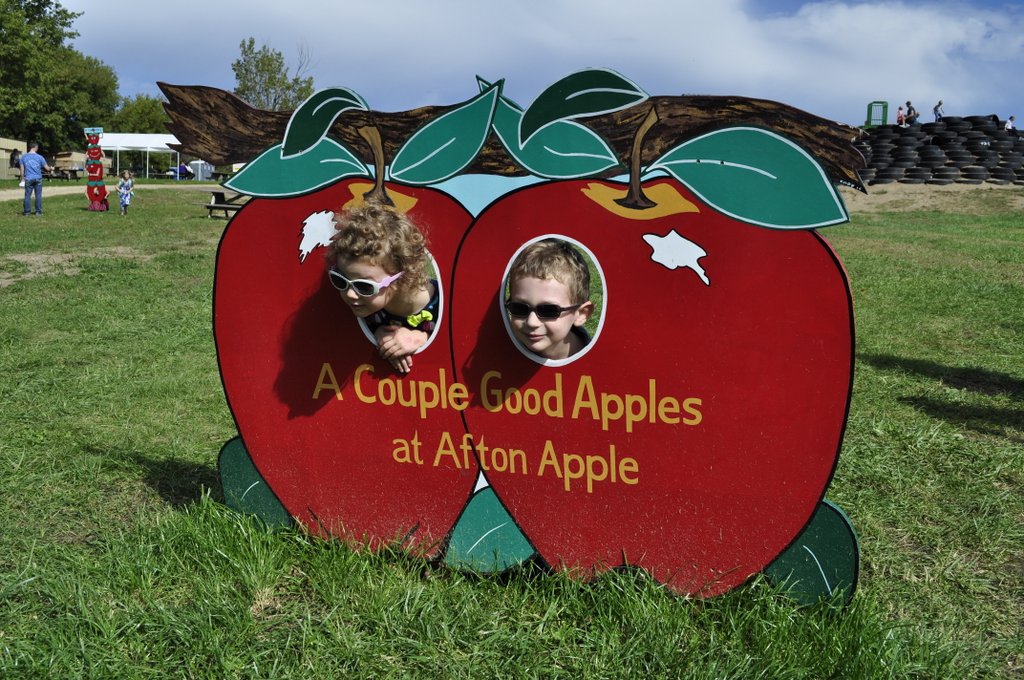
Having ‘exhausted’ possibilities at Whistling Well Farms, we journeyed just a couple of miles west to Afton Apple Orchard, to take a trailer ride around the orchards and pumpkin fields.
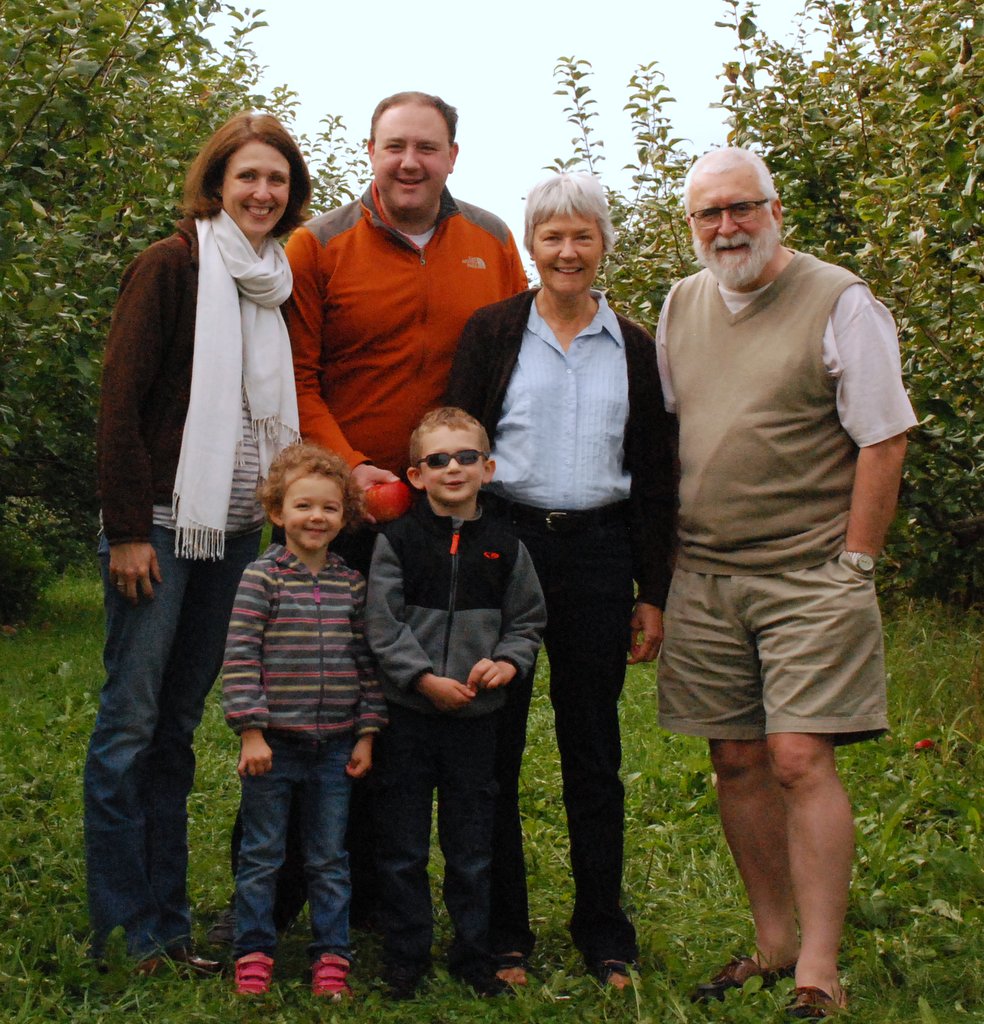
What a lovely way to enjoy the company of family, especially grandchildren.
L to R: Hannah, Zoë, Michael, Callum, Steph and me.
Over the years, I’ve had the opportunity of visiting many of the ‘great’ cities in the USA: New York, Washington DC, St Louis, San Francisco, Seattle, and Chicago (most recently). But the city (or should I say cities) I have visited most over the years are the Twin Cities of Minneapolis and St Paul in the heart of Minnesota.
And for good reason. First, when I was traveling to the USA in the early 1990s, the international airport in the Twin Cities (MSP) was the hub for Northwest Airlines (now absorbed into Delta), and was the most convenient way for travel from Manila in the Philippines into the USA.
Since September 2008, however, St Paul has been home to our elder daughter Hannah. After completing two years of her 3-year psychology and anthropology degree at Swansea University in the UK, she asked us if she could transfer to Macalester College in St Paul, a highly-respected—but small (maybe 2000 undergraduates)—private liberal arts college that counts former US Vice President Walter Mondale and UN Secretary General Kofi Annan among its notable alumni. The most recent winner of the Man Booker Prize for an original novel in the English language is Macalester professor Marlon James.
So, over the years we have visited many times and come to know and appreciate the Twin Cities, although St Paul is the half of this metropolitan duo that we know much better. There’s a vibrant community, and the cities have something for everyone. It’s pretty laid back, but I guess you could say that about Minnesotans in general. Maybe that’s why I like Minnesota so much.
Among the things I like are the breakfast diners (I like the Grandview Grill on Grand Ave, just below Macalester), some of the best ice cream I’ve tasted anywhere at Izzy’s on Marshall Ave, and only St Paul can boast the Fitzgerald Theater, home of Garrison Keillor’s A Prairie Home Companion.
But what sets the Twin Cities apart, for me at least, are the numerous lakes dotted around the Minneapolis side, and the tree-lined avenues everywhere. In fact, it’s hard to imagine cities that are more leady. And taking into account that Minneapolis-St Paul was founded on the banks of the Mississippi River, and on the ‘edge of the prairie’, the amount of tree planting over a century or more is implrsssive. Certainly the avenues are lined with some of the most impressive specimens I’ve seen anywhere, often up to 100 feet tall.
In the (speeded) video clip below, our recent return flight to Amsterdam took off from Runway 30L to the northwest, climbing over the Tangletown and Linden Hills districts of Minneapolis, over Lakes Harriet and Calhoun, before turning right, and heading northeast over the Mississippi just north of downtown Minneapolis, and continuing over the norther suburbs of St Paul.
There are some pretty fancy properties around the two lakes, but you can’t see them for the trees. It would be the same if you landed from the west or took off to the east and had a view over St Paul, which lies on the eastern bank of the Mississippi. Trees everywhere. And of course north of the Twin Cities, the landscape is dotted with lakes large and small. Not for nothing is Minnesota known as the state of the Thousand Lakes.
Hannah and her family live between the Macalester-Groveland and Highland districts of St Paul, just three blocks from the mighty Mississippi. Steph and I have mostly visited during the spring or summer months, so we get to see everywhere at its best in terms of flowering and in leaf. And this is what so impresses us as we take our daily constitutional down to the bank of the Mississippi and along boulevards lined with the most impressive trees. And of course there are some very fancy properties along there as well.
The view from the Ford Parkway bridge crossing over the Mississippi River, and looking north towards the Marshall Avenue bridge. Hannah lives just three blocks east of the river.
But having so many tall trees so close to residences has its drawbacks as well, as we saw in June 2013 after a short-lived but rather violent storm passed through (tornadoes are not unknown, but infrequent). Just close to where Hannah lives several large trees had been brought down, and fortunately the damage to houses was much less than we first feared.
Now although we’ve visited mainly in the summer months as I mentioned, we did spend one Christmas with Hannah and Michael in 2007. And what a baptism of cold it was. I don’t think I’ve ever experienced such cold. And don’t forget we had left the tropical weather behind having just flown in from the Philippines! Nevertheless it was fun, and once suitable wrapped up against the cold we did get out and about on foot to savour the experience.
One interesting comparison we were able to make this September was when we walked from Hannah’s home to Minnehaha Park, just under two miles away. There is an impressive waterfall, which we have now seen in two contrasting seasons.
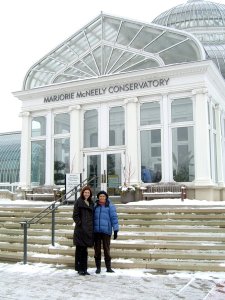
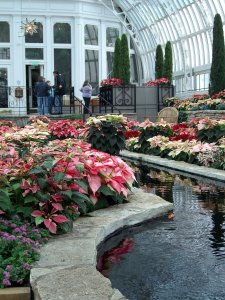
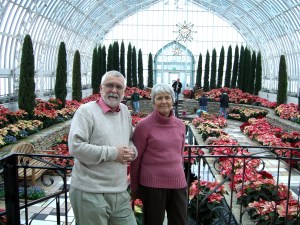
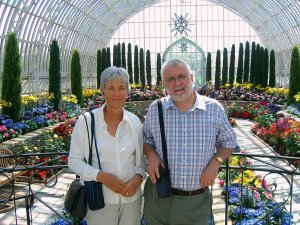
One of our favorite places to visit is Como Park, where there’s a small zoo and the Marjorie McNeely Conservatory. The conservatory is most exquisitely planted all year round. On a cold day in December it was a wonderful place to get out of the cold, and escape from the grey-out of a cold Minnesota day. But the conservatory was the location where Hannah and Michael were married in May 2006. We had the whole place to ourselves, and it had recently been planted with summer bedding plants. What a delight!
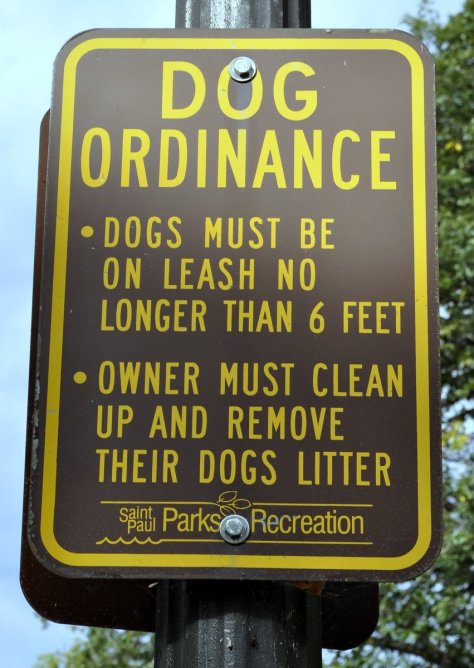
There’s also one aspect of walking around the Mississippi River area that we appreciate. It’s both human and dog friendly, because there are strict ordinances restricting the length of dog leashes.
And with these words, Minnesotan author and story-teller Garrison Keillor concludes his weekly News from Lake Wobegon monologue, a regular feature of the variety show, A Prairie Home Companion, that has been broadcast for 40 years on Minnesota Public Radio (MPR). The monologue features the characters and goings-on in an imaginary (or is it?) small town, somewhere north of the Twin Cities, ‘on the edge of the prairie’.
Discovering APHC
I first became an APHC aficionado on 17 October 2004. My elder daughter had transferred her studies from Swansea University in the UK to Macalester College, a well-respected liberal arts college in St Paul. And whenever my work with IRRI required travel to the USA I usually routed my flights through the Twin Cities. On one occasion Hannah and her boyfriend (now husband) Michael took me to Stillwater on the St Croix River which forms the state boundary between Minnesota and Wisconsin, a short distance east of the Cities. It was a Sunday, late morning. As usual they had the car radio tuned to MPR, and a repeat of the previous evening’s broadcast of APHC was playing. As we pulled into Stillwater I became mesmerized (and that’s not too strong a description) by the the mellifluous voice of Garrison Keillor weaving his tales about Lake Wobegon. I was hooked, and ever since have tried to tune in whenever possible, through the web site, Internet radio while we lived in the Philippines, or rebroadcasts on the BBC.
Listen to that October 2004 episode of News from Lake Wobegon.
At the Minnesota State Fair
On a visit to St Paul in September 2010, shortly after the birth of our first grandchild Callum, Steph and I had the opportunity of attending a live broadcast of APHC from the Minnesota State Fair. Here are Garrison Keillor and guest Sara Watkins singing about state fair gourmet essentials.
Although we enjoyed the show, an outside broadcast, we weren’t as well prepared as we might have been and became thoroughly chilled. It was a windy day. And sitting off to one side, we didn’t really have a great view of all that was happening on the stage. So I promised myself that if I ever got the chance to see APHC at its ‘home base’, the Fitzgerald Theater on Exchange Street in downtown St Paul, I wouldn’t hesitate to purchase tickets. A broadcast from the Fitzgerald just hadn’t coincided with any of our annual visits to see Hannah and family since 2010. Until this year, that is.
An ambition fulfilled
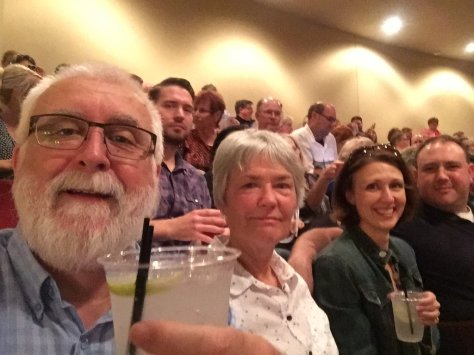
Last Saturday, Steph and I, Hannah and Michael enjoyed the show Easy Come, Easy Go, broadcast live at 17:00 CT. With convenient parking just next to the theater on Wabasha St N, we arrived to the Fitzgerald around 16:35, just in time to buy a welcome gin and tonic to enjoy throughout the show.
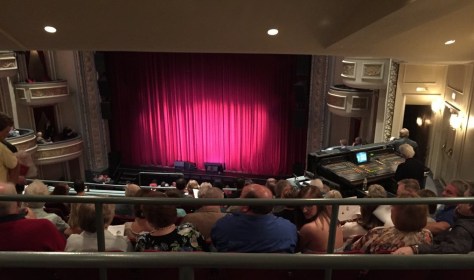
We had great seats in Section B1R, Row JJ with a clear view of the stage.
Around 16:45, the curtain went up and on stage came Garrison Keillor, dressed in his summer suit and signature red tie and red shoes, and one of the guests, singer Heather Masse, for an audience warm-up session.
Then, on the dot of 5 pm, the introductory MPR theme played and we were LIVE!
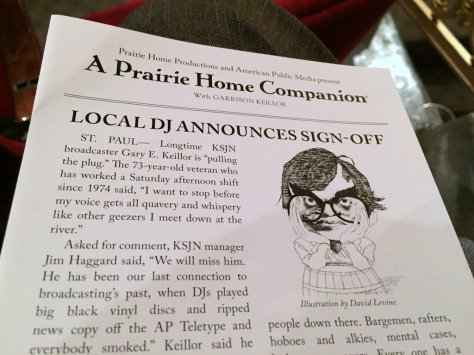
Click on this image to read the full article in the program, and information on performers and staff of A Prairie Home Companion.
As always, Garrison sang along to the show’s signature theme Tishomingo Blues followed by his usual introductory remarks—some classic comments on ‘illegal immigrant Canadians and the proposal of Wisconsin Governor and former Republican presidential candidate Scott Walker to build a wall along the border. One of the beauties of radio is that you can sit back, listen, and imagine. Click the icon below to listen to the show.
But it’s also great fun to watch the show, and APHC is now streamed live on video, and available on YouTube. So this blog post, with photos and vidoes, is also my memory of that memorable evening last Saturday in St Paul.
Supported by a small cast, including the Royal Academy of Radio Actors (Sue Scott, Tim Russell, and sound effects man Fred Newman), musical director Richard Dworsky and his musicians, and several guests, APHC follows much the same format of sketches, songs and musical interludes, although which regular items are included does vary from week to week. My favorites, Guy Noir-Private Eye, The Lives of the Cowboys, and Mom were all included last Saturday.
The special guest from Nashville was mandolin virtuoso Sierra Hull (supported by Ethan Jodziewicz on bass and Justin Moses on banjo and guitar) who made her debut aged 12 at the Grand Ole Opry (check out the video here) with Alison Krauss and Union Station.
Heather Masse, from New York, and also a member of the trio The Wailin’ Jennyssang one of my favorites, September Song(composed by Kurt Weill, with lyrics by Maxwell Anderson, and originally sung by Walter Huston in the 1938 Broadway musical Knickerbocker Holiday).
Following September Song, Garrison Keillor talked about September memories stirred up by the smell of fallen leaves and coffee in The News from Lake Wobegon.
And then, it was all over. Two hours had flown by. It was time for the ‘curtain call’.
Meeting Mr Keillor
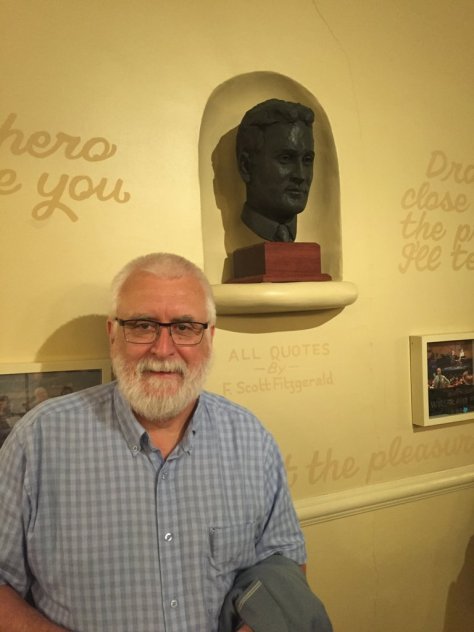
On the way out, I looked for the bust of F Scott Fitzgerald (after whom the theater was named) as I remembered it from Robert Altman’s last film, A Prairie Home Companion, released in 2006, and with a stellar cast including Meryl Streep, Kevin Kline, Tommy Lee Jones, Woody Harrelson, Lily Tomlin, Garrison Keillor, Virginia Madsen, John C. Reily, and Lindsay Lohan (and some of the regular APHC contributors).
Garrison Keillor was outside the theater to meet those leaving, and I hoped to have chance of doing so. We edged our way to the exit. In front of me were a couple who were also hoping to meet him.
‘Tell him you’re from California’, said the woman to her husband. ‘He’s sure to want to speak to us, knowing we’ve come so far’.
‘That’s not far’, I butted in, smiling. ‘I’ve come all the way from England!’
They were flabbergasted, and made way for me to move forward, to shake the hand of the great man. That’s them behind me.
This season of A Prairie Home Companion will be Garrison Keillor’s last. He’s calling it a day after more than 40 years, almost a weekly show, in which he writes under the pen name of ‘Sarah Bellum‘. So I’m pleased to have been able to see the ‘original’ show. Mandolinist Chris Thile will host the show after Keillor’s retirement next year, and no doubt the format will change. He’s hosted the show before, and I guess there will be more music. It will be interesting to see how the ‘new APHC’ will fare. Until then, sit back, and tune into MPR at 17:00 CT. Or like me, tune into the internet when it’s more convenient. APHC will take you back to the radio days of my childhood, and you won’t be disappointed.
Good luck, Mr Keillor, and thank you for hundreds of hours of radio-listening pleasure all these years.
Steph and I have just returned from a three-week vacation in the USA to visit Hannah and Michael and grandchildren Callum and Zoë in St Paul, Minnesota (MN). During our vacation, we took the opportunity of driving from St Paul to Yellowstone National Park in Wyoming (WY) – and stops at all interesting places in between in South Dakota (SD) and Montana (MT). While I will post blogs about the various places we did visit, this post is all about the trip as a whole, and hopefully I can provide a few tips for other lucky travelers.
Almost two thousand miles (actually 1,944 miles from our home base in St Paul to our final hotel in Billings, MT) in eight days might seem excessive to some, but in fact it was quite manageable, and we had time to stop – often for several hours – and enjoy the various places we had chosen to visit on the way. Yes, they were long days, but with open roads and little traffic to hold us up, and the judicious use of cruise control on the main highways, I did not feel particularly tired at the end of the day. In any case, relaxing at our hotel with a couple of cold beers always eased away the tiredness. I kept a couple of packs of beers in the car, and placed some each day in the cooler ready for our arrival the hotel in the evening.
We rented a Kia Sorrento SUV from National at MSP, which cost us USD981 (including a one-way drop-off fee of USD250). We spent only USD274 on gasoline – I hate to think how much a similar journey would have cost in the UK.
And to keep in touch with Hannah and Michael, I purchased a 30-day, 10 cents a minute domestic rate SIM card for my mobile from AT&T (20 cents for text messages); 150 minutes cost USD17 incl. taxes. This was a much better deal than I had been able to find online in the UK. So I would certainly recommend anyone traveling to the US to go to one of the big providers like AT&T (with great coverage throughout the country) and purchase one of these simple SIM plans.
We started our journey west on Monday 2 June, and flew back from Billings to MSP on Tuesday 10 June. This was our itinerary.
Day 1. St Paul, MN – Oacoma (Chamberlain), SD via the Minnesota River valley: 367 miles Route
We left Hannah’s around 08:30 and made swift progress for about the first 10 minutes, until we hit morning rush hour traffic on I-494 W, until we reached our turnoff on US-169 south towards Mankato, MN (site of the largest mass execution in US history on 26 December 1862 of 38 Dakota Sioux native Americans) along the Minnesota River valley. Then we joined US-60 southwest to link up with I-90 heading west into SD. One thing we noticed was how poor the road surfaces were in Minnesota, but they improved dramatically once we crossed the state line into SD, and in fact for the rest of our trip through SD, WY and MT.
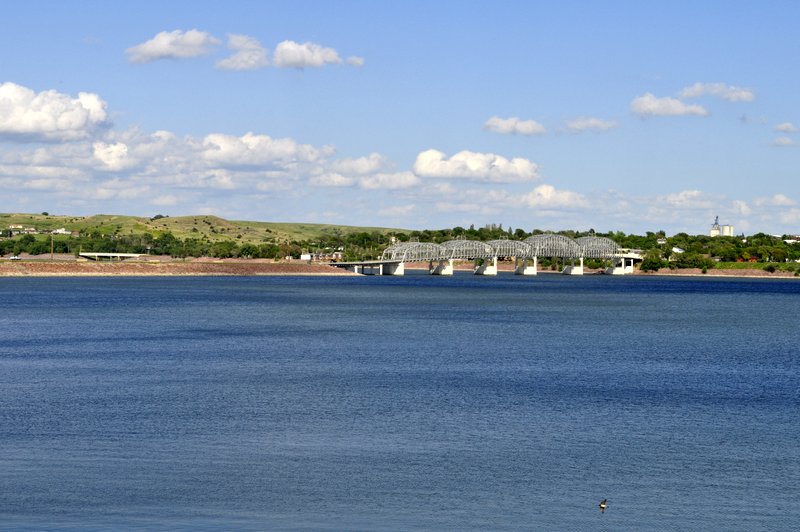
Our destination was Oacoma, a very small community (essentially a motel, RV park, gas station and shops/restaurant) on the west bank of the Missouri River, just across from Chamberlain. We had a glorious day to travel with hardly a cloud in the sky. Here’s a view of the Missouri in the evening sun.
We stayed at the Oasis Inn, Oacoma (score out of 10 = 6); cost (incl. all taxes): USD106
Day 2. Oacoma – Rapid City, SD, via The Badlands: 231 miles Route The day dawned bright and sunny, but we’d seen a warning on The Weather Channel about storms approaching from the west. So although we started out in bright sunshine, it wasn’t too long – in the heart of the Great Plains – that the clouds rolled in, the sky darkened, and the rain came down in sheets. In fact, at one point I found the nearest scenic overlook to turn off I-90 (not that you could see anything) as driving conditions were getting worse by the minute. We saw lots of lightning strikes in the distance, but never felt the full force of the storm – we skirted the northern edge of a major system that wreaked havoc south and east of us, but which had come down from the northwest where, in Billings, baseball size hailstones had done significant damage.
I really was quite naïve when planning this trip way back last February – I didn’t give the possibility of severe weather a second thought. We were lucky since the various storms (that we avoided) did generate tornadoes and even severe thunderstorms had winds of up to 100 mph. You have to take Mother Nature very seriously out on the Plains – there’s nowhere to hide.
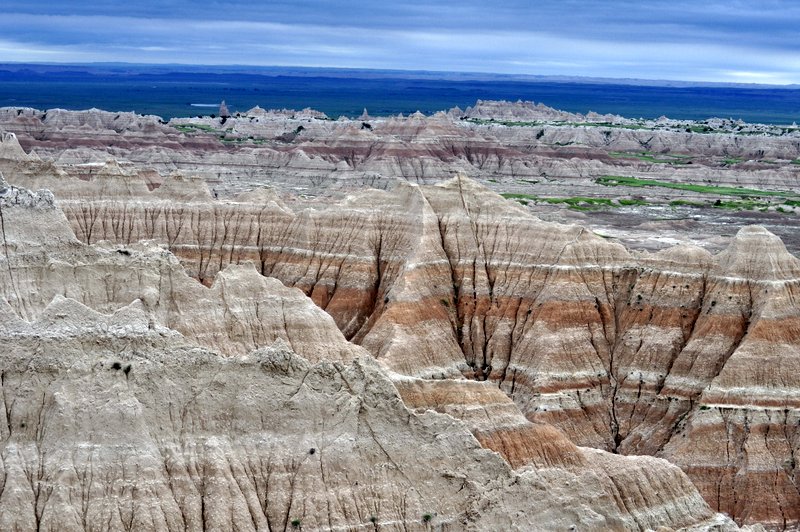
However, by the time we reached the turnoff for the The Badlands, it had stopped raining, the clouds lifted, the sun even came out for a while, and we had an excellent four hour trip through the park.
Then we headed for Rapid City and our hotel, where we spent two nights. We ate the first night at the Golden Phoenix Chinese restaurant (very good) and the second at Shooters Wood Fire Grill, just across the street. I had an excellent steak.
Days Inn, Rapid City (7); cost: USD168
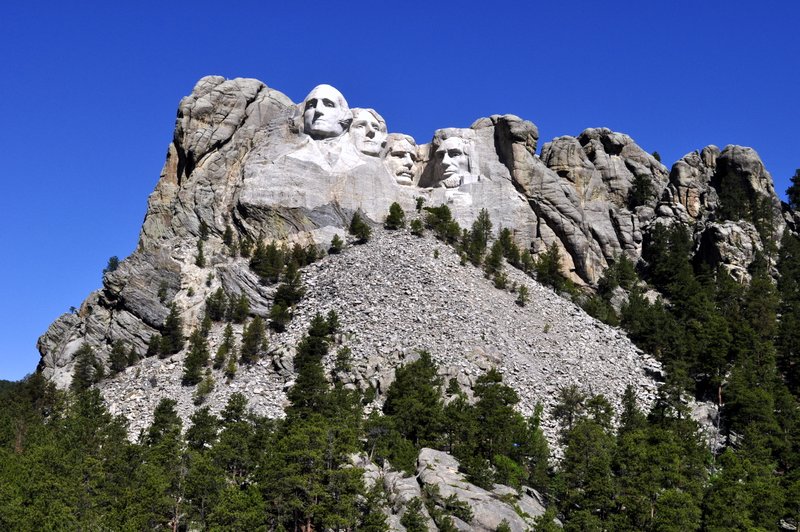
Day 3. Mt Rushmore National Memorial and Custer State Park, returning to Rapid City for a second night: 119 miles Route Steph and I both wondered what Mt Rushmore would be like, kitsch or not. And that concern was reinforced on the drive up into the Black Hills from Rapid City – all the many tourist attractions along the highway, and in Keystone, a small community closest to Mt Rushmore. My earliest recollection of Mt Rushmore was in Hitchcock’s North by Northwest (with Cary Grant, James Mason, and Eva Marie Saint).
In fact, Mt Rushmore was very moving and inspiring, we couldn’t have asked for better weather, the cliff-face carvings emphasized by a brilliant blue sky. Then we moved on to Custer State Park south of Mt Rushmore and took our time meandering along the park highways, and through a series of extremely narrow tunnels carved through the hillsides. No RVs here!
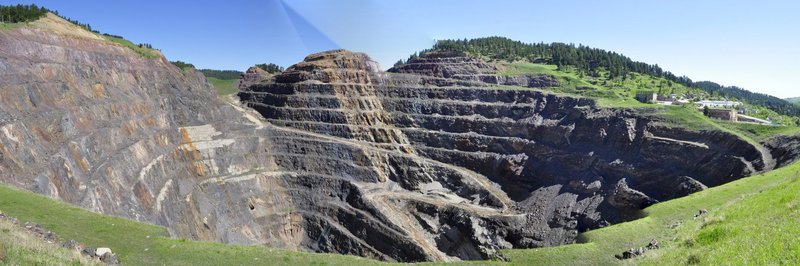
Day 4. Rapid City, SD to Sheridan, WY via The Black Hills, Spearfish Canyon, and Devil’s Tower: 300 miles Route We spent the morning working our way north through the beautiful Black Hills of Dakota and stopped in Lead (as in ‘seed’) to view the huge crater of a former gold mine.
It was the discovery of gold in the Black Hills in about 1870 that exacerbated the conflicts with native Americans. Less than five miles from Lead is Deadwood (of Calamity Jane fame, and the stage), but when we reached the fork on the road junction we turned left to Lead. I regret not turning right and visiting Deadwood because of all its historical connections.
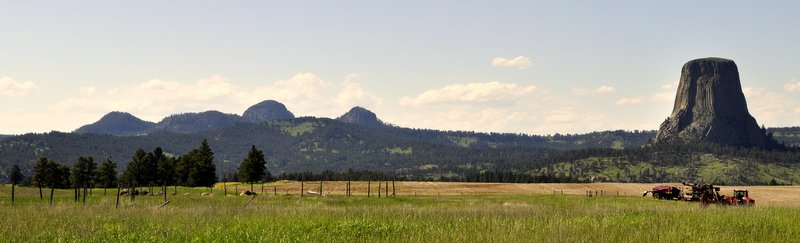
Then we headed north and west to Devil’s Tower, the first site to be declared a national monument, by President Theodore Roosevelt in 1906. Iconic Devil’s Tower featured in Steven Spielberg’s 1977 classic Close Encounters of the Third Kind, and I’d promised myself after seeing the film that I would visit it if I ever had the chance. And I wasn’t disappointed.
Departing Devil’s Tower at about 4 pm, we thought the drive to Sheridan wouldn’t take too long. In fact it was 33 miles to I-90, then, to our surprise (and consternation) we saw that it was still 127 miles to Sheridan! Still, we had a good meal at Sanford’s Pub and Grub.
Rodeway Inn & Suites, Sheridan (4); cost: USD93 (in fact, they couldn’t find our reservation. I should have walked away then and found another hotel but after a long drive I was too tired. The room could have done with a more rigorous going-over with the vacuum cleaner).
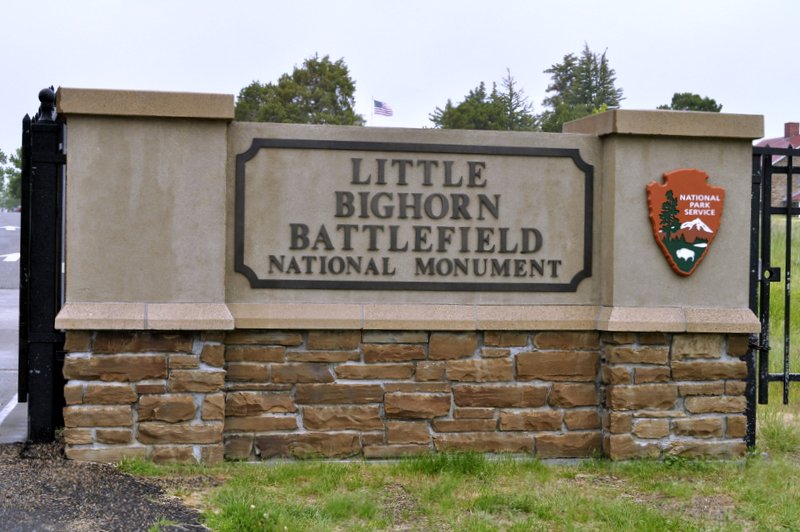
Day 5. Sheridan to Red Lodge, MT via the Little Bighorn Battlefield: 222 miles Route
This was a big day for me. It dawned overcast and drizzling, with very low cloud, and rather cool compared to the previous days. But as an aficionado of westerns, and I’ve also read quite a bit about the European expansion west during the 19th century, I was intrigued to visit the site of Custer’s Last Stand (I’m currently reading a fascinating account of Custer and Crazy Horse by American author Stephen Ambrose).
There was an interesting display of artifacts in the visitor center, but what I found particularly moving were the marker stones scattered across the battlefield indicating where both US soldiers and native Americans had fallen defending their way of life. And the native American memorial is stunning. But more of this in another separate post.
We stayed this night in Red Lodge, just north of Yellowstone National Park. We had a great pizza at the Red Lodge Pizza Co. on South Broadway Ave.
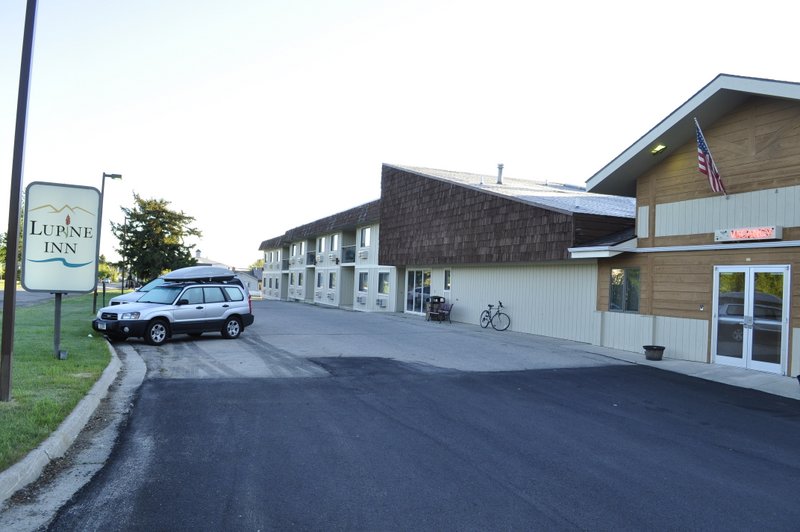
Lupine Inn, Red Lodge (8); cost: USD88
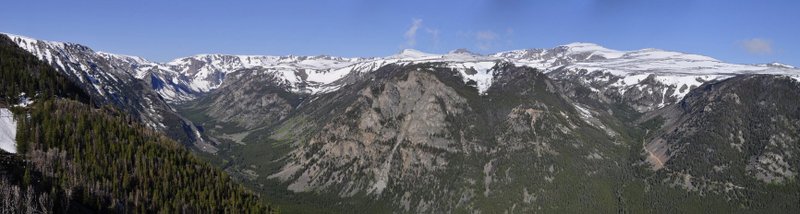
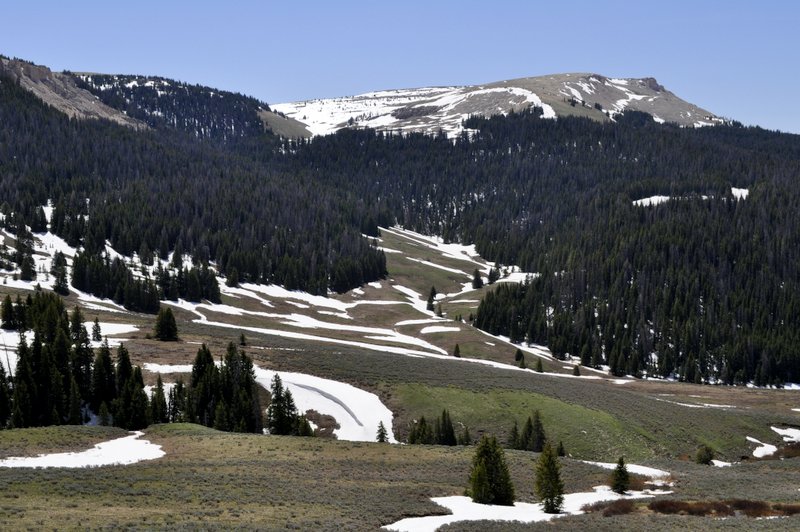
Day 6. Red Lodge to Jackson, WY via the Beartooth Highway, and Yellowstone and Grand Teton National Parks: 228 miles Route When planning our trip I had no idea of what to expect in traveling into Yellowstone via the northeast gate from Red Lodge. The Beartooth Highway climbs – almost vertically – right over the top of the Beartooth Mountains, and usually remains closed until the end of May when the snow clears. It was a stunning drive.
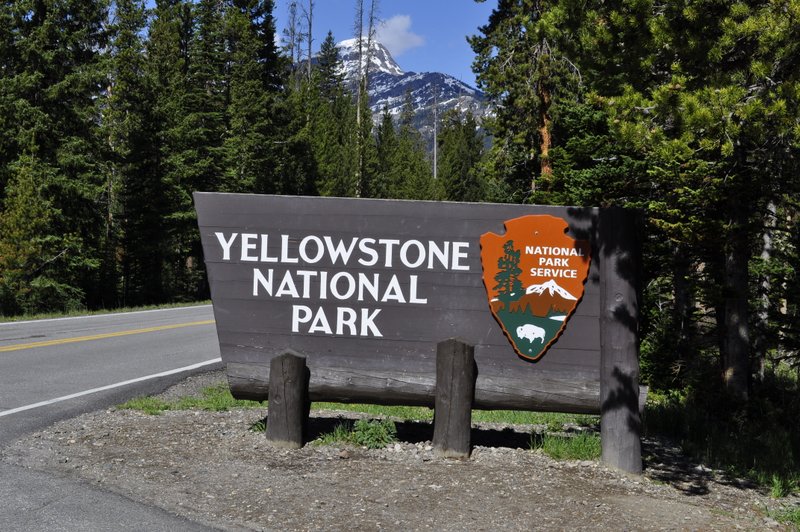
Yellowstone was both exhilarating – and a disappointment.
There are quite long stretches traveling between tall pine tress, so there’s not much to see. And I guess we have all be spoiled by the amazing wildlife images on TV. While we did see herds of bison, and a few elk, wildlife was not generally conspicuous. I hate to think what then park would be like at the height of the summer season. Bumper to bumper no doubt. Even during our visit we encountered some traffic jams as folks frantically looked for somewhere to pull over to take yet another photo of a lonely bison.
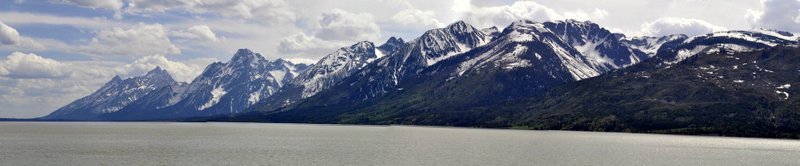
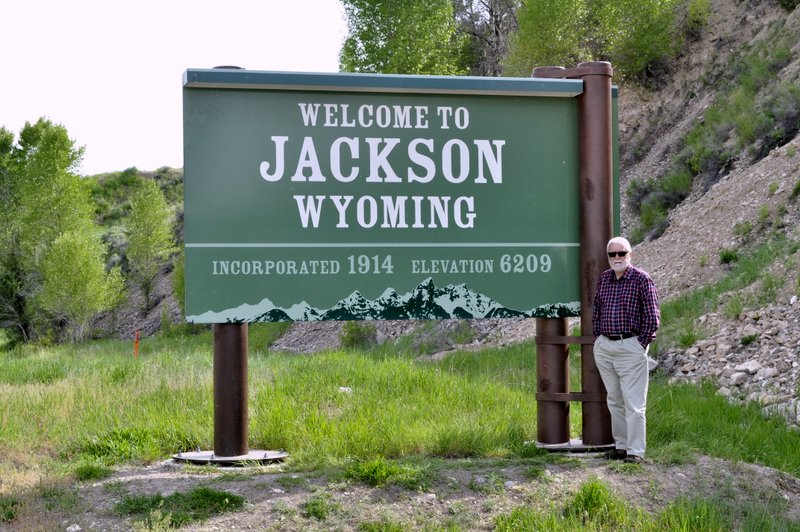
The Tetons are something else. Along Jackson Lake, which lies at just over 6,000 feet, the mountains just rise vertically another 6,000 feet or so. Our destination was Jackson – a winter sports venue for the rich and famous.
Anglers Inn, Jackson (9); cost USD119 (breakfast not included – so we had had the pleasure of that great American tradition: going out for breakfast on the Sunday morning at The Bunnery).
Day 7. Jackson to Cody, WY via Grand Teton and Yellowstone National Parks (Old Faithful): 233 miles Route
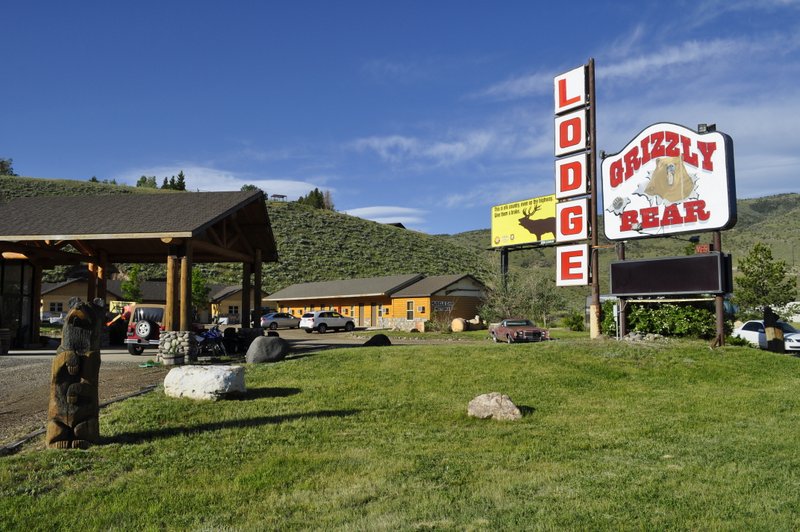
We traveled north back into Yellowstone to visit all the hot spring and geyser sites, including Old Faithful. I almost dubbed it ‘Old Faithless’ because we had to wait about 20 minutes longer than expected for it to do its stuff. I say ‘we’ – us and about 500 others. This was no doubt the most crowded part of the park that we visited, but everywhere else we were able to stop, take our time, and take all the photos and video we wanted. Late in the afternoon we headed towards the east entrance to Yellowstone down the highway to Cody – ‘the rodeo capital of the world’, and founded by ‘Buffalo Bill’ Cody. Cody lies about 70 miles east of Yellowstone. We had made hotel reservations outside the national park – at Red Lodge, Jackson, and Cody – and even with having to retrace our steps we decided it was worth it. However, we discovered that the road to the Yellowstone north entrance was being repaired, and significant traffic delays were being reported. So rather than traveling back from Cody to Yellowstone on the last day, we decided to head east.
Grizzly Bear Lodge, Cody (7); cost: USD97
We had dinner at the Proud Cut Saloon, and although the service was rather slow – and I did complain – the flatiron steak I had was one of the best steaks I’ve eaten in a long while.
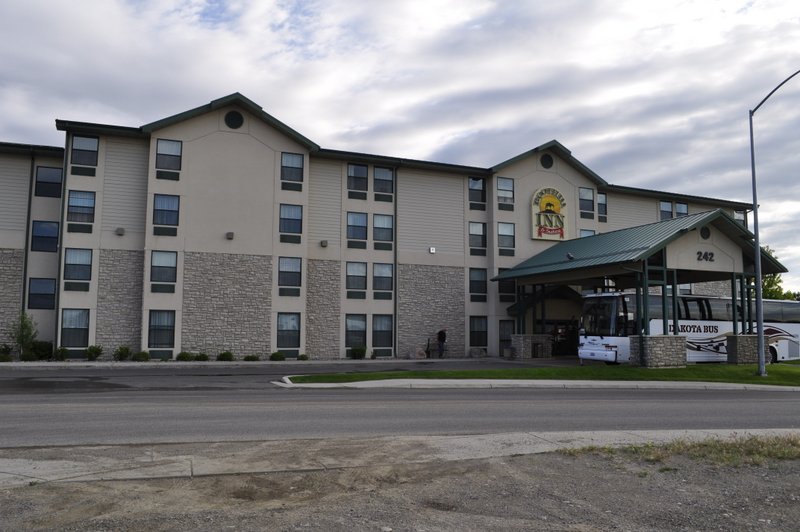
Day 8. Cody to Billings, MT via the Bighorn Mountains: 244 miles Route And what a smart decision that was, not to travel back into Yellowstone. Instead we headed east into the Bighorn Mountains – and would have reached Sheridan again if we had not turned east again, and then north towards our final destination, Billings.
The Bighorn Mountains rise out of the high plains. On the descent there was a 10% gradient for over 12 miles; sometimes it felt as though we would fall over the edge of the earth. Our hotel in Billings was conveniently located close to the airport. We had a reasonable meal at the local Applebees beside the hotel.
Boothill Inn and Suites, Billings (9); cost: USD128
We spent USD86 on entrance fees to the various national and state parks and national monuments – an exceptionally good deal, since the entrance fee often covers multiple visits over a three to seven day period. Just what we needed for our Yellowstone visit. And the formation brochures that are provided by the National Park Service are excellent. I don’t think we spent more than about USD350 on meals. Each day (except one) we had breakfast (such as it was) in the hotel, and had sandwiches for lunch (or left-overs from the previous night’s meal) supplemented by a yoghurt and a piece of fruit (often filched from the breakfast bar), and a handful of delicious Trader Joe’s Veggie & Flaxseed Tortilla Chips. The evening meal was the ‘expensive’ part of the day, and it was always possible to find somewhere good to eat and not expensive. Not a journey exactly on a shoestring, but not super expensive either.
A long journey, but a great experience. Of course there are so many more details to fill in, and these will be the topics I’ll address in a range of blog posts over the coming weeks.
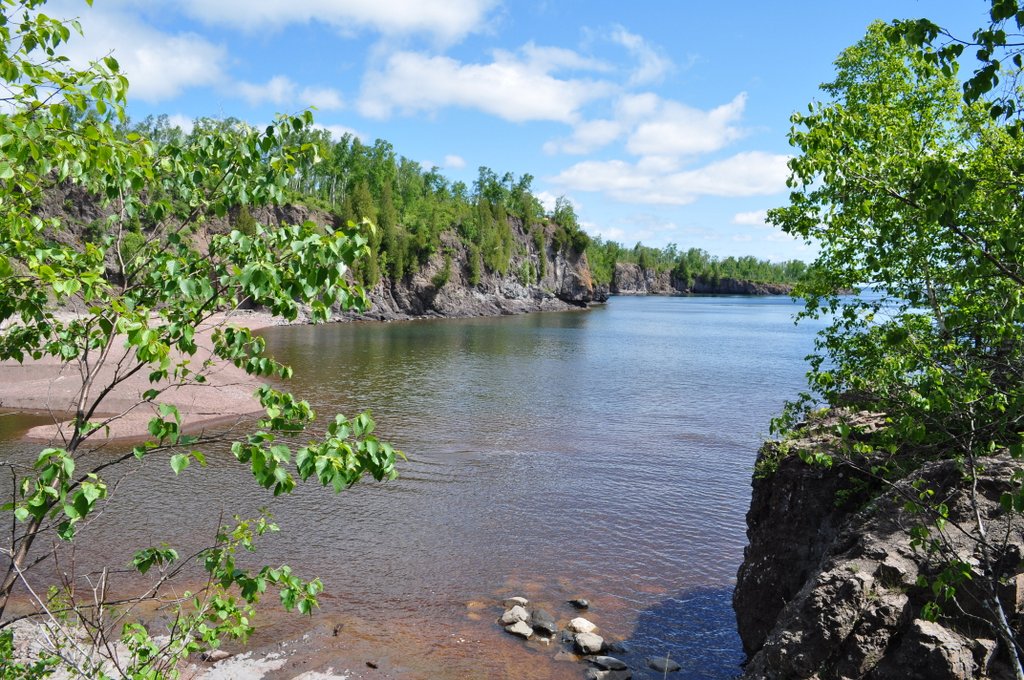
Minnesota Riviera? Yes, you could call it that. With its beaches, bays and secluded coves, its headlands and cliffs, along Lake Superior’s North Shore, not to mention its summer temperatures in the 80s and 90s at times (let’s forget about those sub-zero winter extremes), it’s as attractive and warm as the south of France.
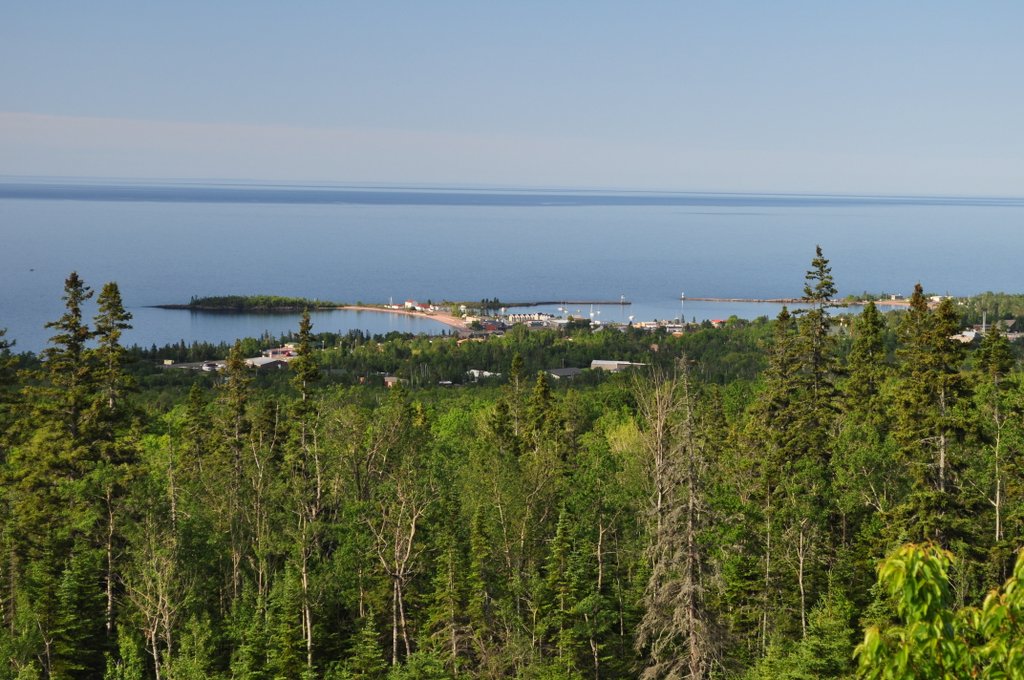
Minnesota has about 150 miles of coast along Lake Superior, a body of water vast enough to appear like the ocean itself. Indeed the lake statistics are impressive. It is the largest freshwater lake in the world – by surface area, at 31,700 sq. miles, and the third largest in terms of volume. The maximum depth is 1,332 feet, and its surface is about 600 feet above sea level. At over 160 miles across, it experiences some severe storms in winter, with waves regularly reaching 20 feet, and 30 foot waves not uncommon. But more of that later.
And we took advantage of our visit to travel north and visit Duluth, the most westerly port on the Great Lakes, as well as the Boundary Waters Canoe Area Wilderness (BWCAW) along the Gunflint Trail just south of the international border with Canada (Ontario). This is the route of our trip.
Duluth is the fourth city of Minnesota in terms of population. At one time there were passenger services connecting Minnesota with the Atlantic Ocean. Now the port is a major conduit for coal and iron ore. Part of the old port area – Canal Park – has been transformed into a tourist attraction, with the conversion of some of the old warehouses into hotels and shopping venues. There’s also a large aquarium featuring the biology of Lake Superior. One of the Great Lakes steamers, the William A. Irvin, is permanently moored (just behind our hotel in fact) and converted to a museum. Here are some more photos of the Canal Park area.
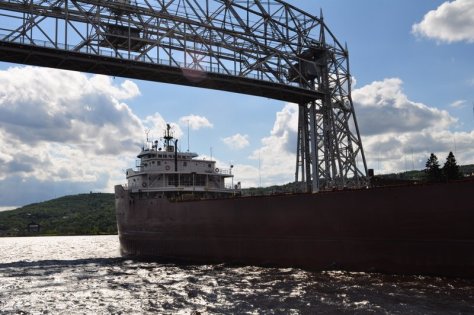
One of the the main landmarks is the entrance canal to the harbor under the Aerial Bridge. The main span is at road level, and is lifted to varying heights depending on the size of the ship wishing to pass through. During our walk-about, we saw the bridge lifted twice: the first time for a pleasure cruiser offering a tour of the harbor and Duluth Bay, and secondly for an ore freighter, the Hon. James L. Oberstar (of the Interlake Steamship Co.) – very impressive. Here’s the freighter approaching the bridge and signalling its intention to pass through, and given the all-clear from the bridge operator.
And this photo just shows how high the bridge can be raised to let the biggest ships through.
The evening of our stay we decided to eat in the steakhouse attached to our hotel. It was offering a free appetizer per table and free drinks (it was happy hour). For the appetizer we chose local Minnesota (and Wisconsin) speciality – you’d hardly call it a delicacy: cheese curds. Actually these are pieces of cheese (usually Cheddar or Monterrey Jack), coated in batter, and deep fried! One plate for the two of us was plenty. I wonder how much that contributed to my cholesterol levels?
[In September 2010, we enjoyed the Minnesota State Fair (reported to be the biggest in the country) and attended a broadcast of A Prairie Home Companion. Raconteur Garrison Keillor and Californian singer-songwriter Sara Watkins sang a duet about State Fair food – especially deep fried cheese, during the broadcast on 4 September 2010. Deep fried cheese was very much in evidence as we wandered around the Fair.]
We hit the road early the next day, heading north. Highway I-35 ends just north of Duluth, and is replaced by scenic highway US 61. Between Duluth and Two Harbors there is an expressway, but the old road (still an excellent surface) meanders alongside the lake, with some stunning views.
Just beside the road, the falls drop in five cataracts to a meandering river that empties into Lake Superior at Agate Beach. We took the 20 minute walk down the falls to Agate Beach, but didn’t find any agate. In any case removal of any stones is prohibited.
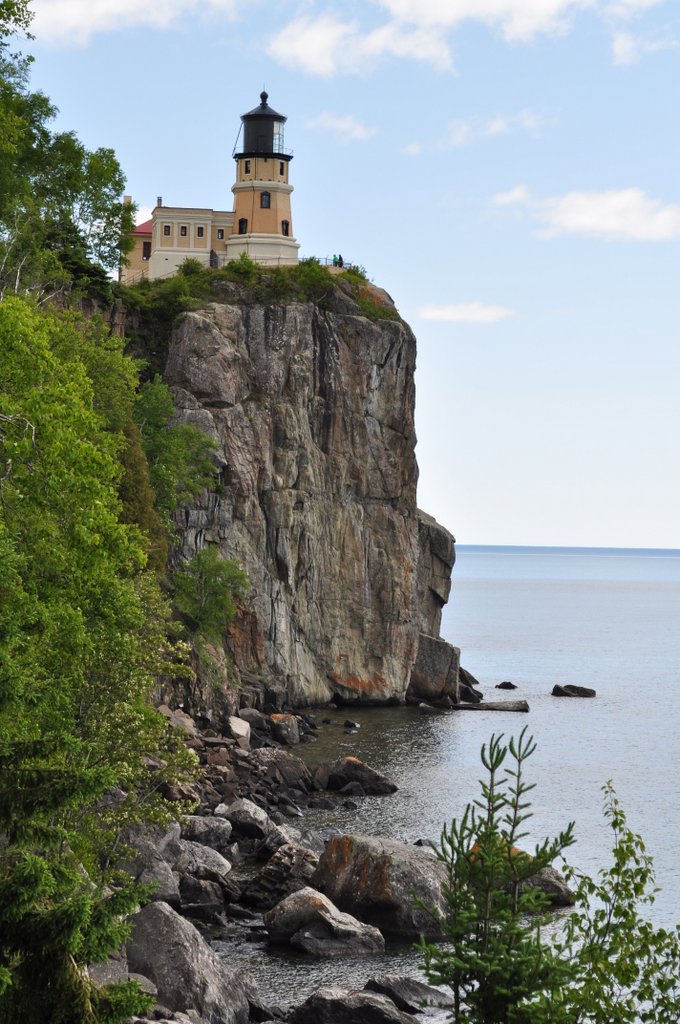
Just a little further north from Gooseberry Falls, and southwest of Silver Bay stands Split Rock Lighthouse, which opened in 1910. Its construction was prompted by a major storm a few years earlier after a ship came to grief on the rocky shore. In fact there’s a whole network of lighthouses around Lake Superior. Split Rock Lighthouse was decommissioned in 1969 once radar (and now GPS) was used for navigation. It remains an iconic site standing 100 feet above the lake, and attracts thousands and thousands of visitors each year – but thankfully not on the day we visited.
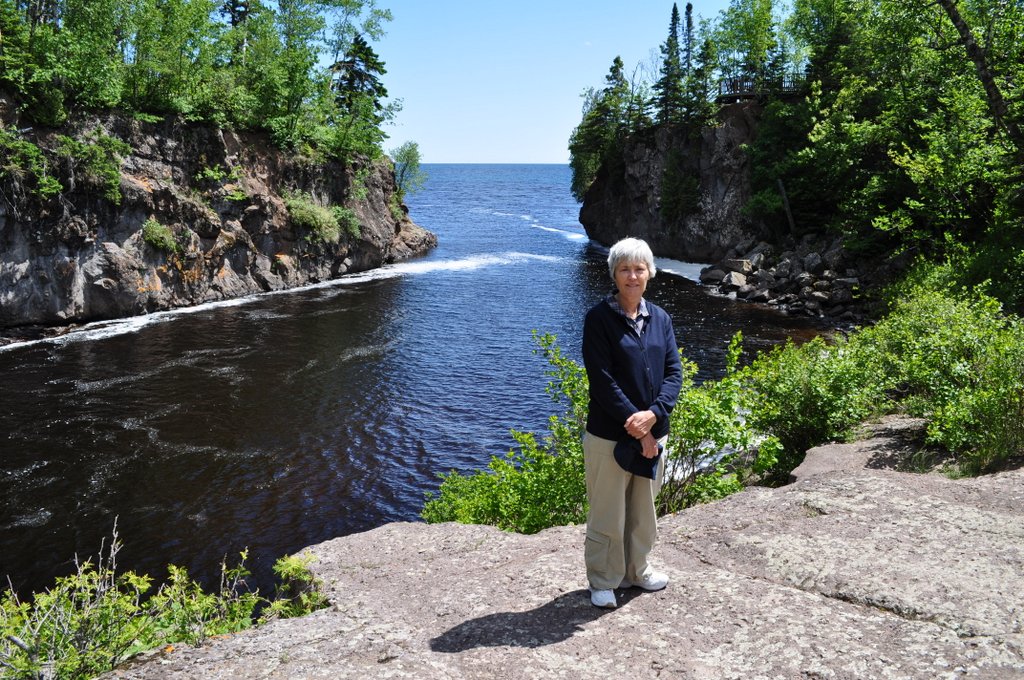
Next stop on our journey was the Temperance River Gorge and State Park, just south of Tofte. While the falls themselves were attractive, what we liked best was the small cove where the river meets the lake – very beautiful.
Our travels ended in Grand Marais, a small town (and harbor, mainly for pleasure craft) about 50 miles south of the border with Canada, where we spent two nights. This was an excellent base to explore the Gunflint Trail and Superior National Forest in the BWCAW.
The Gunflint Trail is paved, and extends some 57 miles inland. At the top end of the Trail lies Gunflint Lake, with the international border bisecting the lake. This was the closest, at about half a mile, that we came to Canada on this trip. The BWCAW is a myriad of forest roads, and there are many resorts and eating places along its length, where camping and all manner of field activities and sports are permitted. Off the beaten track the only access is on foot or by canoe. Beware of bears! Unfortunately we didn’t see any large animals apart from a few deer.
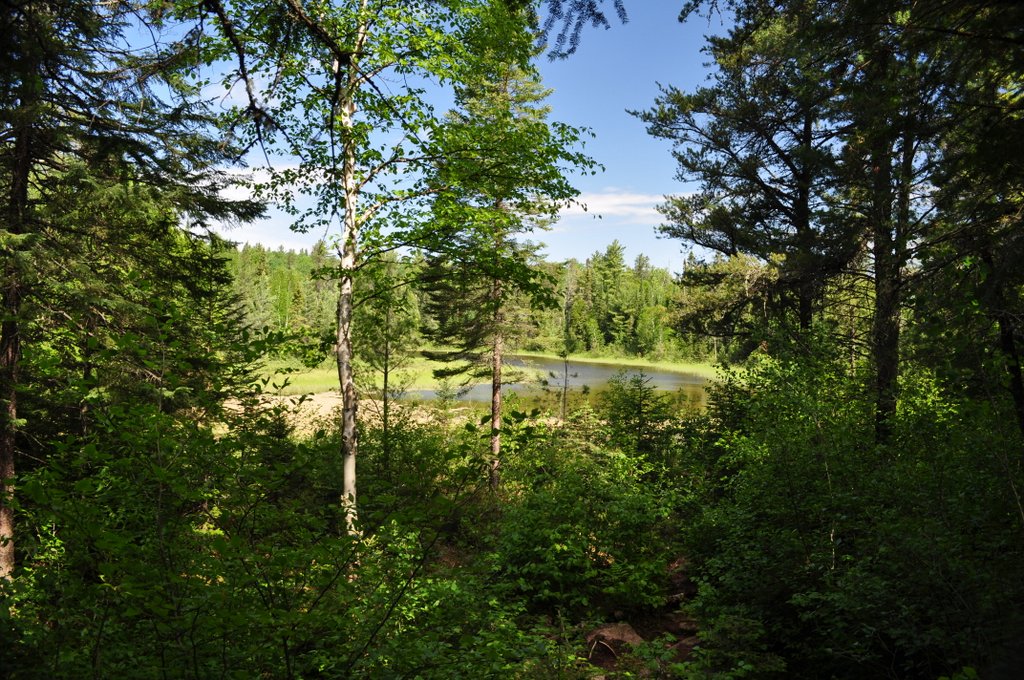
We hoped to see moose at a well-known site with an observation platform, and black bears as well (that had been featured on a major BBC TV broadcast from this area over several weeks in the month prior to our visit) – but none showed. We did see millions of trees. At the top of the trail it seems there had been a major fire in past years, and the vegetation is still recovering.
One of the disappointments was the limited access to lakeside views along the trail. We did leave the paved road on the return journey, heading off down the Arrowhead Trail, and joining US 61 at Hovland, about 20 miles north of Grand Marais.
We thoroughly enjoyed our trip to the Minnesota Riviera and, as with our trip to Arizona and New Mexico in 2011, we saw relatively few tourists. Indeed, along the Gunflint Trail it often seemed as though we had the whole BWCAW to ourselves. This is definitely a region of the USA that I would recommend anyone to visit. Until you have seen it for yourself, it’s hard to imagine the vast extent of Lake Superior. Of course, we saw the area at its best – blue skies, nice warm temperatures. There was a great diversity of wild flowers – especially the bluebonnets, a wild lupin species along the roadside (although not all were blue as we saw some white and pink specimens). On the trip south back to the Twin Cities, we decided to cross over into Wisconsin since we’d experienced some delays on I-35 due to road works and a contraflow. Around Two Harbors we ran into heavy downpours and thunderstorms which stayed with us all the way back to St Paul. A week later (in fact on the night of our homeward flight from MSP) there was a major storm that hit the Duluth area, dumping 5-7 inches of rain in just a few hours. Needless to say there was considerable disruption and damage to roads. We were very lucky to have avoided that.
If you get the chance, do make a visit to the Minnesota Riviera – you won’t regret it.









 And with these words, Minnesotan author and story-teller














 he evening of our stay we decided to eat in the steakhouse attached to our hotel. It was offering a free appetizer per table and free drinks (it was happy hour). For the appetizer we chose local Minnesota (and Wisconsin) speciality – you’d hardly call it a delicacy: cheese curds. Actually these are pieces of cheese (usually Cheddar or Monterrey Jack), coated in batter, and deep fried! One plate for the two of us was plenty. I wonder how much that contributed to my cholesterol levels?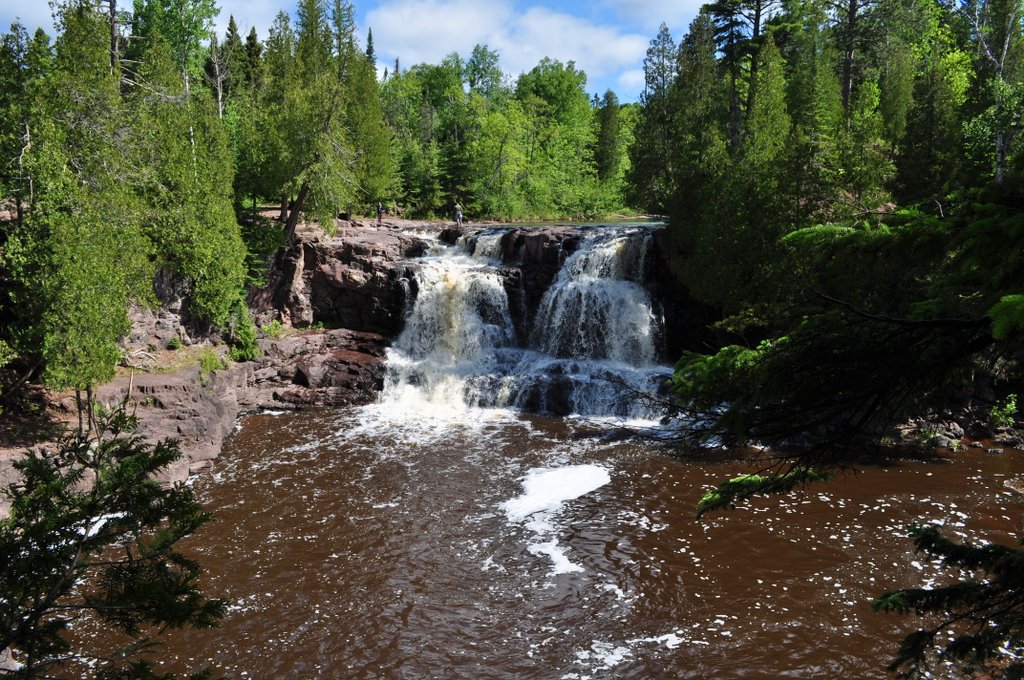
 A balanced diet . . .