Catholic tastes in music – a challenge for a desert island castaway

A life without music is no life . . .

I need music around me almost all day long. Much of the time it’s the music I have stored on my iPod linked up to my stereo system; so am able to enjoy CD quality as I listen. But I do have some CDs that I’ve never ripped, especially my collection of classical music.

They say that looking at someone’s CD collection says a lot about them. And before you ask, yes, I do have my collection sorted alphabetically – it’s the taxonomist in me. My tastes are broad and varied: rock, pop, folk (especially Irish and Northumbrian pipe music), country, and classical. So I often wonder which eight records I would choose to take on an imaginary desert island.

Desert island? Have I completely lost the plot? Not at all. I’m referring to a BBC radio program first broadcast in 1942, and which celebrated its 70th anniversary recently (the guest was Sir David Attenborough). The format of Desert Island Discs is simple. Each week a guest is invited to choose the eight pieces of music, a book (in addition to the Complete Works of Shakespeare and the Bible), and one luxury that they would take with them as an imaginary castaway on a desert island. Discussion of this music then permits a broader appreciation of the guest’s life, career and other ideas. The current presenter is Kirsty Young, but the original presenter (who actually devised the program), Roy Plomley, was in charge until his death in 1985.

So when you think about it, the choices have to be ones that you’ll never (well, hardly ever) tire of listening to. For what it’s worth, and in no particular order, here are my eight pieces of music – but the list could change tomorrow (and through the wonders of Google and YouTube, I’ve been able to find a great link to each piece for your enjoyment):

Roberta Flack: Killing Me Softly with His Song

I’m not really a Roberta Flack fan – but this song has special memories for me, and these come flooding back whenever I hear it played (not so frequently these days). When I joined the International Potato Center (CIP) in January 1973 this song had just been released and was played all the time on radio stations in Lima. So this song takes me back to the beginning of my career in international agricultural research.

The Beatles: We Can Work It Out
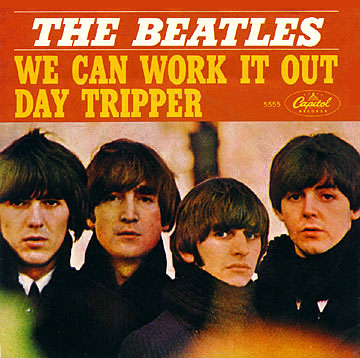
Released in December 1965, as a double A side with Day Tripper. As a teenager in the 60s, I grew up with The Beatles – I was 14 when She Loves You was released and the group became an overnight sensation. I was hooked, and bought nearly all their LPs on vinyl (which were stolen during a burglary in Turrialba, Costa Rica in 1978 – but that’s another story).

When I moved to CDs (in 1991) I replaced all my Beatles albums. I could have chosen any one of many of their phenomenal output, but We Can Work It Out has always been a favorite, and the title reflects, to a certain extent, my philosophy in life. At one of the IRRI 50th anniversary events held in Manila in December 2009, a group called Area One performed a set of Beatles numbers, and played We Can Work It Out just for me! Click here to watch.

Fleetwood Mac: Don’t Stop
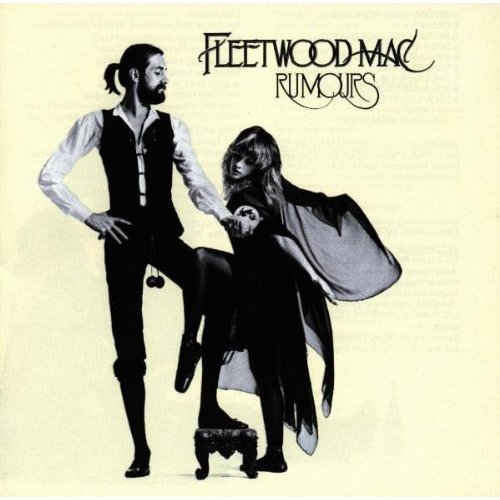
The first CD I ever purchased (in 1991) was Fleetwood Mac Greatest Hits, just prior to my move to the Philippines to join IRRI. I’d never really been a fan of the group, although they were familiar to me, in a distant sort of way.  Since then, I have become slightly obsessive with their music, and certainly Rumours (released in 1977, and which went on to become one of the best selling albums ever) is a classic. Don’t Stop can be taken as a song of great optimism – even though Rumours was recorded when Fleetwood Mac and their tangled personal relationships were in meltdown. Don’t Stop was adopted by the Clinton campaign for the presidency in 1992, and Fleetwood Mac re-formed specially to play at the Clinton Inauguration Ball on 20 January 1993.
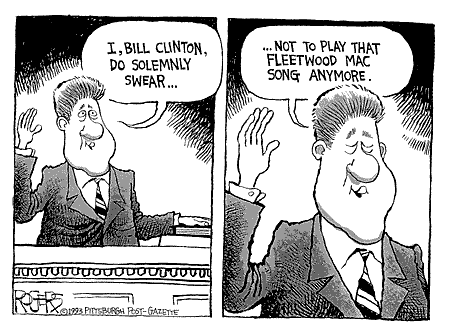
The video shows the group performing at that event (not the best performance, however – watch Michael Jackson and other celebrities join FM on stage towards the end of the video). In 2006 I went to a Fleetwood Mac concert (along with 60,000 + fans) in St Paul, Minnesota. What an event – you could feel the music vibrating every organ in your body. And I’m not ashamed to say that I just couldn’t hold back the tears; what an emotional event. Pity that Christine McVee (née Perfect, and brother to entomologist John Perfect who worked at IRRI for a while in the 1980s) had decided no longer to tour with the group. A great concert, nevertheless.

Pink Floyd: Comfortably Numb (The Wall)

I’ve become an avid fan of Pink Floyd only in recent years, and really taken with the guitar mastery of Dave Gilmour. His solos in this song makes the hairs on the back of my head stand up. The version in the video link is from a Roger Waters concert of The Wall at the O2 Arena in London in 2011, with a special appearance of Dave Gilmour.  I was never really aware of the group in the 60s, and was abroad during the 70s when they really made a name for themselves. We didn’t hear much Pink Floyd on the radio in Peru or Costa Rica. However, I do remember, on one trip to Guatemala in late 1979-early 1980, switching on the TV in my hotel room and seeing a video of Another Brick in The Wall. I was fascinated by ‘the marching hammers’.

Dire Straits: Sultans of Swing
Dire Straits – what more can I say.

I have been a consistent fan since the early 1980s, and have followed Mark Knopfler ever since Dire Straits broke up. Mark is probably the greatest guitarist performing today. Sultans of Swing is a vehicle for Mark’s virtuosity, and although included on the album Dire Straits, it was the group’s first release as a single in 1978, but didn’t become a hit until the following year when it was re-released. Even today, Mark cannot play a concert without a rendition of Sultans of Swing. I was fortunate to go to one of his concerts at the LG Arena in Birmingham in May 2010 (tickets were a Christmas present from my daughters), and the live performance was stupendous.

Chopin: Mazurka No. 23 in D Major, Op. 33, No. 2 (but I’d like all the mazurkas, waltzes, and polonaises).
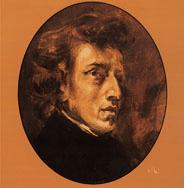
I’ve always appreciated the music of Fryderyk Chopin. So I felt privileged during a visit to Poland in 1989 (I gave a series of lectures on crop evolution and genetic resources at a couple of research institutes) to visit Chopin’s birthplace. Some of his music was being played in the house that is now a museum. And as I strolled around the garden, I could hear this particular mazurka. Although it’s a favorite, it’s also a proxy for all his other wonderful music. The version played here is by Turkish concert pianist, Idil Biret.

Gluck: Che farò senza Euridice (and the whole opera, of course)

I’ve known this particular aria from Gluck’s opera Orfeo ed Euridice since I was a small boy. But the version I knew then was by the famous English contralto, Kathleen Ferrier, who died of cancer in 1953. But her version was sung in English as What is Life (this recording is from 1946). In the 1990s I used to travel quite often from the Philippines to Europe (especially Rome) in my capacity as Head of the CGIAR Inter-Center Working on Genetic Resources, and mostly flew with Lufthansa then. Lufthansa had (and I assume they still do) a terrific classical music audio stream, and on one journey I came across the version of Che farò senza Euridice listed here. In many productions the part of Orfeo is sung by a contralto (there’s a video of Dame Janet Baker on YouTube), but in fact it was originally written for a counter tenor. In this recording, counter tenor Derek Lee Ragin gives a stunning performance of the aria – you will be amazed that you are listening to a male singer.

JS BachThe Brandenburg Concertos (all six – I’m cheating)
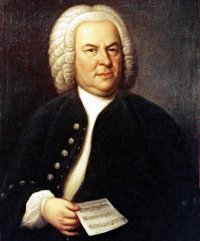
I don’t think any music selection would be complete without a piece by Johan Sebastian Bach. And so I have chosen The Brandenburg Concertos – I find it hard to choose just one of the six. The complexity – and timeless quality – of Bach’s music is a continued inspiration. The video shows the Concerto No. 1, Allegro Moderato.

So, these are my eight choices. I could have included more from Eric Clapton, Tom Petty and the Heartbreakers, The Traveling Wilburys, R.E.M., ELO, Crowded House, South American music, The Chieftains, Alison Krauss, and of course a host of baroque composers such as Vivaldi, Boccherini, Haydn, Mozart, and later composers such as Beethoven, Schubert, etc. If I were to make the list in 12 months time, maybe there would be some changes.

And the extras . . .
So what would be my one luxury item and book? Well, I think I’d choose a pair of binoculars – that way I could spend some time birdwatching (assuming my desert island is suitably forested), and to scan the horizon for passing ships to rescue me. And the book? Well, since I reckon I’d have a lot of time on my hands to play word games, I think a copy of Roget’s Thesaurus would be very useful. Incidentally, the Bible would have to be the King James 1611 – I’m not a religious person, but the English text of this version is wonderful and has given so many phrases to modern English usage (and it just celebrated its 400th anniversary).

PS. I’m also an ABBA fan!
Joke of the year

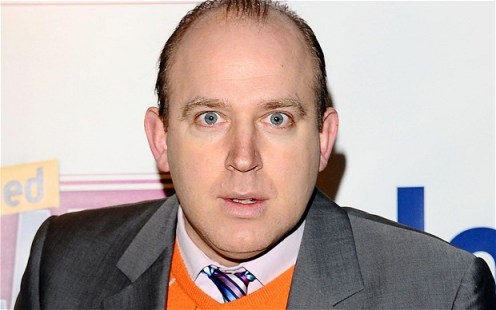
I watched the BBC One Show last night, and one of the guests was comedian Tim Vine (below), who is renowned for his fast talking joke abilities (he held the record for most gags in one hour). Even during the course of the program he was dropping gags into the conversations as they unfolded. In today’s eTelegraph there is a story about the funniest jokes of the year (Joke of the year: dwarf gag is Telegraph readers’ favourite one-liner – Telegraph). I’m sure you’ll find at least one there that will tickle your ribs. I’m still chuckling . . .

On being a Grandad . . .

I’m not a very tolerant person. And I’m certainly not a very patient one, either. Hannah and Philippa will tell you that, as well as the folks I worked with at IRRI.

Neither am I a particularly little person person – frankly I’ve never been much into the small child thing, except my own of course. I’m not sure I was a very good father when Hannah and Philippa were growing up. During the 1980s, when I was working at the University of Birmingham, I think I focused rather too much on work and not enough on family. Maybe that is not such an uncommon thing. But looking back on those years, I do regret not dedicating more time to the girls than I did.

I was also a bit of a disciplinarian. There was definitely a line in the sand . . .  So it’s come as a bit of a surprise to me to realize just how much I love and enjoy being a Grandad.

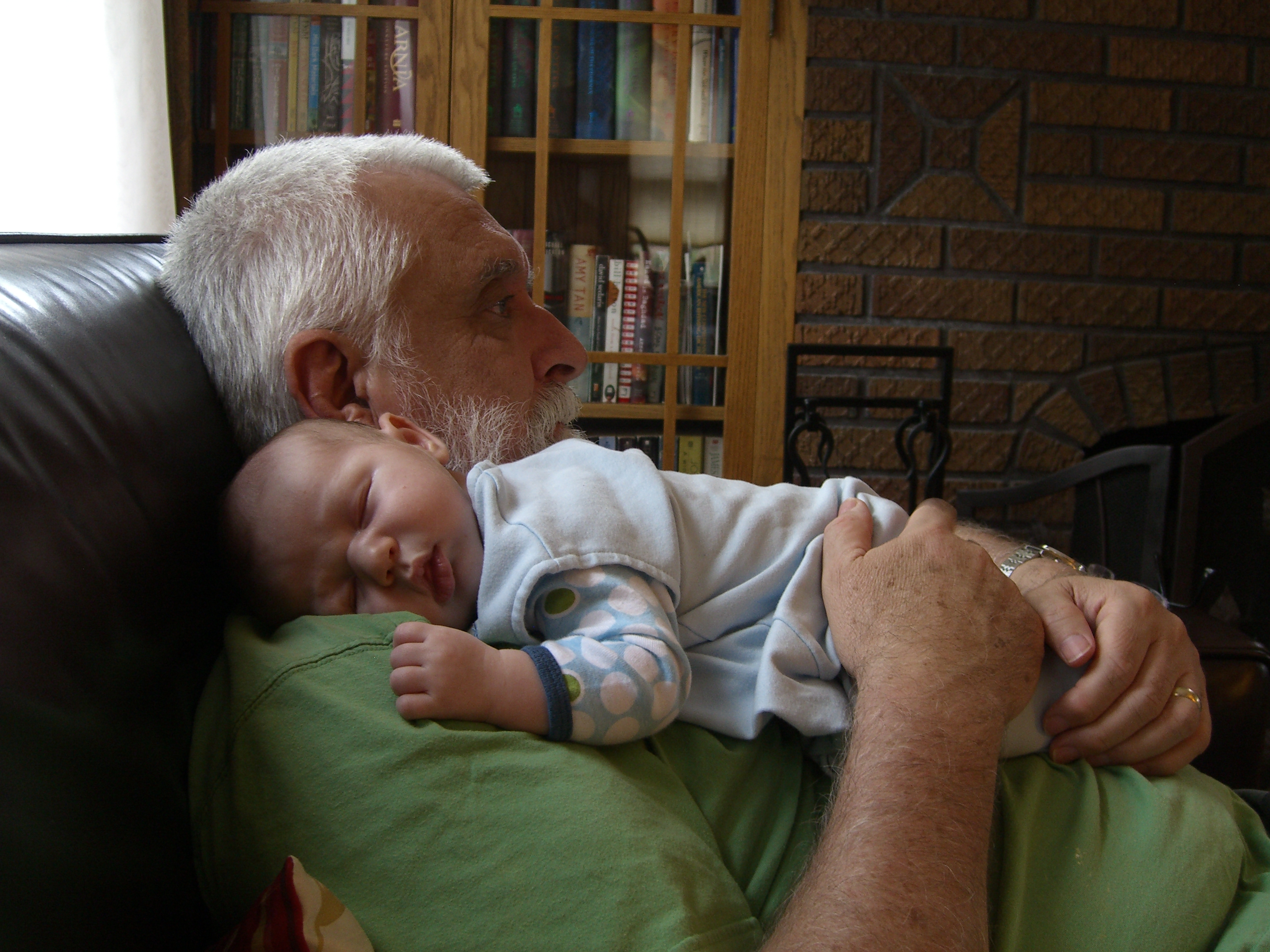
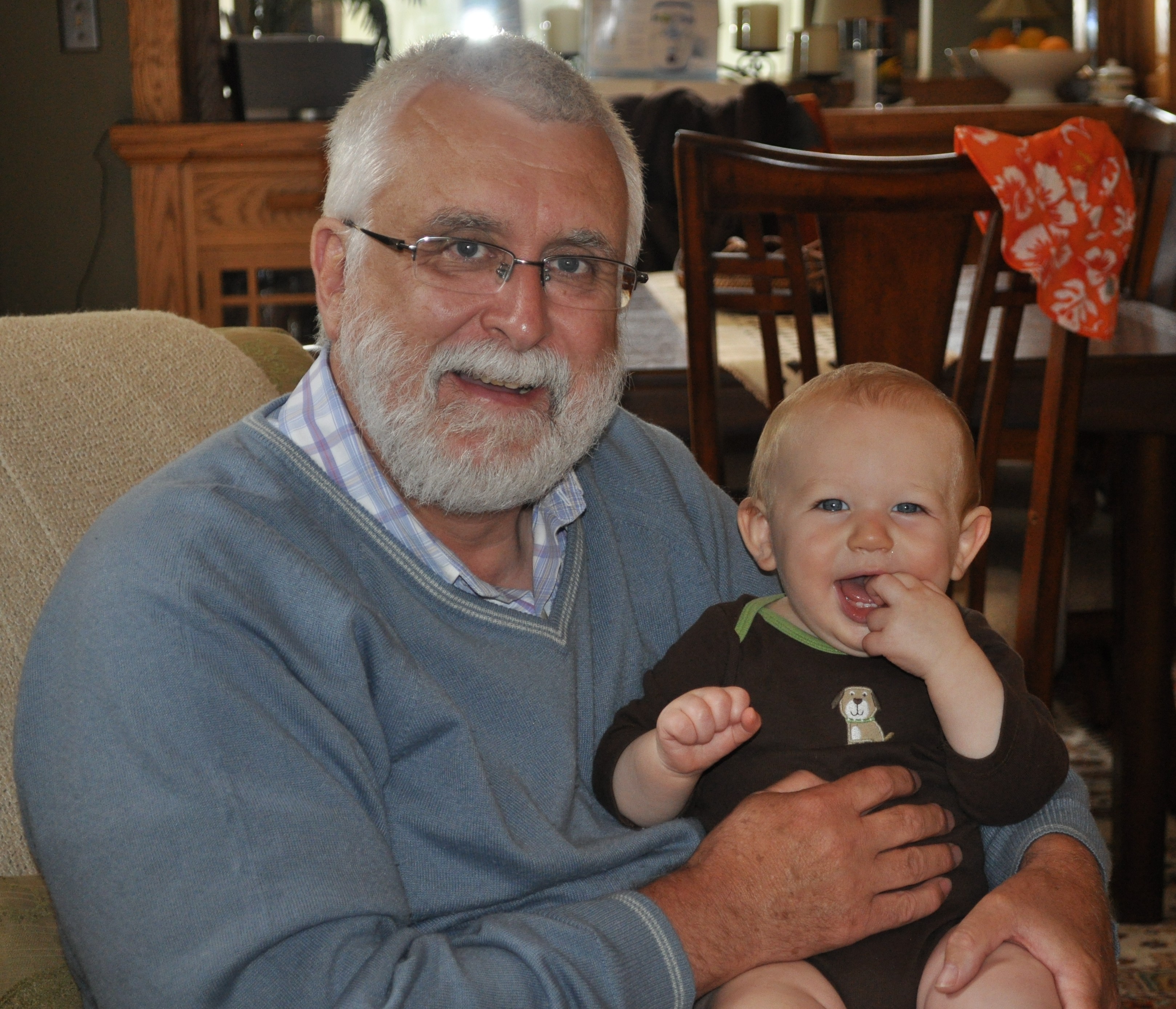
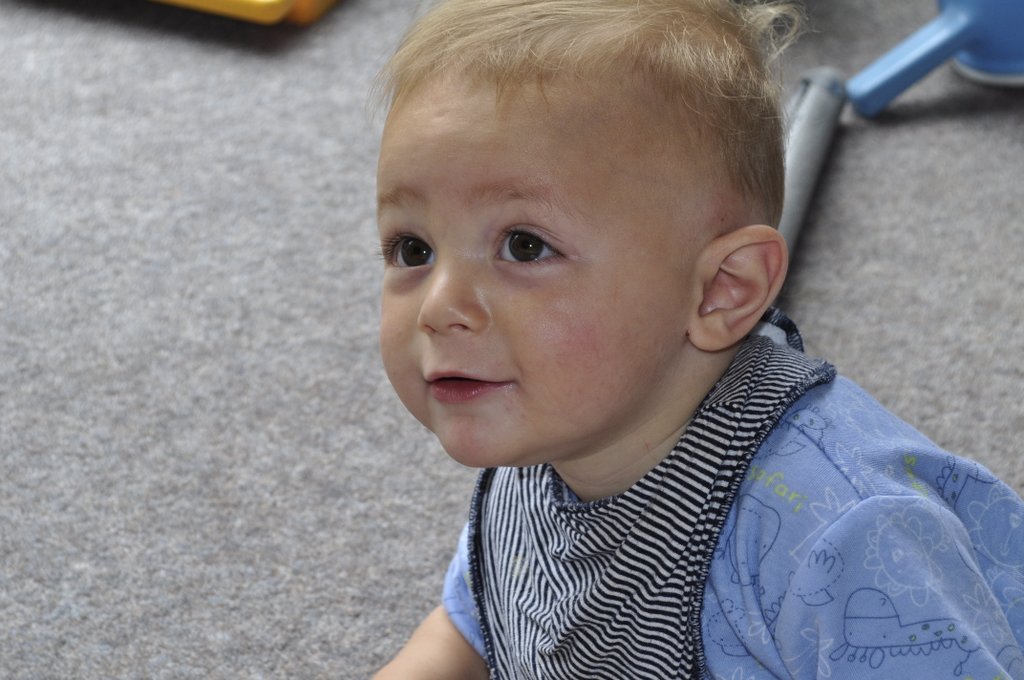
When we visited Hannah and Michael in September 2010 and met young Callum Andrew for the first time, it was a LONG time since I’d held a baby. And I think I took to it like a duck to water. One thing though, I don’t do nappies/diapers.

As we have watched Callum grow, seen his personality develop, and all the skills he is developing, it’s such a wonder and joy. Callum and me have a great time playing peek-a-boo, and this continues even on Skype. He has such a welcoming smile – the whole screen lights up. Now that he’s walking, his personality has blossomed, and it seems he’s into everything. I can see that Callum and I are going to be big buddies, and we look forward to visiting again later this year.

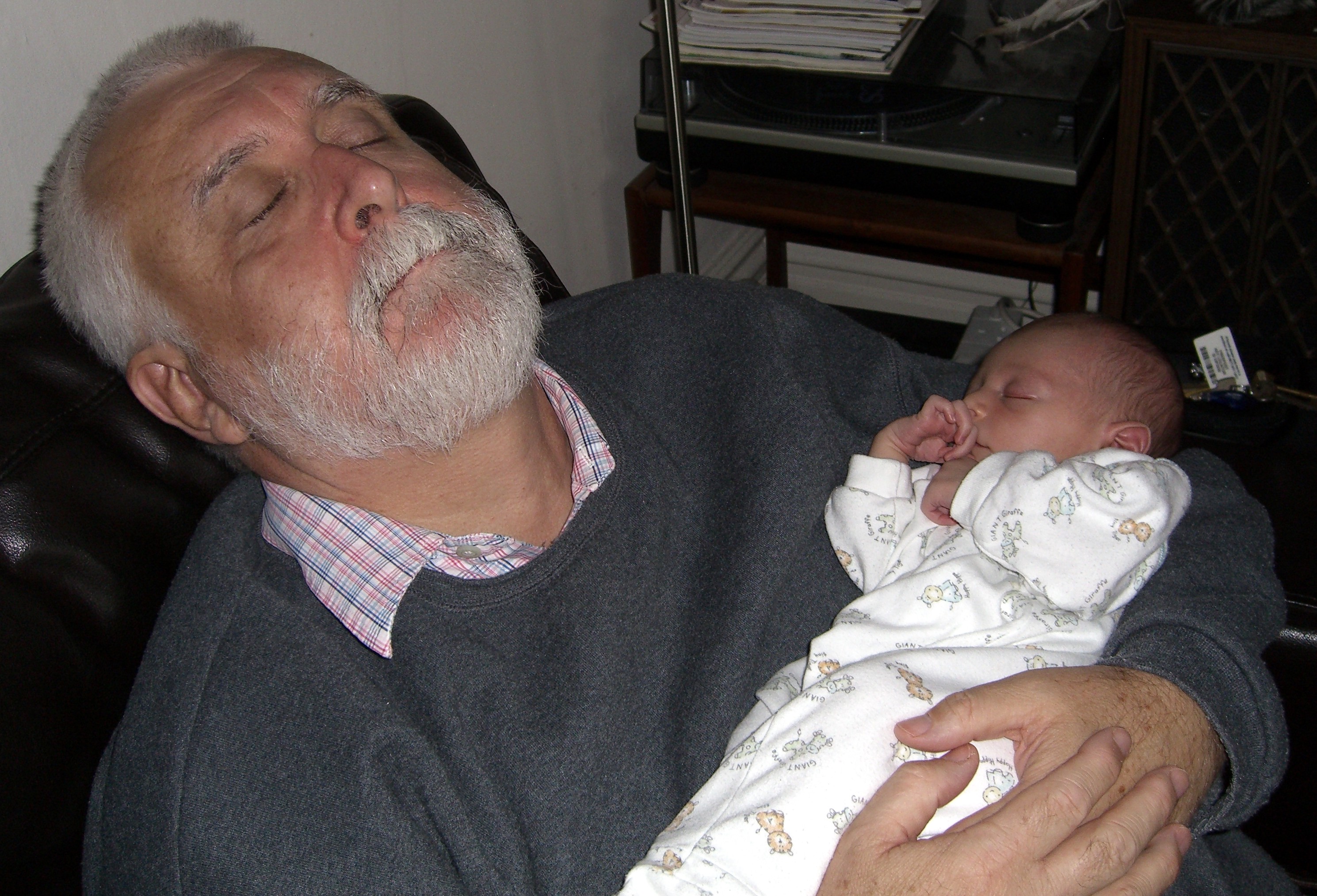
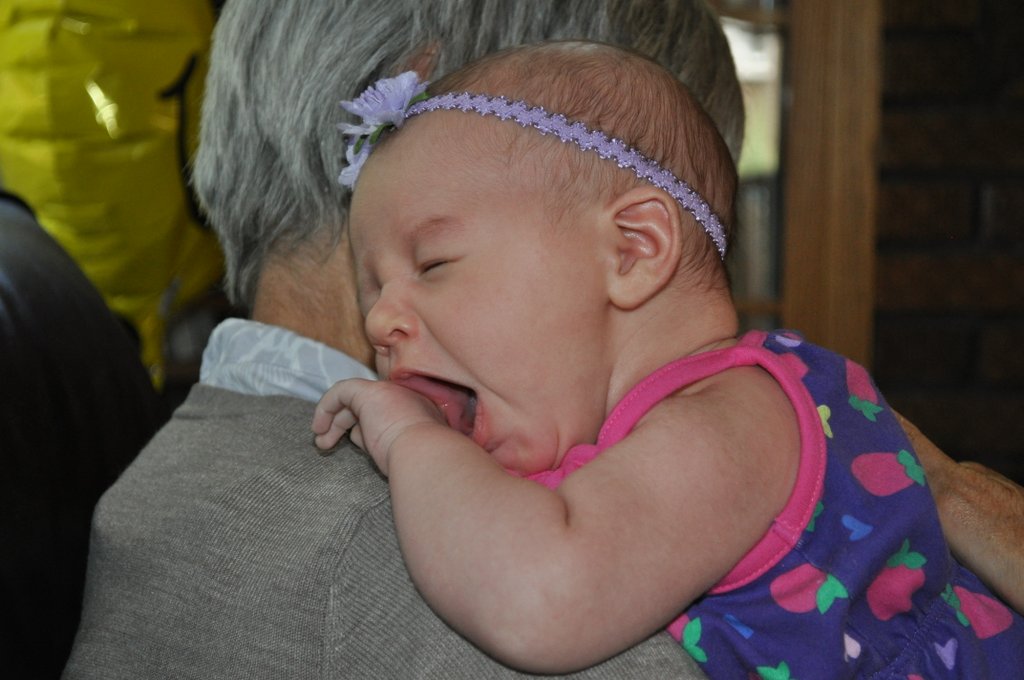
Now, Philippa and Andi’s little boy, Elvis Dexter, was born only 4 months ago, and we met him just a couple of weeks later, and then again just before Christmas. What a difference two months can make. It’s really fun taking over for a while, having him snuggle down and go to sleep in my arms. He looks like he’s going to be a tall and slender boy, and we look forward to seeing him growing up.

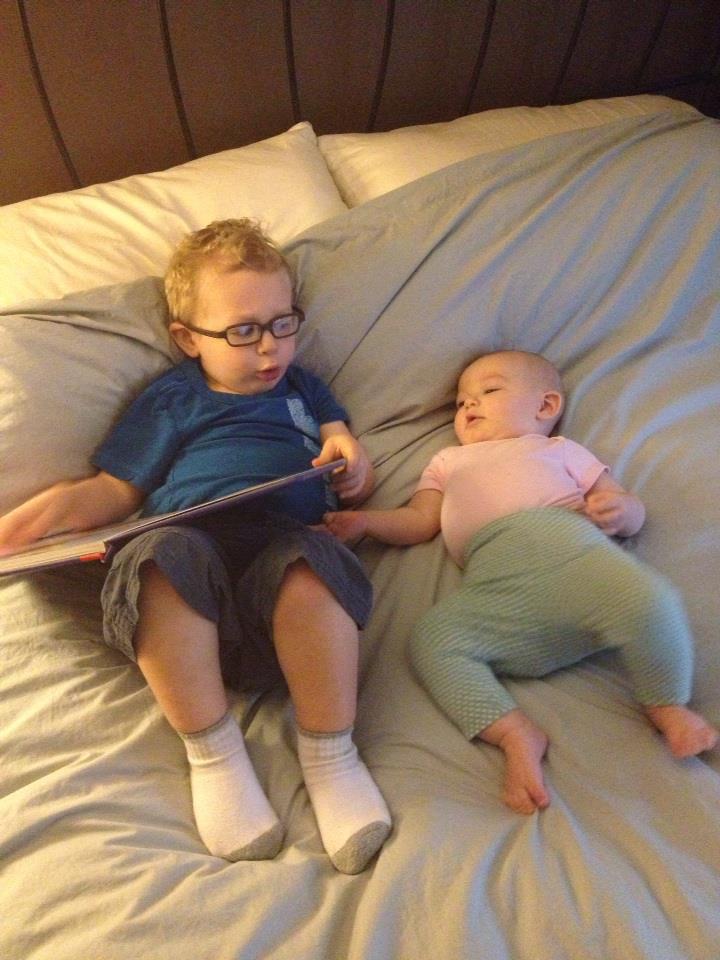
Our first grand-daughter, Zoe Isobel was born at 00:21 local time on 8 May 2012 in Minneapolis-St Paul, Minnesota. She’s a little sweetie, and it’s fascinating to see her grow and interact with Callum.

Grandadhood has already brought special times to retirement. But it is just a pity that the grandchildren are not closer to home. Hurrah for the Internet and Skype!

July 2015 update:
Here we are in July and Callum will soon be 5 and starting school in September. Zoë was 3 last May. Elvis will be 4 at the end of September, and his younger brother, Felix, will be 2 on 1 September. Here are a couple of latest photos.

June 2015 150

Elvis&Felix July 2015

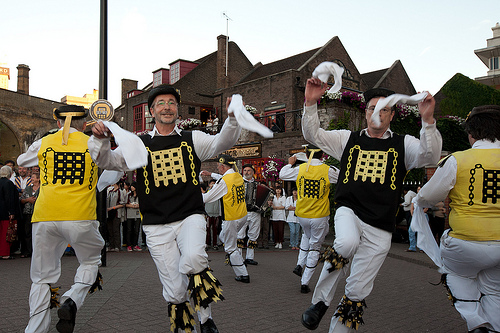
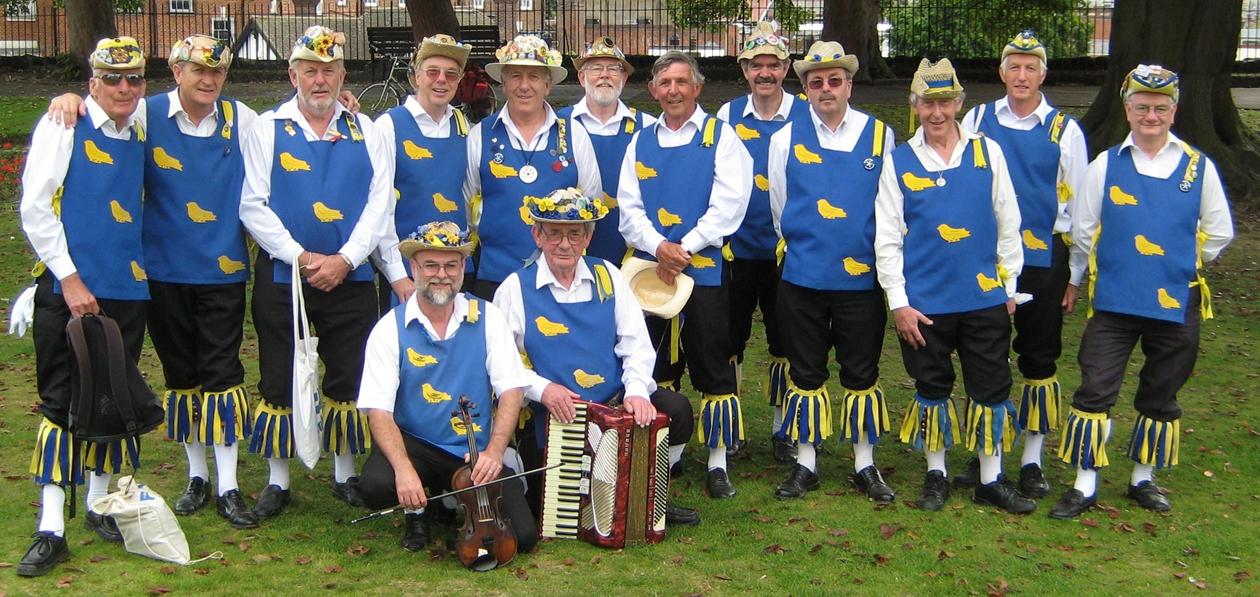
Sticks and hankies – a tale of Red Stags

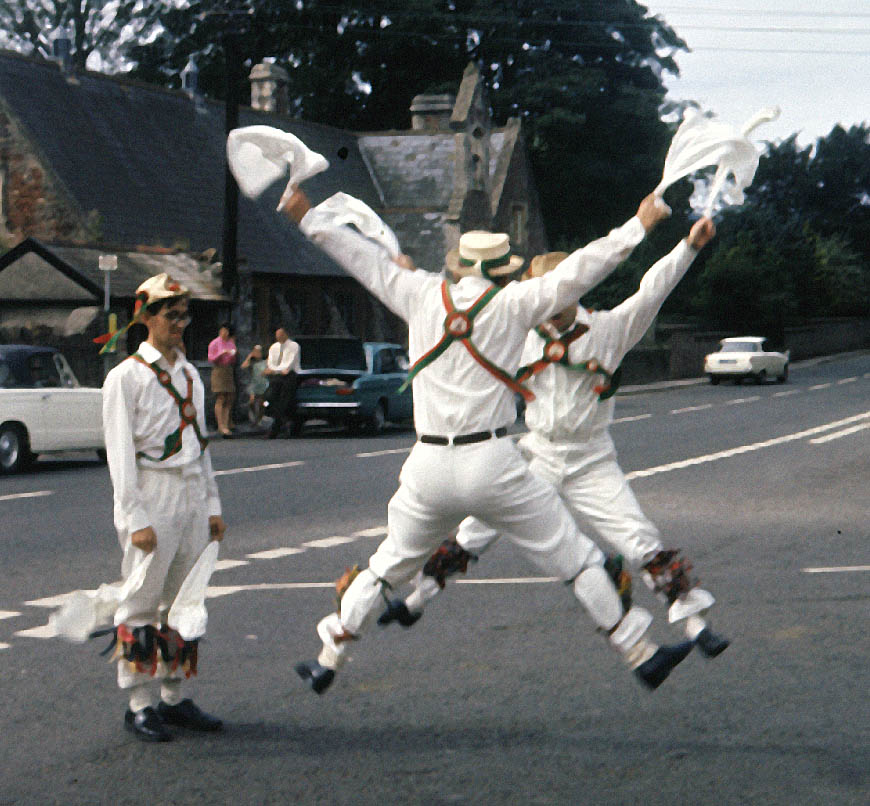
I took up Morris dancing while a student at the University of Southampton. This is how it all started and how the Red Stags came into existence.

I came up to Southampton in October 1967 to read environmental botany and geography. I had a place in South Stoneham House (SSH) hall of residence in Wessex Lane (now closed down – riddled with asbestos and no longer safe for human habitation) for my first two years at Southampton. Botany and SSH have a lot to do with the founding of the Red Stags.

I’d always had an interest in folk music (especially Irish music) but had never taken part in any folk dancing whatsoever before arriving in Southampton. Well, during Freshers’ Week (the introductory week for freshman) in 1967, I attended an event known as the Bun Fight where all the Student Union societies tried to sign up as many new members as possible. Well, I happened to sort of dawdle in front of the stall of the English and Scottish Folk Dance Society (ESFDS), and before I knew it, I’d been signed up to join. And so the following Monday I went along to the Union and started to learn to dance English and Scottish dances – nothing about Morris at this time.

At the end of the first year, all botany students had to attend a field course in the summer vacation, held at Lisdoonvarna on the west coast of Ireland in County Clare – lots of Guinness and good music and dancing. I guess we must have done some work as well since the area of the Burren close to Lisdoonvarna is a limestone of outstanding natural beauty and botanical interest. While on that course, one of my fellow students, Gloria Davies mentioned that Dr. Joe Smartt, a geneticist, was involved in folk music, and apparently had danced with the Winchester Morris Men (WMM). Joe didn’t teach first year students, so I had not met him – in fact, I didn’t really know who he was.

At the beginning of the second year, in October 1968, the Botany Dept. held a welcome party for incoming freshman. After a few glasses of beer, maybe wine, I decided to introduce myself to Joe. I told him that I’d heard he was a Morris dancer. He told me about the WMM, and that he’d also danced with the Westminster Morris Men. On the basis of what he told me, I asked him that if I could find five others who were interested, would he teach the Morris to us. And, lo and behold, within two weeks, the Red Stags Morris Men was founded, and registered as a society in the Students’ Union.

In October 1968 I was Vice President of the SSH Junior Common Room, and managed to persuade a number of friends there to join the Red Stags – Neil Freeman (Law), Simon Newman (Maths), Chris Lovegrove (Music), Derek Gorham (English freshman), and Clive James (Accountancy). Joe had a collection of 78 rpm recording of William Kimber (Headington) playing Morris tunes, and we used to meet once a week in the seminar room on the first floor of the Botany Dept. (now the Shackleton Building where Geography is housed). Joe would bring a portable record player and the records; we cut short and long sticks for the stick dances, and settled on learning the Cotswold Morris traditions from the villages of Headington, Adderbury, and Bampton.

We were also joined by some friends not in SSH – Colin Anderson (Accountancy), Rob Williams (Electronic Engineering), and Steve Jordan (Maths). We were also joined from time-to-time by Russell Meredith (Maths), a year ahead of us in SSH, who was primarily with the WMM. Colin was a member of the ESFDS, and that’s where I had met him – I think he also danced with the WMM. Others joined the Red Stags after its foundation, but sadly, I can’t remember all the names.

It took a little time to decide on a name for the side, finally settling for Red Stags, as that was the university’s crest in those days. Colin’s girlfriend Veronica worked somewhere in the university’s admin, and she kindly knocked up the tabards we designed, in the university colors of gold on the front and black on the back, with the silhouette of a red stag’s head on both sides. Our choice of tabards and black hats was made to set us apart, to some extent, from the WMM. The Westminster Morris Men also wear black hats, and I guess it was Joe Smartt’s association with them that set us on that course. We had to search out a supply of straw hats in Southampton – not the easiest thing to do in mid-winter. We finally found a supply in Dunn & Co in the High Street – we caused some amusement asking for about 10 hats, different sizes. Then we had to spray them black.

Our practices continued through the autumn term of 1968, and we made our first public performance in February 1969. I was also a regular member of the folk club that met in the Students’ Union on Sunday evenings. I persuaded the club to let me organize a ceilidh at which the Red Stags would make their first performance. But we needed a musician! Joe did take up the pipe and tabor later on, but in early 1969 (and on many other occasions) we were supported by Dudley Savage, a fiddle player of considerable skill whose playing could really lift the dancers. He played also for the WMM and as lead in a local folk band. The star turn were the Red Stags – making their debut, processing on, and dancing maybe four or five Headington and Adderbury dances. Needless to say, we were very nervous, but the reception was great. And I think we went from strength to strength.
We joined up with the WMM during the summer term on their tours throughout Hampshire and especially in the New Forest. We also joined with them in West Sussex to meet up with the Martlet Sword and Morris Men from Chichester. I certainly had some great times out with the Red Stags and the WMM.

From the outset, the Red Stags were supported by the Winchester Morris Men, particularly Dr Lionel Bacon who had founded the side in 1953, had been Squire of the Morris Ring 1962-64. Here are a few photos of Lionel playing his fiddle and dancing.

Click here for a more detailed account of how the Red Stags were founded, that I wrote in 2005.

I think the Red Stags were in demand, and we did quite a few shows, at University Open Days, in the city and around. The local TV used a film of us dancing Above Bar street in Southampton for the closing credits of a weekly news program, and this was shown for well over a year.

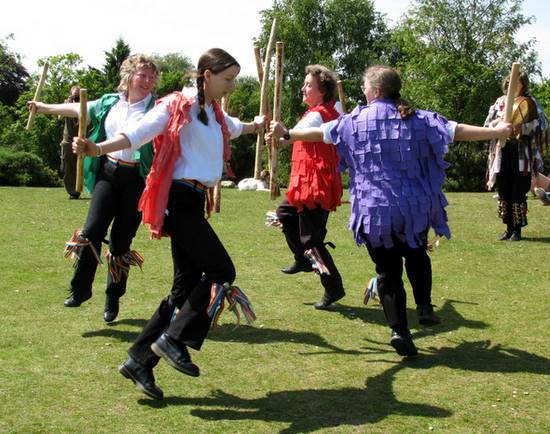
Today the Red Stags is a border Morris side, with both men and women dancing together, and is a member of the Morris Federation. The Red Stags will celebrate their 50th anniversary in 2018.

In September 1969, Joe Smartt, Russell Meredith and myself (as Red Stags) joined a group of dancers and pipers from Newcastle, including Colin Ross – of The High Level Ranters fame – and his wife Ray Fisher (a well-known Scottish folk singer, who sadly died last year), to participate in a bagpipe festival in Strakonice, Czechoslovakia.

We danced our way across Holland, Germany and into Czechoslovakia. Our stay in Strakonice was sponsored by the local brewery! Highlights included a fabulous Breton pipe band from Brest and a dance group from Concarneau. We danced Morris and Rapper that the group had taught me very quickly in Newcastle before leaving*. A baptism of fire. Although I didn’t get the stepping entirely correct, it was more important to get the movements, patterns right. We went round workingmen’s clubs in the Newcastle area on the Saturday night – and those men know their rapper! Our stay in Strakonice was sponsored by the local brewery!

The Red Stags were represented at only one meeting of the Morris Ring, in Bristol 1970. We were unable to field a full side unfortunately, but had a good time nevertheless. Joe was not with us – being otherwise engaged, getting married in Southampton!
Well, 42 years later, what are we all up to? Joe Smartt retired from the University a few years ago, and living still in Southampton, although not in good health. Neil Freeman is semi-retired, a solicitor and senior partner in a practice in Aylesbury. He still dances with Albury Morris Men in Hertfordshire. Chris Lovegrove is a music teacher as far as I know in Bristol. Si Newman is still around in the Southampton area. I believe that Steve Jordan dances sometimes with the WMM, as does Derek Gorham occasionally. I just heard from Derek who found this post! I don’t know about the others. As for me, my Morris days are long past. I danced in Birmingham with the Green Man’s Morris & Sword Club in Birmingham from 1970 until I headed off to Peru in January 1973, and for a while in 1975 when I was back writing my PhD thesis.
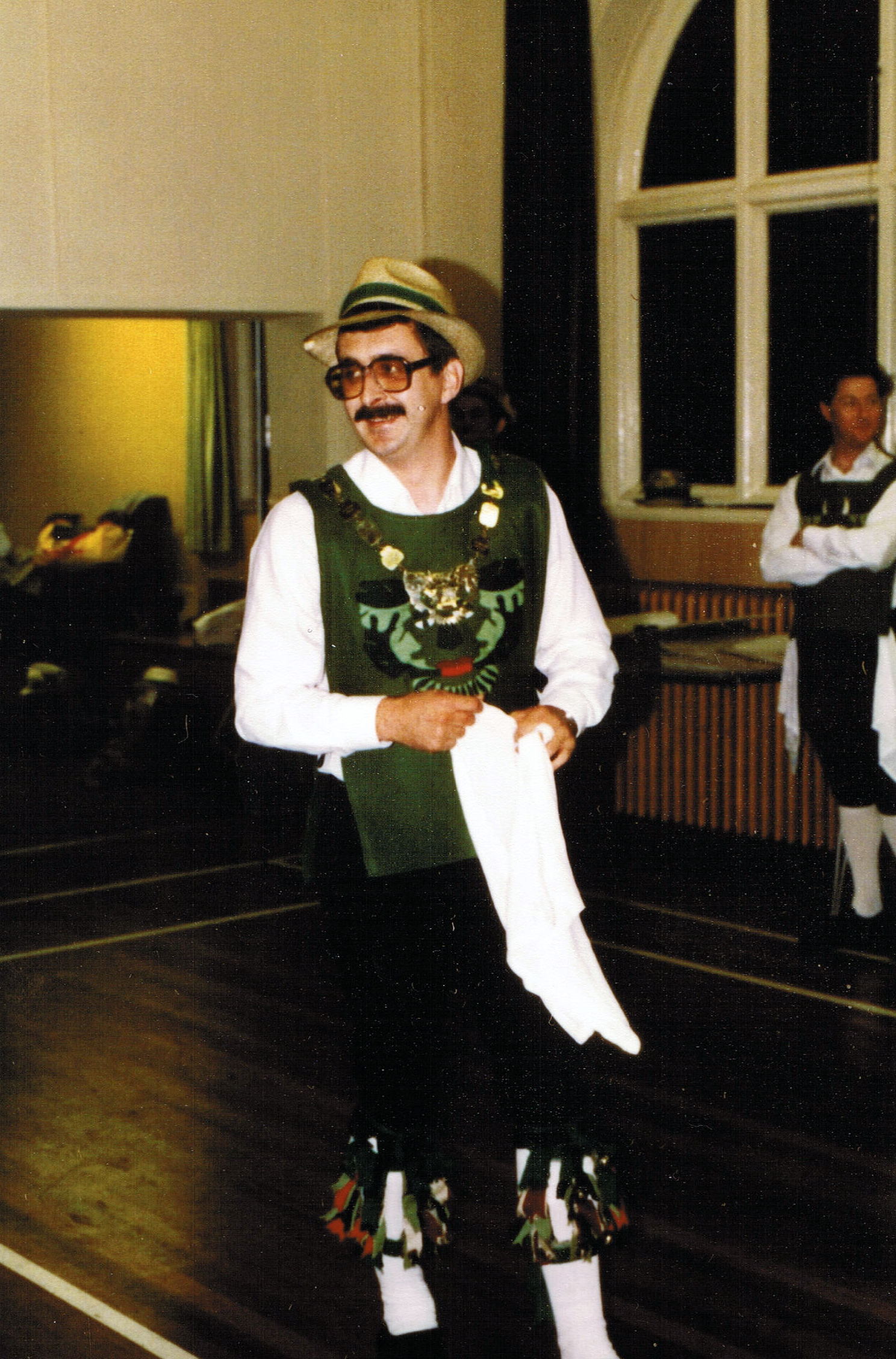
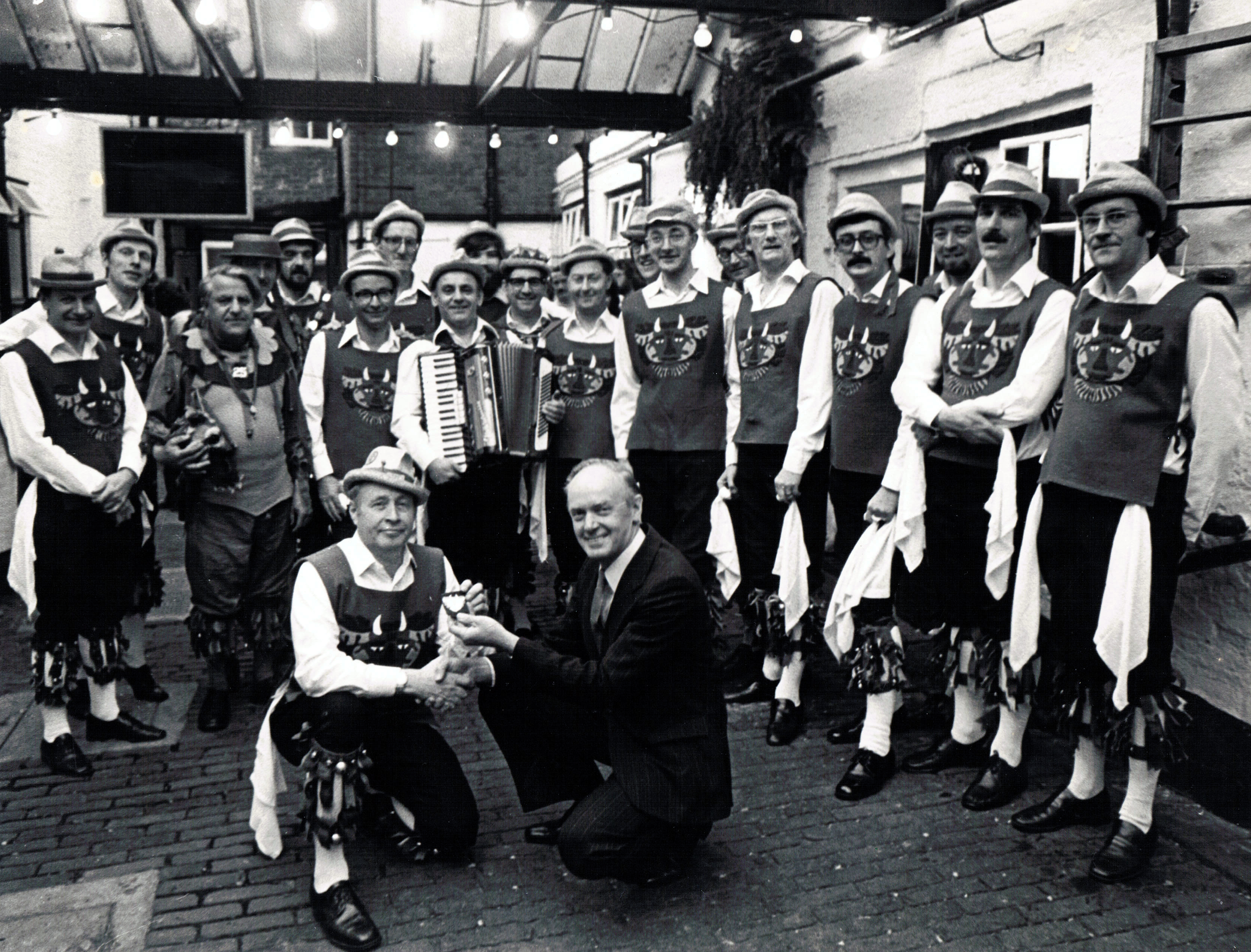
I danced with them in the 1980s and became Squire 1982-1983. I gave up from the mid-1980s because I developed arthritis in my hips, and was advised that such energetic exercise was not good. Two members of Green Man I danced alongside became Squire of the Morris Ring (John Venables and Ray King), as did Geoff Jerram of the Winchester Morris Men.

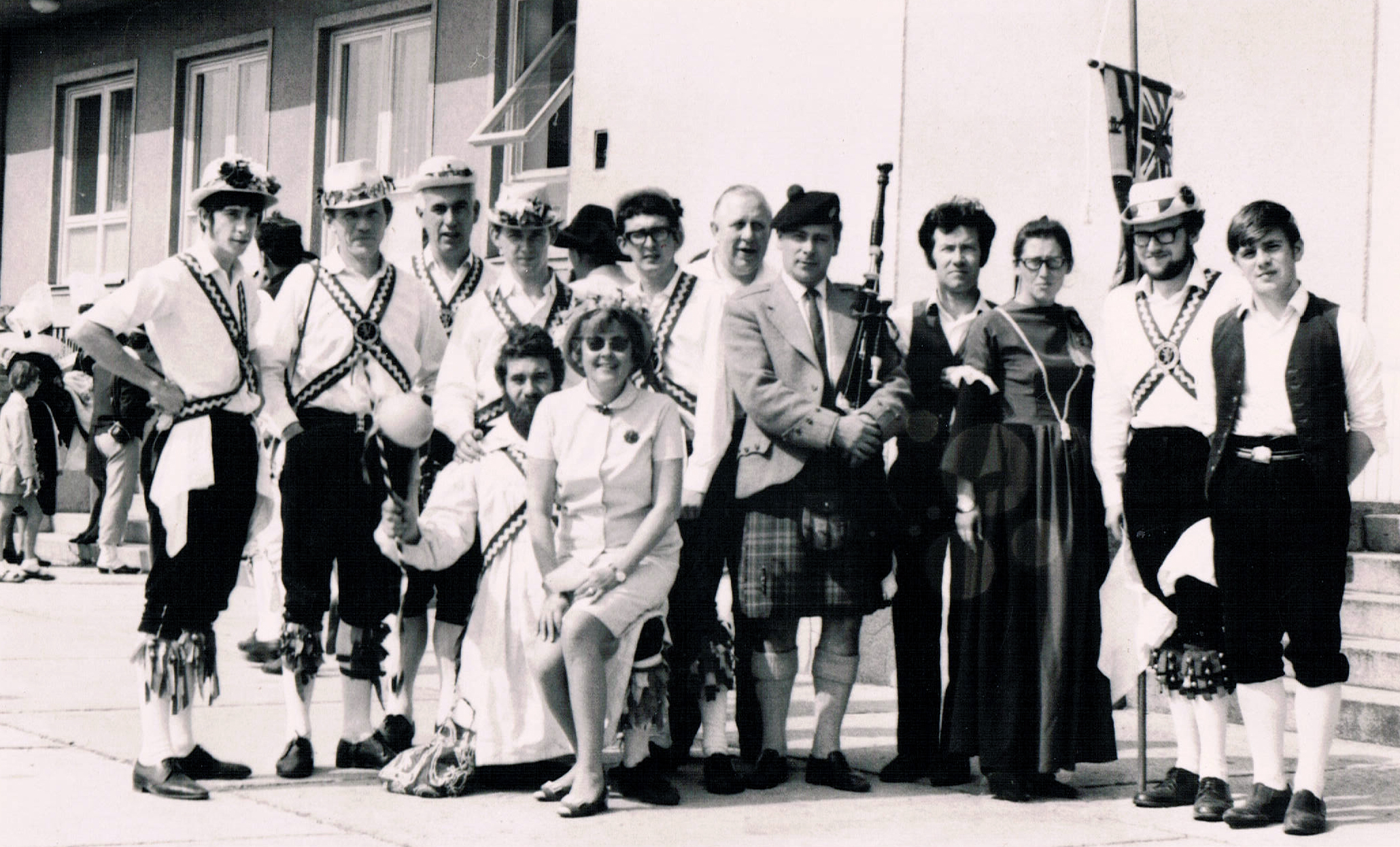
This photo was taken at the annual feast where I ‘danced in’ as Squire. The group photo was taken in Lichfield in about 1982, when the side was presented with a recognition of the many years that it had led the Lichfield Bower Procession.


* Just last night (3 May 2012) I was looking for some information about Strakonice and came across a link about a rapper team that had been formed in 1969 to attend a bagpipe festival in Czechoslovakia. It seems that the Sallyport Sword Dancers continued from a nucleus of the group that went to Strakonice – and they are still active and successful!

‘Thank you, Margaret Thatcher’ – my Pioneer Interview with Gene Hettel

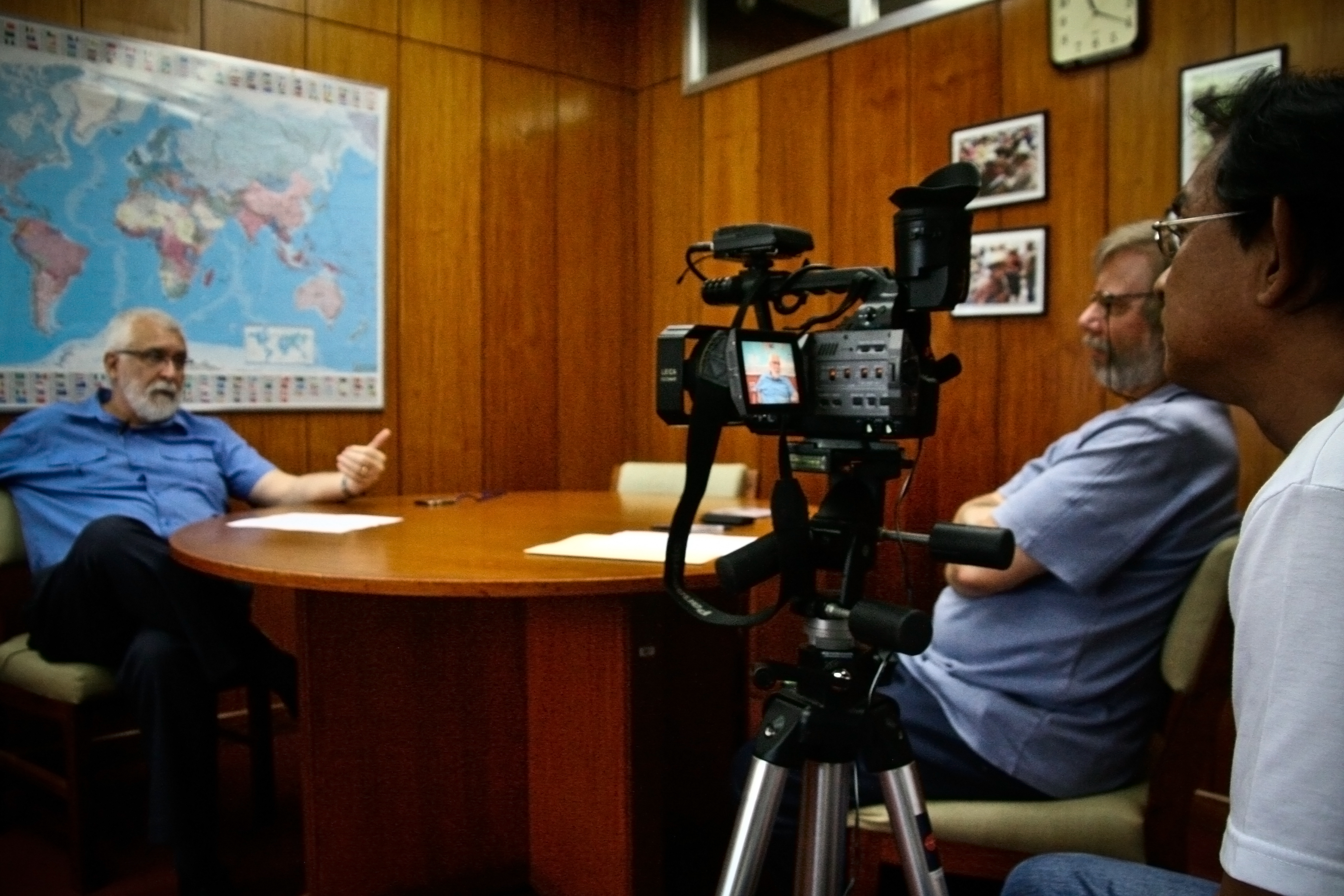
The head of IRRI’s Communication and Publications Services (CPS), Gene Hettel, is compiling a set of Pioneer Interviews with IRRI staff, past and present. These have been published in IRRI’s in house magazine for the past decade, Rice Today. In addition he usually also makes a video.

In mid-February 2010, just over two months before I retired from the institute, Gene and I found a time for my Pioneer Interview. If you want to know about many of the things I did at IRRI, and elsewhere – and some of my opinions about international agricultural research and how it’s organized, just watch the videos.

Jim Bryan – a friend indeed

I first met Jim Bryan in February 1973, just under two months after I’d first arrived in Lima, Peru to join the International Potato Center (CIP) as associate taxonomist. Jim had returned from home leave in the USA taken at the end of 1972 after completing his contract with the USAID-North Carolina State University potato project in Peru. He joined CIP as Seed Production Specialist. Over time, Jim became my closest friend and colleague at CIP, but we didn’t always see eye-to-eye. Early on, Jim thought it was his role to ‘supervise’ my work – something I didn’t take kindly to, and told him so in no uncertain terms. But as I got to know Jim (and his wife Jeanne and family) better, I came to realise what a firm friend he could be, and how much about growing potatoes and potato production I could learn from him.

A native of Gooding, Idaho, Jim was born in March 1930. He served in the Korean War, and afterwards gained BS and MS degrees in agricultural education. He taught vocational agriculture for four years, then joined the potato program at the University of Idaho. In 1966 Jim was recruited as a Seed Specialist to join the North Carolina project by Dick Sawyer (who was to become the first Director General of CIP when it was founded in 1971), and moved to Lima with his wife, three daughters (Wendy, Julie and Mary) and son Chris. I guess he hadn’t expected to remain in Peru for the next 30 years, mostly at CIP. Like many expat staff joining CIP, Jim did not initially speak Spanish, and despite his best efforts he never really did develop a good command of the language. But that didn’t really matter; he tried . . . and if he couldn’t think of the words he needed, some arm-waving and the use of  “X, X, X” usually got him by, and was much appreciated by local administrative and research staff.

Jim’s work in seed production took him all over the world and he was much in demand by colleagues in national potato programs in many countries. That was because his feet were firmly planted in the potato fields that he loved. He always looked for practical solutions, and ones that were doable and affordable. He was an excellent teacher, never afraid to get stuck in, and his hands dirty. And this was the best way to get across the important concepts and practices of potato seed production and health. Jim was responsible for setting up the germplasm export facilities and procedures at CIP, to make sure that the diseases endemic to potatoes in Peru, especially virus diseases, were not spread around the world. In recognition of his important contributions to potato science, Jim was elected an Honorary Life Member of the Potato Association of America in 1992.

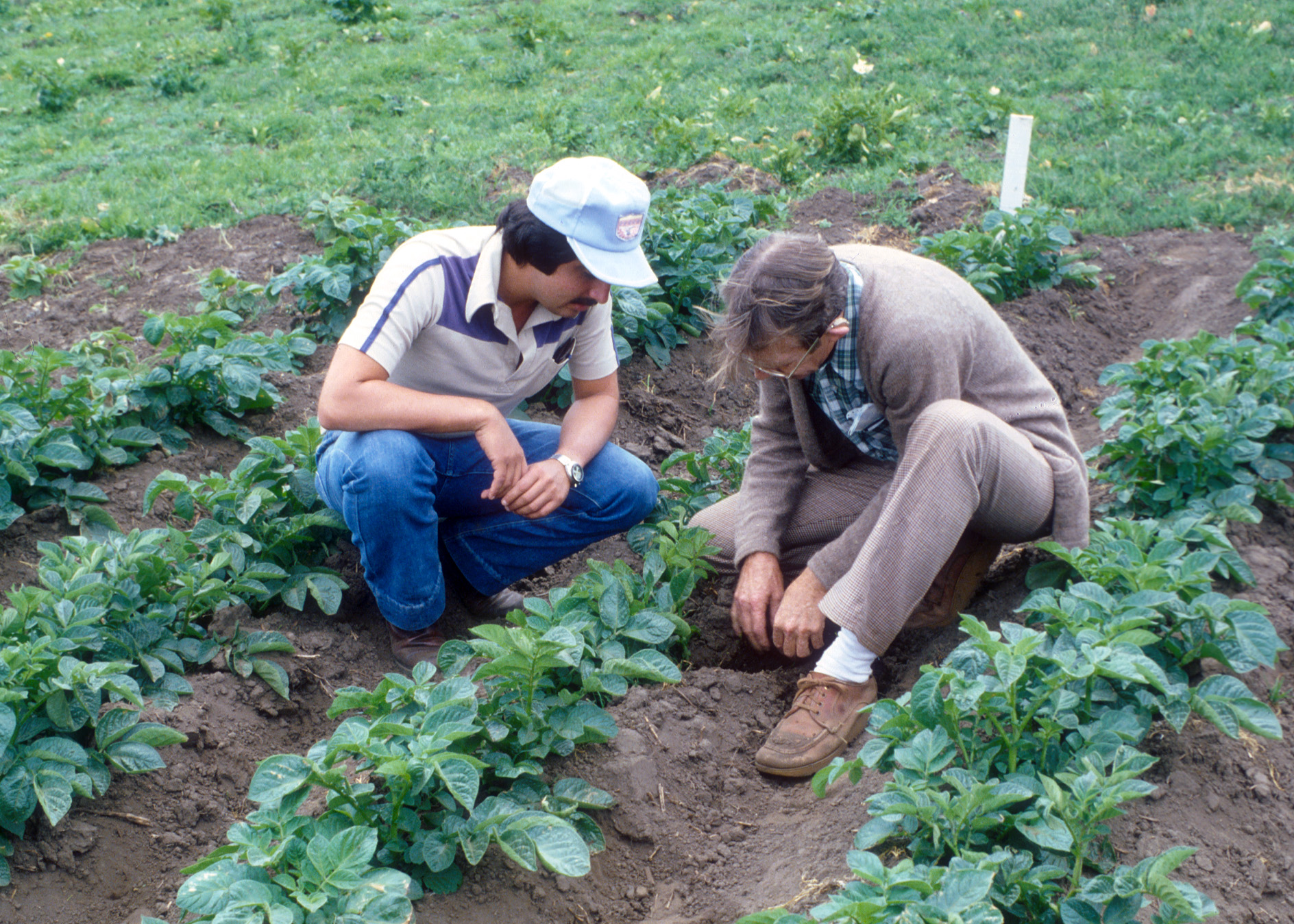
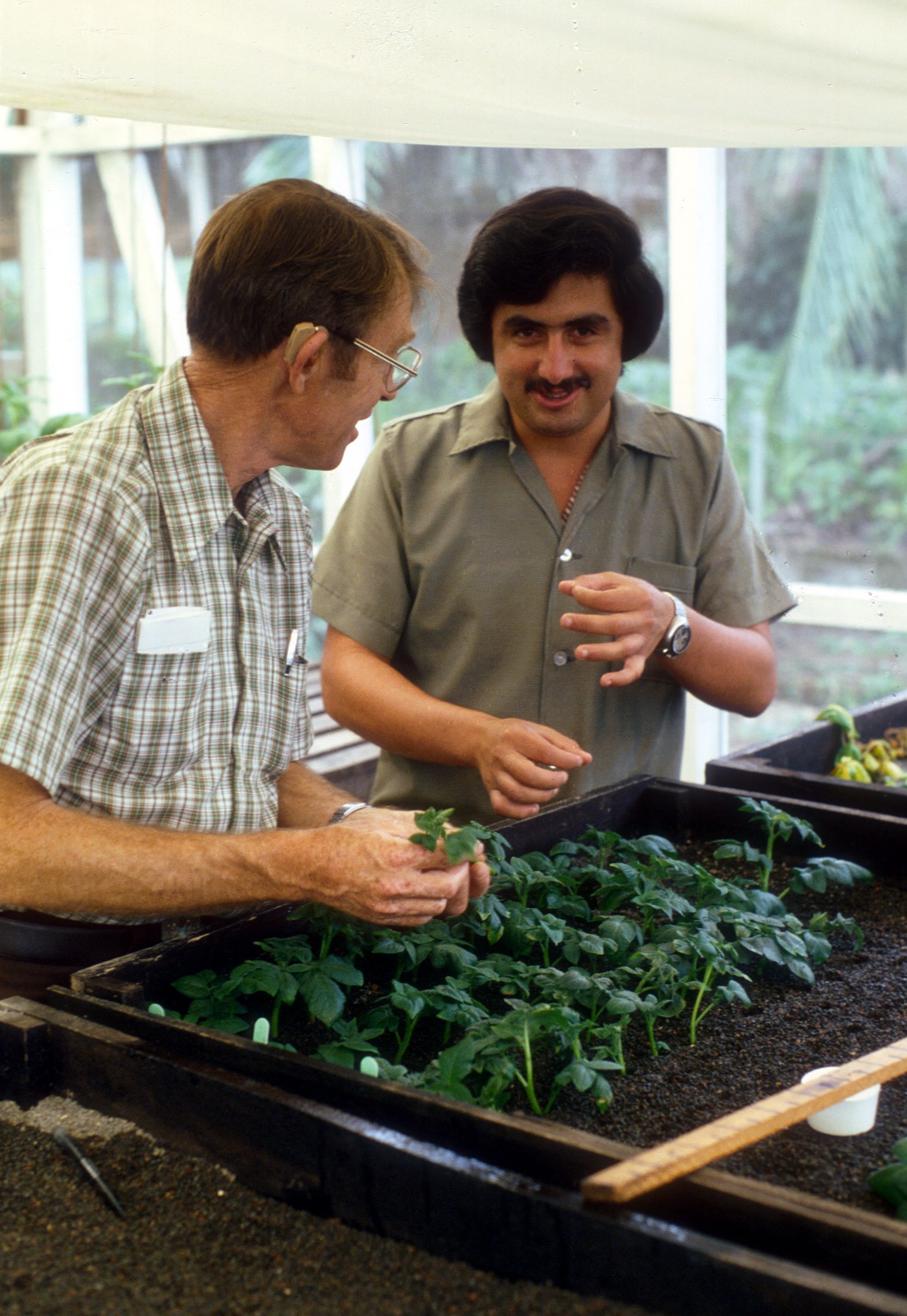
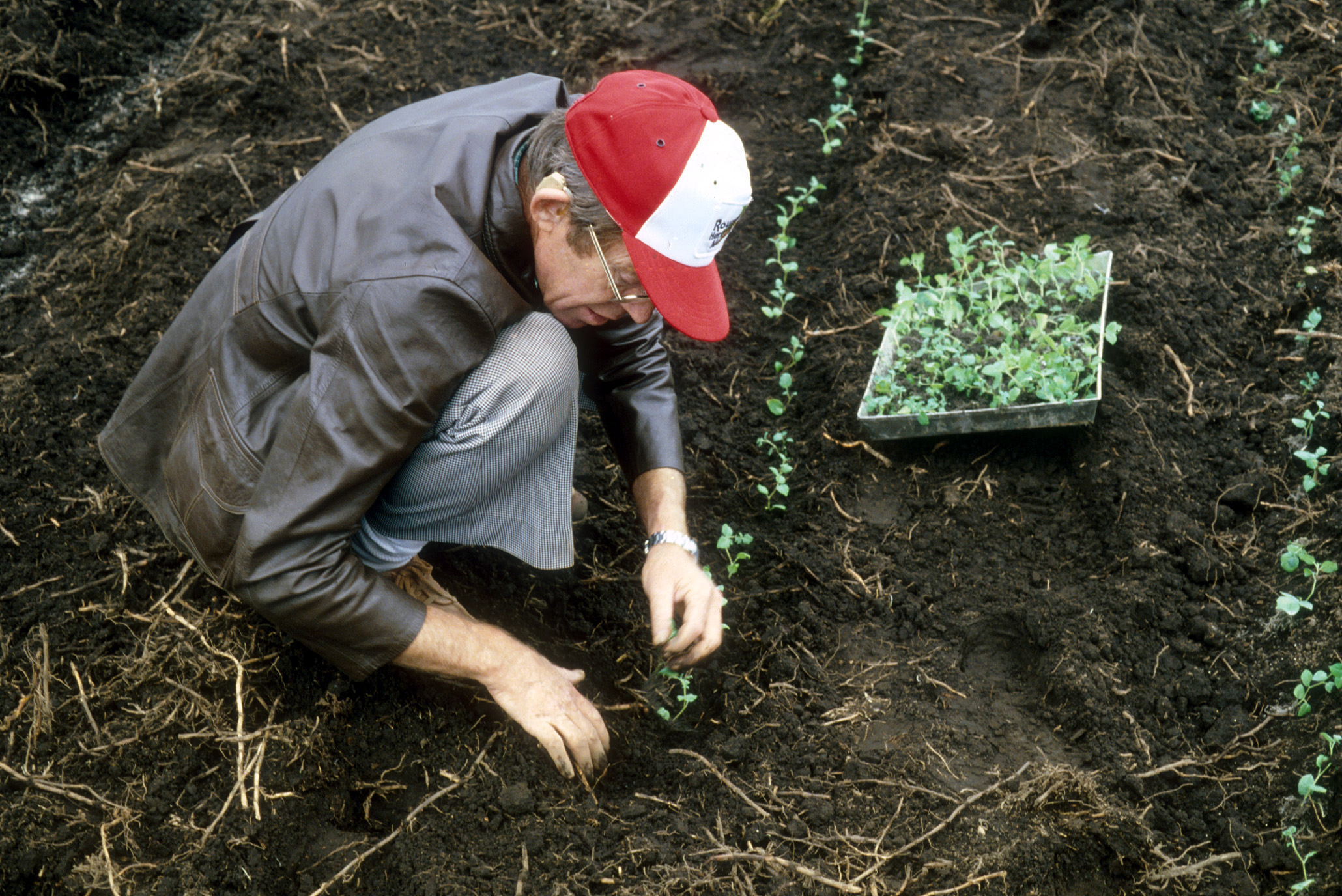
I moved to Costa Rica in 1976, and Jim joined my regional program for one year in 1979. He was assigned as a seed specialist for the new consortium program – Programa Regional Cooperativa de Papa (PRECODEPA) – funded by the Swiss government. One of the projects that Jim and I worked on was the development of rapid multiplication techniques for potatoes such as stem cuttings, leaf bud cuttings, and sprout cuttings through which it’s possible to produce 1 tonne of potatoes from a single tuber in a year. And we did achieve this with several varieties, producing the various cuttings in a screen house in Turrialba, and transplanting them to fields on the slopes of the Irazu volcano. Jim also trained many national program staff in these techniques. We developed a useful booklet on rapid multiplication techniques and some training slide sets, which seem quite crude today when you think what digital technologies can offer.

Transplanting cuttings on the Irazu volcano in Costa Rica

Checking potatoes grown from stem cuttings in the field, with Jorge Aguilar.

After retirement Jim and Jeanne moved to Seattle to be near their three daughters (meanwhile Chris was across the other side of the USA in Florida), and Steph and I had opportunity of visiting them there on more than one occasion. 

Jim and Jeanne’s Golden Wedding anniversary in Seattle, June 2003. Standing, L-R: Wendy, Mary, Julie, and Chris.

Jim was an avid stamp collector, and built up a wonderful collection of British stamps and any depicting potatoes from all around the world. A heavy smoker all his life, this eventually affected Jim’s health and he developed emphysema, and became dependent on an oxygen bottle. The last letter I received from Jim in early 2010, just after his 80th birthday, was still full of optimism however. He told me that one of his goals had been to reach 80, and every day afterwards would be a bonus. Sadly Jim died in August later that year.


Update: 23 February 2025
I just received an email from Wendy, Jim and Jeanne’s eldest daughter, that Jeanne passed away on Friday 21 February. Sad news!

Jack Hawkes – a plant genetic resources pioneer

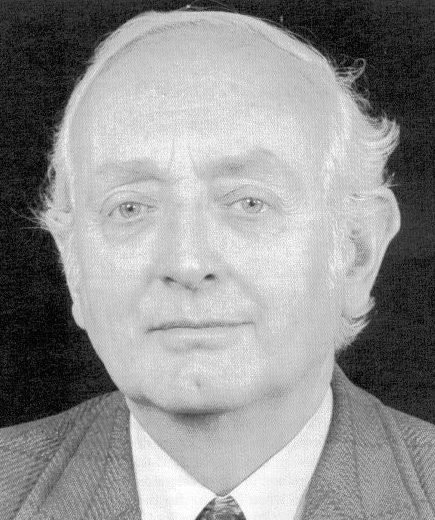
Jack Hawkes

I was privileged to have known Jack Hawkes for almost 40 years. I first met him in February 1970 when he interviewed me for a place on the recently-established MSc course at the University of Birmingham on the conservation and use of plant genetic resources. I then went on to complete a PhD on potatoes under his co-supervision (with Dr Roger Rowe at the International Potato Center, in Lima, Peru). Since Jack was due to retire from the university in September 1982, I was appointed to a lectureship in plant biology in April 1981 to take on Jack’s teaching commitments on crop evolution and other genetic resources topics.

The post below is based on an article I wrote for the Oxford Dictionary of National Biography, published last year.

John Gregory ‘Jack’  Hawkes – botanist, educator, and visionary – was born in Bristol in 1915. After completing his secondary education at Cheltenham Grammar School in 1934, he won a place at Christ’s College, University of Cambridge, graduating with a BA (Natural Sciences, first class honours) in 1937. His MA was awarded in 1938, and he completed his PhD in 1941 under the supervision of the noted potato breeder and historian, Dr Redcliffe N Salaman FRS. The university awarded Jack the ScD degree in 1957.

On 20 December 1941 Jack married Barbara Ellen Leather. They had two daughters, born in 1944 and 1946, and twin sons born in Colombia in 1950.

On graduation in 1937 Jack successfully applied for the position of assistant to Dr PS Hudson, Director of the Imperial Bureau of Plant Breeding and Genetics in Cambridge, for an expedition to Lake Titicaca in the South American Andes. In the event this expedition did not materialize due to Hudson’s poor health, but a more comprehensive expedition was then planned for 1939, led by EK Balls, a professional plant collector. Thus began Jack’s lifelong interest in ‘the humble spud’.
In order to prepare himself for the expedition, and because Jack himself recognized that he ‘knew virtually nothing about the scientific aspects of potato species’, he received permission to travel to Leningrad to meet Russian scientists SM Bukasov and SW Juzepczuk who had already collected potatoes in South America, and to seek their advice about the planned British expedition.

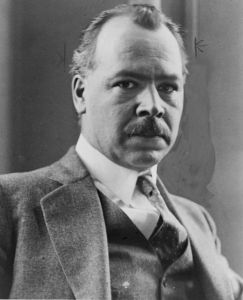
Nikolai Vavilov

And it was during this visit that Jack met the world-famous geneticist NI Vavilov, who he described as ‘a colossus among his colleagues both within and outside the USSR….’. He acknowledged that it had been ‘a privilege to have known him’, and was certain that Vavilov’s influence helped to shape his career. The authorities in Leningrad even attempted to recruit Jack, perhaps half-halfheartedly, as a Soviet spy – a suggestion that horrified him and which he hastily rejected.

On a later visit he also met the controversial Trofim Lysenko whose influence with Stalin led to the banning of Mendelian genetics in the Soviet Union for a generation. Jack did not like Lysenko one little bit and thought him ‘a dangerous and wholly repellent person… a politician rather than a scientist’. Lysenko’s ascendancy under Stalin led to Vavilov’s disgrace and early death in 1943.

CCI05022012_00001The 1939 expedition was the first of more than a dozen that Jack made to South and North America in search of wild potato species, and became the basis of his taxonomic treatment of potatoes, first published in 1956, with several later revisions. He had a long collaboration with Danish botanist J Peter Hjerting. Together they published two major monographs on the wild potatoes of Argentina, Brazil, Paraguay and Uruguay (1969) and Bolivia (1989) emphasizing not only the taxonomy but also breeding relationships to facilitate use in potato improvement.

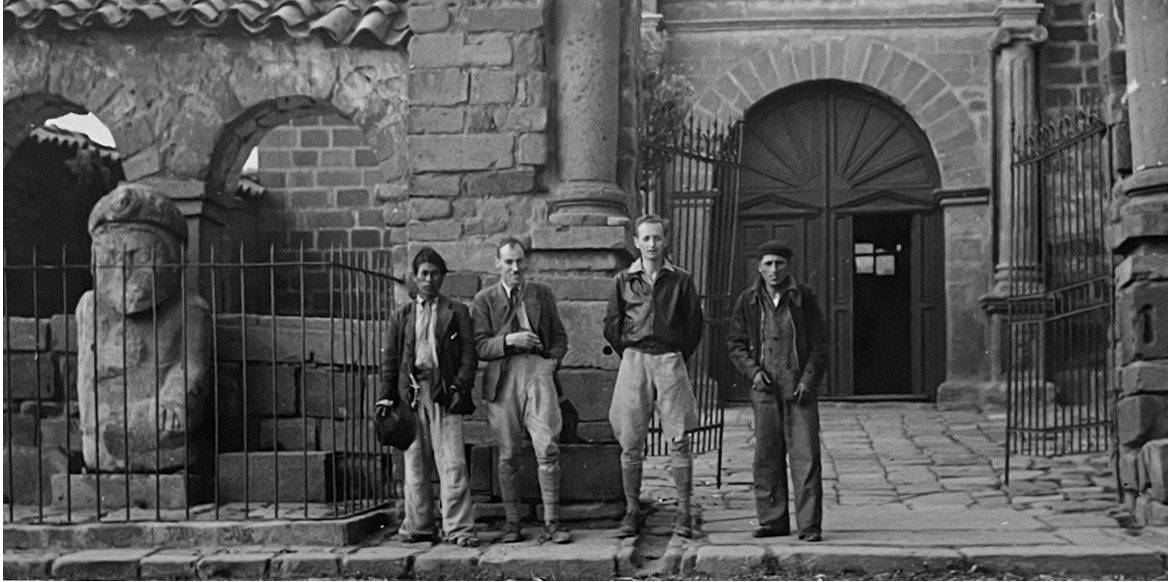
Hawkes (second from right) with Edward Balls on his right, and two assistants outside a church in La Paz in 1939

Jack was seconded for three years (1948-1951) by the Colombian government to establish a potato research station. Dr Nelson Estrada, a renowned Colombian potato breeder, was one of Jack’s protégés, and their hybridization research became a model for potato breeding programs.

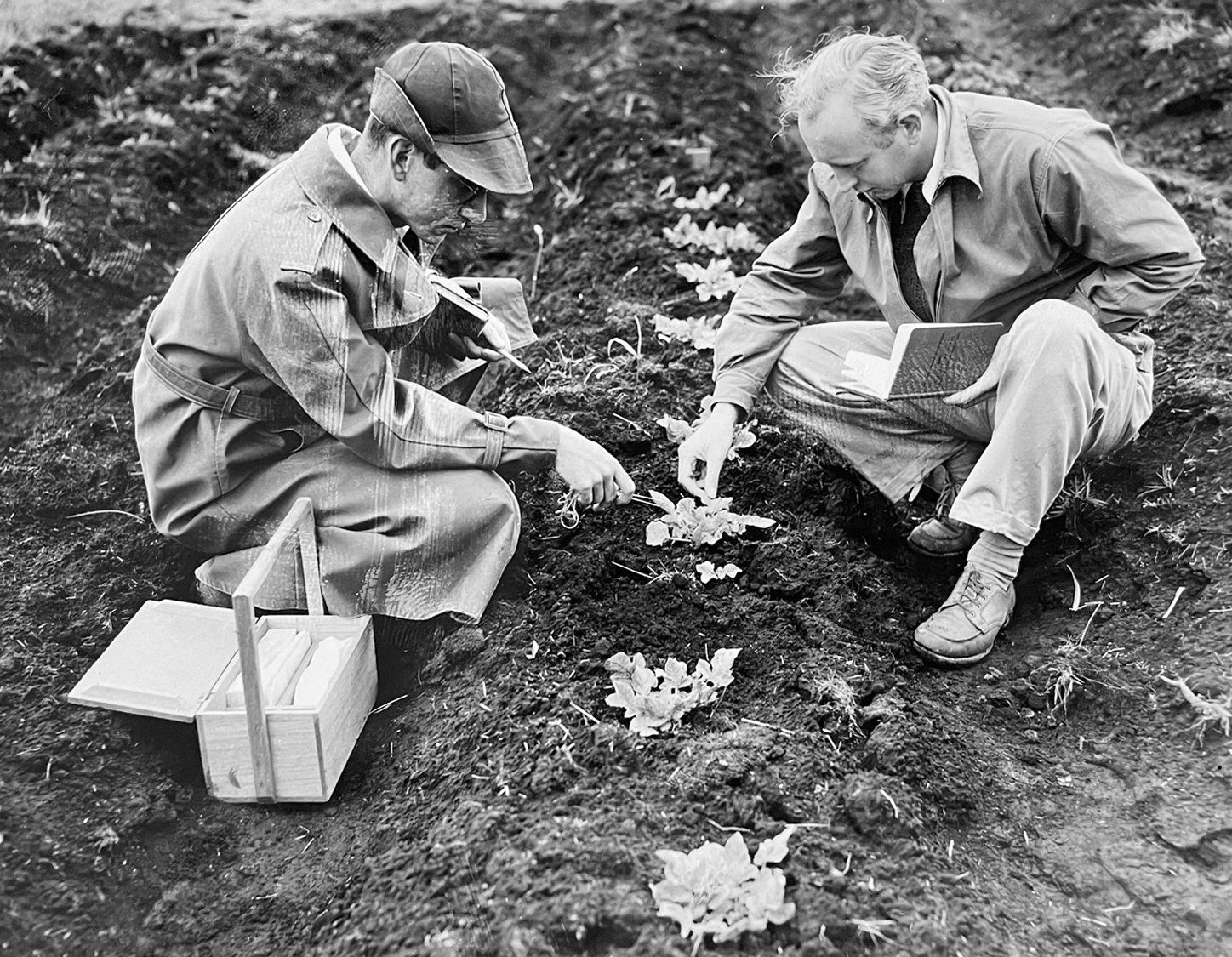
Nelson Estrada and Jack Hawkes evaluating potato hybrids in the field

Not long after returning to the UK, Jack was appointed lecturer in botany at the University of Birmingham in 1952, and he remained there until his retirement in 1982. In 1961 he received a personal Chair in Taxonomic Botany, and in 1967 was appointed Mason Professor of Botany and head of department. Jack actively supported the genetic resources program at the International Potato Center (CIP) in Lima, Peru from 1973, and several of his PhD students did their thesis research there. He also acted as scientific adviser to the Commonwealth Potato Collection in Scotland (founded from germplasm he collected in 1939) and the USDA potato collection at Sturgeon Bay, Wisconsin.

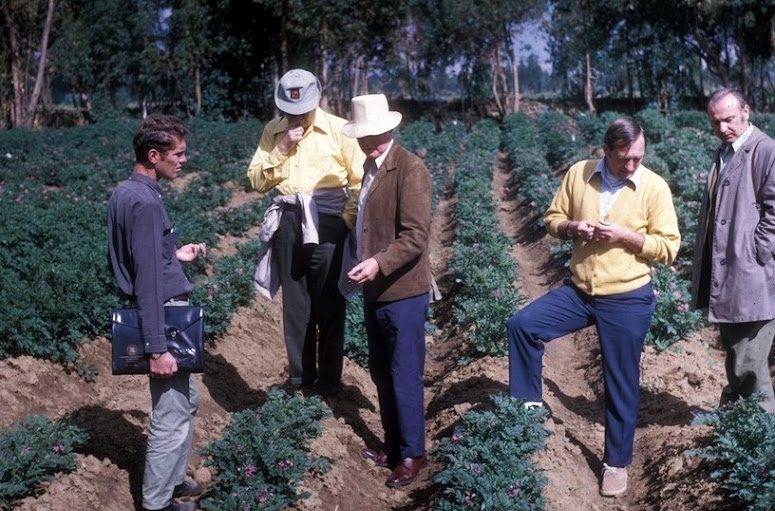
Jack Hawkes (center) with Frank Haynes (NCSU) on his right and Roger Rowe (USDA) and Don Ugent (Southern Illinois University-Carbondale) looking at CIP’s germplasm collection in Huancayo, January 1973. Ing. Agr. David Baumann (CIP) is explaining how the collection is maintained.

In addition to his lifelong research on potatoes, Jack also spearheaded scientific interest in the Solanaceae plant family that also includes tomato, tobacco, chili peppers, and eggplant, and many species with pharmaceutical properties. With colleagues at Birmingham in the late 1950s he developed serological methods to study relationships between potato species. He was also one of the leading lights to produce a computer-mapped Flora of Warwickshire, a first of its kind, published in 1971.
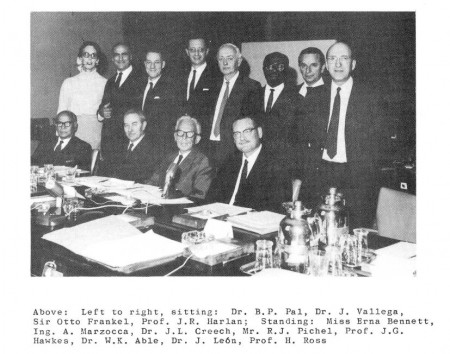
One of Jack’s most important legacies, stemming from his knowledge of potatoes, was his participation in and contributions to the nascent genetic resources conservation movement of the 1960s. Led by eminent Australian wheat breeder, Sir Otto Frankel FRS, Jack joined the FAO Panel of Experts that included plant collector Erna Bennett and Illinois professor and cereals expert Jack Harlan, among others.

They envisioned a world-wide effort to conserve plant genetic resources in a network of genebanks, and gave impetus to international efforts to collect and conserve plant varieties that were threatened with extinction. These efforts led eventually to the establishment of the International Board for Plant Genetic Resources (IBPGR, now Bioversity International) in Rome, Italy under the auspices of the FAO.

Shortly after being appointed Mason Professor of Botany, Jack received support from the university to develop an international 1-year training course in plant genetic resources. In September 1969 five students enrolled on this MSc course that was subsequently offered for almost four decades – significantly longer than Frankel had predicted when Jack first mooted the idea. The course remained the only formal training course of its kind in the world, and by 2008 had trained over 1400 MSc and 3-month short course students from more than 100 countries, many becoming genetic conservation leaders in their own countries. The training continues at Birmingham, but in a different format.

Jack received many honors and awards, including the 1973 Frank N Meyer Memorial Award from the American Genetic Association for services to plant introduction, and the 1996 Distinguished Economic Botanist Award from The Society for Economic Botany. In 1984 he received the Linnean Medal from the Linnean Society of London, of which he was later elected president (1991-1994), a role that gave him immense pleasure*. He received an OBE for services to botany in 1994. He was awarded the Congress Medal of the XII International Botanical Congress held in Leningrad in 1975, of which he was a Vice President. In 1989 the Potato Association of America elected Jack as an Honorary Life Member. But what probably gave him most pleasure was the Vavilov Medal and the Honorary Professorship from the NI Vavilov Institute of Plant Industry, awarded only twice, and Jack the only non-Russian. In a sense, his life’s work had come full circle from the moment in 1938 when, as a young man of 23, he met the great geneticist at the institute that now bears his name.

L, from top: the Frank N Meyer Memorial Medal; the Linnean Medal; the Vavilov Medal; and on the R: the OBE insignia

Following retirement from the university Jack continued to actively publish until 2004 when his memories of the 1939 expedition – and his initiation into the world of the potato – were published under the title Hunting the Wild Potato in the South American Andes.

A website featuring the 16 mm films (and photo albums) that Jack made during the 1939 expedition, and other expeditions to the USA, Mexico and Central America in 1958 and to Bolivia in 1971 can be viewed here.

After Barbara died in 2005, and increasingly frail, Jack left his home of more than 50 years in Harborne, Birmingham and moved to Reading to be near family. And there he died in September 2007, aged 92.

* A meeting, The Future of Plant Genetic Resources, was held in Jack’s honour at The Linnean Society in May 2009.

India tells Britain: no more aid, thank you

Some days ago I posted a comment on my Facebook page about the UK’s overseas aid to India, and whether it was justified when that country was spending £10 billion on fighter jets – to be purchased from France. There are arguments for and against such aid. In favor, it could be argued that it reaches projects and poor people that the Indian government may be less favored to support.

Now here’s an interesting twist to the story, published in today’s eTelegraph (see the link below). India wants to terminate the aid relationship with the UK. The UK government would find that politically embarrassing apparently, given the campaigning it has done to maintain and even increase the overseas aid budget.

What do you think?  India tells Britain: We don’t want your aid – Telegraph.

The (new) Age of Steam

Like many boys growing up, I had a fascination with steam locomotives – and although I’m not a fanatic by any stretch of the imagination, it always gladdens the heart to see one of these beautiful machines in full flight. Sadly, on the various heritage railways that have sprung up all over the UK there is a speed limit of only 25 mph. Nevertheless, a visit to one of these railways is an enjoyable day out.

Near my home in Worcestershire, the Severn Valley Railway is a full-size standard-gauge railway line running regular steam-hauled passenger trains for the benefit of visitors and enthusiasts alike between Kidderminster in Worcestershire and Bridgnorth in Shropshire, a distance of 16 miles.

In the summer of 2008, we made a second visit.

DPPC . . . beginning and end

One morning in mid-January 2001, I received a phone call from then IRRI Director General, Ron Cantrell, asking me to drop by his office later that day. I had no idea what it was all about, so I was rather surprised to enter his office and find that the two Deputy Directors General, Ren Wang (Research) and Willy Padolina (Operations and Support Services) were also there.

Well, to cut a long story short, Ron asked me to give up my work as head of the institute’s Genetic Resources Center (GRC) and take up a new position as Director for Program Planning and Communications (DPPC – originally Planning and Coordination). The rationale behind this was the somewhat dire funding situation of the institute then, and the almost complete lack of comprehensive information about the sources, amounts, and use of the research grants that IRRI had received. What Ron said to me was this: Mike, if a donor offered IRRI USD5 million tomorrow I wouldn’t want to refuse it, but there again I have no idea how it fits into the overall funding picture and commitments of the institute. We need someone to set up a new office whose role will be to bring some order and cohesion to this important set of activities. It appears that some visiting consultants had apparently whispered in Ron’s ear that I might be the sort of person to take on this role.

Well, I had to go away and think about this, and talk it over with Steph. Did I really want to move away from my work in rice genetic resources conservation? Well, for one reason or another, I turned him down – there were several of the terms of reference that I really couldn’t go along with. About six weeks later, one of my senior colleagues let me know that the DG was still interested in having me in the senior management team, so I decided to go and see Ron and discuss some of my concerns. We managed to reach a compromise, and on 1 May 2001 I moved from my office and labs in IRRI Brady Building (where the genebank is housed) to the main administration, FF Hill Building, across the campus.

While there had been an office taking care of donors and funding, I was decidedly unimpressed with what they had achieved, and saw little evidence from my first discussions with them that they would be likely to change. I had already agreed with Ron that I could make some staff changes. My GRC secretary, Zeny Federico, moved over to the DPPC office with me in May, and I began to replace and recruit new staff. One of my first objectives was to try to persuade a soil chemist, Corinta Guerta (whom I had never worked with but who had impressed me immensely when I was on a promotion panel to which she had applied in 1998) to give up her science and join me in a purely administrative role. It took me a couple of months or so, but Corinta joined me in August 2001.

Corints and I set about hiring new staff for the office. Of the original staff when I took over, only Marisol ‘Sol’ Camasin stayed on as the office clerk, until September 2002. Sol was replaced by Analyn Jopia until early 2004, when Vel Hernandez joined the office on a half-time basis (shared with the DDG-Research office). Vel became full time with DPPC in April 2007. In September 2001 we hired Monina La’O as an assistant manager to help develop the donor database. She left in December 2002 to get married and moved away from Los Baños, and was replaced by Sol Ogatis.

Building on Monina’s work, Sol expanded the donor database enormously, and working with Eric Clutario, a database developer, who we hired in October 2001, helped to develop in-house what became the most comprehensive project and donor management system among the CGIAR centers. Sol also left in September 2008 to work for the US Embassy in Manila (I used to tease her that she was going to work for the CIA), and then Marileth ‘Yeyet’ Enriquez joined DPPC in December 2008, and took the project management system from strength-to-strength.

By the time I retired in 2010, there were four full-time staff in the office: Corinta, who as senior manager had been my 2-I-C, assumed leadership for DPPC in January 2010; Zeny, my secretary (now Specialist-Administrative Coordination); Yeyet (now Assistant Manager II); and Vel (now Officer – Database Administration). Our database developer Eric had moved from DPPC to IT Services (ITS) in 2004 to become coordinator of Management Information Systems, but working 35% of his time for DPPC. We felt that this move to ITS would help facilitate and strengthen the links between the various information systems at IRRI and the project management system in DPPC. And it did!

Corinta was appointed head of a new Office for External Relations after my retirement, encompassing the old DPPC (now renamed DRPC) as well as the Development Office, Public Relations Office, and National Programs Relations (although there have recently been – mid-2012 – some organizational changes after the appointment of a new DDG-Communications and Partnerships). In January 2012, Corinta was appointed a Director of the institute – a fitting recognition for someone who joined IRRI as a research assistant in 1975!

The processes and procedures we put in place, the databases and web site we built, and the rigorous assessment of donors and funding opportunities permitted DPPC to facilitate the generation of significant funding for IRRI. We developed a close and clear relationship with the donor community, and they got to know us as well, such that we could send an email or pick up the phone and get an immediate response (or more or less). IRRI’s reputation with the donors rose significantly, and the institute moved from a USD30 million to a USD65 million organization, raising funds from a wider pool of donors including the Bill & Melinda Gates Foundation.

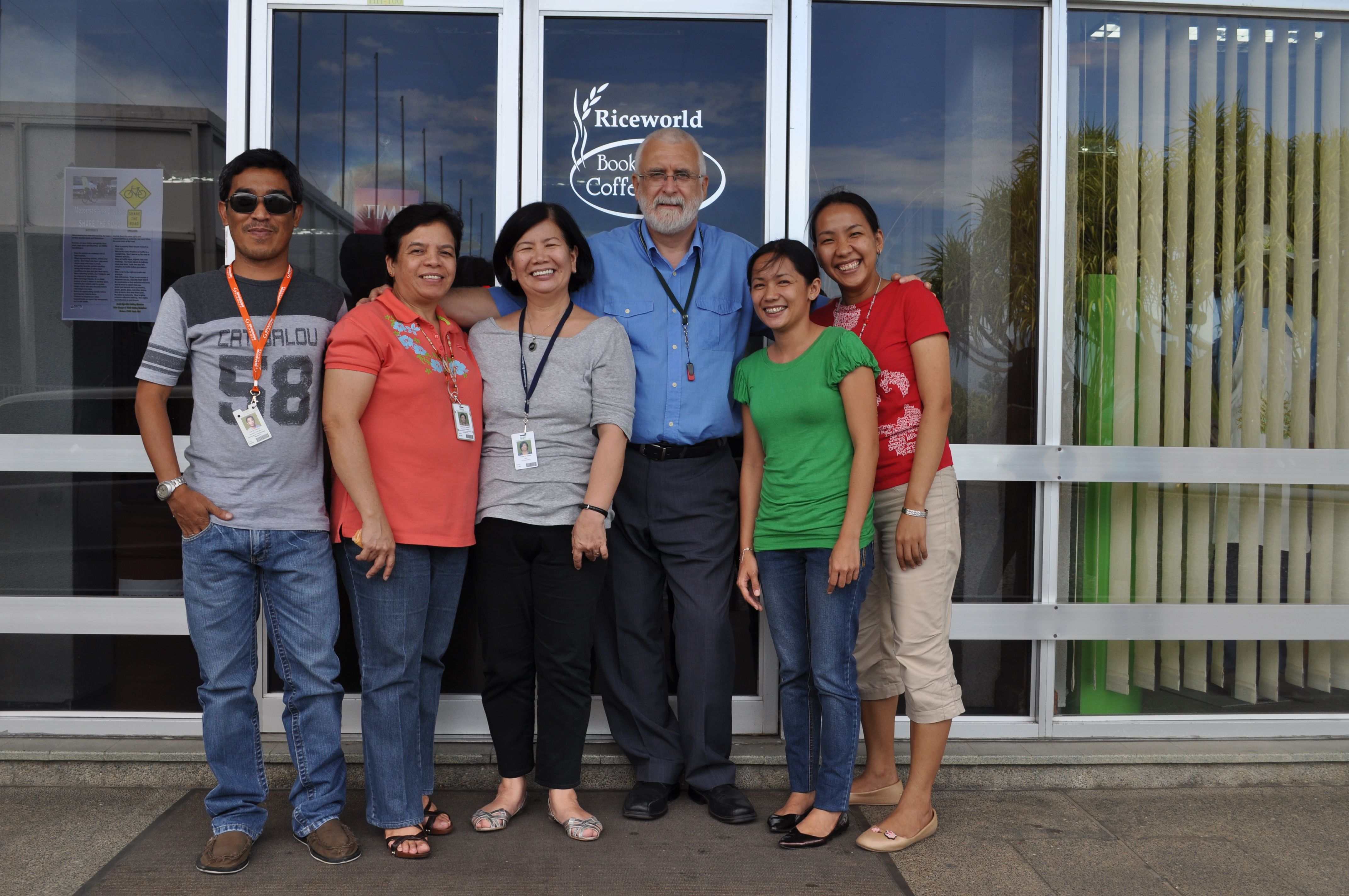
As Director for Program Planning and Communications I also had line management responsibility for five units: Communication & Publication Services (CPS), headed by Gene Hettel from the USA; the Library & Documentation Services (LDS), headed by Mila Ramos (now retired), Philippines; ITS, headed by Marco van den Berg, the Netherlands; the Development Office, which is the philanthropy side of IRRI, headed by Duncan Macintosh, Australia; and Program Planning, headed by Corinta Guerta, Philippines, seen left to right in the photo below.

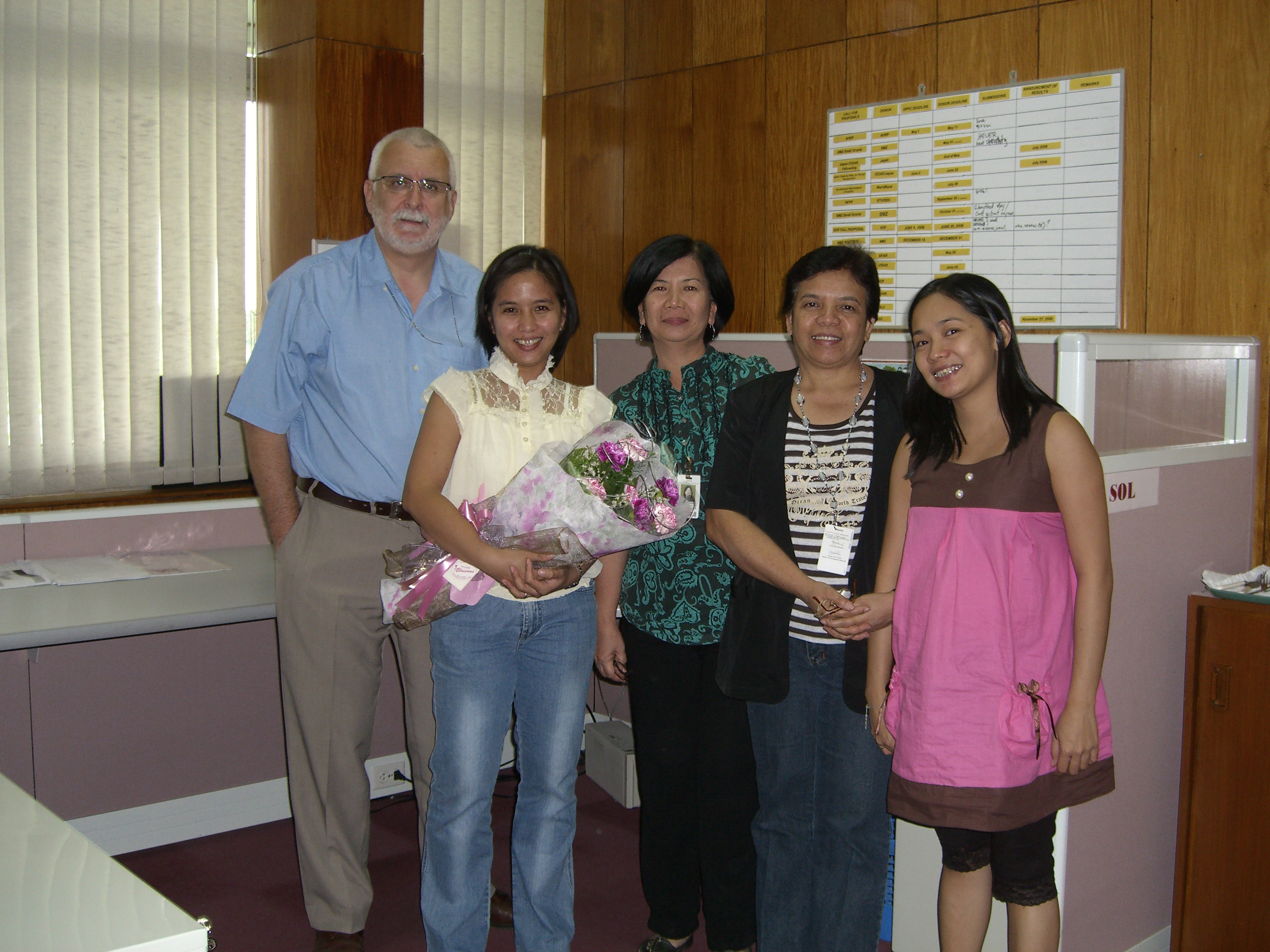
On my last day at IRRI, 30 April 2010, the DPPC staff enjoyed a last merienda together at IRRI’s coffee shop, The Bean Hub, shown in the photo below, L-R: Eric, Zeny, Corinta, me, Vel, and Yeyet.

Each Christmas, we’d get together as an office group and head off to a nice restaurant somewhere, or to my home for a barbecue, to enjoy each other’s company over a meal. In 2004, I took the team to Antonio’s, rated as one of the finest restaurants in Asia, in Tagaytay overlooking Lake Taal and its volcano. We had a wonderful meal, and this is one of my favorite photos of the DPPC team at that time (L to R: me, Sol, Eric, Corints, Vel, and Zeny).

Cruza 148 . . . the serendipity of disease resistance

Just do a Google search on “Cruza 148” and and you will see more than 1,350 hits. Even Google Scholar generates more than 100 publications that make reference to Cruza 148. How did this potato clone from Mexico achieve its celebrity status? It is known for its resistance to bacterial wilt and late blight, and that it has been released in Burundi (as Ndinamagara), Uganda (as Cruza), Rwanda, and the Democratic Republic of Congo. Indeed, CIP scientist Greg Forbes reported in 2006 that it’s grown in the ‘poorest of poor areas’, and suggested that Cruza 148 is ‘the Superman of potatoes’. So how was this potato clone discovered, and what steps were taken to validate its resistance to bacterial wilt?

I spent my first three years with CIP in Lima, but in mid-1976 Dick Sawyer posted me to then Region II (Mexico, Central America, and the Caribbean), to undertake research on adaptation of the potato to the lowland tropics, as part of the the Regional Research Program (formerly Outreach). So I landed in Turrialba, Costa Rica at the Centro Agronómico Tropical de Investigación y Enseñanza (CATIE), where I was to remain for the next four and a half years, supported first by Head of Outreach Dick Wurster and then by Ken Brown after Dick left CIP. Deputy Director General-Research Ory Page was also keen to establish some specific research projects in the regions.

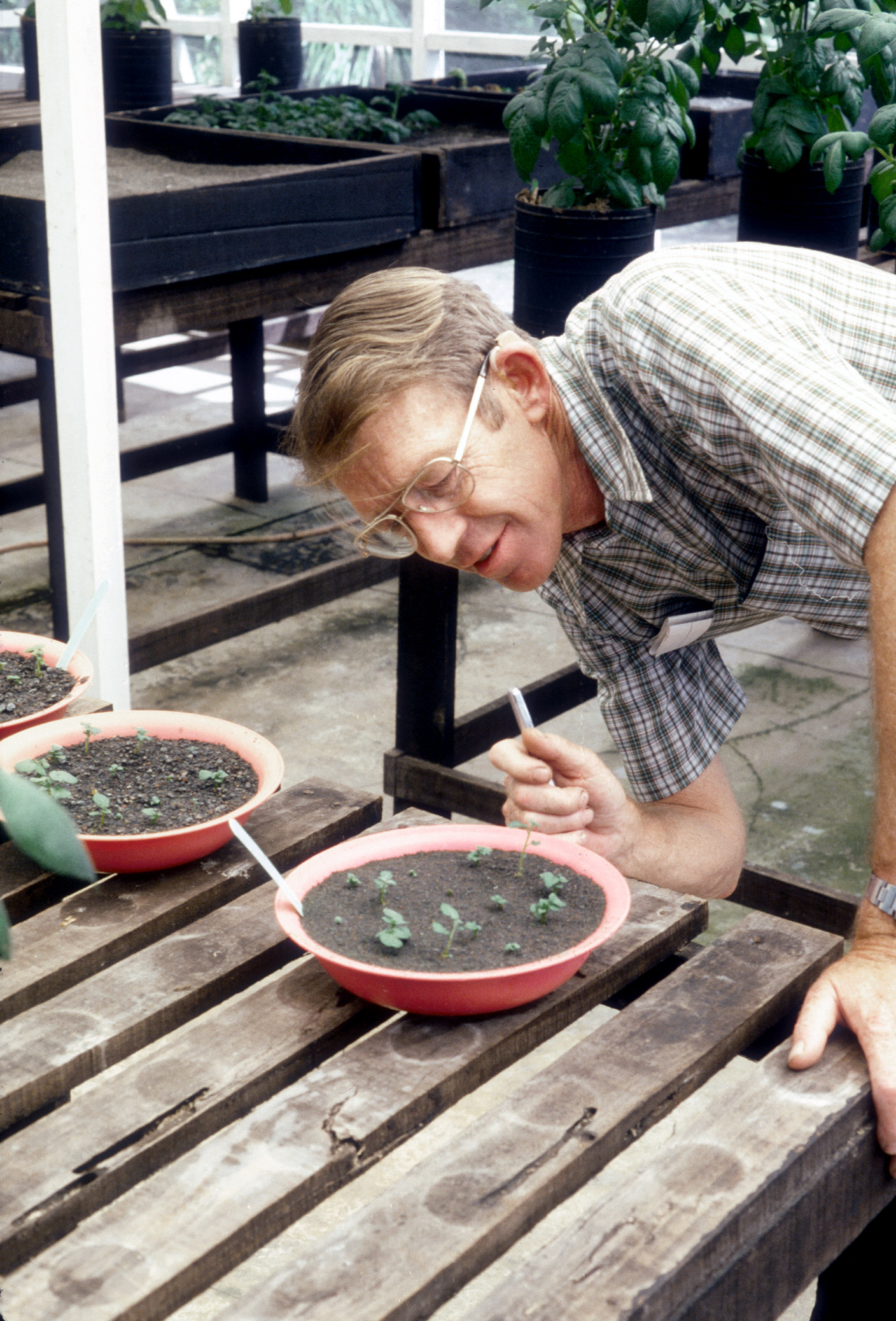
After refurbishing a screen-house and office space, and hiring a couple of field assistants, Jorge Aguilar and Moises Pereira, and getting to know the region, I finally started my research. I received a batch of 207 late blight resistant clones from CIP’s regional office in Toluca, Mexico that were planted in a first trial in July 1977 on the CATIE experiment station. There had been no cultivation (at least for more than 20 years) of any solanaceous crops [1]. Each clone was planted in a 5-hill plot, in a randomized complete block, with just a single plot replication per clone.

There was no problem with initial growth of all clones, despite the rather warmer and wetter growing conditions in Turrialba. But after a few weeks we noticed, in just one of two plants, the first signs of the asymmetrical wilt typical of bacterial wilt (Ralstonia solanacearum, formerly known as Pseudomonas solanacearum).

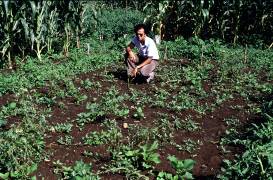
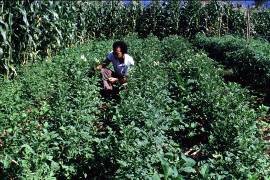
I was fortunate that I had a contact, Dr. Luis Carlos Gonzalez, in the Universidad de Costa Rica – Laboratorio de Fitopatología, an acknowledged expert in bacterial wilt who had completed his PhD studies under Professor Luis Sequeira at the University of Wisconsin-Madison. Luis Carlos soon confirmed the presence of bacterial wilt, and we took steps to carefully map the spread of the disease across all plots. Each week we carefully scored the presence/absence of wilt in every plant, and built up a comprehensive picture of the development of the disease among the clones under evaluation. But that mapping also showed us where there could be hotspots in the trial plots. After some 12 weeks or so, almost all of the clones were dead – except three apparently resistant, one of which was Cruza 148. Eight further clones showed only some slight symptoms of bacterial wilt.

Our first question was whether these disease-free clones had somehow escaped infection, even though we had the evidence that the disease was spread right across the site, and in the clones surrounding ‘resistant’ ones. Fortunately all three did produce a good crop of tubers, which we harvested and stored for future evaluation. After chitting we were ready for a second evaluation. We decided to use the same site on the experiment station, carefully tilling and mixing the soil to  ensure that the potatoes we planted would come into contact with the bacterium. Not long after sprouting, the two Indian varieties (I don’t remember the clone numbers, but hopefully our original data and reports, even the plot maps, are still filed away somewhere at CIP) succumbed to wilt, but Cruza 148 remained healthy, showing no signs of bacterial wilt.

We repeated the evaluation for a third time, using tubers harvested from the second evaluation plots. And once again in this third trial – in the same soil – Cruza 148 showed no signs of infection. But where had the resistance to bacterial wilt come from, and why was there such a high inoculum of the bacterium in these soils on the CATIE experiment station? Now although bananas were grown at CATIE, we did show that the bacterial strain was not the one that infected bananas, but Race 1 (as it was then classified).

It also happened that Luis Sequeira (a Costarrican by birth) was holidaying in Costa Rica and visited our plots in Turrialba. And very quickly, and based on his broader experience, he spotted a number of common weeds, family Asteraceae [1, 2] that were wilting.

We collected samples, and undertook all the appropriate phytopathological tests to show that extracts from these weeds were pathogenic on potato. That finding led to us develop a research project looking at the persistence of the bacterium in these Turrialba soils, and how the incidence of bacterial wilt could be reduced through various agronomic practices.

Reports about Cruza 148 are still being published 34 years after its potential was first uncovered in those early Turrialba trials. Now, we know that it is a carrier of the bacterium, which is rather a disappointment. But Cruza 148 has been used a standard control variety in hundreds of disease resistance experiments, and Peter Schmiediche was one of the first CIP breeders to include Cruza 148 in his program. And as far as I know it is still grown in those central African countries. Even if it has been replaced, it achieved impact for many years providing important food for many farmers and their families. I remember discussing Cruza 148 with Jim Bryan. He pointed out that one of  its disadvantages was the coloured flesh, and that it would be unlikely to be adopted by farmers. We now know that was not the case. In fact I have read some reports that farmers in Burundi use the tuber flesh colour to identify tubers of Ndinamagara!

Cruza 148 is one of those happy accidents of germplasm evaluation – you sometimes never know just what might turn up. Maybe it’s not a ‘Superman’ but, rather by chance, it has played a significant role in confronting a serious disease of potatoes, and contributing to food security.

[1] Jackson, M.T., L.C. González & J.A. Aguilar, 1979. Avances en el combate de la marchitez bacteriana de papa en Costa Rica. Fitopatología 14, 46-53.

[2] Jackson, M.T. & L.C. González, 1981. Persistence of Pseudomonas solanacearum (Race 1) in a naturally infested soil in Costa Rica. Phytopathology 71, 690-693.

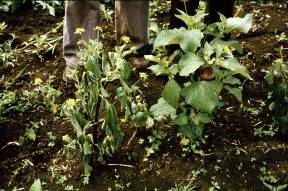
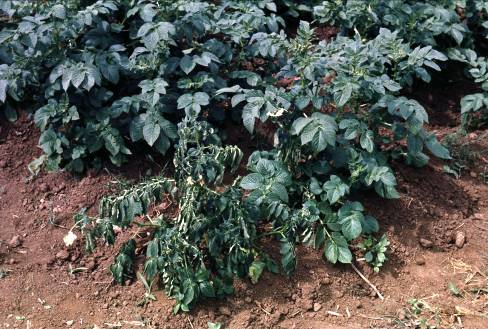
The images below show bacterial wilt in a mature potato plant, with the typical asymmetrical wilt, and the vascular system of the tuber exuding millions of bacterial cells.


Spirit of the Industrial Revolution

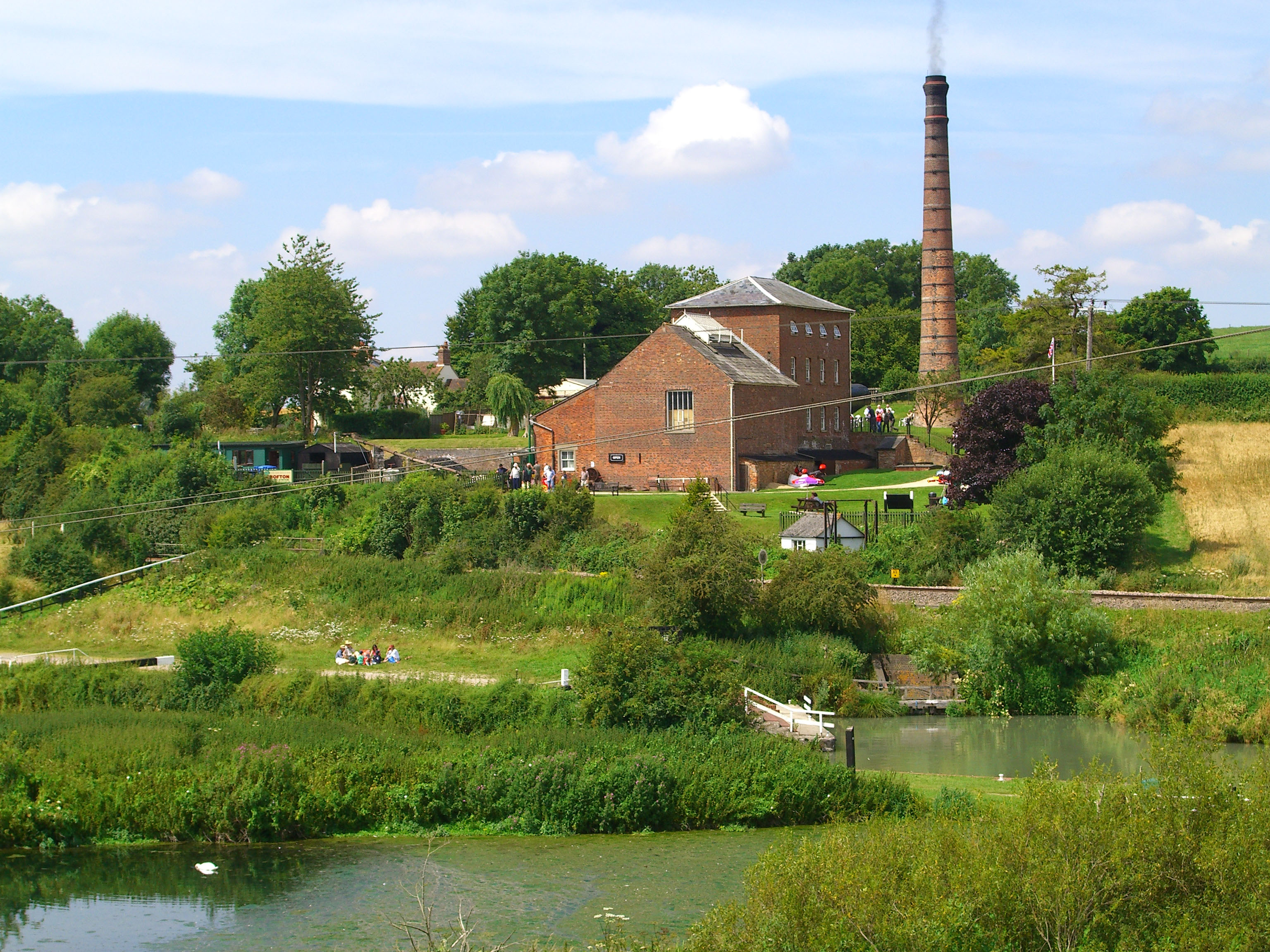
In the summer of 2008 we visited Crofton Pumping Station along the Kennet and Avon Canal in Wiltshire. My cousin Roger Jackson (an engineer) is one of the volunteers who look after the wonderful beam engines that were built and installed two centuries ago to pump water for the Kennet and Avon Canal.

And they are still needed today, as this newsclip (with my cousin Roger speaking to camera) illustrated in July 2009. In this other BBC newsclip, the background is provided – an electric pump had failed, leaving parts of the canal low on water, and stopping all canal traffic.

Roger and his wife Ann sponsored a special steam day in 2008 that Steph and I visited. A great day out. Just click on the image below to watch a video that I made.