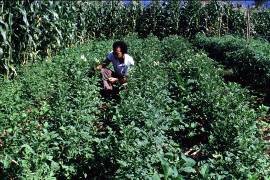
Birmingham – a center for potato studies

When the late Professor Jack Hawkes was appointed to a lectureship in botany at the University of Birmingham in 1952, he had already been working on potatoes for more than a decade. And immediately prior to arriving in Birmingham he’d spent three years in Colombia helping to establish a national potato breeding program. From then until his retirement in 1982  – and indeed throughout the 1980s – Birmingham was an important center for potato studies.

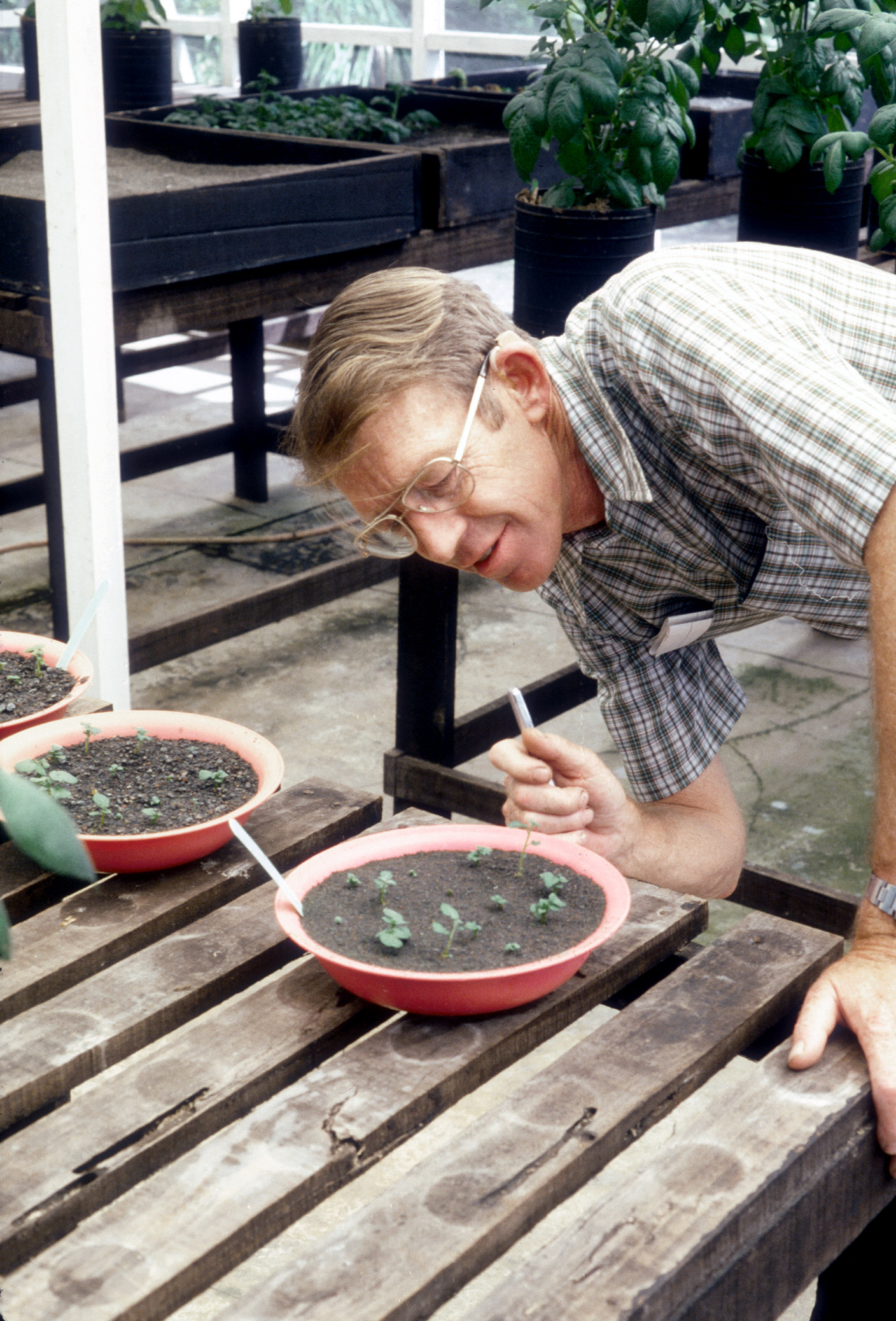
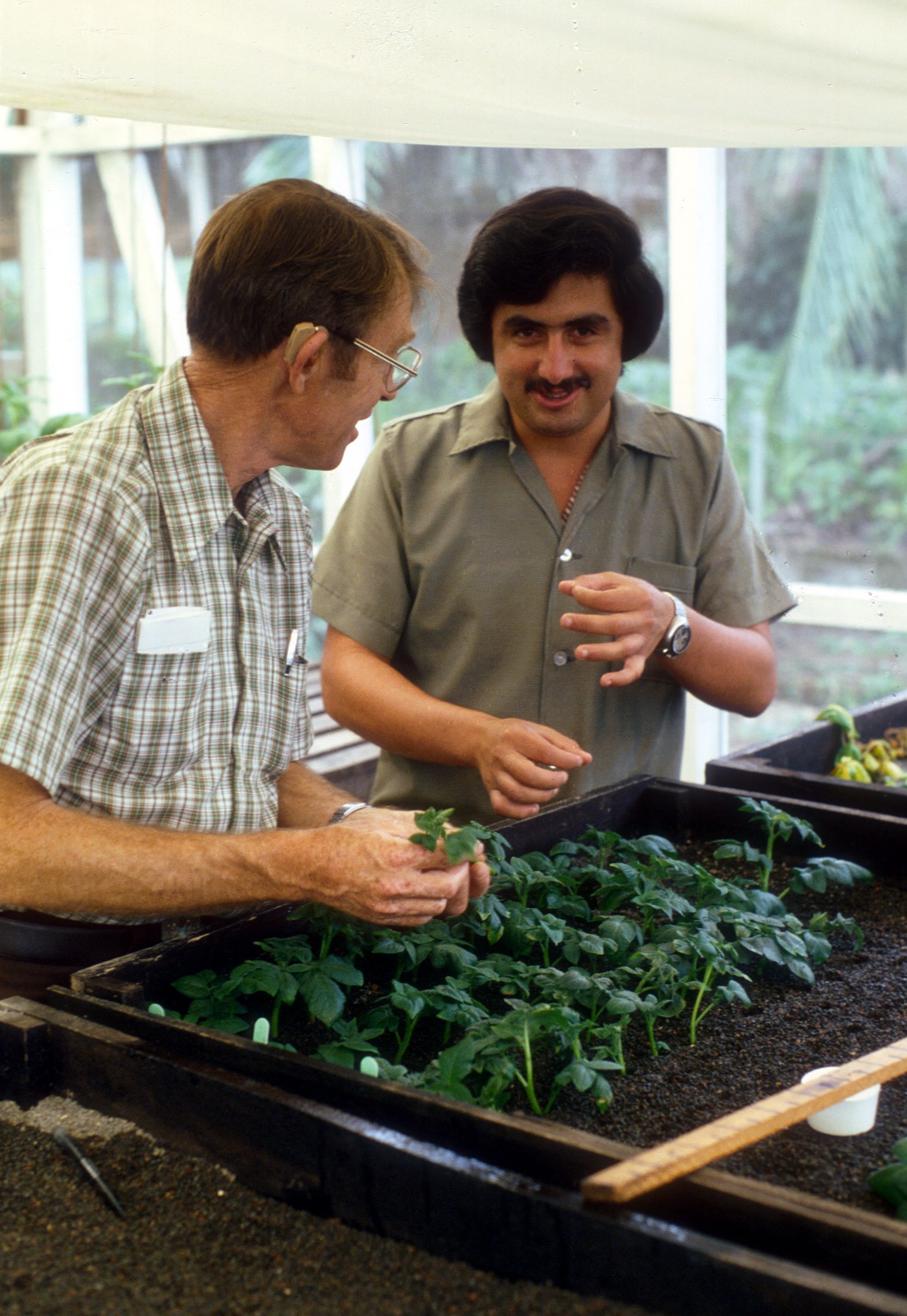
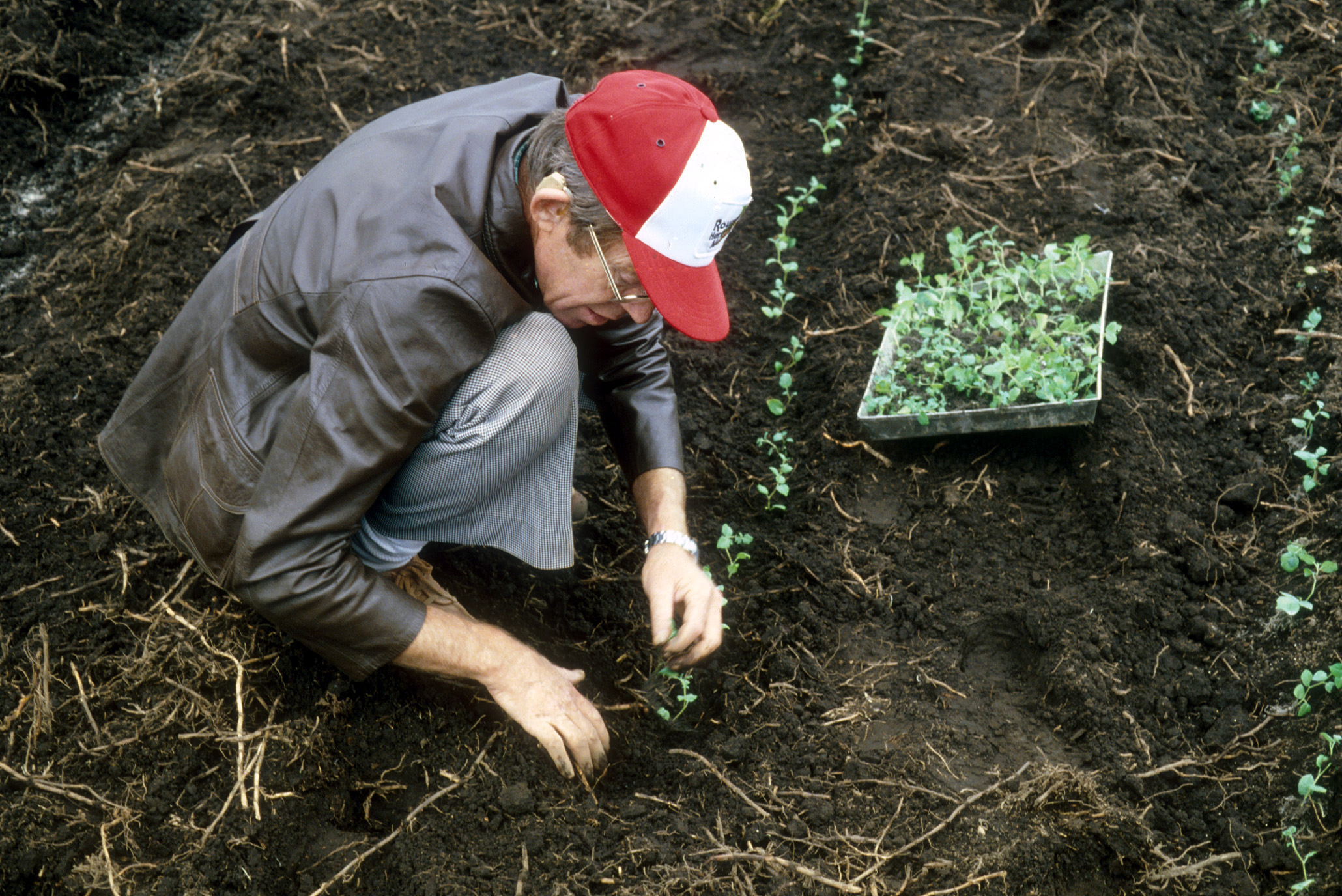
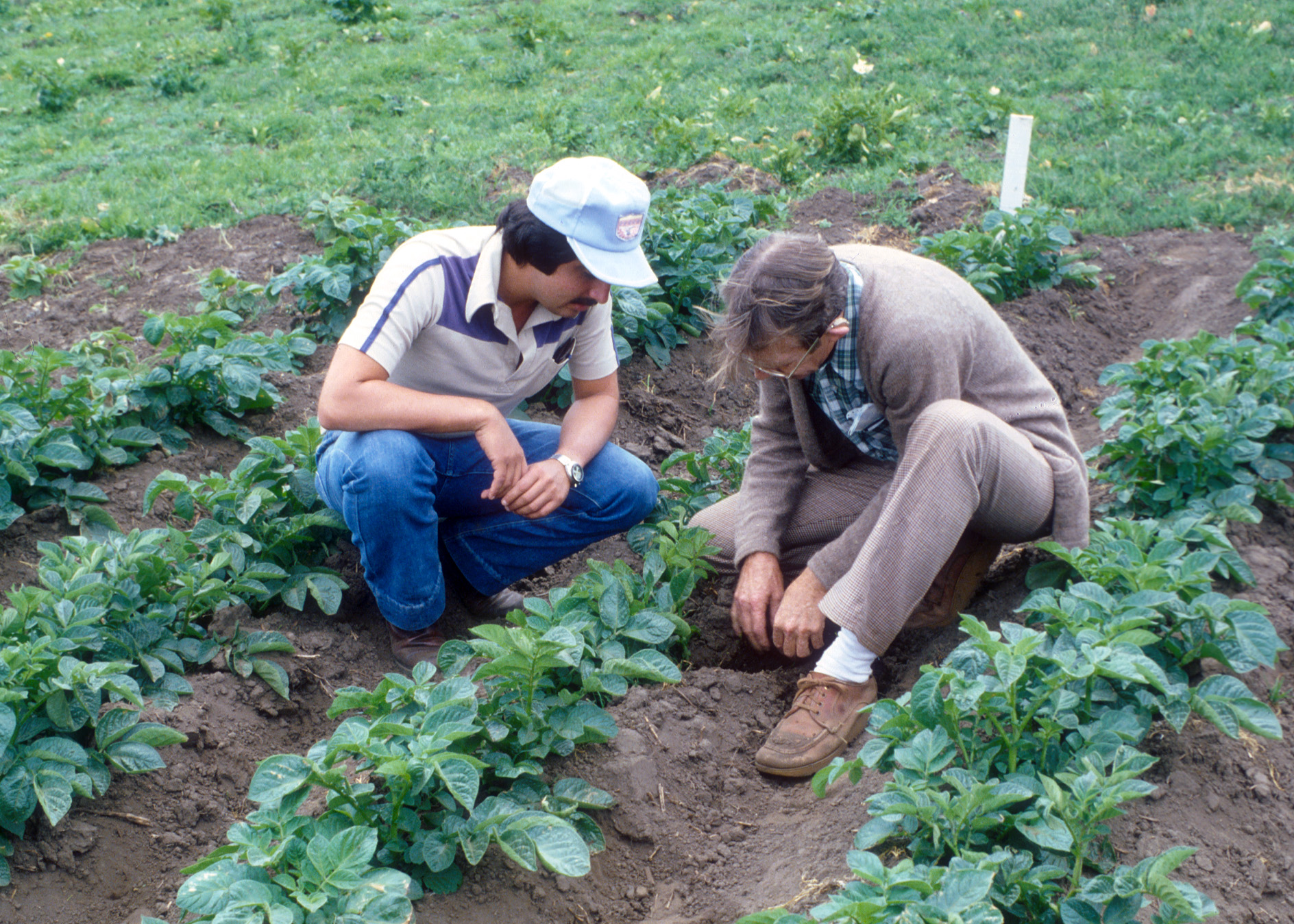
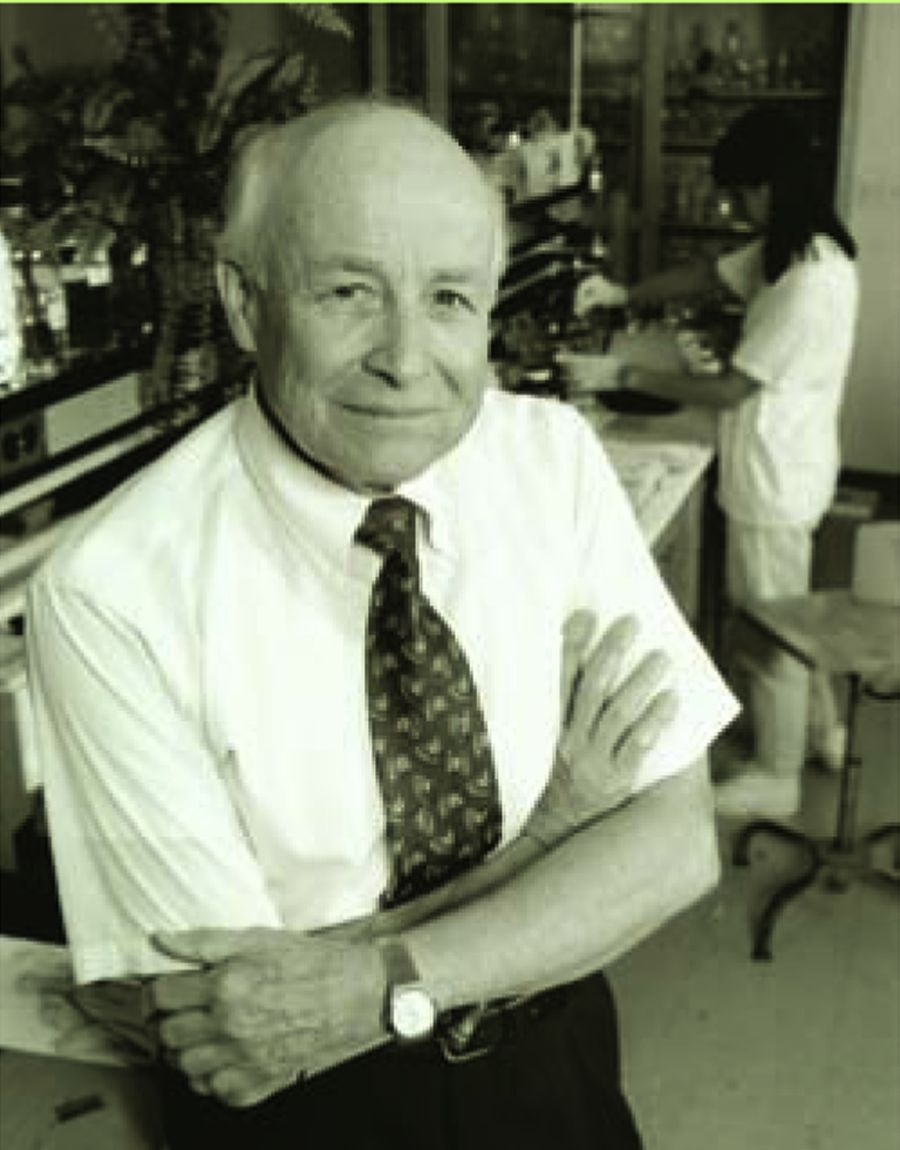
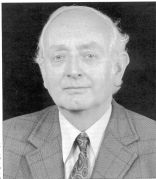
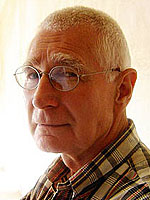
The potato germplasm that Hawkes collected (with EK Balls and W Gourlay in the 1938-39 expedition to South America) eventually formed the basis of the Empire then Commonwealth Potato Collection, maintained at the James Hutton Institute in Scotland. Throughout the 50s, 60s, 70s, and 80s Jack also had a large collection of wild potato (Solanum) species at Birmingham. This was a special quarantine collection; in the 1980s for potato quarantine purposes, Birmingham was effectively outside the European Union! For more than two decades Jack was assisted by horticultural technician Dave Downing, seen in the photo below. At the end of the 1980s we decided to donate the seed stocks from Jack’s collection to the Commonwealth Potato Collection, and it went into quarantine in Scotland. As the various lines were tested for viruses diseases they were introduced into the main collection.  Jack used this collection to train a succession of PhD students on the biosystematics of potatoes. I continued with this tradition after I joined the University of Birmingham in 1981. My first student graduated in 1982 (after I had taken over supervision from Jack).

Here is the list of University of Birmingham PhD students who worked on potatoes, as far as I can remember. All of them from 1975 (with the exception of Ian Gubb) had also attended the MSc course on genetic resources:

Richard Lester (UK), 1962. Taught at Makerere University in Uganda, before joining the Dept. of Botany at Birmingham in 1969. Retired in 2002, and died in 2006. Studied the biochemical systematics of Mexican wild Solanum species. The species Solanum lesteri is named after him.

Richard Tarn (UK), 1967. Emigrated to Canada in 1968, and joined Agriculture Canada as a potato breeder in Fredericton, New Brunswick. Retired in 2008. Studied the origin of ploidy levels in wild species.

Katsuo Armando Okada (Argentina), 1970 (?). Retired. Was with IBPGR for a while in the 1980s (?) in Colombia. Studied the origin of Solanum x rechei from Argentina.

Phillip Cribb (UK), 1972. He joined the Royal Botanic Gardens – Kew, and became a renowned orchid taxonomist. Studied the origin of the tetraploid Solanum tuberosum ssp. andigena.

Mike Jackson (UK), 1975. Studied the triploid cultigen Solanum x chaucha. Joint with CIP and Roger Rowe.
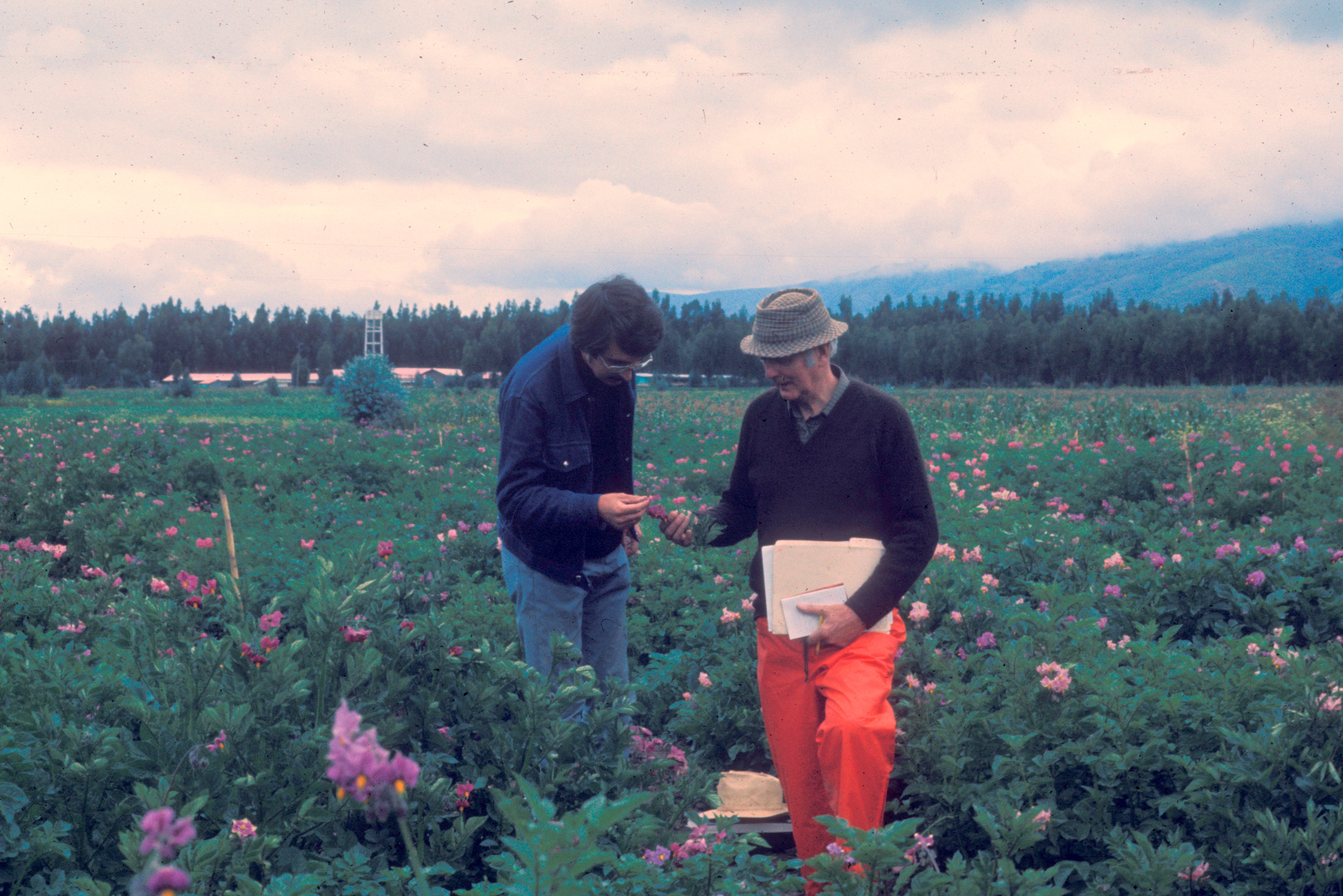
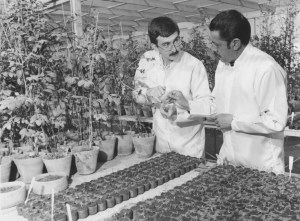
David Astley (UK), 1975. Became the curator of the vegetable genebank at Wellesbourne (now the Warwick Crop Centre). Studied the Bolivian wild species Solanum sucrense. The species S. astleyi is named after Dave.
Zosimo Huaman (Peru), 1976. He returned to the International Potato Center (CIP) in Lima, and continued working with the germplasm collection until December 2000; he then began work with several NGOs on biodiversity issues in Peru. Studied the origin of the diploid cultigen Solanum x ajanhuiri. Joint with CIP and Roger Rowe.

Peter Schmiediche (Germany), 1977. He continued working with CIP as a potato breeder (for resistance to bacterial wilt), and was later CIP’s regional leader based in Indonesia. Now retired and sharing his time between Texas (where his children settled) and his native Berlin. Studied the bitter potatoes Solanum x juzepczukii (3x) and S. x curtilobum (5x). Joint with CIP and Roger Rowe.

Luis Lopez (Colombia), 1979. Studied wild species in the Series Conicibaccata.

Lenny Taylor (UK), late 1970s. I don’t remember his thesis topic, but I think it had something to do with tetraploid forms. He joined the Potato Marketing Board (now the Potato Council) but I’ve lost contact.

Lynne Woodwards (UK), 1982. Studied the Mexican tetraploid Solanum hjertingii, which does not show enzymic blackening in cut tubers.

Rene Chavez (Peru), 1984. He returned to the University of Tacna, Peru, but also spent time at CIAT in Cali, Colombia studying a large wild cassava (Manihot spp.) collection. He sadly died of cancer a couple of years ago. Studied wide crossing to transfer resistance to tuber moth and potato cyst nematode. Joint with CIP and Peter Schmiediche.

Elizabeth Newton (UK), 1987? Studied sexually-transmitted viruses in potato. Joint with former CIP virologist Roger Jones (now at the University of Western Australia) at the MAFF Harpenden Laboratory.

Denise Clugston (UK), 1988. Studied embryo rescue and protoplast fusion to use wild species in potato breeding.

Carlos Arbizu (Peru), 1990. An expert on minor Andean tuber crops, he came from the University of Ayacucho. Spent time working in the germplasm program at CIP. Studied the origin and value of resistance to spindle tuber viroid in Solanum acaule. Joint with CIP and principal virologist Luis Salazar (who gained his PhD while studying at the Scottish Crop Research Institute in Dundee).

Ian Gubb (UK), 1991. Studied the biochemical basis of non-blackening in Solanum hjertingii. Joint with the Food Research Institute, Norwich.

Susan Juned (UK), 1994. Now a sustainable technology consultant, Sue is an active local government councillor, and has stood for election to parliament on a couple of occasions for the Liberal Democrats. Studied somaclonal variation in potato cv. Record; this commercial contract research was commissioned by United Biscuits.
David Tay (Malaysia), 2000. He worked in Australia and then was Director of the USDA Ornamental Plant Germplasm Center in Columbus, Ohio, but returned to CIP as head of the genetic resources unit in 2007. He’s now left CIP. I think he worked on diploid cultivated species. Joint with CIP. Not sure why his PhD is dated 2000, as he’d been in CIP in the late 70s.

I also supervised several MSc students who completed dissertations on potatoes (Reiner Freund from Germany, and Beatrice Male-Kayiwa and Nelson Wanyera from Uganda).

The Birmingham link with CIP is rather interesting. In the early 70s, staff at CIP seemed to have a graduate degree in the main from one of four universities: Cornell, North Carolina State, Wisconsin, or Birmingham.

Besides the Birmingham PhD students who went on to work at CIP, my wife Stephanie (MSc 1972, who had been working with the Commonwealth Potato Collection from November 1972 – June 1973 when it was still based at the Scottish Plant Breeding Station – now closed) joined the Breeding and Genetics Dept. at CIP in July 1973.

Roger Rowe, who had been in charge of the US potato genebank in Sturgeon Bay, Wisconsin, also joined CIP in July 1973 as head of the Breeding and Genetics Dept. He co-supervised (with Jack Hawkes) a number of Birmingham PhD students.

With the closure of Jack’s collection at Birmingham we were able to develop other potato research ideas since there were no longer any quarantine restrictions. In 1984 we secured funding from the Overseas Development Administration (now the Department for International Development – DfID) to work on single seed descent (SSD) from diploid potatoes to produce true potato seed (TPS). Diploids are normally self-incompatible, but evidence from a range of species had shown that such incompatibility could be broken and transgressive segregants selected. The work was originally started in collaboration with the Plant Breeding Institute (PBI) in Cambridge, but when the Thatcher government privatized the PBI and sold it to Monsanto in 1988, we continued the work at Birmingham. After a further year we hit a ‘biological brick wall’ and decided that the resources needed would be too great to warrant continued effort. This paper reflects our philosophy on TPS [1]. Another paper [2] spells out the approach we planned.

[1] Jackson, M.T., 1987. Breeding strategies for true potato seed. In: G.J. Jellis & D.E. Richardson (eds.), The Production of New Potato Varieties: Technological Advances. Cambridge University Press, pp. 248-261.

[2] Jackson, M.T., L. Taylor & A.J. Thomson, 1985. Inbreeding and true potato seed production. In: Report of a Planning Conference on Innovative Methods for Propagating Potatoes, held at Lima, Peru, December 10-14, 1984, pp. 169-179.
The agricultural terraces of Cuyo Cuyo, southern Peru

In early 1974 I travelled to southern Peru with a taxonomist friend from the University of St Andrews, Dr Peter Gibbs.

Peter and I had become friends when he visited the International Potato Center (CIP) in 1973. At that time Peter was supervising the Master’s thesis of a Peruvian student, Martha Vargas (daughter of renowned Peruvian botanist Professor César Vargas from Cuzco). At CIP he wanted to see if he could hitch a ride to the south of Peru on any germplasm collecting trips planned to that region, so that he could make some collections of oca (Oxalis tuberosa), a minor Andean tuber crop.

Oca tubers

As it happened, I was looking to carry out some ethnobotanical studies on the different potato varieties grown by farmers as part of my PhD research – but where would be a good site?

Peter showed me an old scientific paper (from 1951) by WH Hodge from the University of Massachusetts [1] about the cultivation of different tuber crops, including potatoes and oca, in the village of Cuyo Cuyo, located about 140 km northeast of Puno (69˚50’W, 14˚50’S) at the head of the Sandia Gorge. Well, this seemed like too good an opportunity to miss, and we agreed to pool our resources for the trip.

The drive south in a small Land Rover – down the coastal desert Panamericana highway, across the Nasca plain, climbing to Arequipa, and even higher to Puno – took three days. After resting up in Puno (next to Lake Titicaca), and getting used to the 3827 m altitude, we set off for Cuyo Cuyo. Dropping down from the altiplano at well over 4000 m, Cuyo Cuyo lies at an altitude of about 3300 m. Below the village the valley drops quickly towards the ceja de la montaña – literally ‘eyebrow of the mountain’ – where the humid air of the rainforests below rises up east-facing valleys to form cloud forest.

No-one in Cuyo Cuyo was expecting us, so there were quite a few surprised faces when these two gringos drove into town. Cuyo Cuyo was not on the ‘research-tourist’ trail in 1974, but many researchers have visited Cuyo Cuyo since I was there (see below), and there are quite a few publications now about the socio-economic systems and agriculture there.

Peru 110

Under these circumstances (as on other germplasm collecting trips) I’d found it useful to find the local mayor (alcalde) or schoolteacher and explain what we were up to and have them in turn explain to the local farmers and their families (in Quechua). On a previous trip to the north of Peru in May 1973, a local schoolteacher (rather drunk at the time as we’d arrived on his village’s fiesta) hailed me as a representative of La Reina Isabel (HM The Queen), promptly calling a village meeting, and asked me to give a ‘loyal address’. At that time I had fairly rudimentary Spanish, but it didn’t matter. After a few words of congratulations for the fiesta, every person in the hall (maybe 200 or so) came and shook me by the hand!

Peter and I set up camp, so-to-speak, in the local post office where we could sleep, brew the odd cup of tea (there was a small café in the village where we could eat), and gather our specimens together, including a rudimentary drier for the extensive set of oca herbarium samples that Peter intended to make. But more of that particular story later.

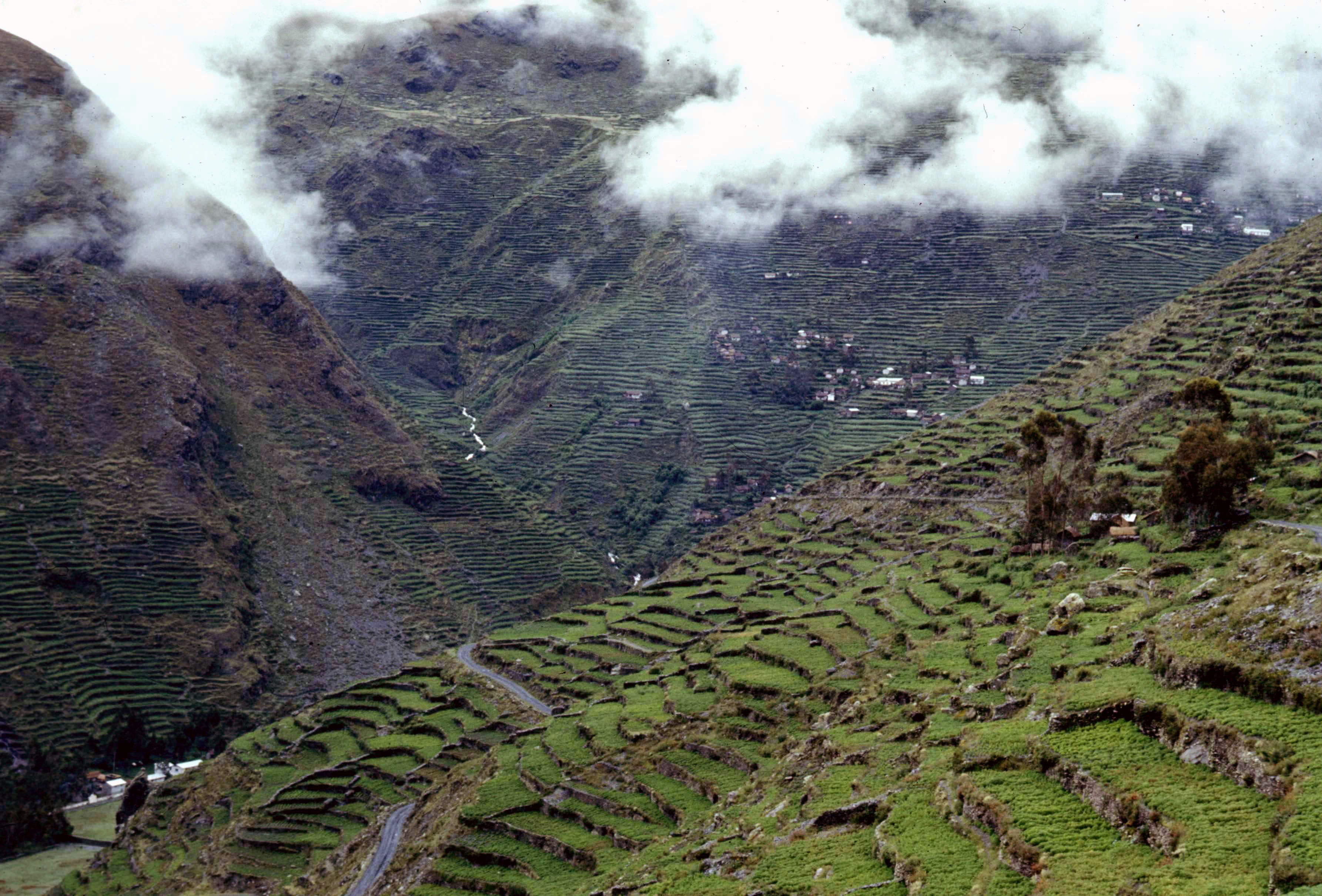
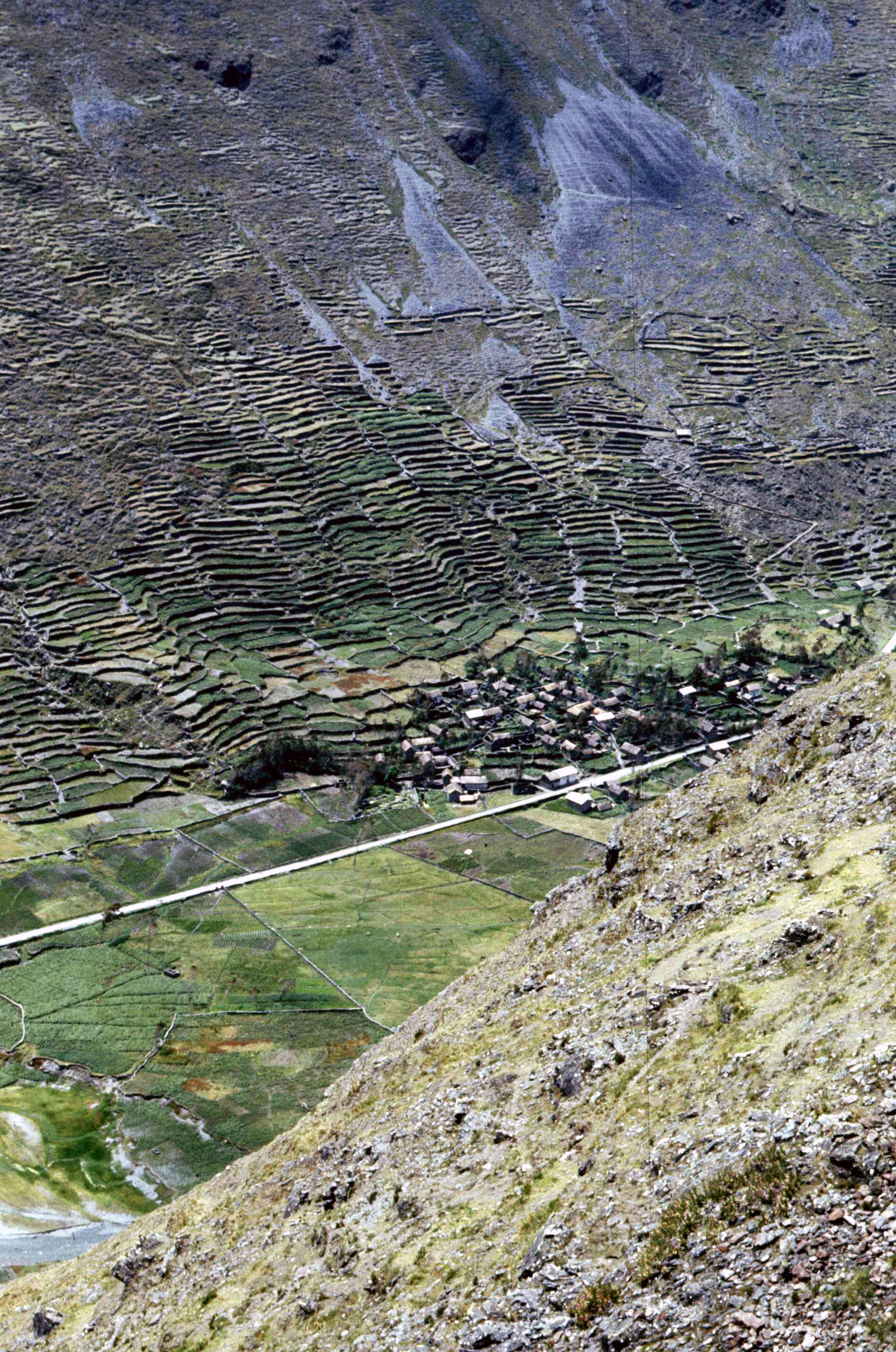
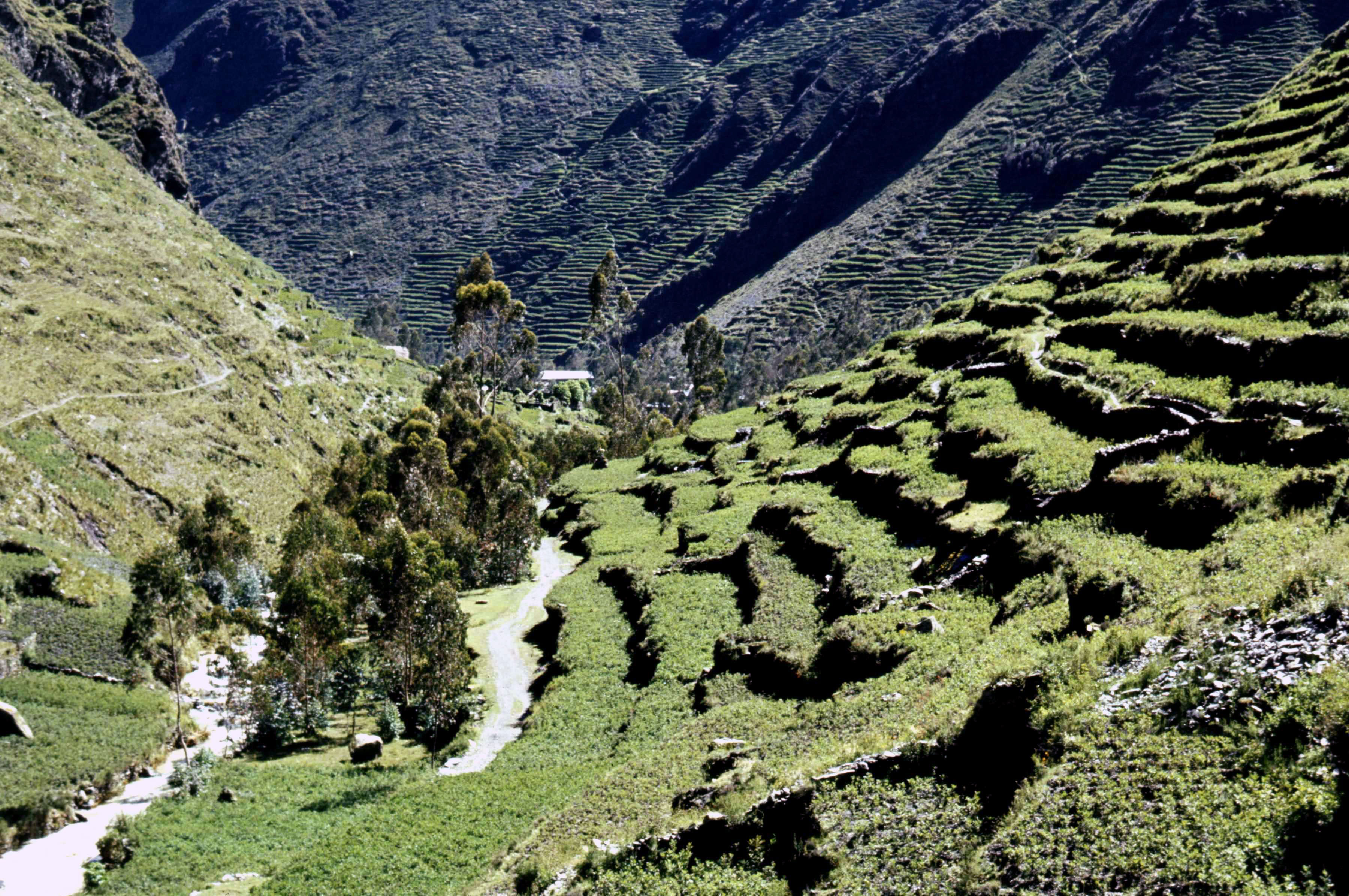
The sides of the Cuyo Cuyo valley are covered with the most wonderful system of agricultural terraces, called andenes, which must have been constructed centuries ago, in Inca times, and have been cultivated ever since. Farmers have different terraces dotted around the valley, and when I was there, at least, farmers were still using a communal rotation system. Thus in one part of the valley the terraces were covered in potatoes (year 1 after a fallow), and oca (years 2 and 3), barley or beans (year 4), or fallow (years 5-8) elsewhere. Sheep are corralled on a terrace prior to planting potatoes, and their urine and dung used as fertilizer. Whether, almost 40 years later, this remains the case I do not know.

But this system of potato and oca cultivation allowed me to make some detailed studies of the diversity of potato fields in terms of varieties grown and their genetic make-up (chromosome number). I eventually published this work in Euphytica in 1980 [2]. And there’s a story about that publication that’s also worth repeating, a little later on.

Since the terraces are quite small, only the native foot plough is used to till the soil (see my earlier post about potatoes). I discovered that different varieties were apparently suited to the growing conditions in different parts of the valley. The most highly prized varieties with a high dry matter content, termed harinosa or floury, were grown on the upper terraces where there was little chance of flooding. Whereas on the valley floor, which was flooded from time-to-time, farmers grew varieties which tended to be more ‘watery’ and used preferentially in soups.

Another very interesting discovery, for me at least, was seeing freshly harvested potatoes dipped in a clay paste after cooking. This practice, known generally as geophagy, has been reported from many societies, as well as observed in animals and birds.

Farmers told me that freshly harvested potatoes (but not the so-called bitter potatoes – see below) tended to be somewhat ‘peppery’ (that’s the best word I can find to describe the sharp taste of some varieties), and that dipping the tubers in the clay paste helped not only with digestion but also reduced the sharpness of the taste. One of the farmers showed me the site where they collected lumps of clay that were then ground to a fine powder and mixed with water. What’s interesting, however, is that I did not find any frost tolerant, bitter potatoes (Solanum juzepczukii or Solanum curtilobum) that have to be processed to make chuño before they can be eaten.

After two or three days, Peter and I felt that we’d done sufficient field work there, and headed north towards Cuzco to visit some additional sites. From there we returned to Lima by air, leaving the Land Rover behind for a CIP colleague.

But what about all those oca herbarium specimens? Despite our best efforts, we had great difficulty in drying the specimens that Peter collected, for two reasons. It was quite wet during our visit to Cuyo Cuyo, and all the samples were covered in moisture even before we attempted to turn them into dried herbarium sheets. Furthermore, oca has rather fleshy stems that just wouldn’t dry. Even after a couple more weeks of drying in Lima, Peter packed up what he had and posted them to St Andrews. After he arrived home, he found that his herbarium specimens were not only alive, but had begun to sprout – so he promptly planted them all in his university glasshouse, and had a range of living samples to use in his study of pollination mechanisms!

And what about the ethnobotany paper that I referred to earlier? I completed my PhD in 1975, and began to write-up my work for publication in scientific journals. I chose the Wageningen-based journal Euphytica for two papers submitted in 1977 on triploid potatoes and crossability studies, and Economic Botany for the Cuyo Cuyo paper. Well, that paper was finally accepted by mid-1977, and I waited for it to appear in print (by that time I’d already moved to Costa Rica and was busy with other potato research).

I didn’t hear anything for many months, but then, out of the blue, I received a letter from the new Editor-in-Chief of Economic Botany asking me if I’d published the paper elsewhere. In taking over the helm at Economic Botany, he’d found manuscripts in the files that had been accepted for publication up to two decades earlier, but had never been published! Well, at about the same time, the Editor of Euphytica, Prof. Anton Zeven, wrote to me, commenting on my PhD thesis (he’d obtained a copy through interlibrary loan) and wondering if I had published my Cuyo Cuyo research. And if I hadn’t, would I seriously consider doing so. What an invitation! With some revisions (but unfortunately removal of some of the more anthropological aspects) I submitted the paper to Euphytica in early 1979, and it was published some months later in 1980.

Cuyo Cuyo in 2006
Among the researchers to have visited Cuyo Cuyo more recently than me – in early 1997 and May 2006 – is University of Wisconsin-Madison associate professor of botany Dr Eve Emshwiller, who has been studying oca for many years now. In a recent message (15 March 2014)  she commented that Cuyo Cuyo was a fascinating place, but changing fast. I’m sure that’s something that could be said about many of the places I visited in the 1970s, then quite remote, but now opened up through better roads and telecommunications. Eve has kindly given me permission to include here some of her wonderful photos taken in 2006 of the oca harvest in Cuyo Cuyo. In one of the photos you can see the patchwork of fields, some with oca, others with potatoes. That cropping system certainly hadn’t changed in more than 30 years.

[1] Hodge, WH, 1951. Three native tuber foods of the high Andes. Economic Botany 5 (No. 2): 185-201.

[2] Jackson, MT, JG Hawkes and PR Rowe, 1980. An ethnobotanical field study of primitive potato varieties in Peru. Euphytica 29: 107-113. Click to read the paper in full.

Potatoes – the real treasure of the Incas . . .

Home of the potato
The Andes of South America are the home of the potato that has supported indigenous civilizations for thousands of years. As many as 4,000 native potato varieties are still grown. The region around Lake Titicaca in southern Peru and northern Bolivia is particularly rich in genetic diversity, and the wild potatoes from here are valuable for their disease and pest resistance [1].

For three years, from 1973-1975 I had the privilege of living and working in Peru (fulfilling an ambition I’d had since I was a boy) and studying the potato in its homeland. My work took me all over the mountains to collect potato varieties (for conservation in the germplasm collection of the International Potato Center (CIP), and to carry out studies of potato cultivation that I hoped would throw some light on different aspects of potato evolution [2].

I joined CIP in January 1973 as Associate Taxonomist, charged with the task of collecting potato varieties and helping them to maintain the large germplasm collection, that grew to at least 15,000 separate entries (or clonal accessions), but was reduced to a more manageable number through the elimination of duplicate samples. The germplasm collection was planted each year from October through April, coinciding with the most abundant rains, in the field in Huancayo, central Peru at an altitude of more than 3,100 meters.
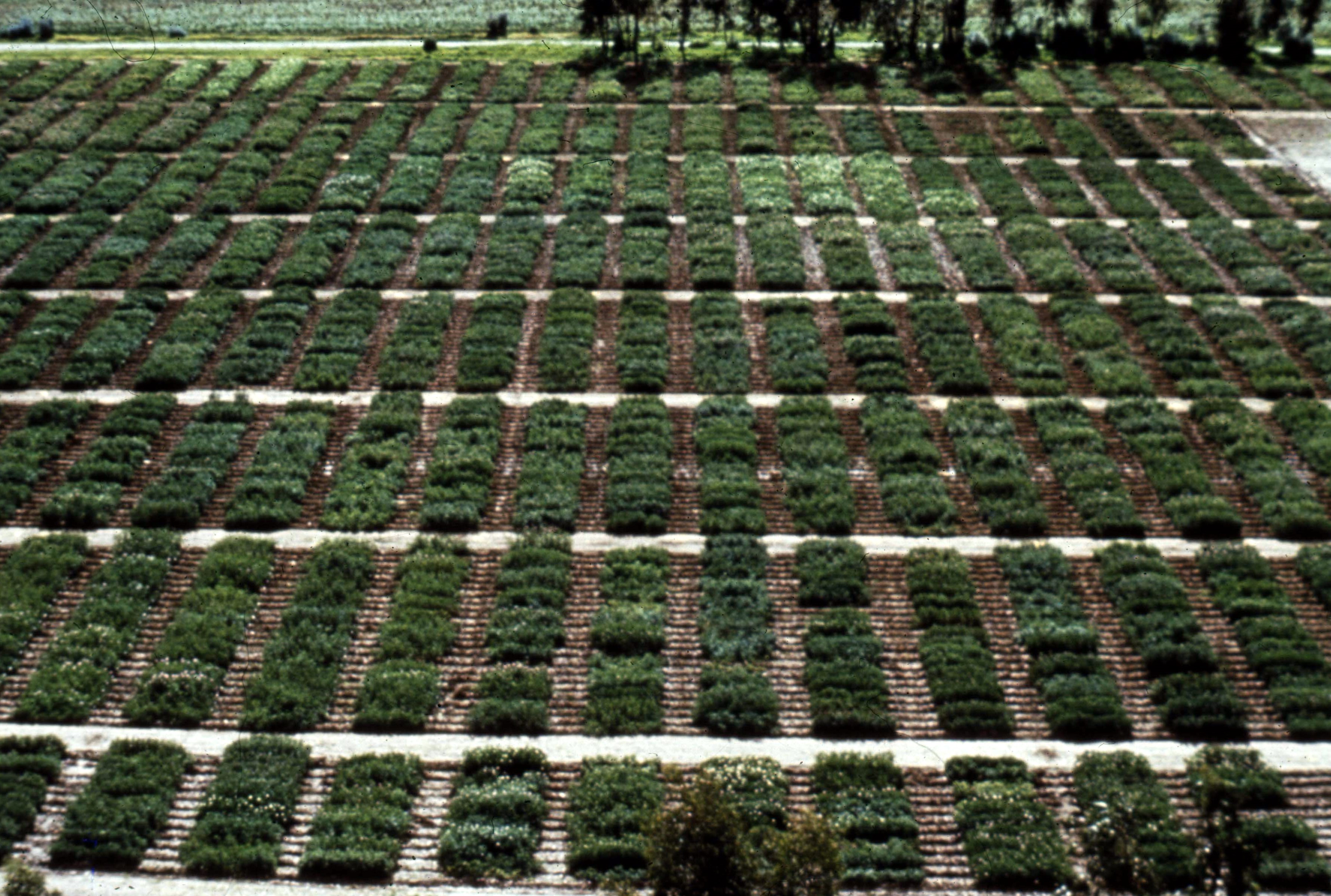
Potato collection at CIP, grown in the field at Huancayo, central Peru, at 3100 m. Taken around mid 1980s.

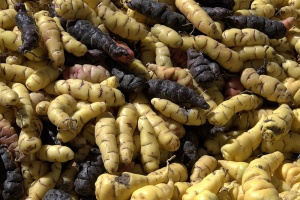
When CIP was founded in 1971, several germplasm collections from various institutes in Peru and elsewhere were donated to the new collection, but from 1973 CIP organized a program of collecting throughout Peru – and I was fortunate to be part of that endeavour. In May 1973 I joined my colleague Zosimo Huaman to collect potatoes in the Departments of Ancash and La Libertad, to the north of Lima. The highest mountains in Peru are found in Ancash, and our route took us through into the Callejón de Huaylas (between two ranges of the highest mountains in Peru, the Cordillera Blanca on the east, and Cordillera Negra on the west), and over the mountains to valleys on the eastern flanks. This was my first experience of collecting germplasm, and it was exhilarating. I think we did quite well in terms of the varieties collected, and the photograph below illustrates some of  their  immense genetic diversity.

Genetic diversity in cultivated potatoes

The following year I traveled with just a driver, Octavio (who was unfortunately killed in a road accident a couple of years later) further north into the Department of Cajamarca during April-May 1974. The photograph below shows the view, in the early morning sun, south towards Cajamarca city. The mist hanging over the city comes from hot springs that were utilized centuries ago by the Incas to build bath houses.

We collected potatoes in the field at the time of harvest, but also in markets (here is shown the market of Bambamarca), and from farmers’ own potato stores. Incidentally, the tall straw hats are very typical Cajamarca, as are the russet-colored ponchos.

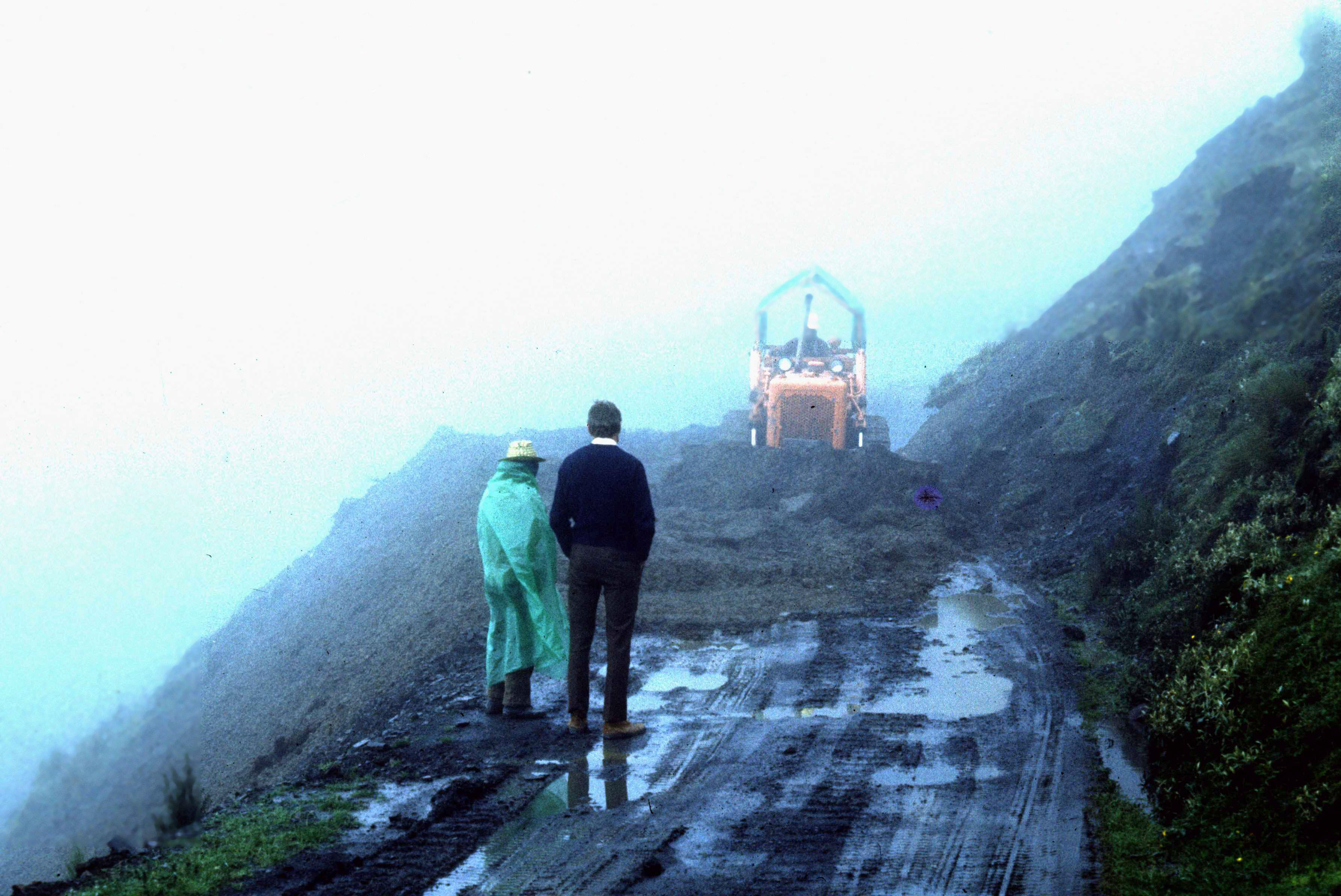
In January 1974 I made a trip south, with Dr Peter Gibbs, a taxonomist from the University of St Andrews, Scotland, who was interested in the tri-styly pollination of a minor Andean tuber crop called oca (Oxalis tuberosa). We went to the village of Cuyo Cuyo, more than 100 km north of Puno in southern Peru. Dropping down from the altiplano, the road hugs the sides of the valley, and is often blocked by landslides (a very common occurrence throughout Peru in the rainy season). Along the way – and due to the warmer air rising from the selva (jungle) to the east – the vegetation is quite luxurious in places, as the white begonia below shows (the flowers were about 8 cm in diameter). Eventually the valley opens out, with terraces on all sides. These terraces (or andenes) are ancient structures constructed by the Incas to make the valley more productive.

In Cuyo Cuyo, I studied the varieties growing in farmers’ fields, and their uses [3].

Getting to some locations by four-wheel drive vehicle was often difficult. Then it was either ‘shanks’ pony’, or real pony. I do remember that I became very sore after many hours in the saddle. Incidentally, I still have that straw hat and it’s as good as the day I bought it in January 1973.

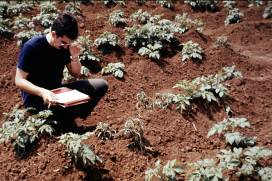
But studying potato systems, and working with farmers was fascinating. Here I am collecting flower buds, and preserving them in alcohol ready to make chromosome counts in the laboratory, back in Lima.

The next photograph shows a community we visited close to Chincheros, near Cuzco in southern Peru. While farmers grew commercial varieties to send to market in Cuzco – the large plantings of potatoes in the distance -closer to their dwellings they grew complex mixtures of varieties, with different cooking and eating qualities.

Most farmers do not have access to mechanization, apart from manual labor and oxen to pull ploughs. In any case, much of the land in these steep valleys is unsuitable for mechanization. For centuries, farmers use the chakitaqlla or foot plough illustrated by Peruvian chronicler Felipe Guaman Poma de Ayala in the early 17th century. There are many different foot ploughs in used throughout Peru. The foot plough shown below in one of Poma de Ayala’s illustrations is the same as that used by farmers in Cuyo Cuyo. The photograph underneath shows farmers near Huanuco in central Peru.

I never collected wild potatoes as such, but it was fun on two occasions to accompany my thesis supervisor and mentor, Jack Hawkes (a world-renowned expert on the taxonomy and evolution of potatoes, and one of the founders of the genetic resources movement in the 1960s) on short trips. In January 1973 we visited Cuzco, and Jack found Solanum raphanifolium growing among the ruins of the Inca fortress of Sacsayhuaman.

Early 1975 (during one of his annual trips to CIP)  Jack, Juan Landeo (then a research assistant, who later became one of CIP’s potato breeders), and I traveled over four days through the central Andes just north and east of Lima, in the Departments of Cerro de Pasco, Huanuco, and Lima. It was fascinating watching an expert at work, especially someone so familiar with the wild potatoes and their ecology. We’d be driving along, and suddenly Jack would say “Stop the car! I can smell potatoes”. And more than nine times out of ten we’d find clumps of wild potatoes after just a few minutes of searching. Here we are (looking rather younger) about to make a herbarium collection just south of Cerro de Pasco (I don’t remember which wild species, however).

Markets are always fascinating places to collect germplasm of many different crops. The next two photographs show colorful diversity in maize and peppers.

Among the many you can find in the market is chuño, a type of freeze-dried potato, made from several varieties of so-called bitter potatoes, which have a high concentration of alkaloids which must be removed before eating. This is done by first leaving the tubers on the ground on frosty nights to freeze, and then thaw the following morning. After several cycles of freezing and thawing the tubers are then soaked for several weeks in fast-flowing streams to leach out the bitter compounds. Afterwards, they are left to dry in the sun, and in this preserved state will last for months. This photograph was taken in the Sunday market at Pisac, near Cuzco.

Clearly the potato is an ancient crop in Peru (and other countries of the South American Andes), and domesticated several thousand years ago. It was revered by ancient civilizations, as these anthropomorphic potato pots (or huacos) show. The national anthropological museum in Lima has a fine collection of these pots showing a vast array of different crop plants. It also holds an extensive collection of erotic ceramics for which the Incas, Moche, and other coastal civilizations were equally famous.

After the conquest of the Incan empire by Francisco Pizarro González in the 16th century, the Spanish plundered all the gold and other precious items they could find, and sent everything back to Spain. It’s often said, however, that the value of all this gold fades into insignificance compared to the value of the potato crop today worldwide. The real treasure of the Incas has certainly been put to better use.

~~~~~~~~~~~~~~~~~~~~~~~~~~~~~~~~~~~~~~~~~~~~~

[1] Jackson, M.T., J.G. Hawkes, B.S. Male-Kayiwa & N.W.M. Wanyera, 1988. The importance of the Bolivian wild potato species in breeding for Globodera pallida resistance. Plant Breeding 101, 261-268.

[2] Jackson, M.T., J.G. Hawkes & P.R. Rowe, 1977. The nature of Solanum x chaucha Juz. et Buk., a triploid cultivated potato of the South American Andes. Euphytica 26, 775-783.

[3] Jackson, M.T., J.G. Hawkes & P.R. Rowe, 1980. An ethnobotanical field study of primitive potato varieties in Peru. Euphytica 29, 107-113.


Jim Bryan – a friend indeed

I first met Jim Bryan in February 1973, just under two months after I’d first arrived in Lima, Peru to join the International Potato Center (CIP) as associate taxonomist. Jim had returned from home leave in the USA taken at the end of 1972 after completing his contract with the USAID-North Carolina State University potato project in Peru. He joined CIP as Seed Production Specialist. Over time, Jim became my closest friend and colleague at CIP, but we didn’t always see eye-to-eye. Early on, Jim thought it was his role to ‘supervise’ my work – something I didn’t take kindly to, and told him so in no uncertain terms. But as I got to know Jim (and his wife Jeanne and family) better, I came to realise what a firm friend he could be, and how much about growing potatoes and potato production I could learn from him.

A native of Gooding, Idaho, Jim was born in March 1930. He served in the Korean War, and afterwards gained BS and MS degrees in agricultural education. He taught vocational agriculture for four years, then joined the potato program at the University of Idaho. In 1966 Jim was recruited as a Seed Specialist to join the North Carolina project by Dick Sawyer (who was to become the first Director General of CIP when it was founded in 1971), and moved to Lima with his wife, three daughters (Wendy, Julie and Mary) and son Chris. I guess he hadn’t expected to remain in Peru for the next 30 years, mostly at CIP. Like many expat staff joining CIP, Jim did not initially speak Spanish, and despite his best efforts he never really did develop a good command of the language. But that didn’t really matter; he tried . . . and if he couldn’t think of the words he needed, some arm-waving and the use of  “X, X, X” usually got him by, and was much appreciated by local administrative and research staff.

Jim’s work in seed production took him all over the world and he was much in demand by colleagues in national potato programs in many countries. That was because his feet were firmly planted in the potato fields that he loved. He always looked for practical solutions, and ones that were doable and affordable. He was an excellent teacher, never afraid to get stuck in, and his hands dirty. And this was the best way to get across the important concepts and practices of potato seed production and health. Jim was responsible for setting up the germplasm export facilities and procedures at CIP, to make sure that the diseases endemic to potatoes in Peru, especially virus diseases, were not spread around the world. In recognition of his important contributions to potato science, Jim was elected an Honorary Life Member of the Potato Association of America in 1992.

I moved to Costa Rica in 1976, and Jim joined my regional program for one year in 1979. He was assigned as a seed specialist for the new consortium program – Programa Regional Cooperativa de Papa (PRECODEPA) – funded by the Swiss government. One of the projects that Jim and I worked on was the development of rapid multiplication techniques for potatoes such as stem cuttings, leaf bud cuttings, and sprout cuttings through which it’s possible to produce 1 tonne of potatoes from a single tuber in a year. And we did achieve this with several varieties, producing the various cuttings in a screen house in Turrialba, and transplanting them to fields on the slopes of the Irazu volcano. Jim also trained many national program staff in these techniques. We developed a useful booklet on rapid multiplication techniques and some training slide sets, which seem quite crude today when you think what digital technologies can offer.

Transplanting cuttings on the Irazu volcano in Costa Rica

Checking potatoes grown from stem cuttings in the field, with Jorge Aguilar.

After retirement Jim and Jeanne moved to Seattle to be near their three daughters (meanwhile Chris was across the other side of the USA in Florida), and Steph and I had opportunity of visiting them there on more than one occasion. 

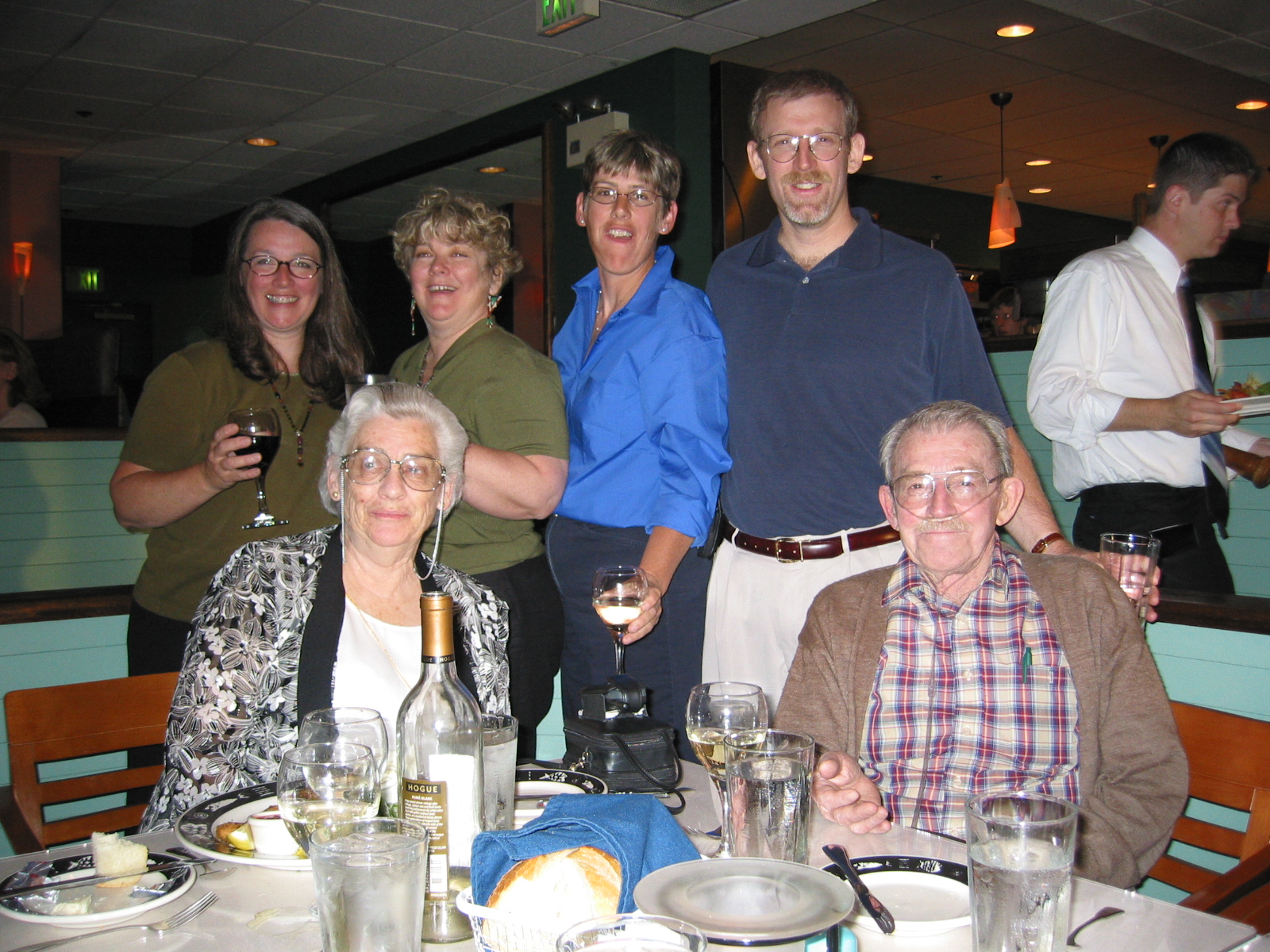
Jim and Jeanne’s Golden Wedding anniversary in Seattle, June 2003. Standing, L-R: Wendy, Mary, Julie, and Chris.

Jim was an avid stamp collector, and built up a wonderful collection of British stamps and any depicting potatoes from all around the world. A heavy smoker all his life, this eventually affected Jim’s health and he developed emphysema, and became dependent on an oxygen bottle. The last letter I received from Jim in early 2010, just after his 80th birthday, was still full of optimism however. He told me that one of his goals had been to reach 80, and every day afterwards would be a bonus. Sadly Jim died in August later that year.


Update: 23 February 2025
I just received an email from Wendy, Jim and Jeanne’s eldest daughter, that Jeanne passed away on Friday 21 February. Sad news!

Cruza 148 . . . the serendipity of disease resistance

Just do a Google search on “Cruza 148” and and you will see more than 1,350 hits. Even Google Scholar generates more than 100 publications that make reference to Cruza 148. How did this potato clone from Mexico achieve its celebrity status? It is known for its resistance to bacterial wilt and late blight, and that it has been released in Burundi (as Ndinamagara), Uganda (as Cruza), Rwanda, and the Democratic Republic of Congo. Indeed, CIP scientist Greg Forbes reported in 2006 that it’s grown in the ‘poorest of poor areas’, and suggested that Cruza 148 is ‘the Superman of potatoes’. So how was this potato clone discovered, and what steps were taken to validate its resistance to bacterial wilt?

I spent my first three years with CIP in Lima, but in mid-1976 Dick Sawyer posted me to then Region II (Mexico, Central America, and the Caribbean), to undertake research on adaptation of the potato to the lowland tropics, as part of the the Regional Research Program (formerly Outreach). So I landed in Turrialba, Costa Rica at the Centro Agronómico Tropical de Investigación y Enseñanza (CATIE), where I was to remain for the next four and a half years, supported first by Head of Outreach Dick Wurster and then by Ken Brown after Dick left CIP. Deputy Director General-Research Ory Page was also keen to establish some specific research projects in the regions.

After refurbishing a screen-house and office space, and hiring a couple of field assistants, Jorge Aguilar and Moises Pereira, and getting to know the region, I finally started my research. I received a batch of 207 late blight resistant clones from CIP’s regional office in Toluca, Mexico that were planted in a first trial in July 1977 on the CATIE experiment station. There had been no cultivation (at least for more than 20 years) of any solanaceous crops [1]. Each clone was planted in a 5-hill plot, in a randomized complete block, with just a single plot replication per clone.

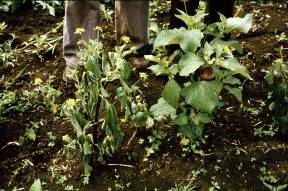
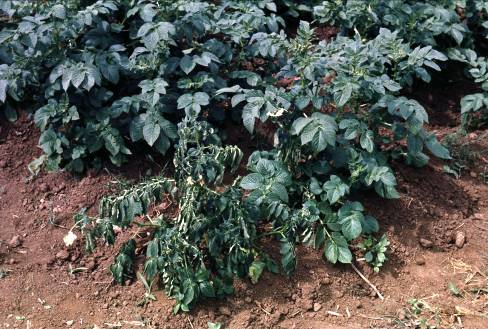
There was no problem with initial growth of all clones, despite the rather warmer and wetter growing conditions in Turrialba. But after a few weeks we noticed, in just one of two plants, the first signs of the asymmetrical wilt typical of bacterial wilt (Ralstonia solanacearum, formerly known as Pseudomonas solanacearum).

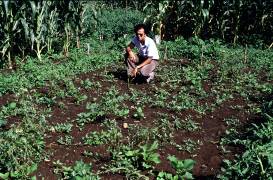
I was fortunate that I had a contact, Dr. Luis Carlos Gonzalez, in the Universidad de Costa Rica – Laboratorio de Fitopatología, an acknowledged expert in bacterial wilt who had completed his PhD studies under Professor Luis Sequeira at the University of Wisconsin-Madison. Luis Carlos soon confirmed the presence of bacterial wilt, and we took steps to carefully map the spread of the disease across all plots. Each week we carefully scored the presence/absence of wilt in every plant, and built up a comprehensive picture of the development of the disease among the clones under evaluation. But that mapping also showed us where there could be hotspots in the trial plots. After some 12 weeks or so, almost all of the clones were dead – except three apparently resistant, one of which was Cruza 148. Eight further clones showed only some slight symptoms of bacterial wilt.

Our first question was whether these disease-free clones had somehow escaped infection, even though we had the evidence that the disease was spread right across the site, and in the clones surrounding ‘resistant’ ones. Fortunately all three did produce a good crop of tubers, which we harvested and stored for future evaluation. After chitting we were ready for a second evaluation. We decided to use the same site on the experiment station, carefully tilling and mixing the soil to  ensure that the potatoes we planted would come into contact with the bacterium. Not long after sprouting, the two Indian varieties (I don’t remember the clone numbers, but hopefully our original data and reports, even the plot maps, are still filed away somewhere at CIP) succumbed to wilt, but Cruza 148 remained healthy, showing no signs of bacterial wilt.

We repeated the evaluation for a third time, using tubers harvested from the second evaluation plots. And once again in this third trial – in the same soil – Cruza 148 showed no signs of infection. But where had the resistance to bacterial wilt come from, and why was there such a high inoculum of the bacterium in these soils on the CATIE experiment station? Now although bananas were grown at CATIE, we did show that the bacterial strain was not the one that infected bananas, but Race 1 (as it was then classified).

It also happened that Luis Sequeira (a Costarrican by birth) was holidaying in Costa Rica and visited our plots in Turrialba. And very quickly, and based on his broader experience, he spotted a number of common weeds, family Asteraceae [1, 2] that were wilting.

We collected samples, and undertook all the appropriate phytopathological tests to show that extracts from these weeds were pathogenic on potato. That finding led to us develop a research project looking at the persistence of the bacterium in these Turrialba soils, and how the incidence of bacterial wilt could be reduced through various agronomic practices.

Reports about Cruza 148 are still being published 34 years after its potential was first uncovered in those early Turrialba trials. Now, we know that it is a carrier of the bacterium, which is rather a disappointment. But Cruza 148 has been used a standard control variety in hundreds of disease resistance experiments, and Peter Schmiediche was one of the first CIP breeders to include Cruza 148 in his program. And as far as I know it is still grown in those central African countries. Even if it has been replaced, it achieved impact for many years providing important food for many farmers and their families. I remember discussing Cruza 148 with Jim Bryan. He pointed out that one of  its disadvantages was the coloured flesh, and that it would be unlikely to be adopted by farmers. We now know that was not the case. In fact I have read some reports that farmers in Burundi use the tuber flesh colour to identify tubers of Ndinamagara!

Cruza 148 is one of those happy accidents of germplasm evaluation – you sometimes never know just what might turn up. Maybe it’s not a ‘Superman’ but, rather by chance, it has played a significant role in confronting a serious disease of potatoes, and contributing to food security.

[1] Jackson, M.T., L.C. González & J.A. Aguilar, 1979. Avances en el combate de la marchitez bacteriana de papa en Costa Rica. Fitopatología 14, 46-53.

[2] Jackson, M.T. & L.C. González, 1981. Persistence of Pseudomonas solanacearum (Race 1) in a naturally infested soil in Costa Rica. Phytopathology 71, 690-693.

The images below show bacterial wilt in a mature potato plant, with the typical asymmetrical wilt, and the vascular system of the tuber exuding millions of bacterial cells.