
The other day I was using TripAdvisor on Facebook to see how many countries I’d visited over the past 40 odd years, and was surprised to discover that it’s almost 90. Many of these visits were connected with my work one way or another. However, I’ve lived in three countries outside the UK:
- in Peru from January 1973 to April 1976, and November 1980 to March 1981, with the International Potato Center (CIP), at its Lima headquarters;
- in Costa Rica, from April 1976 to November 1980, leading CIP’s regional program at that time, located at CATIE in Turrialba; and
- in the Philippines, from July 1991 to April 2010, with the International Rice Research Institute (IRRI) in Los Baños, about 65 km south of Manila.
In this series of stories, I will recall many of the places I’ve visited, and my impressions. In this first part, I focus on Peru, Costa Rica, and the Philippines. I’ll add more images to all posts as and when I am able to digitize the many slides that I have in my collection.
First foreign forays
But first things first. Until 1969, however, I had never been outside the UK. In September that year, I joined a group of Morris and sword dancers from Newcastle-upon-Tyne to participate in a bagpipe festival at Strakonice in Czechoslovakia. It was a novel experience for me to travel across Holland and southern Germany by road, seeing new sights (and sites). But more of this in another post.
In 1972, I attended a genetic resources conference organized by EUCARPIA – the European Association for Plant Breeding Research, held at Izmir on the Aegean coast of Turkey, south of Istanbul – quite exotic. Together with a group of other students from Birmingham, I stayed at an olive research institute at Bornova, some miles outside Izmir, rather than at the comfortable hotel in the city center where the conference was being held. One thing I do remember was the daily breakfast – a plate of stuffed olives, some goat’s milk cheese, crusty bread, and a glass of tea. I was a much fussier eater in those days, and was not taken with olives – quite the reverse today! We did get to visit the ancient ruins of Ephesus – a magnificent city. I returned to Izmir in the late 70s while I was working for CIP, and there was a regional meeting about potato production.
Peru
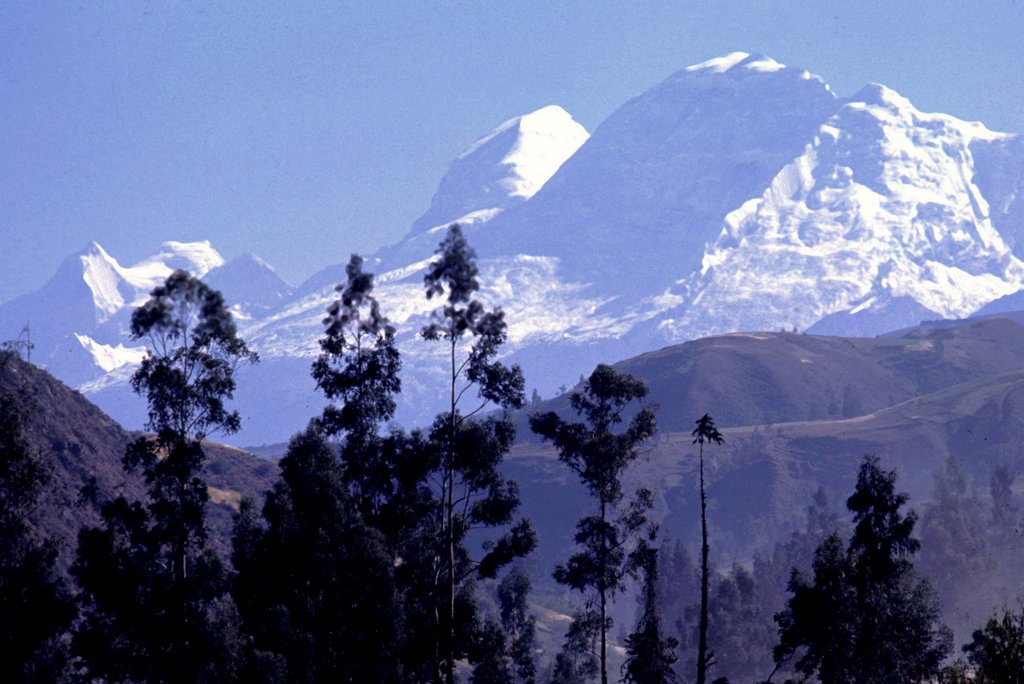 In January 1973 I moved to Lima, Peru, fulfilling an ambition I’d had since I was a little boy. Peru was everything I hoped it would be. It’s a country of so many contrasts. Of course the Andes are an impressive mountain chain, stretching the whole length of the country, and reaching their highest point in Nevado Huascarán (shown in the photo above), at over 22,000 feet. Then there’s the coastal desert along the Pacific Ocean, which is bisected every so often with rivers that flow down from the mountains, creating productive oases, wet enough to grow rice in many places. And on the eastern side of of the mountains, the tropical rainforest drops to the lowlands of the Amazon basin, with rivers meandering all the way to the Atlantic Ocean, thousands of miles away.
Lima is a huge city today, with more than 8 million inhabitants; in 1973 it had perhaps a million or so. Situated in one of the world’s driest deserts, there is always a water problem. Goodness knows how the city authorities cope; it was a big problem 40 years ago. I first arrived to Lima in the dead of night and was whisked away to my pensión. It was a bit of a shock the following morning seeing all the bare mountains surrounding the city, even though I was staying in one of the more leafy and green suburbs, San Isidro. Flying into Lima in daylight, and driving into the city from the airport one is confronted by the reality of poverty, with millions now living in the shanty towns or pueblos jovenes that spread incessantly over the desert and into the coastal foothills of the Andes.
But Lima is a vibrant city, and the country is full of exquisite surprises. In 1973 there was a left-wing military junta governing Peru, and although there have been many  democratically-elected governments since (and some more military ones as well) there was the major threat from terrorist groups like Sendero Luminoso and Tupac Amaru in the 80s that made travel difficult around the country. Between 1973 and 1975 when I lived there it was relatively safe, and my work took me all over the Andes, collecting potatoes for the germplasm collection at CIP, and carrying out research in farmers’ fields.
I visited Cuzco and Machu Picchu on a couple of occasions, and the market town of Pisac, as well as many of the archaeological sites on the Peruvian coast. Although I have traveled across the Nazca plain by road, and could see evidence of the famous lines even at ground level, I never did get to see them from the air – one ambition yet to be fulfilled. Getting to know Lima is a must, and visiting the many museums. The skyline of the second city Arequipa, in the south of the country is dominated by the volcano El Misti. And no visit to Peru is complete without a trip to Puno and Lake Titicaca at over 4000 m above sea level. Take your oxygen bottle, or try the mate de coca (an infusion made from the leaves of the coca plant) to cope with the altitude.
My work with IRRI took me back to Peru on several occasions in later years. While at Birmingham University in the 80s I had also been part of a four man review that traveled around Peru for three weeks looking at a seed potato project. I also had a research project with CIP, and on a couple of visits, I also did some work on cocoa, traveling to some native cocoa sites near Iquitos on the Amazon River, and also at Tarapoto. Unfortunately, a cocoa germplasm project I was advising the UK chocolate industry about, and some of my potato research, was affected by the activities of the terrorist groups mentioned earlier, and the drug dealers or narcotraficantes.
My wife and I were married in Lima in October 1973.
Click to read all my Peru stories, my CIP stories, and view a web album of Peru photos taken in 1973 and 1974.
Costa Rica
After three years in Peru, we moved to Costa Rica, one of the most beautiful countries in the world. The continental divide, dotted with a number of active volcanoes, runs the length of the country, with tropical lowlands on the east Caribbean coast, and drier lowlands on the west Pacific. We lived in Turrialba, some 70 km or so, east of the capital San José. Our elder daughter Hannah was born in Costa Rica.
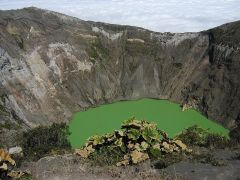 The volcanoes are spectacular, and my potato work took me almost every week to the slopes of the Irazú volcano, the main potato growing area of the country, and about 50 km from Turrialba. It dominates the horizon from San Jose, and its most famous recent activity was in 1963 on the day that President Kennedy landed in San José for a state visit. That eruption lasted for more than a year. But the volcanic activity is the basis of deep and rich soils on the slopes of the volcano.
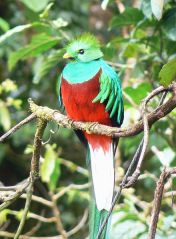 Costa Rica has had an interesting history. After a short civil war in 1948 the armed forces were abolished, and the country invested heavily in social programs and education. It also established a nation-wide network of national parks, and has one of the biggest proportions of land dedicated to national parks of any country. In April 1980 Steph, Hannah and me were staying at the Monteverde Cloud Forest Reserve when we received the sad news of my father’s death. We’d gone to Monteverde to try and see the resplendent quetzal – and how lucky we were. Magnificent!
In the 1970s, Costa Rica was a very safe place to live. San José was a small city; it had only about 250,000 inhabitants while we lived there. And the police did not carry any sidearms or other automatic weapons – only screwdrivers. Screwdrivers? Yes, to remove the plates from illegally parked cars! In the late 70s, when the Sandinista Revolution against the Somoza government was at its height in Nicaragua, many refugees came south over the border. And crime rates – along with house rentals – climbed steeply.
In the mid-90s I had opportunity to return to Costa Rica on a couple of occasions, and went hunting wild rices in the Guanacaste National Park in the northwest of the country, close to the frontier with Nicaragua. Ecotourism is a major activity, and with so many national parks to visit and a wealth of wildlife to observe, Costa Rica offers plenty for those interested in the outdoors.
The Philippines
Having spent a decade teaching at the University of Birmingham in the UK after leaving CIP, I began to get itchy feet towards the end of the 80s, and was offered a position at IRRI from July 1991. I moved then, and my family (my wife and two daughters, Hannah and Philippa) made the move just after Christmas.
Even today the Philippines is the easiest country to travel in – especially if you don’t have much free time. First of all, it’s spread over more than 7000 islands. But travel by road can be slow, and extremely frustrating. It certainly tested my patience for long enough – and I was driving mainly between Los Baños and Manila. For all the almost 19 years we lived in the Philippines, there were always roadworks on the road to Manila – now completed – and the highway also connects the port of Batangas on the south coast of Luzon with Manila. The volume of traffic is horrendous, and on the open road the slow-moving (and frequently stopping) tricycles and jeepneys don’t help with the traffic flow.
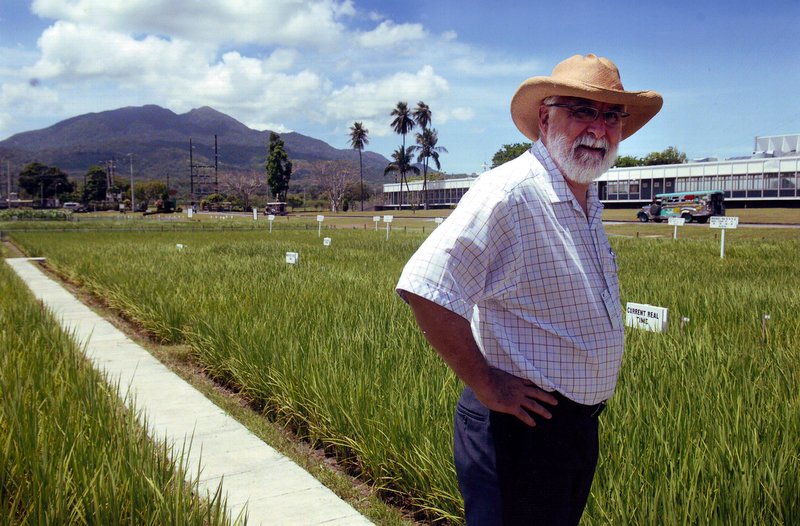 And because we took our annual home-leave in the UK, there wasn’t much other time for getting to know the Philippines., even though my wife and I lived in Los Baños for longer than we’d lived anywhere else. Each year we’d depart on home-leave and going home. On the return we would be coming home. Our home was provided by IRRI in a gated
 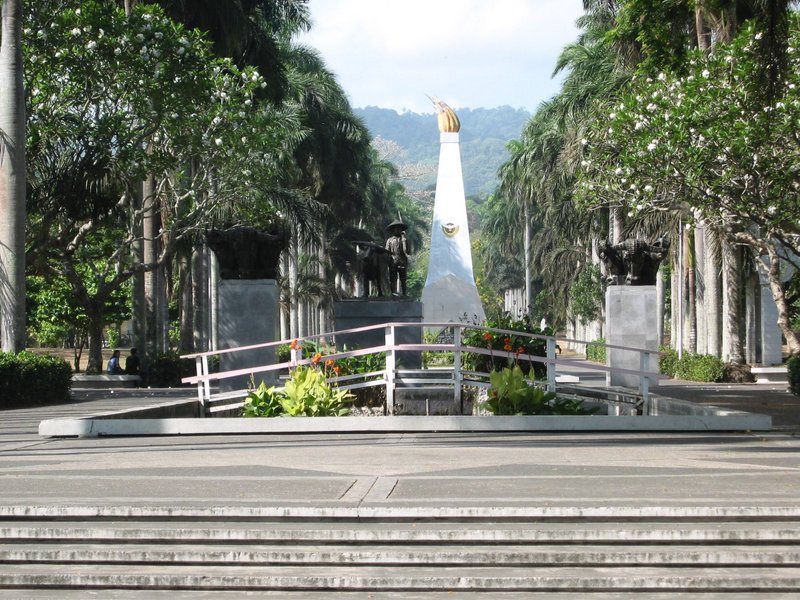 community some 10 minutes drive from the research center. It was built in the early 60s on the slopes of dormant volcano Mt Makiling. Los Baños is the thriving Science City of the Philippines, home to the Los Baños campus of the University of the Philippines (UPLB) and other important scientific research institutes, besides IRRI.
Our daughters attended the International School in Manila (ISM), and were bused into Manila early each day. By 1999, Philippa’s senior year, the school bus would leave IRRI Staff Housing at 0430 in order to reach the Makati campus by the start of school at 0715. The children would return by about 1630 or so, relax for a while, have dinner, then get down to homework, studying sometimes as late as midnight. Then up again at 0400. We were all glad when Philippa graduated. In 2002 ISM moved to a new (and more easily accessible) campus, several years after Hannah and Philippa had left, and a move that had been promised since about 1994.
Steph and I would get away to the beach as often as possible, about once a month. She would snorkel, and kept very detailed records over 18 years of the fish and corals that she observed in front of Arthur’s Place in Anilao, Batangas. I learned to scuba dive in 1993, and until we left the Philippines, that was my main hobby. Here are two more underwater videos from Anilao:
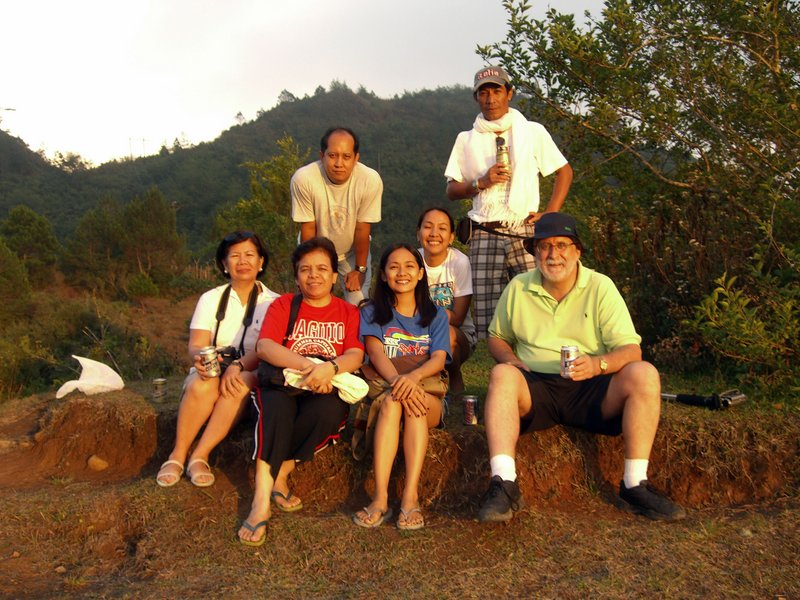 Finally in March 2009, we had the opportunity of visiting the world-famous rice terraces in the Ifugao province north of Manila. We went with a group of staff from my office. The journey both ways was tedious to say the least, taking almost 17 hours door-to-door on the return, with stops, even though the distance is less than 500 km. But it
 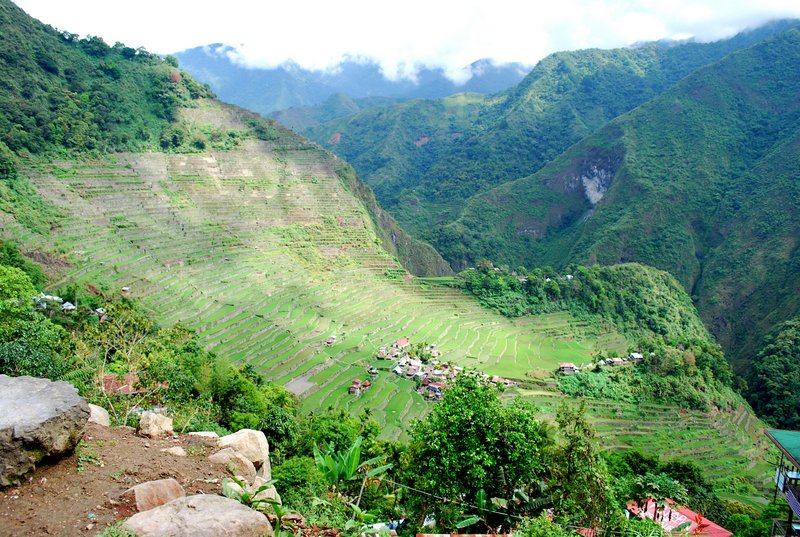 was worth it. The terraces are spectacular, and although it’s necessary to walk into the terraces at Batad, it’s well worth the effort. We stayed in Banaue, then traveled on to Sagada to see the famous caves with ‘hanging coffins’ and the local
 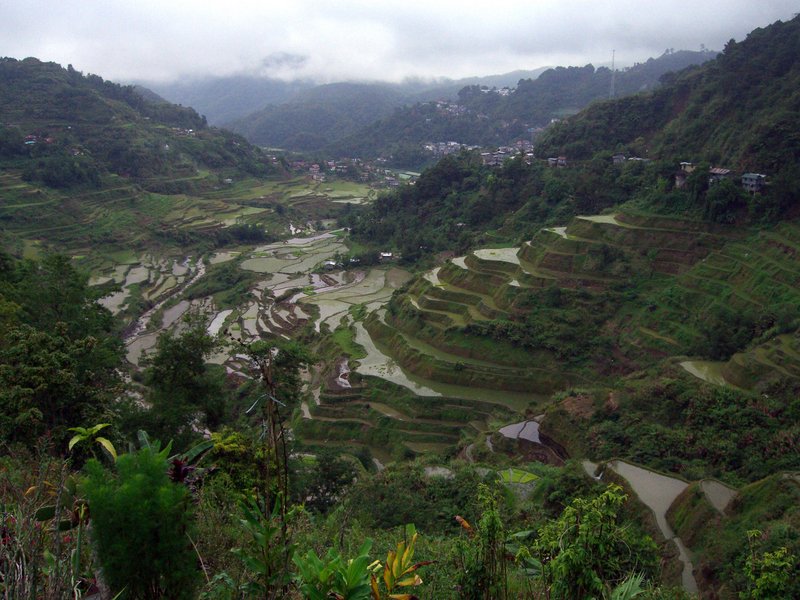 weaving. It was a short trip, but very memorable. Click here to open a web album.
We unfortunately did not get to see many of the fiestas that abound in the Philippines. But what we did see – every day – were the smiling faces of the lovely Filipino people. Yes, the Philippines was where our hearts were, for almost 19 years.
I’ll be posting other stories about the countries and places I’ve visited over the past 40 years, so please check from time-to-time.
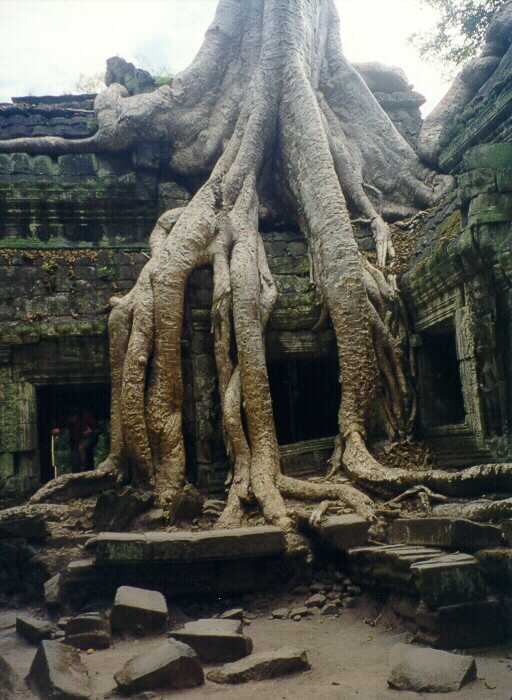
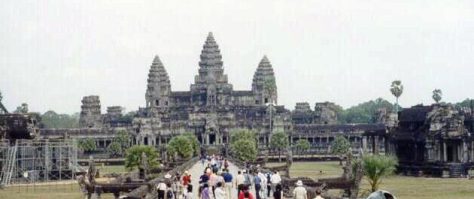
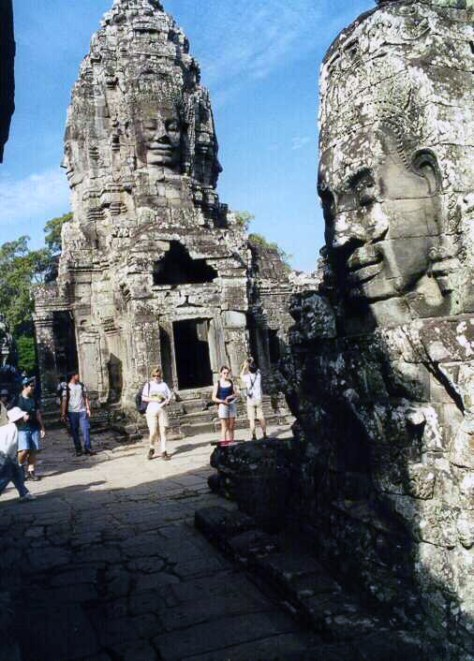
 Over my career, I was very fortunate to be able to combine business trips with short visits to some of the world’s iconic heritage sites, or take time out for a quick vacation in the region without having to fly half way round the world.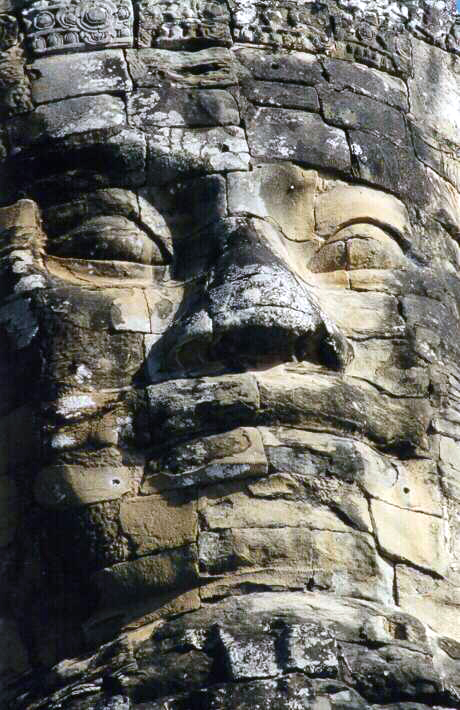
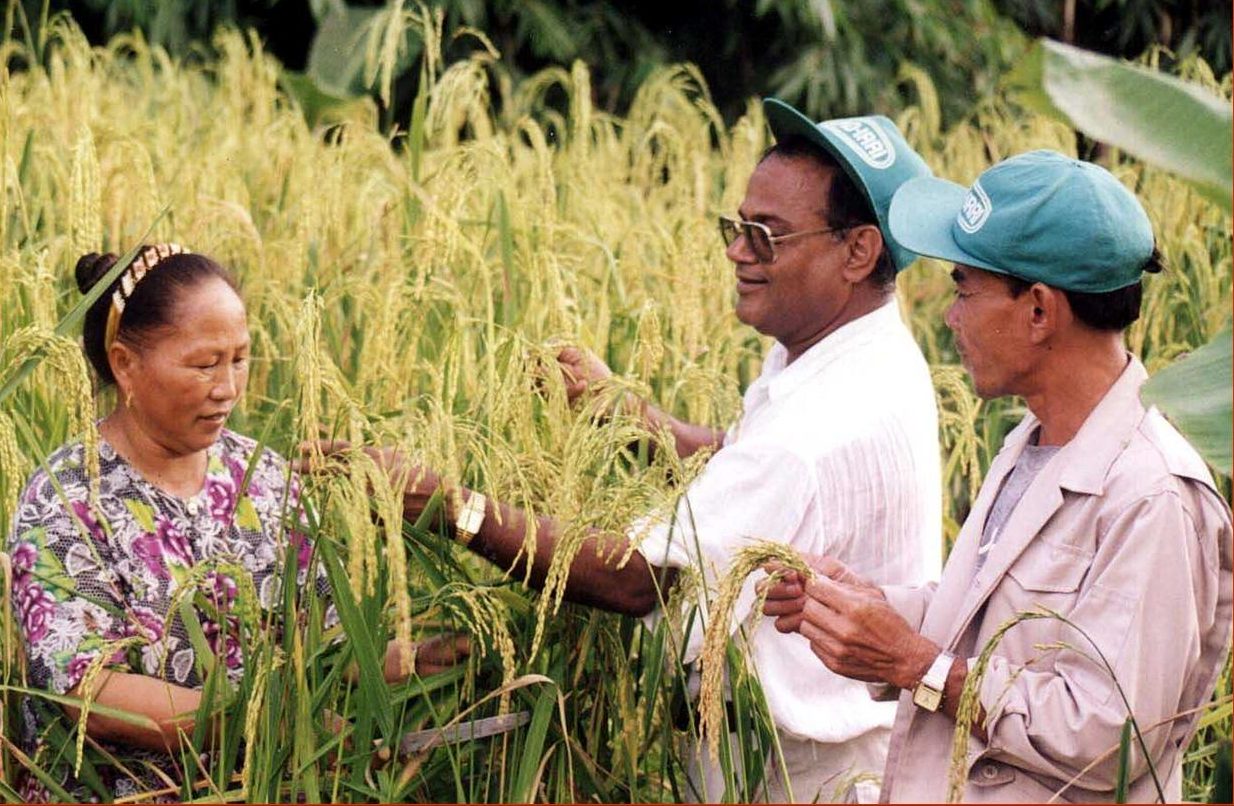

 And germplasm collecting was repeated in Bangladesh, Bhutan, Cambodia, Indonesia, Malaysia, Myanmar, Nepal, Philippines, Thailand and Vietnam in Asia, and countries in East and southern Africa including Uganda and Madagascar, as well as Costa Rica in Central America (for wild rices). We invested a lot of efforts to train local scientists in germplasm collecting methods. Long-time IRRI employee (now retired) and genetic resources specialist, Eves Loresto (right), visited Bhutan on several occasions.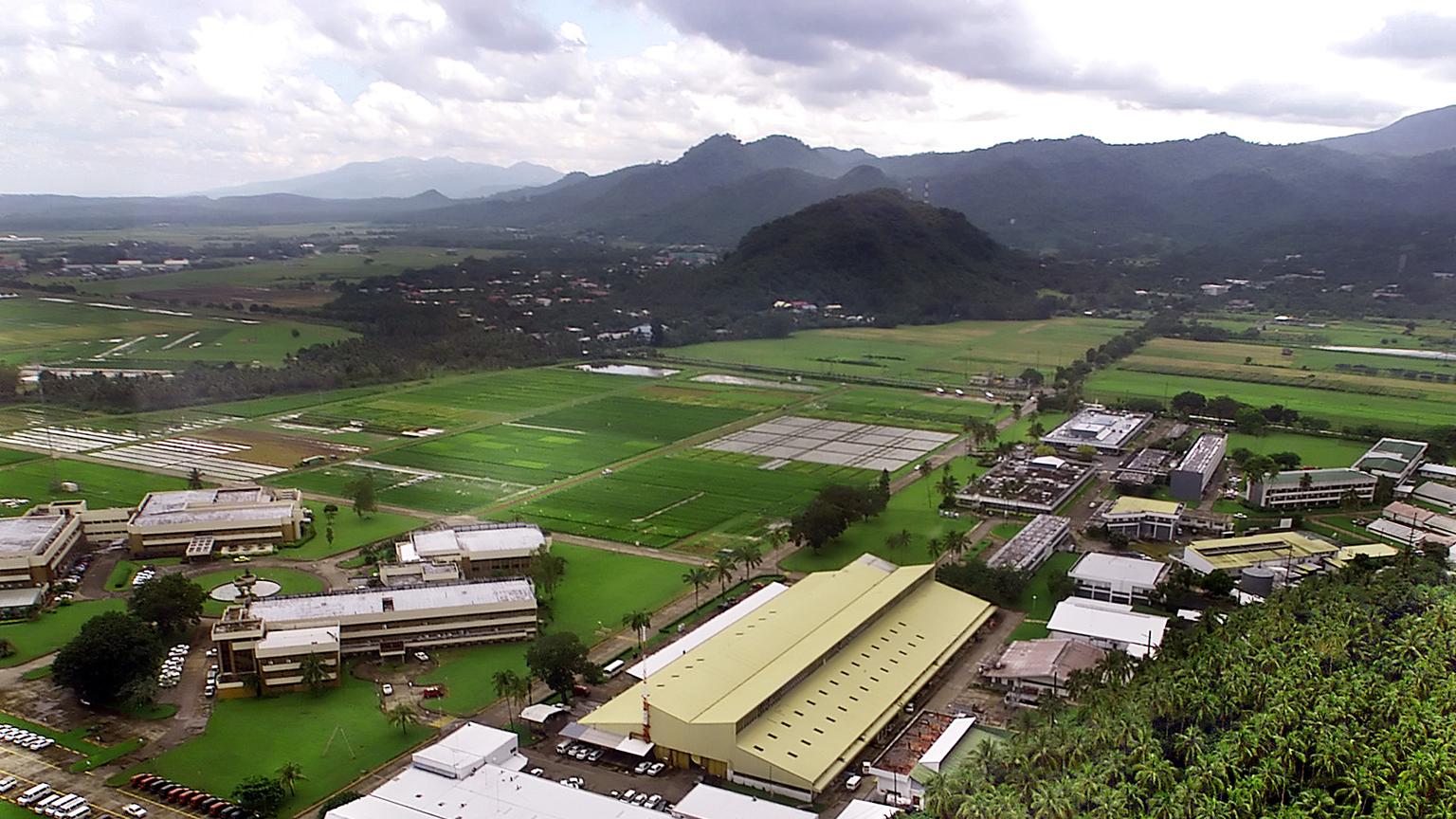
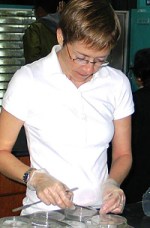 The genebank now has three storage vaults (one was added in the last couple of years) for medium-term (Active) and long-term (Base) conservation. Rice varieties are grown on the IRRI farm, and carefully dried before storage. Seed viability and health is always checked, and resident seed physiologist, Fiona Hay (right, formerly at the
 A balanced diet . . .