Costa Rica on my mind . . .

Steph and I first visited Costa Rica in April 1975. It’s hard to believe that it was 50 years ago. We were on our way back to the UK where I had to complete PhD residency requirements at the University of Birmingham, and submit my thesis.

Since January 1973 I’d been working at the International Potato Center (CIP) in Lima, Peru. Subject to successful completion of my PhD, I’d been offered a postdoc position with CIP in its Region II (Mexico, Central America, and the Caribbean) program, and I’d been asked to check out various research options in Costa Rica and Mexico en route.

A year later Steph and I relocated to Turrialba in Costa Rica, where I was an Affiliate Scientist at CATIE, an agricultural research and training center, while working in CIP’s regional program. Our elder daughter Hannah was born in San José in April 1978, and we remained in Turrialba until the end of November 1980 when we returned to Lima.

In this post I wrote about the years we spent in that beautiful country.

I’ve always enjoyed bird watching, and there were so many opportunities in Costa Rica, because it has such a rich avifauna. I regret however that I didn’t spend more time birding. My work took up so much time, and I traveled a good deal. Of course, there were plenty of colourful birds to see around the CATIE campus, and I always took my binoculars whenever out for a walk. However, we made only one special birding trip—in April 1980—to the Monteverde Cloud Forest Biological Reserve.


Hannah and her family live in Minnesota, and recently spent the school spring break on the northwest Pacific coast of Costa Rica in Guanacaste Province, just west of Liberia. Not long after arriving there, she sent me an WhatsApp message asking about the identity of two large birds that appeared beside their swimming pool.
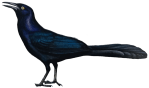
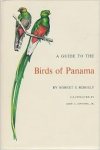
From Hannah’s description (and photos sent from her mobile), as well as consulting A Guide to the Birds of Panama [1], I concluded that one was a Great-tailed grackle (Cassidix mexicanus), and the other a Black (most probably) or Turkey Vulture.

I hadn’t consulted my Birds of Panama for many years, so was somewhat surprised to find a typed list (PDF) of birds of the Interamerican Institute of Agricultural Sciences in Turrialba (now CATIE) inside the back cover. I’d forgotten that I’d even kept it.

The list, compiled in 1968 by Robert Jenkins (who I believe was the first science director of The Nature Conservancy in the USA) was based on an earlier list [2] by American ornithologist and tropical ecologist Dr Paul Slud (right, 1919-2006), Associate Curator in the Bird Division at the National Museum of Natural History (Smithsonian Institution) from 1964 to 1983. He must surely be ranked as one of the pioneers of Costarrican ornithology.

Someone had written my name on the list, as well as a location (Km 77 along Ruta 10 from Cartago to Turrialba), and a time (06:30). Then I remembered. It was the check list we used for a 1979 bird count around Turrialba as part of the National Audubon Society Christmas Bird Count in the Western Hemisphere (not just the USA) which now takes place annually between 14 December and 5 January.

I don’t remember how many teams (each a pair of observers) set out on the count, only that I was paired with a Costarrican who worked in CATIE’s coffee program and was incredibly knowledgeable about the birds of the area. The name Arnoldo Barrantes comes to mind, but again I could be wrong.

Over several hours, we moved around our target area (to the west and northwest of Turrialba town center), spending about 30 minutes or so at each observation point, counting the number of individuals of each species, and adding them to the check list. After the count was over, someone must have compiled all the observations and presumably submitted them to the National Audubon Society. However, I’ve not been able to find any of the Turrialba data on the society’s website. Online data for Costa Rica don’t stretch back to the late 1970s. Maybe they are just held as paper records still, if at all.

I do remember, however, that the teams observed over 100 species in total, and my colleague and I observed 54. Here are images of most of those 54 species. They were taken by Rob and Jane Beynon who have made several trips to Costa Rica, and who kindly gave me permission to reproduce them here.

With their help I was able to review the Jenkins list, noting that some scientific names and common ones have changed in the years since the list was compiled. And at least one of the species, the Chestnut-winged chachalaca (Ortalis garrula), is not known from Costa Rica, but the Gray-headed chachalaca (Ortalis cinereiceps, considered by some ornithologists as conspecific with O. garrula) is, and was probably the bird we saw.

Do have a look at Rob and Jane’s wonderful website of birds of Costa Rica, of Brazil, Florida, several countries in Africa, Australia, New Zealand, Singapore, and the UK. Taiwan coming soon, I hope. You won’t be disappointed!

This gallery of birds from the ‘1979’ count follows the Jenkins list order.


[1] There were no popular guides to the birds of Costa Rica back in the 1970s (unlike today), and no online resources of course. So we had to resort to A Guide to the Birds of Panama by Robert S Ridgeley and illustrated by John A Gwynne, Jr., which covered many (most?) of the birds of Costa Rica. It was published by Princeton University Press in 1976.

[2] Slud, Paul. 1964. The birds of Costa Rica – distribution and ecology. Bulletin of the American Museum of Natural History. Volume 128. New York.


Life begins the day you start a garden (Chinese proverb)

Moving back to the UK from South America in March 1981, we began the search for a house not too far outside Birmingham (where I started a lectureship in plant biology at the university). Quite quickly we identified a three bedroom house, built in 1975, in the market town of Bromsgrove in north Worcestershire, 13 miles south of the university campus, moving in at the beginning of July.

While the previous owners had made a start to creating a garden, little had been accomplished, apart from planting a weeping willow tree and some spiny berberis bushes, and constructing a lean-to glasshouse from old window frames at the bottom of the garden.

Over the next 39 years Steph worked hard to make a beautiful garden, albeit with a break of 19 years between 1991 and 2010 when we lived in the Philippines and only had the opportunity to work on the garden during our home leave each year, six to eight weeks in the summer months. Click on the image below to open a higher resolution version.

Very early on we removed the weeping willow, and replaced it with a Himalayan birch (which, by 2017, had become too tall so we had it felled), added a fishpond, and a rockery, as well as expanding the flower beds all round. A free-standing glasshouse replaced the lean-to, and where that had once stood, Steph developed a small vegetable plot, mixed with ornamentals, foxgloves being a common self-seeded addition.

The rest of the garden (at the rear of the house) was a lawn whose care (if you can call it that) was in my hands, mowing the grass every couple of weeks or so. While we’d been in the Philippines we had a gardener come once a month, from Spring to early Autumn, to mow the grass both front and rear of the house.

On the front there was a small lawn and a couple of flower beds, one of them running the length of the drive. In Spring this would have a stunning display of golden daffodils, and yellow and red tulips. Neighbors always commented on how nice they looked as you entered Davenport Drive. And a vigorous Clematis montana over the kitchen window.

Steph liked to plant lots of flowering perennials and among our favorites were the promiscuous columbines, which freely hybridised and gave us a whole range of flower colors and sizes.

After we returned from the Philippines on my retirement in 2010, Steph really threw herself into rediscovering her garden. So it was with a tinge of sadness that we left that garden behind, on 30 September 2020, when we moved north to Newcastle upon Tyne. We weren’t sure what sort of property we would find to move into, nor the state of its garden.

In the event, we bought a new-build house (built in 2018), and moved in at the beginning of March 2021. Moving house at the height of the pandemic was both stressful and remarkable. And loaded on to the removal van were several crates of plants that Steph had propagated from seeds or cuttings from her old garden. So, as she planned her new garden, she had this legacy of Bromsgrove favorites to fall back on in some measure.


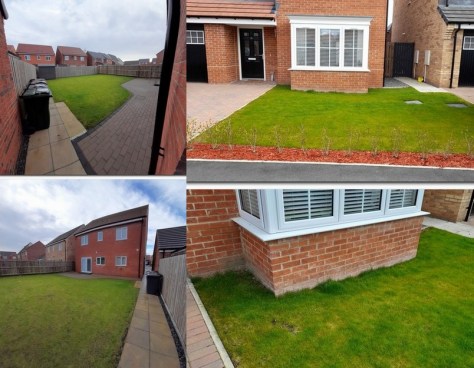
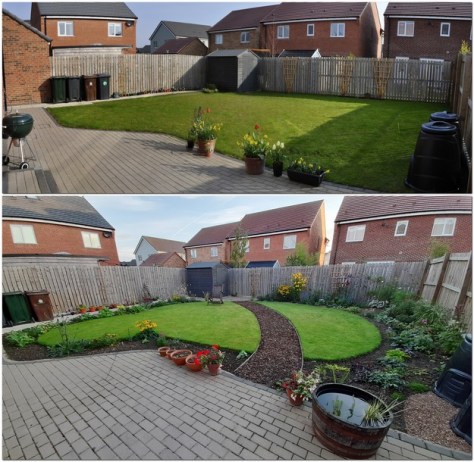
The garden at our new home was a blank canvas, just rectangles of grass front and back, no flower beds at all, except for a row of privet bushes on the front. How totally uninspiring, yet a serious challenge.

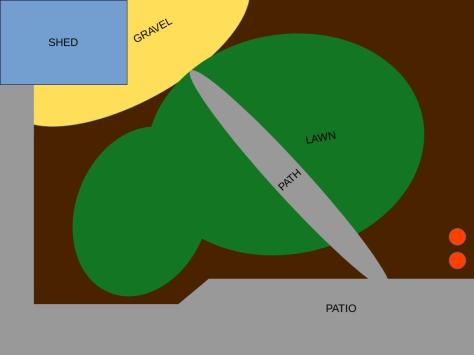
By April, Steph had finalised a design for the garden at the rear. We took out the privet on the front and dug flower beds along one side and under the bay window.

We’d quickly discovered that the soil was very heavy indeed, so we contracted the heavy digging to a local firm.

Even though we had a layer of top soil added all round, on reflection we should have added more organic matter and worked it in, as well as some sharp grit to increase drainage. The garden does flood close to the house when we get heavy or persistent rain. But that has added to the challenge of learning what plants we can and cannot grow successfully.

Steph was keen to get many of her plants in the ground, and by June 2021, the flower beds were beginning to take shape.

By August-September, things were beginning to look much better, and we’d had the first butterflies appear.

In February 2022 we planted a crab apple, var. Evereste, which did flower that season, and a year later was well and truly established and producing bright orange fruits.

Now in August 2023, many of the plants are well-established, and for several months the garden has given us great pleasure. Steph is certainly pleased with how the garden has developed, although there’s so much more to do. It’s a work in progress.

Another fine feature is the auricula theater that I made for Steph and in which we had a great display of these wonderful primulas earlier this year.

But one aspect that has given us perhaps the greatest pleasure has been the significant increase in biodiversity. Many of our neighbors are not keen gardeners, and have replaced what lawn they had with artificial grass. Nor have they planted flowers to attract pollinating insects.

In contrast, our garden is a hive of insect activity. I’ve seen at least six species of bees, and many other pollinators that I am unable to identify.

Butterflies (although not so frequent visitors to the garden) have included red admiral, peacock, little tortoiseshell, small white, and comma.

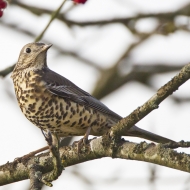
As for birds, we have a family of pied wagtails that regularly visits us throughout the year. But so far, the garden hasn’t attracted as many different species as I’d hoped for. We’re somewhat reluctant to put out bird feeders, worried that spilt food might attract rodents into the garden. But we have seen goldfinches, a mistle thrush on one occasion, and more recently, linnets a couple of times. These photos are courtesy of Northamptonshire photographer Barry Boswell.

In summer the sky is full of house martins that nest on neighbors’ houses, but sadly I’ve only seen one swift this year. Starlings are common and often land in a small flock on the lawn, as do the occasional wood pigeons. Herring gulls and magpies call to us from surrounding roofs.

Anyway, as I mentioned, the garden is a work in progress, and although I actually do very little in the garden (gardening is not my thing) I really appreciate all the effort that Steph has taken to create a thing of beauty.


Birding in the northeast . . .

We couldn’t have asked for better weather yesterday. Even though a little on the cool side, accompanied by a blustery wind, there was hardly a cloud in the sky. A perfect early Spring day.

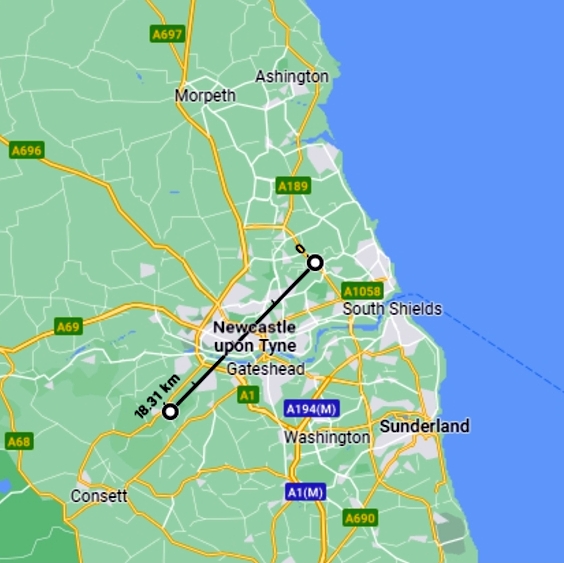
So we headed for the National Trust’s Gibside estate, about 11½ miles southwest from where we live in North Tyneside, as the crow flies (or just over 15 miles by road).

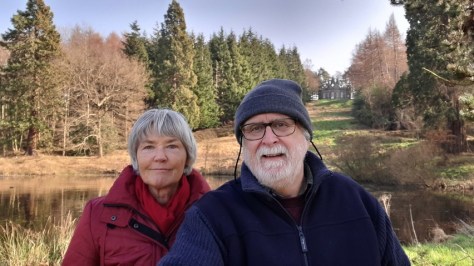
Covering 600 acres (just over 240 hectares), Gibside provides excellent walking. While the old house lies in ruins, and the chapel is not open every day, there’s plenty to explore on foot. We covered almost five miles.

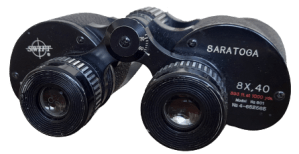
Taking my trusty binoculars along (a pair of Swift Saratoga 8×40 that I’ve had for about 60 years) we hoped there might be some interesting wildlife to observe. On one of our previous visits, we’d come across a pair of roe deer among the pine trees. I was hopeful there might be some interesting birds along the River Derwent, the northern boundary of the Gibside estate.

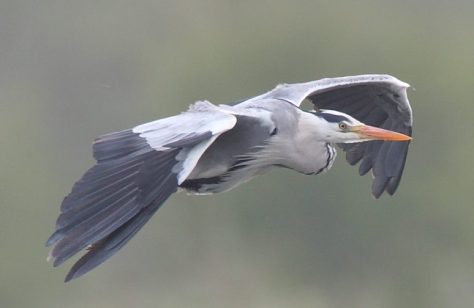
And we weren’t disappointed. As we were leaving the Trust cafe after enjoying a refreshing regular Americano, a solitary grey heron flew low overhead, buffeted by the gusting winds, and crabbing to make headway. It’s one of the largest birds in this country, and doesn’t look designed for flying in high winds.

Grey heron

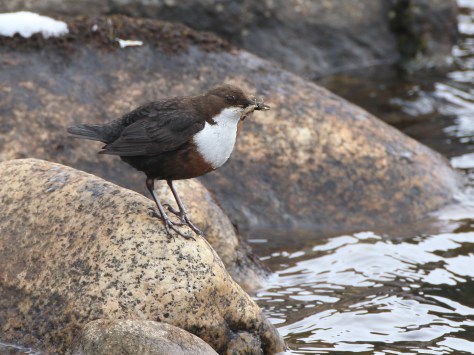
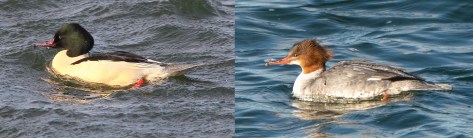
Then, as we walked down to the banks of the Derwent, we came across a pair of dippers on a shallow cascade; and further on, a pair of goosanders in full breeding plumage. What a magnificent sight!

Dipper

Goosanders

We’d seen a dipper a few weeks back alongside Seaton Burn in Holywell Dene close to home, the first I’d encountered in more than 20 years. And I’d seen my first ever goosander just a couple of months back on a local pond, so seeing a breeding pair yesterday was a real delight.

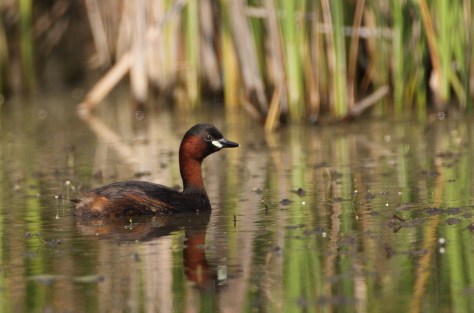
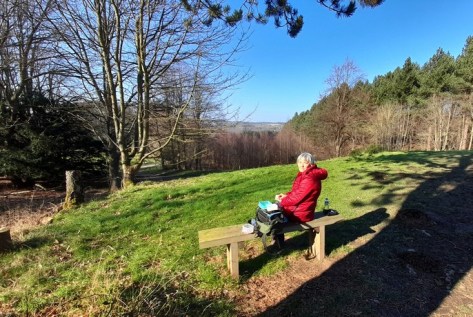
At the bird hide we watched great, blue, coal, and long-tailed tits, and as we sat having a picnic in the early afternoon sun (quite warm out of the breeze), beside the fish pond below the 18th century Banqueting Hall (not National Trust), we enjoyed the antics of a trio of little grebes, another species I’m not sure I’ve ever seen before.

Little grebe

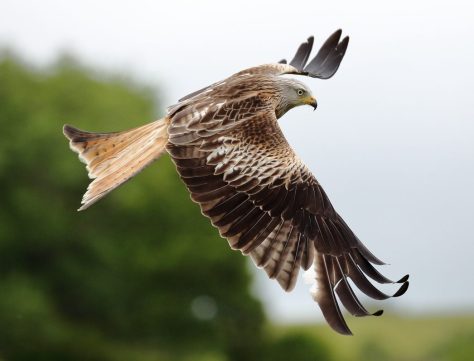
Then, as Steph was finishing her lunch, and I was taking a photo of the view, a red kite swooped overhead; we saw another one later in the walk.

Red kite

Then, just before we continued on our walk, I happened to look up at the Banqueting Hall and spotted a single roe deer grazing in front of the building. What luck!


Since moving to North Tyneside from the West Midlands around 18 months ago, I have revived my interest in and enjoyment of bird watching.

Compared with our garden and surrounding countryside in north Worcestershire (some 230 miles south of where we now live)—and which I wrote about in one of my early blog posts in May 2012—there seem to be more birding opportunities here in the northeast: in the garden, on the coast (which is less than five miles as the crow flies), and the river valleys, moors, and hills of Northumberland.

Close to where we now live, the land has slowly recovered over the last four decades since the coal mines were closed. A mosaic of streams, hedgerows, scrub land, reed beds, ponds, arable and grassland, not to mention woodlands in various stages of development, has now replaced what had been a desolate industrial landscape, supporting an abundance of bird life and even some large mammals like roe deer. The routes of the former mine railways—the waggonways—have been left as footpaths and bridleways, serving as excellent wildlife corridors across North Tyneside and connecting urban sites with the surrounding countryside.

To date, my northeast bird list comprises about 80 species observed and one, a grasshopper warbler, heard but not seen (according to a more experienced birder than me).

Some species, like goldfinches (left below) or bullfinches (right) which I saw only occasionally down south, are quite common here, often in flocks of 20-30 birds.

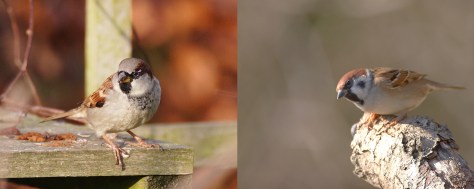
Herring and black-headed gulls are ‘as common as sparrows’ (which we don’t actually see very often, although I did come across the more scarce tree sparrow just a week ago while on one of my walks).

House sparrow (L) and tree sparrow

Rather than describe all the birds on my current list, do go back to that earlier post to see many of the birds that we see regularly here. I’ll just highlight some of those that have particularly caught my attention.


When we moved into our new house just over a year ago, the rear and front gardens were just patches of grass. Calling them ‘lawns’ would be an exaggeration. Steph worked hard from the end of April 2021 to design and build a new garden, hopefully attracting more insect and bird life.

Certainly the insects increased in number and type, with many different types of bees visiting the range of flowering plants that we introduced.

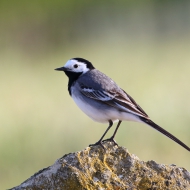
Throughout the summer and into autumn, there was a family of five or six pied wagtails (right) that we saw in the garden almost everyday. They disappeared during the coldest weeks of the winter, but have once again started to show up in the garden.

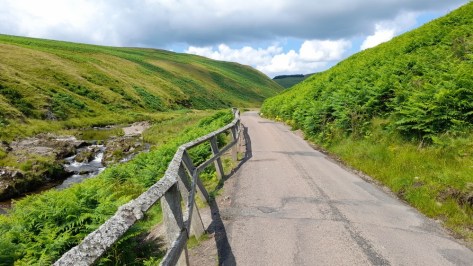
And when we took a trip in July to the headwaters of the River Coquet and the Cheviot Hills, we saw many pied wagtails flitting back and forth along the banks of the river.

Upper Coquetdale

Another surprising visitor to the garden, just once, was an uncommon mistle thrush (right), a much larger cousin of the song thrush.

Song thrush numbers have declined dramatically, but they were a common presence in my younger days, over 60 years ago. However, over the past week, I’ve seen three song thrushes and heard them belting out their glorious songs.

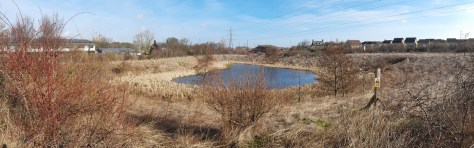
Close to home is an overflow pond for the local stream or burn that has its source less than half a mile away to the west.

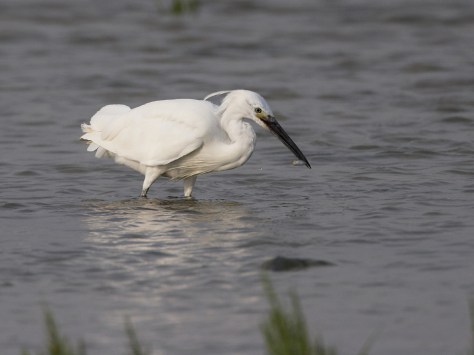
Surrounded by lush vegetation, particularly knapweed and bulrushes closer to the water’s edge, this pond hosts several species like mallards and moorhens. Throughout most of last year, and until quite recently, there was a semi-resident grey heron. I hope he will return as the frog population grows in the Spring. Recently, however, a little egret has made an appearance over a couple of days.

Little egret

And in the summer months, the site hosts a thriving population of reed warblers, reed buntings, and whitethroats.

The goldfinches have an autumn feast when the knapweed seed heads ripen.

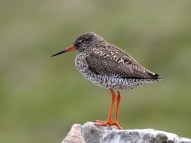
On the coast we see the usual range of waders such as oystercatchers, ringed plovers, sanderling, dunlin, and turnstones. One of my favorites however is the redshank (right), easily spotted because of its bright orange-red bill and legs. And, of course, several species of gull.

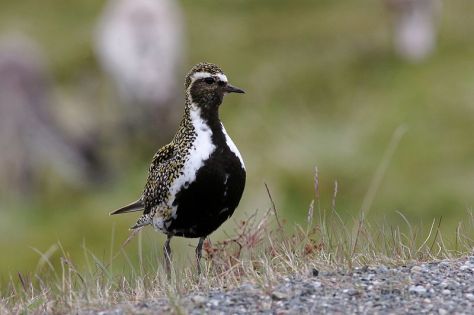
Another new species is the golden plover that I’ve seen on local farmland during the winter as well as at the coast foraging among the rocks. In summer it can be found inland on the hills and moors.

Golden plover

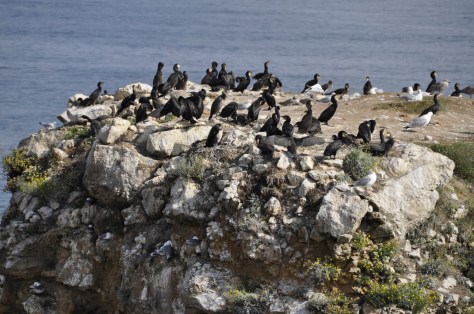
On the cliffs just south of the River Tyne (south of our home) and further north at Dunstanburgh Castle near Craster on the Northumberland coast are colonies of kittiwakes (below) and cormorants.

Cormorants on the coast south of the River Tyne at Whitburn.

We’ve also seen other cliff-dwelling species like guillemots and razorbills surfing on the waves, but we’re waiting on a trip out to the Farne Islands later in May to really get a look at these up-close.

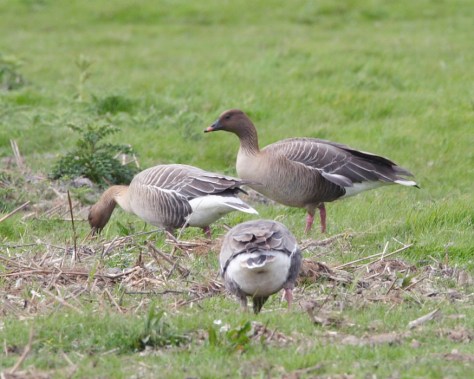
But perhaps the most impressive sight, to date, have been flocks of pink-footed geese. We saw them first in a field (together with a small flock of about 30 curlews) near Seaton Sluice back in the Autumn. Then, on a walk close to home I could hear them honking in the distance and, gaining some height on the spoil heap at the former Fenwick Colliery, we could see a flock of several hundred grazing in a nearby field.

Pink-footed goose

But it wasn’t until about a month ago, when we were sat enjoying a picnic lunch just south of Amble, that I saw a ‘murmuration‘ of large birds which I’m pretty certain were pink-footed geese even though I didn’t have a clear sight as they were too far away to the west and I was looking into the sun. There must have been 1000 birds or more (based on my rough and ready count), flying this way then that, and finally spiraling down one after the other to land close to Hauxley Reserve. Until I have experienced a starling murmuration, this one will have to suffice, even though it was less frenetic than the starling version.


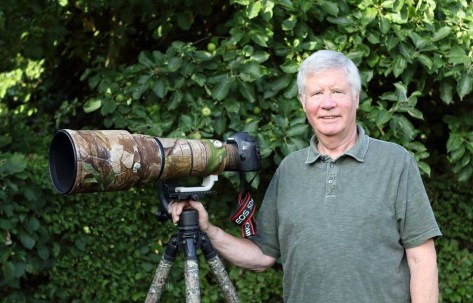
As in that earlier post, most of the bird images here were taken by amateur photographer Barry Boswell (below), based in Northamptonshire.

Barry has accumulated an impressive portfolio of bird photos. It’s remarkable how digital photography has revolutionized this particular hobby. When I see images of this quality I do wonder where he (and others with the same passion) get their patience, and indeed bird-spotting luck. Patience has never been one of my virtues.

Unlike the 500 mm lens (and Canon bodies) that Barry is sporting in the image above, I only have an 18-200 mm telephoto lens on a Nikon D5000 DSLR body.