
It really is! Standing at the heart of Crook Hall Gardens along the bank of the River Wear in Durham, it’s hard to believe you are only a short distance from the center of a bustling city. Peaceful hardly describes it. Just the occasional rumble as trains arrive at or depart from Durham railway station just to the north.

The River Wear alongside Crook Hall Gardens.
Since we returned from our trip to Minnesota towards the end of June, there have been few opportunities, weather-wise, for any excursions. I can’t remember when we last experienced such a dismal July (after all the hot dry weather of June); it’s been so cold and wet.
 Anyway, the forecast for yesterday seemed hopeful, so we decided to make the short, 22 mile and 30 minute drive south to Durham to take in Crook Hall Gardens. The Trust acquired the property in 2022, and if I understood correctly, it was opened to the public for the first time in March this year.
Crook Hall has its own car park, free for National Trust members, that really is a blessing in a city where parking is at a premium, and not cheap. We arrived around 10:20, and headed immediately to the cafe for a refreshing Café Americano.
The gardens have been there for many centuries. In fact there is a 14th century medieval hall (which is open to the public) adjoining an 18th century Georgian house overlooking a beautiful walled garden.
 Crook Hall was a family home since the 1300s, and occupied over the centuries by several families who stamped their mark on the property. Originally it was the home of the Billingham family for 300 years from 1372. Between 1834 and 1858 it was rented by the Raine family. Canon James Raine (right, 1791-1858) was a historian and librarian at nearby Durham Cathedral. He died at Crook Hall.
By 1979 the property was essentially derelict, but was taken on by Mary and John Hawgood who rescued it from oblivion. Mary believes she saw The White Lady of Crook Hall in 1989. The Hawgoods moved on in 1995 when it was sold to Maggie and Keith Bell, and Crook Hall became a wedding venue, with the gardens open to the public on occasion.
With the onset of the Covid-19 pandemic, the Bell’s wedding business collapsed, and in 2020 Crook Hall was put up for sale. Then, in stepped the National Trust – thankfully.
Here’s a potted history of Crook Hall from a 2020 article in The Northern Echo.
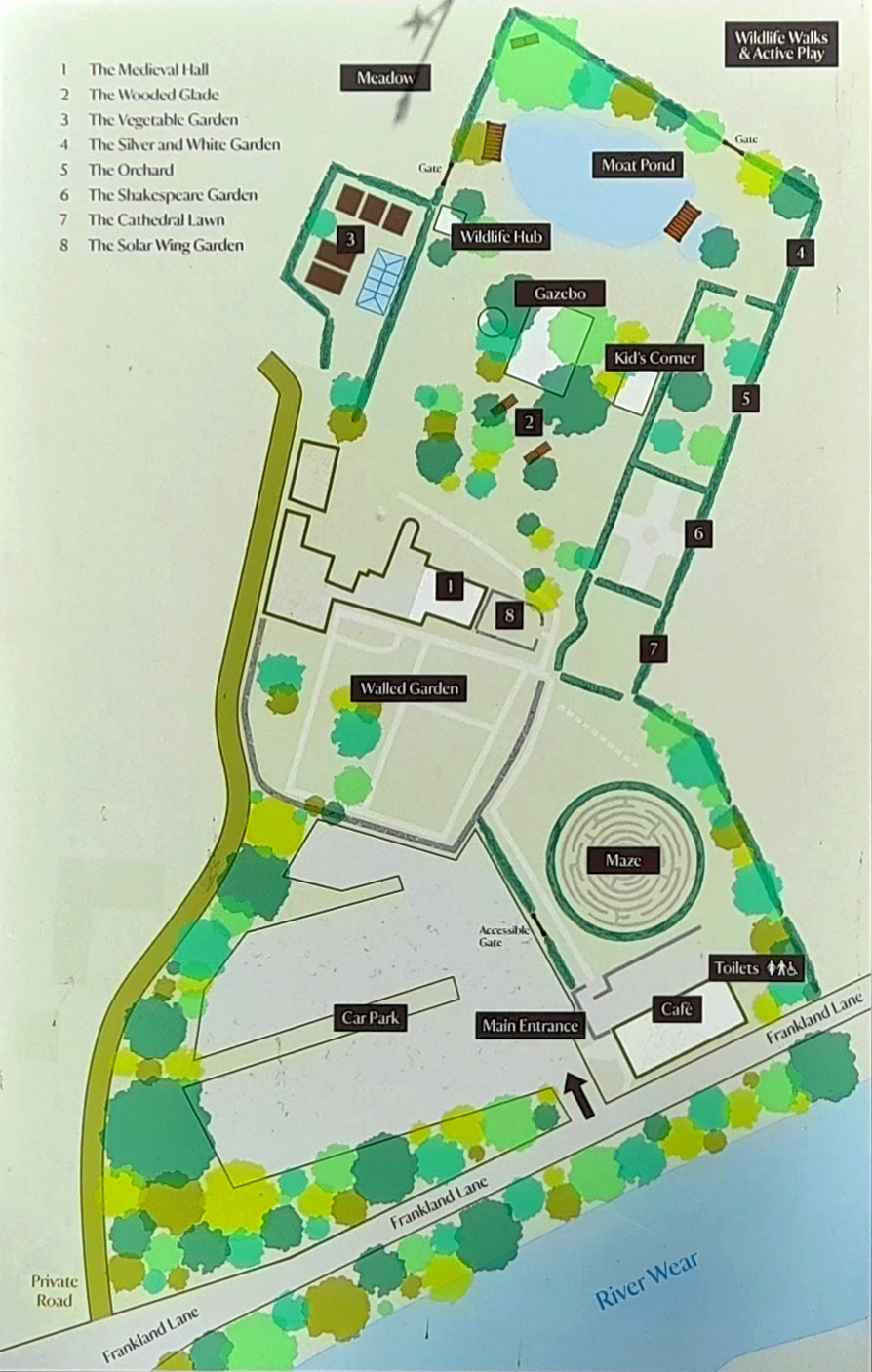 The gardens, which cover about 10 acres (or 4 ha), comprise a series of interconnected gardens, each with their own character, are a credit to the National Trust garden staff and volunteers.
Being mid-summer, many of the flower beds were in full bloom, although roses and some others were past their best. Notwithstanding, the gardens were a delight for the spirit, and by the looks on the faces of other visitors (it was quite busy considering) they also felt the same way.
A path leads up the garden from the entrance and cafe, and immediately on the right is a cotoneaster maze planted in 2000. We gave that a miss, heading instead for the Solar Wing Garden and the Walled Garden.


I really do like the style of planting adopted at Crook Hall, with so many different species clustered together to provide a kaleidoscope of color.


Adjacent to the medieval hall is a second-hand bookshop in the Georgian house, and on one wall, some of the brightest—and botanical—wallpaper I have ever seen.


Passing through a small courtyard (with a small fountain and yet another statue) we headed towards the Moat Pond at the top of the garden. The pond itself is a relatively new feature, created in 1998 beside what was a 14th century defensive dry ditch.


Turning back towards the entrance, there is a series of four gardens: the Silver and White Garden (dating from 1983); the Orchard; the Shakespeare Garden (with Will observing the garden from a corner); and finally the Cathedral Garden, with its magnificent views towards the city and Durham Castle and Cathedral. There’s also a Wooded Glade.


As you exit the Cathedral Garden and turn towards the maze, a side path leads to a pebble garden. Also there are informal beds of wild flowers.


Ever since we noted, in the National Trust Handbook for 2023, that there was a new property in Durham, we’ve been waiting for an appropriate day to visit. Although the weather had been forecast as showery, we only experienced (for just a short while) threatening black clouds overhead, but apart from that, a bright and sunny—and for once, warm—day. We shall return.
I have posted a full album of photos here.
 Gibside (///lime.clap.joke) is a large (600 acre) estate, now a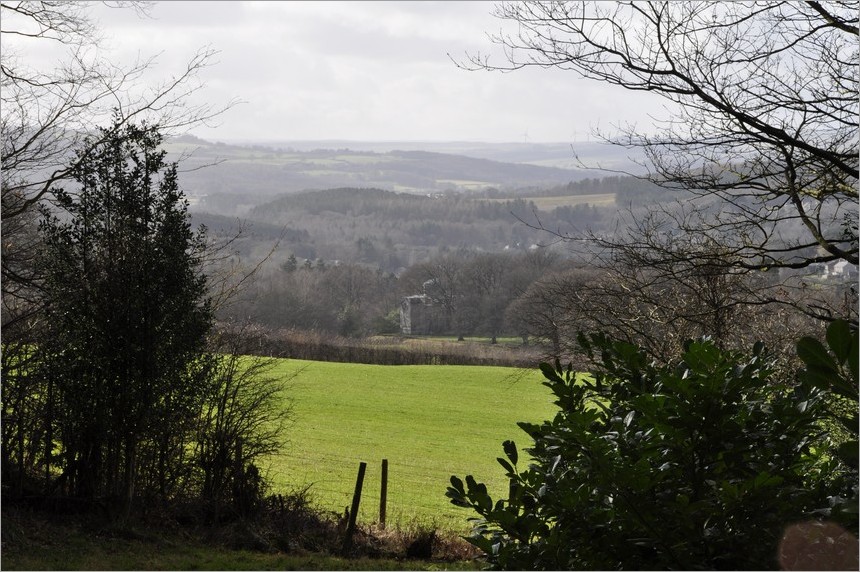
 Born in London, she was the daughter of
 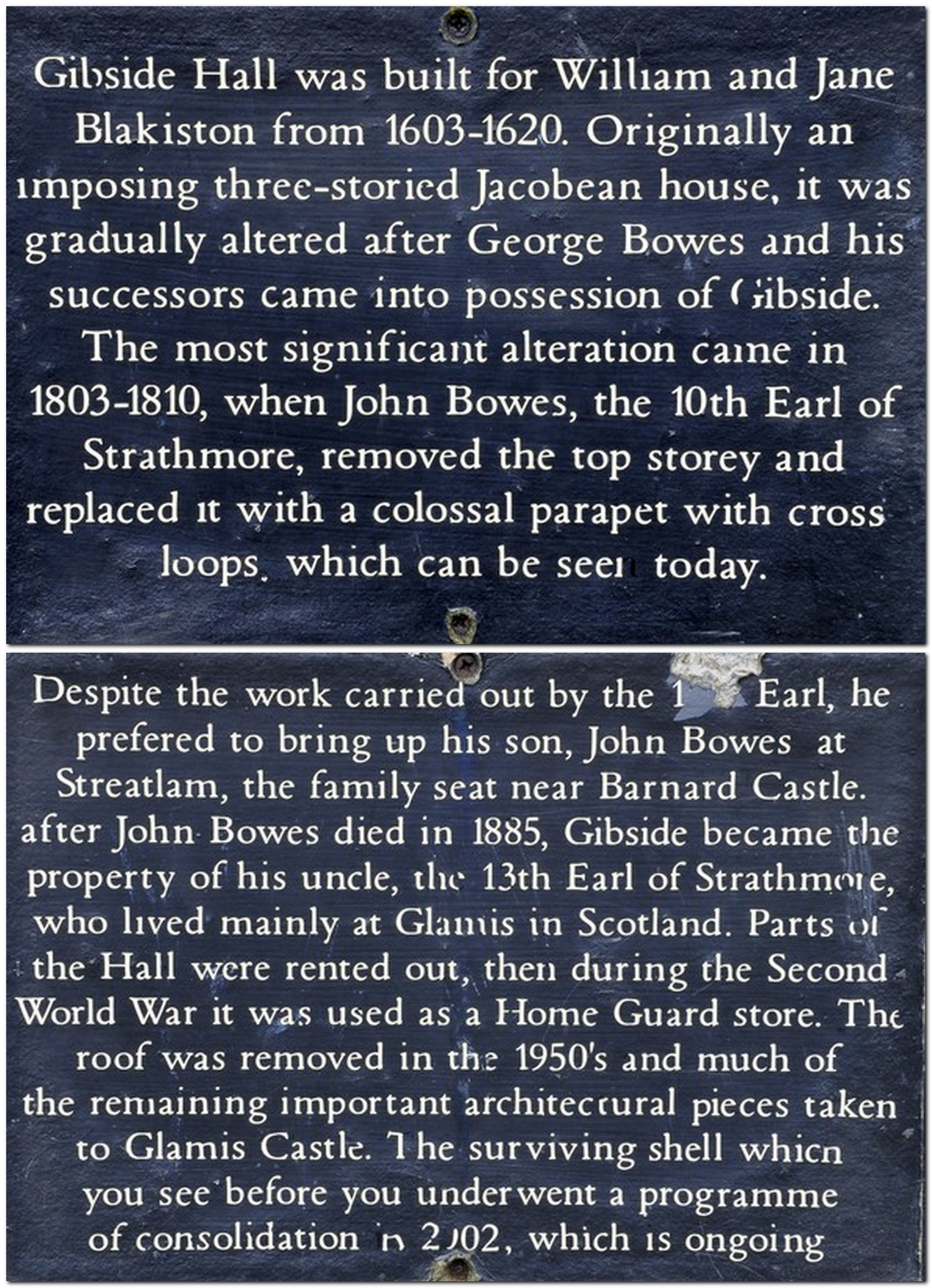 Gibside Hall is an early 17th century Jacobean manor house, that has seen better days. It was finally abandoned in the 1950s, although the family had long since decamped to their other property, Glamis Castle in Scotland.




 A balanced diet . . .