Life begins the day you start a garden (Chinese proverb)

Moving back to the UK from South America in March 1981, we began the search for a house not too far outside Birmingham (where I started a lectureship in plant biology at the university). Quite quickly we identified a three bedroom house, built in 1975, in the market town of Bromsgrove in north Worcestershire, 13 miles south of the university campus, moving in at the beginning of July.

While the previous owners had made a start to creating a garden, little had been accomplished, apart from planting a weeping willow tree and some spiny berberis bushes, and constructing a lean-to glasshouse from old window frames at the bottom of the garden.

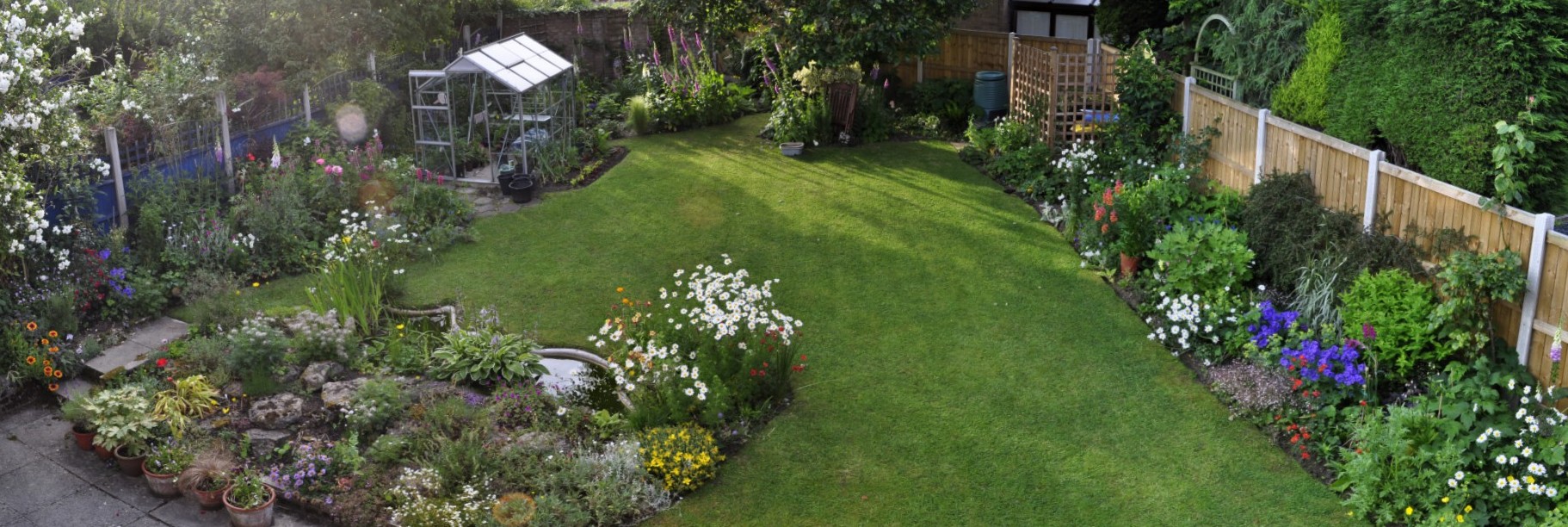
Over the next 39 years Steph worked hard to make a beautiful garden, albeit with a break of 19 years between 1991 and 2010 when we lived in the Philippines and only had the opportunity to work on the garden during our home leave each year, six to eight weeks in the summer months. Click on the image below to open a higher resolution version.

Very early on we removed the weeping willow, and replaced it with a Himalayan birch (which, by 2017, had become too tall so we had it felled), added a fishpond, and a rockery, as well as expanding the flower beds all round. A free-standing glasshouse replaced the lean-to, and where that had once stood, Steph developed a small vegetable plot, mixed with ornamentals, foxgloves being a common self-seeded addition.

The rest of the garden (at the rear of the house) was a lawn whose care (if you can call it that) was in my hands, mowing the grass every couple of weeks or so. While we’d been in the Philippines we had a gardener come once a month, from Spring to early Autumn, to mow the grass both front and rear of the house.

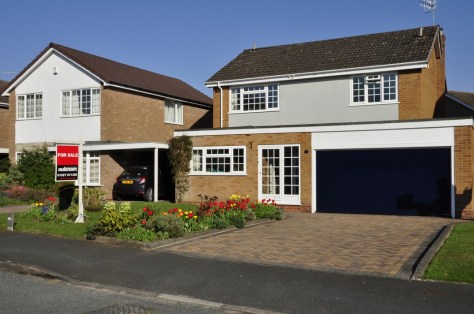
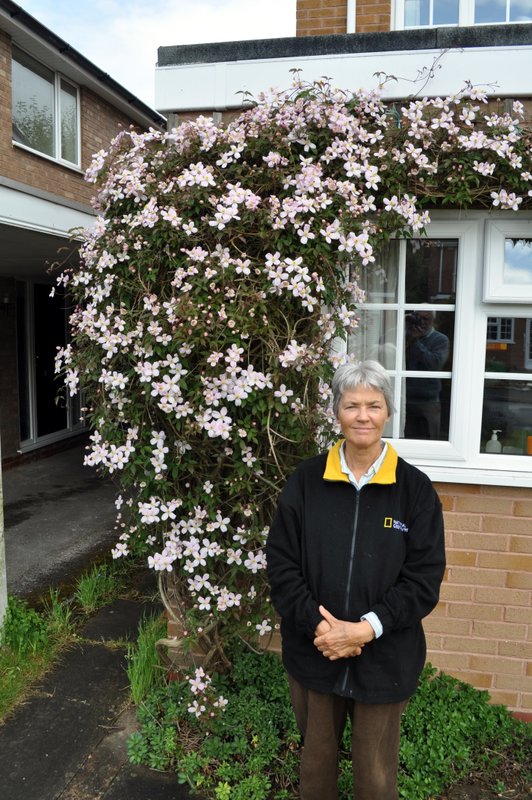
On the front there was a small lawn and a couple of flower beds, one of them running the length of the drive. In Spring this would have a stunning display of golden daffodils, and yellow and red tulips. Neighbors always commented on how nice they looked as you entered Davenport Drive. And a vigorous Clematis montana over the kitchen window.

Steph liked to plant lots of flowering perennials and among our favorites were the promiscuous columbines, which freely hybridised and gave us a whole range of flower colors and sizes.

After we returned from the Philippines on my retirement in 2010, Steph really threw herself into rediscovering her garden. So it was with a tinge of sadness that we left that garden behind, on 30 September 2020, when we moved north to Newcastle upon Tyne. We weren’t sure what sort of property we would find to move into, nor the state of its garden.

In the event, we bought a new-build house (built in 2018), and moved in at the beginning of March 2021. Moving house at the height of the pandemic was both stressful and remarkable. And loaded on to the removal van were several crates of plants that Steph had propagated from seeds or cuttings from her old garden. So, as she planned her new garden, she had this legacy of Bromsgrove favorites to fall back on in some measure.


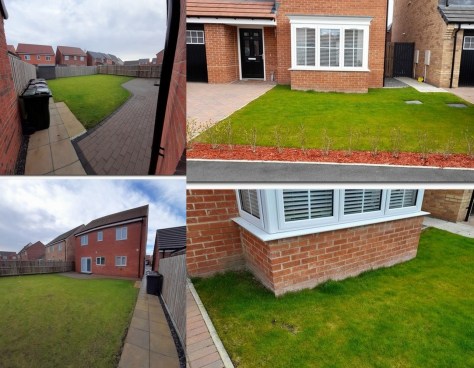
The garden at our new home was a blank canvas, just rectangles of grass front and back, no flower beds at all, except for a row of privet bushes on the front. How totally uninspiring, yet a serious challenge.
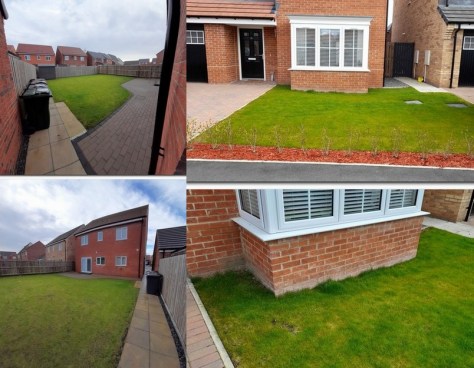
By April, Steph had finalised a design for the garden at the rear. We took out the privet on the front and dug flower beds along one side and under the bay window.
We’d quickly discovered that the soil was very heavy indeed, so we contracted the heavy digging to a local firm.

Even though we had a layer of top soil added all round, on reflection we should have added more organic matter and worked it in, as well as some sharp grit to increase drainage. The garden does flood close to the house when we get heavy or persistent rain. But that has added to the challenge of learning what plants we can and cannot grow successfully.

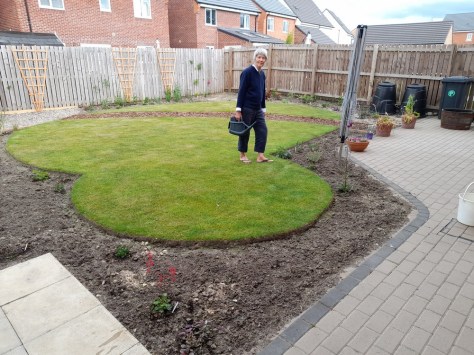
Steph was keen to get many of her plants in the ground, and by June 2021, the flower beds were beginning to take shape.

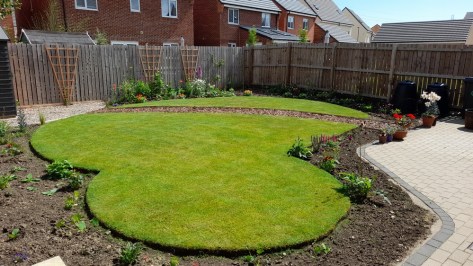
By August-September, things were beginning to look much better, and we’d had the first butterflies appear.

In February 2022 we planted a crab apple, var. Evereste, which did flower that season, and a year later was well and truly established and producing bright orange fruits.

Now in August 2023, many of the plants are well-established, and for several months the garden has given us great pleasure. Steph is certainly pleased with how the garden has developed, although there’s so much more to do. It’s a work in progress.

Another fine feature is the auricula theater that I made for Steph and in which we had a great display of these wonderful primulas earlier this year.

But one aspect that has given us perhaps the greatest pleasure has been the significant increase in biodiversity. Many of our neighbors are not keen gardeners, and have replaced what lawn they had with artificial grass. Nor have they planted flowers to attract pollinating insects.

In contrast, our garden is a hive of insect activity. I’ve seen at least six species of bees, and many other pollinators that I am unable to identify.

Butterflies (although not so frequent visitors to the garden) have included red admiral, peacock, little tortoiseshell, small white, and comma.

As for birds, we have a family of pied wagtails that regularly visits us throughout the year. But so far, the garden hasn’t attracted as many different species as I’d hoped for. We’re somewhat reluctant to put out bird feeders, worried that spilt food might attract rodents into the garden. But we have seen goldfinches, a mistle thrush on one occasion, and more recently, linnets a couple of times. These photos are courtesy of Northamptonshire photographer Barry Boswell.

In summer the sky is full of house martins that nest on neighbors’ houses, but sadly I’ve only seen one swift this year. Starlings are common and often land in a small flock on the lawn, as do the occasional wood pigeons. Herring gulls and magpies call to us from surrounding roofs.

Anyway, as I mentioned, the garden is a work in progress, and although I actually do very little in the garden (gardening is not my thing) I really appreciate all the effort that Steph has taken to create a thing of beauty.
 

I’m not the one with green fingers . . .

Much as I enjoy visiting gardens, I do not particularly enjoy gardening nor have any talent for it. My job is just to mow the grass, when needed.

Steph, on the other hand, became a keen gardener when we returned to the UK in March 1981 after more than eight years in South and Central America; we were married in Peru in October 1973.  We bought a house in the northeast Worcestershire town of Bromsgrove, about 13 miles south of Birmingham city center, convenient for my daily commute into the city where I had landed a lectureship at the University of Birmingham.


Built around 1975, our newly-acquired house didn’t have much of a laid-out garden. With lawns on the front of the house and at the rear, there were some meager flower beds around the edges, a lean-to greenhouse (cobbled together by the original owners from redundant wooden patio doors), and a five year old weeping willow tree that we decided to get rid of before it became too large or its roots ran riot, causing damage to neighboring properties, and even ours in the long term.

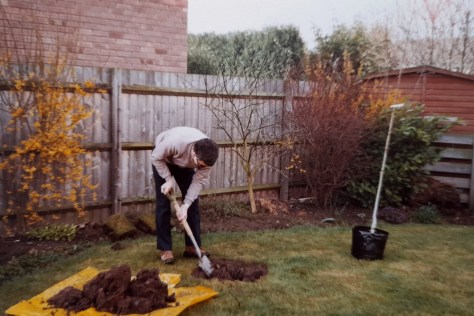
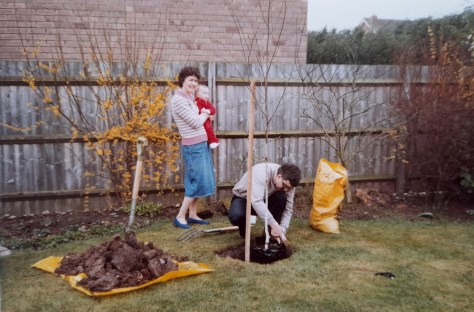
In autumn 1982, we replaced the willow with a Himalayan birch, Betula utilis var. jacquemontii.

We’d done our research and felt that this jacquemontii birch was the ideal tree for our garden. It wasn’t expected to grow too tall. I went to our local Webb’s garden center to collect it, and it was small enough to fit in the passenger foot-well of my 1981 Ford Escort.

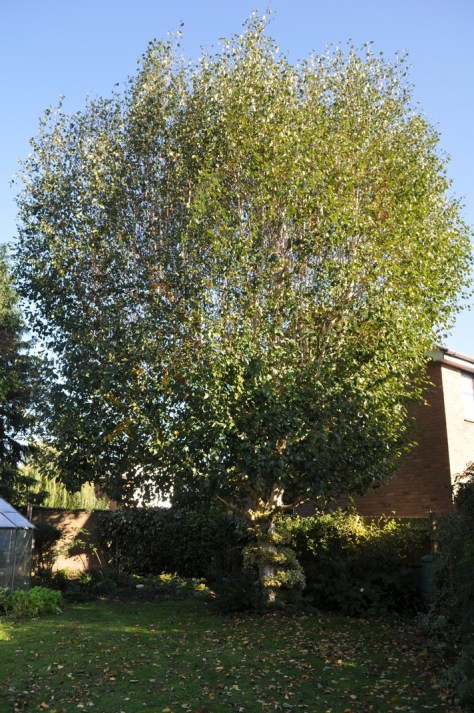
By January 2017, however, we’d decided it was no longer fit for purpose in our garden. Despite several attempts to keep it in check over the years with professional pruning, it simply had grown too tall, was shading a considerable part of the garden, and besides that, sucking up lots of moisture and stressing all the plants roundabouts. This was how it looked in October 2010.

So we called in the tree surgeon and had it felled. Always a sad thing to do, but it was the right decision for this garden.

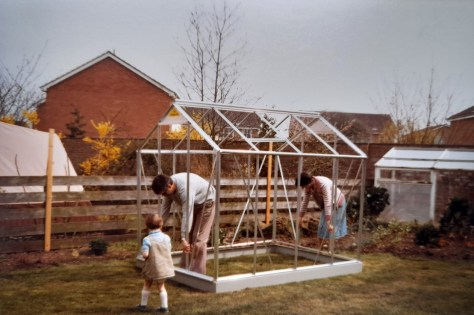
In 1983 we’d finally demolished the lean-to greenhouse, and erected a small 8 x 6 foot Hall’s aluminium frame replacement which Steph used to raise seedlings and some vegetables like tomatoes. We also had the patio remodeled and a rockery and small fishpond added.

The lean-to greenhouse is on the right hand side, at the back of the garden, against an west-facing wall that caught the afternoon sunshine.

Throughout the 1980s, the garden came along nicely. But then, in July 1991, we headed to the Philippines for the next 19 years, and the garden had to more or less look after itself, until we returned in April 2010 when I retired. During the intervening years we’d had someone come by during the summer months to mow the grass, front and back. But apart from that, there was virtually no maintenance for 10-11 months of the year, apart from the few weeks we spent on home leave each summer. Then Steph would be busy getting things back into shape.

Since 2010, the garden flourished, with beds of colorful perennials such as columbines and foxgloves among my favorites. This is how the garden looked in 2016.

And in these videos, you can appreciate how much pleasure the garden gave us over the years.


However, in 2020 it was time to move on. We’d already made a decision in November 2019 to move to Newcastle upon Tyne in the northeast of England, to be closer to our younger daughter Philippa and her family. We put our house on the market in January 2020 and waited for the offers to roll in.

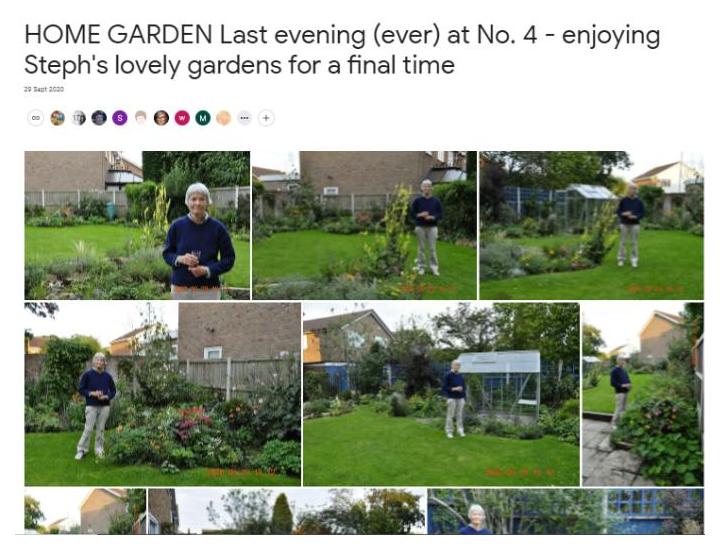
Then the pandemic hit, and we braced ourselves for a long delay. Luck was on our side, however, and there was one family keen to purchase No. 4. The sale finally went through on 30 September last year, and the evening before we took a sentimental walk around the garden, wine glasses in hand. Click on the image below to open a photo album.


We rented a house for the first six months, but just a week after we arrived in Newcastle, we found the house we went on to buy, on the northeast side of the city, and just 10 minutes by car from the North Sea coast!

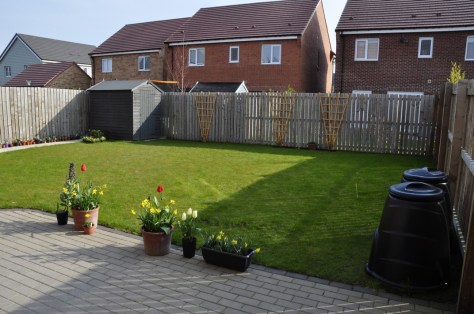
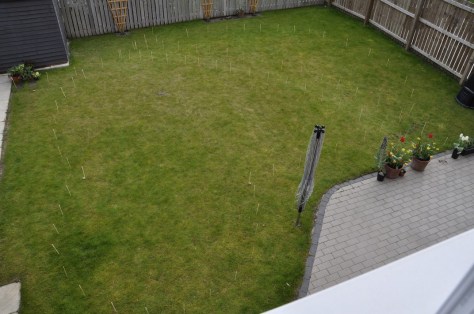
To say that the front and back gardens were unimaginative would be an understatement. Both were just patches of lawn, about 11 x 10 m at the rear of the house, and maybe 4 x 3 on the front.

15 February 2021

20 April 2021

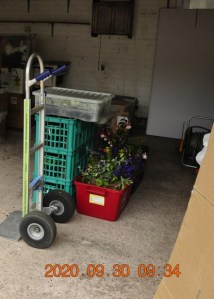
Before leaving Bromsgrove, Steph had collected seeds from most of her favorite plants, or taken cuttings. So we brought them in half a dozen crates full of small pots, and carefully nurtured them through our first northeast winter.
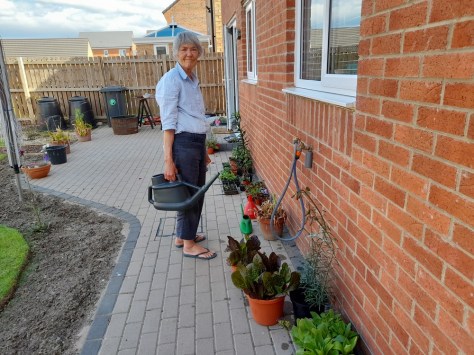
Then it was time to repack them into the crates to our new home, where they remained on the patio and alongside the fence until we had decided how we wanted to transform our garden space.

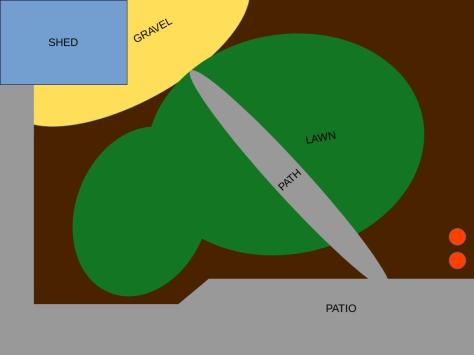
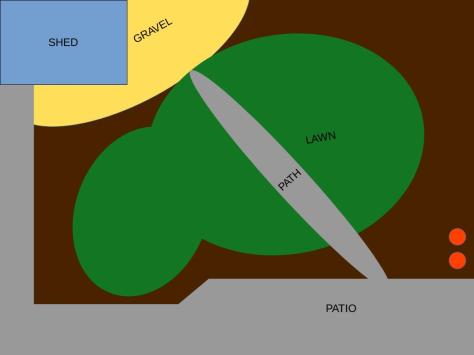
Steph took time to finalize her plan for the rear garden. I drew up this version that we sent to potential garden landscapers. All we wanted them to do was remove the excess turf, and bring in some top soil as we’d discovered that beneath the lawn was a pretty heavy clay soil.

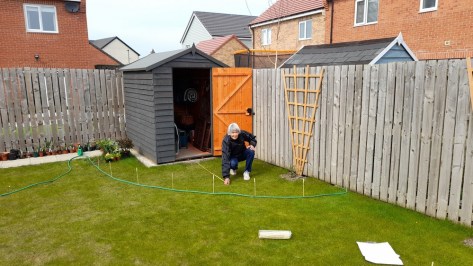
We accepted one of the tenders by mid-April, and Steph began to layout the design using one of the garden hoses, then sticks.

20 April 2021

26 April 2021

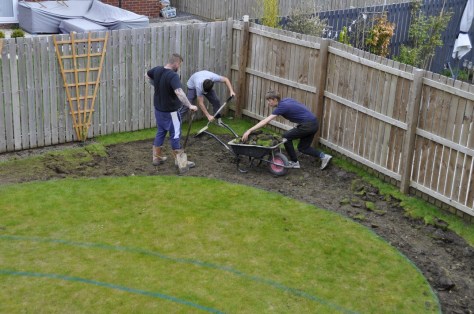
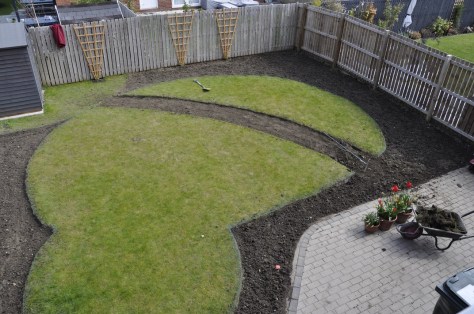
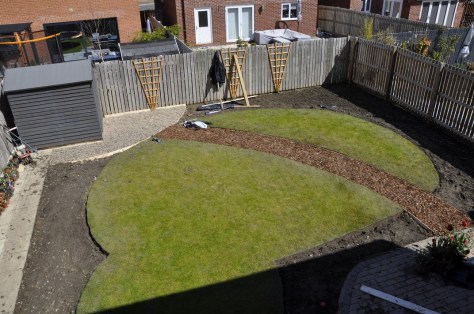
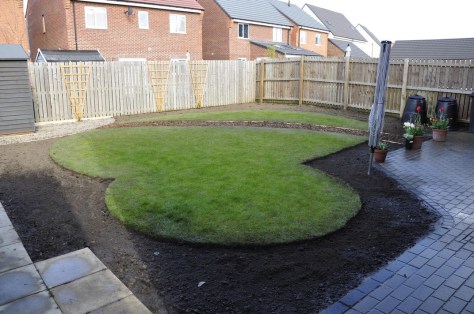
The landscapers spent almost three days at the end of April to remove the turf, dig out the path across the lawn, and add the gravel bed around the shed.

27 April 2021

28 April 2021

29 April 2021

29 April 2021

Then it was time for Steph to begin planting, which was not so easy given the heavy soil.

16 June 2021

14 July 2021

And so, where are we today? Making progress. I guess this first year it’s an opportunity to discover which plants thrive or survive the winter. We have lots of different plants, and no doubt we’ll increase those that do well. Nasturtiums (grown from seed) are already showing great promise, although some have been heavily predated by black-fly. Verbena bonariensis, dahlias, cone flowers (Echinacia varieties), and a host of others are showing promise such as first year biennials like foxgloves, while lilies, succulents and other delicates are thriving in pots. We have also to decide what to do with one part of the garden, close to the house that does flood after heavy rain.

So, mid-August, we do feel that we have the makings of a nice garden, which will hopefully go from strength to strength. We still have to decide on a tree to plant, although we’re currently tending towards a crab apple variety.

It’s hard not to reflect on what we left behind in Bromsgrove. But I have to keep telling myself that what we had enjoyed there was the fruition of almost 40 years tender loving care. It will take a year or so before our new borders show something of equivalent brilliance. It will nevertheless be worth the wait.


The joys of gardening . . .

Actually, I don’t really enjoy gardening. That’s something my wife Steph takes charge of. I just mow the grass – front and back – when needed.

But I really appreciate the beauty and color that Steph’s efforts bring into the garden each Spring and Summer.

After a dreadful winter – mild but very wet, we’ve had an early Spring and I reckon that many plants in the garden are at least two weeks ahead of their ‘normal’ flowering time. What that means is that the garden is full of different plants – columbines, lupins, Welsh poppies, bleeding hearts, fringe-cups, etc. that you wouldn’t normally expect to see in full bloom at the same time.

But it does lead to a wonderful early summer display. So yesterday, in a short break between heavy showers, I grabbed my video camera and rushed into the garden. I’d almost finished when it started to rain – again – and towards the end of the video below you can see one large rain drop on the lens. I didn’t do any editing of the footage – just stringed the clips together, found a piece of music on Freeplay that turned out to be exactly the same length as the clips, and posted it on YouTube.

Enjoy!