Most of my reading consists of history or biography, and I have written a number of posts in this blog about some of the books I have read and the periods of history that particularly interest me. In recent months, however, when I have not been able to get to the public library in Bromsgrove, I have returned to the Barchester novels by Anthony Trollope – with much enjoyment – that have sat on my bookshelves for several decades.
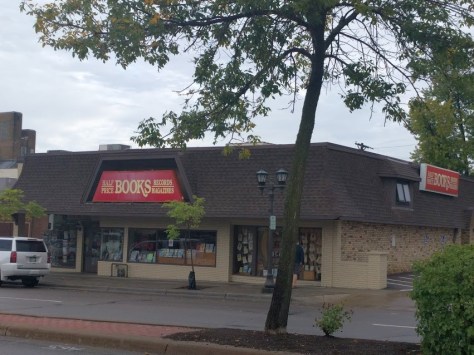
In recent years I have expanded my own history library through purchases of second-hand books in St Paul, Minnesota. And yesterday, being a bright and sunny Minnesota early autumn day, Steph and I walked the mile from Hannah and Michael’s new house to Highland Village in the Highland Park neighbourhood. Along Ford Parkway, near the corner with Cleveland Avenue, Half Price Books (a chain of 120 stores nationwide) offers a fantastic array of books of all genres and subjects (as well as second CDs and DVDs).
Over the years that we have visited Hannah and Michael we have always made a beeline for HPB. For my historical interests, and particularly for books about the ‘Wild West’ or the American Civil War, HPB has a much better selection than I have ever been able to find through Worcestershire County Library in the UK. Of course not everything that I have bought at HPB relates to American history. If a book takes my fancy, then it usually finds a place in my library. And I’ve often found many interesting books about British or European history that I’ve never come across back home.
This year has been no exception, and I came away from my visit to HPB with seven paperbacks for under USD60. There are several university campuses close to HPB: St Catherine University, University of St Thomas, and Macalester College. I reckon that many of the books I acquire must be cast-off course texts. Students’ loss, my gain!
So what’s on my reading list this year?
I’m particularly looking forward to delving into Amanda Foreman’s tome about Britain’s role in the American Civil War. The biography of Elias Ashmole, founder of the Royal Society in the UK is not something I would have contemplated had I not seen it on the shelf. And the social histories of the Renaissance and Industrial Revolution England could be good reads.
I’ll post some reviews once I have waded through them. The Foreman book alone is over 950 pages.
Steph and I have been members of the National Trust for five years now. We even qualify for the Seniors discount from January! And we’ve been members of English Heritage for just a year.
But we will be renewing our membership of both organizations in 2016. Why? Because they both offer excellent value for money, and certainly give purpose to our trips out, whatever the weather. Be it a visit to a stately home, a ruined castle, a country park, or a beautiful garden, there are so many properties to visit and experience so many aspects of our cultural heritage.
Looking back on our 2015 visits we have certainly had our money’s worth, and annual membership has more than paid for all the entrance fees we would have had to pay in any case. And much more!
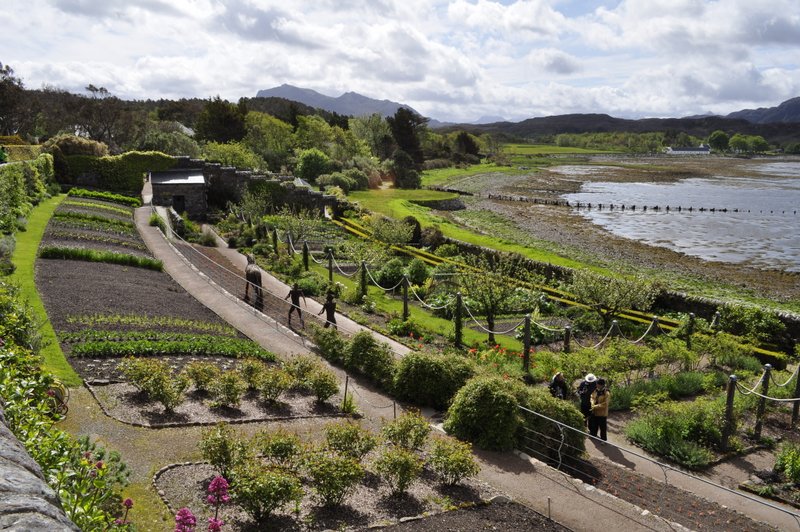
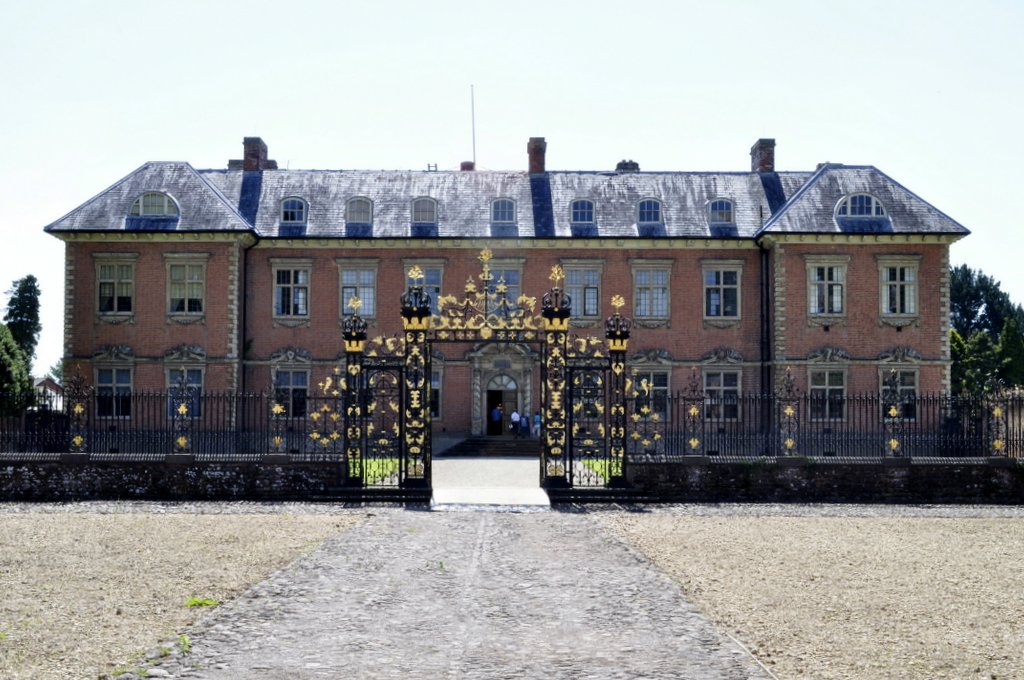
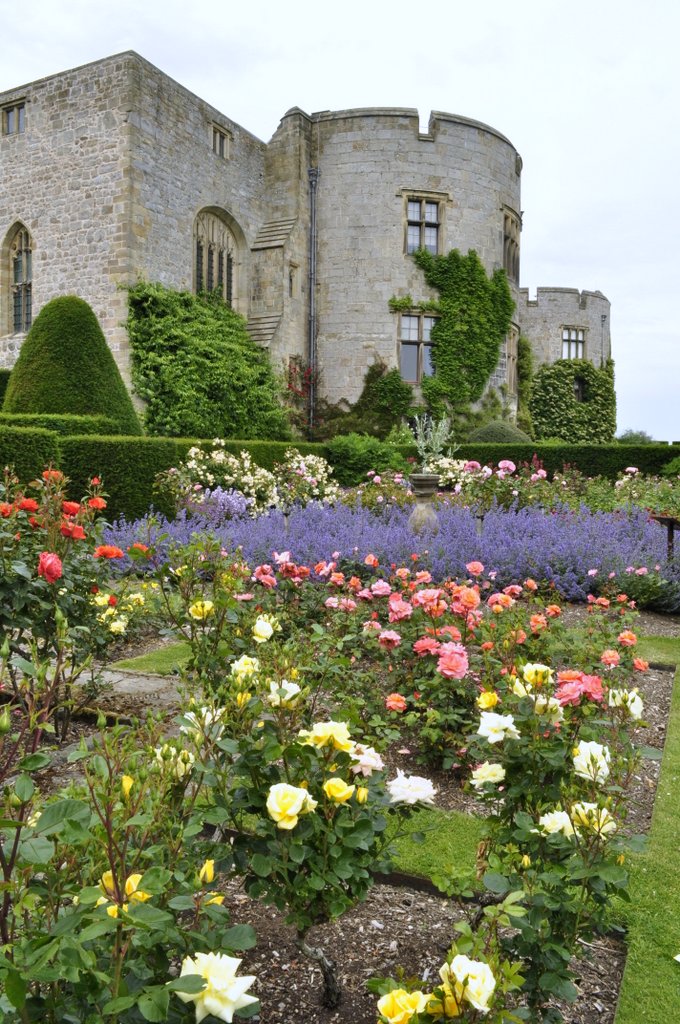
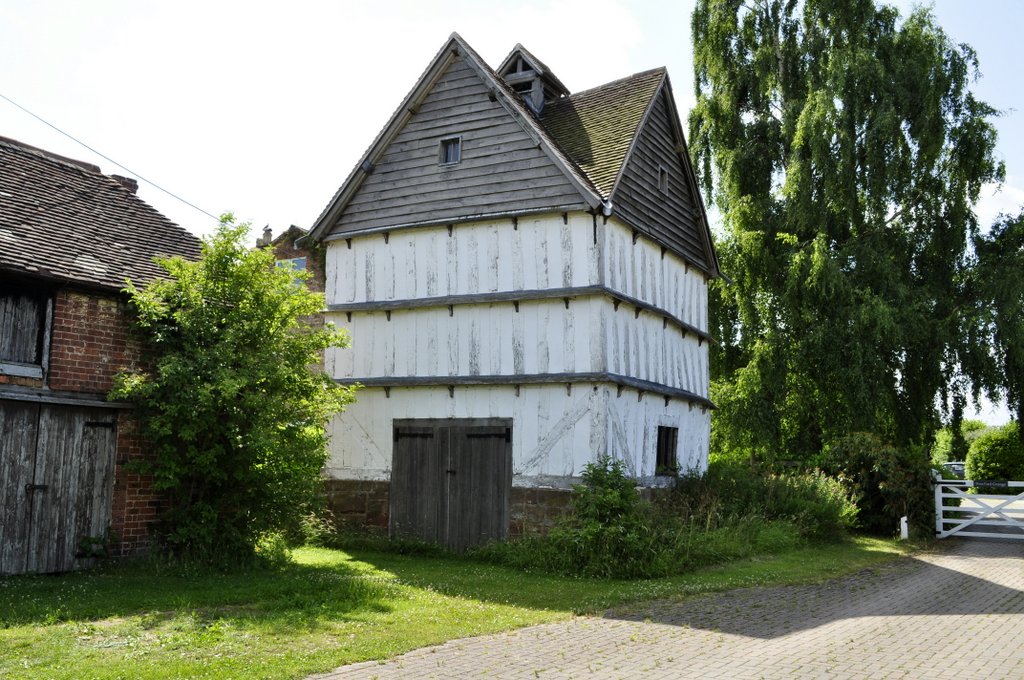
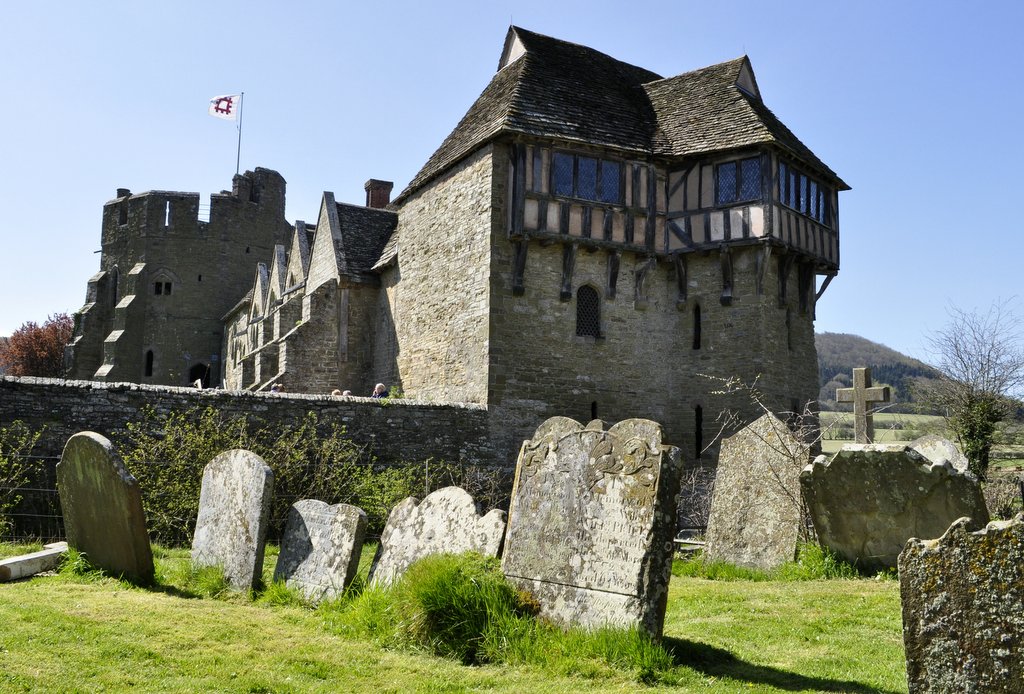
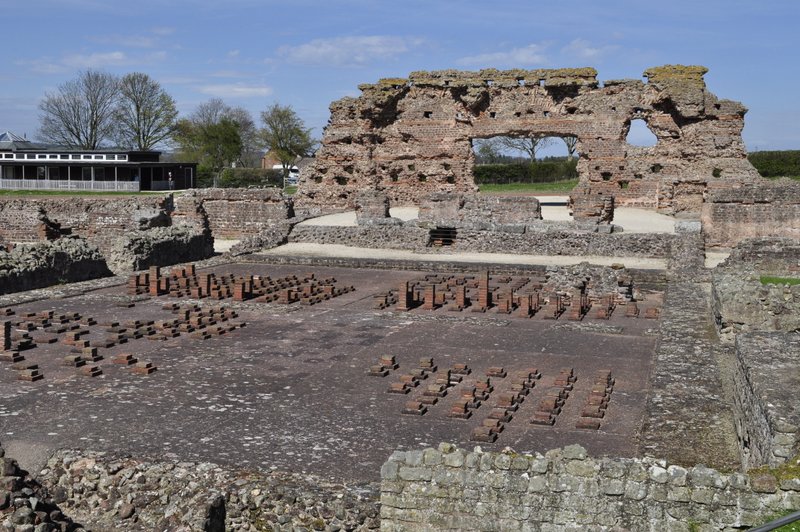
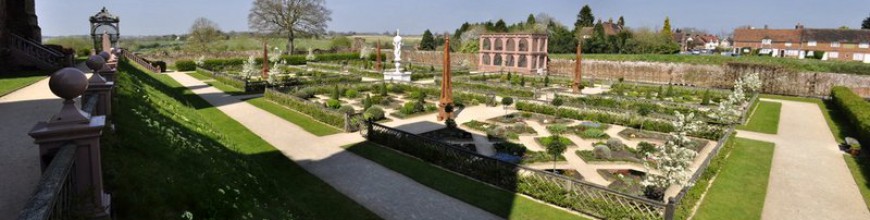
So here is a pictorial summary of our great visits this past year, beginning in early April and ending just last week when we visited Charlecote Park to see the Christmas decorations. And there are links to individual posts about each visit.
Well if you think that your family has its quirks and secrets, just take a look at the family of George III, his queen, Charlotte of Mecklenburg-Strelitz, and their large brood of dysfunctional princes and princesses.
And that is what Janice Hadlow (former Controller of BBC2) has done in her excellent book, The Strangest Family, published by William Collins in 2014 (ISBN978-0-00-716519-3). It’s a mammoth tome, 617 pages (and another sixty plus pages of acknowledgements, notes and index).
Born in 1738, acceded to the throne in 1760 following the death of his grandfather George II, married in September 1761, George III was father to 15 children (nine boys, two of whom died very young, and six daughters). And although George entered marriage with the aim of not repeating the ‘errors’ of his great-grandfather (George I), his grandfather, and father Frederick, Prince of Wales (who died in 1751), the ‘Hanoverian curse’ did not by-pass his family.
It seems George III remained faithful to Charlotte—unlike his regal predecessors who all took a string of mistresses. And although family life in the George III household seems to have started well, and George was reportedly a loving father to his young family, divisions began to develop as the older boys struggled under the strict and moral lifestyle imposed on them by their father. Soon the relations between George and Charlotte and their elder sons George, Prince of Wales, Frederick, Duke of York, and William, Duke of Clarence had become as sour as those between George I and his son, George II, and him and his son, Frederick, Prince of Wales.
The six daughters of George and Charlotte were not spared either. Their parents were controlling and implacable when it came to them marrying and moving on beyond the family. With selfish parents like George and Charlotte it’s hardly surprising that their children grew up rebellious or forever denying that their parents had ever loved them. Three daughters eventually did marry: Charlotte, Princess Royal, Elizabeth, and Mary, but not until they had reached middle age. Two remained spinsters, Augusta and Sophia, and Sophia is widely believed to have borne an illegitimate boy. Amelia, who was George’s favourite, died unmarried (although deeply in love with one of George III’s equerries) at 27, from tuberculosis and an acute bacterial infection of the skin, erysipelas (or St Anthony’s Fire).
Hadlow’s is a thorough and entertaining account of the life that George and Charlotte built for themselves, during a remarkable period in history, the second half of the eighteenth and early part of the nineteenth centuries. Remarkable? This was a period of great social change from a largely rural to urban living, a time of great conflict (the Seven Years War with France came to an end in 1763 but saw the UK evolve as the major world power), the loss of the American colonies during the War of Independence, the French Revolution, and the rise of Napoleon Bonaparte and the two decades of conflict in Europe that came to an end at the Battle of Waterloo on 18 June 1815 with the defeat of the French. George’s reign also saw significant scientific and engineering developments such as vaccination against smallpox or the digging of the first canals. And not long after Waterloo, the first railways were built. George and Charlotte certainly presided over interesting times.
Janice Hadlow’s book is particularly interesting in the first 100 pages or so, and also in the latter part of the book. She spends time detailing the reigns of George I and George II, and how their familial relations were to impact eventually on George III. These pages give a contextual framework for George III’s reign that I hadn’t come across before. And of course, much of the familial dysfunction of George III was due in no small part to the periods of ‘madness’ he suffered from the later 1780s onwards, until he finally became totally incapacitated and his son, the future George IV became Regent. It split the family asunder, and Charlotte became increasingly irascible and hostile to her daughters. It’s no wonder they desired to seek the haven of marriage, even if it would be an arranged marriage to someone who they did not know nor could ever love.
Several years ago I had come across another book, published in 2004, by Flora Fraser, and from the princesses’ perspectives. Princesses – The Six Daughters of George III is also worth a few days of your literary time.
Two days ago, after a couple of weeks of really cold, wet and windy weather, it was bright and warm enough to contemplate an outing. Thank goodness, as cabin fever had begun to set in. With our 2,000 mile road trip around Scotland less than a week away, I didn’t fancy a long journey so we looked for a National Trust or English Heritage property that was within easy distance. Having been members of the National Trust for over four years now, we’ve visited most of the nearby venues. As English Heritage members only since the beginning of the year we decided that one of their properties would be a more convenient choice.
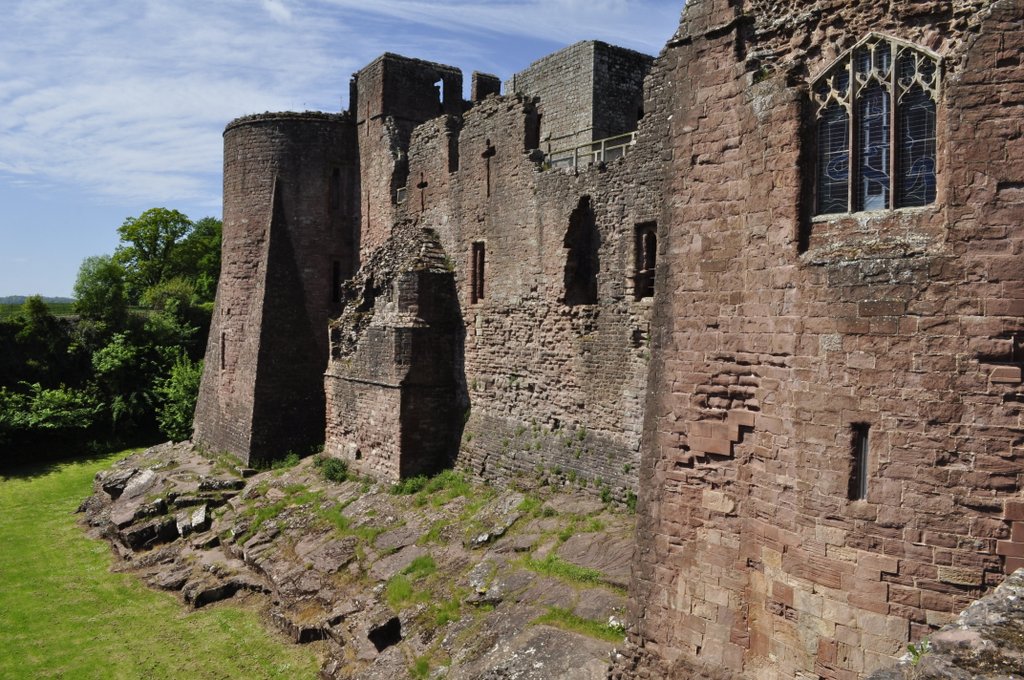
We chose to visit Goodrich Castle, built in the 12th century on a red sandstone outcrop along the River Wye in southeast Herefordshire.
It’s about a 400 m walk from the car park to the castle, and emerging through the trees you get this wonderful panorama of the south walls of the castle—or rather, what’s left of them. For having survived from the 12th century, the walls and floors in the towers were deliberately demolished (or slighted) in 1646 after the Parliamentarians captured the castle from Royalist supporters (just as they did at Kenilworth Castle that we visited a month earlier) in the aftermath of the Civil Wars.
‘Roaring Meg’
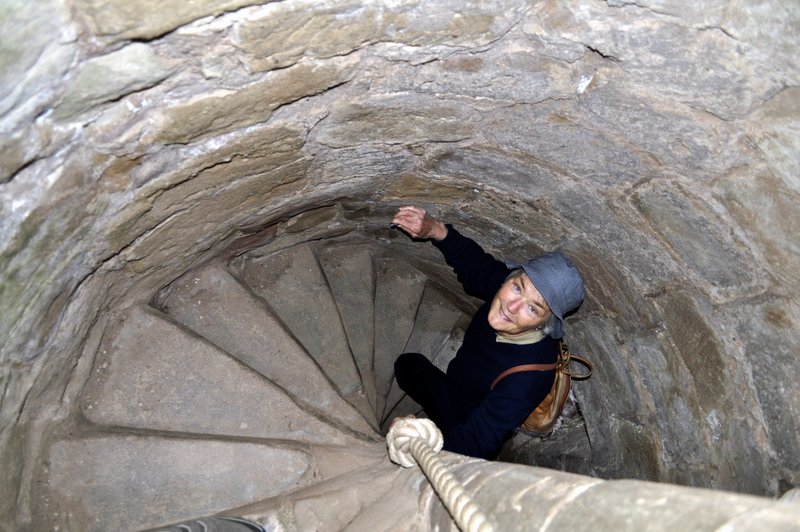
If you asked a child to draw a castle from memory, then I guess Goodrich Castle would fit the bill, minus the crenelations. These probably disappeared during the Parliamentarian vandalism. There are four towers around a ‘central’ keep (actually closer to the south wall). The towers no longer have any floors; but in the keep, stairs have been constructed up to first floor level from where it’s possible to climb to the roof of the keep, up an extremely narrow and tight spiral staircase.
The climb to the roof of the keep – very narrow and steep. Not for the faint-hearted.
The castle is surrounded by a deep moat, although I don’t think it was ever filled with water, more of a deep ditch on the east, west and south sides. The outcrop on which the castle stands descends steeply on the north side to the River Wye that would have provided a natural defence. I did wonder whether the sandstone excavated to construct the moat was then used to build the castle’s walls. Above several courses of grey, and presumably harder sandstone, the upper courses of the walls were built from red sandstone.
What are particularly impressive are the straight-sided, triangular buttresses propping up the southeast and southwest round towers.
West wall, and southwest tower
Base of the southwest tower
Southwest tower from the southwest
Looking east along the south wall
Demolished south wall and keep from the moat
Southeast tower and the east wall
Looking north along the east wall
The east wall
Looking south along the east wall from the gatehouse
Below the gatehouse on the west side of the castle is a large hemispherical barbican, with a short causeway leading into the castle. This would have been protected originally by a drawbridge, wooden gates, and two separate portcullises.
The barbican from the gatehouse
The portcullis chamber, with the slot for one of the two portcullises in front of Steph
The gatehouse and drawbridge entrance, from the moat, looking north
Underneath the gatehouse entrance
Interestingly, the castle chapel can be found alongside the gatehouse, just to the south.
Holy water alcove
It seems that Goodrich Castle was more of a residence, luxuriously furnished, by its different owners over several centuries, rather than playing much part in the various conflicts that affected this part of England that is quite close to the border with Wales. That is until the 17th century English Civil Wars. Even after the Royalist besieged had surrendered, many parts of the castle were still inhabitable. That is why the Parliamentarians decided to demolish the walls and rooms deliberately.
English Heritage provides access to many parts of the castle, and you can walk along the upper part of the walls. In some buildings where there are no original stairwells, stairs have been installed.
It was our original intention of combining a visit to Goodrich Castle with a National Property such as Tredegar House in Newport (much further south), calling in at Goodrich on the way home. We thought that it would be just a quick visit to Goodrich, not a lot to see. How wrong we were! We must have spent well over two hours clambering over the various buildings, climbing up to the highest levels (at the top of the keep), and walking around the moat and remains (actually just the foundations) of the stable block—which was where the Parliamentarians first gained access to the castle in 1646.
St Mary’s Church, Kempley. You’ve probably never heard of it, nor have the least idea where to find it. Neither had I—until yesterday, that is. Kempley is a small village just north of Junction 3 on the M50 in the Forest of Dean district of Gloucestershire close to the county boundary with Herefordshire, a handful of miles north of Ross-on-Wye. St Mary’s is a further couple of miles to the north of the village, and was replaced by another parish church, dedicated to St Edward the Confessor.
Owned by English Heritage, 12th century St Mary’s Church (built around 1130) is an outstanding example—perhaps the most significant and most complete set in the whole of northern Europe—of Romanesque fresco paintings. We had stumbled across this little gem, while deciding if there were other sites near the main objective of our outing yesterday: Goodrich Castle (which is about 12 miles or so south of Kempley). St Mary’s is not the easiest building to find, but the effort is worthwhile. The north wall of the church is plain stone. But come around to the south side, and surprisingly the wall is rendered in the most fetching shade of pale pink.
But it’s inside that the biggest surprise awaits you. The church has the most exquisite medieval wall paintings you could ever imagine. It also proudly boasts one of the oldest roofs (even original doors) in the country, with its original timbers dating back to its construction.
Looking through to the nave from the 13th century tower.
The original door leading to the tower.
It wasn’t until the late 19th century that these paintings were discovered beneath layers of whitewash—presumably applied for generations following the Reformation in Tudor times. The images on both north and south walls of the nave were worked in tempera on dry lime mortar, and depict the Wheel of Life and to its right either side of a window, depictions of St Anthony of Egypt (on the left side) and St Michael accompanied by the Virgin Mary (on the right).
Looking towards the chancel from the tower door.
The magnificent Norman arch leading to the chancel.
The west end of the nave (from the pulpit).
The north wall with its paintings of the Wheel of Life, and those of St Anthony of Egypt and St Michael and the Virgin, either side of window.
The Wheel of Life, tempera painting on dry lime mortar.
St Anthony of Egypt.
St Michael and the Virgin.
Reamins of a tempera painting on the south wall of the nave.
But the real glory of St Mary’s is found in the chancel, where the wall paintings are true frescoes, painted on wet plaster. They lift your soul! On the ceiling is a magnificent portrayal of Christ. I cannot better Simon Jenkins’ description published in The Guardian in 2008: The sensation lies in the chancel, composed of the most complete set of Romanesque frescos in northern Europe. Christ sits in the middle of the ceiling on a rainbow, his feet on a globe. He is attended by sun, moon, stars, candelabra, a winged ox and seraphim with books and scrolls, the complete Book of Revelation. Below him sit rows of sepia apostles gazing up at Him from a Romanesque arcade. No inch is left untouched. Here is a bishop, there lay pilgrims heading for a heavenly Jerusalem. Everywhere is chequerboard and zigzag decoration.
The fresco of Christ on the ceiling of the chancel.
Six of the 12 apostles on the north wall of the chancel., St Mary’s Kempley
St Anthony of Egypt.
The chancel side of the Norman arch leading from the chancel to the nave.
The church porch is apparently also original, and above the door is a depiction of the Tree of Life.
Detail of the tiling in the porch.
The Tree of Life carved into the stonework above the church door.
Let me finish with another quote from Simon Jenkins’ article. ‘England’s Sistine Chapel lies lost in the western reaches of Gloucestershire. It is smaller, to put it mildly, and older by 350 years. But what it lacks in grandeur it adds in serenity. I would exchange five minutes in the chancel of Kempley church for an hour in Rome. And I would have it to myself.’
Steph and I were fortunate to have this haven of serenity to ourselves for more than 30 minutes before we had to head home. I felt remarkably calm for several hours afterwards. Go and seek that serenity for yourselves. You won’t be disappointed.
In fourteen hundred ninety-two Columbus sailed the ocean blue.
In 1492, my 12th great grandfather Thomas Bull (on my paternal grandmother’s side) was a lad of about 12. At least we think that the burial record for ‘Thomas Bull’ at Ellastone in Staffordshire is the father of John, William and Thomas Bull in the same parish. If so, he’s my earliest known ancestor, going back 14 generations, when I would have had 16,384 direct ancestors. Half of these are ‘English’ and the other half ‘Irish’ from my mother’s side of the family.
The population of England around 1480 was probably less than 3 million (having gone through the demographic squeeze of the Black Death a century earlier). Just do the maths. We’re all related to each other more than we imagine. We can’t all have ‘independent’ ancestors; there must be a few drops of royal blue blood in all of us. Now my father’s side of the family resided in what once had been the Kingdom of Mercia, specifically in what we know now as north Staffordshire and southwest Derbyshire.
In 1483, Edward IV died and the crown was usurped by his youngest brother, Richard, Duke of Gloucester, who became the notorious (if we are to believe Tudor propaganda) Richard III. Richard was defeated and killed at the Battle of Bosworth in August 1485 – a site just 40 miles or so southeast from Ellastone. Henry VII became king and the Tudor dynasty was founded. I wonder what the Bull family were up to, and how did the final battle of the Wars of the Roses affect them – if at all?
But we are on firmer ground with Thomas Bull’s ‘son’, John Bull (my 11th great grandfather), born in 1525 in Ellastone, the youngest of three brothers. By the time his son, another Thomas was born in 1552, Henry VIII had come and gone, and his son, the short-lived Edward VI was king, and England was in the grip of a Protestant regime.
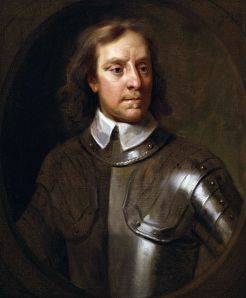
When my 8th great grandfather Robert was born in 1613, James I of England and VI of Scotland had been king for 10 years. In 1613, James’s daughter Elizabeth married Frederick V, Elector Palatine through whom the monarchs of the House of Hanover descended, including our present Queen. But when his son Robert was born in 1653, Charles I had already lost his head four years earlier, the three Civil Wars between 1642 and 1651 were over, and Oliver Cromwell was Lord Protector.
Sixth great grandfather William Bull, born in 1712 and 6th great grandfather John Jackson (born 1711) were my first ancestors to be citizens of Great Britain following the Act of Union in 1707 uniting the Kingdoms of England and Scotland (which just might be rendered asunder in 2014 if the Scottish Nationalist Party has its way in the independence referendum). Dr John Arbuthnot created the character of John Bull in 1712 as the national personification of Great Britain, especially England. Abraham Darby had already developed his blast furnace in Coalbrookdale, and Thomas Newcommen was about to launch his atmospheric steam engine (about which I recently wrote).
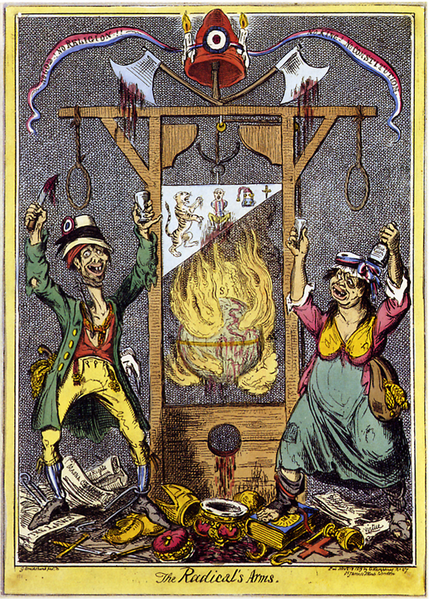
Both my 3rd great grandfathers John Bull and John Jackson were born in 1793. After the excesses of the French Revolution, Great Britain was at war – again – with France; George Washington began his second term as POTUS.
My great grandfather John Bull was born in 1855, when the siege of Sevastopol ended, and the Crimean War ending a few months later. My Jackson great grandfather William was born sixteen years earlier in 1839, the same year that Louis Daguerre received a patent for his camera.
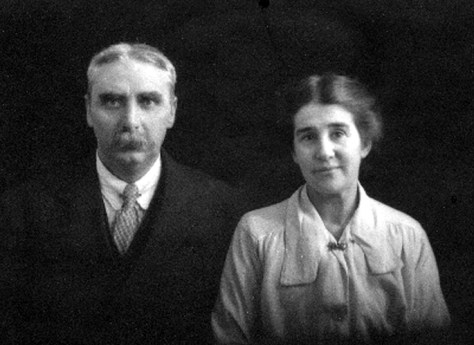
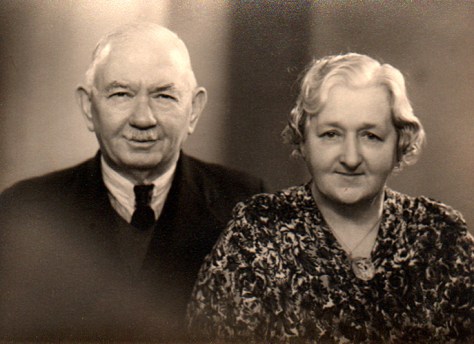
I knew both my paternal grandparents. Grandmother Alice Bull was born in 1880 and died in 1968. She was the second wife of my grandfather Thomas Jackson, who was born in 1872 and died in 1967.
My paternal grandparents, Thomas and Alice Jackson
Thomas had two children by his first wife Maria Bishop, and four with Alice – including my father, Frederick (born 1908, died 1980).
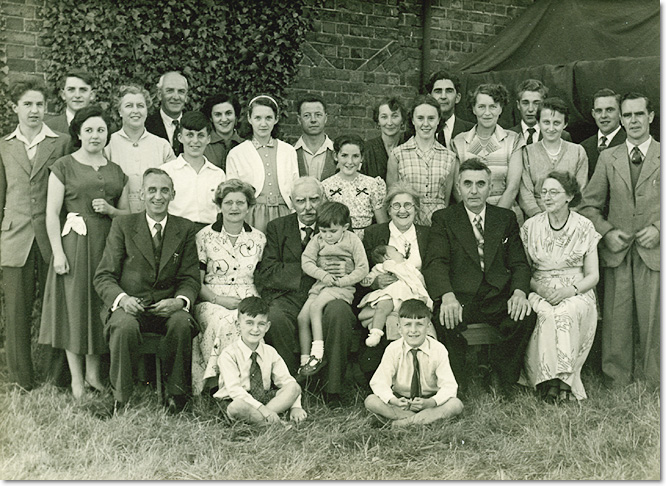
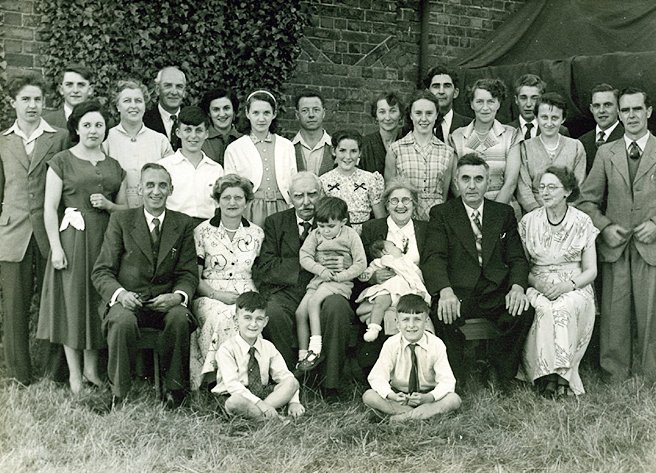
Thomas and Alice Jackson celebrate their Golden Wedding anniversary in 1954 at Hollington, Derbyshire with their children and grandchildren. I’m sitting on the left, aged 5.
My father married Lilian Healy in 1936, and I’m the youngest of three brothers and one sister.
Fred Jackson
Lilian Jackson nee Healy
Taken in Congleton in about 1952 or so. L to R: Mike, Martin, Margaret and Edgar
54 years later!
During the documented 500 years of this family history there were remarkable changes in society, by the way we were governed (from absolute monarchy to a constitutional one under a parliamentary system), by the change from a predominantly agricultural economy to an industrial one. From a small nation on the fringes of Europe to a world-wide empire (and back again). From the records seen, my ancestors were farmers, laborers and the like. Nothing grand. But they’re my ancestors, and because I can name them going back so many generations, it really does make a tangible link with the events through which they lived.
So how did I track down all these dates? I didn’t. It’s all the work of my eldest brother Martin who, in 1980 following the death of my father, began to research our family history which is documented on the fabulous ClanJackson website. The site contains information about the paternal genealogy of the Jackson, Bull, Tipper and Holloway families (and some from my maternal grandparents’ sides of the family).
I’ve just finished reading Roger Osbourne’s very interesting and well written account of the Industrial Revolution in Britain during the 18th century.
I am particularly interested in the 18th century, turn of the 19th. It was a period of great invention and innovation, set against a backcloth of social change and upheaval, of international conflict, and revolution. It was also a time of increasing economic prosperity in Britain. But ‘revolution’ it was not, at least not in the sense that we most often understand the term, since the start and the development of what we now call the ‘Industrial Revolution’ took place over at least 150 years.
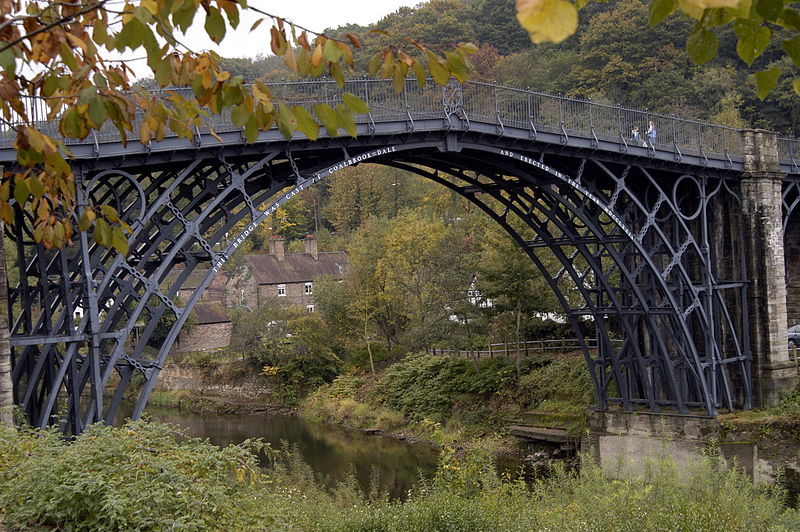
One of the reasons for my interest is that I grew up in the southeast Cheshire – North Staffordshire area, where many of the early developments of the Industrial Revolution were adopted, particularly in coal mining and iron production, as well as textiles. In fact some of the most important areas for industrial innovation, such as Coalbrookdale in Shropshire where Abraham Darby first used coal instead of charcoal in a blast furnace to produce cast iron as early as 1709, or at Cromford, in the Derwent valley north of Derby, where Richard Arkwright established his cotton mill in 1771, were only about 40 miles away to the west and the east of where I grew up.
One of the main points that Osbourne makes up front is the key role that coal made during the Industrial Revolution, initially for heating, and then for mechanical energy from coal-fired steam engines. As early as 1712, a Newcomen atmospheric engine was built to pump water from a mine in Dudley, northwest of Birmingham. Later on in the century, James Watt’s further developments (sponsored by Birmingham entrepreneur Matthew Boulton) of the high pressure steam engine opened up the possibility of not only greater efficiency of the engines themselves, and more economical use of coal, but also the use of steam engines to power machinery. This was widely adopted for the burgeoning textile industries of Lancashire and Yorkshire. But it was Cornishman Richard Trevithick who demonstrated the first use of locomotive power in 1801 and the first steam locomotive on rails in 1804.
In the video below, the Boulton and Watt beam engines powered by steam, built in 1812, are still operational today. A pumping station was built alongside the Kennet & Avon Canal in Wiltshire to lift water to the lock system on the canal. Replaced by electric power today, the old steam engines are fired up from time-to-time, and we visited in 2008 on one of those occasions.
Landowners who had coal under their land made fortunes, particularly in the north-east of England, along the Tyne valley. Vast quantities of coal were shipped out to the metropolis of London, which by 1750 had a population of half a million. We recently visited the ‘stately home’ of one of the coal barons at Seaton Delaval just north of Newcastle upon Tyne. All over the coalfields of the country, the extraction of coal, mostly in deep mines, left a blight on the landscape in the form of tall, conical slag heaps. All over The Potteries – the six towns of Tunstall, Burslem, Hanley, Stoke, Longton and Fenton that comprise Stoke-on-Trent in North Staffordshire – these slag heaps and marl pits (from which clay was extracted for the ceramics industry) dotted and blighted the landscape. And as coal was used to heat houses and fire the bottle ovens in the ceramics industry there was a continuous pall of smoke over the city.
Coal mine and slag heap, probably near Longton. Copyright: Staffordshire Museum Service.
Kilns at Longton.
Smoke over Tunstall.
When we I visited Little Moreton Hall, just south of Congleton in Cheshire, a week ago, our route crossed The Potteries from south to north, I was struck how much the landscape of the area had changed over the past half century. When the coal industry collapsed in recent decades – after Margaret Thatcher saw off the National Union of Mineworkers in the 1980s – and the demand for coal had in fact been declining, many communities were left with blighted landscapes of industrial decline, with these eyesore slag heaps dominating the skyline. In the 1960s I traveled every day from my home in Leek to high school on the south side of the Potteries. And the route we took went past some of the tallest slag heaps near Norton and Cobridge. One of these was actually on fire – the result of spontaneous combustion within the tip, and for years efforts were made to bring it under control.
Today, many of the tips have disappeared and it would be difficult to even spot a disused mine head. That’s because a huge effort, and no doubt huge sums of money, have been spent to rehabilitate these derelict sites. In some places you’d hardly realize that mining had actually gone on there. In the centre of Hanley for instance, Forest Park has been developed at one particular site, and the ‘Cobridge Alps’ have been graded to form a more rolling landscape. Some sites have even become nature reserves. The next two photos illustrate the before and after scenarios, taken at Glebe Colliery in Fenton (courtesy of Steven Birks and the North Staffordshire Potteries web site).
As a botany and geography student in the 1960s I was quite interested in the whole topic of derelict land reclamation. Reclaiming these derelict sites is not straightforward. First they have be graded and slopes stabilized, then plants have to be identified that will actually grow and thrive. I’ve already alluded to the problems of combustion of the coal heaps. But a coal heap is not a particularly hospitable substrate for plants to grow. Even more so if the ‘soil’ is polluted by heavy metals such as copper and zinc that are found in the tips in mining areas, such as Cornwall and the Swansea Valley, where these minerals were extracted or smelting was the predominant industry during the Industrial Revolution. During the first field trip I made as a geography student at Southampton University we visited to derelict land rehabilitation projects in the Swansea Valley. Once I’d moved to Birmingham University in 1970 I took a couple of courses on the relationship of genetics and ecology – genecology, and some of the best examples have to do with the frequency of heavy metal tolerant grasses that have evolved to survive on polluted soils at may of these industrial sites. Seeds can be collected to sow reclaimed sites.
In 1966 I made my first visit to Coalbrookdale. As a high school student in the Lower Sixth (age 17) I attended a weekend residential course at Attingham Park (now a National Trust property) just south of Shrewsbury in Shropshire. The topic was all about industrial derelict land reclamation, and we were treated to a keynote lecture by the eminent Professor of Geography and land use expert, Sir Dudley Stamp (he died about three months later). And I also remember two botanists from Newcastle University, Oliver Gilbert and AW Davison, a lichenologist and bryologist, respectively who lectured about the use of lichens and mosses as indicators of polluted soil. And then we had the tour of Coalbrookdale and Ironbridge – before it became a UNESCO World Heritage Site and on the tourist trail.
In the course of just three decades the evidence of the coal mining industry that powered the Industrial Revolution in the 1700s and into the 20th century has all but disappeared from our landscape. Even tracking down photographs of the coal mines and slag heaps has been quite difficult; history has slipped away before our eyes. Nevertheless, our environment is much better now that we do not have to suffer constant exposure to coal smoke. However, what we enjoy today is undoubtedly built upon the innovation and invention that flourished when coal was king.
Two other interesting facts emerged from Roger Osbourne’s book that perhaps I’ll have to look into further. First, how the 18th century inventors relied upon and enforced the patent system to protect their inventions. And second, how many of the industrialists of the time were Nonconformists – Methodists, Baptists, Quakers, and the like. And I haven’t yet touched on the legacy of the potter Josiah Wedgwood and the canal builders of the 18th century such as James Brindley who lived much of his life in my hometown of Leek.
I guess I first became aware of Ireland’s turbulent past when I was studying Advanced Level (pre-university) English Literature between 1965 and 1967. Our English teacher, Frank Byrne, had family from Co. Roscommon in Ireland, and on the curriculum the years I studied was the poetry of Irish poet William Butler Yeats (Nobel laureate in Literature for 1923). Through his famous poem Easter, 1916, in which three of the four verses have as a final line ‘A terrible beauty is born‘, Yeats emphasizes his belief that the genie was out of the bottle, so-to-speak – Ireland would be changed forever.
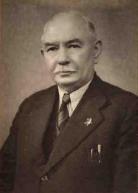
Elsewhere in this blog I have written about my own Irish ancestry, and often wondered how my Irish family reacted to – or even took part in – the events that shook Ireland in the early and mid twentieth century following the April 1916 rebellion. My maternal grandfather, Martin Healy, had served in the British army in South Africa and on the Northwest Frontier in India, and afterwards served as a policeman in London’s Metropolitan Police. As a Catholic, did he ever suffer from any sort of discrimination while in the Army or the police? Of course from his birth in 1876 he was a British citizen of Ireland. The Irish Free State was founded in 1922. I assume he retained his British citizenship throughout. But his roots were Irish. He and my grandmother came from large families. Were any of their brothers or sisters involved in the various struggles in Ireland from 1916 onwards: the Easter Rising, the civil war, and the various bombing campaigns carried out by the Irish Republican Army (IRA) both in Ireland and in England? A family anecdote has a great uncle of mine serving in the IRA and being executed by the Black and Tans, but I have no further evidence for this.
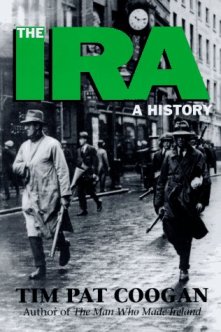
I’ve often wondered what and who the IRA was, are. And during a visit to St Paul, MN a couple of years ago I picked up a secondhand copy of Tim Pat Coogan’s tome The IRA – A History. I recently had a second stab at reading this. When I bought it I managed just a few pages – it’s not the easiest of reads. But having just finsihed T. Ryle Dwyer’sBig Fellow, Long Fellow – A Joint Biography of Collins & de Valera, I decided to give Coogan’s book another go. This time I managed about one fifth (it’s a long book, >500 pages, small font) before giving up. There is little attempt I felt at synthesis. Instead one is bombarded with fact after fact after fact. Indeed, I quite lost track of the overall narrative. Nevertheless I did begin to understand the origins of the IRA, how it became a proscribed organization in the Irish Free State and Republic, and its role in destabilizing society and politics in Northern Ireland more recently in ‘The Troubles’. While Coogan’s text is undoubtedly of considerable value to the serious scholar of Irish events – because he interviewed many of the leading characters in the IRA story – getting to grips with the big picture is not something that this book achieves.
On the other hand Dwyer’s joint biography of Irish patriot Michael Collins and elder statesman Éamon de Valera is a much more accessible read, and one I enjoyed from cover to cover.
One thing that came though quite clearly to me is that both Collins and de Valera at various times of their careers were rather unsavory and ruthless characters, not averse to ordering the assassination of opponents when necessary. However, Collins seems to have been the more pragmatic of the two whose life and contribution to an Ireland on the road to becoming a republic was cut short when he was killed in an ambush in 1922. As a member of the negotiating team that agreed a treaty in 1921, leading to the partition of Ireland into the 26 counties of the south and the six counties of Northern Ireland, Collins was vilified by Republican purists, among whom was then numbered Éamon de Valera. But as Collins emphasized in debates about the Treaty to establish the Irish Free State, ‘In my opinion it gives us freedom, not the ultimate freedom that all nations desire … but the freedom to achieve it.’
de Valera had commanded a unit during the 1916 rebellion but was saved from execution by the fact he was actually born an American. From Dwyer’s book I had the distinct impression that de Valera was never consistent in his opinions or deeds, and certainly changed tack as and when it suited him politically. He did help found the political party Fianna Fáil, led nine governments, and became President of the Irish Republic in 1959, serving until 1973 when he was 90. He died in 1975. He did become father of the nation.
I’m still looking for that one book that will give me the overview and honest interpretation of recent (well, the last century) Irish history.
Although I studied botany and geography as an undergraduate, and then went on to complete graduate degrees in botany, I have often hankered to become an historian. For the past decade much of my reading material has been history – I devour almost anything that looks interesting, and I actively seek out books by authors who I have already enjoyed. And when I retired I did consider taking another undergraduate degree in history.
I find the 18th century a particularly interesting one, because of the significant social changes and transition from an rural-agricultural society to an urban-industrial one. But I don’t focus on that century exclusively.
I have begun to find medieval history rather fascinating, and it comes to mind that the 15th century must be the most violent perhaps in our history. The century began with the usurpation of Richard II’s throne by Henry IV, there was a continuation of the wars with the French, with remarkable success under Henry V (despite the success at Agincourt in 1415, all was lost less than a generation later under the more pacific Henry VI), and of course the Wars of the Roses between the Yorkists and the Lancastrians.
The most brutal and bloody battle of those wars was the Battle of Towton in March 1461, when Yorkist Edward IV defeated the troops of Henry VI. It’s said that more than 28,000 soldiers lost their lives. But despite its tragic cost, I read somewhere that there was proportionately greater loss of life during the English Civil Wars from 1642-1651 than in any other conflict in these islands. No doubt the Black Death of the late 14th century must also have been a serious genetic bottleneck for the population at large to survive.
But I digress. We know the burial sites for all English monarchs from William the Conqueror until the accession of James VI and I in 1603, for the Stuart kings and queens of both England and Scotland, and monarchs of the United Kingdom from 1714 onwards when George I (great grandson of James VI and I through his eldest daughter Elizabeth of Bohemia, the so-called Winter Queen) came to the throne.
With the exception of two – but that may be about to change.*
It’s always thought that the princes, Edward and his brother Richard, were murdered on the orders of Richard III when he, shall we say, extended his powers as Lord Protector, and had himself crowned king in 1483. Although skeletons thought to be those of the princes were found in the Tower in 1674 and later re-interred in Westminster Abbey on the orders of Charles II, we cannot be sure that these remains are theirs.
Our image of Richard III – who was widely admired, and loved even, in his northern lands during his lifetime – comes down to us from Shakespeare and Tudor propaganda. After the Battle of Bosworth Field in 1485, when Richard III was killed, Henry Tudor (who became Henry VII) established the Tudor dynasty on the flimsiest of claims, and he and his son, Henry VIII, did their best to eliminate any possible Yorkist rivals (and any others who might have a better claim to the throne than themselves). Best not to think of Laurence Olivier’s cinema portrayal of Shakespeare’s Richard III, although I fear that’s the wicked image many of us continue to carry in our minds. Of course there are those who have always felt that Richard III was maligned.
Now although there’s a tomb for Richard III in Leicester Cathedral, there’s no body – it was lost after Bosworth, but reportedly buried in Greyfriars priory in Leicester that was subsequently destroyed, and now the site of a car park.
And that’s what we hope to find out very soon. Bringing together the best of modern science: GIS, geophys (as Time Team‘s Tony Robinson would say) to explore underground structures, carbon dating, and DNA analysis (presumably of mitochondrial DNA), a team of archaeologists from the University of Leicester descended some months ago on Greyfriars car park in the city. Very soon they discovered a skeleton that had obviously undergone some trauma, as well as showing a deformation of the spine, or scoliosis, that Richard was reported to suffer from.
Could these be the remains of Richard III, and if so, where should he be reburied? Soon we will find out, once the carbon dating and DNA analysis are completed by the beginning of February. How exciting! Reports leaking to the media are definitely supporting the Richard III identity. Here’s a link to a recent interview given by the project team.
If we have found our last remaining monarch, where should he be buried? The Ministry of Justice will make a decision, it’s said, next week. In any case, one of the conditions of the excavation and exhumation of the skeleton was that any remains would be re-interred in Leicester. And as I mentioned earlier, he already has a tomb in the cathedral, albeit empty. The residents of York would like him buried in York Minster, and there are those who argue he should be buried alongside other monarchs in Westminster Abbey in London. After all, that’s where Richard’s queen, Anne, is buried.
So, fingers crossed, we’ll soon have an answer to a long-standing mystery, and one that modern science is helping to solve.
* Today (4 February 2013) the archaeologists at the University of Leicester have announced that the skeleton unearthed in the Greyfriars carpark in Leicester is indeed that of King Richard III.
The 20th century was a ‘good one’ for tyrants. There were certainly enough of them who we’d like to forget: Joseph Stalin and his Communist cronies, Adolf Hitler and the Nazi thugs, Pol Pot and the Khmer Rouge in Cambodia, Idi Amin in Uganda . . . et al.
All of them were responsible for the most awful human rights abuses, but particularly the use of extrajudicial and arbitrary killings on a large, even massive scale.
Of course there have been dictatorships in many countries, and some cling to power to this very day. But do they compare with the infamous individuals listed earlier? Surely the answer has to be not quite.
I’ve lived in two countries that were either under a dictatorship (Peru in the early 70s) or had recently come out of one (the Philippines after the Marcos regime). And I’ve had occasion, through my work in international agricultural research, to have visited many countries with less than savoury governments.
But as I read Martin Sixsmith’s recent book about Russia (first published in 2011 as a follow on from a BBC radio series), I did find myself wondering whether, in fact, there are degrees of tyranny, and if Josef Stalin was the biggest tyrant of them all.
Sixsmith’s book of about 550 pages, presents a 1000-year chronicle of Russian history, from its Viking origins to the present. But it’s the discussion of the 1917 revolution and the coming to power of the Bolsheviks, and its aftermath when Stalin came to power that is most compelling.
It is clear – just from the account of the methods Stalin (and his subordinates) used to control the Russian population, and conquered territories, as well as the statistics of the numbers of people summarily executed or forgotten in the gulags – that made me ponder the question about degrees of tyranny. Stalin was truly a monster. But was he worse than Hitler, for example? And is it correct even to ask the question?
Tyranny – even at a local small scale – is an abomination, a blight on society. Having now finished Sixsmith’s very readable account of Russian history, I’m left reeling at the scale of Stalin’s crimes – at home and abroad, actions carried out in the name of and supposedly in support of the proletariat.
My English roots After my father died in 1980, my eldest brother began to research our family history, particularly on my father’s side. We come from quite humble backgrounds, of working class and farming stock, in the English Midland counties of Derbyshire and Staffordshire.
Through his shrewd and determined genealogical detective work, Martin has been able to trace the BULL line (my paternal grandmother’s family) directly back to the 1480s, some 18 generations if I have interpreted his data correctly. But for several of the branches of the ‘Jackson’ family tree (JACKSON specifically, TIPPER, and HOLLOWAY) he’s also been able to trace back our ancestry to the 17th and 18th centuries. Surprisingly, it’s only a few generations back to the 18th century, to my great-great-great grandfather John Jackson, born in 1793. And, as someone with a keen – if amateur – interest in history, I find it fascinating to try and understand events contemporaneous with my family’s ancestry.
The Irish connection My mother’s family came from Ireland, but making genealogical progress for this side of the family seems much more problematical. Even before the Irish Potato Famine of the 1840s, the Irish had already begun to move away from the island of their birth in the hope of finding a better life elsewhere. Emigration accelerated dramatically as a consequence of the Famine, but the everyday politics and economics of life in Ireland had their effects as well. So finding where everyone might have ended up would take some serious genealogical research – if indeed it is possible.
My English teacher at high school, Frank Byrne, had family from Co. Roscommon, and on the syllabus the year I took my exams was the poetry of Nobel Laureate William Butler Yeats. Mr Byrne brought this poetry alive, with tales of Irish kings, and patriots and literati, friends of Yeats, such as Maud Gonne, John Macbride, and Lady Gregory, among others.
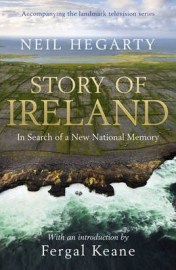
I’ve often delved into Irish history, and most recently finished reading Story of Ireland – In Search of a New National Memory, by Neil Hegarty that accompanied a series on the BBC in 2011 (I’m not sure how I came to miss that at the time). It’s a well-written, easy read that takes you through the ages of Irish history: the ravages and early impact of the Viking raids and settlements; the shenanigans of the Plantagenets and Tudors; the brutality of the Oliver Cromwell years; the ‘Glorious Revolution’, King James II and the Battle of the Boyne; the advent of Presbyterianism and rise of sectarian politics and intolerance in the north; the aspirations of many generations for Home Rule; and the incompetence of successive British governments during the 19th and early 20th centuries in addressing and managing the Irish question, sometimes simply neglect, that ultimately led to the rise of nationalism and its consequences.
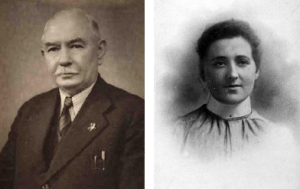
My Irish grandparents, Martin Healy and Ellen née Lenane, hailed from Co. Kilkenny and Co. Waterford, respectively. Like many young Irishmen, my grandfather – at the age of almost 16 it seems – joined the British Army (controversially, as seen through nationalist eyes), serving in the Royal Irish Regiment for 12 years, seeing service in India (in the North West Frontier) from 1894-99, and also in South Africa during the Boer War for almost three years from November 1899. He took part in the Defence of Ladysmith in Natal Province. What is particular ironic is that he probably faced fellow Irishmen, members of an Irish Brigade, fighting on the side of the Boers. Still legally ‘British citizens’ they risked being shot as traitors if captured. However, they were offered Boer nationality at the outset of the campaign.
After military service, my grandfather moved to London and joined the Metropolitan Police, marrying my grandmother in 1905. She was living in southwest London – in Wimbledon – at the time of their marriage, and had probably moved to England some time before looking for work. Her father was a farmer.
While serving with the police, my grandparents lived in London’s East End in Stepney, where my mother was born in 1908. Granddad took part (so my mother once told me) in the ‘Battle of Stepney’ gunfight in 1911 (also known as the Siege of Sidney Street). He left the police force in 1928, and retired to Epsom in Surrey; he died in 1954. My grandmother died two years earlier.
Making sense of the Healy-Lenane family tree (including the PHELAN and FITZGERALD lines) will be a challenge, although my brother has made some progress. My grandfather, born in 1876, was the fourth child of seven, and my grandmother (born in 1878), eighth of nine (I’m not sure how many survived childhood). And no doubt their parents had many siblings who joined the diaspora in waves to find new lives in the USA, Canada and the Antipodes, as well as mainland Britain.
But through the horrors of the Famine, the various disturbances related to the Home Rule campaigns culminating in the Easter Rising of 1916 and its aftermath, and the founding of the Irish Free State, I do wonder how my Healy-Lenane family fared, which side they supported during the year-long civil war of the early 1920s, whether they joined the IRA, and if they suffered violence at the hands of the Black and Tans? And how did my grandparents, living in England, view the events taking place in their native Ireland at this time?
I was born a little over 100 years after the Irish Potato Famine had ravaged the Irish countryside, bringing untold miseries to hundreds of thousands of the rural poor. Redcliffe Salaman recounted harrowing tales of the Famine in his seminal The History and Social Influence of the Potato (originally published in 1949). For 20 years from 1971 my own research focused on the potato. I had opportunity to see for myself the immense damage caused by potato blight (Phytophthora infestans), researching new sources of genetic resistance to this devastating fungal disease. Perhaps my Irish ancestry predisposed me to work on potatoes.
When we moved to Leek in 1956 we became very close with one Irish family in particular who came from Youghal, near where my grandmother was born. But there were several other families of Irish origin who sent children to the same Catholic primary school; and at high school (run by Irish Christian Brothers) in Stoke-on-Trent, I encountered even more.
In recent months I’ve tried to understand more about the recent history of the island of Ireland, and what were the circumstances and origins of the Troubles that blighted our country for more than three decades from the late 1960s. Irish history is complex and convoluted. Memories are long, and wounds take a long time to heal. Uncovering how my family played a part in this story is the beginning of a long voyage of discovery.
I am a reasonably avid reader, but not of fiction. My literary genres are history and biography.
I guess I’ve always been interested in history, although I did not enjoy it very much at school; and I put that down to poor teaching rather than any innate lack of historical ability. My two daughters had excellent history teachers at the International School Manila (ISM) and I saw just how an inspiring teacher could make this subject come alive. There are many history programs on TV, and a whole new (and not so new) cadre of presenters: Mary Beard, Amanda Vickery, Lucy Worsley, Bettany Hughes, Dan Snow, and Michael Wood of course (who’s returning to the BCC next week). Simon Schama and Niall Ferguson have also made significant TV contributions. And many of these presenters also write books.
I think we all like to know where we come from, and how events in the distant and not-so-distant past have influenced who we are as a nation. Although I’ve recently taken a shine to medieval history (the 15th century Wars of the Roses period is interesting), much of my reading has focussed in fact on the 18th century, spilling over into the early 19th and the rise and fall of Napoleon. I find the 18th century particularly fascinating for a number of reasons. First, the monarchy changed fundamentally with the accession of a German king, George I and the subsequent Hanoverians. Second, there was the beginnings of a party system that forms the basis of the parliamentary system today, and the appointment of the first Prime Minister, Walpole. And third, the 18th century was a time of great industrial and scientific innovation and change – the beginnings of a ‘modern’ Britain. There were also great changes among the European powers, and Britain ruled the waves.
I get most of my books I read from the local public library, and generally just pick up a book on a whim, so-to-speak. Sometimes I come up trumps, but occasionally what I have chosen is a really difficult read. And that’s just happened.
Having read an excellent biography of William Pitt the Younger by William Hague a couple of years ago (and another more recently about anti-slavery campaigner William Wilberforce), I was hoping for the same when I came across a biography of his father, William Pitt the Elder (later the Earl of Chatham), 1708-1778. Published by The Bodley Head in 2010, Pitt the Elder – Man of War was written by political journalist and author Edward Pearce. How wrong I was! I struggled with this biography as I have never struggled before, and finally gave up after about 180 pages (of 346). It wasn’t that the topic and subject were not interesting – Pitt was a fascinating and complex character, beset by illness (gout) and mental problems much of his life. But he rose to become one of the most powerful politicians of his age.
The problem was Pearce’s impenetrable and turgid writing style – which a good editor should have sorted out. As one reviewer commented it served him well as a political journalist, but gets in the way of a flowing narrative that other historians seem to achieve without also getting bogged down with too many footnotes (endnotes are fine).
I went looking for reviews of the book to find out what others thought (The Independent, The Spectator, The Bookbag). Some were reasonably positive, but not glowing. Just by chance I looked on the Amazon website, and came across nine reviews by readers who had apparently spent good cash on this book – and the majority were not especially favorable. In fact, one of the reviews, by a certain S Kay, reflected exactly the perspectives that I had after 180 pages (although this reviewer didn’t get past 30!) This is what reviewer Kay had to say: In complete contradiction to the other reviews, I disliked what I read of ‘William Pitt the Elder’ – and I could only fight my way through the first thirty pages before giving up. Unfortunately I consider it to be very badly written. Sentences drift on through a mass of commas, as unnecessary adverbs and adjectives are thrown into the narrative, with the result that many sentences have to be re-read. Once or twice on each page these rambling sentences become so convoluted as to be ungrammatical, the verbs lost in a maze of tangential comments. My other problem with the book is that the author throws in many glib comments, as if he is trying to be funny. This may add spice to the newspaper columns that the author apparently writes, but for me it doesn’t work in what I thought would be a serious work of history. Sadly I bought this book before reading the reviews of the author’s biography of Walpole, most of which seemed to be negative. As someone who reads nothing but history books, I am disappinted [sic] by the fact that this is the first time in a few decades that I have given up on a book before finishing it.
Pearce should perhaps stick to political journalism – but never having read any of his pieces, I have no idea how good they are. But based on my ‘Pitt experience’ I shall give Edward Pearce a wide berth in the future, and would recommend the same to anyone else. If you decide not to choose any book in the future, make it this one.








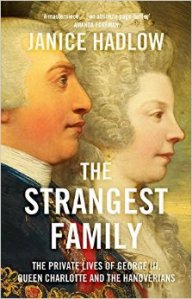 Well if you think that your family has its quirks and secrets, just take a look at the family of George III, his queen, Charlotte of Mecklenburg-Strelitz, and their large brood of dysfunctional princes and princesses.




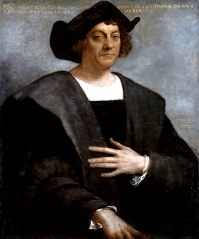 In fourteen hundred ninety-two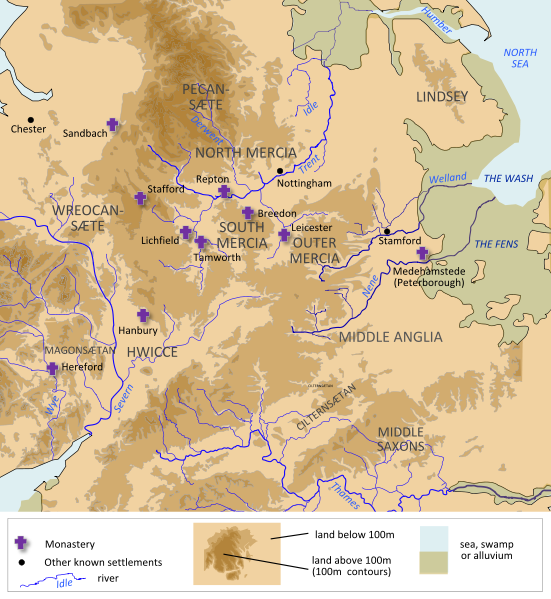
 In 1483, Edward IV died and the crown was usurped by his youngest brother, Richard, Duke of Gloucester, who became the notorious (if we are to believe Tudor propaganda)
  When my 8th great grandfather Robert was born in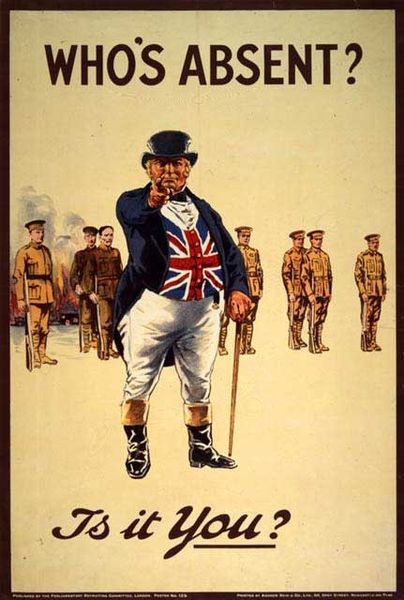


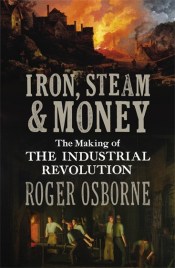 I’ve just finished reading Roger Osbourne’s very interesting and well written account of the Industrial Revolution in Britain during the 18th century.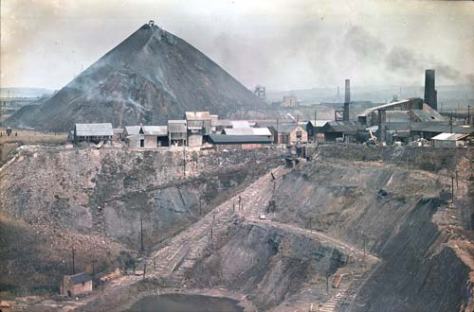


 As a botany and geography student in the 1960s I was quite interested in the whole topic of derelict land reclamation. Reclaiming these derelict sites is not straightforward. First they have be graded and slopes stabilized, then plants have to be identified that will actually grow and thrive. I’ve already alluded to the problems of combustion of the coal heaps. But a coal heap is not a particularly hospitable substrate for plants to grow. Even more so if the ‘soil’ is polluted by heavy metals such as copper and zinc that are found in the tips in mining areas, such as Cornwall and the Swansea Valley, where these minerals were extracted or smelting was the predominant industry during the Industrial Revolution. During the first field trip I made as a geography student at Southampton University we visited to derelict land rehabilitation projects in the Swansea Valley. Once I’d moved to Birmingham University in 1970 I took a couple of courses on the relationship of genetics and ecology – genecology, and some of the best examples have to do with the frequency of heavy metal tolerant grasses that have evolved to survive on polluted soils at may of these industrial sites. Seeds can be collected to sow reclaimed sites.
 In 1966 I made my first visit to Coalbrookdale. As a high school student in the Lower Sixth (age 17) I attended a weekend residential course at
 Elsewhere in this blog I have written about
  I’ve often wondered what and who the IRA was, are. And during a visit to St Paul, MN a couple of years ago I picked up a secondhand copy of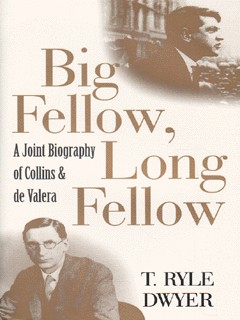
 I refer of course to Edward V (never-crowned elder son of Edward IV, and one of the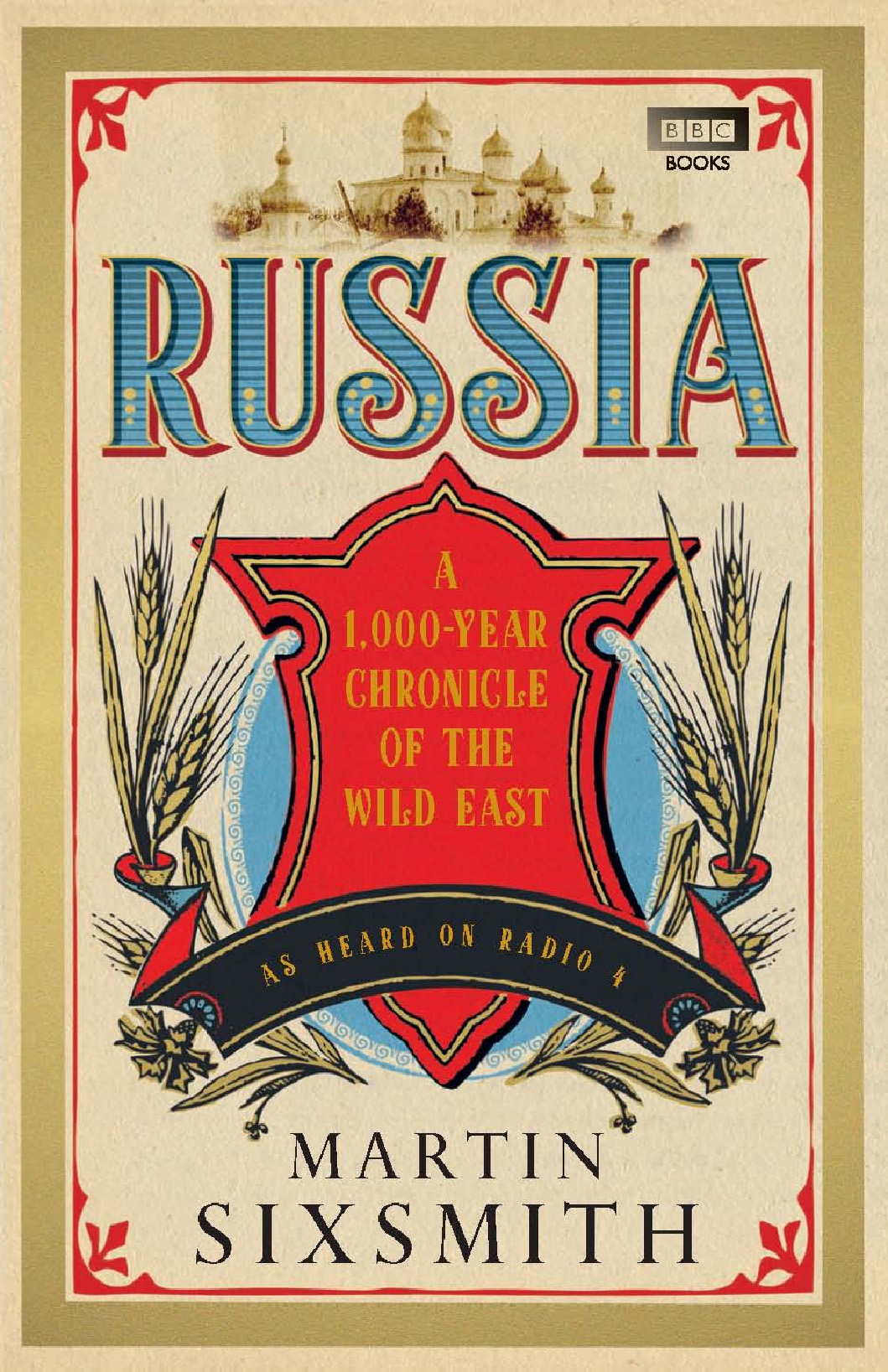
 The Irish connection
 My English teacher at high school, Frank Byrne, had family from Co. Roscommon, and on the syllabus the year I took my exams was the poetry of Nobel Laureate
  My Irish grandparents, Martin Healy and Ellen née Lenane, hailed from Co. Kilkenny and Co. Waterford, respectively. Like many young Irishmen, my grandfather – at the age of almost 16 it seems – joined the British Army (controversially, as seen through nationalist eyes), serving in the Royal Irish Regiment for 12 years, seeing service in India (in the North West Frontier) from 1894-99, and also in South Africa during the Boer War for almost three years from November 1899. He took part in the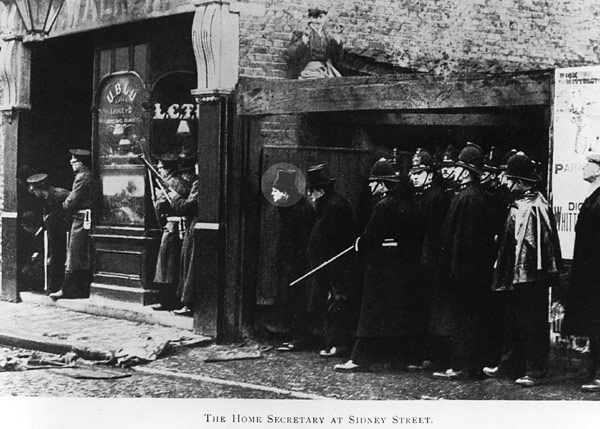
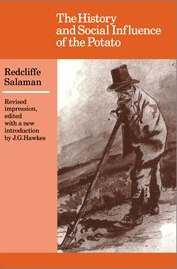 in his seminal The History and Social Influence of the Potato (originally published in 1949). For 20 years from 1971 my
 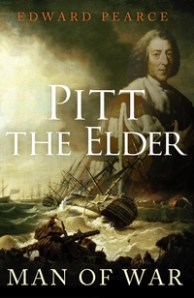 Having read an excellent biography of William Pitt the Younger by William Hague a couple of years ago (and another more recently about anti-slavery campaigner William Wilberforce), I was hoping for the same when I came across a biography of his father, William Pitt the Elder (later the Earl of Chatham), 1708-1778. Published by The Bodley Head in 2010, Pitt the Elder – Man of War was written by political journalist and author Edward Pearce. How wrong I was! I struggled with this biography as I have never struggled before, and finally gave up after about 180 pages (of 346). It wasn’t that the topic and subject were not interesting – Pitt was a fascinating and complex character, beset by illness (gout) and mental problems much of his life. But he rose to become one of the most powerful politicians of his age.
 A balanced diet . . .