Two years in the planning . . .

Steph and I have two lovely daughters.

20160711 244 New Forest holiday

Hannah (on the left), the elder, lives in St Paul, Minnesota, and is married to Michael. They have two children: Callum, who will be six in mid-August, and Zoë, who turned four last May.

Philippa (on the right) has stayed in the UK. She lives in Newcastle upon Tyne, and married Andi in 2010. They have two boys: Elvis will be five at the end of September, and Felix will be three on 1 September.

But until this past week, we had never all been under the same roof. And the grandchildren had never met each other.
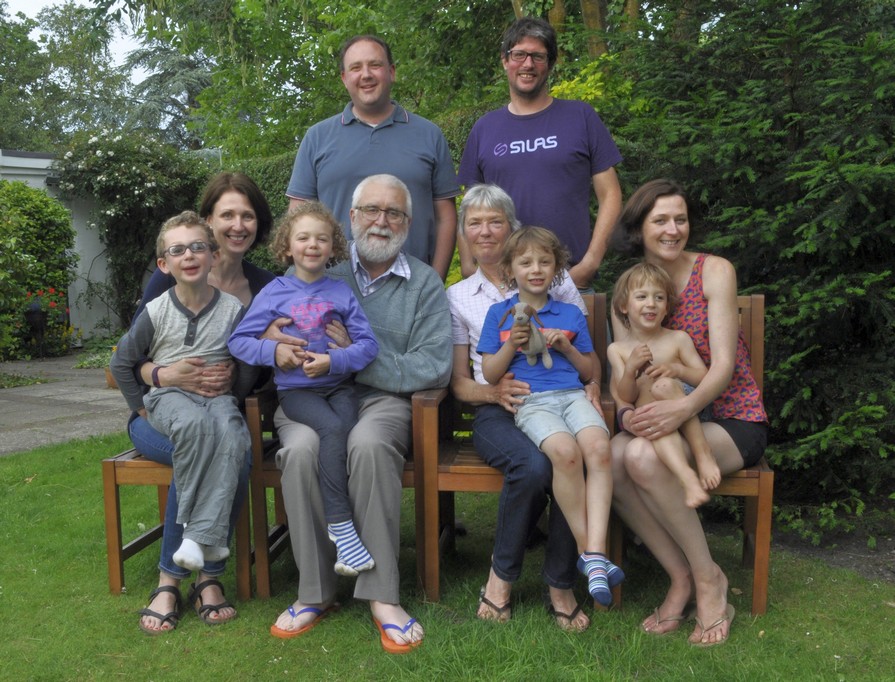
20160711 514 New Forest holiday

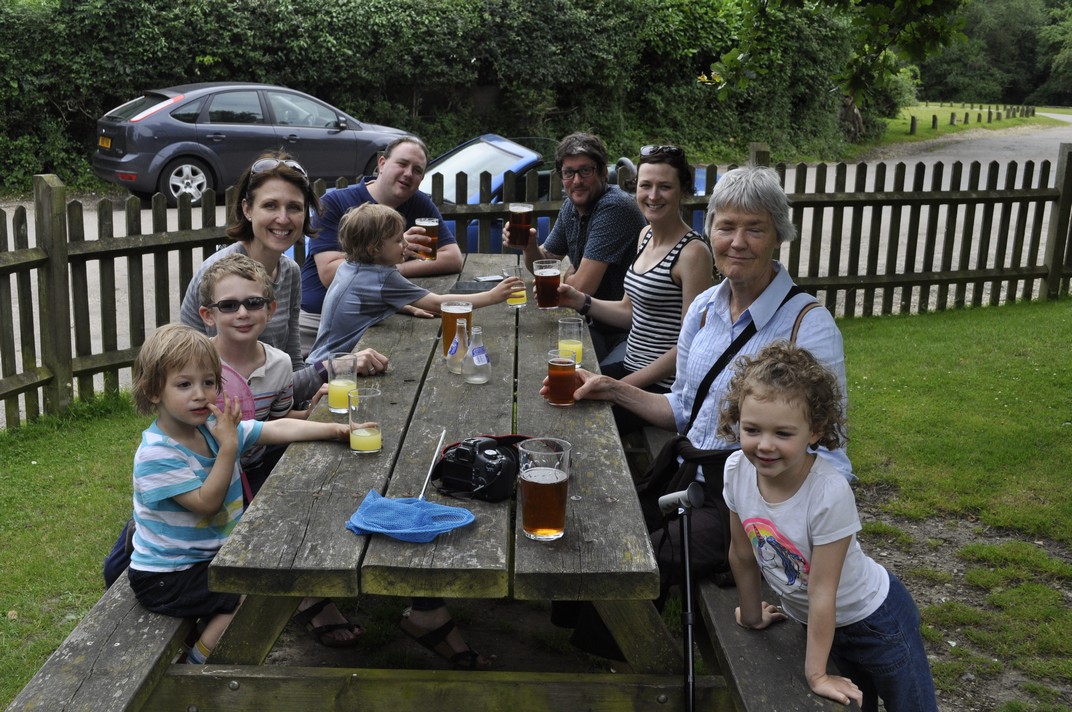
L to R standing: Michael and Andi. L to R sitting: Callum, Hannah, Zoë, me, Steph, Elvis, Felix, Philippa.

Two years ago, Hannah and Michael had planted the idea of coming over to the UK for a summer holiday. But where to stay, and what to do—apart from enjoying each other’s company? With us living in the Midlands south of Birmingham, and Philippa in the Northeast, it seemed logical to plan a holiday somewhere nearby to either of those locations. Unfortunately our home is not large enough to host everyone. Northumberland to the north of Newcastle is a beautiful county, but was eventually ruled out as probably not enjoying the warmer weather everyone hoped for.

So we eventually focused on the New Forest, west of Southampton, an area I know well having family links with the area, as well as from my undergraduate days at the University of Southampton. But apart from a week’s holiday there in the late 1980s, I haven’t been back since.

For various reasons the 2015 plans fell through, and even this year nothing was settled until quite late. Originally we had said that if Hannah and family came over to the UK we wouldn’t plan to take our usual break in Minnesota this year. As a trip to the UK didn’t seem to be in the offing, we went ahead and booked flights in early September for a three week stay in Minnesota. Then, Hannah and Michael confirmed that they would fly over here after all, and the search was on for a holiday home that would accommodate six adults and four small children. Thank goodness for the Internet. Hannah quickly zeroed in on three properties, and we eventually chose a five bedroom house in the village of Dibden Purlieu on the eastern edge of the New Forest National Park.

Our holiday began on Saturday 2 July, and we planned to get to the holiday home by about 5 pm, in time to be there when Hannah and Michael arrived from Southampton Airport. However, we decided to make something of the trip south, calling at Avebury in Wiltshire to visit two National Trust properties: the 16th century Avebury Manor and Garden, and the world famous Avebury Neolithic henge, comprising three stone circles. We spent just over two hours exploring the manor house and garden, but because of my current walking limitation, were not able to walk the length of the stone circles.

Sunday was a rest day. Hannah and family didn’t emerge from their beds until after noon, so we decided to spend the rest of the day relaxing around the house.

Phil and Andi didn’t arrive until Monday evening, so we decided to make a short excursion before lunch down to the coast at Lepe, just a few miles south of Dibden Purlieu. Callum and Zoë had a blast on the shingle beach, and afterwards in the play area above the cliff in the main part of the country park. Just what was needed to flush away the remnants of jet lag.

After Phil and Andi arrived, it didn’t take long before the newly-introduced cousins were playing together and running round the garden having a grand old time.

Tuesday was a very bright and sunny day, hot even, so we set out to cover the 40 miles plus drive west to Corfe Castle in Dorset (another National Trust property). Visiting a castle was on Callum’s list of things to do over here in England. So he was somewhat unimpressed—to begin with—when all he saw was a ruin. But once inside and we had the opportunity to climb on to the walls, peer through the narrow windows, imagine what life would have been like centuries ago, and even dress up in medieval clothes, then all the grandchildren had a whale of a time.

Wednesday saw us at Exbury Gardens just south of Beaulieu on the Beaulieu River, purchased by Lionel Nathan de Rothschild in 1919, and where he developed a world collection of rhododendrons and azaleas (which had mostly passed flowering when we visited). But there were many other features to explore, such as a very large Rock Garden, a steam train ride, and all the space the children needed to run around.

On Thursday, we set off for a walk from Beaulieu Road Station across the heath at Shatterford Bottom towards the southwest edge of Denny Wood, then on for a picnic on the edge of Matley Heath. After lunch we headed to the coast at Barton-on-Sea where the children could get their feet wet; the water was too cold for any swimming. And to watch the paragliders. We had hoped to have a fish and chip supper in Barton, but we’d finished on the beach by 4:30 or so. We therefore decided to head back to Hythe and had a pub meal at The Lord Nelson overlooking Southampton Water, where we could watch the huge container ships and cruise liners pass by.

Friday was a lazy day, and we didn’t head out into the forest until after lunch. Fritham was our destination, for another walk through the forest, and hopefully grab a bite to eat for dinner at The Royal Oak, a small pub I first visited in 1969 when I was Morris dancing with the Red Stags Morris Men (University of Southampton) and we joined the Winchester Morris Men on one of their tours.

Just south of Fritham, we visited the Rufus Stone where the killing of William II (William Rufus) in August 1100 is commemorated. I first went there as a young boy with my elder brother and mum and dad in the 1950s. It was great to be able to take my grandchildren there.

After a walk of a mile or so, we returned to The Royal Oak for a welcome pint. The pub, although modernised, still has all the kegs of beer lined up behind the bar, just as in the later 1960s.

20160711 507 New Forest holiday

L to R: Felix, Callum, Hannah, Elvis, Michael, Andi, Philippa, Steph, and Zoë.

There was no food to be had at The Royal Oak, but we found a child-friendly pub, the Coach and Horses, at Cadnam.

On Saturday, the children were desperate to have a pony ride. So while they all headed off to a petting farm near Ashurst, Steph and I decided to visit an English Heritage property nearby. Calshot Castle, constructed by Henry VIII in 1539, guards the entrance to Southampton Water at the tip of Calshot Spit. For many decades it was an RAF base for flying boats and seaplanes; the original hangars are still there.

On the Saturday evening, Philippa and Hannah prepared a lovely roast chicken dinner that was washed down by several bottles of wine, and preceded by not a few G&Ts.
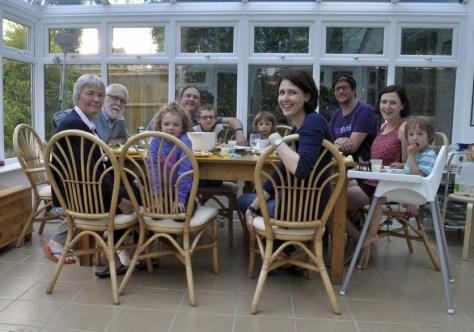
20160711 512 New Forest holiday

L to R: Steph, me, Zoë, Michael, Callum, Elvis, Hannah, Andi, Philippa, and Felix.

We departed for home on the Sunday morning, leaving Hannah and Phil and families to enjoy another week together. And from all accounts they have had a wonderful time.

But we didn’t head straight home. First we went due west about 45 miles, to Kingston Lacy, a 17th century country house and estate built by Sir John Bankes after the family was expelled from Corfe Castle during the English Civil Wars (between 1642 and 1651).

Kingston Lacy must be one of the jewels in the National Trust crown. It is sumptuous. In fact the only property that we have visited that can rival it is Waddesdon Manor in Buckinghamshire. But Kingston Lacy is several centuries older. The Bankes family apparently never threw anything away, and amassed a magnificent collection of works of art by several masters, furniture and porcelain. What a feast for the eyes!

From Kingston Lacy it was a direct, but rather winding, route north towards Bath and the M4 motorway, before joining the M5 motorway near Bristol, and covering the last 80 miles or so to Bromsgrove in much less time than I had feared. I think many people had stayed at home to watch Andy Murray win the Wimbledon Men’s Championship, or the British F1 Grand Prix. Or maybe they were settling themselves to watch the Euro2016 final from Paris between hosts France and Portugal. In any case, we did not have any hold-ups, thankfully, and were home not much after 5 pm, to enjoy a welcome cup of tea, and reflect on a wonderful week’s holiday with the family.


The Captain’s cat . . .

nt-logoSteph and I have been members of the National Trust since 2011, and over the past five and a half years, we have enjoyed some wonderful day trips to view exquisite houses and inspiring landscapes.

We have now visited 53 properties, and most of those within a 50 mile radius of home. We’ve picked the ‘low-hanging fruit’ so to speak, although we have ventured further afield from time to time. This year, once the weather improved to make outings possible, we have been constrained to some extent in our choice of properties to visit because I still recovering from that nasty accident in early January when I broke my leg.

So, in the main, we have chosen to revisit a number of properties quite close to home: Hanbury Hall, Packwood House, Baddesley Clinton, Coughton Court, and the like. Last week, however, I was determined to wander further afield. But it wasn’t my leg holding me back (although by the end of the day my ankle had swollen to almost twice the size of the other, and I was ready to put my foot up on a stool and rest it). No, it was the thought of the journey. Any trip north of Birmingham, either to the west on the M5/M6 motorways or to the east on the M42. Inevitably the volume of traffic just makes such journey tedious in the extreme. The Birmingham metropolitan area is a huge obstacle around which north-south journeys have to be navigated.

20160622 102 Shugborough Hall

So when I suggested to Steph that we should head north to Shugborough Hall, just a few miles east of Stafford, I wasn’t really too enthusiastic about the prospects for an enjoyable day out. How wrong I was!

First, making the trip mid-week, we did not encounter the volume of traffic that I had feared, so the 55 mile journey too just over an hour. Second, although I can’t say I had any high expectations of Shugborough, it was one of the nicest National Trust properties that we have visited since becoming members.

Earl_of_Lichfield_COAShugborough is the ancestral home of the Earls of Lichfield – the Anson family. In writing this account of our visit to Shugborough, I came across this excellent account (by archivist and architectural historian Nick Kingsley) of the Anson family, so all I need to do is describe some of those aspects of our visit last Thursday that caught my attention. The central manor house dates from 1695 (William & Mary), and wings either side were added by 1745. The portico was added at the beginning of the 19th century.

The estate was passed to the National Trust in 1960 on the death of the 4th earl, in lieu of death duties. However, the estate was managed by Staffordshire County Council (SCC) until this year when the council decided it could no longer afford the £35 million annual cost of upkeep, and the property will revert entirely to the National Trust in due course.

Patrick Lichfield

Patrick Lichfield (from the blog of Nick Kingsley)

The 5th earl, society photographer Patrick Lichfield (as he liked to be known) and first cousin (once removed) to Her Majesty The Queen, continued to reside at Shugborough, occupying first (upper) floor apartments at a nominal rent from SCC until his untimely death at the age of 66 in 2005. Then his son Thomas, the 6th earl, cleared the private apartments of personal effects. The apartments are open, almost in their entirety today, but have been ‘refurnished’ by the National Trust in the style they originally enjoyed, with just a few original pieces left behind.

Given my reduced walking capacity, I was relieved to see that a shuttle bus (and a ‘train’) operated throughout the day from the entrance up to house, a distance of about 800 m.

shugborough-map001

Under normal circumstances it would have been a delightful walk across the parkland, but I knew that this would have been impossible for me. As it is we did walk for more than 3 miles, and my foot and leg were certainly complaining by the evening.

Not all parts of the estate are open under National Trust membership, and there is a car parking fee of £3 to everyone, only refundable if you purchase a ticket for all the attractions at Shugborough. We wanted to see only the gardens and the house, and those were accessible with our membership.

Before lunch, we decided to walk the gardens and part of the park. The weather was threatening for later on when we could at least then be under cover in the house. Behind the house, on the west side, and across a channel of the River Sow (that is very slow flowing, and controlled by sluice gates) are the formal terrace gardens.

20160622 032 Shugborough Hall

The west (rear) face of Shugborough Hall from across the River Sow channel

There are just a few formal parts to the gardens. To the rear, west side of the house, is a rather splendid terrace laid out with a series of sculptured shrubs.  In the grounds there is a number of features, including the Cat’s Monument (commemorating a moggie that reputedly belonged to Admiral George Anson), and the Shepherd’s Monument. A delightful bridge next to the Chinese House crosses the River Sow channel and there is walking access to other parts of the parkland opposite the house.

From the entrance hall (where there are some splendid Italian plaster casts of centaurs) you pass through the Bust Parlor and Ante Room to the dining room and its exquisite plaster ceiling.

The Red Drawing Room was originally several bedrooms on two floors. But it was opened up to form this beautiful reception room decorated in a beautiful coral pink. In the other (south sing) is the Salon. The Library also has a beautiful plaster ceiling.

The ‘private apartments’ on the upper floor are decorated now to the style they had when they were the Shugborough residence of the Earl of Lichfield. Among the most finely decorated is the Bird Room, with its ‘matching’ ceiling and carpet.

From the outside, Shugborough Hall is not particularly impressive. Its grey façade is not exactly welcoming. But what a delight the inside is, and how many of the rooms ares, unexpectedly, open to visitors. And the National Trust volunteers here are really special—friendly, helpful, and knowledgeable. A thoroughly enjoyable visit.


Dr. M. Redux . . . courtesy of the National Trust!

It is fifteen weeks today since I went base over apex and broke my leg. But I have made good progress, and I’m pleased to say that since I saw my surgeon at the end of March, and finished with formal physiotherapy sessions, I have been able to get behind the wheel and drive again. And we have been fortunate that despite the mixed weather that April has brought us so far, there have been one or two really spectacular late Spring-early Summer days that have permitted us to get out and about.

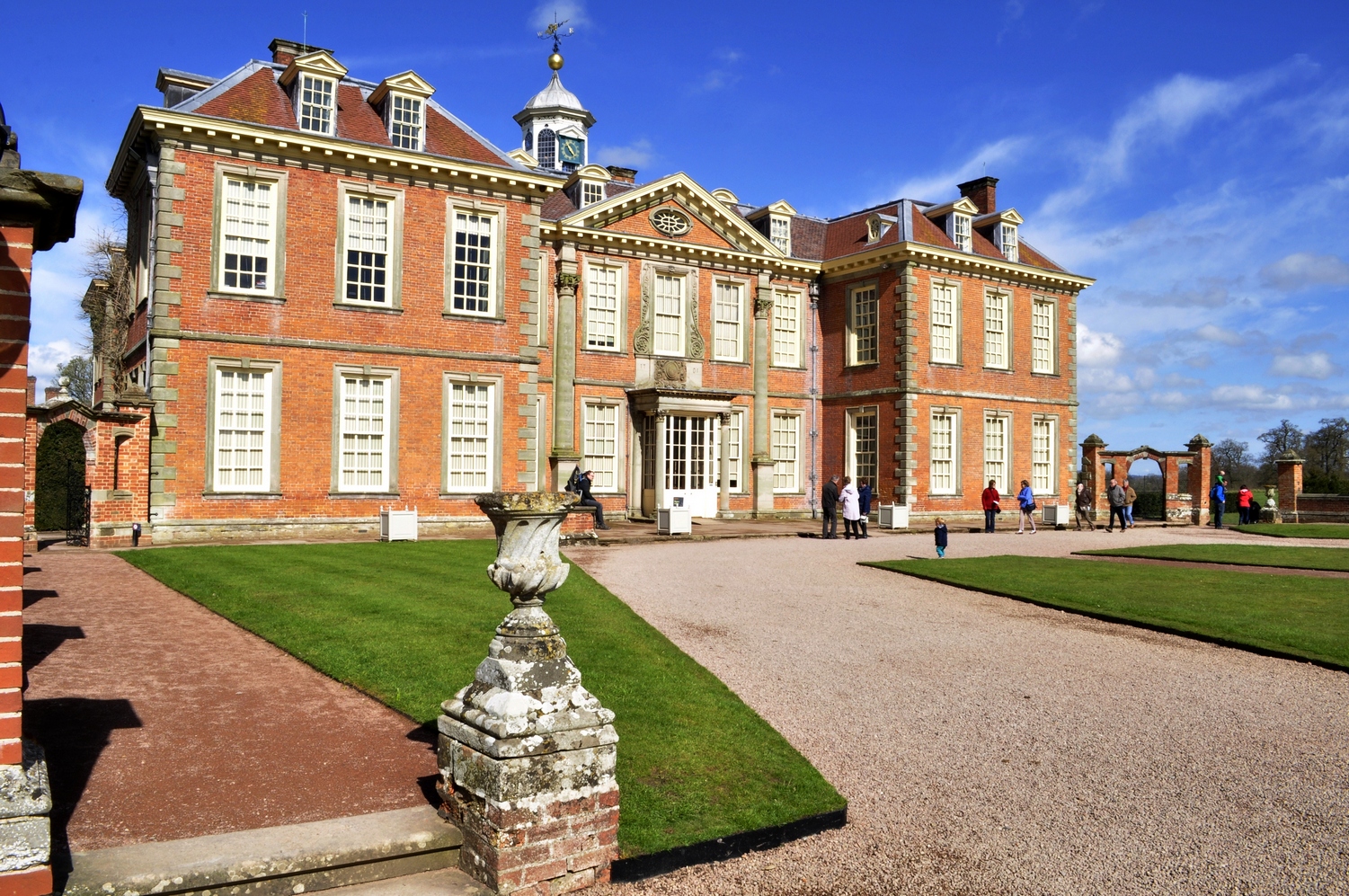
20160410 018 Hanbury HallI still can’t walk more than about a mile and a half before I feel the need to sit down and rest my leg. The ankle and lower leg swell up quite badly, and where the various pins and screws are holding my bones together, it really does hurt from time to time. That hasn’t stopped us, however, and two weeks ago (10 April), a Sunday, we decided to head out to our ‘local’ National Trust property, Hanbury Hall.

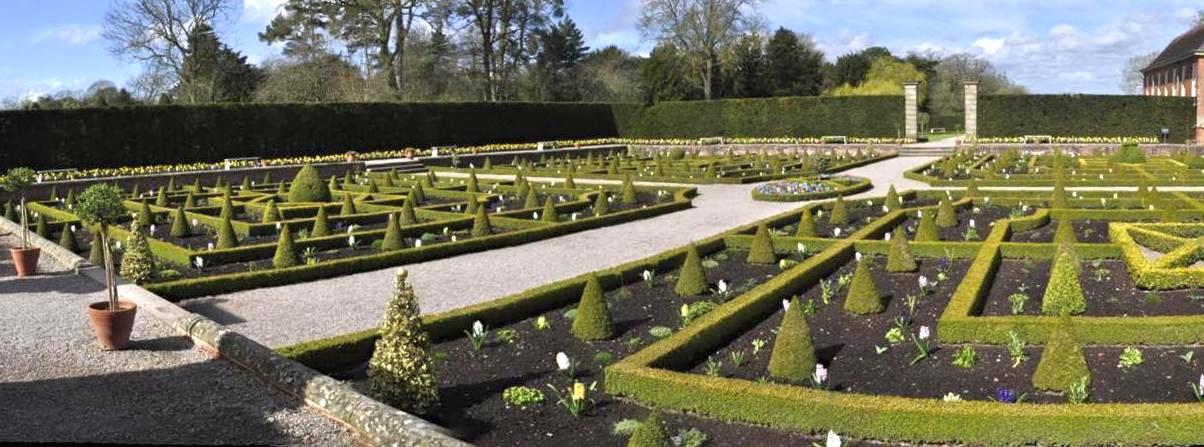
It was a glorious morning, if not a little chilly in the stiff breeze. We were hoping to see Spring flowers in the parterre garden. And we weren’t disappointed. What a magnificent display of hyacinths!

20160410 034 Hanbury Hall

20160410 033 Hanbury Hall

20160410 001 Hanbury Hall

20160410 035 Hanbury Hall

The Hanbury parterre

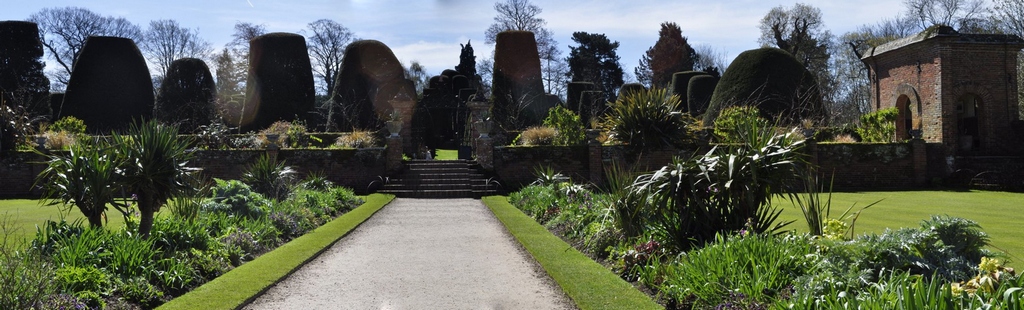
Last Wednesday (20 April) was an even better day, weather-wise. Warm and sunny, and a joy to be outside in the fresh air. So we headed southeast from home, just 17 miles by motorway (and less than 30 minutes if there’s little traffic congestion) from home to Packwood House, another National Trust site we have already visited on several occasions also, but about which I don’t appear to have posted anything on my blog. That will have to be remedied. Packwood is a much-restored Tudor manor house. One of its signature features is the Yew Garden.

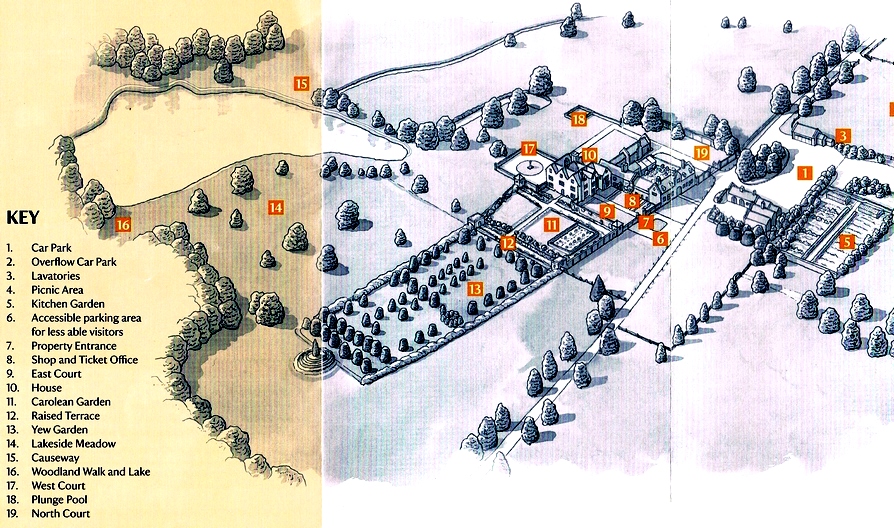
Anyway, we just wanted to enjoy the gardens, the lakeside meadow, and have a bite to eat in the lovely refurbished café there.

Packwood map

The Carolean Garden, and its beautiful yellow border . . .

20160420 045 Packwood House

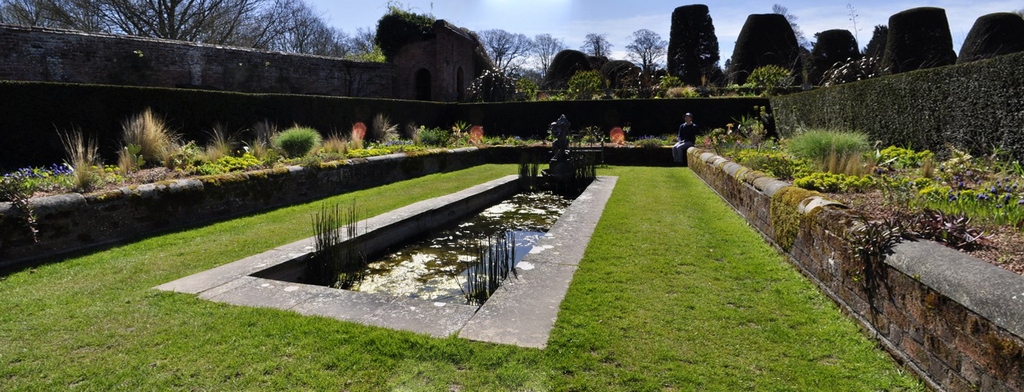
The sunken garden, part of the Carolean Garden, installed in the 1930s.

20160420 046 Packwood House

The Raised Terrace, leading into the Yew Garden, from the Carolean Garden.

Scenes around the Yew Garden . . .

20160420 036 Packwood House

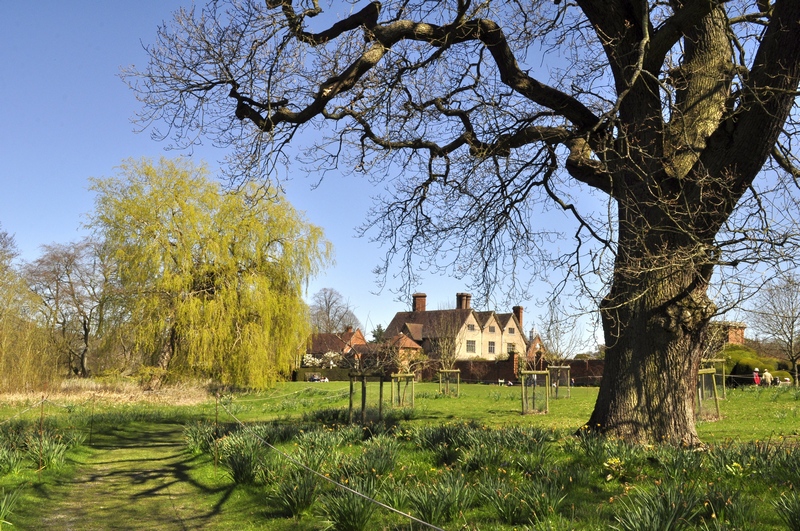
Packwood House from the Lakeside Meadow.

Until my leg heals further, our National Trust visits and walks will be limited to a wander round the gardens closest to the various properties. A walk at Croome Park, for example is certainly not on the cards in the foreseeable future. But, after being confined to a chair for so many weeks, followed by limited movement around the house, it’s great to be in the great outdoors. And our membership of the National Trust is, as always, a great encouragement to make the effort to take an outing.


2015: a great year for National Trust and English Heritage visits

Steph and I have been members of the National Trust for five years now. We even qualify for the Seniors discount from January! And we’ve been members of English Heritage for just a year.

But we will be renewing our membership of both organizations in 2016. Why? Because they both offer excellent value for money, and certainly give purpose to our trips out, whatever the weather. Be it a visit to a stately home, a ruined castle, a country park, or a beautiful garden, there are so many properties to visit and experience so many aspects of our cultural heritage.

Looking back on our 2015 visits we have certainly had our money’s worth, and annual membership has more than paid for all the entrance fees we would have had to pay in any case. And much more!

So here is a pictorial summary of our great visits this past year, beginning in early April and ending just last week when we visited Charlecote Park to see the Christmas decorations. And there are links to individual posts about each visit.

NATIONAL TRUST

Lyveden New Bield (9 April)

20150409 092 Lyveden

Brodie Castle (National Trust for Scotland – 29 May)

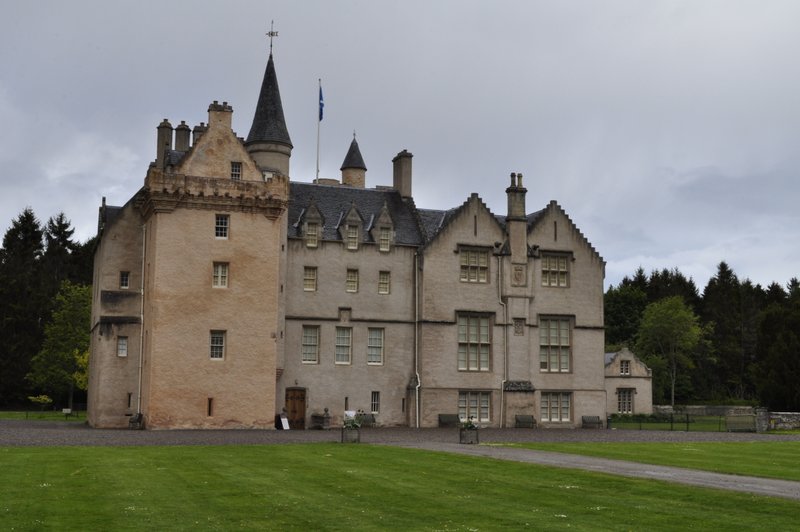
Brodie Castle

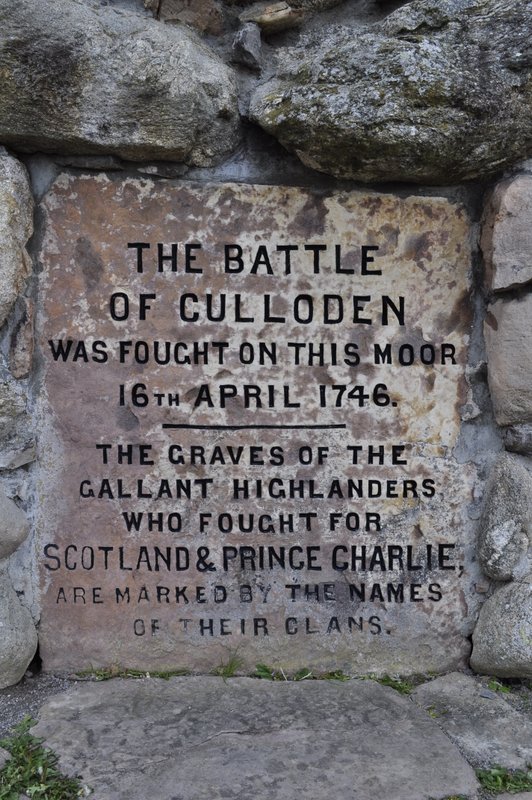
Culloden Battlefield (National Trust for Scotland – 29 May)

Scotland 082

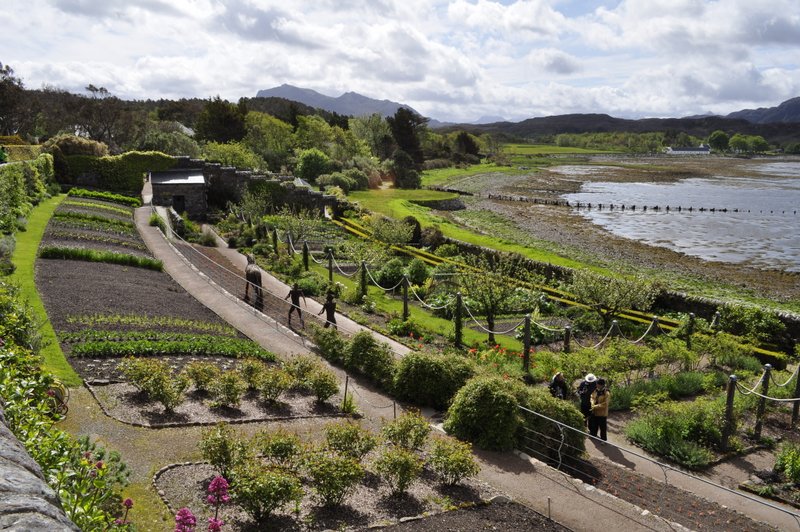
Inverewe Garden (National Trust for Scotland – 1 June)

Scotland 312

Arduaine Garden (National Trust for Scotland – 7 June)

Scotland 877

Rufford Old Hall (8 June)

The main entrance in the seventeenth century wing.

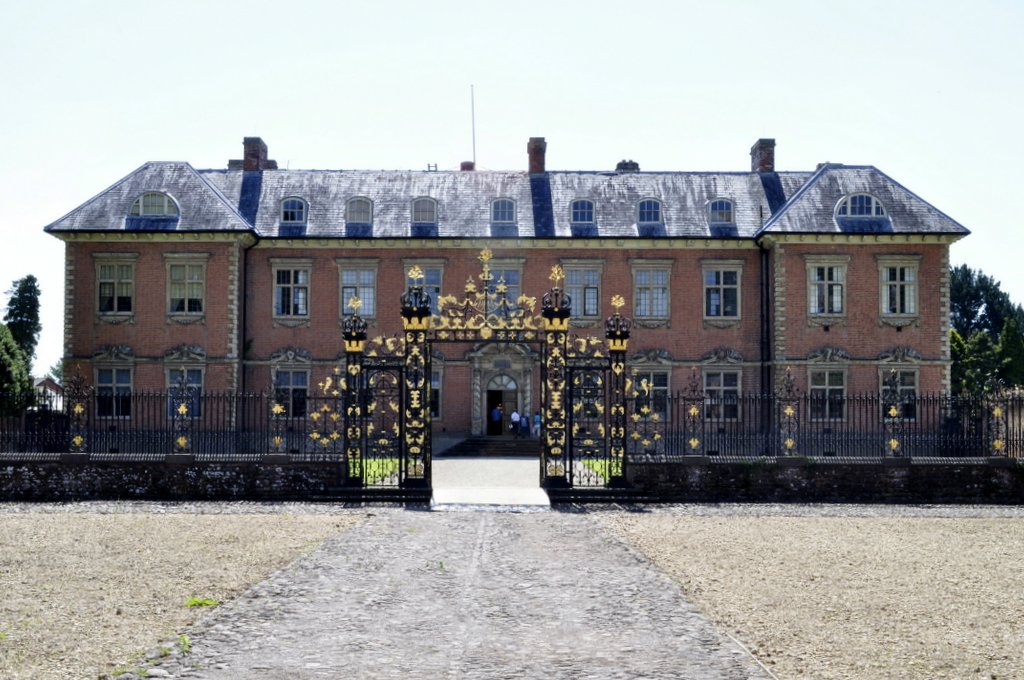
Tredegar House (18 June)

Tredegar House, near Newport in South Wales

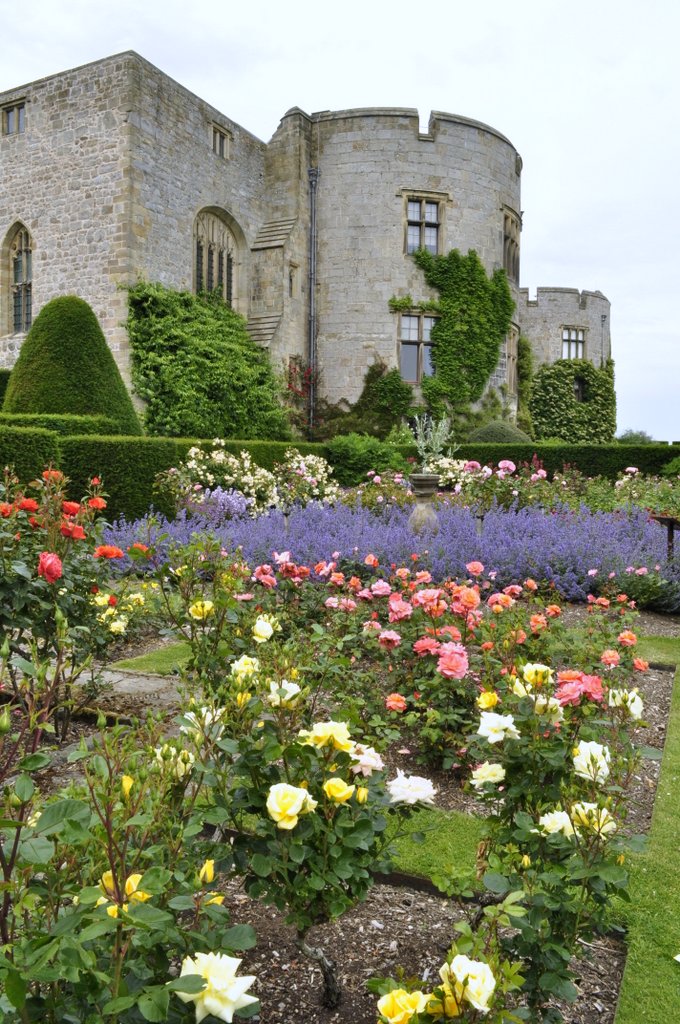
Chirk Castle (1 July)

20150701 147 Chirk Castle

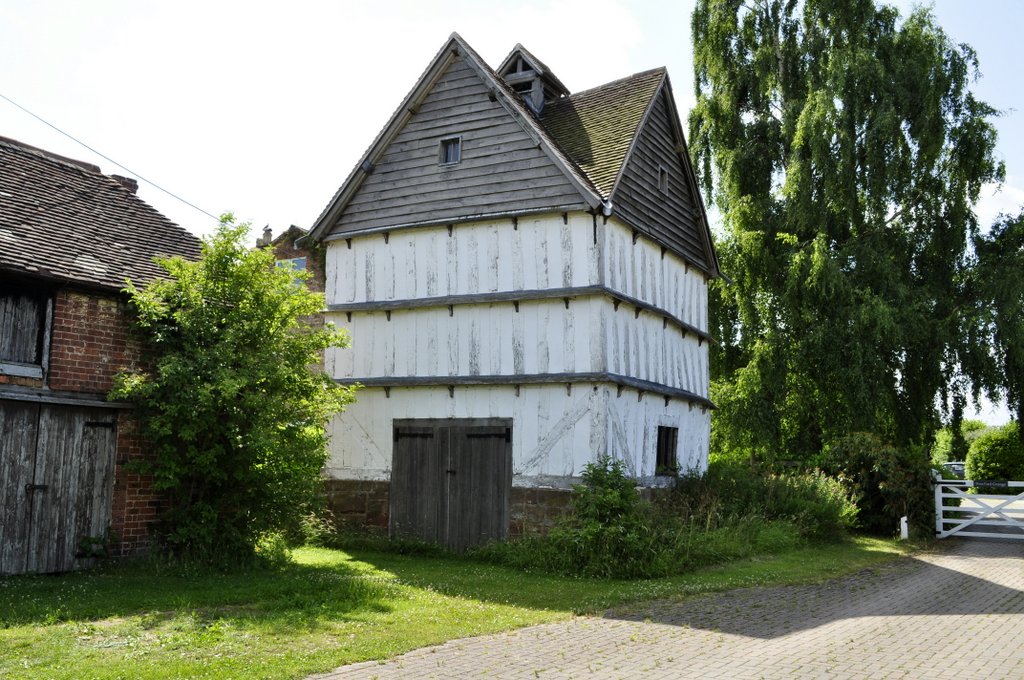
Hawford Dovecote (9 July)

20150709 010 Hawford dovecote

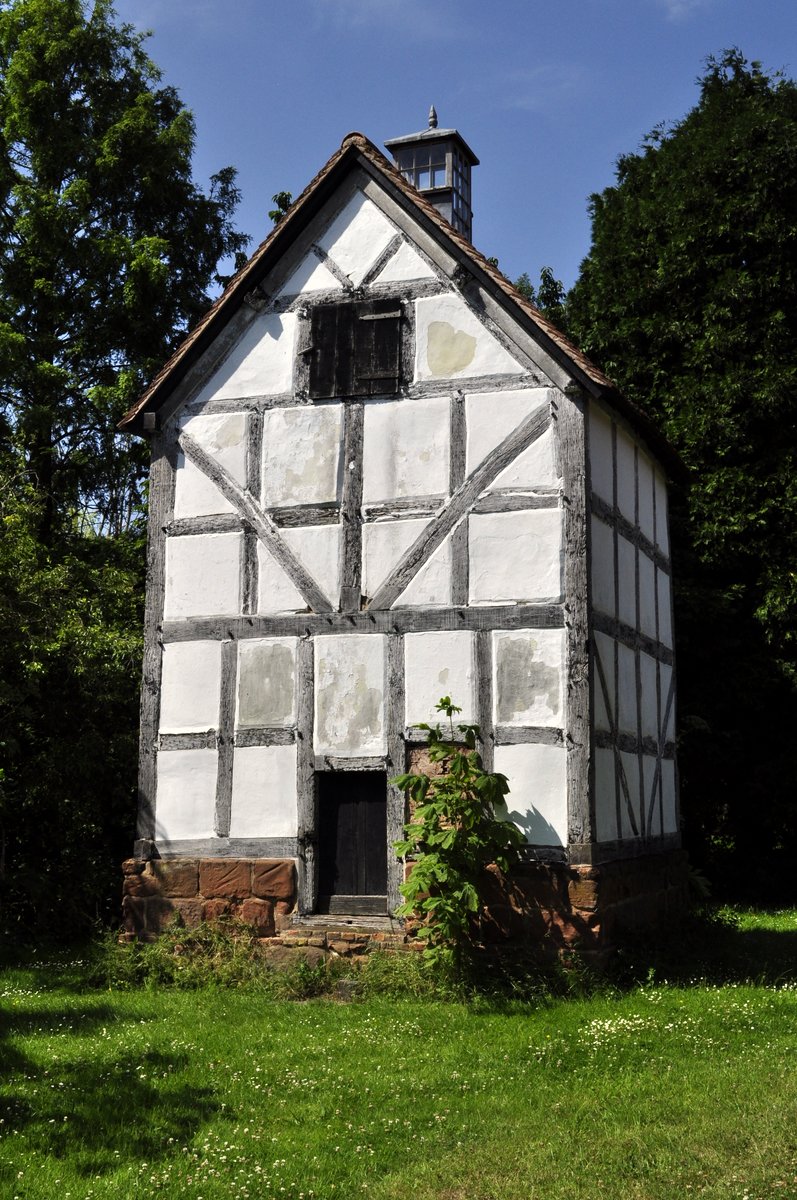
Wichenden Dovecote (9 July)

20150709 022 Wichenford dovecote

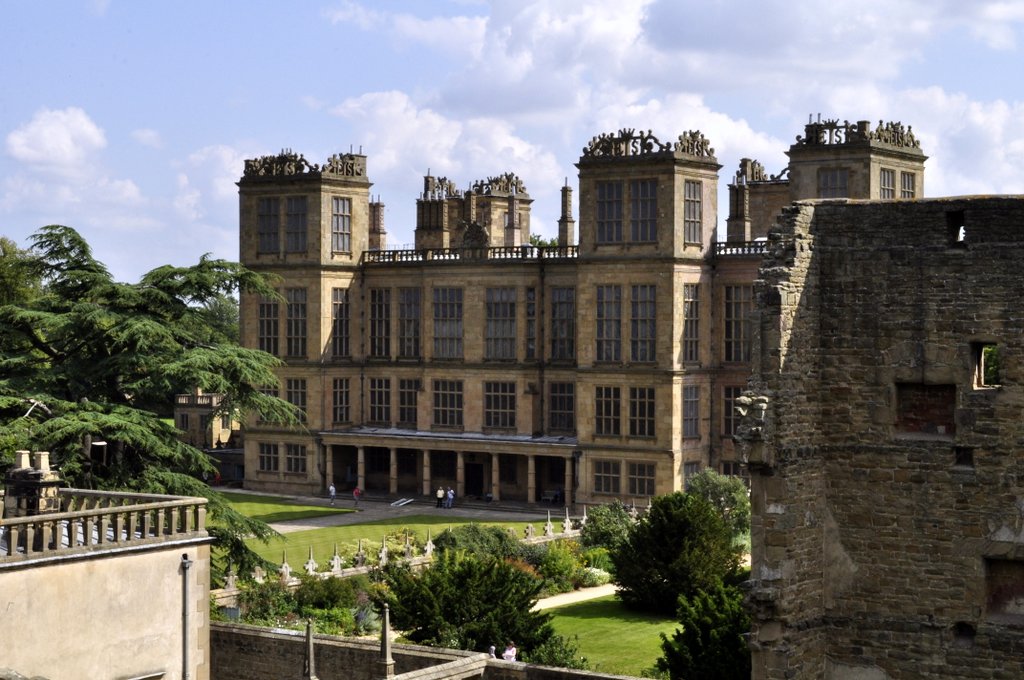
Hardwick Hall (12 August)

Hardwick Hall, Derbyshire

Newark Park (28 August)

20150828 031 Newark Park

Croome Park (12 October)

20110328046 Croome Court

Charlecote Park (16 December)

The entrance hall.

ENGLISH HERITAGE

Rushton Triangular Lodge (9 April)

Rushton Triangular Lodge, Northamptonshire

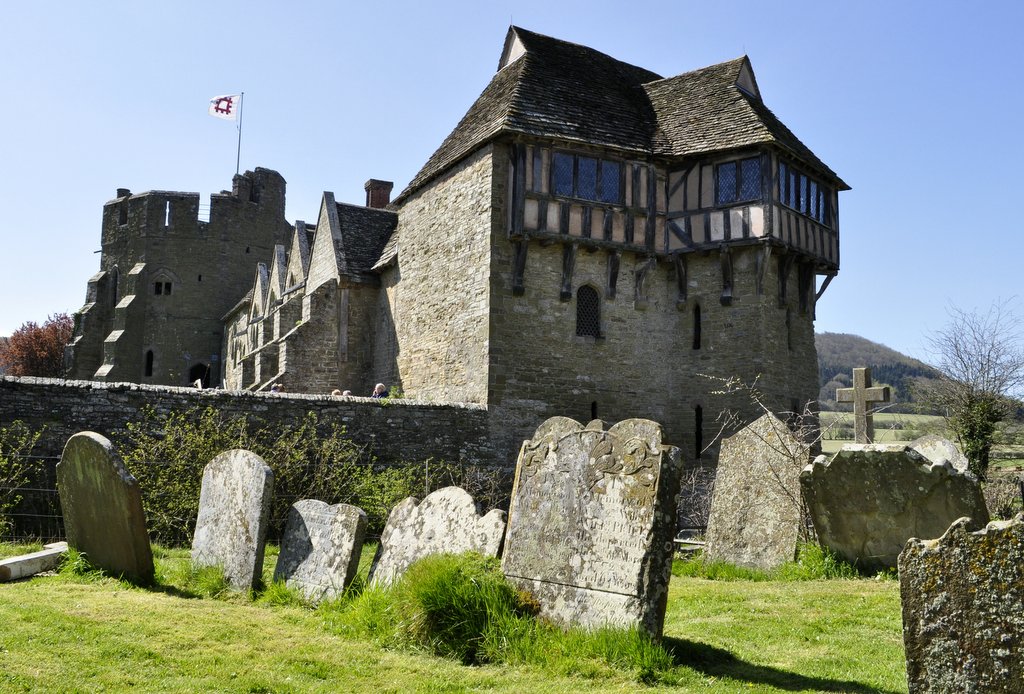
Stokesay Castle (14 April)

Stokesay Castle, Shropshire

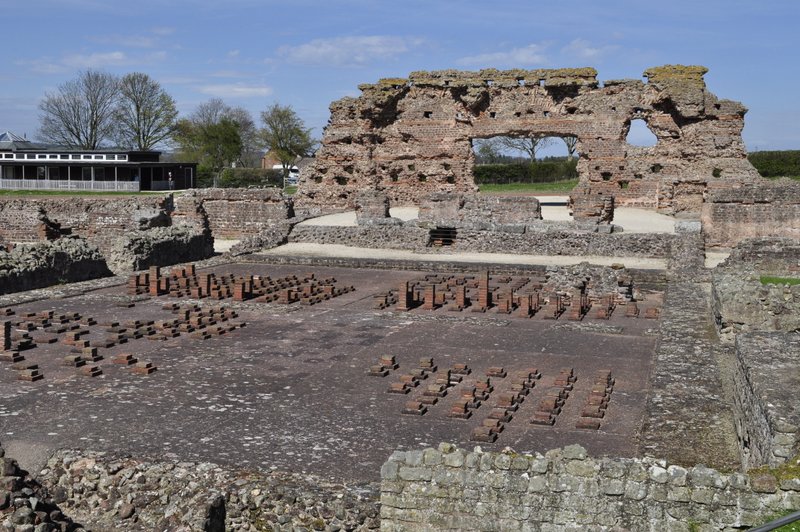
Wroxeter Roman City (14 April)

20150414 130 Wroxeter Roman city

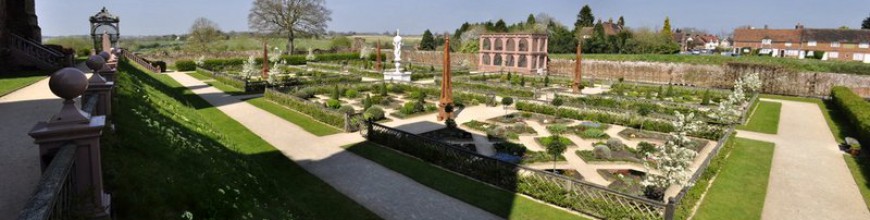
Kenilworth Castle (21 April)

cropped-20150421-023-kenilworth-castle.jpg

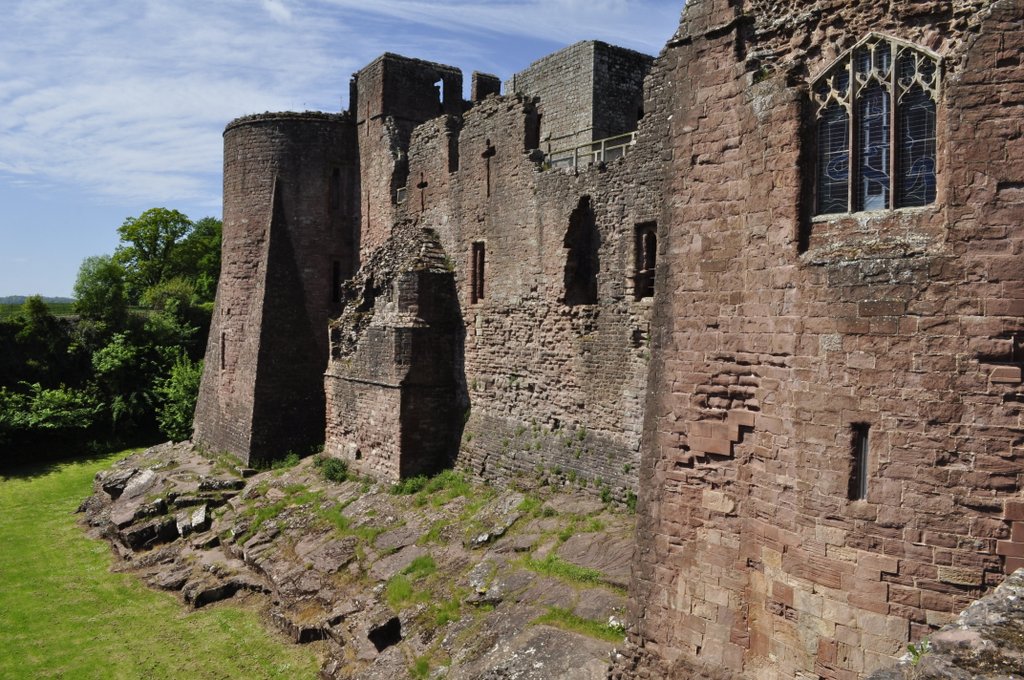
Goodrich Castle (21 May)

Goodrich Castle, Herefordshire

St Mary’s Church, Kempley (21 May)

20150521 135 St Marys Kempley

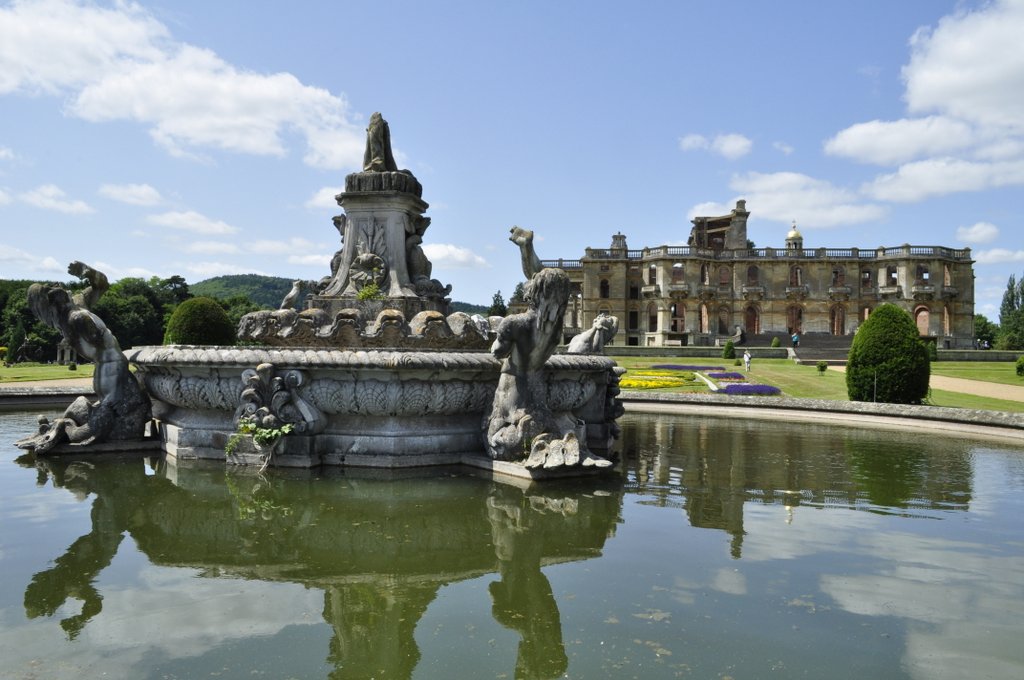
Witley Court (9 July)

20150709 091 Witley Court

Hardwick Old Hall (12 August)

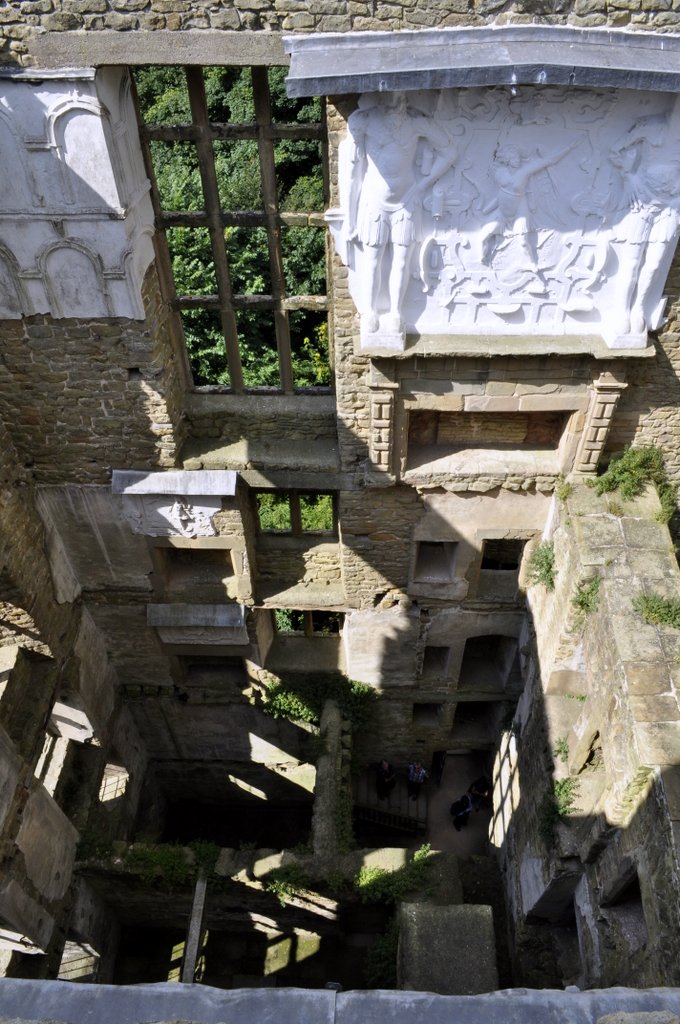
Looking down six floors in the Old Hall. And the magnificent plasterwork on the walls.

Wenlock Priory (18 August)

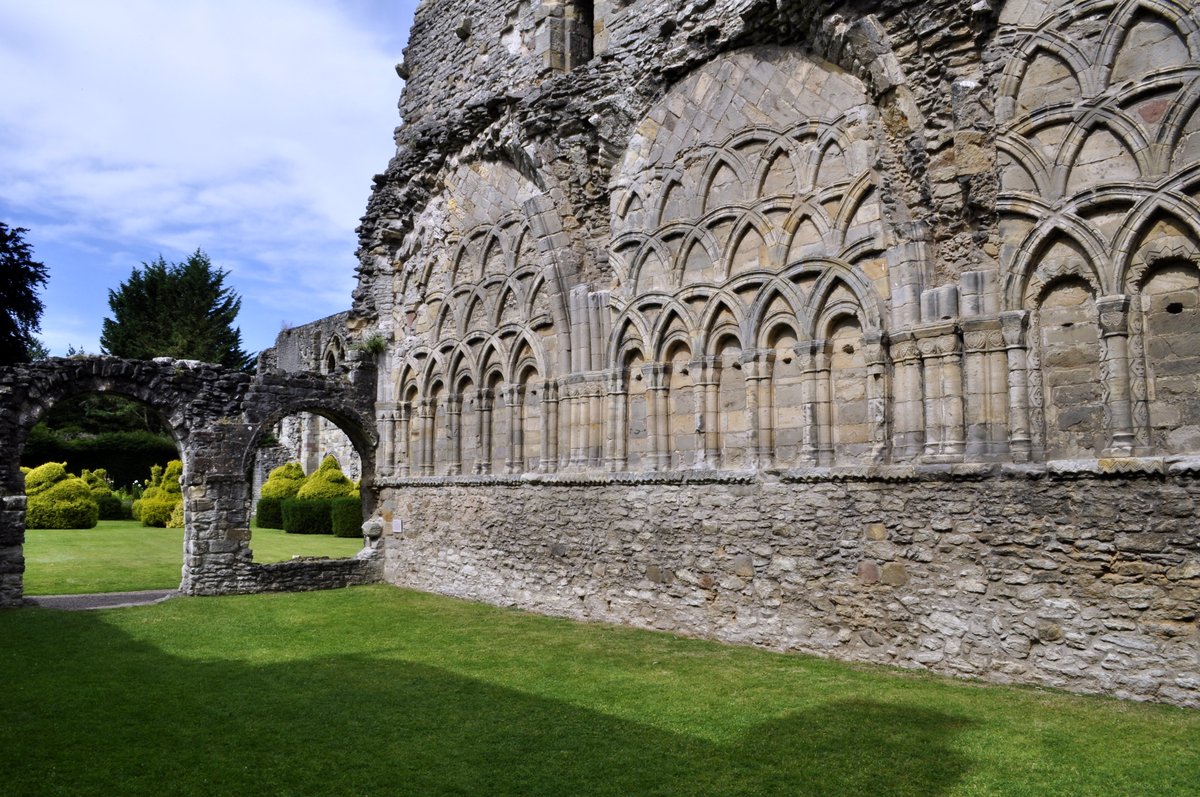
20150818 043 Wenlock Priory

Ironbridge (18 August)

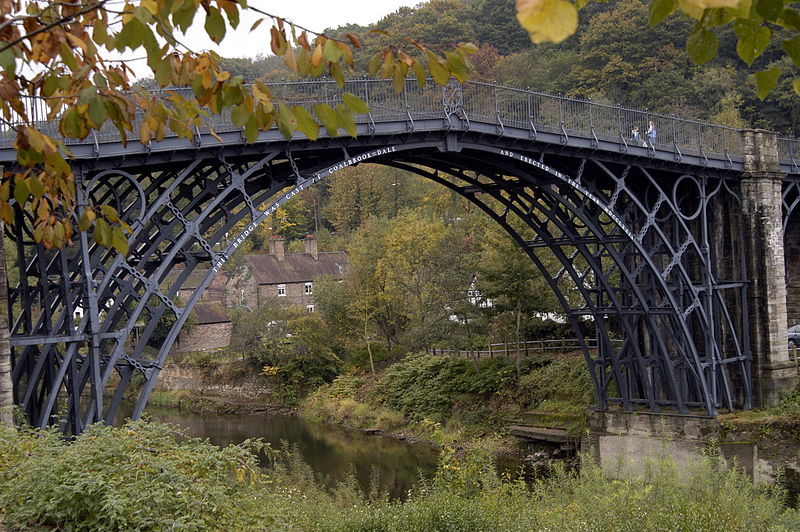
From: http://en.wikipedia.org/wiki/File:Ironbridge

A balmy day (and Victorian Christmas) at Charlecote Park

6 March 2013. A beautiful Spring day, and our first National Trust visit of the year. Temperature: about 13C. Destination: Charlecote Park, Warwickshire.

Fast forward to 16 December 2015, and we visited Charlecote for a second time, to experience a Victorian Christmas, circa 1842.

Temperature: A balmy 14C! Although in contrast to our first visit, it was generally overcast with occasional—but very welcome—breaks in the cloud for the sun to peek through. This is what the BBC had to report about the weather yesterday.

And what better evidence that it was a balmy day—in fact, a balmy month to date. The weather has been so mild that plants such as snowdrop that we’d expect to see in flower by the end of January were already blooming yesterday at Charlecote.

20151216 026 Charlecote Park

Early snowdrops!

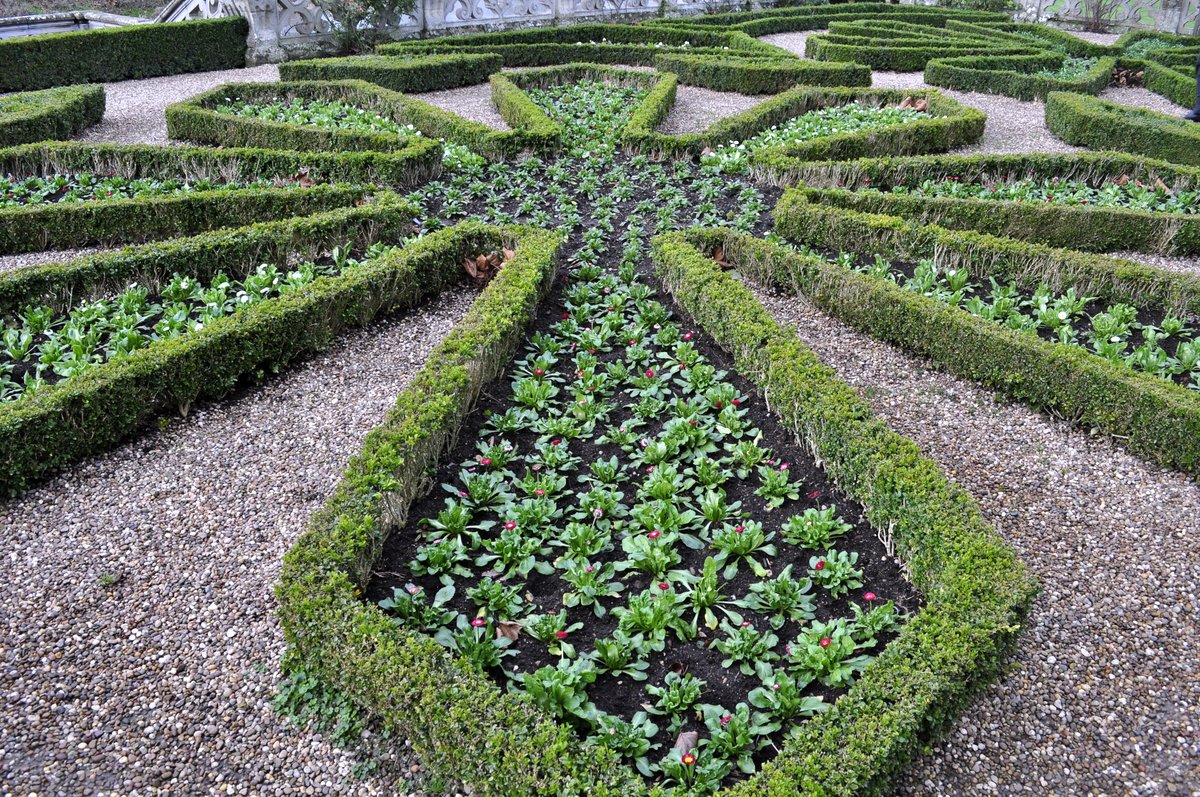
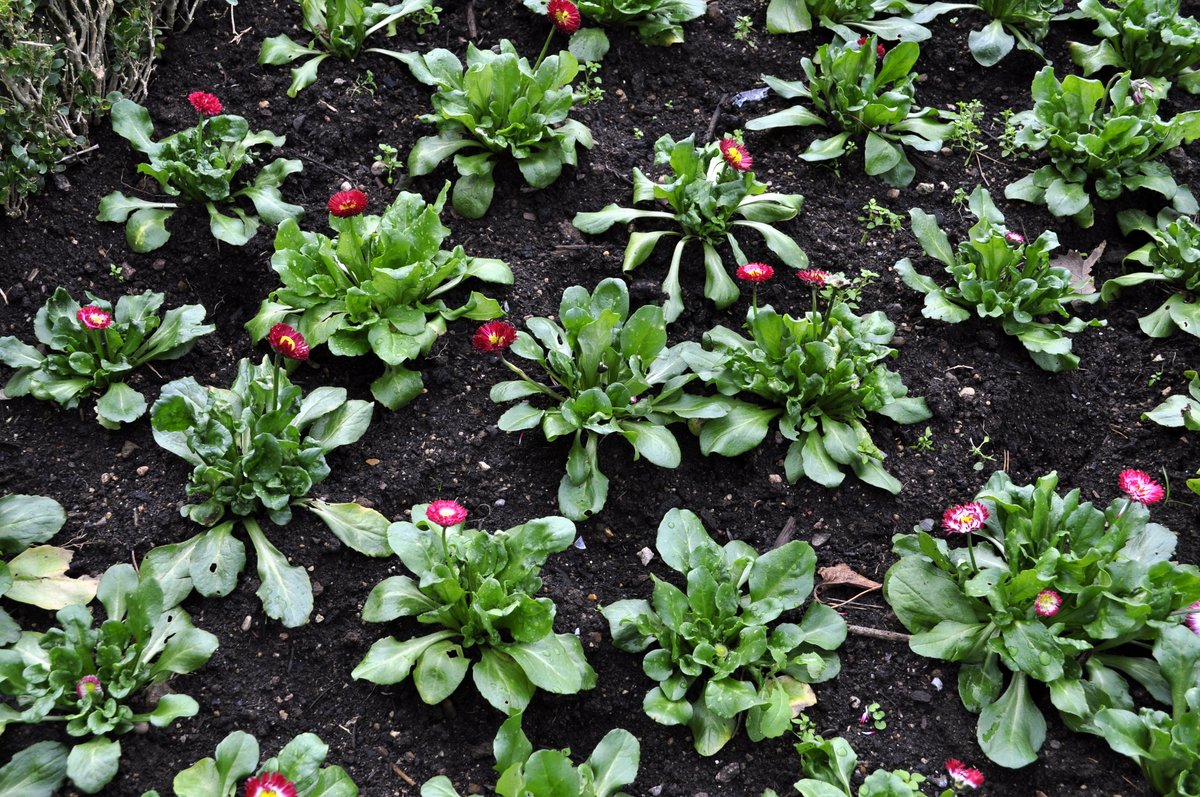
Not only snowdrops, but also the primulas and daisies that had been planted in the parterre on the west side of the house, alongside the River Avon, were coming into bloom. I guess these had been planted out to provide some Spring colour for next March or so.

20151216 029 Charlecote Park

Daisy beds in the Parterre.

20151216 030 Charlecote Park

Now these daisies should be flowering next Spring.

It’s about a 300 m walk from the car park to the Gatehouse (3 on the map below) and the house itself, down a long drive. Charlecote has several herds of fallow deer, and we were fortunate that a large herd was grazing quite close to the house in the Front Park (16). Several of the bucks had impressive sets of antlers.

charlecote map

20151216 036 Charlecote Park-001

One of the herds of fallow deer at Charlecote Park.

Since the house did not open until noon, we planned a walk in the park, taking in part of the West Park (13), the Cascade (11) where the River Dene meets the Avon, and views of the house from the Paddock (10) that were quite spectacular yesterday as the sun came out and highlighted the lovely red brick against a glowering sky to the north.

Although it was a little boggy underfoot in places, we enjoyed the walk, eventually made it all the way round the lake between the Front Park and Hill Park (18). ‘Capability Brown‘ made his mark here at Charlecote, beginning in 1757.

We decided to tour the house (or the parts that were open to the public yesterday) before having lunch. Everywhere was festively decorated. The table in the Dining Room was laid out for an 1842 Christmas feast.

Then we headed for the Orangery Restaurant for something to eat—the only downside to our visit. The sandwiches we bought were fine, but the service left much to be desired. I think it was a question of ‘too many cooks’ behind the counter, staff tripping over each other, difficult customers, and a failure of planning in terms of what food would be available. I saw a number of customers disappointed because their chosen meal was no longer available. And this was about 1 pm. So it took around 30 minutes to queue up and buy our lunch and there were no more than 10 people ahead of us in the queue. I appreciate that many of the staff at National Trust properties are volunteers. I’m not sure what the situation regarding their restaurants. But clearly the staff were overwhelmed.

Nevertheless, we didn’t let this affect our day out. It was great to be out and about, especially since both of us have been fighting nasty colds and chesty coughs for over a month and haven’t felt like stirring outside at all. And, with the festive decorations, it felt good to be getting into the spirit of the season. At last!


Like a lady revealing her petticoats . . .

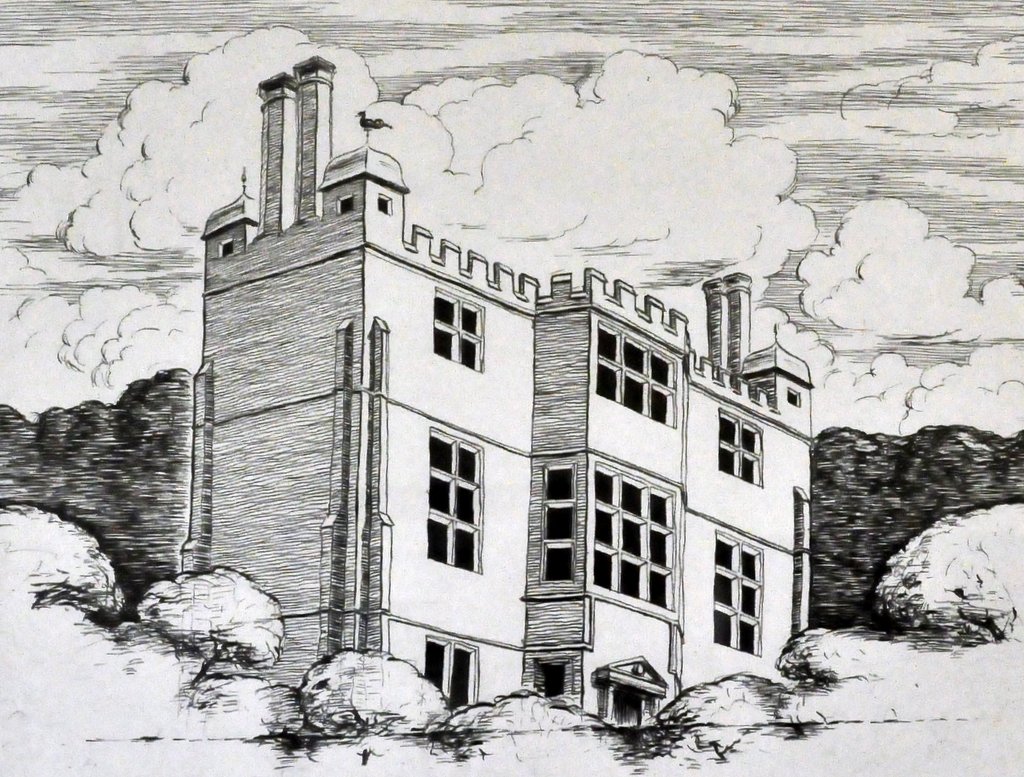
Standing proudly since the mid-16th century on the edge of the Cotswolds escarpment (map), with a magnificent vista southeast and west as far as the Marlborough Downs in Wiltshire and the Mendips in north Somerset, Newark Park began life as a Tudor hunting lodge. In the intervening centuries it has undergone many transformations, but it was not until the last years of the 20th century that this building began to yield up some of its hidden secrets. It has been in the hands of the National Trust since 1949.

20150828 031 Newark Park

The south face of Newark Park, from the lower terrace [9 on the map below].

20150828 102 Newark Park

The view from the south terrace, towards the Mendips and the Marlborough Downs.

Built by Sir John Poyntz, Newark Park (originally the ‘New Worke’) has changed ownership several times over the centuries, and each generation has left its mark. It was constructed over four floors: ground, first and second, and a basement. The original Tudor building was aligned north-south, with the main entrance on the east face.

20150828 093 Newark Park

Newark Park as it might have looked in 1550. Note that there are no windows on the south wall (nearest). All the windows are on the east face.

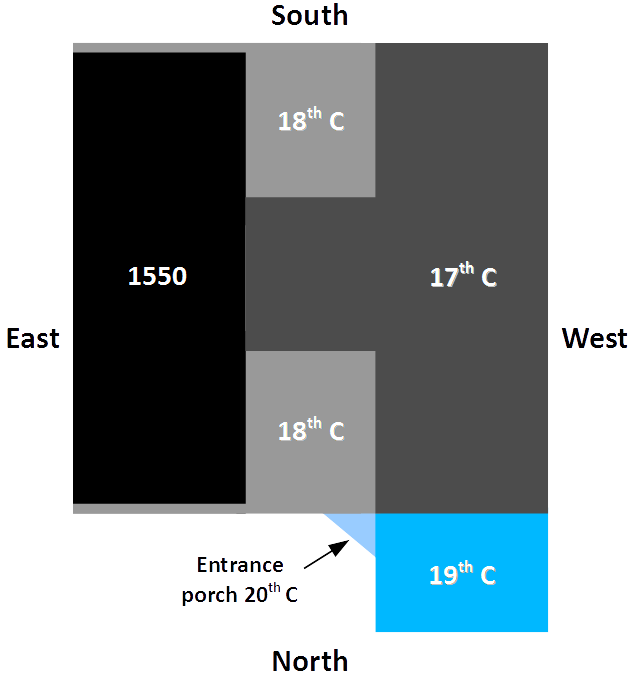
In the seventeenth century another wing was added, parallel to the Tudor one, and connected centrally, so that the overall shape of the building was like the letter ‘H’. This is what I remembered from the explanation using a model by one of the volunteers. I wish I’d taken photos of that model, which could be taken apart to show how the various building projects came together in the building we see today. Here’s my plan (not to scale).

Newark plan

Further changes were made in the 18th century, and the building was squared to the shape we see today. But in doing so, and to retain the symmetry there are several false windows on the west face, or windows placed over internal chimneys on the south side of the Tudor wing. Other windows, on what would have been the west face of the original Tudor wing, were bricked in during the 18th century and became internal walls. A side wing was added in the late 19th century, and an entrance porch added after 1971.

20150828 076 Newark Park

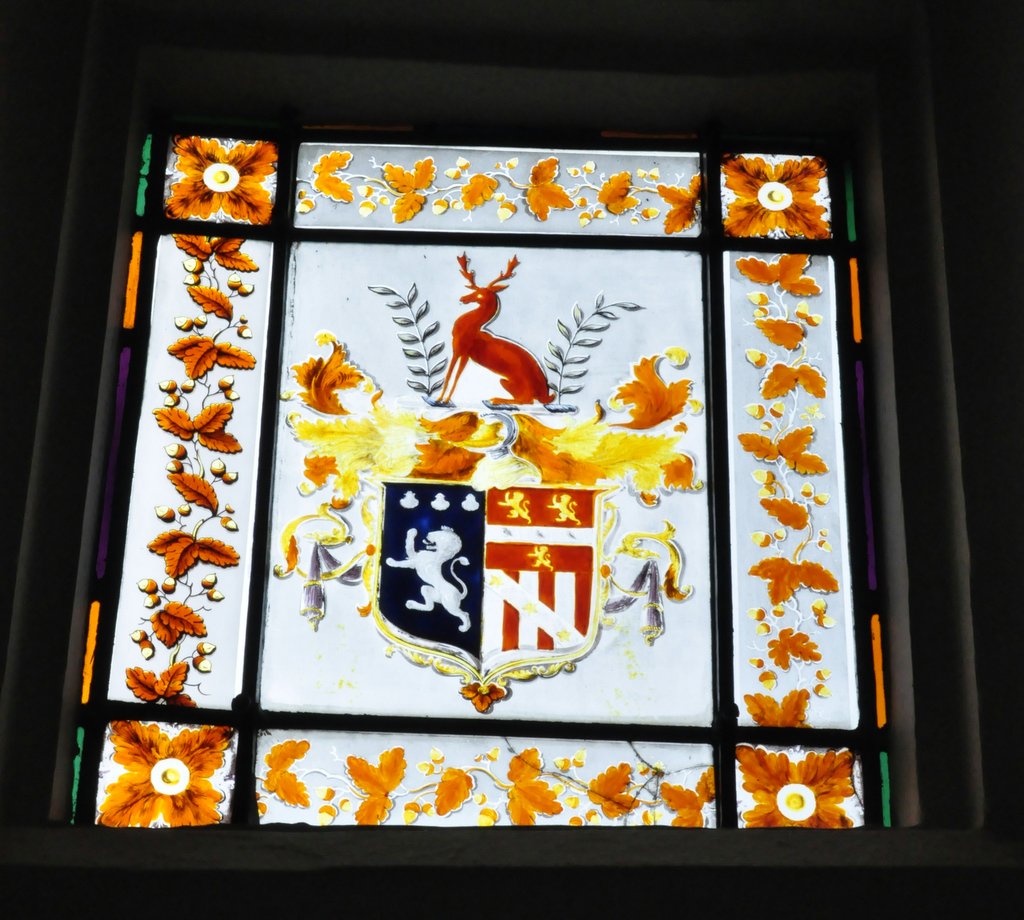
Coat of Arms of the Clutterbuck family, part of a large stained glass window on the first floor over the main door leading to the walled garden on the east side of Newark Park.

In the 1700s, Newark Park became the property of the Clutterbuck family and remained so until given to the National Trust, although they had not lived there since the late 1800s. A number of tenants took over Newark Park, but by 1970 it was in a considerable state of disrepair, the gardens were overgrown, and no-one remembered the buildings illustrious Tudor past. In fact, at one stage, the National Trust had contemplated letting the building become completely derelict.

But the savior of Newark Park came along in 1971, and under the terms of a ‘repairing lease’ began to discover much of Newark’s past, uncovering many of its Tudor features that visitors can now see for themselves. Access to the Tudor basement is permitted only with a tour guide, but it’s worth it. The rest of the house is open almost everywhere.

And what a delight it is. Not only is there eclectic collection of ornaments, paintings, furniture, glassware and the like, but the renovations made after 1971 opened much of the top floor.

Click to enlarge

Click to enlarge

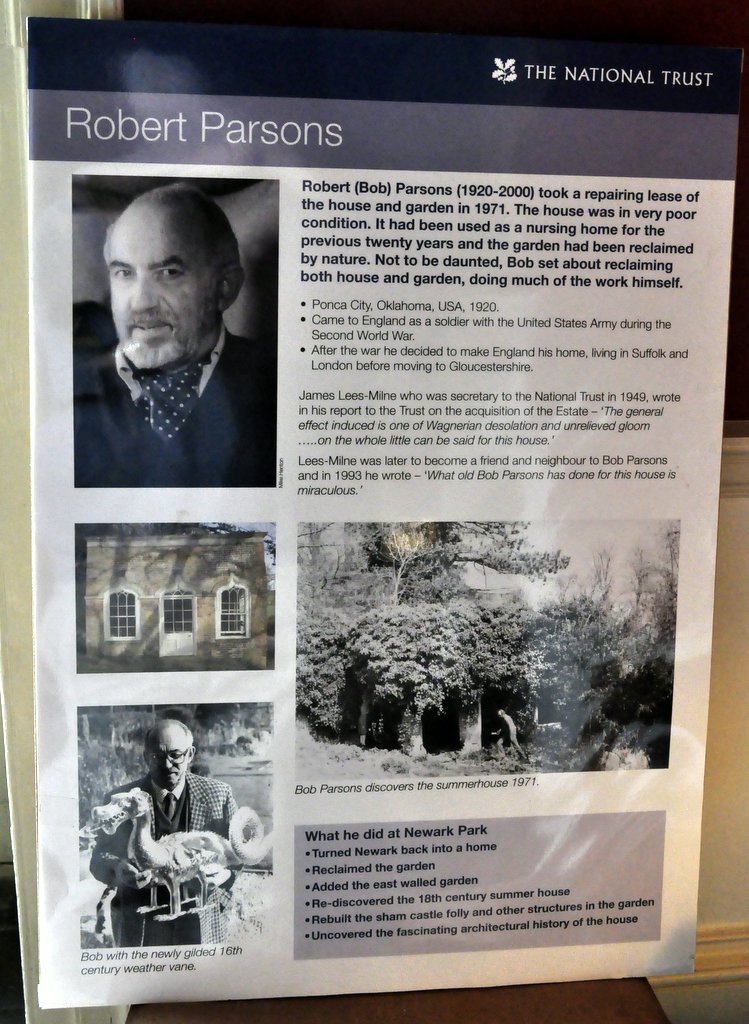
So who was this ‘Newark savior’? American architect Robert ‘Bob’ Parsons was born in Texas in 1920, and served as a soldier in the Second World War getting to know the Cotswolds at that time. After the war he settled in London, and apparently was looking for a ‘country house project’ to take on. He resided at Newark Park with his partner Michael Claydon until his death in 2000. And it was due to all the repair work that Parsons undertook—far in excess of the lease commitment he had agreed with the National Trust—that Newark Park is what we see today. And that’s also why it now has Grade 1 listed building status.

The gardens were completely overgrown, and when Parsons cleared those he uncovered several interesting features like the summer house [14] and a folly (11] in the process. Today the walled garden [7] on the east side of the hall looks like it has been there forever. But it was one of Parsons’ additions, and is completely in tune with the rest of the property. The whole estate extends to some 750 acres. Just click on any of the galleries below to view larger images.

20150828 116 Newark Park

So many features of the gardens were uncovered by Bob Parsons. Strange that their existence had been completely forgotten.

The oldest Tudor part of the house, from 1550, can be seen in the basement, accessed by 18th century stairs in the company of one of the NT volunteers. Health & Safety regulations don’t permit free access downstairs!

On the ground floor, there is a plain but elegant entrance hall through curved, wooden double doors. There is a wonderful view south over the terrace through yet another door. There are two rooms in the west (17th century wing): a dining room, and a sitting room with the most wonderful collection of Staffordshire pottery figurines, perhaps too many in the glass-fronted cabinet to do them justice. Wonderful nevertheless!

Up the stairs to the first floor, you get a wonderful view of a 17th century glass window (the bow window on the east face), and a green bedroom off to the left. It apparently still displays the bed that was brought in during filming of the BBC1 2008 adaptation of Thomas Hardy’s Tess of the D’Urbervilles; two other scenes were filmed in the Tudor cellars.

Then up another floor, you emerge on to the most wonderful long gallery, with bedrooms, a study and other rooms leading off on both sides. The south end of the gallery has a large window offering, once again, incredible views over the Cotswolds escarpment and south. On one side there’s a cabinet with a collection of Bristol blue glass (and ruby and turquoise; envy once again!). In one of the bedrooms at least Parsons uncovered a Tudor fireplace during his renovations. The rooms certainly had that ‘lived-in’ feel about them. At the north end of the gallery a rope hangs down from the small bell tower on the roof, which is itself surmounted by a 16th century dragon weather vane in the form of a golden dragon.

Reflecting on our visit to Newark Park during the drive home, Steph and I agreed that it had definitely been one of our best National Trust days out. Not only was the property itself interesting, and its location stunning, but from the moment we passed through the ticket office and shop, the catering pavilion (for a welcome cup of coffee), and around the house itself, all the NT staff and volunteers were exceptional in their friendliness. It was almost as if they were welcoming visitors into their own home.

Well done, Newark Park staff and volunteers! We’ll be back in the Spring to see the display snowdrops and other flowering bulbs.


‘More glass than wall’ – a palace or prison?

It’s unusual to find properties managed or owned by English Heritage and the National Trust side-by-side. But that’s precisely the situation at Hardwick Old Hall and Hardwick ‘New’ Hall in Derbyshire.

With the weather set fair last Wednesday, we made the 177 mile round trip from our north Worcestershire home to visit ‘Hardwick Hall’, which we regularly pass on the M1 motorway when traveling to visit our younger daughter and her family in Newcastle upon Tyne. I had visited Hardwick once before, at least 50 years ago when my father organized an outing for the Leek Camera Club.

20150812 036 Hardwick Hall

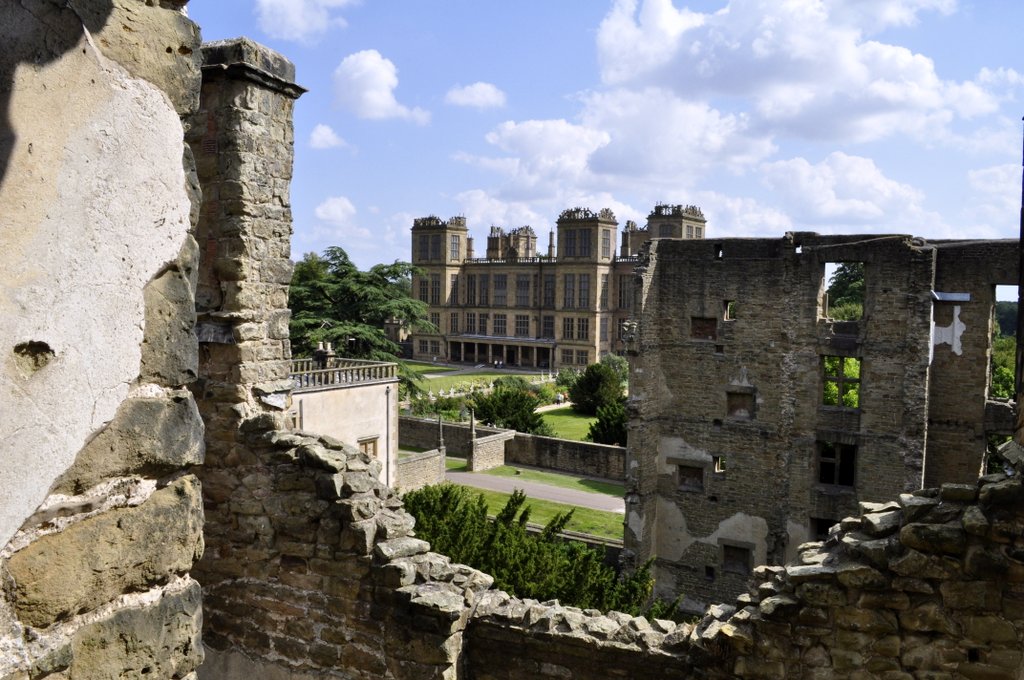
Hardwick Hall from the ruins of Hardwick Old Hall.

Standing on a ridge looking west over the Derbyshire countryside, Hardwick Hall was the later home of one of the most influential persons in Tudor times. Friend and confidante of Queen Elizabeth, Bess, Countess of Shrewsbury was originally from quite lowly stock, but through four and prestigious marriages (at least two of them in any case), she gained status and accumulated incredible wealth.

20150812 075 Hardwick Hall

20150812 151 Hardwick Hall

20150812 006 Hardwick Hall

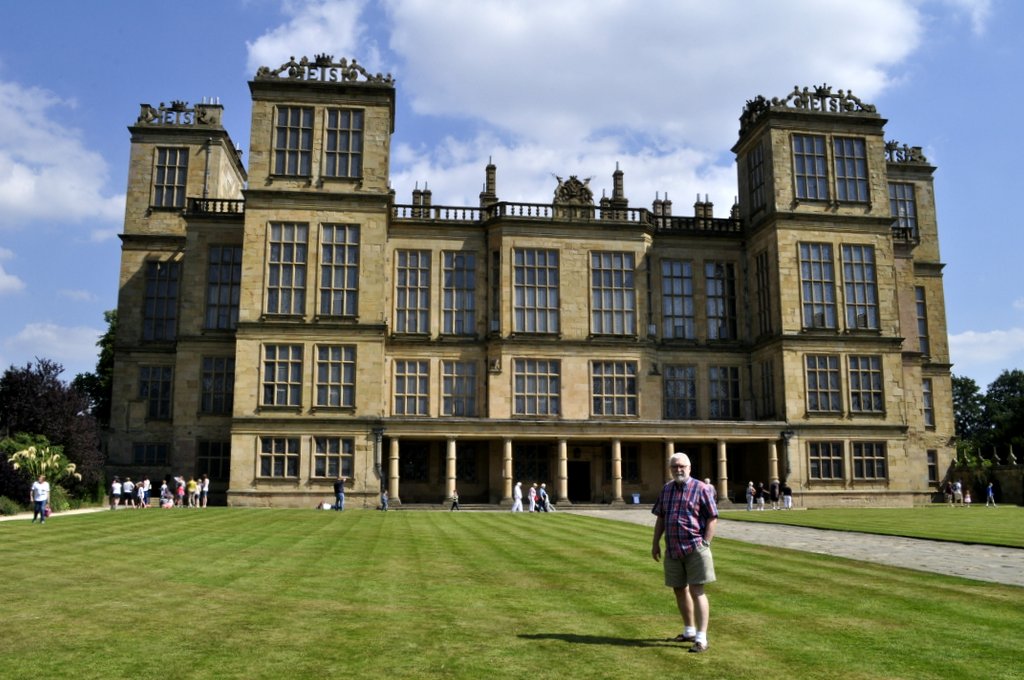
Hardwick Hall proclaims the status of the owner to all and sundry. Not for nothing is her monogram ‘ES’ displayed proudly on at least three sides of each of the six ‘towers’ of the hall.

20150812 196 Hardwick Hall

The descendants of her second marriage, to Sir William Cavendish (d. 1557) are the Dukes of Devonshire, and Bess spent much of her married life to twice-widowed Sir William, at Chatsworth, still the ancestral seat of the Devonshires since 1549. She had eight children, two of whom died in infancy.

In 1568, Bess married George Talbot, 6th Earl of Shrewsbury (d. 1590), her fourth marriage, and one that brought her close to the royal court. For a number of years The Earl and Countess were given custody of Mary, Queen of Scots until she was removed from their care (essentially house arrest) and ultimately executed.

Hardwick Old Hall is now essentially a shell. After Bess moved to the ‘new hall’, and for centuries after, the house fell into disrepair, and during the 18th centuries, the building was reduced on purpose by the Dukes of Devonshire. One whole quarter of the hall, which housed the great hall I believe has disappeared altogether. But there is still a great deal to see, and English Heritage have made the greatest efforts to allow visitors to see the ruin in its entirety. The original stone staircase leads up to the top floor where there is now a wooden platform that enables everyone to view the wonderful plaster friezes on the walls, and the fireplaces at all levels. Of course the plaster friezes were never intended to be exposed to the elements. It’s a conservation conundrum—put an expensive new roof on the building or leave them possibly to deteriorate further. The views from the top of the building are stunning—these aristocrats knew where to build.

One can only imagine what sumptuous furnishings must have adorned Hardwick Old Hall. But just cross the lawn to the new hall, and you these in all their glory. What a feast for the eyes.

Climbing a broad stone staircase to the second floor ( ground, first and second), you enter the High Great Chamber with its ‘throne’, and unbelievable painted frieze high up on the wall.

Passing through an adjoining door, you are in the Long Gallery, one of the longest (but the highest) in any stately home in this country. Everywhere the walls are adorned with original tapestries, although I did overhear one of the guides saying that in Bess’ time the walls would have been plain. But in one corner of the Long Gallery are the Gideon Tapestries, hung by Bess 400 years ago and still hanging there today!

There is some fine furniture in the Withdrawing Chamber.

Several bedrooms on this floor house spectacular four-poster beds. The hall was still occupied by a Dowager Duchess of Devonshire until the 1960s.

Tall glass windows—in fact, glass everywhere—proclaim Bess’ status as a very wealthy lady. The hall has a very pleasing symmetry to it, and as I mentioned earlier, there’s no doubt whose house this was. Formal gardens lie to the south (since the house was built on a north-south axis) with the expanses of glass windows on the west and east sides.

20150812 153 Hardwick Hall

Arbella Stuart, granddaughter of Bess of Hardwick.

Through her marriage to the Earl of Shrewsbury, Bess became linked to royalty. In 1574, her sixth child, Elizabeth Cavendish married Henry Stuart, 1st Earl of Lennox, younger brother of Lord Darnley, husband of Mary, Queen of Scots. Their daughter, Arbella, was thus of royal blood (since Lennox was also descended from Margaret Tudor, sister of Henry VIII, through her second marriage). Arbella was a cousin to Elizabeth I and James VI of Scotland (who would become James I of England in 1603 on Elizabeth’s death). Arbella, Bess’ granddaughter, was effectively kept under house arrest at Hardwick for years and not permitted to marry. Neither Elizabeth (and subsequently James) need or want any more possible aspirants to the English throne. Arbella had an unhappy life. I doubt Arbella appreciated the grandeur of Hardwick. For her it was a prison. She eventually did secretly marry the Earl of Somerset, but was captured before she could escape to Holland. She spent her final years imprisoned in the Tower of London, and died there aged 40, supposedly having starved herself to death. 2015 is the 400th anniversary of her death and Hardwick is housing a special exhibition now to commemorate her death.

Without doubt, Hardwick is one of the most impressive National Trust properties I visited since we became members in 2011. And it’s popular, if the full car park was anything to go by. Now, as we speed along the motorway and see ‘ES’ peeping over the trees we will remember our interesting and enjoyable visit and a glimpse into Tudor life 400 years ago.

‘When a family lives in the same place for 400 years they end up with a diverse collection of art, furniture and curiosities.’

20150701 124 Chirk Castle

Chirk Castle. It’s a somewhat odd legacy of a early more violent and later, opulent past.

And seemingly incomplete, its central keep standing alone on a hillside without any visible signs of the curtain walls that surely must have surrounded it many centuries ago when it was first built in 1295. Because the first castle was constructed on this site overlooking the valley of the River Ceiriog, just north of the England-Wales border, and today about eleven miles south of Wrexham and seven miles east of Llangollen (map).

It was one of several castles built by or for Edward I along the Welsh Marches. It came into the Myddleton family in the late 16th century, and remained a family home until 2004. In the 1930s however, it was home to Thomas Scott-Ellis, 8th Baron Howard de Walden, and apartments on the ground floor of the east wing redecorated in the 19th century in a Gothic style, including the library and chapel that was converted to a music room (and also acceseed from the Long Gallery on the first floor).

Some evidence of an earlier medieval period can still be seen in the 14th century Adam’s Tower on the south side, with its exposed stonework, narrow spiral stone stairways, and even a dank dungeon nine meters underground.

Chirk probably saw its last conflicts during the English Civil Wars of the 1640s, but after the Restoration of Charles II in 1660 it became a family home, luxuriously and exquisitely decorated inside over the next three centuries. From the splendid entrance hall, the elegant staircase, to the refined dining room, and the colorful ceilings in the reception rooms, designed by Victorian architect and designer Augustus Pugin, and through the seventeenth century Long Gallery, Chirk has a lot to offer.

The formal garden of yew-lined gravel paths and topiary were first laid out in the seventeenth century, and the garden stretches to the east through landscapes beds and woodland. From a ha-ha at the furthest point in the garden it’s possible (on a clear day, which it wasn’t when we visited) to see over North Wales, the Pennines to the north, and the Shropshire Hills to the southeast).

All in all, Chirk Castle has something to offer every visitor.


Tredegar House – home of the Morgans

Tredegar House in Newport, Gwent in South Wales is an impressive building, a testament to the wealth of the Morgan family who built it in the 17th century, adding to an earlier Tudor building on the site, parts of which can still be seen in the west wing.

20150618 016 Tredegar House

The north entrance to Tredegar House, through the stable yard.

20150618 123 Tredegar House

The remains of the Tudor west wing of Tredegar House.

Just a stone’s throw from Junction 28 on the M4 (hopefully better road signs to Tredegar House will be installed after the proposed re-modelling of the complex Junction 28 are completed), Tredgar is adjacent to a 90 acre public park, the remnant of what was once a huge estate attached to the house. While the principal entrance was originally on the north wing, you enter the house today through an impressive north approach.

Tredegar House has had a chequered history. Completed in late 17th century, it remained in the Morgan family for several centuries until sold off, with all its contents by the 5th Lord Tredegar, in 1951 when it became St Joseph’s Convent School. Eventually Newport Council took over the property until 2012 when the National Trust signed a lease for 50 years to manage the property and restore as much as feasible to its former glory. Several rooms on the upper ground floor are open to the public, as is a suite of rooms decorated in a 1920s-30s style on the first floor, and the extensive kitchens and courtyard at ground level, but are accessed as though descending into a basement. Some normally accessible rooms were closed last week due to health and safety considerations, because of mould in a couple and damage to a chimney in another.

The Entrance Hall

The Brown Dining Room
This is a most impressive room with carvings on the wall. Charles I stayed at Tredegar, and his face was incorporated into the carving as a caricature when the room was designed in about 1675 or so.

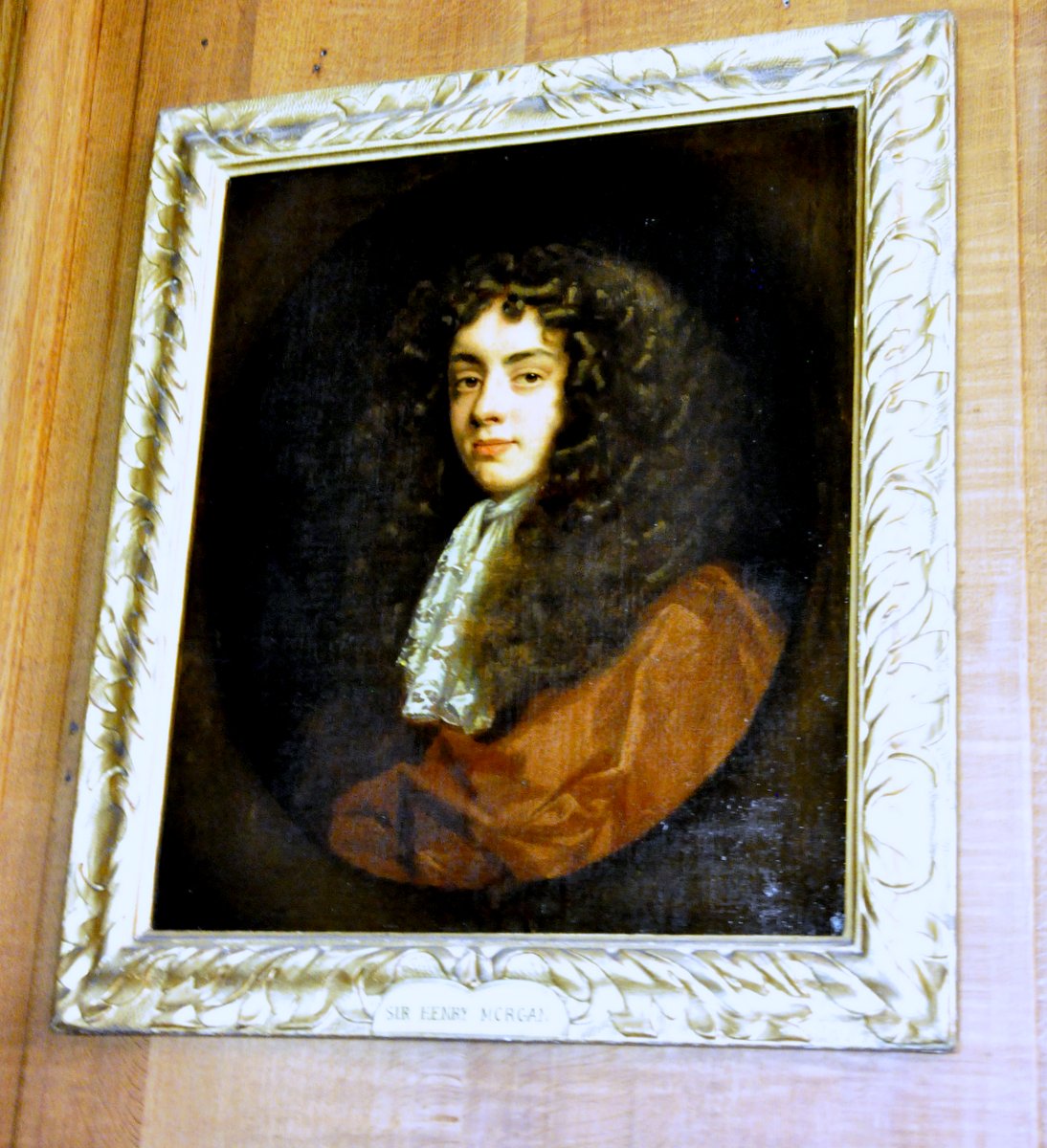
To the left of the fireplace is a portrait of Captain Henry Morgan, a distant relative of the Tredegar Morgans. Yes, the Henry Morgan of rum fame. He was a buccaneer, but eventually became Lieutenant Governor of Jamaica in the late 17th century. This portrait was painted around 1650.

Captain Henry Morgan (1635-1688) 'The Buccaneer'

Captain Henry Morgan (1635-1688) ‘The Buccaneer’

The Gilt Room
Beyond the Brown Dining Room lies the Gilt Room, and would have looked magnificent with the gold shimmering in candlelight. But all is not what it seems. The paneling is actually pine painted to look like walnut. And the ‘marble’ columns either side of the fireplace are also painted pine! The ceiling painting is a late 17th century copy of one in the Palazzo Barberrini in Rome, and depicts Pope Urban overcoming lust.

The King’s Room and the Red Room (1930s)
The second floor has bedrooms occupied by the family up until the death of Evan Morgan, 2nd Viscount Tredegar, son of the 1st Viscount, Courtenay Morgan.

The Blue Room

Below stairs

The gardens and outbuildings

Tredegar planOn the west side is a lovely walled garden with magnificent yew trees. There are also some impressive outbuildings to the northwest, including a couple of barns, stables, and what we assumed must have been the coach house.

As you can see from the photos, we had a glorious day weather-wise, and for us, traveling down from north Worcestershire, the 80+ mile journey was not a problem, on motorways and dual carriageways (divided highways) the whole way. We had seen Tredegar House featured a few times on the BBC’s Bargain Hunt as well as the venue for another programme, Antiques Roadshow. So we were pleased that our plans to visit came to fruition. All in all, it is certainly an interesting property to visit.

Pigeons and peers – a des-res for doves and aristocrats

For my non-British readers, ‘des-res’ is an informal term for ‘desirable residence’.

And last Thursday we got to visit three in the Worcestershire countryside, only a handful of miles from our home in Bromsgrove.

The Hawford and Wichenford dovecotes
Built in the 16th and 17th centuries, respectively, Hawford and Wichenford dovecotes are today owned by the National Trust, and open for anyone to explore. Probably associated with a former abbey in the case of the Hawford dovecote, and the nearby Wichenford Court for the Wichenford dovecote, both are half-timbered structures, in a remarkable state of repair, notwithstanding their age. Although access to both dovecotes appears, on first glance, to be restricted, the doors are open and inside you can see all the nesting boxes, several hundred in each dovecote, where young pigeons or squabs and eggs would be collected for food.

The Hawford dovecote (map)

The Wichenford dovecote (map)

Next to the dovecote is a complex of semi-derelict farm buildings, dominated by a huge medieval barn that has obviously seen better days. We did wonder if some group was intending to ‘rescue’ this beautiful building and restore it to something like its former glory.

Witley Court (map)
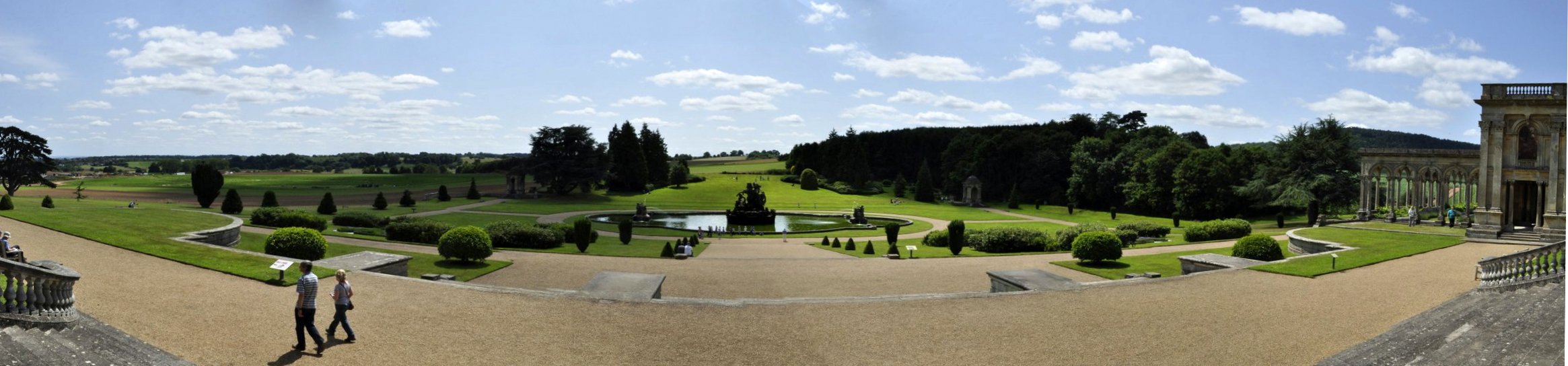
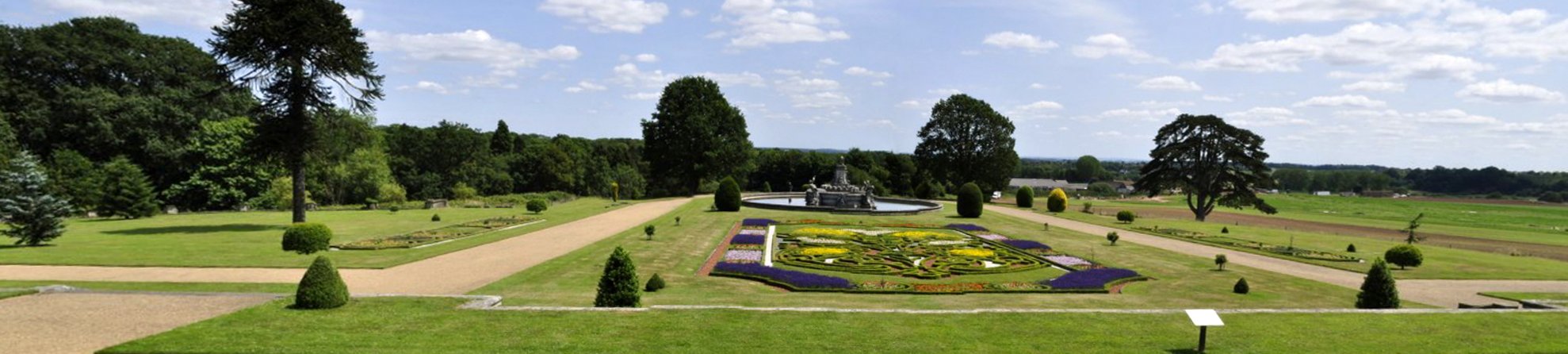
Then we headed off to Witley Court near the village of Great Witley, which we have visited many times over the past three decades. Even though it’s now just a shell of a building, having been gutted by fire in the 1930s, Witley Court still has an awsome presence in the countryside, and in its heyday it must have been a magnificent residence, truly a ‘des-res’. Now managed by English Heritage, much has been done to refurbish the grounds in recent years, the parterres have been replanted, and the impressive Perseus and Andromeda fountain is now in full working order. It fires up every hour on the hour.

fountain

The Perseus and Andromeda Fountain in the foreground, and the south face of Witley Court behind. On the left, behind the ruins of the orangery is the parish church of St Michael (with the gold domed roof), one of the finest examples of baroque architecture.

gardens-001

View from the south parterre and the Perseus and Andromeda Fountain. The orangery is on the right.

parterre-001

The refurbished East Parterre at Witley Court.

Here’s a short video I made in 2008.

English Heritage have placed on its website a floor plan of how the mansion developed over the centuries. A house was first built on the site in the mid-17th century, and was added to extensively during the 18th and 19th centuries.

Beside the ruined house is Great Witley parish church of St Michael, untouched, fortunately by the 1937 fire, and one of the country’s outstanding examples of baroque architecture, and a feast for the eyes inside. The organ is said to have been played by Handel.


Peace and tranquility . . . just west of the M6 in Lancashire

Last Monday was the last day of our holiday in Scotland. We’d reached Lockerbie in Dumfries and Galloway on Sunday night, and just had the journey down the A74(M) and M6 to reach home.

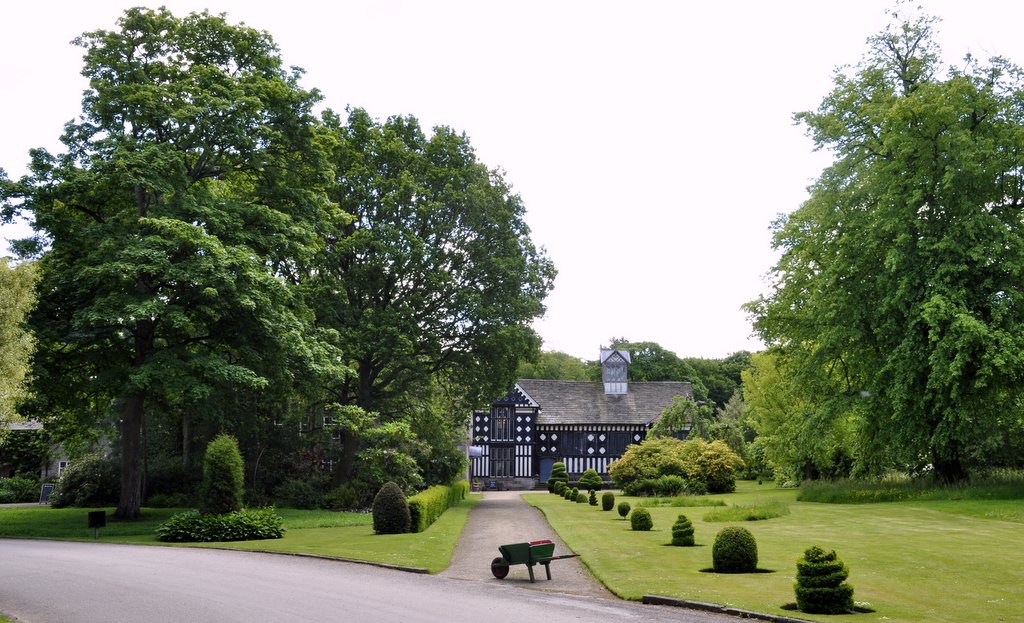
Two hours is about as much as I can take driving on the motorway before I need to take a break. And we had discovered that there was a National Trust property, Rufford Old Hall, in Lancashire just south of Preston, about equidistant between Lockerbie and home. The ideal place to stretch our legs, have a bite to eat, and enjoy another of the Trust’s delights. In fact, it seems that many holidaymakers have exactly the same idea. One of the volunteers told me that Monday is usually a busy day, with many visitors breaking their journey north or south at the hall. Rufford Old Hall is very convenient to the M6, just a handful of miles west of Junction 27.

20150608 062 Rufford Old Hall

20150608 057 Rufford Old Hall

Formerly the home of the Hesketh family, Rufford Old Hall (is there a new one?) has two main wings: an original timber-framed Tudor one built in 1530 for Sir Robert Hesketh, oriented east-west, that may have once also had another wing on the west side (there are two ‘external’ doors on the west wall) but this no longer exists; and a later seventeenth century brick wing, north-south. The main entrance opens into what was once the kitchen, but that was moved to another location in the same wing at a later date.

The crowning glory of course is the Tudor wing, which consists primarily of the Great Hall with its magnificent bow window and small section of original Tudor stained glass. The roof of the Great Hall is a wonder to behold in timber architecture and construction. There is also a moveable screen just inside the hall. Photography is permitted only inside the Great Hall as the National Trust does not own all the items on display elsewhere throughout the property.

There is a small formal garden, with renowned squirrel topiaries, and walks through orchards, woodland and meadows alongside the Rufford Branch of the Leeds and Liverpool Canal (built in 1781) on the east side of the property.

Three, five or seven? On the Tresham Trail.

Spring had really sprung a couple of days ago. With hardly a cloud in the sky, and a warm day promising, Steph and I headed east some 80 odd miles from our home in north Worcestershire, to visit two properties in Northamptonshire constructed in the late 16th century by Catholic Sir Thomas Tresham, a celebrated recusant who was imprisoned on several occasions for his faith.

First stop, in Rushton, was one of the most peculiar buildings I’ve ever visited but I’d wanted to see for quite some time – I’d seen it on TV in the past year.

eh-logoThe Triangular Lodge – a folly – was completed by 1597, is owned and managed today by English Heritage. This was our first visit to an English Heritage property since we became members at the beginning of the year.

20150409 002 Rushton Triangular Lodge

Full of religious symbolism, the Lodge is a perfect triangular building, and there are threes everywhere you look. The sides of the building are exactly 33 feet long, the windows are triangular. There are three floors from basement to upper floor. Each floor has a hexagonal room, with a small room in two of the corners and the stairwell in the third. The roof is a triangular maze.

Constructed of alternate bands of light and dark limestone, the Triangular Lodge is odd – and yet ethereally beautiful – in so many ways. A testament to Tresham’s devotion to the Holy Trinity, it continues to stand in a corner of rural Northamptonshire.


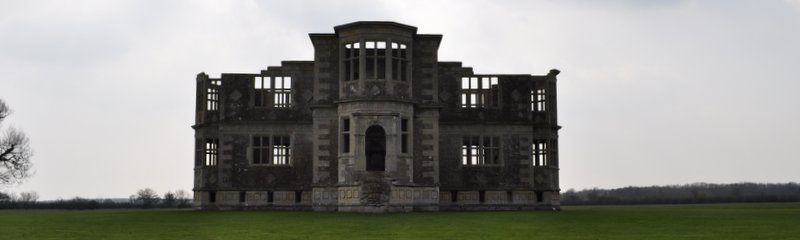
Just 12 miles from Rushton is another Tresham treasure – Lyveden New Bield. At first glance, it appears a desolate ruin, and one imagines what calamity has befallen this impressive building. But it’s not a ruin. Tresham died before it was completed, and there has never been a roof. It is now owned and managed by the National Trust.

20150409 092 Lyveden


Designed as a garden lodge or secret retreat to which he could retire, or even worship as a Catholic in privacy, Lyveden New Bield has all the religious symbolism – and more – that we encountered at the Rushton Triangular Lodge. It is shaped like a perfectly symmetrical Greek cross, each of the four wings of the building mirroring the others. Each of the bow windows has five sections, each five feet wide.

There are no floors but they must have been in place at some time or another since there are wood remnants in the walls where joists would have spanned the building. You enter the building through a very low servants’ entrance (on the south side), into what would have been the basement; there’s a large fireplace and behind, a series of ovens in what must have been the kitchen.

The main entrance, on the north side, is almost six feet or so above ground level. The arches above the entrance and to other internal doors are fully finished and sculpted.

CCI11042015_00001The lodge stands on an open lawn, surrounded by a ditch on all sides, not far from the moat that once surrounded (but on three sides only) a 14th century manor house, now totally demolished and erased from the landscape. But nearby, there are the outlines of what would have been a parterre, and more intriguingly, a Tudor labyrinth. Its existence only came to light in recent years after someone discovered a wartime aerial photograph from the Luftwaffe – presumably on their way to raid Coventry or Birmingham. An old orchard has been replanted with varieties of apple, pear, plum, damson, quince and medlar among others from the National Fruit Collection at Brogdale in Kent. Nearby is the old hall, Lyveden Old Bield, which was Tresham’s home after he moved from the original family home of Rushton Hall.

As a young boy, Tresham went to live with the Throckmorton family of Coughton Court near Alcester in Warwickshire (and only 12 miles from our home) and eventually married one of the daughters. One of their sons was implicated in the 1605 Gunpowder Plot, as were the Throckmorton family.

An 18th century landscape of temples and statues

Stowe Landscape Gardens. Perhaps one of the finest examples we have of the fashion for ‘natural’ gardening that blossomed in the mid- to late-18th century. And this was natural as opposed to the more formal approach to gardening that was common before this period, and perhaps quite well exemplified by the Anglo-Dutch garden at Westbury Court in Gloucestershire.

Covering an area of about 250 acres, Stowe Gardens and Park are open to the public almost all year round, and are best approached along the Grand Avenue from the nearby town of Buckingham.

It’s a 10 minute walk from the car park to the entrance into the gardens, and there, on the other side of the lake, stands the magnificent Palladian mansion, Stowe House (now a public school and open periodically to the public). We must have walked more than eight miles in total.

The gardens as we see them today were developed – and greatly expanded from an original formal garden – by General Sir Richard Temple, later Viscount Cobham follwoing his marriage in 1715. A number of landscape architects were involved in developing the gardens and building the various temples and other structures that are dotted about the park, including ‘Capability’ Brown who was Lord Cobham’s head gardener in 1746. A detailed description of the gardens and the various buildings has been published in Wikipedia (so there’s no need to repeat this here) and is certainly worth referring to for more information about each, who designed them and when.

Stowe Landscape Gardens are now regarded as one of the most significant to have survived into this century, and can now be enjoyed through the National Trust. The rest of this particular post is dedicated to the photography I enjoyed during our visit in early September. Each of the images has a caption so you can locate each building on the map below.

Entering the gardens 

The Palladian Bridge

Along Lord Cobham’s Walk from the Palladian Bridge to the Grecian Valley

Virtue and Worthies

The western walks


Tis well. (George Washington, 14 December 1799)

George Washington, one of the Founding Fathers of the Nation, Commander-in-Chief of the Continental Army, first President (1789 – 1797) of the United States of America, and slave owner, was born in Virginia in 1731. And like many (most, probably) of his contemporaries, descended from English forebears.

In fact, the Washington family is an old one from County Durham (now Tyne and Wear) in the northeast of England, and the ancestral home is Washington Old Hall in the small community of Washington that is now surrounded by a complex of arterial roads that connect Newcastle and Sunderland to the main motorways to the south.

At the end of September on our way home from Newcastle, we stopped off at Washington Old Hall – less than 10 miles from where our younger daughter Philippa lives in Newcastle with her family.

The south facade of Washington Old Hall, from the Nuttery

The south facade of Washington Old Hall, from the Nuttery

Situated in the center of the ‘village’, the hall is not very well sign-posted and it took a couple of wrong turns before we ended up at the hall, and were, for the most part, the only visitors that morning inside the house (although some local mums were walking in the gardens with their children).

Although there has been a building on this site since the 12th century, much of what we see today was built in the 17th century. And had links to the Washington family until the 1930s. Before it was taken over by the National Trust, it had been divided at some period of the last century into a series of dwellings, each family essentially having just one or two rooms. The ground floor of the hall has been restored more or less in 17th century style, while the upper floor has mainly been turned over to Washington family memorabilia and their connection with the USA’s illustrious first president.

The grounds are quite small, but attractive. Below the main terrace in front of the hall there is a parterre garden, an apple orchard and vegetable garden, and beyond those, a nuttery. And, as with most National Trust properties, there’s a small cafe where you can enjoy a welcome cuppa.

In 1976, the USA celebrated its bicentennial. Jimmy Carter was elected the 39th President in November that year and took office on 20 January 1977. During his first overseas trip as president, Carter visited the UK, and on Friday 6 May he made a special visit to Washington Old Hall, flying into Newcastle International Airport (known as Woolsington Airport then) on Air Force One (a Boeing 707), in the company of UK Prime Minister Jim Callaghan. Click here to read the detailed itinerary and schedule of that visit to Washington Old Hall, as well as Newcastle and Sunderland.

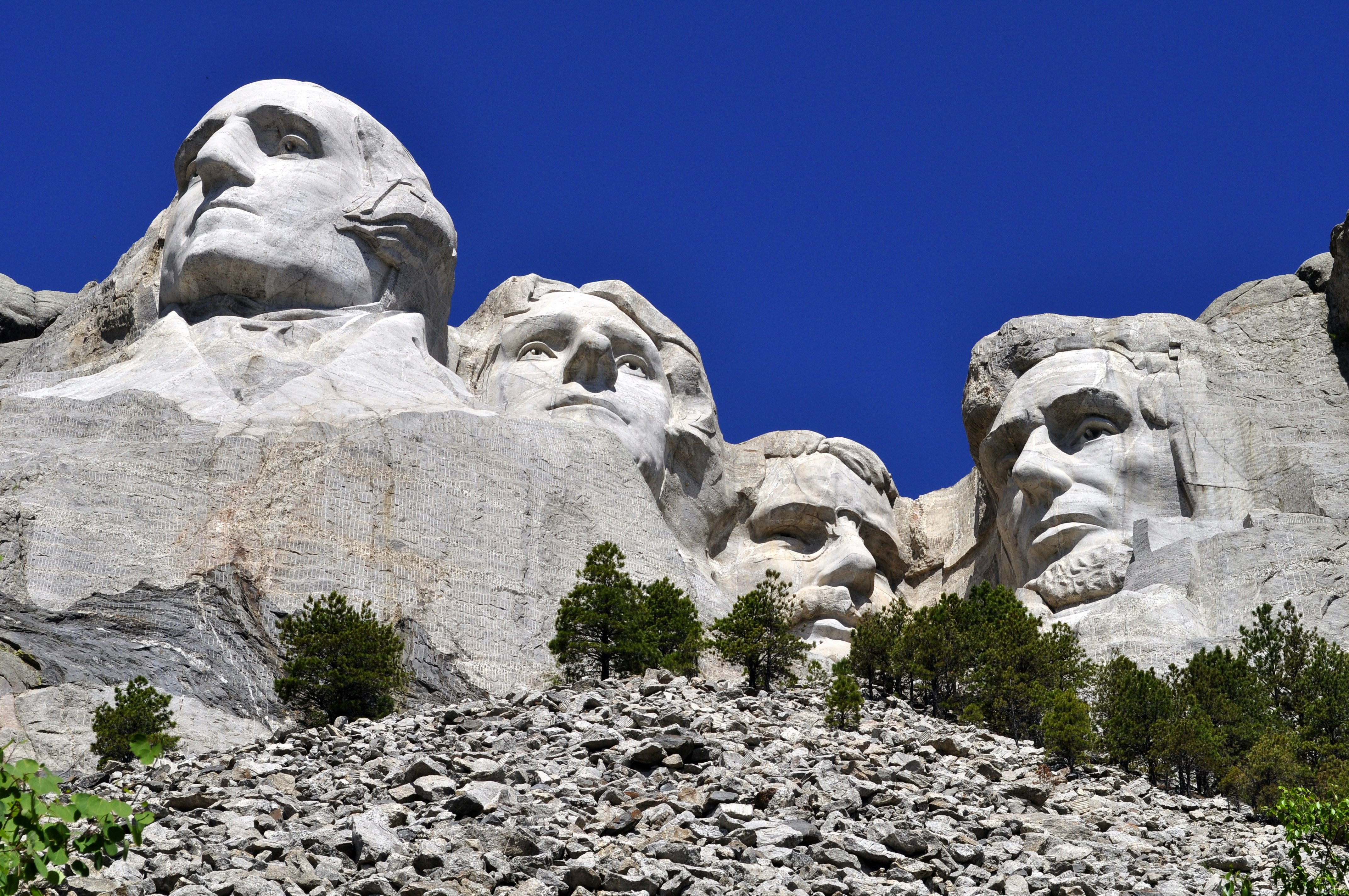
This visit to Washington Old Hall in September was our second encounter with George Washington this year. In June we visited the Mount Rushmore National Memorial in South Dakota and saw the impressive sculpture that honors Washington along with presidents Jefferson, Teddy Roosevelt and Lincoln.

Four presidents in the sky

Four presidents in the sky

Strange shapes on the skyline

The clues are there if you only know how to recognize them. For many landscapes it is quite difficult to determine just what forces of nature sculpted what we see all around us, and frankly take for granted as always having been there.

As a geography student at the University of Southampton in the late 1960s, I studied geomorphology (the study of landscapes and the forces that shape them) over three years. So it’s quite fun when we are out and about on our travels trying to work out how any particular landscape evolved. Of course, in the past 10,000 years or less humans have had a dramatic impact on what we see, often hiding the very features that would provide a straightforward answer.

But there are many landscapes when it is much clearer how ice, water, or wind acted upon the geology to reveal those landscape features that we all treasure. The tors of the Dartmoor, formed through chemical weathering of granite in a tropical environment, find their counterparts in Nigeria, for example.

Walking round Brimham Rocks in Yorkshire (just northwest of Knaresborough and Harrogate) the effects of wind erosion on a 400 million year old sandstone, Millstone Grit, during the last Ice Age some 12-18,000 years ago) – and earlier periods of weathering in warmer climates millions of years ago – can be clearly seen. And some fantastical rock formations are now carefully protected by the National Trust.

Steph and I visited Brimham Rocks at the end of September on our way north to Newcastle, and what glorious weather we had. You could see south and east 20 miles or more over the Vale of York. In fact the tower of York Minster was clearly visible on the horizon. And to the west, the landscape rises towards the backbone of England, The Pennines and the Yorkshire Dales.

Walking up from the car park, we took the left hand route round the Rocks. In the video you can see several of the rock formations that are indicated on the map: Surprise View, Cannon Rocks, Eagle, Dancing Bear, Druid’s Writing Desk, and Idol, among others, finally come round to Druid’s Castle Rocks from the north and east (click on the map, ©2002 The National Trust, to open a larger version, and which is reproduced here for illustrative purposes and to encourage visitors to Brimham Rocks).

©2002 The National Trust – inlcuded here for illustrative purposes and to encourage visitors to Brimham Rocks

Canals and hedges – the formality and beauty of an Anglo-Dutch water garden

At the beginning of September, we headed some 48 miles southwest of where we live in Worcestershire to Westbury Court Garden, a National Trust property in Gloucestershire, on the banks of the River Severn estuary. It was a typical early September day when high pressure dominates the weather scene – somewhat misty and murky, overcast, and the sun taking until mid-afternoon to burn away the worst of the low cloud.

Maynard Colchester commenced excavation of the garden in 1696, with the digging of the first canal, and layout of the garden in the formal Dutch style, shown in Johannes Kip’s 1712 engraving below of the house and garden. You have to remember that Dutchman William III was King at the time.

And until today, Westbury Court Garden remains the only surviving garden in this Anglo-Dutch style. There is no longer a house on the site.

There are impressive north-facing views over the garden and canals from the Tall Pavilion.

Along the canals are planted espaliered fruits, mainly heritage apple varieties (some dating back to the 1500s), but also some pears and plums. There is one area of formal gardens, but the gardeners are having to grub out the box hedges due to box blight. The yews lining the canals are apparently being affected by a fungal disease (a Phytophthora attack) and unless this can be brought under control the yew hedges might be lost as well.

The gardens are not large, but in the contrast between the canals (full – even choked – with water lilies) and the formal beds, they are a delight to the eye, and a haven of peace (even though a rather busy road does pass by at the north end). Among the features worthy of special mention are a glorious tulip tree (Liriodendron sp.) that must be at least 100 feet tall, and an impressive 400 year old evergreen oak (Quercus ilex).

You can easily take in all that Westbury Court Garden has to offer in 60-90 minutes, but as a stopover on the way to another destination (we were headed for the Forest of Dean, and The Kymin), it is certainly worth a visit. After all, it is a unique remnant of a by-gone era of gardening in this country before the fad for open landscapes (championed by the likes of Capability Brown) took hold later on in the eighteenth century.

The perfect picnic spot . . .

It’s been a perfect picnic spot since Georgian times in the 18th century. And where’s this ideal place? Why, The Kymin, of course.

On a steep hill overlooking the town on Monmouth in the Wye valley on the English-Welsh border, The Kymin has a number of features that you wouldn’t associate with an inland site (although it’s not that far from the Severn Estuary).

There are two buildings at the top of the hill: the Round House (which is open only on certain days, and not when we visited) and the Naval Temple, constructed in 1800 to commemorate the British naval victory at the Battle of the Nile, but also British admirals who had played major roles in confronting the French leading up to that date.

Admiral Lord Nelson and his mistress Emma, Lady Hamilton visited The Kymin in 1802.

On a clear day the views from the top must be spectacular to the south and west, towards the Brecon Beacons and the Welsh valleys. On the day we visited it had been overcast in the morning, and the cloud was beginning to burn away only by early afternoon when we arrived. But it was still very hazy and we couldn’t see many miles beyond Monmouth itself.

It’s a very narrow and winding road (but with passing places) from the main road A4136 up to The Kymin. But the climb is certainly worth the effort – if you can find the exit from the A4136 (traveling east to west towards Monmouth would be much easier, since the road leading up to The Kymin is on a sharp bend).

More Loire Valley than Thames . . .

The day dawned fair, and as so often this summer, Steph and I took full advantage of the weather last Wednesday to take in yet another National Trust property. Heading 73 miles southeast from our home just south of Birmingham, our destination was Waddesdon Manor, built by Baron Ferdinand de Rothschild in 1874. Surrounded by mature parkland (these house builders from previous centuries certainly had a long term vision) full of majestic trees, Waddesdon Manor sits on a hill with magnificent views over the Vale of Aylesbury, the Chilterns, and west towards Oxford and the Thames Valley.

Designed in the style of a Renaissance French chateau, the property comprises the main house (with its separate ‘bachelor’ wing), overlooking an impressive parterre that the National Trust gardeners maintain to an impressive standard, a rococo aviary stocked with many species from Southeast Asia that we are familiar with from our nineteen years in the Philippines and, at some little distance from the main house, a stable block that now houses visiting exhibitions and dining outlets.

The National Trust has recently built a car park for 1000 cars, which goes to show just how popular visits to Waddesdon can be. We were quite lucky, and it was not too busy during our visit. There’s a regular shuttle every 10 minutes from the car park to the house. The walk takes a suggested 15 minutes (but we think much longer). Entry to the house is by timed ticket that can be booked online ahead of your visit.

There’s no doubt that Waddesdon Manor is one of the most impressive houses we have visited. Everything has been cared for, and the house certainly does not have the feel of a museum, even though it’s stacked to the rafters with the most exquisite objets d’art – but more of that later. Even as early as the last years of the 19th century Baron Ferdinand’s sister Alice was aware of the effect of sunlight on the furnishings, and from then till now, the house contents have been shielded in good part from the worst effects of light. Surprisingly, photography is permitted throughout the house (unless indicated otherwise, but there were no restrictions during our visit), but as with all National Trust properties, the use of a flash is not permitted. Thank goodness for the advanced settings on digital cameras that permit photography even in low light levels.

But it’s the interiors of Waddesdon Manor that leave one feeling rather slack-jawed. The opulence – and ostentation – is overpowering. Priceless clocks, ceramics, silverware, and sculpture adorn almost every available surface. Old Masters cover the walls. There is magnificent furniture dating back several centuries in almost every room. This is a Rothschild expression of wealth and power, kept in the family by a series of astute marriages between quite close relatives.

While you can’t help marveling at the wonder and beauty of the enormous collection assembled by Baron Ferdinand, I came away from Waddesdon Manor with a sense of unease. I have now visited quite a few National Trust properties over the past three years, many of them built and furnished by individuals who, in their time, were fabulously wealthy. Was Baron Ferdinand de Rothschild any different, or is it that the construction and furnishing of Waddesdon Manor is comparatively recent compared to many of the other properties? I read that Baron Ferdinand built Waddesdon to house his collection of fine objets d’art, to show off to his friends. So I got the feeling that he somehow assembled such a fantastic collection just because he could, not because he really appreciated their beauty. They were there to be displayed, not to add to the aesthetics of the Manor. Certainly there is so much to see, so much to take in, that it really is challenging to appreciate everything there.

Waddesdon was bequeathed to the National Trust in 1957, but the family still have an interest in the property. And one of these is the sale of fine wines from the Rothschild vineyards in the Bordeaux region of France. A visit to the wine cellars under the west wing is fascinating, with one of the galleries stretching for many tens of meters, and stacked, floor to ceiling, with boxes of wine ready for sale.

So although I’m glad I visited Waddesdon, and did marvel at the beauty of the many things we saw, it won’t be high on my list for a second visit any time soon.


‘Capability’ by name, ‘Capability’ by nature (updated 27 July 2017)

Everyone has to start somewhere.

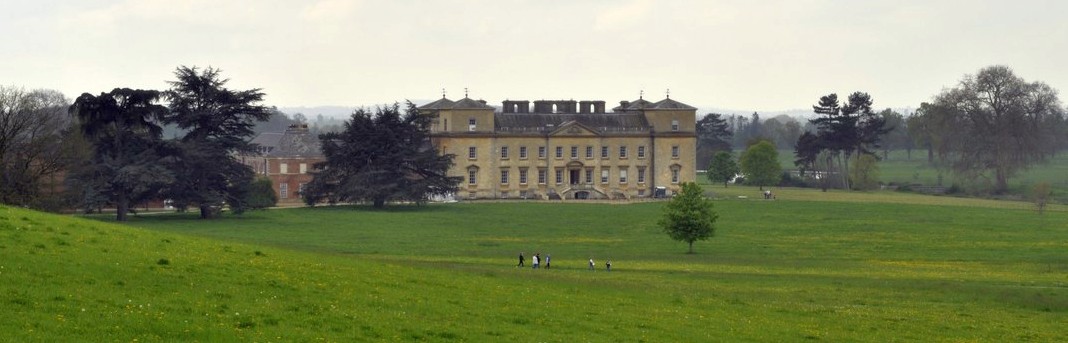
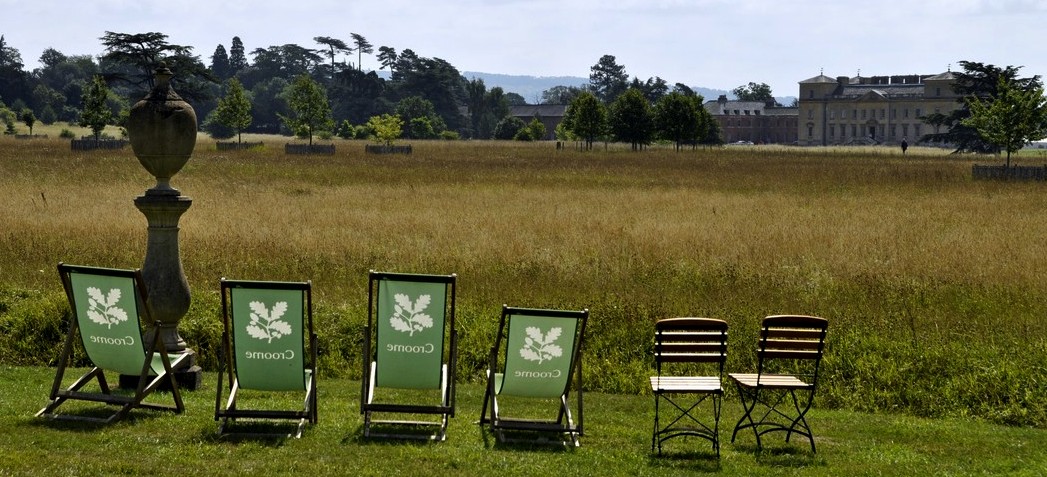
And, it seems, that Lancelot ‘Capability’ Brown in one of his earliest commissions helped to realize the vision of the 6th Earl of Coventry to create Croome Court and Park, a neo-Palladian mansion in deepest Worcestershire, less than 10 miles southeast of Worcester, and 20 miles from our home in Bromsgrove in the north of the county.

Work started on Croome in 1751 and over more than a decade work continued to replace an earlier building on the site. But even as late as the 1790s changes were being made to the park.

While Brown was involved in the design of the hall itself, and of course his signature landscape design, many of the interiors of the hall were designed by equally famous neoclassical architect and interior designer Robert Adam who, with his rival James Wyatt, also designed many of the features – temples and the like – that are dotted about the park, and even follies some distance from the park itself, such as Dunstall Castle to the south and Pirton Tower to the north. The 1¾ mile lake, the Croome River, took 12 years alone to dig out by hand.

From the park there are good views of the Malvern Hills due west, and Bredon Hill, an outlier of the Cotswolds, further southeast. These aristocrats certainly knew just where to build a fancy residence!

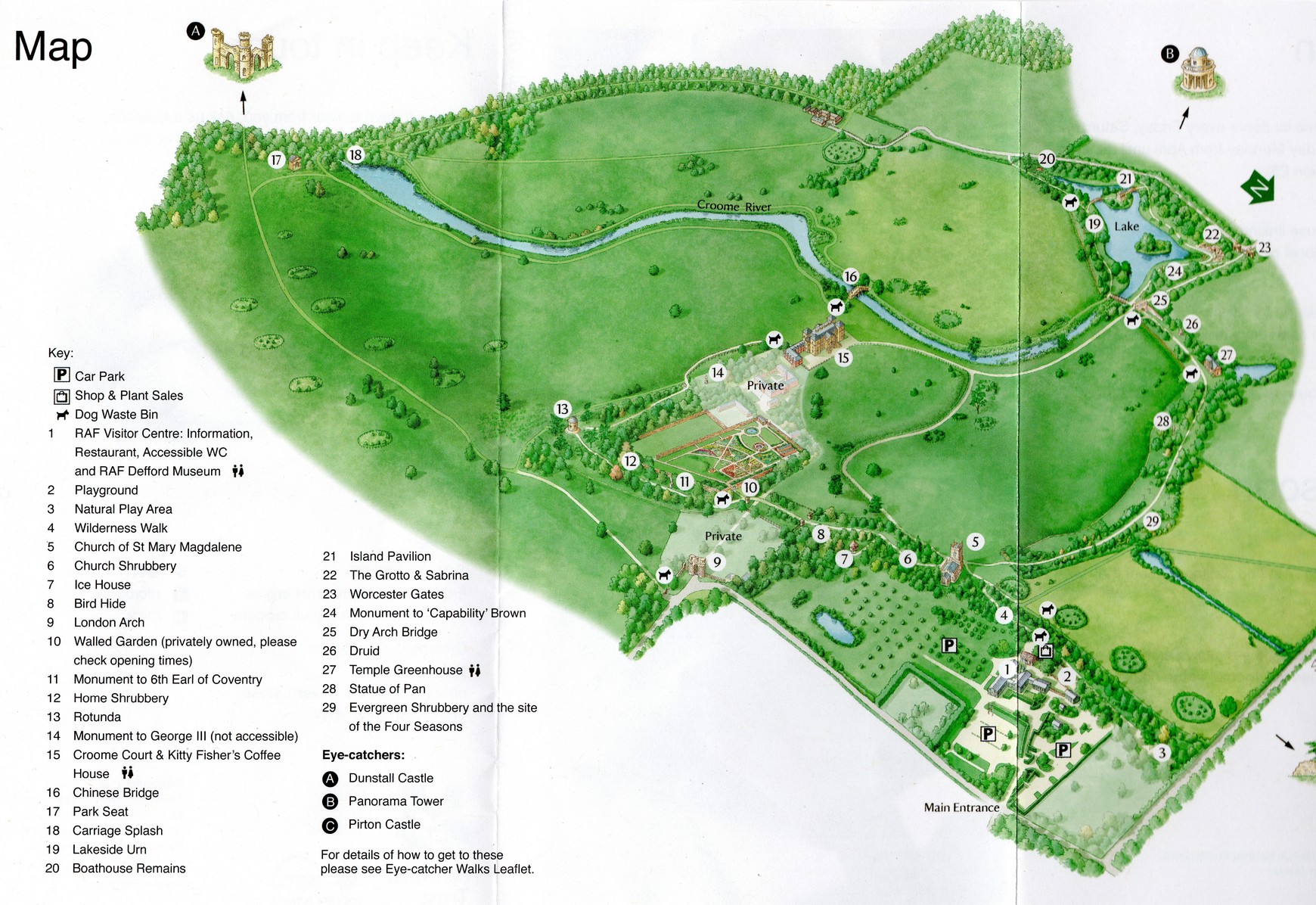
From the Visitor Centre (1 on the map, and once the sick quarters of  nearby WWII airfield, RAF Defford), the footpath through a bluebell wood to Croome Park brings you out onto a hillside beside the Church of St Mary Magdalene (5), and impressive views out over the park and house.

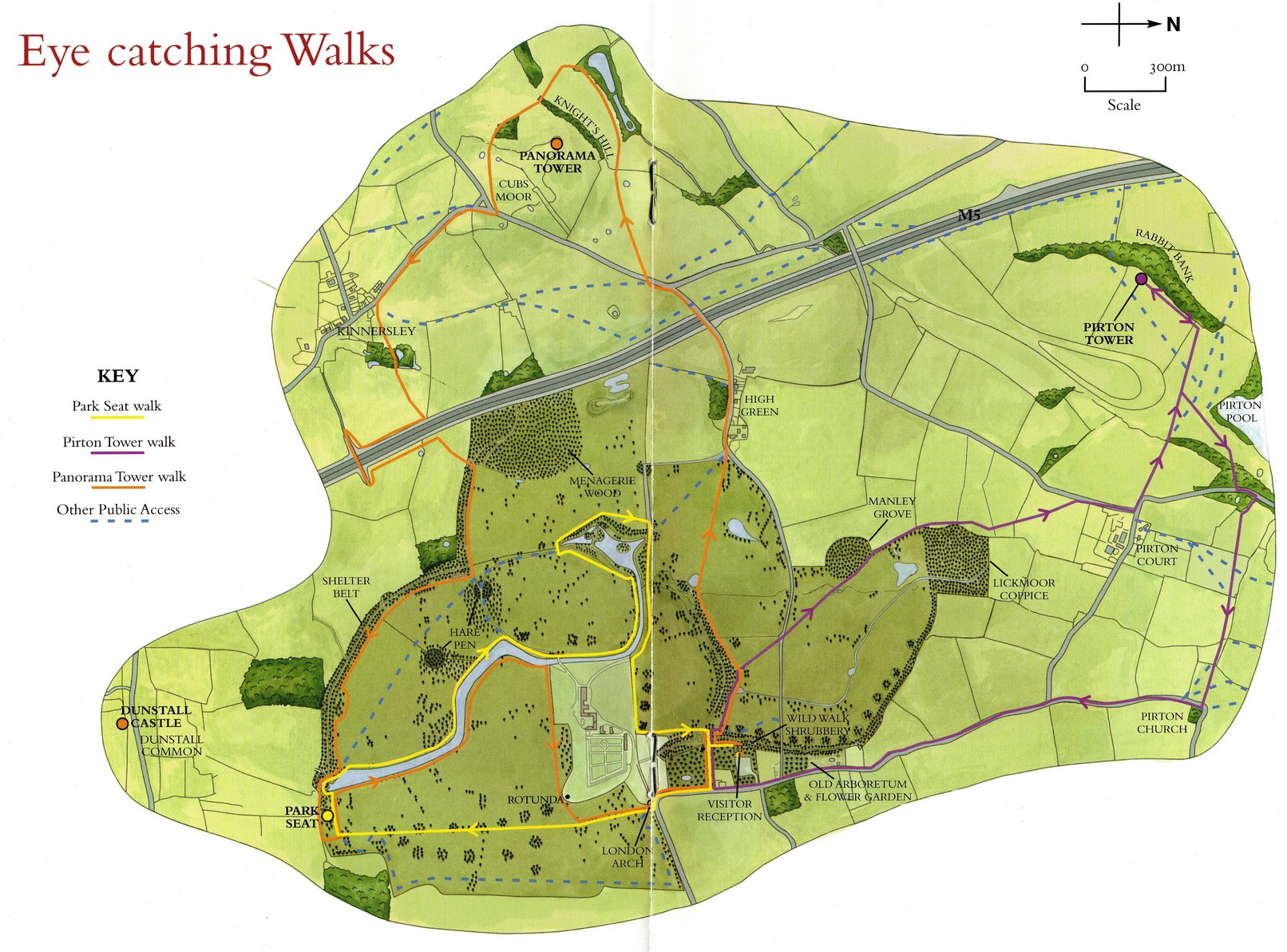
And from that vantage point, there are long walks available in all directions throughout the park and beyond and lots of features to explore as shown in the map below and the subsequent photos.


5. Church of St Mary Magdalene
An earlier church once stood here, but it was replaced by Capability Brown with this rather plain one, but with some impressive tombs inside.

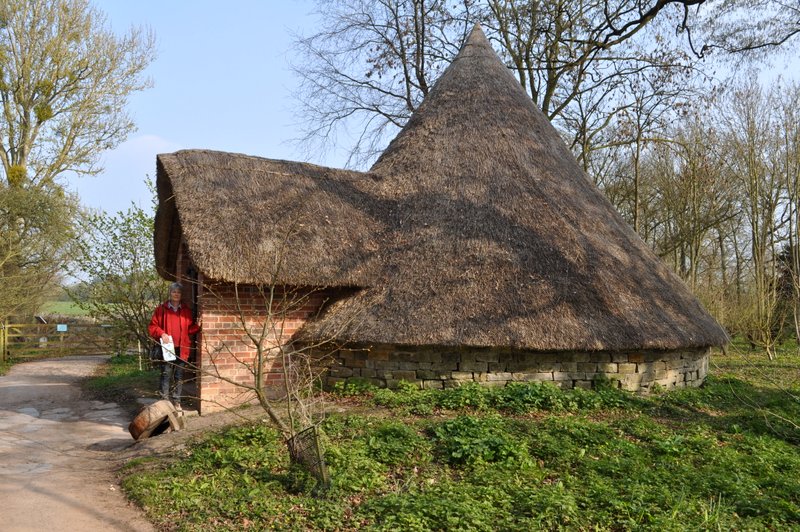
7. Ice House
Many country houses have an ice house – the National Trust has carefully restored this one.


29. Evergreen Shrubbery

27. Temple Greenhouse
Designed by Robert Adam, there are fine views across the park to the main house itself. Glass windows have now been added.

26. Druid
This statue was designed by James Wyatt, and after very careful scrutiny, we did discover the hidden date stamp – 1793!

25. Dry Arch Bridge
The carriage drive built by Brown passes over the top, and here is also a detail of one of the facing stones.

22. The Grotto and Sabrina
You can see the statue of Sabrina reclining on the left hand side of the Grotto, which is itself constructed from tufa.

23. Worcester Gates

28. Statue of Pan

21. Island Pavilion
This is an elegant pavilion, which has undergone extensive restoration particularly to remove decades if not centuries of graffiti from the inside walls. The plaque on the rear wall shows a wedding scene.

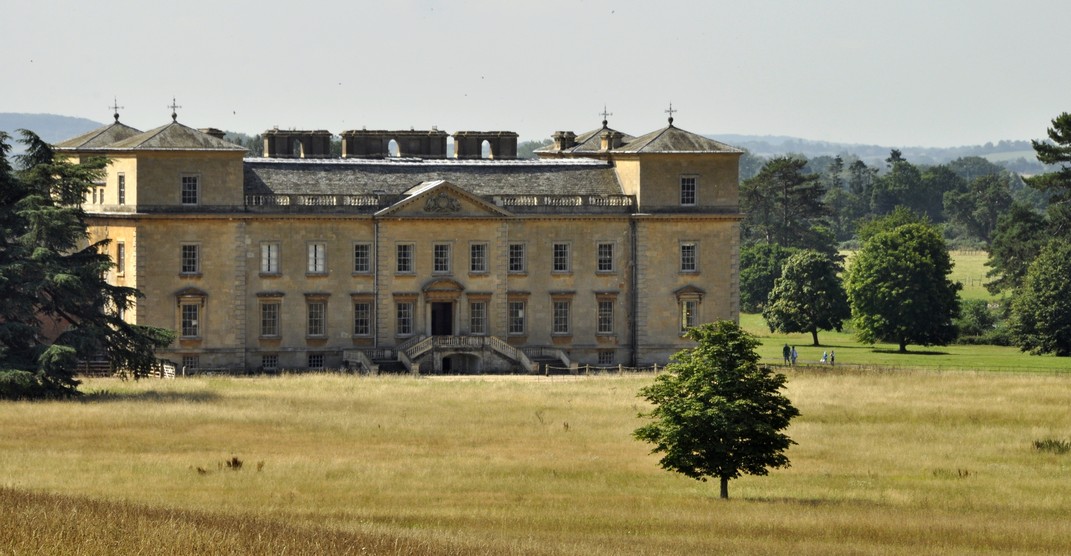
15. Croome Court
This building is both plain and elegant. From the rear, north side, it does appear very attractive at. But the South Portico, with reclining sphinxes either side of the elegant steps up to the door, is something else instead. Although the exterior design is attributed to Capability Brown, Robert Adam was responsible for some of the interiors, particularly the long gallery. The plaster work throughout has been extensively restored as part of the National Trust’s more than £5 million scheme. Only the ground floor and part of the cellars is currently open to visitors. We first visited Croome in March 2011. Three years later one of the rather dilapidated side wings has now had its roof and windows replaced and is on track for a complete restoration. Some other buildings at Croome were converted years ago into private apartments.

When we visited Croome in 2015, the house was encased in scaffolding and swathed in polythene, now removed. We have toured the house just once, in 2011. Work continues with the refurbishment inside, but because Croome was rather busy two days ago, we just enjoyed our walk around the park. I think a visit nearer Christmas might be appropriate to see how the house has changed over the past six years or so.

13. Rotunda
This building lies about 150 m to the east of the south portico where the land rises away from the main park and Croome River. It has an impressive ceiling and other moldings.

16. Chinese Bridge (and Croome River)
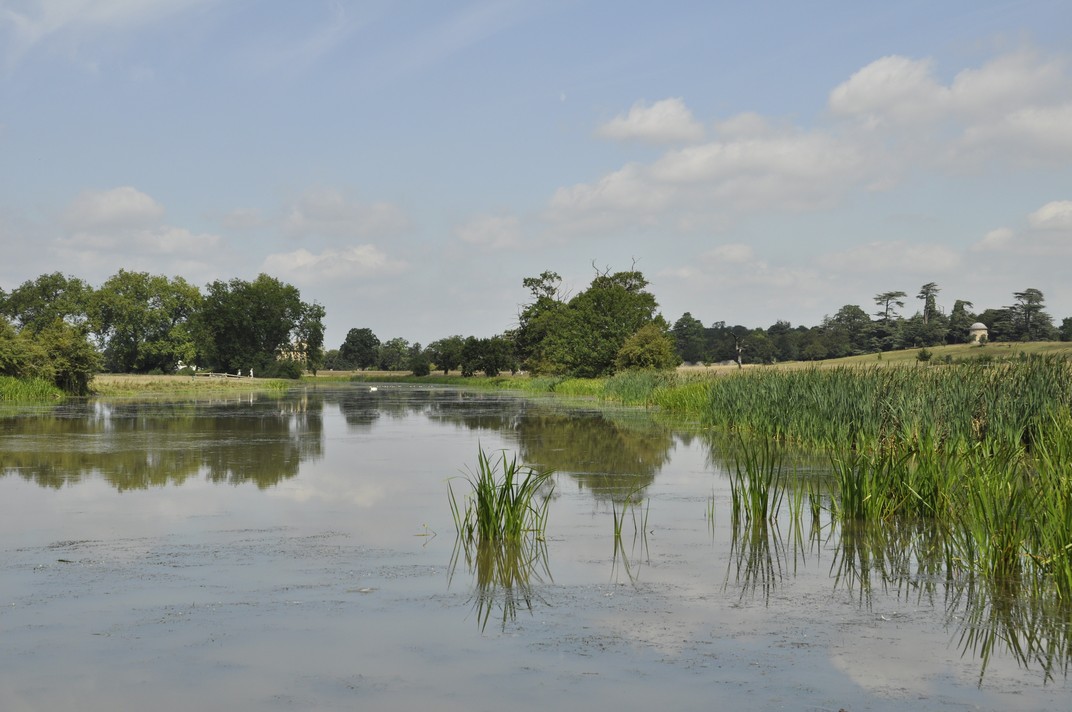
It’s hard to imagine the number of laborers it took to dig this ‘river’ if it took 12 years. There are footpaths all round the lake, where you can mix with the local livestock, and various water birds: coots, mallard, great-crested grebe, and Canada and grey lag geese (on the most recent visit).

17. Park Seat
This sited on a high point looking north over the park towards the house. You can imagine what it must have been like in its heyday – a stroll or ride through the park, perhaps a picnic at the Park Seat. Elegance!

18. Carriage Splash
This is the view along the Croome River from the Carriage Splash.

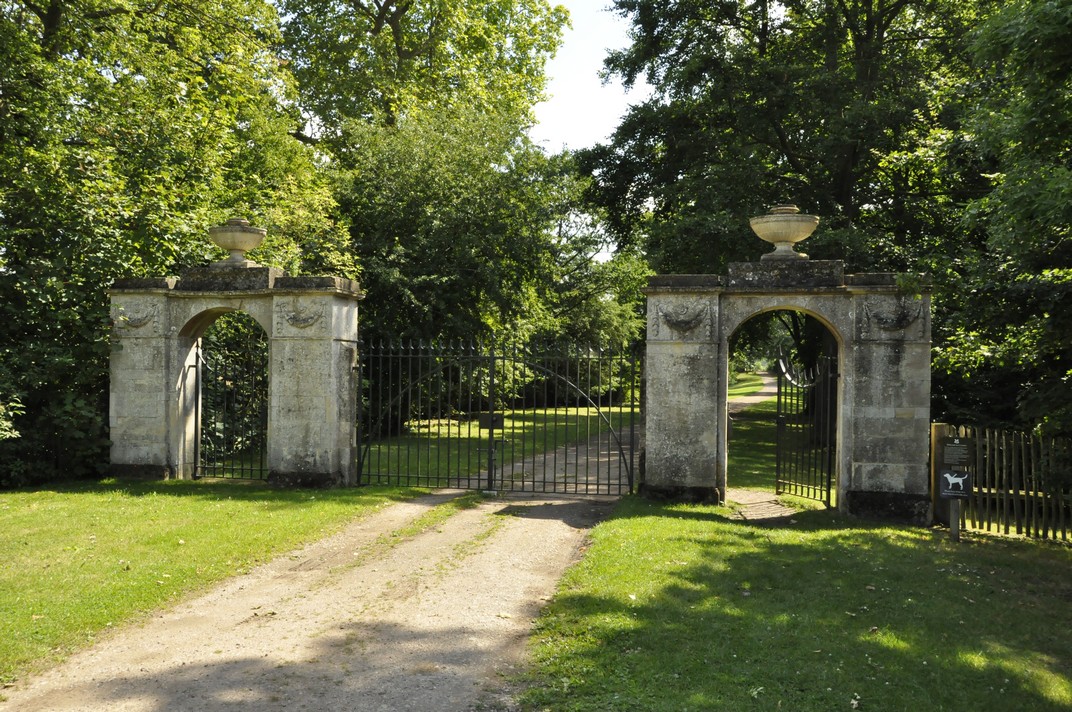
9. London Arch
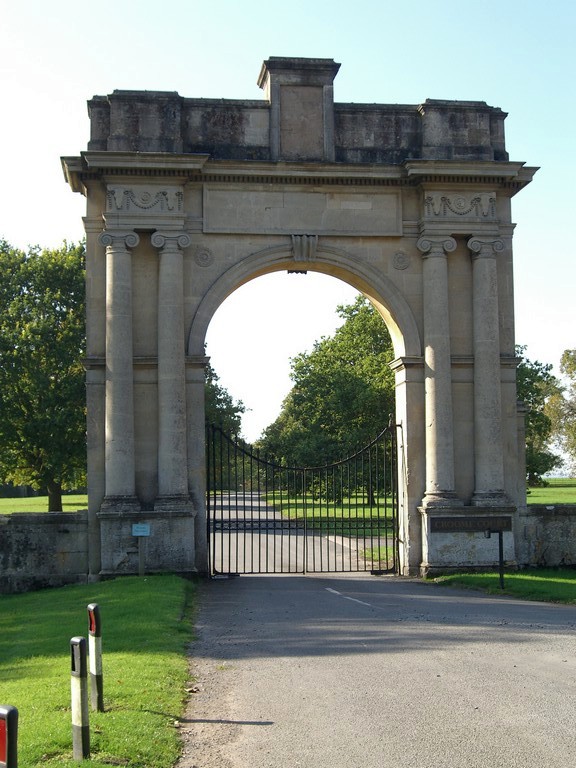
This is an impressive entrance to Croome on the east of the property, but now provides access, via a private road, to apartments that have been developed in some of the outbuildings of the house.

Croome Court has seen some changes during its history. George III visited, as did Queen Victoria and George V. It’s reported to have housed the Dutch royal family in exile during WWII. The Coventry family sold the house in 1948. It subsequently became a Catholic school, and even owned by the Hare Krishna sect. Today, while the garden and park are owned by the National Trust, the house itself is owned by the Croome Heritage Trust and leased to the National Trust.

So if you want to enjoy some culture and the opportunity for a brisk and bracing walk, Croome Court and Park is the place to visit. The photos in this post were all taken along the Park Seat Walk (in yellow on the map below, around 3½ miles).


Beyond the park, and towards the west and the Malvern Hills, stands the Panorama Tower (B on the map).

Celebrate Croome for its inherent, natural beauty.

Celebrate Capability Brown, who could realise the vision of his patron, and made an impact on English landscapes like no other before or since.

And celebrate the 6th Earl of Coventry, who had a vision, and the financial resources to do something about it.

Lost in the mists of time . . .

Before Monday I’d never heard of Hailes Abbey. Owned by the National Trust, but managed by English Heritage, Hailes Abbey (or what now remains of it), is a 13th century Cistercian monastery, nestling under the Cotswolds escarpment, a few miles east of Tewksbury in Gloucestershire.

Having seen that the weather would be fine this week, we began to plan another day out. on Tuesday. Browsing through the Trust’s handbook for members it soon became clear that several properties we wanted to visit were not open on a Tuesday. That’s when I turned to a neat National Trust app on my new iPad mini. And that’s when I ‘discovered’ Hailes Abbey (and also a 14th century tithe barn in a village we would pass on our way home).

Royal connections
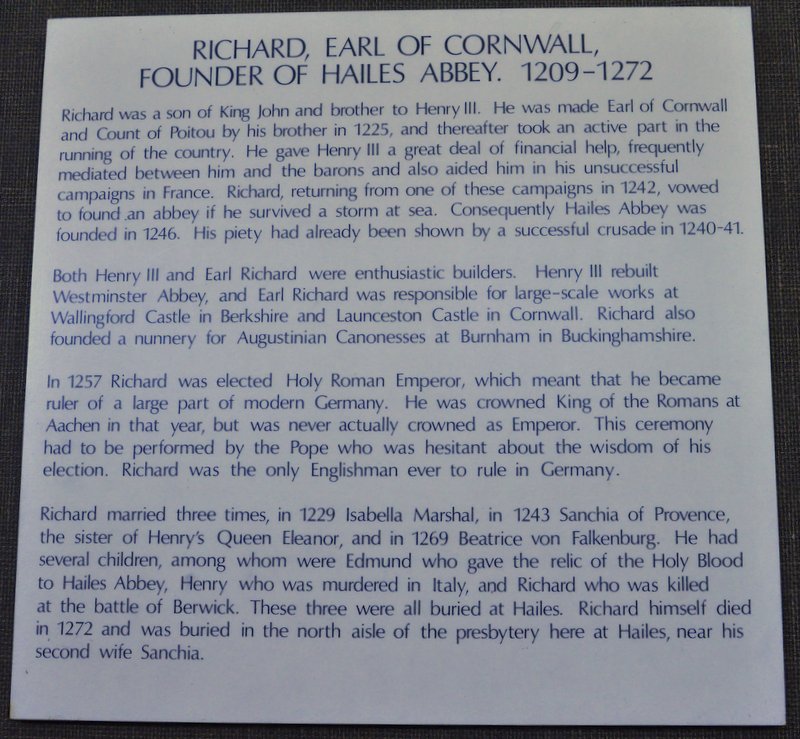
Founded in 1246 by Richard, Duke of Cornwall, son of King John, and younger brother of Henry III, I was surprised to learn that Hailes had been an important house in the network of Cistercian monasteries founded all over England, and certainly one to rival Fountains Abbey or Rievaulx  Abbey, although perhaps not quite on the same scale.

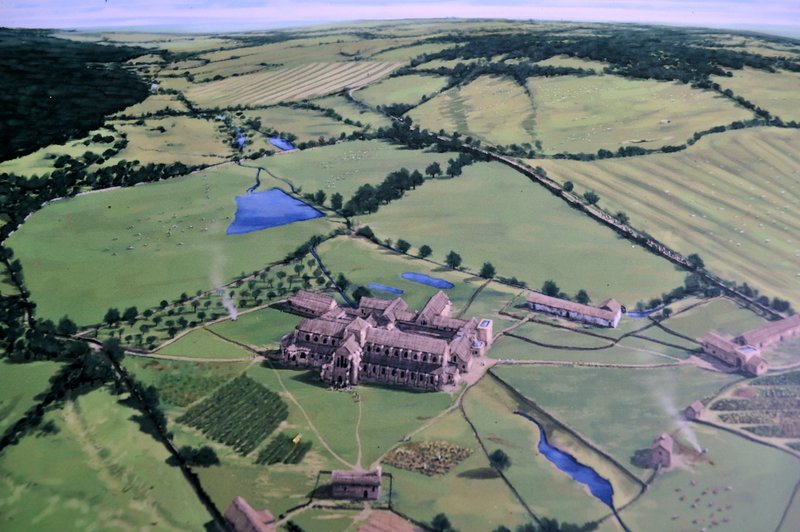
But that’s actually quite hard to fathom, since so little of the original buildings remain, that were constructed from the local oolitic limestone. It is clear however that, from the dimensions of the church at Hailes, it must have been a pretty impressive community, like many others that were founded more or less around the same time. Of course, Hailes suffered the same fate as other religious houses under Henry VIII’s dissolution of the monasteries in the early 16th century.
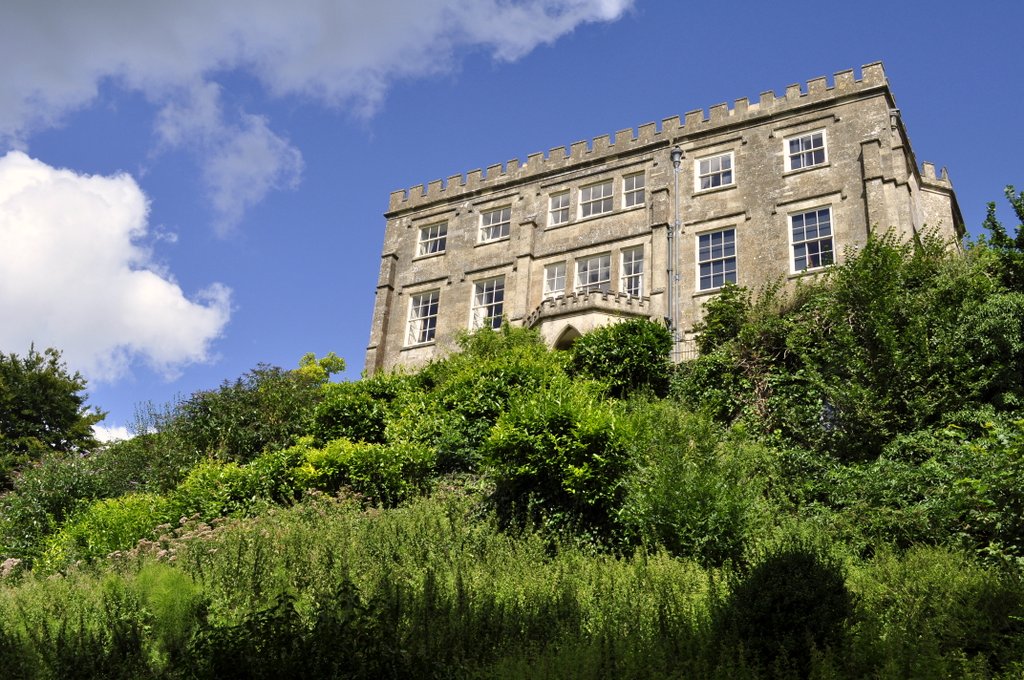
The monks gained much of their income from wool – supposedly they kept up to 4,000 sheep (the famous Cotswolds breed, perhaps). Also, the community had a relic of the ‘True Blood of Christ’ (and later on even a relic of ‘The True Cross’). Pilgrims apparently flocked to Hailes, and made donations for the privilege of venerating the relics.

Just a few walls are still standing today, and some of the surviving stone carvings have been removed to a small museum on site. Nevertheless, the dimensions of many of the buildings and rooms are still visible. And from the dimensions of the walls, and from what is still visible, it’s not too hard to imagine a grand church vaulting skywards.
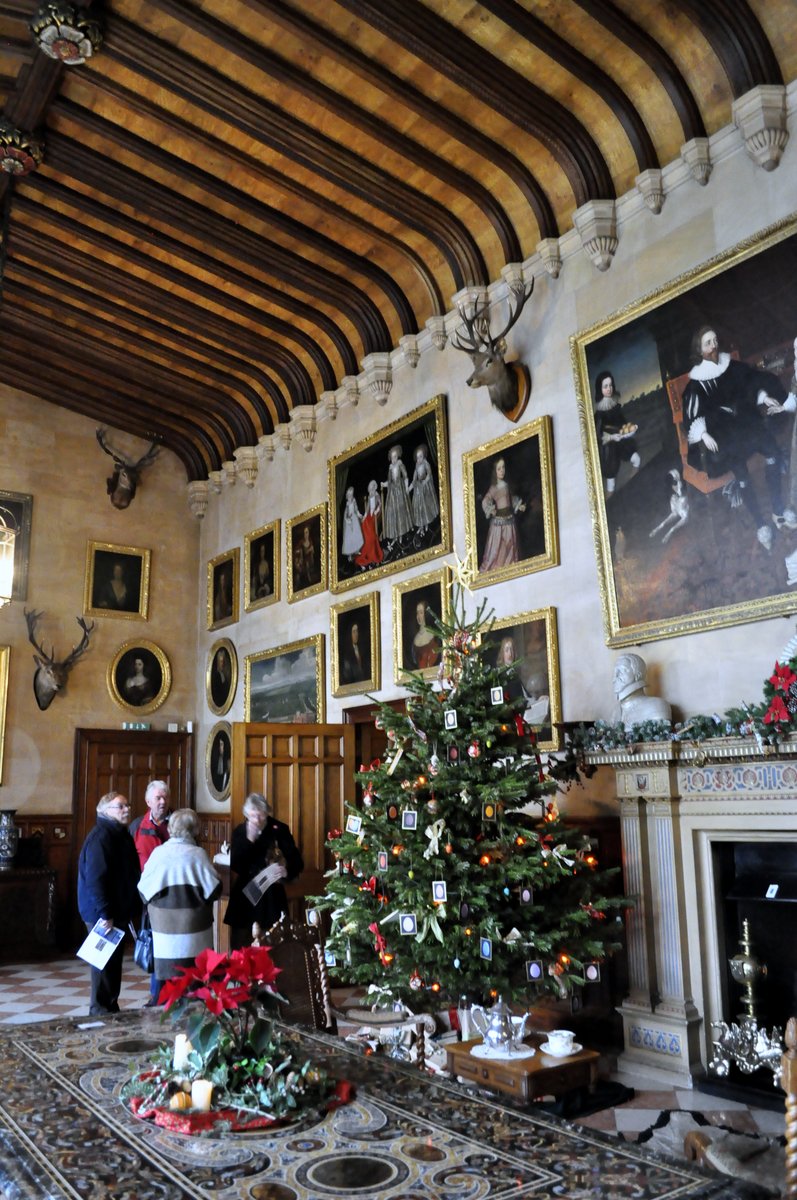
On most days it would be an extremely peaceful site to visit, and in most respects it was. But the staff were busy mowing the grass, so for much of our visit there was the background drone of mowers and strimmers.

Just across the road from the Abbey is a small chapel, older than the abbey, and constructed in the mid-12th century, with some impressive frescoes still visible. I guess many churches were decorated like this before the Reformation. And behind the chapel is the site of a former castle, but no signs of it at all are visible today. Instead the fields are owned by a plant breeding company, and laid out to wheat variety trials.

Another medieval tithe barn
In August last year, we visited a tithe barn in Bredon. Just a few miles upstream, at Middle Littleton (just northeast of Evesham and south of Bidford-on-Avon), is another 13th century tithe barn. It’s certainly an impressive structure, and although we were there for only about 30 minutes, it’s worth stopping by. The stone roof is particularly interesting, especially seeing how the roofers accommodated changes in pitch and angle. The beam structure underneath holding it up is also impressive. It’s open every day from 2-5 pm, between 1 April and 31 October.