
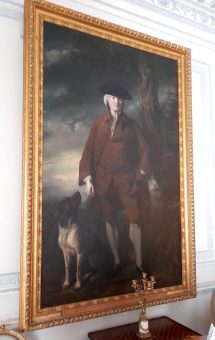
 Wallington Hall overlooks the Northumberland countryside near Cambo (map). It was remodelled in the Palladian style between 1738 and 1746 from an earlier William and Mary house (built around 1688) for Sir Walter Calverley Blackett (right, 1707-1777) by the architect Daniel Garrett. It is believed that renowned landscape architect Lancelot ‘Capability’ Brown (1715-1783, who was born in nearby Kirkharle and went to school in Cambo) advised Sir Walter on the location of the walled garden (3 on the map below), and perhaps even designed the Owl House (2) there.
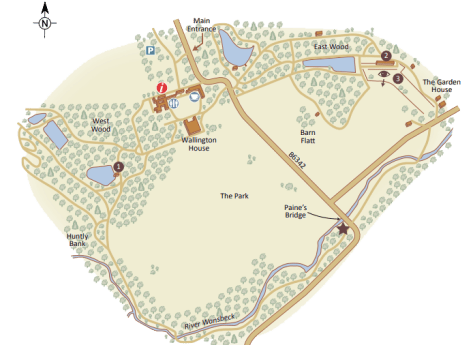
After Sir Walter’s death in 1777, Wallington was bequeathed to his sister Julia’s family, the Trevelyans, and it remained in the family until 1942, when it was gifted to the National Trust.
Since returning from the USA in mid-June, the weather in the UK has been decidedly unsettled. So we have grabbed every good weather opportunity to get out and about. Unfortunately, due to my reduced mobility these days, I’m unable to walk the distances that we have enjoyed in the past. But provided my pain medication kicks in appropriately, then I can manage a relatively short walk. Around a mile or so is possible.
With that in mind, we headed to Wallington with the aim of enjoying the walled garden in mid-summer. And to compare the garden today with what it was like a decade ago.
My first impression was that the walled garden today is much brighter, so to speak, with a new fiery border along the terrace in front of the Edwardian conservatory and below the Owl House.
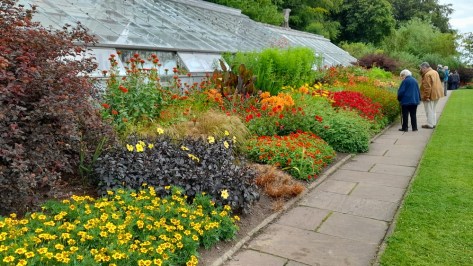

Here are some of the plants in that bed. What a magnificent sight to welcome visitors to the garden.


Until quite recently, the conservatory was open to visitors, indeed as recently as our visit there in mid-December 2021, but it is now closed while plans are drawn up for its refurbishment. Which isn’t going to come cheap. Perhaps it was damaged in one of the winter storms that affected the estate.


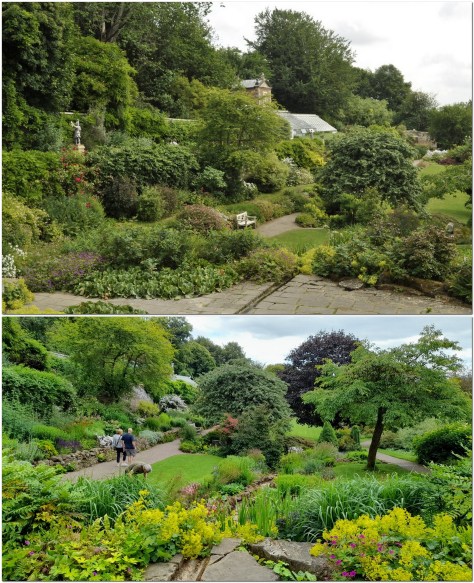
Ten years on, the garden has developed a lot, and is a credit to the hard work of the staff gardeners and volunteers. Here are two images, taken from more or less the same spot, ten years apart, looking from the water terrace at the top of the garden eastwards down the garden. In the 2013 image, the conservatory and Owl House can be clearly seen.
At least one new ‘garden room’ has been created, surrounded (like the others) by trimmed cedar hedges.


And more, it seemed to me, has been made of the small pond area at the bottom of the garden.


On the south side of the garden, another large set of beds has evolved over the decade. Here are images from 2013 and last week.


The colors are more muted this year, with the fiery varieties moved to the conservatory terrace. Here is some of the 2023 planting.


One of the gardeners explained that it’s a never-ending task to plant and replant all these beds. He mentioned that in the autumn they plant several thousand bulbs, so I think a visit next spring is on the cards to see the early color.
The terrace fountain area at the top of the garden, near the entrance, was ‘dry’ on our latest visit (bottom image below). Normally the small pond is full, and water runs through a rill across the terrace.
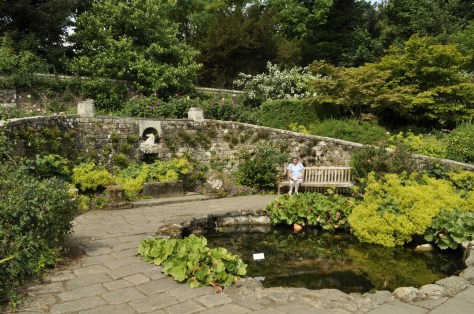

I believe this part of the garden is fed from a large lily pond outside the walls. It looked as though there had been work on the earth dam at the eastern end, and the water level was low. Hence the dry fountain inside the garden.
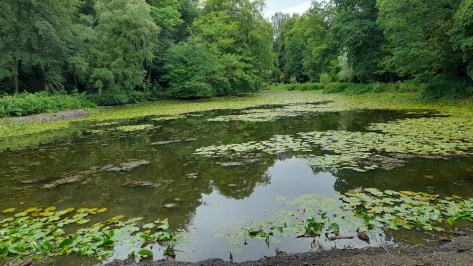
The walled garden is a 15 minute or so walk from the house through the East Wood. Alongside the lake (above) there’s a new addition: a carved owl, from the tree trunk of one of the trees brought down during Storm Arwen in November 2021. There’s apparently another carving, but we didn’t manage to find it. Both are by tree sculptor Tommy Craggs from County Durham.
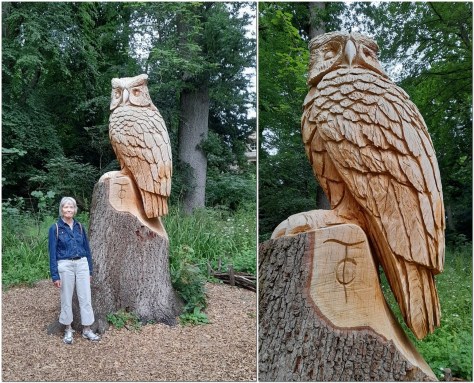
There are lots of owls at Wallington. Not only on the roof apex of the Owl House (seen in several of the images above), but also adorning the gate posts of the courtyard at the rear of the house.

The owl features in the Calverley family crest, Calverley (a West Yorkshire name) being the former surname of Sir Walter Blackett mentioned at the beginning of this post.
After being cooped up inside for a couple of weeks because of the unseasonably wet and cool weather, it really was a pleasure to return to Wallington. Just 23 miles and around 40 minutes from home, Wallington is sure to be on our National Trust itinerary year after year, season after season.
 A balanced diet . . .