“Jolly old hawk . . .

. . . and his wings were grey. Now let us sing.
Who’s going to win the girl but me?
Jolly old hawk and his wings were grey.”

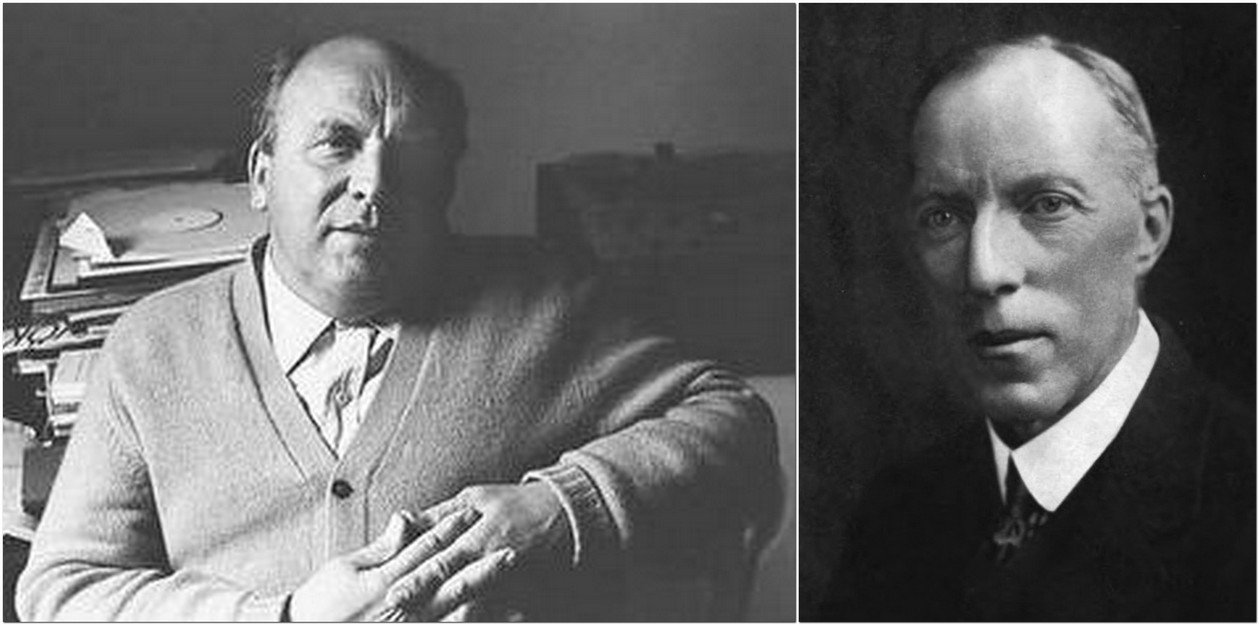
A variant perhaps on The Twelve Days of Christmas. Singer and collector of folk songs, AL Lloyd (left below) suggested that the tune may have come from France or Flanders in the Middle Ages. Cecil Sharp (right), an eminent activist in the folk revival of the early 1900s, apparently found the song at Bridgwater in Somerset.
The song featured on Frost and Fire, recorded in 1965 for Topic Records by The Watersons, a folk ensemble from Hull, comprising brother and sisters Mike, Norma, and Elaine (always known as Lal) Waterson, and their cousin John Harrison, mostly singing unaccompanied and with a musicality of sublime harmonies.
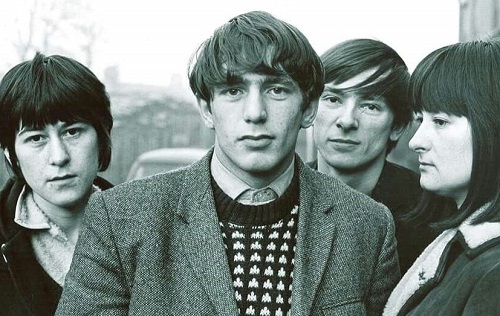
L-R: Lal, John, Mike, and Norma

Frost and Fire was followed up in 1966 by A Yorkshire Garland, and I purchased that as well, keeping both as part of my collection until they were taken in burglary while we lived in Costa Rica in 1978.

I’m not sure what drew me to The Watersons or how and when I first encountered them. But I must have been taken with them immediately being inspired to purchase Frost and Fire when it was first released.

However, my interest in folk music and dance had begun a year or so earlier, when I enjoyed a couple of BBC television programs. The White Heather Club, broadcast between 1958 and 1968, had Robin Hall and Jimmy Macgregor as resident folk singers. 
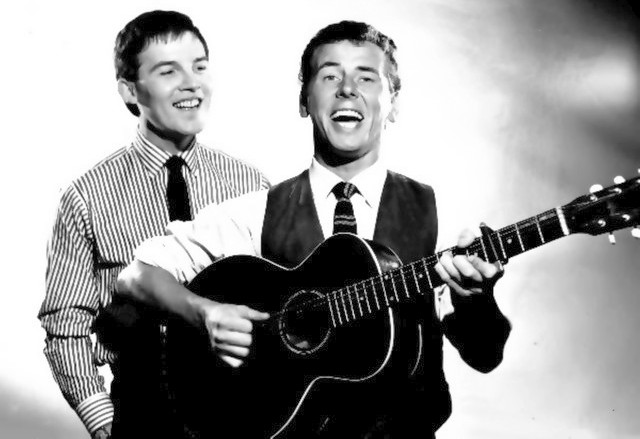
Robin Hall and Jimmy Macgregor

The Hoot’Nanny Show was broadcast from Edinburgh in 1963 and 1964. Residents on the show were the Corrie Folk Trio (whose Flowers of Scotland has become the country’s unofficial anthem) and Paddie Bell. But other regulars included the Scots singer Ray Fisher¹ and her brother Archie, The Ian Campbell Folk Group (from Birmingham, including virtuoso fiddle player Dave Swarbrick), and The Dubliners.

These and some other singers like Bob Davenport (from Gateshead) were my introduction to folk music, and on arrival at the University of Southampton as an undergraduate in October 1967, I joined the folk club and the English & Scottish Folk Dance Society. That introduction to folk dancing extended a year later into morris dancing as well.
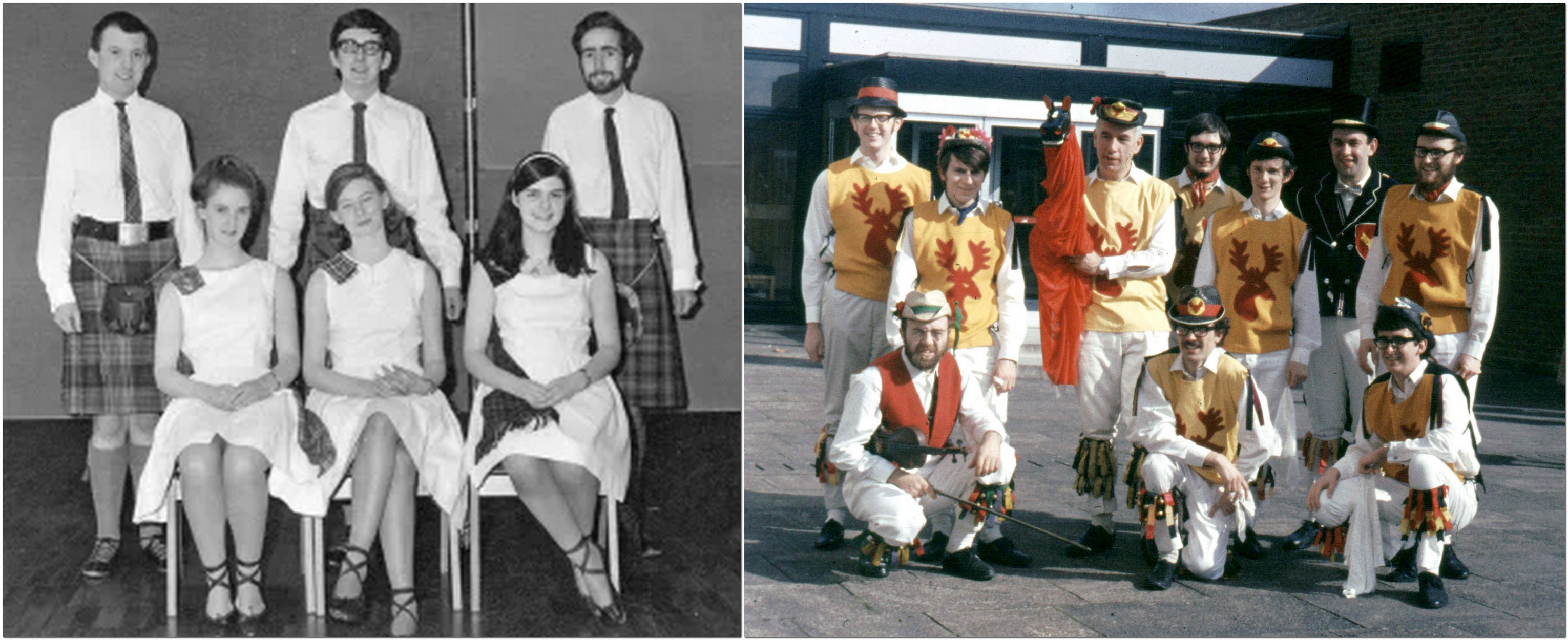
L: At the Inter-Varsity Folk Dance Festival at the University of Hull in March 1968 (I’m standing in the middle); R: the Red Stags Morris Men (I’m crouching far right) in March 1970.

Among the singers who appeared more than once at the Sunday night folk club in the Students’ Union were Tim Hart and Maddy Prior, among the co-founders of the electric folk group Steeleye Span which formed in 1969.

I didn’t encounter Steeleye Span until September 1970, when I first heard the song Lovely On the Water although it wasn’t released until March 1971 on the Please to See the King album.

Martin Carthy joined the Steeleye Span line-up for their second and third albums although he was mainly a solo artist, but also releasing several duo albums with Dave Swarbrick


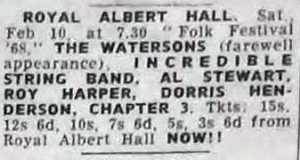
Anyway, returning to The Watersons, I never thought I’d ever see them perform live. But, on 10 February 1968, when they made their farewell performance at the Royal Albert Hall in London, I and several friends were in the audience.

Norma left the group and moved for several years to the Caribbean island of Montserrat. Returning to the UK by 1972, she married Martin Carthy who became a regular in The Watersons line-up. I read that John Harrison left the group in 1966, but I thought he was still singing with them at their 1968 farewell concert.

Martin and Norma’s daughter, Eliza Carthy (a singer and multi-instrumentalist) has become one of the UK’s foremost folk performers.

Apart from Frost and Fire and A Yorkshire Garland that was my exposure to The Watersons for the next 50 years. Until a year ago, when I came across an obituary for Norma in The Guardian newspaper on 31 January 2022. This appreciation was also published in the newspaper on the same day. Lal died in 1998, and Mike in 2011.

Thanks to YouTube and Spotify I have been able to find so much of their music online, and in videos such as this one, they talk about themselves, their origins, and their music.

One song that became Norma’s signature piece, it seems, is A Bunch of Thyme. Here she is singing with Eliza in 2017. Enjoy.


¹In 1969, I joined Ray and her husband Colin Ross when they led a group of pipers and dancers to a folk festival in Strakonice, Czechoslovakia.

Trains and boats and . . .

Buses!

Actually bus, then ferry, and finally train. Not exactly Burt Bacharach/Hal David, nor Dionne Warwick (or Billy J Kramer and the Dakotas for that matter).

Yesterday, Steph and I took full advantage of our concessionary travel cards to make a round trip by bus to the ferry terminal at North Shields, crossing the River Tyne by ferry to South Shields, and returning home by the metro to our closest station at Northumberland Park.

Our travel concession permits unlimited bus travel after 09:30 each day (nationwide in fact), and with an additional Gold Card payment each of £12, unlimited travel on the local ferry and Metro as well.

The Tyne and Wear Passenger Transport Executive, branded as NEXUS, manages an integrated transport system in the northeast of the UK around Newcastle upon Tyne.

NEXUS brings together the bus, ferry, and Metro services across the five metropolitan boroughs of North Tyneside (where we live) and Newcastle upon Tyne north of the River Tyne, and Gateshead, South Tyneside, and Sunderland south of the river, that together once constituted the metropolitan county of Tyne and Wear.

So, with that in mind, we planned our excursion that would use all three of these services to get around.


Our journey started at 10:25 from a bus stop less than a couple of hundred meters from home. The No 19 service was supposed to operate every hour, although there was some confusion yesterday since a new operator had just taken over the route, and some services did not show up. Ours was about five minutes late, and the journey to the ferry took about 35 minutes.

The journey was quite interesting since it took us through areas of North Tyneside (south of where we live) that we have never explored. It was a little bit longer than we anticipated, since we did not recognise the ferry bus stop, and so stayed on board while the bus completed its route around North Shields before returning to the ferry stop.

We just missed the 11 am ferry to South Shields. But that didn’t matter. Although quite cold (just 2-3°C), it was a bright and sunny day, so we enjoyed exploring the ferry quay and reading about its history before our ferry, Spirit of the Tyne docked around 11:20.

The trip across the Tyne takes about seven minutes, with interesting views along each bank where heavy industries like ship building once thrived. Nowadays some of the land has been converted to choice waterside apartment buildings, although further up river there is an active Port of Tyne, and quays for the ferry service to Amsterdam and where cruise ships also dock. In port yesterday was the Fred Olsen Bolette, preparing for a cruise to Iceland later that same evening.


The ferry quay on the South Shields side is just a stone’s throw from the town center.

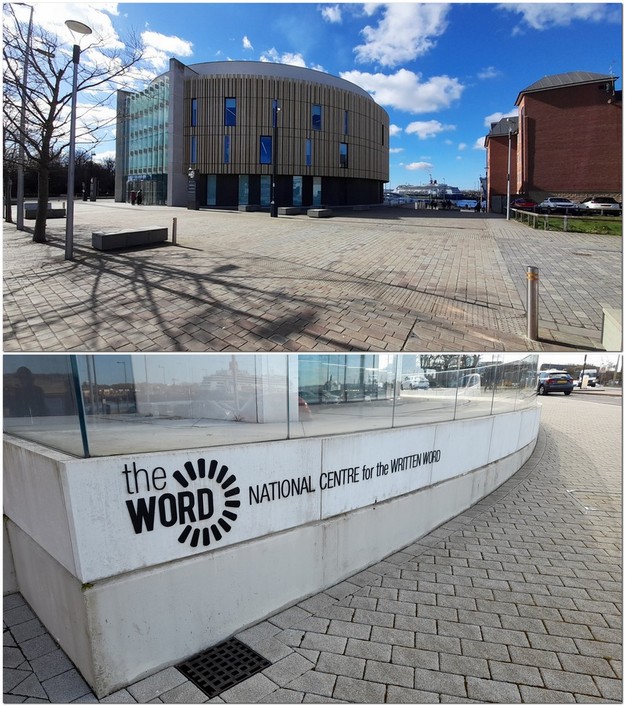
Just beyond the quay stands The Word – that National Centre for the Written Word, which we didn’t visit but we must make a plan to return to.

We didn’t actually have any plan at all yesterday, apart from making the round trip. But as soon as we had landed in South Shields we discovered that the remains of an important Roman fort (which I had read about but totally forgotten) were less than a mile away. So we headed through the town center to reach Arbeia, on a plot of land known as The Lawes high above the town.

And we were in luck as yesterday was the first day of opening this year. Entrance was free.

Founded around AD 160, Arbeia was a key garrison and military supply base to support the troops who constructed and afterwards manned Hadrian’s Wall further west. The remains of numerous granaries (there were, at one time, up to 24 of these store houses) can be clearly seen from the ramparts of the reconstructed West Gatehouse.

In addition to the gatehouse, there is a reconstructed barracks showing what life might have been like for Roman and auxiliary soldiers all those centuries ago.

The first archaeological investigation of Arbeia began in 1870. More photos of the site and inside the reconstructed buildings (with explanations) can be viewed here.

After a quick picnic lunch, we had a look round the museum, before heading to view the mouth of the River Tyne and across the river to Tynemouth and its priory.


By about 14:00 we had arrived back at South Shields’ new Metro station at the Interchange Square, where we took the metro back home.

South Shields is the end of the line, and just as we stepped on to the platform, the next train was pulling into the station.

Trains from South Shields (yellow line) head into Newcastle city center, before turning east to Whitley Bay and Tynemouth on the North Sea coast and looping back to the St James terminus.

Our stop, Northumberland Park, was 24 stops, and almost 50 minutes. Sitting in a stuffy Metro carriage, surrounded (for part of the journey from South Shields to Jarrow) by a class of high spirited and noisy schoolchildren who we’d seen at Arbeia) was a bit trying, but crossing the River Tyne between Gateshead and Central Station (where the line goes underground for a few stops) and seeing all the bridges downriver always lifts one’s spirits.

About 15 minutes later we pulled into Northumberland Park, and the train headed off on its continuing journey to the coast.

Then it was a short 10 minute walk home, relief at being able to put my feet up (we’d walked about 4½ miles), and enjoy a welcome afternoon cup of tea. All in all, a good day’s excursion.


Not 20,000 leagues . . .

Diving at Anilao, Philippines

Actually, 16,504 minutes (almost 11½ days) under the sea. That was the extent of my scuba diving experiences over 17 years from March 1993 when I first learned to dive in the Philippines.

Today marks the 30th anniversary of my first Open Water training dive that I made at Anilao, about 95 km southwest from Los Baños where I worked at the International Rice Research Institute (IRRI).

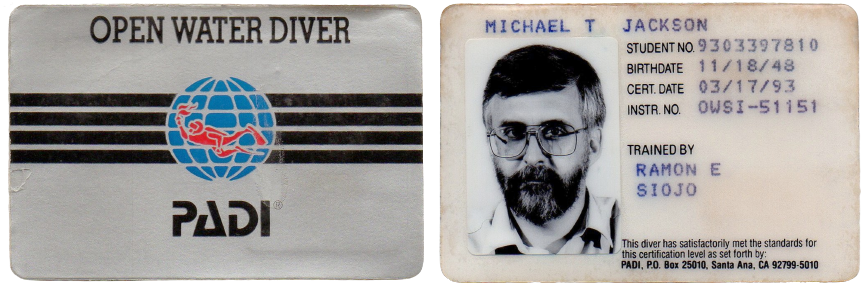
I received my PADI Open Water Diver certification on 17 March 1993.

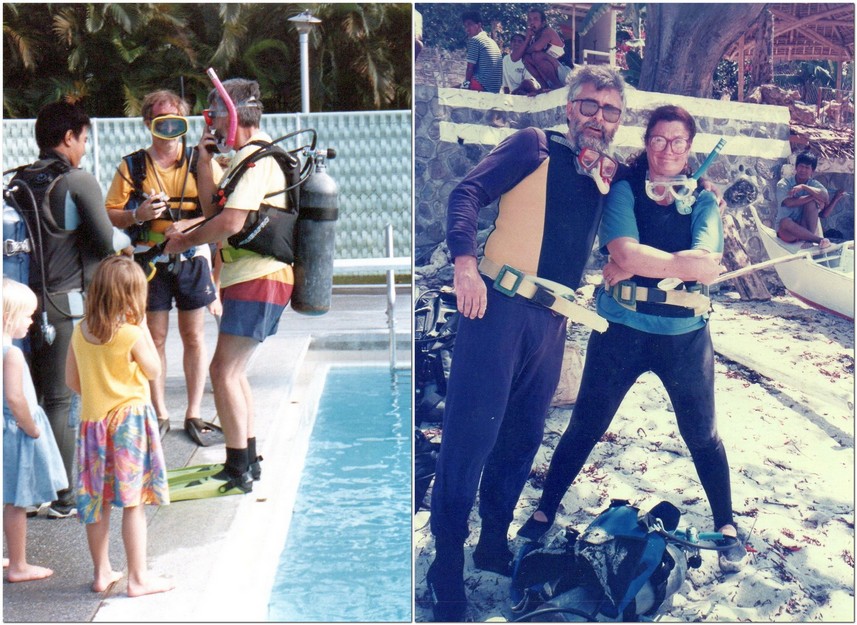
We were a group of about ten IRRI staff and family members, trained by Boy Siojo (left below) and Mario Elumba.

After Confined Water dive skills training in the swimming pool at IRRI (right), it was quite an experience to transfer to the ‘open ocean’.

L: About to plunge backwards into the IRRI pool on 6 March 1993; R: With PADI course classmate Crissan Zeigler at Anilao after successfully completing the four Open Water training dives on 14 March 1993.

And although I have mostly been risk averse, never having any interest whatsoever in mountain or rock climbing, potholing, jumping out of planes, and the like, I took to scuba diving enthusiastically, although it had never crossed my mind as an option when I first landed in the Philippines two years earlier. Our elder daughter Hannah had taken the NAUI course in 1992, and I saw how much she enjoyed it. I decided it was a ‘sport’ we could enjoy together, and signed up for scuba training at the next opportunity.

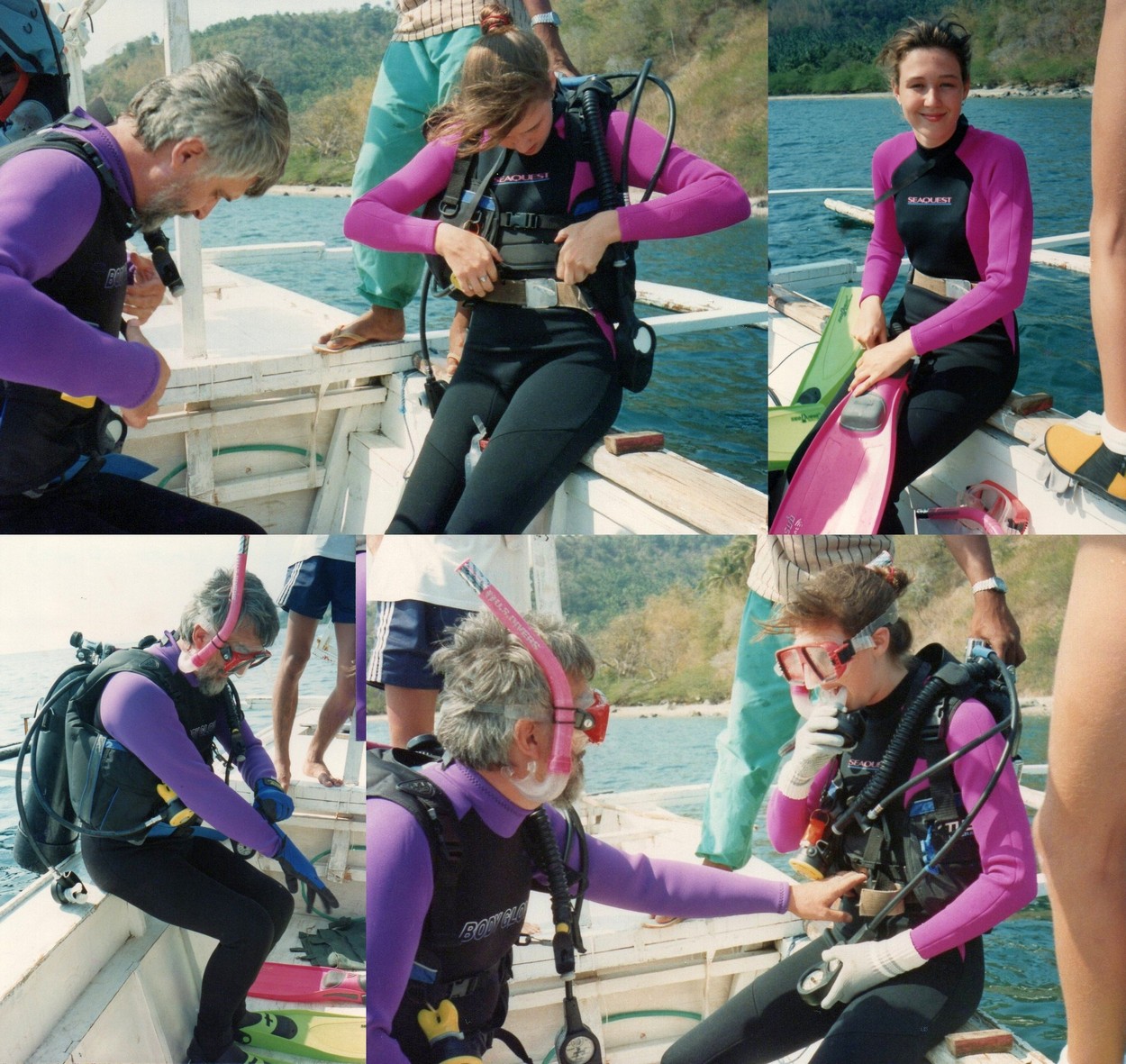
Diving with Hannah, just three weeks after certification in April 1993. By then I’d already bought my own wet suit and other scuba equipment.

Our younger daughter Philippa took the PADI course in January 1995, just before her 13th birthday.

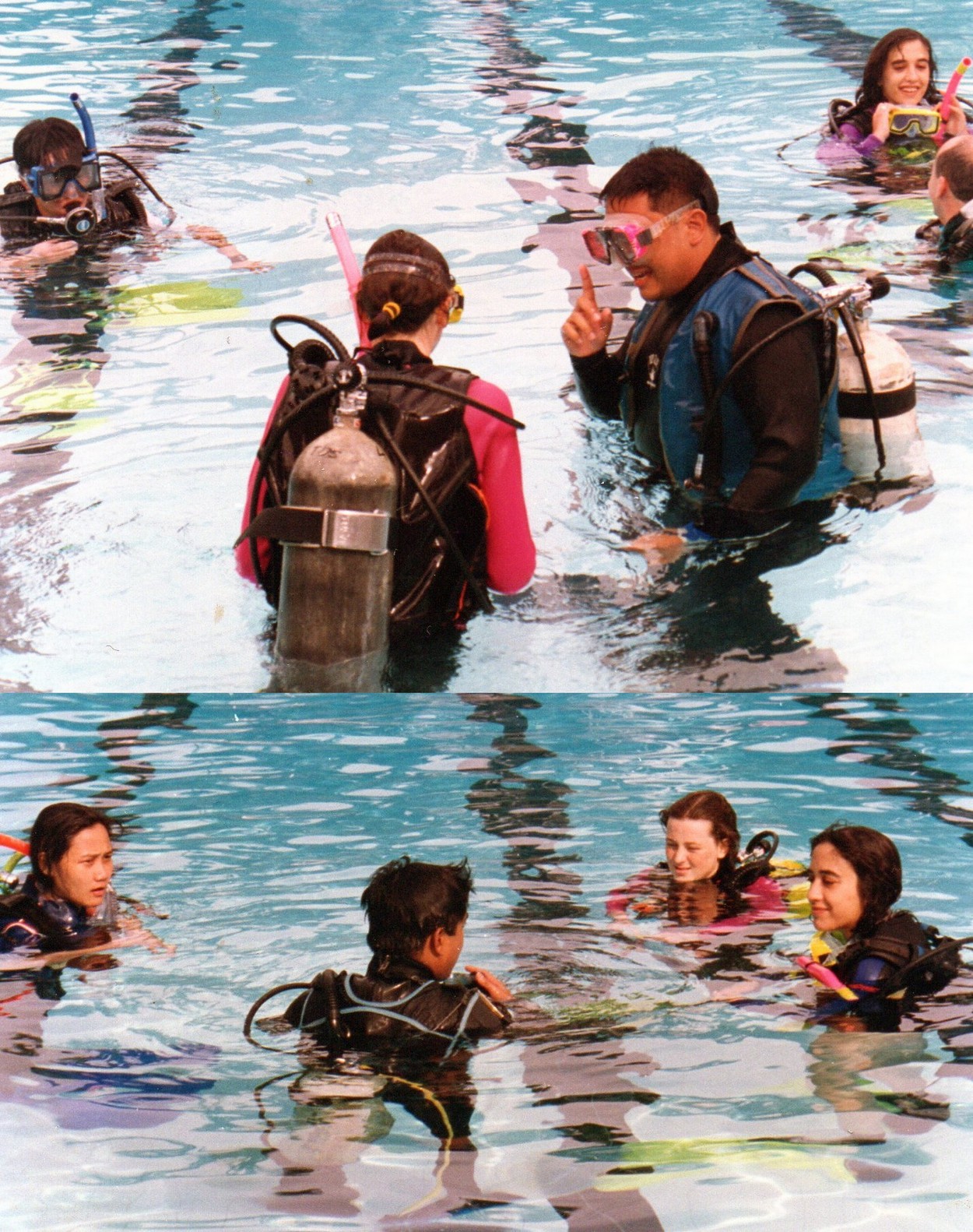
Phil and other students in the IRRI pool for the Confined Water training.

Returning from a dive in April 1995, with IRRI friends (L-R): me, Crissan Zeigler, Philippa, Kate Kirk, Clare Zeigler (Phil’s best friend), and Bob Zeigler (who became IRRI’s Director General in 2004).

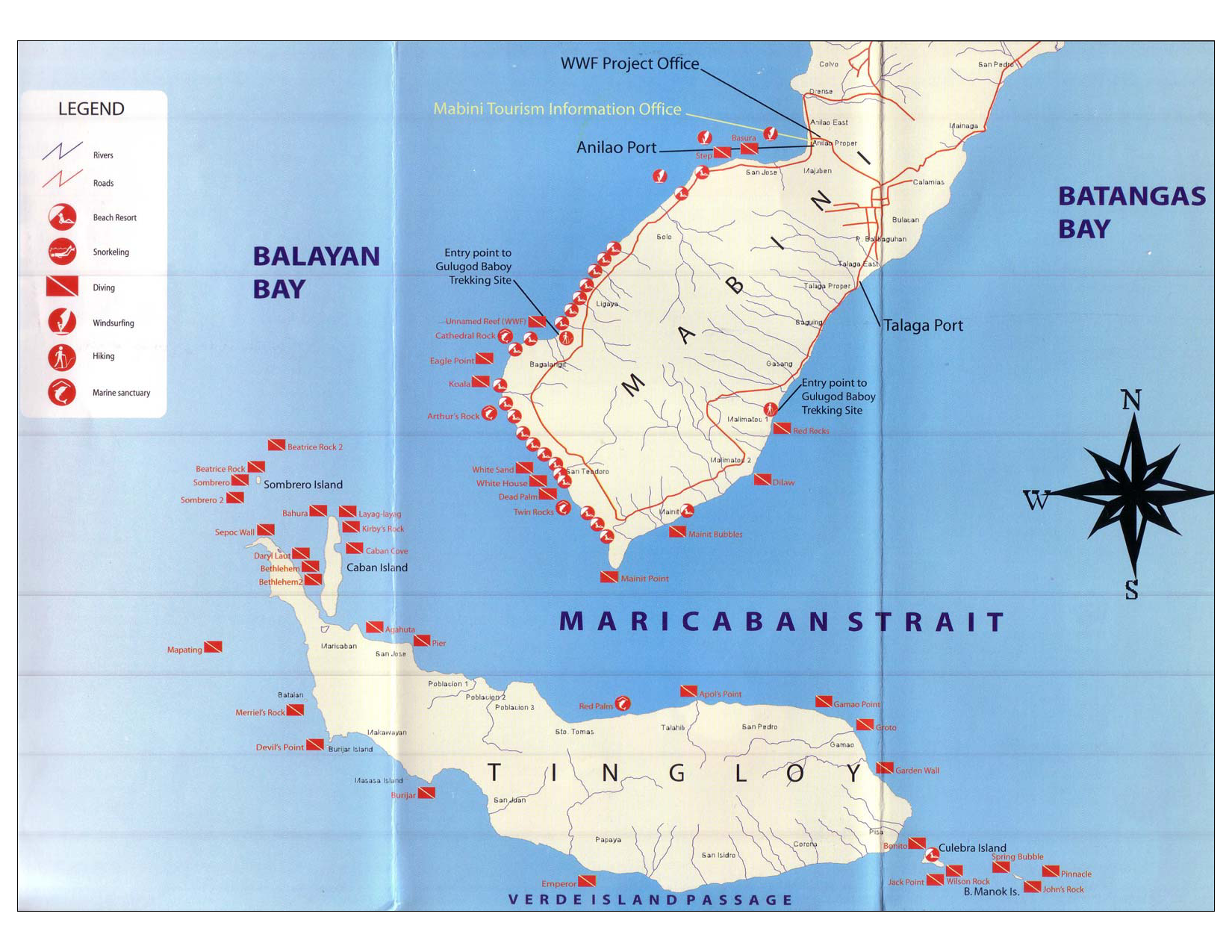
I made all my dives around the many sites at Mabini, Anilao, never straying further to other locations in the country.Click on the map to enlarge.

That’s because Steph did not dive, and Anilao was excellent for snorkelling which she enjoyed, cataloging all the fish species she observed over nearly 19 years.

I also made my last—and 356th dive—on 14 March 2010. These photos were taken during my last two dives. Fittingly my last dive was an early one, probably around 7 am, at Kirby’s Rock.

With my dive buddy Katie and other members of my IRRI staff after the last dive, heading back to the dive resort for a breakfast of bacon and eggs.

And on that last dive, we were lucky to see a sea snake, a creature that eluded me for most of my 356 dives.

Anilao was very convenient for a weekend getaway, and the dive resort where we mostly stayed, Arthur’s Place, almost became a second home to the many IRRI divers over the years.

As I gained experience, and was more relaxed underwater, I could extend my dives to at least 45 minutes and longer, some lasting an hour or more. But it all depended on whether there were strong currents, visibility, and the capability and experience of my dive buddies.

The shortest dive I made, in August 1997, was just 10 minutes at my favorite dive site, Kirby’s Rock a 20 minute or so ride across the channel from Arthur’s Place. I was diving with an American couple, Bert and Annette Gee who were also staying at Arthur’s that weekend.

The dive started normally, with a back roll over the side of the dive boat, or outrigger banca. We descended the rock face (as you can see in the video below filmed on another occasion), and then, at 90 feet, my breathing equipment (both regulators) malfunctioned and I had to abort the dive. Thank goodness for outstanding training from Boy and Mario. I coped – and lived to tell the tale!

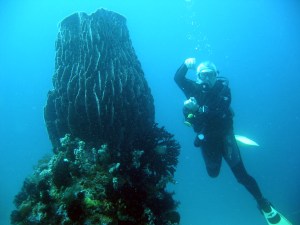
My deepest dive, at 135 feet, was at Kirby’s Rock, and I made over 50 dives there to over 100 feet. I relished the sensations of descending into colder water and increasing water pressure compressing everything, knowing that we’d have only a few minutes at that depth before slowly returning to the surface.

It’s been 13 years since I last dived. Do I miss it? Yes and no. Been there, done that. It was great while I had the opportunity of great diving on the doorstep, so to speak. I have no desire to re-learn so I can dive in the North Sea. For one thing, it’s too damn cold. And for another, I think I’ve been spoiled by having dived in one of the most diverse coral environments on the planet.

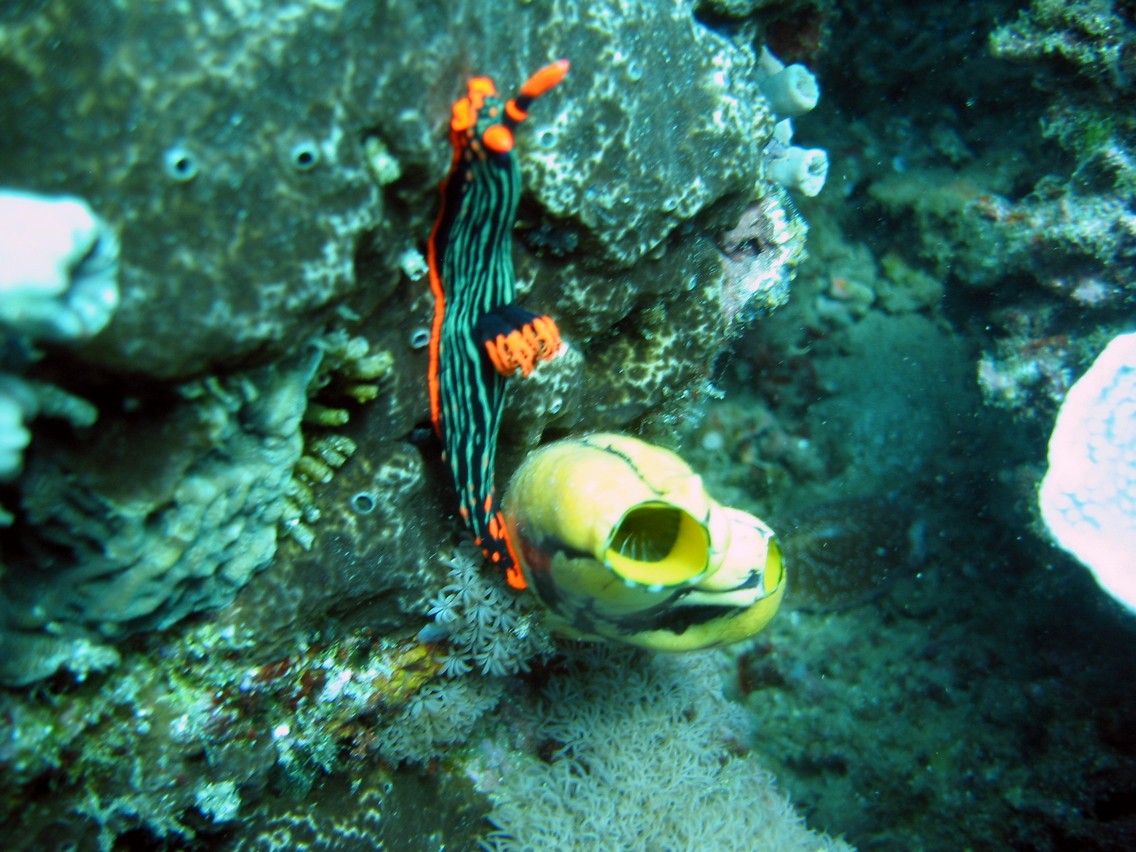
A variable neon slug (Nembrotha kubaryana) at Anilao.


Martin F. Jackson (1939-2023)

My eldest brother Martin died a couple of days ago having recently been diagnosed with an aggressive cancer.

Born on 1 September 1939 in Bath, just a couple of days before war was declared on Germany, Martin was the eldest child of four of Frederick Harry Jackson and his wife Lilian, and was named after his maternal grandfather, Martin Healy (1876-1954), and our father Fred.

Here are the four of us, in 1951 or thereabouts, and again in 2006. Left to right: Mike (b. 1948), Martin, Margaret (b. 1941), and Edgar (1946-2019).

Not long after Martin was born, my parents moved to Congleton in Cheshire, which was to become the family hometown until 1956. But with the advancing war, Dad was called up to serve and joined the Royal Navy, and Mum, Martin and Margaret left Congleton to live with her in-laws in the small Derbyshire village of Hollington, about midway between Ashbourne and Derby.

While living in Hollington, Martin started his primary education at the village school in Longford, just a couple miles down the road. After the war, the family moved back to Congleton where Dad was the staff photographer for the local newspaper, The Congleton Chronicle. We lived at 13 Moody Street, which was owned by the newspaper’s proprietor.

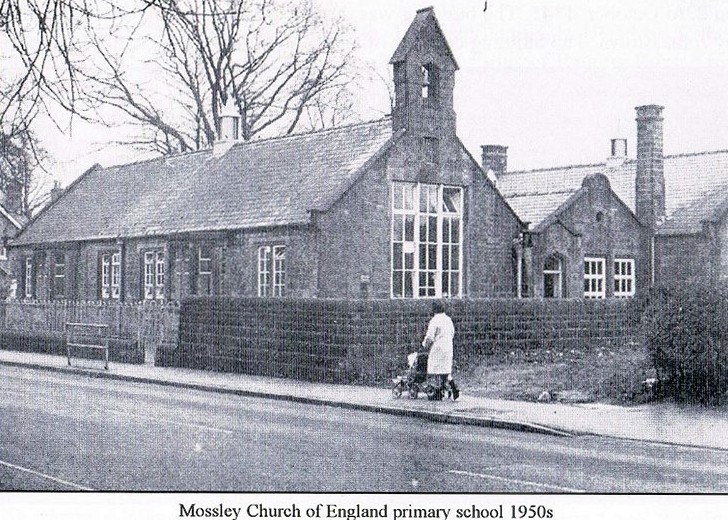
Martin and Margaret then attended the Church of England school in Mossley, a village just to the southeast of the town centre (and which Edgar and Mike attended as well when they reached school age).

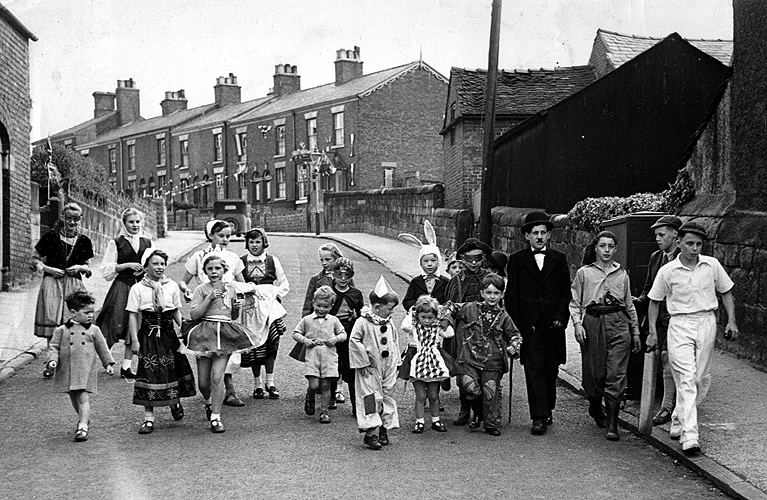
In 1953 all the local children in Moody Street celebrated the coronation of Queen Elizabeth II. Martin is the cricketer on the extreme right.

Martin was a keen swimmer, and won a number of trophies.

I don’t remember many family holidays in the early 1950s (before we moved to Leek). But there were a couple where we stayed in a caravan near Llandudno in North Wales, and another year in a camping coach alongside the main railway line to Holyhead in Abergele, just along the coast from Llandudno. I have no idea why our parents insisted on us wearing school uniform, but I guess that was quite normal back in the day.

When time permitted, we’d visit our grandparents in Hollington, and during the summer there would be picnics in one of the meadows, and visits to Dovedale with our Paxton cousins who lived across the road from our grandparents. In 1954, Grandma and Grandad celebrated their 50th wedding anniversary with family and friends.

By the autumn of 1950, Martin won a scholarship to King’s School in Macclesfield (which entailed a bus and train journey each day from Congleton), and stayed there until he completed his school certificate at the age of sixteen around 1956.
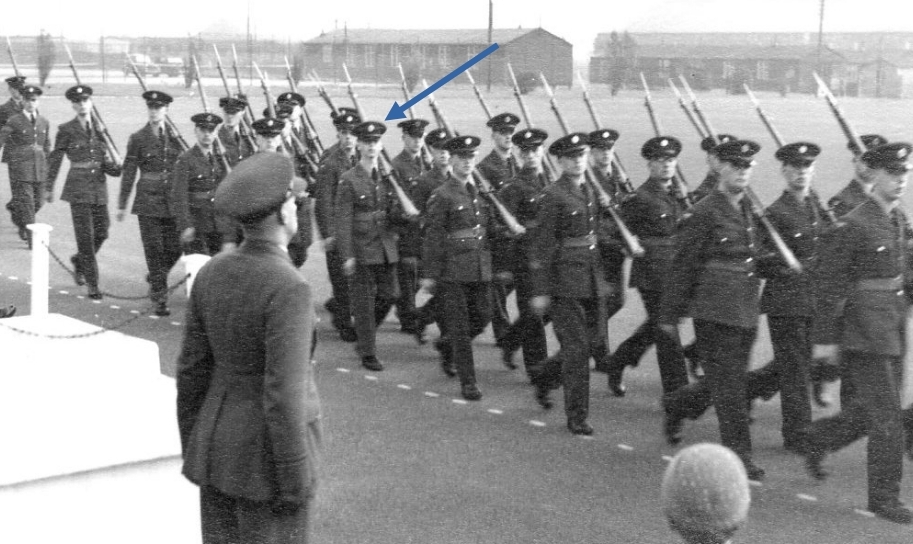
At Macclesfield, Martin had joined the Air Training Corps (ATC) and would go on to join the Royal Air Force in 1957, where he continued his swimming prowess. His passing out parade was held at RAF West Kirby.

He remained in the RAF, with Fighter Command, until 1965, serving in Scotland at RAF Buchan near Peterhead in Aberdeenshire, and in Cyprus at RAF Akrotiri.

Martin was a motorbike enthusiast, being the proud owner of a 200 cc Triumph Tiger Cub, and then a 500 cc model, making the journey from Aberdeenshire to home in Leek in all weathers. When he was on leave in the summer months, he would often take me out for a spin on his bike, reaching the incredible Ton (100 mph) on one stretch of road near home on one trip.


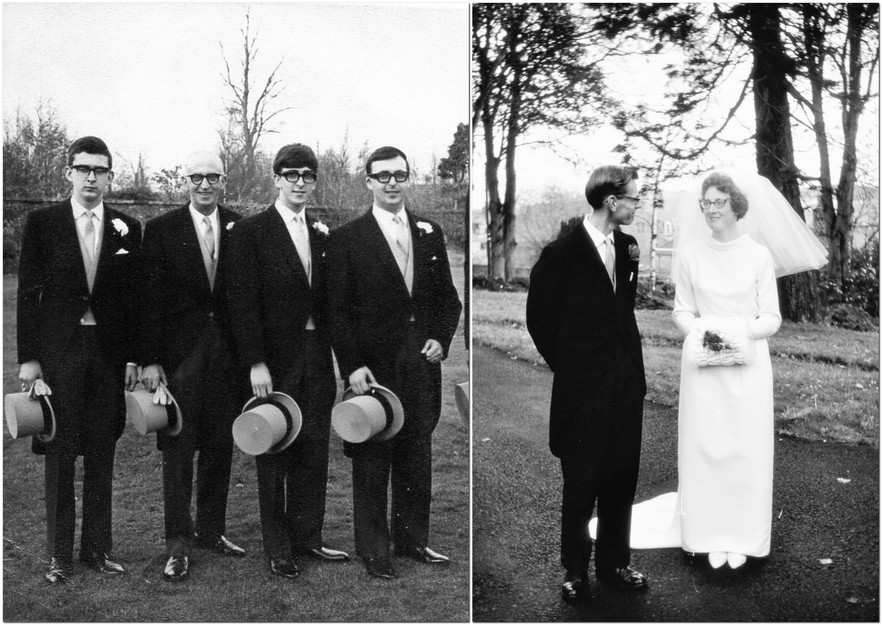
In November 1965, Martin married the love of his life, Pauline, daughter of the Revd. Neil Henderson (died 1960, a Church of Scotland minister) and his wife Markie, in her home town of Huntly, Aberdeenshire.

L: Mike, Dad, Edgar (best man), and Martin; R: Pauline and her brother Nigel, who ‘gave her away’.

Leaving the RAF, Martin joined the computer company ICL, and worked for a couple of years in the computer department at the Ravenscraig steelworks south of Glasgow.

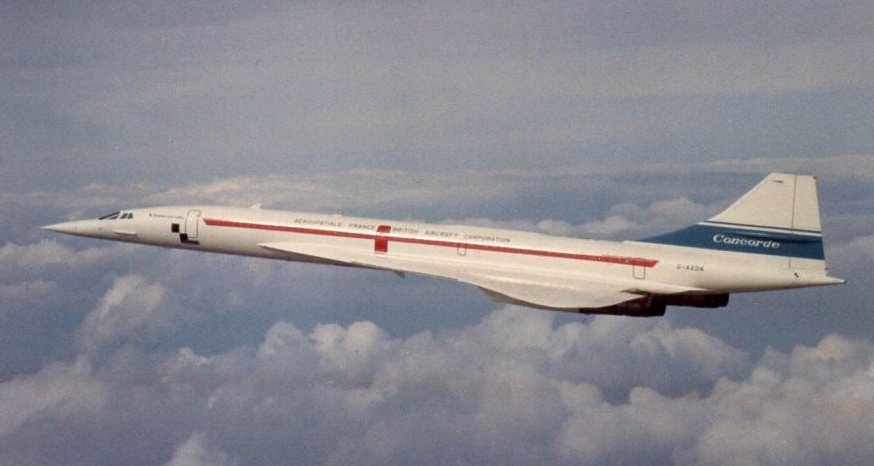
By 1968, Martin and Pauline had moved to Filton, just north of Bristol, where Martin had joined the flight testing program for the Anglo-French Concorde.

Their first son Alexander Neil was born in March 1968.

Proud parents and grandparents.

Their second son, Michael Bruce, was born in July 1969.

After the flight testing program moved to RAF Fairford in April 1969 (Concorde could take off from Filton but not land there), Martin had opportunities of joining the flight tests in many parts of the world. It’s poignant that 2 March—the day Martin died—was the 54th anniversary of Concorde’s first flight in Toulouse, France.

Leaving the Concorde project, Martin joined the small commercial jets division of British Aerospace near Manchester, setting up home in North Wales near Holywell, Flint.

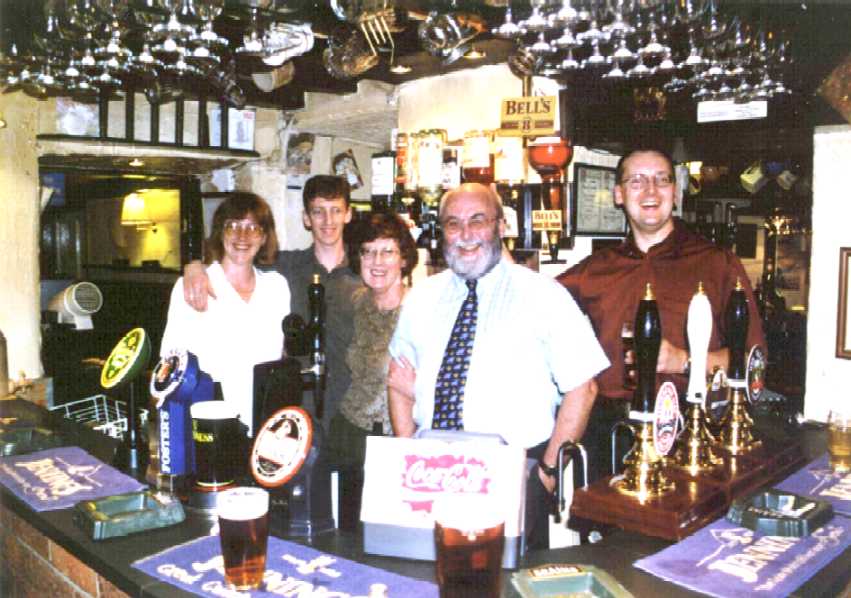
However, in August 1993, Martin and Pauline embarked on a new adventure, when they became landlords of the Llyn y Mawn Inn near Holywell. In need of a complete refurbishment, within a few months they had turned the pub around to become of the best in Wales. They even extended the premises to increase space for dining.

Behind the bar at the Llyn y Mawn, flanked by Alec and his wife Lizzie on the left, and Bruce on the right.

I don’t remember how long they stayed at the Llyn y Mawn. Maybe until 1999. I remember Martin once telling me he wanted to retire by his 60th birthday. By 2002 they had retired from the licensed trade and were settled in Crieff, Perthshire to be closer to Pauline’s mother.

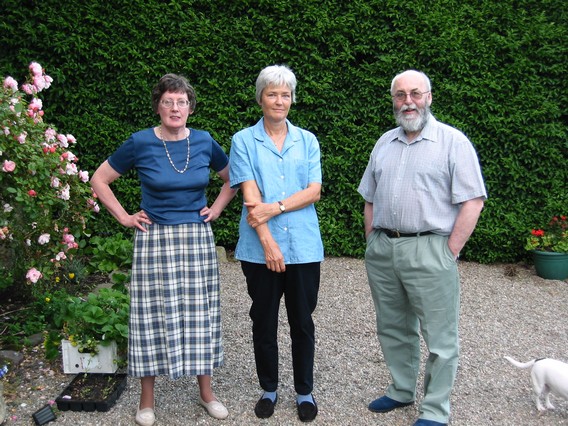
Steph with Pauline and Martin in the garden of their Crieff home.

There Martin returned to another interest, model railways, and built an impressive layout in the roof of their garage.

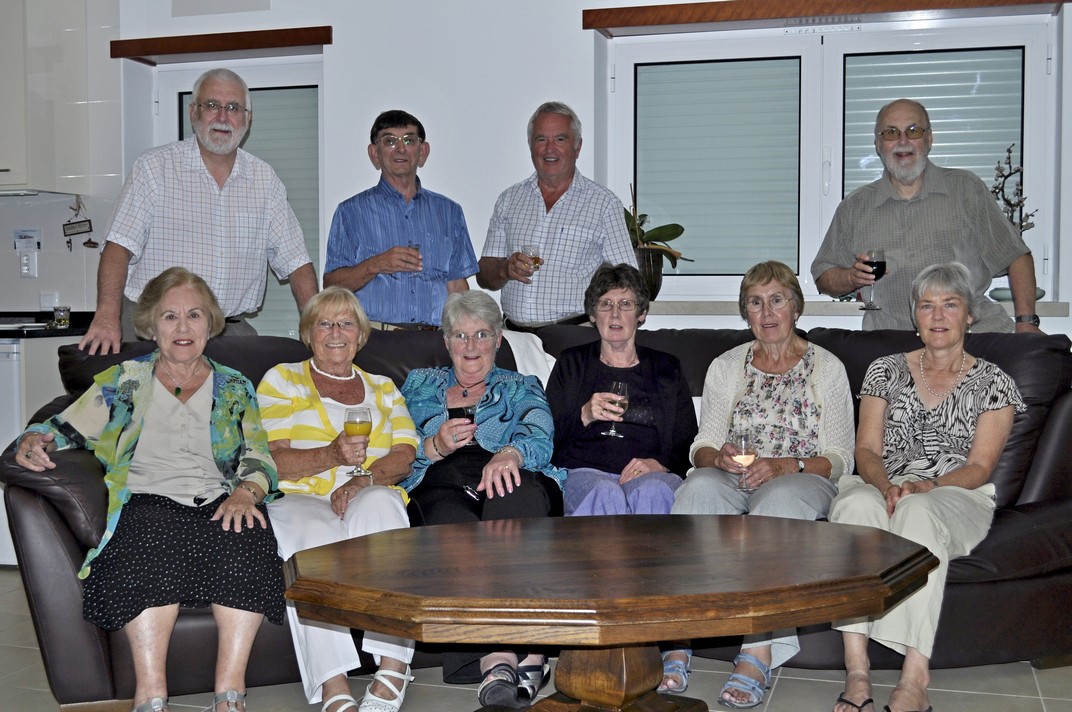
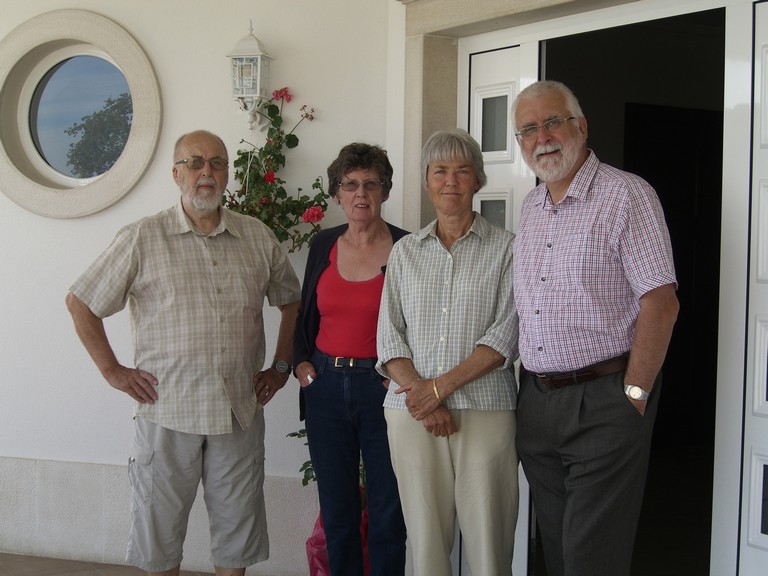
However, after holidaying in Portugal, they decided to make the move there permanently, finally settling in Tomar, north of Lisbon. It was there in 2012 that we had a cousins’ reunion. Martin and Pauline had built this beautiful house standing in several acres of its own land, and large enough to accommodate us all. What a lovely two weeks we spent with them. And although we have seen them briefly on two other occasions, this was really the last time that I spent any time with Martin.

Martin embarked on yet another, and larger, model railway layout based on his beloved LMS theme.

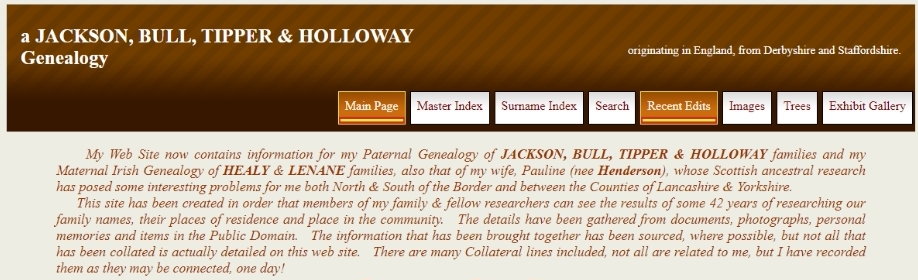
But one of Martin’s most enduring legacies will be the database and website that he began work on in 1980 after the death of our father Fred. Martin decided to research the genealogy of the Jackson and Bull families, taking our family history directly back (on our paternal grandmother’s Bull side of the family) to the late 15th century. His website contains the records of more than 39,000 people related to us in one way or other.


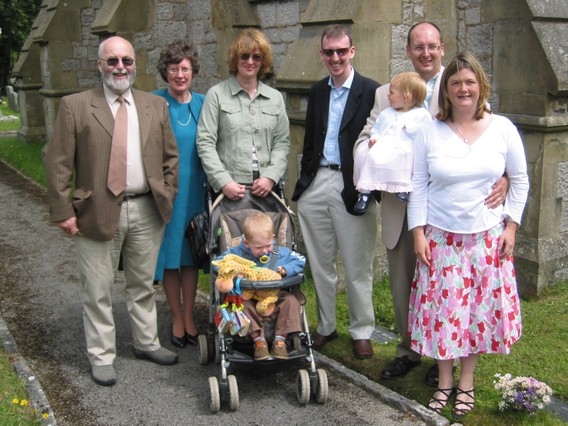
Martin and Pauline were proud parents to Alex and Bruce and their wives, Lizzie and Susie, respectively, seen here at the joint christening of Sam (in pushchair) and Maddie (in Bruce’s arms; Seb wasn’t born then) in 2004.

And Martin being the dutiful grandad in 2006 with Sam and Maddie.


It’s hard to believe that Martin has been taken from us so soon, and quickly. It was only a couple of weeks ago that he called me by video to tell me of his diagnosis. But it’s also a relief that he was spared months of painful decline, and for that we must be tankful.

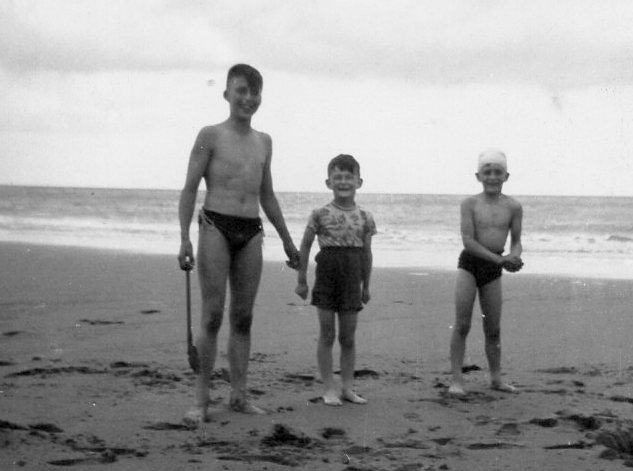
Martin was always my big brother. For some reason I (we) called him ‘Jake’. I have no idea how this came about. So here’s Jake, me, and Edgar on the beach in North Wales, early 1950s.

Rest in Peace, big brother! I will miss you.


What childhood reading did you enjoy?

It was World Book Day yesterday, to promote reading for pleasure, offering every child and young person the opportunity to have a book of their own.

The rationale behind World Book Day is that ‘Reading for pleasure is the single biggest indicator of a child’s future success – more than their family circumstances, their parents’ educational background or their income’.

And, the BBC announced that it was reviving its 500 Words story competition for children.

There are so many people writing wonderfully for children nowadays. I can’t say that was the case when I was growing up in the 1950s. No Harry Potter then. No Roald Dahl either. But there was an author who, in her day, was just as popular as JK Rowling, and remains so.


Born in November 1948, I started school around September 1953 just before my fifth birthday, or maybe in the following January.
My first school was Mossley Church of England primary school just south of Congleton in Cheshire. I was seven in 1956 when we moved to Leek, 12 miles southeast of Congleton and I joined St Mary’s Roman Catholic primary. I must have been reading quite satisfactorily by then as I don’t recall any of the teachers commenting negatively on my reading ability. Funnily enough I don’t have any memories of my parents reading to me, although I’m sure they must have.

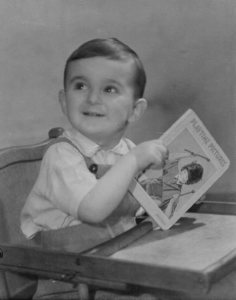
Like most other children in the 1950s my first reading primers were the Dick and Dora books (or similar), with their dog Nip and cat Fluff. I haven’t yet found information about the publishers or how many primers were produced. Here’s an example of what we worked with.

They were used to teach reading using the whole-word or look-say method (also called sight reading). There were equivalents in the USA (Dick and Jane) and in Australia, the Dick and Dora books were still being used as late as 1970.

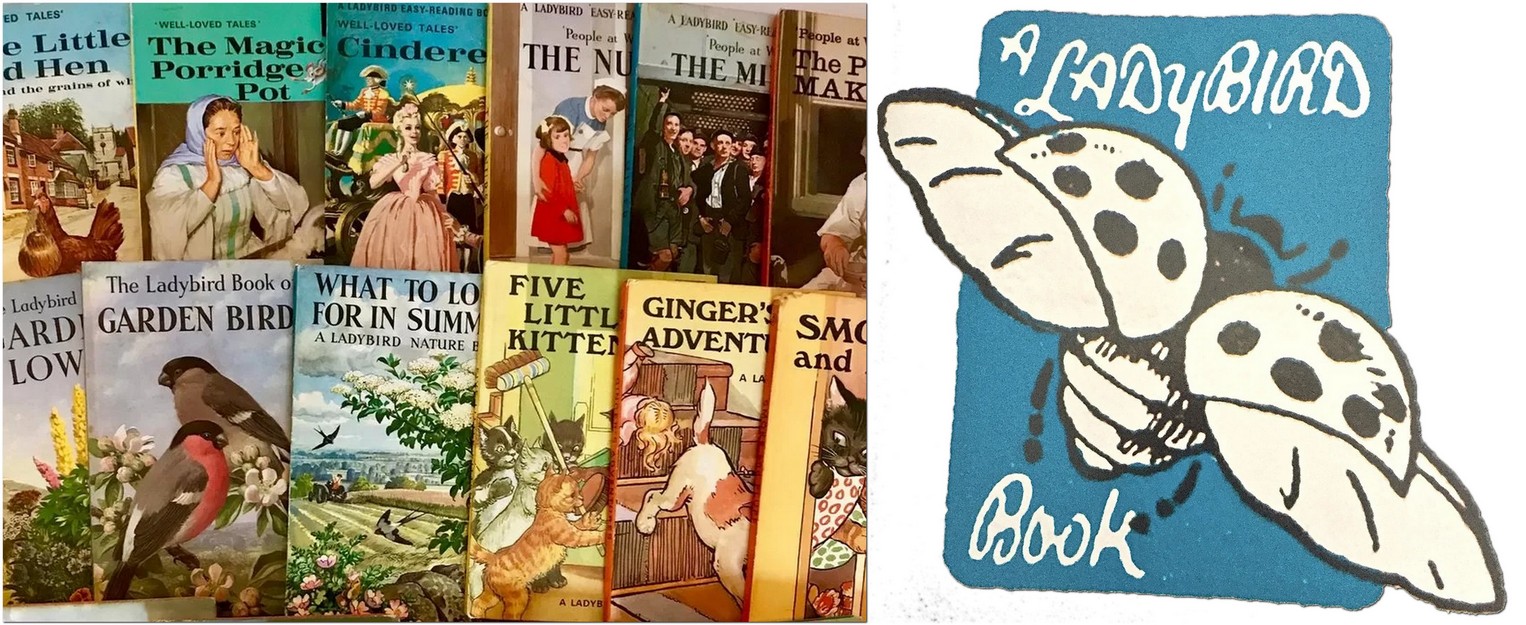
The other books that figured significantly in my early reading were the Ladybird Books, first published over 100 years ago and still popular today. So many to choose from. They were also a favorite of my daughters in the 1980s.

They have been referred to as ‘literary time capsules‘.


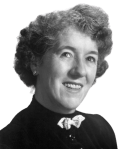
I joined the public library in Leek, and it was then that I first encountered the stories by prolific author Enid Blyton.

Born in 1897, and publishing her first book in 1922, Enid Blyton went on to write around 700 books and about 2000 short stories as well as poems and magazine articles right up to her death in 1968.

Among her many successes were the Toyland stories featuring Noddy and Big Ears, and a host of other characters, some of which like Golliwog are no longer considered acceptable. These stories still remain popular with young children, and even made into cartoons that can be watched on YouTube.

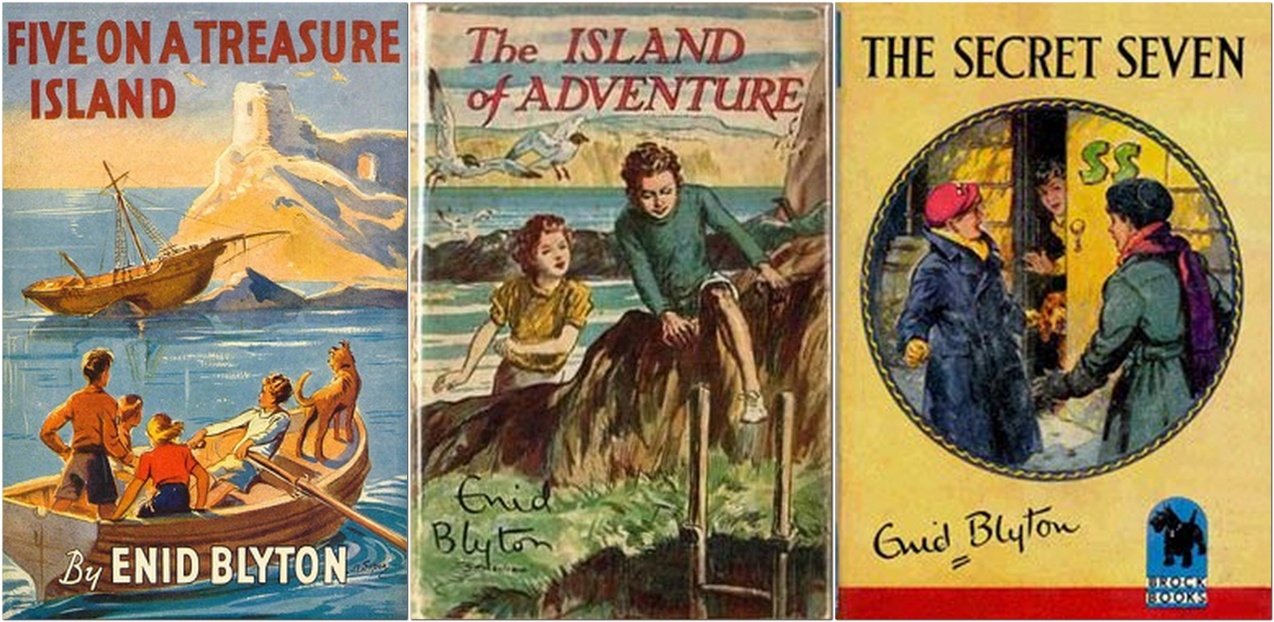
But it was Blyton’s stories for older children that gripped me: the Famous Five series (21 books between 1942 and 1963), the Secret Seven (15 books between 1949 and 1963), and the Adventure series (8 books between 1944 and 1955).

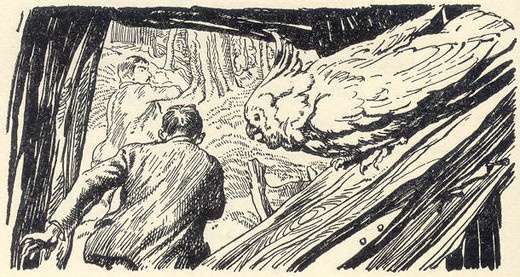
Each of these books had a group of child characters who had exciting adventures, mainly during their school holidays. Treasure, possible crime, even espionage. And, in the ‘Adventure’ series, a cockatoo named Kiki.

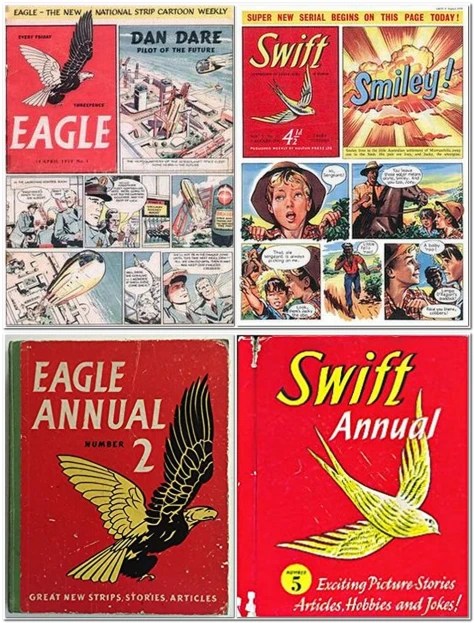
Recently, there has been an initiative to revise some of the language and terms used in her books, to make them more acceptable to 21st century children. The same is happening to the works of Roald Dahl, to much controversy. Besides these there were my weekly Swift comic (and my elder brothers’ Eagle) and the Annuals published around Christmas time.

In addition to the Blyton stories, there is one that has remained firmly in my mind. And although I don’t remember the whole of the narrative in detail, it still holds a special place in my list of children’s book.

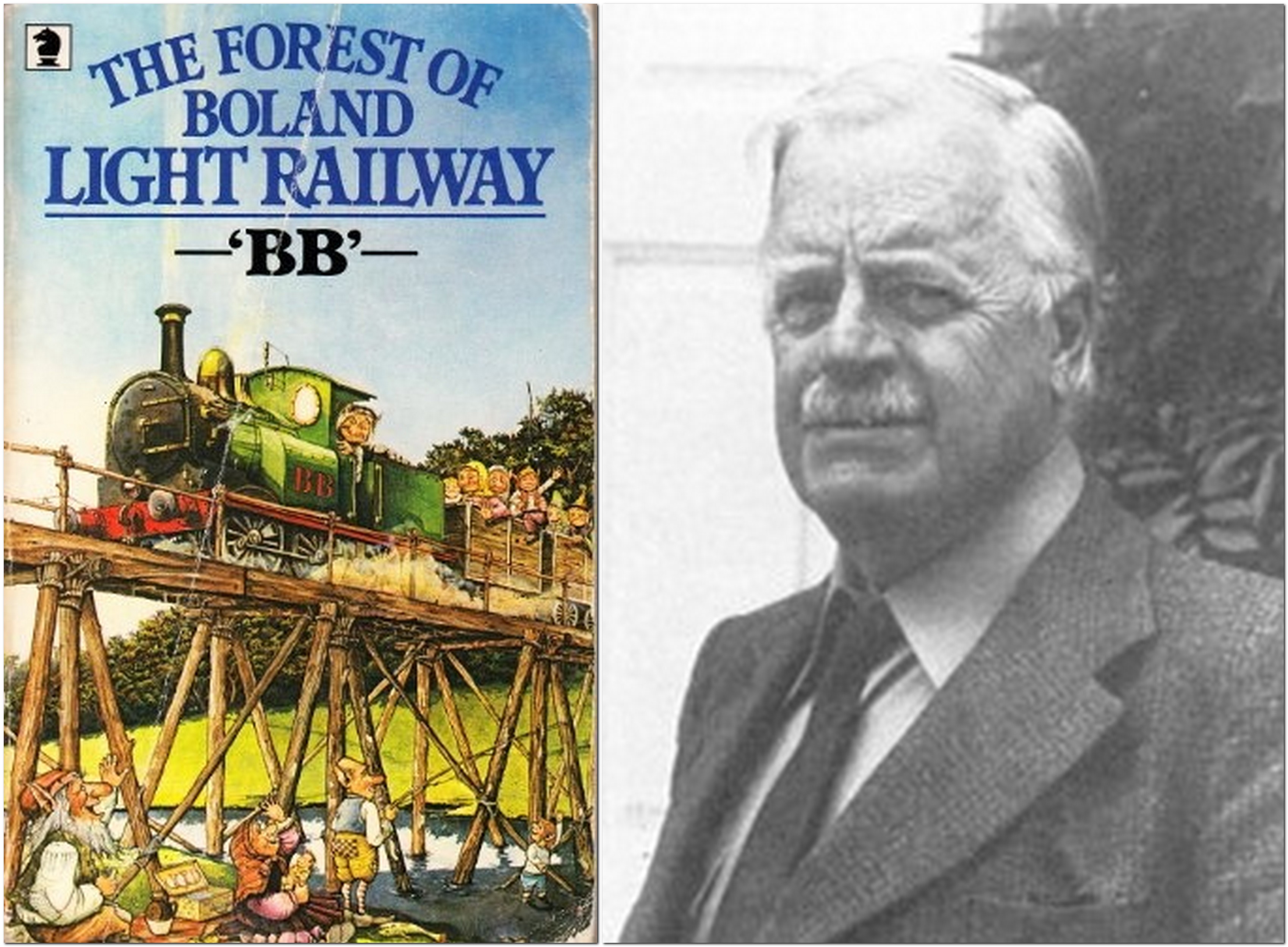
Written by Denys Watkins-Pitchford (under the pseudonym ‘BB’) in 1955, The Forest of Boland Light Railway tells the tale of a community of gnomes who build a steam locomotive to transport miners to work, and return with larger quantities of gold. Everything goes well until a group of wicked goblins decide to steal the train and put the railway out of business.

If you ever get the chance to find a copy (that are selling on secondhand books websites for a small fortune) I’m sure you would enjoy it even as an adult.

Watkins-Pitchford, a well-known naturalist, published 60 books between 1922 and 1990, not all of them children’s books. And I never came across one, The Little Grey Men, for which he won the 1942 Carnegie Medal for British children’s books.

Anyway, it’s interesting (for me at least) how an event like World Book Day 2023 stirred up so many memories from almost 70 years ago.

I spend much of my free time nowadays with my nose inside an book. A few years I came across the works of Charles Dickens in a serious way, having despised them as compulsory reading while at school. What a revelation they turned out to be.