
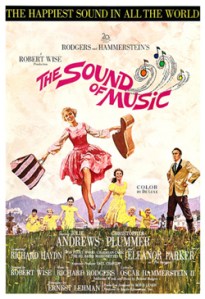
 Well, almost a lifetime. Sixty-one years in fact. So yesterday afternoon (New Year’s Day), at the age of 77, I watched a film I have assiduously avoided for six decades: The Sound of Music.
Although it has been shown on TV multiple times since we returned to the UK in 2010, and must have been shown at least once a year during the 1980s when we were back in the UK between working for the International Potato Center (CIP) in South and Central America in the 1970s, and then moving to the Philippines in 1991.
Released in March 1965 (and with a running time of 174 minutes), The Sound of Music was a screen version of the 1959 Rogers and Hammerstein stage musical of the same name, the story of the Trapp Family Singers.
Set in Salzburg, Austria in the weeks leading to the March 1938 Anschluss, the annexation of the Federal State of Austria by Nazi Germany, The Sound of Music tells of the blossoming love affair between former naval Captain Georg von Trapp (who had seven children) and Maria, a ‘wayward’ postulant in a convent sent to be the children’s governess. At the end of the film, the family escape over the mountains into neutral Switzerland, and from there they moved to the USA, eventually becoming naturalised citizens.
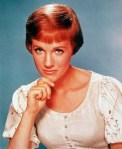 Starring Julie Andrews (right, as Maria) and Christopher Plummer (as Captain von Trapp), the film became the highest-grossing film of 1965. It won several Oscars at the 38th Academy Awards in 1966, including Best Picture and Best Director, not bad considering that it was up against Doctor Zhivago. Julie Andrews was nominated for Best Actress but that accolade went to Julie Christie in Darling (who also starred in Doctor Zhivago).
So, having broken my habit, what was my reaction? It’s very much a film of its time, as was the stage production. Some of the cinematography was spectacular, especially in the opening sequences as the camera panned over the mountains. And the choral numbers and choreography were well done. Julie Andrews was outstanding, as a singer and actress. But overall, I found the whole film rather twee (i.e., excessively or affectedly quaint, pretty, or sentimental), particularly against the backdrop of what was taking place in Austria at that time. I can only give it a score of 6 out of 10.
I’m more a Fred Astaire or Busby Berkeley musical aficionado, although I have enjoyed (a long time ago) Guys and Dolls and West Side Story.
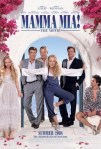 More recently I have become somewhat obsessed with Mamma Mia! that I first watched in 2009 on an Emirates flight from Dubai to Manila.
Mainly because I am a fan of ABBA’s music. My first recollection of any ABBA song was in July 1979. I was in Chile’s capital, Santiago, as part of a review team (from CIP) of the Chilean National Potato Program. On one evening, while my colleagues were out buying beef to take back to Lima where there was a chronic meat shortage, I headed out to buy some souvenirs to take home.
I heard a song above the ambient noise of commercial transactions. It was ABBA’s Chiquitita, released on their sixth studio album Voulez-Vous in April that year. I was hooked, and later acquired a vinyl of Voulez-Vous when I visited my brother Edgar in Canada later in July.
And ever since I often listen to their music. It was the accompaniment to my tour of Israel in March 1982 when I took a party of graduate students from the University of Birmingham there to attend a genetic resources course. One of the participants, Zofia Bulińska-Radomska from Poland, pulled my leg incessantly.
As to the scores to Mamma Mia! (and its sequel Mamma Mia! Here We Go Again, which I haven’t seen) the brilliance of Benny Andersson‘s compositions and arrangements shines through. Just take this one song, Lay All Your Love On Me, by Amanda Seyfried and Dominic Cooper and appreciate the musical intricacies.
For me, Mamma Mia! is pure musical joy, and even though critics reviewed the film unfavourably, it was a huge commercial success. What gave the film added authenticity, I believe, were actors not singers (Pierce Brosnan, Colin Firth, and Stellan Skarsgård, for example) in many of the lead roles, but they did their best. Meryl Streep and Amanda Seyfried on the other hand have excellent voices.
Anyway, I came across these three videos about how the films were made, which certainly throw light on the casting and production processes. Illuminating.
Maybe you’ll become as obsessed as I am.
 A balanced diet . . .