Spreading the good news about rice . . . the 4th International Rice Congress

Over the past 18 months I’ve been busy organizing a major science conference – on rice – that was held in Bangkok, Thailand during the last week of October. That’s one of the reasons I have been less active on this blog; I was running another about the science conference at the same time! Sponsored by the International Rice Research Institute (IRRI), the 4th International Rice Congress brought together rice researchers from all over the world. Previous congresses had been held in Japan, India and last time, in 2010, in Hanoi, Vietnam (for which I also organized the science conference). This fourth congress, known as IRC2014 for short, had three main components:

  • The Global Rice Market and Trade Summit (bringing together about 130 representatives of the rice industry). It was organized by IRRI’s Head of Social Sciences, Dr Sam Mohanty.
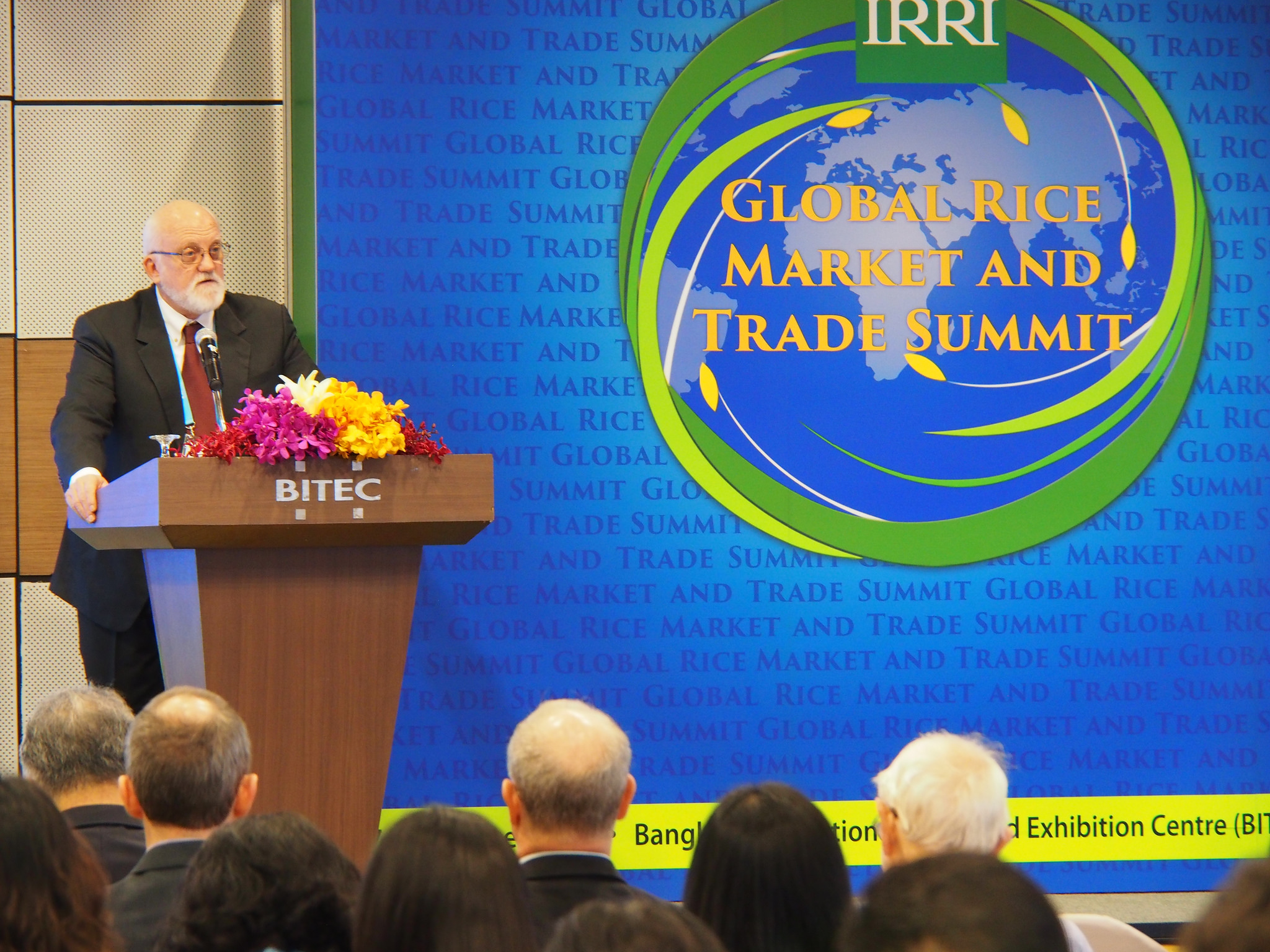
Source: IRRI

Dr Bob Zeigler, IRRI Director General, addressing delegates to the Global Rice Market and Trade Summit

  • An Exhibition.

Organizing IRC2014 Overall chair of IRC2014 was Dr V Bruce J Tolentino, IRRI’s Deputy Director General (Communication and Partnerships), with Thailand’s Dr Peeradet Tongumpai, Director, Agricultural Research Development Agency (ARDA) as Co-Chair.

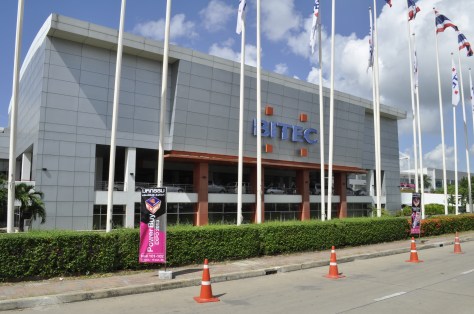
But the science conference was undoubtedly the main reason for most delegates being at IRC2014 that week. Held at the Bangkok International Trade and Exhibition Centre (BITEC), this venue was chosen for its convenient location (about half distance between downtown Bangkok and the international airport), proximity to public transport (the BTS), and its excellent facilities. Way back at the beginning of 2013 IRRI management asked me if I would like to organize the science conference in Bangkok, having taken on that role in 2009 before I retired from IRRI and for six months after I left. From May 2013 until IRC2014 was underway, I made four trips to the Far East, twice to Bangkok and three times to IRRI. We formed a science committee, and I was fortunate to have a group of very professional scientists assisting in the planning and delivery of the science conference. Thai rice pathologist Dr Poonsak Mekwatanakarn [1] became my Co-Chair, and IRRI rice root biologist Dr Amelia Henry was the Deputy Chair, and the three of us formed an Executive Committee.
The committee was supported by two staff from Kenes Asia (the conference organizers): Ms Warapa ‘Art’ Saipow, Project Manager and Ms Tanawan ‘Mint’ Pipatpratuang, Associate Project Manager and direct liaison to the science committee. From IRRI, two staff in Bruce Tolentino’s office, Mon Oliveros and Yuan Custodio, also supported the committee.

Our ambitions for the science conference were set high. We wanted to encourage as many rice scientists from around the world to make the trip to Bangkok and share their research with their peers. And I believe we did achieve that. More than 1400 delegates attended IRC2014, from 69 countries. The science program had five components:

  • A Keynote Address, delivered by IRRI Director General Dr Bob Zeigler on Tuesday 28 October, on the topic The Second Green Revolution Has Begun: Rice Research and Global Food Security
  • Four plenary speakers (five had been invited but one had to pull out at the very last minute due to a medical emergency)
  • Nine symposia on closely-defined topics (such as rice root biology, rice in the mega deltas of Asia, or climate-ready rice), all with invited speakers, 62 in total.
  • Seven general science themes (genetic resources, value chains, cropping systems, etc), including temperate rice, with almost 150 papers selected on merit in a blind review.
  • Three science poster sessions, with about 670 posters on display throughout the three days of the conference.

On all three days there were six parallel sessions of oral papers, with an additional forum about funding agricultural research on the first afternoon, and a workshop on drip irrigation on the second afternoon. Some IRC2014 highlights At the Opening Ceremony on the Tuesday afternoon (28 October), we were treated to an impressive display of Thai dancing, and there were speeches from His Excellency Petipong Pungbun Na Ayudhya, Minister of Agriculture and Cooperatives, and from Privy Counselor Amphon Senanarong, representing His Majesty King Bhumibol Adulyadej of Thailand.

During the actual science conference, 29-31 October, attendance at the various sessions was good, with only one or two reporting low numbers. There was also ample opportunity for delegates to network.

On Saturday 1 November, many delegates took advantage of one of the post-conference tours, that mixed both rice research and production visits as well as some Bangkok tourism. These videos highlights some of the different activities at the conference.

One of the main highlights – for me at least – was the opportunity we had to recognize 29 Young Rice Scientists (YRS) from 19 countries who had submitted papers and that had been selected in the blind review. Each YRS had to be 35 years or younger, working in rice research or conducting research for a graduate degree. We also put a special sticker with each poster authored by a Young Rice Scientist.

The initiative was highly appreciated by young scientists especially but also among all delegates at IRC2014. This was a great opportunity for young scientists – the next generation – to compete on equal terms with their peers and longer-established scientists. In this video, a couple of the YRS speak about what the award meant to them. Incidentally, each YRS received a return ticket to Bangkok, conference registration, a ticket to the congress dinner, and five nights accommodation in a hotel.


[1] I heard on 7 August 2020 that Dr Poonsak passed away in Bangkok on 5 August. Very sad news.

Season’s Greetings

Untitled 1

How time flies! Here we are at the end of the year and wondering where the months have gone by. It only seems like yesterday that we were sitting down and listing all the things we wanted to tell you about 2013 in last year’s Christmas Letter. In this online and expanded version of our printed 2014 Christmas Letter, just click on the text in red to read stories in more detail, and see lots more photographs. Also click on any of the photos to view larger images or open galleries.

It’s also hard to believe that we returned from the Philippines more than four years ago.

But one thing is certain. Our four beautiful grandchildren are growing up very rapidly.

Given that Callum (4) and Zoë (2) live in Minnesota and Elvis (3) and Felix (1) in Newcastle upon Tyne (about 250 miles north of Bromsgrove) we don’t get to see them in person very often. But through the wonders of Skype etc., we can chat with them online, and see what mischief they are getting up to on a weekly basis. All four of them attend nursery daily, but Callum is probably starting school next year. It’s been great to watch their personalities develop, and what fun we’ve had now that Callum and Elvis are talking, and Zoë catching up fast.

Our road trip to the West
As in past years, we spent several weeks in the USA this past summer, from the end of May until mid-June. And we made another road trip, but this time starting in St Paul and flying back from our final destination: Billings, Montana (MT). So where did this road trip take us? Across the Great Plains as far west as Yellowstone and Grand Teton National Parks in Wyoming (WY) – a journey of 2000 miles in nine days – and all interesting sites in between. These included the Great Plains west of the Missouri River (where the West truly begins), the Badlands, Black Hills and Mt Rushmore in South Dakota (SD), Devil’s Tower National Monument in WY (of Close Encounters of the Third Kind fame), the Little Bighorn Battlefield in MT (Gen. Custer and Sitting Bull), Yellowstone and Grand Teton National Parks, of course (via the Beartooth Highway), and finally the Bighorn Mountains in WY.

What a trip! Now 2000 miles in nine days might seem ambitious to some (like traveling every day from home to Newcastle, something we’d never contemplate in the UK), but driving (with automatic transmission and cruise control) on those open Interstates makes driving a pleasure in the USA.

Apart from our second day from the Missouri River to The Badlands, we had great weather. Crossing the Great Plains we skirted the northern edge of a major storm that caused havoc from MT east through SD and Nebraska, with hailstones the size of baseballs causing millions of dollars of damage in Billings. Luckily we didn’t see those – just torrential rain for a couple of hours that made us leave the highway for a while as the worst of the storm passed us by. But by the time we’d reached The Badlands the clouds had lifted and we traveled through the park for more than a couple of hours wondering at all the magnificent landscapes.

Mt Rushmore was much more impressive than either of us had expected. And the Black Hills are stunningly beautiful. No wonder they were held sacred by many native American tribes. We had a couple of wonderful days with beautiful weather to explore this area. Then we headed north into Montana, and traveling the Beartooth Highway to enter Yellowstone through the northeast gate. The Beartooth Highway is regarded as one of the most beautiful in the whole of the USA. It’s certainly very impressive.

Yellowstone was a little disappointing, because we’d hoped to see more wildlife. Since it was early in the season – some of the access roads had only opened a week or so earlier – there wasn’t too much traffic. We’d hate to be there at the height of the season. Probably bumper to bumper cars, all stopping here there and everywhere whenever a bison or elk sticks its nose above the parapet, so to speak. Even with the light traffic we encountered, there were the odd traffic jams, as car stopped as soon as any wildlife was spotted.

But the Yellowstone and Grand Teton landscapes are stunning. The Geyser Basin with all its geothermal activity is impressive. We even got to see Old Faithful blow her top – although she almost became Old Faithless as she kept us waiting a good 20 minutes. Certainly it’s a photographer’s paradise.

Chilling out in St Paul
Returning to St Paul for another week, we enjoyed time again with Callum and Zoë, Hannah and Michael. And overall, the weather in Minnesota was rather better this year than we’ve experienced for the past couple of years. So we enjoyed cooking often on Michael’s new gas BBQ. But before we knew it, our time in MN was over, and we were headed back home via Amsterdam on our usual Delta Airlines schedule.

And although we did experience a couple of storms while in St Paul they were nothing compared to one that hit the city just a day or so after we left. The amount of rainfall must have been incredible, and the groundwater table rose dramatically and found its way through the walls/floor of their basement. Hannah and Michael will have to have some special drainage work done in the New Year before they can complete redecoration of the basement – that’s where we sleep when we visit.

Up in Geordieland
We have been up to Newcastle a couple of times so far this year, in March and at the end of September when Elvis celebrated his third birthday and had a very large party to which about 30 friends from nursery and beyond were invited. Phil came down to Bromsgrove with Felix in June just a few days after we had returned from holiday in the USA. Phil and Andi have been very busy decorating this year, sorting out a front bedroom for the boys with bunk beds, that can also double up as a playroom.

Taking full advantage of our National Trust membership
We took full advantage of the excellent summer, and got to as many National Trust venues as we could, thirteen in all. We have been members of the NT for four full years now, and have thoroughly enjoyed our visits. Mike usually blogs about each visit and posts a range of the photos taken, but he is rather behind in his writing. We have more or less now picked all the ‘low-hanging fruit’ of NT properties close to home. So in 2015 it looks like we’ll be making more overnight trips, or even two or three day mini-breaks.

Christmas in July
One of the summer highlights was a day trip to Kew Gardens, a Christmas gift from Hannah and Michael, Phil and Andi. And this was combined with an afternoon cream tea at a hotel in Richmond. We drove to London, something that we faced with a great deal of trepidation, particularly concerning where to park. We had considered the train, but getting to Kew from central London is not so easy, and the hotel for tea was almost three miles from Kew. So driving was the only practical option. Then we stumbled across a website, JustPark (that operates in many countries) through which you can book a parking space on someone’s private drive. The place we found was only five minutes walk from the Kew main gate. What a wonderful day we had, brilliantly sunny and warm, and we walked over eight miles through the Gardens. Afternoon tea and scones (with lashings of clotted cream and strawberry jam) were most welcome afterwards.

On the homefront
Steph continues hard work in the garden – which was looking splendid this past summer, and also enhanced by a new fence we had installed on the two sides that are our responsibility way back in February. She is as active with beading as ever, and wears a different necklace every night at dinner.

Is he really retired?
Mike has also just finished an 18-month consultancy with IRRI to organize the science conference at the 4th International Rice Congress that was held during the last week of October in Bangkok, Thailand.

IRC 2014 logo

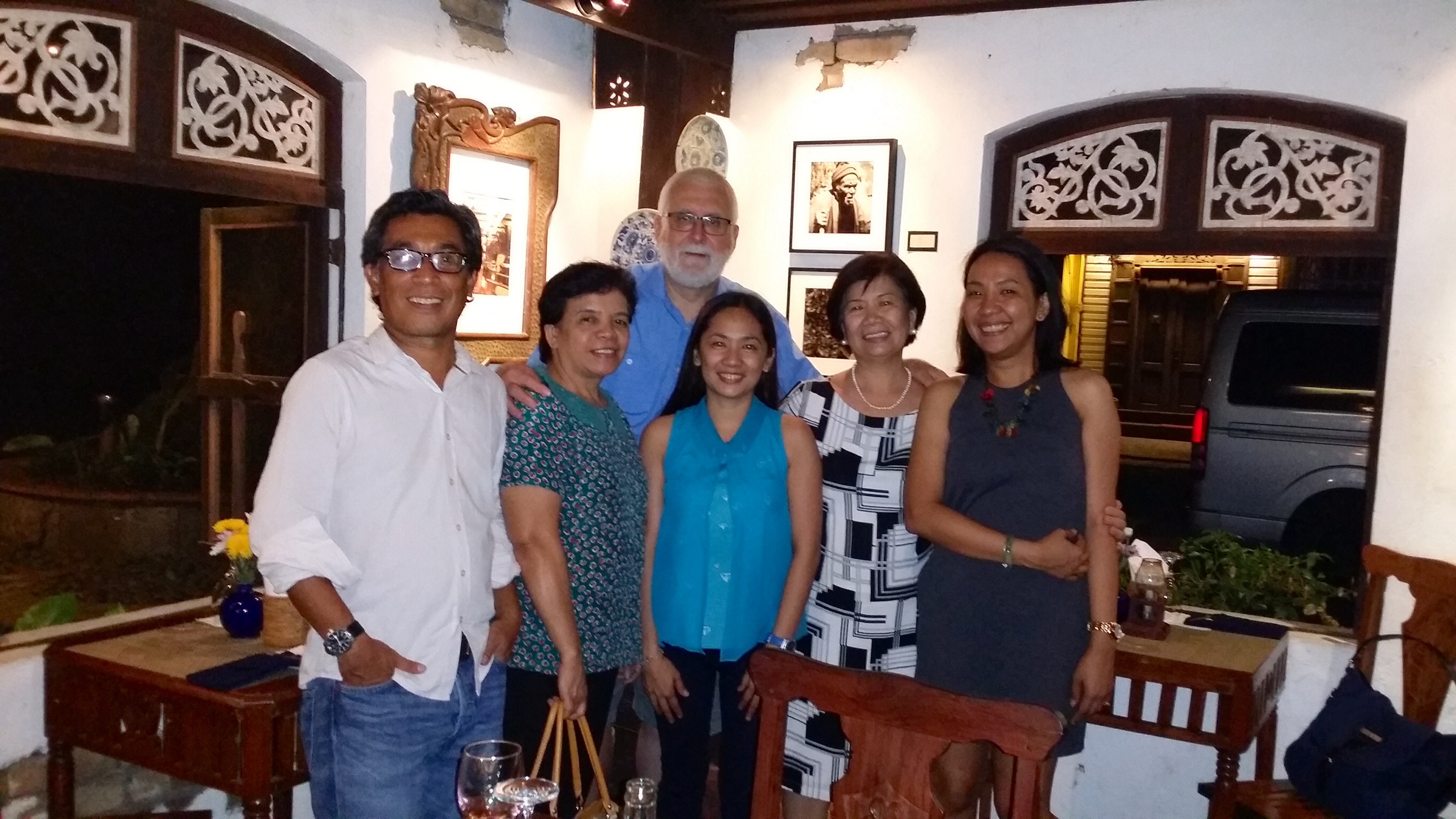
From all feedback the conference was a success, with a record number of delegates (>1400), scientific papers delivered (210) and posters (>670) displayed. All in all, the culmination of some broad vision of what could be achieved and meticulous attention to details – since those are what the delegates remember. Inevitably there were a few (minor) glitches but actually everything went ahead much smoother than anticipated, given some of the challenges we had faced during the planning phases. Mike enjoyed his return flights on Emirates – the pleasures of using air miles for an upgrade. During a planning visit to IRRI in August, he had chance for a great night out with friends and colleagues from his former office at Sulyap Gallery Café and Restaurant, a great venue in San Pablo near Los Baños.

L to R: Eric, Yeyet, Vel, Zeny, and Corinta

What does 2015 hold in store?
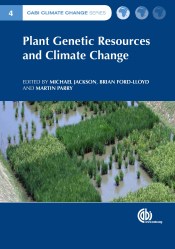
We have no fixed plans for 2015 – that’s one of the delights of retirement. We do whatever takes our fancy. Mike has nothing in the consultancy pipeline, but you never know when something may come along, although he continues as one of the editors of the journal Genetic Resources and Crop Evolution and reviews between six and ten manuscripts a year. Mike’s book (with two colleagues) on genetic resources and climate change was published in mid-December last year.

We are actually hoping that 2015 might be the year we get the whole family together – certainly some plans are being mooted but nothing finalized yet.

Anyway, we take this opportunity of wishing everyone

A Very Merry Christmas and Prosperous and Happy New Year 2015

Mr Blue Sky . . .

I’ve been a fan of ELO – Electric Light Orchestra – for several decades, and also followed ELO lead Jeff Lynne after he made his solo album Armchair Theatre in the 1980s. There’s an interesting story about how I acquired a CD version of Armchair Theatre that I blogged about some time ago.

Then there was Lynne’s collaboration with George Harrison, Roy Orbison, Tom Petty, and Bob Dylan as Otis/Clayton Wilbury in the Traveling Wilburys.

While I knew that Lynne spent most of his time producing hit albums for other musicians, and writing new material, I hadn’t realized how unpopular ELO had become since their heyday in the 70s. Apparently they just weren’t cool. That didn’t diminish my enthusiasm for the music and the intricate arrangements of guitars and strings that were ELO’s signature.
So it was a surprise to read last week that BBC4 would be broadcasting a live concert of Jeff Lynne’s ELO that was recorded in Hyde Park, London in mid-September. Now that one passed me by. I finally got round to watching the concert on catch-up TV last weekend – and what pure joy it was. I walked around afterwards with a big smile on my face for at least a couple of hours.

This was the first time that Jeff Lynne had performed live for almost 30 years. You wouldn’t think that from seeing him and his backing band (with original ELO keyboard player Richard Tandy, and other musicians who normally tour and back Take That!), and supported by the BBC Concert Orchestra, playing to an audience of 50,000. It’s reported that when tickets went on sale they sold out in 90 minutes.

During a 17 song set* Jeff Lynne’s ELO treated us to some of the more magical tracks that had been written and first recorded several decades ago. And they sounded as fresh now – perhaps better even – than all those years ago. Having been persuaded by Radio 2 DJ Chris Evans to play live, I guess Jeff Lynne wanted to produce the sound on stage that he had only been able to achieve in the studio. And with the impressive light show as well, he not only achieved his goal but surpassed it. It was simply wonderful, and I could sit down and watch it all over again. There was just one song from his Wilbury days – Handle With Care – as a tribute to deceased members Roy Orbison and George Harrison.

Reviews of the concert on social media sites and in the press were overwhelming in praise for Lynne and his musicians. The old dog can certainly show the pups of the pop world a trick or two! There’s even talk now of some more concerts in the UK and maybe even a world tour. Now that would be something to look forward to.

*All Over The World
Evil Woman
Ma Ma Ma Belle
Showdown
Livin Thing
Strange Magic
10538 Overture
Can’t Get It Out Of My Head
Sweet Talkin Woman
Turn To Stone
Steppin Out
Handle With Care
Don’t Bring Me Down
Rock n Roll Is King
Telephone Line
Mr Blue Sky
Roll Over Beethoven


Chilling in Los Baños . . .

For the past week I have been at the headquarters of the International Rice Research Institute (IRRI) in Los Baños in the Philippines, where I worked for almost 19 years until my retirement in April 2010. I had to attend two meetings in preparation for the 4th International Rice Congress (IRC2014) that will be held at the end of October in Bangkok, Thailand. The first meeting, from Monday to Wednesday, was the SciCom Exec to finalize the content and structure of the scientific conference. The IRC2014 Organizing Committee met on Thursday and Friday. We were kept busy from morning to night, although there were opportunities for some social gatherings, and I also took full advantage of staying in IRRI’s Guesthouse to enjoy the nearby swimming pool every morning at 6 am.

But I’m getting ahead of myself. My journey began on Friday 8 August, traveling on Emirates Airlines from Birmingham to Manila via Dubai (BHX-DXB-MNL). There were minimal delays at BHX, and we landed more or less on time in DXB around midnight local time.

The stopover was about three hours, and by the time I’d cleared security, checked out Duty Free, and made my way to the EK lounge in Terminal 3, there wasn’t too long to wait before we were boarding the next flight to Manila. That wasn’t a good flight. It was comfortable enough, but there was turbulence the whole flight – not severe by any stretch of the imagination, except for the occasional sharp bump – and just persistent enough to prevent me from settling. Added to that, a large gentleman across the aisle from me settled to sleep immediately after take-off from DXB, and snored the whole way to Manila! After landing in Manila NAIA Terminal 1, I had passed through immigration and customs in less than 20 minutes, but traffic congestion around the airport (it was around 5:15 pm on Saturday), and during the 65 km drive to Los Baños, delayed our arrival at the Guesthouse until almost 8 pm.

Meeting old friends
Despite the busy schedule of meetings, I was able to catch up with the many old friends at IRRI. I was given an office in my former DPPC unit, now called DRPC.

On Tuesday night I was treated to dinner at Sulyap Gallery Café and Restaurant in San Pablo, about 10 km south of Los Baños. And we had a lovely evening: great company, great food. What more can you ask for?

L to R: Eric, Zeny, me, Vel, Corints and Yeyet

L to R: Eric, Zeny, me, Vel, Corints and Yeyet

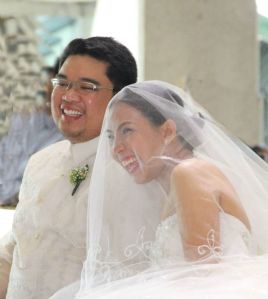
On Wednesday, Yeyet and her husband Christian took me out to dinner in Los Baños. They were married in March, and had invited me to be one of their sponsors or ninong. Of course I wasn’t able to travel then, but I did send a short video message that was played during the wedding reception. It was a complete surprise to everyone (except Vel with whom I’d made the arrangements to receive and show the video).

On Thursday and Friday nights the IRC2014 committees got together to relax.

Checking out the genebank
Our meetings finished by Friday lunchtime, so I took advantage of some ‘free’ time in the afternoon to visit the International Rice Genebank in the TT Chang Genetic Resources Center, and meet my former staff and colleagues.

Now the genebank is really the only place in Los Baños where you can chill out. The Active Collection is kept around 2-3C, but the Base Collection is maintained at a decidedly frosty -18C. Since I left IRRI in 2010, a new and much larger cold room to house the Base Collection was added to the genebank infrastructure, with funding from the World Bank. Seeds are still stored in vacuum-sealed aluminium cans, but nowadays, everything is neatly bar-coded. (I was even shown a new tablet-based scoring system, complete with photos and descriptions, for germplasm characterization).

Despite the fact that I had responsibility for the genebank for a decade from 1991, and obviously it’s my ‘baby’, I’m immensely proud of the staff and their conscientious attitude in conserving this extremely important germplasm collection.

Out and about on the farm – Typhoon Glenda
This morning (Sunday) I decided to take a tour of the IRRI Experiment Station, not only to see all the various rice breeding plots and experiments, but to visit the wild species screenhouses on the Upland Farm, and see what damage the recent Typhoon Glenda had caused.

‘You can take the man out of IRRI, but you can’t take IRRI out of the man’. Wandering around the farm, looking at all the fields and labs where I worked for almost 19 years it was hard not to feel really nostalgic. But when I visited IRRI last November, it was almost 4 years then since I had retired and I had been away long enough to have made ‘the separation’. Nevertheless, IRRI and its work has become part of my DNA, and I really do get a thrill wandering through the fields. Rice breeding and science is a numbers game, and IRRI plays that game to the highest proficiency. The field plots are immaculate, and surprisingly so considering the severity of Typhoon Glenda which apparently hung around the Los Baños area for more than 6 hours. There must have been some extremely turbulent vortices to have caused the damage that it did, although this time, there was little if no rain damage. Typhoon Glenda was a ‘dry’ typhoon compared to many.

An Iranian feast
On Sunday evening, I met up with an old friend and former staff member, Bita, who now works for Accenture in Manila. Bita is originally from Iran, but moved to the Philippines when she was eleven. Both her parents are rice scientists. So Bita grew up in Los Baños, went to UPLB, married and had four lovely children, and has now opened an authentic Iranian restaurant in Los Baños called Everyday Kabab.

I had a lovely meal of dips and naan bread (check out Bita’s garlic and yoghurt dip) followed by chicken and beef kababs, prepared using Bita’s secret recipe. She also serves a traditional cherry drink from Iran; it’s neither sweet nor sour, but very refreshing. And Everyday Kabab is growing in popularity among the LB community – it certainly began to fill up while I was there.

And finally, another surprise . . . 
Once we’d finished early on Friday afternoon and I left GRC, I returned to the Guesthouse for some rest, and to work in a more comfortable location. At least I could wear shorts and a T-shirt. But I hadn’t been in my room much more than 30 minutes when the phone rang, and to my surprise, it was Lilia Tolibas, our helper who worked for us for 18 years. Although working mostly in Manila these days, Lilia still has family ties in Los Baños, and had heard I was in town. And she came specially to see me.

We had a good chat for almost an hour, and it was then I heard about her misfortune during last November’s Typhoon Yolanda that hit her home town of Tacloban so badly. After we had left, she built a small house in Tacloban and moved many of her belongings there. But the tidal wave that hit the town destroyed her house, and sadly one of her sisters drowned. She works for the American Chamber of Commerce in Manila and they were quickly offering humanitarian relief. They found her family, and quickly also found her sister’s body who was given a decent burial, a dignity not afforded to so many victims. Lilia is still waiting for her compensation from the government from the humanitarian relief that so many countries donated. It’s a scandal that this is not being released to the victims and families.

Flying home . . .
Tomorrow night, Monday, my EK flight to DXB departs at 23:55 from the ‘new’ Terminal 3 at NAIA. I say ‘new’ advisedly since it was constructed almost a decade ago but, until now, had not be used by the major airlines. Emirates transferred to Terminal 3 last Friday. Let’s hope that this NAIA experience is far superior to many I’ve had out of the decrepit Terminal 1. I should be home in the UK by early afternoon on Tuesday.

A busy week, yes. Fruitful? Yes. Many things accomplished? Yes. Now it’s time to complete the final tasks and before we know it we’ll all be heading off to the congress in Bangkok at the end of October.

‘Capability’ by name, ‘Capability’ by nature (updated 27 July 2017)

Everyone has to start somewhere.

And, it seems, that Lancelot ‘Capability’ Brown in one of his earliest commissions helped to realize the vision of the 6th Earl of Coventry to create Croome Court and Park, a neo-Palladian mansion in deepest Worcestershire, less than 10 miles southeast of Worcester, and 20 miles from our home in Bromsgrove in the north of the county.

Work started on Croome in 1751 and over more than a decade work continued to replace an earlier building on the site. But even as late as the 1790s changes were being made to the park.

While Brown was involved in the design of the hall itself, and of course his signature landscape design, many of the interiors of the hall were designed by equally famous neoclassical architect and interior designer Robert Adam who, with his rival James Wyatt, also designed many of the features – temples and the like – that are dotted about the park, and even follies some distance from the park itself, such as Dunstall Castle to the south and Pirton Tower to the north. The 1¾ mile lake, the Croome River, took 12 years alone to dig out by hand.

From the park there are good views of the Malvern Hills due west, and Bredon Hill, an outlier of the Cotswolds, further southeast. These aristocrats certainly knew just where to build a fancy residence!

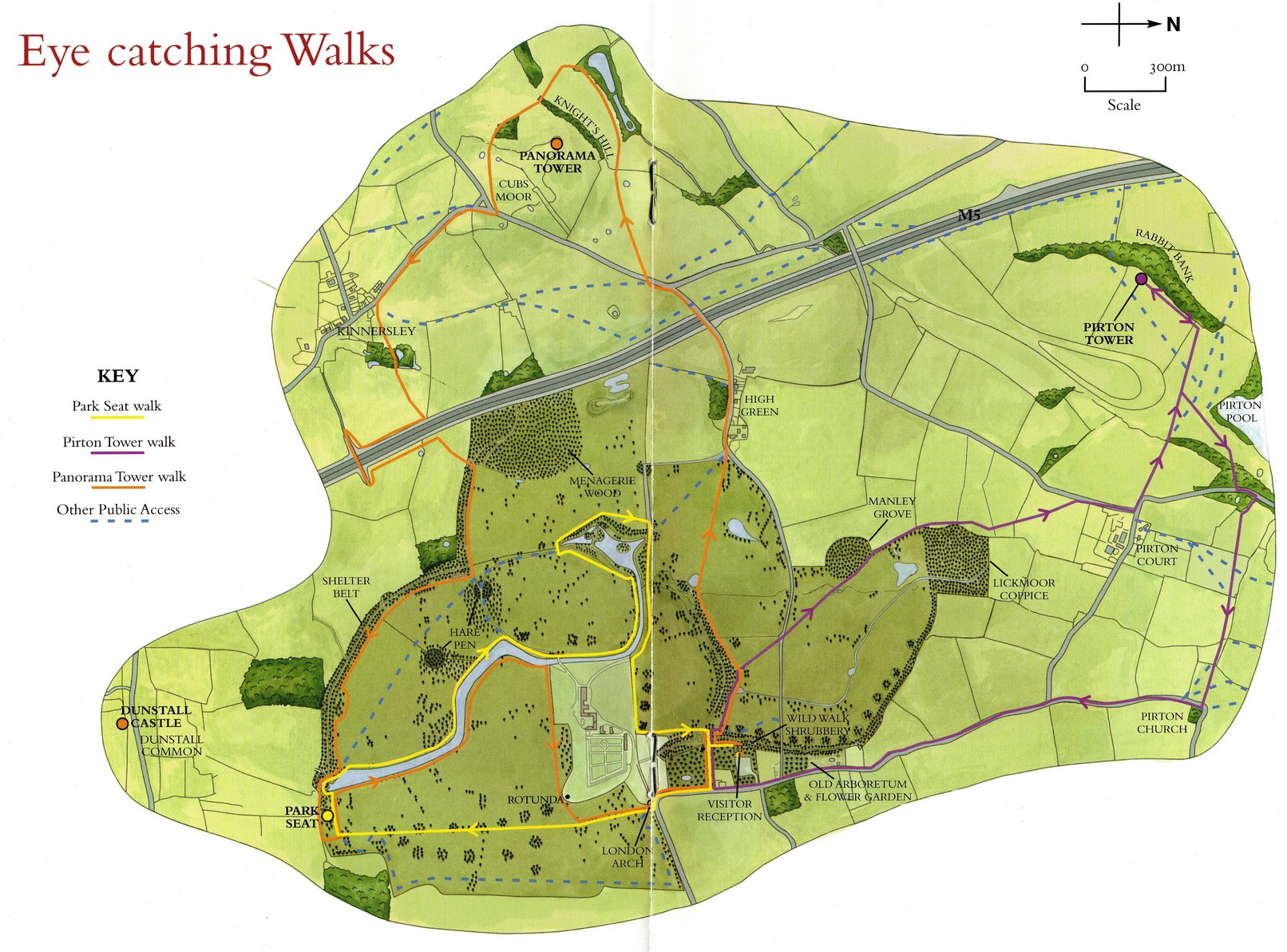
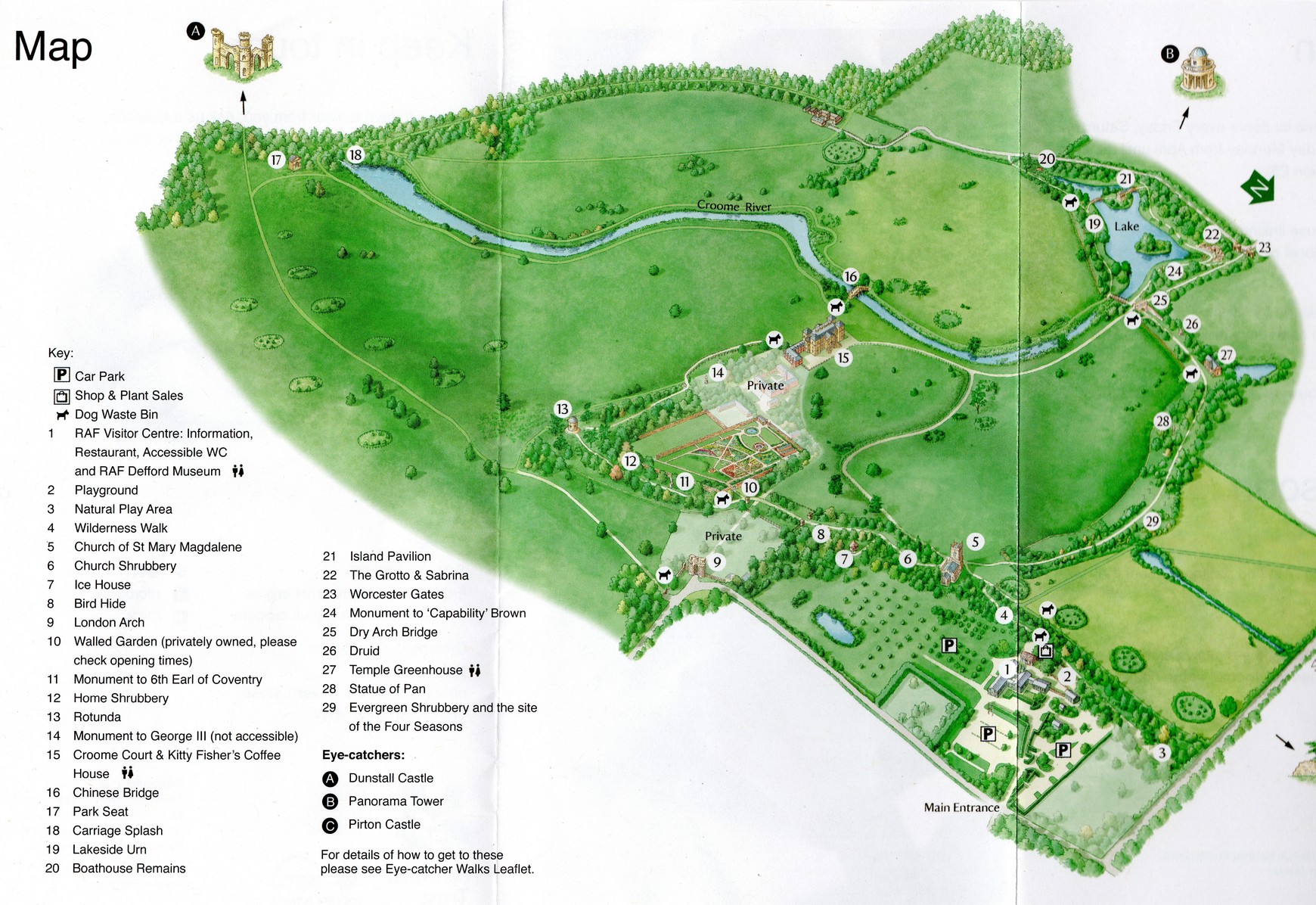
From the Visitor Centre (1 on the map, and once the sick quarters of  nearby WWII airfield, RAF Defford), the footpath through a bluebell wood to Croome Park brings you out onto a hillside beside the Church of St Mary Magdalene (5), and impressive views out over the park and house.

And from that vantage point, there are long walks available in all directions throughout the park and beyond and lots of features to explore as shown in the map below and the subsequent photos.


5. Church of St Mary Magdalene
An earlier church once stood here, but it was replaced by Capability Brown with this rather plain one, but with some impressive tombs inside.

7. Ice House
Many country houses have an ice house – the National Trust has carefully restored this one.


29. Evergreen Shrubbery

27. Temple Greenhouse
Designed by Robert Adam, there are fine views across the park to the main house itself. Glass windows have now been added.

26. Druid
This statue was designed by James Wyatt, and after very careful scrutiny, we did discover the hidden date stamp – 1793!

25. Dry Arch Bridge
The carriage drive built by Brown passes over the top, and here is also a detail of one of the facing stones.

22. The Grotto and Sabrina
You can see the statue of Sabrina reclining on the left hand side of the Grotto, which is itself constructed from tufa.

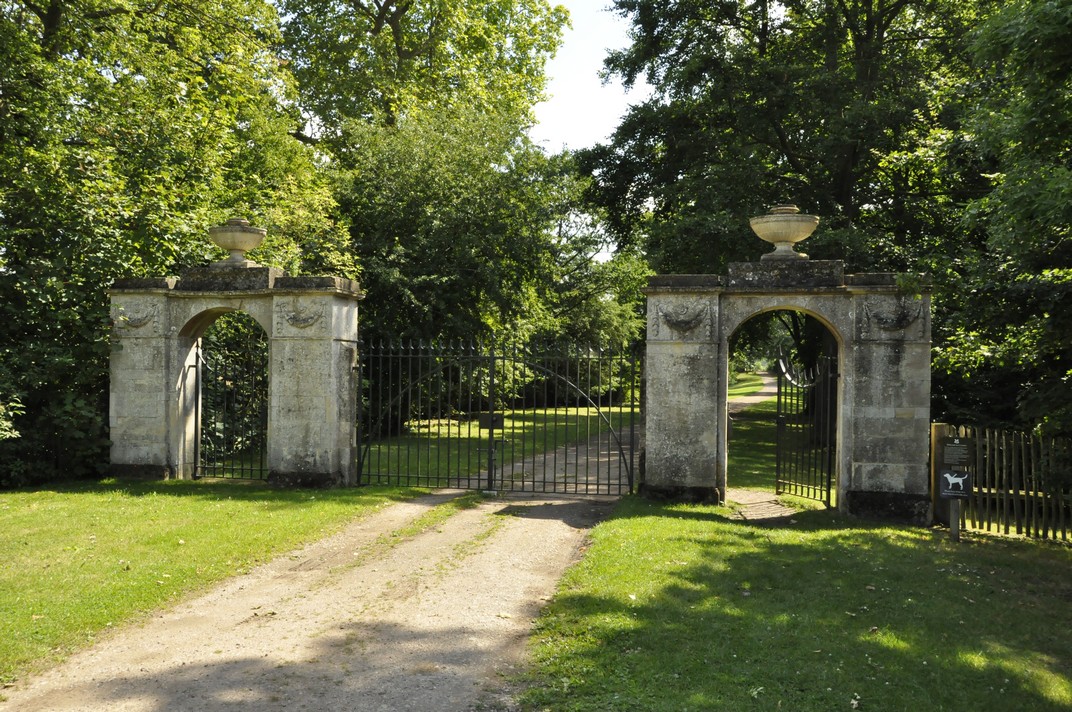
23. Worcester Gates

28. Statue of Pan

21. Island Pavilion
This is an elegant pavilion, which has undergone extensive restoration particularly to remove decades if not centuries of graffiti from the inside walls. The plaque on the rear wall shows a wedding scene.

15. Croome Court
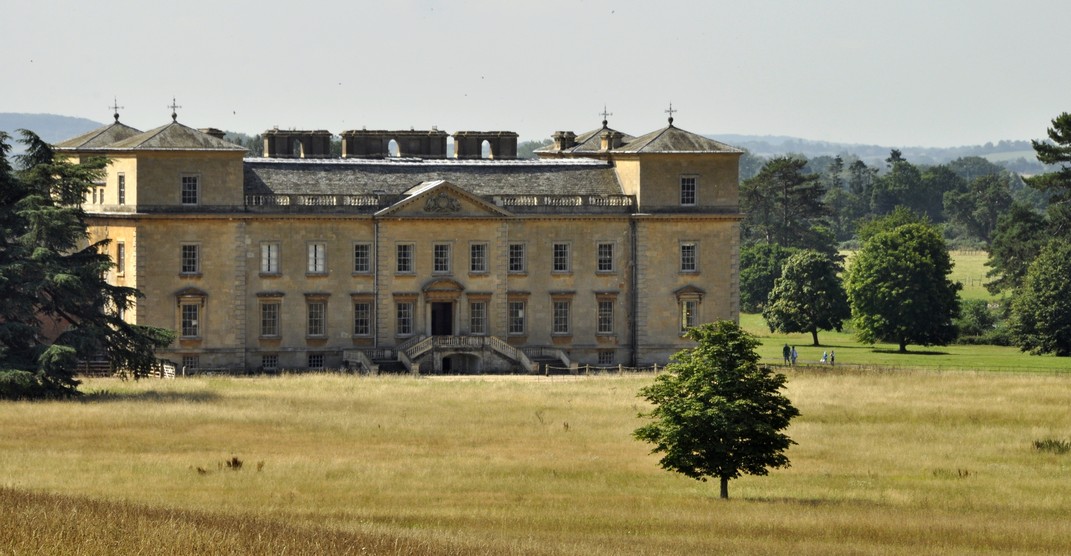
This building is both plain and elegant. From the rear, north side, it does appear very attractive at. But the South Portico, with reclining sphinxes either side of the elegant steps up to the door, is something else instead. Although the exterior design is attributed to Capability Brown, Robert Adam was responsible for some of the interiors, particularly the long gallery. The plaster work throughout has been extensively restored as part of the National Trust’s more than £5 million scheme. Only the ground floor and part of the cellars is currently open to visitors. We first visited Croome in March 2011. Three years later one of the rather dilapidated side wings has now had its roof and windows replaced and is on track for a complete restoration. Some other buildings at Croome were converted years ago into private apartments.
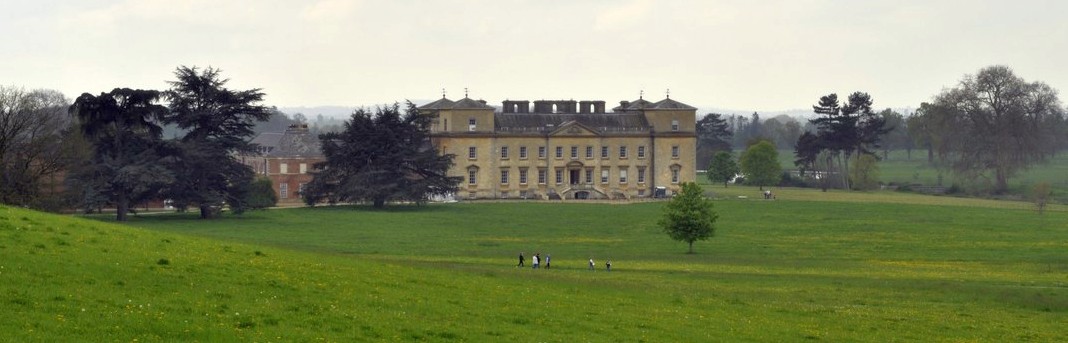
When we visited Croome in 2015, the house was encased in scaffolding and swathed in polythene, now removed. We have toured the house just once, in 2011. Work continues with the refurbishment inside, but because Croome was rather busy two days ago, we just enjoyed our walk around the park. I think a visit nearer Christmas might be appropriate to see how the house has changed over the past six years or so.

13. Rotunda
This building lies about 150 m to the east of the south portico where the land rises away from the main park and Croome River. It has an impressive ceiling and other moldings.

16. Chinese Bridge (and Croome River)
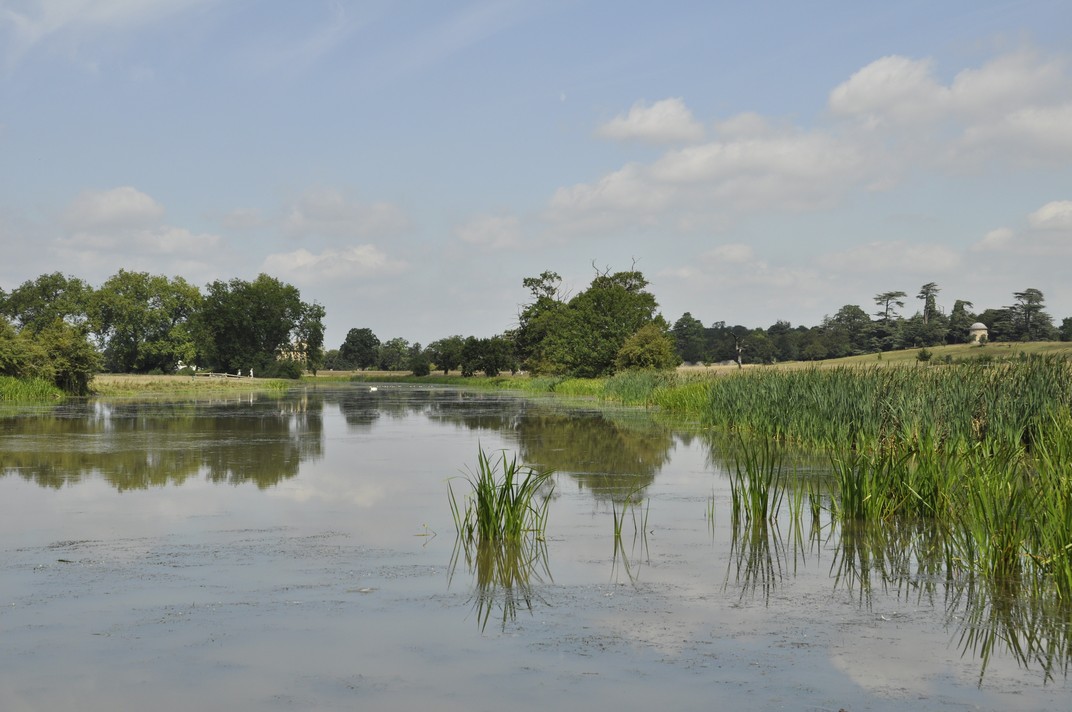
It’s hard to imagine the number of laborers it took to dig this ‘river’ if it took 12 years. There are footpaths all round the lake, where you can mix with the local livestock, and various water birds: coots, mallard, great-crested grebe, and Canada and grey lag geese (on the most recent visit).

17. Park Seat
This sited on a high point looking north over the park towards the house. You can imagine what it must have been like in its heyday – a stroll or ride through the park, perhaps a picnic at the Park Seat. Elegance!

18. Carriage Splash
This is the view along the Croome River from the Carriage Splash.

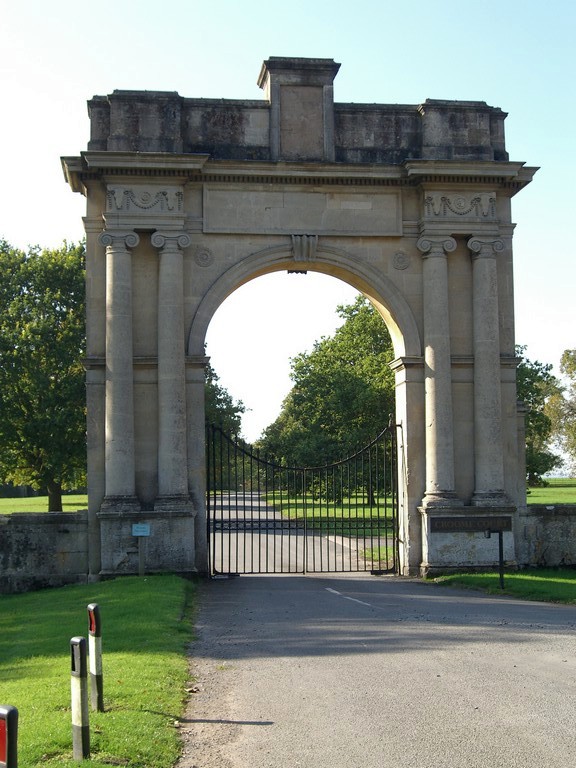
9. London Arch
This is an impressive entrance to Croome on the east of the property, but now provides access, via a private road, to apartments that have been developed in some of the outbuildings of the house.

Croome Court has seen some changes during its history. George III visited, as did Queen Victoria and George V. It’s reported to have housed the Dutch royal family in exile during WWII. The Coventry family sold the house in 1948. It subsequently became a Catholic school, and even owned by the Hare Krishna sect. Today, while the garden and park are owned by the National Trust, the house itself is owned by the Croome Heritage Trust and leased to the National Trust.
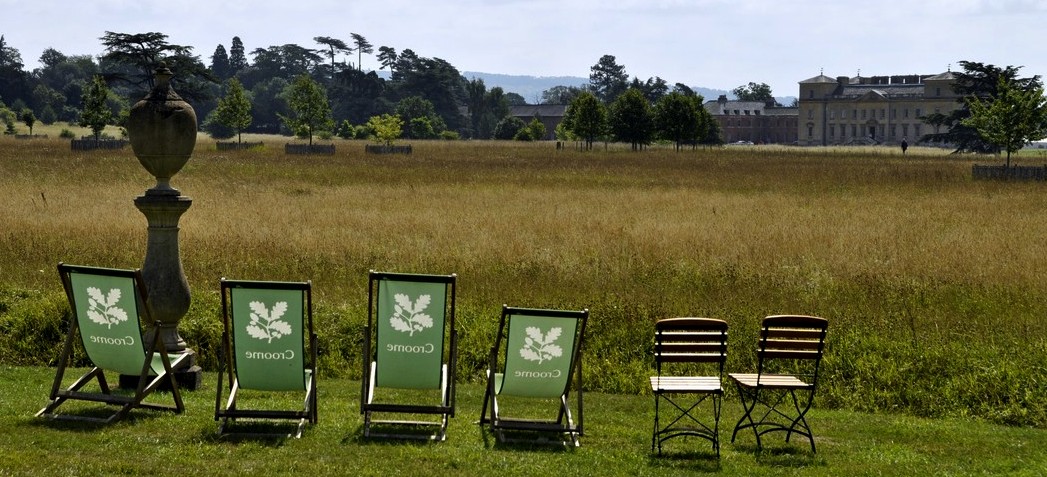
So if you want to enjoy some culture and the opportunity for a brisk and bracing walk, Croome Court and Park is the place to visit. The photos in this post were all taken along the Park Seat Walk (in yellow on the map below, around 3½ miles).


Beyond the park, and towards the west and the Malvern Hills, stands the Panorama Tower (B on the map).

Celebrate Croome for its inherent, natural beauty.

Celebrate Capability Brown, who could realise the vision of his patron, and made an impact on English landscapes like no other before or since.

And celebrate the 6th Earl of Coventry, who had a vision, and the financial resources to do something about it.

An extraordinary ordinary man . . .

Frederick Harry Jackson. Born 15 September 1908, died 29 April 1980, of heart failure. My Dad.

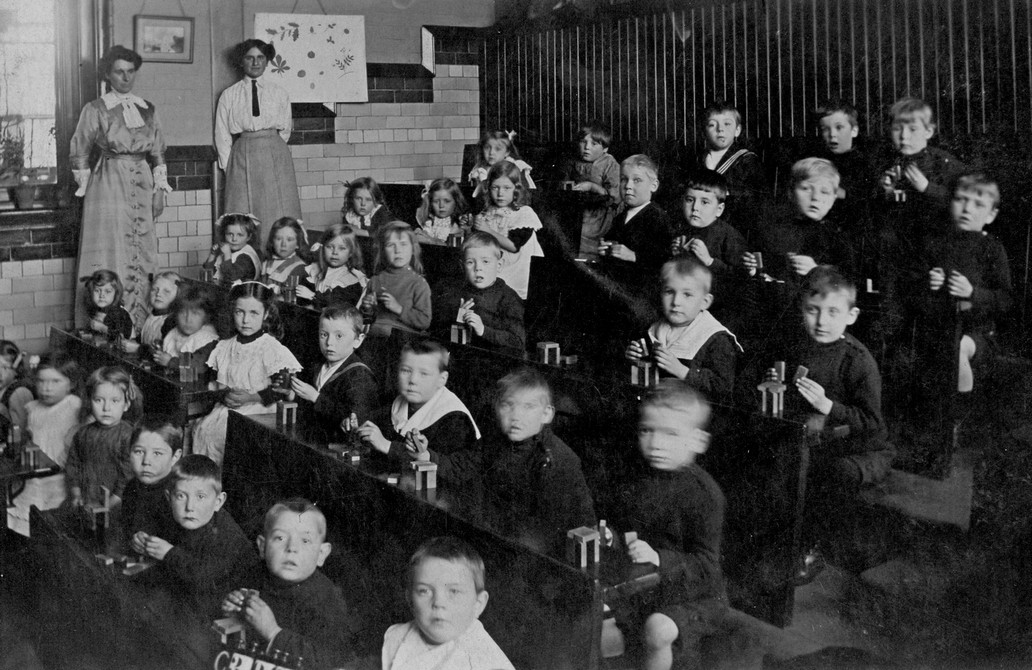
This is the earliest photo I have of him, as a young schoolboy. When was it taken? I can’t say, but he looks about seven, so it must date from around 1914 or 1915. He’s on the extreme right, third row back.

Why an extraordinary ordinary man? I’ll let my brother Ed explain: Why was Dad’s life exceptional? On the one hand he had no formal academic education beyond the age of 16 (although he did attend technical courses associated with one job or another over the course of his life). He married at the conventional age of 28, fathered four children, supported his family to the best of his ability, ran his own business, retired at a reasonable age, and enjoyed a short but happy and fulfilling retirement. Ordinary, yes, but this same man crossed the Atlantic Ocean ninety-nine times, photographed some of the most famous film stars of the 1930s, fought in the Second World War, became a local newspaper photographer (the Congleton Chronicle), and then took an enormous economic and emotional risk by opening his own photographic business and shop [in Leek] at the age of 48, with no assurance at all of success and a family of six to support. Not only was he civic-minded, he became a town council member in one town (Congleton), and later the Chairman of another town’s council (Leek).

Chairman’s Sunday in Leek, 1968

Dad was a photographer all his life, and I guess some of my own love of photography was ‘inherited’ from him. I was seven in 1956 when we moved from Congleton to Leek, and until I moved away to university at the age of almost 19, I helped out on many occasions in the shop and in his darkroom. The hours I spent agitating prints in baths of hypo, then washing them in running water, finally putting them to dry on a drum dryer. In Congleton, I used to visit Dad in his workroom at the Congleton Chronicle – and last September I had chance to visit there after almost 60 years!

Dad spent quite a few years as a photographer on board ship during the heyday of maritime travel in the 1930s, mostly with the Cunard White Star line, sailing from Southampton to New York, and often on winter cruises down to the Caribbean and the east coast of South America as far south as Buenos Aires. Shortly before he died, Dad put the finishing touches to a short memoir he’d written called Gathering No Moss. I can think of no better way than letting some of his own words speak for themselves.

Early days
By the time I was twenty, I had an urge to spread my wings, and also to improve my modest earnings, so I applied for and secured work with a firm which specialized in maritime photography, and supplied staff to do the photographic work on cruise liners. Cruising was by no means a new thing, and general photography at sea had been practiced for many years even as early as 1929. Our first voyages were a series of cruises from this country to Scandinavia that summer, and the memory of these days, fifty years on, is as vivid as ever. One memorable evening, when we were in the Norwegian fjords, stands out above all others, when, coming up on deck after dinner, we found a scotch mist falling, and cottonwool puffs of cloud floating along almost at eye level. Our work brought us into regular contact with all our passengers, and we lived almost as well as them, but technically we came under the jurisdiction of the captain, and signed “ship’s articles” as unpaid members of the crew.

Just look at the size of the half-plate reflex camera my father is toting. I often wonder what he would have made of the digital photographic revolution. I’m sure he would have seized it with enthusiasm given the number of 35 mm slides he took over the years many of which we have been able to save through digitizing.

Here’s what he had to say about working on board ship:
The setup on board may be worth a mention at this point. Very few of the vessels we worked on had been specifically built for cruising; indeed some of them were far from suitable for a life in the Tropics, and having been originally constructed to carry three classes of passengers, had ample space to spare below decks in the unused Third class, where we housed in comparative comfort. We ate in an otherwise generally deserted Tourist class dining room, along with other spare parts like ourselves: orchestra, pool attendants and the like. Almost invariably, our darkrooms were makeshift affairs in unwanted bathrooms and toilets. We needed to be near a source of fresh water, anyway, and an empty bathroom could easily be blacked out to make an adequate darkroom, with wet and dry benches.

Meeting and photographing the stars
The 30s were the age of sea travel, so if you wanted to travel to the USA, then ocean liner was really only the feasible way to go even though airships and seaplanes filled the need – but only partially.

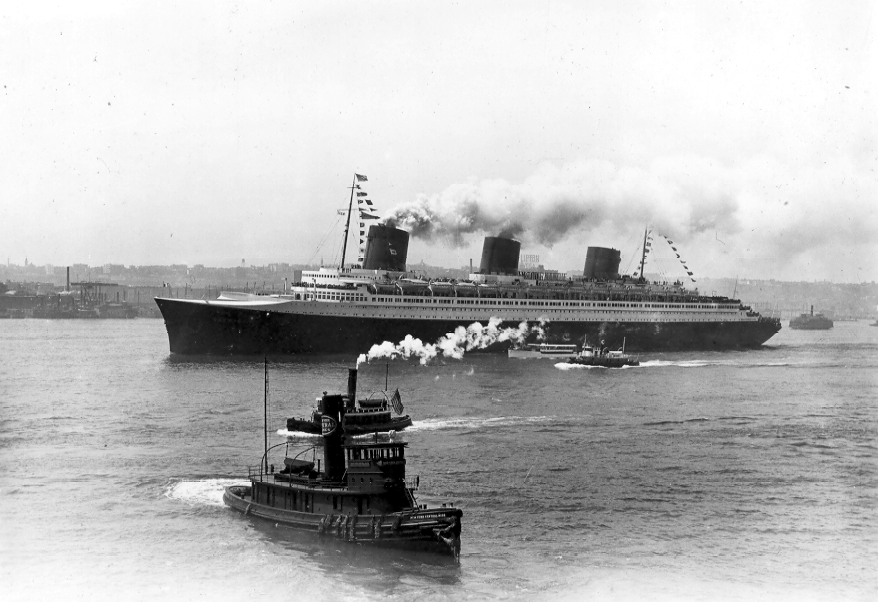
Actually, there were more ships plying the Atlantic than were really needed, and with the marriage of the Cunard and White Star fleets, it was not long before some reduction in tonnage took place. First to go was the biggest of them all, the ex-German liner Majestic, sold in the first instance to become a training ship, but soon to be sent to the knacker’s yard. [I believe that the end table that sits in my hallway came from the Majestic]. This and several other ships had been handed over as reparations after the war, but fairly soon the Germans were allowed to rebuild, and entered the lists with two crack liners, faster than anything else afloat, and being brand new, proceeded to cream off the best of the trade. It was not until the arrival of the Queen Mary and the Normandie some years later that the balance was restored.

SS Normandie steaming into New York

SS Normandie steaming into New York

Meanwhile, we still had our fair quota of near millionaires, people of title and stars from stage and screen. Hardly a voyage passed but what we had on our passenger list names that were very much in the public eye. Many of them, of course, are but fond memories, but perhaps my favourite star passenger of those days, and very much a force to be reckoned with still in Hollywood, was Bette Davis. I photographed her immediately on leaving Southampton Docks, hurriedly processed the results, and was able to dispatch copies back to head office by the time we called at Cherbourg. I also had prints made which I asked her to autograph, and I feel that she was quite impressed with my achievement. Yet another, Bessie Love, of the silent era, crossed with us to England at one time, and has stayed here ever since. Two British women, who are still very much in the forefront of our theatrical scene, who traveled with us on more than one occasion, were Anna Neagle and Evelyn Laye. I like to think that it was our slightly old-fashioned shape, rather than the floating hotel furnishings of our more modern sisters, which appealed to so many of our customers, who would travel with us repeatedly rather than elsewhere.

RMS Aquitania

Dad’s favorite ship, the RMS Aquitania

Here are some of the stars that Dad photographed, many on the RMS Aquitania: Madge Evans; Robert Montgomery; Merle Oberon; Marlene Dietrich; Jean Muir; Jack Hulbert; Frank Lawton and Evelyn Laye; Bette Davis; and the incomparable Cary Grant.

Other cruises took Dad south to the Caribbean and South America.

And finally, it was through his photographic work for Cunard White Star that Dad met my Mum. She had left England in 1927 when she was 19 to work as a nanny in Montreal. After some years she moved to New Jersey to train as an orthopedic nurse. It was on one of her return trips to the UK to see her family that they met. Again, let Dad tell the story:

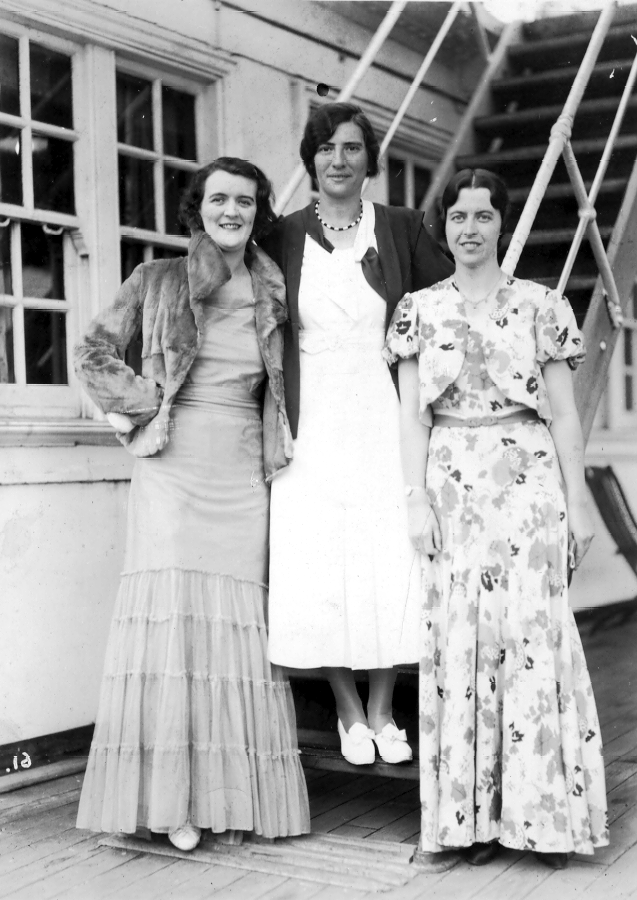
It was literally in the middle of the Atlantic that I met the girl who was to become my wife a few years later. My camera work was entirely devoted to photographing our passengers and their activities, and it was about halfway through the five day voyage that Lilian and two of her shipboard acquaintances asked me to photograph them before dinner. I am often reminded that initially I fell for another girl, but I must have known a trick or two, as before I let Lilian disembark at Southampton I persuaded her to part with an address where she could be found on her return to the States after her holiday at home in the U.K. She was met by her parents who came on board, anxious to see their daughter after so long a time, and I photographed them together, little realizing that I had just met my future mother and father-in-law.

That’s Mum on the left – she must have been about 26

Mum with her parents, Martin and Ellen Healy on board in Southampton Docks

By the autumn of that year, I ventured to ring Humboldt 2-7600, the nurses’ home attached to the hospital where she had taken up nursing training, a few miles across the river in Newark, New Jersey. From then on, the brief hours we had ashore in the States were spent in nipping over to Newark, and before long I had decided that this was the girl for me. Late on in the evening of Friday, December 13th the following year I came to the conclusion that I must do something about it, and popped the question at a few minutes before midnight on the steps of the nurses’ home. Getting an instant and emphatic “yes”, I journeyed back to New York with my head in the clouds, and to the uptown beer garden where I knew I should find my mates, and celebrated in no uncertain style.

Mum worked as a nurse for a while, but eventually returned to the UK and Mum and Dad were married in November 1936. Just before leaving New York they took time out to view the SS Normandie:
She eventually returned to the U.K. in preparation for our November wedding, travelling with us on the Aquitania, this time as a V.I.P. with a cabin to herself on “C” deck, a kindly gesture by the Cunard office staff in downtown New York, where we went to book her passage. While still in the States, we paid a memorable visit as sightseers to the French liner Normandie, latest and biggest of the Atlantic ships . . . 

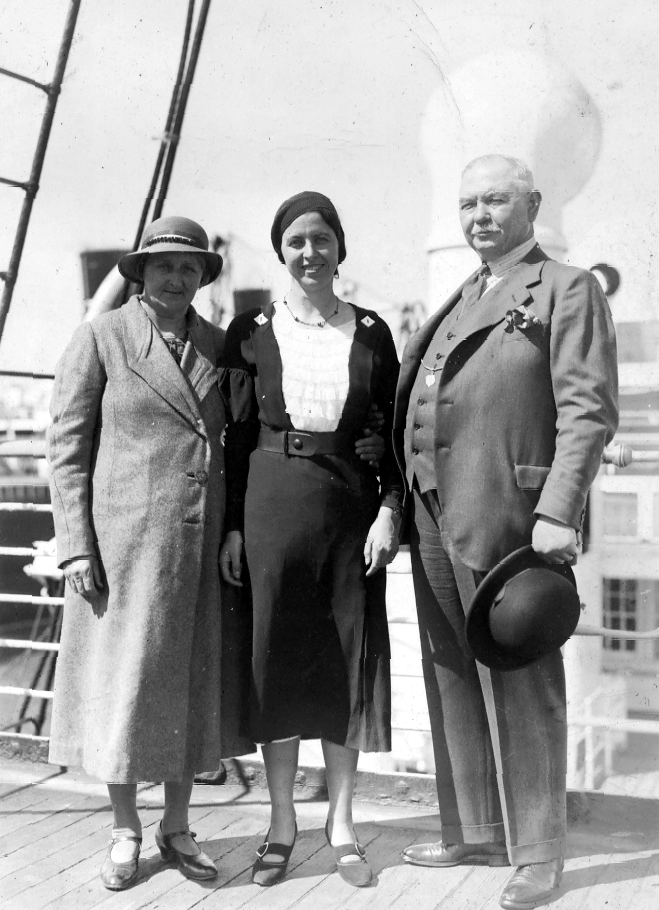
And here’s Mum getting to know her future in-laws, my grandfather and grandmother Thomas and Alice Jackson.

Mum with her future in-laws, Thomas and Alice Jackson, on board ship in Southampton Docks

I was working abroad in Costa Rica when Dad died in 1980. I was not able to return to the UK for his funeral. And in some ways it was fortunate that I didn’t travel as our daughter Hannah who had just turned two a few days earlier was taken quite ill. And since we lived more than 70 km on a difficult road from the capital San José and better medical help I was at least on hand to run her to the pediatrician on several occasions.

But with Gathering No Moss – and a wonderful collection of photographs – my extraordinary Dad has left me and my brothers and sister some extraordinary memories to savour.


With a little help from my friends . . .

These days, I feel I can easily remember things that happened decades ago during my childhood. Ask me what I did yesterday or at least during the past few days and I often struggle to remember the details.

But recently I’ve been reminded of things that did happen 50 or more years ago that I had most definitely forgotten. And through the power of the Internet, and most probably Google, I have reconnected with a couple of childhood friends who I had not been in contact with for more than 50 years.
When I started this blog more than two years ago I never expected that long-lost friends would be in contact with me.

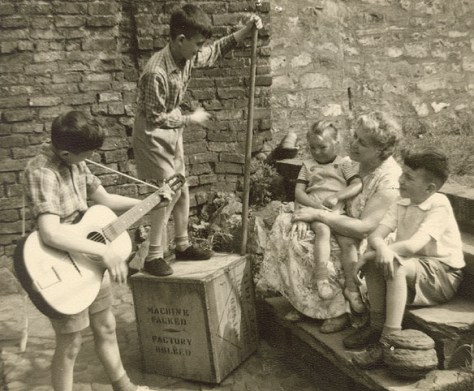
Almost two years ago, on 5 April 2012, I posted a story about the Beatles and my childhood love of skiffle music. I included this photo, and mentioned that the boy and little girl listening to me and my brother Ed were my best friend in Leek, Geoff Sharratt, and his sister Susan. A few months later I was contacted by Susan who had been doing some genealogy research and came across my blog. I’ve been in touch with Geoff on a regular basis since then, and posted another story in November 2012 about us renewing our friendship. We certainly had a lot to catch up on.

skifflepic

The Jackson Duo strutting their stuff, watched by their mother and friends Geoff and Susan Sharratt

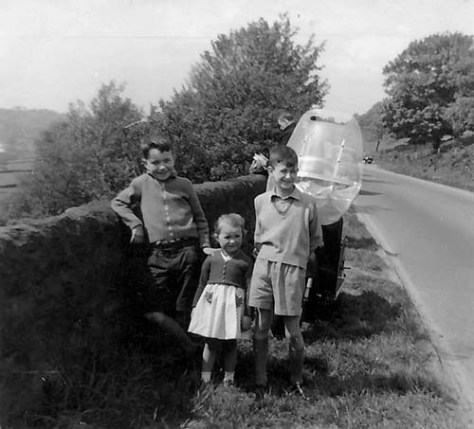
5. Geoff, Sue and Mike Jackson above Rudyard Lake

Geoff, Susan and Mike in the late 50s, overlooking Rudyard Lake near Leek

Geoff and Sue

Geoff and Sue

Then in the middle of February, out of the blue I received a message from Alan Brennan, my first and best friend when I was growing up in Congleton. Alan has certainly filled in some gaps in my memories. I left Congleton in April 1956 when I was seven; Alan is 13 months younger than me. Although we lived just a few doors away from each other we didn’t go to the same school. But whenever we were home it seems to me that we were inseparable and got into some scrapes.

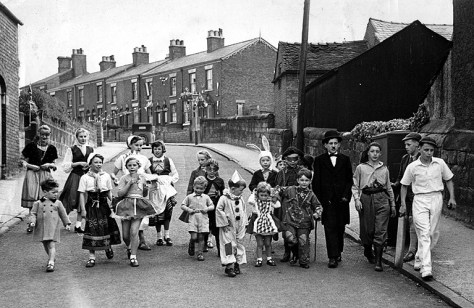
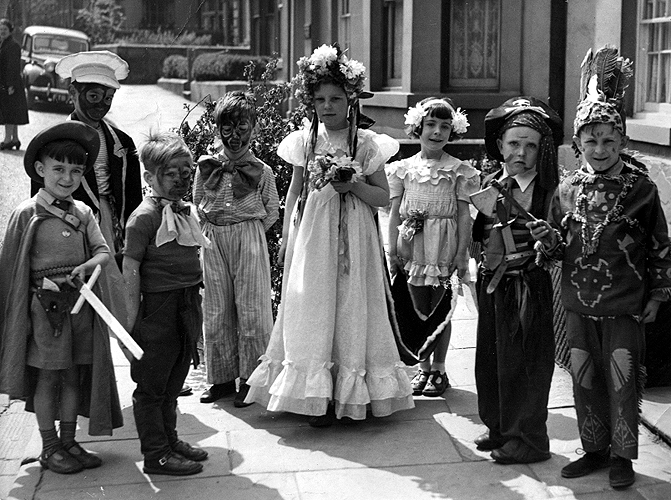
That’s me in the center of the photo below, partially dressed as a native American (sans war bonnet) and carrying a stick. Alan is to my right, the little boy looking rather shy in short trousers in front of the pirate, my elder brother Ed.

Coronation Day 1953

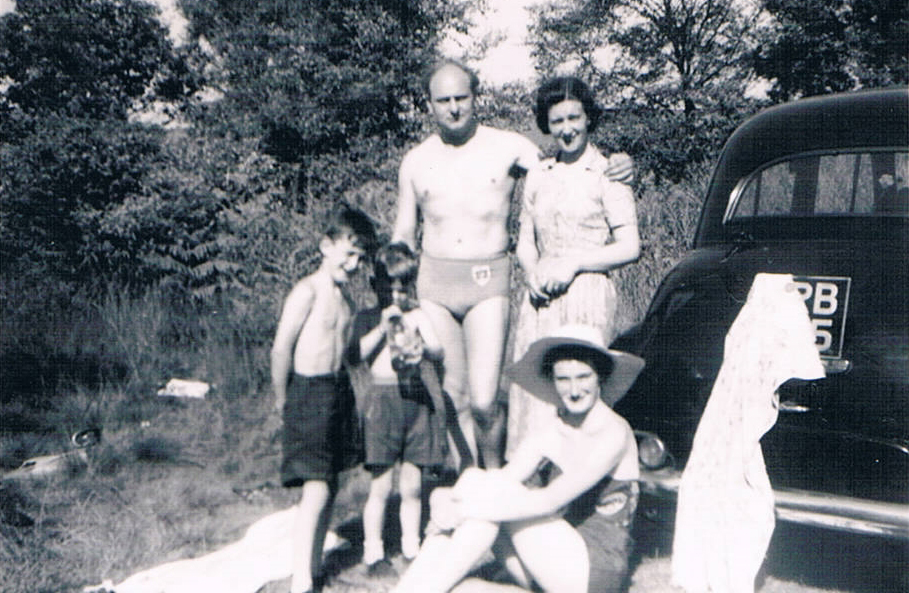
Alan has continued to live in Congleton, and like me has now retired. Here are a couple of photos he sent me recently. In the 1955 photo we were having a picnic at Rocky Pool near Timbersbrook, just east of Congleton. Alan’s parents are standing, a family friend is seated. In the background is the Brennan’s car – a Vauxhall Wyvern. I mentioned to Alan in one of our emails that I did indeed remember the car and thought it was a Wyvern, which he confirmed. The old memory was certainly working on that detail!

Summer1955mjPhotos (1)

May Day celebrations, pre-1956. That’s me on the left, and my brother Ed on the right. I’m not sure if that’s Alan standing on my left. Looks like Alan’s Dad’s car in the top left corner.

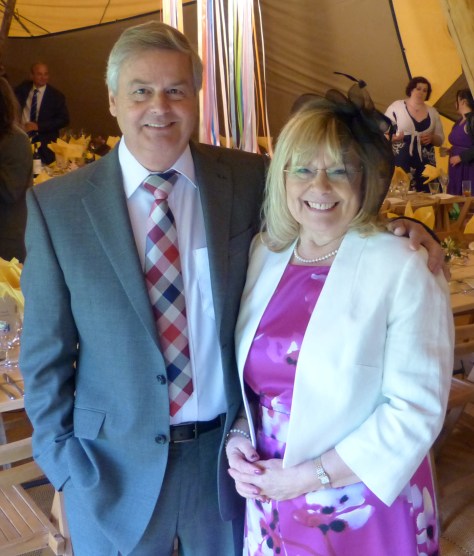
Alan with his wife Lyn

Alan with his wife Lyn

¿Donde esta el baño?

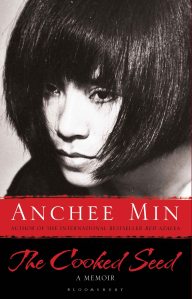
I’ve just begun reading Anchee Min’s memoir The Cooked Seed (published by Bloomsbury in 2013). I’m only on page 58, but I’ve already reached the description about her arrival in Chicago, aged 27, in August 1984. Escaping from an impoverished upbringing in Shanghai and all the tribulations of the earlier Cultural Revolution that had so dramatically affected her life, she had applied (on false pretenses) to study in the US for a bachelor’s degree in art. She had one huge drawback: although indicating on her application and during her visa interview that she was fluent in English, she hardly spoke or understood a word of English. Her sense of utter helplessness leaps off the pages. A new language, new alphabet, as well as the challenge of a new consumer-driven culture and society, something way beyond her experiences until then.

And that got me thinking about how we adapt to new situations, cultures and language. I can empathize with Anchee Min, although of course my life experiences in childhood and my teens prior to moving abroad do not hold comparison with hers.

Before I moved, aged 24, to Peru in January 1973, I had traveled outside the UK on only two occasions, the first time in 1969 to Czechoslovakia, and then in April 1972 to attend a EUCARPIA genebank conference in Izmir Turkey. I’d flown only three times, never intercontinental, and Turkey was my furthest destination. So it was with a certain degree of trepidation I set out for Peru.

While I had made some (rather pathetic) attempts to begin to learn Spanish before I moved to Peru – I’d known for about a year that I would be working there before I actually left the UK – I didn’t make much progress. I was a graduate student at the University of Birmingham, and decided to take advantage of the language laboratory to begin Spanish lessons. I didn’t find it inspiring whatsoever – sitting alone in a booth, listening to a tape on headphones, and attempting to follow along with a text. Until then, my foreign language skills were minimal. I’d studied French at high school, passed the necessary exam (‘O Level’) in 1965, and not bothered subsequently. Well, at the language lab I thought I was making some progress until, that is, someone walked off with the only copy of the course text. On reflection I should have stuck with the audio tapes but being (at that time of life) a bit of a procrastinator, I gave up. With the consequence that when I landed in Peru I had hardly a word of Spanish.

In fact, when I came down to breakfast on my first morning in Lima – it was a Friday – I couldn’t even order my own breakfast! I must admit that I felt rather confused for several weeks, maybe months, until I began to understand a little more how things worked, and I’d picked up a basic vocabulary. I certainly used a lot of single words and waving of arms to get by.

In some ways there was less language pressure because many colleagues at the International Potato Center (CIP) at La Molina (then on the outskirts of Lima), where I worked as an Associate Taxonomist, were bilingual. Many of the support staff were not, and being able to communicate with them was a priority. I began intensive Spanish lessons with Maestro Jorge Palacios, who had taught ‘generations’ of ex-pats on the Peru-North Carolina State University Potato Program mission, and CIP staff. By mid-1973 I was much more confident and had begun to string sentences together – not particularly competently – but i was getting by. In May 1973 my colleague Zosima Huaman and I made a three-week germplasm collecting trip to the provinces of Ancash and La Libertad. I could never have made that trip alone. In one village we were greeted by everyone in the community. It was clear I would have to respond, having been identified as a ‘representante de la Reina Isabel‘. I quickly jotted down some phrases on the palm of my hand that Zosimo gave me. Afterwards, everyone (about 200 people) came and shook my hand!
By the time Steph joined me in July 1973 (and we were married in Lima in October that year) I was becoming a little more competent, and within a year I could make germplasm collecting trips in the boondocks (originally a Filipino word) on my own with just a support driver. It wasn’t until I moved to Costa Rica and Central America in April 1976 (where I stayed for almost five years)  however, that I became more or less fluent in Spanish, although my written Spanish has never really been competent. At CATIE in Turrialba where we lived English was used very little. In my potato work with farmers in various countries and researchers from national research institutes, I always spoke Spanish. It’s such a lovely language to learn and speak. And that’s one of the legacies of my time abroad. I got to learn a second language, and although I haven’t spoken Spanish for 30 years or more, it’s still locked away in the further recesses of my brain. So it’s quite fun when something in Spanish is broadcast on the TV (as the other night, in a program about Easter Island) trying to follow along without reading the sub-titlkes.

Faced with the difficulties of a new language and adjusting to a different society and culture – as I did in 1973 – I think made me better prepared to help graduate students who came to study genetic resources at the University of Birmingham when i taught there in the 1980s. Most were overseas students with English as a second language; and quite a numbered really struggled. As part of our teaching commitments we worked with the staff of the English as a Second Language Unit in English Department to provide weekly remedial classes. Each week one of the course staff would record a lecture that then formed the basis of a tutorial with the students. In this way they not only learned about the technical use of English, but also how the lecturers would sometimes (often?) unknowingly use colloquialisms, or maybe repeat the same idea but in a different way, using other descriptive terms.

I’m afraid that when I moved to the Philippines in 1991 I never did make an effort (shame on me!) to learn Tagalog, although I picked up a smattering of words, and was  able after some years to understand the gist of a conversation in Tagalog. But I’ve rarely been in a situation, as Anchee Min found herself, completely at sea and unable to communicate. As English has become (much to the chagrin of the French) the world’s lingua franca, it’s no longer unusual to find public signs and notices, even announcement on public transport, in English in Japan, China, Thailand and elsewhere that use a different alphabet.

The beauty (and wonder) of diversity

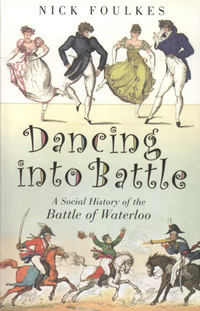
June 1815. British and allied troops muster in Brussels (then part of the United Netherlands) as the Duke of Wellington prepares to meet Napoleon at the Battle of Waterloo.

The troops are in good spirits, the social life of high society thrives, even as troops march to the front, with officers being called away to their regiments from the Duchess of Richmond’s Ball on the eve of the battle. The weather is fine, although it would deteriorate dramatically over the course of the battle in the next day or so.

Arriving in Belgium, one soldier commented on the productivity of  the local agriculture: I could not help remarking the cornfields today . . . they had (as I thought) a much finer appearance than I had seen in England, the rye in particular, it stood from six to seven feet high, and nearly all fields had high banks around them as if intended to let water in and out, or to keep water out altogether – but the rich appearance of the country cannot fail to attract attention.

Another cavalry officer wrote: I never saw such corn [probably referring to wheat] 9 or 10 feet high in some fields, and such quantities of it. I only wonder how half of it is ever consumed.

These are among the many contemporary commentaries in Nick Foulkes’ entertaining account of the social build-up to Waterloo. So what does all this have to do with the beauty (and wonder) of diversity?

Landrace varieties
Well, they are actual descriptions, almost 200 years old, of the cereal varieties being grown in the vicinity of Brussels.  Once upon a time, not too long ago before plant breeding started to stir up genetic pools, all our crops were like those described by soldiers off to fight Boney. We often refer to them as farmer, traditional or landrace varieties which have not been subjected to any formal plant breeding. You also hear the terms ‘heritage’ or ‘heirloom’ varieties, especially for vegetables and the like. Landrace varieties are highly valued in farming systems around the world – and the basis of food security for many farmers who grow them. However, in many others they have been replaced by highly-bred and higher yielding varieties that respond to inorganic fertilizers. The Green Revolution varieties released from the 1970s onwards, such as the dwarf wheat and rice varieties championed by pioneers such as Dr Norman Borlaug, bought time when the world faced starvation in some countries.

Now I’ve been in the business of studying the diversity of crops and their wild relatives almost all my professional life: describing it; assessing its genetic value and potential; and making sure that all this genetic treasure is available for future generations through conservation in genebanks.

The nature of diversity
But it wasn’t until the early 20th century – with the work of  Nikolai Vavilov and his Russian colleagues, and others that followed in their footsteps – that we really began to understand the nature and geographical distribution of diversity in crops. Today, we’ve gone the next step, by unraveling the secrets of diversity at the molecular level.

This diversity has its genetic basis of course, but there is an environmental component, as well as the important interaction of genes and environment. And I’m using a wide definition of ‘environment’ – not just the physical environment (which we think of in terms of growing conditions governed by geography, altitude, soil and climate) but also the pest and disease environment in which crops (and their wild relatives) evolved and were selected by farmers over centuries to better fit their farming systems. Landrace varieties that are still grown today in some parts of the world (or conserved in genetic resources collections) are extremely important sources of genes for adaptation to a changing climate for instance, or resistance to pests and diseases, as we have highlighted in our forthcoming book.

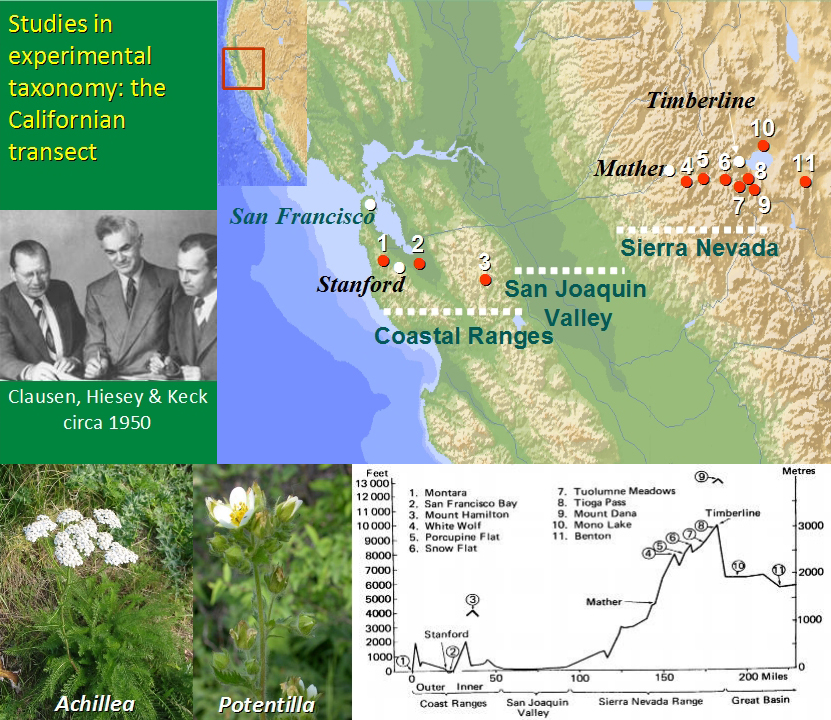
My own work on potatoes, rice and different grain legumes aimed to understand their patterns and origins of diversity, as well as the breeding systems which molded and released that diversity. I’ve been fortunate to have the great opportunity of working with or meeting many of the pioneers of the genetic resources movement, as I have described in other posts in this blog. But at the beginning of my career I became interested in studying crop diversity after reading the scientific papers of a group of botanists, Jens Clausen, David Keck and William Hiesey at Stanford University  (and others in Europe) who undertook research to understand patterns of variation in different plant species and its genetic and physiological underpinning.

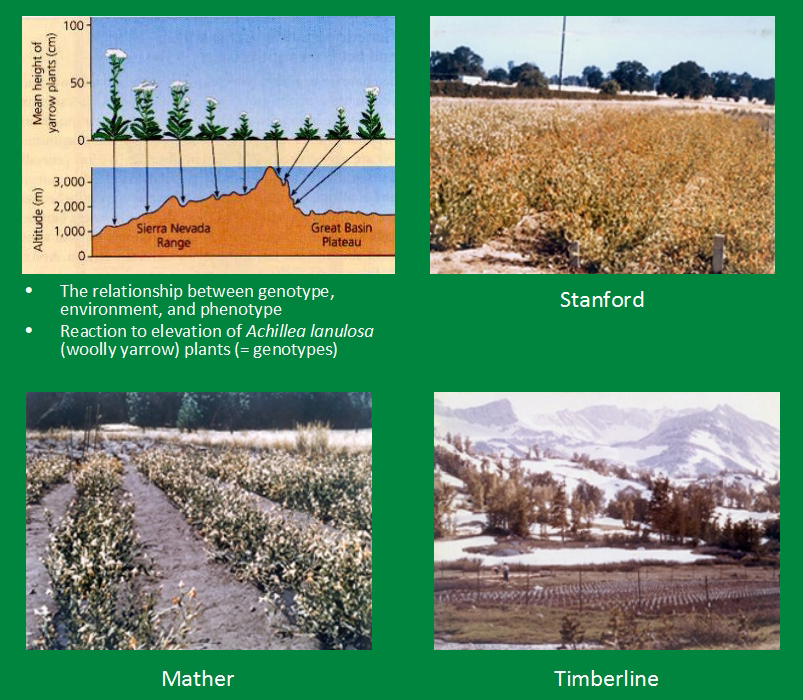
These Californian pioneers studied several plant species found across California (including Achillea spp. and Potentilla spp.), from the coast to the high sierra, and planted seeds from each of the populations in different experiment stations or ‘experimental gardens’ as they came to be known. They described and determined the physiological and climatic responses in these species – and the genetic basis – of their adaptation to the different environments. The same species even had recognizable morphological variants typical of different habitats.

Experimental gardens established by Clausen Keck and Hiesey at three sites across California to study variation in plant species.

Interesting research has also been carried out in the UK on the tolerance of grasses to heavy metals on mine spoil heaps. Population differentiation occurs within very short distances even though there may be no morphological differences between tolerant and non-tolerant forms. Researchers from Aberystwyth have collected grasses all over Europe and have found locally-adapted forms in rye grass (Lolium) for example, which have been used to improve pasture grasses for British agriculture. But such differences in these and many other crops can often only be identified following cultivation in field trials where the variation patterns can be compared under the same growing conditions (following the principles and methods established by Clausen and his co-workers), and the data analysed using the appropriate statistical tests.

I began my work on genetic resources in 1970. I quickly realized that this was the area of plant science that was going to suit me. If I wasn’t already hooked before I moved to Peru, my work there at CIP on potato landrace varieties in the Andes (where the potato originated) convinced me I’d made the right decision. The obvious differences between crop varieties are most often seen in those parts of the plant which we eat – the tubers, seeds and the like, the parts which have probably undergone most selection by humans, for the biggest, the tastiest, the sweetest, the best yielder. Other traits that adapt a variety to its environment are more subject to natural selection.

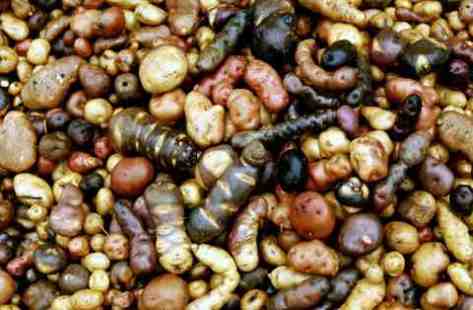
Patterns of diversity are so different from one crop species to another. In potatoes it’s as though a peacock were showing off for its mate – you can hardly miss it, with the colorful range of tuber shapes but also including differences in the color of the tuber flesh. Modern varieties are positively boring in comparison. Who wouldn’t enjoy a plate of purple french fries, or a yellow potato in a typical Peruvian dish like papa a la huancaina. Such exuberant diversity is also seen in maize cobs, in beans, and the squashes beloved of Americans for their Halloween and Thanksgiving displays.

Many of the other cereals, such as wheat, barley, and rice are much more subdued in their diversity. It’s much more subtle – it doesn’t hit you between the eyes like potatoes – such as the arrangement of the individual grains, bearded or not, and color, of course. When I first started work with rice landraces in 1991, I was a little disappointed about the variation patterns of this important crop. Little did I know or realize. Comparing just a small sample of the 110,000 varieties in the IRRI genebank collection side-by-side it was much easier to appreciate the breadth of their diversity, in growing period, in height, in form and color, as I have shown in the video included in another post. Just check the field plantings of rice landrace varieties from minute 02:45 in the video. Now there are color differences between the various grains, which most people never see because they purchase their rice after it has been milled.

From a crop improvement point of view, this easily observable diversity is less important. It’s the diversity for yield, for resistance to pests and diseases, and the ability to grow under a wide range of conditions – drought, submergence, increased salinity – that plant breeders seek to use. And that’s why the worldwide efforts to collect and conserve this diversity – the genetic resources being both crop varieties and their related wild species – is so important. I was privileged to lead one of the major genetic resources programs at the International Rice Research Institute in the Philippines for 10 years. But the diversity programs of the other centers of the CGIAR collectively represent one of the world’s most important genetic resources initiatives. Now the Global Crop Diversity Trust (which has recently moved its headquarters from Rome to Bonn in Germany) is not only providing some global leadership and involving many countries that are depositing germplasm in the Svalbard Global Seed Vault, but also providing financial support to place germplasm conservation on a sustainable basis.

Crop diversity is wonderful to admire, but it’s so much more important to study and use it for the benefit of society. I spent almost 40 years doing this, and I don’t have any regrets at all that my career moved in this direction. Not only did I get to do something I really enjoyed, I met some incredible scientists all over the world.

Where do I come from?

In fourteen hundred ninety-two
Columbus sailed the ocean blue.

In 1492, my 12th great grandfather Thomas Bull (on my paternal grandmother’s side) was a lad of about 12. At least we think that the burial record for ‘Thomas Bull’ at Ellastone in Staffordshire is the father of John, William and Thomas Bull in the same parish. If so, he’s my earliest known ancestor, going back 14 generations, when I would have had 16,384 direct ancestors. Half of these are ‘English’ and the other half ‘Irish’ from my mother’s side of the family.

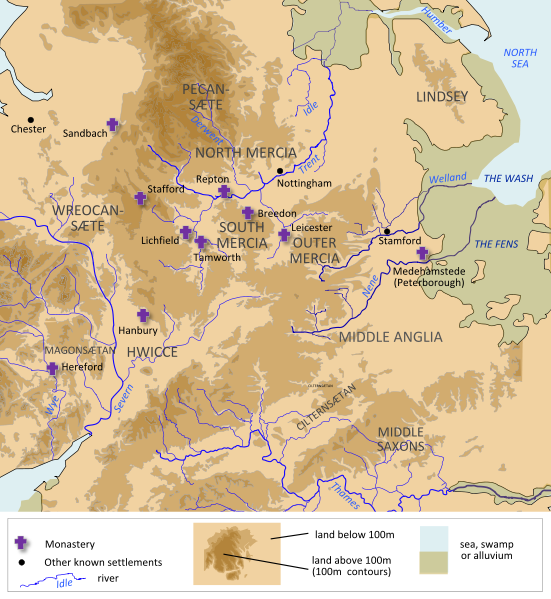
The population of England around 1480 was probably less than 3 million (having gone through the demographic squeeze of the Black Death a century earlier). Just do the maths. We’re all related to each other more than we imagine. We can’t all have ‘independent’ ancestors; there must be a few drops of royal blue blood in all of us. Now my father’s side of the family resided in what once had been the Kingdom of Mercia, specifically in what we know now as north Staffordshire and southwest Derbyshire.

In 1483, Edward IV died and the crown was usurped by his youngest brother, Richard, Duke of Gloucester, who became the notorious (if we are to believe Tudor propaganda) Richard III. Richard was defeated and killed at the Battle of Bosworth in August 1485 – a site just 40 miles or so southeast from Ellastone. Henry VII became king and the Tudor dynasty was founded. I wonder what the Bull family were up to, and how did the final battle of the Wars of the Roses affect them – if at all?

But we are on firmer ground with Thomas Bull’s ‘son’, John Bull (my 11th great grandfather), born in 1525 in Ellastone, the youngest of three brothers. By the time his son, another Thomas was born in 1552, Henry VIII had come and gone, and his son, the short-lived Edward VI was king, and England was in the grip of a Protestant regime.

When my 8th great grandfather Robert was born in 1613, James I of England and VI of Scotland had been king for 10 years. In 1613, James’s daughter Elizabeth married Frederick V, Elector Palatine through whom the monarchs of the House of Hanover descended, including our present Queen. But when his son Robert was born in 1653, Charles I had already lost his head four years earlier, the three Civil Wars between 1642 and 1651 were over, and Oliver Cromwell was Lord Protector.

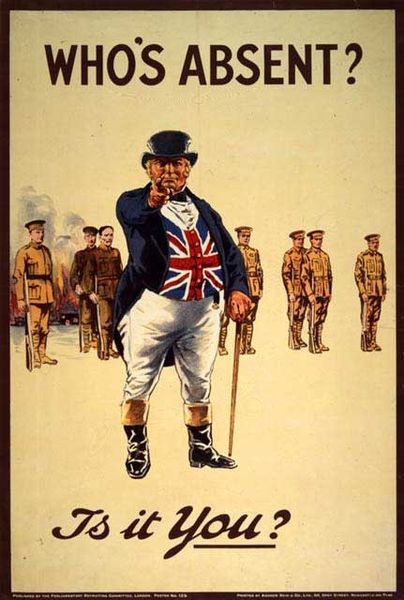
Sixth great grandfather William Bull, born in 1712 and 6th great grandfather John Jackson (born 1711) were my first ancestors to be citizens of Great Britain following the Act of Union in 1707 uniting the Kingdoms of England and Scotland (which just might be rendered asunder in 2014 if the Scottish Nationalist Party has its way in the independence referendum). Dr John Arbuthnot created the character of John Bull in 1712 as the national personification of Great Britain, especially England. Abraham Darby had already developed his blast furnace in Coalbrookdale, and Thomas Newcommen was about to launch his atmospheric steam engine (about which I recently wrote).

Both my 3rd great grandfathers John Bull and John Jackson were born in 1793. After the excesses of the French Revolution, Great Britain was at war – again – with France; George Washington began his second term as POTUS.

My great grandfather John Bull was born in 1855, when the siege of Sevastopol ended, and the Crimean War ending a few months later. My Jackson great grandfather William was born sixteen years earlier in 1839, the same year that Louis Daguerre received a patent for his camera.

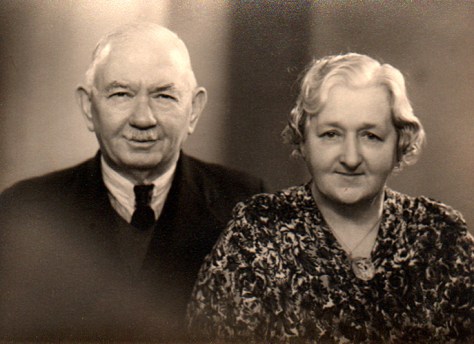
I knew both my paternal grandparents. Grandmother Alice Bull was born in 1880 and died in 1968. She was the second wife of my grandfather Thomas Jackson, who was born in 1872 and died in 1967.

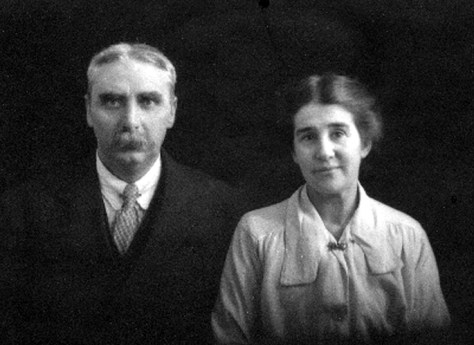
My paternal grandparents, Thomas and Alice Jackson

Thomas had two children by his first wife Maria Bishop, and four with Alice – including my father, Frederick (born 1908, died 1980).

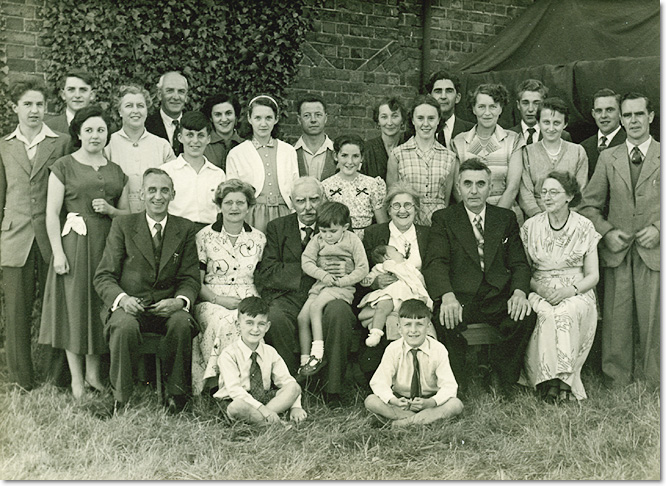
Thomas and Alice Jackson celebrate their Golden Wedding anniversary in 1954 at Hollington, Derbyshire with their children and grandchildren. I’m sitting on the left, aged 5.

My father married Lilian Healy in 1936, and I’m the youngest of three brothers and one sister.

During the documented 500 years of this family history there were remarkable changes in society, by the way we were governed (from absolute monarchy to a constitutional one under a parliamentary system), by the change from a predominantly agricultural economy to an industrial one. From a small nation on the fringes of Europe to a world-wide empire (and back again). From the records seen, my ancestors were farmers, laborers and the like. Nothing grand. But they’re my ancestors, and because I can name them going back so many generations, it really does make a tangible link with the events through which they lived.
In another post I talked about my Irish ancestry – that’s a story that will take a long, long time and concerted effort to unravel.

My maternal grandparents, Martin and Ellen Healy

So how did I track down all these dates? I didn’t. It’s all the work of my eldest brother Martin who, in 1980 following the death of my father, began to research our family history which is documented on the fabulous ClanJackson website. The site contains information about the paternal genealogy of the Jackson, Bull, Tipper and Holloway families (and some from my maternal grandparents’ sides of the family).

And now there are four . . .

I’m a very proud granddad. I’ve written elsewhere in my blog about grandparenthood.

I’ve been retired now for almost three and a half years, having left IRRI in the Philippines at the end of April 2010. And since then, Steph and I have become grandparents to four grandchildren!

Hannah and Michael live in St. Paul, Minnesota, and Philippa and Andi live in Newcastle upon Tyne in the UK, so we don’t get many opportunities to see everyone. But there’s always Skype, and an online chat each week.

Please meet the grandchildren:

Callum Andrew (Hannah’s first) was born in August 2010.

Then Elvis Dexter (Phil’s first) came along in September 2011.

Then it was the turn of Zoë Isobel in May 2012, a sister for Callum.

And just a few days ago, we welcomed Felix Sylvester, a brother for Elvis.

What a delight they all are. This year we’ve had a great visit to the USA and a holiday with Hannah, Michael, Callum and Zoë in Oregon. Then in July we had to look after Elvis for a few days. We haven’t met Felix yet – that’s a joy in store.

Plant Genetic Resources and Climate Change – publication by the end of the year*

A perspective from 25 years ago
In April 1989, Brian Ford-Lloyd, Martin Parry and I organized a workshop on plant genetic resources and climate change at the University of Birmingham. A year later, Climatic Change and Plant Genetic Resources was published (by Belhaven Press), with eleven chapters summarizing perspectives on climatic change and how it might affect plant populations, and its expected impact on agriculture around the world.

We asked whether genetic resources could cope with climate change, and would plant breeders be able to access and utilize genetic resources as building blocks of new and better-adapted crops? We listed ten consensus conclusions from the workshop:

  1. The importance of developing collection, conservation and utilization strategies for genetic resources in the light of climatic uncertainty should be recognised.
  2. There should be marked improvement in the accuracy of climate change predictions.
  3. There must be concern about sea level rises and their impact on coastal ecosystems and agriculture.
  4. Ecosystems should be preserved thereby allowing plant species – especially crop species and their wild relatives – the flexibility to respond to climate change.
  5. Research should be prioritized on tropical dry areas as these might be expected to be more severely affected by climate change.
  6. There should be a continuing need to characterize and evaluate germplasm that will provide adaptation to changed climates.
  7. There should be an increase in screening germplasm for drought, raised temperatures, and salinity.
  8. Research on the physiology underlying C3 and C4 photosynthesis should merit further investigation with the aim of increasing the adaptation of C3 crops.
  9. Better simulation models should drive a better understanding of plant responses to climate change.
  10. Plant breeders should become more aware of the environmental impacts of climate change, so that breeding programs could be modified to accommodate these predicted changes.

Climate change perspectives today
There is much less scepticism today about greenhouse gas-induced climate change and what its consequences might be, even though the full impacts of climate change cannot yet be predicted with certainty. On the other hand, the nature of weather variability – particularly in the northern hemisphere in recent years – has left some again questioning whether our climate really is warming. But the evidence is there for all to see, even as the sceptics refuse to accept the empirical data of increases in atmospheric CO2, for example, or the unprecedented summer melting of sea ice in the Arctic and the retreat of glaciers in the Alps.

Over the past decade the world has experienced a number of severe climate events – wake-up calls to what might be the normal pattern in the future under a changed climate – such as extreme drought in one region, or unprecedented flooding in another. Even the ‘normal’ weather patterns of Western Europe appear to have become disrupted in recent years leading to increased stresses on agriculture.

Some of the same questions we asked in 1989 are still relevant. However, there are some very important differences today from the situation then. Our understanding of what is happening to the climate has been refined significantly over the past two decades, as the efforts of the International Panel on Climate Change (IPCC) have brought climate scientists worldwide together to provide better predictions of how climate will change. Furthermore, governments are now taking the threat of climate change seriously, and international agreements like the Kyoto Protocol to the United Nations Framework on Climate Change, which came into force in 2005 and, even with their limitations, have provided the basis for society and governments to take action to mitigate the effects of climate change.

A new book from CABI
It is in this context, therefore, that our new book Plant Genetic Resources and Climate Change was commissioned to bring together, in a single volume, some of the latest perspectives about how genetic resources can contribute to achieving food security under the challenge of a changing climate. We also wanted to highlight some key issues for plant genetic resources management, to demonstrate how perspectives have changed over two decades, and discuss some of the actual responses and developments.

Food security and genetic resources
So what has happened during the past two decades or so? In 1990, world population was under 6 billion, but today there are more than 1 billion additional mouths to feed. The World Food Program estimates that there are 870 million people in the world who do not get enough food to lead a normal and active life. Food insecurity remains a major concern. In an opening chapter, Robert Zeigler (IRRI) provides an overview on food security today, how problems of food production will be exacerbated by climate change, and how – in the case of one crop, rice – access to and use of genetic resources have already begun to address many of the challenges that climate change will bring.

Expanding on the plant genetic resources theme, Brian Ford-Lloyd (University of Birmingham) and his co-authors provide (in Chapter 2) a broad overview of important issues concerning their conservation and use, including conservation approaches, strategies, and responses that become more relevant under the threat of climate change.

Climate projections
In three chapters, Richard Betts (UK Met Office) and Ed Hawkins (University of Reading), Martin Parry (Imperial College – London), and Pam Berry (Oxford University) and her co-authors describe scenarios for future projected climates (Chapter 3), the effects of climate change on food production and the risk of hunger (Chapter 4), and regional impacts of climate change on agriculture (Chapter 5), respectively. Over the past two decades, development of the global circulation models now permits climate change prediction with greater certainty. And combining these with physiological modelling and geographical information systems (GIS) we now have a better opportunity to assess what the impacts of climate change might be on agriculture, and where.

Sharing genetic resources
In the 1990s, we became more aware of the importance of biodiversity in general, and several international legal instruments such as the Convention on Biological Diversity (CBD) and the International Treaty on Plant Genetic Resources for Food and Agriculture were agreed among nations to govern access to and use of genetic resources for the benefit of society. A detailed discussion of these developments is provided by Gerald Moore (formerly FAO) and Geoffrey Hawtin (formerly IPGRI) in Chapter 6.

Crop wild relatives, in situ and on-farm conservation
In Chapters 7 and 8, we explore the
in situ conservation of crop genetic resources and their wild relatives. Nigel Maxted and his co-authors (University of Birmingham) provide an analysis of the importance of crop wild relatives in plant breeding and the need for their comprehensive conservation. Mauricio Bellon and Jacob van Etten (Bioversity International) discuss the challenges for on-farm conservation in centres of crop diversity under climate change.

Informatics and the impact of molecular biology
Discussing the data management aspects of germplasm collections, Helen Ougham and Ian Thomas (Aberystwyth University) describe in Chapter 9 several developments in genetic resources databases, and regional projects aimed at facilitating conservation and use. Two decades ago we had little idea of what would be the impact of molecular biology and its associated data today on the identification of useful crop diversity and its use in plant breeding. In Chapter 10, Kenneth McNally (IRRI) provides a comprehensive review of the present and future of how genomics and other molecular technologies – and associated informatics – are revolutionizing how we study and understand diversity in plant species. He also provides many examples of how responses to environmental stresses that can be expected as a result of climate change can be detected at the molecular level, opening up unforeseen opportunities for precise germplasm evaluation, identification, and use. Susan Armstrong (University of Birmingham, Chapter 11) describes how a deeper understanding of sexual reproduction in plants, specifically the processes of meiosis, should lead to better use of germplasm in crop breeding as a response to climate change.

Coping with climate change
In a final series of five chapters, responses to a range of abiotic and biotic stresses are documented: heat (by Maduraimuthu Djanaguiraman and Vara Prasad, Kansas State University, Chapter 12); drought (Salvatore Ceccarelli, formerly ICARDA, Chapter 13); salinity (including new domestications) by William Erskine, University of Western Australia, and his co-authors in Chapter 14; submergence tolerance in rice as a response to flooding (Abdelbagi Ismail, IRRI and David Mackill, University of California – Davis, Chapter 15); and finally plant-insect interactions and prospects for resistance breeding using genetic resources (by Jeremy Pritchard, University of Birmingham, and co-authors, Chapter 16).

Why this book is timely and important
The climate change that has been predicted is an enormous challenge for society worldwide. Nevertheless, progress in the development of scenarios of climate change – especially the development of more reliable projections of changes in precipitation – now provide a much more sound basis for using genetic resources in plant breeding for future climates. While important uncertainty remains about changes to variability of climate, especially to the frequency of extreme weather events, enough is now known about the range of possible changes (for example by using current analogues of future climate) to provide a basis for choosing genetic resources in breeding better-adapted crops. Even the challenge of turbo-charging the photosynthesis of a C
3 crop like rice has already been taken up by a consortium of scientists worldwide under the leadership of the International Rice Research Institute in the Philippines.

Unlike the situation in 1989, estimates of average sea level rise, and consequent risks to low lying land areas, are now characterised by less uncertainty and indicate the location and scale of the challenges posed by inundation, by soil waterlogging and by land salinization. Responses to all of these challenges and the progress achieved are spelt out in detail in several chapters in this volume.

We remain confident that research will continue to demonstrate just what is needed to mitigate the worst effects of climate change; that germplasm access and use frameworks – despite their flaws – facilitate breeders to choose and use genetic resources; and that ultimately, genetic resources will be used successfully in crop breeding for climate change thereby enhancing food security.

Would you like to buy a copy?
The authors will receive their page proofs any day now, and we should have the final edits made by the middle of September. CABI expects to publish Plant Genetic Resources and Climate Change in December 2013. Already this book can be found online through a Google search even though it’s not yet published. But do go to the CABI Bookshop – the book has been priced at £85 (or USD160 and €110). If you order online I’m told there is a discount on the list price.

_______________________________________________________
* This post is based on the Preface from the forthcoming CABI book.

The prescience of political cartoonists

Tuesday 7 November 1972. The 47th quadrennial presidential election in the USA.

Richard Milhous Nixon defeated George McGovern in one of the biggest landslide victories in US presidential election history, taking 60.7% of the popular vote, and 520 of the 538 Electoral College votes. Nixon seemed set for a successful second term in office. After all, he’d already made some progress in foreign affairs, having begun the normalization of relations with China, for example.

That was before the scandal we’ve come to know as Watergate surfaced. Such was the impact of this scandal that almost any shady dealings in the public arena today are reported as ‘this-gate’ or ‘that-gate’. It was a significant development in the politics and political history of the late 20th century. And the outcome? Nixon resigned as 37th President of the United States on 9 August 1974.

But even as the Watergate scandal was unfolding, there was one group of media people who really smelt a rat – and I’m not talking about The Washington Post’s Bob Woodward and Carl Bernstein. No. I’m referring to a cohort of political cartoonists, especially Herblock and Oliphant, who had latched on to some of Nixon’s shady dealings very early on in the game, over 18 months before Nixon was forced out of office.

At the beginning of January 1973 I moved to Lima in Peru, and took a subscription to both Time Magazine and Newsweek. Once I’d read them I just put them to one side. However, when we moved apartments in August of that year, I took all the magazines with me (never could be sure why), and the pile continued to grow. In early 1974 I realized I had more than a year’s worth of magazines, most of which carried each week one or more political cartoons targeting the latest Watergate revelations – and beyond. What a cartoon treasure trove I’d assembled. It was then I decided to make a scrap book containing all the cartoons and related information I could get my hands on. Many of them hit the nail right on the head, and the cartoonists were well ahead of the other political pundits in exposing Nixon’s crimes.

Just click on Nixon’s image above to view my Watergate scrapbook. I think you’ll find it revealing and entertaining. It’s a large PDF file so it might take a little while to open.

An apo in the Northeast

A couple of weeks ago our daughter Philippa asked us if we could babysit grandson (= ‘apo’, Tagalog for grandchild) Elvis Dexter for a couple of nights while she and Andi attended a wedding. They live in Newcastle upon Tyne in the northeast of England, 225 miles north of where we live.

I can’t deny that Steph and I were a little apprehensive. It’s one thing babysitting while parents are out for the evening. It’s quite another being left completely responsible for a small child. After all, we haven’t had that sort of practice for more than 30 years.

We needn’t have concerned ourselves. Young Elvis was a delight to look after. Having been introduced to his nursery ‘teachers’ on the Monday afternoon, we went along with Philippa when Elvis attended nursery early on the following morning. It was then up to us to collect him in the afternoon, give him his evening meal, bath-time, play, stories and bed.

Once down for the night (around 19:30) we didn’t hear a peep out of him. In fact, on the second morning, I had to wake him up to get ready to head off to nursery!

As you can see from the slideshow, he also enjoyed himself.

This slideshow requires JavaScript.


It will be interesting to see how he reacts when his baby brother/sister comes along in about five to six weeks time.

Ireland’s turbulent history

I guess I first became aware of Ireland’s turbulent past when I was studying Advanced Level (pre-university) English Literature between 1965 and 1967. Our English teacher, Frank Byrne, had family from Co. Roscommon in Ireland, and on the curriculum the years I studied was the poetry of Irish poet William Butler Yeats (Nobel laureate in Literature for 1923). Through his famous poem Easter, 1916, in which three of the four verses have as a final line ‘A terrible beauty is born‘, Yeats emphasizes his belief that the genie was out of the bottle, so-to-speak – Ireland would be changed forever.

Martin HealyElsewhere in this blog I have written about my own Irish ancestry, and often wondered how my Irish family reacted to – or even took part in – the events that shook Ireland in the early and mid twentieth century following the April 1916 rebellion. My maternal grandfather, Martin Healy, had served in the British army in South Africa and on the Northwest Frontier in India, and afterwards served as a policeman in London’s Metropolitan Police. As a Catholic, did he ever suffer from any sort of discrimination while in the Army or the police? Of course from his birth in 1876 he was a British citizen of Ireland. The Irish Free State was founded in 1922. I assume he retained his British citizenship throughout. But his roots were Irish. He and my grandmother came from large families. Were any of their brothers or sisters involved in the various struggles in Ireland from 1916 onwards: the Easter Rising, the civil war, and the various bombing campaigns carried out by the Irish Republican Army (IRA) both in Ireland and in England? A family anecdote has a great uncle of mine serving in the IRA and being executed by the Black and Tans, but I have no further evidence for this.
I’ve often wondered what and who the IRA was, are. And during a visit to St Paul, MN a couple of years ago I picked up a secondhand copy of Tim Pat Coogan’s tome The IRA – A History. I recently had a second stab at reading this. When I bought it I managed just a few pages – it’s not the easiest of reads. But having just finsihed T. Ryle Dwyer’s Big Fellow, Long Fellow – A Joint Biography of Collins & de Valera, I decided to give Coogan’s book another go. This time I managed about one fifth (it’s a long book, >500 pages, small font) before giving up. There is little attempt I felt at synthesis. Instead one is bombarded with fact after fact after fact. Indeed, I quite lost track of the overall narrative. Nevertheless I did begin to understand the origins of the IRA, how it became a proscribed organization in the Irish Free State and Republic, and its role in destabilizing society and politics in Northern Ireland more recently in ‘The Troubles’. While Coogan’s text is undoubtedly of considerable value to the serious scholar of Irish events – because he interviewed many of the leading characters in the IRA story – getting to grips with the big picture is not something that this book achieves.
9780717127870On the other hand Dwyer’s joint biography of Irish patriot Michael Collins and elder statesman Éamon de Valera is a much more accessible read, and one I enjoyed from cover to cover.

One thing that came though quite clearly to me is that both Collins and de Valera at various times of their careers were rather unsavory and ruthless characters, not averse to ordering the assassination of opponents when necessary. However, Collins seems to have been the more pragmatic of the two whose life and contribution to an Ireland on the road to becoming a republic was cut short when he was killed in an ambush in 1922. As a member of the negotiating team that agreed a treaty in 1921, leading to the partition of Ireland into the 26 counties of the south and the six counties of Northern Ireland, Collins was vilified by Republican purists, among whom was then numbered Éamon de Valera. But as Collins emphasized in debates about the Treaty to establish the Irish Free State, ‘In my opinion it gives us freedom, not the ultimate freedom that all nations desire … but the freedom to achieve it.’

de Valera had commanded a unit during the 1916 rebellion but was saved from execution by the fact he was actually born an American. From Dwyer’s book I had the distinct impression that de Valera was never consistent in his opinions or deeds, and certainly changed tack as and when it suited him politically. He did help found the political party Fianna Fáil, led nine governments, and became President of the Irish Republic in 1959, serving until 1973 when he was 90. He died in 1975. He did become father of the nation.

I’m still looking for that one book that will give me the overview and honest interpretation of recent (well, the last century) Irish history.

Fulfilling our apostolic duties in the USA

Steph and I flew to the US at the beginning of June to spend some time with Hannah and Michael, and grandchildren Callum (almost three) and Zoë (one in early May). We enjoyed three wonderful weeks over there, marred only by the fact that we all came down with nasty coughs and colds (courtesy of day care virus diversity from Callum and Zoë) which certainly took the edge off our holiday.

We all traveled to Oregon to spend a week at the beach – at Oceanside, some 100 miles or so west of Portland. It was great playing with Callum and Zoë, and they seemed to have enjoyed the beach and ocean, and having Grandma and Granddad’s attention almost constantly for the week we were in Oregon. During our visits to St Paul, Callum and Zoë are at day care every day from early morning until late afternoon, Monday to Friday, so we only get to see them at breakfast and dinner, and over the weekend.

This slideshow requires JavaScript.

It was fantastic to see how they had developed since we were last in the USA in June 2012. Zoë was only a few weeks old then. Now she’s walking, trying some first words: ‘Mama’, ‘Dada’, ‘Hi’, really developing a great personality. But she can be very stubborn. In this short video you can see one of the games we played.

http://youtu.be/Y9O35aBxLz0

Callum is no longer a toddler, so-to-speak. His language has come on leaps and bounds, and it was fascinating to see him reasoning things for himself.

All in all, a great three weeks.

Dr Joe Smartt

Dr Joe SmarttJoe Smartt, an old and dear friend, passed away peacefully in his sleep on Friday 7 June, in Southampton, UK, just three months shy of his 82nd birthday. He had been in poor health for several years, and towards the end of 2012 he’d moved into a care home. I last visited Joe in July 2012, and although he was essentially bed-ridden by then, we sat and reminisced over old times while drinking many mugs of tea (a ‘Joe favorite’!).

Groundnuts and beans
A geneticist by training, Joe obtained his BSc from Durham University, took a diploma in tropical agriculture from Cambridge University, and spent time in Northern Rhodesia (now Zambia) working on groundnuts. He completed his PhD in the Department of Genetics at North Carolina State University (NCSU) in 1965, submitting a thesis Cross-compatibility relationships between the cultivated peanut Arachis hypogaea L. and other species of the genus Arachis.

In 1967 he was appointed to a Lectureship in the Department of Botany at the University of Southampton, and remained there until his retirement in 1996, having been appointed Reader in Biology in 1990, and awarded the DSc degree by the university in 1989 for his significant work on grain legumes – the area of scientific endeavour for which he will perhaps be best remembered. He authored two books on grain legumes, edited a major volume on groundnuts, and was invited to co-edit a second edition of the important Evolution of Crop Plants with the late Professor Norman Simmonds. In the late 60s he worked on cross compatibility relationships of Phaseolus beans, and also published a series of strategically important synthesis articles on grain legumes, which did much to re-energize interest in their development and improvement.

In the latter part of his career Joe turned his attention to the genetics and breeding of goldfish, co-editing one book and authoring another two which became essential texts for goldfish enthusiasts.

L to r: Russell Meredith, Mike Jackson, Steve Jordan, and Joe

Sticks, bells and hankies
I first met Joe in 1968, which might seem strange as I began my undergraduate studies at Southampton in 1967 in the Departments of Botany and Geography. Joe taught a second year class on genetics, so it wasn’t until the autumn term in October 1968 that I was faced with ‘Smartt genetics’. But by then I had made myself known to him, as I have described in another post on this blog. Joe and I were the co-founders of the first Morris side at the university in autumn 1968 – the Red Stags, and our common interest in traditional music (particularly bagpipe music – see this post) was the basis of a friendship that lasted more than 45 years. Many’s the time Joe and I sat down with a beer or a wee dram to enjoy many of the LPs from his extensive music library.

A friend indeed
But Joe was more than a friend – he was a mentor whose opinions and advice I sought on several occasions. In fact, it was a suggestion from him in February 1970 that I apply to the University of Birmingham for a new MSc course under the direction of Professor Jack Hawkes that got me into genetic resources conservation and use in the first place, and the start of a successful career in international agricultural research lasting more than 40 years.

Physically, Joe was a big man – but a gentle person and personality. I’ve seen him slightly cross, but I never saw him angry. It seemed to me that he had the most equitable of temperaments. He married Pam in 1970, and they had two daughters, Helena and Fran (about the same ages as my two daughters), and both have been very successful academically. Joe often told me of his pride in what they had achieved. I know that was a source of great comfort to him in his latter years as his health declined.

While I feel sadness at his passing, I can also celebrate the many scientific contributions he made, and his true friendship over so many decades. He will be missed by many colleagues in legume and goldfish circles, but particularly by his family and friends. Friends like Joe come along very few times in one’s lifetime. It’s been my luck – and privilege – to be among his.


I wrote this obituary in 2013:

Jackson, MT (2013). Dr. Joseph Smartt (1931–2013). Genet Resour Crop Evol 60, 1921–1922 (doi:10.1007/s10722-013-0044-7


Click here to read the Order of Service for Joe’s funeral on 21 June 2013 in Southampton. Several homilies were delivered during the service by Joe’s brother and his daughters Helen and Fran. You can read them here.

“I’m all for censorship. If ever I see a double entendre, I whip it out.” Kenneth Horne

Round Mr HorneI’ve just finished a very readable biography of the late Kenneth Horne, one of the comedy greats of the 20th century, written by Barry Johnston (son of the late cricket commentator Brian Johnston). I’m sure, however, for many readers of this blog outside the UK or who did not grow up in the 50s and 60s, the name of Kenneth Horne will mean little if nothing at all. But he was the lynch-pin, so-to-speak, of some of the most successful comedy series on BBC radio in the 1940s, 50s and 60s until his untimely death from a massive heart attack at the age of 61 in 1969.

From: http://en.wikipedia.org/wiki/File:Kenneth_Horne.jpgKenneth Horne was the youngest of seven children of inspirational preacher Sylvester Horne (later a Liberal MP) who died when Kenneth was seven. In the 1920s he enrolled for an economics degree at the London School of Economics, but not prospering there, one of his uncles – a Pilkington of the glass making company – managed to secure him a place at Cambridge University (also to study economics). But Kenneth was more interested in sport (it seems he excelled at a whole range of sports), and never finished his degree. He then went into business, joining the Triplex Safety Glass company based in Birmingham. Over the years he rose through the ranks, becoming marketing director.

I discovered a number of things about Kenneth Horne that I had never been aware of.

All the while he was a radio (and then TV) personality, he combined this career with one in the glass business (and later toys).

He appeared on a whole raft of radio and TV shows (Twenty Questions, Top of the Form, and many others), many of which I’m sure I used to listen to or watch without ever making the connection with the comedian who fronted two of the most successful shows to be broadcast on the radio: Beyond Our Ken and Round the Horne.

During the Second World War he saw ‘active’ service in the Royal Air Force (RAF) at the Air Ministry in London rising to the rank of Wing Commander. But he also combined his war duties with a serious broadcasting schedule, joining forces with comedian Richard ‘Dickie’ Murdoch in the wartime comedy hit, Much-Binding-in-the-Marsh, set in a fictional RAF station, which continued right into the 1950s.

He was married three times, first to a daughter of the Duke of Newcastle, and during his second marriage he lived in the village of Burcot, about 2 miles from where I live in north Worcestershire.

But Kenneth Horne will be best remembered for the two iconic comedies Beyond Our Ken (which ran over seven series between July 1958 and February 1964, with 123 episodes) followed by Round the Horne (broadcast over four series from March 1965 to June 1968, and 67 episodes). Both had strong writing teams, with Eric Merriman, Barry Took, Marty Feldman and others involved. Just think how many episodes were broadcast in a single series. Today we’re luck if we hear or see any more than half a dozen (or fewer) in a series.

And there was a strong supporting cast: Kenneth Williams, Hugh Paddick, Douglas Smith, Bill Pertwee, Maurice Denham, Ron Moody, Betty Marsden and Pat Lancaster among others. The format of each show, with its introduction, sketches and musical interludes hardly changed over the various series. But the writers (and performers) did push the boundaries of comedy and were increasingly accused of peddling filth on the radio, and scripts becoming more and more ‘smutty’. However, if you read the scripts there was nothing to complain about (then BBC Director General Hugh Greene was asked to intervene and ban the shows but, admitting to enjoying a little bit of ‘dirty comedy’, did nothing to curtail the broadcasts) – it was all in the delivery, and how the cast milked the scripts for every last laugh and innuendo. They were wonderful. Broadcast on a Sunday afternoon or evening, Beyond Our Ken and Round the Horne attracted listening audiences in the millions – making them possibly the most successful radio comedy shows of all time.
With the various characters on the show having strange (and often suggestive) names, such as folk singer Rambling Syd Rumpo and J. Peasemold Gruntfuttock (played by Kenneth Williams), Dame Celia Molestrangler (played by Betty Marsden) and ‘ageing juvenile’ Binkie Huckaback (played by Hugh Paddick, as well as the outrageously camp Julian and Sandy (played by Williams and Paddick) – who spoke in polari, a slang often used by gays in the theatrical profession (when homosexuality was illegal in the UK), each show was a riot of mirth and laughter. It’s clear that the cast got on famously together. What shone through in Johnston’s biography was Kenneth Horne’s humanity – he was an extremely kind and generous person. And listening to the shows 50 years after they were first broadcast is the vitality, the freshness, and the earthiness of the humor.

I’m no prude when it comes to bad language in the media, and I’m not averse to using the odd word myself for emphasis from time-to-time. What I don’t find funny, however, is gratuitous ‘effing and blinding’ that seems to be the norm today of many stand-up (so-called) comedians (such as the awful Frankie Boyle), unless of course, your name’s Billy Connolly and his bad language is just part of his Glaswegian vernacular. Beyond Our Ken and Round the Horne were in a different league. There was never a hint of bad  or explicit language.

It’s impossible to describe these shows in detail. Here, however, is a clip that you just might enjoy. I did, and whenever I hear them on BBC Radio 4 Extra, they never fail to bring a very broad grin to my face. Happy childhood memories!


Guitar heroes

Life has been pretty good to me – most of the time. I’ve achieved many of the things I wanted. There are more places to visit, of course, and hopefully I can begin to knock some of these off my list year by year.
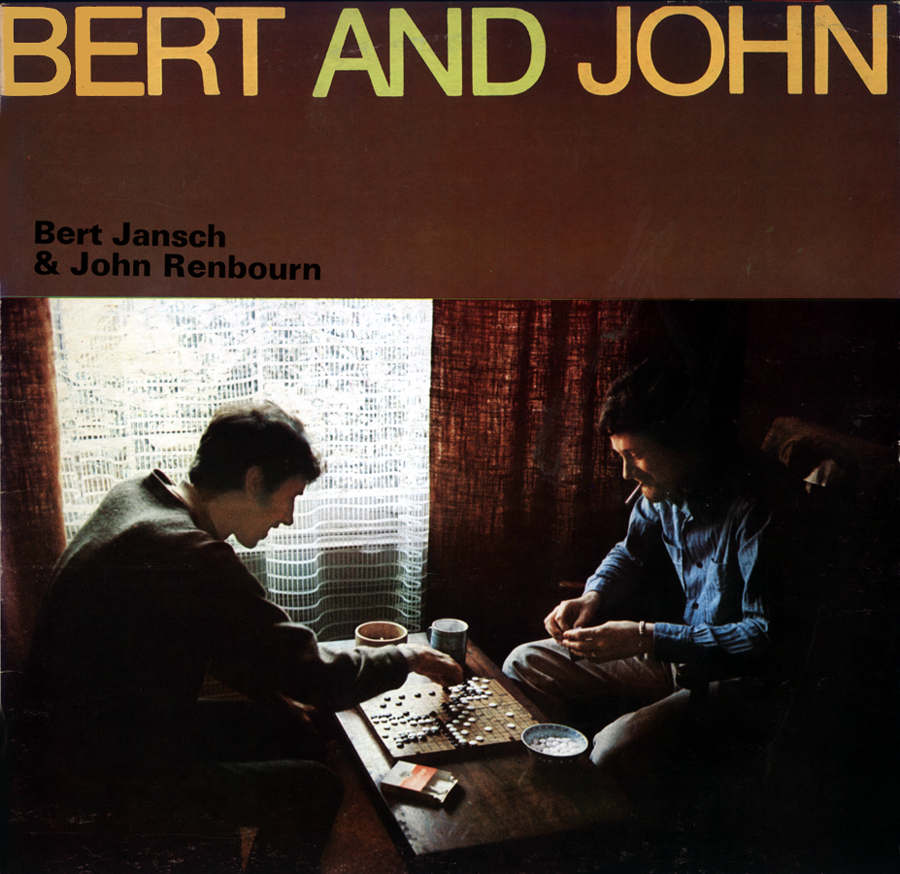
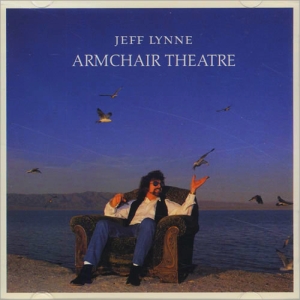

But as I reflect on things, there aren’t many that I wish I had done. Except one.

I wish I’d learnt to play the guitar.

Well, I can almost hear you screaming at the screen ‘Go on, there’s still time’. And being retired I guess I do have (in theory) time on my hands. But frankly, I don’t really have the aptitude – nor the patience.

The guitar was – and continues to be – such a democratic instrument. How many thousands of young men got hold of a guitar in the 50s and 60s, learnt a few chords, and escaped from their quite humble backgrounds? And that continues today, although I have to confess that my music appreciation somewhat atrophied in the 1980s and earlier. My elder brother Ed was given a guitar in the late 1950s, and although he did master sufficient chords for us to play skiffle, I’m not sure how proficient he really did become.

But I love listening to guitar music. So here are some of my ‘guitar heroes’ (who seem to be about my age!) and some favourite tracks (sorry about the adverts on the YouTube clips).

Mark Knopfler
Here’s a young Mark playing Sultans of Swing, that Dire Straits classic, in a 1978 Old Grey Whistle Test appearance on the BBC.

I saw him in concert at Birmingham’s LG Arena in May 2010, just after I’d returned to the UK after retiring from IRRI. What a concert! Mark has moved away from a purely rock focus, evoking a broader folk and country base to much of his current music-making. But whenever you listen to a Mark Knopfler song/tune, there’s no mistaking it. He has a way of introducing refrains into the melody that are just so typical. Listen to this track (just click the title) Cleaning My Gun – you’ll hear what I mean. But Whoop de Doo is perhaps an even better example.

Lyndsey Buckingham
What more can I say? One fifth (one quarter now) of Fleetwood Mac, his guitar playing is truly inspirational. And his song writing is not bad either. Taken from the 1977 classic album Rumours, this has to be my favourite track: Go Your Own Way, filmed during their 1997 The Dance reunion concert:

I saw Fleetwood Mac in concert in St Paul, MN in 2003. Pity that Christine McVie had already left the band by then, but a night to remember. Read an earlier post about Fleetwood Mac.

Eric Clapton
When has Eric Clapton not been around. It’s said that Clapton became a superstar when he found his voice, when he had the confidence to believe in his own abilities as a musician and singer. Hard to choose a favourite track, but this comes pretty high up – Cocaine:

David Gilmour
I’m a big Pink Floyd fan, and it never ceases to amaze me how Gilmour’s musicianship added so much depth to PF songs. The track Comfortably Numb demonstrates just what I mean; sadly no longer available on YouTube from the Live 8 concert.

Of course, there are others I could also include in my top list: George Harrison, Jeff Lynne (and also read this recent post), Brian May (Queen’s The Show Must Go On with the inimitable Freddie Mercury), Tom Petty (Free Fallin’), Joe Walsh (he’s riffing in the background on this Eagles track, Life In The Fast Lane), and Carlos Santana (Samba Pa’ Ti). I never was a Jimi Hendrix fan (although I can appreciate his musicianship). And George Harrison, Jeff Lynne, and Tom Petty came together in the wonderful Traveling Wilburys (with Bob Dylan and the late Roy Orbison).

http://www.youtube.com/watch?v=cwqhdRs4jyA

On the other hand, the outstanding folk/blues duo of the late Bert Jansch and John Renbourn (both of Pentangle fame) have to be on my list, somewhere. Ed had the vinyl LP Bert and John, released in 1966, which unfortunately was stolen from me when I lived in Costa Rica in the 1970s. I now have it as the CD After the Dance, released in 1992. But which of the great 15 tracks to single out? I think it has to be Goodbye Pork Pie Hat.

Here’s Rolling Stone’s take on the 100 Greatest Guitarists.

On the classical side, I very much admire John Williams. You would enjoy this CD (Sony SK 53 359), The Seville Concert, recorded in the Royal Alcázar Palace. And it includes Rodrigo’s Concierto de Aranjuez. There’s quite a lot of music out there, originally composed for the lute, and now transcribed for the guitar.

What is the link between Jeff Lynne, Armchair Theatre, and Hobart, Tasmania?

Jeff_Lynne-Armchair_TheatreIn 1990, Jeff Lynne released his first solo album – Armchair Theatre. I’ve been a fan of Jeff Lynne and the Electric Light Orchestra (ELO) for many years. During the 70s I used to listen to cassette tapes of ELO’s Greatest Hits that my brother-in-law Derek had recorded for me from his vinyl LPs. So many great tracks: Mr Blue Sky, Wild West Hero, Confusion, I’m Alive, and Calling America, among many.

I didn’t have a CD player in those days, so my first copy of Armchair Theatre was a cassette tape version, and I almost wore it out in the first few months. Seven songs were Jeff Lynne originals, including the excellent Lift Me Up.

One, Blown Away, was a collaboration with Tom Petty (with whom he’d later form the great Traveling Wilburys, with George Harrison, Bob Dylan, and Roy Orbison), another was written by Jesse Stone (Don’t Let Go), and two others were iconic compositions: Stormy Weather (by Ted Koehler and Harold Arlen) and September Song (by Maxwell Anderson and Kurt Weill).

When I moved to the Philippines in July 1991 I treated myself to a new Pioneer mini-audio system, with tuner, cassette deck and CD player. Before I left the UK, I purchased my first two CDs: Greatest Hits by Fleetwood Mac, and another of the same name by the Eurythmics (I’m a great Annie Lennox fan). I shipped my LPs (and deck) and all my cassette tapes, including Armchair Theatre.

Everything was fine for a few months, but quite soon I began to detect a deterioration in sound quality, and discovered that the dreaded mould was beginning to grow all over the tapes. In fact, in the very humid Los Baños environment, many things were attacked by mould, and we eventually lost quite a number of audio tapes, and VHS tapes.

One of these was Armchair Theatre, so around December 1996 or 1997 I decided to replace it with a CD version (7599-26184-2). But to my disappointment, I discovered that it was no longer listed for sale by Reprise Records.

Where to find a copy? Surely someone, somewhere would have a CD for sale? I did a thorough Internet search (pre-Google) and located just one CD – in Hobart, Tasmania! And this story came back to me earlier this morning because Tasmania was mentioned twice on the BBC news, with reports of the devastating bush fires there, and the defeat of British tennis player Laura Robson in the first round of the Hobart International.

I’m not entirely sure of the name of the CD store in Hobart – I think it was Aeroplane Records on Victoria Street. I may be wrong. Anyway, I contacted the proprietor by email, and ‘did the deal’. But I still wasn’t sure how to have it delivered to the Philippines. I was slightly concerned that it might disappear in a ‘customs black hole’ in Manila, and wondered if it might be better to have it sent to the UK instead.

Jean-Louis Pham

But then I had a huge stroke of luck. By coincidence, one of my colleagues in IRRI’s Genetic Resources Center, Dr Jean-Louis Pham, was taking his family to Australia for the Christmas break that year, and would be spending more than a week in Tasmania – in Hobart. And it transpired that their hotel was just around the corner from the CD store! My CD was left at the hotel reception for the Phams, and Jean-Louis duly carried it back to the Philippines for me in early January.

And I’ve been enjoying the music ever since. As I said earlier, Jeff Lynne went on to form the Traveling Wilburys with others, has produced records for his fellow Wilburys, and obtained full rights to the ELO name and brand. He released Zoom under the ELO name in 2001, and did all vocals, backing vocals, electric guitars, bass, keyboards, cello, and drums himself (even though there were some guest musicians).

Funny how a news sound bite can bring such memories flooding back.