
 Speke Hall, a National Trust property on the eastern outskirts of Liverpool (right next to Liverpool John Lennon Airport, built on former Speke estate land) is a typical half-timbered, moated Tudor manor house. Although the moat has long since dried up.
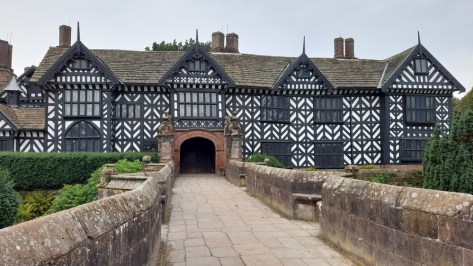
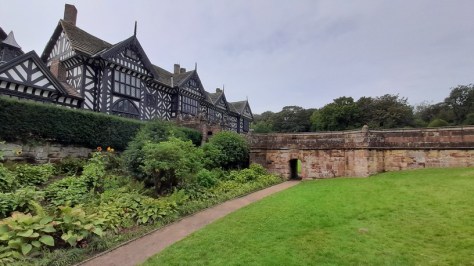
However, much of the interior is—to all intents and purpose—Victorian.
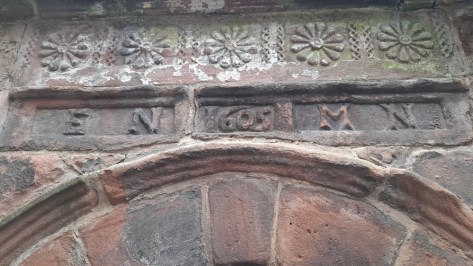
Speke Hall is a late Elizabethan house, completed by Edward Norris (son of Sir William Norris, who had begun the build) in 1598. Although, at the rear of the house, another gate also displays the date 1605.
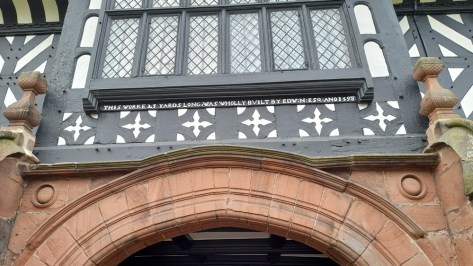
The main entrance to Speke Hall, showing the 1598 date.
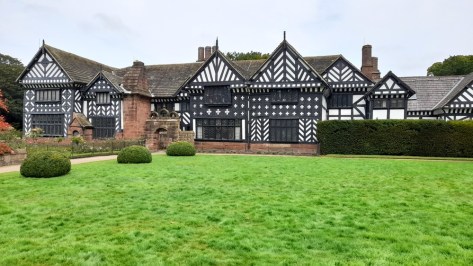
The rear of the house, with an arched stone gateway with the date 1605.
Being short on time during our visit (we’d stopped off on our way home from holiday in North Wales), we took the guided tour and missed some of the rooms that remain closer to their Tudor origins. Only in one bedroom that we viewed, above the main entrance, was there a fireplace with clear Tudor craftsmanship.
The house is also a tale of two families: the Norris family that built the house and lived there for generations; and the Watt family that purchased the Speke estate in 1795. Both the Norrises and Watts made their fortunes from the transatlantic slave trade and plantations in the Caribbean.
 There were a number of tenants over the centuries, the most prominent being Frederick Leyland (right), a Liverpool shipping magnate who lived at Speke for a decade from 1867, while the current owner, Adelaide Watt (1857-1921) was living in Scotland until she came of age and could inherit the estate.
There’s a nice potted history of the hall and its inhabitants on the National Trust website.
It was Leyland who refurbished the Speke interior in heavy and dark Victorian Gothic style.


He also patronised artists like Dante Gabriel Rossetti and James McNeil Whistler (of Whistler’s Mother painting fame). I’m not sure if William Morris (of the Arts and Crafts Movement) was actually involved directly with the decoration of the passageway and two rooms, but three of his wallpaper designs were hung there. We’ve also seen Morris designs at Wightwick near Wolverhampton, and Standen House in West Sussex.


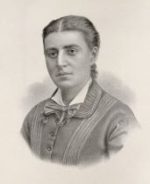
After Leyland’s tenancy came to an end, Adelaide Watt (right) returned to Speke, and although only a young woman (around 21 years of age, and unmarried) set about running the estate herself, and introducing numerous innovations to make the estate more productive.
She immersed herself in every detail of the estate’s management. Today we’d view her as the archetypal micromanager, perhaps almost a termagant. But the estate thrived.
In her will Adelaide named three members of the Norris family as estate trustees (who sold off land to Liverpool corporation), with the proviso that the estate would transfer to the National Trust after 21 years. In 1942 the estate was handed to the Trust, which took on full management from 1986.
A full album of photos can be viewed here.
 A balanced diet . . .