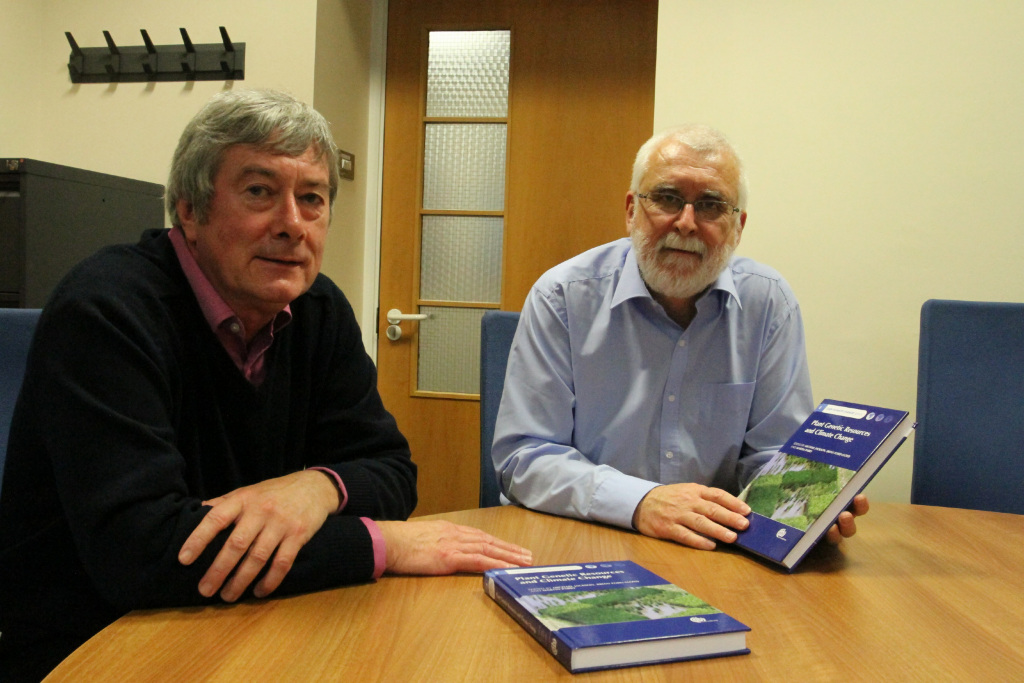
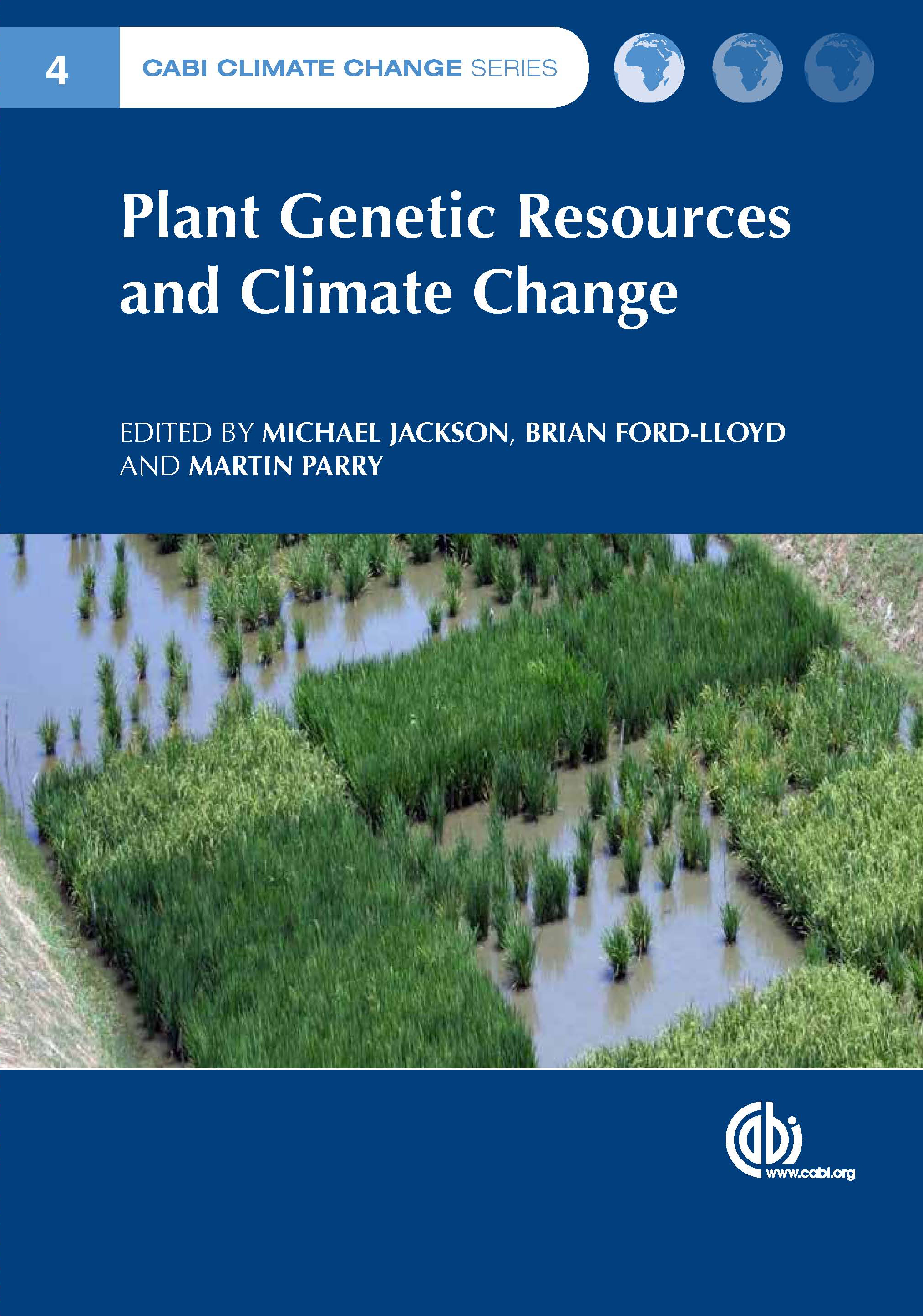
Something for your Christmas stocking – Plant Genetic Resources and Climate Change hits the shelves 11 December!

It’s taken just over two and half years, more than 2,400 emails, and many, many hours of editing. But Plant Genetic Resources and Climate Change, edited by myself, Brian Ford-Lloyd and Martin Parry will be published by CABI on 11 December.

Brian was first approached by CABI commissioning editor Vicki Bonham in April 2011. He was reluctant to take on the book by himself, but suggested to Vicki that the project would be feasible if he could persuade Martin and me to be co-editors. I was on vacation in the USA at the time, visiting the Grand Canyon and other locations in Arizona and New Mexico when Brian first contacted me about the possible project. Getting involved in a new book was the last thing on my mind.

The next steps were to produce an outline of the book and find authors whose arms we could twist to contribute a chapter. In the end the book has 16 chapters, as I have described elsewhere. Only two authors let us down and never completed a chapter before we met our deadline with CABI. The contract with CABI was signed in February 2012, and we submitted the final edited chapters by the end of March this year. After that things moved quite fast. We completed the review of page proofs by mid-September, and the figures a couple of weeks later. Early on we agreed I should take on the role of managing editor as I was the only one who was fully ‘retired’ at that time.

Martin Parry

And on Monday this week, David Porter (Books Marketing Manager at CABI) and his colleague Sarah Hilliar came up to Birmingham to video Brian and me (and two other authors, Nigel Maxted and Jeremy Pritchard of the University of Birmingham) for a short promotional video about the book. Unfortunately, Martin Parry was unable to join us.

So now the hard work is over and Plant Genetic Resources and Climate Change is about to be published. There are many interesting key messages, and the preface provides an excellent guide to the rest of the book.

Plant Genetic Resources and Climate Change: available mid-December 2013

Our new 16 chapter book on plant genetic resources has 34 contributors who agree that enhanced use of plant genetic resources is critically important for mitigating against the effects of climate change. The book reveals strong positive messages for the future, but also some substantial negative ones if improvements to conservation and the use of plant genetic resources for food and agriculture (PGRFA) by plant breeders do not happen soon.

Positive messages:

  • While the latest IPCC report (and Betts and Hawkins, Chapter 3) ‘confirms’ that climate change is a reality – and it will affect agriculture – already we can compare regions and see what the scale of the agricultural challenge is, and extrapolate to what will be the situation in the future (Parry, Chapter 4; Berry et al., Chapter 5).
  • Even though climate change will exacerbate the problem of food insecurity – and some of the poorest countries will be affected worst (Zeigler, Chapter 1) – the good news is that breeders are confident they will be able to produce the next generation of ‘climate-adapted crops’. To adapt crops to new climate conditions it is now universally agreed that breeders need access to sources of genetic diversity – and tools to use this diversity more efficiently and effectively. The good news is that major sources of genetic diversity are already conserved in ex situ genebanks.
  • It is also good news that it’s now possible through novel molecular and bioinformatic approaches to more carefully identify valuable genes and track their progress in breeding. New technologies – molecular and bioinformatic – should massively improve exploitation of PGRFA provided those resources still survive. Seed genebanks will lead to DNA sequence genebanks and then on to in silico genebanks and the creation of the ‘digital plant’ (McNally, Chapter 10) enabling the modelling of the ‘ideal plant’ for whatever conditions prevail.
  • Good news also is that breeders are already addressing climate change constraints and using germplasm for submergence, drought, salinity, heat, and pests and diseases, and making progress which gives optimism for the future (Chapters 12 to 16). Drought, submergence, heat and salinity are all environmental stresses that are likely to increase as a result of climate change. For example, rice has 25 related wild species, and 22 of these have already contributed genes to new stress tolerant varieties (Zeigler, Chapter 1).
  • We now have good evidence indicating that some plants in their natural environments can adapt genetically to changing conditions very rapidly – easily within 20 or 30 years and within the timescale of climate change. So as well as conservation in genebanks, plant genetic resources need to be conserved in situ in natural reserves (Maxted et al., Chapter 7) or on farms (Bellon and van Etten, Chapter 8) so that new genes can evolve and provide a greater armory against climate change than afforded just by germplasm ‘frozen’ in genebanks (Ford-Lloyd et al., Chapter 2).

Issue for concern:

  • International mechanisms are in place, through the International Treaty, for breeders to share germplasm for the benefit of society. But there are still political issues constraining the use of plant genetic resources currently conserved (Ford-Lloyd et al., Chapter 2). ‘Ready access’ to genetic resources has been jeopardized by the International Treaty. But, the International Treaty is the only instrument we have for allowing for the exchange and then use of PGRFA so we have to make the best of it (Moore and Hawtin, Chapter 6).

  • Enhanced use of PGRFA can help reduce the increasing risk of hunger predicted by climate change, but does not detract from the need to reduce or stabilize greenhouse gas emissions which would have the greatest effect on reduction of increasing world hunger (Parry, Chapter 4).

  • It is clear that up to now, use of PGRFA by breeders has been neither systematic nor comprehensive, and the vast majority of crop wild relatives remain untapped (Maxted et al., Chapter 7).

  • Critically, we know virtually nothing about how many landraces are currently being grown and fulfilling their potential for adapting to changes in the environment, so there is a need for a step change (Ford-Lloyd et al., Chapter 2).

  • As much as 20% of all plants, not just crop wild relatives, are now estimated to be threatened with extinction. Even within Europe substantial numbers of crop wild relatives are threatened or critically endangered in International Union for Conservation of Nature (IUCN) terms. However, it is the genetic diversity within species that is of greater value for crop improvement, and this diversity is almost certainly being lost (genetic erosion) at a much greater rate than the species themselves, and yet their conservation is far from sufficient (Maxted etal., Chapter 7).

  • Relatively few crop wild relatives (9%) are conserved in genebanks, and even fewer conserved in natural reserves. So, currently there is no guarantee that the genes we need for combating climate change will be available in newly adapted forms when we need them.

Would you like to purchase a copy? You can order online from CABI. When ordering from CABI online purchasers can use this code (CCPGRCC20) for a 20% discount off the retail price. The discount code is valid until 31 December 2013. The standard prices are £85.00, U5$160.00, or €11 0.00. The discounted prices are £68, $128, or €88 .

THE CONTRIBUTORS

Susan J. ARMSTRONG
Senior Lecturer, School of Biosciences, University of Birmingham, Edgbaston, Birmingham, B15 2TT, UK

Mauricio R. BELLON
Principal Scientist, Bioversity International, Via dei Tre Denari 472/a, Maccarese, Rome, Italy

Pam BERRY
Senior Research Fellow, Environmental Change Institute, University of Oxford, Dyson Perrins Building, South Parks Road, Oxford, OX1 3QY, UK

Richard A. BETTS
Professor and Head of the Climate Impacts, Met Office Hadley Centre, FitzRoy Road, Exeter, Devon EX1 3PB, UK

Helen BRAMLEY
Research Associate, Institute of Agriculture, The University of Western Australia, 35 Stirling Highway, Crawley, WA 6009, Australia

Joana Magos BREHM
Collaborator, Centre for Environmental Biology, University of Lisbon, Portugal and Research Assistant, School of Biosciences, University of Birmingham, Edgbaston, Birmingham, B15 2TT, UK

Colette BROEKGAARDEN
Postdoctoral Fellow, Wageningen UR Plant Breeding, PO Box 16, 6700 AJ Wageningen, The Netherlands

Salvatore CECCARELLI
Former Barley Breeder, International Center for Agricultural Research in the Dry Areas (ICARDA), Aleppo, Syria (now retired)

Maduraimuthu DJANAGUIRAMAN
Postdoctoral Research Associate, Department of Agronomy, 2004 Throckmorton Plant Science Center, Kansas State University, Manhattan, KS 66506, USA

Johannes M.M. ENGELS
Honorary Research Fellow, Bioversity International, Via dei Tre Denari 472/a, Maccarese, Rome, Italy

William ERSKINE
Professor and Director, International Centre for Plant Breeding Education and Research (ICPBER) and Centre for Legumes in Mediterranean Agriculture (CLIMA), The University of Western Australia, 35 Stirling Highway, Crawley WA 6009, Perth, Australia

Jacob van ETTEN
Theme Leader – Climate Change Adaptation, Bioversity International, Regional Office of the Americas, CIAT, Recta Cali – Palmira Km. 17, Palmira, Colombia

Brian FORD-LLOYD
Emeritus Professor, School of Biosciences, University of Birmingham, Edgbaston, Birmingham, B15 2TT, UK

Ed HAWKINS
NERC Advanced Research Fellow, National Centre for Atmospheric Science, Department of Meteorology, University of Reading, Earley Gate, PO Box 243, Reading, RG6 6BB, UK

Geoffrey HAWTIN
Former Director General, International Plant Genetic Resources Institute (IPGRI), Maccarese, Rome, Italy (now retired)

Abdelbagi M. ISMAIL
Principal Scientist – Plant Physiology, International Rice Research Institute (IRRI), DAPO 7777, Manila 1301, Philippines

Michael JACKSON
Former Head of the Genetic Resources Center and Director for Program Planning and Communications, International Rice Research Institute (IRRI), DAPO Box 7777, Manila 1301, Philippines (now retired)

Shelagh KELL
Research Fellow, School of Biosciences, University of Birmingham, Edgbaston, Birmingham, B15 2TT, UK

David J. MACKILL
Adjunct Professor, Department of Plant Sciences, University of California, Davis, CA 95616, USA and former Principal Scientist – Rice Breeding, International Rice Research Institute (IRRI), DAPO 7777, Manila 1301, Philippines

Al Imran MALIK
Research Associate, Centre for Legumes in Mediterranean Agriculture (CLIMA) and Institute of Agriculture, The University of Western Australia, 35 Stirling Highway, Crawley, WA 6009, Australia

Nigel MAXTED
Senior Lecturer in Genetic Conservation, School of Biosciences, University of Birmingham, Edgbaston, Birmingham, B15 2TT, UK

Kenneth L. McNALLY
Senior Scientist II – Molecular Genetics and Computational Biology, International Rice Research Institute (IRRI), DAPO Box 7777, Manila 1301, Philippines

Mary A. MGONJA
Principal Scientist and Program Leader (Genetic Resources Enhancement and Management), International Crops Research Institute for the Semi-Arid Tropics (ICRISAT), Regional Office for Eastern and Southern Africa, United Nations Avenue, World Agroforestry Centre, Gigiri PO Box 39063-00623, Nairobi, Kenya 

Samarendu MOHANTY
Head, Social Sciences Division, International Rice Research Institute (IRRI), DAPO Box 7777 Manila 1301, Philippines

Gerald MOORE
Former Legal Counsel, Food and Agriculture Organization of the United Nations (FAO), Rome, Italy (now retired)

Helen OUGHAM
Former Reader, Institute of Biological, Environmental and Rural Sciences, Aberystwyth University, Penglais, Aberystwyth, Ceredigion, SY23 3DA, UK(now retired)

Martin PARRY
Visiting Professor, Grantham Institute and Centre for Environmental Policy, Imperial College London, London, SW7 2AZ, UK

P.V. Vara PRASAD
Associate Professor and Director of K-State Center for Sorghum Improvement, Department of Agronomy, 2004 Throckmorton Plant Science Center, Kansas State University, Manhattan, KS 66506, USA

Jeremy PRITCHARD
Senior Lecturer and Head of Education,School of Biosciences, University of Birmingham, Edgbaston, Birmingham, B15 2TT, UK

Julian RAMIREZ-VILLEGAS
Doctoral Researcher, Institute for Climatic and Atmospheric Science (ICAS), School of Earth and Environment, University of Leeds, Leeds, UK, CGIAR Research Program on Climate Change, Agriculture and Food Security (CCAFS), Cali, Colombia, and International Center for Tropical Agriculture (CIAT), Cali, Colombia

Ian D. THOMAS
Research Scientist, Institute of Biological, Environmental and Rural Sciences, Aberystwyth University, Penglais, Aberystwyth, Ceredigion, SY23 3DA, UK

Hari D. UPADHYAYA
Principal Scientist, Assistant Research Program Director – Grain Legumes, and Head – Gene Bank, International Crops Research Institute for the Semi Arid Tropics (ICRISAT), Patancheru 502 324, Andhra Pradesh, India

Ben VOSMAN
Senior Scientist – Resistance Breeding, Wageningen UR Plant Breeding, PO Box 16, 6700 AJ Wageningen, The Netherlands

Robert S. ZEIGLER
Director General, International Rice Research Institute (IRRI), DAPO Box 7777, Manila 1301, Philippines

THE CHAPTERS

1. Food security, climate change and genetic resources
Robert S. Zeigler

2. Genetic resources and conservation challenges under the threat of climate change
Brian Ford-Lloyd, Johannes M.M. Engels and Michael Jackson

3. Climate projections
Richard A. Betts and Ed Hawkins

4. Effects of climate change on potential food production and risk of hunger
Martin Parry

5. Regional impacts of climate change on agriculture and the role of adaptation
Pam Berry, Julian Ramirez-Villegas, Helen Bramley, Samarandu Mohanty and Mary A. Mgonja

6. International mechanisms for conservation and use of genetic resources
Gerald Moore and Geoffrey Hawtin

7. Crop wild relatives and climate change
Nigel Maxted, Shelagh Kell and Joana Magos Brehm

8. Climate change and on-farm conservation of crop landraces in centres of diversity
Mauricio R. Bellon and Jacob van Etten

9. Germplasm databases and informatics
Helen Ougham and Ian D. Thomas

10. Exploring ‘omics’ of genetic resources to mitigate the effects of climate change
Kenneth L. McNally

11. Harnessing meiotic recombination for improved crop varieties
Susan J. Armstrong

12. High temperature stress
Maduraimuthu Djanaguiraman and P.V..Vara Prasad

13. Drought
Salvatore Ceccarelli

14. Salinity
William Erskine, Hari D. Upadhyaya and Al Imran Malik

15. Response to flooding: submergence tolerance in rice
Abdelbagi M. Ismail and David J. Mackill

16. Effects of climate change on plant-insect interactions and prospects for resistance breeding using genetic resources
Jeremy Pritchard, Colette Broekgaarden and Ben Vosman 

THE EDITORS

MICHAEL JACKSON retired from the International Rice Research Institute (IRRI) in 2010. For 10 years he was Head of the Genetic Resources Center, managing the International Rice Genebank, one of the world’s largest and most important genebanks. Then, for nine years, he was Director for Program Planning and Communications. He was also Adjunct Professor of Agronomy at the University of the Philippines-Los Baños. During the 1980s he was Lecturer in the School of Biological Sciences at the University of Birmingham, focusing on the conservation and use of plant genetic resources. From 1973-81 he worked at the International Potato Center, in Lima, Perú and in Costa Rica. He now works part-time as an independent agricultural research and planning consultant. He was appointed OBE in The Queen’s New Year’s Honours 2012, for services to international food science.

BRIAN FORD-LLOYD is Emeritus Professor of Conservation Genetics at the University of Birmingham, former Director of the University Graduate School, and former Deputy Head of the School of Biosciences. During his tenure as Director of the University Graduate School he aimed to ensure that doctoral researchers throughout the University were provided with the opportunity, training and facilities to undertake internationally valued research that would lead into excellent careers in the UK and overseas. He drew from his experience of having successfully supervised over 40 doctoral researchers from the UK and many other parts of the world in his chosen research area which included the study of the natural genetic variation in plant populations, and agricultural plant genetic resources and their conservation.

MARTIN PARRY is Visiting Professor at The Centre for Environmental Policy, Imperial College London, and also Visiting Research Fellow at The Grantham Institute at the same university. Until September 2008 he was Co-Chair of Working Group II (Impacts, Adaptation and Vulnerability), of the Intergovernmental Panel on Climate Change (IPCC) based at the Hadley Centre for Climate Prediction and Research, UK Meteorological Office. Previously he was Director of the Jackson Environment Institute (JEI), and Professor of Environmental Science at the University of East Anglia (1999-2002); Director of the JEI and Professor of Environmental Management at University College London (1994-99); foundation Director of the Environmental Change Institute and Professor of Geography at the University of Oxford (1991-94); and Professor of Geography at the University of Birmingham (1989-91). He was appointed OBE in The Queen’s New Year’s Honours 1998, for services to the environment and climate change.

The beauty (and wonder) of diversity

June 1815. British and allied troops muster in Brussels (then part of the United Netherlands) as the Duke of Wellington prepares to meet Napoleon at the Battle of Waterloo.

The troops are in good spirits, the social life of high society thrives, even as troops march to the front, with officers being called away to their regiments from the Duchess of Richmond’s Ball on the eve of the battle. The weather is fine, although it would deteriorate dramatically over the course of the battle in the next day or so.

Arriving in Belgium, one soldier commented on the productivity of  the local agriculture: I could not help remarking the cornfields today . . . they had (as I thought) a much finer appearance than I had seen in England, the rye in particular, it stood from six to seven feet high, and nearly all fields had high banks around them as if intended to let water in and out, or to keep water out altogether – but the rich appearance of the country cannot fail to attract attention.

Another cavalry officer wrote: I never saw such corn [probably referring to wheat] 9 or 10 feet high in some fields, and such quantities of it. I only wonder how half of it is ever consumed.

These are among the many contemporary commentaries in Nick Foulkes’ entertaining account of the social build-up to Waterloo. So what does all this have to do with the beauty (and wonder) of diversity?

Landrace varieties
Well, they are actual descriptions, almost 200 years old, of the cereal varieties being grown in the vicinity of Brussels.  Once upon a time, not too long ago before plant breeding started to stir up genetic pools, all our crops were like those described by soldiers off to fight Boney. We often refer to them as farmer, traditional or landrace varieties which have not been subjected to any formal plant breeding. You also hear the terms ‘heritage’ or ‘heirloom’ varieties, especially for vegetables and the like. Landrace varieties are highly valued in farming systems around the world – and the basis of food security for many farmers who grow them. However, in many others they have been replaced by highly-bred and higher yielding varieties that respond to inorganic fertilizers. The Green Revolution varieties released from the 1970s onwards, such as the dwarf wheat and rice varieties championed by pioneers such as Dr Norman Borlaug, bought time when the world faced starvation in some countries.

Now I’ve been in the business of studying the diversity of crops and their wild relatives almost all my professional life: describing it; assessing its genetic value and potential; and making sure that all this genetic treasure is available for future generations through conservation in genebanks.

The nature of diversity
But it wasn’t until the early 20th century – with the work of  Nikolai Vavilov and his Russian colleagues, and others that followed in their footsteps – that we really began to understand the nature and geographical distribution of diversity in crops. Today, we’ve gone the next step, by unraveling the secrets of diversity at the molecular level.

This diversity has its genetic basis of course, but there is an environmental component, as well as the important interaction of genes and environment. And I’m using a wide definition of ‘environment’ – not just the physical environment (which we think of in terms of growing conditions governed by geography, altitude, soil and climate) but also the pest and disease environment in which crops (and their wild relatives) evolved and were selected by farmers over centuries to better fit their farming systems. Landrace varieties that are still grown today in some parts of the world (or conserved in genetic resources collections) are extremely important sources of genes for adaptation to a changing climate for instance, or resistance to pests and diseases, as we have highlighted in our forthcoming book.

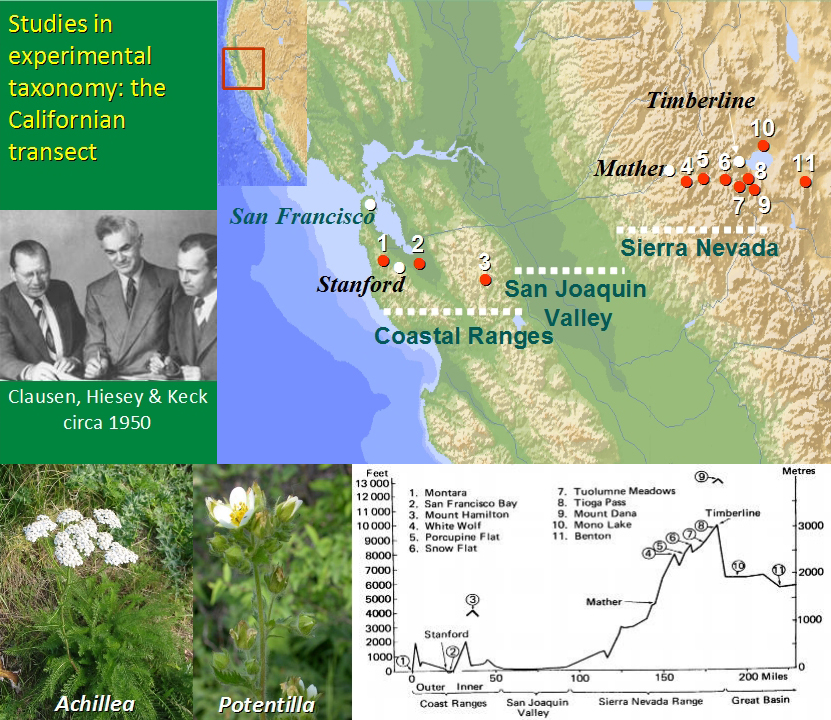
My own work on potatoes, rice and different grain legumes aimed to understand their patterns and origins of diversity, as well as the breeding systems which molded and released that diversity. I’ve been fortunate to have the great opportunity of working with or meeting many of the pioneers of the genetic resources movement, as I have described in other posts in this blog. But at the beginning of my career I became interested in studying crop diversity after reading the scientific papers of a group of botanists, Jens Clausen, David Keck and William Hiesey at Stanford University  (and others in Europe) who undertook research to understand patterns of variation in different plant species and its genetic and physiological underpinning.

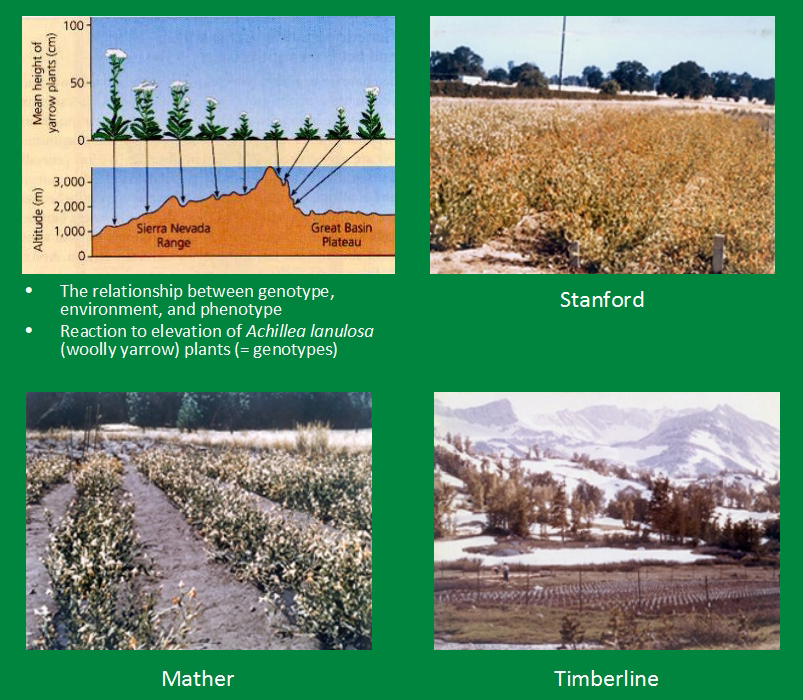
These Californian pioneers studied several plant species found across California (including Achillea spp. and Potentilla spp.), from the coast to the high sierra, and planted seeds from each of the populations in different experiment stations or ‘experimental gardens’ as they came to be known. They described and determined the physiological and climatic responses in these species – and the genetic basis – of their adaptation to the different environments. The same species even had recognizable morphological variants typical of different habitats.

Experimental gardens established by Clausen Keck and Hiesey at three sites across California to study variation in plant species.

Interesting research has also been carried out in the UK on the tolerance of grasses to heavy metals on mine spoil heaps. Population differentiation occurs within very short distances even though there may be no morphological differences between tolerant and non-tolerant forms. Researchers from Aberystwyth have collected grasses all over Europe and have found locally-adapted forms in rye grass (Lolium) for example, which have been used to improve pasture grasses for British agriculture. But such differences in these and many other crops can often only be identified following cultivation in field trials where the variation patterns can be compared under the same growing conditions (following the principles and methods established by Clausen and his co-workers), and the data analysed using the appropriate statistical tests.

I began my work on genetic resources in 1970. I quickly realized that this was the area of plant science that was going to suit me. If I wasn’t already hooked before I moved to Peru, my work there at CIP on potato landrace varieties in the Andes (where the potato originated) convinced me I’d made the right decision. The obvious differences between crop varieties are most often seen in those parts of the plant which we eat – the tubers, seeds and the like, the parts which have probably undergone most selection by humans, for the biggest, the tastiest, the sweetest, the best yielder. Other traits that adapt a variety to its environment are more subject to natural selection.

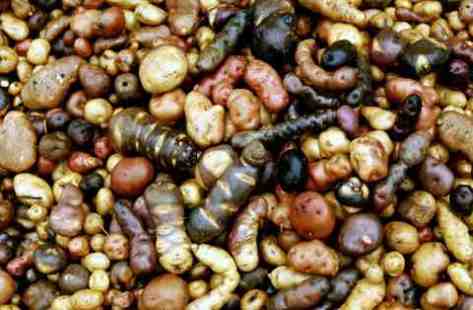
Patterns of diversity are so different from one crop species to another. In potatoes it’s as though a peacock were showing off for its mate – you can hardly miss it, with the colorful range of tuber shapes but also including differences in the color of the tuber flesh. Modern varieties are positively boring in comparison. Who wouldn’t enjoy a plate of purple french fries, or a yellow potato in a typical Peruvian dish like papa a la huancaina. Such exuberant diversity is also seen in maize cobs, in beans, and the squashes beloved of Americans for their Halloween and Thanksgiving displays.

Many of the other cereals, such as wheat, barley, and rice are much more subdued in their diversity. It’s much more subtle – it doesn’t hit you between the eyes like potatoes – such as the arrangement of the individual grains, bearded or not, and color, of course. When I first started work with rice landraces in 1991, I was a little disappointed about the variation patterns of this important crop. Little did I know or realize. Comparing just a small sample of the 110,000 varieties in the IRRI genebank collection side-by-side it was much easier to appreciate the breadth of their diversity, in growing period, in height, in form and color, as I have shown in the video included in another post. Just check the field plantings of rice landrace varieties from minute 02:45 in the video. Now there are color differences between the various grains, which most people never see because they purchase their rice after it has been milled.

From a crop improvement point of view, this easily observable diversity is less important. It’s the diversity for yield, for resistance to pests and diseases, and the ability to grow under a wide range of conditions – drought, submergence, increased salinity – that plant breeders seek to use. And that’s why the worldwide efforts to collect and conserve this diversity – the genetic resources being both crop varieties and their related wild species – is so important. I was privileged to lead one of the major genetic resources programs at the International Rice Research Institute in the Philippines for 10 years. But the diversity programs of the other centers of the CGIAR collectively represent one of the world’s most important genetic resources initiatives. Now the Global Crop Diversity Trust (which has recently moved its headquarters from Rome to Bonn in Germany) is not only providing some global leadership and involving many countries that are depositing germplasm in the Svalbard Global Seed Vault, but also providing financial support to place germplasm conservation on a sustainable basis.

Crop diversity is wonderful to admire, but it’s so much more important to study and use it for the benefit of society. I spent almost 40 years doing this, and I don’t have any regrets at all that my career moved in this direction. Not only did I get to do something I really enjoyed, I met some incredible scientists all over the world.

Plant Genetic Resources and Climate Change – publication by the end of the year*

A perspective from 25 years ago
In April 1989, Brian Ford-Lloyd, Martin Parry and I organized a workshop on plant genetic resources and climate change at the University of Birmingham. A year later, Climatic Change and Plant Genetic Resources was published (by Belhaven Press), with eleven chapters summarizing perspectives on climatic change and how it might affect plant populations, and its expected impact on agriculture around the world.

We asked whether genetic resources could cope with climate change, and would plant breeders be able to access and utilize genetic resources as building blocks of new and better-adapted crops? We listed ten consensus conclusions from the workshop:

  1. The importance of developing collection, conservation and utilization strategies for genetic resources in the light of climatic uncertainty should be recognised.
  2. There should be marked improvement in the accuracy of climate change predictions.
  3. There must be concern about sea level rises and their impact on coastal ecosystems and agriculture.
  4. Ecosystems should be preserved thereby allowing plant species – especially crop species and their wild relatives – the flexibility to respond to climate change.
  5. Research should be prioritized on tropical dry areas as these might be expected to be more severely affected by climate change.
  6. There should be a continuing need to characterize and evaluate germplasm that will provide adaptation to changed climates.
  7. There should be an increase in screening germplasm for drought, raised temperatures, and salinity.
  8. Research on the physiology underlying C3 and C4 photosynthesis should merit further investigation with the aim of increasing the adaptation of C3 crops.
  9. Better simulation models should drive a better understanding of plant responses to climate change.
  10. Plant breeders should become more aware of the environmental impacts of climate change, so that breeding programs could be modified to accommodate these predicted changes.

Climate change perspectives today
There is much less scepticism today about greenhouse gas-induced climate change and what its consequences might be, even though the full impacts of climate change cannot yet be predicted with certainty. On the other hand, the nature of weather variability – particularly in the northern hemisphere in recent years – has left some again questioning whether our climate really is warming. But the evidence is there for all to see, even as the sceptics refuse to accept the empirical data of increases in atmospheric CO2, for example, or the unprecedented summer melting of sea ice in the Arctic and the retreat of glaciers in the Alps.

Over the past decade the world has experienced a number of severe climate events – wake-up calls to what might be the normal pattern in the future under a changed climate – such as extreme drought in one region, or unprecedented flooding in another. Even the ‘normal’ weather patterns of Western Europe appear to have become disrupted in recent years leading to increased stresses on agriculture.

Some of the same questions we asked in 1989 are still relevant. However, there are some very important differences today from the situation then. Our understanding of what is happening to the climate has been refined significantly over the past two decades, as the efforts of the International Panel on Climate Change (IPCC) have brought climate scientists worldwide together to provide better predictions of how climate will change. Furthermore, governments are now taking the threat of climate change seriously, and international agreements like the Kyoto Protocol to the United Nations Framework on Climate Change, which came into force in 2005 and, even with their limitations, have provided the basis for society and governments to take action to mitigate the effects of climate change.

A new book from CABI
It is in this context, therefore, that our new book Plant Genetic Resources and Climate Change was commissioned to bring together, in a single volume, some of the latest perspectives about how genetic resources can contribute to achieving food security under the challenge of a changing climate. We also wanted to highlight some key issues for plant genetic resources management, to demonstrate how perspectives have changed over two decades, and discuss some of the actual responses and developments.

Food security and genetic resources
So what has happened during the past two decades or so? In 1990, world population was under 6 billion, but today there are more than 1 billion additional mouths to feed. The World Food Program estimates that there are 870 million people in the world who do not get enough food to lead a normal and active life. Food insecurity remains a major concern. In an opening chapter, Robert Zeigler (IRRI) provides an overview on food security today, how problems of food production will be exacerbated by climate change, and how – in the case of one crop, rice – access to and use of genetic resources have already begun to address many of the challenges that climate change will bring.

Expanding on the plant genetic resources theme, Brian Ford-Lloyd (University of Birmingham) and his co-authors provide (in Chapter 2) a broad overview of important issues concerning their conservation and use, including conservation approaches, strategies, and responses that become more relevant under the threat of climate change.

Climate projections
In three chapters, Richard Betts (UK Met Office) and Ed Hawkins (University of Reading), Martin Parry (Imperial College – London), and Pam Berry (Oxford University) and her co-authors describe scenarios for future projected climates (Chapter 3), the effects of climate change on food production and the risk of hunger (Chapter 4), and regional impacts of climate change on agriculture (Chapter 5), respectively. Over the past two decades, development of the global circulation models now permits climate change prediction with greater certainty. And combining these with physiological modelling and geographical information systems (GIS) we now have a better opportunity to assess what the impacts of climate change might be on agriculture, and where.

Sharing genetic resources
In the 1990s, we became more aware of the importance of biodiversity in general, and several international legal instruments such as the Convention on Biological Diversity (CBD) and the International Treaty on Plant Genetic Resources for Food and Agriculture were agreed among nations to govern access to and use of genetic resources for the benefit of society. A detailed discussion of these developments is provided by Gerald Moore (formerly FAO) and Geoffrey Hawtin (formerly IPGRI) in Chapter 6.

Crop wild relatives, in situ and on-farm conservation
In Chapters 7 and 8, we explore the
in situ conservation of crop genetic resources and their wild relatives. Nigel Maxted and his co-authors (University of Birmingham) provide an analysis of the importance of crop wild relatives in plant breeding and the need for their comprehensive conservation. Mauricio Bellon and Jacob van Etten (Bioversity International) discuss the challenges for on-farm conservation in centres of crop diversity under climate change.

Informatics and the impact of molecular biology
Discussing the data management aspects of germplasm collections, Helen Ougham and Ian Thomas (Aberystwyth University) describe in Chapter 9 several developments in genetic resources databases, and regional projects aimed at facilitating conservation and use. Two decades ago we had little idea of what would be the impact of molecular biology and its associated data today on the identification of useful crop diversity and its use in plant breeding. In Chapter 10, Kenneth McNally (IRRI) provides a comprehensive review of the present and future of how genomics and other molecular technologies – and associated informatics – are revolutionizing how we study and understand diversity in plant species. He also provides many examples of how responses to environmental stresses that can be expected as a result of climate change can be detected at the molecular level, opening up unforeseen opportunities for precise germplasm evaluation, identification, and use. Susan Armstrong (University of Birmingham, Chapter 11) describes how a deeper understanding of sexual reproduction in plants, specifically the processes of meiosis, should lead to better use of germplasm in crop breeding as a response to climate change.

Coping with climate change
In a final series of five chapters, responses to a range of abiotic and biotic stresses are documented: heat (by Maduraimuthu Djanaguiraman and Vara Prasad, Kansas State University, Chapter 12); drought (Salvatore Ceccarelli, formerly ICARDA, Chapter 13); salinity (including new domestications) by William Erskine, University of Western Australia, and his co-authors in Chapter 14; submergence tolerance in rice as a response to flooding (Abdelbagi Ismail, IRRI and David Mackill, University of California – Davis, Chapter 15); and finally plant-insect interactions and prospects for resistance breeding using genetic resources (by Jeremy Pritchard, University of Birmingham, and co-authors, Chapter 16).

Why this book is timely and important
The climate change that has been predicted is an enormous challenge for society worldwide. Nevertheless, progress in the development of scenarios of climate change – especially the development of more reliable projections of changes in precipitation – now provide a much more sound basis for using genetic resources in plant breeding for future climates. While important uncertainty remains about changes to variability of climate, especially to the frequency of extreme weather events, enough is now known about the range of possible changes (for example by using current analogues of future climate) to provide a basis for choosing genetic resources in breeding better-adapted crops. Even the challenge of turbo-charging the photosynthesis of a C
3 crop like rice has already been taken up by a consortium of scientists worldwide under the leadership of the International Rice Research Institute in the Philippines.

Unlike the situation in 1989, estimates of average sea level rise, and consequent risks to low lying land areas, are now characterised by less uncertainty and indicate the location and scale of the challenges posed by inundation, by soil waterlogging and by land salinization. Responses to all of these challenges and the progress achieved are spelt out in detail in several chapters in this volume.

We remain confident that research will continue to demonstrate just what is needed to mitigate the worst effects of climate change; that germplasm access and use frameworks – despite their flaws – facilitate breeders to choose and use genetic resources; and that ultimately, genetic resources will be used successfully in crop breeding for climate change thereby enhancing food security.

Would you like to buy a copy?
The authors will receive their page proofs any day now, and we should have the final edits made by the middle of September. CABI expects to publish Plant Genetic Resources and Climate Change in December 2013. Already this book can be found online through a Google search even though it’s not yet published. But do go to the CABI Bookshop – the book has been priced at £85 (or USD160 and €110). If you order online I’m told there is a discount on the list price.

_______________________________________________________
* This post is based on the Preface from the forthcoming CABI book.

Where good science matters . . . and it’s all relevant

A well-deserved reputation
It was early November. However, I can’t remember which year. It must be well over a decade ago. I was on my way to a scientific meeting in the USA – via Kuala Lumpur where I’d been invited to participate in a workshop about intellectual property rights.

My flight from Manila arrived quite late at night, and a vehicle and driver were sent to KL airport to pick me up. On the journey from the airport my driver became quite chatty. He asked where I was from, and when I told him I was working in the Philippines on rice, he replied ‘You must be working at IRRI, then‘ (IRRI being the International Rice Research Institute in Los Baños in the Philippines). I must admit I was rather surprised. However, he had once been the chauffeur of Malaysia’s Minister of Agriculture. No wonder then that he knew about IRRI.

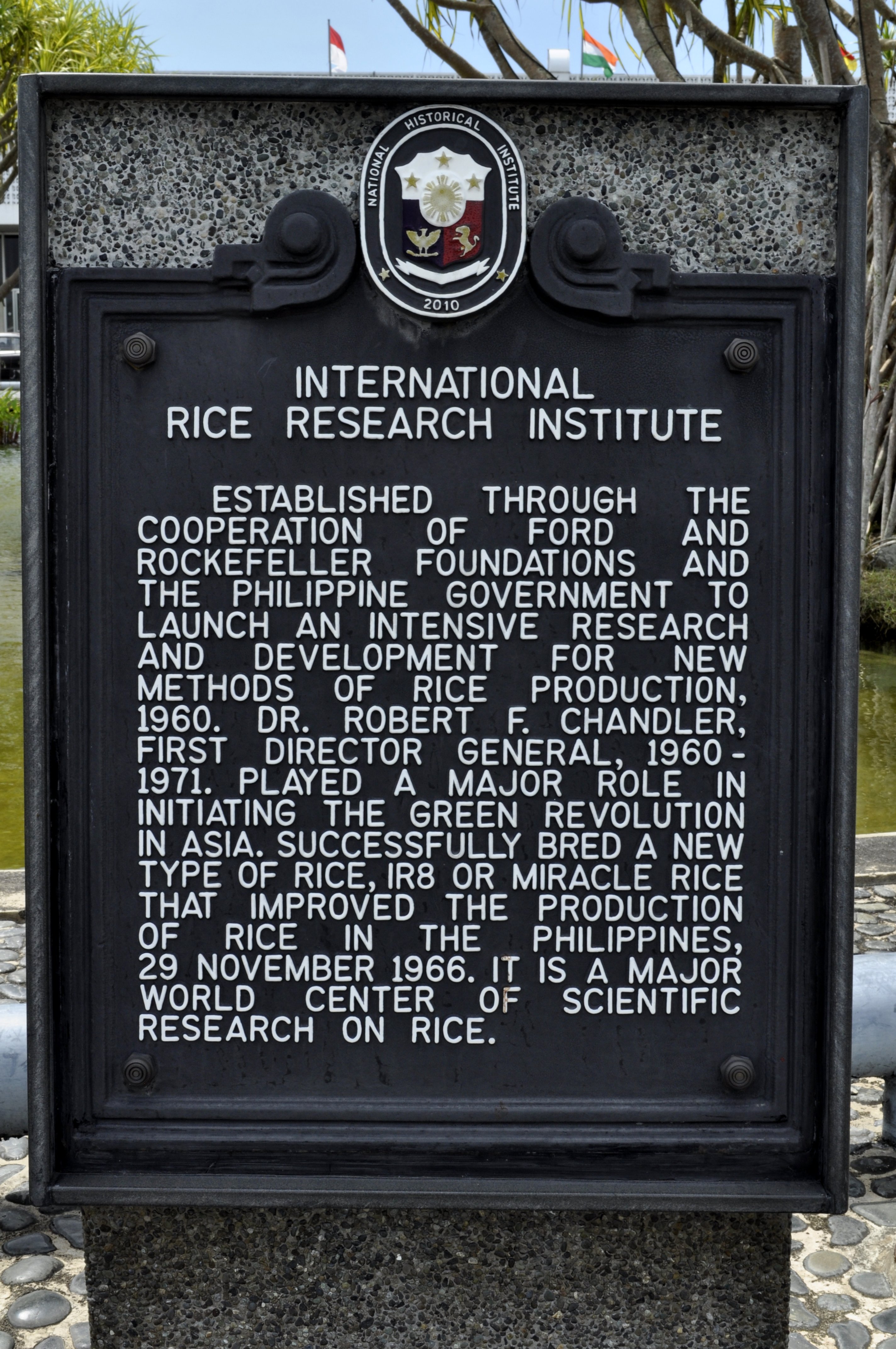
One of the national historical markers dedicated on 14 April 2010, the 50th anniversary of IRRI's founding

One of the national historical markers dedicated on 14 April 2010, the 50th anniversary of IRRI’s founding

IRRI’s reputation has spread far and wide since its foundation in 1960, and IRRI is now one of the world’s premier agricultural research institutes. Its reputation is justified. At the forefront of technologies to grow more rice and more sustainably, IRRI can be credited with saving millions of people around the world from starvation, beginning in the 1960s with the launch of the Green Revolution in Asia (see a related story about Green Revolution pioneer, Norman Borlaug). Now its work touches the lives of half the world’s population who depend on rice every day. No wonder IRRI is such an important place. But over the decades it has had to earn its reputation.

On a recent visit

20130504057 IRRI

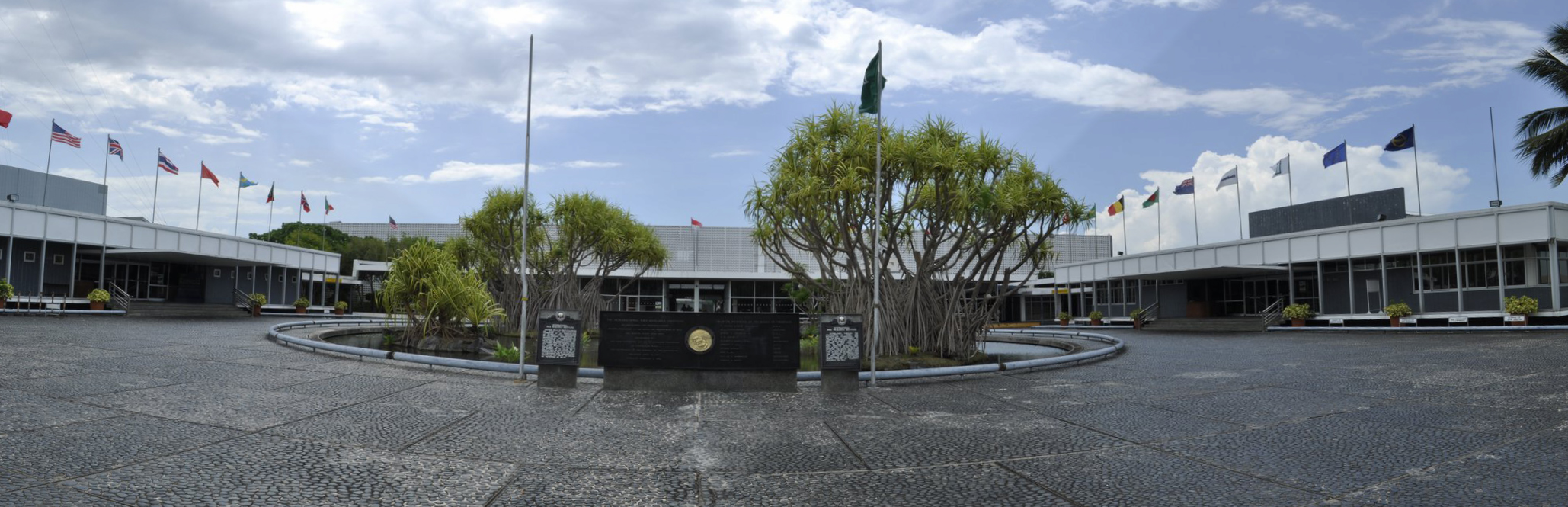
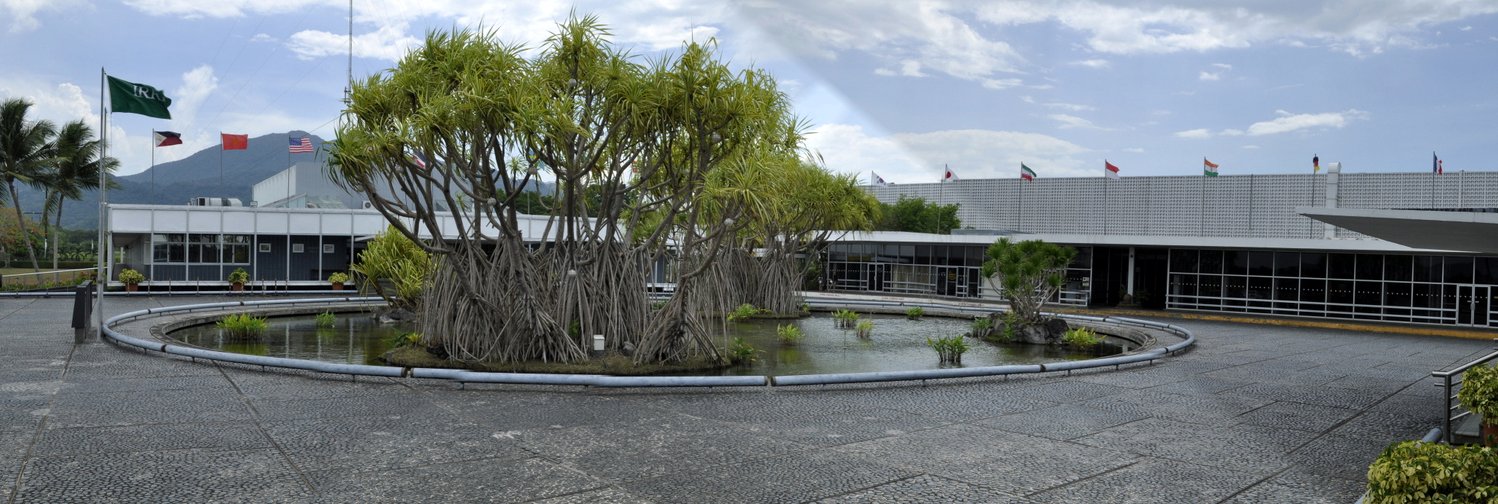
The main entrance in front of the admin buildings, between Chandler Hall (on the left) and the FF Hill Building (on the right, where I worked for almost a decade)

Between Chandler Hall and the FF Hill Building, with Mt Makiling in the distance

A view south over the long-term trail plots and others, looking towards Mt Banahaw

A view south over the long-term trial plots, looking towards Mt Banahaw, with the entrance gate to IRRI on the right, and the research labs off to the left

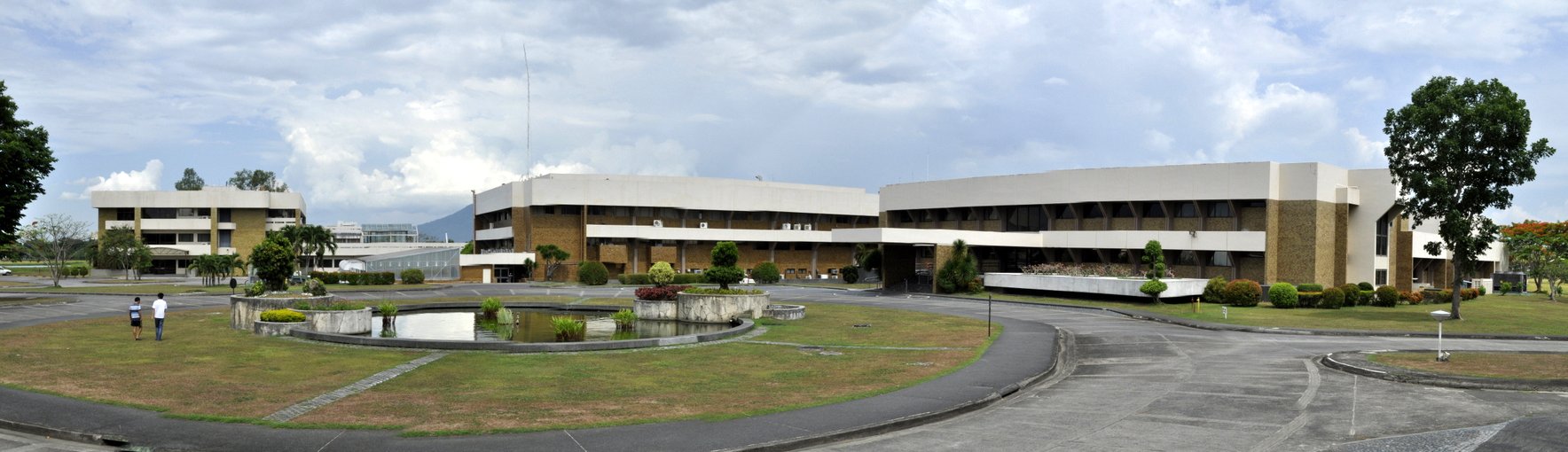
Some of the research labs, with the NC Brady building on the right, home to the International Rice Genebank

Some of the research labs, with the NC Brady building on the right, home to the International Rice Genebank

I was there recently, exactly three years after I had retired. And the place was buzzing, I’m pleased to say. There was such an optimistic outlook from everyone I spoke to. Not that it wasn’t like that before, but over the past decade things have moved along really rather nicely. That’s been due not only to developments in rice research at IRRI and elsewhere, but also because the institute has had the courage to invest in new approaches such as molecular genetics as just one example, and people. That was an aspect that I found particularly gratifying – lots of young scientists beginning their careers at IRRI and knowing that it will be a launching pad to opportunities elsewhere.

I was visiting in connection with the 4th International Rice Congress that will take place in Bangkok, Thailand during the last week of October 2014. I’ve been asked to chair the committee that will develop the scientific conference. We expect to have a program of more than 200 scientific papers covering all aspects of rice science and production, as well as a number of exciting plenary speakers.

IRRI’s strengths
You only have to look at IRRI’s scientific publication record – and where its scientists are publishing – to appreciate the quality of the work carried out in Los Baños and at other sites around the world (primarily but not exclusively in Asia) in collaboration with scientists working in national research programs. IRRI’s soon-to-retire senior editor  Bill Hardy told me during my recent visit that by the beginning of May this year he had already edited more journal manuscripts than he did in the first six months of 2012. And IRRI has a very good strike rate with its journal submissions.

IRRI’s research is highly relevant to the lives of rice farmers and those who depend on this crop, ranging from the most basic molecular biology on the one hand to studies of adoption of technologies conducted by the institute’s social scientists. It’s this rich range of disciplines and multidisciplinary efforts that give IRRI the edge over many research institutes, and keep it in the top league. IRRI scientists can – and do – contemplate undertaking laboratory and field experiments that are just not possible almost anywhere else. And it has the facilities (in which it has invested significantly) to think on the grand scale. For example, it took more than 30,000 crosses with a salt-tolerant wild rice to find just a single fertile progeny. And in research aimed at turbocharging the photosynthesis of rice, a population of 1 million mutant sorghum plants was studied in the field, with only eight plants selected after all that effort. Both of these are discussed in a little more detail below. In 2012, IRRI made its 100,000th cross – rice breeding remains a mainstay of the institute’s work, keeping the pipeline of new varieties primed for farmers.

Take a look at this 11½ minute video in the skies above IRRI’s 252 hectare experimental farm. In the first few minutes, the camera pans eastwards along Pili Drive over the institute’s main administrative buildings, before heading towards the research laboratory and glasshouse complex. In the middle sequence, with the Mt Banahaw volcano in the distance (due south from Los Baños) you can see the extensive experimental rice paddies with rice growing in standing water. In the final segment, the camera sweeps over the ‘upland’ farm, with dormant Mt Makiling in the distance, and showing the multiplication plots from the International Rice genebank, before heading (and closing) over the genebank screen houses where the collection of wild Oryza species is maintained. It’s certainly an impressive sight.


Taking a long-term view

You can’t get much longer-term than conservation of rice genetic resources in the institute’s genebank. This is the world’s largest collection of rice genetic resources, and I was privileged to head the genebank and genetic resources program for a decade from 1991. I’ve written about this in more detail elsewhere in my blog.

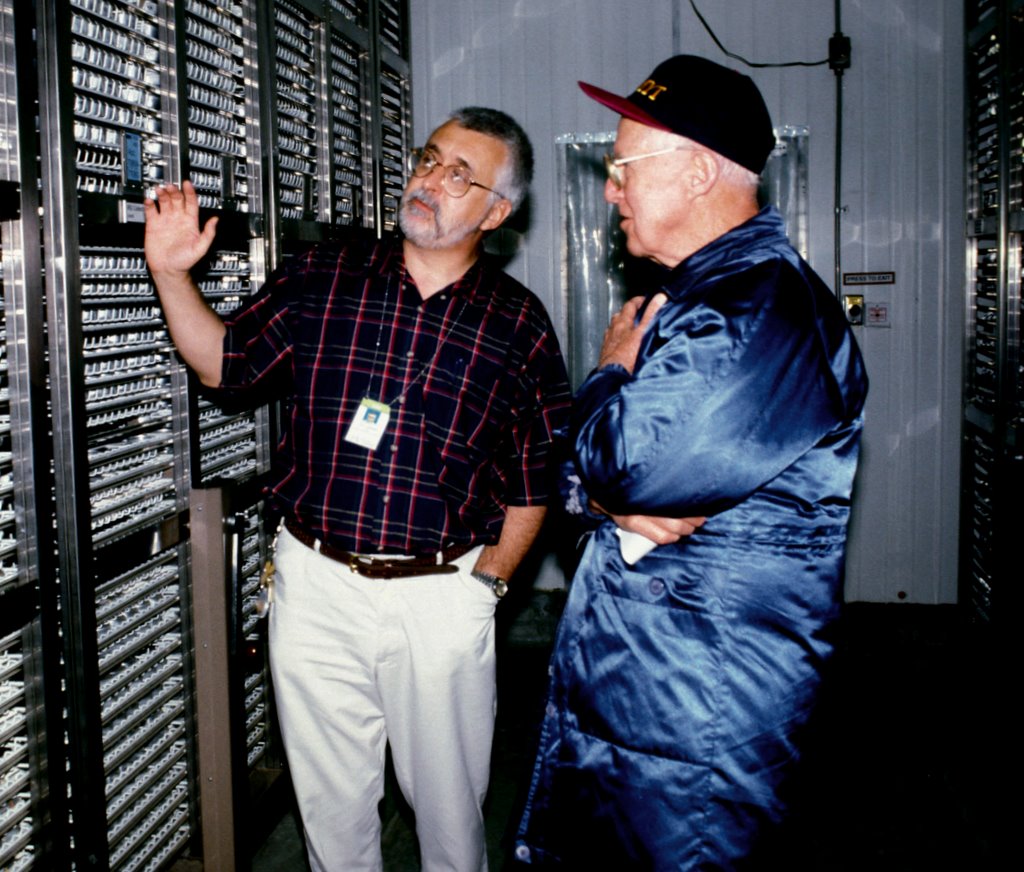
Explaining how rice seeds are stored in the International Rice Genebank to Nobel Laureate Norman Borlaug

Explaining how rice seeds are stored in the International Rice Genebank to Nobel Laureate Dr Norman Borlaug

In 1963 (just three years after IRRI was founded) long-term experimental plots were laid out to understand the sustainability of intensive rice cropping. In these next videos soil scientist Dr Roland Buresh explains the rationale behind these experiments. They are the tropical equivalent of the Broadbalk classic experiment (and others) at Rothamsted Experiment Station just north of London in the UK, established in the mid-19th century.

And in this next video you can watch a time-lapse sequence from field preparation to harvest of two crops in the long-term trials.

Making rice climate ready
Three areas of work are closely linked to the problem of climate change, and highlight how IRRI is at the forefront of agricultural research.

Rice varieties with and without the SUB1 gene after a period of inundation

Rice varieties with and without the SUB1 gene after a period of inundation

Scuba rice. Although rice grows in standing water, it will die if inundated for more than a few days. But several years ago, a gene was found in one rice variety that allowed plants to survive about two weeks under water. In a collaborative project with scientists from the University of California, the gene, named SUB1, has been bred into a number of varieties that are grown widely throughout Asia – so-called mega-varieties – and which are already bringing huge benefits to the farmers who have adopted them in India and Bangladesh. In this video, the effect of the SUB1 gene can easily be seen. Much of the work was supported by the Bill & Melinda Gates Foundation, and has (as stated on the Foundation’s web site) ‘exceeded our expectations’.

Careful with the salt. Recently, IRRI announced that breeders had made crosses between a wild species of rice, Oryza coarctata (formerly known as Porteresia coarcata – which already indicates how remote it is from cultivated rice) to transfer salt tolerance into commercial varieties. Building on the wide hybridization work of Dr Darshan Brar (who retired in 2012), Dr KK Jena has achieved the impossible. After thousands of crosses, and culture of embryos on culture medium, he now has a plant that can be used as a ‘bridge species’ to transfer salt tolerance. As IRRI Director General Bob Zeigler explained to me, ‘Now we have fertile crosses with all the wild rices, we can tap into 10 million years of evolution‘. I couldn’t have expressed it better myself!

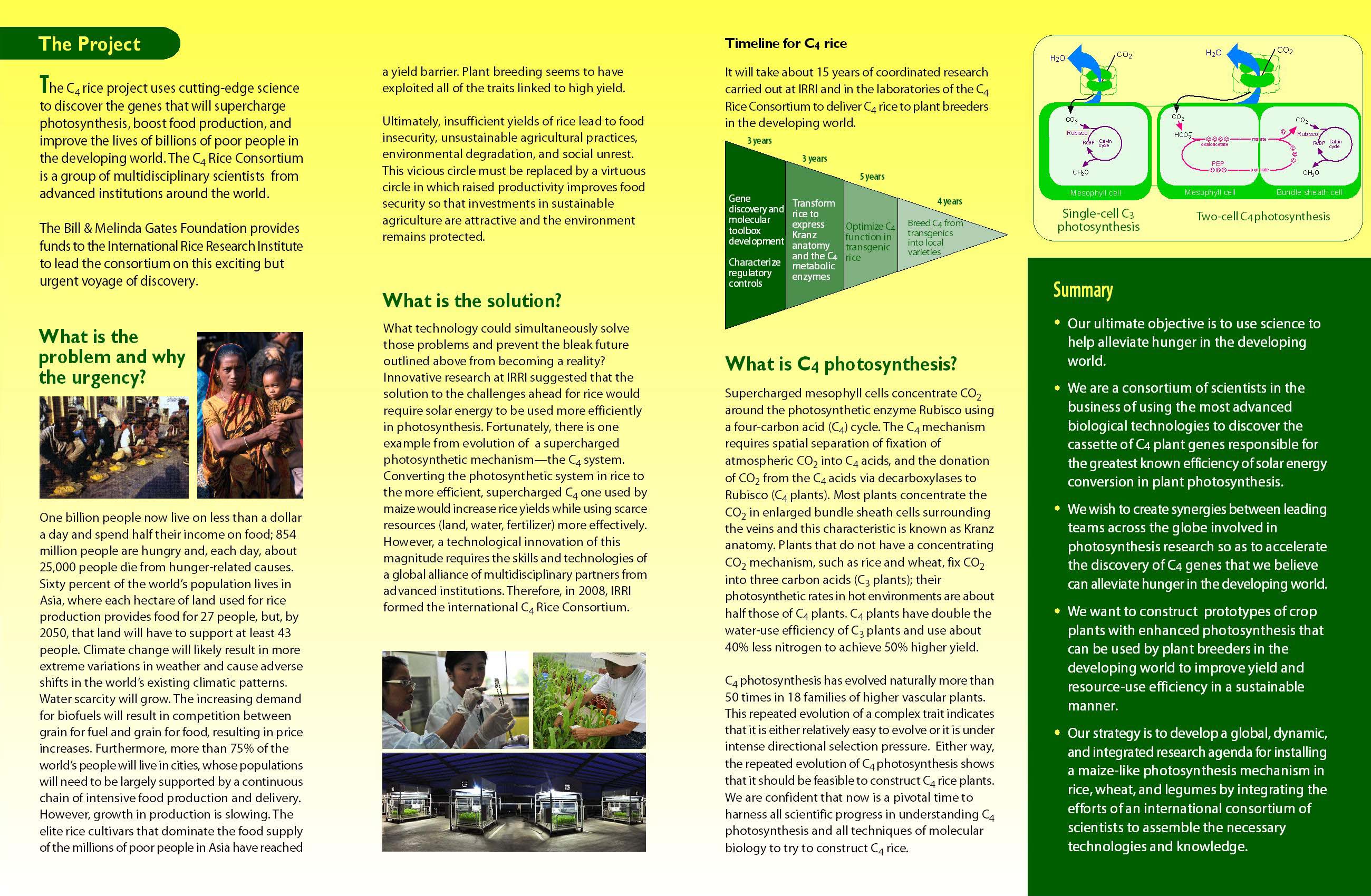
Boosting output. Lastly, since 2008 IRRI has led the C4 Consortium, a network of scientists around the world who are studying how photosynthesis in rice (which is quite inefficient in an environment where temperature and CO2 levels are increasing) could be modified to make it as efficient as maize or sorghum that already have a different process, known as C4 photosyntheis (just click on the image below for a full explanation). This work is also funded by the Bill & Melinda Gates Foundation and the UK government.

There are so many examples I could describe that show the importance and relevance of IRRI’s research for development. I think it’s the breadth of approaches – from molecule to farmer’s field (it’s even working with farmers to develop smartphone apps to help with fertilizer management) – and the incredible dedication of all the people that work there that makes IRRI such a special place. Now part of the Global Rice Science Program (GRiSP) funded through the CGIAR Consortium, IRRI’s work with a wide range of partners goes from strength to strength.

There’s no doubt about it. Joining IRRI in 1991 was the second best career decision I ever made. The best career move was to get into international agricultural research in the first place, way back in 1971. What a time I had!

Plant Genetic Resources and Climate Change – in the production phase at last

At the end of March I submitted to CABI all 16 manuscripts and associated figures for our book on Plant Genetic Resources and Climate Change.

These are now being checked and moving through the various production phases. We hope that the book will be published in the last quarter of 2013. I gather that the target price will be around £85 – but that has yet to be confirmed. The book will be around 300+ pages.

Plant Genetic Resources - cover design

Rationale and audience:
The collection and conservation of plant genetic resources have made significant progress over the past half century, and many large and important collections of crop germplasm have been established in many countries. A major threat to continuing crop productivity is climate change, which is expected to bring about disruptions to patterns of agriculture, to the crops and varieties that can be grown, and some of the constraints to productivity – such as diseases and pests, and some abiotic stresses – will be exacerbated. This book will address the current state of climate change predictions and its consequences, how climate change will affect conservation and use of crop germplasm, both ex situ and in situ, as well as highlighting specific examples of germplasm research related to ‘climate change threats’. All of this needs to take place under a regime of access to and use of germplasm through international legal instruments such as the Convention on Biological Diversity and the International Treaty on Plant Genetic Resources for Food and Agriculture. This book will be essential reading for plant breeders and physiologists, as well as those involved with germplasm conservation per se. In particular it will be a companion volume to the recently published CABI volume Climate Change and Crop Production (2010) by MP Reynolds (ed.), but of interest to the same readership as Crop Stress Management and Global Climate Change (2011) by JL Araus and GA Slafer (eds.) and Climate Change Biology (2011) by JA Newman et al.

Chapters, authors and their affiliations:

Preface
Michael Jackson, Brian Ford-Lloyd and Martin Parry
The Editors

1. Food security, climate change and genetic resources
Robert S. Zeigler
IRRI

2. Genetic resources and conservation challenges under the threat of climate change
Brian Ford-Lloyd, Johannes M.M. Engels and Michael Jackson
University of Birmingham, Bioversity International, and formerly IRRI (now retired)

3. Climate projections
Richard A. Betts and Ed Hawkins
UK MetOffice and University of Reading

4. Effects of climate change on potential food production and risk of hunger
Martin Parry
Imperial College

5. Regional impacts of climate change on agriculture and the role of adaptation
Pam Berry, Julian Ramirez-Villegas, Helen Bramley, Samarandu Mohanty and Mary A. Mgonja
University of Oxford, University of Leeds and CIAT, University of Western Australia, IRRI, and ICRISAT

6. International mechanisms for conservation and use of genetic resources
Gerald Moore and Geoffrey Hawtin
Formerly FAO and formerly IPGRI (now retired)

7. Crop wild relatives and climate change
Nigel Maxted, Shelagh Kell and Joana Magos Brehm
University of Birmingham

8. Climate change and on-farm conservation of crop landraces in centres of diversity
Mauricio R. Bellon and Jacob van Etten
Bioversity International

9. Germplasm databases and informatics
Helen Ougham and Ian D. Thomas
University of Aberystwyth

10. Exploring ‘omics’ of genetic resources to mitigate the effects of climate change
Kenneth L. McNally
IRRI

11. Harnessing meiotic recombination for improved crop varieties
Susan J. Armstrong
University of Birmingham

12. High temperature stress
Maduraimuthu Djanaguiraman and P.V. Vara Prasad
Kansas State University

13. Drought
Salvatore Ceccarelli
Formerly ICARDA (now retired)

14. Salinity
William Erskine, Hari D. Upadhyaya and Al Imran Malik
University of Western Australia, ICRISAT, and UWA

15. Response to flooding: submergence tolerance in rice
Abdelbagi M. Ismail and David J. Mackill
IRRI and University of California – Davis

16. Effects of climate change on plant-insect interactions and prospects for resistance breeding using genetic resources
Jeremy Pritchard, Colette Broekgaarden and Ben Vosman
University of Birmingham and Wageningen UR Plant Breeding

The editors:
Michael Jackson retired from the International Rice Research Institute (IRRI) in 2010. For 10 years he was Head of the Genetic Resources Center, managing the International Rice Genebank, one of the world’s largest and most important genebanks. For nine years he was Director for Program Planning and Communications. He was Adjunct Professor of Agronomy at the University of the Philippines-Los Baños. During the 1980s he was Lecturer in the School of Biological Sciences at the University of Birmingham, focusing on the conservation and use of plant genetic resources. From 1973-81 he worked at the International Potato Center, in Lima, Perú and in Costa Rica. He now works part-time as an independent agricultural research and planning consultant. He was appointed OBE in The Queen’s New Year’s Honours 2012, for services to international food science.

Brian Ford-Lloyd is Emeritus Professor of Conservation Genetics at the University of Birmingham, former Director of the University Graduate School, and former Deputy Head of the School of Biosciences. As Director of the University Graduate School he aimed to ensure that doctoral researchers throughout the University were provided with the opportunity, training and facilities to undertake internationally valued research that would lead into excellent careers in the UK and overseas. He drew from his experience of having successfully supervised over 40 doctoral researchers from the UK and many other parts of the world in his chosen research area which included the study of the natural genetic variation in plant populations, and agricultural plant genetic resources and their conservation.

Martin Parry is Visiting Professor at The Centre for Environmental Policy, Imperial College London, and also Visiting Research Fellow at The Grantham Institute at the same university. Until September 2008 he was Co-Chair of Working Group II (Impacts, Adaptation and Vulnerability), of the Intergovernmental Panel on Climate Change (IPCC) based at the Hadley Centre for Climate Prediction and Research, UK Meteorological Office. Previously he was Director of the Jackson Environment Institute (JEI), and Professor of Environmental Science at the University of East Anglia (1999-2002); Director of the JEI and Professor of Environmental Management at University College London (1994-99), foundation Director of the Environmental Change Institute and Professor of Geography at the University of Oxford (1991-94), and Professor of Geography at the University of Birmingham (1989-91). He was appointed OBE in The Queen’s New Year’s Honours 1998, for services to the environment and climate change.

Plant Genetic Resources and Climate Change

In 1989, my former colleagues at the University of Birmingham, Brian Ford-Lloyd and Martin Parry, and I organized a two-day symposium on genetic resources and climate change. The papers presented were published in Climatic Change and Plant Genetic Resources by Belhaven Press (ISBN 1 85293 102 7), edited by me and the other two.

In 1989 the whole idea of climate change was greeted with a considerable dose of scepticism – indeed, the book was ahead of its time. The various chapters covered predictions of climate change, impacts on agriculture, ecological and physiological effects, and how climate change would impact on genetic resources and conservation strategies.

In a particularly prescient chapter, the late Professor Harold Woolhouse discussed how photosynthetic biochemistry is relevant to adaptation to climate change. Two decades later the International Rice Research Institute (IRRI) based in the Philippines is leading a worldwide effort to turbocharge the photosynthesis of rice, by converting the plant from so-called C3 to C4 photosynthesis.

Today, our understanding and acceptance of climate change rests on much more solid foundations, and the scientific community is looking at ways to adapt to this particular challenge. And access to and use of plant genetic resources will be an important approach in this endeavour.

A new book on plant genetic resources and climate change will be published in 2013 by CABI. Brian, Martin and I are joining forces once again to bring this exciting volume to publication. We are planning 19 chapters in three sections:

Overviews
1. Food security (Bob Zeigler – IRRI)
2. Germplasm conservation (lead author: Brian Ford-Lloyd – University of Birmingham)
3. Predicting climate changes (Richard Betts – UK Met Office)
4. Effect on productivity (Martin Parry – Imperial College, London)
5. Future growing conditions (lead author: Pam Berry – University of Oxford)
6. Susceptibility of species (lead author: Castaneda Alvarez – Bioversity International)
7. International mechanisms for conservation and use of genetic resources (lead author: Gerald Moore – formerly FAO)

Technologies for conservation and enhancing use
8. In situ conservation of wild relatives (Nigel Maxted – University of Birmingham)
9. On farm conservation (lead author: Mauricio Bellon – Bioversity International)
10. Molecular technologies (Ken McNally – IRRI)
11. Databases and informatics (lead author: Helen Ougham – University of Aberystwyth)
12. Releasing novel variation (Sue Armstrong – University of Birmingham)
13. Provenance breeding (Wayne Powell – University of Aberystyth)

Challenges
14. Temperature (lead author: PV Vara Prasad – Kansas State University)
15. Drought (Salvatore Ceccarelli – formerly ICARDA)
16. Salinity (lead author: Willie Erskine – University of Western Australia)
17. Submergence (lead author: Abdelbagi Ismail – IRRI)
18. Pests and diseases (lead author: Jeremy Pritchard – University of Birmingham)

A final chapter (19), by the editors, will provide a synthesis of the many issues raised in the individual chapters.

The Editors

Michael Jackson is the Managing Editor for this book. He retired from the International Rice Research Institute (IRRI) in 2010. For 10 years he was Head of the Genetic Resources Center, managing the International Rice Genebank, one of the world’s largest and most important genebanks. For nine years he was Director for Program Planning and Communications. He was Adjunct Professor of Agronomy at the University of the Philippines-Los Baños. During the 1980s he was Lecturer in the School of Biological Sciences at the University of Birmingham, focusing on the conservation and use of plant genetic resources. From 1973-81 he worked at the International Potato Center, in Lima, Perú and in Costa Rica. He now works part-time as an independent agricultural research and planning consultant. He was appointed OBE in The Queen’s New Year’s Honours 2012, for services to international food science.

Brian Ford-Lloyd is Professor of Conservation Genetics at the University of Birmingham, Director of the University Graduate School, and Deputy Head of the School of Biosciences. As Director of the University Graduate School he aims to ensure that doctoral researchers throughout the University are provided with the opportunity, training and facilities to undertake internationally valued research that will lead into excellent careers in the UK and overseas. He draws from his experience of having successfully supervised over 40 doctoral researchers from the UK and many other parts of the world in his chosen research area which includes the study of the natural genetic variation in plant populations, and agricultural plant genetic resources and their conservation.

Martin Parry is Visiting Professor at The Centre for Environmental Policy, Imperial College London, and also Visiting Research Fellow at The Grantham Institute at the same university. Until September 2008 he was Co-Chair of Working Group II (Impacts, Adaptation and Vulnerability), of the Intergovernmental Panel on Climate Change (IPCC) based at the Hadley Centre for Climate Prediction and Research, UK Meteorological Office. Previously he was Director of the Jackson Environment Institute (JEI), and Professor of Environmental Science at the University of East Anglia (1999-2002); Director of the JEI and Professor of Environmental Management at University College London (1994-99), foundation Director of the Environmental Change Institute and Professor of Geography at the University of Oxford (1991-94), and Professor of Geography at the University of Birmingham (1989-91). He was appointed OBE in The Queen’s New Year’s Honours 1998, for services to the environment and climate change.
Déjà vu, again?

A rather interesting experiment was reported on the BBC TV news at 6 o’clock this evening. Tree scientists in 12 European countries will assess the response of many different tree species at 37 locations along a 1600 mile stretch of Atlantic coastline. The saplings planted at all sites come from the Mediterranean, eastern Europe, California, and beyond. The experiment will last for decades as scientists monitor the growth and health of the trees.
Multilocation field trials of this type are essential if we are ever to get a handle on how plants (and crops) respond under a changing climate, and what germplasm (and in the case of trees, for example, which provenances) should be tapped to maintain productivity.

It’s not only response to increasing temperature that will be critical. It’s that we’ll be experiencing higher temperatures under existing daylengths (or photoperiod). So experiments over a wide range of latitude can begin to investigate some of these temperature x photoperiod relationships.

In December 1990 (while I was at the University of Birmingham) I presented a paper on crop networks and global warming [1] at a joint EUCARPIA/IBPGR symposium, held in Wageningen, the Netherlands. I put forward a proposal to establish a network of field trials of barley (Hordeum vulgare) landraces from a very wide geographical range across Europe, to cover the broadest distribution of both latitude and longitude. Since barley is a weakly buffered genetically – it has 2n=2x=14 chromosomes, and is a self-fertilizing diploid – most of the genetic variation in any line should be expressed.

The barley germplasm exists, as do the databases. Click on the image for an interesting link.

In this way I suggested that we could use the power of multilocation trials to help identify germplasm traits for use in breeding under climate change. Needless to say, the idea went down like a lead balloon, and I didn’t pursue it further; in any case I moved on and joined IRRI. Quite a number of the symposium participants told me that my proposal was not worth pursuing, simply because climate change was not a reality. Now we know different. But just think how much further we would be ahead today if multilocation trials had been started a couple of decades ago.

When I joined IRRI in 1991, I had, as head of the Genetic Resources Center, overall responsibility for INGER – the International Network for the Genetic Evaluation of Rice, but not day-to-day management. At one early meeting I suggested that perhaps a new model for multilocation testing should be adopted with proper randomized and replicated trials at carefully selected locations – but only where collaborators would be willing to conduct rather more sophisticated field trials, as well as collect accurate weather data. I was told, in no uncertain terms, that this was not INGER, and despite my best efforts to bring about change and inject some science, the network continued on its merry way, collecting volumes of data of little use to anyone. Another opportunity lost!

So it is rather heartening to see that, at last, some scientists have bitten the bullet – and a big one at that, since the trials will last several decades. Now that’s what I call commitment.

[1] Jackson, MT, 1991. Global warming: the case for European cooperation for germplasm conservation and use. In: Th.J.L. van Hintum, L. Frese & P.M. Perret (eds.), Crop Networks. Searching for New Concepts for Collaborative Genetic Resources Management. International Crop Network Series No. 4. International Board for Plant Genetic Resources, Rome, Italy. Papers of the EUCARPIA/IBPGR symposium held in Wageningen, the Netherlands, December 3-6, 1990. pp. 125-131.