A stroll in the park . . . at Croome

Croome Court, some 20 miles south of our home in Bromsgrove, and nestling beneath the Malvern Hills, is one of our ‘local’ National Trust properties. In fact, it was the second property we visited, at the end of March 2011, just after we’d become members of the National Trust.

And a couple of days ago, on a very bright but cold morning, we made our fifth visit to Croome. The ideal setting for a bracing walk, and not only to recover from some of the excesses of Christmas, but also take a peek inside the house since we’d not done that since 2011.

We can see the Malverns from Bromsgrove, and there is often a clear view south down the valley of the River Severn near Croome, with the Costwolds outlier of Bredon Hill on the east side and, more spectacularly on the west, the line of the Malverns stretching some eight miles north to south and separating Worcestershire from Herefordshire.

As we drove south along the M5 motorway I wasn’t expecting to see the Malverns as we did that morning, covered in snow, and looking even more stately, impressive, and higher than we normally see them. What a surprise! Once at Croome, we had magnificent views of the whole line of hills due west. The snow had somehow ‘etched’ new landscape perspectives that we’d never observed before.

The magnificent Malvern Hills, looking more like the Alps than a modest range of hills on the Worcestershire-Herefordshire border.
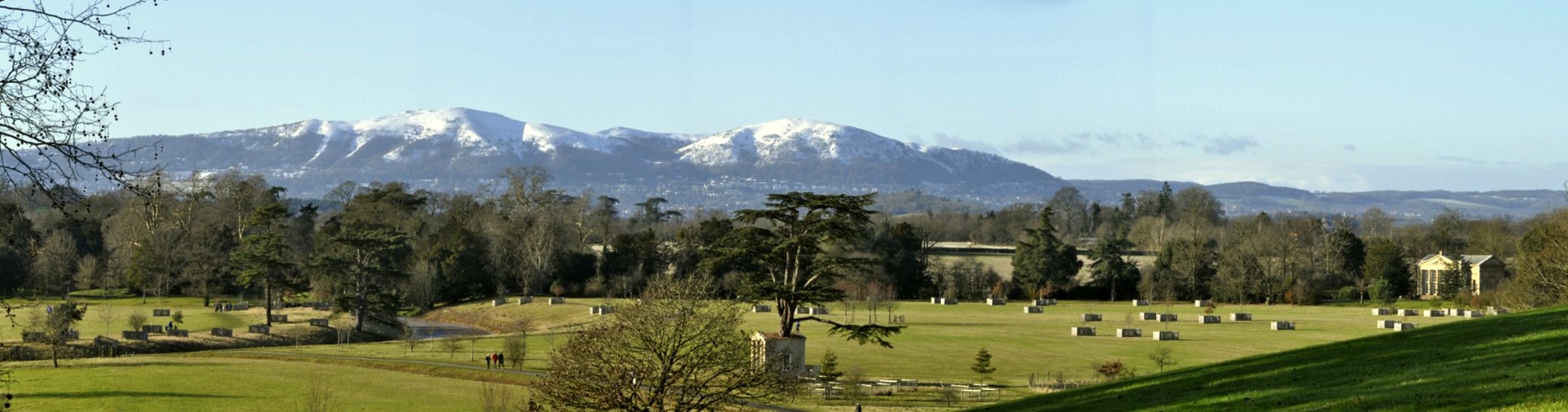
The northern end of the Malverns, with Croome’s Temple Greenhouse on the far right, and the Croome River snaking past trees towards the left.
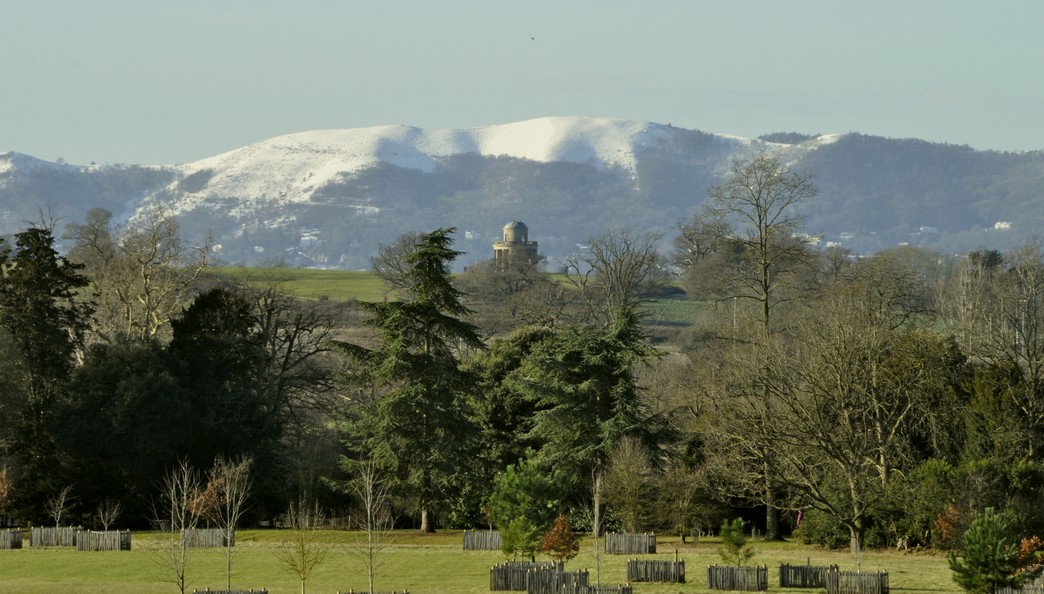
The Panorama Tower has a view westwards towards the Malverns, and east towards Croome Park itself. It lies about 1 mile as the crow flies due west from the house.

First things first, however. We arrived just after 10:45, after a 30 minute drive from home. Fortunately although the night before had been very cold, with a little dusting of snow and some icy patches on rural roads, we did not encounter any holdups at all. Nevertheless, the first place we headed to was Croome’s 1940s-style canteen to enjoy a cup of frothy cappuccino to set us up for the walk around the park.

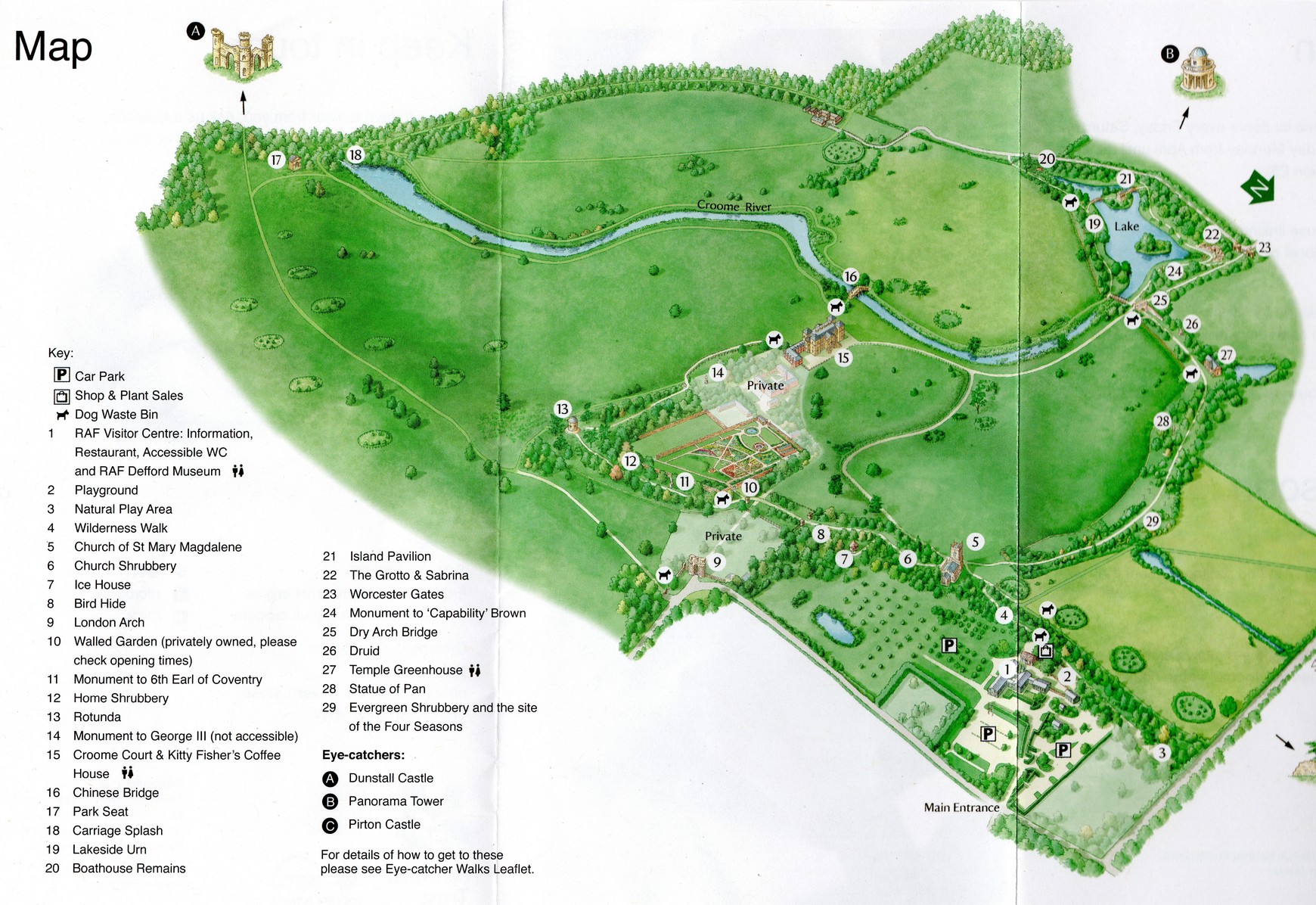
In the past we’ve taken in the whole circuit of the park, to the far end of the Croome River (see map). But on this day, we walked as far at the Island Pavilion (21 on the map), and back along the far side of the Croome River to the Chinese Bridge (16). After touring the house, we headed to the Rotunda (13) and along the east side of the Walled Garden to exit through the Visitor Centre. It was a walk of around three miles, and most welcome.

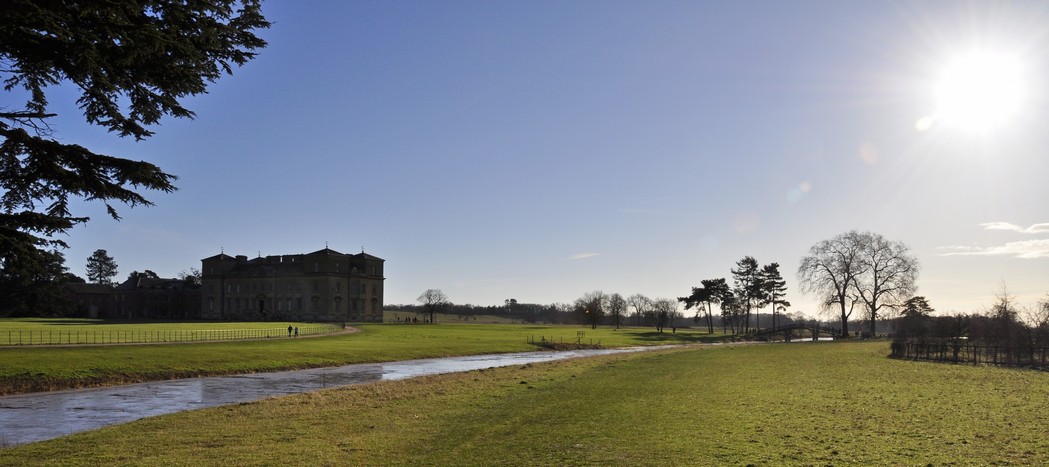
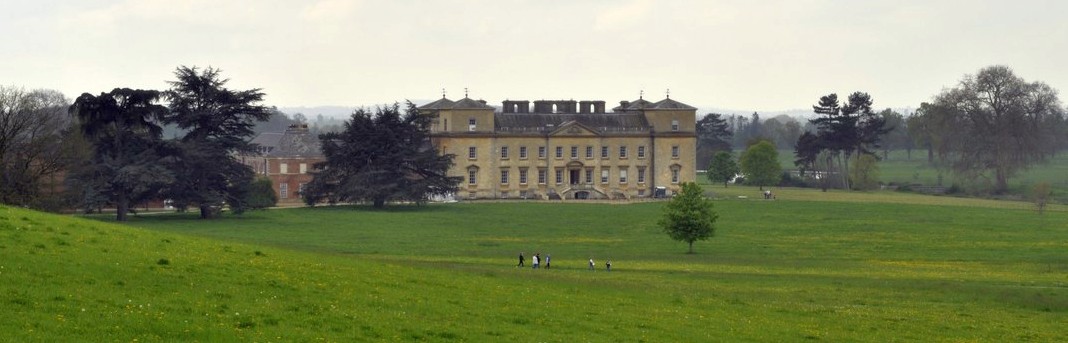
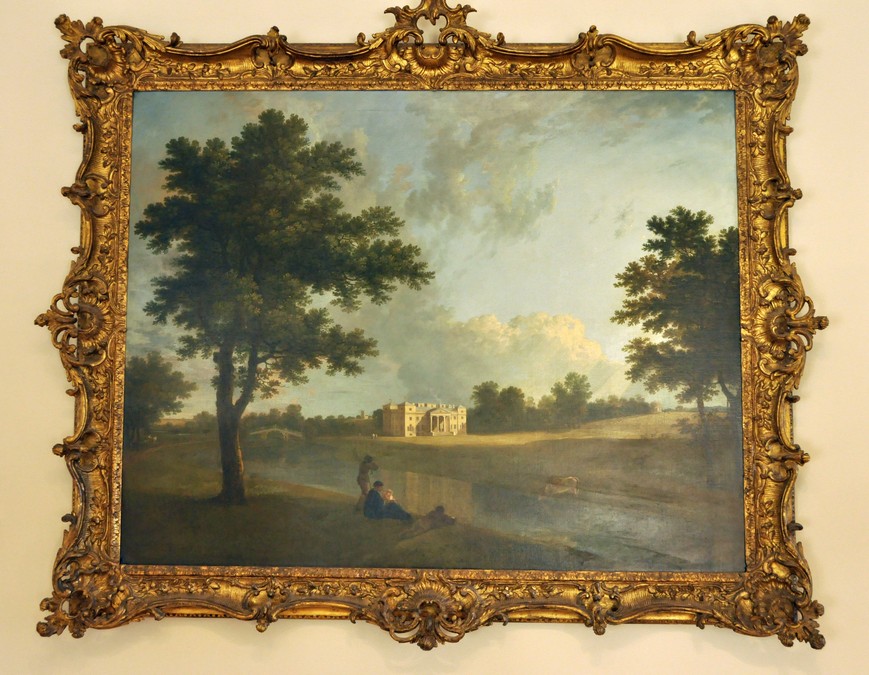
A painting by Richard Wilson in 1758 is on display in one of the ground floor rooms. Not much has changed in the intervening 260 years.
Since our first visit, the main entrance to Croome Court is now through the Hall on the north side of the building. Inside, there are few significant changes from our last visit, although I think there were more rooms open on the first floor.

The Robert Adam ceiling in the Long Gallery is a sight to behold. The decorated plaster-work of the dining room is as delightful as ever, likewise the main doorway and ceiling of the Saloon. The bare wooden walls of the Tapestry Room are testament to what was; the tapestries now hang in the Metropolitan Museum in New York.

The wallpaper in the Chinese Bedroom on the first floor caught my eye, as did the portraits of the 9th Earl of Coventry and his wife propped up against the wall of an adjacent room.

Two exhibits stand out above the others. I love porcelain, and in the dining room there is a stunning exhibit, The Golden Box (designed by Dutch artist Bouke de Vries, whose War and Pieces we saw at Berrington Hall in April this year), of some of Croome’s porcelain. The Golden Box took my breath away.

On the first floor, in what was Lady Coventry’s Dressing Room, is the recently opened ‘I AM Archive’, a vortex construction that will eventually house information and documents about Croome. A truly inspirational design.

Finally, it was outside again through the doors of the Saloon, and on to the south-facing steps flanked by two sphinxes. In the early afternoon sunshine, the light coloured stone of the façade glowed a deep gold. At the Rotunda there was a good view over much of the park to the west and south.

Croome was heaving with visitors, all taking advantage of the lovely day, many following children along the ‘Gingerbread Trail’, or taking dogs for walks in the park’s wide open spaces. Everyone seemed to be having fun, as we did, and we look forward to our next visit some time during 2018.
 

‘Capability’ by name, ‘Capability’ by nature (updated 27 July 2017)

Everyone has to start somewhere.

And, it seems, that Lancelot ‘Capability’ Brown in one of his earliest commissions helped to realize the vision of the 6th Earl of Coventry to create Croome Court and Park, a neo-Palladian mansion in deepest Worcestershire, less than 10 miles southeast of Worcester, and 20 miles from our home in Bromsgrove in the north of the county.

Work started on Croome in 1751 and over more than a decade work continued to replace an earlier building on the site. But even as late as the 1790s changes were being made to the park.

While Brown was involved in the design of the hall itself, and of course his signature landscape design, many of the interiors of the hall were designed by equally famous neoclassical architect and interior designer Robert Adam who, with his rival James Wyatt, also designed many of the features – temples and the like – that are dotted about the park, and even follies some distance from the park itself, such as Dunstall Castle to the south and Pirton Tower to the north. The 1¾ mile lake, the Croome River, took 12 years alone to dig out by hand.

From the park there are good views of the Malvern Hills due west, and Bredon Hill, an outlier of the Cotswolds, further southeast. These aristocrats certainly knew just where to build a fancy residence!

From the Visitor Centre (1 on the map, and once the sick quarters of  nearby WWII airfield, RAF Defford), the footpath through a bluebell wood to Croome Park brings you out onto a hillside beside the Church of St Mary Magdalene (5), and impressive views out over the park and house.

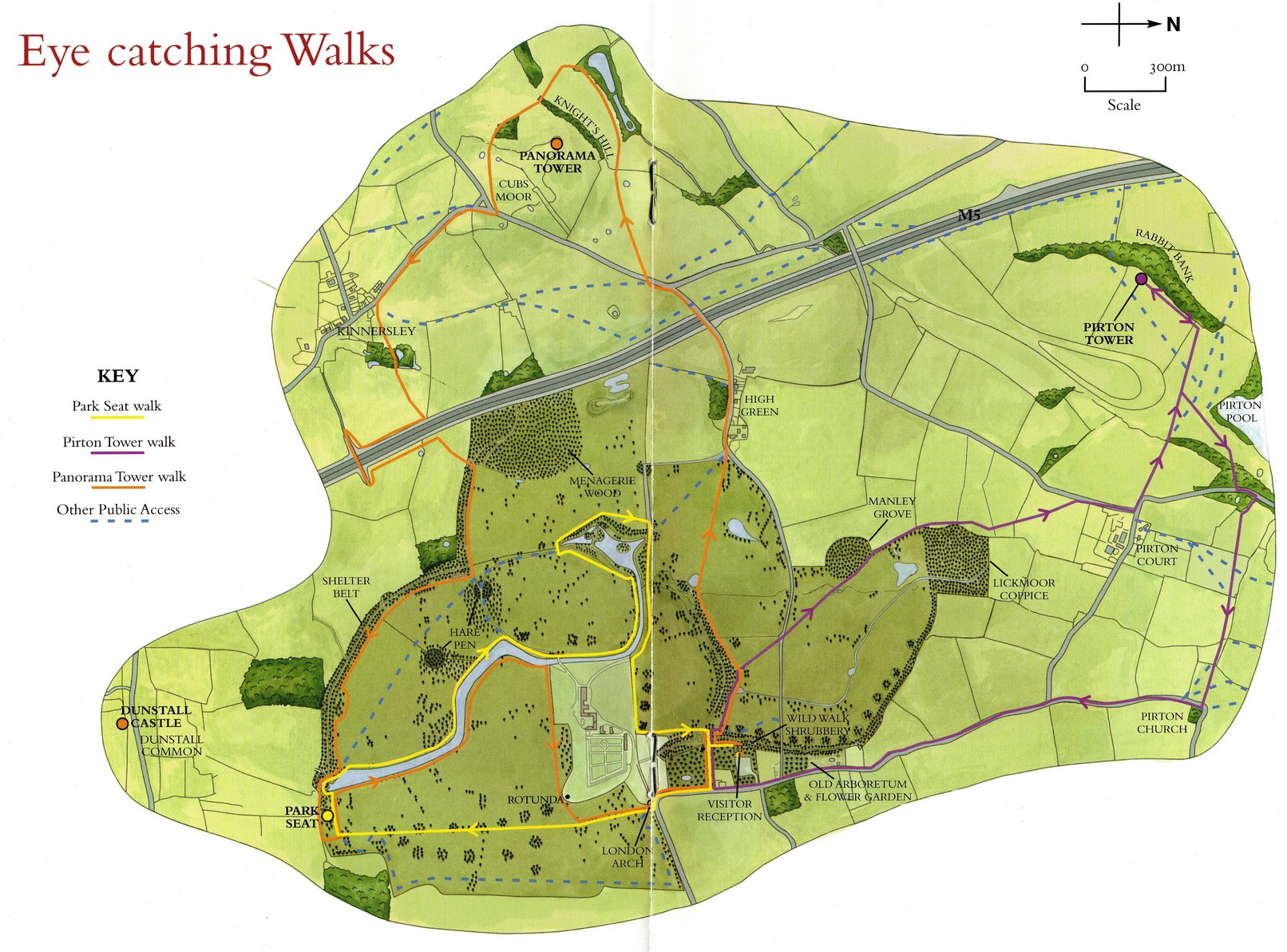
And from that vantage point, there are long walks available in all directions throughout the park and beyond and lots of features to explore as shown in the map below and the subsequent photos.


5. Church of St Mary Magdalene
An earlier church once stood here, but it was replaced by Capability Brown with this rather plain one, but with some impressive tombs inside.

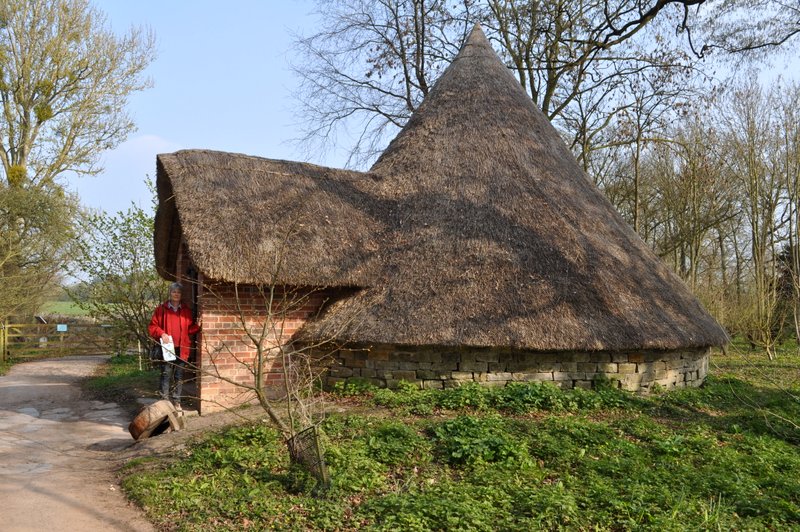
7. Ice House
Many country houses have an ice house – the National Trust has carefully restored this one.


29. Evergreen Shrubbery

27. Temple Greenhouse
Designed by Robert Adam, there are fine views across the park to the main house itself. Glass windows have now been added.

26. Druid
This statue was designed by James Wyatt, and after very careful scrutiny, we did discover the hidden date stamp – 1793!

25. Dry Arch Bridge
The carriage drive built by Brown passes over the top, and here is also a detail of one of the facing stones.

22. The Grotto and Sabrina
You can see the statue of Sabrina reclining on the left hand side of the Grotto, which is itself constructed from tufa.

23. Worcester Gates

28. Statue of Pan

21. Island Pavilion
This is an elegant pavilion, which has undergone extensive restoration particularly to remove decades if not centuries of graffiti from the inside walls. The plaque on the rear wall shows a wedding scene.

15. Croome Court
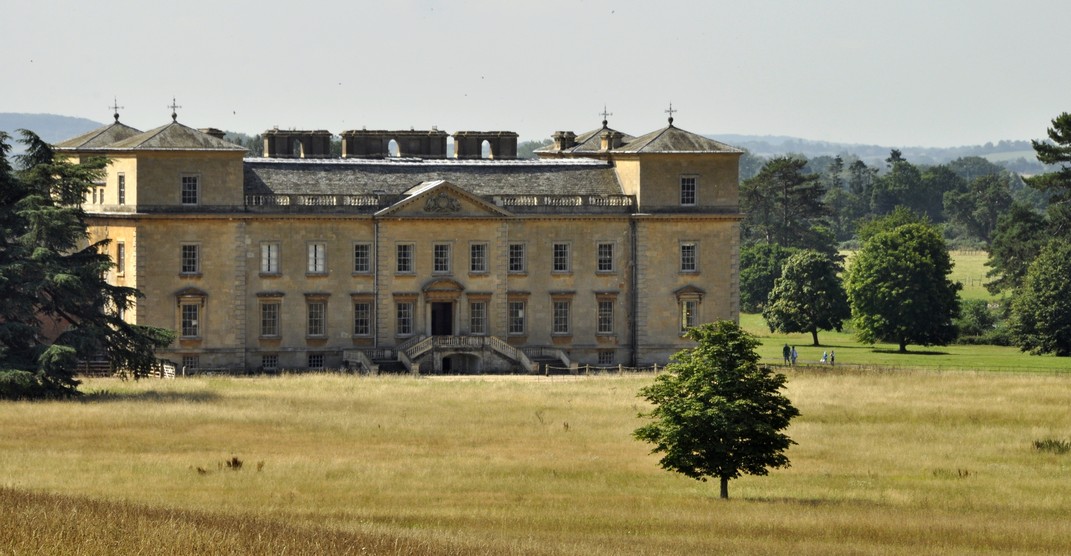
This building is both plain and elegant. From the rear, north side, it does appear very attractive at. But the South Portico, with reclining sphinxes either side of the elegant steps up to the door, is something else instead. Although the exterior design is attributed to Capability Brown, Robert Adam was responsible for some of the interiors, particularly the long gallery. The plaster work throughout has been extensively restored as part of the National Trust’s more than £5 million scheme. Only the ground floor and part of the cellars is currently open to visitors. We first visited Croome in March 2011. Three years later one of the rather dilapidated side wings has now had its roof and windows replaced and is on track for a complete restoration. Some other buildings at Croome were converted years ago into private apartments.

When we visited Croome in 2015, the house was encased in scaffolding and swathed in polythene, now removed. We have toured the house just once, in 2011. Work continues with the refurbishment inside, but because Croome was rather busy two days ago, we just enjoyed our walk around the park. I think a visit nearer Christmas might be appropriate to see how the house has changed over the past six years or so.

13. Rotunda
This building lies about 150 m to the east of the south portico where the land rises away from the main park and Croome River. It has an impressive ceiling and other moldings.

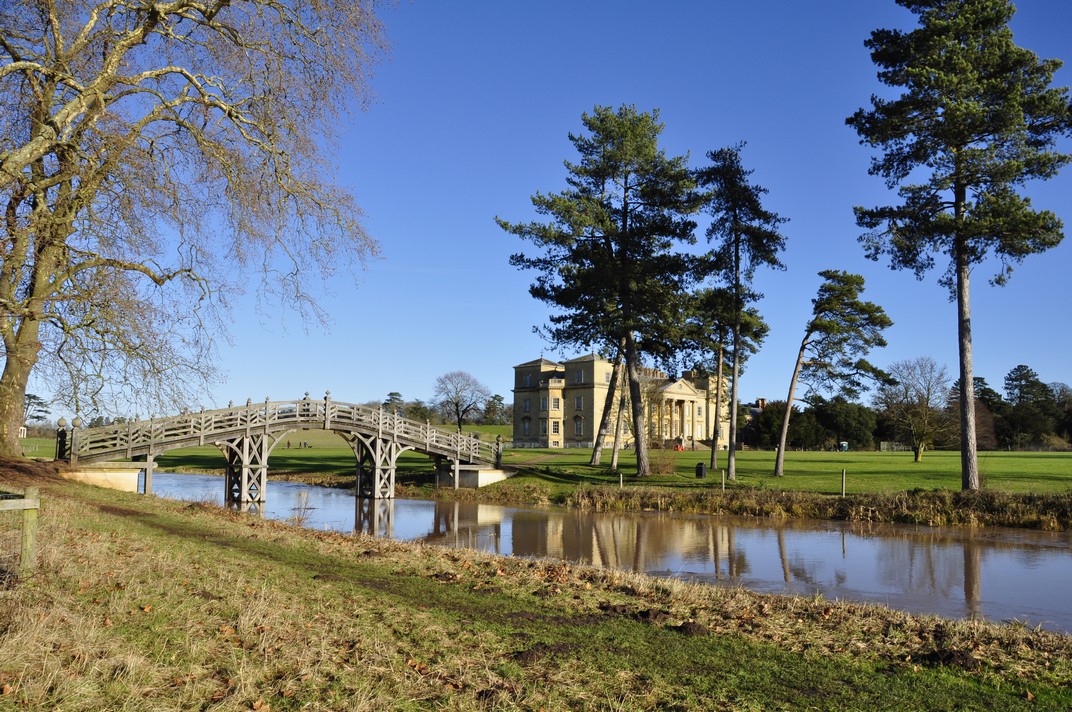
16. Chinese Bridge (and Croome River)
It’s hard to imagine the number of laborers it took to dig this ‘river’ if it took 12 years. There are footpaths all round the lake, where you can mix with the local livestock, and various water birds: coots, mallard, great-crested grebe, and Canada and grey lag geese (on the most recent visit).

17. Park Seat
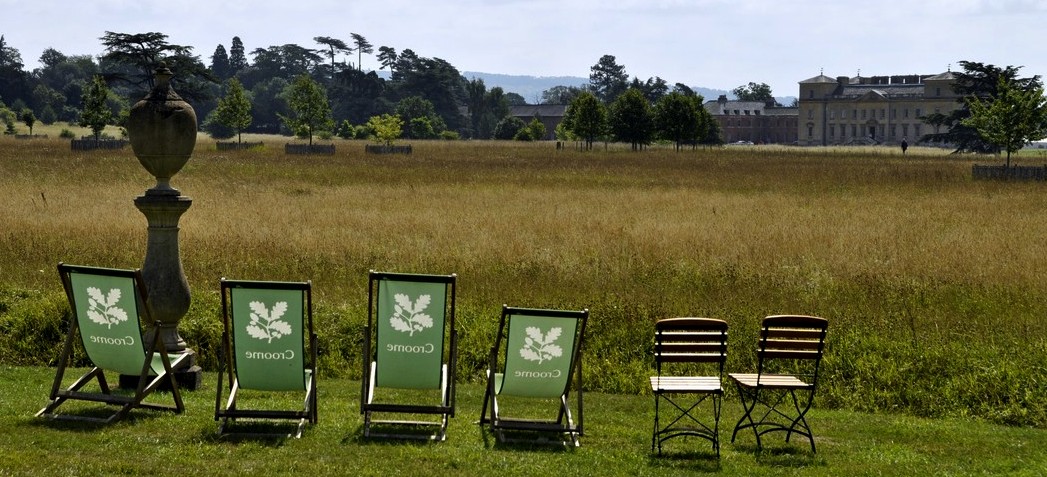
This sited on a high point looking north over the park towards the house. You can imagine what it must have been like in its heyday – a stroll or ride through the park, perhaps a picnic at the Park Seat. Elegance!

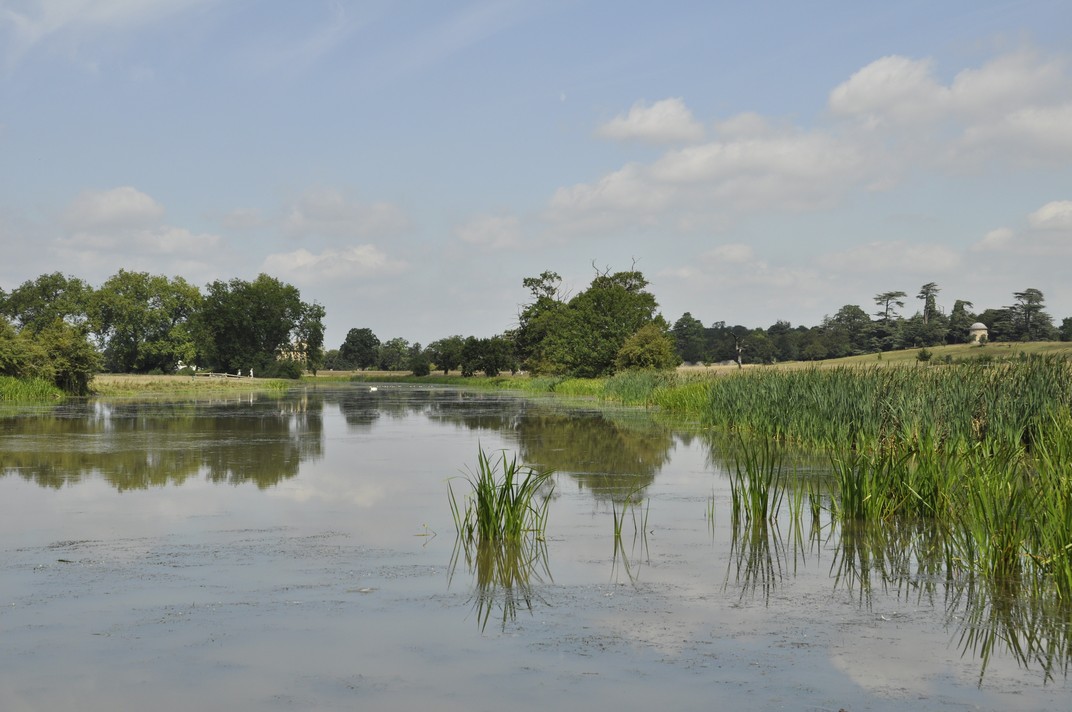
18. Carriage Splash
This is the view along the Croome River from the Carriage Splash.

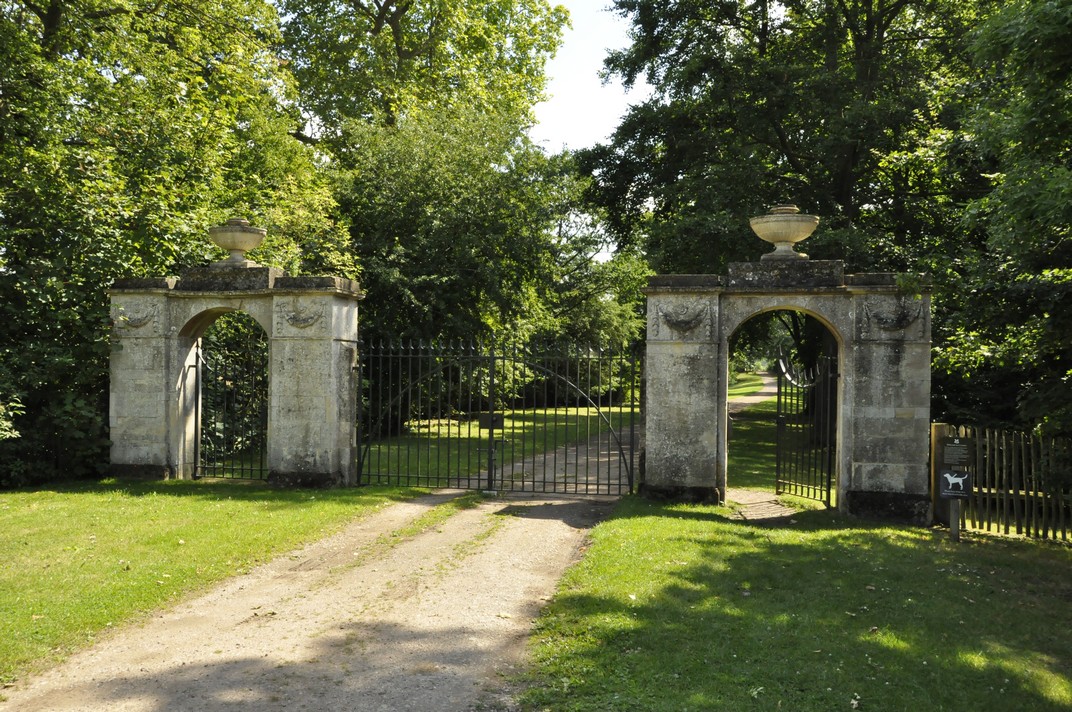
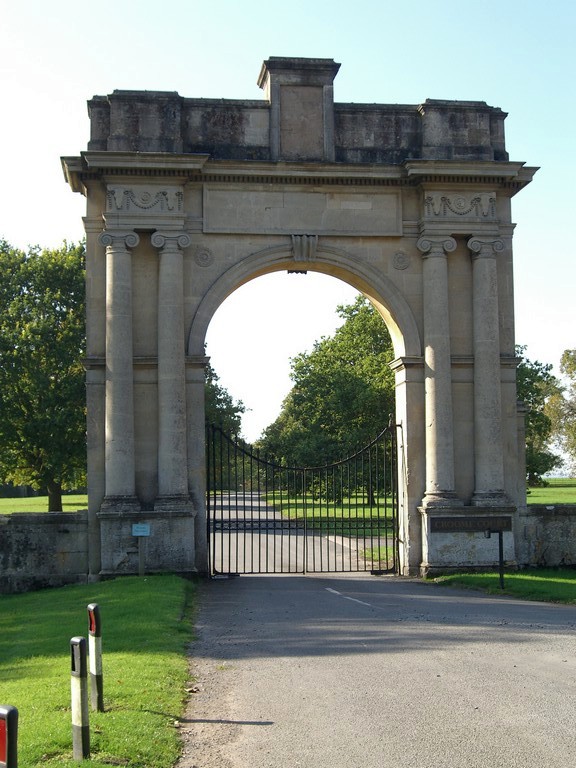
9. London Arch
This is an impressive entrance to Croome on the east of the property, but now provides access, via a private road, to apartments that have been developed in some of the outbuildings of the house.

Croome Court has seen some changes during its history. George III visited, as did Queen Victoria and George V. It’s reported to have housed the Dutch royal family in exile during WWII. The Coventry family sold the house in 1948. It subsequently became a Catholic school, and even owned by the Hare Krishna sect. Today, while the garden and park are owned by the National Trust, the house itself is owned by the Croome Heritage Trust and leased to the National Trust.

So if you want to enjoy some culture and the opportunity for a brisk and bracing walk, Croome Court and Park is the place to visit. The photos in this post were all taken along the Park Seat Walk (in yellow on the map below, around 3½ miles).


Beyond the park, and towards the west and the Malvern Hills, stands the Panorama Tower (B on the map).

Celebrate Croome for its inherent, natural beauty.

Celebrate Capability Brown, who could realise the vision of his patron, and made an impact on English landscapes like no other before or since.

And celebrate the 6th Earl of Coventry, who had a vision, and the financial resources to do something about it.