Almost 400 years of history in the vicinity . . .

Yesterday, Steph and I traveled some 40 miles southeast from our home in Bromsgrove in north Worcestershire, to revisit the National Trust’s Upton House and Gardens near the village of Edgehill in Warwickshire, that lies some seven miles northwest from Banbury (map).
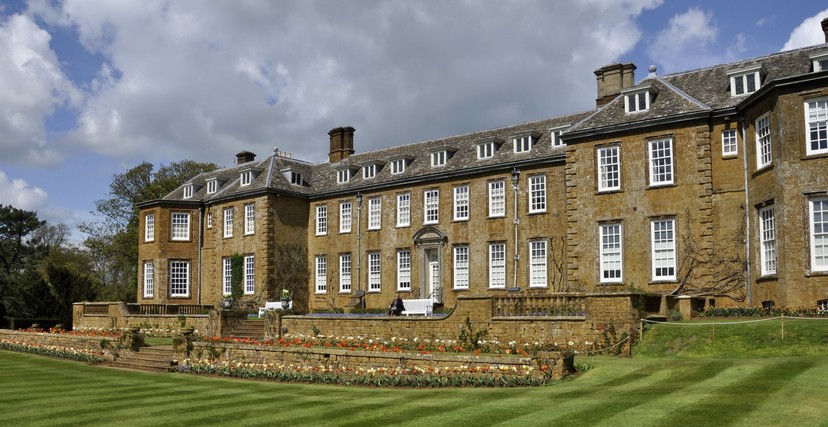
We were last there in July 2012, combined with a trip to nearby Farnborough Hall. Take a look at a web album of photos that I posted afterwards.

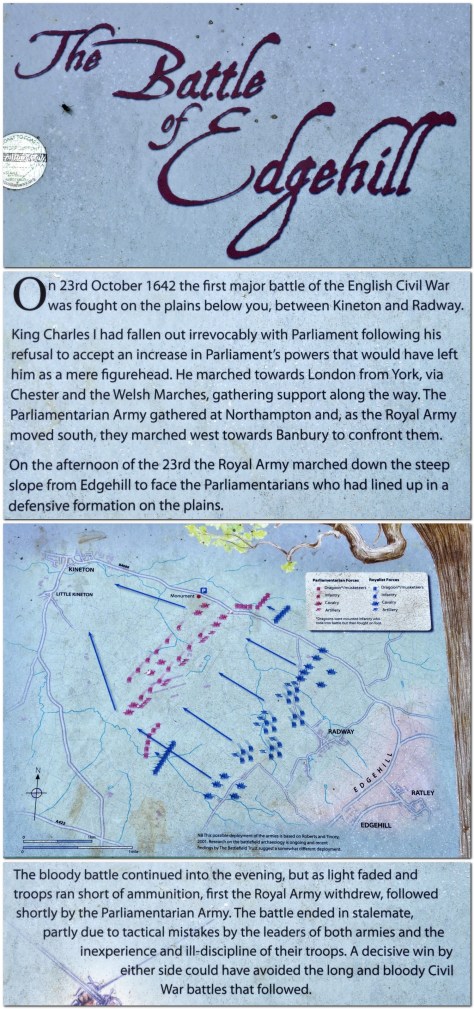
Edgehill was the site of the first major battle of the First English Civil War, on Sunday 23 October 1642. Here the Royalist supporters of King Charles I clashed with Parliamentary forces under the Earl of Essex. The King had commanded the high ground and his troops marched down the Cotswolds escarpment to join battle with the enemy, arrayed below. The battle ended in stalemate.
The roar of cannons has long faded, as have the tramp of troops or galloping of horses, the clash of steel on steel, and the screams of wounded and dying men. Over the past four centuries the landscape must have changed immeasurably. Probably back in 1642 there were no fields, just open country, intermittently broken by woodland. And there certainly were no vivid blotches of bright yellow oilseed rape that are so typical of farming in the UK today.

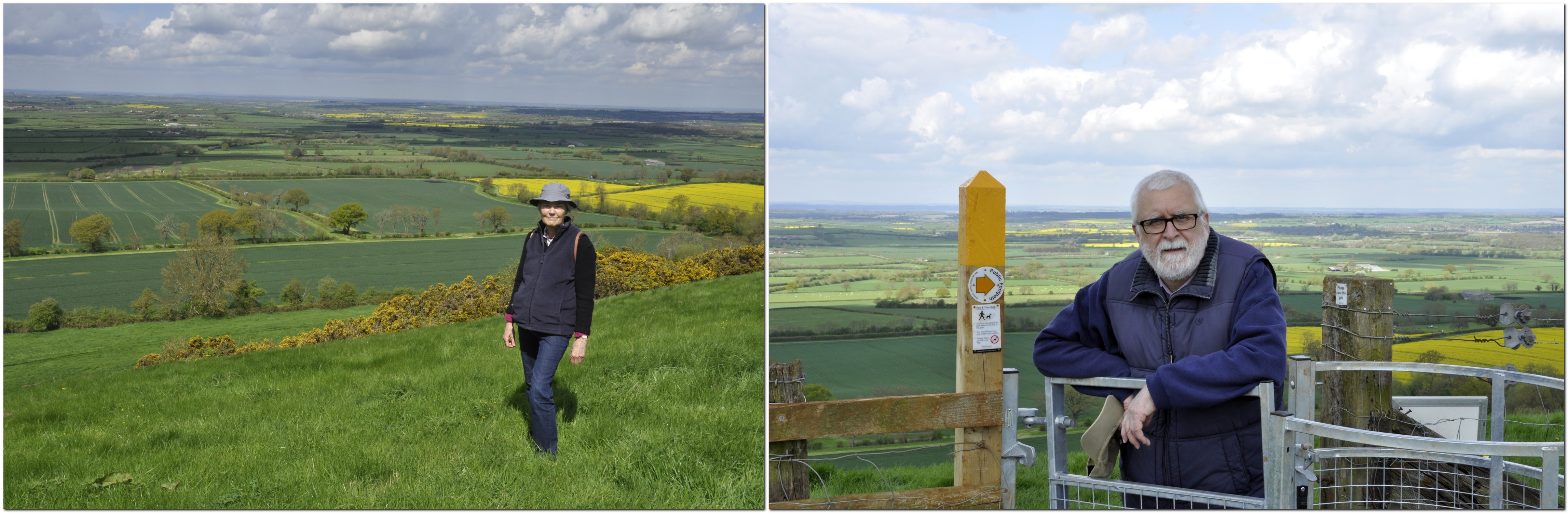
A panorama over the site of the Battle of Edgehill, and north across Warwickshire.

We could see almost 40 miles west to the Malvern Hills, just visible (using binoculars) through the distant murk of an approaching weather front (that finally arrived with a vengeance overnight, and it has been raining heavily since). But what a magnificent view we had, almost perfect weather on May Day, even if a little chilly.

We had been intending to visit Upton just a few weeks ago, and enjoy the National Trust’s recommended ‘What a View’ Walk from Upton house, that takes in the Edgehill escarpment and the glorious view, a circular walk of just under 2½ miles that took around 1½ hours before arriving back at the car park to enjoy a welcome picnic.
We decided just to take a look at the gardens, rather than tour the house again. That would be a better option when the weather is inclement. Yesterday, after weeks of poor weather, it was just too nice to be inside.
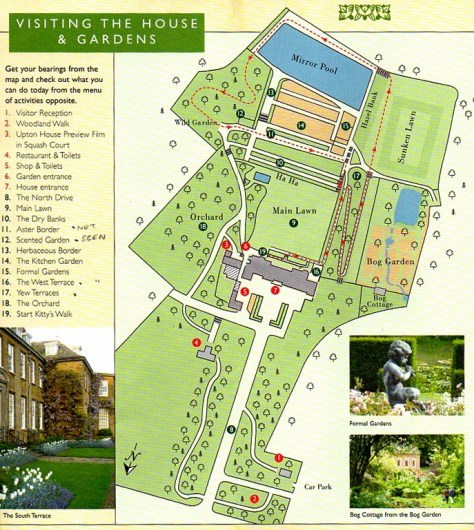
The south front of the house overlooks the Main Lawn towards a ha-ha that disguises a steep drop to the Mirror Pool in the valley bottom.
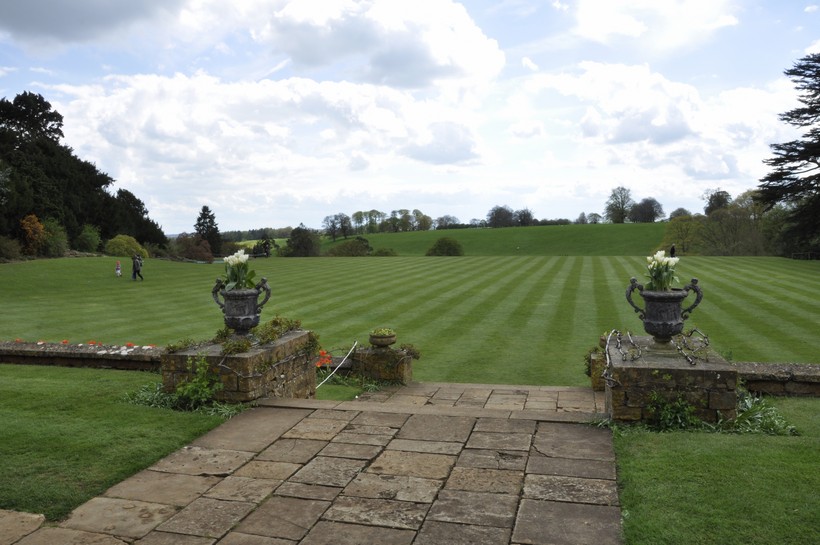
The Main Lawn, looking south to the ha-ha, from where the garden drops steeply to the Mirror Pool. The open fields can be seen beyond the brick wall of the garden (see image immediately below).
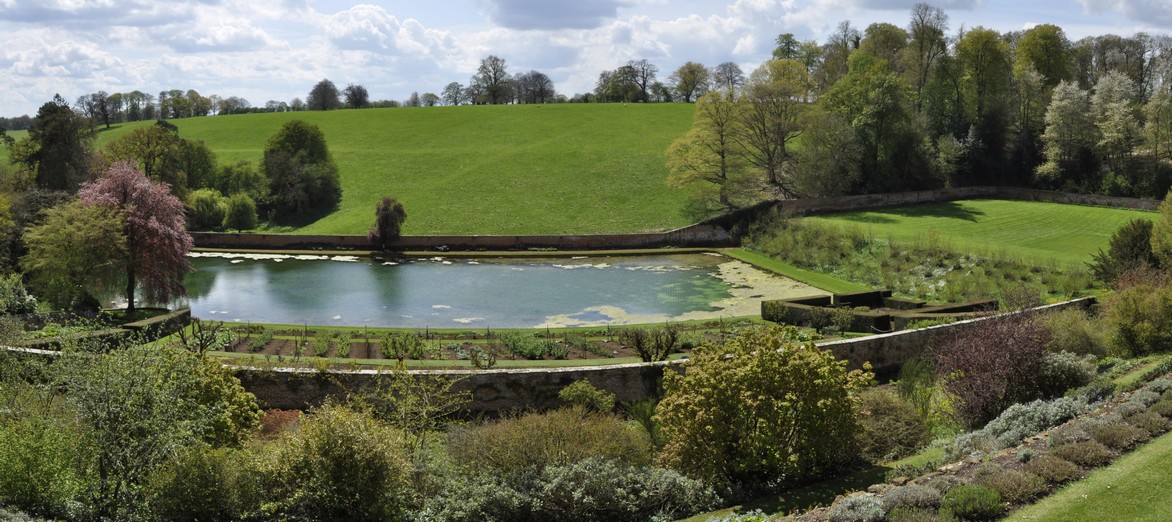
The Mirror Pool from the ha-ha, with the Hazel Bank and Sunken Lawn on the right.

It’s remarkable how the landscape was adapted to create quite an intimate garden. We really must return again a little earlier in the year and enjoy the Spring bulbs. Most had already flowered, although there were some patches of Narcissi and beds of tulips adding a vibrancy in the early afternoon sunshine.
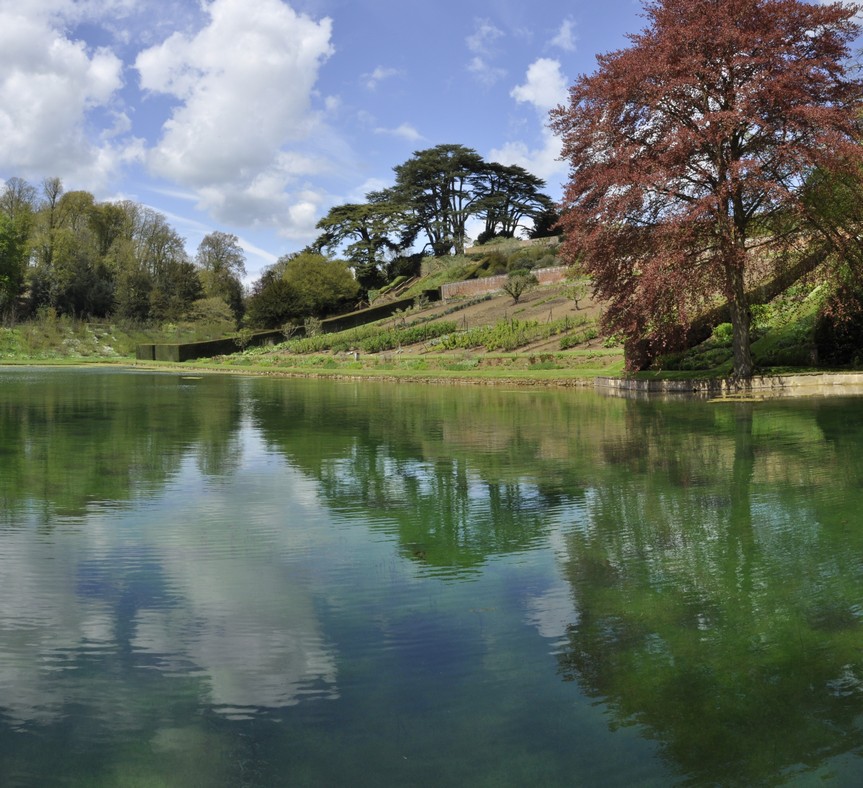
Looking west across the Mirror Pool to a magnificent yew behind the Kitchen Garden and the Dry Banks above.
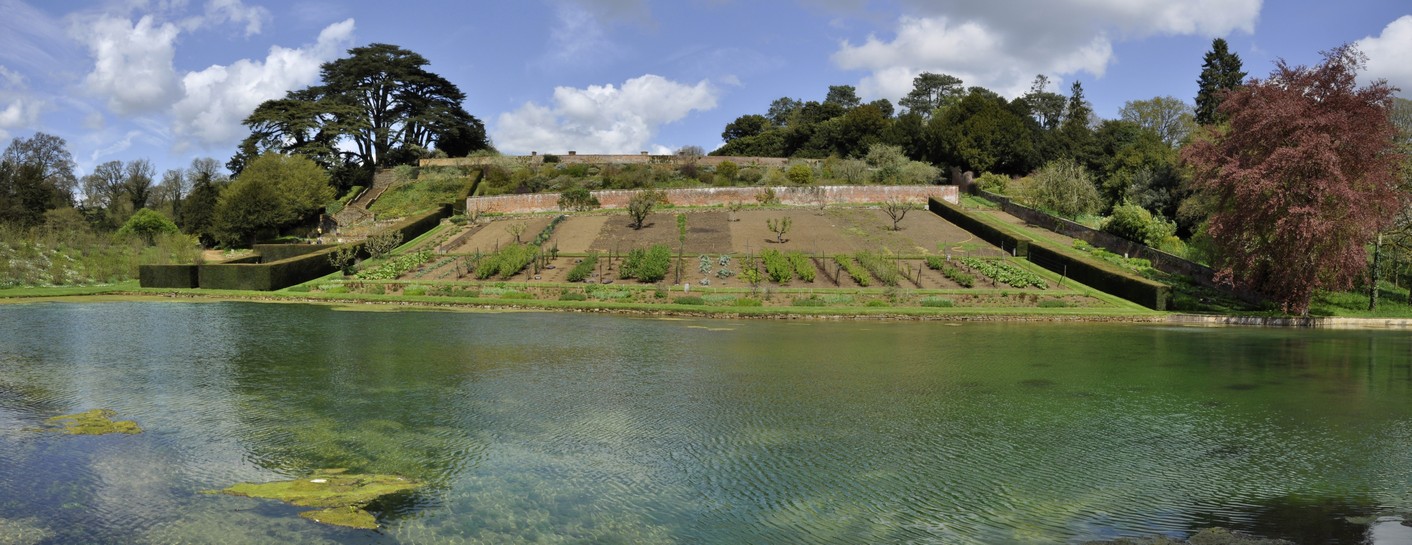
A panorama of the Kitchen Garden and Dry Banks across the Mirror Pool, from the south. The ha-ha is at the top of the terraces, immediately below the Main Lawn.


No laughing matter

Have you ever been surprised walking through an 18th century landscape? Ha-ha!

Well, you’ve probably come across numerous ha-has without stopping to think what or why?

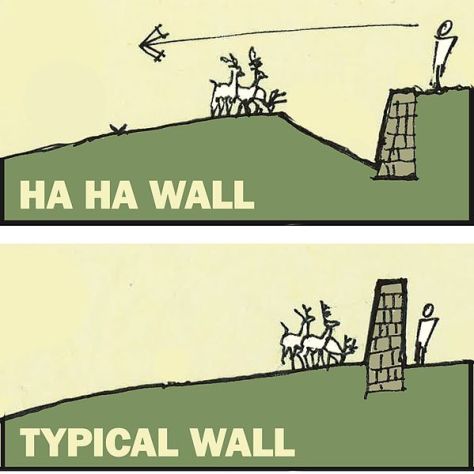
A ha-ha is a recessed landscape design element that creates a vertical barrier while preserving an uninterrupted view of the landscape beyond. They became very popular in the 18th century, as landscape architects like Capability Brown developed their visions of an open landscape connecting house and surrounding land.

In some ways, they are like a dry moat, built for protection—not against human marauders, but animals. Grazing animals were excluded from the lawns and gardens immediately adjacent to a house. But, with a ha-ha separating this area from the ‘wild’ grazing outside, there was a continuity, a oneness with the surrounding landscape in which a house sat. (Think of an infinity pool as a modern equivalent having the same visual effect).

I first saw a ha-ha when I was a young boy growing up in Leek in North Staffordshire. There’s a good example on one side of the pitch at Leek Cricket Club where my Mum and Dad often took me on a Saturday evening in the summer.

Ha-has are more common than you might think. During our visits to National Trust properties over the past six years, we’ve seen some very good examples. Standing at the entrance of a stately home, gazing out over the landscape, your mind is easily transported back 250 years or so. Magnificent today, what must have been the wonder at these new landscapes in their heyday, and the unlimited vistas that the addition of a ha-ha opened up?

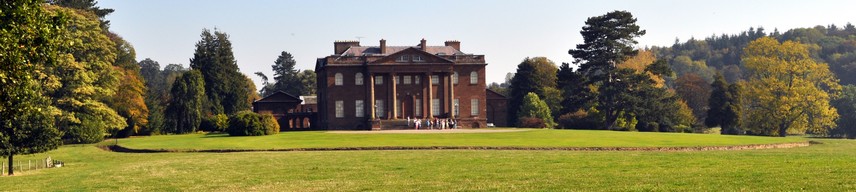
At Hanbury Hall, the National Trust property closest to our home in northeast Worcestershire, from the ha-ha just west of the formal garden and parterre, there is an open view to the northwest, across what must have once been a deer park.

In Herefordshire, a ha-ha separates the lawn in front of the main entrance from the meadows beyond at Berrington Hall.

The ha-ha at Berrington Hall encircles the main entrance to the house, and encloses a lawn and gravel drive.

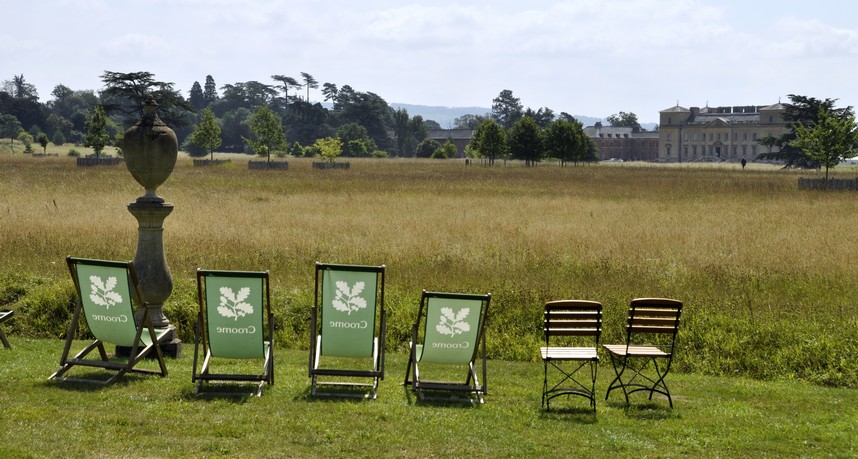
Croome Court is southeast of Worcester, about 20 miles from home. The park at Croome was the first landscape designed by Capability Brown. However, the ha-ha does not separate the land immediately surrounding the house itself, but an area to the west of the house, around the Croome River, about half a mile from the house, where an orangery, a temple and a grotto were built. From the ha-ha there is an uninterrupted view back to the house.

The view from the edge of the ha-ha in front of the Orangery at Croome, looking towards the house

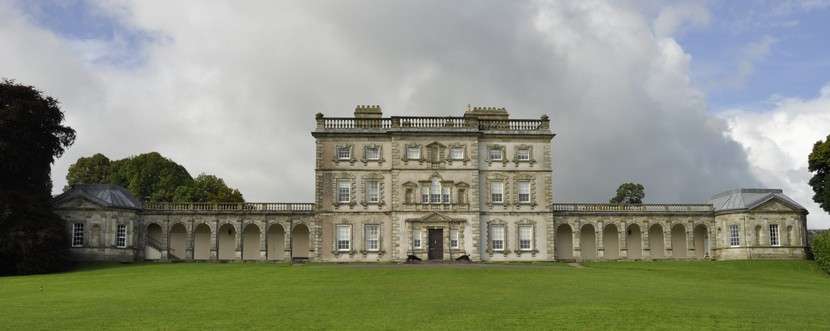
We just returned from Northern Ireland, where we visited eleven National Trust properties in eight days! In Co. Fermanagh, Florence Court sits comfortably in its landscape. It’s the National Trust’s furthest west property. The ha-ha is particularly impressive.

In these two photos, looking across the lawn in front of the house, the edge of the ha-ha can be easily discerned as a slight change in colour of the grass.

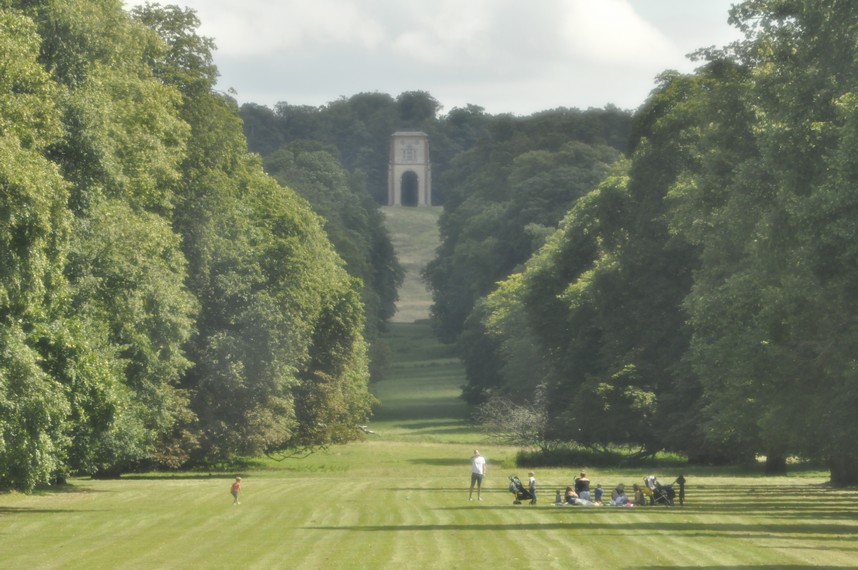
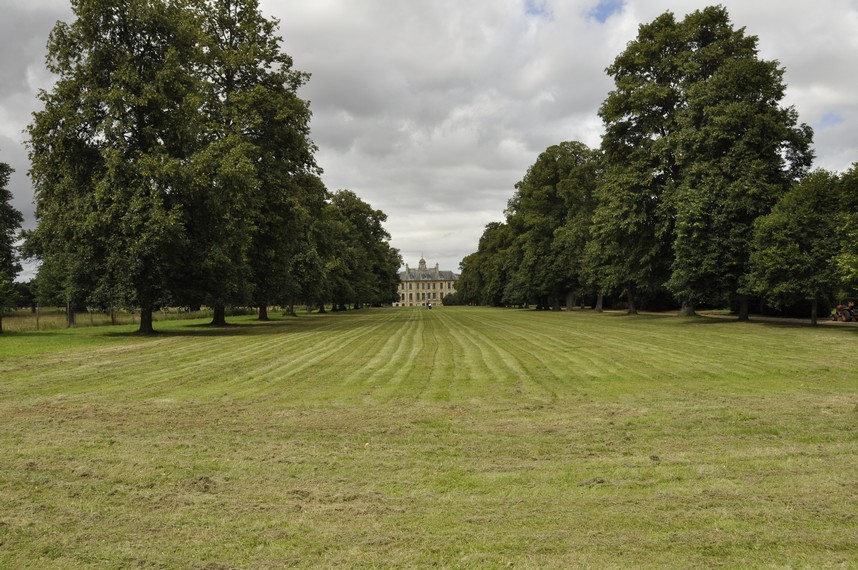
Belton House, near Grantham in Lincolnshire, and 100 miles east from home, is a magnificent property. We visited last August. On the east-southeast side of the house, there is a tree-lined avenue and vista to Belmont Tower, about 1 mile away.

Belmont Tower from inside the house. The ha-ha is just beyond the people in between the trees.

Looking back to Belton House from the ha-ha that is about half way to the Belmont Tower.

Just under half way from the house, a curved ha-ha separates the gardens from the park beyond.

Aerial view of the ha-ha at Belton House (from Google Maps)

Steph standing on the edge of the ha-ha.

I expect there will be many more to find and photograph in the coming years.