
Across Tyneside, there are several impressive landmarks that no visitor to the region—by land, sea, or air—can fail to miss. All are just a few miles from where we are now living in North Tyneside (since October 2020).
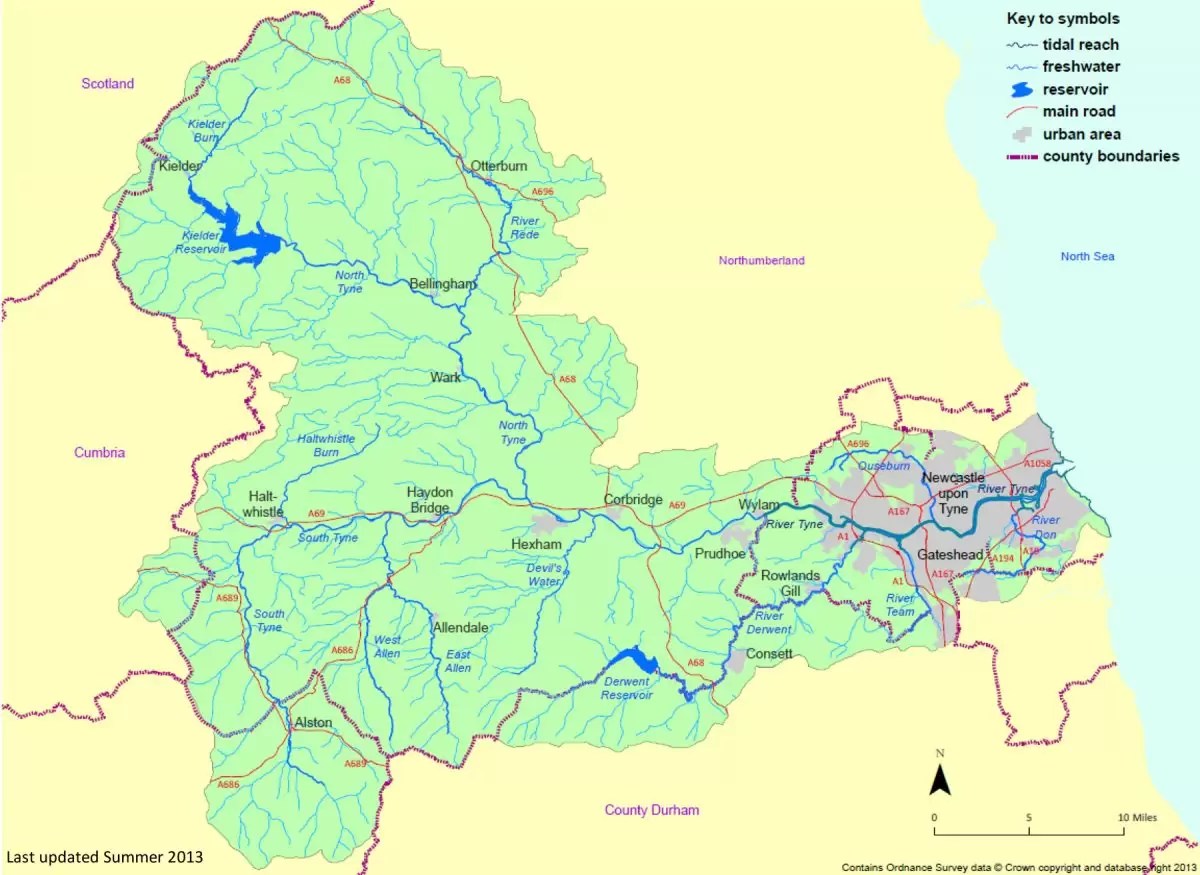
Perhaps the most visible is the River Tyne itself, along whose banks the settlements of Newcastle upon Tyne (on the north) and Gateshead on the south were founded. Actually the River Tyne is two rivers. The North Tyne rises in the hills on the Scottish border, whereas the source of the South Tyne is in Cumbria. The two branches come together near Hexham, 20 miles due west from Newcastle city center.
Newcastle and Gateshead rise steeply away from the Tyne, and are connected by several road and rail bridges, including the iconic Tyne Bridge, opened in 1928 and undergoing a much-needed renovation, hopefully in time for its centenary in 2028.
There is a much more recent footbridge, the Gateshead Millennium Bridge, opened in 2001. Further east, the A19 trunk road crosses under the Tyne in the Tyne Tunnel between Wallsend and Jarrow.
There has been a long history of settlement along the river’s banks. The Romans built a garrison and supply base, Arbeia, near the mouth of the river on its south bank. Hadrian’s Wall begins its journey westwards from Wallsend, at Segedunum fort, just a few miles upstream from Arbeia, but on the north bank.

Arbeia, a Roman fort and supply base, built around 129 AD.
There was a long history of heavy industry along the Tyne, with the port developed for the export of coal from the many collieries in the area, as well as shipbuilding. Indeed, Newcastle was one of the leading shipbuilding cities in the country. All now long closed down.
Of course the mouth of the River Tyne looks very different now than when the Romans arrived. Today, there are piers on both sides of the river mouth. The north or Tynemouth pier (shown below, with a lighthouse at the seaward end), 900 m long (and open to the public during clement weather), took 40 years to build. The south pier is longer, and also took around 40 years to build.


If you fly into or out of Newcastle International Airport, the flight path often takes aircraft over the mouth of the River Tyne. If you are lucky, there are some great views of the city and river.
Just beyond the Tyne, on the left, is St Mary’s Lighthouse (decommissioned since 1984) on its island, just south of Seaton Sluice. Just north of the lighthouse, aircraft then bank left and line up for landing at the airport nine miles west-southwest from the coast.


Just inside the mouth of the Tyne, and standing on the north bank below Tynemouth castle and priory, is the magnificent memorial statue of Vice Admiral of the Red, Lord Cuthbert Collingwood (1748-1810) whose flagship HMS Royal Sovereign was the first British ship to engage with the combined French and Spanish fleets at the Battle of Trafalgar in 1805. The statue of Collingwood is 23 feet or 7 m tall. The four canons either side of the steps come from HMS Royal Sovereign.
It must be seen many miles out to sea. And although we had seen it from Tynemouth castle and priory on previous visits to the town, it wasn’t until Monday afternoon past that we got to see it up close.


We took the path west along the river towards North Shields Fish Quay (about 1 mile), and came across a rather lovely statue (in steel), the Fiddler’s Green Sculpture by Ray Lonsdale from County Durham, that was erected in 2017. It is is a memorial to North Shields fishermen lost at sea. It was based on a photograph of a local fisherman.


Below the statue is a plaque that reads:
To the fishermen lost in the cold North Sea,
and the ones who will be so,
I’ll be seeing you all on Fiddler’s Green,
be steady as you go.
For Fiddler’s Green is a place I’ve heard tell,
though no one really knows,
where the fishermen go if they don’t go to hell,
and no Arctic wind will blow.
Fiddler’s Green is an imaginary paradise to which sailors are conveyed after death, traditionally a place of wine, women, and song. And here is the 19th century Irish song (and the lyrics), performed by The Dubliners.
Arriving to Tyneside from the south by road, on the A1, a huge sculpture suddenly comes into view on the outskirts of Gateshead. This is the iconic Angel of the North, by Sir Antony Gormley, which was erected in 1998.
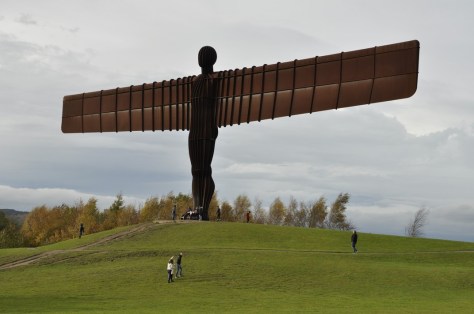
We took a close look at it in November 2018, but have not been back since we moved to the northeast.
My final landmark is Grey’s Monument in Newcastle city center. If you travel there by Metro, you are immediately confronted by the 133 foot (41 m) column as you emerge from Monument station.


Charles Grey, 2nd Earl Grey
It was erected in 1831 in recognition of Charles Grey, 2nd Earl Grey, [of supposed Earl Grey tea fame] Prime Minister of the United Kingdom from 1830 to 1834. In particular, it celebrates the passing of the Great Reform Act of 1832, one of Grey’s most important legislative achievements. The act reorganised the system of parliamentary constituencies and increased the number of those eligible to vote.
It certainly dominates the Newcastle skyline. Open to visitors, there are 164 steps to climb to the viewing platform. The views south from the top must be spectacular over Newcastle’s impressive Georgian architecture on Grey Street and Grainger Street, but that’s not something I’m likely to challenge.
Tyneside and so much of the surrounding region has so much to offer any visitor. English Heritage and the National Trust own a number of properties close by, and further out there is the magnificent coastline of Northumberland and County Durham, as well as the moors and hills stretching westwards to the Scottish border and into Cumbria.



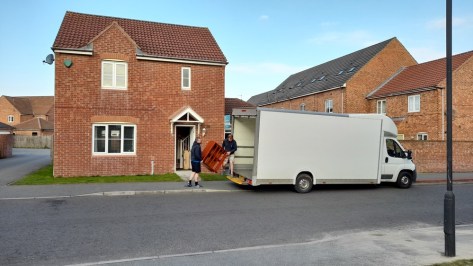
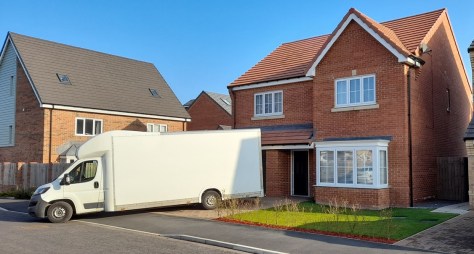


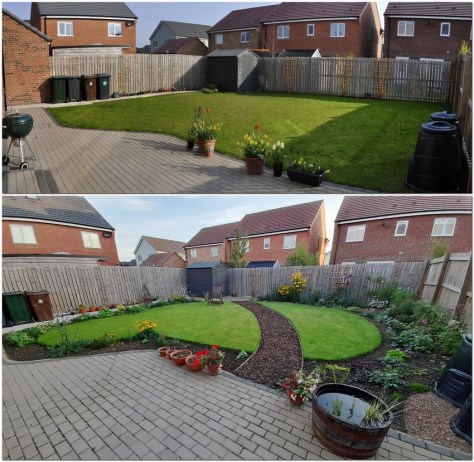
 Being a new build house, there were only a few things that needed my attention inside and they were quickly dealt with over a few weeks. Outside was a different prospect, and a project that has kept us busy—well, kept Steph busy— ever since: the creation of a new garden. Both the front and rear of the house only had lawns. So Steph came up with a design and we called in a small company at the end of April to remove the surplus turf. Then we set about planting all the materials we’d brought from Bromsgrove and carefully nurtured over the winter.
 2020 started where 2019 had ended – half way through George Eliot’s Middlemarch (published 1871-1872). That was a bit of a struggle in places, but I finally got there. And, on reflection, I did quite enjoy it.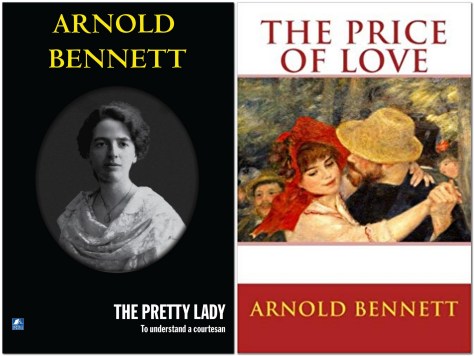
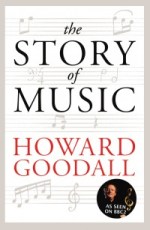 That got me into
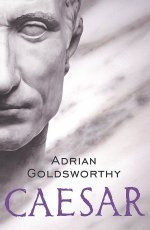 During the pandemic I had expected to read more. But by the beginning of May I’d run out of steam. So it took me almost two months to finish re-reading Adrian Goldsworthy’s Caesar. It was fascinating to understand something about perhaps the greatest Roman (often based on his own words, as he was a prolific writer, ever keen to make sure his place in history was secure). I bought this book around 2007, and first read it while I was working in the Philippines.
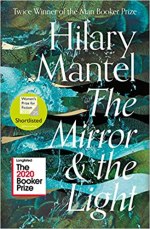 Anyway, I eventually finished Tess and on 30 September the sale of our house went through and we moved north. Settling into our new home (a rental for six months until we found a house to buy – which we have), we registered with the local North Tyneside library, just ten minutes from home. And there, on the new books shelf was Hilary Mantel’s magnum opus, and the last in her Thomas Cromwell trilogy,
 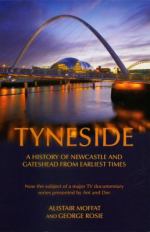 I finished The Mirror & the Light just before we went into our second national lockdown at the beginning of November, so I hurriedly returned it to the library, and searched for a couple of local histories. The first of these was Tyneside – A History of Newcastle and Gateshead from Earliest Times, by Alistair Moffat and George Rosie, published in 2005 (and made into a TV documentary, which I haven’t seen).
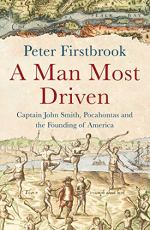 Next, I picked up A Man Most Driven, by Peter Firstbrook, about ‘Captain John Smith, Pocahontas and the Founding of America’ in the early seventeenth century. Now, I’d heard about
  I then turned my attention to local Newcastle history once again, by former Northumberland county court judge and one-time MP for Newcastle Central from 1945-1951), Lyall Wilkes called Tyneside Portraits. It’s a short anthology of eight men who contributed to the artistic and cultural life of Newcastle since the seventeenth century, as well as its physical appearance through the buildings they designed and built. Among them was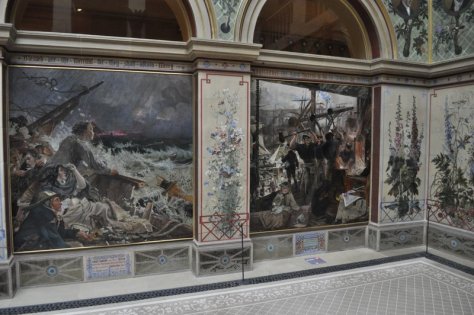
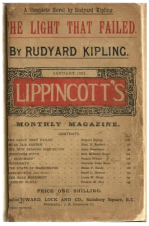 This was the third and last book I had borrowed from the local library before the most recent pandemic lockdown and then Tier 3 restrictions locally. The library has not yet re-opened and I was unable to replace these books. So it was back to the Kindle and a touch of Rudyard Kipling once again:
  Among the eight was Edinburgh-born


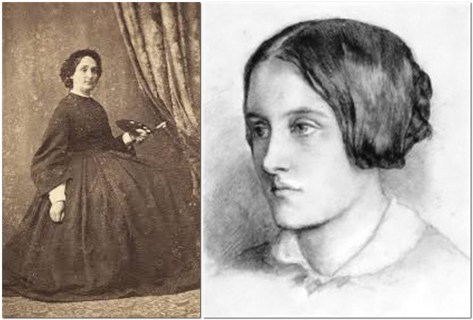





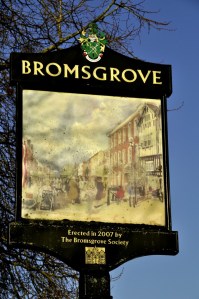 Steph and I moved to Bromsgrove, a small market town in northeast Worcestershire in the English Midlands, in July 1981. We had just returned to the UK after a little over eight years working with the International Potato Center (CIP) in Peru and Costa Rica in Central America.
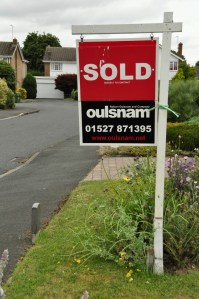 We ‘escaped’ from the house while the prospective buyers looked around, who made some measurements with the builder they had brought along. The outcome? They put in an offer the following morning and, after a counter offer from us and a little negotiation, we accepted their revised offer. So No. 4 is Sold (Subject to Contract). The sale is in the hands of our solicitors, and hopefully we will have exchanged contracts with the buyers before too long and agreed on a completion date.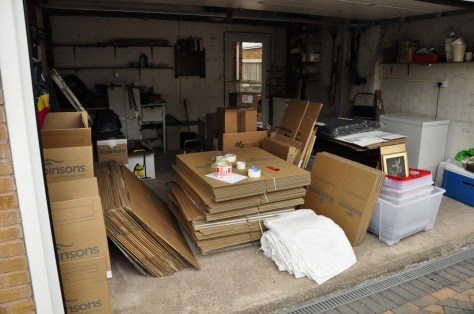

 A balanced diet . . .
