
Northumberland is renowned for its beaches, mile upon mile of sand and dunes from the north of the county to the south. And even south of the River Tyne, the Durham coast doesn’t disappoint whatsoever. I wrote about this beautiful coastline in 2023.
We regularly see grey seals at St Mary’s lighthouse, an occasional dolphin, and the bird life is wonderful, especially in winter when pink-footed geese return to the fields just behind the dunes, and waders like curlew and golden plover return to the coast after their breeding season on the moors far to the west.
A couple of days ago we visited a beach that was a first for us, just 11 miles and about 16 minutes north from home, at Cambois.
We’ve passed the exit for Cambois on the A189 many times as we headed north, never thinking about making the turn to the coast there. However, with the day forecast bright and sunny, I suggested to Steph that we could enjoy a walk along Cambois beach before heading to a DIY store in Blyth where they had a product available I’d been unable to source elsewhere.
We parked at the Buccaneers free car park at the north end of the beach. During our walk we also discovered two more free car parks further south.
It was a short walk on to the beach, turning to the north and taking us to the estuary of the River Wansbeck.
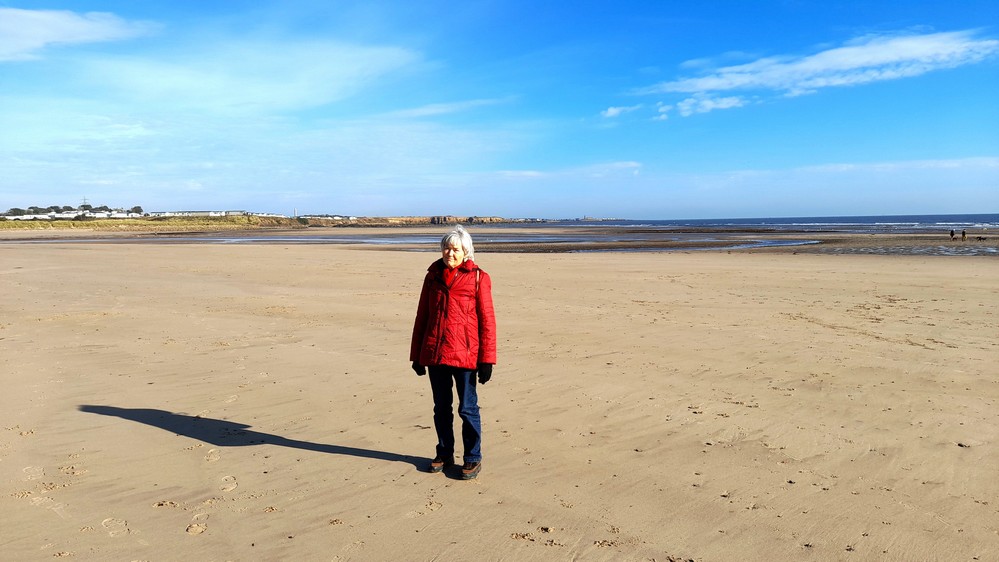
The view north towards the estuary of the River Wansbeck, and beyond to Newbiggin-by-the-Sea.
It was low tide (very low indeed), and the river just fanned out over the beach. Access to boats would only be available, if at all, at high tide. When we set out I hadn’t appreciated that the river met the sea here, and there was no way across, as it was much deeper than I first realised, and flowing quite fast.
We have walked along the Wansbeck at Wallington Hall, a National Trust property 25 miles northwest from home, and quite close to the source of the river a few miles further west.
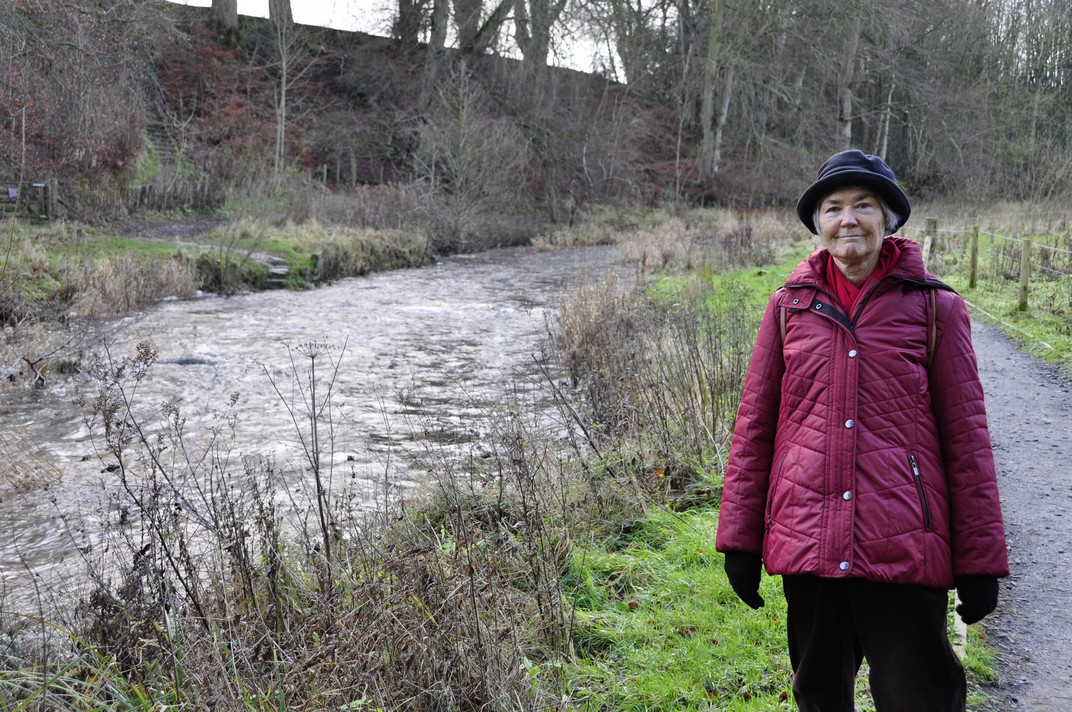

Wallington Bridge over the River Wansbeck, designed by James Paine, and constructed in 1755.
With no alternative, we turned around and headed south towards Blyth at the south end of the beach.
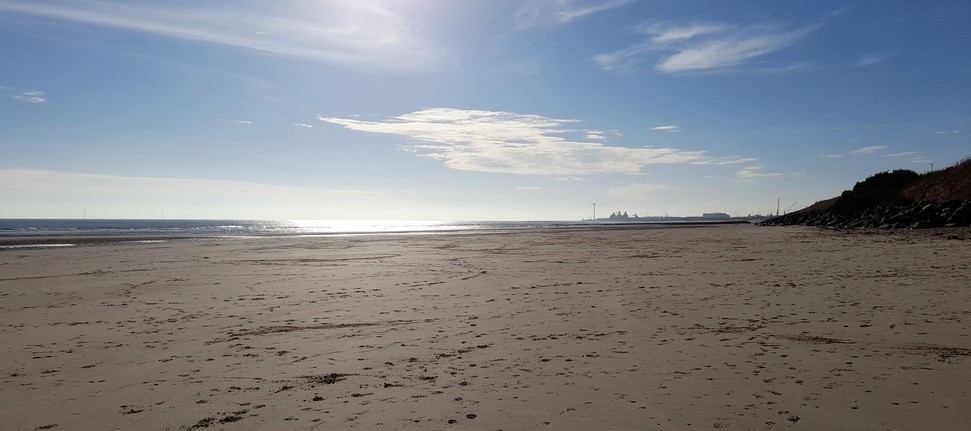
That’s Blyth port on the horizon.
Blyth is quite a busy port on the River Blyth which we have walked along inland at Plessey Woods Country Park, and from Dene Park to Bedlington Country Park as far as Humford Woods Stepping Stones.
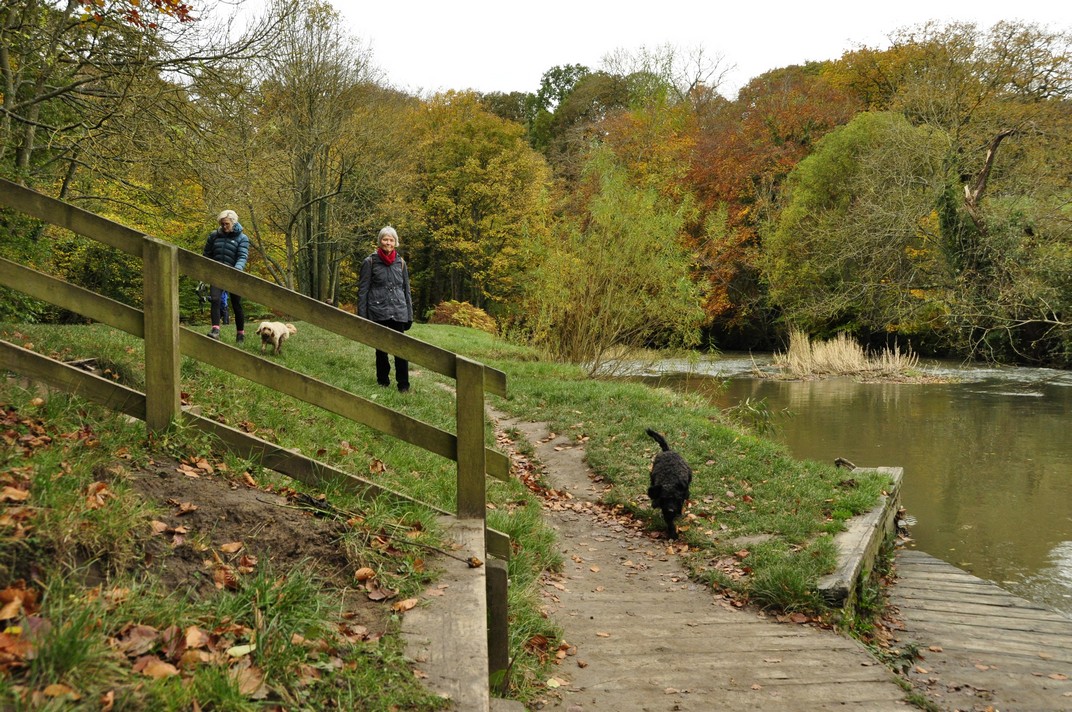
At Plessey Woods.
Along the beach there’s ample evidence of the industry that once dominated this coastline: coal mining. Just behind the beach is the huge site of the former colliery (destined for redevelopment) that closed in 1968 after operating for a little over 100 years. Covering the beach are streaks of sea coal eroded from the bluff behind the beach.
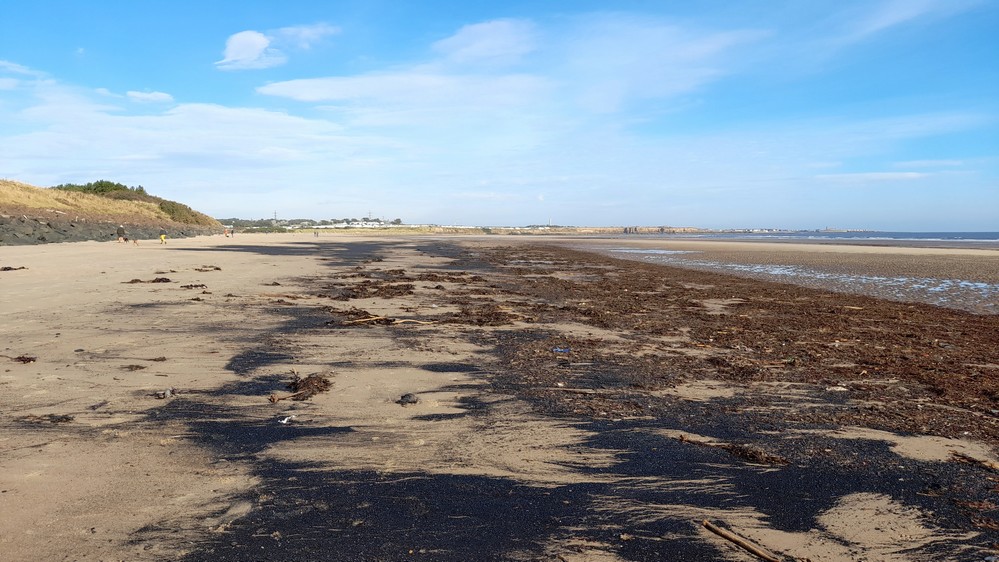
Today there’s little evidence per se of mining, the colliery winding wheel erected by the side of the road, and a hot water/effluent outfall pipe that must have once run from the colliery out to sea. And just a few lines of terraced houses that were the homes of the miners.
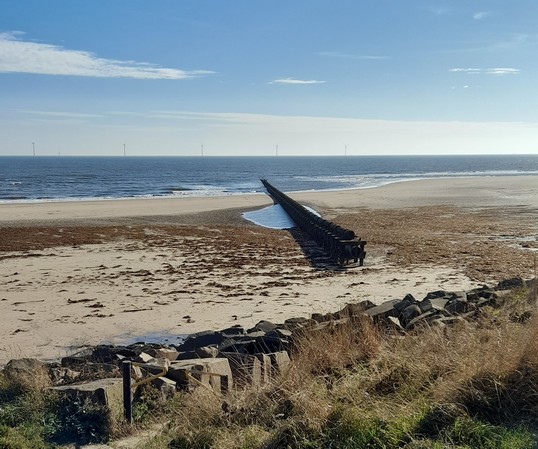
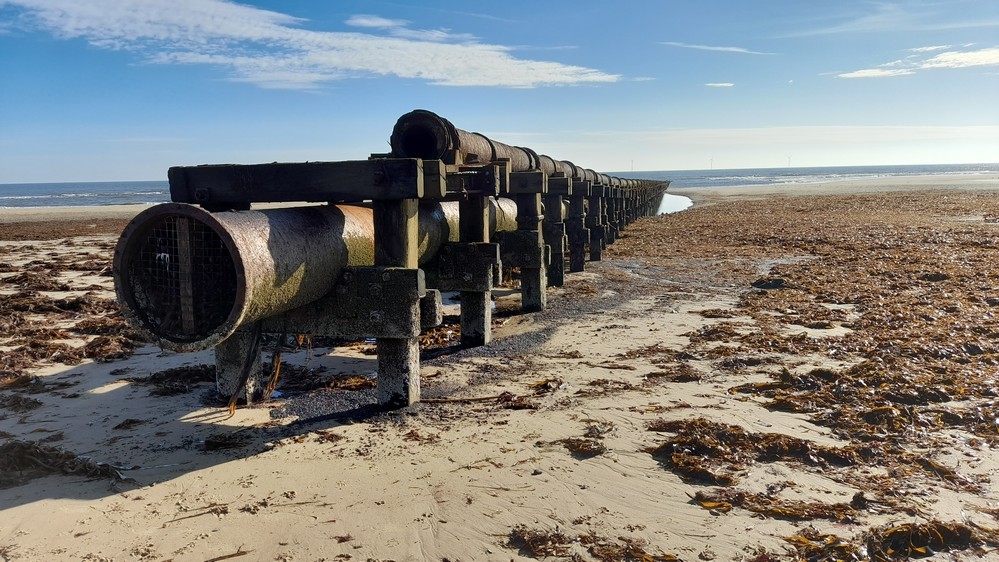
Along with several other villages in Northumberland, Cambois has another claim to fame, as it were, that is bound to trip up those who are not native Northumbrians.
So how do you pronounce Cambois and other place names?
Cam-bo-iss, or Cam-boice perhaps? No. It’s Ka-mes.
How about Ulgham, a village six miles northwest as the crow flies from Cambois? It’s Uffam!
Alnwick is Annick, but Alnmouth is Aln-mouth. Prudhoe is Prudha and Ovingham is Ovin-jem, likewise Bellin-jem (Bellingham).
Linguistic tongue twisters.
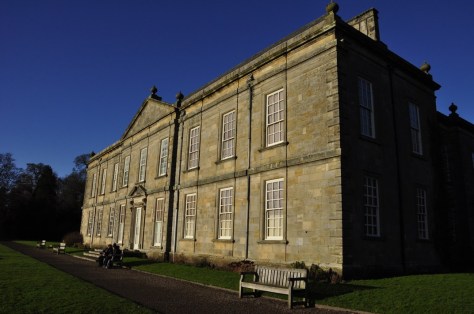
 Along the path beside the Garden Pond, there’s a newly installed sculpture of an owl, carved from one of the downed trees, standing in open woodland (mainly of beech) but with lots of understorey bushes.
 We walked through the walled garden, and enjoyed the crocus lawns at their best on the upper terrace, before heading through the gate that led to the River Walk path.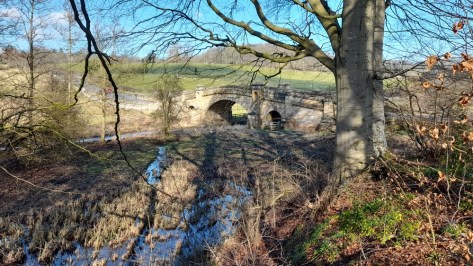
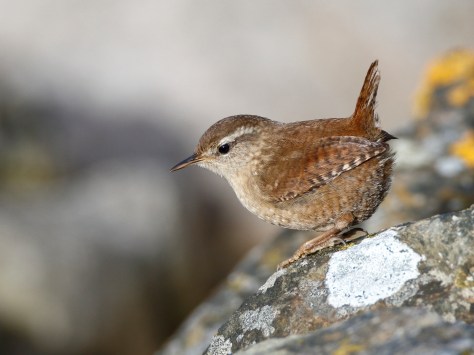
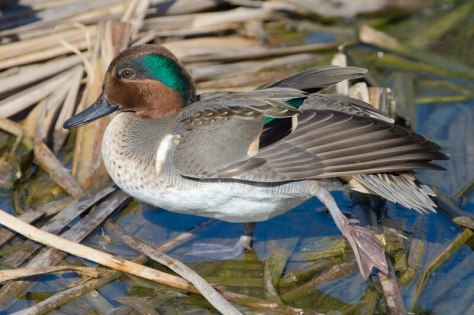
 A balanced diet . . .