One man saved more lives than anyone else in history . . .

A billion lives, it is said.
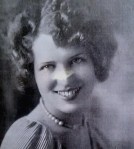
Official portrait of Norman Borlaug for his Nobel Peace Prize.

And that man was Dr Norman Ernest Borlaug (1914-2009), an agricultural scientist from northeast Iowa, whose research to develop short-strawed and high-yielding varieties staved off predicted widespread famines in the 1960s.

It was the beginning of an international effort to enhance agricultural productivity that endures to this day through the centers of the Consultative Group on International Agricultural Research or CGIAR, one of which is CIMMYT¹ (the International Center for Maize and Wheat Improvement in Mexico) where Borlaug spent many years as Director of the International Wheat Improvement Program (now the Global Wheat Program).

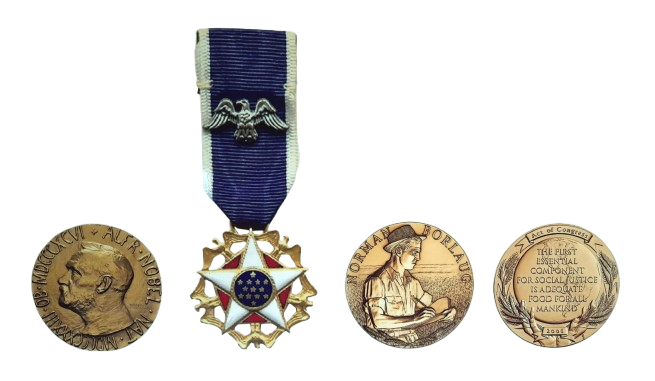
Dr Borlaug was awarded the 1970 Nobel Peace Prize for his work to promote global food supply, an act that contributes greatly to peace. And for having given a well-founded hope – the green revolution.

The expression “the green revolution” is permanently linked to Norman Borlaug’s name. He obtained a PhD in plant protection [from the University of Minnesota] at the age of 27, and worked in Mexico in the 1940s and 1950s to make the country self-sufficient in grain. Borlaug recommended improved methods of cultivation, and developed a robust strain of wheat – dwarf wheat – that was adapted to Mexican conditions. By 1956 the country had become self-sufficient in wheat.

Success in Mexico made Borlaug a much sought-after adviser to countries whose food production was not keeping pace with their population growth. In the mid-1960s, he introduced dwarf wheat into India and Pakistan, and production increased enormously. The expression “the green revolution” made Borlaug’s name known beyond scientific circles, but he always emphasized that he himself was only part of a team. (Source: www.nobelprize.org).

You can read his Nobel Prize lecture here.

Almost thirty years later, Borlaug returned to Oslo and reflected (in this lecture) on the progress that had been made since his 1970 Nobel Peace Prize.

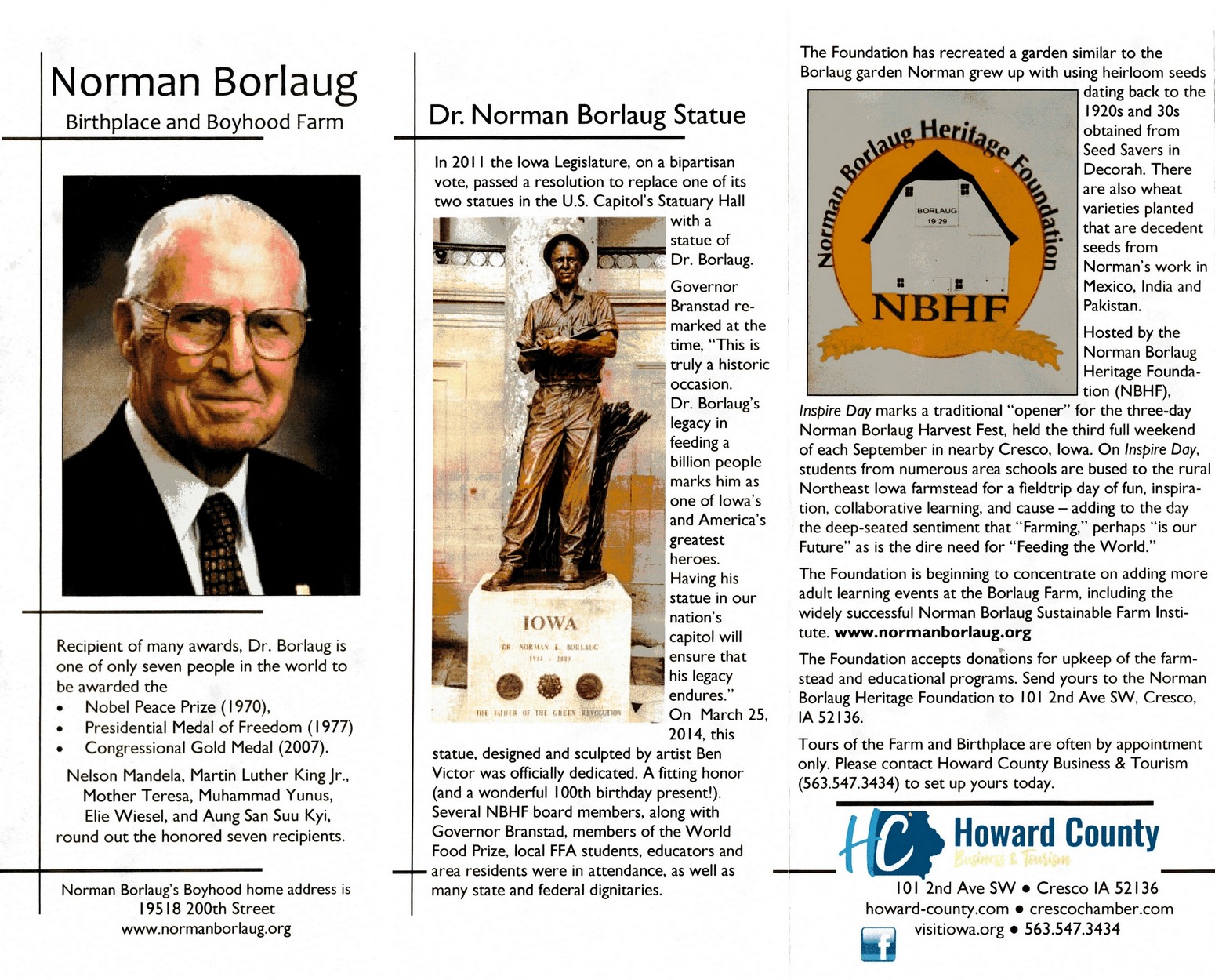
He received many other awards in addition to the Nobel Peace Prize, including the Presidential Medal of Freedom (1977) and the Congressional Gold Medal (2006), one of only seven individuals worldwide to receive all three awards².
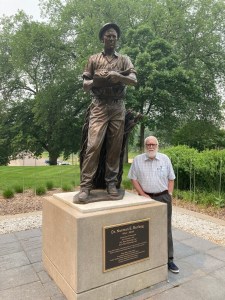
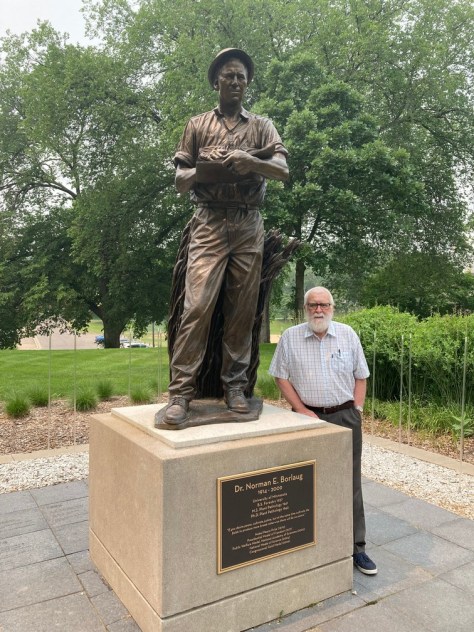
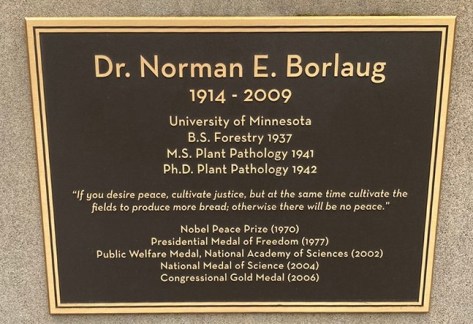
His is one of two Iowa statues in the US Capitol’s Statuary Hall, unveiled in 2014 and replacing one of the state’s existing statues. It was sculpted by Benjamin Victor. A duplicate stands on the University of Minnesota campus in St Paul, outside the building named in his honour.

He founded the World Food Prize in 1986, a prestigious, international award given each year to honor the work of great agricultural scientists working to end hunger and improve the food supply.

It was initially sponsored and formed by businessman and philanthropist John Ruan Sr with support from the Governor and State Legislature of Iowa. Since 1987, there have been 55 laureates from 21 countries.


On 9 June 2017, Steph and I were on the last day of a 10 day road trip that had taken us from Atlanta, Georgia down to the coast at Savannah, then up through South Carolina, North Carolina, Tennessee, Virginia, West Virginia, Kentucky, Illinois, Missouri, Iowa, and back to the Twin Cities in Minnesota. Almost 2800 miles.

We’d spent our last night in a suburb of Iowa City before setting off north to St Paul the following morning. In a little under 3 hours, we found ourselves in Cresco, the county seat of Howard County (just south of the state line with Minnesota) in the lovely Bluff Country that encompasses northeast Iowa, southeast Minnesota, and southwest Wisconsin.

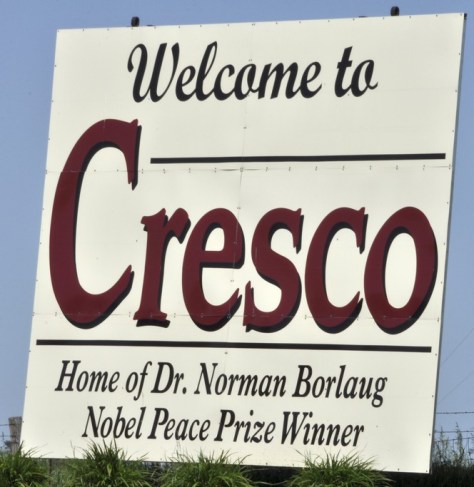
On the eastern outskirts of Cresco we came across this large billboard beside the road.
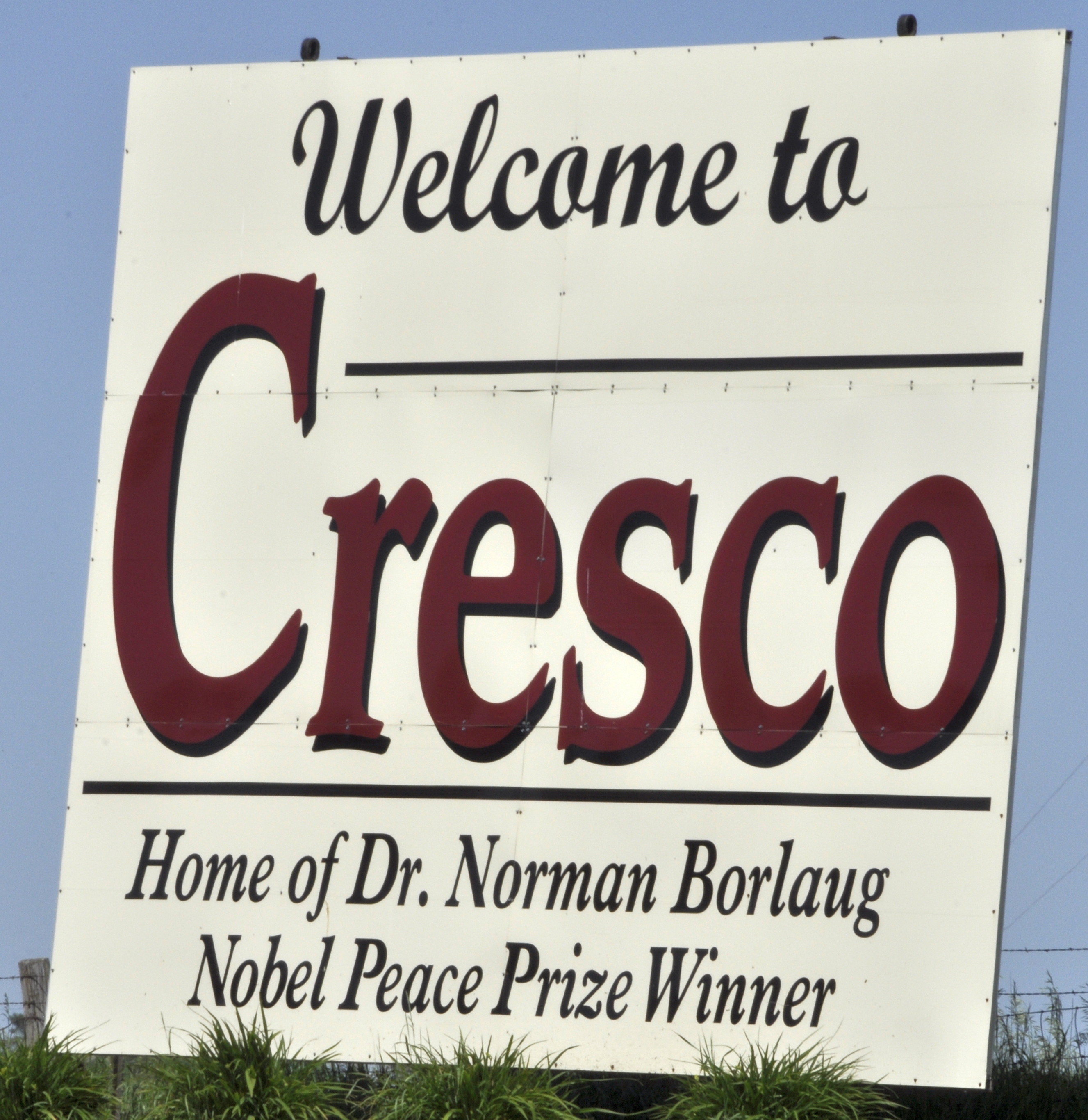
Anyway, as I stopped to take a photograph, I recalled having caught a glimpse—some miles south of Cresco—of a signpost to the ‘Borlaug Birthplace Farm’. Well, being somewhat pressed for time (and having another 180 miles to complete our journey to St Paul), we didn’t turn round and explore.

So it was just a vague hope that someday I might return, since I had met Dr Borlaug in April 1999 when he visited the International Rice Research Institute (IRRI, another of the CGIAR centers) in the Philippines where I was working at the time. It was a hope recently fulfilled.
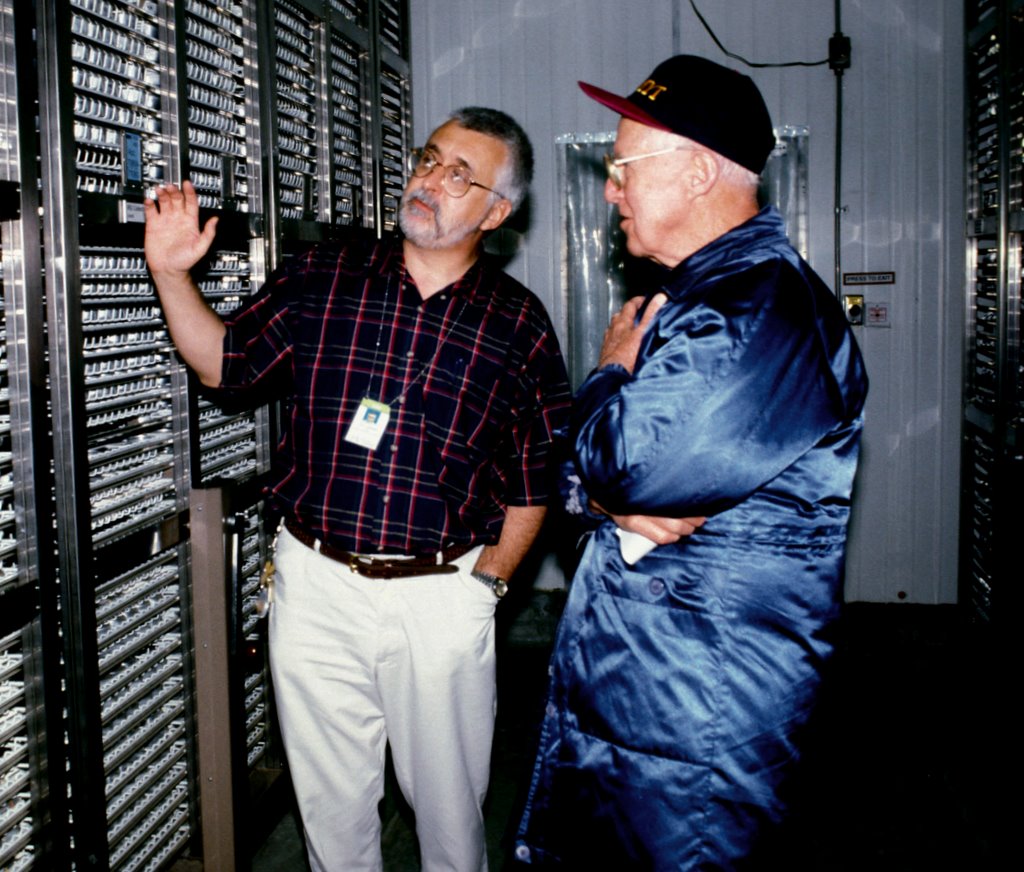
Explaining how rice seeds are stored in the International Rice Genebank to Nobel Laureate Norman Borlaug

Earlier this year, I had contacted Seed Savers Exchange in Decorah, Iowa asking if Steph and I could have a ‘behind-the-scenes’ visit during our vacation in the USA, a vacation we have just returned from. It was then I discovered that Cresco was just a short drive west from Decorah, and I contemplated whether a tour of the Borlaug Birthplace and Boyhood Farms might be feasible.

So I contacted the Norman Borlaug Heritage Foundation (NBHF, set up in 2000) and very quickly received a reply that NBHF board members would be delighted to arrange a tour.

And that’s what we did on 3 June, setting off from Decorah in time to meet up with board members Tom Spindler (Tours) and Gary Gassett (Co-Treasurer) at the Borlaug Boyhood Farm.
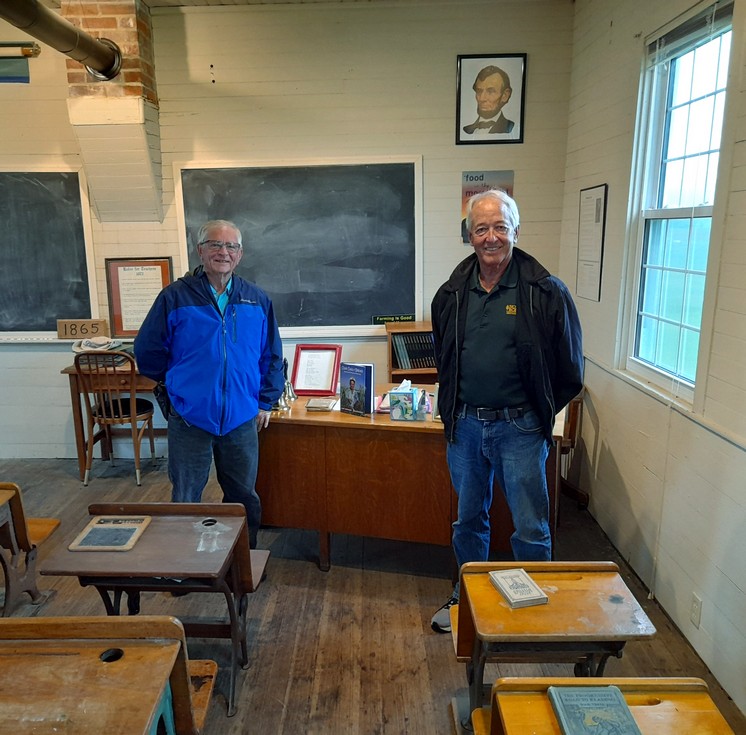
NBHF board members Gary Gassett (L) and Tom Spindler (R) in the old school room on the Borlaug boyhood farm site.


Norman Borlaug came from humble beginnings, the great-grandson of Norwegian immigrants in the late 19th century.
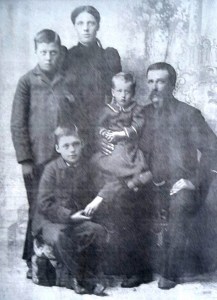
Norman’s grandparents, Emma and Nels (and others of the Borlaug clan) settled in the Cresco area. They had three sons: Oscar, Henry (Norman’s father, second from left), and Ned.

Henry married Clara Vaala, and after Norman was born on 25 March 1914 in his grandparents house, the family lived there for several years. Norman had three younger sisters, Palma Lilian, Charlotte, and Helen (who was born and died in 1921).

The house is currently not open for visitors, as several parts are undergoing extensive repair and renovation.

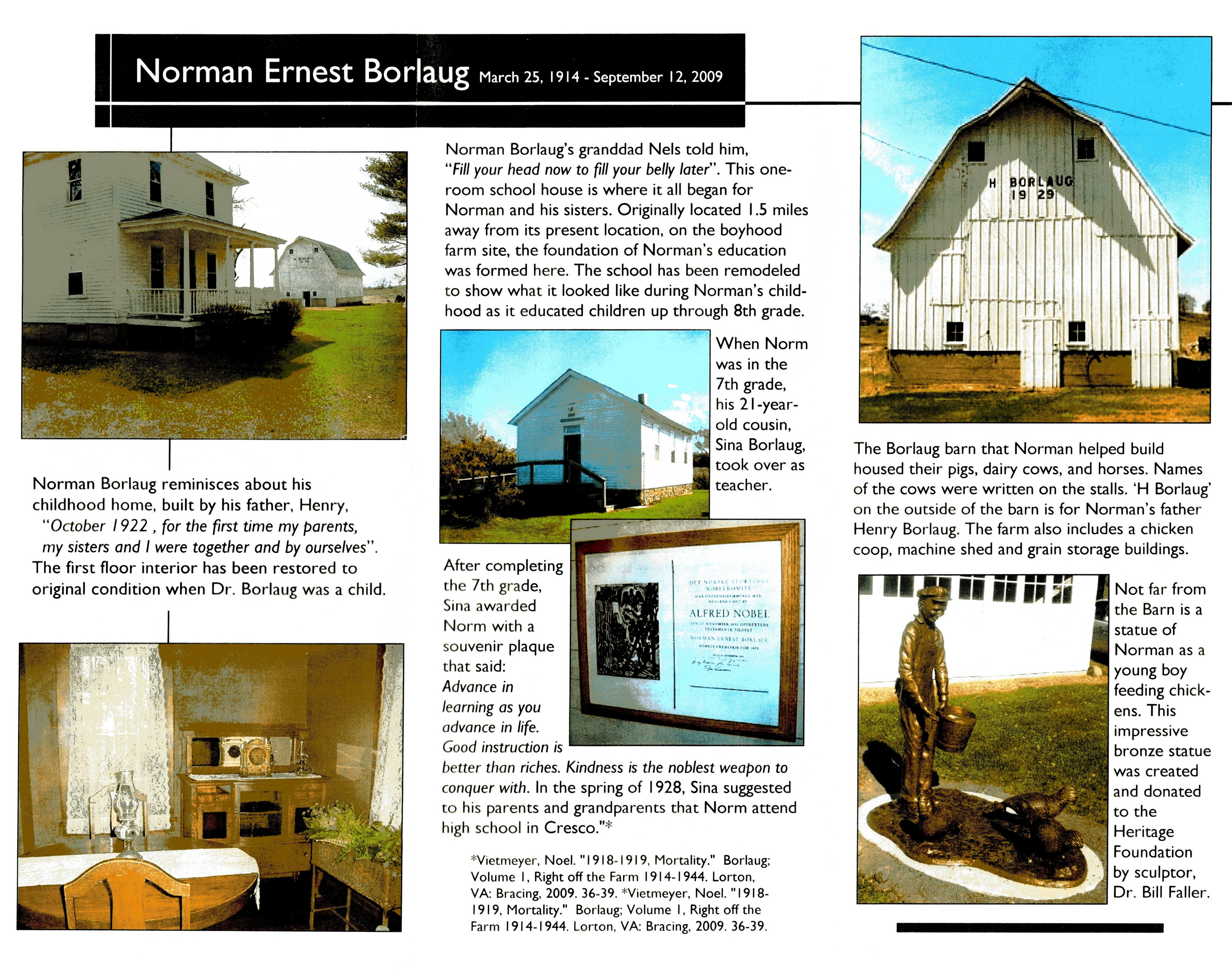
Henry and Clara bought a small plot of land (around 200 acres) less than a mile from their parent’s farm, but until he was 8, Norman continued to live with his grandparents. By then, in 1922, Henry and Clara had built their own home, ordered from Sears, Roebuck of Chicago. The original flatpack!

Life must have been hard on the Borlaug farm, the winters tough. Heating for the house came solely from the stove in the kitchen with warm(er) air rising to the four bedrooms bedrooms upstairs through a metal grill in the ceiling. There was an outhouse privy some 15 m or so from the back porch.

Besides the kitchen, with its hand pump to deliver water for washing, the other room on the ground floor was a combined parlour cum dining room.

On the front of the house there is a set of steps leading to a porch along the width of the house. Mature pine trees now surround the house, with a row to the front of the house planted by Norman when he was studying for his BS in forestry at the University of Minnesota (only later did he turn to plant pathology for his graduate studies).

On the farm, Henry eventually built a barn in 1929 to house their livestock There is a long chicken coop, beside which is a bronze statue of Norman as a boy feeding the chickens. It was created by Dr Bill Faller and donated to the NBHF, as was another nearby depicting Norman’s work around the world.

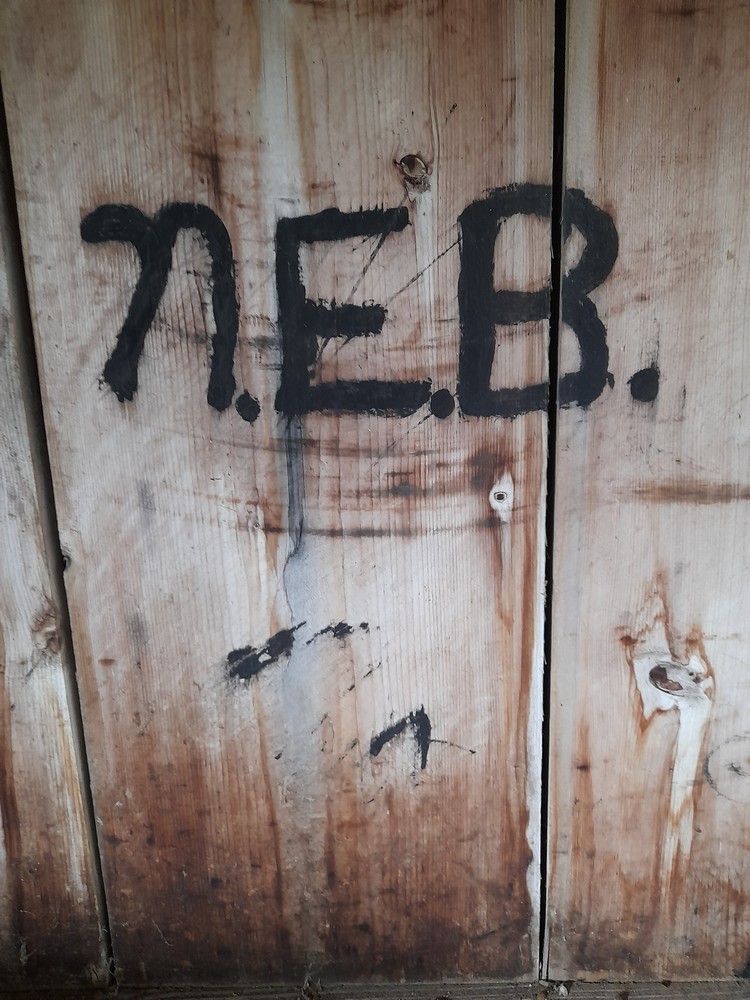
In one outhouse there’s a nice memento of Norman’s boyhood here: his initials inscribed on a wall.

It’s said that Norman was an average student. From an early age, until Grade 8, he joined his classmates (of both Lutheran Norwegian and Catholic Czech descent – Czechs had settled in the area of Protivin and Spillville west of the Borlaug farms) in a one room schoolroom (built in 1865) that was originally located about a mile away from the farm. Norwegian children on one side of the room, the Czechs on the other.

At that time, most pupils reaching Grade 8 would leave full-time education and return to working on the family farm. But Norman’s teacher at the time, his cousin Sina Borlaug (right), encouraged both parents and grandparents to permit Norman to attend high school in Cresco. Which he did, boarding with a family there Monday to Friday, returning home each weekend to take on his fair share of the farm chores.

And the rest is history, so to speak. He eventually made it to the University of Minnesota in St Paul to study forestry, spending some time working in that field before completing (in 1942) his PhD on variation and variability in the pathogen that causes flax wilt, Fusarium lini (now F. oxysporum f.sp. lini).

He joined a small group of scientists on a Rockefeller Foundation funded project in Mexico in 1944, and remained in Mexico until he retired. Among these colleagues was potato pathologist, Dr John Niederhauser, who became a colleague of mine as we developed a regional potato program (PRECODEPA) in the late 1970s.

Borlaug and Niederhauser were very keen baseball fans, and they introduced Little League Baseball to Mexico. That achievement is mentioned in one of the posters (below) in the Borlaug home, and our two NBHF guides, Tom and Garry, were surprised to learn that not only had I met Borlaug, but had worked with Niederhauser as well.
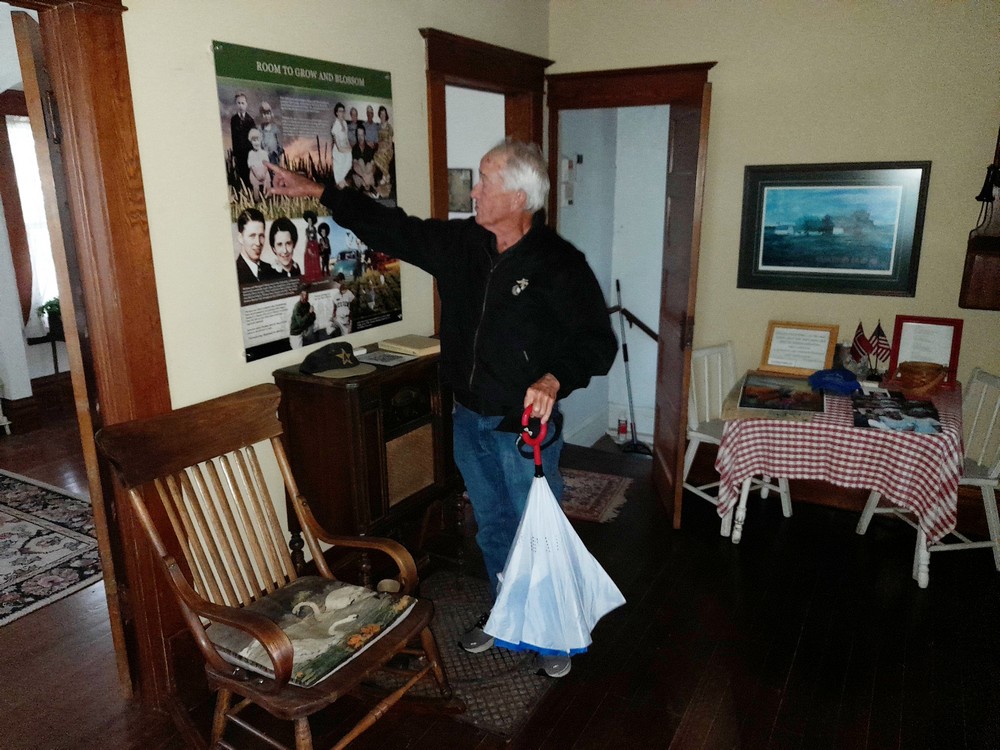
Active to the end of his life, Dr Borlaug passed away in Texas on 12 September 2009. His ashes were scattered at several places, including the Iowa farms.

To the end of his life he was passionate about the need for technology to enhance agricultural productivity. And one point of view remained as strong as ever: peace and the eradication of human misery were underpinned by food security.


It was a fascinating tour of the Borlaug Birthplace and Boyhood Farms, and Steph and I are grateful to Tom and Garry for taking the time (over 2.5 hours) to give us a personal tour.

The NBHF has several programs, including internships and one designed especially for schoolchildren to make them aware of Borlaug’s legacy, and why it is important. You can find much more information on the Foundation website.
¹ Many of Dr Borlaug’s day-to-day belongings (including his typewriter) are displayed in the office suite he occupied at CIMMYT. The photos are courtesy of two former IRRI colleagues, plant breeder Dr Mark Nas and Finance Manager Remy Labuguen who now work at CIMMYT.

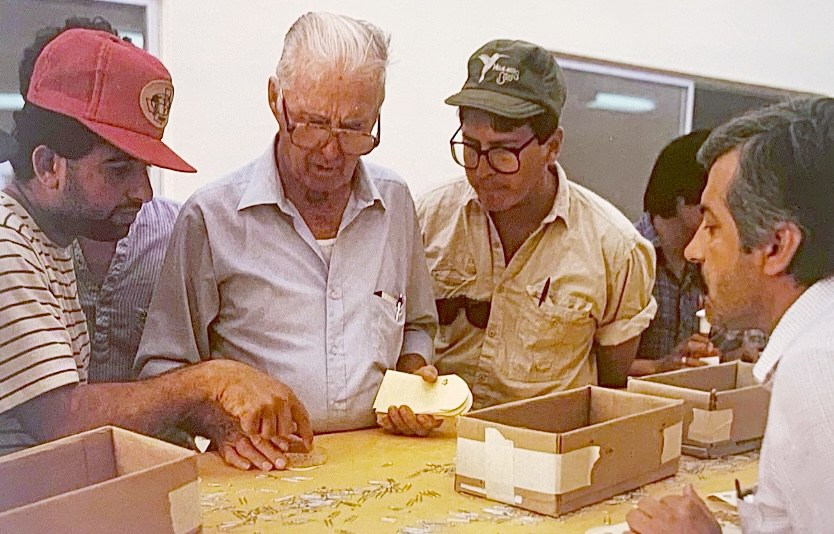
Dr Borlaug stepped down as head of CIMMYT’s wheat program around 1982, but he remained as active as ever. He especially enjoyed spending time with trainees, passing on his wealth of knowledge about wheat improvement to the next generation of breeders and agronomists.

In this photo, he is showing trainees how to select viable seeds at CIMMYT’s Obregon Wheat Research Station in the spring of 1992.
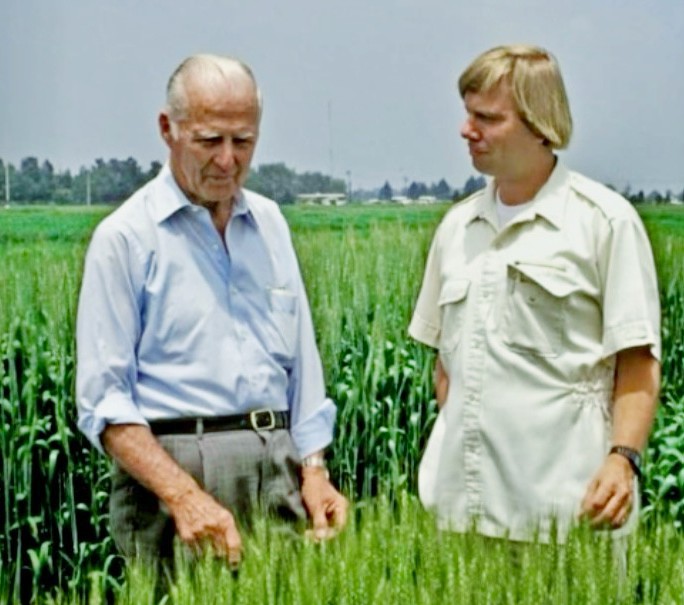
One of my colleagues at IRRI, Gene Hettel, was the communications specialist in the wheat program at CIMMYT between 1986 and 1995.

Gene told me that Borlaug’s office was directly above mine—that made it handy for when he had editorial chores for me. Sometimes he would call me up to his office if he had a really big job—maybe a major book chapter to edit. Other times he dropped by my office with a grin on his face: “Are you busy?”

Here they are together in the wheat plots just outside their offices to get away from all the paperwork and just “talk” to the plants!
² The other six are: Nelson Mandela (South Africa), Martin Luther King Jr (USA), Mother Teresa (Albania-India), Muhammad Yunus (Bangladesh), Elie Wiesel (USA), and Aung San Suu Kyi (Myanmar). Mohammad Yunus (currently Chief Advisor of the interim government of Bangladesh) was a member of IRRI’s Board of Trustees (1989 to 1994) when I joined the institute in 1991.
Two Bs, two Ps, seven Us, and nine Ds

Education is a wonderful thing, and my family and I have taken advantage of the opportunities a good education opens up.

As I read an email a few days ago from the University of Birmingham, announcing its 125th anniversary celebrations later this year, my mind wandered back to 1975.

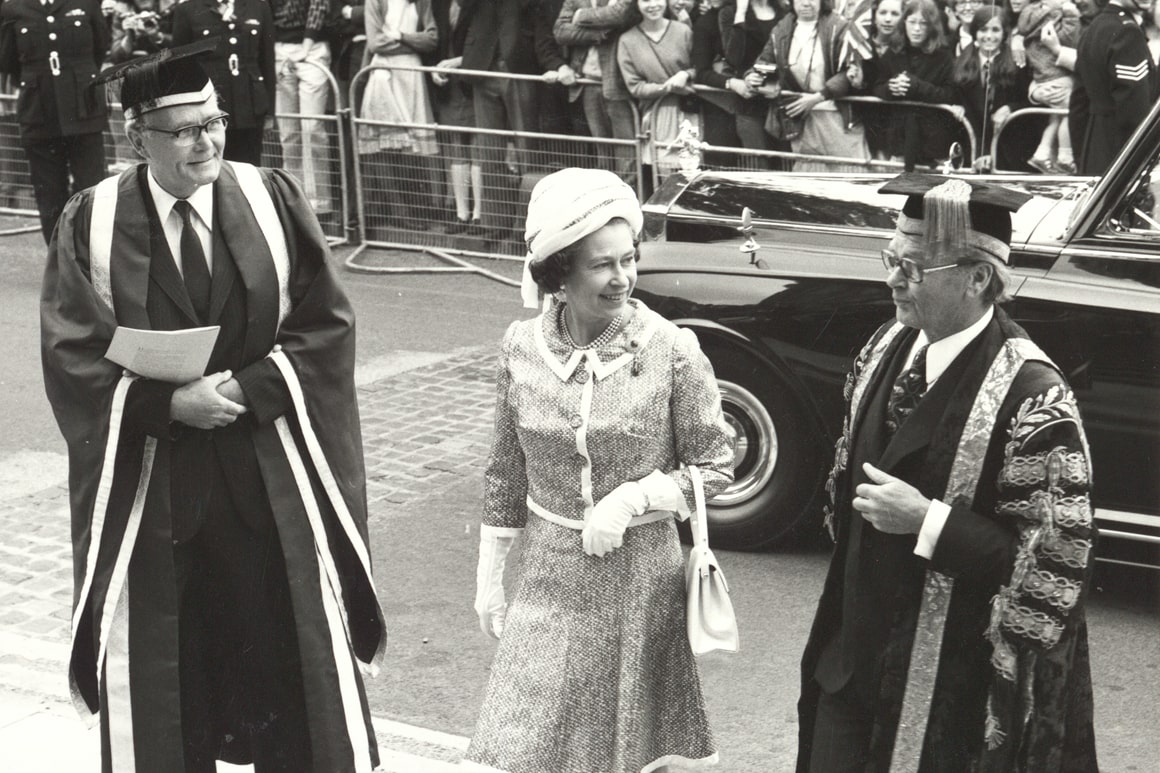
That was when the university celebrated the centennial of laying of the foundation stone of the Mason Science College in 1875, itself a successor of Queen’s College, founded in 1825 as a medical college. HM The Queen visited the university in 1975 to celebrate that centennial, seen in this photo with the university Chancellor, Sir Peter Scott (on the right) and the Vice-Chancellor, Dr Robert Hunter (later Baron Hunter of Newington, on the left). I was in the crowd there, somewhere.

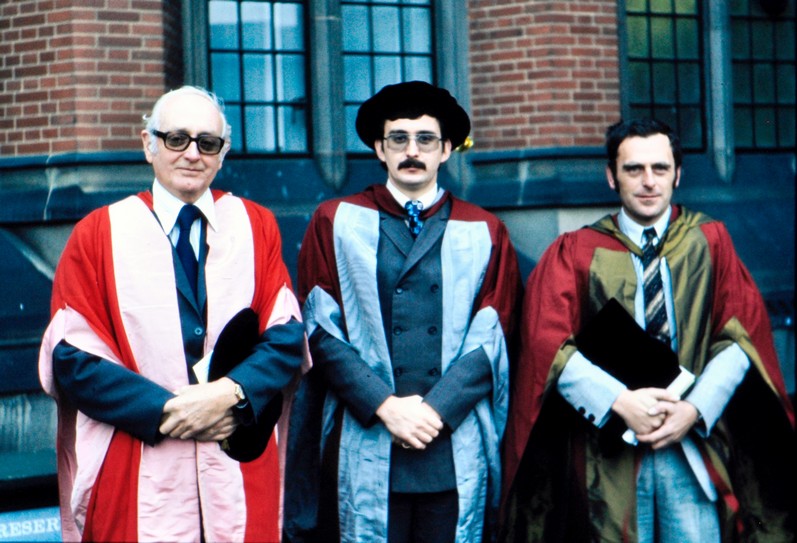
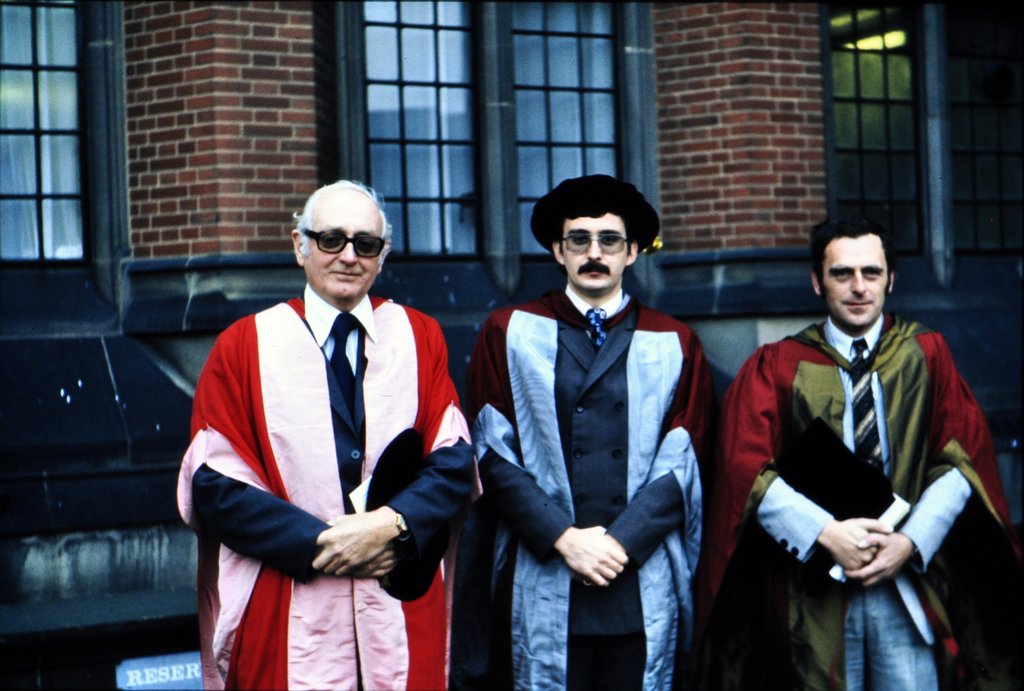
I was back at Birmingham for a few months (from the International Potato Center or CIP in Lima, Peru where I was working as an Associate Taxonomist) to complete the residency requirements for my PhD, and to submit my dissertation. I successfully defended that in late October, and the degree was conferred by Sir Peter Scott at a congregation on 12 December. In the photo below, my PhD supervisor and Mason Professor of Botany, Jack Hawkes is on my right, and Dr Trevor Williams on my left.

But I’m getting a little ahead of myself.

My first experience of Birmingham was in the late Spring of 1967, when I sat the Joint Matriculation Board Advanced or ‘A’ Level biology practical exam in the First Year Lab in the School of Biological Sciences. Many high schools took advantage of that arrangement if they had insufficient facilities in their own premises to hold the exam.

Going into my ‘A’ level exams I had ambitions to attend university. Not that I’d applied to Birmingham. That honour went to the University of Southampton where I had been accepted to study for a BSc degree in environmental botany and geography.

As ‘baby boomers’ my elder brother Edgar and I were the first in our family and among all our cousins to attend university. Once Edgar had persuaded our parents that he wanted to go to university (1964-1967) it was easier for me to follow that same path three years later.

I enjoyed my three years at Southampton. Although I’d registered for a combined degree in environmental botany and geography, my interests shifted significantly towards botany by my third and final year.

However, graduating in July 1970 and with just a BSc under my belt, I knew I’d have to pursue graduate studies to achieve my ambition of working overseas. And it was at the beginning of my final year at Southampton that a one year taught MSc course on the Conservation and Utilisation of Plant Genetic Resources was launched at Birmingham, under the leadership of Jack Hawkes. One of the lecturers at Southampton, geneticist Dr Joe Smartt, suggested that I should apply.

Which I duly did, and after an interview at Birmingham was offered a place for the following September, subject to funding being available for a maintenance grant and tuition fees. It was not until the course was about to commence that Professor Hawkes could confirm the financial support. By mid-September I headed to Birmingham, and the beginning of an association with the university that lasted several decades, as both student and member of staff.

I was awarded the MSc degree in December 1971. During that year, Hawkes (a world-renowned potato expert) had arranged for me to join CIP in Lima for just a year (which later extended to more than eight years) to help conserve its important collection of native potato varieties. An opportunity I jumped at. However, funding from the British government was not confirmed until late 1972. Instead of kicking my heels waiting for that funding to be confirmed, and concerned I might find a position elsewhere, Hawkes raised a small grant to allow me to begin a PhD project under his supervision, and that I would continue after arriving  in Peru.

A third cohort of students arrived in Birmingham in September 1971, among them Stephanie Tribble from Southend-on-Sea who had just graduated from the University College of Swansea (now Swansea University) with a degree in botany. By the summer of 1972 Steph and I had become an item.
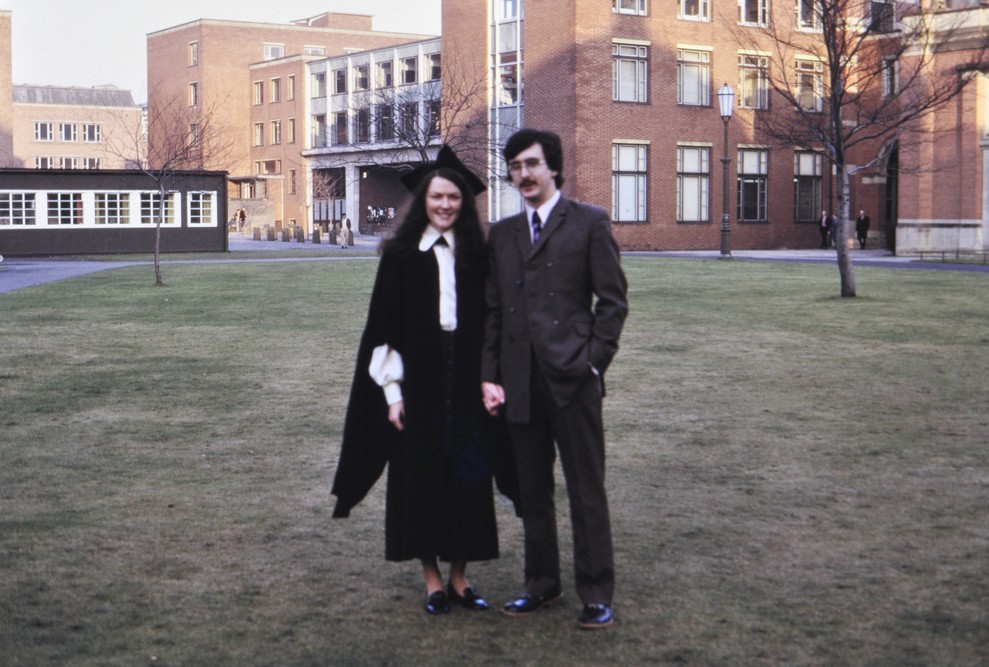
In November 1972 she joined the Scottish Plant Breeding Station (SPBS) at Pentlandfield, south of Edinburgh, as assistant curator of the Commonwealth Potato Collection. She returned to Birmingham in December for the MSc degree congregation, just three weeks before I was due to fly out to Peru at the beginning of January 1973.

Well, things have a habit of turning out for the best. Once I was in Peru, I asked Steph to marry me and join me in Lima where I knew there would be a position for her at CIP. Resigning from the SPBS, she arrived in early July and we were married in the local registry office in Lima in October.

So that’s two botanists, three universities (Southampton, Swansea, and Birmingham), and five degrees (2xBSc, 2xMSc, 1xPhD) between us.


After another fruitful five years with CIP based in Costa Rica after I’d completed my PhD (during which our elder daughter Hannah was born), a lectureship opened in the Department of Plant Biology at Birmingham, so I applied. I flew back from Peru for an interview, and having been offered the position, I joined the university on 1 April 1981.

Much of my teaching focused on the genetic resources MSc course that was accepting ever more numbers of students from around the world. I remained at Birmingham for a decade, before deciding that I wasn’t really cut out for academia and, in any case, a more exciting opportunity had presented itself at the International Rice Research Institute (IRRI) in the Philippines. I joined IRRI as head of the Genetic Resources Center in July 1991, remaining in that position for almost a decade. In May 2001, I was appointed Director for Program Planning and Communications (DPPC), joining the institute’s senior management team, until my retirement in April 2010.

During the 1990s, I had an excellent research collaboration with my former colleagues in the School of Biological Sciences at Birmingham, and each year when I returned to the UK on home leave, I’d spend time in the university discussing our research as well as delivering several lectures to the MSc students, for which the university appointed me an Honorary Senior Lecturer.


As I mentioned before, Hannah was born in 1978 when we were living in Costa Rica. Once back in the UK her younger sister Philippa was born in 1982 in the small market town of Bromsgrove, about 13 miles south of the University of Birmingham in north Worcestershire.

Both girls thrived in Bromsgrove, enjoyed school, and each had a good circle of friends.

We upended their world when I took the position at IRRI and they moved to the Philippines with Steph just after Christmas 1991. Even more challenging was their enrolment in the International School Manila, which had a US-based curriculum, and eventually an academic stream based on the International Baccalaureate (IB). There’s no doubt that the first year was tough. Not only was it challenging academically, but living 70 km south of Manila, IRRI students were bussed into school each day departing around 04:30 to begin classes at 07:30, and returning by 16:30, or later if there were holdups on the highway, as was often the case.

Despite the bumpy start, Hannah and Phil rose to the challenge and achieved outstanding scores on the IB in 1995 and 1999 respectively.

From the outset, attending university had been part of our plan for them, and an ambition they readily embraced. Both took a gap year between high school and university. Hannah was drawn towards Psychology, with a minor in Anthropology. And she discovered that this combination was offered at few universities in the UK, opting to attend Swansea University in 1996. And although she was on course to excel academically, half way through her second year she asked if she could transfer to Macalester College, a liberal arts college in Minnesota, USA.

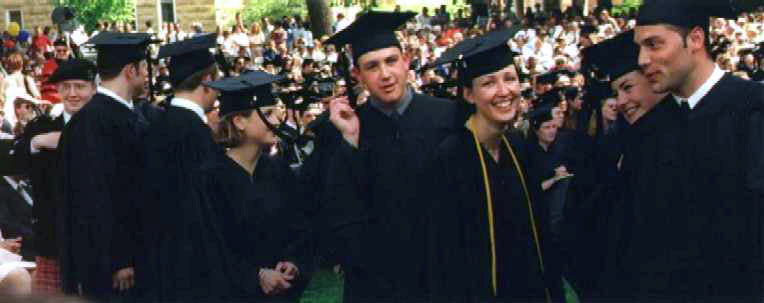
Macalester graduation in May 2000, with Hannah and Michael facing the camera.

Graduating Summa cum laude in May 2000 from Macalester, with a BA in Psychology and a minor in Anthropology, Hannah was then accepted into a graduate program in the Department of Psychology at the University of Minnesota in the Twin Cities.
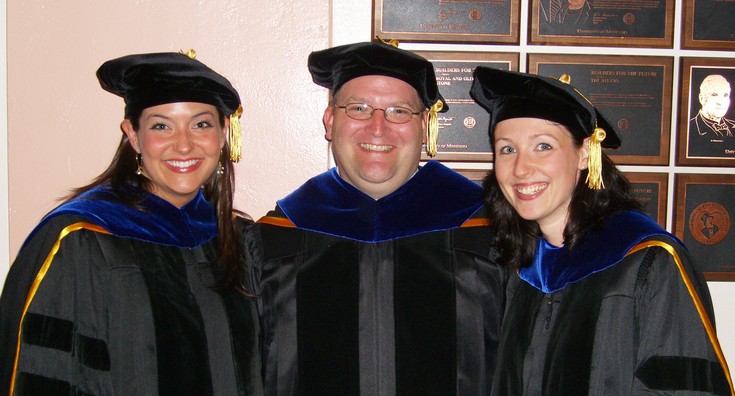

She was awarded her PhD in Industrial and Organizational Psychology in 2006 with a thesis that assessed the behaviour and ethical misconduct of senior leaders in the workplace.

Hannah (right) with her peers in Industrial & organizational Psychology

That’s one psychologist, another two universities (Macalester and Minnesota), and two more degrees (BA, PhD).

Remaining in Minnesota, she married Michael (also a Macalester graduate) in 2006, became a US citizen, and has a senior position focused on talent management and performance with one of the largest international conglomerates. They have two children: Callum (14) and Zoë (12).


After a gap year, Philippa began her studies in Psychology at Durham University in 2000, graduating with a 2:i BSc degree three years later. Uncertain what path then to follow, she moved to Vancouver for a year, before having to return to the UK at short notice after the Canadian government refused to renew her work visa.
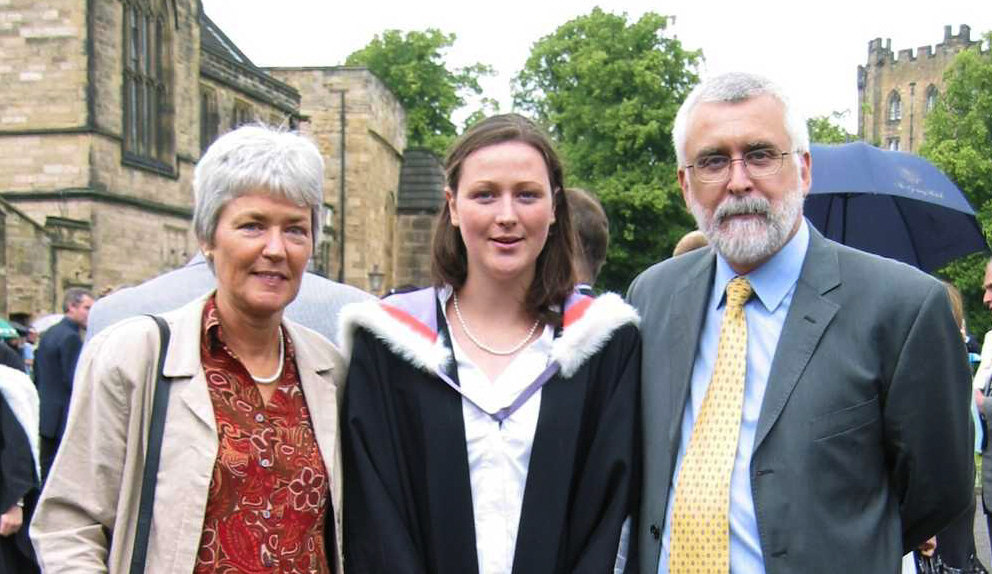
Post-graduation, outside Durham Cathedral.

She spent six months looking for a job, finally landing a research assistantship in the Brain, Performance and Nutrition Research Centre in the Department of Psychology at Northumbria University in Newcastle upon Tyne. After a couple of years she began her own PhD studies investigating the effects of bioactive lipids such as omega-3 fatty acids on cognition and brain health. She was awarded her PhD in December 2010.
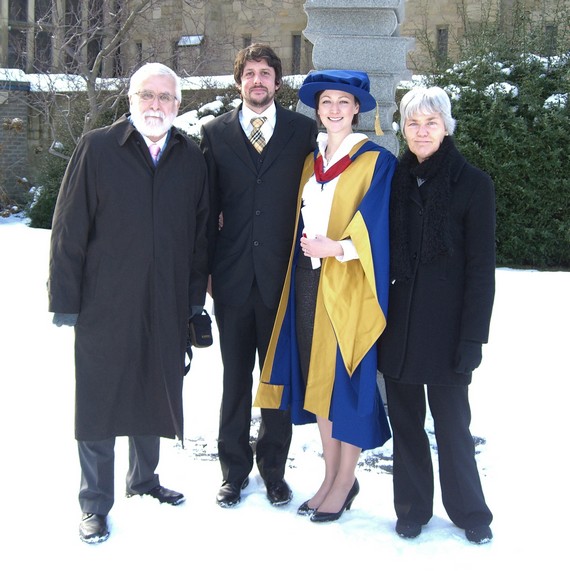
Post-graduation with Steph and me, and Andi.

She’s the second psychologist in the family, with two more universities and two degrees (BSc, PhD) under her belt.

Philippa is now Director of the Brain, Performance and Nutrition Research Centre, and Associate Professor in Biological Psychology at Northumbria.

She married Andi in September 2010 (taking themselves off to New York to get married), and have two sons: Elvis (13) and Felix (11).


Two botanists and two psychologists. Who’d have thought it? Neither Hannah nor Philippa showed any interest in pursuing biology at degree level. Having two psychologists in the family we do wonder, from time-to-time, if we went wrong somewhere along the line.

Time out in Minnesota: 4. Gems at the University of Minnesota

Actually, that should be GEMS. But more of that shortly.

While in Minnesota, I took the opportunity of looking up an old friend, Phil Pardey, at the University of Minnesota. A native Australian, Phil is Professor of Science and Technology Policy in the Department of Applied Economics.
So how did I, as someone working in genetic resources of rice, meet and become good friends with an agricultural economist?

From 1991-2001, I was head of the Genetic Resources Center at the International Rice Research Institute (IRRI) in the Philippines, and between 1993 and 1995, Chair of the CGIAR’s Inter-Center Working Group on Genetic Resources (ICWG-GR). Phil was a Senior Research Fellow at the International Food Policy Research Institute (IFPRI) in Washington, DC, a sister center of IRRI’s under the aegis of the Consultative Group on International Agricultural Research (CGIAR).

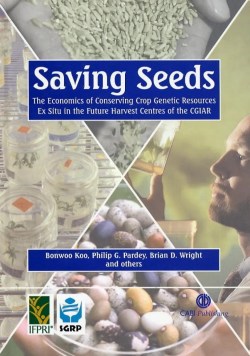
The ICWG-GR brought together representatives from all the CGIAR centers with genebanks, and others like Phil from IFPRI who were conducting research on the impact and use of genetic resources. At that particular time, Phil and a couple of colleagues were analysing the economics of conserving crop genetic resources, and developing methodologies to estimate the costs of running genebanks. I contributed to chapter 6 on rice in this book (right) published by CABI in 2004. It was an important publication as the centers were developing ideas on how to fund their germplasm collections in perpetuity and what it would take to set up an endowment fund for that purpose (now managed through the Crop Trust).
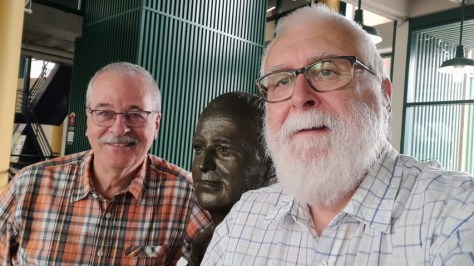
Phil left IFPRI in 2002 to move to the U of M, and I retired in 2010. So with a less hectic schedule this year during our visit to the USA (although we haven’t traveled there since 2019 because of the Covid-19 pandemic) I contacted Phil and we arranged to meet for lunch a couple of weeks ago.

Phil and me beside a bust of Dr Norman Borlaug, ‘Father of the Green Revolution’ in the foyer of Borlaug Hall on the University of Minnesota campus, where I presented a seminar in the early 2000s.

Phil had a lot to tell me about a fascinating new initiative that he co-directs at the university.

Which was music to my ears. Let me explain.

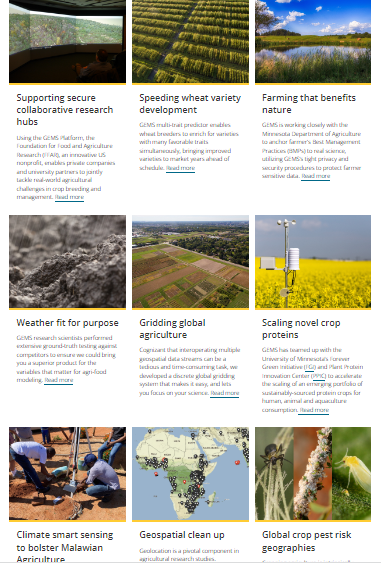
GEMS Informatics, launched in 2015, is a unique public-private collaboration that is forging the future of the Data Revolution in agriculture. Minnesota is the birthplace of supercomputing in the early 1960s and has long been home to the world’s leading agri-food companies, making it the natural nexus for data-driven, public-private partnerships that create solutions to the complex challenges facing local and global agri-food systems.

Phil’s co-director is Jim Wilgenbusch, Director of Research Computing at the university.

What is so special about GEMS is that it brings together an impressive team of experts in super-computing, data management, genetics, genomics and bioinformatics, geospatial analysis, life sciences, and economics. Just take a look at the GEMS website to better understand the scope of what this initiative does deliver. And just imagine what such a combination of skills and resources could deliver even more in the future.

One of the areas that intrigued me most was the GEMS applications for multilocation testing of germplasm. Faced with the challenges of global climate change, plant breeders need to be able to better predict where the lines they have developed are successfully adapted and could be deployed to enhance agricultural activity. GEMS is bringing together data (not just numbers) on crop variety performance (yield in particular), weather, soils, and genomics (among others) to better understand the behavior of these across locations, or what we call genotype by environment interaction (GxE).

There’s an interesting account of GEMS applications for wheat variety development, for example.

I’ve had a long interest in multilocation testing. In 1990, I presented a paper¹ at a symposium in Wageningen, the Netherlands about the challenge of global warming, and how plant breeders should collaborate better across Europe to evaluate germplasm.

Then, in a blog post I published in August 2015, I wrote about the International Network for the Genetic Evaluation of Rice (INGER, managed by IRRI) as it celebrated its 40th anniversary. While recognizing the networks unequivocal and important role in facilitating the sharing of rice varieties and lines globally, I lamented that INGER had lost opportunities to transform itself to permit more critical and predictive testing of germplasm. My criticism was merited, I believe, but unlike GEMS Informatics, we did not have many of its computing and analysis tools. Had we built a database of quality trial data, gathering environmental as well as crop response data, we could go back today, using genomics tools, to ferret out those traits which endow varieties with superiority across environments.

GEMS is already pointing the way. Just look at the case studies that are highlighted on the GEMS website.

With progress like this in just eight years, just imagine where this initiative might take us. No wonder it was music to my ears, even though (being retired) I’m no longer involved in the conservation and use of plant genetic resources.

I really look forward to following future developments of GEMS Informatics. Not only did it take a strong vision to get it up and running, but support from the university and private sector organizations was crucial to implement that vision. Impressive indeed!


As we headed off to lunch, Phil just had to show me a new addition to the university campus, just in front of Borlaug Hall. It was a seven foot bronze statue of Norman Borlaug, who I had the pleasure of meeting at IRRI in the 1990s.

Borlaug was born in Cresco, Iowa in March 1914, where Steph and I passed through at the end of one of our long road trips in 2017.

I now wish we’d taken the time to visit the Borlaug homestead in  Cresco.

Anyway, Borlaug was an alumnus of the U of M, originally in forestry before converting to plant pathology. And the rest is history – the man who saved a billion lives.

The statue on the campus is a duplicate of one sculpted by Idaho resident Benjamin Victor (1979– ) that stands in the National Statuary Hall Collection in the Capitol Building in Washington, DC. The original was given by the state of Iowa to the Collection in 2014 on the centenary of Borlaug’s birth.

In the National Statuary Hall, each state is permitted to display just two statues, so that of former United States Senator, and Secretary of the Interior James Harlan, which the state of Iowa donated to the Collection in 1910, had to make room for Borlaug. And fittingly so.


Other blog posts in this Minnesota series;


¹Jackson, M.T., 1991. Global warming: the case for European cooperation for germplasm conservation and use. In: Th.J.L. van Hintum, L. Frese & P.M. Perret (eds.), Crop Networks. Searching for New Concepts for Collaborative Genetic Resources Management. International Crop Network Series No. 4. International Board for Plant Genetic Resources, Rome, Italy. Papers of the EUCARPIA/IBPGR symposium held in Wageningen, the Netherlands, December 3-6, 1990. pp. 125-131.

“Education isn’t what you learn, it’s what you do with what you learn.” Anon.

degreeThere’s been quite a bit in the news again recently about the value of a university education, after George Osbourne, the UK’s Chancellor of the Exchequer, announced the scrapping of maintenance grants from the 2016/17 academic year. From that date, grants will be replaced by loans, adding yet further to the financial loan burden that university students are already facing to pay their tuition fees through loans. These financial challenges are making some (or is it many?) prospective students question whether they really do want or need a university education. Add to that the pressure on prospective students to study a subject that ‘should contribute’ more effectively to society and the economy, it’s no wonder that students are beginning to have second thoughts about going to university.
Also, with the publication of this year’s university exam results, the issue of grade creep is once again on the political agenda, since more than 50% of all students have graduated with a so-called ‘good’ degree. In the UK, this is a First or Upper Second (2:1) Class degree.

So why have these issues now attracted my attention?

Life on the south coast
Early July 1970. Forty-five years! It’s hard to believe. Yes, it’s forty-five years since I graduated from the University of Southampton with a BSc degree (not a very good one, I’m afraid) in Environmental Botany and Geography. There again, no-one in my year gained a First in botany, only a couple in geography. They didn’t hand out many top degrees in those days. More than 70% of students today are awarded a First or Upper Second. What is interesting from my point of view is during my high school years, going to university was not a foregone conclusion, or even an expectation for that matter. However, a university education was something that my post-war generation did begin aspire to. I was only the second person in my family to attend university.

55 Ed & Mike

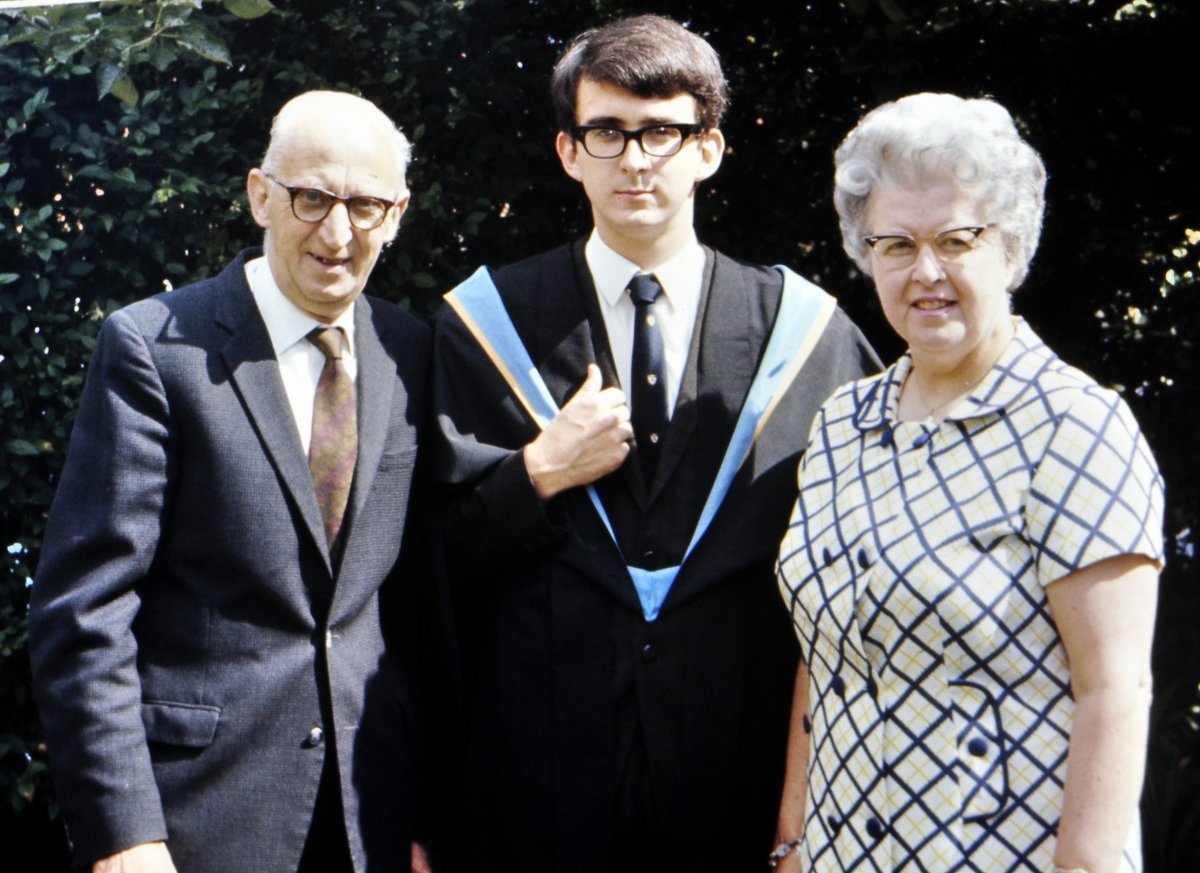
Graduation Day, July 1970 at the University of Southampton, with my Mum and Dad, Lilian and Fred Jackson. Was I ever that young looking?

Now, although I didn’t exactly excel academically at Southampton, I wouldn’t have traded those three undergraduate years for anything. Some of the best years I have ever spent. Ah, the enthusiasm of youth. Did I ever have second thoughts? Never. I was extremely fortunate that my parents were very supportive, even though it must have been hard financially for them at times. My elder brother Ed had (in 1967) just graduated from the London School of Economics (with a First in geography) when I started at Southampton. So my parents were faced with another three years of support, even though my tuition fees were paid by the state, and I did receive a maintenance grant which Mum and Dad had to top up.

I guess I was lucky that Southampton took me in the first place, and didn’t throw me out after my first year. I never was very good at taking exams, well not in those school and undergraduate years. I only found my métier once I’d moved on to graduate school in 1971.

I went for an admissions interview at Southampton in early 1967 and immediately knew that this was where I wanted to study at, if they offered me a place. So once I received the results from my high school A-level exams (in biology, geography, and English literature, but not quite what I’d hoped for, grades-wise) I was on tenterhooks for a couple of weeks waiting for a response from the university. I was earning some cash, working as a lorry (truck) driver’s mate for a company based in Leek called Adams Butter. We delivered processed butter to retail outlets all over the UK, often being away from home for several nights at a stretch. Then once we delivered our load of about 25 tons of butter, we would head to the nearest port to pick up another 25 tons of Australian or New Zealand ‘raw’ butter, in large 56 lb frozen packs. I soon got fit throwing those boxes around.

Anyway, to cut a long story short, I arrived back at the depot after a long day on the road, and my father had kindly left a brief message with the dispatcher on duty: “Southampton wants you!” Obviously elated, I began to make plans to start my university life in October. The rest is history.

Back to the Midlands
Having graduated, I still didn’t know what the next stage of my life held. I’d applied to The University of Birmingham for a place on its newly-established MSc course Conservation and Utilization of Plant Genetic Resources in the Department of Botany. In February 1970 I’d been interviewed by course director Professor Jack Hawkes, and was offered a place, but with no guarantee of any financial support. It wasn’t until mid-August that I received a phone call confirming that he had been able to secure a small maintenance grant (just over £6 a week for the whole year, equivalent to about £80 a week today) and payment of my tuition fees. Undaunted at the prospect, I quickly accepted. And what a joy studying at Birmingham was. I certainly found an area of plant sciences that I could really immerse myself in, the staff were (on the whole) inspiring (particularly Trevor Williams with whom I completed my thesis), and I knew that I’d made the right choice.

But still there was no guarantee of gainful employment in my chosen field. That is until Jack Hawkes invited me to consider a one-year position in Peru. As things turned out, I did make it to Peru, registered for a PhD (which I completed in 1975), and made a career for myself in international agricultural research and academia. I received my degree from the Chancellor of the University, Sir Peter Scott, renowned ornithologist and conservationist, and son of ill-fated Antarctic explorer, Captain Scott at a graduation ceremony at the University of Birmingham on 12 December 1975.

20 Ed & Mike

Graduation on 12 December 1975, with Professor Jack Hawkes on my right, and Dr Trevor Williams on my left. I’m with my Mum and Dad in the two photos above.

Was it worth it?
When I decided to study botany at university I had no idea whether this would lead to a worthwhile career. Actually, it was not something I considered when applying. I just knew I wanted to study plants and geography, and then I’d see what life had in store for me afterwards, assuming I did actually graduate.

Steph studied botany at Swansea University (BSc 2:1), and we met at Birmingham when she studied for her MSc (also in genetic resources conservation) in 1971-72.

1972 002 Steph MSc

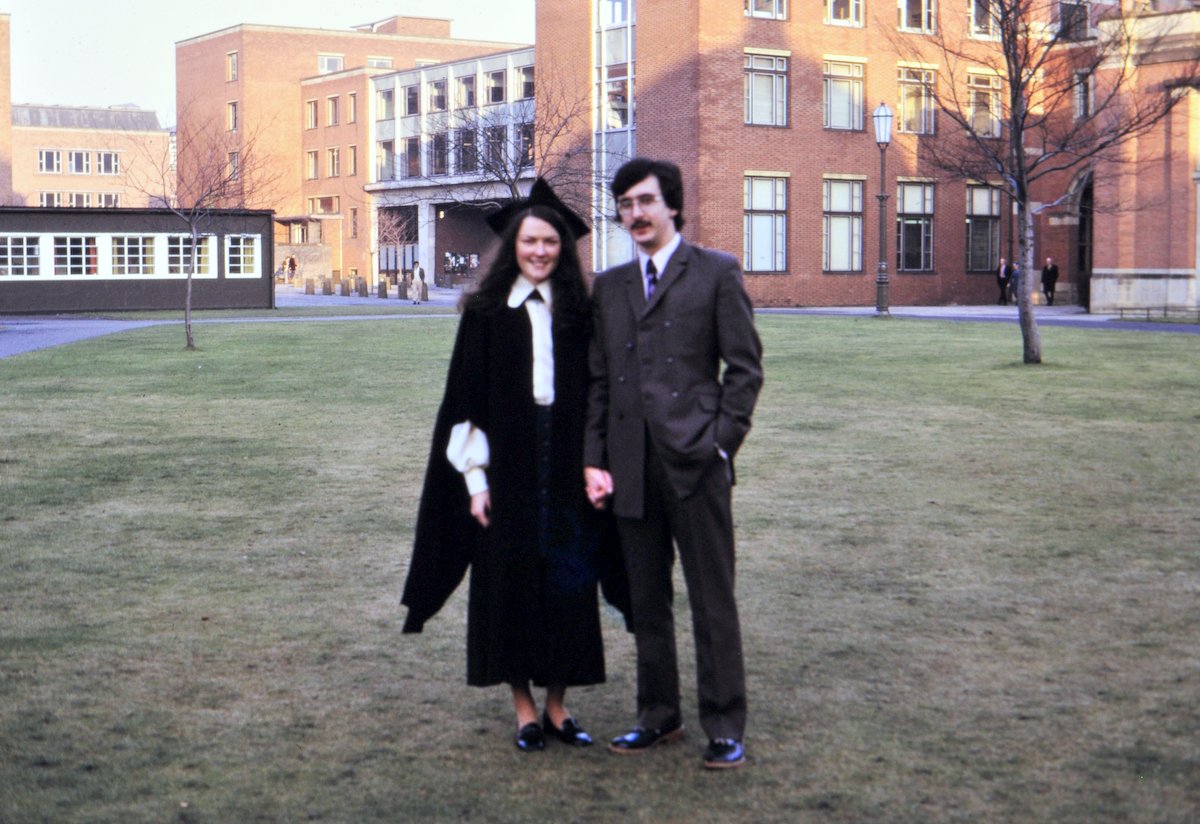
Steph’s MSc graduation in December 1972. This was about three weeks before I headed off to Peru. Steph joined me there in July 1973, and we were married in Lima in October that same year. We both had considerably longer hair then – and darker!

I think there was more expectation that our daughters, Hannah and Philippa, would go on to university, from our point of view and theirs. Indeed, having had the advantage of attending an international (and quite competitive) school in Manila, and studying for the International Baccalaureate diploma, university was the logical next step. And they both chose psychology (with an anthropology minor)—it wasn’t planned that way, that’s how it turned out.

Hannah originally started her university years at Swansea University in 1996, but after two years she transferred to one of the top liberal arts colleges in the USA: Macalester College in St Paul, and graduated BA summa cum laude in 2000 (left below, with the gold tassel). She then went on to the University of Minnesota to complete her PhD in industrial and organizational psychology in September 2006 (right below).

Philippa joined Durham University in 2000, and graduated in 2003 with her BSc (2:1) Honours degree (left below). After spending a year in Canada, she returned to the UK in 2004 and spent six months of more searching for a job. Eventually she secured a Research Assistantship in the Brain, Performance and Nutrition Research Centre at Northumbria University in Newcastle upon Tyne. After a couple of years she decided to register for a PhD and she was awarded her doctorate in December 2010 (right below).

So we’ve all benefited from having attended university, and have gone on to have successful careers. But I still believe it was the overall experience of university life as much as the academics that contributed those benefits. Unlike students today, we were fortunate not to have racked up significant debts while studying, and already Hannah and Philippa and their spouses are making plans for college education for their children—should they opt to follow that option.

I think the words of Cardinal John Henry Newman (1801-1890) are appropriate and as good today as when he wrote them in his essay ‘The Idea of a University’ in 1852: If then a practical end must be assigned to a University course, I say it is that of training good members of society… It is the education which gives a man a clear, conscious view of their own opinions and judgements, a truth in developing them, an eloquence in expressing them, and a force in urging them. It teaches him to see things as they are, to go right to the point, to disentangle a skein of thought to detect what is sophistical and to discard what is irrelevant.

I’m not sure that we do achieve those lofty ideals today as perhaps they aspired to in Newman’s day. There are just so many students moving through the system, the pressures to achieve are greater. While I was teaching at The University of Birmingham (for a decade in the 1980s) I became even more convinced that a university education is, in itself, worthwhile. This is often the first time that a young person leaves home, and has the opportunity to grow up away from the ever-watchful eyes of parents. Not everyone takes to university it must be said. But I think the majority who do make it to university would agree that, just like me, the three years they spend studying—and playing—are not three years wasted. It also makes it especially worrying that politicians are increasingly threatening the very existence and roles of universities, as is happening, for example, in a high profile way at the University of Wisconsin.