‘Capability’ by name, ‘Capability’ by nature (updated 27 July 2017)

Everyone has to start somewhere.

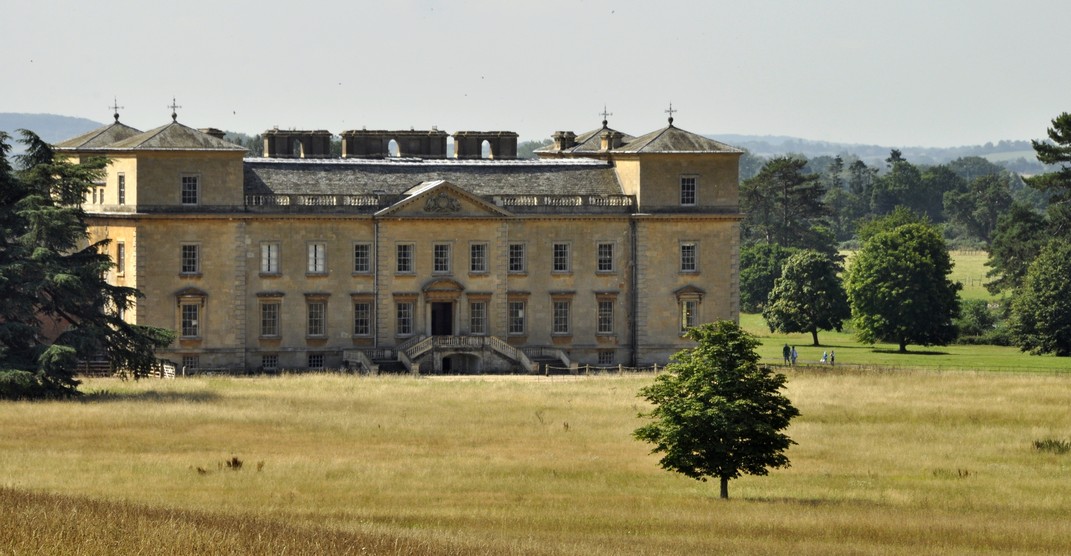
And, it seems, that Lancelot ‘Capability’ Brown in one of his earliest commissions helped to realize the vision of the 6th Earl of Coventry to create Croome Court and Park, a neo-Palladian mansion in deepest Worcestershire, less than 10 miles southeast of Worcester, and 20 miles from our home in Bromsgrove in the north of the county.

Work started on Croome in 1751 and over more than a decade work continued to replace an earlier building on the site. But even as late as the 1790s changes were being made to the park.

While Brown was involved in the design of the hall itself, and of course his signature landscape design, many of the interiors of the hall were designed by equally famous neoclassical architect and interior designer Robert Adam who, with his rival James Wyatt, also designed many of the features – temples and the like – that are dotted about the park, and even follies some distance from the park itself, such as Dunstall Castle to the south and Pirton Tower to the north. The 1¾ mile lake, the Croome River, took 12 years alone to dig out by hand.

From the park there are good views of the Malvern Hills due west, and Bredon Hill, an outlier of the Cotswolds, further southeast. These aristocrats certainly knew just where to build a fancy residence!

From the Visitor Centre (1 on the map, and once the sick quarters of  nearby WWII airfield, RAF Defford), the footpath through a bluebell wood to Croome Park brings you out onto a hillside beside the Church of St Mary Magdalene (5), and impressive views out over the park and house.
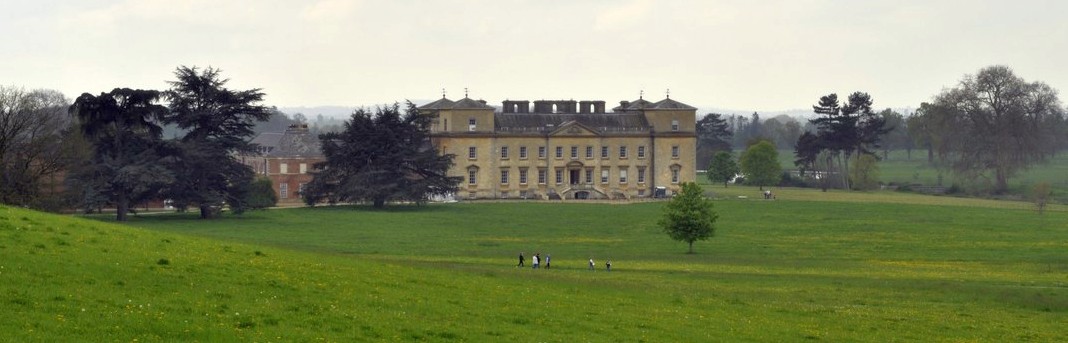
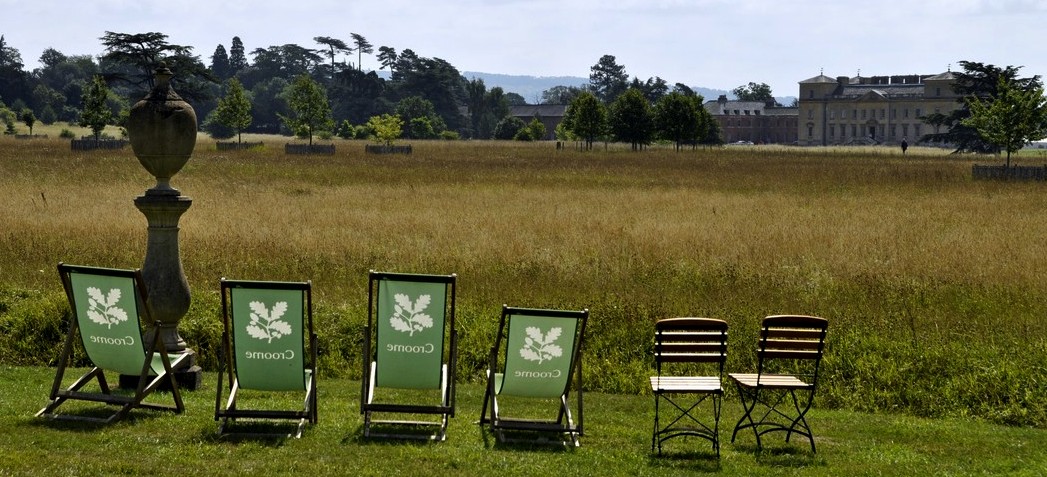
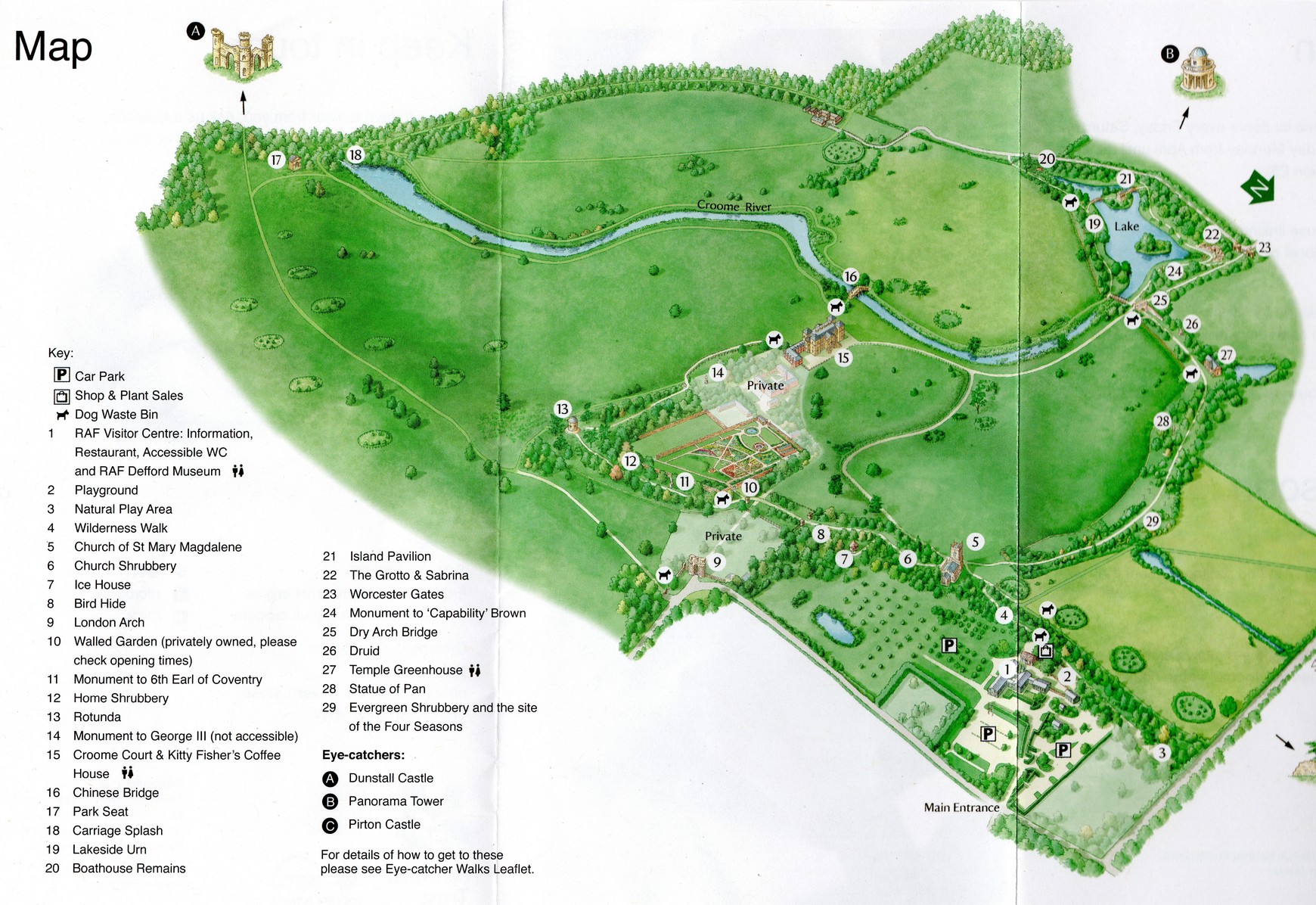
And from that vantage point, there are long walks available in all directions throughout the park and beyond and lots of features to explore as shown in the map below and the subsequent photos.

5. Church of St Mary Magdalene
An earlier church once stood here, but it was replaced by Capability Brown with this rather plain one, but with some impressive tombs inside.

7. Ice House
Many country houses have an ice house – the National Trust has carefully restored this one.
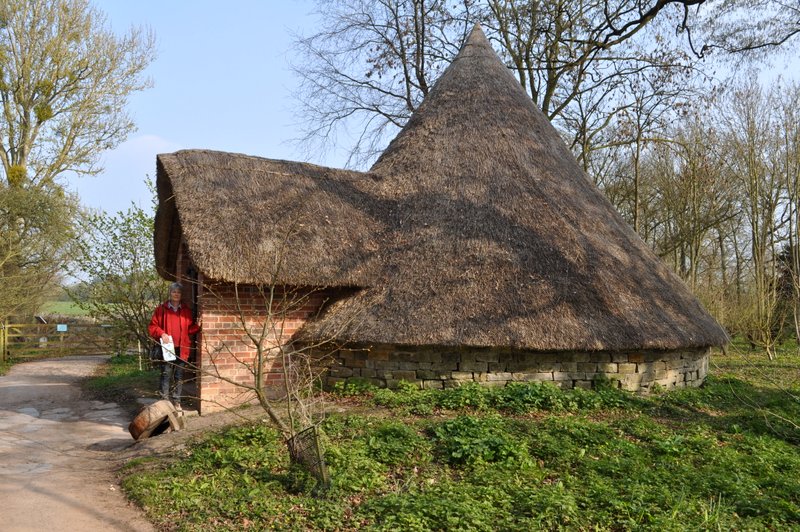

29. Evergreen Shrubbery

27. Temple Greenhouse
Designed by Robert Adam, there are fine views across the park to the main house itself. Glass windows have now been added.

26. Druid
This statue was designed by James Wyatt, and after very careful scrutiny, we did discover the hidden date stamp – 1793!

25. Dry Arch Bridge
The carriage drive built by Brown passes over the top, and here is also a detail of one of the facing stones.

22. The Grotto and Sabrina
You can see the statue of Sabrina reclining on the left hand side of the Grotto, which is itself constructed from tufa.

23. Worcester Gates
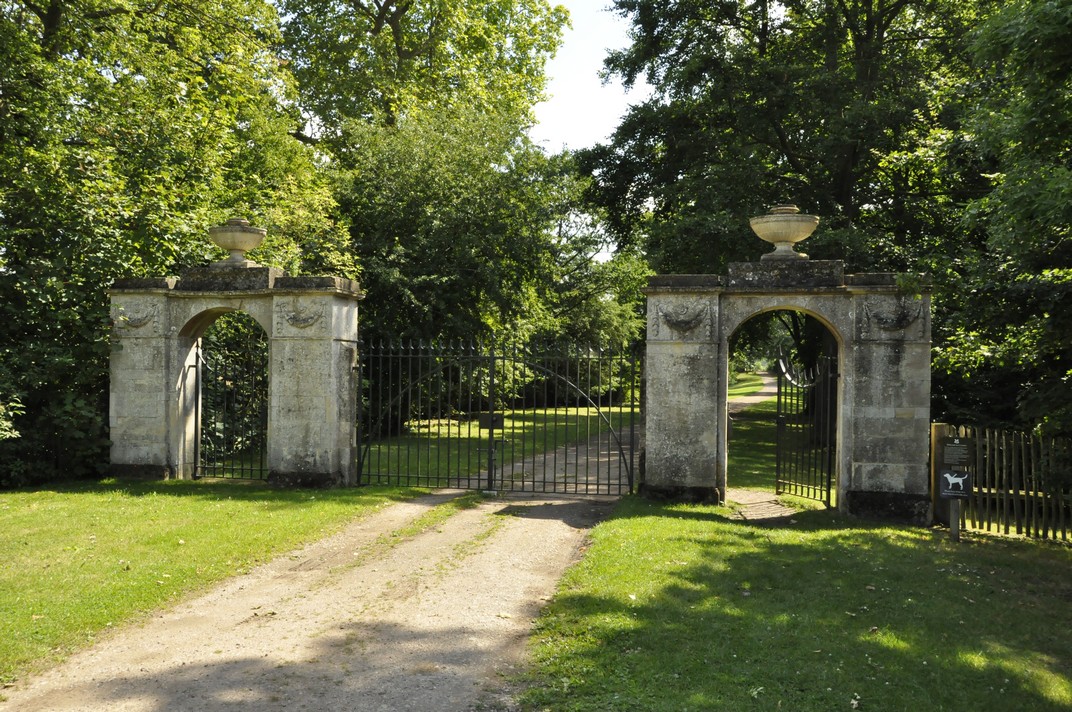
28. Statue of Pan

21. Island Pavilion
This is an elegant pavilion, which has undergone extensive restoration particularly to remove decades if not centuries of graffiti from the inside walls. The plaque on the rear wall shows a wedding scene.

15. Croome Court
This building is both plain and elegant. From the rear, north side, it does appear very attractive at. But the South Portico, with reclining sphinxes either side of the elegant steps up to the door, is something else instead. Although the exterior design is attributed to Capability Brown, Robert Adam was responsible for some of the interiors, particularly the long gallery. The plaster work throughout has been extensively restored as part of the National Trust’s more than £5 million scheme. Only the ground floor and part of the cellars is currently open to visitors. We first visited Croome in March 2011. Three years later one of the rather dilapidated side wings has now had its roof and windows replaced and is on track for a complete restoration. Some other buildings at Croome were converted years ago into private apartments.

When we visited Croome in 2015, the house was encased in scaffolding and swathed in polythene, now removed. We have toured the house just once, in 2011. Work continues with the refurbishment inside, but because Croome was rather busy two days ago, we just enjoyed our walk around the park. I think a visit nearer Christmas might be appropriate to see how the house has changed over the past six years or so.

13. Rotunda
This building lies about 150 m to the east of the south portico where the land rises away from the main park and Croome River. It has an impressive ceiling and other moldings.

16. Chinese Bridge (and Croome River)
It’s hard to imagine the number of laborers it took to dig this ‘river’ if it took 12 years. There are footpaths all round the lake, where you can mix with the local livestock, and various water birds: coots, mallard, great-crested grebe, and Canada and grey lag geese (on the most recent visit).

17. Park Seat
This sited on a high point looking north over the park towards the house. You can imagine what it must have been like in its heyday – a stroll or ride through the park, perhaps a picnic at the Park Seat. Elegance!

18. Carriage Splash
This is the view along the Croome River from the Carriage Splash.
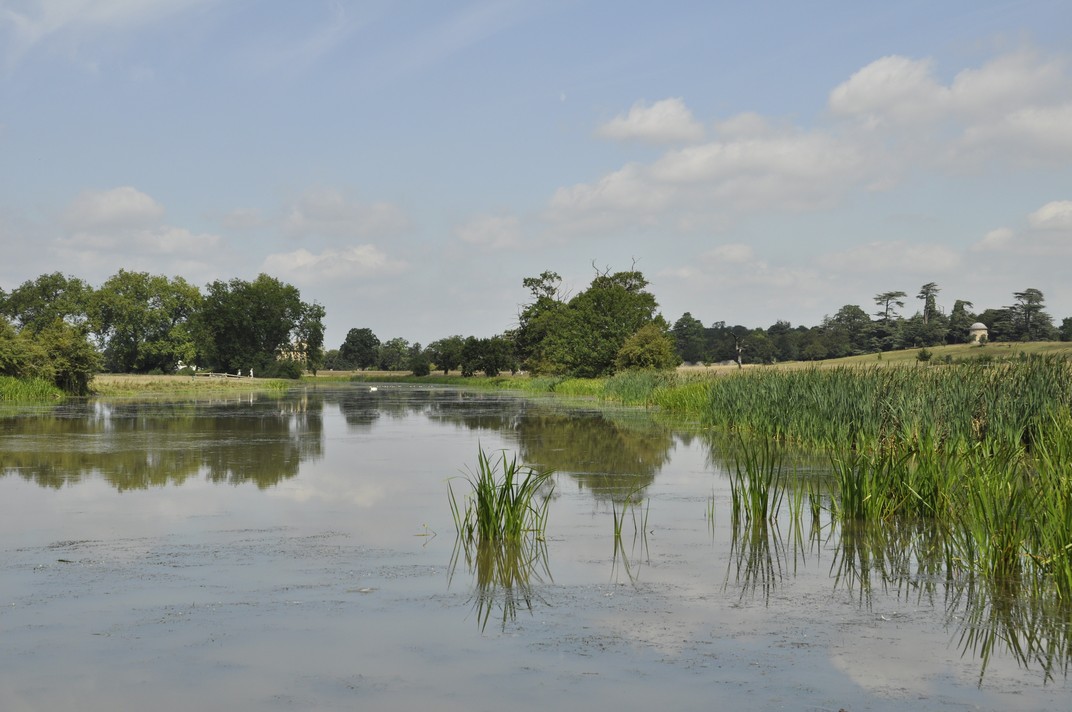
9. London Arch
This is an impressive entrance to Croome on the east of the property, but now provides access, via a private road, to apartments that have been developed in some of the outbuildings of the house.
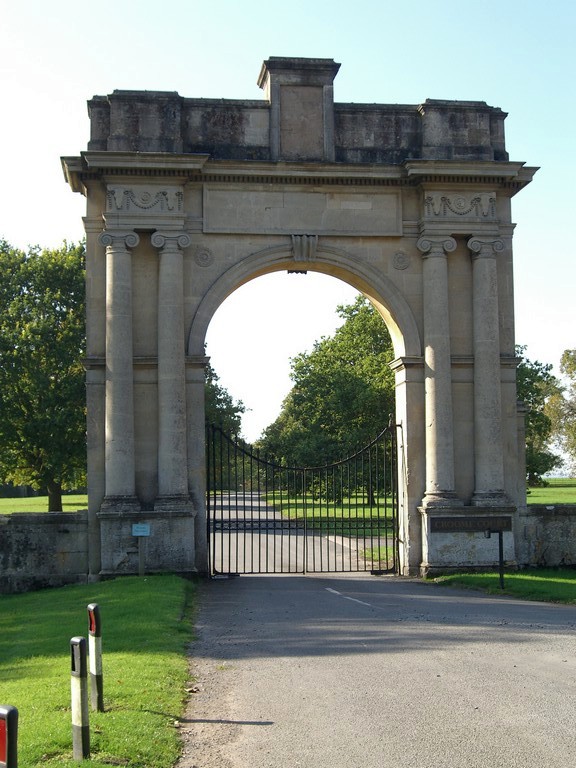
Croome Court has seen some changes during its history. George III visited, as did Queen Victoria and George V. It’s reported to have housed the Dutch royal family in exile during WWII. The Coventry family sold the house in 1948. It subsequently became a Catholic school, and even owned by the Hare Krishna sect. Today, while the garden and park are owned by the National Trust, the house itself is owned by the Croome Heritage Trust and leased to the National Trust.

So if you want to enjoy some culture and the opportunity for a brisk and bracing walk, Croome Court and Park is the place to visit. The photos in this post were all taken along the Park Seat Walk (in yellow on the map below, around 3½ miles).
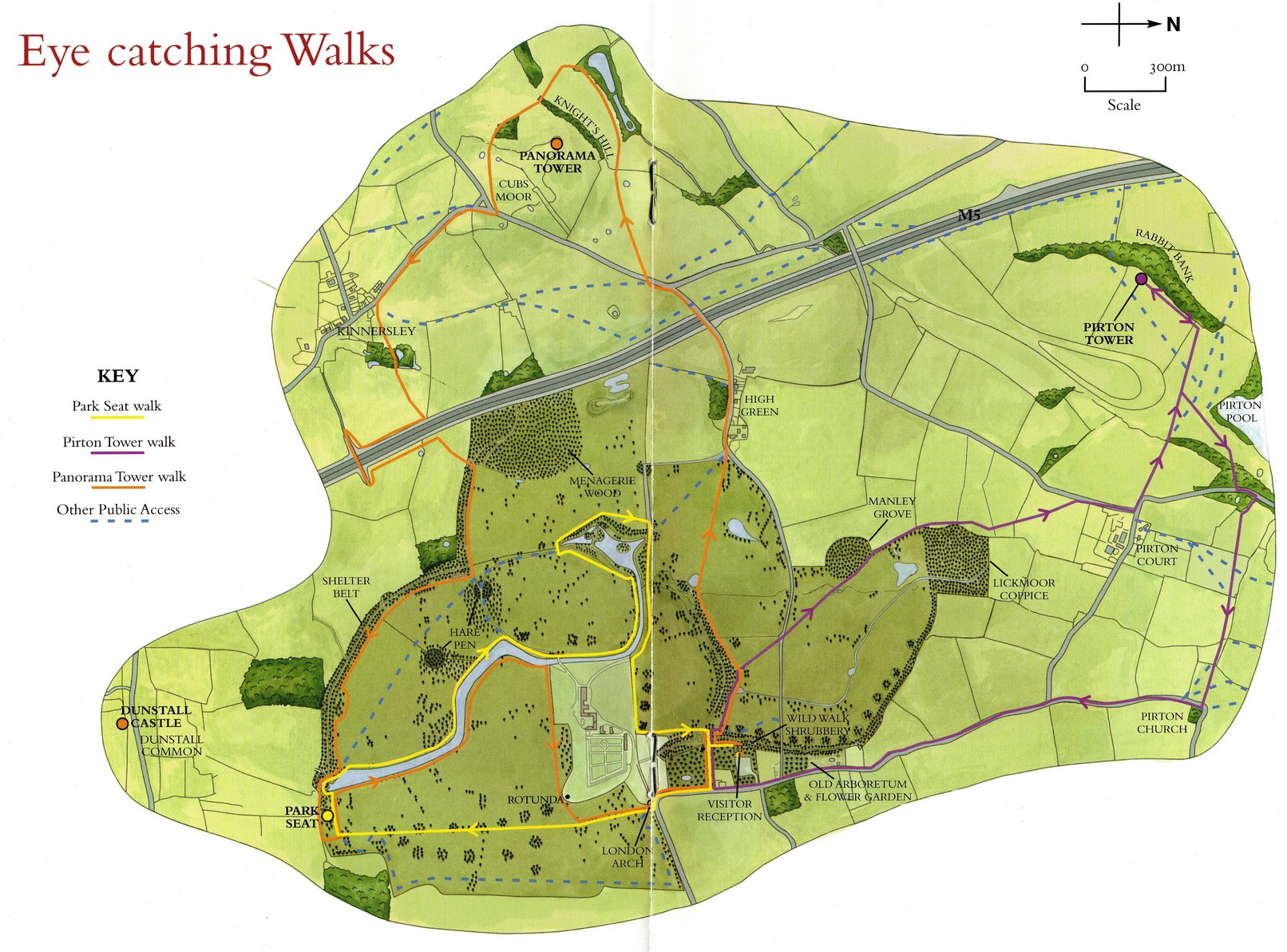

Beyond the park, and towards the west and the Malvern Hills, stands the Panorama Tower (B on the map).

Celebrate Croome for its inherent, natural beauty.

Celebrate Capability Brown, who could realise the vision of his patron, and made an impact on English landscapes like no other before or since.

And celebrate the 6th Earl of Coventry, who had a vision, and the financial resources to do something about it.
Lost in the mists of time . . .

Before Monday I’d never heard of Hailes Abbey. Owned by the National Trust, but managed by English Heritage, Hailes Abbey (or what now remains of it), is a 13th century Cistercian monastery, nestling under the Cotswolds escarpment, a few miles east of Tewksbury in Gloucestershire.

Having seen that the weather would be fine this week, we began to plan another day out. on Tuesday. Browsing through the Trust’s handbook for members it soon became clear that several properties we wanted to visit were not open on a Tuesday. That’s when I turned to a neat National Trust app on my new iPad mini. And that’s when I ‘discovered’ Hailes Abbey (and also a 14th century tithe barn in a village we would pass on our way home).

Royal connections
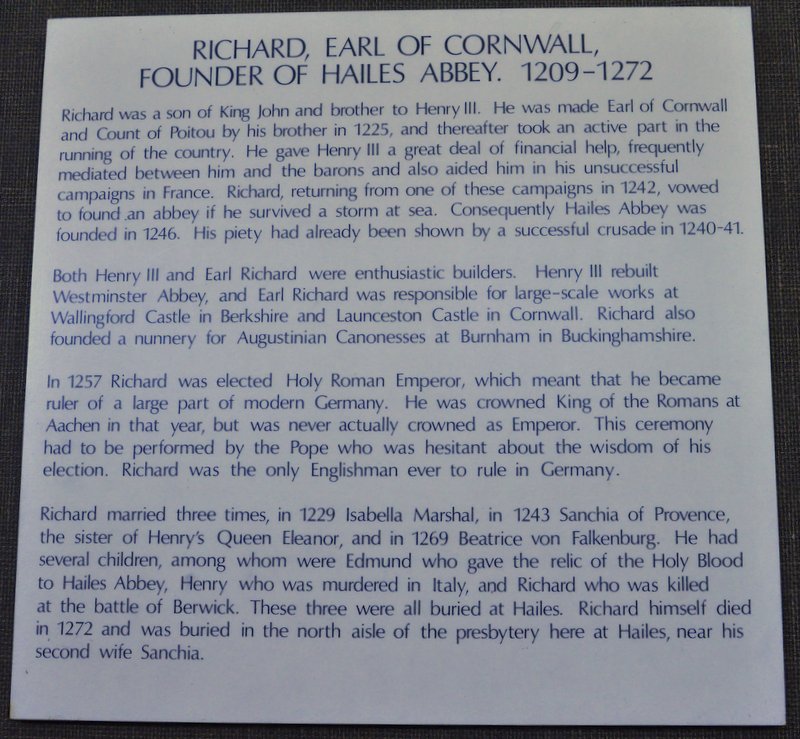
Founded in 1246 by Richard, Duke of Cornwall, son of King John, and younger brother of Henry III, I was surprised to learn that Hailes had been an important house in the network of Cistercian monasteries founded all over England, and certainly one to rival Fountains Abbey or Rievaulx  Abbey, although perhaps not quite on the same scale.

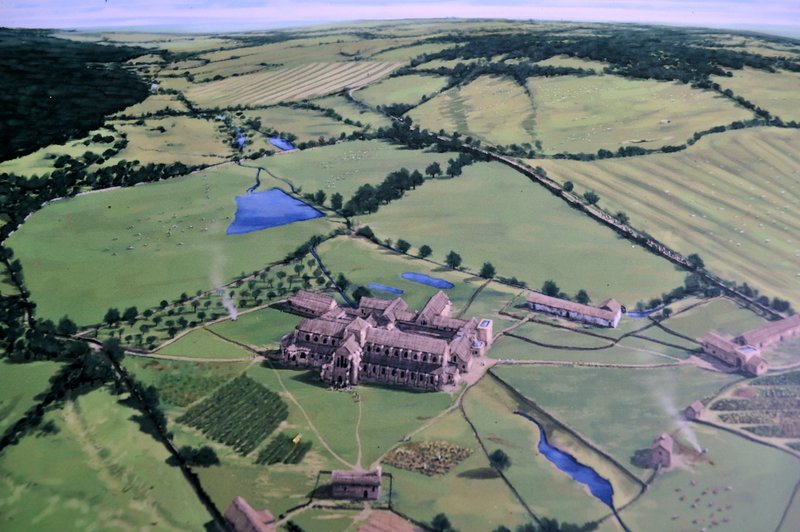
But that’s actually quite hard to fathom, since so little of the original buildings remain, that were constructed from the local oolitic limestone. It is clear however that, from the dimensions of the church at Hailes, it must have been a pretty impressive community, like many others that were founded more or less around the same time. Of course, Hailes suffered the same fate as other religious houses under Henry VIII’s dissolution of the monasteries in the early 16th century.

The monks gained much of their income from wool – supposedly they kept up to 4,000 sheep (the famous Cotswolds breed, perhaps). Also, the community had a relic of the ‘True Blood of Christ’ (and later on even a relic of ‘The True Cross’). Pilgrims apparently flocked to Hailes, and made donations for the privilege of venerating the relics.

Just a few walls are still standing today, and some of the surviving stone carvings have been removed to a small museum on site. Nevertheless, the dimensions of many of the buildings and rooms are still visible. And from the dimensions of the walls, and from what is still visible, it’s not too hard to imagine a grand church vaulting skywards.

On most days it would be an extremely peaceful site to visit, and in most respects it was. But the staff were busy mowing the grass, so for much of our visit there was the background drone of mowers and strimmers.

Just across the road from the Abbey is a small chapel, older than the abbey, and constructed in the mid-12th century, with some impressive frescoes still visible. I guess many churches were decorated like this before the Reformation. And behind the chapel is the site of a former castle, but no signs of it at all are visible today. Instead the fields are owned by a plant breeding company, and laid out to wheat variety trials.

Another medieval tithe barn
In August last year, we visited a tithe barn in Bredon. Just a few miles upstream, at Middle Littleton (just northeast of Evesham and south of Bidford-on-Avon), is another 13th century tithe barn. It’s certainly an impressive structure, and although we were there for only about 30 minutes, it’s worth stopping by. The stone roof is particularly interesting, especially seeing how the roofers accommodated changes in pitch and angle. The beam structure underneath holding it up is also impressive. It’s open every day from 2-5 pm, between 1 April and 31 October.


Visiting again after almost 50 years . . .

Although the weather yesterday wasn’t as bright as had been forecast a few days previously, we thought we would miss any showers that came along, so decided to push ahead with our visit to Attingham Park, a late 18th century mansion just southeast of Shrewsbury. And apart from one short shower, the weather did behave.

Built in 1785 for the 1st Lord Berwick, Noel Hill, politician and supporter of William Pitt the Younger, Attingham Park replaced an earlier house, Tern Hall. It had a chequered history, and the estate today (at around 3500 acres) is half the size it was at the beginning of the 19th century. The Berwick title became extinct in 1953 on the death of the ninth baron.

But it has a cornucopia of treasures inside, many collected by the 2nd and 3rd barons during their travels in Europe. A picture gallery and staircase, designed by architect John Nash (who designed other famous buildings such as te Brighton Pavilion and extensions to Buckingham Palace) were added in 1805. The roof of the gallery – considered a piece of outstanding architecture in its own right, but which leaked from the very beginning – is undergoing extensive refurbishment today. Apart from one or two glimpses here and there, the roof is not visible from the inside, but I’m sure it will look magnificent once fully restored.

Visitors to Attingham Park today have extensive access to rooms on three floors – in fact one of the better properties in this respect that the National Trust manages. Together with long walks through the Park, a tour of the impressive walled garden, as well as the house itself, Attingham Park is certainly worth a visit.

But as the title of this post suggests, this was not my first visit to Attingham Park. For almost 25 years from 1948, it was run as an adult education centre, and the warden was Sir George Trevelyan (of the Wallington House in Northumberland Treveleyans). In 1966 ( I think it was) I attended a weekend residential course – I was in high school at the time. I don’t remember seeing may of the treasures that were on display yesterday. Maybe we were kept well away.

A house beautiful . . .

Just three miles west of the centre of Wolverhampton lies one of the most outstanding properties in the National Trust’s portfolio: Wightwick Manor and Gardens.

20140702 010 Wightwick Manor & Gardens

The entrance to Wightwick is on the Bridgnorth Road, west (to the left) of the crossroads (Windmill Lane) and The Mermaid public house on the corner.

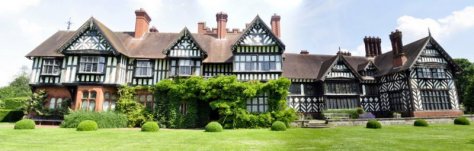
Built by Wolverhampton industrialist Theodore Mander and his wife Flora in 1887, and extended (in fact the house doubled in size) in 1893, Wightwick Manor is a fake Elizabethan half-timbered Victorian Manor House (along the lines of Little Moreton Hall), and looks almost genuine. But what defines Wightwick is the incredible interior decoration and furnishing under the influence of the Arts and Crafts Movement. Theodore Mander and his wife were also influenced by the Aesthetic Movement and a lecture by Oscar Wilde on The House Beautiful. The house is exquisitely furnished with William Morris wallpapers and fabrics, De Morgan tiles, and Kempe glass, as well as hundreds of pre-Raphaelite paintings and other works of art.

His son Sir Geoffrey Mander, Liberal MP for Wolverhampton East, persuaded the National Trust to take over Wightwick in 1937 – a controversial move at the time since the house was only 50 years old. The family retains some interest in Wightwick Manor. Because of copyright issues, photography is not permitted inside the house – more’s the pity.

For a detailed account about Wightwick, follow this useful link. And you can find out more about the Mander family here.


Christmas in July . . .

How can that be? Christmas in July?

Indeed.

A couple of days ago, Steph and I had a day out at Kew Gardens, followed by a lovely afternoon tea (with all the works: sandwiches, scones with jam and cream, pastries, cake) at a ‘nearby’ hotel in Richmond (the Richmond Gate).

But why ‘Christmas in July’? That’s because Hannah and Michael, Philippa and Andi had given us a Virgin Experience Days Gift Pack for Christmas, with vouchers for Kew and afternoon tea. And we only got around to using them this week.

Not only had we been waiting for the most appropriate and convenient date to travel to London, but we had been keeping an eye on the weather. And as it turned out, the weather could hardly have been better on Wednesday: broken cloud, and warm and sunny (even hot at times) all day.

Getting to London
Once we’d settled on a date, then we had to decide how to travel to London. Of course we could have ‘let the train take the strain’. But as Kew is quite a distance west from central London (the terminus for several train companies from here in the Midlands), the Kew Underground station is not so close to the gardens, and the ‘nearby’ hotel was three miles from Kew, public transport looked inconvenient – and expensive.

So I decided to drive, not something I was looking forward to. The drive down the M40 and M4 was only about 110 miles, but leaving at around 8 am as we did, I was worried about traffic congestion at various points in the journey (especially closer to London), and of course the major question: where to park?

Kew Gardens does not offer much parking, and there are restrictions on all the streets nearby, except Kew Road (which quickly fills up, apparently) but only after 10 am. Searching the Internet last weekend, I came across a site I’d never encountered before: JustPark (rebranded from ParkatmyHouse.com), through which homeowners offer parking spaces at their homes, for a fee. An excellent idea. It’s just like making a hotel reservation. You just choose where you’d like to park (all interactive on Google maps), check whether it’s available, pay the fee, and Bob’s your uncle. We found a space just five minutes walk from Kew’s main entrance, the Elizabeth Gate, off Kew Green. It couldn’t have been better. And it was also on the South Circular A205 that we had to take to reach our afternoon tea destination.

We set off just a few minutes after 8 am, and I parked the car at Kew just after 10. Remarkable. Then we headed off to the Gardens, and spent the next 5½ hours walking a little over 8 miles around Kew.

Enjoying Kew
There wasn’t much that we missed. Many of the main attractions (the Princess of Wales Conservatory, the Davies Alpine House, Rock Garden, the Duke’s Garden, and the Palm and Waterlily Houses are located at the northeast end of the Gardens. It’s almost a 2 mile walk from the Elizabeth Gate to the Pagoda at the far southern end, but we didn’t get that far.

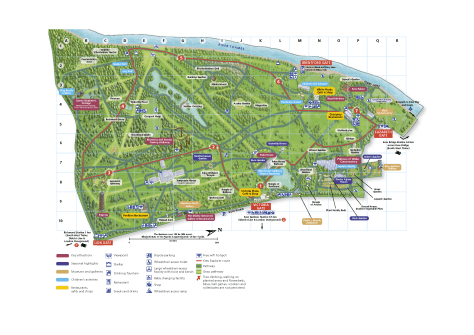
Click on the map below to open a PDF file.

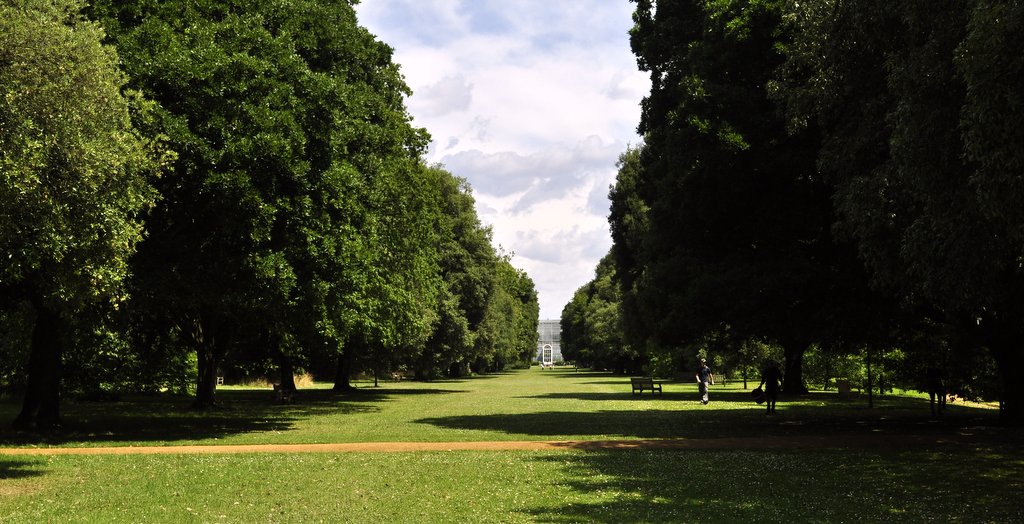
Looking east along Syon Vista towards the Palm House

Looking east along Syon Vista towards the Palm House

After lunch we set out southwards, however, to find the lake and its relatively new Sackler Crossing, and the Xstrata Treetop Walkway, heading back to the Palm House via the Mediterranean Garden, and a brief stop to look inside the empty Temperate House. This is a huge building, first opened in 1899 but now closed for refurbishment, at a cost of £35 million, until 2018. It was fascinating to see the labyrinth of steel girders that make up the skeleton of this impressive glasshouse. Those Victorians certainly knew how to build on an epic scale. but in the open park there are hundreds of the most magnificent mature trees from all over the world.

Highlights
You have to marvel at the construction and design of the various glasshouses. The Davies Alpine House is truly an architectural statement in its landscape.

The Princess of Wales Conservatory showcases 10 environments under a ‘single’ roof, and the plants are elegantly displayed.

While are very familiar with rainforest vegetation from the years we lived in Costa Rica and the Philippines, it’s good to see many of these species displayed in the Palm House.

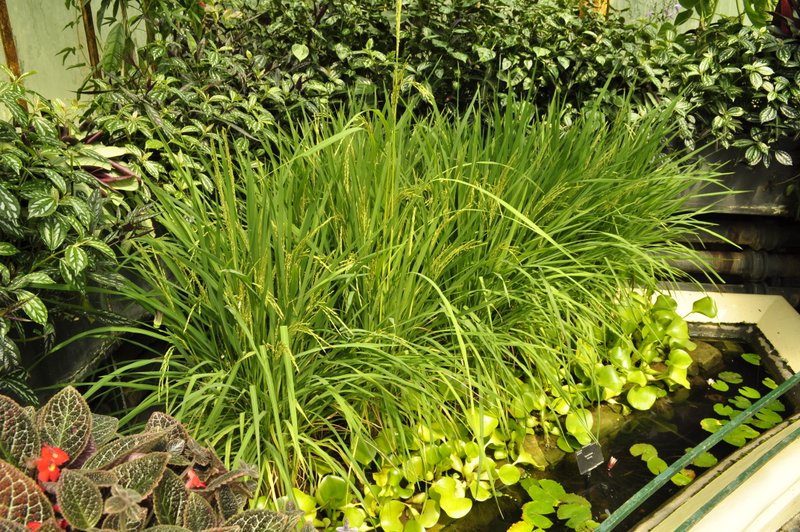
And while many of the economically important cereals were planted in the Grass Garden, there was no rice of course. But we finally tracked it down in two corners of the very hot and humid Waterlily House.

20140709164 Kew Gardens

The Rock Garden and the Plant Family beds are separated by a wall and a 150 m path, along which the flower beds are planted exclusively with Salvia species, a lovely sight.

The Sackler Crossing over the lake is a relatively new feature at Kew, and is a beautiful addition to the Gardens, curving as it does from one bank to the other.

The Xstrata Treetop Walkway takes you almost above the canopy of the surrounding trees, 18 m above ground. After walking for more than 4 hours, and beginning to feel a little jaded, we opted for the lift to carry us to the top. And what a great view we had from there, although it was a little unnerving to feel the Walkway rock – ever so slightly – from side-to-side.

The Waterlily House is small but contains some beautiful examples of Nymphaea and the giant Victoria cruziana at their best at this time of the year.

Most of the plants are labelled, but it was frustrating not to find one on some plants that we particularly wanted to identify – especially the variety name. Also, Kew has a Plantasia event, with plants all around the Gardens highlighting the life enhancing power of plants – many from Asia used in folk medicines.

Finally, we headed to Kew Palace, once the country retreat of King George III and his family in the 18th century, with its beautiful Queen’s Garden and a sunken herb garden. Exquisite! Of course it’s no longer ‘the country’, but I have to say when walking through the verdant parkland of Kew you can just imagine a world more than two centuries ago, and were it not for the incessant drone of jets landing (almost every minute) at Heathrow (Kew lies directly under the flight-path when aircraft are landing from the east) you wouldn’t know you were just a few miles from the centre of London.

Time for tea
By 3:30 pm, my ‘dogs were barking’ – that’s to say, my feet were sore. So we headed back to the car and drove the three miles to the Richmond Gate for the other part of our Christmas treat.

After three cups of tea, several finger sandwiches (salmon, ham, egg, all with the requisite cucumber), scones with jam and cream, profiteroles, and Madeira cake, I was a much happier bunny. We were on our way home by about 4:45 pm, and although we encountered traffic congestion approaching the M4 and getting on to the M25 north, it was the open road once we hit the M40 north, and we were home, tired but contented after a great day out, just after 7:15 pm.

Thank you Hannah and Michael, Philippa and Andi for such a lovely treat!