 I hope I’m not tempting Providence.
So far, Steph and I have managed to avoid COVID-19. We still mask when we shop at the supermarket, when we travel on the Metro here in Newcastle upon Tyne, or anywhere we might be in close proximity with others. Mostly we are the only ones wearing masks.
 And while most people feel that the pandemic is over and done with, latest data from the UK’s Office for National Statistics indicate that the virus is, once again, on the increase.
About 1 in 40 of England’s population (2.66%) tested positive at the end of March. COVID-19 has certainly not gone away, and given some of the horror stories circulating about the effects of long-COVID, it’s better to avoid infection if at all possible. Or at least reduce the risk of infection. That’s why we continue to mask.
And while we have been COVID-free, it has affected our nearest and dearest. Both our daughters and their families were struck down on a couple of occasions, even though everyone had been vaccinated.
As for Steph and me, we received our initial vaccinations in February and April 2021, with boosters in October that year, and in September a year later.
At New Year 2020, who would have envisioned that we were on the verge of a global pandemic. It was only on 31 December that the World Health Organization (WHO) was informed of a cluster of cases of pneumonia of unknown cause detected in Wuhan City, Hubei Province, China. A novel coronavirus (SARS-CoV-2) was subsequently identified from patient samples.
Less than a month later, two Chinese nationals staying at a hotel in York tested positive for coronavirus. It was downhill thereafter, with the first lockdown coming into force on 26 March 2020. Other lockdowns followed. The Institute for Government has published an interesting timeline of the various government measures taken over the subsequent year here in the UK.
Daily life for everyone changed overnight. Although with hindsight, we now know that not all the rules that governed the lives of millions throughout the country were followed by then Prime Minister Boris Johnson and 10 Downing Street staff!
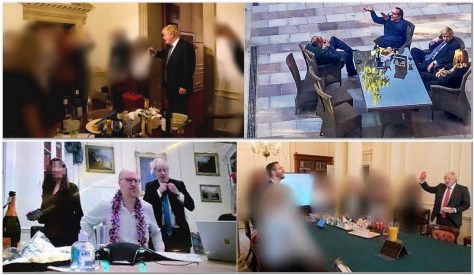
Boris Johnson partying with Downing Street staff.
So, in retrospect, how has the COVID pandemic affected us?
Surprisingly little, if I’m honest. Despite all the inconveniences to daily life, the past three years have flown by. We’ve been rather busy. We kept to ourselves.

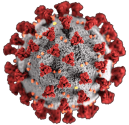
Another type of Corona . . .
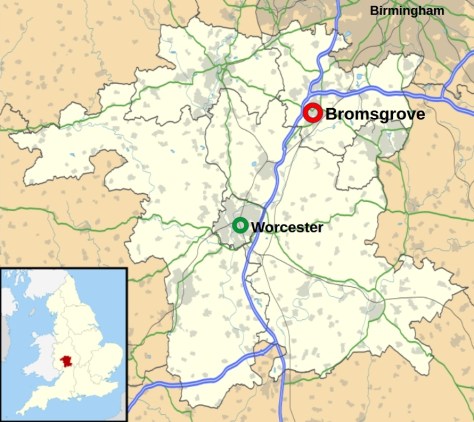
Fortunately, we prefer the quiet life and since we don’t go pubbing, clubbing, or eating out regularly, we didn’t miss those during the lockdowns. And since the rules permitted exercise outdoors with one person in the same family bubble, we continued to enjoy the outdoors, with Steph joining me on my daily walks around Bromsgrove in Worcestershire where we were living at the time, weather permitting.
And once the National Trust started to open up once again, we seized the opportunity and headed off, on a glorious afternoon, to Dudmaston Hall in Shropshire, and several other properties close by before the end of September.
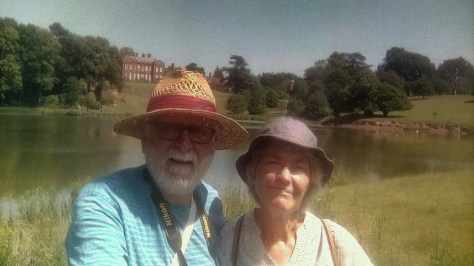
At Dudmaston Hall on 24 June 2020.
The first impacts of lockdown back in 2020 seem almost a lifetime ago. Deserted streets, and long queues at the supermarkets and shortages (caused primarily by panic buying in the first instance) of some food items and other basics like hand sanitizer and toilet rolls, until the inevitable rationing that was brought in.
 Our nearest supermarket, Morrisons, was just 5 minutes or 1.6 miles away by car. Being the driver, the weekly shop fell to me since the supermarkets were only permitting entry to one person per household. I also took on the weekly shop for a widower friend and former University of Birmingham colleague, Jim Croft (a few years older than me) who lived close by. In fact I continued to shop for Jim right up till the day we moved north to Newcastle.
And talking of moving, by November 2019 (during a visit to our younger daughter Philippa and her family in Newcastle upon Tyne) we had bitten the bullet and decided we’d put our Bromsgrove house on the market, and make the move north.
 Having appointed an estate agency (realtor) to handle the sale of our house, we waited until the New Year for the first adverts to be placed in the local press. Come mid-January 2020, a For Sale board had been firmly planted in our front garden, and we sat back waiting for a surge of prospective buyers. To our surprise—and disappointment, given the location of our house (proximity to excellent First and Middle schools, close to Bromsgrove town center, nearby dental and medical practices, and an upgraded commuter rail service into the center of Birmingham) we expected there would be more interest than we actually experienced.
By the end of March when the first lockdown came into effect, we’d received fewer than ten viewings. Even under lockdown, the government rules permitted house viewings to continue, as long as they were managed safely (social distancing, hand sanitation, and the like; we were always away from the house in any case during the viewings that were managed by the estate agent).
However, we decided not to accept any more viewings until the rules had been relaxed. Except for one, that had been pencilled in for a week hence. After that, we sat back, wondering when we would finally be able to make the move to Newcastle. We had already decided to rent a house there in the first instance, and use it as a base to look for a new home. But until we had sold our house, it was impossible to make any progress on finding a suitable rental property.
Come the lifting of the lockdown at the end of May, almost immediately we received a request for a second viewing from that last couple. And after a little negotiation, they made an offer which was acceptable. Less than the house had been advertised for (which I never expected to get) but considerably higher than a couple of offers we did receive earlier on, or how other estate agents had valued the house. Happy times! Or at least I thought so.
But anyone who has struggled through a house sale (and purchase) will know and understand the considerable angst that the whole conveyancing process can bring. We were at the top of a chain, since we had no purchase waiting to be completed. There was one solicitor two links below in the chain of four who made life miserable for everyone. By the end of September, however, we had all exchanged contracts and completed the sale on the 30th. And moved out that same day. We had used the intervening months to pack many of our belongings and upcycled many items that we no longer wanted to hold on to.
Fortunately I had identified a nice three-bedroom house east of Newcastle in the Shiremoor district of North Tyneside, and just 10 minutes from the North Sea coast. Offering to pay six months rent up front, I had secured a ‘reservation’ on the property at the beginning of September, not knowing exactly when we would be able to move. We moved in on 1 October.
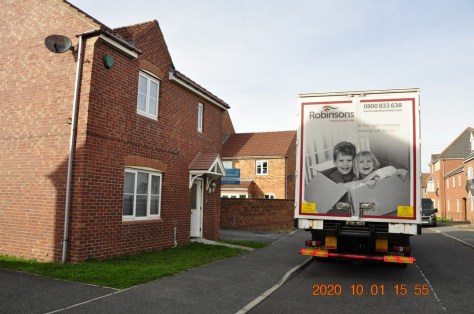
The removal van arrived at 1 pm and was on its way south once again by 4 pm.
Within a fortnight of landing in Newcastle, we had already made an offer on a four bedroom, and two-year-old house, about a mile from where we were living at the time. It should have been the simplest sale/purchase but once again the solicitors made a meal of the process. However, the purchase was completed on 13 February 2021 and we moved on 6 March.

Moving out of Cloverfield

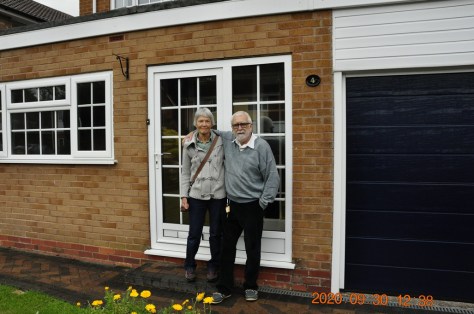
Moving into our new home
But because of repeated lockdowns, and the rules around meeting other family members and the like, we saw very little of our younger daughter and her family for the next 12 months. Christmas morning 2020 was enjoyed outside in a socially-distanced garden, followed by a solitary lunch for Steph and me.
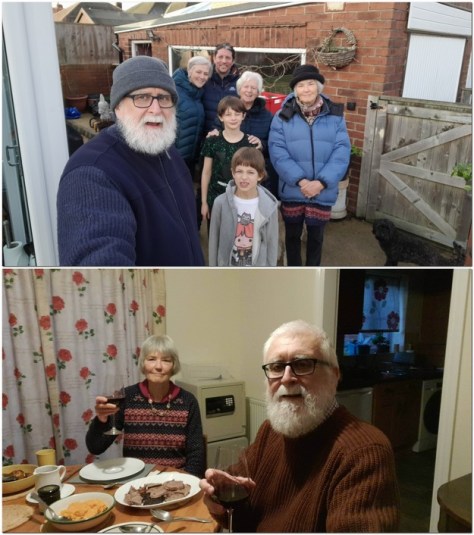
Unfortunately COVID also put paid to family Christmases in 2021 and 2022.
There hasn’t been a day since that we have regretted the move north. Northumberland is an awe-inspiring county. Our home is only 10 minutes from the North Sea coast. There are miles and miles of paths and bridleways (known locally as ‘waggonways’) on the sites of old mine workings and rail lines. So even just after we moved here, and given the right weather, we have headed out into the countryside, enjoying what we like best: visiting National Trust and English Heritage properties (of which there are quite a few up here with magnificent gardens and walks), and enjoying the fresh air, socially-distanced of course. Just type Northumberland in the search box or open my National Trust and English Heritage page (organized by regions) and you’ll discover for yourselves some of the magical places we have visited over the past two and a half years. Here is just a soupçon of some of those around the northeast.

Seaton Sluice harbor.

The beach at Seaton Sluice.

National Trust Seaton Delaval Hall

National Trust Dunstanburgh Castle

Druridge Bay

English Heritage Warkworth Castle in April

National Trust Cragside

The garden at Cragside

Sycamore Gap on Hadrian’s Wall, in February 2022 just before vandals felled this iconic tree.

The Whin Sill along Hadrian’s Wall

Underfloor heating at Chester’s Roman Fort (English Heritage)

The River North Tyne at Chester’s Roman Fort

Crossing the River Tyne at Ovingham

National Trust Thomas Bewick’s home at Cherryburn

National Trust Allen Banks

Whitburn close south of the River Tyne

Marsden Cliffs south of the River Tyne

National Trust Souter Lighthouse

The Millennium Bridge in Newcastle

The Tyne Bridge, Newcastle

Grey’s Monument, Newcastle city center

Grain stores at Corbridge Roman Town, National Trust

Corbridge Roman town,

Elsdon castle – 11th century motte and bailey

Elsdon Castle

St Mary’s Lighthouse.

Bolam Lake Country Park

Shaftoe Crags

English Heritage Belsay Hall

Quarry garden at Belsay Hall

Christmas at Wallington National Trust

National Trust Wallington central atrium

Prudhoe castle from the pele yard, English Heritage

Upper Coquetdale

Chew Green, Upper Coquetdale

Coquetdale

The cascade at the Alnwick Garden

Cherry blossom at the Alnwick Garden

Looking over Coquetdale

The River Tyne at Ovingham
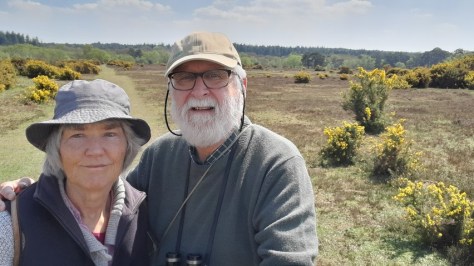
At this time last year, we spent a week in the south of England—staying at a cottage in the New Forest—and visiting more than a dozen National Trust and English Heritage properties, our first proper holiday since the beginning of the pandemic.
We haven’t traveled to the USA since September 2019, but we are gearing up for a visit come the end of May this year.
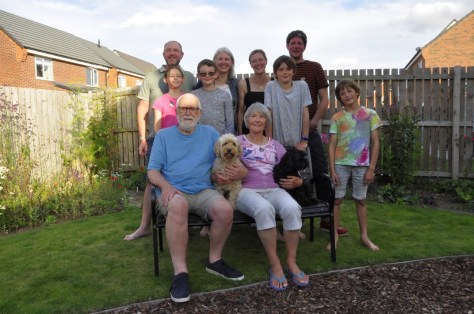
COVID restrictions for international travel were lifted sufficiently by July/August 2022 for Hannah and family to fly over from Minnesota, and at last (and for the first time since 2016) we had a family get-together with our two daughters, Hannah and Philippa, husbands Michael and Andi, and grandchildren Callum, Zoë, Elvis, and Felix.

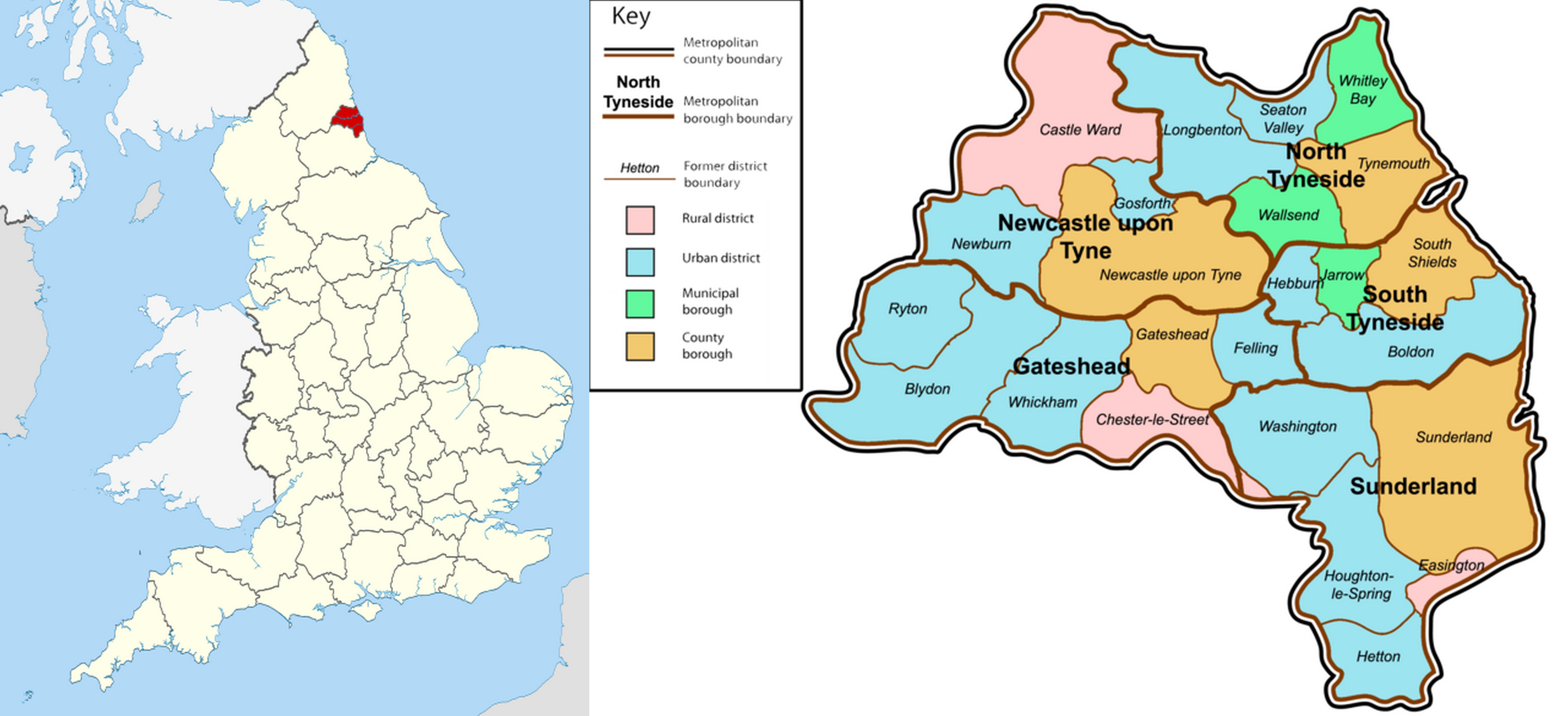
 Just a couple of weeks ago, Steph and I visited


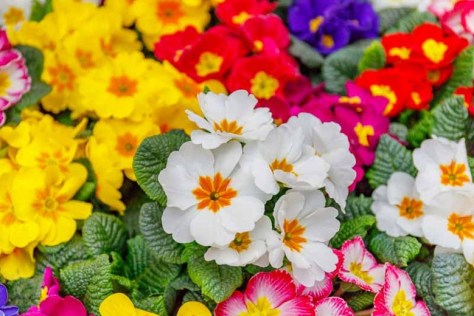
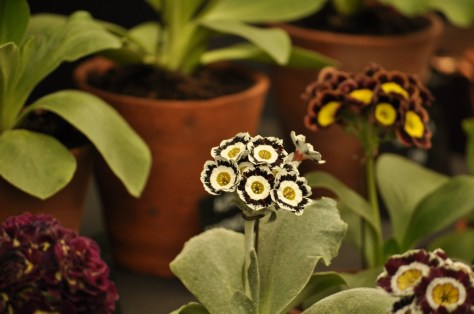
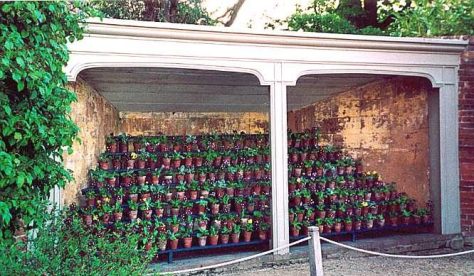



 With the onset of the Covid-19 pandemic in March 2020, our plans for travel that year and the next were well and truly scuppered. In 2022, Hannah, Michael, Callum, and Zoë came over to the UK for a fortnight.
 Then, in July 1979, Steph and 15 month old Hannah joined me on a conference trip to Vancouver, and we stopped over for a couple of nights in San Francisco. We returned to Costa Rica via Edmonton in Canada (where my elder brother Ed and his wife Linda lived) and Madison, WI with a side trip to visit a potato research station at Sturgeon Bay, 185 miles northwest of Madison.


 A balanced diet . . .