Until about three weeks ago, I’d never heard of Jacob Collier. Then YouTube offered up this video.
In this performance at the O2 Arena in London in December 2024, he was joined by Coldplay front man Chris Martin to sing Coldplay’s Fix You. The video has been viewed more than 5.5 million times.
So, who is Jacob Collier (right)? He’s an English singer, songwriter, multi-instrumentalist, producer, and educator. Born in London in 1994, he certainly has an interesting musical pedigree. He is of part Chinese descent through his mother Suzie Collier, a highly acclaimed conductor, violinist, educator, and mentor. And his grandfather, Derek Collier, was also a violinist, and leader of the Bournemouth Symphony Orchestra.
Jacob has been active since 2002, but it was not until around 2013 that his video covers of songs began to go viral, one in particular.
This was his cover of Stevie Wonder’s Don’t You Worry ‘Bout A Thing, released in 2013, that launched his career. It’s had 11 million views.
He’s a seven times Grammy Award winner. His YouTube channel has almost 2 million subscribers. And he’s about to embark on a world tour of 36 concerts that will finish at the end of October.
Why had I never heard of him? He completely slipped under my musical radar. Not your cup of tea, perhaps. And there’s some of what I’ve heard and seen that’s not for me. But he does have a huge following around the world and plays to packed houses.
And what’s his secret? Here, composer David Bruce explains.
Sharing the emotional impact of one of Collier’s live performances, here is another video by Scottish vocal coach Beth Compson Bradford (aka Beth Roars on her website and YouTube channel), who was in the audience for that December 2024 concert.
His fascination with harmony and engaging the audiences in his performances has certainly captured my attention.
It never ceases to amaze me just how quickly the Normans established control of England after the conquest in 1066, building castles right across the country. For example, construction of Barnard Castle (which we visited a couple of weeks ago) in County Durham began in 1083. And although the Normans did their fair share of castle building perhaps the golden age came under the Plantagenets, between the 12th and 14th centuries.
Through our membership of English Heritage, Steph and I have now visited 50 castles and fortifications. These range from pre-historic hill forts, several constructed by the Romans, as well as those in the centuries following the arrival of the Normans. I have written about those castles, and included a map, in this post. Castles come in all shapes and sizes.
I guess if you were to ask a child to draw a castle, the stylised image would include a curtain wall with crenellations, towers, a central keep, and an enclosing ditch or moat, just like we have seen at Warkworth in Northumberland, Caernarfon in North Wales, Goodrich in Herefordshire, Bodiam in East Sussex, and Dover in Kent, to name just five.
Warkworth Castle
Caernarfon Castle
Goodrich Castle
Bodiam Castle
Dover Castle
Last September, during a week long holiday in East Anglia, we took in the late 12th castle at Framlingham, about half distance between our holiday cottage and the Suffolk coast.
As it says on the English Heritage website, Framlingham is a magnificent late 12th-century castle, its striking outline reflected in the nearby mere. Surrounded by parkland and estates, it was once at the centre of a vast network of power and influence. Its owners for over 400 years were the Earls and Dukes of Norfolk, the supreme magnates in East Anglia – rich, ambitious and influential both at home and abroad.
And it was not quite what we expected, even though first impressions from outside did not suggest anything unusual. There it was, standing on a bluff over looking the River Ore, with a high curtain wall and thirteen towers. Hugh Bigod (d. 1177), 1st Earl of Norfolk began construction of the castle, but it was his successor Roger Bigod II (d. 1221) who built the curtain walls seen today.
English Heritage has published a comprehensive history on its website, and also tells Framlingham’s complex story in this animation.
What is unusual about Framlingham is that there is no central keep. And apparently there never was one. Instead, inside the Inner Court there were numerous free-standing buildings, or leaning against the curtain wall, with the remains of Tudor chimneys still in situ today. One special feature of a visit to Framlingham is the Wall Walk, which permits a 360º view of the Inner Court.
Two nieces of Thomas Howard, 3rd Duke of Norfolk, Anne Boleyn and Catherine Howard, were the second and fifth wives of Henry VIII, both losing their heads after being accused of adultery. The duke was disgraced, and in 1552, Framlingham became the property of Mary Tudor, Henry VIII’s elder daughter by his first wife, Catherine of Aragon. In 1553, after Lady Jane Grey launched her unsuccessful nine-day claim to the throne of England, Mary assembled troops at Framlingham, and was proclaimed queen in mid-July.
The castle became a prison, and by about 1589, it had fallen into disrepair. But history hadn’t done with Framlingham quite yet.
In 1635, the castle was sold to Sir Robert Hitcham, Member of Parliament and Attorney General to King James I. He died a year later but left instructions in his will for the castle buildings to be demolished and the stone used to build a workhouse (poorhouse), which still stands today. The workhouse comprises the original 17th century ‘Red Wing’, an 18th century middle wing, and on the right, the remains of the Great Hall.
I guess many folks south of the Watford Gap (often seen as the gateway between Northern England and Southern England) would have seldom if ever heard of Barnard Castle, a small market town in County Durham in the northeast of the country.
That is until May 2020 (during the height of the Covid-19 pandemic) when Dominic Cummings (right), a political strategist and chief adviser to then Prime Minister Boris Johnson was accused of breaking the strict lockdown regulations. Having taken his family north to County Durham from London (over 270 miles) in mid-April to stay with his parents, the family drove 30 miles to Barnard Castle to test—so Cummings claimed in a press conference—whether he was well enough to drive, having some problems with his eyesight. Since the majority of the population had isolated as required, Cummings’ apparent breach of the lockdown rules caused quite a scandal.
Even the local optician, Specsavers (whose strapline is ‘Should have gone to Specsavers‘) got in on the act offering free eye tests for anyone visiting the town. Needless to say that the visit Steph and I made to this delightful Durham town a couple of weeks ago was not for an eye test.
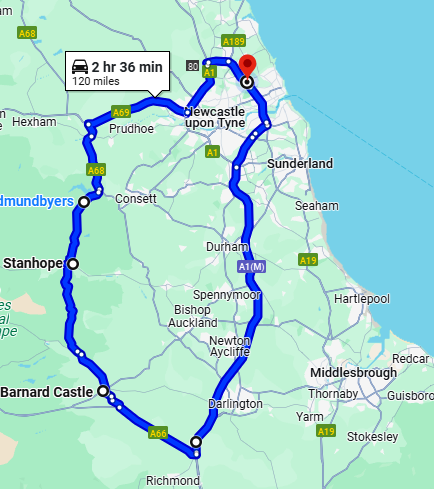
No, we were there to explore the medieval castle built on a craggy outcrop overlooking the River Tees, as well as the ruins of Egglestone Abbey just a couple of miles southeast from the town center. And we planned a drive home over the glorious moorland between Teesdale and Weardale.
And we couldn’t have asked for better weather.
There is a comprehensive description and chronology of the castle’s history on the English Heritage website, so I am not going to elaborate further here, save to post the introduction on that particular page:
Barnard Castle was begun soon after 1093 on a dramatic site above the river Tees.
The castle was built to control a river crossing between the Bishop of Durham’s territory and the Honour of Richmond. Much of the present castle was built during the 12th and early 13th centuries by the Balliol family. The clifftop inner ward shows the remains of fine domestic buildings, including a magnificent round tower of around 1200.
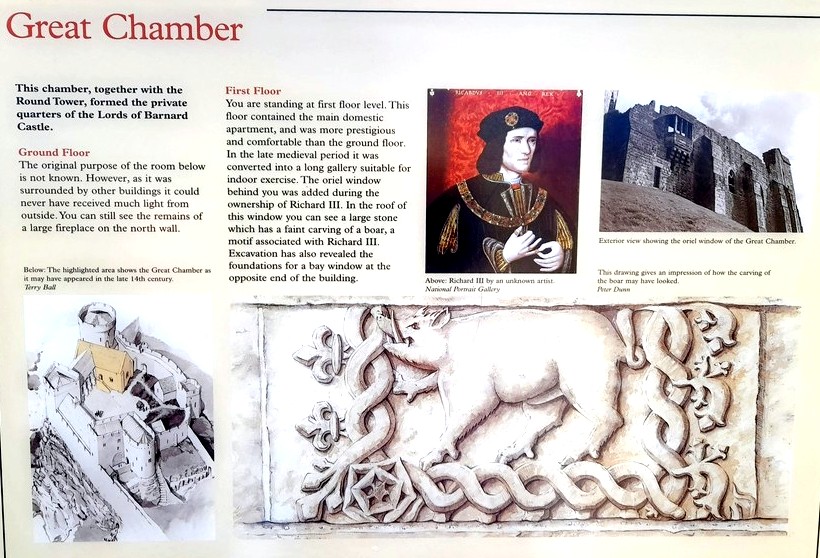
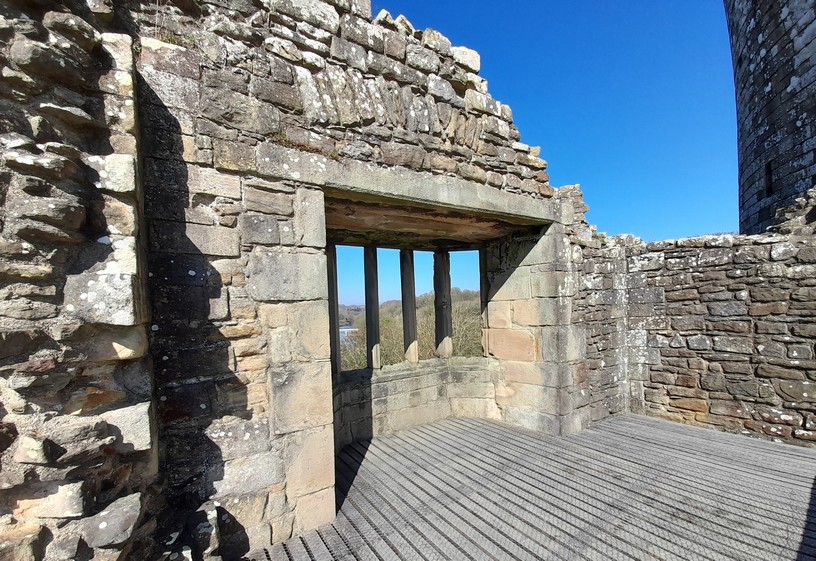
From the 14th century onwards, the castle belonged to the earls of Warwick, and from 1471 to 1485 to the Duke of Gloucester, later Richard III.
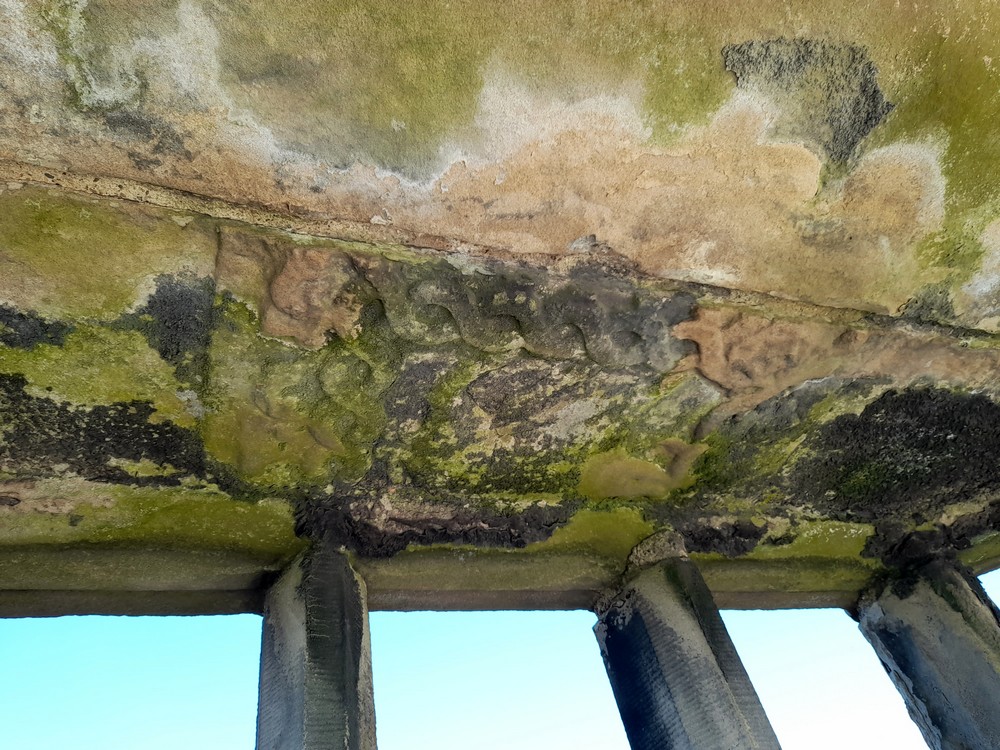
This is the remains of the image of Richard III’s boar above the oriel window.
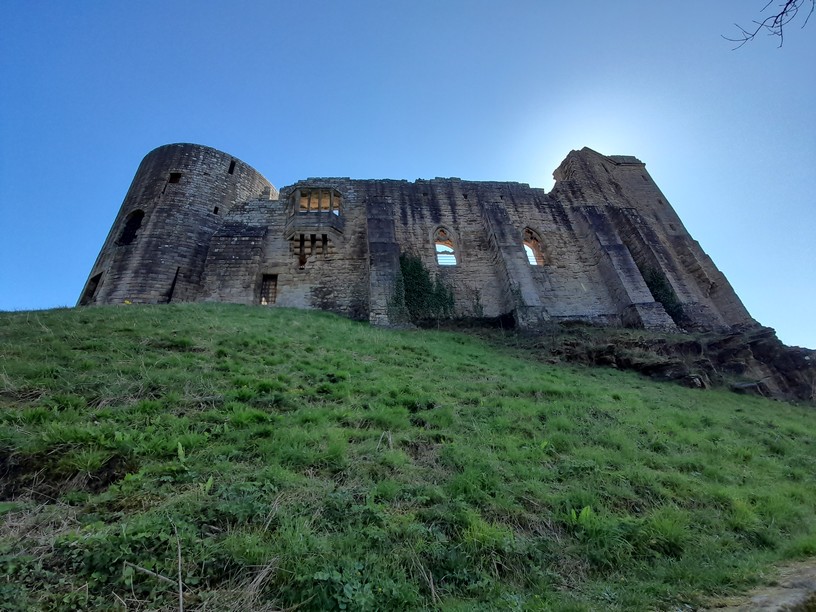
The round tower and oriel window from below.
After a fierce siege in 1569, when the castle was bombarded by rebels, the castle went into steep decline and was effectively abandoned by the early 17th century. It has remained an imposing ruin ever since.
Richmond Castle is just 15 miles southeast, and Middleham Castle (the boyhood home and northern stronghold of Richard III) is another 11 miles south.
Before heading to Barnard Castle, a neighbour had mentioned there was little to see there. Perhaps the ruins of the castle are not as extensive as others we have visited, but all around the site, English Heritage has placed explanatory information boards that put everything in perspective. And the young employees on reception were most helpful in pointing out different points of interest, and where precisely to view the Richard III boar!
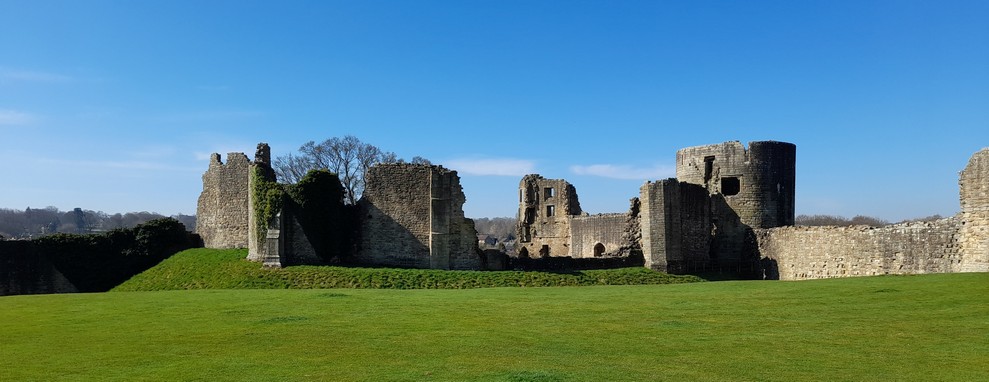
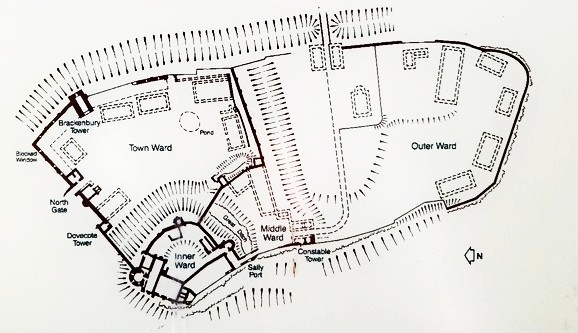
The layout of the castle is a series of courtyards or wards, enclosed in a curtain wall, with the strongest and best fortified being the Inner Ward surrounding the Round Tower, Great Hall, and ancillary buildings like the bakery. The Inner Ward was also protected on two sides by the Great Ditch, and of course on the others by the cliff on which the castle had been built.
Entering through the main or North Gate, the expanse of the Tower Ward stretches to the Outer Ward.
The North Gate
Town Ward looking towards the Outer Ward
The Great Ditch around the Middle and Inner Wards
Curtain wall
Curtain wall
The Outer Ward
The Town Ward from the Outer Ward
The Great Ditch is rather impressive, and the Inner Ward is protected by a huge wall across the ditch.
What particularly impressed me about the Round Tower was the beauty of the dressed stone which covers the outer surface. English Heritage has opened the narrow stairs around the tower that take you up to the upper levels, with interesting views inside. Of course all the floors have long disappeared.
You can see the complete album of photos (together with images of the information boards) here.
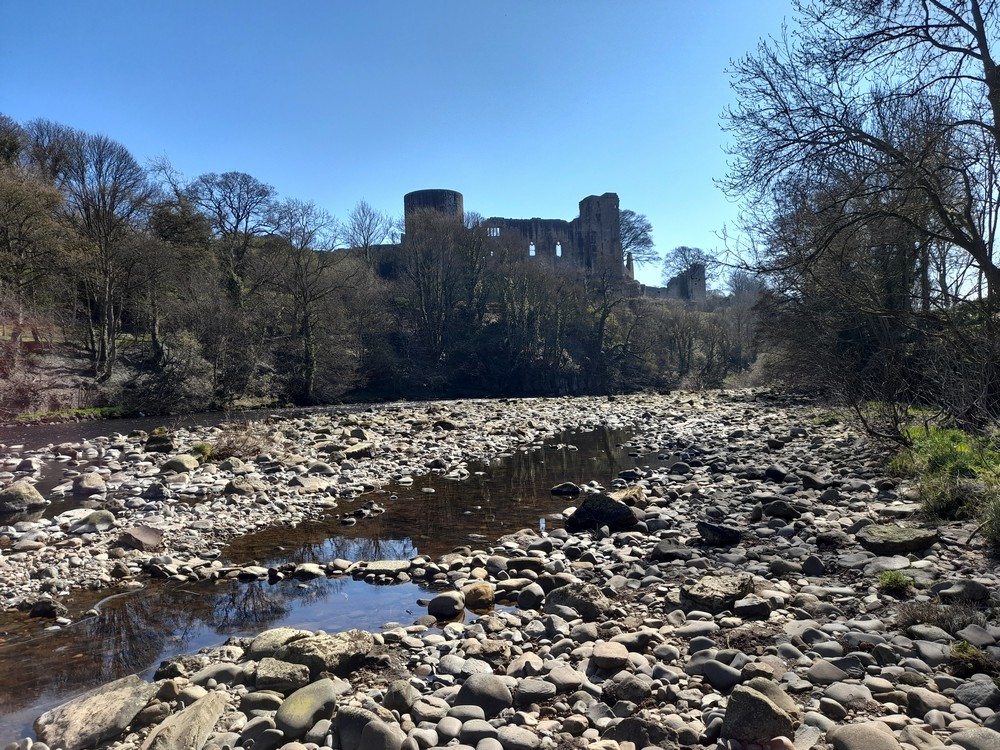
After a walk down to the river so we could observe the castle in all its splendour on top of the crag, we headed back into the town, passing again past the impressive butter market (officially the Market Cross) built in 1747. It’s had several uses including town hall, fire station, prison, and dairy market.
I should add, for the benefit of anyone contemplating visiting Barnard Castle, that it is a busy town. There is no English Heritage parking at the castle. We parked at the long-term Queen Street car park (cash, cards, and app payment), £1.10 for 4 hours. There are 65 spaces, including two electric charging points. Great value. Well done Durham County Council!
Egglestone Abbey (formally the abbey of St Mary and St John the Baptist) was founded between 1195 and 1198 for Premonstratensian or ‘white’ canons. The only other abbey or priory of this order we have visited was in Kent, at Bayham Old Abbey.
The abbey was never prosperous, indeed quite small. It stands on a rise overlooking the Tees. English Heritage have a comprehensive history account on its website. A ground plan can be accessed here.
Today, the ruins comprise parts of the nave (with both Norman and Gothic doors), the outlines of the cloister and several other buildings, and the east range which was rebuilt in the 16th century, presumably after the Dissolution of the Monasteries. There is some particularly fine stonework.
I have posted more photos of the site and information boards in this album.
Then it was time to head home, a round trip of 120 miles.
The North Pennines National Landscape is truly spectacular, especially if the weather is good. Here is a video I made from my dashcam. It starts just before reaching Eggleston where we turned on to the B6278 to cross from Teesdale into Weardale, reaching almost 1700 feet at the highest point. It must be grim up there in mid-winter.
In July 2024 we’d visited High Force waterfall, further west up Teesdale from Barnard Castle, and crossed over from Teesdale to Weardale there. In this post you can view the video of that western route, as well as from Weardale to the Tyne Valley. We also took that latter route on our recent trip.
Steph and I first visited Costa Rica in April 1975. It’s hard to believe that it was 50 years ago. We were on our way back to the UK where I had to complete PhD residency requirements at the University of Birmingham, and submit my thesis.
Since January 1973 I’d been working at the International Potato Center (CIP) in Lima, Peru. Subject to successful completion of my PhD, I’d been offered a postdoc position with CIP in its Region II (Mexico, Central America, and the Caribbean) program, and I’d been asked to check out various research options in Costa Rica and Mexico en route.
A year later Steph and I relocated to Turrialba in Costa Rica, where I was an Affiliate Scientist at CATIE, an agricultural research and training center, while working in CIP’s regional program. Our elder daughter Hannah was born in San José in April 1978, and we remained in Turrialba until the end of November 1980 when we returned to Lima.
In this post I wrote about the years we spent in that beautiful country.
I’ve always enjoyed bird watching, and there were so many opportunities in Costa Rica, because it has such a rich avifauna. I regret however that I didn’t spend more time birding. My work took up so much time, and I traveled a good deal. Of course, there were plenty of colourful birds to see around the CATIE campus, and I always took my binoculars whenever out for a walk. However, we made only one special birding trip—in April 1980—to the Monteverde Cloud Forest Biological Reserve.
Hannah and her family live in Minnesota, and recently spent the school spring break on the northwest Pacific coast of Costa Rica in Guanacaste Province, just west of Liberia. Not long after arriving there, she sent me an WhatsApp message asking about the identity of two large birds that appeared beside their swimming pool.
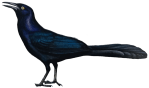
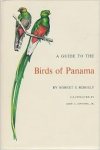
From Hannah’s description (and photos sent from her mobile), as well as consulting A Guide to the Birds of Panama [1], I concluded that one was a Great-tailed grackle (Cassidix mexicanus), and the other a Black (most probably) or Turkey Vulture.
I hadn’t consulted my Birds of Panama for many years, so was somewhat surprised to find a typed list (PDF) of birds of the Interamerican Institute of Agricultural Sciences in Turrialba (now CATIE) inside the back cover. I’d forgotten that I’d even kept it.
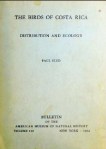
The list, compiled in 1968 by Robert Jenkins (who I believe was the first science director of The Nature Conservancy in the USA) was based on an earlier list [2] by American ornithologist and tropical ecologist Dr Paul Slud (right, 1919-2006), Associate Curator in the Bird Division at the National Museum of Natural History (Smithsonian Institution) from 1964 to 1983. He must surely be ranked as one of the pioneers of Costarrican ornithology.
Someone had written my name on the list, as well as a location (Km 77 along Ruta 10 from Cartago to Turrialba), and a time (06:30). Then I remembered. It was the check list we used for a 1979 bird count around Turrialba as part of the National Audubon Society Christmas Bird Count in the Western Hemisphere (not just the USA) which now takes place annually between 14 December and 5 January.
I don’t remember how many teams (each a pair of observers) set out on the count, only that I was paired with a Costarrican who worked in CATIE’s coffee program and was incredibly knowledgeable about the birds of the area. The name Arnoldo Barrantes comes to mind, but again I could be wrong.
Over several hours, we moved around our target area (to the west and northwest of Turrialba town center), spending about 30 minutes or so at each observation point, counting the number of individuals of each species, and adding them to the check list. After the count was over, someone must have compiled all the observations and presumably submitted them to the National Audubon Society. However, I’ve not been able to find any of the Turrialba data on the society’s website. Online data for Costa Rica don’t stretch back to the late 1970s. Maybe they are just held as paper records still, if at all.
I do remember, however, that the teams observed over 100 species in total, and my colleague and I observed 54. Here are images of most of those 54 species. They were taken by Rob and Jane Beynon who have made several trips to Costa Rica, and who kindly gave me permission to reproduce them here.
With their help I was able to review the Jenkins list, noting that some scientific names and common ones have changed in the years since the list was compiled. And at least one of the species, the Chestnut-winged chachalaca (Ortalis garrula), is not known from Costa Rica, but the Gray-headed chachalaca (Ortalis cinereiceps, considered by some ornithologists as conspecific with O. garrula) is, and was probably the bird we saw.
Do have a look at Rob and Jane’s wonderful website of birds of Costa Rica, of Brazil, Florida, several countries in Africa, Australia, New Zealand, Singapore, and the UK. Taiwan coming soon, I hope. You won’t be disappointed!
This gallery of birds from the ‘1979’ count follows the Jenkins list order.
Green heron (x1)
Cattle egret (x25)
Black vulture (x30)
Turkey vulture (x7)
Swallow-tailed kite (x1)
Osprey (x1)
Gray-necked wood rail (x1)
Purple gallinule (x1)
American jacana (x1)
Red-billed pigeon (x8)
White-tipped dove (x1)
White-crowned parrot (x8)
Squirrel cuckoo (x1)
Groove-billed ani (x15)
Pauraque (x1)
Jacobin (x1)
Rufous-tailed hummingbird (x10)
Ringed kingfisher (x1)
Green kingfisher (x1)
Emerald toucanet (x1)
Collared aracari (x1)
Keel-billed toucan (x1)
Hoffman’s woodpecker (x1)
Masked tityra (x1)
Tropical kingbird (x8)
Social flycatcher (x1)
Great kiskadee (x5)
Common tody-flycatcher (x1)
Brown jay (x11)
Banded cactus wren (x1)
Gray’s robin (x1)
Montezuma oropendula (x10)
Baltimore oriole (x5)
Blue tanager (x9)
Palm tanager (x1)
Scarlet-rumped tanager (x1)
Summer tanager (x1)
Common chlorospingus (x1)
Buff-throated saltator (x1)
Rose-breasted grosbeak (x1)
Yellow-faced grasssquit (x4)
Variable seedeater (x2)
Rufous-collared sparrow (x23)
[1] There were no popular guides to the birds of Costa Rica back in the 1970s (unlike today), and no online resources of course. So we had to resort to A Guide to the Birds of Panama by Robert S Ridgeley and illustrated by John A Gwynne, Jr., which covered many (most?) of the birds of Costa Rica. It was published by Princeton University Press in 1976.
[2] Slud, Paul. 1964. The birds of Costa Rica – distribution and ecology. Bulletin of the American Museum of Natural History. Volume 128. New York.
Have you ever visited the northeast of England? The ancient Kingdom of Northumbria. If not, why not? We think the northeast is one of the most awe-inspiring regions of the country.
My wife and I moved here, just east of Newcastle upon Tyne, in October 2020 at the height of the Covid-19 pandemic. Newcastle is the largest city in the northeast, on the north bank of the River Tyne (seen in this video from the Gateshead south bank) with its many iconic bridges, and the Glasshouse International Centre for Music on the left (formerly Sage Gateshead, known locally as The Slug).
We visited Northumberland for the first in the summer of 1998 when home on leave from the Philippines, never once contemplating that we’d actually be living here 22 years later. We have been regular visitors to the northeast since 2000 when our younger daughter Philippa began her undergraduate studies at Durham University, and she has remained in the northeast ever since.
Northumbria has it all: hills, moorlands, river valleys, beaches and, to cap it all, a rich history and lively culture. There are so many glorious landscapes to enjoy: the Northumberland National Park stretching to the border with Scotland; the dales and uplands of the North Pennines National Landscape in Durham and North Yorkshire, as well as the North York Moors a little further south. And all easily accessible from home. Here’s just a small sample.
Sycamore Gap on Hadrian’s Wall, in February 2022 just before vandals felled this iconic tree.
Hadrian’s Wall, near Housesteads fort
Whitby Abbey
Upper Coquetdale
The beach at Druridge Bay
Hauxley Wildlife Discovery Centre
Byland Abbey
Warkworth Castle
Duddo Five Stones
Lordenshaws Iron Age Hill Fort
Coquetdale, Northumberland
Blast Beach, Co Durham
Marsden Rock
National Trust Souter Lighthouse
Plessey Woods Country Park along the River Blyth
Penshaw Monument
Exhibition at the National Glass Centre, Sunderland
National Trust Cragside
Wall paper at Belsay Hall (English Heritage)
Prudhoe castle from the pele yard, English Heritage
High Force waterfall on the River Tees
St Jon’s Anglo-Saxon church, Edlingham
Angel of the North
On this map I have pinpointed all places we have visited since October 2020 (and a couple from earlier years), several places multiple times. Do explore by clicking on the expansion box (illustrated right) in the map’s top right-hand corner. I have grouped all the sites into different color-coded categories such as landscapes, coast, Roman sites, religious sites, and castles, etc.
For each location there is a link to one of my blog posts, an external website, or one of my photo albums.
This map and all the links illustrate just how varied and beautiful this northeast region of England truly is.
Northumberland is one of the least populated counties in England. Most of the population is concentrated in the southeast of the county, in areas where there were, until the 1980s, thriving coal-mining communities, and a rich legacy of heavy industry along the Tyne, such as ship-building. The landscape has been reclaimed, spoil heaps have been removed, and nature restored over areas that were once industrial wastelands.
So why did we choose to make this move, almost 230 miles north from our home (of almost 40 years) in Worcestershire? After all, Worcestershire (and surrounding counties in the Midlands) is a beautiful county, and we raised our two daughters there, at least in their early years.
When we moved back to the UK in 1981 after more than eight years in South and Central America, we bought a house in Bromsgrove, a small market town in the north of the county, and very convenient for my daily 13-mile commute into The University of Birmingham, where I taught in the Department of Plant Biology. And there we happily stayed until mid-1991 when I accepted a position at the International Rice Research Institute (IRRI) in the Philippines, while keeping our house empty but furnished for the next 18 years.
Retiring in April 2010, we moved back to Bromsgrove, getting to know the town and surrounding counties again. Joining the National Trust in 2011 (and English Heritage a couple of years or so later) gave us an added incentive to explore just how much the Midlands had to offer: beautiful landscapes, historic houses and castles, and the like. You can view all the places we visited on thismap.
But we had no family ties to Bromsgrove. And to cap it all, our elder daughter Hannah had studied, married, and settled in the United States and, as I mentioned before, Philippa was already in the northeast.
For several years, we resisted Philippa’s ‘encouragement’ to sell up and move north. After all we felt it would be a big and somewhat uncertain move, and (apart from Philippa and her family) we had no connections with the region. But in early January 2020, we took the plunge and put our house on the market, with the hope (expectation?) of a quick sale. Covid-19 put paid to that, but we finally left Bromsgrove on 30 September.
Last moments at No. 4.
We are now happily settled in North Tyneside and, weather permitting, we get out and about for day excursions as often as we can. There’s so much to discover.
Founded in the early 12th century, Fountains Abbey– lying alongside the River Skell just to the southwest of Ripon in North Yorkshire – became one of the most prosperous of the many Cistercian abbeys in Europe.
However, in 1539, Henry VIII and his henchman destroyed Fountains Abbey at the time of the Dissolution of the Monasteries. With its wealth plundered, and the lead roofing removed and sold, Fountains Abbey soon slipped into complete disrepair and became a ruin – a ghost of its former glory. Today the ruins, cared for in a partnership between the National Trust and English Heritage, receive hundreds of thousands of visitors. I wonder if, like me, many of them wonder what it must have looked like in its heyday, and perhaps, in the silence, imagine for a fleeting moment the plainsong of monks at prayer.
But the community at Fountains comprised both monks and lay people who tended the fields and looked after flocks of sheep (the Cistercians built their wealth on wool) leaving monks time for daily mediation. The abbey also took in visitors and the sick, and several of the ruined buildings were used for this purpose. Today there is a small museum in what was once the Porter’s Lodge, with a timeline of the abbey’s development and ultimate downfall. At it’s dissolution it was valued at around £1160, the equivalent today of tens of millions of pounds.
Most of the buildings have lost their roof, but one – the Cellarium (storeroom or undercroft) – has an impressive and beautiful vaulted ceiling. Whether there originally was glass in the windows, I’m not sure although I would expect so.
Close-by are the Guest House Bridge and monks’ latrine building – the Reredorter, strategically positioned over the River Skell in which effluent flowed away, without contaminating any sources of drinking water.
This slideshow requires JavaScript.
The Refectory opens on to the Cloister, across from the Church and its impressive Tower.
This slideshow requires JavaScript.
And then there’s the Church and Tower, dominating the whole site. No wonder that Fountains Abbey has been designated a UNESCO World Heritage Site.
This slideshow requires JavaScript.
In the 18th century, the pools and gardens of Studley Royal were created to the east of the abbey ruins, where visitors could stroll and take in the views. At another Cistercian Abbey – Rievaulx– not that far away from Fountains Abbey, a viewing terrace was also built in the 18th century to facilitate access to the abbey ruins.
This slideshow requires JavaScript.
When we first arrived at Fountains there were several parties of school children, a number of whom were making the most of being in the open air, running around and making rather a cacophony. After about 20 minutes, however, peace descended and we could then appreciate the magnificence of this ruined abbey in the relative silence it demanded. Very spiritual.
I wrote this post just after we made our first visit to Fountains Abbey in July 2013. And then, the following year at the end of March, we stopped by on our way north to visit our daughter and her family in Newcastle.
And although we moved to the northeast over four years ago, we hadn’t made another visit to Fountains until a couple of days ago on the 2nd.
On both previous occasions, the weather was overcast, and on the March 2014 visit particularly cold. Not so this week. With a promising weather forecast ahead of the journey south (a round trip of 152 miles), we set out from home around 09:15 arriving at Fountains just before 11:00. In time for a welcome cup of coffee in the National Trust’s excellent restaurant.
While there was some low cloud and mist on the drive south, it didn’t last much south of Durham on the A1(M). We did wonder whether the weatherman had got it wrong. Oh ye of little faith!
It was a glorious day, hardly a cloud in the sky, and although there was a cool breeze at times, it was a perfect Spring day.
And how different the ruins of the abbey looked in the bright sunshine, and the water gardens at Studley Royal. Here is a small selection of photographs I took on Wednesday. There’s a full album of photos here.

 So, who is Jacob Collier (right)? He’s an English singer, songwriter, multi-instrumentalist, producer, and educator. Born in London in 1994, he certainly has an interesting musical pedigree. He is of part Chinese descent through his mother Suzie Collier, a highly acclaimed conductor, violinist, educator, and mentor. And his grandfather, Derek Collier, was also a violinist, and leader of the Bournemouth Symphony Orchestra.
 I guess if you were to ask a child to draw a castle, the stylised image would include a curtain wall with crenellations, towers, a central keep, and an enclosing ditch or moat, just like we have seen at


 Durham in the northeast of the country.
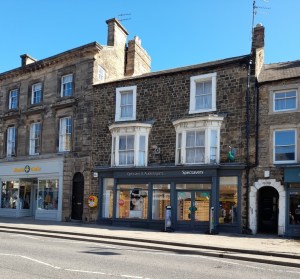 Even the local optician, Specsavers (whose strapline is ‘Should have gone to Specsavers‘) got in on the act offering free eye tests for anyone visiting the town. Needless to say that the visit Steph and I made to this delightful Durham town a couple of weeks ago was not for an eye test.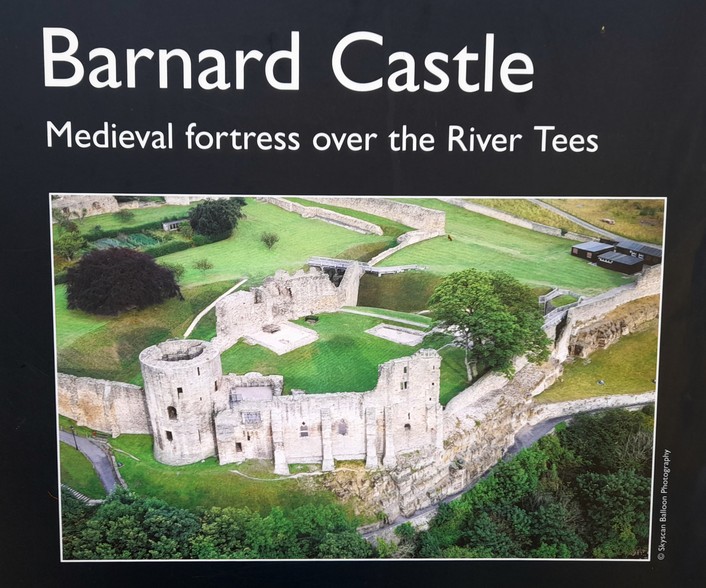


 Since January 1973 I’d been working at the International Potato Center (CIP) in Lima, Peru. Subject to successful completion of my PhD, I’d been offered a postdoc position with CIP in its Region II (Mexico, Central America, and the Caribbean) program, and I’d been asked to check out various research options in Costa Rica and Mexico en route.
 A year later Steph and I relocated to Turrialba in Costa Rica, where I was an Affiliate Scientist at
 From Hannah’s description (and photos sent from her mobile), as well as consulting A Guide to the Birds of Panama [1], I concluded that one was a Great-tailed grackle (Cassidix mexicanus), and the other a Black (most probably) or Turkey Vulture.
 The list, compiled in 1968 by


 [1] There were no popular guides to the birds of Costa Rica back in the 1970s (unlike today), and no online resources of course. So we had to resort to A Guide to the Birds of Panama by Robert S Ridgeley and illustrated by John A Gwynne, Jr., which covered many (most?) of the birds of Costa Rica. It was published by Princeton University Press in 1976.
 [2] Slud, Paul. 1964. The birds of Costa Rica – distribution and ecology. Bulletin of the American Museum of Natural History. Volume 128. New York.


 expansion box (illustrated right) in the map’s top right-hand corner. I have grouped all the sites into different color-coded categories such as landscapes, coast, Roman sites, religious sites, and castles, etc.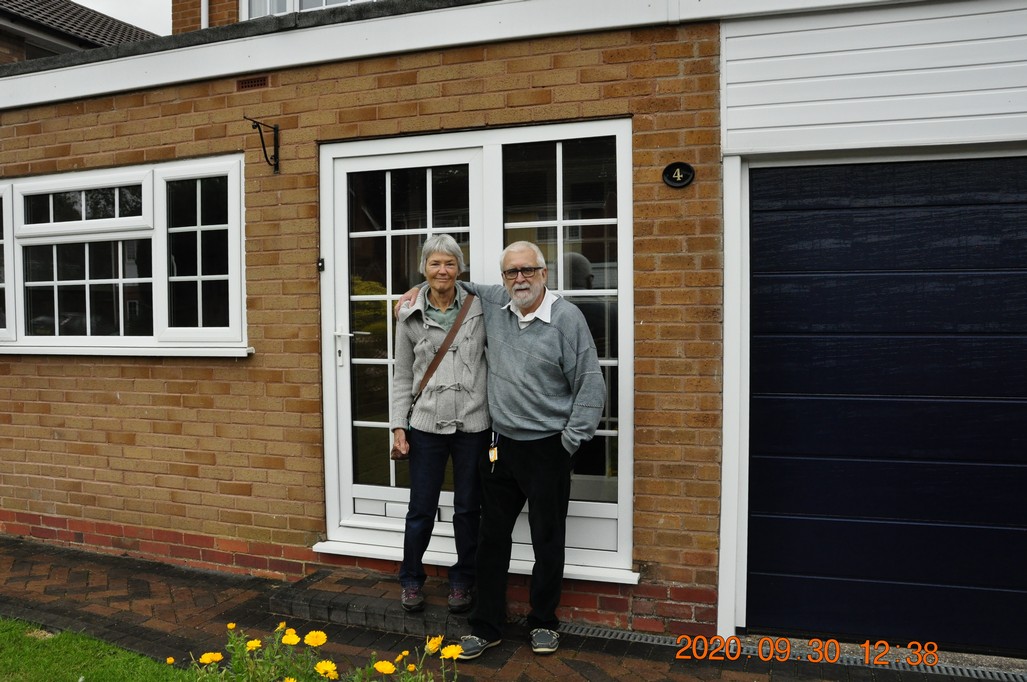


 A balanced diet . . .