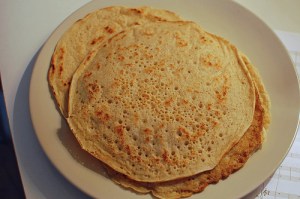
Staffordshire oatcakes – a local delicacy

Although I was born in Congleton (in the county of Cheshire), I moved to Leek, in north Staffordshire – about 12 miles away to the southeast – when I was seven.

So, I grew up in the shadow of the Staffordshire Moorlands, and actually think of myself more or less as Staffordshire born and bred. My father was a Staffordshire man who was born in the brewing town of Burton-upon-Trent.


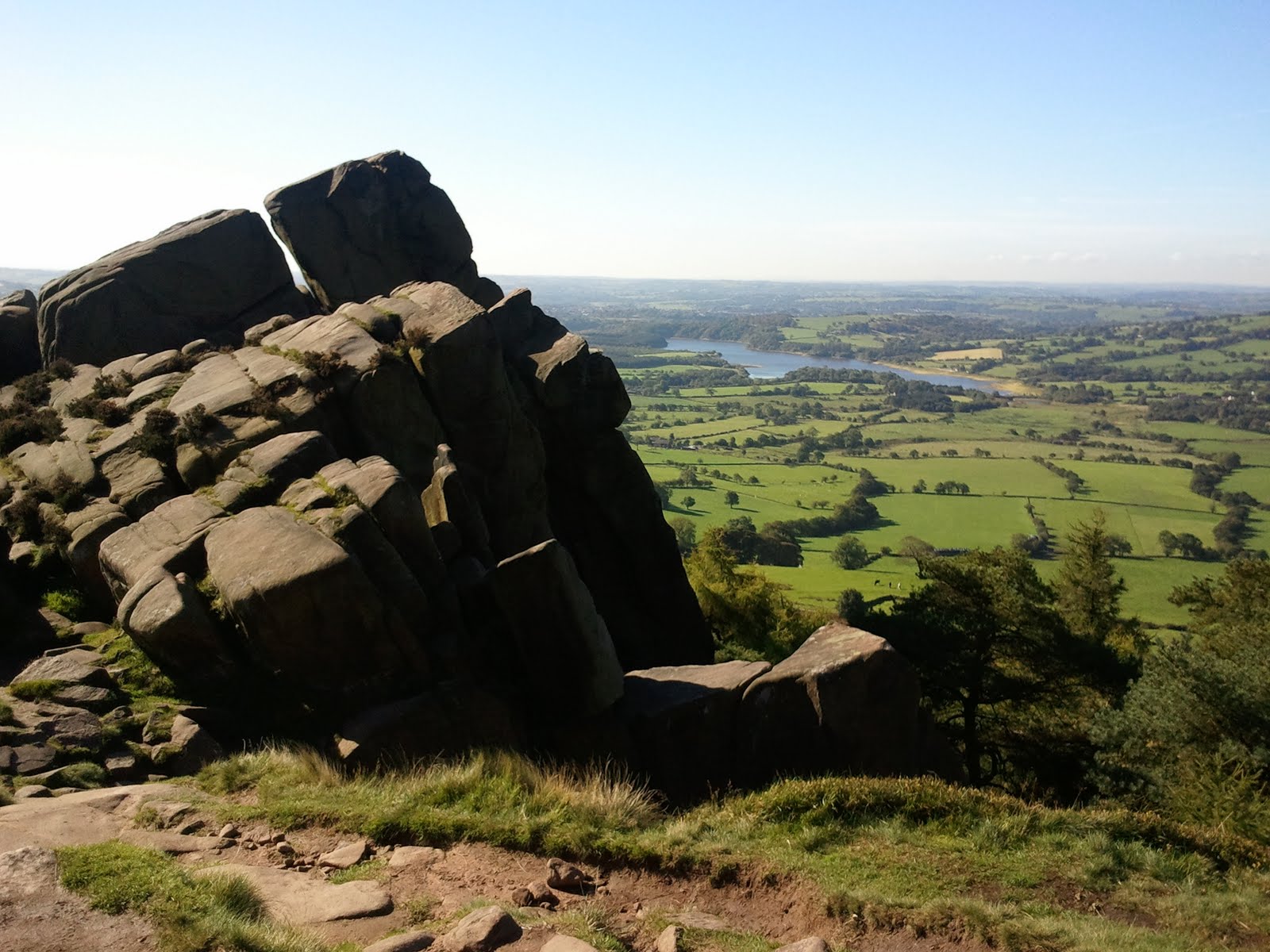
For me, the Staffordshire Moorlands (on the southern edge of the Peak District National Park – and, founded in 1951, the first national park in the UK) is one of the most beautiful parts of England. It’s wild and rugged, but dissected by the deep, wooded valleys of the River Churnet, and the River Dane (which forms the boundary between Staffordshire and Cheshire for about 10 miles). Among the most famous landmarks are the Roaches and Ramshaw Rocks, outcrops of millstone grit, and home for many decades to a feral population of wallabies!

For seven years from 1960 I attended high school in Stoke-on-Trent – the Potteries. In those days, the Potteries were a dark and dismal city, covered in the grime from the collieries (and steam railways) as well as the smoke from the myriad of bottle ovens found in all the factories (known as ‘potbanks’), where world-famous ceramics were made, such as Wedgwood, Spode, and Royal Doulton.

Now, the pits have closed, and the ceramic industry is but a shadow of its former glory (the Wedgwood family is fighting to keep a priceless collection of ceramics together, in danger of being sold off piecemeal to cover the pension fund debts of the parent company that went bankrupt in 2009). The Clean Air Act of the mid-1950s ensured that the pollution that once smothered the Potteries was a thing of the past. And over the past decades the spoil heaps from the collieries have been levelled (in one part of the city they were referred to as ‘the Cobridge Alps’), and whole areas of terraced housing (once occupied by the workers from the potbanks) have been demolished to make way for new developments.

And one of the businesses affected is The Hole in the Wall.

Well, I guess this means nothing to almost everyone who reads this post. About to close down – on 25 March to be precise – The Hole in the Wall is the last remaining front-room oatcake bakery in Staffordshire.

Oatcakes? These aren’t the crispy biscuits you buy in Scotland. Oh no! They are a delicious, thin, grilled ‘pancake’ made from fermented oat flour, served hot with delicious fillings of bacon, sausages, cheese, and eggs, and have been a traditional Potteries delicacy for decades. Just watch this audio slideshow to learn how they are made (and what is happening to The Hole in the Wall) , and why Potteries folk adore them. It’s believed that the idea of oatcakes was brought back to the Potteries by soldiers of the Staffordshire Regiment who had served in India. They look like the Ethiopian injera, which is made from the indigenous cereal teff (Eragrostis tef). These points are raised in the slideshow and the accompanying article in The Guardian.

I grew up eating oatcakes, and many years ago now, I introduced my wife Steph (an Essex lass) to the delights of the Staffordshire oatcake. And she was hooked as well, found a recipe, and has been making them ever since. And we enjoyed them during the 19 years we lived in the Philippines.

She’s still making them and today, Sunday, we enjoyed a wonderful breakfast of oatcakes and sausages, and freshly-brewed coffee. What a great way to start the day!

But there’s another Staffordshire delicacy – love it or hate it (in my case, ‘hate it’) – and that’s Marmite, a yeast extract by-product of the brewing industry. Marmite comes from Burton-upon-Trent, and the ‘Marmite odour’ is quite rich at times during the summer as you drive through the town.

Investing in diversity . . . the IRRI genebank

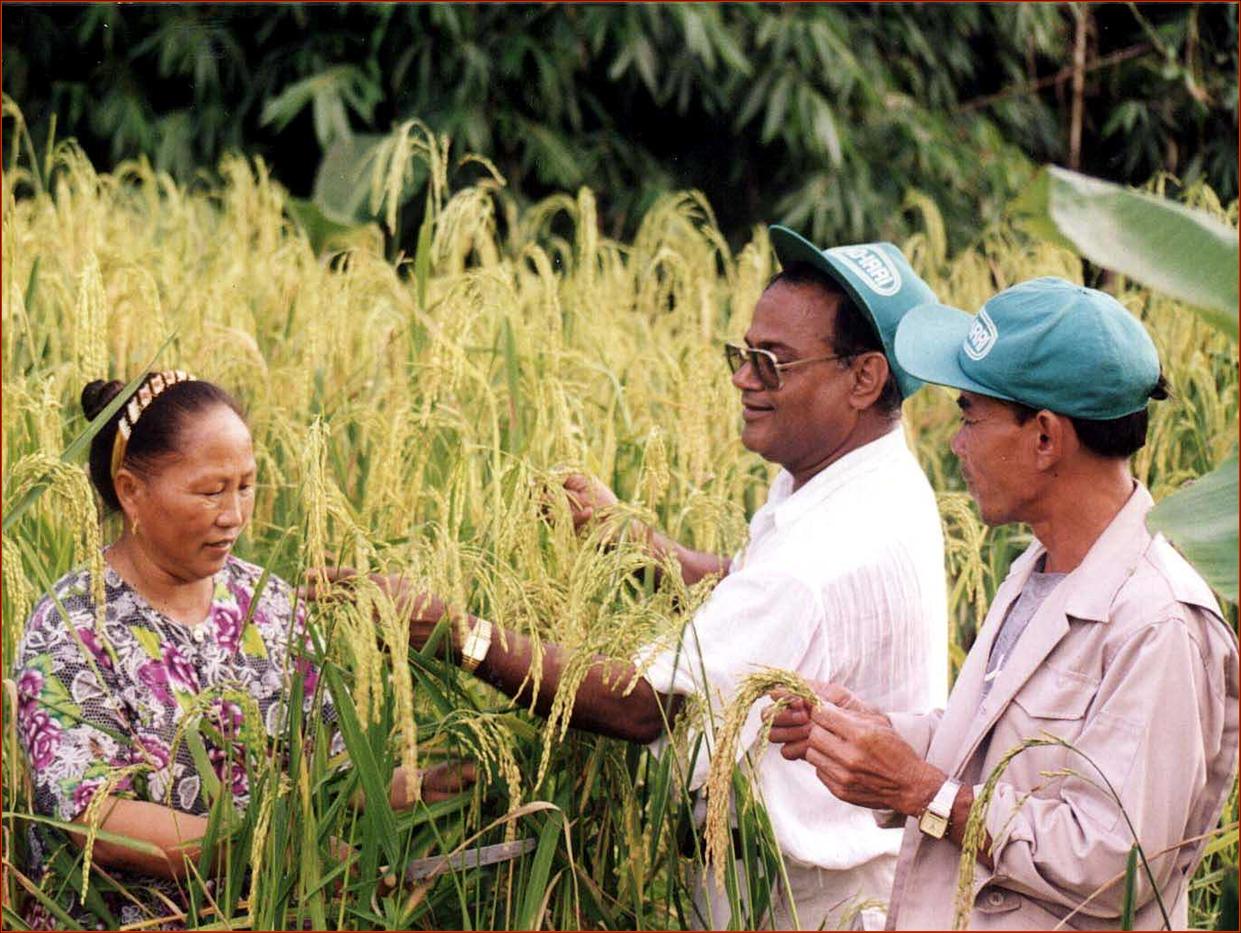
During the mid-90s, the International Rice Research Institute (IRRI) coordinated a major program (funded by the Swiss Agency for Development and Cooperation – SDC) to collect and conserve rice varieties in more than 20 countries by visiting areas that had not been extensively collected in previous decades. The aim was to ensure the long-term survival of varieties that had been nurtured by farmers and their husbands for generations. Over a five year period from 1996, more than 25,000 rice samples were collected, and stored in the International Rice Genebank at IRRI, increasing the collection there by approximately 25%. About half of the samples (some 13,000) came from the Lao People’s Democratic Republic (Lao PDR). An IRRI staff member, Dr Seepana Appa Rao (formerly with the International Crops Research Institute for the Semi-Arid Tropics – ICRISAT) spent four years traveling throughout the country, alongside Lao scientists, to make the first comprehensive collections of rice germplasm.

Duplicates samples are now conserved at IRRI, but very quickly after collection, Lao breeders started to screen the germplasm for useful traits, and use different materials to increase productivity.

Rice farmers in the Lao PDR still grow thousands of different rice varieties, from the lowland paddy fields with their patchwork of varieties to the sloping fields of the uplands where one can see many different varieties grown in complex mixtures, shown in the photos below. The complexity of varieties is also reflected in the names given by farmers [1].

And germplasm collecting was repeated in Bangladesh, Bhutan, Cambodia, Indonesia, Malaysia, Myanmar, Nepal, Philippines, Thailand and Vietnam in Asia, and countries in East and southern Africa including Uganda and Madagascar, as well as Costa Rica in Central America (for wild rices). We invested a lot of efforts to train local scientists in germplasm collecting methods. Long-time IRRI employee (now retired) and genetic resources specialist, Eves Loresto, visited Bhutan on several occasions.


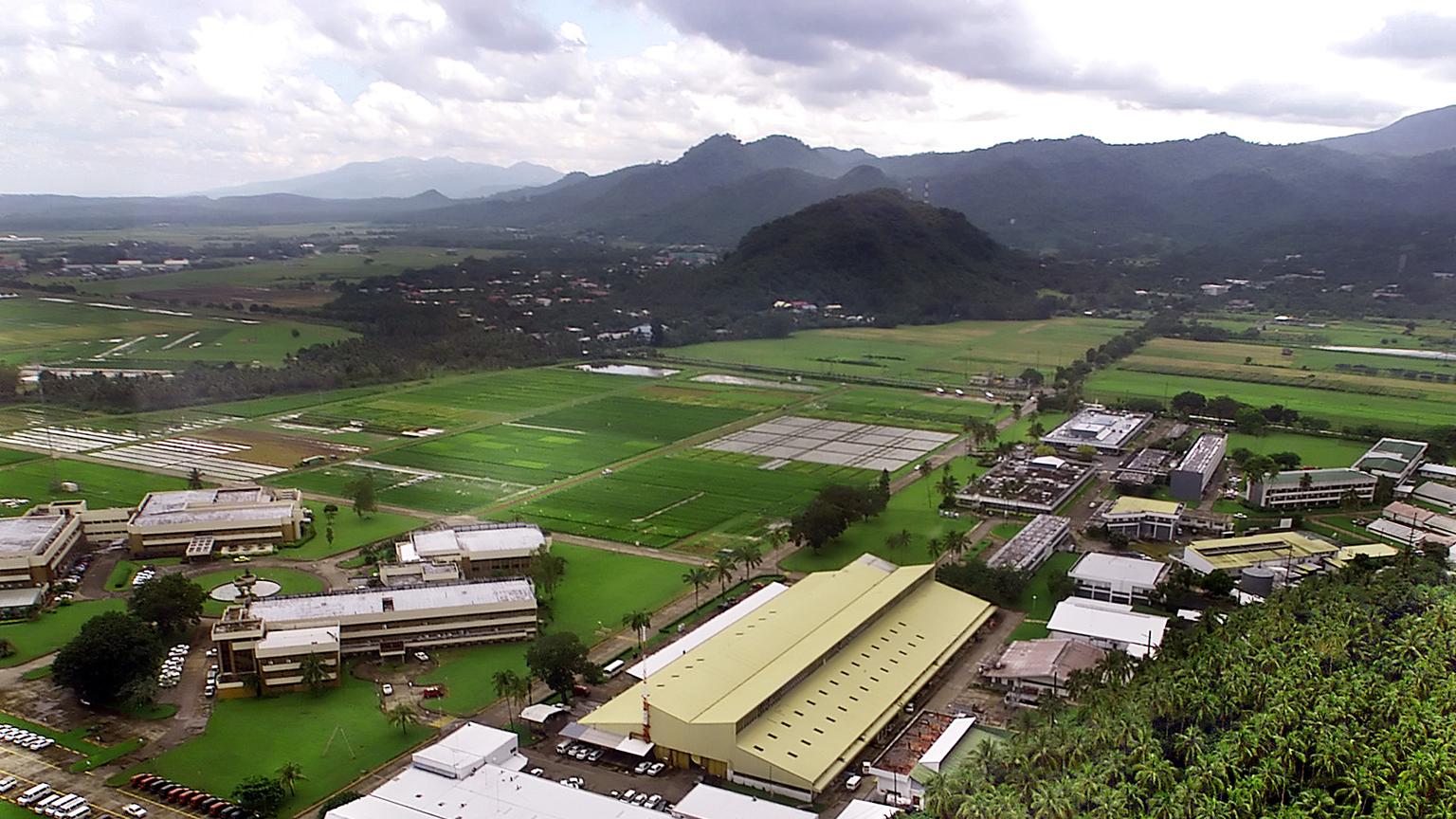
The IRRI Genebank


When I first joined IRRI in July 1991 – to head the Genetic Resources Center – I discovered that many aspects of the genebank procedures and operations were outdated or inefficient, and we set about a program of renovation and upgrading (that has been a continuous process ever since, as new technologies supersede those used before). The genebank holds more than 113,000 samples, mainly of cultivated rice varieties, with perhaps as many as 70% or so unique. Duplicate safety samples are stored at the USDA National Center for Genetic Resources Preservation in Fort Collins, Colorado, and at the Svalbard Global Seed Vault (operated by the Global Crop Diversity Trust). In fact, the first seeds into the Svalbard vault came from IRRI when it opened in February 2008!

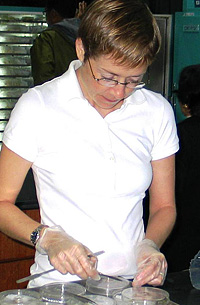
The genebank now has three storage vaults (one was added in the last couple of years) for medium-term (Active) and long-term (Base) conservation. Rice varieties are grown on the IRRI farm, and carefully dried before storage. Seed viability and health is always checked, and resident seed physiologist, Fiona Hay (formerly at the Millennium Seed Bank at Kew) is investigating factors which affect long-term storage of rice seeds.

They say a picture is worth a thousand words – so rather than describe how this genebank runs, do take the time to watch a 14 minute video which shows all the various operations for both cultivated and wild rices.

In 1994 there was a major review of CGIAR center genebanks. In preparation for that review we wrote a genebank operations manual, which still describes how and why the genebank works. I felt that this would be a useful legacy for whoever came after my tenure as head of the genebank. Operations can always evolve and change – but here is a basis for how rice is conserved in the most important genebank for this crop.

[1] Appa Rao, S, C Bounphanousay, JM Schiller & MT Jackson, 2002. Naming of traditional rice varieties by farmers in the Lao PDR. Genetic Resources and Crop Evolution 49, 83‐88.

The agricultural terraces of Cuyo Cuyo, southern Peru

In early 1974 I travelled to southern Peru with a taxonomist friend from the University of St Andrews, Dr Peter Gibbs.

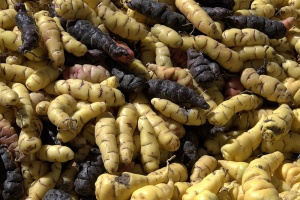
Peter and I had become friends when he visited the International Potato Center (CIP) in 1973. At that time Peter was supervising the Master’s thesis of a Peruvian student, Martha Vargas (daughter of renowned Peruvian botanist Professor César Vargas from Cuzco). At CIP he wanted to see if he could hitch a ride to the south of Peru on any germplasm collecting trips planned to that region, so that he could make some collections of oca (Oxalis tuberosa), a minor Andean tuber crop.

Oca tubers

As it happened, I was looking to carry out some ethnobotanical studies on the different potato varieties grown by farmers as part of my PhD research – but where would be a good site?

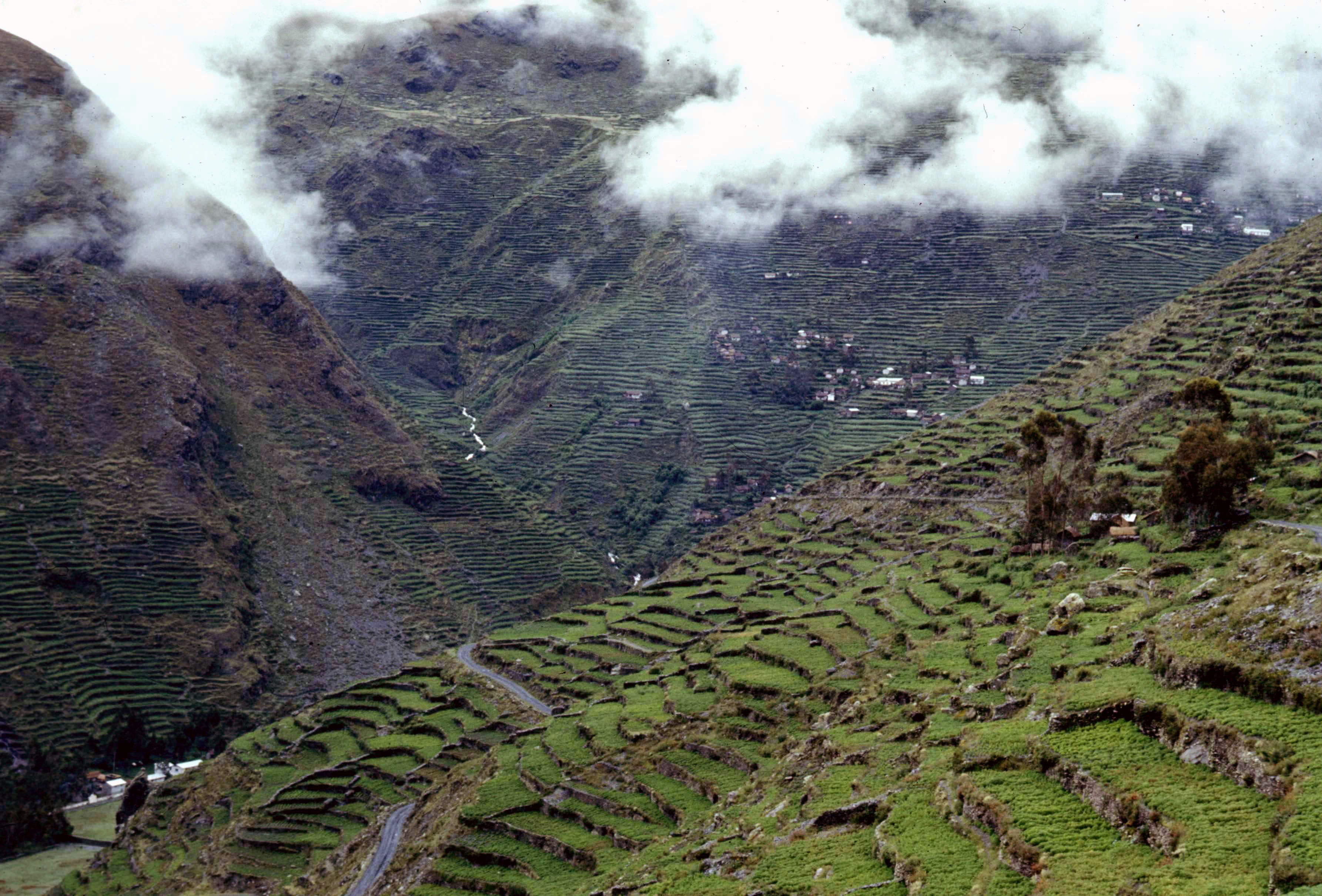
Peter showed me an old scientific paper (from 1951) by WH Hodge from the University of Massachusetts [1] about the cultivation of different tuber crops, including potatoes and oca, in the village of Cuyo Cuyo, located about 140 km northeast of Puno (69˚50’W, 14˚50’S) at the head of the Sandia Gorge. Well, this seemed like too good an opportunity to miss, and we agreed to pool our resources for the trip.

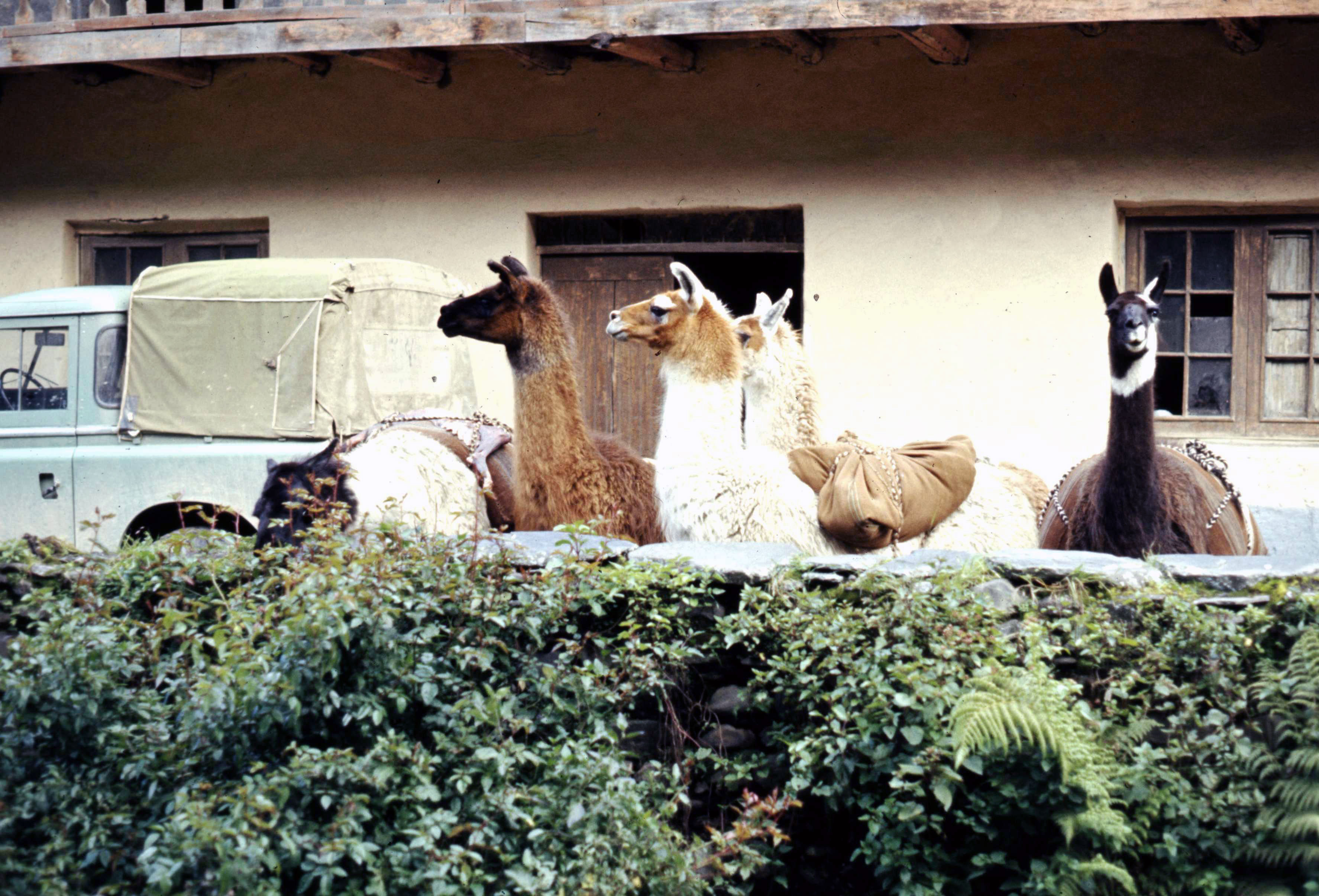
The drive south in a small Land Rover – down the coastal desert Panamericana highway, across the Nasca plain, climbing to Arequipa, and even higher to Puno – took three days. After resting up in Puno (next to Lake Titicaca), and getting used to the 3827 m altitude, we set off for Cuyo Cuyo. Dropping down from the altiplano at well over 4000 m, Cuyo Cuyo lies at an altitude of about 3300 m. Below the village the valley drops quickly towards the ceja de la montaña – literally ‘eyebrow of the mountain’ – where the humid air of the rainforests below rises up east-facing valleys to form cloud forest.

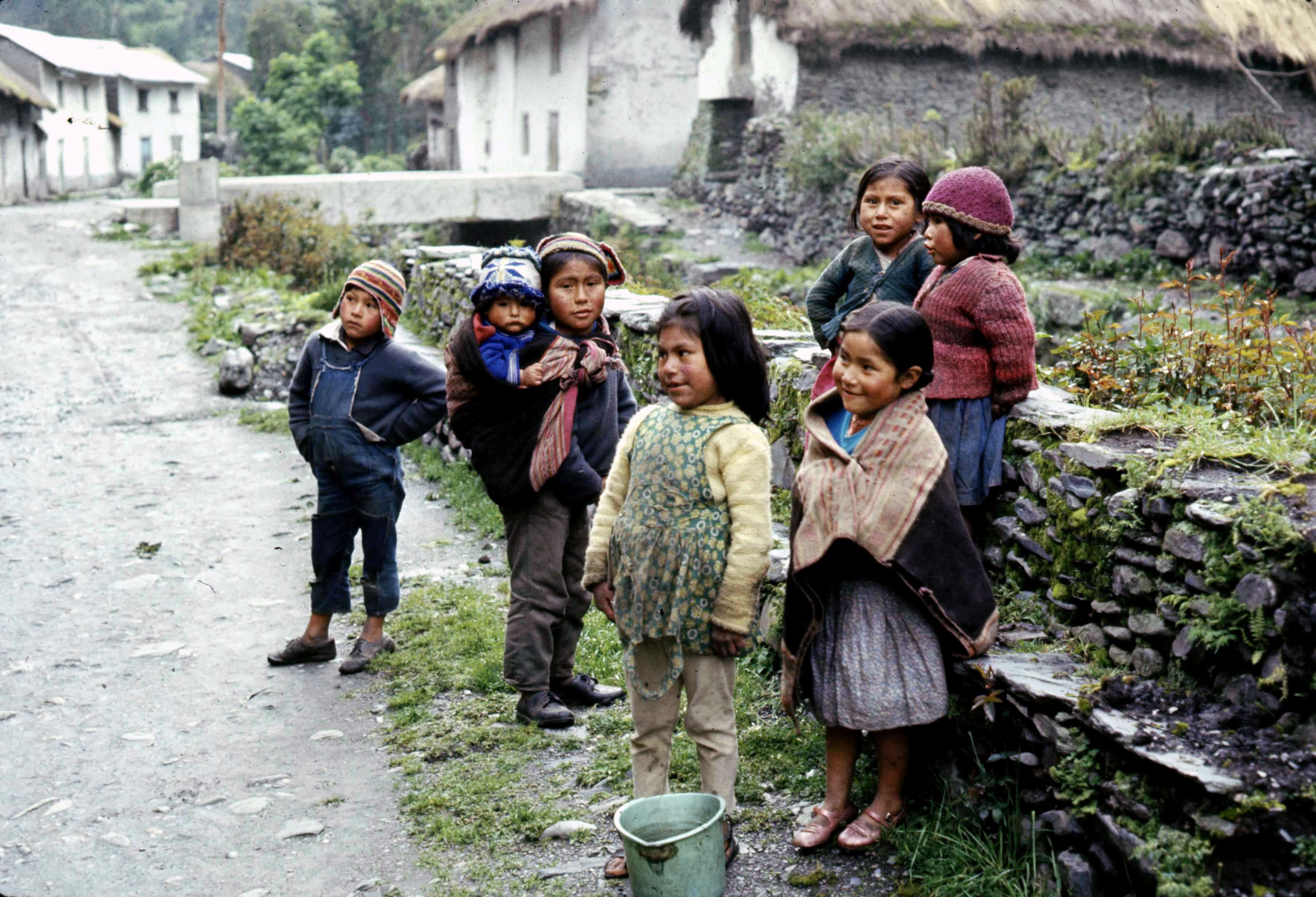
No-one in Cuyo Cuyo was expecting us, so there were quite a few surprised faces when these two gringos drove into town. Cuyo Cuyo was not on the ‘research-tourist’ trail in 1974, but many researchers have visited Cuyo Cuyo since I was there (see below), and there are quite a few publications now about the socio-economic systems and agriculture there.

Peru 110

Under these circumstances (as on other germplasm collecting trips) I’d found it useful to find the local mayor (alcalde) or schoolteacher and explain what we were up to and have them in turn explain to the local farmers and their families (in Quechua). On a previous trip to the north of Peru in May 1973, a local schoolteacher (rather drunk at the time as we’d arrived on his village’s fiesta) hailed me as a representative of La Reina Isabel (HM The Queen), promptly calling a village meeting, and asked me to give a ‘loyal address’. At that time I had fairly rudimentary Spanish, but it didn’t matter. After a few words of congratulations for the fiesta, every person in the hall (maybe 200 or so) came and shook me by the hand!

Peter and I set up camp, so-to-speak, in the local post office where we could sleep, brew the odd cup of tea (there was a small café in the village where we could eat), and gather our specimens together, including a rudimentary drier for the extensive set of oca herbarium samples that Peter intended to make. But more of that particular story later.

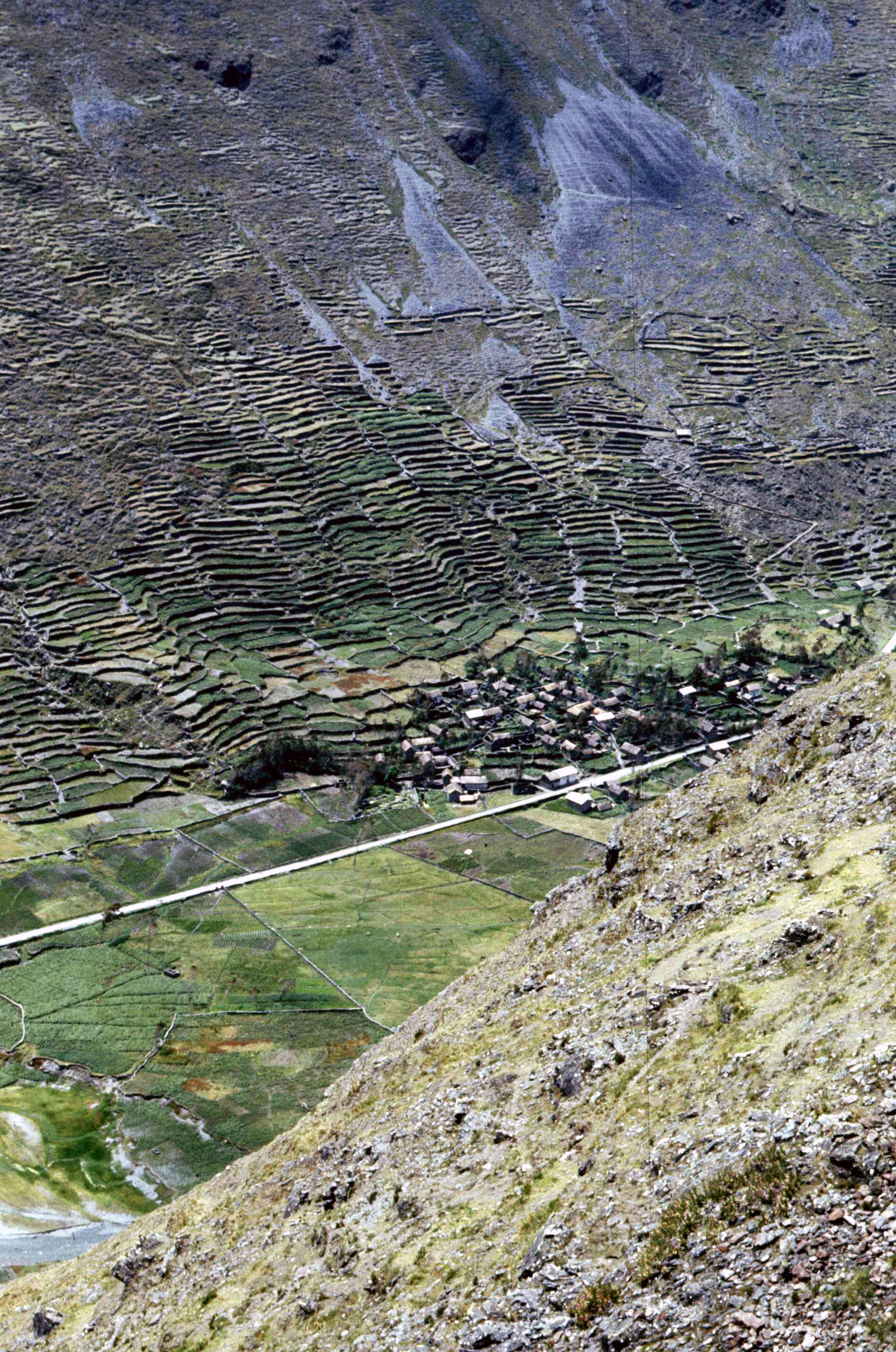
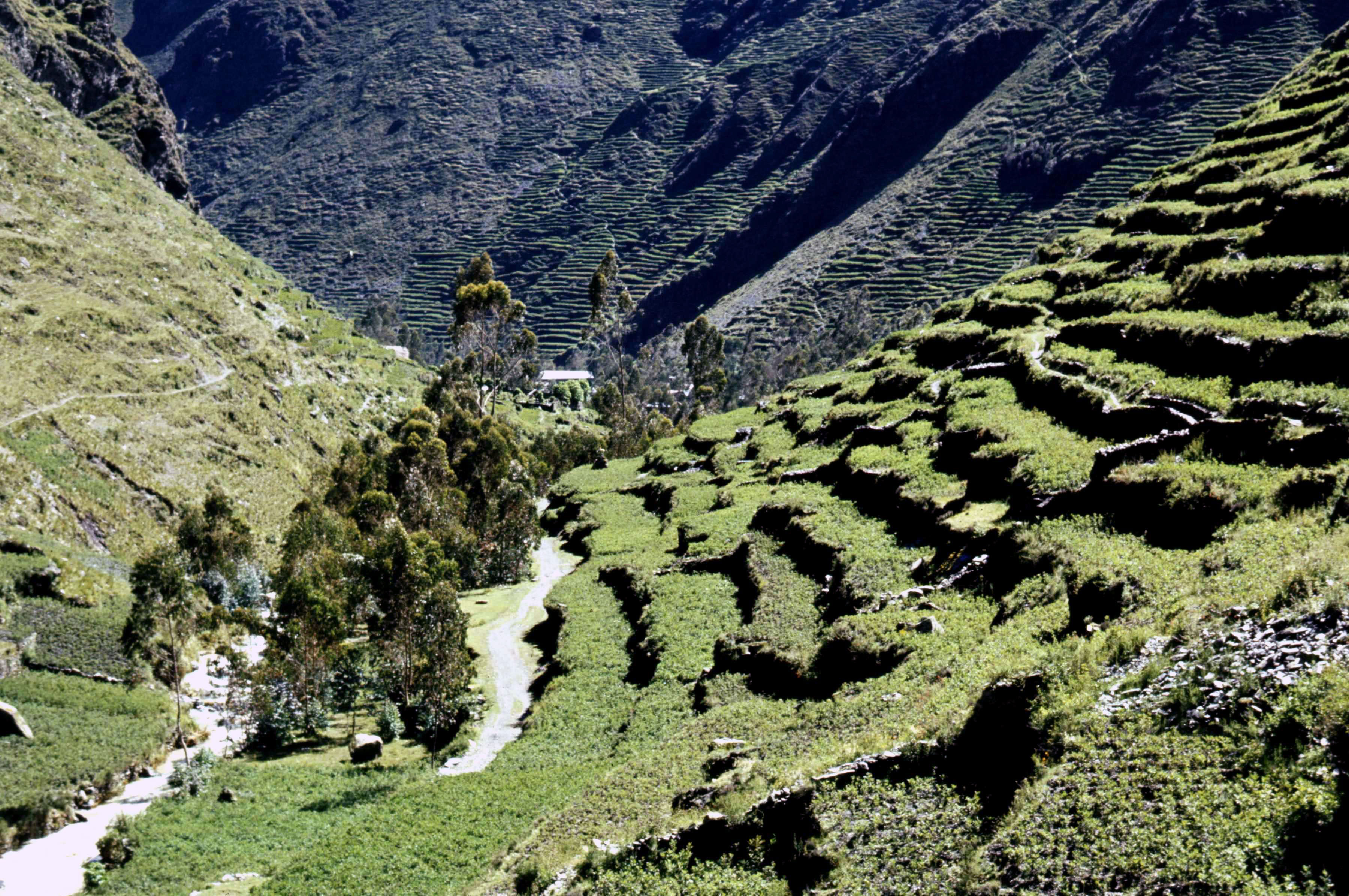
The sides of the Cuyo Cuyo valley are covered with the most wonderful system of agricultural terraces, called andenes, which must have been constructed centuries ago, in Inca times, and have been cultivated ever since. Farmers have different terraces dotted around the valley, and when I was there, at least, farmers were still using a communal rotation system. Thus in one part of the valley the terraces were covered in potatoes (year 1 after a fallow), and oca (years 2 and 3), barley or beans (year 4), or fallow (years 5-8) elsewhere. Sheep are corralled on a terrace prior to planting potatoes, and their urine and dung used as fertilizer. Whether, almost 40 years later, this remains the case I do not know.

But this system of potato and oca cultivation allowed me to make some detailed studies of the diversity of potato fields in terms of varieties grown and their genetic make-up (chromosome number). I eventually published this work in Euphytica in 1980 [2]. And there’s a story about that publication that’s also worth repeating, a little later on.

Since the terraces are quite small, only the native foot plough is used to till the soil (see my earlier post about potatoes). I discovered that different varieties were apparently suited to the growing conditions in different parts of the valley. The most highly prized varieties with a high dry matter content, termed harinosa or floury, were grown on the upper terraces where there was little chance of flooding. Whereas on the valley floor, which was flooded from time-to-time, farmers grew varieties which tended to be more ‘watery’ and used preferentially in soups.

Another very interesting discovery, for me at least, was seeing freshly harvested potatoes dipped in a clay paste after cooking. This practice, known generally as geophagy, has been reported from many societies, as well as observed in animals and birds.

Farmers told me that freshly harvested potatoes (but not the so-called bitter potatoes – see below) tended to be somewhat ‘peppery’ (that’s the best word I can find to describe the sharp taste of some varieties), and that dipping the tubers in the clay paste helped not only with digestion but also reduced the sharpness of the taste. One of the farmers showed me the site where they collected lumps of clay that were then ground to a fine powder and mixed with water. What’s interesting, however, is that I did not find any frost tolerant, bitter potatoes (Solanum juzepczukii or Solanum curtilobum) that have to be processed to make chuño before they can be eaten.

After two or three days, Peter and I felt that we’d done sufficient field work there, and headed north towards Cuzco to visit some additional sites. From there we returned to Lima by air, leaving the Land Rover behind for a CIP colleague.

But what about all those oca herbarium specimens? Despite our best efforts, we had great difficulty in drying the specimens that Peter collected, for two reasons. It was quite wet during our visit to Cuyo Cuyo, and all the samples were covered in moisture even before we attempted to turn them into dried herbarium sheets. Furthermore, oca has rather fleshy stems that just wouldn’t dry. Even after a couple more weeks of drying in Lima, Peter packed up what he had and posted them to St Andrews. After he arrived home, he found that his herbarium specimens were not only alive, but had begun to sprout – so he promptly planted them all in his university glasshouse, and had a range of living samples to use in his study of pollination mechanisms!

And what about the ethnobotany paper that I referred to earlier? I completed my PhD in 1975, and began to write-up my work for publication in scientific journals. I chose the Wageningen-based journal Euphytica for two papers submitted in 1977 on triploid potatoes and crossability studies, and Economic Botany for the Cuyo Cuyo paper. Well, that paper was finally accepted by mid-1977, and I waited for it to appear in print (by that time I’d already moved to Costa Rica and was busy with other potato research).

I didn’t hear anything for many months, but then, out of the blue, I received a letter from the new Editor-in-Chief of Economic Botany asking me if I’d published the paper elsewhere. In taking over the helm at Economic Botany, he’d found manuscripts in the files that had been accepted for publication up to two decades earlier, but had never been published! Well, at about the same time, the Editor of Euphytica, Prof. Anton Zeven, wrote to me, commenting on my PhD thesis (he’d obtained a copy through interlibrary loan) and wondering if I had published my Cuyo Cuyo research. And if I hadn’t, would I seriously consider doing so. What an invitation! With some revisions (but unfortunately removal of some of the more anthropological aspects) I submitted the paper to Euphytica in early 1979, and it was published some months later in 1980.

Cuyo Cuyo in 2006
Among the researchers to have visited Cuyo Cuyo more recently than me – in early 1997 and May 2006 – is University of Wisconsin-Madison associate professor of botany Dr Eve Emshwiller, who has been studying oca for many years now. In a recent message (15 March 2014)  she commented that Cuyo Cuyo was a fascinating place, but changing fast. I’m sure that’s something that could be said about many of the places I visited in the 1970s, then quite remote, but now opened up through better roads and telecommunications. Eve has kindly given me permission to include here some of her wonderful photos taken in 2006 of the oca harvest in Cuyo Cuyo. In one of the photos you can see the patchwork of fields, some with oca, others with potatoes. That cropping system certainly hadn’t changed in more than 30 years.

[1] Hodge, WH, 1951. Three native tuber foods of the high Andes. Economic Botany 5 (No. 2): 185-201.

[2] Jackson, MT, JG Hawkes and PR Rowe, 1980. An ethnobotanical field study of primitive potato varieties in Peru. Euphytica 29: 107-113. Click to read the paper in full.

AKUS – just simply the best

AKUS – Alison Krauss and Union Station. Just one of the best bluegrass bands around today. And of course, Alison Krauss has won more Grammys than any other singer.

I first heard her singing only three or four years ago – one of her tracks had been selected by a guest on a radio program I was listening to in the car. And I was smitten. She has one of the most remarkable voices in the recording industry today – and she’s also a very accomplished fiddle player.

The group that she plays with, Union Station, are all talented musicians, especially Jerry Douglas – the greatest dobro player. Dan Timinski (guitar) sang I Am a Man of Constant Sorrow in the film Oh Brother, Where Art Thou? starring George Clooney.

I was watching last night’s Transatlantic Sessions on the BBC iPlayer this morning, and watched Alison Krauss singing Dimming of the Day, a song I’d never heard before. After a little research I discovered that it was written as a love song by English singer-songwriter Richard Thompson for his wife Linda (from whom he is now divorced), released in 1975 on the album Pour Down Like Silver. Thompson had also supported Gerry Rafferty as a session musician on Night Owl.  There have been many covers of Dimming of the Day, including David Gilmour (Pink Floyd) and Bonnie Raitt.

Here are the lyrics:

This old house is falling down around my ears
I’m drowning in a river of my tears
When all my will is gone you hold me sway
I need you at the dimming of the day

You pulled me like the moon pulls on the tide
You know just where I keep my better side

What days have come to keep us far apart
A broken promise or a broken heart
Now all the bonny birds have wheeled away
I need you at the dimming of the day

Come the night you’re only what I want
Come the night you could be my confidant

I see you on the street and in company
Why don’t you come and ease your mind with me
I’m living for the night we steal away
I need you at the dimming of the day

I need you at the dimming of the day

 This is the original version by Linda and Richard Thompson:

Now listen to the magic of Alison Krauss and Union Station on their most recent CD, Paper Airplane:

Alison Krauss talks about this song in an interview published in the Telegraph in April 2011. It’s a very emotional song. And I’d missed it all these years.

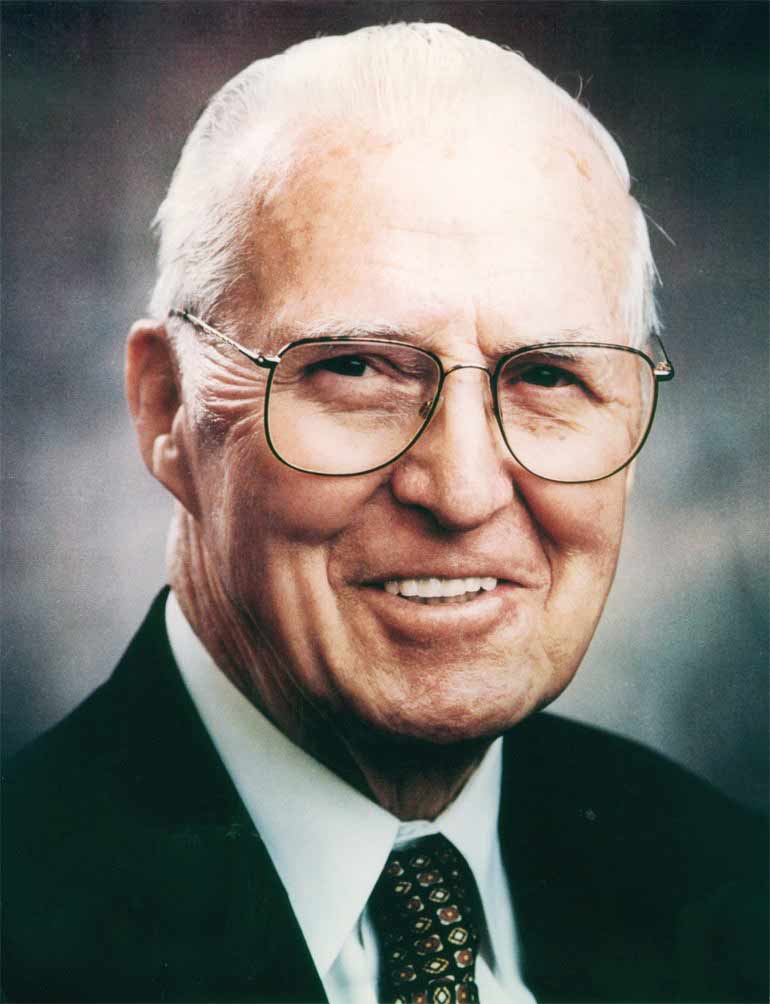
Norman Borlaug – tireless advocate of research for development

In the 1960s the world faced a huge challenge: how to feed an ever-increasing population, especially in the poorer, developing countries with large agriculture-based societies.

One man, Dr Norman Borlaug, had the vision – and the energy – to do something about this, and spent his entire career, right up until the day he died at the age of 94, applying the best of plant science, and being a tireless advocate for agricultural research for development.

Widely hailed as one of the greatest Americans of the 20th century, Borlaug was awarded the Nobel Peace Prize in 1970 for his work in breeding and releasing high-yielding varieties of wheat, in what became known as the Green Revolution. In 2007 he was awarded the US Congressional Gold Medal.

For many years Borlaug was head of the Wheat Program at the International Maize and Wheat Improvement Center (CIMMYT) near Mexico City (a sister center to the International Rice Research Institute, IRRI, where I worked for 19 years). Exploiting wheat genetic resources, and producing short-strawed wheat varieties that yielded much higher than farmers’ landrace varieties, Borlaug has been credited with saving over a billion lives.

Even after retiring from CIMMYT he continued to travel the world, pushing for the resources to make a difference to people’s lives. And in the last years of his life he pushed for a greater effort to bring a Green Revolution to Africa that had largely been bypassed in earlier decades.

Borlaug often said that he’d been awarded the Nobel Peace Prize because there was no such prize for agriculture. So he set about to rectify that and helped to set up the World Food Prize in 1986, which has been recognizing laureates each year since 1987 (five scientists associated with the International Rice Research Institute – IRRI – have won the prize including two former directors general, two plant breeders, and a member of the institute’s Board of Trustees).

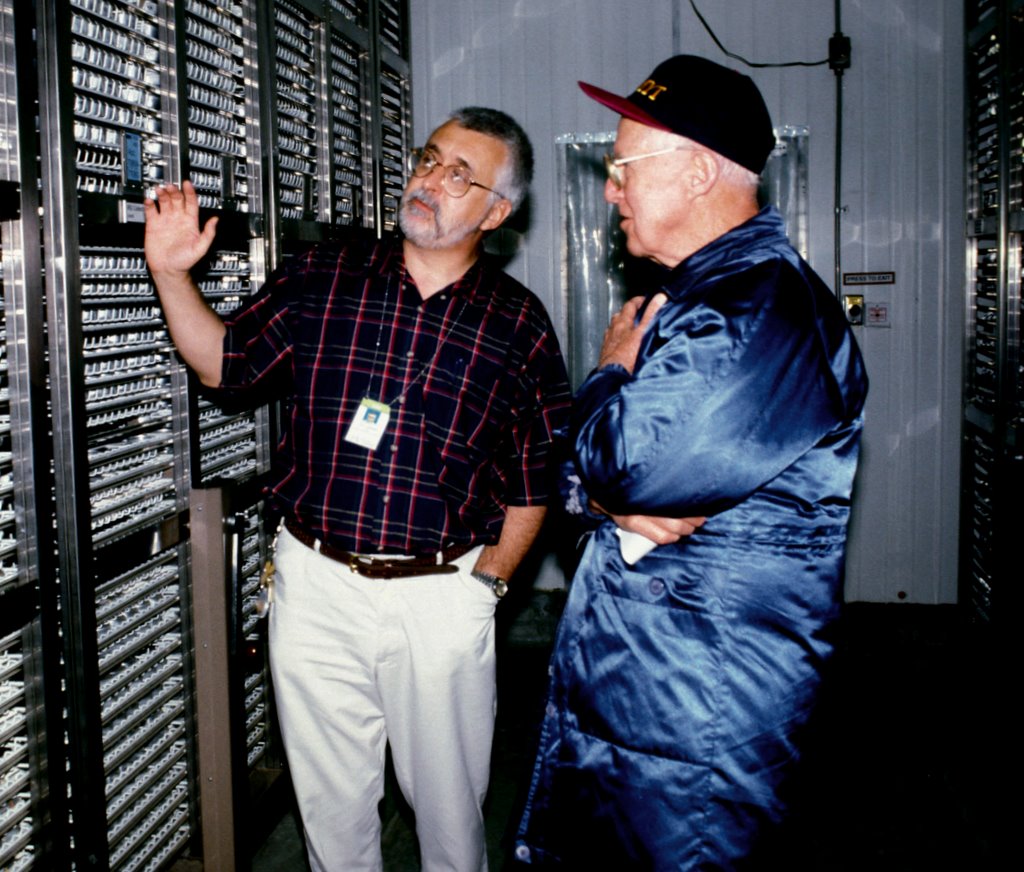
In April 1999, I met Norman Borlaug for the first and only time, during his visit to IRRI. As one of IRRI’s department heads I was invited to an ‘audience’ with Dr Borlaug. I remember it was a Friday morning, and a group of us met with him – maybe 10 or so staff – ostensibly for a round-table discussion. However, the meeting turned into what I thought was a rambling and confused monologue by Borlaug, and we all came away rather disappointed and disillusioned. Quite frankly, I had the distinct impression that Borlaug (who was about 80 at the time) had lost his marbles. Consequently, I was not looking forward to a one-on-one session the following day to show him around the rice genebank (something I was expected to do rather often whenever VIPs visited the institute), especially since there would be no support staff on duty to show how we ran things.

How wrong first impressions can be! Our meeting had been scheduled for just 30 minutes. After 3 hours we decided to call a halt and let him move on to other colleagues who were waiting (im)patiently to meet him.

Discussing genetic conservation and related issues with Dr Borlaug was a delight. He was no longer ‘the great man’ expected to ‘perform’ in front of an audience, so-to-speak. Instead, we met as fellow scientists with a passion for agricultural research, for the conservation of genetic resources, and how these could be used for the benefit of humanity.

It also helped that we knew several people in common, such as Jack Hawkes and John Niederhauser (who had been a Rockefeller Foundation colleague of Borlaug’s in Mexico), and of course Richard Sawyer, the first Director General of the International Potato Center (CIP) in Peru, where I had worked from 1973-1981.

The memory of that meeting has stayed with me. Borlaug’s energy and vision has inspired many scientists to embrace the challenge of agricultural research for development. His legacy endures through the World Food Prize Foundation and several other awards that bear his name.

In an interesting twist to the Borlaug story, American illusionists and comedians, Penn and Teller, have taken a sceptical look – through their Showtime network television show Bullshit! – at the role of pressure groups who are against the use of genetic modification (GM) to produce more food. In the video below (which contains some STRONG language) both pro- and anti-GM views are presented, and Norman Borlaug is featured (starting at about 1:50). It’s well worth spending 10 minutes to listen to the different perspectives. Borlaug’s arguments are compelling.

Standing on Vavilov’s shoulders . . .

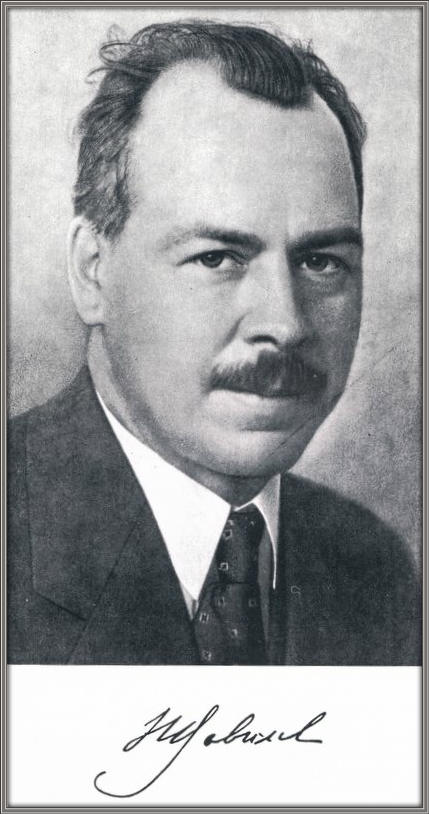
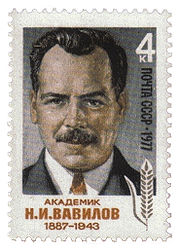
Nikolai Ivanovich Vavilov (1887-1943). Not a name familiar to many people. Vavilov is, however, one of my scientific heroes.

Until I began graduate school in September 1970, when I joined the MSc course at the University of Birmingham on Conservation and Utilization of Plant Genetic Resources, I’d never even heard of him. In fact, looking back, I’m rather surprised that his name didn’t crop up once during my undergraduate years. I’d been encouraged to apply for a place on the Birmingham course by a lecturer in genetics at Southampton University, Dr Joe Smartt. But Vavilov and his work was not on the curriculum of botany courses that I took.

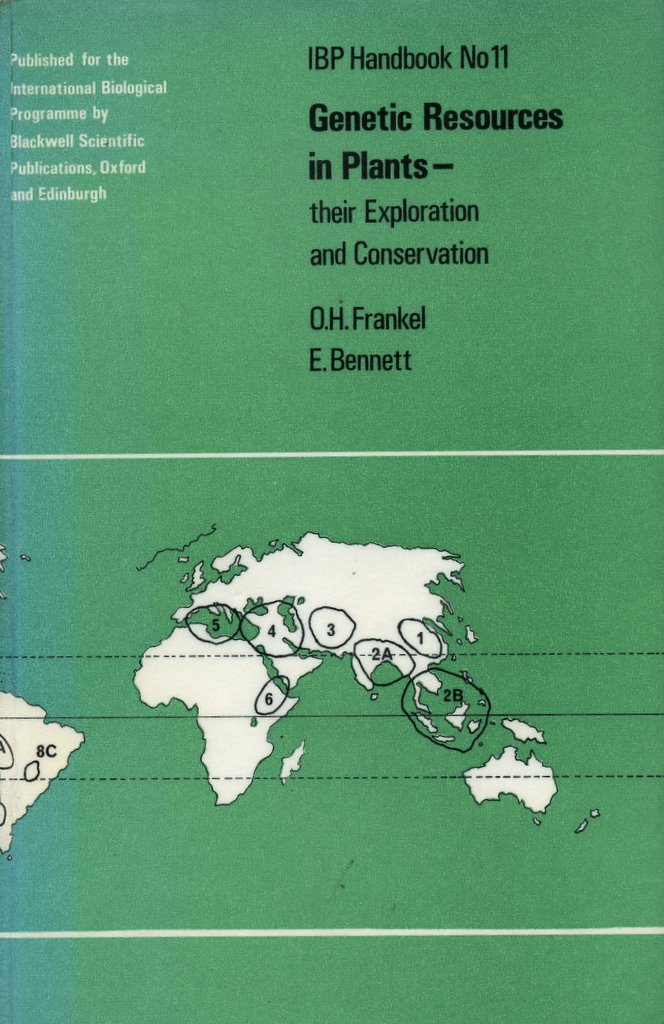
In preparation for Birmingham, I’d been advised to purchase and absorb a book that was published earlier that year, edited by Sir Otto Frankel and Erna Bennett [1] on genetic resources, and dedicated to NI Vavilov. And I came across Vavilov’s name for the first time in the first line of the Preface written by Frankel, and in the first chapter on Genetic resources by Frankel and Bennett. I should state that this was at the beginning of the genetic resources movement, a term coined by Frankel and Bennett at the end of the 60s when they had mobilized efforts to collect and conserve the wealth of diversity of crop varieties (and their wild relatives) – often referred to as landraces – grown all around the world, but were in danger of being lost as newly-bred varieties were adopted by farmers. The so-called Green Revolution had begun to accelerate the replacement of the landrace varieties, particularly among cereals like wheat and rice.

Thus began my fascination with Vavilov’s work, and a career in genetic resources in a broad sense that was to last 40 years until my retirement in 2010.

Vavilov was a botanist, geneticist and plant breeder who rose to the top of agricultural research in the Soviet Union who, through his many expeditions around the world (described in the book Five Continents [2], published posthumously in English in 1997) assembled a vast array of diversity in many crop species. Vavilov developed two seminal theories of crop evolution, which have influenced the science of genetic resources ever since.

The first was his Centers of Diversity and Origin, in which he stated that “the place of origin of a species of a cultivated plant is to be found in the area which contains the largest number of genetic varieties of this plant.” While we now appreciate that this was an oversimplification, his ideas about the origin of crop diversity have been the foundation for much of the genetic resources exploration carried out in subsequent decades.

The second was his Law of Homologous Series in the Case of Variation, published in Russian in 1920 and in English in 1922. I applied this concept in my search for pest resistance in wild potatoes, which I presented at a Symposium organized by the Linnean Society of London and the Institute of Archaeology, University College, London in 1987 to celebrate the centenary of Vavilov’s birth [3].

Vavilov died of starvation in prison at the relatively young age of 55, following persecution under Stalin through the shenanigans of the charlatan Trofim Lysenko. Lysenko’s legacy also included the rejection of Mendelian genetics in the Soviet Union for many years. Eventually Vavilov was rehabilitated, long after his death, and he was commemorated on postage stamps at the time of his centennial.

Although never having the privilege of knowing Vavilov, I do feel that I met him vicariously through three people I have known, who did meet him, and I worked with two of these for many years.

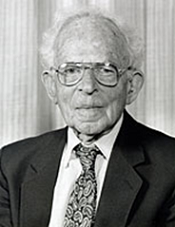
First, Sir Otto Frankel FRS, who I first met at a genetic resources meeting in Jakarta in the mid-80s, was an eminent wheat breeder and geneticist, and one of the founders of the genetic resources movement. Originally from Austria, he had escaped before the Nazis came to power, and moved to New Zealand and Australia afterwards. Frankel visited Vavilov in Leningrad (now St Petersburg again) in 1935.

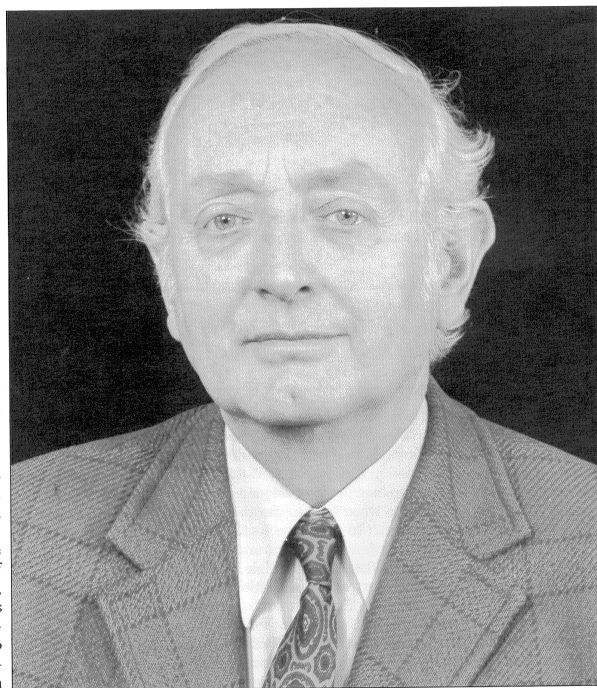
Jack Hawkes, Mason Professor of Botany at the University of Birmingham and my PhD supervisor, travelled to Leningrad in 1938 to consult with Vavilov’s colleague, SM Bukasov, about the potatoes he had collected in South America. He wrote about his meeting with Vavilov, which he presented at the Vavilov Symposium referred to above [4].

John S Niederhauser was an eminent plant pathologist who spent many years researching the potato late blight fungus in Mexico. He was awarded the World Food Prize in 1990. I worked for several years with John in the 1970s when I was regional leader for the International Potato Center in Costa Rica, and we were developing and implementing what turned out to be the first consortium, PRECODEPA (Cooperative Regional Potato Program – in four Central American countries, Mexico and the Dominican Republic), of the Consultative Group on International Agricultural Research (CGIAR). As a young man of about 17, so John told me, he’d asked a travel agent how far he would be able to travel (return) from San Francisco with the money he had available: Leningrad was the destination. Walking around a research garden there one day, he was approached by a kindly gentleman – Vavilov as it turned out – who offered him the chance to work for a few weeks harvesting germplasm evaluation trials on one of his institute’s research stations in the Soviet southeast.

What all three emphasised – in their writings or related to me personally – was Vavilov’s friendliness, generosity of spirit, his boundless energy, and above all, his humanity, and that he treated everyone as an equal, even young persons as Hawkes and Niederhauser were when they met him.

Vavilov’s legacy endures. He is recognized as one of the giants of 20th century biology. And he has been an inspiration for countless students of genetic resources conservation and use.

[1] Frankel, OH & E Bennett (eds), 1970. Genetic Resources in Plants – their Exploration and Conservation. IBP Handbook No 11. International Biological Programme, London and Blackwell Scientific Publications, Oxford and Edinburgh. pp. 554. SBN 632 05730 0.

[2] Vavilov, NI, 1997. Five Continents. International Plant Genetic Resources Institute, Rome, Italy. pp. 198. ISBN 92-9043-302-7.

[3] Jackson, MT, 1990. Vavilov’s Law of Homologous Series – is it relevant to potatoes? Biological Journal of the Linnean Society 39, 17-25.

[4] Hawkes, JG, 1990. NI Vavilov – the man and his work. Biological Journal of the Linnean Society 39, 3-6.

After Fred and Ginger, they broke the mould – almost

I’m not really a movie buff. In fact I can’t remember the last time I went to the cinema. It might even have been 1977 when I saw Star Wars in San José, Costa Rica. But I do catch the odd movie from time-to-time on the TV, and I particularly like westerns and musicals (although I still haven’t seen The Sound of Music.) The musicals of the thirties were something special and surrealistic – especially those directed by Busby Berkeley, which featured hundreds of showgirls in fantasy routines that would be almost impossible to mount in a real theatre.

But it’s also the music – that silky combination of wind instruments (banks of saxophones and clarinets) and muted brass, overlain with strings, typified by the Glenn Miller sound.

And the dancing of course. Now I’m a huge fan of Fred Astaire and could watch any of his movies over and over again. This solo sequence of Puttin’ On The Ritz from the movie Blue Skies (actually made in 1946, and co-starring Bing Crosby), exemplifies what a perfectionist Astaire was.

I learned recently that Astaire always added the tap sounds to the soundtrack after a sequence had been filmed.

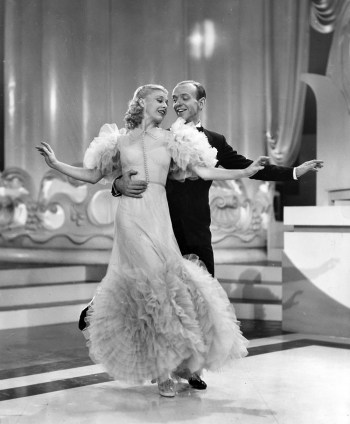
But when Fred partnered with Ginger Rogers, what more can one say? Choreographic perfection! These next clips show what a magnificent duo they were – just click on the image below.

The sequence of Never Gonna Dance is pure theatre. I read that there were more than 40 takes before Astaire was satisfied with the sequence, and Ginger Rogers’ feet were bleeding in her shoes.

Gene Kelly was wonderful dancer as well, and the Good Morning routine (made in 1952) with a young Debbie Reynolds and Donald O’Connor is a classic.

So is Kelly’s solo Singin’ in the Rain (which he apparently performed while suffering from ‘flu and with a temperature of 103F!).

I can’t say that I am an aficionado of ballet (although I do appreciate its artistic qualities and the skills of the dancers), and much of what purports to be modern dance – more like gymnastics – on the TV ‘dance’ shows leaves me quite cold. Michael Jackson apparently devised the dance routine to Smooth Criminal as a tribute to Fred Astaire and who himself acknowledged Jackson’s talent and that he was the greatest dancer of his generation.

Nevertheless, the magic of Astaire and Rogers lives on, and long may it do so.

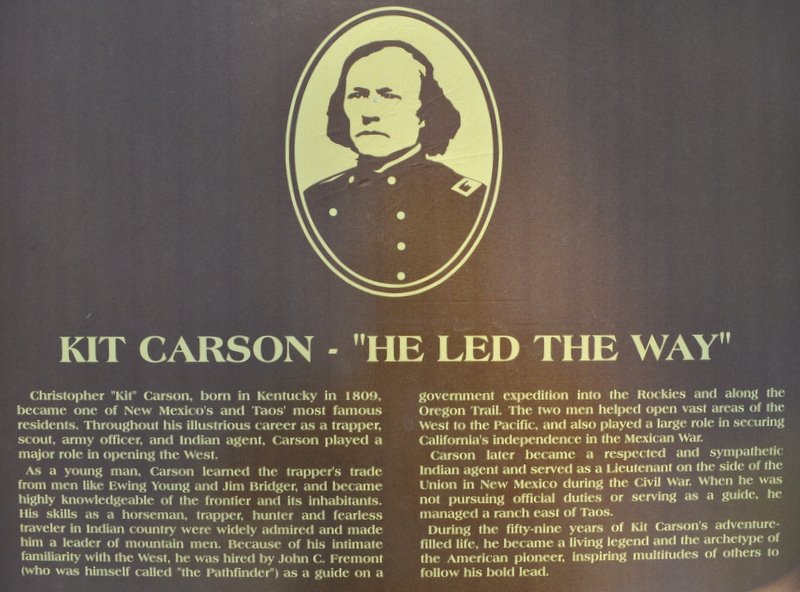
Kit Carson: he led the way . . .

Early in 2011, Steph and I began to plan our next visit to Minnesota to visit daughter Hannah, husband Michael, and grandson Callum, scheduled for May when Callum would be around nine months, and almost at the crawling stage.

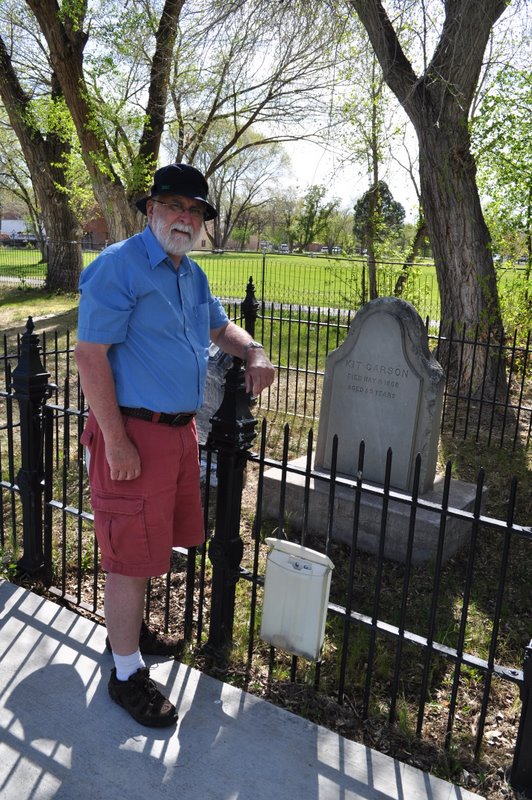
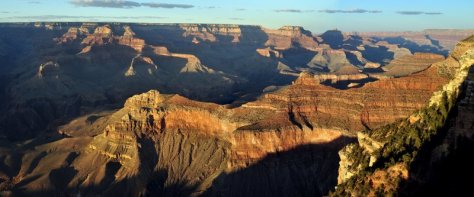
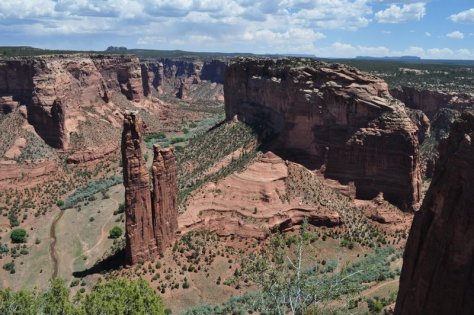
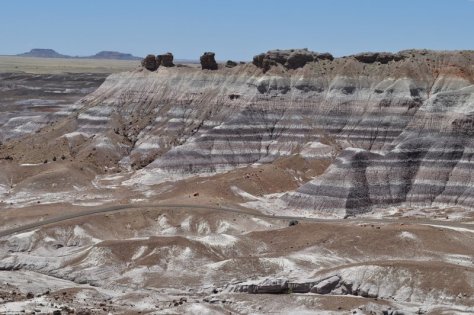
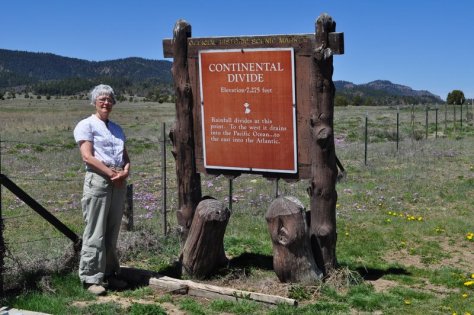
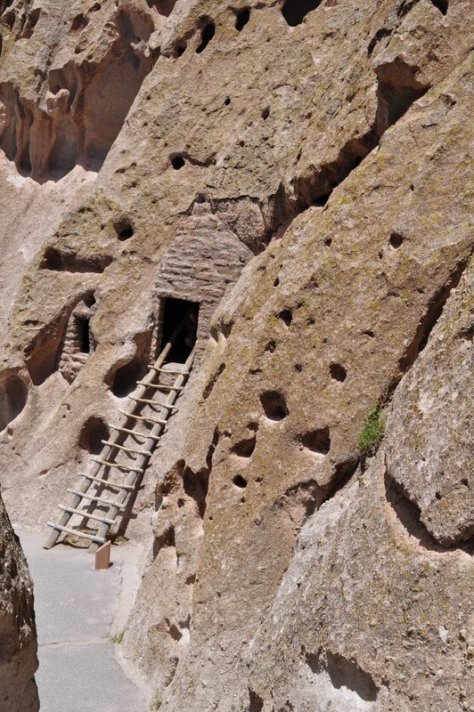
I suggested that we should take the opportunity of being in the US to fulfil one of our long-held ambitions, namely to visit the Grand Canyon. Well, as chance would have it, I’d been reading a biography of 19th century frontiersman and Indian agent and fighter, Kit Carson. And I discovered that much of his life had been spent in northern Arizona and north-west New Mexico. This got me thinking. Why not combine a visit to the Grand Canyon to a number of the sites mentioned in the book I’d been reading? And so we planned an itinerary that would take in the Grand Canyon, Monument Valley, the Canyon de Chelly (pronounced shay), the Petrified Forest National Park and the Painted Desert in Arizona, and the mountains of north-west New Mexico, including the Rio Grande gorge, and the mountains near Los Alamos, where the first atomic bomb was assembled. During our trip we visited Carson’s grave in Taos, NM.

 Click on the images below to view various web albums.

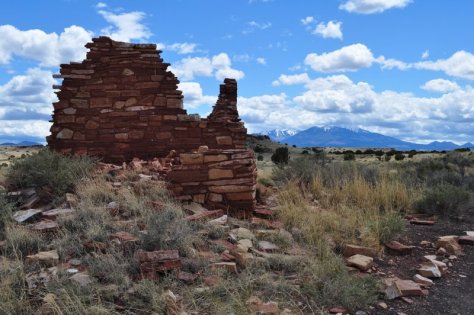
After spending a few days chez Foldes in St Paul, we flew to Phoenix, AZ and drove up to Flagstaff via the Sedona Valley. This was our first introduction to canyon country, red buttes and all. After an overnight stop in Flagstaff (where it began to snow!), we headed north via the Sunset Crater National Park and Wupatki National Monument (a series of Pueblo Indian settlements in the desert) to reach the Grand Canyon.

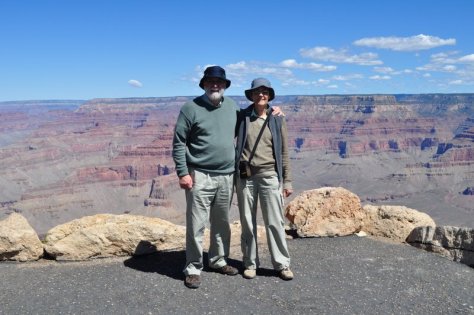
Words cannot describe the awesome spectacle as you gaze over the canyon for the first time at Desert View (just after entering the Grand Canyon National Park).

We spent a couple of nights at Grand Canyon Village, in very comfortable motel-style accommodation. Since it was the beginning of May (and even though the various hotels/motels were full), the area was not heaving with tourists. On the second full day there, we took the bus on the crater rim route to the west, getting down after a couple of stops, and walking a few kilometres along the rim – literally just a meter or so from a sheer drop to the canyon floor below. Not for the faint-hearted! Now I’m haven’t got the best of heads for heights, and at one viewpoint, with sheer drops on three sides, and just a narrow neck of path to walk along, my legs went to jelly. And since it was also rather windy, I began to doubt whether I could overcome my feeling of helplessness, and actually make it to the end, and look over and around. I sat down, and told myself not to be so silly, that having come all this distance, it would be silly to let a little vertigo get in the way of enjoying some spectacular vistas. It took about 10 minutes, but eventually I made my way gingerly to the guard rail, and after that, I had little difficulty in standing on the edge. For much of the crater rim walk, there were no safety rails, and so I just concentrated on looking ahead at the path, and not over the lip.

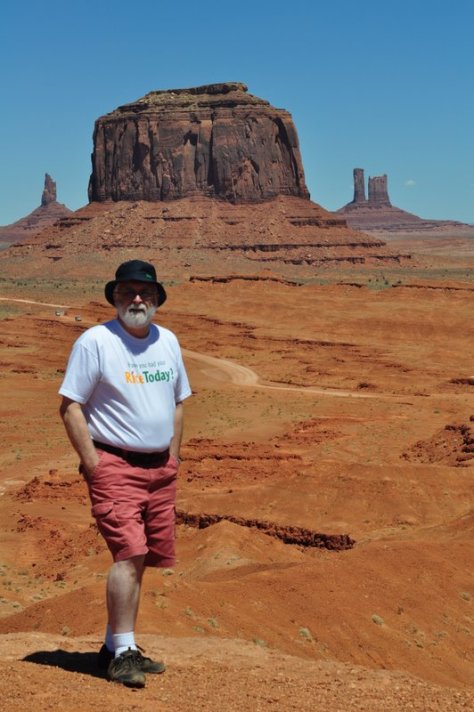
Too soon our Grand Canyon visit was over, and we headed east and north to Monument Valley, which straddles the Arizona-Utah state line, and which was used by film director John Ford on several occasions as the location for films such as Stagecoach, The Searchers, and She Wore a Yellow Ribbon, all starring John Wayne. Monument Valley is iconic mesa and butte country, owned by the Navajo Nation. We were able to drive through the valley, and saw very few other cars. We had been advised to get to the valley as early as possible because of potential tourist congestion, but that just wasn’t a problem for us. Maybe a few weeks later, once the grade schools were on vacation, the situation would have been very different. But in mid-May and throughout our whole trip, we saw very few tourists.

Our next stop was the Canyon de Chelly National Monument that bisects a range of mountains in the north-east of Arizona.


Canyon de Chelly is a magical and mystical place, and although the canyon itself is not as deep or wide, Steph and I actually preferred this to the Grand Canyon. It was much more intimate, so-to-speak, and still occupied and farmed by the Navajo. At a number of places throughout the canyon there are ancient ruins of settlements. There were fantastic viewpoints at several sites on the north and south sides of the canyon, and spectacular views of Spider Rock. Canyon de Chelly was the site of several massacres of the Navajo in past centuries – by the Spanish, and later in the 19th century, by the US government. The sides of the canyon are sheer, often dropping 1,000 feet straight down to the canyon floor. Had I not read the Carson biography I would never have dreamt of visiting Canyon de Chelly, which was certainly for me the highlight of the vacation.

We drove south to the Painted Desert and the Petrified Forest National Park. The Painted Desert has to be seen to be believed – I’ve never seen horizontal sedimentary layers like these, all banded in different colours.

We then headed north-east, and into New Mexico. Time was pushing on, and although we passed close by, were were unable to visit Shiprock or the Four Corners (where Arizona, Utah, Colorado and New Mexico meet).

Heading over the mountains in north-west New Mexico, we dropped down to the Rio Grande and Taos, and then headed south towards Albuquerque, and up into the Valles Caldera. Quite often we saw road signs indicating possible congestion on the road ahead, but in all our 1,200 miles over eight days we never encountered any hold-ups. In fact sometimes we drove for an hour or more without seeing another vehicle.

All too soon our holiday in the southwest was over and we flew back to St Paul to enjoy several more days with Callum.

Here is our route in two maps:

  • Phoenix – Flagstaff – Grand Canyon – Monument Valley – Canyon de Chelly (route)
  • Chinle – Petrified Forest – Farmington – Taos – Los Alamos – Albuquerque (route)

A knotty dilemma . . . what to wear to an investiture at Buckingham Palace

As I browsed the BBC news website this morning, I came across a magazine article about dress code (click here to access it). Specifically it was an article by British historian David Cannadine, who is Professor of History at Princeton University, on “the language of ties”.

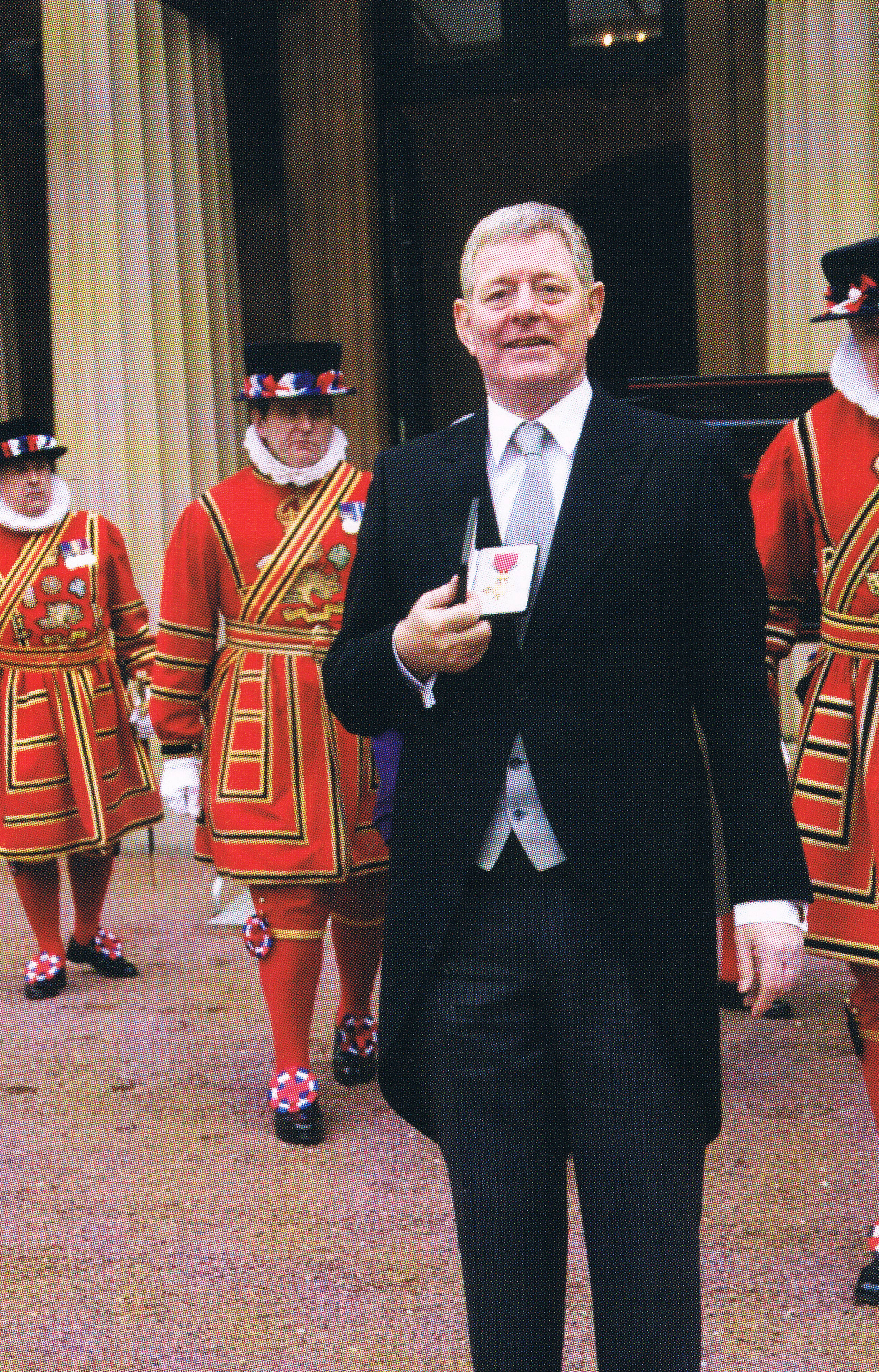
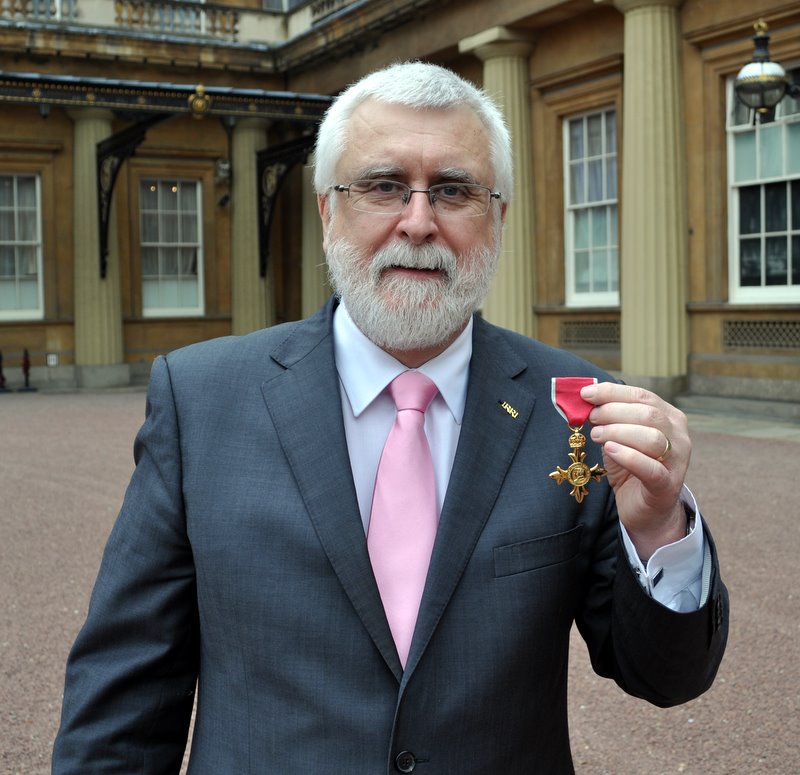
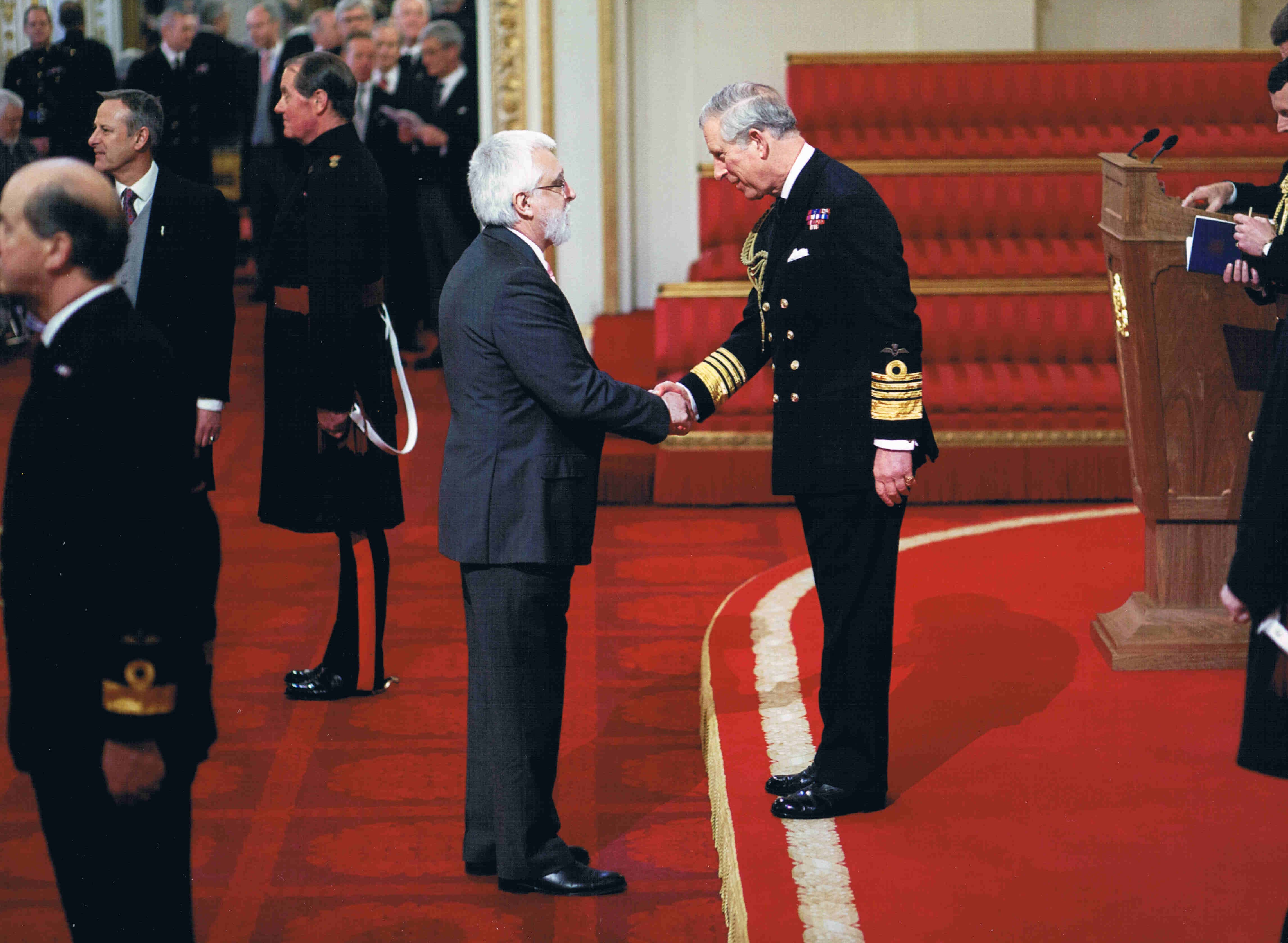
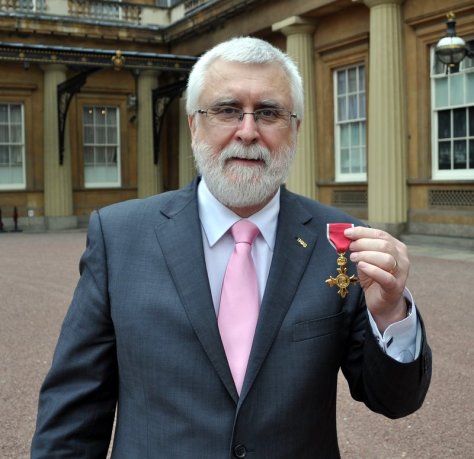
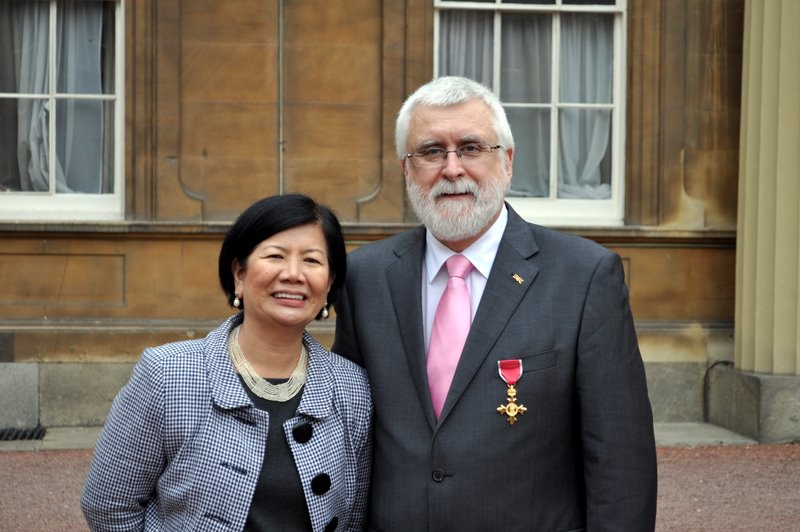
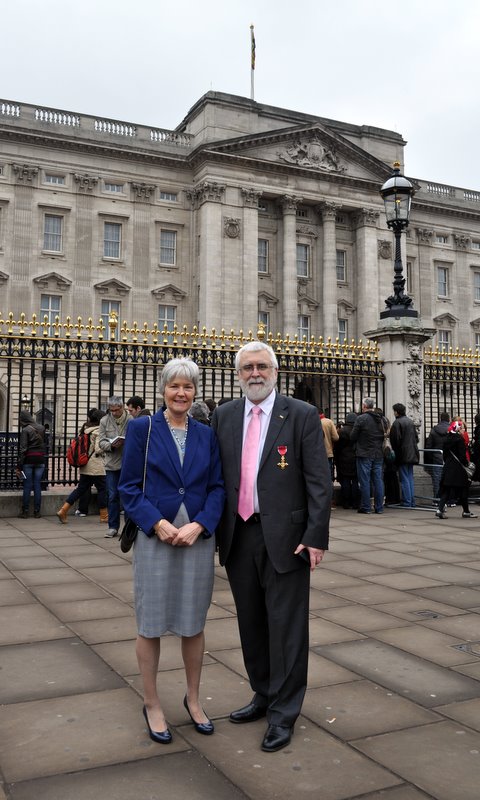
Well, the dress code thing, and especially what tie to wear, has been very much to the fore over the past few weeks since I received details about the investiture at Buckingham Palace to receive my OBE. The guidelines indicated that gentlemen should wear “morning suit, lounge suit, or national dress”. No medals! That took place on 29 February, and I wrote about the whole OBE experience – receiving the nomination, the period of secrecy, the investiture itself – in another post.

Morning suit or lounge suit? Over the course of my professional career I’ve never had to wear a suit, and frankly, never really feel very comfortable in one. And I’ve only ever worn a formal morning suit twice – at the weddings of my eldest brother Martin, and my cousin Diana. In the end, I chose what I knew I would be most comfortable wearing, and opted instead for my charcoal grey, lightweight suit that I had purchased only a couple of years ago or so, and had worn only a few times (there’s not much demand for suits in the Tropics). My friend and former colleague, John Sheehy – who received his OBE at an investiture on 14 February – decided on a morning suit, and very elegant he looked too.

So that was the suit sorted. But what tie to wear? I have to admit, I LOVE TIES, and my collection (somewhat eclectic) would be bigger if I could justify the expense. You see, I don’t wear a tie very often either. But while the suit thing is not my style, I sometimes wish there were more opportunities to wear a tie.

In November 2010, on my way to attend a major international rice congress in Hanoi, Vietnam, I’d purchased a couple of silk ties at Birmingham airport. Both were plain colours – no stripes, patterns or what have you. Just plain coral pink and apple green (if plain is the appropriate description).

Now I really like the pink tie, and it goes well with my suit (pink apparently conveys good health and a positive attitude, and also has calming effects). The question was would it be appropriate for an investiture at the Palace. And I agonized over that decision longer than I really want to admit. I even looked for advice on the web, and was amazed to find that there are many sites offering advice on all things ties: colours, occasions, and even what type of knot to tie.

In the end, I went with my instincts, and settled on the pink tie. And even if I say so myself, very smart it looked, and certainly (k)not out of place.

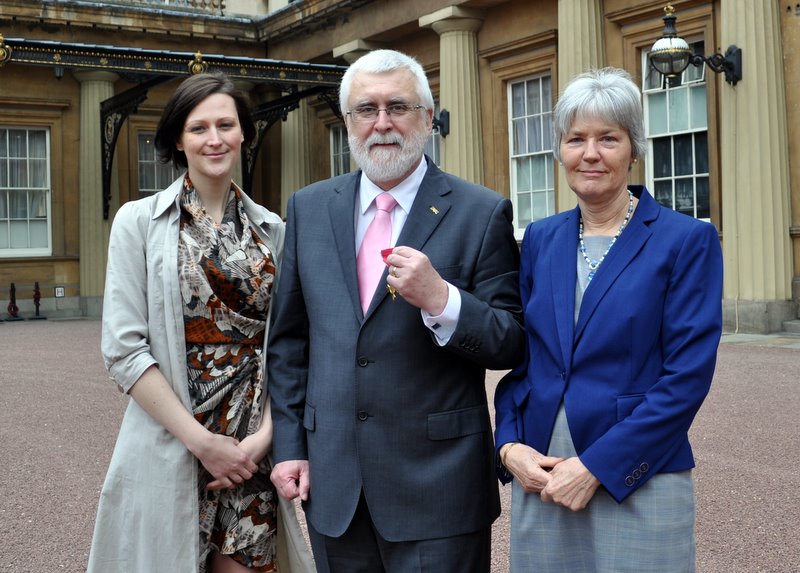
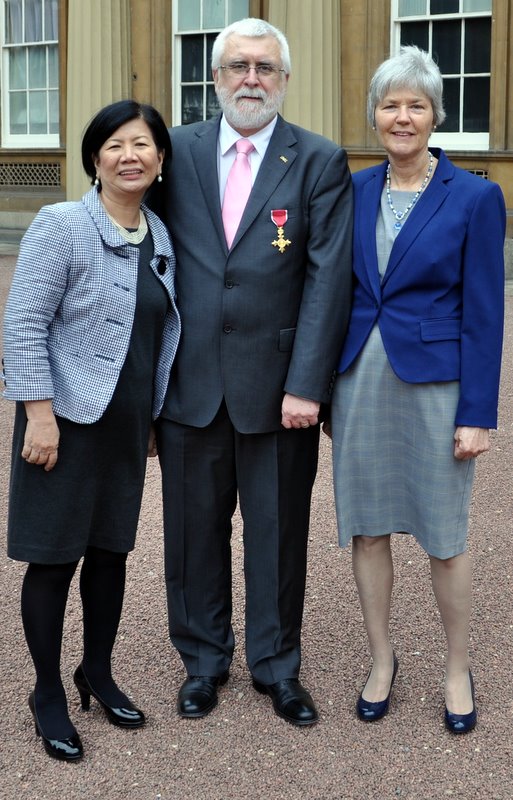
The lounge suit was a sensible choice, and I guess only about half of the men wore a morning suit even if they were being knighted. Only one woman as far as I can remember wore a trouser suit. Most women receiving an honour wore a hat – this must be the most difficult choice they have to make, and from what I observed in some instances, the choice was not very wise. None of my three guests – my wife, my younger daughter, and a former colleague from the Philippines – wore a hat. And it didn’t matter.

They’re changing the guard at Buckingham Palace . . .

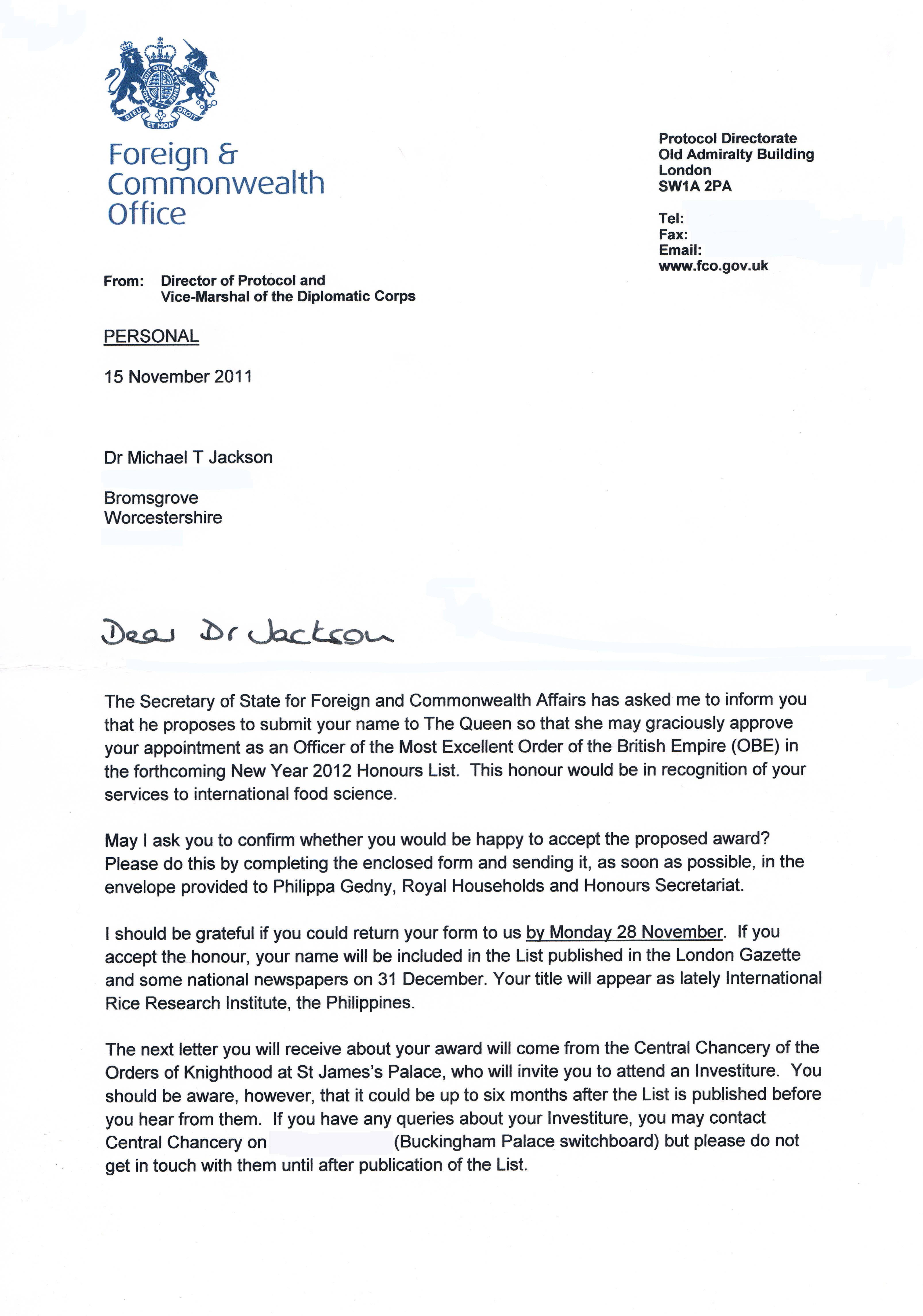
A letter in the mail – The Queen’s New Year’s Honours
On a bright, sunny day last November (my birthday, actually) I was outside cleaning the car, when the postman passed by. He handed me several envelopes and my immediate reaction was that this was another load of the usual junk mail. So you can imagine my surprise when I came across one that seemed rather official looking. And I was even more surprised when I read what it had to say – that I had been nominated to become an Officer of the Most Excellent Order of the British Empire, or OBE, for services to international food science. Well, I was gob-smacked, quite emotional really. I rushed inside to tell Steph – who was equally stunned, and we set to ponder how on earth this had come about. I did some Google detective work, and was able to find out a little more about the nomination process, and how successful nominees are chosen. But beyond that, I had no idea. Subsequently (in early January 2012), there was a press release from the British Embassy in the Philippines. There is some more information about the British honours system on the BBC website.

And then began six weeks of purgatory – nominees are sworn to secrecy until the honours list is published officially in The London Gazette, scheduled for 31 December! Anyway, on the 31st I came down for breakfast, and went to the website to see my name in print. And I couldn’t find it! I began to wonder if I had ticked the right box when I sent the form back. But then I found it (page N24) – under the Diplomatic Service and Overseas list. And looking down the list, it was then that I discovered that my good friend and former colleague at IRRI, John Sheehy, had also been made an OBE. A great day for IRRI!

Going to the Palace – next steps
Not long after the New Year, I received a package of information from the Central Chancery of the Orders of Knighthood, with the date of the investiture: 29 February. I applied for tickets – for Steph, daughter Philippa, and my closest colleague in the DPPC at IRRI, Corinta Guerta.

Not long afterwards, the tickets arrived in the mail.

Corinta arrived to the UK on 26 February, and after her meeting at DfID in London on the Monday morning, came up to Bromsgrove to spend a couple of nights with us, and to join us for the investiture. We agreed to meet Philippa in London.

One other issue for me was what to wear: morning dress (top hat and tails) or lounge suit (and even which tie to choose).* I finally settled on my lounge suit and pink tie.

Investiture day
It was an early start on the 29th: up at 5 am, and off to Solihull to catch the 7:41 am Chiltern Railways service from Solihull (about 25 minutes from Bromsgrove by car) to London Marylebone. The train eventually was very crowded, with some passengers standing all the way from Banbury to London; but we had good seats. We met up with Philippa at Marylebone, had a quick cup of coffee, and then took a taxi to the Palace.

Security was extremely tight, and we had to show photo IDs and our tickets for access. It’s quite some feeling walking through the gates of the Palace (made in Bromsgrove), past the guards, and through into the inner quadrangle. At the main entrance, under a glass canopy, our tickets were again checked, and we headed inside. What a spectacle: guardsmen in their metal breastplates and equerries in morning suits; everyone was very polite and friendly. After a quick comfort stop, Steph, Philippa, and Corinta headed for the Ballroom, and I headed off in another direction to meet the other honours recipients. The recipients of knighthoods and CBEs were together in one room, the OBEs and MBEs in another. Mineral water and juices were provided – in bottles with The Queen’s crest, and little goblets with EIIR engraved (not to be left on a mantelpiece next to a priceless ceramic vase). We waited in a long gallery full of the most incredible pieces of art – goodness knows what their value was.

One of the Officers on Duty gave a briefing about the ceremony, that it would be held by HRH The Prince of Wales (not HM The Queen, much to my initial disappointment). It began precisely at 11 am, and the first batch of recipients was called away. I was in the second batch. Click on the image below to read the investiture program.

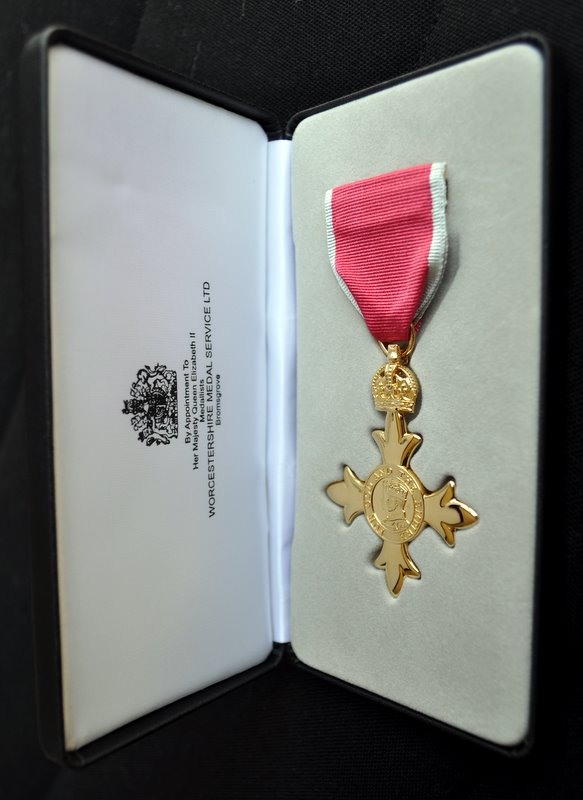
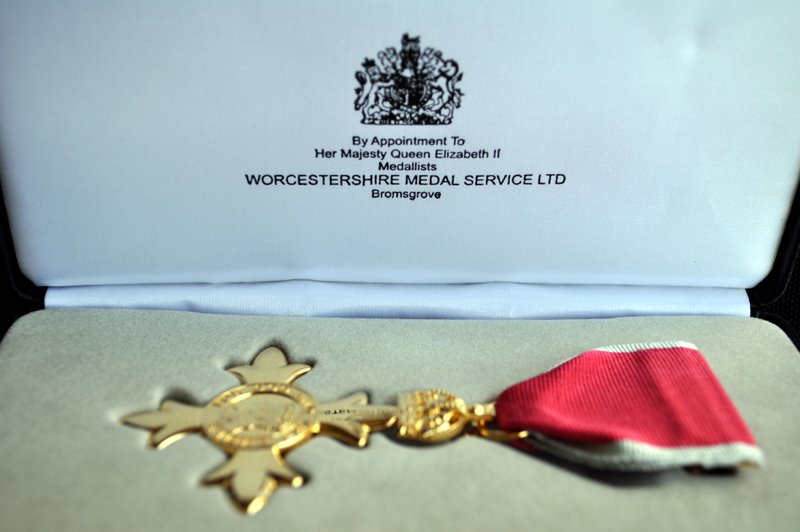
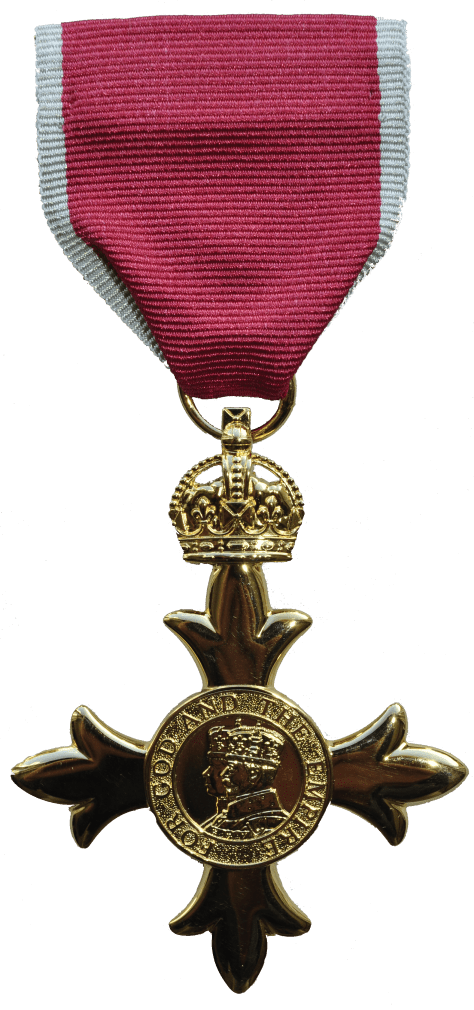
I guess I must have been called to receive my OBE at around 11:15; and afterwards the recipients returned to the back of the ballroom and took their seats to watch the rest of the proceedings. Immediately after the presentation, the insignia was removed and placed in a special case.

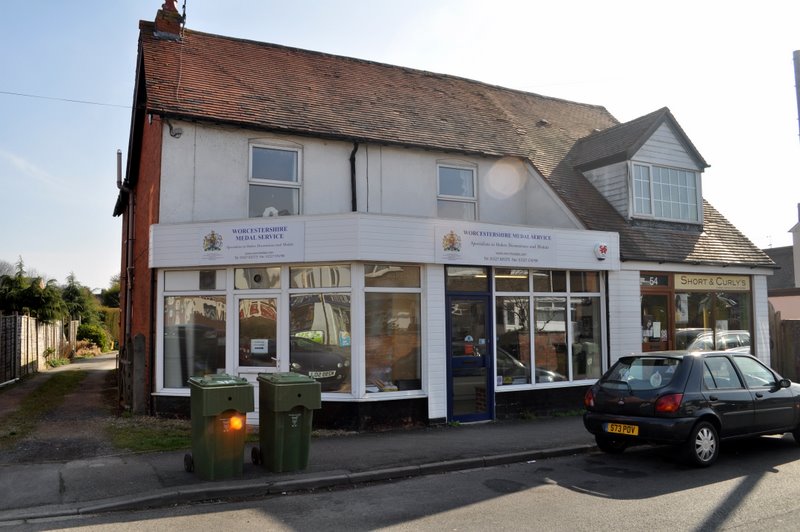
I was intrigued to see that the insignia was made by a company based in Bromsgrove, the Worcestershire Medal Service Ltd.

The medals are actually manufactured at a site in Birmingham’s Jewellery Quarter, but the head office is a small shop on one of my daily walk routes!

Anyway, to get back to the ceremony. Each batch of recipients crossed the ballroom at the rear, to enter a corridor on the other side. And it was from there that each recipient was called forward, to wait beside one of the Officers on Duty, and then move forward again as the surname was announced (and the reason for the honour). Turning towards HRH, men gave a small bow from the neck and women a curtsy. The insignia was pinned on, and a few words exchanged.

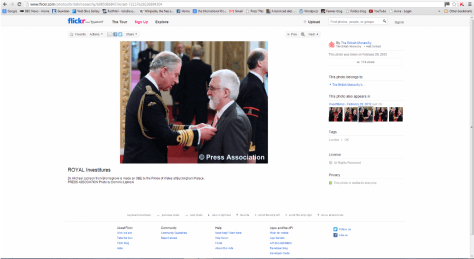
Receiving my medal from HRH The Prince of Wales (screenshot from The British Monarch website)

HRH asked if I was still working in the Philippines – he had been well briefed, and then we spoke briefly about different varieties of rice. Then, after some words of thanks from HRH and a warm handshake that was it – my moment of glory all over, and I exited through a door on the opposite side from where I had entered. The ballroom itself was quite dimly lit, from several huge chandeliers. On the video footage I have seen, and on the close circuit TV that was broadcast to waiting recipients, the ballroom look very bright indeed.

Considering the number of honours recipients and that HRH spoke to each person individually, the investiture was over just after 12 noon. Then we were able to meet up with our guests. Steph, Philippa, and Corinta had found seats at the back of the ballroom. We then made our way outside for picture taking.

Here are just a few, but click on the image immediately below and a web album of the best photographs will open.

Unfortunately we were not able to stay long in London, since Corinta was due to fly back to the Philippines from Birmingham Airport (BHX) at 8:30 pm. So, once we had taken all the photographs we wanted, I hailed a taxi (much easier outside the Palace than I had envisaged) and we set off for Marylebone and the train. We had a quick bite to eat at the station, and our train to Solihull departed at 2:37 pm, arriving in Solihull on time just after 4 pm. Corinta had plenty of time to get changed, complete some last minute packing, and even enjoy a cup of tea and some home-made Victoria sponge before heading off to BHX in an Emirates Airlines limo.

Reflections
Originally we thought about driving to London for the investiture. Hindsight is a wonderful thing. I would have been stupid to have attempted this trip by car, even though we could have parked right inside Buckingham Palace. On the afternoon of 29 February there were serious traffic incidents on one of the main motorways (M40) into London that we would have used, and there were holdups for several hours. So instead of an anticipated stressed journey by car, we let the train take the strain.

As Steph and I reflected on the day over dinner and a cup of tea that same evening, it was quite surreal to think we had been inside Buckingham Palace just a few hours before. But what a privilege it was, and what a fantastic honour to have received in recognition of the work I did in agricultural research, especially the conservation and use of crop genetic resources.

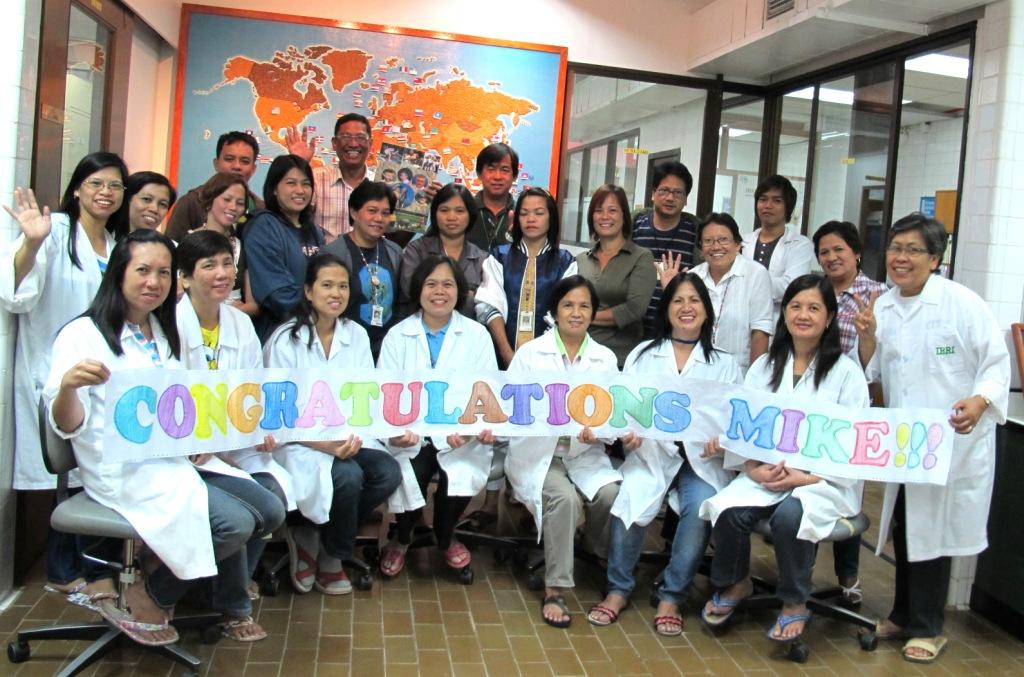
My former staff in the International Rice Genebank at IRRI sent me this photo – a very thoughtful touch.

Warrant of Appointment
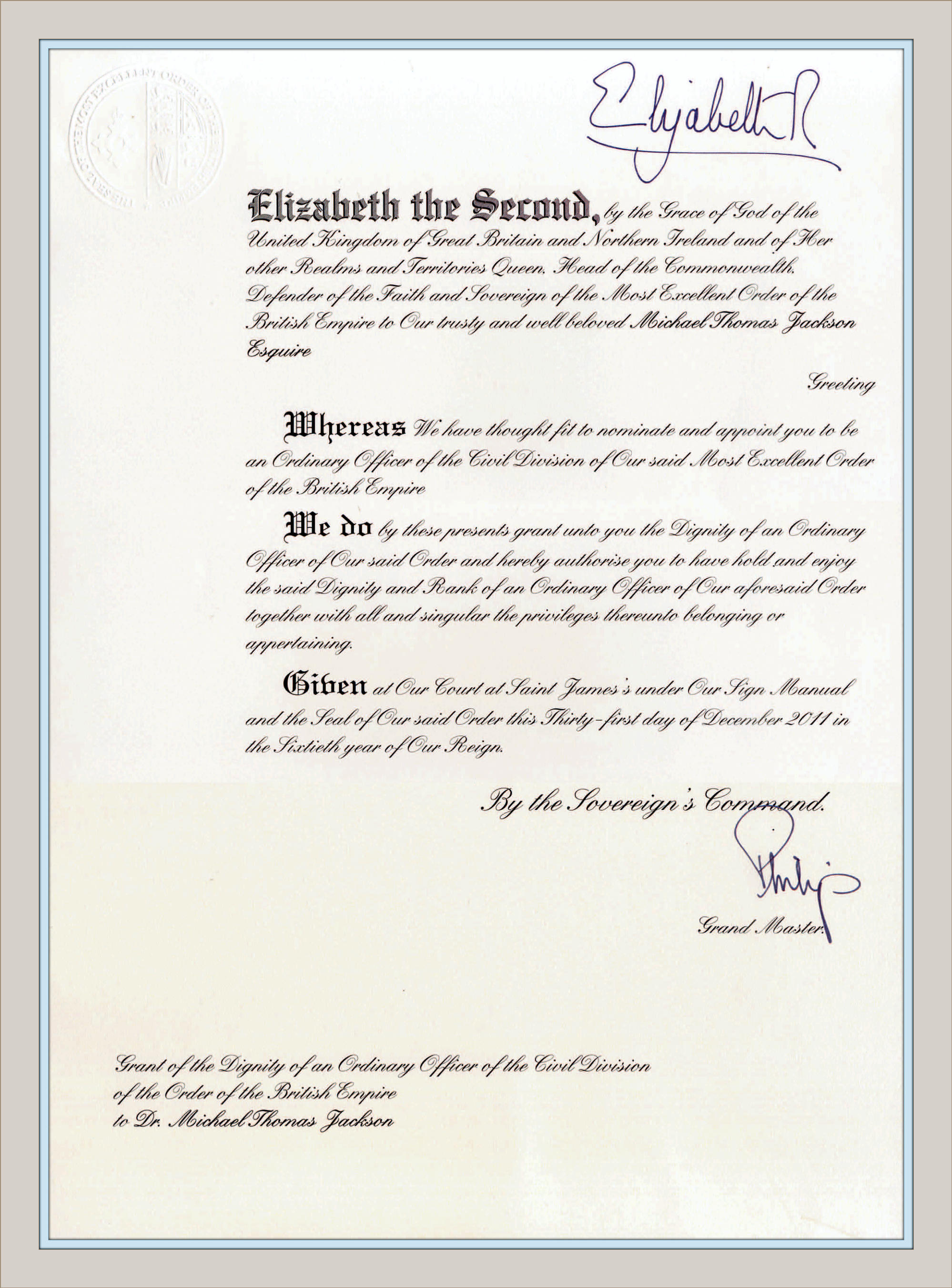
On 22 May I received my Warrant of Appointment as an Officer of the Most Excellent Order of the British Empire. This is printed on parchment, has an embossed Seal of the Order in the top left corner, and measures 11.5 x 16.5 inches approx.

* Over the past year since I first posted this story, lots of other recipients of awards have also worried about what to wear to an investiture, and their web searches have often led to my blog. I hope my advice has been useful. I know in at least one case that it has been, since there are a couple of comments to that effect.

Are you sitting comfortably? Then I’ll begin (updated 4 Jan 2013).

I’ve been feeling under the weather for the past few days – not my usual self at all. So by early evening most days I haven’t felt much like watching TV. Rather I’ve headed to bed early, and listened to the radio instead. Usually it’s BBC Radio 4, but last night there wasn’t much on that interested me, so I changed stations to Classic FM.

Well, just after I started listening, one piece of music was played that took me right back to my childhood. I don’t know why, and I couldn’t think of any connection whatsoever. So what was this piece of music, I hear you cry, and why had it opened up the memory banks? It was the Humoresque in G-Flat Major, Op. 101, No. 7 by Antonin Dvořák. I’ve since gone to Wikipedia to see if the music was used as a theme to a radio or TV program, or whatever. Not that I could find, but I came across a reference to “Passengers will please refrain . . .

Anyway, I got to thinking – about other songs that I remembered from my childhood in the 50s. There were two radio programmes in particular. First was Listen With Mother, which was first broadcast on the Light Programme (essentially now BBC Radio 2) in 1950, and began with the lines “Are you sitting comfortably? Then I’ll begin.” The theme music was from Gabriel Fauré’s Dolly Suite, Op. 56. The voice of Listen with Mother was Daphne Oxenford, who died on 21 December 2012.

The other was Children’s Favourites, broadcast from 1954, and hosted by Derek McCulloch (Uncle Mac) who began each program with “Hello children, everywhere!”, and using Puffin’ Billy by Edward White as its theme music.

Among the ‘iconic’ songs I remember in particular from the 50s are:

  • Buttons and bows (actually the best selling record on the day I was born – 18 November 1948) by Dinah Shore, but played often throughout the early fifties.

  • A couple of songs by Max Bygraves (who moved to Australia in 2005 and died on 1 September 2012 aged 89) – Gilly gilly ossenfeffer katzenellen bogen by the sea (1954), and You’re a pink toothbrush (1959).

  • Danny Kaye, Thumberlina (1952) from the film Hans Christian Andersen.

In a recent post I talked about the music I’d take away on my desert island. None of the music above would find its way on to any of my lists. But, just tracking these down through You Tube and other sites, has taken me on a magical tour of some very early childhood memories.

27 February
After I’d posted this story yesterday, I began thinking a little more about the music of the 50s, and whether, in some ways, this had been an ‘age of innocence’. After all, our music sources were the radio, and 78 rpm records (if we could afford them). Music today is so much more accessible – a plethora of radio and TV stations (and on the Internet) blaring out music of every genre you can imagine (and even don’t want to imagine), personal mp3 players (having replaced the cassette Walkman and CD Discman), and increasingly on smart phones. So today’s youth has access to music 24 hours a day.

Thinking back on the songs I listed in my post yesterday, and the types of programme on which they were played, it all seems so gentle and genteel somehow. But as the 50s progressed, changes were happening. Skiffle music had taken off. The rock ‘n roll craze hit the UK from the USA. I was aware of Bill Haley and His Comets and their 1956 hit Rock Around the Clock (I remember seeing a movie of that name at the Grand Cinema in Leek). I don’t remember much about Elvis Presley, however. And in the UK, we had our own Elvis: Cliff Richard, who caused much consternation among the straight-laced members of society for his ‘deplorable’ antics on stage (too much hip movement – tame compared to what today’s artists get up to). And of course, with the coming of the 60s, so much changed in any case, much of it under the influence of The Beatles, and particularly following the release of their fourth single, She Love You, in 1963.

Ask a youngster today about music and it’s all Lady Gaga,  boy bands, girl bands, Justin (fill in the surname to whichever), etc. I don’t think there is time now for an ‘age of innocence’.

P.S. There’s one song from the 50s I forgot to mention: The Runaway Train by Michael Holliday (1956) – from his accent you wouldn’t credit he came from Liverpool!

Barack Obama belts out the blues at event with Mick Jagger

Methinks this wouldn’t happen in a Romney or Santorum White House . . . click here


50 years, and still going strong . . .

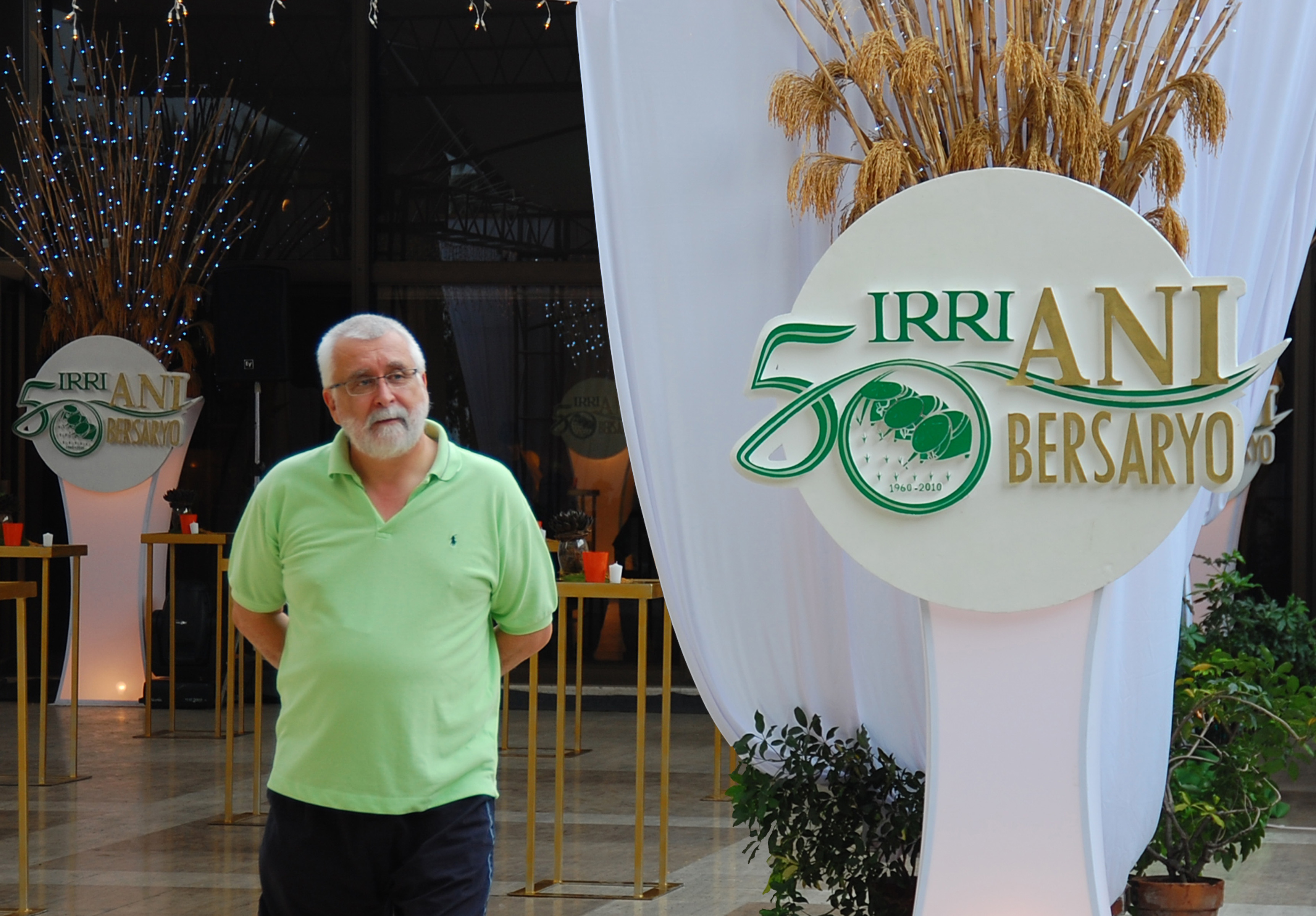
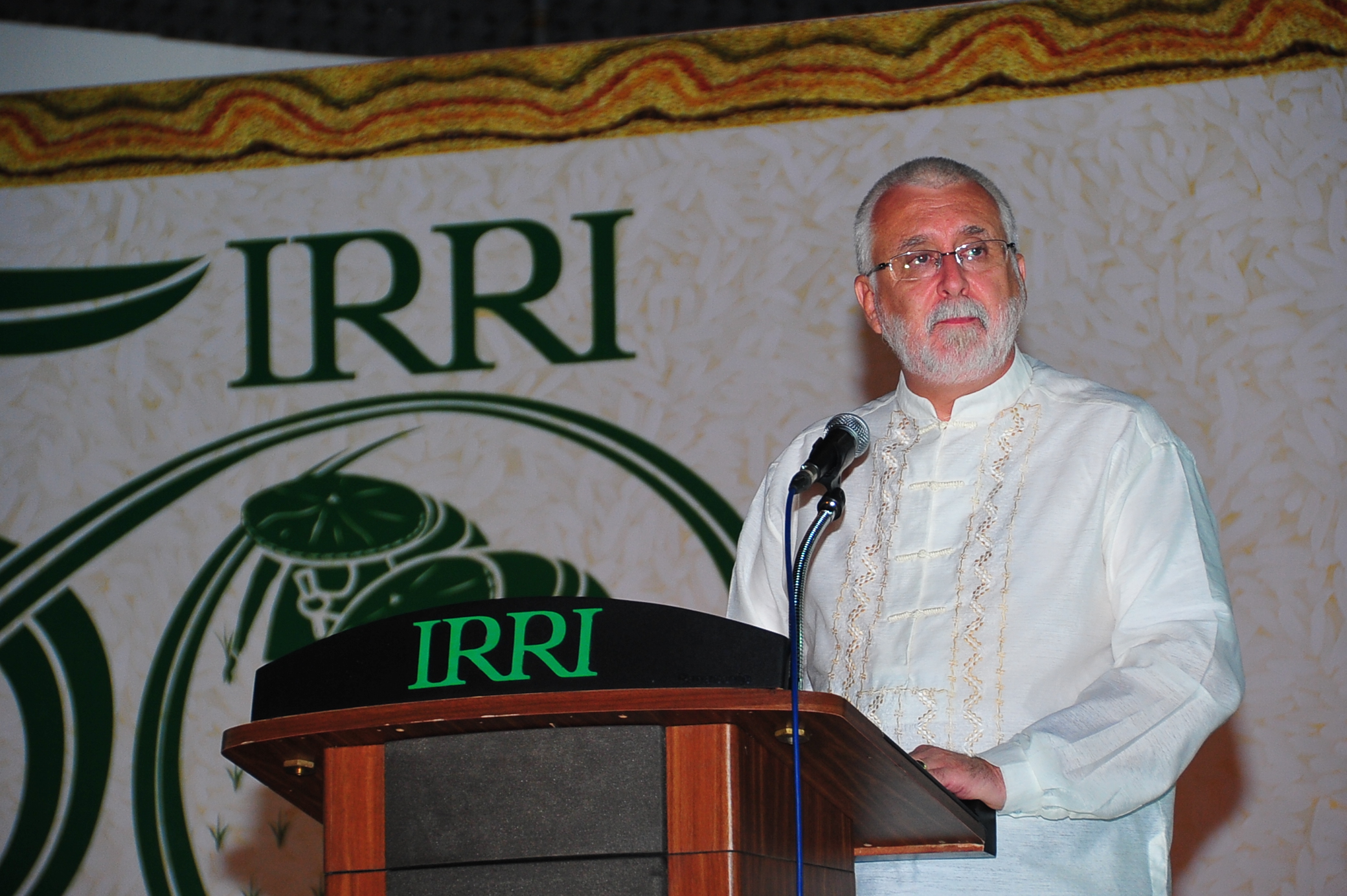
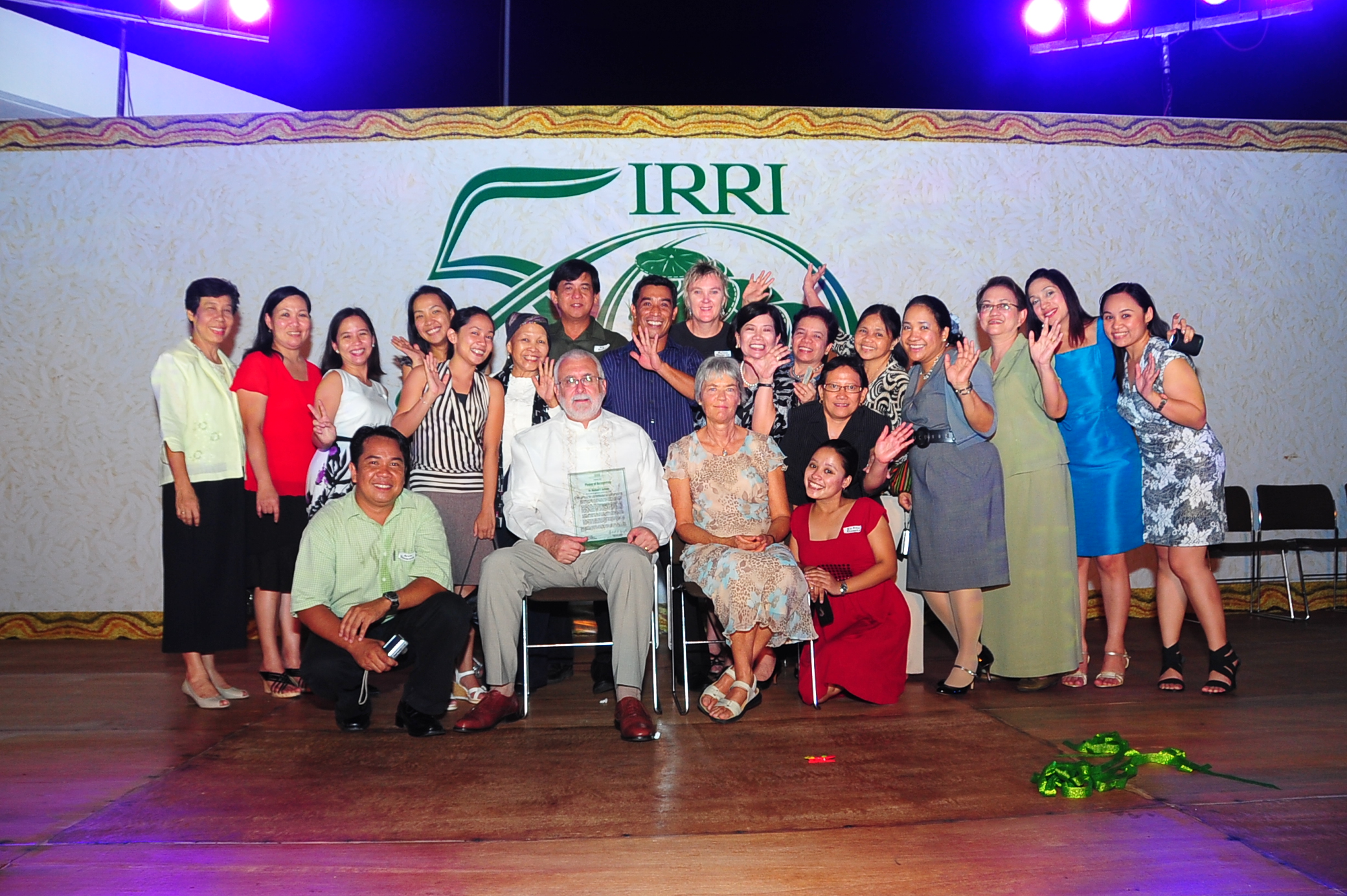
In 2009-2010, the International Rice Research Institute (IRRI), located in Los Baños, the Philippines (my home and workplace for almost 19 years) celebrated its 50th Jubilee. As Director for Program Planning and Communications, I was asked to plan and develop all the IRRI golden jubilee activities and events.


But first, a little background . . . 
On 9 December 1959, the Philippines government and the Ford and Rockefeller Foundations signed a Memorandum of Understanding in New York that established IRRI as an organization to do basic research on the rice plant and applied research on all phases of rice production, management, distribution and utilization.

A few months later, on 14 April 1960, the first Board of Trustees met in Manila and approved the constitution and bye-laws that gave the institute its legal status. IRRI was born, and has been making a significant contribution ever since to:
  • reducing poverty;
  • increasing food security;
  • improving health and nutrition; and
  • sustaining the agricultural environment.

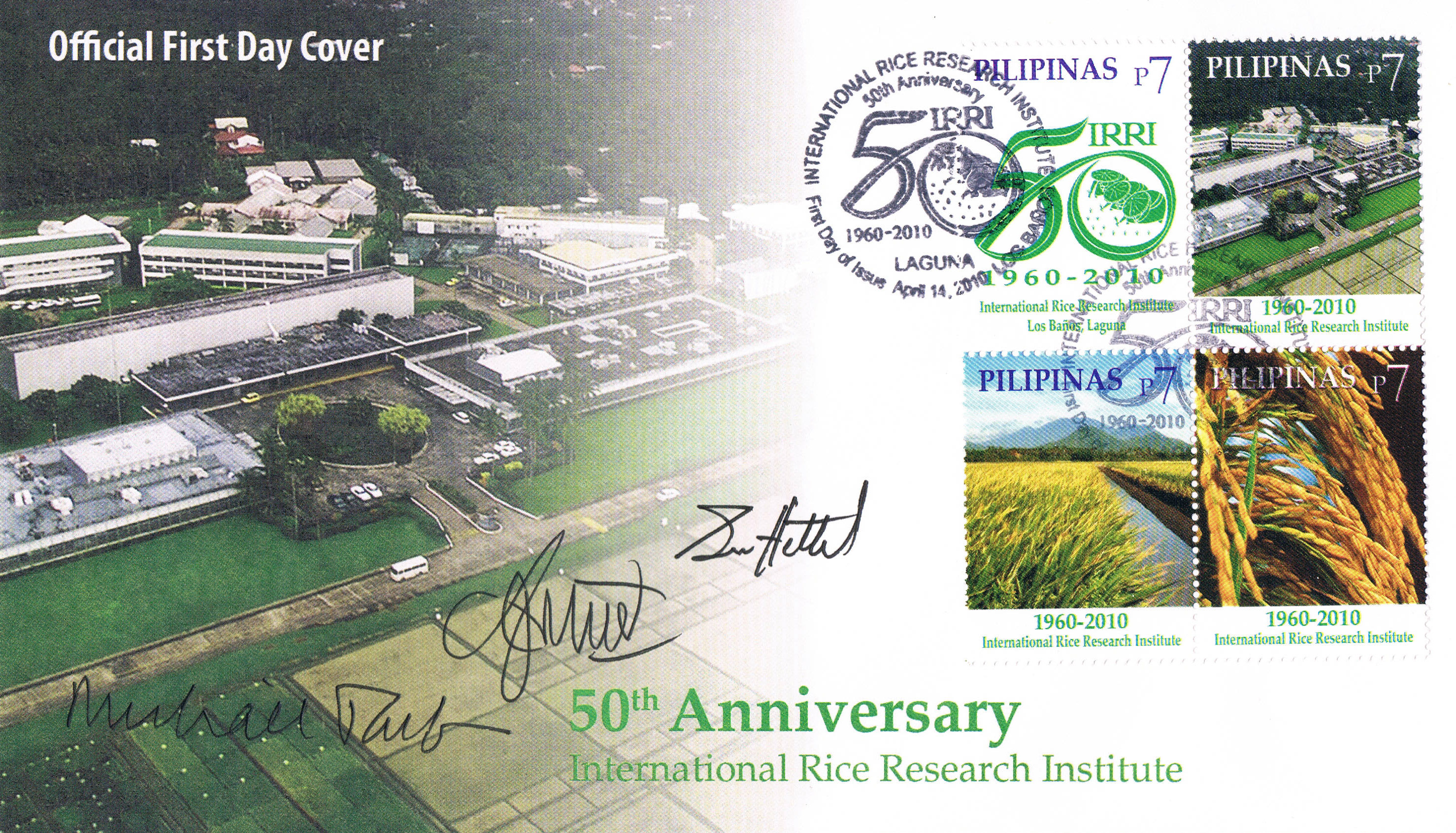
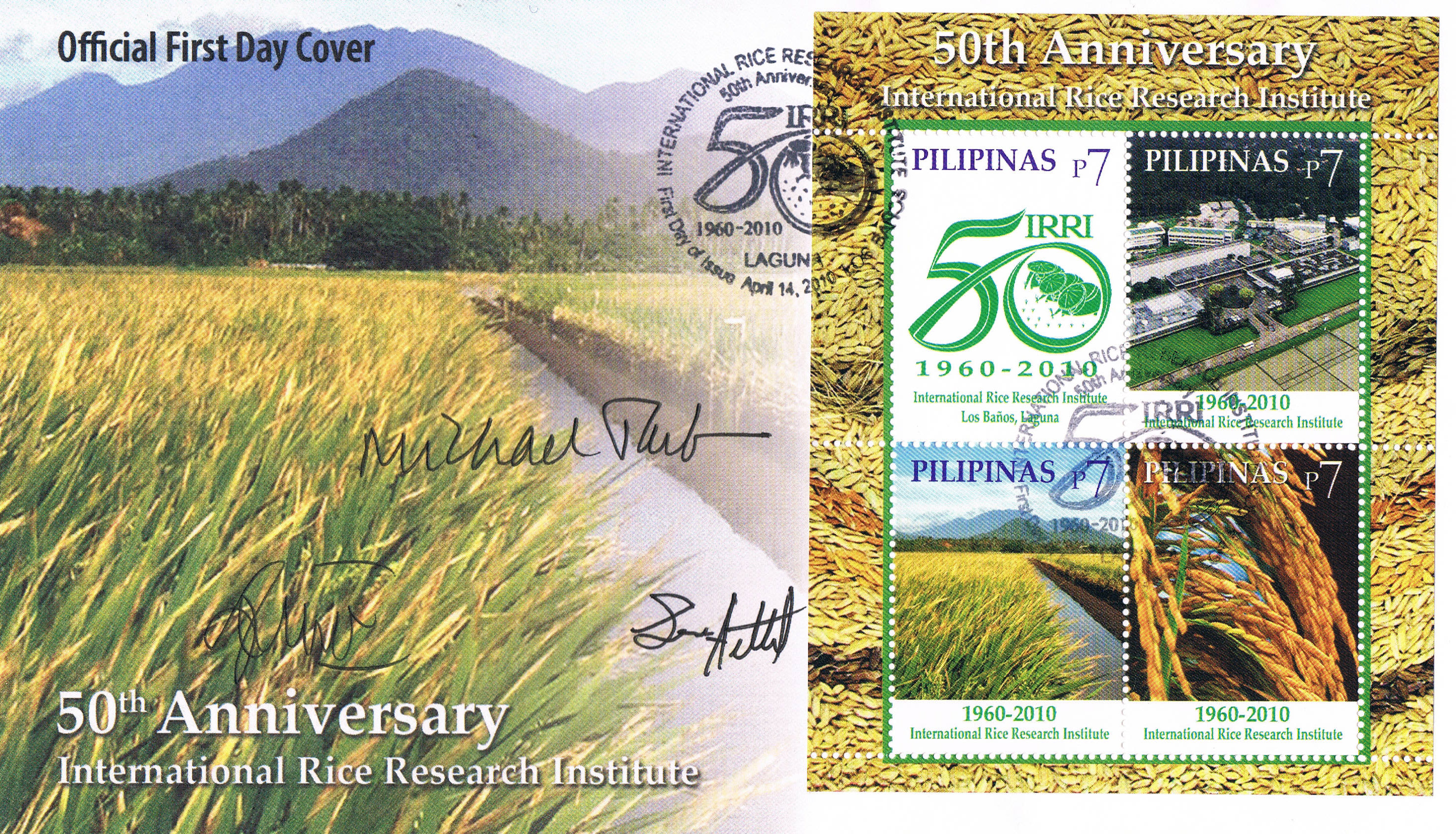
The Philippine Postal Corporation recognized IRRI’s golden jubilee by issuing four commemorative stamps on 14 April 2010, for which I coordinated the design from the IRRI side with Gene Hettel and designer Boyet Lazaro of the Communication and Publications Services (CPS). Boyet also designed the 50th logo above. I produced this video using old photographs of the construction of the IRRI research center and staff housing in the early 60s, as well as some footage of Boyet designing the stamps and selecting the final four.

The events . . .
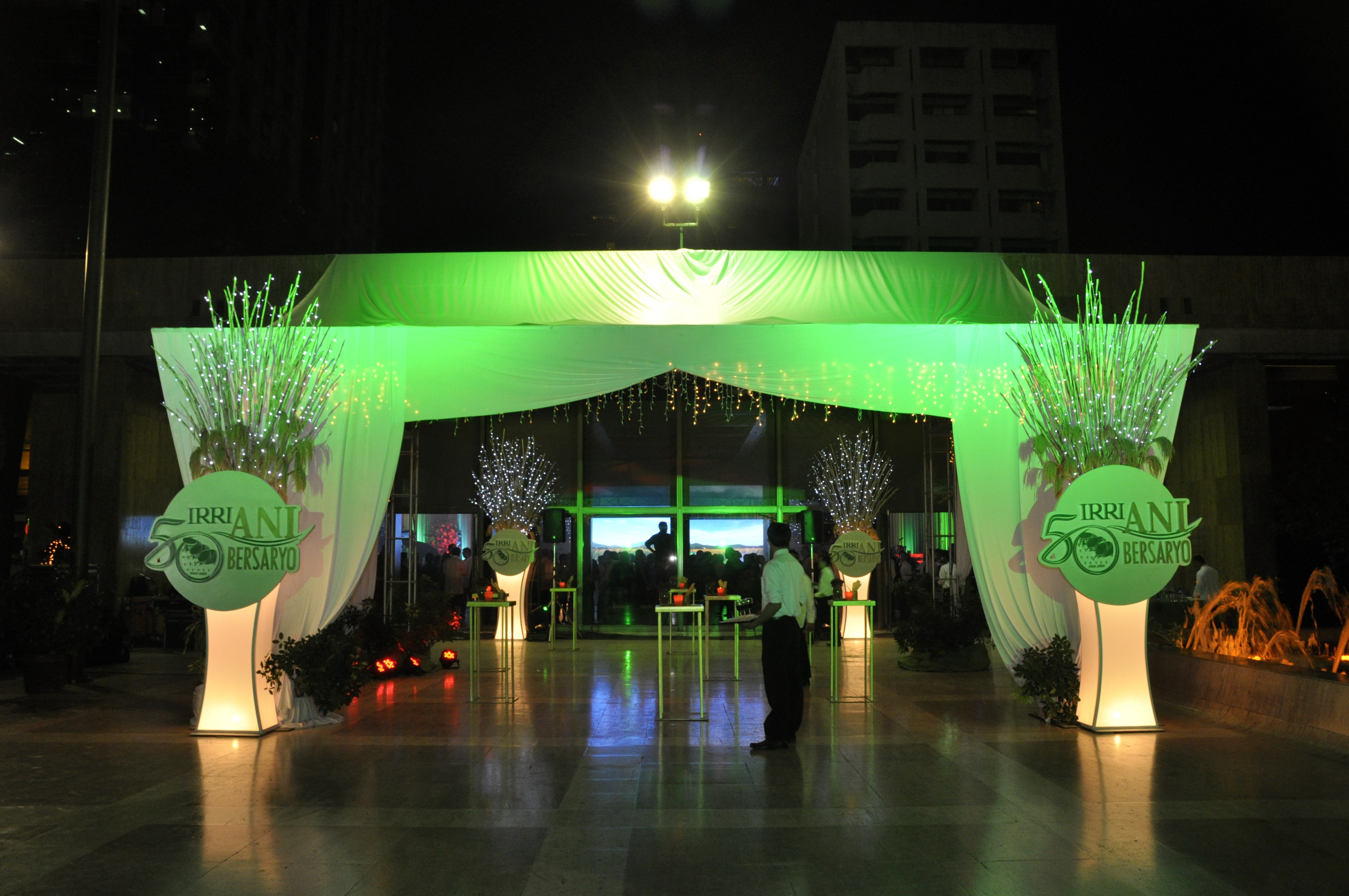
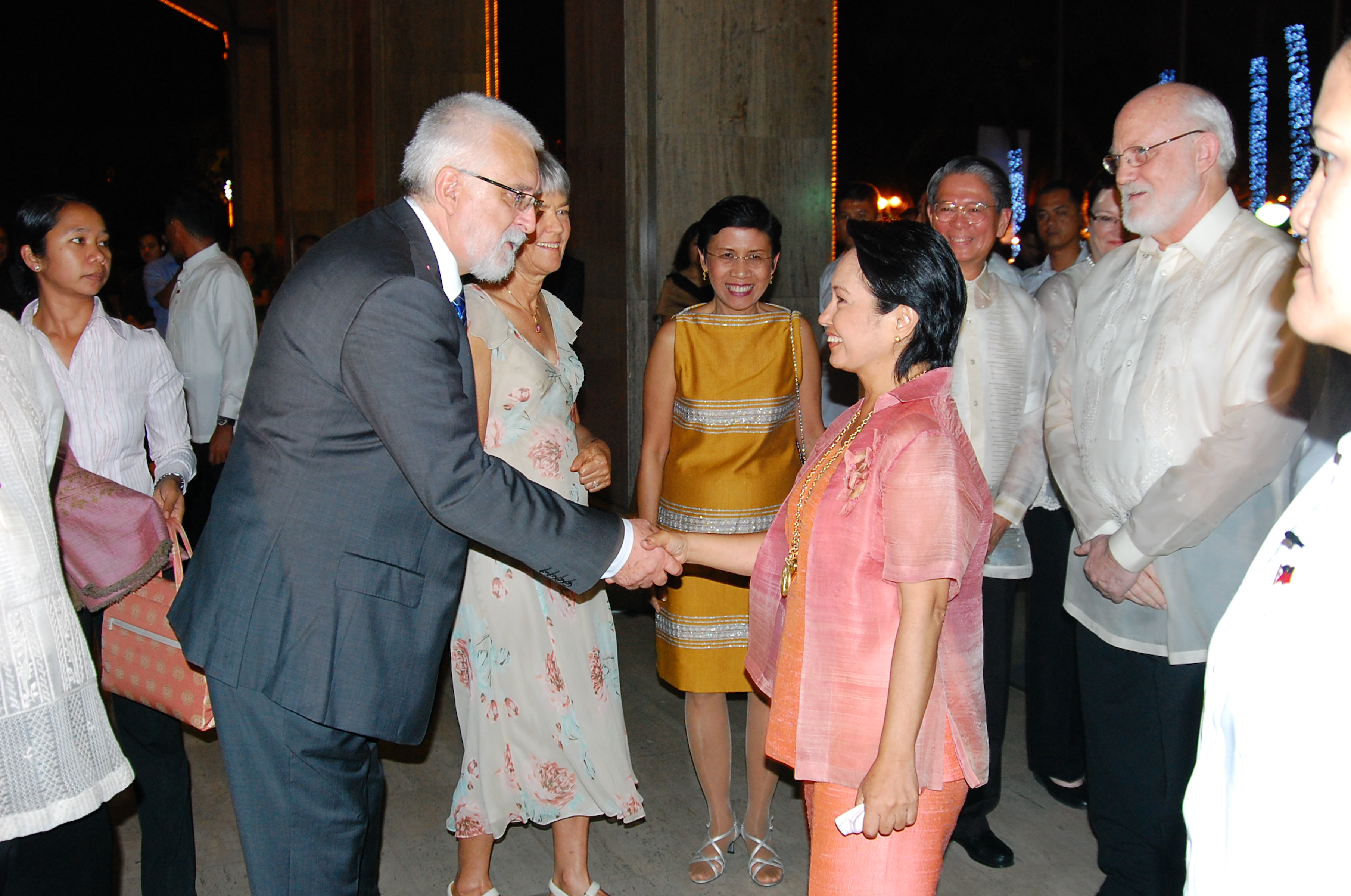
To develop the themes and format of the golden jubilee celebrations, IRRI signed a contract with entertainment company Filmex who organized two major events in December 2009, around the 50th anniversary of the 1959 Memorandum of Understanding. On Thursday 10 December 2009, IRRI hosted the President of the Republic of the Philippines (then H.E. Gloria Macapagal Arroyo), members of the diplomatic corps and Manila business community, and IRRI staff at a reception held at the Ramon Magsaysay Center in Manila. The event was catered by Italian restaurant chain Cibo di M, with excellent Chilean wines supplied by up-and-coming wine merchants Wine Depot.

Following the formalities, we were treated to an evening of entertainment from Isay Alvarez (who was a member of the original London cast of Miss Saigon), and retro-60s and Beatles cover band, Area One.

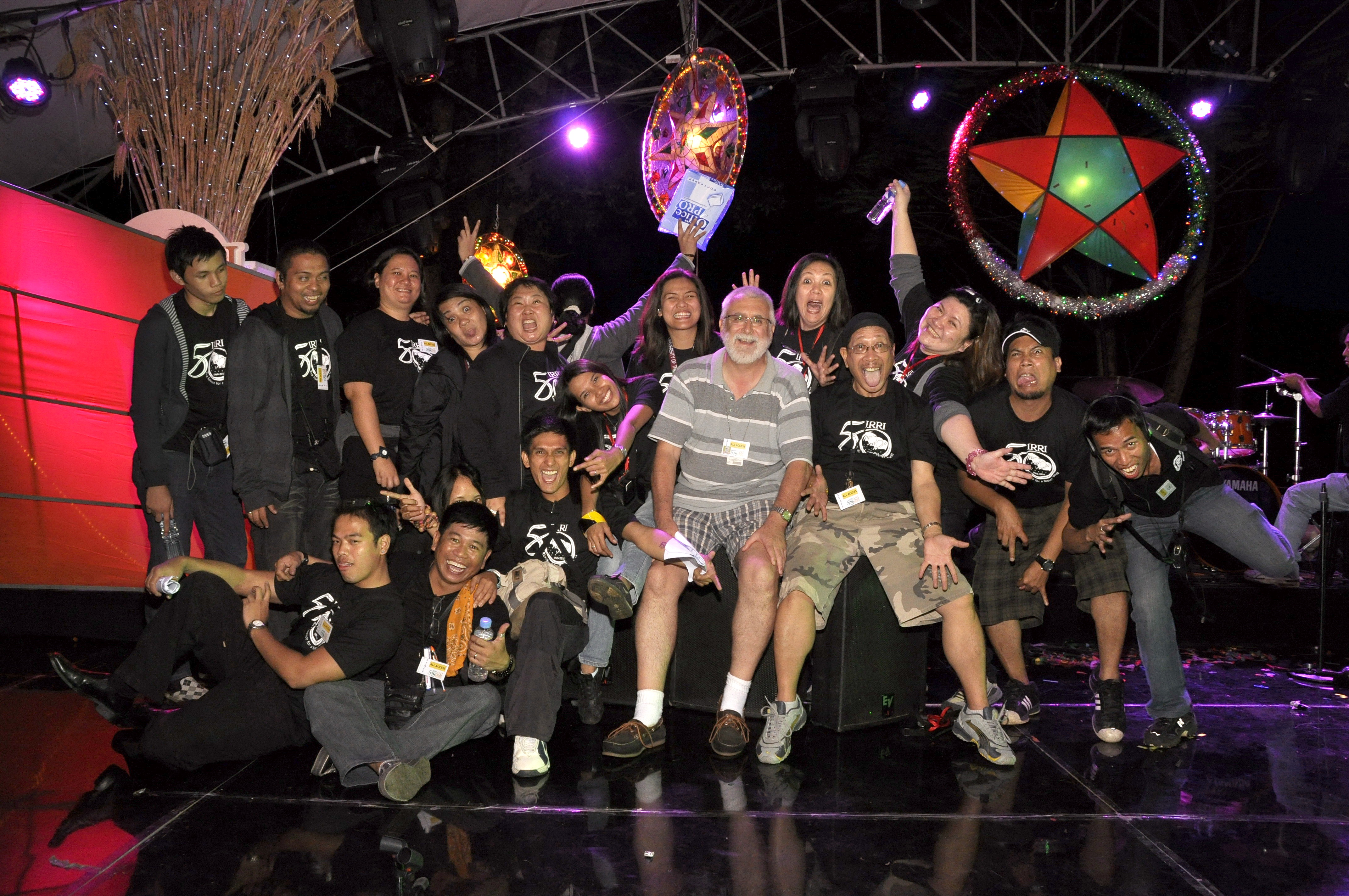
Then on Sunday 13 December, we held an all-day party at IRRI for all staff and families members. The day kicked-off with a street-dancing competition between teams from the communities (known as barangays) surrounding IRRI where many of the local staff live. This culminated in the grand final on the IRRI campus, shown in this video.

As the street dancing was finishing it started to rain, and this continued for about 2-3 hours. Fortunately, it had eased off by about 3 pm . Ironic really, because the day before had been gloriously hot, with hardly a cloud in a clear blue sky.

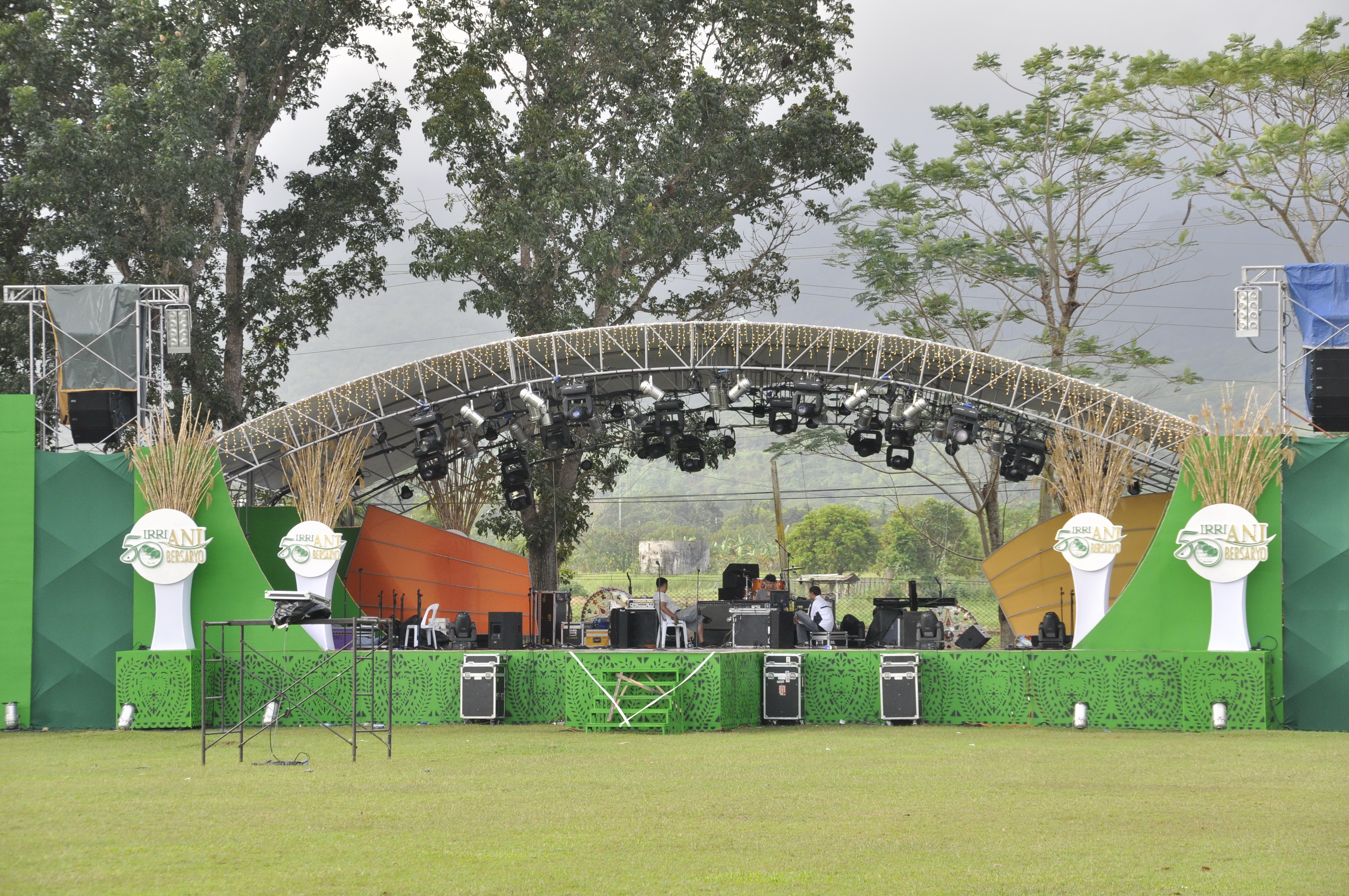
In the afternoon, there was an open-air market, with stalls selling all sorts of novelties and handicrafts, as well as lots of fast-food vendors. There were street performers, such as magicians and stilt-men keeping everyone amused, until the main event of the day, a 4-hour concert beginning in the daylight at 5 pm. Between the Manila event on the previous Thursday night, the Filmex crew had come down to IRRI and constructed this stage on the IRRI sports field – a stage any big rock band would have been proud to perform on.

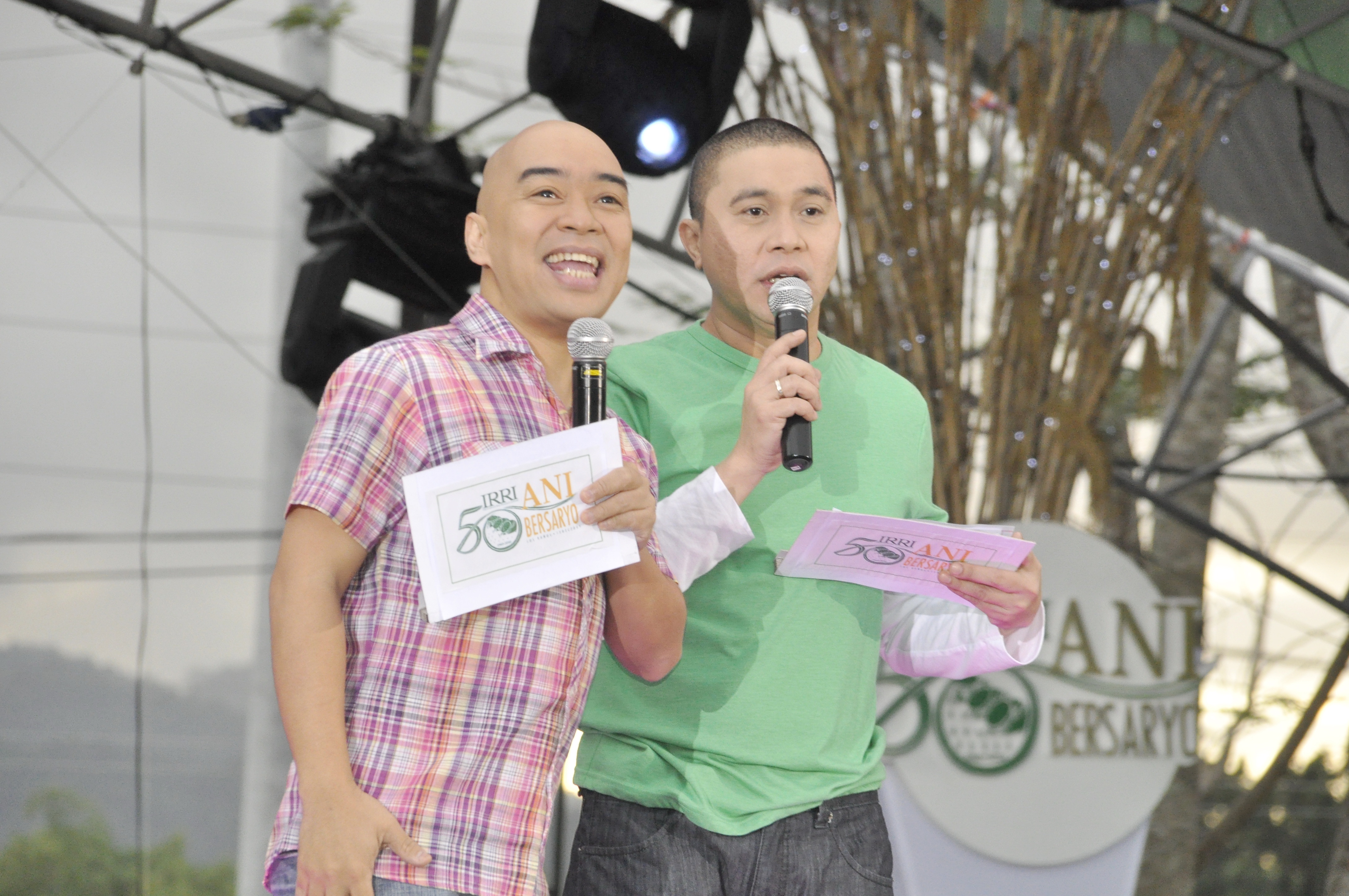
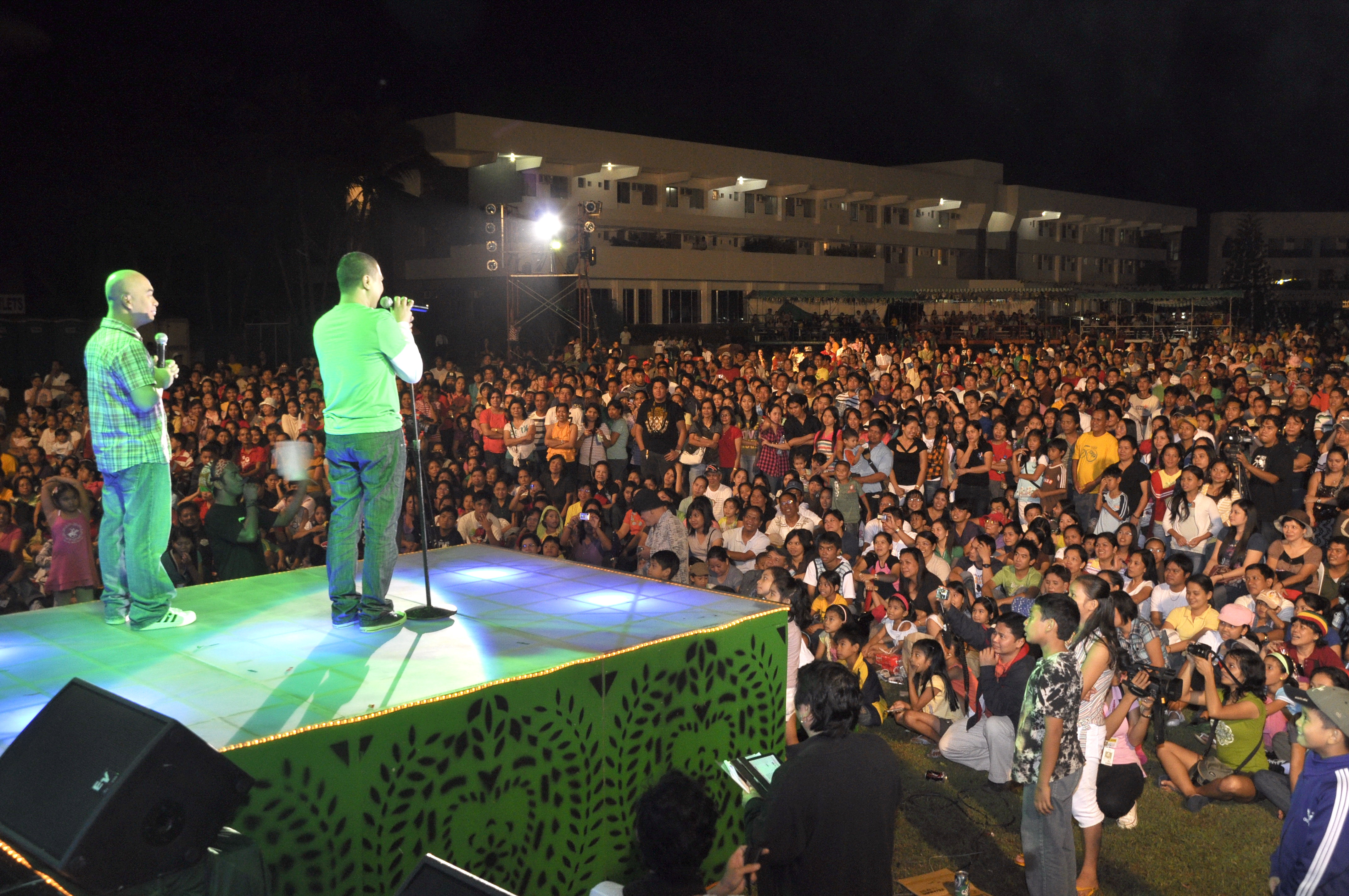
More than 3,000 people attended the concert. The concert included local and national performers, several stars of Philippine TV, including the hots for the event, comedians Wally and Jose.

Tagalog was the language for most of the event, which excluded the foreign staff of IRRI to some extent, but the concert was IRRI’s way of thanking  its Filipino staff, and celebrating IRRI’s 50 years in the Philippines.

Among the acts performing were students from the Philippine High School for the Arts, located near IRRI in Los Baños, folk rock group Makiling, girl band The Mocha Girls (whose participation caused some rumpus among several straight-laced IRRI international staff), and national singing idols Karylle and Christian Bautista.

Just hear all the girls scream (at 1:30) as Christian comes out on stage.

The concert ended with a glorious firework display. What a day!

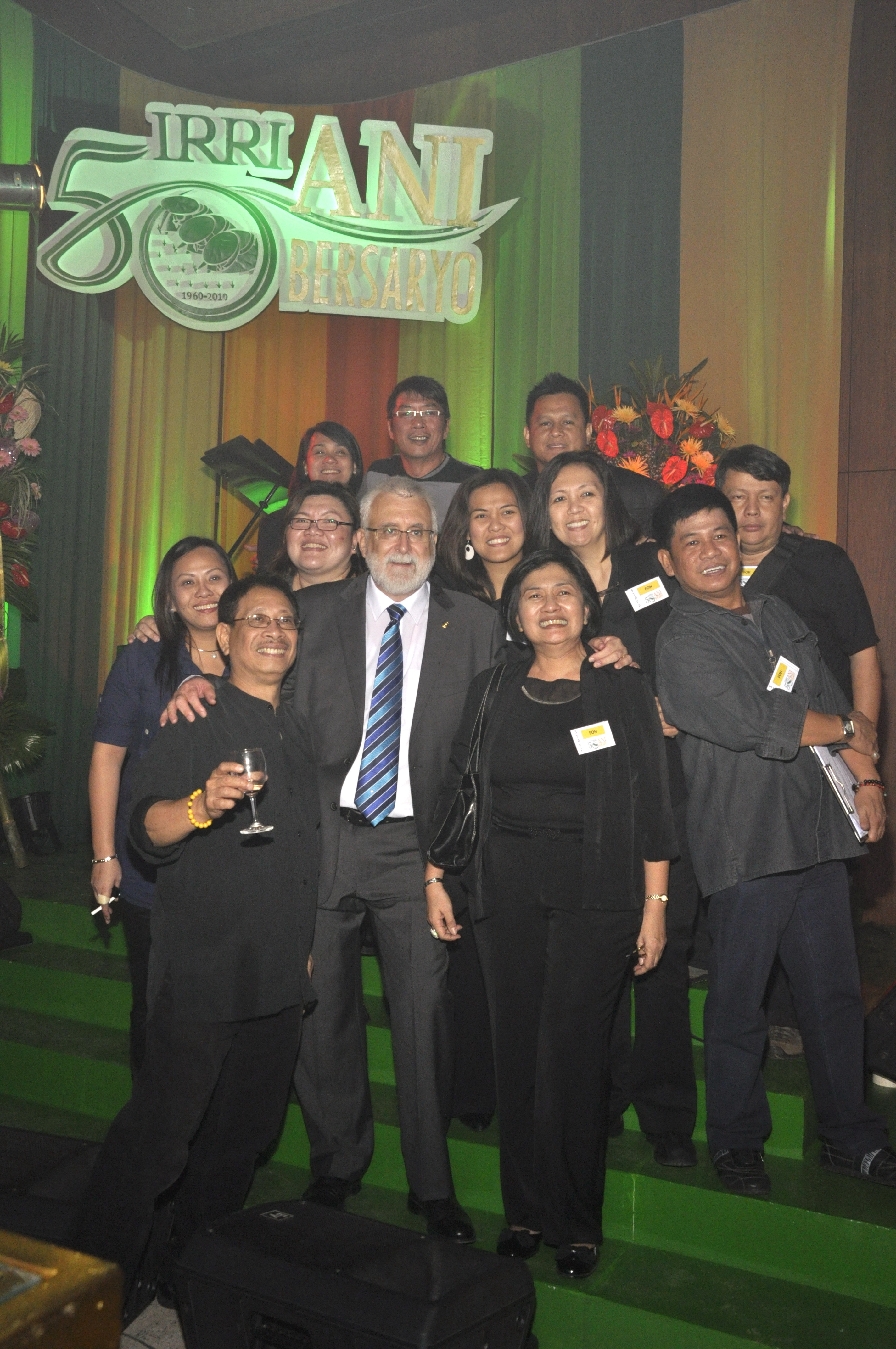
Afterwards I joined the Filmex crew (particularly Bing, Mel, Em, Fides and Ginny) on stage to thank them for all their efforts. By 8 am the following morning, the stage had been completely removed – you wouldn’t think there’d been a concert there just a few hours before.

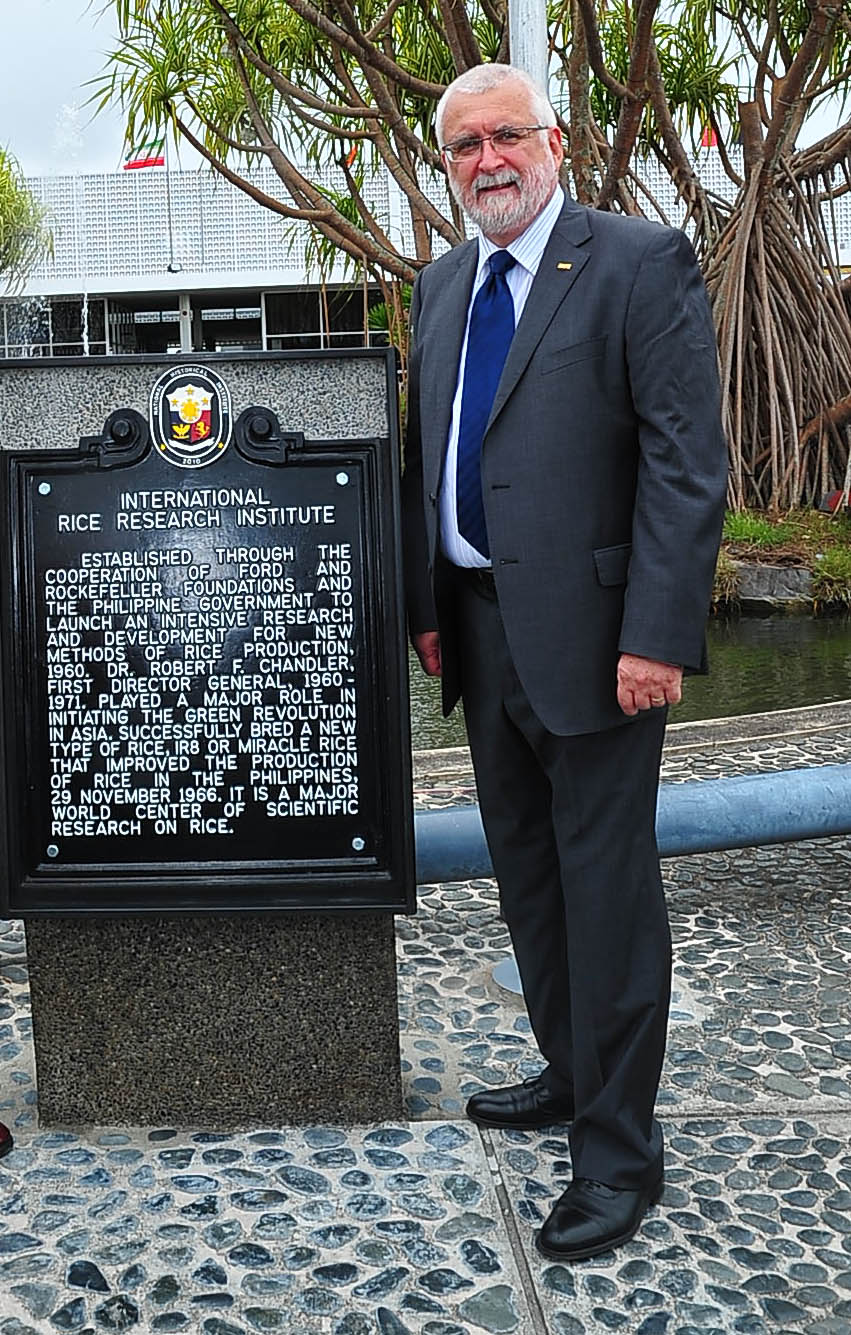
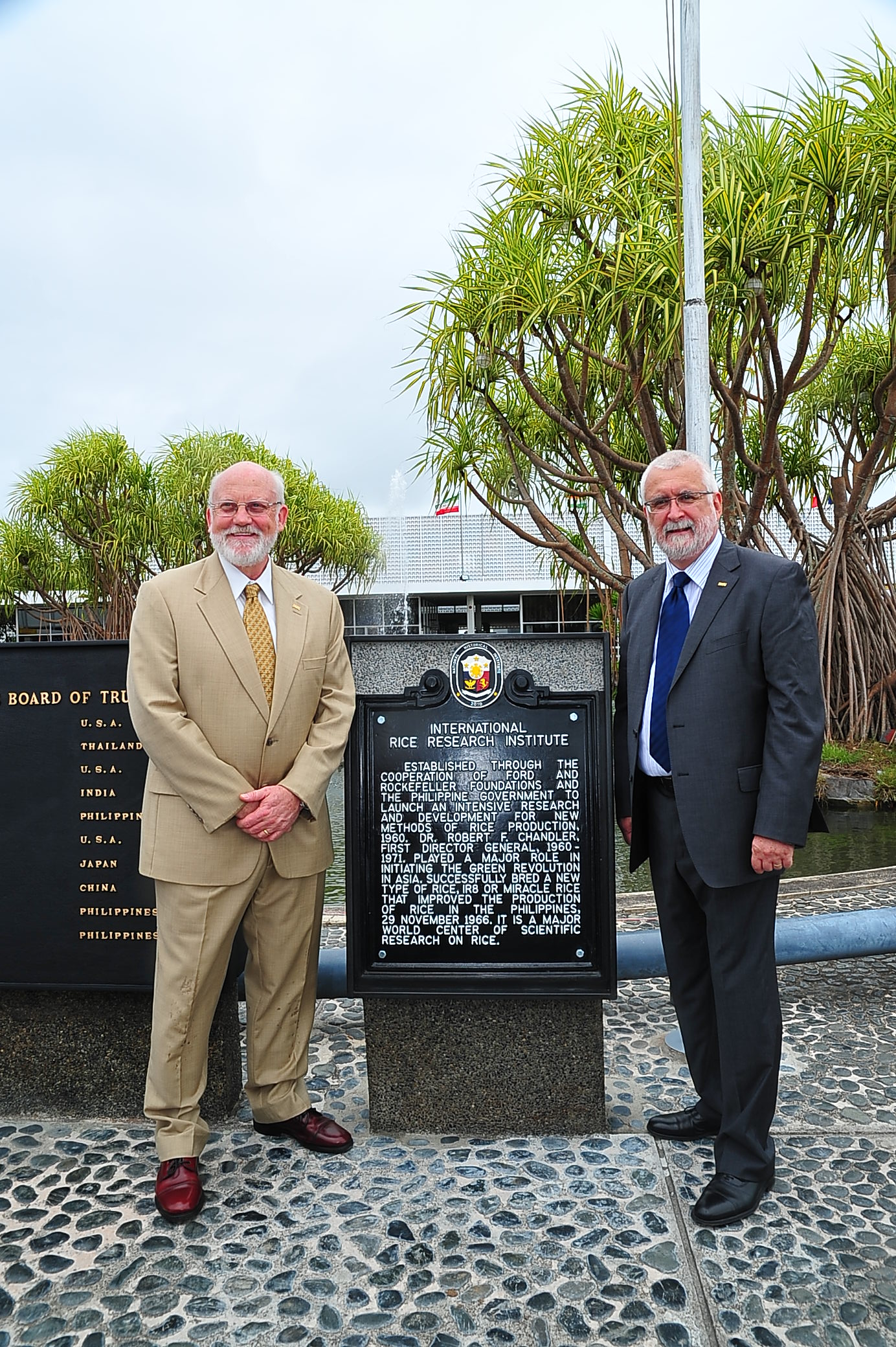
On 14 April 2010, we held three events. For about 18 months prior to this date I had been negotiating with the National Historical Institute of the Philippines to have an historical marker erected at IRRI. In the end, there were two; this video shows the unveiling ceremony. The markers (in English and Tagalog) indicate that IRRI is a site of national historical importance for the Philippines.

The commemorative stamps were then released in a simple ceremony shown in the next video. At the beginning of the ceremony we showed the video It was 50 years ago today . . . 

These are the two First Day Covers, each signed by the IRRI design team – the only ones in the world with these signatures!

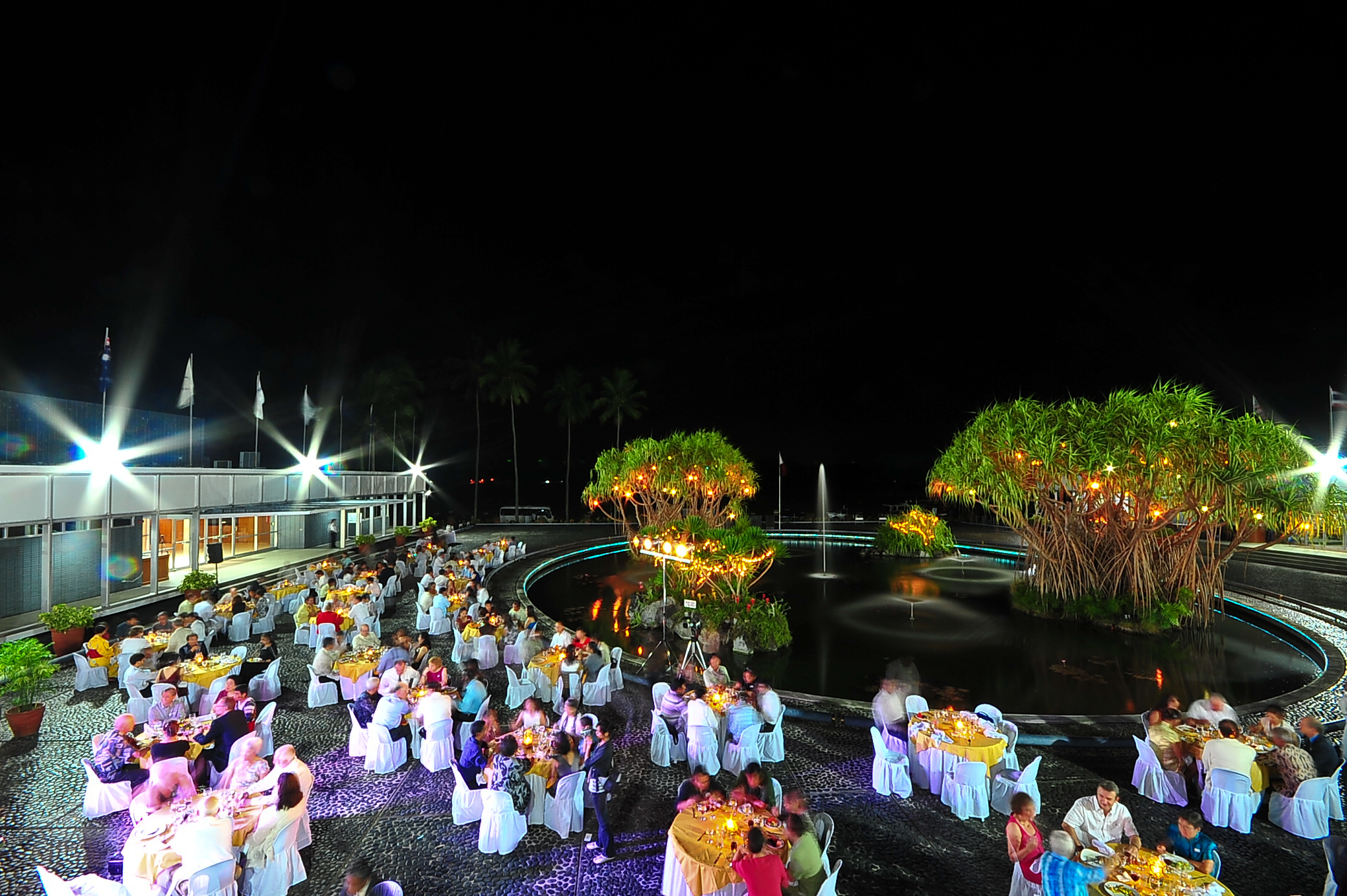
In the evening, IRRI held a golden jubilee dinner under the stars, around the decorative pond in front of the FF Hill, Harrar, and Chandler administration buildings.

And the dinner also became the farewell party (despedida) for Steph and me.

The dinner ended with yet another fireworks display, this time over the rice paddies. It was a wonderful end to a wonderful (and at times, emotional) evening.

Potatoes – the real treasure of the Incas . . .

Home of the potato
The Andes of South America are the home of the potato that has supported indigenous civilizations for thousands of years. As many as 4,000 native potato varieties are still grown. The region around Lake Titicaca in southern Peru and northern Bolivia is particularly rich in genetic diversity, and the wild potatoes from here are valuable for their disease and pest resistance [1].

For three years, from 1973-1975 I had the privilege of living and working in Peru (fulfilling an ambition I’d had since I was a boy) and studying the potato in its homeland. My work took me all over the mountains to collect potato varieties (for conservation in the germplasm collection of the International Potato Center (CIP), and to carry out studies of potato cultivation that I hoped would throw some light on different aspects of potato evolution [2].

I joined CIP in January 1973 as Associate Taxonomist, charged with the task of collecting potato varieties and helping them to maintain the large germplasm collection, that grew to at least 15,000 separate entries (or clonal accessions), but was reduced to a more manageable number through the elimination of duplicate samples. The germplasm collection was planted each year from October through April, coinciding with the most abundant rains, in the field in Huancayo, central Peru at an altitude of more than 3,100 meters.
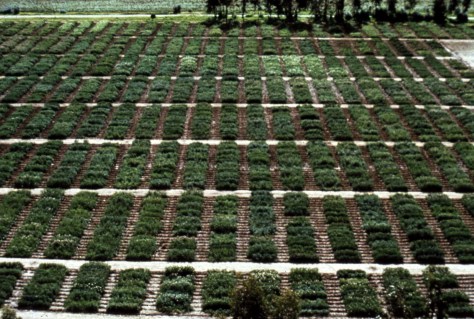
Potato collection at CIP, grown in the field at Huancayo, central Peru, at 3100 m. Taken around mid 1980s.

When CIP was founded in 1971, several germplasm collections from various institutes in Peru and elsewhere were donated to the new collection, but from 1973 CIP organized a program of collecting throughout Peru – and I was fortunate to be part of that endeavour. In May 1973 I joined my colleague Zosimo Huaman to collect potatoes in the Departments of Ancash and La Libertad, to the north of Lima. The highest mountains in Peru are found in Ancash, and our route took us through into the Callejón de Huaylas (between two ranges of the highest mountains in Peru, the Cordillera Blanca on the east, and Cordillera Negra on the west), and over the mountains to valleys on the eastern flanks. This was my first experience of collecting germplasm, and it was exhilarating. I think we did quite well in terms of the varieties collected, and the photograph below illustrates some of  their  immense genetic diversity.
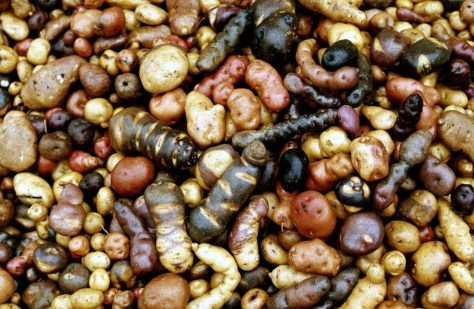
Genetic diversity in cultivated potatoes

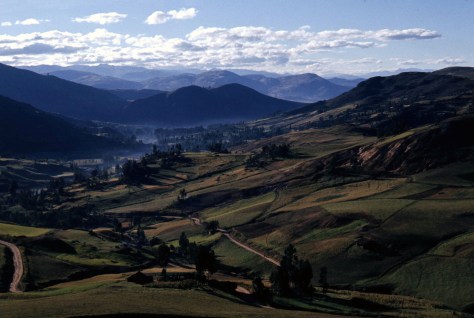
The following year I traveled with just a driver, Octavio (who was unfortunately killed in a road accident a couple of years later) further north into the Department of Cajamarca during April-May 1974. The photograph below shows the view, in the early morning sun, south towards Cajamarca city. The mist hanging over the city comes from hot springs that were utilized centuries ago by the Incas to build bath houses.
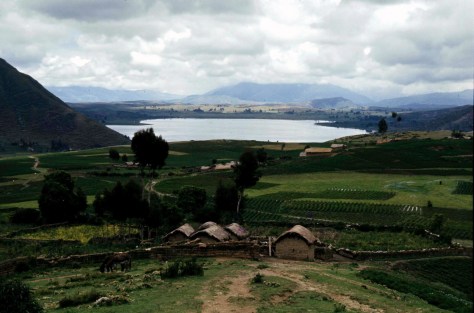
We collected potatoes in the field at the time of harvest, but also in markets (here is shown the market of Bambamarca), and from farmers’ own potato stores. Incidentally, the tall straw hats are very typical Cajamarca, as are the russet-colored ponchos.

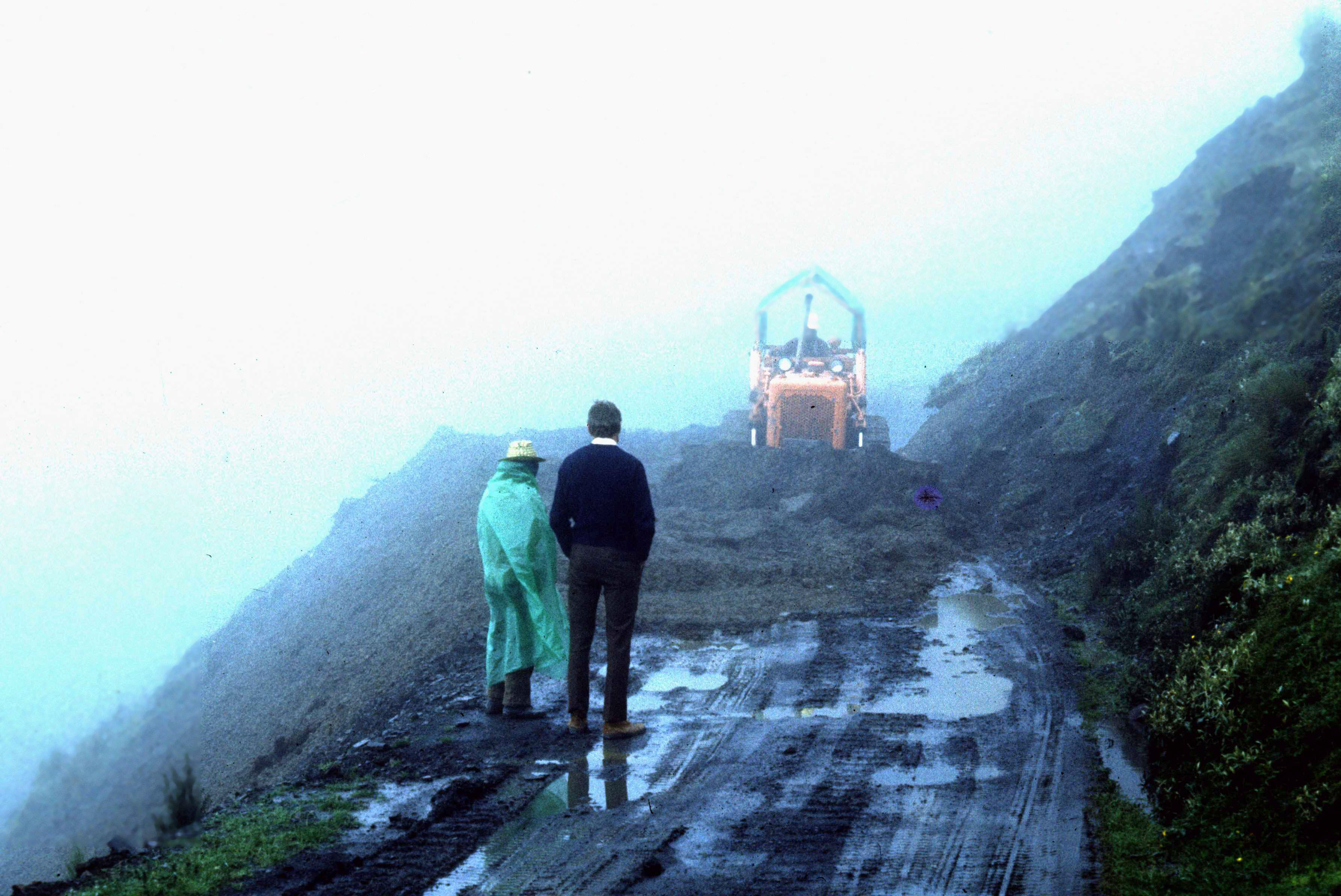
In January 1974 I made a trip south, with Dr Peter Gibbs, a taxonomist from the University of St Andrews, Scotland, who was interested in the tri-styly pollination of a minor Andean tuber crop called oca (Oxalis tuberosa). We went to the village of Cuyo Cuyo, more than 100 km north of Puno in southern Peru. Dropping down from the altiplano, the road hugs the sides of the valley, and is often blocked by landslides (a very common occurrence throughout Peru in the rainy season). Along the way – and due to the warmer air rising from the selva (jungle) to the east – the vegetation is quite luxurious in places, as the white begonia below shows (the flowers were about 8 cm in diameter). Eventually the valley opens out, with terraces on all sides. These terraces (or andenes) are ancient structures constructed by the Incas to make the valley more productive.

In Cuyo Cuyo, I studied the varieties growing in farmers’ fields, and their uses [3].

Getting to some locations by four-wheel drive vehicle was often difficult. Then it was either ‘shanks’ pony’, or real pony. I do remember that I became very sore after many hours in the saddle. Incidentally, I still have that straw hat and it’s as good as the day I bought it in January 1973.

But studying potato systems, and working with farmers was fascinating. Here I am collecting flower buds, and preserving them in alcohol ready to make chromosome counts in the laboratory, back in Lima.

The next photograph shows a community we visited close to Chincheros, near Cuzco in southern Peru. While farmers grew commercial varieties to send to market in Cuzco – the large plantings of potatoes in the distance -closer to their dwellings they grew complex mixtures of varieties, with different cooking and eating qualities.
Most farmers do not have access to mechanization, apart from manual labor and oxen to pull ploughs. In any case, much of the land in these steep valleys is unsuitable for mechanization. For centuries, farmers use the chakitaqlla or foot plough illustrated by Peruvian chronicler Felipe Guaman Poma de Ayala in the early 17th century. There are many different foot ploughs in used throughout Peru. The foot plough shown below in one of Poma de Ayala’s illustrations is the same as that used by farmers in Cuyo Cuyo. The photograph underneath shows farmers near Huanuco in central Peru.

I never collected wild potatoes as such, but it was fun on two occasions to accompany my thesis supervisor and mentor, Jack Hawkes (a world-renowned expert on the taxonomy and evolution of potatoes, and one of the founders of the genetic resources movement in the 1960s) on short trips. In January 1973 we visited Cuzco, and Jack found Solanum raphanifolium growing among the ruins of the Inca fortress of Sacsayhuaman.

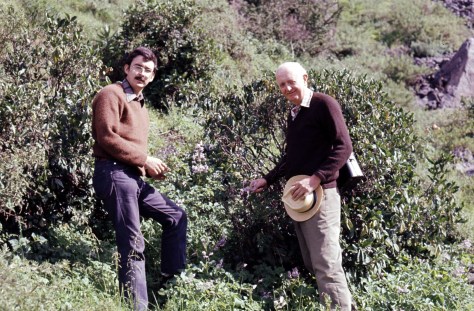
Early 1975 (during one of his annual trips to CIP)  Jack, Juan Landeo (then a research assistant, who later became one of CIP’s potato breeders), and I traveled over four days through the central Andes just north and east of Lima, in the Departments of Cerro de Pasco, Huanuco, and Lima. It was fascinating watching an expert at work, especially someone so familiar with the wild potatoes and their ecology. We’d be driving along, and suddenly Jack would say “Stop the car! I can smell potatoes”. And more than nine times out of ten we’d find clumps of wild potatoes after just a few minutes of searching. Here we are (looking rather younger) about to make a herbarium collection just south of Cerro de Pasco (I don’t remember which wild species, however).
Markets are always fascinating places to collect germplasm of many different crops. The next two photographs show colorful diversity in maize and peppers.

Among the many you can find in the market is chuño, a type of freeze-dried potato, made from several varieties of so-called bitter potatoes, which have a high concentration of alkaloids which must be removed before eating. This is done by first leaving the tubers on the ground on frosty nights to freeze, and then thaw the following morning. After several cycles of freezing and thawing the tubers are then soaked for several weeks in fast-flowing streams to leach out the bitter compounds. Afterwards, they are left to dry in the sun, and in this preserved state will last for months. This photograph was taken in the Sunday market at Pisac, near Cuzco.

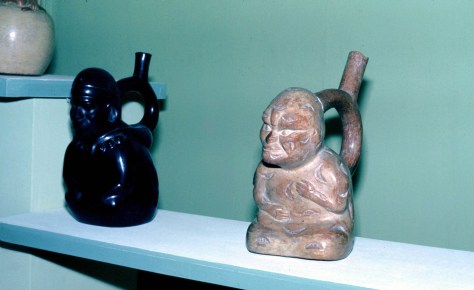
Clearly the potato is an ancient crop in Peru (and other countries of the South American Andes), and domesticated several thousand years ago. It was revered by ancient civilizations, as these anthropomorphic potato pots (or huacos) show. The national anthropological museum in Lima has a fine collection of these pots showing a vast array of different crop plants. It also holds an extensive collection of erotic ceramics for which the Incas, Moche, and other coastal civilizations were equally famous.
After the conquest of the Incan empire by Francisco Pizarro González in the 16th century, the Spanish plundered all the gold and other precious items they could find, and sent everything back to Spain. It’s often said, however, that the value of all this gold fades into insignificance compared to the value of the potato crop today worldwide. The real treasure of the Incas has certainly been put to better use.

~~~~~~~~~~~~~~~~~~~~~~~~~~~~~~~~~~~~~~~~~~~~~

[1] Jackson, M.T., J.G. Hawkes, B.S. Male-Kayiwa & N.W.M. Wanyera, 1988. The importance of the Bolivian wild potato species in breeding for Globodera pallida resistance. Plant Breeding 101, 261-268.

[2] Jackson, M.T., J.G. Hawkes & P.R. Rowe, 1977. The nature of Solanum x chaucha Juz. et Buk., a triploid cultivated potato of the South American Andes. Euphytica 26, 775-783.

[3] Jackson, M.T., J.G. Hawkes & P.R. Rowe, 1980. An ethnobotanical field study of primitive potato varieties in Peru. Euphytica 29, 107-113.

BBC News – Canadian government is ‘muzzling its scientists’

BBC News – Canadian government is ‘muzzling its scientists’.

I think there are two sides to this argument. On the one hand we need to encourage scientific entrepreneurship and creativity, and freedom to publish. On the other, it’s important for institutions to protect their ‘brands’ so to speak. Having been responsible for communications policy at IRRI, I saw some at first hand how differences of scientific perspective could lead to conflicting messages emerging from the institute. While such debate internally is healthy, sending mixed messages is oftentimes just not understood by the constituencies that the institute is there to serve. And I have seen instances of  bloody-minded scientists being singular in their pursuit of a specific idea and outcome, not just at IRRI but in other CGIAR centers.

And this is the debate between policy and science that needs to continue.

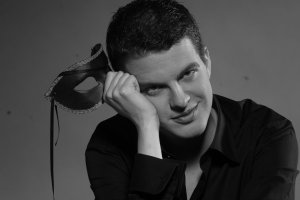
French countertenor Philippe Jaroussky sings ‘Lascia ch’io pianga’ by Handel

I came across this video (click on the image below) on You Tube when I was looking for other information about counter tenors. I’d never heard of him before. What  a voice – but not everyone’s cup of tea, I guess.

I came across another video, of better quality, on You Tube, where the comments are disabled. I’m afraid I found the comments posted on You Tube on the earlier link I used gratuitously offensive.

Just enjoy listening to this magnificent voice – click on the photo below.

Dumbing down science . . . only in The Sun

A sweet crisp
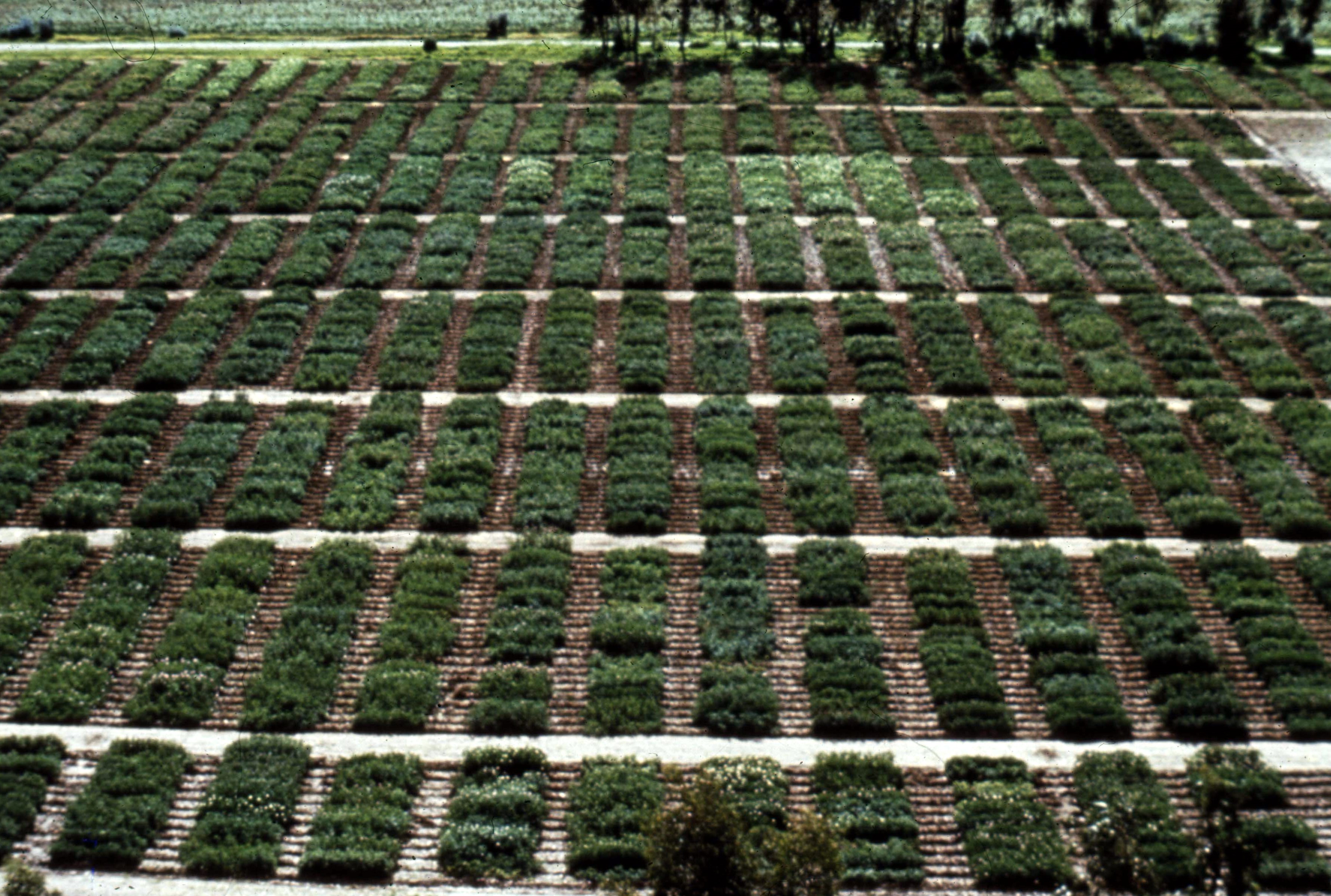
During the late 1980s, when I was on the faculty of the University of Birmingham, my colleague, Brian Ford-Lloyd (now Emeritus Professor of Conservation Genetics) and I had a research grant from United Biscuits to work on somaclonal variation in potatoes. Whatever is that? I hear you cry. Well, it’s technique to grow plants from small pieces of plant tissue on sterile nutrient agar (a jelly-like substance), and try and bring about genetic changes which are primarily due to disorganized tissue growth and chromosome changes. The plants thus produced are called somaclones. And our aim was to produce a somaclonal variant of the potato variety Record, which was at that time, one of the most important varieties for producing potato crisps (chips in American parlance).

Now, the main crop of potatoes is harvested in the autumn in the UK, and they are stored at low temperature over many months while stocks last. But this leads to a problem that is significant for producing good crisps. And that is, low temperature sweetening that is due to the conversion of starch to sugars, such as glucose and fructose. In itself this would not be a particular problem, but when potato slices are deep fried to produce crisps, any that have a relatively high sugar content will caramelize and the crisps themselves will be much darker in colour – even some ‘black bits (although some of these are due to use of diseased potatoes) – which the consumer does not like. The ideal potato crisp should be a light golden colour.

Anyway, our aim was to try and produce a non-sweetening variant of Record. I left Birmingham before the project was completed, but by that time we had sent a number of clones for field testing. I don’t know if any of these ever went into commercial production.

Susan Juned joined the project as a research associate, and successfully went on to complete a PhD based on this work. Since leaving Birmingham, Susan has had a distinguished career in local politics, as a Liberal Democrat councillor for Stratford-on-Avon and Warwickshire County Council. She unsuccessfully contested three parliamentary elections for the Stratford constituency.

Publish and be damned
Since the research was funded by a commercial company, we had to seek approval before we were permitted to publish any of our work. But after a couple of years, everyone agreed that a small story in the university bulletin would be appropriate (in November 1987)  and that’s when some of our headaches began, although in hindsight rather humorous. The story was picked up in the local media, and one afternoon I received a phone call from someone at the BBC asking if I’d like to appear on the breakfast show on national TV the following morning to discuss our work. The editorial assistant wanted some more details, and when it became apparent to her that I was talking about a serious piece of research – and not a wind-up about ‘black crisps’, the BBC dropped the story like the proverbial hot potato.

But it was picked up by the tabloid newspaper, The Sun, one of Murdoch’s publications, notorious for its Page Three girl, always half naked! And that’s where our story was published – just check out the tiny item at the bottom of the page (Crunch time for boffins) right next to Suzanne, who’s apparently ‘a bite of alright‘!
A proper scientific outcome
But the research did have some implications for the tissue culture of plants like potatoes that are produced vegetatively through tubers, and also for their genetic conservation in vitro. We showed that the ability to produce somaclones was not the same in all of the cv. Record tubers we started the research project with, and that the whole process of multiplication of disease-free stocks might be leading to a certain level of genetic change and selection. We published this work in the Annals of Botany [1].
~~~~~~~~~~~~~~~~~~~~~~

[1] Juned, S.A., M.T. Jackson & B.V. Ford-Lloyd, 1991. Genetic variation in potato cv. Record: evidence from in vitro “regeneration ability”. Annals of Botany 67, 199-203.

Love it or hate it . . .

I guess we all have mixed feelings about flying. For the most part, it’s the hassle of checking in and waiting around crowded airports that bugs us most. Once in the air, most flights are uneventful, boring even. And it’s now taken for granted – rather like taking a bus ride (especially on flights within the USA).

Over the past 40 odd years I can’t imagine how many hundreds of thousands of miles I have flown, even though my travel was really quite modest compared to many of my colleagues. And much of that travel in the past two decades has been intercontinental, and business class.

In 1973, I took my first intercontinental flight from London Heathrow (LHR) to Lima’s Jorge Chavez airport, with intermediate stops in St John’s – Antigua, Caracas – Venezuela, and Bogota – Colombia. That was on a BOAC (now British Airways) Boeing 707.

Today, non-stop flights of up to 17 hours or more are considered normal. And since the maiden flight of the Boeing 747 in February 1969 aviation world-wide has undergone so many changes, and opened up air travel to everyone. More’s the pity, Concorde has come and gone, even though it had its maiden flight just a few weeks after the 747.

In Peru, we flew with AeroPeru and Faucett, both of which ceased operations in 1999. In Central America it was LACSA (Costa Rica), TACA (El Salvador), SAHSA (Honduras – Stay At Home Stay Alive), and COPA (Panama). Only COPA still flies as an independent airline; the others have either merged or folded. We also had Pan Am (flying Boeing 707s) operating a network to North and South America, based on a hub in Guatemala City.

Moving to the Philippines in 1991, we first flew British Airways via Heathrow. But by 1993 the air connection between Birmingham (BHX) and LHR had been terminated, so we began flying KLM to Manila (MNL) via Amsterdam Schipol (AMS). KLM operated a 747-400 service (quite often a Combi freight and passenger aircraft), with a refueling stop either in Bangkok (BKK) or Kuala Lumpur.

Now KLM provides a non-stop Boeing 777 service between AMS and MNL.

Once Emirates Airlines (EK) began flying into both MNL and BHX, that became our preferred route for home-leave, originally on an Airbus 330-200, but almost exclusively in recent years on a Triple-7.

I made this next video in 2007 on the flight from BHX to DXB, from taxiing and take-off, to landing in just under 10 minutes later! Listen to the magnificent roar of the GE engines on take-off, and the captain throttling back at about 1,000 ft (just over 3 minutes into the video).

On a trip to Hanoi – Vietnam in November 2010, my preferred route was BHX – Dubai (DXB) – BKK, flying the super jumbo A380. That’s an amazing plane, and the flight from DXB to BKK was my first (and so far only) flight on this aircraft. The EK seating configuration has the upper deck almost entirely allocated to business class, each passenger having their own pod, but with a first class cabin (for about 16 passengers) in front of the business class cabin. Due to a mix-up over seating I was upgraded to first class! So I took advantage of having a shower in one of the two spas at the front of the cabin. It’s rather an odd experience taking a shower (you are limited to five minutes – beware getting caught out while still soapy) while travelling at about 1,000 kph and 12,000 m altitude.

Most of my flights have been smooth, but there was once some severe turbulence over Colombia (lots of thunder clouds about) on one flight from Panama to Lima; and quite often over the Bay of Bengal during the monsoon season between May and November. I once experienced a bad landing with the now defunct airline AVIATECA of Guatemala on a new Boeing 727 from Mexico City to Guatemala, which burst a tyre on landing, sending us off  the side the runway. It happened so quickly but we came to a stop almost before anyone realized what had happened. No harm though.

And I have flown into some difficult airports – of which Tegucigalpa – Honduras is probably the most dangerous, as the this video of an American Airlines Boeing 757 landing there shows. The approach is low over a hill at the head of the runway (there’s usually only one way in, but I have seen a video of a 737 landing from the north), and there’s a drop-off at the north end of the runway as well. It takes great skill to land here.

I do my own bit of flying – on Microsoft Flight Simulator, and have been known to while away some time trying to get from Manila to Hong Kong without crashing. As they say, it’s relatively straightforward getting into the air – landing is the hard manoeuvre. And a few years ago, Philippa gave me a flying lesson as a Christmas present, so during home leave the following summer I spent half a day at Wellesbourne Mountford airfield near Stratford-upon-Avon.

City in the sky . . . celebrating Machu Picchu

Like many of the people I worked with over the years, I have been able to combine pleasure with business travel. I have seen some spectacular sights in the many countries I have visited, none more so perhaps, than the Lost City of the Incas, Machu Picchu in southern Peru.

Having joined CIP at the beginning of January 1973, I participated in a research planning workshop on the taxonomy and genetic resources of potato. And while we visited Cuzco, I took a day off (with Richard Tarn from Agriculture Canada in Fredericton, New Brunswick – and also a former PhD student of Jack Hawkes) to make the 80 km journey to Machu Picchu, which lies to the northwest of Cuzco. After Steph and I were married in Lima in October 1973, we delayed a honeymoon until December, but then flew south to enjoy a week in Cuzco and an overnight stay at the turista hotel at Machu Picchu itself. And what a bonus that was since the hotel accommodated only a small number of guests – in those days the tourist pressure on the site was much less – and we saw no evidence of travelers camping there. So it was great to see the sunset and sunrise over the magnificent ruins, and to have opportunity to take all the photos we wanted without too many people in the frame.