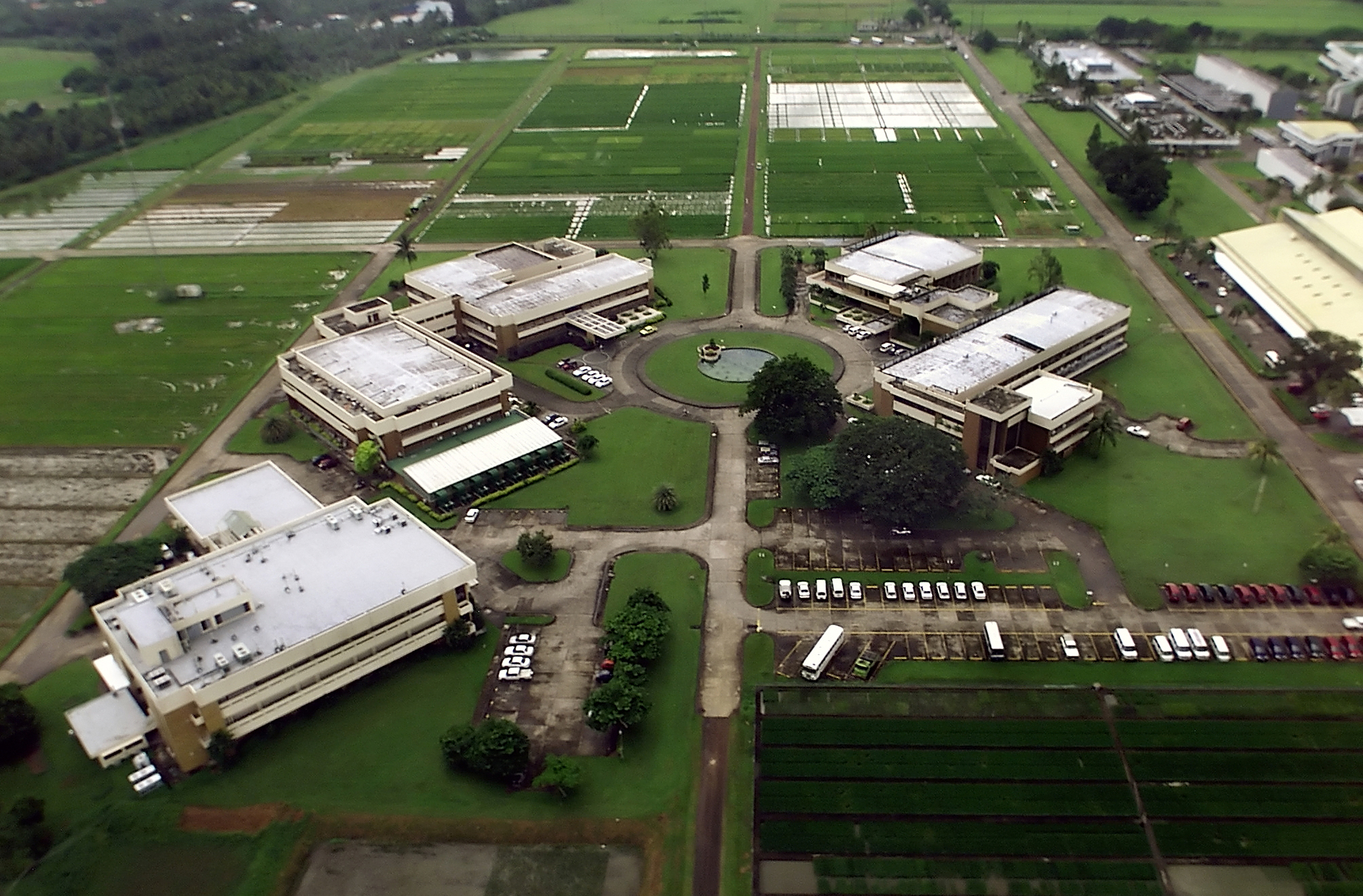
Safeguarding rice biodiversity . . .

lao294I can’t claim it was the most successful project that IRRI – the International Rice Research Institute – ever managed. That would be too arrogant by half.

But by mid-2000 we successfully finished a project, Safeguarding and Preservation of the Biodiversity of the Rice Genepool, funded by the Swiss Agency for Development and Cooperation (SDC), that significantly enhanced the long-term conservation of rice genetic resources.

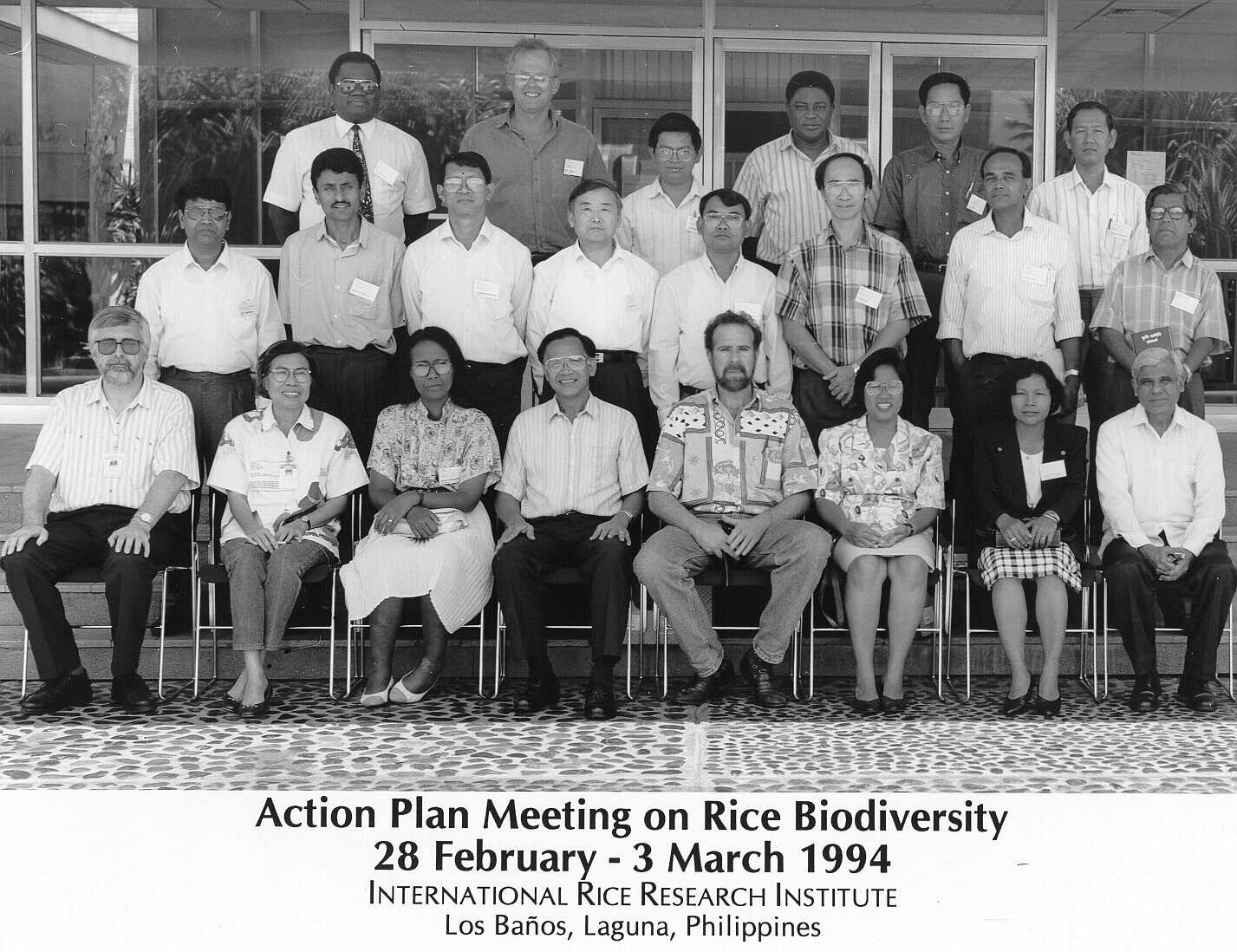
The SDC was extremely generous, and funded much of the proposed budget, donating USD3.286 million. Approved for funding in November 1993, we didn’t actually begin any of the project activities in earnest until 1995. That was because we spent 1994 ‘selling’ the project to our colleagues in national genetic resources programs and their superiors in the target countries, holding a series of planning meetings, and forming a Steering Committee, as well as recruiting several staff.
irri002

So the effective period of the project were the five years between 1995 and 1999, with a no-cost extension taking the project past its original end date of November 1998. But, as far as the SDC was concerned, this was never a problem. We kept everyone regularly updated on progress and achievements, and in any case, the donor had insisted that time was spent at the project’s initiation bringing everyone on board. It was certainly time well spent. This was particularly so in 1993-94. Why? Well in December 1993 the Convention on Biological Diversity (CBD) came into force (having been opened for signature at the Rio Earth Summit in June 1992) – just a few weeks after our rice biodiversity project was given the green light. And since the collection of rice varieties and wild species was a major component of the project, we weren’t sure just how committed several countries would be to participate in the project, let alone share their germplasm with others or send a duplicate sample of all collected germplasm for long-term preservation in the International Rice Genebank at IRRI. The negotiations leading to the CBD had certainly opened many cans of worms in terms of access to and use of germplasm, and to what extent germplasm had a strictly commercial value. While so-called ‘agricultural biodiversity’ (the landrace crop varieties, among others) was not the main focus of the CBD, this international treaty did provide the legal framework for access to germplasm, during the period leading up to the CBD, there had been a drop-off in the number of germplasm collecting expeditions, particularly those that were internationally-led. And of course, this was years before the International Treaty on Plant Genetic Resources for Food and Agriculture had been negotiated to provide the legal framework for germplasm exchange and use.

I think it says a lot for the international standing and reputation of IRRI that we encountered remarkably little opposition (especially among Asian nations) to the idea of participating in a collaborative concerted effort to collect and preserve as much rice biodiversity as possible. Essentially to try and fill the gaps in earlier germplasm collecting efforts. It seemed to us that this was the moment to seize. Civil conflicts were a thing of the past in several countries, infrastructure had improved providing access to areas and regions that had previously been inaccessible. In any case, with the rapid development that some countries were undergoing, we feared that unless something was done, then and there, there might not be an opportunity again in the foreseeable future, and valuable germplasm might be lost. The project had three components on germplasm collecting, on farm conservation, and training.

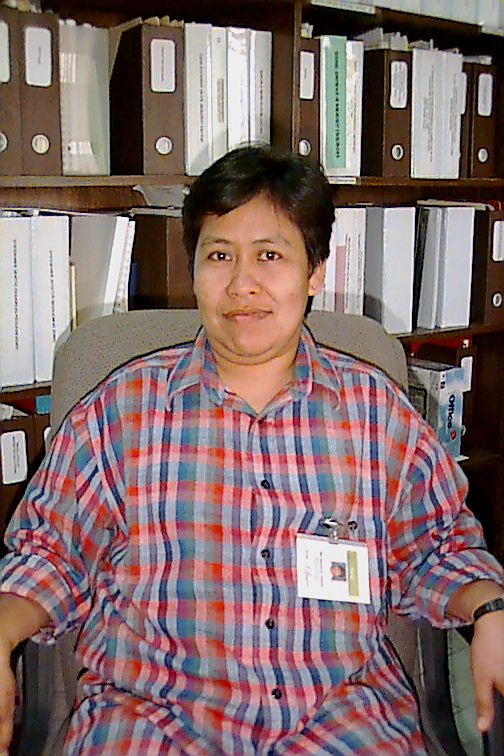
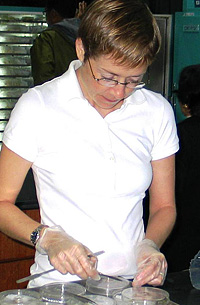
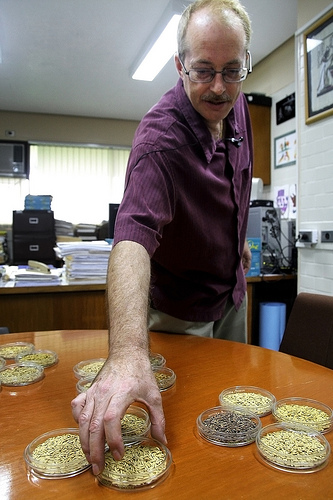
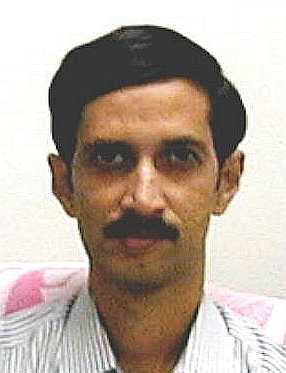
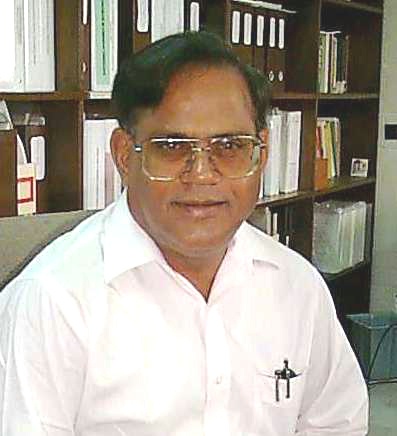
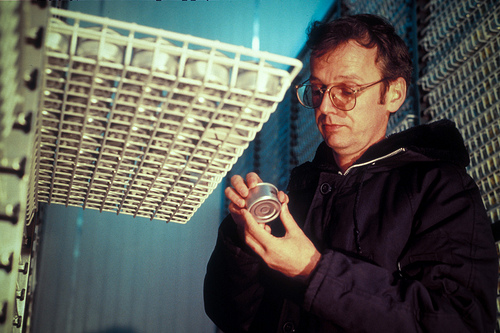
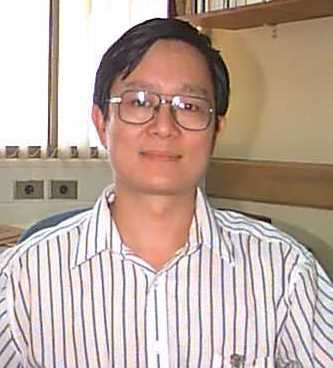
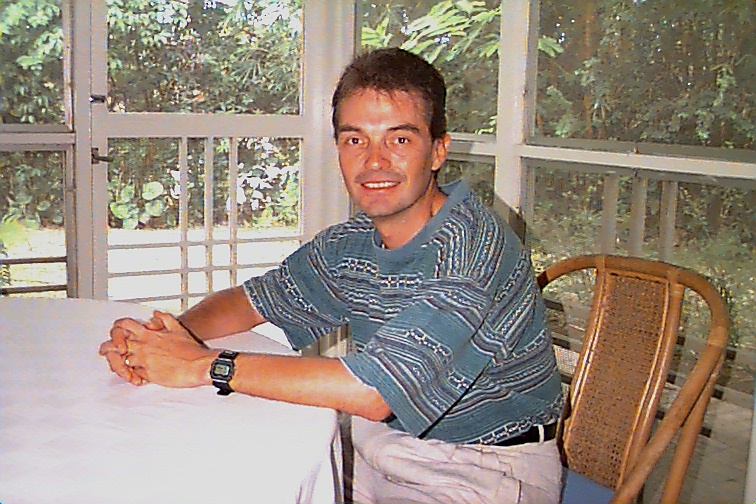
For germplasm collecting, we recruited two staff: Dr Seepana Appa Rao from India (who had spent much of his career at one of IRRI’s sister centers, ICRISAT in Hyderabad) and Dr Sigrid Liede from Germany. Existing IRRI staff Dr Bao-Rong Lu, a taxonomist from China and Ms Eves Loresto also took on important collecting and training responsibilities.

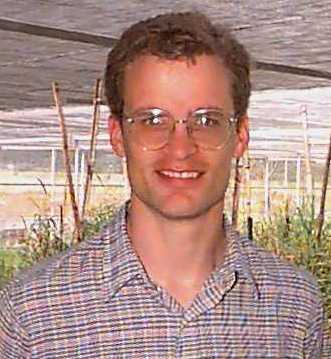
For the on farm conservation work, geneticist Dr Jean-Louis Pham from France was seconded to IRRI from his home institute IRD for five years. Two social anthropologists, Dr Mauricio Bellon from Mexico and Dr Stephen Morin from the USA worked in the project.

Within six months of the end of the project, we had submitted our final report and an interactive CD containing all the germplasm collecting and training reports, publications, and up to 1000 images (with a descriptive spreadsheet with live links to each image). Just click on the CD image below to automatically download a zip file (approximately 460 MB). Extract or copy the folders and files in the zip file to a new folder Rice Biodiversity on your computer, and click on the Start file. (There is a Read me! file in case you need more instructions.) Unfortunately it’s not possible to open the files interactively directly from the zip file here – you have to download. But that’s where you will find all the detail.
biod-cd

So below, I’ve included just a few highlights of what the project achieved, and its impact.

Collection and ex situ conservation of wild and cultivated rices
Germplasm collectors made one hundred and sixty-five collecting trips, lasting from just a few days to several weeks, in 22 countries between 1995 and 1999. A total of 24,718 samples of cultivated rice (Oryza sativa) was collected, and 2,416 samples of 16 wild Oryza species, weedy types and putative hybrids, and some unclassified samples; there were also samples of at least four species from three related genera.

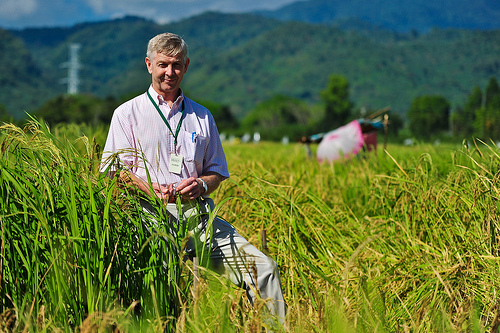
The collecting effort in the Lao PDR was particularly impressive, with more than 13,000 samples of cultivated and wild rice now safely conserved in the local genebank and in the IRG. The collecting activities in sub-Saharan Africa focused almost entirely on wild species, and in general the number of samples collected was not high. The resource investment to collect this material was quite high but realistic given the somewhat sparse geographical distribution of the species populations, and the difficulties in collecting.

By the end of the project, more than 80% of the cultivated rice samples and 68% of the wild had been sent to the International Rice Genebank at IRRI for long-term conservation. All the details can be seen here.

On farm management of traditional rice varieties
In 1994, IRRI organized a workshop about on farm conservation of genetic resources. The participants agreed on the need to develop its scientific basis,because on farm  conservation of genetic resources was strongly advocated in international forums, but there was limited understanding of what this approach really meant. We therefore felt that more research should be conducted to understand farmers’ management of crop diversity and its genetic consequences. This was especially true in the case of rice for which very limited knowledge was available. So we set out to:

  • increase knowledge on farmers’ management of rice diversity, the factors that influence it, and its genetic implications; and
  • identify strategies to involve farmers’ managed systems in the overall conservation of rice genetic resources.

We developed research sites and teams in northern Luzon, Philippines, in central Vietnam, and in Orissa, India. And always we had that mix of geneticists and social scientists to provide a broad perspective on the dynamics of rice agriculture in terms of on farm management/conservation.

The contribution of this IRRI-coordinated project for on-farm conservation was to:

  • bring hard data and facts to the debate on the use and relevancy of on-farm conservation of rice genetic resources, and on the impact of deployment of modern varieties on biodiversity;
  • identify avenues for the implementation of on-farm conservation strategies;
  • explore the role that research institutions could play in the future;
  • develop methodologies and competencies in the assessment of rice diversity and its management by farmers through partnership with national programs;
  • increase the awareness and understanding of issues related to on-farm conservation and the value of local diversity both in NARS and local development agencies;
  • share its experience, with other researchers through the participation to various conferences and meetings, publication of papers, organization of a workshop, and collaboration with other projects.

An important ‘spin-off’ from the research concerned the restoration of germplasm in areas where varieties had been lost. During the course of the research, a major typhoon hit northern Luzon in the Philippines where we were working with farmers. During that season almost all of rice agriculture was wiped out, and many farmers no longer had access to the varieties they had previously grown, and none were available through official Department of Agriculture channels. Fate was on our side. In a previous season, project staff had samples a wide range of varieties from the farmers at the project sites, taken them to Los Baños, grown them out for morphological and genetic characterization and, in the process, multiplying the seed stocks. We were able to provide each farmer with up to 1 kg of seeds of each variety on request, and in total we sent back about 20 tonnes of seeds. Not all farmers wanted their indigenous varieties and changed over completely to modern, high-yielding varieties.

Strengthening of germplasm conservation by national agricultural research systems (NARS) and non-government organizations/ farmers’ organizations (NGOs/FOs)
Between 1995 and 1999, we ran 48 courses or on-the-job training opportunities in 14 countries and at IRRI headquarters in the Philippines. The training encompassed field collection and conservation, characterization, wild rice species, data management and documentation, genebank management, seed health, analysis of socioeconomic data, and molecular analysis of germplasm. And we trained more than 670 national program personnel. IRRI staff were involved in the management, coordination, and presentation of almost all the training activities.

However, the story doesn’t end there.

smc3_R.-Hamilton

Dr Ruaraidh Sackville Hamilton

While some gaps remain for germplasm collection and duplication of germplasm at IRRI, these issues have been taken up by my successor as head of the TT Chang Genetic Resources Center, Dr Ruaraidh Sackville Hamilton. Even so, the size of the International Rice Genebank Collection (IRGC) had increased by about 25% by 2000, not bad for a period when discussions in international fora (the CBD and the FAO Commission on Genetic Resources for Food and Agriculture) had put the brakes on germplasm sharing. Most of the national collections in Asia are now duplicated at IRRI, although some important Indian germplasm has never been duplicated, and I believe this remains the case still. The Africa Rice Center and IRRI have also cross-duplicated African germplasm, but I don’t have the latest information on this nor on the status with the International Center for Tropical Agriculture (CIAT) in Cali, Colombia.

Since the biodiversity project ended, the International Treaty mentioned earlier has also come into force and rice is one of the important crops specifically covered by that treaty.

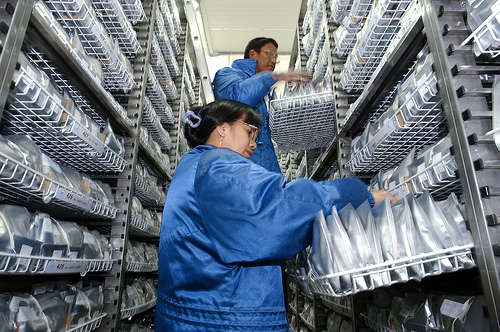
To ensure the long-term conservation of rice germplasm at IRRI, there was a significant investment during the early 1990s to refurbish and upgrade the genebank as well as enhancing the actual conservation procedures followed. In recent years another sub-zero storage vault for long-term conservation was added to the genebank.

When I joined IRRI as head of the Genetic Resources Center in 1991 there was already in place an agreement with the USDA-ARS National Center for Genetic Resources Preservation for the ‘black box’ safety duplication of the entire IRRI collection – and that continues today.

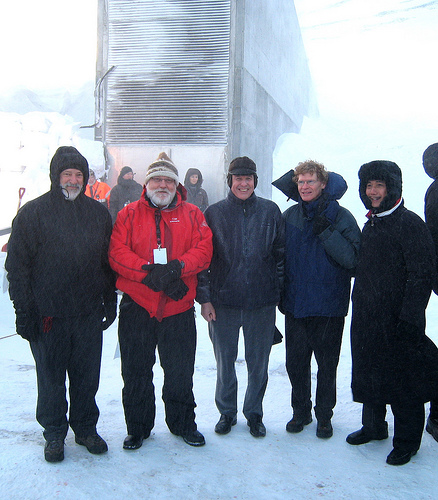
In February 2008 a significant dimension was added to global crop germplasm conservation efforts with the opening of the Svalbard Global Seed Vault under the auspices of the Global Crop Diversity Trust (and the Government of Norway) – photos courtesy of the Global Crop Diversity Trust.

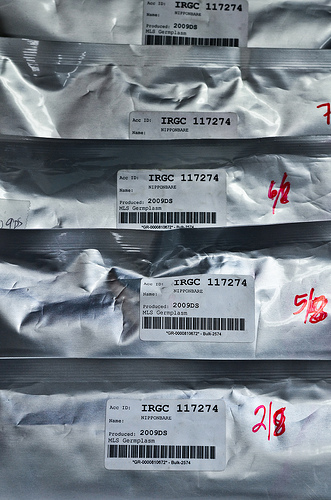
The whole IRRI collection – including those samples collected during the SDC-funded project – are now safely sitting under the permafrost in Spitsbergen, inside the Arctic Circle.

In this video, you can see genebank staff at IRRI preparing all the seed samples to send to Svalbard.

And in the next video, the late Professor Wangari Maathai (Nobel Peace Prize Laureate in 2004 and at that time a Board Member of the Global Crop Diversity Trust) and the Prime Minister of Norway, H.E. Mr Jens Stoltenberg carry the first box of germplasm – from IRRI no less – into the seed vault.

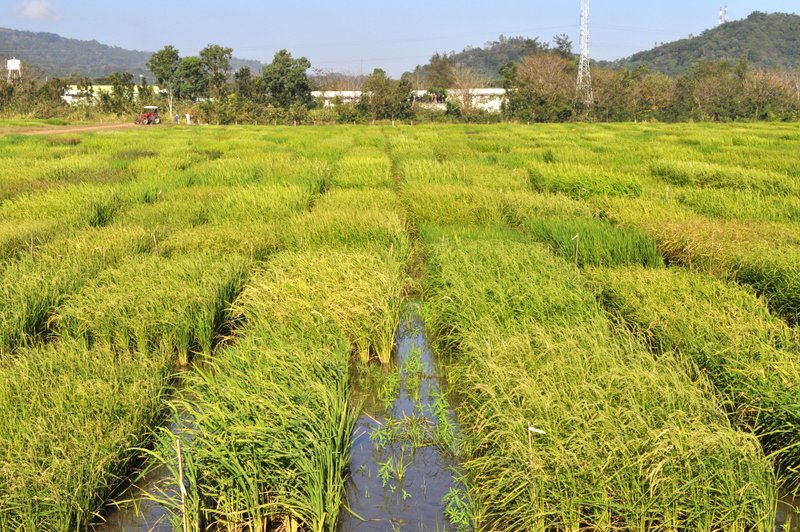
The work to safeguard rice biodiversity is never-ending. But a great deal has been achieved. Being part of a global network of genebanks – some in several Asian countries focusing specifically on rice  – IRRI’s contribution is extremely important.
20100211020

The broad genetic diversity of rice and its wild relatives is safe for the future, and I’m very proud to have played my part in that effort.
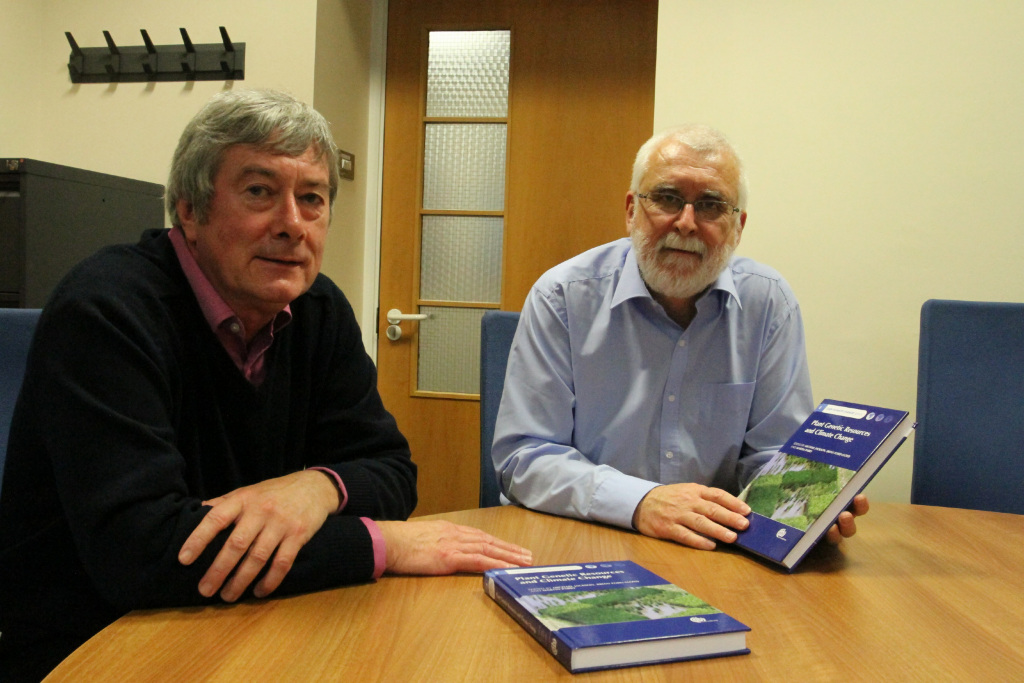

Something for your Christmas stocking – Plant Genetic Resources and Climate Change hits the shelves 11 December!

It’s taken just over two and half years, more than 2,400 emails, and many, many hours of editing. But Plant Genetic Resources and Climate Change, edited by myself, Brian Ford-Lloyd and Martin Parry will be published by CABI on 11 December.

Brian was first approached by CABI commissioning editor Vicki Bonham in April 2011. He was reluctant to take on the book by himself, but suggested to Vicki that the project would be feasible if he could persuade Martin and me to be co-editors. I was on vacation in the USA at the time, visiting the Grand Canyon and other locations in Arizona and New Mexico when Brian first contacted me about the possible project. Getting involved in a new book was the last thing on my mind.

The next steps were to produce an outline of the book and find authors whose arms we could twist to contribute a chapter. In the end the book has 16 chapters, as I have described elsewhere. Only two authors let us down and never completed a chapter before we met our deadline with CABI. The contract with CABI was signed in February 2012, and we submitted the final edited chapters by the end of March this year. After that things moved quite fast. We completed the review of page proofs by mid-September, and the figures a couple of weeks later. Early on we agreed I should take on the role of managing editor as I was the only one who was fully ‘retired’ at that time.

Martin Parry

And on Monday this week, David Porter (Books Marketing Manager at CABI) and his colleague Sarah Hilliar came up to Birmingham to video Brian and me (and two other authors, Nigel Maxted and Jeremy Pritchard of the University of Birmingham) for a short promotional video about the book. Unfortunately, Martin Parry was unable to join us.

So now the hard work is over and Plant Genetic Resources and Climate Change is about to be published. There are many interesting key messages, and the preface provides an excellent guide to the rest of the book.

Plant Genetic Resources and Climate Change – publication by the end of the year*

A perspective from 25 years ago
In April 1989, Brian Ford-Lloyd, Martin Parry and I organized a workshop on plant genetic resources and climate change at the University of Birmingham. A year later, Climatic Change and Plant Genetic Resources was published (by Belhaven Press), with eleven chapters summarizing perspectives on climatic change and how it might affect plant populations, and its expected impact on agriculture around the world.

We asked whether genetic resources could cope with climate change, and would plant breeders be able to access and utilize genetic resources as building blocks of new and better-adapted crops? We listed ten consensus conclusions from the workshop:

  1. The importance of developing collection, conservation and utilization strategies for genetic resources in the light of climatic uncertainty should be recognised.
  2. There should be marked improvement in the accuracy of climate change predictions.
  3. There must be concern about sea level rises and their impact on coastal ecosystems and agriculture.
  4. Ecosystems should be preserved thereby allowing plant species – especially crop species and their wild relatives – the flexibility to respond to climate change.
  5. Research should be prioritized on tropical dry areas as these might be expected to be more severely affected by climate change.
  6. There should be a continuing need to characterize and evaluate germplasm that will provide adaptation to changed climates.
  7. There should be an increase in screening germplasm for drought, raised temperatures, and salinity.
  8. Research on the physiology underlying C3 and C4 photosynthesis should merit further investigation with the aim of increasing the adaptation of C3 crops.
  9. Better simulation models should drive a better understanding of plant responses to climate change.
  10. Plant breeders should become more aware of the environmental impacts of climate change, so that breeding programs could be modified to accommodate these predicted changes.

Climate change perspectives today
There is much less scepticism today about greenhouse gas-induced climate change and what its consequences might be, even though the full impacts of climate change cannot yet be predicted with certainty. On the other hand, the nature of weather variability – particularly in the northern hemisphere in recent years – has left some again questioning whether our climate really is warming. But the evidence is there for all to see, even as the sceptics refuse to accept the empirical data of increases in atmospheric CO2, for example, or the unprecedented summer melting of sea ice in the Arctic and the retreat of glaciers in the Alps.

Over the past decade the world has experienced a number of severe climate events – wake-up calls to what might be the normal pattern in the future under a changed climate – such as extreme drought in one region, or unprecedented flooding in another. Even the ‘normal’ weather patterns of Western Europe appear to have become disrupted in recent years leading to increased stresses on agriculture.

Some of the same questions we asked in 1989 are still relevant. However, there are some very important differences today from the situation then. Our understanding of what is happening to the climate has been refined significantly over the past two decades, as the efforts of the International Panel on Climate Change (IPCC) have brought climate scientists worldwide together to provide better predictions of how climate will change. Furthermore, governments are now taking the threat of climate change seriously, and international agreements like the Kyoto Protocol to the United Nations Framework on Climate Change, which came into force in 2005 and, even with their limitations, have provided the basis for society and governments to take action to mitigate the effects of climate change.

A new book from CABI
It is in this context, therefore, that our new book Plant Genetic Resources and Climate Change was commissioned to bring together, in a single volume, some of the latest perspectives about how genetic resources can contribute to achieving food security under the challenge of a changing climate. We also wanted to highlight some key issues for plant genetic resources management, to demonstrate how perspectives have changed over two decades, and discuss some of the actual responses and developments.

Food security and genetic resources
So what has happened during the past two decades or so? In 1990, world population was under 6 billion, but today there are more than 1 billion additional mouths to feed. The World Food Program estimates that there are 870 million people in the world who do not get enough food to lead a normal and active life. Food insecurity remains a major concern. In an opening chapter, Robert Zeigler (IRRI) provides an overview on food security today, how problems of food production will be exacerbated by climate change, and how – in the case of one crop, rice – access to and use of genetic resources have already begun to address many of the challenges that climate change will bring.

Expanding on the plant genetic resources theme, Brian Ford-Lloyd (University of Birmingham) and his co-authors provide (in Chapter 2) a broad overview of important issues concerning their conservation and use, including conservation approaches, strategies, and responses that become more relevant under the threat of climate change.

Climate projections
In three chapters, Richard Betts (UK Met Office) and Ed Hawkins (University of Reading), Martin Parry (Imperial College – London), and Pam Berry (Oxford University) and her co-authors describe scenarios for future projected climates (Chapter 3), the effects of climate change on food production and the risk of hunger (Chapter 4), and regional impacts of climate change on agriculture (Chapter 5), respectively. Over the past two decades, development of the global circulation models now permits climate change prediction with greater certainty. And combining these with physiological modelling and geographical information systems (GIS) we now have a better opportunity to assess what the impacts of climate change might be on agriculture, and where.

Sharing genetic resources
In the 1990s, we became more aware of the importance of biodiversity in general, and several international legal instruments such as the Convention on Biological Diversity (CBD) and the International Treaty on Plant Genetic Resources for Food and Agriculture were agreed among nations to govern access to and use of genetic resources for the benefit of society. A detailed discussion of these developments is provided by Gerald Moore (formerly FAO) and Geoffrey Hawtin (formerly IPGRI) in Chapter 6.

Crop wild relatives, in situ and on-farm conservation
In Chapters 7 and 8, we explore the
in situ conservation of crop genetic resources and their wild relatives. Nigel Maxted and his co-authors (University of Birmingham) provide an analysis of the importance of crop wild relatives in plant breeding and the need for their comprehensive conservation. Mauricio Bellon and Jacob van Etten (Bioversity International) discuss the challenges for on-farm conservation in centres of crop diversity under climate change.

Informatics and the impact of molecular biology
Discussing the data management aspects of germplasm collections, Helen Ougham and Ian Thomas (Aberystwyth University) describe in Chapter 9 several developments in genetic resources databases, and regional projects aimed at facilitating conservation and use. Two decades ago we had little idea of what would be the impact of molecular biology and its associated data today on the identification of useful crop diversity and its use in plant breeding. In Chapter 10, Kenneth McNally (IRRI) provides a comprehensive review of the present and future of how genomics and other molecular technologies – and associated informatics – are revolutionizing how we study and understand diversity in plant species. He also provides many examples of how responses to environmental stresses that can be expected as a result of climate change can be detected at the molecular level, opening up unforeseen opportunities for precise germplasm evaluation, identification, and use. Susan Armstrong (University of Birmingham, Chapter 11) describes how a deeper understanding of sexual reproduction in plants, specifically the processes of meiosis, should lead to better use of germplasm in crop breeding as a response to climate change.

Coping with climate change
In a final series of five chapters, responses to a range of abiotic and biotic stresses are documented: heat (by Maduraimuthu Djanaguiraman and Vara Prasad, Kansas State University, Chapter 12); drought (Salvatore Ceccarelli, formerly ICARDA, Chapter 13); salinity (including new domestications) by William Erskine, University of Western Australia, and his co-authors in Chapter 14; submergence tolerance in rice as a response to flooding (Abdelbagi Ismail, IRRI and David Mackill, University of California – Davis, Chapter 15); and finally plant-insect interactions and prospects for resistance breeding using genetic resources (by Jeremy Pritchard, University of Birmingham, and co-authors, Chapter 16).

Why this book is timely and important
The climate change that has been predicted is an enormous challenge for society worldwide. Nevertheless, progress in the development of scenarios of climate change – especially the development of more reliable projections of changes in precipitation – now provide a much more sound basis for using genetic resources in plant breeding for future climates. While important uncertainty remains about changes to variability of climate, especially to the frequency of extreme weather events, enough is now known about the range of possible changes (for example by using current analogues of future climate) to provide a basis for choosing genetic resources in breeding better-adapted crops. Even the challenge of turbo-charging the photosynthesis of a C
3 crop like rice has already been taken up by a consortium of scientists worldwide under the leadership of the International Rice Research Institute in the Philippines.

Unlike the situation in 1989, estimates of average sea level rise, and consequent risks to low lying land areas, are now characterised by less uncertainty and indicate the location and scale of the challenges posed by inundation, by soil waterlogging and by land salinization. Responses to all of these challenges and the progress achieved are spelt out in detail in several chapters in this volume.

We remain confident that research will continue to demonstrate just what is needed to mitigate the worst effects of climate change; that germplasm access and use frameworks – despite their flaws – facilitate breeders to choose and use genetic resources; and that ultimately, genetic resources will be used successfully in crop breeding for climate change thereby enhancing food security.

Would you like to buy a copy?
The authors will receive their page proofs any day now, and we should have the final edits made by the middle of September. CABI expects to publish Plant Genetic Resources and Climate Change in December 2013. Already this book can be found online through a Google search even though it’s not yet published. But do go to the CABI Bookshop – the book has been priced at £85 (or USD160 and €110). If you order online I’m told there is a discount on the list price.

_______________________________________________________
* This post is based on the Preface from the forthcoming CABI book.

Plant Genetic Resources and Climate Change – in the production phase at last

At the end of March I submitted to CABI all 16 manuscripts and associated figures for our book on Plant Genetic Resources and Climate Change.

These are now being checked and moving through the various production phases. We hope that the book will be published in the last quarter of 2013. I gather that the target price will be around £85 – but that has yet to be confirmed. The book will be around 300+ pages.

Plant Genetic Resources - cover design

Rationale and audience:
The collection and conservation of plant genetic resources have made significant progress over the past half century, and many large and important collections of crop germplasm have been established in many countries. A major threat to continuing crop productivity is climate change, which is expected to bring about disruptions to patterns of agriculture, to the crops and varieties that can be grown, and some of the constraints to productivity – such as diseases and pests, and some abiotic stresses – will be exacerbated. This book will address the current state of climate change predictions and its consequences, how climate change will affect conservation and use of crop germplasm, both ex situ and in situ, as well as highlighting specific examples of germplasm research related to ‘climate change threats’. All of this needs to take place under a regime of access to and use of germplasm through international legal instruments such as the Convention on Biological Diversity and the International Treaty on Plant Genetic Resources for Food and Agriculture. This book will be essential reading for plant breeders and physiologists, as well as those involved with germplasm conservation per se. In particular it will be a companion volume to the recently published CABI volume Climate Change and Crop Production (2010) by MP Reynolds (ed.), but of interest to the same readership as Crop Stress Management and Global Climate Change (2011) by JL Araus and GA Slafer (eds.) and Climate Change Biology (2011) by JA Newman et al.

Chapters, authors and their affiliations:

Preface
Michael Jackson, Brian Ford-Lloyd and Martin Parry
The Editors

1. Food security, climate change and genetic resources
Robert S. Zeigler
IRRI

2. Genetic resources and conservation challenges under the threat of climate change
Brian Ford-Lloyd, Johannes M.M. Engels and Michael Jackson
University of Birmingham, Bioversity International, and formerly IRRI (now retired)

3. Climate projections
Richard A. Betts and Ed Hawkins
UK MetOffice and University of Reading

4. Effects of climate change on potential food production and risk of hunger
Martin Parry
Imperial College

5. Regional impacts of climate change on agriculture and the role of adaptation
Pam Berry, Julian Ramirez-Villegas, Helen Bramley, Samarandu Mohanty and Mary A. Mgonja
University of Oxford, University of Leeds and CIAT, University of Western Australia, IRRI, and ICRISAT

6. International mechanisms for conservation and use of genetic resources
Gerald Moore and Geoffrey Hawtin
Formerly FAO and formerly IPGRI (now retired)

7. Crop wild relatives and climate change
Nigel Maxted, Shelagh Kell and Joana Magos Brehm
University of Birmingham

8. Climate change and on-farm conservation of crop landraces in centres of diversity
Mauricio R. Bellon and Jacob van Etten
Bioversity International

9. Germplasm databases and informatics
Helen Ougham and Ian D. Thomas
University of Aberystwyth

10. Exploring ‘omics’ of genetic resources to mitigate the effects of climate change
Kenneth L. McNally
IRRI

11. Harnessing meiotic recombination for improved crop varieties
Susan J. Armstrong
University of Birmingham

12. High temperature stress
Maduraimuthu Djanaguiraman and P.V. Vara Prasad
Kansas State University

13. Drought
Salvatore Ceccarelli
Formerly ICARDA (now retired)

14. Salinity
William Erskine, Hari D. Upadhyaya and Al Imran Malik
University of Western Australia, ICRISAT, and UWA

15. Response to flooding: submergence tolerance in rice
Abdelbagi M. Ismail and David J. Mackill
IRRI and University of California – Davis

16. Effects of climate change on plant-insect interactions and prospects for resistance breeding using genetic resources
Jeremy Pritchard, Colette Broekgaarden and Ben Vosman
University of Birmingham and Wageningen UR Plant Breeding

The editors:
Michael Jackson retired from the International Rice Research Institute (IRRI) in 2010. For 10 years he was Head of the Genetic Resources Center, managing the International Rice Genebank, one of the world’s largest and most important genebanks. For nine years he was Director for Program Planning and Communications. He was Adjunct Professor of Agronomy at the University of the Philippines-Los Baños. During the 1980s he was Lecturer in the School of Biological Sciences at the University of Birmingham, focusing on the conservation and use of plant genetic resources. From 1973-81 he worked at the International Potato Center, in Lima, Perú and in Costa Rica. He now works part-time as an independent agricultural research and planning consultant. He was appointed OBE in The Queen’s New Year’s Honours 2012, for services to international food science.

Brian Ford-Lloyd is Emeritus Professor of Conservation Genetics at the University of Birmingham, former Director of the University Graduate School, and former Deputy Head of the School of Biosciences. As Director of the University Graduate School he aimed to ensure that doctoral researchers throughout the University were provided with the opportunity, training and facilities to undertake internationally valued research that would lead into excellent careers in the UK and overseas. He drew from his experience of having successfully supervised over 40 doctoral researchers from the UK and many other parts of the world in his chosen research area which included the study of the natural genetic variation in plant populations, and agricultural plant genetic resources and their conservation.

Martin Parry is Visiting Professor at The Centre for Environmental Policy, Imperial College London, and also Visiting Research Fellow at The Grantham Institute at the same university. Until September 2008 he was Co-Chair of Working Group II (Impacts, Adaptation and Vulnerability), of the Intergovernmental Panel on Climate Change (IPCC) based at the Hadley Centre for Climate Prediction and Research, UK Meteorological Office. Previously he was Director of the Jackson Environment Institute (JEI), and Professor of Environmental Science at the University of East Anglia (1999-2002); Director of the JEI and Professor of Environmental Management at University College London (1994-99), foundation Director of the Environmental Change Institute and Professor of Geography at the University of Oxford (1991-94), and Professor of Geography at the University of Birmingham (1989-91). He was appointed OBE in The Queen’s New Year’s Honours 1998, for services to the environment and climate change.

Running a genebank for rice . . .

In March this year, I posted a story about the International Rice Genebank (IRG) at the International Rice Research Institute (IRRI) in Los Baños, the Philippines. Now, I thought it would be interesting to describe some of my early challenges when I joined IRRI as head of the Genetic Resources Center (GRC) in July 1991.

Running a genebank is not one of your run-of-the-mill endeavors even though the individual technical aspects that make up genebank operations are relatively straightforward – for rice, at least. It’s their integration into a seamless, smooth and efficient whole, to ensure long-term genetic conservation, that is so demanding.

This is how the genebank is running, more or less, today:

Before I joined IRRI I’d never actually managed a genebank, although I had trained in genetic conservation, worked in South America on potato genetic resources, and spent a decade teaching various aspects of genetic resources conservation and use at the University of Birmingham.

My predecessor at IRRI was Dr Te-Tzu Chang, known to everyone as ‘TT’. He joined IRRI in 1962 and over the years had built the germplasm collection to about 75,000 or so accessions by the time I joined the institute, as well as leading IRRI’s upland rice breeding efforts.
Following in the footsteps of such a renowned scientist was, to say the least, quite a challenge. I was also very conscious of the great loyalty that the genebank staff had to TT. But I had to look at the genebank through a fresh pair of eyes, and make changes I thought necessary and appropriate to what it did and how it was managed.

Upping-the-game
I spent several months learning about rice (since I’d never worked on this important crop until then), about the workings of the genebank  (in July 1991 it was still called the International Rice Germplasm Center), and assessing the genebank staff for possible new roles. I asked a lot of questions, and slowly formulated a plan of the changes I thought were necessary to significantly up-the-game, so to speak, of genetic resources conservation at IRRI.

From the outset, the local staff were rather wary of this assertive Brit who IRRI Management had brought in to deliver change. After all, most of them had only ever worked for TT. Here I was, asking lots of questions and expecting straight answers. But until I arrived on the scene – with rather a different management approach and style – they’d been used to a regime under which they were merely expected to follow instructions, and were given little if any individual responsibility.

Elaborating the best personnel structure with sufficient staff was a critical issue from the outset, just as important as upgrading genebank operations and the physical infrastructure. I was determined to eliminate duplication of effort across staff working in different (sometimes overlapping) areas of the genebank, who seemed to be treading on each other’s toes, with little or no accountability for their actions. In 1991, it was clear to me that making progress in areas such as seed viability testing, germplasm regeneration, data management, and curation of the wild rices would be hard going if we had to depend on just the existing staff. Furthermore, many of the genebank facilities were showing their age.

So I was fortunate to persuade IRRI Management that the genebank should be one of its priorities in the institute-wide plan for an infrastructure upgrade. I developed several initiatives to enhance the conservation of rice, eliminate geographical gaps in the collection, as far as possible, through a major collecting program, as well as begin research about on farm conservation, seed conservation, and the taxonomy of the wild rices. In November 1993, the Swiss Development Cooperation (SDC) approved a five year project, which eventually ran until early 2000, and provided a grant of more than USD 3.2 million. Click on the CD image to read the Final Report published in July 2000, just a few weeks after the project ended. We also released this on an interactive CD, with the Final, Annual and Interim Reports, copies of published papers, etc., all collecting trip reports, and those about the various training courses, as well as some 1000 images showing all aspects of the project.

I should add that starting research on rice genetic resources had been one of the conditions I made when accepting the headship of GRC.

Quite quickly I’d also come to the conclusion that I needed a focal person in the genebank who would in effect become the genebank manager, as well as other staff having responsibility for the different genebank operations, such as seed viability testing, regeneration, characterization, the wild rices, and data management. I just felt that I needed to be able to go to a single person to get information and answers rather than several staff each with only part of what I needed.

By the end of 1991 I’d named Flora ‘Pola’ de Guzman as the genebank manager. She had a background in seed technology, so seemed the right person to take on this important role. Pola is now a Senior Manager, the highest level among the national staff, although in 1991 she was only a Research Assistant.

I placed all field operations under Renato ‘Ato’ Reaño, who also took direct responsibility for germplasm multiplication and regeneration, while Tom Clemeno managed the characterization efforts of GRC.

Socorro ‘Soccie’ Almazan became the curator of the wild rice collection and manager of the special quarantine screenhouses where all the wild rices had to be grown – at a site about 4.5 km away across the IRRI experiment station.

Adelaida ‘Adel’ Alcantara became the lead database specialist (supported by Myrna Oliva, Evangeline ‘Vangie’ Guevarra, and Nelia Resurreccion).

And two staff, Amita ‘Amy’ Juliano (who sadly succumbed to cancer in 2004) and Ma. Elizabeth ‘Yvette’ Naredo (now Dr Naredo since 16 October 2012) moved over to full-time research activities related to rice taxonomy.

One of my staff concerns was what to do with Genoveva ‘Eves’ Loresto. I needed to find her a role that took her away from any direct supervision over the others. She helped me with the overall infrastructure changes, liaising with contractors, but once we had the SDC funding secured, I was able to ask Eves to take on a major project management role, as well having her lead the germplasm conservation training courses we organized in many of the 23 countries that were project partners. Eves eventually retired from IRRI in 2000.

A ‘new’ genebank
In terms of infrastructure, we had opportunity to make many changes. We remodelled the data management suite, giving each staff member proper workstations, and constantly upgrading when possible the computers they used. I made it clear to everyone that the database staff would have first access to any computer upgrades, and their machines would filter down to other staff whose work depended less on using a computer. And of course in 1991 (and for some years afterwards) the PC revolution was only just beginning to have an effect on everyone’s day-to-day activities.

Seed drying was one of my concerns. Before my arrival seed drying was done on batch driers immediately after harvest, with no precise temperature control but certainly above 40°C; or in ovens well over the same temperature. We designed and had installed a seed drying room with a capacity for 15 tonnes of seeds, at 15°C and 15% RH, and seeds dried slowly over about two weeks to reach equilibrium moisture content suitable for long-term conservation.

Incidentally, in recent research [1] supervised by Dr Fiona Hay, GRC’s resident seed physiologist, initial drying for up to four days in a batch drier before slower drying at 15°C and 15% RH seems to have a beneficial effect on viability.

We doubled the size of the wild rices screenhouses, and converted the large short-term storage room in the genebank to a seed cleaning and sorting laboratory for about 20 technicians. Previously they’d been squeezed into a small room not much more that 4m square. Another general purpose room was converted to a dedicated seed testing laboratory, and a bank of the latest spec incubators installed. We converted a couple of other rooms to cytology and tissue culture (for low viability seeds or for embryo rescue) laboratories. Finally, in the mid 90s we opened a molecular marker laboratory, initially studying RAPD and RFLP/AFLP markers, but it’s now taken off in a big way, and a whole range of markers are used [2, 3], led by Dr Ken McNally (who was my last appointment to GRC before I moved from there to become one of IRRI’s directors in 2001).

We were also fortunate in the mid 90s to have a very successful collaboration with the University of Birmingham (and the John Innes Centre in Norwich, UK) to explore the use of molecular markers to study rice germplasm, funded in the UK by the Department for International Development (DfID). One of the most significant achievements was to demonstrate – in one of the first studies of its kind – the predictive value of molecular markers (RAPD) for quantitative traits, the basis of what is now known as association genetics [4]

Today, the genebank has an Active Collection (using hermetically-sealed high quality aluminium foil packs, based on advice from seed physiology colleagues Roger Smith and Simon Linington at Kew’s Wakehurst Place) at about 2-3°C, and a Base Collection (a much smaller room, with two sealed aluminium cans, about 150 g, per accession) maintained at -18°C. In recent years a third cold room has been added.

The herbarium of the wild species was also expanded significantly, and provides an invaluable resource for both the conservation and taxonomy research of the wild rices.

The challenge of data management
There are two cultivated species of rice: Oryza sativa (commonly referred to as Asian rice) and O. glaberrima, found mainly in West Africa. There are also more 20 species of wild Oryza, and several genera in the same broad taxonomic group as rice, some of which have been looked by breeders as sources of useful genes; because of their genetic distance from rice, however, their use in breeding is both complex and complicated.

I discovered – to my great surprise – that, in effect, there were three rice collections in the genebank, all managed differently. One of the fundamental issues I grappled with immediately was the need for a functional database system encompassing all the germplasm, not three separate systems that could hardly communicate with each other. These had been developed on an Oracle platform (and an old version that we didn’t have the resources to upgrade). But more fundamentally, database structures and data coding were neither compatible nor consistent across the cultivated and wild species. Many database field names were not the same, nor were the field lengths. Let me give just one fundamental example – the accession number. For O. sativa and the wild species this was a numeric field (but not the same length) while for O. glaberrima, it was alphanumeric! Even the crop descriptors (now updated) were not the same across the collection. For example, the code value for ‘white’ was not consistent. As you can imagine making all the database conversions to achieve consistency and harmony was not without its pitfalls – without losing any data – but we did it. We also went on to develop a comprehensive genebank data management system, the IRGCIS, linking germplasm and genebank management modules with passport, characterization, and evaluation data.

Seed conservation
The FAO Genebank Standards provide guidelines to manage many different operations of a genebank, including seed drying. The drying of rice seeds to a low moisture content and storage at low temperature (as indicated earlier) presents few problems, as such. What is more of a challenge is the multiplication and regeneration of rice germplasm in a single environment at Los Baños in the Philippines, especially for less adapted lines like the japonica rices that are more temperate adapted. We began a collaboration with Professor Richard Ellis at the University of Reading and a leading expert in the whole area of seed conservation. To assist with this research looking at the seed production environment and its effect on seed quality and viability in storage, I hired a germplasm expert from ICRISAT in Hyderabad, Dr N Kameswara Rao, who had completed his PhD with Richard and Professor Eric Roberts a few years earlier. We had already decided to multiply or regenerate germplasm only during the Los Baños dry season (from December to May) when the nights are cooler in the first part of this growing season, and the days are generally bright and sunny. We had anecdotal evidence that seed quality was higher from rice grown at this time of the year than in the so-called wet season, from about July onwards (and the main rice growing season in the Philippines) which is characterized by overcast and wet days, often with a much higher pest and disease pressure. In parallel approaches at Reading (in more or less controlled environments) and in Los Baños, we looked at the response of different rice lines to the growing conditions, and their viability after seed ageing treatments, and confirmed the regeneration approach we had taken on pragmatic grounds. Incidentally, we also moved all field characterization to the wet season, which gave us the advantage of having the field technicians concentrating on only one major operation in each growing season, rather than being split between two or more per season and at different sites on the experiment station.

Germplasm collecting
In 1992 the Convention on Biological Diversity was agreed at the Rio Earth Summit, and is now the legal basis for the biodiversity activities of 193 parties (192 countries plus the European Union) that have ratified the convention, or formally agreed to accept its provisions. For many years, uncertainty over access to and use of biodiversity placed a major block on germplasm collecting activities – but not for rice. Through the SDC-funded project referred to above, we successfully sponsored collecting missions in most of the 23 countries, mainly for traditional varieties in the Asian countries and Madagascar, and for wild rices in these, several eastern and southern African countries, and Costa Rica. We based one staff member, Dr Seepana Appa Rao in the Lao People’s Democratic Republic (Lao PDR). Over more than four years, the various teams collected more than 25,000 samples of rice, and with other donations to the IRG, the collection now stands at more than 110,000 accessions.

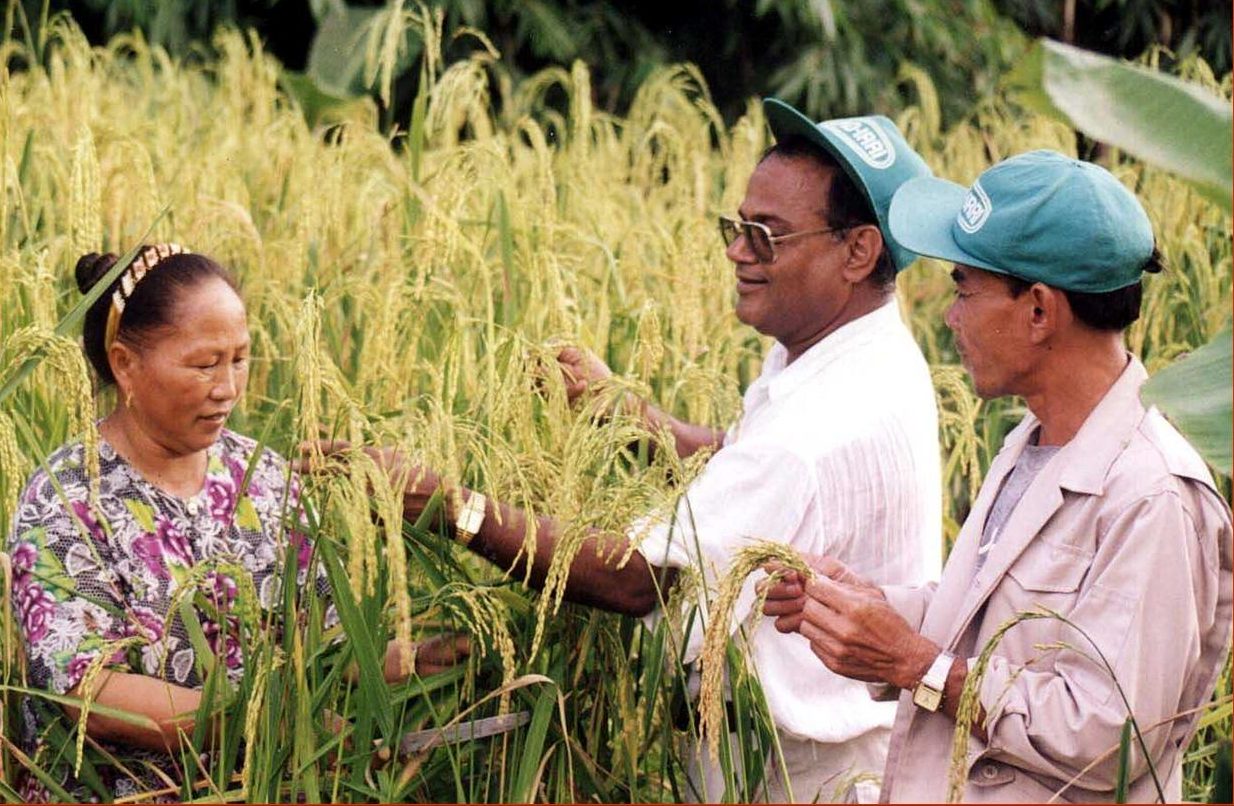
Appa Rao and his Lao counterparts visited almost every part of that country, and collected more than 13,000 samples, and in the process learned a great deal about rice variety names and management approaches used by Lao farmers. Duplicates of this valuable germplasm were sent to IRRI, and Lao breeders immediately began to study these varieties with a view to using them to increase the productivity of rice varieties grown by Lao farmers. I believe this is one of the few good examples, within a national program, of an organic link between conservation and use. Regrettably in many national programs conservation and use efforts are often quite separated, so germplasm remains locked up in genebanks that some commentators refer to as ‘germplasm mausoleums’, fortunately not the case with IRRI nor the other CGIAR Consortium centers.

An active research program
In addition to the molecular marker research described earlier, our research focus was on the AA genome wild and cultivated rices, germination standards for wild rices, and on farm conservation.

In 1991, there was a British researcher in the IRGC, Dr Duncan Vaughan, who undertook collecting trips for wild rices, and made some preliminary taxonomic studies. When Duncan moved to the National Institute of Agrobiological Sciences in Tsukuba, Japan in 1993, I hired Dr Bao-Rong Lu, a Chinese national who had completed his PhD on wheat cytogenetics with Professor Roland von Bothmer at the Swedish University of Agricultural Sciences. Bao-Rong stayed at IRRI until 2000, when he moved to Shanghai to become Professor in Biology/Genetics, and Chairman of the Department of Ecology and Evolutionary Biology at Fudan University. He developed an active group working on the wild rices, and also made several collecting trips to Indonesia, Cambodia, and Australia, among other countries, to collect wild rice species.

In 1995 the genetic resources literature was full of papers advocating the virtues and necessity of both in situ conservation of wild species, and the on farm conservation or management of farmers’ varieties as a parallel to conservation, ex situ, in a genebank. While I was neither for or against on farm conservation, I was very concerned that this approach was being ‘pushed’ – at the expense of ex situ conservation, or so it seemed – without really having any empirical evidence to support the various ideas being put around. So I decided to do something about this, and hired a population geneticist and a social anthropologist to study the dynamics of farmer-managed systems in the Philippines, Vietnam, and eastern India. Geneticist Dr Jean-Louis Pham joined IRRI on secondment from IRD (Institut de recherche pour le développement, formerly ORSTOM) in Montpellier, France until 2000 when he returned to IRD.

There were two social anthropologists. Dr Mauricio Bellon, from Mexico, joined in 1995 and stayed for a couple of years before moving to CIMMYT in Mexico; he’s currently with Bioversity International in Rome. He was replaced by Dr Steve Morin from Nebraska in the USA. When the SDC-funded rice biodiversity project ended in 2000, Steve stayed on for a couple of years in IRRI’s Social Sciences Department, but is now with USAID in the Middle East.

Two important findings from this on farm research concern development of different cropping systems options to permit farmers to continue to grow their own ‘traditional’ varieties while increasing productivity; and responses of farmers to loss of diversity after natural disasters (such as typhoons in the case of the Philippines), and how different approaches are applicable for long-term conservation and adaptation.

Click here to see a full list of publications.

The new century
After I left GRC in May 2001 to become IRRI’s Director for Program Planning and Communications, my successor as head of GRC, Dr Ruaraidh Sackville Hamilton, joined IRRI in August 2002. An evolutionary biologist, Ruaraidh is a graduate of Cambridge University, and came to IRRI from the Institute for Grassland and Environmental Research (IGER), now part of the Institute of Biological, Environmental and Rural Sciences at Aberystwyth University.

Fiona Hay joined IRRI in 2009 from the Millennium Seed Bank at Kew, and Ken McNally, who originally joined IRRI in the 1990s as a post-doctoral fellow working on perennial rice, has taken GRC’s molecular research from strength to strength for over a decade, and this has been accelerated by the completion of the rice genome and identification of whole suites of molecular markers.

I am gratified to know that many of the changes I made in GRC are still in place today, even though Ruaraidh has made further improvements, such as the bar coding of all germplasm accessions, and a re-jigging of some of the laboratories to accommodate greater priority on seed physiology and molecular research. Ruaraidh has further championed links with the International Treaty on Plant Genetic Resources for Food and Agriculture, and securing long-term financial support.

A major step forward came about three to four years ago when the Global Crop Diversity Trust began to support the International Rice Genebank. When the Global Seed Vault at Svalbard was opened in 2008, the first samples placed inside were from the International Rice Genebank.


~~~~~~~~~~~~~~~~~~~~~~~~~~~~~~~~~~~~

[1] Crisostomo, S., Hay, F.R., Reaño, R. and Borromeo, T. (2011) Are the standard conditions for genebank drying optimal for rice seed quality? Seed Science and Technology 39, 666-672.

[2] McCouch, S.R., McNally, K.L., Wang, W. and Sackville Hamilton, R. (2012) Genomics of gene banks: a case study in rice. American Journal of Botany 99, 407-423.

[3] McNally, K.L., Bruskiewich, R., Mackill, D., Buell, C.R., Leach, J.E. and Leung, H. (2006) Sequencing multiple and diverse rice varieties. Connecting whole-genome variation with phenotypes. Plant Physiology 141, 26–31.

[4] Virk, P.S., Ford-Lloyd, B.V., Jackson, M.T., Pooni, H.S., Clemeno, T.P. and Newbury, H.J. (1996) Predicting quantitative variation within rice using molecular markers. Heredity 76, 296-304.

Early morning cup of tea . . .

Tea – the elixir of life.

It was just before 6 am today. I was lying in bed, enjoying my early morning cup of tea, and waiting for the news bulletin on Radio 4 on the hour.

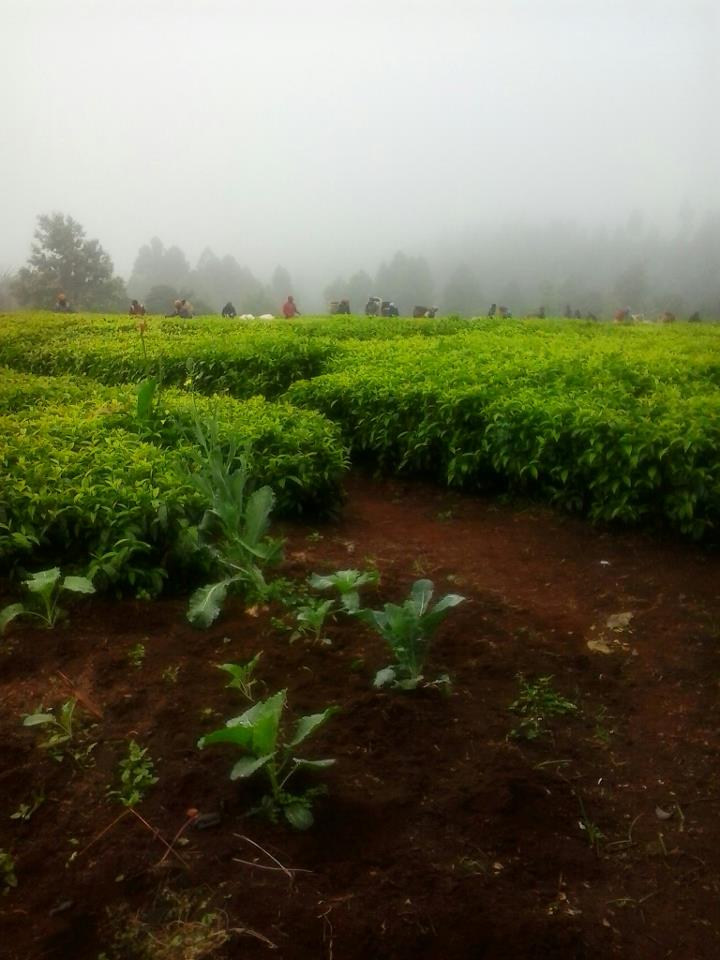
And I got to thinking about this photo of tea pickers in the highlands of Kenya that my friend Luigi had posted on Facebook yesterday. Tea is a very important crop in Kenya, and it now ranks as the world’s third largest producer, after China and India, with Sri Lanka and Turkey coming fourth and fifth, respectively. I’ve seen tea cultivation in Sri Lanka (above Kandy) and Indonesia (in the hills east-southeast of Bogor).

Tea is not, however, a crop that is native to Kenya, having originated in east Asia. And the same could be said for most of the plants we consume today. Just a quick survey of country of origin of fruits and vegetable on sale in supermarkets here in the UK demonstrates the global system of food production, and how far from their original regions of cultivation many of them have spread – beans from Kenya, asparagus from Peru, etc. The potato is referred to in the USA as the ‘Irish potato’ (presumably to distinguish it from the sweet potato, to which it is not related at all; or was it because of the dependence of the Irish in the 19th century on this one crop that led to mass emigration, most often to the USA, during and after the potato famine of the mid-1840s), but comes from the Andes of South America, with its greatest diversity in southern Peru and northern Bolivia. It’s now a major crop worldwide. Maize originated in the Americas but is a major staple today in many parts of Africa, although the major production area is the Corn Belt of the USA. Wheat originated in the Middle East, but major wheat-producing countries are the USA and Canada, Australia, and Russia. Rice is still the staple of Asia where it originated – probably in several centers of domestication.

In the 1980s, when I was on the faculty at the University of Birmingham, I taught a graduate course on crop evolution. I guess this interest in and research on crop origins had been instilled in me by Jack Hawkes, former head of the Department of Plant Biology at Birmingham (and my PhD supervisor), and I continued my work on potatoes for more than 20 years before moving on to rice.

One of the reasons why I find the study of crop evolution so fascinating is that it is a synthesis of so many seemingly unrelated disciplines: the biology of the wild and domesticated plants themselves, their genetics and molecular biology, ecology, and use plant breeding and farming, as well as their history and archaeology, social context, and economics over the past 10,000 years or so since the beginnings of agriculture in the Middle East, in China, and in parts of South and Central America. An interesting introductory text for anyone interested in the origins of crops is Evolution of Crop Plants (1995) edited by Joe Smartt and Norman Simmonds.

Today, the application of molecular techniques is helping to unravel further the ancestry of crop plants, showing linkages to their related wild species, and opening up many opportunities of using these genetic resources for the benefit of farmers and consumers alike, making the crops we depend on more productive, climate resilient, and pest and disease resistant.

In the 1980s the two BBC TV series of Geoffrey Smith’s World of Flowers documented the origins and history of many of the flowers that we grow in our gardens today – roses, tulips, daffodils, fuchsias, dahlias, and lilies, to name just a few. Based on the success of these programs, I did contact the series producer and sent in a prospectus for a series of programs about the origins of crop plants.

I could imagine a program on potatoes, for example, that would take the viewer to the Andes of Peru, looking at indigenous potato cultivation, linking it to the origins of Inca agriculture and the archaeology of the coastal cultures, the wealth of diversity of more than 200 wild species in the Americas, how these are conserved in major genebank collections in the USA and Europe (as well as at the International Potato Center in Lima), and how this diversity is used in potato breeding. No longer would we take these crops for granted! And the same could be done for wheat and barley – the cereal staples of the Middle east, with its wealth of archaeology in Turkey, Syria and Iraq, maize in Mexico and coastal Peru, and many other examples.

I even spent some time with a BBC producer who visited me at Birmingham – but to no avail. While they liked the idea, there was no budget to do the programs justice. I could just imagine Sir David Attenborough waxing lyrical – in his inimitable way – about our food and where it comes from. Who knows – it might happen one day (but Sir D is an unlikely presenter given his age).

Genetic resources – the impact of the University of Birmingham

The University of Birmingham, a major English university, received its royal charter in 1900, although a predecessor medical college was founded in Birmingham in 1825.

Although strong in the various biological sciences – with leading botany, zoology, microbiology, and genetics departments (now combined into a School of Biosciences), Birmingham never had an agriculture faculty. Yet its impact on agriculture worldwide has been significant.

For decades it had one of the strongest genetics departments in the world, with luminaries such as Professor Sir Kenneth Mather FRS* and Professor John Jinks FRS**, leading the way in cytology, and population and quantitative genetics.

In fact, genetics at Birmingham was renowned for its focus on quantitative genetics and applications to plant breeding. For many years it ran a one-year MSc course in Applied Genetics.

The head of the department of botany and Mason Professor of Botany during the 1960s was Jack Heslop-Harrison FRS*** whose research and reviews on genecology would make such valuable contributions to the field of plant genetics resources.

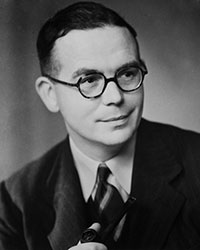
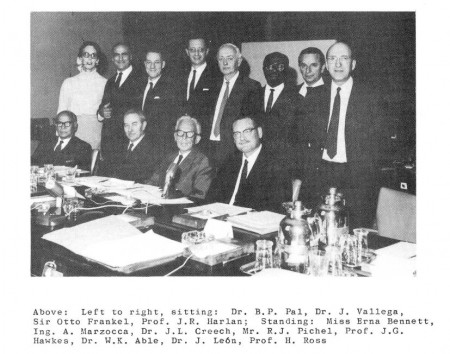
Professor Jack Hawkes OBE succeeded Heslop-Harrison as Mason Professor of Botany in 1967, although he’d been in the department since 1952. Jack was a leading taxonomist of the tuber-bearings Solanums – potatoes! Since 1938 he had made several collecting expeditions to the Americas (often with his Danish colleague JP Hjerting) to collect and study wild potatoes. And it was through his work on potatoes that Jack became involved with the newly-founded plant genetic resources movement under the leadership of Sir Otto Frankel. Jack joined a Panel of Experts at FAO, and through the work of that committee plans were laid at the end of the 1960s to collect and conserve the diversity of crop plants and their wild relatives worldwide, and establish an international network of genebanks.

The culmination of that initiative – four decades later – was the opening in 2008 of the Svalbard Global Seed Vault by the Global Crop Diversity Trust).

Jack wondered how a university might contribute effectively to the various genetic resources initiatives, and decided that a one-year training course leading to a masters degree (MSc) would be the best approach. With support from the university, the course on Conservation and Utilization of Plant Genetic Resources took its first intake of four students (from Australia, Brazil, Candada, and the UK) in September 1969. I joined the course in September 1970, alongside Ayla Sencer from Izmir, Turkey, Altaf Rao from Pakistan, Folu Dania Ogbe from Nigeria, and Felix Taborda-Romero from Venezuela. Jack invited many of the people he worked with worldwide in genetic resources to come to Birmingham to give guest lectures. And we were treated to several sessions with the likes of Dr Erna Bennett from FAO and Professor Jack Harlan from the University of Illinois.

From the outset, Frankel thought within 20 years everyone who needed training would have passed through the course. He was mistaken by about 20 years. The course remained the only formal training course of its kind in the world, and by 2008 had trained over 1400 MSc and 3-month short course students from more than 100 countries, many becoming genetic conservation leaders in their own countries. Although the course, as such, is no longer offered, the School of Biosciences still offers PhD opportunities related to the conservation, evaluation and use of genetic resources.

The first external examiner (for the first three years) was Professor Hugh Bunting, Professor of Agricultural Botany at the University of Reading. Other examiners over the years have included Professor Eric Roberts (Reading) and Professor John Cooper FRS (Aberystwyth) and directors of Kew, Professor Sir Arthur Bell and Professor Sir Peter Crane FRS. Students were also able to carry out their dissertation research over the years at other institutions, such as Kew-Wakehurst Place (home of the Millennium Seed Bank) and the Genetic Resources Unit, Warwick Crop Centre (formerly the National Vegetable Genebank at Wellesbourne) where the manager for many years was Dr Dave Astley, a Birmingham graduate from the 1971 intake.

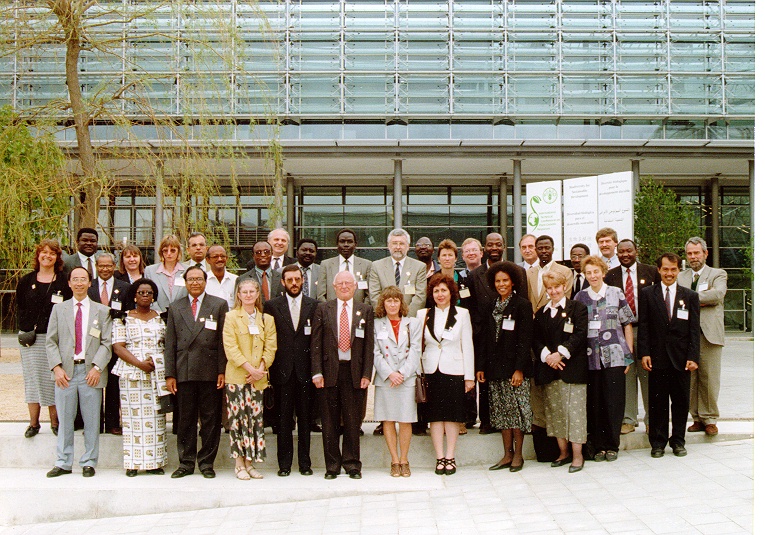
And what has been the impact of training so many people? Most students returned to their countries and began work in research – collecting and conserving. In 1996, FAO presented a report, The State of the World’s Plant Genetic Resources, to the Fourth International Technical Conference on Plant Genetic Resources held in Leipzig, Germany, in June 1996, and published in 1998. Many Birmingham graduates attended that conference as members of national delegations, and some even headed their delegations. In the photo below, everyone is a Birmingham graduate, with the exception of Dr Geoff Hawtin, Director General (fourth from the right, at the back) and Dr Lyndsey Withers, Tissue Culture Specialist (seventh from the right, front row) from IPGRI (now Bioversity International) that provided scholarships to students from developing countries, and guest lectures. Two other delegates, Raul Castillo (Ecuador) and Zofia Bulinska-Radomska (Poland), are not in the photo, since they were occupied in delicate negotiations at the time.

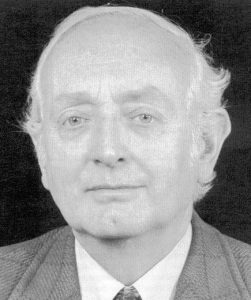
In 1969, two new members of staff were recruited to support the new MSc course. Dr J Trevor Williams (shown on the right in this photo taken at the 20th anniversary meeting at Birmingham in November 1989) acted as the course tutor, and lectured about plant variation.

Dr Richard Lester (who died in 2006) was a chemotaxonomist and Solanaceae expert. Trevor left Birmingham at the end of the 70s to become Executive Secretary, then Director General of the International Board for Plant Genetic Resources (which in turn became IPGRI, then Bioversity International).

Brian Ford-Lloyd (now Professor of Conservation Genetics and Director of the university Graduate School) joined the department in 1979 and was the course tutor for many years, and contributing lectures in data management, among others.
With the pending retirement of Jack Hawkes in September 1982, I was appointed in April 1981 as a lecturer to teach evolution of crop plants, agroecology, and germplasm collecting among others, and to supervise dissertation research. I eventually supervised more than 25 MSc students in 10 years, some of whom continued for a PhD under my supervision (Susan Juned, Denise Clugston, Ghani Yunus, Javier Francisco-Ortega) as well as former students from Peru (René Chavez and Carlos Arbizú) who completed their PhD on potatoes working at CIP while registered at Birmingham. I was also the short course tutor for most of that decade.

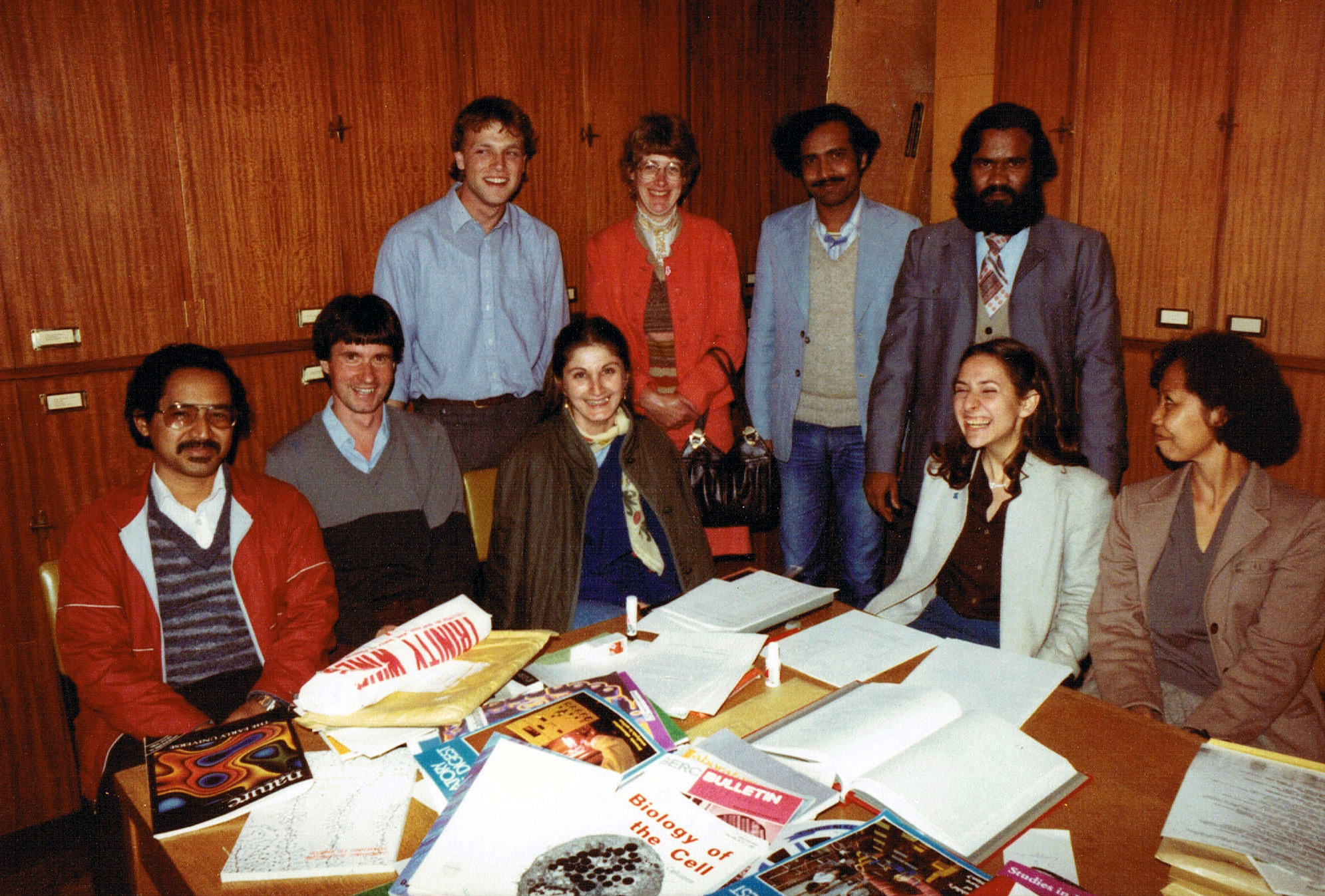
IBPGR provided funding not only for students, but supported the appointment of a seed physiologist, Dr Pauline Mumford until 1990. This was my first group of students who commenced their studies in September 1981. Standing are (l to r): Reiner Freund (Germany), Pauline Mumford, and two students from Bangladesh. Seated (l to r) are: Ghani Yunus (Malaysia), student from Brazil, Ayfer Tan (Turkey), Margarida Texeira (Portugal), student from Indonesia. Missing from that photo is Yen-Yuk Lo from Malaysia.

MSc students from Malaysia, Germany, Uruguay, Turkey, Portugal, Indonesia and Bangladesh. Dr Pauline Mumford, seed physiologist, stands in the second row.

The course celebrated its 20th anniversary in November 1989, and a group of ex-students were invited to Birmingham for a special workshop, sponsored by IBPGR. In the photo below are (l to r): Elizabeth Acheampong (Ghana), Indonesia, Trevor Williams, Yugoslavia, Zofia Bulinska-Radomska (Poland), India, Carlos Arbizu (Peru), Philippines, ??, Andrea Clausen (Argentina), Songkran Chitrakon (Thailand), ??.

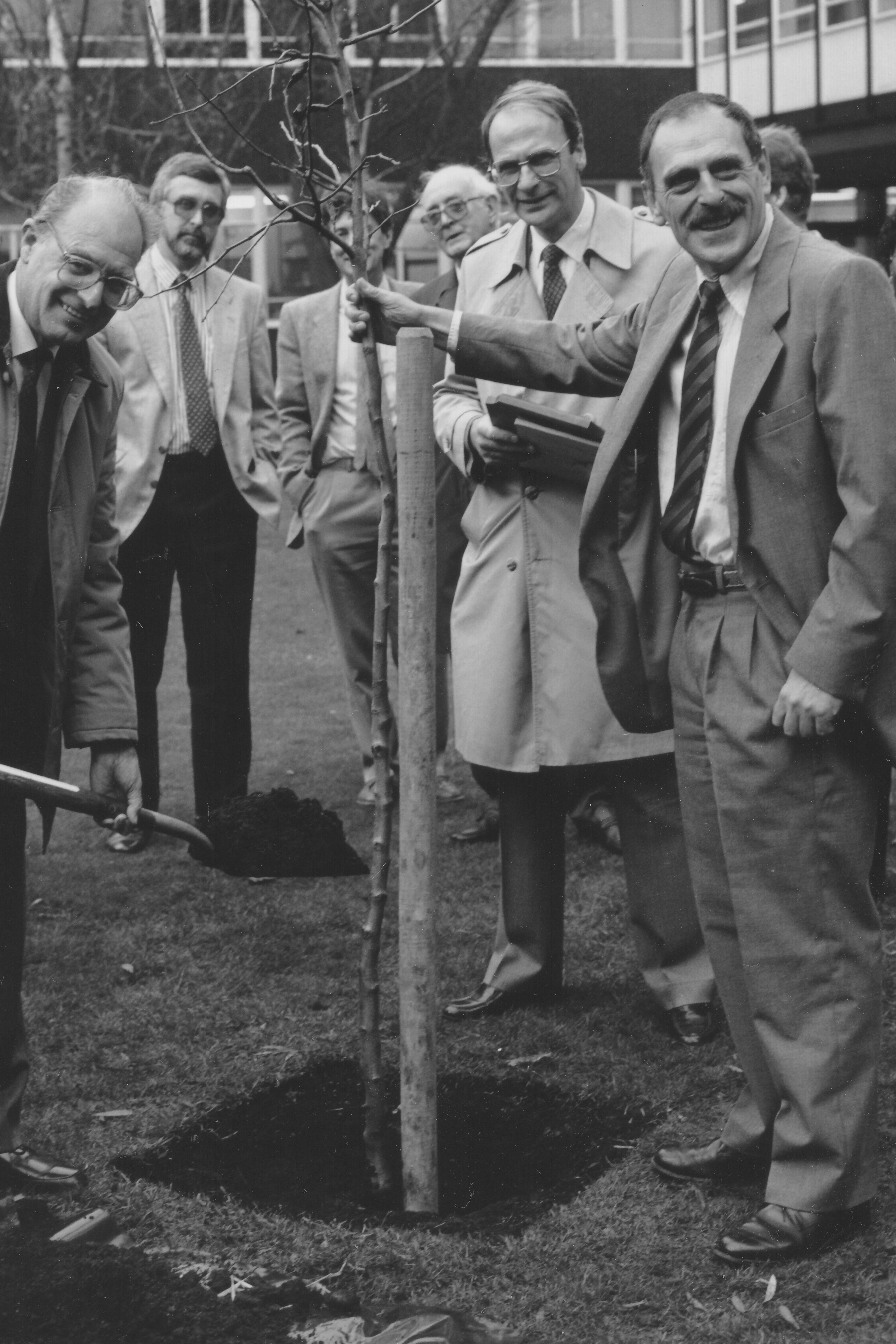
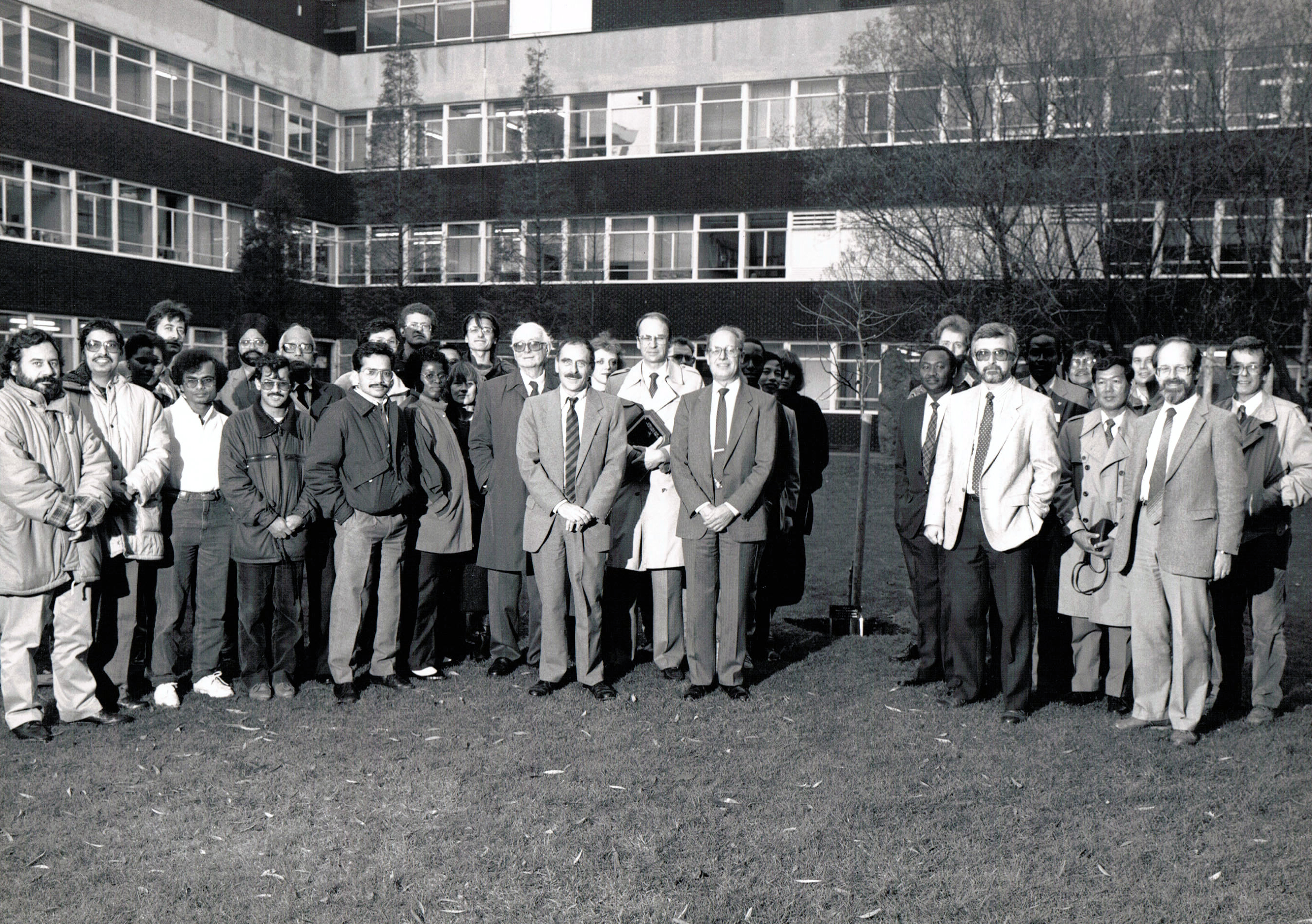
We also planted a medlar tree (Mespilus germanica); this photo was taken at the tree planting, and shows staff, past and current students.

After I resigned from the university to join IRRI in 1991, Dr Nigel Maxted was appointed as a lecturer, and has continued his work on wild relatives of crop plants and in situ conservation. He has also taken students on field courses to the Mediterranean several times.
I was privileged to attend Birmingham as a graduate student (I went on to complete a PhD under Jack Hawkes’ supervision) and become a member of the faculty. The University of Birmingham has made a very significant contribution to the conservation and use of plant genetic resources around the world.

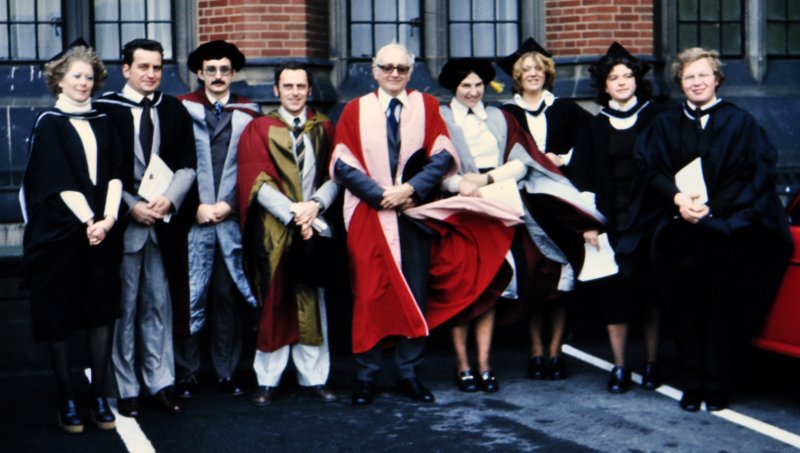
Graduation December 1975
L to r: ?, Bryn ?, me, Trevor Williams, Jack Hawkes, Jean Hanson, ?, Jane Toll, Steve Smith

Today, hundreds of Birmingham graduates are involved daily in genetic conservation or helping to establish policy concerning access to and use of genetic resources around the world. Their work has ensured the survival of agrobiodiversity and its use to increase the productivity of crops upon which the world’s population depends.

~~~~~~~~~~~~~~~~~~~~~~~~~~~~~~~~~~~~~~~~

* Mather was Vice Chancellor (= CEO) of the University of Southampton when I was an undergraduate there from 1967-1970. After retirement from Southampton, Mather returned to Birmingham and had an office in the Department of Genetics. In the late 1980s when I was teaching at Birmingham, and a member of the Genetics Group, I moved my office close-by Mather’s office, and we would frequently meet to discuss issues relating to genetic resources conservation and use. He often told me that a lot of what I mentioned was new to him – especially the genepool concept of Harlan and de Wet, which had been the basis of a Genetics Group seminar by one of my PhD students, Ghani Yunus from Malaysia, who was working on Lathyrus sativus, the grasspea. Mather and I agreed to meet a few days later, but unfortunately we never met since he died of a heart attack in the interim.

** John Jinks was head of department when Nobel Laureate Sir Paul Nurse applied to the university in 1967. Without a foreign language qualification it looked like he would not be offered a place. Until Jinks intervened. Paul Nurse often states that had it not been for John Jinks, he would not have made it to university. Jinks was the head of the Agricultural Research Council when he died in 1987. He was chair of the interview panel when I was appointed to a lectureship in plant biology at Birmingham in April 1981.

*** Heslop-Harrison became Director of the Royal Botanic Gardens, Kew, 1970-1976.

Investing in diversity . . . the IRRI genebank

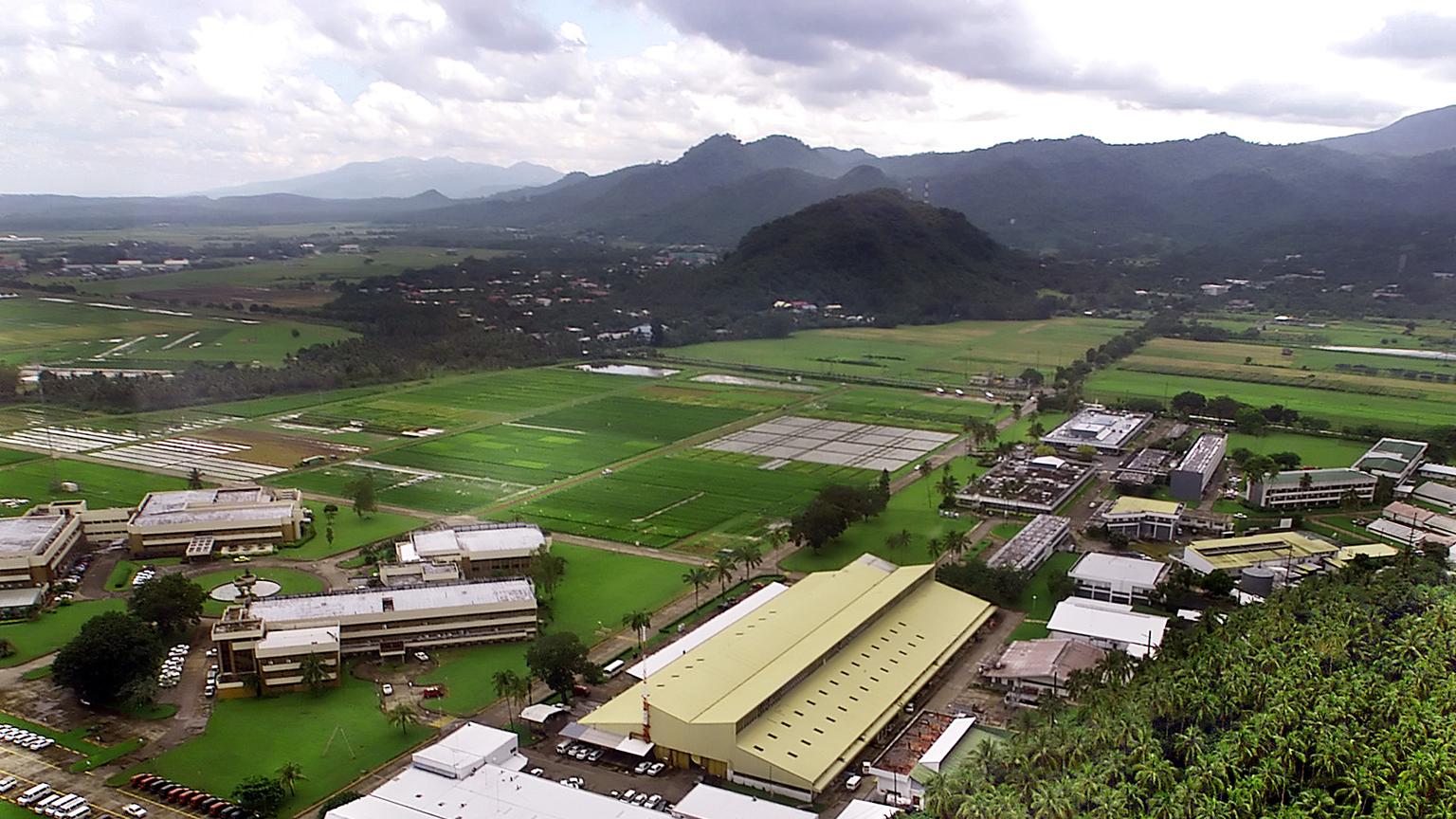
During the mid-90s, the International Rice Research Institute (IRRI) coordinated a major program (funded by the Swiss Agency for Development and Cooperation – SDC) to collect and conserve rice varieties in more than 20 countries by visiting areas that had not been extensively collected in previous decades. The aim was to ensure the long-term survival of varieties that had been nurtured by farmers and their husbands for generations. Over a five year period from 1996, more than 25,000 rice samples were collected, and stored in the International Rice Genebank at IRRI, increasing the collection there by approximately 25%. About half of the samples (some 13,000) came from the Lao People’s Democratic Republic (Lao PDR). An IRRI staff member, Dr Seepana Appa Rao (formerly with the International Crops Research Institute for the Semi-Arid Tropics – ICRISAT) spent four years traveling throughout the country, alongside Lao scientists, to make the first comprehensive collections of rice germplasm.

Duplicates samples are now conserved at IRRI, but very quickly after collection, Lao breeders started to screen the germplasm for useful traits, and use different materials to increase productivity.

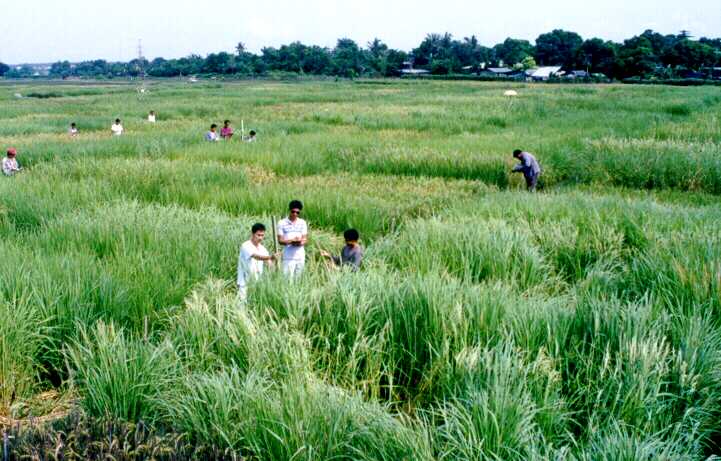
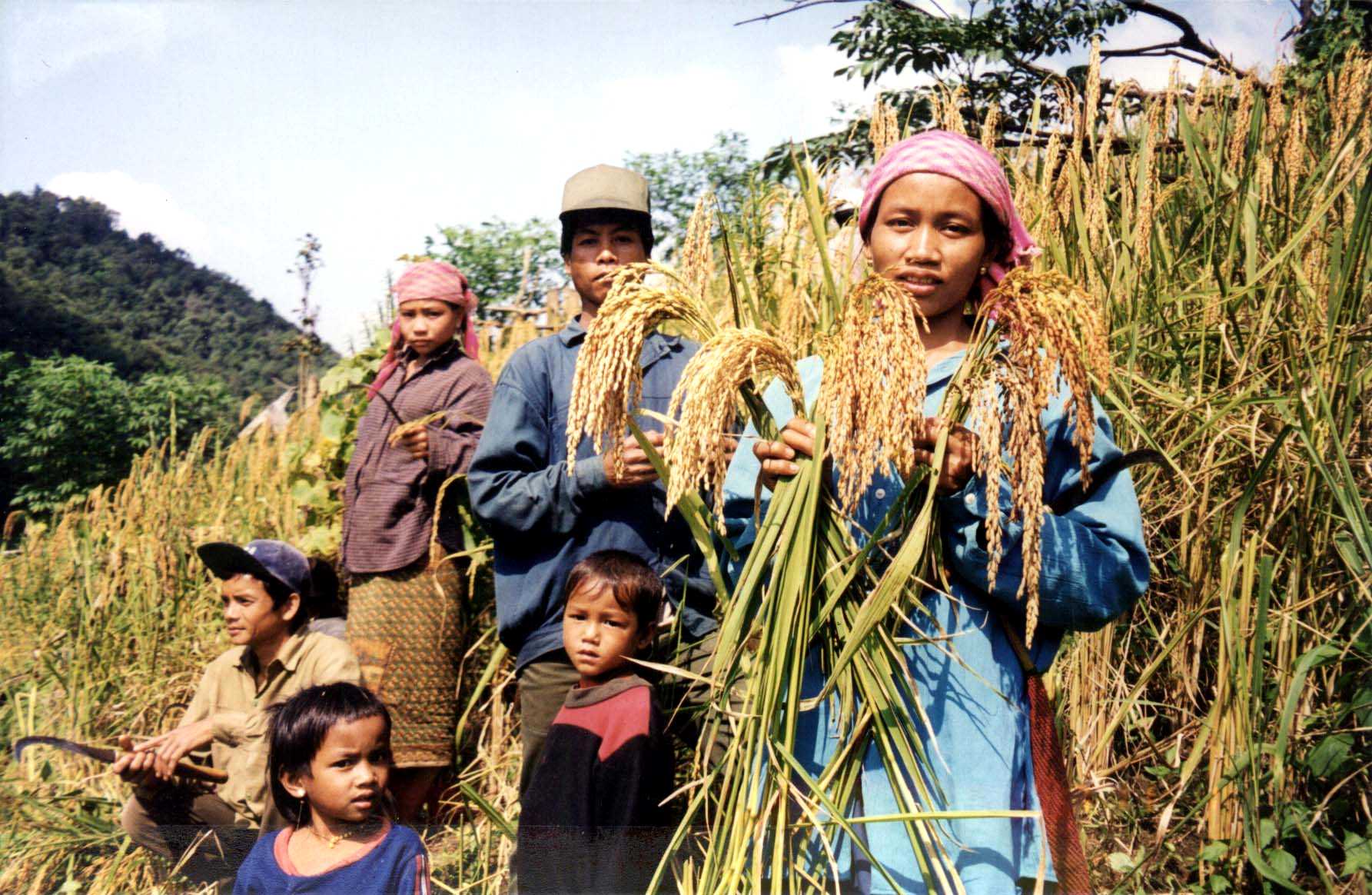
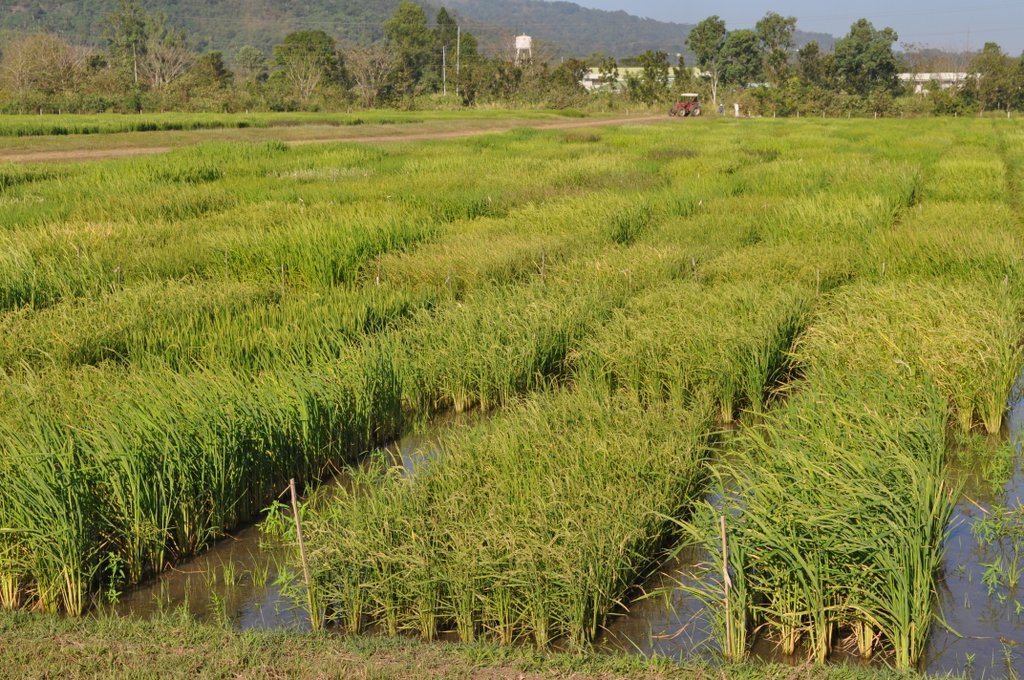
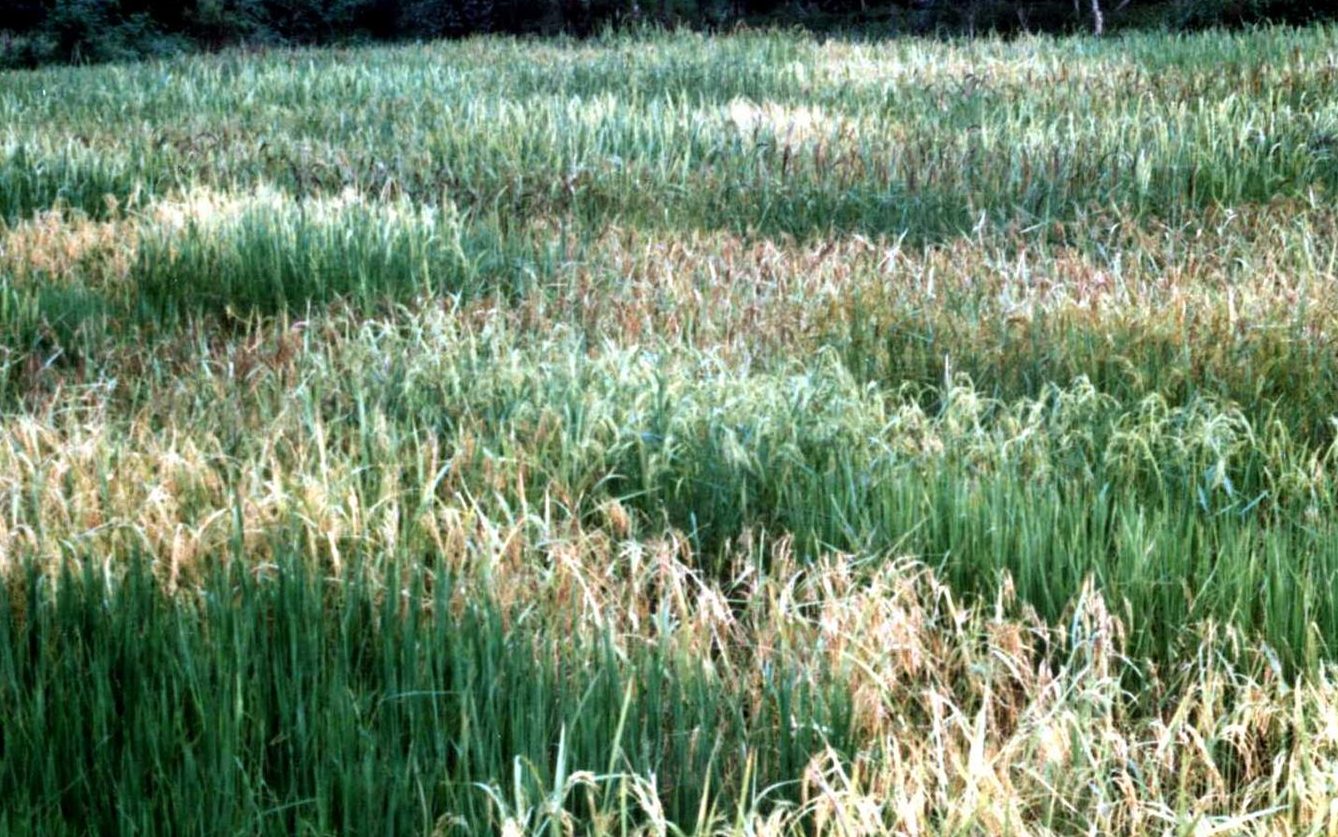
Rice farmers in the Lao PDR still grow thousands of different rice varieties, from the lowland paddy fields with their patchwork of varieties to the sloping fields of the uplands where one can see many different varieties grown in complex mixtures, shown in the photos below. The complexity of varieties is also reflected in the names given by farmers [1].

And germplasm collecting was repeated in Bangladesh, Bhutan, Cambodia, Indonesia, Malaysia, Myanmar, Nepal, Philippines, Thailand and Vietnam in Asia, and countries in East and southern Africa including Uganda and Madagascar, as well as Costa Rica in Central America (for wild rices). We invested a lot of efforts to train local scientists in germplasm collecting methods. Long-time IRRI employee (now retired) and genetic resources specialist, Eves Loresto, visited Bhutan on several occasions.


The IRRI Genebank


When I first joined IRRI in July 1991 – to head the Genetic Resources Center – I discovered that many aspects of the genebank procedures and operations were outdated or inefficient, and we set about a program of renovation and upgrading (that has been a continuous process ever since, as new technologies supersede those used before). The genebank holds more than 113,000 samples, mainly of cultivated rice varieties, with perhaps as many as 70% or so unique. Duplicate safety samples are stored at the USDA National Center for Genetic Resources Preservation in Fort Collins, Colorado, and at the Svalbard Global Seed Vault (operated by the Global Crop Diversity Trust). In fact, the first seeds into the Svalbard vault came from IRRI when it opened in February 2008!

The genebank now has three storage vaults (one was added in the last couple of years) for medium-term (Active) and long-term (Base) conservation. Rice varieties are grown on the IRRI farm, and carefully dried before storage. Seed viability and health is always checked, and resident seed physiologist, Fiona Hay (formerly at the Millennium Seed Bank at Kew) is investigating factors which affect long-term storage of rice seeds.

They say a picture is worth a thousand words – so rather than describe how this genebank runs, do take the time to watch a 14 minute video which shows all the various operations for both cultivated and wild rices.

In 1994 there was a major review of CGIAR center genebanks. In preparation for that review we wrote a genebank operations manual, which still describes how and why the genebank works. I felt that this would be a useful legacy for whoever came after my tenure as head of the genebank. Operations can always evolve and change – but here is a basis for how rice is conserved in the most important genebank for this crop.

[1] Appa Rao, S, C Bounphanousay, JM Schiller & MT Jackson, 2002. Naming of traditional rice varieties by farmers in the Lao PDR. Genetic Resources and Crop Evolution 49, 83‐88.