
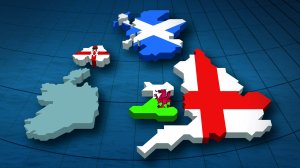
 I – and many others it would seem (if Twitter traffic and other media are to be believed) – have lost (or are rapidly losing) faith in this nation of ours.
The (Dis)United Kingdom.
We’ve been on a downward spiral ever since the Brexit referendum in June 2016 when just 32% or so of the electorate (52% of those who actually took part) took us out of the European Union. It’s unbelievable that even today the Tories (who have been in power since 2010) are still unable to quantify the benefits of Brexit, apart from taking back control – of our descent into insignificance.
I’ve written elsewhere in some details about Brexit and I’m not going to rehearse those comments here. This tag will open all the posts I’ve written about Brexit and why it was such a bad decision.
Since 2019, the country has had to suffer under the embarrassment of a mendacious **** Prime Minister Boris Johnson supported by a coterie of the most inadequate and mediocre cabinet members I think I can ever remember. Totally lacking in talent!
What a ridiculous man at the helm of this nation’s affairs during the Covid (ongoing) pandemic and at a time of international crisis with the Russian invasion of Ukraine.
Just last Saturday, when no-one thought that Johnson could sink any lower, he did precisely that comparing the plight of the citizens of Ukraine to the vote to leave the EU when this country ‘took back control’ and ‘gained its freedom’.
This is what he told the Tory Party Spring Conference in Blackpool:
I know that it’s the instinct of the people of this country, like the people of Ukraine, to choose freedom every time. I can give you a couple of famous, recent examples. When the British people voted for Brexit, in such large numbers, I don’t believe it was because they were remotely hostile to foreigners, it’s because they wanted to be free.
He has been roundly condemned from all sides and from abroad as well. His remarks were not only inappropriate but deeply offensive.
And he’s still under investigation for apparent breaches of lock-down rules and guidelines in 10 Downing Street. When will that ever be resolved? It’s time that Johnson was removed from office and the narrative reset. But having reached this nadir of pessimism in our political system and prospects, I have (reluctantly) come to the conclusion that some radical changes are needed. But I’ve never been one for really rocking the boat – until now, tending towards left of center politics.
Get the Tories out
The next General Election is not due until 2024. That will be the opportunity for Opposition parties to reclaim the ‘Red Wall’ seats of the North that were captured by the Tories in 2019, and overturn the 80 seat majority that Johnson won, even though his party received only 43.6% of the popular vote (or less than 30% of the electorate). That’s the concern with our First Past The Post (FPTP) electoral system.
Scotland notwithstanding, where the Scottish National Party (SNP) overwhelmingly won the popular vote and constituencies, it is essential, in my opinion, that the Opposition parties in England at least (Labour, Lib Dems, Greens) form an electoral pact, because it’s in England that the election will be won or lost.
Proportional representation
Once the Tories have been given their marching orders, then it really is time to think seriously about proportional representation. Although I’m not certain just how interested the Labour Party would be in this constitutional change. The Lib Dems are, as far as I recall, the only political party that has consistently supported proportional representation.
I know it can lead to lots of post-election haggling, as we have seen in other European countries, to form coalition governments. We had one in this country after the 2010 election when the Lib Dems went into coalition with the Tories. It wasn’t all bad. And, in any case, proportional representation would at least ensure that all votes count. That’s not currently the case.
A new parliament
Let’s move Parliament outside London into a bespoke facility that would bring conduct of our democracy and government into the 21st century. The current set-up in the House of Commons does not cater for all 650 Members. It’s anachronistic that votes are cast by Members passing through the lobby and counted rather than cast digitally. It’s adversarial rather than consensual.
MPs should receive an appropriate salary. I would support an increase over the £81,932 basic salary that MPs receive, plus allowances. But with the proviso that they do not take on second or even third jobs, like we have seen over the past year with MPs like Geoffrey Cox (former Attorney General) apparently earning almost £900,000 in legal fees and spending time away from Parliament.
I would abolish the House of Lords. Appointment to the HoL has been abused by many Prime Ministers, and Johnson is no exception appointing some of the most despicable individuals like ex-MEP Daniel Hannan or the son of a former Russian KGB operative, Evgeny Lebedev!
I’m not certain whether we even need a second chamber. Some countries operate quite nicely, thank you, without one. But, unlike the UK, members do not sit for life!
Beyond devolution
I did not support Scottish independence when a referendum was held in 2014, not that I had a vote. I just thought the breakup of the UK was not desirable.
Now I’m not so sure, post-Brexit. It’s clear now that a majority of Scots see their future outside the UK and rejoining the EU as an independent nation. I think the view from Westminster, and the Johnson factor has only increased the Scottish desire for independence. Now, I would agree that if that’s what they want, allow them to pursue their own destiny.
I’m not sure the same can be said for Wales, although Plaid Cymru would have us believe there’s the same level of support there for independence. Could Wales survive as an independent nation? It doesn’t have the same demographic or size of economy as Scotland.
As for Northern Ireland, I do believe that the province will, sooner or later, unite with the republic to the south, even though the Unionist dinosaurs will be dragged kicking and screaming into such an arrangement. I think it’s inevitable, but whether it occurs in my lifetime (I’m 73) remains to be seen.
The monarchy
I’m neither republican nor anti-monarchist. In fact, I guess I’ve been happy (perhaps apathetic) to accept the status quo. Queen Elizabeth II’s reign is inevitably drawing to a close; she is, after all, approaching her 96th birthday, and celebrating her Platinum Jubilee this year.
I think the monarchy is now past its sell-by date, and recent shenanigans in the royal household have certainly diminished the esteem with which the Royal Family was once held. Charles III? William V? I think not. Let’s cut our losses.
So what to replace the monarch as head of state? I’m certainly not advocating an executive president, USA or France style. No, we have a parliamentary democracy that needs to be held on to, albeit with reforms as I indicated. Other countries like Germany and Ireland have a figurehead president as head of state. I think the same would work just fine for a diminished England/Wales. And would cost a fraction of what taxpayers are currently paying for a bloated and dysfunctional monarchy.
I’m afraid there are too many vested interests to permit radical change over the short term. But unless change is brought about, this once proud nation (currently a Johnsonian embarrassment on the world stage) is unlikely to prosper.
 Well, more of a nightmare, actually.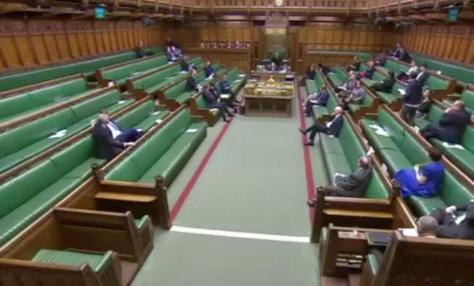
 A balanced diet . . .