That was the year that was . . .

New Year’s Eve, and another year coming to a close.

We just celebrated our fifth Christmas here in the northeast, on the eastern outskirts of Newcastle upon Tyne and a few miles inland from the North Sea coast. I thought I’d take this opportunity to look back on some of our 2024 highlights.
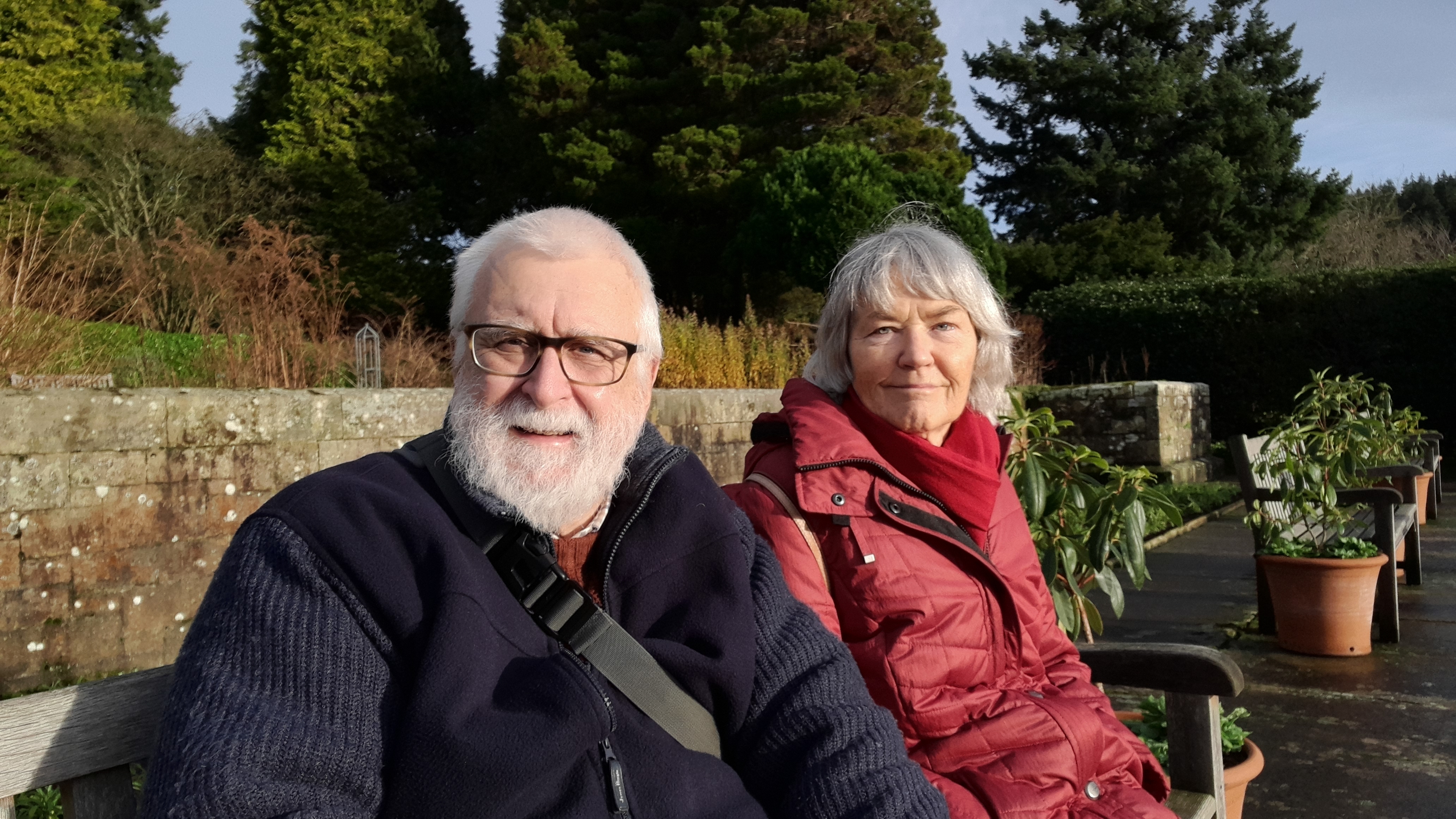
In the walled garden at Cragside, a National Trust property near Rothbury in Northumberland, in early December.

We’re both now in our mid-70s and fortunately keeping in reasonably good health. Steph has her daily yoga session before breakfast. I try (but don’t always succeed) to take a daily walk locally. As often as possible—weather-permitting—we head out to explore more of the glorious landscapes here in the northeast of England.

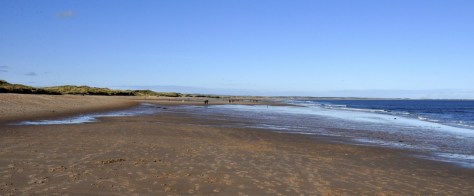
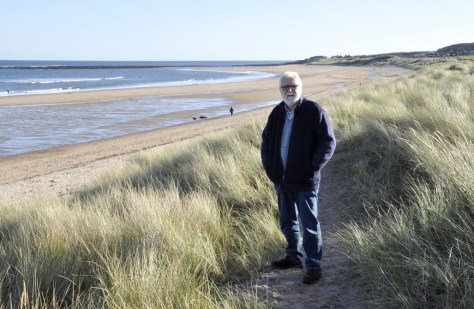
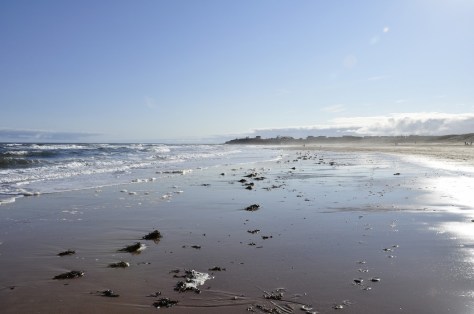
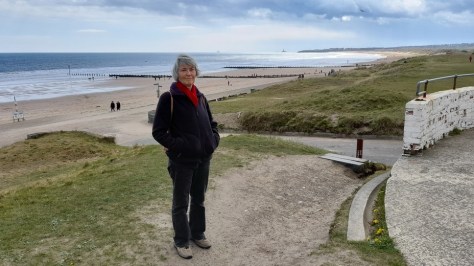
This past year, we’ve explored some new beaches just 10-15 miles north, at Cambois (pronounced Ka-miss) and Newbiggin-by-the-Sea, as well as returning to one of our favorite haunts: Hauxley Wildlife Discovery Centre, where there is always an abundance of bird species to observe. And it was there, around August, that I was able to tick one bird off my ornithological bucket list: a kingfisher, that we watched for almost 30 minutes from the Wildlife Centre café, as it flew from branch to branch beside the lake, occasionally diving for fish. What a sight! It’s only taken me almost 70 years!
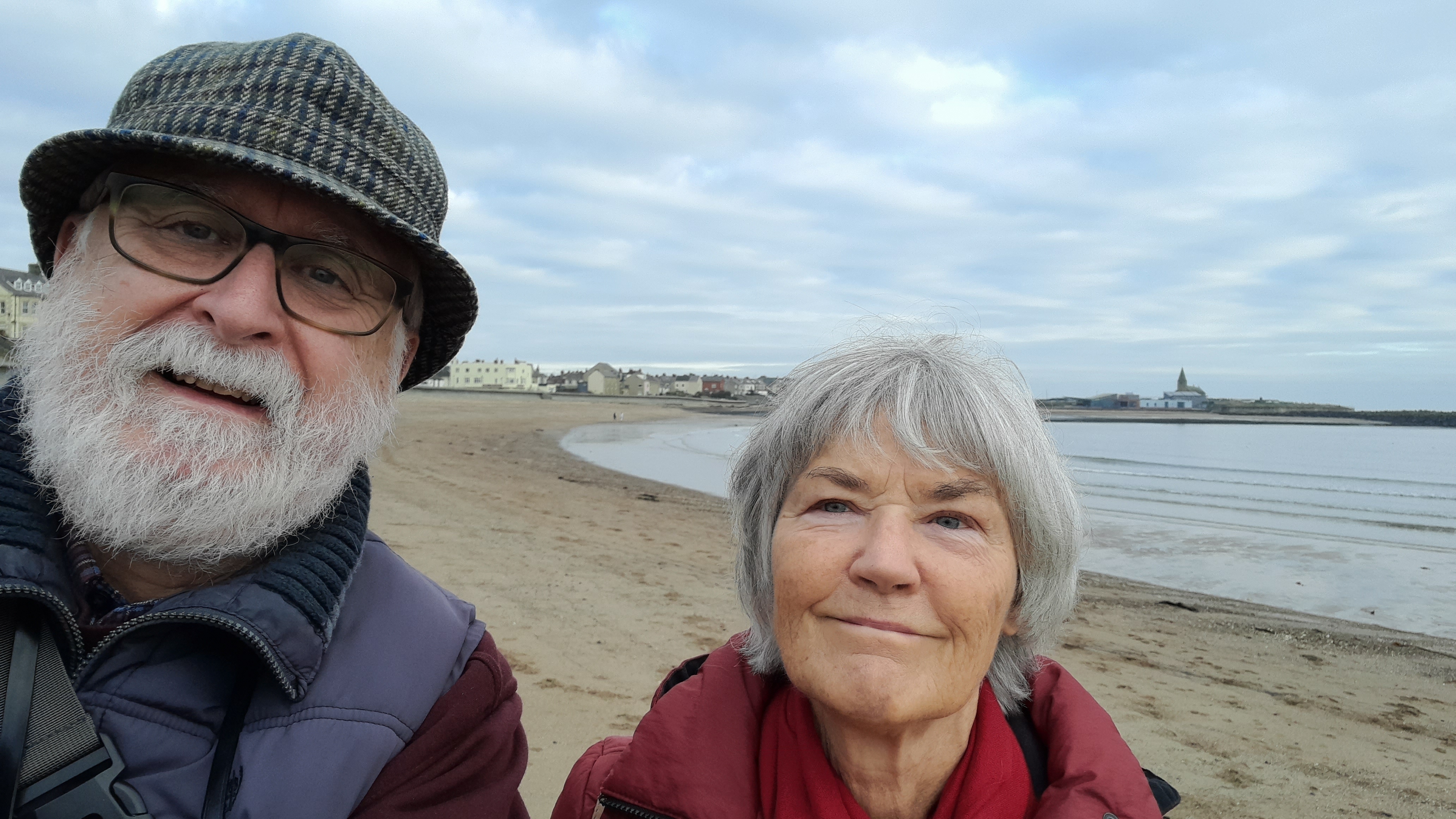
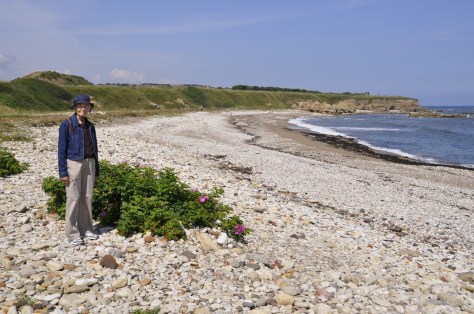
On the beach at Newbiggin at the beginning of November

At the end of June we headed south of the River Tyne into Teesdale to visit one of the most spectacular waterfalls in the country, at High Force on the River Tees.
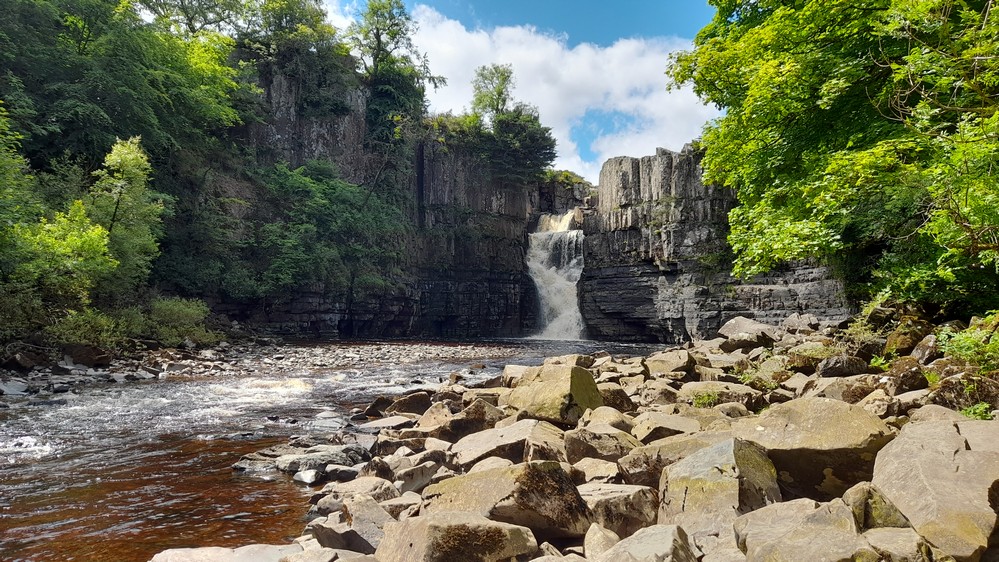
Afterwards, we headed up to Cow Green Reservoir in the hope of seeing some of the special Teesdale flora there, but they were past flowering. But we did enjoy crossing over into Weardale to the north, and exploring upland landscapes that were new to us.
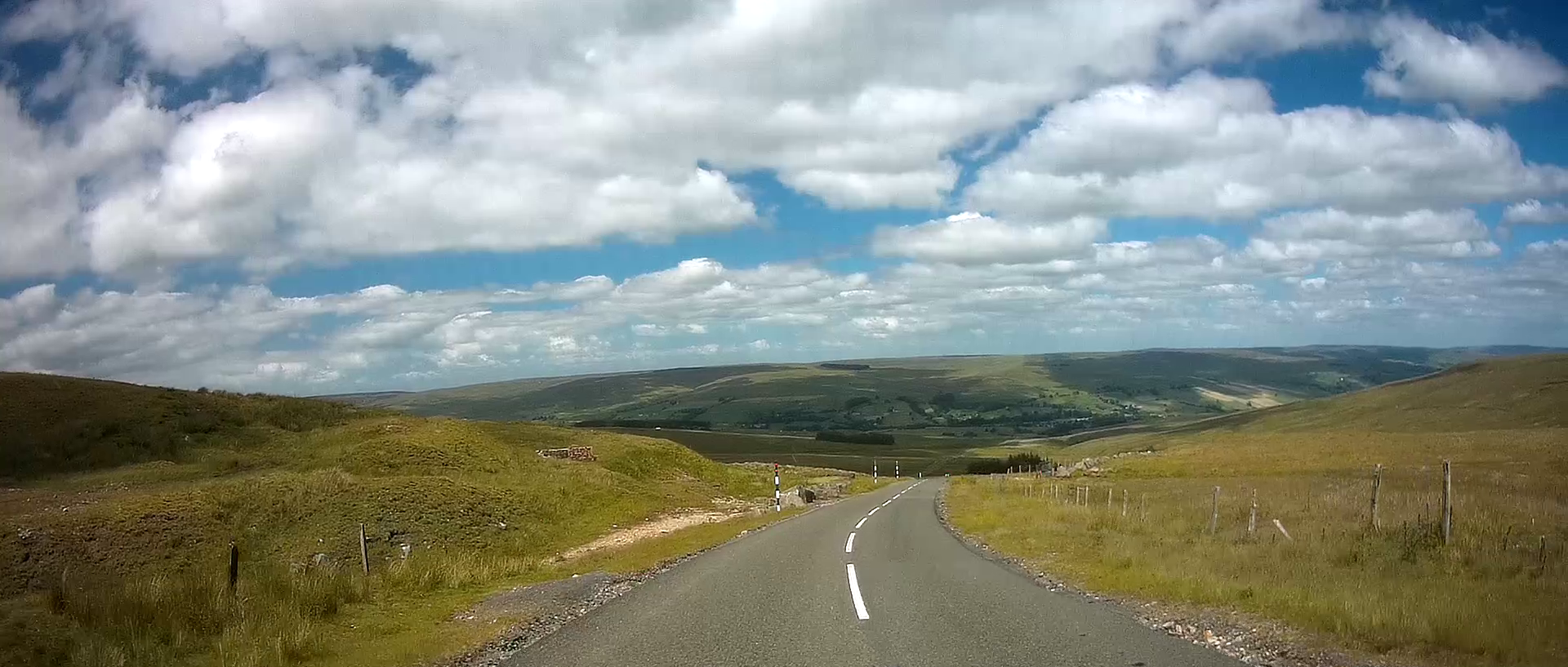
Crossing north from Teesdale into Weardale

In mid-August we set off early one bright and sunny morning 55 miles north towards the border with Scotland, to visit four ancient sites. First of all there was the site of the Battle of Flodden Field, fought in 1513 between King James IV of Scotland and King Henry VIII of England, and in which James was killed.
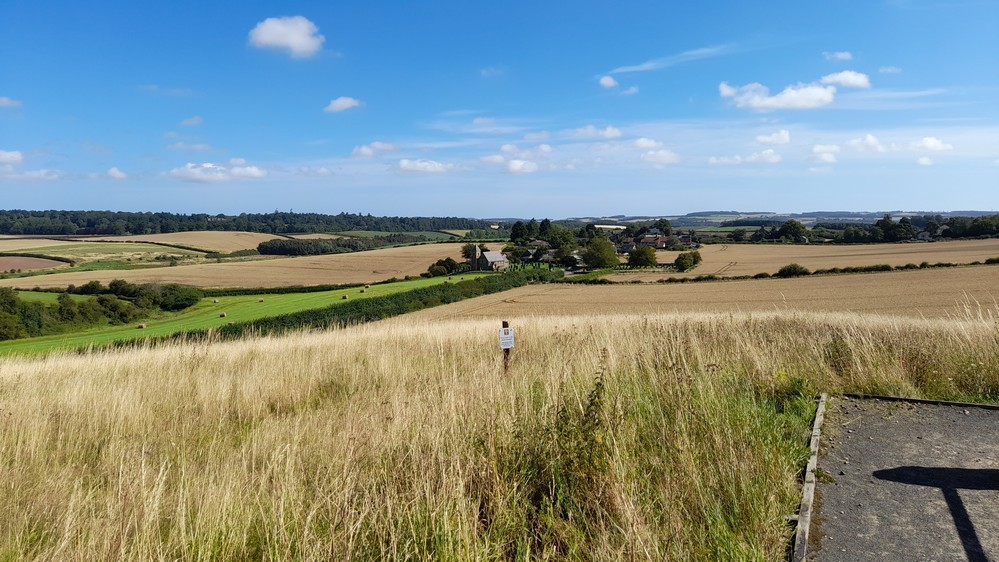
The site of the Battle of Flodden Field. near Braxton Hill.

From there we headed to the Duddo Five Stones Circle, dating from the Neolithic/Bronze Age, and from where there are panoramic views of the Cheviot Hills to the south and the Lammermuir Hills to the north.
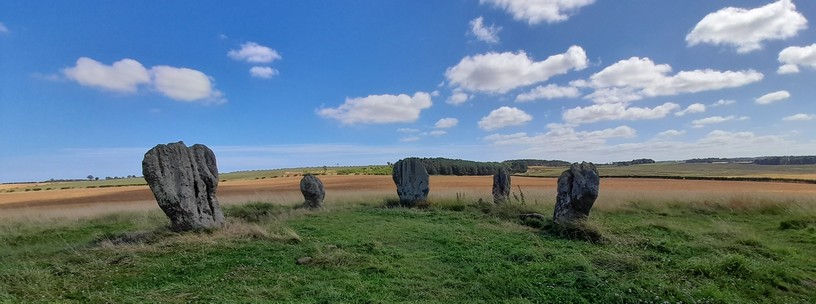
Then it was on to two castles managed by English Heritage at Etal and Norham, the latter overlooking the River Tweed, which is the border between England and Scotland. In fact, all four sites were within an easy 10 miles of each other, but it was nevertheless quite a full day. I wrote about those four visits in this post.

There is just a handful of National Trust properties in the northeast, among them Gibside (west of Newcastle), Seaton Delaval Hall (close to home), Wallington, and Cragside, all of which we visited this year.
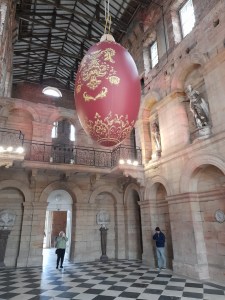
Each Christmas we try to visit one of Trust properties to see their Christmas decorations. And this year it was Cragside and Seaton Delaval in early December, where there was the most enormous bauble hanging from the ceiling of the main hall (which was destroyed by fire at the beginning of the 19th century).

Other excursions south of the Tyne took us to York in early March to meet up with my nephew Nicholas and his wife Metta from Edmonton, Canada. Nicholas is the younger son of my late elder brother Edgar and wife Linda. Philippa joined us on this trip as she hadn’t seen Nicholas since he was a small boy. We enjoyed a satisfying pub lunch before taking a walk around the city walls.
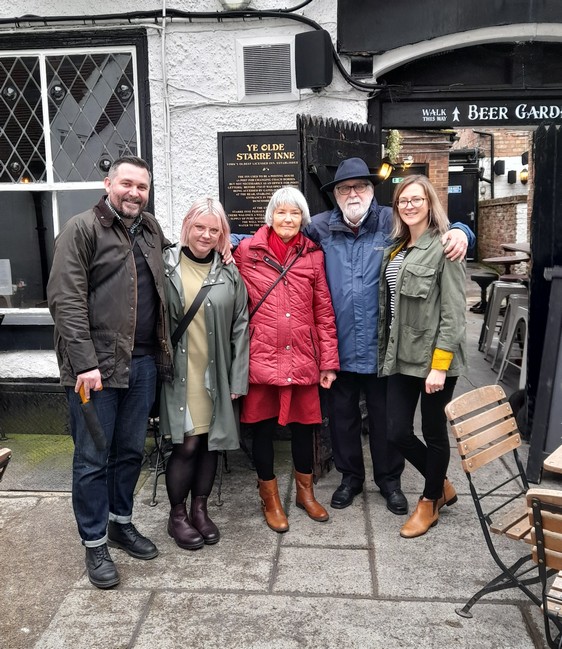
In April, we headed south again, calling in at Mount Grace Priory for a welcome cup of coffee before heading on to our destination, Byland Abbey. En route, we stopped off at the Church of St Mary the Virgin beside the A19 trunk road south that we’d often passed but never taken the opportunity to stop. I wrote about both visits in this post.
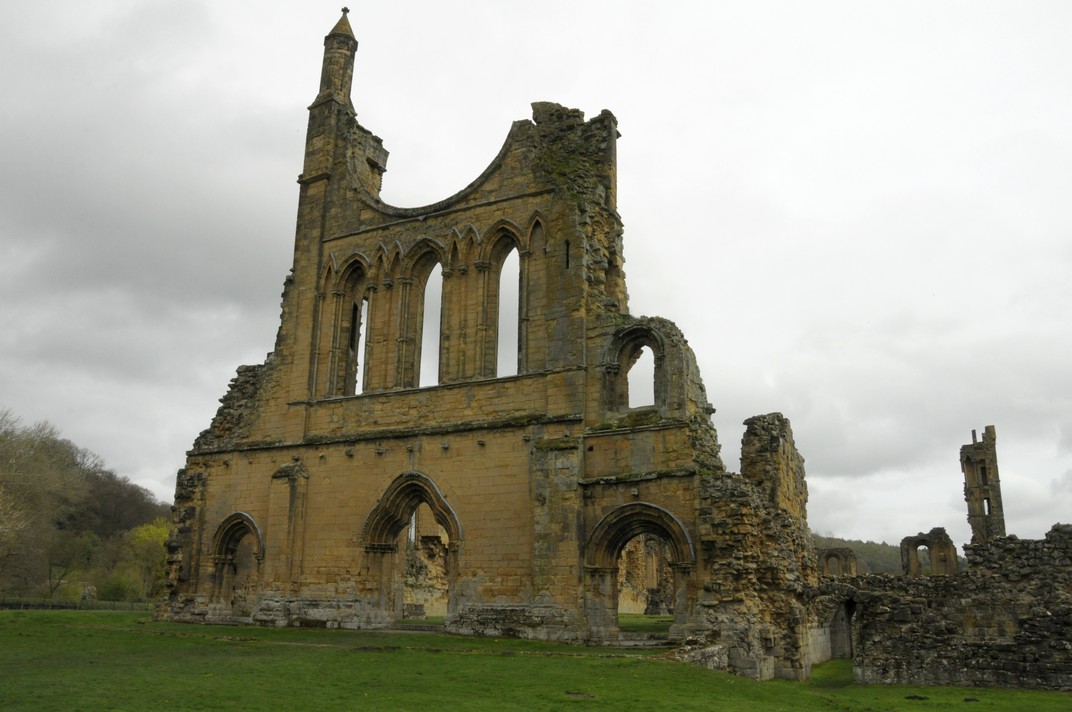
The west front of Byland Abbey

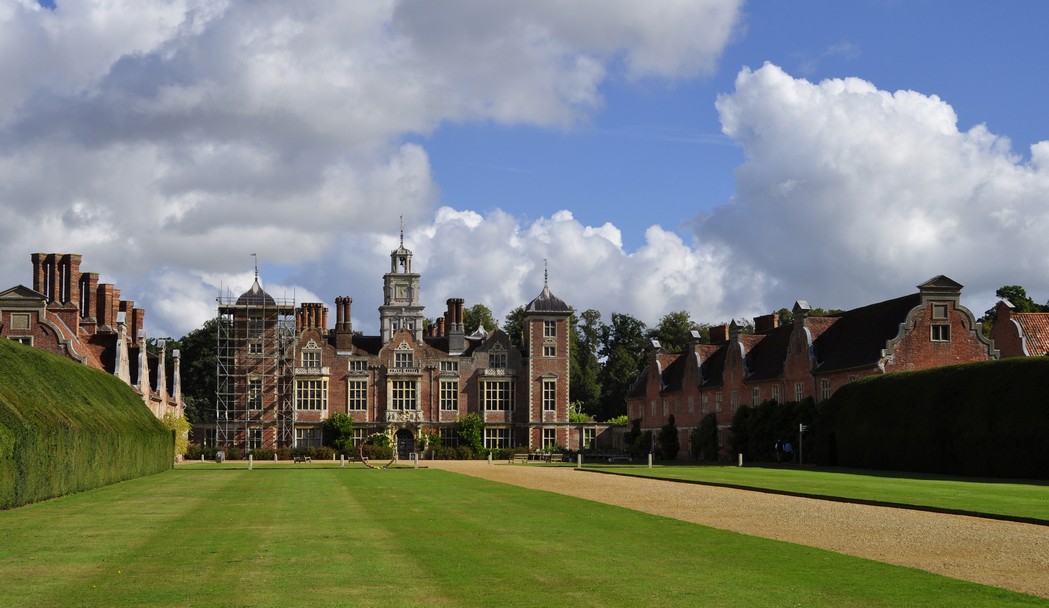
We have to travel much further afield now to find National Trust and English Heritage properties new to us. So in September we spent a week in East Anglia, visiting twelve properties over six days. I wrote about that trip here. We rented a small cottage on a farm near the Suffolk market town of Eye.

It’s hard to choose a favorite property, but if ‘forced’ to it would be Blickling Hall. What an awesome view along the gravel drive to the entrance of this magnificent Jacobean country house.
Our big trip of the year was our annual visit from early May to June (just over three weeks) to stay with Hannah and family in St Paul, Minnesota. After our last road trip in 2019 I had wondered if we’d make another one. But nothing ventured nothing gained, we decided to hit the road again, crossing Utah and Colorado, and visiting some of the best national parks and enjoying some spectacular desert and Rocky Mountain landscapes. You can read about that trip in this post.

Flying into Las Vegas, we immediately headed to the Hoover Dam, then traveling north to Zion National Park, and on to Bryce Canyon National Park. Heading east we visited Arches and Canyonlands National Parks near Moab in eastern Utah. Then we crossed over into Colorado taking in the ‘Million Dollar Highway’ south through the San Juan range before arriving at Mesa Verde National Park. From there we headed east to Denver for the flight back to Minneapolis-St Paul.

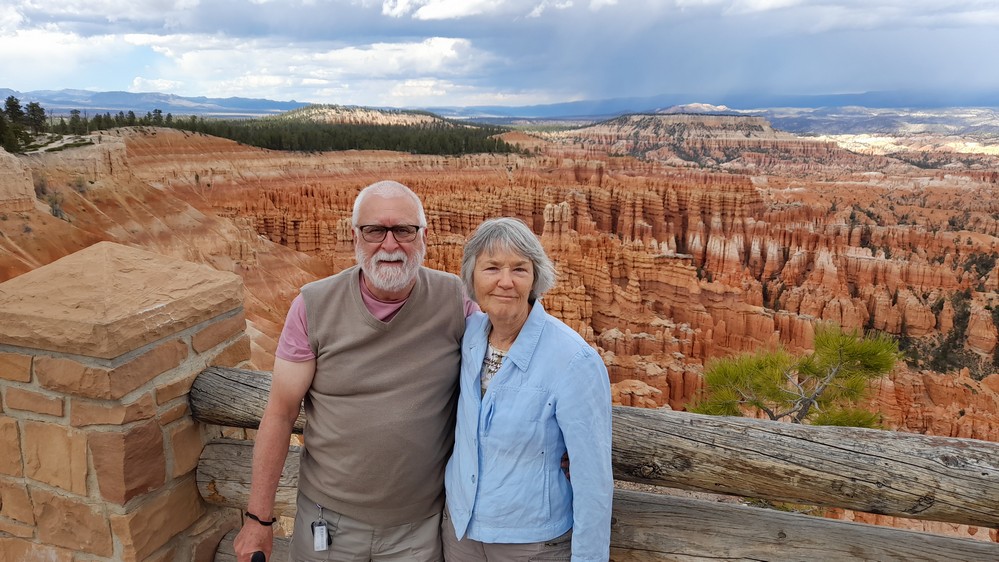
Without doubt Bryce Canyon National Canyon was the highlight of the trip, but only just ahead of all the other fascinating places we visited.
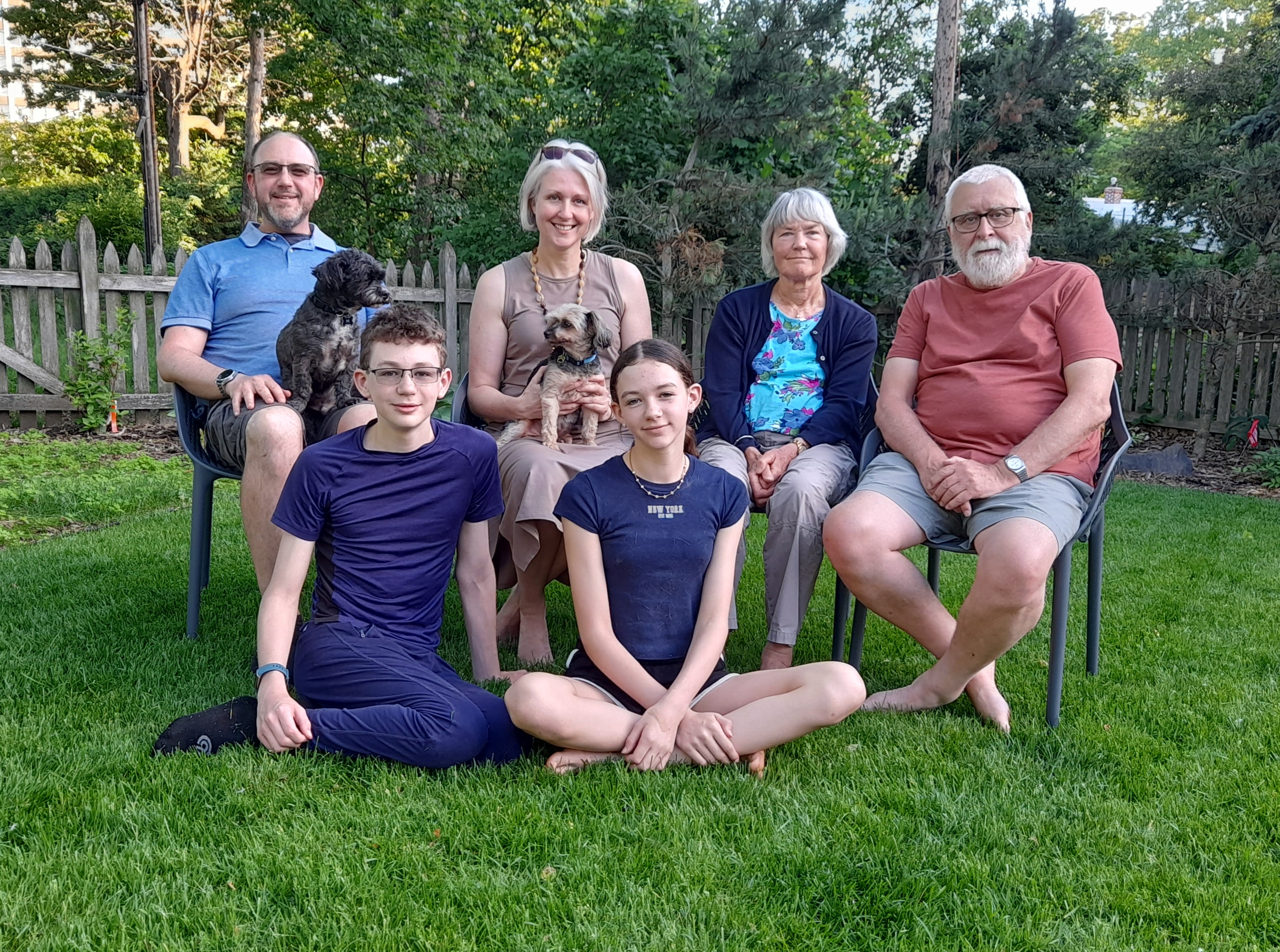
We had a delightful time with Hannah, Michael, Callum (then 13), and Zoë (12), and their doggies Bo and Ollie, and cat Hobbes (sadly no longer with us).
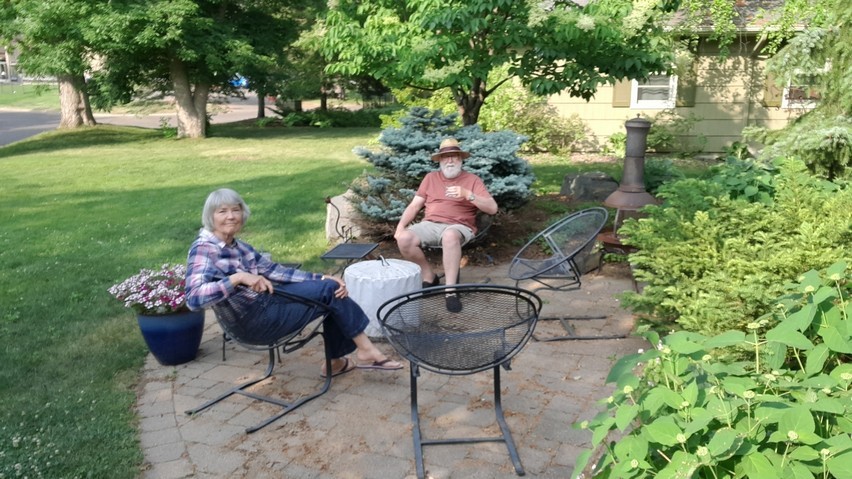
Enjoying the warm weather in St Paul, we spent much of our time relaxing in the garden, taking walks around the neighbourhood, or sitting on the front patio in the late afternoon/early evening just watching the world go by on Mississippi River Boulevard (Hannah’s house is just 50 m from the bluff overlooking the Mississippi River), savouring a gin and tonic (or two).
At the end of July, Callum and Zoë flew over to Newcastle to spend a couple of weeks with us, but more importantly to hang out with their cousins Elvis (now 13) and Felix (now 11), Phil and Andi’s boys.
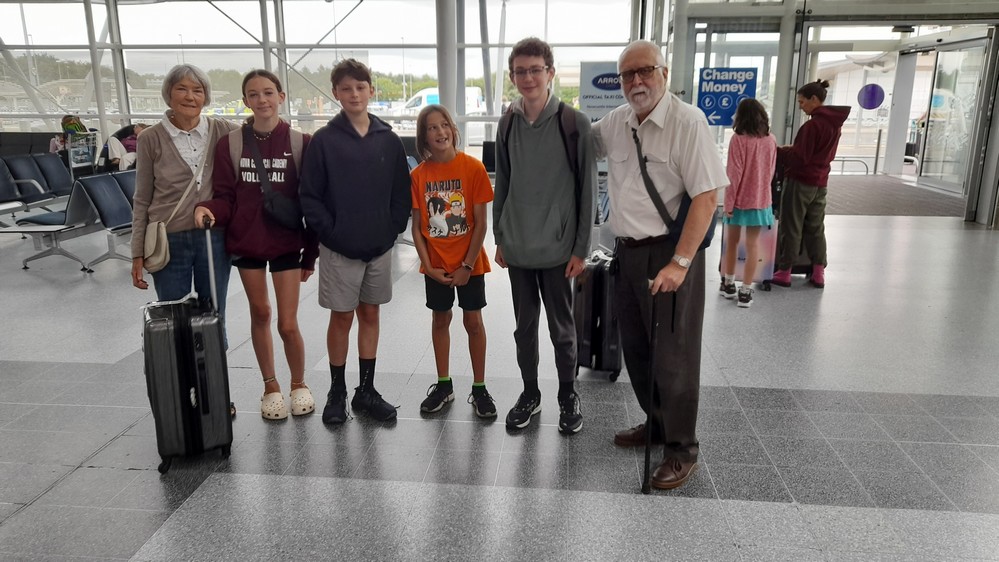
Arrival at NCL on 25 July

They all went camping (a first for Callum and Zoë) to Bamburgh on the north Northumberland coast, and we spent a day with them.

All too soon, their visit came to an end, but it seems plans are afoot for them to repeat the visit in 2025.

We enjoyed a couple of outings with Elvis and Felix during the year—they are so busy with all their extracurricular activities—to Belsay Hall, and we enjoyed a performance of the Alice in Wonderland pantomime in Newcastle just before Christmas.

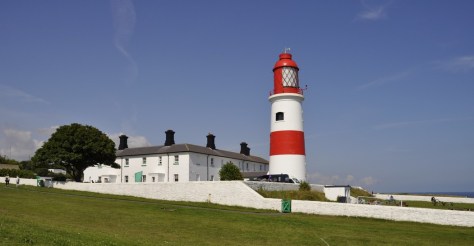
We spent Christmas Day with Phil and Andi and family followed, on Boxing Day, by a brisk walk at Souter Lighthouse and Marsden Beach.

I’m sure there must have been other things we got up to but I don’t recall. These have certainly been many of the year’s highlights.

So as the year comes to an end, I’ll take this opportunity to wish all my followers on this blog (and others who come across it by chance) A Happy, Peaceful, and Prosperous New Year 2025!


My blog activity was much reduced this past year, just 30 stories posted with 46,000 words compared to previous years, although on average each post was longer.
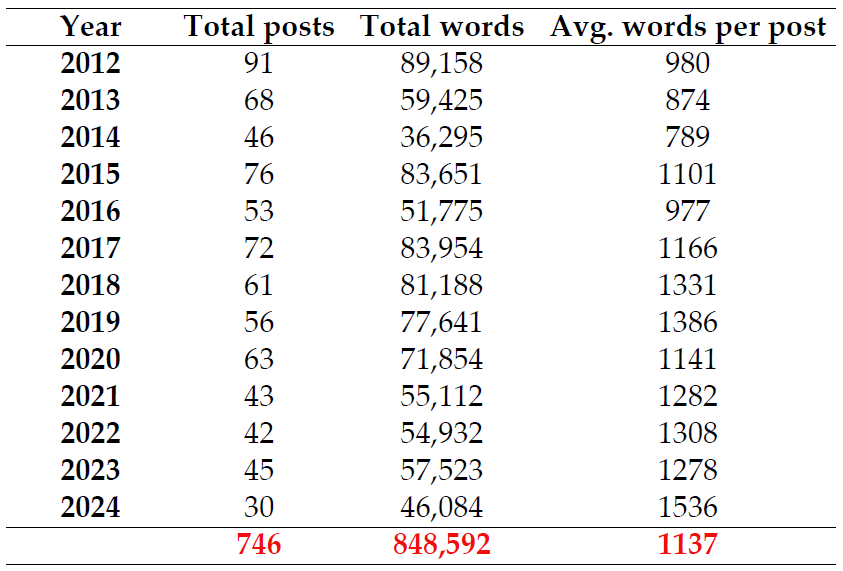
I’m not sure why I’ve been less productive. While I felt quite elated mid-year about the General Election win by Labour, having booted the Conservatives out after 14 years in power, I have to admit to becoming rather depressed at the beginning of November when Donald Trump reclaimed the US presidency. His occupancy of the White House does not bode well for 2025.
 

We saw the Fairies Caves but no lonesome pines

Just over a month ago, Steph and I took the Metro to Cullercoats, a small community between Whitley Bay and Tynemouth on the North Sea coast, just a few miles from home. Our intention was to walk along the beach and coastal path from Cullercoats to Tynemouth, no more than a couple of miles. While we followed much of the coastal path, it’s not possible to show the actual detailed route we took across the beaches on the map below.

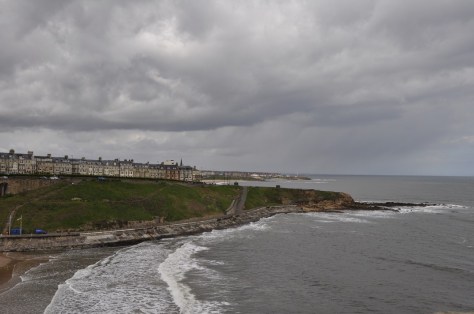
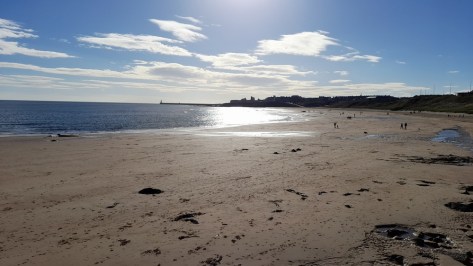
Just after we’d climbed out of Cullercoats Bay, and were looking south over Long Sands Beach, I had to pinch myself once again being so lucky to live in such a beautiful part of the country. And with the coast just a few minutes from home.

Looking south towards Tynemouth at Long Sands Beach.

Anyway, back to the beginning of the walk. The Metro ride to Cullercoats took around 10 minutes (just five stops) from our ‘home’ station, Northumberland Park.

To fortify ourselves for the walk ahead, we stopped for a welcome cup of coffee at the Cullercoats Coffee Co., on the corner of Station Road and John St., and only a couple of hundred meters from the Metro station.

It must have been around 10 am, and we were surprised to find the coffee shop heaving with customers, with just one table for two empty on the kerbside. Luckily it was a bright and sunny day, and still quite warm for mid-October.


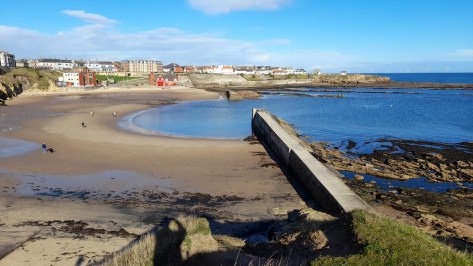
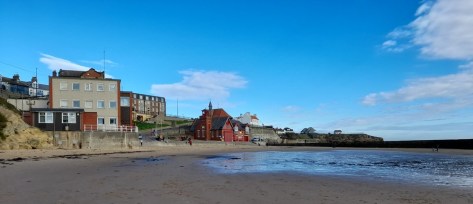
Cullercoats is a sandy bay enclosed by two piers. It once had a thriving fishing industry, and hosted an artists’ colony in the 19th century, with local fisher-folk often featuring in the paintings.

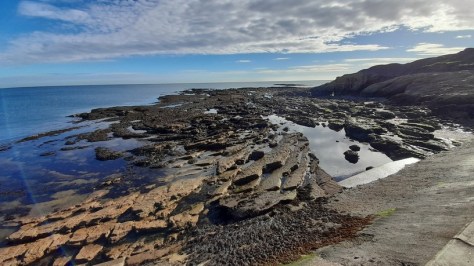
At low tide (when we visited) there are long stretches of exposed rocks and pools on either side of the bay entrance.

Newcastle University’s Dove Marine Laboratory and the Cullercoats Lifeboat Station (established in 1848, with the red doors) are based here.

At the base of the yellow sandstone cliffs behind the beach are several caves, known locally as the Fairies Caves. We didn’t venture inside but having now read a little more about them, that’s something we will do next time we visit.

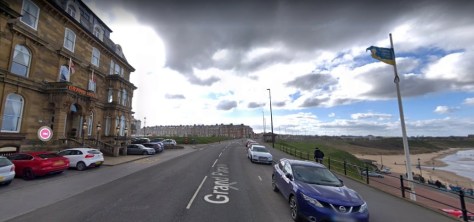
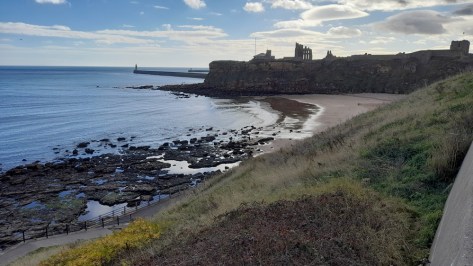
And as we climbed over the headland at the south side of the bay we got our first view of Long Sands Beach, and St. George’s Anglican church on Grand Parade.


At the south end of the beach is Tynemouth Outdoor Pool, just below Sharpness Point. It has been abandoned since the 1990s. But in its heyday, it was a popular attraction for families enjoying their summer holidays on this beautiful northeast coast.

In Tynemouth, the Grand Hotel stands on Grand Parade above the Pool, overlooking Long Sands Beach.

Built in 1872, there have been numerous famous visitors, among them comedy duo Stan Laurel and Oliver Hardy. Stan Laurel lived in North Shields between 1897 and 1902 and attended the King’s School in Tynemouth.
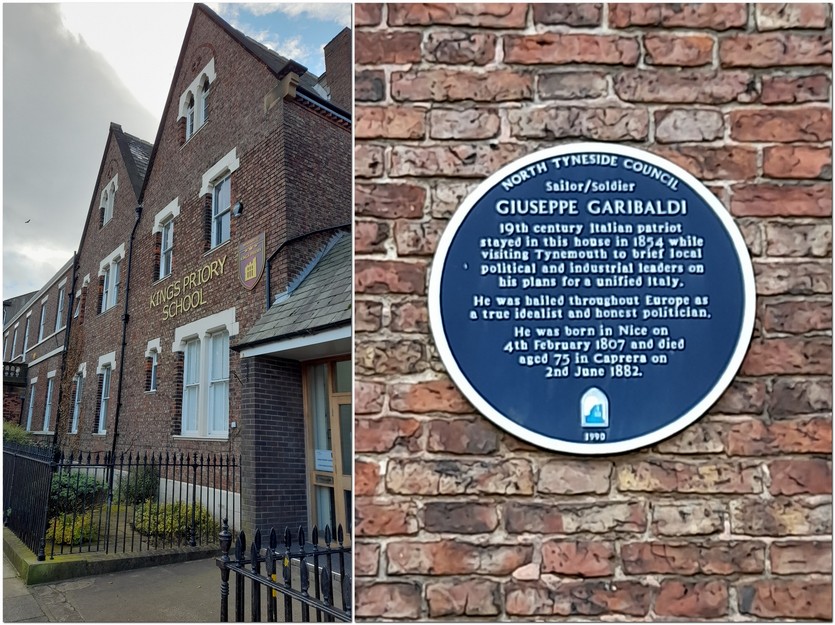
In 1854, the Italian revolutionary Giuseppe Garibaldi is believed to have stayed in a house that is now part of the King’s School. At least there’s a blue plaque to that effect. The school opened its doors in 1860.
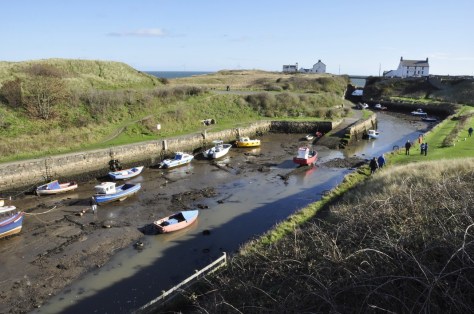
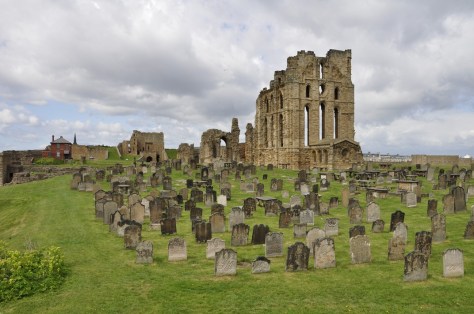
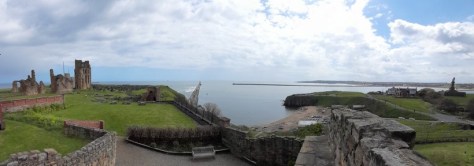
The next bay south, below Tynemouth Priory and Castle (owned by English Heritage) is King Edward’s Bay, just a short walk from the town’s main street, Front Street.

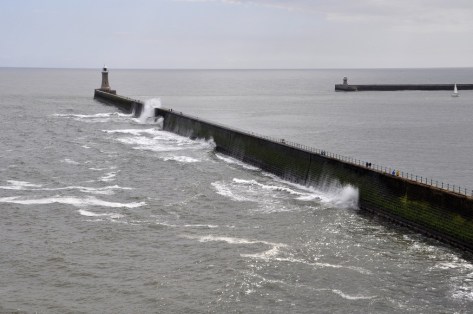
King Edward’s Bay – with the breakwaters at the entrance to the River Tyne visible just beyond the headland.

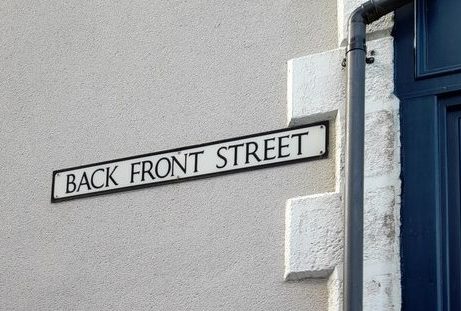
We headed along Front Street towards Tynemouth Metro station. Since we moved up here two years ago, I’ve seen ‘Front Street’ in many towns and villages. I guess this must be the northeast equivalent of ‘High Street’ further south.

Front Street in Tynemouth is a wonderfully broad street, and although it’s now overburdened (in my opinion) with eating and drinking establishments, it’s not hard to imagine it during its Georgian or Victorian heydays.

There’s even a Back Front Street!

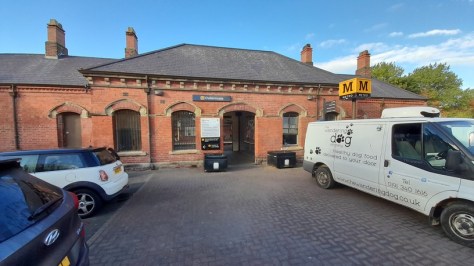
Tynemouth’s Metro station is an iron and glass architectural masterpiece, which opened on 7 July 1882 as part of the North East Railway. It’s now a Grade II listed building.

On weekdays, Metro trains run every 12 minutes, so we were home before too long.

And that’s what so nice about living where we do. So many attractions and walks within short distances, and which we can (being retired) drop everything and take time out to enjoy.


You may be wondering about the title reference to ‘lonesome pines’. It’s all to do with Laurel and Hardy.


Oh, I do like to be beside the seaside . . .

. . . Oh, I do like to be beside the sea.

So sang Florrie Forde in her November 1909 recording of the popular 1907 British music hall song of the same title.

A few days back, the weather being the warmest and sunniest of the year so far, Steph and I took a walk along the coast south of the River Tyne here in the northeast of England, and about 11 miles from home. And as we sat down on Marsden Beach to enjoy our picnic lunch, I told Steph that I still had to pinch myself that we now lived so close to the coast.

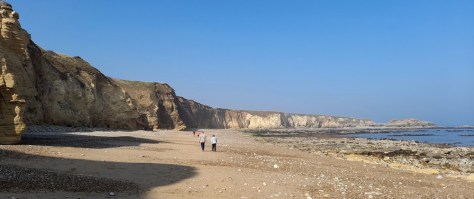
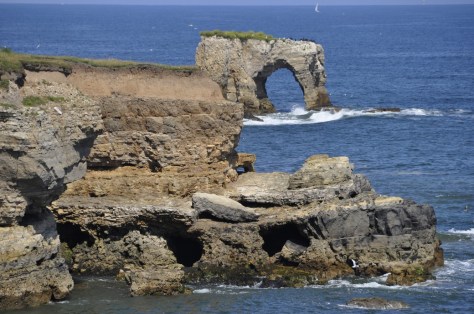
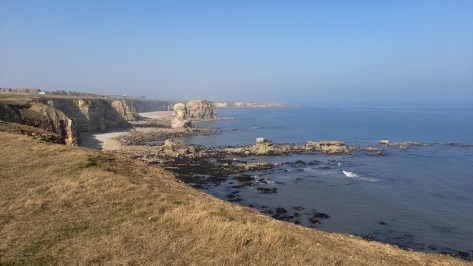
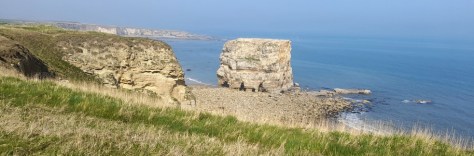
The magnesian limestone cliffs at Marsden Bay.

We moved to North Tyneside (just east of Newcastle upon Tyne city center) 18 months ago, and whenever we get chance, we head off to the coast to enjoy a bracing walk along the beach, the dunes, or cliffs. At its closest, the coast is less than 4 miles as the crow flies.


I hail originally from Staffordshire in the north Midlands, which is almost equidistant from the west and east coasts. So, when I was growing up, a trip to the seaside was always a treat, and holidays with parents were almost always spent camping at or near the coast.

Steph, on the other hand, comes from Southend-on-Sea and the closest beach to her family home was just 5 minutes walk.

Moving away to university in 1967, I chose Southampton on the south coast in Hampshire. However, apart from the odd day trip or field excursion connected with my botany and geography degree, I didn’t see much of the coast at all. Not so a decade earlier. Southampton is a major seaport, from where my father sailed when he worked for the Cunard company in the 1930s. And he took us visit the docks in the late 1950s/early 1960s just when both of Cunard’s Queens were in port.


When Steph and I moved to Peru in 1973, we lived just a few hundred meters inland from the cliffs overlooking the Pacific Ocean in the Lima suburb of Miraflores. During the ‘summer’ months between January and March, we’d spend at least one day each weekend on the beach at one of the resorts about 50 km south of Lima.

Moving to Costa Rica in 1976, we made only two trips to the beach in the northwest of the country to Playa Tamarindo on the Pacific coast of the Guanacaste peninsula (map). It was about 350 km (almost 7 hours) by road, but new routes have probably made the journey quicker since then. And just one trip to the Caribbean coast at Limón.


In the Philippines, we made about eight or nine weekend visits each year (over almost 19 years) to Arthur’s Place, a dive resort at Anilao on the Mabini Peninsula (map), a drive of just under 100 km south from Los Baños that, in 1992 (until about 2005), used to take about 3 hours. I’d go diving and Steph would snorkel.

In December 2003 we traveled to Australia and drove down the east coast from Sydney to Melbourne, around 1000 miles, enjoying each stretch of coastline every day. At Wilson’s Promontory in Victoria we stopped off at Tidal River, the furthest south (at almost 39°S) I’ve ever traveled. Antarctica next stop! And that same evening, New Year’s Eve, we sat on the beach near Wonthaggi and watched the sunset over the Indian Ocean (map).


Since retiring, we’ve visited the west and east coasts of the USA in Oregon and California, and Massachusetts and Maine, the coast roads right round Scotland, the coast of Northern Ireland, as well as Cornwall, and the southeast of England in East Sussex and Kent.


While here in England’s northeast (North Yorkshire, County Durham, and Northumberland) we don’t enjoy tropical temperatures, the region does boast some of the finest stretches of coastline and beaches in the country.

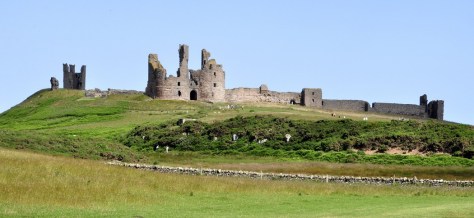
Dunstanburgh Castle and Craster
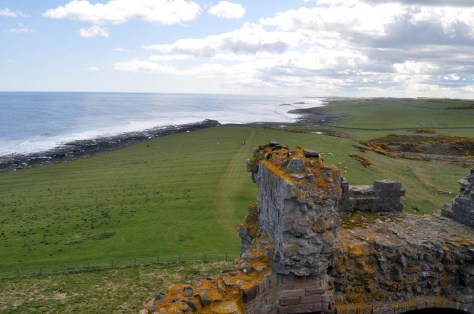
This is a rocky coast and the castle itself was built in the early 14th century on the Whin Sill, an outcrop of igneous dolerite that cuts across Northumberland. The castle is a walk of about 1¼ miles from the fishing village of Craster; there’s no road into the castle.

Craster itself has ample parking away from the harbor. The village is also famous for its smoked fish, especially kippers.

At Dunstanburgh a healthy population of kittiwakes nest on the cliffs.

To the north there are excellent views of Embleton Bay that we have yet to visit.

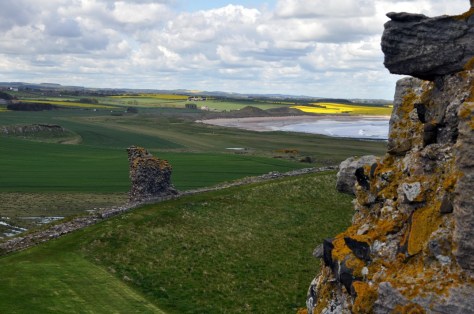
View north from the Great Gatehouse

Alnmouth
A tricky pronunciation. Some say ‘Aln-muth’, others ‘Allen-mouth’. I have no idea which is correct. It’s a pretty village at the mouth of the river of the same name. There’s good paid parking behind the beach for a couple of hundred cars.

Warkworth
We’ve only visited the beach once, back in April 2018. It’s a nice long stretch of beach accessed from the north side of the town, which is more famous for its 12th century castle.

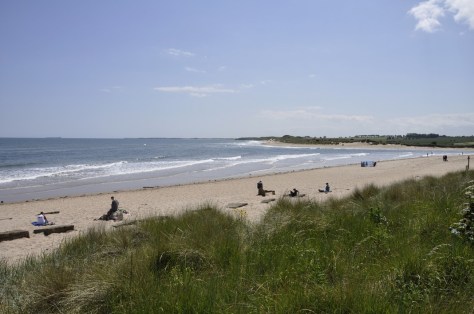
Looking north along Warkworth beach towards Alnmouth.

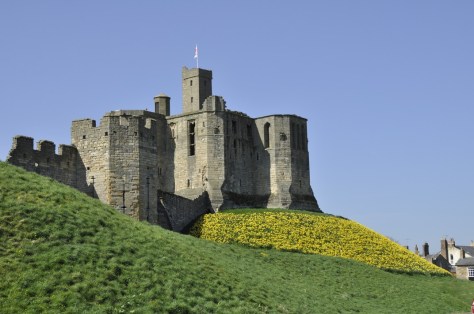
Warkworth Castle

Amble
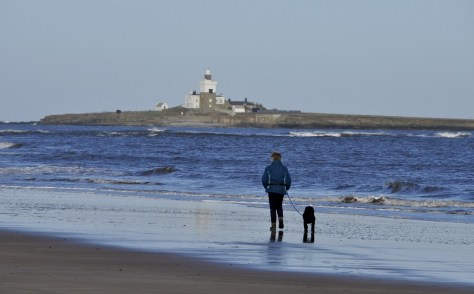
Standing at the mouth of the River Coquet, we’ve found the beaches very pleasant on the south side of the town (where there is free parking), and facing Coquet Island which is now a bird reserve with an internationally important colony of roseate terns in the breeding season.

The view south along the Amble beach with the Lynemouth power station in the far distance.

Coquet Island.

Druridge Bay and Hauxley Nature Reserve
This must be one of the longest beaches in Northumberland, with massive dunes at the rear of the beach in its southern portion.

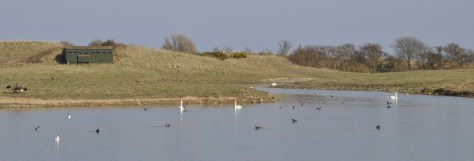
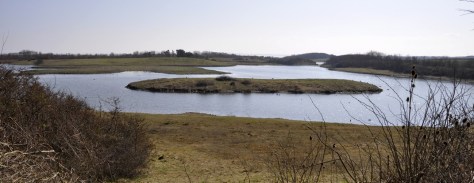
At the northern end, and just inland is Hauxley Nature Reserve, owned by Northumberland Wildlife Trust. When we visited last week, we observed 37 different bird species in the space of two hours. It really is a wonderful site, and we must go back there on a regular basis. There’s no entrance fee, but parking costs £2 all day. There’s also footpath access on to the dunes and beach, which lie just beyond the reserve’s perimeter fence.

The Tern Hide from the West Hide at Hauxley Nature Reserve.

The North Sea can be seen in the middle distance beyond the dunes and reserve perimeter fence.

Cresswell Bay
This was one of the first ‘northern’ beaches that we viisted in 2021, just 17 miles from home. It’s both sandy and rocky, and we saw somone collecting sea coal that had been washed up on the shore. All along the Northumberland and Durham coast there were once extensive coal mines. Waste from the pits was dumped in the sea. In places the beaches look quite black.

Blyth and Seaton Sluice Beaches
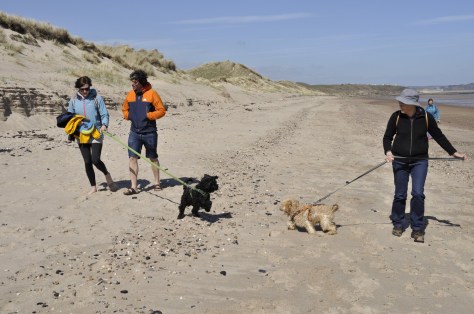
These are the closest to home, but are in effect a singe beach. Both are very popular with dog walkers, and we enjoy often heading there on a Sunday morning, weather permitting, for a late morning stroll.

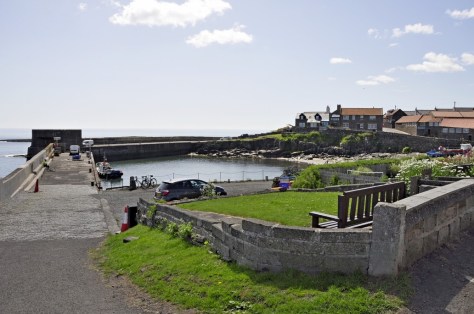
At the Seaton Sluice southern end of the beach, there is a small harbor, that had originally been constructed in the 17th and refurbished in the 18th century to handle coal shipments from local mines.

Seaton Sluice harbor, showing ‘The Cut’ in the middle distance.

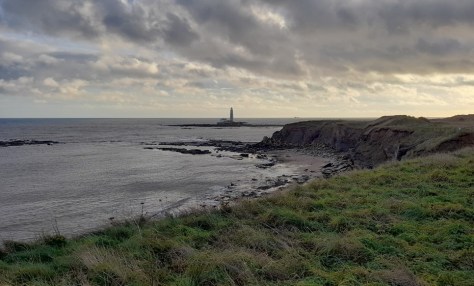
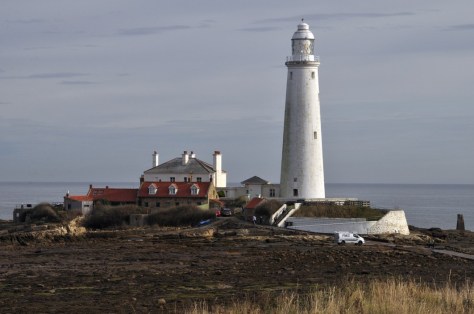
St Mary’s Lighthouse and Whitley Bay
The lighthouse was built in 1898, but there had been lighthouses on the island for centuries. This lighthouse was decommissioned in 1984. The island lies at the north end of Whitley Bay, a popular resort.

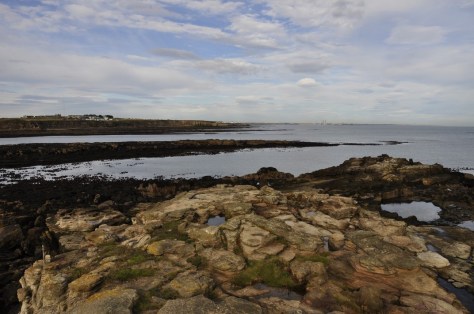
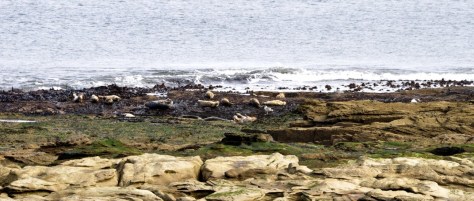
The island is approached across a causeway that is submerged at high tide. On the visits we have made we’ve often seen the grey seals that bask on the rocks.

King Edward’s Bay, Tynemouth
This is a small bay that lies beneath the headland on which Tynemouth castle and priory (now owned by English Heritage) were built.

From the headland there are magnificent views north along the Northumberland coast.

To the immediate south is the mouth of the River Tyne, and beyond the shore at South Shields and the coast south into County Durham.

Souter Lighthouse and the Whitburn coast
The lighthouse was decommissioned in 1988. It stands on the edge of magnesian limestone cliffs, that stretch both north and south.

To the south of the lighthouse, there was a colliery and this area has been reclaimed and opened (under the National Trust) as a recreational area.

Immediately outside the walls of the lighthouse to the north is the site of a former mining village, Marsden, that was demolished soon after Whitburn Colliery closed in 1968.

The longer grass indicates where the two lines of terraced cottages once stood.

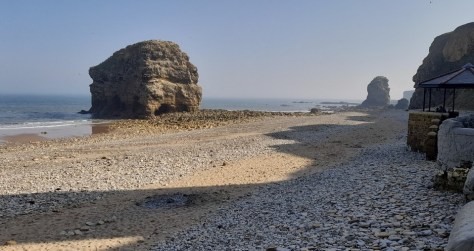
Marsden beach was very popular holiday or day-out destination in the early 20th century.

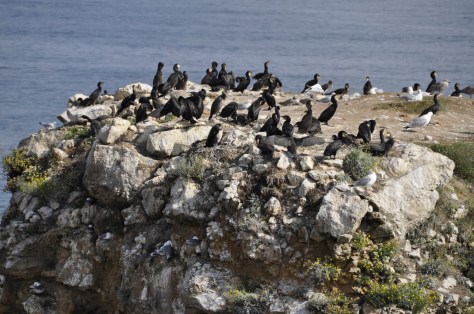
The cliffs are home to colonies of cormorants (one of the largest in the UK), herring gulls, kittiwakes, and fulmar petrels.

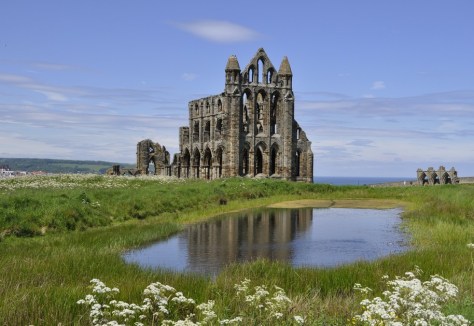
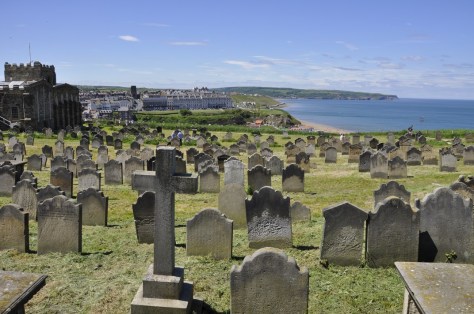
Whitby Abbey
The abbey, built in the 13th century, occupies a headland that juts out into the North Sea above the town of Whitby. It’s the furthest south we have ventured over the past 18 months.

The approach from the north along the A174 high above the coast affords the most spectacular views over the town and right along the North Yorkshire coast. Most impressive.


I don’t think I’ll ever tire of visiting the seaside. There’s something magical, inspirational about the interface between land and sea. Solid and liquid.

One year already in the northeast . . .

There were days, a little over a year ago, when I thought that the sale of our house in Worcestershire would never be completed. It was a really stressful time, not made any easier by the solicitors ‘managing’ the house sale chain.

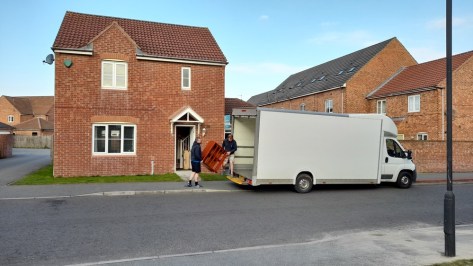
Even today I find it slightly surreal that we finally managed to sell our house and move 226 miles to Newcastle upon Tyne in the northeast of England (map), in the middle of a pandemic. But, at just after 12:30 on 30 September last year, that’s what we did, closing the front door of our home of 39 years for the final time.

Since we hadn’t found anywhere to buy in the Newcastle area—the pandemic restricting any travel plans we initially had to view properties for sale—we took a six month rental on a three bedroom house in the West Allotment-Shiremoor area of the city, about six miles northeast of the city center towards the North Sea coast, moving in on 1 October.

After taking a little over a week to settle in and familiarize ourselves with the local area and shopping, we began the search for a new home to buy, armed with a list of properties that I’d already lined up through online searches of estate agent (realtor) websites.

The search didn’t take long at all. On 14 October our offer on a two-year old house in the Backworth area (just under a mile from where we were renting) was accepted. However, the actual sale didn’t complete until the first week of February this year, and we finally moved in on 6 March.

Moving out of Cloverfield on 6 March

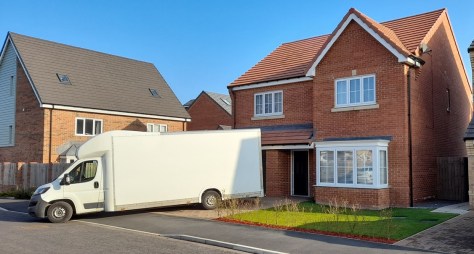
Moving into our new home


Having spent so little time searching for somewhere to live, we could then sit back and relax, so to speak, and explore the local North Tyneside area and Northumberland more widely.

We already knew something about the county. In 1998 during one of our home leaves, Steph and I spent a week traveling around Northumberland. Then, our younger daughter Philippa commenced her degree course at Durham University in October 2000, and afterwards she moved permanently to Newcastle. So for 20 years or more we’ve had good reason to come back to this neck of the woods.

Northumberland is one of the most beautiful counties in the country, located just south of the border with Scotland, with Cumbria (and the Lake District) to the west, and North Yorkshire (and the North Pennines Area of Outstanding Natural Beauty, or AONB) to the south. There are so many interesting and beautiful locations to visit, and keep up our interest in properties owned and managed by the National Trust and English Heritage. And it’s a county with a long and illustrious history.

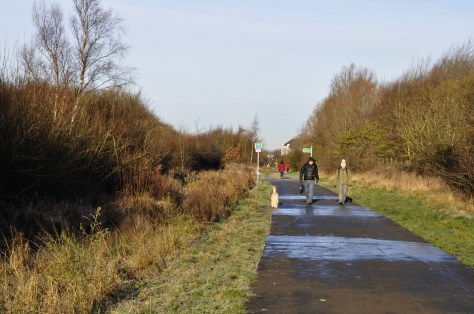
The Backworth area was, until 40 years ago, home to several collieries. After they were closed, the buildings demolished, rail tracks lifted, and spoil heaps leveled, the whole area has re-wilded, and the routes of the former rail links (the waggonways) to the coal depots or staithes on the River Tyne to the south have opened as footpaths and bridleways. There are miles and miles of waggonways. The plant and animal and bird life is incredible. I try to get out most days for a 2-3 mile walk along the waggonways.

Along the Cramlington Waggonway, West Allotment

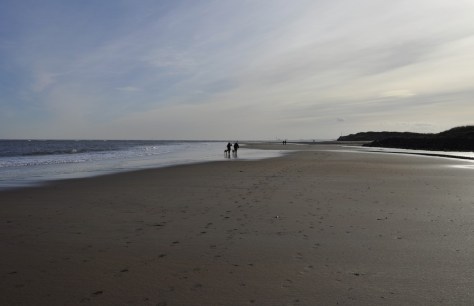
Just a few miles to the east of Backworth is the North Sea coast. Northumberland boasts of some of the finest beaches in the country. Our closest is at Seaton Sluice, and many times since we moved north we have headed there for a bracing walk along the beach, weather permitting.

This interactive map (with links to other blog posts or photo albums) shows all the places we have visited over the past 12 months. And although it looks as though we have been quite busy, there’s just so much more to explore for the first time or renew our acquaintance from previous visits to Northumberland.


Being a new build house, there were only a few things that needed my attention inside and they were quickly dealt with over a few weeks. Outside was a different prospect, and a project that has kept us busy—well, kept Steph busy— ever since: the creation of a new garden. Both the front and rear of the house only had lawns. So Steph came up with a design and we called in a small company at the end of April to remove the surplus turf. Then we set about planting all the materials we’d brought from Bromsgrove and carefully nurtured over the winter.
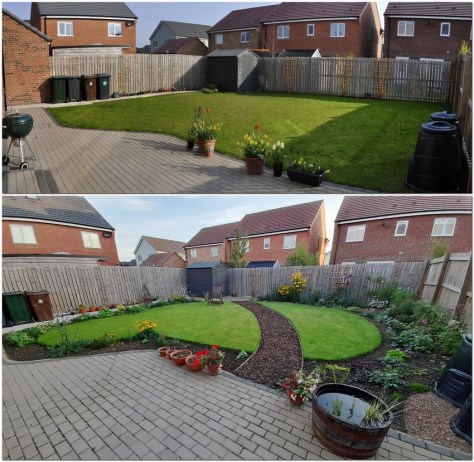
Quite a difference for just five months. But Steph has lots more plans.

As we have for exploring Northumberland and the wider region in the coming months and years.