From Wylam, Northumberland . . . to the world

Rail transport was one of the most important technological advances of the 19th century, a key component of the so-called Industrial Revolution (approximately 1760-1840) that marked a transformative period characterized by mechanization, urbanization, and significant social changes.
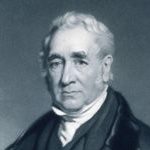
And today, 27 September 2025, is the 200th anniversary of the opening of the Stockton and Darlington Railway, the first public railway to use steam locomotives, and which is considered the beginning of the Railway Age. One man, George Stephenson (right, 1781-1848), is inextricably linked with the birth of the railways, having surveyed the Stockton and Darlington line and constructed (with his son Robert, 1803-1859) the first locomotive, Locomotion No.1, to haul passengers. But they built upon the ingenuity of great engineers before them, like the pioneering Cornish engineer Richard Trevithick who actually developed the world’s first steam locomotive in 1804.
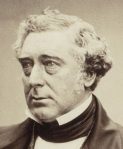
For this, and other inventions and innovations such as surveying lines, the standard gauge (at 4 feet 8½ inches) that was more or less adopted worldwide, and design of steam locos, George Stephenson is often referred to as the Father of the Railways, and rightly so. Although perhaps that’s an accolade that should be shared with son Robert (right).


Steam locomotives and the birth of the railways are part of the proud historic and heritage fabric of the northeast of England where the history of the railways is synonymous with the expansion of the coal mines. Coal had been transported since the late 17th century from the pits along waggonways to wharves or staiths along the River Tyne where it could be loaded on boats for export, most often to London.

Waggons were initially hauled by horses on rails made from wood. Later, stationary steam engines were built to pull the waggons, and wooden rails were replaced by cast iron ones. The design and development of steam locomotives to bring coal from the pits to the River Tyne was the driving force that brought about the birth of the railways. It was a major step forward, and dramatically reduced the cost of coal.

While working at Killingworth Colliery, northeast of Newcastle upon Tyne, Stephenson had a workshop where he constructed his first steam locomotive, Blücher in 1814, establishing his reputation as an engineer. Remarkable for a man who was illiterate until the age of 18.

And while Locomotion No 1 was a major step forward in the development of the railways in 1825, it was Rocket built by George and son Robert in 1829 for the Liverpool and Manchester Railway (which opened on 15 September 1830) that included design innovations (explained in the video below) seen in steam engines over the next century and a half. Although Stephenson did not design flanged wheels (that was done by William Jessop in 1788), he did use them on Rocket, a significant advance in railway technology.

Just imagine how sophisticated some steam locomotives became. Take Union Pacific Big Boy, a 4-8-8-4 locomotive in the USA, the world’s largest and most powerful locomotive ever built. What a beauty!

It’s also remarkable just how quickly railways expanded in and after the 1840s in the UK and around the world. By 1870, the network in the UK comprised around 16,000 miles of track. A year earlier, in May 1869, the the transcontinental rail line in the USA was completed, when the two construction companies met in Utah, north of Salt Lake City. The rail network had been important during the American Civil War (1861-1865) for the movement of troops and materiel, perhaps the first time that railways had taken on such a significant role.


For most railway buffs, I guess there’s no finer sight than a steam locomotive at top speed. Poetry in motion! Today, that’s something you’ll only ever witness here in the UK when special excursions are run on the mainline. And that speed capability came about because of the design innovations in Rocket, and subsequent improvements that engineers made, of course.

The last standard gauge mainline service in this country ran on 11 August 1968 from Liverpool to Carlisle. The focus thereafter was on diesel power and the expansion of electrification.

However, steam locomotives can still be seen in action on the many heritage lines around the UK such as the Severn Valley Railway, a 16-mile line between Kidderminster and Bridgnorth close to our former home in Worcestershire which we rode in 2008. However, trains on heritage lines are restricted to a 25 mph speed limit.

The days of steam power on the railways were always numbered, even as soon as 60 years after the opening of the first steam-only railway. Steam locos were already being replaced in some cities as early as the 1880s, and Switzerland for example, had achieved 50% electrification of its network by 1928.


George Stephenson was born in a cottage, known formerly as High Street House, in the colliery village of Wylam in Northumberland, which is about nine miles west of Newcastle upon Tyne, beside the River Tyne.
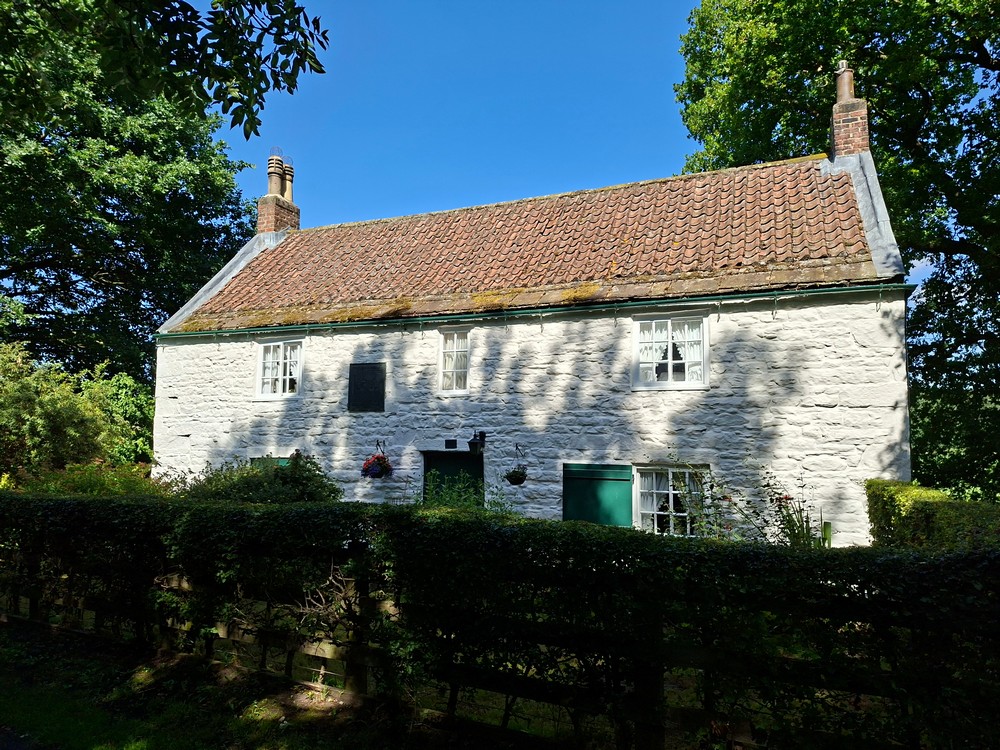
George Stephenson’s birthplace in Wylam, Northumberland.

His father Robert was a fireman for the Wylam Colliery pumping engine and, being poor, could not pay for George’s education. It’s remarkable, therefore, that George achieved so much, and having become wealthy through his own engineering prowess, ensured that his son Robert benefitted from a better education, and becoming one of the greatest engineers of the Victorian Age.

A week ago (on 21 September) Steph and I had the opportunity of visiting George Stephenson’s birthplace, which is owned by the National Trust and opened on a limited ticketed basis on just a few days each year.

Father Robert, his wife Mabel, and their five children occupied just one ground floor room (to the left of the front door) in this cottage, each of the other rooms also housing a single family. Can you imagine a family of seven living in one room, just 12 x 12 feet approximately? He lived there until he was eight.

The Wylam waggonway ran by the front door, so young George would have, from an early age, seen just what rail systems could achieve.

Then, during the tour of the cottage, and in subsequent reading, I discovered that George Stephenson lived, from 1805 to 1823 (after he had become engineer at Killingworth Colliery) in a cottage (known as Dial Cottage for the dial that he and son Robert made and placed over the front door) just 1.80 miles as the crow flies from our home in North Tyneside.
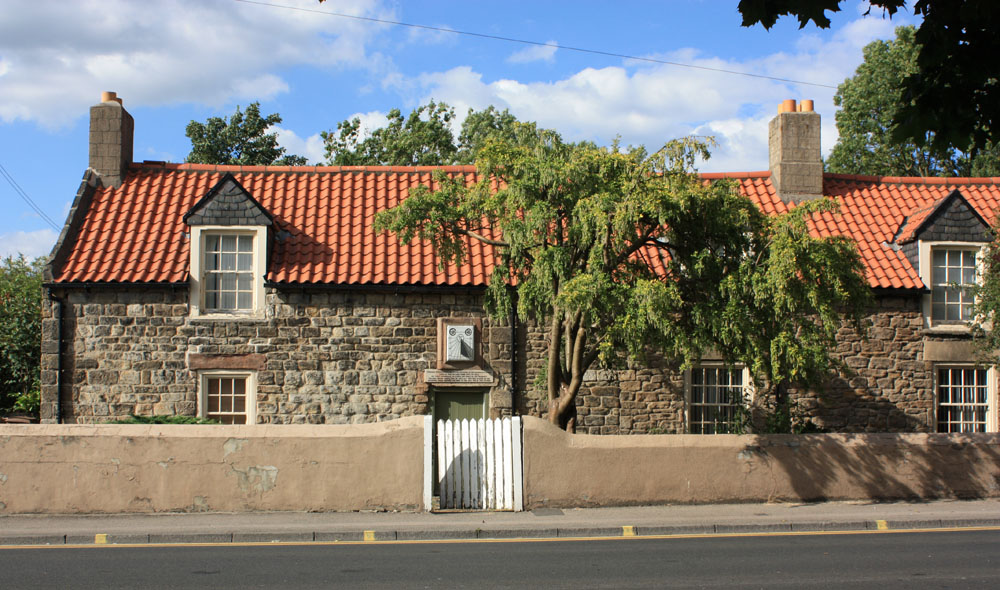
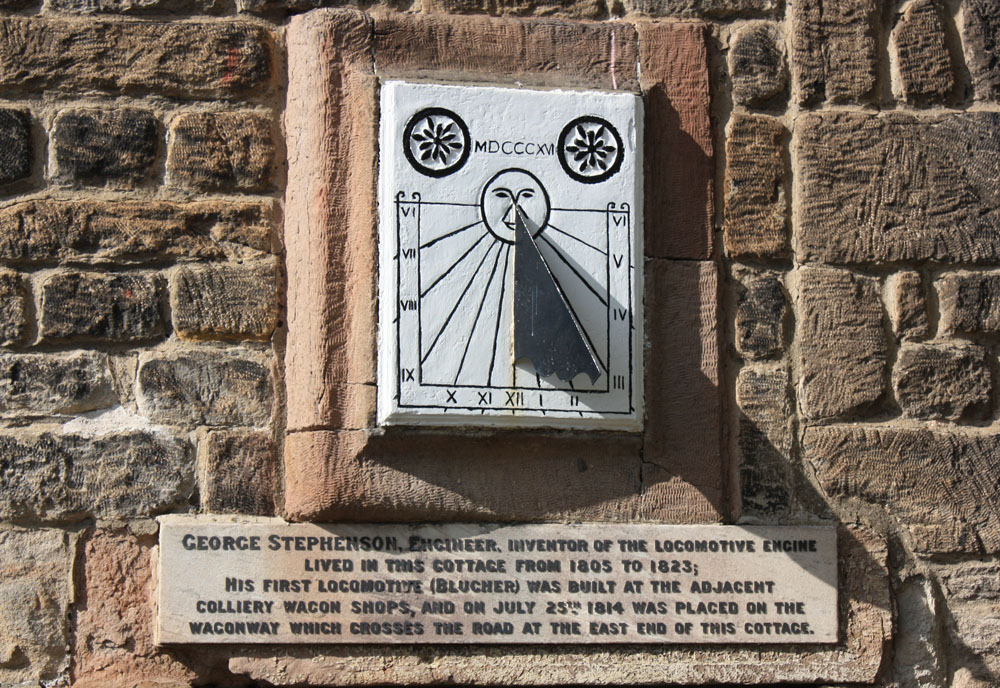
From such humble origins to fame and fortune, and perhaps even greater for son Robert who was elected a Fellow of the Royal Society. Neither accepted a knighthood.

And one final point. George Stephenson invented a mining safety lamp, the Geordie lamp, resulting in a lifelong controversy with Cornish aristocratic chemist Humphry Davy who accused Stephenson of stealing his design for a similar device.

By the mid-1860s, natives of Newcastle became known as Geordies, and it’s commonly believed that the name of the lamp attached to the pit men who worked in the numerous mines across Tyneside.



We called them the ‘Cobridge Alps’ . . .

Not any more. Just take a look at Google Maps Streetview either side of the A53 Leek New Road from around Norton Lane west into Hanley in The Potteries of North Staffordshire. I wrote about that transformation in a blog post in September 2013.
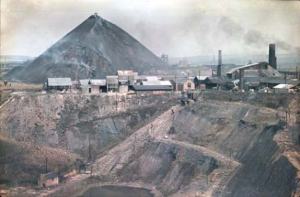
A typical North Staffordshire coalfield landscape, at Longton in The Potteries.

Where once there were towering slag heaps from the adjacent collieries, now there is an undulating landscape that has been converted to parks and nature reserves, like the Whitfield Valley Nature Reserve and, of course, reclaimed for housing. Once where there was a huge slag heap that had spontaneously combusted surrounded by black—very black—desolation, now there is greenery and wildlife. Incidentally, that particular slag heap was on fire when I traveled daily in the 1960s past it on my way to school in The Potteries from my home in Leek 14 miles to the northeast. It took decades to bring that fire under control.

The railway lines that fed the collieries have been ripped up and to some extent part of our industrial heritage has been lost as well. Nevertheless, it is good to see the reclamation of these disused landscapes that are now providing innumerable benefits for local communities.


I left the grime of The Potteries behind almost 55 years ago when I moved away to university. And having retired in 2010, it took another decade to finally make the decision to move from our home in northeast Worcestershire to the northeast of England, another area that has a fine industrial past, also based on coal.

We moved to Newcastle upon Tyne, and have settled near the village of Backworth to the northeast of the city center, and just a handful of miles from the North Sea coast, and mile upon mile of the most fantastic beaches you could ever want to walk along. No swimming for me, though. The North Sea is far too cold. And, in any case, I have been spoiled by too many years in the Tropics, and almost two decades of scuba diving in the warm waters surrounding the Philippines in the Far East.

There’s a housing boom in Newcastle, that has been going on for forty years or more. Once the last of the coal mines was closed in the 1980s (and before), parts of mining villages were bulldozed to make way for better housing. And land reclaimed from the collieries has been developed for new housing. Everywhere you look there are new housing developments, and where Steph and I chose to settle is no different.

The Backworth collieries were part of the Northumberland coalfield, and among the deepest. The Maude Pit, sunk in 1872 had coal seams reached by shafts almost 1400 feet (more than 400 m) deep. In looking into the history of the area, I’ve not yet been able to find a map of the present day landscape with all the abandoned pits marked thereon. And another confusing aspect is that the names of the pits changed over the years.

What I can say is that within a mile or so of where I’m now living there must have been almost a couple dozen pits. By the 1980s all had been closed (some much earlier) and the process to erase them from the landscape begun.

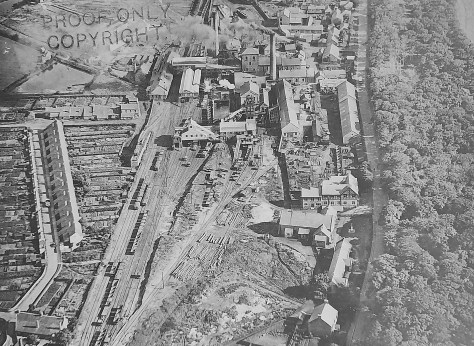
The Maude Pit at Backworth Colliery (looking south), with the colliery workshops along the road, and about half a mile (as the crow flies) from where I now live.

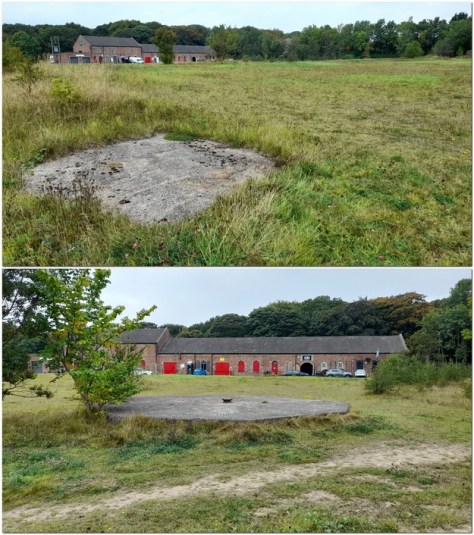
The colliery site today, looking northwest towards the old colliery workshops, and the capped mine shafts.

But not entirely, however. It’s quite a feat to landscape the thousands and thousands (millions probably) of tons of waste that accompanied coal mining.

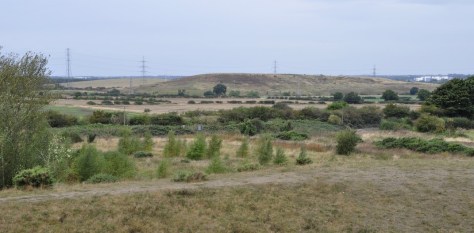
The remains of the Seghill slag heap, north of Backworth.

And, in contrast to the situation in The Potteries, the coal mining legacy of North Tyneside can be seen in the miles of waggonways that criss-cross the area: the routes of the railways that carried coal from the mines down to special wharfs (known as staithes) on the River Tyne from where it was exported worldwide. The photos below (courtesy of Debbie Twiddy on Facebook) show coal trains crossing the area close to home, a landscape that has long been lost.

This landscape has changed in other ways, apart from the various housing developments in the area. New roads have been pushed through like the A186 bypass to the village of Shiremoor, so that it’s not easy to entirely reconcile old photos with the reality on the ground today. Also, and unlike The Potteries, many of the industrial sites have been allowed to re-wild. After 40 to 50 years of growth there is now an impressive cover of mature trees, brush and scrub that has become a haven for wildlife, big and small. Just the other day we saw a fine pair of roe deer just a short distance from home. The waggonways are important wildlife corridors that connect different sites across North Tyneside.

This is what it looks like today.

I’ve only just begun to scratch the surface of Backworth’s coal mining heritage, and there must be lots more to uncover. This is a useful website that I have yet to mine in detail.

Without appreciating it before we moved north 14 months back, we have now settled in a remarkable and fascinating landscape that we will take great pleasure in exploring and uncovering more interesting facts about its heritage.


Tracks over the mountains

The building of railways around the world in the 19th century inspired some impressive feats of engineering.

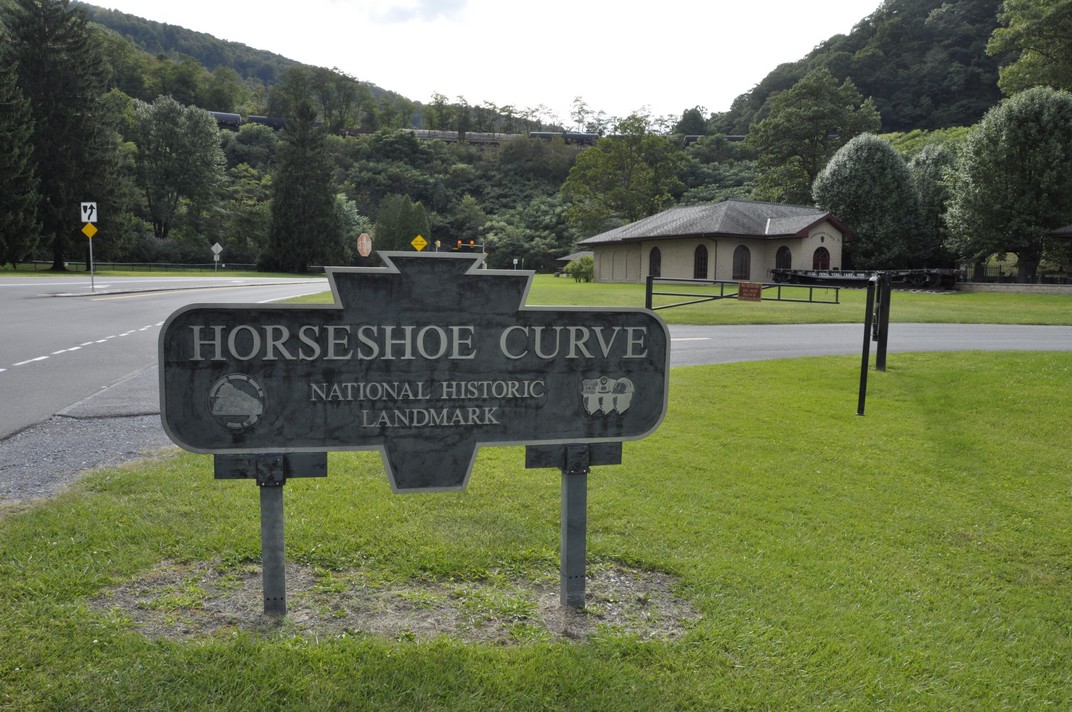
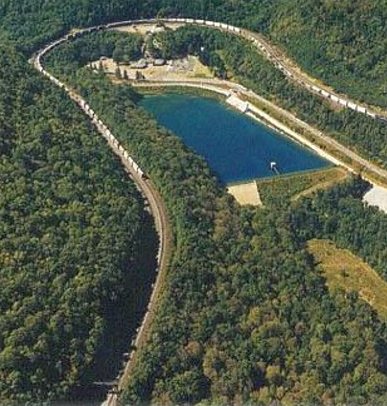
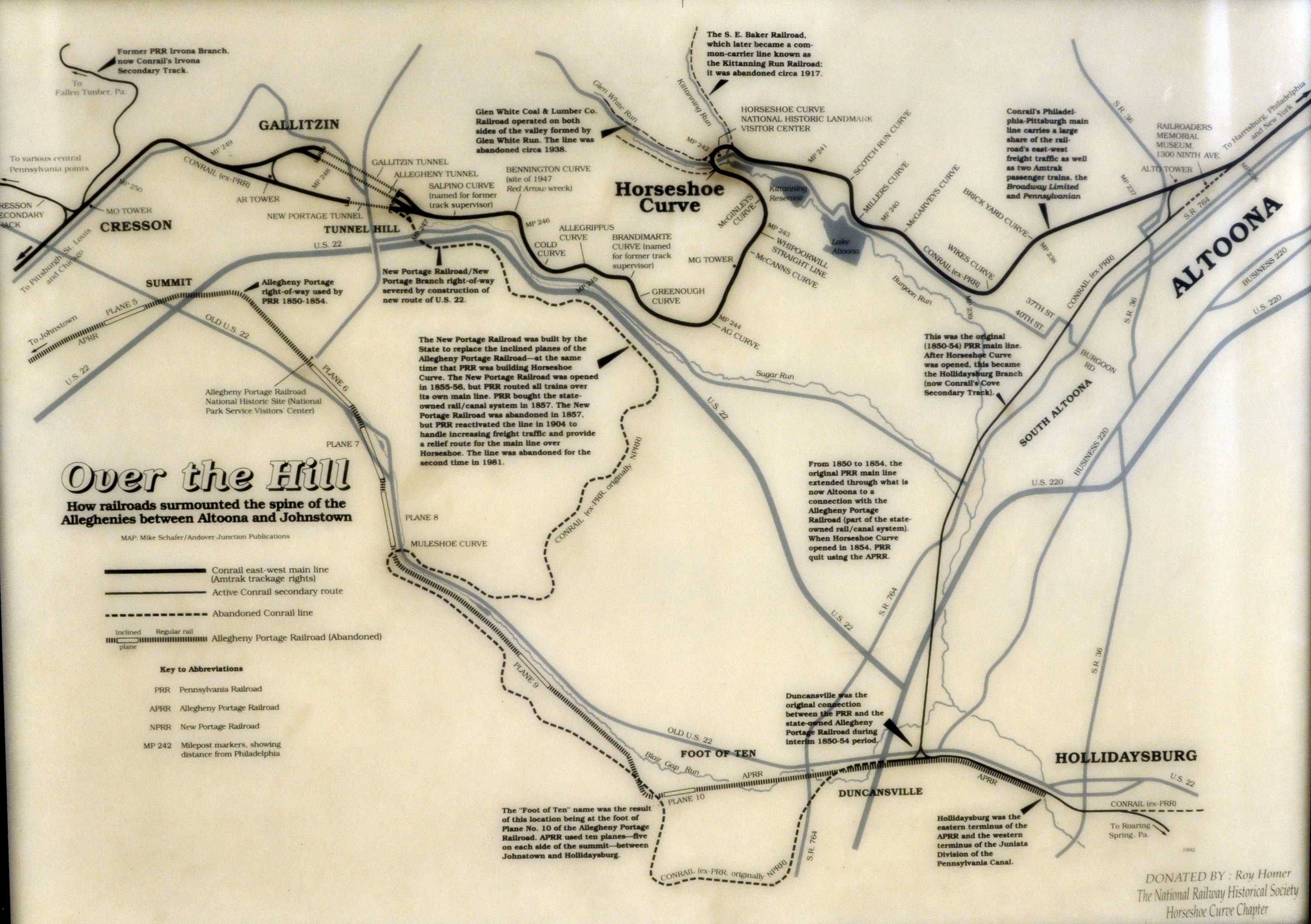
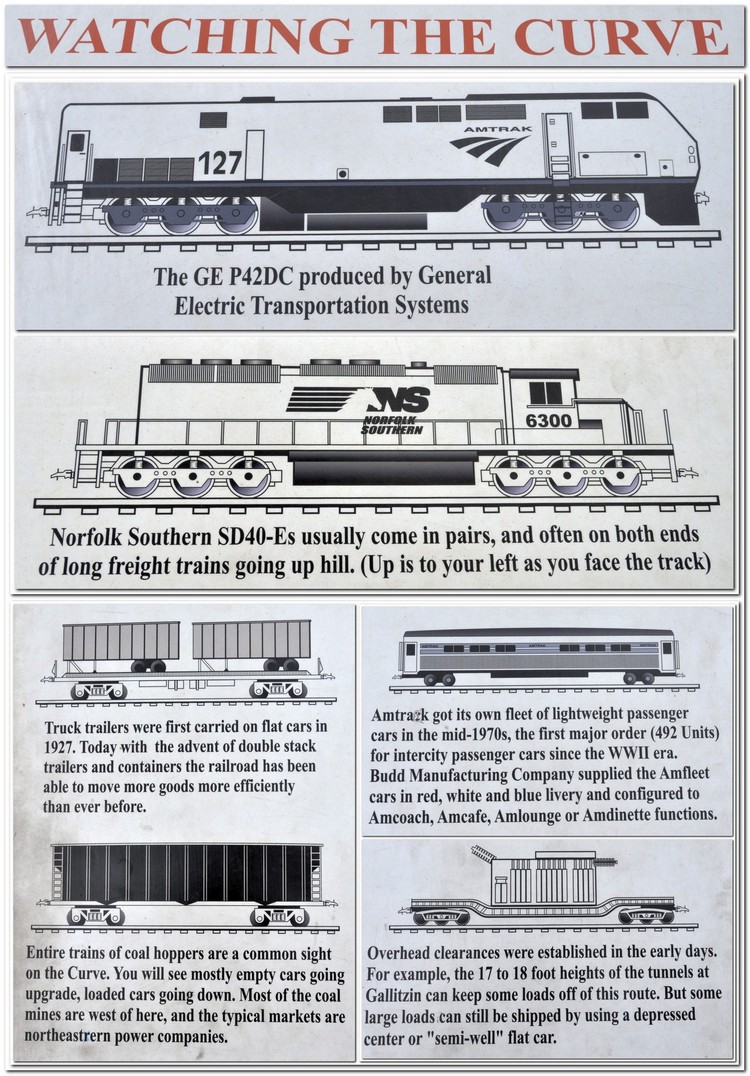
Among them must surely be included Horseshoe Curve, just west of Altoona in central Pennsylvania, that was completed in 1854 by the Pennsylvania Railroad as a way to lessen the grade over the Allegheny Mountains. Today, its three tracks are operated by the Norfolk Southern Railway, carrying mainly freight, but with Amtrak passenger trains passing through each day.

It is indeed a main artery connecting Pennsylvania’s coalfields with the east coast. During World War II it was considered a strategic target by Nazi Germany because of the armaments and other materiel being transported to the east coast for shipment to Europe.

In the past year I had come across several videos of trains passing Horseshoe Curve, and determined that if I ever had the chance, I would visit.

And that’s precisely what Steph and I did during our recent trip around northeast and Atlantic states. The trains, often pulled and pushed (or braked going downhill) by as many as five or six locomotives, are just mind-blowing in their length. Just see on the video below, of a coal train negotiating the curve, that the leading locomotives are already out of sight before the last cars have appeared around the upper bend (on the right).

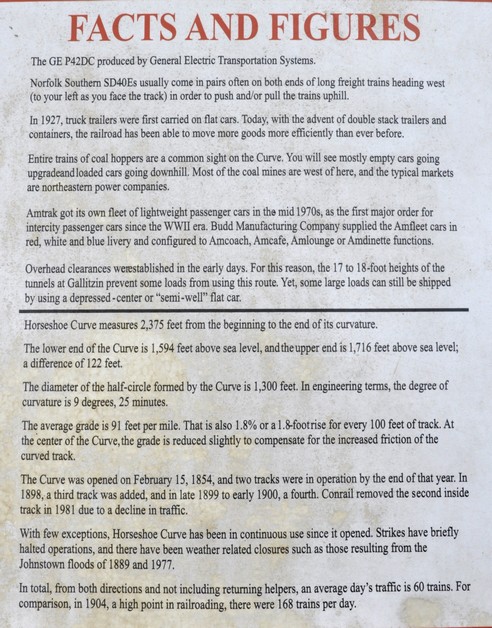
Here are some Horseshoe Curve statistics.

During the 45 minutes we sat by the trackside, three freight trains lumbered through. One of them was actually halted on the Curve to check the brakes of the lead locomotive 4115. An audio link between the railroad controllers and engineers was relayed at the track side viewing point so we could understand what was going on.

Industrial heritage is all around . . .

The legacy of the Industrial Revolution is all around here in north Worcestershire, and I am reminded of it almost every day.

Bromsgrove lies on the Birmingham-Bristol (and all stations to the southwest) main railway line, at the bottom of the Lickey Incline (the longest and steepest sustained gradient of 2.65% for two miles on the rail network). It’s just under a mile east of where I live.

Because of the steepness of the gradient it’s not uncommon today to see two diesel engines pulling and pushing a long freight train. In the days of steam, a specially-designed locomotive (the Fowler 0-10-0 Big Bertha) was stationed at Bromsgrove to help through trains up the Incline.

https://youtu.be/ja1gPyIszqc

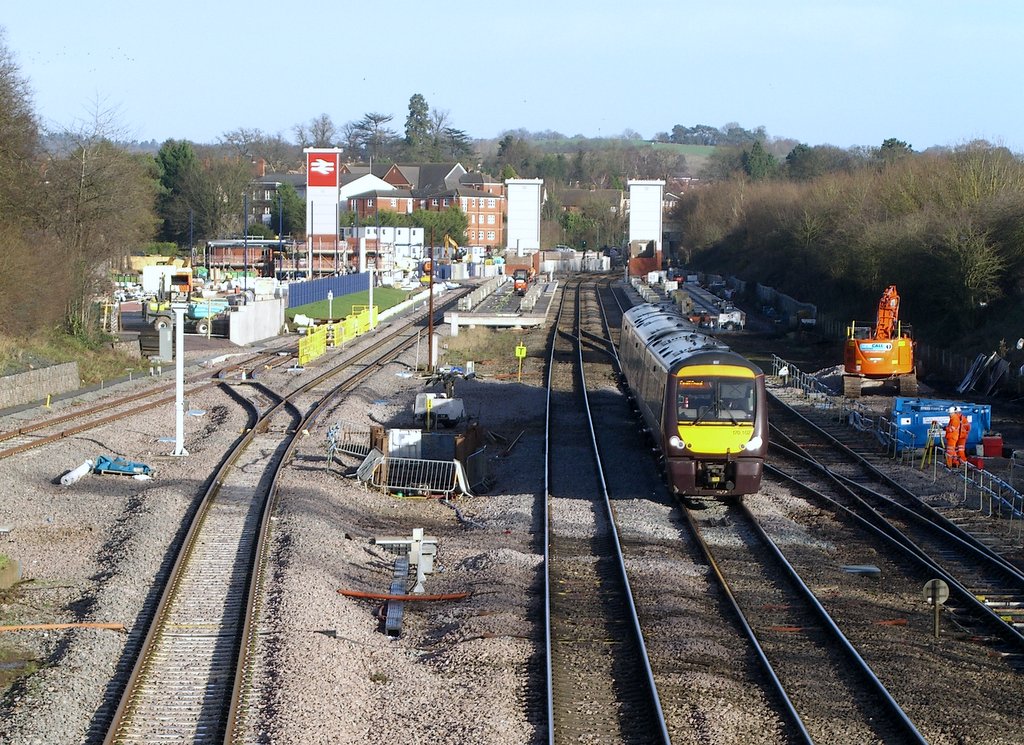
As I write, 175 years after a station was opened, Bromsgrove is having a new station. In fact, construction has been ongoing for almost two years now. After failing to meet a November 2015 schedule to open, the new station is expected to open by May this year. Maybe.

20151231 013

When I took the train occasionally into the University of Birmingham in the 1980s, there was only one platform, on the up line. The current station is just round the bend on the photo above. Trains arriving from Birmingham had to cross from the down line on to the up line, drop off or pick up passengers, then re-cross to the down line south of the station. Not really advisable. You can see the switch just behind this train heading south yesterday. Then a new platform was added on the down line. The main problem is that the platforms are short, and can only accept three-coach London Midland trains that stop at Bromsgrove., So with the growing commuter traffic into Birmingham, something needed to be done.

And that’s how the new station came about. It will have four island platforms, and trains stopping at Bromsgrove can be diverted off the main lines. Doing so will allow more trains to run per hour. Also, the line will be electrified as far as Bromsgrove, connecting the town into the wider West Midlands electrified commuter routes as far north as Lichfield. Freight trains heading up the Lickey Incline can wait in the branch on the left of the photo until they can have a clear—and slow—run at it. Sometimes in the summer, when we have the bedroom window open, and the wind is in the right direction, it sounds as though some of these freighters are headed right towards us. The rails on the extreme right have yet to be laid, and that can’t happen until the new station is open and the existing platforms decommissioned because the switch of the main line has to begin about where the current down line platform ends. That’s scheduled for October 2016, and the lines will be closed for 10 days while some major track engineering takes place, signalling is installed, and presumably the electrification completed.

The bridge where I took this photo is on one of my regular walks, so I have been watching progress over the past 21 months. I wish I’d taken photos more often. But what has been interesting to observe is the impressive kit that the engineers used to lift old track, lay new ones (that branch on the left replaced several different sidings), excavate culverts that had collapsed, and the like. Part of the delay in completing the project in 2015 was the need to decontaminate the site that had been an oil terminal for a major engineering works formerly alongside the railway, and reroute signalling and an underground stream that did not figure on any of the plans available to the engineers. There was a further delay, and a need to apply again for planning permission when it was discovered that the bridge connecting platforms would have to be raised just 14 inches to conform to EU regulations concerning the distance between a bridge and overhead electrification wires.

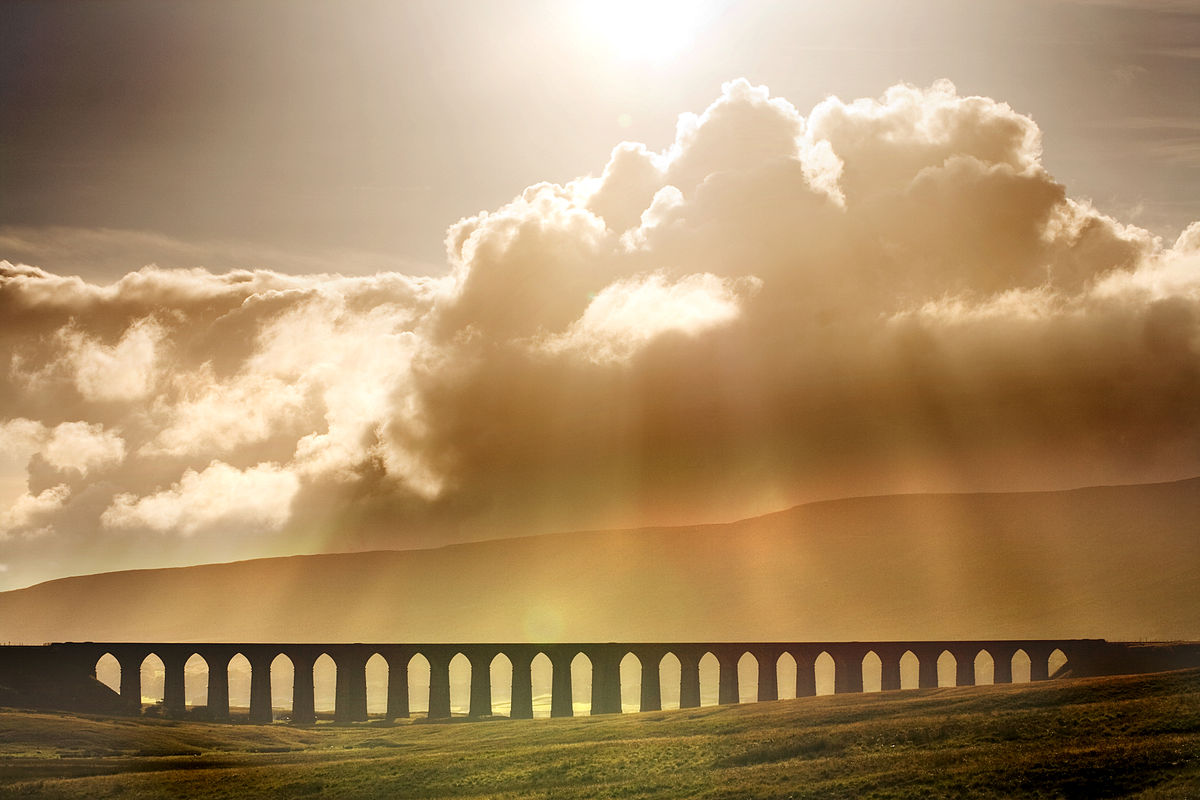
The Ribblehead Viaduct

Access to sophisticated equipment today really puts in context how the railways were first constructed, almost 200 years ago. And although much of the work would have been carried out by gangs of navvies, I guess by mid-Victorian times engineers would have had steam-powered machines available. Nevertheless, the construction of embankments, tunnels, and viaducts is surely an impressive feat of human enterprise. It was hard, dirty, and dangerous work in isolated locations where temporary communities sprang up—and men, women, and children died and were buried. This account of the Settle-Carlisle line and the construction of the Ribblehead Viaduct gives a sense of the isolation and hardship of building this railway.

These communities are being celebrated, if that’s the right word, in a new drama that started to air on the commercial ITV channel from 7 January.

Before the trains . . .
The rail network in the UK today is a shadow of its former glory, having been deliberately dismantled, maybe I should say restructured, in the 1960s by Dr Beeching.

But, to my mind, there’s an even more impressive example of civil engineering that began half a century before the railways were built.

I’m referring, of course, to the canals, and their construction began in the last quarter of the eighteenth century. And what’s particularly impressive, is that they were dug mostly by hand, by gangs of navvies.

Just a little over a mile to the east of the Lickey Incline is the Worcester and Birmingham, that has just celebrated its 200th birthday. Begun in 1791, it was finally completed in December 1815. I find it fascinating that construction of this canal wonder took place while Europe was in turmoil through the Napoleonic Wars and the final defeat of Napoleon at the Battle of Waterloo in June 1815.

At 29 miles long, the canal connects Worcester with Birmingham, climbing 130m (428 feet) over the same topographical feature that would tackled on the Lickey Inlcine half a century later. There are 58 locks; the Tardebigge Flight of 30 locks is the longest in the UK, raising the canal some 200 feet in just five miles between Stoke Bottom Lock to Tardebigge Top Lock. You can explore a detailed map on the website of the Canal & River Trust.

In addition to all the locks there are five tunnels, with a combined length of 2.4 miles.

The channels were dug by hand, and then lined with mud to make them ‘waterproof’ so the water did not leak away. A series of three reservoirs provide a constant supply of water, and at Tardebigge there is a disused pump house, once powered by steam to raise water to different levels in the Tardebigge Flight.

As I’ve mentioned in other blog posts, sections of the towpath along the canal from south of Stoke Prior and Tardebigge are some of my favorite walks in all seasons. Here is a selection of photographs that I have taken over the years. In some of them you can see the details of canal and lock construction because on a number of occasions sections of the canal had to be drained for maintenance. I always feel inspired and full of admiration for those hard-working labourers who set their backs to dig the Worcester and Birmingham Canal over 200 years ago.

Around the world in 40 years . . . Part 7. Letting the train take the strain

trainI love traveling by train.

And were it possible to travel everywhere by train, that would be my preferred mode of transport. There are many journeys I would love to take, particularly on the luxury trains such as the Orient Express, the Blue Train in South Africa, or the Eastern & Oriental Express from Singapore to Bangkok (I have the time, but don’t have the budget), as well as others across the USA and Canada through the Rockies, or in Australia (from Adelaide to Darwin on The Ghan, for example or across the Nullarbor Plain from Adelaide to Perth on the Indian Pacific).

When traveling on business for IRRI in Europe to visit the institute’s donor agencies, I most often traveled from city to city by train rather than flying. More relaxed, comfortable, convenient, and a better use of my time than sitting in an airport departure lounge wondering if the flight would depart on time, never mind – if there was inclement weather – if it would depart at all. The longest journey I made (twice), over about two weeks in total, was : Bromsgrove (my home town) – Birmingham New Street – London Euston / London Waterloo – Brussels (on the Eurostar) – Bonn (on the Thalys to Cologne) – Basel (down the Rhine valley) – Bern – Milan (cutting through Alps and along the Italian lakes such as Como) – Rome (but return to Birmingham by air). Seat reservations are a requirement on many European train journeys – none of this ‘sardine’ travel so typical on a number of commuter lines in the UK (and even on long distance trains at some times of the day or on holidays).

Braunschweig to Gatersleben and Berlin
In the late 1980s, while I was still working at the University of Birmingham, I decided to visit two genetic resources programs in Germany – at Braunschweig (in West Germany) and Gatersleben (in East Germany). This was before the Berlin Wall had been pulled down. It was actually quite easy to cross over from the West to the East, and at the crossing, border guards came on board to check documents. I must admit that I wasn’t particularly relaxed until my passport had been checked, all was in order, and I continued with my journey, via Magdeburg, Halberstadt, to Gatersleben.

Gatersleben is home to the Leibniz-Institut für Pflanzengenetik und Kulturpflanzenforschung (IPK-Gatersleben) with one of the most important crop genebanks in Europe. I was made most welcome by the head of the genebank, the late Dr Christian Lehmann and his colleagues Karl Hammer and Peter Hanelt (and other genebank staff). It was a memorable visit, particularly walking through the impressive summer regeneration plots of cereals such as wheat, barley (seeing hooded barleys for the first time) and oats, and other crops, and discussing crop evolution and diversity with Dr Lehmann.

My return journey took me to Berlin, where I left the train at Schönefeld Airport station (in the southeast of Berlin), and crossed through the Berlin Wall by taxi, to arrive at the airport in the West. I’ve remembered that as Templehof Airport, although it might have been Tegel.

Stahleck Castle at Bacharach

The Rhine Valley
I’ve visited Bonn on many occasions. Flying into Frankfurt I could have taken the direct, fast train to Cologne via Bonn. But it’s much more enjoyable to take the (slightly) slower train that hugs the River Rhine. What magnificent views of the vineyards that embroider the steep slopes either side of the river. And also the fairytale castles that  cling to rocky outcrops. The river is a watery motorway, with barges flying the flags of many nations, many carrying a motor vehicle for use at ports along the journey.

Bern to Montpellier (via Geneva, Lyon, Valence and Avignon)
For my second visit to Montpellier in southern France in the early 90s I traveled from Switzerland’s capital Bern down the Rhône Valley. It’s not a particularly fast journey, because the line snakes along the valley. But the views of the surrounding mountains are simply stunning – impressive precipices over which plunge waterfalls for hundreds of feet.

Switzerland
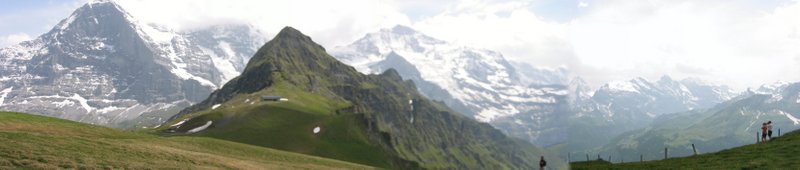
Even 30 secs is late for Swiss trains. They have remarkable punctuality. I’ve spent time visiting various places throughout the country when I’ve had a weekend to spare during my business trips. Bern is a good base with excellent rail connections. Close by is the Jungfrau, and although I’ve not taken the train to the summit, I have twice been on the funicular up to Wengen (starting the journey in Interlaken), then the cable car up to Männlichen where there is a fabulous view of the Alps (Eiger on the left). From Männlichen you take the cable car down to Grindelwald, and then the train back to Interlaken.

The view from Männlichen, with the north face of the Eiger on the left.

Then there was the weekend I decided to see the Matterhorn in May 2004. Leaving Bern early in the morning, we headed through the Alps to Brig where I transferred to the local line up to Zermatt. What a fabulous day out – made even better by the train journey!

High speed journeys
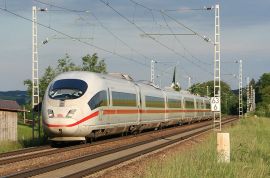
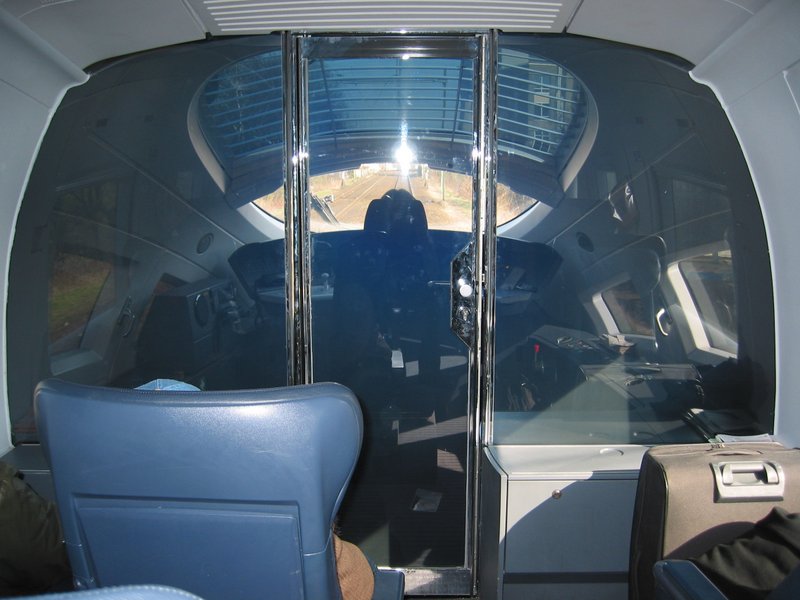
Eurostar, Thalys or TGV. There’s something impressive about these high speed trains across Europe. I’ve been through the Eurotunnel a couple of times, and joined the Thalys (Belgian equivalent of the TGV) to Cologne or Amsterdam (and return). The German ICE (shown here) is incredible – fast, silent and very comfortable. I took this the first time from Amsterdam Central to Cologne, and had a seat just behind the driver’s cab. When he didn’t want to be distracted the driver could make the glass screen turn translucent. Otherwise it was fun watching the train eat up the kilometers from the driver’s perspective.

One thing I do remember from my first TGV from Paris-Gare de Lyon to Montpellier, is the speed we reached south of Paris to Lyon, over undulating terrain. It was the first time I had that sinking feeling on a train – just as in a plane descending – as we went over one hill and down the other side. South of Lyon, the TGV proceeds at a more stately pace since the line follows the river.

Yangon to Yezin, Myanmar
I visited Myanmar (Burma) just the once in about 1997 – I don’t remember the exact year. I had received a grant from the Swiss government of more than US$3.3 million to develop and manage a project to collect and conserve rice varieties and wild species in South and Southeast Asia and sub-Saharan Africa. Although Myanmar had been essentially closed to the outside world for many years, IRRI had retained a presence there, with a liaison scientist and small office. Given the importance of rice in that country, it was appropriate to see what might be done in terms of collecting rice germplasm. So with my colleague Eves Loresto we  traveled the 250 miles or so north from Yangon (Rangoon) by train to Yezin where the Central Agricultural Research Institute (and university) is located, with its large rice genebank. Our outward journey was during the day, and although very slow (about 10 hours) it was interesting traveling through the vast plain of rice paddies. Several times the train was reduced to a snail’s pace as the track was flooded. We returned to Yangon a few days later by the ‘sleeper’ – I use that term advisedly, because I didn’t get much sleep and the accommodation wasn’t exactly desirable. At Yezin we had to evict a group of about five passengers who had commandeered our cabin.

Melbourne – Sydney
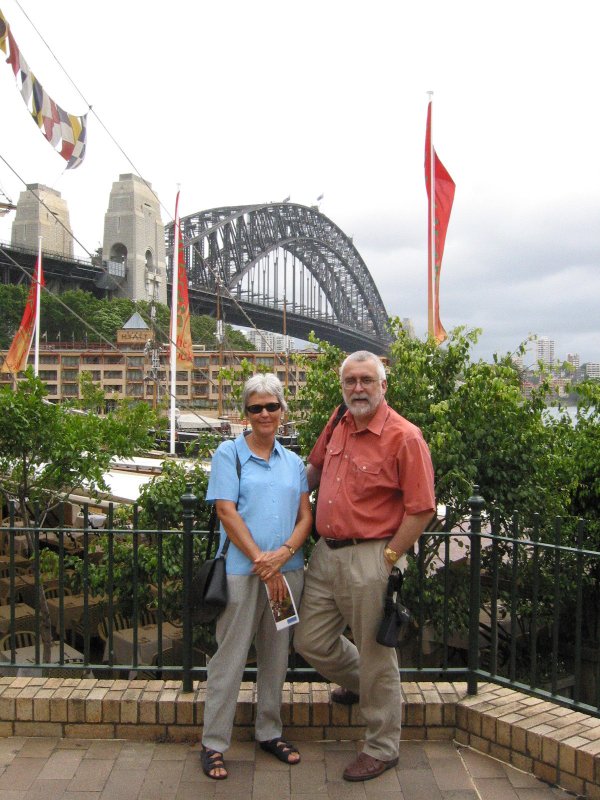
On Christmas Day 2003 Steph and I flew to Sydney, arriving the following morning, Boxing Day. We spent a couple of days looking round the city (we’d been there for the first time in December 1998 and saw the New Year in watching the fireworks display over the Sydney harbor bridge).

Anyway, on this second trip, we took a memorable road trip to Melbourne (about 1,000 miles) along the coast road with several diversions inland. After a couple of days in Melbourne we returned to Sydney by train. It was scheduled for about nine hours, but due to the heat (>40C) between Albury on the Victoria-New South Wales border and Wagga Wagga (in NSW) (about half way through the journey), the train speed was seriously reduced because the track was buckling. Instead of arriving in Sydney at around 5 pm, we didn’t get in until after 10 pm. An interesting but rather tiring journey. Thankfully we had a couple more days to recover, enjoy a evening Sydney harbor dinner cruise (courtesy of Hannah and Philippa) before flying back to the Philippines.

One regret
One regret I do have is that I never traveled by train from Lima on the coast of Peru to Huancayo, crossing the Andes at over 16,000 feet at Ticlio (at 11:20 in the excellent video by takyvlaky on YouTube below). I used to travel by road to Huancayo almost weekly when I lived in Lima in the early 70s. The road and railway climb up into the Andes almost side by side, as you will see at various points in the video.

The wonder of steam
Wonderful as the train journeys were that I have described, there’s nothing quite like a journey on a steam train. Near where I live, the Severn Valley Railway – a heritage line from Kidderminster to Bridgnorth via Bewdley – has hundreds of thousands of visitors each year. I made this short video in 2008 when I was back in the UK on home leave.


I just had to include the next video that I found on YouTube, celebrating the Age of Steam.