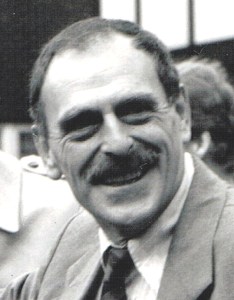
Have PhD, will travel . . . for half a century

Friday 12 December 1975. Fifty years ago today!

Harold Wilson had almost reached the end of his second term as Prime Minister. Queen were No. 1 in the UK chart with Bohemian Rhapsody, and would remain there for several weeks.
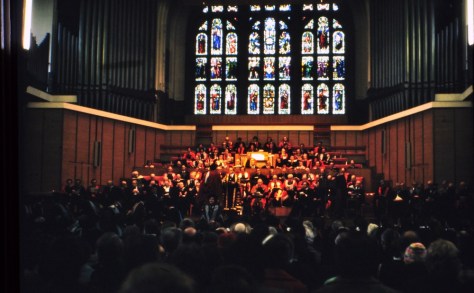
And, at The University of Birmingham, as the clock on Old Joe (actually the Joseph Chamberlain Memorial Clock Tower) struck 12 noon, so the Chancellor’s Procession made its way (to a musical accompaniment played by the University Organist) from the rear of the Great Hall to the stage.

Thus began a degree congregation (aka commencement in US parlance) to confer graduate and undergraduate degrees in the physical sciences (excluding physics and chemistry), biological and medical sciences, and in medicine and dentistry. All the graduands and their guests remained seated.
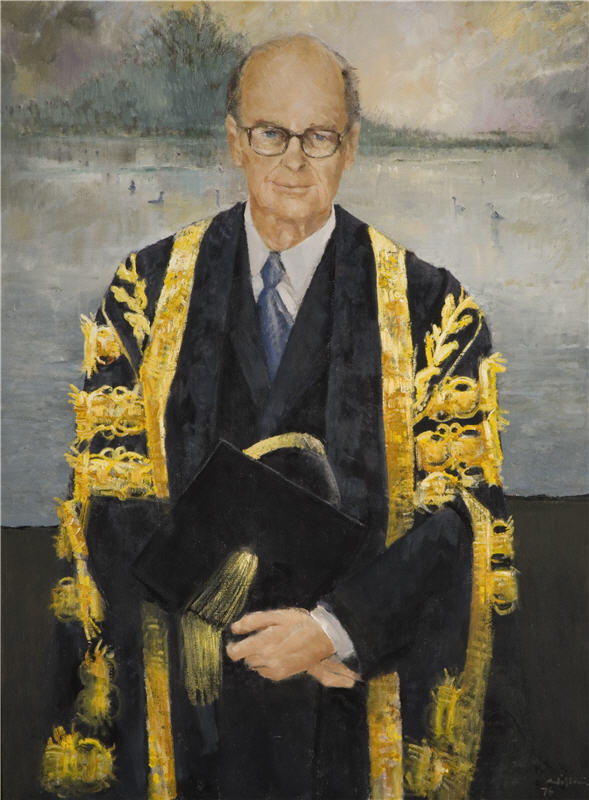
And I was among those graduands, about to have my PhD conferred by the Chancellor and renowned naturalist Sir Peter Scott (right).

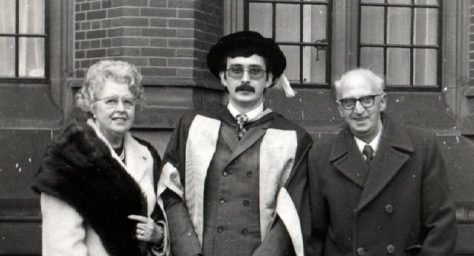
Here are some photos taken during the ceremony as I received my degree, in the procession leaving the Great Hall, and with my parents afterwards.

I’d completed my thesis on the biosystematics of South American potatoes, The Evolutionary Significance of the Triploid Cultivated Potato, Solanum x chaucha Juz. et Buk., at the end of September, just meeting the deadline to have the degree conferred (subject to a successful examination) at the December congregation.

Native potato varieties from the Andes of South America.

My thesis defence (an oral examination or viva voce to give its complete title) was held around the third week of October if my memory serves me right. Fortunately I didn’t have to make any significant corrections to the text, and the examiners’ reports were duly submitted and the degree confirmed by the university [1].

Among the university staff who attended the degree congregation were Professor JG ‘Jack’ Hawkes, Mason Professor of Botany and head of the Department of Botany (later Plant Biology) in the School of Biological Sciences, and Dr J Trevor Williams, Course Tutor for the MSc degree course Conservation and Utilisation of Plant Genetic Resources in the same department.

Jack was a world-renowned expert on the taxonomy of potatoes and a pioneer in the field of genetic resources conservation, who founded the MSc course in 1969. He supervised my PhD research. Trevor had supervised my MSc dissertation on lentils, Studies in the Genus Lens Miller with Special Reference to Lens culinaris Medik., in 1971 when I first came to Birmingham to join the plant genetic resources course.

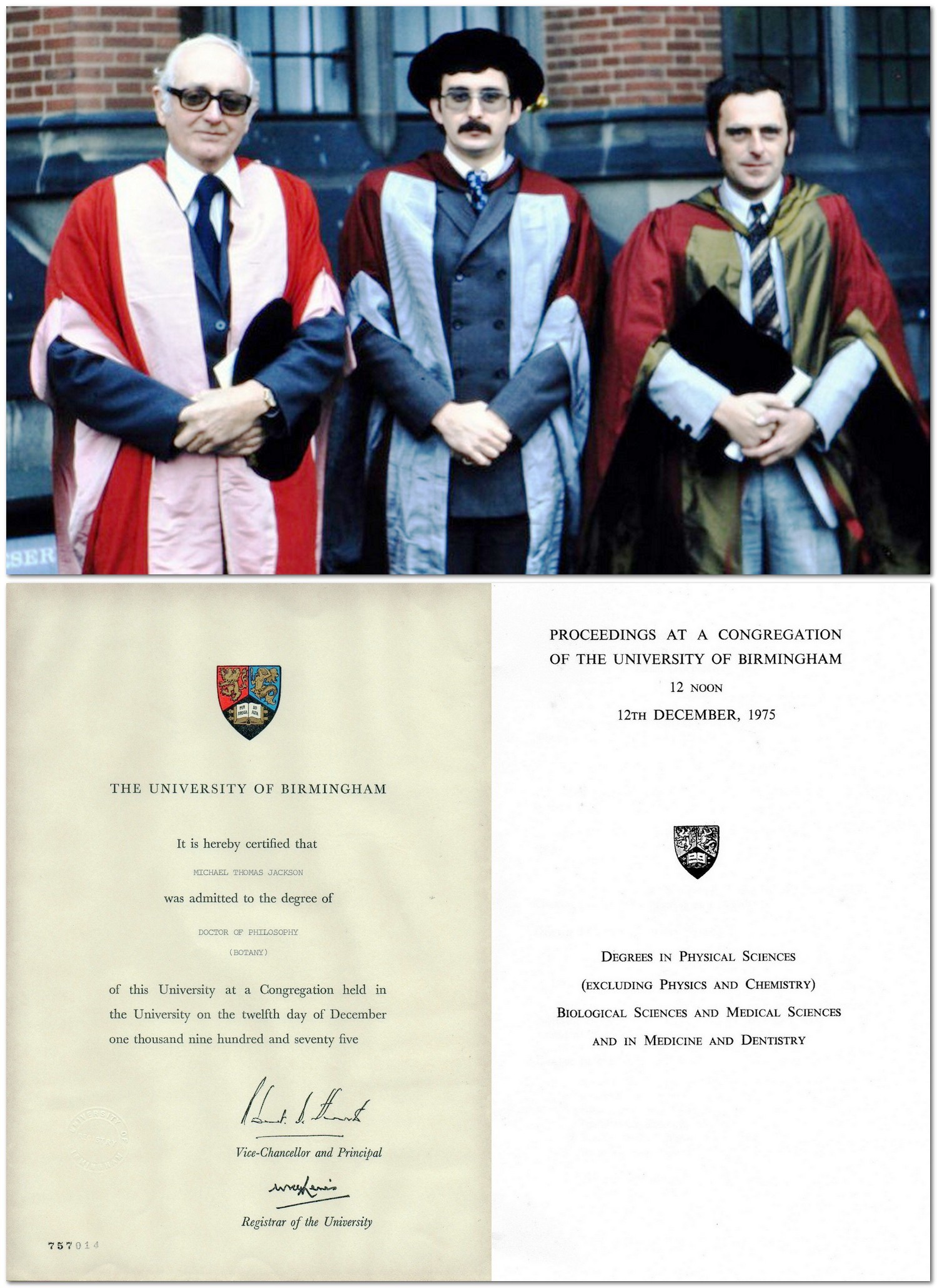
Here I am with Jack (on my right) and Trevor just after the congregation. Click on the image to view an abridged version of the congregation program.
At the same congregation several other graduates from the Department of Botany received their MSc degrees in genetic resources or PhD.
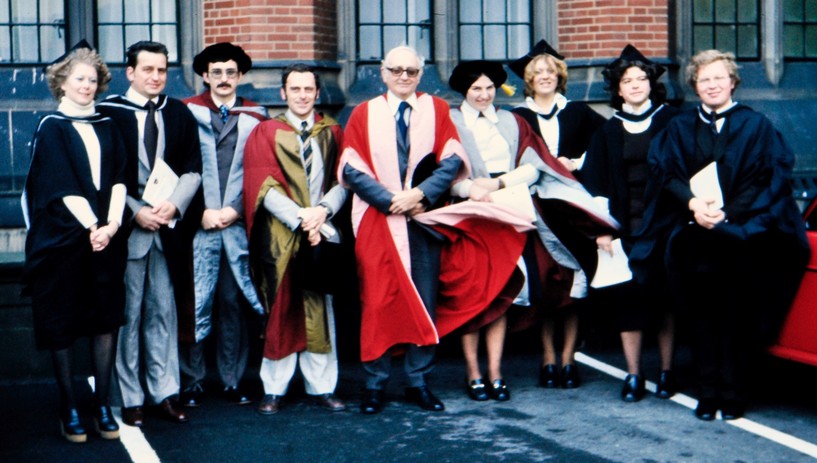
L-R: Pamela Haigh, Brenig Garrett, me, Trevor Williams, Jack Hawkes, Jean Hanson, Margaret Yarwood, Jane Toll, and Stephen Smith


When I began my MSc studies in genetic resources conservation and use at Birmingham in September 1970 I had no clear idea how to forge a career in this fascinating field. The other four students in my cohort came from positions in their own countries, to which they would return after graduating.

My future was much less certain, until one day in February 1971 when Jack Hawkes returned to Birmingham from an expedition to collect wild potatoes in Bolivia. He told me about a one-year vacancy from September that same year at the International Potato Center (CIP) in Lima, Peru, and asked if I’d be interested. Not half! And as the saying goes, The rest is history.
Jack’s expedition had been supported, in part, by CIP’s Director General, Dr Richard Sawyer, who told Jack that he wanted to send a young Peruvian scientist, Zósimo Huaman, to attend the MSc course at Birmingham from September 1971. He was looking for someone to fill that vacancy and did he know of anyone who fitted the bill. Knowing of my interest of working in South America if the opportunity arose, Jack told Sawyer about me. I met him some months later in Birmingham.

Well, things didn’t proceed smoothly, even though Zósimo came to Birmingham as scheduled. Because of funding delays at the UK’s Overseas Development Administration, ODA (which became the Department for International Development or DfID before it was absorbed into the Foreign Office), I wasn’t able to join CIP until January 1973.

In the interim, Jack persuaded ODA to support me at Birmingham until I could move to CIP, and he registered me for a PhD program. He just told me: I think we should work on the triploids. And I was left to my own devices to figure out just what that might mean, searching the literature, growing some plants at Birmingham to get a feel for potatoes, even making a stab (rather unsuccessfully) at learning Spanish.

Despite his relaxed view about what my PhD research might encompass, Jack was incredibly supportive, and we spent time in the field together on both occasions he visited CIP while I was there.
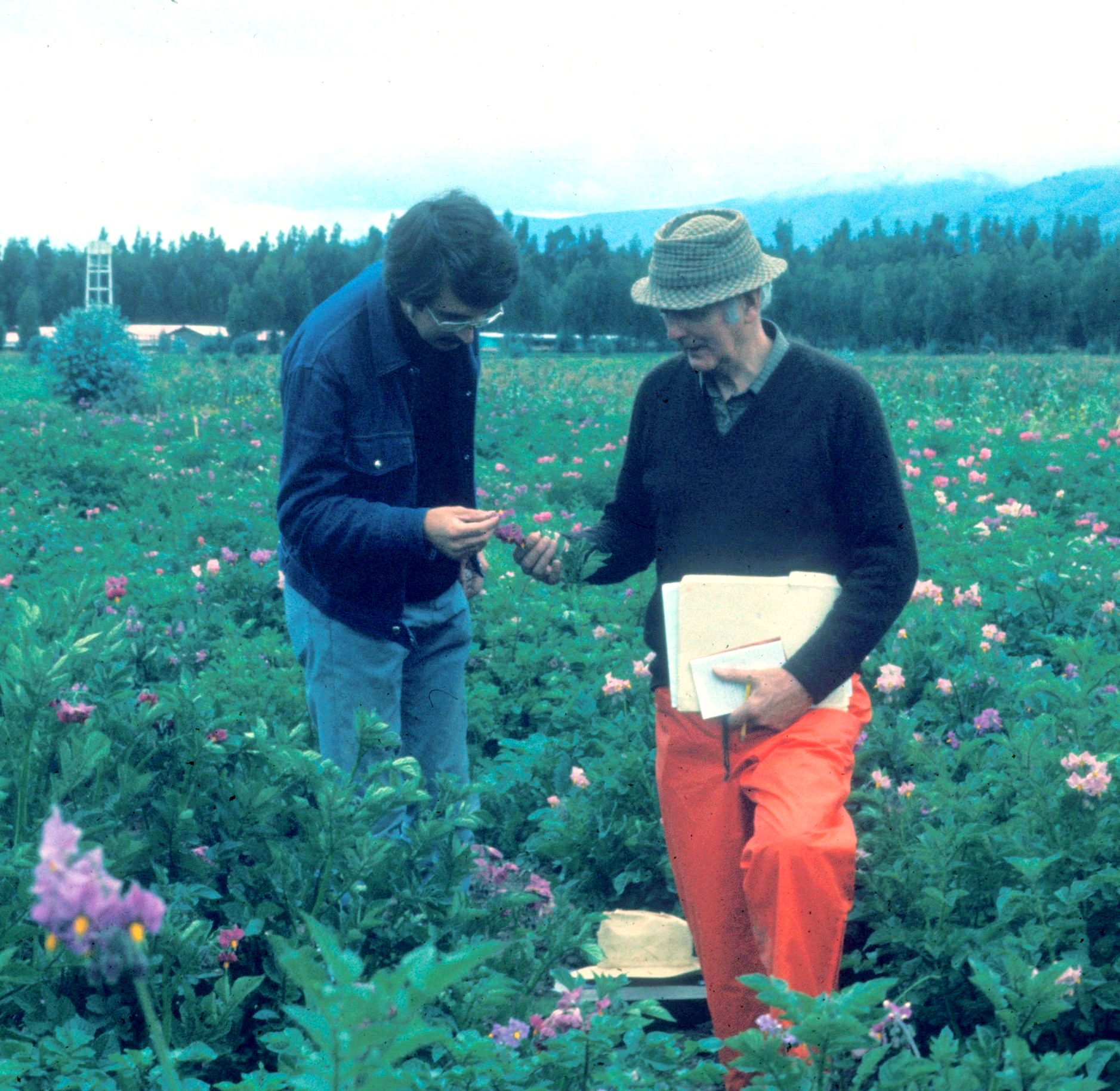
With Jack Hawkes in the CIP potato germplasm collection field, in Huancayo, central Peru (alt. 3100 masl) in January 1974.

I was also extremely fortunate that I had, as my local supervisor at CIP, the head of the Department of Breeding & Genetics, Dr P Roger Rowe, originally a maize geneticist, who joined CIP in mid-1973 from the USDA potato collection in Wisconsin where he was the curator. Roger and I have remained friends ever since, and Steph and I met him and his wife Norma in 2023 during our annual visit to the USA (where our elder daughter lives).
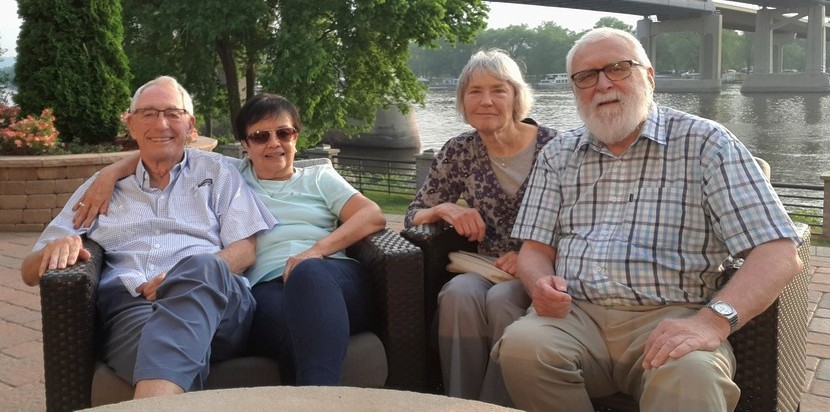
Roger and Norma Rowe, Steph and me beside the mighty Mississippi in La Crosse, Wisconsin in June 2023.

On joining CIP, Roger thoroughly evaluated—and approved—my research plans, while I also had some general responsibilities to collect potatoes in Peru, which I have written about in these two posts.


My research involved frequent trips between December and May each year to the CIP field station in Huancayo, to complete a crossing program between potato varieties with different chromosome numbers and evaluating their progeny. In CIP headquarters labs in Lima, I set about describing and classifying different potato varieties, and comparing them using a number of morphological and biochemical criteria. And I made field studies to understand how farmers grow their mixed fields of potato varieties in different regions of Peru.

At the beginning of April 1975, Steph and I returned to Birmingham so that I could write my thesis. But we didn’t fly directly home. Richard Sawyer had promised me a postdoctoral position with CIP—subject to successful completion of my PhD—with a posting in the Outreach Program (then to become the Regional Research and Training Program) based in Central America. So we spent time visiting Costa Rica and Mexico before heading for New York and a flight back to Manchester. And all the while keeping a very close eye on my briefcase that contained all my raw research data. Had that gone astray I’m not sure what I would have done. No such thing in 1975 as personal computers, cloud storage and the like. So, you can imagine my relief when we eventually settled into life again in Birmingham, and I could get on with the task in hand: writing my thesis and submitting it before the 1 October deadline.

I still had some small activities to complete, and I didn’t start drafting my thesis in earnest until July. It took me just six weeks to write, and then I spent time during September preparing all the figures. Jack’s technician, Dave Langley, typed my thesis on a manual typewriter!

Of course each chapter had to be approved by Jack. And he insisted that I handed over each chapter complete, with the promise that he’d read it that same evening and return the draft to me with corrections and suggestions by the next day, or a couple of days at most. That was a supervision model I took on board when I became a university lecturer in 1981 and had graduate students of my own.


Looking back, my thesis was no great shakes. It was, I believe, a competent piece of research that met the university criteria for the award of a PhD: that it should comprise original research carried out under supervision, and of a publishable standard.

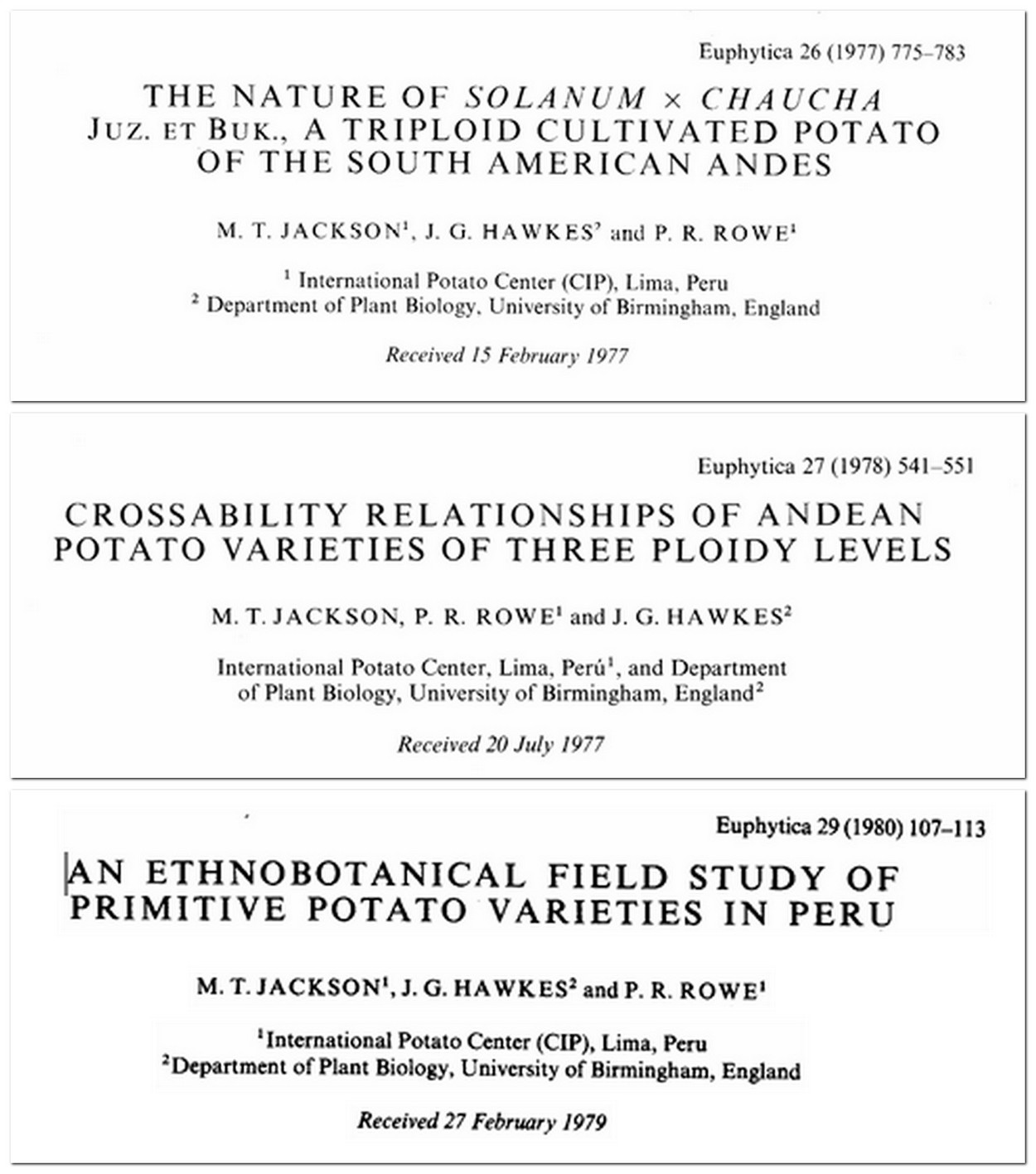
I did publish three papers from my thesis, which have been cited consistently in the scientific literature over the years by other researchers.

So, PhD under my belt so-to-speak, Steph and I returned to Lima just before New Year 1976. Later in April that year, we moved to Costa Rica where I did research on a serious bacterial disease of potatoes, seed potato production, and co-founded a pioneer regional cooperative program on potato research and development. We remained in Costa Rica for almost five years before returning to Lima, and from there to The University of Birmingham.

I taught at Birmingham for a decade before becoming Head of the Genetic Resources Center (with the world’s largest and most important rice genebank) at the International Rice Research Institute (IRRI) in Los Baños, Philippines from July 1991. Then in May 2001, I gave up any direct involvement in research and joined IRRI’s senior management team as Director for Program Planning and Communications. I retired in 2010 and returned to the UK.
50 years later

Since retiring, I’ve co-edited—in 2013—a major text on climate change and genetic resources, and led an important review, in 2016-2017, of the management of a network of international genebanks.

Without a PhD none of this would have been possible. Indeed continued employment at CIP in 1976 was contingent upon successful completion of my PhD.

I was extremely fortunate that, as a graduate student (from MSc to PhD) I had excellent mentors: Trevor, Jack, and Roger. I learned much from them and throughout my career tried (successfully I hope) to emulate their approach with my colleagues, staff who reported to me, and students. I’ve also held to the idea that one is never too old to have mentors.


[1] I completed my PhD in four years (September 1971 to September 1975. Back in the day, PhD candidates were allowed eight years from first registration to carry out their research and submit their thesis for examination. Because of concern about submission rates among PhD students in the 1980s, The University of Birmingham (and other universities) reduced the time limit to five years then to four. So nowadays, a PhD program in the UK comprises three years of research plus one year to write and submit the thesis, to be counted as an on-time submission.


I was doctored . . . but the benefits were long-lasting

Philosophiae Doctor. Doctor of Philosophy. PhD. Or DPhil in some universities like Oxford. Doctorate. Hard work. Long-term benefits.

Forty-five years ago today I was awarded a PhD by the University of Birmingham. As a freshman undergraduate at the University of Southampton in October 1967, I was naïvely ignorant of what a PhD was [1]. And I certainly never had any ambition then or inkling that one day I would go on to complete a doctorate in botany. Let alone a study on potatoes!

Although registered for my PhD at the University of Birmingham, I actually carried out much of the research while working as an Associate Taxonomist at the International Potato Center (CIP) in Lima, Peru. My thesis was supervised by eminent potato experts Professor Jack Hawkes, head of the Department of Botany (later Plant Biology) in the School of Biological Sciences at Birmingham, and Dr Roger Rowe, head of CIP’s Department of Breeding & Genetics.
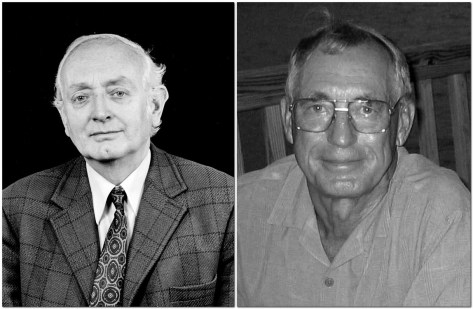
Jack Hawkes (L) and Roger Rowe (R)

On 12 December 1975 I was joined at the Birmingham graduation ceremony or congregation by Jack and Dr Trevor Williams (on my left below, who supervised my MSc dissertation on lentils). Trevor later became the first Director General of the International Board for Plant Genetic Resources (now Bioversity International). I’d turned 27 just a few weeks earlier, quite old in those days when it wasn’t all that unusual for someone to be awarded a PhD at 24 or 25, just three years after completing a bachelor’s degree. My research took four years however, from 1971, when I was awarded the MSc degree in genetic resources conservation at Birmingham.

The moment of being ‘doctored’ in the university’s Great Hall.

Sir Peter Scott, CH, CBE, DSC & Bar, FRS, FZS (by Clifton Ernest Pugh, 1924–1990)

As a biologist, it was particularly special that my degree was conferred by one of the most eminent naturalists and conservationists of his age, Sir Peter Scott (son of ill-fated Antarctic explorer Captain Robert Falcon Scott), who was Chancellor of the University of Birmingham for a decade from 1973.


According to the Birmingham PhD degree regulations today, a candidate must enter on a programme, normally of three years’ duration, in which the key activity is undertaking research, combined with appropriate training. Registered students must produce a thesis which makes an original contribution to knowledge, worthy of publication in whole or in part in a learned journal.

It was much the same back in the 1970s, except that we had eight years from first registration to submit a thesis. By the end of the 1980s this had already been reduced to four years.

Like the majority of PhD theses I guess, mine (The evolutionary significance of the triploid cultivated potato, Solanum x chaucha Juz. et Buk.) was a competent piece of original research, but nothing to write home about. However, I did fulfil the other important criterion for award of the degree as three scientific papers from my thesis research were later accepted for publication in Euphytica, an international journal of plant breeding:

  1. Jackson, MT, JG Hawkes & PR Rowe, 1977. The nature of Solanum x chaucha Juz. et Buk., a triploid cultivated potato of the South American Andes. Euphytica 26, 775-783. PDF

  2. Jackson, MT, PR Rowe & JG Hawkes, 1978. Crossability relationships of Andean potato varieties of three ploidy levels. Euphytica 27, 541-551. PDF

  3. Jackson, MT, JG Hawkes & PR Rowe, 1980. An ethnobotanical field study of primitive potato varieties in Peru. Euphytica 29, 107-113. PDF


It took me just over six weeks to write my thesis of about 150 pages. I achieved that by sticking to a well-defined daily schedule. I was under a tight time constraint.

Having returned from Peru at the beginning of May 1975, I still had a couple of things to wrap up: checking the chromosome numbers of some progeny from experimental crosses, then preparing all the hand drawn diagrams and maps (fortunately my cartographic skills from my geography undergraduate days at the University of Southampton placed me in good stead in this respect) and photographs. My thesis was typed on a manual typewriter; none of that fancy word processing and formatting available today. Nevertheless, I did submit my thesis by the mid-September deadline to meet the December graduation. I could hardly return to CIP by the beginning of the New Year without a PhD in my back pocket.

Looking at my thesis 45 years on, it does seem rather ‘thin’ compared to what PhD students can achieve today. In the early 1970s we didn’t have any of the molecular biology techniques that have become routine (essential even) today, to open up a whole new perspective on plant diversity, crop evolution, and crop domestication that were the basic elements of my thesis research.

Back in the day, it was normal for a PhD thesis to be examined by just one external examiner and an internal university one, usually from a candidate’s department and often the person who had supervised the research. Today the supervisor cannot be the internal examiner at many if not all universities in the UK, and it has become more common for a PhD student to have a committee to oversee the research.

So, towards the end of October 1975 I met with my examiners for what turned out to be a viva voce of over three hours. It got off to a good start because the external examiner told me he had enjoyed reading my thesis. That allowed me to relax somewhat, and we then embarked on an interesting discussion about the work, and potatoes and their evolution in general. The examiner found just one typographical error, and I corrected that immediately after the viva. I then sent the thesis for binding and official submission to the university library (where it languishes on a shelf somewhere, or maybe reduced to just a microfilm copy).


On the evening of my examination I rang my parents to tell them the good news, only to discover that my dad had suffered a heart attack earlier in the day. That certainly but a damper on the exhilaration I felt at having just passed my final exam – ever! Dad was resting, but expected to make a full recovery. By December, when the congregation was held, he was back on his feet, and he and mum attended the congregation. Having been allocated only two guest tickets, Steph gave hers up so mum and dad could attend.

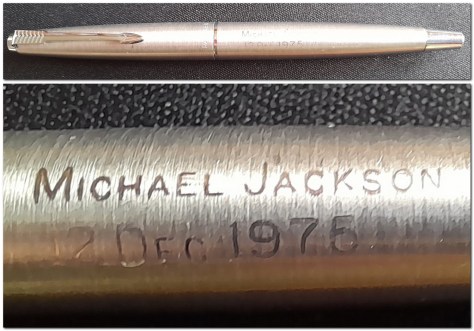
They gave me a Parker fountain pen, engraved with my name and date, as a graduation present. I still have it.


So, I completed a PhD. Was it worth it? I actually waxed lyrical on that topic in a blog post published in October 2015. When the idea of working in Peru was first mooted in February 1971, it was intended to be just a one year assignment from September. Registering for a PhD was not part of the equation. But circumstances changed, my departure to Peru was delayed until January 1973, so Jack registered me for a PhD, setting me on a path that I have never regretted.

In any case, once I was established at CIP in Lima, I quickly came to the viewpoint that a career in international agricultural research was something I wanted to pursue. And without a PhD under my belt that would have been almost impossible. The PhD degree became a sort of ‘union card’, which permitted me to work subsequently in Central America, as a lecturer at the University of Birmingham for a decade, and almost 19 years up to my retirement in 2010 at the International Rice Research Institute (IRRI) in the Philippines in roles managing the world’s largest genebank for rice, and then as one of the institute’s senior management team.


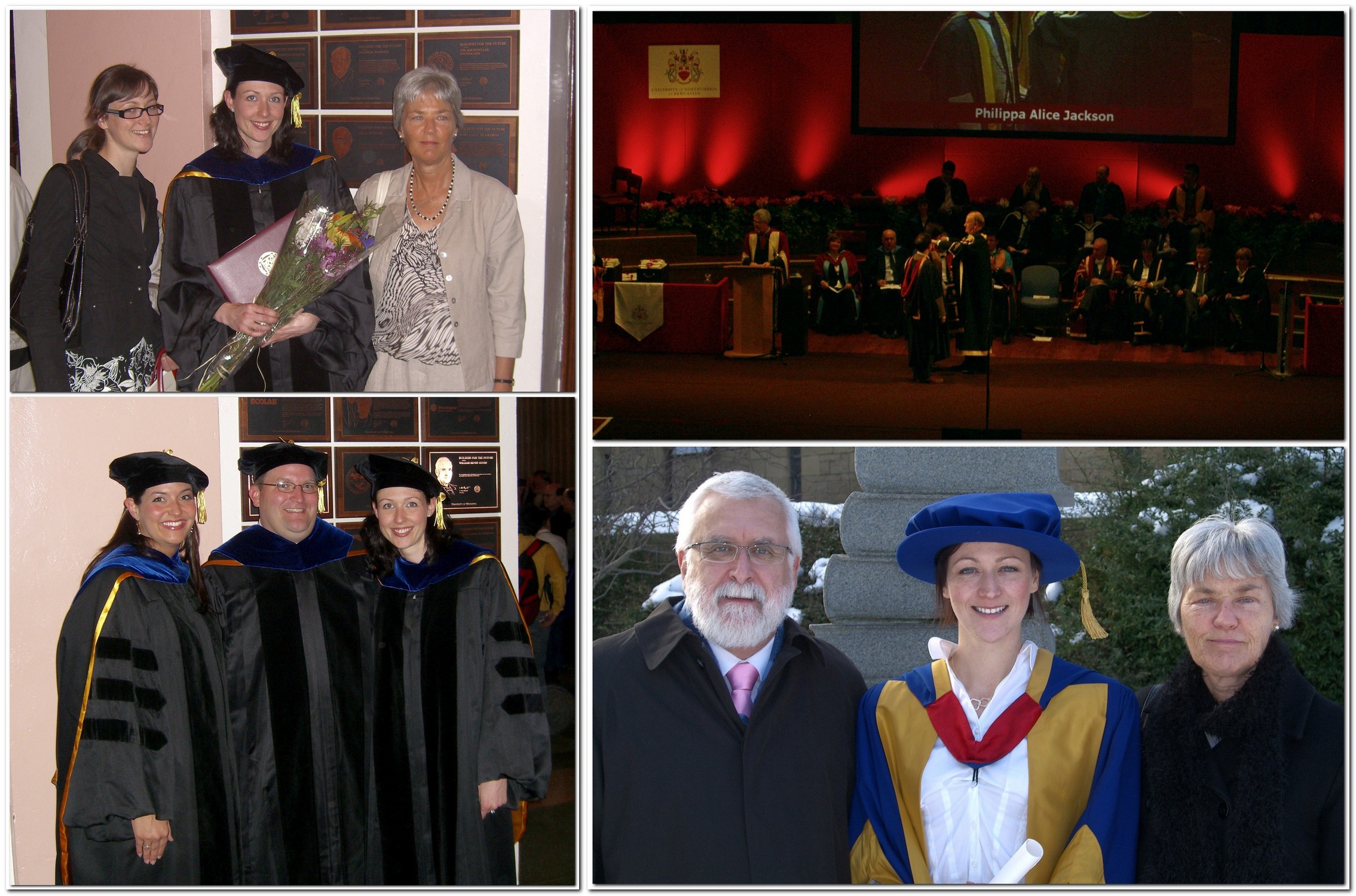
[1] Unlike our two daughters Hannah and Philippa. They grew up in a home with parents having graduate degrees (Steph has an MSc degree in genetic resources from Birmingham). And when we moved to the Philippines in 1991, almost every neighbor of ours at IRRI Staff Housing had a PhD degree. So although it was never inevitable, both went on to complete a PhD in psychology (although different branches of the discipline) in 2006 and 2010 respectively, at the University of Minnesota and Northumbria University.

L (top and bottom): Phil, Hannah, and Steph after the graduation ceremony; Hannah with her cohort of graduands, Emily and Michael in Industrial & Organizational Psychology on 12 May 2006. R (top and bottom): Phil’s graduation at Northumbria University on 11 December 2010.

J Trevor Williams, genetic resources champion, passes away at 76

Yesterday evening I heard the sad news that an old friend and someone who was very influential at important stages of my career, had passed away peacefully at his home on 30 March, at the age of 76.

21 June 1938 – 30 March 2015

Professor J T Williams (JT to his friends, or simply Trevor) played an important role during the late 70s and throughout the 80s in establishing an international network of genebanks that today underpin world food security.

The Birmingham years
I first met Trevor in September 1970 when I joined the 1-year MSc course on Conservation and Utilization of Plant Genetic Resources at the University of Birmingham. There’s no need to write about the course here as I have done so elsewhere on my blog. Short and stocky, a whirlwind of energy – and an inveterate chain smoker – Trevor joined the Department of Botany in 1968 or 1969, having been recruited by head of department Jack Hawkes to become the Course Tutor for that genetic resources course (which opened its doors in September 1969 and continued to train students over more than three decades).

20 Ed & Mike

L to R: Prof. Jack Hawkes, Dr Mike Jackson, and Dr Trevor Williams. Graduation Day, 12 December 1975, University of Birmingham

One of Trevor’s main teaching responsibilities was a course on taxonomic methods that inspired me so much that very quickly I decided that I wanted to write my dissertation under his supervision. Fortunately, Trevor was quite happy to take on this role, and by November 1970 we had agreed on a topic: on the origin and diversity of lentils (Lens culinaris). I’d indicated an interest in working on grain legumes, a hangover, I guess, from my Southampton undergraduate days where Joe Smartt, a leading grain legume specialist, had encouraged me to apply to the Birmingham course. But why how did we settle on lentils? Trevor and I worked our way through the various genera of the Fabaceae in Flora Europaea until we came to Lens and read this concise statement under the cultivated lentil, L. culinaris: Origin not known. Well, that piqued our curiosity and we set about acquiring seed samples of as many different varieties from a wide geographical range as possible.

In 1971-72 my wife Steph also worked with Trevor for her dissertation on growth and reproductive strategies in a range of grain legumes – lentil and chickpea among them. While Trevor supervised several MSc students during his years at Birmingham, I believe he had only one PhD student – another close friend, Emeritus Professor Brian Ford-Lloyd, and together they carried out a pioneering study of the genus Beta (beets!) When I moved to the University of Birmingham in 1981, I was assigned Trevor’s old office in the Department of Plant Biology (formerly Botany).

Cambridge and Bangor
Trevor took his first degree in Natural Sciences from Cambridge University (Selwyn College, I believe), followed by a PhD at the University College of North Wales (now Bangor University) under the eminent ecologist and plant population biologist, Professor John Harper. Trevor then moved to Switzerland (I don’t remember where), and took a higher doctoral degree on the study of plant communities, or phytosociology. I’m also not sure if this was supervised by Josias Braun-Blanquet, the most influential phytosociologist of the time.

The move to Rome
In about 1977 Trevor was recruited to become the Executive Secretary of the International Board for Plant Genetic Resources that was founded under the auspices of the FAO in 1974. He remained with IBPGR until 1990. Following his retirement from IBPGR, it became the International Plant Genetic Resources Institute (IPGRI), then Bioversity International in 2006.Under his tenure, IBPGR sponsored a large number of collecting missions around the world – this was the germplasm collecting decade – as well sponsoring training opportunities for genetic resources specialists, not least to the MSc course at Birmingham. Although IBPGR/IPGRI remained under the auspices of FAO until the early 1990s, it had become part of the network of international agricultural research centers under the CGIAR. And Trevor served as Chair of the Center Directors for at least one year at the end of the 1980s. In 1989 the Birmingham course celebrated its 20th anniversary; IBPGR sponsored a special reunion and refresher course at Birmingham and in Rome for a number of past students. We also recognized the unique contribution of IBPGR and Trevor joined us for those celebrations – which I have written about elsewhere in my blog.

Adi Damania (now at UC-Davis) sent me the photo below, of IBPGR staff on 2 December 1985, and taken at FAO Headquarters in Rome.

JTWFAODec2_1985

Sitting from L to R: Dorothy Quaye, Murthy Anishetty, unknown, J. Trevor Willams, Jean Hanson, unknown, Jane Toll. Standing L to R: Unknown, Adi Damania, unknown, unknown, Jeremy Watts, Merril, unknown, George Sayour, Pepe Esquinas-Alcazar, unknown, Chris Chapman, John Peeters, Jan Konopka, unknown temp, unknown, John Holden, Dick van Sloten.

After IBPGR
In the 1990s Trevor spent some years helping to organize the International Network for Bamboo and Rattan (INBAR) as a legal entity with its headquarters in Beijing, China. And it was there in about 1995 or 1996 or so that our paths crossed once again. I was visiting the Institute of Botany in Beijing with one of my staff from IRRI’s Genetic Resources Center, Dr Bao-Rong Lu. One evening, after a particularly long day, we were relaxing in the hotel bar that overlooked the foyer and main entrance. As we were chatting, I noticed someone crossed the foyer and into the dining room who I thought I recognized. It was Trevor, and I joined him to enjoy more than a few beers until late into the night. I didn’t have any further contact with Trevor until one evening in January or February 2012. It was about 7.30 pm or so when the phone rang. It was Trevor ringing to congratulate me on my appointment as an OBE in the New Year’s Honours List. We must have chatted for over 30 minutes, and it was great to catch up. That was the last time I spoke with him, and even then he told me his health was not so good.

But let’s not be too sad at Trevor’s passing. Instead let’s celebrate the man and his enormous contribution to the conservation of plant genetic resources worldwide. His important role will be remembered and recognized for decades to come. I feel privileged that I knew and worked with him. His incisive intellect and commitment to the conservation of genetic resources and community made him one of my role models. Thank you, Trevor, for your friendship, words of wisdom, and above all, your encouragement – not only to me, but to your many students who have since contributed to the cause of genetic conservation.

Remembering Trevor – updates
Trevor’s funeral was held on Wednesday 22 April at 13:30, at St Chad’s Church, Handforth, Cheshire. His sister Wendy asked that in lieu of sending flowers, donations could be made to the Millennium Seed Bank at Kew. Jill Taylor, Development Officer at the Kew Foundation has set up an ‘account fund’ in Trevor’s name – that way she can collate the donations and be able to provide the family with a total amount raised. She will of course make sure that the whole amount is used for the work of the Millennium Seed Bank. All donations can be sent for Jill’s attention:

Jill Taylor Kew Foundation 47 Kew Green Richmond TW9 3AB
Tel: 020 8332 3248
Cheques should be made payable to ‘Millennium Seed Bank’
Donations can also be made online using this live link – https://thankqportal.kew.org/portal/public/donate/donate.aspx
 If you donate online, please also email Jill at commemorative@kew.org so that she can assign it to Trevor’s ‘fund’. That email inbox is monitored by a small group so will be attended even if Jill is away.

Brian Ford-Lloyd and I attended Trevor’s funeral, along with Roger Croston, also a Birmingham MSc course alumnus and a collector for IBPGR for about two years from 1980 or so.

Trevor’s sister, the Reverend Wendy Williams (celebrating 55 years since she was ordained) gave a beautiful eulogy, highlighting Trevor’s strong Christian faith – something neither Brian, Roger or I were aware of – and the charitable work he was involved with in Washington, DC after he left IBPGR, but also in Rome during his IBPGR years. Click on the image below to read the Service of Thanksgiving.

JTW

Obituaries
Here’s the link to the obituary that was published on 1 May in the UK’s Daily Telegraph broadsheet newspaper.

An obituary was published online on 1 July in the international journal Genetic Resources and Crop Evolution. Click here to read. And another in the Indian Journal of Plant Genetic Resources.

A biography of Trevor was published online (on 13 June 2024) in the Oxford Dictionary of National Biography. Click here to read.