Morons, philistines, iconoclasts . . . or just plain stupid?

Vindictive and vengeful, certainly.

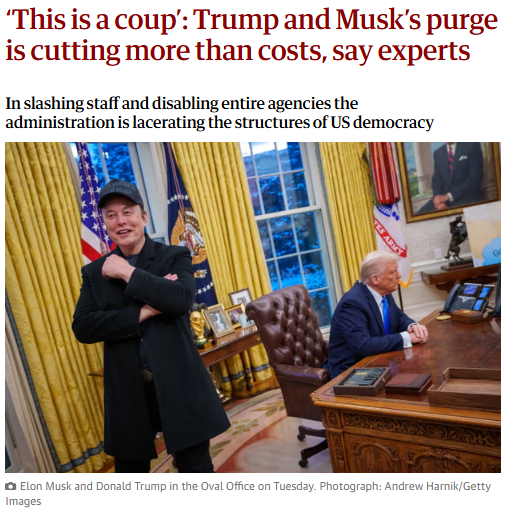
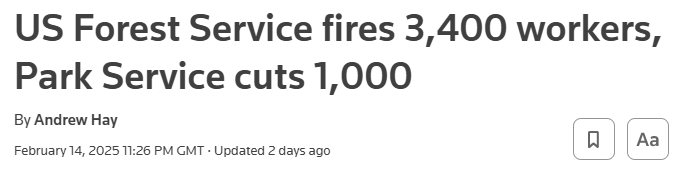
Emboldened by Donald Trump, ‘Department of Government Efficiency‘ or DOGE lead, Elon Musk – the world’s richest man – has taken a chainsaw (his words) to the departments, institutions, and agencies of the US federal government in a cruel and callous not to say careless way over the past few weeks since Trump’s inauguration on 20 January.
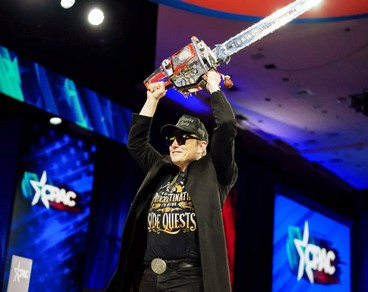
Elon Musk wielding a chainsaw at the Conservative Political Action Conference (CPAC) at the Gaylord National Resort Hotel And Convention Center on 20 February 2025 in Oxon Hill, Maryland.

That’s not to deny that inefficiencies can be found and budgetary savings made in any government, and I’m sure the US federal government is no different from any other. But to proceed, as Musk and his acolytes have, is causing possibly irreparable damage on a daily basis, thousands of federal employees are losing their jobs, and this ‘downsizing’ has been effected in, it seems, an indiscriminate way. Last in, first out, and hang the consequences.

As billionaire entrepreneur Mark Cuban posted on Bluesky (@mcuban.bsky.social) a few hours ago:

Ready Aim Fire is a lousy way to govern.

Has it only been five weeks? It feels more like five years. And already the harm is being done, supported by some of probably the most incompetent and least qualified departmental secretaries (RFK Jr at Health and Pete Hegseth at Defense come immediately to mind, but there are many others, although yesterday Musk declared that Trump’s Cabinet was the most qualified of all time).

Certainly it looks like Musk is on some sort of ego trip. Or perhaps an over-enthusiastic substance-fuelled trip, as Musk has himself acknowledged his use of the same.

I’m not going to comment of the long list of agencies that DOGE has gone after, and having done the damage has had to roll back some of his actions, not entirely with success.

But I would like to comment on two areas that I do have some experience in, and have had contact over the years, directly and indirectly.

It’s beyond comprehension that, seemingly on a whim, DOGE abolished the world’s biggest (although not meeting the UN target of 0.7% of Gross National Income or GNI) and perhaps most important development agency, the United States Agency for International Development or USAid (now subsumed into the State Department).

Here’s how USAid compared to other foreign government development aid agencies:
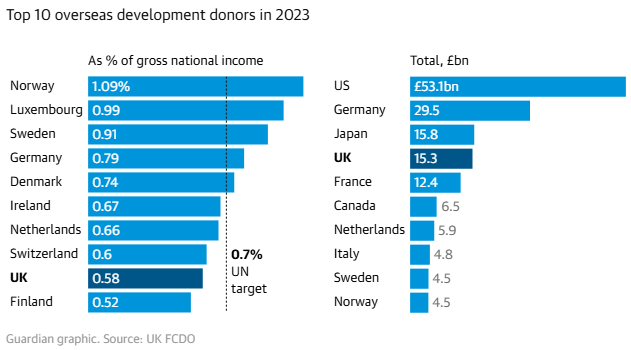
Donald Trump and Elon Musk have hit foreign aid harder and faster than almost any other target in their push to cut the size of the federal government. Both men say USAid projects advance a liberal agenda and are a waste of money. (The Guardian, 27 February 2025).

Seems like charity begins at home. Except that the savings won’t be passed on to Mr and Mrs Average American. Wait for the tax cuts for the already rich.

Those cuts at USAid immediately affected humanitarian, health, and agricultural support programs around the world, as personnel were recalled to the US (I have a number of close friends who worked for USAid in the US or abroad), and an immediate ban on further program expenditures implemented. But it’s not just overseas that USAid’s demise will be felt. USAid was a huge purchaser of home-grown grains for donation to the World Food Program or directly to nations suffering food shortages. US farmers will reap the harvest of Musk’s misguided ‘efficiencies’.

For almost 30 years I worked at two (of 14) centers—the International Potato Center (CIP) and the International Rice Research Institute (IRRI)—of the Consultative Group on International Agricultural Research or CGIAR.

For 2025, the CGIAR had a proposed budget of around USD1 billion, funded through a consortium of donor agencies, and various funding mechanisms. In the past, USAid was one of the largest and most important supporters of the CGIAR. Termination of its funding, if indeed this is what is about to happen, will severely impact how the research centers can continue to operate effectively, and I fear that programs will be cut, and staff let go [1].

The other area of concern with regard to the Trump/Musk attack on federal agencies relates to the long-term safety of the nation’s genetic resources collections managed by the United States Department of Agriculture (USDA).

In this recent article in Science (just click on the headline below to open) the range of cuts is described and the pushback from agribusiness.
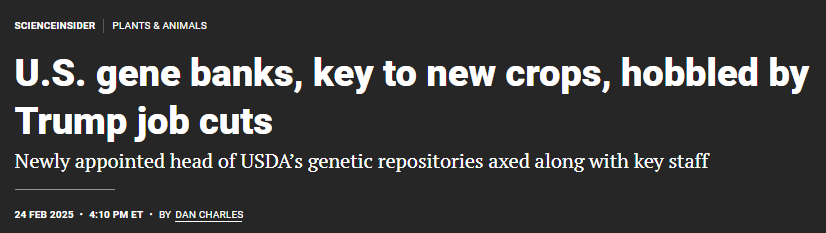
Plant breeder Neha Kothari (right) was hired in October 2024 to streamline and improve the department’s vast collections of seeds and living crops that are key to developing improved varieties. But on 13 February she, like tens of thousands of other recent hires across the government still in probationary status, was dismissed from her job. [2]

The entire gene bank network felt the chainsaw wielded by Elon Musk’s Department of Government Efficiency. About 30 employees—10% of its total staff—were terminated, according to an informal survey by some retired USDA scientists. An additional 10 vacant positions have been frozen or rescinded, and a similar number took Musk’s offer last month to resign immediately but remain on the federal payroll through September.

When I started my career in genetic resources conservation 55 years ago, there was a vision and hope that one day the global system of genebanks would be properly funded. Now, with funding from the Crop Trust, that vision is being realised. And just as the genebank system is being stabilised, DOGE’s attack on the USDA’s germplasm system is unprecedented as well as a totally misguided action by incompetent DOGE staff who, it seems across a wide range of sectors, simply do not have the knowledge, expertise, or experience to make the sorts of ‘chainsaw’ decisions they are inflicting on the federal government.

Which brings me on to a final point. There’s something particularly obscene that the world’s richest man is holding sway over the lives of hundreds of thousands of federal employees (and the nation at large) even while his own companies receive federal grants and contracts reported to be in excess of USD13 billion. I wonder if he’s going after those agencies from which he receives such business largesse? Talk about conflict of interest.

I came across this list of questions about Musk and his wealth which someone posted on Bluesky recently:
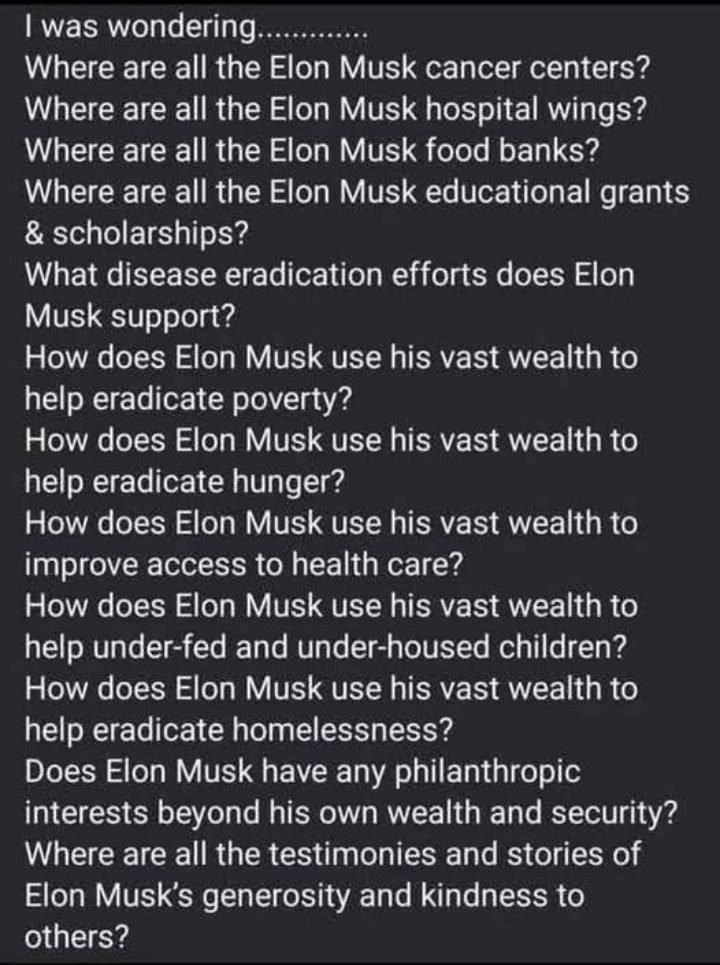
Says so much. Just to put Musk’s wealth into perspective. If he was to give away USD1 million a day, it would take over 1000 years to disburse the lot! As far as anyone can tell, Musk has not engaged in any (or very little – I stand to be corrected) philanthropic endeavours.

With his wealth, he could fund the Crop Trust and global genebank activities in perpetuity with just a USD1 billion donation. Loose change for him.

Click here to read the Crop Trust Annual Report for 2023 which explains just how its funding is used to preserve and use the world’s crop genetic heritage.

Not all billionaires are like Musk. At least two billionaires, Bill Gates (with ex-wife Melinda) and Warren Buffet put their money where their mouths are in setting up the Bill & Melinda Gates Foundation (now the Gates Foundation) that has funded many humanitarian efforts globally, at USD7.7 billion in 2023. While the GF has come in for criticism on several levels, there’s no doubt that its programs have brought about or facilitated real change. Where does Musk stand in this respect? Invisible!


[1] In a news conference a couple of days ago, UK Prime Minister Sir Keir Starmer announced an increase in the nation’s defence budget – at the expense of the overseas aid and development budget. That had already been cut under the previous Conservative government in 2021 from the UN target of 0.7% of GNI (enshrined in law in 2015). The aid budget has been slashed to 0.3% of GNI. The UK is an important donor to the CGIAR, and this reduction is a double whammy (along with USAid) for future CGIAR prospects.

[2] Update from Science, 24 February, 5:35 pm: Science has learned that USDA is reinstating Neha Kothari as leader of the department’s national program on plant genetic resources. Kothari joins several other top-tier government scientists whose firings have been reversed, but so far there is no indication that USDA has reinstated other fired germplasm system staff. Academic leaders and representatives from the agricultural industry had criticized Kothari’s dismissal.



Killing me softly . . . memories maketh the man! (Updated 25 February 2025)*

Memories. Powerful; fleeting; joyful; or sad. Sometimes, unfortunately, too painful and hidden away in the deepest recesses of the mind, only to be dragged to the surface with great reluctance.
Some memories float to the surface at the slightest instigation. Often all it takes is a glimpse of a treasured landscape, a word spoken by a friend, a few bars of music, or a particular song. Some memories need more persuasion.

And then, one is transported back days, months, years, even decades. Memories can be vague; they can be crystal clear, even while the precise context may be fuzzy round the edges – where, when, or why. They are part and parcel of who each and every one of us is as a person. Without memories, we are nobody.

I have one particular – and very strong – memory whenever Roberta Flack starts to kill me softly . . . Yes, one song. Just a few bars, and I’m taken back 52 years to late January 1973. Lima, Peru.

So why this particular song?

I’d arrived in Lima at the beginning of the month to start my assignment as Associate Taxonomist at the International Potato Center (CIP) in La Molina on the eastern outskirts of the city (now totally subsumed into Lima’s urban sprawl).

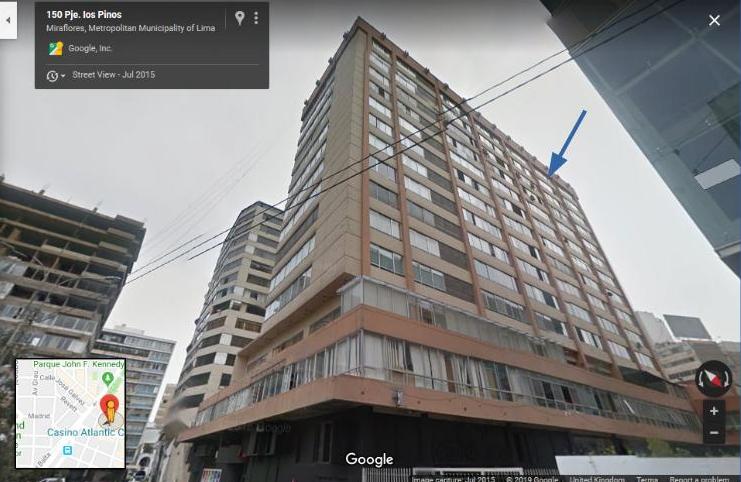
After spending a couple of weeks holed up in the Pensión Beech (a guest house in the San Isidro district of Lima), I signed a contract for my own apartment on the 11th or 12th floor of an apartment building (still standing today) at Pasaje Los Pinos in the heart of the Miraflores District. In 1973, there was just a dirt parking lot in front of the apartment building, and the Todos Supermarket (no longer there) was to one side. Now the apartment building is surrounded by high-rise on all sides. It’s a wonder that it has survived about 50 years of earthquakes, including several rather large ones. It never did seem that sturdy to me, but there again, what do I know about engineering?

The arrow indicates the approximate location of my apartment. In January 1973 this building stood in a wide open space – no longer the case.

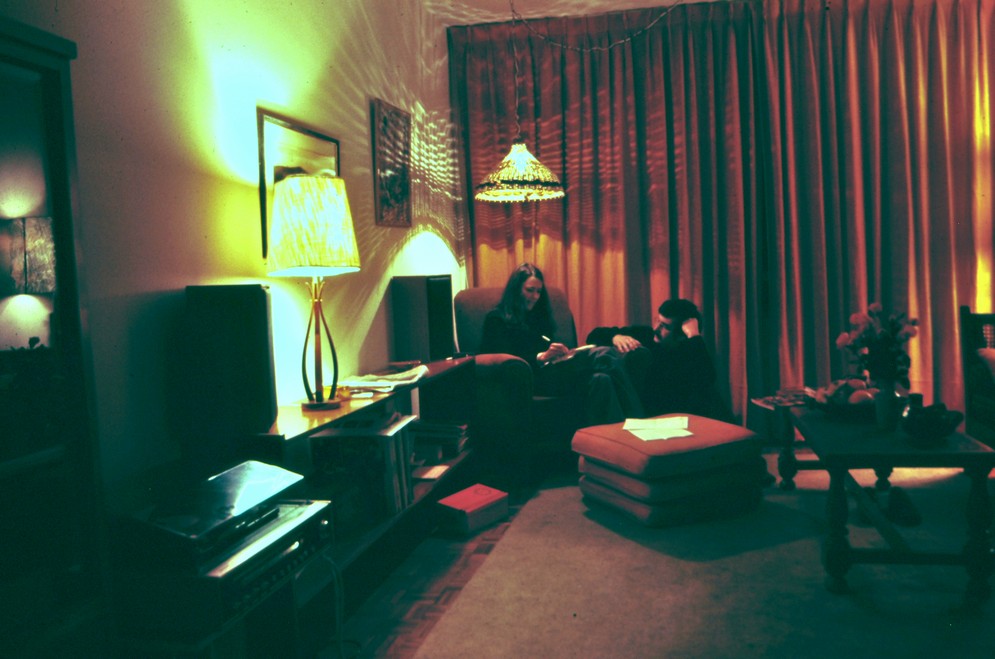
I moved in, just after my small consignment of airfreight (including a stereo system) had arrived a few days earlier. I had music!

Steph joined me in Lima at the beginning of July 1973, and we stayed in the same apartment for about six weeks more before moving to a larger one elsewhere in Miraflores. My stereo is prominently displayed on the left!

And on the radio station that I tuned into the local radio station, (Radio Panamericana, Radio Pacifico, or perhaps Radio Miraflores?), Killing Me Softly With His Song was played, almost non-stop it seemed, from its release on 21 January 1973 for the next couple of months. It became an instant worldwide success for Roberta Flack. But she wasn’t the first to record it.

KMSWHS was penned by American lyricist Norman Gimbel (who passed away in December 2018), with music by his long-time collaborator Charles Fox. However, there is some dispute over the song’s origins. KMSWHS was originally recorded by American singer Lori Lieberman in 1971.

Whatever the situation, KMSWHS remains a great favorite of mine. Whenever I hear it, I’m 24 years old again, starting out on a career in international agricultural research for development. The world was my oyster!

As I wrote a few years back, I would include KMSWHS on my list of eights discs to take to a desert island. That perspective has not changed.


Yesterday, 24 February 2025, Roberta Flack died in New York at the age of 88.

  • Originally published on 7 January 2019

Respect the Office . . . in spite of the occupant?

I grew up believing that—despite the suitability or not of the occupant—one should respect the office of a Prime Minister or President.



But when it comes to the current occupant of the Oval Office, POTUS #47, that’s a hard maxim to follow.

Why? Well, from my perspective (I’m neither a US citizen nor resident), Donald Trump has shown, by his behaviour since his inauguration just four weeks ago, that he himself does not respect the Office of the President of the United States. Furthermore, he continues to be egregiously offensive to long-term allies or individuals. Take, for example, his denigration of the Prime Minister of Canada as ‘Governor Trudeau’. Decidedly un-presidential!

He was bad enough during his first term as POTUS #45. Then he was just a ridiculous moron. Now he’s a ruthless iconoclastic moron, surrounded by acolytes determined to fundamentally change American society—and not for the better.

In less than four weeks he has wreaked havoc on government departments and agencies (too many to recount here¹) and reset US relationships with allies (and foes).

And he unleashed mad dogs in the form of Elon Musk and his cohort of employees from the so-called ‘Department for Government Efficiency’ (DOGE) with, it seems, carte blanche authority to do whatever he pleases.



There’s something particularly obscene in the world’s richest man taking decisions that will impoverish millions (if not billions) of people worldwide.

Notwithstanding also Trump’s cabinet appointments like Robert Kennedy Jr at Health, or Pete Hegseth at Defense and others (often billionaires) who, on the face of it, are remarkably unqualified to occupy those positions.

Do his MAGA supporters rejoice? Probably so far. Wait until the cuts begin to bite for ordinary Americans.

An ineffective Republican Party refuses to stand up to Trump. Instead of holding the Executive to account—one of the principal roles of Congress—lily-livered Republicans just say ‘How high, Mr President?‘ when Trump says ‘Jump!

The blatantly illegal actions he has already taken through a mountain of Executive Orders are being challenged in the courts. But will Trump obey court orders? It seems not, if we take him at his word in a comment posted on 15 February on Truth Social. What a dangerous attitude and precedent!

During his first term, 2017-2021, I wrote quite a number of blogs decrying Trump and all he stood for. Just click on the red boxes to open these stories.

With regard to that last post, I certainly got it wrong – as did many others. This was written just a month before Trump’s attempted insurrection on 6 January 2021. We thought we’d seen the last of him. How wrong we were.

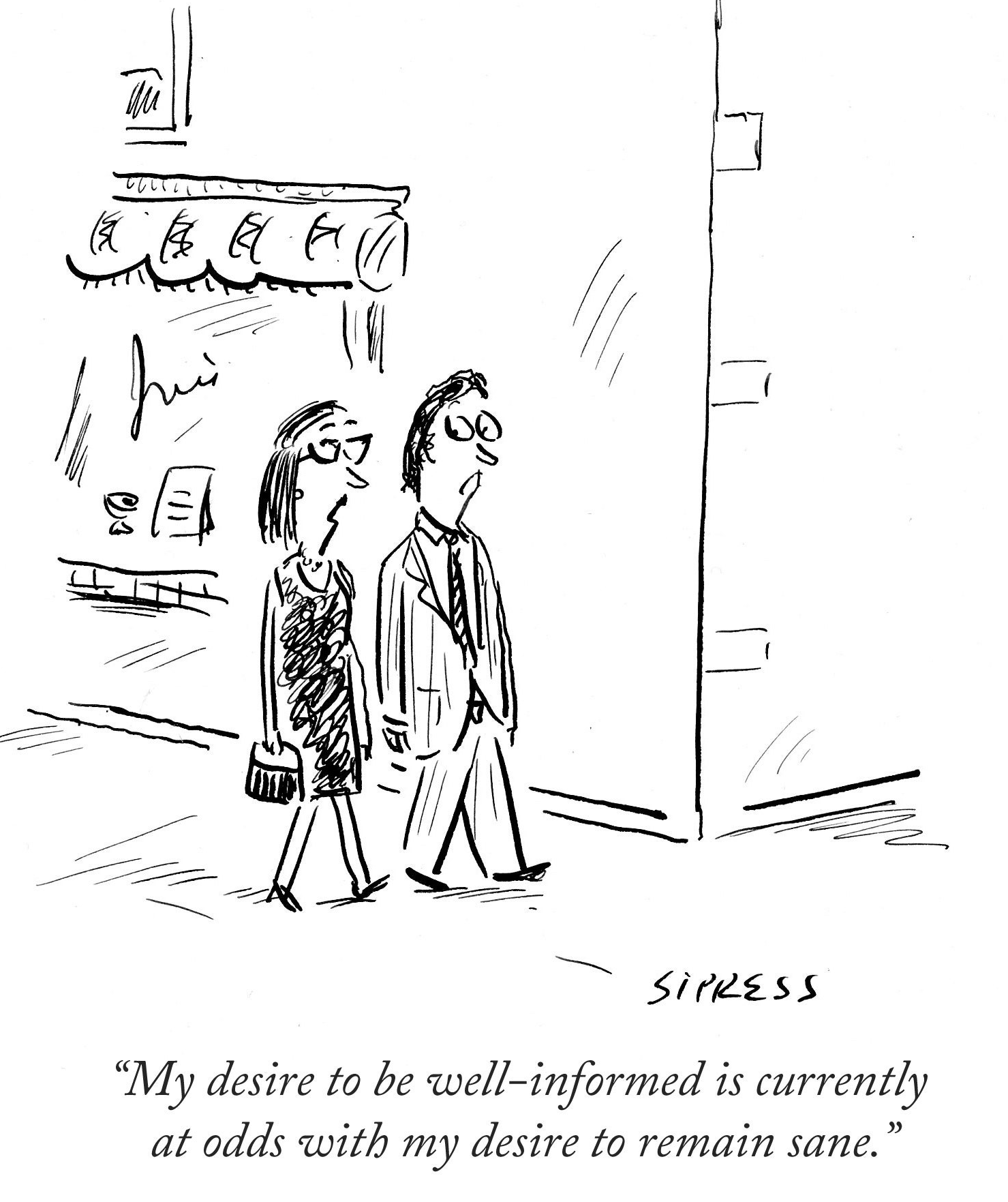
In writing this story, I broke a promise to myself. How’s that? Well, once it became apparent that Trump was headed for an election victory last November, I vowed I wouldn’t post anything on my blog as I had before. But it has been such a whirlwind of bad news since 20 January, I just couldn’t help myself. This cartoon (which I saw on BlueSky) sums up how I feel about the whole situation.

Were it not for the fact that our elder daughter and family live in Minnesota (who we will visit later this year as we have done regularly over the past 15 years, apart from the Covid years), I think I’d give the USA a wide berth over the next four years. Having said that, Steph and I have encountered friendliness and courtesy everywhere we have traveled around that country. Will that have changed as attitudes and positions, for and against Trump, become increasingly polarised?

A last comment. My car lease contract (on a Ford Kuga diesel) terminates in less than a year, and I will certainly take out another lease on a new car, more than likely an EV this time. One thing’s for certain: it WON’T be a Tesla!


¹ Here are some examples:


The Commonwealth Potato Collection – it really is a treasure trove (revised and updated)*

I originally wrote this story in August 2021 after a friend and former colleague, Dr Glenn Bryan¹ posted a link on his Facebook page to a story—Treasure trove could hold secrets to potato problems—that had just appeared in the online edition of Dundee’s The Courier.

It was about the Commonwealth Potato Collection (CPC) that is held at The James Hutton Institute (JHI) at Invergowrie, just west of Dundee.
Until a couple of years ago (when he retired) Glenn led the Potato Genetics and Breeding Group at JHI, with Gaynor McKenzie as the CPC curator, a position she still occupies.

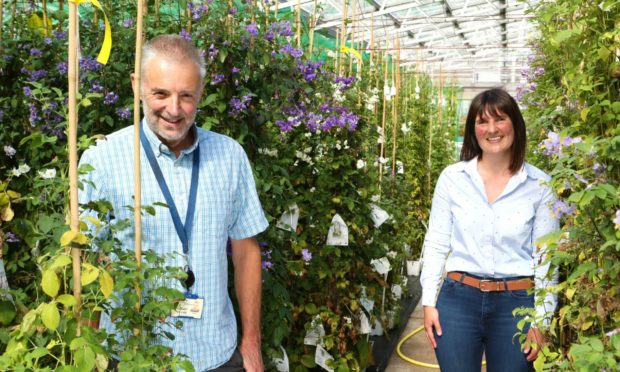
Glenn Bryan and Gaynor McKenzie at the James Hutton Institute in Invergowrie, where wild potato species in the Commonwealth Potato Collection are conserved.

The Commonwealth Potato Collection has a long and distinguished history, going back more than 80 years. It is one of a handful of potato germplasm collections around the world in which breeders have identified disease and pest resistance genes to enhance the productivity of cultivated varieties. The CPC is particularly important from a plant quarantine perspective because the collection has been routinely tested and cleaned for various pathogens, particularly seed-borne pathogens.

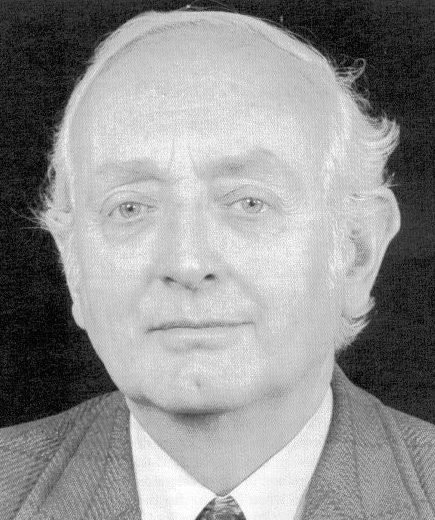
Jack Hawkes

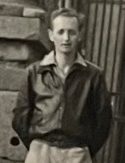
It is a collection with which Steph and I have both a personal and professional connection, from the 1970s and 80s. It’s also the legacy of one man, Professor Jack Hawkes (1915-2007) with whom I had the privilege of studying for both my MSc and PhD degrees.

Let me tell that story.


In December 1938, a young botanist—just 23 years old the previous June—set off from Liverpool, headed to Lima, Peru to join the British Empire Potato Collecting Expedition to South America, the adventure of a lifetime.

Jack in Bolivia in 1939

John ‘Jack’ Gregory Hawkes, a Christ’s College, Cambridge graduate, was destined to become one of the world’s leading potato experts and a champion of the conservation and use of plant genetic resources for food and agriculture.

He was the taxonomic botanist on the 1939 expedition, which was led by experienced plant collector Edwards Kent Balls (1892-1984). Medical doctor and amateur botanist William ‘Bill’ Balfour Gourlay (1879-1966) was the third member of the expedition. Balls and Gourlay had been collecting plants in Mexico (including some potatoes) in 1938 before moving on to Peru for the ‘Empire’ expedition.

The expedition had originally been scheduled to start in 1937, but had to be delayed because of ill health of the original expedition leader, Dr PS Hudson, Director of the Empire Bureau of Plant Breeding and Genetics in Cambridge. Jack had been hired as his assistant.

Whilst waiting for the expedition to get underway, Jack took the opportunity—in August 1938—to visit Leningrad to pick the brains of Russian botanists, Drs SM Bukasov, VS Juzepczuk, and VS Lechnovicz who had already collected potatoes in South America. Jack openly acknowledged that ‘as a raw recently graduated student, [he] knew very little about potatoes’.

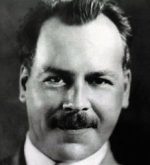
Nikolai Vavilov

Not only did Jack receive useful advice from these knowledgeable botanists, but he also met with the great geneticist and ‘Father of Plant Genetic Resources’ Nikolai Vavilov on several occasions during his visit to Leningrad and Moscow, ‘an experience that changed [his] life in many ways’. Vavilov had a profound effect on Jack’s subsequent career as an academic botanist and genetic resources pioneer. Alas there do not appear to be any surviving photos of Jack with Vavilov.

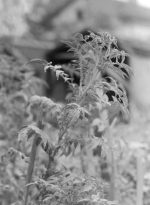
‘Solanum vavilovii’ growing at an experiment station near Leningrad in 1938

In Leningrad, Jack took this photo (right) of a wild potato species that had been described as Solanum vavilovii by Juzepczuk and Bukasov in 1937. Sadly that name is no longer taxonomically valid, and vavilovii is now considered simply as a variant of the species Solanum wittmackii that had been described by the German botanist Friedrich August Georg Bitter in 1913.


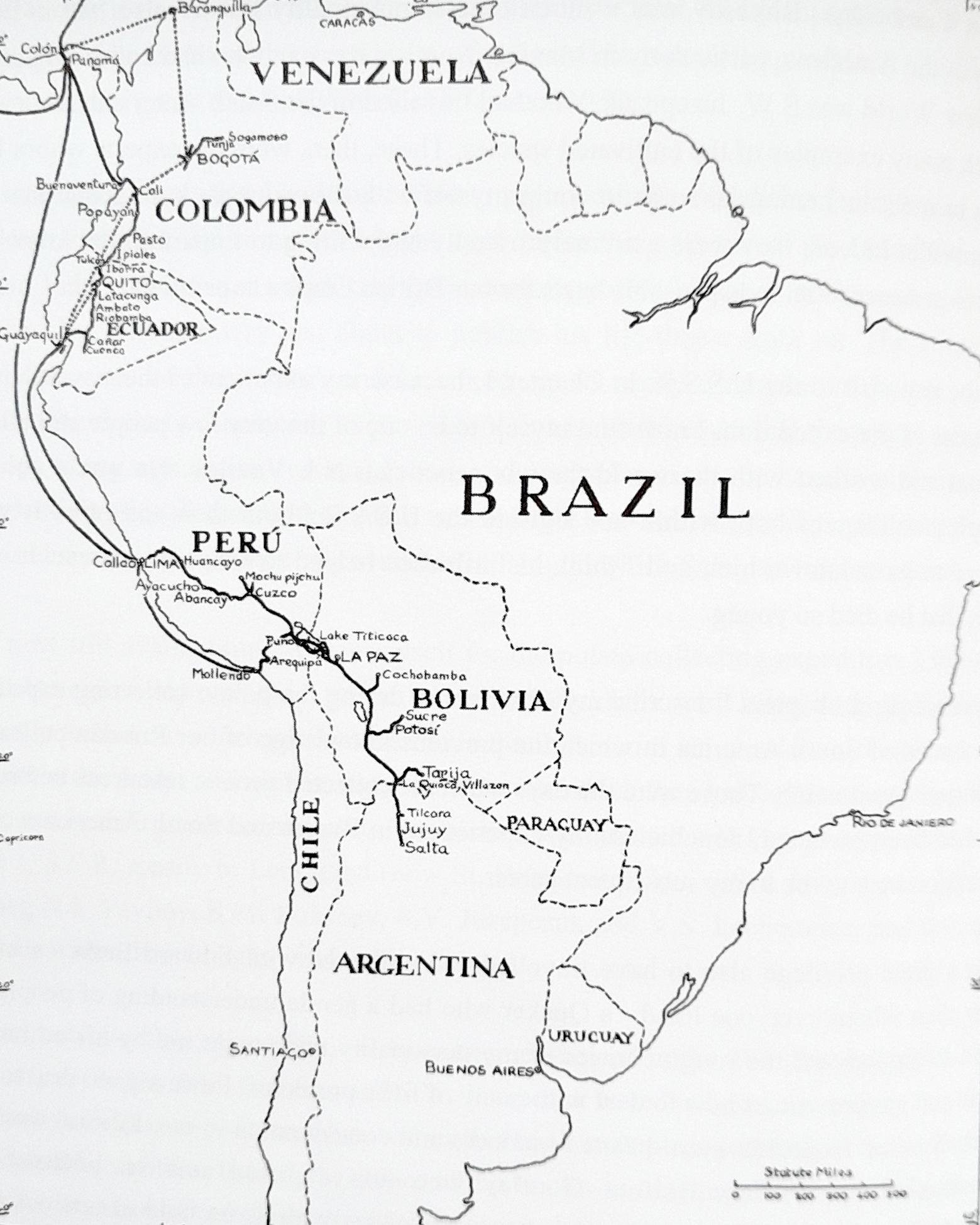
The Empire expedition lasted eight months from January 1939, covering northern Argentina, Bolivia, Peru, Ecuador, and ending in Colombia (a country where Jack was to reside for three years from 1948 when he was seconded to establish a national potato research station near Bogota).

Route taken by the Empire Potato Collecting Expedition

More than 1150 samples of cultivated and wild potatoes were collected in these five countries as well as a further 46 samples collected by Balls and Gourlay in Mexico in 1938.

Here is a small selection of photographs taken during the expedition (and a link to an album of photos).


By the time the expedition ended in early September 1939, war with Germany had already been declared, and Jack’s return to the UK by ship convoy from Halifax, Newfoundland was not as comfortable as the outbound voyage nine months earlier, docking in Liverpool early in November.

Jack published an official expedition report in March 1941. Then, in 2003, he published an interesting and lengthy memoir of the expedition, Hunting the Wild Potato in the South American Andes.

In December 2021, my friend Dr Abigail Amey and I published a website (with permission of the Hawkes family) about Jack’s experiences of the 1938-39 expedition, as well as others to the USA, Mexico, and Central America in 1958, and Bolivia in 1971. Just click on the red box below (and others) to open the links.

The website also has several of Jack’s original 16mm films (which we were able to digitise through a special grant from the Crop Wild Relatives Project at Kew and the Crop Trust).

Redcliffe N Salaman

Potato tubers (and presumably seeds) were shipped back to the UK, and after a quarantine inspection, were planted out in a glasshouse at the Potato Virus Research Station, Cambridge whose director was the renowned botanist (and originally a medical doctor) Redcliffe Nathan Salaman, author of the seminal work on potatoes, The History and Social Influence of the Potato, first published in 1949 and reprinted with a new introduction by Hawkes in 1985. I jealously guard the signed copy that Jack gave me.

On his return to the UK in 1939 Jack began to study the collected germplasm, describing several new species, and completing his PhD thesis (supervised by Salaman) at the University of Cambridge in 1941.

South American potato species in the Cambridge glasshouse in the summer of 1940

Among the species identified in the course of Jack’s dissertation research was Solanum ballsii from northern Argentina, which he dedicated to EK Balls in a formal description in 1944. However, in his 1963 revised taxonomy of the tuber-bearing Solanums (potatoes), Jack (with his Danish colleague Jens Peter Hjerting, 1917-2012) recognized Solanum ballsii simply as a subspecies of Solanum vernei, a species which has since provided many important sources of resistance to the potato cyst nematode.


Jack Hawkes in the glasshouse of the Empire Potato Collection at Cambridge in July 1947.

The 1939 germplasm was the foundation of the Empire Potato Collection. When the collection curator Dr Kenneth S Dodds was appointed Director of the John Innes Institute in Bayfordbury in 1954, the collection moved with him, and was renamed the Commonwealth Potato Collection.

By the end of the decade (or early 1960s) the CPC was on the move again. This time to the Scottish Plant Breeding Station (SPBS) at Pentlandfield just south of Edinburgh when Dr Norman W Simmonds moved there in 1959. He rose through the ranks to become the station’s Director.

Dodds and his colleague Dr GJ Paxman traveled through South America during 1959-60, and their research on the genetics of diploid potatoes was based on some of the material collected. Dodds and Simmonds also collected potatoes in early 1963.

But that was not the end of the CPC’s peripatetic existence. It remained at the SPBS until the early 1980s, when the SPBS amalgamated with the Scottish Horticultural Research Institute (which became the Scottish Crop Research Institute or SCRI, and now known as the James Hutton Institute), and the collection moved to its present site near Dundee.

Today, the CPC comprises some 1500 samples or accessions of about 80 wild and cultivated potato species. And over two-thirds were collected by Hawkes himself. Another 9% of the collection were collected by Dodds and his colleagues, as mentioned earlier. The remainder represent donations over the years from various individuals and institutions.


I am not sure how much the CPC grew in the intervening years, but there was a significant boost to the size and importance of the collection around 1987. Let me explain.

As I already mentioned, Jack spent three years in Colombia from 1948, returning to the UK in 1951 when he was appointed Lecturer in Taxonomy in the Department of Botany at the University of Birmingham. He was given a personal chair as Professor of Taxonomic Botany in April 1961, and became Head of Department and Mason Professor of Botany in July 1967. He remained at Birmingham until retirement in September 1982.

It was during his Birmingham years that Jack’s work on the tuber-bearing Solanums expanded significantly with several important monographs and taxonomic revisions published, based on his own field work over the years and experimental studies back at Birmingham on the potato samples he brought back to the UK and which formed an important collection in its own right. Because of the quarantine threat from these seeds (particularly of sexually-transmitted pathogens or new variants of potato viruses already present in the UK), Jack had a special quarantine licence from the then Ministry of Agriculture, Fisheries and Food (MAFF, now DEFRA) to maintain his collection at Birmingham.

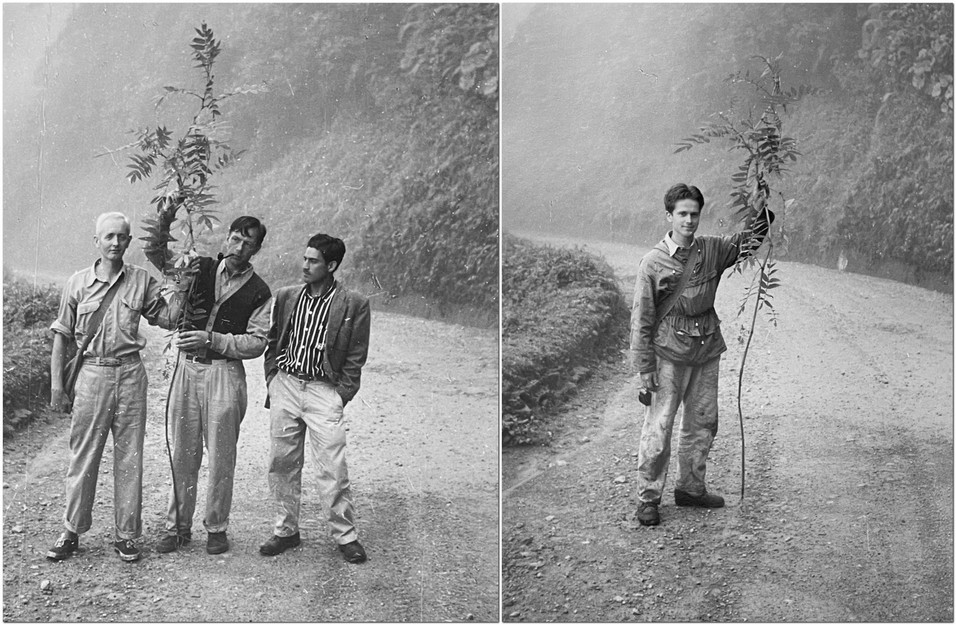
In 1958, with Peter Hjerting and young research assistant Richard Lester (who later joined the Department of Botany as a Lecturer), Jack made a six month expedition to the USA , Mexico, and Central America.

Here is another account of that trip from the University of Birmingham Gazette. Besides potatoes, many other species were made for other institutions and botanic gardens.

Collecting a sample of Solanum agrimonifolium (No. 1854) in Guatemala. L: Jack Hawkes, Peter Hjerting, and Morse (driver?); R: Richard Lester

Just three months after I arrived at Birmingham in September 1970 to enrol on the MSc course on plant genetic resources, Jack was off on his travels once again, this time to Bolivia accompanied by Peter Hjerting once again, his research assistant Phil Cribb and, in South America by Zósimo Huamán from the International Potato Center (CIP) and Moisés Zavaleta and others from Bolivia.

This is the official trip report. Here are some images from the 1971 expedition, courtesy of Phil Cribb.

Jack and Peter made another trip to Bolivia in 1974 (with research assistant Dave Astley), and another in 1980. They published their monograph of The Potatoes of Bolivia in 1989.


In September 1971, Zósimo Huamán and Moisés Zavaleta came to Birmingham to study on the genetic resources MSc course. In that same cohort was a young botanist, Stephanie Tribble, recently graduated from the University of Wales – Swansea (now Swansea University). During the summer of 1972, Steph and I became ‘an item’, so-to-speak. However, by then I was already making plans to leave the UK and join CIP in Lima by January 1973, and on graduation, Steph was keen to find a position to use the experiences and skills she had gained on the course.

Just at that time, a Scientific Officer position opened at the SPBS, as assistant to Dalton Glendinning who was the curator of the CPC. Steph duly applied and was appointed from about October that year. Jack must have supported her application. Coincidentally, the MSc course external examiner was no other that Norman Simmonds who met Steph during his course assessment.

I moved to Peru in January 1973, and within a few days discovered that Jack had mentioned Steph to CIP’s Director General, Richard Sawyer. Well, to cut a long story short, Steph was offered a position as Assistant Geneticist at CIP, to support management of CIP’s large potato collection, similar to the role she’d had at Pentlandfield. She resigned from the SPBS and joined me in Lima in July that year. We married there in October, remaining with CIP in Peru and Central America for another eight years.

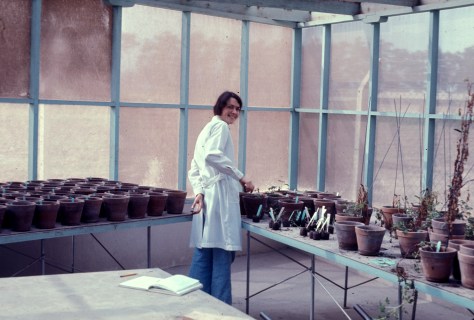
Steph working in one of CIP’s screen-houses at La Molina on the eastern outskirts of Lima in 1974.

In April 1981 I was appointed Lecturer in Plant Biology at Birmingham, 18 months before Jack’s retirement, the aim being that I would assume Jack’s teaching commitments on the MSc course. When I also took over the Hawkes potato collection in 1982, I had high hopes of identifying funding for biosystematics and pre-breeding research, and continuing the Birmingham focus on potatoes.

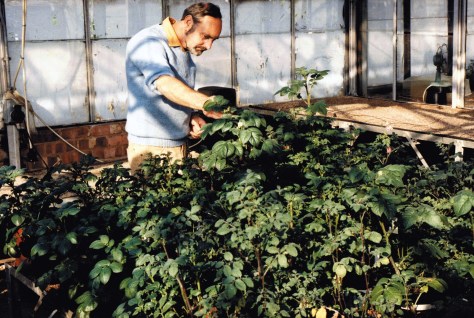
Dave Downing was the glasshouse technician who carefully managed the Hawkes collection at Birmingham for many years.

That was not the case, and as the collection needed a dedicated glasshouse and technician I could not justify (nor financially support) holding on to such valuable research space. And, in any case, continuing with the Hawkes collection was actually blocking the opportunities for other potato research because of the MAFF-imposed restrictions.

So, with some regret but also acknowledging that Jack’s collection would be better placed elsewhere, I contacted my colleagues at the CPC to see if they would be interested to receive it—lock, stock, and barrel. And that indeed was what happened. I’m sure many new potato lines were added to the CPC. The germplasm was placed in quarantine in the first instance, and has passed through various stages of testing before being added officially to the CPC. Throughout the 80s and 90s Jack would visit the CPC from time-to-time, and look through the materials, helping with the correct identification of species and the like.

Jack’s interest in and contributions to potato science remained with him almost up to his death in 2007. By then he had become increasingly frail, and had moved into a care home, his wife Barbara having passed away some years previously. By then, Jack’s reputation and legacy was sealed. Not only has his scientific output contributed to the conservation and use of potato genetic resources worldwide, embodied in the CPC that he helped establish all those decades earlier, but through the MSc course that he founded in 1969, hundreds of professionals worldwide have continued to carry the genetic conservation torch. A fine legacy, indeed!


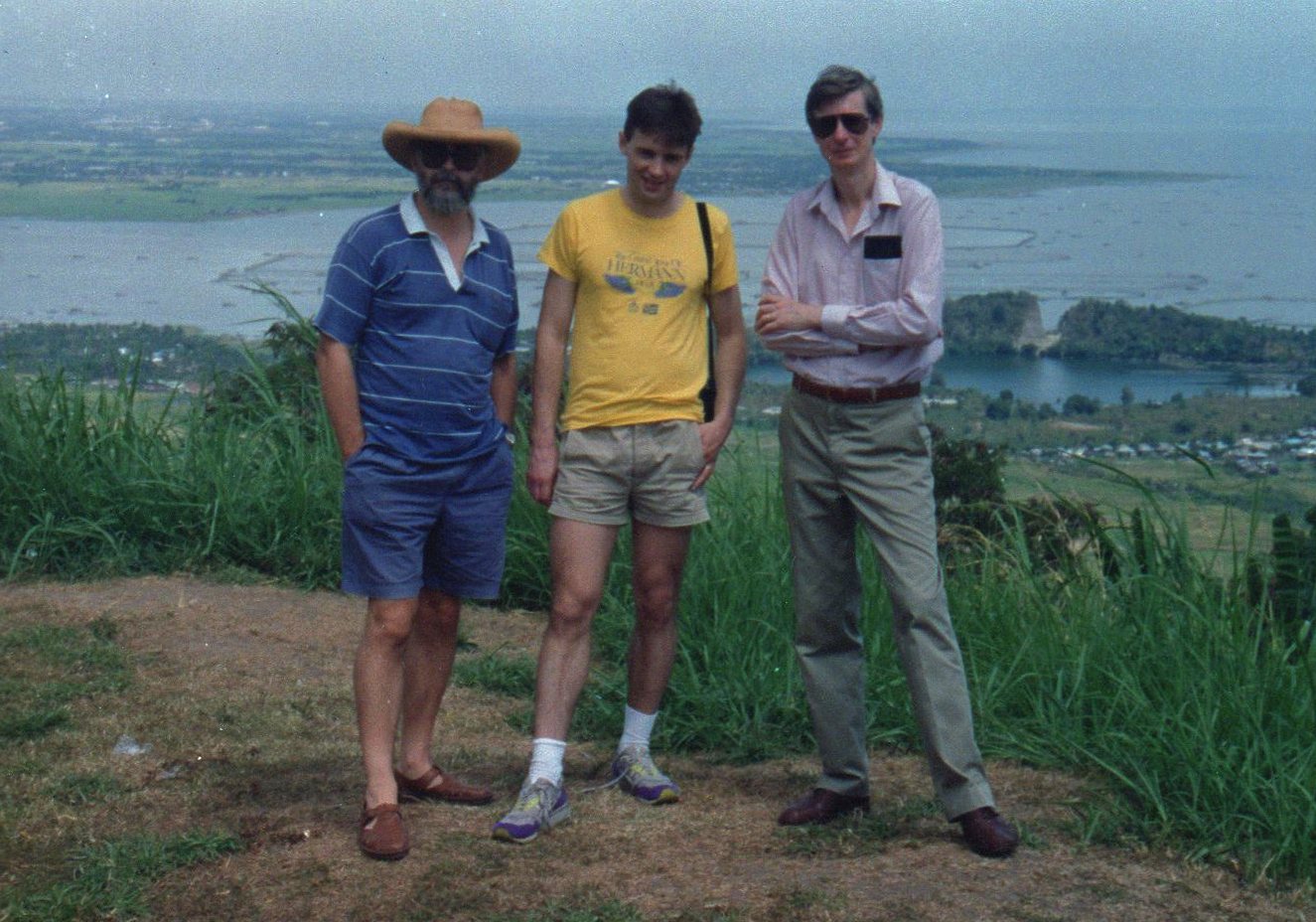
¹ Glenn and I go back almost 30 years when, as a young scientist at the John Innes Centre (JIC) in Norwich, he was a member of a rice research project, funded by the British government, that brought together staff at the International Rice Research Institute (IRRI) in the Philippines where I was Head of the Genetic Resources Center, the University of Birmingham (where I had been a faculty member for a decade from 1981), and the JIC to use molecular markers to study IRRI’s large and globally-important germplasm collection conserved in its International Rice Genebank.

L-R: me, Glenn, and John Newbury (who later became professor at the University of Worcester) during a spot of sight-seeing near IRRI in 1993.


  • Originally published on 24 August 2021.

When east meets west . . . music happens!

Steph and I are not into live music concerts. It’s never been our thing, but . . .

. . . when visiting our elder daughter Hannah in St Paul, Minnesota in June 2003, she had three tickets to see Fleetwood Mac at the Xcel Energy Center in downtown St Paul. And just after we returned to the UK in May 2010, we enjoyed a concert by Mark Knopfler at bp pulse LIVE (formerly the LG Arena) in Birmingham.

Before those two concerts it must have been almost 30+ years since I’d attended any live concert, while I was still at university.


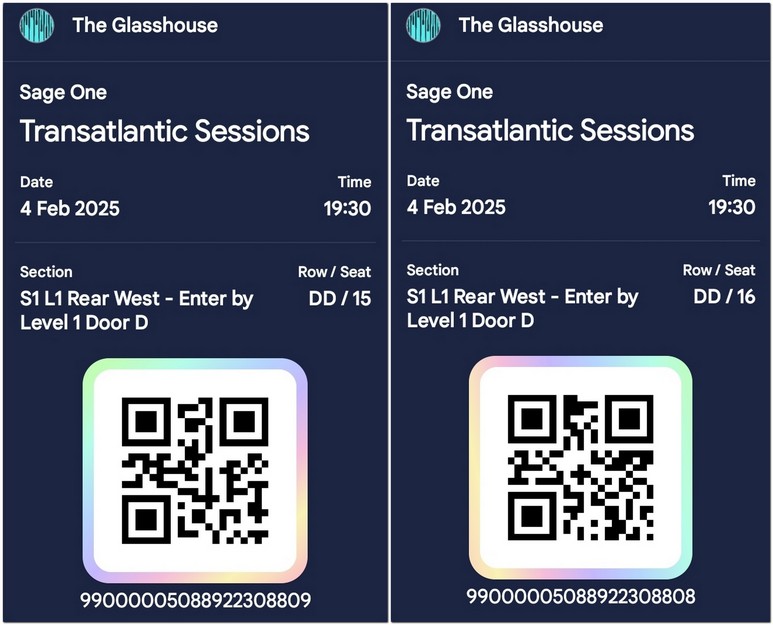
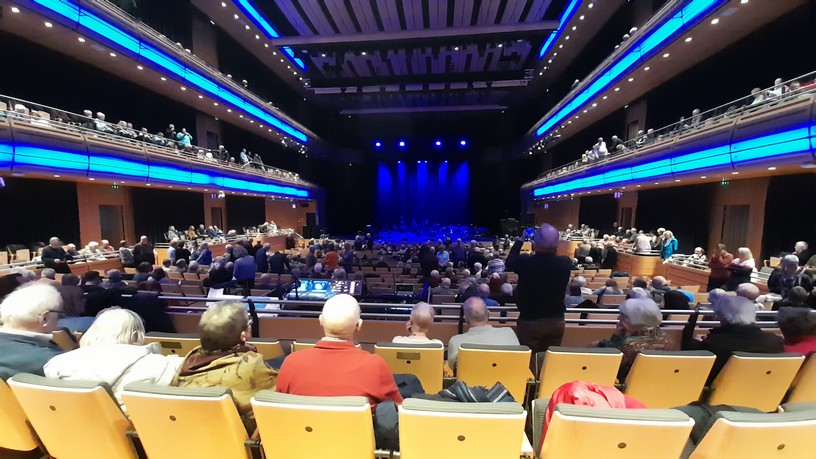
So what changed the habit of a lifetime? Last night (4 February) we enjoyed a concert at The Glasshouse International Centre for Music (formerly Sage Gateshead) on Gateshead quayside beside the River Tyne—right across the river from Newcastle city center. It was our first visit there.

The Glasshouse International Centre for Music on the south bank of the River Tune, taken from the Gateshead Millennium Bridge.

View west along the River Tyne from Baltic (a contemporary art center), with the Glasshouse International Centre for Music on the left, and the Millennium and Tyne Bridges (and others) connecting Gateshead with Newcastle on the right.

And the concert? Click on the banner below to open.

Just the one night in Gateshead, from a tour of eight venues between 31 January and 9 February. Tickets at just £39.40.
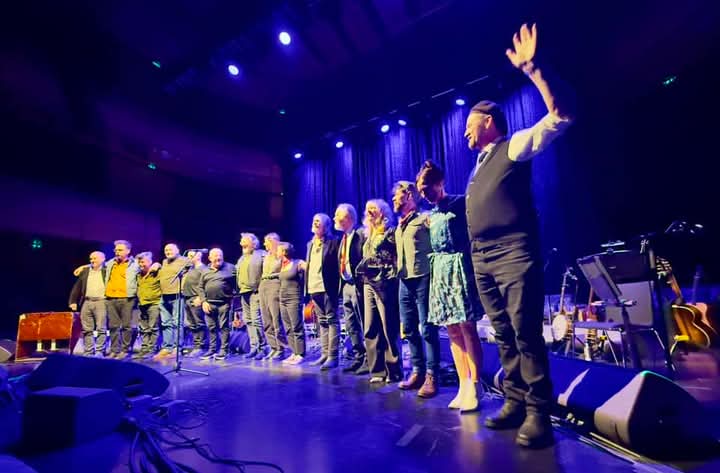
So why Transatlantic Sessions? We have been fans of this joyous fusion of Scottish, Irish, and American music since we first watched the various series on BBC4. Series 1 was broadcast in 1995, with subsequent series in 1998, 2007, 2009, 2011 and 2013, each comprising six programs. Here are the details of the programs and the many artists who have appeared over the years. This is what is written on the Sessions website:

. . . 2025 mark[s] 30 years since the original TV series first aired and continuing to explore and celebrate the rich musical traditions that connect Scotland, Ireland and the US. An annual focal point of Celtic Connections, the exclusive line-up combines guest singers and the celebrated house band, inviting them to interweave original material with age-old tunes and songs as they explore shared roots and find new common ground.

Here is just a sample of what you can enjoy. The complete series can also be viewed on YouTube, and listened to on Spotify (which I’m doing right now as I write this!). I came across Iris de Ment, who appeared on the first series, when viewing those videos.

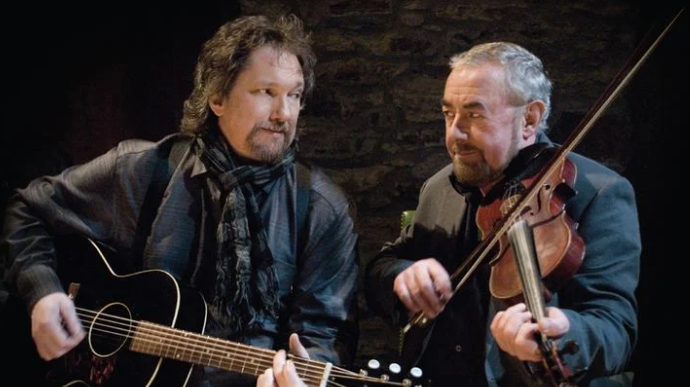
Coordinated by musical co-directors Aly Bain MBE, a renowned fiddler from Shetland, and Jerry Douglas, a virtuoso dobro (resonator guitar) player from Ohio and a member of Alison Krauss and Union Station, the house band for 2025 had an impressive line-up, several regulars from the TV series, and some new faces as well.

Jerry Douglas (left) and Aly Bain (right).

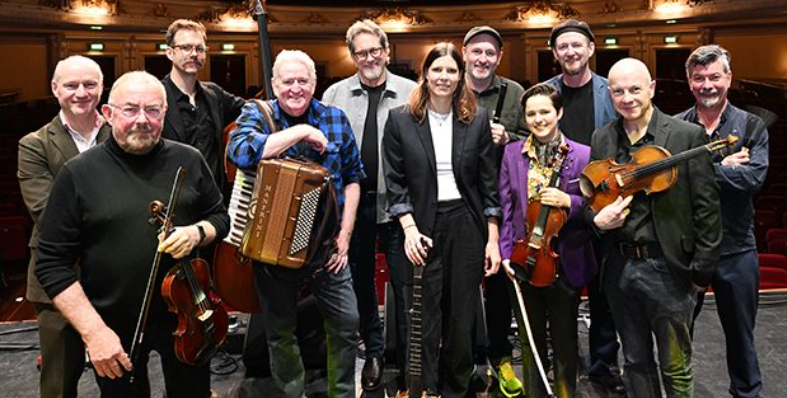
The Transatlantic Sessions house band. L-R: Donald Shaw, Aly Bain, Daniel Kimbro, Phil Cunningham, Jerry Douglas, Allison de Groot, Michael McGoldrick, Tatiana Hargreaves, John Doyle, John McCusker, and James Mackintosh.

Old timers were John McCusker (fiddle), Michael McGoldrick (whistle, Irish flute, and uilleann or Irish pipes), Donald Shaw (piano, harmonium, and accordion), and James Mackintosh (drums). Phil Cunningham (accordion) was unable to participate last night due to some family issues.

Newcomers for 2025 were Allison de Groot (banjo) from Canada, Tatiana Hargreaves (fiddle) and Daniel Kimbro (electric and upright bass) from the USA, and John Doyle (guitar) from Ireland (who has appeared from time to time over the years). Daniel and John also performed solo self-penned songs.


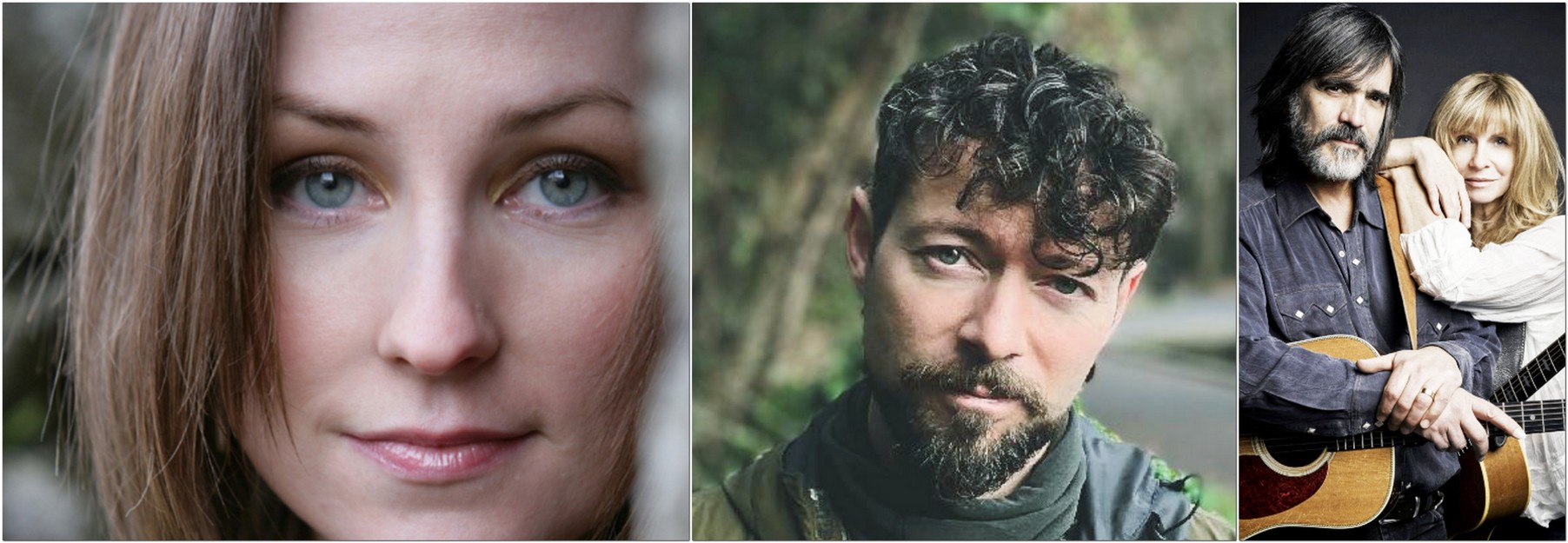
Last night’s concert was a mix of house band sets interspersed by individual ones from the guest artists, who were for 2025:

L-R: Julie Fowlis, Niall McCabe, and Larry Campbell and Teresa Williams.

Singer Julie Fowlis (whistle, bagpipes) was born in North Uist in the Outer Hebrides. In fact, she comes from the village of Hougharry on the west coast (so I was told), which I visited in 1966 and 1967, and returned there with Steph in 2015. In last night’s show, she sang several songs in Gaelic, and joined the house band on the whistle and, at the end of the show, playing the bagpipes.

Here she is singing (and playing the pipes) Hug Air a’ Bhinaid Mhoir (recorded in Glasgow at the start of the 2025 tour just a few nights ago), to great audience acclaim last night.

Irish singer-songwriter Niall McCabe was born on Clare Island off the coast of Co. Mayo in Ireland and sang his own material.

Larry Campbell (electric guitar, mandolin) and Teresa Williams (vocals) are a dynamic duo from the USA, hailing from New York and Tennessee, respectively. Besides performing their own mini-sets, Larry played in the house band, and Teresa provided backing vocals, even in Gaelic when Julie Fowlis was performing. Their gospel song in the second half was a tour de force.

And lastly, the inimitable Loudon Wainwright III, a larger-than-life performer who we first came across in the the late 1980s, when he guested on the 1987 BBC show Carrott Confidential, hosted by Birmingham-born comedian Jasper Carrott.

Here is Loudon singing one of my favorite songs, Harry’s Wall, which was released on his album Therapy in 1989.

Wainwright also appeared in three episodes of M*A*S*H, as singing surgeon Captain Calvin Spalding during 1974-1975. We caught up with those episodes when we were living in the Philippines during the 1990s.

In last night’s concert I particularly enjoyed Wainwright’s version of Harmless (or Hermless) by the late Dundee bard, Michael Marra (a great friend of his). Here’s a link to a version on Spotify that Wainwright has recorded.


The concert lasted almost three hours, with a short intermission. It was originally scheduled for a little longer, but since Phil Cunningham could not appear – who I assume would have had a couple of solo sets – it finished just before 22:30.

It began, as Jerry Douglas explained, with a set of three reels to get the band warmed up, so to speak. As if they needed it. No-one was reading from sheet music. How they keep all those tunes stored away in their minds!

One thing in particular, struck me. How everyone on stage worked together, more than the sum of the parts. If anyone had an ego, that was left at the Stage Door. Impressive.

Unfortunately there was no program, so I can’t provide details of the sets. We thoroughly enjoyed the mix of Scottish and Irish melodies (reels and the like), Appalachian, and gospel music, even contemporary compositions, blended with the backing from the house band. One of the most impressive performances was a song—in Gaelic—by Julie Fowlis, accompanied mostly by Donald Shaw on the harmonium.

The Sage One auditorium (holding >1600) was full. Sold Out! We had great center seats at the back of the auditorium.

The view from Row DD, Level 1.

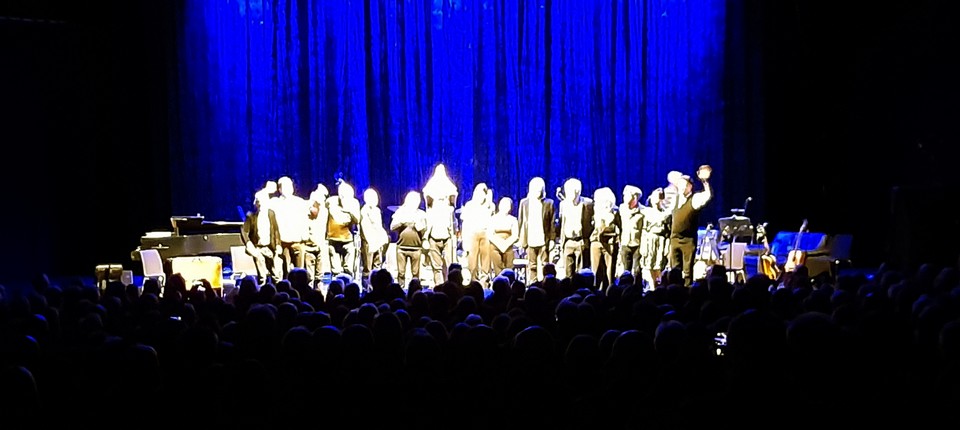
An acquaintance of Facebook kindly sent me these photos that he took during the concert:

Taking a bow . . .

Two final observations. It was interesting to ponder the demographics of the audience, very few under 50, and probably an average age in their 60s. Lots of grey heads, and (so I thought) a higher proportion of beards than you might see in the general population.

All too soon, 22:30 rolled round, and it was time for the encore. What a great evening, and such a pleasure to see these fine musicians live.

We look forward to Transatlantic Sessions returning to Gateshead in 2026.