A young man, Jimmy Rabbitte by name, walks through a street market, a horse fair, across a desolate 1960s housing estate, trying to sell merchandise – mainly videos – that he carries in a bag on his shoulder.
He’s on his way to a wedding reception, although he’s not one of the guests. No. He just wants to meet the members of a band who, as he arrives at the reception, are performing a dreadful interpretation of The Searchers’ 1964 hit Needles and Pins. Just as he enters the room, a group of children are running about, and in the melee, one little girl collides with the outstretched leg of an elderly gentleman dozing at one of the tables, no doubt having had one pint too many.
Woken from his slumber, ‘Fuck off’ he snarls at the child, almost the first dialogue in Alan Parker‘s classic 1991 film The Commitments – probably one of the best movies of the 90s.
Well what an interesting way to start a film. And so it went on. If you have ever read any of Roddy Doyle’s brilliant tales of Dublin life, you know that ‘effing and blinding’ is just part of the Dublin vernacular.
Well, I was reminded this past week of when and where I first watched The Commitments because it has just translated to the London stage, to quite favorable reviews.
It must have been about 1992, I guess. Saturday night in Los Baños (in the Philippines). Having finished dinner, we (Steph, Hannah, Philippa and me) sat down to watch a video we’d rented that afternoon from the local store on Lopez Avenue, Dis ‘n’ Dat.
The Commitments?Roddy Doyle? I’d never heard of either, so had no idea what the film was all about. Not a wise move, in some respects, since Hannah was only about 14, Phillipa 10. There was strong language from the outset, as I described earlier. What to do? Switch off or continue as though there was nothing untoward? We carried on. And we all enjoyed the movie.
So what is Alan Parker’s film (co-written by Dick Clement, Ian La Frenais and Roddy Doyle) all about? Young Jimmy Rabbitte wants to form ‘The World’s Hardest Working Band’ and bring soul music – black soul music – to the masses. As one of the prospective band members reacts to this revelation: ‘Well like, maybe we’re a little white?’
Here they are singing Mustang Sally.
Alan Parker’s genius was in casting a group of youngsters who had never acted before, but who could really sing. Take Andrew Strong, cast as lead singer Deco, for instance. Only sixteen when The Commitments was made, he had an acting and singing maturity way beyond his age. And what a romp the film turns out to be. Needless to say, without spoiling the plot for anyone who has not yet seen the film – but I urge you to do so – it’s all about the formation and trials and tribulations of the band, and its ultimate break-up. It’s too successful.
Don’t worry about the strong language; that goes with the territory. A few years later, when a student in St Paul, Minnesota, Hannah attended a reading by Roddy Doyle of some of his works. It was held in one of the local Lutheran churches, but true to form, Roddy pulled no punches, ‘effing and blinding’ his way through the various excerpts. Even though it was a church venue, the audience loved it. There’s a time and place for everything – I wish some of today’s so-called stand-up comedians understood the power of the appropriately chosen ‘eff and blind’ rather than sprinkling their acts with gratuitous profanities. I should add, I’m no prude when it comes to strong language on the TV. It can be used impressively to enhance a drama, as the recent series set in Birmingham, Peaky Blinders, has demonstrated. Also, I’m a great fan of Billy Connolly, whose language, for some, leaves a great deal to be desired. But it’s all part of his Glaswegian vernacular, just as Roddy Doyle’s use of this language reflects the reality of life in Dublin.
Senatus Populusque Romanus – SPQR.
The Senate and People of Rome. Those initials are still used on the modern-day emblem of the Rome municipality. It’s everywhere – and a reminder of Rome 2,000 years ago.
But Ancient Rome’s incredible story is all around, woven into the very fabric of the city. Add to that the impact of the Catholic Church and the Renaissance on Rome’s architecture, and there’s an eclectic mix of ancient and modern, Christian and pagan, sacred and secular, and all things in between. Benito Mussolini also contributed to the architectural pot-pourri in the 1930s. Take, for example, the FAO headquarters building that stands beside the Caracalla Baths (Terme di Caracalla) at the foot of the Caelian Hill (one of Ancient Rome’s seven hills), looking over the Circus Maximus, the buildings on the Palatine Hill, and to the far west, the dome of St Peter’s Basilica. A rambling building in which it’s quite easily to get lost (and I have), it was originally Mussolini’s Department of Italian East Africa.
Views from the FAO roof terrace, looking north over the Circus Maximus towards the Palatine Hill, and the Colosseum (on the right) at the top of the Via di San Gregorio. You can just see the Arch of Constantine peeking above the trees, to the left of the Colosseum. The Victor Emmanuel II monument can be seen on the skyline on the left of the photo (click on this and other images to enlarge). Likewise on the photo below, the magnificent dome of St Peter’s dominates the Rome skyline.
Many visits to Rome
I’ve been traveling to Rome on quite a regular basis since 1989 when I made my first trip there. I must have been back there about 20 times or more while I was working at IRRI in the Philippines. That’s because Rome is home to three UN agencies: The Food and Agriculture Organization (FAO); the International Fund for Agricultural Development (IFAD); and the World Food Programme (WFP); as well of one of the 15 centers of the CGIAR, Bioversity International (formerly the International Board for Plant Genetic Resources – IBPGR, which became the International Plant Genetic Resources Institute – IPGRI, before becoming Bioversity International in the mid-2000s).
When it was first founded in the 1970s, IBPGR was located in the headquarters of FAO in Rome. And that’s where I headed in the late Spring of 1989 to sort out the funding for germplasm collecting work in the Canary Islands for one of my PhD students, Javier Francisco-Ortega. Then in April 1991, even before I formally joined IRRI as Head of the Genetic Resources Center, I was asked to represent the institute at the meeting of the Commission on Genetic Resources for Food and Agriculture held at FAO. And for the next decade I would travel to Rome every year, sometimes more than once, and in one year between 1993 and 1996,when I chaired the Inter-Center Working Group on Genetic Resources, I actually traveled to Rome five times.
But when I changed jobs at IRRI in May 2001, and took on responsibility for raising funds from the institute’s donor agencies, I still traveled to Rome each year to visit IFAD or attend inter-center director meetings hosted by Bioversity International.
So this is by way of background to explain why I traveled to Rome as frequently as I did.
And it’s a city that I came to know quite well, and to love the buzz of the place. Even so, I feel as though I’ve only scratched the surface of Ancient Rome, if the stories told by Cambridge classics professor Mary Beard on recent BBC TV programs are anything to go by.
So what is special about Rome?
Rome is a great city to get to know on foot – and I’ve walked miles and miles through the maze of narrow cobbled streets and piazzas, and along the River Tiber of course, heading towards the Vatican City and the glories of St Peter’s and the Vatican Museum. Even so, if you get sore feet, Rome has an extensive network of buses and trams on which you can hop; its taxi system is also very efficient (at least in my experience, although the 140 kph or more dash to the airport always had me on the edge of my seat). Despite all that walking, I still have only scratched the surface of Rome, ancient and modern. That’s because I could only get out and about exploring when I had a weekend free.
Piazza Navona
Crossing the Tiber
View from the Spanish Steps
It also goes without saying that Rome is also a great place for food and wine – and not really over expensive. If you choose the right location. I very quickly found a number of restaurants that I would visit frequently, such as La Villeta(waiters all wear the AC Roma colors – family run, good atmosphere) and the TavernaCestia (always had a good meal here) at the southern end of the Viale Aventino, or the Grottino da Rino (great antipasti) just down the street from FAO, close by the San Anselmo Hotel on the Aventine Hill where I often stayed. Near the Colisseum I often stayed at the Lancelot Hotel, and often ate in a typical tratoria, Luzzi in Via di San Giovanni in Laterano.And it’s this last one which really epitomizes the sort of restaurant I looked for: one where the locals were eating, with some tourists. But wherever you search, there are so many good eating places to choose from – serving simple and delicious food. I’ve only been to restaurants in Trastevere a couple of times – tends to be a little touristy, maybe catering to the tastes of a younger set.
The map below is centered on the Colosseum, but just zoom out and explore Rome!
View from FAO towards the Caelian Hill and the Colosseum.
The Arch of Constantine from the Colosseum.
The Arch of Constantine.
The entrance to the Forum from the Colosseum.
A view over the Forum.
Dominating the skyline between the Caelian and Palatine Hills, the Colosseum, built by the Flavian emperor Vespasian and his successor Titus between AD70 and AD80, is a wonder of Roman architecture and construction (the Romans used lots of concrete). On a still night you can almost hear the lions roaring.
Overlooking the Piazza Venezia is the ‘wedding cake’ monument to Victor Emmanuel II – an iconic part of Rome’s skyline.
Here are some views of the Piazza Navona, the Trevi Fountain, and the Pantheon (where the former Kings of Italy are buried), and the Spanish Steps.
Piazza Navona
Finally, no visit to Rome is complete without at least a look at St Peter’s – even if it’s only from outside. What a stunning piece of Renaissance architecture. It’s worth a look inside (my photos are not so good), but depending on the season, the queue can be quite daunting – as can be that for the Vatican Museum. If you have the patience, the museum has some incredible treasures (to be expected from an institution that has dominated all parts of the world for two millennia). And from the museum it’s possible to walk in part of the papal gardens.
Hopefully, I’ll get a chance to visit Rome once more, and then take time to visit all those places that are still on my list. And I must remember to take a decent camera with me next time. In my dreams I’m eternally returning to the Eternal City.
June 1815. British and allied troops muster in Brussels (then part of the United Netherlands) as the Duke of Wellington prepares to meet Napoleon at the Battle of Waterloo.
The troops are in good spirits, the social life of high society thrives, even as troops march to the front, with officers being called away to their regiments from the Duchess of Richmond’s Ball on the eve of the battle. The weather is fine, although it would deteriorate dramatically over the course of the battle in the next day or so.
Arriving in Belgium, one soldier commented on the productivity of the local agriculture: I could not help remarking the cornfields today . . . they had (as I thought) a much finer appearance than I had seen in England, the rye in particular, it stood from six to seven feet high, and nearly all fields had high banks around them as if intended to let water in and out, or to keep water out altogether – but the rich appearance of the country cannot fail to attract attention.
Another cavalry officer wrote: I never saw such corn [probably referring to wheat] 9 or 10 feet high in some fields, and such quantities of it. I only wonder how half of it is ever consumed.
These are among the many contemporary commentaries in Nick Foulkes’ entertaining account of the social build-up to Waterloo. So what does all this have to do with the beauty (and wonder) of diversity?
Landrace varieties
Well, they are actual descriptions, almost 200 years old, of the cereal varieties being grown in the vicinity of Brussels. Once upon a time, not too long ago before plant breeding started to stir up genetic pools, all our crops were like those described by soldiers off to fight Boney. We often refer to them as farmer, traditional or landrace varieties which have not been subjected to any formal plant breeding. You also hear the terms ‘heritage’ or ‘heirloom’ varieties, especially for vegetables and the like. Landrace varieties are highly valued in farming systems around the world – and the basis of food security for many farmers who grow them. However, in many others they have been replaced by highly-bred and higher yielding varieties that respond to inorganic fertilizers. The Green Revolution varieties released from the 1970s onwards, such as the dwarf wheat and rice varieties championed by pioneers such as Dr Norman Borlaug, bought time when the world faced starvation in some countries.
Now I’ve been in the business of studying the diversity of crops and their wild relatives almost all my professional life: describing it; assessing its genetic value and potential; and making sure that all this genetic treasure is available for future generations through conservation in genebanks.
The nature of diversity
But it wasn’t until the early 20th century – with the work of Nikolai Vavilov and his Russian colleagues, and others that followed in their footsteps – that we really began to understand the nature and geographical distribution of diversity in crops. Today, we’ve gone the next step, by unraveling the secrets of diversity at the molecular level.
This diversity has its genetic basis of course, but there is an environmental component, as well as the important interaction of genes and environment. And I’m using a wide definition of ‘environment’ – not just the physical environment (which we think of in terms of growing conditions governed by geography, altitude, soil and climate) but also the pest and disease environment in which crops (and their wild relatives) evolved and were selected by farmers over centuries to better fit their farming systems. Landrace varieties that are still grown today in some parts of the world (or conserved in genetic resources collections) are extremely important sources of genes for adaptation to a changing climate for instance, or resistance to pests and diseases, as we have highlighted in our forthcoming book.
My own work on potatoes, rice and different grain legumes aimed to understand their patterns and origins of diversity, as well as the breeding systems which molded and released that diversity. I’ve been fortunate to have the great opportunity of working with or meeting many of the pioneers of the genetic resources movement, as I have described in other posts in this blog. But at the beginning of my career I became interested in studying crop diversity after reading the scientific papers of a group of botanists, Jens Clausen, David Keck and William Hiesey at Stanford University (and others in Europe) who undertook research to understand patterns of variation in different plant species and its genetic and physiological underpinning.
These Californian pioneers studied several plant species found across California (including Achillea spp. and Potentilla spp.), from the coast to the high sierra, and planted seeds from each of the populations in different experiment stations or ‘experimental gardens’ as they came to be known. They described and determined the physiological and climatic responses in these species – and the genetic basis – of their adaptation to the different environments. The same species even had recognizable morphological variants typical of different habitats.
Experimental gardens established by Clausen Keck and Hiesey at three sites across California to study variation in plant species.
Interesting research has also been carried out in the UK on the tolerance of grasses to heavy metals on mine spoil heaps. Population differentiation occurs within very short distances even though there may be no morphological differences between tolerant and non-tolerant forms. Researchers from Aberystwyth have collected grasses all over Europe and have found locally-adapted forms in rye grass (Lolium) for example, which have been used to improve pasture grasses for British agriculture. But such differences in these and many other crops can often only be identified following cultivation in field trials where the variation patterns can be compared under the same growing conditions (following the principles and methods established by Clausen and his co-workers), and the data analysed using the appropriate statistical tests.
I began my work on genetic resources in 1970. I quickly realized that this was the area of plant science that was going to suit me. If I wasn’t already hooked before I moved to Peru, my work there at CIP on potato landrace varieties in the Andes (where the potato originated) convinced me I’d made the right decision. The obvious differences between crop varieties are most often seen in those parts of the plant which we eat – the tubers, seeds and the like, the parts which have probably undergone most selection by humans, for the biggest, the tastiest, the sweetest, the best yielder. Other traits that adapt a variety to its environment are more subject to natural selection.
Patterns of diversity are so different from one crop species to another. In potatoes it’s as though a peacock were showing off for its mate – you can hardly miss it, with the colorful range of tuber shapes but also including differences in the color of the tuber flesh. Modern varieties are positively boring in comparison. Who wouldn’t enjoy a plate of purple french fries, or a yellow potato in a typical Peruvian dish like papa a la huancaina. Such exuberant diversity is also seen in maize cobs, in beans, and the squashes beloved of Americans for their Halloween and Thanksgiving displays.
Many of the other cereals, such as wheat, barley, and rice are much more subdued in their diversity. It’s much more subtle – it doesn’t hit you between the eyes like potatoes – such as the arrangement of the individual grains, bearded or not, and color, of course. When I first started work with rice landraces in 1991, I was a little disappointed about the variation patterns of this important crop. Little did I know or realize. Comparing just a small sample of the 110,000 varieties in the IRRI genebank collection side-by-side it was much easier to appreciate the breadth of their diversity, in growing period, in height, in form and color, as I have shown in the video included in another post. Just check the field plantings of rice landrace varieties from minute 02:45 in the video. Now there are color differences between the various grains, which most people never see because they purchase their rice after it has been milled.
From a crop improvement point of view, this easily observable diversity is less important. It’s the diversity for yield, for resistance to pests and diseases, and the ability to grow under a wide range of conditions – drought, submergence, increased salinity – that plant breeders seek to use. And that’s why the worldwide efforts to collect and conserve this diversity – the genetic resources being both crop varieties and their related wild species – is so important. I was privileged to lead one of the major genetic resources programs at the International Rice Research Institute in the Philippines for 10 years. But the diversity programs of the other centers of the CGIAR collectively represent one of the world’s most important genetic resources initiatives. Now the Global Crop Diversity Trust (which has recently moved its headquarters from Rome to Bonn in Germany) is not only providing some global leadership and involving many countries that are depositing germplasm in the Svalbard Global Seed Vault, but also providing financial support to place germplasm conservation on a sustainable basis.
Crop diversity is wonderful to admire, but it’s so much more important to study and use it for the benefit of society. I spent almost 40 years doing this, and I don’t have any regrets at all that my career moved in this direction. Not only did I get to do something I really enjoyed, I met some incredible scientists all over the world.
I like to think I’m an organized sort of person. And I’m always looking at ways of doing anything more efficiently. What I hate is having to do something twice. ‘Do it once and do it right’ has been my motto, and that’s an approach I endeavored – with some success, I should add – to instill in the various staff who have worked for me over the years.
I call it ‘the San Miguel effect’. Whatever is that, I hear you cry? San Miguel is the principal brand of beer brewed in the Philippines (it had cornered 95% of the market by 2008). And as I always told my staff, ‘If you do something right first time, it frees up time for even better things – like drinking San Mig!’
I remember once chatting with a friend – over a San Mig or three – and he said to me, ‘Well, since you trained as a taxonomist [that’s someone who deals with classification of plants and animals], I bet you have your CD collection all sorted alphabetically’. True! I like things to be in their right place and I get so frustrated when I’m not able to find something I know I’ve ‘put away’ safely. And on it goes.
Over the years, I’ve done my fair share of travelling, and I think I’m pretty good at packing a suitcase – I’ve had enough practice. But you’re never to old to learn. And this relates also to how you store your clothes at home – for which (until very recently) I was not the most organized person, I have to say. But all that has changed, thanks to a video that one of my Canadian cousins posted on Facebook.
I keep all my ironed shirts on hangers in my wardrobe. T-shirts and underwear were just piled up in drawers. Not any longer. Having watched this video I’ve almost become obsessed with making sure all my clothes are carefully folded aw away. This technique also works on long sleeve shirts and pullovers, subject to a few folds I’ve added.
Now my clothes are neatly folded away, easy to locate, and my wife is happy.
And having sorted this problem out, I went looking for more tips online. This is a great one for folding and packing a suit and dress shirt.
Well, it doesn’t stop there. Ever got yourself in a twist with a fitted bedsheet? Not any more. Watch this.
Some folding techniques – like that for the suit – are intuitive. How ever did someone work out the 2 second shirt fold, or the fitted sheet?
Hailed by some as the new David Attenborough (who, over five decades or more, has brought some of the most iconic programs about the natural world to the small screen), Manchester University and CERN physics Professor Brian Cox seems to be on TV almost every other week. He’s almost become the ‘rock star’ of TV science – which is apt since in his youth (he’s not exactly in his dotage now, being only 45) he was a member of the group D:Ream (I have to admit to never having heard of them before despite their 1993 song,Things Can Only Get Better, being adopted by Britain’s New Labour during the 1997 General Election campaign).
I’m not one of Cox’s greatest fans. He’s good when he sticks to his own specialty of physics and similar (even though I have a hard time following him – and he’s obsessed with very large numbers, billions and billions, which I can’t get my head around). His 2011 series Wonders of the Universe was quite compelling. I found him less convincing in his early 2013 series, Wonders of Life (when he slipped into ‘David Attenborough’ mold). I find his constant simpering smile quite off-putting, but I guess it’s rather unfair to condemn him for that.
Last week he began a new three-part series, Science Britannica, in which he celebrates British science and explores the contributions of British science and scientists to making our world a better place.
Brian Cox is a natural broadcaster, and his enthusiasm for science does come across. It is quite likely that the upsurge of interest in science subjects among schoolchildren can be attributed to the popular following of his TV programs. However, the one thing that I do admire most, are his clear and simple explanations of what science is (and what it isn’t), how science is carried out (and how it can be and is sometimes carried out badly). In short, his explanation of the ‘scientific method’ is key in today’s world of conflicting ideas, perspectives and policy – that may be based on sound scientific evidence. Or maybe not. Based on empiricism, development of hypotheses, experimentation and peer review, science provides an insight into how the world operates. And this is so important, as I have pointed out recently in this blog. It’s particularly relevant, say, to the acceptance or rejection of anthropogenic climate warming. The rejection of genetically modified crops without sound scientific basis is another reason to be concerned about the misunderstanding of science. These and more Brian Cox has tackled in the first two parts of the Science Britannica series.
Given my enthusiasm for explaining the importance of science, I was very disturbed yesterday to read about the ‘fear of science’ among House Republicans in the US Congress, blocking the appointment of a US Science Laureate. Read the story here.
I came to science late, in one sense. So I don’t count myself in the same league as those scientists who have focused their entire careers seeking knowledge. I kept my study options quite broad until I went to graduate school. And although my botany PhD finally gave me a sense of scientific purpose, I’ve always had a broader perspective than just one relatively narrow area of science. But, I am passionate about science communication, so I am pleased that my alma mater, the University of Birmingham, has appointed Alice Roberts as Professor of Public Engagement in Science. Animal behaviorist Richard Dawkins (and now mathematician Marcus du Sautoy) was the Simonyi Professor for the Public Understanding of Science at Oxford University.
One of the best lectures I’ve ever heard about the importance of science (doing the right science, and doing the science right) was the 2012 Richard Dimbleby Lecture on the BBC delivered by President of the Royal Society and Nobel Laureate (and 1970 University of Birmingham biology alumnus!) Professor Sir Paul Nurse. He explains, in a remarkable feat of oratory what science means to him, and why we need to continue to invest in science and scientists. I couldn’t agree more. His lecture is worth 45 minutes of anyone’s time.
As I have blogged on quite a number of occasions now, Steph and I have enjoyed our National Trust membership since becoming members in early 2011. It certainly gives a focus for days out when the weather permits – and we’ve more than had our money’s worth in terms of membership fees versus entrance charges. So on our way back home last Sunday from our visit to the northeast we took the opportunity of stopping off in North Yorkshire. The weather forecast had been so-so, but it turned out to be a perfect late September day: bright and sunny, balmy even; almost an Indian summer.
In July we had visited Fountains Abbey, a derelict Cistercian abbey near Ripon. About 20 miles as the crow flies northeast from Fountains Abbey is another famous Cistercian ruin: Rievaulx Abbey, which is owned and managed by English Heritage.
But it wasn’t the abbey that we went to visit, but a delight of 18th century landscape gardening on the hillside above the ruins – Rievaulx Terrace and Temples. Constructed in the mid-18th century by Thomas Duncombe II (who had inherited Duncombe Park in nearby Helmsley), it provided a pleasant landscape from which to view the abbey ruins in the valley below of the River Rye (which also runs alongside another NT property, Nunnington Hall, about eight miles away to the south).
The grassy terrace, just below the brow of the hill, is bordered on the east side by a beech wood, and on the west – towards the abbey ruins – the valley drops away steeply, and is densely wooded, except for a number of avenues that were cut through the trees to provide views of the ruins below. You can see these quite clearly in the Google Earth satellite image below, just below the label ‘Mossy Bank Wood’.
There are two temples – that at the north end is an Ionic temple, open to the public at various times of the day; and the southern temple is a Tuscan round design, and is permanently closed.
The Ionic Temple at the north end of the Terrace.
Looking south along the Terrace from the Ionic Temple.
The ruins of Rievaulx Abbey lie in the valley of the River Rye.
The Tuscan Temple at the south end of the Terrace.
Looking north along the Terrace from the Tuscan Temple.
Approaching the Ionic Temple from the south.
We were very lucky to arrive just after noon, and the Ionic temple was still open. Visitors are restricted because of the delicate nature – and quality – of the interior furnishings. And what masterpieces the temple contains: original table and chairs, Royal Worcester china from the 18th century, the marble fireplace, and most important of all, the absolutely stunning frescoes on the ceiling. They quite took my breath away. The temple was used to entertain guests, with a kitchen in the basement.
Detail of the portico in the Ionic Temple.
The dining table – with original 18th century furniture and crockery.
Ionic column.
Detail of the marble fireplace.
The Tuscan temple has the most gorgeous painted plaster ceiling. The National Trust has placed mirrors on the inside of the windows and it’s therefore possible to view the ceiling.
But a stroll along the terrace reveals the Rievaulx Abbey ruins in all their medieval glory. I visited the abbey once in my Southampton student days during a walking holiday in 1968 on the North York Moors. And then in the 1980s, when our daughters were small, we rented a holiday cottage just north of Scarborough on the coast, and one of our trips was to Helmsley and Rievaulx.
This slideshow requires JavaScript.
Rievaulx Terrace and Temples were a complete surprise. Beautiful (especially on the day we visited), simple, and serene. If you ever get chance to visit, do make sure it coincides with one of the Ionic Temple opening times. You would surely regret missing out on those Georgian glories.
A couple of weeks ago I posted a story about the desecration of the landscape through industrial pollution, specifically the impact of coal mining.
Last week, my wife and I made the 225 mile journey from our home just south of Birmingham to Newcastle in the northeast of England. The route we took – M42, M1, M18, A1(M) – passes through many areas where coal mining was the main industry until quite recently. But as you speed past you would be hard pressed to realize that coal mining had ever taken place, such has been the rehabilitation of the landscape. Yes, in some places there are rolling ‘hills’, covered with scrubby vegetation, the remnants of the once dominating slag heaps associated with the deep mines. In general, the coal mining footprint is slowly and irrevocably disappearing.
Not so just a few miles north of Newcastle close by the village of Cramlington (where the musician Sting once taught at a local primary school before discovering his musical mojo). Just to the west of the village is the huge Shotton surface mining complex. And this is what it looks like from a slightly elevated location.
Not a pretty sight, but thankfully you can’t really see the extent of the open cast mining from ground level. It looked as though the mine operators were restoring some parts of the site, bringing in loads of top soil.
However, if you have £3 million, and are prepared to move 1.5 million tons of rock, gravel, clay and soil, then it’s possible to really make something from a ‘derelict’ landscape. And that’s what has been achieved at Northumberlandia (from where the photos above were taken). Undoubtedly one of the largest landscape sculptures of a figure – in this case a reclining nude Lady of the North, Northumberlandia – in the world, it took a couple of years of landscaping to achieve a truly remarkable design, and was opened in September 2012.
An aerial view of Northumberlandia, with her head on the right and feet on the left.
Rising to 100 feet apparently at the head, there are over four miles of paths winding around the lady, with viewpoints from M’Lady’s breasts, hip, knees and ankles. Her right hand is raised in a salute with the index finger raised. There are three ponds to one side, which will surely become colonized by reeds and other water-loving plants and become a haven for wildlife. Already there is quite an impressive array of wild flowers on her flanks.
The paths have been laid out to provide easy access for everyone; the gradients are steeper in some sections than in others. Entry to Northumberlandia is free, but one is asked to contribute towards car parking – £2 is the suggested fee. It was a beautiful day when we visited last Saturday along with daughter Philippa and her husband Andi, and sons Elvis and Felix. Here is a small selection of the photos I took. This is what you see from ground level. It’s well worth a visit.
The first view of Northumberlandia.
Entering Northumberlandia, with M’Lady’s head behind.
From the head to the toes.
Northumberlandia’s head.
The head.
The viewing mounds (1) from the footpath to the head (2).
The right hand, with index finger raised.
‘Her hand is arranged something like this.’
The head (2) looking up M’Lady’s nose.
Looking northeast, down the nose, over M’Lady’s breasts, to the knees and ankles in the distance.
When I started this blog some 20 months ago, I decided that I would write about topics related to the things I’ve done and seen throughout my professional life on three continents, as well as other topics that come to mind now that I’m retired and look back on the decades.
I more or less decided to steer away from controversy. But no longer. And my ‘conversion’ began a couple of weeks ago when I posted a story about genetic modification (GM) and Golden Rice. There are several issues that society has to confront right now, particularly in the UK, scientists need to step up to the plate and explain – in terms comprehensible to ‘Joe Public’ – the science behind these issues, and also why it’s important not only to do the right science, but to do the science right.
That was the mantra of one of my former IRRI colleagues, plant pathologist Tom Mew: Do the right science, and do the science right.
I accept that the public is less than confident in the scientific community – suspicious even. I see two issues. First, most people do not understand the scientific method, based on observation, hypothesis generation, careful and rigorous experimentation, analysis and interpretation of results, and drawing conclusions or lessons. The paradox is that science does not always provide clear black or white, yes or no, answers. Science is involved with the assessment of risk.
But if the science is done right, and subject to the appropriate peer review then it is a system that has stood society in good stead for centuries, and has led to progress from which everyone (or the majority) in society has benefited. Just think of the progress made in medical science, in genetics, in physics and chemistry.
That’s why I get so riled when I see science being subverted or even hijacked by special interest or activist groups. Take the example of GM crops for example. As I admitted in my recent post, the scientific community didn’t exactly cover itself with glory and make the case strongly 25 years ago when the first GM crops were being promoted. The activists like Greenpeace and others essentially ‘won’ the campaign, labeling such GM crops as ‘Frankenstein foods’, a label that has been extremely difficult to overturn. It annoyed me the other night that, following a very well informed piece on the BBC’s One Show about the testing of a GM wheat by Rothamsted International in Hertfordshire (scientists have introduced a gene from a mint species, Mentha x piperita, that ‘disturbs’ aphids and they do not settle and feed – aphids transit virus diseases in plants and these cause serious yield problems) the silly Lucy Siegle immediately launched into a description of ‘Frankenstein foods’, diluting what had been a well balanced report by one of her colleagues. All credit to Sir Terry Wogan, that evening’s guest on the show, who said he would eat GM food. What concerned him was the involvement of multinational companies ‘controlling’ GM technologies and products. Even though the film report highlighted the work of Rothamsted International (with some private sector partners), no-one sought to clarify that indeed much of the GM scientific research undertaken in the UK and in many other countries is funded from the public purse.
With the recent activist groups attacking a Golden Rice field plot in the south part of Luzon in the Philippines, there has, at last been, been a worldwide condemnation of their action, and a concerted effort by scientists to explain and place in context the relevance of and benefits from investing in the science of Golden Rice.
But there are two other issues that have me exercised these days. These are ‘fracking’ (and associated issue of ‘renewables’) and the two pilot badger culls in Somerset and Gloucestershire in England’s southwest. Quite unrelated issues I grant you, but the common theme are the attempts (often successful) to disrupt or halt legal activities aimed at providing answers.
Let me elaborate.
Fracking Hydraulic fracturing or fracking is the process of fracturing shale rocks deep underground to release trapped natural gas, crude oil even. It’s a technique that is apparently revolutionizing natural gas production in the USA, reducing energy costs and securing for many decades into the future that country’s energy needs. But it is controversial, with fears that it is causing earthquakes – at least seismic movements of low intensity, and possibly polluting aquifers. Following drilling in northwest England near Blackpool, there were a couple of minor tremors, and all exploration was halted for the time-being. But when an exploratory site was opened in West Sussex at Balcombe recently, thousands of activists descended on the village and the company concerned, Cuadrilla, had to cease operations. Not only did the intervention of the activists cause disruption to village life, but because of their stated intention to break into the site and possible cause criminal damage, there was a heightened police presence – at the cost of hundreds of thousand of pounds, if not millions, to the taxpayer. You and me!
Do I support fracking? I don’t know. What I do support is the need to fully investigate how this approach can be carried out safely and efficiently in a country as densely populated as the UK. There’s no point, in my opinion, making the argument that we should rely now less on fossil fuels and instead be turning towards renewables as though they could meet this country’s energy needs. Undoubtedly society’s use of fossil fuels has and is exacerbating the problem of greenhouse gas-induced climate change. But please would someone explain to me where the energy from renewables is going to come from in the short- to medium-term. For the foreseeable future, society is going to continue relying on fossil fuels, hopefully those which can be exploited more efficiently. We’ve already moved away from coal generated electricity towards natural gas. Our nuclear power industry seems to be going nowhere. None of the political parties here in the UK had enthusiastically embraced nuclear power. That was until a motion in favor of nuclear power was passed yesterday by the Liberal Democrats at their annual conference in Glasgow in favor of nuclear power
The badger cull Let me state, right away, that I do not support the indiscriminate killing of animals. But we do have a crisis in agriculture here in the UK caused by the ongoing incidence and spread of bovine tuberculosis among cattle. And it’s particularly prevalent in the southwest. It seems the jury is out concerning the role of badgers in spreading the disease to cattle, and maintaining a reservoir of the pathogen to re-infect both disease-free badger populations and cattle herds. It’s costing the livestock industry – and us, the taxpayers – millions in compensation, never mind the heartache suffered by farmers as they watch their prize pedigree herds being taken away for slaughter. What about a vaccine you may ask? Under EU rules the use of a vaccine – even if an effective one was available (which experts admit may take up to 10 years more) – is not permitted. So what is needed are measures that reduce the level of environmental inoculum. And that means reducing the badger population or reducing the level of infection in badger populations. Badgers can be vaccinated against bovine TB, if they can be trapped, but vaccination will not cure sick animals and, according to information I have read, there are many very sick badgers wandering about the British countryside.
Now the science of bovine TB control in badgers has not provided unequivocal answers. Different scientists or scientific panels cannot agree on the consequences of carrying out a badger cull. Clearly this is a situation that calls for some further scientific study. And so the Westminster government has sanctioned a cull of ‘all’ badgers in two pilot areas, up to 5,000 badgers each. The Welsh government has also approved a cull. The problem is that the very thought of killing badgers, needlessly it seems to many activists, has sparked a huge controversy. I listen to the farming program most days on BBC Radio 4 and hardly a day goes by without some discussion about bovine TB and the pros and cons of the cull. But the very activities of the activists threaten to disrupt the cull during which marksmen shoot badgers in the pilot areas at night. So what do we end up? Well, lots of dead badgers that can be studied for their health status. But depending on the success or not of the cull, we may or may not (and I fear the latter) get a solid set of scientific data, properly analysed, and that won’t be disputed, upon which everyone can agree and that point the way forward in terms of controlling the spread of the disease in nature. The activists say the cull is not necessary and have failed before. But they do not have the data to conclude other approaches are better.
It seems to me that society is being held hostage by special interest groups. I am far more comfortable with policy decisions based on reputable science and solid data. Developing and applying policy is not without risk. Science helps to determine what those risks might be, and to provide an understanding of what limits to those risks we should accept. Unless we do the science, as in the case of testing GM crops in the field – with the potential that they will bring enormous benefits to society, as is expected of Golden Rice – then it’s as though we are blundering about in the dark. One person’s opinion is as good as the next. That’s not the best way for society to make decisions and progress.
And were it possible to travel everywhere by train, that would be my preferred mode of transport. There are many journeys I would love to take, particularly on the luxury trains such as the Orient Express, the Blue Train in South Africa, or theEastern & Oriental Express from Singapore to Bangkok (I have the time, but don’t have the budget), as well as others across the USA and Canada through the Rockies, or in Australia (from Adelaide to Darwin on The Ghan, for example or across the Nullarbor Plain from Adelaide to Perth on the Indian Pacific).
When traveling on business for IRRI in Europe to visit the institute’s donor agencies, I most often traveled from city to city by train rather than flying. More relaxed, comfortable, convenient, and a better use of my time than sitting in an airport departure lounge wondering if the flight would depart on time, never mind – if there was inclement weather – if it would depart at all. The longest journey I made (twice), over about two weeks in total, was : Bromsgrove (my home town) – Birmingham New Street – London Euston / London Waterloo – Brussels (on the Eurostar) – Bonn (on the Thalys to Cologne) – Basel (down the Rhine valley) – Bern – Milan (cutting through Alps and along the Italian lakes such as Como) – Rome (but return to Birmingham by air). Seat reservations are a requirement on many European train journeys – none of this ‘sardine’ travel so typical on a number of commuter lines in the UK (and even on long distance trains at some times of the day or on holidays).
Braunschweig to Gatersleben and Berlin In the late 1980s, while I was still working at the University of Birmingham, I decided to visit two genetic resources programs in Germany – at Braunschweig (in West Germany) and Gatersleben (in East Germany). This was before the Berlin Wall had been pulled down. It was actually quite easy to cross over from the West to the East, and at the crossing, border guards came on board to check documents. I must admit that I wasn’t particularly relaxed until my passport had been checked, all was in order, and I continued with my journey, via Magdeburg, Halberstadt, to Gatersleben.
Gatersleben is home to the Leibniz-Institut für Pflanzengenetik und Kulturpflanzenforschung (IPK-Gatersleben) with one of the most important crop genebanks in Europe. I was made most welcome by the head of the genebank, the late Dr Christian Lehmann and his colleagues Karl Hammer and Peter Hanelt (and other genebank staff). It was a memorable visit, particularly walking through the impressive summer regeneration plots of cereals such as wheat, barley (seeing hooded barleys for the first time) and oats, and other crops, and discussing crop evolution and diversity with Dr Lehmann.
My return journey took me to Berlin, where I left the train at Schönefeld Airport station (in the southeast of Berlin), and crossed through the Berlin Wall by taxi, to arrive at the airport in the West. I’ve remembered that as Templehof Airport, although it might have been Tegel.
Stahleck Castle at Bacharach
The Rhine Valley I’ve visited Bonn on many occasions. Flying into Frankfurt I could have taken the direct, fast train to Cologne via Bonn. But it’s much more enjoyable to take the (slightly) slower train that hugs the River Rhine. What magnificent views of the vineyards that embroider the steep slopes either side of the river. And also the fairytale castles that cling to rocky outcrops. The river is a watery motorway, with barges flying the flags of many nations, many carrying a motor vehicle for use at ports along the journey.
Bern to Montpellier (via Geneva, Lyon, Valence and Avignon)
For my second visit to Montpellier in southern France in the early 90s I traveled from Switzerland’s capital Bern down the Rhône Valley. It’s not a particularly fast journey, because the line snakes along the valley. But the views of the surrounding mountains are simply stunning – impressive precipices over which plunge waterfalls for hundreds of feet.
Switzerland
Even 30 secs is late for Swiss trains. They have remarkable punctuality. I’ve spent time visiting various places throughout the country when I’ve had a weekend to spare during my business trips. Bern is a good base with excellent rail connections. Close by is the Jungfrau, and although I’ve not taken the train to the summit, I have twice been on the funicular up to Wengen (starting the journey in Interlaken), then the cable car up to Männlichen where there is a fabulous view of the Alps (Eiger on the left). From Männlichen you take the cable car down to Grindelwald, and then the train back to Interlaken.
The view from Männlichen, with the north face of the Eiger on the left.
Then there was the weekend I decided to see the Matterhorn in May 2004. Leaving Bern early in the morning, we headed through the Alps to Brig where I transferred to the local line up to Zermatt. What a fabulous day out – made even better by the train journey!
High speed journeys Eurostar, Thalys or TGV. There’s something impressive about these high speed trains across Europe. I’ve been through the Eurotunnel a couple of times, and joined the Thalys (Belgian equivalent of the TGV) to Cologne or Amsterdam (and return). The German ICE (shown here) is incredible – fast, silent and very comfortable. I took this the first time from Amsterdam Central to Cologne, and had a seat just behind the driver’s cab. When he didn’t want to be distracted the driver could make the glass screen turn translucent. Otherwise it was fun watching the train eat up the kilometers from the driver’s perspective.
One thing I do remember from my first TGV from Paris-Gare de Lyon to Montpellier, is the speed we reached south of Paris to Lyon, over undulating terrain. It was the first time I had that sinking feeling on a train – just as in a plane descending – as we went over one hill and down the other side. South of Lyon, the TGV proceeds at a more stately pace since the line follows the river.
Yangon to Yezin, Myanmar
I visited Myanmar (Burma) just the once in about 1997 – I don’t remember the exact year. I had received a grant from the Swiss government of more than US$3.3 million to develop and manage a project to collect and conserve rice varieties and wild species in South and Southeast Asia and sub-Saharan Africa. Although Myanmar had been essentially closed to the outside world for many years, IRRI had retained a presence there, with a liaison scientist and small office. Given the importance of rice in that country, it was appropriate to see what might be done in terms of collecting rice germplasm. So with my colleague Eves Loresto we traveled the 250 miles or so north from Yangon (Rangoon) by train to Yezin where the Central Agricultural Research Institute (and university) is located, with its large rice genebank. Our outward journey was during the day, and although very slow (about 10 hours) it was interesting traveling through the vast plain of rice paddies. Several times the train was reduced to a snail’s pace as the track was flooded. We returned to Yangon a few days later by the ‘sleeper’ – I use that term advisedly, because I didn’t get much sleep and the accommodation wasn’t exactly desirable. At Yezin we had to evict a group of about five passengers who had commandeered our cabin.
Melbourne – Sydney On Christmas Day 2003 Steph and I flew to Sydney, arriving the following morning, Boxing Day. We spent a couple of days looking round the city (we’d been there for the first time in December 1998 and saw the New Year in watching the fireworks display over the Sydney harbor bridge).
Anyway, on this second trip, we took a memorable road trip to Melbourne (about 1,000 miles) along the coast road with several diversions inland. After a couple of days in Melbourne we returned to Sydney by train. It was scheduled for about nine hours, but due to the heat (>40C) between Albury on the Victoria-New South Wales border and Wagga Wagga (in NSW) (about half way through the journey), the train speed was seriously reduced because the track was buckling. Instead of arriving in Sydney at around 5 pm, we didn’t get in until after 10 pm. An interesting but rather tiring journey. Thankfully we had a couple more days to recover, enjoy a evening Sydney harbor dinner cruise (courtesy of Hannah and Philippa) before flying back to the Philippines.
One regret
One regret I do have is that I never traveled by train from Lima on the coast of Peru to Huancayo, crossing the Andes at over 16,000 feet at Ticlio (at 11:20 in the excellent video by takyvlaky on YouTube below). I used to travel by road to Huancayo almost weekly when I lived in Lima in the early 70s. The road and railway climb up into the Andes almost side by side, as you will see at various points in the video.
The wonder of steam
Wonderful as the train journeys were that I have described, there’s nothing quite like a journey on a steam train. Near where I live, the Severn Valley Railway – a heritage line from Kidderminster to Bridgnorth via Bewdley – has hundreds of thousands of visitors each year. I made this short video in 2008 when I was back in the UK on home leave.
I just had to include the next video that I found on YouTube, celebrating the Age of Steam.
In fourteen hundred ninety-two Columbus sailed the ocean blue.
In 1492, my 12th great grandfather Thomas Bull (on my paternal grandmother’s side) was a lad of about 12. At least we think that the burial record for ‘Thomas Bull’ at Ellastone in Staffordshire is the father of John, William and Thomas Bull in the same parish. If so, he’s my earliest known ancestor, going back 14 generations, when I would have had 16,384 direct ancestors. Half of these are ‘English’ and the other half ‘Irish’ from my mother’s side of the family.
The population of England around 1480 was probably less than 3 million (having gone through the demographic squeeze of the Black Death a century earlier). Just do the maths. We’re all related to each other more than we imagine. We can’t all have ‘independent’ ancestors; there must be a few drops of royal blue blood in all of us. Now my father’s side of the family resided in what once had been the Kingdom of Mercia, specifically in what we know now as north Staffordshire and southwest Derbyshire.
In 1483, Edward IV died and the crown was usurped by his youngest brother, Richard, Duke of Gloucester, who became the notorious (if we are to believe Tudor propaganda) Richard III. Richard was defeated and killed at the Battle of Bosworth in August 1485 – a site just 40 miles or so southeast from Ellastone. Henry VII became king and the Tudor dynasty was founded. I wonder what the Bull family were up to, and how did the final battle of the Wars of the Roses affect them – if at all?
But we are on firmer ground with Thomas Bull’s ‘son’, John Bull (my 11th great grandfather), born in 1525 in Ellastone, the youngest of three brothers. By the time his son, another Thomas was born in 1552, Henry VIII had come and gone, and his son, the short-lived Edward VI was king, and England was in the grip of a Protestant regime.
When my 8th great grandfather Robert was born in 1613, James I of England and VI of Scotland had been king for 10 years. In 1613, James’s daughter Elizabeth married Frederick V, Elector Palatine through whom the monarchs of the House of Hanover descended, including our present Queen. But when his son Robert was born in 1653, Charles I had already lost his head four years earlier, the three Civil Wars between 1642 and 1651 were over, and Oliver Cromwell was Lord Protector.
Sixth great grandfather William Bull, born in 1712 and 6th great grandfather John Jackson (born 1711) were my first ancestors to be citizens of Great Britain following the Act of Union in 1707 uniting the Kingdoms of England and Scotland (which just might be rendered asunder in 2014 if the Scottish Nationalist Party has its way in the independence referendum). Dr John Arbuthnot created the character of John Bull in 1712 as the national personification of Great Britain, especially England. Abraham Darby had already developed his blast furnace in Coalbrookdale, and Thomas Newcommen was about to launch his atmospheric steam engine (about which I recently wrote).
Both my 3rd great grandfathers John Bull and John Jackson were born in 1793. After the excesses of the French Revolution, Great Britain was at war – again – with France; George Washington began his second term as POTUS.
My great grandfather John Bull was born in 1855, when the siege of Sevastopol ended, and the Crimean War ending a few months later. My Jackson great grandfather William was born sixteen years earlier in 1839, the same year that Louis Daguerre received a patent for his camera.
I knew both my paternal grandparents. Grandmother Alice Bull was born in 1880 and died in 1968. She was the second wife of my grandfather Thomas Jackson, who was born in 1872 and died in 1967.
My paternal grandparents, Thomas and Alice Jackson
Thomas had two children by his first wife Maria Bishop, and four with Alice – including my father, Frederick (born 1908, died 1980).
Thomas and Alice Jackson celebrate their Golden Wedding anniversary in 1954 at Hollington, Derbyshire with their children and grandchildren. I’m sitting on the left, aged 5.
My father married Lilian Healy in 1936, and I’m the youngest of three brothers and one sister.
Fred Jackson
Lilian Jackson nee Healy
Taken in Congleton in about 1952 or so. L to R: Mike, Martin, Margaret and Edgar
54 years later!
During the documented 500 years of this family history there were remarkable changes in society, by the way we were governed (from absolute monarchy to a constitutional one under a parliamentary system), by the change from a predominantly agricultural economy to an industrial one. From a small nation on the fringes of Europe to a world-wide empire (and back again). From the records seen, my ancestors were farmers, laborers and the like. Nothing grand. But they’re my ancestors, and because I can name them going back so many generations, it really does make a tangible link with the events through which they lived.
So how did I track down all these dates? I didn’t. It’s all the work of my eldest brother Martin who, in 1980 following the death of my father, began to research our family history which is documented on the fabulous ClanJackson website. The site contains information about the paternal genealogy of the Jackson, Bull, Tipper and Holloway families (and some from my maternal grandparents’ sides of the family).
I’ve just finished reading Roger Osbourne’s very interesting and well written account of the Industrial Revolution in Britain during the 18th century.
I am particularly interested in the 18th century, turn of the 19th. It was a period of great invention and innovation, set against a backcloth of social change and upheaval, of international conflict, and revolution. It was also a time of increasing economic prosperity in Britain. But ‘revolution’ it was not, at least not in the sense that we most often understand the term, since the start and the development of what we now call the ‘Industrial Revolution’ took place over at least 150 years.
One of the reasons for my interest is that I grew up in the southeast Cheshire – North Staffordshire area, where many of the early developments of the Industrial Revolution were adopted, particularly in coal mining and iron production, as well as textiles. In fact some of the most important areas for industrial innovation, such as Coalbrookdale in Shropshire where Abraham Darby first used coal instead of charcoal in a blast furnace to produce cast iron as early as 1709, or at Cromford, in the Derwent valley north of Derby, where Richard Arkwright established his cotton mill in 1771, were only about 40 miles away to the west and the east of where I grew up.
One of the main points that Osbourne makes up front is the key role that coal made during the Industrial Revolution, initially for heating, and then for mechanical energy from coal-fired steam engines. As early as 1712, a Newcomen atmospheric engine was built to pump water from a mine in Dudley, northwest of Birmingham. Later on in the century, James Watt’s further developments (sponsored by Birmingham entrepreneur Matthew Boulton) of the high pressure steam engine opened up the possibility of not only greater efficiency of the engines themselves, and more economical use of coal, but also the use of steam engines to power machinery. This was widely adopted for the burgeoning textile industries of Lancashire and Yorkshire. But it was Cornishman Richard Trevithick who demonstrated the first use of locomotive power in 1801 and the first steam locomotive on rails in 1804.
In the video below, the Boulton and Watt beam engines powered by steam, built in 1812, are still operational today. A pumping station was built alongside the Kennet & Avon Canal in Wiltshire to lift water to the lock system on the canal. Replaced by electric power today, the old steam engines are fired up from time-to-time, and we visited in 2008 on one of those occasions.
Landowners who had coal under their land made fortunes, particularly in the north-east of England, along the Tyne valley. Vast quantities of coal were shipped out to the metropolis of London, which by 1750 had a population of half a million. We recently visited the ‘stately home’ of one of the coal barons at Seaton Delaval just north of Newcastle upon Tyne. All over the coalfields of the country, the extraction of coal, mostly in deep mines, left a blight on the landscape in the form of tall, conical slag heaps. All over The Potteries – the six towns of Tunstall, Burslem, Hanley, Stoke, Longton and Fenton that comprise Stoke-on-Trent in North Staffordshire – these slag heaps and marl pits (from which clay was extracted for the ceramics industry) dotted and blighted the landscape. And as coal was used to heat houses and fire the bottle ovens in the ceramics industry there was a continuous pall of smoke over the city.
Coal mine and slag heap, probably near Longton. Copyright: Staffordshire Museum Service.
Kilns at Longton.
Smoke over Tunstall.
When we I visited Little Moreton Hall, just south of Congleton in Cheshire, a week ago, our route crossed The Potteries from south to north, I was struck how much the landscape of the area had changed over the past half century. When the coal industry collapsed in recent decades – after Margaret Thatcher saw off the National Union of Mineworkers in the 1980s – and the demand for coal had in fact been declining, many communities were left with blighted landscapes of industrial decline, with these eyesore slag heaps dominating the skyline. In the 1960s I traveled every day from my home in Leek to high school on the south side of the Potteries. And the route we took went past some of the tallest slag heaps near Norton and Cobridge. One of these was actually on fire – the result of spontaneous combustion within the tip, and for years efforts were made to bring it under control.
Today, many of the tips have disappeared and it would be difficult to even spot a disused mine head. That’s because a huge effort, and no doubt huge sums of money, have been spent to rehabilitate these derelict sites. In some places you’d hardly realize that mining had actually gone on there. In the centre of Hanley for instance, Forest Park has been developed at one particular site, and the ‘Cobridge Alps’ have been graded to form a more rolling landscape. Some sites have even become nature reserves. The next two photos illustrate the before and after scenarios, taken at Glebe Colliery in Fenton (courtesy of Steven Birks and the North Staffordshire Potteries web site).
As a botany and geography student in the 1960s I was quite interested in the whole topic of derelict land reclamation. Reclaiming these derelict sites is not straightforward. First they have be graded and slopes stabilized, then plants have to be identified that will actually grow and thrive. I’ve already alluded to the problems of combustion of the coal heaps. But a coal heap is not a particularly hospitable substrate for plants to grow. Even more so if the ‘soil’ is polluted by heavy metals such as copper and zinc that are found in the tips in mining areas, such as Cornwall and the Swansea Valley, where these minerals were extracted or smelting was the predominant industry during the Industrial Revolution. During the first field trip I made as a geography student at Southampton University we visited to derelict land rehabilitation projects in the Swansea Valley. Once I’d moved to Birmingham University in 1970 I took a couple of courses on the relationship of genetics and ecology – genecology, and some of the best examples have to do with the frequency of heavy metal tolerant grasses that have evolved to survive on polluted soils at may of these industrial sites. Seeds can be collected to sow reclaimed sites.
In 1966 I made my first visit to Coalbrookdale. As a high school student in the Lower Sixth (age 17) I attended a weekend residential course at Attingham Park (now a National Trust property) just south of Shrewsbury in Shropshire. The topic was all about industrial derelict land reclamation, and we were treated to a keynote lecture by the eminent Professor of Geography and land use expert, Sir Dudley Stamp (he died about three months later). And I also remember two botanists from Newcastle University, Oliver Gilbert and AW Davison, a lichenologist and bryologist, respectively who lectured about the use of lichens and mosses as indicators of polluted soil. And then we had the tour of Coalbrookdale and Ironbridge – before it became a UNESCO World Heritage Site and on the tourist trail.
In the course of just three decades the evidence of the coal mining industry that powered the Industrial Revolution in the 1700s and into the 20th century has all but disappeared from our landscape. Even tracking down photographs of the coal mines and slag heaps has been quite difficult; history has slipped away before our eyes. Nevertheless, our environment is much better now that we do not have to suffer constant exposure to coal smoke. However, what we enjoy today is undoubtedly built upon the innovation and invention that flourished when coal was king.
Two other interesting facts emerged from Roger Osbourne’s book that perhaps I’ll have to look into further. First, how the 18th century inventors relied upon and enforced the patent system to protect their inventions. And second, how many of the industrialists of the time were Nonconformists – Methodists, Baptists, Quakers, and the like. And I haven’t yet touched on the legacy of the potter Josiah Wedgwood and the canal builders of the 18th century such as James Brindley who lived much of his life in my hometown of Leek.
I’m a very proud granddad. I’ve written elsewhere in my blog about grandparenthood.
I’ve been retired now for almost three and a half years, having left IRRI in the Philippines at the end of April 2010. And since then, Steph and I have become grandparents to four grandchildren!
Hannah and Michael live in St. Paul, Minnesota, and Philippa and Andi live in Newcastle upon Tyne in the UK, so we don’t get many opportunities to see everyone. But there’s always Skype, and an online chat each week.
Please meet the grandchildren:
Callum Andrew (Hannah’s first) was born in August 2010.
Then Elvis Dexter (Phil’s first) came along in September 2011.
Then it was the turn of Zoë Isobel in May 2012, a sister for Callum.
And just a few days ago, we welcomed Felix Sylvester, a brother for Elvis.
What a delight they all are. This year we’ve had a great visit to the USA and a holiday with Hannah, Michael, Callum and Zoë in Oregon. Then in July we had to look after Elvis for a few days. We haven’t met Felix yet – that’s a joy in store.
We took the opportunity of a National Trust outing to Little Moreton Hall a couple of days ago – a glorious and warm early September day, hardly a cloud in the sky at times – to explore the Cheshire market town of Congleton, where I was born almost 65 years ago, in November 1948. I lived there until April 1956, when we moved to Leek, another market town in North Staffordshire, about 12 miles away.
I’ve only ever been back to Congleton a handful of times in 60 years. So it was a real walk down memory lane – literally – to visit where we used to live in Moody Street (at No. 13) and other nearby places where we all used to play.
Coronation Day, 2 June 1953; at the bottom of Howey Lane. Back Row L → R : Margaret Jackson; Jennifer Duncalf; Josie Moulton; Meg Moulton; Susan Carter; Ed Jackson; Richard Barzdo; NK: Peter Duncalf; NK; George Foster; David Hurst; Stephen Carter; Martin Jackson. Front Row L → R : NK; Carol Brennan; Patricia Stringer: Alan Brennan: Alex Barzdo; Janet Stringer; Mike Jackson.
Same location, 60 years on.
My parents, Fred and Lilian Jackson, moved to Congleton in 1940 from Bath where my eldest brother Martin was born on the day the Germans invaded Poland: 1 September 1939. My dad returned to the photographic business Marson’s in the High Street, and remained there before being called-up to serve in the Royal Navy during the Second World War. While he was away serving King and country, my mother and two children (Margaret had been born in January 1941) moved to my grandparent’s village of Hollington in Derbyshire.
Fred Jackson
Lilian Jackson nee Healy
After the war, my father returned to Congleton in the expectation of regaining his former employment – but things didn’t work out. Instead, he joined local newspaper, The Congleton Chronicle and remained as head of the engraving department then as photographer until we moved to Leek 10 years later. In the meantime, my elder brother Edgar had appeared on the scene in July 1946, followed by me a couple of years later. And 13 Moody Street was a ‘tied’ house, opened by the Chronicle’s proprietors, the Head family. In fact, Mr Lionel Head and his wife, who was editor of the Chronicle, lived next door, at No. 15.
13 Moody Street was the end house of a Georgian terrace (Moody Terrace) of eight houses. It still has the same door as six decades ago – but I don’t remember it being red then. And even the same brass door knocker, door knob and letter box.
No. 13 and No 15 Moody Street. My dad’s boss, Mr Head, lived at No. 15.
No 13, now pretentiously named ‘Regency House’ has the same door, brass door knocker, handle and letter box as 60 years ago.
Even the alley entrance between Nos 13 and 15 has the same iron studded door.
A panorama of Moody Terrace.
Just up Moody Terrace lived my best friend, Alan Brennan (at No. 21 or thereabouts); we got into some scrapes. But what I do remember, as the Coronation Day photo shows, is that the various age groups among all the children close-by did interact. One of our favorites was playing in an old air-raid shelter near the local cemetery, or wandering up to the local canal – the Macclesfield Canal – and playing on the swing bridge. Of course, 60 years ago there were few cars. When Steph tried to take the photo of me above, standing at the bottom of Howey Lane, a car came by every few seconds. Moody Street (and surrounding streets) was a very safe place to play in the 1950s.
May Day pre-1956. L to R: me; Martin Firth; ?; ?; Patricia Stringer is the May Queen; Deirdre Firth; ?; my elder brother Edgar.
Just round the corner from Moody Street is Priesty Fields, and today this has been joined to a network of public paths connecting Congleton and Astbury, and many other local places. Just off Priesty Fields is The Vale and allotments, with rear access to many of the houses in Moody Terrace.
This house on the corner of Moody Street and Priesty Fields always fascinated me because of the bricked-up windows, the consequence of a window tax in the 18th century.
I think this used to be a small shop where we could buy sweets, among other things. Although in the early 50s rationing was still in force after the Second World War.
Entrance to Vale Terrace.
The rear of No 13 – the beige-colored house with a metal balcony on the top floor – that was one of our attic play rooms, or maybe my dad’s darkroom for his photography.
Vale Walk connected with Swan Street and Waggs Road.
The allotments below Vale Terrace.
In the winter, when there was snow on the ground we all used to go tobogganing in Priesty Fields. After six decades, it’s more like ‘Priesty Woods’ there has been so much vegetation grown up.
Part of the town centre is now a traffic-free pedestrian area, in what was Bridge Street. The High Street is still open to traffic. Look at the difference between 1952 and today in these next two photos.
My brother Edgar (L) and me photographed for the launch of an anti-ltter campaign. I think this photo was taken near Little Street, looking east along Bridge Street twoards the HIgh Street.
Bridge Street today, looking east.
The Congleton Chronicle still occupies the same building in the High Street – I just had to have my photo taken outside. But then, somewhat emboldened, I decided to go inside and introduce myself, with no plan whatsoever as to what I hoped to achieve. Almost immediately the current Chief Photographer, Glyn Boon – who joined the newspaper in 1961 – came in, and once he realized who I was, fetched his camera, and took my photo outside as well. There might be a story in the Chronicle before too long. But then he invited Steph and me to go upstairs and view my dad’s old workroom on the top floor. The very last time I could have been there was in March 1956 – probably earlier. I used to visit him there all the time when I was a little boy. I remembered the stairs as if it were yesterday, but now it’s a quiet building – everything digital now. I remember lots of noise as the printing presses were running, pulleys running everywhere, the smell of ink, Under similar circumstances Health & Safety would have a field day today – just imagine a five year old in such a ‘dangerous’ place. We didn’t think about it then.
The High Street, looking east towards the Town Hall.
The High Street, looking west. The entrance to Moody Street is on the left just before the building ‘sticking out’.
My dad’s workroom was on the top floor.
My dad’s workroom – that’s the same bench in front of the window.
Glyn Boon, the newspaper’s photographer joined in 1961, as the apprentice of Jack Brindley, who was my dad’s apprentice and who took over as photographer when we moved to Leek in 1956. Glyn Boon told me he’d met Jack Brindley quite recently – he’s in his mid-80s.
The White Lion – immediately across the road from the Chronicle office.
Congleton Town Hall – just a few metres down the High Street from the Chronicle. My dad was elected and served as a borough councillor for a few years.
John Condliffe joined the Chronicle in 1943 as a cub reporter. He eventually became editor and proprietor. He was a good friend of my dad. Mr Condliffe died in 2004 at the age of 76.
It was very special seeing my dad’s work room. And having now been back to Congleton and had quite a good look round, it has triggered many more memories, which I have been sharing on Facebook and through Skype with Martin (now living in central Portugal) and Edgar (who’s been in Canada since 1968).
The Moreton family began to build Little Moreton Hall in the last years of the reign of Henry VII, and it was completed with various additions in the 17th century. Little Moreton Hall is the epitome of a half-timbered Tudor manor house, its black and white timber-framed construction and intricate patterns typical of the architectural features of that period. It is also surrounded by a moat.
The main entrance to Little Moreton Hall over the moat, on the south face.
Located in southeast Cheshire, near the small town of Congleton (where I was born), Little Moreton Hall remained in the same family for more than 400 years until it was given to the National Trust in the 1940s.
I have memories of visiting Little Moreton Hall more than 60 years ago. My family certainly went there in the late 1940s shown in the photo below on the left taken, I believe, in 1947. I was born in 1948, and Ed in 1946; I think he must have been 12-14 months when this was taken, along with my mum and dad, sister Margaret, and eldest brother Martin. The other photo was taken from more or less the same spot just a few days ago.
Martin, Edgar, Mum, Dad and Margaret, 1947
The west face of the hall – the trees have certainly grown in the past 66 years. The window of the Long Gallery is on the top floor.
Much of the hall is open to the public, with the exception of a few rooms on the first floor. There is very little furniture in each of the rooms; you can take in the innate beauty of each of the rooms and their construction. The woodwork is exquisite.
The first floor-plan (shaded areas not open). 1. Great Hall. 2. Prayer Room – now housing exhibits showing how the hall was constructed. 4. Guests’ Hall. 5. Porch Room. 6. Garderobe and privy. 7. Guests’ Parlour. 8. Brewhouse Chamber.
This slideshow requires JavaScript.
The crowning glory of the hall is the Long Gallery on the top floor of the south wing. Apparently added at a later date from the original building, the weight of this floor has distorted the walls below, causing them to bulge outwards. Strengthening bars were added in the 19th century. But the unevenness of the walls and floor are easily seen in the slideshow below. The roof is covered on stone tiles, an additional weight that the overall structure could hardly sustain.
This slideshow requires JavaScript.
The gardens are limited by the area of the island on which the hall was built. To the west is a small orchard, and on the north side a formal knot garden that is based on a 17th century design. The water quality of the moat must be quite high as we saw several large koi carp. But in Tudor times that could hardly have been the case, since the privies must have emptied directly into the moat.
This slideshow requires JavaScript.
My first memory of Little Moreton Hall comes from about 1954. I’m not sure if we had made a special visit, or whether my father, as the Chief Photographer of The Congleton Chronicle, had gone there to cover an event. In any case it was my first encounter with Morris dancers. I still vividly remember the Manchester Morris Men dancing outside the hall in front of the bridge across the moat alongside the Manley Morris Men. Once upon a time we had a couple of photographs but I’m not sure if they exist any more. In any case, I did find these photos of them dancing in May 1954, as part of a Mid-Cheshire Tour, and another from May 1953 at Astbury. I’m grateful to the Manchester Morris Men for permission to use these in my blog.
The Manchester Morris Men outside Little Moreton Hall on 8 May 1954.
The Manley Morris Men at Little Moreton Hall on 8 May 1954.
The Manley Morris Men dancing outside St Mary’s Church, Astbury, just down the road from Little Moreton Hall, 9 May 1953. There are pretty good indications that my dad took this photo and the other two at Little Moreton Hall.
Manley Morris Men: I even remember the dancer on the left with the big grey beard – Leslie Howarth.
In the village of Bredon, nestling at the foot of Cotswolds outlier Bredon Hill, and alongside the River Avon (of Shakespeare fame) in southern Worcestershire, is an agricultural treasure from medieval times. From 1350 or thereabouts.
This is the Bredon tithe barn, constructed from golden Cotswolds limestone, with beams from local oak trees, and a stone roof. Oriented north-south, and measuring more than 130 feet long, by about 44 feet wide (and at least 50 feet or more to the apex of the roof) this tithe barn is one of the best remaining examples of its kind – there are others dotted around England’s landscape.
It’s not so easy to find. Although a National Trust (NT) property, there are no detailed directions in the NT Handbook, and in the village of Bredon itself there are no signs to indicate its precise location. We drove through the village and I thought I saw it in the distance, but actually finding a way to it was almost impossible. Eventually, we had to ask the church warden who was working in the churchyard.
Open 7 days a week, it’s possible just to wander around the barn and take in its magnificent woodwork and construction. Occupied by quite a large population of doves, it’s best not to wander round with one’s mouth open when looking up at the roof.
Here’s what is written on one of the National Trust display boards just inside the barn’s open door: The name Bredon comes from bre, the old British word for a hill. In prehistoric times a fort stood on the hilltop, and the valley below was already being farmed. Bredon was an important place by the 8th century, when a minster, or monastery here was granted a great deal of land by the kings of Mercia. Its properties extended as far as Cutsdean in the Cotswolds and Rednal (now on the outskirts of Birmingham) to the north. Gradually this great estate declined and the monastery was reduced until it became no more than a rich parish church. The Bishops of Worcester took over the land and remained lords of Bredon from about 900 until 1559. The Bredon barn was built for the Bishops about 1350, at a tragic time in medieval history The Black Death, the terrible plague that swept across Europe from the East, killed more than a third of the people of England. Half the population of Bredon died, and Bishop Wulstan de Bransford, who probably commissioned the barn here, himself fell victim on 6th August 1349. Although the barn at Bredon has traditionally been known as a tithe barn, recent research indicates that it was almost certainly a manorial barn, used for storage of crops from the large and important manor of Bredon. Tithe barns were attached to churches, and were used to store tithes (tenths of the produce of the land) paid to parish priests as part of their income. The fact that the Bishops of Worcester were lords of the manor here for more than 600 years probably accounts for the misapprehension. The Bredon barn was well-built and large – 132 feet (40.2 metres) by 44 feet (13.4 metres) – because it was vital to the economy of a large and important estate.
This slideshow requires JavaScript.
The barn was badly damaged by fire in the 1980s, but the National Trust was able to raise the money for its restoration, using locally-sourced oak for the beams, and quarried limestone. It really is a gem, and worth 45 minutes or more of anyone’s time in this lovely riverside village.
Despite dominating ‘England’ for only 400 years or so, the legacy of the Roman invasion and conquest of Britannia – first by Julius Caesar in 55 and 54BC, and then by the Emperor Claudius in AD43 – is quite remarkable. A Roman imprint can be seen in many of our towns and cities, at various fortresses (in the north along Hadrian’s Wall at Vercovicium, or Housesteads Roman Fort and Vindolanda, for example), and in the modern roads, some of which still follow the ancient Roman routes. And there are, of course, other ruins of settlements (such as Wroxeter – Viroconium – in Shropshire) and residences dotted around the countryside. Yesterday, we visited one of the most impressive and significant of the ruins of a private residence, at Chedworth Roman villa in the heart of the Gloucestershire Cotswolds.
Lying just north of Cirencester – Corinium, which was an important Roman town, and linked into three major roads, the Fosse Way (now the A429 to the east), Ermin Street (the A417) to the west and Akeman Street, Chedworth villa was undoubtedly the important and sumptuous residence of a wealthy family – but who? We just don’t know.
Lying hidden for centuries since its apparent abandonment in the late AD300s, the ruins were discovered in 1864, on land belonging to the 3rd Earl of Eldon, a 19th century landowner. The first evidence was some colored stone cubes – tesserae – from buried mosaics. Once uncovered, several beautiful mosaic floors were revealed in all their glory. The archaeology continues today, and while other mosaics continue to be revealed, most of the walls of the remaining ruins have been uncovered.
There is always more to discover
Uncovering yet another mosaic floor
These are topped by ‘roofs’ to protect them against the elements. But an idea of what the villa must have looked like has been interpreted in a model at the entrance to the villa.
This slideshow requires JavaScript.
Today all that can be seen are the outline structures of the west and north wings, and a small part of the south wing. But what treasures lie inside the west wing. Some of the best mosaics are there, today protected by a National Lottery-funded building in which visitors are able to walk above the mosaic floors on a raised platform. The mosaic on the south side of the west wing covers what is regarded as the dining room. But to the north, there are bathrooms, plunge pools and the like for relaxation.
This slideshow requires JavaScript.
The central heating genius of the Romans is exposed in several locations, but particularly on the north wing, where pillars that supported the floors can still be seen.
These pillars supported a floor. Hot air passed through this underfloor space and heated the floor above.
Lying in the valley of the River Coln, a source of clean water would have been one of the main reasons for siting the villa here. And in the northwest corner of the villa, in what has been interpreted as a shrine or temple, yesterday’s trickle of water from the spring didn’t seem sufficient to sustain a large community that must have lived at Chedworth all those centuries ago.
The site is also a haven for wildlife, but we didn’t see any of the large edible snails (Helix pomatia) that are found at Chedworth and which were introduced by the Romans. I’ve never heard of these elsewhere but there surely must be other populations around the country. At Chedworth they’ve survived – even as a local population – for two millennia.
No doubt the continuing archaeology will eventually tell us more about the life and times of Chedworth, one of fifty or more villas in the Cotswolds. Another – but important – link in our rich history.
Eat genetically-modified foods? I’ve been eating them all my life and I haven’t noticed any negative effects yet.
There’s hardly a food plant that we grow today that hasn’t undergone some sort of genetic modification. Let’s take the potato as a good example. I can’t think of any modern potato variety that does not have one or more wild species in its pedigree somewhere. These have been used for their disease resistance, among other reasons, such as Solanum demissum from Mexico to control the late blight pathogen Phytophthora infestans (the culprit in the Irish Potato Famine of the 1840s). That’s just one species – plenty more have also been crossed with modern potato varieties. There are also good examples from rice for submergence tolerance or salt tolerance using distantly-related wild species.
That’s genetic modification. Plain and simple. I guess most people don’t even realize. It’s what plant breeding is all about: taking different varieties or species (and their genes), crossing them (where possible) to make a hybrid, and selecting the best from the ‘DNA soup’. To increase the precision of conventional plant breeding, molecular markers are often now used to follow the transfer of useful characteristics or traits in conventional plant breeding populations.
GMO – genetically modified organism. An emotive term for some. For others, like me, genetic engineering is one of the tools in the arsenal for feeding a world population of 7+ billion – that’s growing rapidly – especially under a changing climate. Genetic engineering is even more precise than conventional plant breeding for moving genes (DNA) between species. However, there has been a lot of scare-mongering – and more – when it comes to GMOs.
Now you might ask why I’ve focused on this topic all of a sudden. Well, on 8 August 2013, a field trial of Golden Rice (that contains beta carotene, a source of Vitamin A) in the south of Luzon, Philippines was vandalized by anti-GM activists (and maybe a few farmers), and destroyed.* This field trial was part of the important humanitarian research undertaken by the International Rice Research Institute (IRRI) and its partners in the Philippines, the Department of Agriculture and PhilRice (the Philippines Rice Research Institute) to develop biofortified rice varieties that can deliver Vitamin A and other micronutrients sustainably without having resort to supplementation or commercial fortification, which are expensive and only effective as long as such initiatives are funded.
In the video below, IRRI Deputy Director General, Dr Bruce Tolentino explains what happened on 8 August and why Golden Rice is so important for people who suffer from Vitamin A deficiency.
While GM crops are widely grown in the USA and some other countries, there has been significant public resistance in Europe, and particularly in the UK. I can understand, however, why the general public in the UK was – and is – wary. In the 1980s there were a couple of important food scares: a major foot and mouth outbreak in farm livestock; and BSE or ‘mad cow disease’. Furthermore, one or two commercial companies were attempting to commercialize some GM crops – without taking the time to explain why, how, and what for. The public lost faith in the ‘trust us’ line put out by the government of the day.
Environmental groups conducted major campaigns against even the testing of genetically-modified crops, let alone their commercialization. Very soon the activists had seized the initiative; the label of ‘Frankenstein foods’ stuck. An opportunity was lost, since scientists didn’t adequately step up to the plate and explain, in language that the average man in the street could understand, what GM technology was all about, and its importance. In the early days of GM research there were some inherent risks (such as the use of antibiotic markers to identify plants carrying the gene of interest); and some issues such as the ‘escape’ of genes from GMOs into wild plant populations. GM techniques have moved on, new approaches for identification of transgenic plants developed. But field research – based on the soundest of scientific principles, methods and ethics, generating good empirical data – is still needed to answer many of the environmental questions.
The vandalized Golden Rice field trial in Bicol, southern Luzon, Philippines
I do question the motives of some activists. Are they really concerned about real or perceived negative health and environmental impacts of GMOs? Or is the real issue that GM technology (as they see it) is in the hands of big agrochemical companies like Monsanto, Du Pont, Syngenta and others – an anti-capitalist campaign. In many countries much of the GM research is actually carried out by universities and publicly-funded research organizations such as the John Innes Centre in the UK.
I’ve had my own run-ins with these activists. In the early 1990s, then IRRI Director General Klaus Lampe opened a dialogue with a number of groups in the Philippines. He invited many anti-GM activists to IRRI for a two-day dialogue. I remember ‘challenging’ one prominent activist and future presidential candidate Nicanor Perlas about his anti-biotechnology campaign. As we analysed his perspectives, it became clear that his major concern was ‘genetic engineering’ – not biotechnology as a whole. I suggested to him that we could agree to disagree about genetic engineering (I appreciated there were risks, but as a scientist I wanted to study and evaluate those risks), but we should and could agree about the value of many of other biotechnology tools such as tissue culture, somaclones, or embryo rescue, among others. He concurred. Yet a few days after the meeting, he published a two page diatribe against ‘biotechnology’ (not just genetic engineering) in one of the Manila broadsheets. I find such actions (and positions) disingenuous, and typical of the lack of understanding that many of these people really have about GM. Just listen to the points of view presented by the activists in this Penn and Teller video (Eat This! Season 1. Episode 11. April 4, 2003). I already posted this before in my story about the late Nobel Laureate Norman Borlaug – but it’s worth repeating here. Just be careful – there is some strong language.
Here are a couple of classic quotes from Borlaug from that video: Producing food for 6.2 billion people, adding a population of 80 million more a year, is not simple. We better develop an ever improved science and technology, including the new biotechnology, to produce the food that’s needed for the world today. And in response to the fraction of the world population that could be fed if current farmland was converted to organic-only crops: We are 6.6 billion people now. We can only feed 4 billion. I don’t see 2 billion volunteers to disappear.
Nevertheless, it is good to see the condemnation by the scientific community and media worldwide of the destruction of the Golden Rice field trial two weeks ago. In particular, it’s gratifying to hear that Mark Lynas, a well-respected British writer, journalist and environmental activist has turned his back on the anti-GMO lobby. He recently traveled to the Philippines to find out more for himself about Golden Rice research and the damage to the field trial.
* Read this report by Mark Lynas after his visit to the Philippines recently.
Golden Rice has now been approved in the Philippines. Read this news story from the IRRI website, dated 18 December 2019:
After rigorous biosafety assessment, Golden Rice “has been found to be as safe as conventional rice” by the Philippine Department of Agriculture-Bureau of Plant Industry. The biosafety permit, addressed to the Department of Agriculture – Philippine Rice Research Institute (DA-PhilRice) and International Rice Research Institute (IRRI), details the approval of GR2E Golden Rice for direct use as food and feed, or for processing (FFP).
PhilRice Executive Director Dr. John de Leon welcomed the positive regulatory decision. “With this FFP approval, we bring forward a very accessible solution to our country’s problem on Vitamin A deficiency that’s affecting many of our pre-school children and pregnant women.”
Despite the success of public health interventions like oral supplementation, complementary feeding, and nutrition education, Vitamin A deficiency (VAD) among children aged 6 months to 5 years increased from 15.2 percent in 2008 to 20.4 percent in 2013 in the Philippines. The beta-carotene content of Golden Rice aims to provide 30 to 50 percent of the estimated average requirement (EAR) of vitamin A for pregnant women and young children.
“IRRI is pleased to partner with PhilRice to develop this nutrition-sensitive agricultural solution to address hidden hunger. This is the core of IRRI’s purpose: to tailor global solutions to local needs,” notes IRRI Director General Matthew Morrell. “The Philippines has long recognized the potential to harness biotechnology to help address food and nutrition security, environmental safety, as well as improve the livelihoods of farmers.”
The FFP approval is the latest regulatory milestone in the journey to develop and deploy Golden Rice in the Philippines. With this approval, DA-PhilRice and IRRI will now proceed with sensory evaluations and finally answer the question that many Filipinos have been asking: What does Golden Rice taste like?
To complete the Philippine biosafety regulatory process, Golden Rice will require approval for commercial propagation before it can be made available to the public. This follows from the field trials harvested in Muñoz, Nueva Ecija and San Mateo, Isabela in September and October 2019.
The Philippines now joins a select group of countries that have affirmed the safety of Golden Rice. In 2018, Food Standards Australia New Zealand, Health Canada, and the United States Food and Drug Administration published positive food safety assessments for Golden Rice. A biosafety application was lodged in November 2017 and is currently undergoing review by the Biosafety Core Committee in Bangladesh.
***
About the Healthier Rice Program Together with its national partners, the Healthier Rice Program at IRRI is working to improve the nutritional status in countries across Asia and Africa, where rice is widely grown and eaten. Delivering essential micronutrients through staple foods like rice offers a sustainable and complementary approach to public health interventions for micronutrient deficiency, which affects 2 billion people worldwide. In addition to Golden Rice, research is being conducted on high iron and zinc rice (HIZR) to help address iron-deficiency anemia and stunting.
8 January 2021: gene editing
There was an important news item in The Guardian yesterday, reporting that the UK’s head of DEFRA (Department for Environment, Food & Rural Affairs) George Eustice MP had indicated that gene editing of crops and livestock might be permitted in the UK before long, and that he was launching a consultation into this, and was quickly welcomed by many in the UK scientific community like Professor Sophien Kamoun, a plant pathologist at the John Innes Centre in Norwich who tweeted his support.
At last, bioedited crops can become a reality in the UK. Let’s capture the full potential of our scientific community…. https://t.co/wmBvOlMuXT
Under strict EU rules, gene editing had been classified as genetic modification and therefore banned. Now that the UK has left the EU, it can decide for itself how to harness the power of these biotechnology tools.
Don’t get me wrong. I was—and remain—a strong supporter of EU membership, but on the issue of GMOs and other biotechnology tools, I believe the European Commission and the courts got it very wrong. We need these powerful tools so we can harness the genetic resources to improve crops and livestock in a fraction of the time that would be needed using more conventional methods. Doubt remains, however, whether foods produced using any of these techniques could, for the foreseeable future, be exported to any EU countries.
Immediately after announcing the consultation, the usual opponents of any biotechnology, such as GeneWatch UK condemned this development. I’m sure it won’t be long before the likes of Friends of the Earth and Greenpeace add their voices in opposition.
The technique of gene editing (more correctly the CRISPR/Cas9 technique) was discovered and developed by Emmanuelle Charpentier and Jennifer A. Doudna who were awarded the Nobel Prize in Chemistry 2020 last October. That’s how important the scientific community believes this technology is.
Emmanuelle Charpentier and Jennifer Doudna
In a press release that announced the award of this prize, the Royal Swedish Academy of Sciences stated that Charpentier and Doudna had . . . discovered one of gene technology’s sharpest tools: the CRISPR/Cas9 genetic scissors. Using these, researchers can change the DNA of animals, plants and microorganisms with extremely high precision. This technology has had a revolutionary impact on the life sciences, is contributing to new cancer therapies and may make the dream of curing inherited diseases come true.
My hope is that the proposed DEFRA consultation can be conducted in a calm and collected way. Although I fear that emotions will once again take the debate off in unwelcome directions. Even on Channel 4’s new program last night, presented Jon Snow referred to genetically-modified foods as ‘Frankenfoods’ Use of this terminology does not help one iota.
A perspective from 25 years ago
In April 1989, Brian Ford-Lloyd, Martin Parry and I organized a workshop on plant genetic resources and climate change at the University of Birmingham. A year later, Climatic Change and Plant Genetic Resources was published (by Belhaven Press), with eleven chapters summarizing perspectives on climatic change and how it might affect plant populations, and its expected impact on agriculture around the world.
We asked whether genetic resources could cope with climate change, and would plant breeders be able to access and utilize genetic resources as building blocks of new and better-adapted crops? We listed ten consensus conclusions from the workshop:
The importance of developing collection, conservation and utilization strategies for genetic resources in the light of climatic uncertainty should be recognised.
There should be marked improvement in the accuracy of climate change predictions.
There must be concern about sea level rises and their impact on coastal ecosystems and agriculture.
Ecosystems should be preserved thereby allowing plant species – especially crop species and their wild relatives – the flexibility to respond to climate change.
Research should be prioritized on tropical dry areas as these might be expected to be more severely affected by climate change.
There should be a continuing need to characterize and evaluate germplasm that will provide adaptation to changed climates.
There should be an increase in screening germplasm for drought, raised temperatures, and salinity.
Research on the physiology underlying C3 and C4 photosynthesis should merit further investigation with the aim of increasing the adaptation of C3 crops.
Better simulation models should drive a better understanding of plant responses to climate change.
Plant breeders should become more aware of the environmental impacts of climate change, so that breeding programs could be modified to accommodate these predicted changes.
Climate change perspectives today
There is much less scepticism today about greenhouse gas-induced climate change and what its consequences might be, even though the full impacts of climate change cannot yet be predicted with certainty. On the other hand, the nature of weather variability – particularly in the northern hemisphere in recent years – has left some again questioning whether our climate really is warming. But the evidence is there for all to see, even as the sceptics refuse to accept the empirical data of increases in atmospheric CO2, for example, or the unprecedented summer melting of sea ice in the Arctic and the retreat of glaciers in the Alps.
Over the past decade the world has experienced a number of severe climate events – wake-up calls to what might be the normal pattern in the future under a changed climate – such as extreme drought in one region, or unprecedented flooding in another. Even the ‘normal’ weather patterns of Western Europe appear to have become disrupted in recent years leading to increased stresses on agriculture.
Some of the same questions we asked in 1989 are still relevant. However, there are some very important differences today from the situation then. Our understanding of what is happening to the climate has been refined significantly over the past two decades, as the efforts of the International Panel on Climate Change (IPCC) have brought climate scientists worldwide together to provide better predictions of how climate will change. Furthermore, governments are now taking the threat of climate change seriously, and international agreements like the Kyoto Protocol to the United Nations Framework on Climate Change, which came into force in 2005 and, even with their limitations, have provided the basis for society and governments to take action to mitigate the effects of climate change.
A new book from CABI It is in this context, therefore, that our new book Plant Genetic Resources and Climate Change was commissioned to bring together, in a single volume, some of the latest perspectives about how genetic resources can contribute to achieving food security under the challenge of a changing climate. We also wanted to highlight some key issues for plant genetic resources management, to demonstrate how perspectives have changed over two decades, and discuss some of the actual responses and developments.
Food security and genetic resources
So what has happened during the past two decades or so? In 1990, world population was under 6 billion, but today there are more than 1 billion additional mouths to feed. The World Food Program estimates that there are 870 million people in the world who do not get enough food to lead a normal and active life. Food insecurity remains a major concern. In an opening chapter, Robert Zeigler (IRRI) provides an overview on food security today, how problems of food production will be exacerbated by climate change, and how – in the case of one crop, rice – access to and use of genetic resources have already begun to address many of the challenges that climate change will bring.
Expanding on the plant genetic resources theme, Brian Ford-Lloyd (University of Birmingham) and his co-authors provide (in Chapter 2) a broad overview of important issues concerning their conservation and use, including conservation approaches, strategies, and responses that become more relevant under the threat of climate change.
Climate projections
In three chapters, Richard Betts (UK Met Office) and Ed Hawkins (University of Reading), Martin Parry (Imperial College – London), and Pam Berry (Oxford University) and her co-authors describe scenarios for future projected climates (Chapter 3), the effects of climate change on food production and the risk of hunger (Chapter 4), and regional impacts of climate change on agriculture (Chapter 5), respectively. Over the past two decades, development of the global circulation models now permits climate change prediction with greater certainty. And combining these with physiological modelling and geographical information systems (GIS) we now have a better opportunity to assess what the impacts of climate change might be on agriculture, and where.
Sharing genetic resources
In the 1990s, we became more aware of the importance of biodiversity in general, and several international legal instruments such as the Convention on Biological Diversity (CBD) and the International Treaty on Plant Genetic Resources for Food and Agriculture were agreed among nations to govern access to and use of genetic resources for the benefit of society. A detailed discussion of these developments is provided by Gerald Moore (formerly FAO) and Geoffrey Hawtin (formerly IPGRI) in Chapter 6.
Crop wild relatives, in situ and on-farm conservation
In Chapters 7 and 8, we explore the in situ conservation of crop genetic resources and their wild relatives. Nigel Maxted and his co-authors (University of Birmingham) provide an analysis of the importance of crop wild relatives in plant breeding and the need for their comprehensive conservation. Mauricio Bellon and Jacob van Etten (Bioversity International) discuss the challenges for on-farm conservation in centres of crop diversity under climate change.
Informatics and the impact of molecular biology
Discussing the data management aspects of germplasm collections, Helen Ougham and Ian Thomas (Aberystwyth University) describe in Chapter 9 several developments in genetic resources databases, and regional projects aimed at facilitating conservation and use. Two decades ago we had little idea of what would be the impact of molecular biology and its associated data today on the identification of useful crop diversity and its use in plant breeding. In Chapter 10, Kenneth McNally (IRRI) provides a comprehensive review of the present and future of how genomics and other molecular technologies – and associated informatics – are revolutionizing how we study and understand diversity in plant species. He also provides many examples of how responses to environmental stresses that can be expected as a result of climate change can be detected at the molecular level, opening up unforeseen opportunities for precise germplasm evaluation, identification, and use. Susan Armstrong (University of Birmingham, Chapter 11) describes how a deeper understanding of sexual reproduction in plants, specifically the processes of meiosis, should lead to better use of germplasm in crop breeding as a response to climate change.
Coping with climate change
In a final series of five chapters, responses to a range of abiotic and biotic stresses are documented: heat (by Maduraimuthu Djanaguiraman and Vara Prasad, Kansas State University, Chapter 12); drought (Salvatore Ceccarelli, formerly ICARDA, Chapter 13); salinity (including new domestications) by William Erskine, University of Western Australia, and his co-authors in Chapter 14; submergence tolerance in rice as a response to flooding (Abdelbagi Ismail, IRRI and David Mackill, University of California – Davis, Chapter 15); and finally plant-insect interactions and prospects for resistance breeding using genetic resources (by Jeremy Pritchard, University of Birmingham, and co-authors, Chapter 16).
Why this book is timely and important
The climate change that has been predicted is an enormous challenge for society worldwide. Nevertheless, progress in the development of scenarios of climate change – especially the development of more reliable projections of changes in precipitation – now provide a much more sound basis for using genetic resources in plant breeding for future climates. While important uncertainty remains about changes to variability of climate, especially to the frequency of extreme weather events, enough is now known about the range of possible changes (for example by using current analogues of future climate) to provide a basis for choosing genetic resources in breeding better-adapted crops. Even the challenge of turbo-charging the photosynthesis of a C3 crop like rice has already been taken up by a consortium of scientists worldwide under the leadership of the International Rice Research Institute in the Philippines.
Unlike the situation in 1989, estimates of average sea level rise, and consequent risks to low lying land areas, are now characterised by less uncertainty and indicate the location and scale of the challenges posed by inundation, by soil waterlogging and by land salinization. Responses to all of these challenges and the progress achieved are spelt out in detail in several chapters in this volume.
We remain confident that research will continue to demonstrate just what is needed to mitigate the worst effects of climate change; that germplasm access and use frameworks – despite their flaws – facilitate breeders to choose and use genetic resources; and that ultimately, genetic resources will be used successfully in crop breeding for climate change thereby enhancing food security.
Would you like to buy a copy? The authors will receive their page proofs any day now, and we should have the final edits made by the middle of September. CABI expects to publish Plant Genetic Resources and Climate Change in December 2013. Already this book can be found online through a Google search even though it’s not yet published. But do go to the CABI Bookshop – the book has been priced at £85 (or USD160 and €110). If you order online I’m told there is a discount on the list price.
_______________________________________________________
* This post is based on the Preface from the forthcoming CABI book.
Tuesday 7 November 1972. The 47th quadrennial presidential election in the USA.
Richard Milhous Nixon defeated George McGovern in one of the biggest landslide victories in US presidential election history, taking 60.7% of the popular vote, and 520 of the 538 Electoral College votes. Nixon seemed set for a successful second term in office. After all, he’d already made some progress in foreign affairs, having begun the normalization of relations with China, for example.
That was before the scandal we’ve come to know as Watergate surfaced. Such was the impact of this scandal that almost any shady dealings in the public arena today are reported as ‘this-gate’ or ‘that-gate’. It was a significant development in the politics and political history of the late 20th century. And the outcome? Nixon resigned as 37th President of the United States on 9 August 1974.
But even as the Watergate scandal was unfolding, there was one group of media people who really smelt a rat – and I’m not talking about The Washington Post’s Bob Woodward and Carl Bernstein. No. I’m referring to a cohort of political cartoonists, especially Herblock and Oliphant, who had latched on to some of Nixon’s shady dealings very early on in the game, over 18 months before Nixon was forced out of office.
At the beginning of January 1973 I moved to Lima in Peru, and took a subscription to both Time Magazine and Newsweek. Once I’d read them I just put them to one side. However, when we moved apartments in August of that year, I took all the magazines with me (never could be sure why), and the pile continued to grow. In early 1974 I realized I had more than a year’s worth of magazines, most of which carried each week one or more political cartoons targeting the latest Watergate revelations – and beyond. What a cartoon treasure trove I’d assembled. It was then I decided to make a scrap book containing all the cartoons and related information I could get my hands on. Many of them hit the nail right on the head, and the cartoonists were well ahead of the other political pundits in exposing Nixon’s crimes.
Just click on Nixon’s image above to view my Watergate scrapbook. I think you’ll find it revealing and entertaining. It’s a large PDF file so it might take a little while to open.
The same family – more or less. Dudmaston Hall has come down to the present residents (I don’t think ‘owners’ is the right term as the National Trust is involved in looking after property) through various familial inheritance twists and turns, not by direct ancestry. Landed gentry but not aristocrats.
Lying in the Severn Valley, a few miles south of Bridgnorth in Shropshire (but close to Worcestershire and Staffordshire county boundaries), Dudmaston Hall (well, the present building at least) dates from the late 17th century.
The main entrance on the north face
The main entrance on the north face
The courtyard
The south face
The south face
In many ways the house itself is quite modest. The ground floor entrance hall, library and oak study are open to the public. Access to the first floor is up a beautiful cantilevered staircase. Several bedrooms can be viewed – some of them still used as guest bedrooms! As the house is still lived in, photography is not permitted inside the house.
From 1966 until their deaths in the late 1990s, Dudmaston Hall was home to Sir George and Lady Rachel Labouchere (she had inherited the hall from her uncle Capt. Geoffrey Wolchyre-Whitmore, the family that had lived at Dudmaston for several generations). Sir George served in the diplomatic service during and after the Second World War, and was HM Ambassador in Spain from 1960-1966. He was also an avid collector of modern art (including many by Spanish artists), assembling – it’s reported – one the most important private collections in the country. Many of the best pieces are still displayed at Dudmaston today. I’m afraid I’m not really enthusiastic about modern art, but there was one bronze sculpture that really did take my fancy. Out of my budget range, though.
Lady Rachel Labouchere
Lady Rachel was a collector of botanical paintings, and many of those she collected are also on display, and of particular interest to Steph and me because of our botany backgrounds.
The gardens at Dudmaston are nothing to write home about, but the estate and park are extensive with opportunities for long walks – which we took full advantage of. Starting from the car park we headed towards the Big Pool that you can see on the map below (click on it for a larger image), over the Rustic Bridge, round the Dingle, across the dam, and following the path to the River Severn. Coming out of the woods on to a west-facing slope above the river, we could see the track of the Severn Valley Railway (a heritage line) on the other side. It would have been a great spot to watch the steam trains. But none came by, but once we’d headed back along the lake, we did hear a couple of locomotives whistling in the distance.
The lake has a high dam at the southern end, and is a haven for a large flock of Canada and greylag geese, that were swimming about in ‘family’ groups and happily honking to each other.
Crossing the Rustic Bridge
The Boat House
Looking south towards the Boat House and the Big Pool Dam
Dudmaston Hall, looking east across the Big Pool
While not the seat of a distinguished aristocratic family, Dudmaston Hall does have some important links with Britain’s industrial heritage. Lady Rachel was descended from the Darby family of Coalbrookdale (said to be the birthplace of the Industrial Revolution, less than 15 miles north of Dudmaston), where Abraham Darby developed iron smelting in the first decade of the 18th century and where, at Ironbridge, the world’s first bridge constructed from iron was built across the River Severn in 1779 (by Darby’s grandson, Abraham Darby III), using the same design principles as if it had been made from wood.
Charles Babbage, father of the computer who designed a mechanical Difference Machine in the early 19th century, was the brother-in-law of the Wolchyre-Whitmore owner of Dudmaston at that time. Babbage spent considerable periods at the hall. He also invented and installed the hall’s central heating system, and several of the metal vents are on display.
So while the visit to Dudmaston was, in some respects, a little disappointing, it was nice to get out and about, and enjoy a late summer day in the fresh air. Fortunately the journey to Dudmaston took little more than 30 minutes, being only 18 miles or so to the northwest of Bromsgrove.
On 24 June 2020, we made a farewell visit to Dudmaston. As more National Trust properties begin to open, we are taking the opportunity to grab tickets as and when we can. Last week we had a lovely walk around the park at Hanbury Hall.
It was the hottest day of the year to date yesterday, but that didn’t deter us from heading to Dudmaston, and attempting a walk around the pool. In fact, when we arrived there, right on time at 13:30, we discovered that the NT had implemented a one-way system around the park, so once we’d started there was no turning back. We followed the route (shown by a red dotted line on the map below) through The Dingle, across the dam, and round the Big Pool back to the garden in front of the house.

 Woken from his slumber, ‘Fuck off’ he snarls at the child, almost the first dialogue in Alan Parker‘s classic 1991 film The Commitments – probably one of the best movies of the 90s.
 Senatus Populusque Romanus –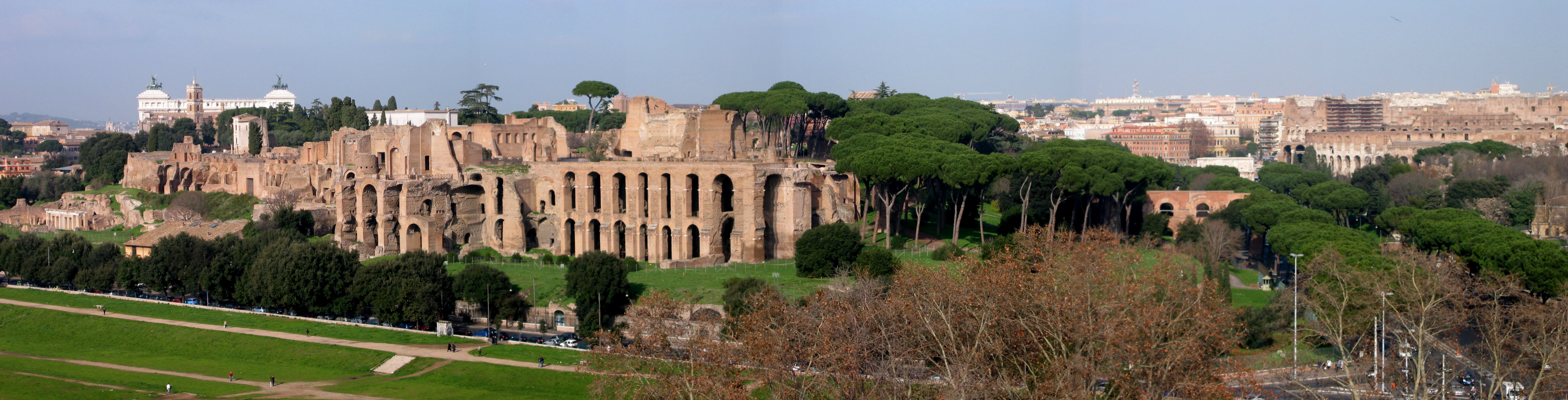



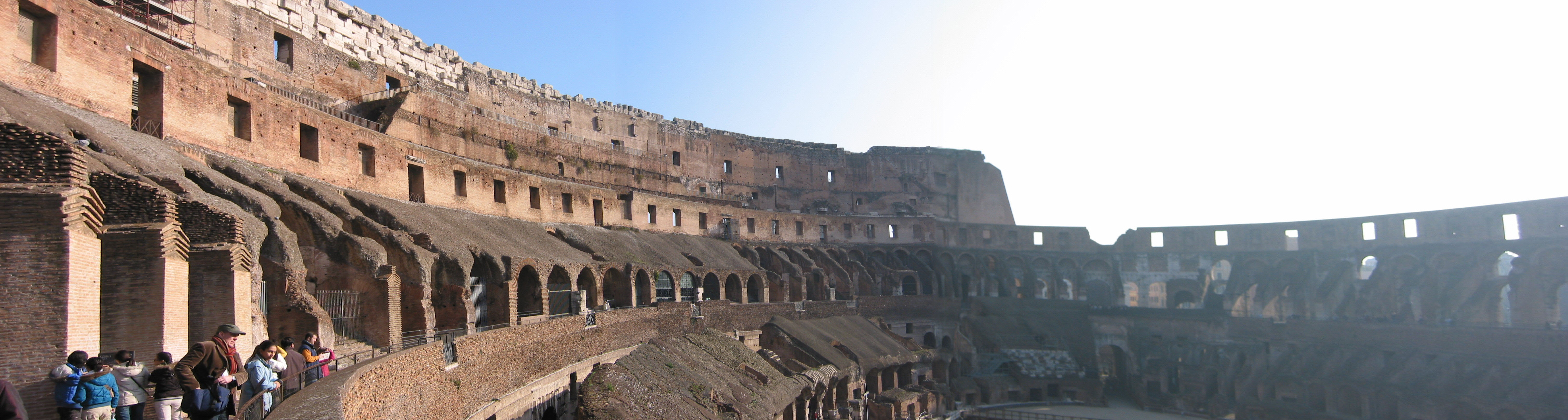
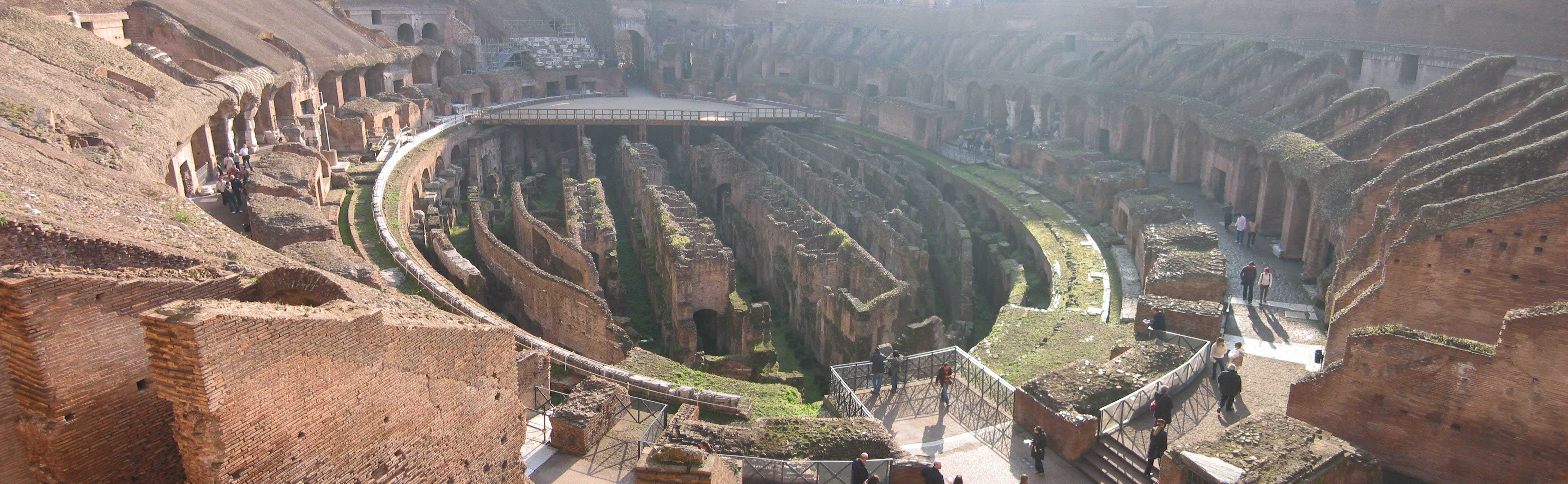
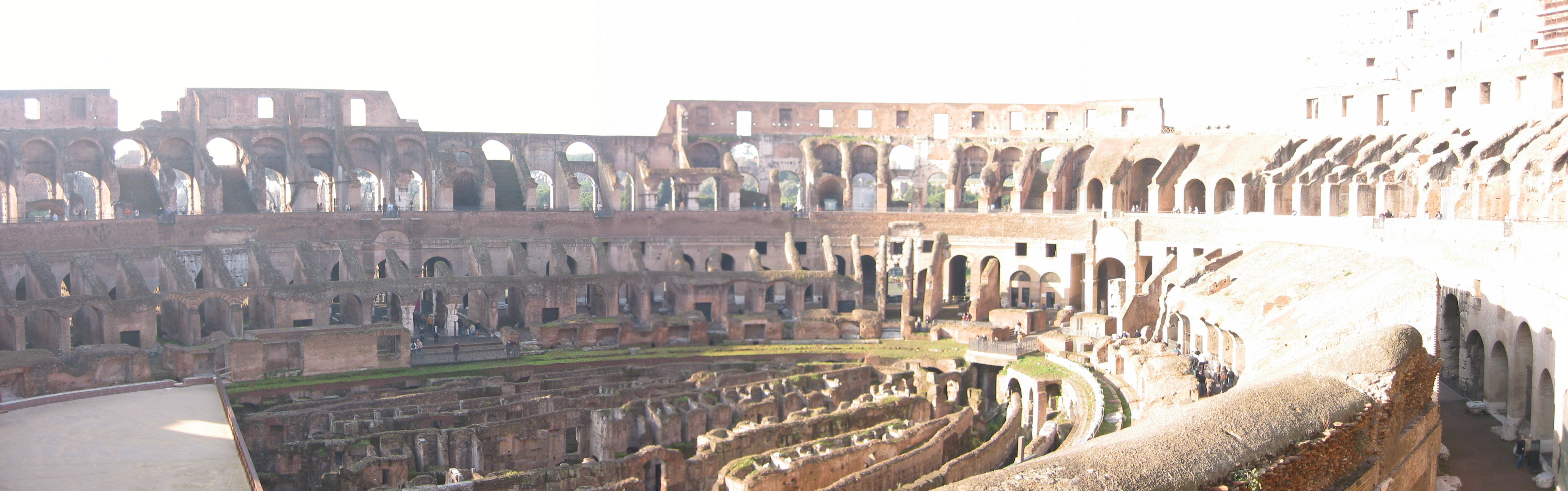


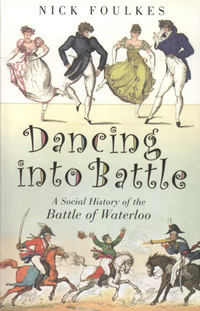
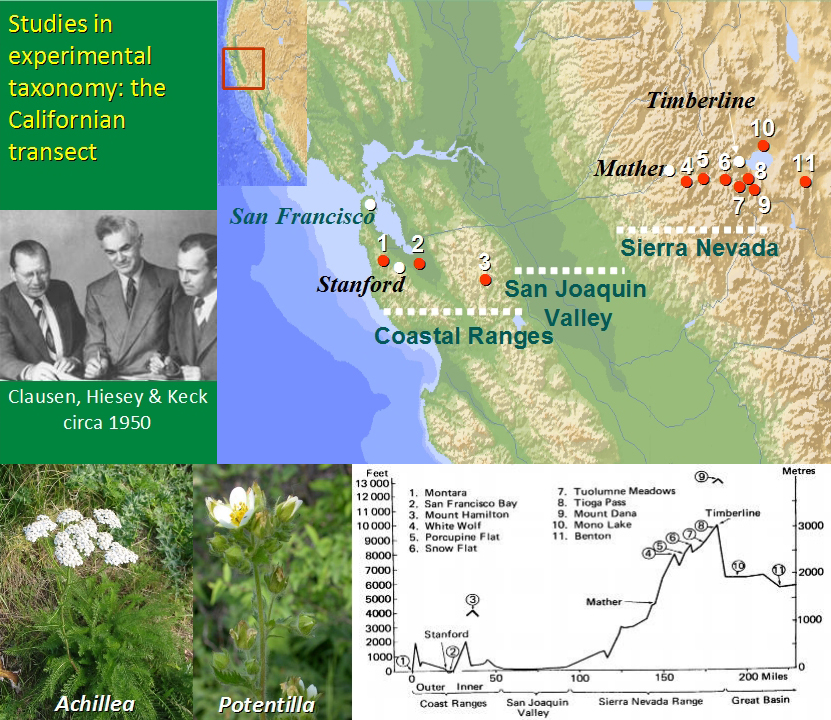
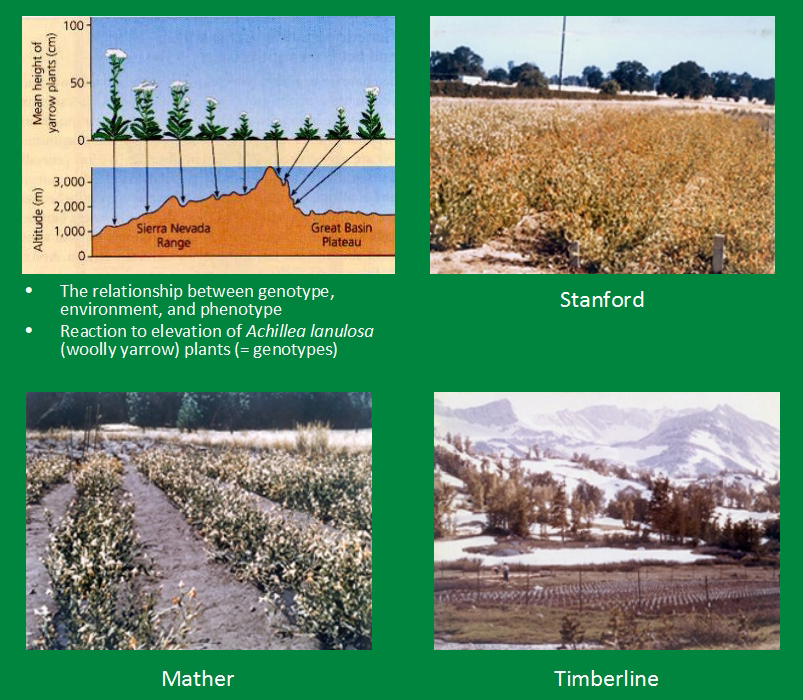
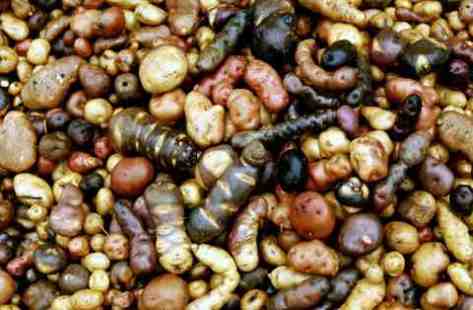


 I call it ‘the San Miguel effect’. Whatever is that, I hear you cry? San Miguel is the principal brand of beer brewed in the Philippines (it had cornered 95% of the market by 2008). And as I always told
  Hailed by some as the new


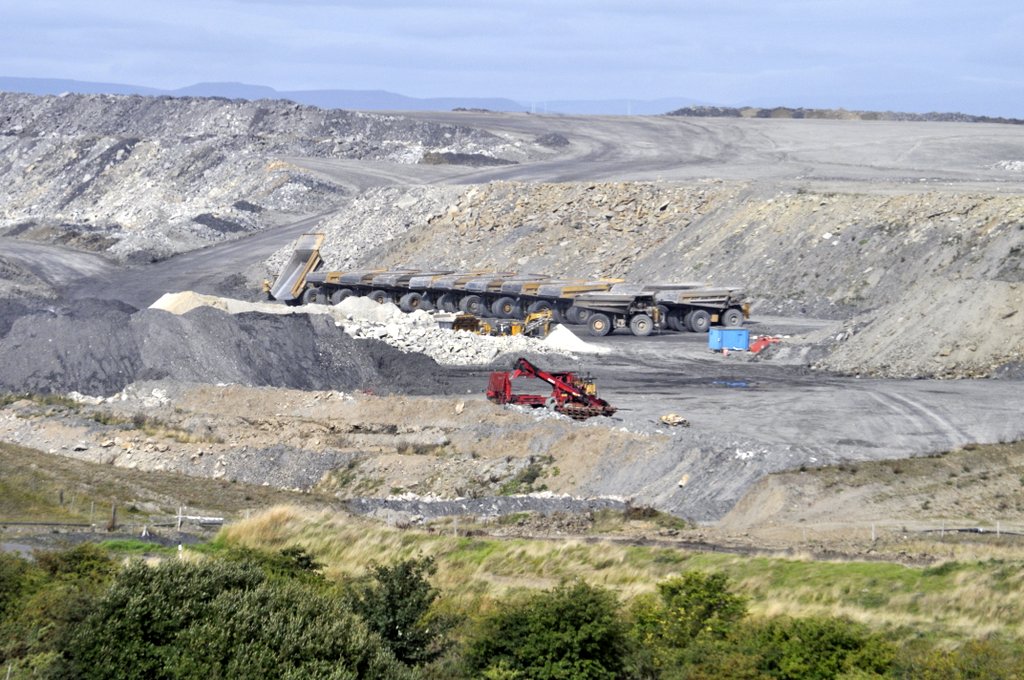
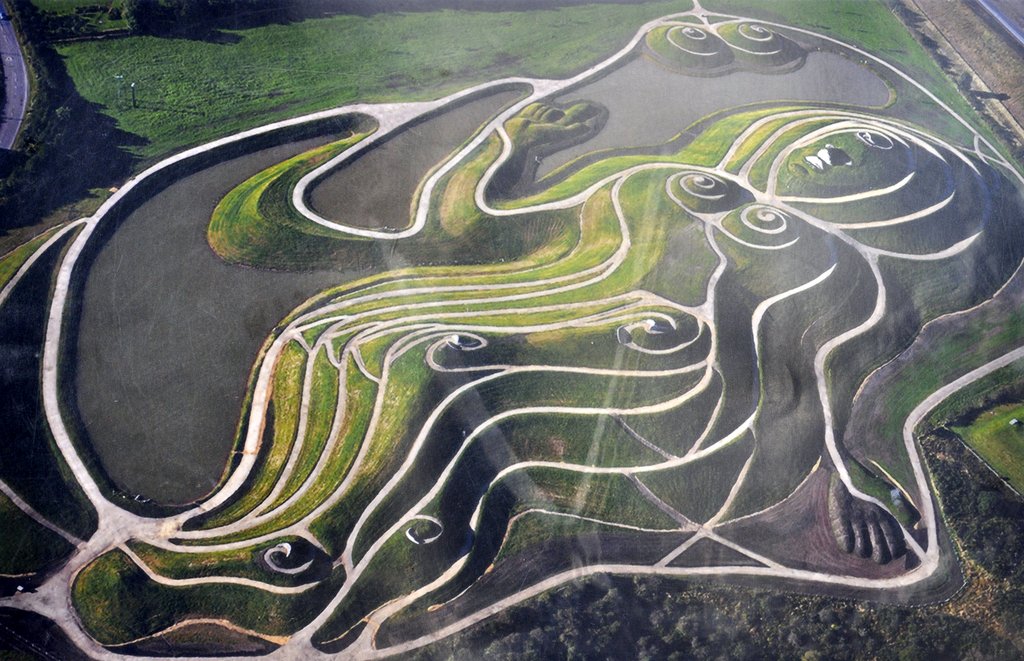


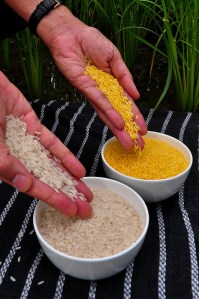 When I started this blog some 20 months ago, I decided that I would write about topics related to the things I’ve done and seen throughout my professional life on three continents, as well as other topics that come to mind now that I’m retired and look back on the decades.
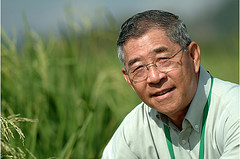 That was the mantra of one of my former IRRI colleagues, plant pathologist Tom Mew: Do the right science, and do the science right.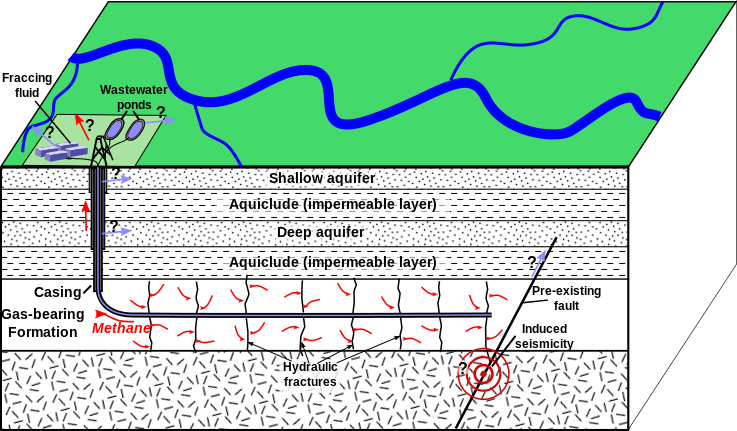
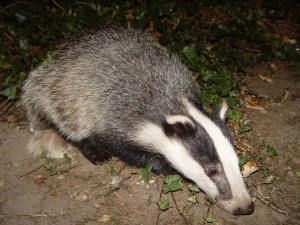 Let me state, right away, that I do not support the indiscriminate killing of animals. But we do have a crisis in agriculture here in the UK caused by the ongoing incidence and spread of bovine tuberculosis among cattle. And it’s particularly prevalent in the southwest. It seems the jury is out concerning the role of badgers in spreading the disease to cattle, and maintaining a reservoir of the pathogen to re-infect both disease-free badger populations and cattle herds. It’s costing the livestock industry – and us, the taxpayers – millions in compensation, never mind the heartache suffered by farmers as they watch their prize pedigree herds being taken away for slaughter. What about a vaccine you may ask? Under EU rules the use of a vaccine – even if an effective one was available (which experts admit may take up to 10 years more) – is not permitted. So what is needed are measures that reduce the level of environmental inoculum. And that means reducing the badger population or reducing the level of infection in badger populations. Badgers can be vaccinated against bovine TB, if they can be trapped, but vaccination will not cure sick animals and, according to information I have read, there are many very sick badgers wandering about the British countryside.
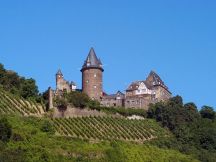

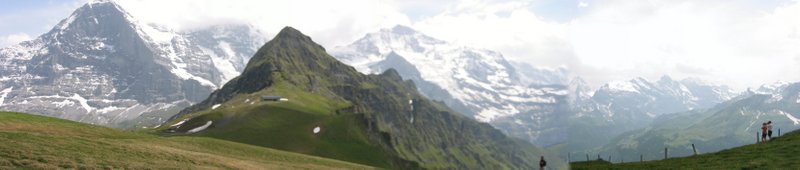


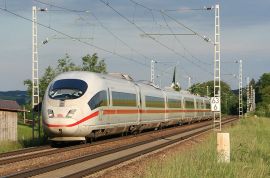
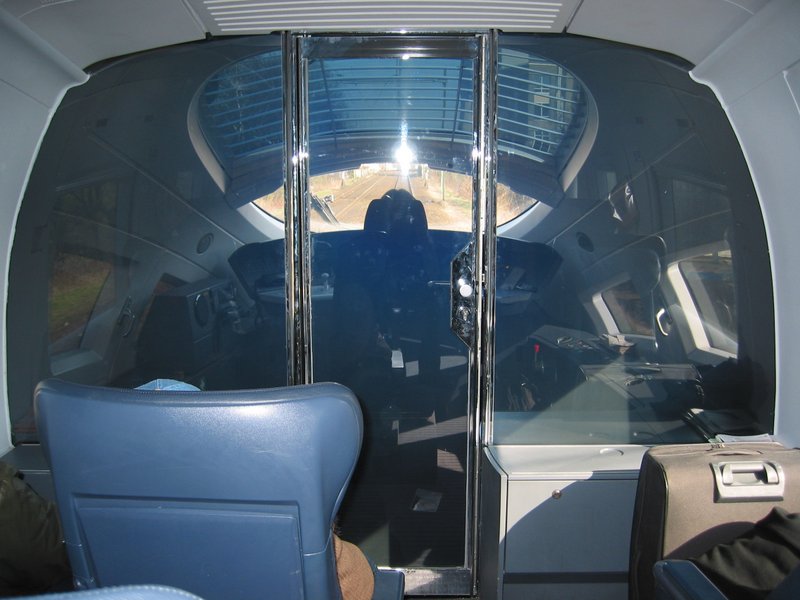
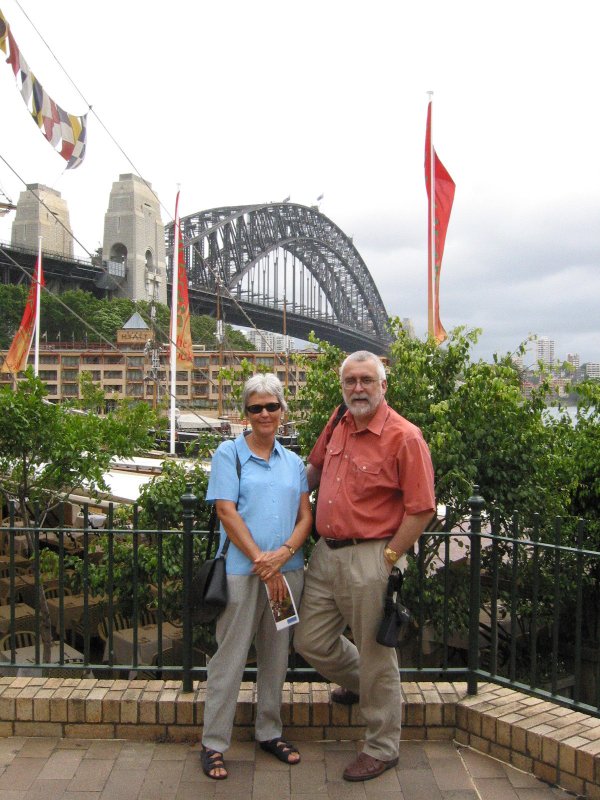
 In fourteen hundred ninety-two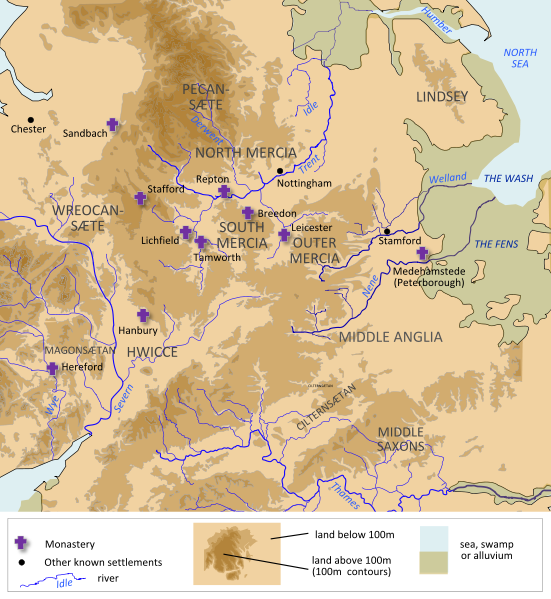
 In 1483, Edward IV died and the crown was usurped by his youngest brother, Richard, Duke of Gloucester, who became the notorious (if we are to believe Tudor propaganda)
  When my 8th great grandfather Robert was born in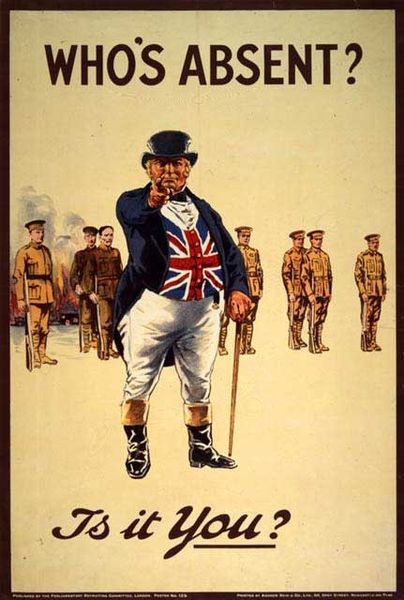

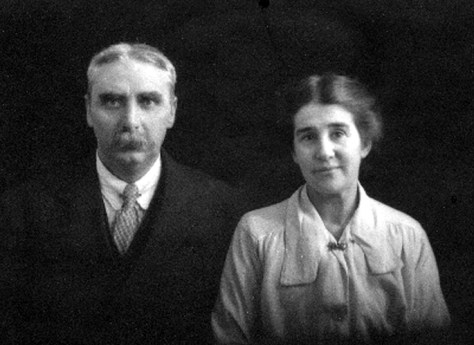
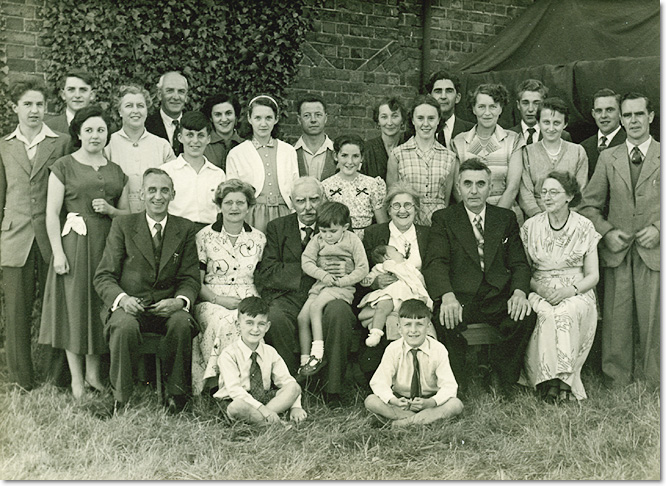


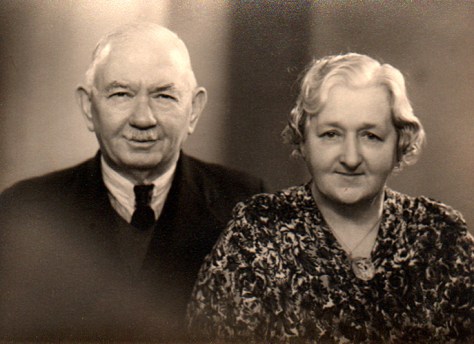
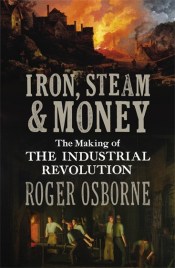 I’ve just finished reading Roger Osbourne’s very interesting and well written account of the Industrial Revolution in Britain during the 18th century.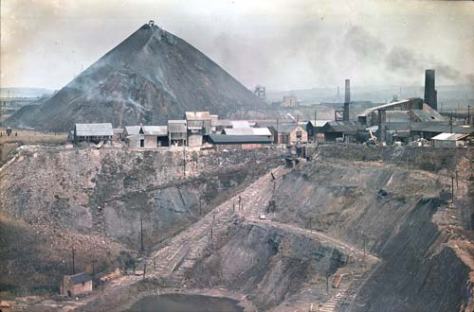


 As a botany and geography student in the 1960s I was quite interested in the whole topic of derelict land reclamation. Reclaiming these derelict sites is not straightforward. First they have be graded and slopes stabilized, then plants have to be identified that will actually grow and thrive. I’ve already alluded to the problems of combustion of the coal heaps. But a coal heap is not a particularly hospitable substrate for plants to grow. Even more so if the ‘soil’ is polluted by heavy metals such as copper and zinc that are found in the tips in mining areas, such as Cornwall and the Swansea Valley, where these minerals were extracted or smelting was the predominant industry during the Industrial Revolution. During the first field trip I made as a geography student at Southampton University we visited to derelict land rehabilitation projects in the Swansea Valley. Once I’d moved to Birmingham University in 1970 I took a couple of courses on the relationship of genetics and ecology – genecology, and some of the best examples have to do with the frequency of heavy metal tolerant grasses that have evolved to survive on polluted soils at may of these industrial sites. Seeds can be collected to sow reclaimed sites.
 In 1966 I made my first visit to Coalbrookdale. As a high school student in the Lower Sixth (age 17) I attended a weekend residential course at


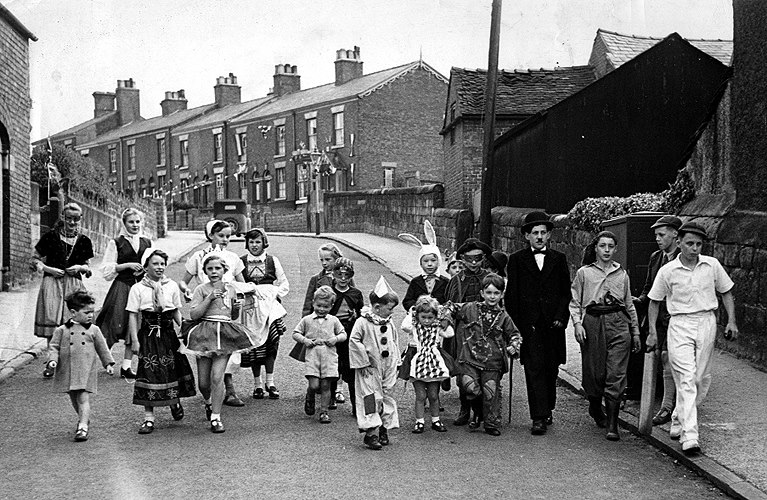
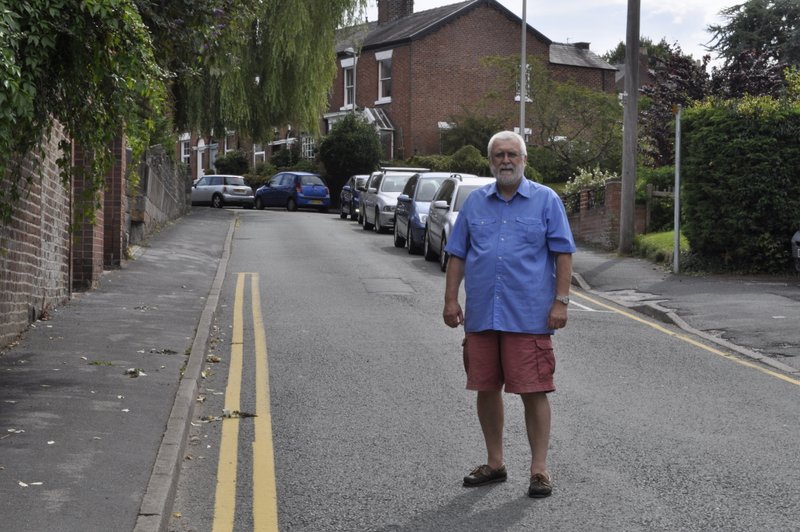
 department then as photographer until we moved to Leek 10 years later. In the meantime, my elder brother Edgar had appeared on the scene in July 1946, followed by me a couple of years later. And 13 Moody Street was a ‘tied’ house, opened by the Chronicle’s proprietors, the Head family. In fact, Mr Lionel Head and his wife, who was editor of the Chronicle, lived next door, at No. 15.


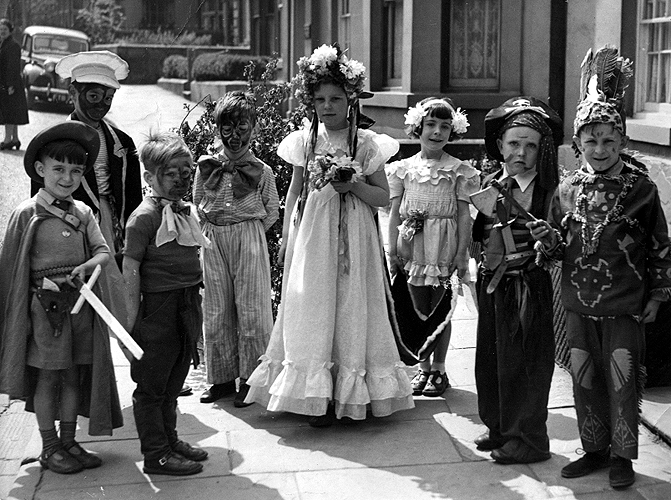


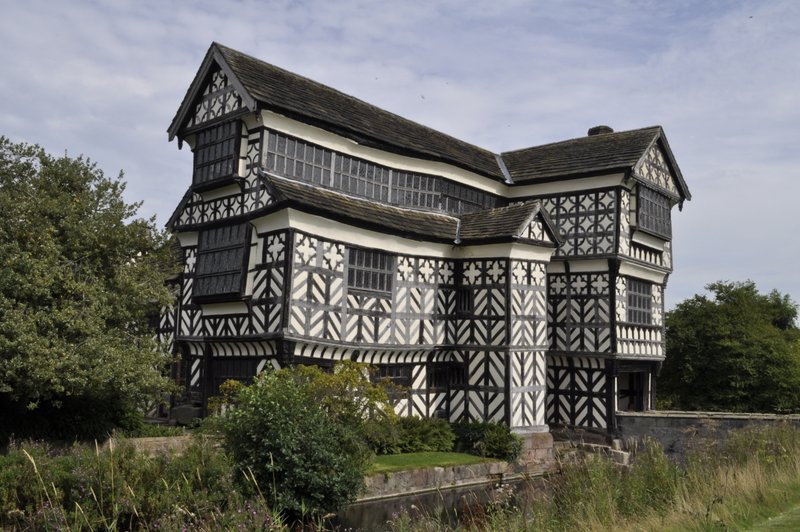


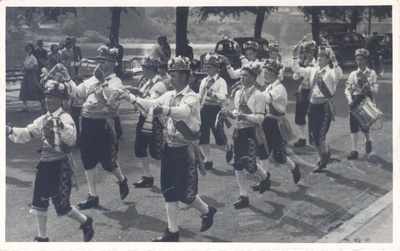
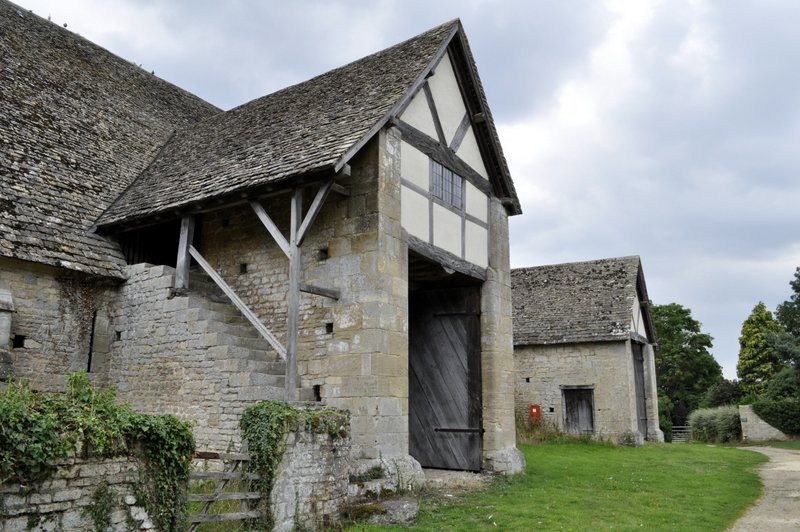
 Despite dominating ‘England’ for only 400 years or so, the legacy of the Roman invasion and conquest of


 Eat genetically-modified foods? I’ve been eating them all my life and I haven’t noticed any negative effects yet.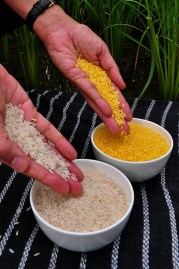
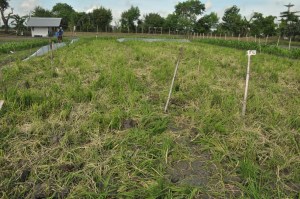






 In many ways the house itself is quite modest. The ground floor entrance hall, library and oak study are open to the public. Access to the first floor is up a beautiful cantilevered staircase. Several bedrooms can be viewed – some of them still used as guest bedrooms! As the house is still lived in, photography is not permitted inside the house.

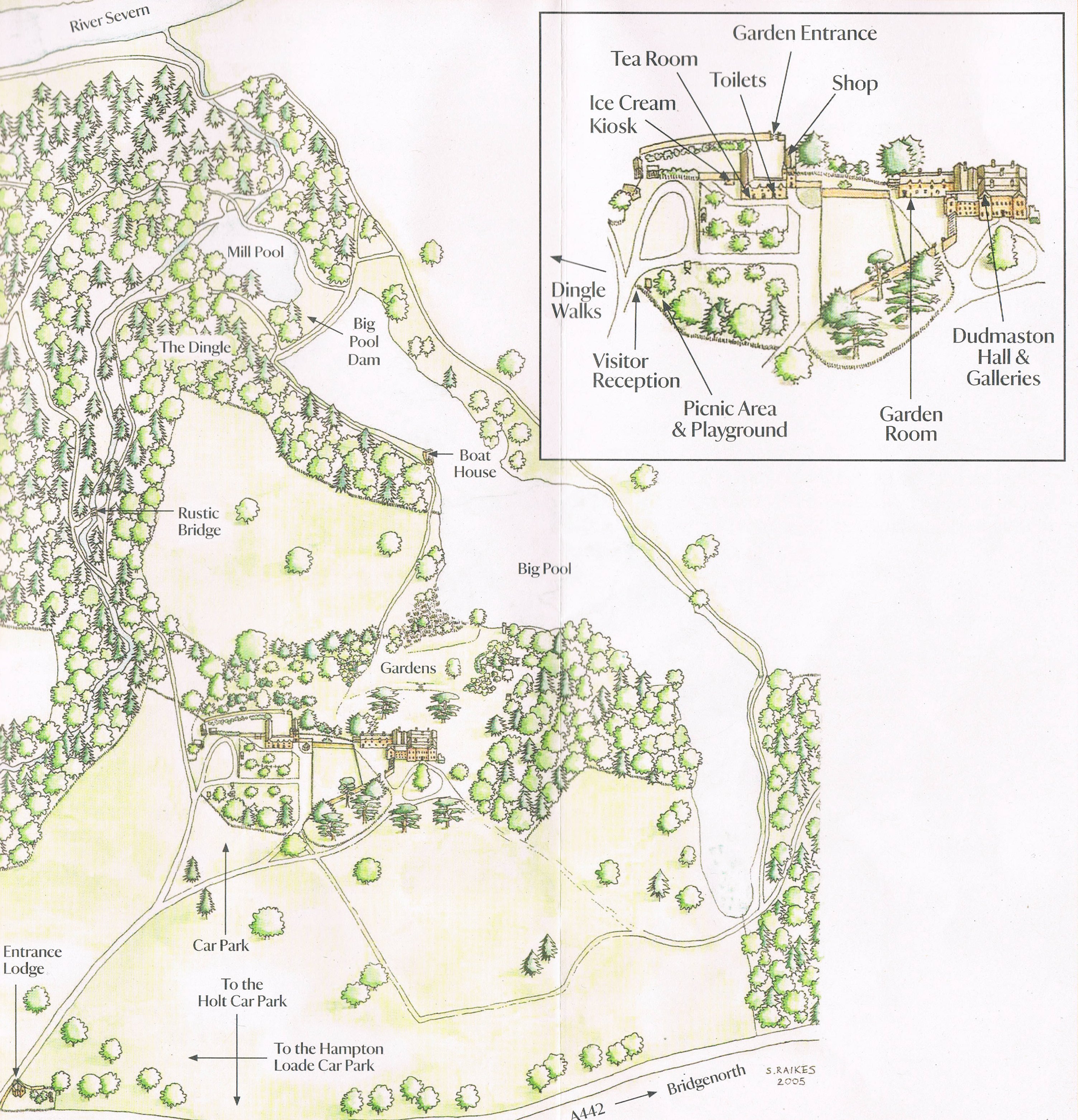


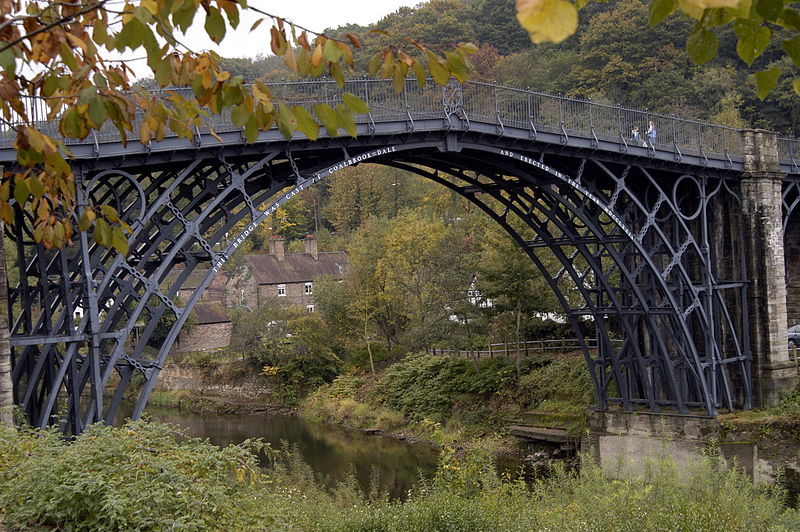
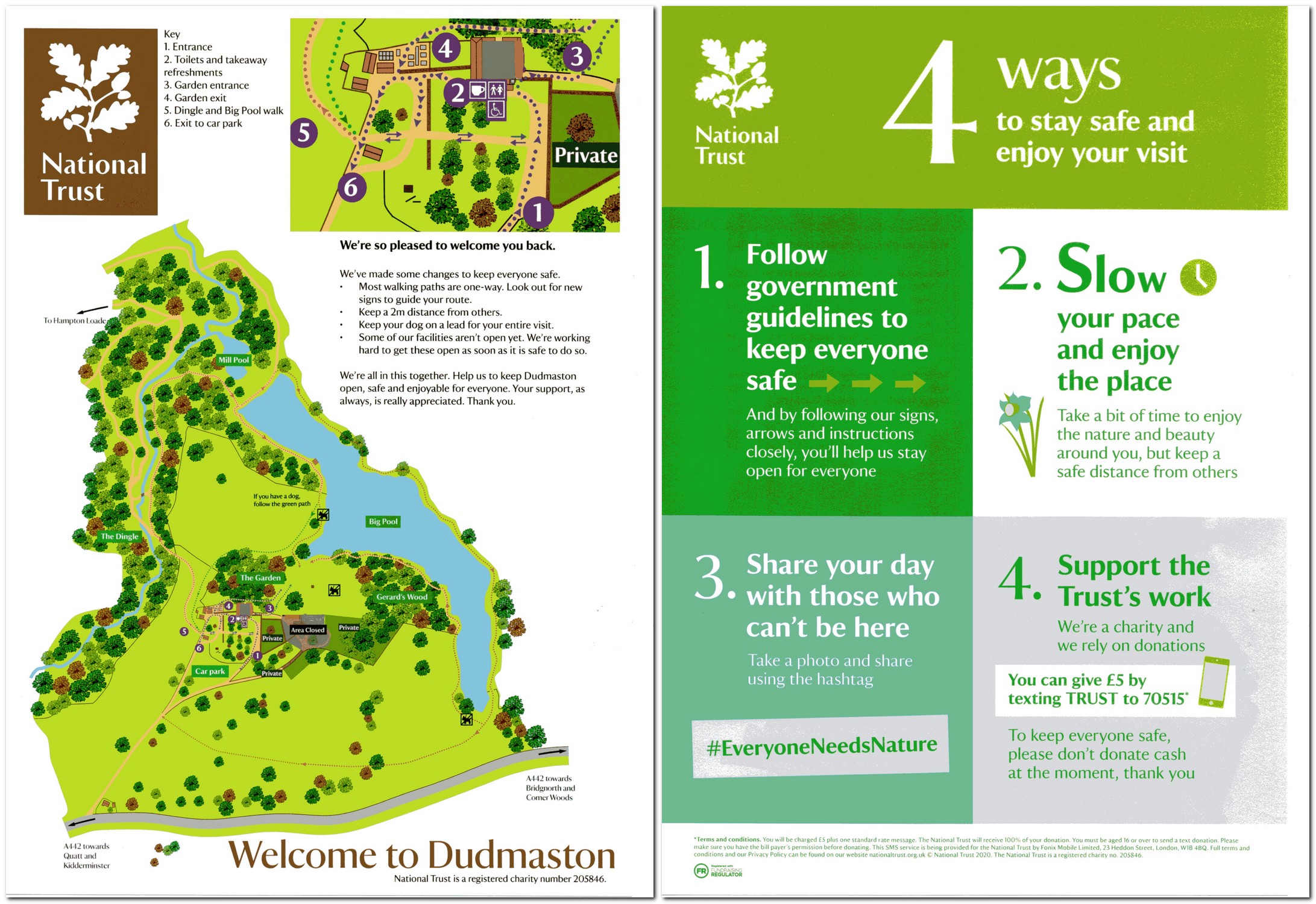


 A balanced diet . . .