I broke the habit of a lifetime . . .

Well, almost a lifetime. Sixty-one years in fact. So yesterday afternoon (New Year’s Day), at the age of 77, I watched a film I have assiduously avoided for six decades: The Sound of Music.

Although it has been shown on TV multiple times since we returned to the UK in 2010, and must have been shown at least once a year during the 1980s when we were back in the UK between working for the International Potato Center (CIP) in South and Central America in the 1970s, and then moving to the Philippines in 1991.

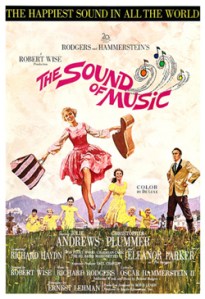
Released in March 1965 (and with a running time of 174 minutes), The Sound of Music was a screen version of the 1959 Rogers and Hammerstein stage musical of the same name, the story of the Trapp Family Singers.

Set in Salzburg, Austria in the weeks leading to the March 1938 Anschluss, the annexation of the Federal State of Austria by Nazi Germany, The Sound of Music tells of the blossoming love affair between former naval Captain Georg von Trapp (who had seven children) and Maria, a ‘wayward’ postulant in a convent sent to be the children’s governess. At the end of the film, the family escape over the mountains into neutral Switzerland, and from there they moved to the USA, eventually becoming naturalised citizens.
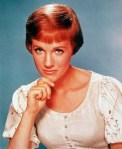
Starring Julie Andrews (right, as Maria) and Christopher Plummer (as Captain von Trapp), the film became the highest-grossing film of 1965. It won several Oscars at the 38th Academy Awards in 1966, including Best Picture and Best Director, not bad considering that it was up against Doctor Zhivago. Julie Andrews was nominated for Best Actress but that accolade went to Julie Christie in Darling (who also starred in Doctor Zhivago).

So, having broken my habit, what was my reaction? It’s very much a film of its time, as was the stage production. Some of the cinematography was spectacular, especially in the opening sequences as the camera panned over the mountains. And the choral numbers and choreography were well done. Julie Andrews was outstanding, as a singer and actress. But overall, I found the whole film rather twee (i.e., excessively or affectedly quaint, pretty, or sentimental), particularly against the backdrop of what was taking place in Austria at that time. I can only give it a score of 6 out of 10.

I’m more a Fred Astaire or Busby Berkeley musical aficionado, although I have enjoyed (a long time ago) Guys and Dolls and West Side Story.
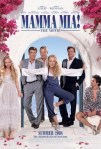
More recently I have become somewhat obsessed with Mamma Mia! that I first watched in 2009 on an Emirates flight from Dubai to Manila.

Mainly because I am a fan of ABBA’s music. My first recollection of any ABBA song was in July 1979. I was in Chile’s capital, Santiago, as part of a review team (from CIP) of the Chilean National Potato Program. On one evening, while my colleagues were out buying beef to take back to Lima where there was a chronic meat shortage, I headed out to buy some souvenirs to take home.

I heard a song above the ambient noise of commercial transactions. It was ABBA’s Chiquitita, released on their sixth studio album Voulez-Vous in April that year. I was hooked, and later acquired a vinyl of Voulez-Vous when I visited my brother Edgar in Canada later in July.

And ever since I often listen to their music. It was the accompaniment to my tour of Israel in March 1982 when I took a party of graduate students from the University of Birmingham there to attend a genetic resources course. One of the participants, Zofia Bulińska-Radomska from Poland, pulled my leg incessantly.

As to the scores to Mamma Mia! (and its sequel Mamma Mia! Here We Go Again, which I haven’t seen) the brilliance of Benny Andersson‘s compositions and arrangements shines through. Just take this one song, Lay All Your Love On Me, by Amanda Seyfried and Dominic Cooper and appreciate the musical intricacies.

For me, Mamma Mia! is pure musical joy, and even though critics reviewed the film unfavourably, it was a huge commercial success. What gave the film added authenticity, I believe, were actors not singers (Pierce Brosnan, Colin Firth, and Stellan Skarsgård, for example) in many of the lead roles, but they did their best. Meryl Streep and Amanda Seyfried on the other hand have excellent voices.

Anyway, I came across these three videos about how the films were made, which certainly throw light on the casting and production processes. Illuminating.

Maybe you’ll become as obsessed as I am.



We’ve waited four decades . . .

It’s hard to believe that 40 years have flown by since ABBA released their last studio album, The Visitors, at the end of November 1981.

And here we are, in late 2021, eagerly waiting for the release (on 5 November) of a new—and 10th—album, Voyage. It sounds as though they never went away. Actually, to my ears, it sounds as though they just got better, matured, as of course they have done, being slightly older and younger than me (I’m coming up to 73 in mid-November).
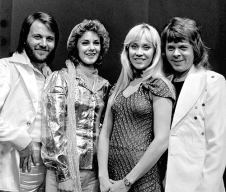
How can I say this? Well, in a smart marketing move, ABBA released a double A-side single with accompanying videos on YouTube. I Still Have Faith In You and Don’t Shut Me Down (Tracks 1 and 4 on Voyage) may not have climbed as high in the charts worldwide as might have been expected (although they did rather well in some countries), fans have been quite emotional about the release. From comments I’ve read on Facebook and Twitter, and left on YouTube, the reception by ABBA fans has been ecstatic.

So, how do I (as a dedicated ABBA fan – I wrote about them in January this year) feel about these two tracks? Equally ecstatic I have to admit. Indeed, I reckon that if these are but a sample of the new album overall, then we really are in for an ABBA feast.

But don’t take my word for it. Have a look and listen to these new tracks.

Fronted by Anni-Frid, I Still Have Faith In You commences as a quiet ballad, but builds in a crescendo to a wonderful chorus, filled with ABBA pizzazz. Her voice has become a little deeper, and perhaps warmer. But it still reaches the heights when joined by Agnetha in the lovely harmonies typical of ABBA. Changes of pace, of key and beautiful musical arrangement throughout, I Still Have Faith In You is a fitting composition with which to launch ABBA’s return, albeit for this once-in-a-lifetime album only.

With this track, and the next, Don’t Shut Me Down, Benny and Björn clearly demonstrate what a formidable song-writing duo they are. These two songs, as with all their compositions, are written for the voices of Anni-Frid and Agnetha, not adapted to their voices. And this is what makes them so powerful.

Don’t Shut Me Down begins with Agnetha setting the scene, in ballad format, before the pace explodes in a riot of funky bass. I could find myself easily dancing to this one. The musical arrangement is breathtaking, layers of music, composition at its finest. Just have a close listen to the track, and the other, to see the musical magic that Benny has woven among the lyrics.

And talking of the lyrics, both these tracks have a story to tell. It never ceases to amaze me how clever their lyric composition is and has always been, especially given that Benny and Björn are composing in their second language. It’s sophisticated stuff.

Critical reception of these tracks has been good, and I think everyone is waiting for the 5th when we can get to enjoy the other eight tracks on Voyage.

ABBA have already indicated there won’t be another album. After 40 years, ABBA has brought some joy into the lives of countless fans around the world, especially at a time when everything was looking rather grey.

I now have two ear worms, one for each ear, and I find myself singing along in my head, familiar with the lyrics already AND the fancy musical arrangements. I couldn’t hum them aloud if I tried, but within the recesses of my mind they are perfect replicas. And they make me happy.


There is no way you can deny it . . .

It was July 1979. I was in Santiago de Chile for a few days, as a member of a three person team from the International Potato Center (CIP) to undertake a short review of the Chilean National Potato Program.

Joining me were my Lima-based colleagues, potato breeder Dr Nelson Estrada (a Colombian national) and Regional Representative for South America, Dr Oscar Malamud (from Argentina). I’d flown in from Costa Rica where I was leading CIP’s Regional Program for Mexico, Central America and the Caribbean at the time..

It was a chilly evening, maybe 5ºC, mid-winter in Chile; Santiago lies at 33ºS. Street vendors were roasting chestnuts on open fires. We were out and about doing some tourist shopping (in my case) or buying beef to carry back to Lima (Nelson and Oscar) in spare suitcases, as there was a meat shortage and rationing in Peru in those days.

Then, as I wondered among the shops and market stalls, I heard this song floating over the hubbub of the street:

Chiquitita, tell me what’s wrong
You’re enchained by your own sorrow
In your eyes there is no hope for tomorrow
How I hate to see you like this
There is no way you can deny it
I can see that you’re oh so sad, so quiet

It was ABBA, of course, and this song, Chiquitita, immediately had an impact on me. It was released as the first single from their album Voulez-Vous in January that year. But I’d not heard it until then.

Here are ABBA performing (but lip-synching) the song at the Music for UNICEF Concert that same year, after which the group donated half of the royalties to UNICEF. Being one of ABBA’s most successful recordings, those royalties must have been quite significant.

I’m not sure why, but I hadn’t really been much aware of ABBA before encountering them on that Santiago street, so to speak. I was living in Peru in 1974 when they won the Eurovision Song Contest, with Waterloo. And, never having been a Eurovision fan, and because it didn’t figure in any news that I heard in Lima, their win passed me by. Neither was glam rock my thing. I came late to the ABBA party.

Anyway, after my Chiquitita experience, I went out and purchased a vinyl copy of Voulez-Vous the next time I passed through Miami, and thereafter enjoyed dancing around the living room back home in Costa Rica with my young daughter Hannah (then approaching two) to the many excellent songs that featured on that album, such as I Have A Dream, Angeleyes, Does Your Mother Know, and Kisses of Fire.

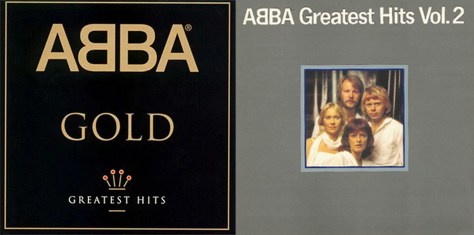
It wasn’t until I returned to the UK in 1981 that I really became an signed-up ABBA fan, and got hold of cassette tapes of some of their albums like Arrival (later replaced by CDs of Gold and Greatest Hits Vol. 2 when I moved to the Philippines in 1991).

In early 1982, I accompanied a group of my MSc students in plant genetic resources conservation on a two week course in Israel offered by Professors Gideon Ladizinsky and Amos Dinoor at the Hebrew University of Jerusalem in Rehovot near Tel Aviv. I’d taken several cassettes of music to enjoy during the various field trips, and my ABBA tapes were among those. I distinctly remember one of the Birmingham group, a Polish PhD student pulling my leg about my enthusiasm for ABBA’s music. But she did reluctantly have to agree that their music was quite special.

The wonderful melodies and arrangements composed by Benny Andersson and Björn Ulvaeus, the beautiful voices and harmonies between Agnetha Fältskog and Anni-Frid Lyngstad. Just a winning combination all round. So many hits. It’s no wonder that Mamma Mia! was such a hit show (I loved the film—don’t tell anyone; I watched it twice on one Emirates flight back to Manila not long after it was released in 2008).

However, having set up Spotify the other day to play through my Amazon Echo Dot and a Bluetooth speaker, I came across the entire ABBA catalogue, and decided to shuffle play the lot. And that’s when I realised that besides the many glorious songs that ABBA released, there were just as many (maybe more), and especially the early tracks, that are simply naff. Awful. I was really rather surprised. It’s no wonder these don’t get too many plays. So let’s forget about those and luxuriate in the many catchy and incredibly well-crafted songs that are their greatest hits.

So I suppose I have to tell you what my favorite ABBA song is. So many to choose from. But the one I keep coming back to is . . . drum roll:

It was released on The Visitors album in 1981.