
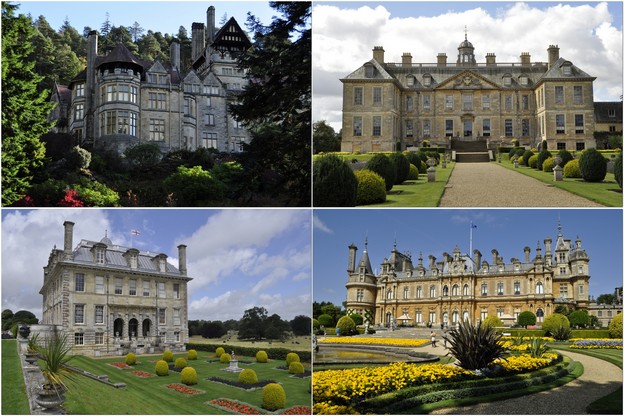
Regular readers of my blog will know that I often write about visits that Steph and I have made to National Trust properties since we became members in 2011. Most of these visits have been to the grand (and not-so-grand) houses that the Trust owns, like Cragside in Northumberland, Belton House in Lincolnshire, Waddesdon Manor in Buckinghamshire, and Kingston Lacy in Dorset to mention just four of the grandest that we have visited (clockwise from top left).
The National Trust manages >600 properties across England, Wales, and Northern Ireland. But I guess that many overseas readers may not realise that the National Trust is also one of the largest landowners in the United Kingdom, with almost 250,000 hectares of farm land and 780 miles (1,260 km) of coast.
Besides properties like Cragside, Seaton Delaval Hall, Washington Old Hall, Crook Hall Gardens, and Souter Lighthouse here in the northeast of England, the Trust also manages large stretches of the Northumberland and Durham coasts (including the Farne Islands), Penshaw Monument, Hadrian’s Wall, and where we were last week, Allen Banks and Staward Gorge, just 10 miles west of Hexham off the A69 (which connects Newcastle upon Tyne and Carlisle).
Allen Banks (and Staward Gorge) is a deep valley of the River Allen, that flows north from the Pennine uplands, to join the River South Tyne less than half a mile away. Close by is Ridley Hall, originally a 16th century property that has been redeveloped several times over the centuries, and the building standing there today dates from the mid-18th century and the late Victorian period. Ridley Hall is now a residential and conference center.
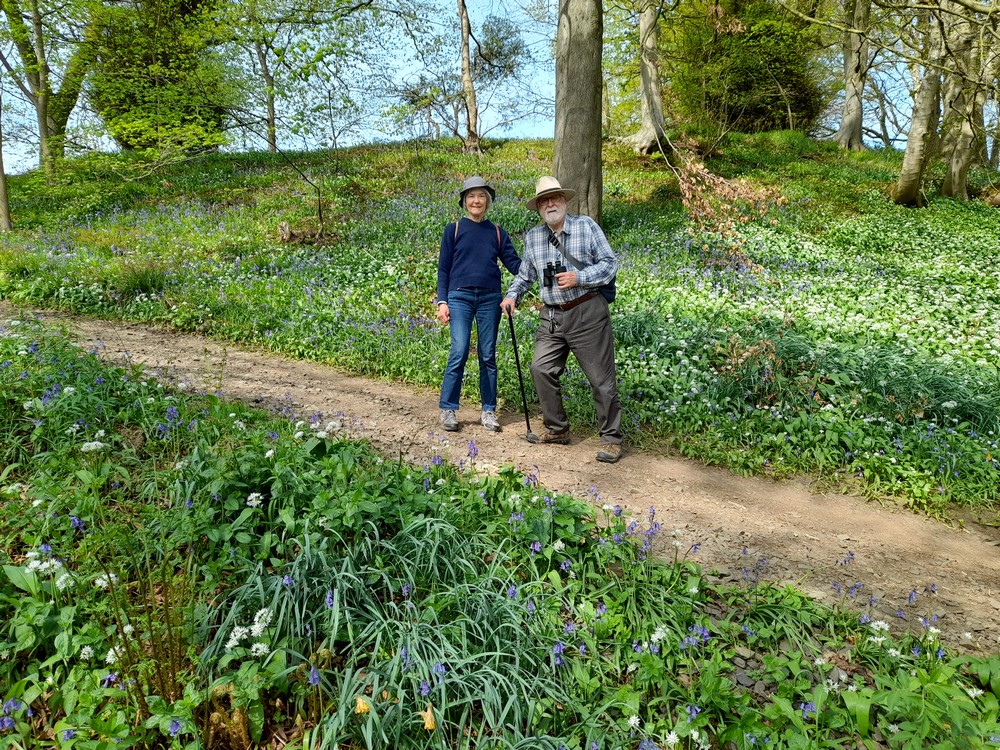
Allen Banks was part of the Ridley Hall estate, and it was in the early 19th century that Susan Davidson (nee Jessup, and daughter of the 9th Earl of Strathmore and Kinghorne, and a family link to another National Trust property, Gibside in Co. Durham) laid out the paths and trails along the river. Today, Allen Banks comprises some 250 ha of ancient semi-natural woodland that is a haven for wildlife, and is noted in Spring for its carpets of bluebells and wild garlic or ramsons (Allium ursinum).
Our walk (the orange and brown trails on this map) last week south from the car park (which used to be the walled garden of Ridley Hall) was along the west bank of the River Allen. There has been little rain for the past few weeks so the river was running quite low. Just beyond the car park there’s a fairly steep but short climb and thereafter until we reached Plankey Mill beside the river, the footpath runs more or less along the flat, with just a few moderate inclines. It was around 4 miles in total, as we came back to the car park along the same route.


But what a joy to be wandering through these woods in the late Spring just as all the magnificent beech trees were coming into leaf.


 There’s a sturdy bridge across the Allen at Plankey Mill, and there we sat and watched a dipper scurrying among the rocks.
We first visited Allen Banks in the middle of October 2022, and took the footpaths on the eastern bank to reach Morralee Tarn (the purple route on the map). it’s quite steep in places, and we did lose our way since we didn’t have the map with us, and assumed the tarn would be at the top of the rise. In fact it’s half way up. I don’t recall seeing any signposts, although once we encountered the path it was clear which way we should have been headed.


Once back at the car park last week, we enjoyed a picnic in the shade of one of the beeches, before setting off on the A69 back to Newcastle. It’s certainly an easy excursion to Allen Banks. The car park holds about 30 years, and non-members of the National Trust must pay a parking fee. There is also a toilet on site.
Allen Banks – well worth a visit.
 A balanced diet . . .