
 For many years, Steph and I toyed with becoming members of the National Trust. But as we were living overseas, and only coming back to the UK each year on leave for just a few weeks, we didn’t think it was worth the membership cost.
However, when I retired in April 2010 and we moved back to the UK, we became members in February 2011. Since then, we have visited 153 properties, mostly historic houses and gardens, but also some of the most beautiful landscapes protected by the Trust, such as the White Cliffs of Dover and the Durham coast.
 We received gift membership of English Heritage (which cares for 400 historic places) at Christmas 2014, and made our first visits as members by April 2015. We had visited Witley Court, Worcestershire near our home in Bromsgrove several times before becoming members, and Belsay Hall, Dunstanburgh Castle, and Rievaulx Abbey when visiting our younger daughter in the northeast of England. Now that we live near Newcastle upon Tyne, we have in fact explored more English Heritage sites than National Trust locally; compared to further south, there are relatively few National Trust properties here.
Visiting these heritage sites gives us a purpose to get out of the house, benefit our physical and mental welfare, and to explore and learn more about the history of this nation of ours.
Over recent years, we have also taken week-long breaks or longer in various parts of the country to visit many of the heritage properties there. Such as Scotland in 2015, Northern Ireland in 2017, Cornwall in 2018, Kent and East Sussex in 2019, Hampshire and West Sussex in 2022, North Wales in 2023, and East Anglia in 2024.
This map shows all the National Trust and English Heritage properties we have now visited. You will have to zoom in to see more of the detail. There are also links to properties managed by partner organizations like the National Trust for Scotland, Historic Environment Scotland, and Cadw in Wales, as well as a few other sites not affiliated to any of these.
On this page, you can find a list of all 239 properties we have visited, by region, with links to a blog post I wrote, perhaps a photo album, or the official website. In any case, my blog posts are lavishly illustrated by my own photographs. There are also regional maps.
Just under a year ago, I wrote about some of the favorite places we had visited. Today’s blog updates the numbers somewhat.
 The National Trust was the vision of its three founders in 1885: Octavia Hill, Canon Hardwicke Rawnsley, and Sir Robert Hunter.
Last week, on 12 January to be precise, the National Trust celebrated its 130th anniversary, and launched a 10-year strategy to 2035, People and Nature Thriving.
Today, the National Trust looks after more than 250,000 hectares of farmland, 780 miles of coastline and 500 historic places, gardens and nature reserves.
And despite the best (or worst) efforts of campaign group and forum Restore Trust to undermine the credibility, management, and success of the National Trust as a charity, the National Trust is overwhelmingly supported by its members (as evidenced from the support at last November’s AGM held in Newcastle), and provides a warm welcome for its thousands of members and visitors at all its sites.
As I was drafting this post, I realised that I’d first visited a couple of properties, Dovedale in Derbyshire and Little Moreton Hall near Congleton, in Cheshire more than 70 years ago, and another, Biddulph Grange, decades before the National Trust acquired the garden.
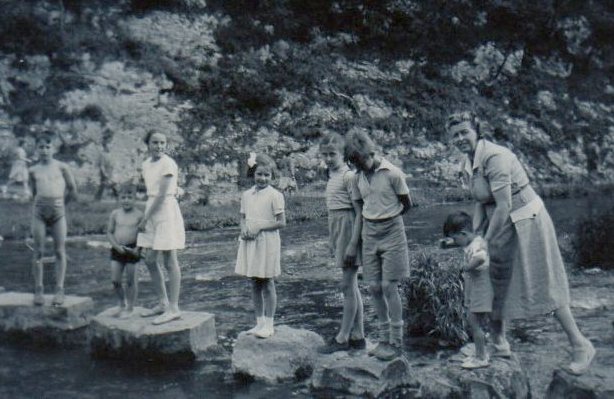
The Stepping Stones in Dovedale. That’s me, on the right beside my mother, along with my brothers and sister and cousins. I reckon this photo was taken around 1951.
My father was the staff photographer at the Congleton Chronicle, and I remember visiting Little Moreton Hall with him when he took this photo and others of the Manley Morris men in 1954.
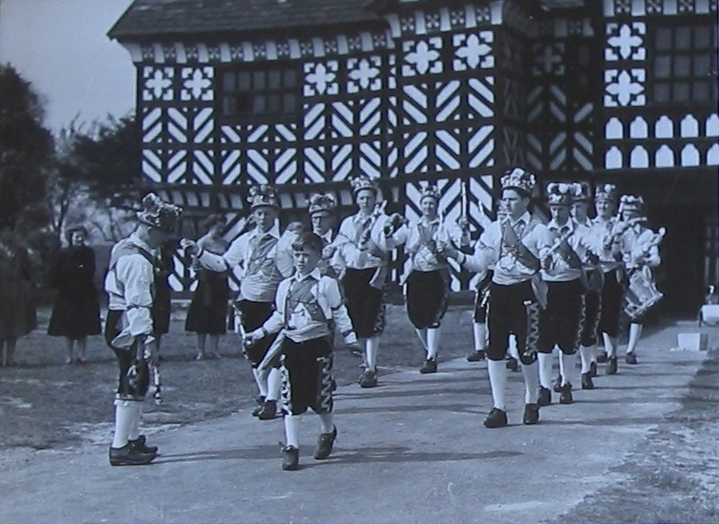
The Manley Morris Men at Little Moreton Hall on 8 May 1954.
As to Biddulph Grange, Dad (and Mum) would visit the hospital on Christmas Day and take photos of Santa visiting the wards. Even after we moved to Leek in 1956 and Dad was no longer with the Congleton Chronicle, they would return to Biddulph Grange each Christmas until the early 1960s.
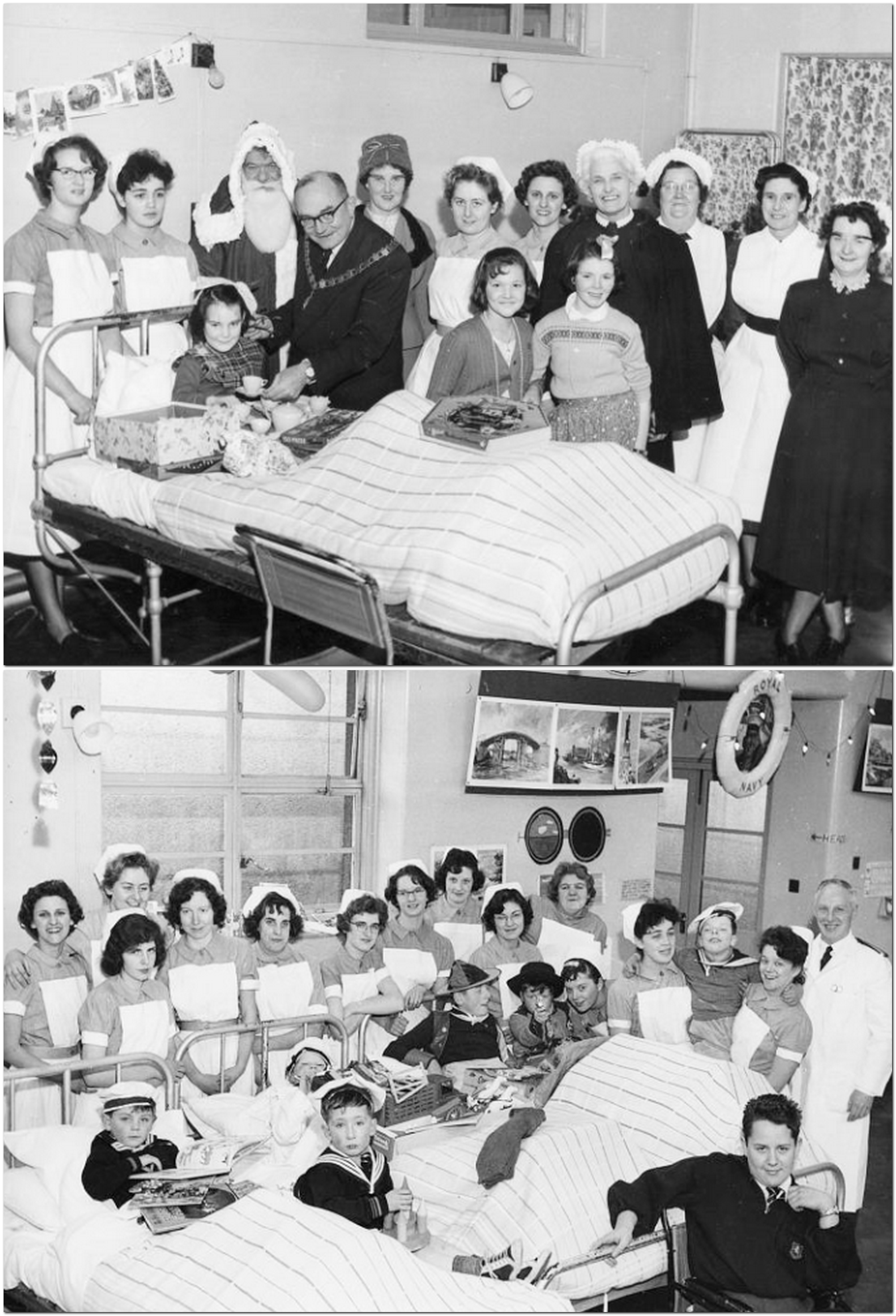
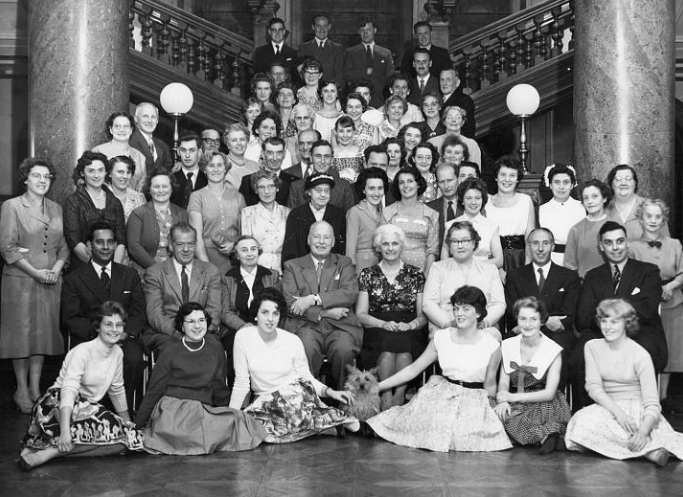
And attend some of the social functions held there for staff and friends. When Steph and I visited Biddulph Grange together for the first time in 2011, there was on display an album of photos about the previous history of the property as a hospital. I recognised many as taken by my Dad. Including this one at a staff summer dance. My mother is standing, fifth from the left, on the fourth row. I snapped this one on my phone.
 A balanced diet . . .