Let’s call the whole thing off . . .

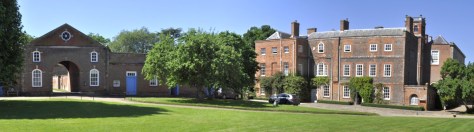
Thus end verses in the 1937 song penned by George and Ira Gershwin. And that’s what I was humming to myself after a recent visit to the National Trust’s Castle Ward, on the shore of Strangford Lough in Co. Down, Northern Ireland (map). It was built in the 1760s for Bernard Ward, 1st Viscount Bangor. However, the Ward family (originally from Cheshire) owned the estate since the 16th century, and an Old Castle (from about 1590) still stands north of the house.

The 1st Viscount and his good lady, Lady Ann Bligh, had very different tastes. It’s a wonder they went on to create a dynasty. But they did, having four sons and four daughters.

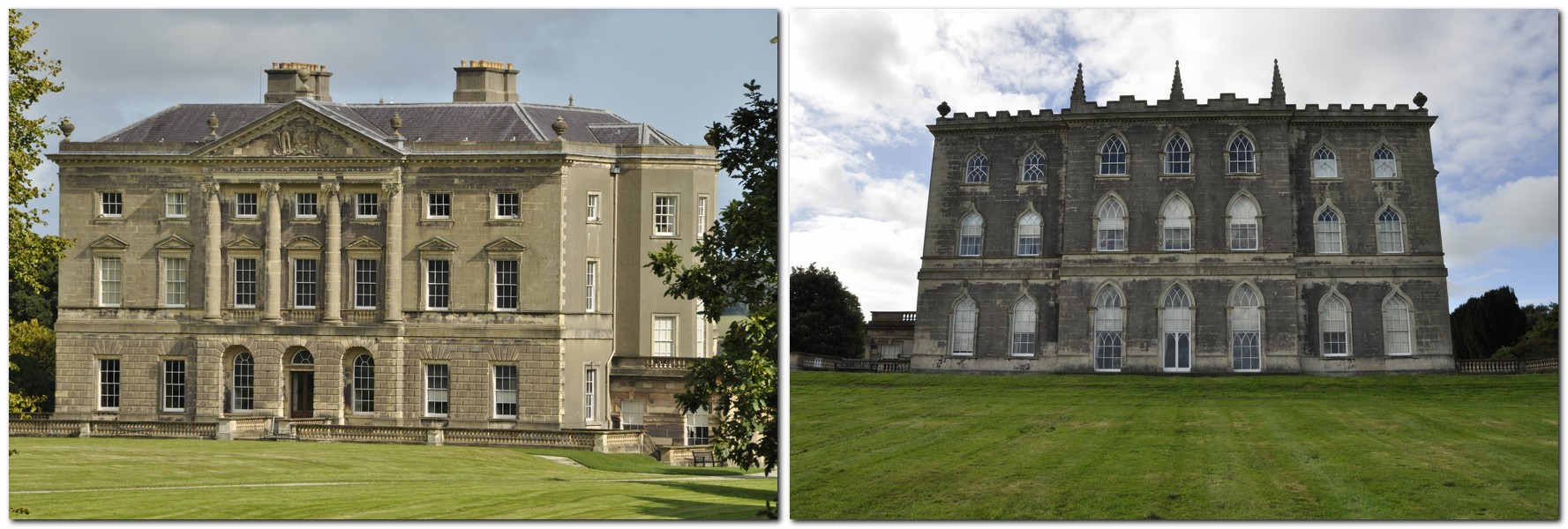
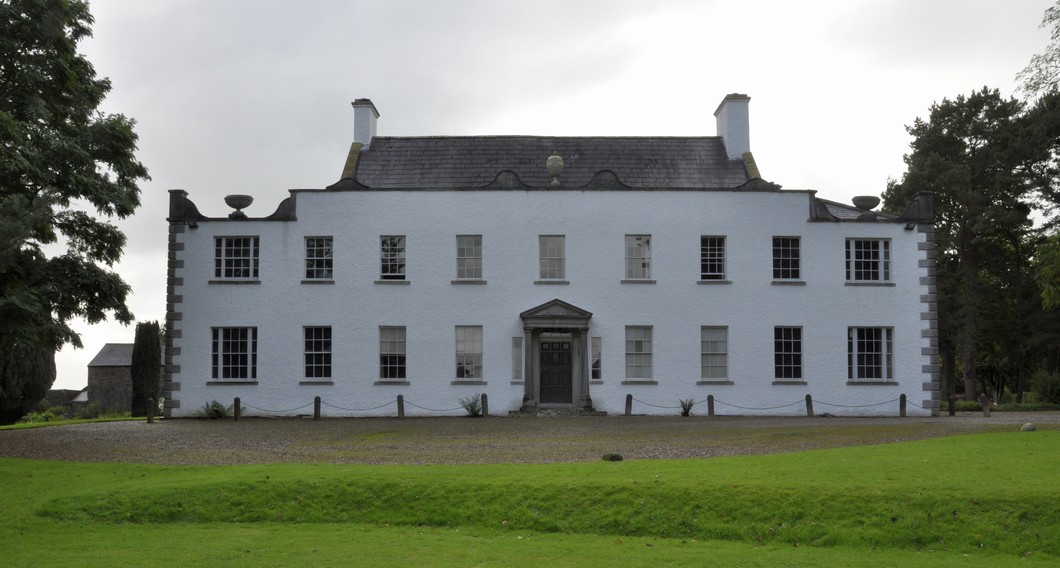
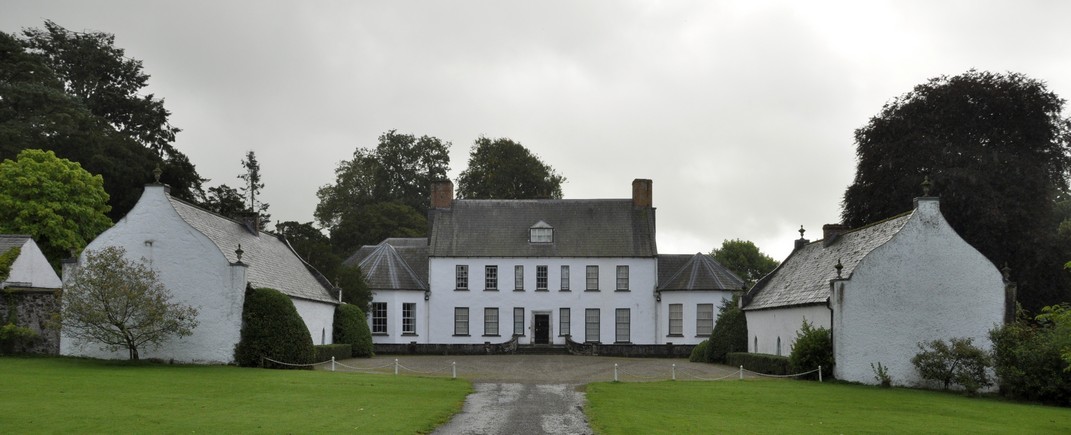
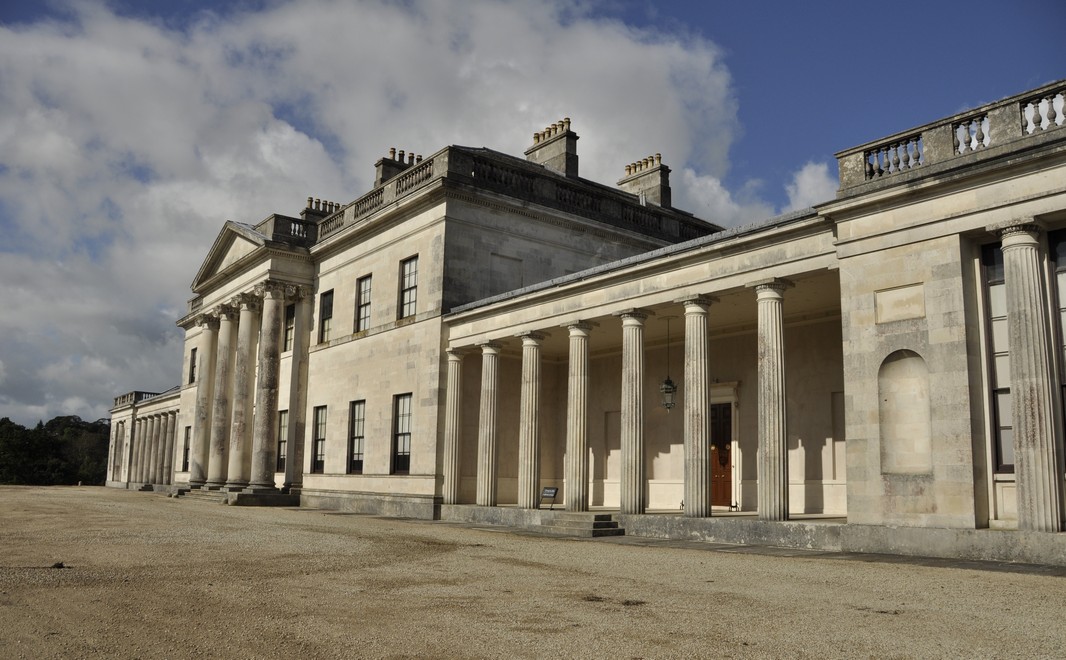
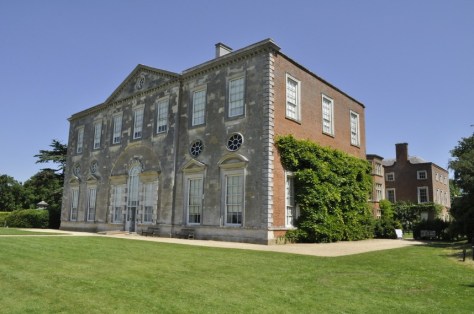
Bernard and Ann didn’t see eye to eye on all things architectural. As you drive up to Castle Ward (from the west) you see a typical Neo-Classical 18th century mansion, epitomised by its symmetry. Walk round to the east side, with its views over Strangford Lough, and you are faced with something quite different: 18th century Gothic. What an unexpected surprise, and a dramatic contrast. Certainly an interesting combination.

Neo-Classical and Georgian Gothic side by side, back to front

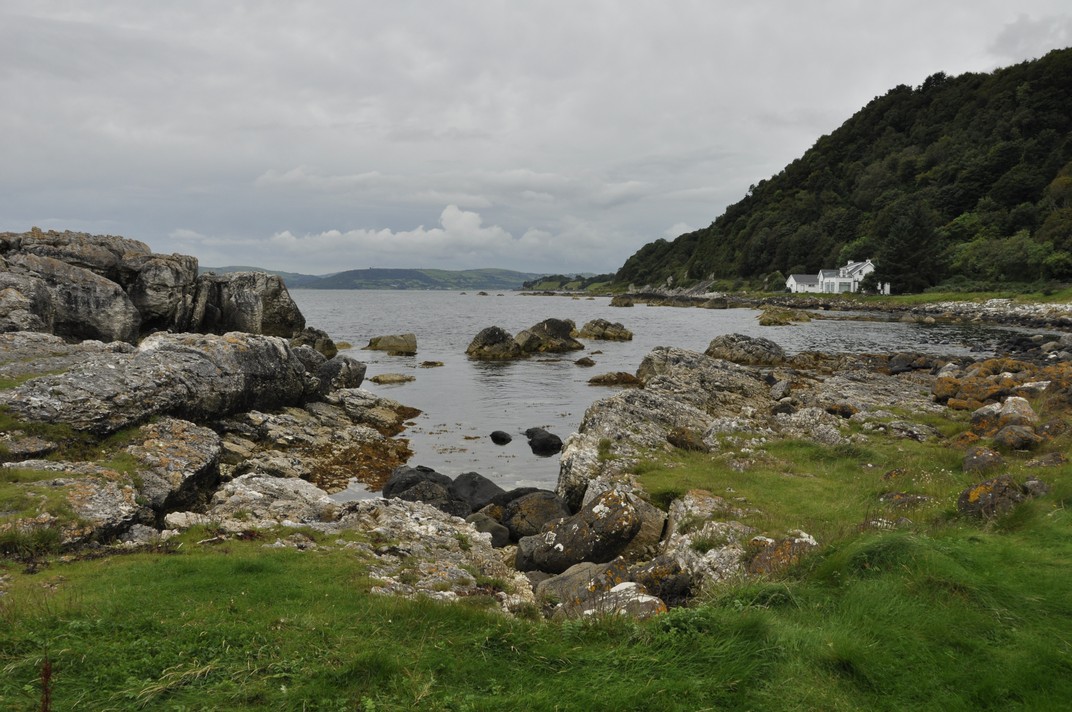
The view of Strangford Lough from the Gothic, east-facing side of Castle Ward

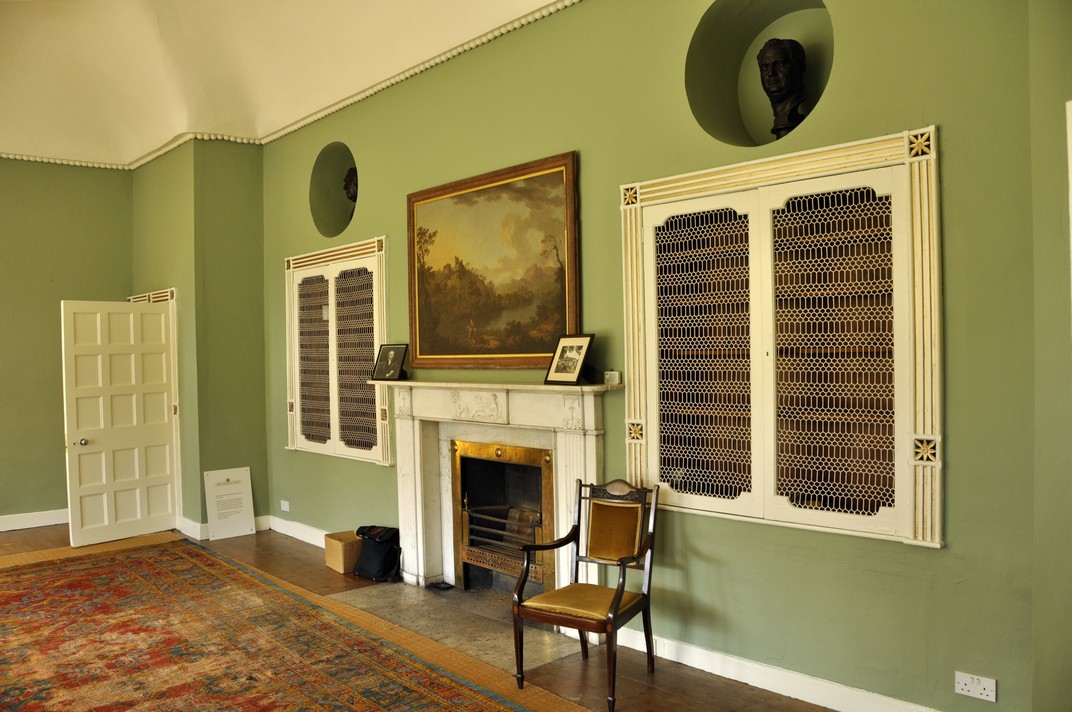
But the Bangor husband and wife differences were not restricted to the house’s exterior. It is almost perfectly divided down the center, Neo-Classical decor on one side, Gothic on the other. Quite extraordinary!

Ward’s son Nicholas succeeded as the 2nd Viscount, but having been declared insane, he died in 1827, unmarried and childless. The title passed to his nephew Edward. The current Viscount Bangor, the 8th, lives in London with his wife, Royal biographer Sarah Bradford, but they have an apartment at Castle Ward for their use. Castle Ward passed to the National Trust after 1950 when the 6th Viscount died, and the estate was accepted in lieu of death duties.

Entering through a Victorian porch on the south end, there is a staircase on the right leading to bedrooms on the first floor.

Just off this entrance is Lady Ann’s boudoir, with its flamboyant ceiling based apparently on that in Henry VII’s chapel in Westminster Abbey.

Passing through Boudoir into the Drawing Room, one encounters a room full of the Ward treasures, paintings, objets d’art, and furniture.

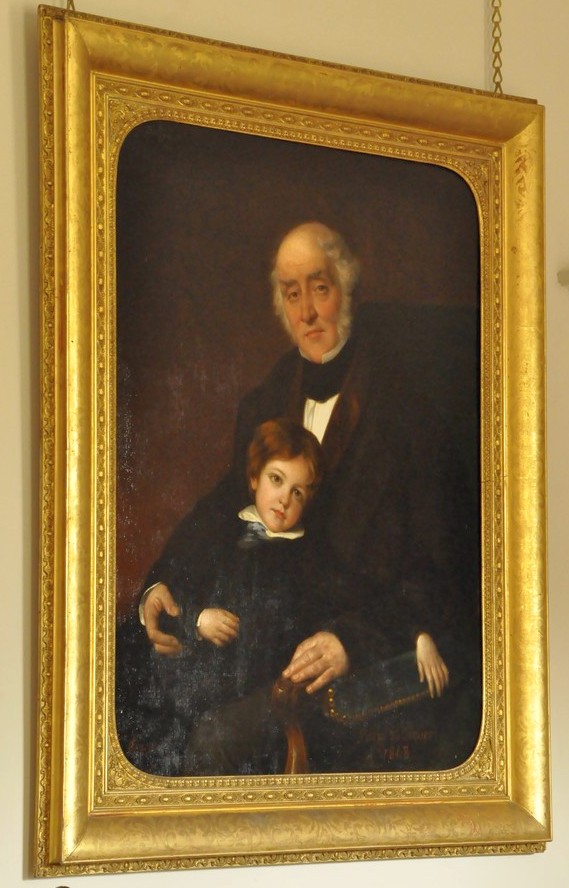
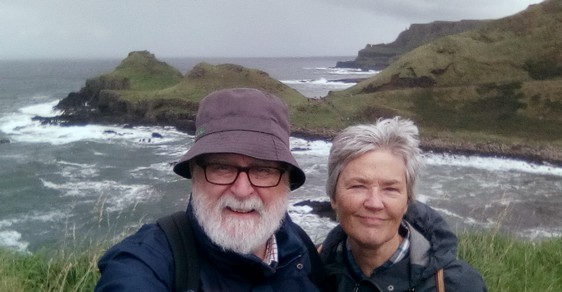
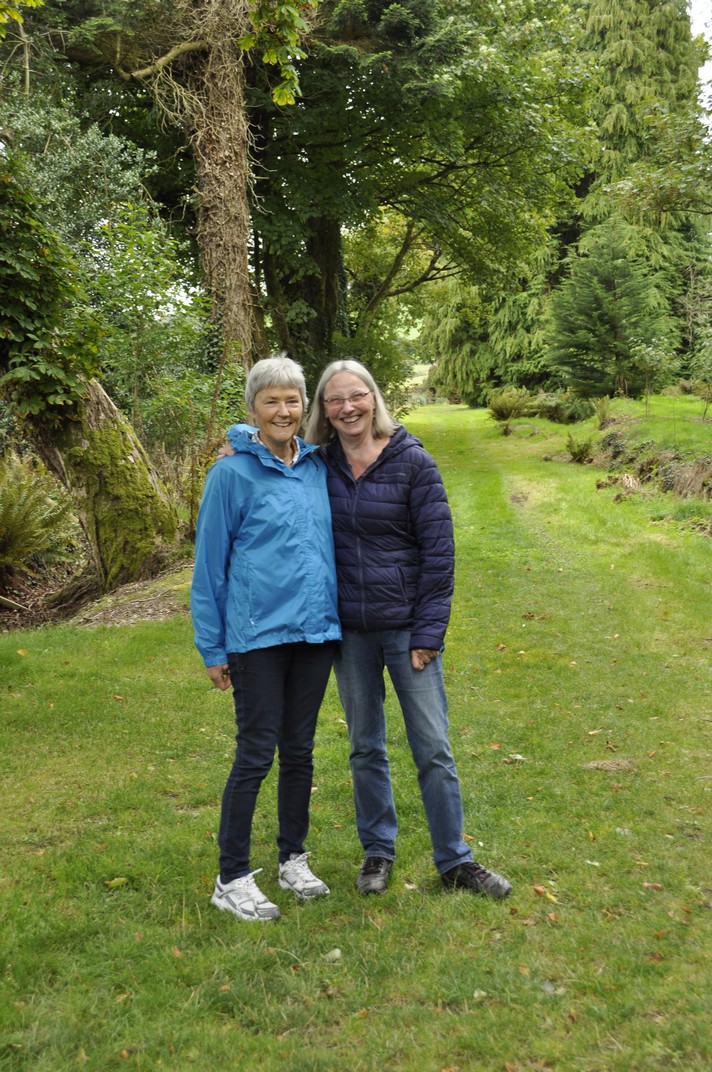
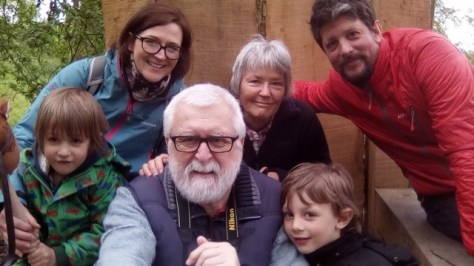
Further on, a study has paintings of the various Viscounts. The 5th Viscount (d. 1911) I think it was, had been a keen sailor, and desired to be buried at sea. It’s said that immediately after the funeral the Dowager Viscountess had his body consigned to Strangford Lough from the end of the family jetty. At least this is what National Trust volunteer guide George told us. You can see George in the photos above describing a beautiful tea chest.

On the west side of the house (the Neo-Classical side), there is a grand entrance hall, and off that a fine dining room.

From the Library, there is a ‘secret’ door to passages and a stairwell that would have been used by the servants to come and go without being seen.

Several bedrooms are open on the first floor. The Viscountess’s bedroom has original 18th century wallpaper, and there’s a wonderfully decorated screen in front of the fire.

The estate is extensive at Castle Ward, with walks down to the Old Castle, the farmyard, and along Lough (estate map).

Close to the house and stable yard is a Victorian sunken garden and a rockery.

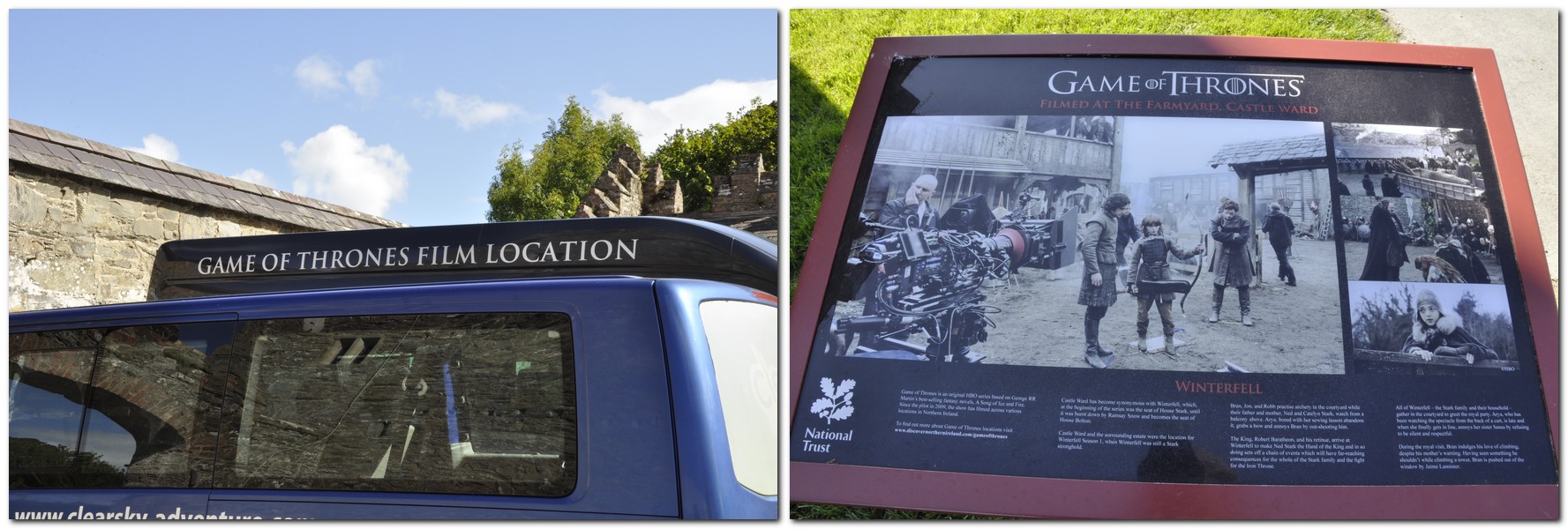
We also discovered that Castle Ward is one of the locations for ‘Game of Thrones’. And I suspect that many of the tourists we saw that day had come to Castle Ward for that purpose rather than taking in the beauty of the house itself.

On our way to Castle Ward, we stopped at Rowallane Garden (map) and had a very enjoyable wander through its natural and formal parts over almost 90 minutes. It’s certainly a haven of tranquility. And we discovered that Rowallane Garden is the headquarters of the National Trust in Northern Ireland. Rowallane Garden was laid out by the Rev. John Moore in the 1860s, and developed further by his nephew, Hugh Armytage Moore after 1903.

Deceptively sumptuous in Co. Armagh . . . women and children first

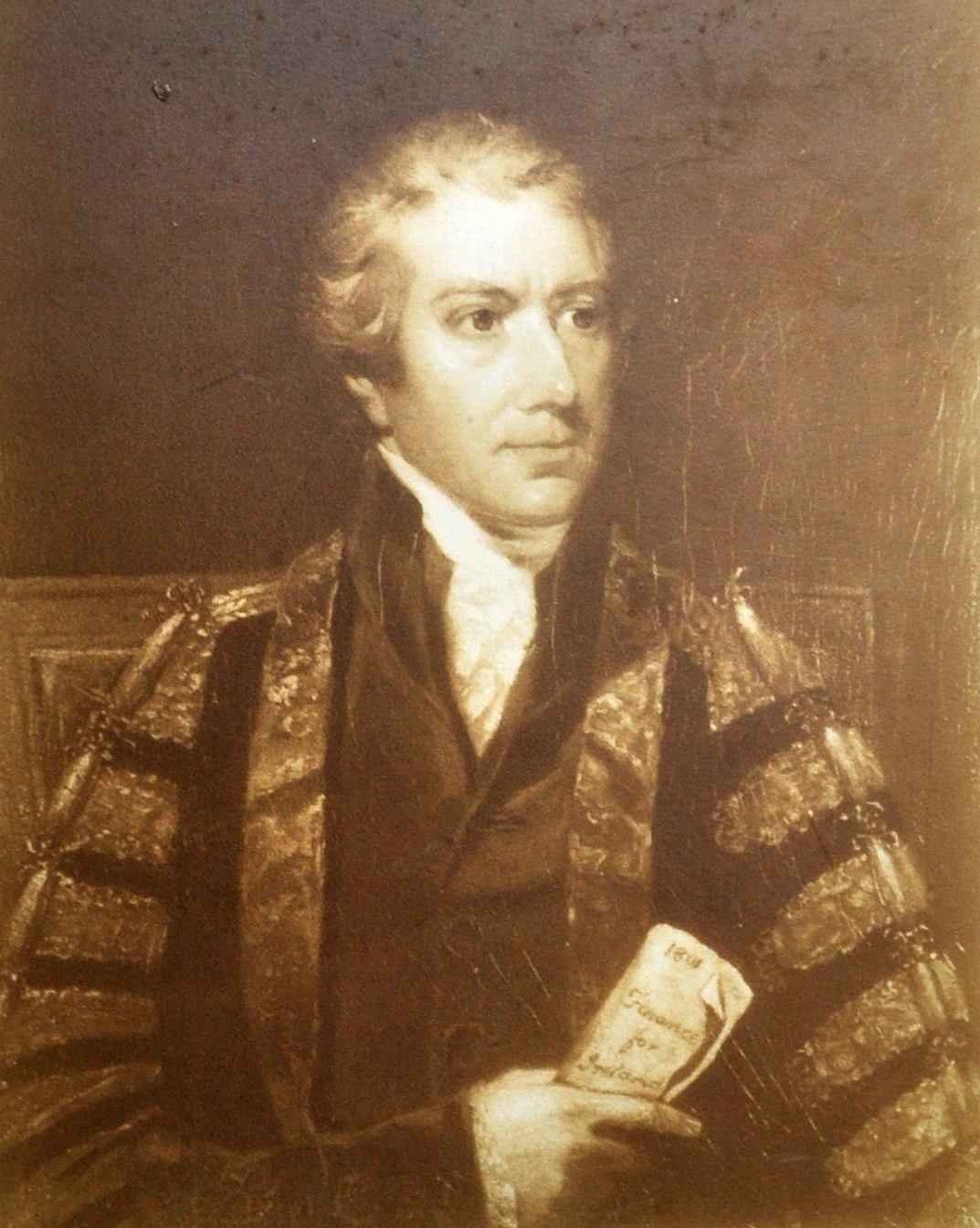
Walter MacGeough Bond

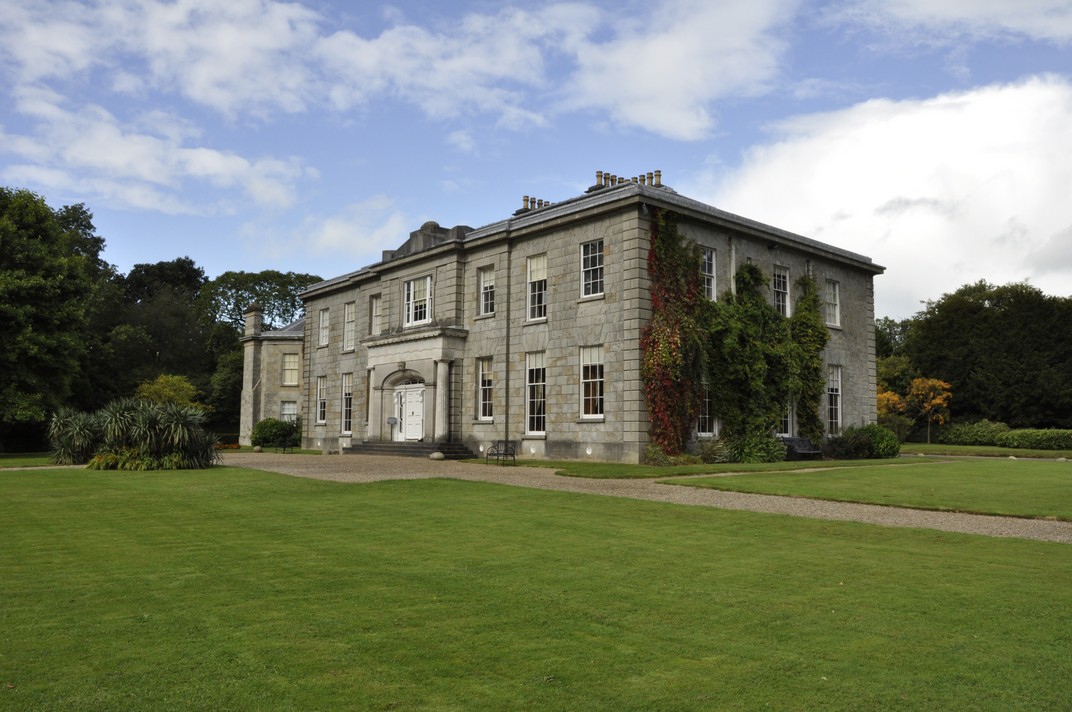
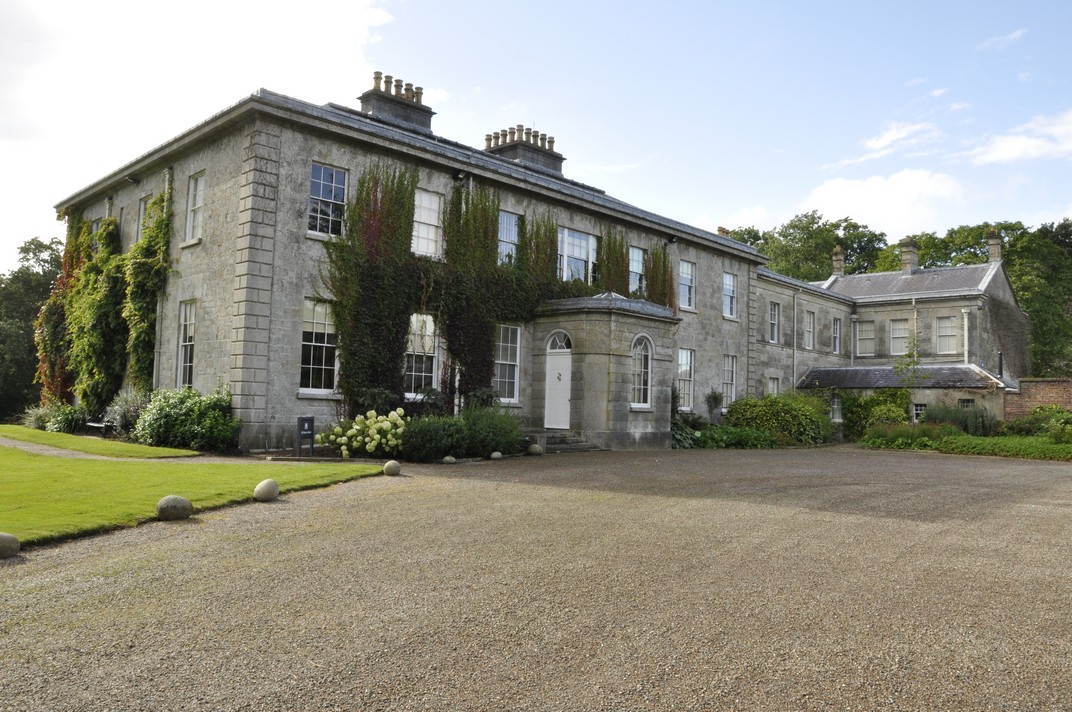
Built by Walter MacGeough Bond in the 1820s along the banks of the River Blackwater in Co. Armagh, The Argory was the fourth National Trust property we visited during our recent tour of Northern Ireland.

The estate was in the family since the 1740s. The family name was originally just MacGeough, but Bond (the maiden name of the grandmother of Walter) was added by Royal Licence in 1824. Walter was the fourth child of Joshua McGeough of Drumshill. Because of particular restrictions in his father’s will, Walter did not inherit Drumsill House (now a hotel), so invested in expanding his estate at The Argory. It remained the family home until 1979, and its interiors have remained unchanged since 1900.

The main entrance on the west front

The east front entrance, used increasingly as there was better coach access

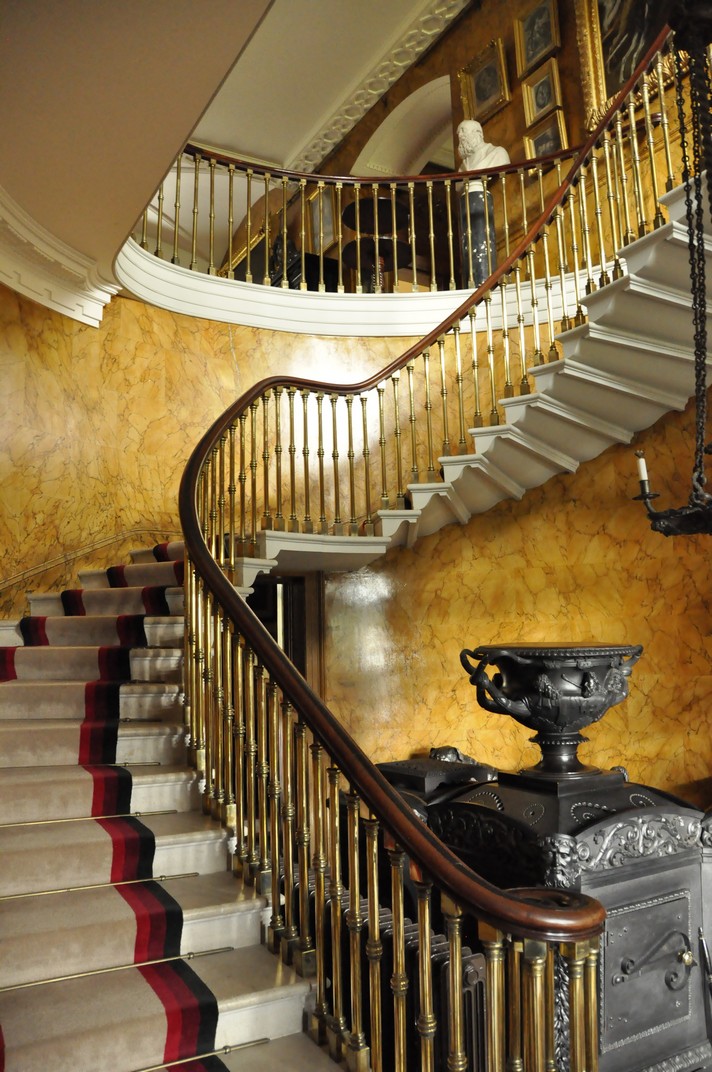
The hallway from the west entrance catches one’s attention immediately. There is a spiral cantilever staircase, one of the finest examples I think I have ever seen. A large stove dominates the floor space; electricity was a late introduction to The Argory.

Off the hall is the dining room, and a very fashionable drawing room off to the other side, with several pieces of outstanding furniture, including Italian marble top tables.

Upstairs, the landing is dominated by an organ.

In one of the bedrooms, a story about the second owner Ralph (Walter’s second son), also known as Captain Shelton, is captured in a painting (a copy of the ca. 1892 original by Thomas Hemy) of the sinking of HMS Birkenhead, a troopship that foundered off the coast of South Africa in February 1852. You can see it on the wall to the left of the bed.

Captain Shelton was on board – and survived. He is depicted as the officer on the right hand side carrying two small children. On the other side of the deck the troops line up in a disciplined way, allowing the women and children into the life boats, the first instance of ‘women and children first’ enshrined in what became known as ‘the Birkenhead Drill‘. Only 193 (out of almost 650 persons on board) were saved.

The Argory is a beautiful house, quite understated on the outside, but a feast for the eyes awaits within. We enjoyed our visit, having combined it with a visit to Springhill House earlier that same day. National Trust volunteer Rosheen was an excellent guide.


Linked by an Irish harp table . . .

We landed in Dublin just after noon, taking the M50 tunnel to cross the city northwards to Northern Ireland.

We were headed to Ardboe and the west shore of Lough Neagh, where we had booked a seven night stay at a guesthouse there. Our route north took us past three of the National Trust properties that were on our list for our week-long holiday. We initially intended just to visit Derrymore House, a few miles west of Newry in Co. Armagh, then head off to Ardboe. But we found that we could also spend a couple of hours at Ardress House. And, as it turned out, there was a loose link between the two properties.

Derrymore House is only open on five afternoons a year. The National Trust rents it out as a private residence, and only one room, the so-called ‘Treaty Room’ is open to the public on these days, although there is year round access to the grounds.

Derrymore House is an eighteenth century thatched cottage, ‘in a landscape demesne’, built on land inherited from his father by Isaac Corry, born in Newry in 1755, who became MP for that city in 1776 in the Irish House of Commons. At that time, Great Britain (England, Wales and Scotland) and Ireland were separate kingdoms until the Act of Union was signed in 1800, coming into effect on 1 January 1801. Corry was Chancellor of the Irish Exchequer and government spokesman for the Act of Union.

Cottages of this type were often built just for show, to enhance a landscape, to be used for recreation. It seems, however, that Derrymore was used as a residence on a continual basis. In fact, when Chancellor of the Irish Exchequer, Corry introduced an unpopular window tax, and his coach was stoned by residents near Newry on the road to Dublin, he had a by-pass road built to avoid such confrontations.

There is anecdotal evidence to suggest that the 1800 Act of Union was drafted in the ‘Treaty Room’.

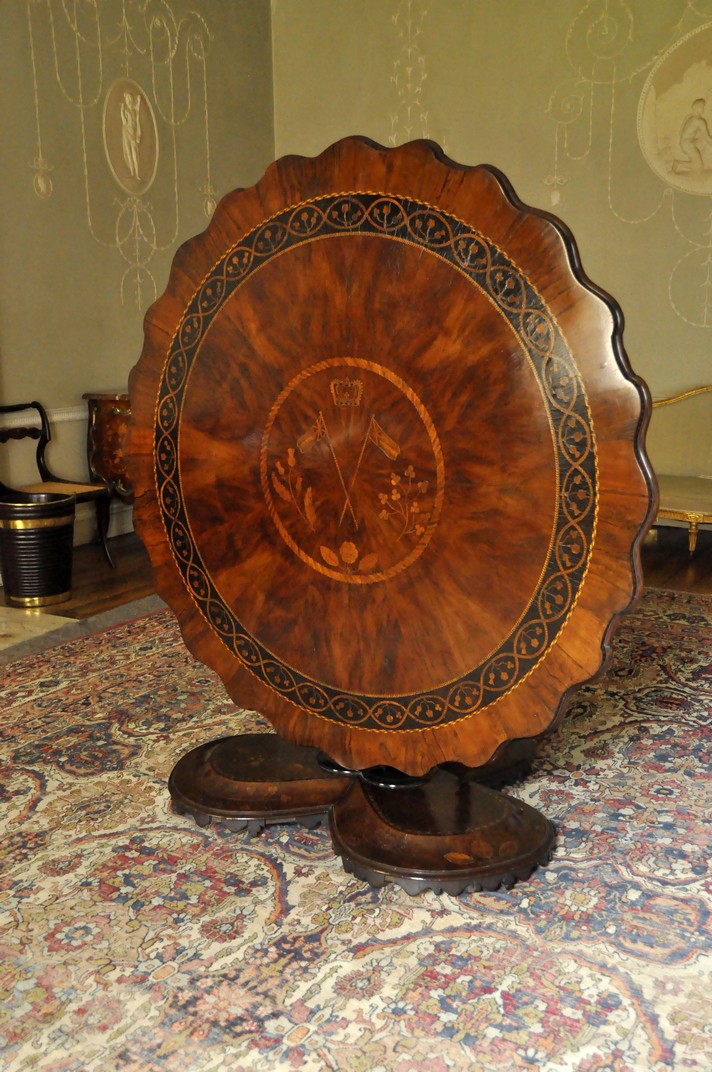
There is a black and white photo among the National Trust’s information showing a fine Irish harp table, made by James Flood in 1799, which is purported to have some connections with the 1800 Act of Union¹. No longer at Derrymore, it now can be seen at Ardress House, less than 30 miles north, and which we visited that same afternoon.

Although photography is not normally permitted inside the house, I was given special permission (for which I am most grateful) to photograph this beautiful piece of Irish craftsmanship. It’s a feast for the eyes, with marquetry of the highest quality, showing the rose, thistle, and shamrock of England, Scotland, and Ireland, respectively (what about the poor Welsh?) inlaid in the table top. The support for the table is in the form of a shamrock, and an Irish harp is also part of that support.

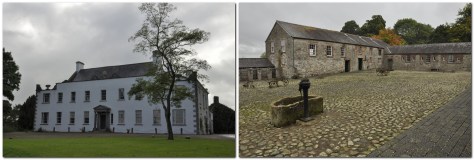
Ardress House was a 17th century farmhouse, nestling in 40 acres of farmland, in the apple orchards of C. Armagh that was remodelled and embellished in 1760 by Dublin chief architect Charles Ensor. His family originally came from Coventry (some 35 miles from where I live in Worcestershire), and he married the heiress of Ardress, Sarah Clarke.

It’s quite easy to see the differences between the two phases of building: lower ceilings and smaller rooms in the 17th centry farmhouse parts; higher ceiling, Neo-Classical design in those from the 18th century.

But Ardress does have another interesting feature: a perfect traditional farmyard. Just like the ones I remember from my childhood when visiting my grandparents in rural Derbyshire.

Such was the start to our Northern Ireland National Trust adventure. The omens were good the following days!

~~~~~~~~~~~~~~~~~~~~~~~~~~~~~~~
¹ There is no evidence it was ever used to sign the Act of Union. However, King George V signed the new constitution of Northern Ireland on this table in Belfast in 1921. For many years, it was ‘lost’ in storage in England, before being returned to Ardress House in 2006.

No longer on my travel bucket list . . . another igneous encounter

I’ve been very fortunate (and privileged) to have visited many places of interest all over the world: Machu Picchu in Peru; the temples of Tikal and Angkor Wat in Guatemala and Cambodia, respectively; some of the world’s iconic cities like New York, Sydney, and Hong Kong, to name just three; and many of the wonderful parks and monuments throughout the USA, such as the Grand Canyon, Devil’s Tower, or Crater Lake. I’ve written about these, and many others, in this blog.

But there is one place, much closer to home, that I wanted to see as long as I can remember. And that place is the Giant’s Causeway, on the north coast of Antrim in Northern Ireland. Last week I was finally able to tick the Giant’s Causeway on my travel bucket list.

Steph and I have just returned from a week-long road trip to Northern Ireland, mainly to visit most of the properties owned by the National Trust over there. We actually got to visit nine houses, one garden, and the Giant’s Causeway.

It took a little under two hours to drive north from our guesthouse in Ardboe, beside Lough Neagh, to the Visitor Centre – mainly because we decided to take back roads to avoid the expected early morning congestion around Coleraine, and also because we missed one turn and found ourselves heading east instead of north, delaying about 15 minutes as a consequence.

It must have been around 10:30 or so when we parked, and already the site was busy. The Giant’s Causeway is a UNESCO World Heritage Site, and attracts visitors—by the coach-load—from all over the world, most of whom (not being National Trust members) must handsomely boost the National Trust’s finances. I was surprised to note how many Chinese visitors we met at the Causeway.

The National Trust has built a fine Visitor Centre, with its gift shop and cafeteria, and many exhibits describing the geology and history of the site.

I was surprised how much limestone and chalk can be seen on the north Antrim coast, having been protected, as it were, by an overlay of volcanic rocks. Interesting geology!

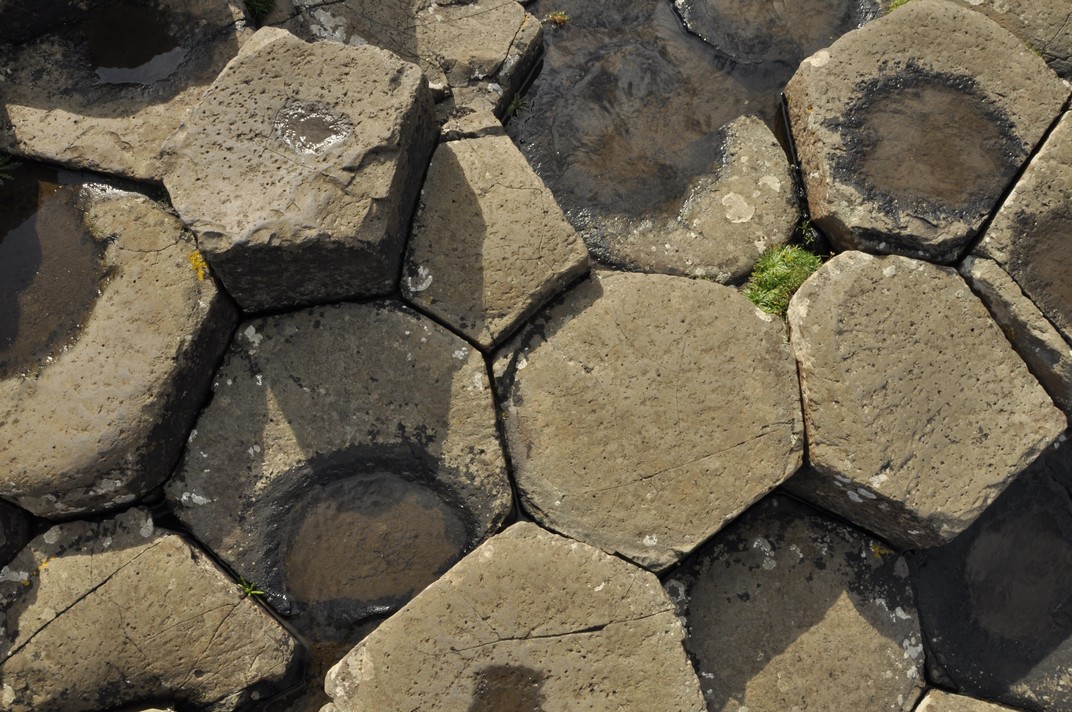
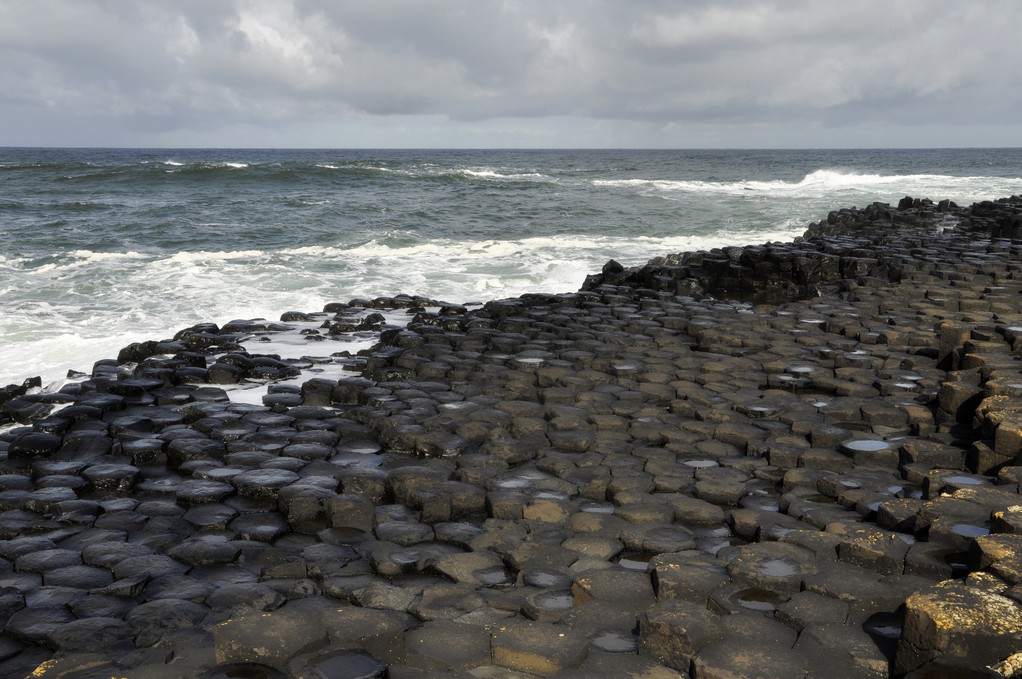
It’s the volcanic history that we see at the Giant’s Causeway, an outcrop of beautiful pentagonal and hexagonal basalt columns, stretching from the shore northwards into the incoming tide.

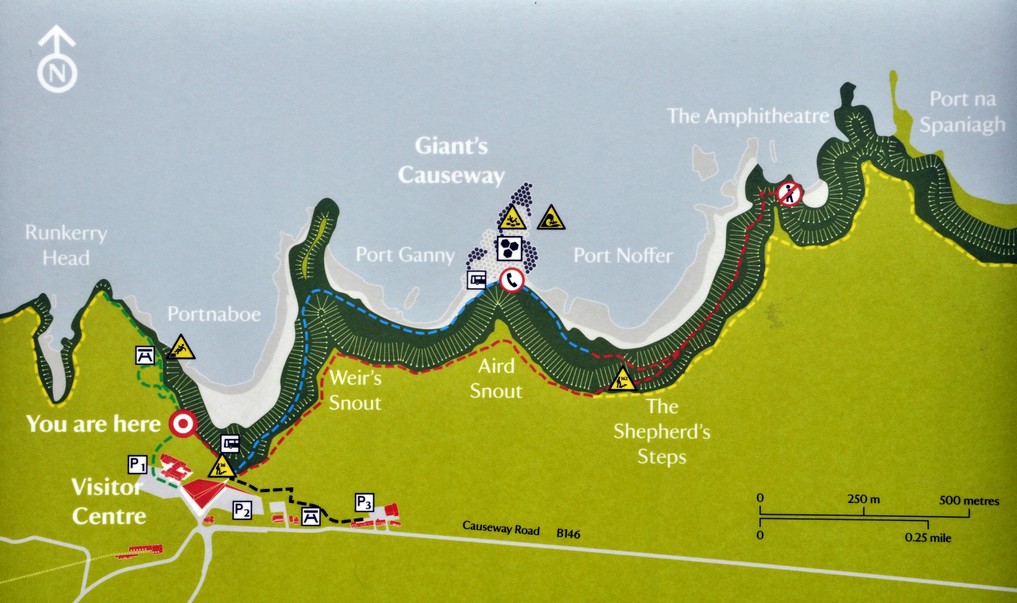
You have to walk just under a mile from the Visitor Centre down the cliff face to reach the Causeway itself. Fortunately, the National Trust does provide a regular shuttle bus service back up, free to members. We were happy to take the bus after wandering over the Causeway for well over an hour.

But the Causeway is not the only landscape attraction. The spectacular cliff backdrop to the landscape just adds that extra grandeur and mystery. Old Irish myths spring to mind! We also took a walk on Runkerry Head (on the left of the map below) so that we could view the Causeway from a distance through a gap in the next headland east (between Portnaboe and Port Ganny). In the far distance the crags of The Amphitheatre just add to the drama.

Looking east from Runkerry Head towards The Amphitheatre (in the far distance) and the Giant’s Causeway that can be seen through the gap in the next headland. The road down the cliff passes through that gap.

With some clever angles and hiding behind various basalt columns I was able to take most photos without any tourists showing, despite there being several hundred or more there at the time. I was also a little surprised at how small an area the Giant’s Causeway covered, but I guess that as the tide was in (or coming in) more would be exposed at low tide. I’m quite happy with my photos, but I have seen several more spectacular photos of the Causeway taken at dawn or sunset.

The Giant’s Causeway is certainly an impressive landscape. If you do plan a visit, do check the weather forecasts carefully. Although mainly overcast, we did have some sunny weather. Half an hour after we left, heading further east and south on the Antrim coast, the heavens opened, and visitors to another National Trust site, the Rope Bridge (where we stopped for a picnic only) were probably soaked to the skin, with the weather turning in the bat of an eyelid. Further south, the chalk is exposed at a number of points including here at Garron Point (map).

A National Trust trip around Northern Ireland

Well, if I count the visit to Plas Newydd on the southern shore of Anglesey, on the way to Holyhead to catch the ferry over to Ireland, Steph and I visited twelve National Trust properties in eight days.

We have wanted to visit Northern Ireland for many years, but until now never really had the opportunity, or we felt that the security situation didn’t make for a comfortable visit. All that has changed. Now retired, we have time on our hands. ‘The Troubles‘ are a thing of the past (fortunately), and the Peace Process in Northern Ireland has transformed the opportunities for that part of the United Kingdom.

Being members of the National Trust, and knowing that there were some splendid houses to see over in Northern Ireland, as well as some Trust-owned landscapes such as the spectacular Giant’s Causeway on the north Antrim coast, this was just the incentive we needed to decide, once and for all, to cross over to the island of Ireland again. We have visited south of the border several times. I first went to Co. Clare in 1968, and Steph and I had holidays there traveling around in 1992 and 1996.

Planning the trip – finding somewhere to stay
For a number of recent holidays, I have used booking.com to search for hotels when I was planning our road trips across the USA. So I used this company this time round when looking for an overnight stay in Holyhead, convenient for the ferry to Ireland early the next morning.

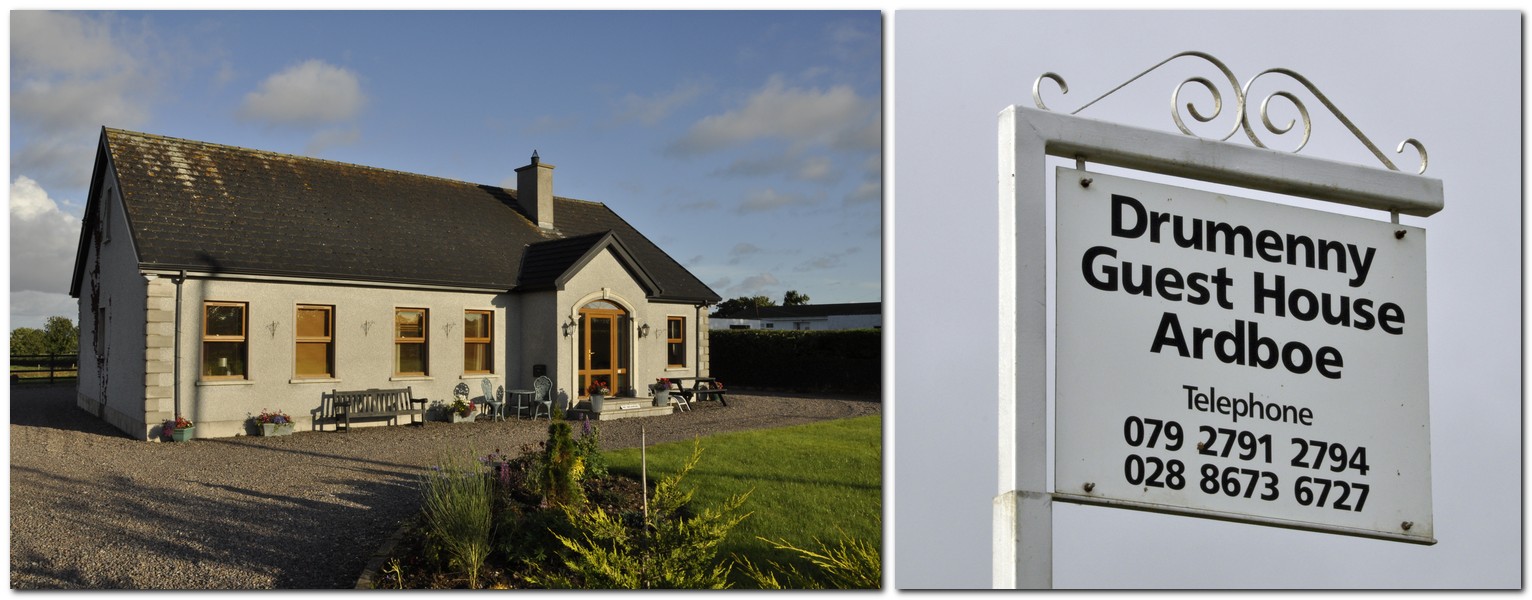
In Northern Ireland we were looking for somewhere central from where it would be a relatively easy drive each day to any part because the National Trust properties we wanted to visit were scattered all over (as shown in the map above). After reading various online reviews (are they always reliable?), and looking for value for money, we chose The Drummeny Guest House in Ardboe, Co. Tyrone (Mid-Ulster council district), on the west shore of Lough Neagh.
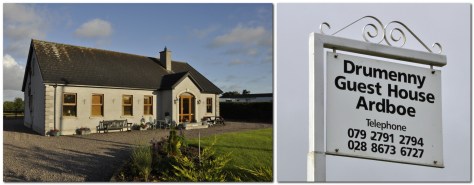
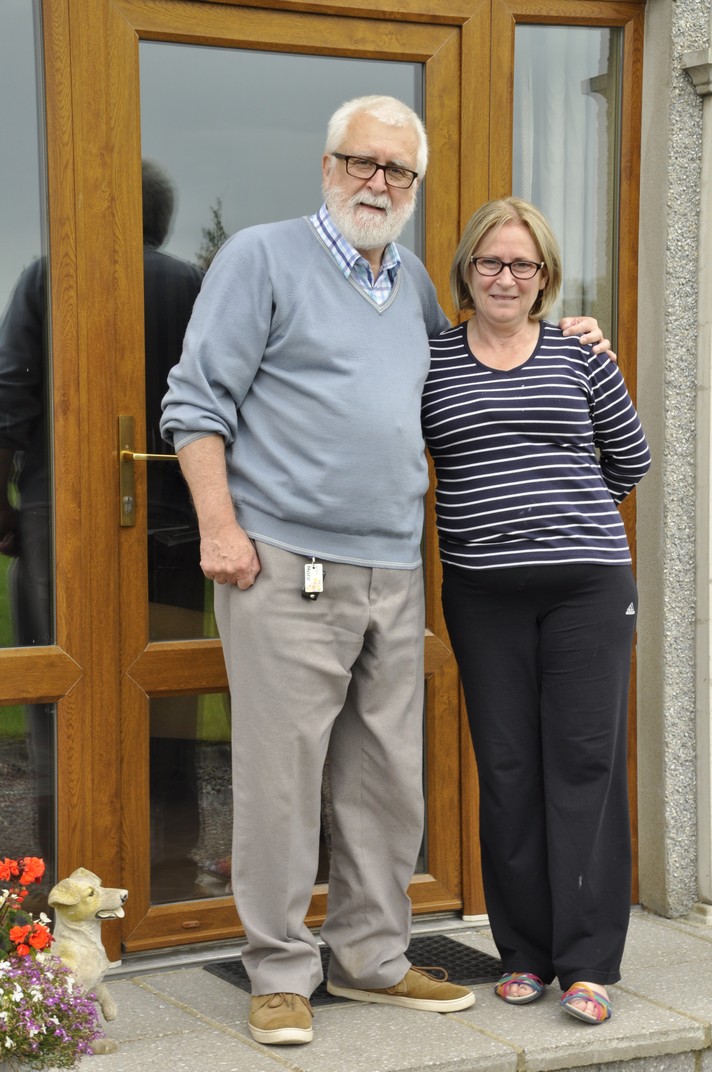
Me and Tina Quinn on the morning of our departure from The Drumenny Guest House

What a find! Our hosts, Tina and Damien Quinn, were the best. What a friendly welcome, and hospitality like you would never believe. The reviews on booking.com were all very positive. Were they accurate? Absolutely! In fact, our experience was even better than previous reviewers had described. Such a breakfast (full Irish), and lots of other extras that Tina provided. In fact, staying with Tina and Damien it felt as though we were staying with family, and a week at The Drumenny was better than we ever anticipated. So, if you ever contemplate a Northern Ireland holiday, there’s only one place to head for: The Drumenny Guest House in Ardboe. You won’t be disappointed.

Less than a mile away there’s a good restaurant, The Tilley Lamp, that serves good, simple food, and lots of it. Very convenient.

Day 1: 8 Sep — home to Holyhead, via Plas Newydd (168 miles; map)
Our Northern Ireland trip started just after 09:15, and because of major road works (and almost certain traffic congestion) we decided to travel northwest from Bromsgrove via Kidderminster and Bridgnorth, before joining the A5 south of Shrewsbury. We then continued on the A5 through Snowdonia, and over the Menai Strait to Plas Newydd House and Gardens, just a few miles west of Llanfair­pwllgwyngyll­gogery­chwyrn­drobwll­llan­tysilio­gogo­goch.

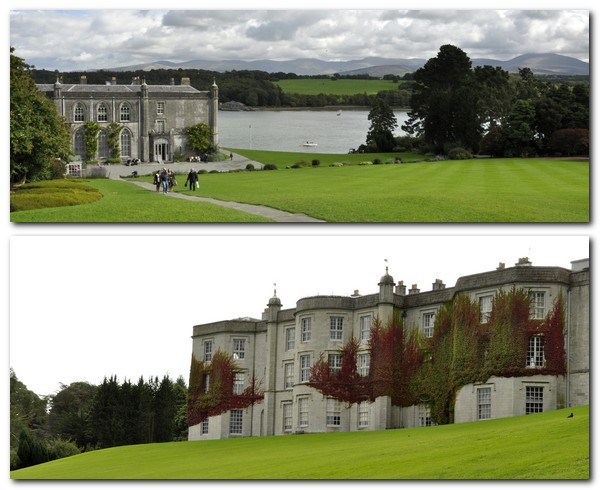
Home to the Marquesses of Anglesey (descendants of the 1st, who as the Earl of Uxbridge, served alongside the Duke of Wellington at the Battle of Waterloo, and had his leg blown off by a cannonball), Plas Newydd stands on the shore of the Menai Strait that separates Anglesey from mainland Wales.

Day 2: 9 Sep — Dublin to Ardboe, calling at Derrymore House near Newry, and Ardress House (120 miles), Co. Armagh
Our Stena Line Superfast X ferry arrived to Dublin Port on time, just after noon, and we quickly headed north on the M1, crossing into Northern Ireland just south of Newry in Co. Armagh.

Derrymore House lies a few miles west of the A1, and is open for just five afternoons a year. That was a piece of luck that we happened to pass by on one of those days. It’s a late 18th century thatched cottage. The ‘Treaty Room’ is the only room open to the public, and the 1800 Act of Union uniting the Kingdom of Great Britain and the Kingdom of Ireland is supposed to have been drafted there.
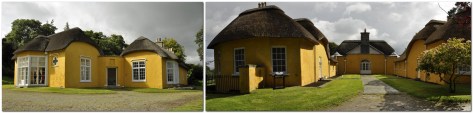
Further north, and the route to Ardboe, we also visited Ardress House, built in the 17th century, and embellished in the 18th. It has a traditional farmyard.
We arrived to our guesthouse around 18:00, and enjoyed a meal out that evening at The Tilley Lamp. The best pork chops I’ve ever tasted.

Day 3: 10 Sep — Ardboe Cross, Co. Tyrone, Springhill House, Co. Londonderry and The Argory, Co. Armagh (53 miles)
Sunday morning. We decided to briefly explore the Lough Neagh shore near Arboe, and see one of Ireland’s national monuments, the Ardboe Cross.

Springhill House is a typical 17th ‘Plantation‘ house, showing the history of ten generations of the Lenox-Conyngham family.
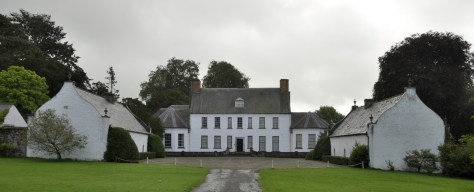

The Argory is just 20 miles south of Springhill, and was built in the 1820s and was the home of the MacGeough Bond family, and has remained unchanged since 1900. It has magnificent interiors, particularly the cantilevered staircase.

Day 4: 11 Sep — Florence Court and Crom Castle, Co. Fermanagh (169 miles)
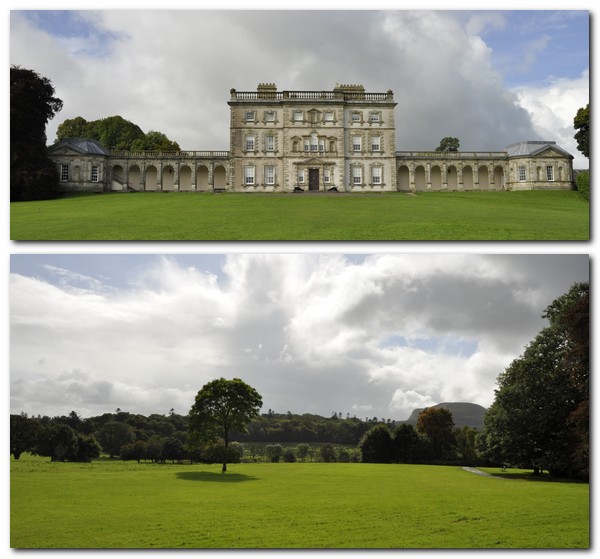
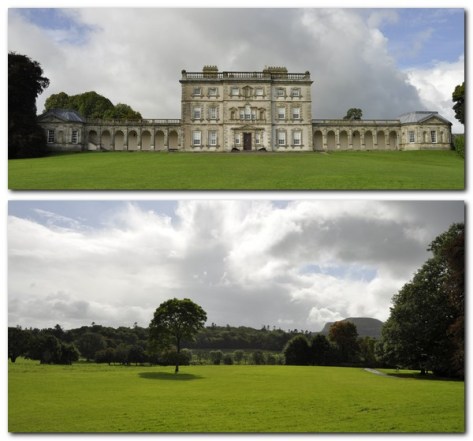
Florence Court is the furthest west of all of the National Trust’s properties, a few miles southwest of Enniskillen in Co. Fermangh. It was the home of the Earls of Enniskillen, and was built in the 18th century. There are beautiful views of the nearby mountains from the front of the house. Inside, where photography is not permitted, the walls and ceilings have some of the finest stucco plaster work I have seen. In 1955 there was a disastrous fire and it’s credit to the National Trust how well they accomplished the refurbishment. Remarkably many of the precious items in the house were saved.
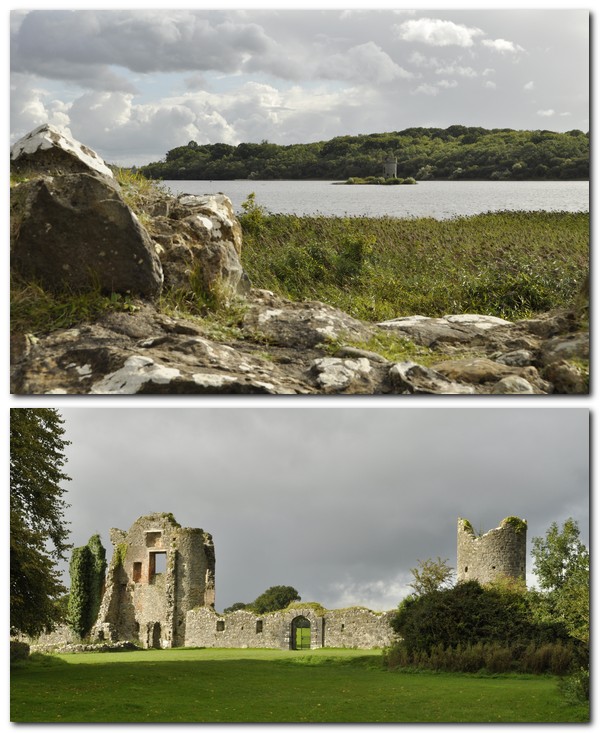
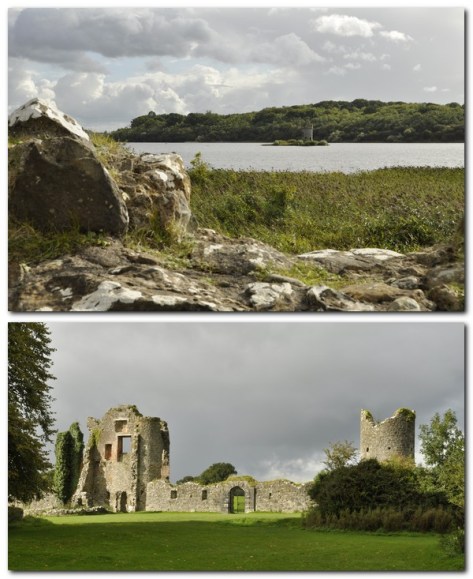
On our route back to Ardboe, we diverted to make a quick visit to the ruins of Crom Castle, on the banks of Upper Lough Erne. There was time for a walk to the ruins from the Visitor Centre before it closed for the day, and approaching showers drenched us. There were some lovely views over the lough to Creighton Tower.
We also saw how convoluted the border is between Northern Ireland and the Republic. Sorting that out during the Brexit negotiations will be a challenge, nightmare even, and so unnecessary. It is an invisible border, and hopefully obstacles will not be put in place by this incompetent Conservative government that will undermine the economic and social progress that Northern Ireland has made in recent years. This story on the BBC website (20 September) has a video of the very road we took back to Ardboe between the counties of Fermanagh (Northern Ireland) and Monaghan (Republic).

Day 5: 12 Sep — Giant’s Causeway and the Antrim coast, Co. Antrim (162 miles)
The Giant’s Causeway has long been on my Bucket List of attractions to visit. And we weren’t disappointed. We had carefully monitored the weather forecasts and chose what we hoped would be the best day of the week. In general it was. The drive north from Ardboe took just under 2 hours. We passed through the small town of Bellaghy, Co. Londonderry, burial site of Nobel Literature Laureate Seamus Heaney. I wish we had stopped.

Although it was not yet 10:30 when we reached the Visitors’ Centre at the Giant’s Causeway, it was already very busy, and just got busier over the three hours we stayed there. There were visitors from all over the world – particularly from China.

It’s a walk of more than a mile down the cliff to the actual Causeway, so we took a leisurely stroll there. But we did take advanatge of the free bus ride (as National Trust members) to go back up the cliff road.

We then headed east along the north Antrim coast, and stopped for a picnic at the Rope Bridge car park where a torrential downpour spoiled the view and prompted us to move on rather than have a wander around. Then we headed down the east coast on a road that hugs the bottom of cliffs along the seashore, before reaching Larne and then heading west around the top of Lough Neagh and home to The Drumenny.
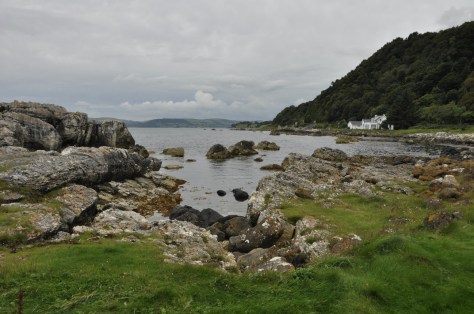
Day 6: 13 Sep — Mount Stewart, Co. Down (127 miles)
On the northeast shore of Strangford Lough, just south of Newtownards, the Mount Stewart estate was purchased in the mid-18th century, and became the home of the Marquesses of Londonderry when the current house was built at the beginning of the 19th century. It has a beautiful formal garden, mostly the work of Lady Edith, wife of the 7th Marquess.
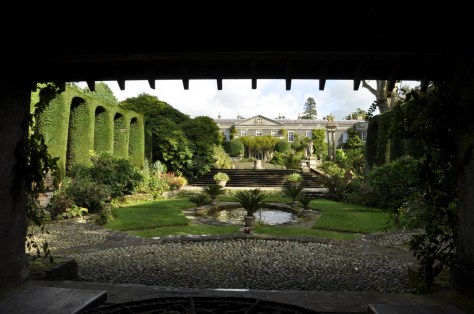
Day 7: 14 Sep — Castle Coole, Co. Fermanagh, Donegal (Republic of Ireland), and the Sperrin Mountains in Co. Londonderry and Co. Tyrone (200 miles)
On Day 7, we headed west once again to visit Castle Coole, situated just outside Enniskillen. We were not able to visit there when we had travelled west on Day 4, as the property had been closed for a special BBC Proms in the Park event.

Castle Coole was built by the 1st Earl Belmore between 1789 and 1797. It’s mostly the design of famous English architect James Wyatt, who also designed much of the interior and even the furniture. Photography is not permitted inside, and I’m unable to show you some of the splendours of this house, particularly the Saloon, which must rank as one of the finest examples of its kind among any of the stately homes in this country. The current Earl Belmore resides in a cottage on the estate.

Leaving Castle Coole, we headed west into the Republic, turning north at Donegal and crossing back into Northern Ireland at Strabane. We decided to cross the Sperrin Mountains, and had the weather been better (much of the journey north of Donegal was in torrential rain), I could have taken some nice photos. But we did have one surprise. Having taken one wrong turn too many when road signs petered out, we stumbled across a Bronze Age site of stone circles and cairns, at Beaghmore. It had stopped raining, everywhere was sparkling in the evening sun, and we enjoyed a half hour walk around the site.

Given the sunshine and showers, conditions just right for the appearance of rainbows. We saw ten throughout the day, some double.

Day 8: 15 Sep — Rowallane Garden and Castle Ward, Co. Down (136 miles)
Just south of Saintfield alongside the A7, Rowallane Garden is a haven of tranquility, about 50 acres, created in the mid-19th century by the Revd. John Moore and his nephew Hugh Armytage Moore. It’s also the headquarters of the National Trust in Northern Ireland.

Then we headed the further 16 miles southeast to Castle Ward on the tip of Strangford Lough. It’s an extraordinary building: Neo-Classical Gothic! The two architectural styles are reflected on the front and rear of the building, and mirrored inside, because, it is said, the 1st Viscount Bangor and his wife could not agree.
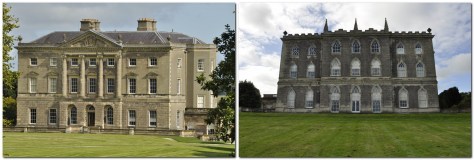
The Ward family, originally from Cheshire, settled here in the late 16th century, and there is an old castle on the estate – used in the hit HBO TV series Game of Thrones.
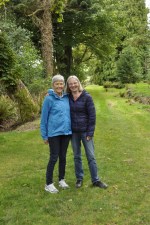
Steph (L) and Clare at Kilmacurragh Botanic Gardens

Day 9: 16 Sep — Arboe, Co. Tyrone to Rathdrum, Co. Wicklow (224 miles)
We travelled south into the Republic, taking a winding route through Co. Monaghan, Cavan, Longford, Westmeath, Offaly, Kildare and Wicklow to spend the night with old IRRI friends Paul and Clare O’Nolan. Paul had been the IT Manager at IRRI; Clare was my scuba dive buddy (video) for several years. On the evening of our arrival, Clare took us on a tour of the Kilmacurragh Botanic Gardens close to where they live on the edge of the Wicklow Mountains.

Day 10: 17 Sep — Rathdrum to Dublin, Holyhead to home (235 miles)
We left the O’Nolans just before noon, and headed north around the M50 to Dublin Port for our 15:10 Stena Superfast X ferry to Holyhead. We disembarked at exactly 19:00, and the drive home to Bromsgrove took four hours. Fortunately the roads were quite quiet and we made reasonably good progress until we were less than 20 miles from home when we were slowed down by major roadworks on the M5 motorway.

Ten days away, 1594 miles covered, twelve National Trust properties visited, seven enormous Irish breakfasts enjoyed. Northern Ireland was everything we hoped for: beautiful landscapes and friendly people. We had delayed our visit there for too long. And the National Trust was our excuse, if one was needed, to make the effort to visit.

All in all, ten days well spent! Here are the detailed posts for the properties:


Erddig: ‘Where fragrance, peace and beauty reign’ (Philip Yorke II)

A week ago, Steph and I headed 100 miles northeast from home to visit Belton House in Lincolnshire. On Thursday, it was 75 miles northwest, just south of Wrexham in North Wales, to visit Erdigg Hall, a Restoration house built between 1684 and 1687, and standing in 1200 acres. It was the home to the Yorke family for 250 years, although it didn’t come into their possession until 1733. Seven generations!  Here is an interesting Erddig timeline.

Interestingly, we discovered a family connection between the Yorkes of Erddig and the Custs of Belton. Elizabeth, daughter of Sir John Cust, Speaker of the House of Commons, married Philip Yorke I in July 1770, three years after he inherited Erddig. Philip Yorke I was author of the The Royal Tribes of Wales, published in 1799.

Erddig (pronounced Erthigg) is a veritable Aladdin’s Cave. Over the centuries, the Yorkes hardly threw anything away; what’s on display today at Erdigg is a fraction of what the National Trust has in storage (more than 30,000 items). There are even vintage cars and old bicycles in some of the outbuildings. In that respect, Erddig must be almost unique among National Trust properties in that all its contents are ‘original’ – somewhat like Calke Abbey in Derbyshire.

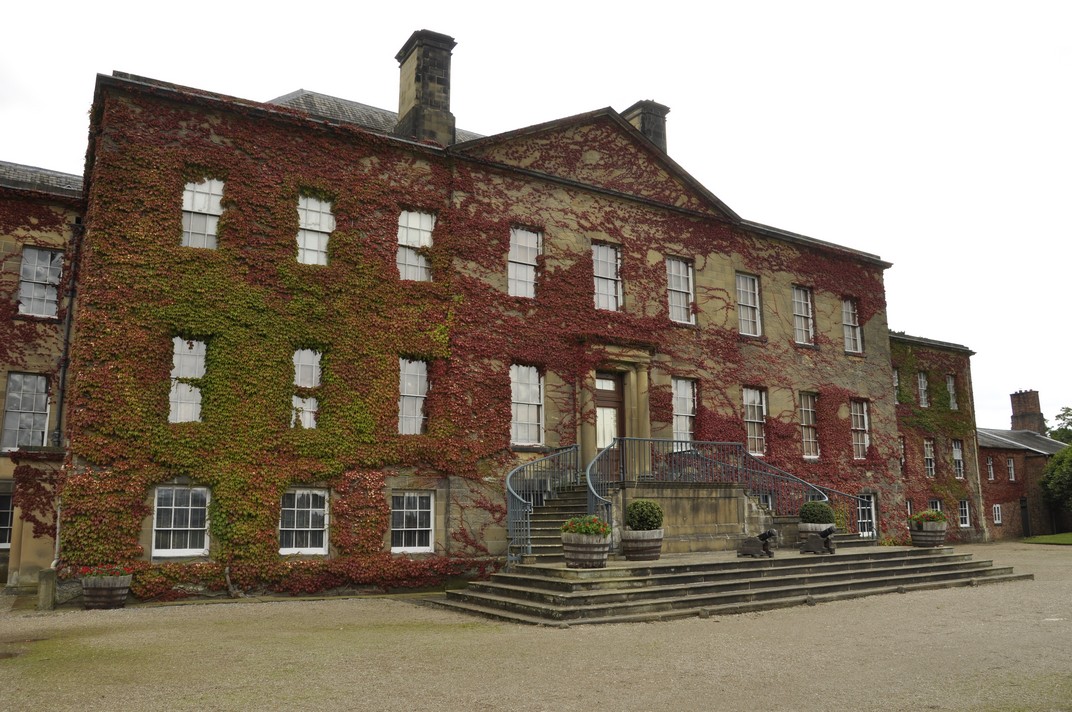
The main entrance of Erddig Hall, facing west towards the Welsh hills

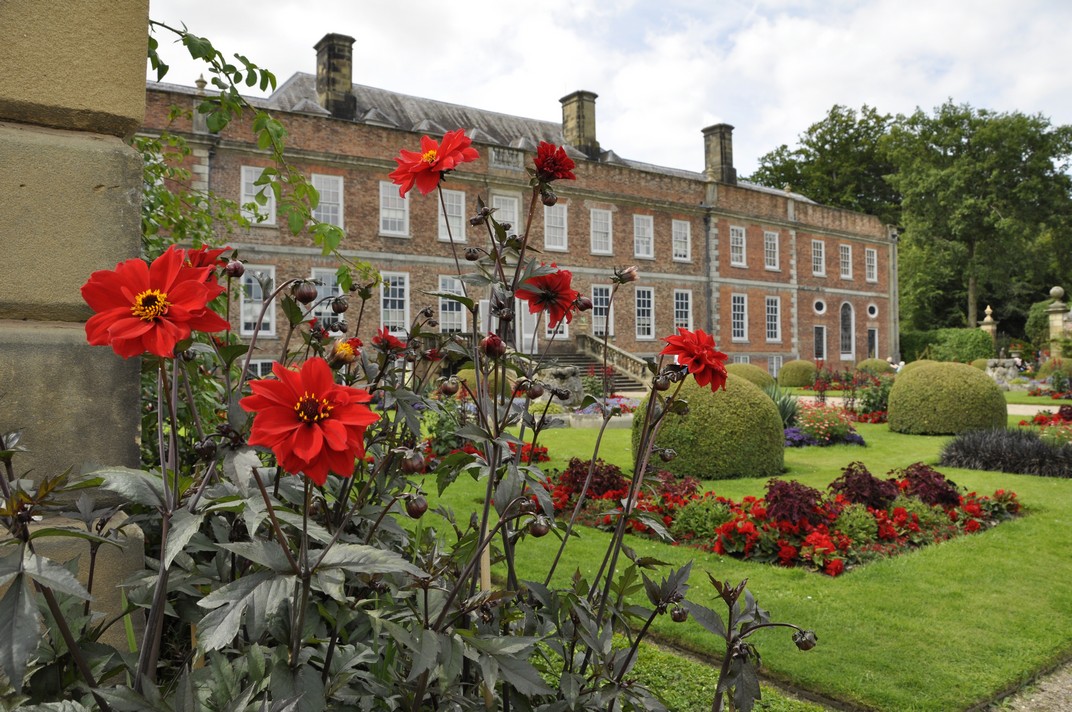
This is the rear of the house, facing east, overlooking the formal gardens and lake.

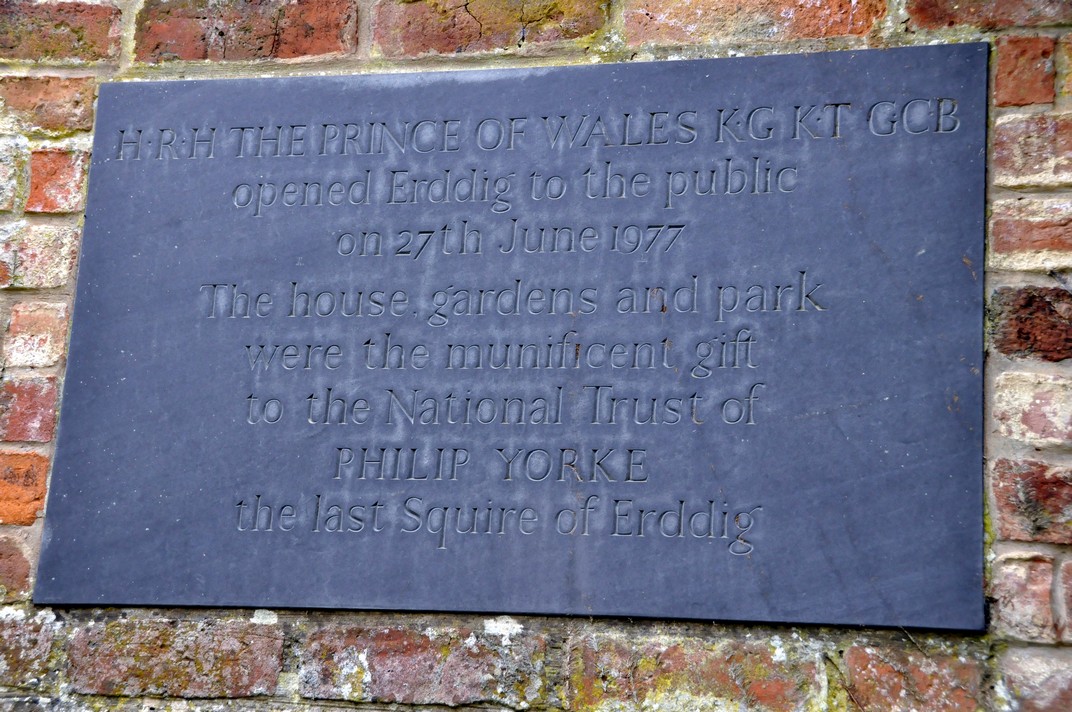
In 1947, disaster almost struck. Following nationalization of the coal industry, the coal mines just beyond the Erddig estate began to mine underneath the house – contrary to what had been apparently agreed over decades if not centuries with the owners of the private mine. The result was massive subsidence, up to five feet on one side of the house. Faced with significant expenditures to make the property safe and not falling into further disrepair, and with no family to pass it on to, the last Squire, Philip Yorke III bequeathed the estate, house and all contents to the National Trust in 1973.

It took four years to carry out all the work necessary to the house, and rehabilitate the gardens. In June 1977, Erddig was opened to the public. This is Erddig’s Ruby Jubilee, 40 years. And the planting designs in the formal garden reflect this, as you will note from many of the photos I have chosen to illustrate this post.

Structurally, the house is aligned north-south, and is a long ‘thin’ building, with a line of rooms along each side and a narrow corridor in between. There’s a grand staircase at the northern end, leading down to the family chapel. Stairs at the south end gave access to all floors for the servants.

A fine complex of red brick out buildings is located on the south side of the house, with a sawmill, workshops, stables and a coach house among others.

Delightful, formal gardens are laid out to the rear (east side) of the house. It’s hard to imagine what the overgrown gardens must have looked like when the National Trust took over Erddig. The fruits of 40 years labour and TLC are apparent in abundance. There are more extensive walks through the park, but we didn’t take any of these.

The National Trust has carefully laid out a route for visitors to enjoy Erddig Hall. The entrance to the house is through the ‘working’ wing of the house through the bakery, scullery and laundry, along a servants’ passage with offices for the housekeeper, butler, and estate manager.

What is also interesting is that the Yorkes ‘celebrated’ their staff, and apparently were very conscientious for their welfare. The servants’ passage is lined with photos of servants from as early as the mid-19th century.

One of the most striking rooms on the ground floor (at the south end, and east side) is the Dining Room, with its pillars and impressive paintings.

Further along are the Saloon (with its unusual metal ceiling), the Tapestry Room, Chinese Room and Chapel.

On the front of the house are the Library, the Entrance Hall (Music Room), and Drawing Room.

On the First Floor are several bedrooms: Red, White, and Blue as well as the State Bedroom with some of the Hall’s oldest artefacts; and the Nursery. There is also access to attic bedrooms on the top floor.

Erddig was so much more than we expected, and well worth the two hour plus travel time from north Worcestershire. I think we were lucky to hit the gardens at just the right time of the season. Everything was at its best and in full bloom. Credit goes to the Erddig garden staff.

Squire Philip Yorke III must have been quite a remarkable man. He died peacefully while attending a church service, in 1978. These quotes from his diary sum up the Yorke family outlook on life.

The perfect country house . . . a stunning English treasure

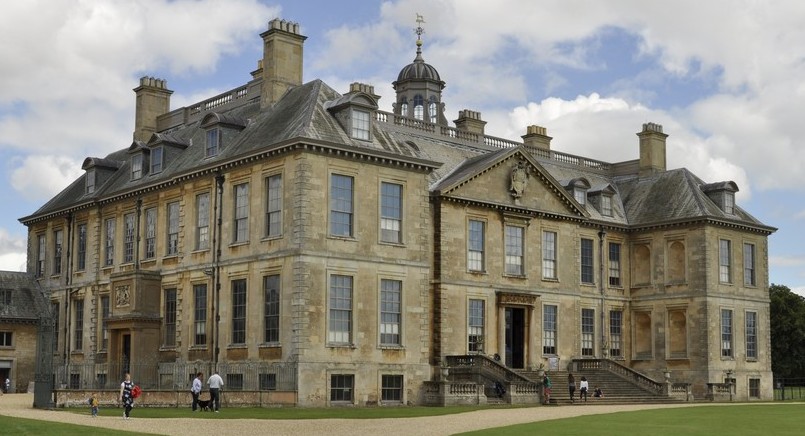
Standing in 1300 acres on the northern outskirts of Grantham in Lincolnshire, Belton House must be one of the National Trust’s jewels, though perhaps not quite on the same scale as either Waddesdon Manor or Kingston Lacy.

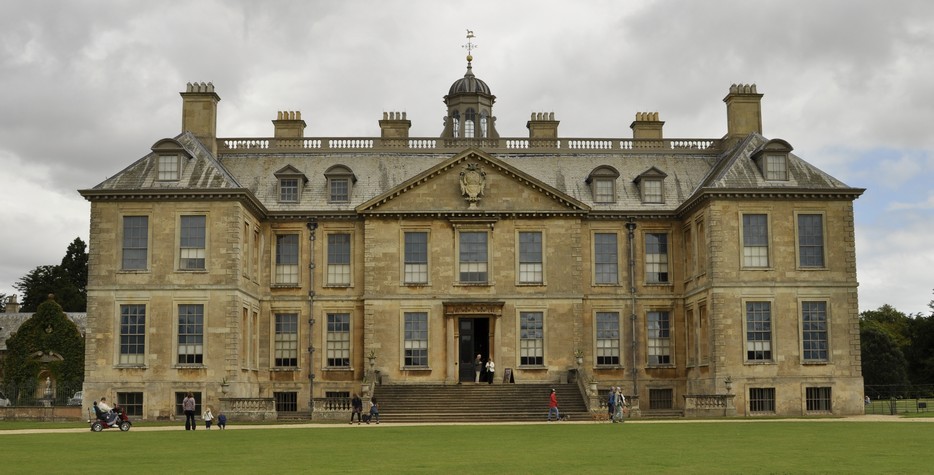
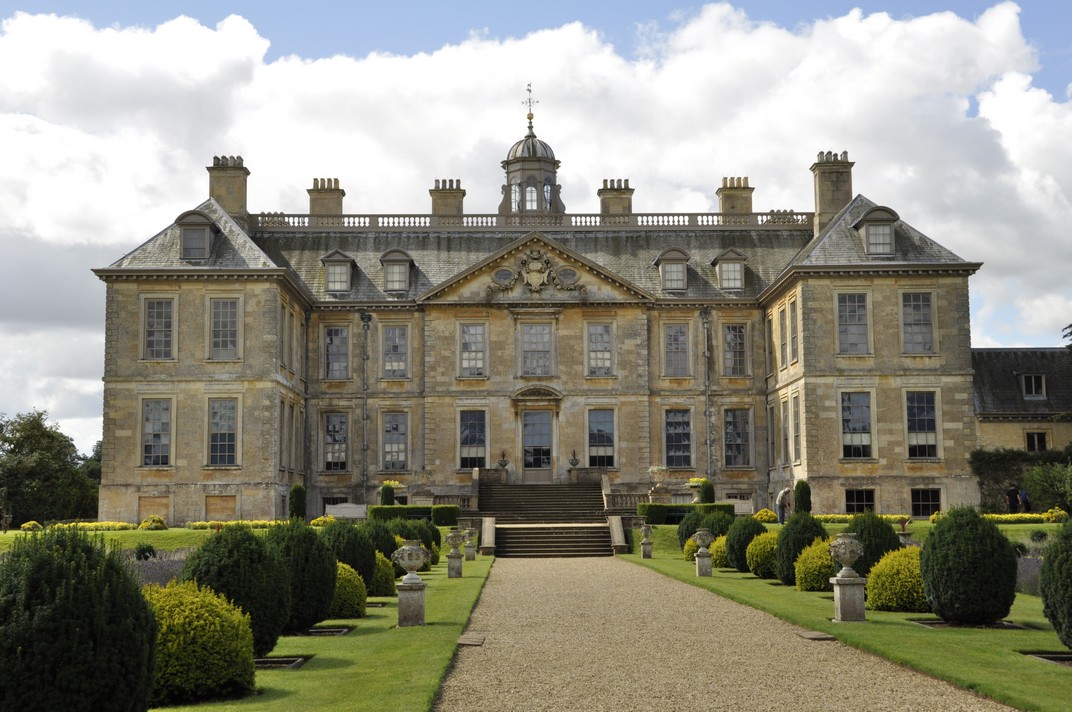
Built in the 1680s for Sir John Brownlow, Belton House is an elegant Restoration mansion that retains much of its original structure externally, but which has been remodelled from time-to-time internally over the past 300 years to meet changing demands for its occupancy. English architect James Wyatt had a major influence on the redesign of parts of Belton House in the late 18th century, as he did on many country houses.

The Brownlow fortune came from sheep and wool and, like may wealthy families, the construction of a large home was a sine qua non. Belton House remained the family seat of the Brownlow and Cust families into the 1980s.

The south front – and main entrance – of Belton House

The north front overlooking a parterre garden

We visited Belton House last Friday. Since we became members in 2011, we have ‘picked all the low-hanging fruit’, more or less (visiting most if not all properties within 50 miles or so of home), so must now travel further afield as active (and enthusiastic) ‘Trusters’.

Belton House is almost exactly 100 miles from home, door-to-door. The ‘best’ route (A38-M42-M6-M69-A46-A52-A607) on Google Maps indicated a journey of about 1 hr 40 minutes. And that’s how long it took (although somewhat slower on the return journey after 2:30 pm as the Friday afternoon traffic picked up).

Belton has much to offer: the house itself, formal gardens, long walks through the park, and one of the Trust’s largest adventure playgrounds for children. No wonder the car park was quite full when we arrived before 11 am, and filled up even further by mid-afternoon.

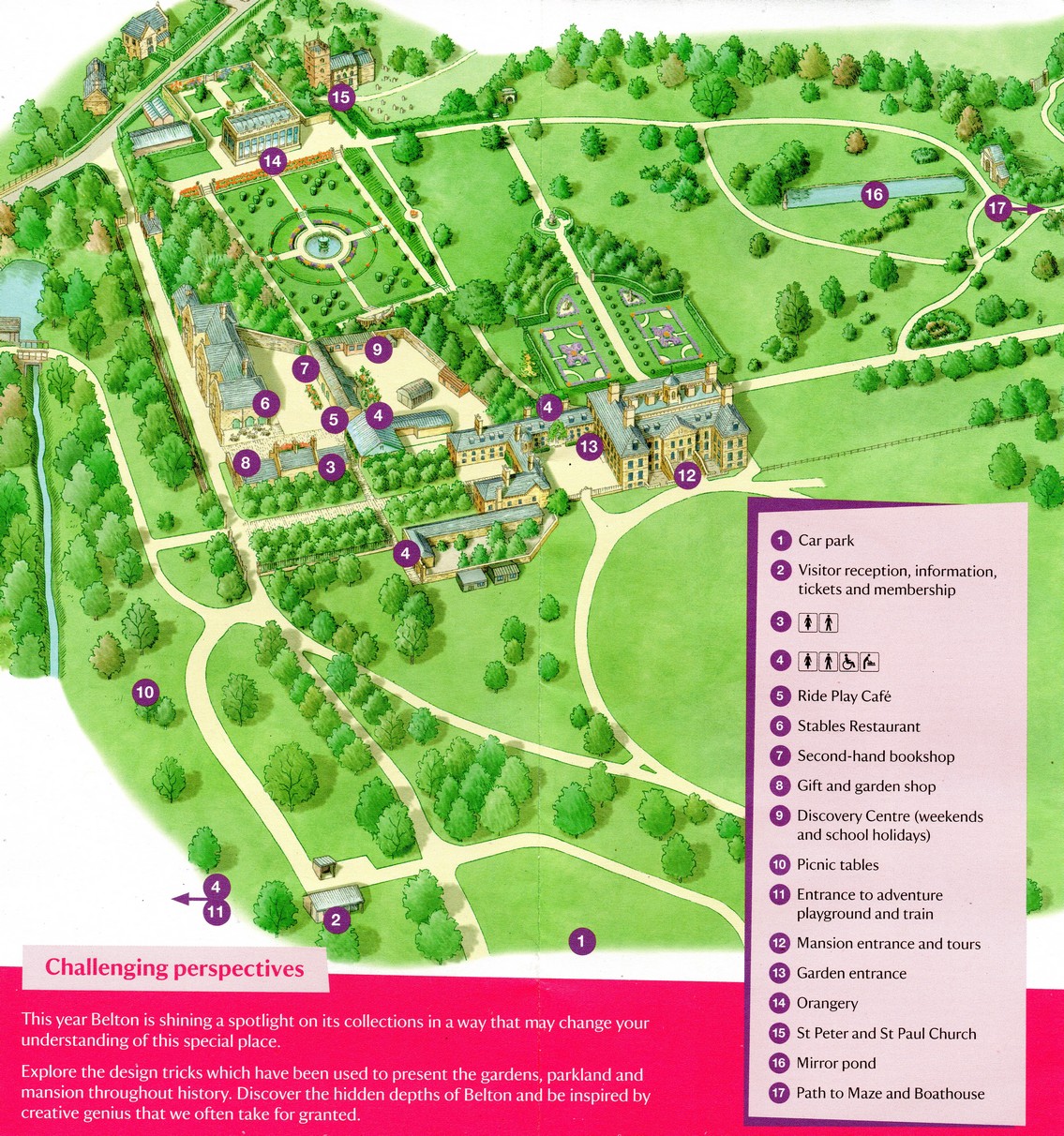
Not being entirely sure of the weather on Friday (fortunately it remained dry although did become quite overcast for a while around noon), we decided to take in the gardens and the grounds close to the house as far as the Boathouse, Lake and Maze (17 on the map below).

The Boathouse was built in the 1820s in a Swiss chalet style. From a distance the walls appear to be made from woven panels of rushes or the like. But no, the walls are solid with a sculpted surface to resemble panels.

A short distance from the east face of the house is the Mirror Pond (16), from which the house can be seen in all its glory, and reflected in the Pond.

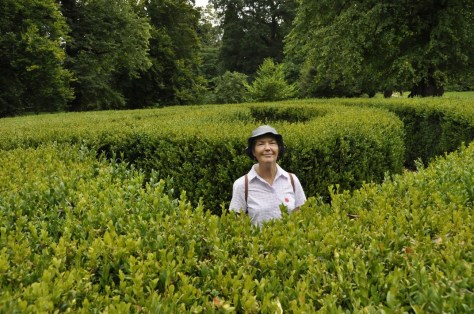
A small maze offers a challenge to many of Belton’s younger (and older) visitors.

To the east of the house a long avenue of trees draws you towards a rather high ha-ha, and beyond that more parkland rises to Belmont Tower a further mile out. From the house’s main entrance there is also a mile-long drive through a deer park leading up to the front door. How magnificent it must have been to arrive by horse-drawn carriage and met by footmen. The views are stunning but of course we are seeing the parkland today as the house architects envisioned them three centuries ago, with majestic mature trees spread across the landscape.

On the north side of the house there are two formal gardens: a 19th century parterre, and another with pond and fountain laid out in front of a very impressive Orangery (14).

Much of the house is open to the public. We opted not to take the below stairs tour, which lasted 50 minutes. First, given the long journey home, we wanted to maximise our viewing of the main parts of the house. Second, a tour of this type would probably have involved standing around as the tour guide described each room; since I broke my leg at the beginning of 2016, I no longer find standing still comfortable .

All rooms on Upper Ground Floor are open to the public.

Marble Hall
Not particularly large by some country house standards, the Marble Hall is elegantly proportioned, with an array of portraits on the walls, and fine ceramics around the perimeter. On the east wall is a large portrait of Sir John Cust, 3rd Bt (1718-1770) who was twice Speaker of the House of Commons. A couple of portraits have fine wood carving surrounds, reminiscent of the work of Grinling Gibbons (d. 1721) to whom some of this work has been attributed. We first saw his exquisite work during our visit to Sudbury Hall earlier this year.

Staircase Hall
What an elegant staircase, climbing in three sweeps to the first floor. It’s lined with some fine portraits, and overlooks a black and white marbled floor, a continuation from the Marble Hall.

Blue Dressing Room
Adjacent to the Blue Bedroom, this small room has some interesting treasures: a whole array of paintings, including the one shown here which portrays the Madonna and Child, attributed to Italian painter Pier Francesco Fiorentino from the 15th century. Behind the door is a cabinet made from lapis lazuli. And some intricate and very beautiful carving on the fireplace surround.

Blue Bedroom
This is the oldest bed in the house, and has a fine view over the parkland and main entrance driveway from the south.

Chapel, Gallery, and Drawing Room
In the Drawing Room hand two fine 17th century tapestries by Huguenot weaver John Vanderbank, modelled on tapestries owned by Queen Mary II at Kensington Palace.

Saloon
The Saloon has views over the parterre garden on the north side, and has several interesting features, paintings, and pieces of furniture.

Tyrconnel Room
This room has undergone a number of changes over the centuries. This is an impressive portrait of Viscount Tyrconnel (1690-1754) wearing his robes as a Knight of the Order of the Bath. The wide floorboards show the Brownlow coat of arms.

Red Drawing Room
This room was rather dimly lit (although these poor quality photos don’t show that).

Study
What caught my fancy in the Study were the gold busts lining the top of the west wall.

Tapestry Room
This is, in my opinion, undoubtedly the most elegant room in the whole house, and has undergone several changes of use over the centuries. It’s warm, intimate, inviting, and lined with tapestries that, at one time, were found in the attic rooms being used as carpets! The tapestries depict the life of ancient Greek philosopher Diogenes.

One can imagine enjoying a welcome gin and tonic in this room at the end of stressful day. On the piano is a photograph of the Duke of Windsor and Wallis Simpson (it looks like one’s I’ve seen from their wedding in 1937. The Duke certainly spent time at Belton. It’s not certain if Wallis did.

Breakfast Room
There are 20th century portraits of the Cust family in this room.

Hondecoeter Room
Swans seem to be a theme in this room which became a dining room in 1876. The large canvasses by 17th century painter Melchior d’Hondecoeter were installed then. A larger canvas was sold to a buyer in the USA as it did not fit in this room. The fireplace came from another family property.

On a table by the window, overlooking the parterre, is a large vessel (a soup tureen, a wine cooler?) made from more than 41 kg of solid silver. It was commissioned by Speaker Cust, referred to earlier. He died, however, before the vessel was completed.

On the First Floor, some apartments are still reserved for the Cust family if they care to visit, and therefore not open to the public. The Cretonne Bedroom was closed as well.

Yellow Bedroom
The Yellow Bedroom is immediately above the Blue Bedroom, and also benefited from structural changes that James Wyatt made, bricking up windows on the east and west walls, leaving just the windows overlooking the south landscape. You can see how these changes were made on the photograph below, on the farthest side of the house.

Chinese Bedroom
This is a quirky room, with 18th century wallpaper designed specifically for the room, but apparently not hung until about 1840. The bamboo door surrounds are painted not made from bamboo.

Queen’s Bedroom
This room was redecorated in 1840 for the visit of Queen Adelaide, widow of King William IV, and has been known as the Queen’s Bedroom ever since. Her monogram adorns the bed’s headboard.

Ante Library and Library
The Library is approached from one side from an Ante Library, and from the main staircase on the other. It has a domed ceiling. High on the walls at either end of the Library are ‘frescoes’ painted by daughters of the Cust family. The one shown here was painted by younger daughter Lucy Cust (bn. 1784).

Boudoir
This was originally a bedroom but in the 1770s was remodeled by James Wyatt as a dressing room. Only some of Wyatt’s designs remain (such as the ceiling). Its presence design and use dates from 1963.

Windsor Bedroom
I suppose the claim to fame of this bedroom is that it was used by HRH The Prince of Wales while undergoing jet aircraft training at nearby RAF Cranwell in 1971. He apparently preferred to stay at Belton House than in the officers’ mess at Cranwell. Maybe this room was also used by the Duke of Windsor, presumably when he was still Prince of Wales. Or did he visit as Edward VIII?

West Staircase
Not as grand as the main staircase, this one is nevertheless quite impressive. It was originally used just by servants, but in 1810, the 1st Earl made the west entrance into the family entrance. The large painting shows the Cust family in 1741. You can see the West Entrance (opening into a courtyard) in the house photograph under the Yellow Bedroom (above).

Belton House certainly has a lot to offer with its mix of indoor and outdoor interests. The National Trust volunteers were very knowledgeable and freely shared intriguing details of the house’s history. For a day trip, four hours on the road, just under four hours at Belton, it was quite tiring. And I was quite relieved to arrive home and enjoy a late afternoon cup of tea. But as I mentioned from the outset, we will now have to travel further and further afield to visit new properties, and probably plan for several overnight stays into the bargain.

Put Belton House on your National Trust ‘bucket list’!

Wandering along the tranquil River Wye at The Weir Garden (updated 2019-03-29)

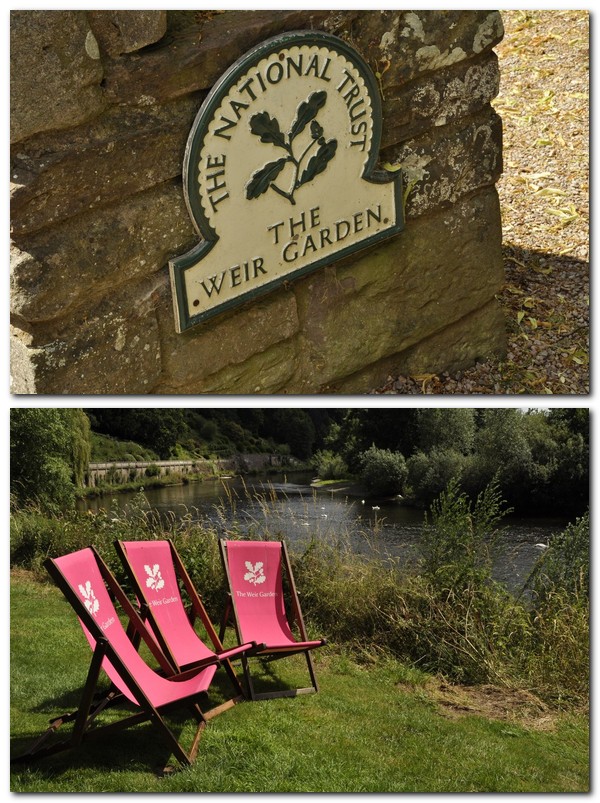
Sitting down yesterday, enjoying a DIY cup of coffee at the The Weir Garden (a few miles west of Hereford), I commented to my wife that we had to be thankful for the eccentricities of the former owners of many of the National Trust’s properties.

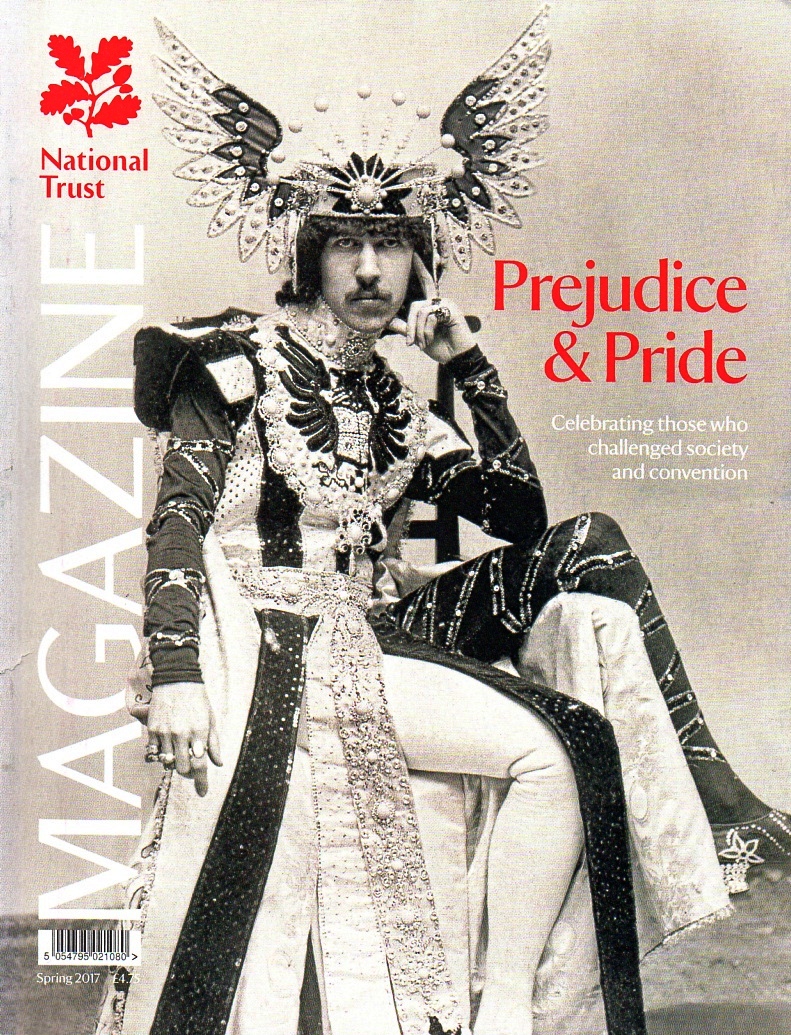
I’d picked up a copy of the Trust’s Spring 2017 magazine and there on the cover was a photo of an exceedingly eccentric individual: the 5th Marquess of Anglesey, Henry Paget (whose country estate was Plas Newydd on Anglesey that we will visit in September on our way to Holyhead, and a week’s tour of National Trust properties in Northern Ireland). They could pander to their eccentricities because they were wealthy. And many of them spent their wealth—often to their ruin—in developing large houses and estates, and filling them with the most wonderful artefacts. That’s what we can enjoy today thanks to the work of the National Trust.

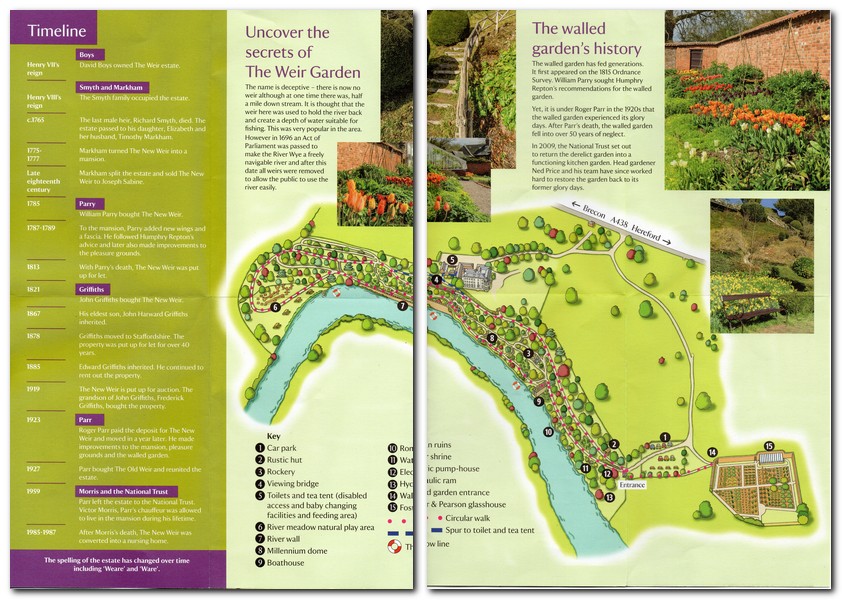
A Weir Estate is recorded from the reign of Henry VII in the late 15th century. But the Romans were there over 1000 years earlier, and the remains of a villa or temple have been excavated on the banks of the River Wye that flows past.

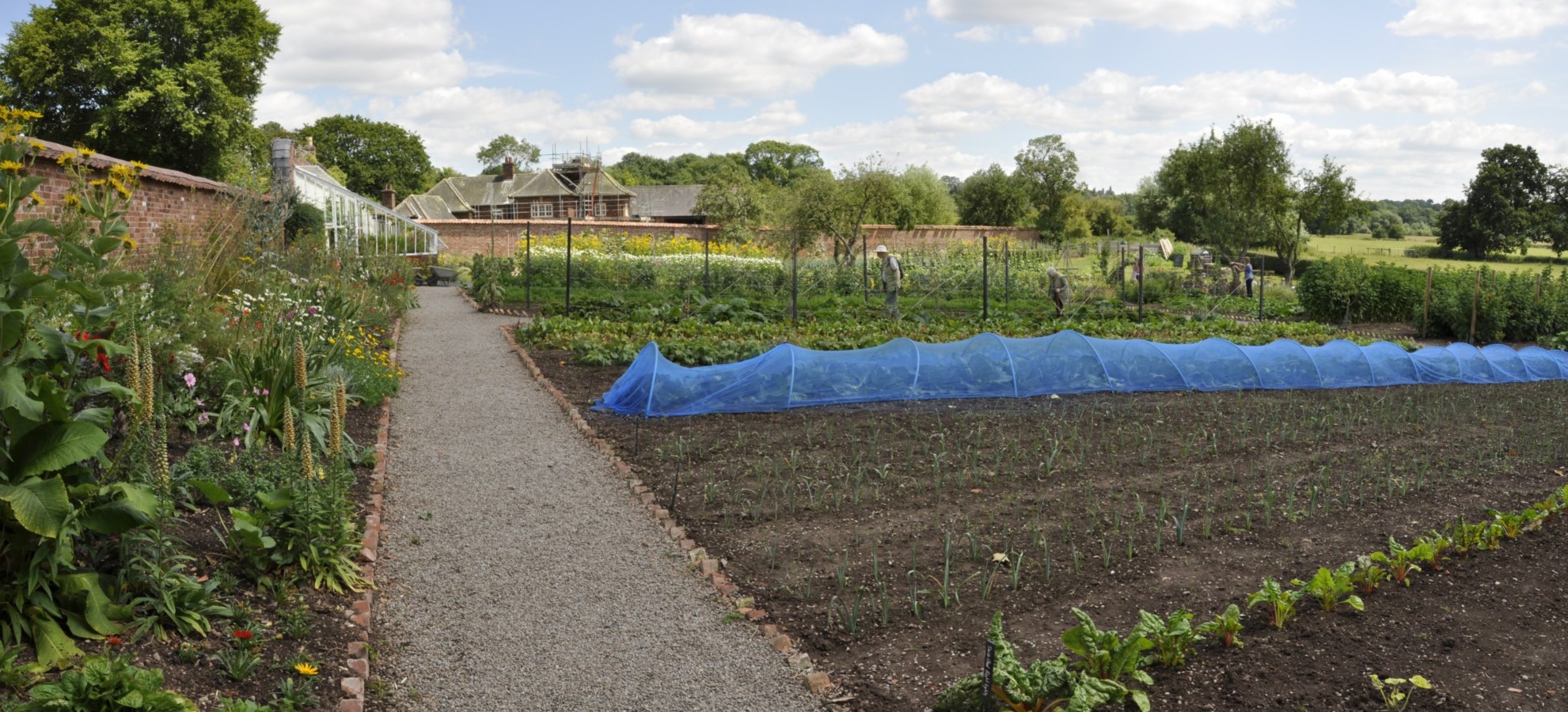
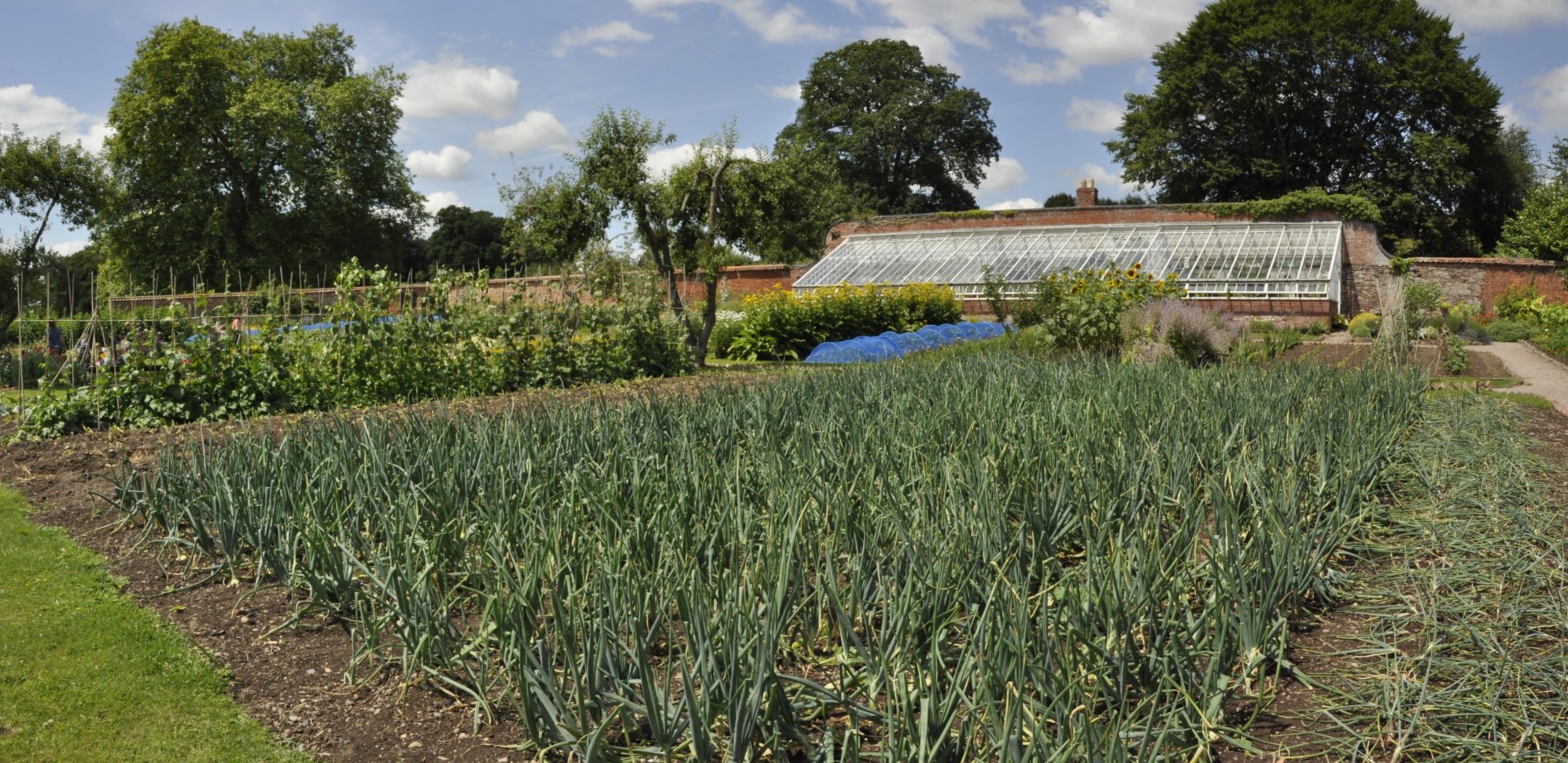
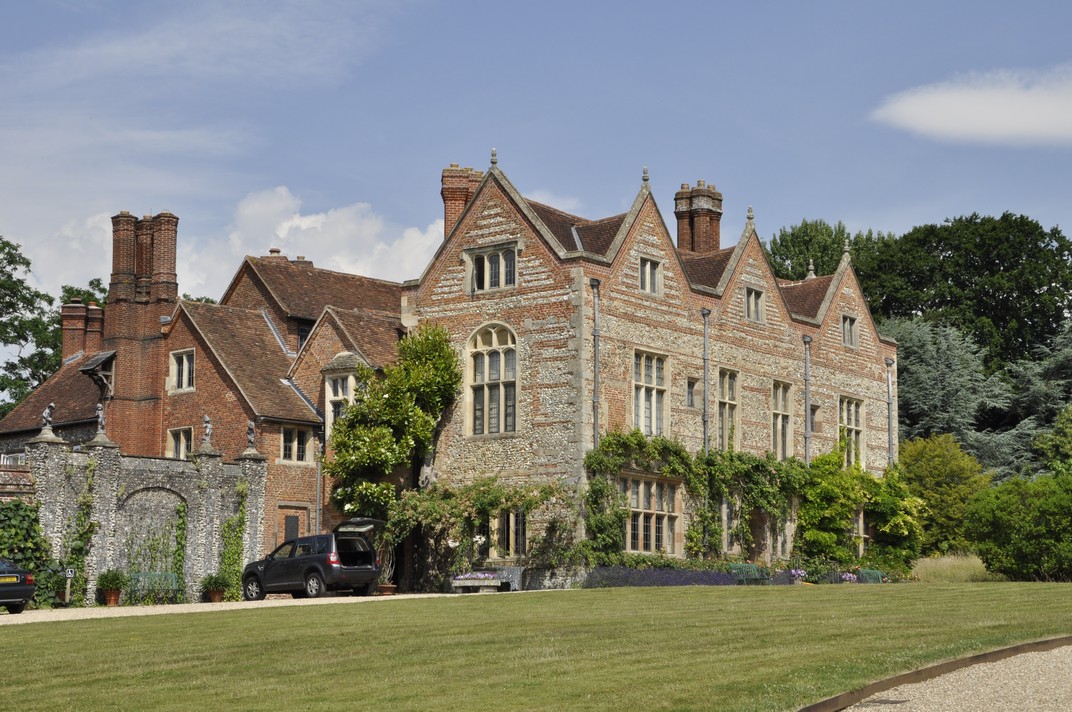
The Weir Garden was originally laid out at the end of the 18th century, but it wasn’t until the 20th when wealthy Roger Parr became owner did the garden really flourish. He revitalised the walled garden, installing a state-of-the art (for the 1920s) glasshouse. The house is now a nursing home, and has been ever since the estate became the property of the National Trust in 1959.

The south-facing Garden is certainly worth a visit, and must surely show different ‘faces’ at different times of the year. There are few formal parts—a small rock garden surrounded by elegant Acers—but mostly the garden, laid out on the steep slopes along the river below the house, is woodland with oaks, London plane trees and a few tulip trees dominating the landscape. And as the paths weave their way through the woodland, there are vistas over the River Wye east and west. What a river; fast flowing, but clear as a bell, and no doubt full of trout and other fish. There is a report of an eight foot sturgeon having once been caught in the vicinity in the 19th century.

These photos (and a short video) are my take on The Weir Garden in early July, according to the locations indicated on the map above.

(2) Rustic hut

(3) Rockery

(4) Viewing bridge

(6) River meadow and (7) River wall

(10) Roman ruins

(15) Walled garden and Foster & Pearson glasshouse


Yesterday (28 March 2019) the weather promised much for the day, so we headed west again to enjoy The Weir Garden during its Spring emergence. And we weren’t disappointed.

The trees were magnificent, with no foliage to hide details of their splendid skeletal architecture, although many were just beginning to come into leaf. Another thing we noticed (and on the drive through Herefordshire) was the amount of mistletoe in many of the trees; a veritable mistletoe haven.

So here are a few of the photos we took yesterday. A more complete album can be viewed here.

Rooms open to the sky

Norman. Medieval. Tudor. Georgian. ‘Modern’.

Greys Court is a National Trust property a few miles west of Henley-on-Thames in Oxfordshire. Owned by the Trust since 1969, and most recently the family home of the Brunners (first baronet and industrialist Sir John Brunner was co-founder of a chemical company that merged with others in 1926 to form Imperial Chemical Industries – ICI – in the UK). We spent three hours at Greys, taking the noon tour (that covers just the ground floor rooms) but returned later in the afternoon to explore the house more thoroughly including the library and bedrooms upstairs.

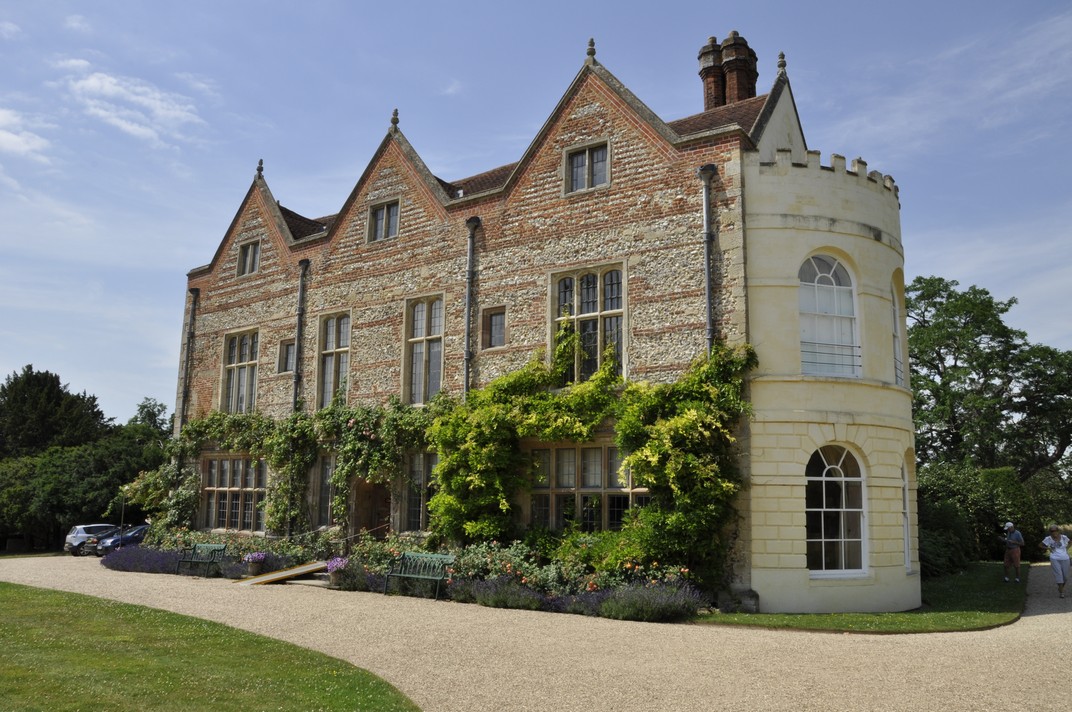
There has been a dwelling here for almost 1000 years. Greys Court today is an attractive brick and flint Tudor country house that underwent some embellishments during the 18th century. From the front of the house there are views over the Chilterns countryside.

Greys Court was erected by Sir Francis Knollys, a courtier under Henry VIII, Edward VI, and Elizabeth I. In 1724 it became the property of the Stapleton family who lived there until 1937 when it was bought by Liberal politician Sir Felix Brunner (third baronet and grandson of Sir John) and his wife Lady Elizabeth. She was the granddaughter of the famous Victorian actor Sir Henry Irving. Lady continued to live at Greys Court until her death in 2003.

The house is full of Brunner memorabilia, not the property of the National Trust. Photography is unfortunately (from my blogging perspective) not permitted inside the house. The plasterwork ceiling in the downstairs reception room dates from the 18th century when the height of the room was increased, and a crenellated two floor semicircular extension was added, clearly.

But the exteriors are delightful, and the small but exquisite garden excites the senses. Because Lady Brunner developed the gardens to explore, to entice, to delight, they were set out as a series of ‘rooms’ connected by gates or doors that invited the visitor to open and see what lay on the other side. One can walk through a wisteria arbour, 150 years old, wander between the silence of the White Garden (under the Great Tower), and check out the orchard and vegetable plots, all surrounded by brick and flint walls.

Outside the garden is a brick path maze (no hedges!), ‘symbolizing the journey through life’, dedicated by the then Archbishop of Canterbury, Robert Runcie, in 1981.

In the grounds there is a Tudor wheelhouse with a donkey wheel, drawing water up some 200 feet, and still in operation until 1914.

At the entrance there was a hand-written welcome sign to the property extolling the friendliness of the staff. And they were!


Croft Castle – spanning the dynasties

Just over seven weeks ago, on a sunny early April morning, we headed west from our home in Bromsgrove in northeast Worcestershire, to visit the National Trust’s Berrington Hall in Herefordshire, about 8 miles due south of Ludlow (that’s in Shropshire).

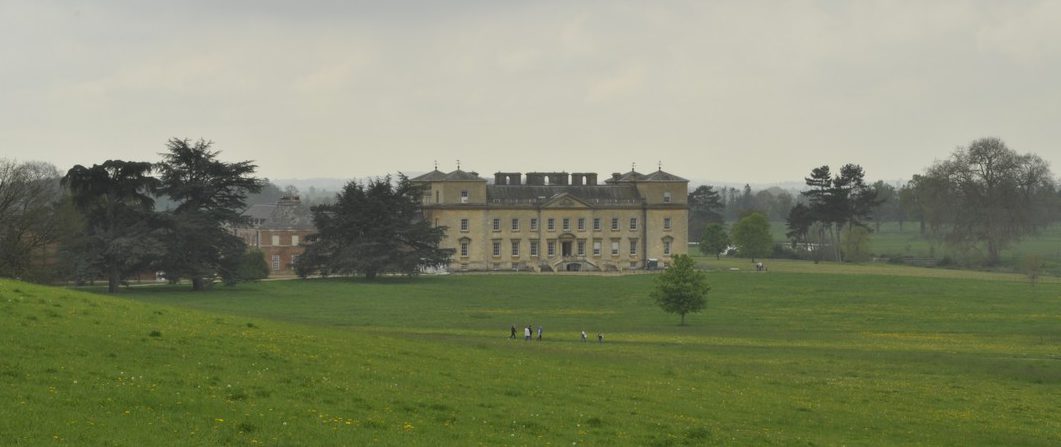
Yesterday, on what was probably the hottest day of the year so far, and without a cloud in the sky, we headed in the same direction, to another National Trust property, Croft Castle and Parkland, just five miles northwest of Berrington Hall. This was our second visit; Croft Castle was one of the first properties we visited in June 2011, just after becoming members of the National Trust.

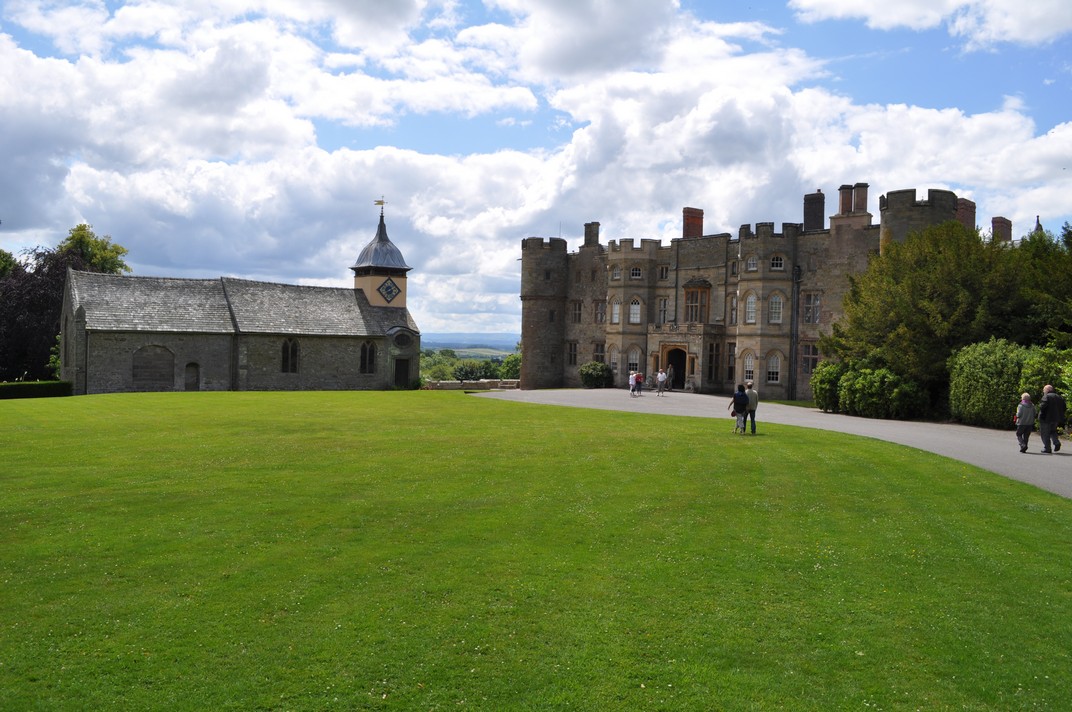
The main entrance of Croft Castle, and the Church of St Michael

What is particularly remarkable is that Croft Castle has been the home of the Croft family for about 1000 years, and was listed in the Domesday Book in 1086. The Croft family has made many contributions to the annals of British history, under the Plantagenets, during the 15th century Wars of the Roses, Tudor and Elizabethan England, the Civil Wars of the 1640s, and through to recent decades. The Croft baronetcy was created in 1671. The castle itself is a somewhat eclectic mix of architectural styles that reflect its long history.

South face

Much of the interior has an 18th century feel, although some of the rooms on the ground floor must have been used as family rooms when the Croft family were in residence continually. Today the family retains some rooms on the first floor, not open to the public. In fact, during our visit there was only one room on that floor open, the Ambassador’s Room overlooking the main entrance, that has been ‘returned’ to its First World War decor.

Just opposite the main entrance to the castle stands the small church of St Michael. Inside, there is the grand tomb of Sir Richard Croft and his wife Eleanor. Sir Richard fought at the Battle of Mortimer’s Cross, just a few miles away from Croft Castle, in 1461 on the Yorkist side. He later became a high ranking member of the household of Henry VII (who usurped the throne at the Battle of Bosworth Field in 1485, defeating King Richard III, and establishing the Tudor dynasty).

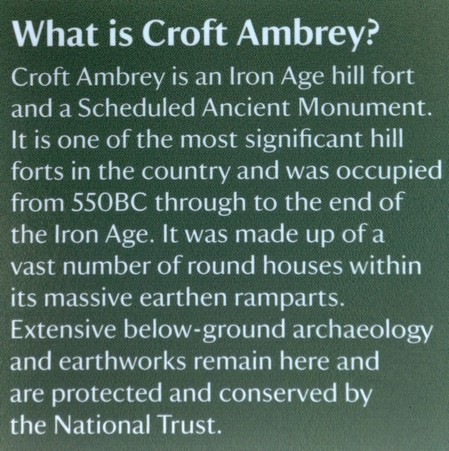
The castle is surrounded by some 1500 acres of parkland, and the National Trust has set out some well marked walks for visitors to follow. We basically took the Blue walk up to the Iron Age fortress of Croft Ambrey (that dates from about 550 BC), covering almost 4 miles before we returned to the car park, a well-deserved sit down, and picnic lunch under the welcome shade of the magnificent beech and oak trees surrounding the castle.

The Blue walk passes through a grove of pollarded Spanish chestnut trees (panted in the late 16th century) that are said to have come from ships of the failed Spanish Armada.

The 360° views from Croft Ambrey are truly stunning: south to the Black Mountains of South Wales; east to the Malverns in Worcestershire; northwest to Clee Hill; and west into the border hills between England and Wales. The climb (not steep) to the summit is really worth the effort. Despite the heat of the day, there was a pleasant breeze taking the edge off it.

Croft Castle has a particularly fine walled garden, and a glasshouse area. The garden covers some six acres, with many rows of vines in its northeast corner. Having now visited quite a number of National Trust properties, my wife and I are in agreement that this walled garden must be one of the nicest in the Trust’s portfolio.

Since our first visit in 2011, the National Trust has made a number of operational changes to how it manages the property. There is now a free flow for visitors through the house, and photography is permitted throughout. In 2011 I was told off—in no uncertain terms—by one of the volunteers for deeming to take a photo of some panelling detail. The Trust is much more relaxed about photography nowadays, except where there are restrictions (for personal family or copyright reasons) at some houses.

The Hall

The Library Anteroom

The Library and Turret Room

The Drawing Room

The Blue Room

The Oak Room

The Dining Room

The Staircases, Gallery, and Courtyard

The Ambassador’s Room

No such problems yesterday. The staff were most welcoming, particularly the lady who greeted us at the main entrance. The tea room appears to have been expanded, and the toilets have been upgraded – clean as ever at National Trust properties. Last time there was a water shortage, and visitors had to queue up to use portaloos!

Croft Castle is just an 83 mile round trip from home – almost one of our local National Trust properties. Perhaps it does not yet have the finest collection of furniture and paintings (compared to many others), but the rooms have a homely feel. And the parkland of course is stunning, with space for everyone to enjoy. The walled garden is Croft’s ‘jewel in the crown’. Well done to the two full-time gardeners (assisted by volunteers, of course) who keep this garden so well maintained.


A Restoration idiosyncrasy . . .

What special events occurred 1967? The BBC made its first TV broadcast in colour, and set up BBC Radio 1, 2, 3 and 4; the QE2 ocean liner was launched on the River Clyde; singer Engelbert Humperdinck had several top selling singles of the year; and The Beatles released the iconic album Sgt Pepper’s Lonely Hearts Club Band.

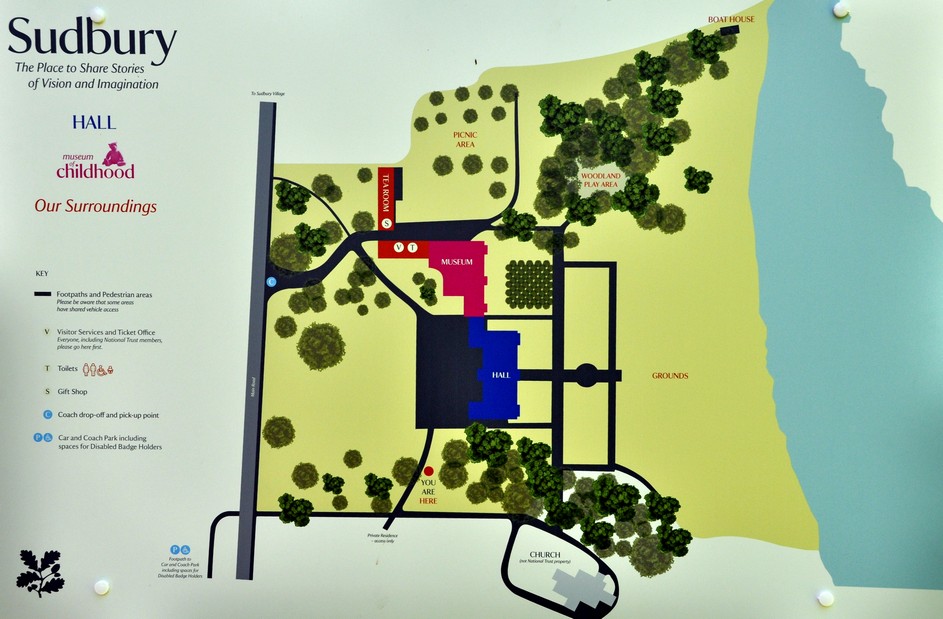
These were just a few highlighted on little signs either side of the footpath from the car park to Sudbury Hall, a National Trust property in Derbyshire, just north of the Staffordshire-Derbyshire boundary, the River Dove (see map).


But, as we reached the end of the footpath, we encountered the important ‘Sudbury’ fact. Occupied by the same Vernon family since it was built in 1660 by wealthy London merchant George Vernon, Sudbury Hall was bought by the National Trust when the Vernons were forced to relinquish ownership in order to meet death duty liabilities. The Sudbury Vernons were distant cousins of the Vernons of Hanbury Hall (the closest National Trust property to our home in Worcestershire).

Sudbury Hall is a Restoration architectural paradox, idiosyncrasy even: an exterior that harks back to an earlier Jacobean period, disguising sumptuous interiors more typical of the 1660s and early 18th century.

Adjacent to the hall is the Parish Church of All Saints in the Diocese of Derby, with some lovely stained glass windows, and impressive memorials to various generations of Vernons.

The hall is aligned west-east, with the main entrance on the north side. While it has a layout of an earlier building, a large entrance hall, even a long gallery on the first floor facing south, nothing quite prepares you for the flamboyance of the staircase (in the northwest corner), the ceilings and decorations of the saloon and drawing room(s) on the ground floor, and those of the long gallery.

Although George Vernon employed local craftsmen in much of the construction of Hanbury Hall, he did seek out some of the most talented to realise his vision of ‘the good life’.

Much of the plaster ceiling work was carried out by London craftsmen Robert Bradbury and James Pettifer. This is what I found about Bradbury and Pettifer on the website of the Woodcarvers Guild Ltd:

Two London plasterers of this period – the 1660s – whose work was similarly accomplished, were Robert Bradbury and James Pettifer. We know Pettifer trained under the London plasterer Arthur Toogood, who was Master of the Plaisterers [sic] Company in 1663.

Their best work outside London is at Sudbury Hall, Derbyshire, where they plastered ceilings in 1675-6. These are densely and richly decorated wall panelling and oak panelling and deserve close attention. The house was begun for Mary Vernon in the reign of James I, but was far from finished when she died in 1622. It then stood empty as a partly completed shell until after the Restoration, when Mary’s great-grandson, George Vernon, completed it. In doing so, he had the good sense to use excellent carvers, plasterers and painters.

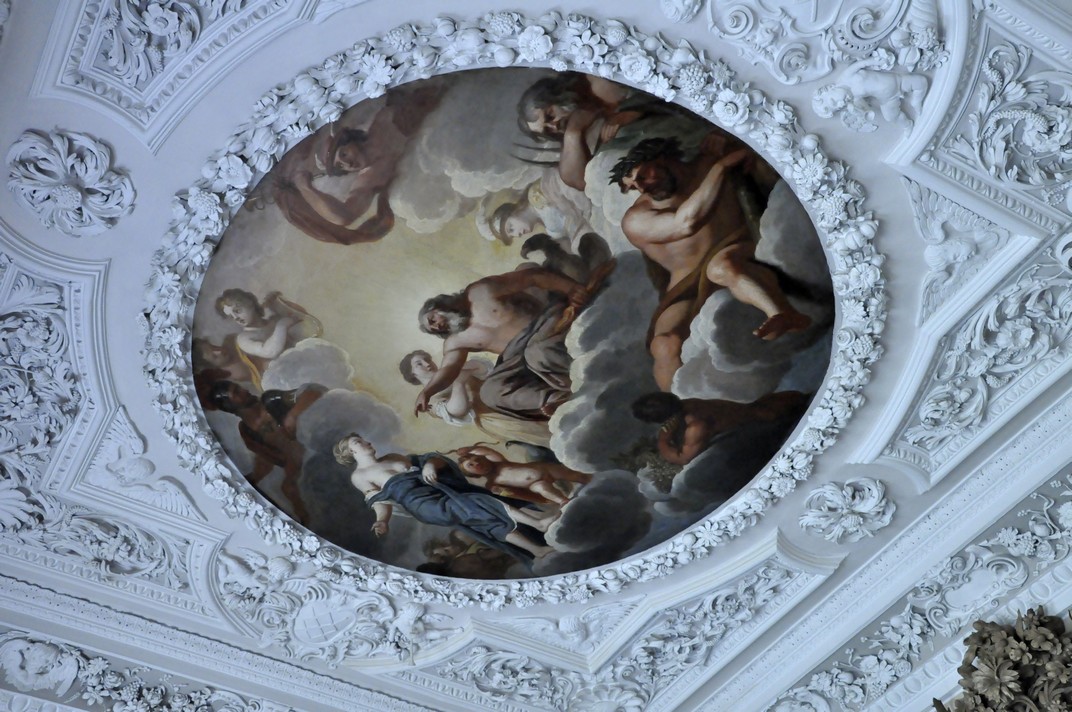
In 1675-6 Bradbury and Pettifer provided the ceilings of the drawing ­room, the parlour, the staircase hall, the well, the Queen’s Bedroom and that of the 138-ft long gallery. They charged at the rate of 6s a yard and whilst to some eyes their decorations are florid and all-enveloping, the exuberantly fashioned wall panelling and oak panelling ornament was at least confined to the spaces provided in the design. Just enough was allowed to stray beyond the limits set down by the moulded ribs to give a natural effect. In fact, the delicate swirling work, most of it moulded but carefully arranged so that it appeared to consist of many different parts, was positioned with such skill that Laurence Turner wrote in his book on decorative plasterwork in 1927 before the discovery of the accounts, ‘the four well modelled amorini in the corners of the [staircase] cove [are] evidently by an Italian modeller, for no English plasterer could have developed so suddenly the ability to model the human figure …’ In the seven compartments of the long gallery ceiling and its frieze, there are curling flowers and foliage, shells, emperors’ heads, horses galloping from cornucopias, and dragons and wild boar in unlikely proximity to each other. Exquisite wood carving is everywhere.

In the Saloon, family portraits are set in panels carved by Edward Pierce (or Pearce), who also carved the balustrade on the magnificent Great Staircase. The ceiling panel in the saloon and elsewhere are paintings by Louis Laguerre in the Baroque style, which were commissioned by George Vernon a couple of decades later.

The Entrance Hall
Somewhat reminiscent of a medieval hall, Sudbury’s entrance hall has a stone flagstone floor, and stone arched doorways. The walls are covered by several full length portraits. And on three tables are seven exquisite Sèvres porcelain figurines dating to 1860, depicting a boar hunt.

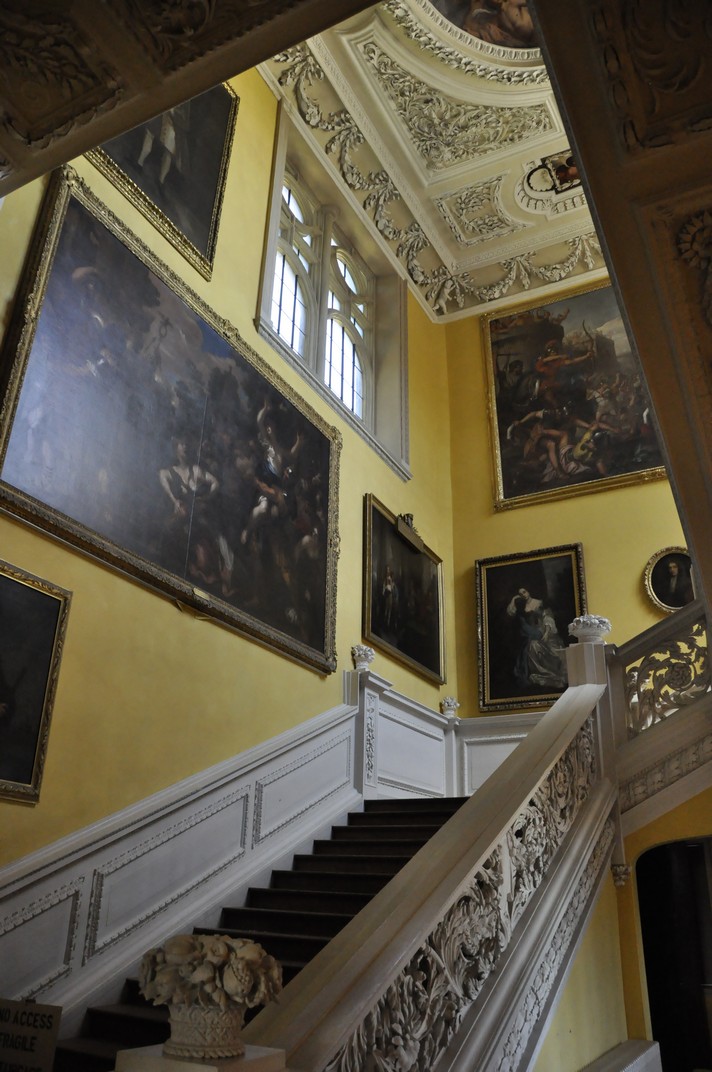
The Great Staircase
Leaving the Entrance Hall, nothing quite prepares you for the magnificence of the staircase, from floor to ceiling, with its intricate carving (apparently in lime wood, and painted white), the paintings on the walls, and the elaborately decorated ceiling. It must rank as one of the most impressive that we have seen in any of our National Trust visits.

The Saloon
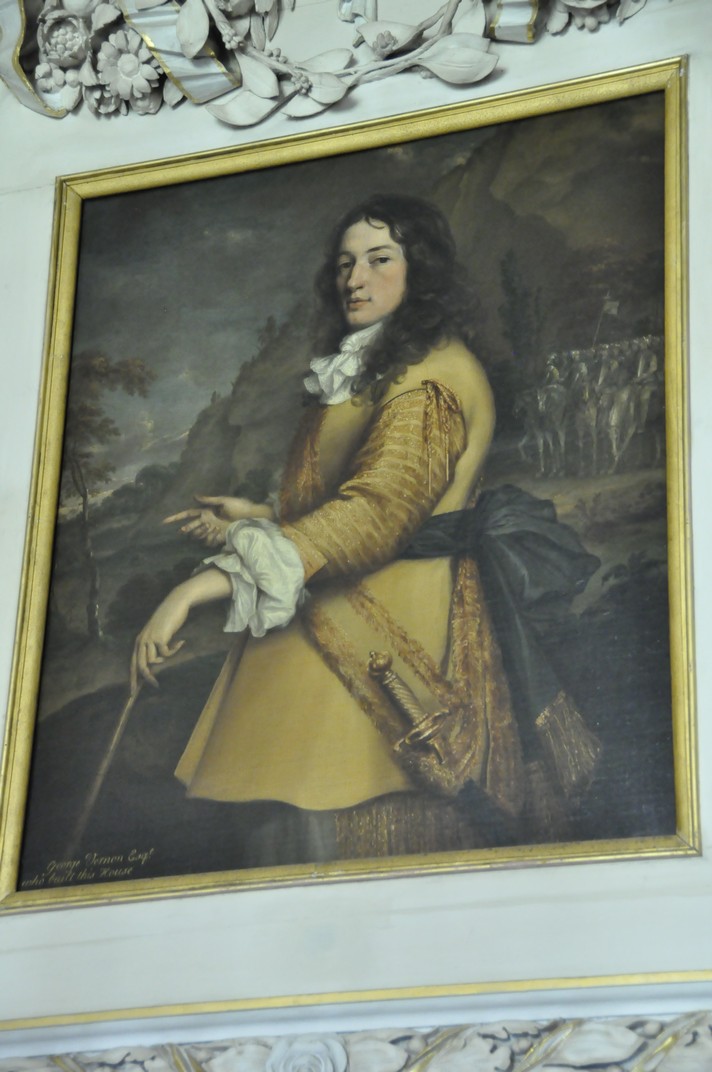
An elaborate doorway (mounted with a bust that looks suspiciously like William Shakespeare), you enter the saloon, a room with life-size portraits on all walls, and a smaller painting of the hall’s creator, George Vernon, above the door.

The Long Gallery
This came as a complete surprise. Long galleries were typical of much earlier houses. At Sudbury it extends the whole length of the house and faces south overlooking lawns and the lake. The quality of the plaster work is unparalleled. Currently there is little furniture on display, but at the east end is a beautifully painted 17th century Flemish cabinet with biblical scenes, by Frans Francken II. The frieze around the walls is punctuated by various images, and that on the west wall is apparently of King Charles II. Off the long gallery is a small library, with its own gallery. This opens on to the top of the staircase, and passes right into the Queen’s room.

The Queen’s Room
Over the two doorways are almost identical paintings, almost certainly Dutch, depicting contemporary flowers and fruits. The fireplace is pretty impressive.

Drawing Room(s)
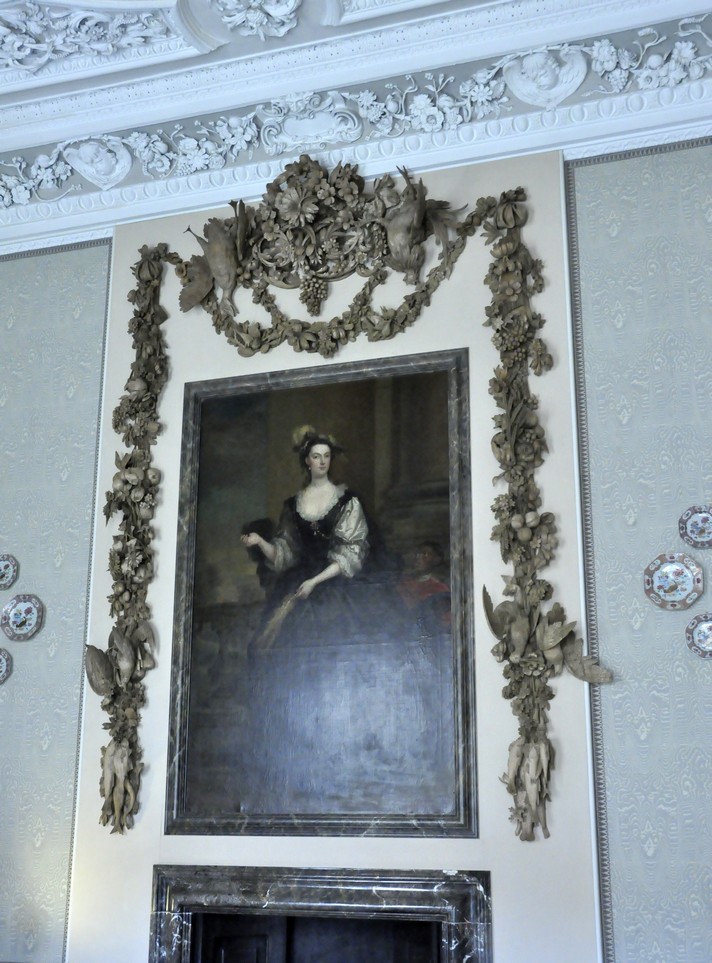
I’ve left the pièce de résistance until last. Leading off the saloon is the drawing room, now divided in two, according to the original 17th century floor plans. It was opened into a single rooms during the 19th century. And why is it the pièce de résistance? Surrounding a full length portrait of a lady is an intricate and quite magnificent wood sculpture, depicting all manner of plants and game animals, carved by renowned Dutch-British sculptor Grinling Gibbons.

This is a special carving. But who was the favored lady? Someone special (nod, nod, wink, wink)? This is indeed a remarkable tribute to someone near and dear. If I remember correctly what one of the volunteers told us, she was the sister-in-law of the wife of George Vernon.

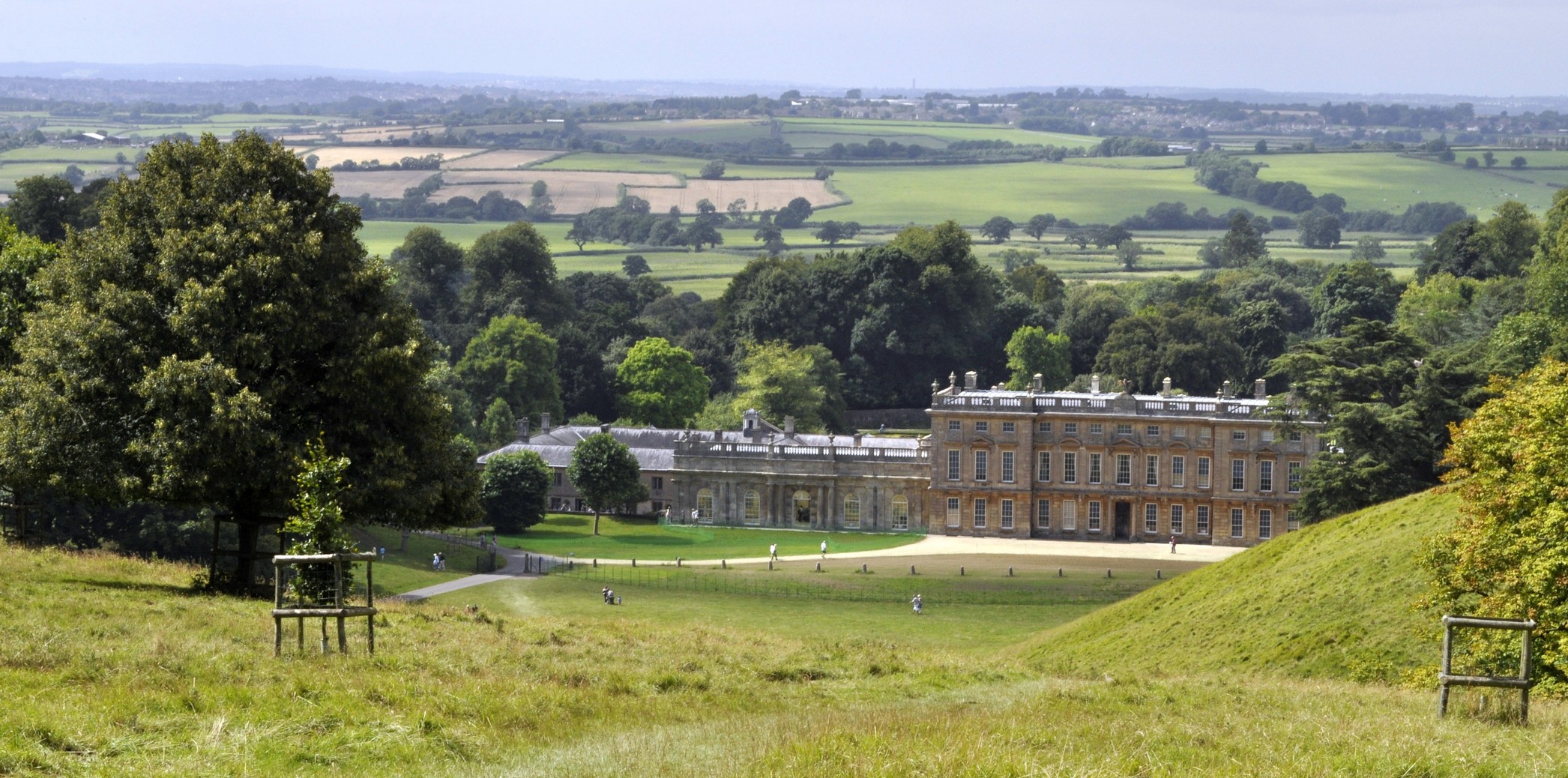
Although the National Trust has owned Sudbury Hall for 50 years (and first opened to the public in 1972), refurbishment of the interior is still a ‘work in progress’. Most of the rooms are still lacking furniture. In this respect, the property reminded me of another National Trust property, Dyrham Park near Bath that we visited in August 2016. Not only had Sudbury Hall to be made safe, but decisions were taken—and still being taken—on how to redecorate each of the rooms. And decisions taken are not to everyone’s approval, as the obituary to the 10th Lord Vernon (referenced earlier) indicates.

Museum of Childhood was opened at Sudbury in one of the extensions to the hall. This is a separate entrance to the hall. We enjoyed an interesting 45 minutes viewing all the exhibits bringing back memories of our childhoods, particularly with the various books and toys on display, and also from our daughters from 1978.

In the 1950s and early 1960s I used to pass in front of Sudbury Hall from time-to-time, travelling with my parents from our home in Leek to visit my father’s sister who lived just beyond Burton upon Trent. Until the early 1960s, my paternal grandparents lived in the village of Hollington, just a few miles north of Sudbury. This is Jackson-Bull home territory. In those days the main road, much quieter then, passed immediately in front of the hall. Now, the hall and village of Sudbury are fortunately by-passed, but there is nevertheless a continual roar of traffic from nearby and very busy A50 from Derby to Stoke on Trent.

It was a bright and sunny day when we visited Sudbury last week, but with a biting northerly wind. Nevertheless, our visit to Sudbury Hall was a delight, and quite unexpected in terms of what we saw. The volunteers were most helpful and knowledgeable, adding to the enjoyment of our visit. Sudbury Hall is definitely worth a visit if you are in the vicinity—and even if you are not.


In search of bluebells

Last weekend, our younger daughter Philippa and her family came down from Newcastle for the Bank Holiday. A few days ahead, she asked us if we knew of or had visited any bluebell woods close to home. Apparently, Elvis, her elder boy (who will be six at the end of September) had told her that bluebells were his favourite flower and wanted to see some growing in the wild. Maybe his teacher had been talking about them recently.

L to R: Felix, Philippa, me, Steph, Elvis, and Andi

Steph and I have been members of the National Trust for several years now, and we’ve had hours and days of enjoyment. Regular readers of my blog will know that I usually write something after a visit to one of their properties, the most recent being a visit about three weeks ago to Berrington Hall in Herefordshire.

There are three NT properties quite close to our Bromsgrove home: Hanbury Hall (our ‘regular’), Croome Park (a little further south, near Worcester), and Coughton Court, just 10 miles away in Warwickshire, east beyond Redditch. And each has its bluebell wood. But the one at Coughton is just a little special, composed almost in its entirety of the native English species, Hyacinthoides non-scripta. Very little if any of your invasive Spanish bluebell (Hyacinthoides hispanica) here.

The bluebell is such an iconic woodland species. Just imagine that blue carpet spreading under the wood’s leafy canopy. And at Coughton, the bluebells are mixed in places with cow parsley (Anthriscus sylvestris) and red campion (Silene dioica).

The native bluebell’s future is threatened in many places because of the spread of the Spanish bluebell that is widely grown in gardens. When garden waste is dumped irresponsibly then bulbs can be discarded as well. It hybridises readily with the native species, and once that has happened, stands of native bluebells are irrevocably changed.

We arrived at Coughton just on 11:00 (opening time) and the car parks were already filling up. I think everyone had the same idea: a walk through the bluebell wood, around the gardens, or the various walks around the estate. We made our first visit to Coughton Court in 2013, and then again in June last year when I was recovering from my accident.

Our walk took us around the bluebell wood, along the River Arrow (lots of ramsoms here, Allium ursinum), around the bog garden that is just beginning to come to life (the Gunnera will be spectacular later on in the season, although it and other plants had taken a slight hit from a frost overnight), and finally round the walled garden.

And for little boys, there were plenty of opportunities for fun besides looking at—but not picking—bluebells.

In front of the entrance to the hall the gardeners had planted a beautiful display of tulip beds, and along the newly-raked gravel paths around the lawn, the trees stood like soldiers at attention, having received a recent ‘haircut’ in readiness for summer visitors.


‘Georgian grandeur on a human scale’

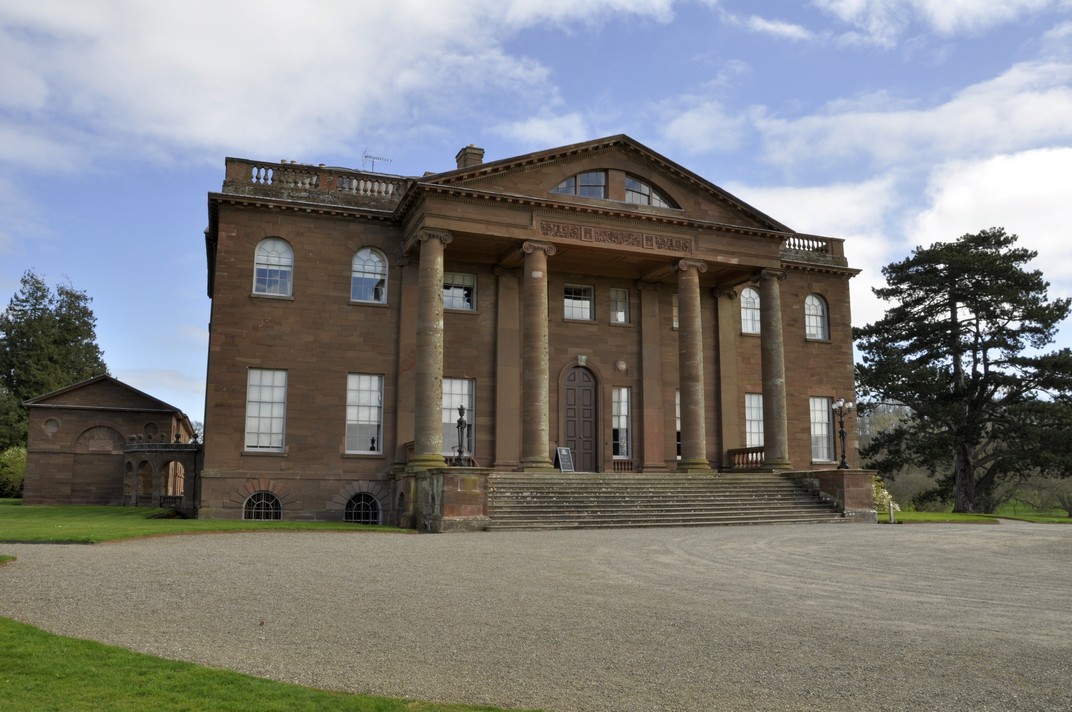
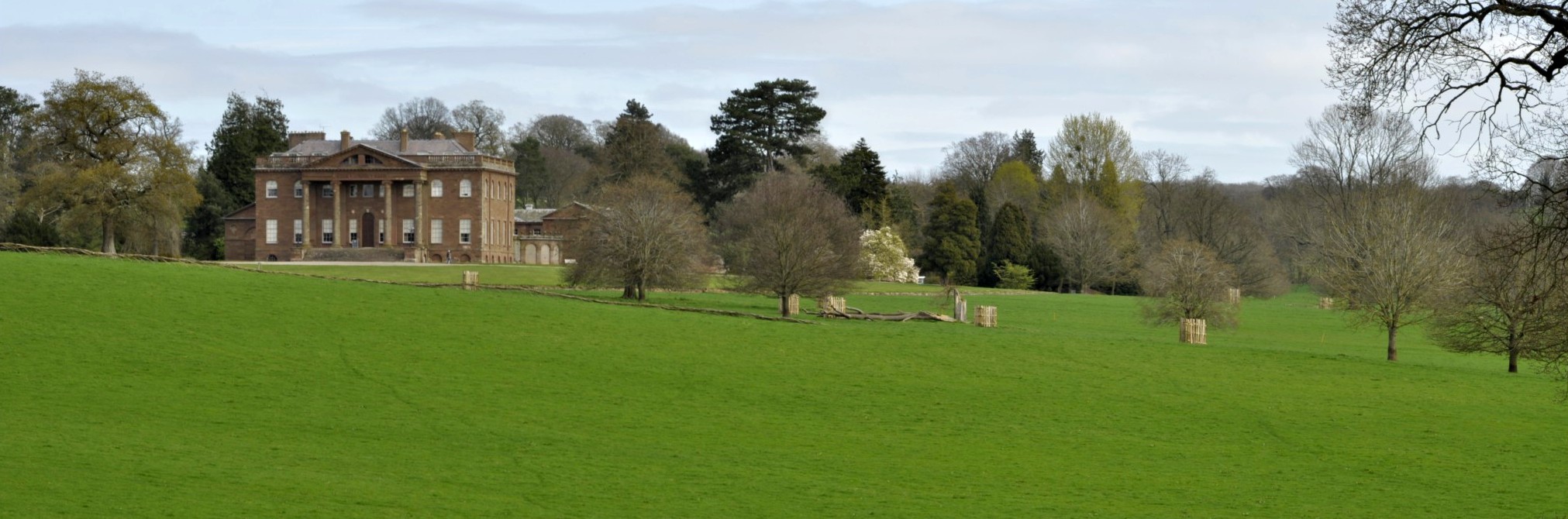
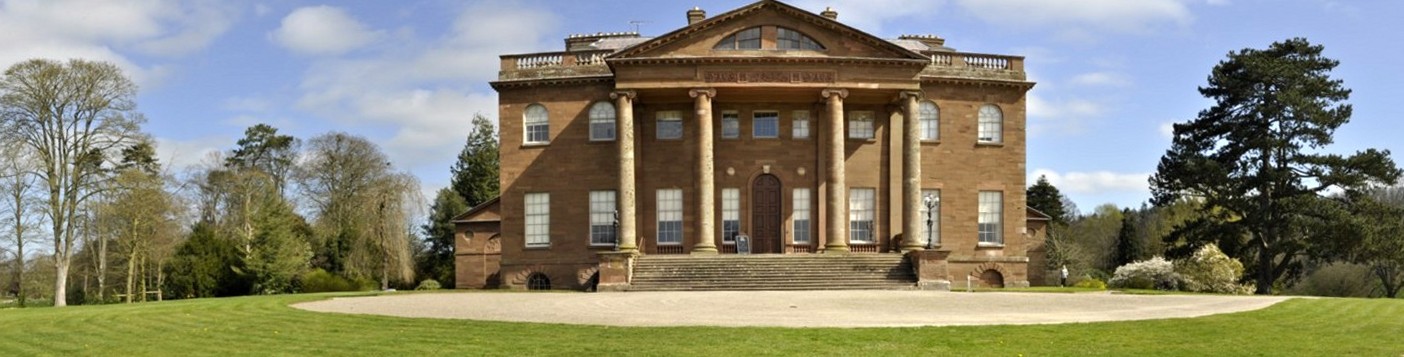
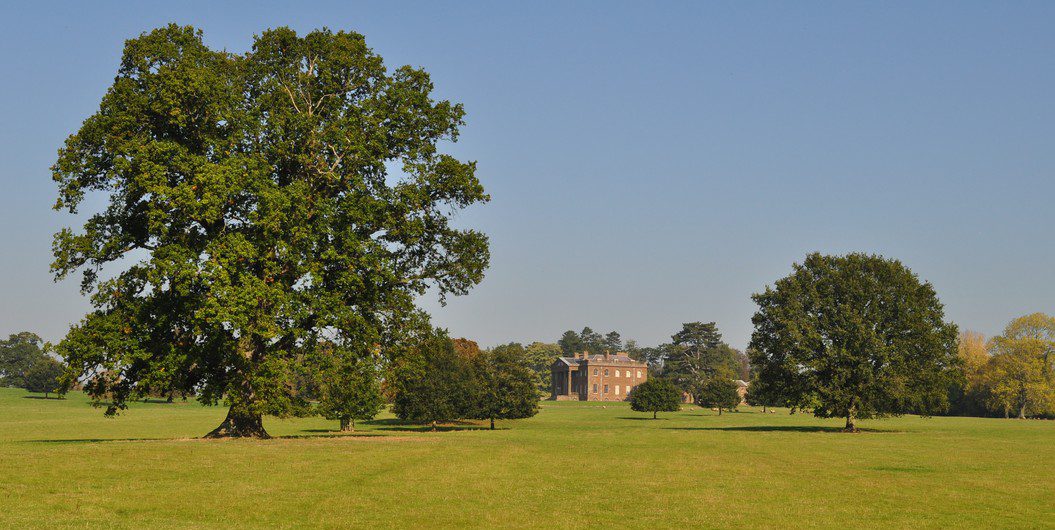
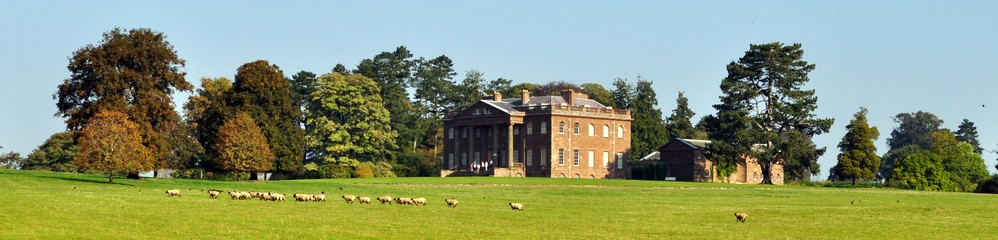
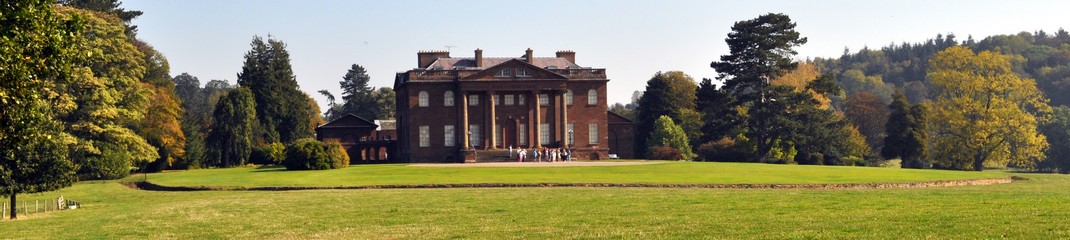
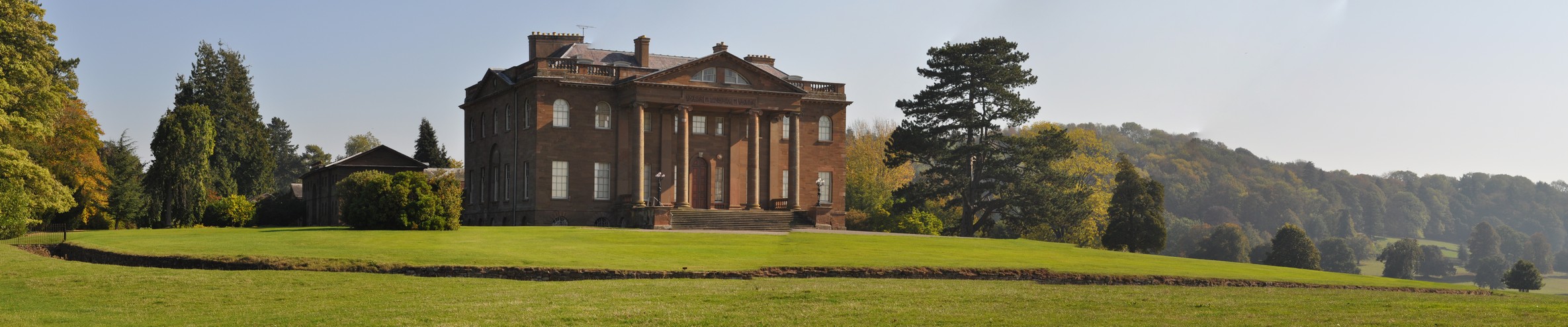
This is how the National Trust describes Berrington Hall, a late 18th century sandstone Neo-classical mansion overlooking the rolling Herefordshire landscape a few miles north of Leominster (see map). Designed by London architect Henry Holland, Berrington Hall was built between 1778 and 1781 for Thomas Harley.

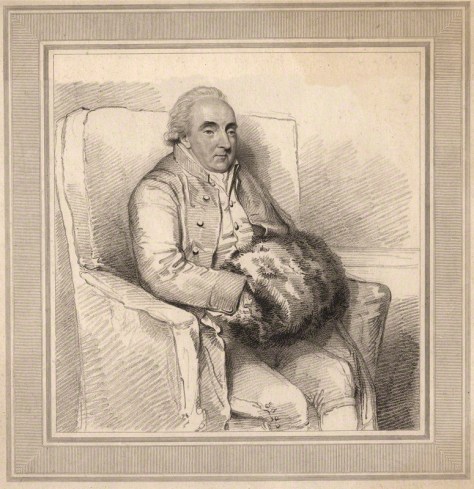
Thomas Harley, by John Hall, after Henry Edridge, stipple engraving, late 18th century.

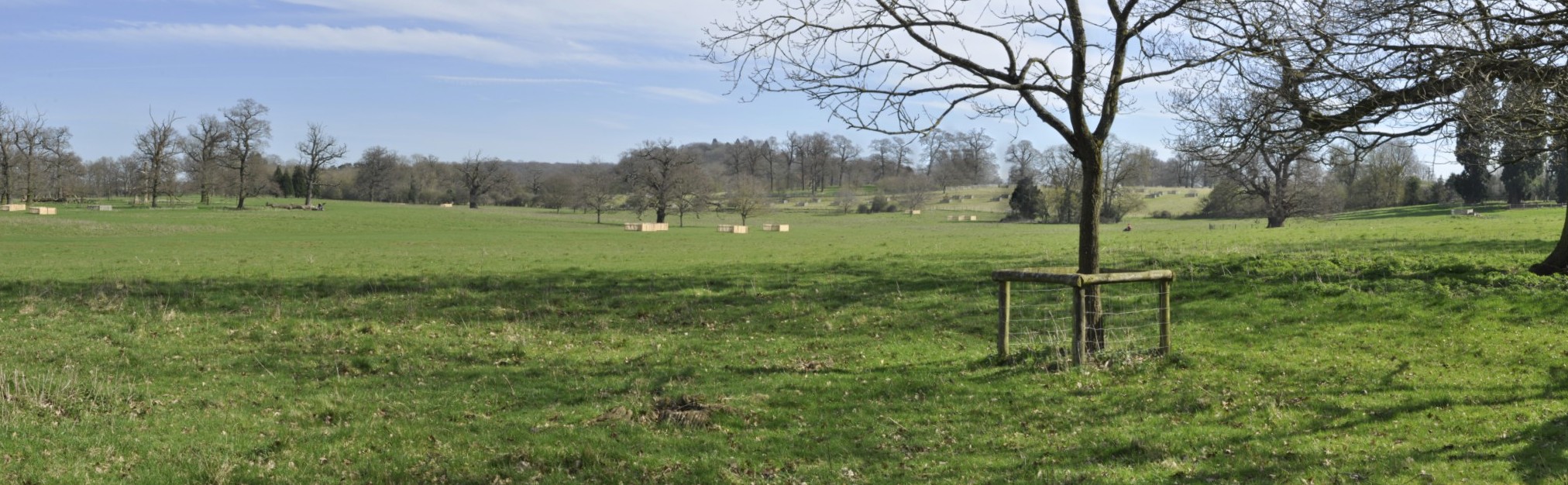
The estate also has a particular claim to fame. The park was the last to be created by landscape designer Lancelot ‘Capability’ Brown (who was also Henry Holland’s father-in-law).

Last Tuesday, Steph and I made our second visit to Berrington; we were first there in September 2011, the year we joined the National Trust. It was a beautiful day then, as it was this week. The weather forecast had promised a better day if we travelled westwards. Berrington Hall is 37 miles almost due west, and a little over an hour by road, from Bromsgrove in north Worcestershire.

We arrived not long after 10:30, and already the car park was quite full. After heading off to the tea room for a refreshing cup of coffee, we enjoyed a long walk around the park before heading back to the car for a quick picnic lunch, and then into the house itself.

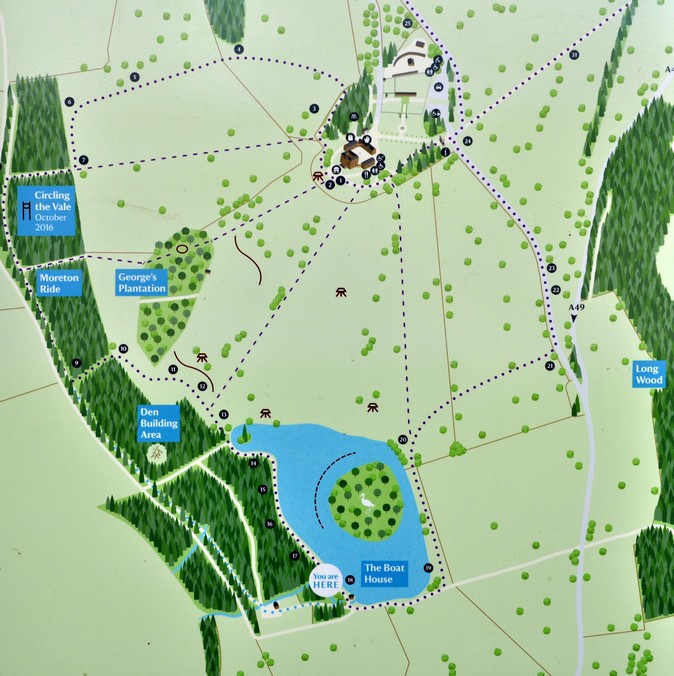
We followed the route due south of the house towards and around the bottom of the lake, past the Boat House, around George’s Plantation, and back to the house.

Berrington Hall is not large compared to some 18th century mansions we have visited. Indeed it is quite modest, somewhat austere in appearance. But it sits so comfortably in its landscape, facing southwest, that it was always meant to be there. Eighteenth century landowners and their architects certainly knew just where to begin construction to the best effect.

A grand Triumphal Arch now hosts the National Trust entrance office, and a driveway approaches the house from the rear, before circling around the front of the house to reveal a majestic portico supported on four large pillars, strategically spaced never to block any of the windows.

As was Capability’s intention, the house is best seen from different advantage points in the park, as is the park from the steps of the house.

Brown knew how to exploit the view of the parkland from the house to best effect. It was no laughing matter. He placed a ha-ha just in front. A ha-ha is ‘a recessed landscape design element that creates a vertical barrier while preserving an uninterrupted view of the landscape beyond. The design includes a turfed incline which slopes downward to a sharply vertical face, typically a masonry retaining wall. Ha-has are used in landscape design to prevent access to a garden, for example by grazing livestock, without obstructing views‘.
 

The ha-ha at Berrington is one of the finest. The landscape just floats away, uninterrupted, from the house, the only evidence of its presence being a change in colour between the short grass of the terrace and the fields beyond, that is clearly seen in the video clip below.

On the rear of the house is a courtyard, a stables block (with clock), a dairy, and laundry. Most of the buildings now accommodate facilities for visitors: the tearoom, toilets, a shop, and the like, as well as offices.

Inside the house, the atmosphere is one of restrained elegance. None of the rooms is particularly large, unlike many other houses we have visited. Nevertheless, there are flashes of flamboyance: in the mouldings around the doors, on the architraves, and particularly the ceilings which are most elaborately sculpted and painted.

The staircase, and the first floor landing surrounding the staircase on three sides, is rather stunning, all marble pillars reflecting the natural light from the cupola.

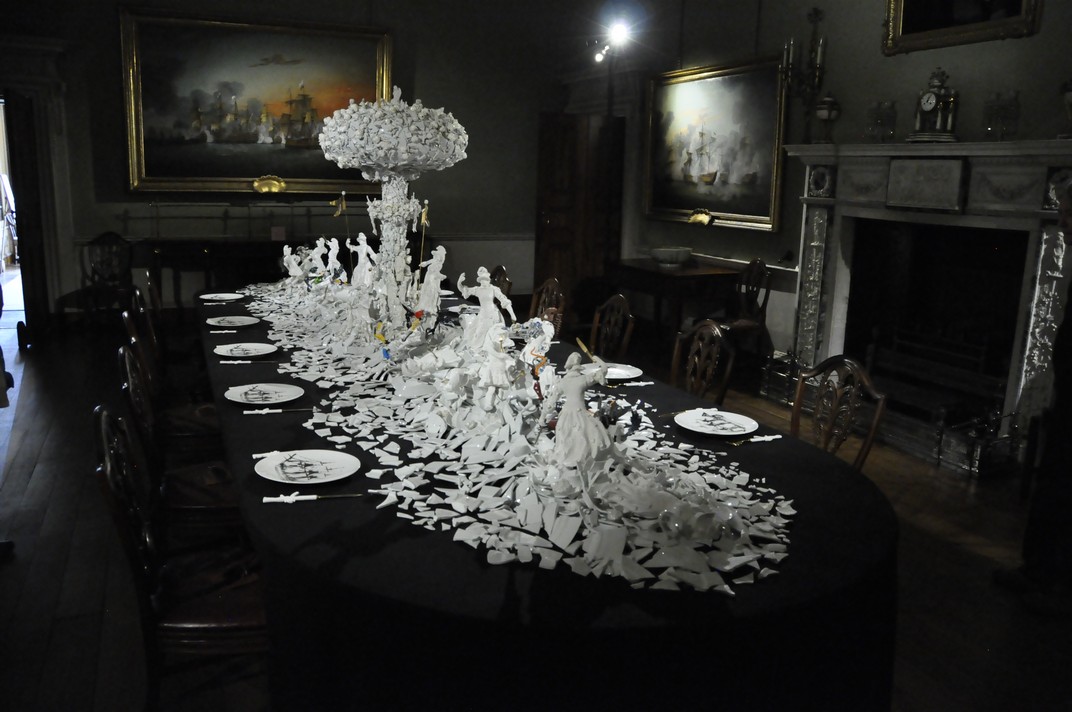
We encountered our biggest surprise, however, when we entered the dining room on the ground floor. In September 2011 the dining table was laid out as though dinner was about to be served. On the walls are paintings reflecting the battles of Admiral Lord Rodney, whose son, George, married Anne, the daughter of the man who built Berrington Hall, Thomas Harley. On his death, Berrington passed to the Rodney family.

On this visit, the room was almost in darkness, with just spotlights focused on a sculpture, War & Pieces, that extended the length of the table. Created by Dutch artist, Bouke de Vries, this is how the sculpture is described in the National Trust brochure:

War & Pieces is a striking piece, nearly six metres in length, inspired by the grand seventeenth century sugar sculptures found on the dining tables of the wealthy. By the early eighteenth century, sugar had been replaced by exquisitely crafted porcelain depicting allegorical, classical or architectural scenes that displayed the host’s wealth and taste at their banquets.

Between the eighteenth and nineteenth century, it became popular for banquets to be held for generals and their officers on the eve of great battles.

War & Pieces is an envisioning of one of these war banquets showing deconstructed porcelain figures engaged in a deadly struggle with a giant central mushroom cloud composed of skulls, ‘frozen Charlottes’ (a nineteenth century mass produced child’s toy) and presided over by figures of the crucified Christ and Guanyins, the Chinese goddess of compassion.

The piece is composed of broken antique porcelain and glassware, as well as parts of plastic children’s toys and sugar, bringing together the notions of modern warfare and art with those of the eighteenth and nineteenth centuries and making us reconsider our perceptions of beauty and the usefulness of broken objects.

War & Pieces

The scene of war on the table is echoed by the maritime battles depicted on the walls by Thomas Luny (1759-1837). Admiral Lord George Brydges Rodney (1718-1792), the naval hero of The Seven Years War and the American Wars of Independence, is celebrated in these paintings. Rodney was the youngest captain in the British navy and is, arguably, the tactician who first attempted the manoeuvre called ‘breaking the line’ which was used to such great success in later British naval victories. At Berrington, his grim engagements with the French and the Spanish upon his ninety gun ship of the line, The Formidable, in the 1780s are highlighted by Luny’s paintings. The Formidable is the ship depicted on the plates on the dining table that surround War & Pieces.

The handles of the knives are shaped like AK-47 rifles! Comments in a visitors’ book reflected the wide expression of opinions about this sculpture. I thought it was an inspiring commentary on the futility of conflict.

Berrington also has a large walled garden, planted with heritage apple trees that I have commented on and illustrated elsewhere in this blog.

All in all, a very pleasant second visit to Berrington. And it would be remiss of me to finish this particular account without mentioning the extremely friendly staff and volunteers who contributed to our overall enjoyment. The two ladies in the ‘dressing-up room’ on the first floor kept us entertained with their descriptions and demonstrations of the intricacies of 1770s and 1805 fashions!

Here is a short video I made of our visit.

Majesty in the landscape . . . and it was all in the mind’s eye

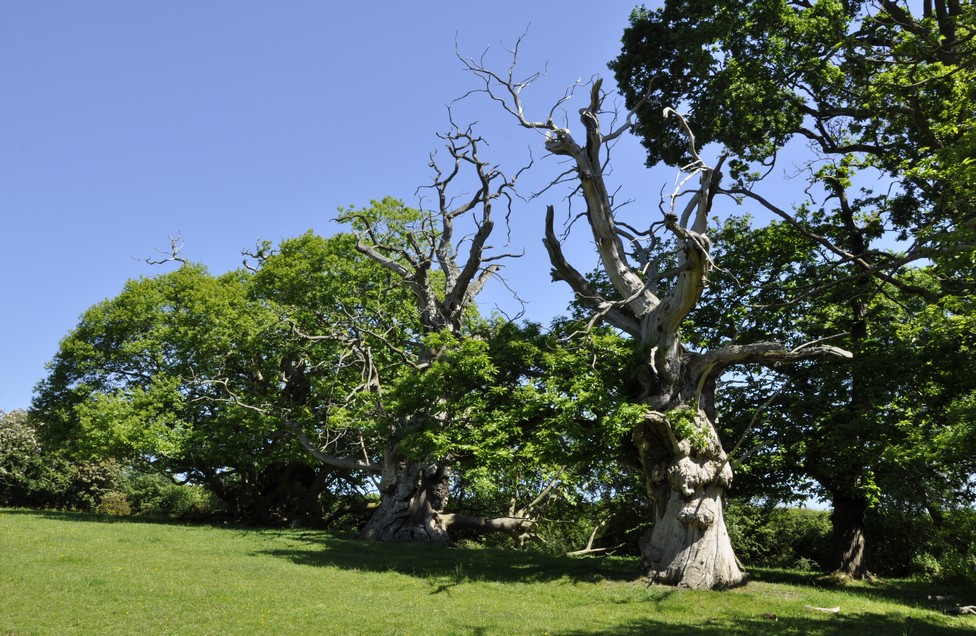
Majestic. Standing proudly in the landscape, silhouetted against a bright Spring sky. Many preparing to burst forth with that first flush of greenery that heralds the oncoming summer. Others, still standing, but unlikely to remain that way for much longer. The sap no longer rises as it once did. They will fall where they stand or—more likely—felled as a potential hazard to the public.

Others lie on their sides, like beached ships, slowly rusting away, a pathetic shadow of their former glory.

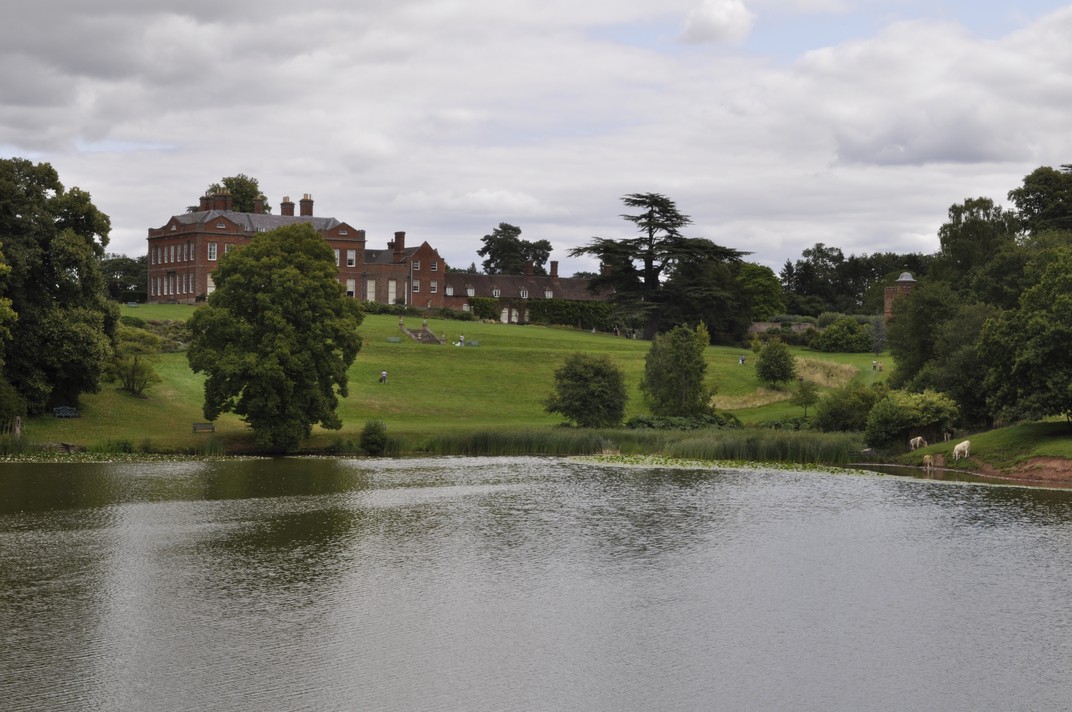
These are remains of an Oak Plantation planted in the 1720s at Hanbury Hall, a magnificent early 18th century house now owned by the National Trust, just seven miles from our home in Bromsgrove in northeast Worcestershire. A few hundred meters away from these oak trees stands the hall, overlooking a parkland outside the surrounding ha-ha, that the original builder of Hanbury, Thomas Vernon would never have seen. Designed by George London, what we experience today at Hanbury, three hundred years on, as is the case at similar ‘stately homes’ across the country, was just merely a vision in his mind’s eye.

The Hanbury Ha-ha and park

So many who commissioned great houses, gardens, and parks died before their dreams were realised, and long before their visions of a transformed landscape could be appreciated to the full. Only third or fourth generation custodians perhaps would have really begun to appreciate what was originally intended when the house, gardens, and park were laid out. In the beginning each would have been a massive building site and earthworks, and a nascent park with saplings dotted around and about.

Take the exploits of Capability Brown for example, who was responsible in the mid-18th century for the transformation of so many natural landscapes nationwide. Croome Court, southeast of Worcester (and about 15 miles due south from Hanbury), was his very first commission, for the 6th Earl of Coventry, and the ‘river’ that was excavated by hand alone took 12 years to complete. Some of the trees that Brown planted can still be seen at Croome today.

Croome Court

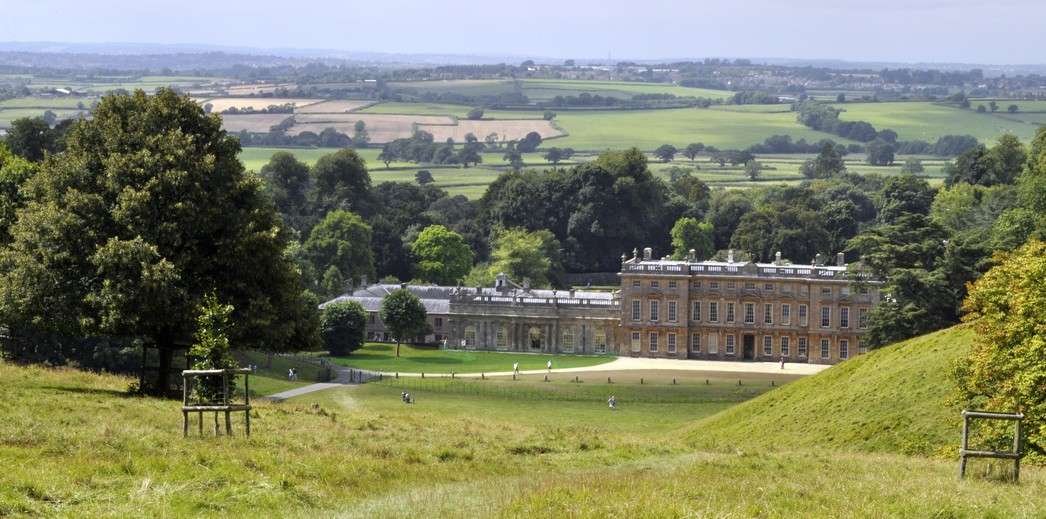
Steph and I have now visited quite a number of National Trust properties throughout England (and Wales) and this idea of vision and imagination is strongly reinforced by examples such Stowe in Buckinghamshire and Berrington Hall in Herefordshire, Calke Abbey in Derbyshire, Dudmaston Hall in Shropshire, and Dyrham Park in Gloucestershire, besides Hanbury and Croome.

Stowe

Berrington Hall

Calke Abbey

Dudmaston

Dyrham Park

A more recent (150 years ago) example is Cragside, near Rothbury in Northumberland, built in the the late 19th century by William, 1st Baron Armstrong and his wife. The mock-Tudor mansion overlooks a wooded valley and one of the largest rock gardens in Europe, carved out of the rugged Northumbrian moorland. At Cragside, the Armstrongs planted more than seven million trees. Today, the house nestles comfortably in this landscape, seemingly for all time.

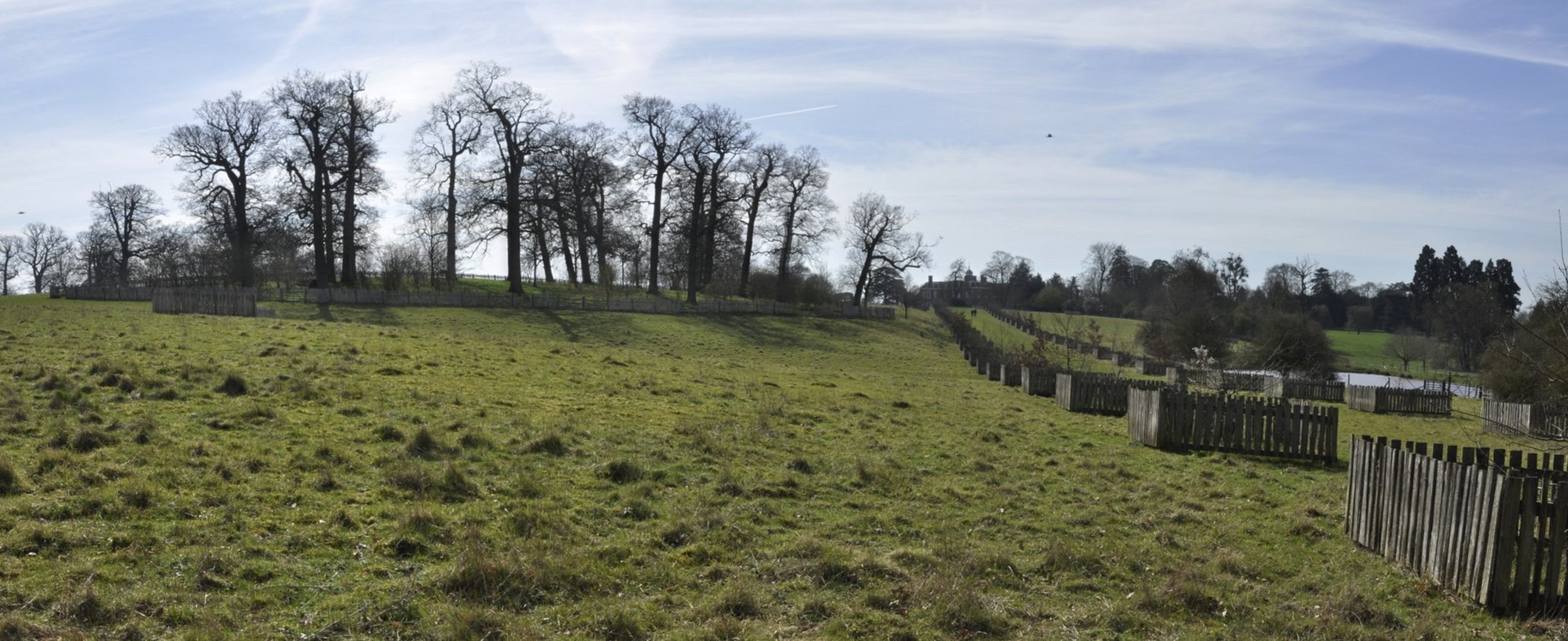
The tradition of landscape renewal continues under the National Trust. At Hanbury, for example, there are young saplings all around the park, protected (presumably against grazing by deer, maybe sheep) by picket fences. Impressively, the Trust is also recreating the Long Walk leading downhill from the Hall in a northeasterly direction.

The Long Walk at Hanbury Hall, with George London’s Semicircle (of trees) on the left

However, these full effect of these recent plantings will not be realised for many decades to come. I applaud the continuation, by the National Trust, of this wonderful tradition of leaving something behind in the landscape, just as those who built and nurtured these magnificent properties did, centuries ago.

It’s all about Trust and Heritage

When I fell over last January and broke my leg, and was incapacitated for almost three months, I never thought that we would be able to get out and about for National Trust and English Heritage visits as we had in previous years. How wrong I was!

Once I’d been given the all clear to drive, around the end of March—and relying on my trusty walking stick—we managed to visit eleven National Trust properties (including four times to our ‘local’ Hanbury Hall), and to five run by English Heritage. I have indicated the distance from my home in Bromsgrove, although we visited some properties while we were on holiday in the south of England in July.

National Trust
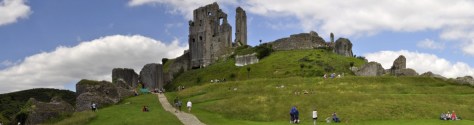
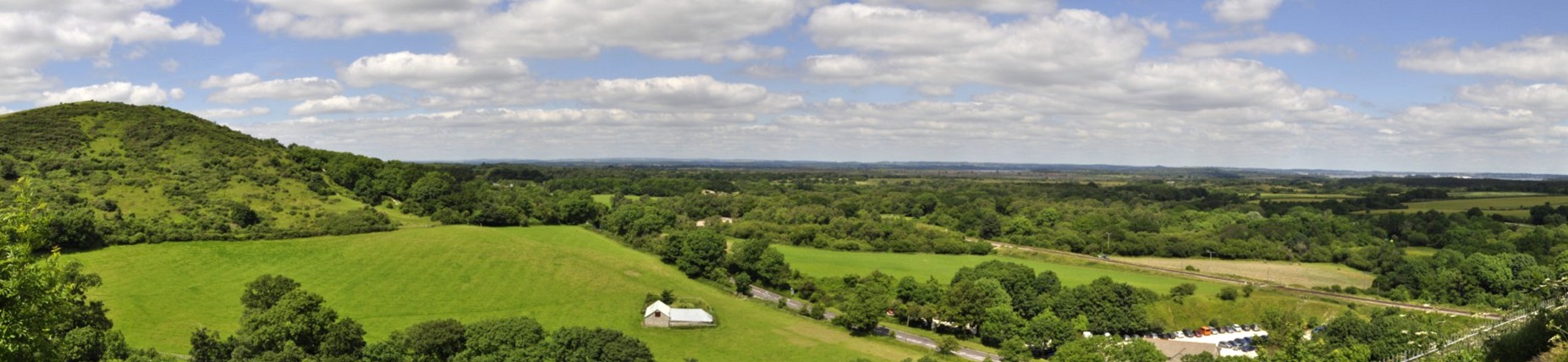
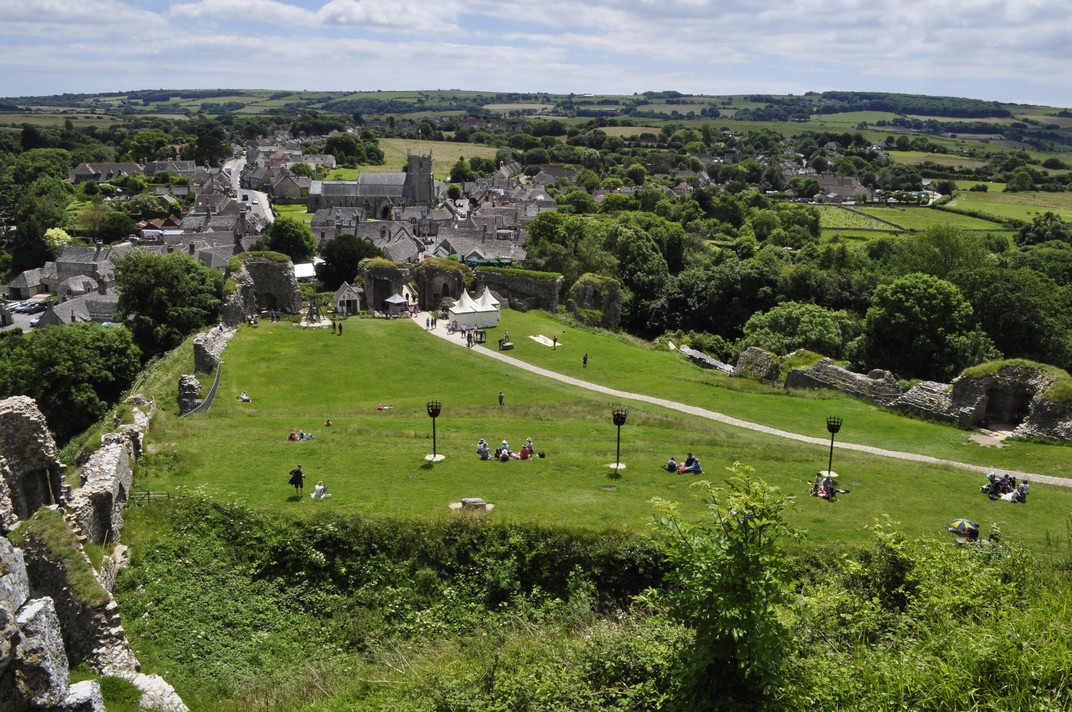
During our holiday in the New Forest we made a day visit to Corfe Castle, and on the way home a week later we stopped off at Kingston Lacy. Further on, we passed the entrance to Dyrham Park, north of Bath, but didn’t have time to visit then. So we decided to return later in August.

Not long after I gained my mobility, we visited three properties that are quite close to home, not to visit inside the houses, but to enjoy the gardens, and relax with a cup of coffee or a bite to eat for lunch. The restaurant at Packwood House, renovated over the past couple of years or so, is particularly nice.

If I wrote a specific blog post about each of these visits, I have included a link below.

Hanbury Hall (10 April, 4 May, 29 August, and 18 November) 6 miles
Hanbury is our local National Trust property. I think we’ve been inside the house only once, several years ago, but during the year we did pop over there, in about 15 minutes, to grab a cup of coffee, and walk through the gardens. Of particular interest for me is the glorious parterre, kept immaculately by the resident gardeners and volunteers.
Packwood House (20 April) 17 miles

Baddesley Clinton (12 May) 19 miles

Shugborough Hall (22 June) 53 miles
One of the things we particularly liked about Shugborough was the number of rooms open to the public. As always the volunteers were most helpful in pointing us towards items of interest.
Read about our visit here.

Avebury (2 July) 81 miles
We stopped in Avebury on the way south to our holiday in the New Forest. It was a good halfway place to have coffee and lunch. There’s much to see, with the stone circle and the house (with each room decorated in a different period).
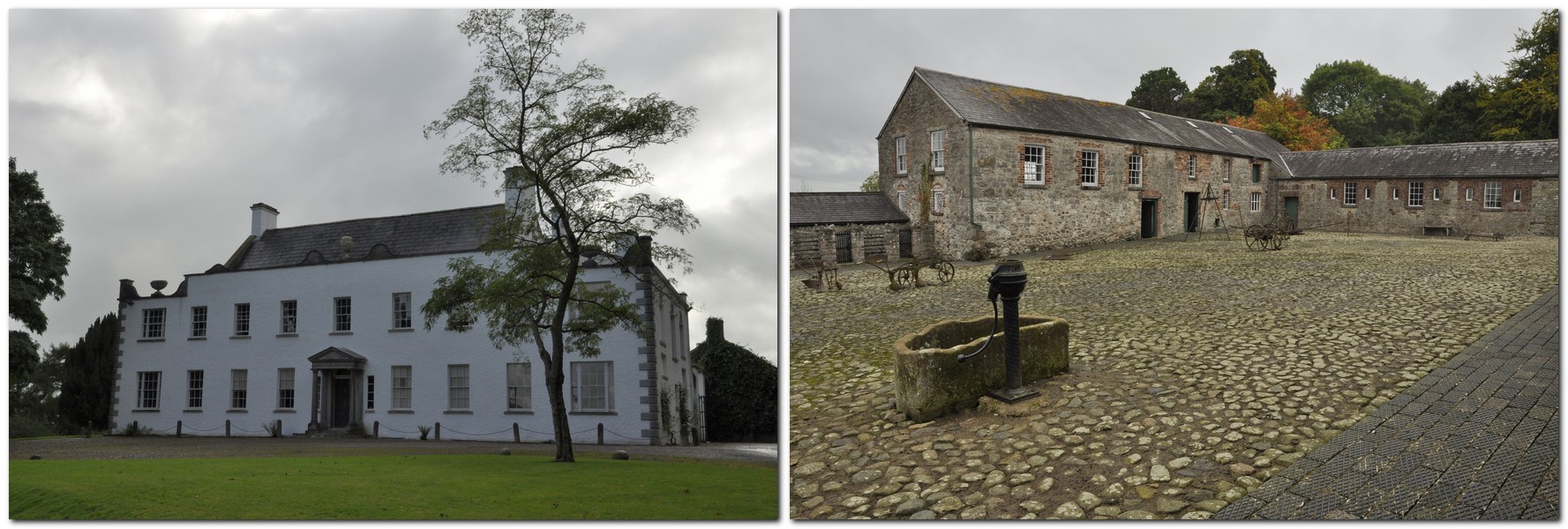
Read about our visit here.

Corfe Castle (5 July) 176 miles
We visited Corfe Castle on a day trip from our holiday home in Dibden Purlieu on the east of the New Forest. The drive west was about 47 miles, on quite busy roads.

Read about our visit to Corfe Castle and Kingston Lacy here.

Kingston Lacy (10 July) 134 miles
Kingston Lacy was owned by the same family as Corfe Castle, about 19 miles to the north. This must be one of the National Trust’s premier properties – it’s full of treasures. Well worth another visit sometime.

Claydon (19 July) 67 miles
Our visit to Claydon was a delight. Normally, photography is not permitted inside the house, but when I explained that I write a blog about our National Trust visits, they gave me permission to photograph many of the architectural aspects I am interested in. And I have to say that the volunteers at Claydon were some of the most helpful and friendliest that we have come across.

Read about our visit here.

Dyrham Park (12 August) 77 miles
It’s quite a walk from the car park to the house and gardens. Thank goodness for the shuttle service. On the day of our visit the weather was beautiful, and we thoroughly enjoyed our visit.

Read about our visit here.

Brockhampton Estate (26 August) 25 miles
We made our first visit to Brockhampton in September 2012. It was great to see that other parts of the medieval house had been opened to the public.

Greyfriars’ House and Garden (14 December) 12 miles (by train)
This was our last visit for 2016, and we hopped on the train from Bromsgrove for the 20 minute ride to Worcester Foregate. From there it was a less than 10 minute walk to Greyfriars’. Nice to see the rooms decorated for Christmas, and we had an excellent tour guide.

Read about our visit here.

English Heritage
This was our second year as members of English Heritage, and we didn’t visit as many properties as we would have liked. But that will be rectified in 2017!

Buildwas Abbey (27 May) 36 miles
We had tried to visit Buildwas in 2015, on our way from Wenlock Abbey to Ironbridge. But it was closed. We had the place to ourselves when we visited in May. Peaceful!

Read about our visit to Buildwas and Langley Chapel here.

Langley Chapel (27 May) 11 miles from Buildwas Abbey
Standing isolated in a field, this is a delightful example of a 17th century chapel catering to a Puritan rural population.

20160527 007 Langley Chapel

Calshot Castle (9 July) 136 miles
Calshot was just a few miles south of our holiday home in Dibden Purlieu. We were amazed to discover how well it had been maintained over the centuries. I guess this is not really surprising considering the active defensive role it has taken on all that time.

20160709 009 Calshot Castle

Read about our visit here.

Bolsover Castle (17 August) 90 miles
Bolsover Castle sits on the skyline to the east of the M1 motorway in Derbyshire. Whenever we travel north to visit our younger daughter Philippa and her family, we have to pass Bolsover. And for years we were intrigued by it, and what it might offer. We had also seen in the past few years a BBC program about the castle presented by historian Lucy Worsley. We were not disappointed in our visit.

Read about this interesting visit here.

Witley Court and Gardens (26 August) 16 miles
Witley Court is one of our local visits, just a few miles west of Bromsgrove on the far bank of the River Severn. We have been visiting Witley Court since the 1980s when you could just wander into and around the ruins. We had last been there in July 2015.

Silent witness to centuries of history

In Friar Street, close to the center of Worcester, and a couple of hundred meters or so north of its magnificent cathedral, stands a half-timbered building built around 1480 (the birth year of my 13th Bull great grandfather) that has been a silent witness to some of England’s pivotal moments in history, such as the Dissolution of the Monasteries during the reign of Henry VIII in the late 1530s, and just over a century later when King Charles II (although not yet crowned) was defeated at the Battle of Worcester in 1651, the last battle of the English Civil Wars.

20161214-001-greyfriar-house

20161214-050-greyfriar-house

These photos show the double gateway looking into the garden, and from inside to the street, as well as views of the rear of Greyfriars’ from the garden. Building a half-timbered house was, according to our guide, a little bit like piecing a jigsaw together. Which pieces fitted where? Well, symbols were embossed on matching pieces of timber and these can be clearly seen in one the photos in this gallery.

Greyfriars’ is a late medieval merchant’s house that has survived the ravages of time—but nearly didn’t make it. Greyfriars’ is now owned by the National Trust. We enjoyed a visit to Greyfriars’ House and Garden yesterday, where many of the rooms had been decorated to celebrate Christmas during various times: a Tudor Christmas in the entrance hall, a Puritan Christmas (or lack of it) in one of the main bedrooms, and a wartime Christmas in the library.

20161214-069-greyfriar-house

Just 13 miles of so south of our home in Bromsgrove, Worcester is the county town of Worcestershire. But for one reason or another, and despite having been residents of Worcestershire for over 35 years (albeit with a break of almost 19 years in the Philippines) we have only rarely visited Worcester. I think the last time I was there was in December 2013 when I was called for jury service at the Crown Court (but never actually made it on to a jury).

Since becoming members of the National Trust in 2012, in the lead up to Christmas we have visited one of the Trust’s properties in our ‘neighbourhood’ – Hanbury Hall, Croome Park, Packwood House, Baddesley Clinton or Coughton Court – since there is always a special festive display to enjoy.

This year we decided to visit Greyfriar’s, making the short journey by train, not wanting to have the hassle of finding convenient parking in the city. In any case, it was also an opportunity of experiencing Bromsgrove’s new railway station¹.

We stopped off for a coffee at M&S before walking on to Greyfriars’ and arrived just in time, a little after 11 am, to take advantage of the excellent first house tour of the day. We were just three visitors, and I had full opportunity to use my camera to the full, even though light levels were extremely low. So the set of photos I came away with are certainly not my best, by any stretch of the imagination, but I hope I did capture something of the beauty of this interesting property.

Saved from demolition
Greyfriars’ was destined to be demolished but was saved by members of the Worcester Archaeological Society. In 1943, military dental surgeon M Matley Moore and his sister Elsie took on the refurbishment of Greyfriars’, eventually taking up residence in 1949.

These photos show the main entrance hall, one of the main tapestries, and some of Elsie Matley Moore’s handiwork above the fireplace.

Apparently the house was in a dreadful state when the Matley Moores began their refurbishment project, and this was not something undertaken lightly during the Second World War or its immediate aftermath when building supplies were hard to come by. Nevertheless, they were able to salvage panelling and other decoration from other buildings, in addition to keeping what original features that were still part of the building’s fabric. Elsie Matley Moore was an accomplished seamstress, and lovingly restored a number of the seventeenth century tapestries that are still on display, as well as adding features of her own, such as ceramics and a set of particularly rare Georgian green (from arsenic? – not so) wallpaper panels in the downstairs living room.

These photos show the main bedroom (apparently occupied by the man of the house), the parlour (and its William Morris tiled fireplace), and the library. All the rooms had magnificent grandfather clocks, several manufactured in Worcestershire, and at least one designed with just a single hour hand. In the fireplaces in two rooms were cast iron – and painted – door stops that Elsie Manley Moore collected. These are quite rare today. Above the fireplace in the parlour is some original carved woodwork frieze with carved dragons (there’s a close-up in this gallery), and indicating that Worcester is not that far from the Welsh border country.

Downstairs, the dining room was refurbished in a Georgian style. These photos show the majolica tiles above the fireplace, and one of the green wallpaper panels.

The garden was obviously dormant yesterday, but National Trust volunteers told us that during the summer months the garden is a haven in the center of Worcester (although traffic noise from the close-by ring road did unfortunately intrude as we explored a few of the garden’s nooks and crannies).

Each year Greyfriars’ is host to Shakespearean players who perform in the garden. I think we should look out for that event for 2017.

_____________

¹ After the Rio Paralympics 2016, the Bromsgrove station signs were all painted gold, recognising the rowing gold medal won by local sportswoman Lauren Rawles.

20161214-067-greyfriar-house

Dyrham Park: a tale of two architects

20160812 154 Dyrham Park

A few miles north of Bath, and to the east of Bristol, Dyrham Park is a National Trust property that was built in the late 17th century on the site of a former Tudor manor house.

20160812 123 Dyrham ParkIt was the creation of William Blathwayt, a senior civil servant who rose to become Secretary at War among other posts. After leaving government he served as a Member of Parliament for a number of years before he died in 1717.

Completed by 1704, Dyrham Park is an interesting combination of architectural features because it was designed by two architects, the west wing by Samuel Hauduroy, a Huguenot, and showing distinct French influences, and the east by William Talman, who also designed Chatsworth House in Derbyshire and Hanbury Hall close to where I live in Worcestershire. Parts of a pre-existing Tudor mansion at Dryham were demolished as the two wings of this house were completed.

William Blathwayt married heiress Mary Wynter in 1686 whose family owned the Tudor mansion at Dryham. Mary died in 1691, leaving William with three children, and she never saw the building of the house we see today.

From the outside, this is a magnificent building in quite an extraordinary setting.

20160812 002 Dyrham Park

The view from the east facing front door.

The estate lies to the west of the A46 (that connects Bath and Stroud), and the car park is close to the entrance. There’s a shuttle bus to the house (which I was very grateful for yesterday) or you can walk down a winding and rather steep road to the house, or across the park. It’s remarkable because Dyrham lies at the bottom of a valley, almost in an amphitheatre, surrounded by the most magnificent mature trees. From up above in the car park you would have no idea what lies over the brow of the hill. And looking at early drawings of the site, and seeing the park today, you have to wonder at the imagination of the creators of estates such as Dyrham, for they would obviously never live to see their creations as they had planned them.

20160812 009 Dyrham Park

It was the home of the Blathwayt family until the 1950s; however, Dyrham Park has been owned by the National Trust since the 1960s. Last year there was a major project to repair the roof and make the property water-tight once again. There is only access to rooms on the ground floor, but there are plans, budget permitting, to restore the house to its former glory. Most of the rooms do not have furniture, although there is a selection of oil paintings on display in many.

Unlike many houses we have visited, the Orangery is connected to the left side of the house (to the south on the east facing wing).

But, stripped of their interior decor finery, your attention is drawn to many of the fine features that exemplify 17th and early 18th century design: the fireplaces, the doors and their beautiful hardwood frames, and the two magnificent staircases. A couple of pieces of information caught my eye during our visit: the house was constructed from local materials in the main, but finished off using imported woods from around the world, marbles from Italy, and slates from Cornwall. Also, it seems that Blathwayt financed the construction of the house from his own resources rather than borrowing the money. He thus left his estate unencumbered by debts on his death.

Outside, there are quite small landscaped gardens leading down to two pools, and original 17th century iron gates at the far (west) end, and in need of some TLC.

St Peter’s Church is much older than the 17th century house, and has a beautiful stone tile roof. Actually three roofs, for the central nave and side aisles. William Blathwayt is buried in the churchyard.

Above the church are ‘Mr Blathwayt’s Lost Terraces’, now mostly overgrown.

Dyrham001

Dyrham002

20160812 052 Dyrham Park

Next to the terraces lies the deer park and, with advice from other visitors to Dyrham yesterday, we tracked down the large herd of fallow deer that was resting nearby.

20160812 083 Dyrham Park

20160812 082 Dyrham Park

Dyrham Park is on a trajectory to former glory. We look forward to visiting again in a couple of years once further restoration has been completed, and more rooms (fully furnished) are once again open to the public. And hopefully by then I’ll be able to take full advantage of the walking opportunities through the park once my leg is fully healed.


Homes fit for a king (or queen): one slighted, the other opulent . . .

Corfe Castle, standing on a conical hill in gap in the chalk Purbeck Hills, commands a stunning view north over the rolling hills of Dorset, and guards access to the Isle of Purbeck to the south. Today it is a glorious ruin.

20160705 035 Corfe Castle

20160705 036 Corfe Castle

Looking north over the rolling Dorset landscape.

20160705 108 Corfe Castle

South towards the village of Corfe and the Isle of Purbeck.

It was built by William I (The Conqueror) in the 11th century, underwent significant changes during the following two centuries, and remained a royal possession until the reign of Elizabeth. She sold it in 1572, and it was later purchased by Sir John Bankes in 1635. And it is through the Bankes family that the histories of Corfe Castle and Kingston Lacy House, some 18 miles to the north, are linked.

During the English Civil War, Lady Mary Bankes led the defence of Corfe Castle when attacked by Parliamentarian forces. Corfe was one of the last bastions of royalist support in southern England. Lady Mary was permitted to leave the castle unharmed, but it was soon demolished by the Parliamentarians (yet another castle slighted), and these have proudly dominated the landscape ever since. Corfe Castle is now owned and managed by the National Trust.

So, what is the link with Kingston Lacy House? Having been turfed out of Corfe Castle, the family moved north to their estates near Wimborne Minster and built this sumptuous country house, rather modest but very attractive on the outside. However, what an Aladdin’s Cave inside! It must be surely among the top three of all National Trust properties in terms of the treasures on display. One of the National Trust’s ‘jewels in the crown’.

20160610 001 Kingston Lacy

Construction of Kingston Lacy House began after 1663; the family had regained its prosperity when Charles II was restored to the throne. Rather than reconstruct Corfe Castle, Sir Ralph Bankes, the eldest son, chose to construct a family home on their estates near Wimborne Minster. What is particularly interesting is that the Bankes family occupied Kingston Lacy House continually from the late 17th century until 1981, when the house and its fabulous contents were bequeathed to the National Trust.

The entrance hall and stairs are solid marble. Statues of Sir John and Lady Mary Bankes can be seen on the first floor landing (alongside one of King Charles I). There are large windows looking out over the parterre, and the stairway leads up to some magnificent (but rather gory) paintings of hunting scenes. The plaster ceiling and paintings are magnificent.

But it’s in the sitting room, the library and other salons that the magnificence of Kingston Lacy House is shown off to its ultimate best. The walls are adorned with paintings by the Old Master including Van Dyck. The ceilings are decorated in the most opulent manner.

On the top floor are the nursery rooms, but even here are opulent paintings depicting the whole family originally from Corfe Castle (including those children already deceased—with angel wings), a painting of the Circumcision of Christ, and bedrooms under the eaves painted like tents.

Even the servants’ dining hall has old paintings!

Outside there are extensive gardens and parkland—a real pleasure to explore.

There’s so much to see at Kingston Lacy House that it’s definitely worth a second visit if we are ever back in that part of Dorset. It’s a veritable feast for the eyes.

We visited both properties during our summer break in the New Forest. Our eldest grandson Callum (who is from Minnesota) told us that he wanted to see a castle during his holiday over here in England. His disappointment was evident when he first saw the ruin. “That’s not a castle,” he exclaimed. But it wasn’t long before he and his sister and two cousins, Zoë, Elvis and Felix were having a whale of a time exploring the whole site, and dressing up in medieval costumes.

Here a henge, there a henge . . .

On 2 July we set off from home just before 10 am, heading south towards the New Forest in Hampshire, where we stayed for a week with our daughters Hannah and Philippa and their families.

The trip south was about 143 miles, on the route we took. That was south on the M5 motorway, over the Cotswolds to Swindon, then on south via Salisbury to our destination.

We broke our journey at Avebury in Wiltshire, a World Heritage Site, a dozen miles south of Swindon.

Avebury has two attractions: Avebury Henge and stone circles, and Avebury Manor, once the home of Alexander Keiller (of the marmalade family) who spent many years in the 1930s discovering the archaeology of this ancient Neolithic site.

aerial-avebury (eng-heritage)

Avebury village and stone circle.

There is something enchanting about stone circles and, lost in the mists of time, it’s hard to imagine why and how ancient Neolithic people erected these thousands of years ago.

Entering Avebury you certainly do not get an impression of just how big the earthworks are. It’s only when you are on the ground, and see the massive ditches (the henges) that the full impact of their construction—by hand—using the most rudimentary of tools like antlers, really hits you. Of course there are other henges in the vicinity: Stonehenge and Woodhenge, to name just a couple. But this Wiltshire landscape for some reason is an area of considerable Neolithic activity. Due to my current disability, and not wanting to spend too much time walking over uneven surfaces, we did not explore the henge and stone circle as much as I would have wanted.

20160702 055 Avebury

20160702 004 Avebury

20160702 005 Avebury

20160702 009 Avebury

Avebury Manor is a 16th century building, that was restored by Keiller. But in 2011 its refurbishment was the subject of the BBC TV series The Manor Reborn, by a group of experts in collaboration with the National Trust. There is no consistent theme throughout the manor’s decoration, each room representing a different period in its history. It’s an interesting concept, but from my perspective this doesn’t allow a visitor satisfactorily to develop a solid impression of the house and its worth. There’s no doubt that it is a beautiful building in a rural setting. I thought the mishmash of historical themes was inappropriate and it would have been better to have chosen a single era for its decoration. nevertheless I do recognise that the BBC’s and experts’ involvement in this way have probably helped save the building in a better state for the future.

Light of foot, nimble of finger . . .

Luke Lightfoot. Never heard of him? Neither had I until just over a couple of weeks ago when we visited the National Trust’s Claydon House in Buckinghamshire, south of Buckingham, east of Bicester.

20160719 110 Claydon House

20160719 112 Claydon House


Claydon House is close to two other National Trust properties, Waddesdon Manor and Stowe, perhaps more illustrious, and probably they receive far more visitors.

So how does Claydon compare? I think that anyone who visits Claydon House will come away with a sense of wonder of what 18th century master carver and stonemason Luke Lightfoot achieved for his employer, Ralph 2nd Earl Verney who rebuilt the family ancestral home between 1757 and 1771. The Verney family still occupies the red brick wings of the house.

The building standing today is just part of what was originally planned, and at least one wing was demolished. Although the exterior of the building is often described as austere, I think it has a charming symmetry and simplicity.

The interiors however, are something else—a riot of rococo wood carving of the very highest standard. Perhaps the most exquisite examples of 18th century carving to be seen anywhere in the country.

Luke Lightfoot, born in London in 1722, is somewhat of a mystery. Here’s what the National Trust has to say about him: Luke Lightfoot was a brilliant and talented stonemason and carver, but not an architect. However, Sir Ralph Verney engaged him as such at Claydon where Lightfoot used his skills to make impressive carvings, most notably in the north hall here at Claydon. He was a very talented carver but not a very trustworthy one and he swindled away a lot of Sir Ralph’s money before being dismissed. 

Most of the work done by Luke survives today, including the painted wooden carvings in the Chinese Room. All of the wood was painted white, which is believed to be because it was all carved in pine which comes in many shades and discolours over time. Due to the preserving coat of paint you can still see the unique and amazing craftsmanship of the carvings today.

The main entrance of the house leads into the Saloon, a beautifully proportioned room decorated in blue and white. You can’t fail to be impressed by the ceiling decoration, or the papier mâché reliefs high up on the walls.

But it’s in the North Hall that some of Lightfoot’s best carving is to be seen.

In the library there is equally fine carving high on the walls, but the ceiling was completed by Joseph Rose.

The Grand Staircase is in a class of its own. Can there be a finer example in England?

In the Pink Parlor, the door lintels are surmounted by other carvings depicting Aesop’s Fables, and the ceiling of the Great Red Room immediately above has some impressive ‘domes’.

Florence Nightingale was the sister of the second wife, Parthenope, of Sir Henry Verney (1801-1894), and she visited Claydon many times. On the second floor is the bedroom she used. Next door is the Gothic Room in which the only decoration that is not made of wood is the marble fireplace. Can you imagine such carving?

Next to the Gothic Room is the Chinese Room, where the rococo decoration has ‘exploded’. And more impressive ‘domes’ in the Paper Room.

Close by the house, no more than 50 m away is the Church of All Saints, with many memorials to the Verney family, and especially one to Sir Edmund Verney, Standard Bearer to King Charles I, who was killed at the Battle of Edgehill in October 1642.

Don’t miss Claydon. You won’t be disappointed.

I have only shown photos here of the decoration and architectural features, and I’m grateful to the National Trust for giving me permission for photography in the house. Photography is not normally permitted, and certainly not of any of the Verney family personal effects such as masterpiece paintings and furniture. In the Salon there’s an impressive Van Dyck painting of Charles I for example, and throughout the house there are many more examples of such quality.

Claydon House is not the easiest National Trust property to find. Thankfully we had detailed Ordnance Survey maps to guide us there; signage leaves something to be desired. Road signs petered out in several places, and I did overhear other patrons mentioning this to staff on arrival. That’s something the National Trust needs to improve upon, not just here at Claydon but elsewhere around the country.

I can’t finish this particular blog post without a mention of the volunteers at Claydon, some of the friendliest and most informative we have come across in all our National Trust visits.