
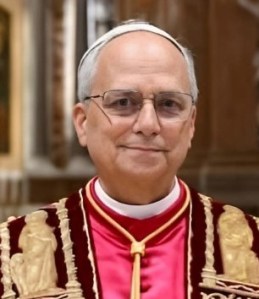
Pope Leo XIV
And with those two words, Protodeacon of the College of Cardinals, Cardinal Dominique François Joseph Mamberti, announced from the balcony of St Peter’s in Rome (on the afternoon of 8 May 2025) that Cardinal Robert Francis Prevost (right, a dual US-Peruvian citizen, born in Chicago) had been elected as the new pope, taking the name Leo XIV, less than three weeks after the death of Pope Francis. Leo XIV is the 267th occupant of the Holy See stretching back 2000 years.
He is the first English-speaking pope since Adrian IV (c. 1100-(1154)-1159), born Nicholas Breakspear in England (who probably spoke French for much of his life).
During my lifetime, there have been eight popes . . . so far. And given his relatively young age (69, and in seemingly good health, as a keen tennis player), Leo XIV will probably outlast me.
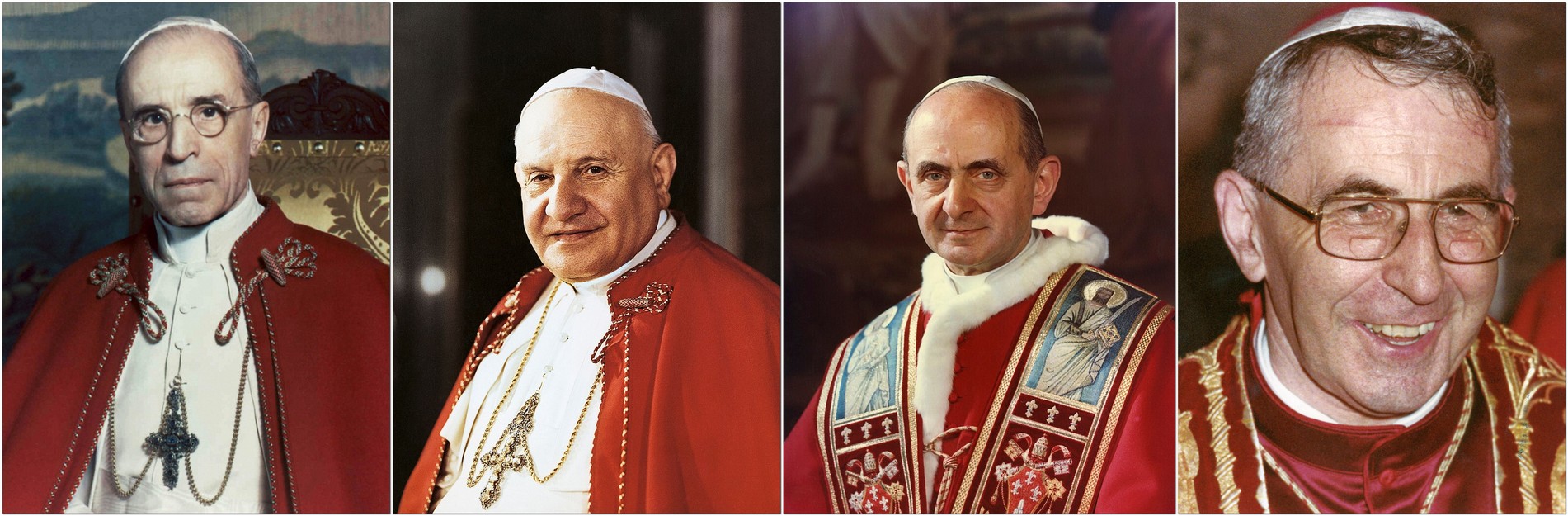
L-R: Pius XII, John XXIII, Paul VI, and John Paul I
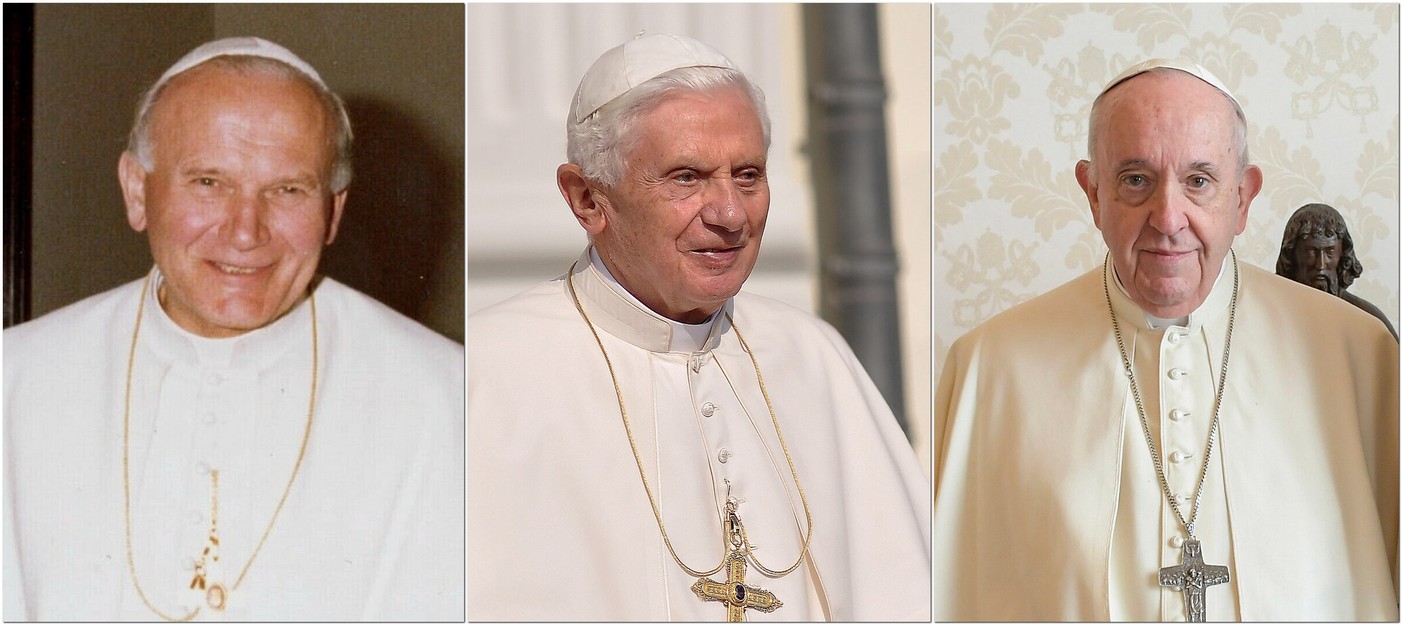
L-R: John Paul II, Benedict XVI, and Francis.
I was baptised a Catholic, probably in early 1949 (having been born in November 1948), but didn’t attend a Catholic school until my family moved to Leek in April 1956. Then, my elder brother Edgar and I moved to St Mary’s primary school where we were taught by nuns of the Sisters of Loreto order (and some lay teachers as well).
I went through a phase of religious commitment for a few years, but by the time I’d left high school in June 1967, I had—as they say—’lost my faith’. And ever since I’ve been a contented atheist verging on agnostic. I say this because I don’t think I can entirely escape my early religious upbringing/indoctrination.

In my formative years, with Sunday Mass and other religious observations, reverence for the Pope was just accepted as part of being a Catholic.
But what this recent Conclave has illustrated, once again, is just how anticipated and newsworthy the election of a pope is worldwide, for Catholics and non-Catholics alike. And immediately, Leo XIV’s face has become one of the most recognisable.
In the immediate aftermath of his election, much has been written and spoken about this new pope, his origins, ministry, and beliefs. He’s the first pope from the USA, and the second from the Americas. Indeed it was often thought that the election of a pope from the USA could never happen given the potential geopolitical ramifications. He became a naturalised Peruvian citizen after spending many years in that country, latterly as Bishop of Chiclayo, and was made a cardinal by Pope Francis just two years ago. He took a degree in mathematics, and is the first Augustinian (OSA) pope.
The choice of his papal name is also significant. His nominal predecessor, Leo XIII (1810-(1878)-1903) published the encyclical Rerum novarum (Rights and Duties of Capital and Labor), a foundation of Catholic social teaching. And surely this choice of name indicates that Leo XIV will speak out in support of the poor, the disadvantaged. It seems he is not shy of speaking truth to power, as evidenced by a recent put down of US Vice-President JD Vance (a convert to Catholicism) and other commentaries on the policies enacted by the Trump administration. He’ll continue to have moral authority of taking on the likes of Trump, provided he also confronts, head on, the worst excesses and abuses (particularly the sexual abuses perpetrated by clergy) of the Church.
Not all Catholics are happy at the outcome of the Conclave. In the USA for example there is a not insignificant traditionalist arm of the church who are not likely to welcome Leo’s continuation (perhaps expansion even) of the social and inclusive legacy left by Pope Francis.
And some have even been outspoken about Leo’s election. Take alt-right political activist, Trump acolyte and apologist Steve Bannon (himself a Catholic apparently) for instance.
Just take a look (in the first minute or so of this video) at his egregiously offensive and outrageously conspiratorial commentary, condemning the Conclave as ‘rigged’, because Prevost was considered anti-Trump. How preposterous!
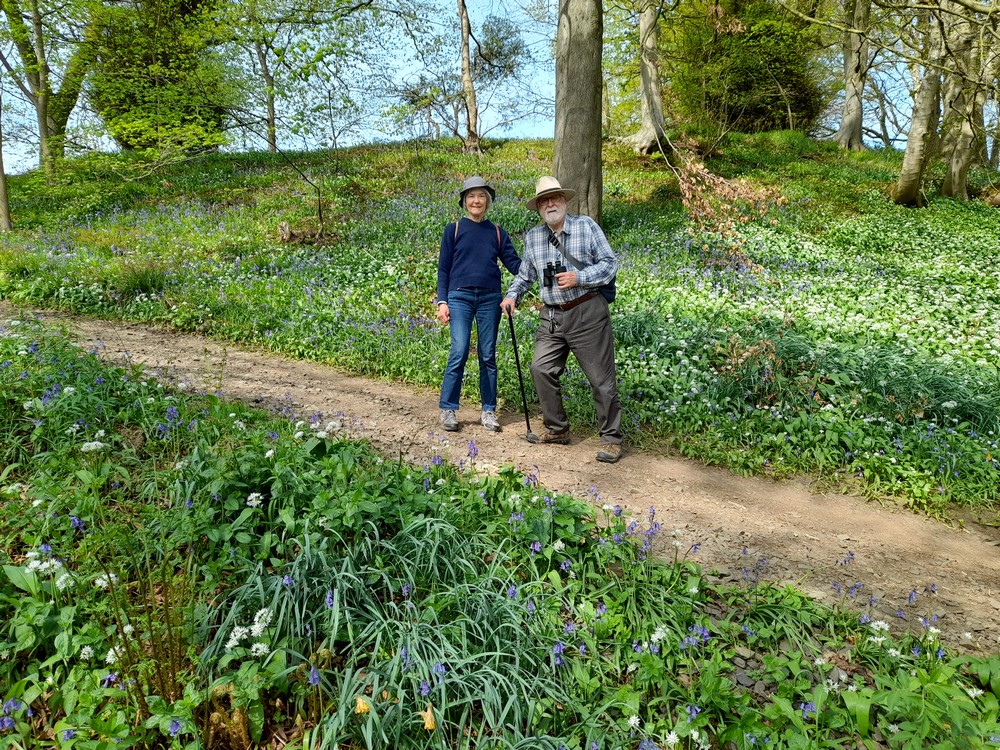


 There’s a sturdy bridge across the Allen at Plankey Mill, and there we sat and watched a dipper scurrying among the rocks.


 A balanced diet . . .