Meandering beside the mighty Mississippi in Minnesota

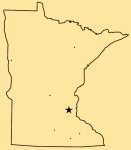
minnesotaWe have been visiting Minnesota regularly for almost two decades, with the Twin Cities of Minneapolis and St Paul our main destination.

One geographical feature dominates the landscape in the Twin Cities: the mighty Mississippi. It bisects the metropolitan area, with Minneapolis on the west bank, and St Paul on the east. Since a decade ago, our elder daughter Hannah and her husband Michael have lived just a few blocks from the Mississippi. In April this year they moved to a new house along the banks of the river – although at least 50 m above the water, so no danger of flooding there as the river flows through a limestone gorge.

In this short video that I took on take-off from MSP last week, our Delta flight banked to the west, and followed the Mississippi northwest over the center of Minneapolis, and the rapids between the Central Ave SE bridge and that carrying I-35W.

When we travel to the USA, Steph and I try to make a road trip, short or long. In 2011, it was the Grand Canyon and other canyons of Arizona and New Mexico. We were drawn to the Minnesota Riviera in 2012, and the Oregon coast, Crater Lake and the redwoods of northern California in 2013. 2014 saw us trek across the Great Plains from Minnesota to Yellowstone National Park, and last year we took a mini-break by train in Chicago.

Because of the ongoing rehabilitation from my leg injury earlier this year, I didn’t want to make a long road journey. But we decided to take a mini-break, just 3½ days (and a round-trip of 750 miles) to the source and headwaters of the Mississippi River north of the Twin Cities in northwest Minnesota.

What is the source of the Mississippi?
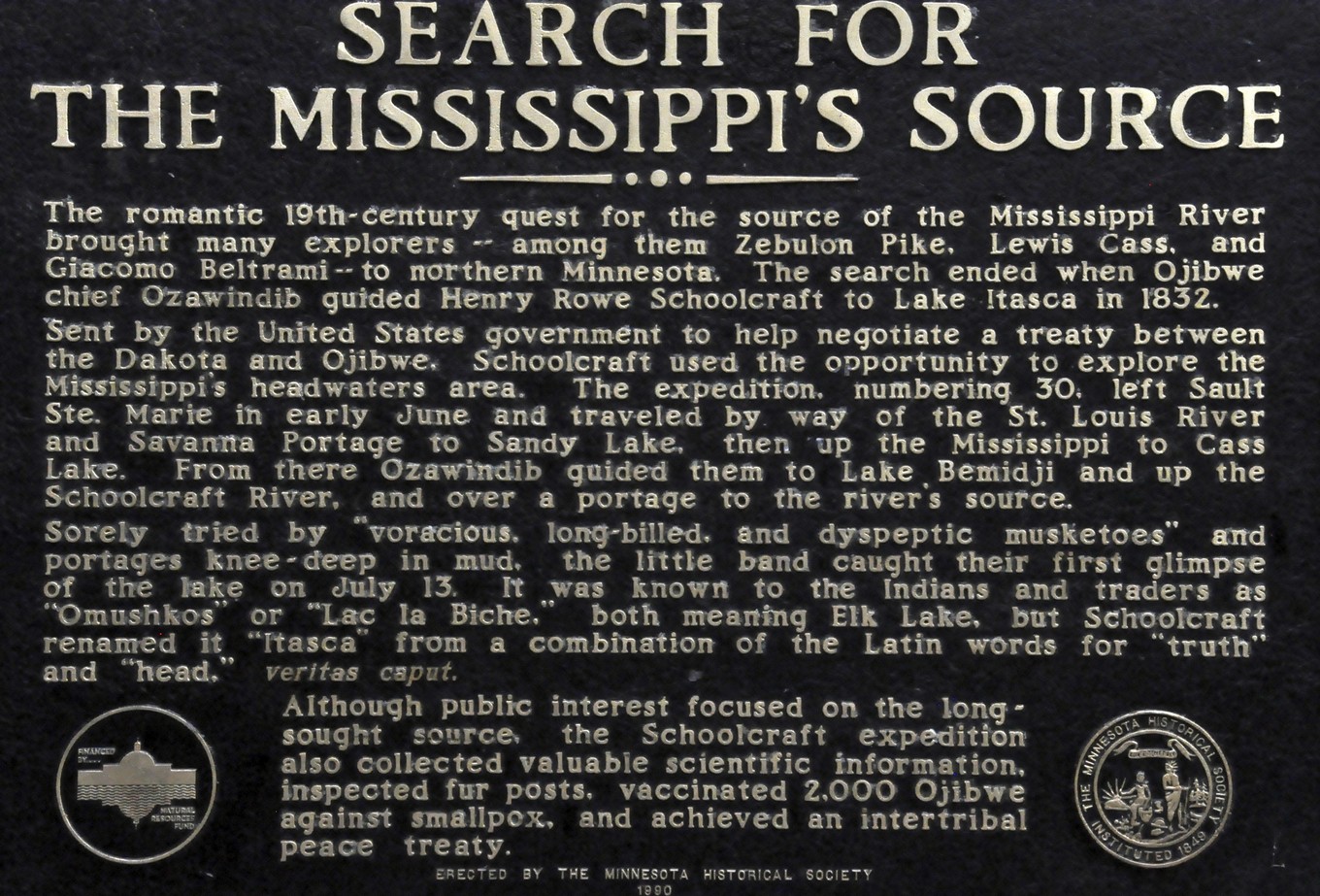
The source of the Mississippi was controversial for almost a hundred years in the 19th century, until, after a thorough hydrological survey by Jacob V Brower in 1888, Lake Itasca was confirmed as the source. Lake Itasca had been claimed as the source by Henry Rowe Schoolcraft in 1832.

20160922-099-minnesota

Our first day itinerary, of about 260 miles took us northwest to Nevis, where we had booked bed and breakfast accommodation at The Park Street Inn, a house built in 1912 by banker Justin Halvorson who came to the town to set up a bank and devlop this region of Minnesota.

We spent almost the whole of our second day in Itasca State Park, touring the park by car, and stopping wherever the fancy took us. But our prime objective was the source of the Mississippi.

Our destination on the third day was Grand Rapids, no more than about 75 miles by the most direct route from Nevis. We took almost 200 miles! On the last day, Thursday, and with the weather deteriorating (there had been flash floods in the Twin Cities overnight) we headed back to St Paul by the most direct route.

Lake Itasca State Park
We entered the park at the south gate, and stopped at the Jacob V Brower Visitor Center to pay our USD5 park fee, and see the various exhibits about the park, its establishment in 1891, and the history of exploration of the Mississippi headwaters.

We took the road north along the lake to the source of the Mississippi as it leaves Lake Itasca, as a small stream bubbling over a small rapids, to begin its journey of more than 2000 miles to the Gulf of Mexico.

I would have liked to cross the Mississippi on foot, but didn’t dare even make an attempt, although I made it across a log bridge just 50 feet or so down from the rapids. And Steph only made it to the middle of the stepping stones. The gap between two stones was just too wide for her to feel comfortable and, in any case, one broken leg in the family was more than enough!

The Mississippi flows north out of the lake. Just a little further on, the park road crosses the river, no more than a stream ten feet wide, but with an auspicious sign alongside.

We followed the Wilderness Road right round the park, stopping every so often to admire the scenery, views of the lake, the Fall colours in the trees, and the old-growth red and white pines (the remaining stands of these in the state).

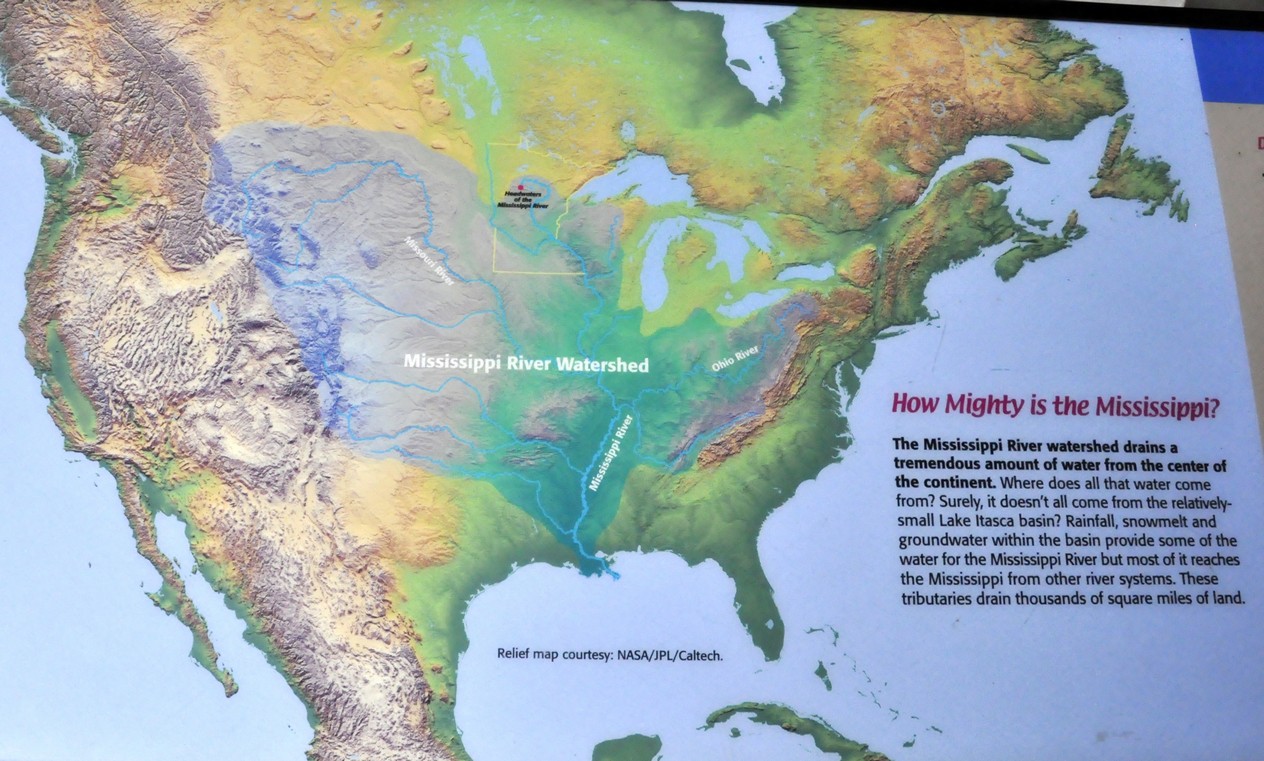
At the headwaters of the Mississippi there is an interesting set of displays about the river. This one caught my attention.

20160922-131-minnesota

It’s interesting to note that the Mississippi is not the longest or largest (in terms of flow) of the rivers that drain the overall  watershed. The Missouri is longer; the Ohio flows stronger. And other rivers, like the Arkansas, join the river further downstream. The Mississippi and its tributaries drain about half the United States!

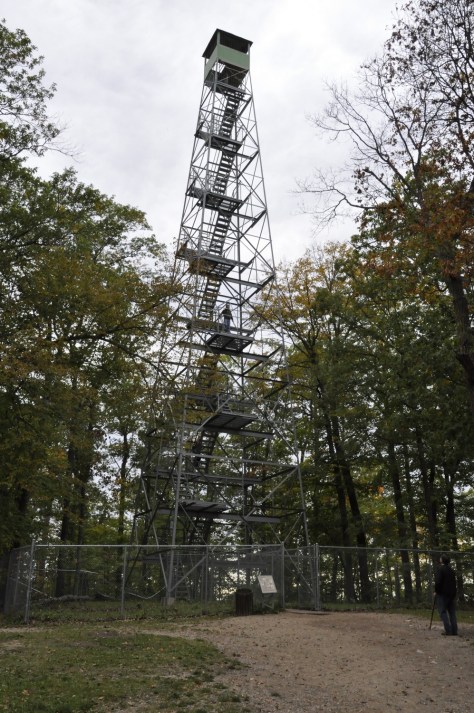
Although we even made it to the Aiton Fire Tower (over half a mile on foot uphill from the nearest car park), and even though other visitors told us that there was a magnificent view of the forest from the top, at 100 feet high, that was too much for my head, and more than enough for my leg. We made it to just the fourth floor.

20160922-168-minnesota

Our itinerary from Nevis to Grand Rapids took us via the small Schoolcraft State Park, named after Henry Rowe Schoolcraft. Here the Mississippi is already 50-100 feet wide.

Then the landscape drops noticeably into Grand Rapids where the Mississippi becomes a raging torrent and its power already harnessed by the building of a dam and creation of a lake to power paper mills.

the_wizard_of_oz_judy_garland_terry_1939

Judy Garland – born in Minnesota, not Kansas!

Who’s from Minnesota?
Grand Rapids is the birthplace of Frances Ethel Gumm. Frances Ethel who?

Judy Garland to you and me, who was born here in 1922, but moved to California four years later. There was a museum a couple of blocks from our hotel. We passed it on our way south.

When I looked up information about Judy Garland, it crossed my mind to find out who else famous hails from Minnesota, or spent significant time there. I’d seen a sign to the ‘Charles Lindbergh homestead’ at Little Falls on the drive north where Lindbergh spent much of his childhood. Lindbergh was the first pilot to make a solo flight across the Atlantic in 1927.

Minnesota has quite a number of famous sons and daughters, including Hubert Humphrey and Walter Mondale (politicians), F Scott Fitzgerald and Garrison Keillor (writers), the one and only Prince (musician), and James Arness (actor, Gunsmoke), among many others.

We like Minnesota. The people are laid back, typical mid-West I’m told. The state has lots to offer, perhaps not as famous as attractions in many other states. Nevertheless, it suits us just fine, as it seems to suit Hannah and her family.


¿Cómo está?

Steph and I enjoyed our 2016 visit to the Twin Cities in Minnesota. The weather was great, and since we had the daily use of a car, we could visit several places that are on our favourites list.

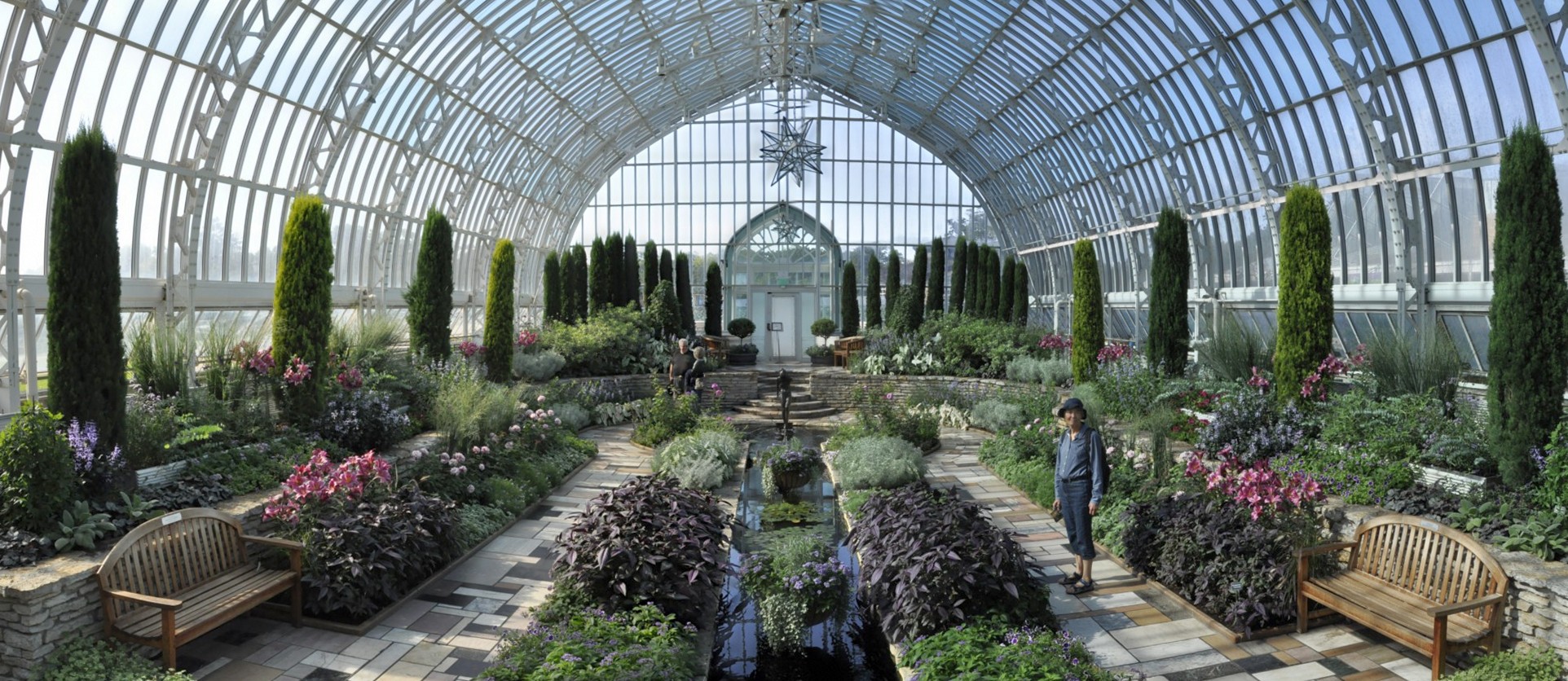
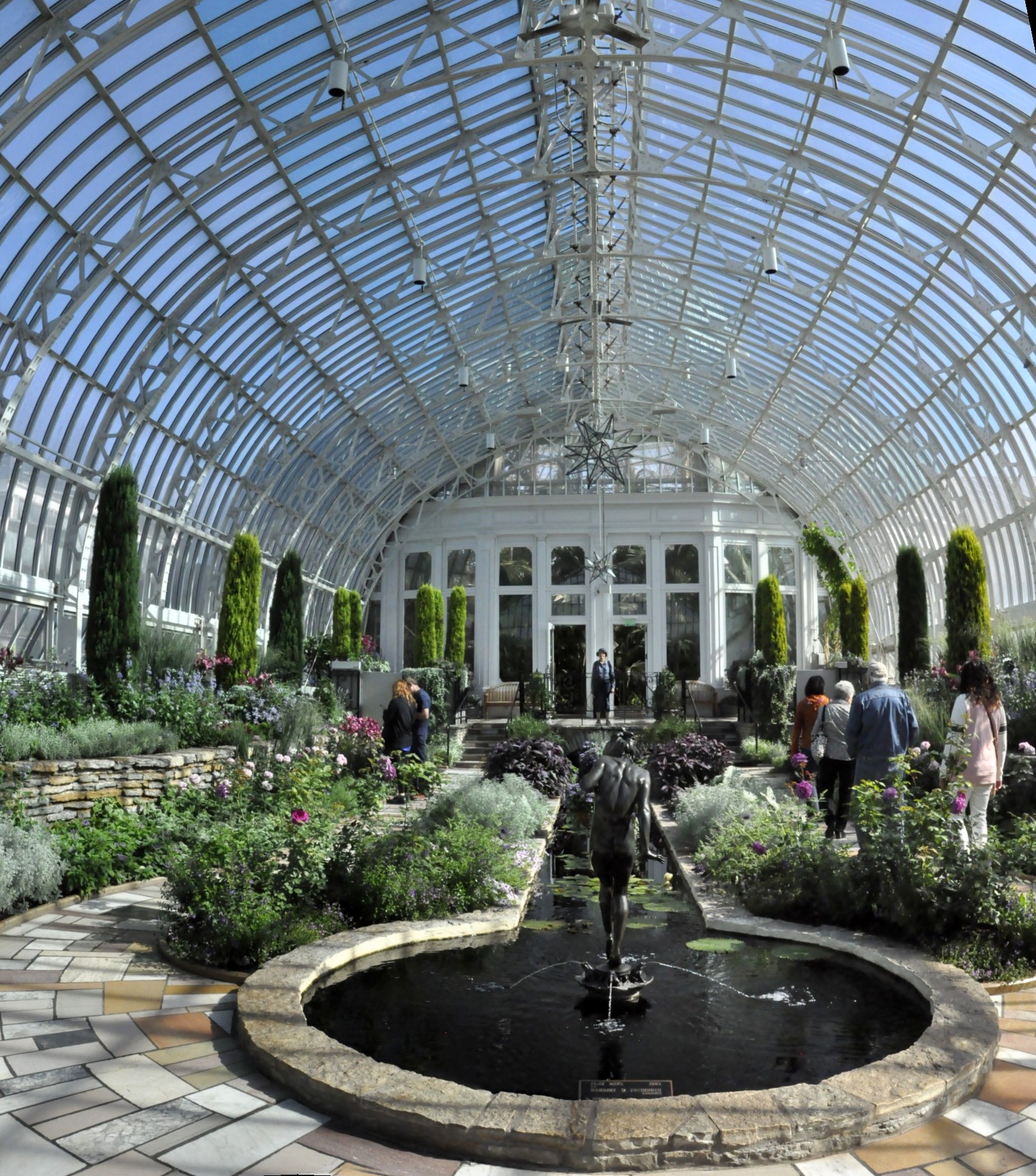
como-logoAmong these was Como Park Zoo & Conservatory, that lies a couple of miles north of I-94 on Lexington Parkway in St Paul. We’ve visited Como Park for many years, especially its beautiful Marjorie McNeely Conservatory. In May 2006, our elder daughter Hannah married Michael in a lovely ceremony conducted in the Sunken Garden wing of the Conservatory where the most wonderful floral displays are planted throughout the year. We’ve visited in the Spring, mid-Summer, early Fall, and in the depths of Winter when we spent Christmas with Hannah and Michael in 2007. I placed a few photos from these visits in a story I posted last November.

On our recent visit three weeks ago to Como we were pleased to see that several changes had been made to the Conservatory since our last visit.

20160913-109-minnesota

20160913-108-minnesota

The planting was much more subtle this time, light pinks, blues and mauves in general. But always that sense that the gardeners had thought things through very carefully. And as you enter the Conservatory you are greeted by a heady atmosphere of the most beautifully scented blossoms.

Outside the Conservatory are the Ordway Gardens, a collection of bonsai specimens and a Japanese garden.

20160913-061-minnesota

20160913-078-minnesota

20160913-077-minnesota

The Conservatory was built in 1915, and to celebrate its centennial a water garden was constructed outside the entrance to the visitor center. What a beautiful addition to a special place!

Having taken in all that the Conservatory had to offer, we had a very welcome cup of coffee in the visitor center, then headed off into the zoo. Many of the animals were taking a midday nap, but we did get to see the orangutans, giraffes, and flamingos.

So, if you ever find yourself in the Twin Cities, and have a few hours free—whatever the Minnesota weather—do visit Como Park and breathe in the botanical displays of the Marjorie McNeely Conservatory. You won’t be disappointed.

A bridge too four . . .

There’s water everywhere, notwithstanding all the lakes that characterise Minnesota. It’s not for nothing that Minnesota is known as ‘The Land of 10,000 Lakes’.

The Minneapolis-St Paul metro area (the Twin Cities) is surrounded (almost) by water. I’m talking about rivers. Large rivers.

The mighty Mississippi River bisects the cities. The Minnesota River is a southern boundary to Minneapolis. And the St Croix River is the state line between Minnesota and Wisconsin just east of St Paul, and its confluence with the Mississippi is just south of St Paul.

The Twin Cities (and surrounding areas) have their fair share of bridges – road and rail – that cross all of these rivers. There are twenty six highway bridges across the Mississippi, eight across the Minnesota River, and five across the St Croix (and another being constructed to relieve Stillwater of its congestion at the Lift Bridge.

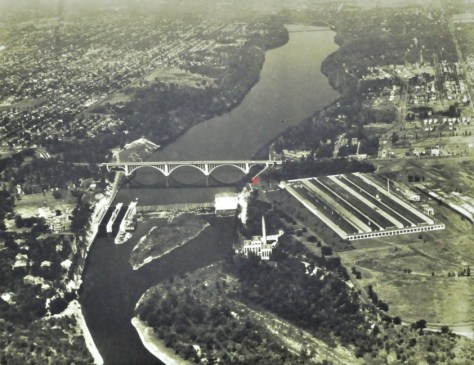
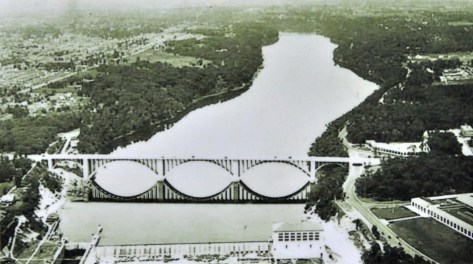
Closest to where our daughter and her family live in the Highland Park neighbourhood of St Paul is the Mississippi River Bridge. Or should that be the Intercity Bridge, the Ford Parkway Bridge, or even the 46th Street Bridge? Its official name is ‘Intercity Bridge’, but at both ends there is a plate stating that the name is ‘Mississippi River Bridge’.

The Intercity Bridge, looking north from the Lock and Dam 1. Photo downloaded from the Minnesota Department of Transportation website.

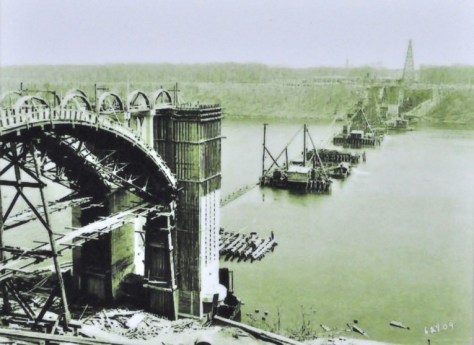
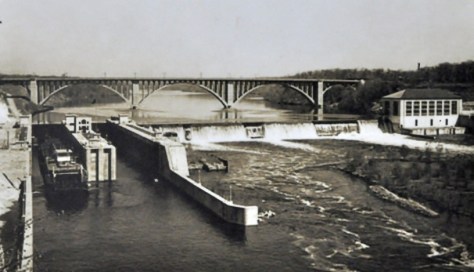
Work began on this beautiful bridge in 1925, and it was completed two years later. It connected Minneapolis with the Ford Motor plant on the St Paul side of the river, now closed and demolished.

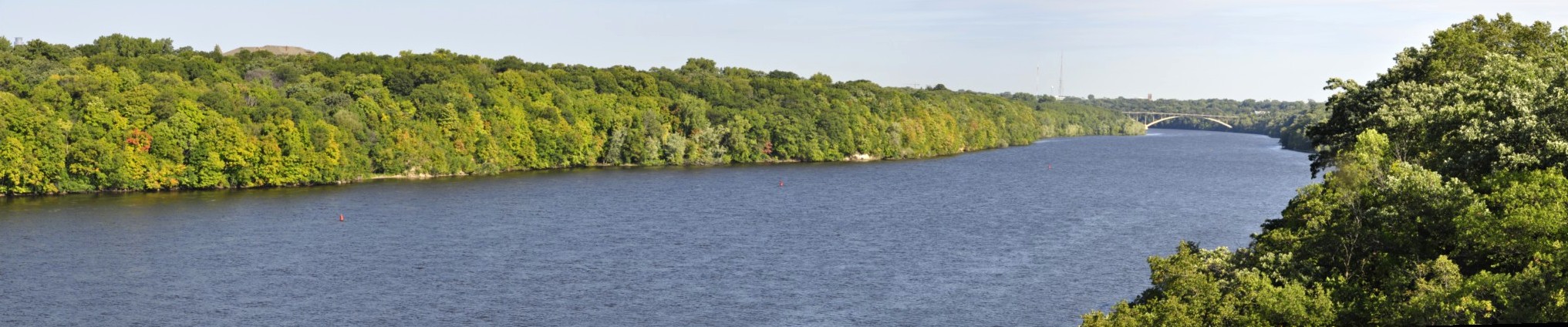
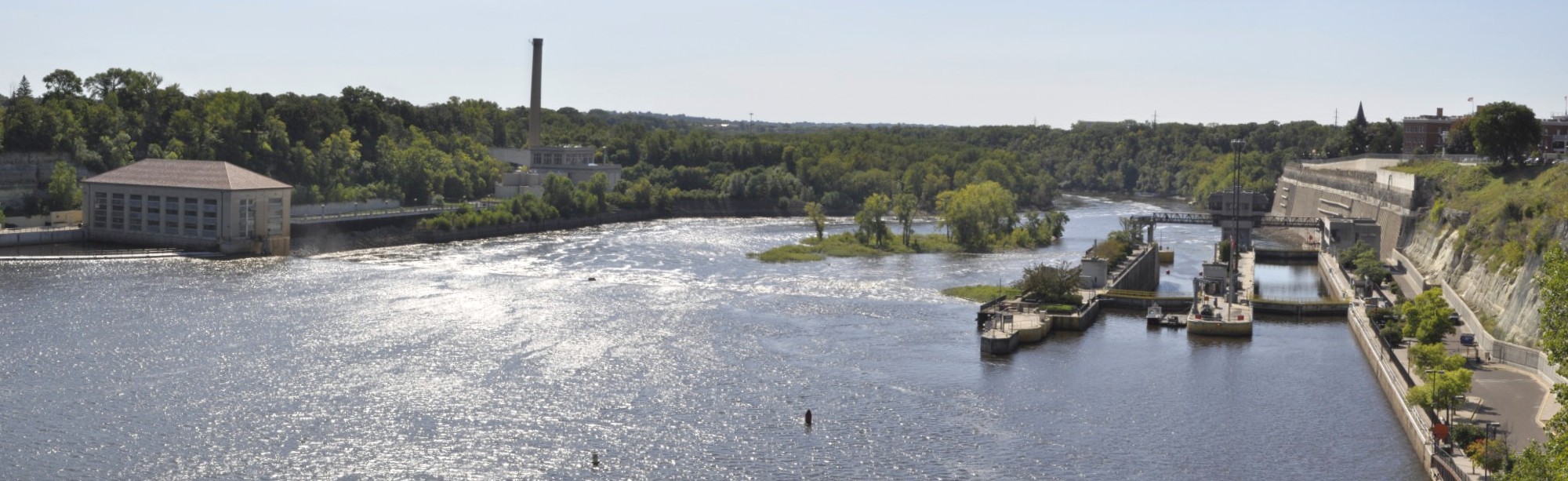
The following five photos were taken from an information booth above the old hydroelectric plant.

20160909-021-minnesota

20160909-019-minnesota

20160909-022-minnesota

The Ford Motor plant is on the eastern side of the Intercity Bridge. Below the bridge is the hydroelectric plant that provided power for Ford.

20160909-020-minnesota

20160909-023-minnesota

Now that the trees have matured along the banks of the Mississippi, there are few clear views of the bridge from the banks, even from the viewpoints.

The next bridge upstream is the Marshall Avenue bridge, and can just be seen from the Intercity Bridge. Our daughter Hannah now lives just beyond the river bank treeline on the right of these photos, on Mississippi River Boulevard.

20160912-004-minnesota

20160912-005-minnesota

This is the view today of the hydroelectric power station, the dam and lock below the bridge.

20160912-006-minnesota

About a mile further down river is Hidden Falls Regional Park. The road drops steeply down the bluff to the water’s edge. And there you get a real appreciation of the majesty and power of the flow of the Mississippi, even though it’s over 1200 miles to the ocean at the Gulf of Mexico.

Just over the Intercity Bridge on the Minneapolis side is Minnehaha Regional Park, and the beautiful Minnehaha Falls. On a visit to St Paul at Christmas 2007 we saw these Falls under very different circumstances: completely frozen. But not yesterday.


It’s amazing what a difference an extra four inches can make . . .

Size does make a difference after all. Well, at least when it comes to airline seats. Not that the actual dimensions of Delta Comfort+ and regular Economy seats are different. It’s just that there are an extra four inches or so between the rows in Delta Comfort+ section of the cabin.

And what a difference those four inches actually make, as I commented last year. So, even though the cost of the Comfort+ upgrade had increased by £100, we felt that the added space and comfort (really the ability to move around in one’s seat, and not have the seat in front in your face) was worth the extra expense.

And that’s how we travelled to Minnesota just a couple of days ago, for our annual visit to St Paul to stay with Hannah and Michael, and grandchildren Callum and Zoë.

We arrived to Birmingham airport (BHX) around 09:10 for our 11:25 flight (operated by KLM Cityhopper) to Amsterdam Schipol (AMS, that takes around 55 minutes), only to discover that the check-in desks did not open until 09:25. Not the best situation for me these days, standing around on my weakened right leg. Anyway, once we had checked in our bags, we went through security quite quickly, although Steph was given a random check for explosives, and the hand gel that I was carrying was given special scrutiny.

20160906-001

Sitting in the departure lounge at BHX waiting for our flight DL9415 (operated by KLM Cityhopper) to Amsterdam Schipol (AMS).

Our flight (an Embraer 190 aircraft) was boarded quickly, and the captain advised us that, at 11:10, we were ready to depart early. Only to come back on the blower just a couple of minutes or so later to tell us that two passengers had decided not to fly after all, and their bags would have to be found and removed from the aircraft. After all this we actually departed about 10 minutes late!

Being a Cityhopper flight, we arrived to a ‘bus gate’ at Schipol. This was actually rather convenient, since the entrance into the D pier was close to Gate D1 that Delta uses exclusively to process all its passengers but does not actually board any flight from there. And even better, our Minneapolis-St Paul flight DL165 was scheduled to depart at 15:35 from Gate D3. No long walks for me in Schipol last Tuesday, which was quite a relief.

I asked for priority boarding, and Steph and I were the first passengers on board the Delta A330-300, and quickly settled into our seats.

20160906-002

20160906-003

Around 15:30 (after we’d been on board for about 40 minutes) the captain said we were ready to depart, but then advised us that engineers were working on a fault with the water and vacuum system for the toilets (now that was an issue I’d experienced recently on my flight from Lima to Cali, Colombia), and there would be a slight delay. Ultimately we departed about 25 minutes late (and arrived into MSP delayed by about the same time).

Once we were on the move, we had a very smooth takeoff from runway 24, and climb out of the gloom over Amsterdam.

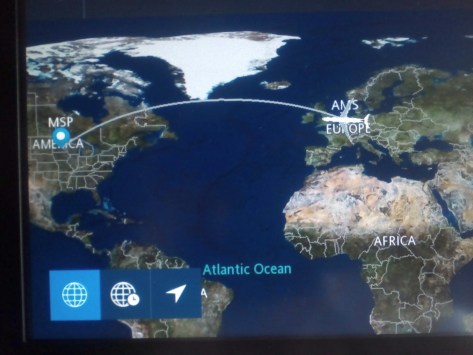
Initially, our flight headed towards London, and didn’t turn northwest until we had passed Bristol. That’s quite unusual based on previous flights, when we headed out from AMS towards Scotland. Anyway, we crossed Ireland, passed south of Iceland and Greenland, and heading in over North America on the coast of Newfoundland and Labrador, over Hudson Bay and Ontario in Canada, before the long descent into MSP once we had crossed the US-Canada border north of Duluth.

20160906-006

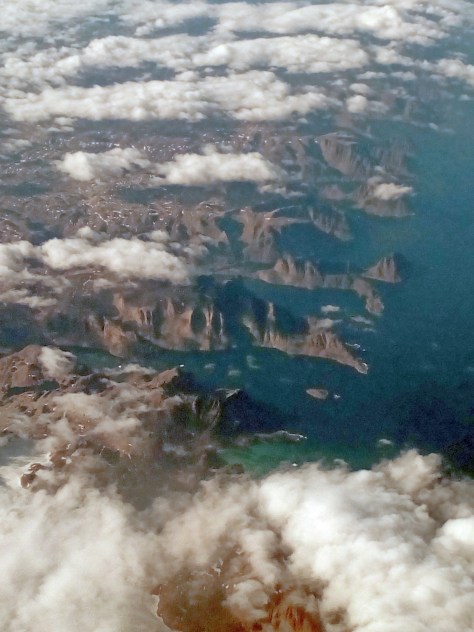
There wasn’t a great deal to see until we crossed the coast of Newfoundland, and then there was a spectacular view of the rugged coastline, with inlets bordered by precipitous cliffs.

20160906-020-copy

The spectacular coastline of Newfoundland and Labrador.

Mostly it was cloudy, with odd view of an island or two as we crossed the southern part of Hudson Bay.

But for once, it was an incredibly smooth flight almost the whole way. In fact I can say that we experienced no turbulence at all, apart from the occasional little bump. And even though stormy weather had been predicted for our arrival around 18:00 in MSP, and the captain advised us during the descent that the approach could be rather bumpy, we had no bumps at all.

Nevertheless, a nine hour flight is a long time. Having made the same flight before in a regular Economy seat, and knowing how uncomfortable I was, the upgrades to Comfort+ have been worth every penny.

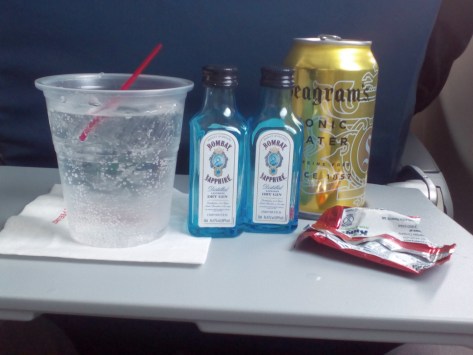
Also, the odd Bombay Sapphire or three during the flight certainly helps. I read something today that drinking gin is good for you. I don’t need any excuse. I enjoy it for itself, and also for the fact that it relaxes me during flights such as Tuesday’s.

20160906-012

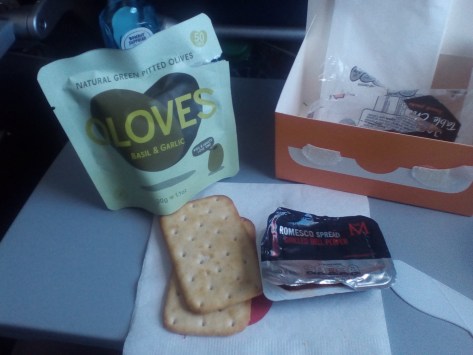
Delta serves a limited menu in Economy Class: chicken and . . . Having previously opted for the hot dish (and invariably regretted having done so), I decided to try the cold chicken salad, and surprisingly quite satisfied with my choice. About four hours afterwards the cabin crew came around with a snack – quit bizarre, but nice nevertheless. It comprised crackers and a red bell pepper spread, and a sachet of about a dozen green pitted olives. Never had anything like that on any flight before. Then just 90 minutes out from MSP we were served a hot cheese and chicken sandwich, and some ice cream.

20160906-015

On arrival at MSP we were off the plane quickly and among the first passengers through Immigration. Our bags arrived quickly and before we knew it we were out and meeting Michael and the grandchildren.

Yesterday was still quite stormy and wet in St Paul, and we didn’t manage a short walk until quite late in the afternoon. Hannah and Michael moved house a few months back, just a few blocks from where they had been living. But it’s a larger house, and along the Mississippi River Gorge. These next photos were taken just a couple of minutes away from their house.

We are here in St Paul for the next three weeks. Although we don’t yet have any firm plans to travel, we are contemplating a short break in the north of the state, at the headwaters of the Mississippi and Itasca State Park. Some of the trees here in St Paul are already beginning to show the first signs of autumn colour. Perhaps we will see a more spectacular display in northern Minnesota.

Watch this space!


Apartments fit for a King – Bolsover Castle

20160817 012 Bolsover CastleBolsover Castle stands proudly over the northeast Derbyshire landscape, a prominent feature on the eastern skyline as one travels along the M1 motorway. It is owned and managed by English Heritage, and is just a few miles north of Hardwick Hall that we visited in 2015 almost exactly a year ago.

The histories of Bolsover Castle and Hardwick Hall are intertwined.

Bolsover_Castle_-_geograph.org.uk_-_205752

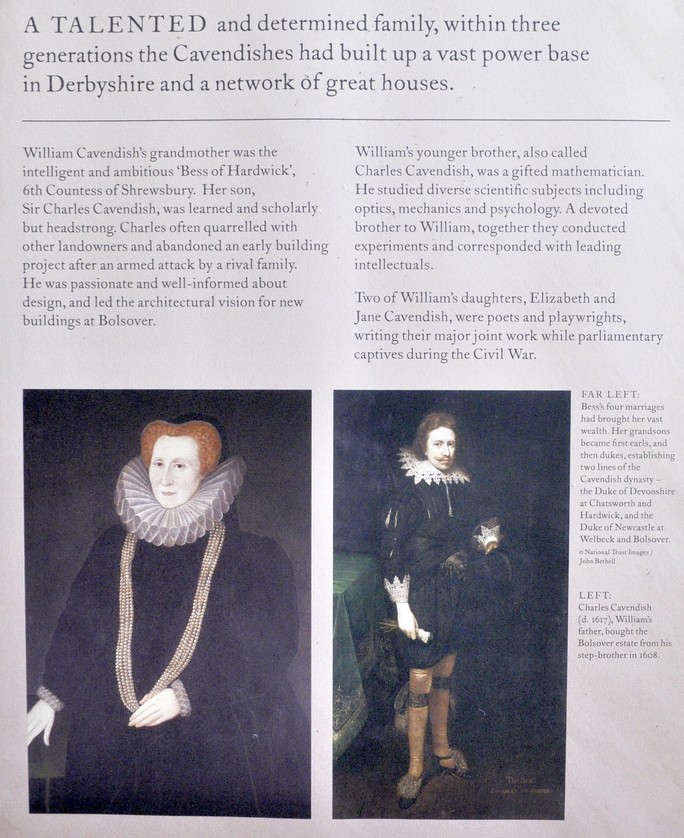
So who built Bolsover Castle? Standing on the site of a medieval castle, the castle we see today dates from the early decades of the 17th century. It was the vision of Charles Cavendish and his son William.

20160817 049 Bolsover Castle

20160817 050 Bolsover Castle

20160817 047 Bolsover Castle

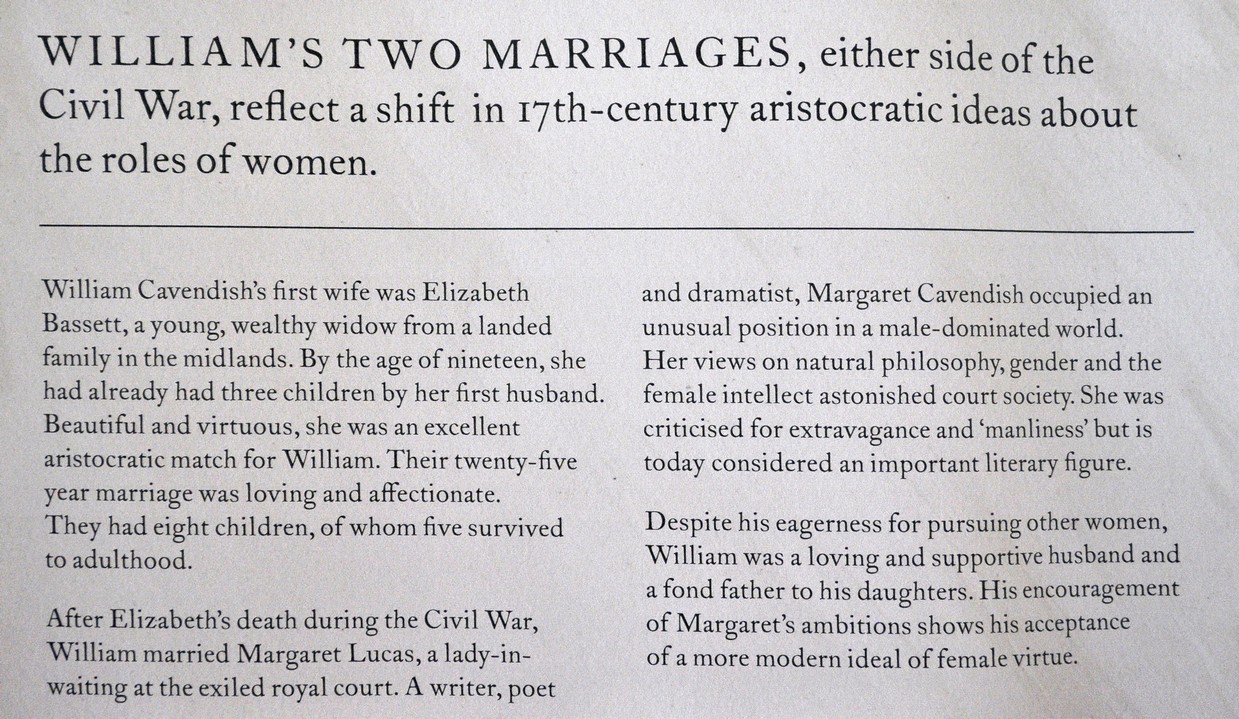
William was married twice.

20160817 046 Bolsover Castle

20160817 044 Bolsover Castle

William’s wives: Elizabeth Bassett (L) and Margaret Lucas (R).

Although one part of the castle was demolished (slighted) by Parliamentarian forces during the Civil Wars, the Little Castle and its exquisite interior decoration has survived until today (although with some restoration by English Heritage).

The Little Castle

20160817 007 Bolsover Castle

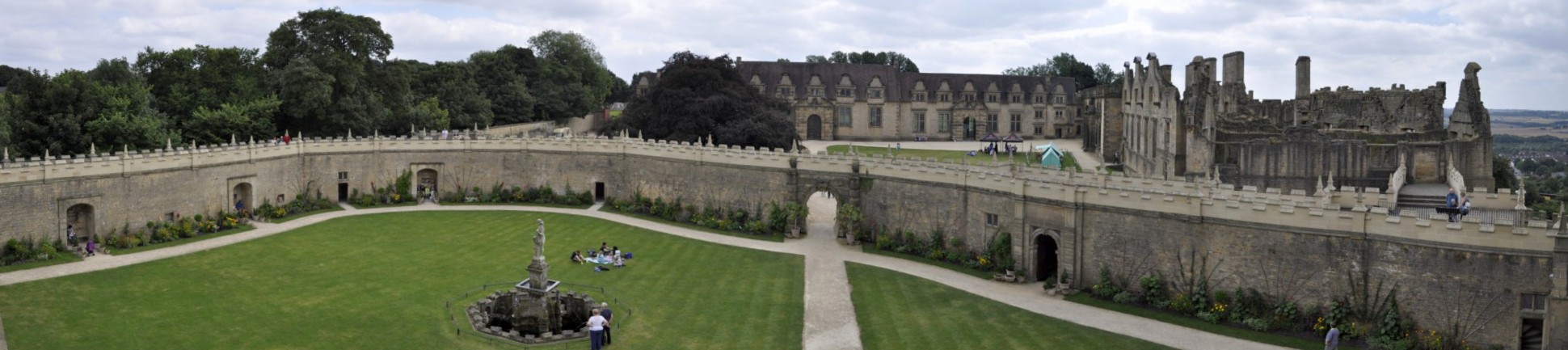
The Fountain Garden, the Walled Walk, the the Riding School Range in the distance, and the demolished Terrace Range on the right.

Seen better days – the Terrace Range
The Terrace Range is now in ruins, but when it was originally built it must have been spectacular, not only for the grandeur of the building itself, but also for the views over the Derbyshire landscape.

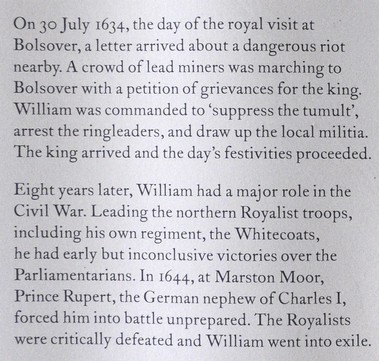
The heyday of Bolsover Castle did not last long.

20160817 048 (2) Bolsover CastlE

20160817 048 (3) Bolsover Castle

The Ante Room
Just inside the main entrance, and to the left, of the Little Castle is the small Ante Room, with wonderful wood panelling and wall paintings.

The Hall
The next room is the main hall, with fine vaulted ceilings, a large stone fireplace, and more paintings high on the walls.

The Pillar Parlour
Beyond the Hall, and on the left before climbing the stone stairs to the first floor, is the Pillar Parlour. This is one the finest rooms in the castle. It has, like many rooms in the Little Castle, a fine marble fireplace with insets of black marble, a common theme throughout the building.

The Star Chamber
On the first floor is the Star Chamber, named after the beautiful light blue ceiling decorated with gold stars. The tapestries hanging from the walls are not original, but have been installed to show what the room might have looked like four centuries ago. Again there is a fine white and black marble fireplace, and exquisite paintings on the wood panelling.

The Marble Closet
Just off the Star Chamber is the Marble Closet, furnished in black and white marble, with more wall decoration.

The Heaven Closet
This one of the most beautiful rooms in the building, so called because there is a figure of Christ is the center of the ceiling paining. It was completed in 1619.

The Elysium Closet
Decorated in a Greek style, this small room off William’s bedroom, has a theme that is quite the opposite of the Heaven Closet.

The Lantern and top floor rooms
On the top floor, underneath a cupola, is a series of rooms leading off this central feature. It must have been a place where residents and guests met because of the way that daylight floods down to highlight the golden walls.

The Kitchens
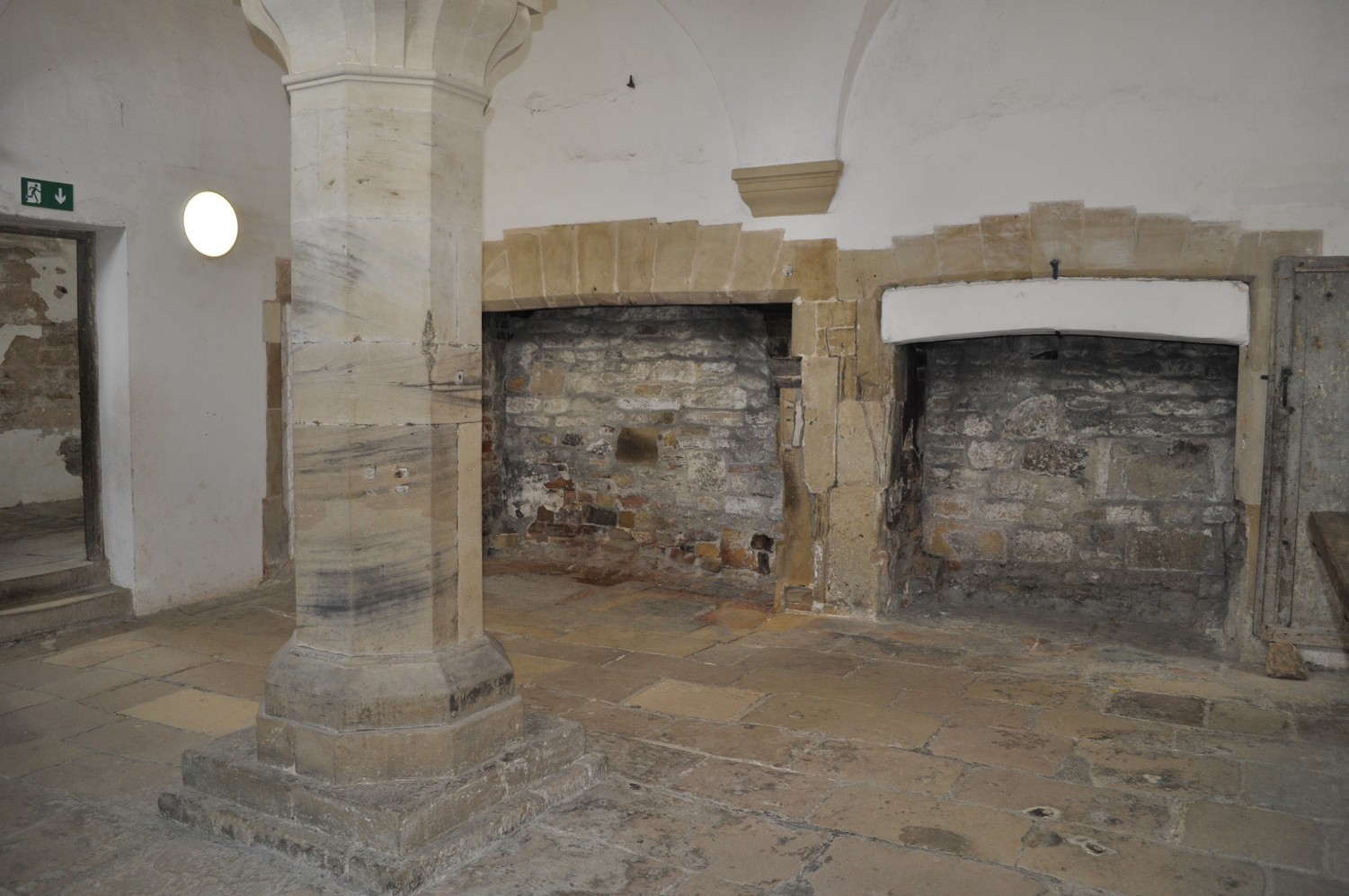
There are several rooms in the basement, kitchens and storage rooms, that must have always been busy to satisfy the culinary need of the residents upstairs.

20160817 173 Bolsover Castle

The Fountain Garden
Outside the Fountain Garden is dominated by a statue of Venus, and the planting reflects plants that would have been available during the 17th century. The Walled Walk provides great views over the garden.

The Riding School Range
Just through the main gateway to the castle, and to the left, is along 17th century building with a riding school. It’s possible to climb to the top floor and see the intricate and splendid wood beams holding up the roof.

We have passed Bolsover Castle so many times when we travel up to Newcastle upon Tyne to visit our younger daughter Philippa and family. It was a day trip of more than 180 miles, but well worth it.

In Bolsover there is just a small car park close to the castle entrance, that was already full when we arrived. Just a little further on, and through a rather discreet entrance is another overflow car park – not signposted at all – where you can park free of charge on what must have once been part of the castle terrace.


Dyrham Park: a tale of two architects

20160812 154 Dyrham Park

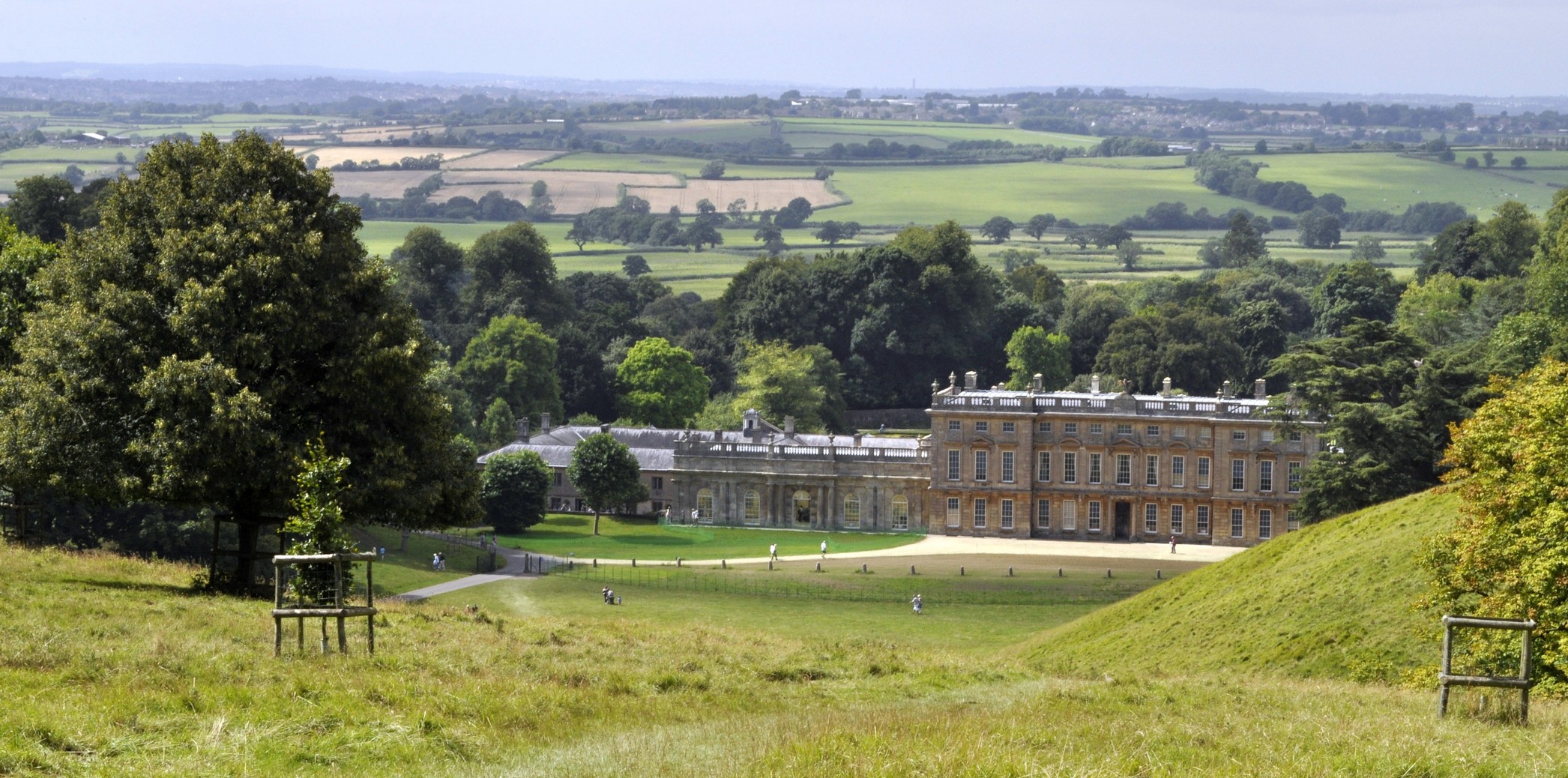
A few miles north of Bath, and to the east of Bristol, Dyrham Park is a National Trust property that was built in the late 17th century on the site of a former Tudor manor house.

20160812 123 Dyrham ParkIt was the creation of William Blathwayt, a senior civil servant who rose to become Secretary at War among other posts. After leaving government he served as a Member of Parliament for a number of years before he died in 1717.

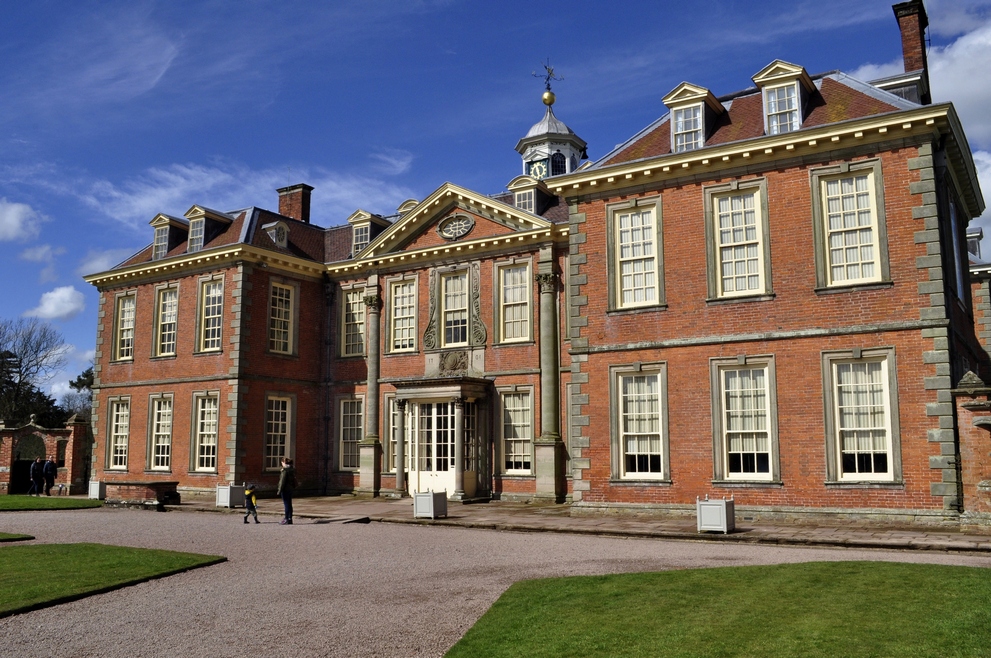
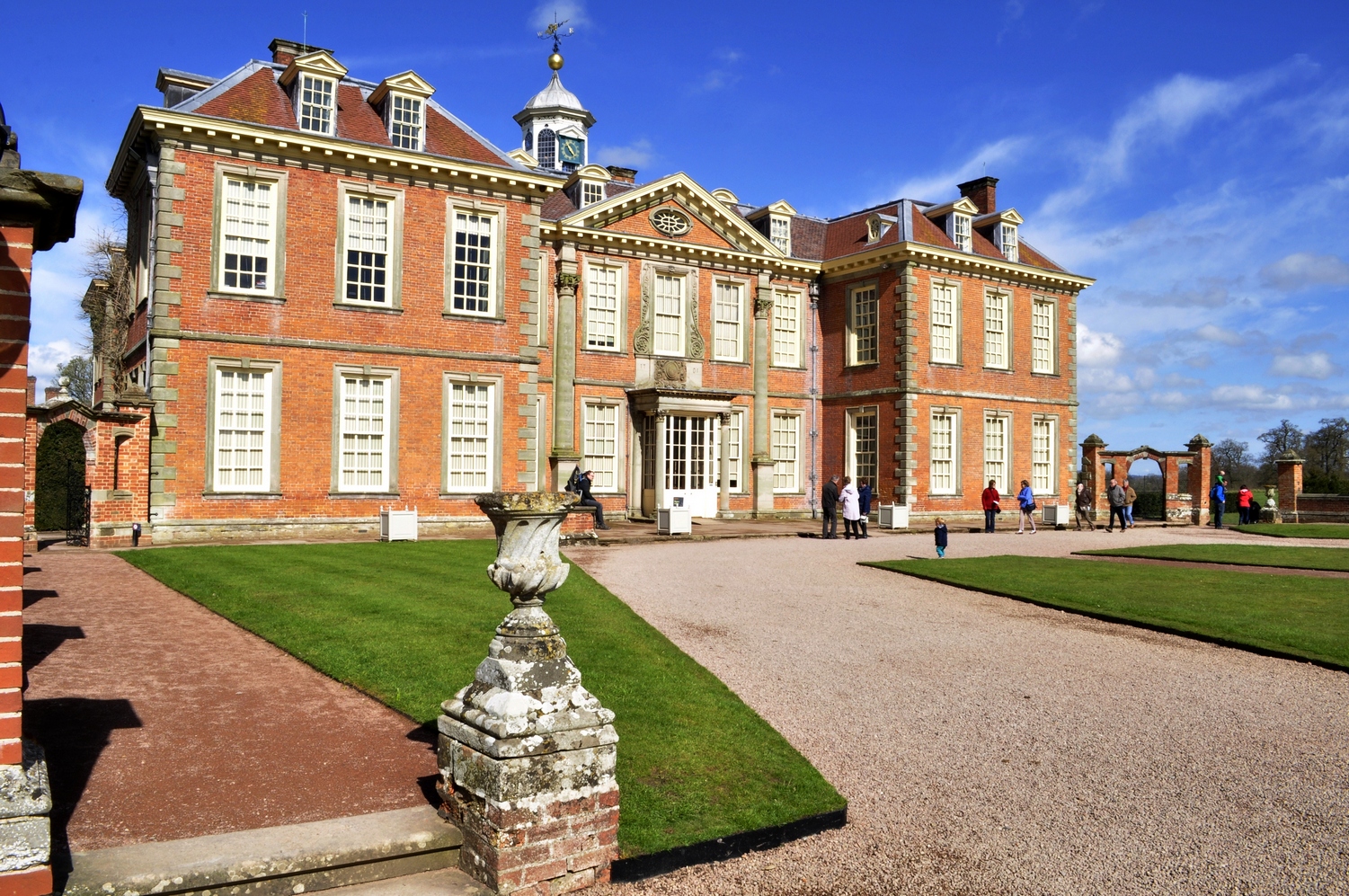
Completed by 1704, Dyrham Park is an interesting combination of architectural features because it was designed by two architects, the west wing by Samuel Hauduroy, a Huguenot, and showing distinct French influences, and the east by William Talman, who also designed Chatsworth House in Derbyshire and Hanbury Hall close to where I live in Worcestershire. Parts of a pre-existing Tudor mansion at Dryham were demolished as the two wings of this house were completed.

William Blathwayt married heiress Mary Wynter in 1686 whose family owned the Tudor mansion at Dryham. Mary died in 1691, leaving William with three children, and she never saw the building of the house we see today.

From the outside, this is a magnificent building in quite an extraordinary setting.

20160812 002 Dyrham Park

The view from the east facing front door.

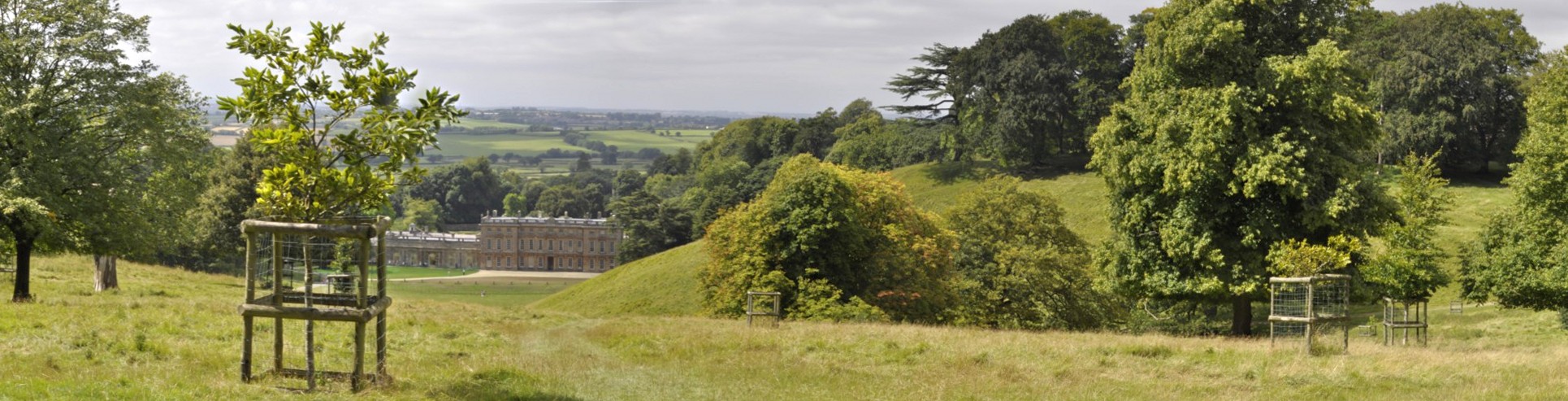
The estate lies to the west of the A46 (that connects Bath and Stroud), and the car park is close to the entrance. There’s a shuttle bus to the house (which I was very grateful for yesterday) or you can walk down a winding and rather steep road to the house, or across the park. It’s remarkable because Dyrham lies at the bottom of a valley, almost in an amphitheatre, surrounded by the most magnificent mature trees. From up above in the car park you would have no idea what lies over the brow of the hill. And looking at early drawings of the site, and seeing the park today, you have to wonder at the imagination of the creators of estates such as Dyrham, for they would obviously never live to see their creations as they had planned them.

20160812 009 Dyrham Park

It was the home of the Blathwayt family until the 1950s; however, Dyrham Park has been owned by the National Trust since the 1960s. Last year there was a major project to repair the roof and make the property water-tight once again. There is only access to rooms on the ground floor, but there are plans, budget permitting, to restore the house to its former glory. Most of the rooms do not have furniture, although there is a selection of oil paintings on display in many.

Unlike many houses we have visited, the Orangery is connected to the left side of the house (to the south on the east facing wing).

But, stripped of their interior decor finery, your attention is drawn to many of the fine features that exemplify 17th and early 18th century design: the fireplaces, the doors and their beautiful hardwood frames, and the two magnificent staircases. A couple of pieces of information caught my eye during our visit: the house was constructed from local materials in the main, but finished off using imported woods from around the world, marbles from Italy, and slates from Cornwall. Also, it seems that Blathwayt financed the construction of the house from his own resources rather than borrowing the money. He thus left his estate unencumbered by debts on his death.

Outside, there are quite small landscaped gardens leading down to two pools, and original 17th century iron gates at the far (west) end, and in need of some TLC.

St Peter’s Church is much older than the 17th century house, and has a beautiful stone tile roof. Actually three roofs, for the central nave and side aisles. William Blathwayt is buried in the churchyard.

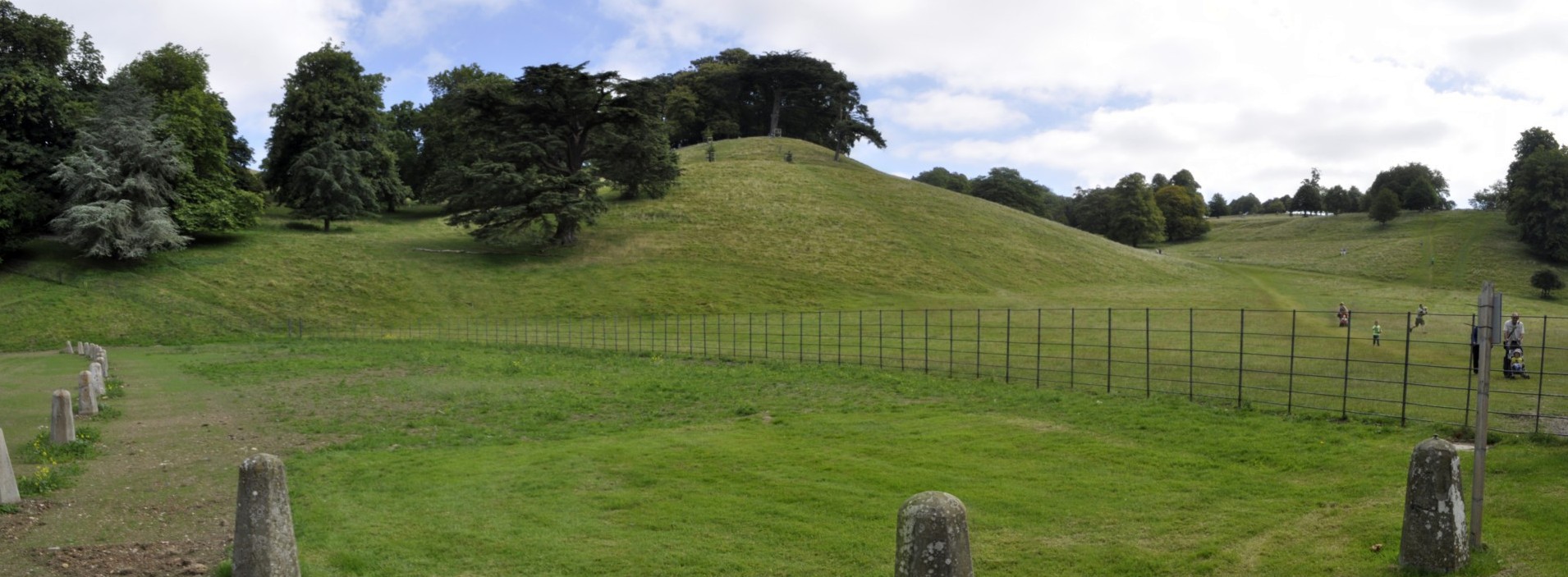
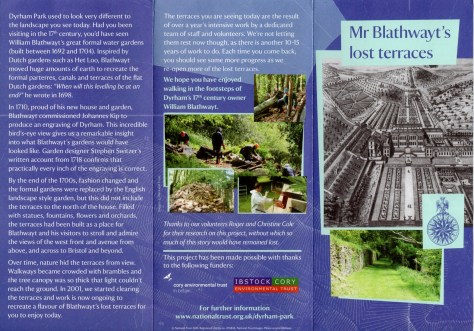
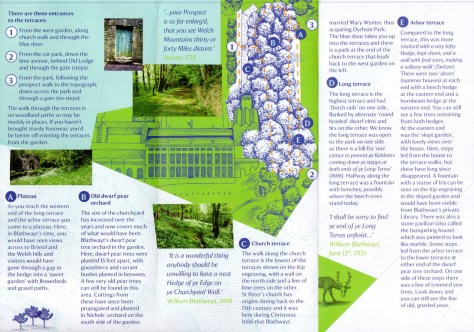
Above the church are ‘Mr Blathwayt’s Lost Terraces’, now mostly overgrown.

Dyrham001

Dyrham002

20160812 052 Dyrham Park

Next to the terraces lies the deer park and, with advice from other visitors to Dyrham yesterday, we tracked down the large herd of fallow deer that was resting nearby.

20160812 083 Dyrham Park

20160812 082 Dyrham Park

Dyrham Park is on a trajectory to former glory. We look forward to visiting again in a couple of years once further restoration has been completed, and more rooms (fully furnished) are once again open to the public. And hopefully by then I’ll be able to take full advantage of the walking opportunities through the park once my leg is fully healed.


Homes fit for a king (or queen): one slighted, the other opulent . . .

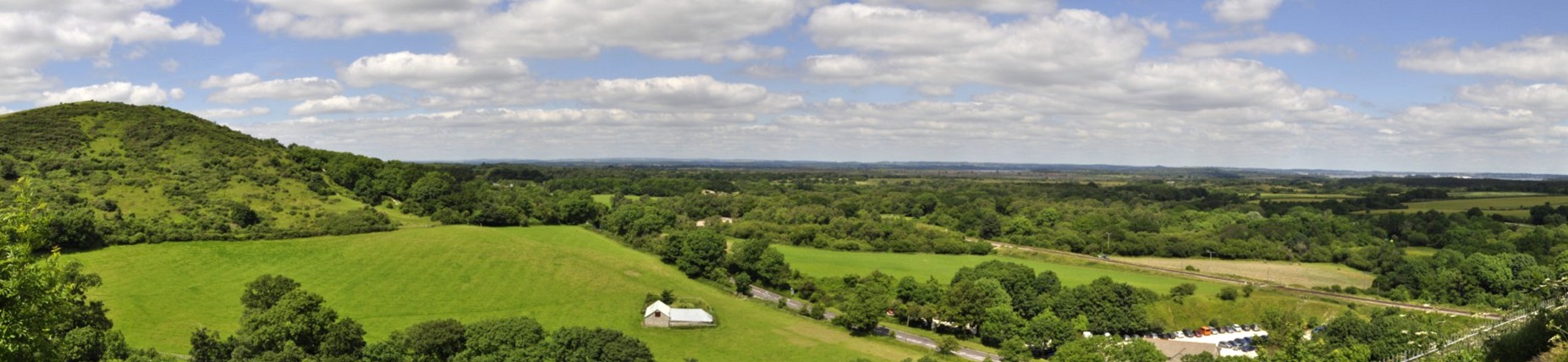
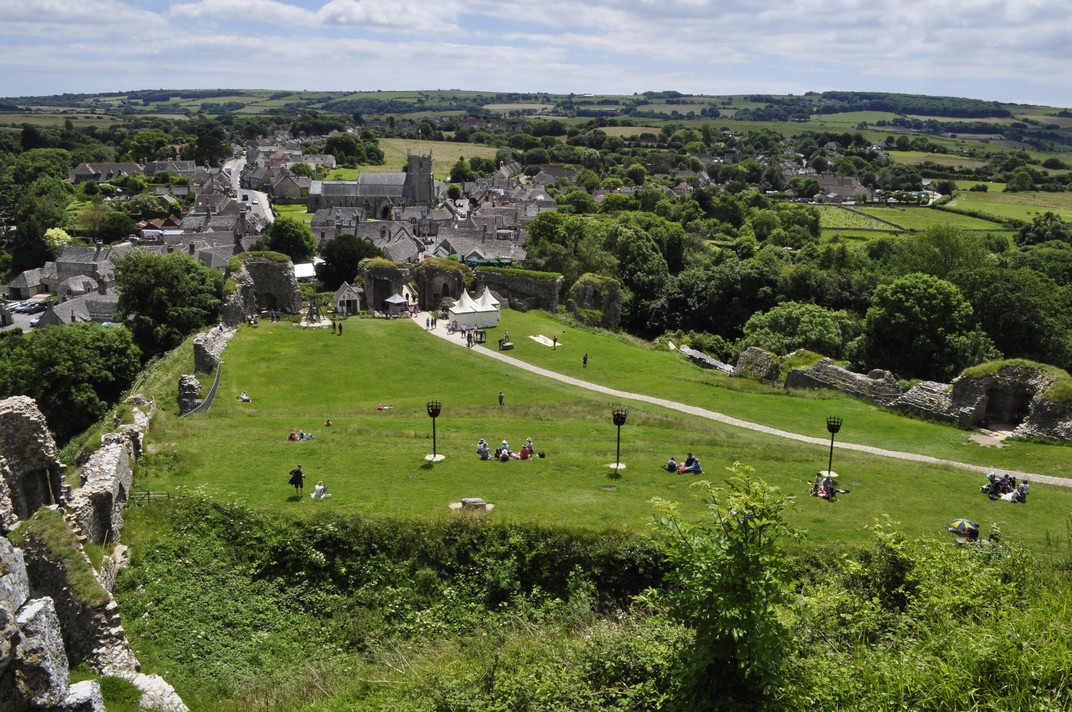
Corfe Castle, standing on a conical hill in gap in the chalk Purbeck Hills, commands a stunning view north over the rolling hills of Dorset, and guards access to the Isle of Purbeck to the south. Today it is a glorious ruin.

20160705 035 Corfe Castle

20160705 036 Corfe Castle

Looking north over the rolling Dorset landscape.

20160705 108 Corfe Castle

South towards the village of Corfe and the Isle of Purbeck.

It was built by William I (The Conqueror) in the 11th century, underwent significant changes during the following two centuries, and remained a royal possession until the reign of Elizabeth. She sold it in 1572, and it was later purchased by Sir John Bankes in 1635. And it is through the Bankes family that the histories of Corfe Castle and Kingston Lacy House, some 18 miles to the north, are linked.

During the English Civil War, Lady Mary Bankes led the defence of Corfe Castle when attacked by Parliamentarian forces. Corfe was one of the last bastions of royalist support in southern England. Lady Mary was permitted to leave the castle unharmed, but it was soon demolished by the Parliamentarians (yet another castle slighted), and these have proudly dominated the landscape ever since. Corfe Castle is now owned and managed by the National Trust.

So, what is the link with Kingston Lacy House? Having been turfed out of Corfe Castle, the family moved north to their estates near Wimborne Minster and built this sumptuous country house, rather modest but very attractive on the outside. However, what an Aladdin’s Cave inside! It must be surely among the top three of all National Trust properties in terms of the treasures on display. One of the National Trust’s ‘jewels in the crown’.

20160610 001 Kingston Lacy

Construction of Kingston Lacy House began after 1663; the family had regained its prosperity when Charles II was restored to the throne. Rather than reconstruct Corfe Castle, Sir Ralph Bankes, the eldest son, chose to construct a family home on their estates near Wimborne Minster. What is particularly interesting is that the Bankes family occupied Kingston Lacy House continually from the late 17th century until 1981, when the house and its fabulous contents were bequeathed to the National Trust.

The entrance hall and stairs are solid marble. Statues of Sir John and Lady Mary Bankes can be seen on the first floor landing (alongside one of King Charles I). There are large windows looking out over the parterre, and the stairway leads up to some magnificent (but rather gory) paintings of hunting scenes. The plaster ceiling and paintings are magnificent.

But it’s in the sitting room, the library and other salons that the magnificence of Kingston Lacy House is shown off to its ultimate best. The walls are adorned with paintings by the Old Master including Van Dyck. The ceilings are decorated in the most opulent manner.

On the top floor are the nursery rooms, but even here are opulent paintings depicting the whole family originally from Corfe Castle (including those children already deceased—with angel wings), a painting of the Circumcision of Christ, and bedrooms under the eaves painted like tents.

Even the servants’ dining hall has old paintings!

Outside there are extensive gardens and parkland—a real pleasure to explore.

There’s so much to see at Kingston Lacy House that it’s definitely worth a second visit if we are ever back in that part of Dorset. It’s a veritable feast for the eyes.

We visited both properties during our summer break in the New Forest. Our eldest grandson Callum (who is from Minnesota) told us that he wanted to see a castle during his holiday over here in England. His disappointment was evident when he first saw the ruin. “That’s not a castle,” he exclaimed. But it wasn’t long before he and his sister and two cousins, Zoë, Elvis and Felix were having a whale of a time exploring the whole site, and dressing up in medieval costumes.

‘A banker by hobby . . . a gardener by profession’

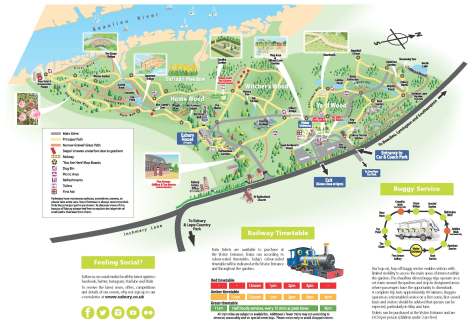
Along the banks of the Beaulieu River, just across from Buckler’s Hard in Hampshire, and just a few miles south of Beaulieu itself, Exbury Gardens were the inspiration of one of the scions of the Rothschild family, Lionel Nathan de Rothschild. Created in the 1920s and covering more than 81 hectares (200 acres), Exbury Gardens were laid out to house Rothschild’s famous collection of rhododendrons and azaleas, including more than 1000 hybrids that he developed.

EXBURY MAP

We visited at the beginning of July along with Hannah and Philippa and their families while on holiday in the New Forest.

20160711 244 New Forest holiday

Of course, most of the rhododendrons had flowered by then, and the display earlier in the year must have been truly spectacular.

But there are still plenty of lovely things to see: one of the largest rock gardens in Europe, lakes and water gardens, havens of tranquillity throughout the gardens, and slightly more formal herbaceous beds close to the house (which is not open to the public). There is one part of the garden that is only accessible by a narrow gauge steam train.

I never cease to be inspired by the originators of gardens and parkland, and the visions they had centuries ago or more recently as they planted trees that they never expected to see grow to maturity. They have, through their visions, left much of beauty for posterity.


Here a henge, there a henge . . .

On 2 July we set off from home just before 10 am, heading south towards the New Forest in Hampshire, where we stayed for a week with our daughters Hannah and Philippa and their families.

The trip south was about 143 miles, on the route we took. That was south on the M5 motorway, over the Cotswolds to Swindon, then on south via Salisbury to our destination.

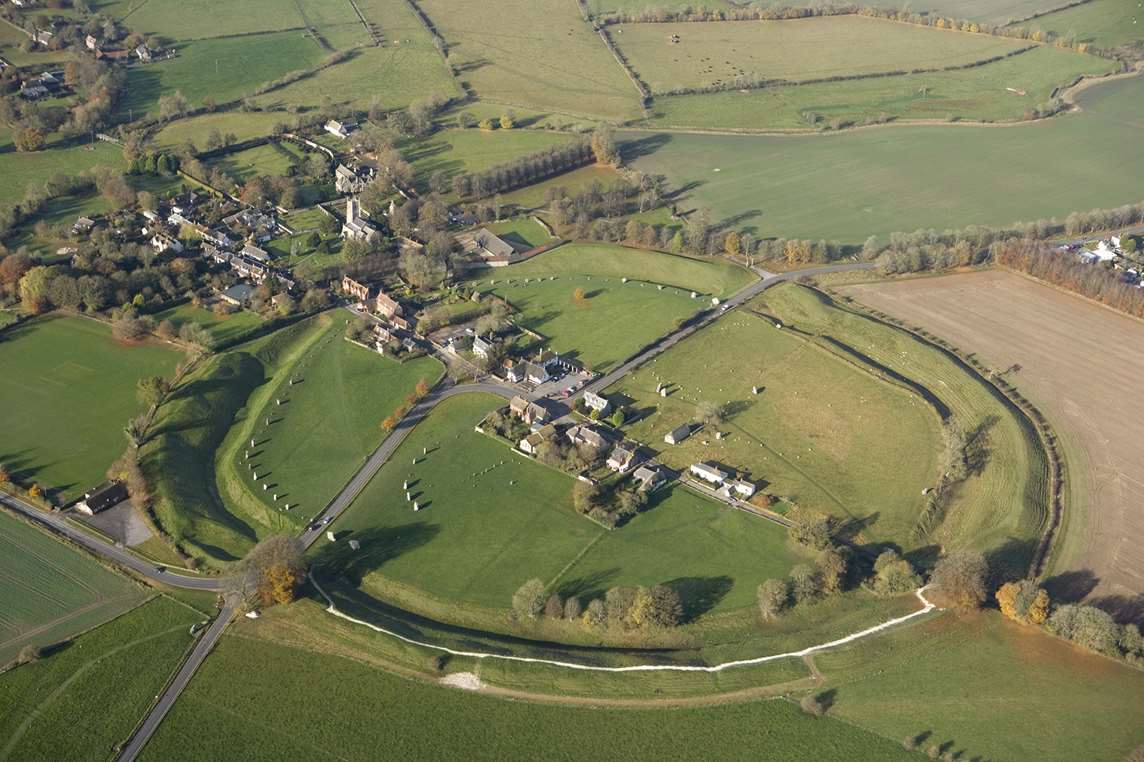
We broke our journey at Avebury in Wiltshire, a World Heritage Site, a dozen miles south of Swindon.

Avebury has two attractions: Avebury Henge and stone circles, and Avebury Manor, once the home of Alexander Keiller (of the marmalade family) who spent many years in the 1930s discovering the archaeology of this ancient Neolithic site.

aerial-avebury (eng-heritage)

Avebury village and stone circle.

There is something enchanting about stone circles and, lost in the mists of time, it’s hard to imagine why and how ancient Neolithic people erected these thousands of years ago.

Entering Avebury you certainly do not get an impression of just how big the earthworks are. It’s only when you are on the ground, and see the massive ditches (the henges) that the full impact of their construction—by hand—using the most rudimentary of tools like antlers, really hits you. Of course there are other henges in the vicinity: Stonehenge and Woodhenge, to name just a couple. But this Wiltshire landscape for some reason is an area of considerable Neolithic activity. Due to my current disability, and not wanting to spend too much time walking over uneven surfaces, we did not explore the henge and stone circle as much as I would have wanted.

20160702 055 Avebury

20160702 004 Avebury

20160702 005 Avebury

20160702 009 Avebury

Avebury Manor is a 16th century building, that was restored by Keiller. But in 2011 its refurbishment was the subject of the BBC TV series The Manor Reborn, by a group of experts in collaboration with the National Trust. There is no consistent theme throughout the manor’s decoration, each room representing a different period in its history. It’s an interesting concept, but from my perspective this doesn’t allow a visitor satisfactorily to develop a solid impression of the house and its worth. There’s no doubt that it is a beautiful building in a rural setting. I thought the mishmash of historical themes was inappropriate and it would have been better to have chosen a single era for its decoration. nevertheless I do recognise that the BBC’s and experts’ involvement in this way have probably helped save the building in a better state for the future.

Almost 500 years and 21 monarchs later . . .

Yes, almost 500 years and 21 monarchs, not counting the Commonwealth (1649-1660) under Oliver Cromwell and his son Richard, nor the joint monarchy of William III and Mary II as two.

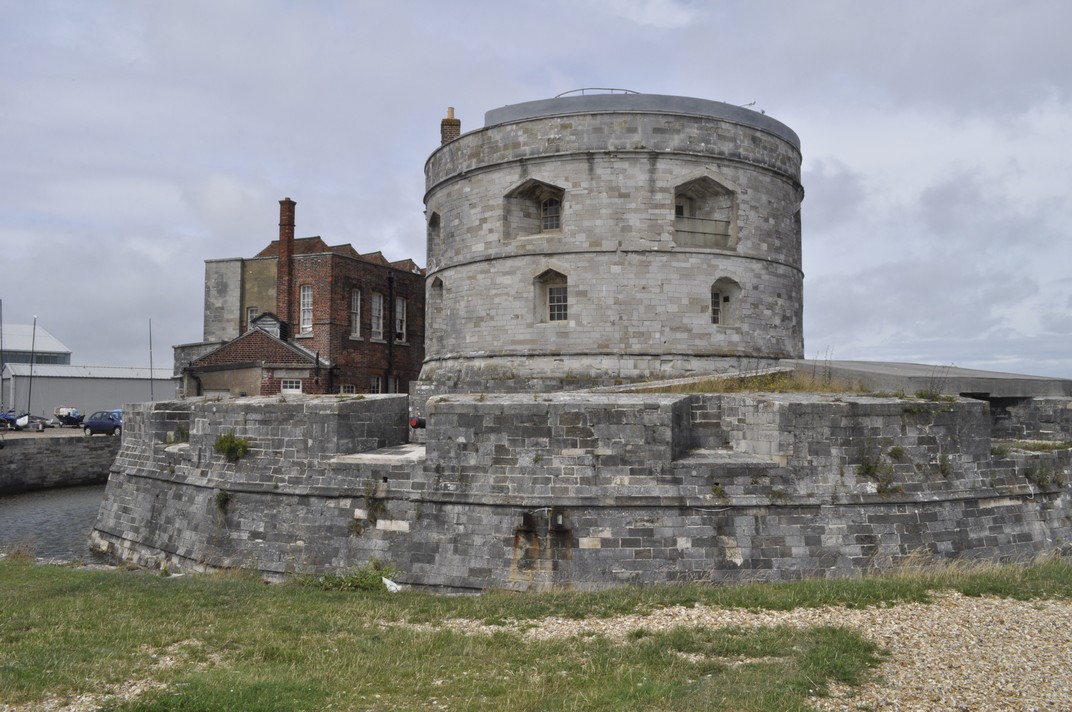
Built between 1539 and 1540, during the reign of Tudor monarch Henry VIII, Calshot Castle has proudly guarded the approaches to Southampton Water in southern England under almost continual occupation since then.

20160709 062 Calshot Castle

The south face of Calshot Castle, with an 18th century extension on the left.

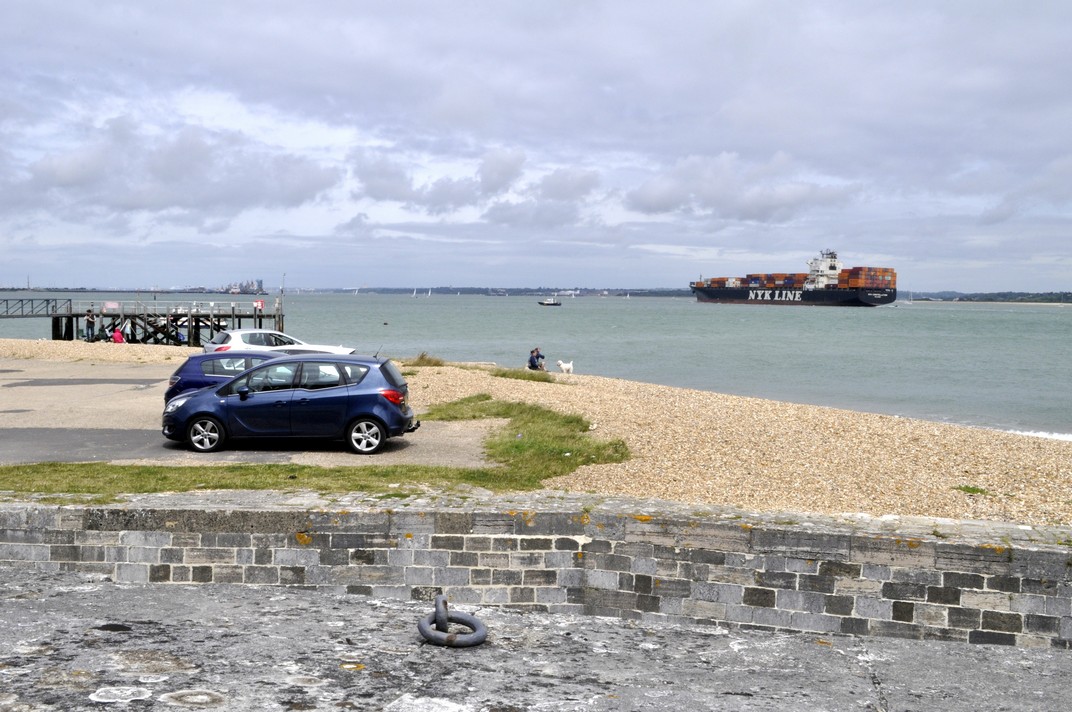
Situated at the tip of Calshot Spit it commands a view over The Solent towards the Isle of Wight to the south, and north along Southampton Water that leads to one of England’s premier and ancient ports.

20160709 003 Calshot Castle

Looking across The Solent to the Isle of Wight.

20160709 027 Calshot Castle

Looking north up Southampton Water towards the Port of Southampton.

Of course it has undergone several modifications during the intervening centuries, but from the basement to the roof it’s still possible to see some of the earliest Tudor constructions. It last saw active service during the Second World War, and anti-aircraft guns were mounted on the roof. Calshot Castle is now in the care of English Heritage. We visited there during our recent holiday in Hampshire. It was quite windy the day we headed along Calshot Spit. I thought that perhaps we would spend at most 30 minutes looking round the castle. We must have been there for almost two hours. Calshot Castle is fascinating, and its history just oozes from the fabric of the building.

The Royal Air Force maintained an air station there for many decades, and it was the site for seaplane and flying boat operations. There’s an interesting museum in the castle detailing this. Calshot was also the site for the 1929 Schneider Trophy air race. Today, the original hangars have been given a new lease of life as a recreation center. A lifeboat station and coastguard tower have also been constructed alongside the castle.

A new railway station for Bromsgrove (updated 5 October 2018)

20160717 023

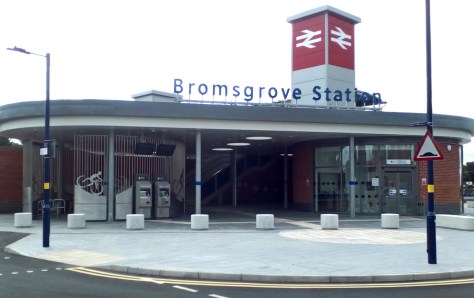
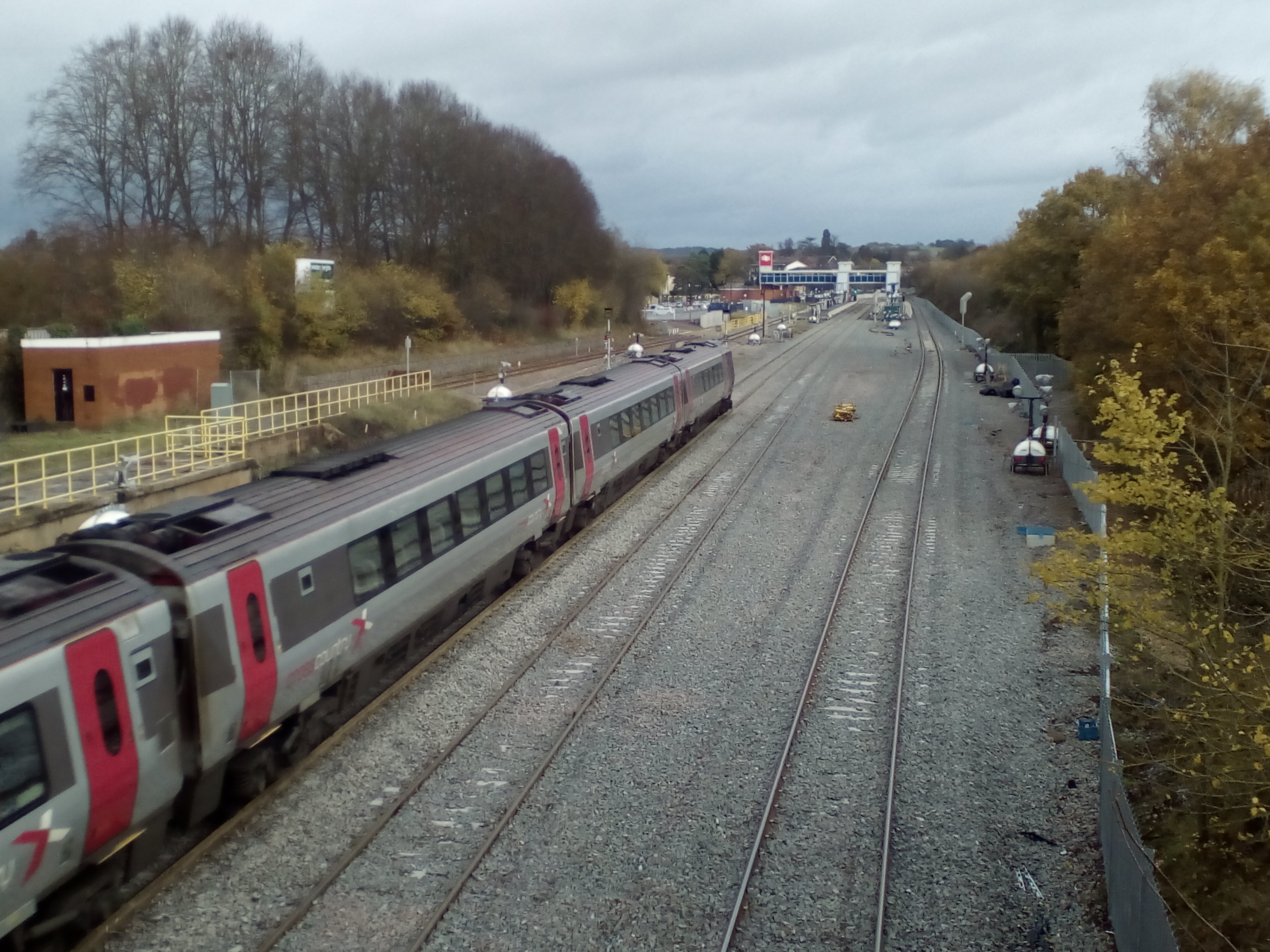
It has taken about three years or more to complete, but finally, on 12 July 2016, Bromsgrove’s new railway station in northeast Worcestershire opened for business as the first train pulled in, on time, at 6:21 am.

Bromsgrove station opens

20160717 011

So, 176 years after the first station opened on what was then the Birmingham and Gloucester Railway, Bromsgrove has a new station worthy of the 21st century, and managed by London Midland.

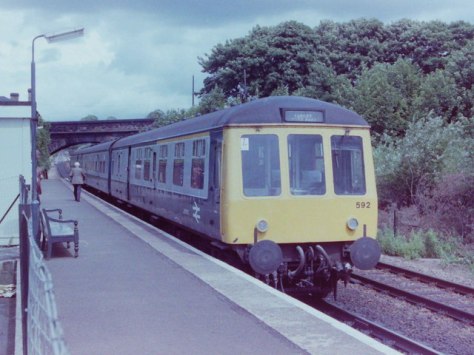
Bromsgrove station in 1960, looking south to where the new railway station has been constructed.

Bromsgrove’s one platform station in 1981.

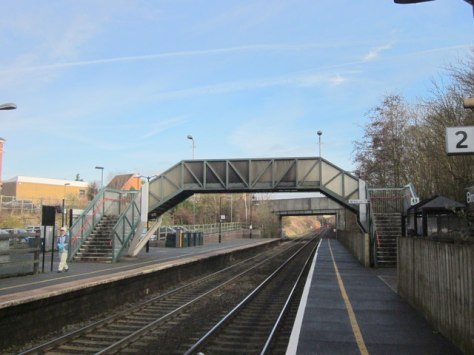
Bromsgrove station in 2012, looking north up the Lickey Incline, taken from the down line platform.

As with many infrastructure projects nowadays it seems, there have been several delays in completing this project. The station should have opened by Autumn 2015. Built on the site of the old carriage works, hidden signalling cables and a previously unmapped culvert required extensive additional engineering works to resolve these issues. In addition, hundreds of tonnes of oil-contaminated soil had to be removed from the site.

Now Bromsgrove proudly boasts of a modern, four platform station provided with lift access to all platforms, a ticket office, bicycle store, toilets, and parking for over 300 cars (payable by the day, week, month or annually). Regular bus services will connect the station with the town center over a mile away.

The new station replaces a two platform facility that was upgraded from a single platform (on the up line, towards Birmingham New Street) in the mid-1980s. Until then, trains on the down line (towards Worcester) were diverted on to the up line for the short period necessary to disembark and take on new passengers. Not the most convenient situation, as you can imagine, and one that led to serious traffic restrictions on this busy main line connecting the West Midlands with the south west (Gloucester, Bristol, South Wales, and beyond).

The station is about half a mile from my home, but I rarely used the train when I taught at the University of Birmingham in the 1980s. Even though the trains from Bromsgrove to Birmingham stopped at only one other station: University (right in the heart of the University of Birmingham campus, essentially).

The old station, at the foot of the famous Lickey Incline could accommodate trains with only three carriages. The new station has the length for six carriage trains, and once the electrification of the line has been extended from Barnt Green at the top of the Incline to Bromsgrove, a schedule of four or more trains per hour can be accommodated. Not only will stopping trains park on one of the platform branch platforms, thus permitting express through trains to keep to their schedule, but electric trains will be able to tackle the Lickey Incline faster from a standing start¹, unlike today’s diesel trains that chug up the Incline somewhat sedately.

The final platform branch line will not open until October this year, and new signalling installed. The mainline will be closed for two weeks. The final branch could not be laid until the old station closed as the curve into the fourth platform has to begin from where the old down line platform was located. Work has already begun, the old station platforms demolished, and the rails already laid ready to link into the main line later this year.


Update (November 2016)
The track laying and realignment are now complete, and new signalling has been installed. We just wait for the electrification of the line to Bromsgrove, which should be completed by this time next year.

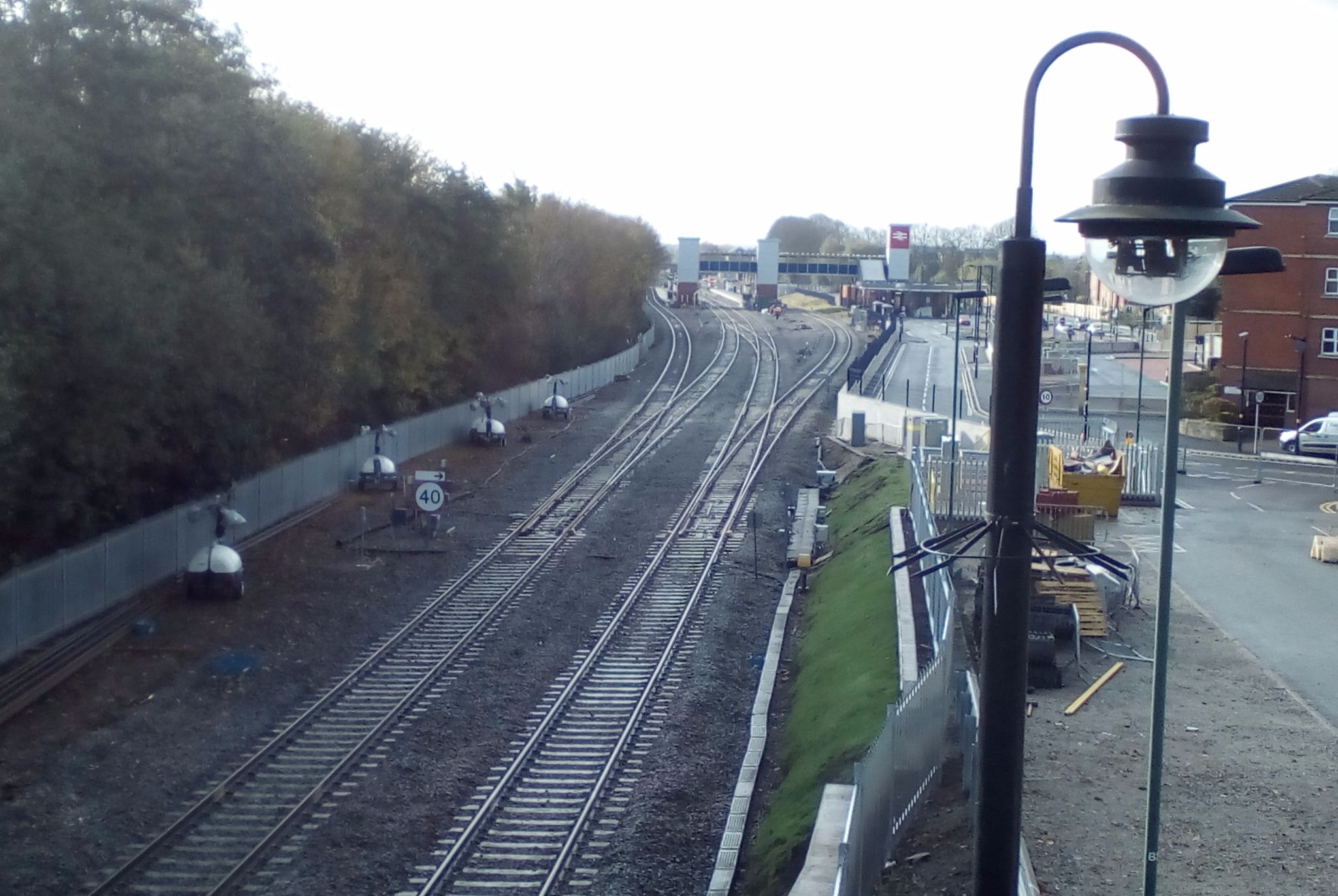
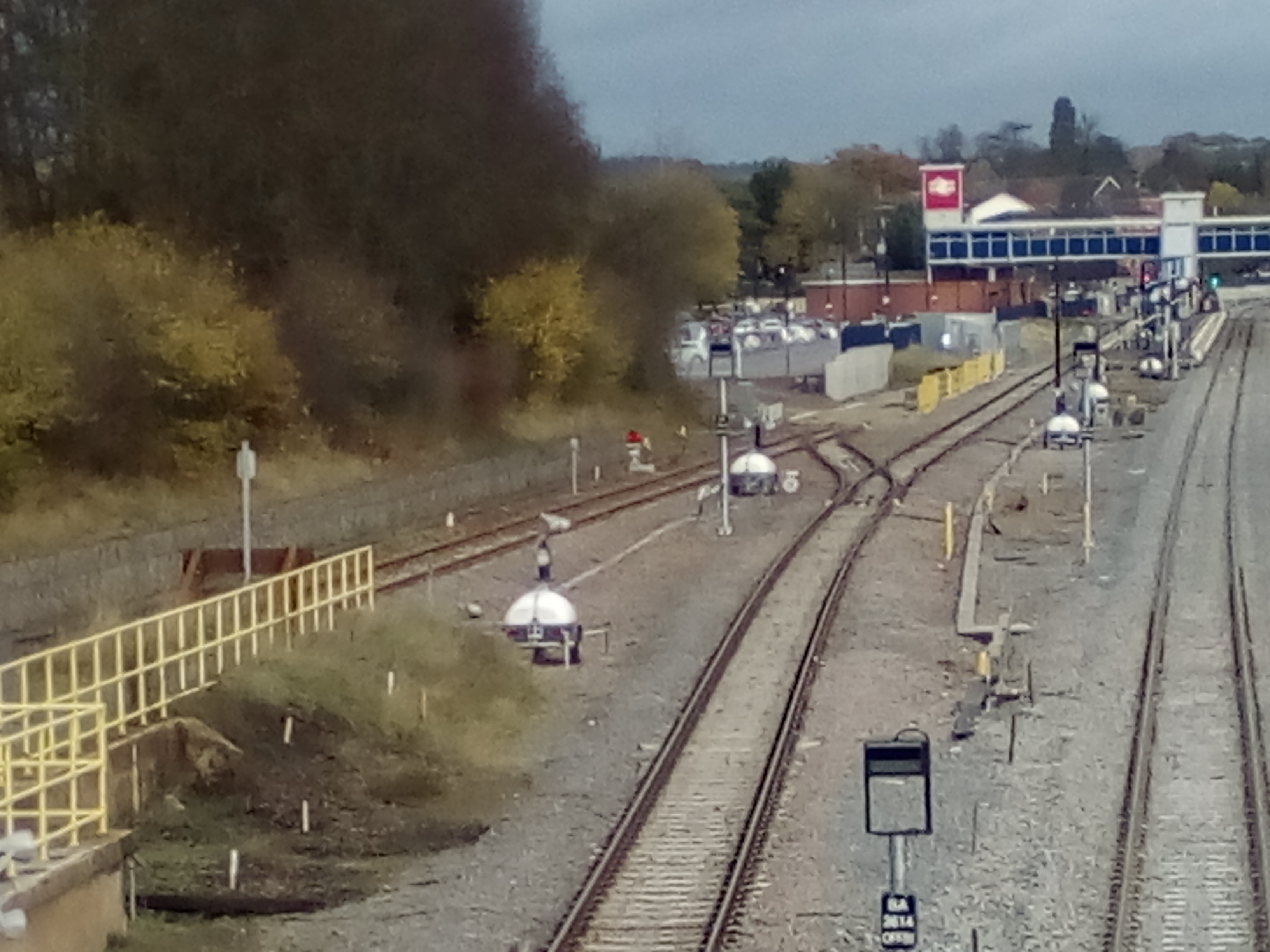
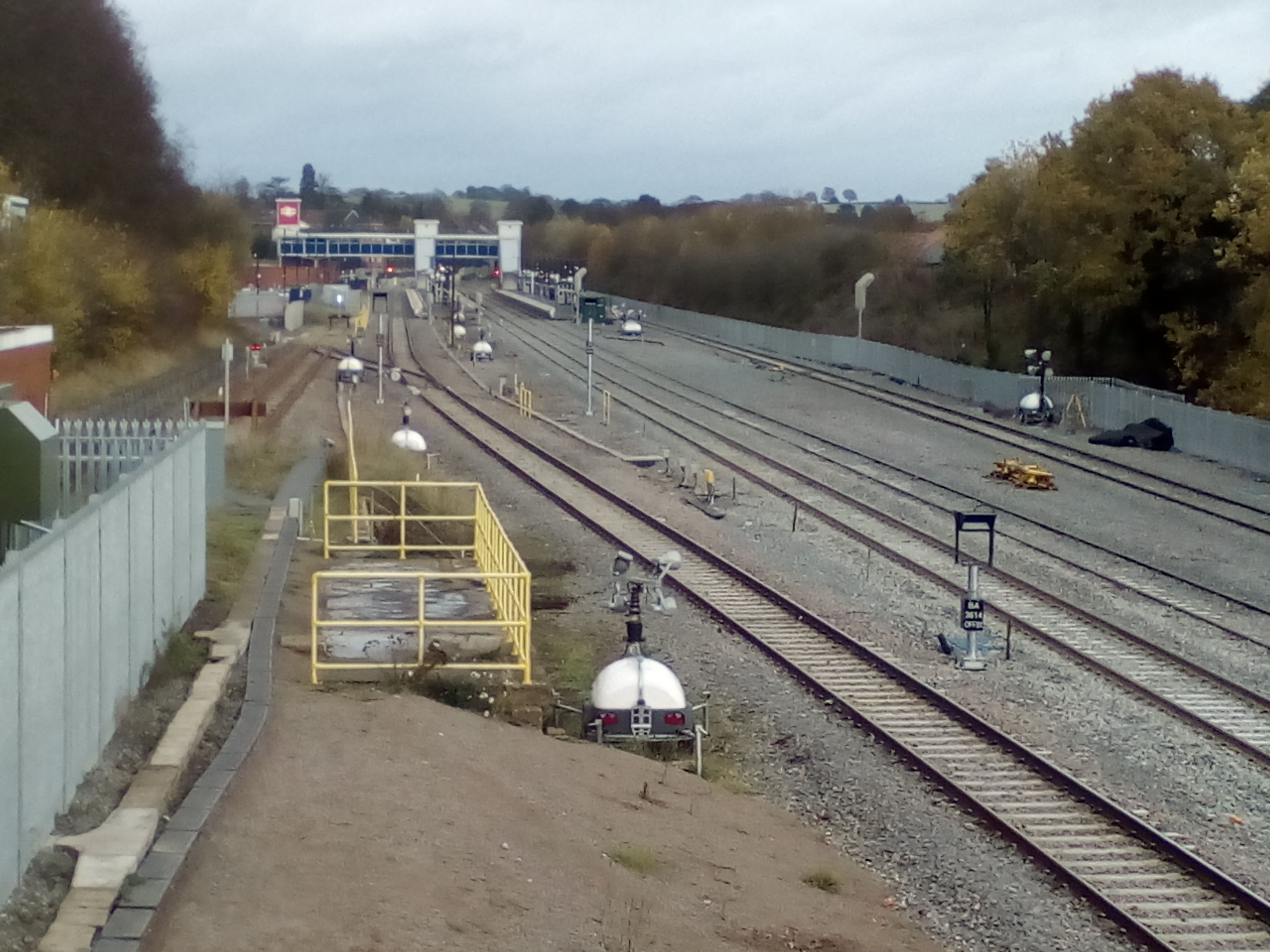
Much to my surprise, the new main down does in fact diverge from the old main down through the new Platform 4. You can see where that track was about to be laid in the photos above. And here is the track layout today. The old station was situated immediately below the bridge from where this photo was taken, looking south to the new station.

img_20161113_112359

South of the station, looking north to the station, you can see the new track layout, with the new through down on the right.

img_20161116_113112

img_20161116_113200

img_20161128_113731

A down express passing at speed through the new Platform 4 loop

Just south of the station, and on the left of this photo is a small siding for ‘bankers’—locomotives that add power to freight trains waiting to climb the Lickey Incline. They sit at the rear and gives a well-deserved push. Here’s a video from YouTube that illustrates what I mean (before the new station was built and track layout changed. However, this freight train was waiting on the freight loop that has been realigned in the recent work).

Also, the freight loop, that passes through Platform 1, is on the left.

img_20161116_112926

img_20161116_113415


Update (5 October 2018)
Electrification finally came to Bromsgrove at the end of July 2018. There had been serious delays, and Bromsgrove commuters were becoming increasingly angry about the delays to their promised new services.

But the overhead wires were finally installed and went live at the end of May to permit testing of the new installations and driver training before the implementation of the new services. Over the next few weeks, empty trains passed between Birmingham and Bromsgrove.

Bromsgrove is now served by West Midlands Railway, and there are five trains an hour into Birmingham New Street at peak times. Some are Class 323 electric units on the Cross City Line (that now connects Bromsgrove with Lichfield to the north of Birmingham), others are the same old diesel-powered Class 170 units that connect Bromsgrove with Birmingham and Hereford.

As I mentioned earlier in this story when I posted it in August 2016, it was expected that the new electric units would power up the Lickey Incline faster¹ than the diesel ones. Two minutes faster in fact! That might not seem much, but with additional platforms at Bromsgrove to accommodate waiting trains, and faster trains clearing the Lickey Incline sooner, the through expresses are not affected, and more trains per hour can be run. Well, someone filmed the difference between the Class 323 and Class 170 trains; here is the video:


Light of foot, nimble of finger . . .

Luke Lightfoot. Never heard of him? Neither had I until just over a couple of weeks ago when we visited the National Trust’s Claydon House in Buckinghamshire, south of Buckingham, east of Bicester.

20160719 110 Claydon House

20160719 112 Claydon House


Claydon House is close to two other National Trust properties, Waddesdon Manor and Stowe, perhaps more illustrious, and probably they receive far more visitors.

So how does Claydon compare? I think that anyone who visits Claydon House will come away with a sense of wonder of what 18th century master carver and stonemason Luke Lightfoot achieved for his employer, Ralph 2nd Earl Verney who rebuilt the family ancestral home between 1757 and 1771. The Verney family still occupies the red brick wings of the house.

The building standing today is just part of what was originally planned, and at least one wing was demolished. Although the exterior of the building is often described as austere, I think it has a charming symmetry and simplicity.

The interiors however, are something else—a riot of rococo wood carving of the very highest standard. Perhaps the most exquisite examples of 18th century carving to be seen anywhere in the country.

Luke Lightfoot, born in London in 1722, is somewhat of a mystery. Here’s what the National Trust has to say about him: Luke Lightfoot was a brilliant and talented stonemason and carver, but not an architect. However, Sir Ralph Verney engaged him as such at Claydon where Lightfoot used his skills to make impressive carvings, most notably in the north hall here at Claydon. He was a very talented carver but not a very trustworthy one and he swindled away a lot of Sir Ralph’s money before being dismissed. 

Most of the work done by Luke survives today, including the painted wooden carvings in the Chinese Room. All of the wood was painted white, which is believed to be because it was all carved in pine which comes in many shades and discolours over time. Due to the preserving coat of paint you can still see the unique and amazing craftsmanship of the carvings today.

The main entrance of the house leads into the Saloon, a beautifully proportioned room decorated in blue and white. You can’t fail to be impressed by the ceiling decoration, or the papier mâché reliefs high up on the walls.

But it’s in the North Hall that some of Lightfoot’s best carving is to be seen.

In the library there is equally fine carving high on the walls, but the ceiling was completed by Joseph Rose.

The Grand Staircase is in a class of its own. Can there be a finer example in England?

In the Pink Parlor, the door lintels are surmounted by other carvings depicting Aesop’s Fables, and the ceiling of the Great Red Room immediately above has some impressive ‘domes’.

Florence Nightingale was the sister of the second wife, Parthenope, of Sir Henry Verney (1801-1894), and she visited Claydon many times. On the second floor is the bedroom she used. Next door is the Gothic Room in which the only decoration that is not made of wood is the marble fireplace. Can you imagine such carving?

Next to the Gothic Room is the Chinese Room, where the rococo decoration has ‘exploded’. And more impressive ‘domes’ in the Paper Room.

Close by the house, no more than 50 m away is the Church of All Saints, with many memorials to the Verney family, and especially one to Sir Edmund Verney, Standard Bearer to King Charles I, who was killed at the Battle of Edgehill in October 1642.

Don’t miss Claydon. You won’t be disappointed.

I have only shown photos here of the decoration and architectural features, and I’m grateful to the National Trust for giving me permission for photography in the house. Photography is not normally permitted, and certainly not of any of the Verney family personal effects such as masterpiece paintings and furniture. In the Salon there’s an impressive Van Dyck painting of Charles I for example, and throughout the house there are many more examples of such quality.

Claydon House is not the easiest National Trust property to find. Thankfully we had detailed Ordnance Survey maps to guide us there; signage leaves something to be desired. Road signs petered out in several places, and I did overhear other patrons mentioning this to staff on arrival. That’s something the National Trust needs to improve upon, not just here at Claydon but elsewhere around the country.

I can’t finish this particular blog post without a mention of the volunteers at Claydon, some of the friendliest and most informative we have come across in all our National Trust visits.

If it’s Wednesday, it must be Colombia . . .

Not quite the ‘Road to Rio . . .’
I have just returned from one of the most hectic work trips I have taken in a very long time. I had meetings in three countries: Peru, Colombia, and Mexico in just over 6½ days.

And then, of course, there were four days of travel, from Birmingham to Lima (via Amsterdam), Lima to Cali (Colombia), then on to Mexico City, and back home (again via Amsterdam). That’s some going. Fortunately the two long-haul flights (BHX-AMS-LIM and MEX-AMS-BHX) were in business class on KLM. Even so the journeys from Lima to Cali (direct, on Avianca) and Cali to Mexico (via Panama City, on COPA) were 12 hours and 11 hours door-to-door, respectively, the former taking so long because we were delayed by more than 5 hours.

As I have mentioned in an earlier blog post, I am leading the evaluation of the program to oversee the genebank collections in eleven of the CGIAR centers (known as the Genebanks CRP). Together with my team colleague, Marisé Borja, we met with the genebank managers at the International Potato Center (CIP, in Lima), the International Center for Tropical Agriculture (CIAT, in Cali), and the International Maize and Wheat Improvement Center (CIMMYT, in Texcoco near Mexico City).

20160724 018

A drop of cognac.

It all started on Sunday 24 July, when I headed off to Birmingham Airport at 04:30 for a 6 o’clock flight to Amsterdam. Not really having slept well the night before, I can’t say I was in the best shape for flying half way round the world. I had a four hour stopover in Amsterdam, and managed to make myself more or less comfortable in the KLM lounge before boarding my Boeing 777-300 Lima flight sometime after noon. There’s not a lot to do on a long flight across the Atlantic except eat, drink and (try to) sleep. I mainly did the first two.

It never ceases to impress me just how vast South America is. Once we crossed the coast of Venezuela and headed south over the east of Colombia and northern Peru we must have flown for about three hours over rain forest as far as you could see. I wish I’d taken a few pictures of the interesting topography of abandoned river beds and oxbow lakes showing through all that dense vegetation. At one point we flew over a huge river, and there, on its banks, was a city, with an airport to the west. I checked later on Google Maps, and I reckon it must have been Iquitos in northern Peru on the banks of the Amazon. Over 2000 miles from the Atlantic, ocean going ships can sail all the way to Iquitos. I once visited Iquitos in about 1988 in search of cocoa trees, and we crossed the Amazon (about two miles wide at this point) in a small motorboat.

Then the majestic Andes came into view, and after crossing these we began our long descent into Lima, with impressive views of the mountains all the way and, nearer Lima, the coastal fogs that creep in off the Pacific Ocean and cling to the foothills of the Andes.

We landed on schedule at Jorge Chavez International Airport in Lima around 18:00 (midnight UK time) so I had been travelling almost 20 hours since leaving home. I was quickly through Immigration and Customs, using the Preferencial (Priority) line reserved for folks needing special assistance. My walking stick certainly gives me the edge these days on airlines these days.

Unfortunately, the taxi that had been arranged to take me to my hotel, El Condado, in the Lima district of Miraflores (where Steph and I lived in the 1970s) was a no-show. But I quickly hired another through one of the official taxi agencies inside the airport (necessary because of the various scams perpetrated by the cowboy taxi drivers outside the terminal) at half the price of the pre-arranged taxi.

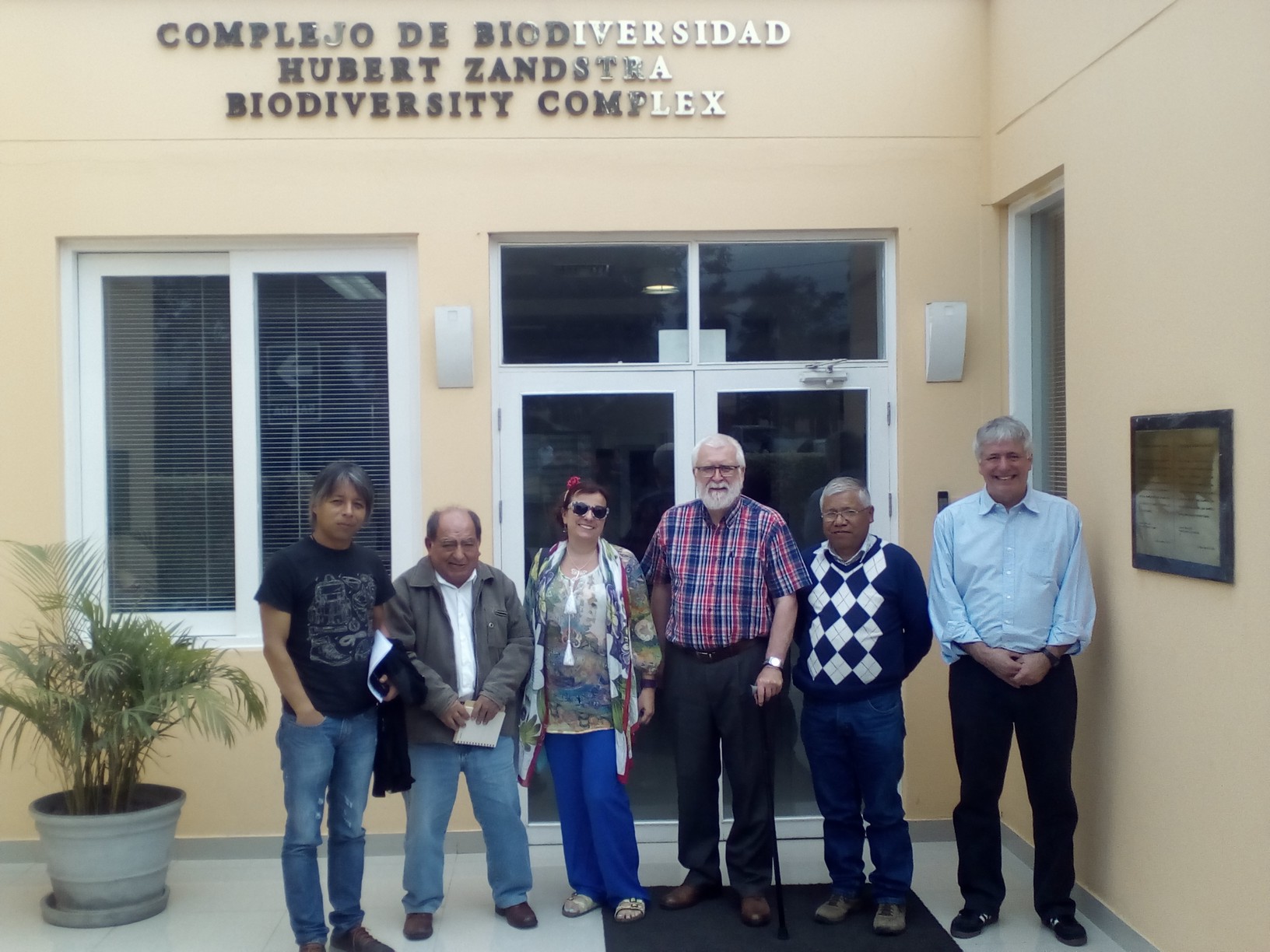
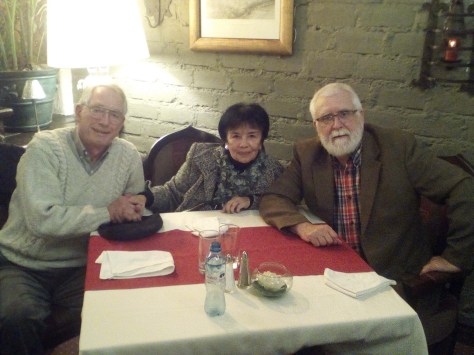
After a quick shower, I met up with old friends and former colleagues at CIP, Dr Roger Rowe and his wife Norma. I first joined CIP in January 1973, and Roger joined in July that same year as CIP’s first head of Breeding & Genetics. He was my first boss!
20160724 001

They were in the bar, and we enjoyed several hours of reminiscences, and a couple of pisco sours (my first in almost two decades), and a ‘lite bite’ in the restaurant. It must have been almost 11 pm before I settled into bed. That was Sunday done and dusted. The work began the following morning.

All things potatoes . . . and more
I haven’t been to CIP since the 1990s. Given the tight schedule of meetings arranged for us, I didn’t get to see much more than the genebank and dining room.

CIP has a genebank collection of wild and cultivated potatoes (>4700 samples or accessions, most from the Andes of Peru), wild and cultivated sweet potatoes (>6400, Ipomoea spp.), and Andean roots and tubers (>1450) such as ulluco (Ullucus tuberosus), mashua (Tropaeolum tuberosum), and oca (Oxalis tuberosa).

20160726 028

Native potato varieties.

Although potatoes are grown annually at the CIP experiment station at Huancayo, some six or more hours by road east of Lima, at over 10,000 feet in the Mantaro Valley, and sweet potatoes multiplied in greenhouses at CIP’s coastal headquarters at La Molina, the collections are maintained as in vitro cultures and, for potatoes at least, in cryopreservation at the temperature of liquid nitrogen. The in vitro collections are safety duplicated at other sites in Peru, with Embrapa in Brazil, and botanical seeds are safely stored in the Svalbard Global Seed Vault.

With a disease pressure from the many diseases that affect potato in its center of origin—fungal, bacterial, and particularly viruses—germplasm may only be sent out of the country if it has been declared free of these diseases. That requires growth in aseptic culture and treatments to eradicate viruses. It’s quite an operation. And the distribution does not even take into account all the hoops that everyone has to jump through to comply with local and international regulations for the exchange of germplasm.

The in vitro culture facilities at CIP are rather impressive. When I worked at CIP more than 40 years ago, in vitro culture was really in its infancy. Today, its application is almost industrial in scale.

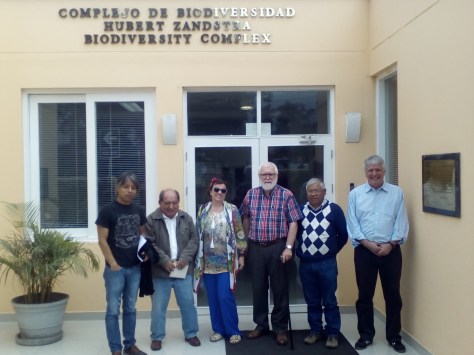
Our host at CIP was Dr David Ellis, genebank manager, but we also met with several of the collection curators and managers.
20160725 009

L to R: Ivan Manrique (Andean roots and tubers), Alberto Salas (consultant, wild potatoes), Marisé Borja (evaluation team), me, René Gómez (Senior Curator), David Ellis.
20160725 010

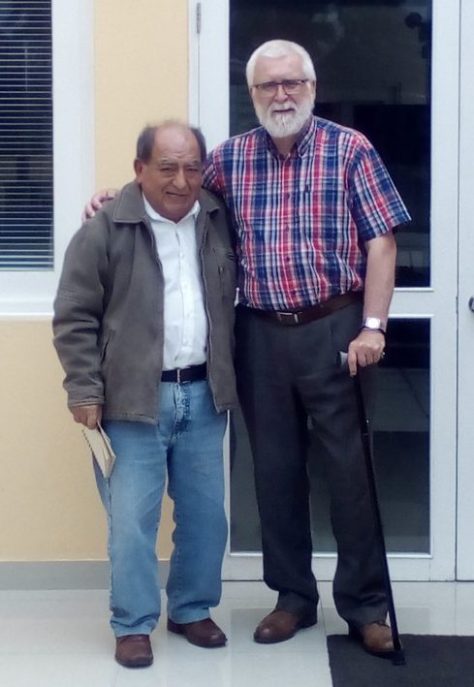
Alberto Salas, now in his 70s, worked as assistant to Peruvian potato expert Prof. Carlos Ochoa. Alberto’s wealth of knowledge about wild potatoes is enormous. I’ve known Alberto since 1973, and he is one of the most humble and kind persons I have ever met.

Prior to our tour of the genebank, René Gómez and Fanny Vargas of the herbarium had found some specimens that I had made during my studies in Lima during 1973 and 1974. I was also able to confirm how the six digit germplasm numbering system with the prefix ’70’ had been introduced and related to earlier designations.

It was great to see how the support from the Genebanks CRP has brought about so many changes at CIP.

Lima has changed so much over the past couple of decades. It has spread horizontally and upwards. So many cars! In the district of Miraflores where we used to live, the whole area has been refurbished and become even smarter. So many boutiques and boutique restaurants. My only culinary regret is that the famous restaurant La Rosa Nautica, on a pier over the Pacific Ocean closed down about two months ago. It served great seafood and the most amazing pisco sours.

All too soon our two days in Lima were over. Next stop: Cali, Colombia.

Heading to the Cauca Valley . . . 
Our Avianca flight to Cali (an Embraer 190, operated by TACA Peru) left on time at 10:25. Once we’d reached our cruising altitude, the captain turned off the seat belt sign, and I headed to the toilet at the front of the aircraft, having been turned away from the one at the rear. Strange, I thought. I wasn’t allowed to use the one at the front either. It seems that both refused to flush. The captain decided to return to Lima, but as we still almost a full load of fuel, he had to burn of the excess so we could land safely. So, at cruising altitude and as we descended, he lowered the undercarriage and flaps to create drag which meant he had to apply more power to the engines to keep us flying, thereby burning more fuel. Down and down we went, circling all the time, for over an hour! We could have made it to Cali in the time it took us to return to Lima. We could have all sat there with legs crossed, I guess.

Once back on the ground, engineers assessed the situation and determined they could fix the sensor fault in about a couple of hours. We were taken back to the terminal for lunch, and around 15:30 we took off again, without further incident.

But as we waited at the departure gate for a bus to the aircraft, there was some impromptu entertainment by a group of musicians.

Unfortunately because of our late arrival in Cali, we missed an important meeting with the CIAT DG, who was not available the following days we were there.

CIAT was established in 1967, and is preparing for its 5oth anniversary next year.

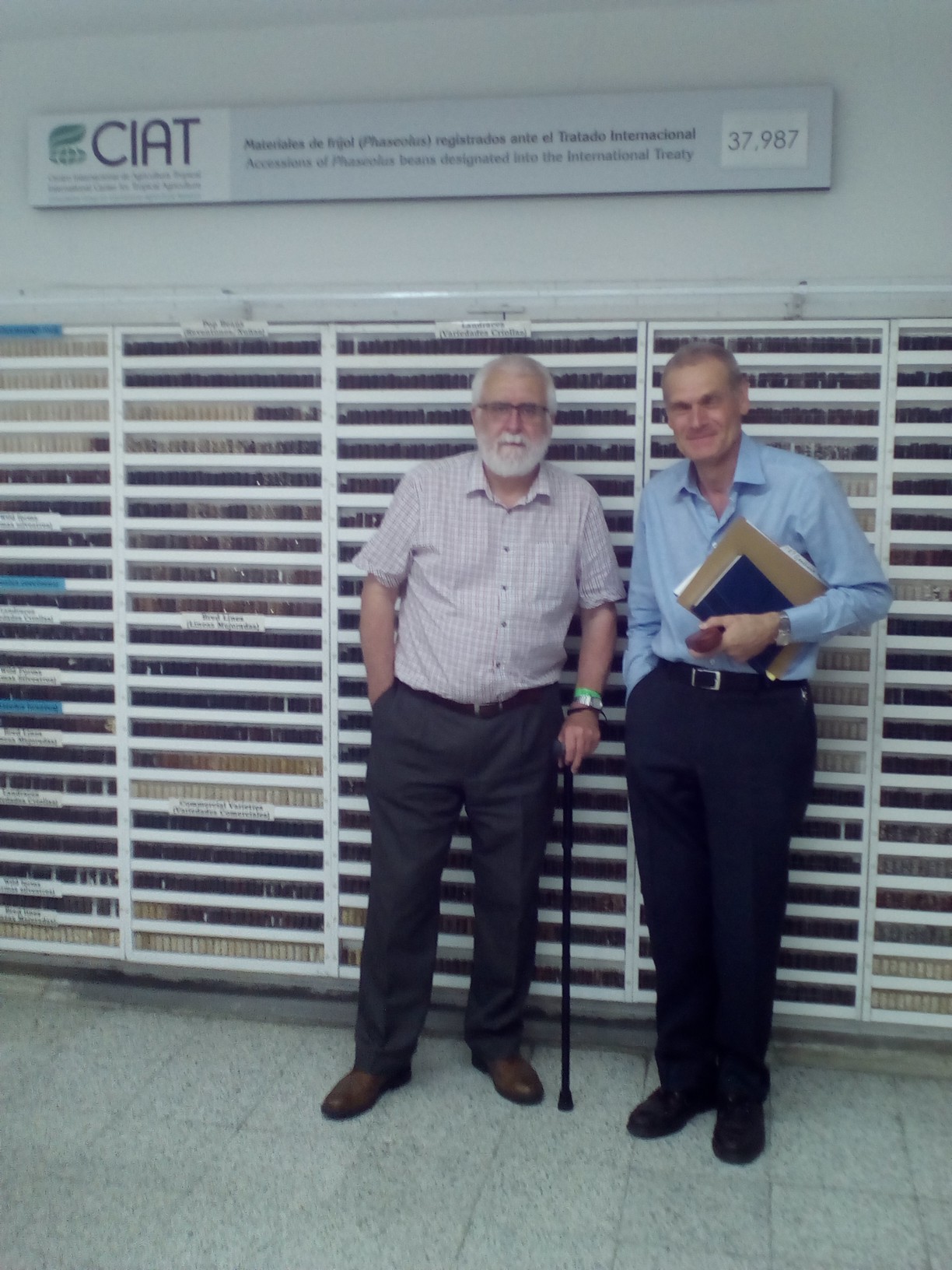
Daniel Debouck, from Belgium, is CIAT’s genebank manager, and he has been there for more than 20 years. He steps down from this position at the end of the year, and will be replaced by Peter Wenzl who was at the Global Crop Diversity Trust in Bonn until the end of April this year. Daniel is an internationally-recognised expert on Phaseolus beans.

The CIAT genebank has three significant collections: wild and cultivated Phaseolus beans (almost 38,000 accessions), wild and cultivated cassava (Manihot spp., >6600 accessions in vitro or as ‘bonsai’ plants), and more than 23,000 accessions of tropical forages. Here’s an interesting fact: one line of the forage grass Brachiaria is grown on more than 100 million hectares in Brazil alone!
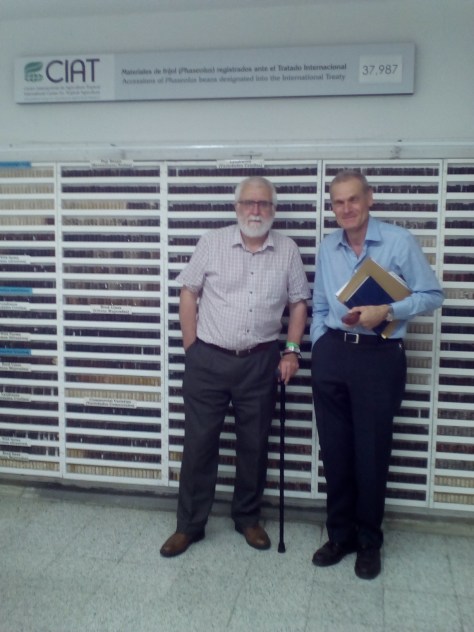
20160729 021

Me and Daniel Debouck.

20160729 022

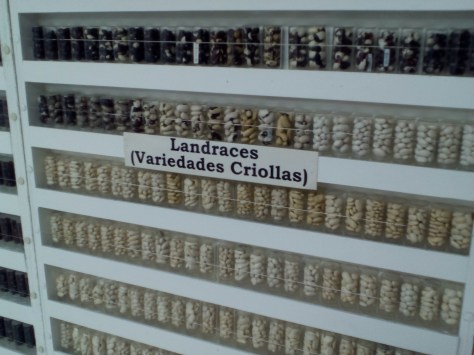
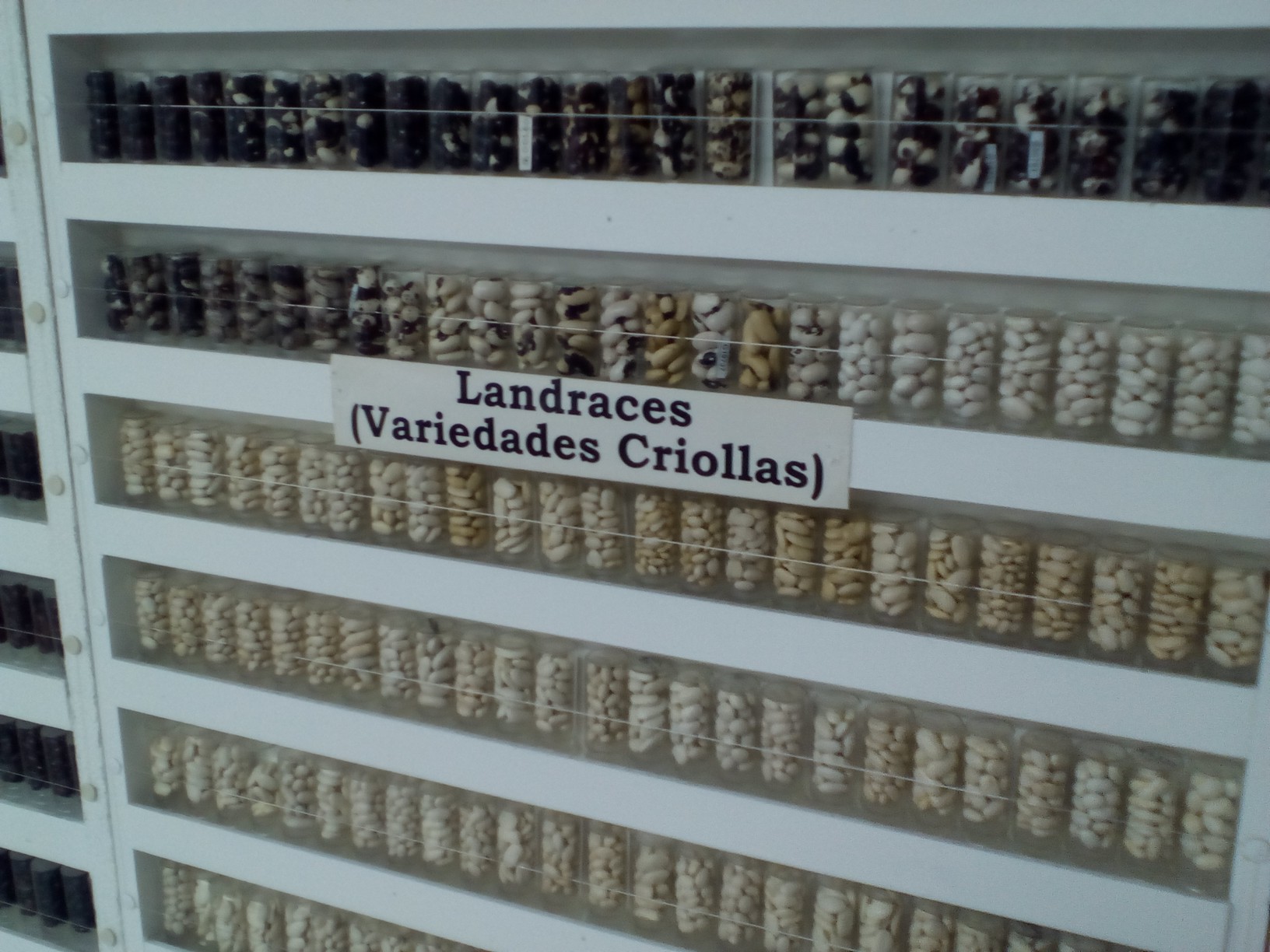
Bean varieties.

The bean collections are easily maintained as seeds in cold storage, as can most of the forages. But, like potato, the cassava accessions present many of the same quarantine issues, have to be cleaned of diseases, particularly viruses, and maintained in tissue culture. Cryopreservation is not yet an option for cassava, and even in vitro storage needs more research to optimise it for many clones.

20160729 040

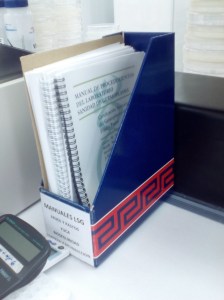
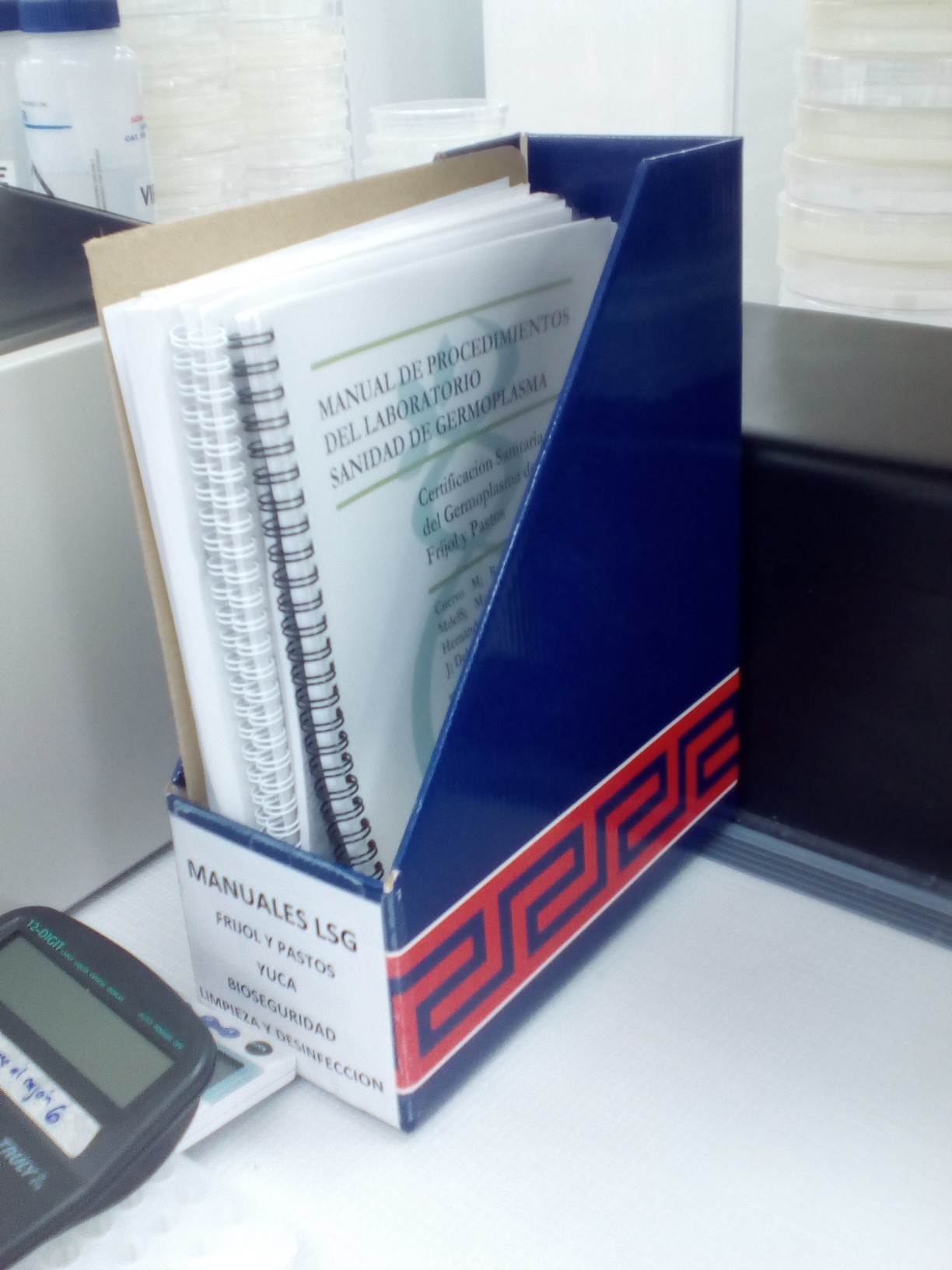
QMS manuals in the germplasm health laboratory.

Like many of the genebanks, CIAT has been upgrading its conservation processes and procedures through the application of a Quality Management System (QMS). A couple of genebanks (including CIP) have opted for ISO certification, but I am of the opinion that this is not really suitable for most genebanks. Everything is documented, however,  including detailed risk assessments, and we saw that the staff at CIAT were highly motivated to perform to the highest standards. In all the work areas, laboratory manuals are always to hand for easy reference.

An exciting development at CIAT is the planned USD18-20 million biodiversity center, with state of the art conservation and germplasm health facilities, construction of which is expected to begin next year. It is so designed to permit the expected thousands of visitors to have good views of what goes on in a genebank without actually having to enter any of the work areas.

On our first night in Cali, our hosts graciously wined and dined us at Platillos Voladores, regarded as one of Cali’s finest restaurants.
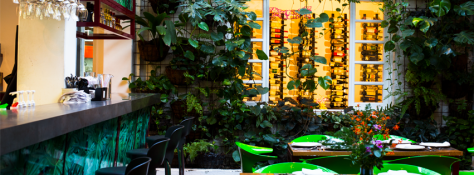
1520778_329652313848934_5424856017809772967_n

We had the private room for six persons with all the wine bottles on the wall, which can be seen in this photo above.

Arriba, arriba! Andale!
On Saturday afternoon around 15:30, we headed to Mexico City via Tocumen International Airport in Panama City. Cali’s international airport is being expanded significantly and there are now international flights to Europe as well as the USA. This must be great for CIAT staff, as the airport is only 15 minutes or so from the research center.

After takeoff, we climbed out of the Cauca Valley and had great views of productive agriculture, lots of sugar cane.

Tocumen is lot busier than when I was travelling through therein the late 1970s. With several wide-bodied jets getting set to depart to Europe, the terminal was heaving with passengers and there was hardly anywhere to sit down. On our COPA 737-800 flight to Mexico I had chosen aisle seat 5D immediately behind the business class section, so had plenty of room to stretch my legs. Much more comfortable than had I stayed with the seat I was originally assigned. I eventually arrived to CIMMYT a little after midnight.

CIMMYT is the second oldest of the international agricultural centers of the CGIAR, founded in 1966. And it is about to celebrate its 50th anniversary in about 1 month from now. IRRI, where I worked for 19 years, was the first center.

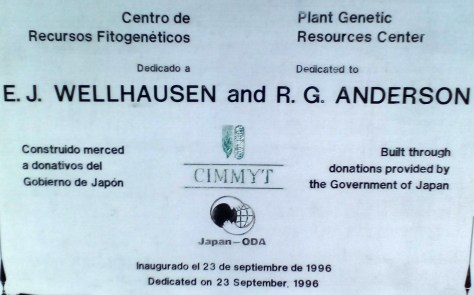
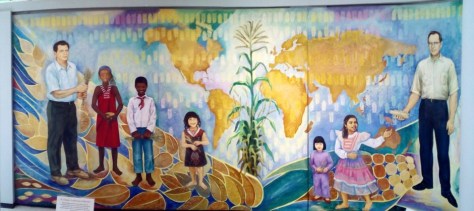
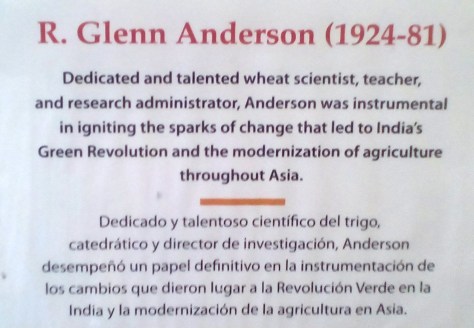
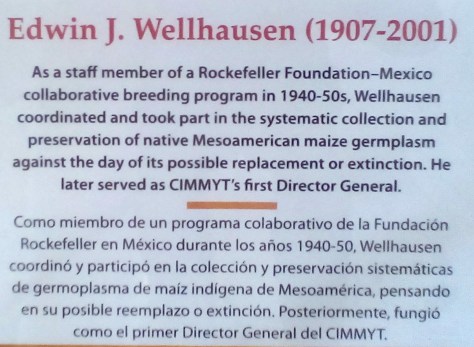
Unlike many of the CGIAR centers that have multi-crop collections in their genebanks (ICARDA, ICRISAT, and IITA for example), CIMMYT has two independent genebank collections for maize and wheat in a single facility, inaugurated in 1996, and dedicated to two renowned maize and wheat scientists, Edwin Wellhausen and Glenn Anderson. But CIMMYT’s most famous staff member is Nobel Peace prize Laureate, Norman Borlaug, ‘Father of the Green Revolution’.

Tom Payne and Denise Costich are the wheat and maize genebank managers. CIMMYT’s genebank has ISO 9001:2008 accreditation.
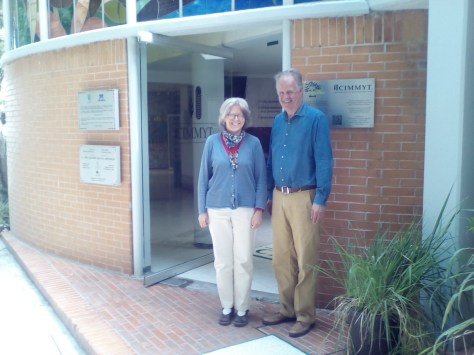
20160802 014

20160802 003

Ayla Sençer

Tom has been at CIMMYT in various wheat breeding capacities for more than 25 years. In addition to managing the wheat genebank, Tom manages the wheat international nurseries. One of the first curators of the wheat collection was Ayla Sençer from Turkey, and a classmate of mine when we studied at Birmingham in 1970 for the MSc in Conservation and Utilisation of Plant Genetic Resources. The CIMMYT wheat collection is unlike many other germplasm collections in that most of the 152,800 samples are actually breeding lines (in addition to landrace varieties and wild species).

Denise joined CIMMYT just a year or so ago, from the USDA. She has some very interesting work on in situ conservation and management of traditional maize varieties in Mexico and Guatemala. A particular conservation challenge for the maize genebank is the regeneration of highland maizes from South America that are not well-adapted to growing conditions in Mexico. The maize collection comprises over 28,000 accessions including a field collection of Tripsacum (a wild relative of maize).

In recent years has received major infrastructure investments from both the Carlos Slim Foundation and the Bill & Melinda Gates Foundation. New laboratories, greenhouses and the like ensure that CIMMYT is well-placed to deliver on its mission. And the support received through the Genebanks CRP has certainly raised the morale of genebank staff.

On our last day at CIMMYT (Wednesday), we met with Janny van Beem from the Crop Trust. Janny is a QMS expert, based in Houston, Texas, and she flew over to Mexico especially to meet with Marisé and me. When we visiited Bonn in April we only had opportunity to speak by Skype with Janny for jsut 30 minutes. Since the implementation of QMS in the genebanks seems to be one of the main challenges—and success stories—of the Genebanks CRP, we thought it useful to have an in-depth discussion with Janny about this. And very useful it was, indeed!

On the previous evening (Tuesday) Tom, Denise, Marisé, Janny and I went out for dinner in Texcoco, to a well-known tacqueria, then into the coffee shop next door afterwards. No margaritas that night – we’d sampled those on Monday.
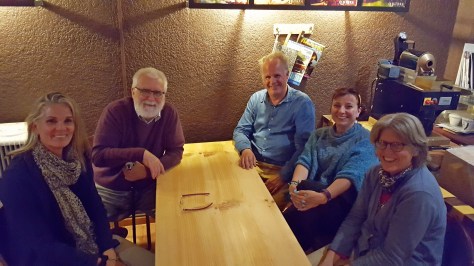
20160802 044

L to R: Janny, me, Tom, Marisé, and Denise.

But on this trip we did have one free day, Sunday. And I met up with members of CIMMYT’s Filipino community, many of them ex-IRRI employees, some of who worked in units for which I had management responsibility. They organised a ‘boodle fight‘ lunch, and great fun was had by one and all.

Hasta la vista . . .
At 6 pm on Wednesday I headed into Mexico City to take the KLM flight to Amsterdam. It was a 747-400 Combi (half passengers, half cargo). I haven’t flown a 747 for many years, and I’d forgotten what a pleasant experience it can be. It’s remarkable that the 747 is being phased out by most airlines; they are just not as economical as the new generation twin engine 777s, 787s, and A350s.

With the new seating configuration, I had a single seat, 4E, in the center of the main deck forward cabin. Very convenient. I was glad to have the opportunity of putting my leg up for a few hours. Over the previous 10 days my leg had swelled up quite badly by the end of each day, and it was quite painful. The purser asked if I had arranged any ground transport at Schipol to take me from the arrival to departure gates. I hadn’t, so she arranged that for me before we landed. The distances at Schipol between gates can be quite challenging, so I was grateful for a ride on one of the electric carts.

But after we went through security, my ‘assistant’ pushed me to my gate in a wheelchair. I must admit I felt a bit of a fraud. An electric cart is one thing, and most welcome. But a wheelchair? Another was waiting for me on arrival at Birmingham. Go with the flow!
20160804 014

I was all alone in Business Class from Schipol to Birmingham. We were back at BHX on time, and I was out in the car park looking for my taxi home within about 20 minutes, and home at 6 pm.

Now the hard work really begins—synthesising all the discussions we had with so many staff at CIP, CIAT, and CIMMYT. For obvious reasons I can’t comment about those discussions, but visiting these important genebanks in such a short period was both a challenging but scientifically enriching experience.

Two years in the planning . . .

Steph and I have two lovely daughters.

20160711 244 New Forest holiday

Hannah (on the left), the elder, lives in St Paul, Minnesota, and is married to Michael. They have two children: Callum, who will be six in mid-August, and Zoë, who turned four last May.

Philippa (on the right) has stayed in the UK. She lives in Newcastle upon Tyne, and married Andi in 2010. They have two boys: Elvis will be five at the end of September, and Felix will be three on 1 September.

But until this past week, we had never all been under the same roof. And the grandchildren had never met each other.

20160711 514 New Forest holiday

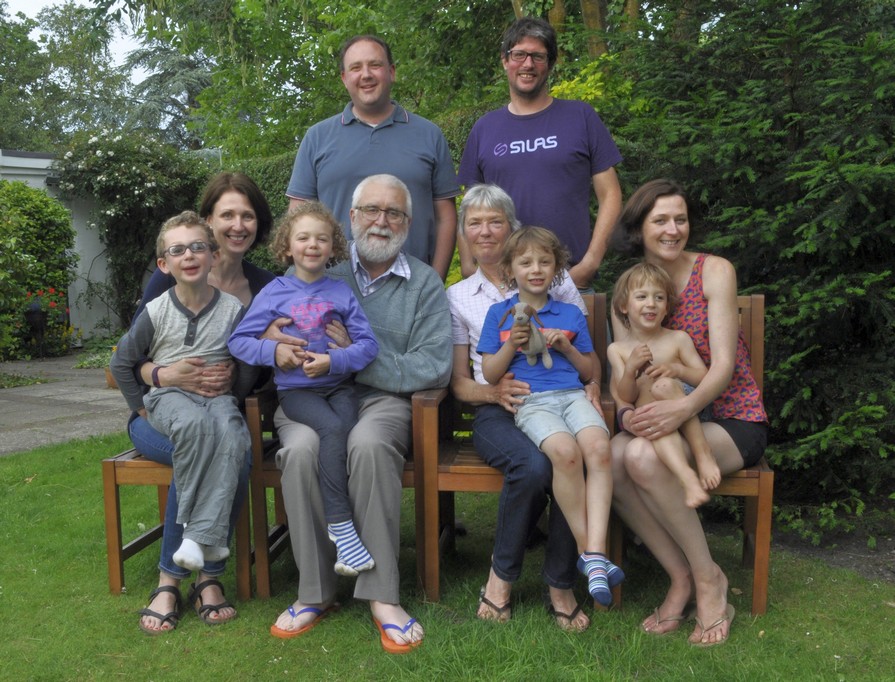
L to R standing: Michael and Andi. L to R sitting: Callum, Hannah, Zoë, me, Steph, Elvis, Felix, Philippa.

Two years ago, Hannah and Michael had planted the idea of coming over to the UK for a summer holiday. But where to stay, and what to do—apart from enjoying each other’s company? With us living in the Midlands south of Birmingham, and Philippa in the Northeast, it seemed logical to plan a holiday somewhere nearby to either of those locations. Unfortunately our home is not large enough to host everyone. Northumberland to the north of Newcastle is a beautiful county, but was eventually ruled out as probably not enjoying the warmer weather everyone hoped for.

So we eventually focused on the New Forest, west of Southampton, an area I know well having family links with the area, as well as from my undergraduate days at the University of Southampton. But apart from a week’s holiday there in the late 1980s, I haven’t been back since.

For various reasons the 2015 plans fell through, and even this year nothing was settled until quite late. Originally we had said that if Hannah and family came over to the UK we wouldn’t plan to take our usual break in Minnesota this year. As a trip to the UK didn’t seem to be in the offing, we went ahead and booked flights in early September for a three week stay in Minnesota. Then, Hannah and Michael confirmed that they would fly over here after all, and the search was on for a holiday home that would accommodate six adults and four small children. Thank goodness for the Internet. Hannah quickly zeroed in on three properties, and we eventually chose a five bedroom house in the village of Dibden Purlieu on the eastern edge of the New Forest National Park.

Our holiday began on Saturday 2 July, and we planned to get to the holiday home by about 5 pm, in time to be there when Hannah and Michael arrived from Southampton Airport. However, we decided to make something of the trip south, calling at Avebury in Wiltshire to visit two National Trust properties: the 16th century Avebury Manor and Garden, and the world famous Avebury Neolithic henge, comprising three stone circles. We spent just over two hours exploring the manor house and garden, but because of my current walking limitation, were not able to walk the length of the stone circles.

Sunday was a rest day. Hannah and family didn’t emerge from their beds until after noon, so we decided to spend the rest of the day relaxing around the house.

Phil and Andi didn’t arrive until Monday evening, so we decided to make a short excursion before lunch down to the coast at Lepe, just a few miles south of Dibden Purlieu. Callum and Zoë had a blast on the shingle beach, and afterwards in the play area above the cliff in the main part of the country park. Just what was needed to flush away the remnants of jet lag.

After Phil and Andi arrived, it didn’t take long before the newly-introduced cousins were playing together and running round the garden having a grand old time.

Tuesday was a very bright and sunny day, hot even, so we set out to cover the 40 miles plus drive west to Corfe Castle in Dorset (another National Trust property). Visiting a castle was on Callum’s list of things to do over here in England. So he was somewhat unimpressed—to begin with—when all he saw was a ruin. But once inside and we had the opportunity to climb on to the walls, peer through the narrow windows, imagine what life would have been like centuries ago, and even dress up in medieval clothes, then all the grandchildren had a whale of a time.

Wednesday saw us at Exbury Gardens just south of Beaulieu on the Beaulieu River, purchased by Lionel Nathan de Rothschild in 1919, and where he developed a world collection of rhododendrons and azaleas (which had mostly passed flowering when we visited). But there were many other features to explore, such as a very large Rock Garden, a steam train ride, and all the space the children needed to run around.

On Thursday, we set off for a walk from Beaulieu Road Station across the heath at Shatterford Bottom towards the southwest edge of Denny Wood, then on for a picnic on the edge of Matley Heath. After lunch we headed to the coast at Barton-on-Sea where the children could get their feet wet; the water was too cold for any swimming. And to watch the paragliders. We had hoped to have a fish and chip supper in Barton, but we’d finished on the beach by 4:30 or so. We therefore decided to head back to Hythe and had a pub meal at The Lord Nelson overlooking Southampton Water, where we could watch the huge container ships and cruise liners pass by.

Friday was a lazy day, and we didn’t head out into the forest until after lunch. Fritham was our destination, for another walk through the forest, and hopefully grab a bite to eat for dinner at The Royal Oak, a small pub I first visited in 1969 when I was Morris dancing with the Red Stags Morris Men (University of Southampton) and we joined the Winchester Morris Men on one of their tours.

Just south of Fritham, we visited the Rufus Stone where the killing of William II (William Rufus) in August 1100 is commemorated. I first went there as a young boy with my elder brother and mum and dad in the 1950s. It was great to be able to take my grandchildren there.

After a walk of a mile or so, we returned to The Royal Oak for a welcome pint. The pub, although modernised, still has all the kegs of beer lined up behind the bar, just as in the later 1960s.

20160711 507 New Forest holiday

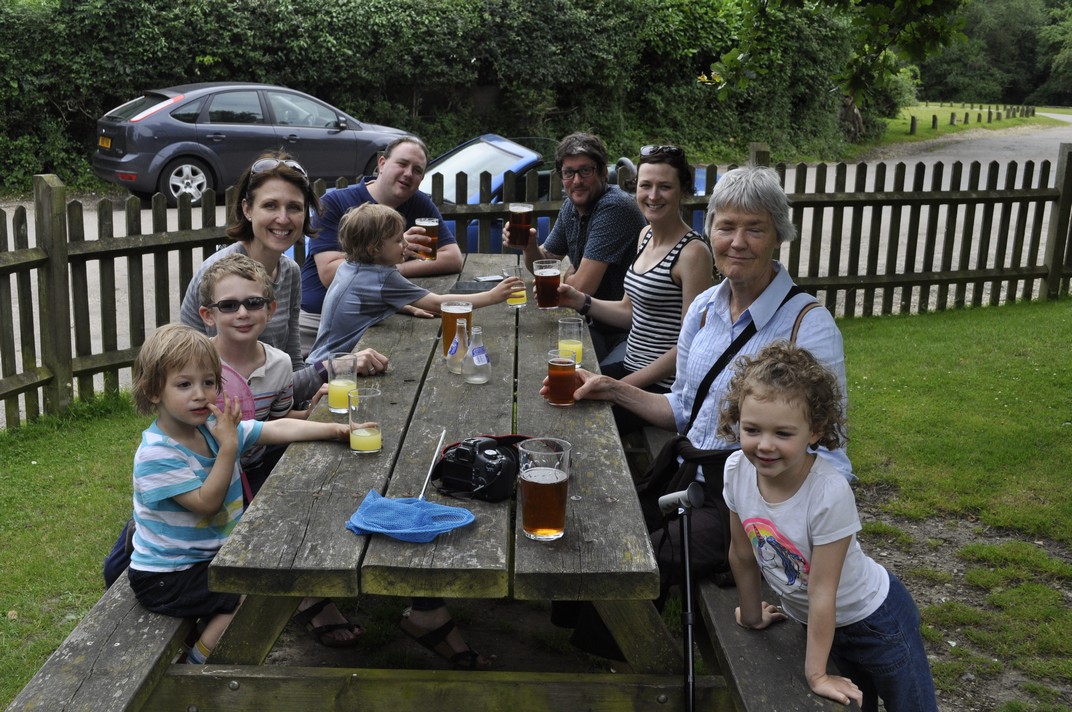
L to R: Felix, Callum, Hannah, Elvis, Michael, Andi, Philippa, Steph, and Zoë.

There was no food to be had at The Royal Oak, but we found a child-friendly pub, the Coach and Horses, at Cadnam.

On Saturday, the children were desperate to have a pony ride. So while they all headed off to a petting farm near Ashurst, Steph and I decided to visit an English Heritage property nearby. Calshot Castle, constructed by Henry VIII in 1539, guards the entrance to Southampton Water at the tip of Calshot Spit. For many decades it was an RAF base for flying boats and seaplanes; the original hangars are still there.

On the Saturday evening, Philippa and Hannah prepared a lovely roast chicken dinner that was washed down by several bottles of wine, and preceded by not a few G&Ts.

20160711 512 New Forest holiday

L to R: Steph, me, Zoë, Michael, Callum, Elvis, Hannah, Andi, Philippa, and Felix.

We departed for home on the Sunday morning, leaving Hannah and Phil and families to enjoy another week together. And from all accounts they have had a wonderful time.

But we didn’t head straight home. First we went due west about 45 miles, to Kingston Lacy, a 17th century country house and estate built by Sir John Bankes after the family was expelled from Corfe Castle during the English Civil Wars (between 1642 and 1651).

Kingston Lacy must be one of the jewels in the National Trust crown. It is sumptuous. In fact the only property that we have visited that can rival it is Waddesdon Manor in Buckinghamshire. But Kingston Lacy is several centuries older. The Bankes family apparently never threw anything away, and amassed a magnificent collection of works of art by several masters, furniture and porcelain. What a feast for the eyes!

From Kingston Lacy it was a direct, but rather winding, route north towards Bath and the M4 motorway, before joining the M5 motorway near Bristol, and covering the last 80 miles or so to Bromsgrove in much less time than I had feared. I think many people had stayed at home to watch Andy Murray win the Wimbledon Men’s Championship, or the British F1 Grand Prix. Or maybe they were settling themselves to watch the Euro2016 final from Paris between hosts France and Portugal. In any case, we did not have any hold-ups, thankfully, and were home not much after 5 pm, to enjoy a welcome cup of tea, and reflect on a wonderful week’s holiday with the family.


The Captain’s cat . . .

nt-logoSteph and I have been members of the National Trust since 2011, and over the past five and a half years, we have enjoyed some wonderful day trips to view exquisite houses and inspiring landscapes.

We have now visited 53 properties, and most of those within a 50 mile radius of home. We’ve picked the ‘low-hanging fruit’ so to speak, although we have ventured further afield from time to time. This year, once the weather improved to make outings possible, we have been constrained to some extent in our choice of properties to visit because I still recovering from that nasty accident in early January when I broke my leg.

So, in the main, we have chosen to revisit a number of properties quite close to home: Hanbury Hall, Packwood House, Baddesley Clinton, Coughton Court, and the like. Last week, however, I was determined to wander further afield. But it wasn’t my leg holding me back (although by the end of the day my ankle had swollen to almost twice the size of the other, and I was ready to put my foot up on a stool and rest it). No, it was the thought of the journey. Any trip north of Birmingham, either to the west on the M5/M6 motorways or to the east on the M42. Inevitably the volume of traffic just makes such journey tedious in the extreme. The Birmingham metropolitan area is a huge obstacle around which north-south journeys have to be navigated.

20160622 102 Shugborough Hall

So when I suggested to Steph that we should head north to Shugborough Hall, just a few miles east of Stafford, I wasn’t really too enthusiastic about the prospects for an enjoyable day out. How wrong I was!

First, making the trip mid-week, we did not encounter the volume of traffic that I had feared, so the 55 mile journey too just over an hour. Second, although I can’t say I had any high expectations of Shugborough, it was one of the nicest National Trust properties that we have visited since becoming members.

Earl_of_Lichfield_COAShugborough is the ancestral home of the Earls of Lichfield – the Anson family. In writing this account of our visit to Shugborough, I came across this excellent account (by archivist and architectural historian Nick Kingsley) of the Anson family, so all I need to do is describe some of those aspects of our visit last Thursday that caught my attention. The central manor house dates from 1695 (William & Mary), and wings either side were added by 1745. The portico was added at the beginning of the 19th century.

The estate was passed to the National Trust in 1960 on the death of the 4th earl, in lieu of death duties. However, the estate was managed by Staffordshire County Council (SCC) until this year when the council decided it could no longer afford the £35 million annual cost of upkeep, and the property will revert entirely to the National Trust in due course.

Patrick Lichfield

Patrick Lichfield (from the blog of Nick Kingsley)

The 5th earl, society photographer Patrick Lichfield (as he liked to be known) and first cousin (once removed) to Her Majesty The Queen, continued to reside at Shugborough, occupying first (upper) floor apartments at a nominal rent from SCC until his untimely death at the age of 66 in 2005. Then his son Thomas, the 6th earl, cleared the private apartments of personal effects. The apartments are open, almost in their entirety today, but have been ‘refurnished’ by the National Trust in the style they originally enjoyed, with just a few original pieces left behind.

Given my reduced walking capacity, I was relieved to see that a shuttle bus (and a ‘train’) operated throughout the day from the entrance up to house, a distance of about 800 m.

shugborough-map001

Under normal circumstances it would have been a delightful walk across the parkland, but I knew that this would have been impossible for me. As it is we did walk for more than 3 miles, and my foot and leg were certainly complaining by the evening.

Not all parts of the estate are open under National Trust membership, and there is a car parking fee of £3 to everyone, only refundable if you purchase a ticket for all the attractions at Shugborough. We wanted to see only the gardens and the house, and those were accessible with our membership.

Before lunch, we decided to walk the gardens and part of the park. The weather was threatening for later on when we could at least then be under cover in the house. Behind the house, on the west side, and across a channel of the River Sow (that is very slow flowing, and controlled by sluice gates) are the formal terrace gardens.

20160622 032 Shugborough Hall

The west (rear) face of Shugborough Hall from across the River Sow channel

There are just a few formal parts to the gardens. To the rear, west side of the house, is a rather splendid terrace laid out with a series of sculptured shrubs.  In the grounds there is a number of features, including the Cat’s Monument (commemorating a moggie that reputedly belonged to Admiral George Anson), and the Shepherd’s Monument. A delightful bridge next to the Chinese House crosses the River Sow channel and there is walking access to other parts of the parkland opposite the house.

From the entrance hall (where there are some splendid Italian plaster casts of centaurs) you pass through the Bust Parlor and Ante Room to the dining room and its exquisite plaster ceiling.

The Red Drawing Room was originally several bedrooms on two floors. But it was opened up to form this beautiful reception room decorated in a beautiful coral pink. In the other (south sing) is the Salon. The Library also has a beautiful plaster ceiling.

The ‘private apartments’ on the upper floor are decorated now to the style they had when they were the Shugborough residence of the Earl of Lichfield. Among the most finely decorated is the Bird Room, with its ‘matching’ ceiling and carpet.

From the outside, Shugborough Hall is not particularly impressive. Its grey façade is not exactly welcoming. But what a delight the inside is, and how many of the rooms ares, unexpectedly, open to visitors. And the National Trust volunteers here are really special—friendly, helpful, and knowledgeable. A thoroughly enjoyable visit.


Retired? Never been busier . . .

47212bf119d17ee84106d4b745b2a091

A week ago or so, I received an email from an old friend who, like me, had spent much of his career in international agricultural research. He was writing to tell me that he had now retired, giving me his latest contact details, but also musing on the void he was feeling now that he was no longer gainfully employed. Apart from a couple of small consultancies he did wonder how he was going to fill his days.

I know how he feels. I didn’t have to retire when I did at the end of April 2010. I was not yet 62, but having decided that my pension would keep us comfortably, Steph and I decided to return to the UK and begin a new life in retirement. My Director general, Bob Zeigler, did his best to persuade me sign another contract and stay on at IRRI until 65. But I felt there were other things I wanted to do, places to visit, and we would only be able to enjoy those if no longer tied to an 8 to 5 regime.

Nevertheless, it was still a shock to the system once we’d returned home. I did find myself, from time-to-time, at a loose end. However, on receiving that recent email, I got to wondering what I had done over the past six years, how I’d filled my time. And once I compiled my list, I’m both surprised—and impressed—with my energy and activities.

So here goes:

  • I initially took up swimming on a daily basis, but once the local council reinstated swimming and parking fees for pensioners within about four months, I felt I could no longer justify such an expense of about £7 daily. So I took up walking, as much on a daily basis as energy and weather permitted, and really got to explore my town and surrounding countryside. I must have walked somewhere between 2000 and 3000 miles.
  • The house was in need of some TLC, so in the first year back (2010) I set about decorating most of the inside. There’s still one small bedroom (now Steph’s work room and full of all her things) and the kitchen to complete. I’m inclined now to find a professional decorator for that, and in any case, the kitchen could do with a complete refurbishment after 30+ years.
  • I oversaw the complete refurbishment of two bathrooms and a downstairs toilet/washroom (in late 2010), the erection of a new garden fence (in 2014), and the re-roofing of the house, the remodelling of our drive, and the installation of an electric garage door (all in 2015).
  • Professionally, I rejoined the editorial board of the science journal Genetic Resources and Crop Evolution published by Springer, and have regularly reviewed manuscripts over the past three years.
  • PGRCCI co-edited (as lead editor) a 16 chapter book—Plant Genetic Resources and Climate Change—published in 2014 by CABI, and also contributing one of the chapters.
  • In 2010 and 2014, I organised (as Chair of the Scientific Committee) the major science conferences at two international rice congresses in Hanoi, Vietnam (IRC2010) and Bangkok, Thailand (IRC2014), each attended by more than 1000 participants.
  • I also undertook two short consultancies (a week each) for the CGIAR through IRRI, contributing to the development of a common financial and administrative online tool called One Corporate System or OCS. This took me to Malaysia and the Philippines in 2012 or 2013. I don’t remember the exact dates. My involvement was curtailed as I rather spoke my mind when I saw that things were going awry, and my perspectives were not particularly appreciated. But I could see some pitfalls that the project managers were not willing to recognise. As far as I know there are still some challenges for the full implementation of the system.
  • Since March 2016 I have been leading the team for the evaluation of the CGIAR program for Maintaining and Sustaining Crop Collections (also known as the Genebanks CRP), commissioned by the CGIAR’s Independent Evaluation Arrangement in Rome. This evaluation will involve me until early 2017. In fact we have only really just begun. Even so, the evaluation has already taken me to Bonn, Germany at the end of April, to Montpellier in the south of France in mid-May, and to Rome, Italy just two weeks ago. I’m scheduled to make a 12-day trip to three CGIAR centers in Peru, Colombia, and Mexico at the end of July, to two more in Kenya and Ethiopia in October, before returning to Rome for a week in mid-November to draft a report.
  • I began this blog, A Balanced Diet, in February 2012, and have now posted 308 stories comprising, I guess, at least 300,000 words, probably more.
  • We became members of the National Trust in 2011, and English Heritage last year. We must have visited more than 40 properties, some for a second or even third time. Descriptions of these visits are one of the staples of this blog. I think we have visited most of those within a 50 mile radius from home, some a little further afield, and we have now picked the low-hanging fruit. Time to think about some trips where we book ourselves into a bed and breakfast for a couple of nights much further away.
  • Besides my consultancy travel to Vietnam (twice), Bangkok (three times) and the Philippines (at least half a dozen times), we have travelled to the USA each year since 2010, and will be there again for three weeks from early September. This is of course to visit our elder daughter Hannah and her family in Minnesota. But each year (apart from 2010) we have also made a trip to explore other regions of the country:
    • in May 2011, we had a spectacular road trip through Arizona and New Mexico;
    • we headed north along Lake Superior on the Minnesota Riviera in May 2012;

Grand Canyon album

04-20130523 131 Chelsea Flower Show

  • Music is very important to me, so hardly a day goes by without something being played on my iPod (connected to my sound system) or on CD. I have catholic tastes in music, just depending on my mood.
  • On 23 May 2010, I went to my second rock concert to hear Mark Knopfler and his band play at the LG Arena in Birmingham during his Get Lucky Tour. A great evening. (I’d been to my first concert in 2008 [?] in St Paul, Minnesota, to see the great Fleetwood Mac).
  • History books have been my main reading material, and I am a regular visitor the Bromsgrove’s public library. Since my accident last January I haven’t been able to get about as much so have delved more into books I bought in the UK in past years, those given me for Christmas, or the novels of Anthony Trollope (his Barsetshire chronicles) that I haven’t picked up for more than 30 years, but which I am thoroughly enjoying once again.
  • Yes, my accident in January certainly curtailed my mobility, but at least I was able to spend more time reading or working on this blog.
  • In February 2012 we visited Buckingham Palace where I was invested with the Order of the British Empire (Officer or OBE) in a ceremony presided by HRH The Prince of Wales. An unbelievable experience.
  • Philippa (our younger daughter, pictured with Steph and me at Buckingham Palace above) married Andi in New York in October 2010, and was awarded her PhD in psychology from Northumbria University in December.
  • But perhaps the most important happenings in the past six years have been the births of my four grandchildren: Callum Andrew (in August 2010), Elvis Dexter (in September 2011), Zoë Isabel (in May 2012), and Felix Sylvester (in September 2013). We only get to see Callum and Zoë once a year. Elvis and Felix live in Newcastle upon Tyne so we see them several times a year either when we travel the 250 miles northeast, or they come down to Worcestershire. But next weekend (2 July), Hannah and Michael, Callum and Zoë fly over here for two weeks holiday. And we are meeting up with Phil and Andi, Elvis and Felix in the New Forest where we have rented a holiday home. It will the first time we will have all been together, and the first time that the four cousins will meet each other.

So, there you have it. Quite busy, and I don’t intend to slow down if I can help it.

On the ecclesiastical trail in Shropshire . . .

In August last year, we had a great day out visiting Ironbridge and Wenlock Priory in Shropshire, between Telford and Shrewsbury. We intended also to visit Buildwas Abbey on the banks of the River Severn, north of Much Wenlock during the same trip. But I hadn’t checked my English Heritage handbook carefully, and we found the entrance gate to the abbey securely padlocked.

Not so yesterday, and Buildwas Abbey was the focus of our second ecclesiastical foray into Shropshire, a round trip from home of exactly 86 miles.

But, as on other days out, we always look for other National Trust and English Heritage properties close by to really make a day of it. On this occasion, it was Langley Chapel, about five miles west of Much Wenlock (map) over the other side of Wenlock Edge, and perhaps one of the most rural locations I have visited in a long while. There were minor roads, very narrow, edged by tall hedges, and just wide enough for one vehicle. I was commenting to Steph that my father would have said on such an occasion – just to encourage my Mum: ‘I hope we don’t meet a double-decker bus coming the other way!‘ Well, we did. Almost. I had to slow for a right angle bend, and just ahead of us was a large truck approaching down the lane, with several vehicles following slowly behind.

Rural and isolated it might have been. But what a glorious spot, with just the sounds of the lambs bleating in the meadows, and the wind rustling through the young wheat crop.

20160527 001 Langley ChapelOur first stop was Langley Chapel, an early 17th century building with its original roof dating from 1601. The chapel has no known dedication, and has not been used for services since the end of the 19th century. It was not altered during the 18th and 19th centuries (as happened in many other churches and chapels). It still retains the original Jacobean furnishings and fittings typical of a Puritan place of worship, such as box pews, a reading desk, and communion table, not an altar. the slightly raised chancel is paved with re-used medieval tiles.

Read more about the chapel and its origins below. Just click to view a larger image.

20160527 011 Langley Chapel

Buildwas Abbey
Founded in 1135 by Richard de Clinton, Bishop of Coventry, Buildwas Abbey was originally a Savignac monastery that eventually merged with the Cistercians. Situated on the Welsh borders, it suffered frequently in the civil turmoil and was often raided by Welsh princes. It was closed in 1536 during the Dissolution of the Monasteries during the reign of Henry VIII.

We were the only visitors (as at Langley Chapel). It was a haven of peace, and sitting there in the sun, taking in the beauty of the ruins, and some the fine dressed stone that can still be seen, many thoughts raced through my mind about the people and events that those noble ruins must have seen.

A particular fine feature is the Chapter House, with its columns and beautiful vaulted ceiling, and medieval tiles paving the central part of the floor.

20160527 078 Buildwas Abbey

The Chapter House.

These monks certainly knew how to choose a location to build their communities.

Three sheets to the wind . . .

Three sheets to the wind?¹ Well, hardly, but maybe well on the way after all. This was the conclusion by an old friend and colleague from IRRI, Gene Hettel, when I posted the photo below on Facebook during a short trip (Wednesday to Friday) to Montpellier in the Languedoc-Roussillon region of the south of France last week.

Three sheets to the wind?

I travelled to Montpellier with another old friend and colleague, Professor Brian Ford-Lloyd (we were graduate students together at The University of Birmingham in the early 70s, colleagues there during the 80s, and research collaborators during the 90s after I joined IRRI).

Our trip took us via Charles de Gaulle airport in Paris. Not my favorite, but as we only had hand luggage we didn’t have to face that perennial CDG problem: lost luggage. But the walking distance between terminals was certainly a challenge for me, and my ankle and lower leg were quite swollen and painful by the time we arrived to Montpellier. I did put my walking stick to good use, however, and was able to have us boarded on each of the four flights before all other passengers. This brought another advantage: first occupancy of of the ‘allocated’ overhead luggage bins. All flights were full, and everyone had hand luggage.

Anyway, to cut a long story short, in the early evening of Wednesday, we set off for the city center by tram, to the Place de la Comédie on the Ligne 1 route (Mosson-Odysseum) from Place de l’Europe.

There were plenty of restaurants around the square, and we finally chose one with tables set up under an awning. That didn’t work out as intended. The waiter wanted to seat us near others who were smoking, and I just couldn’t face being two feet from someone who would be polluting me with cigarette smoke all through my meal. However, all seating inside the restaurant building was non-smoking, and that’s where we ended up. A few minutes later the heavens burst and there was quite a downpour.

But were we ‘three sheets to the wind’, as Gene cheekily described us? Well, we were certainly merry after a couple of beers (and a couple of small ones earlier in the hotel bar), a nice bottle of red Languedoc, followed by a couple of cognacs each. Brian looks particularly surprised because I dropped my walking stick and it hit the ground with a clatter just as I took that selfie.

Thursday was a glorious hot day—but we were in meetings all day (in connection with the program evaluation I’m leading, and for which we travelled to Bonn recently). At around 5:30 pm we were all done, so set off into the city center again, joined by Professor Wayne Powell, Chief Scientist of the CGIAR (until the end of June), and an old friend from Birmingham graduate student days. Wayne is Welsh, as is Brian, and both are passionate rugby fans (of Wales of course!). Anyway, Wayne took us to one of his favorite watering holes for a glass or three of wine, on a little tree-lined plaza near where he has an apartment, and about 400 m west of the Place de la Comédie. The hostelry was owned by twins who Wayne had given the nickname Les Misérables—and they were!
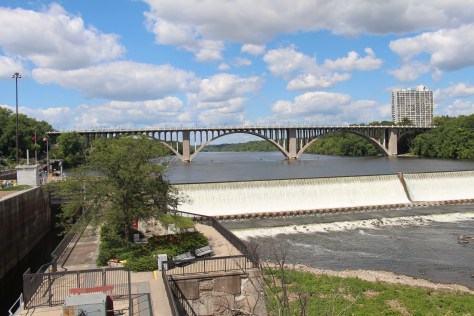
Afterwards, he pointed us in the direction of a favorite restaurant close by (he and his wife couldn’t join us as they had friends just arrived in Montpellier), and we enjoyed a delightful fish supper before heading back to the Place de la Comédie through a maze of narrow streets, to take the tram back to our hotel.
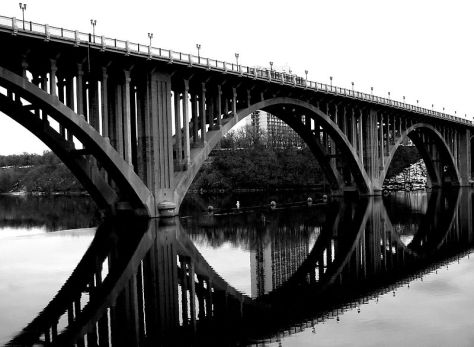
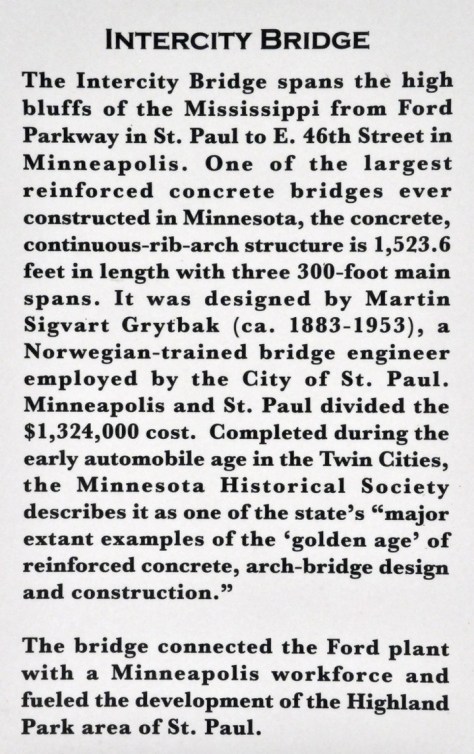
At the CGIAR Consortium office, where we held our meetings last Thursday, I bumped into an old friend from IRRI: Lori Dagdag. Lori used to be a senior manager in the IRRI finance department, but a decade ago or more she moved to Washington, DC to work as Finance Officer in the CGIAR Fund Office located in the World Bank. What a lovely surprise. I haven’t seen her since just before I retired in 2010.

Lori and yours truly.

~~~~~~~~~~~~~~~~~~~~~~~~~~~~~~~~~~

¹ Three sheets to the wind – drunk!

Dr. M. Redux . . . courtesy of the National Trust!

It is fifteen weeks today since I went base over apex and broke my leg. But I have made good progress, and I’m pleased to say that since I saw my surgeon at the end of March, and finished with formal physiotherapy sessions, I have been able to get behind the wheel and drive again. And we have been fortunate that despite the mixed weather that April has brought us so far, there have been one or two really spectacular late Spring-early Summer days that have permitted us to get out and about.

20160410 018 Hanbury HallI still can’t walk more than about a mile and a half before I feel the need to sit down and rest my leg. The ankle and lower leg swell up quite badly, and where the various pins and screws are holding my bones together, it really does hurt from time to time. That hasn’t stopped us, however, and two weeks ago (10 April), a Sunday, we decided to head out to our ‘local’ National Trust property, Hanbury Hall.

It was a glorious morning, if not a little chilly in the stiff breeze. We were hoping to see Spring flowers in the parterre garden. And we weren’t disappointed. What a magnificent display of hyacinths!

20160410 034 Hanbury Hall

20160410 033 Hanbury Hall

20160410 001 Hanbury Hall

20160410 035 Hanbury Hall

The Hanbury parterre

Last Wednesday (20 April) was an even better day, weather-wise. Warm and sunny, and a joy to be outside in the fresh air. So we headed southeast from home, just 17 miles by motorway (and less than 30 minutes if there’s little traffic congestion) from home to Packwood House, another National Trust site we have already visited on several occasions also, but about which I don’t appear to have posted anything on my blog. That will have to be remedied. Packwood is a much-restored Tudor manor house. One of its signature features is the Yew Garden.

Anyway, we just wanted to enjoy the gardens, the lakeside meadow, and have a bite to eat in the lovely refurbished café there.

Packwood map

The Carolean Garden, and its beautiful yellow border . . .

20160420 045 Packwood House

The sunken garden, part of the Carolean Garden, installed in the 1930s.

20160420 046 Packwood House

The Raised Terrace, leading into the Yew Garden, from the Carolean Garden.

Scenes around the Yew Garden . . .

20160420 036 Packwood House

Packwood House from the Lakeside Meadow.

Until my leg heals further, our National Trust visits and walks will be limited to a wander round the gardens closest to the various properties. A walk at Croome Park, for example is certainly not on the cards in the foreseeable future. But, after being confined to a chair for so many weeks, followed by limited movement around the house, it’s great to be in the great outdoors. And our membership of the National Trust is, as always, a great encouragement to make the effort to take an outing.


2015: a great year for National Trust and English Heritage visits

Steph and I have been members of the National Trust for five years now. We even qualify for the Seniors discount from January! And we’ve been members of English Heritage for just a year.

But we will be renewing our membership of both organizations in 2016. Why? Because they both offer excellent value for money, and certainly give purpose to our trips out, whatever the weather. Be it a visit to a stately home, a ruined castle, a country park, or a beautiful garden, there are so many properties to visit and experience so many aspects of our cultural heritage.

Looking back on our 2015 visits we have certainly had our money’s worth, and annual membership has more than paid for all the entrance fees we would have had to pay in any case. And much more!

So here is a pictorial summary of our great visits this past year, beginning in early April and ending just last week when we visited Charlecote Park to see the Christmas decorations. And there are links to individual posts about each visit.
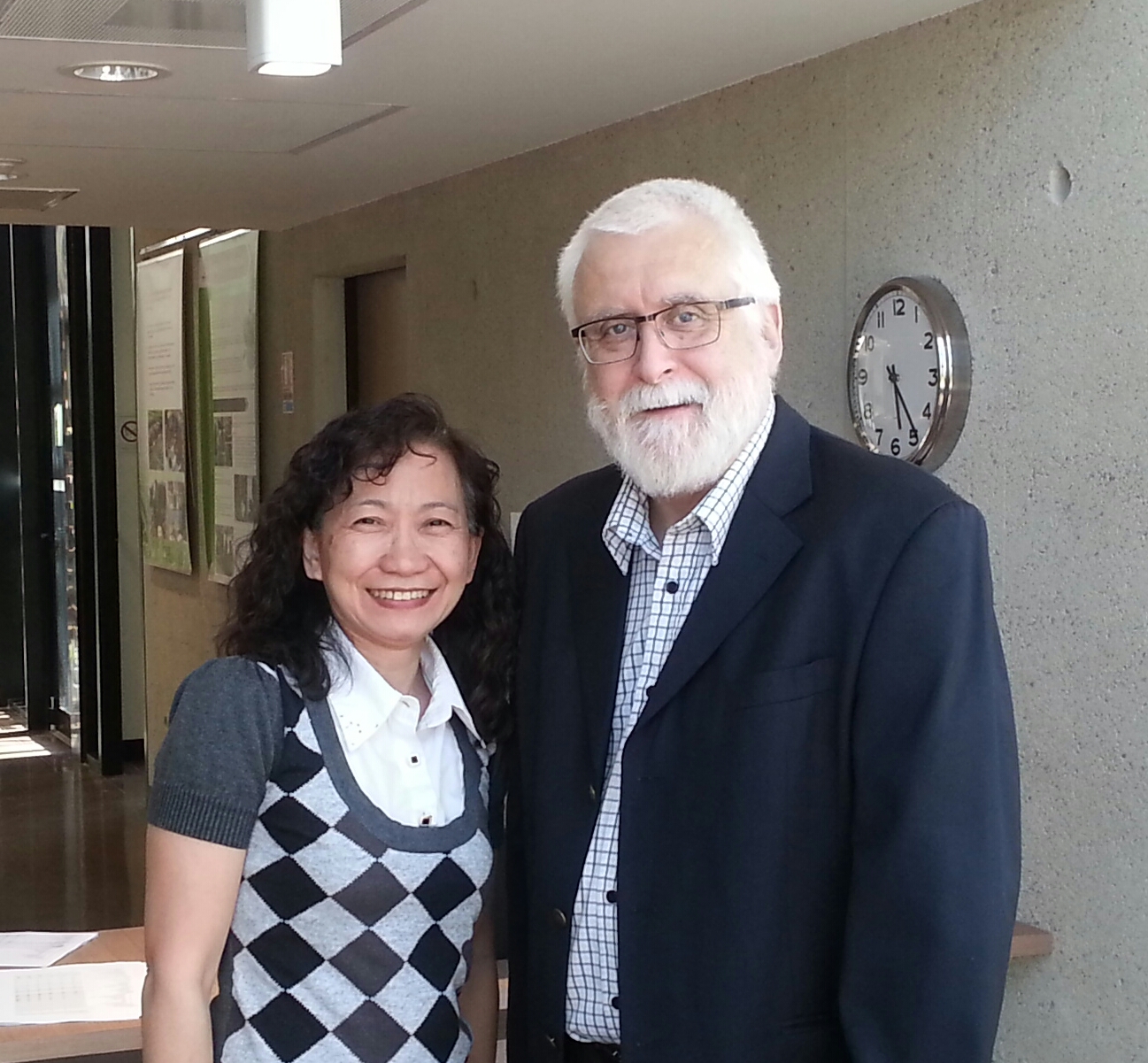
NATIONAL TRUST

Lyveden New Bield (9 April)

20150409 092 Lyveden

Brodie Castle (National Trust for Scotland – 29 May)

Brodie Castle

Culloden Battlefield (National Trust for Scotland – 29 May)

Scotland 082

Inverewe Garden (National Trust for Scotland – 1 June)

Scotland 312

Arduaine Garden (National Trust for Scotland – 7 June)

Scotland 877

Rufford Old Hall (8 June)

The main entrance in the seventeenth century wing.

Tredegar House (18 June)

Tredegar House, near Newport in South Wales
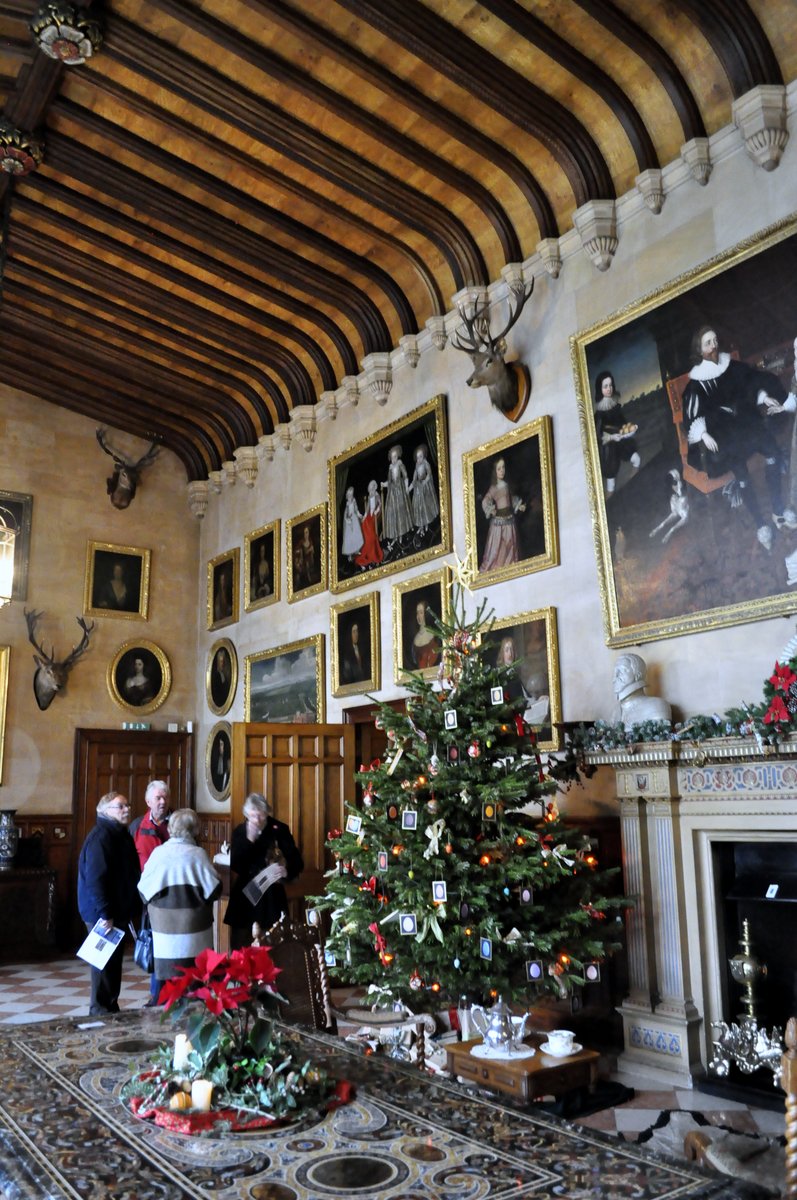
Chirk Castle (1 July)

20150701 147 Chirk Castle

Hawford Dovecote (9 July)

20150709 010 Hawford dovecote

Wichenden Dovecote (9 July)

20150709 022 Wichenford dovecote

Hardwick Hall (12 August)

Hardwick Hall, Derbyshire

Newark Park (28 August)

20150828 031 Newark Park

Croome Park (12 October)

20110328046 Croome Court

Charlecote Park (16 December)

The entrance hall.

ENGLISH HERITAGE

Rushton Triangular Lodge (9 April)

Rushton Triangular Lodge, Northamptonshire

Stokesay Castle (14 April)

Stokesay Castle, Shropshire

Wroxeter Roman City (14 April)

20150414 130 Wroxeter Roman city

Kenilworth Castle (21 April)

cropped-20150421-023-kenilworth-castle.jpg

Goodrich Castle (21 May)

Goodrich Castle, Herefordshire

St Mary’s Church, Kempley (21 May)

20150521 135 St Marys Kempley

Witley Court (9 July)

20150709 091 Witley Court

Hardwick Old Hall (12 August)

Looking down six floors in the Old Hall. And the magnificent plasterwork on the walls.

Wenlock Priory (18 August)

20150818 043 Wenlock Priory

Ironbridge (18 August)

From: http://en.wikipedia.org/wiki/File:Ironbridge