Feeling a little moonstruck today . . .

Christmas Eve 1968. I can remember exactly where I was, and what I was doing.

I was trudging around the streets of my hometown of Leek, in North Staffordshire, ankle-deep in snow (quite a novelty for that time of year) delivering Christmas mail as a temporary postman, something that I had done each year since about 1964.

So why do I remember this Christmas Eve especially? The newspapers were full of it.

Apollo 8 had lifted off just three days earlier from the Kennedy Space Center in Florida to make the first manned orbit of the Moon, paving the way for the historic Apollo 11 mission seven months later, the first of only six manned Moon landings, thereby fulfilling President Kennedy’s commitment to land a man on the Moon before the end of the 1960s, and bring him safely back to Earth. It’s hard to believe that, with Apollo 17, the manned landings were over by December 1972.

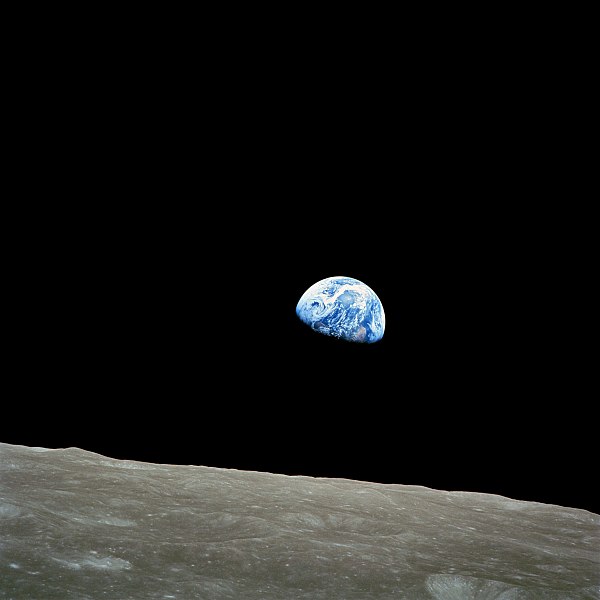
Earthrise on 24 December 1968, taken by crew member Bill Anders on board Apollo 8. This photo must be one of the most widely viewed images of all time. This image was catalogued by Johnson Space Center of the United States National Aeronautics and Space Administration (NASA) under Photo ID: AS08-14-2383.

On Christmas Eve 1968, Apollo 8, commanded by Frank Borman (who remembers him now?) with crew members Jim Lovell (who commanded the ill-fated Apollo 13 mission), and Bill Anders, entered Moon orbit, becoming the first humans to leave Earth orbit, completely isolated from the Earth as they sped behind the Moon, and experiencing the wonder of Earthrise.

So why has this Apollo mission come to my mind today of all days?

Well, I’d gone downstairs in the dark just around 6 am to make our usual early morning cup of tea, and heard the rain falling quite heavily, just as had been forecast. Imagine my surprise a couple of hours later when I looked out of the kitchen window to see a clear, bright sky, not a cloud in sight.

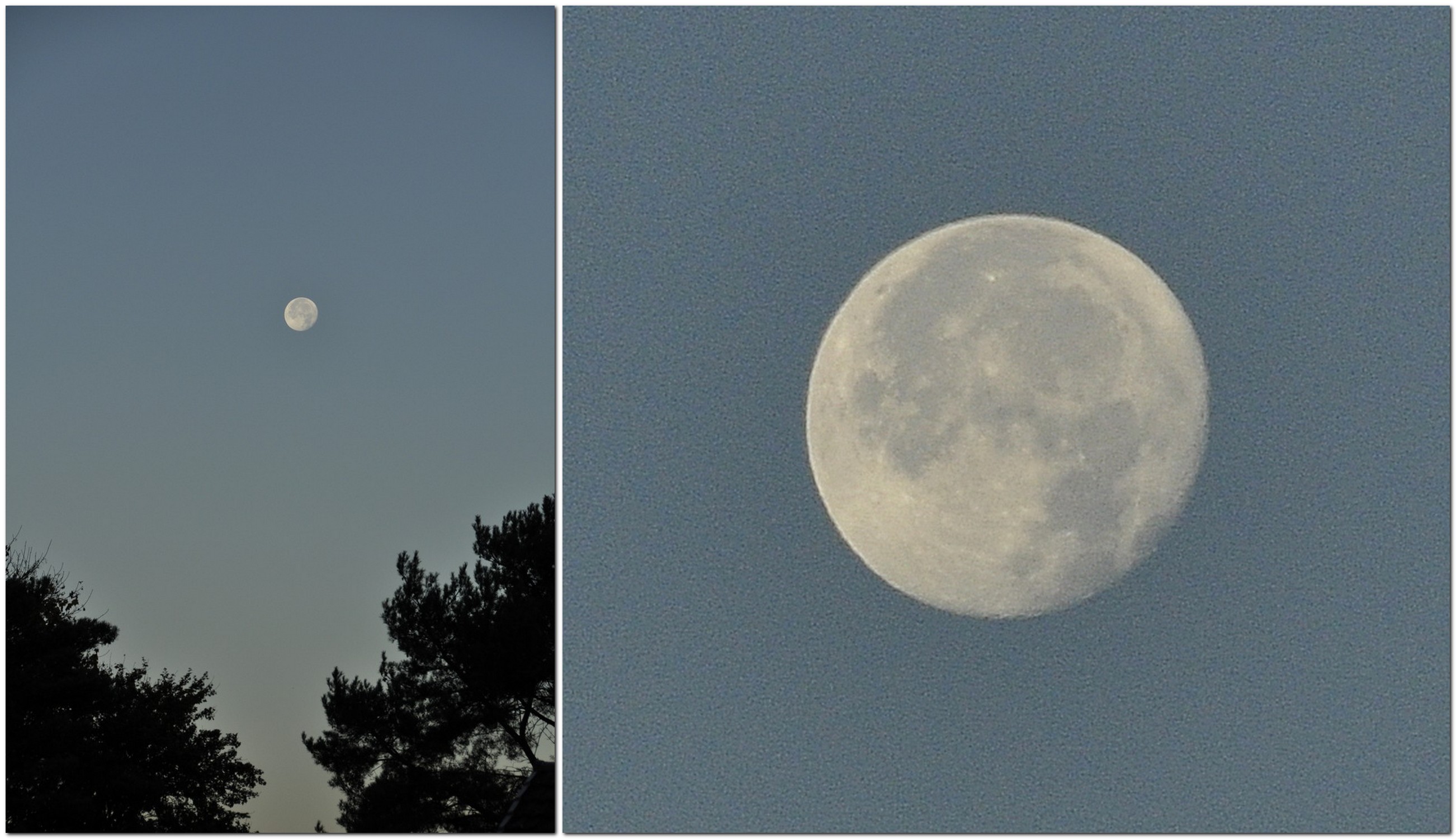
And there, setting towards the western horizon, was the waning Moon just a couple of days past its full Hunter’s Moon phase.

The setting Moon over Bromsgrove around 8:15 am today, 26 October 2018.

And as I gazed up into the sky, making out various details of the Moon’s surface, some 384,400 km away, I found myself marveling at the fact that humans had actually walked on the surface of this extraterrestrial body that has fascinated humans since time immemorial. I began to ‘feel’ its power, its influence, its attraction.

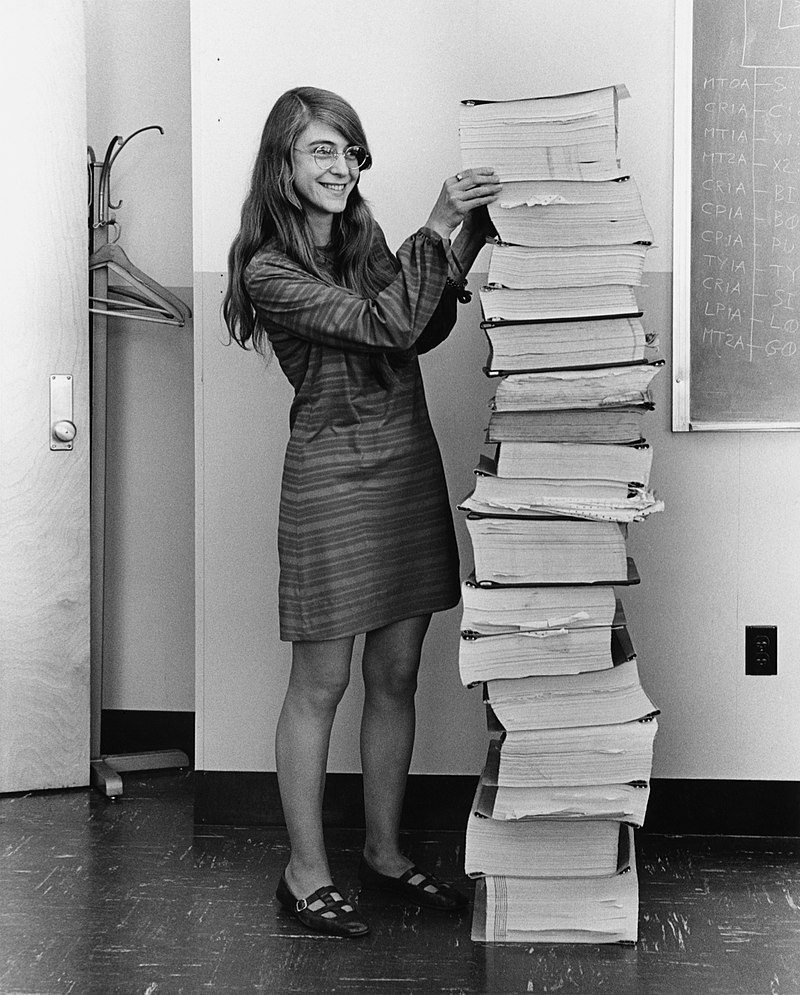
Margaret Hamilton in 1969, standing next to listings of the software she and her MIT team produced for the Apollo project.

Half a century on, and that period of intense lunar exploration hardly seems possible. Did it really happen? That’s an idea that some conspiracy theorists promote – but not me I hasten to add.

What also amazes me is that there is probably more computing power in your average smartphone than that which took humans to the Moon in Apollo 8 and on the other lunar missions. Thank you, Margaret Hamilton!


Gelia Castillo – a synthesis tour de force

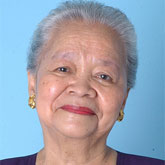
I was searching YouTube the other day for videos about the recent 5th International Rice Congress held in Singapore, when I came across several on the IRRI channel about a long-time friend and former colleague, Professor Gelia Castillo, who passed away in August 2017 at the age of 89¹.

Gelia was a distinguished rural sociologist, emeritus professor at the University of the Philippines-Los Baños (UPLB) and, since 1999, a National Scientist of the Philippines, the highest honor that can be bestowed on any scientist.

I’m proud to have counted her among my friends.

I’d known Gelia since the late 1970s when she joined the Board of Trustees of the International Potato Center (CIP) in Lima, Peru, the first woman board member and, if memory serves me correctly, one of the first women to serve on any board among the CGIAR centers when they were dominated by white Caucasian males (a situation that no longer obtains, thankfully).

The CGIAR centers in 2018 (from CIAT Annual Report 2017-2018).

I know that Gelia went to serve on the board of the International Plant Genetic Resources Institute (now Bioversity International) based in Rome, and other boards inside and outside the CGIAR.

I was a young scientist, in my late 20s, working for CIP in Costa Rica (and throughout Central America) when Gelia joined the center’s board, bringing (as she did everywhere she went) a welcome breath of fresh air—and a clarity of independent thinking—that categorized all her intellectual contributions. She influenced policymakers in government, international development circles, and academe, [and] pioneered the concept of participatory development.

Gelia was born into a poor family in Pagsanjan in Laguna Province, just 31 km east of Los Baños, the city² where she spent her entire academic career. She completed her graduate studies in the United States with MS (1953) and PhD (1960) degrees in rural sociology from Penn State and Cornell, respectively. She retired from UPLB in 1993, a couple of years after I landed in the Philippines, when we renewed our friendship after more than a decade.

But retirement did not mean slowing down. Besides her international board commitments, Gelia became ‘synthesizer-in-chief’ at IRRI, an honorary role through which she attended institute seminars and science reviews. She was also a valued adviser to successive Directors General. Let Gelia herself explain.

Gelia kept us honest! Why do I say this? She had an uncanny ability always to see the broader picture and bring together quite different perspectives to bear on the topic in hand. She herself admitted that, early in her career, she decided to concentrate on ‘synthesis’, an academic and intellectual focus and a skill (gift almost) that few manage to harness successfully. It wasn’t just her social sciences training.

In developing a research strategy and plan, any organization like IRRI needs skilled and dedicated researchers. But often, because each is deeply involved in his or her own projects, they find it hard to see (often necessary) links with other disciplines and research outcomes. Gelia was able to extract the essence of the institute’s research achievements and pull it together, mostly with approval but sometimes with justified criticism. Given her expertise in participatory research, working with poor families in rural areas (the ‘clients, as it were, of IRRI’s research and products), and promoting gender studies, Gelia could, almost at the drop of a hat, deliver a succinct synthesis of everything she had listened to, and provide suggestions for future directions. After a week of intense annual science review presentations and discussions, Gelia would be called upon, at the end of the final afternoon, to deliver her synthesis. Here she is, at the IRRI science review in 2010.

And almost without fail, she could hit the mark; and while she could be critical, never were criticisms aimed at individuals. Her analysis never became personal. I’m sure her wise words are sorely missed at IRRI.

Permit me to finish with a personal recollection. I retired from IRRI in April 2010 and, in subsequent years, I only saw her a couple of times, later that same year and in August 2014, when I was organizing the 3rd and 4th International Rice Congresses, and had to visit IRRI in that capacity.

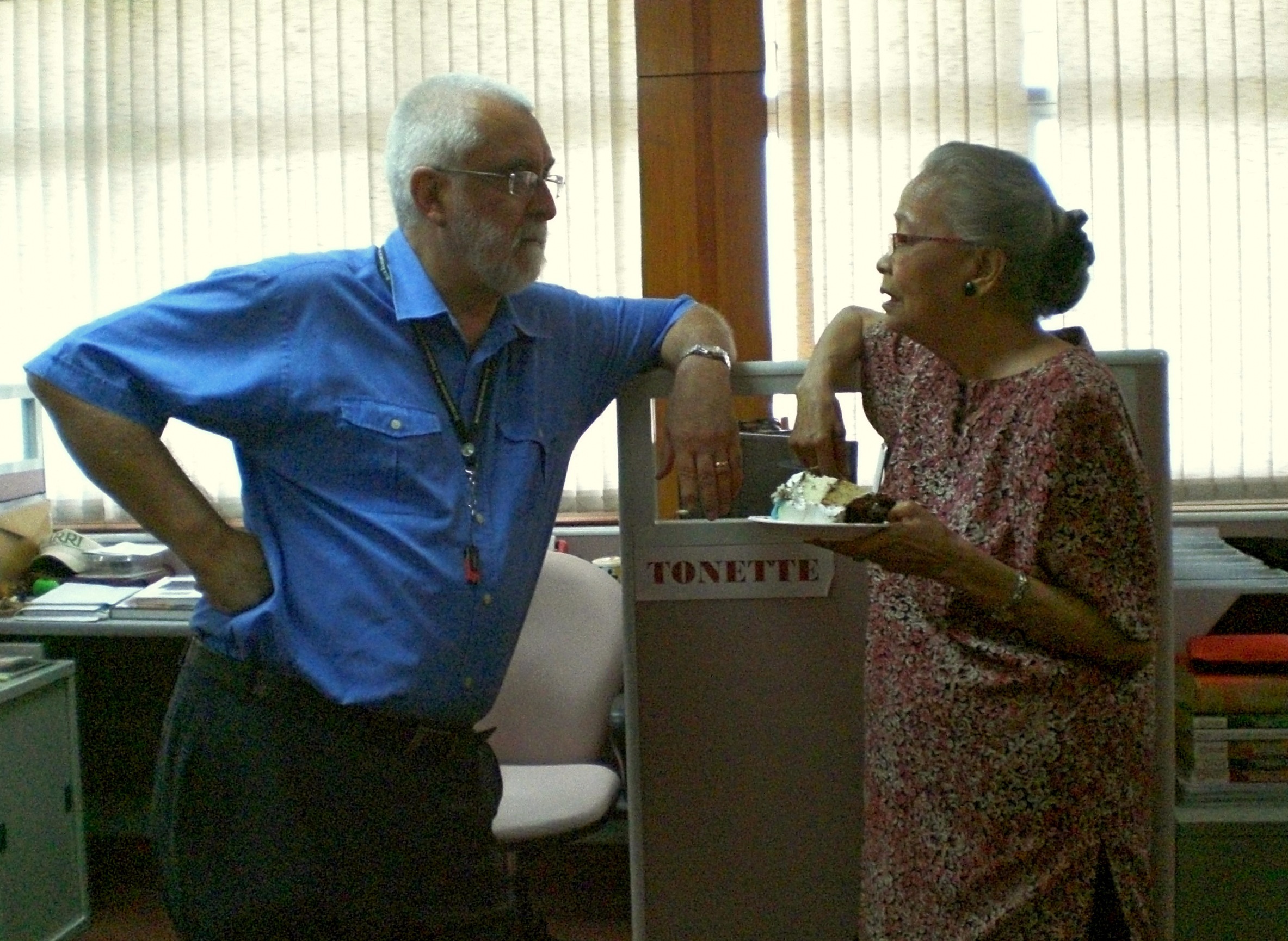
Sharing cake and reminiscences with Gelia (in the DPPC office) on my last day at IRRI, 30 April 2010.

But just before I retired, in March 2010, I delivered my ‘exit’ seminar: Potatoes, pulses and rice – a 40 year adventure, a synthesis of my career in international agricultural research and academia. It must have struck a chord with Gelia. Because after it was all over, she came up to me, took me by the hand, and planted a large kiss on my cheek. That was praise indeed! A memory I cherish.


¹ Written by my friend and former colleague, Gene Hettel (who had been Head of IRRI’s Communication & Publication Services), IRRI published this obituary shortly after her death. There you will also find links to the speeches at her memorial service.

² In 2000, under Presidential Proclamation Order No. 349, the Municipality of Los Baños was designated and declared a Special Science and Nature City of the Philippines.

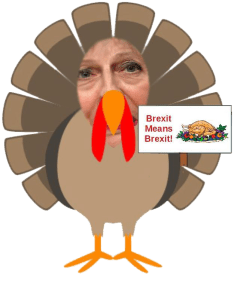
Brexiteers are like turkeys voting for Christmas

But it’s Remain supporters who are getting plucked and stuffed.

I’ve tried hard over the past two years not to disparage the views of those who voted, in the June 2016 referendum, for the UK to leave the European Union, many of whom continue to support that aim. After all, civilized debate is (or should be) what it’s all about.

Now, however, the gloves are off! Because the negative social, economic, political, and constitutional consequences of Brexit, and especially a no-deal Brexit, are too grim to contemplate. In the long term, the nation will survive but not without self-inflicted pain and hardship.

Unless, this silly trajectory can be halted.

Brexiteers. Makes them sound like a bunch of mischievous rogues. But they are not. Many politician Brexiteers are dangerous, self-interested, ignorant, bigoted, and short-sighted individuals. All for one and one for all. Gobble, gobble.

Short-sighted, except one, perhaps. Jacob Rees-Mogg, MP for the 18th Century, has conceded that the nation shouldn’t expect any real economic benefits from Brexit for a long time, perhaps 50 years. He’s obviously playing the long game, cushioned by the sort of wealth that most of us can never imagine.

50 years! Good grief. My grandchildren will be approaching pensionable age by then. Are we so callous, stupid even, to condemn the youth of this country to such an uncertain future?

I can’t remember, during my lifetime (I’ll be 70 in a month’s time), the nation ever being polarized by a single issue such as Brexit. The referendum result revealed an almost equally divided electorate, with a small majority on the Leave side. In my opinion they were conned, taken in by the lies and false promises (and illegality) of the Leave campaign.

I don’t deny that some Leavers’ views were (and are) deeply held. As I have followed the debate about Brexit since the referendum, and particularly during the last few months, I watch and hear Remainers clearly and considerately lay out scenarios, based on evidence, for a Brexit outcome. In contrast, what do we hear from the Brexiteers? Project Fear! they cry.

And that’s what gets me, I’m afraid: the continuing inability of Brexit-supporting politicians and public to clearly spell out what they expect from Brexit, and what their plans are, instead of just repeating, ad nauseam, that we will be taking back control of our borders, our money, and our laws, and that it’s the will of the people.

When it comes to the law, I haven’t seen Parliament resting on its laurels because there is a continuous stream of new legislation. It seems more to do with their prejudiced view about the role of the European Court of Justice (ECJ) with respect to the EU’s regulatory framework. But if we trade under World Trade Organization (WTO) rules post-Brexit, we’ll still be subject to external controls. Not from the ECJ, but instead from the unelected WTO bureaucrats in Geneva who will hold our collective feet to the fire.

We always had control of our borders. It’s just that successive governments chose not to apply existing EU regulations to manage immigration into the UK from EU countries. Incidentally, very little is mentioned in the immigration/free movement context that immigration from countries outside the EU runs many times higher than from EU countries. Nigel Farage, bless his cotton socks, racist that he is, played the immigration card to great effect during the referendum campaign.

When it comes to money, the UK chose not to join the euro, and has, for many years, been the recipient of a healthy annual rebate after paying into the EU budget. Assuming that Brexit does indeed go ahead, one possible scenario is the UK asking to re-join the EU at some later date. But it won’t be, I believe, on the same favorable terms we currently enjoy: we’d have to join the Euro, budget rebates would be less generous or non-existent, and I guess we’d also have to become a Schengen country and abolish all border controls with other EU members.

The other point that gets my goat is the referendum result being the ‘will of the people’ (it was ‘advisory’), and must therefore be respected as though no-one is permitted to change their mind, ever. Recent polls indicate however, that if the referendum were held today, based on what we know now and what was just speculation or false promises in 2016, there would be a majority to Remain in the EU. Voters are changing their minds – in both directions. The outcome might still be close.

Maybe some of the 27+% who didn’t exercise their democratic right in 2016 will come to understand the consequences of the Leave vote. Those who were too young to vote last time are already expressing their desire for continued membership of the EU. Older voters (part of my demographic that overwhelmingly voted Leave – but not me, I hasten to add) have died since the referendum. The balance of the electorate is not what it was.

The electorate deserves, demands even, the right to pass judgment on whatever Theresa May salvages from her negotiations with the EU. And one of the options must be the right to Remain.

It’s time for the electorate to take a second look, hold a #People’sVote. And for that cause, a major demonstration will be held in London tomorrow (which I am unable to attend).

I can however express my support through this blog.


I was angry (still am), but now I’m also embarrassed

Embarrassed . . . to be British. But come autumn 2019, however, I’ll be able to thumb my nose at the world with my new iconic blue and gold passport (to be manufactured, apparently, in France – oh the irony!). Even though I might not be able to visit as many countries, visa-free, as UK citizens currently enjoy under membership of the European Union (EU).

Let’s go back a couple of years.

I woke up on the morning of Friday 24 June 2016 and, as was my wont, tuned into BBC Radio 4’s Today news program at 06:00. I say ‘wont’ because I seldom listen nowadays. But more of that later.

From: the Daily Express, 3 February 2016

I was keen to hear the result of the previous day’s referendum on continuing membership of the EU, expecting a majority in favor. How cruel reality can be!

I was amazed, bewildered, dismayed even, when the result sank in. The nation was divided, voting 52-48% (a difference of 1,269,501 votes on a turnout of 72.2%) to leave the EU. Brexit was now on the cards. Or was it?

I just couldn’t believe that the electorate had turned its back on an institution it had been part of, and benefited from, for over 40 years. Leave supporters had swallowed the false promises, mistruths, downright lies even (and, as we now know, the illegality) of the Leave campaign.

But since the referendum was not legally binding (just check the legislation that gave substance to the referendum) I thought (misguidedly as it has transpired) everyone would come their senses and reach a suitable compromise, allowing us to stay in the EU. However, the ‘will of the people’ has become almost an article of faith that cannot (may not), under any circumstances if you are a Brexiteer, be challenged.

I’ve long argued that since the referendum would potentially have far-reaching social, economic, and constitutional consequences, the bar should have been set much higher. By this I mean that a minimum voter turnout must have been reached, e.g. 75%, and that the margin voting to Leave should have been >50% of the electorate, not just those who voted. I guess I can be accused of wanting it both ways: heads I win, tails you lose. But the referendum was to decide a fundamental transformation of this (once proud) nation. So, if the voter turnout did not meet the agreed threshold, or less than 50% of the electorate (22,750,063 in June 2016) voted to leave, then the referendum would have been declared null and void.

That, unfortunately was not the case, because former Prime Minister David Cameron was too complacent during the whole referendum campaign and the lead up to its implementation. Holding a referendum on the UK’s membership of the EU was a political sop to the right wing of the Conservative Party. He never imagined that he would have to contend with the likes of Boris Johnson and Michael Gove on the Leave side, never mind Nigel Farage of UKIP, who had few if any scruples about telling like it wasn’t. And he expected to win. Having lost, he bowed out of politics leaving the consequences for an even more incompetent Prime Minister to address.

It didn’t take long for my dismay to turn to anger. But now I’m also embarrassed. Embarrassed by the complete shambles (I could use stronger language) of the way that Theresa May’s inept (but ostensibly ‘stable and strong’) government has attempted to reflect the ‘will of the British people’ in a withdrawal agreement with and from the EU, and establish a new relationship post-Brexit. The UK has become a laughing stock among the nations of the world. We are on a trajectory to becoming an irrelevant little island off the coast of Europe. Under those circumstances, can (should?) the UK still lay claim, for example, to a permanent seat on the United Nations Security Council? Its status will be diminished. Yes, for many, the UK will become an irrelevance.

I say ‘attempted to reflect’ because almost 2½ years on from the referendum, we still seem to have no idea of what the UK’s post-Brexit status will be. Given the growing prospect that no deal is agreed by the Brexit date (29 March 2019, just five months away), the government apparently has no plan, but has started to publish grim impact papers of what a no deal or hard Brexit would encompass. But ask any of the Brexiteers what their reaction is (more of ‘Project Fear’) or their plan, and you are faced with the same old platitudes: we’re taking back control of our borders, money, and laws. Hang the economic, social and constitutional consequences. What a parlous state we have reached.

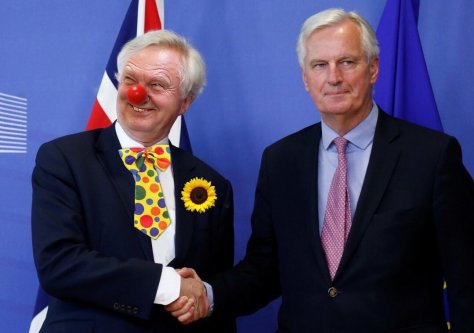
All I can assume is that when Theresa May invoked Article 50 on 29 March 2017 (triggering the process to leave the EU), she thought that any agreement with the EU would be done and dusted in a matter of weeks. In fact, former Secretary of State for Exiting the European Union, David Davis (now there’s a clown of a politician if ever I saw one), stated that this agreement would be one of the easiest to achieve.

From Twitter on 19 June 2018: Robert Campbell #FBPE Deeply Unhelpful @madman2. David Davis with EU Chief Negotiator Michel Barnier.

Theresa May didn’t have to invoke Article 50 in March 2017, but she did. And we were then locked into a situation that seems to be heading for failure. She must have assumed that the EU members would simply accede to any of the ‘having our cake and eat it’ proposals put forward by the British government. In fact, I’m surprised that the other 27 members hadn’t shown the door to the British a long time ago.

It seems to me that Brexiteers feel the EU owes us something. Nonsense! We’re the ones asking to leave; or at least some of us are (don’t count me among them). It’s been made crystal clear that the UK’s relationship with the EU post-Brexit cannot be equal to what we currently enjoy as full members: frictionless trade, freedom of movement, and the like. Indeed as a ‘third country’ post-Brexit, we will be at a serious disadvantage, and all those trade and other agreements that the UK participates in as a member of the EU will have to be renegotiated, one by one. A Canada +++ agreement to fill the void? Canada +++, my backside!

Brexiteers simply talk about an independent UK outside the EU in terms of trade, and their desire to negotiate free trade agreements (FTA) on our own terms, notwithstanding that we already have FTAs with more than 60 counties or blocks of countries through membership of the EU. At 11 pm on 29 March next we lose all of those. Brexiteers object to the role of the European Court of Justice overseeing the EU’s regulatory framework. But even operating under the rules of the World Trade Organization we will still be subject to the authority of that body, and trading under far less favorable conditions than at present. It doesn’t take Economics 101 to see that. But at least our Secretary of State for International Trade will be able to travel globally on his new blue passport to negotiate all those trade deals that he assures us are just waiting to be signed.

Membership of the EU has brought so much more. For one thing, the EU has, among its members ensured peace in Europe over many decades. Joint membership of the EU by the UK and Republic of Ireland is one of the principles of the Good Friday Agreement. The future of the border between Northern Ireland and the Republic is one of the main stumbling blocks of further progress in the withdrawal agreement, as it was long foreseen by many on the Remain side but discounted by Brexiteers, chief among them Boris Johnson and Jacob Rees-Mogg.

In the early 2000s, when I was working at IRRI in the Philippines, risk assessment was one of the conditions insisted upon by the donors to the international agricultural research centers to continue receiving overseas development assistance support. It’s ironic that the UK government, through the Department for International Development, DFID, was one of the leading proponents of such conditions. And clearly, as far as Brexit is concerned, the government does not appear to have made an appropriate risk assessment or developed a contingency plan. Or if it has, it’s not telling anyone.

I still live in some hope that a #PeoplesVote will be held to pass judgment on any agreement that the government brings back from Brussels, and that one of the options would be to remain in the EU. But I’m not holding my breath.

Once the bastion of impartiality and independent journalism, the BBC is now perceived as taking a very partisan, pro-government stance on Brexit. For a long time now I have deplored the presenting and interviewing style of the program’s senior broadcaster, John Humphrys. Not only does he come across as a self-opinionated bully, but also as favoring one side (i.e. Brexit) over another in his interviews, often lacking a basic understanding of the issues. It’s time for Humphrys to be superannuated.

In perpetuity . . . or longer (updated 17 October 2018)

The airwaves yesterday were full of the news¹ about the secure, in perpetuity funding that the Crop Trust has awarded (annually USD1.4 million) to support the operations of the International Rice Genebank at the International Rice Research Institute (IRRI), based in Los Baños, Philippines. The genebank conserves the largest and most genetically diverse collection of rice genetic resources that is the genetic base of rice improvement programs worldwide. It’s the first genebank to receive this sort of funding commitment.

In perpetuity! Forever! That’s a long time. In some ways, of course, it’s not a completely open-ended commitment. The agreement (to be signed on World Food Day, 16 October², during the 5th International Rice Congress in Singapore) will, I understand, be subject to five-year reviews, and the development of a business plan that will guide how, where and what will get done. That plan must inevitably evolve over time, as new technologies not only enhance how rice seeds can be better preserved but also how they can be used in rice improvement. Not that I can see IRRI screwing up and losing the funding. That behavior is not in the institutional DNA!

The collection holds more than 130,000 seed samples or accessions of landrace varieties, wild species, and other research materials, among others. You can check the status of the IRRI collection (and many more genebanks in the Genesys database).

My congratulations to Genebank Head and compatriot, Ruaraidh Sackville Hamilton and his key genebank lieutenants, Genebank Manager Flora ‘Pola’ de Guzman and Sr Associate Scientist Renato ‘Ato’ Reaño, for guiding the genebank to this happy state.

It has been a long journey, almost 60 years, from 1960 when IRRI was founded and Dr TT Chang (the first head of the genebank) began to assemble a collection of rice varieties that soon became the International Rice Germplasm Center (IRGC).

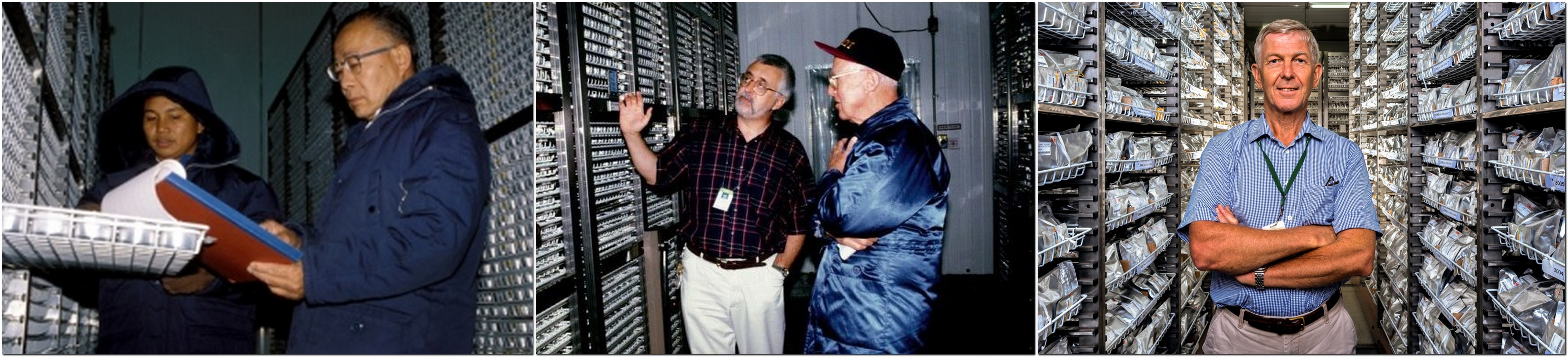
L-R: Dr TT Chang was head of the International Rice Germplasm Center from 1962-1990; Mike Jackson served as Head of the Genetic Resources Center (here with Nobel Peace Prize Laureate Dr Norman Borlaug) from 1991-2001; and Dr Ruaraidh Sackville Hamilton joined IRRI in 2002.

There was a significant change of direction, so to speak, to the genebank and its operations in 1991 after my appointment as Head of the newly-created Genetic Resources Center (the IRGC acronym was subsequently changed to International Rice Genebank Collection) with a mandate to rationalize and upgrade the genebank’s operations. I held that position for the next decade before moving on to the institute’s senior management team as Director for Program Planning & Communications in 2001. Ruaraidh joined IRRI in 2002 and has been at the helm ever since.

In other stories posted on this blog I have described what it entails to run a genebank for rice, and some of the important changes we made to modernize genebank management and operations, especially how they were impacted with respect to the institute’s international obligations to FAO and subsequently under the International Treaty on Plant Genetic Resources for Food and Agriculture.

In 2015 I made my own video to illustrate many of the different operations of the genebank, some of which have been modified in the light of new research concerning the handling of rice seeds post-harvest. Nevertheless, the video reflects the changes I introduced during my tenure as head of the International Rice Genebank, many of which still prevail.

Ruaraidh built upon the changes I introduced, bar-coding all samples for example, and linking the collection with others in the CGIAR through the Genebank Platform. There have been further improvements to how data about the collection are managed, and seed management was enhanced through the research of former employee and seed physiologist Dr Fiona Hay and her PhD student Kath (now Dr) Whitehouse.

Ruaraidh has also successfully steered IRRI and its genetic resources through the turbulent currents of international germplasm politics that culminated in the entering into force of the International Treaty in June 2004, and the subsequent negotiations over access and benefit sharing. I can’t deny I was quite happy to leave these ‘political’ aspects behind when I left GRC in 2001. Management and use of genetic resources in the 1990s were increasingly affected by the various negotiations that affected access to and sharing of biodiversity after the Convention on Biological Diversity (CBD) came into force in December 1993. To some extent they were a distraction (but an important one) from the technical aspects of rice genetic resources that I tackling.

It’s quite humbling that for generations to come, I will have been a part of securing the genetic heritage of rice. Besides making the necessary technical changes to genebank structure and operations in the 1990s, I’m particularly proud of the personnel structures I introduced. These permitted staff to really fulfill their potential.

I quickly recognized that Pola should be placed in the role of Genebank Manger, and Ato given responsibility for all field operations. We built a team that believed in a culture of mutual support.

Ken McNally

Another aspect was the recognition, way back in 1998, of the power of genomics and molecular genetics to unravel the secrets of rice diversity. To that end I had organized an international workshop in The Hague in September 1999, which is described about two-thirds through this blog post. I was fortunate to hire Dr Ken McNally as a molecular geneticist in this respect, and he has taken the study of rice genetic diversity to another level, supported by someone who I believed in from my early days at IRRI, Dr Elizabeth Naredo.

But the genebank is also facing some changes. Ruaraidh is expected to retire in the near future, and Pola and Ato can’t be far off retirement. No-one is irreplaceable, but they will be a hard act to follow. Finding individuals with the same breadth of experience, commitment to genetic resources conservation, and work ethic will certainly be a challenge. Other staff from my era have already retired; the genebank did not fall apart. With this secure funding from the Crop Trust the genebank can, for the first time in its 60 year history, set itself on a trajectory into the future in a way that was always uncertain in the past (because of year-to-year funding), but always the Holy Grail of genetic resources conservation.

I also hope that IRRI will step up to the plate and secure other funds to build a completely new genebank appropriate for the 21st century. After all, the facilities I ‘inherited’ from TT Chang are approaching 40-50 years, and even those I improved are 25 years old. Relieving the institute of the genebank annual operating budget should open up other opportunities.

Congratulations to IRRI, and on behalf of the genetic resources community (especially those depending on rice) a big thank you to the Crop Trust!


¹ BBC, Nature, and New Food Magazine, among others.

² My friend and former IRRI colleague, Gene Hettel, kindly sent me some photos and videos from yesterday’s signing ceremony in Singapore between IRRI and the Crop Trust.

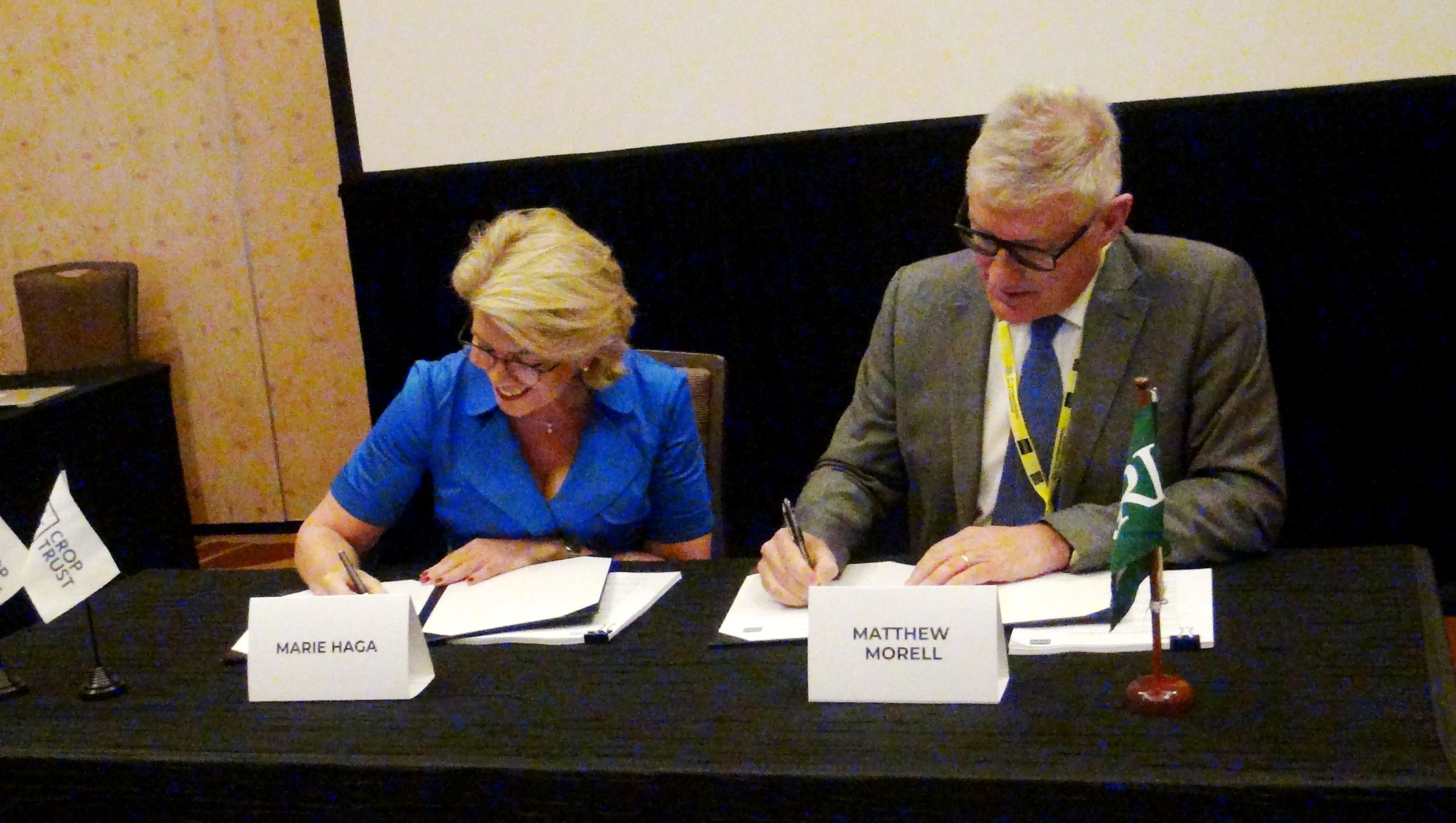
Crop Trust Executive Director Marie Haga and IRRI Director General Matthew Morell sign the agreement assuring in perpetuity funding for the International Rice Genebank.

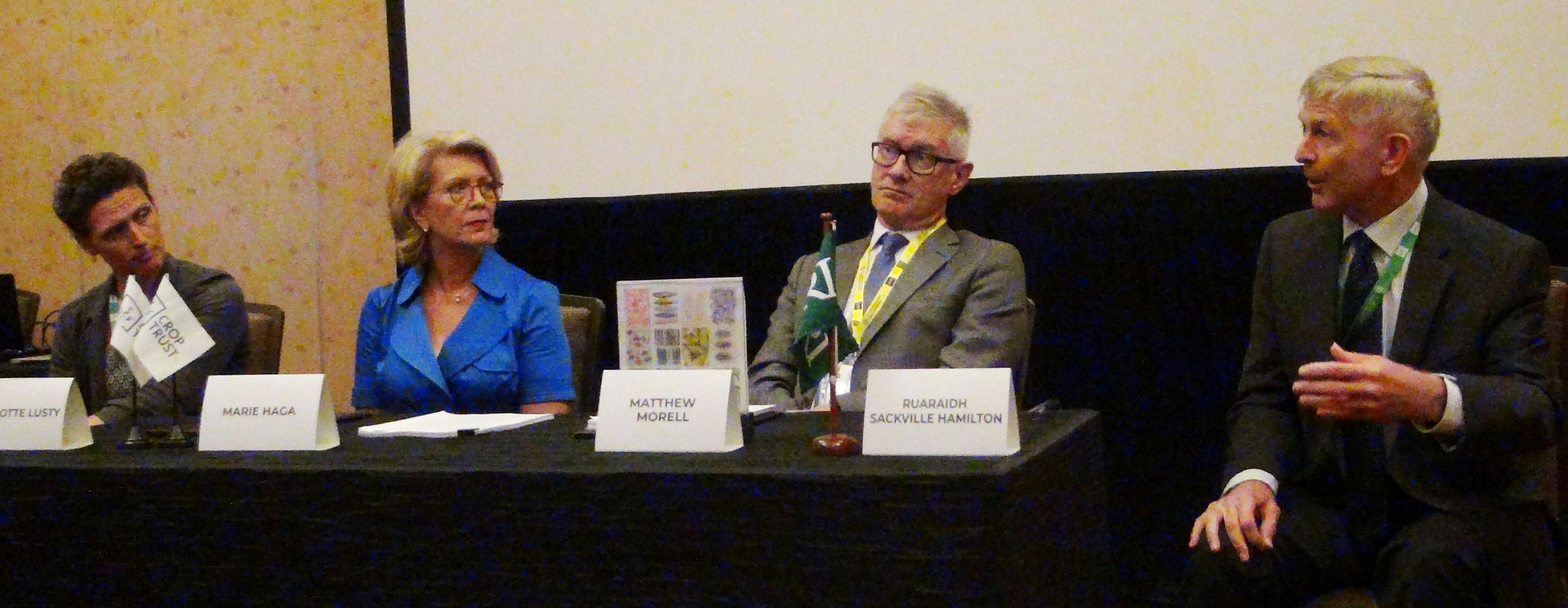
Head of the genebank Ruaraidh Sackville Hamilton speaking after the signing of the agreement. On the left is Charlotte Lusty, Head of Programs and Genebank Platform Coordinator at the Crop Trust.

One very nice touch during the ceremony was the recognition of Pola de Guzman’s 40 years dedicated service to genetic conservation at IRRI.

Well done, Pola!

Whither the grasspea?

Would you knowingly eat something that could harm you? That’s the dilemma facing millions of poor, subsistence farmers and their families from time to time, especially in India, Bangladesh, and Ethiopia, when the alternative is not eating anything at all. Famine.

From the beginnings of agriculture and earlier, 10,000 or more years ago, farmers have cultivated and consumed in times of adversity, the seeds of a plant known scientifically as Lathyrus sativus L.¹ Or, more commonly, the grasspea. It’s also an important fodder crop for livestock.

On the plus side, grasspea has a good protein profile and, as a legume, it supplies nitrogen to the soil through its root nodules. Its particular agricultural value is that it can be grown in times of drought, as well as when the land is flooded. It’s the ultimate insurance crop for poor, subsistence farmers.

Yet, it holds a deadly secret. β-ODAP. Or more precisely, β-L-oxalyl-2,3-diaminopropionic acid to give its full name, an amino acid that is also a neurotoxin responsible for the condition known as lathyrism, a non-reversible paralysis. No wonder, then, that its cultivation is banned in some Indian states. In the past, its consumption has also had severe consequences in Europe.

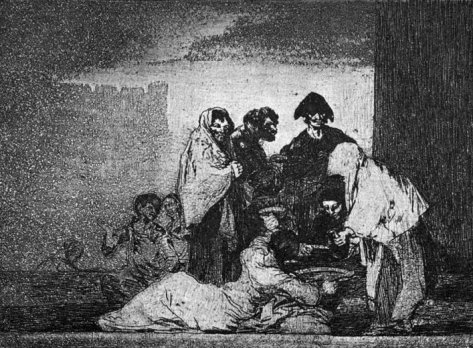
‘Gracias a la Almorta’ or ‘Thanks to the Grasspea’ by Francisco de Goya (painted between 1811 and 1813), painted during the Spanish War of Independence, when poor people turned to eating grasspea, and suffered paralysis from lathyrism. However, on the British Museum website it suggests grain (millet) rather than ‘grasspea’, and no mention of lathyrism. ‘Almorta’ is a Spanish word for grasspea.

Yet, when needs must, poor farmers turn to the grasspea when there is nothing else to eat because drought or floods have wiped out other crops.

So what’s being done to overcome the grasspea’s downside? Fortunately, an international collaborative research effort (funded by the UK Government’s Global Challenges Research Fund), Unlocking the Potential of Grass pea for Resilient Agriculture in Drought Prone Environments (UPGRADE), aims to breed ‘sweet’ varieties of grasspea with a low content of the neurotoxin.

I learned about this project yesterday evening when I happened to tune into BBC Radio 4’s Inside Science (you can listen from about 11′ 20″ into the program). The John Innes Centre in the UK is one of the project members, and in Prof. Cathie Martin‘s lab, Dr Anne Edwards is screening about 500 different grasspea lines, testing them for β-ODAP content, and also introgressing the lower content trait into different genetic backgrounds, for future testing in the field.

I was fascinated to hear how this international collaboration was making progress towards defeating the scourge of lathyrism, as I’d also worked on grasspea almost 40 years ago. But from a crop evolution and genetic resources point of view.

When I returned to The University of Birmingham in 1981, I decided to start a small research project on grasspea, looking at the diversity and broader genetic resources of this important but somewhat neglected crop, in addition to continuing my research on potatoes.

In 1981, one of the students attending the one-year MSc Course on Conservation and Utilization of Plant Genetic Resources was Abdul bin Ghani Yunus from Malaysia. He worked on his dissertation project under my supervision, to study the diversity of grasspea. I already had assembled a collection of grasspea varieties from different sources around the world including the Vavilov Institute in St Petersburg, so Ghani had quite a stock of varieties to work with.

His dissertation led to one scientific paper, Variation in the grasspea, Lathyrus sativus L. and wild species, published in the journal Euphytica in 1984. There were two principal conclusions:

  • L. sativus is a highly variable species, and there is a clear distinction between the blue-flowered forms from south-west Asia, Ethiopia and the Indian subcontinent, and the white and white and blue flowered forms with white seeds which have a more westerly distribution. Differences in vegetative parts may be due to selection for forage types.
  • L. sativus appears to be closely related to L. cicera and L. gorgoni, and this relationship needs further investigation.

Ghani returned to Malaysia in 1982 to continue his research and teaching at the University of Agriculture, Selangor and I heard little from him, until about 1986. Then, he contacted me again, asking about the possibilities of returning to Birmingham to complete a PhD under my supervision. He wanted to work on a tropical species from Malaysia. But since he did not envision spending time back in Malaysia during his PhD program, I explained that working on this species (I don’t now remember what it was) was not feasible, since we wouldn’t be able to grow it successfully in the glasshouse at Birmingham. After all, it wasn’t the species per se that was the most important aspect for his PhD; it would be the focus, the scientific methods and approaches he would learn and employ that were more important.

I convinced him to continue his work on Lathyrus, but broadening its scope to study the biosystematics or biological relationships of the grasspea with the species considered to be its closest relatives. In that way we anticipated better defining the genetic resources or gene pools of the grasspea (an essential prerequisite if, at some time in the future, a breeding program was set up that needed to exploit more diversity), as well as trying to shed some light on the origin of this neglected food crop.

In 1990, Ghani successfully presented his PhD thesis, Biosystematics of Lathyrus Section Lathyrus with special reference to the grass pea, L. sativus L., leading to two more useful scientific papers that have been widely cited:

  • The genepools of the grasspea, Lathyrus sativus L., in Plant Breeding (1991). This research concerned the cross-breeding relationships of the grasspea and its closest relatives, based on experimental pollinations, pollen tube growth microscopy, and chromosome pairing, confirming one of our earlier hypotheses about L. cicera.
  • Phenotypic polymorphism of six isozymes in the grasspea (Lathyrus sativus L.), in Euphytica (1991). Ghani concluded that there was more genetic variation than perhaps expected in this self-pollinating species, and we discussed the implications of exploiting this diversity in plant breeding.

Today, the International Center for Agricultural Research in the Dry Areas (ICARDA) receives financial support from the Crop Trust to conserve almost 4200 samples of grasspea in its genebank, with 2000 safely stored in the Svalbard Global Seed Vault above the Arctic Circle.

Of course, grasspea is not the only edible plant species that comes with a health risk. In South America, for example, there are so-called ‘bitter’ varieties of cassava, an important source of carbohydrate, producing cyanogenic compounds that must be removed before the roots are safe to eat. Indigenous communities throughout Brazil evolved techniques to express the poisonous juice and make the food safe. In other parts of South America ‘sweet’ varieties were selected over thousands of years, and became the genetic base of commercial cassava varieties grown world-wide. The International Center for Tropical Agriculture (CIAT), based in Cali, Colombia has the world’s largest cassava germplasm that I was privileged to see in 2016 when I was conducting an evaluation of the CGIAR’s genebanks program.

This grasspea story is a good example of how progress can be made when there’s a clear research project objective, funding is available, and researchers around the world agree to pool their expertise towards solving an important problem. With recent reports that the head of DFID (the UK’s government department managing overseas development assistance or ODA) is seriously considering making changes to the 0.7% of national income commitment to the ODA budget, grasspea improvement for marginalized communities goes to show just how important such funding is, and the potential impact it can have on the lives of some of the poorest people around the world. This is the raison d’être of international agricultural research for development, an endeavor in which I participated over four decades.


¹ Grasspea is a relative of the garden sweetpea, Lathyrus odoratus, a plant that is grown for its showy, fragrant blooms.

Summer has returned . . . for one day only

Yesterday, I was reminded of that great radio broadcaster, Alistair Cooke (1908-2004) who presented Letter from America, a weekly 15-minute broadcast on the BBC from March 1946 to February 2004.

2,869 episodes! In each, Cooke presented a topical issue in the USA, tying together different strands of observation and anecdote and often ending on a humorous or poignant note.

Growing up, my family would listen faithfully to Letter from America, and that habit stayed with me as I moved on to university, and even while I was working overseas. Cooke had an excellent broadcasting voice, and always had something worthwhile and erudite to impart.

Originally from the UK, he moved to the USA in the 1930s and became a US citizen in 1941.

So why did Cooke drop into my mind yesterday, 10 October? It was one of those bright and sunny days, warm even, that we come to hope for in October, but rarely expect or experience. It was certainly a typical ‘Indian summer’ day, around 22-24°C, not a cloud in the sky.

When I was at university in the late 1960s, I remember listening to one particular Letter from America (I’m unable to track down the broadcast or transcript, although many are available online) in which Cooke waxed lyrical about Fall in New England, and went on to discuss the origin of the term ‘Indian summer‘. He described the unseasonably warm and dry days with clear, sunny skies that can occur around this time of year, often accompanied by misty mornings. It’s from this phenomenon, Cooke suggested, that the term was derived. The early colonists were aware that Native Americans would take advantage of this weather to hunt, and often attack their settlements under the cover of these misty mornings.

Yesterday’s weather pulled a memory of that broadcast, stored away for about 50 years, from the recesses of my mind.

Steph and I took full advantage to walk a stretch of the Heart of England Way, starting at the National Trust’s Baddesley Clinton in Warwickshire (just under 20 miles east of Bromsgrove, and about 30 minutes from home by car). I even had to retrieve my summer shorts from the drawer where I had put them away for the winter.

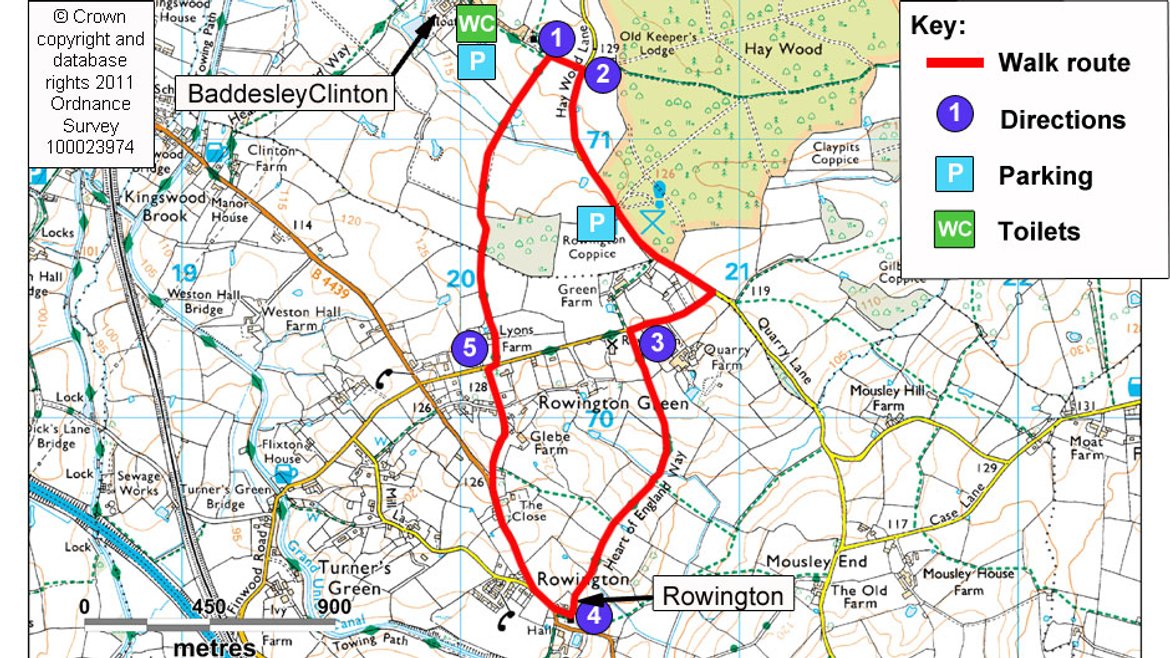
Described as An easy walk along country lanes and field paths, taking in Baddesley Clinton, Rowington Church and the Heart of England Way, it’s listed at under 3 miles in length, although according to my pedometer it was more like 3.8 miles.

We arrived at Baddesley Clinton just before 10:30 and, not having seen much traffic heading to the property, were rather surprised to encounter a very full car park. The place was heaving! We decided to take our walk before lunch, and then visit the gardens afterwards.

The weather was glorious, the rolling Warwickshire landscape stretching to the horizon, leaves changing color on trees all around, and also full of berries. I’ve never seen so many holly berries.

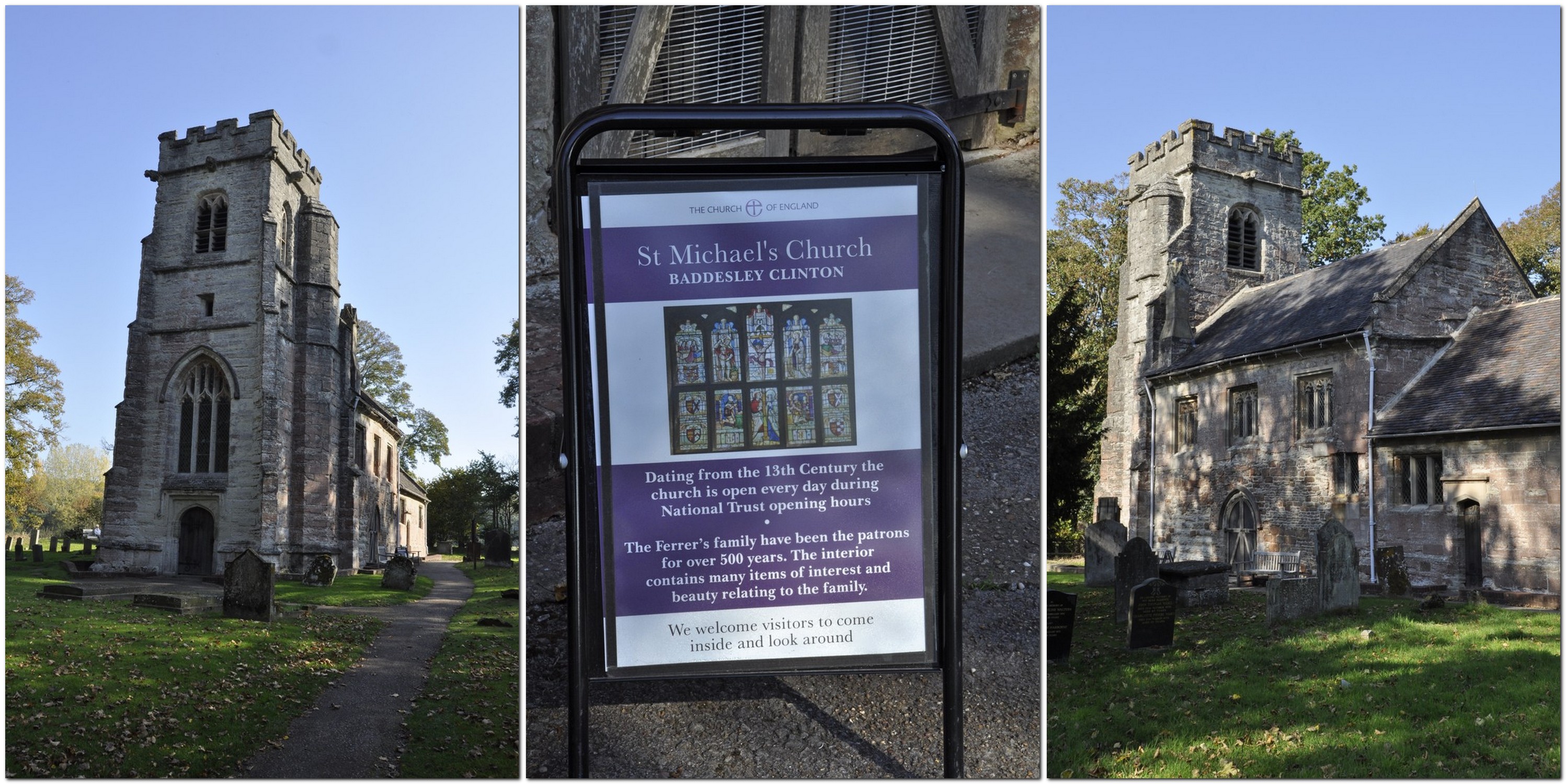
We set off through the churchyard of St Michael’s Church (1), and along the gravel road to turn right (2) on to Haywood Lane, and then, after about a mile, right on to Rowington Green.

A little distance along Rowington Green, the walk leaves the road and crosses fields (3) — along the Heart of England Way — to Rowington (4). We took a short break in the churchyard of the 12th century Church of St Lawrence (or St Laurence).

From Rowington, the walk heads north, along a public bridleway (5), and ending back at St Michael’s. I guess the walk took a couple of hours; we never rush.

Baddesley Clinton is a moated house, first built in the 1400s. One of the original owners was Nicholas Brome, Lord of the Manor of Baddesley Clinton, and is buried in St Michael’s Church. The house passed to the Ferrer family who occupied it for the next 500 years.

We didn’t visit the house yesterday, but decided to take a look at the garden – and we were not disappointed. There was a magnificent display of dahlias in one of the borders inside the walled garden.

Thank goodness we did take advantage of the exceptional weather. Today’s weather could hardly be more different. It’s windy, overcast, and all morning it has been spitting with rain. It’s a little cooler than yesterday, but going to go downhill as we progress into tomorrow and the weekend. That’s because Storm Callum is due to sweep in from the Atlantic overnight tonight, bringing a lot of rain. Climate change? What climate change? I wonder how long it will take for the remnants of Hurricane Michael to reach us?

Bull is the name . . . history is the game

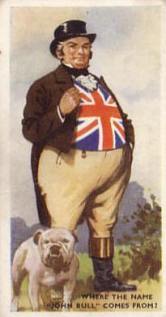
John Bull is, according to the article in Wikipedia, the national personification of the United Kingdom in general, and England in particular.

One of my family names is Bull.

My grandmother, Alice Maud Bull, born on 16 April 1880, married my grandfather Thomas (Tom) Jackson on 23 August 1904. They had four children together, and she was also stepmother to Tom’s daughter and son by his first wife Maria Bishop, who died in childbirth in 1900.

Alice hailed from the village of Hollington in Derbyshire, about halfway between Ashbourne and Derby. Tom and Alice set up married life together in Burton-on-Trent, but returned to Hollington after Tom retired. Grandma was 68 when I was born; grandad was almost 76. So I only ever knew them as elderly folks.

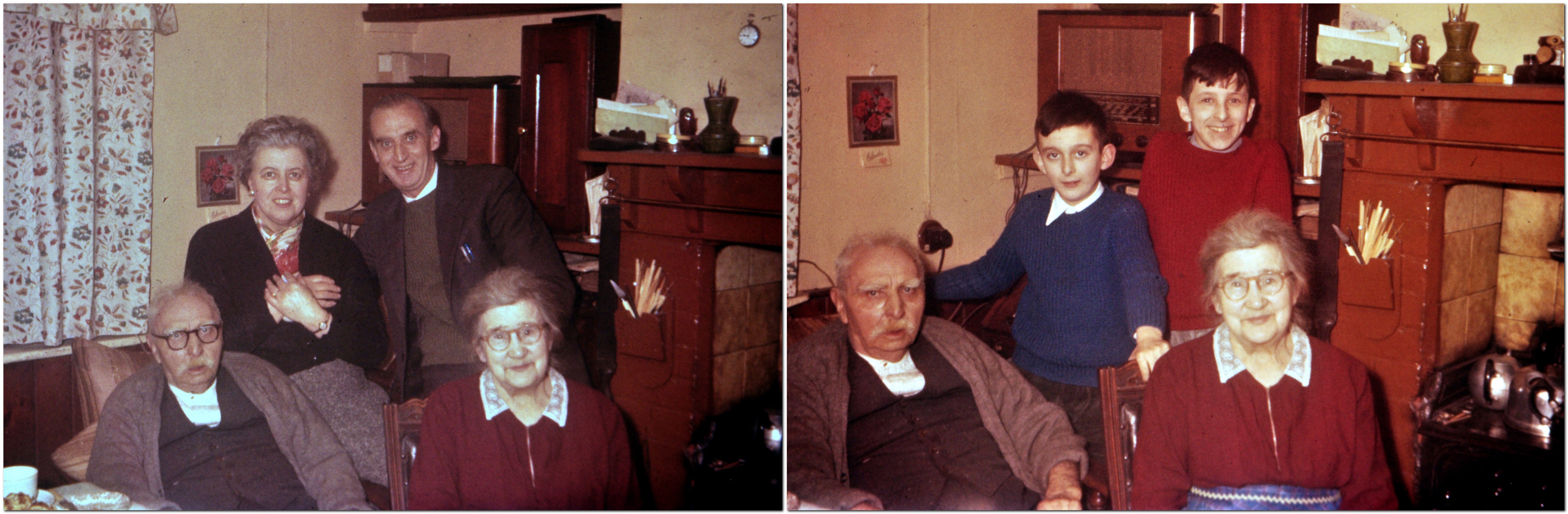
My parents and my elder brother Edgar and myself with Grandma and Grandad Jackson at Ebenezer Cottage in Hollington, around 1958.

My father Frederick was the second child born to Alice and Tom, in September 1908. My dad married Lilian Healy in 1936; I was born 12 years later in November 1948, the youngest of four children. My middle name is Thomas, after my grandad. My wife Stephanie and I named our younger daughter Philippa Alice after my grandmother.

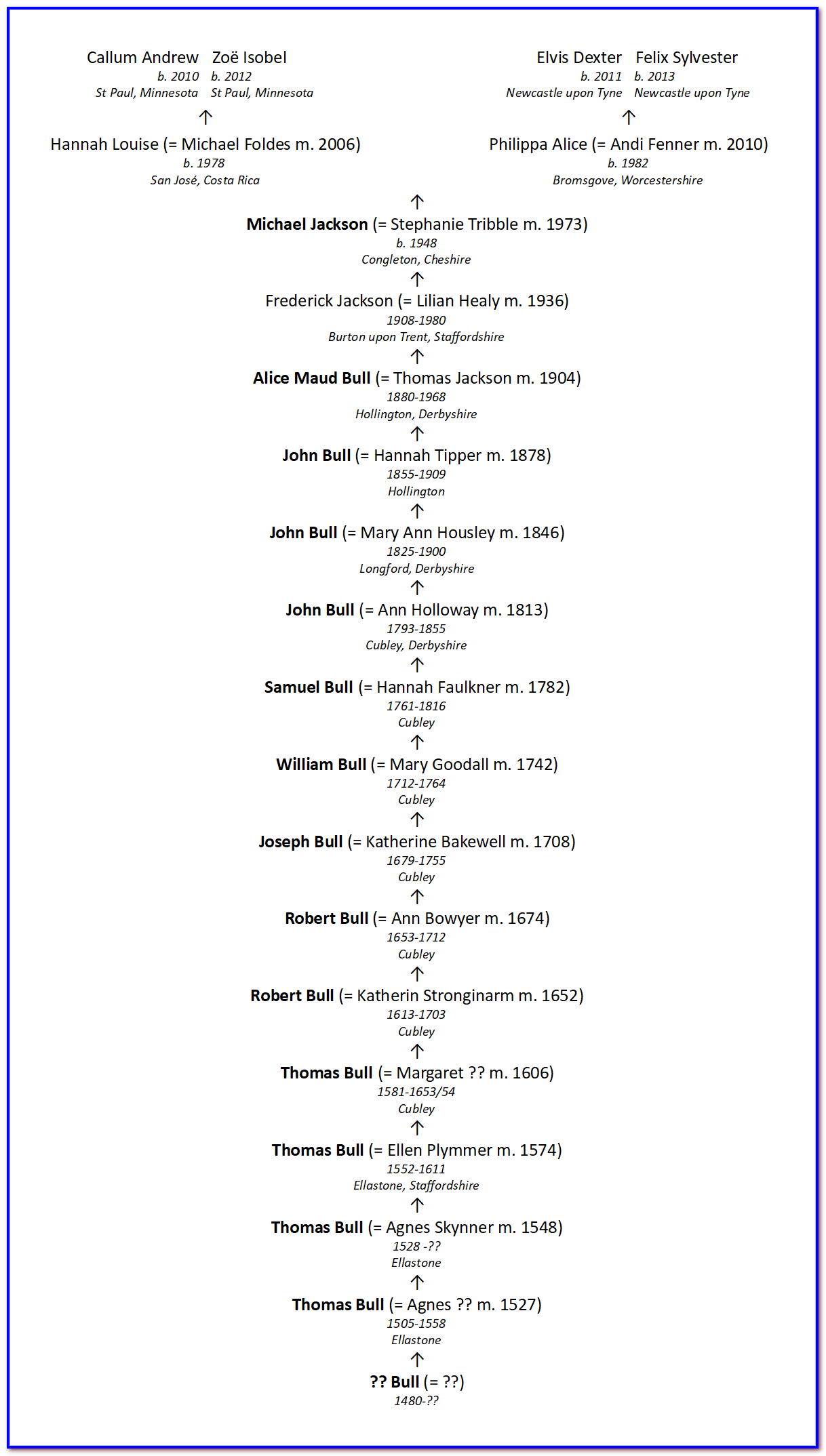
After my father passed away in 1980, my eldest brother Martin began a long search into our family ancestry, that has lasted more than 37 years. He has uncovered many of our family ties, stretching back (on the Bull line at least) to the late 15th century, some fifteen generations, and almost as far on several other lines.

I’m the 13th great-grandson of a man named Bull who was born around 1480 on the Staffordshire/Derbyshire border (where many of my ancestors hailed from), probably in or near Ellastone (as that was where his son and grandson were born and buried). Several generations of Bulls over 200 years lived in the village of Cubley in Derbyshire, less than five miles from Ellastone.

I’m also the 6th great-grandson of John Jackson (b. 1711, m. Hannah Clark 1732), the 9th great-grandson of Thomas Holloway (b. 1600, m. Isabella ?? around 1620), and 10th great-grandson of Hugh Tipper (b. 1574, m. Ellen Crichelowe in 1604 or 1605).

My father’s side of the family comprised, at the beginning of the 16th century, some 16,000+ direct ancestors, about 0.5% of the population of England. Do the maths. We can’t all have completely independent family lines, so they must come together in a vast web of inter-relatedness, sharing many ancestors in common, if we could just make the connections.

Knowing the names of my ancestors in this way also helps me connect vicariously with the major historical events through which they lived. But, because they were living in rural Staffordshire and Derbyshire, it’s hard to fathom how their lives might have been affected. The Bulls were, in general, farming and laboring stock.

King Richard III

Mr Bull was born, in 1480, at the end of the reign of King Edward IV, and five years before King Richard III was killed at the Battle of Bosworth Field that, as the last major battle of the Wars of the Roses as they became known, heralded the founding of the Tudor dynasty by Lancastrian claimant to the throne, Henry Tudor, who became Henry VII. Henry Tudor passed through this area, or perhaps a little to the south on his way to Bosworth Field. Were men from the villages around forced to join his army?

Thomas (b. 1505) lived through the end of the reign of Henry VII, and the reigns of Henry VIII, Edward VI, (Jane) and Mary Tudor. It’s highly probable that the Dissolution of the Monasteries (beginning in 1536) was keenly felt, as there were several nearby monastic houses in Staffordshire and Derbyshire. Did they hear about the sinking of Henry VIII’s flagship, the Mary Rose, I wonder?

By the time his son and grandson, also both Thomas, had passed away, Elizabeth 1’s long reign had come to an end; the Tudors were history, and James I (and VI of Scotland) was on the throne, the beginning of the ill-fated Stuart dynasty. Thomas (b. 1581) and his son Robert (b. 1613) lived through the English Civil Wars between 1642 and 1651, the defeat of the Royalists, and the execution of Charles I in 1649, an event that must have rocked England to its very soul whether you favored the Royalist or Parliamentary side. Who did Thomas and Robert favor? The closest major conflict to where they lived in Cubley was the 1643 Royalist Siege of Lichfield, just 20 miles due south. Certainly both Royalist and Parliamentary armies criss-crossed this area of Mercia.

Here is a timeline of England during the 17th century.

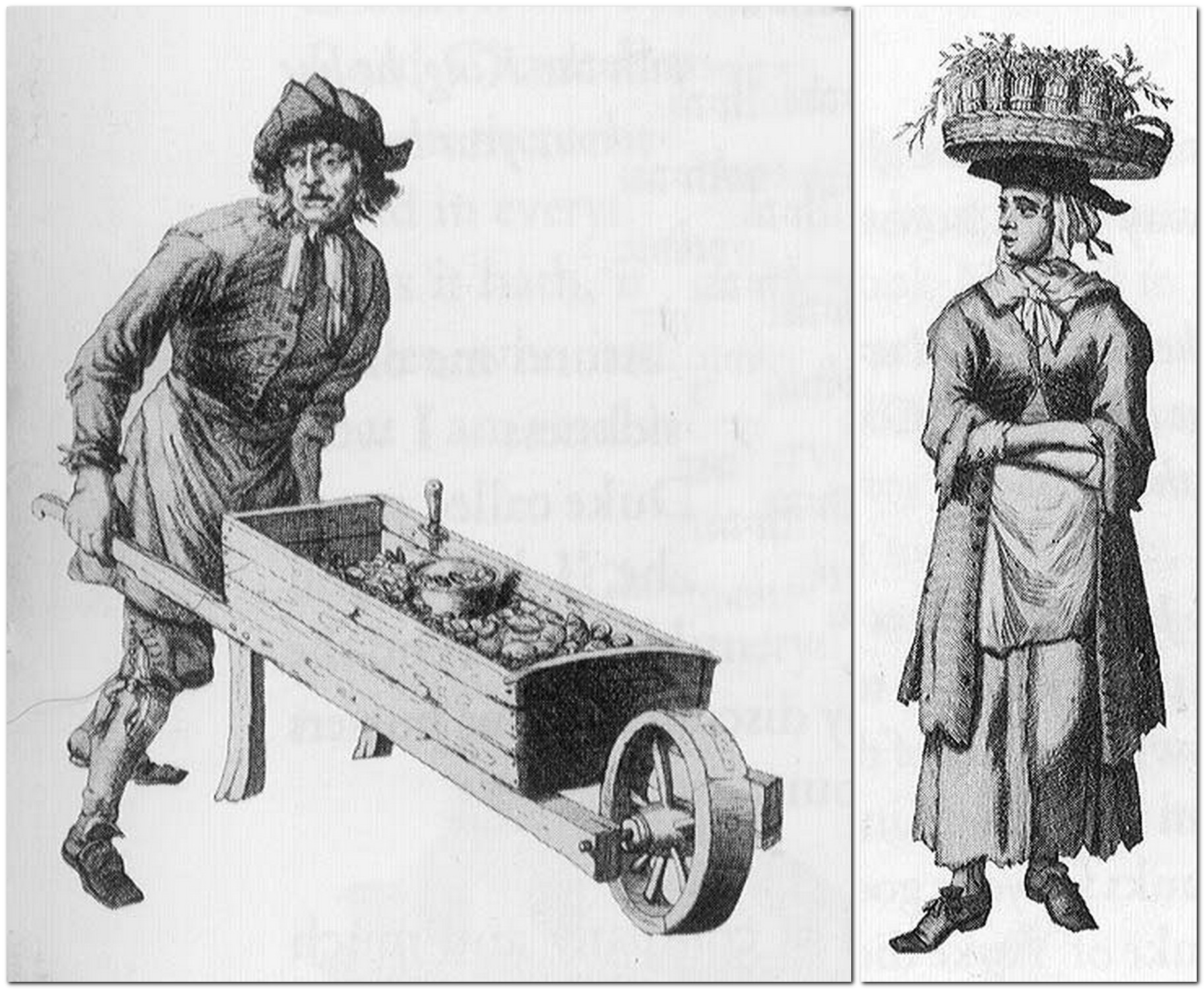
Working class dress of the late 17th century

Robert (b. 1613), his son Robert (b. 1653), and grandson Joseph (b. 1679) knew the restoration of Charles II in 1680, then lived through the tumultuous years of James II and William III and Mary II, the Glorious Revolution, the consequences of which passed through to the late 20th century in Northern Ireland. During the reign of Queen Anne (1702-1714), the kingdoms of England and Scotland were united into a single nation, Great Britain, under the Acts of Union. John Churchill, 1st Duke of Marlborough (an ancestor of Sir Winston Churchill) achieved significant military success in Europe during the War of the Spanish Succession.

Late 18th century dress, as depicted by Henry Singleton, ‘The Ale-House Door’ c. 1790

Joseph, son William (b. 1712), grandson Samuel (b. 1761), and great-grandson John (b. 1793) were Hanoverians through and through. This is an English timeline of the 18th century of industrial innovation.

Joseph lived through the two Jacobite uprisings of 1715 and 1745, the latter experienced very close to home as the Scots under Bonny Prince Charlie reached as far south as Derby. Fear and alarm must have spread throughout all communities in their path.

Samuel and John lived through the French Revolution in 1789, and the wars with Napoleon Bonaparte until his defeat at the Battle of Waterloo in 1815. Were they or their relatives called upon to serve under the Duke of Wellington?

John Bull, my 2nd great-grandfather was born in 1825, half way through the reign of George IV, and died in 1900 just as Queen Victoria’s reign was coming to an end. All my subsequent Bull ancestors were Victorians – a period of industrial expansion, the building of the railways (and demise of the canals), and Empire! My great-grandfather, John, was born in Hollington in 1855, and worked as smallholder farmer and coal merchant. The family remained in the same area of Derbyshire throughout the 19th century.

During five centuries many of my Bull family (and probably those who married into the Jackson line as well) came from and continued to live in quite a small area of Staffordshire and Derbyshire. People mostly married from the same communities, or from others not more than a handful of miles away. After all, a man had to do his courting on foot, until the late 19th century¹ at least. I’ve heard that Tom Jackson walked miles to court Alice.

It has been fascinating to see my family history unfold, and what Martin has achieved is truly incredible and inspiring. People, names, and dates bring history to life.


¹ John Jinks, who was Professor of Genetics at the University of Birmingham, hailed the safety bicycle as one 19th century invention that probably did more for human population genetics than had ever before occurred, since couples could now more easily court over greater distances.


It’s the border, stupid

One news item on the radio this morning caught my attention. Today is the 50th anniversary of a civil rights march that took place in Londonderry, Northern Ireland, and which descended into violence as officers of the Royal Ulster Constabulary attacked demonstrators with batons.

This date, 5 October 1968, is widely regarded as the start of The Troubles that plagued Northern Ireland until the signing of the Good Friday or Belfast Agreement thirty years later, in April 1998. In the intervening two decades, Northern Ireland has prospered, and an open border with the Republic of Ireland facilitated by both the UK and the Republic being members of the European Union. Last year, Steph and I toured Northern Ireland and saw for ourselves how far the province has come since them, with clear signs of prosperity and peace.

Once again, the island of Ireland is dominating British (and European) politics. Northern Ireland is at the forefront of the Brexit agenda, because of the border issue between the province and the Republic of Ireland. Post-Brexit in March 2019 this border will be the UK’s only land border with the EU. During our holiday in Northern Ireland, we criss-crossed that border multiple times. In fact, a single road, denominated A3 in Northern Ireland and N54 in the Republic, crosses from one country to the other four or five times in the space of less than 10 miles.

We traveled that road, and the only evidence of crossing from one country to the other were speed warning signs for mph or kph (Northern Ireland or Ireland).

Concerns have been raised in all quarters about a return to a post-Brexit hard border between Northern Ireland and the Republic post-Brexit. That is one potential  (and awful) outcome of no withdrawal deal being reached between the UK and the EU. ‘Negotiations’ continue, and will come to a head in the next few weeks.

But no-one seems able to square the circle, and the UK government and the European Commission seem as far apart as ever. Incidentally, the dismantling of the hard border and its continued open status were conditions of the Good Friday Agreement that has undoubtedly brought peace and prosperity, It’s a legally-binding treaty that could potentially scupper Brexit. Brexiteers seem to forget the legality of this agreement.

On this 50th anniversary, it is appropriate in the context of the Brexit process to reflect on bitter times past and the consequences of communities unable to co-exist without resorting to violence.

It beggars belief, however, that someone as prominent in British politics as arch-Brexiteer Jacob Rees-Mogg can demonstrate, in recent cavalier and insensitive language that elicited widespread shock, his lack of understanding. He once again proved (to me at least) that he and acolytes are quite prepared to make Northern Ireland a sacrificial lamb in their determination to bring about a hard Brexit.


Unfortunately its devolved government has not been functioning since the power-sharing Northern Ireland Executive collapsed in January 2017, and effective government is at a standstill. The majority political party, the Democratic Unionist Party or DUP is pro-Brexit, and is playing hardball with Prime Minister Theresa May’s government which is in hock to the DUP for parliamentary support following the 2017 General Election when the Tories lost their overall majority.

I’m not going to go into detail about any or all of the various solutions that have been put forward to solve the border issue. Some involve technologies or approaches that have yet to prove their value or workability. To date these suggestions have been dismissed by one side or the other.

The Irish border question might be the ‘straw that breaks the camel’s back’. Inevitably, I guess, there will be a fudge, some compromise that will satisfy no-one. However, it’s possible—probable even—that any agreement that Theresa May secures from the EU will be voted down in parliament, and then the risks of crashing out of the EU escalate significantly.

I strongly support the demand for a People’s Vote (i.e. a second referendum in some form or other). That’s our democratic right. People do change their minds and as the vision of a post-Brexit UK becomes clearer, there is a growing clamour for a new vote. In a number of recent nation-wide polls not only is there growing support for a People’s Vote, but the outcome of that vote would support remaining in the EU, with a much higher proportion supporting Remain than voted Leave in 2016. Ironically, in the 2016 referendum, Northern Ireland voted to Remain in the EU by a majority of 56% to 44%. Going forward, Northern Ireland could be key to remaining in the EU.

Hope springs eternal!

Where’s Baldrick when you need him?

Surely one of Baldrick’s¹ ‘cunning plans’ can be no more preposterous than what Prime Minister (but for how much longer?) Theresa May² has tabled as her (non-negotiable) Brexit deal, or how the country will prosper post-Brexit?

I actually tweeted the other day that, for once, I was in agreement with Boris Johnson. Heaven forfend! He derided Theresa May’s Chequers Plan as ‘deranged’. I completely agree. But so are the ‘Titanic’ plans he and others have proposed. He’s also pretty deranged himself. Brexit and its adherents deserve to be taken down a peg or two in this video (that I came across on Facebook). The depiction of Jeremy Corbyn fiddling while the Titanic sinks is precious.

Almost everyone seems opposed to ‘Chequers’ – many of the PM’s own pro-Brexit MPs, as well as Remain MPs of all parties in the House of Commons. And, perhaps most significantly, those representing the EU in this Brexit negotiation (is it really a negotiation?). Everyone is getting brassed off by the whole Brexit process. Realistically, Chequers is dead in the water.

Brexit and the status of post-Brexit Britain has essentially become a belief system. Theresa May has accused those opposed to her ‘Chequers Plan’ as playing politics with the future of the country. But that’s what it’s been all about since before the referendum – appeasing the hard right of the Tory Party. No wonder Guy Verhoftadt made these comments yesterday in the European Parliament, in response to the latest proposals from Home Secretary, and Bromsgrove MP, Sajid Javid, about post-Brexit immigration and status of EU nationals.

Immigration was one of the key concerns that swung the referendum to the Leave side. Nevertheless, Conservatives continue to misunderstand how free movement can (and does) operate elsewhere in the Single Market. Just watch this interview yesterday with two Young Conservatives at the party’s annual conference in Birmingham.

And Theresa May’s stance and strategy on Brexit has been aided and abetted by the Labour Party under Jeremy Corbyn’s equivocating leadership. He’s more interested in a General Election that, he believes, will sweep Labour into power, him into No 10 Downing Street, to implement its hard left agenda that the country will probably be unable to afford post-Brexit, and I guess the majority of the electorate would not support in any case.

In terms of what happens post-Brexit, the likes of Jacob Rees-Mogg and his European Research Group (ERG) of right-wing Brexiteer Tory MPs continually refer to the WTO option, as though membership of the EU is simply about trade. They never mention, never mind discuss, the implications of falling out of all the agencies that regulate (and mostly improve) our lives today – aviation, medicines, security, science, etc., to name just a few. Who knows what will be the consequences when we are no longer a member deriving the benefits of common regulations and standards.

From many statements I have heard from the likes of JR-M (a rather wealthy hedge fund manager as well as an MP) and the remarkably under-qualified Secretary of State for International Trade Liam Fox (a medical doctor by training), they have pretty limited understanding of how international trade works, especially under WTO rules, nor how trade negotiations are conducted. It’s illuminating therefore to listen to a seasoned trade negotiator explain the consequences of operating under WTO rules.

The UK expects to strike free trade deals all around the world as soon as it leaves the EU in March 2019. Well, the only free trade agreement (rather than ‘freer’ trade deals as most are) that we are likely ever to secure is the one under which we currently operate, in the Customs Union and Single Market as a member of the EU. Beyond that, it is pie in the sky. Maybe this should become the Brexiteers anthem (with apologies to Queen). Anyone for JR-M or BoJo in drag?

Anyway, to return to the ERG. I’m pretty certain they have no idea what the word ‘research’ actually means, nor what it entails. It’s certainly based on empiricism and a rigorous analysis of data and facts, something that seems to be lacking in much of what they have proposed. They also appear to have a serious problems with experts, people who actually do know what they are talking about, and have experience managing the very challenges the country faces as Brexit approaches.

In general, I have given up on BBC Radio 4’s Today program that I used to listen to religiously first thing in the morning, while supping a cup of tea in bed. Yesterday, however, I switched on and was fascinated to hear a Canadian trade expert, Christophe Bondy, talk about the signing of the new USMCA (US, Mexico and Canada) trade agreement. He was interviewed by the program’s business news presenter, Dominic O’Connell.

Dominic O’Connell (L) and Christophe Bondy (R)

Mr Bondy is an internationally-respected lawyer, now resident in London, who had held senior positions in Canada’s trade negotiations for USMCA, and even the Canada-Europe (CETA) deal that is being touted by so many Brexiteers as the model to follow, and knows what he is talking about. He has an impressive CV, one that not even the likes of JR-M can dispute.

Describing the Canada-USA trade negotiations as ‘bloody hard’, the discussion inevitably moved on to Brexit. It’s worth a few minutes of your time to listen to what Mr Bondy had to say.

Not only did he imply that the UK is not equipped to take on the task of negotiating ‘freer’ trade deals (just imagine the resources Canada deployed for USMCA), but by no longer protecting our biggest and closest or ‘home market’ of >350 million (i.e. the EU) we would enter into any future negotiations from a position of weakness, with a ‘home market’ of just 65 million. This is an approach that just doesn’t make sense from a trade point of view.

JR-M et al. take note!

So what now? One pace forward, please, Baldrick!


As a postscript, I should just mention that in a recent Brexit post I did state that I didn’t expect to write much more on this topic. I just couldn’t help myself.


¹ For my followers overseas, I must explain. Baldrick was a character in the four series comedy program Blackadder aired by the BBC in the 1980s. Baldrick (played by Tony, now Sir Tony, Robinson) was the dogsbody of the main character Edmund Blackadder, played by Rowan (‘Mr Bean’) Atkinson. Whenever a difficult situation arose from which Blackadder and Baldrick had to extricate themselves, Baldrick had his ‘cunning plan’, always and immediately dismissed by Blackadder.

For Baldrick and Blackadder read Theresa May (and others) and Michel Barnier (the EU Chief negotiator)?

In the context of this blog post therefore, a ‘Baldrick cunning plan’ is probably no more silly or outrageous than any other that I’ve yet heard – apart from remaining as a member of the European Union.

² Theresa May came on stage at her party’s annual conference today to give her keynote speech ‘dancing’ to the ABBA song Dancing Queen. I wondered if the Tories got permission to use this track. Embarrassing, to say the least.

Kernow a’gas dynergh – Welcome to Cornwall (5): Magnificent mansions

Cornwall is home to several National Trust jewels. We visited these four:

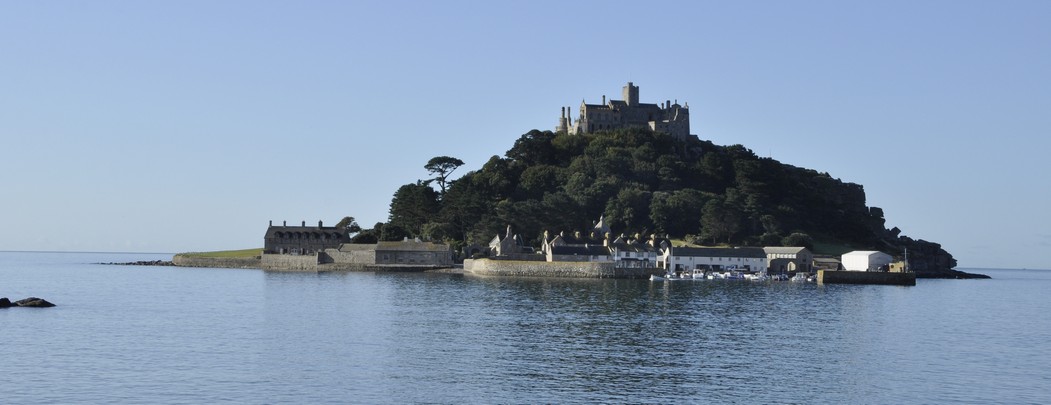
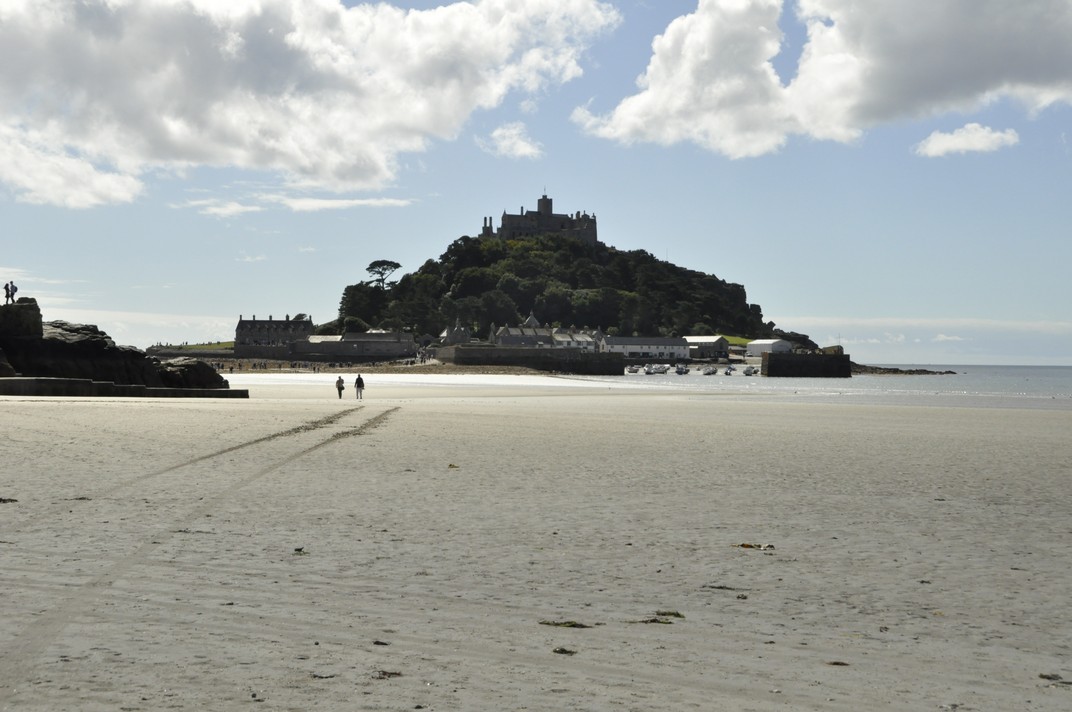
  • St Michael’s Mount, on an island in Mount’s Bay off Marazion in the south of the county
  • Lanhydrock, close to the A30 near Bodmin
  • Cotehele House and Quay, overlooking the River Tamar, north of Plymouth
  • Trerice, close to Newquay on the north coast

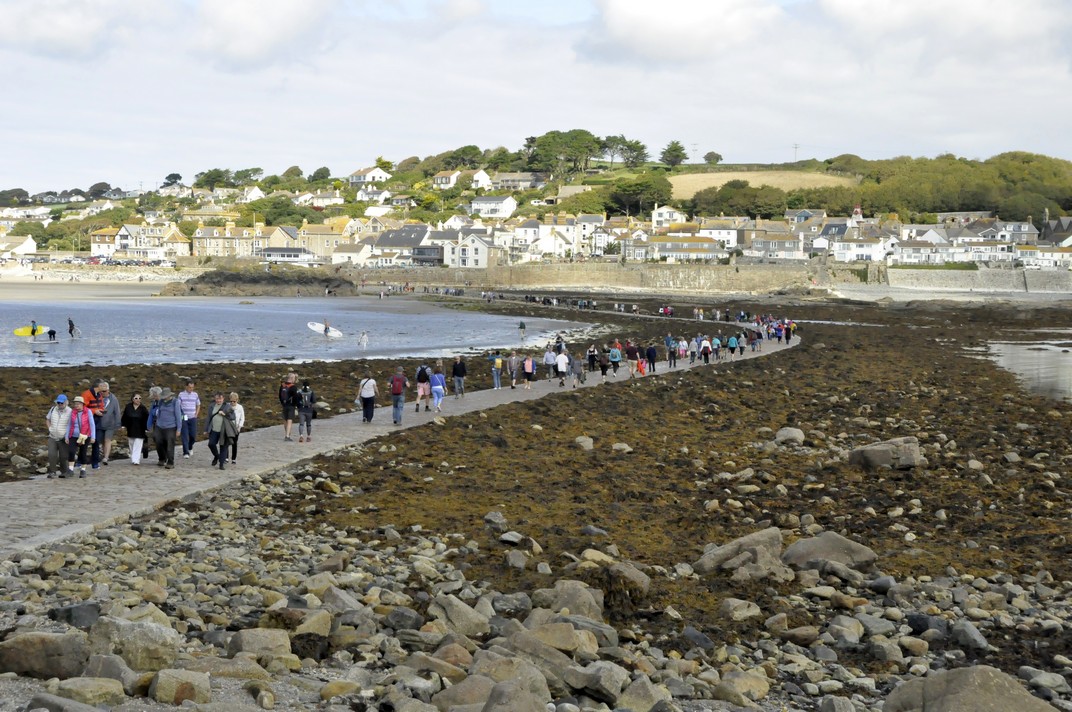
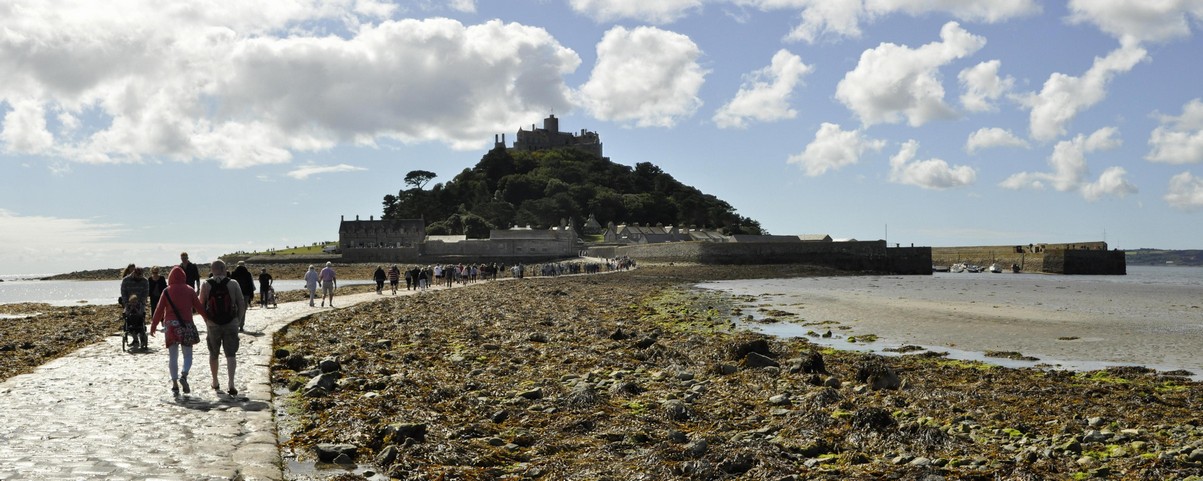
Knowing how popular St Michael’s Mount can be (even slightly out of season, as we were), Steph and I decided to head to Marazion early on the day of our visit, so we could easily find a parking place. I guess we must have been there before 9:30 am, and knew we’d have to take the boat over to the island as the tide was still ebbing then and the causeway was still covered.

Parking was no problem. However, when we returned from our visit to the island just before 2 pm, visitors were streaming across the open causeway in the hundreds, and it seemed as if every parking place was already taken in the several car parks along the sea front.

Just before 10 the first passenger boat of the day pulled up alongside the jetty, and about eight persons clambered aboard. Since the sea was calm, there being no waiting queue of visitors, and it being the first boat, the boatman suggested going right round the island instead of just across directly to the harbor on the island. What a treat, as we had many different views of the island and buildings that would not have seen on a normal crossing.

St Michael’s Mount (the Cornish equivalent of Mont Saint-Michel in Normandy, although not quite so grand perhaps) was originally home to a 12th century priory, and there is evidence of human occupation over several thousand years. It has a rich history.  It became the home of the St Aubyn family in the late 17th century, and the family continues to occupy the Victorian wing. in the 19th century there was a village and thriving community of several hundred residents living below the castle.

A visit to St Michael’s Mount includes not only a tour of the house, and its magnificent views over Mount’s Bay, but the gardens below the castle that have been built into and cling to the cliff face. We were told by our boatman that the four resident gardeners are also qualified abseilers! It’s quite a steep climb up to the castle, but well worth the effort.

By the time the causeway had opened and hundreds of visitors were pouring across, access to the house was becoming difficult. We had made the tour earlier, and even then passing the narrow entrance caused significant tailbacks.

Nevertheless, no visit to Cornwall would be complete without a visit to St Michael’s Mount. Its inaccessibility for half of the day just adds to its attraction. Check out more photos of the interiors and gardens here.


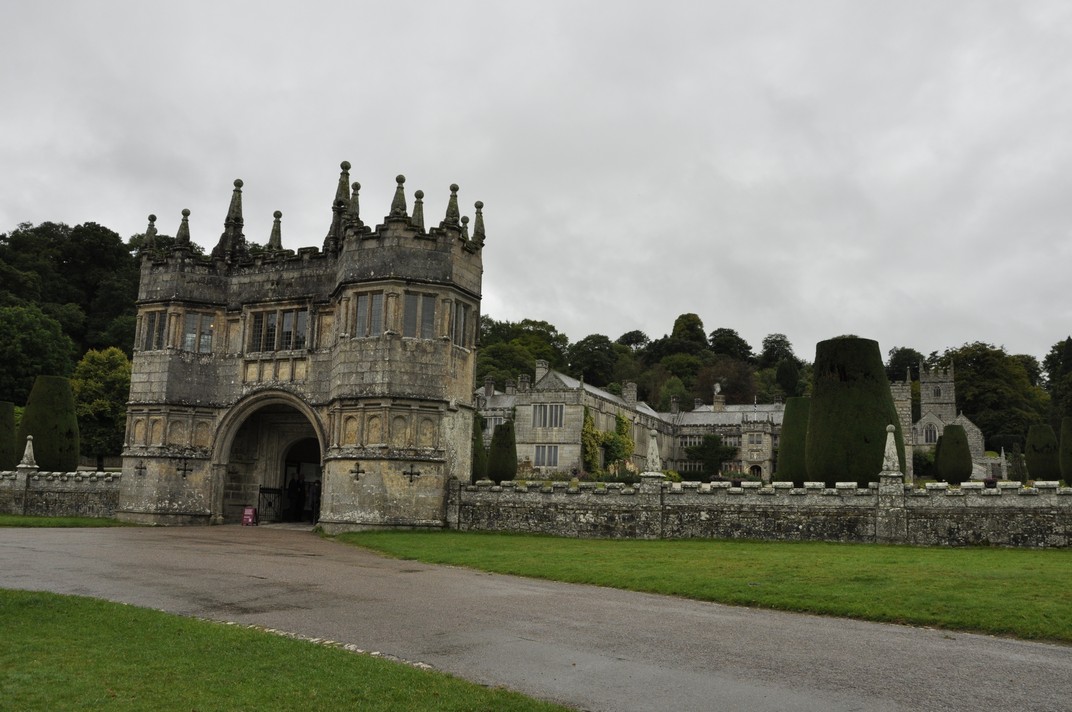
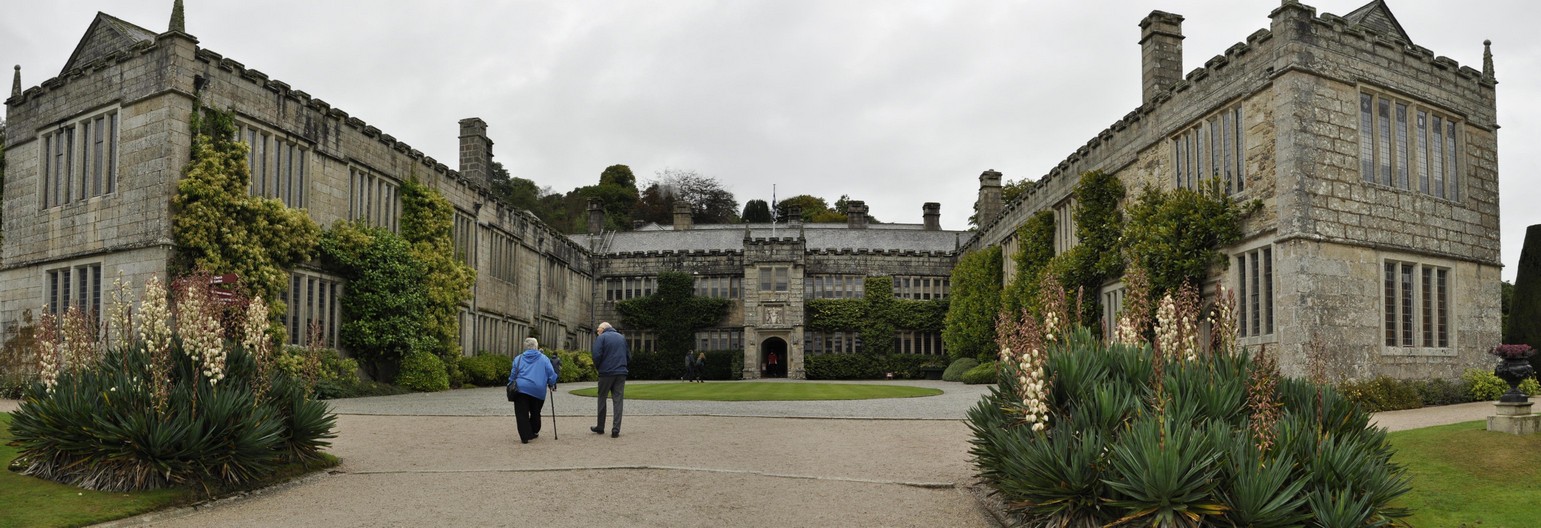
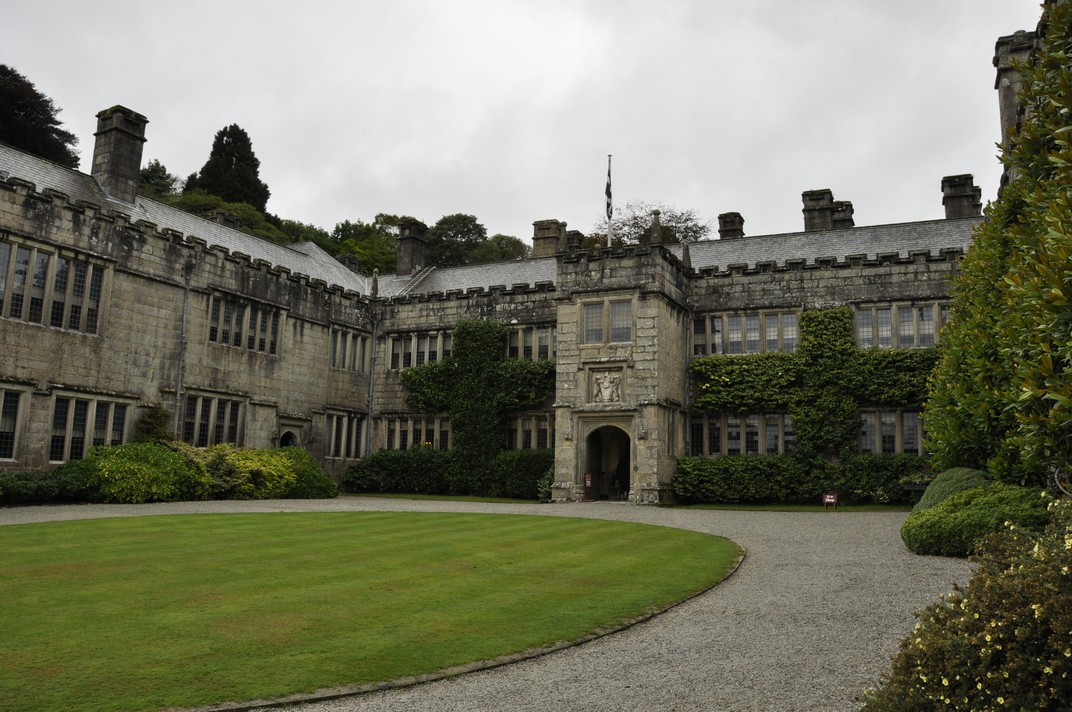
Lanhydrock, just a mile or so off the A30 near Bodmin) is special for two reasons: so many of the rooms (>50) are open to the public, and the Long Gallery in the north wing) and its magnificent 17th century plastered ceiling survived the 1881 fire that gutted most of the rest of house. The house is U-shaped; an east wing was demolished in the 18th century. It has been the family home of the Robartes for four centuries.

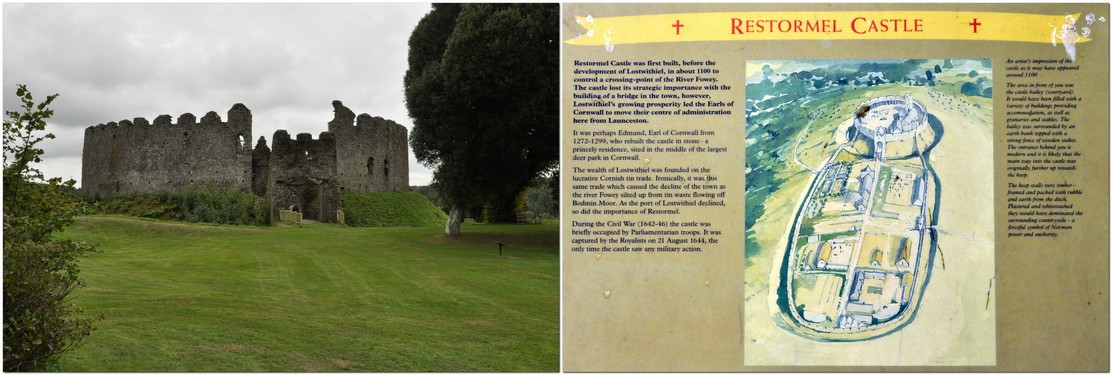
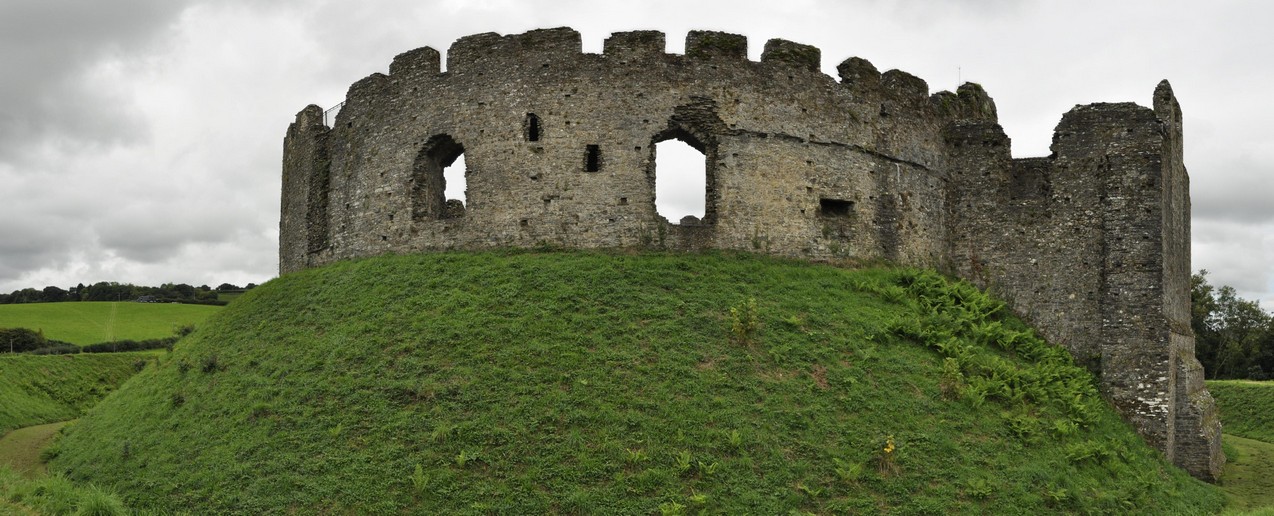
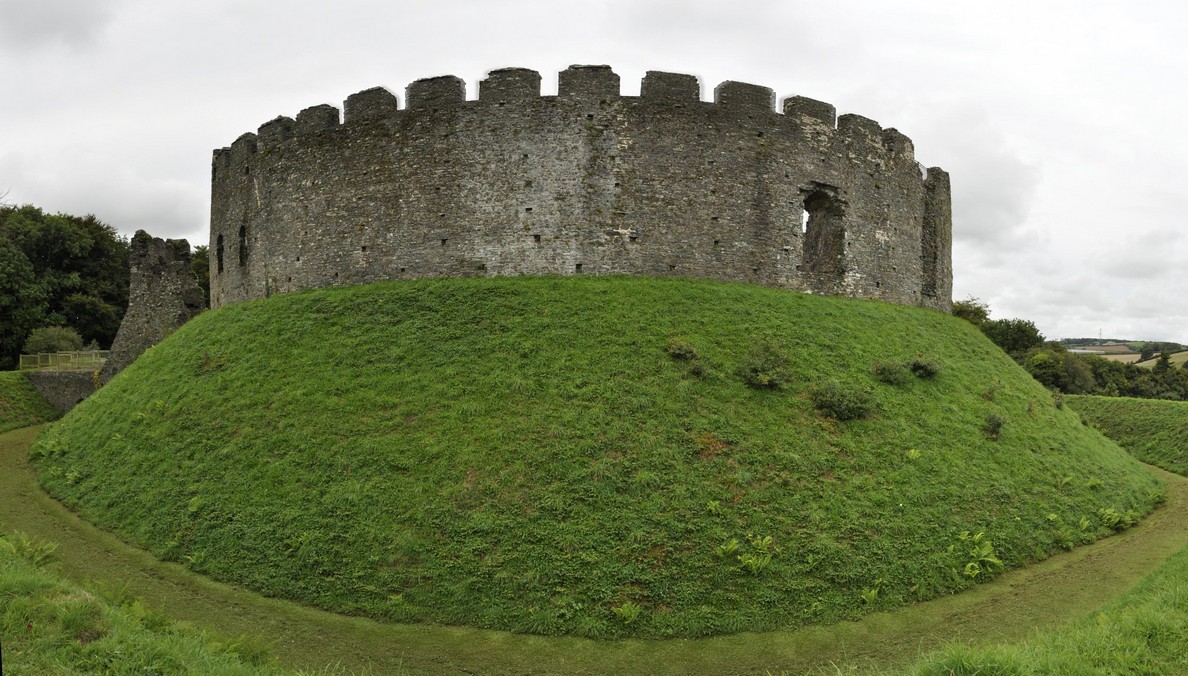
The weather for our visit was overcast with a little drizzle. As we wanted to visit Restormel Castle in nearby Lostwithiel later in the day, we decided to forego a walk around the park, just viewing the gardens and parterre close to the house.

You can take a virtual tour of the house and gardens here. There’s no doubt that Lanhydrock is one of the National Trust’s ‘premier’ properties full of exquisite objects that passed to the Trust when it acquired ownership in 1953. Definitely one of the properties that should be on everyone’s National Trust bucket list.


The first question I asked one of the volunteers when we arrived at Cotehele House was how to pronounce ‘Cotehele’. It’s ‘cot-eel’ apparently.

And it’s also one of the National Trust gems, having so many exquisite tapestries on display. The house dates from the late 15th century but then had 16th century Tudor additions, and is built I guess from local granite, a lovely soft grey color. It was the home of the Edgcumbe family. Passing through a small courtyard, you enter the Great Hall, on to the chapel, and up to the treasures of the first floor and above.

Cotehele has terraced gardens beside the house, and others slightly further away. The Valley Garden follows a steep-sided valley from the terraces to the River Tamar, and Cotehele Quay and Mill.

Have a look at more Cotehele treasures here.


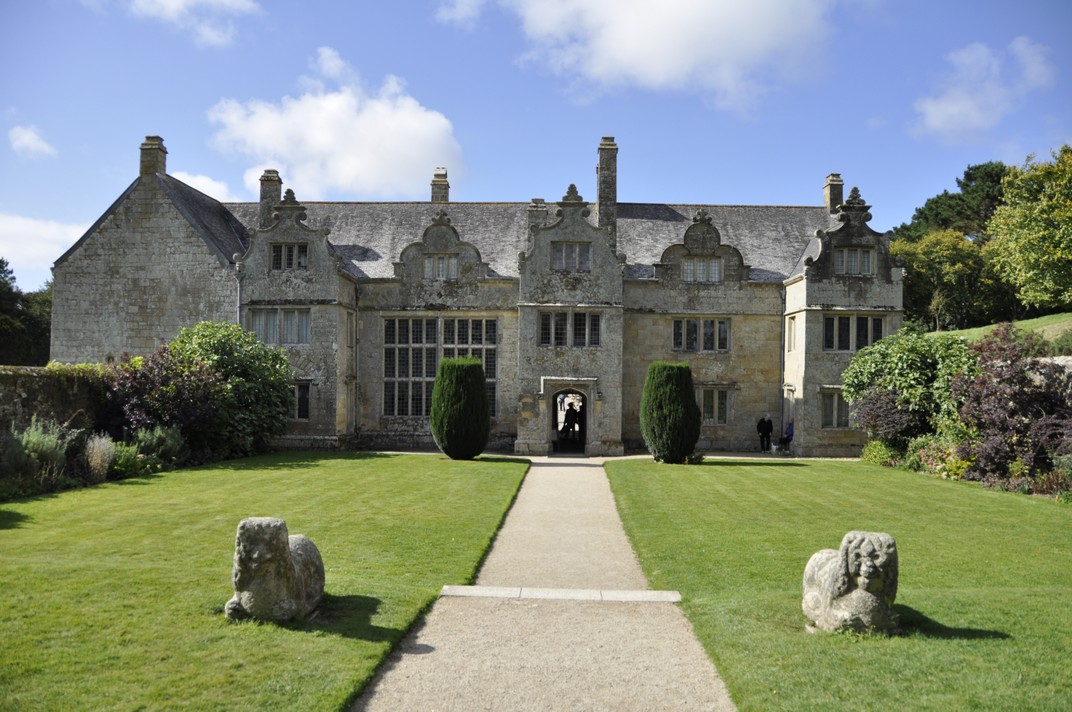
Trerice is an Elizabethan, 16th century manor situated a few miles inland from Newquay on Cornwall’s north coast. We visited this delightful house on our last day in Cornwall, on the way back to our holiday home after a visit to Tintagel Castle.

The Arundell family inherited Trerice more than 700 years ago. It passed to the Aclands in the late 17th century. In the 20th century, the Elton family took on a lease from the National Trust and carried out some major refurbishments, including replacing the roof.

There is some particularly smart plasterwork in several rooms, as well as impressive oil paintings.

Outside there is an attractive knot garden, and other horticultural attractions like a 1km mowhay.

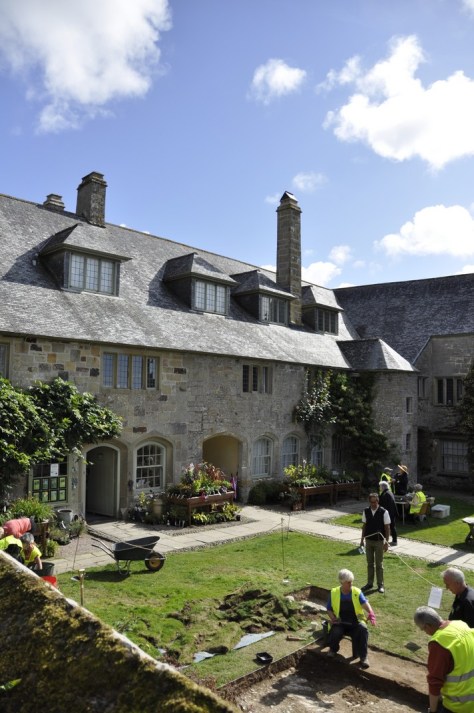
An archaeological dig was underway behind the house on the day of our visit.

More photographs of this dig and exterior/interior views of the house are available in this album.


These are the other four stories in this Cornwall series:

Kernow a’gas dynergh – Welcome to Cornwall (1): The journey south . . . and back

Kernow a’gas dynergh – Welcome to Cornwall (2): Coast to coast

Kernow a’gas dynergh – Welcome to Cornwall (3): Stepping back in time

Kernow a’gas dynergh – Welcome to Cornwall (4): An impressive horticultural legacy


For those interested in photography, I use a Nikon D5000 DSLR, with a Nikon AF-S DX Nikkor 18-200 mm f/3.5-5.6 GII ED VR lens.

Flash photography is not permitted inside National Trust properties, so that means shooting with the slowest speed I can get away with, since all my photos are hand held. Often I’m shooting as slow as 1/15, and 3200 ASA. All the interiors at these four properties were photographed in this way. It’s remarkable how the colors of the tapestries at Cotehele, for example, are revealed. I’m getting quite the dab hand at holding my breath as I’m about to press the shutter.

Kernow a’gas dynergh – Welcome to Cornwall (4): An impressive horticultural legacy

Gardens. How many were designed and planted decades, even centuries ago, that can only now be fully appreciated? They were never seen in all their glory by their visionary originators. What a horticultural legacy they bequeathed to later generations.

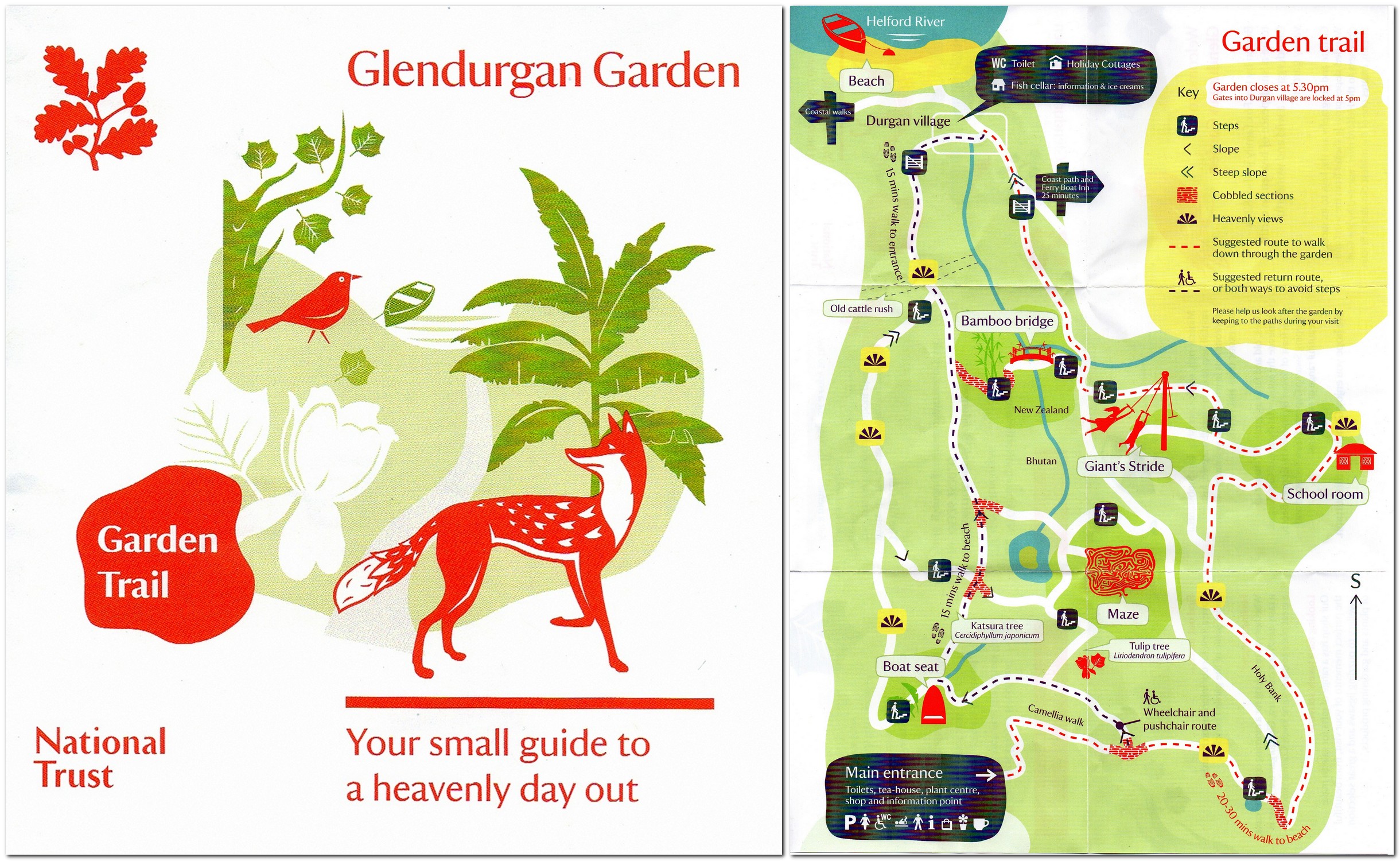
The National Trust manages four important gardens in Cornwall which we were delighted to visit during our recent break there. Of course, many of the houses which the NT owns have their own gardens. But the four we visited are ‘marketed’ as gardens in their own right:

  • Glendurgan Garden, on the east coast, just south of Falmouth
  • Trelissick, at the head of Carrick Roads near Truro
  • Godolphin, an important medieval garden east of Penzance
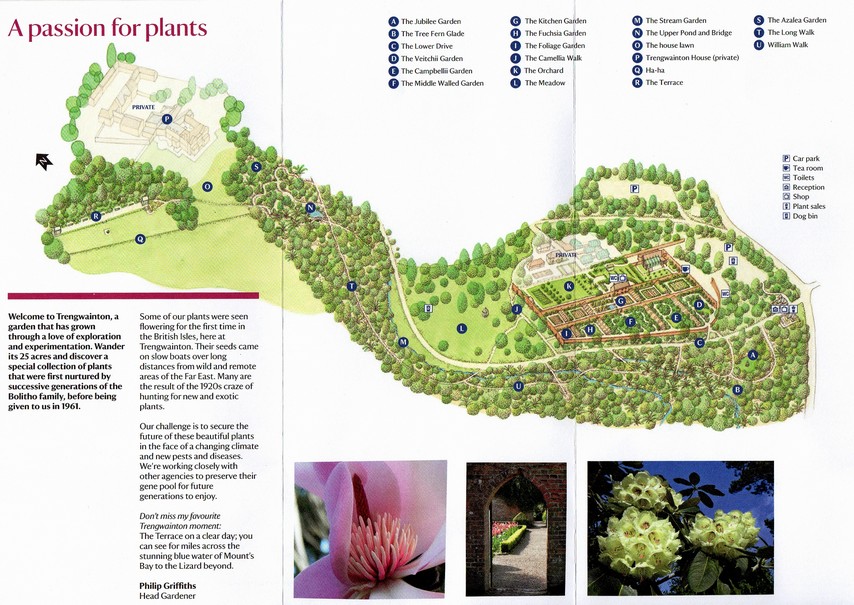
  • Trengwainton Garden, northwest of Penzance.

All lie south of 50.2°N, and so there are many exotic species like tree ferns and bamboos that thrive under these conditions. And although these gardens would have been in their prime earlier in the year, with rhododendrons, camellias, and magnolias in flower, we saw enough during our exploration of these gardens to appreciate how they might look in another season.


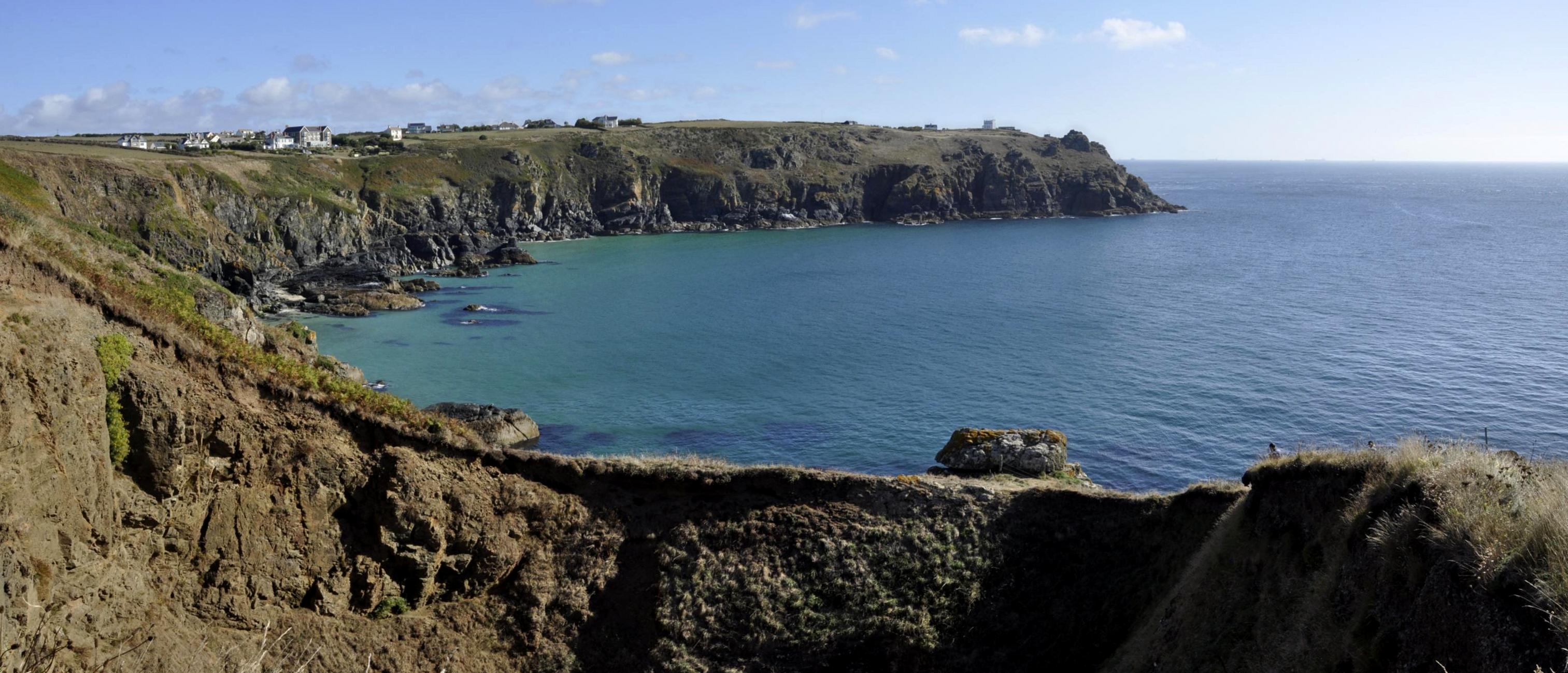
Glendurgan Garden was the first on our list. Having enjoyed a walk at Lizard Point earlier on this bright, sunny day, we looked forward to a pleasant stroll around the garden.

The garden was planted in the 1820s and 1830s by Alfred Fox, and occupies a steep-sided valley down to the fishing village of Durgan, below Glendurgan House, home of the Fox family (not open to the public).

We followed the red trail down to Durgan village, and came back up the brown trail on the left, taking in a viewing platform overlooking the maze (that was planted in 1833).

Check out more photos here.


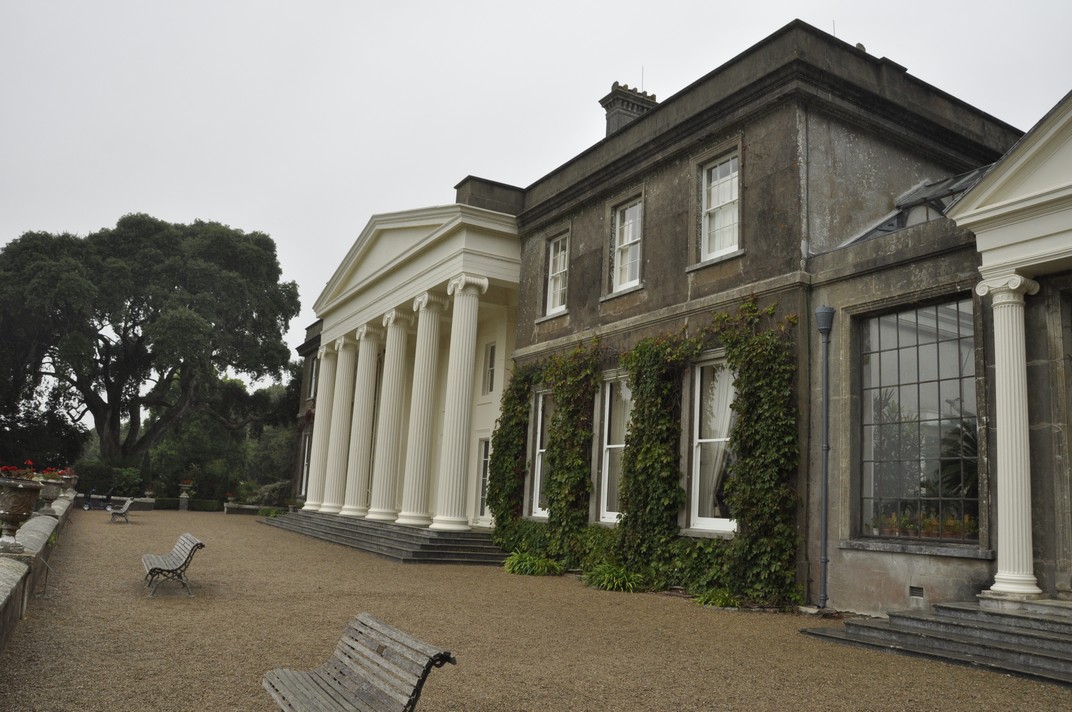
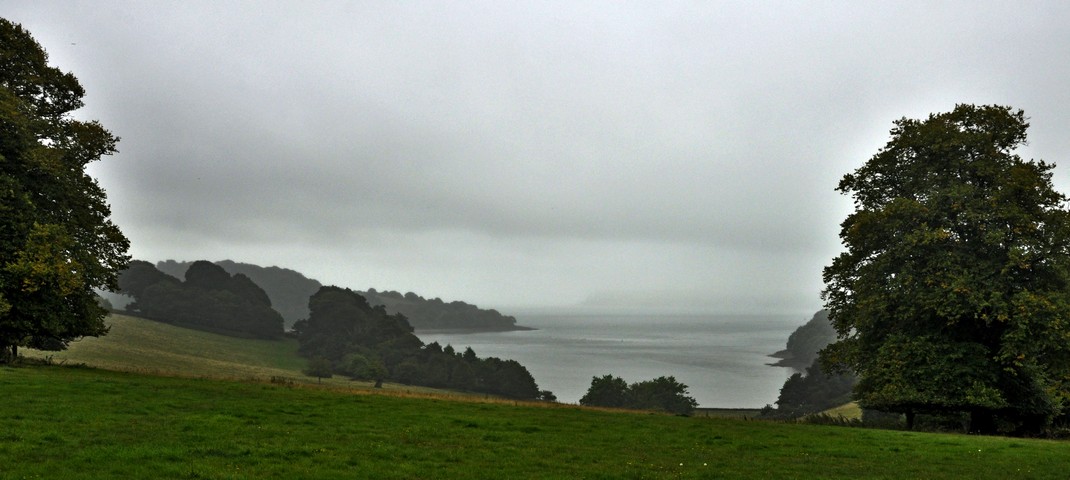
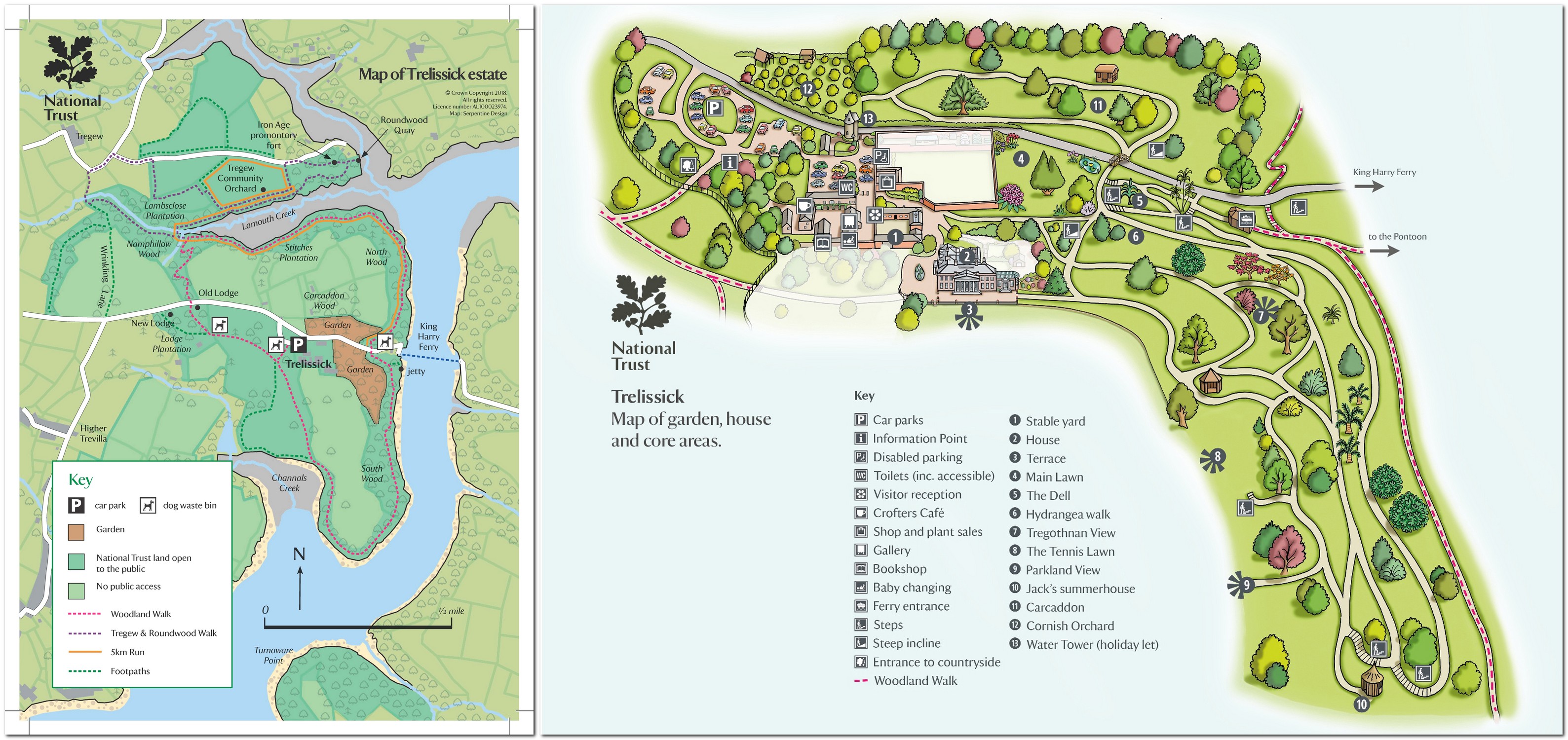
It was a mizzly sort of day when we stopped by Trelissick on our way back to our holiday cottage after visiting another NT property northwest of Plymouth, Cotehele House. So we were never going to fully appreciate one of the triumphs of Trelissick: the panorama from the terrace in front of the house down to the shores of the River Fal estuary.

Trelissick was the family home of the Copeland family, owners of the Spode China factory in Stoke on Trent (I used to pass nearby everyday on my way to grammar school in Trent Vale in the 1960s). Just a few rooms on the ground floor are currently open to the public. It was passed to the National Trust in 1955.

From the terrace, we made our way south through the garden, taking in the views (such as they were) from the tennis lawn (8) and the parkland (9) that did provide nice views back to the house. From Jack’s summer house (at the tip of the garden) we worked our way back up on the eastern side, crossing over the bridge into Carcaddon (11), then back towards the house across the main lawn (4).

Take a look at the rest of the photos here.


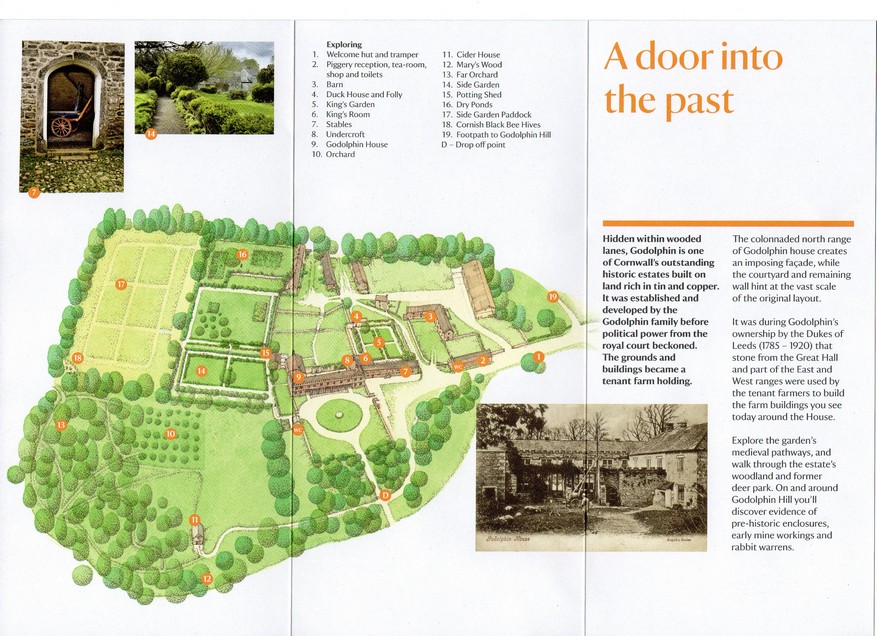
Godolphin has a particular claim to fame. In its various gardens, the King’s Garden (5) and Side Garden (14), it seems little has changed since at least the 16th century, maybe earlier.

The Godolphins derived their wealth from some of the most important mines in Cornwall, the remains of which can still be seen dotted around the estate.

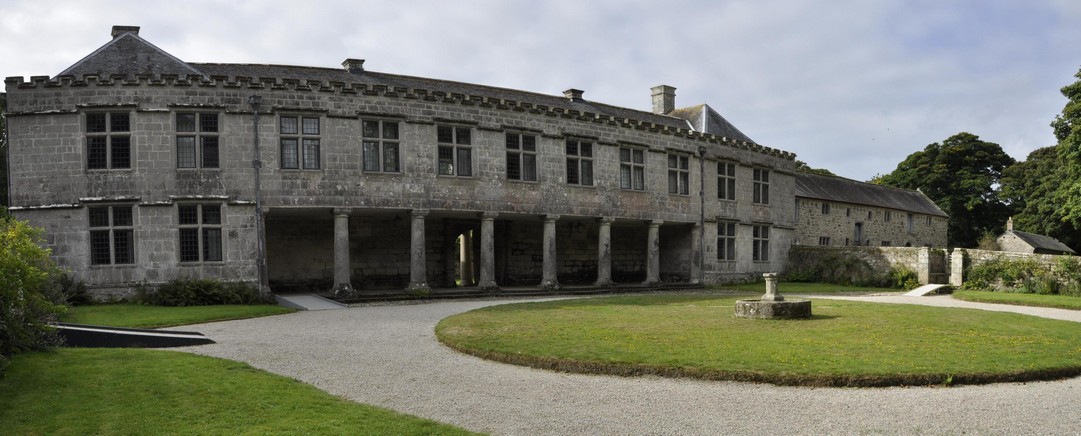
The main entrance of Godolphin House (9)

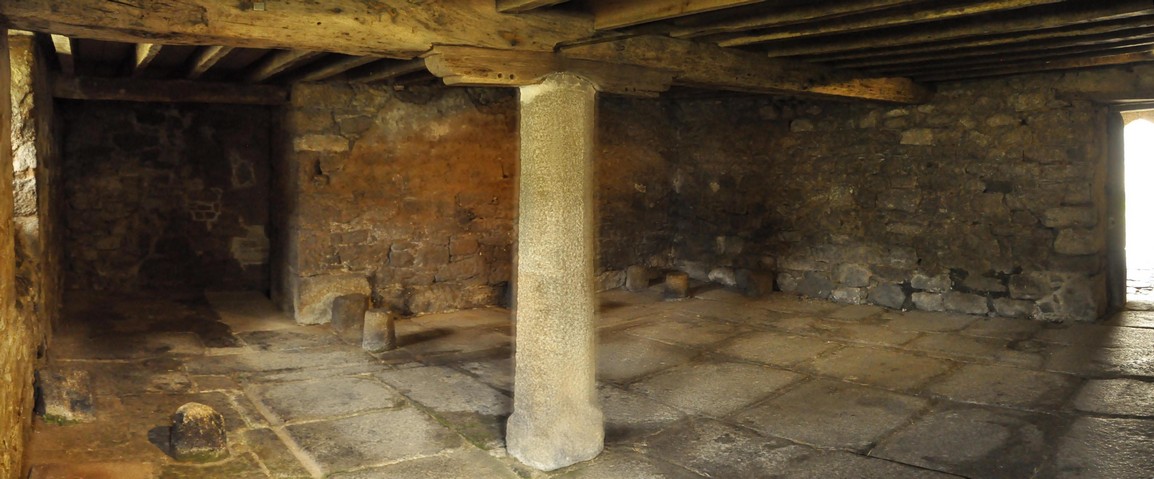
The Undercroft (8)

On the day of our visit just the King’s Room was open to the public. The National Trust has a holiday let here at Godolphin, and mostly the house is off-limits to the general public apart from certain days per year.

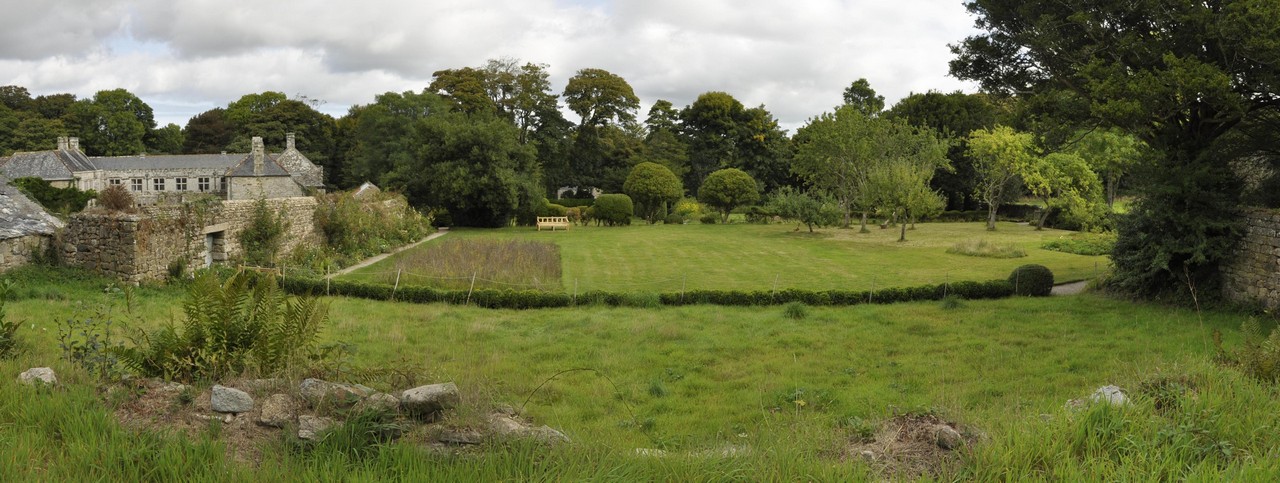
The Side Garden (14) from the Dry Ponds (16)

One of the two Dry Ponds (16)

More photos of the garden can be viewed here.

We also enjoyed the 1.5 mile walk to the top of Godolphin Hill, from where there is a 360° panorama to be enjoyed.

Looking towards Land’s End from the top of Godolphin Hill.


Northwest of Penzance, Trengwainton Garden offers magnificent views over Mount’s Bay, towards St Michael’s Mount in the east and Land’s End in the west.

Only the garden, full of exotic shrubs (particularly bamboos and tree ferns) is open to the public, although there is access to the terrace (R) below the house from where the panorama can be enjoyed.

Once again we were too late for many of the shrubs that flowered earlier in the year, but nevertheless our stroll through these leafy glades was rewarded by the view from the terrace.

There is also an impressive walled garden, divided into several ‘rooms’ growing vegetables and ornamentals. On the day of our visit there was an exhibition of scarecrows made by local schoolchildren to celebrate the centenary of women getting the vote in the UK.

More photos are included in this album.


We enjoyed this horticultural tour of Cornwall, and of course the gardens at the various houses we also visited: St Michael’s Mount, Lanhydrock, Cotehele House, and Trerice. We decided not to visit the Lost Gardens of Heligan (which must also be included in Cornwall’s horticultural heritage) having more than enough on our itinerary of National Trust and English Heritage sites to add another.


These are the other four stories in this Cornwall series:

Kernow a’gas dynergh – Welcome to Cornwall (1): The journey south . . . and back

Kernow a’gas dynergh – Welcome to Cornwall (2): Coast to coast

Kernow a’gas dynergh – Welcome to Cornwall (3): Stepping back in time

Kernow a’gas dynergh – Welcome to Cornwall (5): Magnificent mansions

Kernow a’gas dynergh – Welcome to Cornwall (3): Stepping back in time

Almost 2000 years.

English Heritage preserves several important sites in Cornwall, and during our week long break there, we got to visit four that span about 2000 years of British history, from the Roman occupation of these islands, through the Dark Ages, the 12th century under the Normans, and from the Tudors until the Second World War:

  • Chysauster Ancient Village, on the Land’s End Peninsula
  • Tintagel Castle, on Cornwall’s north coast
  • Restormel Castle, near Bodmin
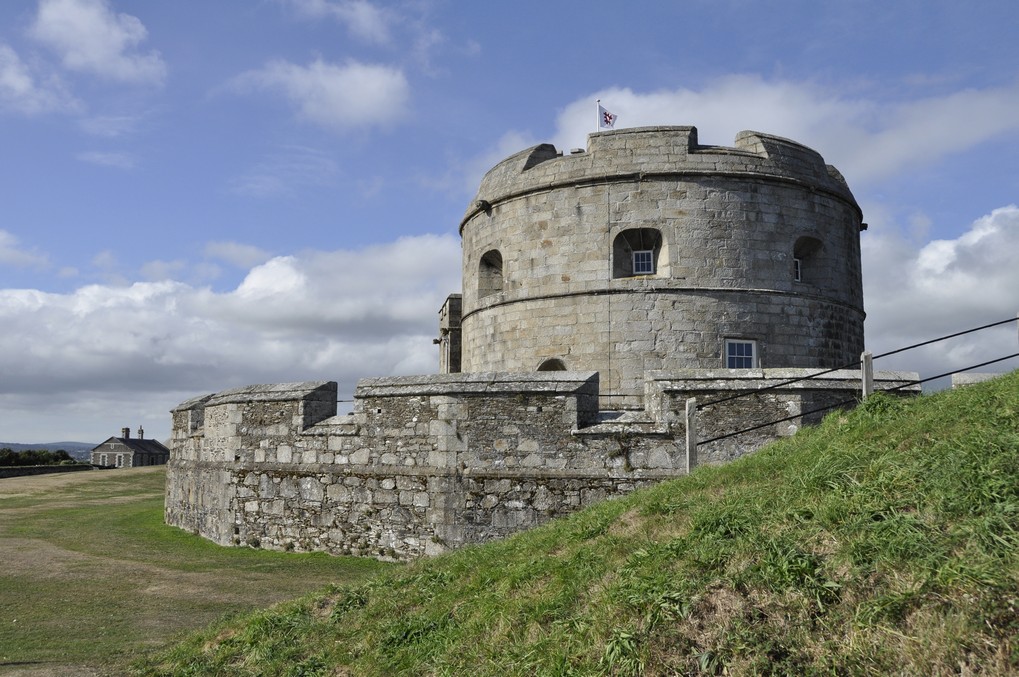
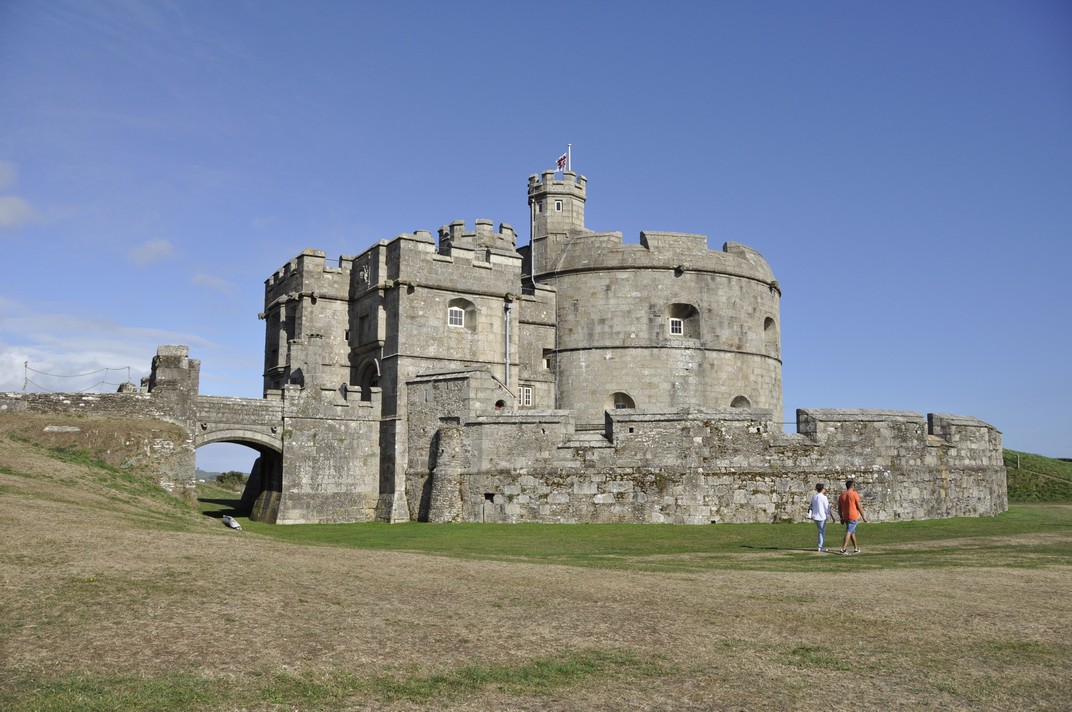
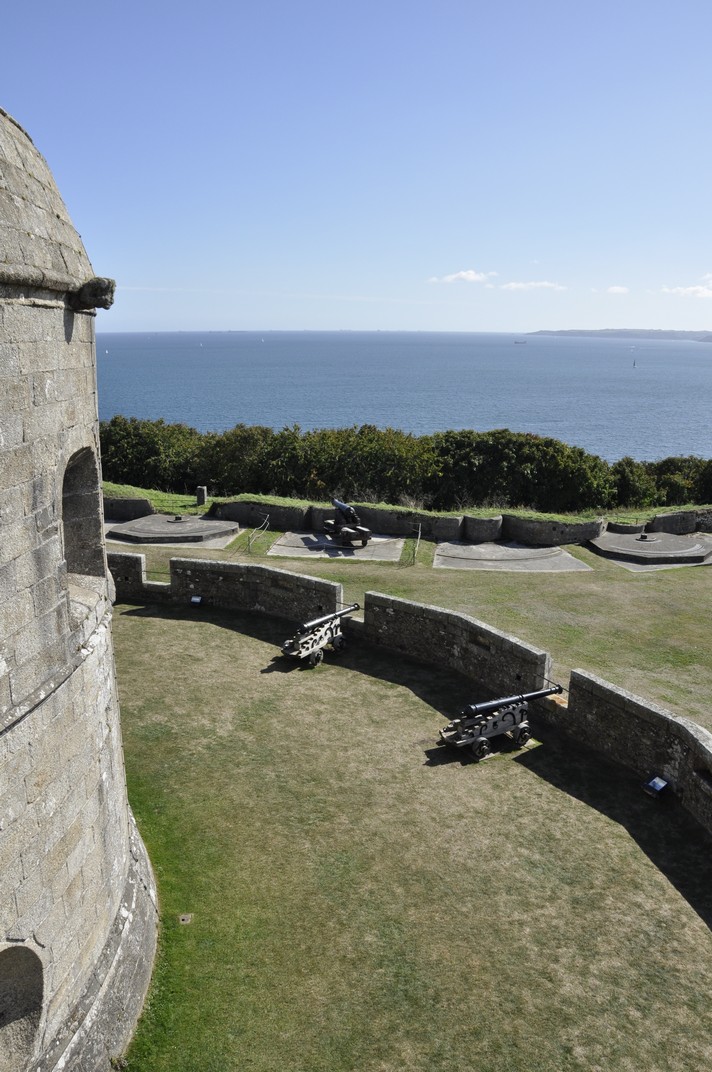
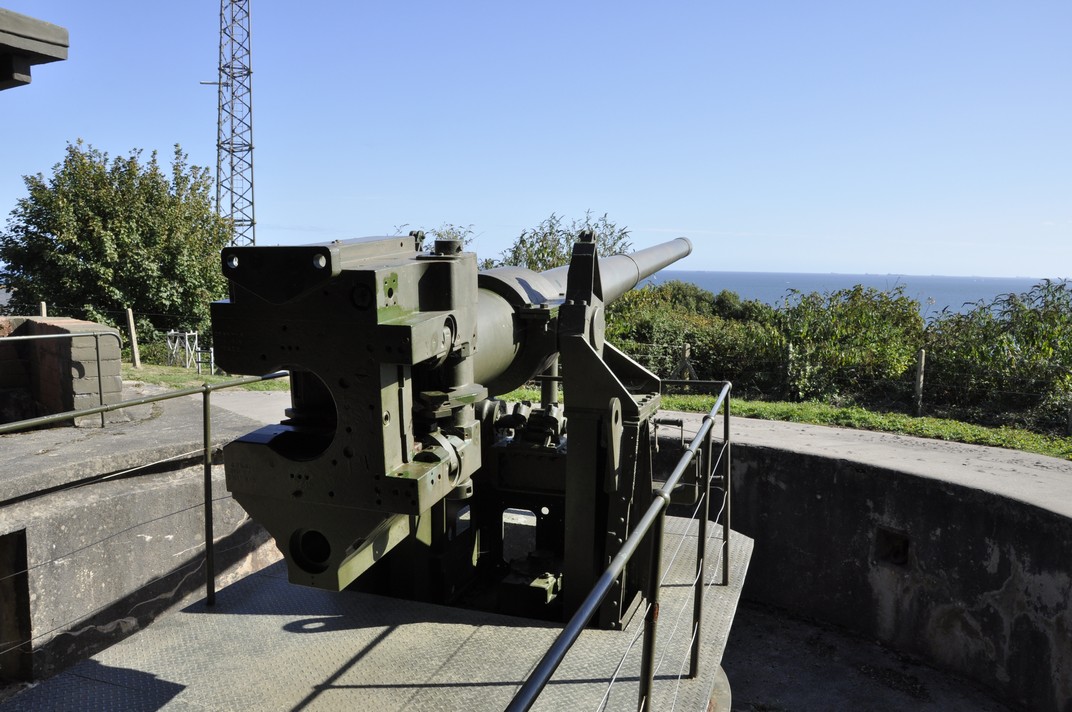
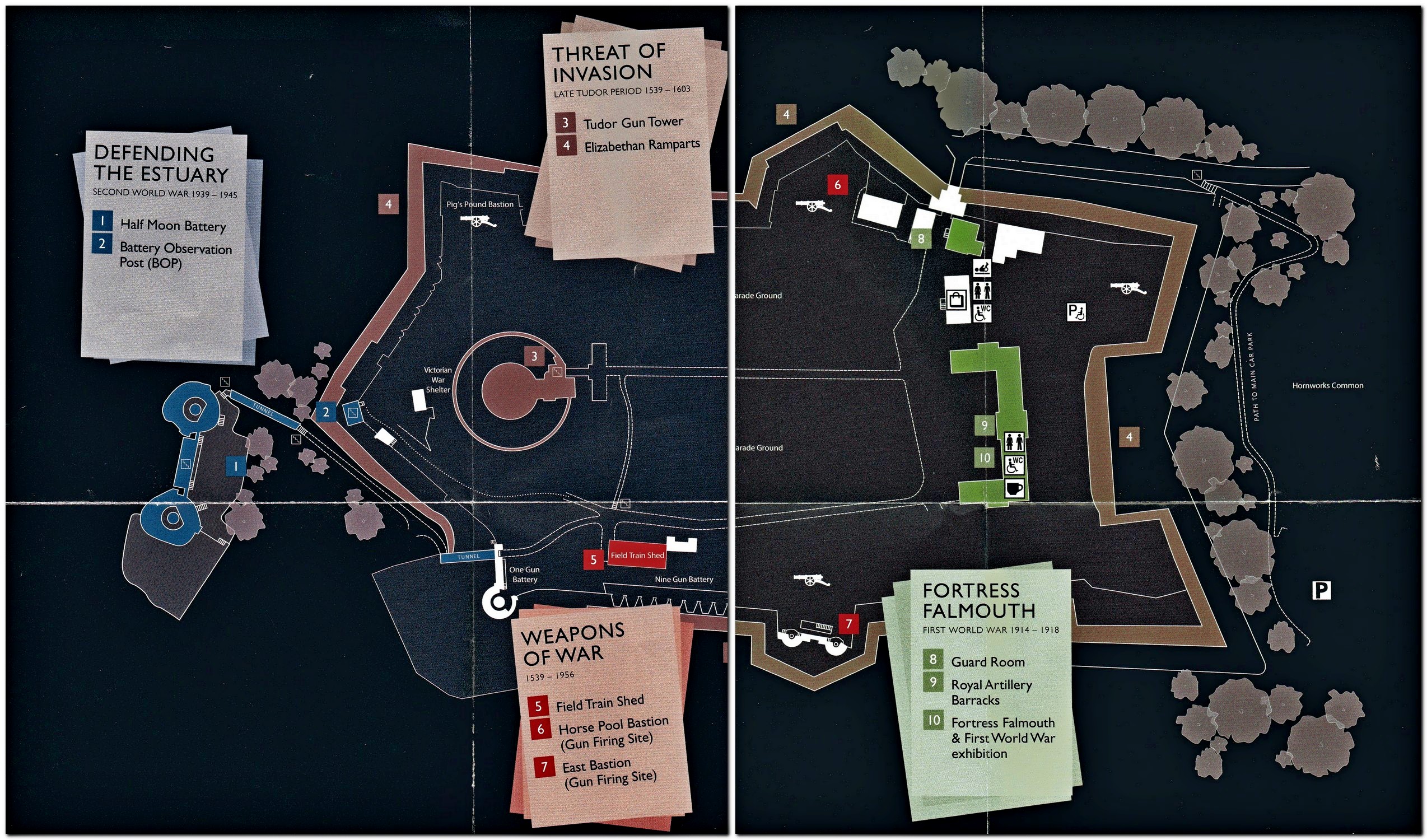
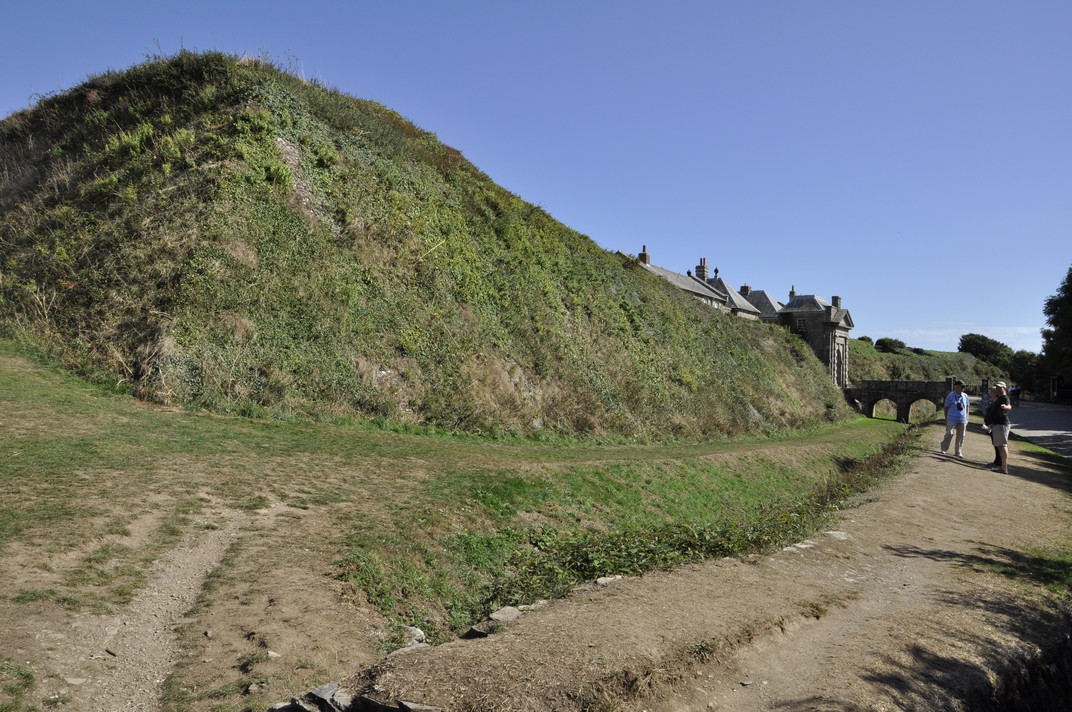
  • Pendennis Castle, overlooking Carrick Roads near Falmouth

Chysauster Ancient Village (pronounced ‘chy-soyster’, with ‘ch’ as in church)
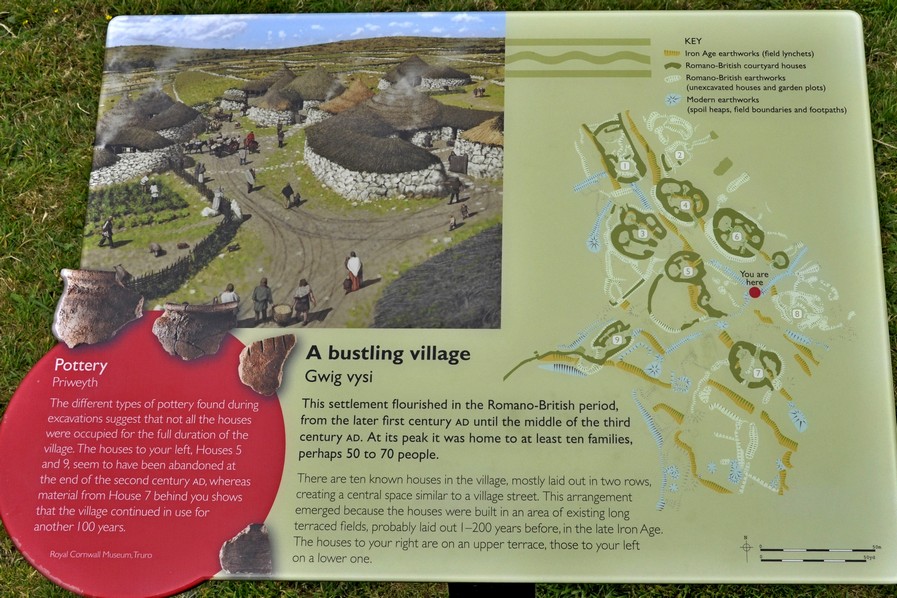
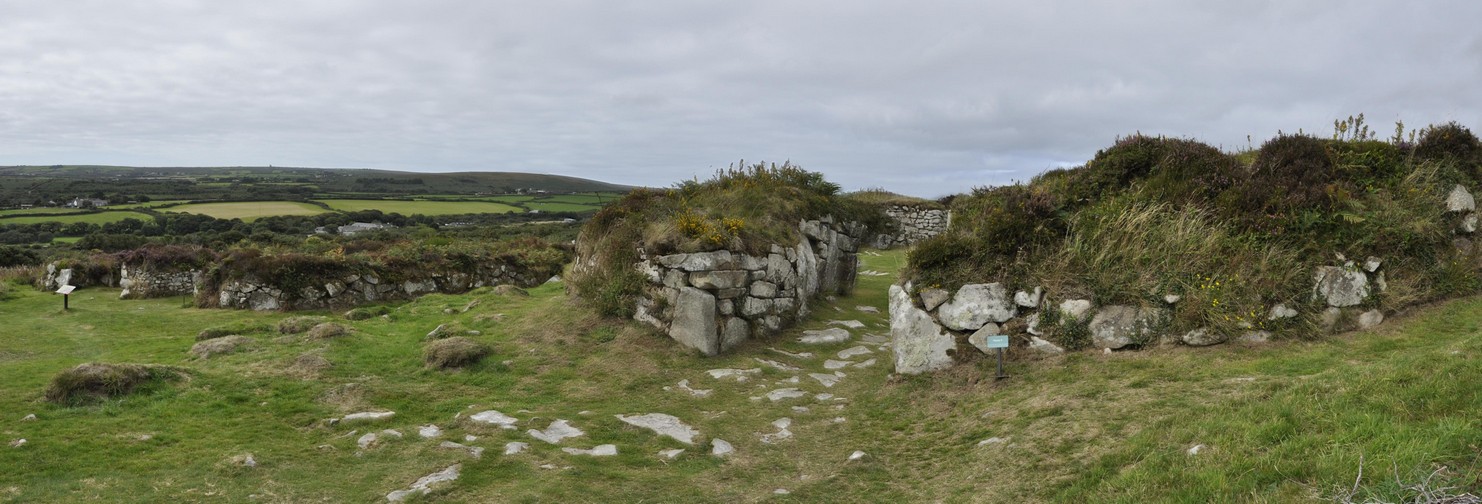
Sylvester’s House. That’s what Chysauster means; ‘chy’ is Cornish for house or home. But whether Sylvester ever lived there and who he was I guess we’ll never know. Because the remains of this Iron Age village date from Romano-British times, some 1800-2000 years ago.

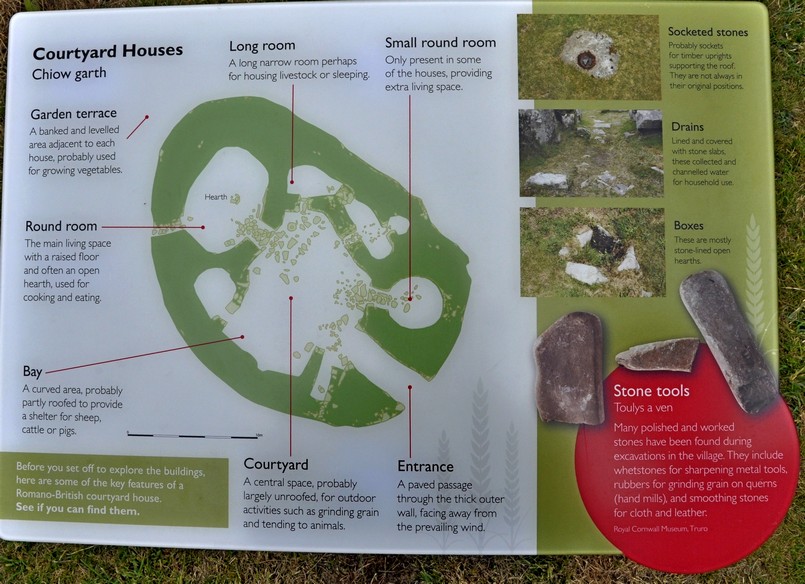
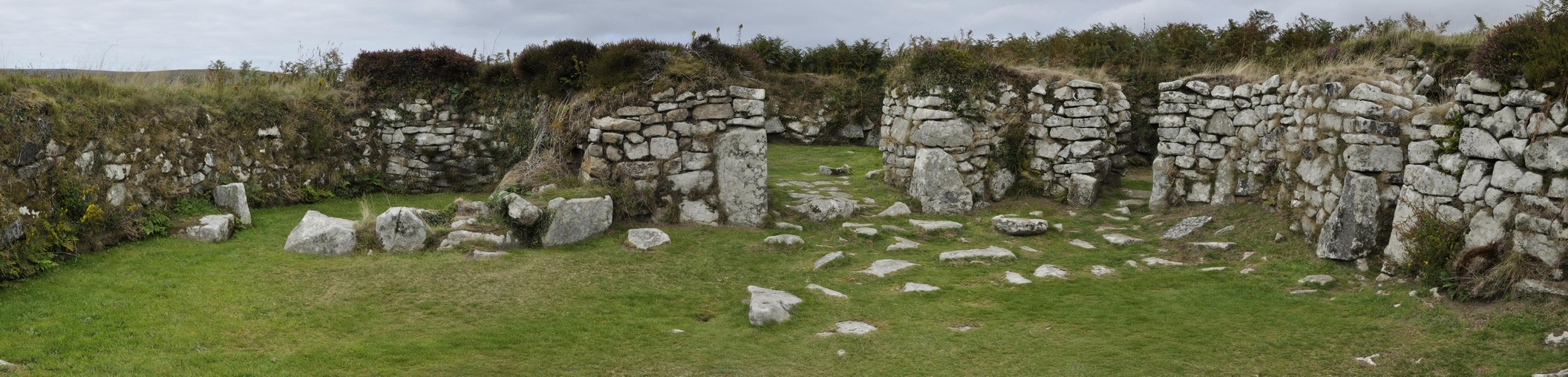
The Romans never really penetrated into Cornwall, apparently. Thus Chysauster, with its unique courtyard houses (found only in Cornwall and the Scilly Isles), is a very important site in the nation’s history. Courtyard houses are found in several locations, but the village at Chysauster is one of the best preserved.

As I walked on to the site I had this feeling that the village had once been a thriving community. I could imagine children playing among the houses, smoke rising from each roof. A busy place.

We spent about an hour walking from one building to the next, fascinated by the layout of each house with its rooms off the central courtyard, and even a backdoor.

Take a look at more photos here. This is the link to English Heritage.


Tintagel Castle
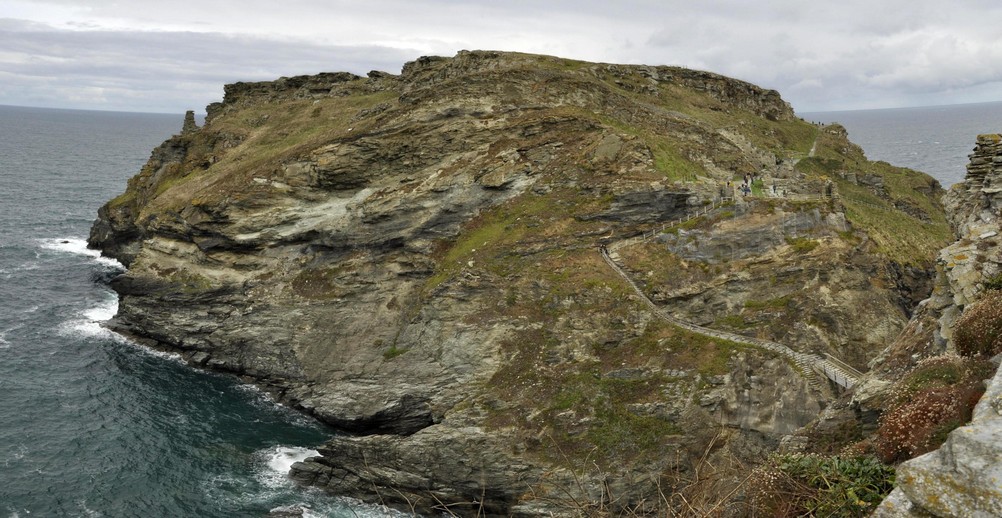
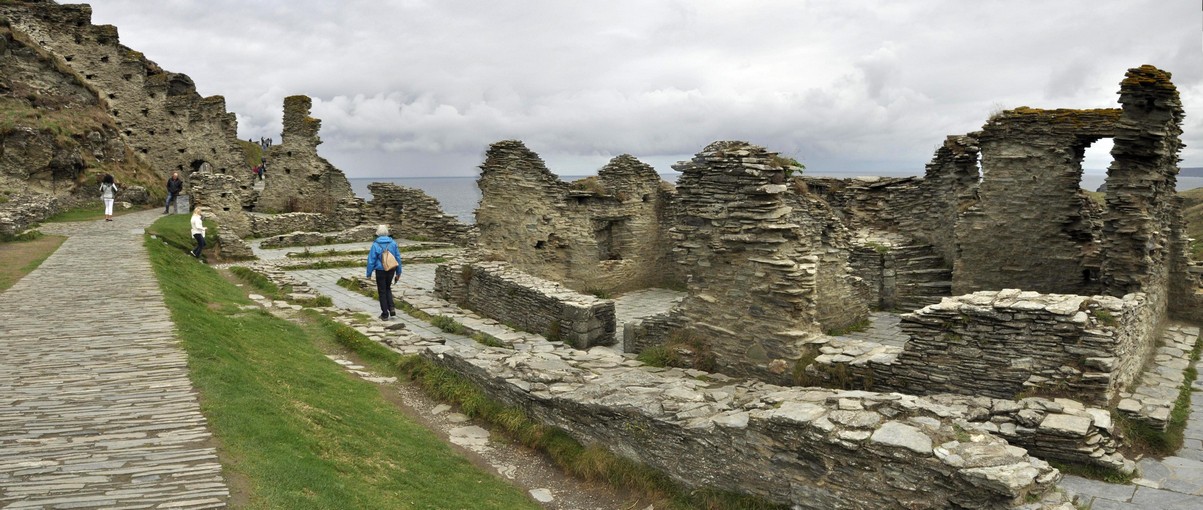
Did King Arthur live here? Did he even exist? Whatever the truth of the myth, Tintagel Castle will forever be linked with his name. It’s certainly an iconic site jutting out into the North Atlantic, battered constantly by winds and storms. It was quite windy on the day of our visit, but thankfully dry.

Tintagel Castle from the Upper Mainland Courtyard (4)

Click here to download a phased plan of the castle, which shows its occupation over almost a thousand years.

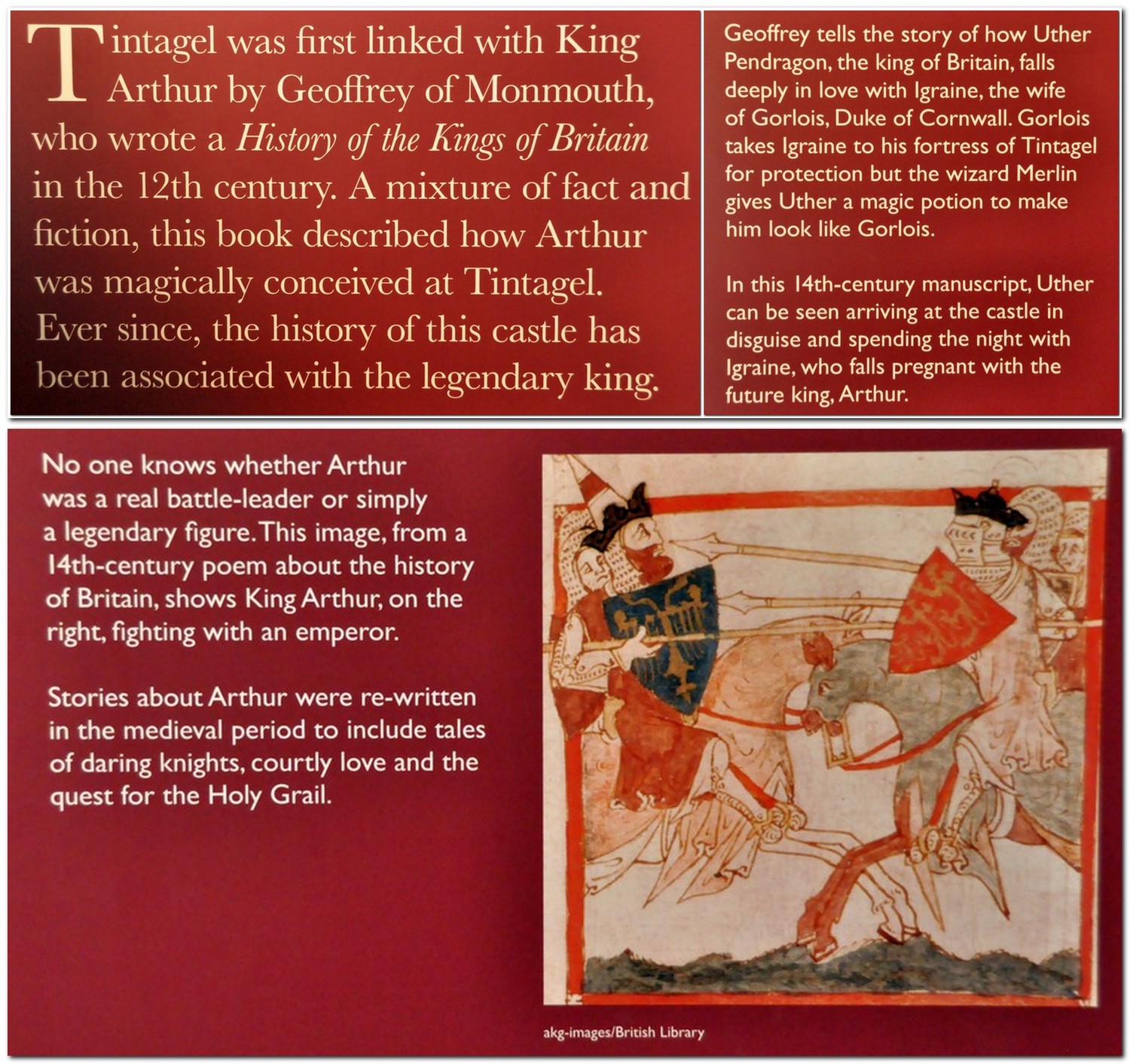
Geoffrey of Monmouth has a lot to answer for, because much of what we ‘know’ of our history prior to the 12th century is a mixture of fact and fiction that he wrote in his History of the Kings of Britain.

Among the many myths that he conjured up is the tale of King Arthur and his links with Tintagel Castle where, claimed Geoffrey, Arthur was conceived.

Tintagel Castle was once home to a thriving community of more than 300 persons. But since much of its history derives from the so-called Dark Ages (the period between the exodus of the Romans in the 5th century AD and the arrival of the Normans in the 11th). Tintagel Castle island is dotted with the remains of many houses.

We arrived at Tintagel just before 09:30. I wanted to be sure of a parking place knowing that it can become very busy. The castle opened at 10:00, so we took a slow walk down to the entrance, about half a mile, and quite steep in places. We opted for the Land Rover ride (at £2 each) back up to the car park after our visit.

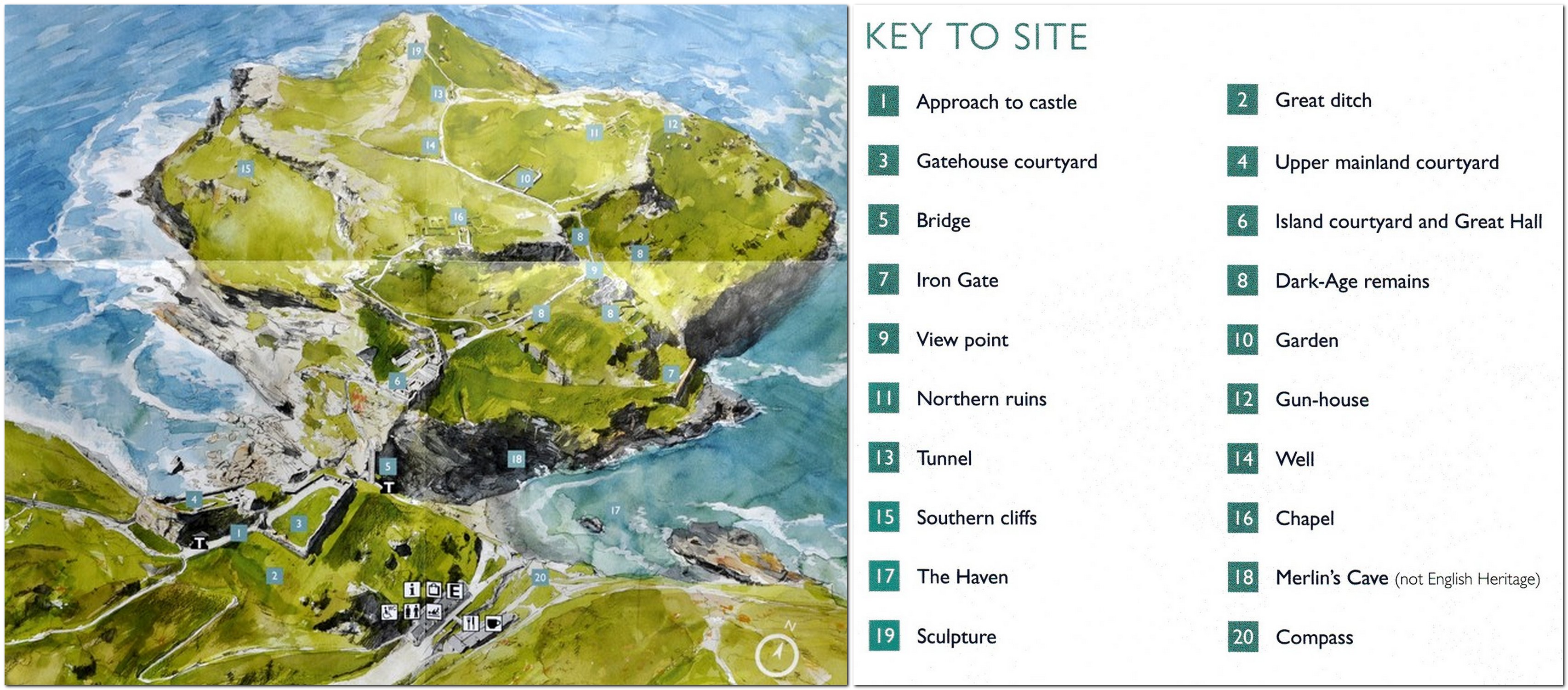
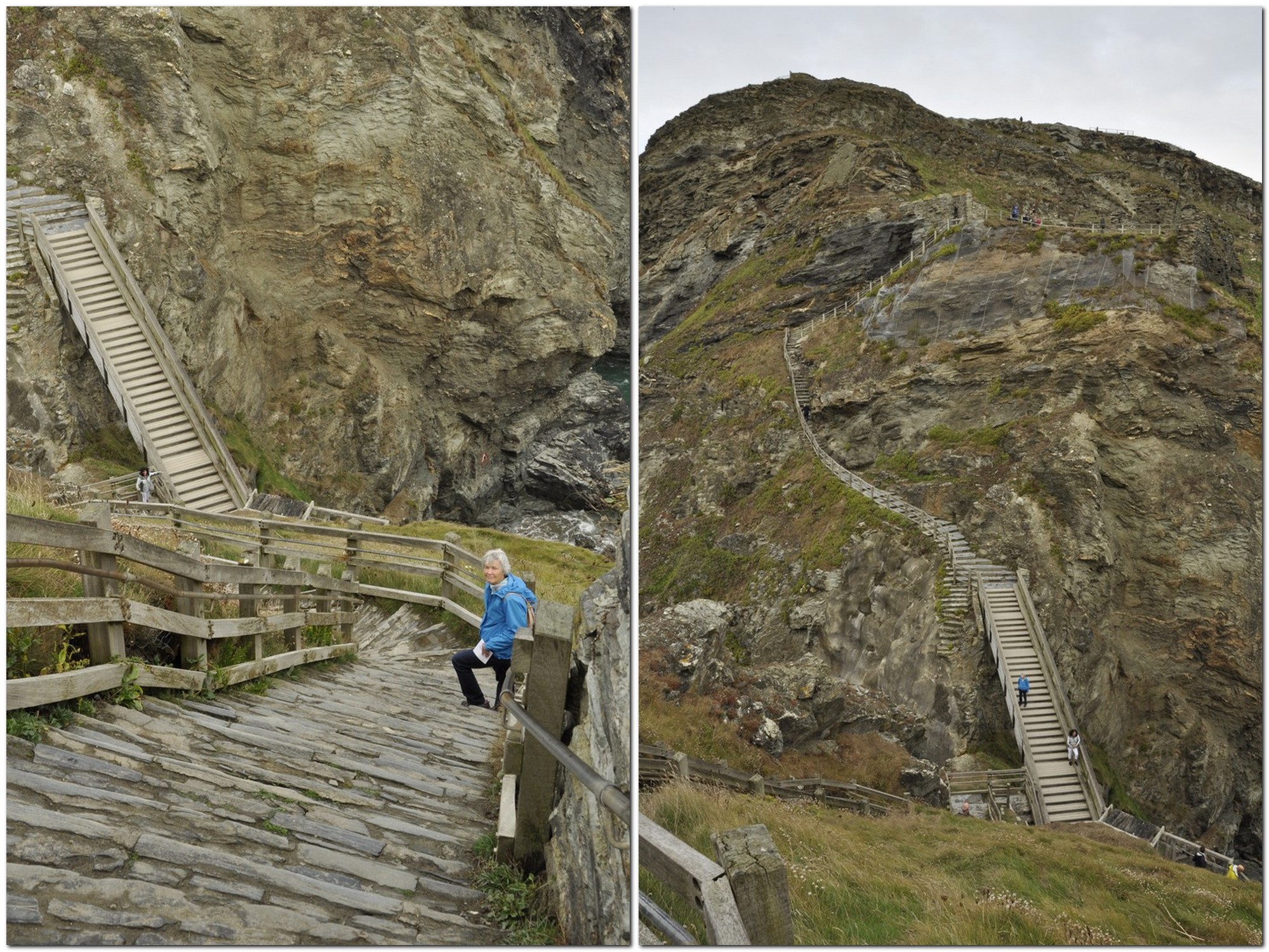
The cafe was just opening, so we enjoyed a quick coffee before registering for our visit, and getting some wise advice about how to tackle the site. There are lots (and I mean lots) of steps at Tintagel, some very steep indeed. The person on the ticket counter advised us to enter the site through the upper entrance (just before 1), and straight into the mainland courtyards (3 and 4) that overlook the main entrance and island courtyard and Great Hall (6).

There is a set of extremely steep steps down the cliff to then cross a bridge and climb into the main ruins. The walk up to the upper entrance and courtyards was certainly gentler than had we visited the main island first then returned to view the courtyards (and climb that set of stairs) as we saw many other visitors doing later one. And by visiting the courtyards first, we had a panorama over the island ruins to get our bearings.

What goes down must go up . . .

The island courtyard and Great Hall (6)

Check out the full album of photographs. It takes about an hour and a half to walk round the ruins and appreciate everything that Tintagel has to offer. The views over the cliffs, north and south down the coast are typical Cornwall, and you’re left wondering how a community managed to survive for so long in this rather desolate spot.


Restormel Castle
Moving forward to the 12th century, Restormel is a Norman castle alongside the River Fowey in Lostwithiel. Its circular shell keep is unusual (the round tower at Windsor Castle is also a shell keep), built on a mound surrounded by a dry (and quite deep) ditch. The ruins are remarkably well preserved, and in addition to wandering through the various rooms at ground level, English Heritage has provided access to the battlements, from which there is a good panoramic view over the surrounding countryside.

You can read a detailed history of Restormel here.


Pendennis Castle
Guarding the approaches to Falmouth, Pendennis Castle has proudly stood on a peninsula overlooking Carrick Roads since the time of Henry VIII in the sixteenth century. And it remained an important fortress right up to the Second World War when guns were installed to combat any threat from German naval vessels.

Across the estuary is another Tudor fortress, St Mawes Castle, a mirror image of Pendennis. During Tudor times, the guns from each could reach half way across the estuary, this protecting Falmouth and its harbor from both sides.

In July 2016 we visited Calshot Castle, that guards the approaches to The Solent near Southampton, and is another of Henry VIII’s coastal fortresses.

Pendennis has a fine collection of cannons inside and also on the battlements, as well as the Second World War guns at Half Moon Battery.

Looking southwest to the mouth of the Helford River

At Half Moon Battery

The castle is not just the round tower. There are extensive 18th century barracks and parade grounds enclosed within major earthworks, ramparts constructed during the reign of Elizabeth I.

Earthworks leading to the main entrance (and below as well)

The barracks (on the right) and guardhouse on the left, from the roof of the Tudor round tower.

Check out more photos here.


These are the other four stories in this Cornwall series:

Kernow a’gas dynergh – Welcome to Cornwall (1): The journey south . . . and back

Kernow a’gas dynergh – Welcome to Cornwall (2): Coast to coast

Kernow a’gas dynergh – Welcome to Cornwall (4): An impressive horticultural legacy

Kernow a’gas dynergh – Welcome to Cornwall (5): Magnificent mansions

Kernow a’gas dynergh – Welcome to Cornwall (2): Coast to coast

On reflection, I’m not completely sure our choice of holiday accommodation was appropriate.

It was located in the far south of Cornwall, just north of Helston, excellent for visiting the coast around the Lizard and Land’s End Peninsulas, but not so handy for any of the other sites we wanted to visit in the north of the county. So on two or three days we had 100 mile plus round trips. Maybe we should have looked harder to find a cottage in the center of the county.

Nevertheless, it was very comfortable, and in terms of facilities and cost, it was just what we were looking for. And we were very happy with our week’s stay there.

Having traveled more than 250 miles south on the Saturday to reach Cornwall, we decided to spend the first two days, Sunday and Monday, exploring the coast in the far south. In any case, perusal of the weather forecast indicated that these two days would be favored by warm and sunny weather, ideal for enjoying the coast.

First port of call was Lizard Point (owned by the National Trust), the most southerly point on the British mainland. We always hear about John o’ Groats to Land’s End. But I think it should be Dunnet Head, the most northerly point on the mainland, in Caithness (which we visited in 2015) to Lizard Point.

Lizard Point, from the east

Having found the National Trust car park, we set off east along the cliff path towards Lion’s Den, a hole in the cliff created when a cave collapsed in the mid-1800s, overlooking Housel Bay.

The cave fall lies immediately in front, overlooking Housel Bay

Just as we approached Lion’s Den, I saw two black birds take to the air from a field to the side of the path, and fly down into Lion’s Den. Could those be choughs, I asked myself.

I hadn’t seen the distinctive reddish-orange curved bill and legs, but their call and size were different from either crows or jackdaws that were common in the area, especially jackdaws.

A local naturalist confirmed they were choughs, a resident pair that had nested at the Lizard in 2018. A few minutes later and he showed us a photo he’d just managed to take (with a super telephoto lens) of one of the birds deep down inside Lion’s Den.

So we returned to the spot, a few meters away where he took the photo, and waited. We could hear them calling. Our patience was rewarded, for after a couple of minutes, one of the birds hopped on to a ledge in full sunlight, and I had a brilliant view of this remarkable rare bird. Once common in Cornwall, choughs only returned to the Lizard in 2001, although more can be seen on the north coast of the county. We’d seen the Lizard’s only choughs! Needless to say, we were chuffed! Magic!

Returning to Lizard Point, we heard this eerie crying, wailing almost, coming from Enoch Rock just offshore. Talk about mermaids enticing unsuspecting sailors to their doom, shipwrecked on hidden rocks (no wonder the lighthouse was built there). A group of Atlantic grey seals was basking in the midday sunshine and calling to one another.

We enjoyed a coffee, overlooking Polpeor Cove, at Britain’s most southerly cafe, before heading west to follow the path towards Old Lizard Head through Pistil Meadow. On the way there were great views of the old lifeboat station, home to the RNLI’s biggest rescue in March 1907.

The following day, we headed to the north coast of the Land’s End peninsula, and the National Trust’s Levant Mine and Beam Engine (that had just shut down when we arrived there).

Levant Mine is located on Cornwall’s ‘Tin Coast’ (part of the Cornish Mine World Heritage Site), west of Lower Boscaswell (map). The 1840s beam engine has been fully restored. Both copper and tin were mined here, and the mine stretched for 1.6 miles out sea, and more than 500 of feet below the seabed. The mine closed in 1930.

There’s a small museum providing a window into the past and who were the miners and their families (particularly young women) who worked at the mine, underground and at the surface sorting and cleaning the ore. The coast path passes by the mine, but we didn’t walk too far; it was just too blustery and at the end of the day (after several other visits) we were feeling a little tired. The landscape is dotted with the remains of engines houses and chimneys of mines and their shafts long abandoned.

Continuing round the coast near St Just, we ended the day at Cape Cornwall (map). We had already decided to give Land’s End a miss: too commercialized. Cape Cornwall in the late afternoon sun was more than an adequate substitute. What glorious views west over the Atlantic Ocean (next stop: North America); and south to Land’s End, jutting just that little further out into the Atlantic, with the Longships Lighthouse just over a mile offshore.

At the end of our week in Cornwall, we visited Marazion and its the sandy beach before crossing over to St Michael’s Mount.

St Michael’s Mount at Marazion at low tide

And to Tintagel on the north coast, where (after visiting the castle and the Old Post Office) we enjoyed a picnic lunch overlooking the Atlantic from the National Trust’s car park at Glebe Cliff beside the Church of St Materianna, that can be seen from Tintagel Castle.

There’s no doubt that Cornwall has a spectacular coastline; cliffs and beaches, waves for even the bravest surfer. The places we chose fitted in with our National Trust and English Heritage itinerary – and didn’t disappoint.


These are the other four stories in this Cornwall series:

Kernow a’gas dynergh – Welcome to Cornwall (1): The journey south . . . and back

Kernow a’gas dynergh – Welcome to Cornwall (3): Stepping back in time

Kernow a’gas dynergh – Welcome to Cornwall (4): An impressive horticultural legacy

Kernow a’gas dynergh – Welcome to Cornwall (5): Magnificent mansions

Kernow a’gas dynergh – Welcome to Cornwall (1): The journey south . . . and back

Steph and I began planning a short, one week break in Cornwall way back in the Spring. As followers of my blog will know by now, we are avid members of the National Trust and English Heritage, and throughout the year we try to make as many visits as the weather and other commitments permit. In Cornwall, we wanted to explore as many NT and EH properties as we could fit into the six days, and the two days of travel. Eighteen was our tally!

We chose a small studio cottage, suitable for a couple, just north of Helston on the south coast, a round trip of more than 500 miles (including the side trips to a couple of National Trust properties on the way there and back – see map). Dovecote Cottage was located at the end of a 2 mile drive down a narrow lane (with passing places), next to a former farmhouse. It was very peaceful, and comfortable.

Dovecote Cottage

Our home (in Bromsgrove, in northeast Worcestershire) is less than 5 miles from the M5 motorway, the main arterial to the southwest. The M5 and roads south into Cornwall like the A30 can be notoriously busy during the summer, and delays of many hours are not uncommon as lines of motorists (many towing caravans) snake their way to the coast and sunshine. On the way south we had a traffic-free journey, but on our return on the following Saturday we had to make one detour to avoid a jam at road works near Tiverton (on our way to Knightshayes), and we also hit a long queue of traffic attempting to navigate the bridge over the River Avon, backing up about 10 miles although constantly moving.

During the six days touring Cornwall we clocked up another 500 miles, for a total of 1086 miles for the whole holiday.


Heading south, and just 12 miles east of the M5 near Taunton, we visited Barrington Court, a Tudor manor house built between 1538 and the 1550s. It was the first house acquired by the National Trust (in 1907) and became the residence of Col. Abram Arthur Lyle (of the sugar refining company Tate & Lyle) who refurbished the property, installing his collection of historic woodwork, and converting the next door 17th century stable block, Strode House, into a residence. Check details of Barrington Court on the National Trust website.

The south face of Barrington Court (on the right) and Strode House on the left. The connecting corridor between the two can be clearly seen.

Barrington Court is unfurnished, but that also permits better appreciation perhaps of the fine woodwork. The long gallery on the top floor is particularly impressive.

In several of the bathrooms, reclaimed Delft tiles surround baths and wash basins.

During the 1920s refurbishment Lyle had asked Gertude Jekyll to design a series of formal gardens surrounding the house. In the eventuality not all were constructed, but what there are now are beautiful accompaniments to an elegant house.

A full album of photographs of Barrington Court can be opened here.


A week later, and we were headed north to take in Knightshayes, an imposing Gothic Revival mansion standing on a hillside overlooking Tiverton in Devon.

Knightshayes is a late Victorian house (built between 1869 and 1874), designed by William Burges, whose design excesses never made it completely into the interior of the house (although the National Trust has refurbished one room following his designs). The gardens were designed by Edward Kemp.

It was the home of the Heathcoat-Amory family for more than 100 years, and was handed over to the national Trust in 1972. The last occupants, Sir John Heathcoat-Amory and Lady Joyce carried out extensive work on the gardens in the 1950s and 1960s; both were awarded Gold Medals by the Royal Horticultural Society. Lady Joyce (née Wethered) was a world class golfer with many titles to her name.

The interiors at Knightshayes are impressive indeed.

The woodwork and decoration on the ceilings in many rooms is quite stunning.

A few photographs displayed here cannot do justice to Knightshayes, so please take a look at a more complete (and annotated) album of photographs here.

Knightshayes also has one of the largest walled gardens we have ever seen, and on the day of our visit there was a ‘heritage tomato event’.

One of the paintings on display at Knightshayes was recently featured in BBC Four’s Britain’s Lost Masterpieces. A small painting, not much more than 12 x 15 inches perhaps has been attributed to Rembrandt. Using the tool beloved of all art historians, a torch, we could highlight and see the detail in this beautiful small painting.

Rembrandt as a young man – self portrait attributed to the artist

But is it a Rembrandt? Perhaps.


These are the other four stories in this Cornwall series:

Kernow a’gas dynergh – Welcome to Cornwall (2): Coast to coast

Kernow a’gas dynergh – Welcome to Cornwall (3): Stepping back in time

Kernow a’gas dynergh – Welcome to Cornwall (4): An impressive horticultural legacy

Kernow a’gas dynergh – Welcome to Cornwall (5): Magnificent mansions

Losing my religion . . .

I’m a contented atheist. And have been since I was nineteen. However, I was baptized a Catholic, but never practiced until my family moved to Leek in 1956.

A little background. My mother’s family were Irish Catholics. My father’s parents were Methodist. My parents were married at St. Joseph’s Roman Catholic Church, Epsom, Surrey in November 1936. But as I grew up in Congleton (where I was born in 1948), I have only one recollection of ever having stepped inside the Church of St Mary on West Road. I remember my mother once telling me about an incident at the church, maybe when my sister took her First Communion. Apparently, the parish priest told my mother that my father, a Protestant, was not welcome in the church. No ecumenism in those post-war days. So until we moved to Leek in 1956, I can never remember going to Mass.
St Mary’s Church on Compton in the 1950s/60s, from the bottom of St Edward Street where we lived.

Things changed after the move to Leek, and we started to attend Mass at St Mary’s Catholic church. I even trained as an altar boy, alongside Michael Oliver (brother of Kevin, whose father kept a sweet shop on Broad Street). Not infrequently I’d accompany one of the priests to say Mass in Ipstones (at a pub there) or St Edward’s Hospital in Cheddleton. I joined the cub scouts, 5th Leek St Mary’s, run by Mr Kelsall, who we called ‘Sir’ instead of ‘Akela’.

The parish priest was Fr Clavin – liked by many who came in contact with him. Fr Thornton was the curate when we moved to Leek, but he was soon replaced by another younger priest, on the left of the photo below. This photo was taken on the occasion of Fr Clavin’s Jubilee (with a young Gerald Grant on the right).
My elder brother Edgar and I were also enrolled in the local Catholic primary school, St Mary’s, on the corner of Broad Street (the A53) and Cruso Street. Being two years older (and three academic years ahead), Edgar attended St Mary’s for just one year. I, on the other hand, continued my education there until July 1960 when I secured a place to attend the Catholic grammar school, St Joseph’s College, in Trent Vale, Stoke-on-Trent, which entailed a round trip of 28 miles. That became my daily term-time routine for the next seven years.


April 1956. I was 7½.

New town, new friends, new school . . . and NUNS!

I think I must have shed a few tears that first day at school. I was so bewildered. I’d never seen a nun before, and they looked so intimidating in their long black habits, white wimples leaving just their faces exposed, and long black veils typical of the Sisters of Loreto, who came to Leek in 1860 to teach children of the parish. The last nuns left in 1980, and their convent behind the church was sold for development.

Photo courtesy of Liz Sharkey, from Facebook group: The History & Heritage of Leek and the Staffordshire Moorlands

St Mary’s Infants School, Selbourne Road in the 1960s

The headmistress, Mother Michael seemed quite pleasant and welcoming, but she left after about a year. In the four years I spent at St Mary’s my teachers were Mother Bernadine, Mother Elizabeth (who became headmistress) and, in my last year, Mr Smith (the first male teacher at the school). Sister (later Mother) Martin and Mother Vincent de Paul were other teachers who I remember.

My wife still uses a woven needle/pin case that I made during my time at St Mary’s (helped by one of the teachers).

So what’s all this about losing my religion? Well, a few days ago, I posted a query on the closed group Facebook page about Leek to which I belong. I was researching some information (and photographs) for a blog post I intend publishing a little later this year. While my query yielded few photos, I was surprised at the number of people who joined the conversation. And for many, their years at St Mary’s were not the happiest.

I always saw the nuns as quite strict. One of them often used the edge of a steel-edged ruler to rap any miscreant on the knuckles. It didn’t take much to be viewed as a miscreant, as the Facebook commentaries from former pupils indicate.

Some were clearly profoundly unhappy at St Mary’s, others not. Some have recounted being caned in front of the whole school, even for attending a wedding at a non-Catholic church! All in all, I was quite horrified at these memories of what seem like gratuitous violence perpetrated on 5-11 year-olds. The situation for several was so dire, apparently, that they were moved by their parents to another non-Catholic school in the town.

I never saw any canings, or at least I don’t remember the cane being administered. Until some of the Facebook group members mentioned this, it didn’t form part of my memory narrative. The ruler I certainly do remember and was the recipient on at least one occasion.

On the whole, my memories of just over four years at St Mary’s are neither positive nor negative. As one group member stated overnight, we survived. But was that sufficient?

Things have changed. Take a look at the St Mary’s today; it appears to be a thriving and nurturing community.


Corporal punishment was a daily occurrence at St Joseph’s, especially for pupils younger than sixteen. Punishments were meted out almost every lesson, even for slight misdemeanors.

The school, for boys only, had been founded by Irish Christian Brothers in the 1930s. I guess that when I first attended the Brothers were about a fifth of the teaching staff. Or maybe I exaggerate. Certainly walking around in their long black cassocks and dog collars they were a highly identifiable presence who brooked no dissension.

Today the Christian Brothers are no longer associated with St Joseph’s. It’s also co-educational, and has a thriving Sixth Form that attracts students from the wider community, Catholics and non-Catholics alike.

In 1960, the headmaster was Bro. Henry Wilkinson (for a couple of years) and thereafter until I left in 1967, Bro. O’Keefe. Bro. Wilkinson regularly used a tannoy to broadcast to every classroom throughout the school, which was quickly dismantled after O’Keefe took the reins.

Every teacher was permitted to physically punish any pupil, and used a leather strap (apparently manufactured in Ireland), maybe almost 18 inches long, of at least two layers of leather sewed together.
The Brothers had a special pocket in the side of their cassocks to hold the strap. Usually, a boy would hold out one of both hands, palm upwards, and receive maybe a couple of strokes. It hurt! It also depended on which teacher was administering the strap. Some were more ‘effective’ than others. During my first four years at St Joseph’s I received my fair share of strappings, and there was a memorable one during Year 4.

My home class teacher was Mr Joyce (first name unknown or not remembered) who taught French. During Year 3 I had represented the school in an inter-school quiz broadcast to the local hospitals. We lost in the Final to a local girls’ grammar school!

Anyway, one afternoon, Mr Joyce explained that he would hold a quiz to identify promising candidates for the next season’s team. Since I’d already participated, I didn’t take this seriously, and started chatting with the person next to me. We had double desk. Joyce warned me twice to stop talking, but I persisted. On the third warning, he took out his strap, told me to hold out my hand, reached across the desk, and hit me twice across the palm on that fleshy part just below the thumb.

Yes, it hurt but not unduly. However, as I reached for my pen, I suddenly felt dizzy, and the next thing I found myself trying to drag myself off the floor. I’d passed out, and as I fell off my seat, hit my head on the wall to the side. My classmates were shocked. Needless to say, Mr Joyce never touched me again.

We took corporal punishment for granted. Did it have any lasting effect? Probably not for the majority of pupils. But you can never deny that for some of us, it was unduly cruel.


However, it was this flagrant recourse to corporal punishment that lead to me rejecting Catholicism, indeed any formal religion.

When I was in the Upper Sixth (the year immediately prior to heading off to university), Brother Baylor joined the staff (maybe a year earlier). But I’d had no contact with him until then. Anyway, he took us for a formal religion study period once or twice a week. On this particular day, in he came to the classroom and, struggling to peer over his desk (he was a tiny man), told us that we would be doing some Bible studies that day. And, removing his leather strap from its ‘holster’, and lightly tapping it across his hand, told us in a threatening tone, that we would believe else he would strap us.

It was like a light bulb going off in my head. I realized that if a ‘man of God’ had to make threats such as this, there couldn’t be much to sustain the foundation of his beliefs. And from that day I refused to attend Sunday Mass; I went through the motions at school as there were services we had to attend. I’ve not been to Mass since, and never will. The Catholic Church lost one of its flock. I guess I started out as agnostic, but this has become hardened over the years into contented atheism.


As I mentioned earlier, I was quite horrified to read those sad commentaries about St Mary’s. It’s not a situation I recognize since I did not experience it. It’s as though the nuns had Jekyll and Hyde personalities. That does not however diminish the impact of those unhappy years on some members of the St Mary’s community in the 1950s and 60s.

This feedback comes at a time when the Catholic Church is under ever closer scrutiny not only about child sex abuse, but also wider abuse of children for which some of the incidents related on that Facebook page might legitimately be considered. If not abuse as such, it was certainly bordering on abuse in my opinion. ‘Official’ violence against small children would not be tolerated in schools today. Yes, it was another era but that should not, and cannot, excuse such behavior.

I moved on. I’ve had a fruitful career and happy life. But a simple Facebook request has brought so many memories flooding back, not only for me but all those who read it, that I could not pass another day without committing my thoughts in this post.

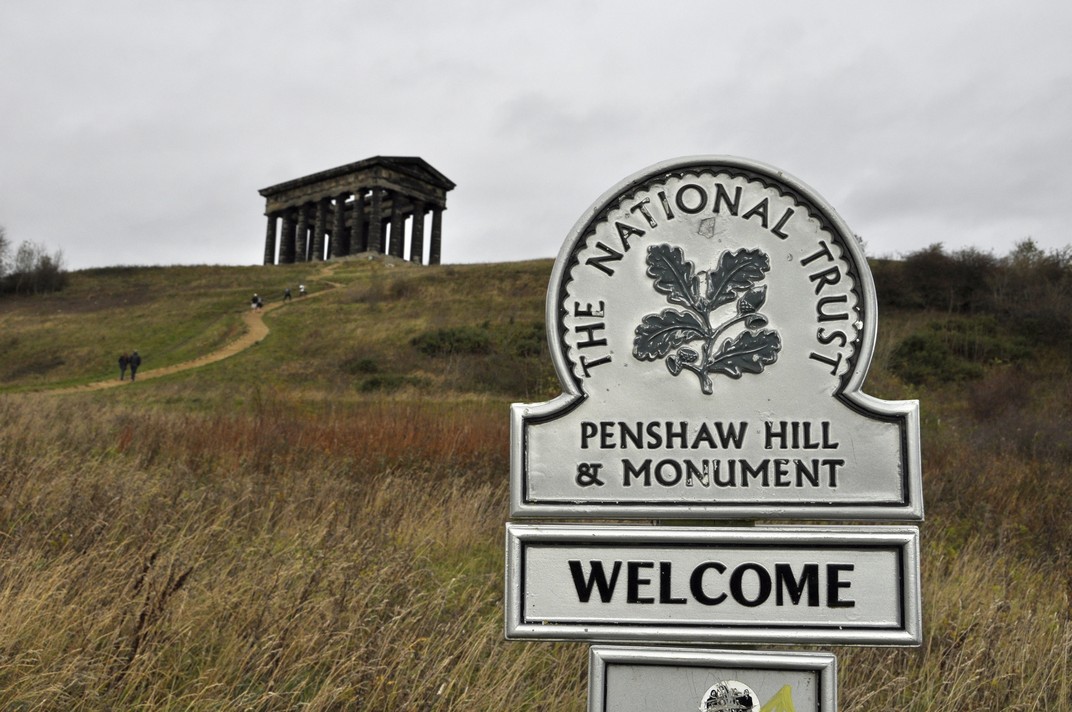
The emperor has no clothes . . .

I have the Brexit blues.

While I probably can’t add much to the debate, I feel I have to express my frustration, angst even, about the Brexit state of play, and what it portends for this (soon to be impoverished) nation of ours. And hopefully explain to many of my blog followers and readers overseas what Brexit means. I offer no apologies for being decidedly pro-European Union (EU).

Just over a month ago I returned from a five week vacation in the USA. Prior to traveling I had become increasingly depressed about the whole Brexit fiasco and where this incompetent Tory government was leading us. I’d even decreased my exposure to Twitter as the exasperation that I read there only fueled my own anxieties. So, I took a break from the news and Twitter for five weeks. My spirits revived.

Five weeks on and I feel myself sinking into a state of despair once again. We’re still getting the Brexit is Brexit line from the government, and taking back control of our border, laws, and money. Following the publication of the ‘agreed’ but soon unraveling Chequers Plan that Theresa May foisted on her Cabinet, it’s clear that Leavers also  don’t have a plan for what happens following Brexit, be it a Cliff-edge Brexit, a Hard or a Soft one. Ask them to put it down on paper or explain in detail what the future holds under each scenario and they have little to say. Even the future status of the border between Northern Ireland and the Irish Republic—a key sticking point in the negotiations with the EU—remains unresolved. Government and Parliament is paralyzed. The only solution is to ask the electorate again.


I need someone to square the circle for me and explain why Brexiteers can still claim that leaving the European Union is akin to entering the land of milk and honey. Facing the real risk of a no deal Brexit, HM Government has now started to publish technical notes (two years too late) outlining (and often short on crucial details) what will be the consequences of the UK leaving the EU next March without a withdrawal agreement. The government has even suggested that businesses should consult the Irish government regarding trade across the border post-Brexit. Talk about dereliction of duty.

It feels as though most of my waking hours are pervaded by Brexit news, and the half-truths as well as the outright mendacity of those on the Leave side of the referendum campaign who sold us (illegally, as it turned out) an illusion.

Jacob Rees-Mogg

Even the most optimistic commentators and partners now fear that the UK will crash out of the EU without a deal. That would be disastrous. The Tory Party is at war with itself. Theresa May’s Chequers Plan has been dismissed by Hard Brexiteers on the right of the Tory party like Jacob Rees-Mogg and his European Research Group (ERG) cronies. The talk is all about trade and how we will be better off striking our own trade deals. No mention of the other benefits of EU membership that we will forfeit at 11 pm on 29 March next year if there is no deal.

Nigel Farage

Two years on, Brexiteers are unable to provide any details or are extremely vague about what a post-Brexit United Kingdom will look like, and what actual benefits we will gain. Arch-Brexiteer Nigel Farage (MEP and former leader of UKIP) claims he never said that the UK would be better off outside the EU: I made ONE absolute promise in that campaign … We will be in control … for good or for bad … I never promised it would be a huge success, I never said it would be a failure, I just said we’d be in control. Independent, and with blue passports! Rees-Mogg has unequivocally stated that it might take 50 years for any benefits to accrue. Good grief! This is not the vision that the electorate was sold during the referendum campaign.

Jeremy Corbyn

Even Labour Party Leader Jeremy Corbyn can’t—or won’t—state categorically whether we’d be better off or not outside the EU. What a pathetic politician. But that’s for another post some other time.

With nothing better to say, It’s the same old mantra of taking back control of our border, laws, and money. Well, I thought we always had control of our borders; there’s more immigration from countries outside the EU than from EU countries. In terms of laws, it comes down to alignment with EU frameworks and regulations, and oversight by the European Court of Justice (that’s anathema to Brexiteers). Furthermore, Parliament seems always to be busy, passing sovereign legislation on one thing or another. Even outside the EU we will still be subject to oversight by external bodies, such as the World Trade Organization (WTO). That’s what peaceful coexistence means: compliance to agreed rules and standards. And while we make a financial contribution to the EU, we have successfully negotiated favorable rebates, we have our own currency, and many parts of the country (even those that voted overwhelmingly to Leave) have benefited from inward investment from the EU in ways that a UK government wouldn’t or couldn’t make.


It seems to me that we face four options:

  • No Withdrawal Deal, Catastrophic Brexit (it’s not just about trade), increasingly likely
  • Withdrawal Deal, Hard Brexit, beloved by many Brexiteers
  • Withdrawal Deal, Soft Brexit – but for some on the Brexit side, it will be like the curate’s egg, good (or softer) in parts: retaining membership of the Customs Union (CU), or the Single Market (SM), or both (but having no say in how regulation of the CU or SM continue to operate)
  • NO BREXIT – an aspiration that is growing. Having looked at what’s really on offer, not the illusion that was offered on the side of a large red bus during the referendum campaign, the electorate should be given the opportunity to pass judgment in a second referendum. This is only way to break the impasse of Parliament, and for the electorate to confirm its decision to leave the EU if that’s how the majority still feel.

Michael Morpurgo

Democracy is, however, also about changing one’s mind, and there is growing polling data to indicate that many who voted to Leave the EU now regret their decision. The problem is that many Brexiteers claim that the ‘British people’ have spoken, and there can be no reversal of that decision (even though it was taken without the necessary knowledge—or understanding—of what Brexit would entail). However, just a few years ago, even Rees-Mogg favored a second referendum once the terms of a withdrawal deal were known. Here’s a Twitter link that shows Rees-Mogg speaking to that effect in the House of Commons in 2011. A couple of weeks ago I was listening to Radio 4 and heard this Point of View by War Horse author Michael Morpurgo. It lasts almost 10 minutes, but is well worth taking time out to listen to his words of wisdom. He makes a strong case for thinking again.


The Brexit lies continue. Just a few days ago (17 August) I saw an official tweet from the Department for International Trade about the UK’s trading links with the USA. Liam Fox (Secretary of State at the DIT) claimed that the USA was the UK’s single largest trading partner. Lie!

Yes, we have exports of almost £100 billion to the USA, according to the Office for National Statistics (2016 data published in 2017). And from what I can determine the USA is the largest country we trade with in terms of exports. But the DIT/Fox said trading partner, and the UK’s largest trading partner is the European Union (EU), with UK exports valued at £235.8 billion through seamless trading (compared with £284.1 billion with the Rest of the World, mostly conducted through trade agreements negotiated through our membership of the EU).

But hey, why let facts get in the way of a good Brexit lie. Fox’s focus on expanding trade with the USA—some might say obsession—is a major part of his Brexit narrative about seizing opportunities to trade with other nations around the world on our terms, not the EU’s. However, these Brexiteers seem to forget (conveniently so) that negotiations are two-sided, and the completion of any trade agreement will require concessions on both sides. Would the price of an agreement with the USA lead for example to imports of food produced to lower standards than we currently enjoy under the EU, or more US healthcare company involvement in the NHS, for example?

It never ceases to amaze me that Brexiteers seem to imply that it’s only under post-Brexit trade deals that we can increase our exports. Even a recent trade deal with China was touted as an example of what the UK could achieve, notwithstanding it was signed under the trade agreement we already have with China through the EU. Liam Fox is certainly economic with the truth.

Post-Brexit, we will have to develop all the schedules to operate under WTO rules and, in any case, deals could take years to negotiate. Furthermore, I can see no reason why manufacturers are already unable to expand exports under the umbrella of existing trade agreements negotiated by the EU. Maybe increased exporting capacity is non-existent. We are no longer a manufacturing nation.

There’s hardly been mention of financial services, which account for about half of our exports. There are serious implications of leaving the EU without an agreement. Just listen to an experienced trade negotiator on James O’Brien‘s LBC show.

The focus has been/is almost entirely on trade post-Brexit, but there’s so much more to our membership of the EU that is not covered—and never will be—by the WTO. These are all the many frameworks and agreements that have brought 28 nations together (and probably more cost effectively than if they had acted independently) that regulate aviation and safety, nuclear fuels and isotopes, environmental protection, animal welfare, food standards, and employment law, to list just a few. I have yet to hear any of the likes of Jacob Rees-Mogg, John Redwood, Iain Duncan-Smith, David Davis, Peter Bone, Bernard Jenkin, not even Theresa May, raise any concerns or offer any perspectives on these issues that are as important—perhaps even more important—than the trade issues.

The Government’s narrative is that its Chequers Plan should be accepted, lock, stock and barrel, by the EU. Sorry Theresa, it doesn’t work like that any more. Gun boat diplomacy died with the Empire.


Although there is a groundswell of support for a second referendum, or at least a say on any agreement negotiated with Brussels, there’s no certainty that one will be held. For one thing the practicalities of legislating for a referendum rule out the possibilities before Article 50 becomes a reality next March, crashing, hard or soft.

Nevertheless, there does need to be some sort of People’s Vote. Furthermore, for an issue that has such long-lasting constitutional, economic, and social implications for the future of this country, politicians need to put the welfare of the country ahead of their own party political considerations. The fact that we have a divided and incompetent governing party, and an Opposition that’s equally divided, with a leader who’s inept and misguided in the face of what many Labour supporters are saying, is perhaps unprecedented. Political turmoil is the last thing that’s needed right now.

I’m sure many who voted to Leave did not foresee or expect many of the scenarios that are looming before us. For example, the National Health Service (NHS) will not reap any ‘Brexit Dividend’. Why? There simply is no dividend. Brexit will impact almost every aspect of our lives for years to come.

There. I’ve said it. I’ve expressed my frustrations. I don’t expect to write much more about Brexit. But once 29 March 2019 has come and gone, I expect I’ll have plenty more to say, no doubt.


Relaxing in Minnesota

Following our epic drive in mid-June from Maine to Minnesota (after already having crossed Massachusetts, Vermont, and New Hampshire, and explored parts of western Maine for six days), Steph and I settled into a couple of weeks of relaxation with our elder daughter Hannah and family in St Paul, MN before heading back to the UK on 10 July.

My son-in-law, Michael, is – like me – a beer aficionado, and keeps a well-stocked cellar of many different beers. It’s wonderful to see how the beer culture has blossomed in the USA, no longer just Budweiser or Coors. I had opportunity to enjoy a variety of beers. Those IPAs are so good, if not a little hoppy sometimes. However, my 2018 favorite was a Czech-style pilsener, Dakota Soul from the Summit Brewing Company based in St Paul.

Relaxing in St Paul was also an opportunity catch up with some of my blogging, while Steph spent time in Hannah’s garden making sure everything was coping with the very hot weather. Notwithstanding the regular watering, we did experience a couple of quite spectacular downpours the like of which I haven’t seen for some time.

And our lively grandchildren, Callum (eight just two days ago) and Zoë (6) kept us on our toes. For one of the two weeks we stayed in St Paul, I was their summer camp chauffeur, dropping them off at the bus just after 8 am each day, and picking them up late in the afternoon. We were also ‘babysitters’ over six days and five nights. That’s the first time we’ve taken on this role; it was the first time that Hannah and Michael left the children with grandparents for more than just an overnight stay, while they celebrated their 40th birthdays with a visit to California’s Napa Valley.

Outcome? I think Callum and Zoë survived us – no permanent harm done!

There’s quite a lot of ambiguity associated with looking after someone else’s children – and they know it! Even though it was made clear to both that ‘Grandad and Grandma were in charge’, you’re often faced with situations asking yourself how Mum and Dad would react. Obviously we haven’t looked after small children for more than three decades since Hannah and Philippa were small. Although we had TV in the 1980s, there were no video games, or subscription channels like Netflix offering up a continuous menu of cartoons.

Both Hannah and Philippa had quite a large circle of friends within easy distance of home, some just a few doors away. So whenever the weather was fine – or even if it was not – one or the other would be round a friend’s house, or the friends at ours. It’s a sign of the times but ‘play dates’ have to be arranged for both Hannah’s and Philippa’s children. This is not only a reflection of busy lives for Mums and Dads, but also that no friends live next door.

We had fun with Callum and Zoë, although they might not perhaps reflect well on the occasions when I had to ‘lay down the law’. We went bike riding (they did the riding while we followed on foot), and explored the fascinating glacial potholes at the Interstate State Park 53 miles northeast from St Paul beside the St Croix River at Taylors Fall.

Afterwards we spent time at a splendid children’s playground at Stillwater. We ate out one night, went out for breakfast on the Sunday, and had a BBQ. Here are some more photos of that outing.

Grandma Mary (Michael’s mother) took the children to the Minnesota Zoo one day so Steph and I could enjoy a day at the Minnesota Landscape Arboretum (here are the 2018 photos), somewhere we have visited a couple of times in the past.

Beautiful echinaceas, a typical species of the prairies

And any visit to St Paul would not be complete without checking out the Marjorie McNeely Conservatory at Como Park (map).

We’ve been going there since 2006 when it was the venue for Hannah and Michael’s wedding. The floral displays change with the seasons, and we always enjoy seeing what the gardeners have prepared for their many visitors. This summer’s display was much more subdued compared to other years.

May 2006

December 2007

July 2016

June 2017

June 2018

I would certainly recommend a visit to Como Park  if you’re ever in St Paul. There is also a small zoo and fun fair, very popular with the children.

The Mississippi River is just 50 m from Hannah’s front door, but at least 50 m below. There are some lovely walks and parks along the river, Hidden Falls Regional Park, about a mile from Hannah’s, being one of them. But the river was high this year, with flooding closing several of the walks nearby. The St Croix River at Stillwater was the highest we have ever experienced.

Beside the Mississippi at Hidden Falls Regional Park.

The St Croix River at Stillwater. That’s Wisconsin on the far (east) bank.

Finally, this commentary about relaxing in Minnesota would not be complete without mention of Hobbes, a lovely ginger rescue cat who has his moments, going from sweet and docile to full on attack mode at the drop of a feather. But over our time at Hannah and Michael’s he did begin to relax with us and, more often than not, this is how he spent much of his time.
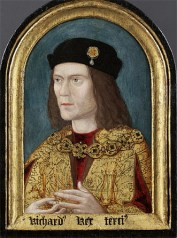
Make that 20,001

I enjoy reading. I enjoy writing. I enjoy how words are used by different authors. I’m always inspired when I pick up a book and find the narrative so easy to follow. Some authors just have the knack. As I mentioned in one blog post I wrote in May 2012, I’ve given up on a book on very few occasions just because I found the text such hard going.

I guess we use the same words day in, day out. And that got me thinking, in light of what happened yesterday. It seems that most English speakers have an active vocabulary (words they use regularly) of about 20-25,000.
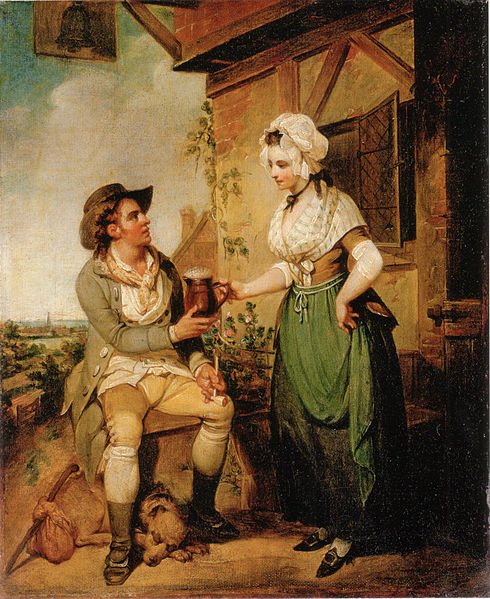

Well, mine increased by ONE yesterday!

I’ve just completed an excellent biography of American Civil War General (and 18th POTUS) Ulysses S Grant. And there, on page 501 (of 718) I came across a word I’d never seen before and had no idea of its meaning.

Eleemosynary? Whatever does that refer to? It doesn’t roll off the tongue.

This was the context, describing Grant’s attempts (as President) to reform the Interior Department’s management of Indian relations, by putting Quakers in charge in about half of the western agencies: On these reservations the Indians would govern themselves, albeit with advice and instruction in the ways of white civilization from the Quakers and others of an educational and eleemosynary bent.

I had to reach for the dictionary.

Pretentious? Maybe. I posted a comment on Facebook and one of my friends mentioned that he’d used the adjective in an essay written when he was in high school. And was marked down for doing so!

Words also change in usage over time, or between different ‘branches’ of the English language. For anyone interested in the language I can’t recommend too highly David Crystal’s The Stories of English.

I came across an interesting difference in Brands’s biography of Grant. He was actually quoting from a letter that Grant had written about politicians in the South. He used the word irresponsible.

In the strict sense we use this word adjectivally of a person, attitude, or action not showing a proper sense of responsibility. But in modern British usage it’s perhaps more commonly used to describe a person or action as reckless, rash, careless, thoughtless, incautious, unwise, imprudent, ill-advised, ill-considered, injudicious, misguided, heedless, unheeding, inattentive, hasty, overhasty, precipitate, precipitous, wild, foolhardy, impetuous, impulsive, daredevil, devil-may-care, hot-headed, negligent, delinquent, neglectful, or remiss.

But the late 19th century usage (in the United States) and perhaps still today describes someone not answerable to higher authority (from the Merriam-Webster dictionary).

I doubt I’ll be using eleemosynary any time soon in my writing or conversation; it’s probably not even a party stopper. But, as I approach my 70th birthday, who says you can’t teach an old dog new tricks?


Blown away by Mt Washington . . .

Or, rather, blown away on top of Mt Washington.

Compared to the mountain ranges in the west of the USA, Mt Washington (at 6288 ft – 1917 m) and nearby peaks in the Presidential Range of New Hampshire’s White Mountains are mere foothills. From their base, however, they still look pretty impressive. Mt Washington is the highest mountain in the northeastern USA and experiences some pretty spectacular weather.

Steph and I got our first glimpse of Mt Washington as we crossed New Hampshire recently on the first part of our road trip that also took us through Massachusetts and Vermont on our way to Maine to spend a week there with our elder daughter Hannah and her family, who had flown in from Minnesota.

I’d chosen a route from Burlington, VT taking us north towards the Canadian border, then dipping down to the southeast through the White Mountains close to Bretton Woods, site of the momentous 1944 conference that aimed at regulat[ing] the international monetary and financial order after the conclusion of World War II. The conference led to the founding of the World Bank (or International Bank for Reconstruction and Development) and the International Monetary Fund.

Having worked for many years for two of the centers funded through the Consultative Group on International Agricultural Research (CGIAR), that had been established in 1971 under the auspices of the World Bank, I was interested to see the location where it had all started, so to speak.

And as we skirted a bend on US302, heading southeast, there was the famous hotel off to the left, nestling under the Presidential Range. In the middle was Mt Washington (just left of center in the photo below), clearly higher than surrounding peaks, and on which we could just make out some infrastructure we later discovered to be part of an observation station.

During our week in Maine we made several excursions, and one of those was the seven mile drive on the Mt Washington Auto Road that takes you to just below the summit, from 1500 ft the park entrance west off NH16 (White Mountain Road).

Amazingly, construction of the Auto Road (originally the Carriage Road) commenced in 1854, and was completed in 1861, opening to the public on 8 August that year. Over the past 157 years, more than 4 million tourists have reached the summit.

The fastest ascent on foot (in 2004) took just a few seconds short of 57 minutes (and only seven minutes quicker by bike). By car, Mt Washington has been climbed in just 6 minutes 9 seconds (in 2014). We took rather longer, at least 30 minutes, as we stopped whenever possible to enjoy the spectacular views, as well as negotiating some of the curves rather gingerly.

The road is paved most of the way, although near the summit there is a short gravel section.

The summit can also be reached by a cog railway! The train ascends on the western flank of the mountain; the station is situated a short distance beyond the hotel at Bretton Woods.

The cog railway, heading ‘vertically’ up the mountain can be seen just right of center.

Apparently the summit is hidden in clouds for about 60% of the year. Not so on the day of our visit. We couldn’t have asked for better weather, and the views, in all directions, were just awesome.

That’s Bretton Woods in the distance . . .

It wasn’t too windy either, blowing between 40-60 mph. Even so, we struggled to keep upright at the summit signpost.

60 mph is nothing on Mt Washington. On 12 April 1934 the world record wind speed (observed by humans) was recorded at 231 mph! Can you imagine that? Besides a small cafeteria, there is a small but interesting exhibition at the summit, with some of the instruments used and observations recorded on that momentous day 84 years ago.

I guess we spent a little under two hours at the summit, enjoying the panoramas in all directions. We couldn’t have hoped for a better day. Once we were down, there was time to relax in the sun, enjoy a picnic, and even take forty winks. We were even given a certificate for ascending the mountain.

So, if you are ever in the vicinity, and the weather looks half decent, I’d recommend the drive up the Auto Road. We weren’t disappointed.

~~~~~~~~~~~~~~~~~~~~~~~~~~~~~~~~~~~~~

Here is a link to a bigger album of photos taken at Mt Washington.