I’m Santa Claus, and I have the evidence to prove it.¹
Over the years I have taken up the mantle each December to bring joy and happiness to the children at the International Staff Housing community at the International Rice Research Institute in Los Baños, the Philippines.
Actually, I did my first turn, so to speak, in 2002; and each year thereafter until 2009. I retired from IRRI in April 2010.
I had a great deal of fun over the years assuming the persona of Santa Claus and, as far as I could tell, most of the children (of neighbors and their domestic helpers) never did figure out who was the person inside the Santa suit.
IRRI is a multi-national, multi-ethnic, and multi-religion community from all around the world. And it didn’t matter whether you came from a Christian, Jewish, Muslim, Hindu, Buddhist or atheist background, the children always found magic in Santa’s arrival and the giving and receiving of presents.
My early attempts at ‘being Santa’ certainly needed improvement – too heavy on the rouge. And in the early days I needed some extra padding, which I eventually dispensed with as my natural girth expanded. The beard was all mine, however, and I used to cease trimming it from about the beginning of October onwards. However, some additional white makeup was needed . By the end of 2008, I think I’d developed a much more convincing character.
Here I am in 2003 (heavy on the rouge) . . .
. . . and in 2004 (toned down somewhat).
By 2005, I think I’d developed the makeup pretty well.
Santa with two little Japanese fans, in 2005.
But there was still room for improvement, and once I’d decided in 2006 that Santa needed a new suit of clothes, my ‘interpretation’ thereafter was quite convincing.
Santa’s Japanese fans had grown somewhat, and joined by a brother, in 2008.
With ‘Mrs Santa’, in 2008.
Over the years, I arrived at the Christmas party—at the swimming pool, House No. 1 (of the Director General), or the Guest House—on a variety of transports. In 2002 it was on the back of a motorcycle driven by my colleague Rob Raab from IRRI’s Training Center. For several years, it was a nicely decorated tricycle, then a jeepney and, for a couple of years, a ‘Philippine reindeer’, aka a carabao.
Of course, when it came to handing out presents, I had the best seat in the house, on the front row of course. It was such a delight to see the expectation and joy on so many young (and not so young) faces.
Well, my Santa days came to end. They were one of my more pleasurable commitments during my second decade at IRRI. And of course by then I’d grown somewhat more stout, my hair had turned almost white, and my whiskers as well.
Once my Santa duties were over, I’d leave the party using my appointed transport, go home, shower, and return to the celebrations sans make-up and Santa clothes. The children were none the wiser of my role, because I’d always started out at the party before going home to metamorphose into Santa.
¹ Most of the photos courtesy of the Santa paparazzi (aka Gene Hettel).
We lived in the Philippines for almost 19 years. We spent most Christmas and New Year holidays there, not wanting to travel too much. Especially during the years that Hannah and Philippa were studying in the UK and USA and came back to our Philippines home for the holiday. We usually spent an extra few days lazing at the beach looking at the brilliantly blue South China Sea, scuba diving or just snorkeling, and making those tough decisions whether or not to have another cold beer.
But on a few occasions we did travel overseas: to Australia (in 1998 and 2003), Cambodia and Singapore in 2000, to the USA in 2007, and Hong Kong in 2004.
When I visited IRRI in early January 1991 for an interview I flew via Hong Kong. And we did the same for our first home leave back to the UK in June-July 1992. In those days it was the old airport at Kai Tak of course, an event in itself as the video below shows.
Over the years I’ve passed through Hong Kong on many occasions in transit to other destinations, but apart from just a short shopping stop-over in the 1992 on the way back from home leave, we had never taken the opportunity for tourism. So, just after Christmas 2004 we opted for a four night mini-break, through Cathay Pacific, which included return air travel from Manila, hotel, and a one day tour of Hong Kong island.
We flew out on the Tuesday after Christmas, on the 28th. Transport to our and from our hotel, The Knutsford Hotel on Kimberley Road in the Tsim Sha Tsui district of Kowloon, was part of the package. But on the first day they wasn’t too much left of the day apart from a walk around the local shopping district along Nathan Road, and then a buffet dinner at the hotel.
Early the next morning we walked the short distance to our pickup point in front of the Miramar Shopping Centre on the corner with Nathan Road, and joined a coach-full of other tourists for the Hong Kong island trip. Now we are not usually attracted to organized city tours like this, much preferring to find our own way around. However, I should add that on a day off in Lisbon in 2003 I did take a two hour city tour and found it very useful, in the short space of time I had available, of getting to see parts of the city I wouldn’t have even explored on my own.
Anyway, to get back to Hong Kong. As I said, a city tour was part of the package and we thoroughly enjoyed it, taking in the Man Mo Temple on Hollywood Road, the funicular or Peak Tram to the top of the Peak, Stanley Market at the southern tip of the island, and to Aberdeen, and a tour of its harbor (which serves also as a typhoon refuge when necessary). It wasn’t a full day excursion, and we were probably back at our hotel by mid-afternoon. That evening we had a very nice meal in an Italian restaurant run by Filipinos – how weird is that in the heart of Hong Kong?
Entrance to the Man Mo Temple.
Huge incense coils at the Man Mo Temple.
The Peak Tram at the lower station.
Climbing to the Peak.
Hong Kong business district from The Peak, and Kowloon across the harbor.
Aberdeen harbor.
Aberdeen harbor.
Craft in Aberdeen harbor.
While waiting for several members of our party to rejoin the coach after visiting the Man Mo Temple, we overheard someone enquiring of the tour leader about excursions to Macau. We did the same, and were able to sign up there and then for a one-day trip to Macau the following day. And what a fortuitous choice we made. Now, the weather wasn’t the best the following day. It was overcast and, for Hong Kong, decidedly chilly. We joined the Hong Kong – Macau ferry and crossed the 60 km or so (just over an hour) across the Zhujiang River Estuary to the small autonomous territory known officially as the Macau Special Administrative Region of the People’s Republic of China.
Guan Yin, Goddess of Mercy – a blend with the Mother Mary, born of the lotus
Lotus and red poinsettias.
Macau Tower, with its observation deck at 223 meters.
From the Macau Tower observation deck.
Steph at the Macau Tower observation deck.
Macau street view
Overlooking the town from the Monte Fort.
View from the Monte Fort.
At the Monte Fort.
Temples and murals.
A fine mural.
Ruins of St Paul’s Cathedral.
View from the steps of St Paul’s Cathedral.
We were met at the ferry terminal in Macau and transferred to a coach, taking us through the maze of narrow streets to the Monte Fort and Macau Museum, from where we had fantastic (if not a little misty) over the old city. We also visited the plaza where the facade of the once impressive St Paul’s Cathedral still stands, a testament to Macau’s Portuguese heritage and Catholic faith. A trip to the observation deck of the free-standing Macau Tower, more than 220 m above the ground, yielded some great views over the whole territory, as well into neighboring mainland China from which the territory is separated on the west side by just a narrow channel. There is a land border on the north side. After lunch, and the last stop on our excursion, was a visit to one of the many large casinos for which Macau has become famous. I couldn’t be bothered to go inside. I don’t gamble, nor really approve of it. Frankly seeing the inside of this particular emporium was of no interest to me, and in any case, I didn’t want to be put under any pressure to waste my money. This was indeed what happened to those who did venture inside.
We arrived back in Kowloon just after 5 pm, and after a delay in Immigration and waiting for our coach, we arrived back at our hotel around 7 pm. We enjoyed a nice meal for two in a nearby French-Vietnamese restaurant.
On our last day, New Year’s Eve, it was bright and sunny so we headed over to Hong Kong island on the harbor ferry, and spent several hours exploring the area due south of the ferry terminal, past Government House along Lower Albert Road, the Hong Kong Zoological and Botanical Gardens, and making our way back to the ferry via the Central-Mid-Levels escalators, encountering a memorial to Philippine National Hero, Dr Jose Rizal who had lived in that area for six months from December 1891. As it was New Year’s Eve, we joined the festivities in the hotel rather than mingling with the thousands of revellers on Nathan Road to see in the New Year.
Ferry from Kowloon to Hong Kong island.
Enjoying the ferry crossing.
The Hong Kong business district from the ferry.
Hong Kong skyline.
The forest of skyscrapers on the slopes of Hong Kong’s Peak.
On the escalators.
The Rizal memorial.
Near the escalators.
Walkways connecting buidlings, crossing roads.
Plaza by the General Post Office.
Hong Kong architecture – the Lippo Building, a geometric landmark, completed 1988.
The Lippo Building.
Hong Kong skyline.
Returning by ferry to Kowloon.
Our return flight to Manila on 1 January departed around 1 pm (if my memory serves me well) so we must have been back in Los Baños before 6 pm, a little tired, but pleased that we had finally made the effort to get to know Hong Kong better than we had in previous years. It’s certainly a vibrant city.
It’s a celebration of the ingenuity of human agricultural innovation in northern Luzon in the Philippines where, over the course of several centuries, local indigenous communities tamed the steep valleys to grow paddy rice in irrigated fields high in the mountains (about 1500 m above sea level) and, employing a sophisticated hydrology, to supply water to the terraces and drain them before harvest: the rice terraces of the Philippines Cordilleras, which received UNESCO World Heritage designation in 1995.
Rice terraces in Banaue, Ifugao Province
In March 2009, Steph and me, along with my staff in the Program Planning & Communications (DPPC) office at IRRI—Corinta, Zeny, Yeyet, Vel, and Eric—made a five day, 1000 km trip (see map) north to Ifugao and Mountain Provinces to see these world famous terraces. There is a cluster of five sets of terraces designated under UNESCO, all in Ifugao Province.
L to R: Corinta, Zeny, Rolly (IRRI driver), Vel, Yeyet, Eric, and me – enjoying a San Miguel sundowner near Sagada, Mountain Province.
A long road trip north
We knew it would be a day-long journey from Los Baños to Banaue. Although the first part of the journey to the Science City of Muñoz in Nueva Ecija Province took in divided highways, there were two main ‘obstacles’ in our path. First we had to cross the length of Manila from the South Luzon Expressway (SLEX) to the north one (NLEX), a part of the journey fraught with delays and congestion if you hit the traffic at the wrong time. I guess we didn’t fair to badly. Then, once off the main highways, there’s the ever-present frustration of following jeepneys and tricycles that potter along at their own speeds, oblivious to other road users, and which stop continually to pick up and drop off passengers. So even a short journey on a single carriageway road can take forever (or so it seems).
In Muñoz, we visited and had lunch at the Philippine Rice Research Institute (PhilRice) which is the country’s leading research organization on rice, and IRRI’s principal partner for all-things-rice in the Philippines.
After a courtesy visit with the PhilRice Executive Director, we toured several laboratories, and the rice genebank that collaborates closely with the International Rice Genebank at IRRI. In fact, IRRI holds a duplicate sample of much of the PhilRice collection.
The majesty of Batad
From PhilRice it was a long climb of several hours into the mountains, and we arrived to our hotel in Banaue just as the sun was setting. It was an early start the next morning, because we visited the impressive rice terraces at Batad, more than an hour from Banaue by jeepney, and then another couple of hours downhill on foot to reach one of the villages from where there is an impressive vista over the amphitheater of terraces stretched across the hillside.
The rice terraces at Batad.
In 2006, Biggs Javellana, one of IRRI’s photographers at that time, flew over over Ifugao and took a superb collection of aerial photographs.
The rice terraces at Batad from the air. The photograph above was taken from the cluster of houses at center top in this photo.
In 2008, one of the main articles in Rice Today featured Biggs’ photos, and other older ones taken by eminent anthropologist Harold Conklin, Crosby Professor Emeritus of Anthropology at Yale University, who had studied the Ifugao for many decades. Just click on the Rice Today cover below to read the article. You can also browse the original photos (and others) here.
I wasn’t too concerned about the hike to the Batad terraces from the parking area, although it was a long way down.
I was more concerned about the climb back up. But having gone all that distance I wasn’t going to miss out, and with encouragement from Steph and everyone else (and a few helpful shoulders to lean on occasionally) I made it down and up again. And it was certainly worth the effort.
On the north side of Banaue, on our way to Sagada, Mountain Province on the third day of our trip, we stopped to look back down the valley, and admire the beauty of sky reflected in the flooded rice terraces, recently planted with young seedlings. There really is a majesty in rice agriculture under these circumstances.
Looking south towards Banaue town center.
A vista over Banaue in the early morning mist.
Along the route to Sagada there are other rice terraces, at Bay-Yo Barangay near Bontoc in Mountain Province, and just south of Bontoc itself. Sagada is surrounded by quite extensive terraces.
Near Bontoc.
Sagada.
Bay-Yo terraces.
Near Bontoc.
There’s lot to see in Sagada, including weaving for which the town is famous. And the indigenous ‘hanging burials’ with coffins left on the sides of limestone cliffs, or piled up in the many caves that dot the landscape.
Hanging coffins near the bottom of the cliff.
Coffins piled up in a cave.
The return journey to Los Baños took 17 hours, including comfort stops on the way, lunch in Baguio and dinner near Manila. I think we were all relieved to be back home, but very contented that we had made the trip. It took Steph and me 18 years almost before we actually made the effort.
The heritage of rice agriculture in the Philippine Cordilleras
But what is also special about the rice terraces of Ifugao (and the other sites) is that they are still farmed in the same way, and the communities still practice many of the same rice ceremonies and rituals they have for generations. But rather than me try to explain what this is all about, I will leave it to Aurora (wife of my good friend and former IRRI colleague Gene Hettel) who hails from Banaue and is a proud member of the Ifugao community, to explain in her own words in this video (made by Gene).
Heirloom rice varieties
The farmers also plant traditional rice varieties that they have also cherished for generations. With the pressures of modern agricultural technologies and new varieties, there is always a danger that these varieties will be lost, notwithstanding that they are safely conserved in the PhilRice and IRRI genebanks (and duplicated in the Svalbard Global Seed Vault). If the farmers stop growing them these rice varieties will disappear from everyday agriculture. They have to make a living, and although most varieties are grown for home use, there has recently been an effort to bring them to a wider rice-consuming public. With the Philippine Department of Agriculture, IRRI has initiated an heirloom rice project that aims ‘to enhance the productivity and enrich the legacy of heirloom or traditional rice through empowered communities in unfavorable rice-based ecosystems.’ Details of the project can be found here.
When the Director General of one of the world’s premier agricultural research institutes talks about poverty and food security, and what has to change, the global development community better take note. The Director General of IRRI—the International Rice Research Institute, located in Los Baños, the Philippines—has a unique perspective on these issues, since rice is the most important staple crop on the planet, and the basis of food security for more than half the world’s population who eat rice at least once a day. And rice agriculture is also the livelihood for millions of farmers and their families worldwide. When rice prospers, so do they. They feed their families, they send their children to school. The converse, alas, is also true.
For the past decade, IRRI has been led by a remarkable scientist, someone I am honored to call a friend, and a close colleague for many years. In mid-December, however, Dr Robert ‘Bob’ Zeigler will step down as CEO and Director General of IRRI, a position he has held since March 2005. Bob is IRRI’s ninth Director General. And of all those who have held this position, he perhaps has been uniquely qualified, because of his practical experience of working in many developing countries, his in-depth understanding of international agricultural research funded through the Consultative Group on International Agricultural Research (CGIAR), and his profound knowledge of rice agriculture.
A passion for science
Bob hails from the USA, and completed his BS degree in biological sciences at the University of Illinois in 1972, followed by an MS from the University of Oregon in forest ecology in 1978. He joined the Peace Corps and spent a couple of years in Zaire (now Democratic Republic of Congo), and it was there that his passion for plant pathology was ignited. He returned to Cornell University to work for his PhD in 1982 on cassava diseases under the guidance of renowned plant pathologist Dr H David Thurston. For his PhD research, Bob also spent time at a sister center, the International Center for Tropical Agriculture (CIAT) in Cali, Colombia that has an important global cassava research program, and germplasm collection. After his PhD Bob returned to Africa, working in the national maize program in Burundi.
After three years, he joined CIAT as a senior plant pathologist and then became head of the rice program. IRRI recruited Bob in December 1991 to lead the Rainfed Lowland Rice Research Program, and I first met Bob around September of that year when he came for interview. I was also a newbie, having joined IRRI as head of the Genetic Resources Center just three months earlier. After a couple of years or so, he became leader of the Irrigated Rice Research Program. Much of his own research focused on the rice blast pathogen, Magnaporthe grisea, and I know he is particularly proud of the work he and his colleagues did on the population genetic structure of the pathogen.
Bob with Gonzalo Zorilla of the Uruguayan rice program.
Henri Carsalade (France), IRRI DG Klaus Lampe, and Bob.
Sitting L to R: Ken Fischer, George Rothschild, William Dar (PCARRD), ??; Standing L to R: Bob, Kwanchai Gomez, Nanding Bernardo, Mike Jackson, ?? (Korea).
As a program leader Bob visited all of the rice-growing countries in Asia, and with his experience in Latin America at CIAT, as well as working in Africa, he had a broad perspective on the challenges facing rice agriculture. And of all his eight predecessors as Director General of IRRI, Bob is the only one who made rice his career. This has given him the edge, I believe, to speak authoritatively about this important crop and rice research. His scientific credentials and passion for ‘doing the right science, and doing the science right‘ ensured that Bob was the candidate recruited as the next Director General when Ron Cantrell stepped down in 2004.
First departure from IRRI
Bob first left IRRI in 1998, and became professor and head of the Department of Plant Pathology at Kansas State University. But he couldn’t stay away from international agriculture for long, and by 2004 he became Director of the CGIAR’s cross-cutting Generation Challenge Program (GCP). I like to think my colleagues and I in the System-wide Genetic Resources Program (SGRP) had something to do with the founding of the GCP, since we held an interdisciplinary workshop in The Hague in September 1999 assessing the role of comparative genetics to study germplasm diversity. I invited Bob as one of the participants. Comparative genetics and its applications became one of the pillars of the GCP. And its was from the GCP that Bob returned to IRRI in March 2005 as the institute’s ninth Director General.
Back ‘home’ again And it wasn’t long before his presence was felt. It’s not inappropriate to comment that IRRI had lost its way during the previous decade for various reasons. There was no clear research strategy nor direction. Strong leadership was in short supply. Bob soon put an end to that, convening an international expert group of stakeholders (rice researchers, rice research leaders from national programs, and donors) to help the institute chart a perspective for the next decade or so. In 2006 IRRI’s Strategic Plan (2007-2015), Bringing Hope, Improving Lives, was rolled out.
Bob wasn’t averse to tackling a number of staffing issues, even among the senior management team. And although the changes were uncomfortable for the individuals involved (and Bob himself), Bob built a strong team to support the finance, administration, and research challenges that he knew IRRI would face if it was to achieve its goals.
A born leader
Not every good scientist can become a good manager or research leader, but I do think that Bob was an exception. His major strength, as I see it, was to have a clear vision of what he wanted the institute to achieve, and to be able to explain to all stakeholders why this was important, what needed to be done or put in place, and how everyone could contribute. He nurtured an environment at IRRI where research flourished. Rice research was once again at the center of the international agricultural research agenda. Many visitors to the institute commented on the ‘science buzz’ around the institute. And if Bob felt he wasn’t equipped to tackle a particular situation, he sought—and took—advice. Perhaps uniquely among many of the Directors General of the CGIAR centers, Bob has this ability to listen, to argue fiercely if he thinks you are wrong or misguided. But once convinced of an argument, he accepts the alternatives and moves forward. However, he also admits when he gets something wrong, a very important attribute for any CEO.
Science at the heart of IRRI’s agenda
With Bob at the helm, IRRI’s research agenda expanded, as did the funding base, with significant funding coming from the Bill & Melinda Gates Foundation for submergence tolerant rice, for C4 rice, and stressed rice environments. Under Bob’s guidance IRRI developed the first of the CGIAR research programs, GRiSP—the Global Rice Science Partnership. I think that name is instructive. Science and partnership are the key elements. Bob has vigorously defended IRRI’s research for development focus in the face of quite hostile criticism from some of his colleagues and peers among the CGIAR Center Directors. As Bob has rightly rebutted their ‘anti-science’ attacks, by explaining that submergence tolerant rice varieties for example (that are now benefiting millions of farmers in Asia) didn’t materialize as if by magic. There had been an 18 year intensive research program to identify the genetic base of submergence tolerance, and several years to transfer the genes into widely-adapted rice varieties before farmers even had the first seeds.
These are just a few of the research innovations that have taken place with Bob at IRRI’s helm. No doubt there will be much more appearing in print in due course that will fill in many more of the details. I’ll let Bob tell us a few things in his own words, just published in the latest issue of Rice Today.
Public recognition
Over the past 10 years Bob has been invited to speak at many international meetings, including the World Economic Forum held each year in Davos. He’s appeared on numerous television broadcasts and news programs. His contributions to rice science have been recognized with numerous awards and honorary doctorates. Just last week he received from the Government of the Philippines its highest honour awarded to a foreign national—the Order of Sikatuna, Grand Cross (Rank of Datu), Gold Distinction (Katangiang Ginto).
A downturn . . . but continuing strength It must be rather disappointing for Bob to leave IRRI just as the funding support for the centers has once again hit the buffers, and led to a trimming of IRRI’s research and staff. But even with these setbacks, Bob leaves a strong institute that can and will withstand such setbacks. Incoming Director General Matthew Morell, the current Deputy Director General for Research, has big shoes to fill. Nevertheless, I’m sure that the underlying strength of IRRI will enable Matthew to move IRRI once again towards the important goals of supporting rice farmers, enhancing food security, and reducing poverty. Rice research is closely aligned with the United Nations Millennium Development Goals, as it will be with the recently-agreed Sustainable Development Goals. In fact it’s hard to contemplate the successful delivery of these goals without rice being part of the equation.
Bob Zeigler and Mike Jackson after the unveiling of one of two historical markers at IRRI, on 14 April 2010, IRRI’s 50th anniversary.
Thank you
So let me take this opportunity of thanking Bob for his friendship and collegiality over many years, and to wish him and Crissan many years of happy retirement back in Portland, OR. However, I’m sure it won’t be long before he is lured out of retirement in some capacity or other to continue contributing his intellect, experience, and broad perspectives to the global development agenda.
A few anecdotes
But I can’t end this blog post without telling a ‘tale’ or two.
Bob has a great sense of humor, often self-deprecating. Unfortunately this is not always understood by everyone. But I certainly appreciated it, as I’m much the same.
Not long after Bob joined IRRI he took up scuba diving, as did I. And we have, over the years, made some great dives together at Anilao, Batangas. Here are a few memorable photos from a great dive we made at the ‘coral garden’ site, to the south of Sombrero Island in April 2005.
In the 1990s, Bob rode the IRRI Staff bus to and from Staff Housing each day. The ten or so minute drive down to the research center was a good opportunity to catch up on gossip, check a few things with colleagues before everyone disappeared into their offices, or simply to exchange some friendly banter. On two occasions, Bob was the ‘victim’ of some leg-pulling from his colleagues, me included.
I don’t remember which year it was, but Bob had been asked to chair the committee organizing the biennial International Rice Research Conference that would be held at IRRI HQ. The guest speaker was President of the Philippines, Fidel Ramos, and it was Bob’s responsibility to introduce him. For several weeks Bob would be greeted with the sound advice from his colleagues each time he took the bus: “Remember“, they exhorted him, “It’s President Marcos. Marcos!” In the event, Bob cleverly avoided any embarrassment, simply introducing him as ‘Mr President’.
On a couple of occasions, Bob and I were members of the ‘IRRI Strolling Players’, taking part in a pantomime (usually three performances) in the institute’s auditorium. In 1995 the theme was Robin Hood and His Merry Men. I played a rather camp Prince John; Bob was Friar Tuck.
Bob had the awkward line at some point in the play: “My, that’s a cunning stunt“. And you can imagine the bus banter around that. “Remember Bob, you say it’s a ‘cunning stunt’!” Fortunately Bob was not susceptible to Spoonerisms.
Both Bob and I have contributed over the years to the Christmas festivities at Staff Housing by taking on the role of Santa (hush, don’t tell anyone).
Bob Zeigler, pipe and all.
Santa, Crissan and Bob Zeigler.
It was fun working with Bob. He set a challenging agenda that staff responded to. It’s not for nothing that IRRI has continued to retain its high reputation for science and scientific impact. And for the past decade IRRI has indeed been fortunate to have Bob in charge.
Over the years, I’ve had the opportunity of visiting many of the ‘great’ cities in the USA: New York, Washington DC, St Louis, San Francisco, Seattle, and Chicago (most recently). But the city (or should I say cities) I have visited most over the years are the Twin Cities of Minneapolis and St Paul in the heart of Minnesota.
And for good reason. First, when I was traveling to the USA in the early 1990s, the international airport in the Twin Cities (MSP) was the hub for Northwest Airlines (now absorbed into Delta), and was the most convenient way for travel from Manila in the Philippines into the USA.
Since September 2008, however, St Paul has been home to our elder daughter Hannah. After completing two years of her 3-year psychology and anthropology degree at Swansea University in the UK, she asked us if she could transfer to Macalester College in St Paul, a highly-respected—but small (maybe 2000 undergraduates)—private liberal arts college that counts former US Vice President Walter Mondale and UN Secretary General Kofi Annan among its notable alumni. The most recent winner of the Man Booker Prize for an original novel in the English language is Macalester professor Marlon James.
So, over the years we have visited many times and come to know and appreciate the Twin Cities, although St Paul is the half of this metropolitan duo that we know much better. There’s a vibrant community, and the cities have something for everyone. It’s pretty laid back, but I guess you could say that about Minnesotans in general. Maybe that’s why I like Minnesota so much.
Among the things I like are the breakfast diners (I like the Grandview Grill on Grand Ave, just below Macalester), some of the best ice cream I’ve tasted anywhere at Izzy’s on Marshall Ave, and only St Paul can boast the Fitzgerald Theater, home of Garrison Keillor’s A Prairie Home Companion.
But what sets the Twin Cities apart, for me at least, are the numerous lakes dotted around the Minneapolis side, and the tree-lined avenues everywhere. In fact, it’s hard to imagine cities that are more leady. And taking into account that Minneapolis-St Paul was founded on the banks of the Mississippi River, and on the ‘edge of the prairie’, the amount of tree planting over a century or more is implrsssive. Certainly the avenues are lined with some of the most impressive specimens I’ve seen anywhere, often up to 100 feet tall.
In the (speeded) video clip below, our recent return flight to Amsterdam took off from Runway 30L to the northwest, climbing over the Tangletown and Linden Hills districts of Minneapolis, over Lakes Harriet and Calhoun, before turning right, and heading northeast over the Mississippi just north of downtown Minneapolis, and continuing over the norther suburbs of St Paul.
There are some pretty fancy properties around the two lakes, but you can’t see them for the trees. It would be the same if you landed from the west or took off to the east and had a view over St Paul, which lies on the eastern bank of the Mississippi. Trees everywhere. And of course north of the Twin Cities, the landscape is dotted with lakes large and small. Not for nothing is Minnesota known as the state of the Thousand Lakes.
Hannah and her family live between the Macalester-Groveland and Highland districts of St Paul, just three blocks from the mighty Mississippi. Steph and I have mostly visited during the spring or summer months, so we get to see everywhere at its best in terms of flowering and in leaf. And this is what so impresses us as we take our daily constitutional down to the bank of the Mississippi and along boulevards lined with the most impressive trees. And of course there are some very fancy properties along there as well.
The view from the Ford Parkway bridge crossing over the Mississippi River, and looking north towards the Marshall Avenue bridge. Hannah lives just three blocks east of the river.
But having so many tall trees so close to residences has its drawbacks as well, as we saw in June 2013 after a short-lived but rather violent storm passed through (tornadoes are not unknown, but infrequent). Just close to where Hannah lives several large trees had been brought down, and fortunately the damage to houses was much less than we first feared.
Now although we’ve visited mainly in the summer months as I mentioned, we did spend one Christmas with Hannah and Michael in 2007. And what a baptism of cold it was. I don’t think I’ve ever experienced such cold. And don’t forget we had left the tropical weather behind having just flown in from the Philippines! Nevertheless it was fun, and once suitable wrapped up against the cold we did get out and about on foot to savour the experience.
One interesting comparison we were able to make this September was when we walked from Hannah’s home to Minnehaha Park, just under two miles away. There is an impressive waterfall, which we have now seen in two contrasting seasons.
One of our favorite places to visit is Como Park, where there’s a small zoo and the Marjorie McNeely Conservatory. The conservatory is most exquisitely planted all year round. On a cold day in December it was a wonderful place to get out of the cold, and escape from the grey-out of a cold Minnesota day. But the conservatory was the location where Hannah and Michael were married in May 2006. We had the whole place to ourselves, and it had recently been planted with summer bedding plants. What a delight!
There’s also one aspect of walking around the Mississippi River area that we appreciate. It’s both human and dog friendly, because there are strict ordinances restricting the length of dog leashes.
One of my former staff at IRRI’s Genetic Resources Center (GRC) passed away last week. Tom Clemeno had been an employee of IRRI for many years, working his way up to Senior Manager of the institute’s Experiment Station (ES). Diagnosed with a lymphoma in 2013, Tom fought the disease with courage but it became clear in recent weeks that he could not win this last battle.
It is a sign of the affection in which he was held by friends and former colleagues that there has been an enormous outpouring of sympathy on his Facebook page and those of his immediate family.
Tom’s role in GRC in the 90s
Tom must have been a Research Assistant in GRC when I joined IRRI in July 1991. He was one of at least two staff handling field operations: rice germplasm multiplication, rejuvenation, and characterization. Once I’d made a thorough review of the genebank operations, I separated germplasm multiplication/rejuvenation and germplasm characterization as distinct activities, and we determined the level of field support needed to carry out each of these functions efficiently. I asked Tom to take charge of germplasm characterization, while his colleague Ato Reaño was put in charge of the germplasm multiplication and rejuvenation operations.
GRC field staff measuring various morphological traits of conserved rice varieties during the annual germplasm characterization cycle, on the IRRI Experiment Station.
Towards the end of the 1990s I was approached by the then head of the ES because he wanted to recruit Tom as his 2-I-C. In those days there was a pretty strange job transfer protocol in place at IRRI. An employee was allowed to move across to a new position in another department only with the approval of his/her current head of department. A head could effectively block someone’s career, and unfortunately that did happen from time-to-time. As Tom related in a short memoir that he wrote not long before he passed away, he came to see me full of trepidation. He did acknowledge that while I was quite strict, I did listen to my staff. Anyway, I told him that if he wanted to move to the Experiment Station, and if he felt it was an appropriate move for him to progress his career, then the decision was his, not mine. We arrived at an accommodation with the head of the ES to allow Tom to complete some important germplasm characterization activities he was involved with, and so Tom moved on from GRC. He eventually left IRRI in 2010 to manage a 200 ha rice farm in Malaysia, but did return to the institute three years later as a consultant in the plant breeding group.
Tom and CIEM
While Tom was on my staff in the early 1990s, there had been considerable staff unrest at IRRI. I don’t remember all the background after so many years. But Tom played an important role for several years as the local staff chair of the Committee of IRRI Employees and Management (CIEM). I think Tom was a born politician, and had a pivotal role in negotiating an outcome to the unrest that was best for everyone. He certainly had the gift of the gab! But these CIEM responsibilities increasingly took him away from his GRC ones. And that was not a sustainable position to be in. His colleagues would have to cover for him when he was called away frequently—and often unexpectedly—to a meeting with senior management.
So we agreed among ourselves to effectively allow Tom a three-year ‘leave of absence’ from GRC, and we re-organized the field operations with Ato taking on an enhanced role (that he has maintained to this day). I do believe that the support of Tom’s GRC colleagues, particularly Ato, should also be recognized during this important phase in IRRI’s history. After three years, we asked Tom to return full-time to GRC, but not long after, as I mentioned earlier, he was recruited to the Experiment Station.
Participating in groundbreaking research
But while Tom was managing the germplasm characterization activities in the early 90s, we had begun a research project (with my former colleagues at The University of Birmingham and at the John Innes Centre, and funded by the British government through DfID) to determine how molecular markers could be applied to the study of genetic diversity in a rice germplasm collection. We used rather crude molecular markers by today’s standards. These were so-called RAPD (Random Amplification of Polymorphic DNA) markers, and we wanted to determine if there might be an association between these markers with ten quantitative traits: culm number, culm length (cm), culm diameter (mm), grain length (mm), grain width (mm), leaf length (cm), leaf width (cm), days to 50 per cent flowering, panicle length (cm) and seedling height (cm). I asked Tom to take charge of the important field experiment that was planted between November 1993 and May 1994. Without hesitation I can say that Tom conducted this field trial with great care and generated valuable data. In fact, they were so good that not only were we able to correlate (or ‘associate’) markers with these morphological traits, but were able to predict the performance of rice germplasm growing in the field at Los Baños. A paper was finally published in the international journal Heredity in 1996, and Tom was included as one of the authors, and rightly so, for his contribution to the research. This paper was one of the first, if indeed the first, rice research paper to definitely demonstrate the link between molecular markers and phenotype in a sub-discipline now known as ‘association genetics’. We also believe it’s one of the first papers for any plant species. Click on the image below to read the paper.
Committed friends
It was very sad to see Tom’s decline over recent months, which I did through various posts on his and others Facebook pages, most often in connection with his beloved and very active Rotary Club of West Bay membership, of which he was Charter President. I think the last time I met Tom in person must have been in August 2014 when I visited IRRI in connection with the 4th International Rice Congress. He seemed his usual robust, and substantial self. Tom was rather short in stature, and we always had a teasing joke between the two of us about that. But that belied a BIG heart.
Another Tom characteristic was his (almost) ubiquitous hat. Everywhere! Here is a photo of Tom (wearing his signature titfer) among GRC friends during a lunch we shared at Tagaytay in late February 2010 shortly before I retired from IRRI, and probably not long before he headed to Malaysia.
Tom Clemeno with current and former GRC colleagues. Sitting, L to R: Steph Jackson, Vangi Guevarra, Zeny Federico, Sylvia Arellano, Adel Alcantara. Standing, L to R: Tom Clemeno, Soccie Almazan, Andong Bernardo, Myrna Oliva, Ato Reaño, Tessie Santos, Nelia Resurreccion, son and daughter of Adel.
Tom, you will be missed. But your memory will linger on in the hearts and minds of your IRRI friends and former colleagues.
My sincere condolences to Tom’s wife Jovith, and his three children Jaicee, Teejay, and J2.
A topical story in the Lima press
Overnight, there was an interesting and topical post (as far as I’m concerned) on the Facebook page of one of my ‘friends’—the son of one of my graduate students when I was a faculty member at The University of Birmingham in the 1980s. He hails from Peru. Carlos Arbizu Jr. is studying for his PhD at the University of Wisconsin-Madison and, as far as I can determine, he’s working on carrot genetics under the supervision of my friend and former potato scientist David Spooner.
Carlos had posted a link to an article published on the website of the Lima-based Newspaper Perú21: ¿Por qué estudiar un doctorado? (Why study for a PhD?). To which Carlos had added the byline: PhD = Permanent Head Damage.
Maybe he’s going through a difficult patch right now. I’ve seen from several of his posts that he’s immersed in some pretty ‘heavy’ molecular genetic analysis. It’s beyond my comprehension.
But all PhD students go through peaks and troughs. I know I did. Some days nothing can go wrong, progress is swift. The world is your oyster, and there really is a light at the end of the tunnel. On other days, you just wish the earth would open up and swallow you.
And for many PhD students, the most trying time often comes when they begin to draft their thesis and eventually prepare to defend it. Unfortunately many science graduates have received very little formal training in how to write clear and concise prose. Writing just doesn’t come naturally. So what should be one of the most important aspects of completing a PhD can become a long and tedious chore. And before submission regulations were tightened up at UK universities, some students could take a couple of years or more to write up and submit their thesis for examination.
40 years ago today
Well, this Perú21 article was published yesterday. And today, 23 October (if memory serves me right) is exactly 40 years since I defended my PhD thesis: The Evolutionary Significance of the Triploid Cultivated Potato, Solanum x chaucha Juz. et Buk. I was almost 27 (old by UK standards, average or maybe young compared to many US graduate students), and had been working on my degree for four years. I’d completed a one-year MSc degree in genetic resources at Birmingham in September 1971 (having graduated from the University of Southampton with a BSc in botany and geography in July 1970), and then been offered the opportunity to work in Peru for a year at the newly-established International Potato Center (CIP). Well, for various reasons, and to cut a long story short, That opportunity didn’t materialize in September 1971 so my head of department, Professor Jack Hawkes (who went on to supervise my PhD) persuaded the Overseas Development Administration (now Department for International Development, DfID) to cough up some support until the funding for my position at CIP was guaranteed. Thus I began my study in Birmingham, and finally moved to Lima in January 1973, working as an Associate Taxonomist and conducting research that went towards my PhD thesis. And since I was employed and having a regular income, I took another three years to complete all the experimental work I had planned. In any case, when I joined CIP in 1973 the institute was still establishing and developing its own infrastructure. That was also one of the exciting aspects to my work. It was a real opportunity to build up and curate a large collection of Andean potato varieties and wild species, and study them in their native environment.
The CIP field collection of potato varieties planted in the Mantaro Valley near Huancayo in central Peru.
The diversity of Andean potato varieties.
The next couple of photos show some of the field work I carried out in various parts of Peru.
Learning from my supervisor, Professor Jack Hawkes, during one of his visits to Peru while I was carrying out my study.
With CIP taxonomist, Professor Carlos Ochoa, a renowned Peruvian expert on potatoes and their wild relatives.
I was looking at the relationship between potato varieties with different chromosome numbers, so-called diploids and tetraploids, with 24 and 48 chromosomes respectively. If you can cross these two types you expect to produce some with an intermediate chromosome number. So, 48 x 24 = 36, the triploids. For the first years at CIP we didn’t have any glasshouses where we could work. Instead we had rather rustic polytunnels right in the field next to the germplasm collection, where I would make all those pollinations using the so-called cut-stem technique.
Experimental data from other parts of the world had shown that triploids were formed only rarely in such crosses. Yet triploid varieties were quite common and highly prized by potato farmers in the Andes. I was trying to determine if the crossability relationships of these native potatoes might be different in their indigenous environment. So I went on to make hundreds of crosses (and thousands of pollinations), as well as study indigenous farming systems in the south of Peru. This next gallery show some of the triploids potatoes grown by farmers. One of the most prized was the variety Huayro, and there were two forms, one round and the other elongated (and quite large). Both had red skins and yellow flesh.
Huayro
Shuito
Back to Birmingham
In May 1975, Steph and I headed back to the UK. But not directly. On the assumption that I would successfully defend my PhD thesis, CIP’s Director General had offered me a new position in the Outreach Department, and with the possibility of moving to Central America. So we headed for Costa Rica (where I’d eventually move to in April 1976) to see the lie of the land, so to speak. And from there we went on to Mexico for a few days to visit our old friends, and former CIP colleagues, John and Marion Vessey who had moved to maize and wheat center, CIMMYT, near Mexico City. From Mexico we headed to New York (first flight on a wide-bodied jet, an Eastern Airlines L-1011 Tristar) for a connection with British Airways to Manchester where my parents met us. We spent a further week looking for somewhere to live in Birmingham, and were fortunate to find an apartment very convenient to the university and only a few minutes walk from the Department of Botany (as it was then) Winterbourne Gardens where I had been assigned some lab space and a desk.
A nightmare waiting to happen
Now remember, there were no PCs or laptops, cloud computing, USB sticks or floppy disks in 1975. All my thesis data was available in hard copy only, and I carried a briefcase with four years of work with me from Lima to the UK on that journey I just related. The briefcase was hardly ever out of my sight! In those days it was not unknown for a graduate student to have lost a briefcase on a journey containing a complete draft of a thesis. No backup!
Getting into a routine
Once settled in Birmingham, I planned out my work for the coming months, with a deadline of 1 October. That was the final day of submission if I wanted to have my thesis examines and (if approved) have the degree awarded at the next congregation or commencement in early December that same year. But by the beginning of June I had not even begun to write, never mind complete the last minute field experiment I had planned (checking the ploidy of a set of hybrids produced earlier in the year) or create the figures I would include. Again, there was no digital technology available. I had to hand draw all my maps and other figures (my geography training in cartography at Southampton finally came in useful). While the department’s chief technician actually photographed all of these, I had to print all my own photographs (again, the experience I’d gained from my father, a professional photographer all his life, came in handy).
Working to a regular schedule every day, from around 7:30 am until 5 pm with a break for lunch, and spending another couple of hours after dinner, I soon began to make progress, although I didn’t actually start putting pen to paper until the beginning of July. It took me only six weeks to draft my thesis. Once I’d completed a chapter I’d hand it over to Jack Hawkes for review and revision. And to give him credit, he usually handed me back my draft with his comments within a couple of days only (and this was an approach I adopted with all my graduate students during the 1980s).
So, by mid-August or so I had a completed text, I’d checked the chromosome numbers of the hundred or so plants in the field, and set about the figures. I found someone who would type my thesis, but at the last moment he had to use a manual typewriter since the electric one he’d wanted to rent was no longer available. In 1975 The University of Birmingham changed the thesis submission regulations and it was no longer necessary to submit a thesis fully bound in a hard cover. I was able to submit in temporary binding, and this in fact saved perhaps three weeks from my tight schedule. I hit the 1 October deadline with about twenty minutes to spare just before 5 pm.
Thesis defence
I was quite surprised when my external examiner planned the defence of my thesis just three weeks later. All went to plan. In those days, the exam consisted of the graduate student, the external examiner and an internal examiner (usually the thesis supervisor). Today things might have changed, and even when I worked at Birmingham in the 80s the supervisor was no longer permitted to act as the internal examiner. I believe there may now also be a third panel member, to see fair play.
From the outset it was apparent that my thesis would pass muster, since the external examiner told me that he’d enjoyed reading the thesis. But we then went on to have a thorough discussion over the next three hours about many of the details, and the implications for potato genetic conservation and breeding. Phew!
And in early December, the 12th actually, I was able to celebrate with others from the department as we were awarded our degrees at the mid-year congregation.
L to R: Pam Haigh, Brenig Garrett, me, Prof Trevor Williams, Prof Jack Hawkes, Dr Jean Hanson, Margaret Yarwood, Jane Toll, Stephen Smith
With my PhD supervisor, Prof. Jack Hawkes on my right, and MSc supervisor, Prof. Trevor Williams on my left; 12 December 1975.
With my Mum and Dad.
Was it worth it?
So let me come back to the question I posed in the title of this post. Was it worth it? Unequivocally Yes! Would I want to do it again? No!
Actually completing a PhD is probably the most selfish piece of research that a scientist will ever get to do. There’s one aim: complete a thesis and have the doctorate awarded. PhD research does not have to be ground-breaking at all. In fact much of it is pretty mundane, and that’s one of the down sides when things are not going so well. For Birmingham at least, the PhD regulations stated that the thesis had to represent a piece of original research, completed under supervision. And it’s the ‘under supervision’ that is critical. A PhD student is still maturing, so to speak. The work is guided by a mentor. Of course there can be breakthroughs that lead to the most prestigious prizes. I believe that Sir Paul Nurse’s PhD research set him off on the path that eventually led to his Nobel prize.
I have encouraged others to research for a PhD, and I hope I was able to give them the support and advice that my supervisors gave me. In that respect my PhD was a positive experience. It’s not always the case, and when student-supervisor relationships break down, every one suffers. It does not necessarily have to take many, many months (or years even) to write a thesis. It takes self-discipline but also support from the supervisor.
Without a PhD I would not have enjoyed the career in international agricultural research and academia that I did. My PhD was like a ‘union card’. It enabled me to seek opportunities that would probably have been closed without a PhD. But I also acknowledge that I was lucky. I moved into a field—genetic resources—that was just expanding, as were the international centers of the CGIAR. And I had mentors who were prepared to back me.
Forty years on I can look back to those days in 1975 with a fair degree of nostalgia. And then reflect on the benefits that accrued from that intense but disciplined period in the summer of 1975 (when there was a heat wave, and Arthur Ashe won the men’s title at Wimbledon), and which allow me now to enjoy the retirement I started five years ago.
Both of our daughters, Hannah and Philippa, went on to complete a PhD (in 2006 and 2010, respectively) in their chosen field: psychology! So I can’t have passed on so many negative vibes about graduate study, although their choice of psychology does make a profound statement, perhaps.
Peer-reviewed papers
Incidentally, I finally got around to publishing three papers from my thesis. When I returned to CIP just before New Year 1976, I moved into a new role and responsibilities. And even though I eventually found time to draft manuscripts, these took some time to appear in print after peer review, revision and acceptance. One of the papers—on the field work at Cuyo Cuyo—was originally submitted to the journal Economic Botany. And there it languished for over two years. I received an invitation from the editor of Euphytica to submit a paper on the same topic, so I withdrew my manuscript from Economic Botany. About that same time I received a letter from that journal’s interim editor in chief that manuscripts had been discovered unpublished up to 20 years after they had been submitted, and what did I want to happen to mine. It was published in Euphytica in 1980.
Jackson, M.T., J.G. Hawkes & P.R. Rowe, 1977. The nature of Solanum x chaucha Juz. et Buk., a triploid cultivated potato of the South American Andes. Euphytica 26, 775-783. PDF
Jackson, M.T., J.G. Hawkes & P.R. Rowe, 1980. An ethnobotanical field study of primitive potato varieties in Peru. Euphytica 29, 107-113. PDF
Jackson, M.T., P.R. Rowe & J.G. Hawkes, 1978. Crossability relationships of Andean potato varieties of three ploidy levels. Euphytica 27, 541-551.PDF
Chicago, Illinois. The Windy City. Where we spent three very enjoyable days at the end of September, having made the trip from St Paul, MN on the Amtrak Empire Builder.
Each year when we cross The Pond to visit our daughter Hannah and family (husband Michael, Callum and Zoë) in Minnesota, we try to make a trip to see other parts of that vast and diverse country. In 2011, it was a trip to canyon country in Arizona and New Mexico. Then in 2012, we headed to the ‘Minnesota Riviera‘ along Lake Superior, and the Gunflint Trail. 2013 saw us on the coast of Oregon, then a road trip south to Crater Lake and the redwoods of northern California. And in 2014, we drove to Yellowstone National Park from St Paul.
Since we had already made a 2,300 mile road trip around Scotland and the Western Isles at the end of May-early June, I didn’t fancy another long drive. But a short break in Chicago seemed to fit in well with our schedule. And, after all, Chicago is one of the great US cities that has to be in your travel plans at some stage. Until we visited I hadn’t heard about the Great Fire of Chicago in October 1871 when several square miles of the city were destroyed. But this also gave an opportunity to build a better city, and upwards.
The skyline of Chicago is stunning, see here from the Milton L Olive III Memorial Park on the shore-front of Lake Michigan. One of the tallest buildings, the John Hancock Center is the black tower on the right. Just click on any of the galleries to open larger images.
The Milton L Olive III Memorial Park (with Navy Pier in the background), looking southeast from the 360 Observatory. The Chicago skyline photo above was taken from the platform halfway along the park shore.
Our train from St Paul arrived at Union Station on schedule just before 4 pm on the Tuesday afternoon, and we were at our apartment hotel, De Witt Place on the northern edge of Streeterville (seen here outlined in red) in about 30 minutes.
The hotel was fine, although the bathroom was small and a little ‘tired’. I’d found it through Booking.com that we have used on several times before when planning our travels in the USA. The price was right (USD416 incl. taxes for three nights), and because there was a kitchen we could make our own arrangements for breakfast. A well-stocked convenience store was just across the street. The location couldn’t have been better: just a block from the shore of Lake Michigan (and its miles of walking opportunities), and two blocks from the John Hancock Center and its 360 Observatory on the 94th floor, one of our principal objectives during our Chicago trip.
From the corner of N DeWitt Place and E Delaware Place, looking towards the John Hancock Center.
First thing on the Wednesday morning we headed to the John Hancock Center, expecting to find a large number of like-minded tourists aiming for the top. I’d read some horrendous reviews indicating that it could take more than 80 minutes waiting for a lift to the top. I’d already purchased tickets online (USD19 each).
Just before 9 am we found ourselves at the head of the queue of about a dozen people, and after a 40 second lift ride we were whisked to the top and the stunning views over four states: Illinois, Wisconsin, Indiana and Michigan (and perhaps even as far southwest as Iowa). During the 1½ hours we spent there, it never did become really busy. We enjoyed a cup of coffee looking north towards Lincoln Park and its zoo and conservatory that we planned to visit the following day.
Looking east over Lake Michigan, with Navy Pier.
North towards Lincoln Park Zoo and Conservatory.
Looking west!
The Willis (Sears) Tower, to the south.
The latest attraction 94 floors up is Tilt. A section of the wall tilts out at an angle of almost 35°! Not for me. I suffer from vertigo, and am never completely comfortable until I’m on terra firma at ground level.
Back down, we began our first day’s walking—at least six miles (and almost seven the next day, and four on our final morning). The weather could not have been better, with temperatures in the high 70sF, clear blue skies, great visibility from the 360, and for once, Chicago was the Windless City.
We headed south down N Michigan Ave (The Magnificent Mile) towards the Chicago River, admiring the ‘canyon’ of skyscrapers that have sprung up over the decades. One of the most beautiful is the older Chicago Tribune Tower (completed in 1925) with its Gothic, almost art deco embellishments. Chicago architecture is magnificent. I know it’s not everyone’s cup of tea, but I really like these high rise, reflecting the beauty of the buildings all around them. And I never cease to wonder at the engineering and construction that goes into designing and building these masterpieces.
Chicago has taken a lot of effort to spruce itself up and welcome visitors. All along The Magnificent Mile, there are attractive sidewalk gardens, and in front of most of the hotels, flower beds are carefully tended.
The Chicago Riverwalk is still being refurbished, but is open along various stretches, affording excellent views of all the buildings gracing its banks. There are plenty of places to rest or sidewalk cafes where we enjoyed a light lunch of local pâtés and bread.
Among the tallest buildings in Chicago is Trump International Hotel and Tower and, from a distance, it is indeed rather striking. Up close, it’s rather jaded and a little tacky; few of the commercial outlets have been let, and I guess many of the 98 floors are yet unoccupied. Named after Donald, it must take an awfully large ego to have your name in letters on the side of the building, two stories high.
Thursday morning. We headed north along the shore of Lake Michigan to Lincoln Park. Destination?
Monarch butterfly
Hay-Scented Chain orchid from the Philippines (Dendrochilum glumaceum).
Milyassia orchid (Brassia x Miltonia).
Giant Butterfly Lily (Hedychium coronarium var. maximum).
Then it was almost time to return to the Twin Cities. On the Friday morning we had an early breakfast, and crossed over to the Lake Michigan shore to walk through a ‘haven of tranquility’, the Milton L Olive Memorial Park. Just a short distance from the bustle of downtown Chicago, there were just a few joggers and dog walkers.
I guess there was so much more that we could have chosen to visit in Chicago—other parks, museums and the like. But we only had 2½ days, and we wanted to walk everywhere. And even though there were so many other attractions we could have taken in, we are quite happy with our trip (including the train journey). We found good restaurants, and convenient to our hotel. But we didn’t get to try the famous Chicago deep-dish pizza. On the other hand, the local Goose Island 312 Urban Wheat Ale was excellent.
Would I visit Chicago again? You bet! But there are many other places around the USA I’d like to visit first.
Here’s a video of almost all the photographs I took:
I’ve enjoyed the use of an iPad Mini for a little over a year now. I’m not sure I would have gone out and bought one. But I was fortunate—and delighted—to be given one. And it hasn’t left my side ever since. I probably spend too much time browsing news, views, and videos of kittens.
I don’t have a smart phone, just a humble Nokia. I don’t even remember the model.
I have a simple SIM-only plan, that costs me about £3 a month, adequate for my mobile phone usage, both calls and messages. When I visited the USA recently, I couldn’t even connect to any local provider. And for the amount of usage it gets, I certainly cannot justify the cost of a smart phone. I just did a price comparison, and an iPhone 6 plus could cost almost £50 a month with one supplier! Wow!
But for how much longer can I resist?
I took my iPad along when we made a short trip recently from St Paul, Minnesota to Chicago. My iPad is not a cellular model. Wi-Fi only, which was fine while we were at our hotel. I certainly didn’t take it out and about with me. But it was a tremendous asset each evening to be able to plan the next day’s itinerary, using Google Maps, and finding places of interest to visit. Now of course I’ve used Google Maps for many years now (as regular readers of my blog will know, as I often include links to maps in many of my posts).
But this Chicago trip was the first time I’d used Google Maps ‘live’ to find somewhere to dine each evening, to check out a review, and make an online reservation, all at the ‘click of an app’. Smartphone users do this all the time. It was a novel experience for me.
What have I been doing with my life until now? How long before I succumb to reality and get my first smart phone? What became so clear to me during our three days in Chicago is that many businesses now assume everyone has a smart phone and will use their app. I was much taken with Chicago’s bike rental scheme, but I overheard one user explaining to another that you needed to use an app to be able to book or check details, or something to that effect.
I use apps on my iPad all the time, from banking, to news, to weather, Facebook, email or whatever. All Wi-Fi based. While using an app ‘on the go’ has become the norm, I’m not there yet.
Before I retired in 2010, I was able to fly Business Class for most of my international travel for flights in excess of eight or nine hours. Very comfortable indeed. You certainly arrive at your destination better rested (if not a little overhung occasionally) to take on the challenges of a new day of meetings. I’ve often departed from Manila on the Emirates midnight flight to Dubai. connecting with another to Rome just a couple of hours after landing in Dubai, then been in my first meeting less than two hours after arriving in Rome. I would have found that very difficult traveling in Economy. I know that’s the the norm for most travelers, and I’m just thankful that my employer saw the real advantages of Business Class travel.
However, since retiring in 2010 we’ve flown Economy for personal travels to visit our daughter in St Paul, Minnesota (MSP), and all flights were with Delta Air Lines from Amsterdam (AMS) or (on one occasion) from Paris-Charles de Gaulle (CDG), connecting from Birmingham (BHX).
This year, having made our flight reservations way back in March, I decided that we should try Delta Comfort+, the airline’s ‘enhanced’ Economy service, offering wider spacing between seats, priority boarding, seating at the front of the Economy cabin, and free drinks. And for these ‘privileges’, we paid an extra £60 each per flight. Even so, the total amount we paid, £1,601, was less than we had paid in 2014 for ‘regular’ Economy seats.
Delta’s A330 aircraft have a 2-4-2 seating configuration in Economy, so I chose window and aisle seats as far forward as possible. Delta Comfort+ seats occupy the first five or six rows of the Economy cabin. We had 11A/B on the outbound flight, and 12A/B on the return (the second and third rows respectively).
So, was Delta Comfort+ worth the additional expense? Well, ‘Yes’ and ‘No’.
In terms of wider spacing between seats, it’s hard to credit just how much more comfortable this made both flights. The seats are essentially the same as the other Economy seats: same width but there is a slightly greater pitch when reclining, but hardly noticeable. It’s the extra four or so inches between rows that makes all the difference. In a regular seat, I find that I have to sit with my ankles crossed, tucked underneath me, as I’ve illustrated below. Not so in Comfort+. I could stretch out, move around, find a comfortable position and, if needs be, move past Steph quite easily as she was sitting in the aisle seat. So for the extra space, the extra cost made both flights that much better.
We didn’t enjoy priority boarding in Amsterdam, although we arrived at the gate just as boarding had begun. It seems the Schipol/KLM employees had never heard of Comfort+. Not so on the return, where Comfort+ passengers did board shortly after Business Class under the watchful eye of Delta ground staff.
We were seated right at the front of the Economy cabin. This was very convenient on arrival at MSP, as we were among the first to disembark, and through Immigration quickly (which was, for the first time in many, quite a pleasant experience!).
I did enjoy a few gin and tonics, but the cabin crew weren’t overly generous with the drinks service.
Delta doesn’t offer an ‘extensive meal menu’ in Economy: you can choose from a hot chicken dish, a cold chicken salad, or a pasta dish. And it’s been the same on all the flights to and from the USA that we have taken since 2010. I usually ask for the hot meal, and then wonder why I didn’t ask for the salad. This was most certainly the case from MSP – AMS last week. The ‘chicken BBQ’—small cubes of chicken in a spicy sauce (it could have been tofu for all I could tell), a slurry of sweet potatoes, and some veggies—was unpalatable, and almost inedible. The salad definitely looked much better value. But the brownie that was served up was delicious, containing large chunks of chocolate. More’s the pity, there was no ice cream on the return flight.
So, how would I rate Delta Comfort+, and would I recommend it to anyone considering flying Delta to the USA.
Rating: 7 out of 10.
Recommendation: I think the extra expense was worth it, and I arrived at both destinations feeling fresher than I have done in past flights. I will certainly purchase Delta Comfort+ seats for our next flights.
However, in feeling more relaxed, I can’t discount the fact that this year we had no hassle whatsoever with our tickets, transfers, connections, etc.
Schipol Airport in Amsterdam is undergoing yet another refurbishment. But they have made one very important change since we last passed through. There are no longer any security checks and screening at any of the departure gates. Once through the central security, or when transferring flights, there’s no need for extra hand baggage screening, removing shoes, belts and the like, and passing through a security screen. Saves on time and on hassle. Also, Delta has taken over Gate D1 entirely. A brief security check is made there, a few questions, and it’s on to the actual departure gate that could be in any of the terminals. Fortunately our departure to MSP was from D45, nevertheless about 8 minutes walk from D1.
Here’s a video of the take-off and landing for each flight. I just love the roar of the engines as they spool up.
The Amtrak Empire Builder pulls into Union Depot on time, two days and about 1,800 miles after leaving Seattle¹, headed by two GE P42 Genesis locomotives.
Destination: Union Station, Chicago. Another 400 miles and 8 hours travel, with intermediate stops at Red Wing and Winona in Minnesota, La Crosse, Tomah, Wisconsin Dells, Portage, Columbus and Milwaukee in Wisconsin, and Glenview (an outer suburb of Chicago) in Illinois.
Until early 2014 Amtrak used the Midway depot (between Minneapolis and St Paul) as its station in the Twin Cities. Now it operates out of the refurbished—and very plush—Union Depot in downtown St Paul, alongside the Mississippi River. Interestingly, Amtrak uses three-letter codes for all its stations, just like airports (MSP for St Paul-Minneapolis).
We arrived to Union Depot with about 20 minutes to spare, found our way to the exit gate, and joined the other passengers (around 40) waiting to board the train that was due in a few minutes later. Once all St Paul passengers had ‘de-trained’, we were assigned our coach at the departure gate, and made our way down to the platform. The train consisted of a single-decker baggage railcar just behind the locomotives (you can just see it in the photo above), and a long set of sleeper cars and seating cars, a dining car, and an observation car. Seattle cars were at the front of the train, and those from Portland at the rear.
Although we had reserved seats, we didn’t have actual seats assigned. But as the railcars were not full, we just found the first empty seats available, all on the upper deck of each Superliner car. Fortunately, Amtrak does assign blocks of seats for couples traveling together, and those for passengers traveling alone. So it’s always possible to sit together. If the train is full, however, the conductor will assign specific seats.
On both sectors we had no problem finding good seats, and down to Chicago, our car was immediately behind the observation car, with its snack bar on the lower level. All seats face forward, recline, there’s a foot-rest, and ample space between seats, more like the business class seating space on an aircraft.
Since we only had hand luggage, this could be accommodated in the racks above our seats. There was plenty of space for larger luggage downstairs, and baggage could also be checked and stored in the baggage car.
So, letting ‘the train take the strain’ we settled into our seats, anticipating the journey south to Chicago.
We departed on time at 08:03, which is exceptional for Amtrak considering the issues this service has been facing in recent times. Delays of up to five hours have occurred on some sectors, especially west of St Paul. The Amtrak Empire Builder runs on tracks (often single tracks) owned by several freight companies², which take priority. So if extra freight trains are added to the schedule, or there’s a breakdown on one of the single track sections, for example, then Amtrak just has to fit in. Fortunately on both sectors of our Chicago jaunt, the trains ran to schedule and on time.
About 20 miles south of St Paul, the railway crosses the Mississippi at Hastings over to the west bank. I didn’t even notice when that happened, as the river is quite narrow at this point. Not so, further south, as the river merges with a set of lakes. Where the railroad crosses the Mississippi over to the east bank near La Crosse, WI, it is most impressive as you can see in the Part 1 video (at around 13 minutes).
From Hastings south to Red Wing and Winona, the railroad more or less hugs the bank of the Mississippi. After crossing the river, it heads east over mid-Wisconsin, often through extensive wetlands, but also mile upon mile of maize and soybeans. After Milwaukee, on the shore of Lake Michigan, it turns abruptly south, and after another 90 minutes or so, pulls into Chicago’s Union Station—as we did on time around 15:55.
On both sectors there are slightly longer stops at Winona and Milwaukee to permit passengers to step off the train for a few minutes and stretch their legs and, if needs must, smoke. All Amtrak services are strictly No Smoking!
Stretching our legs at Winona, MN
On the journey to Chicago, we bought sandwiches in the snack bar. Big mistake! They were expensive, and dry, almost inedible slabs of bread (no butter or mayonnaise) with a turkey and cheese in between. As we had to leave the house early for our train we hadn’t had time to prepare anything. On the return journey we stocked up with supplies from a deli close to our hotel. Much tastier and better value.
While many passengers (retirees in particular) take the Empire Builder for its relaxing way to travel across this vast country, for others rail travel is cheaper than flying. After all, our two return tickets cost only USD224. For others it’s really the only way they can travel. On both journeys there were many Amish (or were they Old Order Mennonites, or even Hutterites?) making their way to Chicago, or back to their communities in the far west in Montana.
A young ‘Amish’ woman and her baby making their way through the observation car.
On the return leg, there were four young ‘Amish’ women sitting in the row in front of us, chattering away in ‘Pennsylvania Dutch’, that strange Swiss-German dialect they have used since first arriving in the USA (you can hear them at the beginning of the Part 2 video). They were traveling to Malta, Montana, another 36 hours at least west from St Paul. Another young man seated near us was traveling on to Portland, OR. And only seated! I couldn’t do that. On a longer journey than our trip to Chicago, I would definitely choose the sleeper option, with all meals included.
Was it a good trip? On the whole, yes. I love traveling by train, as I have posted elsewhere on this blog. Traveling by train allowed us to see new parts of the USA that we wouldn’t had we flown to Chicago—new communities, new landscapes, new agriculture. A pity though that Amtrak doesn’t clean the railcar windows more regularly (as you can see from the videos, unfortunately).
Maybe another time, for a short trip like this one, I would travel by train one way, and return by air. That would certainly be the case for a transcontinental trip. Nevertheless, our trip was comfortable, interesting, on time, and with rail travel there is the distinct advantage of arriving in the center of the city. From Union Station in Chicago it was a short taxi ride to our hotel. I have one regret. We didn’t have time to look round Union Station. It was a bit of a maze to find our departure gate, so once there, we just waited for the gate to open (about 20 minutes) rather than wander off around the concourse, and I’m not sure in which direction that lay. Union Station is huge.
Three things struck me as we traveled:
Chicago is the terminal for many of the long-distance trains that Amtrak operates to California, the Midwest, and Texas among others. Of course, it was the city from where the 19th century railway building boom started. Parts of our journey used to be double track or more. Many lengths are now just single track. But looking at the landscapes, the rivers and wetlands that the railroad crossed again brings to mind the superhuman effort to build a trans-continental railway then.
The state of the railway is quite poor in parts, although efforts are being made to upgrade different sections of the line. But almost exclusively existing wooden sleepers are being replaced by wooden sleepers. I hardly saw any concrete sleepers at all. And rail lengths are very short. This is in contrast to what you see in the UK and Europe, where all rail refurbishment is with concrete sleepers and extremely long lengths of steel rails welded together for a safer and smoother ride. With wooden sleepers about a foot or so apart, I hate to think just how many trees (and which species) have been sacrificed to build the railways. Crossing the Great Plains in the 19th century, sleepers were shipped in, were quite crude, and made from timber (often cottonwood) that didn’t survive for very long. Modern wooden sleepers are huge chunks of wood.
And as you will see as you watch the two videos, there isn’t much segregation between the railroad and cars and people. Obviously the railroad follows today the original 19th century route, passing through the center of towns along the way. There are innumerable railroad crossings, and the locomotive engineer was constantly sounding his horn the whole journey as we approached the many roads crossing the line, or on entering towns. There are no fences, and the line often cuts across gardens of houses alongside the railroad.
However, this Amtrak trip is another item ticked off my Bucket List. Time to start planning my next trip.
~~~~~~~~~~~~~~~~~~~~~~~~~~~~~
¹ Actually, the Empire Builder is two trains, one from Seattle and the other from Portland, OR that join to form a single train at Spokane, in eastern Washington State.
² BNSF Railway’s northern route from Seattle to Minneapolis, Minnesota Commercial from Minneapolis to St. Paul, Canadian Pacific from St. Paul to Glenview, and Metra from Glenview to Chicago.
And with these words, Minnesotan author and story-teller Garrison Keillor concludes his weekly News from Lake Wobegon monologue, a regular feature of the variety show, A Prairie Home Companion, that has been broadcast for 40 years on Minnesota Public Radio (MPR). The monologue features the characters and goings-on in an imaginary (or is it?) small town, somewhere north of the Twin Cities, ‘on the edge of the prairie’.
Discovering APHC
I first became an APHC aficionado on 17 October 2004. My elder daughter had transferred her studies from Swansea University in the UK to Macalester College, a well-respected liberal arts college in St Paul. And whenever my work with IRRI required travel to the USA I usually routed my flights through the Twin Cities. On one occasion Hannah and her boyfriend (now husband) Michael took me to Stillwater on the St Croix River which forms the state boundary between Minnesota and Wisconsin, a short distance east of the Cities. It was a Sunday, late morning. As usual they had the car radio tuned to MPR, and a repeat of the previous evening’s broadcast of APHC was playing. As we pulled into Stillwater I became mesmerized (and that’s not too strong a description) by the the mellifluous voice of Garrison Keillor weaving his tales about Lake Wobegon. I was hooked, and ever since have tried to tune in whenever possible, through the web site, Internet radio while we lived in the Philippines, or rebroadcasts on the BBC.
Listen to that October 2004 episode of News from Lake Wobegon.
At the Minnesota State Fair
On a visit to St Paul in September 2010, shortly after the birth of our first grandchild Callum, Steph and I had the opportunity of attending a live broadcast of APHC from the Minnesota State Fair. Here are Garrison Keillor and guest Sara Watkins singing about state fair gourmet essentials.
Although we enjoyed the show, an outside broadcast, we weren’t as well prepared as we might have been and became thoroughly chilled. It was a windy day. And sitting off to one side, we didn’t really have a great view of all that was happening on the stage. So I promised myself that if I ever got the chance to see APHC at its ‘home base’, the Fitzgerald Theater on Exchange Street in downtown St Paul, I wouldn’t hesitate to purchase tickets. A broadcast from the Fitzgerald just hadn’t coincided with any of our annual visits to see Hannah and family since 2010. Until this year, that is.
An ambition fulfilled
Last Saturday, Steph and I, Hannah and Michael enjoyed the show Easy Come, Easy Go, broadcast live at 17:00 CT. With convenient parking just next to the theater on Wabasha St N, we arrived to the Fitzgerald around 16:35, just in time to buy a welcome gin and tonic to enjoy throughout the show.
We had great seats in Section B1R, Row JJ with a clear view of the stage.
Around 16:45, the curtain went up and on stage came Garrison Keillor, dressed in his summer suit and signature red tie and red shoes, and one of the guests, singer Heather Masse, for an audience warm-up session.
Then, on the dot of 5 pm, the introductory MPR theme played and we were LIVE!
Click on this image to read the full article in the program, and information on performers and staff of A Prairie Home Companion.
As always, Garrison sang along to the show’s signature theme Tishomingo Blues followed by his usual introductory remarks—some classic comments on ‘illegal immigrant Canadians and the proposal of Wisconsin Governor and former Republican presidential candidate Scott Walker to build a wall along the border. One of the beauties of radio is that you can sit back, listen, and imagine. Click the icon below to listen to the show.
But it’s also great fun to watch the show, and APHC is now streamed live on video, and available on YouTube. So this blog post, with photos and vidoes, is also my memory of that memorable evening last Saturday in St Paul.
Supported by a small cast, including the Royal Academy of Radio Actors (Sue Scott, Tim Russell, and sound effects man Fred Newman), musical director Richard Dworsky and his musicians, and several guests, APHC follows much the same format of sketches, songs and musical interludes, although which regular items are included does vary from week to week. My favorites, Guy Noir-Private Eye, The Lives of the Cowboys, and Mom were all included last Saturday.
The special guest from Nashville was mandolin virtuoso Sierra Hull (supported by Ethan Jodziewicz on bass and Justin Moses on banjo and guitar) who made her debut aged 12 at the Grand Ole Opry (check out the video here) with Alison Krauss and Union Station.
Heather Masse, from New York, and also a member of the trio The Wailin’ Jennyssang one of my favorites, September Song(composed by Kurt Weill, with lyrics by Maxwell Anderson, and originally sung by Walter Huston in the 1938 Broadway musical Knickerbocker Holiday).
Following September Song, Garrison Keillor talked about September memories stirred up by the smell of fallen leaves and coffee in The News from Lake Wobegon.
And then, it was all over. Two hours had flown by. It was time for the ‘curtain call’.
Meeting Mr Keillor
On the way out, I looked for the bust of F Scott Fitzgerald (after whom the theater was named) as I remembered it from Robert Altman’s last film, A Prairie Home Companion, released in 2006, and with a stellar cast including Meryl Streep, Kevin Kline, Tommy Lee Jones, Woody Harrelson, Lily Tomlin, Garrison Keillor, Virginia Madsen, John C. Reily, and Lindsay Lohan (and some of the regular APHC contributors).
Garrison Keillor was outside the theater to meet those leaving, and I hoped to have chance of doing so. We edged our way to the exit. In front of me were a couple who were also hoping to meet him.
‘Tell him you’re from California’, said the woman to her husband. ‘He’s sure to want to speak to us, knowing we’ve come so far’.
‘That’s not far’, I butted in, smiling. ‘I’ve come all the way from England!’
They were flabbergasted, and made way for me to move forward, to shake the hand of the great man. That’s them behind me.
This season of A Prairie Home Companion will be Garrison Keillor’s last. He’s calling it a day after more than 40 years, almost a weekly show, in which he writes under the pen name of ‘Sarah Bellum‘. So I’m pleased to have been able to see the ‘original’ show. Mandolinist Chris Thile will host the show after Keillor’s retirement next year, and no doubt the format will change. He’s hosted the show before, and I guess there will be more music. It will be interesting to see how the ‘new APHC’ will fare. Until then, sit back, and tune into MPR at 17:00 CT. Or like me, tune into the internet when it’s more convenient. APHC will take you back to the radio days of my childhood, and you won’t be disappointed.
Good luck, Mr Keillor, and thank you for hundreds of hours of radio-listening pleasure all these years.
Yesterday, Steph and I arrived in St Paul, Minnesota to spend almost three weeks with our elder daughter, Hannah, husband Michael and their children Callum (aged 5) and Zoë (3). It was a long 12 hour journey from Birmingham (BHX) to the Twin Cities (MSP) via Amsterdam (AMS), although an hour less on the transatlantic flight than scheduled.
We flew with Delta, but with the BHX-AMS sector operated by KLM, Delta’s Skyteam partner. Fortunately there were no ticketing problems this time as we’d had experienced on a couple of occasions. Then, the Delta online system had somehow filed Steph’s middle name as ‘Clair’ not ‘Claire’. And knowing how these errors can sometimes lead to check in issues I had attempted to resolve this ahead of travelling. Delta’s ticketing and reservations in Europe are handled by Air France (KLM’s parent company). Not only does the AF online system not ‘talk’ to the Delta one, but by the time we traveled (this was a couple of years ago), it had ‘lost’ her reservation. When we went to check in at BHX, the ticketing agent could only issue boarding passes to AMS, and although he could see our next sector AMS-MSP, he couldn’t access them. We had a nightmare transfer in Amsterdam and almost missed our connection. Even though KLM assured us that everything had been resolved, it took a phone call of almost 90 minutes in the USA directly to Delta to have everything finally resolved for our return.
So you can imagine my concern and trepidation a couple of days ago when I checked in online, and being transferred to the KLM website, received a message that the system was unable to issue boarding passes because ‘of an issue concerning one or more members of your group’.
‘Uh oh,’ I thought, ‘here we go again’, even though all the information about our tickets and reservations was 100% accurate in the Delta system. We were advised to print our boarding passes at one of the self service kiosks at BHX the following day.
We arrived to the airport in good time. It’s a bit of a long-winded process to access the self service system, and the outcome was that it still denied us our boarding passes. We had to pick them up at the counter. When I asked if there was any issue concerning our reservations, the agent told me there wasn’t. She then gave us just two boarding passes, and my heart sank. I thought we were going to have sort our onward flights in AMS, and we only had just over 90 minutes to connect. Fortunately there was no problem. Both flights had been printed on a single boarding pass—a new one for me.
Now I wonder if the issue was that I had flagged, at the time of booking our tickets, that Steph is ‘hard of hearing’. I now recall the counter staff at BHX mentioning this, and perhaps the system was alerted that we needed ‘extra assistance’. But the advisory message when we checked in was much more cryptic than that, and given our previous experiences, I had just imagined something more complicated or serious. It will be interesting to see if the same happens on the return journey at the end of the month when our first flight will be with Delta, only transferring to KLM for the AMS-BHX leg of the journey.
This year we opted to purchase Delta Comfort+™ seats, at £60 each both ways. They’re just Economy seats, with slightly more recline, but a valuable four extra inches of legroom. You wouldn’t credit just how much more comfortable that made the journey. Plus free booze! So I did enjoy a few Bombay Sapphires and tonic to keep me going on the long stretch. I think the flight attendants were also just that bit friendlier to us in the Comfort+ seats.
So what’s all this got to do with the Pinoy in me. We were met at MSP by Hannah and Michael and two very excited grandchildren. And early in the evening I posted a couple of selfies with Callum and Zoë on my Facebook page.
And I had mentioned that I was beginning my ‘apostolic duties’. To a non-Filipino, it must sound like I’ve found religion or the like. But no. It’s a term to describe being a good grandparent. Because the Filipino for grandchild is ‘apo’. And here I am in the two photos with my American ‘apos’, being very ‘apostolic’. And enjoying every minute of it.
My good friends Bing Villegas and Fides Bernardo (who devised and directed the IRRI 50th anniversary shows in 2009) commented on my Pinoy connections. No wonder really, since I spent almost 19 years in that lovely country.
I believe it was IRRI’s former head of plant pathology Dr Tom (Twng-Wah) Mew who first coined this aphorism to describe IRRI’s philosophical approach to research (and I paraphrase):
It’s not only necessary to do the right science, but to do the science right.
I couldn’t agree more, and have blogged elsewhere about the relevance of IRRI’s science. But this is science or research for development (or R4D as it’s often abbreviated) and best explained, perhaps by the institute’s tagline or slogan:
This is not science in a vacuum, in an ivory tower seeking knowledge for knowledge’s sake. This is research to solve real problems: to reduce poverty and increase food security. I don’t really like the distinction that’s often made between so-called pure or basic science, and applied science. Surely it’s a continuum? Let me give you just one example from my own research experience.
I have also blogged about the problem of bacterial wilt of potatoes. It can be a devastating disease, not only of potatoes and other solaneaceous crops like tomatoes and eggplants, but also of bananas. While the research I carried out was initially aimed at identifying better adapted potatoes resistant to bacterial wilt, very much an ‘applied’ perspective, we also had to investigate why the bacterium was surviving so long in the soil in the apparent absence of susceptible hosts. This epidemiological focus fed into better disease control approaches.
But in any case, the only distinction that perhaps really matters is whether the science is ‘good’ or ‘bad’.
Why is rice science so crucial? Because rice is the world’s most important staple food, feeding more than half of the global population on a daily basis, even several times a day in some Asian countries. IRRI’s science focuses on gains for rice farmers and those who eat rice, research that can potentially affect billions of people. It’s all about impact, at different levels. While not all impact is positive, however, it’s important to think through all the implications and direction of a particular line of research even before it starts. In other words ‘What does success look like?‘ and how will research outputs become positive outcomes?
Now I don’t claim to be an expert in impact assessment. That’s quite a specialized field, with its own methodologies. It wasn’t until I changed careers at IRRI in 2001 and became the Director for Program Planning and Communications (DPPC) that I fully came to understand (or even appreciate) what ex ante and ex post impact meant in the context of R4D. I was fortunate as DPPC to call upon the expertise of my Australian colleague, Dr Debbie Templeton, now back in her home country with the Australian Center for International Agricultural Research (ACIAR).
Rice Science for a Better World?
IRRI has a prestigious scientific reputation, and deservedly so. It strives hard to maintain that reputation.
IRRI scientists publish widely in international journals. IRRI’s publication rate is second-to-none. On occasion IRRI has been criticized, censured almost, for being ‘obsessed with science and scientific publication’. Extraordinary! What for heaven’s sake does ‘Research’ in the name ‘International Rice Research Institute’ stand for? Or for that matter, in the name ‘CGIAR’ or ‘Consultative Group on International Agricultural Research’?
What our erstwhile colleagues fail to grasp, I believe, is that scientific publication is a consequence of doing good science, not an objective in itself. Having recruited some of the best scientists, IRRI provides an environment that brings out the best in its staff to contribute effectively to the institute’s common goals, while permitting them to grow professionally. Surely it must be the best of both worlds to have scientists contributing to a worthwhile and important research agenda, but knowing that their work is also esteemed by their scientific peers?
But what is the ‘right science’? Well, it depends of course.
IRRI is not an academic institution, where scientists are expected to independently pursue their own interests, and bring in large sums of research funding (along with the delicious overheads that administrators expect). All IRRI scientists contribute—as breeders, geneticists, pathologists, molecular biologists, economists, or whatever—to a common mission that:
. . . aims to reduce poverty and hunger, improve the health of rice farmers and consumers, and ensure environmental sustainability of rice farming. We do these through collaborative research, partnerships, and the strengthening of the national agricultural research and extension systems, or NARES, of the countries we work in.
IRRI’s research agenda and policies are determined by a board of trustees, guided by input from its partners, donors, end users such as farmers, and its staff. IRRI aims to meet five goals, aligned with the objectives of the Global Rice Science Partnership (GRiSP), that coordinates rice research among more than 900 international partners, to:
Reduce poverty through improved and diversified rice-based systems.
Ensure that rice production is stable and sustainable, does minimal harm to the environment, and can cope with climate change.
Improve the nutrition and health of poor rice consumers and farmers.
Provide equitable access to information and knowledge on rice and help develop the next generation of rice scientists.
Provide scientists and producers with the genetic information and material they need to develop improved technologies and enhance rice production.
Rice Science for a Better World, indeed.
Dr Thelma Paris, former gender specialist at IRRI, discusses production constraints with farmers and researchers.
A contented rice consumer – rice science for a better world.
Women often face the brunt of rice production.
Vitamin A deficiency cause blindness, especially in young children.
Iron-rich rice is one way to solve the micronutient imbalance.
Rice resrachers look for resistance to pests and diseases.
This is what it’s all about: poverty and food security.
This rice farmer in Bangladesh benefits from new rice varieties.
Plant breeders discuss how new varieties will increase production.
Rice agriculture is the basis of food security for millions of farmers in Asia and Africa.
Finding the genes – new technologies can accelerate rice breeding.
International agricultural research like IRRI’s is funded from the public purse, in the main, though the Bill & Melinda Gates Foundation has become a major player supporting agricultural research over the past decade. Tax dollars, Euros, British pounds, Swiss francs, or Japanese yen are donated—invested even—through overseas development assistance budgets like USAID in the USA, the European Commission, DfID in the UK, SDC in Switzerland, and several institutions in Japan, to name just a handful of those donor agencies committed to finding solutions to real problems through research. Donors want to see how their funds are being used, and the positive benefits that their investments have contributed to. Unfortunately donors rarely share the same vision of ‘success’.
One of the challenges that faces a number of research organizations however, is that their research mandates fall short of effectively turning research outputs into research outcomes or impact. But having an idea of ‘what success looks like’ researchers can be in a better position to know who to partner with to ensure that research outputs become outcomes, be they national scientists, civil society organizations, NGOs, and the like.
As I said, when I became DPPC at IRRI, my office managed the process of developing and submitting research project funding proposals, as well as reporting back to donors what had been achieved. I had to get this message across to my research scientist colleagues: How will your proposed research project benefit farmers and rice consumers? This was not something they expected.
Quite early on in my DPPC tenure, I had a wake-up call after we had submitted a proposal to the Asian Development Bank (ADB), at their request I should add, to support some work on rice genomics. The science described in the proposal was first rate. After mulling over our proposal for a couple of months, I received a phone call from our contact at ADB in Manila who was handling the internal review of the proposal. He asked me to add a paragraph or two about how this work on rice genomics would benefit rice consumers otherwise ADB would not be able to consider this project in its next funding round.
So I went to discuss this apparent conundrum with the scientist involved, and explained what was required for ADB approval. ‘How will rice genomics benefit rice farmers and consumers?‘, I asked him. ‘I can’t describe that‘ he relied, somewhat woefully. ‘Well‘, I replied, ‘unless we can tell ADB how your project is going to benefit farmers etc, then your proposal is dead in the water‘.
After some thought, and based on my simplistic explanation of the impact pathway, he did come up with quite an elegant justification that we could submit to ADB. Despite our efforts, the project was not funded by ADB. The powers-that-be decided that the research was too far removed from the ultimate beneficiaries. But the process in itself was useful. It helped us to understand better how we should pitch our proposals and what essential elements to show we had thought things through.
Now the graphic below is obviously a simplistic representation of a complex set of issues. The figure on the left represents a farmer, a community, a situation that is constrained in some way or other, such as low yield, diseased crops, access to market, human health issues, and the like. The objective of the research must be clearly defined and described. No point tilting at the wrong windmills.
The solid black and dashed red line represents the impact pathway to a better situation, turning research outputs into outcomes. The green arrow represents the point on that impact pathway where the research mandate of an institute often ends—before the outcome is delivered and adopted. How to fill that gap?
Individual research projects produce outputs along the impact pathway, and outputs from one project can be the inputs into another.
Whatever the impact pathway, it’s necessary to describe what success looks like, an increase in production over a specified area, release and adoption of disease resistant varieties, incomes of X% of farmers in region Y increased by Z%, or whatever.
Let me highlight two IRRI projects. One has already shown impact after a research journey of almost two decades. The other, perhaps on-going for the same time period, has yet to show impact. I’m referring to submergence tolerant or ‘scuba rice‘, and ‘Golden Rice’, respectively.
For the development of scuba rice it was first necessary to identify and characterize genes conferring submergence tolerance—many years in the laboratory even before the first lines were tested in the field and the proof of concept realized. It didn’t take long for farmers to see the advantage of these new rice varieties. They voted with their feet! So, in a sense, the farmers themselves managed the dashed red line of the impact pathway. Scuba rice is now grown on more than 2.5 million hectares by 10 million farmers in India and Bangladesh on land that could not consistently support rice crops because of flooding.
Golden Rice has the potential to eradicate the problem of Vitamin A deficiency, which can lead to blindness. As I mentioned earlier, rice is eaten by many people in Asia several times a day. It’s the perfect vehicle to enhance the Vitamin A intake. Varieties have been produced, the proof of concept completed, yet Golden Rice is not yet grown commercially anywhere in those countries that would benefit most. The dashed red line in my impact pathway diagram is the constraint. Golden Rice is a GMO, and the post-research and pre-release regulatory framework has not been surmounted. Pressure groups also have delayed the testing of Golden Rice lines, even destroying field experiments that would provide the very data they are so ‘afraid’ of. Thus its impact is more potential than real. Donors have been patient, but is there a limit to that patience?
Keeping donors on-side
What I also came to realize early on is that it’s so necessary to engage on a regular basis with donors, establish a good working relationship, visit them in their offices from time-to-time, sharing a drink or a meal. Mutual confidence builds, and I found that I could pick up the phone and talk through an issue, send an email and get a reply quickly, and even consulted by donors themselves as they developed their funding priorities. It’s all part of research management. Donors also like to have ‘good news stories’. Nowadays, social media such as Facebook and Twitter, blogging even, also keep them in the loop. After all donors have their own constituencies—the taxpayers—to keep informed and onside as well.
Achieving impact is not easy. But if you have identified the wrong target, then no amount of research will bring about the desired outcome, or less likely to do so. While impact is the name of the game, good communications is equally important. They go hand-in-hand.
Over the past few days, I have exchanged some messages on Facebook with the son of a former PhD student of mine from Peru, Dr Carlos Arbizu. The son, also named Carlos, is currently a PhD student at the University of Wisconsin.
The Arbizu family hails from the fair city of Ayacucho, in the central Andes, almost 600 miles by road southeast of Lima. And it was a photo that Carlos Jr had posted on Facebook recently that made me think about the various travels Steph and I enjoyed around Peru during the two and a half years we lived and worked in Peru. And then I realized that I hadn’t blogged very much about our travels around Peru, although I have posted several stories about our time and work there.
Carlos’ photo was taken at a location known as Abra Apacheta and, as you can see, it’s rather high (map). He confirmed that this place is on the road between Pisco on the coast, and Ayacucho, capital of the Department of the same name further east. But the condition of the road looks significantly better today than in 1974 when Steph and I took our 1600 cc VW Variant on the same trip. I also remember rather a lot of mud somewhere near the top, and great relief when we eventually ploughed through it and reached a slightly firmer road surface on the long descent towards Ayacucho.
I purchased the VW in the UK in September 1972 (for about £1200 tax free), used it for three months, and then it was shipped from Liverpool to Callao. And it served us well for the three years we lived in Peru.
Just a few days after Steph arrived in Peru in early July 1973, we took a day trip up the Santa Eulalia valley near Chosica. This would become one of our favorite short trip destinations.
Lima-Huaraz-Trujillo-Cajamarca-Lima (in June 1974, with our friends John and Marion Vessey)
Lima-San Ramon-Lima (with a day trip by air to Puerto Bermudez, September 1974)
Lima-Arequipa-Puno-Arequipa-Lima (November 1974)
Lima-Pisco-Ayacucho-Huancayo-Lima (map)
to tell the truth, I don’t remember too many details. It seemed like a long climb to the top, and even longer down to Ayacucho. Carlos Arbizu Jr mentioned a duration of 17 hours for the journey. I guess I must have told his father about it once upon a time. Of course Ayacucho became an extremely unsafe place to travel after about 1975 as it was a center of terrorist Sendero Luminoso activity. In 1973 it was a lovely city, with a beautiful Plaza de Armas. The continuation of our journey took us north to Huancayo (location of CIP’s mountain research station) along the valley of the Rio Mantaro. The road was so narrow, with many steep drops into the river below that, in 1973 at least, traffic was only permitted in each direction on alternate days.
Steph was a keen aficionado of cacti, so we had to stop frequently especially on the road north from Ayacucho before we reached the Rio Mantaro valley.
This is a small cactus (5 cm or so) found on the coast.
The road up from Pisco.
A mineral flow high in the Andes.
Descending towards Ayacucho.
Looking over Ayacucho.
Plaza de Armas, Ayacucho.
Fiesta time.
On the road north of Ayacucho.
North of Ayacucho, but before the Mantaro gorge.
Along the Rio Mantaro, south of Huancayo.
Lima-Huaraz-Trujillo-Cajamarca-Lima (map)
In May 1973 (just a few months after I’d joined CIP), my colleague Zosimo Huaman and I made a month-long collecting trip to the Departments of Ancash and La Libertad. The scenery is stunning, so I had to take Steph there.
Marion, Steph, and John on 13 October 1973 – the day Steph and I were married in Miraflores town hall. John and Marion were our witnesses, and we celebrated afterwards at La Granja Azul near Chosica.
And we were joined by our friends John and Marion Vessey (John was a plant pathologist at CIP).
We stayed in Huaraz in the Callejón de Huaylas, and traveled north from there to view the destruction of the earthquake from May 1970 in the former towns of Ranrahirca and Yungay just below Peru’s tallest mountain, Huascarán. We also visited the famous archaeological site at Chavín de Huantar east of Huaraz. It was on that part of the journey that I slammed into a small boulder in the road. I couldn’t see any damage so we continued. The following day as we climbed out of the Callejón de Huaylas towards the coast, i could hear creaking from the rear of the car, and I discovered that one of the shock absorber mountings had been damaged. In fact there was a split, so we limped back into Huaraz to see if it could be repaired. I didn’t have much hope of finding a replacement. Well, as soon as the mechanic had jacked the car up, the mounting split and the wheel almost fell off. With some judicious welding, we were on our way again after a little over an hour. I soon had all the shock absorbers replaced with heavy duty ones.
Looking north along the Callejon de Huaylas.
Huascaran.
The site of Ranrahirca.
All that was left of Yungay after the earthquake of May 1970.
The Cordillera Blanca on the west side of the Callejon de Huaylas.
A stone head at Chavin de Huantar.
On the coast, near Casma we visited the archaeological site of Cerro Sechín that has a collection of the most extraordinary carved stones depicting severed heads and the like, obviously the site of a battle.
Battle carvings at Cerro Sechin.
And from the coast, we climbed back up into the Andes to Cajamarca, probably my favorite city in the mountains. It’s not so high, around 2700 m, and has a very pleasant climate. I had visited just a month earlier as part of a three week collecting trip that I made throughout the Department.
Two memories stand out. First, the leche asada (or crème caramel) for which Cajamarca is famous. And the Inca hot baths where we spent a relaxing couple of hours. Cajamarca had in the 1970s a thriving dairy industry. Cajamarca cheese was justly renowned. The British overseas aid had a veterinary team based in Cajamarca, and their offices were located in a renovated ranch house (or finca). The cathedral in the Plaza de Armas was never completed, but the carving of the stonework is exquisite.
The road from Trujillo to Cajamarca.
Typical straw sombreros and ponchos of Cajamarca.
The cathedral in Cajamarca’s Plaza de Armas.
Detail of the stonework on the cathedral.
Entrance to the finca occupied by the British veterinary team.
Looking east back over Cajamarca, with the mists rising up from the inca baths.
Returning to the coast.
Lima-San Ramón-Lima (map)
CIP had a field station on San Ramón (just 770 m altitude), where germplasm was tested for adaptation to warm climates, as well as resistance to various diseases. My work didn’t take me there, so Steph and I decided to go and see for ourselves. The first part of the journey was the same as traveling to Huancayo, but turning north towards Tarma before reaching Huancayo. Tarma is famous for its flower production. The drop down to San Ramón from there is quite spectacular, and it’s quite a sensation to feel the air getting much warmer and more humid as you descend. On one day we drove on to La Merced along the Rio Chanchamayo. On another day we took a light aircraft from San Ramón to the hamlet of Puerto Bermudez on the Rio Pichis, which is apparently the geographical center of Peru. We hired a dugout canoe for a trip upriver, from which there is a great view west towards the escarpment of the east side of the Andes. We faced our return flight with some trepidation. The weather en route was a little stormy, and San Ramón was rained in. There were no seats for us passengers, so we sat on upturned empty beer crates. And our travel companions were several pig carcasses. We lived to tell the tale.
Descending towards Tarma.
Threshing barley using donkeys.
Along the Rio Chanchamayo near La Merced.
Houses along the Rio Pichis near Puerto Bermudez.
Looking west towards the Andes from the Rio Pichis.
Our transport.
On the river near Puerto Bermudez
Companions on the return flight.
The streets of La Merced as we approached San Ramon.
Lima-Arequipa-Puno-Arequipa-Lima (map)
It’s a long drive to Puno, although I’d made the same trip in January that year to carry out field studies at Cuyo-Cuyo. We drove only as far as Arequipa, and then decided to take a communal taxi (or colectivo) for the rest of the trip over the mountains to Puno, which lies at over 4000 m above sea level.
Arequipa is a lovely city and its Plaza de Armas is framed with the El Misti volcano in the background. The cathedral dates back to the late 17th century. Another site we visited was the Santa Catalina monastery, built almost like a small Spanish village with painted ochre walls.
El Misti.
Arequipa’s cathedral with El Misti in the background.
Courtyard at Santa Catalina monastery.
Detail on one of the arches.
A monastery street at Santa Catalina.
In Puno we took a trip to the floating islands on Lake Titicaca (the highest navigable lake in the world), inhabited by the Uru people. The beautiful boats made from the totora reeds are used for everyday activities, including school classes, and even growing potatoes. On another day we headed north from Puno to see the Aymara stone towers or chullpas of the Colla people at Sillustani on the shore of Lake Umayo. The chullpas were family tombs, and the stonework is fantastic.
We traveled back to Arequipa to pick up our car, and return to Lima, a journey of two days.
Prpearing the land to grow potatoes on the altiplano.
The altiplano between Arequipa and Puno.
Lake Umayo at Sillustani.
A chullpa at Sillustani.
Evidence of grave robbing over the centuries.
This boat was sailed from the UK, taken apart, freighted by rail up to Lake Titicaca, and reassembled!
An Uro people’s village on a totora reed floating island on Lake Titicaca.
School time.
Play time.
Hydroponic potatoes on Lake Titicaca..
I was lucky to visit Machu Picchu within a week of arriving to Lima in January 1973, and although Steph and I were married in Lima in October that year, we didn’t go away on honeymoon until December, when we visited Cuzco (and Machu Picchu) by air. In Cuzco we visited the famous fortress of Sacsayhuaman.
Cuzco cathedral.
The tile roofs of Cuzco.
The street of the thirteen-sided stone.
A Spanish church built over the foundations of the Inca Korikancha temple.
Some of the balconies of Cuzco.
The Sacsayhuaman fortress.
How did they make the fitting so precise?
On the Sunday we went by taxi to the market at Pisac in the Urubamba valley, about 30 km northeast of Cuzco.
In Pisac market
Of course I made other trips in the course of my work, and Steph and I regularly traveled to Huancayo for field work, that involved crossing Ticlio, one of the highest passes in the Andes.
Even though I managed a large genebank for ten years, I still don’t fully understand why seeing lots and lots of packets of seeds in a cold store at -18C—essentially a very large refrigerator—holds such a fascination for so many people. There’s nothing particularly glamorous about that, but it just seems everyone wants to walk inside and see for themselves. In a tropical country like the Philippines this is a novel experience, of course. Not so at the Svalbard Global Seed Vault inside the Arctic Circle. I guess there are times of the year when it must be colder outside than in. There again, that genebank has a particular attraction and significance*.
Let’s hope that when visitors do visit a genebank they see more than just packets of seeds on cold shelves, and get to appreciate just what it entails to conserve these important varieties and wild species, and why that is important for society at large. And of course, they should finish their genebank visit with a little more understanding about genetic diversity, how it came about, and how plant breeders can tap into this gene pool to breed new crop varieties.
The International Rice Research Institute (IRRI) receives thousands of visitors each year. Most of them are parties of Filipino schoolchildren, however, who come to learn what rice and rice agriculture is all about. Not surprising really, given that many children raised in urban environments have little idea where their food comes from. But a visit to the genebank is no longer part of their visit.
That was not always the case. At the start of my tenure as head of the genebank in 1991, I had the impression that most of the visitors to the institute were given, or seemingly entitled to, a tour of the International Rice Genebank (IRG). Now, most visitors are shown the Riceworld Museum and Learning Center (developed with support from the German government) where there is a display of the genebank’s work.
But if you are one of the ‘chosen’, a tour of the genebank can still be part of your visitor program. In this gallery (courtesy of IRRI) my former colleague and successor as head of the Genetic Resources Center (GRC), Dr Ruaraidh Sackville Hamilton, describing what the genebank is all about to participants of the 6th Meeting of the APEC Policy Partnership on Science, Technology and Innovation, who visited IRRI on 12 August 2015.
So why was free access to the genebank restricted?
A few months after I joined IRRI, I needed to talk to one of my staff. Going downstairs to the ground floor, I saw a line of 50 or more high school/university students filing in through the front door of the building, a line that snaked its way around the corridors and into the genebank itself. My colleagues in the institute’s Visitors Service felt they had carte blanche permission to take any number of visitors into the genebank, at any time.
Not only was the front door of the building open, but also every door between there and the -18C long-term storage vault, notwithstanding that it must have been over 30C outside with humidity approaching 90% or more. Although the configuration of the various genebank rooms and laboratories has changed since 1991, they were (and remain) temperature and humidity controlled. It made no sense to me to have hordes of visitors passing through, leaving all the doors open to the outside in their wake. This had to stop. And it soon did, with visitors scheduled in a more coordinated way.
However, I soon realized that if I hosted all these visitors myself, that’s about all I would be attending to daily. So I roped in the other genebank international staff and senior Filipinos to take their share of handling the visitor load (burden on some occasions). As head of GRC, I would generally host only the VIPs.
So who were (and are) these VIPs? Well they ranged from royalty (HRH Princess Maha Chakri Sirindhorn of Thailand, Prince Albert of Monaco, and HRH The Duke of Gloucester from the UK); heads of state (from the Philippines, India, Lao People’s Democratic Republic, Myanmar to name just a few, even disgraced former President Fujimori of Peru); heads of government and other politicians (from Bangladesh, Vietnam for example, and the Philippines of course); ambassadors and other members of the diplomatic community in the Philippines; Nobel Laureates such as Norman Borlaug (Peace, 1970) and Joseph Stiglitz (Economics, 2001); heads and representatives of donor agencies to IRRI; eminent scientists; and germplasm specialists with a particular interest in seeing how IRRI tackled the challenge of managing such a large germplasm collection. Usually I had just 10-15 minutes at most to describe why conserving rice seeds was so important for the future of rice agriculture—after all, rice is the staple food of half the world’s population. Most visitors had never been inside in a genebank before, let alone seen the diversity of rice varieties, or in fact realized that such diversity even existed.
In 1994 or 1995,GRC held a one-day Open House for over 1000 IRRI staff and colleagues from the nearby University of the Philippines Los Baños. It was then we made the world map from rice grains of different shapes, sizes and colors that you can see in a couple of the photos above. A duplicate of that map is also on display in the Riceworld Museum and Learning Center. Some of the other cartoon display materials showing how seeds are dried and stored are still on display in the genebank, but have been updated periodically.
Here is a small selection of some of the people I met. I wish I had a better record of all those VIPs I met over a decade in GRC.
Heads of State
Former First Lady of the Philippines, Dr Luisa Estrada.
Joseph Stiglitz (second from right, wearing braces).
With Nobel Peace Prize Laureate Dr Norman Borlaug.
There’s no doubt however that explaining the role and work of the genebank to these visitors is not only necessary, but it is actually a rather important aspect of genebank management. These visitors are ‘genebank ambassadors’ and can spread the good word about the strategic importance of genetic conservation. Time (mostly) well spent!
~~~~~~~~~~~~~~~~~~~~~~~~~~~~
*I’m waiting for my invitation to visit.
Standing proudly since the mid-16th century on the edge of the Cotswolds escarpment (map), with a magnificent vista southeast and west as far as the Marlborough Downs in Wiltshire and the Mendips in north Somerset, Newark Park began life as a Tudor hunting lodge. In the intervening centuries it has undergone many transformations, but it was not until the last years of the 20th century that this building began to yield up some of its hidden secrets. It has been in the hands of the National Trust since 1949.
The south face of Newark Park, from the lower terrace [9 on the map below].
The view from the south terrace, towards the Mendips and the Marlborough Downs.
Built by Sir John Poyntz, Newark Park (originally the ‘New Worke’) has changed ownership several times over the centuries, and each generation has left its mark. It was constructed over four floors: ground, first and second, and a basement. The original Tudor building was aligned north-south, with the main entrance on the east face.
Newark Park as it might have looked in 1550. Note that there are no windows on the south wall (nearest). All the windows are on the east face.
In the seventeenth century another wing was added, parallel to the Tudor one, and connected centrally, so that the overall shape of the building was like the letter ‘H’. This is what I remembered from the explanation using a model by one of the volunteers. I wish I’d taken photos of that model, which could be taken apart to show how the various building projects came together in the building we see today. Here’s my plan (not to scale).
Further changes were made in the 18th century, and the building was squared to the shape we see today. But in doing so, and to retain the symmetry there are several false windows on the west face, or windows placed over internal chimneys on the south side of the Tudor wing. Other windows, on what would have been the west face of the original Tudor wing, were bricked in during the 18th century and became internal walls. A side wing was added in the late 19th century, and an entrance porch added after 1971.
Coat of Arms of the Clutterbuck family, part of a large stained glass window on the first floor over the main door leading to the walled garden on the east side of Newark Park.
In the 1700s, Newark Park became the property of the Clutterbuck family and remained so until given to the National Trust, although they had not lived there since the late 1800s. A number of tenants took over Newark Park, but by 1970 it was in a considerable state of disrepair, the gardens were overgrown, and no-one remembered the buildings illustrious Tudor past. In fact, at one stage, the National Trust had contemplated letting the building become completely derelict.
But the savior of Newark Park came along in 1971, and under the terms of a ‘repairing lease’ began to discover much of Newark’s past, uncovering many of its Tudor features that visitors can now see for themselves. Access to the Tudor basement is permitted only with a tour guide, but it’s worth it. The rest of the house is open almost everywhere.
And what a delight it is. Not only is there eclectic collection of ornaments, paintings, furniture, glassware and the like, but the renovations made after 1971 opened much of the top floor.
Click to enlarge
So who was this ‘Newark savior’? American architect Robert ‘Bob’ Parsons was born in Texas in 1920, and served as a soldier in the Second World War getting to know the Cotswolds at that time. After the war he settled in London, and apparently was looking for a ‘country house project’ to take on. He resided at Newark Park with his partner Michael Claydon until his death in 2000. And it was due to all the repair work that Parsons undertook—far in excess of the lease commitment he had agreed with the National Trust—that Newark Park is what we see today. And that’s also why it now has Grade 1 listed building status.
The gardens were completely overgrown, and when Parsons cleared those he uncovered several interesting features like the summer house [14] and a folly (11] in the process. Today the walled garden [7] on the east side of the hall looks like it has been there forever. But it was one of Parsons’ additions, and is completely in tune with the rest of the property. The whole estate extends to some 750 acres. Just click on any of the galleries below to view larger images.
The east face of Newark Park house [4].
Looking west long the south terrace.
The entrance on the south face.
The south entrance, looking eastwards along the terrace.
The bow window of the east face that has the wonderful stained glass and coat of arms of the Clutterbuck family.
The steps leading to the entrance on the east face.
The south wall of the walled garden [7].
Looking through the main entrance on the east face.
The walled garden, looking east from the house [7].
The walled garden [7] looking east from the first floor.
Steph standing in front of the peafowl house [8].
Detail from inside the peafowl house [8].
So many features of the gardens were uncovered by Bob Parsons. Strange that their existence had been completely forgotten.
Reflections of a summer house [14].
The lakeside garden [13] looking north across the lake.
The Crinkle Crankle wall [12] looking east towards the summer house [14].
The summer house [14].
Inside the summer house [14].
View west from the summer house [14] across the lakeside garden [13].
Remains of a building on the north side of the lakeside garden [13], now covered in vines.
The sham castle [11].
The oldest Tudor part of the house, from 1550, can be seen in the basement, accessed by 18th century stairs in the company of one of the NT volunteers. Health & Safety regulations don’t permit free access downstairs!
The 18th century stairs down to the Tudor basement.
One of the most complete Tudor kitchens and fireplaces in any property in England.
A tunnel that opens on the side of the quarry above the lower terrace [9].
The scullery.
An 18th century fireplace.
Fireplace detail.
An old bread oven that was used to bake bread for troops stationed nearby during the Second World War.
On the ground floor, there is a plain but elegant entrance hall through curved, wooden double doors. There is a wonderful view south over the terrace through yet another door. There are two rooms in the west (17th century wing): a dining room, and a sitting room with the most wonderful collection of Staffordshire pottery figurines, perhaps too many in the glass-fronted cabinet to do them justice. Wonderful nevertheless!
The vestibule, with an 18th century portrait of an unknown lawyer on the wall, and the curved wooden door behind.
Swan figurine in the vestibule.
The chandelier above the swan figurine.
The view from the south door from the vestibule.
The dining room.
Late 19th century William Morris wallpaper on the ceiling of the dining room.
The dining room.
Not sure what this is supposed to represent on the east wall of the dining room.
The collection of Staffordshire figurines in the sitting room.
Staffordshire figurines.
An embroidered fire screen in the sitting room.
Up the stairs to the first floor, you get a wonderful view of a 17th century glass window (the bow window on the east face), and a green bedroom off to the left. It apparently still displays the bed that was brought in during filming of the BBC1 2008 adaptation of Thomas Hardy’s Tess of the D’Urbervilles; two other scenes were filmed in the Tudor cellars.
The main staircase, with the stained glass window behind.
The stained glass window in the bow window on the east face of Newark Park.
The green bedroom.
Detail from the canopy of the bed in the green bedroom.
An embroidered mat made by Bob Parsons.
This used to be an external window on the west side of the original Tudor (east) wing of Newark Park.
Then up another floor, you emerge on to the most wonderful long gallery, with bedrooms, a study and other rooms leading off on both sides. The south end of the gallery has a large window offering, once again, incredible views over the Cotswolds escarpment and south. On one side there’s a cabinet with a collection of Bristol blue glass (and ruby and turquoise; envy once again!). In one of the bedrooms at least Parsons uncovered a Tudor fireplace during his renovations. The rooms certainly had that ‘lived-in’ feel about them. At the north end of the gallery a rope hangs down from the small bell tower on the roof, which is itself surmounted by a 16th century dragon weather vane in the form of a golden dragon.
A water faucet at the top of the stairs just before entering the long gallery.
Entrance to one of the bedrooms at the top of the stairs on the north side of the central 18th century addition to Newark Park.
This Tudor fireplace was exposed during Bob Parsons’ renovation of Newark Park.
The long gallery on the second floor, with the Bristol blue cabinet on the left.
The long gallery.
Ceiling of one of the bedrooms.
The Golden Dragon weather vane.
Reflecting on our visit to Newark Park during the drive home, Steph and I agreed that it had definitely been one of our best National Trust days out. Not only was the property itself interesting, and its location stunning, but from the moment we passed through the ticket office and shop, the catering pavilion (for a welcome cup of coffee), and around the house itself, all the NT staff and volunteers were exceptional in their friendliness. It was almost as if they were welcoming visitors into their own home.
Well done, Newark Park staff and volunteers! We’ll be back in the Spring to see the display snowdrops and other flowering bulbs.
Or maybe another color altogether. Then again, I could ask when tall is actually short, or a whole host of apparently contradictory questions.
What a conundrum.
No, this isn’t some fiction. It was the reality I faced when I took up the reins as head of IRRI’s Genetic Resources Center (GRC) in July 1991 and asked for a demonstration of the ‘genebank data management system’.
A large germplasm collection, or was it?
The International Rice Genebank (IRG) at IRRI holds the world’s largest and (almost certainly) the most genetically diverse collection of rice varieties of Asian rice (Oryza sativa), African rice (O. glaberrima) and wild species of rice (not only Oryza species, but representatives from related genera).
Besides providing the very best conditions to ensure the long-term survival of these precious seed samples (as I blogged about recently), it’s also essential to document, curate, and easily retrieve information about the germplasm stored in the genebank. That’s quite a daunting prospect, especially for a collection as large as the International Rice Genebank Collection (IRGC), with over 126,600 samples or accessions at the last count¹. (During my tenure as head of GRC, the collection actually grew by about 25% or so, with funding for germplasm collecting from the Swiss government.)
I discovered that the three rice types—Asian, African and wild species—were being managed essentially as three separate germplasm collections, each with its own data management system. What a nightmare! It was almost impossible to get a quick answer to any simple question, such as ‘How many accessions are there in the genebank from Sri Lanka?’ It took three staff to query the databases, formulating their queries in slightly different ways because of the different database structures.
But why was it necessary to ask such questions, and require a rapid response? In 1993 the Convention on Biological Diversity (CBD) came into force. I had anticipated that IRRI would receive an increasing number of requests from different countries about the status and disposition of rice germplasm from each that was conserved in the IRG. Until we had an effective data management system we would have to continue trawling through decades of paperwork to find answers. And indeed there was an increase in such requests as countries became concerned that their germplasm might be misappropriated in some way or other. I should say that the changes we subsequently implemented put IRRI in good stead when the International Treaty on Plant Genetic Resources for Food and Agriculture came into force, with its requirements to track all germplasm flows and use. But I’m getting ahead of myself.
It made no sense to me that the rice types should be managed as separate collections, since once in the same genebank vaults seeds were stored under identical conditions. So, as I indicated elsewhere on this blog, I appointed Flora de Guzman as genebank manager with overall responsibility for the entire rice collection, and started to study various aspects of germplasm regeneration and seed conservation. Since the wild rices had a special nursery screenhouse for multiplication of seed stocks (a requirement of the Philippines Quarantine Service), another member of staff became curator of the wild species on a day-to-day basis.
The data management challenge
In 1991 the IRG had three very competent data management staff: Adel Alcantara, Vanji Guevarra, and Myrna Oliva, soon to be joined by a technical assistant, Nelia Resurreccion.
L to R: Myrna, Adel’s daughter, Adel, and Eva.
Nelia
Due to the lack of oversight for data management, I realized the trio were each doing their own thing for the sativas, the glaberrimas, and the wild species, so to speak, with limited reference to what the others were doing. To make any significant improvements to data management, it would be necessary to build a single data system for all germplasm in the genebank. I thought this would be quite a straightforward undertaking, taking maybe a couple of months or so. How wrong I was! It was much more complex than I had, in my naivety, envisaged.
Back in 1991, PC technology was still in its infancy; well maybe approaching juvenility. The databases were managed using ORACLE on a VAX mainframe. More nightmares! Fortunately, with some investment in office design and furniture, providing each staff with a proper workstation, and the ability to work better as a team, and more powerful PCs, we were able to migrate the new data management systems to local servers. We left the VAX behind, but unfortunately still had an ORACLE legacy that was far more difficult to ditch. I also wanted to develop an online data management system that would permit researchers at IRRI, and eventually around the world, to access germplasm data for themselves rather than always having to request information from genebank staff. This was the less than ideal situation when I joined IRRI. In fact, in order to access genebank data then it was necessary to make a request in writing that was approved by the head of the genebank, then Dr TT Chang. I put a stop to that right away. Because data had been accumulated using public funds they should be made freely available henceforth to anyone. Direct and unhindered access to genebank data was my goal.
The underlying problem
However, the three databases could not ‘talk’ to one another, because their structures and data were different for the three ‘collections’. Let me explain.
There are basically two types of germplasm data, what we call passport data, and characterization and evaluation data. The passport data include such pieces of information as the identity of germplasm (often referred to as the accession number), the donor number and the collector’s number, for example. These data are, or should be, unique to a piece of germplasm or an accession. But passport data also include information about the date of acquisition, when it was first stored in the genebank, who has requested a seed sample, and when. Of course there’s a great deal more, but these examples suffice to explain something of the nature of these data.
Characterization (qualitative) and evaluation (mainly quantitative) data describe various aspects (or traits as they are known) of rice plants such as leaf and grain color, or plant height, days to flowering, and resistance or tolerance to pests and diseases, using agreed sets of descriptors and scoring codes or actual measurements. The International Board for Plant Genetic Resources (IBPGR, which became the International Plant Genetic Resources Institute, then Bioversity International) had developed these crop descriptors, and the first—for rice—was published jointly with IRRI in 1980 (and revised and updated in 2007).
An essential condition for a successful data management system therefore is that information is recorded and stored consistently. In order for the three databases to talk to each other, we had to correct any differences in database structure, such as the naming and structure of database fields, as well as consistent use of codes, units, etc. for the actual information. This is what we discovered.
Take the most basic (and one of the most important) database field for accession number, for example. In one database, this field was named ‘ACC_NO’, in another ‘ACCNO’. And the structure was different as well. For the sativas it was a five digit numeric field; for the glaberrimas, a six digit numeric field; and for the wild species, a seven digit alphanumeric field. No wonder the databases couldn’t talk to each other at the most basic level.
But why were there three structures? The field name was easily resolved, incidentally. Well, when the collection was first established, the accession numbers from ‘00001’ to ‘99999’ were reserved for the O. sativa accessions. Then the the numbers from ‘100000’ and above were assigned to O. glaberrima and the wild species. However, thirteen wild species samples were found to be mixtures of two species. So they were divided and each given a suffix ‘A’ or ‘B’, such as ‘100569A’ and ‘100569B’ (not actual numbers, just illustrative). That meant that the wild species now had a seven digit alphanumeric field. Why one of the mixture wasn’t just assigned a new six digit number—as we did—I’ll never understand. Then we had to convert the O. sativa accession number into a six digit numeric field (‘000001’ etc.) and, with a consistent field name across databases (‘ACCNO’ perhaps), we could then link databases for the first time. In 1991, there was a gap between the sativa numbers (perhaps between ‘80000’ and ‘99999’) before the other accessions started at ‘100000’. Irrespective of rice type, we just inserted consecutive numbers as we received new samples, until there were no gaps at all in the sequence.
White is white, yeah?
Now imagine achieving consistency right across the databases for all fields. We found that a character was often recorded/coded in different ways between rice types. So in one, the color ‘white’ might have been coded as a ‘1’, but as a ‘5’ in another. Or ‘1’ was ‘green’ in another database. And so it went on. We had to convert all codes to a meaningful and consistent description, each independent of the other. So ‘1’ was converted in one database to ‘white’ and ‘5’ to ‘white’ as well, etc. Having made all these conversions, with very careful cross checking along the way, and regular data back-ups, we finally had consistent field names and structures, and recording/coding of data for the entire germplasm collection. I don’t remember exactly how long this took, but it must have been between 18 months and two years.
The next step But once completed, we could move on to the next phase of developing an online system to access genebank data, the International Rice Genebank Collection Information System (IRGCIS), with inputs from the former System-wide Genetic Resources Program (SGRP), an initiative of all the CGIAR centers with genebanks and genetic resources activities.
IRGCIS is a comprehensive system that manages the data of all rice germplasm conserved at IRRI. It is designed to manage the genebank operations more efficiently. It links all operations associated with germplasm conservation and management from acquisition of samples through seed multiplication, conservation, characterization, rejuvenation and distribution to end-users.
The system aims to:
Assist the genebank staff in day-to-day activities.
Facilitate recording, storage and maintenance of germplasm data.
Allow the request of desired seeds and provide direct access to information about accessions in the genebank.
The data that are accessible are:
Passport data.
Morpho-agronomic descriptions.
Evaluation data on the International Rice Genebank Collection.
Germplasm availability.
A couple of years after IRGCIS, work began to develop the International Rice Information System (IRIS) as part of the International Crop Information System (ICIS) for the management of improved germplasm, breeding lines and the like, with full genealogy data. INGER also developed the INGERIS, but to tell the truth I’m not sure exactly where IRRI is these days with regard to cross system integration and the like.
But as I mentioned earlier, of one thing I am certain. Had we not taken the fundamental steps to clean up our data management act almost 25 years ago, we would not have had an effective platform to respond to global germplasm initiatives like the International Treaty or CBD, nor take advantage relatively easily of new data management software and hardware. It did require that broad perspective in the first instance. That I could bring to the party even though I didn’t have the technical know-how to undertake the detailed work myself.
~~~~~~~~~~~~~~~~~~~~~~~~~~~~~~~~~~~~
¹ Source: the International Rice Genebank Collection Information System (IRGCIS), 8 June 2015.
Regular visitors to my blog will, by now, know that for many years from July 1991 I worked at the International Rice Research Institute (IRRI) in Los Baños in the Philippines, south of Manila. For the first 10 years, I was head of the Genetic Resources Center (GRC), having particular responsibility for the International Rice Genebank (now supported financially by the Global Crop Diversity Trust). Elsewhere on this blog I have written about the genebank and what it takes to ensure the long-term safety of all the germplasm samples (or accessions as they are known) of cultivated rices and related wild species of Oryza.
Well, consider my surprise, not to say a little perplexed, when I recently read a scientific paper¹ that had just been published in the journal Annals of Botany by my former colleagues Fiona Hay (IRRI) and Richard Ellis (University of Reading), with their PhD student Katherine Whitehouse, about the beneficial effect of high-temperature drying on the longevity of rice seeds in storage. Now this really is a big issue for curators of rice germplasm collections, let alone other crop species perhaps.
Dr Fiona Hay, IRRI
Professor Richard Ellis, University of Reading
Katherine Whitehouse, PhD Scholar at the University of Reading and IRRI
So why all the fuss, and why am I perplexed about this latest research? Building on a paper published in 2011 by Crisistomo et al. in Seed Science & Technology², this most recent research¹ provides significant evidence, for rice at least, that seed drying at a relatively low temperature and relative humidity, 15C and 15RH—the genebank standard for at least three decades—may not be the best option for some rice accessions, depending on the moisture content of seeds at the time of harvest. It’s counter-intuitive.
But also because germplasm regeneration and production of high quality seeds is one aspect of germplasm conservation most likely to be impacted by climate change, as Brian Ford-Lloyd, Jan Engels and I emphasized in our chapter in Genetic Resources and Climate Change.
To explain further, it’s necessary to take you back 24 years to when I first joined IRRI.
Dr Klaus Lampe, IRRI Director General 1988-1995
The first six months or so
The Director General in 1991, Dr Klaus Lampe, encouraged me to take a broad view of seed management services at IRRI, specifically the operations and efficiency of the International Rice Genebank (IRG). It was also agreed that I should develop research on the germplasm collection and its conservation, something that had not been considered when the GRC Head position was advertised in September 1990. I should add that in negotiating and accepting the GRC position, I had insisted that GRC should have a research arm, so to speak. I guess I was in a fairly strong negotiating position.
Dr TT Chang
Once at IRRI, I didn’t rush into things. After all, I had never run a genebank before let alone work on rice, although much of my career to that date had been involved in various aspects of germplasm conservation and use. But after about six months, I reckon I’d asked enough questions, looked at how the genebank was running on a day-to-day basis. I had developed a number of ideas that I thought should vastly enhance the long-term conservation of rice germplasm, but at the same time allow all the various operations of the genebank run smoothly and hopefully more efficiently. In one sense, managing the individual aspects or operations of a genebank are quite straight-forward. It’s bringing them all together that’s the tricky part.
There was another ‘delicate’ situation to address, however. All the Filipino staff had worked for only one person for many years, my predecessor as head of the genebank (then known as the International Rice Germplasm Center, or IRGC), Dr TT Chang. It’s not an understatement to say that many of these staff were fiercely loyal to Dr Chang (loyalty being one of their greatest virtues), firmly fixed in their ways, and didn’t feel—or maybe understand—that changes were desirable or even necessary. It was a classic change management situation that I was faced with. I needed to help them evaluate for themselves the current genebank management focus, and propose (with more than a little encouragement and suggestions from me) how we might do things differently, and better.
Some radical changes
But I don’t think anyone foresaw the radical changes to the management of the genebank that actually emerged. The genebank was ‘the jewel in IRRI’s crown’, the facility that every visitor to the institute just had to see. It seemed to run like clockwork—and it did, in its own way.
Staffing and responsibilities
Apart from several staffing issues, I was particularly concerned about how rice germplasm was being regenerated in the field, and how it was handled prior to medium-and long-term storage in the genebank. There were also some serious germplasm data issues that needed tackling—but that’s for another blog post, perhaps.
In terms of genebank operations, it was clear that none of the national staff had responsibility (or accountability) for their various activities. In fact, responsibilities for even the same set of tasks, such as germplasm regeneration or characterization, to name just two, were often divided between two or more staff. No-one had the final say. So very quickly I appointed two staff, Flora ‘Pola’ de Guzman and Renato ‘Ato’ Reaño to take charge of the day-today management of the seed collection (and genebank facilities per se) and germplasm regeneration, respectively. Another staff, Tom Clemeno, was given responsibility for all germplasm characterization.
Flora de Guzman
Renato Reaño
Tom Clemeno
Working in the field
But what seemed rather strange to me was the regeneration of rice germplasm at a site, in rented fields, some 10km east of the IRRI Experiment Station, at Dayap. This meant that everything—staff, field supplies, etc.—had to be transported there daily, or even several times a day. It made no sense to me especially as the institute sat in the middle of a 300 ha experiment station, right on the genebank’s doorstep. In fact, the screenhouse for the wild rice collection had been constructed on one part of the station known as the Upland Farm. To this day I still don’t understand the reasons why Dr Chang insisted on using the site at Dayap. What was the technical justification?
Also the staff were attempting to regenerate the germplasm accessions all year round, in both ‘Dry Season’ (approximately December to May) and the ‘Wet Season’ (June to November). Given that the IRRI experiment station has full irrigation backup, it seemed to me that we should aim to regenerate the rice accessions in the Dry Season when, under average conditions, the days are bright and sunny, and nights cooler, just right for a healthy rice crop, and when the best yields are seen. The Wet Season is characterized obviously by day after day of continuous rainfall, often heavy, with overcast skies, and poor light quality. Not to mention that Wet Season in the Philippines is also ‘typhoon season’. So we separated the regeneration (Dry Season) from the characterization (Wet Season) functions.
But could we do more, particularly with regard to ensuring that only seeds of the highest quality are conserved in the genebank? That is, to increase the longevity of seeds in storage—the primary objective of the genebank, after all, to preserve these rice varieties and wild species for future generations? And in the light of the latest research by Katherine Whitehouse, Fiona and Richard, did we make the right decisions and were we successful?
Seed environment and seed longevity
That’s where I should explain about the research collaboration with Richard Ellis at that time (Ellis et al. 1993; Ellis & Jackson 1995), and helpful advice we received from Roger Smith and Simon Linington, then at Kew’s Wakehurst Place (and associated with the founding of the Millennium Seed Bank).
Dr N Kameswara Rao, now head of the genebank at the International Center for Biosaline Agriculture (ICBA) in the UAE-Dubai.
I hired a post-doctoral fellow, Dr N Kameswara Rao, on a two-year assignment from sister center ICRISAT (based in Hyderabad). Kameswara Rao had completed his PhD at Reading under seed physiologist Professor Eric Roberts.
We set about studying the relationship between the seed production environment and seed longevity in storage, and the effect of sowing date and harvest time on seed longevity in different rice types, particularly hard-to-conserve temperate (or japonica) rice varieties (Kameswara Rao & Jackson 1996a; 1996b; 1996c; 1997). And these results supported the changes we had proposed (and some even implemented) to germplasm regeneration and seed drying.
In 1991, the IRG did not have specific protocols for germplasm generation such as the appropriate harvest dates, and seed drying appeared to me to be rather haphazard, hazardous even. Let me explain. Immediately after harvest, rice plants in bundles (stems, leave and grains) were dried on flat bed dryers before threshing, heated by kerosene flames, for several days. Following threshing, and before final cleaning and storage, seeds were dried in small laboratory ovens at ~50C. It seemed to me that rice seeds were being cooked. So much for the 15C/15RH genebank standard for seed drying!
During the renovation of institute infrastructure in the early 1990s we installed a dedicated drying room³, with a capacity for 9000 kg, in which seeds could be dried to an equilibrium 6% moisture content (MC) or thereabouts, after a week or so, under the 15/15 regime.
A rethink
Now this approach has been apparently turned on its head. Or has it?
To read the headlines in some reports of the Whitehouse et al. paper, you would think that the 15/15 protocol had been abandoned altogether. This is not my reading of what they have to report. In fact, what they report is most encouraging, and serves as a pointer to others who are engaged in the important business of germplasm conservation.
In her experiments, Katherine compared seeds with different initial MC harvested at different dates that were then dried either under the 15/15 conditions, or put through up to six cycles of drying on a batch drier, each lasting eight hours, before placing them in the 15/15 seed drying room to complete the drying process, before different seed treatments to artificially age them and thereby be able to predict their longevity in storage before potential germination would drop to a dangerous level.
This is what Katherine and her co-authors conclude: Seeds harvested at a moisture content where . . . they could still be metabolically active (>16.2%) may be in the first stage of the post-mass maturity, desiccation phase of seed development and thus able to increase longevity in response to hot-air drying. The genebank standards regarding seed drying for rice and, perhaps, for other tropical species should therefore be reconsidered.
Clearly seeds that might have a higher moisture content at the time of harvest do benefit from a period of high temperature drying. Because of the comprehensive weather data compiled at IRRI over decades, Katherine was also able to infer some of the field conditions and seed status of the Kameswara Rao experiments. And although the latest results do seem to contradict our 1996 and 1997 papers, they provide very strong support for the need to investigate this phenomenon further. After all, Katherine studied only a small sample of rice accessions (compared to the 117,000+ accessions in the genebank).
The challenge will be, if these results are confirmed in independent rice studies—and even in other species, to translate them into a set of practical genebank standards for germplasm regeneration and drying and storage for rice. And it must be possible for genebank managers to apply these new standards easily and effectively. After all many are not so fortunate as GRC to enjoy the same range of facilities and staff support.
I’m really pleased to see the publication of this research. It’s just goes to demonstrate the importance and value of research on genebank collections, whatever the crop or species. Unfortunately, not many genebank are in this league, so it behoves the CGIAR centers to lead from the front; something I’m afraid that not all do, or are even able to do. Quite rightly they keep a focus on managing the collections. But I would argue that germplasm research is also a fundamental component of that management responsibility. Brownie points for IRRI for supporting this role for almost a quarter of a century. And for Fiona as well for ensuring that this important work got off the ground. Good luck to Katherine when she comes to defend her thesis shortly.
A recent seminar
On 12 November, Fiona gave a seminar at IRRI in the institute’s weekly series, titled How long can rice seeds stay alive for? In this seminar she explores changes that have been made to genebank operations over the years and the extent to which these did or did not affect the potential longevity of rice seeds in the genebank. She talks in some detail about the benefits of initial ‘high temperature’ drying that appears to increase potential longevity of seeds. As I queried with her in a series of emails afterwards, it’s important to stress that this high temperature drying does not replace drying in the 15/15 drying room. Furthermore, it will be necessary at some stage to translate these research findings into a protocol appropriate for the long term conservation of rice seeds at -18C.
Fiona has graciously permitted me to post her PowerPoint presentation in this blog, and the audio file that goes with it. You’ll have to open the PPT file and make the slide changes as you listen to Fiona speaking. I’ve done this and it’s actually quite straightforward to follow along and advances the slides and animations in her PPT. Click on the image below to download the PPT file. Just open it then set the audio file running.
Here’s the audio file.
I am also pleased to see that the CGIAR genebanks have also established a seed longevity initiative under the auspices of the Global Crop Diversity Trust. You can read more about it here.
Seed storage – an interesting anecdote
In 1992 we implemented the concept of Active (+3-4C) and Base (-18C) Collections in the IRG. Before then all rice seeds were stored in small (20g if I remember correctly) aluminium cans. We retained the cans for the Base Collection: once sealed we could expect that they would remain so for the next 50 years or more. But in the Active Collection there was no point having cans, if they had to be opened periodically to remove samples for distribution, and could not be re-sealed.
So we changed to laminated aluminium foil packs. Through my contacts at Kew – Wakehurst Place (home of the Millennium Seed Bank), Roger Smith and Simon Linington, we identified a manufacturer in the UK (from near Manchester I believe) who could make packs of different sizes, using a very high quality and tough laminate of Swedish manufacture (originally developed to mothball armaments). It had an extremely low, if not zero, permeability, and was ideal for seed storage. Unfortunately by the time we made contact, the company had gone into liquidation, but the former managing director was trying to establish an independent business. On the strength of a written commitment from IRRI to purchase at least 250,000 packs, and probably more in the future, this gentleman was able to secure a bank loan, and go into business once again. And IRRI received the seed storage packages that it ordered, and still uses as far as I know. The images below show genebank staff handling both aluminium cans in the Base Collection and the foil packs in the Active Collection. You can see the Active Collection in the video below at minute 1:09.
Dr Ruaraidh Sackville Hamilton examines seed samples in aluminium cans in the IRG Base Collection.
Aluminium foil packs are used for rice accessions in the IRG Active Collection.
~~~~~~~~~~~~~~~~~~~~~~~~~~~~
¹ KJ Whitehouse, FR Hay & RH Ellis, 2015. Increases in the longevity of desiccation-phase developing rice seeds: response to high-temperature drying depends on harvest moisture content. Annals of Botany doi:10.1093/aob/mcv091.
² S Crisostomo, FR Hay, R Reaño and T Borromeo, 2011. Are the standard conditions for genebank drying optimal for rice seed quality? Seed Science & Technology 39: 666-672.
³ If you would like to see what the seed drying room looks like, just go to minute 9:40 in the video below:
It’s unusual to find properties managed or owned by English Heritage and the National Trust side-by-side. But that’s precisely the situation at Hardwick Old Hall and Hardwick ‘New’ Hall in Derbyshire.
With the weather set fair last Wednesday, we made the 177 mile round trip from our north Worcestershire home to visit ‘Hardwick Hall’, which we regularly pass on the M1 motorway when traveling to visit our younger daughter and her family in Newcastle upon Tyne. I had visited Hardwick once before, at least 50 years ago when my father organized an outing for the Leek Camera Club.
Hardwick Hall from the ruins of Hardwick Old Hall.
Standing on a ridge looking west over the Derbyshire countryside, Hardwick Hall was the later home of one of the most influential persons in Tudor times. Friend and confidante of Queen Elizabeth, Bess, Countess of Shrewsbury was originally from quite lowly stock, but through four and prestigious marriages (at least two of them in any case), she gained status and accumulated incredible wealth.
Hardwick Hall proclaims the status of the owner to all and sundry. Not for nothing is her monogram ‘ES’ displayed proudly on at least three sides of each of the six ‘towers’ of the hall.
The descendants of her second marriage, to Sir William Cavendish (d. 1557) are the Dukes of Devonshire, and Bess spent much of her married life to twice-widowed Sir William, at Chatsworth, still the ancestral seat of the Devonshires since 1549. She had eight children, two of whom died in infancy.
In 1568, Bess married George Talbot, 6th Earl of Shrewsbury (d. 1590), her fourth marriage, and one that brought her close to the royal court. For a number of years The Earl and Countess were given custody of Mary, Queen of Scots until she was removed from their care (essentially house arrest) and ultimately executed.
Hardwick Old Hall is now essentially a shell. After Bess moved to the ‘new hall’, and for centuries after, the house fell into disrepair, and during the 18th centuries, the building was reduced on purpose by the Dukes of Devonshire. One whole quarter of the hall, which housed the great hall I believe has disappeared altogether. But there is still a great deal to see, and English Heritage have made the greatest efforts to allow visitors to see the ruin in its entirety. The original stone staircase leads up to the top floor where there is now a wooden platform that enables everyone to view the wonderful plaster friezes on the walls, and the fireplaces at all levels. Of course the plaster friezes were never intended to be exposed to the elements. It’s a conservation conundrum—put an expensive new roof on the building or leave them possibly to deteriorate further. The views from the top of the building are stunning—these aristocrats knew where to build.
The south wall of the Old Hall.
The Old Hall from the entrance to Hardwick Hall.
Fireplace in the Great Hall.
Looking down six floors in the Old Hall. And the magnificent plasterwork on the walls.
Views over the Derbyshire countryside.
The Derbyshire landscape west of Hardwick Old Hall.
One can only imagine what sumptuous furnishings must have adorned Hardwick Old Hall. But just cross the lawn to the new hall, and you these in all their glory. What a feast for the eyes.
Climbing a broad stone staircase to the second floor ( ground, first and second), you enter the High Great Chamber with its ‘throne’, and unbelievable painted frieze high up on the wall.
The main stone staircase, looking up to the second floor.
Tapestries at the top of the main stairs on the second floor.
The Great Chamber.
Painted plaster frieze in the Great Chamber.
Queen Elizabeth I.
Robert Cecil, Lord Burghley, Elizabeth’s chief minister.
Passing through an adjoining door, you are in the Long Gallery, one of the longest (but the highest) in any stately home in this country. Everywhere the walls are adorned with original tapestries, although I did overhear one of the guides saying that in Bess’ time the walls would have been plain. But in one corner of the Long Gallery are the Gideon Tapestries, hung by Bess 400 years ago and still hanging there today!
The Cavendish stags over the fireplace in the main entrance.
Tapestries high on the wall in the main entrance hall.
The Penelops Tapestry exhibited on the ground floor.
Detail from an embroidered table carpet from the 16th century.
The Long Gallery.
One of two fireplaces in the Long Gallery.
‘Thrones’ in the Long Gallery.
The Gideon Tapestries at the north end of the Long Gallery.
Tapestries in the Blue Bedroom.
There is some fine furniture in the Withdrawing Chamber.
Several bedrooms on this floor house spectacular four-poster beds. The hall was still occupied by a Dowager Duchess of Devonshire until the 1960s.
In the Green Velvet Bedroom on the second floor.
Fireplace in the Green Velvet Bedroom, made from various Derbyshire stones.
The Blue Room on the second floor.
The Cut Velvet Bedroom on the first floor.
Tall glass windows—in fact, glass everywhere—proclaim Bess’ status as a very wealthy lady. The hall has a very pleasing symmetry to it, and as I mentioned earlier, there’s no doubt whose house this was. Formal gardens lie to the south (since the house was built on a north-south axis) with the expanses of glass windows on the west and east sides.
View eastwards from Hardwick Hall.
The south face.
Arbella Stuart, granddaughter of Bess of Hardwick.
Through her marriage to the Earl of Shrewsbury, Bess became linked to royalty. In 1574, her sixth child, Elizabeth Cavendish married Henry Stuart, 1st Earl of Lennox, younger brother of Lord Darnley, husband of Mary, Queen of Scots. Their daughter, Arbella, was thus of royal blood (since Lennox was also descended from Margaret Tudor, sister of Henry VIII, through her second marriage). Arbella was a cousin to Elizabeth I and James VI of Scotland (who would become James I of England in 1603 on Elizabeth’s death). Arbella, Bess’ granddaughter, was effectively kept under house arrest at Hardwick for years and not permitted to marry. Neither Elizabeth (and subsequently James) need or want any more possible aspirants to the English throne. Arbella had an unhappy life. I doubt Arbella appreciated the grandeur of Hardwick. For her it was a prison. She eventually did secretly marry the Earl of Somerset, but was captured before she could escape to Holland. She spent her final years imprisoned in the Tower of London, and died there aged 40, supposedly having starved herself to death. 2015 is the 400th anniversary of her death and Hardwick is housing a special exhibition now to commemorate her death.
Without doubt, Hardwick is one of the most impressive National Trust properties I visited since we became members in 2011. And it’s popular, if the full car park was anything to go by. Now, as we speed along the motorway and see ‘ES’ peeping over the trees we will remember our interesting and enjoyable visit and a glimpse into Tudor life 400 years ago.


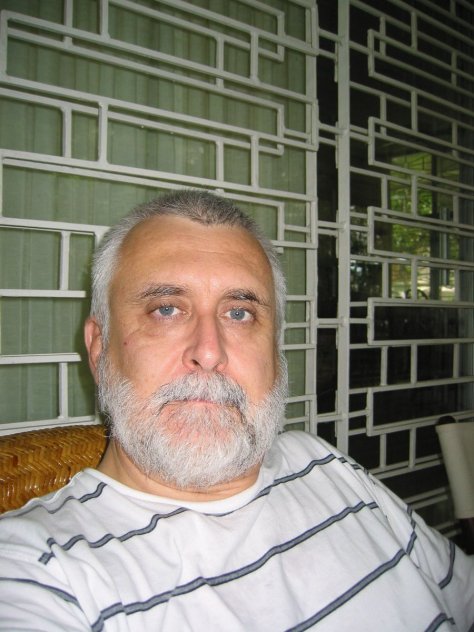

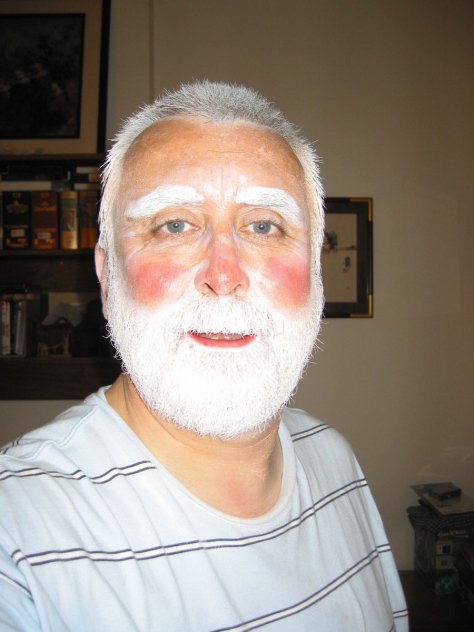
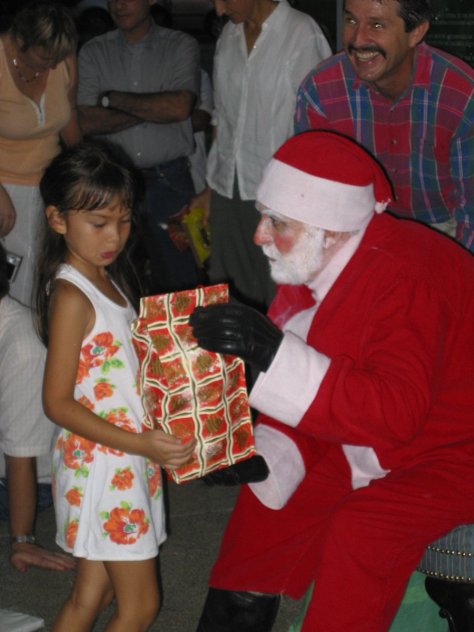
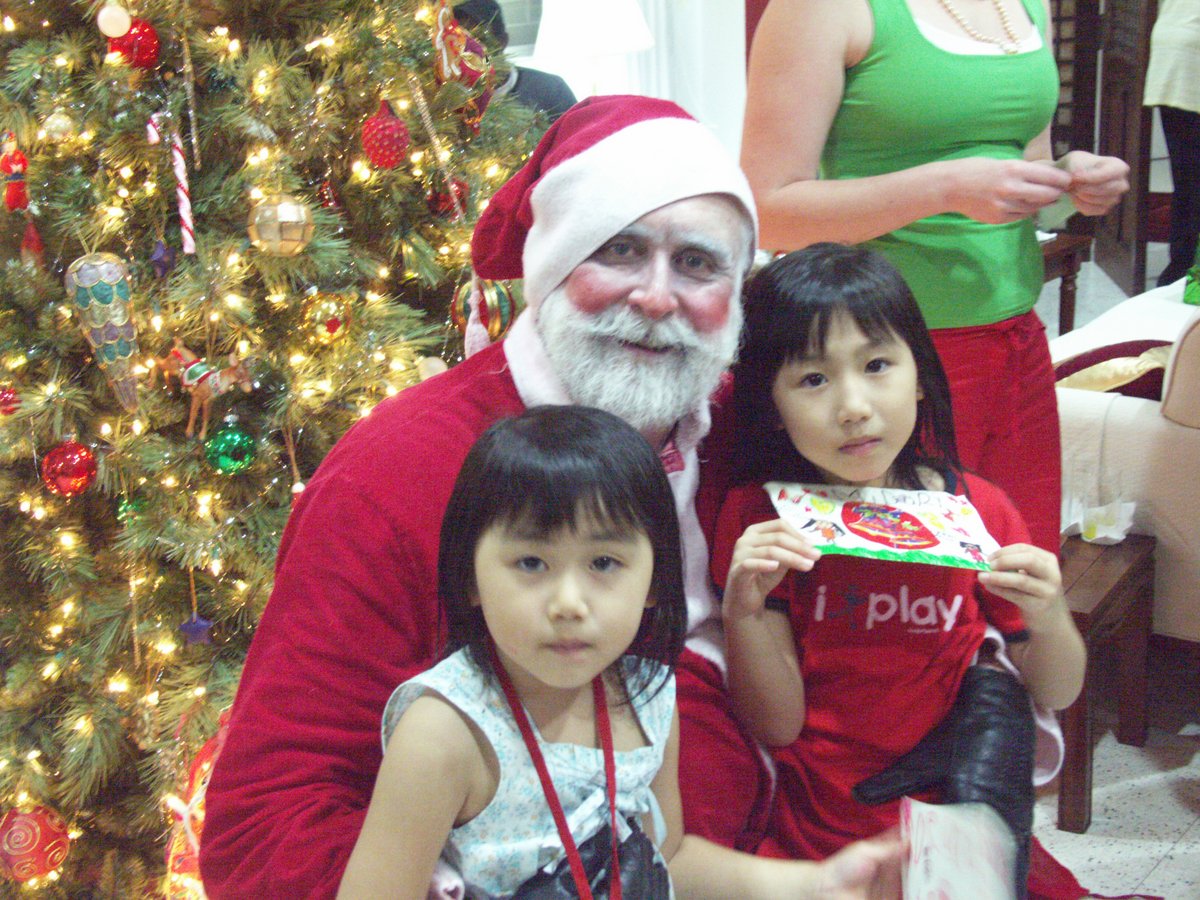

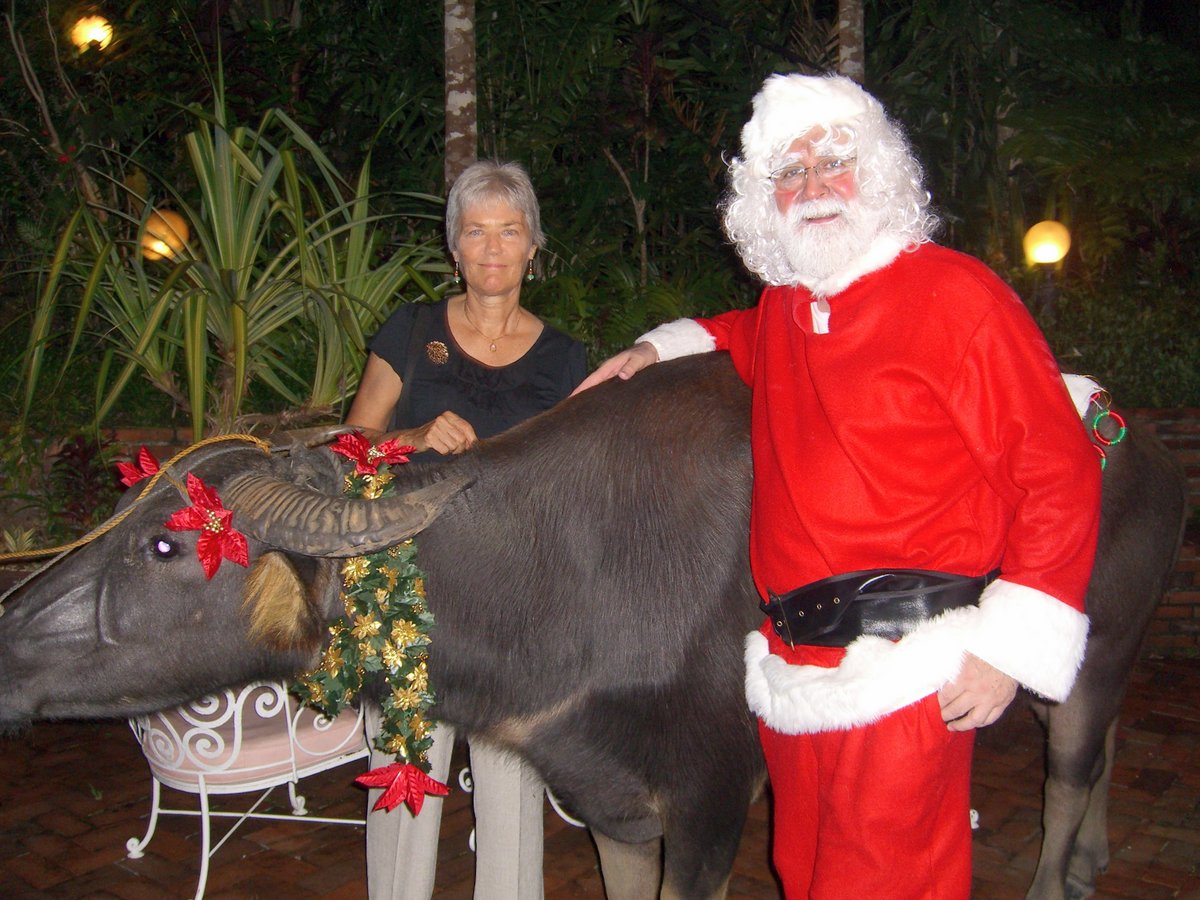






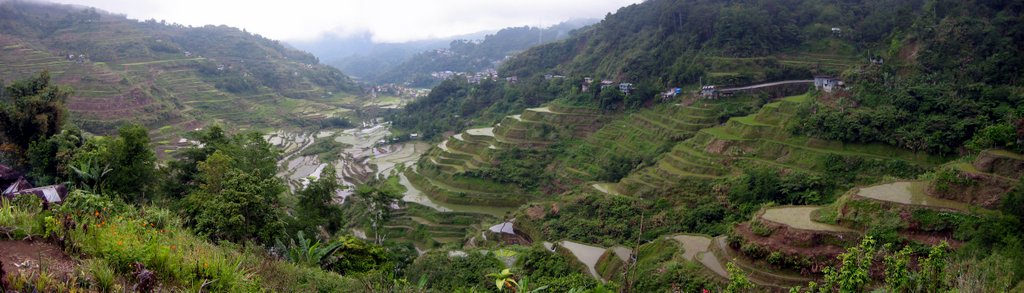
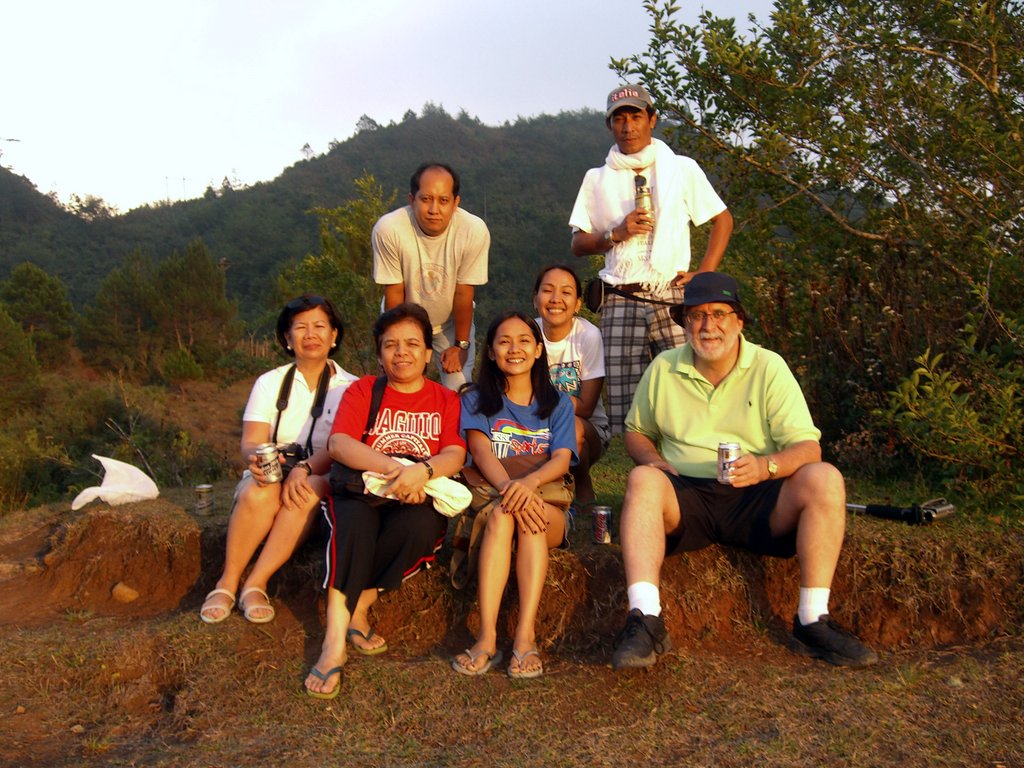


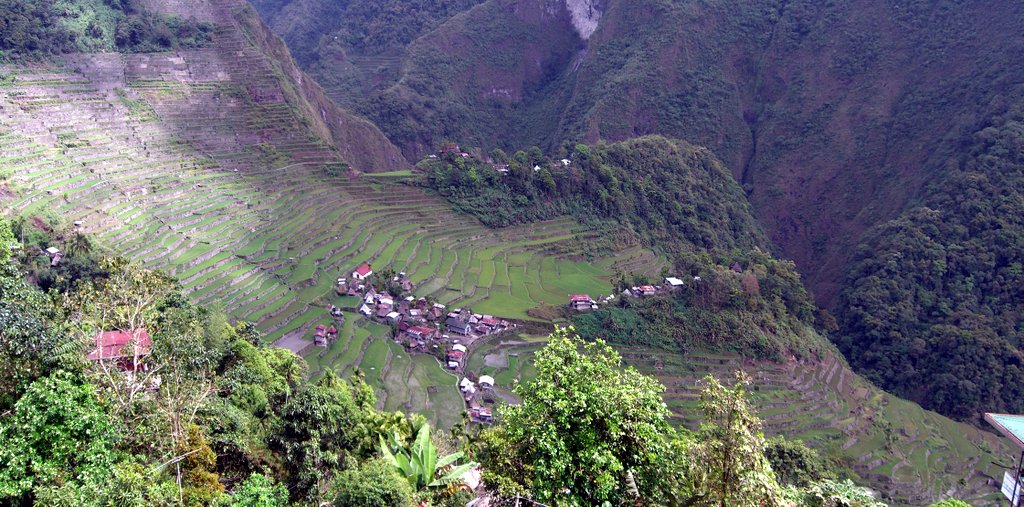
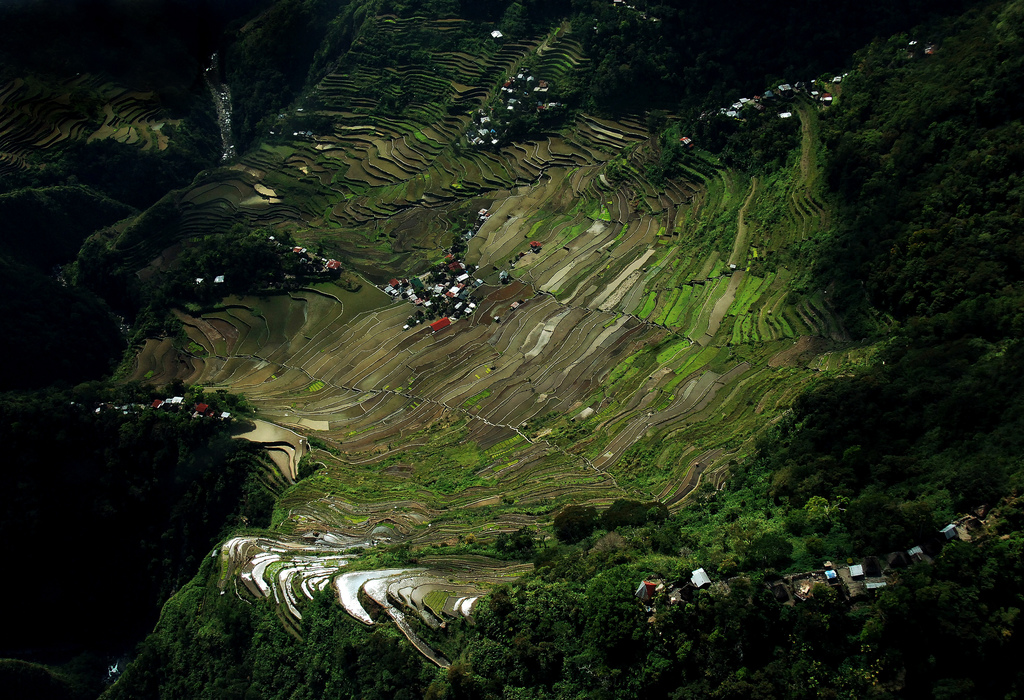
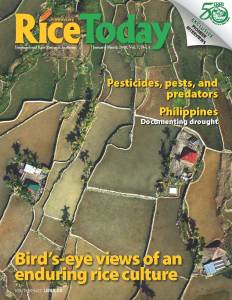


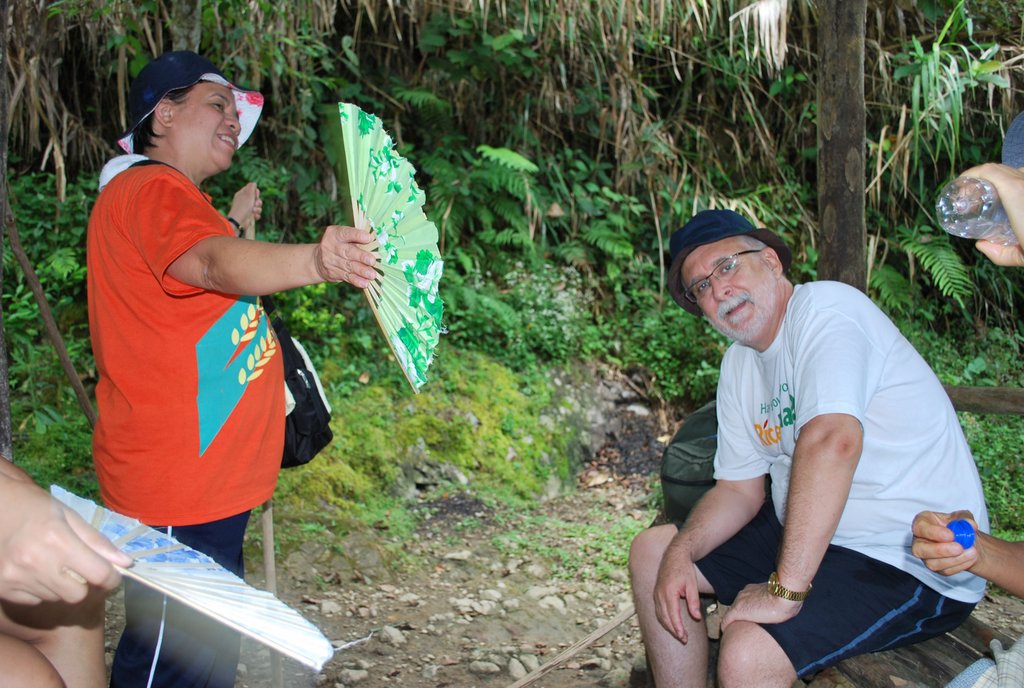


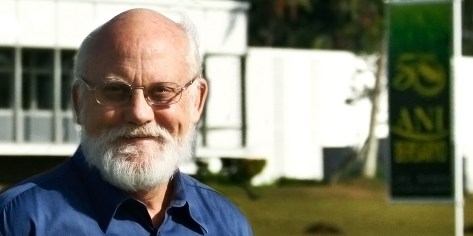


 And it wasn’t long before his presence was felt. It’s not inappropriate to comment that IRRI had lost its way during the previous decade for various reasons. There was no clear research strategy nor direction. Strong leadership was in short supply. Bob soon put an end to that, convening an international expert group of stakeholders (rice researchers, rice research leaders from national programs, and donors) to help the institute chart a perspective for the next decade or so. In 2006 IRRI’s Strategic Plan (2007-2015),


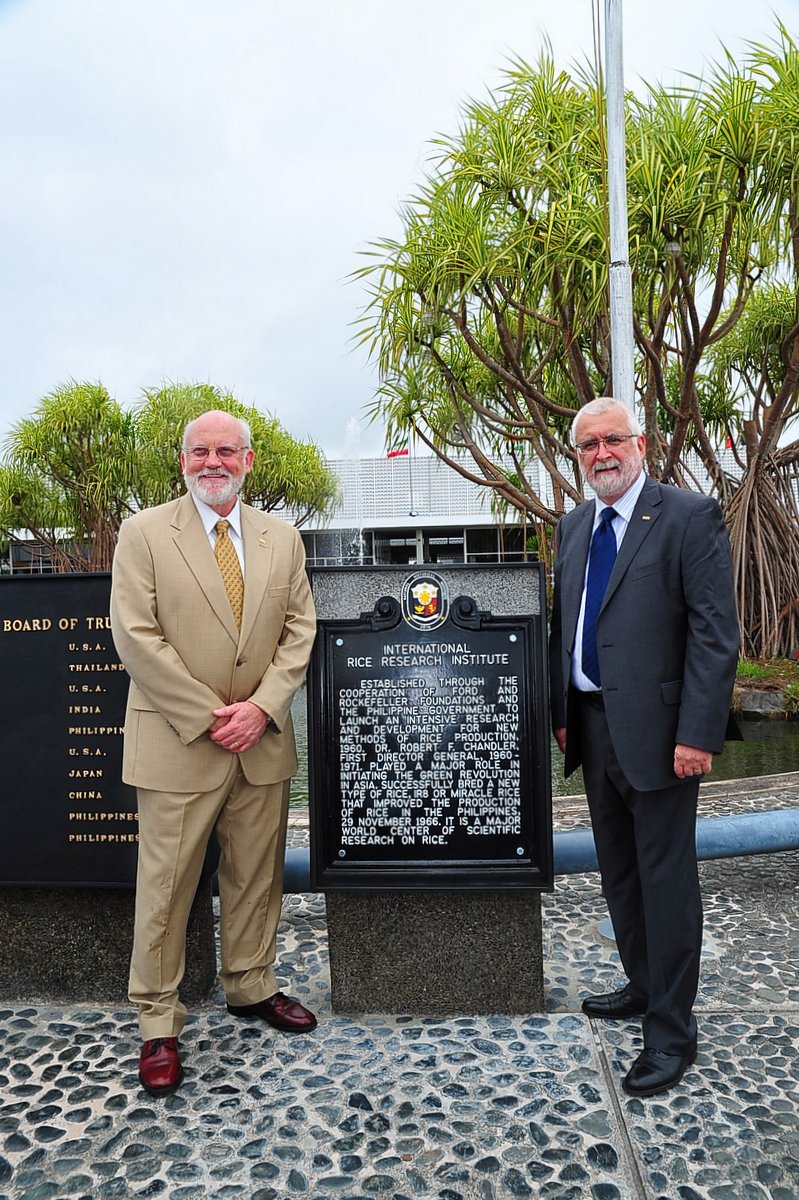


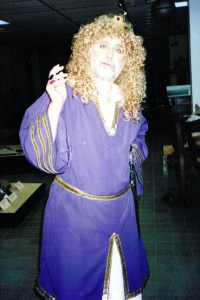
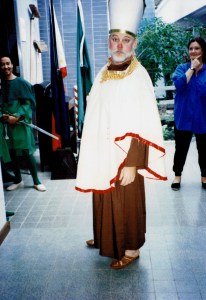





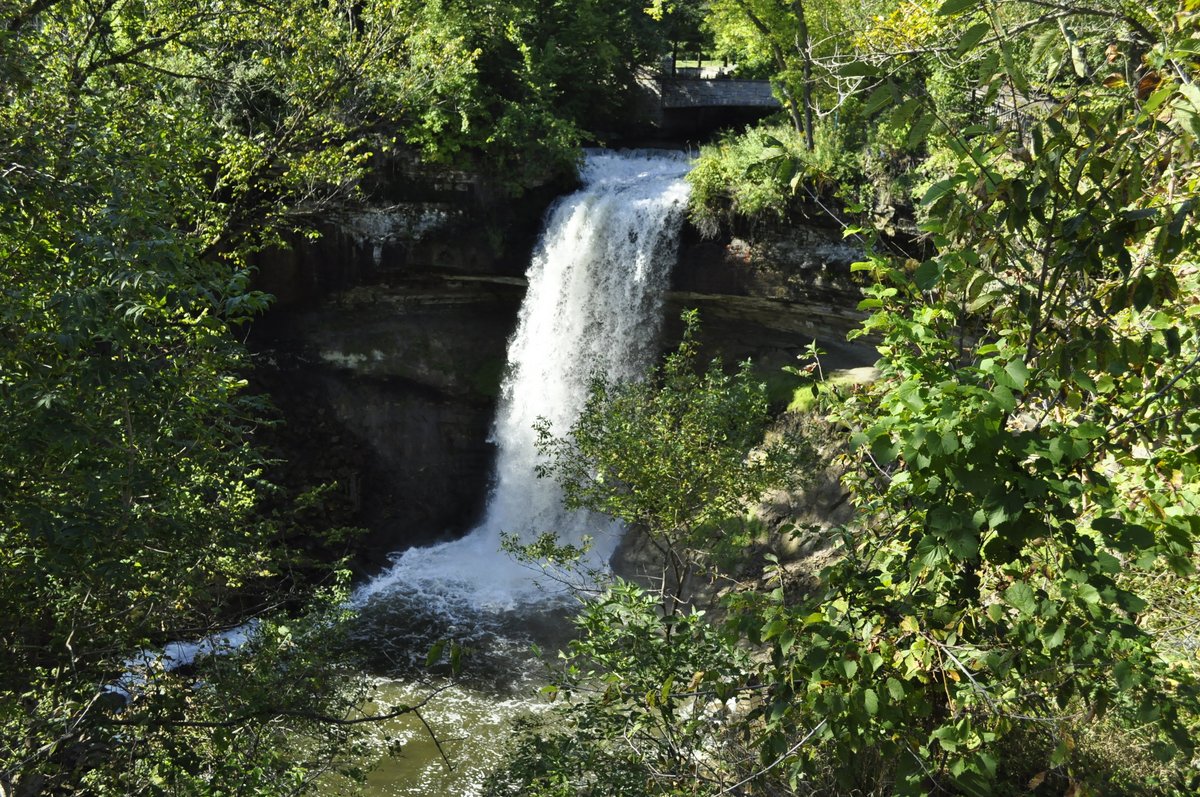
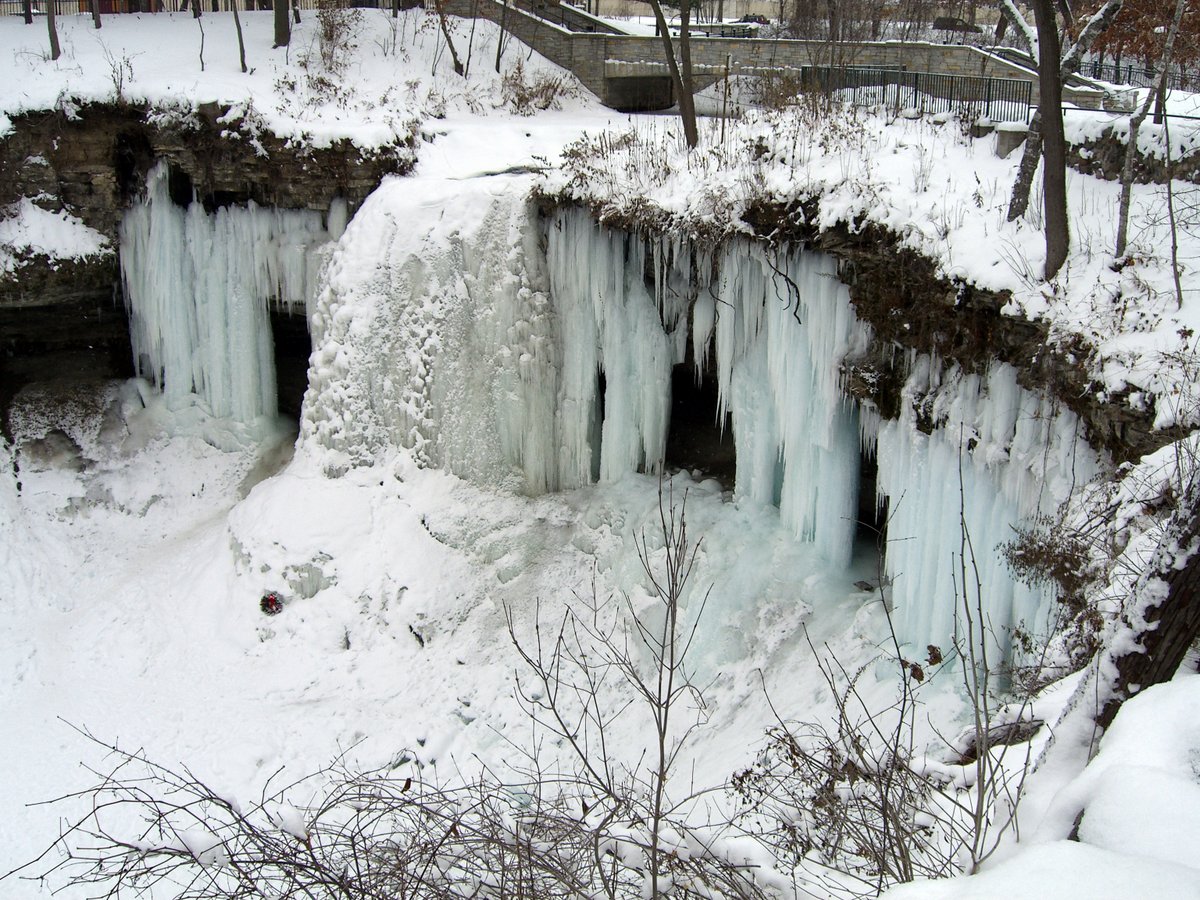
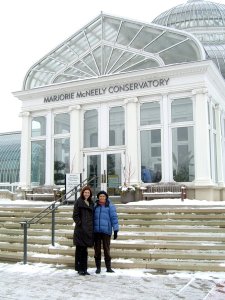
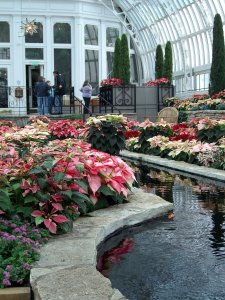
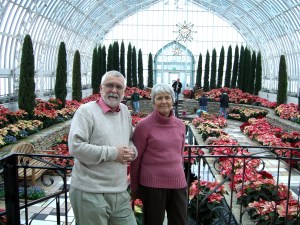
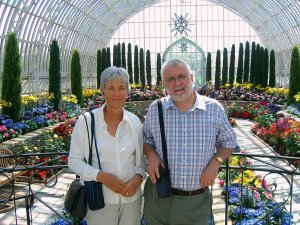
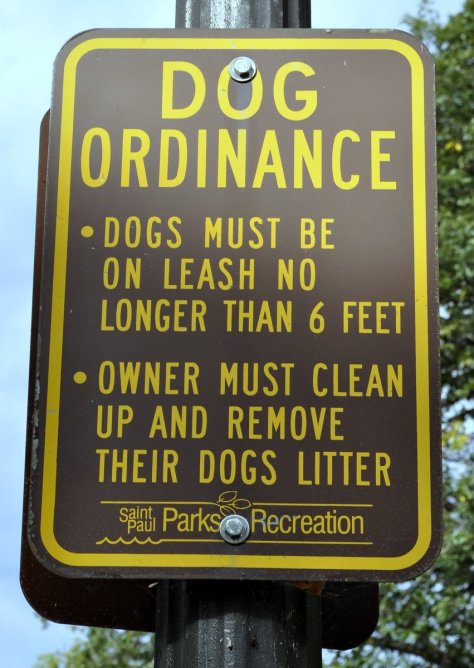
 One of my former staff at IRRI’s Genetic Resources Center (GRC) passed away last week. Tom Clemeno had been an employee of IRRI for many years, working his way up to Senior Manager of the institute’s Experiment Station (ES). Diagnosed with a lymphoma in 2013, Tom fought the disease with courage but it became clear in recent weeks that he could not win this last battle.
 So we agreed among ourselves to effectively allow Tom a three-year ‘leave of absence’ from GRC, and we re-organized the field operations with Ato taking on an enhanced role (that he has maintained to this day). I do believe that the support of Tom’s GRC colleagues, particularly Ato, should also be recognized during this important phase in IRRI’s history. After three years, we asked Tom to return full-time to GRC, but not long after, as I mentioned earlier, he was recruited to the Experiment Station.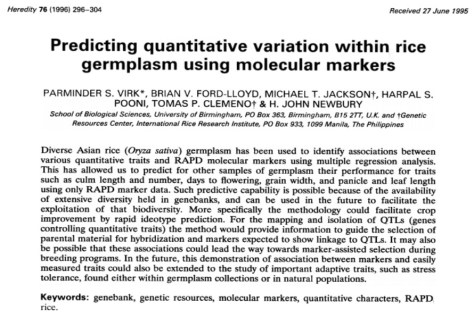
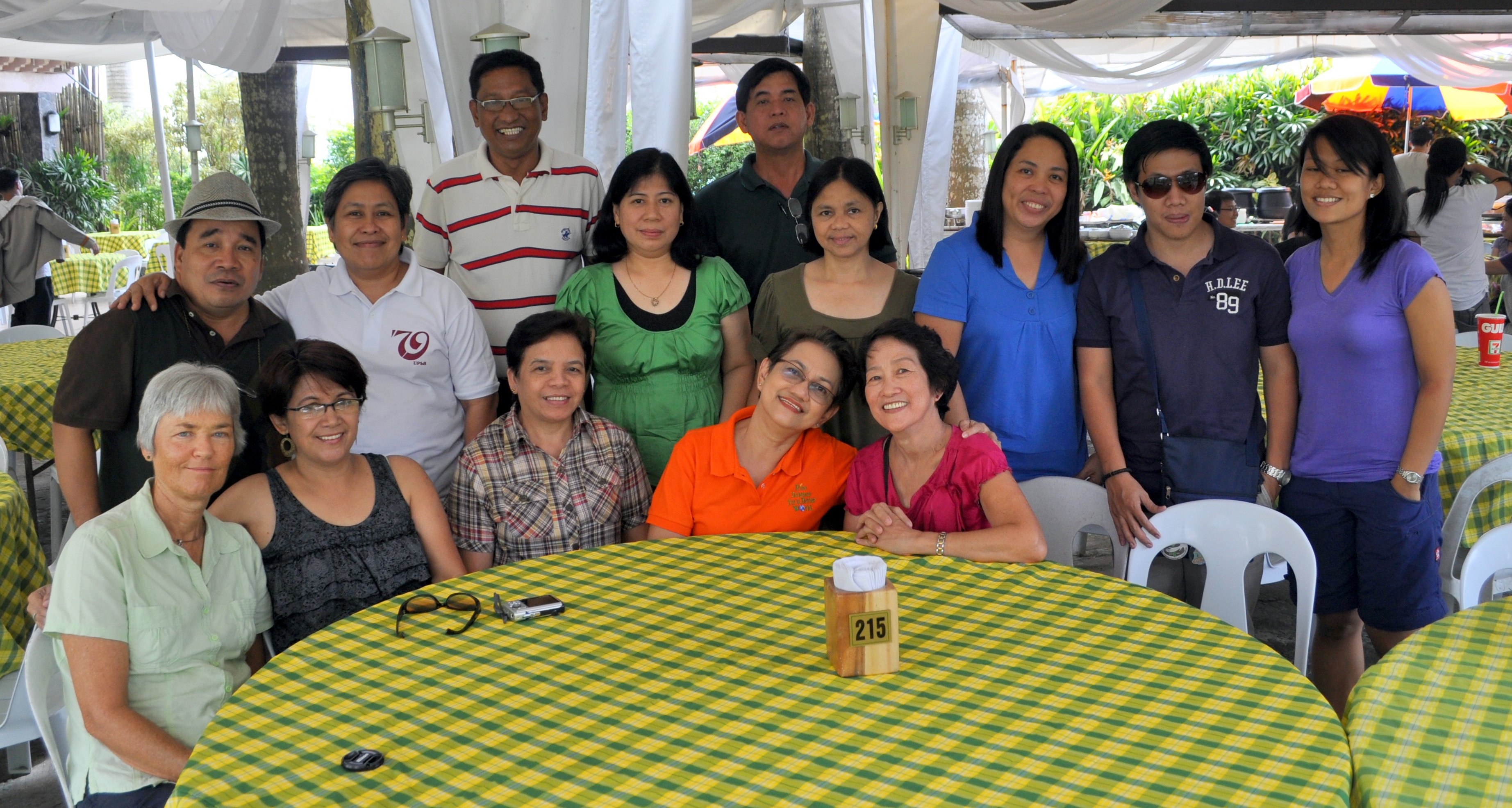
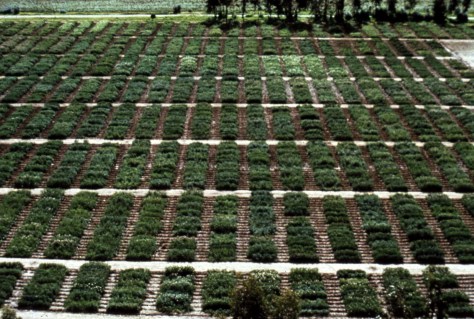
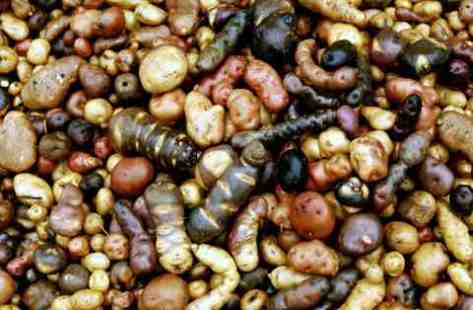


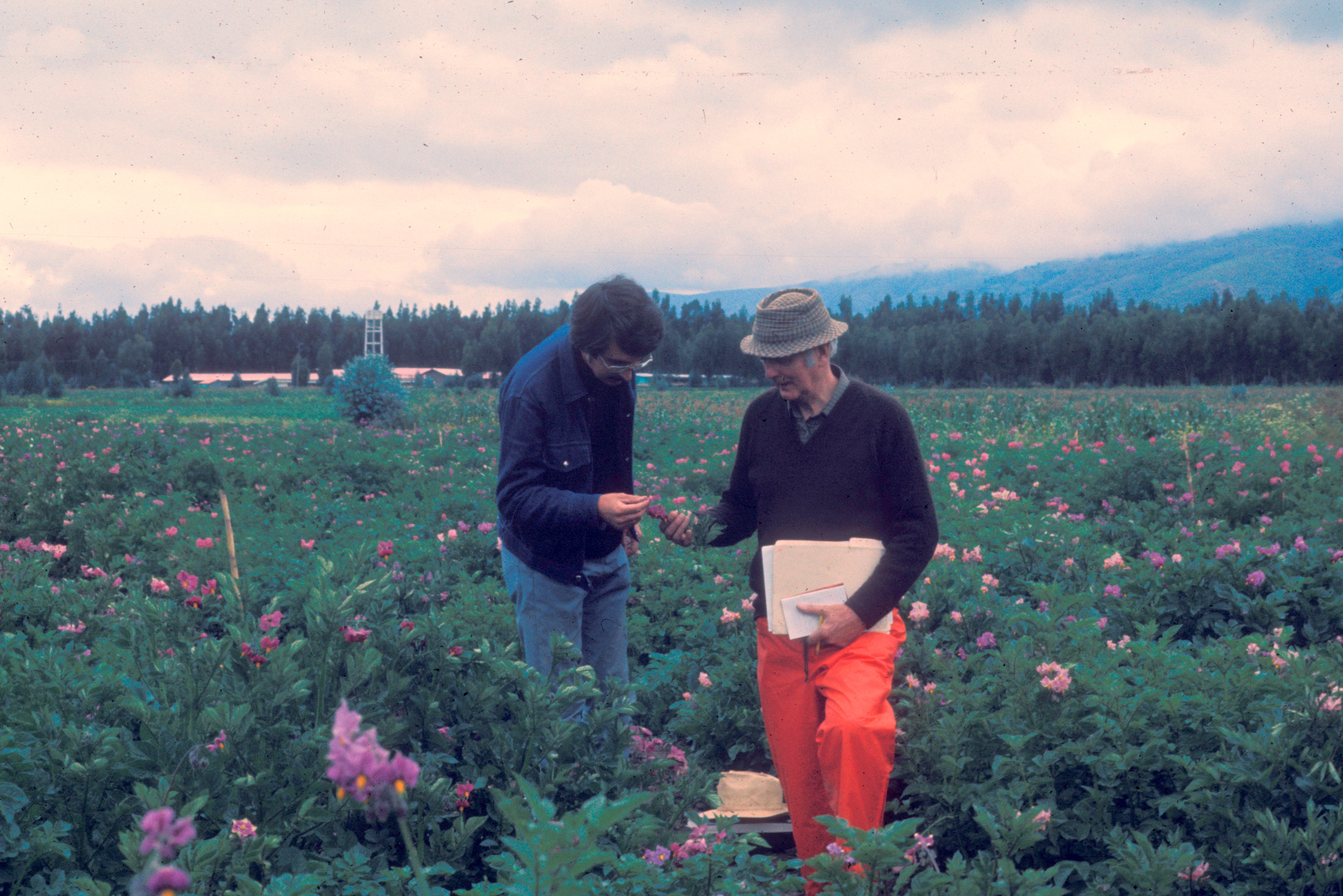
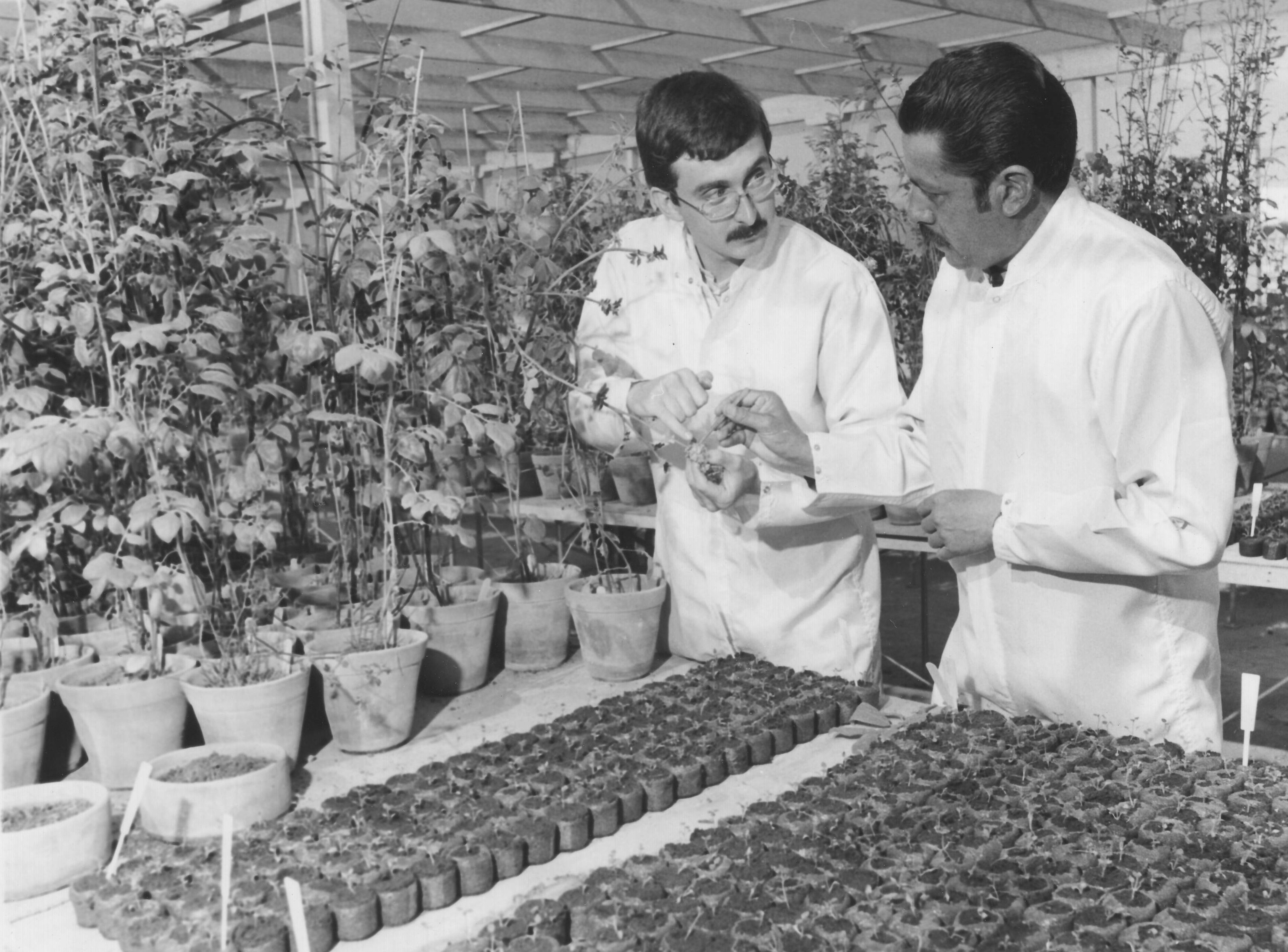


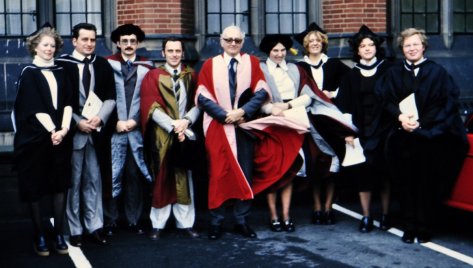
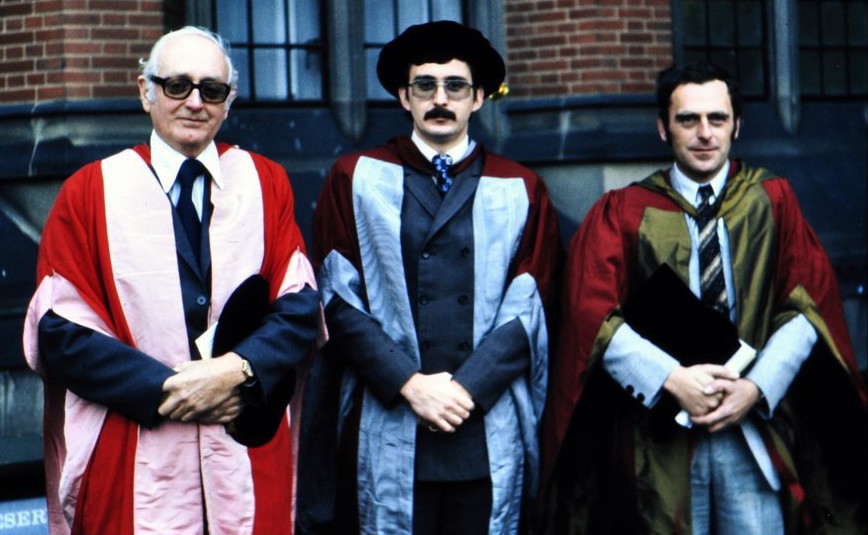




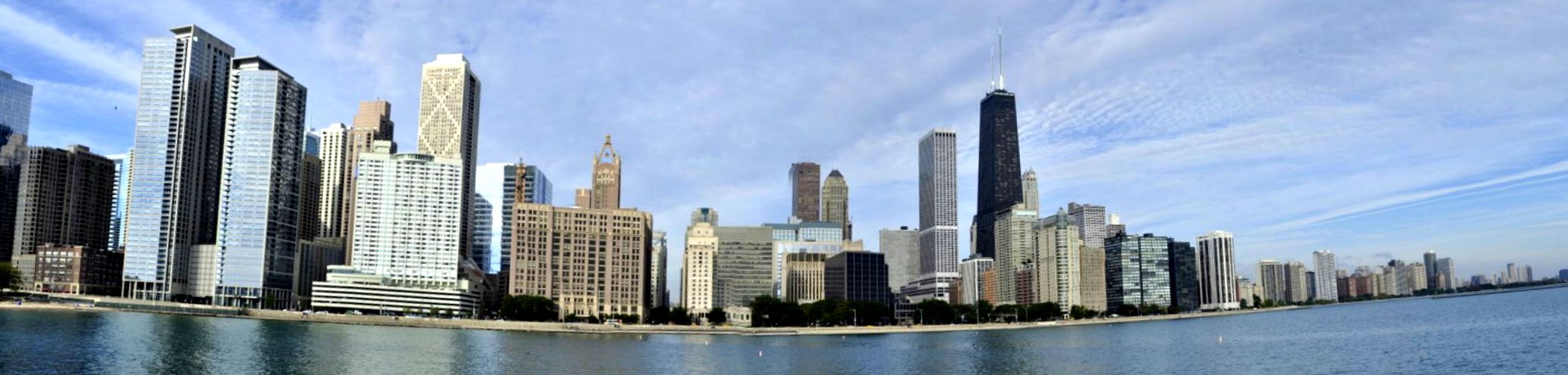
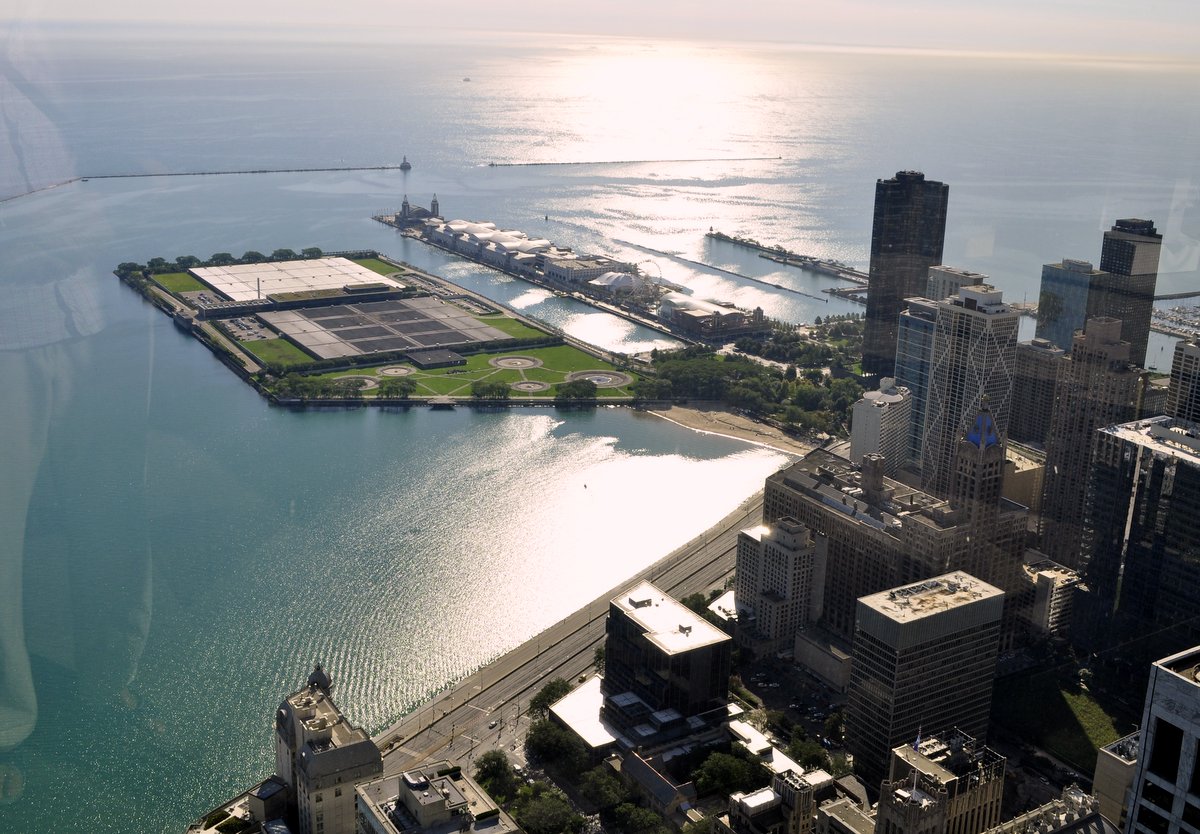





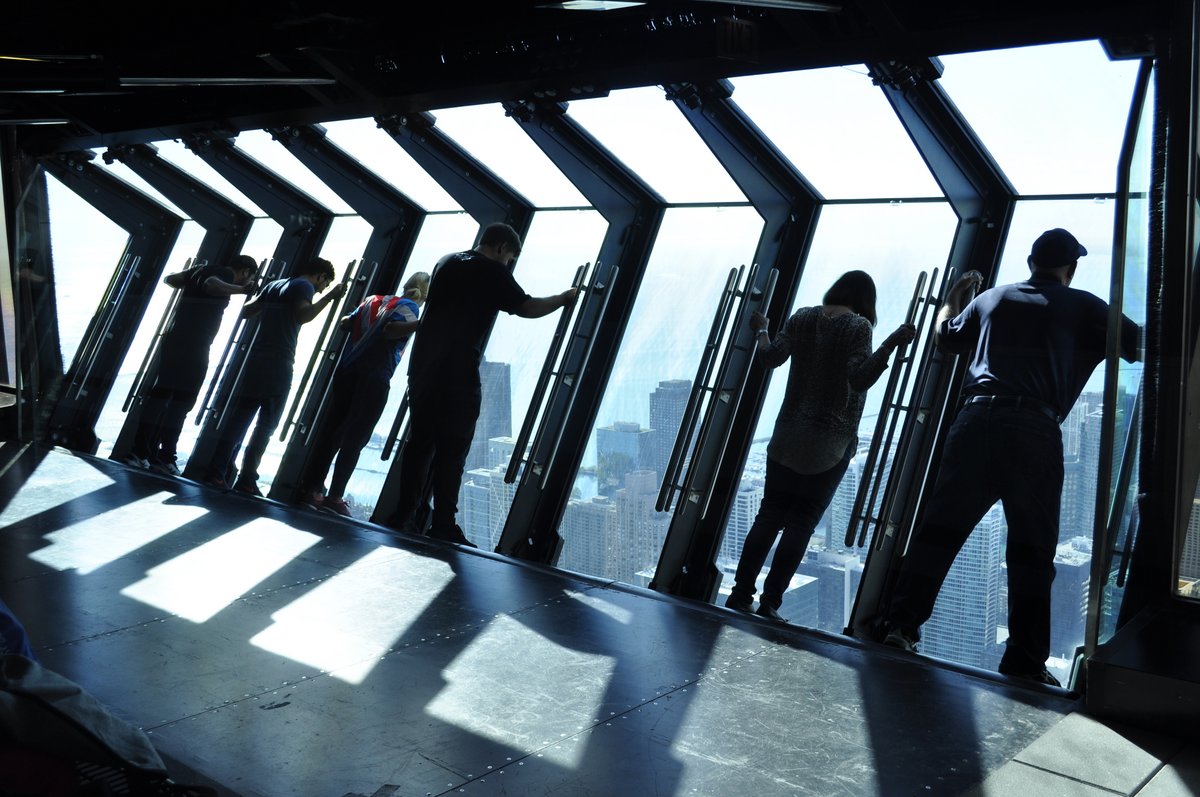





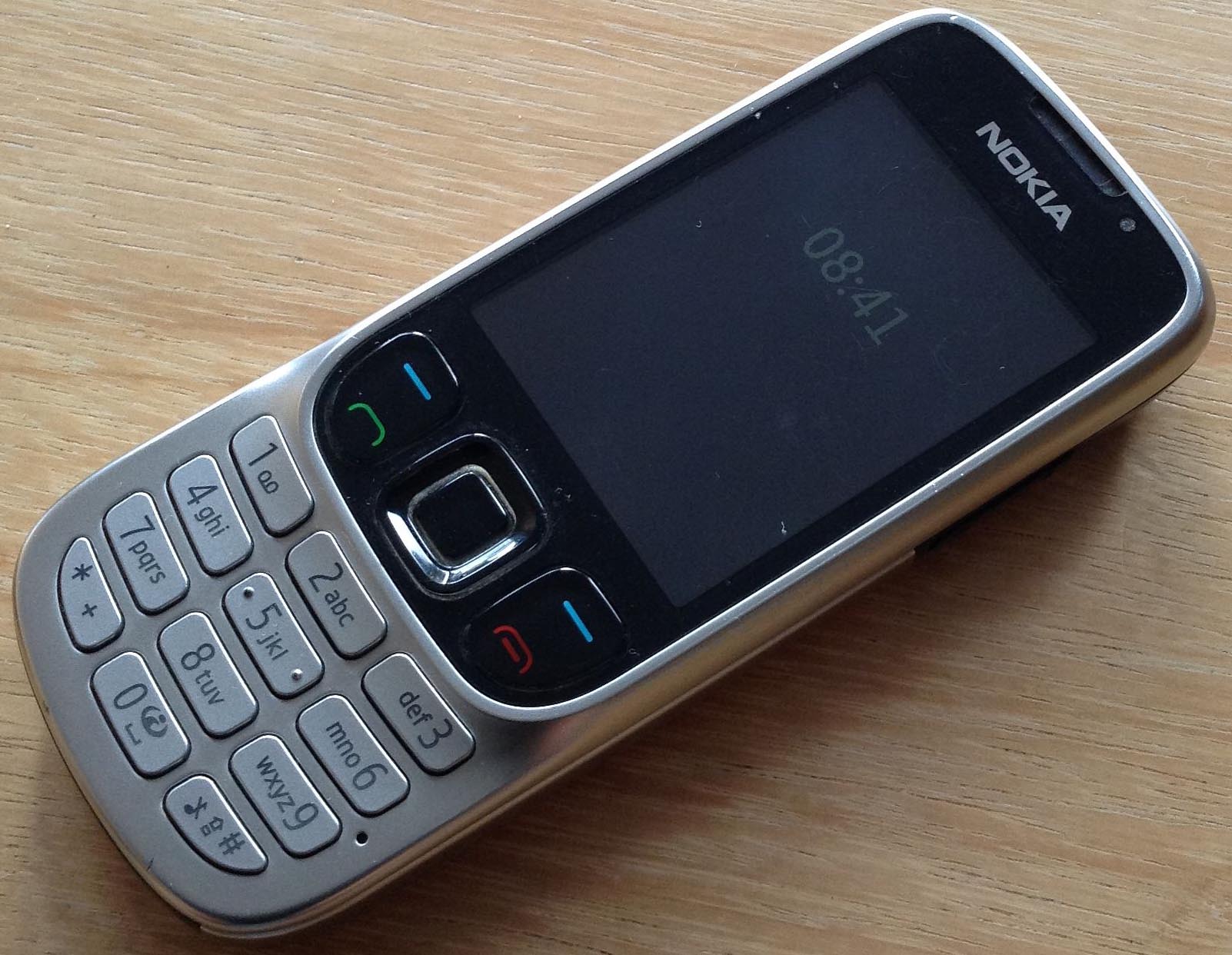

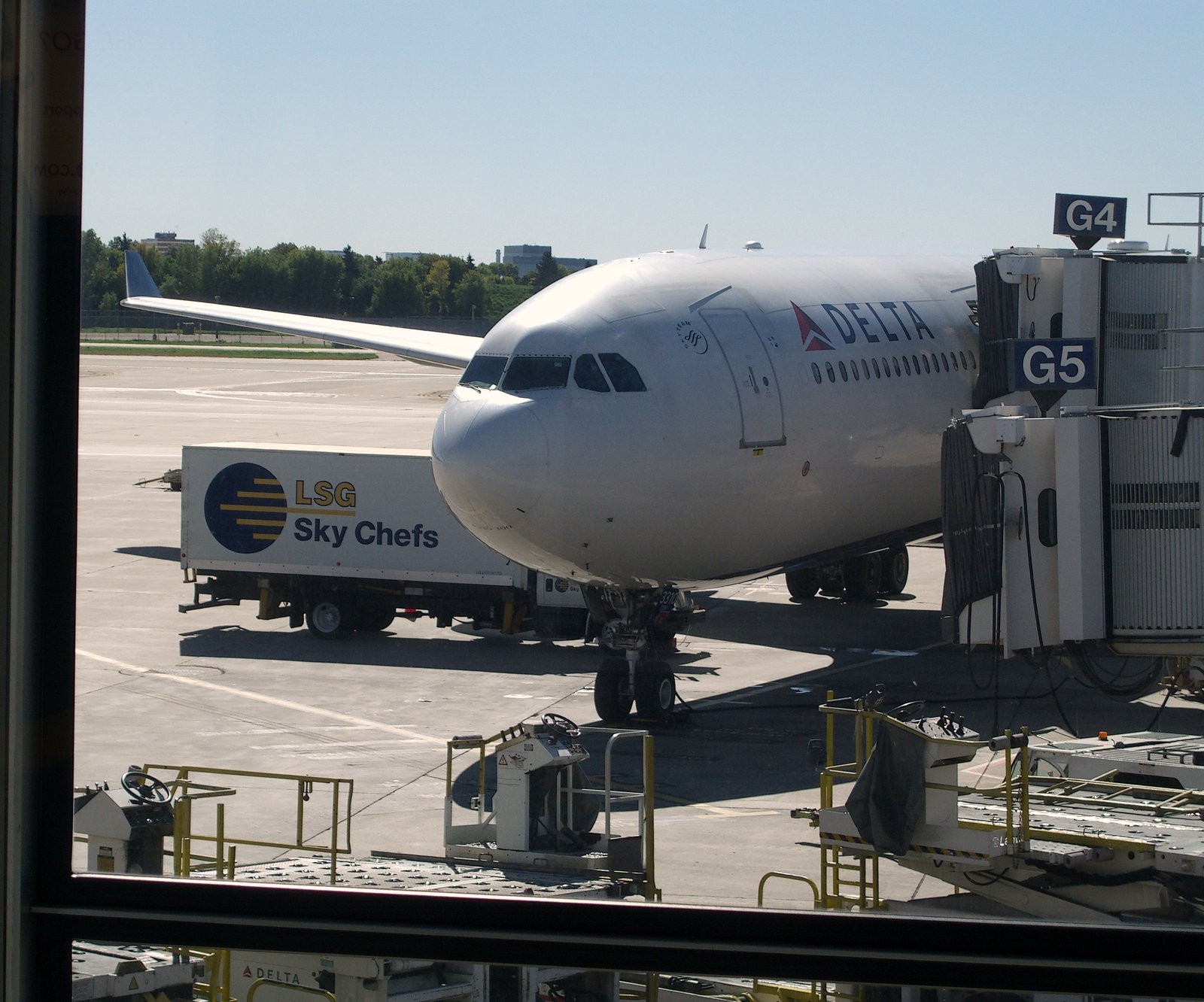

 St Paul, Minnesota.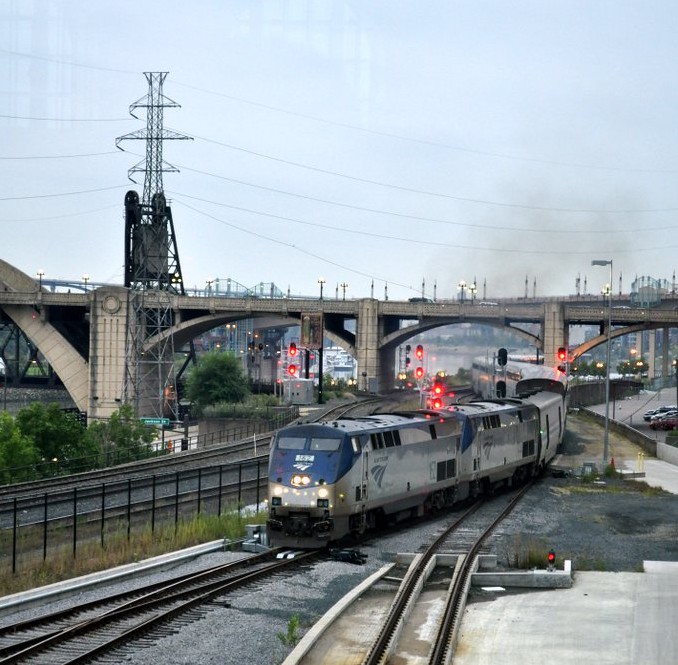
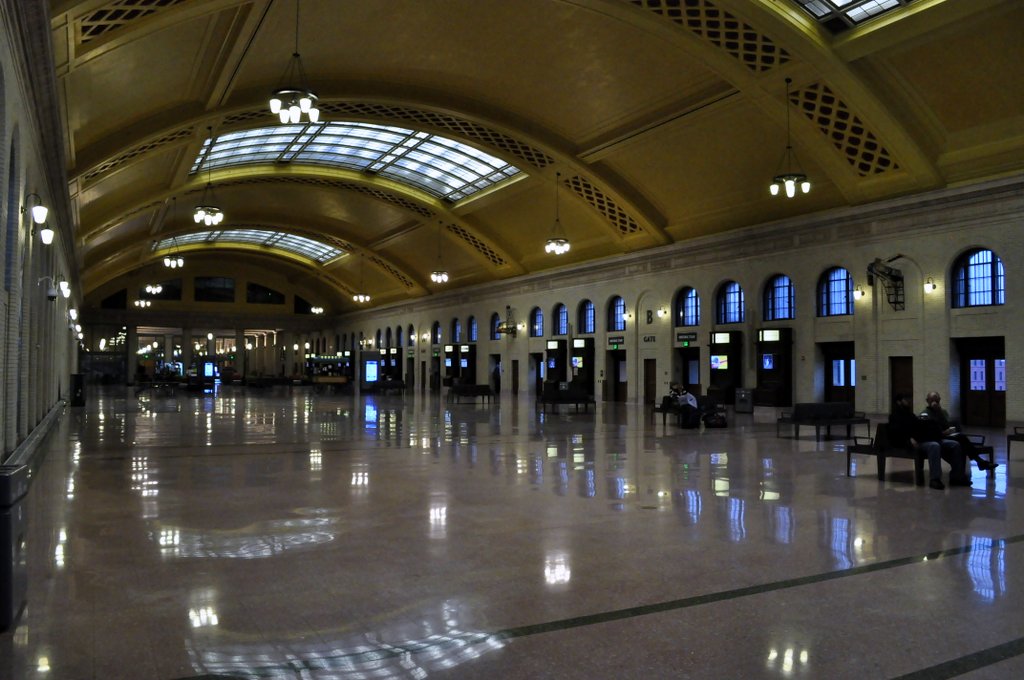
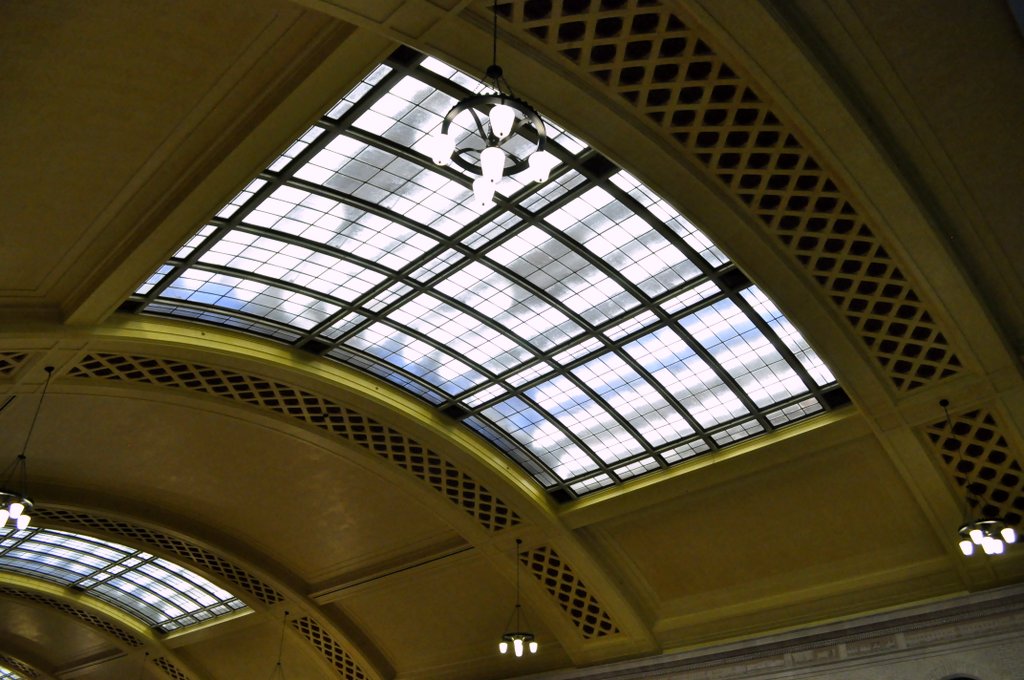
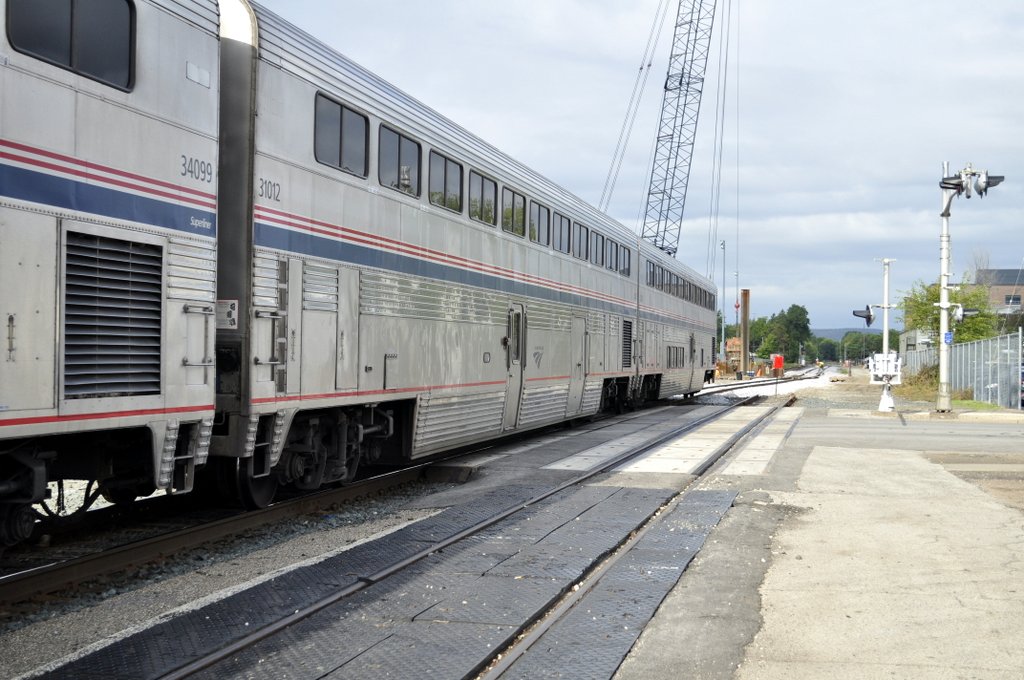
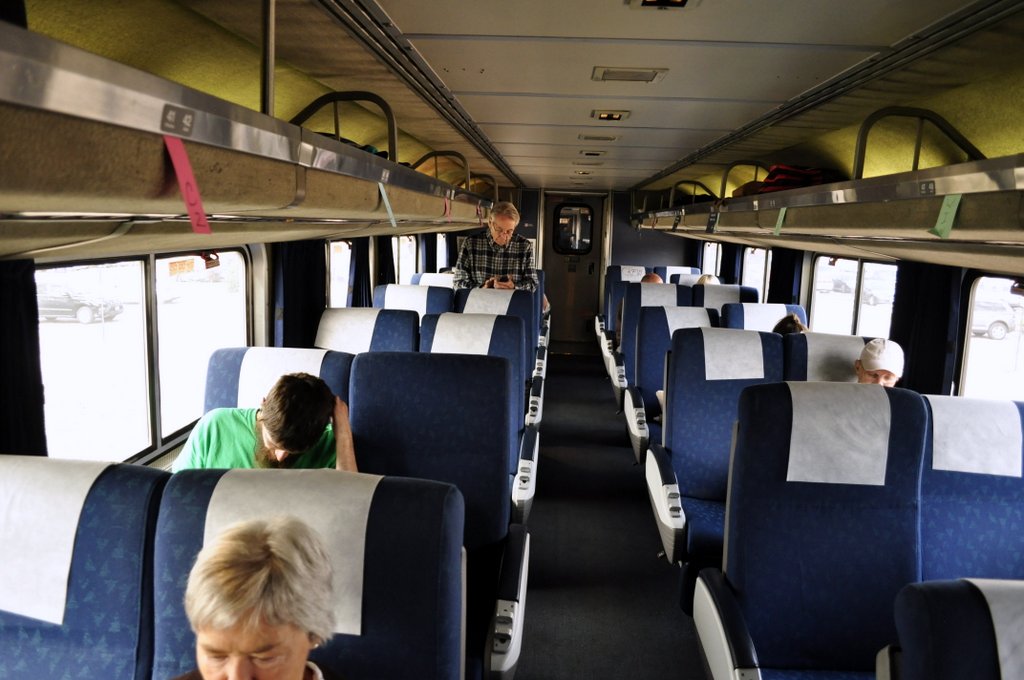
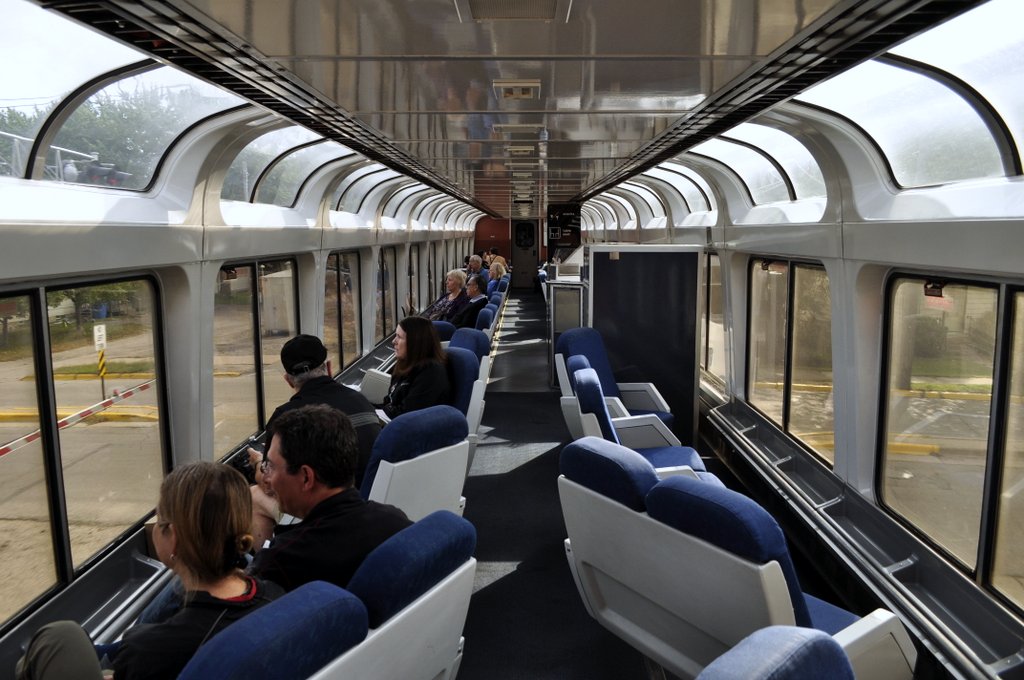
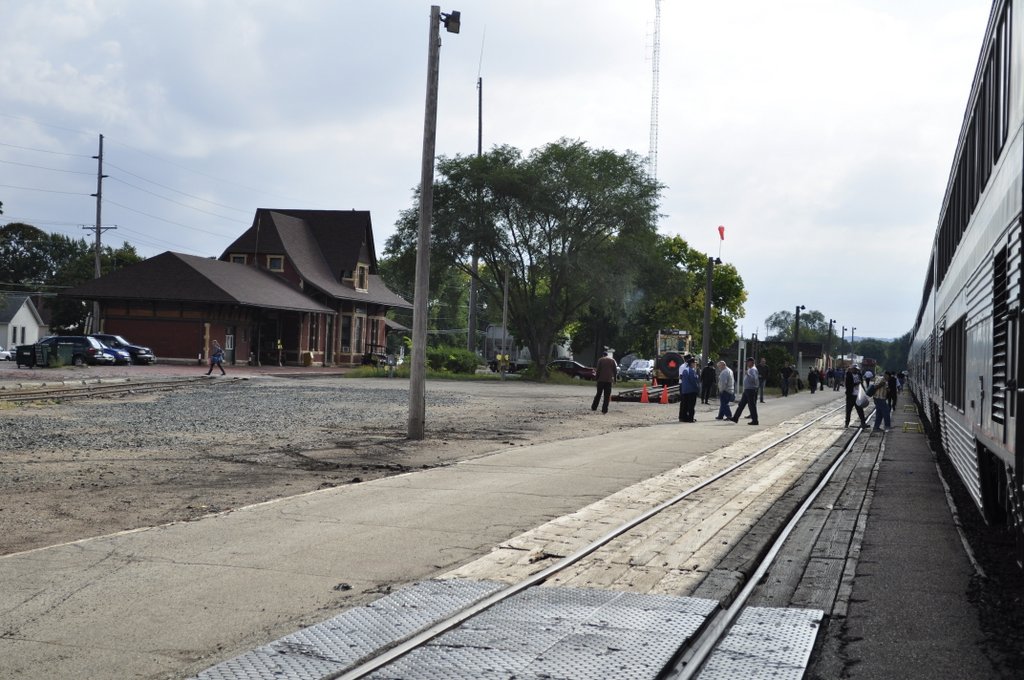
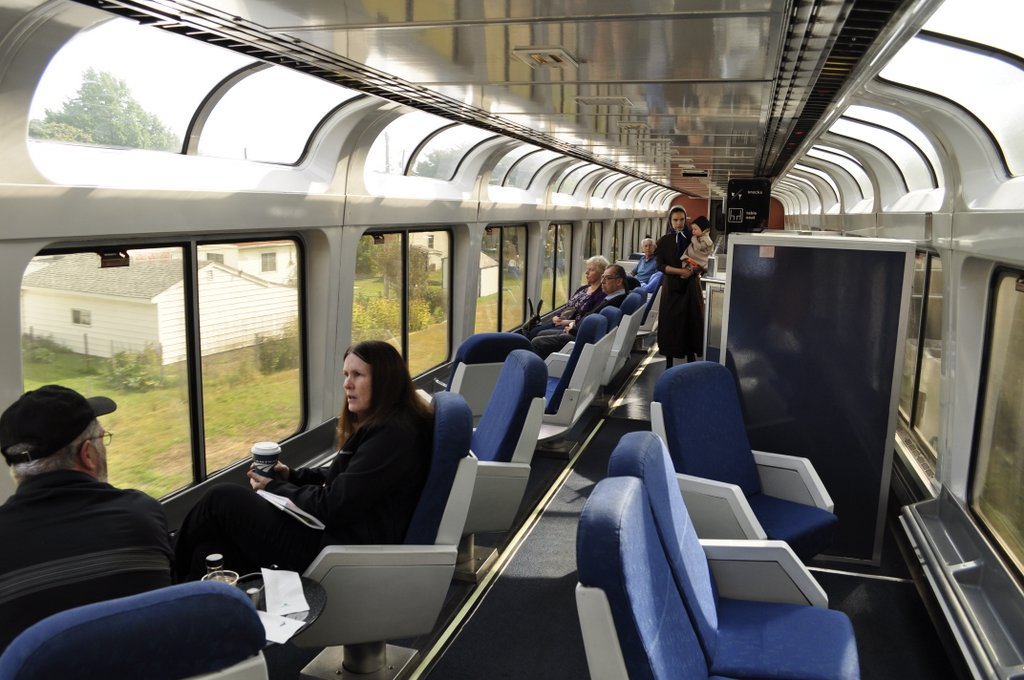
 And with these words, Minnesotan author and story-teller


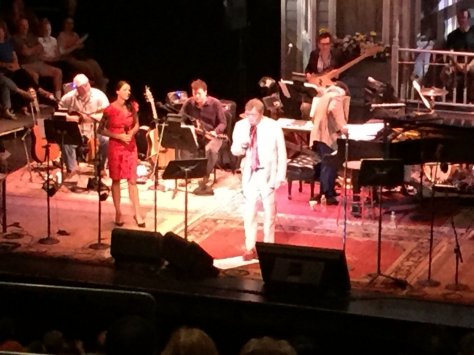
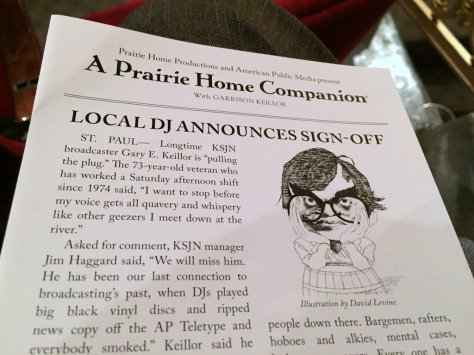

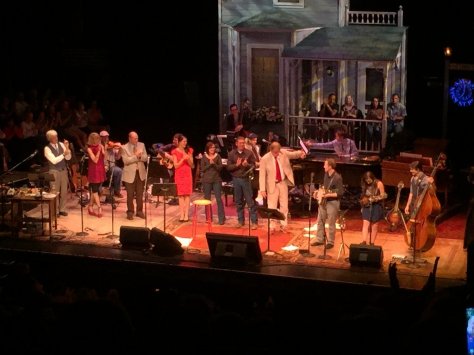
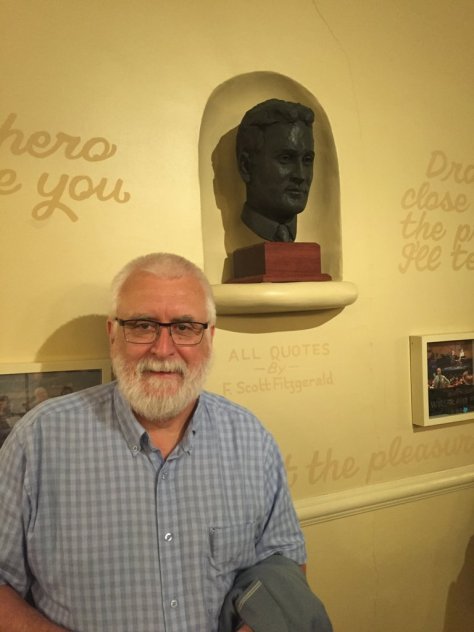
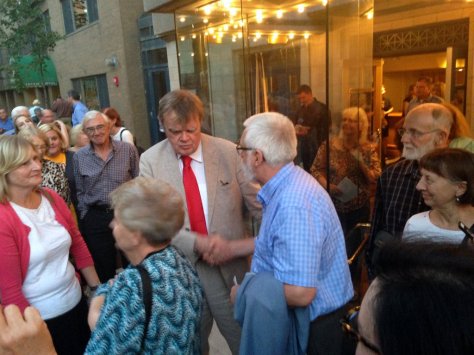



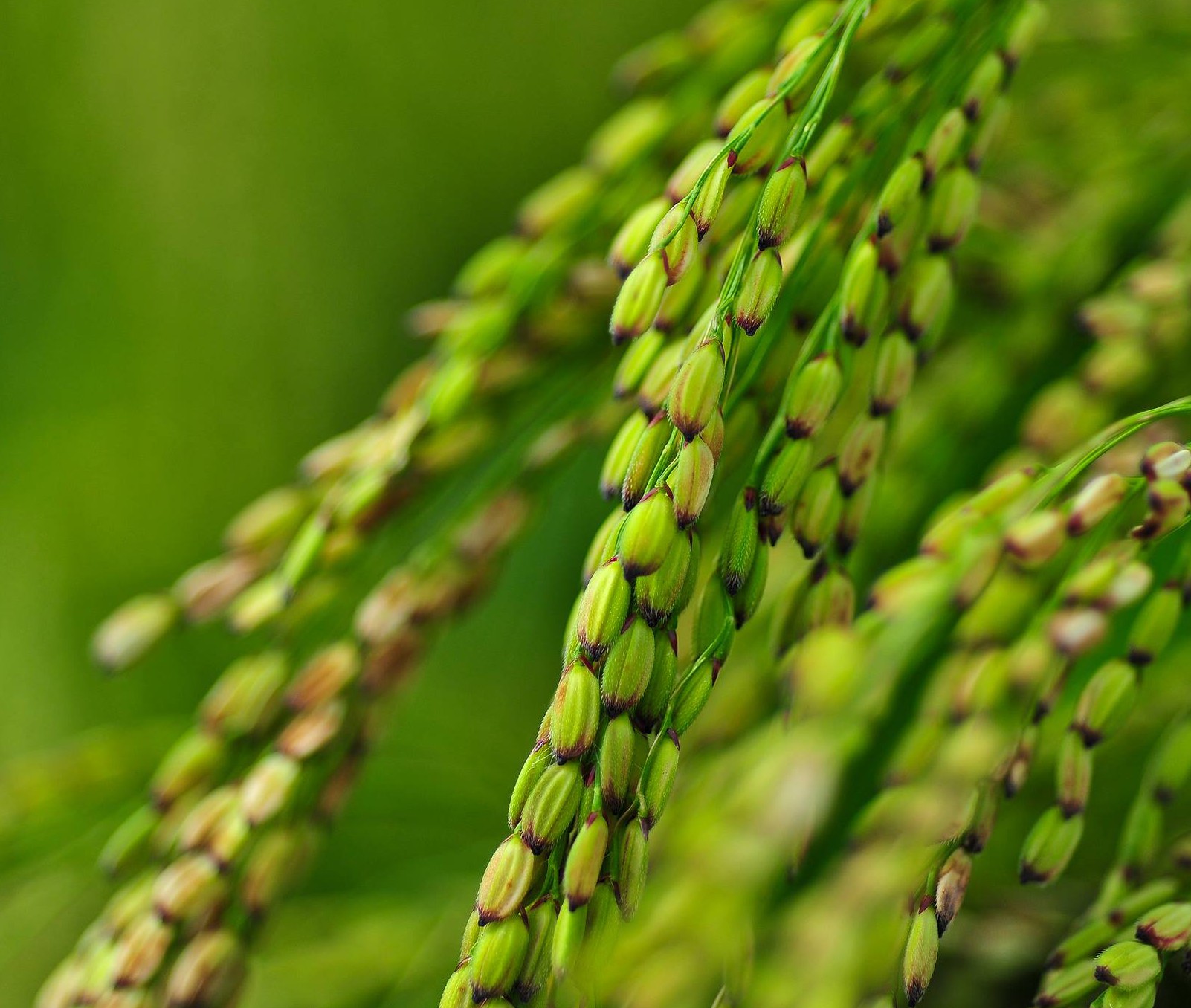


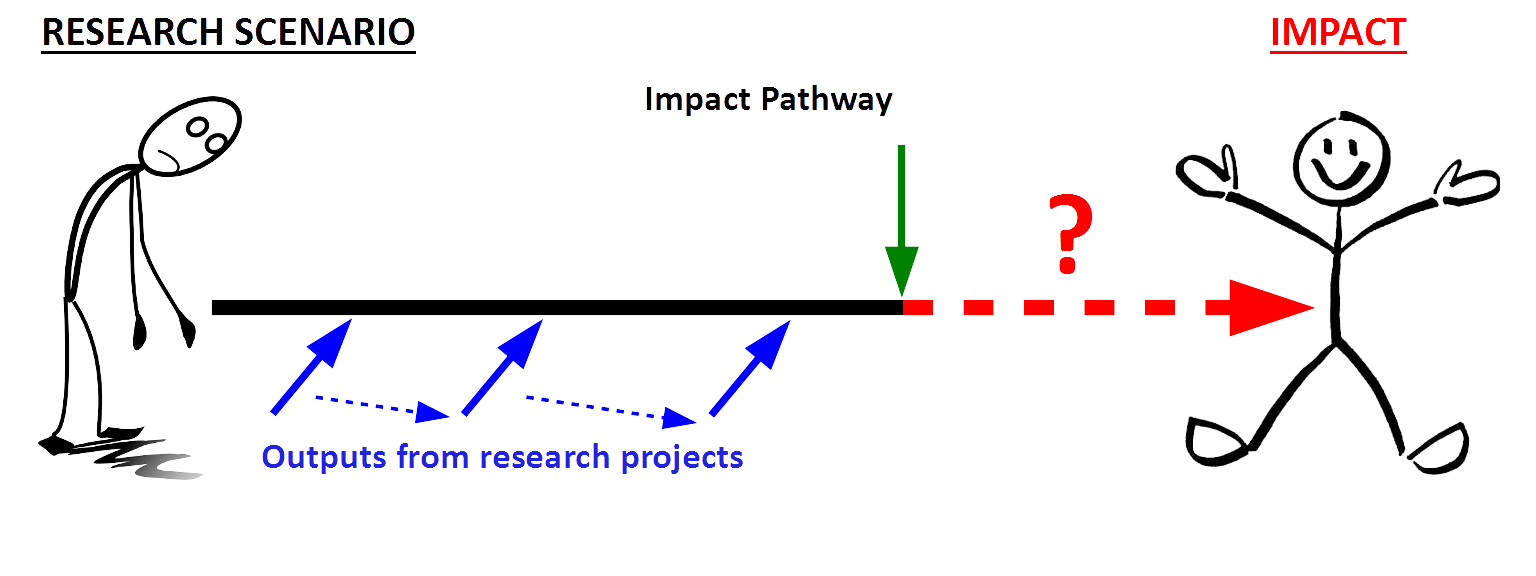
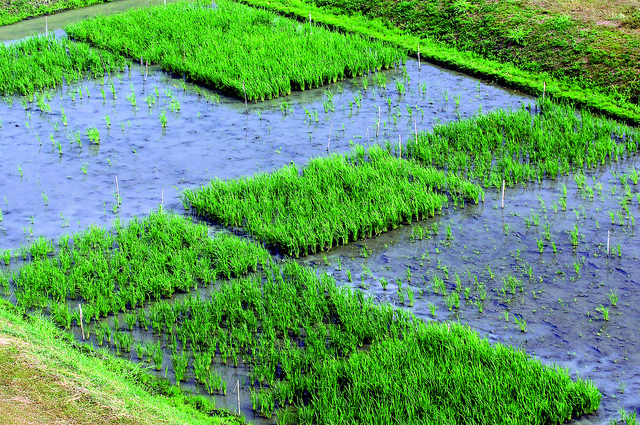
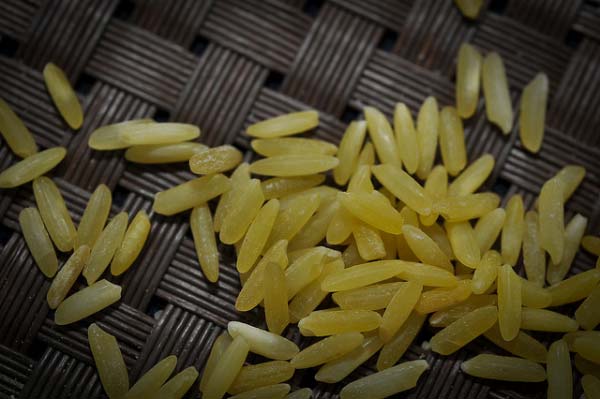


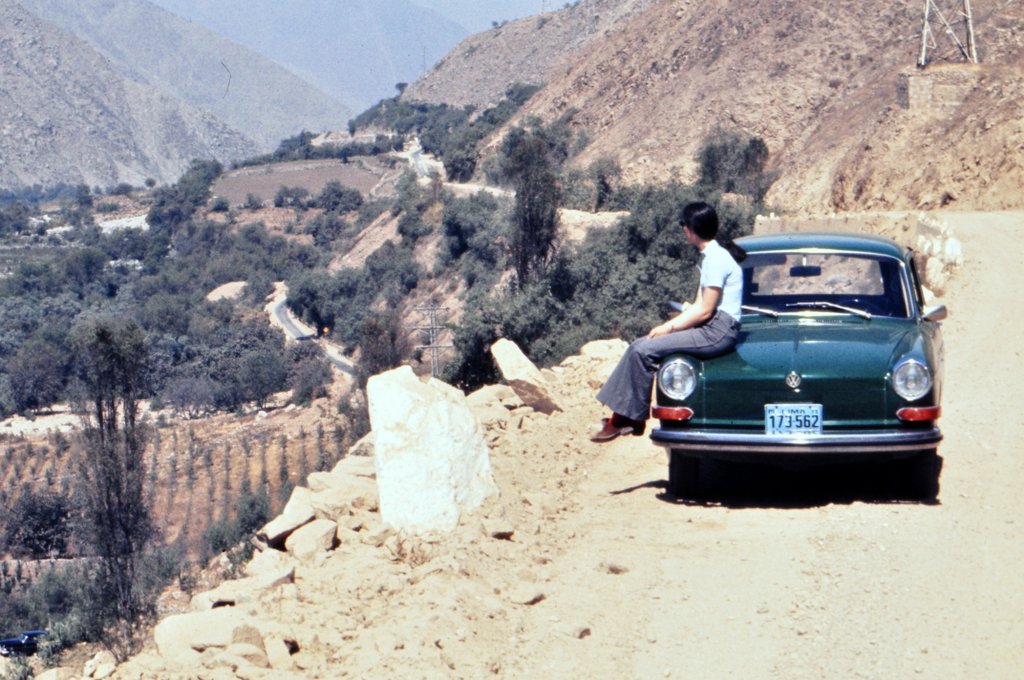


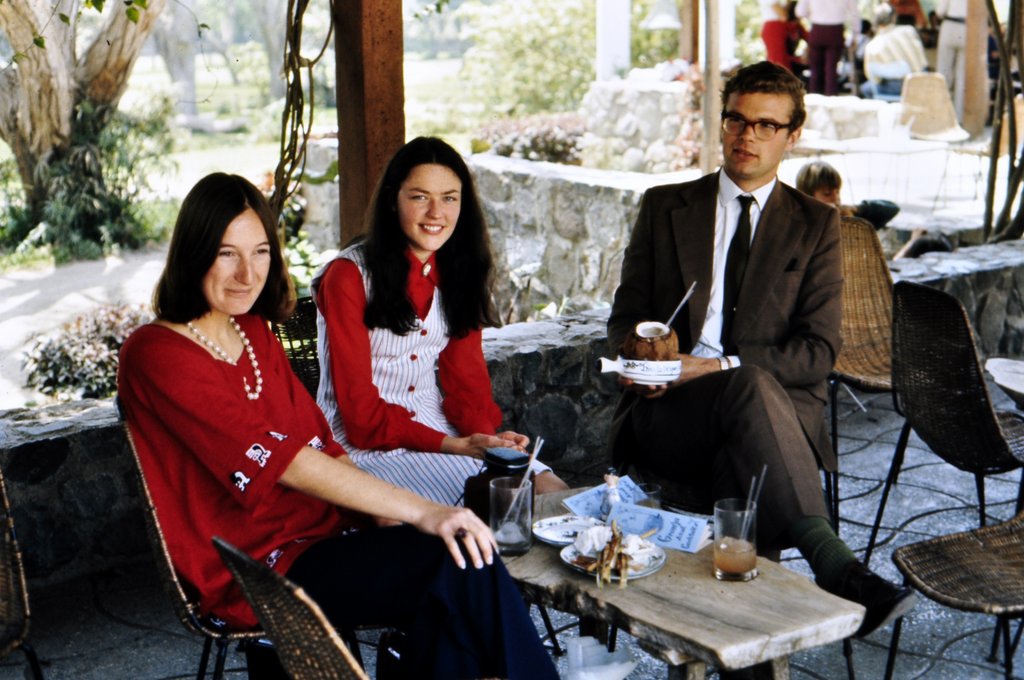


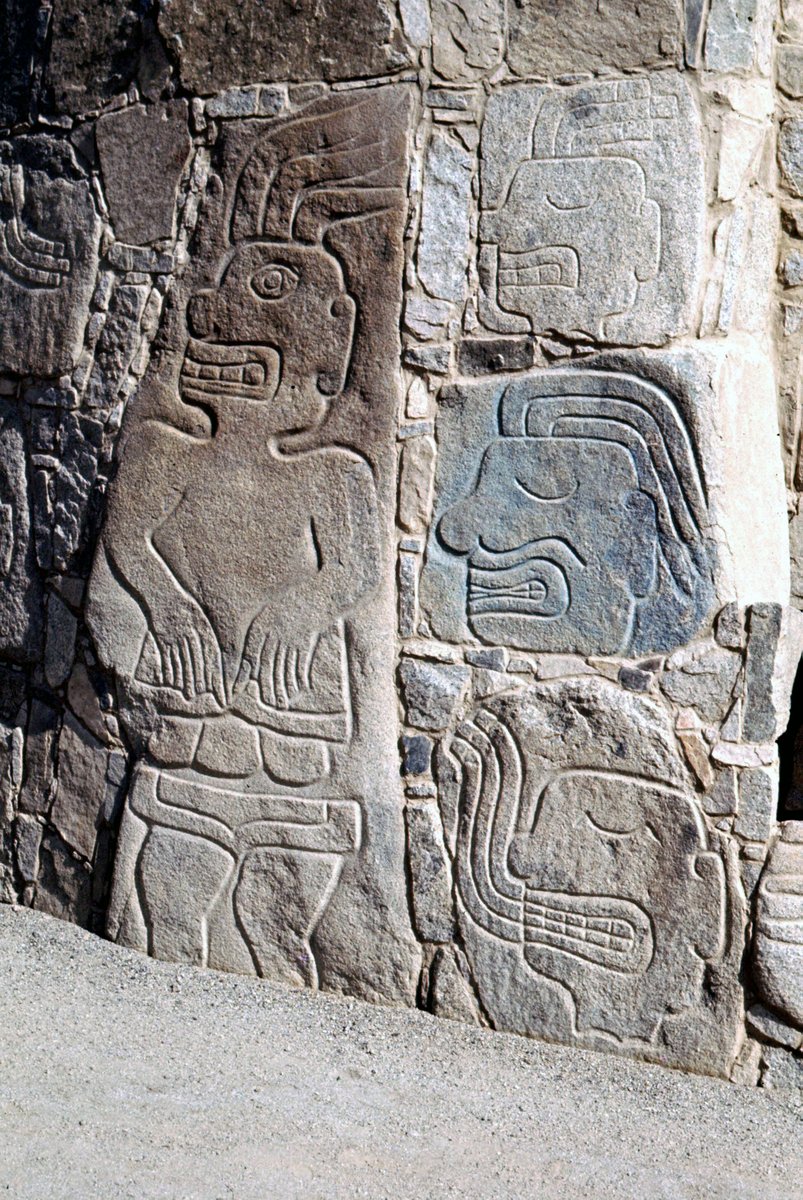


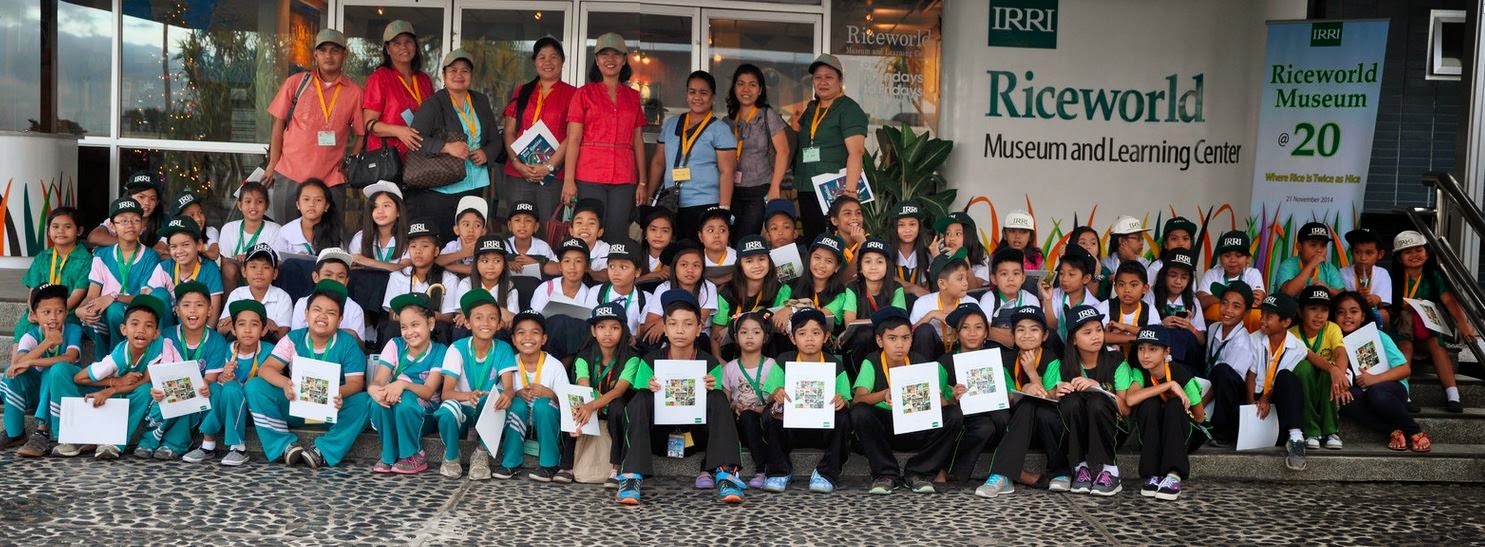


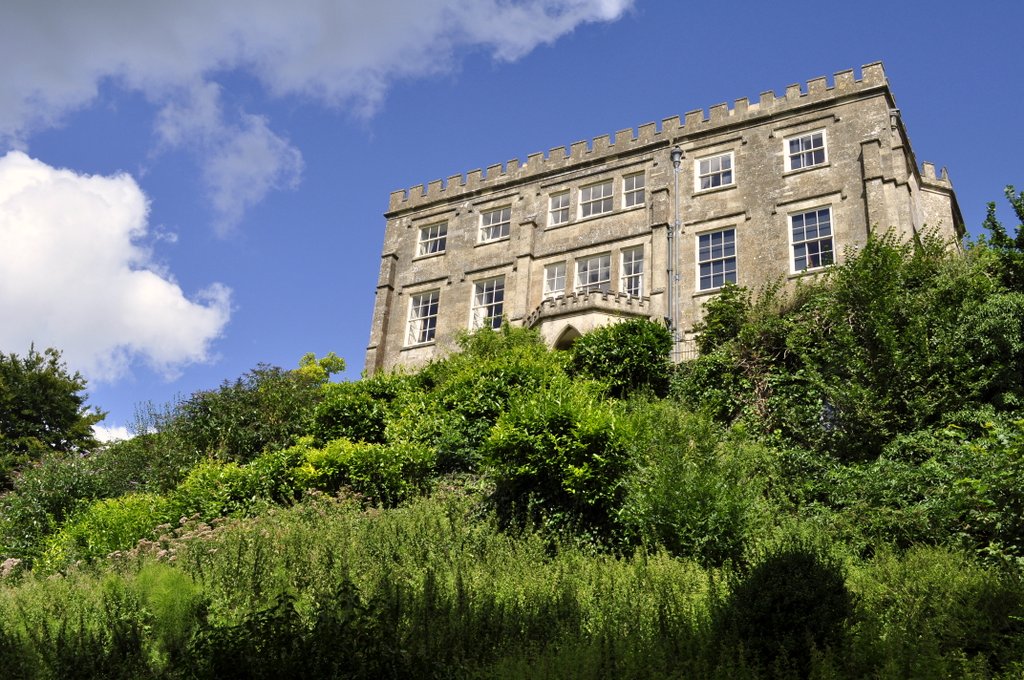

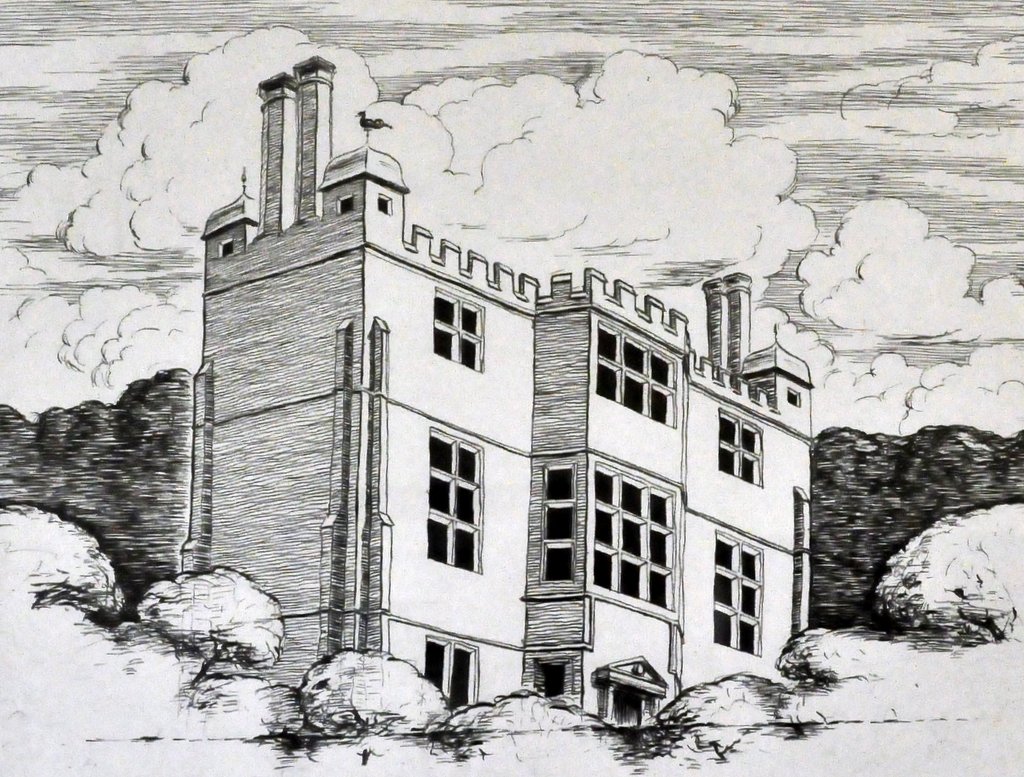
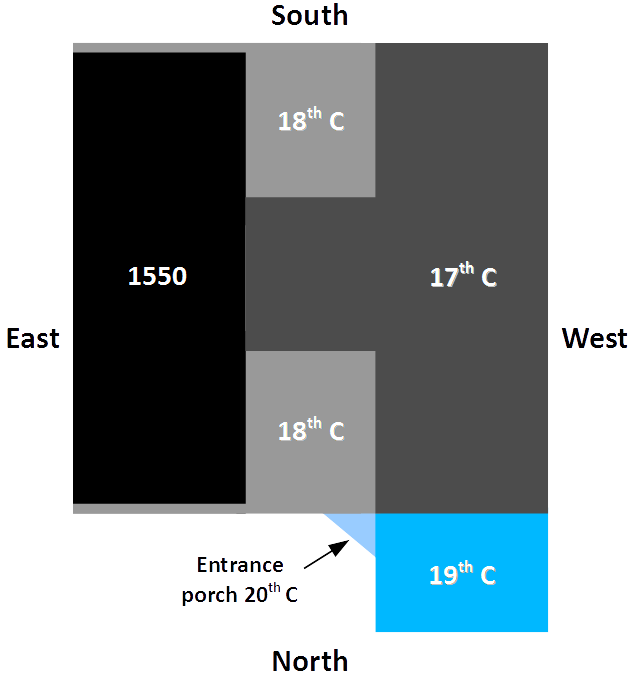
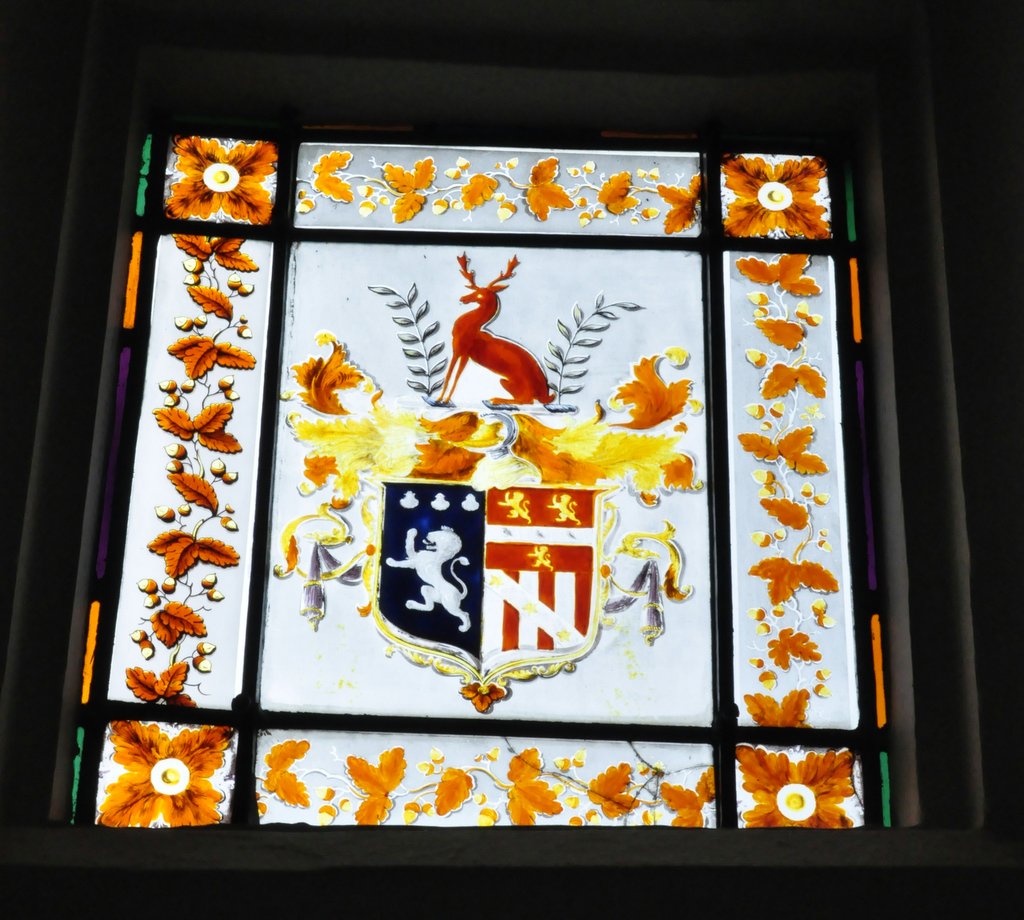
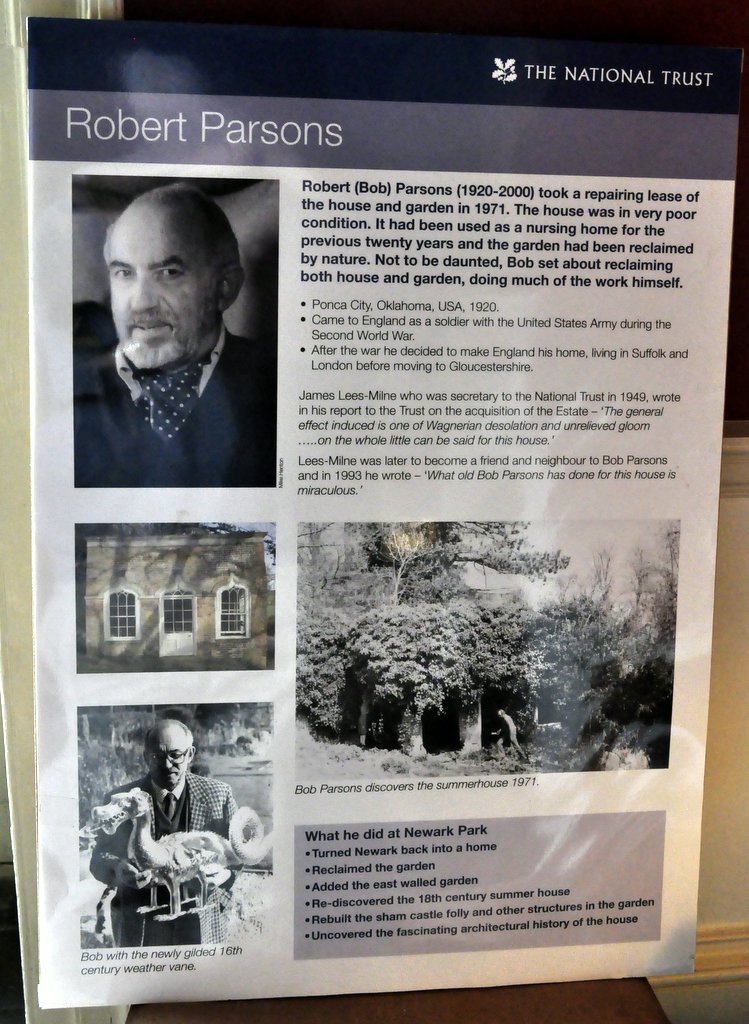

![The east face of Newark Park house [4].](https://i0.wp.com/mikejackson1948.blog/wp-content/uploads/2015/08/20150828-013-newark-park.jpg?w=197&h=131&ssl=1 "20150828 013 Newark Park")


![The south wall of the walled garden [7].](https://i0.wp.com/mikejackson1948.blog/wp-content/uploads/2015/08/20150828-006-newark-park.jpg?w=246&h=164&ssl=1 "20150828 006 Newark Park")


![The walled garden, looking east from the house [7].](https://i0.wp.com/mikejackson1948.blog/wp-content/uploads/2015/08/20150828-018-newark-park.jpg?w=313&h=208&ssl=1 "20150828 018 Newark Park")
![The walled garden [7] looking east from the first floor.](https://i0.wp.com/mikejackson1948.blog/wp-content/uploads/2015/08/20150828-095-newark-park.jpg?w=153&h=102&ssl=1 "20150828 095 Newark Park")
![Steph standing in front of the peafowl house [8].](https://i0.wp.com/mikejackson1948.blog/wp-content/uploads/2015/08/20150828-011-newark-park.jpg?w=153&h=102&ssl=1 "20150828 011 Newark Park")
![Detail from inside the peafowl house [8].](https://i0.wp.com/mikejackson1948.blog/wp-content/uploads/2015/08/20150828-023-newark-park.jpg?w=470&h=312&ssl=1 "20150828 023 Newark Park")
![Reflections of a summer house [14].](https://i0.wp.com/mikejackson1948.blog/wp-content/uploads/2015/08/20150828-035-newark-park.jpg?w=268&h=403&ssl=1 "20150828 035 Newark Park")
![The lakeside garden [13] looking north across the lake.](https://i0.wp.com/mikejackson1948.blog/wp-content/uploads/2015/08/20150828-036-newark-park.jpg?w=198&h=132&ssl=1 "20150828 036 Newark Park")
![The Crinkle Crankle wall [12] looking east towards the summer house [14].](https://i0.wp.com/mikejackson1948.blog/wp-content/uploads/2015/08/20150828-046-newark-park.jpg?w=198&h=132&ssl=1 "20150828 046 Newark Park")
![The summer house [14].](https://i0.wp.com/mikejackson1948.blog/wp-content/uploads/2015/08/20150828-040-newark-park.jpg?w=198&h=131&ssl=1 "20150828 040 Newark Park")
![Inside the summer house [14].](https://i0.wp.com/mikejackson1948.blog/wp-content/uploads/2015/08/20150828-042-newark-park.jpg?w=220&h=331&ssl=1 "20150828 042 Newark Park")
![View west from the summer house [14] across the lakeside garden [13].](https://i0.wp.com/mikejackson1948.blog/wp-content/uploads/2015/08/20150828-045-newark-park.jpg?w=246&h=164&ssl=1 "20150828 045 Newark Park")
![Remains of a building on the north side of the lakeside garden [13], now covered in vines.](https://i0.wp.com/mikejackson1948.blog/wp-content/uploads/2015/08/20150828-048-newark-park.jpg?w=246&h=163&ssl=1 "20150828 048 Newark Park")
![The sham castle [11].](https://i0.wp.com/mikejackson1948.blog/wp-content/uploads/2015/08/20150828-049-newark-park.jpg?w=470&h=312&ssl=1 "20150828 049 Newark Park")


![A tunnel that opens on the side of the quarry above the lower terrace [9].](https://i0.wp.com/mikejackson1948.blog/wp-content/uploads/2015/08/20150828-082-newark-park.jpg?w=108&h=163&ssl=1 "20150828 082 Newark Park")




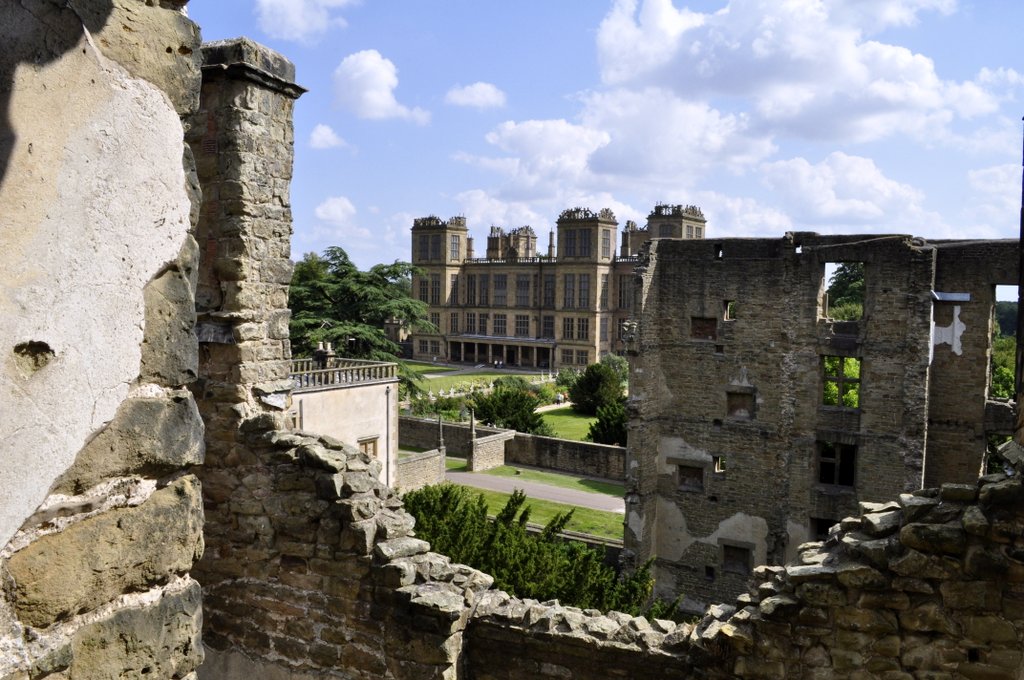


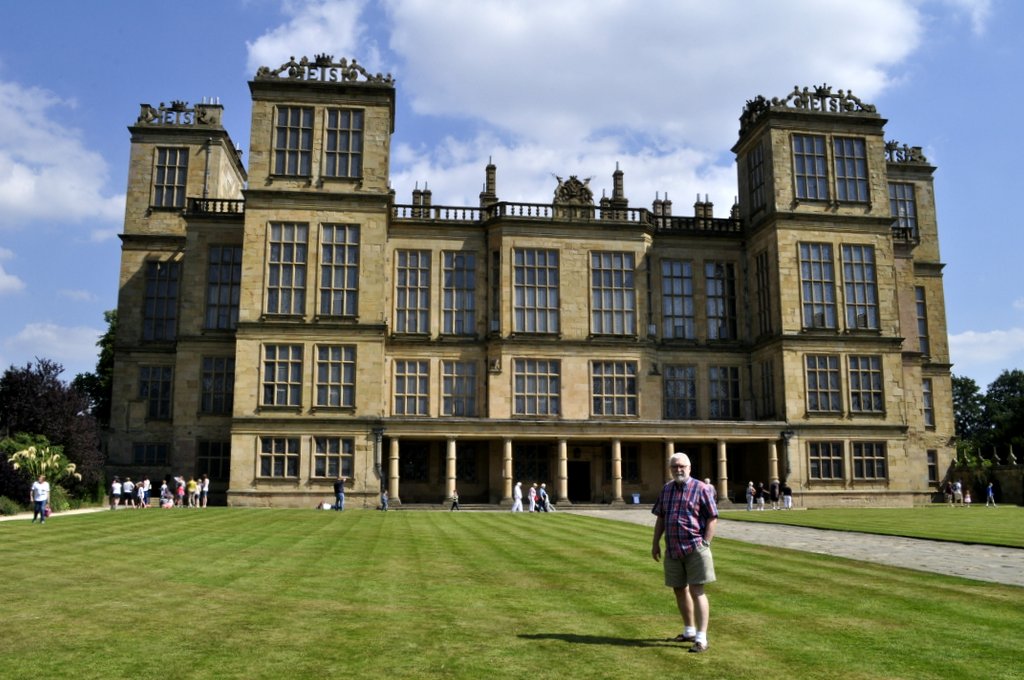


 A balanced diet . . .