Thank you, Margaret Thatcher – a perspective

It was very stormy last night, and the noise of the strong winds gusting around the house kept me awake for hours. As I lay there, desperately trying to get to sleep, I found myself reflecting on the events of the past week or so, particularly the death and yesterday’s ceremonial funeral in London of Margaret Thatcher. No wonder I couldn’t sleep.

Let me put on record straight away: I was no fan of Mrs Thatcher! Yet, I have to thank her and some of her policies for a very significant change in my family’s circumstances more than two decades ago. But I’m getting ahead of myself.

I am child of the UK’s National Health Service (NHS) that came into existence in July 1948, a few months before I was born in November that year. The NHS is one of our country’s iconic institutions – warts and all; its foundation was due to the foresight and vision of the post-war Labour Prime Minister Clement Attlee. However, for most of my formative years, politics in the UK was dominated by the Conservatives: Winston Churchill from 1951, Anthony Eden from 1955, and Harold Macmillan from 1957, followed by caretaker Prime Minister Alec Douglas-Home for just one year. It wasn’t until Harold Wilson’s General Election victory of 1964 that Labour became the government once again.

I voted for the first time in the May 1970 General Election (when the voting age was still 21) that brought Edward Heath and the Conservatives to power. I voted for a Conservative candidate in Southampton where I was studying at the university. If I remember correctly – and I’m afraid time has dimmed my memories – one of the issues that drew me towards Heath and the Conservatives was their strong support for membership of the European Community (how times have changed).

During the 1970s, Heath (and after 1974 Labour Prime Ministers Wilson and Jim Callaghan until Margaret Thatcher came into power in 1979) came up against the full force of the Trades Union movement, and essentially came off second best. From January 1973 I was working abroad in Peru and Central America and never experienced the consequences of industrial action – strikes – that affected the country and made lives miserable for millions of citizens. The Winter of Discontent of 1978-79 eventually led to the downfall of the Callaghan government, and Margaret Thatcher’s first election victory in 1979. And she would remain in Downing Street for more than 11 years until turfed out of office by ‘her friends’ in a palace coup in November 1990. By then she had transformed the UK. The power of the unions had been decimated, communities ripped apart, and the country put on a new trajectory, the consequences – both positive and negative – we are living with today.

Over the past week since her death there has been an abundance of commentary in the media about what sort of politician Margaret Thatcher was. On the other hand there are the many vibrant communities – especially mining communities – that were affected significantly and have never recovered from the changes that the Thatcher governments brought about. For them, Margaret Thatcher was and remains the ultimate bugaboo, a divisive but conviction politician whose legacy can never be rehabilitated. On the other, perhaps a majority of the electorate it has been suggested, Mrs Thatcher was the economic and military saviour of the UK, turning the country from being the poor man of Europe and also a military force to be reckoned with in the wake of the Falklands War of 1982.

However, conviction politicians often see everything in black and white. That’s not my style. I’ve always enjoyed the beauty of the myriad of shades of grey that is the real world. My politics are not right or left – so I guess that means they must be in the center some where. But where precisely? This presents a real dilemma come the next General Election scheduled for 2015. A plague on both (or all three) your houses. Do I vote Tory, Lib Dem or Labour? There is no party that brings together a consensus of views taking the best from the right and the left of politics. Forget the Lib Dems – almost a spent force. And don’t even think of UKIP. I feel like vomiting every time I see its leader Nigel Farage on any news broadcast.

I guess if I was American I’d be an Obama Democrat, but for many Americans I would be considered a hard-line socialist (proto-communist even), when most of them don’t understand what it really means to be socialist. And that’s why I find it paradoxical that New Labour Prime Minister Tony Blair became such a pal of and politically cosy with Dubya.

But I’m getting ahead of myself again. I returned from the Americas in 1981, about two years after Margaret Thatcher became Prime Minister. And remained in the UK throughout the 80s and witnessed some of the best and worst of Thatcherism. Was she right to throw the Argentinians out of the Falklands? Undoubtedly. But unfortunately nothing has been done to achieve a lasting solution to the Falklands/Malvinas issue. Was she right to take on the likes of Arthur Scargill who was the president of the National Union of Mineworkers? Yes, for if she hadn’t we would have been in hock to such demagogues for a long time. But although we might admire some of her achievements, we should surely condemn others and their negative effects on society. The safety net was pulled away from under so many vulnerable people.

So why am I grateful to Margaret Thatcher? Here I run the risk of being accused of being a ‘reform NIMBY’.

I was teaching in the School of Biological Sciences at the University of Birmingham from April 1981 to June 1991. Towards the end of the 80s the Thatcher government attitude and policies towards higher education was having an unprecedented effect on morale within the university system, and affecting the role of universities in society – something from which the system is still recovering in my opinion. In the late 80s I even participated in industrial action for the one and only time in my professional career, joining a demonstration or picket organized by the Association of University Teachers (AUT). I was there for only a couple of hours, then went home and spent the rest of the day preparing materials for classes later that same week. I lost a day’s pay since I had to own up to the fact that I had joined the AUT- sponsored action.

As the weeks went by into 1990 I was becoming much less comfortable within the university system, and couldn’t see that things were going to improve in the short term, let alone the medium or long term. And that’s when I thought about looking for another position elsewhere.

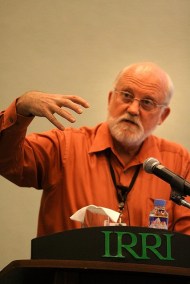
In September 1990 I received in the mail (from whom I have never discovered) a brief announcement of the position of the ‘Head, Rice Genetic Resources Center’ at IRRI in the Philippines. I applied, was interviewed in January 1991 along with two other graduates in genetic resources from Birmingham, offered the position, and the rest is history as the saying goes. I joined IRRI on 1 July later that same year.

So, indirectly, Margaret Thatcher was responsible for me giving up a tenured position at Birmingham, where I was about to be promoted, and move overseas once again to resume a career in international agricultural research. My family joined my just after Christmas 1991, and we went on to enjoy almost 19 years of happy work and life in the Philippines. Our two daughters, Hannah and Philippa, went through their high school education in Manila before moving on to university and graduate school in the US and UK respectively.

So indeed, thank you, Margaret Thatcher. As first woman Prime Minister your political legacy was always going to be secure. Some of your achievements made the UK a better place to live; others did not, I’m afraid.

Should she have been accorded what was, in most respects, a state funeral, and should the tax payer be saddled with the estimated £10 million cost? Given that her funeral was attended by dignitaries from around the world, it was always going to be a high profile affair; and there was always going to be a security cost irrespective of the funeral’s status.

She was one of the towering political figures of the 20th century, and I believe – despite not being one of her fans – that it was churlish of her opponents to react in the way that some did, while recognizing their inviolable right to speak out or protest.

Hanbury Hall – a disputed date

We enjoy our National Trust visits, but the weather over the past months has really prevented us from getting out and about. Just over a month ago it really did look as though Spring had arrived and we visited Charlecote Park. But that was just one day, and we even had more snow and bitterly cold winds from the Arctic since then.

But over the weekend, the ‘blocking high’ did move away allowing Atlantic weather to encroach and bring in milder air from the south. And when that happens you have to grab every opportunity of enjoying the glorious outdoors. Well, the weather wasn’t too brilliant – at least it wasn’t so cold nor wet to prevent our second visit yesterday to Hanbury Hall, an elegant William and Mary mansion just over six miles from where we live in the rolling north Worcestershire countryside. After we joined the National Trust in 2011, Hanbury Hall was the first property we visited simply because it was right on our doorstep, so-to-speak.

Hanbury Hall main entrance

Hanbury Hall was the family home of Thomas Vernon, and may have been built on the site of an earlier residence. Above the main door is the date 1701, but other – and better evidence – suggests that the hall was not completed until 1706. The date above the door may have been added during Victorian times.

Among the glories of Hanbury are its extensive parkland – occupied by many ewes and their lambs during our walk yesterday, and its gardens, in particular the parterre on the southwest of the main building. There are extensive outhouses – a stable-yard, a dairy (in the process of renovation) a walled garden, an orangery, and an ice house.

As you might expect, the Hall’s interior is sumptuously decorated, and the main staircase is a magnificent feature with paintings on the ceiling blending into those on the walls.

The Hall was occupied until 1940 when the last Baron Vernon, in very poor health at the time, took his own life, and the baronetcy became extinct.

Hanbury Hall is easy to find in the Worcestershire countryside, has plenty of parking, and is certainly worth a few hours of anyone’s time.

Around the world in 40 years . . . Part 4. Elections and bombs in Jo’burg

Nelson Mandela has been much in the news of late. His failing health is of concern not only to South Africans; ‘Madiba’ is highly respected worldwide. Seeing these images on TV and hearing the latest news reminded me of my visits to South Africa and other countries over the years. But there’s one visit – I was in transit actually – that I’ll never forget.

In April 1994, I had been asked by the Directors General of IRRI in the Philippines and WARDA (now the Africa Rice Center) in the Ivory Coast to undertake a review of a very important rice breeding network called INGER – the International Network for the Genetic Evaluation of Rice. As I was also developing a major rice biodiversity project to be funded by the Swiss, I decided to take the opportunity of this trip to Africa, and visit possible collaborators in Zambia and Kenya. Looking at the various flight options – none very easy at that time, but considerably better today – I chose a flight with Singapore Airlines into Johannesburg, and on to Lusaka with South African Airways (SAA).

On board my SQ 747-400 at Changi, I was slightly perplexed that there were so few passengers on board. I was seated on the upper deck in Business Class – and the only passenger. I asked the purser who confirmed that there were only about 20 passengers in total on board. And he went on to explain that the following day when we landed in Johannesburg – 27 April – was the first post-apartheid election, which Nelson Mandela and the Africa National Council (ANC) were expected to win. Because of several bombing incidents around South Africa leading up to the election there had been a drop in passenger traffic on SQ. Election on the day of my arrival? Well that one had gone completely over my head when I was planning the trip.

35754-april-27-1994-e237fWe landed in Jo’burg in the early morning, and I made my way to the SAA lounge. I prepared myself a little breakfast – some juice, a Danish, perhaps, nothing heavy – and settled down to watch news of the election on the TV. My flight to Lusaka was scheduled around 11 am if I remember correctly, and this was around 0730 or so. Of course the highlight was watching Nelson Mandela cast his vote, and afterwards he appeared on the steps of the polling station to make a statement.

BOOM! An enormous explosion, and the whole airport terminal shook. I realized at once that a bomb had gone off – and right above my head. It took several minutes for anyone to advise us what had happened and what to do. We were told to stay in the safety of the Business Lounge until further notice. At which point, I got a ‘call of nature’ and had to find a rest-room, and quick. I’d been there for only a couple of minutes, when I heard someone shouting in the lounge ‘Everyone outside, now!’ Well, I was in a pretty pickle, I can tell you. Someone came into the rest-room to check if anyone was there, and I was told to get out as quick as possible. We were led through the departure hall – which was pretty much destroyed – and on to the grass outside. Fortunately it was an early autumn morning, bright and sunny, but a little chilly at the beginning. It seems that there had been an Afrikaner backlash, and a car bomb had been placed outside the departure hall.

Here’s what was written in a US Department of State dispatch: There were a number of serious incidents of domestic political violence in the run-up to South Africa’s first multiracial election in April 1994. There was also one act of international terrorism on 27 April when members of the right-wing Afrikaner Resistance Movement (AWB) detonated a car bomb at the Jan Smuts Airport in Johannesburg. The bomb injured 16, including two Russian diplomats and a pilot for Swiss Air.

The airport didn’t close, and the domestic terminal kept operating more or less normally; international arrivals were diverted there. After a couple of hours we were taken back inside, and my SAA flight to Lusaka was delayed by only about 30 minutes.

But that is my memory of the election that Nelson Mandela won in 1994. It’s hard to believe that he’s been out of the political limelight already for more than a decade.

Around the world in 40 years . . . Part 3. Guatemala

In April 1976, my wife and I moved to Turrialba, Costa Rica where I set up an office for the International Potato Center at CATIE – Centro Agronómico Tropical de Investigación y Enseñanza. My principal remit was to develop a research program on adaptation of potatoes to warm and humid environments – the so-called tropical potato, as well as supporting the regional activities that were led at that time by my colleague Oscar Hidalgo from the regional office in Toluca, Mexico.

Very soon the focus of my work became the bacterial wilt pathogen (Ralstonia solanacearum), and this led to the identification of some interesting sources of resistance to the disease and development of agronomic practices to reduce the severity of attack in the field. And when Oscar moved (in late 1977) to North Carolina to begin his studies for a PhD in plant pathology, I became CIP’s regional leader for Mexico, Central America and the Caribbean, and we transferred the regional office to Turrialba. And in early 1978 we began to develop the concept of what became PRECODEPA, a cooperative regional potato program funded in large part by the Swiss government. Through PRECODEPA I visited Guatemala many times. The potato scientists there took responsibility for postharvest storage technologies.


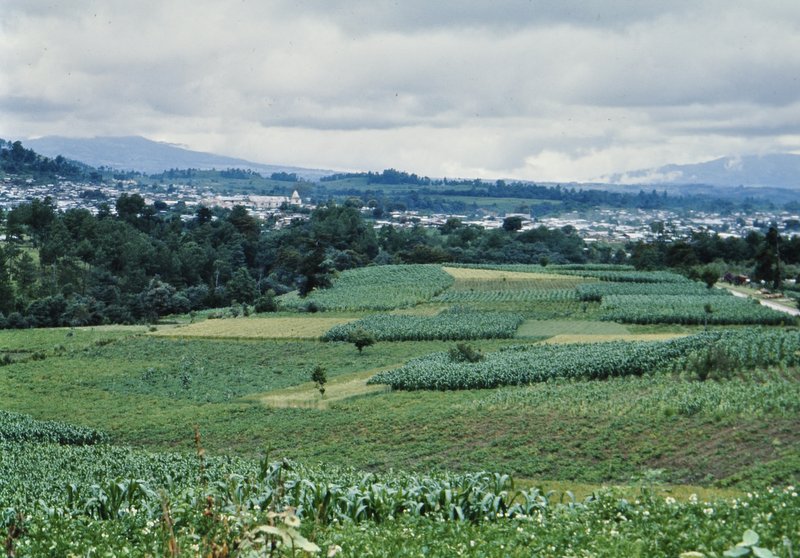
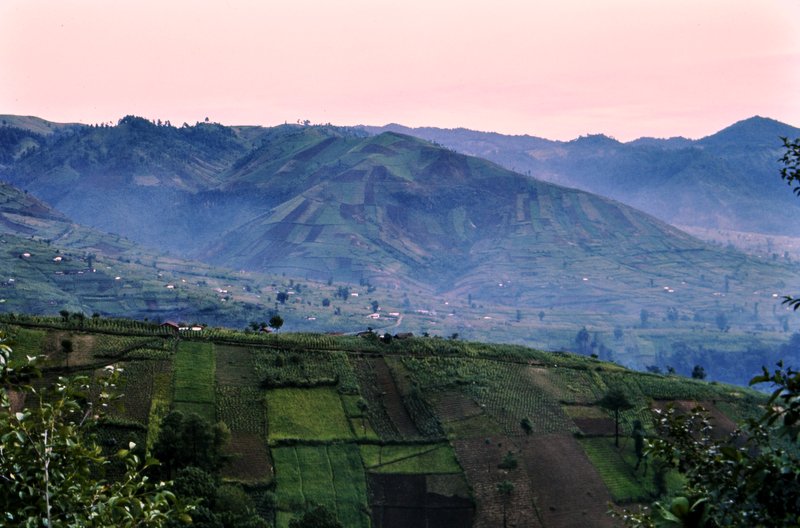
In the south of the country the mountains stretch from the frontier with Mexico in the west to El Salvador and Honduras in the west. And it’s in the mountains to the west of Guatemala City, in the region of Quetzaltenango that most potatoes are grown. Much of the country, stretching way to the north is low-lying tropical rainforest – the home of the Mayans, and where we visited Tikal in 1977.

There are many volcanoes in Guatemala, some active. To the west of Guatemala City lies the old city of Antigua, and further west still the Lago de Atitlán, with a ring of villages on its shores, each named after one of the Twelve Apostles. The highly picturesque town of Sololá lies close by to the north.

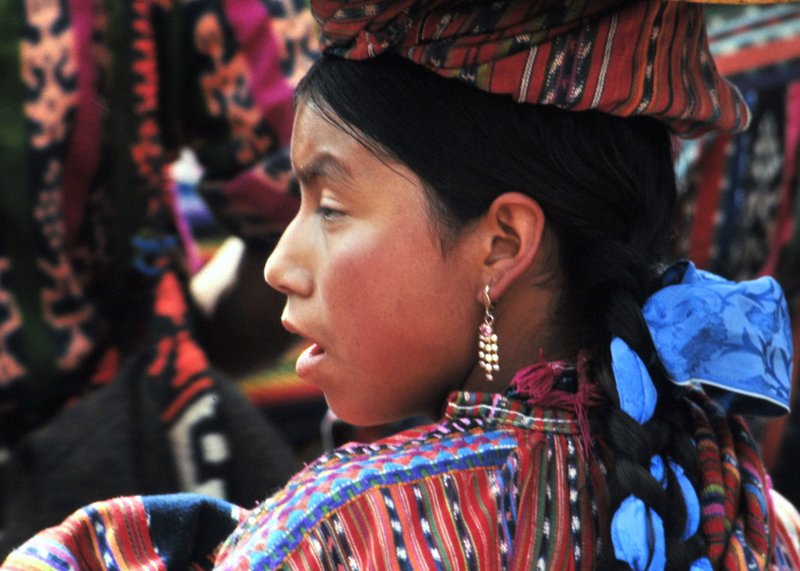
27-1977-07 Solola 09Unlike Costa Rica, which has a very small indigenous community, Guatemala is ethnically and culturally very rich, and reminded us of our years in Peru. The beautiful weavings and typical costumes can be seen everywhere, and on an every day basis.

Guatemalan agriculture is quite interesting based as it is on multicropping or milpa systems of maize, beans and squashes. In fact, multi- or intercropping is extremely common in Guatemala, and I’ve even seen potatoes intercropped with maize and other crops there – something that is quite uncommon in other countries.

06-1977-07 Comalapa 0102-1977-07 Lago de Atitlan 02

During one of our visits we met with representatives of an NGO (with several US citizens involved) in a small community, Comalapa, about 67 km west of Guatemala City and north of the provincial capital of Chimaltenango. I must have been very naive. It’s only quite recently that I became aware of the civil war that was ongoing in Guatemala at that time, and I’ve often asked myself whether we were lucky not to have come across either right-wing or left-wing groups that made people ‘disappear’.

Here are some photos that I took around Lago de Atitlán and Sololá.

Rice for the world . . .

Conferences are an important part of any scientist’s annual plans. You could attend a conference almost on any subject, and held in almost any part of the world. Many scientific societies hold annual meetings, and sometimes specialist meetings in between. When I was an active potato scientist in the 1970s I did manage to attend at least one Annual Meeting of the Potato Association of America. The 63rd Annual Conference was held in Vancouver, Canada on the campus of the University of British Columbia, 22-27 July 1979, and I was working for the International Potato Center in Central America at the time. I was able to combine this work trip with some vacation, and my wife Steph and 15 month old daughter Hannah came along. We had two or three days in San Francisco on the way north (my only visit to that wonderful city, apart from an overnight airport stop), several days in Vancouver (where the sun shone brightly all the time we were there), followed by a road trip through the Canadian Rockies to Edmonton, Alberta to spend a few days with my elder brother Ed and his wife Linda. From there we went on to Madison, Wisconsin to visit with Profs. Luis Sequeira and Arthur Kelman at the university, to discuss my work on bacterial wilt of potatoes. And then we flew home to Costa Rica via Chicago and Miami.

When I was with IRRI I managed to attend four or five annual meetings of the Tri-Societies (ASA-CSSA-SSSA): the Agronomy Society of America, the Crop Science Society of America, and the Soil Science Society of America, a huge shindig of several thousand attendees. I was a member of Division C-8 of the CSSA on genetic resources and was invited a few times to present my rice research.

IRC 2014 logo finalFor rice, however, there is only one meeting of significance, and that’s the International Rice Congress, with the 4th Congress (IRC2014) scheduled to take place in Bangkok, Thailand from 27-31 October 2014. And I have been taken on as a consultant by the International Rice Research Institute (IRRI) to lead the development of the congress science program. Before I retired from IRRI in 2010 I had a similar role for the 3rd Congress (IRC2010) that was held in Hanoi, Vietnam in early November 2010. Planning had begun in early 2009, and after retiring I completed my role from my home in the UK.

I’m excited to be involved in IRC2014, not only because the congress is a prestigious meeting for rice science, bringing together rice scientists from all over the world (there were more than 2000 attendees in 2010), but it will help keep me up to date with latest advances in the rice world.

Planning is at an early stage, and a possible theme will be Rice for the World . . . watch this space; I’ll link to the official congress website when it’s up. I’ll be going out to Thailand at the end of April for a few days to meet with colleagues at Kenes Asia, the company that will handle all the logistics for IRC2014. Then it’s on to IRRI in Los Baños in the Philippines for about 10 days. Hopefully at the end of that trip we’ll have a science support committee in place, ad the broad structure of the science sessions mapped out. Of course there’s an enormous amount of work to arrive at a final scientific program, not least determining the detailed structure of the program – along scientific themes or disciplines, geographical regions, or even rice ecosystems. Lots of points to discuss and decisions to make.

bitecThe congress will be held at BITEC – the Bangkok International Trade & Exhibition Centre. Hopefully I’ll have chance to visit the venue during my two days in Bangkok. That’s very important to get a much better idea of just what is possible in terms of parallel sessions, space for poster sessions, and the all important plenary or plenaries. I haven’t been to Bangkok for many years and although traffic congestion is still bad, getting around has improved considerably, I’m led to believe, following the opening of the Skytrain.

Once the congress website is up and running, and there’s more to report about the science program at IRC2014, I’ll be making regular updates. Do come back.

“I’m all for censorship. If ever I see a double entendre, I whip it out.” Kenneth Horne

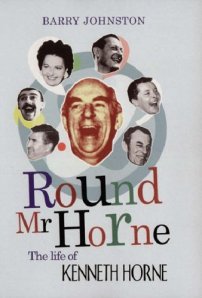
Round Mr HorneI’ve just finished a very readable biography of the late Kenneth Horne, one of the comedy greats of the 20th century, written by Barry Johnston (son of the late cricket commentator Brian Johnston). I’m sure, however, for many readers of this blog outside the UK or who did not grow up in the 50s and 60s, the name of Kenneth Horne will mean little if nothing at all. But he was the lynch-pin, so-to-speak, of some of the most successful comedy series on BBC radio in the 1940s, 50s and 60s until his untimely death from a massive heart attack at the age of 61 in 1969.

From: http://en.wikipedia.org/wiki/File:Kenneth_Horne.jpgKenneth Horne was the youngest of seven children of inspirational preacher Sylvester Horne (later a Liberal MP) who died when Kenneth was seven. In the 1920s he enrolled for an economics degree at the London School of Economics, but not prospering there, one of his uncles – a Pilkington of the glass making company – managed to secure him a place at Cambridge University (also to study economics). But Kenneth was more interested in sport (it seems he excelled at a whole range of sports), and never finished his degree. He then went into business, joining the Triplex Safety Glass company based in Birmingham. Over the years he rose through the ranks, becoming marketing director.

I discovered a number of things about Kenneth Horne that I had never been aware of.

All the while he was a radio (and then TV) personality, he combined this career with one in the glass business (and later toys).

He appeared on a whole raft of radio and TV shows (Twenty Questions, Top of the Form, and many others), many of which I’m sure I used to listen to or watch without ever making the connection with the comedian who fronted two of the most successful shows to be broadcast on the radio: Beyond Our Ken and Round the Horne.

During the Second World War he saw ‘active’ service in the Royal Air Force (RAF) at the Air Ministry in London rising to the rank of Wing Commander. But he also combined his war duties with a serious broadcasting schedule, joining forces with comedian Richard ‘Dickie’ Murdoch in the wartime comedy hit, Much-Binding-in-the-Marsh, set in a fictional RAF station, which continued right into the 1950s.

He was married three times, first to a daughter of the Duke of Newcastle, and during his second marriage he lived in the village of Burcot, about 2 miles from where I live in north Worcestershire.

But Kenneth Horne will be best remembered for the two iconic comedies Beyond Our Ken (which ran over seven series between July 1958 and February 1964, with 123 episodes) followed by Round the Horne (broadcast over four series from March 1965 to June 1968, and 67 episodes). Both had strong writing teams, with Eric Merriman, Barry Took, Marty Feldman and others involved. Just think how many episodes were broadcast in a single series. Today we’re luck if we hear or see any more than half a dozen (or fewer) in a series.

And there was a strong supporting cast: Kenneth Williams, Hugh Paddick, Douglas Smith, Bill Pertwee, Maurice Denham, Ron Moody, Betty Marsden and Pat Lancaster among others. The format of each show, with its introduction, sketches and musical interludes hardly changed over the various series. But the writers (and performers) did push the boundaries of comedy and were increasingly accused of peddling filth on the radio, and scripts becoming more and more ‘smutty’. However, if you read the scripts there was nothing to complain about (then BBC Director General Hugh Greene was asked to intervene and ban the shows but, admitting to enjoying a little bit of ‘dirty comedy’, did nothing to curtail the broadcasts) – it was all in the delivery, and how the cast milked the scripts for every last laugh and innuendo. They were wonderful. Broadcast on a Sunday afternoon or evening, Beyond Our Ken and Round the Horne attracted listening audiences in the millions – making them possibly the most successful radio comedy shows of all time.

With the various characters on the show having strange (and often suggestive) names, such as folk singer Rambling Syd Rumpo and J. Peasemold Gruntfuttock (played by Kenneth Williams), Dame Celia Molestrangler (played by Betty Marsden) and ‘ageing juvenile’ Binkie Huckaback (played by Hugh Paddick, as well as the outrageously camp Julian and Sandy (played by Williams and Paddick) – who spoke in polari, a slang often used by gays in the theatrical profession (when homosexuality was illegal in the UK), each show was a riot of mirth and laughter. It’s clear that the cast got on famously together. What shone through in Johnston’s biography was Kenneth Horne’s humanity – he was an extremely kind and generous person. And listening to the shows 50 years after they were first broadcast is the vitality, the freshness, and the earthiness of the humor.

I’m no prude when it comes to bad language in the media, and I’m not averse to using the odd word myself for emphasis from time-to-time. What I don’t find funny, however, is gratuitous ‘effing and blinding’ that seems to be the norm today of many stand-up (so-called) comedians (such as the awful Frankie Boyle), unless of course, your name’s Billy Connolly and his bad language is just part of his Glaswegian vernacular. Beyond Our Ken and Round the Horne were in a different league. There was never a hint of bad  or explicit language.

It’s impossible to describe these shows in detail. Here, however, is a clip that you just might enjoy. I did, and whenever I hear them on BBC Radio 4 Extra, they never fail to bring a very broad grin to my face. Happy childhood memories!


From car park to cathedral . . . missing no longer!

King Richard III

King Richard III

It’s been a remarkable six month or so journey. Who would have believed that when archaeologists from the University of Leicester began digging up a municipal car park in the the city in August 2012 – on the supposedly wild goose chase to find the remains of the last Plantagenet king, Richard III – that they would have been so incredibly successful. And in such a short time.

I’ve been fascinated by the unfolding story of the dig, and the extraordinary ‘appliance of science’ to arrive at irrefutable conclusions. From all appearances, the project has demonstrated remarkable teamwork among staff at the university (primarily the Departments of Archaeology & Ancient History and Genetics) and the King Richard III Society. And the team reached out to other experts to fill in the gaps, so to speak.

Last week there was a fascinating TV program that filled in some of the details about how the discovery of the skeleton came about, and how the people involved went about to confirm its identity.

Of course, one has to pay credit to Philippa Langley of the King Richard III Society who seems to have been the driving force behind the whole project – and believed! But the project also seems to be a good example of ‘the perfect storm’ – so many things came together at the same time.

It was long believed that King Richard had been buried in Leicester, probably at the Greyfriars Friary that disappeared after the Reformation in the sixteenth century. But where to begin to look in a city that had been paved over for centuries.

Piece of luck, number 1. It seems there is still a good coincidence between today’s streets and those of medieval times. Overlaying maps, the team was able to focus in on a part of the city that is still known as Greyfriars, in fact to a municipal car park. And the archaeology team opened three trenches. Almost immediately they uncovered human remains. But were they the remains of King Richard III? That’s where the appliance of science came to the fore. However, as one of the archaeology team pointed out, opening a trench just 50 cm to one side or the other and they would have missed the skeleton altogether.

So what was the evidence that this really was King Richard III?

  • The skeleton appeared to have been buried in haste, possibly with wrists bound together, and showing considerable trauma such as fatal blows to the skull.
  • The spine showed severe twisting or scoliosis which Richard was known to suffer from, although there was no evidence of a withered left arm (another piece of Tudor propaganda?).
  • On closer analysis, however, there were features of the skeleton which suggested that it might be female (subsequently disproved), such as shape of the pelvis and slender forearms. Apparently Richard was reported, even in his own lifetime, to be somewhat ‘slender’.
  • Careful CT scans were made of the skeleton before cleaning, and 3D images of the skull were used by Professor Caroline Wilkinson, Professor of Craniofacial Identification at the University of Dundee to attempt a facial reconstruction (that was revealed after the skeleton’s identity was confirmed as that of Richard III).
  • Carbon dating evidence was rather interesting. From unadjusted data it appeared that the person had died some decades before Richard did at the Battle of Bosworth in August 1485. However, it seems that this person had a diet rich in fish and seafood (a sign of affluence) and this made the skeleton appear older than it was. An adjusted date covered the 1485 period.
  • Then there’s the genealogical data. Some years earlier, direct descendants of Richard III’s elder sister, Anne of York, had been traced (over 18 generations). In fact several descendants have been traced, but some wish to remain anonymous. One was a Canadian cabinet maker living in London, who is the great, great, great . . . nephew of Richard III. And this leads on to the most exciting aspect – the DNA analysis.

  • Genetic fingerprinting was ‘invented’ at the University of Leicester by Professor Sir Alec Jeffreys FRS in the 1980s. And it turns out that there are several lines of research in the Department of Genetics at Leicester studying lines of descent and their correlation with surnames. Using mitochondrial DNA (mtDNA), which is inherited only through the female side, geneticist Dr Turi King was able to show unequivocally that there was a perfect match between the mtDNA of the skeleton and our Canadian cabinet maker, thus proving that the skeleton was indeed that of King Richard III. Perfect matches were also made with another descendant of Anne of York, and the skeleton was confirmed as ‘male’ through analysis of Y chromosome DNA.

So many different strands of interest and expertise came together in this exciting project, and all at the right time. The team has to be congratulated for all their efforts – it really has been a most exciting story to follow. Now let’s see where they do finally decide to re-bury the king: Leicester or York (which is lobbying hard). I think Leicester will win out.

Update (18 March 2015)
Well, Leicester has ‘won’ if that’s the correct description, and the remains of Richard III will be interred next week – with all appropriate honour – in Leicester Cathedral. And rightly so. The hoo-ha of where he should be buried has certainly demeaned this incredible project.

Anyway, to cut a long story short, as I was surfing through the web pages of The Guardian earlier this morning, I came across a link where you can find much more information about the whole Richard III project since I first wrote this particular blog post just two years ago.


Lucy in the sky . . .

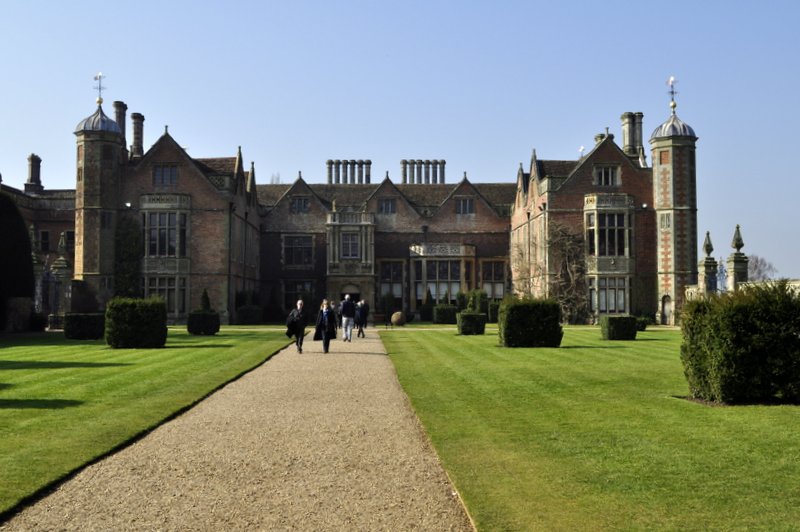
Today, the weather couldn’t be more different than yesterday when, with a clear blue sky and not a cloud, we headed out on our first National Trust visit of 2013. We’d just been waiting for the weather to improve.  And yesterday, Spring had truly sprung. Out of the wind it was really warm; it actually reached 13.1°C at Wellesbourne (one of the warmest places in the West Midlands yesterday), just a mile down the road from Charlecote Park, a Tudor mansion built beside the River Avon in Warwickshire, about half way between Stratford-upon-Avon and Warwick.

The Tudor gatehouse at the end of the main drive, in front of the house

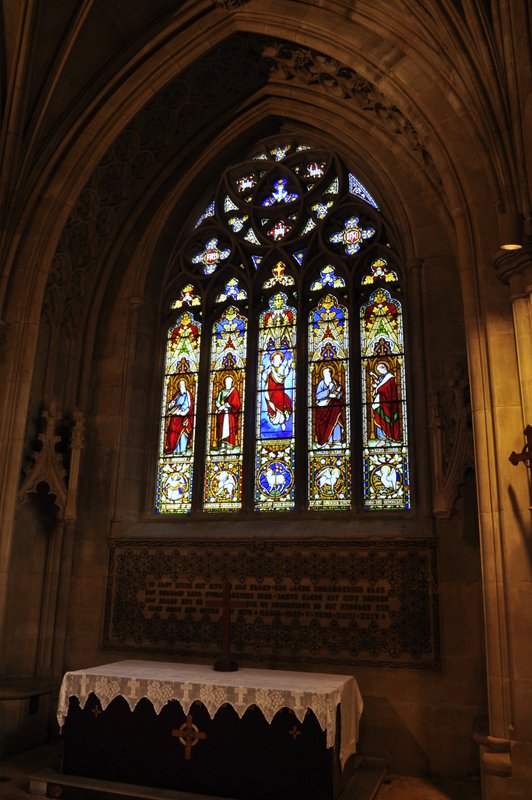
Since we joined the National Trust a couple of years ago, we visited nearly all the ‘low-hanging fruit’ – the properties reasonably close to our home. Hopefully as the weather improves over the coming months we’ll find it easier to travel further afield. Charlecote Park lies at the heart of a rather small estate, only about 75 ha, alongside the River Avon, and is the home (since the mid 13th century) of the Lucy family and descendants. The current house was built by Sir Thomas Lucy in the mid-16th century, but has been extensively modified in the intervening centuries, most significantly during Victorian times. The direct Lucy line died out in the mid-19th century, and Charlecote Park was inherited by the family that still lives in one of the wings, the Fairfax-Lucy’s. The tomb of Sir Thomas Lucy survives in the adjacent church, St Leonard’s, which was founded in Norman times but the building today is mainly Victorian. It has some beautiful stained glass windows, and the sculpted marble or alabaster tombs of Sir Thomas and others taken from the old church.

Stained glass window above the altar in St Leonard's, Charlecote

Stained glass window above the altar in St Leonard’s, Charlecote

Tomb of Sir Thomas Lucy and his wife

In the house there is access to the Great Hall inside the main entrance, the billiards and drawing rooms downstairs, and several bedrooms upstairs, as well as the main staircase. In the grounds are outbuildings housing a collection of Victorian carriages, and the laundry and brewery. In one wing is an immense Victorian kitchen.

In the brew house – there are plans to begin brewing at Charlecote once again

The formal grounds are quite limited – mainly a parterre beside the River Avon, from which there are views across the meadows to the village of Hampton Lucy (about 1 mile away) and what looks like its magnificent parish church of St Peter ad Vincula which, surprisingly, I’ve discovered was built in 1822 and added to 30 years later. In the park there are flocks of rare breed Jacob sheep and fallow deer, the later introduced in Tudor times in the 16th century.

Church of St Peter ad Vincula in Hampton Lucy, from Charlecote Park

Church of St Peter ad Vincula in Hampton Lucy, from Charlecote Park

The parterre beside the River Avon

Legend has it that the young William Shakespeare was caught poaching rabbits in the grounds of Charlecote Park in about 1583 (there’s a second edition folio of Shakespeare’s complete works on display in the Great Hall). The playwright had his ‘revenge’, it is said, on Sir Thomas Lucy by lampooning him as Justice Shallow in two of his plays: Henry IV (Part II) and The Merry Wives of Windsor.

The Great Hall – interestingly, the ceiling is not wood but plaster molded and painted to look like timber

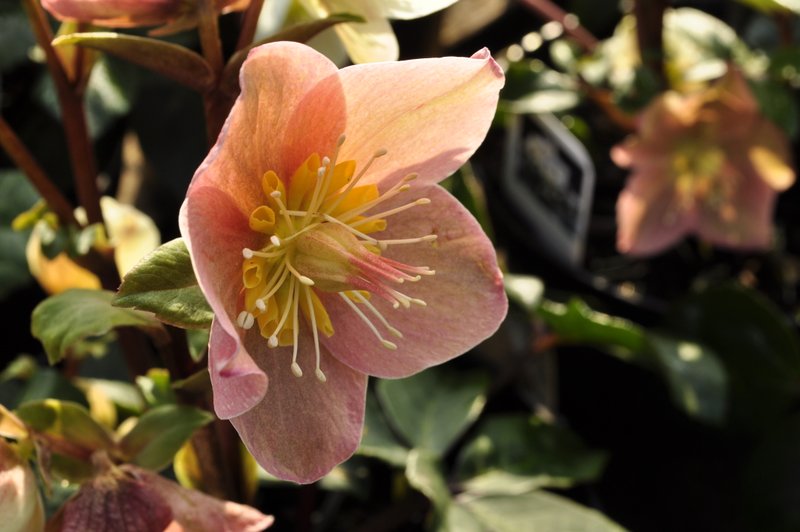
In some ways, this visit to Charlecote Park was a disappointment, despite the beautiful weather. The formal gardens were small – I had expected something more extensive. And access to parts of the house was rather limited, partly due to the fact that some sections of the house were being rewired. Nevertheless there were some beautiful objects on display. There was a large nursery selling plants for the garden – hellebores seemed to be the specialty.

This slideshow requires JavaScript.

Three revolutions . . .

My former colleague, Bob Zeigler, Director General of the International Rice Research Institute (IRRI) in the Philippines, has often spoken of the ‘three revolutions’ that have dramatically transformed the way we develop new crops to feed a hungry world.

So what are they?

Simply, these are the revolutions in:

  • Molecular biology
  • Computer technology and informatics
  • Telecommunications

dnaIt’s 60 years since the structure of DNA was elucidated by Watson and Crick, for which they and Maurice Wilkins were awarded the Nobel Prize in Physiology or Medicine in 1962. But just think how far we’ve come in just the last decade. The human genome was deciphered in 2003, and the rice genome in 2004 (although drafts of both were available earlier). And since then, there has been an ‘explosion’ of genomic data for many different crops that is throwing new light on gene function and control, and facilitating the use of genetic resources for crop improvement. You only have to think back to the early 1980s when we were making the first stabs at studying diversity at the molecular level, using isozymes and subsequently a whole range of molecular markers. These have become increasingly sophisticated such that it’s now possible to detect differences (known as polymorphisms) at the individual nucleotide (A-T-C-G) level. Where will molecular biology take us? Hardly a day passes without some new DNA revelation, or use of DNA in forensics. Most recently, analysis of DNA was used to verify the identity of a skeleton (of King Richard III it turns out, died 1485 at the Battle of Bosworth) unearthed in a car park in Leicester in the English Midlands. And on the rice front, discovery of genes for submergence tolerance (the so-called SUB1 varieties) and phosphorus uptake are helping rice breeders respond to the challenges of climate change.

At the same time, molecular studies have generated petabytes of data. Fortunately, developments in computer technology and data storage have not only enabled scientists to contemplate handling such vast amounts of data but analytical tools can be run even on the humble PC.

And thirdly, where would we be today without rapid and easy communication almost anywhere in the world? Rapid advances in telecommunications and development of the Internet not only permit easy exchange of data between collaborators, but also collaboration in real time between researchers at different locations.

However, just think back a decade or less. Today we take the Internet, broadband, smart phones and related technologies for granted. We chat across countries and time zones on Skype. Geographical Information Systems (GIS) help us make sense of complex spatial patterns (see this set of interesting mapping interpretations) and statistics combined with the latest computer graphics unlocks a new perspective on global health issues (as explained by Professor Hans Rosling of the Karolinska Institute in Sweden in a video).

When I joined IRRI in July 1991, I had to almost beg for a PC on my desk – and email was quite basic. The then Deputy Director General – Research, Ken Fischer, actually questioned whether every member of staff would need a PC. And color monitors were not even allowed – for a few years at least! How could we manage without email (or the Internet) these days?Access to email has been essential for managing the publication of our latest book on plant genetic resources and climate change (as has use of search engines like Google to verify all the scientific publications cited in each chapter). Incidentally several of the chapters explain just how molecular biology has advanced the use of germplasm for crop improvement. The cover of the new book illustrates the obvious advantage of the submergence tolerant SUB1 rice varieties (the healthy plots!).

But email has changed how we do business, and in the case of international agricultural research, it’s made some donors quite dysfunctional. In the past (a decade or more ago) when we had to rely more on ‘snail mail’, calls for research proposals were sent out in good time. Nowadays, everyone is expected to respond immediately. It’s not uncommon for some donors to expect a response almost by return, even though they have cut the lead time. On the other hand, meeting deadlines has been eased somewhat by online submission, rather than having to run the vagaries of postal services worldwide.

I remember when I was working in Costa Rica in the 1970s, I would set my annual work program with my bosses in Lima, and then they’d let me get on with it. No constant harassing by email or phone. If I wanted to get in touch with anyone in Lima ‘quickly’, I had to use telex (does anyone use telex any more?), or book an international phone call a couple of days in advance. Now we take it for granted that we can contact anyone, anywhere, and at any time. But do I want a smart phone? Not really. I’m quite happy with ‘old’ mobile technology, and not being able to read emails on my phone.

Of course, the positives outweigh most, if not all, of the negatives. Modern telecommunications mean that I can talk with my grandchildren in Minnesota and Newcastle upon Tyne by Skype every week. And it’s also amazing how quickly these youngsters are picking up on technology – outsmarting the smart phones.

Where will it all lead? Who knows? I don’t think as little as a decade ago we could have predicted with any certainty just how rapidly advances would be made in molecular biology, computer technology, and telecommunications. The next decade is going to be stupendous.

A Friday morning in February . . .

Fit for purpose?
Last Friday was just a normal sort of day – almost. We had respite from the blustery (and snowy) weather of a few days previously. So I decided to head off to the public library in town, as one of my recent reads was almost due for return.

Fitbit Ultra

Fitbit Ultra

As I got ready to leave, I went to clip my Fitbit monitor on to my trouser pocket. Fitbit monitor? Well, this is a really interesting gizmo that Hannah and Michael gave me for Christmas 2011. It’s an activity tracker, with WiFi connection to the computer. But there’s also a docking station for recharging the battery and also to synchronize the tracker with an online log. I can see how many miles I’ve walked, steps taken, stairs climbed, or calories expended.

Well, I assumed that the Fitbit was on the docking station, but as I reached for it – and discovered it was not there – I suddenly realized that it had been attached to my other trousers. And they’d been in the washing machine for 20 minutes already! What to do? We contemplated stopping the machine but, mid-cycle, that was easier said than done. So, feeling rather annoyed with myself (after all I had only just started to wear the Fitbit throughout the day, and left it attached to my trousers), I left the house.

However, much to my surprise when I returned, I found the Fitbit still showing signs of life. Amazing! Even the correct time. When I connected it to the docking station, it synchronized as normal. Checking my log I saw that it had registered a period of about 35 minutes of intense activity. Must have been one of the spin cycles.

Later on, I thought it had well and truly ‘died’ on me. However, I left it in a warm place overnight, and what ever moisture got inside was removed, and it seems to be working normally. However the battery does seem to be discharging a little faster than before. This is generally not a problem, however. We went on a two hour walk this morning, and it had discharged about two-thirds only. A quick recharge, and I’m in business once again.

Maybe I should contact Fitbit and offer to test other models. As one of my Facebook friends suggested I could put it in the washing machine just on spin cycle, and lounge about on the sofa, confident that it would log many minutes of activity. So much for soothing my conscience.

Cave canem – part two
In an earlier post, I described my love-hate relationship with dogs (mostly love, I hasten to say). I guess it’s irresponsible dog-owners who bug me.

Anyway, on Friday last, I’d not gone more than about 150 m from home, when I passed a man – a total stranger – who stopped and said: ‘I owe you an apology’.

Needless to say, I was a little bemused, and I guess my face must have shown it. ‘Do you?’, I replied. ‘Why?’

And he went on to explain that some weeks previously he had been walking his dog (not very far from where we stopped to talk), and as I had passed by on the pavement, his dog (a small terrier of some sort) had lunged at me, snarling. Fortunately it was on a leash, and its owner – this stranger – pulled it away. I didn’t say anything  but after I walked by, I slowly shook my head from side-to-side. Which elicited a rather cursory and sarcastic comment from the dog’s owner. I still didn’t say anything, but just walked on.

And so the man I’d met on Friday wanted to apologize for his behavior – which I accepted of course – and explained that although he was having a bad morning when the incident happened, that was no excuse for his rudeness. He apparently had gone home and told his wife, and it had played on his mind ever since  Now he had opportunity to make amends, and clear his conscience. Apparently he was recovering from a heart attack and triple bypass, and on the morning I encountered him and his pooch, things weren’t going too well. Even so, he reiterated, that was NO excuse for what he’d shouted after me. I had become the brunt of his being out of sorts.

There’s still decency in folks yet!

But why do some dogs go for me? Maybe they sense my ‘worry’. I have to admit that I am wary around dogs that I don’t know (comes from living overseas where rabies was common), and I do get annoyed when dogs are not kept under control as they should be. Another Facebook friend suggested that perhaps they ‘smell’ my greater love for cats. Anyway, dogs do have extraordinary abilities.

Recently, a friend of mine, Ruth, who lives in Rome, lost one of her dogs. In a lovely tribute to her Lula, Ruth described the rather interesting behavior of her other dog, a terrier called Morgan – The Morgster, after Lula’s ashes were brought home. Read all about Lula and Morgan here. What do you think?

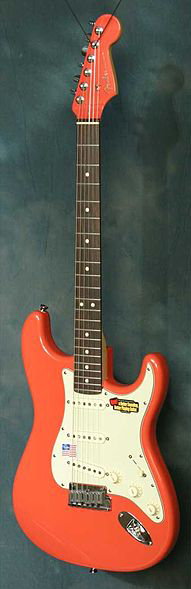
Guitar heroes

Life has been pretty good to me – most of the time. I’ve achieved many of the things I wanted. There are more places to visit, of course, and hopefully I can begin to knock some of these off my list year by year.

But as I reflect on things, there aren’t many that I wish I had done. Except one.

I wish I’d learnt to play the guitar.

Well, I can almost hear you screaming at the screen ‘Go on, there’s still time’. And being retired I guess I do have (in theory) time on my hands. But frankly, I don’t really have the aptitude – nor the patience.

The guitar was – and continues to be – such a democratic instrument. How many thousands of young men got hold of a guitar in the 50s and 60s, learnt a few chords, and escaped from their quite humble backgrounds? And that continues today, although I have to confess that my music appreciation somewhat atrophied in the 1980s and earlier. My elder brother Ed was given a guitar in the late 1950s, and although he did master sufficient chords for us to play skiffle, I’m not sure how proficient he really did become.

But I love listening to guitar music. So here are some of my ‘guitar heroes’ (who seem to be about my age!) and some favourite tracks (sorry about the adverts on the YouTube clips).

Mark Knopfler
Here’s a young Mark playing Sultans of Swing, that Dire Straits classic, in a 1978 Old Grey Whistle Test appearance on the BBC.

I saw him in concert at Birmingham’s LG Arena in May 2010, just after I’d returned to the UK after retiring from IRRI. What a concert! Mark has moved away from a purely rock focus, evoking a broader folk and country base to much of his current music-making. But whenever you listen to a Mark Knopfler song/tune, there’s no mistaking it. He has a way of introducing refrains into the melody that are just so typical. Listen to this track (just click the title) Cleaning My Gun – you’ll hear what I mean. But Whoop de Doo is perhaps an even better example.

Lyndsey Buckingham
What more can I say? One fifth (one quarter now) of Fleetwood Mac, his guitar playing is truly inspirational. And his song writing is not bad either. Taken from the 1977 classic album Rumours, this has to be my favourite track: Go Your Own Way, filmed during their 1997 The Dance reunion concert:

I saw Fleetwood Mac in concert in St Paul, MN in 2003. Pity that Christine McVie had already left the band by then, but a night to remember. Read an earlier post about Fleetwood Mac.

Eric Clapton
When has Eric Clapton not been around. It’s said that Clapton became a superstar when he found his voice, when he had the confidence to believe in his own abilities as a musician and singer. Hard to choose a favourite track, but this comes pretty high up – Cocaine:

David Gilmour
I’m a big Pink Floyd fan, and it never ceases to amaze me how Gilmour’s musicianship added so much depth to PF songs. The track Comfortably Numb demonstrates just what I mean; sadly no longer available on YouTube from the Live 8 concert.

Of course, there are others I could also include in my top list: George Harrison, Jeff Lynne (and also read this recent post), Brian May (Queen’s The Show Must Go On with the inimitable Freddie Mercury), Tom Petty (Free Fallin’), Joe Walsh (he’s riffing in the background on this Eagles track, Life In The Fast Lane), and Carlos Santana (Samba Pa’ Ti). I never was a Jimi Hendrix fan (although I can appreciate his musicianship). And George Harrison, Jeff Lynne, and Tom Petty came together in the wonderful Traveling Wilburys (with Bob Dylan and the late Roy Orbison).

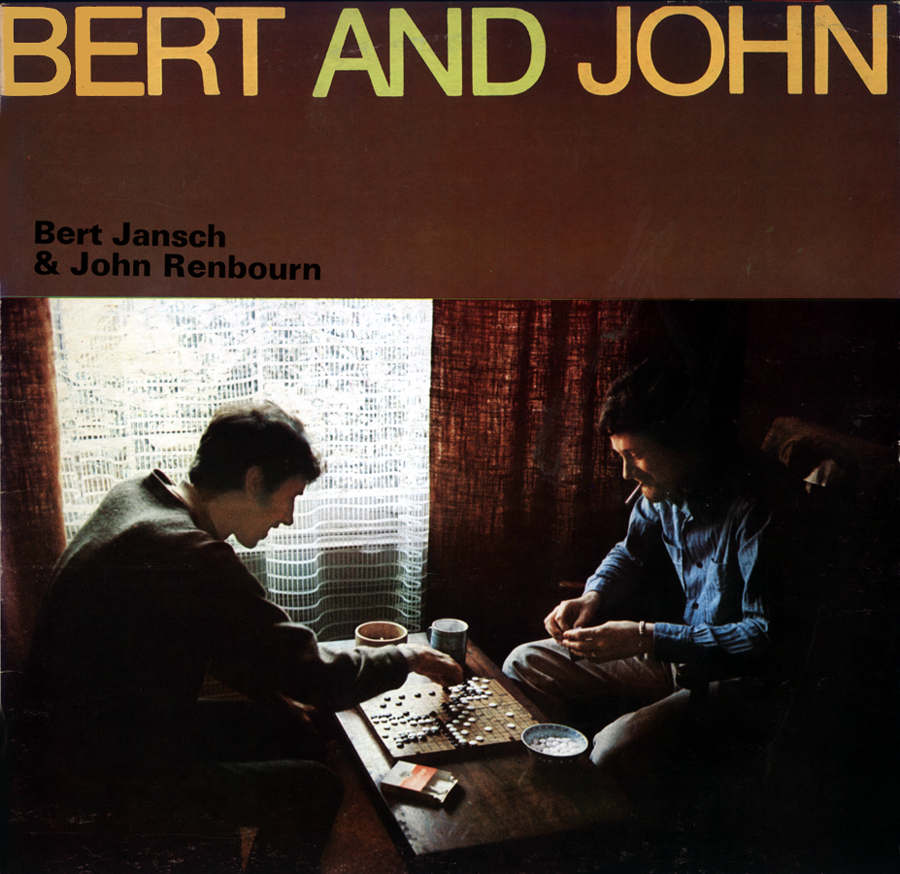
On the other hand, the outstanding folk/blues duo of the late Bert Jansch and John Renbourn (both of Pentangle fame) have to be on my list, somewhere. Ed had the vinyl LP Bert and John, released in 1966, which unfortunately was stolen from me when I lived in Costa Rica in the 1970s. I now have it as the CD After the Dance, released in 1992. But which of the great 15 tracks to single out? I think it has to be Goodbye Pork Pie Hat.

Here’s Rolling Stone’s take on the 100 Greatest Guitarists.

On the classical side, I very much admire John Williams. You would enjoy this CD (Sony SK 53 359), The Seville Concert, recorded in the Royal Alcázar Palace. And it includes Rodrigo’s Concierto de Aranjuez. There’s quite a lot of music out there, originally composed for the lute, and now transcribed for the guitar.

Insalata mista – taxonomy in action (Updated: 20 September 2022)

I’m not very good at identifying wild flowers. Now I suppose that’s a bit of a confession for someone who studied botany. But I know how to identify plants I don’t know by using the appropriate flora and keys.

Funnily enough my interest in natural history began with my bird-watching hobby (that I continue intermittently). And I’ve always been able to identify British birds quite easily – provided I get a good look to see any identifying marks. So I’m not sure why my brain isn’t wired up to do the same with plants. I’m always having to ask my wife what the plants are growing in our garden.

I even taught a level 2 course on flowering plant taxonomy when I worked at the University of Birmingham. However, I was much more interested in the evolutionary forces that shaped the variation in the plants around us: genetics, ecology, and reproductive biology among others. That’s how I came to get involved in the field of plant genetic resources and their conservation and use for much of my career.

Professor Vernon Heywood

As an undergraduate at Southampton University in the late 60s, I’d sat in on a course of about 20 lectures on flowering plant taxonomy given by Prof. Vernon Heywood¹ from the University of Reading. Les Watson, the department’s own taxonomist had emigrated to Australia at the end of my second year in 1969, and Prof. Heywood filled the ‘taxonomic gap’ in our botanical perspectives, coming down from Reading once a week for 10 weeks. As it turned out, the taxonomy component wasn’t a requirement for my course in Environmental Botany and Geography, and I wasn’t examined on this. I just felt that it was too good an opportunity to miss.

I didn’t meet Prof Heywood again for more than 20 years. In April 1991 I had already signed a contract to join IRRI in the Philippines from July that year, leaving my position at the University of Birmingham. As the incoming head of IRRI’s Genetic Resources Center, IRRI’s management asked me to attend a meeting of the FAO Commission on Plant Genetic Resources for Food and Agriculture in Rome. I think Heywood was there in his capacity as a representative of IUCN or some other international organization. Anyway, we got chatting and agreed to meet for dinner one evening at one of his favourite restaurants near the Via Venetto. We had a wonderful dinner, washed down with copious quantities of a new wine for me – a Sicilian red Corvo (Duca di Salaparuta), and a discussion of the taxonomic complexities of an Italian insalata mista!

When you think about it, almost every meal we eat is a cornucopia of taxonomic and evolutionary history. Those potatoes to which you just added another knob of butter, how far removed are they from the native potatoes of South America, and which wild species were used to breed disease and pest resistance? How many varieties of cauliflower are grown in commerce compared to what farmers have grown for centuries? Where did the sweet potato originate and how was it transported – and when – into Polynesia? I could go on and on. That’s the joy of plant genetic resources – understanding the origins and evolution of the food plants that keep us alive, and how all that genetic potential must be conserved and used for the benefit of all.

Amazing what ideas a humble salad can bring to the surface!


¹ RIP Prof. Vernon Heywood (1927-2022). Today, I heard of the death of this great man of taxonomy.

This is the book that got me interested in plant taxonomy. A classic!

100 posts . . . and still counting

I opened this blog on 1 February last year, and since then I’ve been waxing lyrical on anything that took my fancy. I’d actually been experimenting with some blog ideas since September 2011, but it wasn’t until early last year – with some encouragement from my two daughters – that I decided to blog in a serious way.

And this is my 100th post! Anyone who has followed my blog from the beginning will have seen what an eclectic mixture of stories I have posted. While many of the posts have something to do with my 40-year career in international agricultural research, I’ve also posted stories on news items that grabbed my attention and many of the places Steph and I have visited as members of the National Trust.

It’s been fun to combine my own memories and stories with information that I can link to on the web (Wikipedia is a useful resource in this respect)  and it’s not always necessary to fill in so many details when these can be sourced elsewhere. Then there are the photos and videos I’ve taken and posted, as well as links to videos on YouTube. An image or a video is certainly worth a thousand words.

And because I get a daily summary of blog statistics, it’s also fun to see which stories have attracted the most attention, what search terms have directed visitors to my blog, and in which countries my blog has generated most interest.

These are the top five posts that have been viewed over the past year, apart from the home page and my bio:

  1. Potatoes – the real treasure of the Incas . . .
  2. Norman Borlaug – tireless advocate of research for development
  3. MI5 spied on Charlie Chaplin after FBI asked for help to banish him from the US (this was a link to a news item that appeared in The Guardian on 17 February last year)
  4. Anilao: jewel in the Philippines diving crown
  5. The Beatles, Lonnie, and me

And my readers come from these countries:

I’ve also found it interesting that there are, apparently, quite a few recipients of an award from Her Majesty The Queen, who will attend an investiture at Buckingham Palace (just as I did in February last year) and are not sure what to wear. I hope my two posts helped them out:

I don’t see myself running out of stories to post soon. It’s just finding the time – and the inspiration to sit down and hit the keyboard. I hope you have enjoyed the stories I’ve posted so far. Here’s to the second year and the next 100!

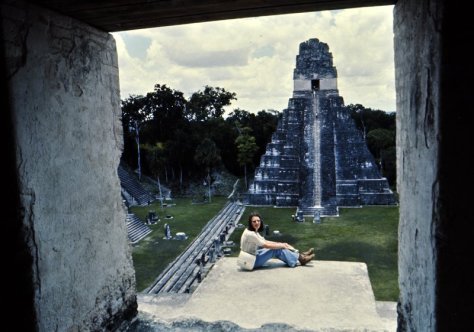
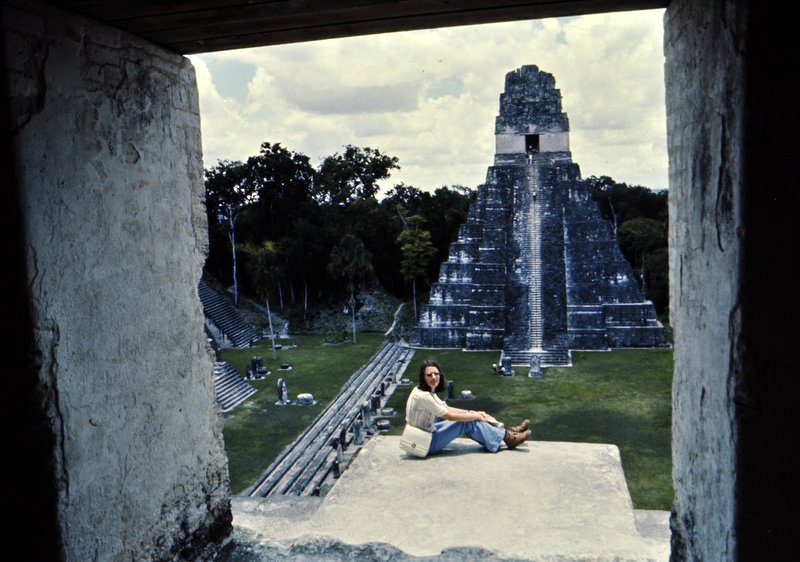
Tikal – may the force be with you

July/August 1977 (so long ago I don’t remember exactly). Destination: Guatemala.

My work with the International Potato Center (CIP) in Central America took me to Guatemala quite frequently between 1976 and 1980. We supported the Instituto de Ciencia y Tecnología Agrícolas – ICTA in seed production and post harvest storage of potatoes.

Guatemala is a beautiful and fascinating country, and has a large indigenous population (unlike Costa Rica where we lived at the time). However, more of that to come in another story.

Steph travelled with me only occasionally, but in 1997 I’d planned a trip to Guatemala (visiting Quetzaltenango) and Mexico, and returning to Costa Rica with a short stop in San Pedro Sula in Honduras to stay with John and Marion Vessey (who were the witnesses at our wedding in Lima in 1973). After leaving CIP in 1974, John had joined CIMMYT in Mexico for a couple of years, before moving on to United Fruit and carrying out research on banana diseases.

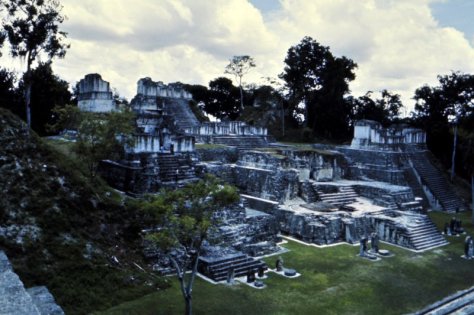
And during this work visit to Guatemala it was too good an opportunity not to miss out on a visit to the Mayan ruins of Tikal, deep in the jungle of the Department of El Petén, about 190 miles by air due north of Guatemala City.


We decided on a two-day visit to Tikal, arriving early the first day, and departing in the middle of the afternoon on the second. I guess the flight (on an old Aviateca DC3 or similar) took less than an hour, landing on the rough strip not far from the Tikal ruins park.

Buses took us to the Jungle Inn where we would stay – basically bamboo huts, rather rudimentary, but adequate for just one night (but has certainly gone up-market in recent years). From there it was a short walk through the forest into the ruins.

1977-07 Tikal 01

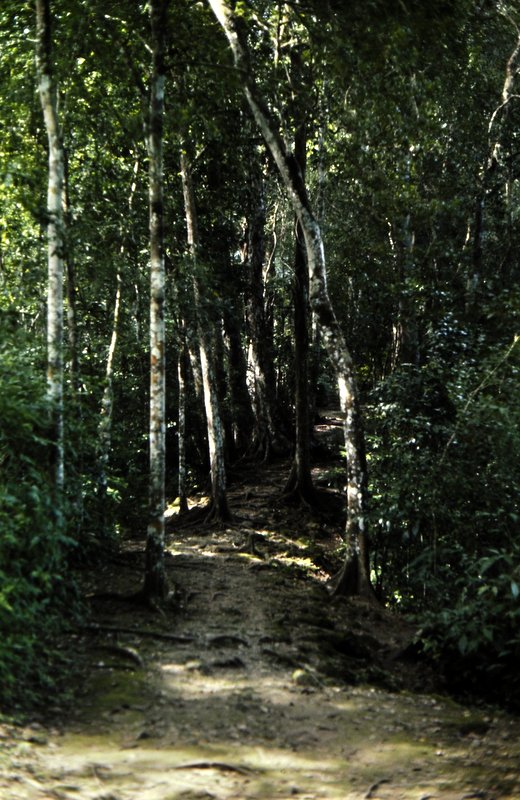
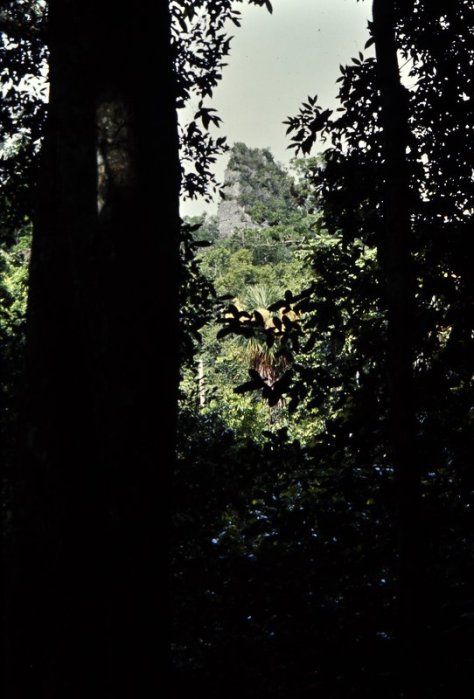
At first there was not a lot to see, but as the forest opened up somewhat there were tantalizing views of masonry among the trees, and walls disappearing off into the distance. And all of a sudden, there they were in all their magnificence, the tall temples that the Mayans had constructed centuries earlier.

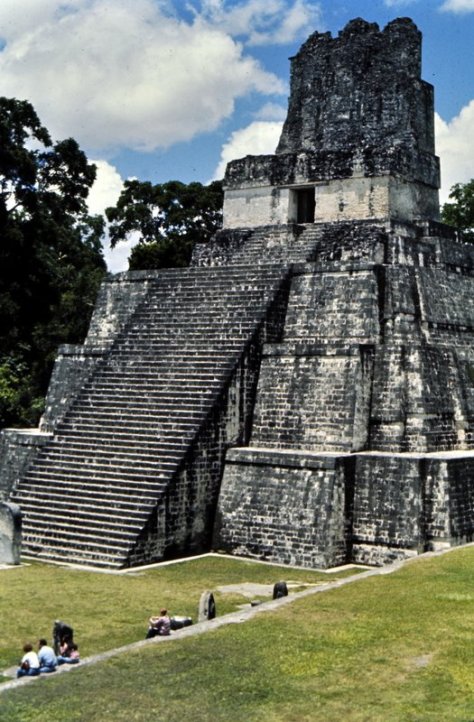
There’s so much to see, and a huge number of pyramids and other buildings that (in 1977 at least) were still hidden under swathes of vegetation. But the principal temples have been uncovered, the central plaza and surrounding sites opened up to reveal the true majesty of this important Mayan site. No doubt, however, that the two pyramids facing each other across the main plaza are truly impressive – and steep!

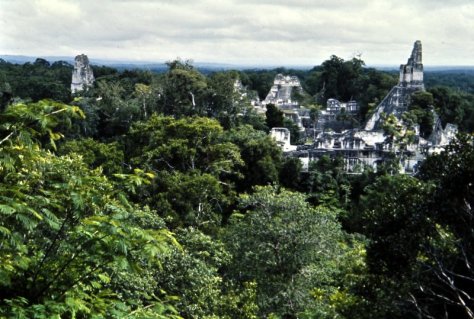
And the views from the top are particularly striking, with tops of other ruined temples peeking above the trees into the distance.

All around are the reminders of what a sophisticated civilization the Mayans had. There’s even a ‘football pitch’ – well, a court for playing a game with a rubber ball made from the latex of local plant (but not the rubber tree – that’s from South America).

There’s so much to see and explore that time passes quickly. One advantage of an overnight stay is that you can visit the ruins very early in the morning, as we did on the second day. I don’t remember too much about our night there, except for the constant hum of mosquitoes.

All too soon our visit was over, and our DC3 was lumbering down the airstrip and lifting off into the late afternoon sun towards Guatemala City.

This slideshow requires JavaScript.

And of course, Tikal was featured as the rebels’ headquarters in George Lucas’ first Star Wars movie (Episode IV) released in 1977 — just before we went there!

We’ve been fortunate to visit several other iconic sites in our travels: Machu Picchu, of course, in southern Peru; the Pyramids of the Sun and Moon at Teotihuacán, just northeast of Mexico City; and Angkor Wat in Cambodia. We’ve seen some of the most impressive native American sites in Arizona and New Mexico, and would love to visit all the sites of ancient Egypt, and Petra in Jordan – if only the political situation would settle down and permit safe travel. One day . . .

A dog named HMV . . .

At the beginning of this week, it was announced that the high street chain HMV – vendors of CDs, DVDs, and computer games – had gone into administration. Whether or not it will survive is very much in the balance, although news reports today suggest that some buyers are interested in parts of the business and some stores.

HMV is an iconic brand and has an impressive trademark – the fox terrier listening to a wind-up gramophone. It’s interesting to see how that image has changed over the decades – today’s is much more stylized. But the original is based on a painting by Francis Barraud. The fox terrier was named Nipper, and he has quite a story.

The Gramophone Company acquired rights to the painting from Barraud in 1899, but it wasn’t used on records until 1909.

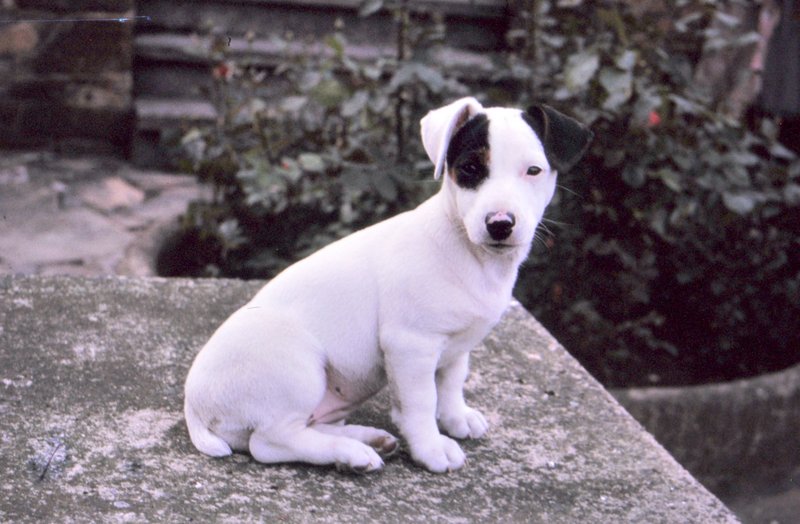
Well, the only reason I bring this all up, is that the name Chem that my parents gave their Jack Russell terrier is derived from His Master’s Voice (HMV). How can that be? Easy, really.

Chem joined our family in 1964, and it didn’t take long for her to acquire her name – because she looked just like the HMV dog. HMV? ‘Aych-Em-Vee’ – ‘Ay-Chem-Vee’ – Chem!

Chem 019

Chem 017

Now there’s quite a debate among my two elder brothers and me as to who actually chose the name. Each takes credit, but sadly, they are mistaken. It was me.

Chem was a smashing little dog, full of spirit, and a great companion for my parents. In 1978 she was put to sleep at the ripe old age of 14 after developing a stomach tumour. Sadly missed and fondly remembered, even after all these years.

Chem 016

Around the world . . . in 40 years. Part 2. Winter days in Santiago

During the years that I lived in Lima (1973-March 1976) I didn’t visit any other country in South America. However, once I moved to Costa Rica in April 1976, I traveled extensively in Central America, Mexico, and out to the Caribbean islands (more of those in a later posts). And from Costa Rica I also made my first excursions to Brazil and Chile; while I was working in the Philippines, I also got to travel once again to Brazil and Peru on more than one occasion, and also to Caracas, capital of Venezuela.

But let me tell you about a visit to Santiago in Chile during July 1979 while I was working for the International Potato Center (CIP) in Costa Rica.

Nelson Estrada

Nelson Estrada

I was asked by my boss in Lima, Ken Brown, to join a small team (with two CIP colleagues Drs Oscar Malamud and Nelson Estrada, who worked in Lima) to review some of the activities and strategy of the Chilean National Potato Program (INIA, the government agricultural research institute). While the potato growing regions of Chile are south of Santiago, the five day review was scheduled only for office and laboratory visits in the capital.

I flew down to Santiago from San José via Panama City, picking up an overnight LAN Chile flight in Panama. It had just the one stop en route – in Lima, where I had the opportunity of phoning my boss at CIP and telling him I was on the way south. I had traveled down from mid-summer in Costa Rica to mid-winter in Chile, and it was quite a shock to the system. I hadn’t experienced a cold climate for several years, seeing all the trees bare of leaves, and a nip in the air. There were also street vendors roasting chestnuts in Santiago.

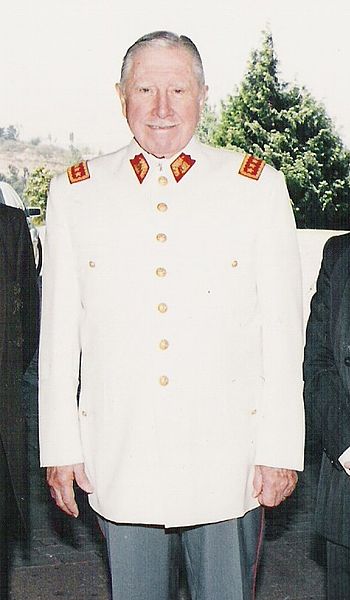
Arriving in Santiago around noon, an INIA driver took me to my hotel, and agreed to pick me up later that evening to return to the airport to meet my two Lima-based colleagues, whose flight was arriving at about 8.30 pm. That evening at the airport, I was a little puzzled why it was so busy as there didn’t seem to be many flights departing or arriving.  I decided to go outside and have a look at the airport apron (something you could do in those pre 9-11 days), and I saw there was quite a large crowd, that spontaneously broke into applause. It was then that I saw Chile’s dictator, General Augusto Pinochet, stepping down from his air force plane that had just arrived, and being met by government officials – and a large crowd of fervent Pinochet supporters had gone to the airport to greet him. This was less than six years after he had seized power in a coup that toppled the democratically-elected government of left-wing politician Salvador Allende in September 1973. And we all know what horrors that led to in Chile. But Pinochet’s government was firmly in control in 1979 – everything seemed calm in Santiago.

I don’t actually remember too much about the potato program review – it must have gone quite well, because on the last evening the head of INIA took us all to a very fine restaurant called Enoteca. Now I’ve looked for this restaurant on the web, and it looks like it’s undergone some major changes since I was there more than 30 years ago. The restaurant was also a ‘Chilean wine library’, housed in an old monastery, on a hill overlooking the city. It was  a fantastic view, and the meal was excellent. In the basement, all the wines produced in Chile were on display, available for tasting, and you could then choose one (or more) to have with your meal. Is it now called the Camino Real, on the Cerro San Cristobal in the Parque Metropolitano?

But what I remember most was the entertainment. In those days I spoke quite fluent Spanish – it’s still there in the recesses of my brain, but a little rusty. These two musicians, with guitars, wearing short dark jackets, broad black hats, came into the room and began to sing, moving between the tables, asking for requests, and stopping to chat with the guests around each table. At our table were our Chilean hosts, of course, and my two colleagues and me. What I’ve forgotten to mention is that Oscar and Nelson were Argentinian and Colombian, respectively. The musicians greeted and welcomed each of us, but with Oscar they had some fun. In 1979, tensions were still high as Chile and Argentina had been to the brink of war in 1978 over the Beagle Channel in the far south of both countries.

So‘, says one of the musicians to Oscar, ‘from Argentina, eh? Welcome, welcome. And isn’t it stupid‘, he continued, ‘that two great countries like Chile and Argentina, with very similar traditions and history and background, should be on the verge of war. I have this vision‘ he emphasized, ‘that one day our two nations will be united, and called Chile!

It brought the house down. Doesn’t translate so well into English, but at the time, we almost fell off our chairs we were laughing so much.

There are two other things I remember particularly about this trip. First, I was meandering down one of the main shopping streets when I heard ABBA’s Chiquitita for the first time, emanating from a record store – it had just been released. But my two colleagues didn’t go shopping for souvenirs like me. Instead they headed to the nearest butcher and bought enough beef, securely wrapped in plastic bags, to fill a 20 kg suitcase each. In those days there was a shortage of beef in Lima.

My stay in Chile was all too short. I would love to return, and visit the regions south of Santiago where Chile’s great wines are produced, to visit the potato growing areas around Puerto Montt, and close to one of the centers of origin and diversity of the potato, the Isle of Chiloé, and further south still to the land of snow-capped peaks, glaciers,  and fjords.

The missing monarchs . . .

Although I studied botany and geography as an undergraduate, and then went on to complete graduate degrees in botany, I have often hankered to become an historian. For the past decade much of my reading material has been history – I devour almost anything that looks interesting, and I actively seek out books by authors who I have already enjoyed. And when I retired I did consider taking another undergraduate degree in history.

I find the 18th century a particularly interesting one, because of the significant social changes and transition from an rural-agricultural society to an urban-industrial one. But I don’t focus on that century exclusively.

I have begun to find medieval history rather fascinating, and it comes to mind that the 15th century must be the most violent perhaps in our history. The century began with the usurpation of Richard II’s throne by Henry IV, there was a continuation of the wars with the French, with remarkable success under Henry V (despite the success at Agincourt in 1415, all was lost less than a generation later under the more pacific Henry VI), and of course the Wars of the Roses between the Yorkists and the Lancastrians.

The most brutal and bloody battle of those wars was the Battle of Towton in March 1461, when Yorkist Edward IV defeated the troops of Henry VI. It’s said that more than 28,000 soldiers lost their lives. But despite its tragic cost, I read somewhere that there was proportionately greater loss of life during the English Civil Wars from 1642-1651 than in any other conflict in these islands. No doubt the Black Death of the late 14th century must also have been a serious genetic bottleneck for the population at large to survive.

But I digress. We know the burial sites for all English monarchs from William the Conqueror until the accession of James VI and I in 1603, for the Stuart kings and queens of both England and Scotland, and monarchs of the United Kingdom from 1714 onwards when George I (great grandson of James VI and I through his eldest daughter Elizabeth of Bohemia, the so-called Winter Queen) came to the throne.

With the exception of two – but that may be about to change.*

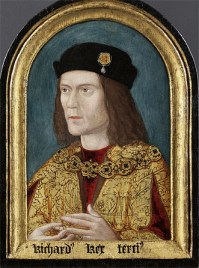
Richard_III_earliest_surviving_portraitI refer of course to Edward V (never-crowned elder son of Edward IV, and one of the Princes in the Tower) and Richard III.
It’s always thought that the princes, Edward and his brother Richard, were murdered on the orders of Richard III when he, shall we say, extended his powers as Lord Protector, and had himself crowned king in 1483. Although skeletons thought to be those of the princes were found in the Tower in 1674 and later re-interred in Westminster Abbey on the orders of Charles II, we cannot be sure that these remains are theirs.

Our image of Richard III – who was widely admired, and loved even, in his northern lands during his lifetime – comes down to us from Shakespeare and Tudor propaganda. After the Battle of Bosworth Field in 1485, when Richard III was killed, Henry Tudor (who became Henry VII) established the Tudor dynasty on the flimsiest of claims, and he and his son, Henry VIII, did their best to eliminate any possible Yorkist rivals (and any others who might have a better claim to the throne than themselves). Best not to think of Laurence Olivier’s cinema portrayal of Shakespeare’s Richard III, although I fear that’s the wicked image many of us continue to carry in our minds.  Of course there are those who have always felt that Richard III was maligned.

Now although there’s a tomb for Richard III in Leicester Cathedral, there’s no body – it was lost after Bosworth, but reportedly buried in Greyfriars priory in Leicester that was subsequently destroyed, and now the site of a car park.

And that’s what we hope to find out very soon. Bringing together the best of modern science: GIS, geophys (as Time Team‘s Tony Robinson would say) to explore underground structures, carbon dating, and DNA analysis (presumably of mitochondrial DNA), a team of archaeologists from the University of Leicester descended some months ago on Greyfriars car park in the city. Very soon they discovered a skeleton that had obviously undergone some trauma, as well as showing a deformation of the spine, or scoliosis, that Richard was reported to suffer from.

Could these be the remains of Richard III, and if so, where should he be reburied? Soon we will find out, once the carbon dating and DNA analysis are completed by the beginning of February. How exciting! Reports leaking to the media are definitely supporting the Richard III identity. Here’s a link to a recent interview given by the project team.

If we have found our last remaining monarch, where should he be buried? The Ministry of Justice will make a decision, it’s said, next week. In any case, one of the conditions of the excavation and exhumation of the skeleton was that any remains would be re-interred in Leicester. And as I mentioned earlier, he already has a tomb in the cathedral, albeit empty. The residents of York would like him buried in York Minster, and there are those who argue he should be buried alongside other monarchs in Westminster Abbey in London. After all, that’s where Richard’s queen, Anne, is buried.

So, fingers crossed, we’ll soon have an answer to a long-standing mystery, and one that modern science is helping to solve.

* Today (4 February 2013) the archaeologists at the University of Leicester have announced that the skeleton unearthed in the Greyfriars carpark in Leicester is indeed that of King Richard III.

Orcas are social animals . . .

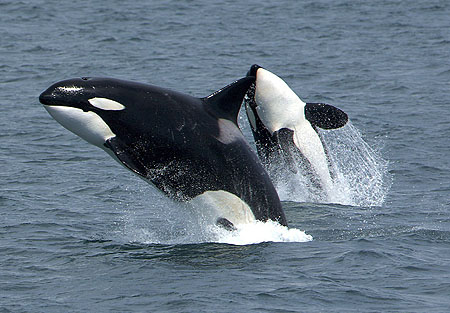
Surprisingly, there are many cetacean (that’s whales, porpoises and dolphins to you and me) visitors to British waters. One of the largest is the killer whale (Orcinus orca), also known as the orca (of Free Willy fame). Here’s a map where you can see whales in the UK.

Over the past three nights The One Show (BBC, at 19:00) has aired a series of films, presented by naturalist Mike Dilger about a pod of resident orcas off the coast of west Scotland, between the mainland, the Inner and Outer Hebrides. These are not listed on the map I mentioned before.

Filmed several months ago, during much better and calmer weather – in some shots the sea was as calm as a millpond – the film crew caught up with a pod of four orcas, and took some stunning footage.

North Uist

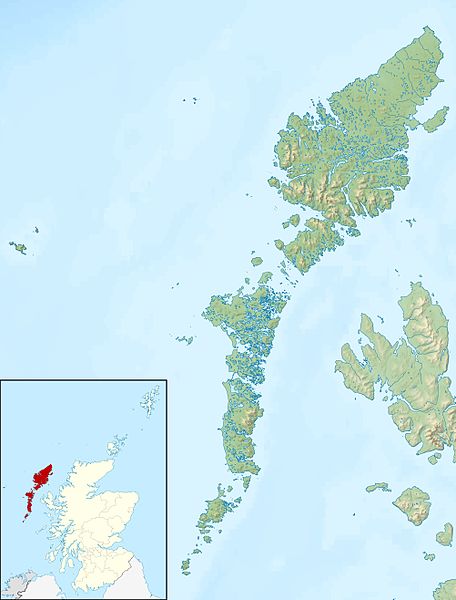
The Outer Hebrides, with Lewis and Harris to the north, with North Uist, Benbecula, South Uist and Barra to the south. The northern tip of the Isle of Skye, and other islands of the Inner Hebrides are shown on the right of the map.

Now what’s particularly interesting is that not only is this pod resident in this region (and also ranges as far as the west coast of Ireland), but the individuals have also been identified. One of the bulls is thought to be at least 40 years old. And, based on some observations of their teeth (conical and not worn down to the gum) this pod could have originated from Antarctic populations that visited the west coast of Scotland, and stayed.

Orcas are stunning, beautiful, and highly intelligent animals, and have been featured in at least two David Attenborough series, the most recent being Frozen Planet.

In the Dilger reports, he travelled with his crew on a chartered vessel owned by someone who knows the waters around the Isle of Skye, and the Inner and Outer Hebrides, yet he’d never ever seen an orca. And this reminded me of my first visit to the Outer Hebrides in the summer of 1966 at the age of 17.

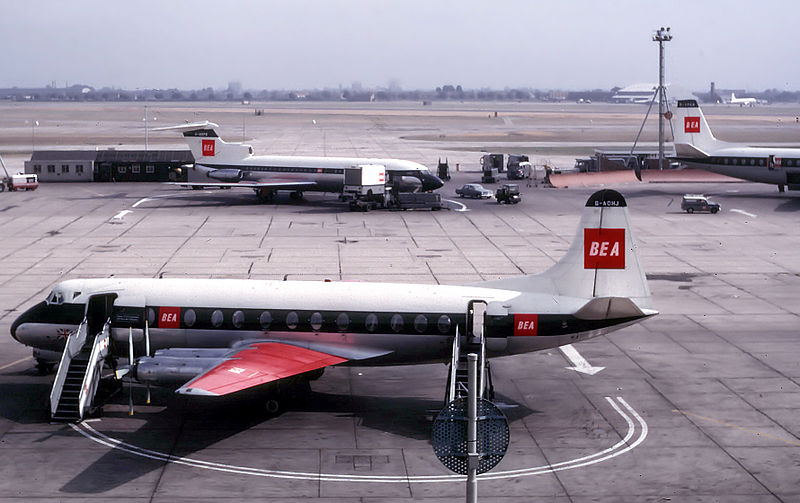
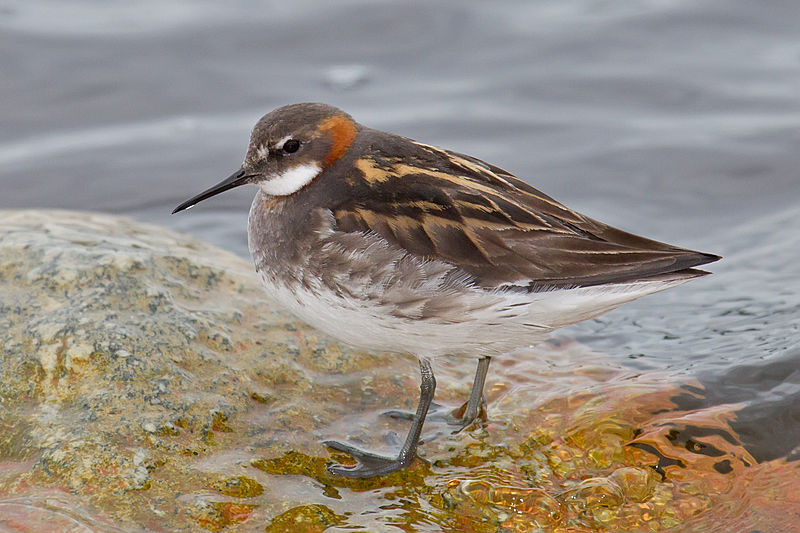
I was a keen birdwatcher, and decided to visit a newly-opened reserve, Balranald, run by the Royal Society for the Protection of Birds (RSPB) on the island of North Uist. Packing my tent and sleeping bag on my back, and other supplies, I hitch-hiked from my home in Leek to Scotland, where my eldest brother Martin and his wife Pauline lived in Rutherglen, just south of Glasgow. I stayed with them for a couple of nights or so, then took my first ever flight, on a British European Airways (BEA) Vickers Viscount turboprop from Glasgow (then Glasgow Abbotsinch Airport) to Benbecula, the island between North and South Uist, and connected to each by a causeway. The flight must have taken an hour.

That first night I actually camped by the side of the road on Benbecula, but the next day I hitched my way over the causeway to North Uist and the village of Hougharry on the west side of the island where I understood the newly-appointed and temporary RSPB warden was living. I don’t remember his name; he’d just graduated in geography from the University of Hull, and was lodging with a Mrs MacDonald (MacDonald is rather a common name there). I set my tent up in the centre of the village, and spent three or so very happy days tagging along with the warden on his rounds. I was even invited to dinner on a couple of occasions by his landlady.

Red-necked_PhalaropeThe main reason for visiting Balranald – and why the reserve had apparently been established in the first place – was to observe two particular bird species: the corncrake (one of the few breeding sites in the UK then) and a rare summer visitor, the red-necked phalarope (which, it seems, is no longer on the Balranald list). I heard the corncrakes, but never saw them, nor the phalarope, more’s the pity. But there was plenty else to see.

And one day, I was invited to join the warden and a local fisherman to visit a small rocky island (maybe Causamul), a mile or more from the shore. And as we were passing through quite choppy seas we suddenly found ourselves in the midst of a large (maybe 10-15 individuals) pod of killer whales. I was dumbstruck, if not a little concerned. There we were, in a small boat, surrounded by water and whales, and all I could think of was their (undeserved perhaps) reputation for aggression and ferocity. But what a wonderful sight! Was this a family pod just passing through, or were they related to the pod of orcas that’s now resident in the area? Who knows? After the last of the film reports on The One Show last night, Mike Dilger told the viewers that orcas had been seen recently on the north coast of North Uist. Knowing how rare any sighting of orcas is these days, I feel privileged for my 1966 experience.

What is the link between Jeff Lynne, Armchair Theatre, and Hobart, Tasmania?

Jeff_Lynne-Armchair_TheatreIn 1990, Jeff Lynne released his first solo album – Armchair Theatre. I’ve been a fan of Jeff Lynne and the Electric Light Orchestra (ELO) for many years. During the 70s I used to listen to cassette tapes of ELO’s Greatest Hits that my brother-in-law Derek had recorded for me from his vinyl LPs. So many great tracks: Mr Blue Sky, Wild West Hero, Confusion, I’m Alive, and Calling America, among many.

I didn’t have a CD player in those days, so my first copy of Armchair Theatre was a cassette tape version, and I almost wore it out in the first few months. Seven songs were Jeff Lynne originals, including the excellent Lift Me Up.

One, Blown Away, was a collaboration with Tom Petty (with whom he’d later form the great Traveling Wilburys, with George Harrison, Bob Dylan, and Roy Orbison), another was written by Jesse Stone (Don’t Let Go), and two others were iconic compositions: Stormy Weather (by Ted Koehler and Harold Arlen) and September Song (by Maxwell Anderson and Kurt Weill).

When I moved to the Philippines in July 1991 I treated myself to a new Pioneer mini-audio system, with tuner, cassette deck and CD player. Before I left the UK, I purchased my first two CDs: Greatest Hits by Fleetwood Mac, and another of the same name by the Eurythmics (I’m a great Annie Lennox fan). I shipped my LPs (and deck) and all my cassette tapes, including Armchair Theatre.

Everything was fine for a few months, but quite soon I began to detect a deterioration in sound quality, and discovered that the dreaded mould was beginning to grow all over the tapes. In fact, in the very humid Los Baños environment, many things were attacked by mould, and we eventually lost quite a number of audio tapes, and VHS tapes.

One of these was Armchair Theatre, so around December 1996 or 1997 I decided to replace it with a CD version (7599-26184-2). But to my disappointment, I discovered that it was no longer listed for sale by Reprise Records.

Where to find a copy? Surely someone, somewhere would have a CD for sale? I did a thorough Internet search (pre-Google) and located just one CD – in Hobart, Tasmania! And this story came back to me earlier this morning because Tasmania was mentioned twice on the BBC news, with reports of the devastating bush fires there, and the defeat of British tennis player Laura Robson in the first round of the Hobart International.

I’m not entirely sure of the name of the CD store in Hobart – I think it was Aeroplane Records on Victoria Street. I may be wrong. Anyway, I contacted the proprietor by email, and ‘did the deal’. But I still wasn’t sure how to have it delivered to the Philippines. I was slightly concerned that it might disappear in a ‘customs black hole’ in Manila, and wondered if it might be better to have it sent to the UK instead.

Jean-Louis Pham

But then I had a huge stroke of luck. By coincidence, one of my colleagues in IRRI’s Genetic Resources Center, Dr Jean-Louis Pham, was taking his family to Australia for the Christmas break that year, and would be spending more than a week in Tasmania – in Hobart. And it transpired that their hotel was just around the corner from the CD store! My CD was left at the hotel reception for the Phams, and Jean-Louis duly carried it back to the Philippines for me in early January.

And I’ve been enjoying the music ever since. As I said earlier, Jeff Lynne went on to form the Traveling Wilburys with others, has produced records for his fellow Wilburys, and obtained full rights to the ELO name and brand. He released Zoom under the ELO name in 2001, and did all vocals, backing vocals, electric guitars, bass, keyboards, cello, and drums himself (even though there were some guest musicians).

Funny how a news sound bite can bring such memories flooding back.

Like a duck to water . . . scuba diving in the Philippines

Late afternoon in front of Arthur’s Place, Anilao
(with Maricaban Island in the distance)

I’ve never been one for competitive sport, or strenuous outdoors exercise. No fell or hill walking for me, nor rock climbing, potholing, or other like pursuits.

So it was rather out of character that I took to scuba diving in the Philippines with such enthusiasm. Although I’d lived in the Tropics before moving to the Philippines in 1991, in Peru, I only went occasionally to the beach south of Lima during the summer months from January to March; and when we lived in Costa Rica, the best beaches were hours away by road.

In the Philippines, on the other hand, quite a number of IRRI staff had learned to scuba dive, and spent weekends away, either in Anilao (about 90 km or so south of Los Baños) or at Puerto Galera on Mindoro, the next island south of Luzon.

In fact, when we did go to the beach in Puerto Galera for the first time, in February 1992 (just a few weeks after Steph, Hannah and Philippa had joined me from the UK), I’d never even snorkeled before! So the last thing on my mind was the idea of taking a scuba diving course. Snorkeling was fine – once I’d got the hang of it, and learned to relax and actually breathe with my face in the water. So we invested in masks, boots and fins, and started visiting Anilao about once a month. Our first resort was Arthur’s Place, established by local dive master and entrepreneur Arturo Abrigonda and his wife Lita. Arthur’s Place was quite modest in 1992, just a few rooms available. And since there was no telephone at that time, making a reservation was rather hit-and-miss. In fact, it was only possible to reach the resort from Anilao village by outrigger canoe or banca, which took about 30 minutes or so. Eventually, the road was opened up, the mobile phone network spread to include the Mabini peninsula, and Arthur’s Place even had email and a web presence. But I’m getting ahead of myself.

My elder daughter Hannah took a NAUI dive course in 1992, not long after we first went to Puerto Galera (my one and only visit there). She’d have been about 14 or 15 at the time. There was a group of IRRI staff and children taking a course, and the dive instructors came down to the staff housing where we had a 20 m pool to conduct the theory classes and confined water exercises. The open water exercises and final certification were carried out at Anilao. Well, for a year I watched Hannah getting ready for one of her dives each time we went down to Anilao, and began to wonder what it would be like.

Mario Elumba - a recent pic

Mario Elumba – a recent pic

And my opportunity came in March 1993 when a group of us got together to arrange dive classes with two PADI instructors – Boy Siojo and Mario Elumba. I took to scuba diving like a duck to water, and I have to say it has been one of the best things I have ever done. Including my four open water exercises dives (just prior to receiving my Open Water Diver certification) I completed 356 dives, making my first on 13 March 1993, and my last (just before I retired from IRRI and returned to the UK) on 14 March 2010. I only dived in the Anilao area – there’s just so much to see, and in any case, as Steph did not dive but loved just to snorkel, there was no reason to go elsewhere. The reefs just in front of Arthur’s Place were ideal for this, and for about 18 years she kept quite detailed records of what she observed, some 100-150 m either side of Arthur’s Place.

Steph checking her records after another successful snorkel

Steph checking her records after another successful snorkel

I also kept a detailed log of all my dives, who I dived with, where we dived, the conditions, and how long each dive lasted. For the first few years, my main dive buddy was Arthur. Most weekends I would complete three dives (very occasionally four, and exceptionally five). But three dives was a comfortable number: a morning and afternoon dive on the Saturday, and an early morning dive (usually to Kirby’s Rock) on the Sunday morning (that was always followed by a great plate of bacon and eggs, toast and coffee).

Sunday morning - post Kirby's. Bacon and eggs on the table.

Sunday morning – post Kirby’s. Bacon and eggs on the table.

We stayed at Arthur’s Place as often as we could  but when full, we had to stay at other resorts along the coast. However, I guess we stayed at Arthur’s more than 95% of the time, and by the time we left the Philippines, we had become the longest term clients at the resort. So much so, that Lita’s younger daughter Joanne invited me to be one of the ‘godfathers’ or ninong at her wedding in January 2010. Steph and I were the only non-Filipinos at the wedding – a great honour.

20100110166

There are many great dive sites around Anilao, but my two favorites have to be Kirby’s Rock and Twin Rocks. I think Arthur was one of the pioneers of the conservation strategy along the coast, and the development of many dive resorts led, quite quickly, to an overall increase in health of the many reefs, because the presence of divers (a considerable economic benefit to the local communities  reduced the incidence of dynamite and cyanide fishing.

One or two sites were famous for their fierce currents, especially Beatrix and Bahura. Both Kirby’s Rock and Seepok Wall had impressive walls to explore. At Kirby’s it is possible to descend about 140 feet to the bottom of one of the walls – which I did many times. The feeling of the water pressure, the (general) clarity of the water (many times over 100 feet of visibility), and the wealth of marine life make this a special dive site for me.

Nudibranchs at Mainit Point,
27 March 2004

There’s so much I could write about. We often saw white-tipped reef sharks, and my particular bugaboo was the giant triggerfish, a particular aggressive beastie that has chased us around the reef from time to time. The myriad of brightly coloured shoals of small fish, especially the butterfly fish in all their diversity, the jacks, and tuna, the occasional turtle, the soft corals and nudibranchs – what sights on a bright morning to make one’s heart sing. And the big advantage as far as I was concerned – no-one could phone me or send me an email, or bother me about work whatsoever, when I was diving.

L to r: me, Clare, Lito, and Judy, in front of Arthur’s Place, 4 May 2003, just after diving at Kirby’s Rock

Sadly Arthur died of cancer in 2002, but in any case once I had gained some diving experience I did not really need him to be my dive buddy. I used to take Hannah and Philippa diving (Philippa learned to dive in January 1995 when she was 12), and for many years I used to buddy with one of the International School Manila teachers, Judy Baker, or Clare O’Nolan, the wife of IRRI’s IT Services manager Paul. Lito Bonquin became the resident dive master at Arthur’s Place in the late 1990s, and he was the person I dived with most over my almost 18 years of diving. He was very experienced and a safe buddy to dive with – and we had great fun exploring familiar sites.

Lito and me after my last dive (at Kirby’s Rock) on 14 March 2010

Do I miss scuba diving? From time-to-time, especially on a grey winter morning, or after someone at Arthur’s Place has posted a particularly nice photo on the Facebook page. I’m pleased I had the opportunity of taking up this great sport. I enjoyed diving with most folks I came into contact with, but there were one or two (including some of my IRRI colleagues – no name, no pack-drill  who I was less than enthusiastic to dive with, because I just didn’t feel safe buddying with them  And I was quite an experienced diver.

I remained an Open Water Diver – I had no interest in gaining further certification as an Advanced Diver, or rescue, wreck or whatever diver. I still have my mask (with its prescription lenses), my boots and fins, and my wet suit. Maybe I’ll get the chance to dive again some day, and if I do get back to the Philippines before I’m too old to enjoy diving again, I reckon there’ll be a welcome for me at Arthur’s Place, and marine friends at Kirby’s Rock and Twin Rocks might ‘realize’ their old ‘buddy’ is back in town.