

A rice farmer in northern Laos with her family
CGIAR? CG? CeeGee? Or should that be CIGAR?
 The CGIAR is, it seems, a mystery to almost the entire world population, even those billions whose survival depends on the outputs of CGIAR-funded agricultural research. Recently, philanthropist Bill Gates wrote in his blog that . . . you’ve probably never heard of CGIAR, but they are essential to feeding our future. Fair comment.
Originally known as the Consultative Group on International Agricultural Research but more commonly just CGIAR today, it is the world’s largest global agricultural innovation network.
Founded in 1971, under the auspices of the World Bank, to coordinate international agricultural research efforts aimed at reducing poverty and achieving food security in developing countries, the network today supports 15 independent agricultural research institutes or centers. CGIAR brings evidence to policy makers, innovation to partners, and new tools to harness the economic, environmental and nutritional power of agriculture.

The centers carry out research on the world’s most import food crops (such as wheat, maize, and rice among many others), water and biodiversity management, livestock and fish, tree and forest systems, the dynamics of the world’s most challenging agricultural ecosystems, and food and agricultural policy.
Their research agendas contribute significantly towards the United Nations Sustainable Development Goals. And, of course, much of the research today is directed towards combating the threat (and challenges) of a changing climate that will affect agricultural productivity in most parts of the world in decades to come. In his blog piece, Gates rightly highlights the important climate-related research ongoing at two centers in Mexico and Nigeria, the International Maize and Wheat Improvement Center (CIMMYT) and International Institute for Tropical Agriculture (IITA), respectively. There’s more going on in the other centers coordinated through a cross-center research program.
 Many billions of dollars have been invested in international agricultural research over the past 50 years or so. But the economic return through increased productivity has been many billions of dollars more.
But we shouldn’t just look at the economic benefits, important as they are. Millions upon millions of people have been taken out of poverty, and despite a worrying reversal of the favorable downward trend of food insecurity (due to economic slowdowns and downturns around the globe, as outlined in a recent report from several international agencies), more people benefit today from access to better crop varieties or improved practices. Many farmers can now afford to provide education opportunities for their children which they were unable to do without access to new technologies.
The centers supported through CGIAR are the key international players for conservation of genetic diversity found in farmer varieties and wild species of crop relatives. This genetic material or germplasm is safely stored in the genebanks at eleven of the centers. More importantly, this germplasm is being studied and used to breed better-adapted varieties.
When CGIAR was founded in 1971 there were already four centers, which were ‘adopted’ for funding support. The International Rice Research Institute, IRRI, based in the Philippines, is the oldest, founded in 1959 [1] and about to celebrate its Diamond Jubilee later this year.
Then came the Mexico-based CIMMYT in 1966 (although its antecedents stretch back to 1943 and a Rockefeller Foundation-funded program in Mexico), followed in 1967 by the International Center for Tropical Agriculture, CIAT, in Colombia and IITA, in Nigeria. Others followed over the next decade or so, but the number has fluctuated as centers merged, or even closed down.
I worked at two of these centers over a period of 27 years, as a junior/senior scientist in Peru and Central America at the International Potato Center or CIP that was founded in 1971 [2]; and as a Head of Department, then Director, at IRRI.
IRRI, CIMMYT, CIAT, IITA. Just four of the research institute acronyms that seemingly roll off the tongue. Yet, these very acronyms seemingly conspire to confuse. Even Bill Gates seems overwhelmed by center branding, stating that with so many acronyms being bandied about that the . . . uninitiated feel[ing] as if they’ve fallen into a bowl of alphabet soup.
In the early years, CGIAR was an informal association of donor agencies that agreed to coordinate their funding to support the small numbers of centers that at one stage in the 1990s was allowed to grow to about 18 centers. At least one center closure and some mergers have come about since. And the funding model has changed.
Towards the end of the 1990s there was a growing concern among the donors of the centers—the members of CGIAR (centers are not members per se)—that there was too much duplication among centers in terms of their research programs, that their relationships with research programs in developing countries was burdensome for some of those programs, and that donor interests were not being met. Twenty years on, and despite changes to the funding model whereby donors have much more control over research projects in the centers, and the development of cross-center programs (with all the transactions paraphernalia that comes with these, such as meetings across continents, performance targets, and the added costs of just doing business), the profile of CGIAR remains weak (if we accept Bill Gates’ line of argument).
 Why can that be, despite the intensive efforts to remedy this situation. In 1998 the centers supported by the CGIAR created Future Harvest as a charitable and educational organization designed to advance the debate on how to feed the world’s growing population without destroying the environment and to catalyze action for a world with less poverty, a healthier human family, well-nourished children, and a better environment.
It was a doomed rebranding initiative from the outset, yet survived several years. Centers were branded as members of the Alliance of Future Harvest Centers, a branding that has all but disappeared. It’s almost impossible to find any reference to Future Harvest on the web, and I only came across one logo on the inside of one publication. One of the reasons why Future Harvest failed is that while the concept was probably fine for the English-speaking world, it found no counterpart in Chinese, Hindi, Bahasa Indonesia, Swahili, or whatever. Future Harvest? What does that mean?
But it started, in my opinion, from a lack of understanding (misunderstanding, perhaps) of the power of branding of the individual centers. CGIAR (Future Harvest) is the sum of its parts, the independent centers that actually do the research. IRRI is a more powerful, and known, brand in Asia in particular [3]. The same goes for CIMMYT in Mexico, India, and Pakistan, and for the other centers where they operate.
Yes, the initiatives to permit centers to align their agendas and work more closely are worthwhile. But at the outset, the funding model was such that centers found themselves having to bid to become members of the new system programs, just to survive. Not a good reason for inter-center collaboration.
I have no problem with Gates’ bowl of alphabet soup. Fifteen acronyms (that you can actually pronounce) is a small price for strong branding, as long as full names are explained as well. This situation is no different from what you can find in any country. Just take the UK: NIAB (National Institute of Agricultural Botany in Cambridge); JIC (John Innes Centre in Norwich); or JHI (James Hutton Institute, in Dundee and Aberdeen). No-one seems perturbed recognizing these prestigious institutions either by their acronym or name. Why should there be any difficulty for the centers supported by CGIAR?
In response to Gates’ blog post, one tweeter (who had worked at one of the centers, CIMMYT I believe) stated that this ‘confusion’ was a sound justification for merging centers into one institute. I couldn’t disagree more. The strength of CGIAR lies in its diversity. Centers are strategically located around the world. Institutional (and national staff) cultures and set ups are very different. Doing business over time zones is problematical.
Merging organizations is never easy. One ‘partner’ inevitably loses out to another (take the Delta-NWA merger; who now remembers NWA?) One successful merger among CGIAR centers led to the creation of the International Livestock Research Institute or ILRI (bringing together the International Laboratory for Research on Animal Diseases in Nairobi, and the International Livestock Centre for Africa in Addis Ababa). Not all mergers or alliances prosper however. Closer links between IRRI and CIMMYT in the in the early 2000s came to nothing despite best efforts, and having two Board of Trustees members common to both. It remains to be seen how closer links between Bioversity International in Rome and CIAT, or the World Agroforestry Centre in Nairobi and the Center for International Forestry Research, or CIFOR in Bogor, Indonesia, pan out.
As you can see I’m a believer in the power, and identity, of the centers. After all, that’s where the research is planned strategically, where the scientists reside, and where they do their work. Branding is important and can make all the difference for delivering the right message.
Let’s celebrate how CGIAR has supported international agricultural research for almost five decades and continues to provide the framework for that to continue. Yes, the world needs to know and understand the importance of CGIAR and what it stands for. Equally, I would argue, let’s celebrate the work of IRRI, CIMMYT, IITA, CIAT, CIP, IFPRI, Bioversity International, ICARDA, IWMI, ILRI, World Agroforestry, Worldfish, CIFOR, ICRISAT, and Africa Rice.
[1] A Memorandum of Understanding was signed in December 1959 between the Government of the Philippines and the Rockefeller and Ford Foundations to establish IRRI. The Board of Trustees met in April 1960 to approve the institute’s constitution and by-laws. Thus, IRRI has two ‘birthdays’. The 50th anniversary was celebrated on 9 December 2009 and 14th April 2010.
[2] I was originally due to join CIP in September 1971, when I completed my MSc, and the CIP Director General, Richard Sawyer, had approached the forerunner of the UK’s Department for International Development for funding to support my assignment in Peru. But the UK was at that very moment deciding whether to fund CIP bilaterally or join CGIAR and fund the center’s work that way. My departure for Peru was delayed for 15 months.
[3] In about 2004, I was invited to a meeting on biotechnology and intellectual property rights in Malaysia, near Kuala Lumpur. My flight from Manila arrived in KL around 11 pm, and I had to take a taxi to the resort where the meeting was being held, about 35 km or so. I don’t remember if a taxi had been sent for me, or I just took the next one in the rank outside the terminal building exit. On the journey, the driver started asking me a few questions, and when I told him I worked in agriculture in the Philippines, he replied: ‘I guess you must work at IRRI’ or words to that effect. He knew all about IRRI. Notwithstanding he had once been a driver for Malaysia’s Minister of Agriculture, he was indeed very knowledgeable about rice and IRRI’s role. I was more than surprised.
 and the CGIAR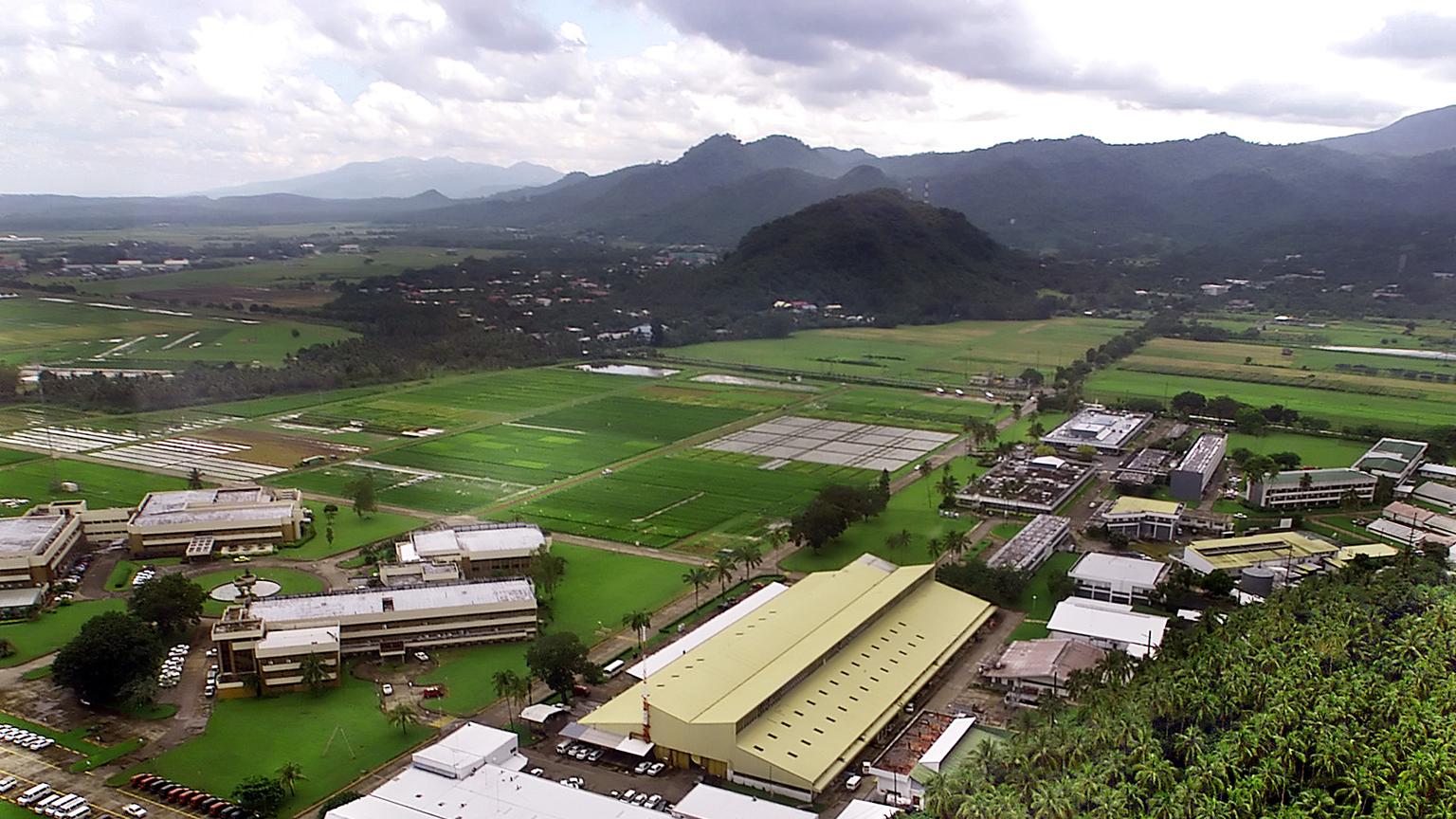
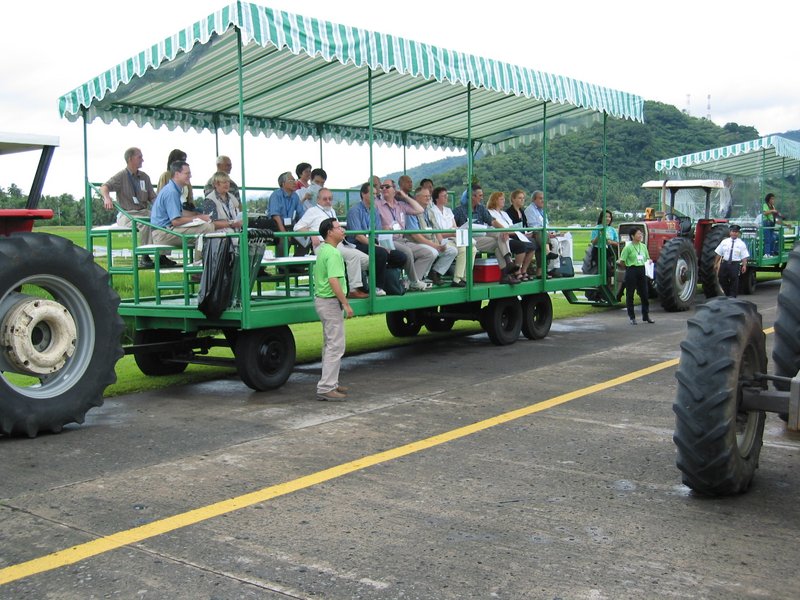
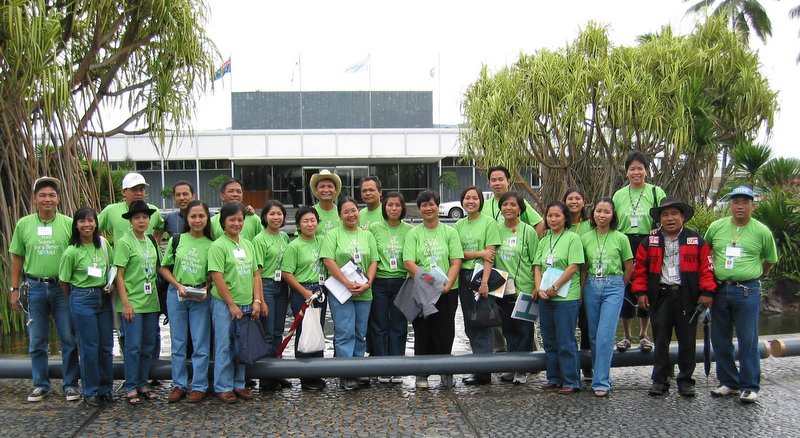
 Ron Cantrell, IRRI’s Director General in 2002 asked me to organize IRRI Day. But what to organize and who to involve? We decided very early on that, as much as possible, to show our visitors rice growing in the field, but with some laboratory stops where appropriate or indeed feasible, taking into account the logistics of moving a large number of people through relatively confined spaces.


 A balanced diet . . .