Once one of the greatest monasteries in England

At breakfast earlier last week, Steph and I were comparing this past winter to the other three we have experienced since moving to the northeast in October 2020. It’s not that it has been particularly cold. Far from it. But, has it been wet!

It feels as though it hasn’t stopped raining since the beginning of the year. The ground is sodden. And as for getting out and about that we enjoy so much, there have been few days. Apart, that is, from local walks when it hasn’t been raining cats and dogs.

So, with a promising weather forecast for last Friday we made plans for an excursion, heading south around 70 miles into North Yorkshire to visit Byland Abbey, built by a Cistercian community in the 12th century, below the escarpment of the North York Moors.
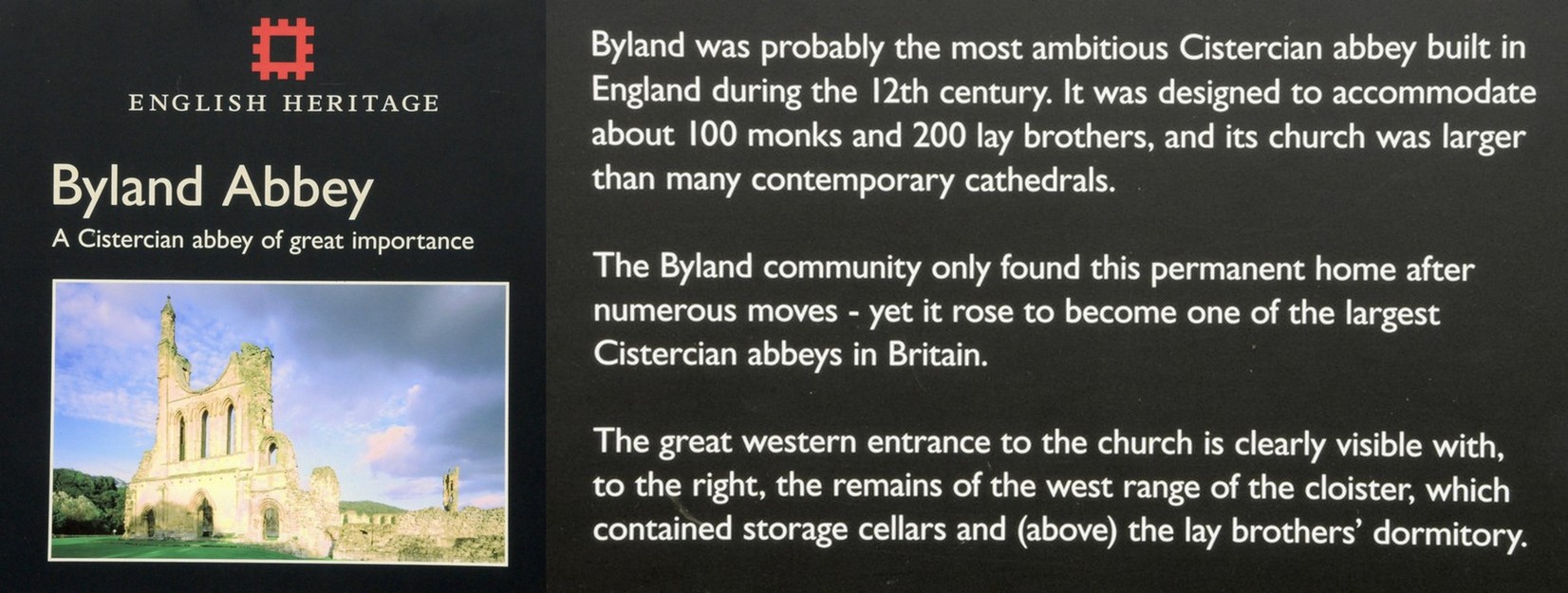
It’s 12th Cistercian neighbours—less ruined, and arguably more famous—Rievaulx Abbey and Fountains Abbey, stand just 4 miles north as the crow flies and 18 miles southwest, respectively from Byland Abbey.


We decided to take in a couple of other sites on our way south, stopping off at Mount Grace Priory for a welcome cup of coffee and a wander round the gardens, and then—just a few miles further on—the small 12/13th century church of St Mary the Virgin, beside the A19 trunk road that we have passed numerous times, but never taken the opportunity to visit.

St Mary’s was once the parish church of a medieval village, Leake, now disappeared. Nowadays it serves the communities of Borrowby and Knayton. The tower is the earliest remaining structure, and the church has been added to over the centuries (floor plan).

There is a very large graveyard, still in use today, clearly shown in this drone footage.

Then it was on to Byland, taking the cross country route from the A19. And along the way, I saw my first ever hare (and nearly killed, which you’ll see at 02’22 ” in the video below). This route takes you through the delightful village of Coxwold.


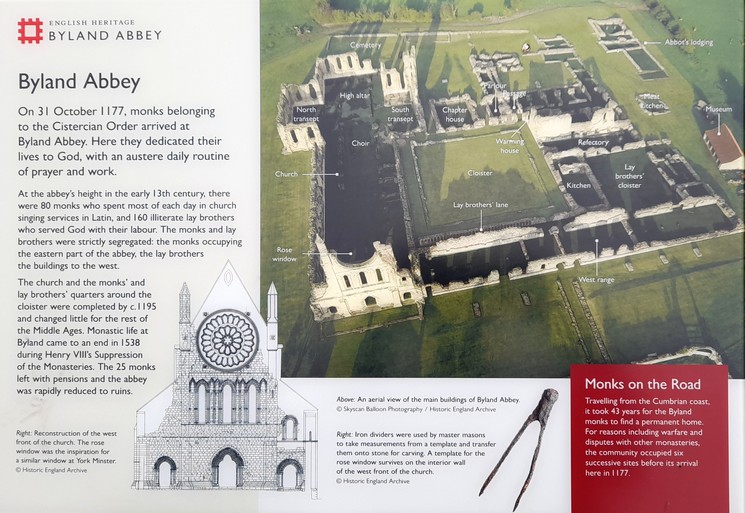
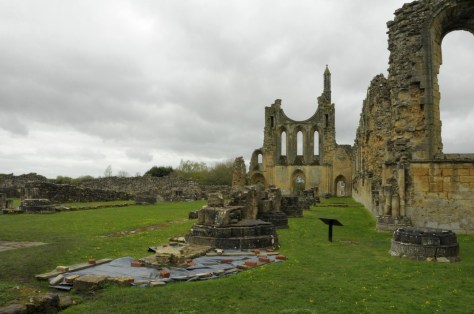
Byland Abbey is mightily impressive, even though it’s a shell compared to Rievaulx, for example. But I had the impression that it was much larger than Rievaulx, and it must have been magnificent in its heyday. Its foundation was far from straightforward, and it took the monks more than 40 years before settling on the site at Byland.
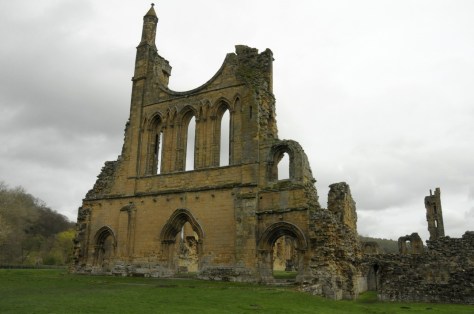
Its west entrance is simply a wall, with the remains of what must have once been an incredible rose window. We saw a note on the English Heritage hut (closed on our visit) that there was a template for the window on the inside of the West Wall, but we couldn’t find it.
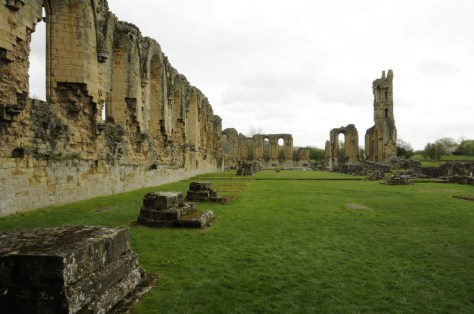
And from the entrance there is a view straight down the length of the church towards the North and South Transepts and the High Altar. Just the north wall is still standing, mostly. And when I look at ruins like Byland, I am just in awe of the craftsmanship that it took to build a church like this, with such beautifully dressed stone. I wonder how big a workforce was needed for the construction over the 25+ years it is estimated it took to complete the abbey?
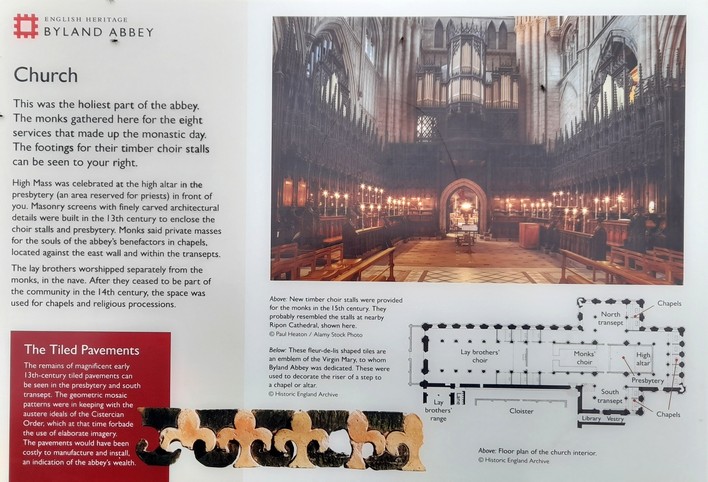
At various locations around the ruins, and especially around the site of the high altar, ceramic floor tiles uncovered during excavations are currently not on view, but protected by tarpaulins.
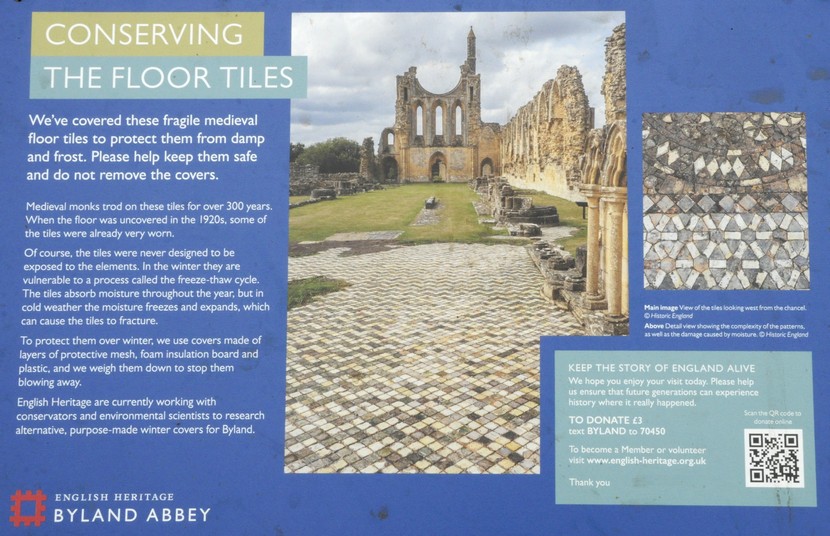
Like all the other religious houses across the nation, Byland was closed during the Suppression of the Monasteries by King Henry VIII in 1538 and rapidly became a ruin. You can read an excellent history of the abbey on the English Heritage website.

You can view my photo album of Byland Abbey images (and from St Mary’s, Leake) here.


Leaving Byland Abbey, we headed up the escarpment on Wass Bank, stopped off to view the Kilburn White Horse again before heading down the precipitous 1:4 (25%) incline that is the infamous Sutton Bank.

The Kilburn White Horse can be seen for miles around, primarily from the southwest. It was supposedly constructed by a local schoolmaster, John Hodgson and his pupils in 1857. It covers an area of 6475 m² (or 1.6 acres). We had only seen it previously from a distance, or from the car park immediately below. This time we took the footpath at the top of the cliff, emerging near the horse’s ears. The walk from where we parked the car (alongside the glider field) took less than 10 minutes.

And although there wasn’t a good view of the horse per se from the path, the view south over the Vale of York was magnificent. We could see for at least 30 miles over a 200° panorama.
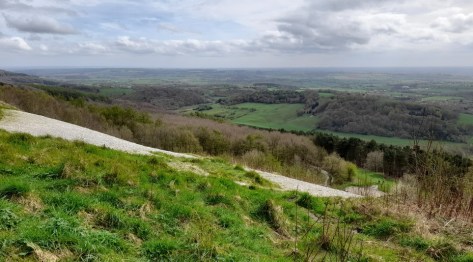
That’s the horse’s eye in the foreground.



A year full of heritage

Steph and I have been members of the National Trust since 2011. Following our first visit to one of the Trust’s properties in February that year (to Hanbury Hall, just 7 miles from home), we have tried each year to get out and about as often as we can. After 5 years membership, we were offered a special senior citizen joint membership: such great value for money; so many interesting houses, landscapes, and gardens to visit, and enjoy a cup of coffee (and an occasional flapjack) in one of the NT cafes.
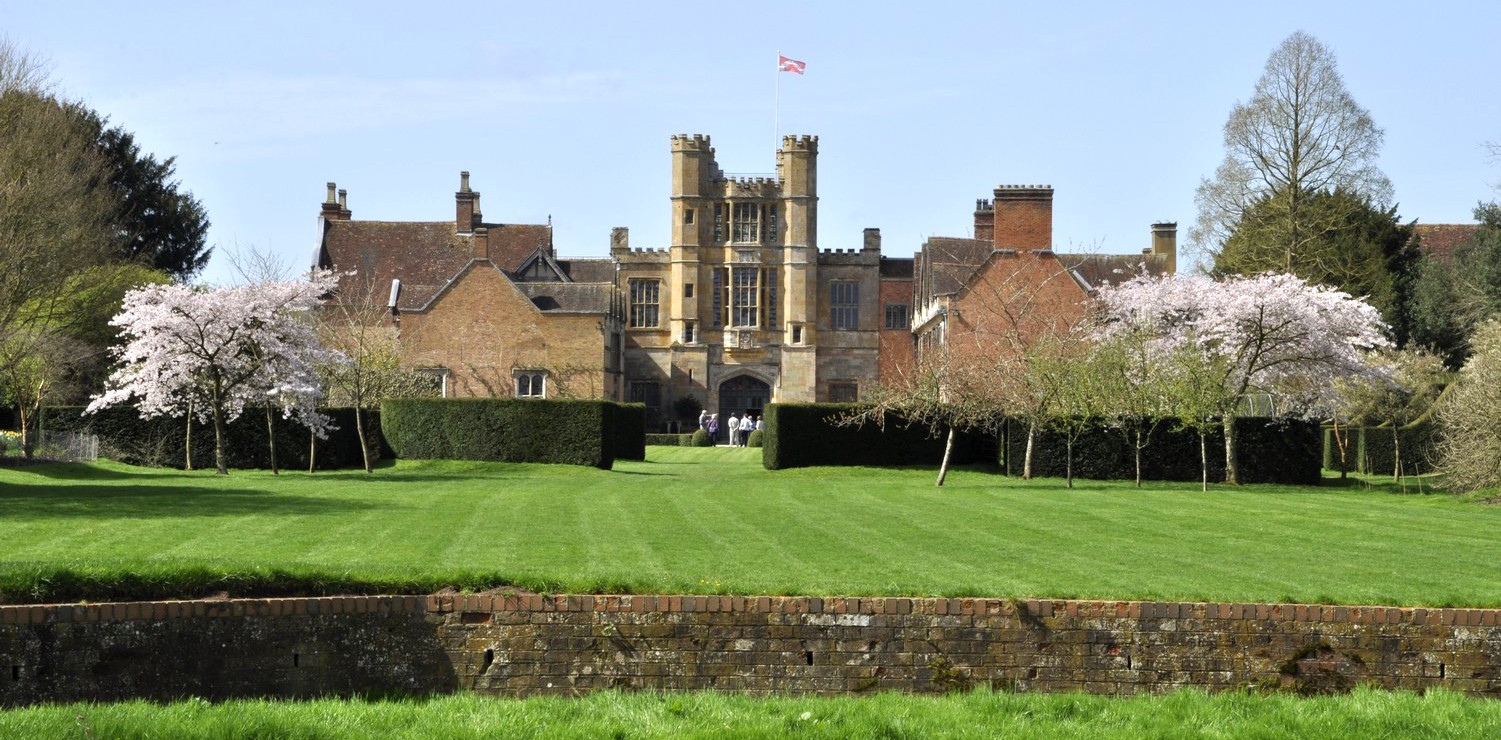
These visits give purpose to our excursions. We’ve now explored 97 National Trust properties in England and Northern Ireland (as well as as few maintained by the National Trust for Scotland). And we have enjoyed many country walks as well around parkland and through gardens.

Click on the various links to open stories I have posted during the year, or an album of photos.

We are fortunate that close to us (we’re just south of Birmingham in northeast Worcestershire) there are half a dozen properties that take 30 minutes or less to reach. The closest is Hanbury Hall, and we often visit there to enjoy a walk around the park – four times this year – or take one of the many paths to the canal, up to Hanbury church, and back into the park. I particularly enjoy seeing how the parterre changes through the seasons. It is a very fine example.

The parterre at Hanbury in August

The other houses close to home are Charlecote Park ( in July), Croome (August), Packwood House (August), Baddesley Clinton (October), and Coughton Court (April and November).

Coughton Court in April

Our National Trust year began in February with a return visit to Newark Park, 58 miles south in Gloucestershire, to see the carpets of snowdrops, for which the garden is famous. We first visited the house in August 2015.

A week later we traveled 20 miles southwest from home to the birthplace of one of England’s greatest composers, Sir Edward Elgar. It was a sparkling day. We even managed a picnic! After visiting the house, The Firs, and the visitor center, we took the circular walk from the site that lasted about 1 hour. I found watching a short video about Elgar’s life to the accompaniment of Nimrod quite emotional.

Then a week later, we decided on a walk in the Wyre Forest, about 17 miles west from Bromsgrove, to find Knowles Mill, a derelict flour mill in the heart of the forest.

April saw us take in three properties (besides Coughton Court): Dudmaston (which we first visited in 2013); Kinwarton Dovecote; and Southwell Workhouse (a fascinating visit).

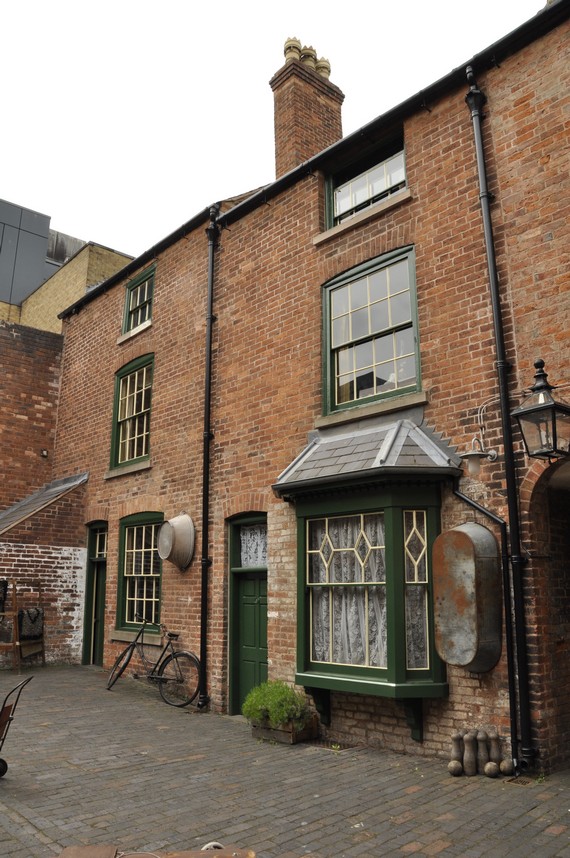
In May, I had to obtain an international driving permit, and the closest post office was in the center of Birmingham. That was just the excuse we needed to book a tour of the Back-to-Backs on the corner of Inge and Hurst Streets. What an eye-opener, and one NT property that should be on everyone’s bucket list.

Closer to home, in fact less than 4 miles from home, is Rosedene, a Chartist cottage that was one of a number erected in the area of Dodford in the 19th century. It’s open infrequently, so looking to the weather forecast we booked to view the property on Sunday morning. Unfortunately, the NT guides were unable to unlock the front door, so we never got to see inside, just peer through the windows.

We had returned to Upton House in Warwickshire at the beginning of the month to enjoy the walk along the escarpment overlooking the site of the 1642 Battle of Edgehill, and then around the garden. We had first visited in July 2012.

We were away in the USA during June and July, and just made some local visits in August. We were preparing for a week of NT and English Heritage (EH) visits in Cornwall during the second week of September.

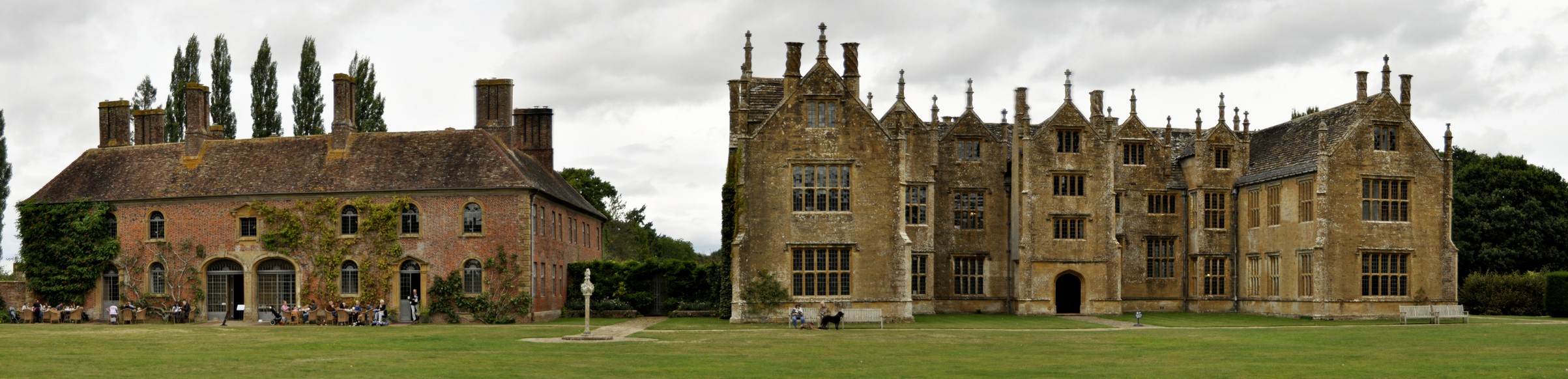
What a busy week! We stopped at Barrington Court in Somerset on the way south, and Knightshayes in Devon on the way home a week later. You can read about those visits here.

Barrington Court

Knightshayes

We visited four more houses in Cornwall: Lanhydrock, Cotehele, St Michael’s Mount, and Trerice, and I wrote about those visits here.

Then there were the coastal visits, to The Lizard, Cape Cornwall, and Levant Mine (check out the stories here).

While on the north coast (visiting Tintagel Castle – see below), we stopped by Tintagel Old Post Office.

Cornwall has some fine gardens, and we visited these: Glendurgan, Godolphin, Trelissick, and Trengwaintonread about them here.

October was a quiet month. I can’t remember if we took a walk at Hanbury, but we did enjoy a long one along the Heart of England Way at Baddesley Clinton.

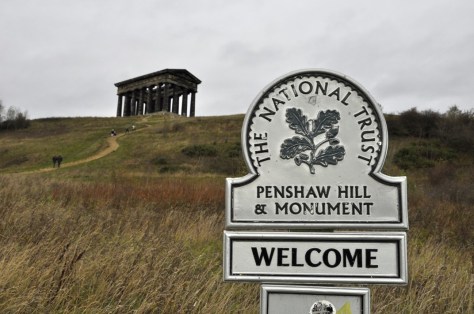
November saw us in the northeast, with a return visit to Seaton Delaval Hall (that we first visited in August 2013), and also to Penshaw Monument that is such an imposing sight over the Durham-Tyneside landscape.

In mid-November it was 70th birthday, and Steph and I spent a long weekend in Liverpool. One of the highlights was a visit to the Beatles Childhood Homes of John Lennon and Paul McCartney – rather emotional.

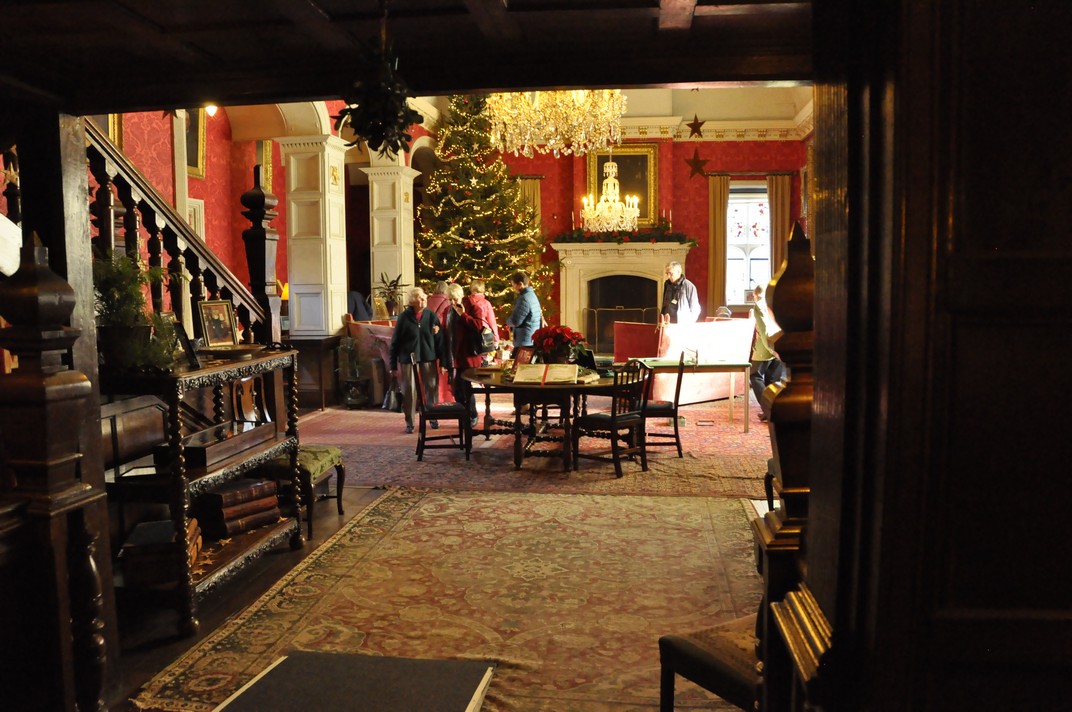
We completed our National Trust year by enjoying Christmas at Coughton Court on 30 November.


We have been members of English Heritage (EH) since 2015. Our daughters gifted us membership at Christmas 2014. Witley Court in Worcestershire is the nearest property to home, and we have been visiting there since the 1980s when we first moved to Bromsgrove. But not during 2108. Here’s a story from September 2017.

In April we were in the northeast and enjoyed a visit to Warkworth Castle near Alnwick on the Northumberland coast (map) with grandsons Elvis and Felix. Since it was close to St George’s Day, there was a tournament entertainment for the children.

Warkworth Castle

While in the northeast, we visited Rievaulx Abbey, somewhere I had first visited as a student in the summer of 1968, and then again in the mid-1980s on holiday with the family on the Yorkshire coast.

Towards the South Transept and the east end of the church from the southeast.

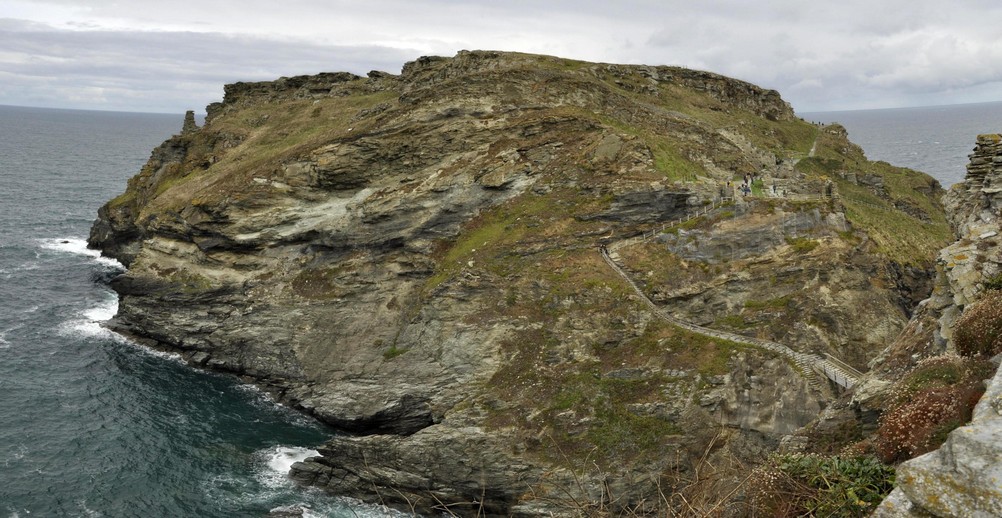
During our trip to Cornwall in September, we got to visit Chysauster Ancient Village, Pendennis Castle, Restormel Castle, and Tintagel Castle, which I have written about here.

The steps leading up to the castle gate.

Then in November, on the way home from Newcastle, we stopped off at Mount Grace Priory, that is owned by the National Trust but managed by English Heritage.

It was a bright and calm November morning, lots of color in the trees, and we were enchanted by the peace of this wonderful site. On our trips to Newcastle we have passed the entrance to the Priory many times, but never had found the time (or the weather) to stop off. It was well worth the wait.


This has been our heritage 2018. We have barely scratched the surface of NT and EH properties. We look forward to spreading our wings further afield in 2019.

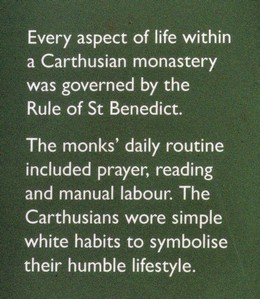
Governed by the rule of St Benedict (updated)*

Nestling under the Cleveland Hills in North Yorkshire, about half way between Thirsk and Middlesbrough along the A19 (map), Mount Grace Priory has stood proudly overlooking this beautiful landscape for over 600 years. It is owned by the National Trust, but managed by English Heritage.

Founded in 1398 by Thomas Holland, 1st Duke of Surrey, Mount Grace is a walled Carthusian priory or Charterhouse, of which there were several throughout England. It’s regarded as the best preserved. The priory was finally closed down in 1539 at the time of the dissolution of the monasteries under King Henry VIII.


* Recently I received a comment that questioned the reference to St. Benedict:

It is entirely incorrect to say that the Carthusians follow the Rule of Saint Benedict. They follow the constitutions laid down by Guigo who succeeded St. Bruno as their head of the order in the twelfth century. The way of life of the Carthusians, with its combination of eremitical [i.e. solitary or hermitic] and cenobitic [i.e. community] practices, bears little resemblance to that of the Benedictines and other followers of St Benedict’s rule, for example the Cistercians.

It appears that English Heritage might have got this wrong.


Built from a beautiful yellow stone that glowed in the early winter sun last Sunday when we visited, Mount Grace was a community to fewer than 20 monks, living more or less as hermits each in his own cell (6). Actually, these cells must have been the 15th century equivalent of a ‘des-res’. These surrounded a large cloister (5), were two storey buildings, with piped in water, outside latrine, and a garden that each monk attended. By the entrance door there is a large niche through which food and other necessities were passed to each monk. One of the cells (8) has been reconstructed.

As we entered the cloister the air was filled with the eerie sound of pheasants calling among the trees on the surrounding hillside.

The priory was dedicated to the Assumption of the most Blessed Virgin in Mount Grace, and an small but impressive ruined church (4) lies at the center of the priory compound.

More photos of the priory ruins, and a little more history can be viewed in this album.
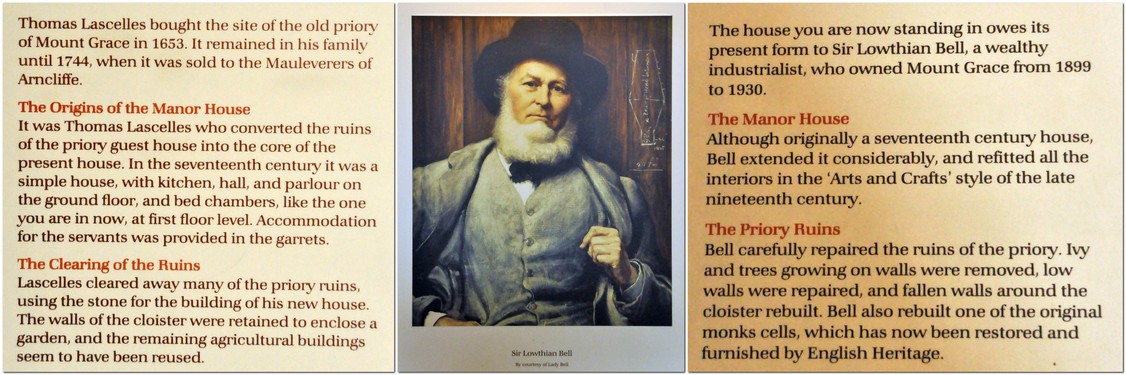
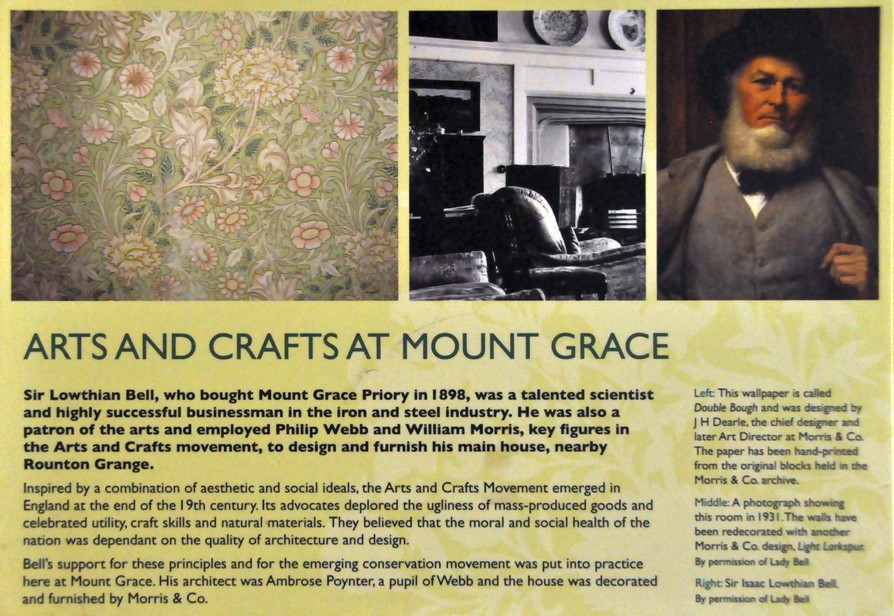
The site was acquired in the mid-17th century by Thomas Lascelles, and then in the 1740s to the Mauleverer family. The priory guest house became the heart of the manor house we see today. But its current aspect was the work of a wealthy industrialist at the end of the 19th century, Sir Lowthian Bell.

Just a few rooms are open to the public. A carpet designed by William Morris is on loan to Mount Grace, and is laid in one of the ground floor rooms.

The coat of arms of the Bell family is displayed above the fireplace in another room on the ground floor.

The west facade of the manor house is covered in Virginia creeper, glowing red in its full autumn glory, overlooking a small, but carefully laid out terraced garden, leading to several pools that were used by the monks to raise fish. It was nice to see plant name labels throughout the garden.

Mount Grace Priory, house, and gardens were a true delight. We’ve often passed the entrance on our way north to visit our younger daughter Philippa and her family in Newcastle. But this time we were determined, weather-permitting, to stop off and explore the site. And that’s how we spent a very enjoyable three hours last Sunday morning, before hitting the road again, heading south to home in north Worcestershire.


We made a second visit here on 16 June 2021, mainly to see the gardens in full bloom. I have combined the photos I took then with an earlier album. You can view the whole set here.