Potatoes have no special chemistry to induce romance . . . but they brought us together

Saturday 13 October 1973, 11:30 am
Lima, Peru

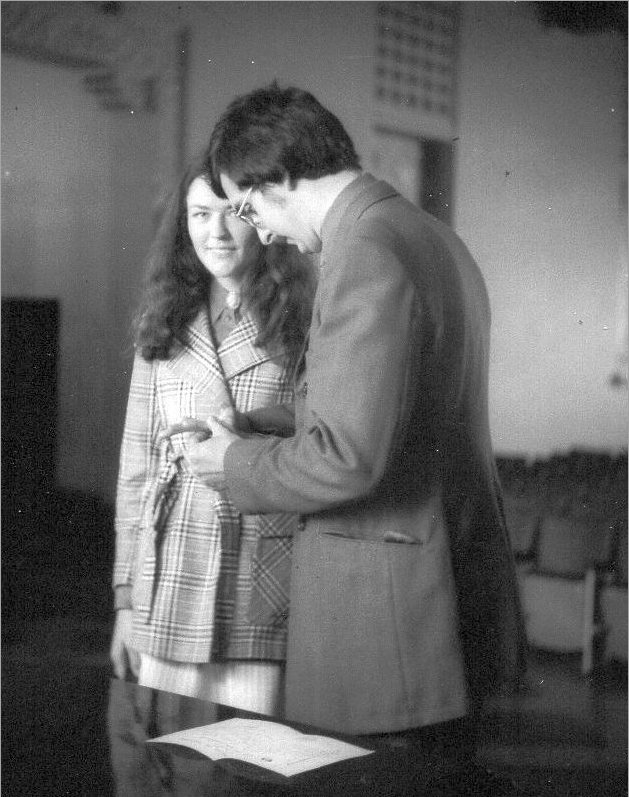
Fifty years ago today, Steph and I were married at the town hall (municipalidad) in the Miraflores district of Lima, where we had an apartment on Avenida José Larco. Steph had turned 24 just five days earlier; it would be my 25th in the middle of November.
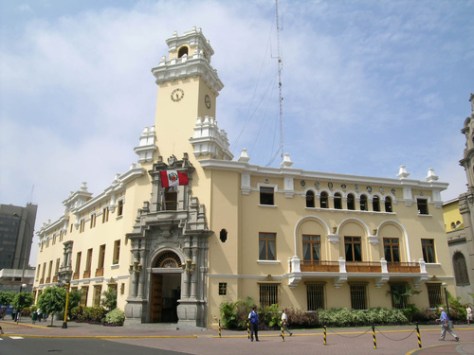
Municipalidad de Miraflores, Lima

It was a brief ceremony, lasting 15 minutes at most, and a quiet affair.  Just Steph and me, and our two witnesses, John and Marian Vessey. And the mayor (or other official) of course.
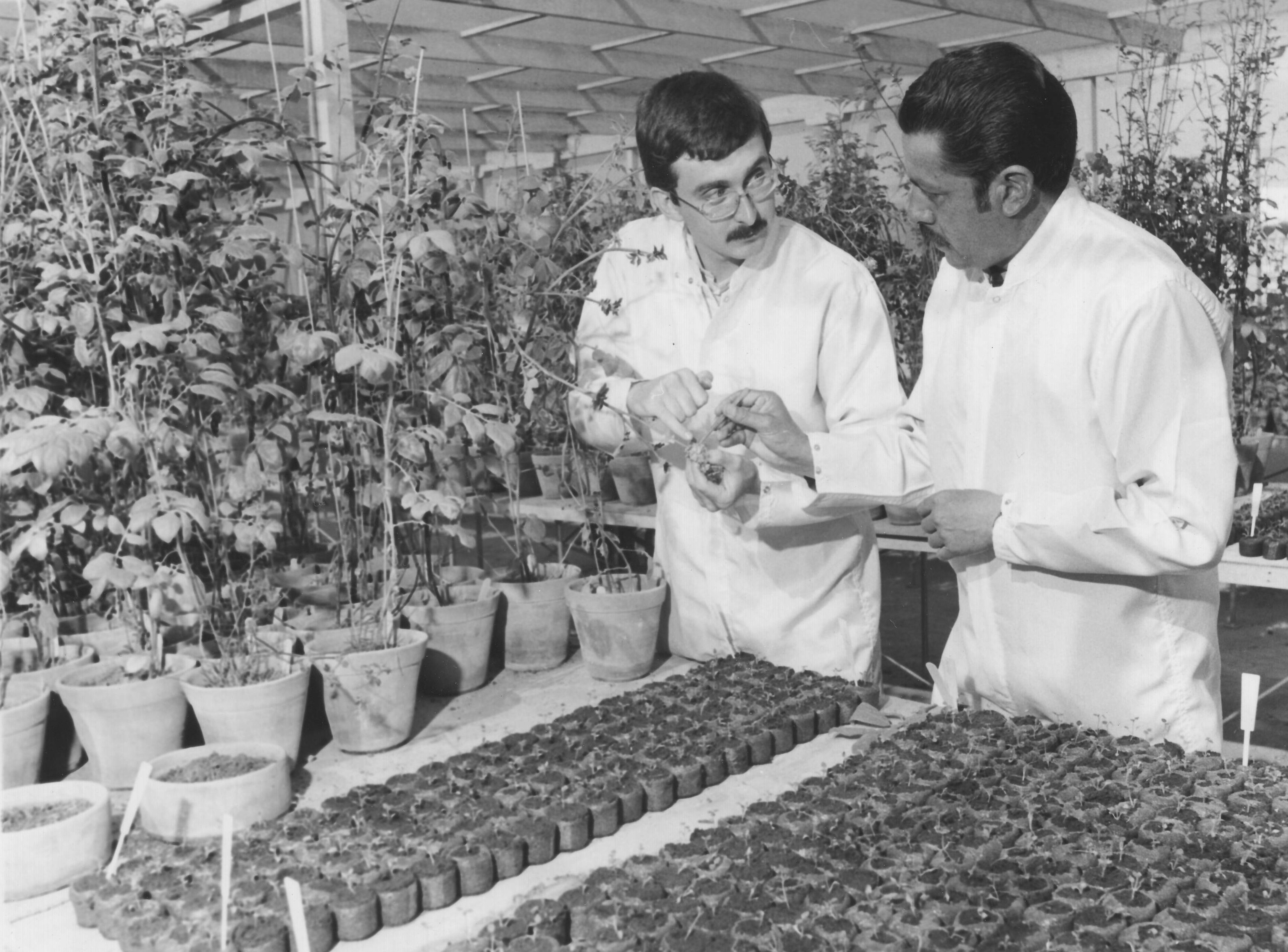
John, a plant pathologist working on bacterial diseases of potato, was a colleague of ours at the International Potato Center (CIP) in Lima, who had joined the center a few months before I arrived in Lima in January 1973.
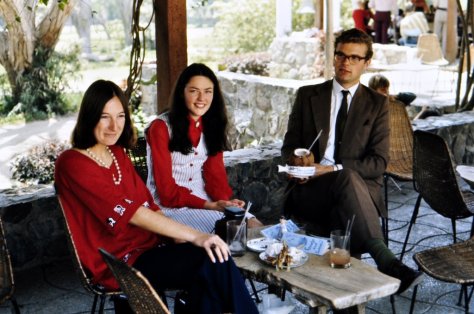
Enjoying pre-lunch drinks with Marian and John at ‘La Granja Azul‘ restaurant at Santa Clara – Ate, on the outskirts of Lima.

The newly-weds.


It’s by chance, I suppose, that Steph and I got together in the first place. We met at the University of Birmingham, where we studied for our MSc degrees in Conservation and Utilization of Plant Genetic Resources.

Steph arrived in Birmingham in September 1971, just after I had finished the one-year course. I was expecting imminently to head off to Peru where I had been offered a position at CIP to help curate the large collection of native potato varieties in the CIP genebank. So, had I flown off to South America then, our paths would have hardly crossed.

But fate stepped in I guess.

My departure to Peru was delayed until January 1973. So I registered for a PhD with renowned potato expert Professor Jack Hawkes (right, head of the Department of Botany and architect of the MSc course), and began my research in Birmingham while CIP’s Director General, Richard Sawyer, negotiated a financial package from the British government to support the center’s research for development agenda, and my work there in particular.

It must have been early summer 1972 that Steph and I first got together. Having completed the MSc written exams in May, Steph began a research project on reproductive strategies in three legume species, directed by Dr Trevor Williams (who had supervised my project a year earlier on lentils). And she completed the course in September.

By then, she had successfully applied for a scientific officer position at the Scottish Plant Breeding Station in Edinburgh (SPBS, now part—after several interim phases—of the James Hutton Institute in Dundee), as Assistant Curator of the Commonwealth Potato Collection. But that position wasn’t due to start until November.
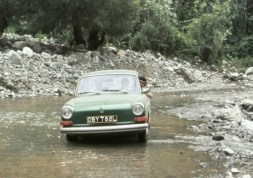
Our VW Variant in Peru, around May 1973 – before receiving a Peruvian registration plate.

In early November I took delivery of a left-hand-drive Volkswagen for shipment to Peru. On a rather dismal Birmingham morning, we loaded up the VW with Steph’s belongings and headed north to Edinburgh. She returned to Birmingham in mid-December for her graduation.
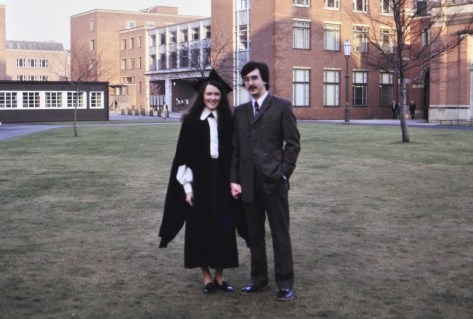
Then, just after Christmas 1972, we met up in a London for a couple of days before I was due to fly out to Lima.

At that time we could not make any firm commitments although we knew that—given the opportunity—we wanted to be together.

Again fate stepped in. On 4 January 1973, Jack Hawkes and I flew to Lima. Jack had been asked to organize a planning conference to guide CIP’s program to collect and conserve native Andean potato varieties and their wild relatives.
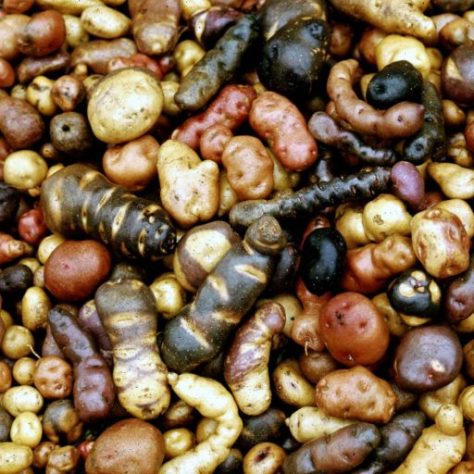
Potato varieties from the Andes of Peru.

While I stayed in a small hotel (the Pensión Beech, in the San Isidro district) until I could find an apartment to rent, Jack stayed with Richard Sawyer and his wife Norma. And it was over dinner one evening that Jack mentioned to Richard that I had a ‘significant other’ in the UK, also working on potato genetic resources, and was there a possibility of finding a position at CIP for her. Richard mulled the idea over, and quickly reached a decision: he offered Steph a position in the Breeding and Genetics Department to work with the germplasm collection.

With that, Steph resigned from the SPBS and made plans to move to Lima in July, with us planning to get married later on in the year.

In the CIP germplasm screenhouses in La Molina. Bottom: with Peruvian potato expert Ing. Carlos Ochoa.


A couple of weeks after I arrived in Peru, I found an apartment in Miraflores at 156 Los Pinos (how that whole area has changed in the intervening 50 years), and that’s where Steph joined me.

In our Los Pinos apartment, Miraflores in July 1973.

A few weeks later we found a larger apartment, nearby at 730 Avda. Larco, apartment 1003. Very interesting during earthquakes!
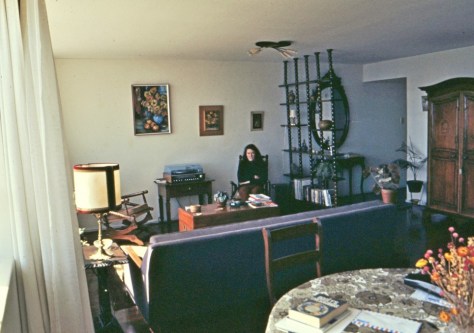
Around mid-August 1973 we began the paperwork (all those tramites!) to marry in Peru. Not as simple as you might think, but on reflection perhaps not as difficult as we anticipated.

While we were allowed to post marriage banns in the British Embassy, we had to announce our intention to marry in the official Peruvian government gazette, El Peruano, and one of the principal daily broadsheets (El Comercio if memory serves me right), and have the police visit us at our apartment to verify our address. I think we also had to have blood tests as well. This all took time, but everything was eventually in place for us to set the wedding date: 13 October.

Some friends wanted to give us a big wedding, but Steph said she just wanted an intimate, quiet day. So that’s what we organized.

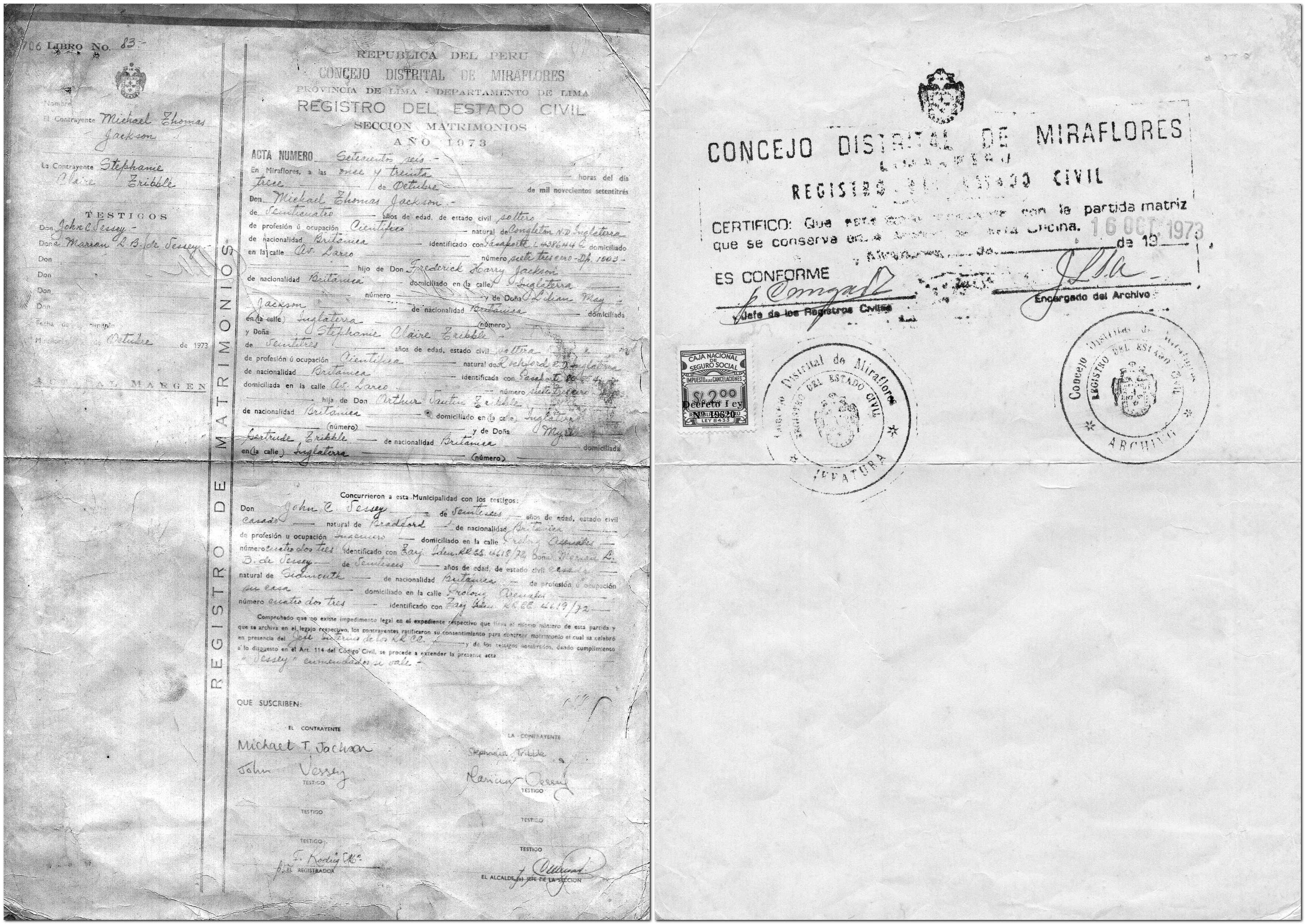
In the week leading up to our wedding, we had to present all the notarised documents at the municipality. After the ceremony, we signed the registry, hand-written in enormous volumes (or tomos). There was a bank of clerical staff, all with their Parker fountain pens, inscribing the details of each wedding in their respective tomo. A week later we collected our Constancia de Matrimonio (with some errors) which detailed in which tomo (No. 83, page 706) our marriage had been recorded, as well as photocopies (now sadly faded) of the actual page.

My work, collecting potatoes, took me all over the Andes; not so much for Steph who only made visits every other week or so to CIP’s highland experiment station (at over 3000 masl) in Huancayo east of Lima, and a six hour drive away.

However, Steph and I explored Peru together as much as we could, taking our VW on several long trips, to the north and central Andes, and south to Lake Titicaca. We also delayed our honeymoon until December 1973, flying to Cusco for a few days, and spending one night at Machu Picchu.
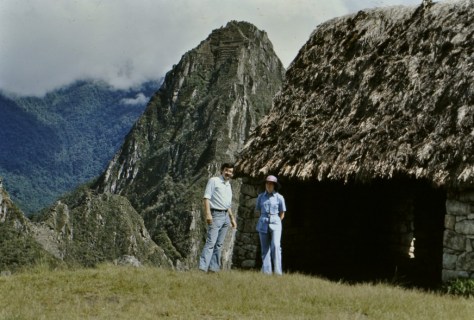
At Machu Picchu, December 1973.


In May 1975, we returned to the UK for seven months for me to complete my PhD, returning to Lima just before New Year.
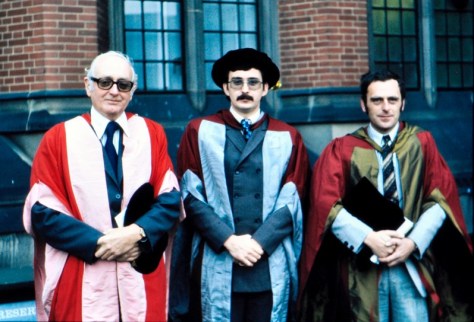
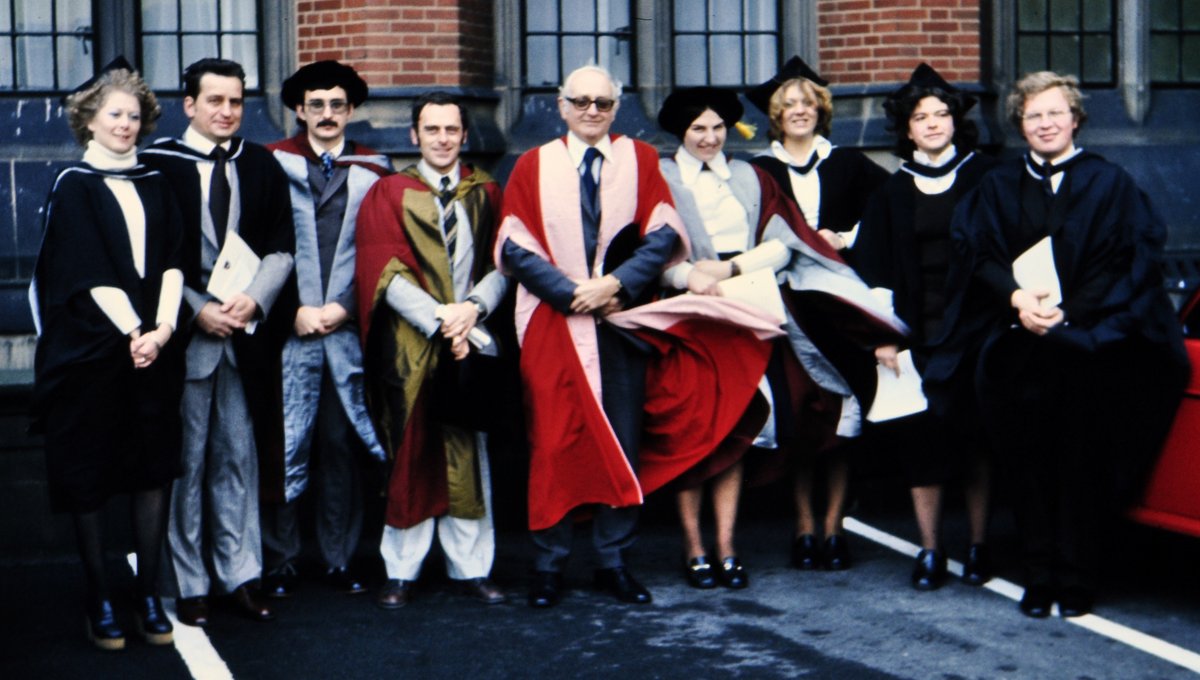
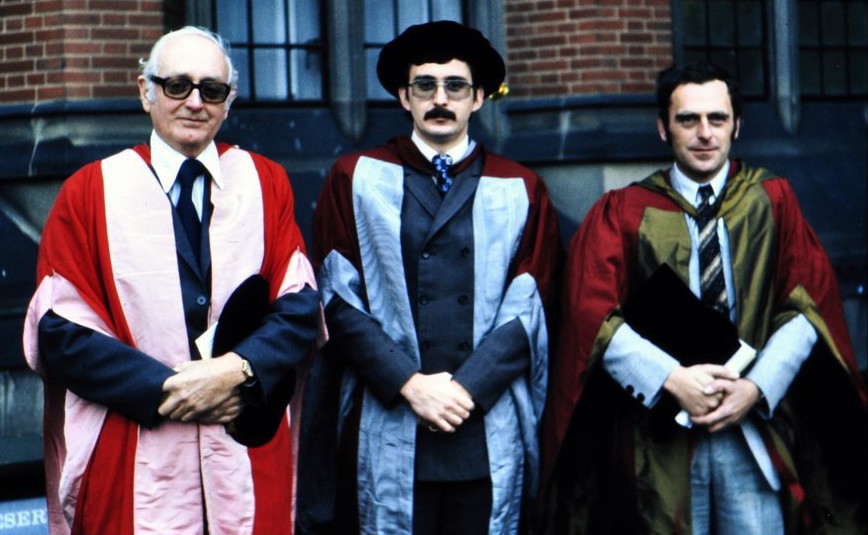
With Jack Hakes and Trevor Williams at my PhD graduation on 12 December 1975 at the University of Birmingham.
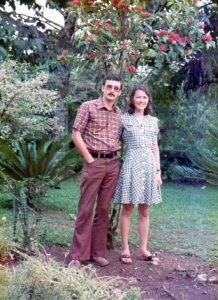
Christmas Day 1976 in Turrialba.

Then, in April 1976, we moved to Costa Rica where I worked on potato diseases and production, based in Turrialba, some 70 km east of the capital city, San José. Under the terms of our visas, Steph was not permitted to work in Costa Rica. I became regional representative for CIP’s Region II (Mexico, Central America, and the Caribbean) in August 1997 when my colleague, Oscar Hidalgo (who was based in Toluca, Mexico) headed to North Carolina to begin his PhD studies.

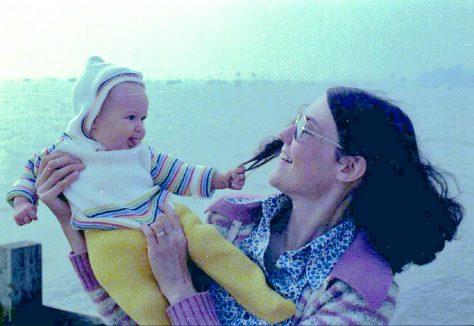
Our elder daughter Hannah Louise was born in San José in April 1978. Later that year, we took our first home leave in the UK and both sets of grandparents were delighted to meet their first granddaughter.
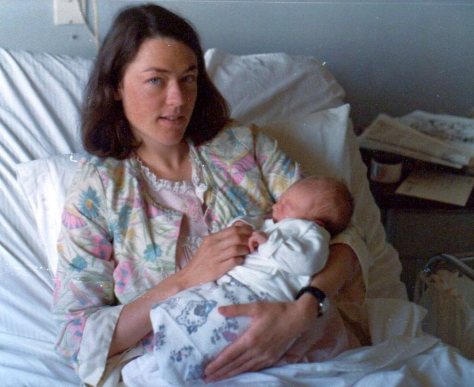
24 April 1978 in the Clinica Santa Rita, San José, Costa Rica.
On home leave in the UK in September 1978.
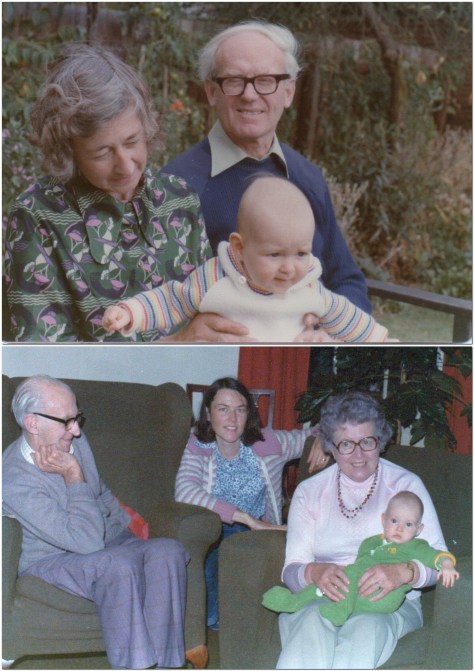
With Steph’s parents Myrtle and Arthur (top) in Southend-on-Sea, and mine, Lilian and Fred, in Leek.

We spent five happy years in Costa Rica before moving back to Lima at the end of November 1980, and began making plans to move to the Philippines by Easter 1981.

However, in early 1981, a lectureship was created at the University of Birmingham, in the Department of Plant Biology (formerly Botany, where Steph and I had studied), for which I successfully applied. We left CIP at the end of March and had set up home in Bromsgrove (about 13 miles south of Birmingham in north Worcestershire) by the beginning of July.
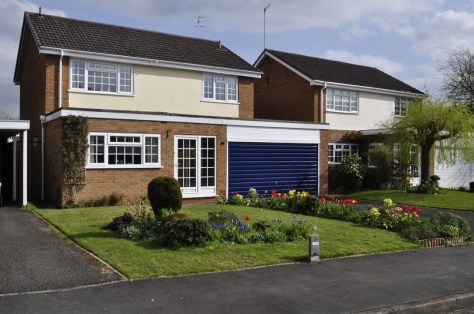
4 Davenport Drive


A decade after we were married, we were already a family of four. In May 1982 Philippa Alice was born in Bromsgrove.
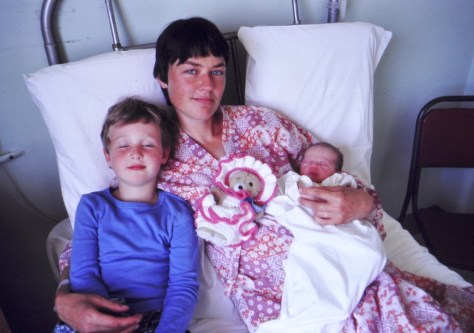
30 May 1982 in Bromsgrove hospital.

During the 1980s we enjoyed many family holidays, including this one in 1983 on the canals close to home.

Many other family holidays followed, in South Wales, in Norfolk, on the North York Moors, and in 1989, in the Canary Islands.
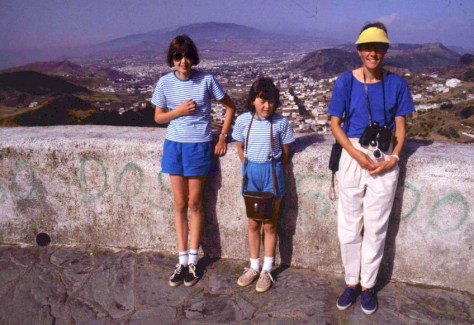
In Tenerife, Canary Islands in July 1989. Steph is carrying the binoculars that I bought around 1964 and which I still possess.

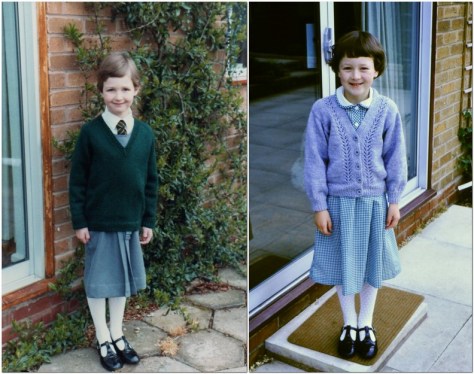
Hannah (left) and Philippa (right) thrived at local Finstall First School, shown here on their first day of school in 1983 and 1987, respectively.
My work at Birmingham kept me very busy (perhaps too busy), but I particularly enjoyed working with my graduate students (many of them from overseas), and my undergraduate tutees.

All in all, it looked like Birmingham would be a job for life. That was not to be, however. By the end of the 1980s, academic life had sadly lost much of its allure, thanks in no small part to the policies and actions of the Thatcher government. We moved on.


By 1993, we had already been in the Philippines for almost two years, where I had been hired (from July 1991) as head of the Genetic Resources Center (GRC) at the International Rice Research Institute (IRRI) in Los Baños, some 65 km south of Manila in the Philippines. I moved there ahead of Steph and the girls (then aged 13 and nine) who joined me just after Christmas 1991.

Meeting fellow newcomer and head of communications, Ted Hutchcroft and his wife at our joint IRRI welcoming party in early 1992.

In 1993 I learned to scuba dive, a year after Hannah, and it was one of the best things I’ve ever done. Philippa trained a couple of years later.
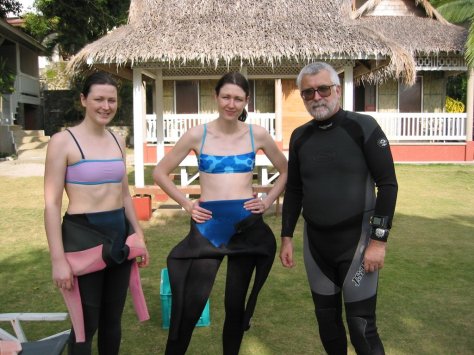
Getting ready to dive, at Arthur’s Place, Anilao, Philippines in January 2003.

Steph was quite content simply to snorkel or beachcomb, and we derived great pleasure from our weekends away (about eight or nine a year) at Anilao, 92 km south from Los Baños. In fact, our weekends in Anilao were one of our greatest enjoyments during the 19 years we spent in the Philippines.

Steph became an enthusiastic beader and has made several hundred pieces of jewelry since then. In Los Baños we had a live-in helper, Lilia, and so in the heat of Los Baños, Steph was spared the drudgery of housework or cooking, and could focus on the hobbies she enjoyed, including a daily swim in the IRRI pool, and looking after her garden and orchids.
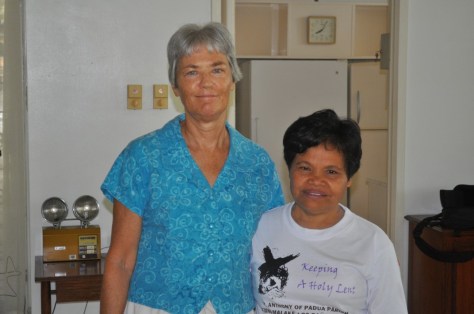
Steph and Lilia on our last day in IRRI Staff Housing #15 on 30 April 2010.

Hannah and Philippa completed their school education at the International School Manila (ISM) in 1995 and 1999 respectively, both passing the International Baccalaureate Diploma with commendably high scores.
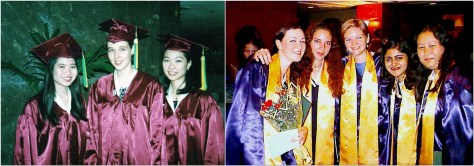
Graduation at ISM: Hannah and Philippa with their friends from around the world.

Traveling to Manila each day from Los Baños had not been an easy journey, due to continual roadworks and indescribable traffic. It was at least two hours each way. By the time Philippa finished school in 1999, the buses were leaving Los Baños at 04:30 in order to reach Manila by the start of classes at 07:15.

In October 1996, Hannah started her university degree in psychology and social anthropology at Swansea University in the UK. However, after two years, she transferred to Macalester College, a highly-rated liberal arts college in St Paul, Minnesota, graduating summa cum laude in psychology and anthropology in May 2000. She then registered for a PhD in industrial and organizational psychology at the University of Minnesota. Philippa began her BSc degree in psychology at the prestigious University of Durham, UK later that same year, in October.

Hannah’s graduation in May 2000 at Macalester College, with Philippa and Michael (Hannah’s boyfriend, now her husband).

Once Hannah and Philippa had left for university, IRRI paid for return visits each year, especially at Christmas.

Christmas 2001. Michael joined Hannah for the visit.

While my work took me outside the Philippines quite often, Steph and I did manage holidays together in Hong Kong/Macau and Australia. And, together with Philippa, we toured Angkor Wat in Cambodia in December 2000.

But Steph also accompanied me on work trips to Laos, Bali, and Japan. She also joined me and my staff when we visited the rice terraces in northern Luzon in March 2009.

Enjoying a cold beer as the sun goes down, near Sagada, northern Luzon, Philippines.
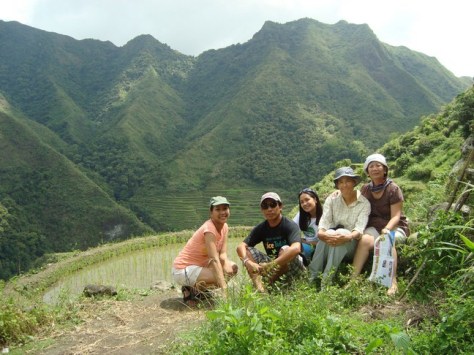
Overlooking the Batad rice terraces in northern Luzon in March 2009.

However, we always used our annual home leave allowance to return to the UK, stay in our home in Bromsgrove (which we had purposely left unoccupied), and meet up with family and friends.

Philippa was awarded a 2:1 degree in July 2003, and the graduation ceremony took place inside Durham Cathedral. She then headed off to Vancouver for a year, before returning to the UK and looking for a job, eventually settling in Newcastle upon Tyne where she has lived ever since.
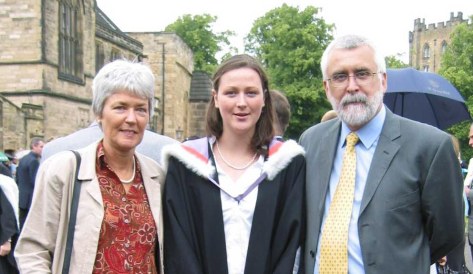
Outside Durham Cathedral where Phil received her BSc degree from the university’s Chancellor, the late Sir Peter Ustinov.

Hannah married Michael in May 2006, and finished her PhD. We flew to Minnesota from the Philippines.
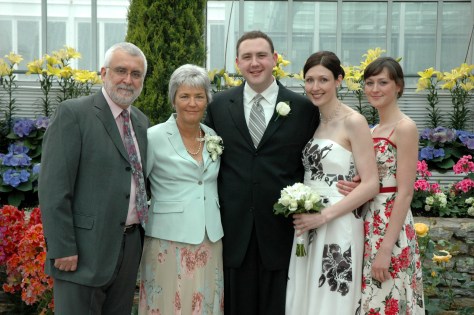
15 May 2006, at the Marjorie McNeely Conservatory in Como Park, St Paul.
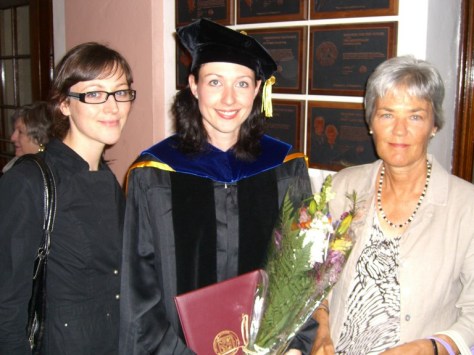
PhD graduation at the University of Minnesota.

Philippa registered for a PhD in biological psychology at Northumbria University in Newcastle upon Tyne where she was already working.

Professionally, the period between 2001 and my retirement in 2010 was the most satisfying. I had changed positions at IRRI in May, moving from GRC to join the institute’s senior management team as Director for Program Planning and Communications (DPPC). I worked with a great team, and we really made an impact to increase donor support for IRRI’s research program. However, by 2008/9 when my contract was up for renewal, Steph and I had already agreed not to continue with IRRI, but take early retirement and return to the UK.

But not quite yet. IRRI’s Director General, Bob Zeigler, persuaded me to stay on for another year, and organize the celebrations for the institute’s 50th anniversary. Which I duly did, and had great fun doing so.

But as our retirement date approached in April 2010, I was honored by the institute’s Board of Trustees with a farewell party (despedida) coinciding with the 50th anniversary of the very first Board meeting in April 1960.
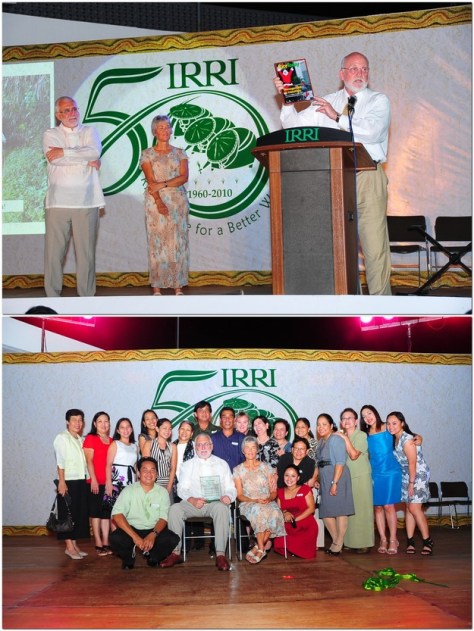
14 April 2010 – IRRI’s 50th celebration dinner and our despedida.


Friday 30 April was my last day in the office.
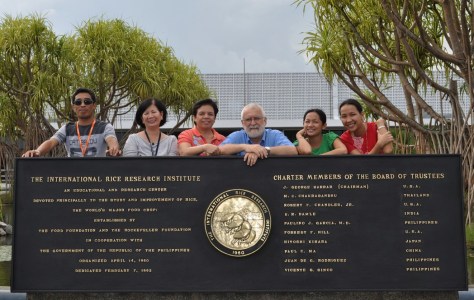
With my DPPC friends. L-R: Eric, Corinta, Zeny, me, Vhel, and Yeyet.

We flew back to the UK two days later, arriving on Monday 3 May and taking delivery of our new car, a Peugeot 308, the following day.

Philippa and Andi flew off to New York in October 2010 and were married in Central Park. She graduated with her PhD in December.
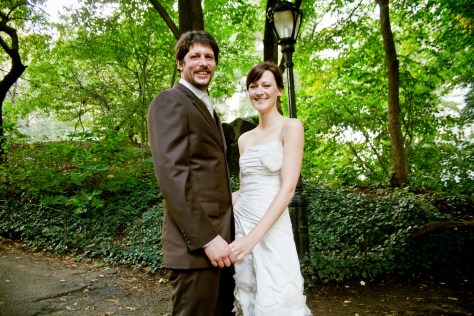
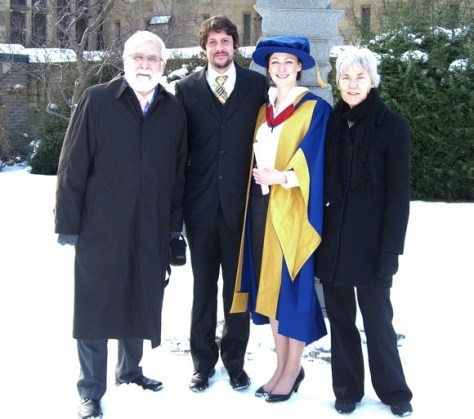
By 2013 we had been married for four decades, and were well-settled into retirement, enjoying all the opportunities good weather gave us to really explore Worcestershire and neighboring counties, especially as National Trust and English Heritage members. And touring Scotland in 2015, Northern Ireland in 2017, Cornwall in 2018, East Sussex and Kent in 2019, and Hampshire and West Sussex in 2022.

We were, by then, the proud grandparents of three beautiful boys and a girl.

Callum Andrew (August 2010) – St Paul, Minnesota
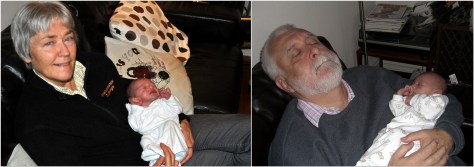
Elvis Dexter (September 2011) – Newcastle upon Tyne
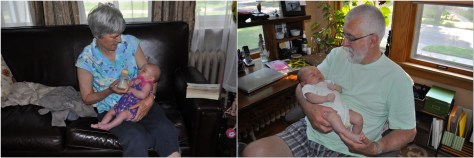
Zoë Isobel (May 2012) – St Paul, Minnesota
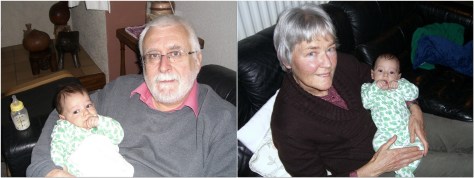
Felix Sylvester (September 2013) – Newcastle upon Tyne

And how could we ever forget a very special day in February 2012, when Steph, Philippa and my former colleague from IRRI, Corinta joined me at Buckingham Palace for an investiture.

Receiving my OBE from King Charles III (then HRH The Prince of Wales) on 14 February 2012.
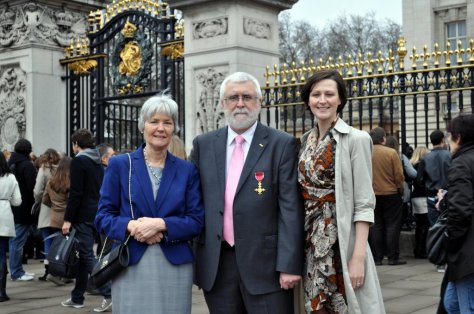
With Steph and Philippa outside the gates of Buckingham Palace.
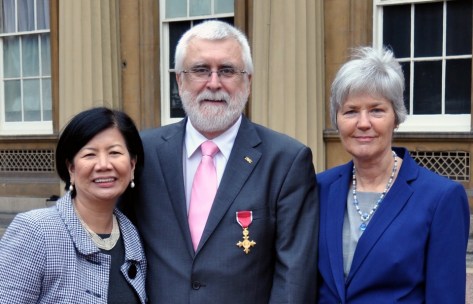
With Corinta and Steph in the courtyard of Buckingham Palace after the investiture.

Since 2010, we have traveled to the USA each year except during the pandemic years (2020-2022), and only returning there this past May and June. We’ve made some pretty impressive road trips around the USA, taking in the east and west coasts, and all points in between with the exception of the Deep South. Just click here to find a list of those road trips.

In July 2016, a few months after I broke my leg, Hannah and family came over to the UK, and we got together with Phil and Andi and the boys for the first time, sharing a house in the New Forest.

Our first group photo as a family, near Beaulieu Road station in the New Forest, 7 July 2016. L-R: Zoë, Michael, me (still using a walking stick), Steph, Callum, Hannah, Elvis, Andi, Felix, and Philippa.

And they came over again in July 2022, to our new home in the northeast of England where we had moved from Bromsgrove in October 2020 at the height of the Covid-19 pandemic.
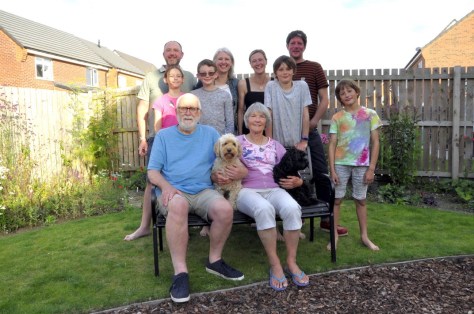
In our garden in Backworth, North Tyneside, August 2022.

L-R: Felix, Elvis, Zoë, and Callum, at Dunstanburgh Castle, Northumberland in August 2022.


So it’s 2023, and fifty years have passed since we married.

During our visit to the USA this past May and June, we met up with Roger Rowe and his wife Norma, along the Mississippi River at La Crosse in Wisconsin.
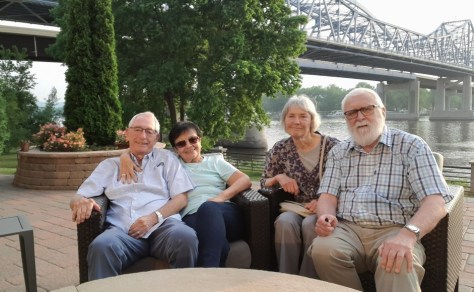
Roger joined CIP in 1973 as head of the Breeding and Genetics Department and was our first boss. Roger also co-supervised my PhD. So it was great meeting up with them again 50 years on.

We’ve been in the northeast just over three years now, and haven’t regretted for a moment making the move north. It’s a wonderful part of the country, and in fact has given us a new lease of life.
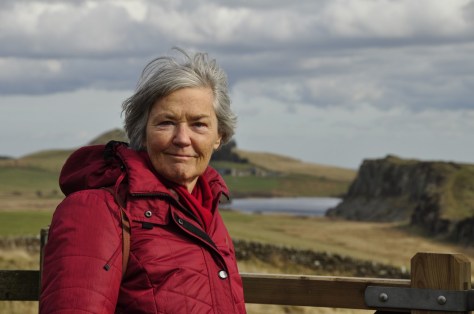
At Steel Rigg looking east towards the Whin Sill, Crag Lough, and Hadrian’s Wall, Northumberland, February 2022.

Steph has taken great pleasure in developing her new garden here. It’s a work in progress, and quite a different challenge from her garden in Worcestershire, discovering what she can grow and what won’t survive this far north or in the very heavy (and often waterlogged) soil.
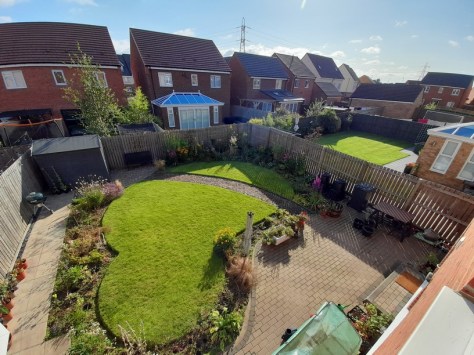
22 August 2023

I’ve had much enjoyment writing this blog since 2012, combining my interests of writing and photography. It has certainly given me a focus in retirement. I never thought I’d still be writing as many stories, over 700 now, and approaching 780,000 words. Since returning to the UK, I’ve also tried to take a daily walk of 2-4 miles. However, that’s not been possible these past six months. A back and leg problem has curtailed my daily walk, but I’m hopeful that it will eventually resolve itself and I’ll be able to get out and about locally, especially along the famous North Tyneside waggonways.

After 50 years together, we have much to be thankful for. We’ve enjoyed the countries where we have lived and worked, or visited on vacation. Our daughters and their families are thriving. Hannah is a Senior Director of Talent Management and Strategy for one of the USA’s largest food companies, and Philippa is an Associate Professor of Biological Psychology at Northumbria University.
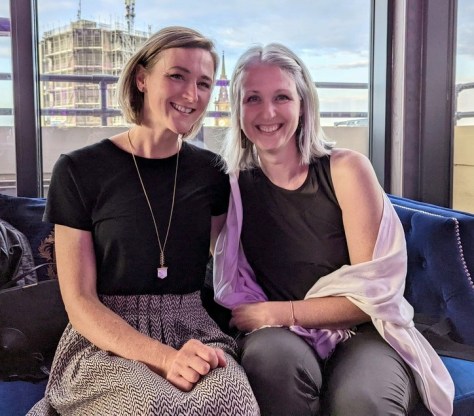
Sisters!
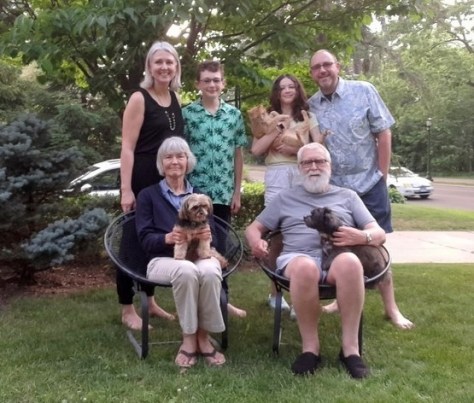
With Hannah and Michael, Callum and Zoë (and doggies Bo and Ollie, and cat Hobbes) in St Paul, MN on 18 June 2023.
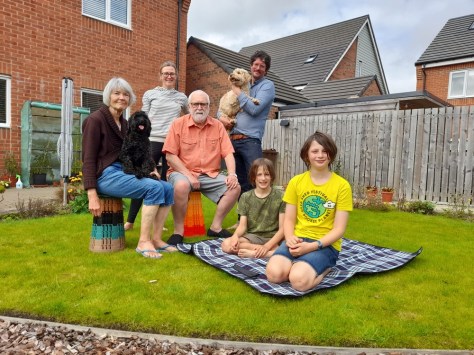
With Philippa and Andi, Elvis and Felix (and doggies Rex and Noodle) on 2 September 2023.

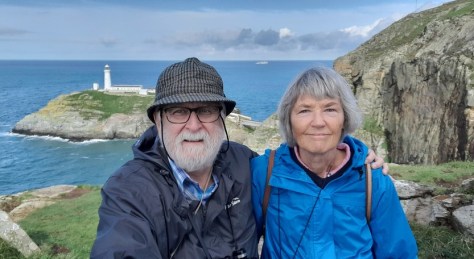
And here we are, at South Stack cliffs, in the prime of life (taken in mid-September) when we enjoyed a short break in North Wales.
Steph with Philippa and family on her birthday on 8 October.

13 October 2023 – still going strong!


While drafting this reminiscence, I came across this article by Hannah Snyder on the Northwest Public Broadcasting website, and it inspired the title I used.

8 billion . . . and counting

This is the latest estimate of the world’s population announced by the United Nations on 15 November 2022. Can you imagine? I was born 74 years ago when the population was just over a quarter of what it is today.

So many more mouths to feed, so many challenges to overcome. And population growth fastest in many of the world’s poorest countries.

The UN’s latest prediction is that another billion will be added by 2037, and that . . . half of the world’s population growth will be concentrated in just nine countries: India, Nigeria, the Democratic Republic of the Congo, Pakistan, Ethiopia, the United Republic of Tanzania, the United States of America, Uganda and Indonesia (ordered by their expected contribution to total growth).


In 2021, the Food and Agriculture Organization of the UN or FAO reported that 193 million people in 53 countries or territories were facing acute food insecurity. And while conflict and the effects of the Covid pandemic are contributors to this state of affairs, there is no doubt that weather extremes are also a major contributing factor, affecting many more people worldwide. More frequent storms. Too much water—or too little. Rising temperatures reducing the agricultural productivity in many regions.

Sustainable food and agricultural production were appropriately important themes at the latest climate change conference—COP27—in Egypt. The Consultative Group on International Agricultural Research or CGIAR, the Food and Agriculture Organization of the UN or FAO, and the Rockefeller Foundation together were prominent at COP27 with the aim of putting agrifood systems transformation at the heart of the conference.

So, whether you are a believer in climate change or a denier (I’ve never been a climate change denier—quite the opposite, in fact), surely you have to accept that something strange is happening to our climate.

More than 30 years ago, two University of Birmingham colleagues—Brian Ford-Lloyd and Martin Parry—and I organized a workshop to discuss the impact of climate change on agriculture and the conservation of plant genetic resources (and how they could, and should, be used to mitigate the effects of a warming climate). The proceedings were published in 1990. Twenty-five years later, in 2014, we followed up with a second volume reflecting how the science of climate change itself had progressed, and how better we were equipped to use genetic resources to enhance crop productivity.


So while agriculture has been—and continues to be—one of the contributors to climate change (livestock, methane from rice paddies, use of fertilizers and the like) it can and has to be part of the solution.

Since more than half of the world’s population are now urban dwellers, they do not produce their own food. Or at least not enough (even if they grow their own vegetables and such on small holdings or allotments) to support many others.

Subsistence farming is not a solution either, even though these farmers can increase productivity by adopting new agricultural practices and higher-yielding crop varieties, if appropriate and affordable. And those campaigners who advocate the abolition of livestock farming (and I have seen one young person state that all farming should be stopped!) have little notion of how that would affect the lives of farmers globally, or where the rest of us would source our food.

There has been much talk recently about diversification of farming systems and adoption of so-called ‘orphan crops’ as part of the solution. Of course these approaches can make a difference, but should not diminish the role and importance of staple crops like wheat, maize, rice, potatoes, sorghum, and many others.

So what are the options? Investment in plant breeding, among others, has to be central to achieving food security. We will need a pipeline of crop varieties that are better adapted to changing environmental conditions, that are one step ahead of novel pest and disease variants. Crop productivity will have to increase significantly over the next few decades.


My first encounter with plant breeding—or plant breeders for that matter—was during a visit, in July 1969, to the Plant Breeding Institute (PBI) in Cambridge during a field course at the end of my second year undergraduate degree course at the University of Southampton. We heard all about wheat breeding and cytogenetics from Dr Ralph Riley FRS (right) no less (later knighted and Director of the PBI from 1972 to 1978). Our paths crossed again several times during the 1990s when he was associated with the CGIAR.

During my third and final year at Southampton, 1969-1970, I enjoyed a plant breeding module taught by genetics lecturer Dr Joe Smartt whose original research background was in peanut cytogenetics. He had spent some years in Africa as a peanut breeder in Zambia (then known as Northern Rhodesia).

It was in that course that I was introduced to one of the classic texts on the topic, Principles of Plant Breeding by University of California-Davis geneticist, RW Allard (first published in 1960). Sadly I no longer have my copy that I purchased in 1969. It was devoured by termites before I left the Philippines in 2010.

I’ve never been actively involved in plant breeding per se. However, the focus of my research was the conservation of genetic resources (of potatoes and rice, and some other species) and pre-breeding studies to facilitate the use of wild species in plant breeding.


It’s been my privilege to know and work with some outstanding plant breeders. Not only did they need a knowledge of genetics, reproductive behavior, physiology and agronomy of a plant species, but this was coupled with creativity, intuition and the famous ‘breeder’s eye’ to develop new varieties.

Perhaps the most famous plant breeder I met in the early 1990s was 1970 Nobel Peace Laureate (and ‘Father of the Green Revolution’) Norman Borlaug, who spent a lifetime breeding wheat varieties, first with the Rockefeller Foundation and then with the International Center for the Improvement of Maize and Wheat (CIMMYT) in Mexico. I wrote about that encounter here.

Explaining how rice seeds are stored in the International Rice Genebank at IRRI to Nobel Peace Laureate Norman Borlaug

In the potato world I met Stan Peloquin from the University of Wisconsin, George Mackay in Scotland, and John Hermsen from Wageningen University. I worked alongside Peruvian potato breeder and taxonomist Carlos Ochoa (below) for several years.

When I joined IRRI in the Philippines in 1991 as head of the Genetic Resources Center, one of my close colleagues was 1996 World Food Prize Laureate Gurdev Khush (below left) who led the institute’s breeding program. He and his team bred more than 300 varieties of rice, some of which—like IR36 and IR72—have been grown over millions of hectares and saved countless millions from starvation.

And another rice breeder (and 2004 World Food Prize Laureate) famous for NERICA rice was Monty Jones (above right) at the Africa Rice Center in West Africa. Monty was a graduate at Birmingham and I was the internal examiner for his PhD thesis in 1983.


Plant breeding has come a long way since I first became interested 50 years ago. Breeders now have access to a whole new toolbox to accelerate the development of new varieties, some of which were not available just a few years ago.

A decade ago I asked my friend and former colleague at IRRI, Ken McNally to contribute a review of genomics and other ‘omics’ technologies to discover and analyse useful traits in germplasm collections to the 2014 genetic resources book that I referred to earlier [1]. I’m sure there have been many useful developments in the intervening years.

One of these is gene editing, and Nicholas Karavolias (a graduate student at Berkeley University) has written an interesting review (from which the diagram above was sourced) of how the CRISPR gene editing tool is being used to improve crops and animals.

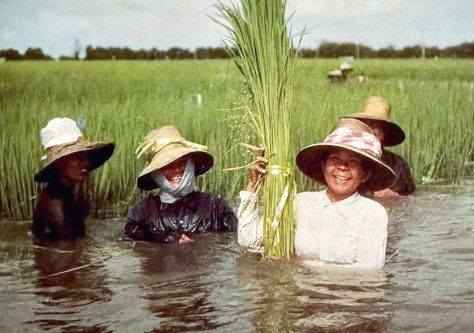
Among the climate change challenges that I mentioned earlier is the likelihood of increased flooding in many parts of the world. Just last year there were devastating floods along the Indus River in Pakistan where rice is an important crop, as it is in many Asian countries. Although grown in standing water in paddy fields, rice varieties will die if totally submerged for more than a few days when floods hit.

Rice paddies near Vientiane, Laos.

There are rice varieties that can grow rapidly as flood waters rise. Known as deepwater rice varieties, they can grow several centimeters a day. But they are never submerged as such for long.

The harvest of deepwater rice varieties in Thailand.

Over several decades, submergence tolerant rice varieties were developed in a collaborative project between US-based scientists and those at IRRI using marker-assisted selection (not genetic engineering) to identify a gene, named Sub1 (derived from an Indian rice variety) and incorporate it into breeding lines. My former IRRI colleagues, plant physiologist Abdelbagi Ismail and breeder David Mackill have written about response to flooding. In the video below you can see the impact of the Sub1 gene [2]. And the impact of that gene is readily seen in the video below which shows two forms of the rice variety IR64 with and without the Sub1 gene.

To date, the impact of genetic engineering in crop improvement has not been as significant as the technology promised, primarily because of opposition (environmental, social, and political) to the deployment of genetically-modified varieties. I wrote about that issue some years back, and focused on the situation of beta-carotene rich rice known as ‘Golden Rice’. After many years of development, it’s gratifying to see that Golden Rice (as the variety Malusog) has now been grown commercially in the Philippines for the first time, and can now deliver real health and nutritional benefits to Vitamin A impoverished communities in the Philippines and hopefully elsewhere before too long.

In recent weeks there have been interesting news releases about the development of perennial rice and its potential to mitigate some climate change effects, and reduce labor usage. Researchers at the John Innes Centre in the UK have identified a gene that they hope will make wheat varieties more heat-resistant. The need for trait identification has never been greater or the importance of the hundreds of thousands of crop varieties and wild species that are safely conserved in genebanks around the world. Fortunately, as mentioned earlier, there are now better and more efficient tools available to screen germplasm for disease and pest resistance, or for genes like the wheat gene just discussed.

In terms of adaptation to a changing climate through plant breeding, I guess much of the focus has been on developing varieties that are better adapted to changing environment, be that the physical or biotic environment.

But here’s another challenge that was first raised some years back by one of my former colleagues at IRRI, Melissa Fitzgerald (right) who was head of the Grain Quality, Nutrition, and Postharvest Center, and is now Professor and Interim Head of the School of Agriculture and Food Sciences at the University of Queensland, Australia.
And it’s to do with the potential global savings of carbon. Melissa and her colleagues were looking at the cooking time of different rice varieties. This is what she (and her co-authors wrote in an interesting 2009 paper):

The cooking time of rice is determined by the temperature at which the crystalline structures of the starch begin to melt. This is called gelatinization temperature (GT). Lowering the GT of the rice grain could decrease average cooking times by up to 4 min. Although this might initially seem entirely insignificant, by computing the number of times rice is cooked in any one day by millions of households around the world, a decrease of just 4 min for each cooking event could save >10,000 years of cooking time each day. This represents massive potential for global savings of carbon and is of particular relevance to poor, rural households that depend on scarce local supplies of fuel.

Now there’s a huge breeding challenge.

Anyway, in this post I’ve really only scratched the surface of the topic, but hopefully for those readers not familiar with plant breeding, what it entails, and what it can promise, I hope that I’ve explored a few interesting aspects.


[1] McNally, KL. 2014. Exploring ‘omics’ of genetic resources to mitigate the effects of climate change. In: M Jackson, B Ford-Lloyd & M Parry (eds), Plant Genetic Resources and Climate Change. CABI, Wallingford, UK. pp. 166-189

[2] Ismail, AM & Mackill, DJ. 2014. Response to flooding: submergence tolerance in rice. In: M Jackson, B Ford-Lloyd & M Parry (eds), Plant Genetic Resources and Climate Change. CABI, Wallingford, UK. pp. 251-269.

That’s not a fair question . . .

I worked overseas for much of my career—just over 27 years—in three countries. For those who are new to my blog, I’m from the UK, and I worked in agricultural research (on potatoes and rice) in Peru, Costa Rica, and the Philippines, besides spending a decade in the UK in between teaching plant sciences at the University of Birmingham.
I have been asked, from time to time, which of the three countries Steph and I enjoyed the most. That’s not really a fair question.

Each country was a totally different experience, reflecting to a large extent that stage of our lives. We were young and newly-married in Peru in the early 1970s, our first time abroad. We raised our elder daughter Hannah in Costa Rica in the late 1970s, and were already in our early 40s when we moved to the Philippines in 1991, with two growing daughters: Hannah was 13, and Philippa just nine (born in Worcestershire in the UK). I got to learn a second language, Spanish, and became quite fluent by the time we left the Americas in 1981.

Now that I’ve been retired for over a decade, it’s a good opportunity to reflect on those years spent abroad.


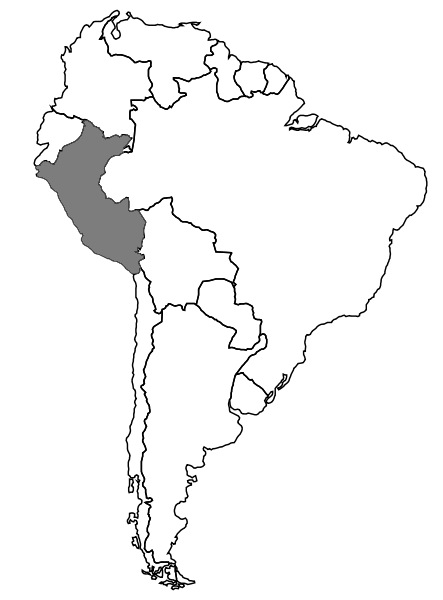
laurent_amerique_du_sud_politiqueI won’t deny that I have a particular soft-spot for Peru. It was a country I’d wanted to visit since I was a small boy, when I often spent hours poring over maps of South America, imagining what those distant countries and cities would be like to visit. 
I don’t know why I was particularly drawn to the map of South America. I guess it’s the iconic shape for one thing. But, when I first moved up to high school in 1960, just before my 12th birthday, our geography lessons focused on several South American countries. I wrote to a number of embassies in London asking for information packs, and was rewarded over the following weeks with a host of brochures, maps, and the like.

Anyway, to cut a long story short (I have posted several stories elsewhere about my early days in Lima), I was offered, in February 1971, the opportunity to work in Peru, initially for just a year from September that year. Things didn’t go to plan, and it wasn’t until January 1973 that I actually landed in Lima, which became my home for the next three years.

19731013 003 Wedding

13 October 1973

Steph joined me in July, and we married the following October in the Miraflores suburb where we rented an apartment. Working at the International Potato Center (known as CIP through its Spanish acronym) we both traveled frequently to the center’s research station in Huancayo, an important town in the central Andes of Peru, in the broad and fertile Mantaro valley, a 300 km journey that often took six hours or more. The highway, the Carretera Central, crossed the Andes at a highest point of 4,843 metres (15,890 ft) at Ticlio (around Km 120).

peru-037

In my own work collecting indigenous varieties of potatoes, I traveled to many parts of northern Peru, in the Departments of Ancash, La Libertad, and Cajamarca in 1973 and 1974.

And to the south around Lake Titicaca in the Department of Puno and near Cuzco, where I continued my research towards a PhD.

_DSC2828

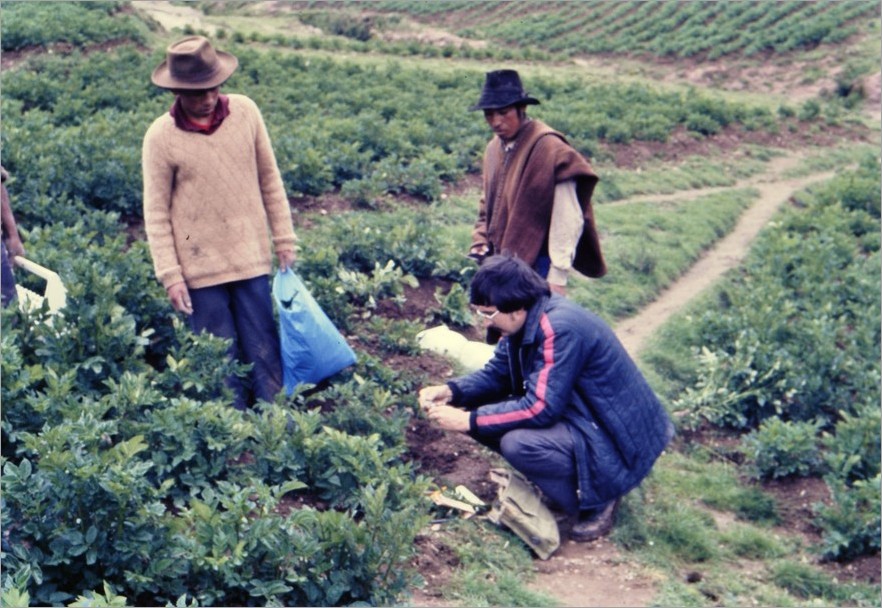
Collecting potato flower buds for chromosome counts, from a farmer’s field near Cuzco, in February 1974.

Steph and I also took great pleasure in taking our Volkswagen deep into the mountains, and on long trips down the coast to Arequipa and up to Lake Titicaca. And north to the Callejón de Huaylas in Ancash, below Peru’s highest mountain Huascarán, and on to Cajamarca further north.

Peru 050(1)

Looking north to the Callejon de Huaylas, and Nevado Huascarán, Peru’s highest mountain.

I visited Cuzco and Machu Picchu just a week after I arrived in Peru, and had great pleasure taking Steph there in December the same year. In fact we delayed our honeymoon so we could book a stay at the tourist hotel at Machu Picchu (a hotel that closed many years ago).

Enjoying Machu Picchu in December 1973.

Our years in Lima were special. As I said, it was the first time Steph and I had worked abroad. CIP was a young organization, founded just over a year before I joined. There was a small group of staff, pioneers in a way, and there weren’t the layers of bureaucracy and procedures that bedevil much larger and longer-established organizations.

Peru is a stunningly beautiful country, and lived up to all my expectations. I was not disappointed. It had everything: culture, history, archaeology, landscapes. And wonderful food. You name it, Peru had it. 


But, after three years, it was time to move on, and that’s when we began a new chapter in Costa Rica from April 1976 a new chapter. Professionally, for me it was a significant move. I’d turned 27 a few months earlier. CIP’s Director General Richard Sawyer asked me to set up a research program to adapt potatoes to hot and humid conditions, so-called ‘tropical potatoes’. I was on my own; I had to rely on my own resources to a large extent. It was a steep learning curve, but so worthwhile and stood me in good stead for the rest of my career.

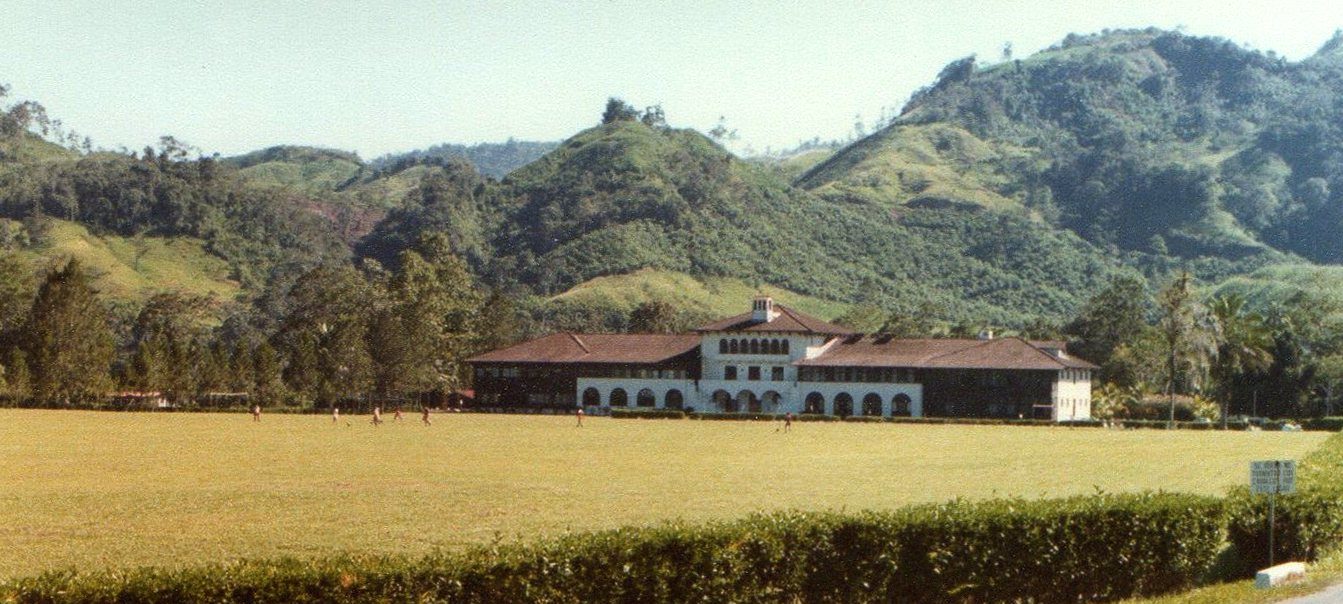
We remained in Costa Rica for almost five years, based at a regional agricultural research institute, CATIE, in the small town of Turrialba, some 70 km east of San José, the capital city.

The CATIE administration building

We enjoyed trips to the volcanoes nearby: Turrialba, Irazú, and Poás, to the beaches of northwest Costa Rica, just south of the frontier with Nicaragua on the Guanacaste Peninsula.  Also to the north of Panama where potatoes were the main crop in the volcanic region just south of the international border.

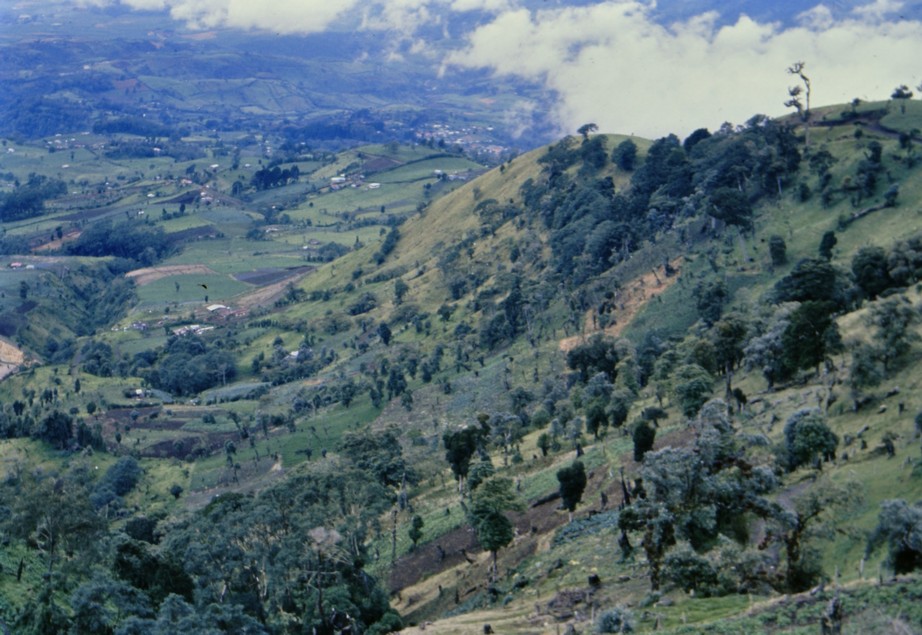
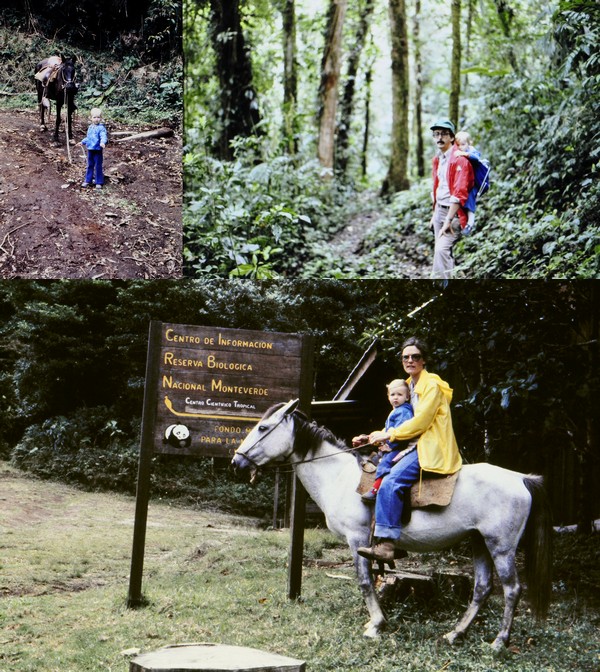
Hannah was born in Costa Rica in April 1978. It was a great place to raise a small child. In 1980 we took her the Monteverde National Biological Reserve in the northwest of the country (and many hours drive from Turrialba) in search of the Resplendent Quetzal.

Resplendent quetzal. (Image courtesy of Prof. Rob Beynon).

Professionally, I learnt a lot about potatoes as a crop, about the management of potato diseases, and seed production, and contributed to setting up one of the first multi-country programs among any of the CGIAR centers. PRECODEPA as it was known set the standard for multilateral cooperation between national programs for many years to come.

I had a great team, albeit small, working with me: Jorge, Moisés, and Leda, and I wrote about them and catching up again after 40 years in a recent blog post.

Costa Rica is such a beautiful, green country, a tropical paradise, with about 25% of its land area set aside for national parks and the like. It’s one of the most biodiverse countries in the world, and I spent many hours sitting on the doorstep at home, sipping a super ice-cold beer (Cerveza Tropical was my beverage of choice) watching the multitude of birds that visited our garden. On one Christmas bird survey in the Turrialba valley, me and my birding partner spotted around 100 different species in half a day! And mammals as well: skunks, armadillos, and coatimundi among those found in the garden, not to mention some of the world’s most poisonous snakes.

After almost five years there, it was time to move on, with the expectation of a posting with CIP to the Philippines. Instead we returned to the UK in 1981, and didn’t actually make it to the Philippines until a decade later. An archipelago of more than 7600 islands; the Land of Smiles.


By the end of the 1980s I was much less enamored of academic life, and had begun to look out for new opportunities. One particularly interesting one came along in September 1990 when I applied for the position of Head of the Genetic Resources Center (GRC) at the International Rice Research Institute (IRRI) in Los Baños, about 65 km south of Manila.

Completing a PhD – was it worth the effort?

A topical story in the Lima press
Overnight, there was an interesting and topical post (as far as I’m concerned) on the Facebook page of one of my ‘friends’—the son of one of my graduate students when I was a faculty member at The University of Birmingham in the 1980s. He hails from Peru. Carlos Arbizu Jr. is studying for his PhD at the University of Wisconsin-Madison and, as far as I can determine, he’s working on carrot genetics under the supervision of my friend and former potato scientist David Spooner.

Carlos had posted a link to an article published on the website of the Lima-based Newspaper Perú21: ¿Por qué estudiar un doctorado?  (Why study for a PhD?). To which Carlos had added the byline: PhD = Permanent Head Damage.

Maybe he’s going through a difficult patch right now. I’ve seen from several of his posts that he’s immersed in some pretty ‘heavy’ molecular genetic analysis. It’s beyond my comprehension.

But all PhD students go through peaks and troughs. I know I did. Some days nothing can go wrong, progress is swift. The world is your oyster, and there really is a light at the end of the tunnel. On other days, you just wish the earth would open up and swallow you.

And for many PhD students, the most trying time often comes when they begin to draft their thesis and eventually prepare to defend it. Unfortunately many science graduates have received very little formal training in how to write clear and concise prose. Writing just doesn’t come naturally. So what should be one of the most important aspects of completing a PhD can become a long and tedious chore. And before submission regulations were tightened up at UK universities, some students could take a couple of years or more to write up and submit their thesis for examination.

40 years ago today
Well, this Perú21 article was published yesterday. And today, 23 October (if memory serves me right) is exactly 40 years since I defended my PhD thesis: The Evolutionary Significance of the Triploid Cultivated Potato, Solanum x chaucha Juz. et Buk. I was almost 27 (old by UK standards, average or maybe young compared to many US graduate students), and had been working on my degree for four years. I’d completed a one-year MSc degree in genetic resources at Birmingham in September 1971 (having graduated from the University of Southampton with a BSc in botany and geography in July 1970), and then been offered the opportunity to work in Peru for a year at the newly-established International Potato Center (CIP). Well, for various reasons, and to cut a long story short, That opportunity didn’t materialize in September 1971 so my head of department, Professor Jack Hawkes (who went on to supervise my PhD) persuaded the Overseas Development Administration (now Department for International Development, DfID) to cough up some support until the funding for my position at CIP was guaranteed. Thus I began my study in Birmingham, and finally moved to Lima in January 1973, working as an Associate Taxonomist and conducting research that went towards my PhD thesis. And since I was employed and having a regular income, I took another three years to complete all the experimental work I had planned. In any case, when I joined CIP in 1973 the institute was still establishing and developing its own infrastructure. That was also one of the exciting aspects to my work. It was a real opportunity to build up and curate a large collection of Andean potato varieties and wild species, and study them in their native environment.

CIP collection

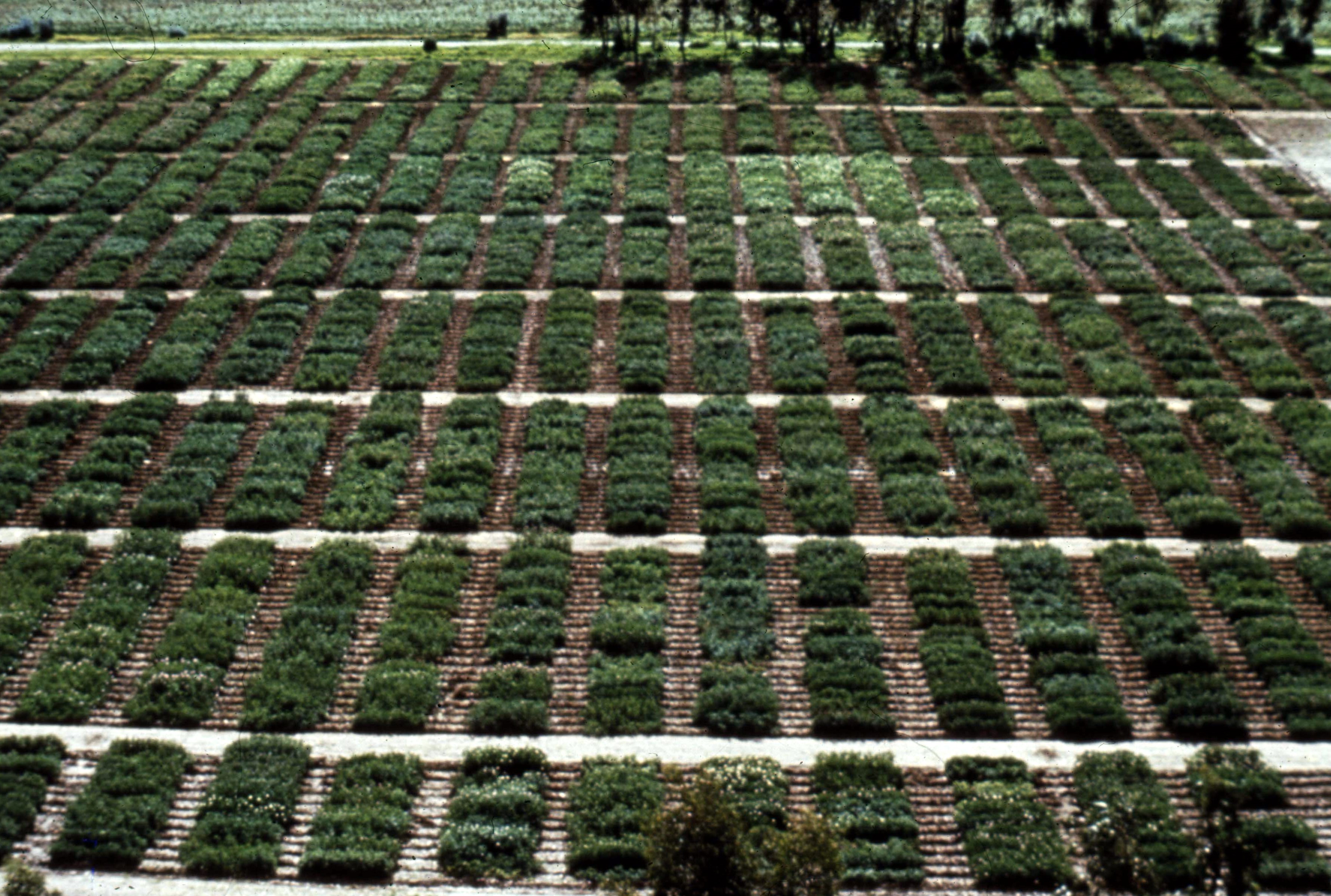
The CIP field collection of potato varieties planted in the Mantaro Valley near Huancayo in central Peru.

spuds

The diversity of Andean potato varieties.

The next couple of photos show some of the field work I carried out in various parts of Peru.

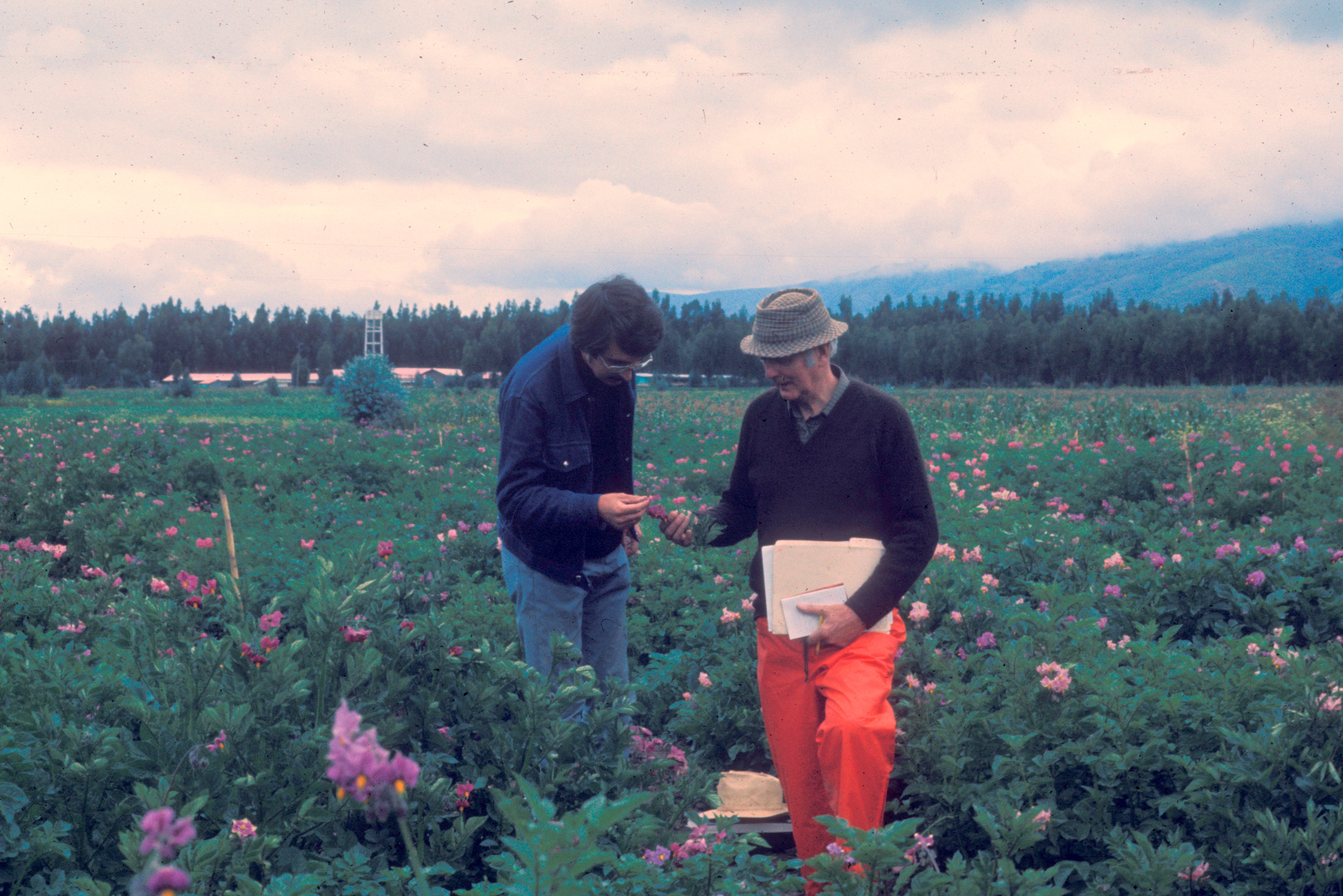
Mike Jackson and Jack Hawkes in the CIP potato germplasm collection, Huancayo, central Peru in early 1974

Learning from my supervisor, Professor Jack Hawkes, during one of his visits to Peru while I was carrying out my study.

MTJ in CIP

With CIP taxonomist, Professor Carlos Ochoa, a renowned Peruvian expert on potatoes and their wild relatives.

I was looking at the relationship between potato varieties with different chromosome numbers, so-called diploids and tetraploids, with 24 and 48 chromosomes respectively. If you can cross these two types you expect to produce some with an intermediate chromosome number. So, 48 x 24 = 36, the triploids. For the first years at CIP we didn’t have any glasshouses where we could work. Instead we had rather rustic polytunnels right in the field next to the germplasm collection, where I would make all those pollinations using the so-called cut-stem technique.

Experimental data from other parts of the world had shown that triploids were formed only rarely in such crosses. Yet triploid varieties were quite common and highly prized by potato farmers in the Andes. I was trying to determine if the crossability relationships of these native potatoes might be different in their indigenous environment. So I went on to make hundreds of crosses (and thousands of pollinations), as well as study indigenous farming systems in the south of Peru. This next gallery show some of the triploids potatoes grown by farmers. One of the most prized was the variety Huayro, and there were two forms, one round and the other elongated (and quite large). Both had red skins and yellow flesh.

Back to Birmingham
In May 1975, Steph and I headed back to the UK. But not directly. On the assumption that I would successfully defend my PhD thesis, CIP’s Director General had offered me a new position in the Outreach Department, and with the possibility of moving to Central America. So we headed for Costa Rica (where I’d eventually move to in April 1976) to see the lie of the land, so to speak. And from there we went on to Mexico for a few days to visit our old friends, and former CIP colleagues, John and Marion Vessey who had moved to maize and wheat center, CIMMYT, near Mexico City. From Mexico we headed to New York (first flight on a wide-bodied jet, an Eastern Airlines L-1011 Tristar) for a connection with British Airways to Manchester where my parents met us. We spent a further week looking for somewhere to live in Birmingham, and were fortunate to find an apartment very convenient to the university and only a few minutes walk from the Department of Botany (as it was then) Winterbourne Gardens where I had been assigned some lab space and a desk.

A nightmare waiting to happen
Now remember, there were no PCs or laptops, cloud computing, USB sticks or floppy disks in 1975. All my thesis data was available in hard copy only, and I carried a briefcase with four years of work with me from Lima to the UK on that journey I just related. The briefcase was hardly ever out of my sight! In those days it was not unknown for a graduate student to have lost a briefcase on a journey containing a complete draft of a thesis. No backup!

Getting into a routine
Once settled in Birmingham, I planned out my work for the coming months, with a deadline of 1 October. That was the final day of submission if I wanted to have my thesis examines and (if approved) have the degree awarded at the next congregation or commencement in early December that same year. But by the beginning of June I had not even begun to write, never mind complete the last minute field experiment I had planned (checking the ploidy of a set of hybrids produced earlier in the year) or create the figures I would include. Again, there was no digital technology available. I had to hand draw all my maps and other figures (my geography training in cartography at Southampton finally came in useful). While the department’s chief technician actually photographed all of these, I had to print all my own photographs (again, the experience I’d gained from my father, a professional photographer all his life, came in handy).

Working to a regular schedule every day, from around 7:30 am until 5 pm with a break for lunch, and spending another couple of hours after dinner, I soon began to make progress, although I didn’t actually start putting pen to paper until the beginning of July. It took me only six weeks to draft my thesis. Once I’d completed a chapter I’d hand it over to Jack Hawkes for review and revision. And to give him credit, he usually handed me back my draft with his comments within a couple of days only (and this was an approach I adopted with all my graduate students during the 1980s).

So, by mid-August or so I had a completed text, I’d checked the chromosome numbers of the hundred or so plants in the field, and set about the figures. I found someone who would type my thesis, but at the last moment he had to use a manual typewriter since the electric one he’d wanted to rent was no longer available. In 1975 The University of Birmingham changed the thesis submission regulations and it was no longer necessary to submit a thesis fully bound in a hard cover. I was able to submit in temporary binding, and this in fact saved perhaps three weeks from my tight schedule. I hit the 1 October deadline with about twenty minutes to spare just before 5 pm.

Thesis defence
I was quite surprised when my external examiner planned the defence of my thesis just three weeks later. All went to plan. In those days, the exam consisted of the graduate student, the external examiner and an internal examiner (usually the thesis supervisor). Today things might have changed, and even when I worked at Birmingham in the 80s the supervisor was no longer permitted to act as the internal examiner. I believe there may now also be a third panel member, to see fair play.

From the outset it was apparent that my thesis would pass muster, since the external examiner told me that he’d enjoyed reading the thesis. But we then went on to have a thorough discussion over the next three hours about many of the details, and the implications for potato genetic conservation and breeding. Phew!

And in early December, the 12th actually, I was able to celebrate with others from the department as we were awarded our degrees at the mid-year congregation.

19 Ed & Mike

L to R: Pam Haigh, Brenig Garrett,  me, Prof Trevor Williams, Prof Jack Hawkes, Dr Jean Hanson, Margaret Yarwood, Jane Toll, Stephen Smith

20 Ed & Mike

With my PhD supervisor, Prof. Jack Hawkes on my right, and MSc supervisor, Prof. Trevor Williams on my left; 12 December 1975.

PhD congregation, 12 December 1975 - with Mum and Dad

With my Mum and Dad.

bluedivider-hi

Was it worth it?
So let me come back to the question I posed in the title of this post. Was it worth it? Unequivocally Yes! Would I want to do it again? No!

Actually completing a PhD is probably the most selfish piece of research that a scientist will ever get to do. There’s one aim: complete a thesis and have the doctorate awarded. PhD research does not have to be ground-breaking at all. In fact much of it is pretty mundane, and that’s one of the down sides when things are not going so well. For Birmingham at least, the PhD regulations stated that the thesis had to represent a piece of original research, completed under supervision. And it’s the ‘under supervision’ that is critical. A PhD student is still maturing, so to speak. The work is guided by a mentor. Of course there can be breakthroughs that lead to the most prestigious prizes. I believe that Sir Paul Nurse’s PhD research set him off on the path that eventually led to his Nobel prize.

I have encouraged others to research for a PhD, and I hope I was able to give them the support and advice that my supervisors gave me. In that respect my PhD was a positive experience. It’s not always the case, and when student-supervisor relationships break down, every one suffers. It does not necessarily have to take many, many months (or years even) to write a thesis. It takes self-discipline but also support from the supervisor.

Without a PhD I would not have enjoyed the career in international agricultural research and academia that I did. My PhD was like a ‘union card’. It enabled me to seek opportunities that would probably have been closed without a PhD. But I also acknowledge that I was lucky. I moved into a field—genetic resources—that was just expanding, as were the international centers of the CGIAR. And I had mentors who were prepared to back me.

Forty years on I can look back to those days in 1975 with a fair degree of nostalgia. And then reflect on the benefits that accrued from that intense but disciplined period in the summer of 1975 (when there was a heat wave, and Arthur Ashe won the men’s title at Wimbledon), and which allow me now to enjoy the retirement I started five years ago.

Both of our daughters, Hannah and Philippa, went on to complete a PhD (in 2006 and 2010, respectively) in their chosen field: psychology! So I can’t have passed on so many negative vibes about graduate study, although their choice of psychology does make a profound statement, perhaps.

Peer-reviewed papers
Incidentally, I finally got around to publishing three papers from my thesis. When I returned to CIP just before New Year 1976, I moved into a new role and responsibilities. And even though I eventually found time to draft manuscripts, these took some time to appear in print after peer review, revision and acceptance. One of the papers—on the field work at Cuyo Cuyo—was originally submitted to the journal Economic Botany. And there it languished for over two years. I received an invitation from the editor of Euphytica to submit a paper on the same topic, so I withdrew my manuscript from Economic Botany. About that same time I received a letter from that journal’s interim editor in chief that manuscripts had been discovered unpublished up to 20 years after they had been submitted, and what did I want to happen to mine. It was published in Euphytica in 1980.

Jackson, M.T., J.G. Hawkes & P.R. Rowe, 1977. The nature of Solanumchaucha Juz. et Buk., a triploid cultivated potato of the South American Andes. Euphytica 26, 775-783. PDF

Jackson, M.T., J.G. Hawkes & P.R. Rowe, 1980. An ethnobotanical field study of primitive potato varieties in Peru. Euphytica 29, 107-113. PDF

Jackson, M.T., P.R. Rowe & J.G. Hawkes, 1978. Crossability relationships of Andean potato varieties of three ploidy levels. Euphytica 27, 541-551.PDF