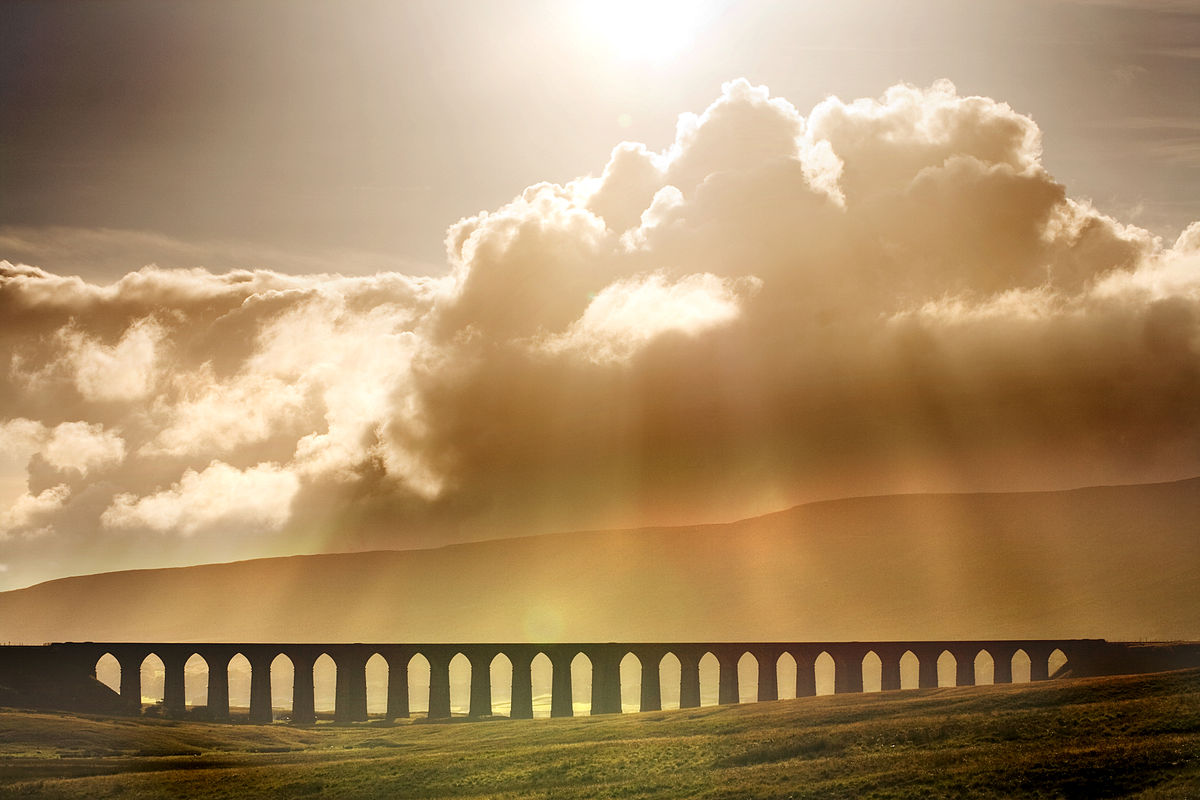
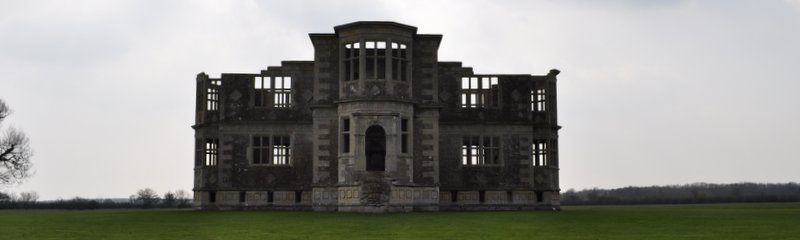
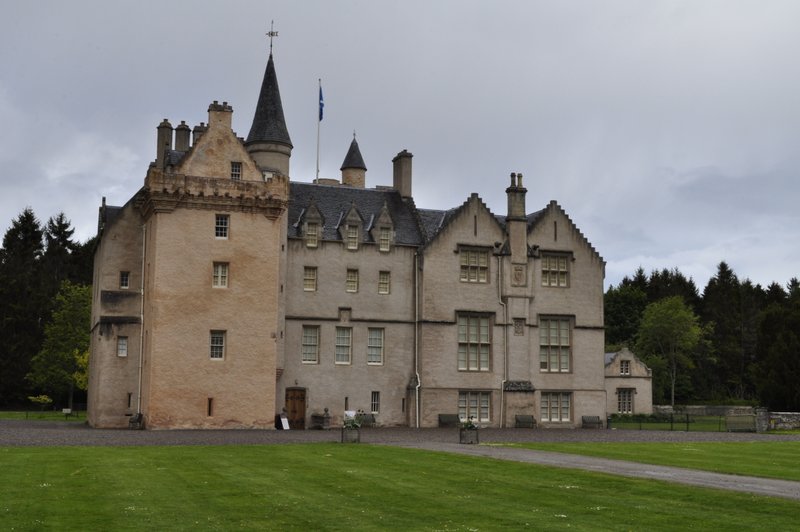
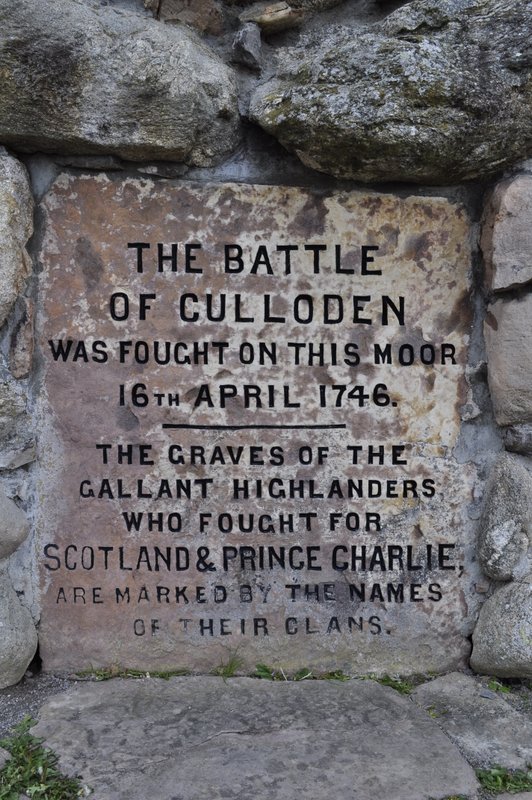
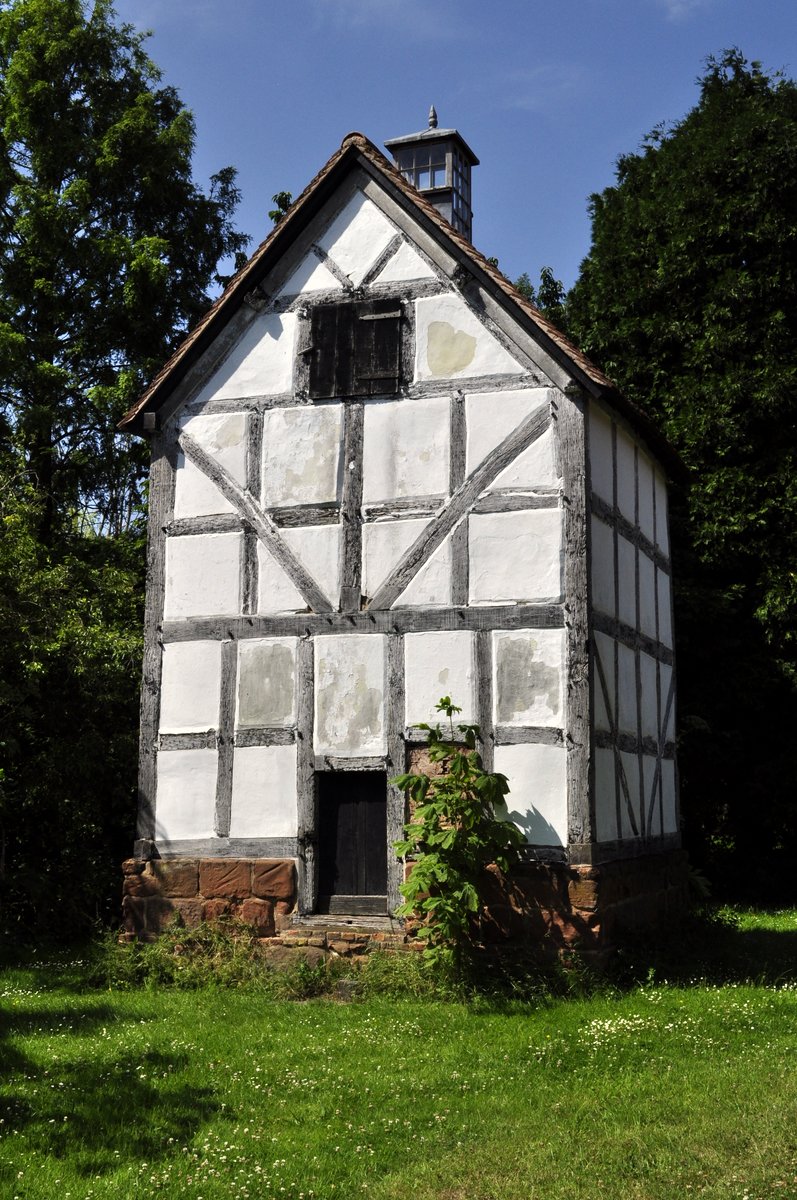
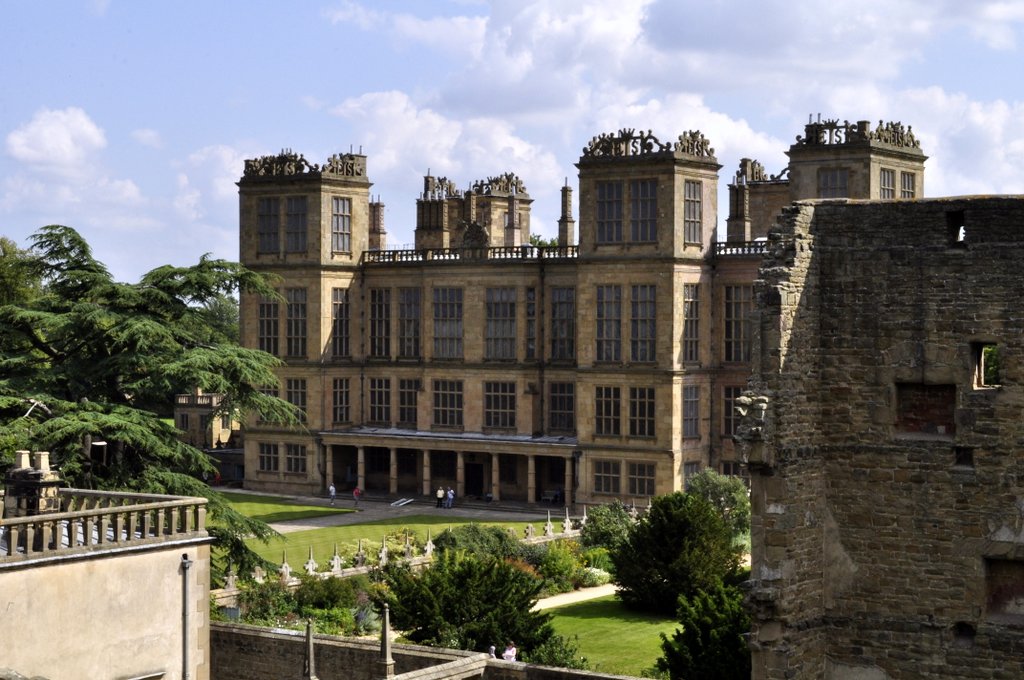
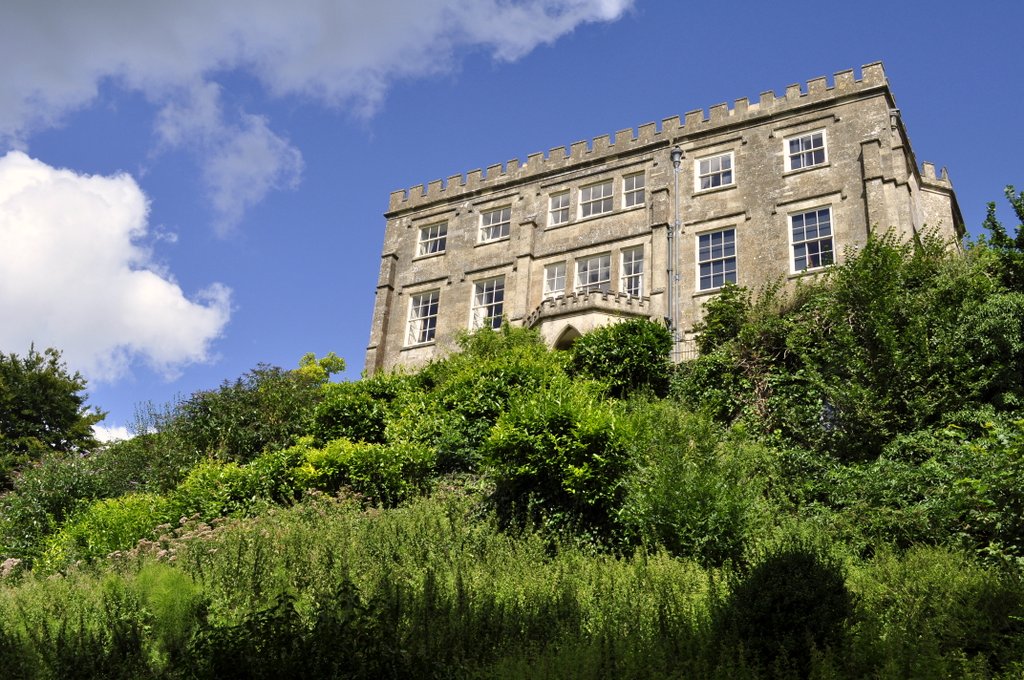
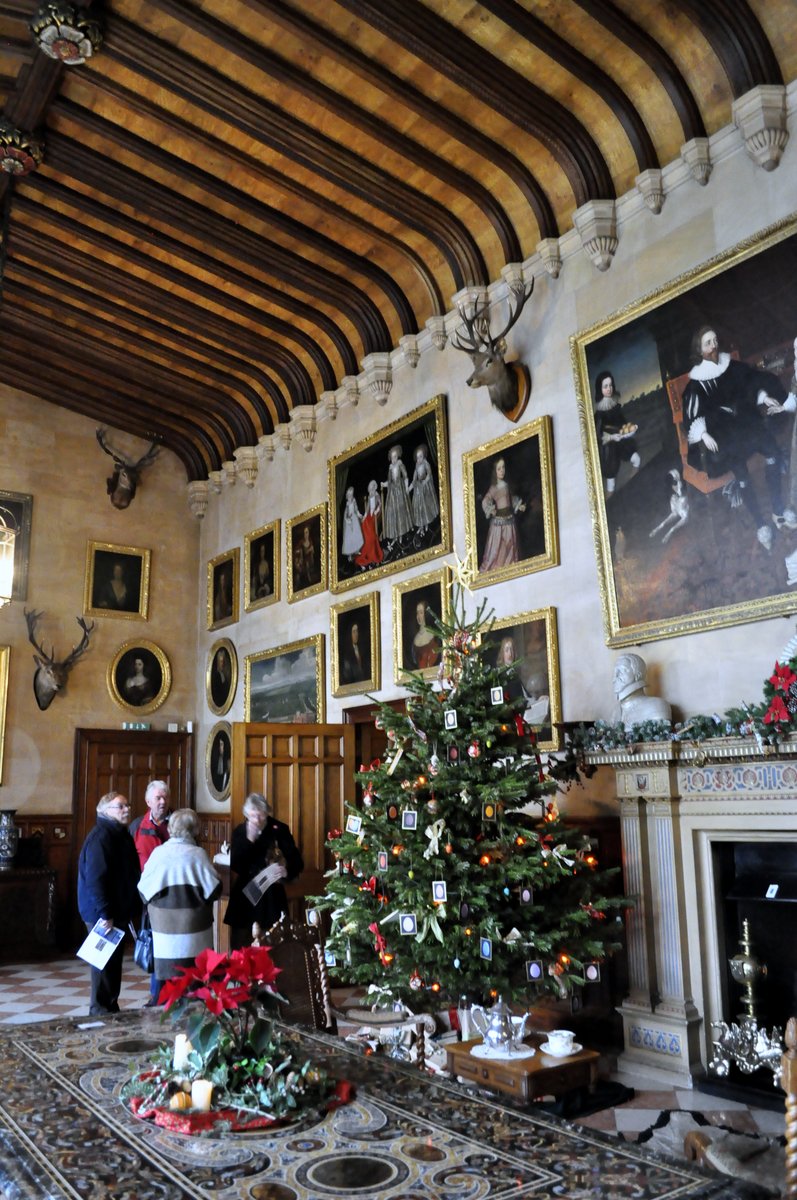
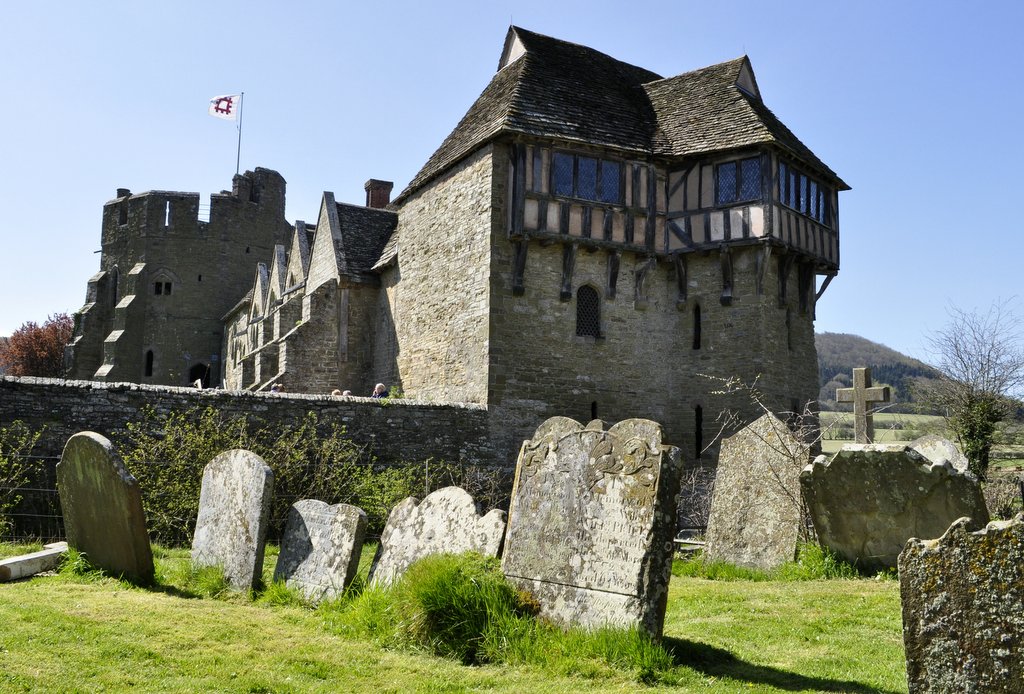
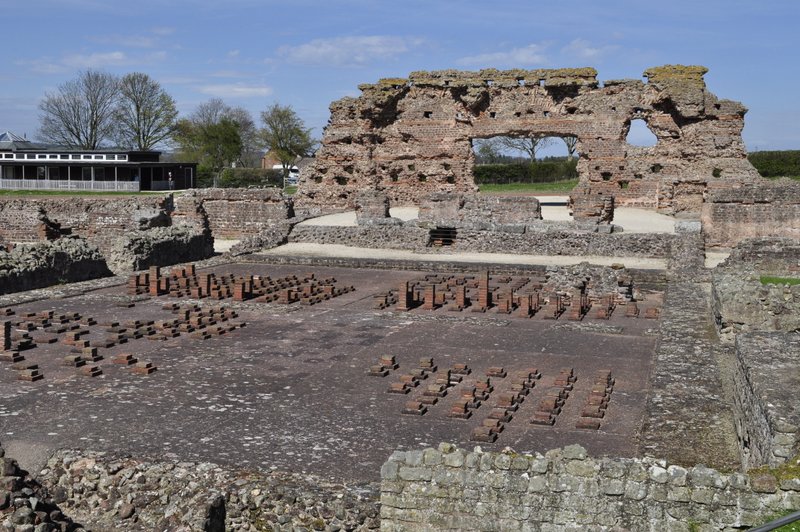
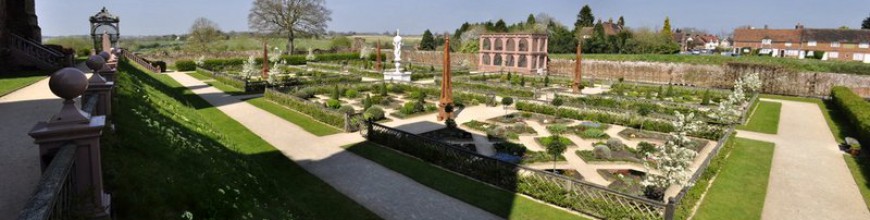
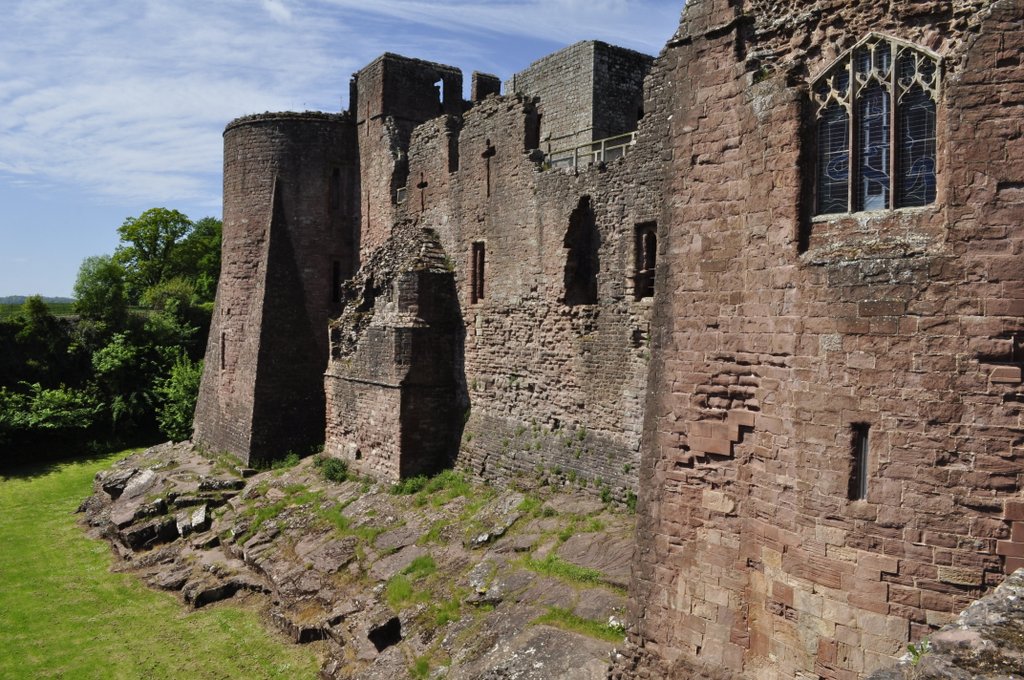
Kernow a’gas dynergh – Welcome to Cornwall (5): Magnificent mansions

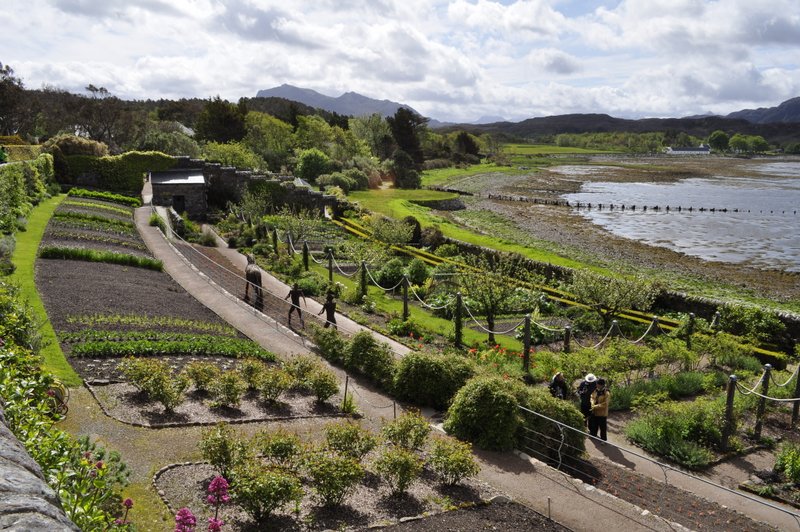
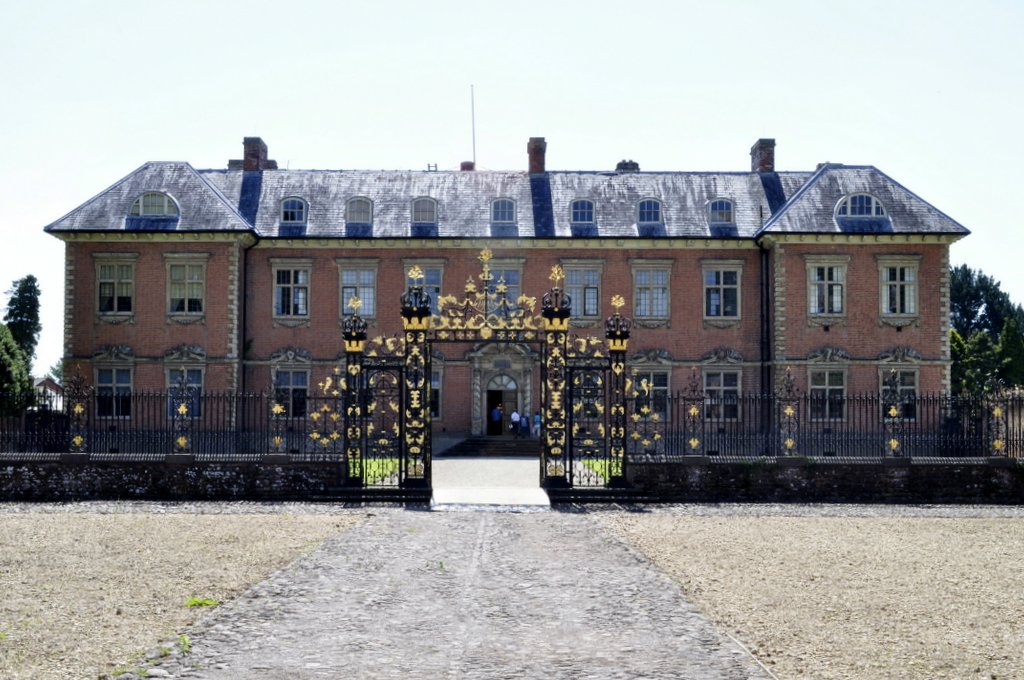
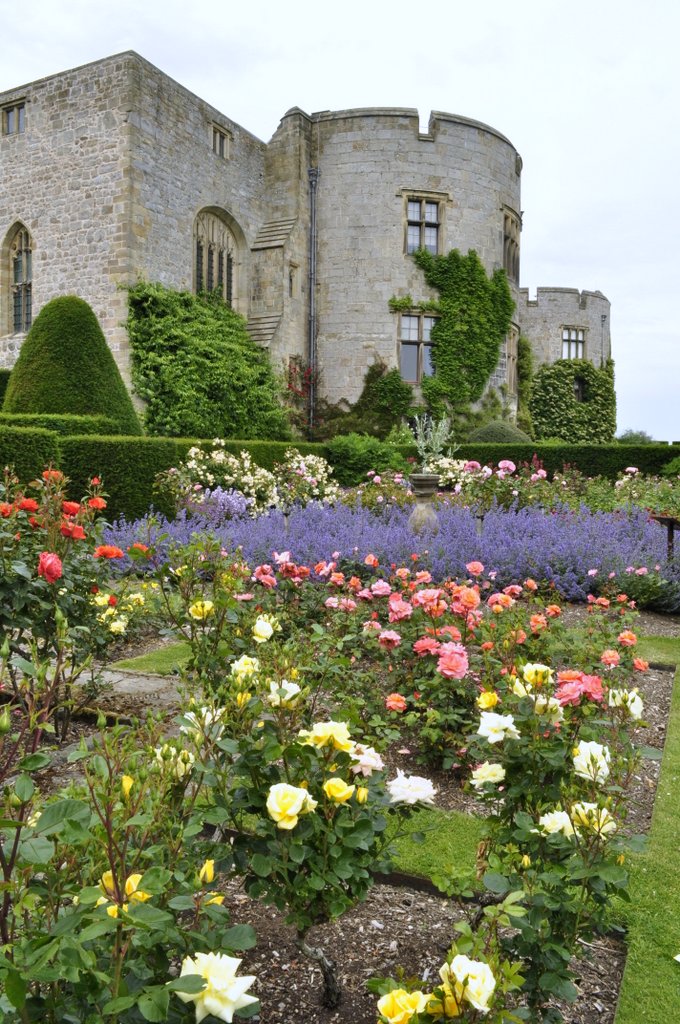
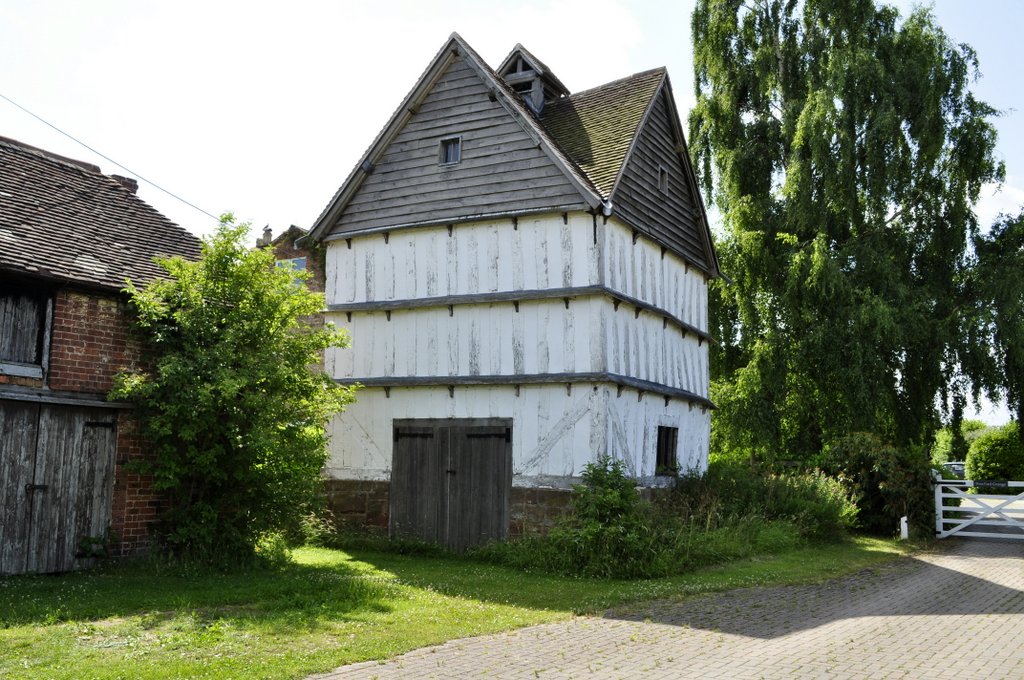
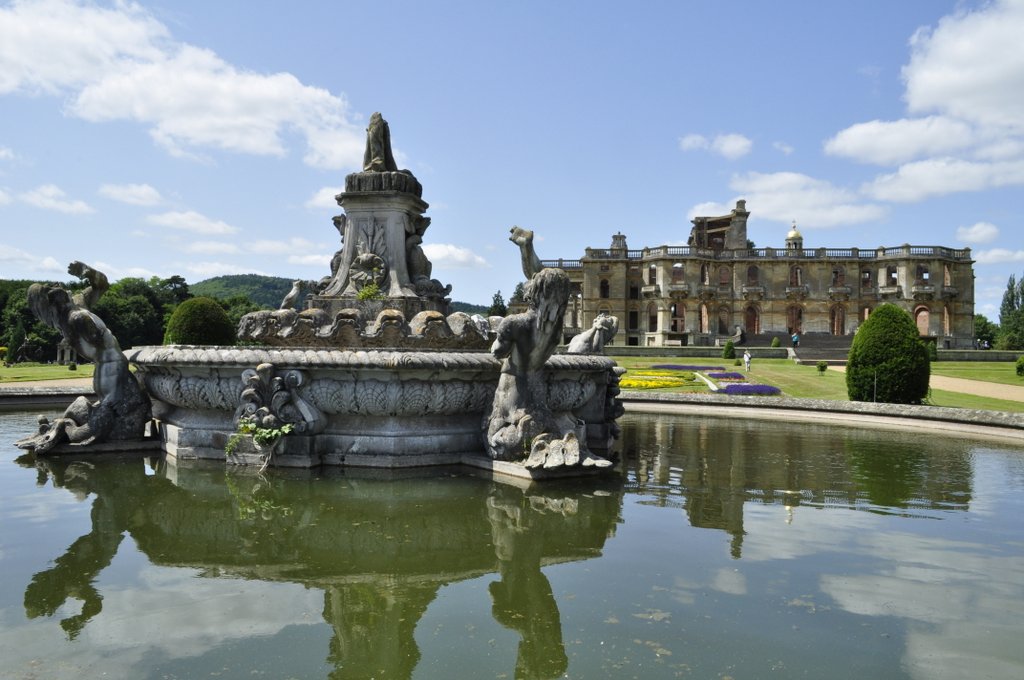
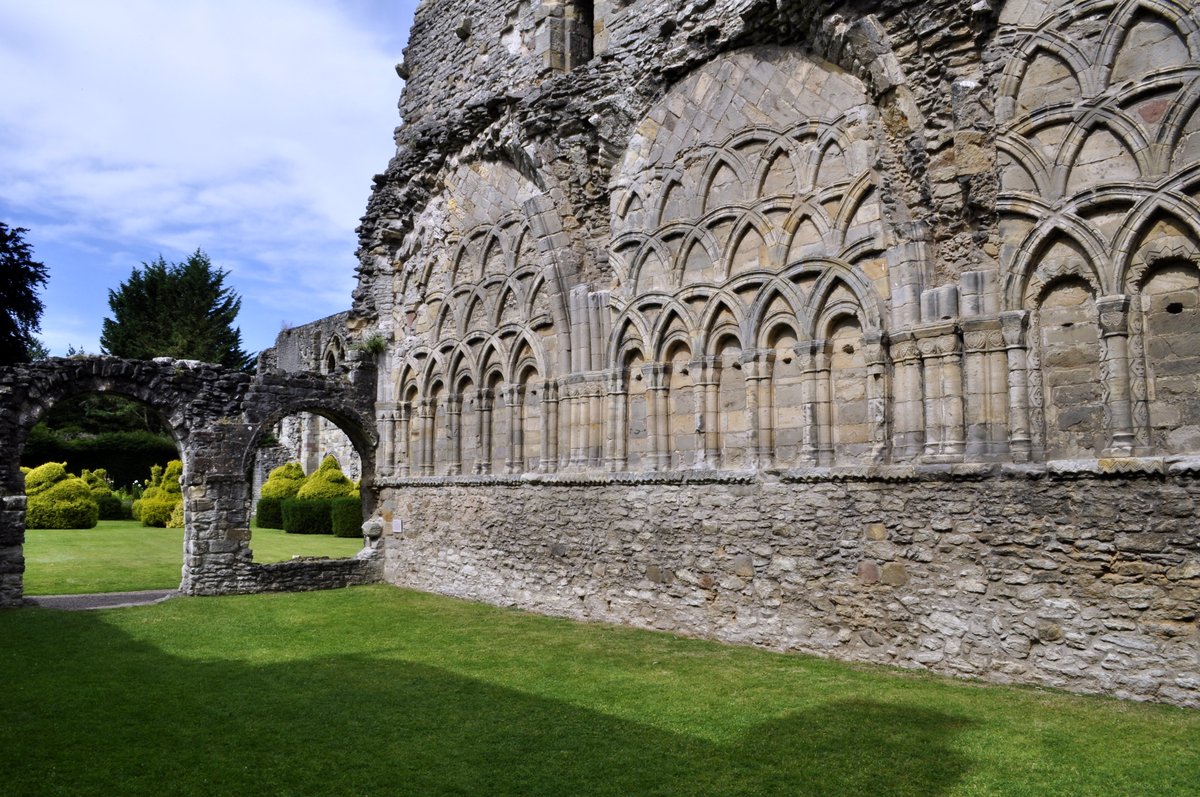
Cornwall is home to several National Trust jewels. We visited these four:

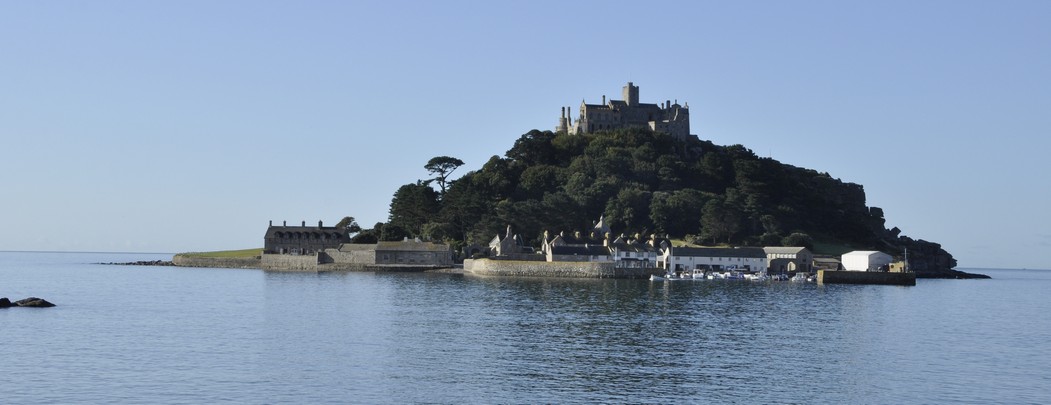
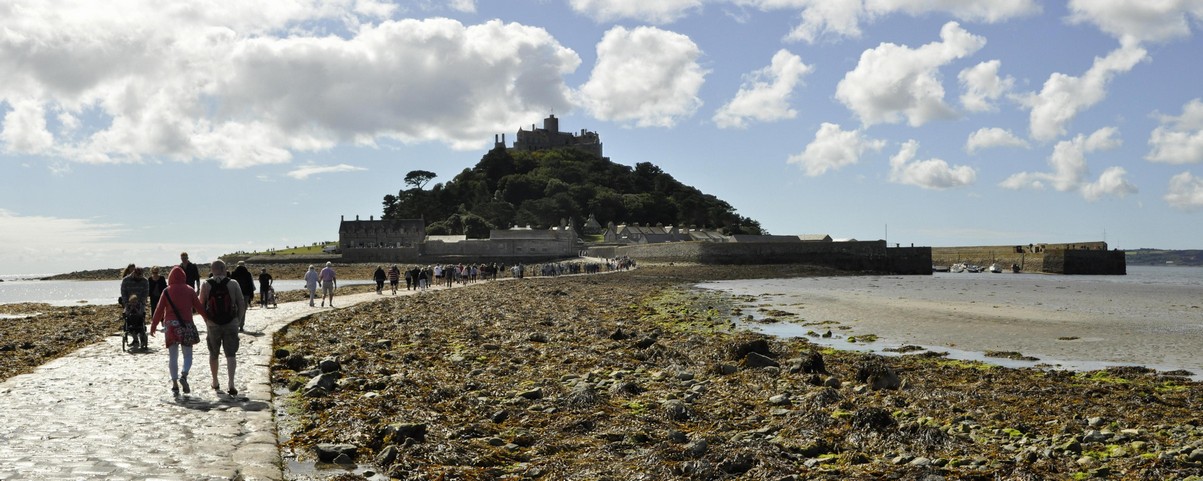
  • St Michael’s Mount, on an island in Mount’s Bay off Marazion in the south of the county
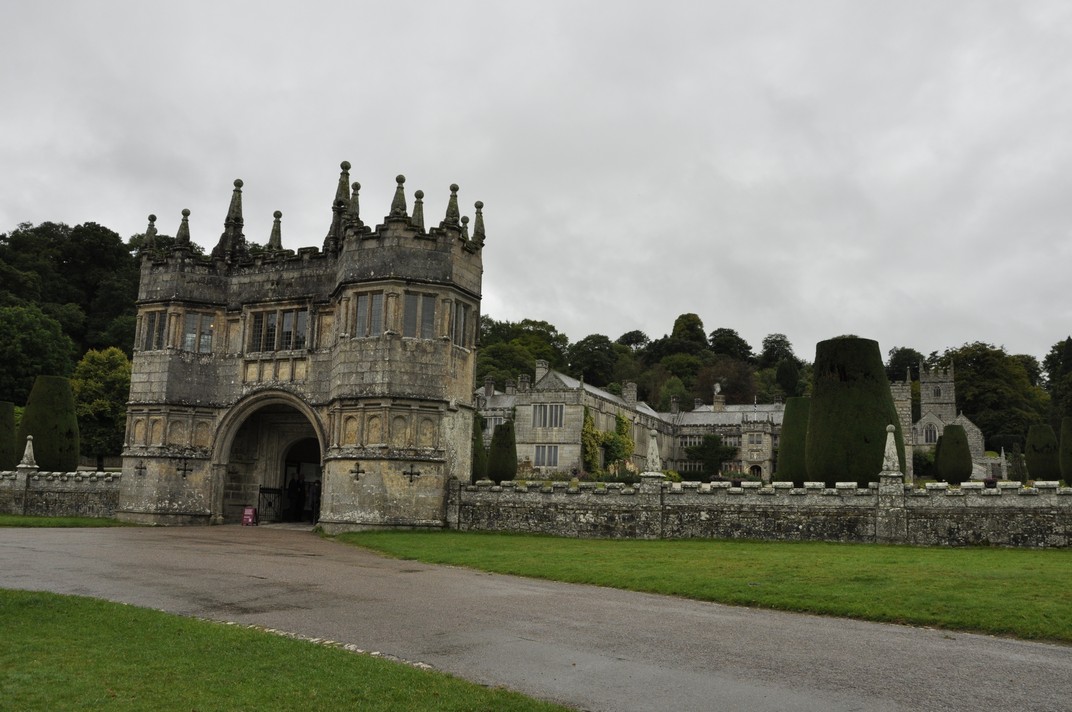
  • Lanhydrock, close to the A30 near Bodmin
  • Cotehele House and Quay, overlooking the River Tamar, north of Plymouth
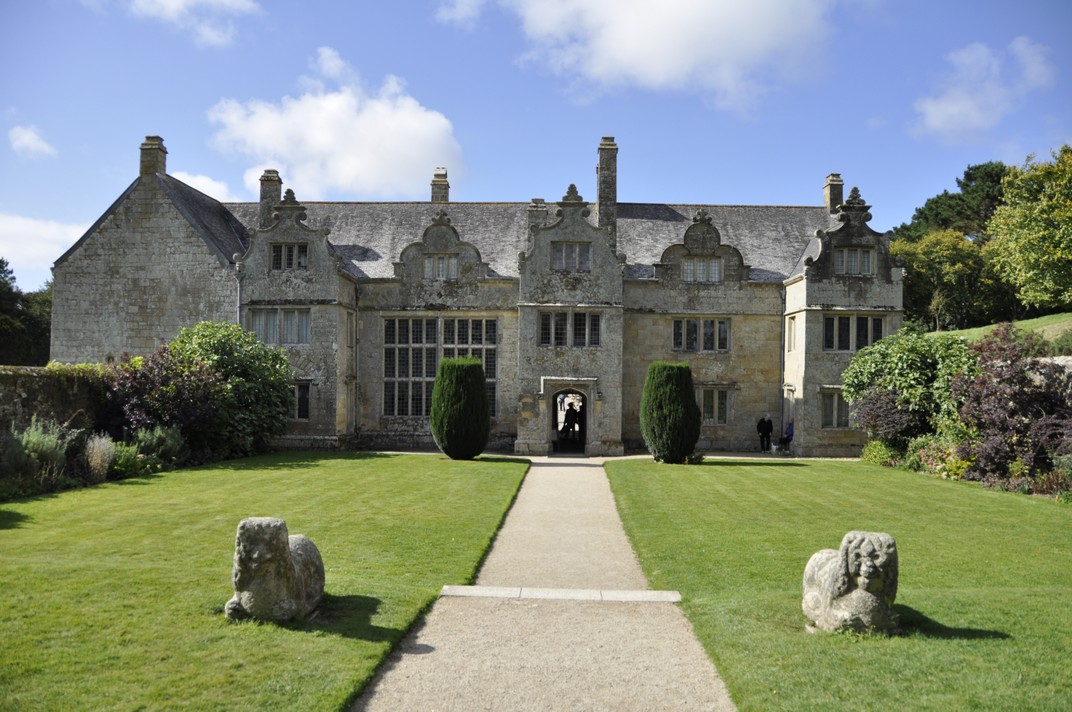
  • Trerice, close to Newquay on the north coast

Knowing how popular St Michael’s Mount can be (even slightly out of season, as we were), Steph and I decided to head to Marazion early on the day of our visit, so we could easily find a parking place. I guess we must have been there before 9:30 am, and knew we’d have to take the boat over to the island as the tide was still ebbing then and the causeway was still covered.

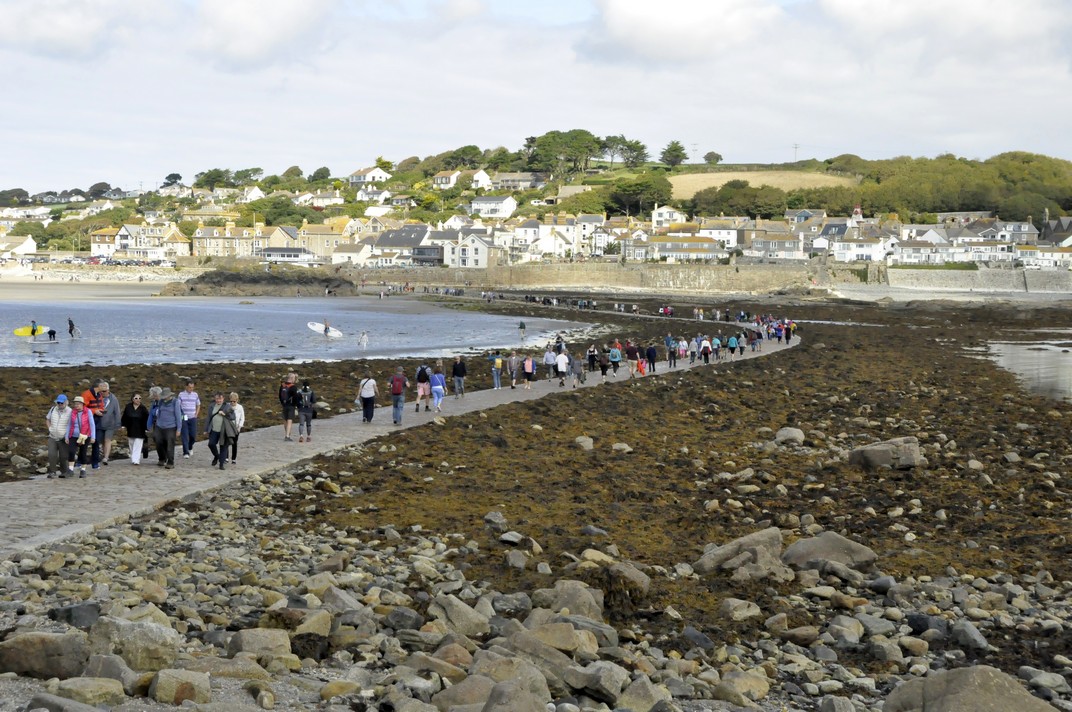
Parking was no problem. However, when we returned from our visit to the island just before 2 pm, visitors were streaming across the open causeway in the hundreds, and it seemed as if every parking place was already taken in the several car parks along the sea front.

Just before 10 the first passenger boat of the day pulled up alongside the jetty, and about eight persons clambered aboard. Since the sea was calm, there being no waiting queue of visitors, and it being the first boat, the boatman suggested going right round the island instead of just across directly to the harbor on the island. What a treat, as we had many different views of the island and buildings that would not have seen on a normal crossing.

St Michael’s Mount (the Cornish equivalent of Mont Saint-Michel in Normandy, although not quite so grand perhaps) was originally home to a 12th century priory, and there is evidence of human occupation over several thousand years. It has a rich history.  It became the home of the St Aubyn family in the late 17th century, and the family continues to occupy the Victorian wing. in the 19th century there was a village and thriving community of several hundred residents living below the castle.

A visit to St Michael’s Mount includes not only a tour of the house, and its magnificent views over Mount’s Bay, but the gardens below the castle that have been built into and cling to the cliff face. We were told by our boatman that the four resident gardeners are also qualified abseilers! It’s quite a steep climb up to the castle, but well worth the effort.

By the time the causeway had opened and hundreds of visitors were pouring across, access to the house was becoming difficult. We had made the tour earlier, and even then passing the narrow entrance caused significant tailbacks.

Nevertheless, no visit to Cornwall would be complete without a visit to St Michael’s Mount. Its inaccessibility for half of the day just adds to its attraction. Check out more photos of the interiors and gardens here.


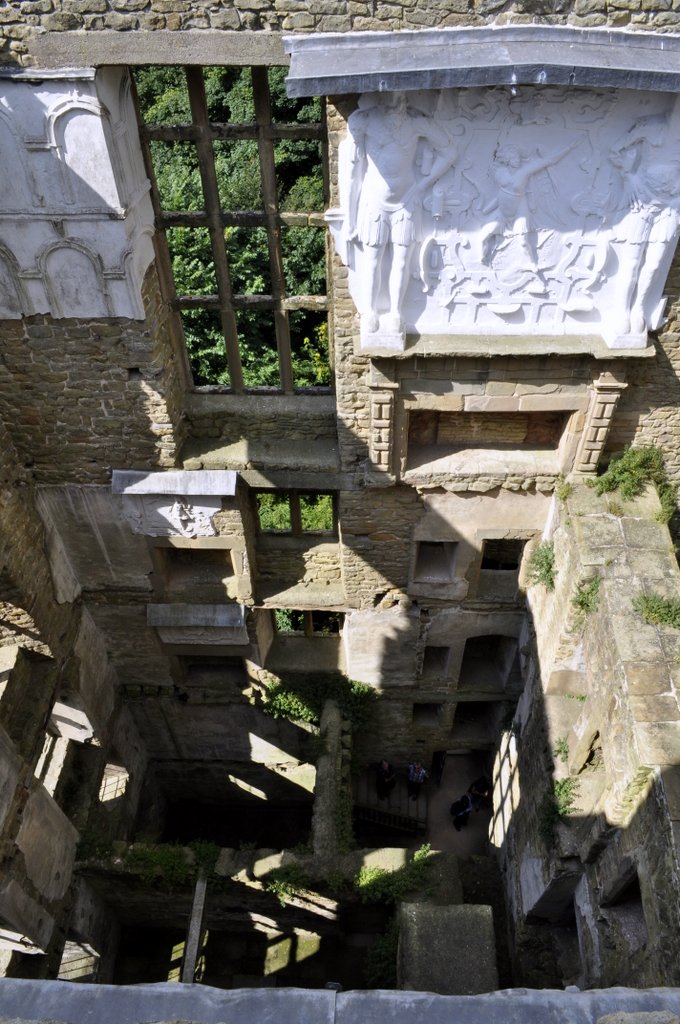
Lanhydrock, just a mile or so off the A30 near Bodmin) is special for two reasons: so many of the rooms (>50) are open to the public, and the Long Gallery in the north wing) and its magnificent 17th century plastered ceiling survived the 1881 fire that gutted most of the rest of house. The house is U-shaped; an east wing was demolished in the 18th century. It has been the family home of the Robartes for four centuries.

The weather for our visit was overcast with a little drizzle. As we wanted to visit Restormel Castle in nearby Lostwithiel later in the day, we decided to forego a walk around the park, just viewing the gardens and parterre close to the house.

You can take a virtual tour of the house and gardens here. There’s no doubt that Lanhydrock is one of the National Trust’s ‘premier’ properties full of exquisite objects that passed to the Trust when it acquired ownership in 1953. Definitely one of the properties that should be on everyone’s National Trust bucket list.


The first question I asked one of the volunteers when we arrived at Cotehele House was how to pronounce ‘Cotehele’. It’s ‘cot-eel’ apparently.

And it’s also one of the National Trust gems, having so many exquisite tapestries on display. The house dates from the late 15th century but then had 16th century Tudor additions, and is built I guess from local granite, a lovely soft grey color. It was the home of the Edgcumbe family. Passing through a small courtyard, you enter the Great Hall, on to the chapel, and up to the treasures of the first floor and above.

Cotehele has terraced gardens beside the house, and others slightly further away. The Valley Garden follows a steep-sided valley from the terraces to the River Tamar, and Cotehele Quay and Mill.

Have a look at more Cotehele treasures here.


Trerice is an Elizabethan, 16th century manor situated a few miles inland from Newquay on Cornwall’s north coast. We visited this delightful house on our last day in Cornwall, on the way back to our holiday home after a visit to Tintagel Castle.

The Arundell family inherited Trerice more than 700 years ago. It passed to the Aclands in the late 17th century. In the 20th century, the Elton family took on a lease from the National Trust and carried out some major refurbishments, including replacing the roof.

There is some particularly smart plasterwork in several rooms, as well as impressive oil paintings.

Outside there is an attractive knot garden, and other horticultural attractions like a 1km mowhay.

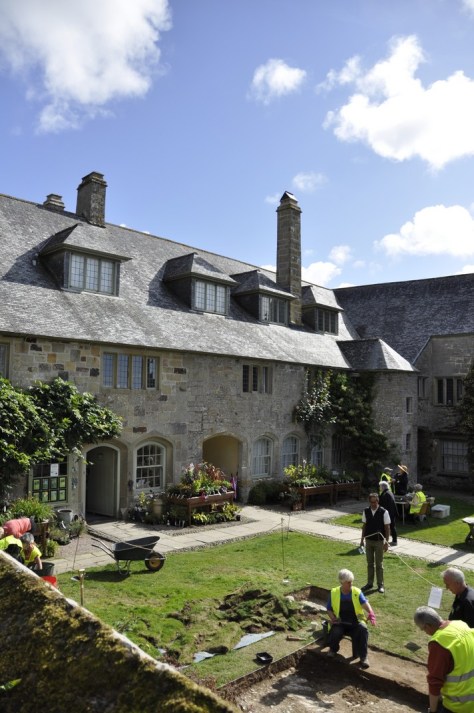
An archaeological dig was underway behind the house on the day of our visit.

More photographs of this dig and exterior/interior views of the house are available in this album.


These are the other four stories in this Cornwall series:

Kernow a’gas dynergh – Welcome to Cornwall (1): The journey south . . . and back

Kernow a’gas dynergh – Welcome to Cornwall (2): Coast to coast

Kernow a’gas dynergh – Welcome to Cornwall (3): Stepping back in time

Kernow a’gas dynergh – Welcome to Cornwall (4): An impressive horticultural legacy


For those interested in photography, I use a Nikon D5000 DSLR, with a Nikon AF-S DX Nikkor 18-200 mm f/3.5-5.6 GII ED VR lens.

Flash photography is not permitted inside National Trust properties, so that means shooting with the slowest speed I can get away with, since all my photos are hand held. Often I’m shooting as slow as 1/15, and 3200 ASA. All the interiors at these four properties were photographed in this way. It’s remarkable how the colors of the tapestries at Cotehele, for example, are revealed. I’m getting quite the dab hand at holding my breath as I’m about to press the shutter.

Sometimes, history just passes me by . . . particularly in Ohio

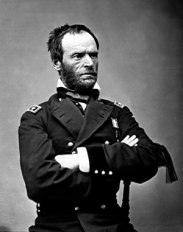
William Tecumseh Sherman. Red-haired. Union Major-General in the American Civil War. Outstanding military strategist. Commander of the Army of the Tennessee. Mastermind of the March to the Sea (that culminated in the capture of Savannah, GA) and the Carolinas Campaign, both of which contributed significantly to the end of the Civil War in 1865.

Born in 1820, Sherman was a native of Lancaster, Ohio (map). I wish I’d known that just a few weeks ago.

As Steph and I crossed Ohio on our road trip from Massachusetts to Minnesota, we passed through Lancaster on the route I’d planned from Canton, OH to Bloomington, IN. I do recall saying to Steph how prosperous it looked compared to others.

I only learned of the Sherman connection from a biography that I’m reading right now¹, and which I picked up at my favorite bookstore in St Paul, Half Price Books on Ford Parkway in the Highland Park area. This year I added three more to my American Civil War collection.

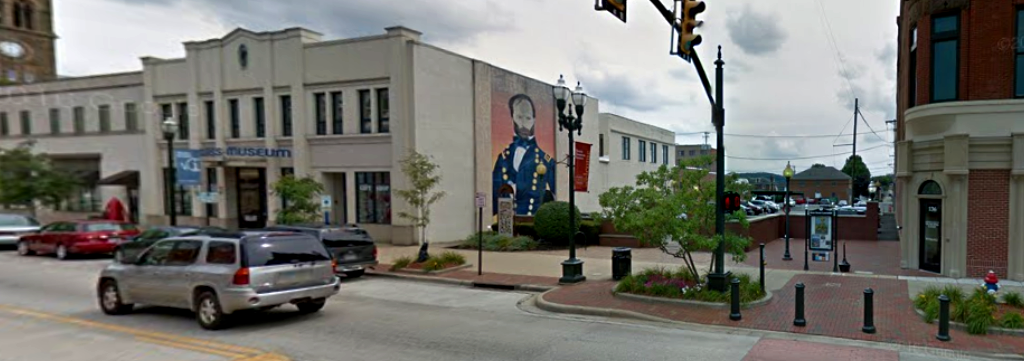
I could have made the Sherman connection in Lancaster had I looked in my rear-view mirror at the right moment, but I was too intent on following the sat nav instructions.  There, on a west-facing wall on Main Street (we were heading west) is a full height mural of Sherman. I didn’t see it, more’s the pity. I would have stopped to explore further.

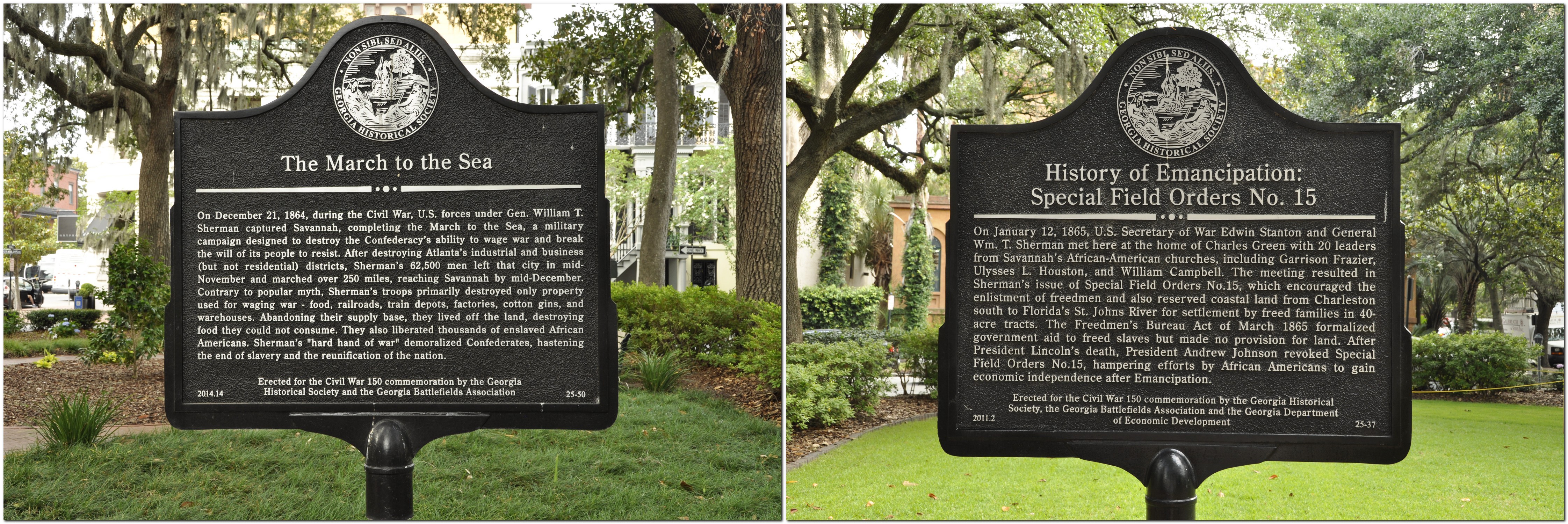
During the first part of our 2017 USA road trip, from Atlanta, GA (which Sherman ransacked in 1864) to Savannah, our route more or less mirrored Sherman’s March to the Sea. In the historic neighborhoods of Savannah his name appears on several historical markers, as you might expect.

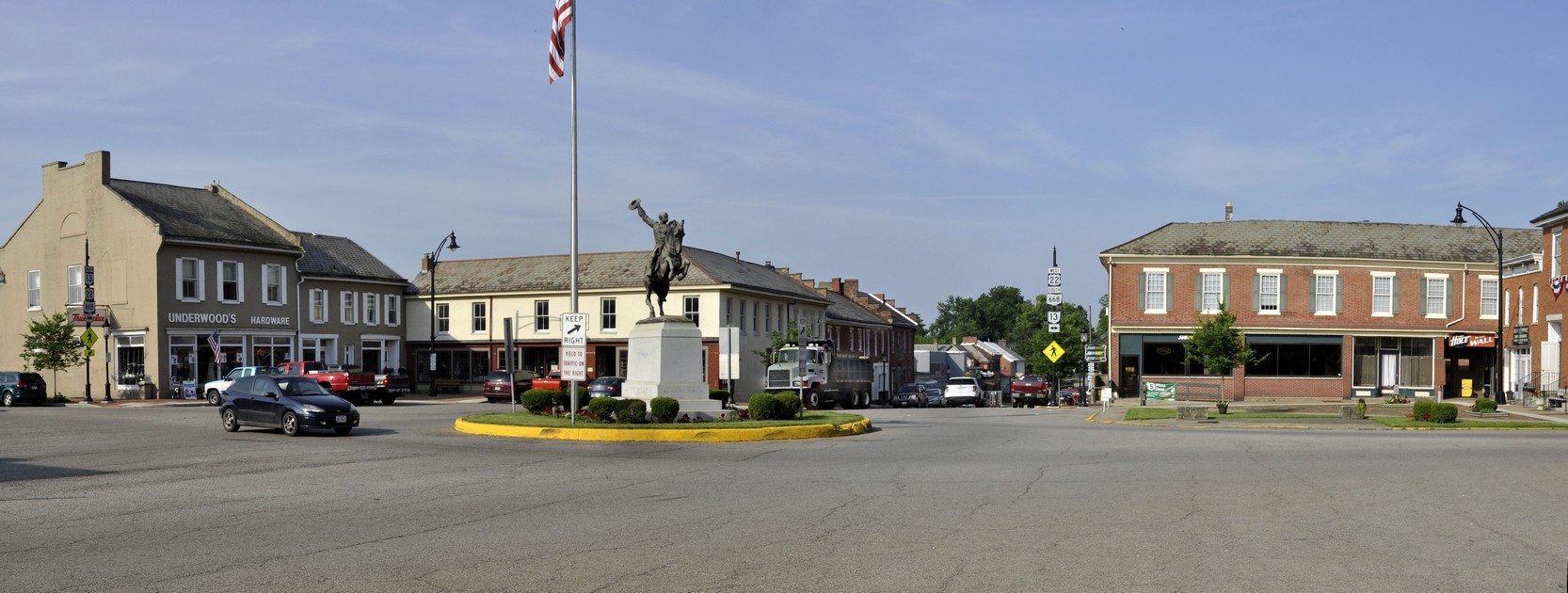
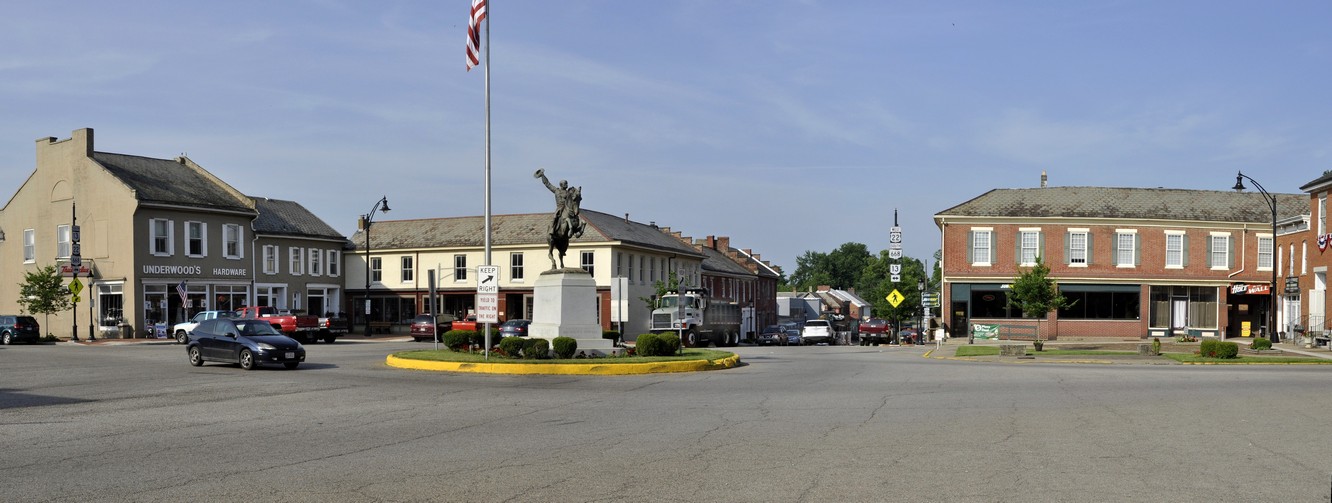
And there were other surprises. Just 18 miles northeast of Lancaster is the small community of Somerset, OH. It has a lovely town square, in the middle of which is an impressive statue of a mounted soldier, Philip Sheridan, a Major-General of Cavalry during the Civil War, who was eventually promoted to four star rank. Sheridan grew up in Somerset. After the Civil War he served on the Great Plains during the Indian Wars. He was also instrumental in developing Yellowstone as a national park.

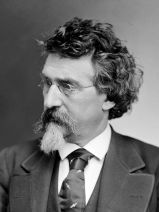
Despite its incredibly bloody outcomes and destructive consequences, the American Civil War, 1861-65 holds a certain fascination. To a large extent, it was the first war to be extensively documented photographically, many of the images coming from the lens of Mathew Brady.

But in terms of the war’s theater of operations, much of the fighting took place east of the Mississippi River, across the southern states, and into the maritime states as far north as Pennsylvania.

Imagine the topography, especially in the Appalachians, across which huge armies marched and fought each other. Imagine the effort needed to transport tens of thousands of men and their equipment and supplies over almost impenetrable terrain, along river valleys, crossing ridges, swamps, and huge rivers, while constantly being harassed by and engaging with the enemy.

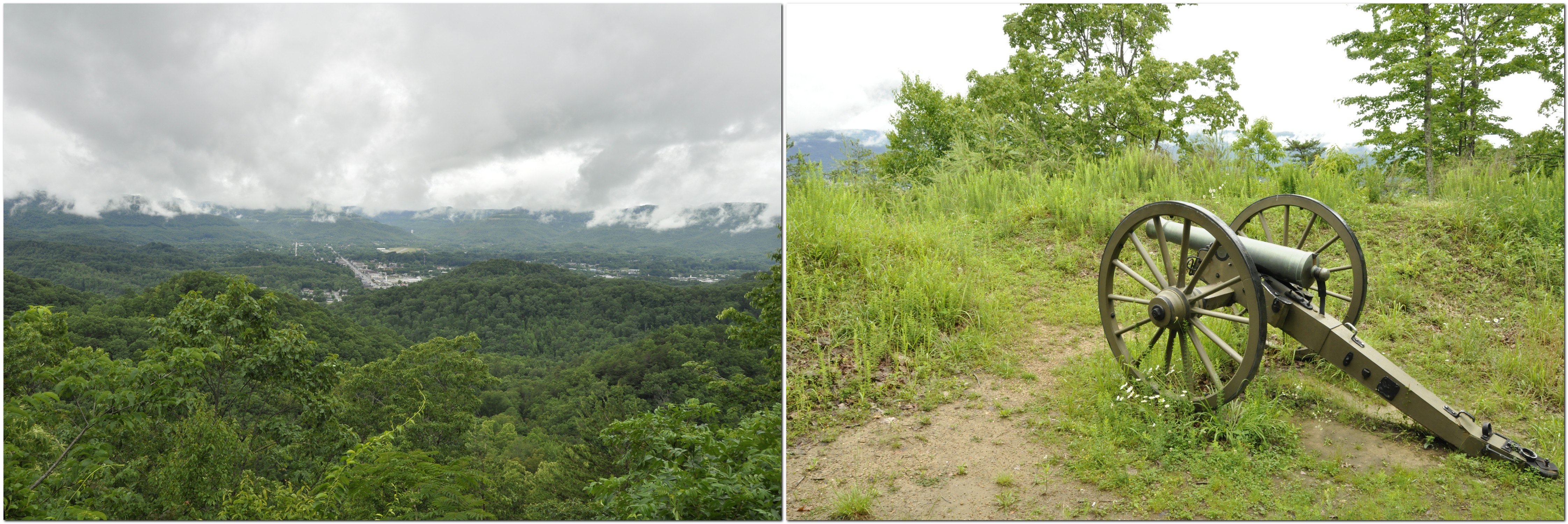
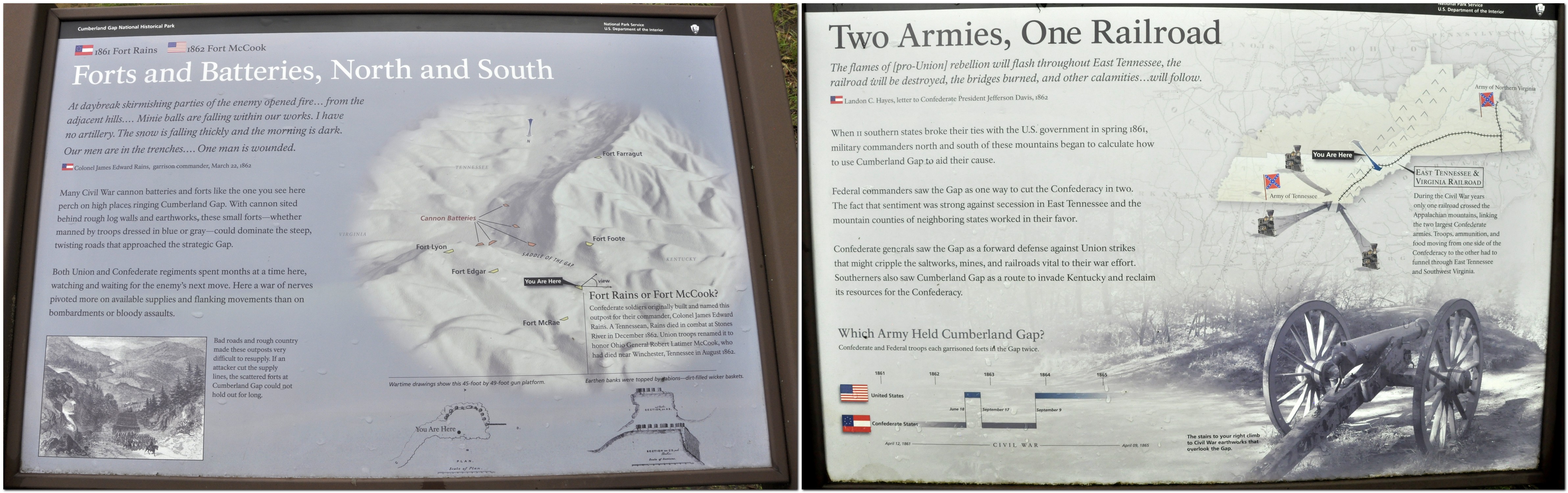
We saw much of this landscape along our 2017 road trip. At Cumberland Gap there were even reminders how the opposing armies had fought to gain the upper hand and strategic overlook that was afforded on the hills surrounding this important pass through the mountains.

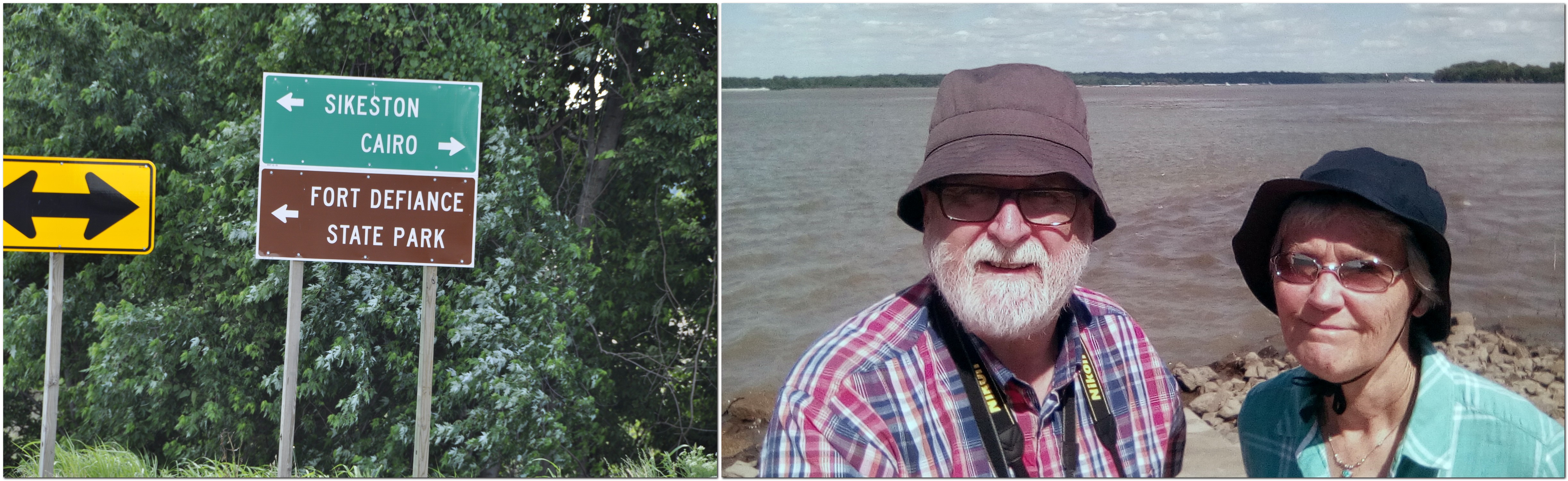
In that Sherman biography, I also learned that his superior, Major-General (then Brigadier General) Ulysses S Grant² (yet another Buckeye from Point Pleasant [map], just across the Ohio River from where we traveled this year) had his headquarters at Cairo (map) at the southern tip of Illinois in 1861, just a couple of miles north of Fort Defiance on the promontory at the confluence of the Mississippi and Ohio Rivers. Fort Defiance was on our route west in 2017.

Southwest from Canton, OH we passed by close to Dover (map), birthplace of one the Civil War’s most notorious Confederate raiders or bushwhackers, William Clarke Quantrill³. His theater of operations was the Kansas-Missouri border, an area that was already experiencing conflict between abolitionists and those who wanted to keep slavery in Missouri as early as 1858. Quantrill’s Raiders were the perpetrators of one of the Civil War’s most outrageous atrocity, the Lawrence (Kansas) massacre. Sherman’s brother-in-law, Thomas Ewing, Jr was a key Union general opposing Quantrill.

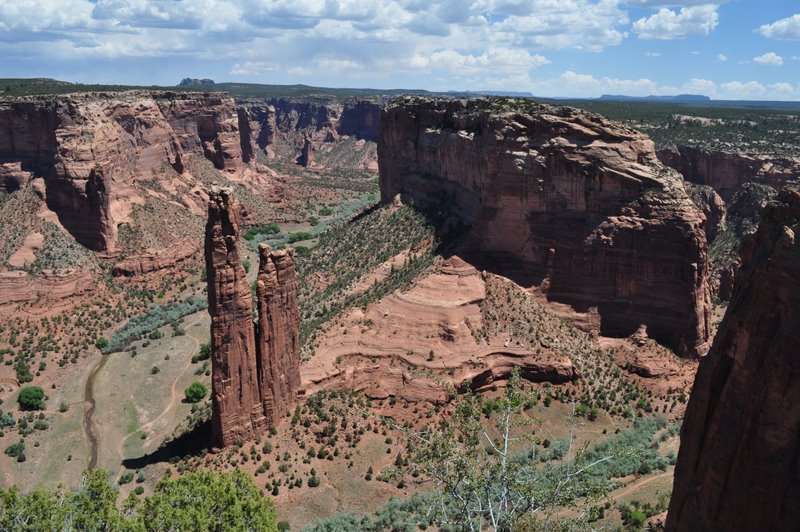
So while I may have missed out on some interesting historical aspects during this year’s road trip, that was not the case in 2011 when we toured extensively in Arizona and New Mexico. Earlier that year I had read an interesting biography of mountain man and Indian fighter Kit Carson whose campaigns against the Navajo are well documented. I planned parts of the trip around locations where he had been active. He is buried in Taos, NM, and after spending time at the Canyon de Chelly (site of a massacre of Navajos) in northeast Arizona, we headed for Taos.

Spider Rock in the Canyon de Chelly.

History is undoubtedly one of my principal hobbies, and occupies much of my reading. On retirement eight years ago I almost enrolled for a history degree with the Open University, but eventually decided to keep it just as a hobby. I read very little fiction, and the catalyst for my 2017 challenge – to read all of the novels by Charles Dickens – was a book (also bought at Half Price Books) about the terrible plight of children (early in the 19th century) in factories and cotton mills in the north of England.

Here in the UK, Steph and I are very active members of the National Trust and English Heritage. Whenever we get the opportunity, we head off to one of their many properties (stately homes, castles, archaeological sites, gardens) open to the public. And we learn a little more each time about the history of this country and the people who shaped events over the centuries, for better or worse.

~~~~~~~~~~~~~~~~~~~~~~~~~~~~~~~~~~~~~~~~~~~~~

¹ Robert L O’Connell (2014). Fierce Patriot – The Tangled Lives of William Tecumseh Sherman. Random House. ISBN 978-0-8129-8212-1.

² I picked up this biography of Grant which I have yet to start: HW Brands (2012). Ulysses Grant in War and Peace. Anchor Books. ISBN 978-0-307-47515-2.

³ I started this book about Quantrill’s Raiders first. Jesse and Frank James were members of Quantrill’s guerilla band. Edward E Leslie (1998). The Devil Knows How to Ride – the True Story of William Clarke Quantrill and His Confederate Raiders. Da Capo Press. ISBN 0-306-80865-X.


Driving on the ‘wrong’ side

Since 2011, my wife and I have made several long-distance road trips across the USA. And although I’d driven some short distances around Seattle and the Twin Cities of Minnesota, I’d never done any serious driving until then. So, it’s not uncommon for someone to ask whether I find driving in the USA difficult.

Answer: not really. Most don’t know that I spent over 27 years driving on the ‘wrong’ side, i.e. the right, while living in Peru, Costa Rica, and the Philippines.

So driving on the ‘wrong’ side is as normal for me as driving in the UK, on the ‘right’ side on the left. It’s just a case of learning the dos and don’ts, and the manners of the road.

Driving in the USA is (mostly) a pleasure (and straightforward), since away from the cities and main highways, the roads are generally quite quiet. However, some of the Interstates can be quite daunting, especially when two or more come together or diverge like large bowls of spaghetti, often with three or more lanes. Choosing which lane to occupy and when is a challenge. My sat nav during our latest trip was a godsend.

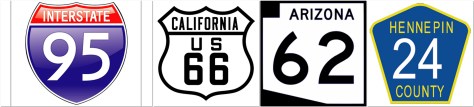
Finding your way around however is not too difficult. The road numbering system is quite clear, but the same road can have more than one name if two highways merge for a section. The Interstates (like the motorways in the UK or autobahns in Germany for example) connect centers of population across the country and are a legacy of President Dwight D Eisenhower, from the 1950s. Then there are the US highways, state roads, and county roads. Each has its own road symbol.

US highways are often divided highways, or dual carriageways as we say in the UK. The one big difference between the Interstates and US highways however, are junctions on the latter (often controlled by traffic lights) where you might have to stop. Most state and county roads are single lane carriageways in each direction.

Compared to the UK, speed limits are generally lower in the US. The norm for Interstates is 70 mph (I’ve seen 75) with a minimum of 40 mph. The maximum speed on US highways is 60 mph (occasionally 65), but most often 55 mph widely applied across the country. In towns the limit is often as low as 25 mph, and special lower restrictions (15 mph) often apply near schools when in session.

Speed limits and driving restrictions around school and school buses are rigorously enforced. When a school bus stops, lights flashing and the Stop sign extended from the rear offside of the bus, you’d better stop or else, whether you’re behind or approaching the bus. I must admit that I didn’t initially realize that the rule applied to oncoming traffic. I remember when we were traveling on US101 in northern California that I passed a stationary bus. Luckily there was no speed cop waiting to ‘ambush’ me.

Roads are more congested with trucks (lorries) in the UK than in the USA, but trucks are behemoths in the USA in comparison, and consistently travel at much higher speeds, often well over 70 mph on the Interstates.

This was one ‘extra’ size load that we saw in Wisconsin.

The idea of overtaking on both sides is something I still cannot reconcile. But it’s common in the USA on roads with more than two lanes. Just maneuvering between lanes can be a nightmare, having to check fast-approaching vehicles on both sides. Also, drivers tend to join a highway high speed; they ‘take no prisoners’, and just keep coming on despite other traffic approaching and occupying the lane they will join.

I often find US drivers reluctant to overtake on single carriageway roads. Admittedly there are oftentimes fewer opportunities to overtake. As I mentioned, we like to take the byways when making one of our road trips, mostly on single carriageway highways, and I try to keep more or less to the speed limit. So I find it aggravating when a ‘local’ starts to tailgate me, ‘encouraging’ me to go faster. But when the opportunity to overtake presents itself, they just remain tucked in behind. Clearly they want to go faster but are not prepared to exceed the speed limit to overtake.

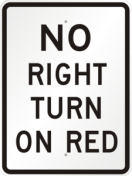
Turning right on a red light takes some getting used to. I now understand that unless it specifically states not to turn, it’s OK to make that turn. Not something we’re used to in the UK. Red means red! And also, having to be aware that if you turn right on a red light, there may be pedestrians crossing as they will have right of way.

‘Right lane must turn right’ (or left) is a common sign on most roads. In fact, it’s useful to have a sort of slip road for departing traffic even on single carriageway highways. But it can be confusing at a junction, when you suddenly find yourself in the right lane and are forced to turn even though you want to go straight ahead. Fortunately my sat nav helped in this respect, and having become accustomed to this situation, I try to position myself in the left lane at a junction to avoid an unwanted manoeuvre.

Roundabouts are common in the UK. Near my home in Bromsgrove there are five within the space of 2 miles. Not so in the USA. Instead there of full stop, all way junctions, governed by a particular road etiquette: the first vehicle arriving at the junction gets to manoeuvre first, but only after coming to a full stop.

When I look over what I have just written, it seems to me that my driving concerns in the USA are not really very important at all. We’ve now covered somewhere in the region of 15,000 miles I guess in our trips. Plenty of time to get accustomed to driving on the wrong side.

However, thinking about the dos and don’ts of driving made me ponder on some other aspects of visiting the USA. And, as it happens, I came across this article, by Sophie-Claire Hoeller (a trilingual journalist who grew up in Germany) in Business Insider: 51 things Americans are doing wrong.

For ease of reading, I also copied her list of ‘things’ into a file.

So, how do these resonate with me? Several on the list are bugbears of mine: (4) Portion sizes; (6) Tipping; (7) Taxes; (12) So. Many. Questions; (16) Checking ID; and (49) Serving a salad first.

I never cease to be amazed by the amount of food that is served in restaurants. Portions are huge compared to the UK. No wonder there’s an obesity problem. I’d rather portions were smaller and bills lower.

Ten per cent is the norm in the UK when tipping – if you think the service warranted a tip. Not so in the USA, where tops as high as 25% are the norm AND expected. I agree with journalist Sophie-Claire. Why should I pay someone else’s wages? In one restaurant recently, where I’d left a 15% tip on the table for our server, I was faced with adding a tip of 25% (no lesser amount) – or none – when using my debit card at the checkout.

Why don’t retailers in the US just include the sales tax in the price listed? How many times have I been caught out at the till, having to add on the tax. Thank goodness for plastic money, and although I used my debit card more this last trip for everyday expenses than I had in previous years, I still ended up with a purse-full of small change. The grandchildren’s piggy banks benefited!

While we were traveling from Massachusetts to Minnesota, we would buy sandwiches, often from Subway, so we could stop anywhere on the route to have our lunch. Then the questions start: wheat or wholemeal, Italian, this meat or that, cheese, mayo, pickles . . . etc., etc. Phew!

I’m almost 70, yet, when buying a couple of cases of beer at Target in St Paul recently, I was asked for my ID! Fortunately the lady at the checkout was from Scandinavia (and had lived in the UK for several years) so recognized my UK photo driving licence. She told me that normally it would have to be a US or Canadian driving licence or passport. Good grief, 70 years old and having to present a passport just to buy a beer! And then there was $2.36 sales tax to add to the offer of $25 for two cases that had attracted my attention.

Salads should be served on the side. Period. I got a strange look from one server when I asked her to bring my salad with the entree. That’s how I like to eat my salad, not as a meal in itself before any other course.

Yes, the UK and USA, two countries separated by a common language (and with Trump in charge, many other things unfortunately), according to George Bernard Shaw. But we enjoy our visits there. It’s a vast – and sometimes quirky – country. Lots more to explore!


Massachusetts to Minnesota (4): heading west through NY, PA, OH, KY and IN, then on to MN

Leaving Niagara Falls via the Niagara Scenic Parkway on the Sunday morning, we headed south, skirting Buffalo and the eastern shore of Lake Erie towards Pennsylvania, and the Allegheny National Forest. Our destination was Canton in Ohio, just south of Akron, a journey of 313 miles.

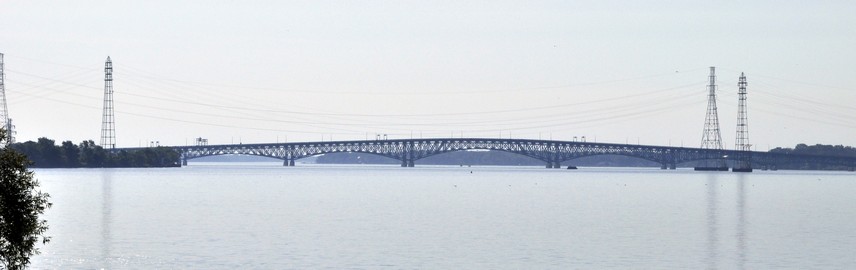
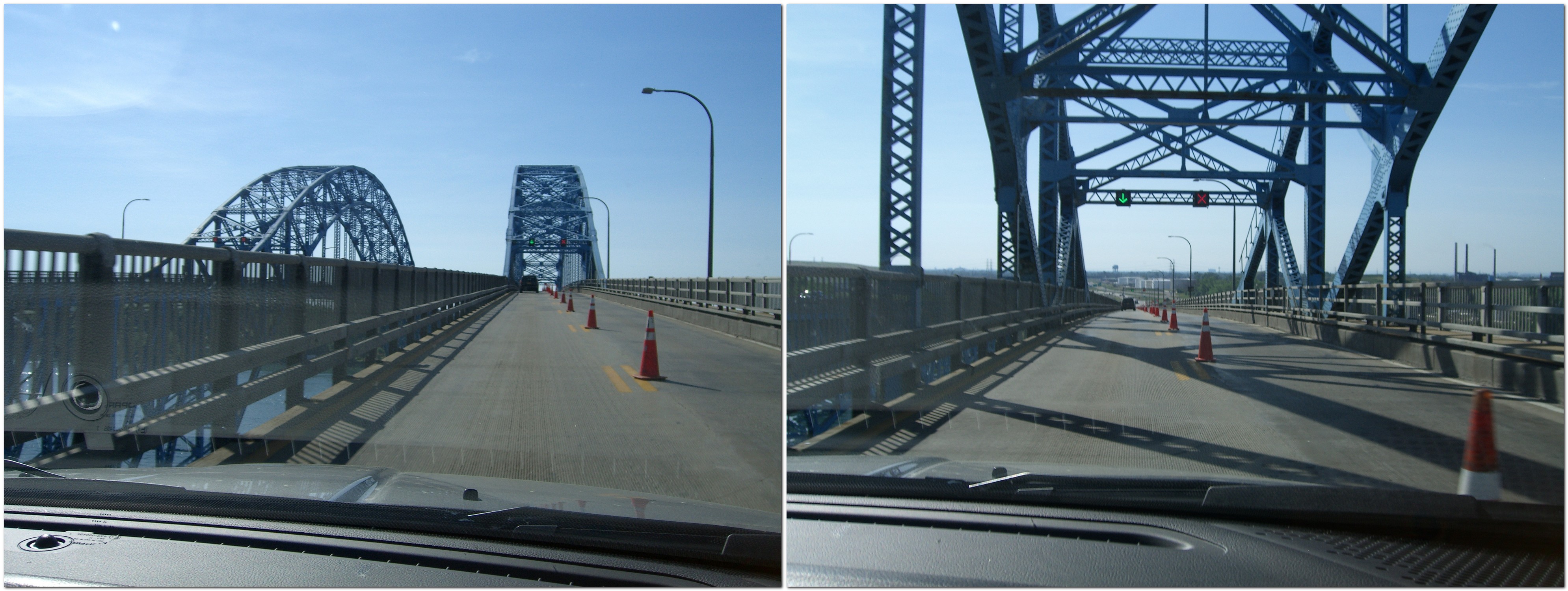
Along the Niagara Scenic Byway, there are two impressive bridges across the Niagara River on I-190.

There was little traffic around Buffalo, fortunately, even though it was a fine morning for Father’s Day. Soon enough we were outside the city limits and heading south into Pennsylvania.

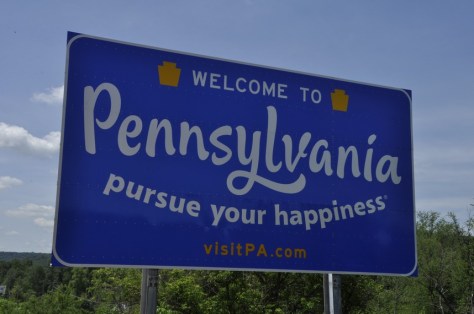
Pennsylvania was a ‘new’ state for us (as were OH and IN), and I particularly wanted to travel through the Allegheny National Forest.

We travel on the interstates as little as possible, taking US highways and county roads in preference. You get to see a lot more of rural America that way. But roads are none too wide with few places to stop. And certainly no easy stops for photography. So on these two days we have little to show, photographic-wise, for our long days on the road.

The next morning we had an early start as we decided to cover the whole route that I’d planned, some 447 miles south through Ohio, crossing the Ohio River into Kentucky, before crossing the river again further west into Indiana to reach our next destination, Bloomington.

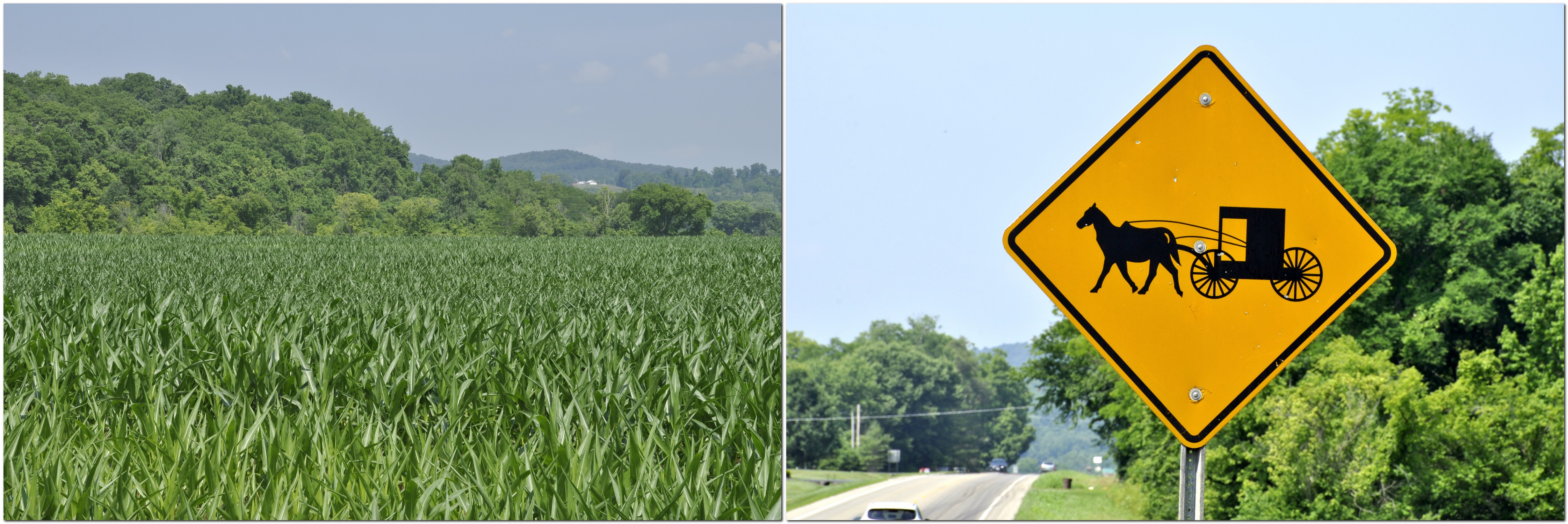
The drive through OH took us through some delightful towns and villages, and productive agricultural landscapes. Although we saw road signs to be aware of Amish buggies on the road, we only saw a couple.

Somerset is a small town about 110 miles south of Canton. In the middle of its impressive town square (which had a very English feel to it) there was a statue to a famous son of Somerset, Union General Phil Sheridan.

We also passed by Dover OH, home to infamous Confederate guerilla leader William Clarke Quantrill (I just bought a biography to read), and also Bainbridge, home to the first dental school in the USA, opened in 1825.

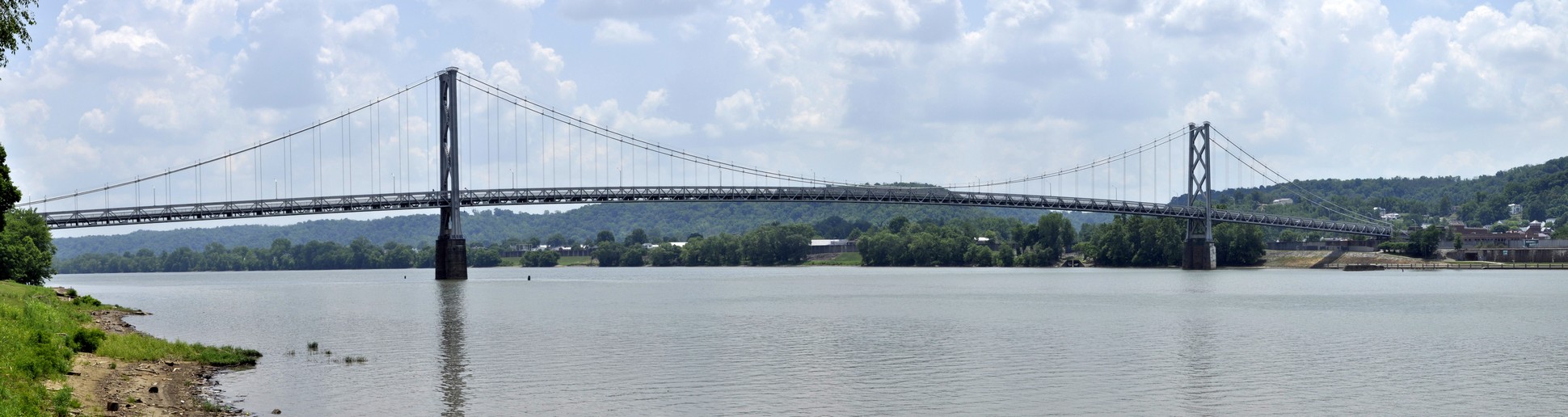
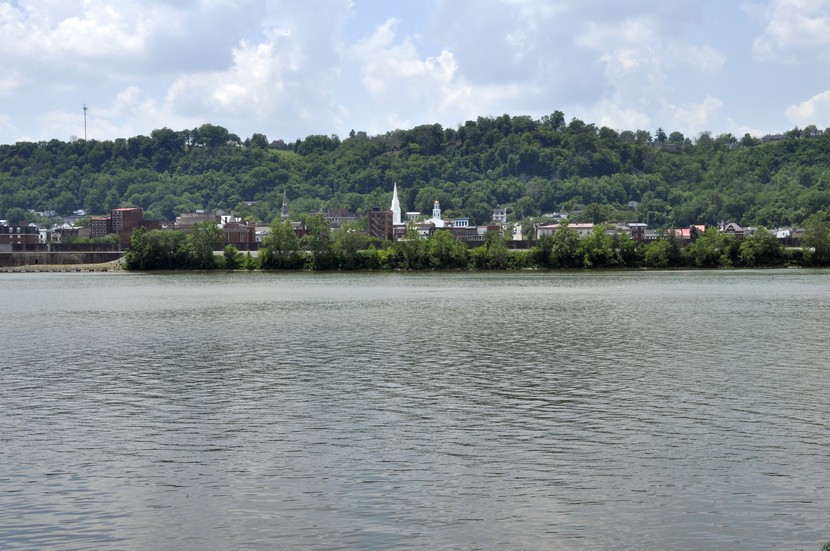
Eventually we reached the Ohio River at Aberdeen OH. The Ohio is a very impressive river and as I commented in a post after last year’s road trip, its flow is greater than the Mississippi. No wonder that rivers like the Ohio were used to open up the interior of the country.

This is the bridge that carries US68 into Kentucky. We crossed a little further west on the William H Harsha Bridge, carrying US62.

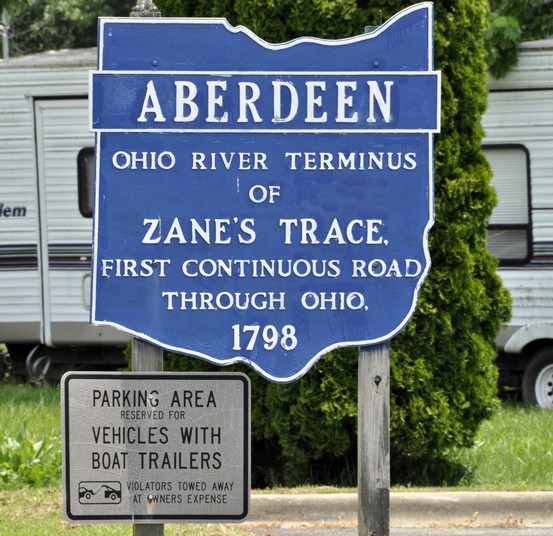
Aberdeen is also the terminus of Zane’s Trace, the first continuous road through Ohio, from 1798.

Crossing into northern Kentucky, we were less than 50 miles north of where we had driven through the state in 2017. Then it was over the Ohio again, and into southeast Indiana. Our good friend and former IRRI colleague Bill Hardy (a native born Hoosier) told us that we should see the southern part of the state, since the northern half was flat and rather uninteresting, maize upon mile of maize. He was right. The drive into Bloomington was delightful in the early evening sunshine, with Highway 46 weaving through the trees, up and down dale.

After a restful night in Bloomington (yet another Comfort Inn!) we set off the next day for the penultimate sector of our trip that would take us to Ludington on Lake Michigan in the state of that name. This was another long drive, over 400 miles, north to Gary IN, and then wending our way north along the eastern shore of the lake.

Just over the state line into Michigan we stopped to have a quick picnic lunch at a rest area (and Michigan information center) on I-94. We were very impressed with the amount of tourist literature and maps available at the information center; Michigan certainly knows how to sell itself.

Just north of the state line we took a short detour to Warren Dunes State Park. Lake Michigan is like a vast internal sea, and along its shores, certainly the eastern shore, there are huge sand dunes, now covered with mature woodland. The sand is extremely soft, and hard to walk across. Just like being at the seaside, and although the day was overcast, enough brave souls were enjoying beach to the maximum.

This is Tower Hill Dune that rises to more than 230 feet above Lake Michigan.

Then it was back on the road again, heading for our last night stop of the trip, at Ludington, before taking the ferry across Lake Michigan the next morning to Manitowoc on the Wisconsin shore.

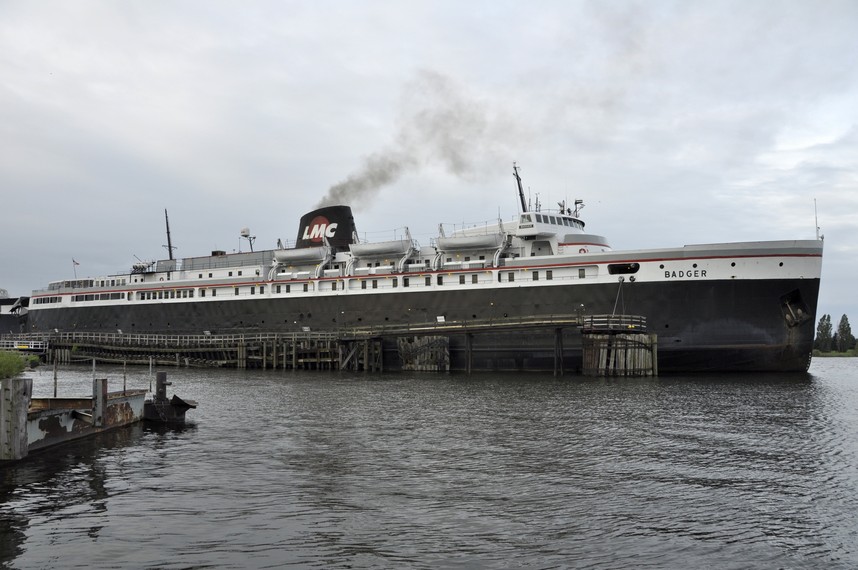
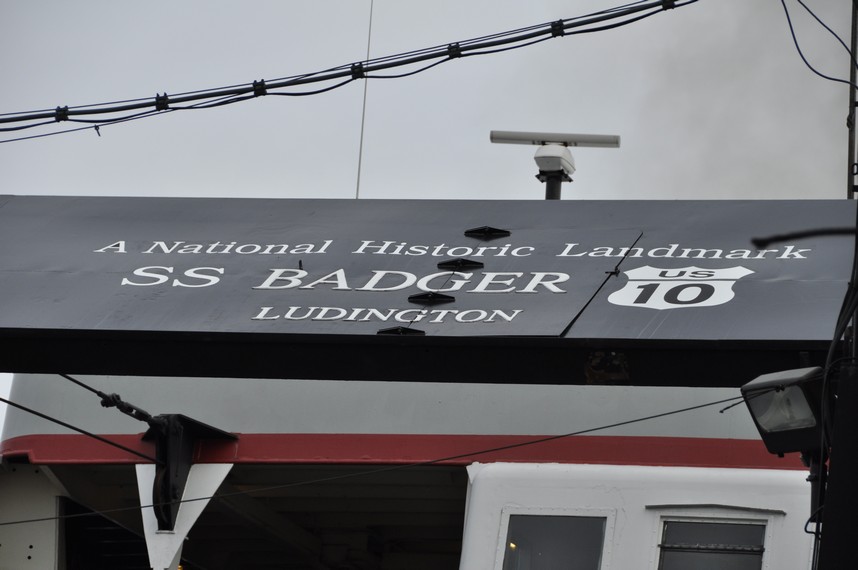
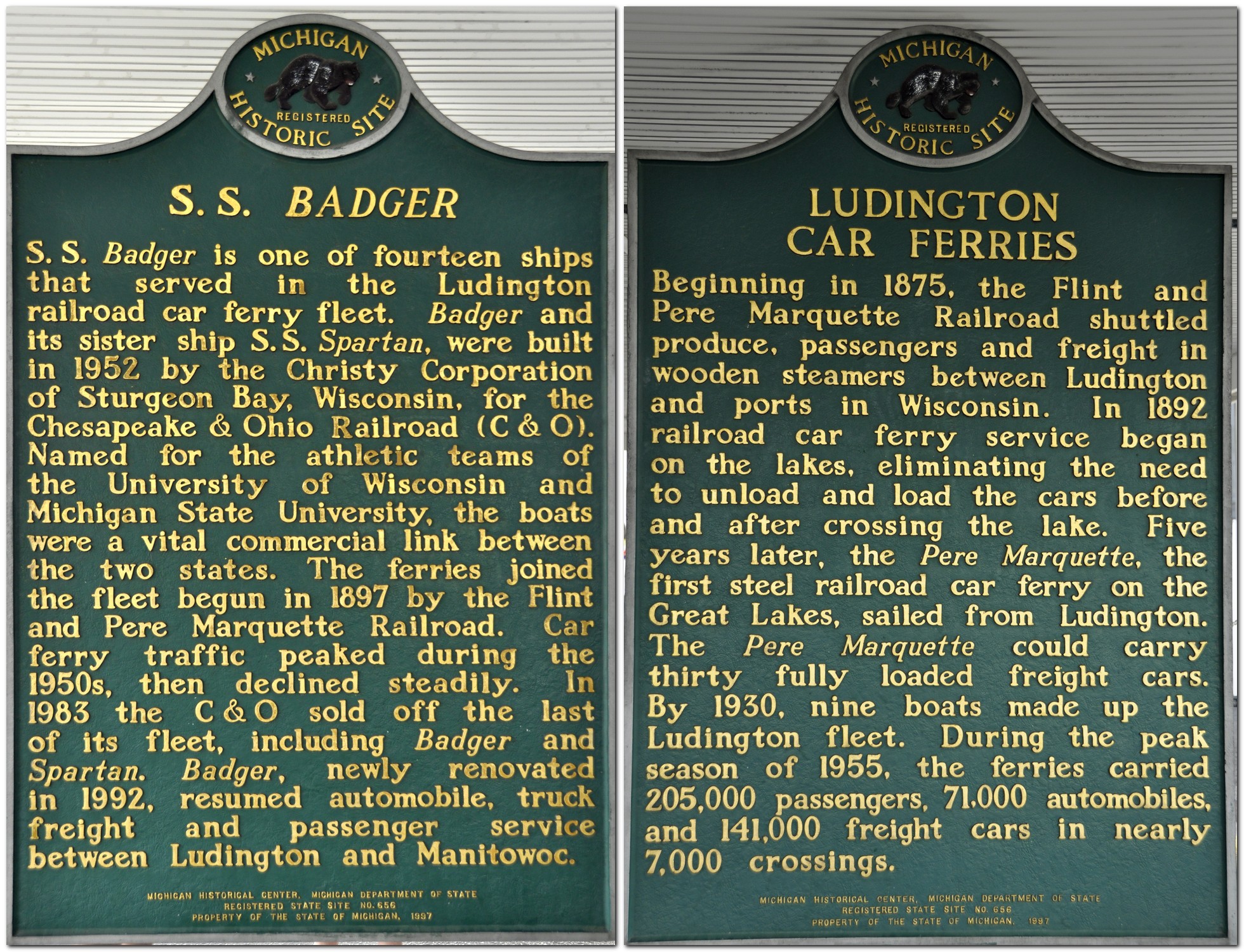
The ferry, SS Badger, across Lake Michigan is operated by LMC – Lake Michigan Carferry. Badger is the last coal-fired ferry operating in the world.

It is 393 feet long, and has a beam of almost 60 feet. It was built in 1953 in Sturgeon Bay, WI. Its sister ship, Spartan, has been laid up in Ludington for many years. Originally the ferries carried rail cars.

The 60 mile crossing of the lake takes four hours, but you gain 1 hour moving from Eastern Standard Time to Central Time. As it was a Wednesday in mid-June, before the height of the tourist season, the boat was far from busy. The slow, easy-paced crossing was just my opportunity to catch up on some sleep, in readiness for the final push into the Twin Cities from Manitowoc across Wisconsin, some 321 miles.

We were at the dockside a little after 07:30, and they started to board the vehicles shortly afterwards for an on-time departure from Ludington at 09:00. Vehicles are driven on board by company staff. So before we sailed we had a good look around the vessel.

Soon enough we were headed out of Ludington harbor.

And before we knew it, Manitowoc was coming into view, and everyone was getting ready to disembark.

I had planned a route across Wisconsin that took us from Manitowoc through Stevens Point on US10. We took I-43 north for a couple of miles or so, then came off to take US10, only to see a sign stating that the road was closed some miles ahead. With that, I changed the settings on my satnav to take the quickest route to St Paul, rejoining I-43 around Green Bay, and west on Highway 29, until we joined I-94 west of Chippewa Falls for the final 75 miles into the Twin Cities. Highway 29 was a nightmare. Although a dual carriageway (a divided highway) it just went on and on, unrelentingly, in a straight line across Wisconsin. However, we did arrive to Hannah and Michael’s almost an hour earlier than anticipated.

Thus ended our 2018 road trip across twelve states: MA, VT, NH, ME, NY, PA, OH, KY, IN, MI, WI, and MN.

In nine days we covered 2741 miles, plus another 477 miles in Maine itself during the six days we stayed at the cabin. We used 133 gallons of gasoline, at a cost of $384 ($2.89/gallon, less than half of what we would have to pay in the UK for the same amount of fuel), at an average consumption of 24.19 mpg.

I’m already planning for 2019; Georgia to Texas through the southern states seems a distinct possibility.

~~~~~~~~~~~~~~~~~~~~~~~~

See the other posts in this series:

Massachusetts to Minnesota (1): the first three days in MA, VT and NH

Massachusetts to Minnesota (2): a week in Maine

Massachusetts to Minnesota (3): onwards to Niagara Falls

Massachusetts to Minnesota (3): onwards to Niagara Falls

Leaving Waterford, ME for Niagara Falls early on the morning of 15 June, we allowed two days for this sector of our trip, 366 miles on the first day, and 289 on the second.

We headed west to the Kancamagus Highway through the southern part of the White Mountains of New Hampshire, and a slow climb to reach the the pass at 2855 feet. The cloud level was quite low, and at some scenic overlooks there was sometimes very little to see. But luck was on our side, and we did have some spectacular views in all directions, particularly at Pemigewasset Overlook northwards.

There were many road signs warning of the presence of moose along the highway throughout much of the trip in New England. But we saw neither hide nor hair, not even an antler. Roadkill raccoons were two a penny. This road sign (courtesy of Trip Advisor) warns drivers at the start of the Kancamagus Highway.

Once across the mountains, we turned south for about 30 miles on I-93, to join US4 to cross Vermont, a section we had more or less traveled the week before.

About 10 miles south on I-93 we saw a sign for road works ahead, and we could see the traffic slowing. But then I could also see vehicles moving beyond the ‘obstruction’, one at a time. Funny situation, I thought to myself. Anyway, to cut a long story short, agents (maybe 20 or more, plus dogs) of the US Customs & Border Protection were checking all vehicles for occupants. And, having British passports, we were asked to pull over while I retrieved our passports from a suitcase in the back. Once checked, we were waved on our way. By coincidence, I had read earlier that day a story about these ‘border checks’ miles and miles from any international border (with Canada in our case, or in the south with Mexico).

Once in Vermont we passed through a pretty town named Woodstock. No, not that one – that’s in NY. There was an interesting covered bridge, constructed in 1969 to replace an iron one that had been put across the river in 1877. Apparently this wooden construction was cheaper than other options.

Our destination for this night was Herkimer, NY, about 10 miles east of Utica. Crossing from Vermont into New York, we headed north into the Adirondacks Regions and west around Indian Lake, following for the first part, the valley of the Hudson River.

The following day, we headed west from Herkimer towards Ithaca (home of Cornell University). We passed through many delightful villages, among them Sauquoit where Steph spotted a memorial plaque. I regret not stopping, since it commemorated Asa Gray, born 18 November 1810 (same birthday as me), who is considered the preeminent American botanist of the 19th century.

We enjoyed the rolling landscape, dotted with small farms, the chapels in the villages.

St Paul’s Church, Paris Hill, established in 1797. This is the oldest parish in Western New York, from 1838.

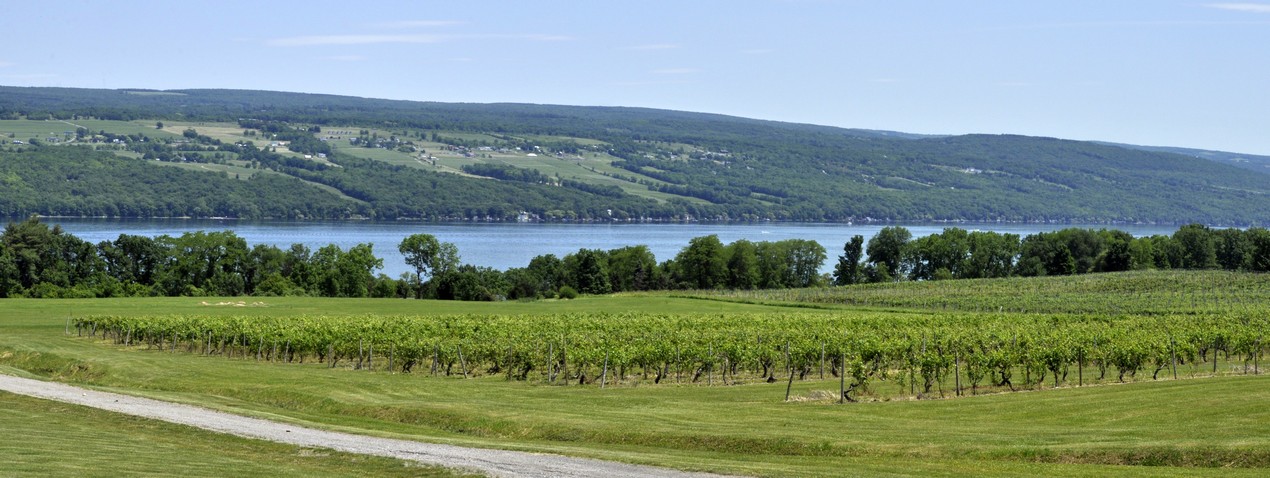
At Ithaca, we stopped to have a picnic lunch beside Lake Cayuga, one of the Finger Lakes that characterize this part of upstate New York.

This is also wine country, and the views across Lake Seneca heading north towards Geneva were stunning. Wineries everywhere!

As we had a prior engagement in Niagara Falls NY that evening, I changed our route, joining I-90 west just north of Geneva rather than cutting across country (a much longer route) as I originally intended.

We arrived in Niagara Falls just before 5 pm, and after checking into our hotel close to the city center and the Falls, we decided to stretch our legs by taking the short walk to the American Falls. The light was just right, and although it was quite busy, I’m sure later in the season this site could be heaving with tourists.

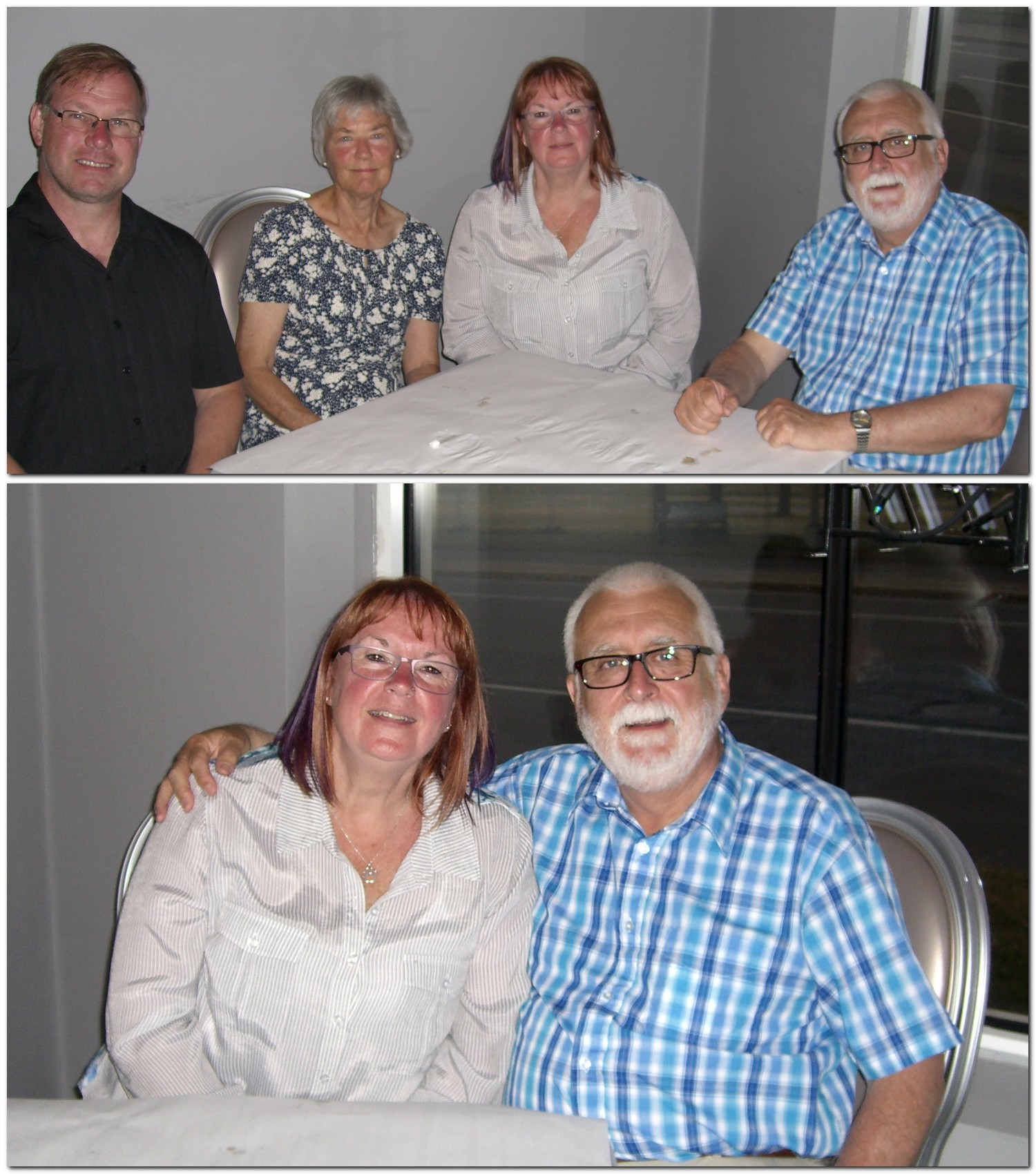
So what was this prior engagement? We had arranged to meet my cousin Patsy and her husband David, who had driven down from Ottawa the day before and were staying on the Canadian side. They had never been to Niagara Falls before either. I had met Patsy just once, in the summer of 1972 a few months before I headed off to Peru. Patsy (just 12 then) and her elder sister Karen had come over to the UK with their mother Bridie, one of my Mum’s younger sisters, to meet the Healy side of the family.

We had arranged to meet for dinner at a small Italian restaurant, La Cuccina Di Mamma on Rainbow Boulevard. What a lovely time we had: great company, good food, and heaps of reminiscing! Steph and David were most indulgent towards Patsy and me.

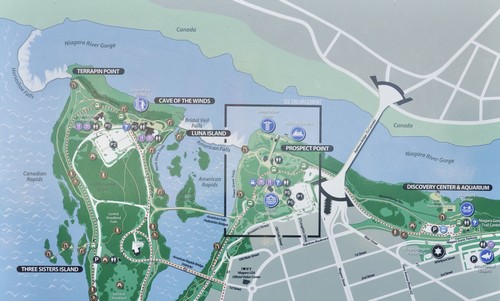
The next day we were up early to take advantage of the good weather, and to view the Horseshoe Falls from Terrapin Point on Goat Island, and the American Falls in the other direction from Luna Island.

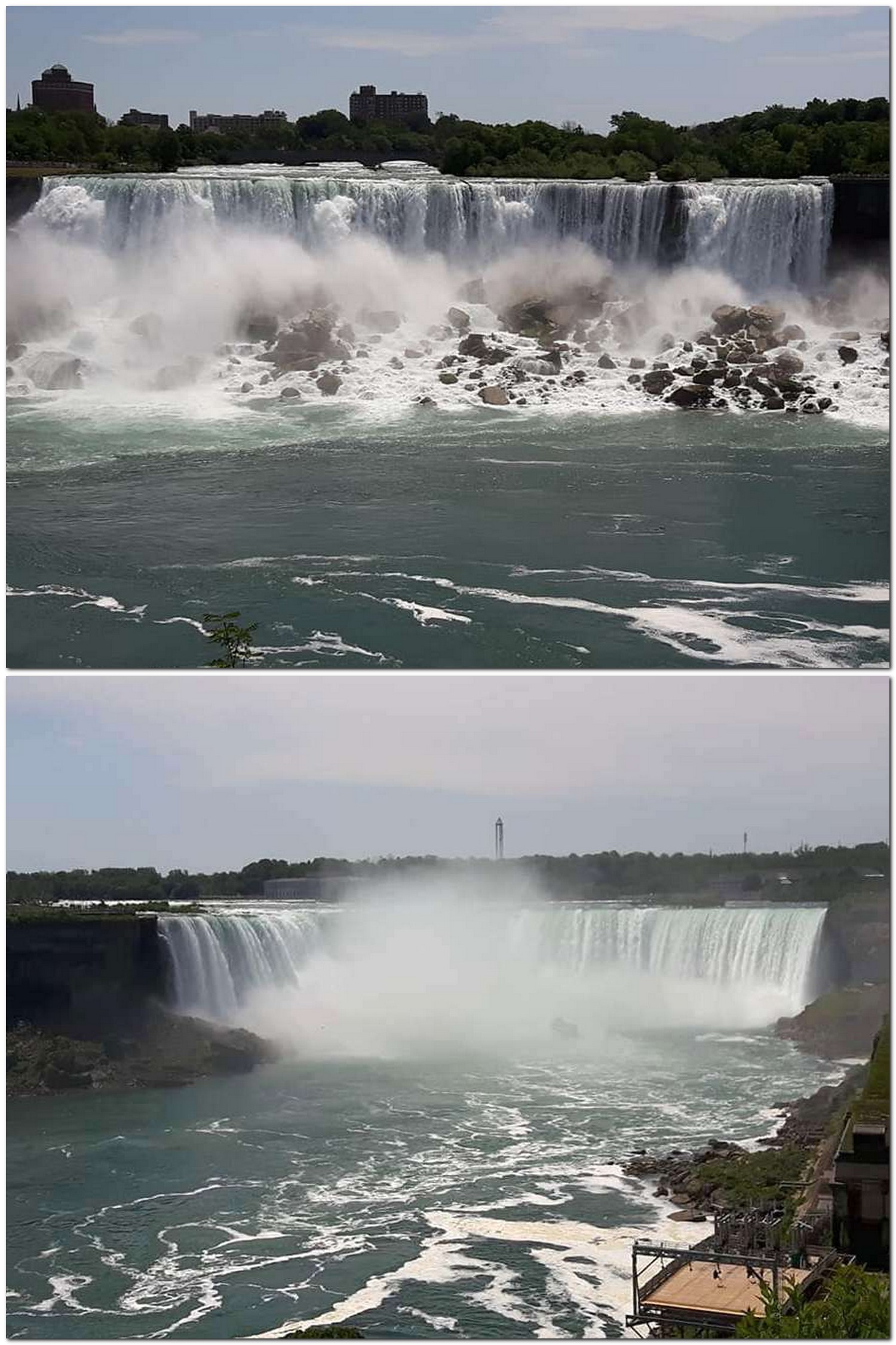
The best views of the Falls (mist permitting) are from the Canadian side, but we decided not to cross over. Instead, Patsy sent me these two photos of the American and Horseshoe Falls from their side of the border.

And this short (<3 minute video) illustrates the awesome power of the falls, with a flow of 675,000 gallons/second over the Horseshoe Falls, and 75,000 gallons/second over the American Falls (both relating to summer daytime flow).

Around 10 am, we’d explored all that we wanted, and so set off on the next stage of our journey, 760 miles over two days southwest through New York into Pennsylvania, Ohio, a brief stretch through Kentucky along the Ohio River, and on to Bloomington, Indiana.

~~~~~~~~~~~~~~~~~~~~~~~~

See the other posts in this series:

Massachusetts to Minnesota (1): the first three days in MA, VT and NH

Massachusetts to Minnesota (2): a week in Maine

Massachusetts to Minnesota (4): heading west through NY, PA, OH, KY and IN, then on to MN

Massachusetts to Minnesota (1): the first three days in MA, VT and NH

It’s that time of the year, and here we are, on the road again in the USA. Another potentially daunting road trip that will take us from Boston, Massachusetts (MA) to St Paul, Minnesota (MN) via Vermont (VT), New Hampshire (NH), Maine (ME), New York (NY), Pennsylvania (PA), Ohio (OH), Kentucky (KY), Indiana (IN), Michigan (MI), and Wisconsin (WI), including a ferry crossing of Lake Michigan from MI to WI. This year I’m using my new Garmin DriveSmart 51 sat-nav, for which I purchased the USA-Canada maps. It saves Steph having to navigate, state by state, map by map, as in previous years, so she can enjoy looking at the passing scenery.

We are also spending a week near Waterford in western Maine, with our daughter Hannah and family (Michael, Callum, and Zoë) at a cabin on the shore of McWain Pond, one of the many small lakes that dot the landscape.

Anyway, it all started last Wednesday morning, very early, when a taxi picked us up from home at 04:00 to take us to Birmingham Airport (BHX) for our 06:00 KLM flight to Amsterdam Schipol (AMS), connecting with Delta 259 at 11:15 to Boston Logan International Airport (BOS).

Apart from a rather rude Delta ground agent at Schipol, our connection was uneventful, as was boarding (Sky Priority), and I was soon enjoying my first G&T on the 6 hour 55 minute flight, on a comfortable Airbus A330-300. When we landed in BOS there was a delay of more than 20 minutes while the ground crew figured out how to connect the air-bridge to the aircraft. But soon enough, we were checked through immigration on one of the newfangled automated passport control (APC) machines. I still had to pass through regular immigration (and facing another rude official who even queried me about any visits I’d made to the Middle East). Before long, luggage in hand, we were at the car rental center and picking up our SUV from Budget. The Mitsubishi we had been assigned had a flat battery, so Budget upgraded us to a full-size SUV, a Dodge Journey V6—rather larger than we needed, but extremely comfortable nevertheless, if a little heavy on fuel (about 25 mpg). But at USD3 a gallon, that’s not really an issue. It would be in the UK, however, where gasoline is more than twice the price!

We successfully navigated our way out of the airport and through the tunnels under Boston city center on I-90, after finally getting the sat-nav to behave itself. Our Wednesday night stop was in Hadley, in central MA, just over 100 miles west of Boston, and southwest by a handful of miles of Amherst.

Over the next two days we took in northwest MA, the Green Mountains of VT as far north as Burlington, and then over the White Mountains of NH, to arrive at our cabin destination in Waterford, ME.

Heading northwest from Hadley on Thursday, it was slow-going for the first 20 miles or so as we encountered school traffic and people heading to work. But soon we were in open country, on scenic byway 112 and often had the road to ourselves for long stretches (as we have enjoyed in past road trips). After about an hour we joined MA2, the Mohawk Trail, and followed that until North Adams where we turned north and crossed over into VT.

There was a glorious view south from Whitcomb Summit, and some miles further on, just short of North Adams, there is a spectacular view north into southern Vermont, reminding us of the views we saw when exploring the Appalachians in 2017.

Vermont is a beautiful state, with forested hills and mountains as far as the eye can see.

North of Wilmington, VT we stopped at a general store and deli to buy sandwiches and were intrigued with the Mini Cooper parked outside with an interesting registration plate BONKS. There was also a Golden Retriever with a Union Jack collar. We discovered that the proprietor was British, from Guildford in Surrey (near London)!

We spent Thursday night on the east side of Burlington, conveniently located for the next day’s travel northeast into New Hampshire and Maine, beginning around 08:00.

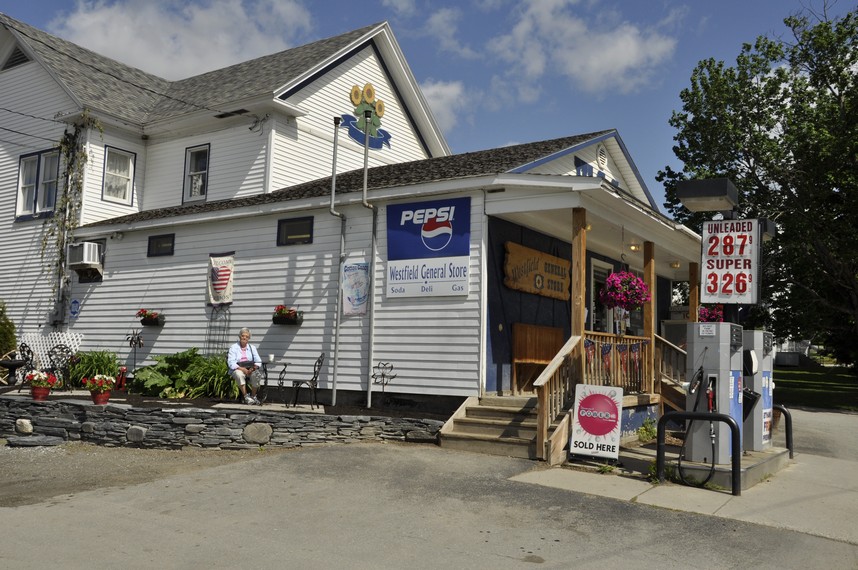
Most of the small communities we passed through have a general store or two, offering a whole range of produce, and many selling fresh sandwiches from a deli counter. We enjoyed a coffee in the sun at Westfield in the far north of the state, just south of the border with Canada.

Crossing into New Hampshire, we headed towards the White Mountains and were not disappointed with the fantastic view of the Presidential Range and the Mt Washington Hotel Resort at Bretton Woods. That’s Mt Washington just left of center, at 6288 ft the highest mountain in the northeast USA.

But Bretton Woods also has special significance for me. Why? Well, I worked for 27 years at two international agricultural centers, CIP and IRRI,  sponsored by the CGIAR (Consultative Group on International Agricultural Research). The CGIAR was founded in 1971 under the auspices of the World Bank. In July 1944, an international conference was held at the hotel to plan for a post-war world, following which the World Bank and the International Monetary Fund were created.

Stopping at Conway to pick up a supply of groceries, we finally reached the cabin around 17:00. A long enough day, followed by a couple of cold beers, an early night, but still far short of some of the travel we have yet to make.

Watch this space!

~~~~~~~~~~~~~~~~~~~~~~~~

See the other posts in this series:

Massachusetts to Minnesota (2): a week in Maine

Massachusetts to Minnesota (3): onwards to Niagara Falls

Massachusetts to Minnesota (4): heading west through NY, PA, OH, KY and IN, then on to MN

Wishing I was in Cuzco . . .

The 10th World Potato Congress takes place in the southern Peruvian city of Cuzco at the end of May this year. I wish I was going.

It would be a great opportunity to renew my links with potato research, and revisiting one of Peru’s most iconic cities would be a joy.

I like this quotation from the Congress website: Potatoes are the foundation of Andean society. It shaped cultures and gave birth to empires. As the world population explodes and climate change places increased demands on the world’s farmers, this diverse and hearty tuber will play an instrumental role in feeding a hungry planet.

Cuzco lies at the heart of the Andean potato culture. The region around Cuzco, south to Lake Titicaca and into northern Bolivia is where most diversity in potatoes and their wild species relatives has been documented. When I worked for the International Potato Center (CIP) in Peru during the early 1970s I had several opportunities of looking for potatoes on the Peruvian side of the border, and made three (possibly four) visits to Cuzco. I see from a quick scrutiny of the street map of Cuzco on Google maps that the city has changed a great deal during the intervening years. That’s hardly surprising, including many fast food outlets dotted around the city. The golden M get everywhere! Also there are many more hotels (some of the highest luxury) in the central part of the city than I encountered 45 years ago.

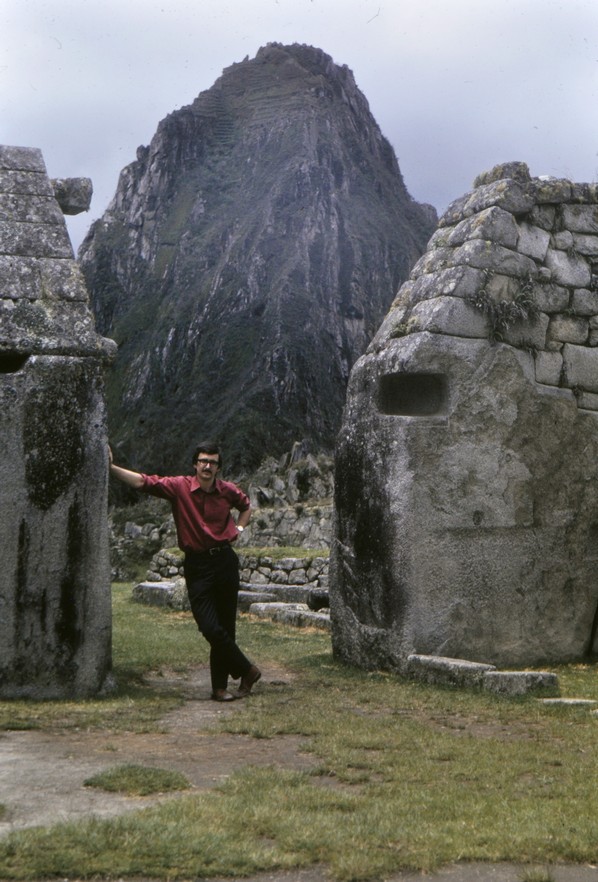
At Machu Picchu in January 1973

I visited Cuzco for the first time within two weeks of arriving in Peru in January 1973. The participants of a potato germplasm workshop (that I described just a few days ago) spent a few days in Cuzco, and I had the opportunity of taking in some of the incredible sights that the area has to offer, such as Machu Picchu and the fortress of Sacsayhuamán on the hillside outside the city.

Steph and I were married in Lima in October 1973, but we delayed our honeymoon until December. And where could there be a more romantic destination than Cuzco, taking in a trip to Machu Picchu (where we stayed overnight at the turista hotel right beside the ruins), Sacsayhuamán, the Sacred Valley, and the Sunday market at Pisac.

In the early 70s, the Peruvian airline Faucett flew Boeing 727s into Cuzco. In January 1973 I’d only ever flown three times: in 1966 to the Outer Hebrides in Scotland on a BEA Viscount turboprop; from London to Istanbul on Turkish Airlines to attend a scientific meeting in Izmir; and the intercontinental flight from London to Lima with BOAC.

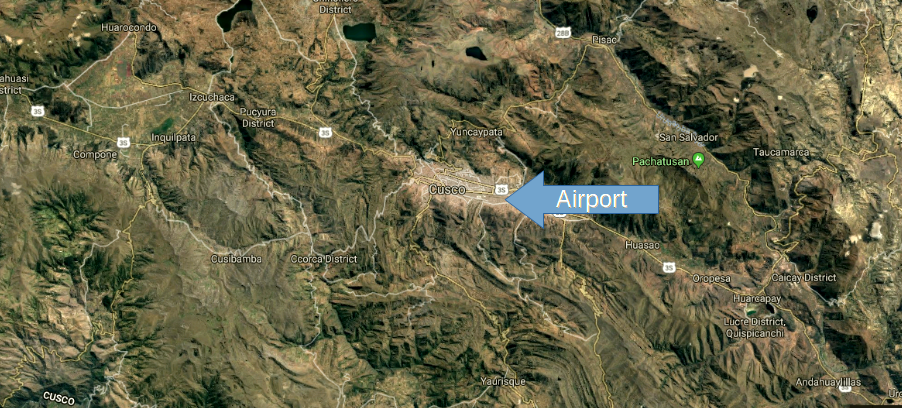
Flying into Cuzco was (is) quite an experience. There’s only one way in, and out! It is quite awesome (if not a little unnerving) dropping through the cloud cover, knowing that some of the highest mountains in the world are just below, then seeing the landscape open as you emerge from the clouds, banking hard to the left and follow the valley, landing at Cuzco from the east.

The city has now expanded eastwards beyond the airport, but in 1973 it was more or less at the city limits. The main part of the city lies at the western end of the runway, and hills rise quite steeply just beyond, thus the single direction for landing and the reverse for take-off. Maybe with new, and more highly powered aircraft, it’s now possible to take off to the west. Those attending the World Potato Congress should have a delightful trip from the coast. By the end of May the dry season should be well-established, and the skies clear.

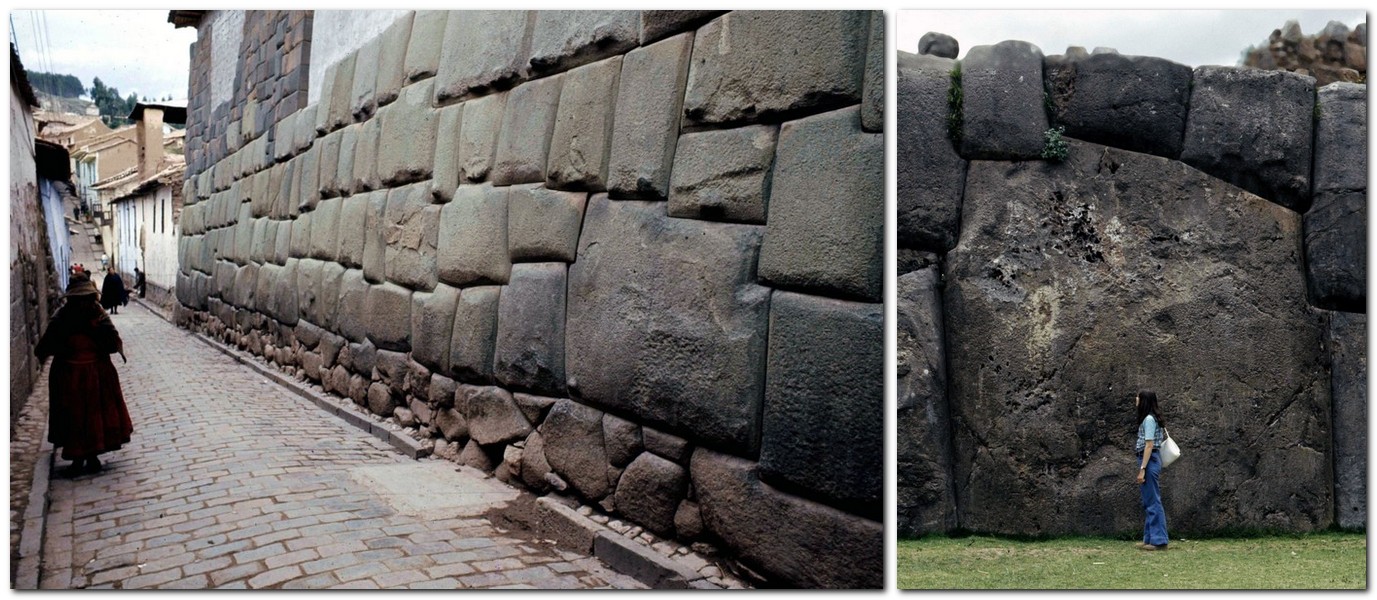
So, what is so special about Cuzco? It’s a city steeped in history, with Spanish colonial buildings blending into, and even constructed on top of the Inca architecture. That architecture leaves one full of wonder, trying to imagine how the stones were brought to the various sites, and sculpted to fit so snugly. Perhaps the best example is the twelve-sided (or angled) stone in the street named Hatun Rumiyoc (a couple of blocks east of the Plaza de Armas). This is taken to an even greater level at Sacsayhuamán, with an enormous eleven-sided stone.

My first impressions of Cuzco were the orange-tiled roofs of most buildings in the city.

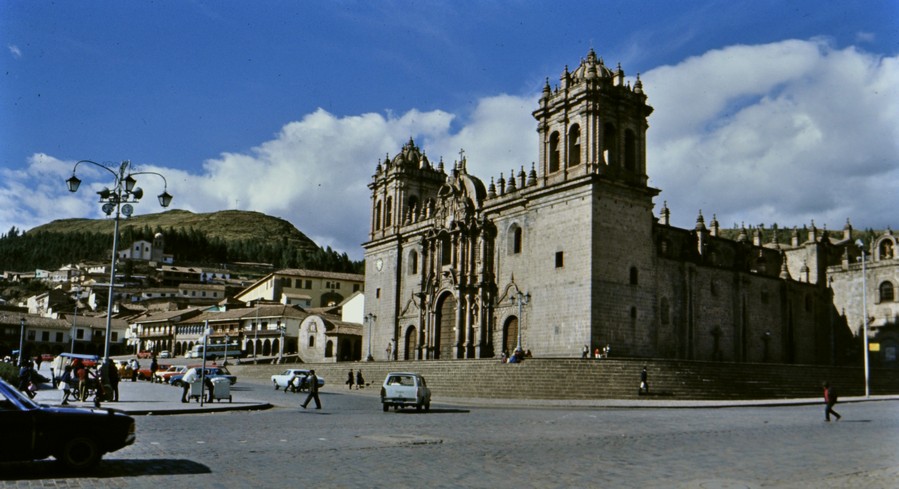
All streets eventually lead to the main square, the Plaza de Armas in the city center, dominated on its eastern side by the Cathedral Basilica of the Assumption of the Virgin, and on its southern side by the late 16th century Templo de la Compañía de Jesús (a Jesuit church).

This slideshow requires JavaScript.

One of the finest examples of the Inca-Colonial mixed architecture is the Coricancha temple upon which was constructed the Convent of Santo Domingo. The Incan stonework is exquisite (although showing some earthquake damage), and inside 16th/17 century paintings have survived for centuries.

Another aspect of Cuzco’s architectural heritage that caught our attention were the balconies adorning many (if not most) buildings on every street, at least towards the city center.

In the early 1970s steam locomotives were still in operation around Cuzco and, being somewhat of a steam buff, I had to take the opportunity of wandering around the locomotive shed. During our trip to Machu Picchu, our tourist diesel-powered train actually crossed with another pulled by a steam locomotive.

This slideshow requires JavaScript.

Outside the city, to the north lies the Inca fortress citadel of Sacsayhuamán, the park covering an area of more than 3000 hectares. Steph and I spent a morning exploring the fortress, viewing it from many different angles, and pondering just how a workforce (probably slave labour) came to construct this impressive site, with its huge stones so closely sculpted against each other that it’s impossible to insert the blade of a knife.

This slideshow requires JavaScript.

Among the most commonly visited locations by many tourists is the small town of Pisac, some 35 km from northeast of Cuzco at the head of the Sacred Valley, where a vibrant market is held each Sunday. We took a taxi there, and joined quite a small group of other tourists to wander around, bargain for various items (including an alpaca skin rug that we still had until just a couple of years ago). This is not a tourist market, however—or at least it wasn’t in December 1973 when we visited. As you can see in the slideshow below, it was very much a place and occasion frequented by people coming from the surrounding communities to sell their produce, and meet up with family and friends. Whenever I look at these photographs I always feel quite sad, as it’s likely that many who appear have since passed away.

This slideshow requires JavaScript.

It’s no wonder that Cuzco and surrounding areas have been afforded UNESCO World Heritage status (as so many other treasures in this wonderful country). So, as I think about the opportunities that potato scientists from all around the world will enjoy when they visit Cuzco at the end of May, I can’t help but feel a tinge of envy. However, they’d better take advantage of the odd cup of coca tea, or maté de coca, if offered. An infusion of coca leaves (yes, that coca!), it really does help mitigate the effects of high altitude and the onset of so-called ‘altitude sickness’.


And pigs might fly . . .

Steph and I made two road trips together to the small town of San Ramón (see map), that lies at just over 800 m on the eastern slopes of the Andes in the Department of Junín.

Nothing particularly special or interesting in that, you might ask, especially if you know the region. The International Potato Center (CIP) opened an experiment station there in the 1970s, as somewhere it could evaluate potato breeding lines against several pests and diseases that appeared more regularly at this site than at higher elevations. But also for testing potatoes in their ability to grow under higher temperatures than usual for potatoes, a temperate crop that evolved in the Tropics. This emphasis on adaptation to high temperatures, with the aim of potentially expanding potato production worldwide into less favorable environments, was work I would continue once I moved to Costa Rica in 1976.

San Ramón today has a population of 30,000 inhabitants but was very much smaller when we first visited. It was not normally on our itinerary, since Steph’s and my work only took us to Huancayo high up in the central Andes, at over 3000 m.

Our first trip, in August 1973 (with CIP plant pathologist John Vessey and physiologist Ray Meyer) was just a few weeks after Steph joined me in Peru. This was our first experience of the hot and humid lowland tropics. Little did we imagine that just a few years later (from 1976) we would spend almost five years in Costa Rica living under those conditions in Turrialba, nor that almost two decades later we would move to the Philippines for 19 years.

Our second and short vacation trip was in September 1974.

I’ve been back only a couple of times, once in early 1976 before we headed off to Costa Rica, and another¹ in the mid-1980s when, working at The University of Birmingham, I had a research project with CIP, and took the opportunity of a visit to Lima to travel from Huancayo to San Ramón.

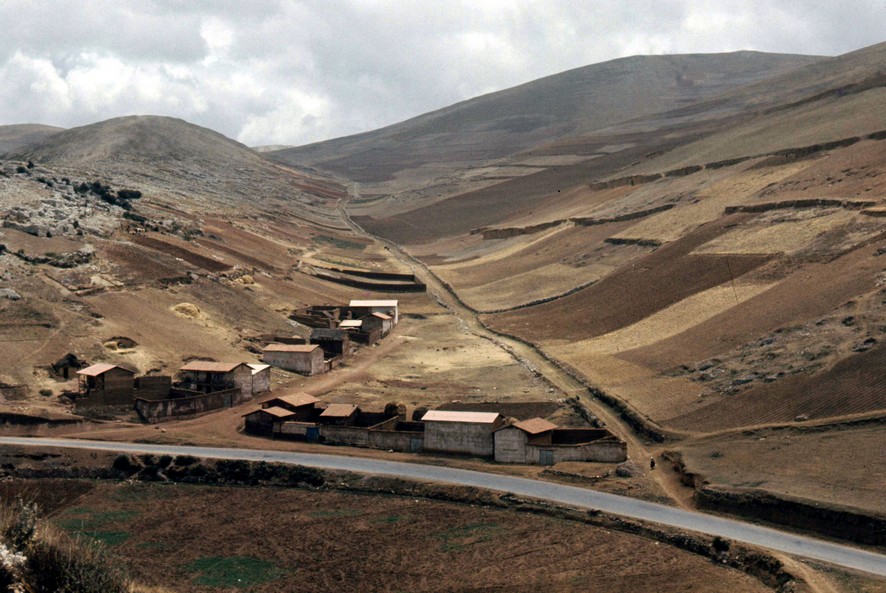
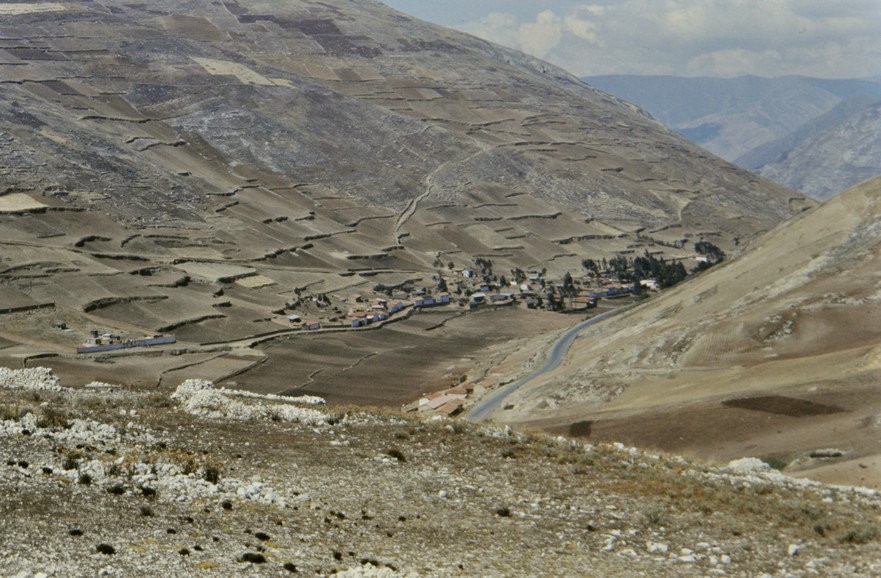
Dropping down to San Ramón the only road passes through the town of Tarma, famous for its flower production. What a delight. Higher up, the road sweeps round broad valleys with it patchwork of fields, one of the most attractive views I think I’ve seen in all my travels across the Andes.

Below Tarma, the valley narrows, and winds its way beside a fast flowing river (that becomes the Chanchamayo River beyond San Ramón), with numerous tunnels carved through the rock, and barely wide enough in places for two vehicles to pass. There are steep precipices into the river below at numerous locations.

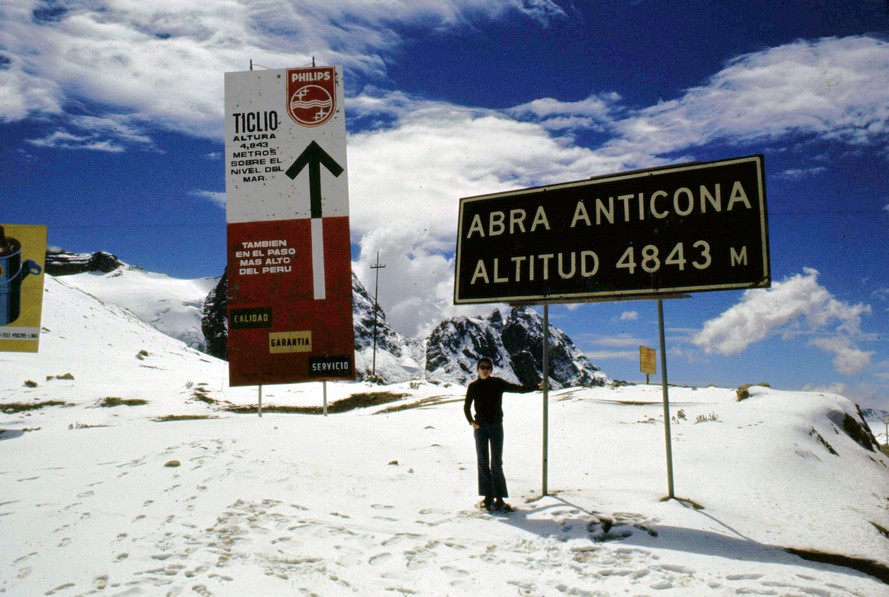
And given that the San Ramón region and beyond is (was) a particularly important fruit-growing one (especially for papayas), there was always a constant stream of lorries loaded with fruit grinding their way out of the valley to climb over Ticlio (at almost 5000 m) before dropping rapidly to Lima on the coasts.

Steph’s first trip to Huancayo (and San Ramon) in August 1973.

On the second morning of our September 1974 trip, we set off after breakfast along the Chanchamayo River towards La Merced, stopping frequently to look at the vegetation, explore the river bank, and take photos. It’s hard to imagine that La Merced now has a population approaching 170,000. Beyond La Merced we had thoughts of eventually reaching Oxapampa, but as the road deteriorated so did our expectations of being able to travel there and back in a single day. With some regret we turned around. Oxapampa was (is) an interesting community, founded in the 19th century by German immigrants, and retaining much of that influence today.

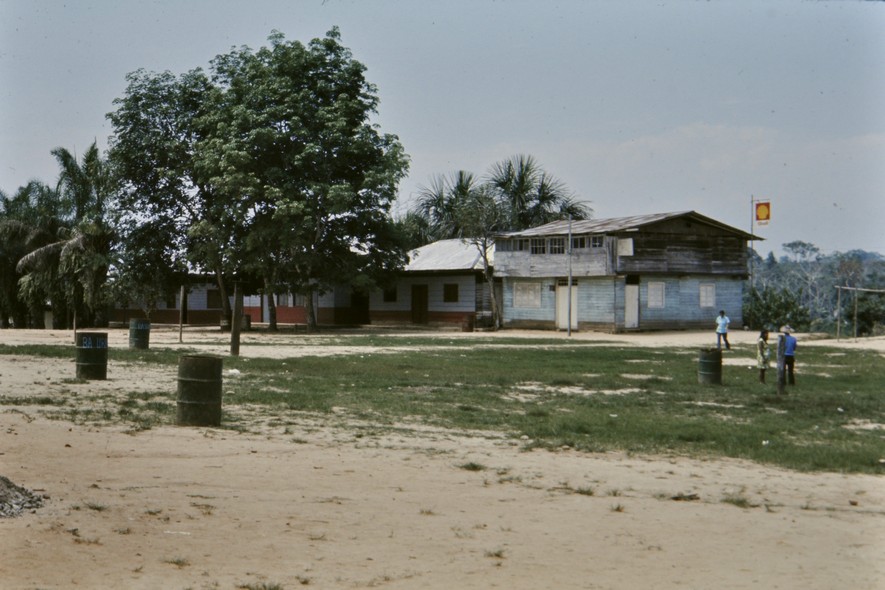
Our trip on the third day was much more eventful. Following a suggestion by John Vessey, we decided to take advantage of the local light aircraft flights from San Ramón servicing communities further out in the lowland areas (the ‘jungle’) and visit one such beside the Pichis River, Puerto Bermúdez (some 550 m lower in altitude than San Ramón). Today, Puerto Bermúdez is connected by road to La Merced and San Ramón, a drive of some 176 km, and about four hours. There was no road in 1974, and flights were the only option. From satellite images, the town does not appear to have an airstrip anymore. What looks like a former airstrip is flanked by buildings and criss-crossed by streets. Maybe with the road now reaching the town, an air bridge to San Ramón or other towns is no longer economically viable.

Having purchased our tickets, we arrived at the airfield early the next morning, and found ourselves squeezed into the rear seats of a single engine plane (probably a Cessna) for the 45 minute flight to Puerto Bermúdez. We were scheduled to return mid-afternoon, and had decided that we’d try and rent a boat for a trip along the river.

In 1974, Puerto Bermúdez was a very small settlement, and the area is home to one of Peru’s largest indigenous communities in its Amazon region, the Asháninka².

We soon found somewhere to buy a quick cup of coffee, and someone who would rent his boat to us for several hours for a trip along the Pichis, a river that flows north to join the even bigger Ucayali River south of Pucallpa, being some of the headwaters of the River Amazon.

In this gallery of photos, you can see the type of dugout canoes that are common along the river, with their long shaft outboard motors. In the distance along the river you can also see the Andes rising in the west. And also some of the communities we observed along the riverbanks, and the rafts carrying fruits. This was our first experience of an environment like this, and we thoroughly enjoyed ourselves. Everyone was most friendly.

After a quick bite to eat for lunch, we headed back to the airstrip for our mid-afternoon flight back to San Ramón.

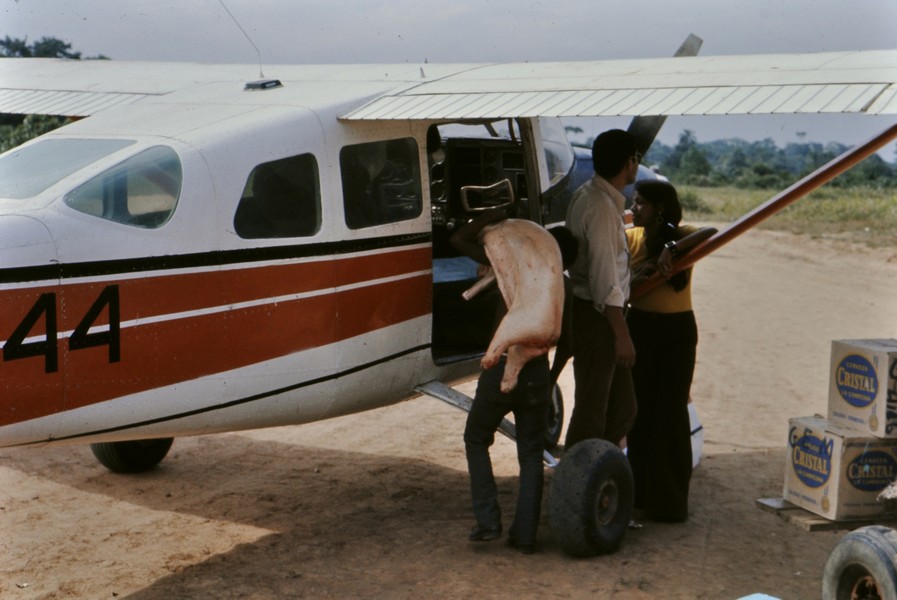
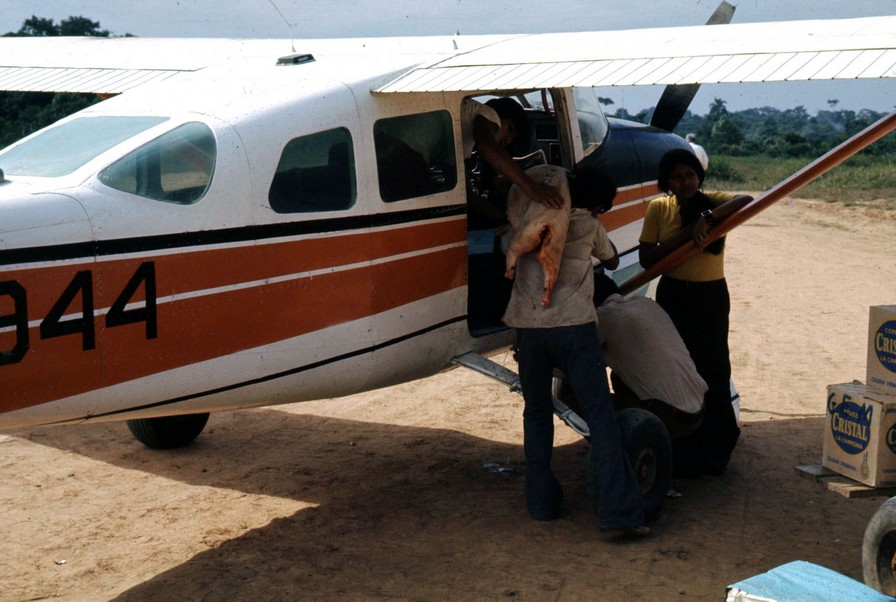
And that’s when we had our next surprise. There was an aircraft waiting for the return flight. We were the only passengers. But the aircraft had no seats for us. There was some ‘freight’ to take: several dead pigs that were loaded along with empty beer crates that we were to use as seats. No seat belts!

Communicating with base back in San Ramón, the pilot told us that the weather had ‘closed in’ and that our departure would be delayed. And there we sat, looking westwards towards the Andes and wondering when we would be able to take off. After about an hour, the pilot told us that there was still ‘weather’ along the proposed return route, but ‘bugger it’ or words to that effect in Spanish, he said we should leave, and we’d better climb aboard if we wanted to return to San Ramón that same day.

With some trepidation—that I can still feel after all these years (I’ve never been the world’s best flier)—Steph and I climbed aboard, settled ourselves on our respective beer crates (or maybe they were cases of beer), and held on for dear life to anything we could as the plane hurtled down the runway and took to the air.

All was well for the first half of the flight. We gained height easily (after all the plane was carrying quite a light load  and I was very much lighter than I am, unfortunately, today). We could see the foothills of the Andes approaching, with rain squalls across our path. Needless to say things became rather more uncomfortable as we crossed that weather system, and bounced our way into San Ramón. But we lived to tell the tale.

Given the chance to make a journey like that again, I’d probably decline. The enthusiasm of youth, the risk taking. In any case one might hope that today, safety regulations are much more assiduously applied. The only time I’ve ever shared a flight with three dead pigs.

~~~~~~~~~~~~~~~~~~~~~~~~~~~~~~~~~~~~~~~~

¹ The 1980s were the Michael Jackson years. The singer, not me. Arriving at our hotel in San Ramón, it didn’t take long before a very large crowd of children had assembled outside the hotel and chanting ‘We want Michael Jackson‘. Some mix-up!

² Puerto Bermúdez’s Asháninka suffered during the years of the Sendero Luminoso (Shining Path) guerrilla insurrection of the 1990s, and many inhabitants of the town were massacred.

Photographing the Summit-Selby neighbourhood of St Paul

20160916-003-minnesotaOver the years we have got to know our way around St Paul, Minnesota, quite well. Minneapolis (the other half of the Twin Cities) less so. The grid system of tree-lined avenues and streets makes it quite easy to navigate around the city, with a significant number of avenues running west to east from the banks of the Mississippi River to the Cathedral Hill district.

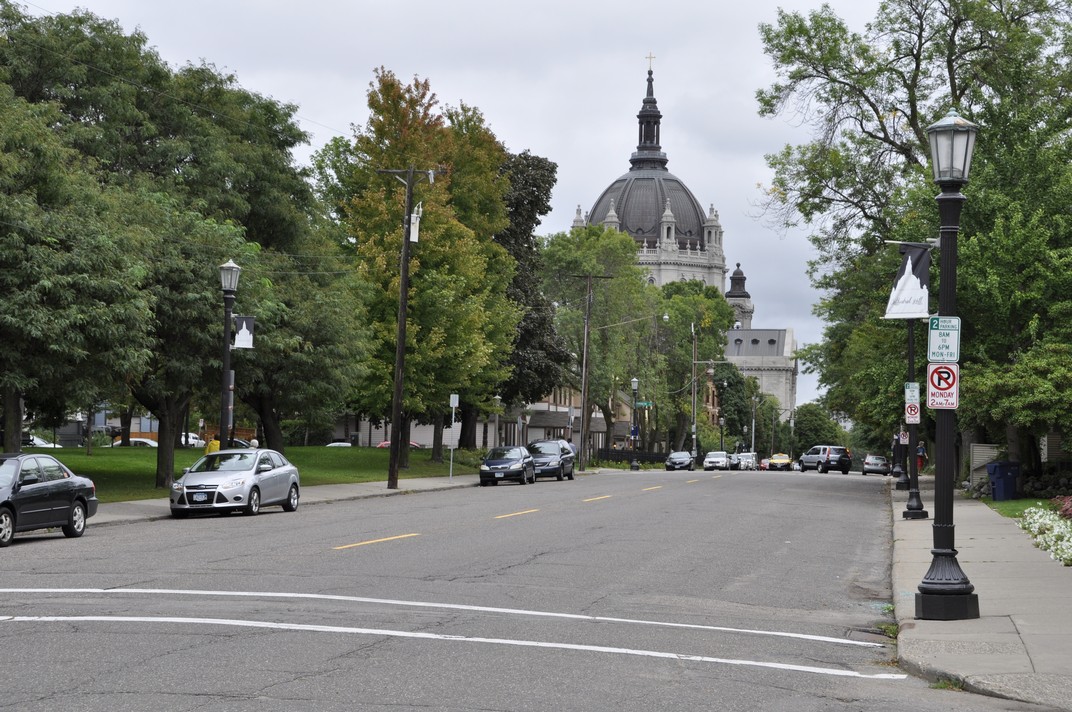
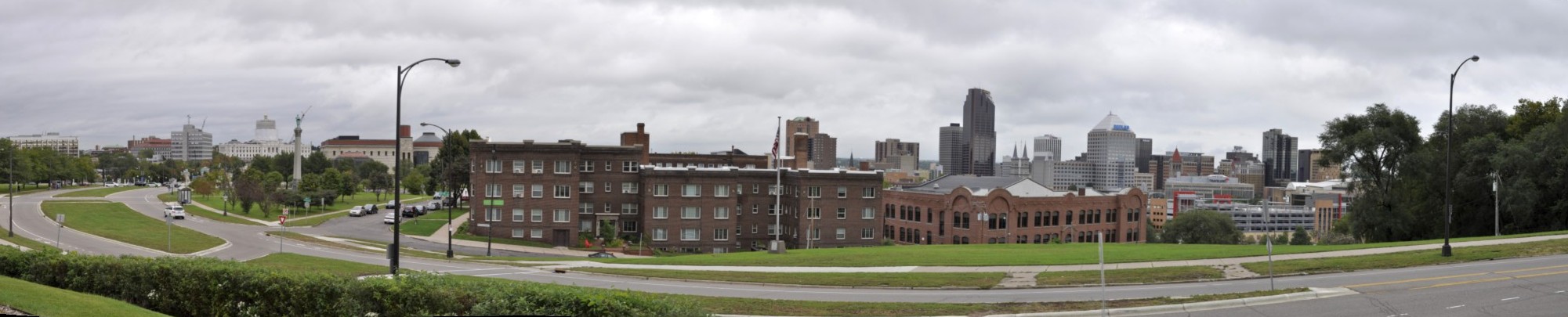
Two avenues, Summit and Shelby, actually converge at Cathedral Hill (map), and from the steps of the magnificent Catholic Cathedral of St Paul, you can enjoy a panoramic view over the downtown area of St Paul, from the Minnesota Capitol (currently being renovated) to the northeast and the Mississippi to the southeast.

20160916-006-minnesota

Looking east on Selby Ave towards the Cathedral of St Paul.

20160916-001-minnesota

The downtown St Paul skyline, with the state capitol to the left, and the business district to the right. The Mississippi lies just beyond the business district.

So, a couple of weeks ago, Steph and I decided to drive over there, to take a walk round, and for me to do some photography. It has been six years since we last wandered round there. Our eldest grandchild, Callum, had been born just a month earlier in mid-August 2010, and while Hannah (our elder daughter, his mother) had a hair appointment, we pushed Callum around in his pram. Respite for the new mum, first grand-parenting responsibilities for Steph and me.

16 September past was a bright but overcast day, perfect for photography because there were no harsh shadows to complicate matters.

For the past seven years I have been using a Nikon D5000 DSLR. I bought it in the Philippines a few months before I retired, and I’ve been very happy with it. It had an 18-55 mm lens fitted when I bought the camera, and around 2012 I acquired a 200 mm lens. Now, while I liked that telephoto, it wasn’t very convenient having to constantly change lenses for just ‘that’ shot. Often, I just didn’t bother.

However, a few days before we flew to Minnesota for our latest visit at the beginning of September, I treated myself to an all-in-one lens, Nikon AF-S Nikkor 18-200 mm 1:3.5-5.6 GII ED lens – an early combined birthday and Christmas present. So our Summit-Selby wander was a good opportunity to test some of its capabilities.

I decided that some shots of the cathedral, both wide angle and telephoto from the same location would be quite interesting, and here are some of the results.

The Summit-Shelby neighbourhood is rather lovely, but expensive. Along Summit are some of the grandest houses that I have ever seen; and some more modest ones too. It’s also a neighbourhood famous for the great and good of St Paul who settled there over the past century or more. Authors F Scott Fitzgerald (The Great Gatsby) and Garrison Keillor (A Prairie Home Companion) both lived in the neighbourhood at one time or another.

In fact Keillor once owned a bookshop underneath Nina’s Coffee Cafe on the corner of Selby and Western Ave N, a well-known and popular meeting place in that neighbourhood (he has now moved to another venue on Snelling Ave near Macalester College).

These are just a few of the properties that caught my attention as we walked around.

And on the corner of Summit Ave and Western Ave N, there is a delightful small park, Cochran Park, with an elegant fountain with abronze statue of a running Native American with his dog at his feet.

All-in-all, an excellent morning’s exercise, coffee break, and photography. I look forward to many more opportunities.


Can’t see the wood for the trees . . .

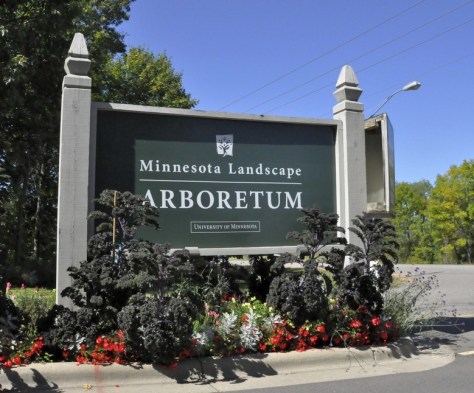
During our visit to Minnesota in September 2015, we visited the Minnesota Landscape Arboretum (owned by the University of Minnesota) with Hannah and Michael, and grandchildren Callum and Zoë. Being a year younger than today, we had to get back home so they could have a post-lunch nap. So we really only had time to see the various gardens closest to the Oswald Visitor Center (click here for condensed visitor guide and map)

20160914-111-minnesota

Steph and I returned to the Arboretum almost a month ago, and this year we took the Three Mile Drive around the site. There is so much to see, and the various plantings are laid out splendidly. The crab apple collection particularly caught my attention.

So rather than try to wax lyrical about the Arboretum, I’ll let you follow the links I’ve made here to the various websites, and let my photos speak for themselves.

20160914-113-minnesota

It’s amazing what a difference an extra four inches can make . . .

Size does make a difference after all. Well, at least when it comes to airline seats. Not that the actual dimensions of Delta Comfort+ and regular Economy seats are different. It’s just that there are an extra four inches or so between the rows in Delta Comfort+ section of the cabin.

And what a difference those four inches actually make, as I commented last year. So, even though the cost of the Comfort+ upgrade had increased by £100, we felt that the added space and comfort (really the ability to move around in one’s seat, and not have the seat in front in your face) was worth the extra expense.

And that’s how we travelled to Minnesota just a couple of days ago, for our annual visit to St Paul to stay with Hannah and Michael, and grandchildren Callum and Zoë.

We arrived to Birmingham airport (BHX) around 09:10 for our 11:25 flight (operated by KLM Cityhopper) to Amsterdam Schipol (AMS, that takes around 55 minutes), only to discover that the check-in desks did not open until 09:25. Not the best situation for me these days, standing around on my weakened right leg. Anyway, once we had checked in our bags, we went through security quite quickly, although Steph was given a random check for explosives, and the hand gel that I was carrying was given special scrutiny.

20160906-001

Sitting in the departure lounge at BHX waiting for our flight DL9415 (operated by KLM Cityhopper) to Amsterdam Schipol (AMS).

Our flight (an Embraer 190 aircraft) was boarded quickly, and the captain advised us that, at 11:10, we were ready to depart early. Only to come back on the blower just a couple of minutes or so later to tell us that two passengers had decided not to fly after all, and their bags would have to be found and removed from the aircraft. After all this we actually departed about 10 minutes late!

Being a Cityhopper flight, we arrived to a ‘bus gate’ at Schipol. This was actually rather convenient, since the entrance into the D pier was close to Gate D1 that Delta uses exclusively to process all its passengers but does not actually board any flight from there. And even better, our Minneapolis-St Paul flight DL165 was scheduled to depart at 15:35 from Gate D3. No long walks for me in Schipol last Tuesday, which was quite a relief.

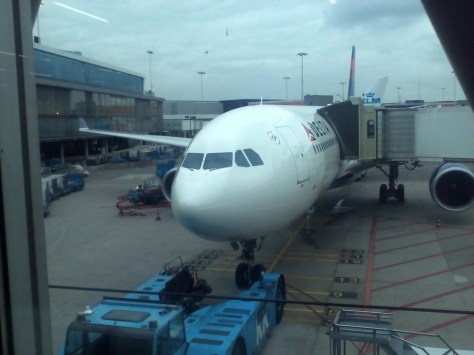
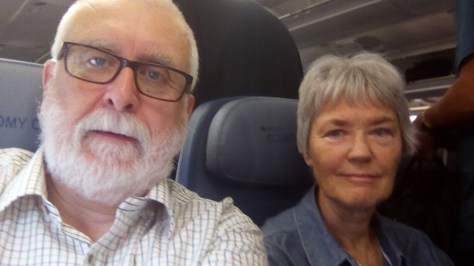
I asked for priority boarding, and Steph and I were the first passengers on board the Delta A330-300, and quickly settled into our seats.

20160906-002

20160906-003

Around 15:30 (after we’d been on board for about 40 minutes) the captain said we were ready to depart, but then advised us that engineers were working on a fault with the water and vacuum system for the toilets (now that was an issue I’d experienced recently on my flight from Lima to Cali, Colombia), and there would be a slight delay. Ultimately we departed about 25 minutes late (and arrived into MSP delayed by about the same time).

Once we were on the move, we had a very smooth takeoff from runway 24, and climb out of the gloom over Amsterdam.

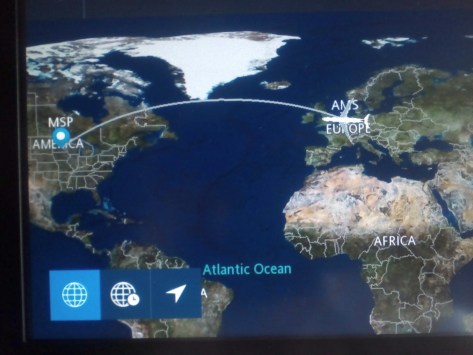
Initially, our flight headed towards London, and didn’t turn northwest until we had passed Bristol. That’s quite unusual based on previous flights, when we headed out from AMS towards Scotland. Anyway, we crossed Ireland, passed south of Iceland and Greenland, and heading in over North America on the coast of Newfoundland and Labrador, over Hudson Bay and Ontario in Canada, before the long descent into MSP once we had crossed the US-Canada border north of Duluth.

20160906-006

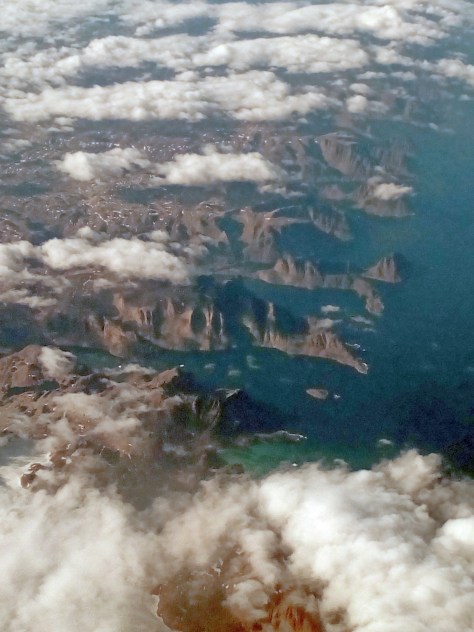
There wasn’t a great deal to see until we crossed the coast of Newfoundland, and then there was a spectacular view of the rugged coastline, with inlets bordered by precipitous cliffs.

20160906-020-copy

The spectacular coastline of Newfoundland and Labrador.

Mostly it was cloudy, with odd view of an island or two as we crossed the southern part of Hudson Bay.

But for once, it was an incredibly smooth flight almost the whole way. In fact I can say that we experienced no turbulence at all, apart from the occasional little bump. And even though stormy weather had been predicted for our arrival around 18:00 in MSP, and the captain advised us during the descent that the approach could be rather bumpy, we had no bumps at all.

Nevertheless, a nine hour flight is a long time. Having made the same flight before in a regular Economy seat, and knowing how uncomfortable I was, the upgrades to Comfort+ have been worth every penny.

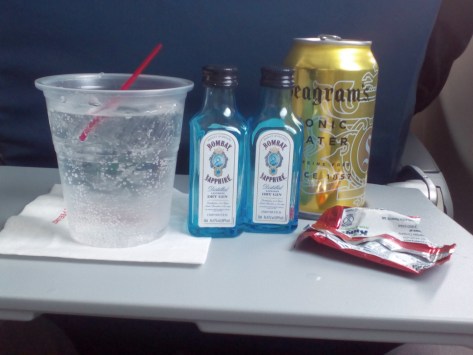
Also, the odd Bombay Sapphire or three during the flight certainly helps. I read something today that drinking gin is good for you. I don’t need any excuse. I enjoy it for itself, and also for the fact that it relaxes me during flights such as Tuesday’s.

20160906-012

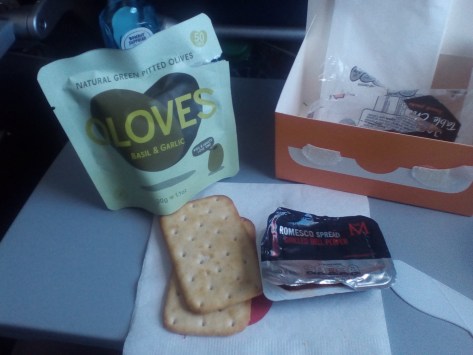
Delta serves a limited menu in Economy Class: chicken and . . . Having previously opted for the hot dish (and invariably regretted having done so), I decided to try the cold chicken salad, and surprisingly quite satisfied with my choice. About four hours afterwards the cabin crew came around with a snack – quit bizarre, but nice nevertheless. It comprised crackers and a red bell pepper spread, and a sachet of about a dozen green pitted olives. Never had anything like that on any flight before. Then just 90 minutes out from MSP we were served a hot cheese and chicken sandwich, and some ice cream.

20160906-015

On arrival at MSP we were off the plane quickly and among the first passengers through Immigration. Our bags arrived quickly and before we knew it we were out and meeting Michael and the grandchildren.

Yesterday was still quite stormy and wet in St Paul, and we didn’t manage a short walk until quite late in the afternoon. Hannah and Michael moved house a few months back, just a few blocks from where they had been living. But it’s a larger house, and along the Mississippi River Gorge. These next photos were taken just a couple of minutes away from their house.

We are here in St Paul for the next three weeks. Although we don’t yet have any firm plans to travel, we are contemplating a short break in the north of the state, at the headwaters of the Mississippi and Itasca State Park. Some of the trees here in St Paul are already beginning to show the first signs of autumn colour. Perhaps we will see a more spectacular display in northern Minnesota.

Watch this space!


If it’s Wednesday, it must be Colombia . . .

Not quite the ‘Road to Rio . . .’
I have just returned from one of the most hectic work trips I have taken in a very long time. I had meetings in three countries: Peru, Colombia, and Mexico in just over 6½ days.

And then, of course, there were four days of travel, from Birmingham to Lima (via Amsterdam), Lima to Cali (Colombia), then on to Mexico City, and back home (again via Amsterdam). That’s some going. Fortunately the two long-haul flights (BHX-AMS-LIM and MEX-AMS-BHX) were in business class on KLM. Even so the journeys from Lima to Cali (direct, on Avianca) and Cali to Mexico (via Panama City, on COPA) were 12 hours and 11 hours door-to-door, respectively, the former taking so long because we were delayed by more than 5 hours.

As I have mentioned in an earlier blog post, I am leading the evaluation of the program to oversee the genebank collections in eleven of the CGIAR centers (known as the Genebanks CRP). Together with my team colleague, Marisé Borja, we met with the genebank managers at the International Potato Center (CIP, in Lima), the International Center for Tropical Agriculture (CIAT, in Cali), and the International Maize and Wheat Improvement Center (CIMMYT, in Texcoco near Mexico City).
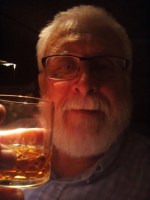
20160724 018

A drop of cognac.

It all started on Sunday 24 July, when I headed off to Birmingham Airport at 04:30 for a 6 o’clock flight to Amsterdam. Not really having slept well the night before, I can’t say I was in the best shape for flying half way round the world. I had a four hour stopover in Amsterdam, and managed to make myself more or less comfortable in the KLM lounge before boarding my Boeing 777-300 Lima flight sometime after noon. There’s not a lot to do on a long flight across the Atlantic except eat, drink and (try to) sleep. I mainly did the first two.

It never ceases to impress me just how vast South America is. Once we crossed the coast of Venezuela and headed south over the east of Colombia and northern Peru we must have flown for about three hours over rain forest as far as you could see. I wish I’d taken a few pictures of the interesting topography of abandoned river beds and oxbow lakes showing through all that dense vegetation. At one point we flew over a huge river, and there, on its banks, was a city, with an airport to the west. I checked later on Google Maps, and I reckon it must have been Iquitos in northern Peru on the banks of the Amazon. Over 2000 miles from the Atlantic, ocean going ships can sail all the way to Iquitos. I once visited Iquitos in about 1988 in search of cocoa trees, and we crossed the Amazon (about two miles wide at this point) in a small motorboat.

Then the majestic Andes came into view, and after crossing these we began our long descent into Lima, with impressive views of the mountains all the way and, nearer Lima, the coastal fogs that creep in off the Pacific Ocean and cling to the foothills of the Andes.

We landed on schedule at Jorge Chavez International Airport in Lima around 18:00 (midnight UK time) so I had been travelling almost 20 hours since leaving home. I was quickly through Immigration and Customs, using the Preferencial (Priority) line reserved for folks needing special assistance. My walking stick certainly gives me the edge these days on airlines these days.

Unfortunately, the taxi that had been arranged to take me to my hotel, El Condado, in the Lima district of Miraflores (where Steph and I lived in the 1970s) was a no-show. But I quickly hired another through one of the official taxi agencies inside the airport (necessary because of the various scams perpetrated by the cowboy taxi drivers outside the terminal) at half the price of the pre-arranged taxi.

After a quick shower, I met up with old friends and former colleagues at CIP, Dr Roger Rowe and his wife Norma. I first joined CIP in January 1973, and Roger joined in July that same year as CIP’s first head of Breeding & Genetics. He was my first boss!
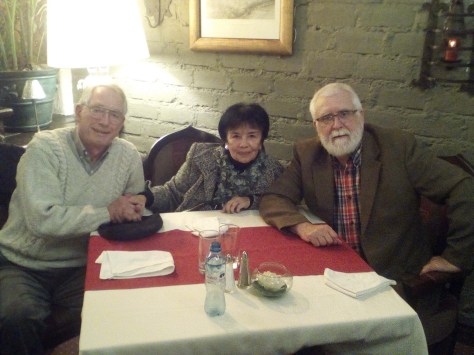
20160724 001

They were in the bar, and we enjoyed several hours of reminiscences, and a couple of pisco sours (my first in almost two decades), and a ‘lite bite’ in the restaurant. It must have been almost 11 pm before I settled into bed. That was Sunday done and dusted. The work began the following morning.

All things potatoes . . . and more
I haven’t been to CIP since the 1990s. Given the tight schedule of meetings arranged for us, I didn’t get to see much more than the genebank and dining room.

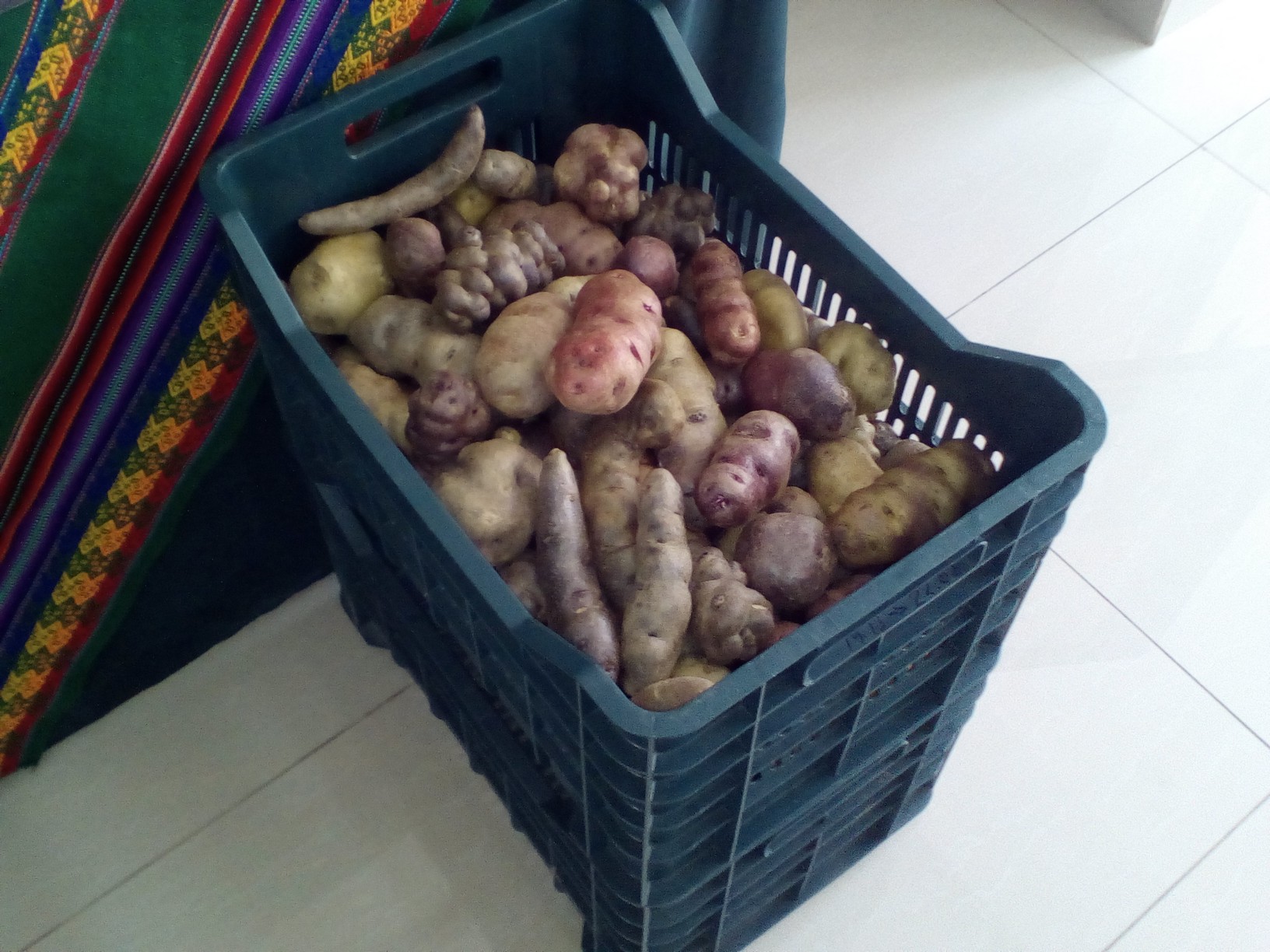
CIP has a genebank collection of wild and cultivated potatoes (>4700 samples or accessions, most from the Andes of Peru), wild and cultivated sweet potatoes (>6400, Ipomoea spp.), and Andean roots and tubers (>1450) such as ulluco (Ullucus tuberosus), mashua (Tropaeolum tuberosum), and oca (Oxalis tuberosa).

20160726 028

Native potato varieties.

Although potatoes are grown annually at the CIP experiment station at Huancayo, some six or more hours by road east of Lima, at over 10,000 feet in the Mantaro Valley, and sweet potatoes multiplied in greenhouses at CIP’s coastal headquarters at La Molina, the collections are maintained as in vitro cultures and, for potatoes at least, in cryopreservation at the temperature of liquid nitrogen. The in vitro collections are safety duplicated at other sites in Peru, with Embrapa in Brazil, and botanical seeds are safely stored in the Svalbard Global Seed Vault.

With a disease pressure from the many diseases that affect potato in its center of origin—fungal, bacterial, and particularly viruses—germplasm may only be sent out of the country if it has been declared free of these diseases. That requires growth in aseptic culture and treatments to eradicate viruses. It’s quite an operation. And the distribution does not even take into account all the hoops that everyone has to jump through to comply with local and international regulations for the exchange of germplasm.

The in vitro culture facilities at CIP are rather impressive. When I worked at CIP more than 40 years ago, in vitro culture was really in its infancy. Today, its application is almost industrial in scale.

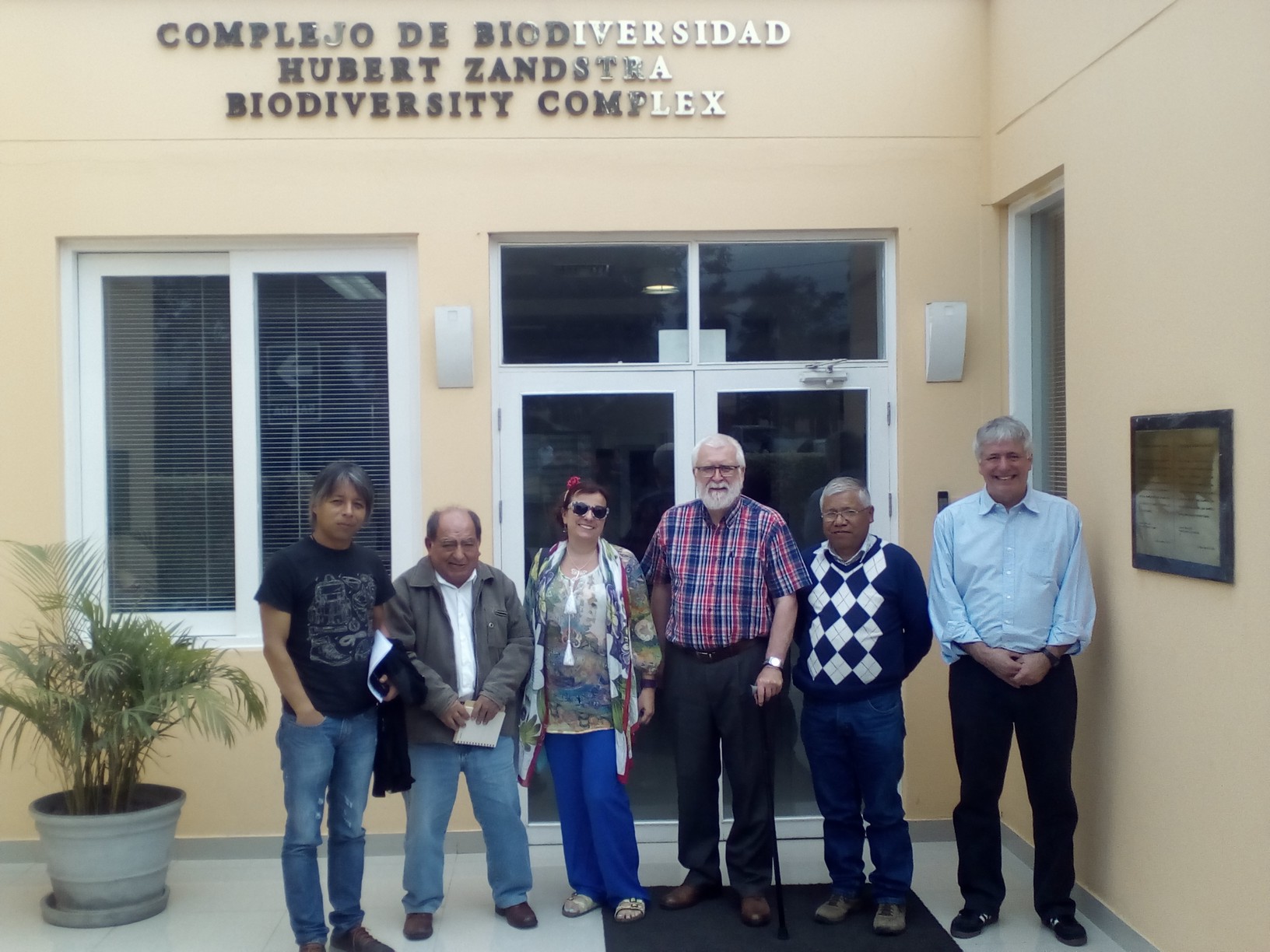
Our host at CIP was Dr David Ellis, genebank manager, but we also met with several of the collection curators and managers.
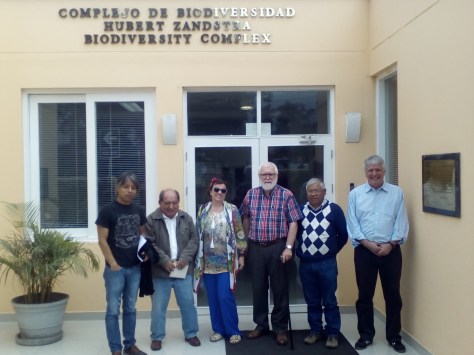
20160725 009

L to R: Ivan Manrique (Andean roots and tubers), Alberto Salas (consultant, wild potatoes), Marisé Borja (evaluation team), me, René Gómez (Senior Curator), David Ellis.
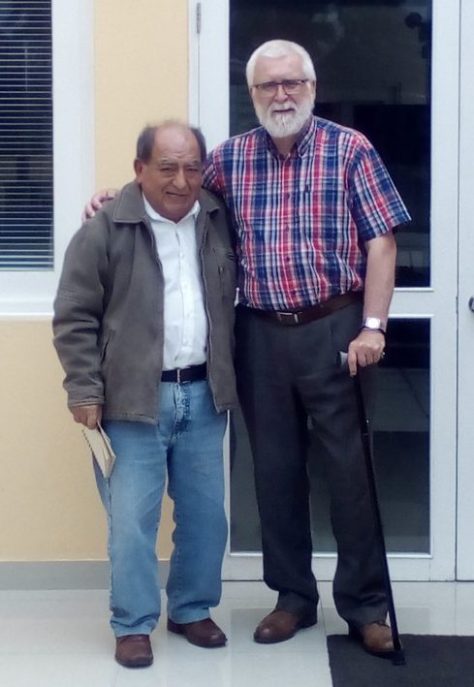
20160725 010

Alberto Salas, now in his 70s, worked as assistant to Peruvian potato expert Prof. Carlos Ochoa. Alberto’s wealth of knowledge about wild potatoes is enormous. I’ve known Alberto since 1973, and he is one of the most humble and kind persons I have ever met.

Prior to our tour of the genebank, René Gómez and Fanny Vargas of the herbarium had found some specimens that I had made during my studies in Lima during 1973 and 1974. I was also able to confirm how the six digit germplasm numbering system with the prefix ’70’ had been introduced and related to earlier designations.

It was great to see how the support from the Genebanks CRP has brought about so many changes at CIP.

Lima has changed so much over the past couple of decades. It has spread horizontally and upwards. So many cars! In the district of Miraflores where we used to live, the whole area has been refurbished and become even smarter. So many boutiques and boutique restaurants. My only culinary regret is that the famous restaurant La Rosa Nautica, on a pier over the Pacific Ocean closed down about two months ago. It served great seafood and the most amazing pisco sours.

All too soon our two days in Lima were over. Next stop: Cali, Colombia.

Heading to the Cauca Valley . . . 
Our Avianca flight to Cali (an Embraer 190, operated by TACA Peru) left on time at 10:25. Once we’d reached our cruising altitude, the captain turned off the seat belt sign, and I headed to the toilet at the front of the aircraft, having been turned away from the one at the rear. Strange, I thought. I wasn’t allowed to use the one at the front either. It seems that both refused to flush. The captain decided to return to Lima, but as we still almost a full load of fuel, he had to burn of the excess so we could land safely. So, at cruising altitude and as we descended, he lowered the undercarriage and flaps to create drag which meant he had to apply more power to the engines to keep us flying, thereby burning more fuel. Down and down we went, circling all the time, for over an hour! We could have made it to Cali in the time it took us to return to Lima. We could have all sat there with legs crossed, I guess.

Once back on the ground, engineers assessed the situation and determined they could fix the sensor fault in about a couple of hours. We were taken back to the terminal for lunch, and around 15:30 we took off again, without further incident.

But as we waited at the departure gate for a bus to the aircraft, there was some impromptu entertainment by a group of musicians.

Unfortunately because of our late arrival in Cali, we missed an important meeting with the CIAT DG, who was not available the following days we were there.

CIAT was established in 1967, and is preparing for its 5oth anniversary next year.

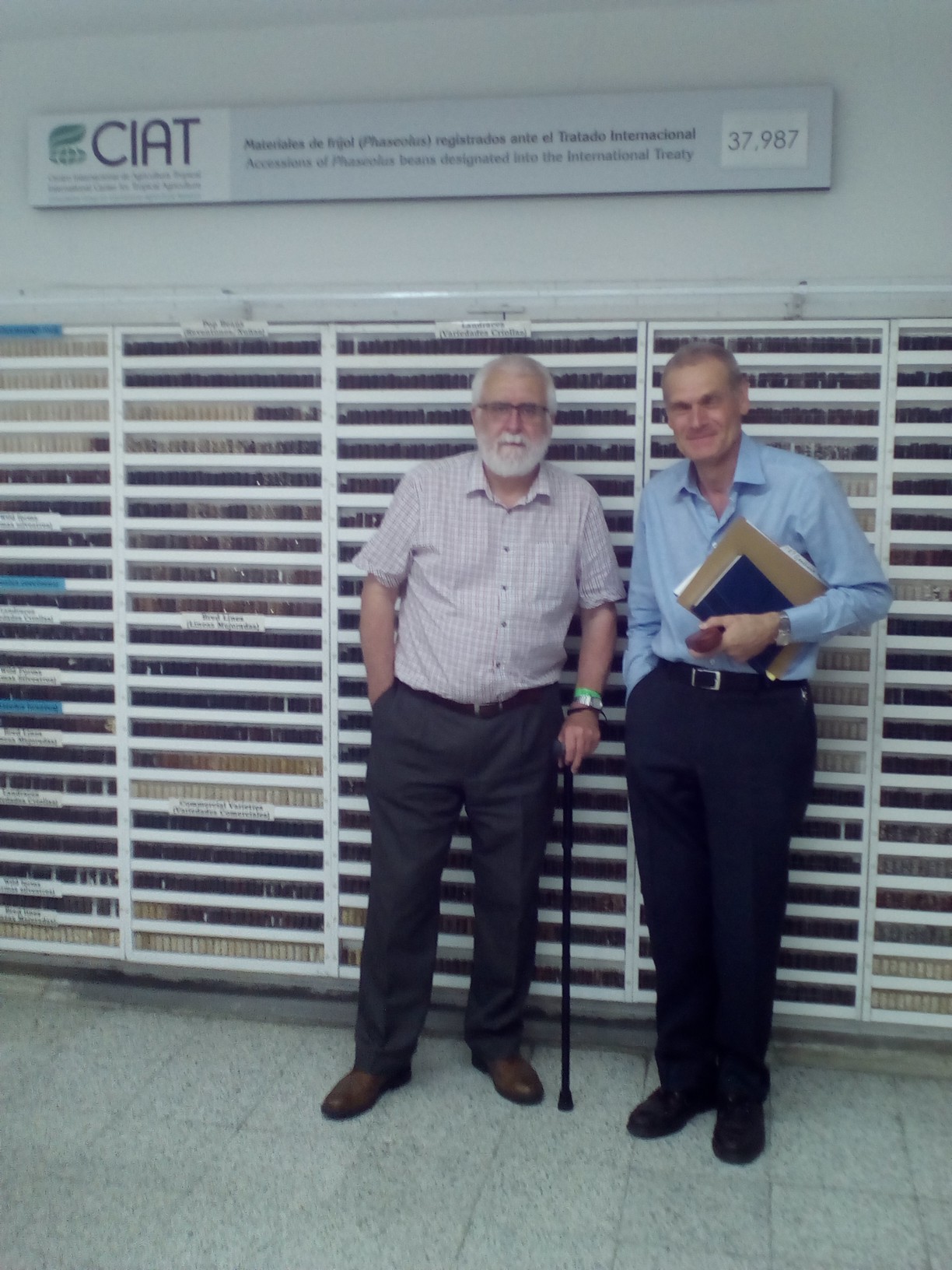
Daniel Debouck, from Belgium, is CIAT’s genebank manager, and he has been there for more than 20 years. He steps down from this position at the end of the year, and will be replaced by Peter Wenzl who was at the Global Crop Diversity Trust in Bonn until the end of April this year. Daniel is an internationally-recognised expert on Phaseolus beans.

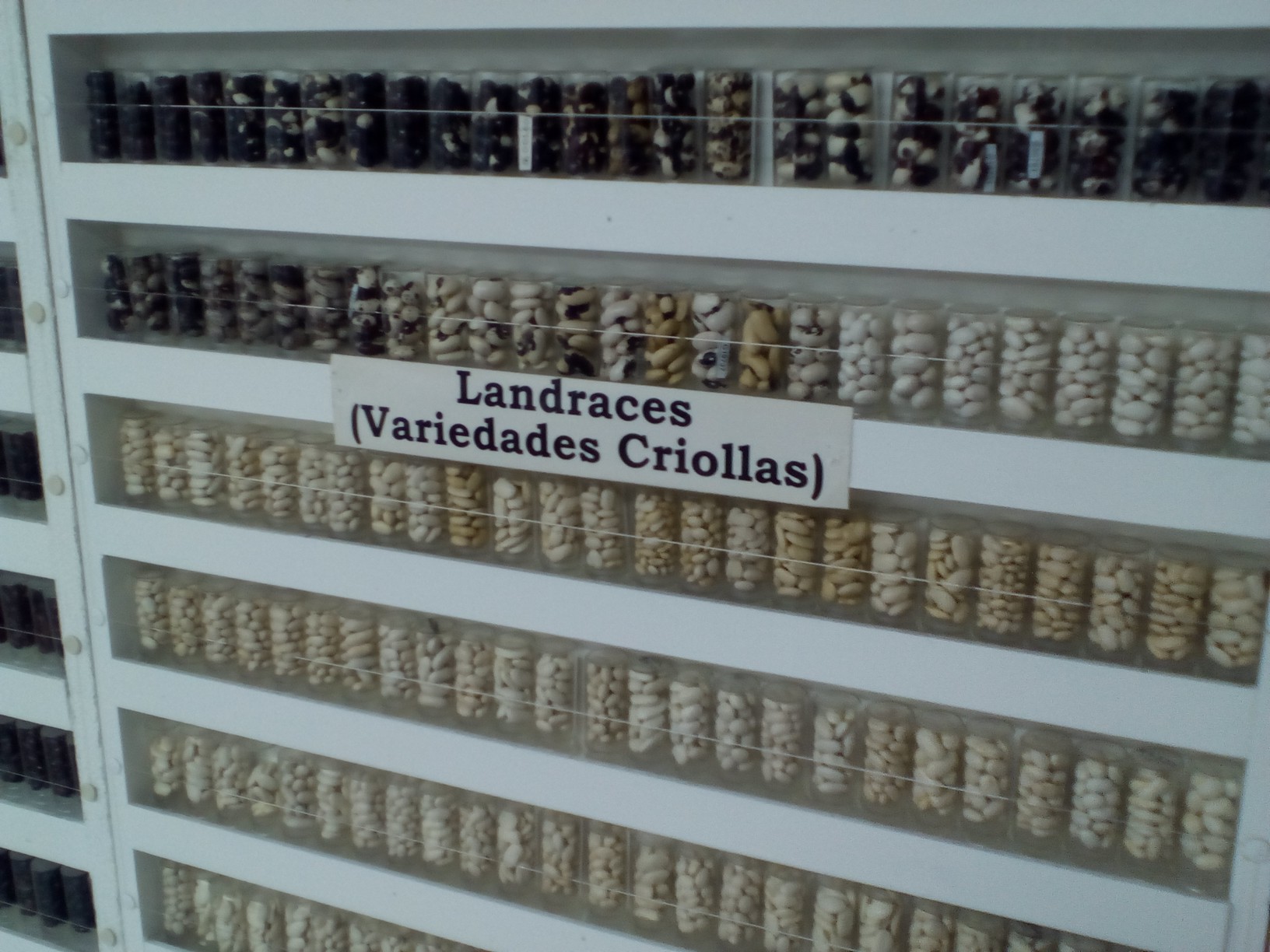
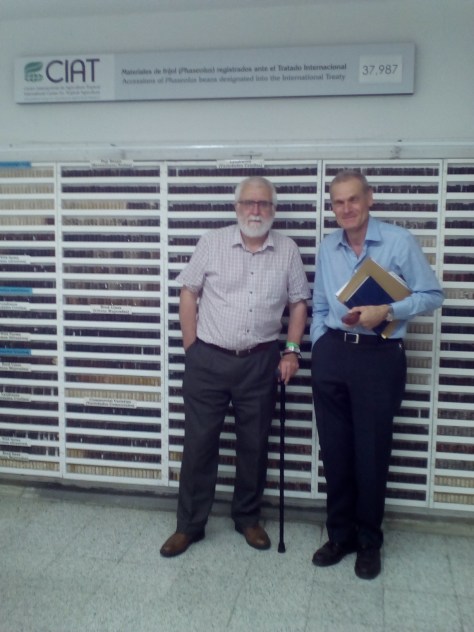
The CIAT genebank has three significant collections: wild and cultivated Phaseolus beans (almost 38,000 accessions), wild and cultivated cassava (Manihot spp., >6600 accessions in vitro or as ‘bonsai’ plants), and more than 23,000 accessions of tropical forages. Here’s an interesting fact: one line of the forage grass Brachiaria is grown on more than 100 million hectares in Brazil alone!
20160729 021

Me and Daniel Debouck.

20160729 022

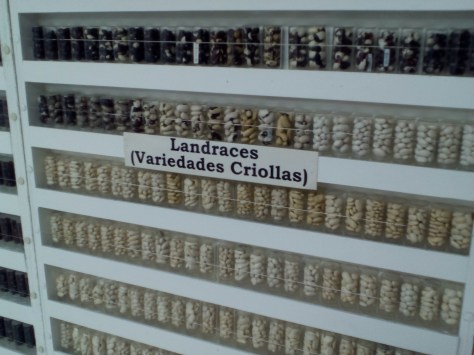
Bean varieties.

The bean collections are easily maintained as seeds in cold storage, as can most of the forages. But, like potato, the cassava accessions present many of the same quarantine issues, have to be cleaned of diseases, particularly viruses, and maintained in tissue culture. Cryopreservation is not yet an option for cassava, and even in vitro storage needs more research to optimise it for many clones.

20160729 040

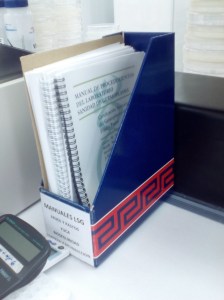
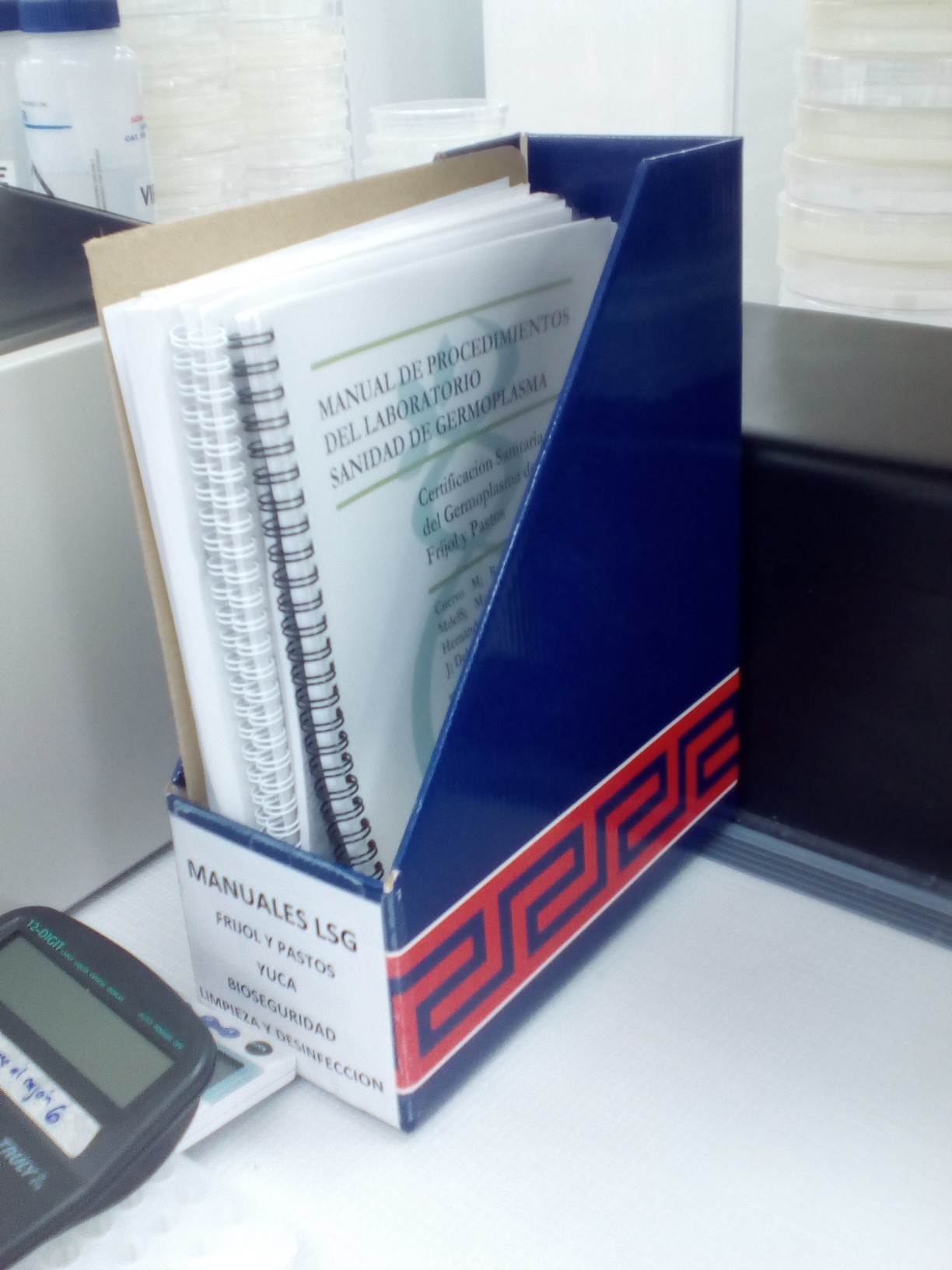
QMS manuals in the germplasm health laboratory.

Like many of the genebanks, CIAT has been upgrading its conservation processes and procedures through the application of a Quality Management System (QMS). A couple of genebanks (including CIP) have opted for ISO certification, but I am of the opinion that this is not really suitable for most genebanks. Everything is documented, however,  including detailed risk assessments, and we saw that the staff at CIAT were highly motivated to perform to the highest standards. In all the work areas, laboratory manuals are always to hand for easy reference.

An exciting development at CIAT is the planned USD18-20 million biodiversity center, with state of the art conservation and germplasm health facilities, construction of which is expected to begin next year. It is so designed to permit the expected thousands of visitors to have good views of what goes on in a genebank without actually having to enter any of the work areas.

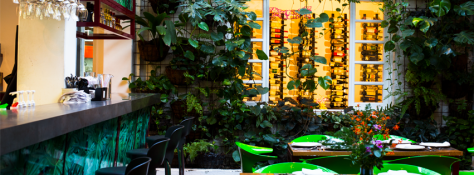
On our first night in Cali, our hosts graciously wined and dined us at Platillos Voladores, regarded as one of Cali’s finest restaurants.
1520778_329652313848934_5424856017809772967_n

We had the private room for six persons with all the wine bottles on the wall, which can be seen in this photo above.

Arriba, arriba! Andale!
On Saturday afternoon around 15:30, we headed to Mexico City via Tocumen International Airport in Panama City. Cali’s international airport is being expanded significantly and there are now international flights to Europe as well as the USA. This must be great for CIAT staff, as the airport is only 15 minutes or so from the research center.

After takeoff, we climbed out of the Cauca Valley and had great views of productive agriculture, lots of sugar cane.

Tocumen is lot busier than when I was travelling through therein the late 1970s. With several wide-bodied jets getting set to depart to Europe, the terminal was heaving with passengers and there was hardly anywhere to sit down. On our COPA 737-800 flight to Mexico I had chosen aisle seat 5D immediately behind the business class section, so had plenty of room to stretch my legs. Much more comfortable than had I stayed with the seat I was originally assigned. I eventually arrived to CIMMYT a little after midnight.

CIMMYT is the second oldest of the international agricultural centers of the CGIAR, founded in 1966. And it is about to celebrate its 50th anniversary in about 1 month from now. IRRI, where I worked for 19 years, was the first center.

Unlike many of the CGIAR centers that have multi-crop collections in their genebanks (ICARDA, ICRISAT, and IITA for example), CIMMYT has two independent genebank collections for maize and wheat in a single facility, inaugurated in 1996, and dedicated to two renowned maize and wheat scientists, Edwin Wellhausen and Glenn Anderson. But CIMMYT’s most famous staff member is Nobel Peace prize Laureate, Norman Borlaug, ‘Father of the Green Revolution’.

Tom Payne and Denise Costich are the wheat and maize genebank managers. CIMMYT’s genebank has ISO 9001:2008 accreditation.
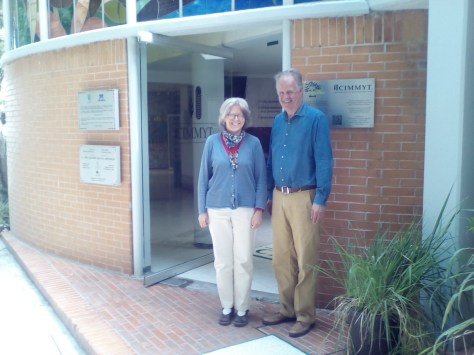
20160802 014

20160802 003

Ayla Sençer

Tom has been at CIMMYT in various wheat breeding capacities for more than 25 years. In addition to managing the wheat genebank, Tom manages the wheat international nurseries. One of the first curators of the wheat collection was Ayla Sençer from Turkey, and a classmate of mine when we studied at Birmingham in 1970 for the MSc in Conservation and Utilisation of Plant Genetic Resources. The CIMMYT wheat collection is unlike many other germplasm collections in that most of the 152,800 samples are actually breeding lines (in addition to landrace varieties and wild species).

Denise joined CIMMYT just a year or so ago, from the USDA. She has some very interesting work on in situ conservation and management of traditional maize varieties in Mexico and Guatemala. A particular conservation challenge for the maize genebank is the regeneration of highland maizes from South America that are not well-adapted to growing conditions in Mexico. The maize collection comprises over 28,000 accessions including a field collection of Tripsacum (a wild relative of maize).

In recent years has received major infrastructure investments from both the Carlos Slim Foundation and the Bill & Melinda Gates Foundation. New laboratories, greenhouses and the like ensure that CIMMYT is well-placed to deliver on its mission. And the support received through the Genebanks CRP has certainly raised the morale of genebank staff.

On our last day at CIMMYT (Wednesday), we met with Janny van Beem from the Crop Trust. Janny is a QMS expert, based in Houston, Texas, and she flew over to Mexico especially to meet with Marisé and me. When we visiited Bonn in April we only had opportunity to speak by Skype with Janny for jsut 30 minutes. Since the implementation of QMS in the genebanks seems to be one of the main challenges—and success stories—of the Genebanks CRP, we thought it useful to have an in-depth discussion with Janny about this. And very useful it was, indeed!

On the previous evening (Tuesday) Tom, Denise, Marisé, Janny and I went out for dinner in Texcoco, to a well-known tacqueria, then into the coffee shop next door afterwards. No margaritas that night – we’d sampled those on Monday.
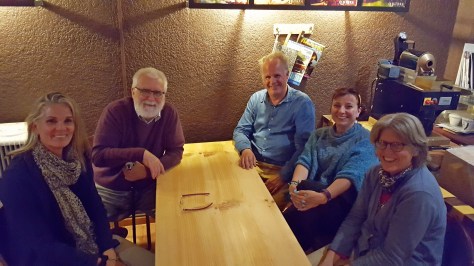
20160802 044

L to R: Janny, me, Tom, Marisé, and Denise.

But on this trip we did have one free day, Sunday. And I met up with members of CIMMYT’s Filipino community, many of them ex-IRRI employees, some of who worked in units for which I had management responsibility. They organised a ‘boodle fight‘ lunch, and great fun was had by one and all.

Hasta la vista . . .
At 6 pm on Wednesday I headed into Mexico City to take the KLM flight to Amsterdam. It was a 747-400 Combi (half passengers, half cargo). I haven’t flown a 747 for many years, and I’d forgotten what a pleasant experience it can be. It’s remarkable that the 747 is being phased out by most airlines; they are just not as economical as the new generation twin engine 777s, 787s, and A350s.

With the new seating configuration, I had a single seat, 4E, in the center of the main deck forward cabin. Very convenient. I was glad to have the opportunity of putting my leg up for a few hours. Over the previous 10 days my leg had swelled up quite badly by the end of each day, and it was quite painful. The purser asked if I had arranged any ground transport at Schipol to take me from the arrival to departure gates. I hadn’t, so she arranged that for me before we landed. The distances at Schipol between gates can be quite challenging, so I was grateful for a ride on one of the electric carts.

But after we went through security, my ‘assistant’ pushed me to my gate in a wheelchair. I must admit I felt a bit of a fraud. An electric cart is one thing, and most welcome. But a wheelchair? Another was waiting for me on arrival at Birmingham. Go with the flow!
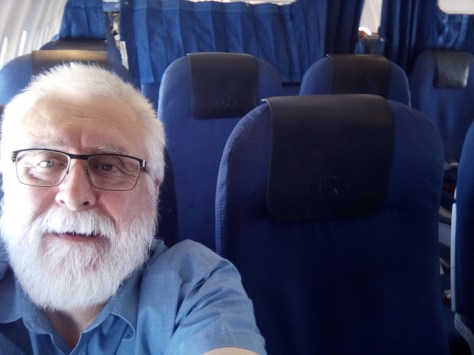
20160804 014

I was all alone in Business Class from Schipol to Birmingham. We were back at BHX on time, and I was out in the car park looking for my taxi home within about 20 minutes, and home at 6 pm.

Now the hard work really begins—synthesising all the discussions we had with so many staff at CIP, CIAT, and CIMMYT. For obvious reasons I can’t comment about those discussions, but visiting these important genebanks in such a short period was both a challenging but scientifically enriching experience.

Industrial heritage is all around . . .

The legacy of the Industrial Revolution is all around here in north Worcestershire, and I am reminded of it almost every day.

Bromsgrove lies on the Birmingham-Bristol (and all stations to the southwest) main railway line, at the bottom of the Lickey Incline (the longest and steepest sustained gradient of 2.65% for two miles on the rail network). It’s just under a mile east of where I live.

Because of the steepness of the gradient it’s not uncommon today to see two diesel engines pulling and pushing a long freight train. In the days of steam, a specially-designed locomotive (the Fowler 0-10-0 Big Bertha) was stationed at Bromsgrove to help through trains up the Incline.

https://youtu.be/ja1gPyIszqc

As I write, 175 years after a station was opened, Bromsgrove is having a new station. In fact, construction has been ongoing for almost two years now. After failing to meet a November 2015 schedule to open, the new station is expected to open by May this year. Maybe.

20151231 013

When I took the train occasionally into the University of Birmingham in the 1980s, there was only one platform, on the up line. The current station is just round the bend on the photo above. Trains arriving from Birmingham had to cross from the down line on to the up line, drop off or pick up passengers, then re-cross to the down line south of the station. Not really advisable. You can see the switch just behind this train heading south yesterday. Then a new platform was added on the down line. The main problem is that the platforms are short, and can only accept three-coach London Midland trains that stop at Bromsgrove., So with the growing commuter traffic into Birmingham, something needed to be done.

And that’s how the new station came about. It will have four island platforms, and trains stopping at Bromsgrove can be diverted off the main lines. Doing so will allow more trains to run per hour. Also, the line will be electrified as far as Bromsgrove, connecting the town into the wider West Midlands electrified commuter routes as far north as Lichfield. Freight trains heading up the Lickey Incline can wait in the branch on the left of the photo until they can have a clear—and slow—run at it. Sometimes in the summer, when we have the bedroom window open, and the wind is in the right direction, it sounds as though some of these freighters are headed right towards us. The rails on the extreme right have yet to be laid, and that can’t happen until the new station is open and the existing platforms decommissioned because the switch of the main line has to begin about where the current down line platform ends. That’s scheduled for October 2016, and the lines will be closed for 10 days while some major track engineering takes place, signalling is installed, and presumably the electrification completed.

The bridge where I took this photo is on one of my regular walks, so I have been watching progress over the past 21 months. I wish I’d taken photos more often. But what has been interesting to observe is the impressive kit that the engineers used to lift old track, lay new ones (that branch on the left replaced several different sidings), excavate culverts that had collapsed, and the like. Part of the delay in completing the project in 2015 was the need to decontaminate the site that had been an oil terminal for a major engineering works formerly alongside the railway, and reroute signalling and an underground stream that did not figure on any of the plans available to the engineers. There was a further delay, and a need to apply again for planning permission when it was discovered that the bridge connecting platforms would have to be raised just 14 inches to conform to EU regulations concerning the distance between a bridge and overhead electrification wires.

The Ribblehead Viaduct

Access to sophisticated equipment today really puts in context how the railways were first constructed, almost 200 years ago. And although much of the work would have been carried out by gangs of navvies, I guess by mid-Victorian times engineers would have had steam-powered machines available. Nevertheless, the construction of embankments, tunnels, and viaducts is surely an impressive feat of human enterprise. It was hard, dirty, and dangerous work in isolated locations where temporary communities sprang up—and men, women, and children died and were buried. This account of the Settle-Carlisle line and the construction of the Ribblehead Viaduct gives a sense of the isolation and hardship of building this railway.

These communities are being celebrated, if that’s the right word, in a new drama that started to air on the commercial ITV channel from 7 January.

Before the trains . . .
The rail network in the UK today is a shadow of its former glory, having been deliberately dismantled, maybe I should say restructured, in the 1960s by Dr Beeching.

But, to my mind, there’s an even more impressive example of civil engineering that began half a century before the railways were built.

I’m referring, of course, to the canals, and their construction began in the last quarter of the eighteenth century. And what’s particularly impressive, is that they were dug mostly by hand, by gangs of navvies.

Just a little over a mile to the east of the Lickey Incline is the Worcester and Birmingham, that has just celebrated its 200th birthday. Begun in 1791, it was finally completed in December 1815. I find it fascinating that construction of this canal wonder took place while Europe was in turmoil through the Napoleonic Wars and the final defeat of Napoleon at the Battle of Waterloo in June 1815.

At 29 miles long, the canal connects Worcester with Birmingham, climbing 130m (428 feet) over the same topographical feature that would tackled on the Lickey Inlcine half a century later. There are 58 locks; the Tardebigge Flight of 30 locks is the longest in the UK, raising the canal some 200 feet in just five miles between Stoke Bottom Lock to Tardebigge Top Lock. You can explore a detailed map on the website of the Canal & River Trust.

In addition to all the locks there are five tunnels, with a combined length of 2.4 miles.

The channels were dug by hand, and then lined with mud to make them ‘waterproof’ so the water did not leak away. A series of three reservoirs provide a constant supply of water, and at Tardebigge there is a disused pump house, once powered by steam to raise water to different levels in the Tardebigge Flight.

As I’ve mentioned in other blog posts, sections of the towpath along the canal from south of Stoke Prior and Tardebigge are some of my favorite walks in all seasons. Here is a selection of photographs that I have taken over the years. In some of them you can see the details of canal and lock construction because on a number of occasions sections of the canal had to be drained for maintenance. I always feel inspired and full of admiration for those hard-working labourers who set their backs to dig the Worcester and Birmingham Canal over 200 years ago.

2015: a great year for National Trust and English Heritage visits

Steph and I have been members of the National Trust for five years now. We even qualify for the Seniors discount from January! And we’ve been members of English Heritage for just a year.

But we will be renewing our membership of both organizations in 2016. Why? Because they both offer excellent value for money, and certainly give purpose to our trips out, whatever the weather. Be it a visit to a stately home, a ruined castle, a country park, or a beautiful garden, there are so many properties to visit and experience so many aspects of our cultural heritage.

Looking back on our 2015 visits we have certainly had our money’s worth, and annual membership has more than paid for all the entrance fees we would have had to pay in any case. And much more!

So here is a pictorial summary of our great visits this past year, beginning in early April and ending just last week when we visited Charlecote Park to see the Christmas decorations. And there are links to individual posts about each visit.

NATIONAL TRUST

Lyveden New Bield (9 April)

20150409 092 Lyveden

Brodie Castle (National Trust for Scotland – 29 May)

Brodie Castle

Culloden Battlefield (National Trust for Scotland – 29 May)

Scotland 082

Inverewe Garden (National Trust for Scotland – 1 June)

Scotland 312

Arduaine Garden (National Trust for Scotland – 7 June)

Scotland 877

Rufford Old Hall (8 June)

The main entrance in the seventeenth century wing.

Tredegar House (18 June)

Tredegar House, near Newport in South Wales

Chirk Castle (1 July)

20150701 147 Chirk Castle

Hawford Dovecote (9 July)

20150709 010 Hawford dovecote

Wichenden Dovecote (9 July)

20150709 022 Wichenford dovecote

Hardwick Hall (12 August)

Hardwick Hall, Derbyshire

Newark Park (28 August)

20150828 031 Newark Park

Croome Park (12 October)

20110328046 Croome Court

Charlecote Park (16 December)

The entrance hall.

ENGLISH HERITAGE

Rushton Triangular Lodge (9 April)

Rushton Triangular Lodge, Northamptonshire

Stokesay Castle (14 April)

Stokesay Castle, Shropshire

Wroxeter Roman City (14 April)

20150414 130 Wroxeter Roman city

Kenilworth Castle (21 April)

cropped-20150421-023-kenilworth-castle.jpg

Goodrich Castle (21 May)

Goodrich Castle, Herefordshire

St Mary’s Church, Kempley (21 May)

20150521 135 St Marys Kempley

Witley Court (9 July)

20150709 091 Witley Court

Hardwick Old Hall (12 August)

Looking down six floors in the Old Hall. And the magnificent plasterwork on the walls.

Wenlock Priory (18 August)

20150818 043 Wenlock Priory

Ironbridge (18 August)

From: http://en.wikipedia.org/wiki/File:Ironbridge

Lakes and leaves – spending time in the Twin Cities

Over the years, I’ve had the opportunity of visiting many of the ‘great’ cities in the USA: New York, Washington DC, St Louis, San Francisco, Seattle, and Chicago (most recently). But the city (or should I say cities) I have visited most over the years are the Twin Cities of Minneapolis and St Paul in the heart of Minnesota.

And for good reason. First, when I was traveling to the USA in the early 1990s, the international airport in the Twin Cities (MSP) was the hub for Northwest Airlines (now absorbed into Delta), and was the most convenient way for travel from Manila in the Philippines into the USA.

Since September 2008, however, St Paul has been home to our elder daughter Hannah. After completing two years of her 3-year psychology and anthropology degree at Swansea University in the UK, she asked us if she could transfer to Macalester College in St Paul, a highly-respected—but small (maybe 2000 undergraduates)—private liberal arts college that counts former US Vice President Walter Mondale and UN Secretary General Kofi Annan among its notable alumni. The most recent winner of the Man Booker Prize for an original novel in the English language is Macalester professor Marlon James.

So, over the years we have visited many times and come to know and appreciate the Twin Cities, although St Paul is the half of this metropolitan duo that we know much better. There’s a vibrant community, and the cities have something for everyone. It’s pretty laid back, but I guess you could say that about Minnesotans in general. Maybe that’s why I like Minnesota so much.

Among the things I like are the breakfast diners (I like the Grandview Grill on Grand Ave, just below Macalester), some of the best ice cream I’ve tasted anywhere at Izzy’s on Marshall Ave, and only St Paul can boast the Fitzgerald Theater, home of Garrison Keillor’s A Prairie Home Companion.

But what sets the Twin Cities apart, for me at least, are the numerous lakes dotted around the Minneapolis side, and the tree-lined avenues everywhere. In fact, it’s hard to imagine cities that are more leady. And taking into account that Minneapolis-St Paul was founded on the banks of the Mississippi River, and on the ‘edge of the prairie’, the amount of tree planting over a century or more is implrsssive. Certainly the avenues are lined with some of the most impressive specimens I’ve seen anywhere, often up to 100 feet tall.

In the (speeded) video clip below, our recent return flight to Amsterdam took off from Runway 30L to the northwest, climbing over the Tangletown and Linden Hills districts of Minneapolis, over Lakes Harriet and Calhoun, before turning right, and heading northeast over the Mississippi just north of downtown Minneapolis, and continuing over the norther suburbs of St Paul.

There are some pretty fancy properties around the two lakes, but you can’t see them for the trees. It would be the same if you landed from the west or took off to the east and had a view over St Paul, which lies on the eastern bank of the Mississippi. Trees everywhere. And of course north of the Twin Cities, the landscape is dotted with lakes large and small. Not for nothing is Minnesota known as the state of the Thousand Lakes.

Hannah and her family live between the Macalester-Groveland and Highland districts of St Paul, just three blocks from the mighty Mississippi. Steph and I have mostly visited during the spring or summer months, so we get to see everywhere at its best in terms of flowering and in leaf. And this is what so impresses us as we take our daily constitutional down to the bank of the Mississippi and along boulevards lined with the most impressive trees. And of course there are some very fancy properties along there as well.

Mississippi

The view from the Ford Parkway bridge crossing over the Mississippi River, and looking north towards the Marshall Avenue bridge. Hannah lives just three blocks east of the river.

But having so many tall trees so close to residences has its drawbacks as well, as we saw in June 2013 after a short-lived but rather violent storm passed through (tornadoes are not unknown, but infrequent). Just close to where Hannah lives several large trees had been brought down, and fortunately the damage to houses was much less than we first feared.

Now although we’ve visited mainly in the summer months as I mentioned, we did spend one Christmas with Hannah and Michael in 2007. And what a baptism of cold it was. I don’t think I’ve ever experienced such cold. And don’t forget we had left the tropical weather behind having just flown in from the Philippines! Nevertheless it was fun, and once suitable wrapped up against the cold we did get out and about on foot to savour the experience.
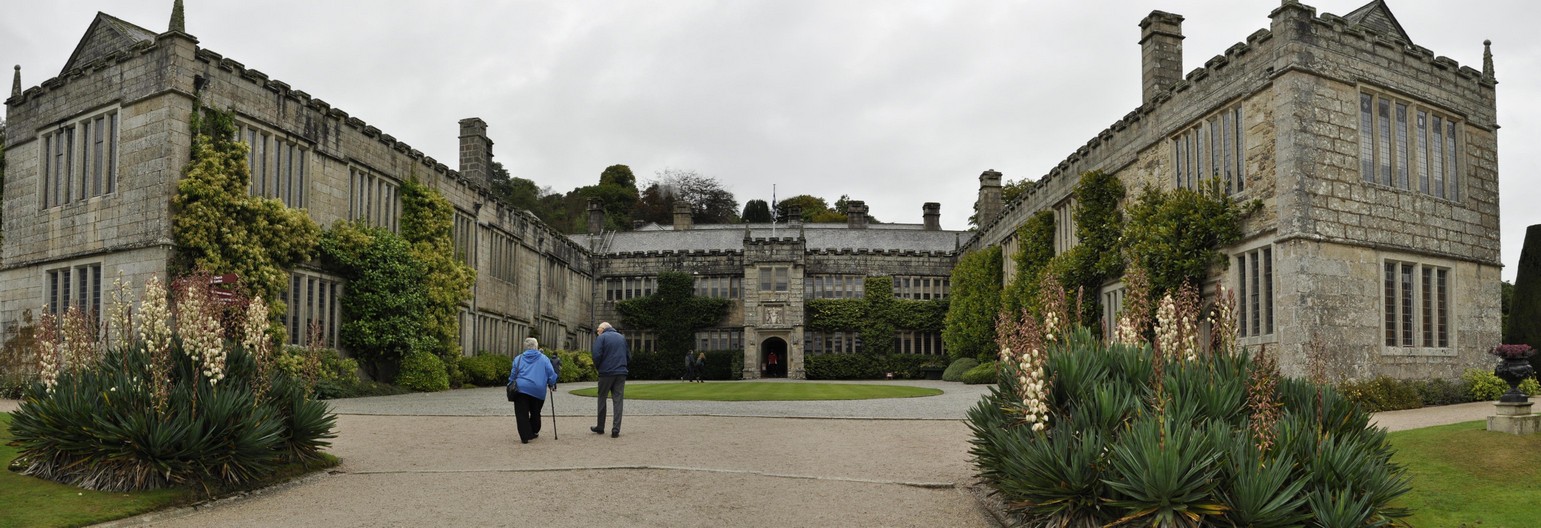
One interesting comparison we were able to make this September was when we walked from Hannah’s home to Minnehaha Park, just under two miles away. There is an impressive waterfall, which we have now seen in two contrasting seasons.

One of our favorite places to visit is Como Park, where there’s a small zoo and the Marjorie McNeely Conservatory. The conservatory is most exquisitely planted all year round. On a cold day in December it was a wonderful place to get out of the cold, and escape from the grey-out of a cold Minnesota day. But the conservatory was the location where Hannah and Michael were married in May 2006. We had the whole place to ourselves, and it had recently been planted with summer bedding plants. What a delight!

There’s also one aspect of walking around the Mississippi River area that we appreciate. It’s both human and dog friendly, because there are strict ordinances restricting the length of dog leashes.

20150930 0314

It’s the Pinoy in me . . .

Yesterday, Steph and I arrived in St Paul, Minnesota to spend almost three weeks with our elder daughter, Hannah, husband Michael and their children Callum (aged 5) and Zoë (3). It was a long 12 hour journey from Birmingham (BHX) to the Twin Cities (MSP) via Amsterdam (AMS), although an hour less on the transatlantic flight than scheduled.

We flew with Delta, but with the BHX-AMS sector operated by KLM, Delta’s Skyteam partner. Fortunately there were no ticketing problems this time as we’d had experienced on a couple of occasions. Then, the Delta online system had somehow filed Steph’s middle name as ‘Clair’ not ‘Claire’. And knowing how these errors can sometimes lead to check in issues I had attempted to resolve this ahead of travelling. Delta’s ticketing and reservations in Europe are handled by Air France (KLM’s parent company). Not only does the AF online system not ‘talk’ to the Delta one, but by the time we traveled (this was a couple of years ago), it had ‘lost’ her reservation. When we went to check in at BHX, the ticketing agent could only issue boarding passes to AMS, and although he could see our next sector AMS-MSP, he couldn’t access them. We had a nightmare transfer in Amsterdam and almost missed our connection. Even though KLM assured us that everything had been resolved, it took a phone call of almost 90 minutes in the USA directly to Delta to have everything finally resolved for our return.

So you can imagine my concern and trepidation a couple of days ago when I checked in online, and being transferred to the KLM website, received a message that the system was unable to issue boarding passes because ‘of an issue concerning one or more members of your group’.

‘Uh oh,’ I thought, ‘here we go again’, even though all the information about our tickets and reservations was 100% accurate in the Delta system. We were advised to print our boarding passes at one of the self service kiosks at BHX the following day.

We arrived to the airport in good time.  It’s a bit of a long-winded process to access the self service system, and the outcome was that it still denied us our boarding passes. We had to pick them up at the counter. When I asked if there was any issue concerning our reservations, the agent told me there wasn’t. She then gave us just two boarding passes, and my heart sank. I thought we were going to have sort our onward flights in AMS, and we only had just over 90 minutes to connect. Fortunately there was no problem. Both flights had been printed on a single boarding pass—a new one for me.

Now I wonder if the issue was that I had flagged, at the time of booking our tickets, that Steph is ‘hard of hearing’. I now recall the counter staff at BHX mentioning this, and perhaps the system was alerted that we needed ‘extra assistance’. But the advisory message when we checked in was much more cryptic than that, and given our previous experiences, I had just imagined something more complicated or serious. It will be interesting to see if the same happens on the return journey at the end of the month when our first flight will be with Delta, only transferring to KLM for the AMS-BHX leg of the journey.

This year we opted to purchase Delta Comfort+™ seats, at £60 each both ways. They’re just Economy seats, with slightly more recline, but a valuable four extra inches of legroom. You wouldn’t credit just how much more comfortable that made the journey. Plus free booze! So I did enjoy a few Bombay Sapphires and tonic to keep me going on the long stretch. I think the flight attendants were also just that bit friendlier to us in the Comfort+ seats.

So what’s all this got to do with the Pinoy in me. We were met at MSP by Hannah and Michael and two very excited grandchildren. And early in the evening I posted a couple of selfies with Callum and Zoë on my Facebook page.

And I had mentioned that I was beginning my ‘apostolic duties’. To a non-Filipino, it must sound like I’ve found religion or the like. But no. It’s a term to describe being a good grandparent. Because the Filipino for grandchild is ‘apo’. And here I am in the two photos with my American ‘apos’, being very ‘apostolic’. And enjoying every minute of it.

My good friends Bing Villegas and Fides Bernardo (who devised and directed the IRRI 50th anniversary shows in 2009) commented on my Pinoy connections. No wonder really, since I spent almost 19 years in that lovely country.

Mabuhay!

Presidential faces in the sky

Crossing the Great Plains east to west, and west of the Badlands, you become aware of a dark line on the horizon. Is that an approaching storm? It could well be. But as you get closer you realize it’s an isolated range of hills, rising about 4,000 feet above the surrounding plains. These are the Black Hills of South Dakota, which have their maximum elevation in Harney Peak (7,244 feet). Sacred to many of the Native American tribes of the Great Plains – principal among which were the Sioux – their sanctity was violated when the 1868 Treaty of Fort Laramie (which had ‘supposedly guaranteed ownership of the Black Hills to the Lakota and other tribes) was broken following by the discovery of gold (ironically by General George Armstrong Custer). The United States government was unable (or incapable) of preventing the invasion of the Black Hills by miners. Conflict between the settlers and the Native Americans was inevitable.

For many – certainly on this side of the Atlantic – their first introduction to the Black Hills must have come from the 1953 movie Calamity Jane starring Doris Day in the title role and Howard Keel as Wild Bill Hickok. Certainly it was a highly sanitized (and fantasized) interpretation of events around that time. But who can forget this particular song? Released as a Doris Day solo, I certainly remember it very well from my childhood right through the 1950s.

Mount Rushmore
We were heading for Rapid City and the Black Hills with one particular destination in mind: Mount Rushmore National Memorial. Under normal circumstances, I wouldn’t normally visit an attraction like Mount Rushmore. Like many others I’d seen my first images of this iconic location in Alfred Hitchcock’s North by Northwest. I guess I thought the whole experience would be rather kitschy – and my fears were not allayed as we drove from Rapid City to Keystone in the heart of the Black Hills, and on to Mount Rushmore, just a mile or so beyond. Either side of the highway were various tourist attractions that I would never visit in a month of Sundays. Just not to my taste.

But how wrong I was about Mount Rushmore. In fact it was almost an emotional experience. The day was superb; hardly a cloud in the sky, and we joined several thousand more tourists (many from Asia) to marvel at the wonder of the Mount Rushmore National Memorial and how the faces of four famous presidents Washington (#1), Jefferson (#3), Roosevelt (#26), and Lincoln (#16) came to be carved into the side of a mountain. And why these four presidents were chosen from all the possible candidates. Although I guess the contributions of some presidents to the development and well-being of the United States are best forgotten.
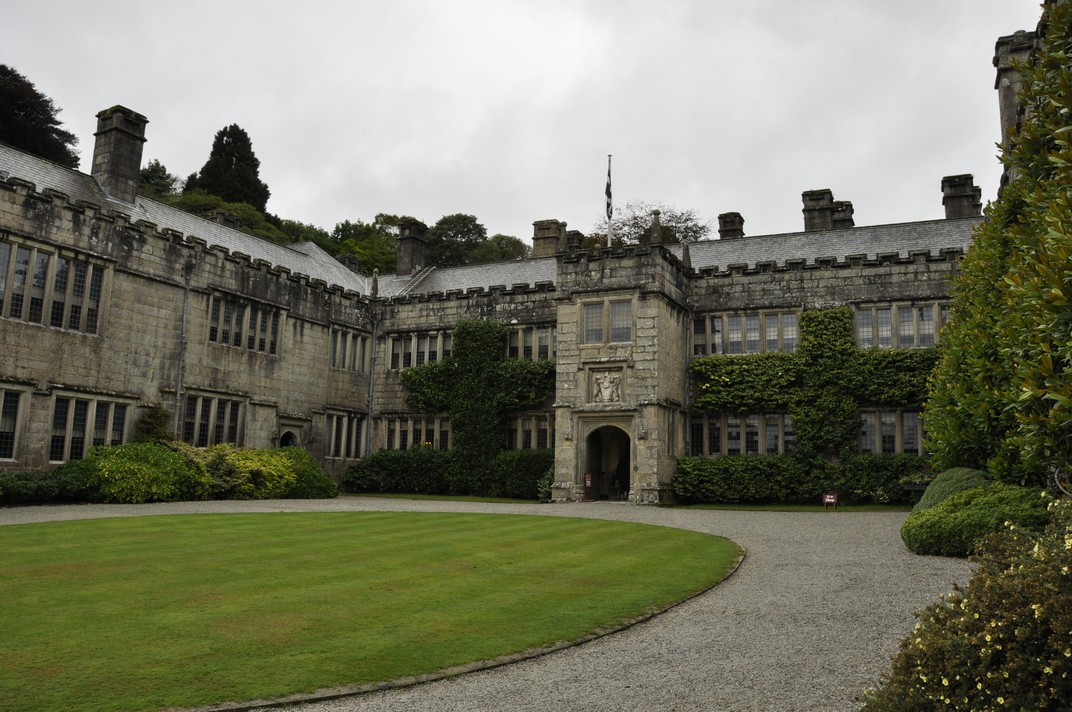
There is so much more written about Mount Rushmore in the link provided above – and more than I can eloquently draft; other details are provided by the National Park Service.

I was overwhelmed by Mount Rushmore – no doubt the beautiful day helped. But I was also inspired, not only about the people who had the foresight to create this national memorial, but also that the choice of these four presidents encapsulates the history of their diverse nation. So let me tell some of my Mount Rushmore story through the images I captured that June day.

The Black Hills and Custer State Park
Traveling south from Mount Rushmore, and passing through several tunnels just wide enough for a SUV but no bigger, there is an opportunity of experiencing the beauty of the Black Hills – and appreciate why Native Americans held this place to be so special. In Custer State Park there is a healthy herd of about 1,300 bison, some of which we came across. A hugely damaging fire in 1990 opened up much rangeland, but even so, there is a bison round-up each September to manage the herd, and sell several hundred animals and keep the herd at a level which the park can sustain.

Taking a roundabout route back to Rapid City, we enjoyed the Needles Highway between Custer State Park and Hill City, and traveling north, we then took the back highway Sheridan Lake Road into Rapid City for our second night there. We didn’t visit the half-finished Crazy Horse Memorial, however. It was rather out of our way, but also it seemed to me to be a rather more exploitative and touristic attraction. There’s actually no known image/photo of Crazy Horse – one of the most important Indian leaders who played a pivotal role in the defeat of General Custer at the Battle of the Little Bighorn in June 1876, and who perhaps deserves a more fitting memorial in any case.

South Dakota’s Badlands . . .

It was a Tuesday morning, early June. We’d reached Chamberlain, South Dakota on the banks of the Missouri River the evening before, having traveled down from St Paul, MN in glorious sunshine. To the west, however, there was an ominous glower in the sky that was already beginning to darken by breakfast-time. Checking the Weather Channel we learned to expect some thunderstorms as we crossed the Great Plains towards our next destination: the Badlands.

Stormy weather? That was that half of it. At one point it was raining so heavily I had to pull off the highway (I90) at one of the designated viewpoints. Not that we could see anything. However, after about 30 minutes we were able to continue our journey, and later found out that we had skirted the northern edge of a major storm tracking across the plains from west to east, accompanied in some places by baseball size hailstones. Luckily we missed those, and by the time we reached the Badlands National Park, the storm had passed, the skies brightened (a little) and we were able to enjoy the Badlands formations in all their glory.

Having now traveled across the Great Plains for several hundreds of miles, my respect has increased enormously for the early pioneers who crossed these open spaces in the 19th century on their way to the west coast, in California and Oregon, to make a better life for themselves. Not only did they have to combat the natural obstacles of the landscape – the plains, the Rockies, and the Sierra Nevada – but also hostility from the native Americans whose land they were crossing. When the era of the building of the transcontinental railway began in the 1860s, tensions and hostilities multiplied, but by the 1890s the various native American tribes had been defeated (massacred in many instances), moved to reservations, and their nomadic way of life (along with the vast herds of bison) had disappeared for ever.

Surrounding the Badlands is the Buffalo Gap National Grassland, and one can imagine what the Great Plains must have looked like in their original pristine state. There are also some important Indian reservations to which various tribes were banished in the last quarter of the 19th century – Wounded Knee is quite close by as well, where the infamous massacre took place in December 1890.

Leaving I90, you turn south to reach the Badlands National Park Northeast Entrance, passing by Minuteman Missile National Historic Site – which we didn’t bother to visit. We were much more interested in beautiful landforms, that echoed our visited in 2011 to Arizona’s Painted Desert (although it is much warmer there). The winds really blow on the Great Plains.

In the park we took the main Loop Road, but then continued on the Sage Creek Road for about 5 miles before turning north and rejoining I90 at Wall.

All the main viewpoints (‘overlooks’) are well sign-posted, the views spectacular, and on the day we visited, the contrast between the landscapes and the sky gave us some pretty dramatic images to cherish. Stretches of grassland are home to a herd of bison, and you are left wondering what these areas must have looked like in the mid-19th century when these magnificent beasts could be counted in their millions.
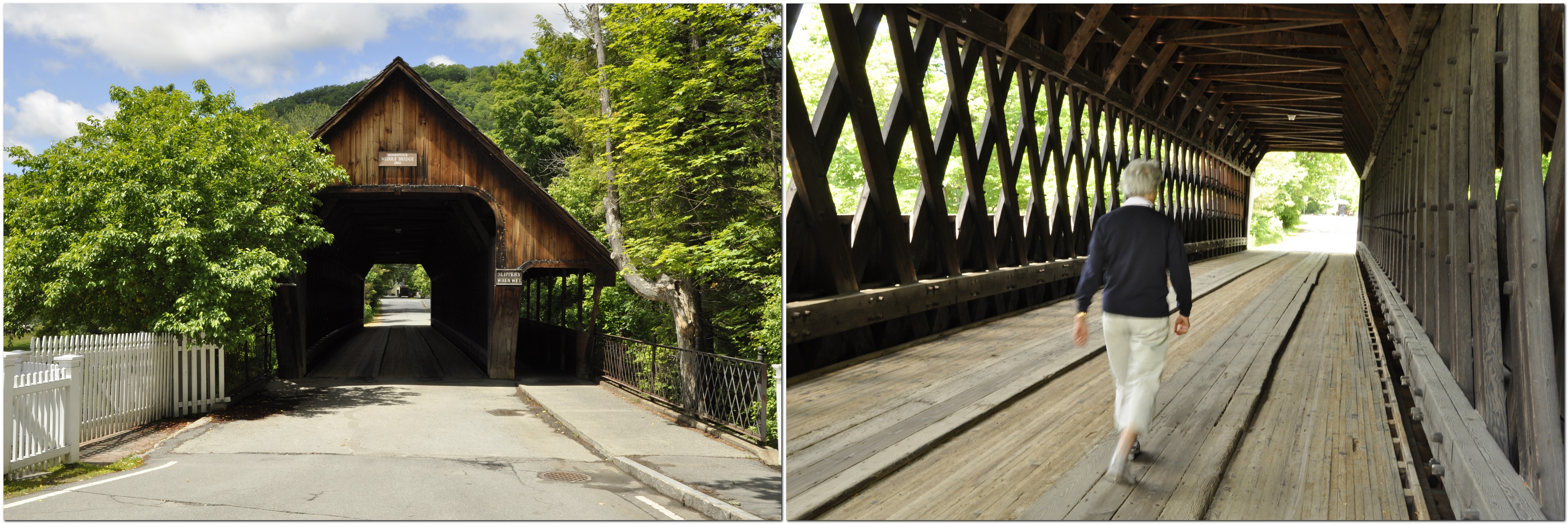
All in all, South Dakota’s Badlands are worthy of anyone’s time – they are truly magnificent.

A close encounter of the igneous kind . . .

I posted my first story about our USA vacation, across the Great Plains to Yellowstone National Park, at the end of June. A lot of things have generally kept me away from my blog over the past couple of months, but once my commitments to the 4th International Rice Congress are completed by the beginning of November, then I’ll be able to turn my attention full-time to this personal blog.

I’ve decided not to write the account of our trip in chronological order. Each day was different, with new sights to see, places to explore.

On Day 4, we left the beauty of South Dakota’s Black Hills and headed north through Spearfish Canyon into southeast Wyoming. Our destination? Devil’s Tower, that iconic volcanic plug immortalized in Steven Spielberg’s 1977 movie Close Encounters of the Third Kind.

While our vacation route followed I90 more or less the whole way, we could make diversions from that artery to explore various places that took our fancy. When I was planning our trip way back at the beginning of the year, I discovered that Devil’s Tower, in northeast Wyoming, was a relatively short diversion (in USA road travel terms) north of I90.

Heading west and cresting a low hill on the undulating plains, there was Devil’s Tower dominating the landscape on the distant horizon. It’s certainly a feature that you can’t mistake for anything else. And as we approached it just seemed to rise up in majesty from the surrounding countryside. This was our first glimpse of the rock, and we pulled into a viewpoint lay-by to have a picnic lunch.

Being a bright sunny day, with hardly a cloud in the sky, Devil’s Tower was quite busy as one might expect, but not as busy as it was likely to become later on in the season once the school-age children were on vacation. Parking, right at the base of the Tower, was easy and plentiful, and it was just a short 100-200 m walk from there to the Tower itself. And somewhat extraordinarily, this is as far as most visitors reached. Steph and me like to get our money’s worth, and decided to circumnavigate Devil’s Tower on the Tower Trail, a walk of about 1½ miles.

Once we were only about 100 m round the south side of the rock, there were hardly no visitors, and we had the place to ourselves. Peace and silence, generally. Just the tweeting of birds in the bushes, and calls of falcons soaring along the sides of the rock itself.

Devil’s Tower is sacred to many Native American tribes, and visitors are requested to respect any artifacts that might have been placed there. In 1906, Devil’s Tower became the first national monument, proclaimed by President Theodore Roosevelt.

I guess we must have left Devil’s Tower around 16:30 after about three hours. Distances can be so deceptive on a road map, and I anticipated it would take about 15 minutes to travel to I90. In fact it was nearer 40 miles. And then when we did reach I90 we discovered that Sheridan (our base for that night) was a further 127 miles! No matter. I put the Kia into cruise mode, and off we headed through some rather bleak terrain (it reminded me of the Pennines in the UK), and one of the world’s largest coalfields near Gillette, WY. But as we descended towards Sheridan, there to the west were the Bighorn Mountains which, at that time, we had not figured on visiting. We changed our itinerary later in the trip, as you can read soon in another post.

Around the world in 40 years . . . Part 10. Follow the yellow brick road

Not to see the ‘Wizard of Oz’ but to experience the ‘Magic of Oz’!

During the 19 years I worked in the Philippines, I had opportunity of visiting Australia on three occasions: once on business for 10 days in 2000, traveling to Canberra (and into the Riverina), Adelaide and Melbourne; and twice on vacation, with the whole family over Christmas and New Year 1997-98, in the Sydney area, and again in 2003-04 with Steph when we drove down the coast road, the Princes Highway, from Sydney to Melbourne. Our 2003 trip took some planning, and we certainly packed a lot in during the 10 days we were actually in Australia.

I had originally wanted to book a fly-drive holiday, but by the time we’d decided to take enjoy the long Christmas-New Year break in Australia, all the fly-drive holidays I found on the Internet were all booked up. So it was a case of DIY. I booked direct flights from Manila to Sydney on Qantas, and then began to search for hotels in Sydney and Melbourne, and all stops in between. Getting a flight was no hassle whatsoever, since we actually flew out of Manila in the evening on Christmas Day. Making a rental car reservation was plain sailing as well. But how to plan a journey from Sydney to Melbourne, and how to pace the trip and find suitable accommodation?

The fly-drive options on the web also provided a map of the itinerary and listed the hotels that would be booked – if they had been available. I looked for other hotels in the same towns but, it being Christmas, the was no room at the inn. Instead, I identified the nearest towns to those listed on the fly-drive schedules, and easily booked hotels all the way down to Melbourne, spacing our overnight stops – and to have plenty of time to make side-trips and stop along the way.

Manila – Sydney, dep. 25 December, arr. 26 December
Since the flight from Manila arrived early in the morning, there was plenty of time to get to our hotel (Park Regis City Centre) and even have a short rest before our friend and former colleague, Duncan Macintosh from IRRI (who was on home-leave in Sydney) dropped by to take us out to lunch. We headed to Bondi Beach, chose Ravesi’s Hotel on the main drag for an excellent fish and chips lunch, and (as it was Boxing Day) watched the yachts in the Sydney to Hobart Race sail past the headland. Later on in the afternoon, Duncan dropped us at the main rail terminal where we collected out tickets for the return journey from Melbourne.

Sydney, 27 December
We headed down George Street early, stopping at a few stores on the way to the harbour, where we spent a few hours exploring The Rocks (just under the Bridge), and finding somewhere to have lunch. There’s no shortage of places to eat at The Rocks, as in the rest of downtown Sydney. In the afternoon, we decided to take the river trip to Parramatta, which is about 25 km west of Sydney. There are still many colonial era buildings to see in the town.

Sydney – Nowra, NSW, via Royal National Park (180 km), 28 December
This was the start of our road trip to Melbourne. Heading south from Sydney, it wasn’t long before we made our first diversion through the Royal National Park, rejoining the Princes Highway just north of Wollongong.
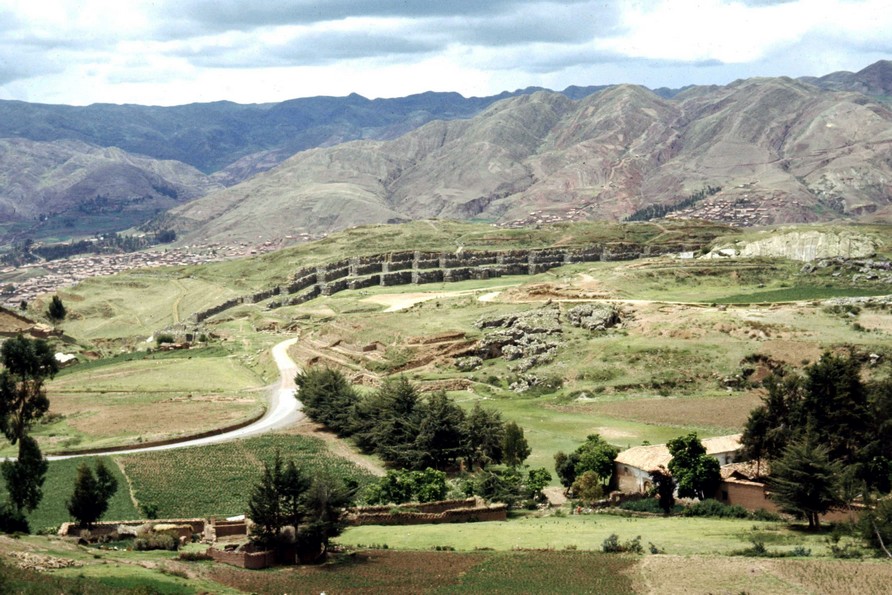
There was plenty of time to sit on the cliffs at Stanwell and watch the aerobatics of members of the Sydney Hang Gliding Centre
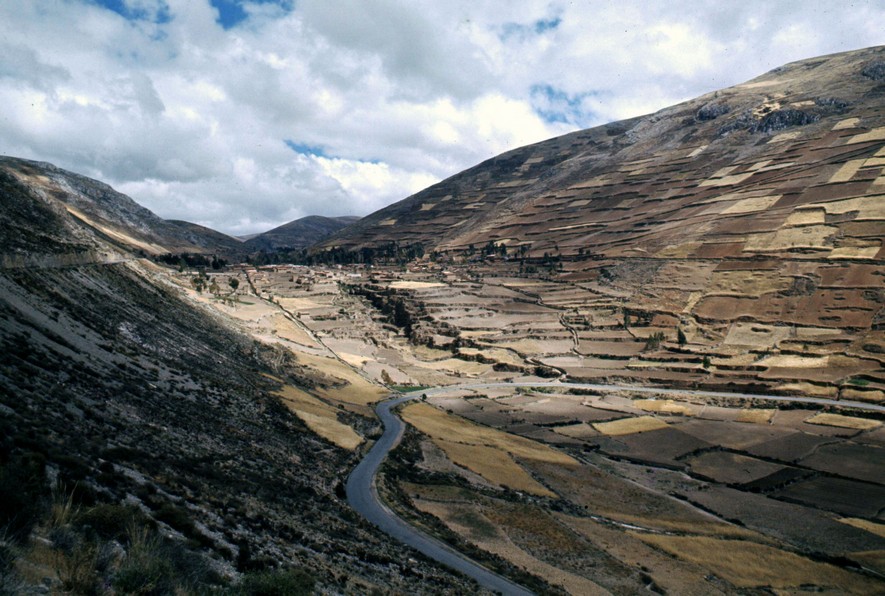
http://vimeo.com/28658170

We also went to see the Blowhole at Kiama, and Seven Mile Beach, before finally reaching our first stop for the night at Nowra, staying at the Pleasant Way Motel (it had another name when we were there).

Nowra – Tathra, NSW, via Central Tilba (263 km), 29 December
Continuing south along the coast, we stopped off at Huskisson on Jervis Bay,  to see what are supposed to be the ‘whitest sands in the world’. Well, we only found out that fact afterwards, then Ulladulla, and for an ice cream in Central Tilba. The landscape around Tilba is lovely rolling country, dotted with small farms. It reminded me of the landscapes in the movie Babe – not surprising really as one of the main locations used was in the same coastal range north of Central Tilba.

We stayed at the Tathra Hotel – nothing to write home about, a regular motel, but it was convenient and relatively cheap.

We had dinner at The Wharf Locavore, now a coffee shop and art gallery but in 2003 also served dinner. It was great eating dinner with the waves crashing underneath – you could see them through the floorboards!

Tathra – Bairnsdale, Victoria (329 km), 30 December
Crossing into Victoria from New South Wales, we took a side trip into the forest, hoping to see some wildlife. We caught one glimpse of a kangaroo but that was about it. In fact, during our whole trip south we saw very little wildlife – probably because the weather was very hot and everything was hiding in the shade.

We stayed at a very nice hotel, The Riversleigh, in Bairnsdale. Unfortunately Steph had come down with a cold, but I managed to enjoy a nice cold beer or three, sitting on the balcony of our room.

 Bairnsdale – Wonthaggi, via Wilson’s Promontory National Park (392 km), 31 December
The highlight of this day’s travel was the excursion around Wilson’s Promontory, which is the southern-most point on the Australian mainland. Lots of Banksias to look at, and many other exotic plants that I had no idea what they were.

We headed to Wonthaggi that had once been a coal-mining center, long since closed down. We stayed at the excellent Jongebloed’s B&B on Berry’s Road south of the town, towards Cape Paterson. The B&B was excellent. The house had once been located in the town proper, but a couple of years or so before our visit, it had been cut in two, transported towards the coast and reassembled on a spacious plot of land, with an exquisite garden. We just managed to grab a bite to eat in the town before all restaurants were taken over for the New Year’s Eve customers. But we spent a wonderful evening afterwards on the beach near Cape Paterson, watching the sun go down over the Bass Strait – next stop Tasmania, then Antarctica!

Wonthaggi – Melbourne, via Warburton (280 km), 1 January
We didn’t take the direct route into Melbourne this day, but headed north through the Yarra Ranges, and came into Melbourne from the east from Yarra Junction, Warburton and Healesville. I don’t remember the name and exact location of our Melbourne hotel, but it was central and also close to the rental car deport where I dropped off the car the morning after our arrival. And we’d arrived – after a journey of almost 1500 km.

Melbourne, 2 January
We had only one full day in Melbourne so had to pack a lot in. It was very hot, but that didn’t deter us getting around on foot. In the morning we decided to take the Yarra River ferry to Williamstown, arriving back in Melbourne just after lunch. Then we walked along the Yarra River to the wonderful Royal Botanic Gardens, taking the tram back into the city. My legs were giving out by then.

Melbourne – Sydney (by rail), 3 January
The XPT (express passenger train) journey back to Sydney should have taken under 11 hours, departing Melbourne at 8:30 and arriving in Sydney just after 7 pm.

Due to 65 kph speed restrictions around Albury (just over the state line in NSW), because of the high temperature causing buckling of the rails, we didn’t arrive in Sydney until just before 10 pm – rather tired. Fortunately our hotel was just a few blocks from Sydney’s Central Station.

Sydney, 4 January
The next day we headed off to the Opera House and walked around Farm Cove to Mrs Macquarie’s Chair, from where there is a great view of the Sydney skyline, the Opera House and the Harbour Bridge. (In 1997 we’d watched the firework display over the bridge from the same viewpoint. Just one word to describe that. Spectacular!). Then, in the evening, we enjoyed a three hour Sydney Harbour dinner cruise, courtesy of Hannah and Philippa. We took a taxi back to the hotel – it was just too far to walk after a fine meal and a bottle of wine.

Sydney – Manila, 5 January
Our Qantas flight departed Sydney for the Philippines late morning, getting us into Manila in the early evening. Tired but contented we still had to endure the 2-3 hour journey back to Los Baños. Then it was a quick shower and into bed – I had to be in the office by 8 am the following morning.

And just to finish off, some panoramas from the whole trip: