It seems that Chastleton House – a Jacobean mansion built between 1607 and 1612 in north Oxfordshire in the heart of the Cotswolds near Moreton-in-Marsh – was destined for decline. The same Jones family lived at Chastleton House for almost the entire period, until it was sold and became a National Trust property in the early 1990s.
Although the house itself has a rather grand façade, it has rather modest grounds, and is located in the centre of Chastleton village. The journey from Bromsgrove took us south around the historic town of Evesham, and a steep climb up the Cotswold escarpment near Broadway. On a glorious day like yesterday the views of the Cotswold landscapes were wonderful.
What makes this National Trust property different from most others is that there has been essentially no attempt to restore the house to its former glory (as with Calke Abbey in Derbyshire). Instead the Trust has made essential repairs to prevent further deterioration of the property’s fabric, but what’s on show is what was there when the house was vacated. And quite a number of rooms, such as the Great Chamber, with its magnificent plastered ceiling and fireplace, appear today much like they did several centuries ago.
And because the Trust is preserving not restoring, many more rooms are open to the public, who can access the house on timed visits. This means that the number of visitors in the house at any one time is limited which enhances the visitor experience.
Approaching Castleton House from the car park, across parkland
Looking east across the Costwolds landscape
The east facade
The south facade
The topiary circle from the Long Gallery on the top floor
The central or Dairy Court
The entrance hall
The dining room with 17th century Staffordshire salt ware on the table
The East Staircase
The original fireplace in the Great Chamber
The ceiling of the Great Chamber
The Long Gallery
Over four floors from the magnificent entrance hall, the dining room (with a fine display of Staffordshire salt ware from the 17th century), up the East Stairs to the Great Chamber, a library, and some of the bedrooms, and finally to the top floor to the Long Gallery that stretches the entire width of the house, and faces east. Apparently the family used the Long Gallery for exercise on days when it was impossible to go outside.
The gardens are not large, and must have been much finer in the past. The topiary bushes deteriorated many decades ago when it was no longer possible to maintain them. The village of Chastleton lies just beyond the garden walls, and the lack of several ‘expected’ facilities in the house (such as a laundry) is apparently down to these having been provided by villagers living close-by.
There were fewer visitors to Chastleton House yesterday than I expected, and it was lovely to experience the tranquility of its surroundings. Definitely well worth a visit, and one of the Trust properties that I have enjoyed most.
No description, no photograph, no video can prepare you for a face-to-face encounter with the tallest trees on the planet. Towering as much as 300 feet or more overhead, and living often in excess of 1,500 years, the coastal redwoods of northern California are a sight to behold. Awe-inspiring! Sequoia sempervirens is truly a marvel of the natural world.
Steph and I recently vacationed on the Oregon coast for a week, and then took four days to travel south to Crater Lake and through the redwoods national park of northern California before flying back to the Twin Cities from Sacramento. We’d visited Crater Lake just the day before the redwoods, and although it’s ‘unfair’ to make a comparison between Crater Lake (‘spectacular’) and the redwoods (‘awesome’), if I had to choose which one moved me more, I would have to plump for the redwoods.
My original plan was to overnight in Brookings (just north of the Oregon-California state line), visit the various national and state redwood parks, return to Brookings for a second night, and then head south to Sacramento. What was I thinking about? In any case, once I was in the USA, I did a little more online research and discovered that access to some of the tallest trees in the Redwood National Park had been closed to vehicles, and that some of the more spectacular sights were to be found further south in the Humboldt Redwoods State Park and the Avenue of the Giants. So I was easily able to change our hotel reservations, spending the first night, as planned in Brookings, and the second at Garberville, some 205 miles south, and about halfway to Sacramento. It was a good decision.
If you ever get chance to see the redwoods, a good place to start is the information center in Crescent City, along US101 (the Redwood Highway), on the south side of the town.
The staff in the information center couldn’t have been more helpful and pleasant. They gave us several brochures, and advised on the best sights and routes. While vehicle access to the Tall Trees Grove (much further south) was now restricted, they encouraged us to visit an ancient stand of redwoods in the Jedediah Smith Redwoods State Park, just a few miles away to the northeast. In fact we’d passed the northern access road to this park as we entered Crescent City. And in particular they recommended we visit Stout Memorial Grove, reached on a dirt, but easily passable track (especially if you have an SUV as we did). Stout Memorial Grove, only 40-some acres in extent, has some fine old redwoods. Had the long-term fate of the redwoods not been recognized early last century, the forests would have been logged out and destroyed. The early settlers in this part of California had no vision for the future, and must have seen the redwoods as an inexhaustible resource. How wrong they were.
Moving on south, we took the Newton B Drury Scenic Parkway as a diversion from US101, through Elk Prairie (where we actually saw some elk), and on to the Lady Bird Johnson Grove, dedicated by former President Richard M Nixon to former First Lady and wife of President Lyndon B Johnson.
US101 is not called the Redwood Highway for nothing. As you drive along, you move into and out of various stands of these magnificent trees (as you saw in the video above). But just south of Scotia, there is an opportunity to leave US101 for a while at Exit 674, and take CA254 for the 31-mile scenic drive Avenue of the Giants (a clip of which is shown at the beginning of the video). The two-lane highway meanders through the trees that ‘took no prisoners’ when it came to determining the road’s route. Driving slowly along the ‘Avenue’ was just a memorable trip, a delight. And here are some of the memorable sights of that awe-inspiring day.
Then we rejoined US101 and rolled into Garberville, which lies just south of the south entrance to the Avenue of the Giants, for our penultimate night on this once-in-a-lifetime OR-CA road trip.
The still waters of Crater Lake, Oregon run deep, and are as blue as all the brochures claim.
Above and below: Crater Lake from Merriam Point, with Wizard Island on the right.
Steph and I had opportunity of visiting Crater Lake just a couple of weeks ago while vacationing on the West Coast in Oregon and northern California. Formed less than 8,000 years ago when volcanic Mt Mazama exploded and then collapsed in on itself, Crater Lake is a large caldera, some 5-6 miles across, the remnant of what was the volcano’s cone. Crater Lake is only sleeping, not extinct, apparently. And who knows if or when she might blow her top again.
Crater Lake (Mt Mazama) is one of the many volcanoes in the Cascades of Washington and Oregon: Mt Baker and Mt Rainier, as well as Mt St Helens in Washington, and a string of volcanoes close to Crater Lake that are considered as potentially active. As a student of geography, I’d known about Crater Lake for decades, and it had always been an ambition – given the opportunity – to visit. But having researched how to get there and stay overnight, I was surprised about some of the lake’s statistics:
As I mentioned earlier, it was formed less than 8,000 years ago, and they have found native American artifacts buried beneath the pumice and pyroclastic flow fields which means they witnessed the explosion.
Crater Lake is the deepest lake in the US, with a maximum depth of almost 2,000 feet.
The rim of the caldera lies at an altitude of between 7,000 and 8,000 feet.
No rivers flow into or out of Crater Lake. All the water comes from snow or rain.
And until fish were introduced into the lake several decades ago, there were no indigenous fish populations.
What’s more, Crater Lake is a stunningly beautiful natural feature of the Oregon landscape.
The Pumice Desert to the north of Crater Lake, with Mt Bailey on the left and the pointed peak of Mt Thielsen on the right.
Looking west southwest from Crater Lake.
From our beach-side holiday home near Tillamook in northwest Oregon, it was a 340 mile drive to Crater Lake, down US 101 on the coast to Florence, before heading inland and up into the mountains; a long 8 hour but exhilarating drive.
We arrived to Crater Lake National Park around 16:15. much to my relief, since I wanted to get there before dark, and in any case I’d read several poor reviews about the Mazama Village Motor Inn where I’d booked us a cabin, and that there could be problems with registration and even getting a meal if arriving after 20:00. As it turned out everything was fine – in fact, better than fine, and we experienced no problems with the accommodation whatsoever. The cabins were quite basic, but very clean and comfortable, with four rooms per cabin. I had originally tried for a reservation at the Rim Lodge, but that was booked up months before – and much more expensive. So if you do decide to visit Crater Lake and want to stay overnight, I can recommend the Mazama Village Motor Inn.
A Mazama Village Motor Inn cabin – each with four rooms.
I also wanted to take advantage of the afternoon light from the west for some photo opportunities from the rim. Only the western road of the Rim Loop was open; the eastern road was still blocked by snow in places, and we were told that it had snowed at Crater Lake (which gets more than 550 inches per year) only two days earlier. We first stopped at Merriam Point, then moved on to Discovery Point where I managed to lock us out of our rental SUV. I have no idea how this happened, but once we’d marshaled the help of Park Rangers, they were able to ‘break into’ the vehicle in less than 3 minutes! What a relief, and a moment of great embarrassment for me. Talk about mortification.
The following morning we had a quick breakfast in our room since the restaurant didn’t open until 08:00. We headed to the Rim again before 08:00, and were able to take advantage of the sunrise from the east, and the perfectly still morning to see Crater Lake at its best.
By 10:15 we’d reached Merriam Point once again, and completed our ‘tour’ of Crater Lake. Despite the long drive to get there it was definitely worth the effort. I’d checked the Crater Lake webcam just a couple of days before we visited and the clouds were so low it was hard to see any details at all. The gods were on our side, however, as you can see from the photos.
Make Crater Lake one of your destinations if you are ever on the West Coast! You won’t be disappointed (weather permitting). We weren’t!
Tempestuous weather is not uncommon in Minnesota in the late Spring and early Summer. And further south, well into ‘Tornado Alley’ severe storms occur on a regular basis as cold air from the north collides with warm, humid air moving north from the Gulf of Mexico. Just the ingredients for some lively weather.
Fortunately, the Twin Cities (Minneapolis-St Paul), where our daughter Hannah and her family live, are only occasionally hit by tornadoes. In fact, last year (or was it the year before) during one of our visits, the sky began to take on a rather ominous tinge late one afternoon, and soon the tornado sirens were sounding. A tornado did touch down just a couple of miles away, and caused damage in one residential street.
On the other hand, severe thunderstorms seem to be two a penny. But there’s severe and then there’s SEVERE. And we experienced a couple of those last weekend, just as we were preparing to return to the UK after a great vacation in Minnesota, with a side trip to Oregon and northern California.
Early on Friday morning I woken up by the sound of thunder and brilliant flashes of lightning. On a walk later that day we saw some branches had been torn off a number of trees, but nothing untoward. That evening, Hannah, Michael, Steph and I went out for a meal in downtown St Paul. Hannah had arranged a baby-sitter for Callum and Zoë. Even so, we left the house early, as we had a table reservation for 18:15 (it always amazes me just how early Americans tend to eat out).
About 19:30 the sky began to darken and within minutes there was a deluge. I’ve only seen it rain harder in the Philippines during a typhoon. When we left the restaurant (around 20:00), the rain had eased a little – enough to scramble into the car. Even so, the volume of water was lifting manhole covers in the street. Hannah had also by then received an SMS from the baby-sitter that the power had gone off.
On the way home we saw more damage to the trees (and St Paul must be one of the ‘leafiest’ cities in the USA – flying into MSP International all you see are trees, trees, trees), but were completely gob-smacked when we turned into Cretin Avenue South (pronounced Cree – tin). There were trees down everywhere, and across the road from Hannah and Michael’s house trees had been felled onto two houses. Further down the avenue, trees had come down across the road, on to vehicles, and demolished one garage. Everywhere, huge trees had been uprooted as if they were matchsticks. And on Mississippi Boulevard (a couple of blocks or so from Cretin Avenue South, several very large trees had been felled. Most damage was caused it seems to the many ash trees planted along the sides of the road. They appeared to have rather shallow root systems, and maybe the long period of wet weather in the Spring also contributed to their downfall. But even some majestic oaks were not spared. Fortunately Hannah and Michael’s house was not affected at all.
Across the street from Hannah and Michael’s house on Cretin Ave S – morning of Saturday 22 June
The clear-up begins – Sunday 23 June
The power did not come back on until 14:00 on Saturday. We were lucky. Some parts of the Twin Cities were affected on Thursday evening, and some had not had their power restored when we left on Monday afternoon. The power company, Xcel, reported that this was among the most serious power outages ever experienced. Teams of linesmen worked long hours to restore power, but the downing of power lines by fallen trees certainly caused considerable chaos. Unlike the situation is most UK cities, where power lines are underground, most in St Paul (and many other cities in the US) are above ground, and whenever there’s a storm, there’s always the chance of damage to the power supply.
It’s only when it goes off that you realize just how dependent we are on electricity for everything. Yes, it was an unusual experience for Twin Cities residents – at least being without power for so long. For Steph and me with our Philippines experiences (where brownouts are rather common) and typhoons and tropical depressions occur with expected regularity, being without power was an inconvenience but not something novel.
With severe storms expected to become rather more frequent as a result of climate change, it’s time for St Paulites and Minnesotans to assess the continuing risks and plan accordingly.
The Chelsea Flower Show – one of the most prestigious – is 100 years old this year. Organised by the Royal Horticultural Society, it’s held in the grounds of the Royal Hospital in Chelsea along the Thames Embankment in London.
But although it’s 100 years since the very first show in 1913, this year’s show is not the 100th (click on the timeline at the right). That’s because no shows were held during the First and Second World Wars. Patronized throughout its history by the UK’s Royal Family, the 2013 show was no different, as HM The Queen attended earlier in the week when the show was not open to the general public, and Prince Harry was involved in the design of theB&Q Sentebale Forget-Me-Not Gardeninspired by his Lesotho charity, also the memory of his mother, Diana, Princess of Wales.
And yesterday, 23 May, Steph and I spent five hours at the CFS during which we walked more than 5 miles around the showground, viewing the various show and artesan gardens, and the magnificent displays of blooms in the Great Pavilion. Our daughters Hannah and Philippa had given tickets to the show as their 2012 Christmas present to us. Thank you!
We left home just after 09:00, and arrived back home just after 21:00, rather tired (by the end of the day my ‘dogs were barking’*) but it was a very enjoyable day out in London. We took a train from Warwick Parkway, about 25 miles from where we live, to London Marylebone, arriving there just after 11:30. We were at the show just after noon having had a surprisingly smooth trip across London on the Underground (and the same was the case on the return journey, although I’d expected it to be much busier).
There’s so much to see at the CFS it’s hard to know where to begin. And of course there are thousands and thousands of visitors each day, and yesterday was no exception. The weather forecast was not promising from the outset. But apart from a couple of short, sharp showers – when we had to take shelter in the Pavilion – the weather was fine with sunny periods, but generally overcast. There was, however, a stiff cold breeze which took the edge off things. It was hard to believe this was almost the last weekend in May – with the temperatures hovering around 10-12C most of the day.
It would be wonderful to visit the CFS when there are fewer visitors – there must have been well over 20,000 all the time we were there. Click on any other galleries below to open larger images, and press Esc to return to his post.
Manoevering through the throngs
Entrance to the Great Pavilion
That meant it was often difficult to get close to some of the gardens, especially the artisan gardens that were spaced rather closely down a quite narrow path on one side of the show ground. But as we went round the whole show about three times, we did manage to see pretty much everything and even when it was crowded (like trying to get into the Pavilion when the first shower passed by) by and large we saw – and photographed – what we wanted. Lots of people were taking photographs and all manner of cameras were being used. However, I guess the most common were smartphone cameras, and quite a number of iPads even. But people using their phones to send texts or even make calls were a real pain in the backside – suddenly stopping in among the throngs, or shuffling along causing the flow of visitors to be disrupted.
The Show Garden chosen as Best in Show – The Trailfinders Garden designed and built by Fleming’s nursery from Victoria in Australia – was so popular that there was a one-way flow for viewing, and impossible to get near. The two gardens which caught my eye in this category however were the East Village Garden, a delightful blend of traditional and contemporary design, and the M&G Centenary Windows through TimeGardenwhich I found very inspiring.
East Village Garden
East Village Garden
M&G Centenary Windows through Time Garden
To enhance any garden there was a huge selection of ornaments and statues to grace any space, from weird and wonderful animals made from wire or driftwood, fountains, and all manner of objects.
And of course, the fabulous displays of flowers in the Great Pavilion. Three stalls caught my fancy – and I made a beeline for them because I’d seen them featured on one of the BBC broadcasts from the CFS earlier in the week. I think the most stunning display was one of carnivorous plants – that although appearing incredibly exotic are apparently quite easy to grow. But I wonder how much effort it takes to grow them to this standard?
Then there were the narcissi – a small selection of the 400 varieties that Walkers Bulbs of Lincolnshire cultivate.
And finally, an exceptional display of auriculas – a hardy species of Primula that were very popular in Victorian and Edwardian times, but have since fallen out of fashion. With blooms and displays like these I’m sure they will find favor once again.
Now while these certainly attracted my attention, I could have included here special galleries of tulips, roses, irises, rhododendrons, alliums and amaryllis lilies, besides huge blousy lilies. Here’s just a taster.
Amaryllis lilies hanging from the ceiling!
Amaryllis and alliums
Stunning hyacinths . . .
I never knew irises came in so many colors . . .
You could smell the lilies before you saw them . . .
I don’t think our lupins will match these . . .
Rhododendrons of every hue . . .
A rose by any other name . . .
A king’s ransom . . .
What a day . . . certainly I think Steph has got some further inspiration from the various gardens. Most handed out a leaflet that also included lists of the plants used – very helpful.
After quite a long day it was good to sit down in London Marylebone station, and grab a bite to eat before catching out 19:15 train back north. A cup of tea on arrival back home quickly revived us both. I slept like a log. And today, the weather here at home is dreadful – incredibly windy, and I’ve heard reports that there is heavy rain in London. What luck we had!
__________
* a colloquial term for ‘sore feet’, origin uncertain
Discovering German red wine It was February 1997. Steph joined me on a work trip to Laos, and we were returning to the Philippines via Bangkok where we’d spent a couple of nights. We checked into our Lufthansa (LH) flight, and went off to the lounge. Since I had a stack of air miles, I’d treated Steph to an upgrade to Business Class.
When we checked in at the gate, our boarding passes were exchanged for a couple of seats in First Class, so we enjoyed the three hour flight back to Manila as almost the only passengers on the upper deck of a 747-400.
I used to fly with Lufthansa a lot in the 90s. In many ways it then had the best flight connections into Europe, and as I used to travel to Rome quite frequently, LH was my airline of choice. So I was quite used to the Lufthansa cabin service. But on this flight I was offered something I’d never tried before – a German red wine. The purser even gave me a couple of bottles as I left the flight in Manila. Of course I’d often sampled several of Germany’s white wines previously. But a red wine was quite a novelty.
The Rotweinwanderweg
Then, a few years later I discovered that there’s one wine region in Germany – the Ahr valley – that’s famous for its red wine. Lying to the west of the Rhine, and to the south of Bonn, the Ahr valley is one of Germany’s smallest wine producing regions. But what excellent wines it produces, principally from the Pinot Noir grape.
The town of Ahrweiler, near the mouth of the Ahr Valley, is shown in this gallery:
So how did I come to discover this oenological treasure? Well, it was through my good friend and plant pathologist, Dr Marlene Diekmann, who I first met in the early 90s on one of my trips to the International Plant Genetic Resources Institute (IPGRI – now Bioversity International) in Rome. Marlene left IPGRI and moved to Aleppo in Syria to join a sister CGIAR center, ICARDA where her husband Jürgen was also the farm manager. After Marlene left ICARDA and returned to Bonn, to join the German overseas development assistance program, our paths crossed again when I attended my first annual meeting of the CGIAR after I’d become IRRI’s Director for Program Planning and Communications in 2001.
Thereafter, whenever I had to travel to Europe to visit the donor agencies supporting IRRI, and if Germany was on my itinerary, I’d try and arrange a weekend in Bonn. And that’s when I was introduced to the wonders of the Ahr valley, its wines, and the Rotweinwanderweg – the Red Wine Hiking Trail. The photos in this gallery were taken along the trail above the small town of Dernau:
Above the town of Dernau, there are kilometers of trails through the vineyards. The vines are grown on extremely steep slopes, as you can see in the photos above. Heaven knows what effort it takes not only to harvest the grapes each year but also to till the soil. If I remember correctly, Marlene told me that the farmers contract helicopter pilots to spray the vines when necessary – it certainly wouldn’t be feasible to walk up and down the lines of vines trying to apply pesticides.
I’ve seen the vineyards along the Red Wine Trail in all seasons. And after a nice long walk, I’ve also enjoyed the liquid output from the vineyards, on several occasions.
This is truly a wonderful part of western Germany, and it’s well worth a visit if you happen to be in the vicinity. I look forward to returning one day, and also getting to know the Rhine vineyards in more detail.
Coughton Court. An elegant Tudor house in the Warwickshire countryside near Alcester (and only 12 miles from home).
A National Trust property since 1946, it’s been owned by or lived in by the same Throckmorton family for six centuries.
The family has been involved in some of the major events of English history – as a major Catholic family during the Reformation under Henry VIII, Edward VI and Elizabeth I. They were dragged into the Gunpowder Plot of 1605, even if only tangentially.
One wing of the house is still occupied by the family under the terms of a very long lease with the National Trust. The house contains some wonderful treasures, and the extensive gardens and bluebell wood are worth the walk.
We enjoy our National Trust visits, but the weather over the past months has really prevented us from getting out and about. Just over a month ago it really did look as though Spring had arrived and we visited Charlecote Park. But that was just one day, and we even had more snow and bitterly cold winds from the Arctic since then.
But over the weekend, the ‘blocking high’ did move away allowing Atlantic weather to encroach and bring in milder air from the south. And when that happens you have to grab every opportunity of enjoying the glorious outdoors. Well, the weather wasn’t too brilliant – at least it wasn’t so cold nor wet to prevent our second visit yesterday to Hanbury Hall, an elegant William and Mary mansion just over six miles from where we live in the rolling north Worcestershire countryside. After we joined the National Trust in 2011, Hanbury Hall was the first property we visited simply because it was right on our doorstep, so-to-speak.
Hanbury Hall main entrance
Hanbury Hall was the family home of Thomas Vernon, and may have been built on the site of an earlier residence. Above the main door is the date 1701, but other – and better evidence – suggests that the hall was not completed until 1706. The date above the door may have been added during Victorian times.
Among the glories of Hanbury are its extensive parkland – occupied by many ewes and their lambs during our walk yesterday, and its gardens, in particular the parterre on the southwest of the main building. There are extensive outhouses – a stable-yard, a dairy (in the process of renovation) a walled garden, an orangery, and an ice house.
Hanbury Hall parkland
Hanbury church from the parkland
The Ha-ha separating the gardens from the parkland
The Parterre looking southeast
The Parterre from the southwest
Pasque flower
The Orangery
Outhouses behind the main hall
As you might expect, the Hall’s interior is sumptuously decorated, and the main staircase is a magnificent feature with paintings on the ceiling blending into those on the walls.
The main staircase
The main staircase
The main staircase
Thomas Vernon
The dining room
Ceiling in the dining room
First floor landing
The Hall was occupied until 1940 when the last Baron Vernon, in very poor health at the time, took his own life, and the baronetcy became extinct.
Hanbury Hall is easy to find in the Worcestershire countryside, has plenty of parking, and is certainly worth a few hours of anyone’s time.
Nelson Mandela has been much in the news of late. His failing health is of concern not only to South Africans; ‘Madiba’ is highly respected worldwide. Seeing these images on TV and hearing the latest news reminded me of my visits to South Africa and other countries over the years. But there’s one visit – I was in transit actually – that I’ll never forget.
In April 1994, I had been asked by the Directors General of IRRI in the Philippines and WARDA (now the Africa Rice Center) in the Ivory Coast to undertake a review of a very important rice breeding network called INGER – the International Network for the Genetic Evaluation of Rice. As I was also developing a major rice biodiversity project to be funded by the Swiss, I decided to take the opportunity of this trip to Africa, and visit possible collaborators in Zambia and Kenya. Looking at the various flight options – none very easy at that time, but considerably better today – I chose a flight with Singapore Airlines into Johannesburg, and on to Lusaka with South African Airways (SAA).
On board my SQ 747-400 at Changi, I was slightly perplexed that there were so few passengers on board. I was seated on the upper deck in Business Class – and the only passenger. I asked the purser who confirmed that there were only about 20 passengers in total on board. And he went on to explain that the following day when we landed in Johannesburg – 27 April – was the first post-apartheid election, which Nelson Mandela and the Africa National Council (ANC) were expected to win. Because of several bombing incidents around South Africa leading up to the election there had been a drop in passenger traffic on SQ. Election on the day of my arrival? Well that one had gone completely over my head when I was planning the trip.
We landed in Jo’burg in the early morning, and I made my way to the SAA lounge. I prepared myself a little breakfast – some juice, a Danish, perhaps, nothing heavy – and settled down to watch news of the election on the TV. My flight to Lusaka was scheduled around 11 am if I remember correctly, and this was around 0730 or so. Of course the highlight was watching Nelson Mandela cast his vote, and afterwards he appeared on the steps of the polling station to make a statement.
BOOM! An enormous explosion, and the whole airport terminal shook. I realized at once that a bomb had gone off – and right above my head. It took several minutes for anyone to advise us what had happened and what to do. We were told to stay in the safety of the Business Lounge until further notice. At which point, I got a ‘call of nature’ and had to find a rest-room, and quick. I’d been there for only a couple of minutes, when I heard someone shouting in the lounge ‘Everyone outside, now!’ Well, I was in a pretty pickle, I can tell you. Someone came into the rest-room to check if anyone was there, and I was told to get out as quick as possible. We were led through the departure hall – which was pretty much destroyed – and on to the grass outside. Fortunately it was an early autumn morning, bright and sunny, but a little chilly at the beginning. It seems that there had been an Afrikaner backlash, and a car bomb had been placed outside the departure hall.
Here’s what was written in a US Department of State dispatch: There were a number of serious incidents of domestic political violence in the run-up to South Africa’s first multiracial election in April 1994. There was also one act of international terrorism on 27 April when members of the right-wing Afrikaner Resistance Movement (AWB) detonated a car bomb at the Jan Smuts Airport in Johannesburg. The bomb injured 16, including two Russian diplomats and a pilot for Swiss Air.
The airport didn’t close, and the domestic terminal kept operating more or less normally; international arrivals were diverted there. After a couple of hours we were taken back inside, and my SAA flight to Lusaka was delayed by only about 30 minutes.
But that is my memory of the election that Nelson Mandela won in 1994. It’s hard to believe that he’s been out of the political limelight already for more than a decade.
In April 1976, my wife and I moved to Turrialba, Costa Rica where I set up an office for the International Potato Center at CATIE – Centro Agronómico Tropical de Investigación y Enseñanza. My principal remit was to develop a research program on adaptation of potatoes to warm and humid environments – the so-called tropical potato, as well as supporting the regional activities that were led at that time by my colleague Oscar Hidalgo from the regional office in Toluca, Mexico.
Very soon the focus of my work became the bacterial wilt pathogen (Ralstonia solanacearum), and this led to the identification of some interesting sources of resistance to the disease and development of agronomic practices to reduce the severity of attack in the field. And when Oscar moved (in late 1977) to North Carolina to begin his studies for a PhD in plant pathology, I became CIP’s regional leader for Mexico, Central America and the Caribbean, and we transferred the regional office to Turrialba. And in early 1978 we began to develop the concept of what became PRECODEPA, a cooperative regional potato program funded in large part by the Swiss government. Through PRECODEPA I visited Guatemala many times. The potato scientists there took responsibility for postharvest storage technologies.
In the south of the country the mountains stretch from the frontier with Mexico in the west to El Salvador and Honduras in the west. And it’s in the mountains to the west of Guatemala City, in the region of Quetzaltenango that most potatoes are grown. Much of the country, stretching way to the north is low-lying tropical rainforest – the home of the Mayans, and where we visited Tikal in 1977.
There are many volcanoes in Guatemala, some active. To the west of Guatemala City lies the old city of Antigua, and further west still the Lago de Atitlán, with a ring of villages on its shores, each named after one of the Twelve Apostles. The highly picturesque town of Sololá lies close by to the north.
Unlike Costa Rica, which has a very small indigenous community, Guatemala is ethnically and culturally very rich, and reminded us of our years in Peru. The beautiful weavings and typical costumes can be seen everywhere, and on an every day basis.
Guatemalan agriculture is quite interesting based as it is on multicropping or milpa systems of maize, beans and squashes. In fact, multi- or intercropping is extremely common in Guatemala, and I’ve even seen potatoes intercropped with maize and other crops there – something that is quite uncommon in other countries.
During one of our visits we met with representatives of an NGO (with several US citizens involved) in a small community, Comalapa, about 67 km west of Guatemala City and north of the provincial capital of Chimaltenango. I must have been very naive. It’s only quite recently that I became aware of the civil war that was ongoing in Guatemala at that time, and I’ve often asked myself whether we were lucky not to have come across either right-wing or left-wing groups that made people ‘disappear’.
Here are some photos that I took around Lago de Atitlán and Sololá.
Today, the weather couldn’t be more different than yesterday when, with a clear blue sky and not a cloud, we headed out on our first National Trust visit of 2013. We’d just been waiting for the weather to improve. And yesterday, Spring had truly sprung. Out of the wind it was really warm; it actually reached 13.1°C at Wellesbourne (one of the warmest places in the West Midlands yesterday), just a mile down the road from Charlecote Park, a Tudor mansion built beside the River Avon in Warwickshire, about half way between Stratford-upon-Avon and Warwick.
The Tudor gatehouse at the end of the main drive, in front of the house
Since we joined the National Trust a couple of years ago, we visited nearly all the ‘low-hanging fruit’ – the properties reasonably close to our home. Hopefully as the weather improves over the coming months we’ll find it easier to travel further afield. Charlecote Park lies at the heart of a rather small estate, only about 75 ha, alongside the River Avon, and is the home (since the mid 13th century) of the Lucy family and descendants. The current house was built by Sir Thomas Lucy in the mid-16th century, but has been extensively modified in the intervening centuries, most significantly during Victorian times. The direct Lucy line died out in the mid-19th century, and Charlecote Park was inherited by the family that still lives in one of the wings, the Fairfax-Lucy’s. The tomb of Sir Thomas Lucy survives in the adjacent church, St Leonard’s, which was founded in Norman times but the building today is mainly Victorian. It has some beautiful stained glass windows, and the sculpted marble or alabaster tombs of Sir Thomas and others taken from the old church.
Stained glass window above the altar in St Leonard’s, Charlecote
Tomb of Sir Thomas Lucy and his wife
In the house there is access to the Great Hall inside the main entrance, the billiards and drawing rooms downstairs, and several bedrooms upstairs, as well as the main staircase. In the grounds are outbuildings housing a collection of Victorian carriages, and the laundry and brewery. In one wing is an immense Victorian kitchen.
In the brew house – there are plans to begin brewing at Charlecote once again
The formal grounds are quite limited – mainly a parterre beside the River Avon, from which there are views across the meadows to the village of Hampton Lucy (about 1 mile away) and what looks like its magnificent parish church of St Peter ad Vincula which, surprisingly, I’ve discovered was built in 1822 and added to 30 years later. In the park there are flocks of rare breed Jacob sheep and fallow deer, the later introduced in Tudor times in the 16th century.
Church of St Peter ad Vincula in Hampton Lucy, from Charlecote Park
The parterre beside the River Avon
Legend has it that the young William Shakespeare was caught poaching rabbits in the grounds of Charlecote Park in about 1583 (there’s a second edition folio of Shakespeare’s complete works on display in the Great Hall). The playwright had his ‘revenge’, it is said, on Sir Thomas Lucy by lampooning him as Justice Shallow in two of his plays: Henry IV (Part II) and The Merry Wives of Windsor.
The Great Hall – interestingly, the ceiling is not wood but plaster molded and painted to look like timber
In some ways, this visit to Charlecote Park was a disappointment, despite the beautiful weather. The formal gardens were small – I had expected something more extensive. And access to parts of the house was rather limited, partly due to the fact that some sections of the house were being rewired. Nevertheless there were some beautiful objects on display. There was a large nursery selling plants for the garden – hellebores seemed to be the specialty.
Fit for purpose?
Last Friday was just a normal sort of day – almost. We had respite from the blustery (and snowy) weather of a few days previously. So I decided to head off to the public library in town, as one of my recent reads was almost due for return.
Fitbit Ultra
As I got ready to leave, I went to clip my Fitbit monitor on to my trouser pocket. Fitbit monitor? Well, this is a really interesting gizmo that Hannah and Michael gave me for Christmas 2011. It’s an activity tracker, with WiFi connection to the computer. But there’s also a docking station for recharging the battery and also to synchronize the tracker with an online log. I can see how many miles I’ve walked, steps taken, stairs climbed, or calories expended.
Well, I assumed that the Fitbit was on the docking station, but as I reached for it – and discovered it was not there – I suddenly realized that it had been attached to my other trousers. And they’d been in the washing machine for 20 minutes already! What to do? We contemplated stopping the machine but, mid-cycle, that was easier said than done. So, feeling rather annoyed with myself (after all I had only just started to wear the Fitbit throughout the day, and left it attached to my trousers), I left the house.
However, much to my surprise when I returned, I found the Fitbit still showing signs of life. Amazing! Even the correct time. When I connected it to the docking station, it synchronized as normal. Checking my log I saw that it had registered a period of about 35 minutes of intense activity. Must have been one of the spin cycles.
Later on, I thought it had well and truly ‘died’ on me. However, I left it in a warm place overnight, and what ever moisture got inside was removed, and it seems to be working normally. However the battery does seem to be discharging a little faster than before. This is generally not a problem, however. We went on a two hour walk this morning, and it had discharged about two-thirds only. A quick recharge, and I’m in business once again.
Maybe I should contact Fitbit and offer to test other models. As one of my Facebook friends suggested I could put it in the washing machine just on spin cycle, and lounge about on the sofa, confident that it would log many minutes of activity. So much for soothing my conscience.
Cave canem – part two
In an earlier post, I described my love-hate relationship with dogs (mostly love, I hasten to say). I guess it’s irresponsible dog-owners who bug me.
Anyway, on Friday last, I’d not gone more than about 150 m from home, when I passed a man – a total stranger – who stopped and said: ‘I owe you an apology’.
Needless to say, I was a little bemused, and I guess my face must have shown it. ‘Do you?’, I replied. ‘Why?’
And he went on to explain that some weeks previously he had been walking his dog (not very far from where we stopped to talk), and as I had passed by on the pavement, his dog (a small terrier of some sort) had lunged at me, snarling. Fortunately it was on a leash, and its owner – this stranger – pulled it away. I didn’t say anything but after I walked by, I slowly shook my head from side-to-side. Which elicited a rather cursory and sarcastic comment from the dog’s owner. I still didn’t say anything, but just walked on.
And so the man I’d met on Friday wanted to apologize for his behavior – which I accepted of course – and explained that although he was having a bad morning when the incident happened, that was no excuse for his rudeness. He apparently had gone home and told his wife, and it had played on his mind ever since Now he had opportunity to make amends, and clear his conscience. Apparently he was recovering from a heart attack and triple bypass, and on the morning I encountered him and his pooch, things weren’t going too well. Even so, he reiterated, that was NO excuse for what he’d shouted after me. I had become the brunt of his being out of sorts.
There’s still decency in folks yet!
But why do some dogs go for me? Maybe they sense my ‘worry’. I have to admit that I am wary around dogs that I don’t know (comes from living overseas where rabies was common), and I do get annoyed when dogs are not kept under control as they should be. Another Facebook friend suggested that perhaps they ‘smell’ my greater love for cats. Anyway, dogs do have extraordinary abilities.
Recently, a friend of mine, Ruth, who lives in Rome, lost one of her dogs. In a lovely tribute to her Lula, Ruth described the rather interesting behavior of her other dog, a terrier called Morgan – The Morgster, after Lula’s ashes were brought home. Read all about Lula and Morgan here. What do you think?
I’m not very good at identifying wild flowers. Now I suppose that’s a bit of a confession for someone who studied botany. But I know how to identify plants I don’t know by using the appropriate flora and keys.
Funnily enough my interest in natural history began with my bird-watching hobby (that I continue intermittently). And I’ve always been able to identify British birds quite easily – provided I get a good look to see any identifying marks. So I’m not sure why my brain isn’t wired up to do the same with plants. I’m always having to ask my wife what the plants are growing in our garden.
I even taught a level 2 course on flowering plant taxonomy when I worked at the University of Birmingham. However, I was much more interested in the evolutionary forces that shaped the variation in the plants around us: genetics, ecology, and reproductive biology among others. That’s how I came to get involved in the field of plant genetic resources and their conservation and use for much of my career.
Professor Vernon Heywood
As an undergraduate at Southampton University in the late 60s, I’d sat in on a course of about 20 lectures on flowering plant taxonomy given by Prof. Vernon Heywood¹ from the University of Reading. Les Watson, the department’s own taxonomist had emigrated to Australia at the end of my second year in 1969, and Prof. Heywood filled the ‘taxonomic gap’ in our botanical perspectives, coming down from Reading once a week for 10 weeks. As it turned out, the taxonomy component wasn’t a requirement for my course in Environmental Botany and Geography, and I wasn’t examined on this. I just felt that it was too good an opportunity to miss.
I didn’t meet Prof Heywood again for more than 20 years. In April 1991 I had already signed a contract to join IRRI in the Philippines from July that year, leaving my position at the University of Birmingham. As the incoming head of IRRI’s Genetic Resources Center, IRRI’s management asked me to attend a meeting of the FAO Commission on Plant Genetic Resources for Food and Agriculture in Rome. I think Heywood was there in his capacity as a representative of IUCN or some other international organization. Anyway, we got chatting and agreed to meet for dinner one evening at one of his favourite restaurants near the Via Venetto. We had a wonderful dinner, washed down with copious quantities of a new wine for me – a Sicilian red Corvo (Duca di Salaparuta), and a discussion of the taxonomic complexities of an Italian insalata mista!
When you think about it, almost every meal we eat is a cornucopia of taxonomic and evolutionary history. Those potatoes to which you just added another knob of butter, how far removed are they from the native potatoes of South America, and which wild species were used to breed disease and pest resistance? How many varieties of cauliflower are grown in commerce compared to what farmers have grown for centuries? Where did the sweet potato originate and how was it transported – and when – into Polynesia? I could go on and on. That’s the joy of plant genetic resources – understanding the origins and evolution of the food plants that keep us alive, and how all that genetic potential must be conserved and used for the benefit of all.
Amazing what ideas a humble salad can bring to the surface!
¹ RIP Prof. Vernon Heywood (1927-2022). Today, I heard of the death of this great man of taxonomy.
This is the book that got me interested in plant taxonomy. A classic!
I opened this blog on 1 February last year, and since then I’ve been waxing lyrical on anything that took my fancy. I’d actually been experimenting with some blog ideas since September 2011, but it wasn’t until early last year – with some encouragement from my two daughters – that I decided to blog in a serious way.
And this is my 100th post! Anyone who has followed my blog from the beginning will have seen what an eclectic mixture of stories I have posted. While many of the posts have something to do with my 40-year career in international agricultural research, I’ve also posted stories on news items that grabbed my attention and many of the places Steph and I have visited as members of the National Trust.
It’s been fun to combine my own memories and stories with information that I can link to on the web (Wikipedia is a useful resource in this respect) and it’s not always necessary to fill in so many details when these can be sourced elsewhere. Then there are the photos and videos I’ve taken and posted, as well as links to videos on YouTube. An image or a video is certainly worth a thousand words.
And because I get a daily summary of blog statistics, it’s also fun to see which stories have attracted the most attention, what search terms have directed visitors to my blog, and in which countries my blog has generated most interest.
These are the top five posts that have been viewed over the past year, apart from the home page and my bio:
I’ve also found it interesting that there are, apparently, quite a few recipients of an award from Her Majesty The Queen, who will attend an investiture at Buckingham Palace (just as I did in February last year) and are not sure what to wear. I hope my two posts helped them out:
I don’t see myself running out of stories to post soon. It’s just finding the time – and the inspiration to sit down and hit the keyboard. I hope you have enjoyed the stories I’ve posted so far. Here’s to the second year and the next 100!
During the years that I lived in Lima (1973-March 1976) I didn’t visit any other country in South America. However, once I moved to Costa Rica in April 1976, I traveled extensively in Central America, Mexico, and out to the Caribbean islands (more of those in a later posts). And from Costa Rica I also made my first excursions to Brazil and Chile; while I was working in the Philippines, I also got to travel once again to Brazil and Peru on more than one occasion, and also to Caracas, capital of Venezuela.
But let me tell you about a visit to Santiago in Chile during July 1979 while I was working for the International Potato Center (CIP) in Costa Rica.
Nelson Estrada
I was asked by my boss in Lima, Ken Brown, to join a small team (with two CIP colleagues Drs Oscar Malamud and Nelson Estrada, who worked in Lima) to review some of the activities and strategy of the Chilean National Potato Program (INIA, the government agricultural research institute). While the potato growing regions of Chile are south of Santiago, the five day review was scheduled only for office and laboratory visits in the capital.
I flew down to Santiago from San José via Panama City, picking up an overnight LAN Chile flight in Panama. It had just the one stop en route – in Lima, where I had the opportunity of phoning my boss at CIP and telling him I was on the way south. I had traveled down from mid-summer in Costa Rica to mid-winter in Chile, and it was quite a shock to the system. I hadn’t experienced a cold climate for several years, seeing all the trees bare of leaves, and a nip in the air. There were also street vendors roasting chestnuts in Santiago.
Arriving in Santiago around noon, an INIA driver took me to my hotel, and agreed to pick me up later that evening to return to the airport to meet my two Lima-based colleagues, whose flight was arriving at about 8.30 pm. That evening at the airport, I was a little puzzled why it was so busy as there didn’t seem to be many flights departing or arriving. I decided to go outside and have a look at the airport apron (something you could do in those pre 9-11 days), and I saw there was quite a large crowd, that spontaneously broke into applause. It was then that I saw Chile’s dictator, General Augusto Pinochet, stepping down from his air force plane that had just arrived, and being met by government officials – and a large crowd of fervent Pinochet supporters had gone to the airport to greet him. This was less than six years after he had seized power in a coup that toppled the democratically-elected government of left-wing politician Salvador Allende in September 1973. And we all know what horrors that led to in Chile. But Pinochet’s government was firmly in control in 1979 – everything seemed calm in Santiago.
I don’t actually remember too much about the potato program review – it must have gone quite well, because on the last evening the head of INIA took us all to a very fine restaurant called Enoteca. Now I’ve looked for this restaurant on the web, and it looks like it’s undergone some major changes since I was there more than 30 years ago. The restaurant was also a ‘Chilean wine library’, housed in an old monastery, on a hill overlooking the city. It was a fantastic view, and the meal was excellent. In the basement, all the wines produced in Chile were on display, available for tasting, and you could then choose one (or more) to have with your meal. Is it now called the Camino Real, on the Cerro San Cristobal in the Parque Metropolitano?
But what I remember most was the entertainment. In those days I spoke quite fluent Spanish – it’s still there in the recesses of my brain, but a little rusty. These two musicians, with guitars, wearing short dark jackets, broad black hats, came into the room and began to sing, moving between the tables, asking for requests, and stopping to chat with the guests around each table. At our table were our Chilean hosts, of course, and my two colleagues and me. What I’ve forgotten to mention is that Oscar and Nelson were Argentinian and Colombian, respectively. The musicians greeted and welcomed each of us, but with Oscar they had some fun. In 1979, tensions were still high as Chile and Argentina had been to the brink of war in 1978 over the Beagle Channel in the far south of both countries.
‘So‘, says one of the musicians to Oscar, ‘from Argentina, eh? Welcome, welcome. And isn’t it stupid‘, he continued, ‘that two great countries like Chile and Argentina, with very similar traditions and history and background, should be on the verge of war. I have this vision‘ he emphasized, ‘that one day our two nations will be united, and called Chile!‘
It brought the house down. Doesn’t translate so well into English, but at the time, we almost fell off our chairs we were laughing so much.
There are two other things I remember particularly about this trip. First, I was meandering down one of the main shopping streets when I heard ABBA’s Chiquitita for the first time, emanating from a record store – it had just been released. But my two colleagues didn’t go shopping for souvenirs like me. Instead they headed to the nearest butcher and bought enough beef, securely wrapped in plastic bags, to fill a 20 kg suitcase each. In those days there was a shortage of beef in Lima.
My stay in Chile was all too short. I would love to return, and visit the regions south of Santiago where Chile’s great wines are produced, to visit the potato growing areas around Puerto Montt, and close to one of the centers of origin and diversity of the potato, the Isle of Chiloé, and further south still to the land of snow-capped peaks, glaciers, and fjords.
Surprisingly, there are many cetacean (that’s whales, porpoises and dolphins to you and me) visitors to British waters. One of the largest is the killer whale (Orcinus orca), also known as the orca (of Free Willy fame). Here’s a map where you can see whales in the UK.
Over the past three nights The One Show (BBC, at 19:00) has aired a series of films, presented by naturalist Mike Dilger about a pod of resident orcas off the coast of west Scotland, between the mainland, the Inner and Outer Hebrides. These are not listed on the map I mentioned before.
Filmed several months ago, during much better and calmer weather – in some shots the sea was as calm as a millpond – the film crew caught up with a pod of four orcas, and took some stunning footage.
The Outer Hebrides, with Lewis and Harris to the north, with North Uist, Benbecula, South Uist and Barra to the south. The northern tip of the Isle of Skye, and other islands of the Inner Hebrides are shown on the right of the map.
Now what’s particularly interesting is that not only is this pod resident in this region (and also ranges as far as the west coast of Ireland), but the individuals have also been identified. One of the bulls is thought to be at least 40 years old. And, based on some observations of their teeth (conical and not worn down to the gum) this pod could have originated from Antarctic populations that visited the west coast of Scotland, and stayed.
Orcas are stunning, beautiful, and highly intelligent animals, and have been featured in at least two David Attenborough series, the most recent being Frozen Planet.
In the Dilger reports, he travelled with his crew on a chartered vessel owned by someone who knows the waters around the Isle of Skye, and the Inner and Outer Hebrides, yet he’d never ever seen an orca. And this reminded me of my first visit to the Outer Hebrides in the summer of 1966 at the age of 17.
I was a keen birdwatcher, and decided to visit a newly-opened reserve, Balranald, run by the Royal Society for the Protection of Birds (RSPB) on the island of North Uist. Packing my tent and sleeping bag on my back, and other supplies, I hitch-hiked from my home in Leek to Scotland, where my eldest brother Martin and his wife Pauline lived in Rutherglen, just south of Glasgow. I stayed with them for a couple of nights or so, then took my first ever flight, on a British European Airways (BEA) Vickers Viscount turboprop from Glasgow (then Glasgow Abbotsinch Airport) to Benbecula, the island between North and South Uist, and connected to each by a causeway. The flight must have taken an hour.
That first night I actually camped by the side of the road on Benbecula, but the next day I hitched my way over the causeway to North Uist and the village of Hougharry on the west side of the island where I understood the newly-appointed and temporary RSPB warden was living. I don’t remember his name; he’d just graduated in geography from the University of Hull, and was lodging with a Mrs MacDonald (MacDonald is rather a common name there). I set my tent up in the centre of the village, and spent three or so very happy days tagging along with the warden on his rounds. I was even invited to dinner on a couple of occasions by his landlady.
The main reason for visiting Balranald – and why the reserve had apparently been established in the first place – was to observe two particular bird species: the corncrake (one of the few breeding sites in the UK then) and a rare summer visitor, the red-necked phalarope (which, it seems, is no longer on the Balranald list). I heard the corncrakes, but never saw them, nor the phalarope, more’s the pity. But there was plenty else to see.
And one day, I was invited to join the warden and a local fisherman to visit a small rocky island (maybe Causamul), a mile or more from the shore. And as we were passing through quite choppy seas we suddenly found ourselves in the midst of a large (maybe 10-15 individuals) pod of killer whales. I was dumbstruck, if not a little concerned. There we were, in a small boat, surrounded by water and whales, and all I could think of was their (undeserved perhaps) reputation for aggression and ferocity. But what a wonderful sight! Was this a family pod just passing through, or were they related to the pod of orcas that’s now resident in the area? Who knows? After the last of the film reports on The One Show last night, Mike Dilger told the viewers that orcas had been seen recently on the north coast of North Uist. Knowing how rare any sighting of orcas is these days, I feel privileged for my 1966 experience.
Late afternoon in front of Arthur’s Place, Anilao (with Maricaban Island in the distance)
I’ve never been one for competitive sport, or strenuous outdoors exercise. No fell or hill walking for me, nor rock climbing, potholing, or other like pursuits.
So it was rather out of character that I took to scuba diving in the Philippines with such enthusiasm. Although I’d lived in the Tropics before moving to the Philippines in 1991, in Peru, I only went occasionally to the beach south of Lima during the summer months from January to March; and when we lived in Costa Rica, the best beaches were hours away by road.
In the Philippines, on the other hand, quite a number of IRRI staff had learned to scuba dive, and spent weekends away, either in Anilao (about 90 km or so south of Los Baños) or at Puerto Galera on Mindoro, the next island south of Luzon.
In fact, when we did go to the beach in Puerto Galera for the first time, in February 1992 (just a few weeks after Steph, Hannah and Philippa had joined me from the UK), I’d never even snorkeled before! So the last thing on my mind was the idea of taking a scuba diving course. Snorkeling was fine – once I’d got the hang of it, and learned to relax and actually breathe with my face in the water. So we invested in masks, boots and fins, and started visiting Anilao about once a month. Our first resort was Arthur’s Place, established by local dive master and entrepreneur Arturo Abrigonda and his wife Lita. Arthur’s Place was quite modest in 1992, just a few rooms available. And since there was no telephone at that time, making a reservation was rather hit-and-miss. In fact, it was only possible to reach the resort from Anilao village by outrigger canoe or banca, which took about 30 minutes or so. Eventually, the road was opened up, the mobile phone network spread to include the Mabini peninsula, and Arthur’s Place even had email and a web presence. But I’m getting ahead of myself.
My elder daughter Hannah took a NAUI dive course in 1992, not long after we first went to Puerto Galera (my one and only visit there). She’d have been about 14 or 15 at the time. There was a group of IRRI staff and children taking a course, and the dive instructors came down to the staff housing where we had a 20 m pool to conduct the theory classes and confined water exercises. The open water exercises and final certification were carried out at Anilao. Well, for a year I watched Hannah getting ready for one of her dives each time we went down to Anilao, and began to wonder what it would be like.
Mario Elumba – a recent pic
And my opportunity came in March 1993 when a group of us got together to arrange dive classes with two PADI instructors – Boy Siojo and Mario Elumba. I took to scuba diving like a duck to water, and I have to say it has been one of the best things I have ever done. Including my four open water exercises dives (just prior to receiving my Open Water Diver certification) I completed 356 dives, making my first on 13 March 1993, and my last (just before I retired from IRRI and returned to the UK) on 14 March 2010. I only dived in the Anilao area – there’s just so much to see, and in any case, as Steph did not dive but loved just to snorkel, there was no reason to go elsewhere. The reefs just in front of Arthur’s Place were ideal for this, and for about 18 years she kept quite detailed records of what she observed, some 100-150 m either side of Arthur’s Place.
Steph checking her records after another successful snorkel
I also kept a detailed log of all my dives, who I dived with, where we dived, the conditions, and how long each dive lasted. For the first few years, my main dive buddy was Arthur. Most weekends I would complete three dives (very occasionally four, and exceptionally five). But three dives was a comfortable number: a morning and afternoon dive on the Saturday, and an early morning dive (usually to Kirby’s Rock) on the Sunday morning (that was always followed by a great plate of bacon and eggs, toast and coffee).
Sunday morning – post Kirby’s. Bacon and eggs on the table.
We stayed at Arthur’s Place as often as we could but when full, we had to stay at other resorts along the coast. However, I guess we stayed at Arthur’s more than 95% of the time, and by the time we left the Philippines, we had become the longest term clients at the resort. So much so, that Lita’s younger daughter Joanne invited me to be one of the ‘godfathers’ or ninong at her wedding in January 2010. Steph and I were the only non-Filipinos at the wedding – a great honour.
There are many great dive sites around Anilao, but my two favorites have to be Kirby’s Rock and Twin Rocks. I think Arthur was one of the pioneers of the conservation strategy along the coast, and the development of many dive resorts led, quite quickly, to an overall increase in health of the many reefs, because the presence of divers (a considerable economic benefit to the local communities reduced the incidence of dynamite and cyanide fishing.
One or two sites were famous for their fierce currents, especially Beatrix and Bahura. Both Kirby’s Rock and Seepok Wall had impressive walls to explore. At Kirby’s it is possible to descend about 140 feet to the bottom of one of the walls – which I did many times. The feeling of the water pressure, the (general) clarity of the water (many times over 100 feet of visibility), and the wealth of marine life make this a special dive site for me.
Nudibranchs at Mainit Point, 27 March 2004
There’s so much I could write about. We often saw white-tipped reef sharks, and my particular bugaboo was the giant triggerfish, a particular aggressive beastie that has chased us around the reef from time to time. The myriad of brightly coloured shoals of small fish, especially the butterfly fish in all their diversity, the jacks, and tuna, the occasional turtle, the soft corals and nudibranchs – what sights on a bright morning to make one’s heart sing. And the big advantage as far as I was concerned – no-one could phone me or send me an email, or bother me about work whatsoever, when I was diving.
L to r: me, Clare, Lito, and Judy, in front of Arthur’s Place, 4 May 2003, just after diving at Kirby’s Rock
Sadly Arthur died of cancer in 2002, but in any case once I had gained some diving experience I did not really need him to be my dive buddy. I used to take Hannah and Philippa diving (Philippa learned to dive in January 1995 when she was 12), and for many years I used to buddy with one of the International School Manila teachers, Judy Baker, or Clare O’Nolan, the wife of IRRI’s IT Services manager Paul. Lito Bonquin became the resident dive master at Arthur’s Place in the late 1990s, and he was the person I dived with most over my almost 18 years of diving. He was very experienced and a safe buddy to dive with – and we had great fun exploring familiar sites.
Lito and me after my last dive (at Kirby’s Rock) on 14 March 2010
Do I miss scuba diving? From time-to-time, especially on a grey winter morning, or after someone at Arthur’s Place has posted a particularly nice photo on the Facebook page. I’m pleased I had the opportunity of taking up this great sport. I enjoyed diving with most folks I came into contact with, but there were one or two (including some of my IRRI colleagues – no name, no pack-drill who I was less than enthusiastic to dive with, because I just didn’t feel safe buddying with them And I was quite an experienced diver.
I remained an Open Water Diver – I had no interest in gaining further certification as an Advanced Diver, or rescue, wreck or whatever diver. I still have my mask (with its prescription lenses), my boots and fins, and my wet suit. Maybe I’ll get the chance to dive again some day, and if I do get back to the Philippines before I’m too old to enjoy diving again, I reckon there’ll be a welcome for me at Arthur’s Place, and marine friends at Kirby’s Rock and Twin Rocks might ‘realize’ their old ‘buddy’ is back in town.
For many Scots the skirl o’ the pipes is a profoundly cultural expression, but bagpipes are not – contrary to popular perception – a peculiarly Scottish ‘invention’. Indeed, many countries have their own indigenous varieties, and the Scottish version has been adopted widely around the world. Macalester College in St Paul, Minnesota, where my elder daughter Hannah graduated in 2000 has its own pipe band, and many of its staff and student members have little or no ‘cultural’ attachment to the instrument. The band is very much in evidence during annual commencements and at other events in the state.
Pipes are a very emotive and emotional instruments. I am actually quite fond of the sound of bagpipes, and can confess to the odd raising of hairs on the back of my neck when hearing a pipe band, or even a lone piper playing a pibroch. Besides the Scottish pipes, I particularly love the softer sound of the bellows-blown Northumbrian small pipes, outstanding in the hands of a virtuoso piper like Kathryn Tickell.
And, of course, there are the Irish or uillean pipes, also bellows-blown. Maybe it’s in my Irish genes, but the sound of the Irish pipes in the hands of someone like Paddy Maloney of The Chieftains never ceases to inspire me.
November 2018 update: Just yesterday I came across a couple of videos on YouTube that really caught my attention, and inspired me about the talent of so many young musicians. Here are just a couple of examples featuring young female pipers. And in both videos they play the same air, Táimse im’ Chodladh, but their styles are quite different.
Amy Campbell is a blind musician from Ireland who has really taken to the uillean pipes. In this video, recorded in 2016 (when she was sixteen) at the Kennedy Center in Washington, DC she is joined by pipers Gay McKeon (on the left in the video) and Emmett Gill. She plays pipes without the drones that you can see played by the other two. McKeon teaches blind children how to play [and] noted what an amazing achievement it was for Amy.
Amy has a condition known as optic nerve hypoplasia, a genetic condition that carries with it a many other medical challenges. In this video she talks about her love of piping.
Having watched that video, YouTube then ‘offered’ me another featuring Catherine Ashcroft, playing in Northern Ireland in 2014.
There are two very interesting facts about Catherine. First, she’s self taught, and that must have been a great challenge to master such a notoriously difficult instrument. Second, she’s English, from Cumbria in the north of England. She has no Irish piping heritage to fall back on.
Performing with Belfast guitarist and singer Maurice Dickson as Mochara, Catherine has made a name for herself on the folk scene in the UK. I also read that she was invited to tour with Riverdance in China. Some pipes purist aficionados think her piping a little brash (my interpretation of their comments), but all acknowledge her skill and talent, and given a few more years experience will develop into an even finer piper. I’m impressed (and a little envious)!
Strakonice International Bagpipe Festival I’ve mentioned bagpipes in a couple of previous posts about morris dancing, and my first trip abroad. Now let me recount that visit to Strakonice in Czechoslovakia in September 1969 to attend the Second International Bagpipe Festival (Mezinárodní Dudácký Festival). Czechoslovakia has a long tradition of bagpiping, and one of the foremost pipers, and founder of the Strakonice Festival, is Josef Režný.
I think this is Josef Režný
Forty three years later the festival is still held every two years, with the latest taking place in August this year.
However the festival is not just about piping as such, but also about pipe music as an accompaniment to folk dance. I joined a group of pipers and dancers from Newcastle upon Tyne in the northeast of England (along with two fellow dancers from Southampton University – Dr Joe Smartt and Russell Meredith) organized by renowned Northumbrian piper Forster Charlton. The group also comprised fiddler and piper Colin Ross [1] of High Level Ranters fame, and his wife Ray Fisher, a well-known and respected Scottish folk singer (formerly dueting with her brother Archie Fisher).
Joe, Russell and I landed in Newcastle one weekend in early September, were met at Newcastle Central by Forster, and taken to various abodes for the weekend. Meeting up that first evening, we agreed that we would put together sides to dance Morris and rapper. Now although neither of these traditions are performed to pipe music, it was one way of showing something of the dance traditions of England, besides having world-class pipers in the group.
We spent the weekend dancing around the working men’s club in colliery towns and villages near Newcastle, and I was introduced to the rigors of rapper sword dancing. The rapper dance steps are quite intricate – think of tap dancing or maybe even Riverdance, and you’ll get the idea – and I had no idea before that weekend of what was involved. I quickly learned the various moves, but the stepping alluded me for quite some time. Overhearing one old timer in one of the clubs criticizing my lack of stepping ability, one of the team – Les Williamson – quickly explained that I’d only been dancing rapper for a couple of hours. I think the old fella was quite impressed!
Traveling to Czechoslovakia On the Monday we set off in an old Bedford minibus and a car for Harwich to take the overnight ferry to the Hook of Holland, and the 970 km drive from there to Strakonice. We were rather bleary-eyed in the Hook of Holland, but that didn’t stop some impromptu dancing on the quayside.
Ray Fisher and Joe Smartt dancing an impromptu jig on the quay at Hook of Holland
We stopped for a night in a hostel in Offenbach near Frankfurt, continuing on the next day via Nuremberg and into Czechoslovakia (now the Czech Republic). Those were pre-Schengen days when we were stopped at the German border and informed, in no uncertain terms, that we should pay a special road tax or turn around and go home. Crossing into Czechoslovakia (a Communist country, just one year after the Soviet invasion after the Prague spring of 1968) was not as difficult as I guess we all had anticipated.
At our overnight stop in Offenbach, near Frankfurt, with Colin Ross and Forster Charlton on fiddle, and Ray Fisher playing the guitar
Crossing into Czechoslovakia
Impressions Our accommodation was not in Strakonice itself, but in a small village about ten or more kilometers away. Not that this was a problem, but since our participation in the festival was sponsored by the local brewery, the drive back at night (with wild boar crossing the road on one occasion) was not without incident. We had our midday and evening meals in a local factory, manufacturing textiles if I remember correctly. The food left a lot to be desired.
The castle is in the foreground
The festival itself involved both staged performances in the castle, as well as impromptu performances around the town. There were pipers and dancers from Brittany (from Brest and Concarneau), from Romania and Bulgaria, and from Czechoslovakia itself. The Brest pipe band, Kevrenn Brest Sant Marc, played the highland pipes, but the pipes from Romania and Bulgaria looked like the skin of a sheep for the bag, and the mouthpiece, drone and chanter fastened into the neck and front legs.
Kevrenn de Brest Sant Marc
Dancers from Concarneau, Brittany
Romanian or Bulgarian pipers
There was great camaraderie among all the groups, and lively competition. The highlight was the grand parade through the town, shown in the 2012 video above. The music and dancing were wonderful, especially the haunting Celtic melodies of the Breton band and dancers. It was great to be part of such a vibrant festival – and something quite unlike anything else I’d ever experienced.
Our rapper team – I’m on the far side, facing
On one occasion, each group was asked to send a delegate to a civic reception hosted by the town authorities. I drew the short straw, since the brewery sponsoring our stay had invited our group over to the brewery to sample some special lager they had prepared in our honor. I was disappointed to miss that, and to put up with what I expected to be a rather formal and somber afternoon of speeches. Yes, there were speeches, but there were also many toasts of very strong plum brandy or slivovitzfrom the mayor and his colleagues to us, but then becoming a free-for-all as each group member returned the compliment and we began to toast each other. Needless to say it didn’t take long to become extremely intoxicated!
All too soon our stay in Strakonice was over, and we headed west to the Hook of Holland and the ferry home. I kept in touch with Les Williamson for a couple of years, since we met through the Inter-Varsity Folk Dance Festival. The Strakonice rapper team formed the nucleus of the Sallyport Rapper that is still going strong today (click here and here for stories that mention the Strakonice trip). The leader of the Brest pipe band, Gilles, sent me some tapes of their music, and a Christmas card in 1969.
Almost fifty years on, the memories are still vivid of that first trip abroad.
[1] Colin passed away in 2019 after a short illness. Here is a short obituary. A few years ago, after I published this blog post, I managed to share it with Colin and we exchanged emails. It was a few months after Ray died.
The other day I was using TripAdvisor on Facebook to see how many countries I’d visited over the past 40 odd years, and was surprised to discover that it’s almost 90. Many of these visits were connected with my work one way or another. However, I’ve lived in three countries outside the UK:
in Perufrom January 1973 to April 1976, and November 1980 to March 1981, with the International Potato Center (CIP), at its Lima headquarters;
in Costa Rica, from April 1976 to November 1980, leading CIP’s regional program at that time, located at CATIE in Turrialba; and
In this series of stories, I will recall many of the places I’ve visited, and my impressions. In this first part, I focus on Peru, Costa Rica, and the Philippines. I’ll add more images to all posts as and when I am able to digitize the many slides that I have in my collection.
First foreign forays
But first things first. Until 1969, however, I had never been outside the UK. In September that year, I joined a group of Morris and sword dancers from Newcastle-upon-Tyne to participate in a bagpipe festival at Strakonice in Czechoslovakia. It was a novel experience for me to travel across Holland and southern Germany by road, seeing new sights (and sites). But more of this in another post.
In 1972, I attended a genetic resources conference organized by EUCARPIA – the European Association for Plant Breeding Research, held at Izmir on the Aegean coast of Turkey, south of Istanbul – quite exotic. Together with a group of other students from Birmingham, I stayed at an olive research institute at Bornova, some miles outside Izmir, rather than at the comfortable hotel in the city center where the conference was being held. One thing I do remember was the daily breakfast – a plate of stuffed olives, some goat’s milk cheese, crusty bread, and a glass of tea. I was a much fussier eater in those days, and was not taken with olives – quite the reverse today! We did get to visit the ancient ruins of Ephesus – a magnificent city. I returned to Izmir in the late 70s while I was working for CIP, and there was a regional meeting about potato production.
Peru In January 1973 I moved to Lima, Peru, fulfilling an ambition I’d had since I was a little boy. Peru was everything I hoped it would be. It’s a country of so many contrasts. Of course the Andes are an impressive mountain chain, stretching the whole length of the country, and reaching their highest point in Nevado Huascarán (shown in the photo above), at over 22,000 feet. Then there’s the coastal desert along the Pacific Ocean, which is bisected every so often with rivers that flow down from the mountains, creating productive oases, wet enough to grow rice in many places. And on the eastern side of of the mountains, the tropical rainforest drops to the lowlands of the Amazon basin, with rivers meandering all the way to the Atlantic Ocean, thousands of miles away.
Lima is a huge city today, with more than 8 million inhabitants; in 1973 it had perhaps a million or so. Situated in one of the world’s driest deserts, there is always a water problem. Goodness knows how the city authorities cope; it was a big problem 40 years ago. I first arrived to Lima in the dead of night and was whisked away to my pensión. It was a bit of a shock the following morning seeing all the bare mountains surrounding the city, even though I was staying in one of the more leafy and green suburbs, San Isidro. Flying into Lima in daylight, and driving into the city from the airport one is confronted by the reality of poverty, with millions now living in the shanty towns or pueblos jovenes that spread incessantly over the desert and into the coastal foothills of the Andes.
But Lima is a vibrant city, and the country is full of exquisite surprises. In 1973 there was a left-wing military junta governing Peru, and although there have been many democratically-elected governments since (and some more military ones as well) there was the major threat from terrorist groups like Sendero Luminoso and Tupac Amaru in the 80s that made travel difficult around the country. Between 1973 and 1975 when I lived there it was relatively safe, and my work took me all over the Andes, collecting potatoes for the germplasm collection at CIP, and carrying out research in farmers’ fields.
I visited Cuzco and Machu Picchu on a couple of occasions, and the market town of Pisac, as well as many of the archaeological sites on the Peruvian coast. Although I have traveled across the Nazca plain by road, and could see evidence of the famous lines even at ground level, I never did get to see them from the air – one ambition yet to be fulfilled. Getting to know Lima is a must, and visiting the many museums. The skyline of the second city Arequipa, in the south of the country is dominated by the volcano El Misti. And no visit to Peru is complete without a trip to Puno and Lake Titicaca at over 4000 m above sea level. Take your oxygen bottle, or try the mate de coca (an infusion made from the leaves of the coca plant) to cope with the altitude.
My work with IRRI took me back to Peru on several occasions in later years. While at Birmingham University in the 80s I had also been part of a four man review that traveled around Peru for three weeks looking at a seed potato project. I also had a research project with CIP, and on a couple of visits, I also did some work on cocoa, traveling to some native cocoa sites near Iquitos on the Amazon River, and also at Tarapoto. Unfortunately, a cocoa germplasm project I was advising the UK chocolate industry about, and some of my potato research, was affected by the activities of the terrorist groups mentioned earlier, and the drug dealers or narcotraficantes.
My wife and I were married in Lima in October 1973.
Click to read all my Peru stories, my CIP stories, and view a web album of Peru photos taken in 1973 and 1974.
Costa Rica
After three years in Peru, we moved to Costa Rica, one of the most beautiful countries in the world. The continental divide, dotted with a number of active volcanoes, runs the length of the country, with tropical lowlands on the east Caribbean coast, and drier lowlands on the west Pacific. We lived in Turrialba, some 70 km or so, east of the capital San José. Our elder daughter Hannah was born in Costa Rica.
The volcanoes are spectacular, and my potato work took me almost every week to the slopes of the Irazú volcano, the main potato growing area of the country, and about 50 km from Turrialba. It dominates the horizon from San Jose, and its most famous recent activity was in 1963 on the day that President Kennedy landed in San José for a state visit. That eruption lasted for more than a year. But the volcanic activity is the basis of deep and rich soils on the slopes of the volcano.
Costa Rica has had an interesting history. After a short civil war in 1948 the armed forces were abolished, and the country invested heavily in social programs and education. It also established a nation-wide network of national parks, and has one of the biggest proportions of land dedicated to national parks of any country. In April 1980 Steph, Hannah and me were staying at the Monteverde Cloud Forest Reserve when we received the sad news of my father’s death. We’d gone to Monteverde to try and see the resplendent quetzal – and how lucky we were. Magnificent!
In the 1970s, Costa Rica was a very safe place to live. San José was a small city; it had only about 250,000 inhabitants while we lived there. And the police did not carry any sidearms or other automatic weapons – only screwdrivers. Screwdrivers? Yes, to remove the plates from illegally parked cars! In the late 70s, when the Sandinista Revolution against the Somoza government was at its height in Nicaragua, many refugees came south over the border. And crime rates – along with house rentals – climbed steeply.
In the mid-90s I had opportunity to return to Costa Rica on a couple of occasions, and went hunting wild rices in the Guanacaste National Park in the northwest of the country, close to the frontier with Nicaragua. Ecotourism is a major activity, and with so many national parks to visit and a wealth of wildlife to observe, Costa Rica offers plenty for those interested in the outdoors.
The Philippines Having spent a decade teaching at the University of Birmingham in the UK after leaving CIP, I began to get itchy feet towards the end of the 80s, and was offered a position at IRRI from July 1991. I moved then, and my family (my wife and two daughters, Hannah and Philippa) made the move just after Christmas.
Even today the Philippines is the easiest country to travel in – especially if you don’t have much free time. First of all, it’s spread over more than 7000 islands. But travel by road can be slow, and extremely frustrating. It certainly tested my patience for long enough – and I was driving mainly between Los Baños and Manila. For all the almost 19 years we lived in the Philippines, there were always roadworks on the road to Manila – now completed – and the highway also connects the port of Batangas on the south coast of Luzon with Manila. The volume of traffic is horrendous, and on the open road the slow-moving (and frequently stopping) tricycles and jeepneys don’t help with the traffic flow.
And because we took our annual home-leave in the UK, there wasn’t much other time for getting to know the Philippines., even though my wife and I lived in Los Baños for longer than we’d lived anywhere else. Each year we’d depart on home-leave and going home. On the return we would be coming home. Our home was provided by IRRI in a gated community some 10 minutes drive from the research center. It was built in the early 60s on the slopes of dormant volcano Mt Makiling. Los Baños is the thriving Science City of the Philippines, home to the Los Baños campus of the University of the Philippines (UPLB) and other important scientific research institutes, besides IRRI.
Our daughters attended the International School in Manila (ISM), and were bused into Manila early each day. By 1999, Philippa’s senior year, the school bus would leave IRRI Staff Housing at 0430 in order to reach the Makati campus by the start of school at 0715. The children would return by about 1630 or so, relax for a while, have dinner, then get down to homework, studying sometimes as late as midnight. Then up again at 0400. We were all glad when Philippa graduated. In 2002 ISM moved to a new (and more easily accessible) campus, several years after Hannah and Philippa had left, and a move that had been promised since about 1994.
Steph and I would get away to the beach as often as possible, about once a month. She would snorkel, and kept very detailed records over 18 years of the fish and corals that she observed in front of Arthur’s Place in Anilao, Batangas. I learned to scuba dive in 1993, and until we left the Philippines, that was my main hobby. Here are two more underwater videos from Anilao:
Finally in March 2009, we had the opportunity of visiting the world-famous rice terraces in the Ifugao province north of Manila. We went with a group of staff from my office. The journey both ways was tedious to say the least, taking almost 17 hours door-to-door on the return, with stops, even though the distance is less than 500 km. But it was worth it. The terraces are spectacular, and although it’s necessary to walk into the terraces at Batad, it’s well worth the effort. We stayed in Banaue, then traveled on to Sagada to see the famous caves with ‘hanging coffins’ and the local weaving. It was a short trip, but very memorable. Click here to open a web album.
We unfortunately did not get to see many of the fiestas that abound in the Philippines. But what we did see – every day – were the smiling faces of the lovely Filipino people. Yes, the Philippines was where our hearts were, for almost 19 years.
I’ll be posting other stories about the countries and places I’ve visited over the past 40 years, so please check from time-to-time.
Yes they do. On my daily walk I often see people out jogging, and they never look like they are enjoying themselves. Many use an iPod to take away some of the pain, I guess. I once used my iPod on one of my walks, but then I realized how much I was missing: the silence of the countryside (at certain times of the year), dogs barking, farmers ploughing or harvesting, a buzzard mewling high above or a robin singing its heart out in the hedgerow, an approaching train picking up speed to tackle the Lickey Incline, or a distant siren – police, ambulance, or fire, someone in trouble.
Some days, when the weather is a little grey, I don’t have much enthusiasm for going out. But there again, since I’ve been taking my daily constitutional over the past 2½ years, I can say – without reservation – that it’s been a mostly pleasant activity, and about the only exercise I take these days.
During my time at IRRI, I wasn’t particularly active for many years. However, I did develop quite a strong right arm – my drinking arm (I do like wine and whisky). I’m glad to say that’s all behind me; my alcohol consumption has dropped – dramatically (>95%) since I retired.
For 17 years from 1993 I did scuba dive as often as I could. But from about 2005, I did start to play badminton on a regular basis, and even took up swimming again. I really can’t explain why I had not taken advantage of the great facilities at IRRI Staff Housing, or down at the research center. Laziness I guess, and lack of inclination.
At Staff Housing, we had three tennis courts, and for a number of years in the early 90s I did play as part of a 4-some whenever possible, at 6 am before office hours. But one thing led to another, I had to travel, and gradually lost my place in the regular group of players.
We had a beautiful swimming pool, but I never really appreciated it until about 2007, when I started to go each weekend, swimming for about 30 minutes at each session. Having bought some goggles, I taught myself to swim better than I’d ever done before, and really began to enjoy it. Even on home-leave I used to use the public pool in Bromsgrove almost every day, as it was free for the over-60s. Unfortunately, just after we returned to the UK in 2010, the Bromsgrove Council decided to reintroduce a fee for us oldies, and I decided that spending upwards of £20-30 a week was just not sustainable with no regular income.
I started playing doubles badminton with staff in my Office for Program Planning and Communications (DPPC). Two of the staff, Vel and Sol (who left us in 2008) had been partnering each other in an internal competition. My 2-I-C Corinta and I decided to challenge Vel and Sol, although I’d not played since my student days at Birmingham in the 70s, and Corinta had hardly ever played at all. They wiped the floor with us! But as the weeks progressed, our skills improved to the point when everyone could enjoy a good workout, and games were no longer one-sided. When Yeyet joined DPPC after Sol’s departure, we persuaded her to join us on the court.
Around 2003 I bought an exercise bike from a colleague who was leaving IRRI. This photo must be one of the few occasions when I used it. Steph, on the other hand, spent at least 30 minutes a day on the bike.
So now my exercise is walking. In the early 1980s I’d had to visit the doctor because I had severe pains in my hips and knees, and she diagnosed arthritis. And her advice was never to jog – how fortunate, because although I had jogged a little before, I HATED it.
Last Christmas one of my presents was a gizmo called the Fitbit – an electronic pedometer. Unless I forget (which does happen, annoyingly) I take this with me on my walk, and so have quite a good record of the distance traveled since early January when I first calibrated it. I’ve now covered more than 530 recorded miles (probably well over 650 if I estimate the miles walked without my Fitbit); the dip for June shown in the graph below represents the time I spent in the USA that month. We were also away for eight days in September, and some days earlier in the year in May, and I didn’t have my Fitbit with me.
I certainly don’t feel miserable when out walking, and hope I don’t look so. I have my trusty trekking pole with me – good for hills, but also for threatening any dog that threatens me. But despite this regular exercise, my BMI stays stubbornly high. Maybe I’ll have to up the daily average.

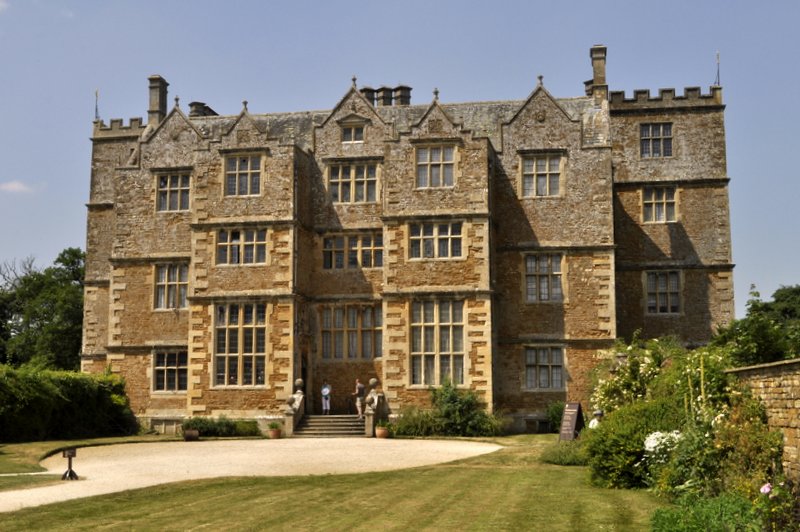


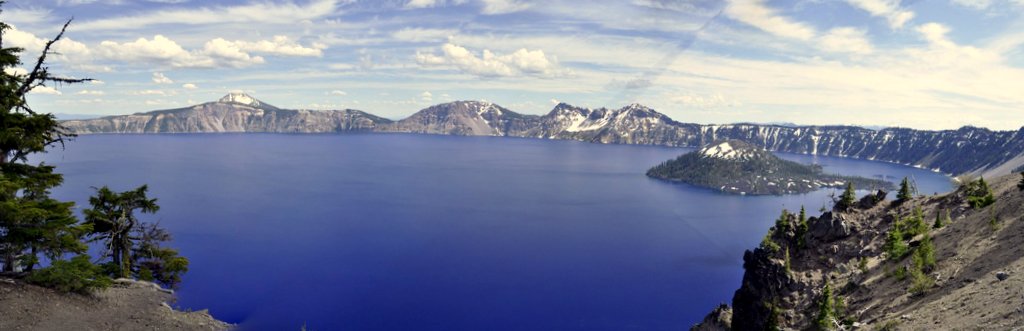

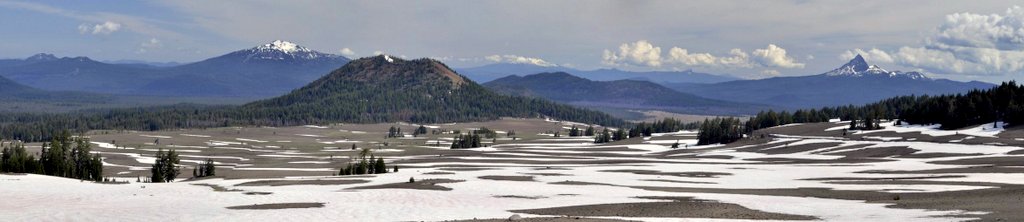
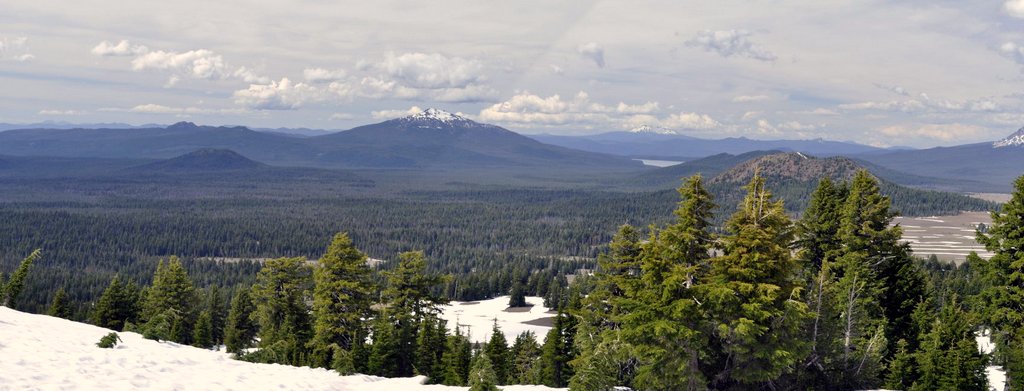
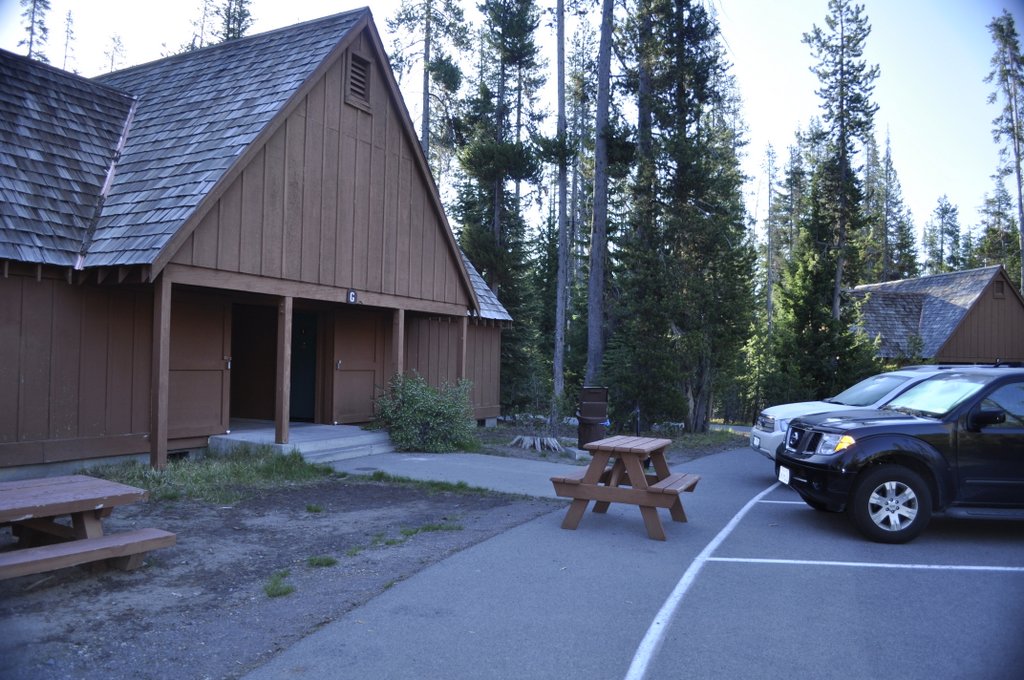


 The
The 

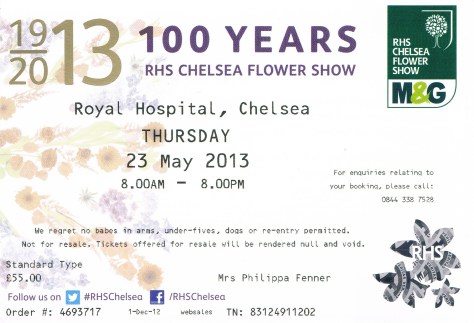 We left home just after 09:00, and arrived back home just after 21:00, rather tired (by the end of the day my ‘dogs were barking’*) but it was a very enjoyable day out in London. We took a train from Warwick Parkway, about 25 miles from where we live, to London Marylebone, arriving there just after 11:30. We were at the show just after noon having had a surprisingly smooth trip across London on the Underground (and the same was the case on the return journey, although I’d expected it to be much busier).


 It was February 1997. Steph joined me on a work trip to Laos, and we were returning to the Philippines via Bangkok where we’d spent a couple of nights. We checked into our Lufthansa (LH) flight, and went off to the lounge. Since I had a stack of air miles, I’d treated Steph to an upgrade to Business Class.





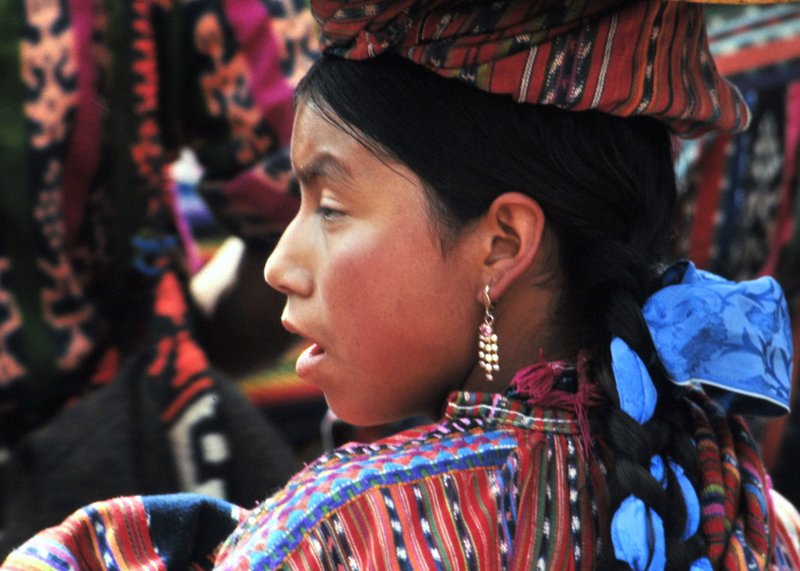
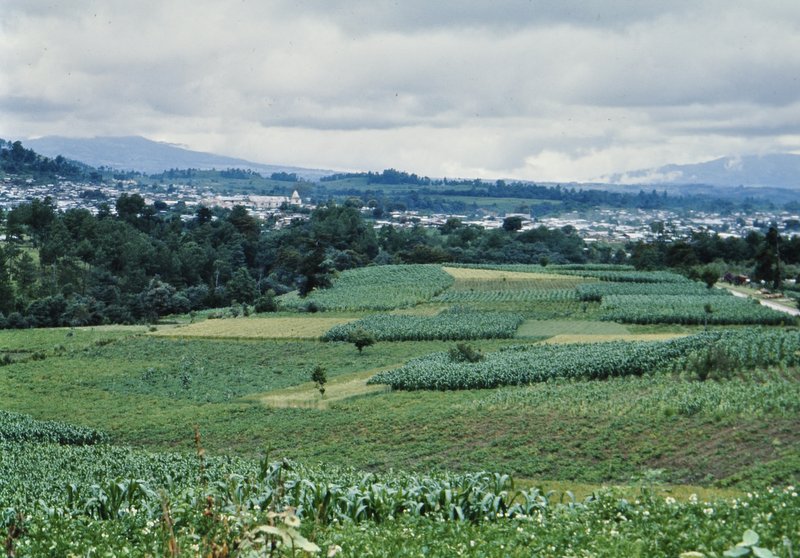
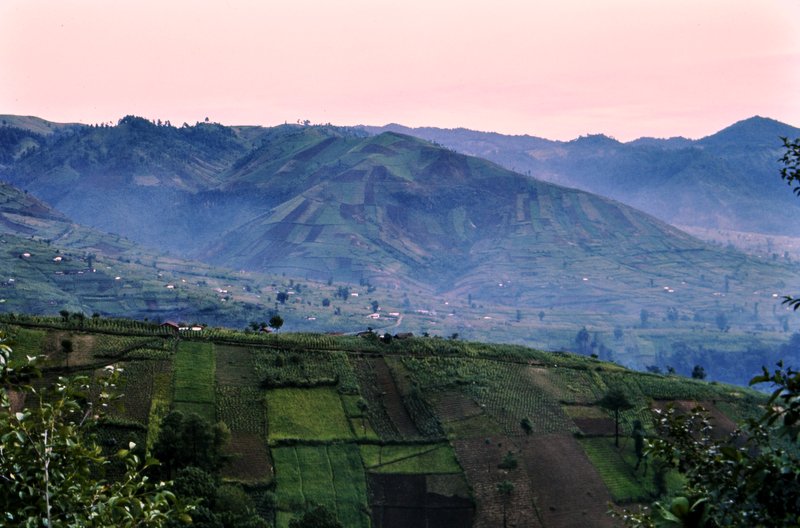


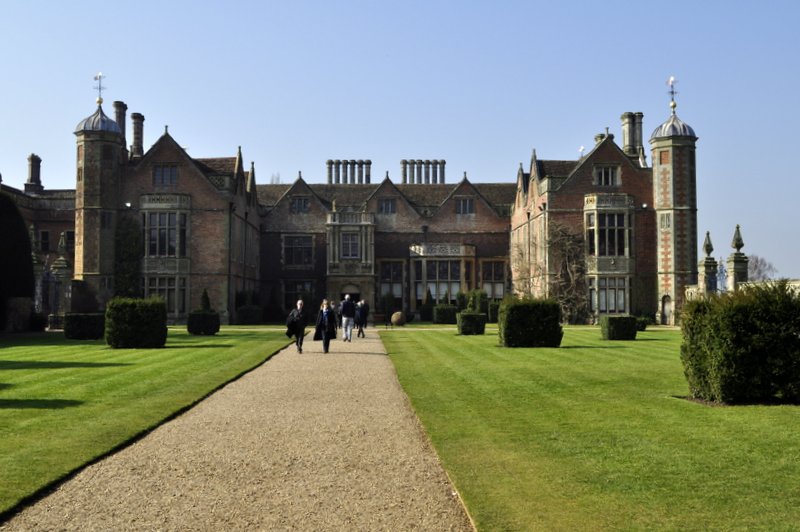
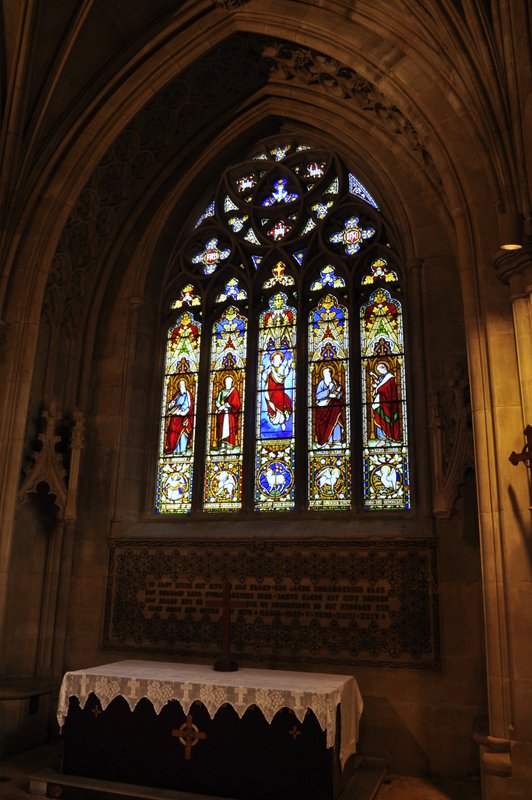


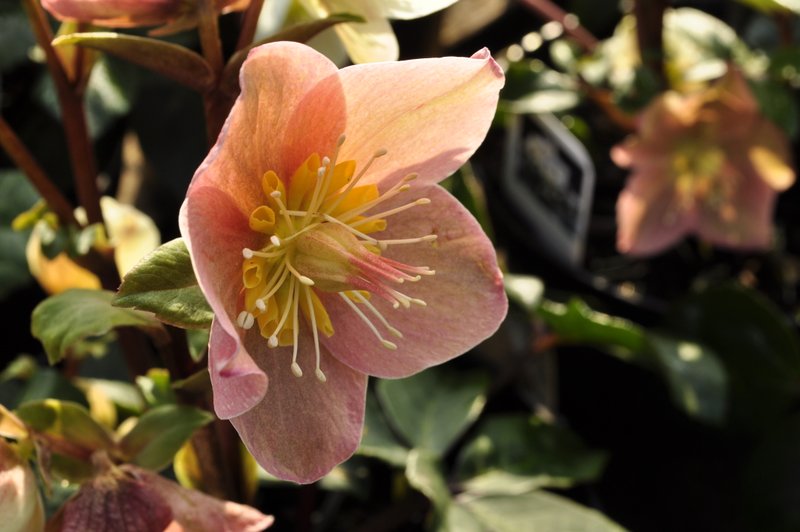

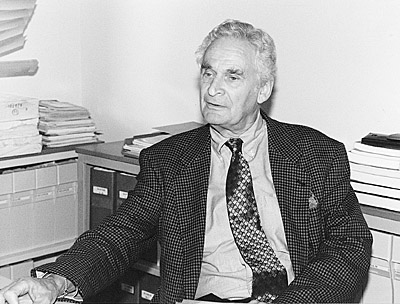
 Agriculture in Rome. I think Heywood was there in his capacity as a representative of IUCN or some other international organization. Anyway, we got chatting and agreed to meet for dinner one evening at one of his favourite restaurants near the Via Venetto. We had a wonderful dinner, washed down with copious quantities of a new wine for me – a Sicilian red Corvo (Duca di Salaparuta), and a discussion of the taxonomic complexities of an Italian insalata mista!


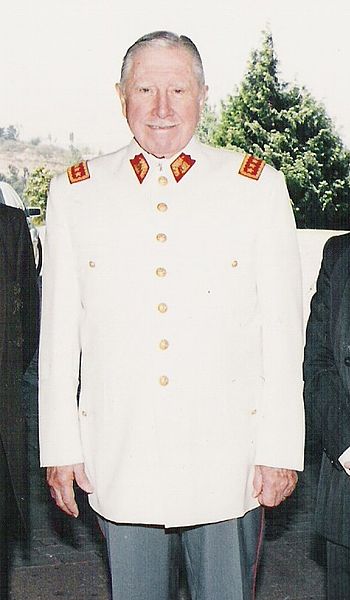
 There are two other things I remember particularly about this trip. First, I was meandering down one of the main shopping streets when I heard ABBA’s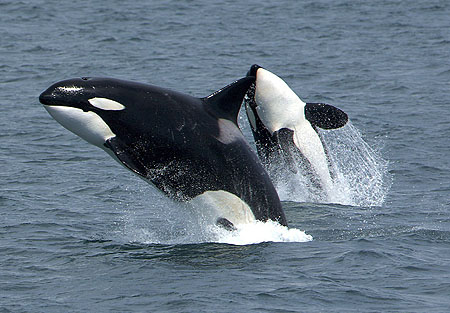
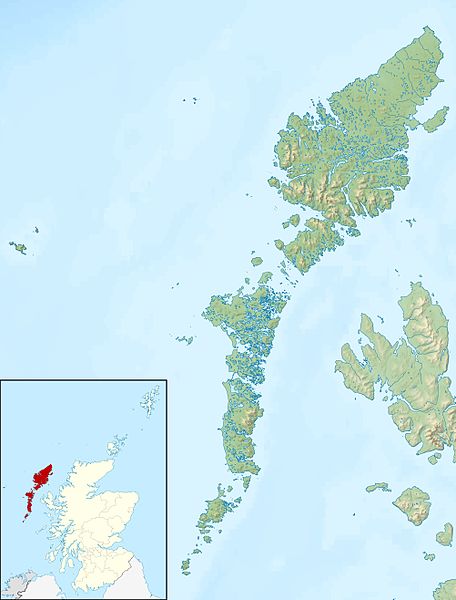
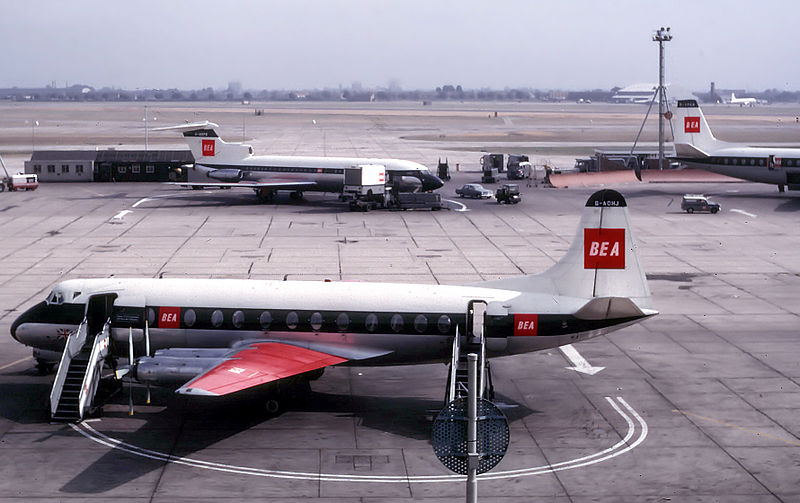
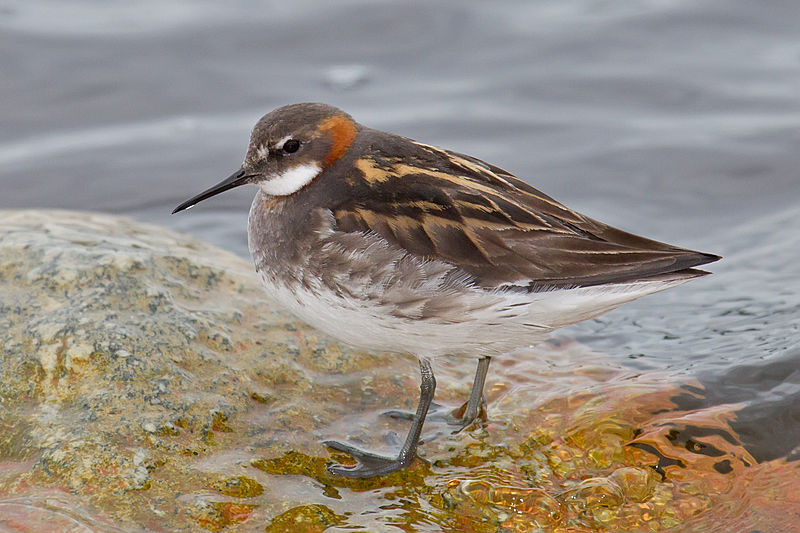
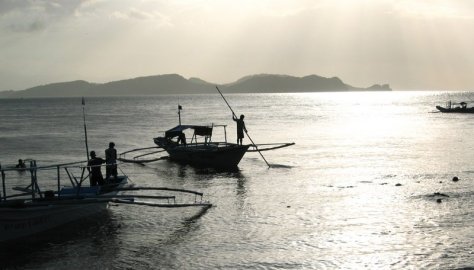
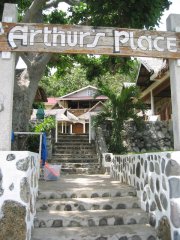 In fact, when we did go to the beach in Puerto Galera for the first time, in February 1992 (just a few weeks after Steph, Hannah and Philippa had joined me from the UK), I’d never even snorkeled before! So the last thing on my mind was the idea of taking a scuba diving course. Snorkeling was fine – once I’d got the hang of it, and learned to relax and actually breathe with my face in the water. So we invested in masks, boots and fins, and started visiting Anilao about once a month. Our first resort was
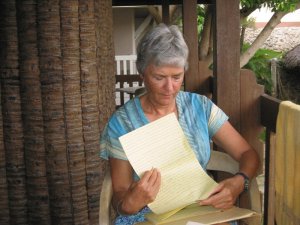
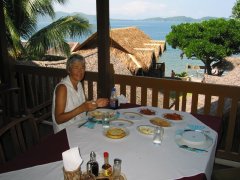
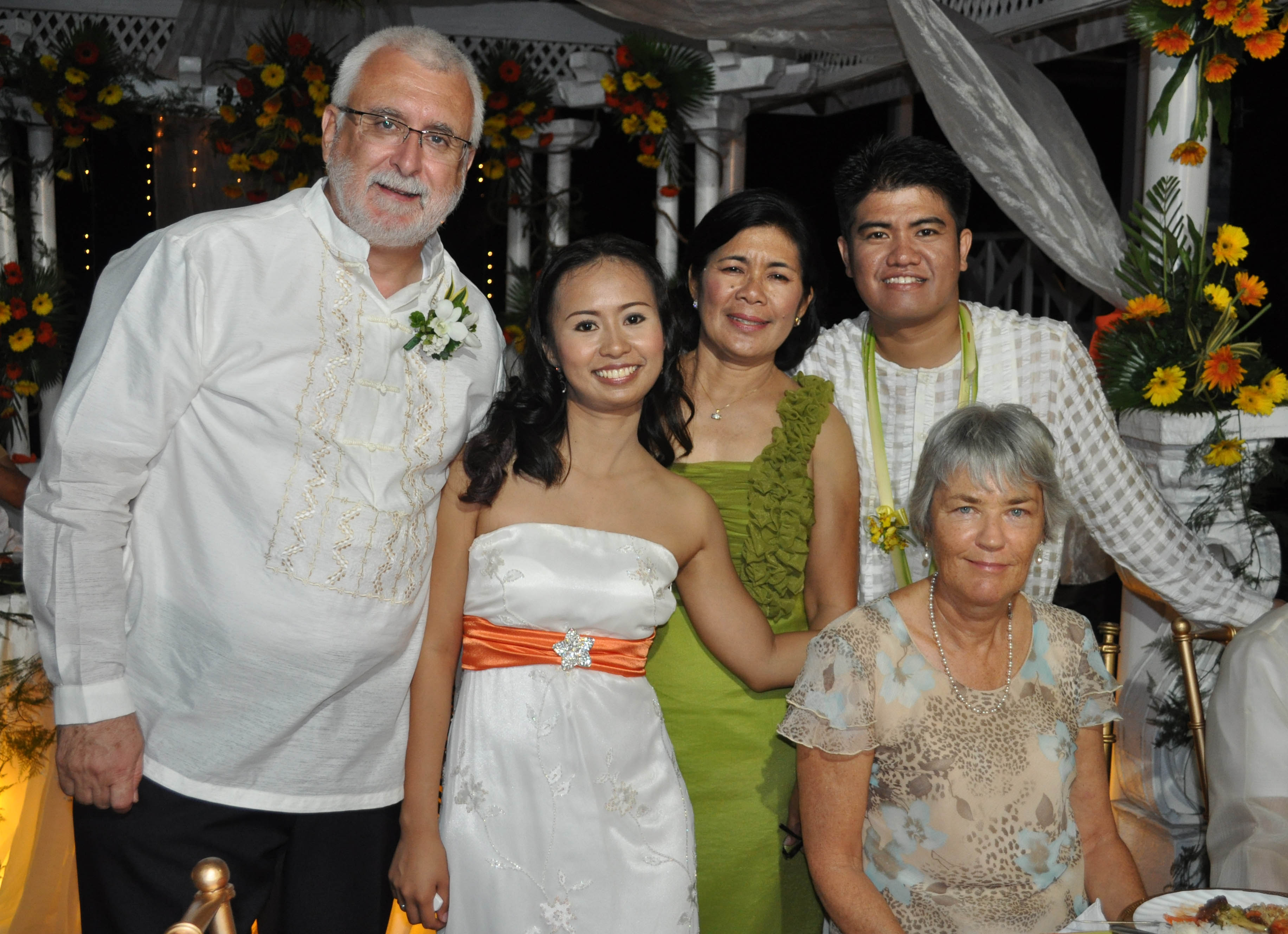
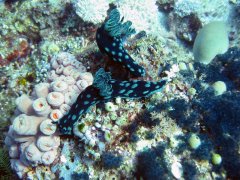
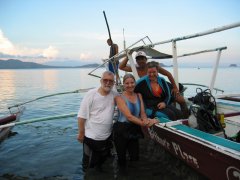
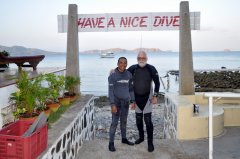
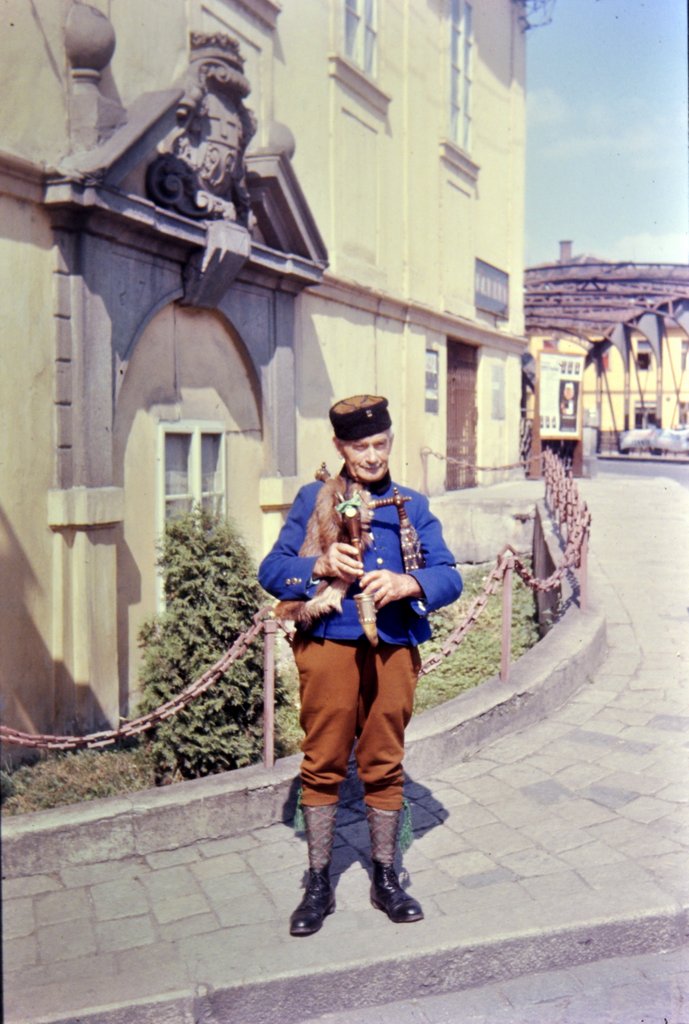
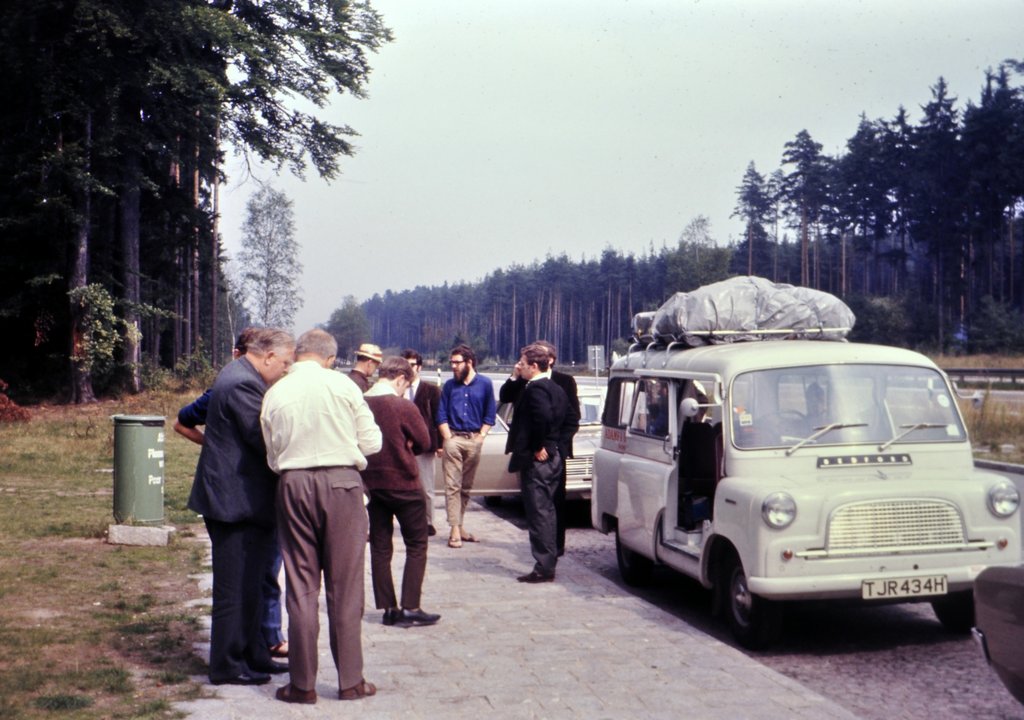
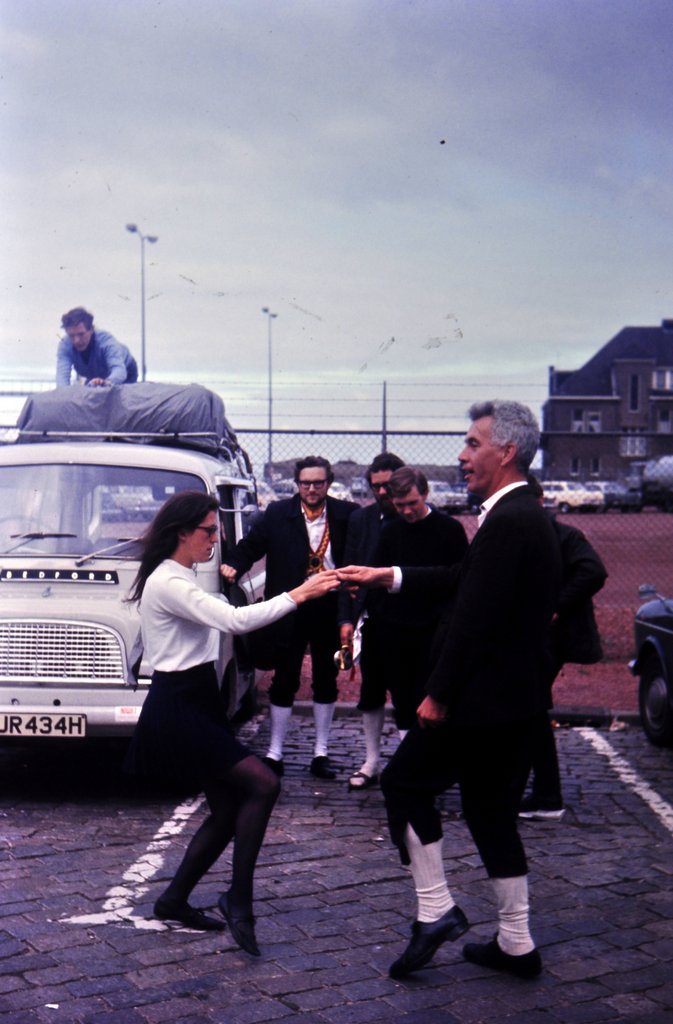
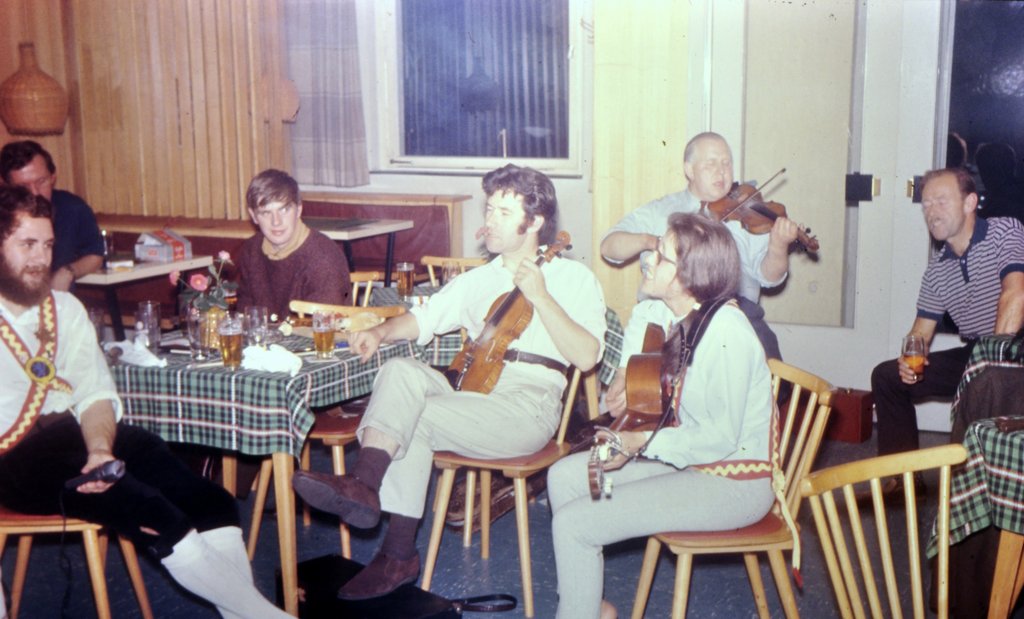
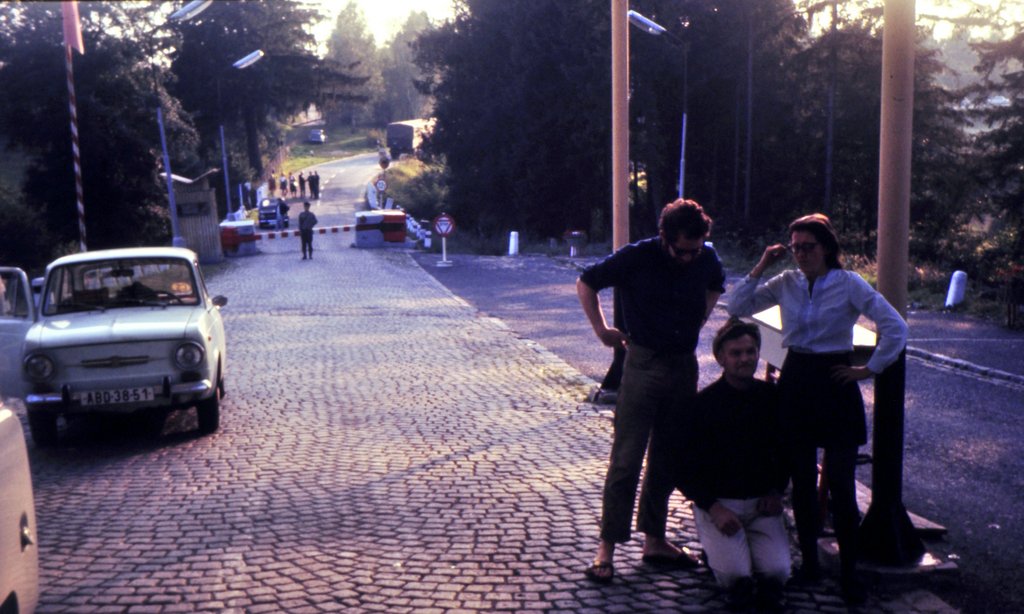

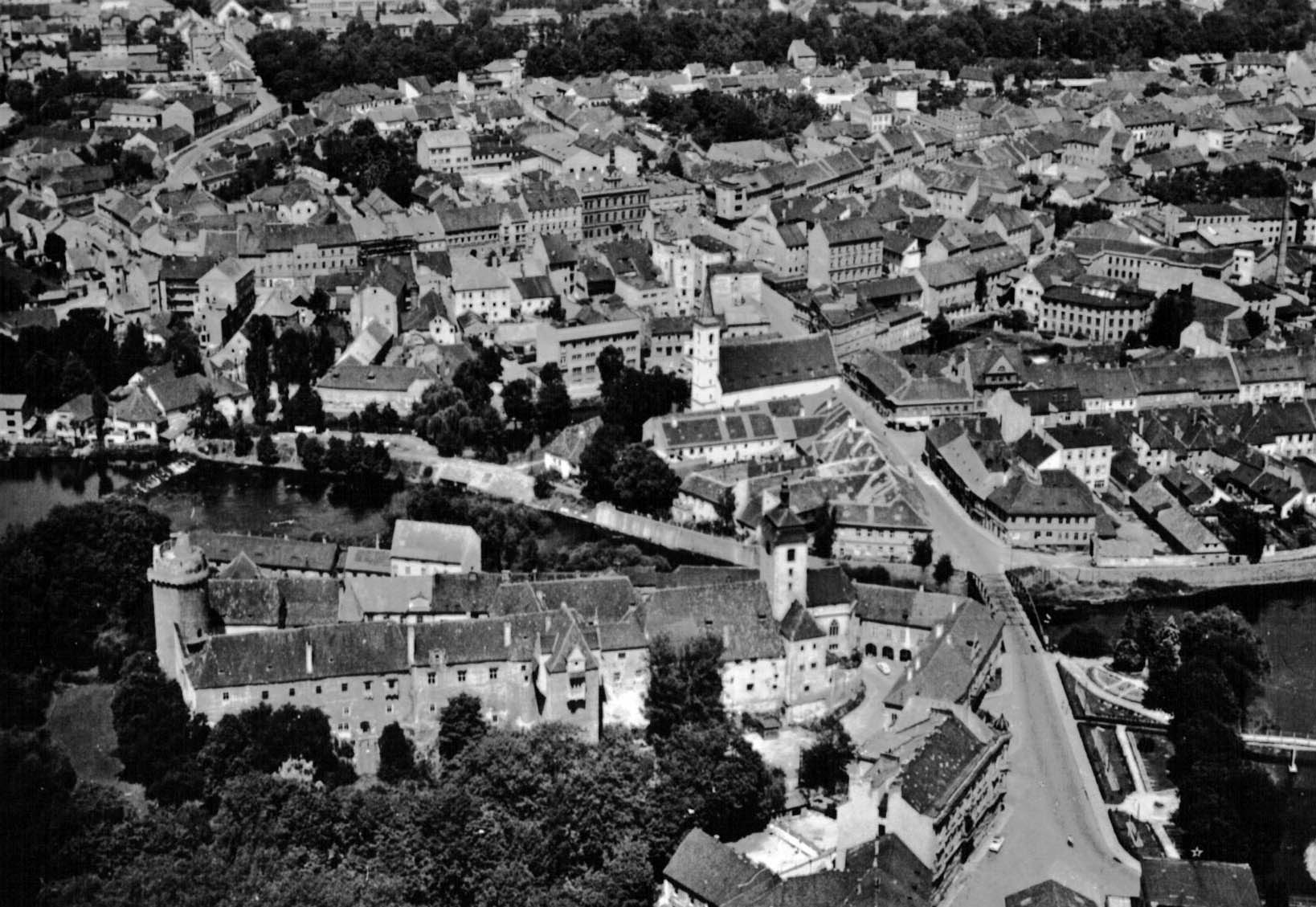
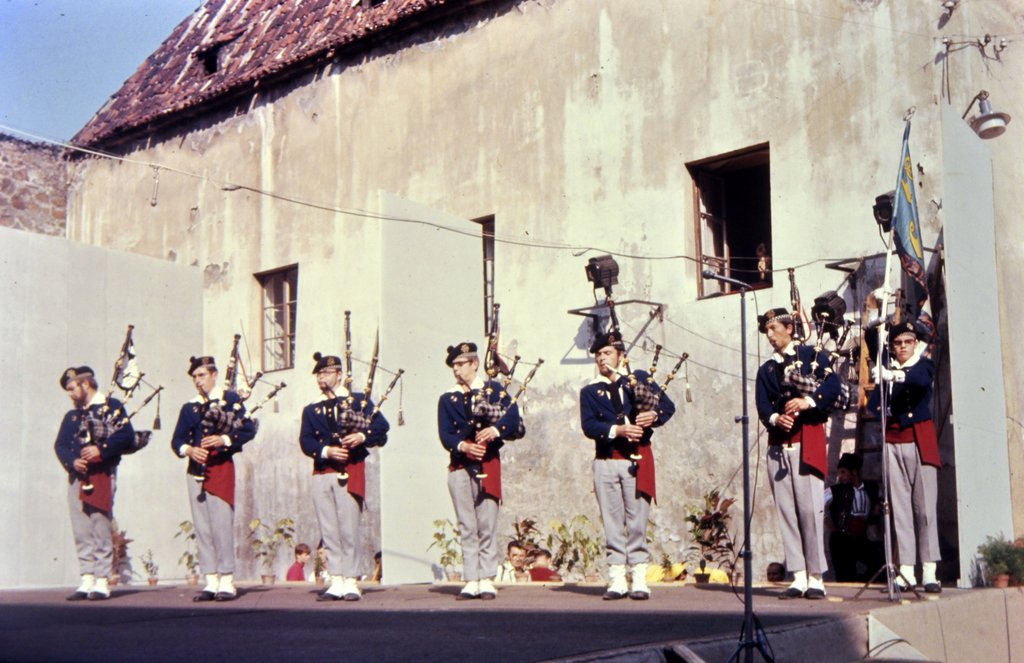
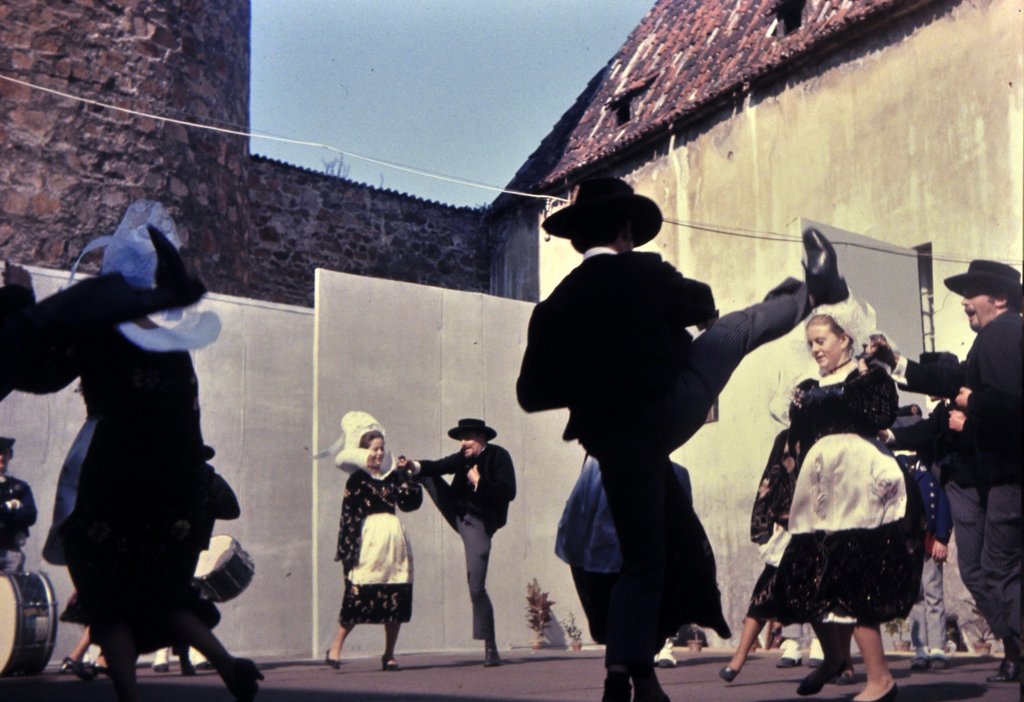
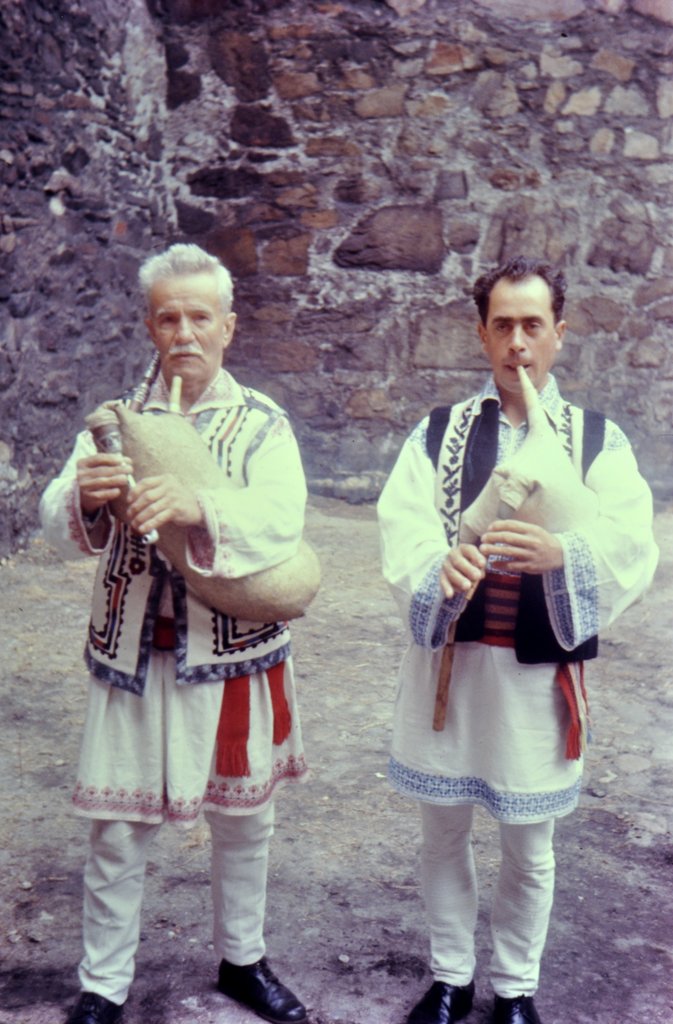
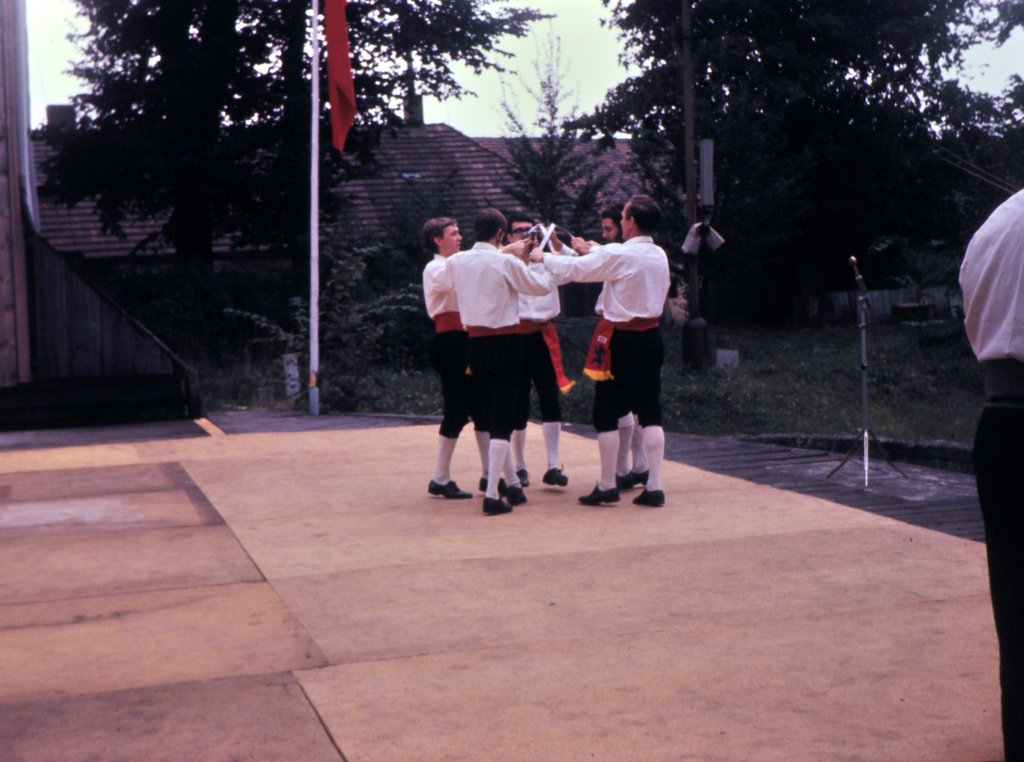
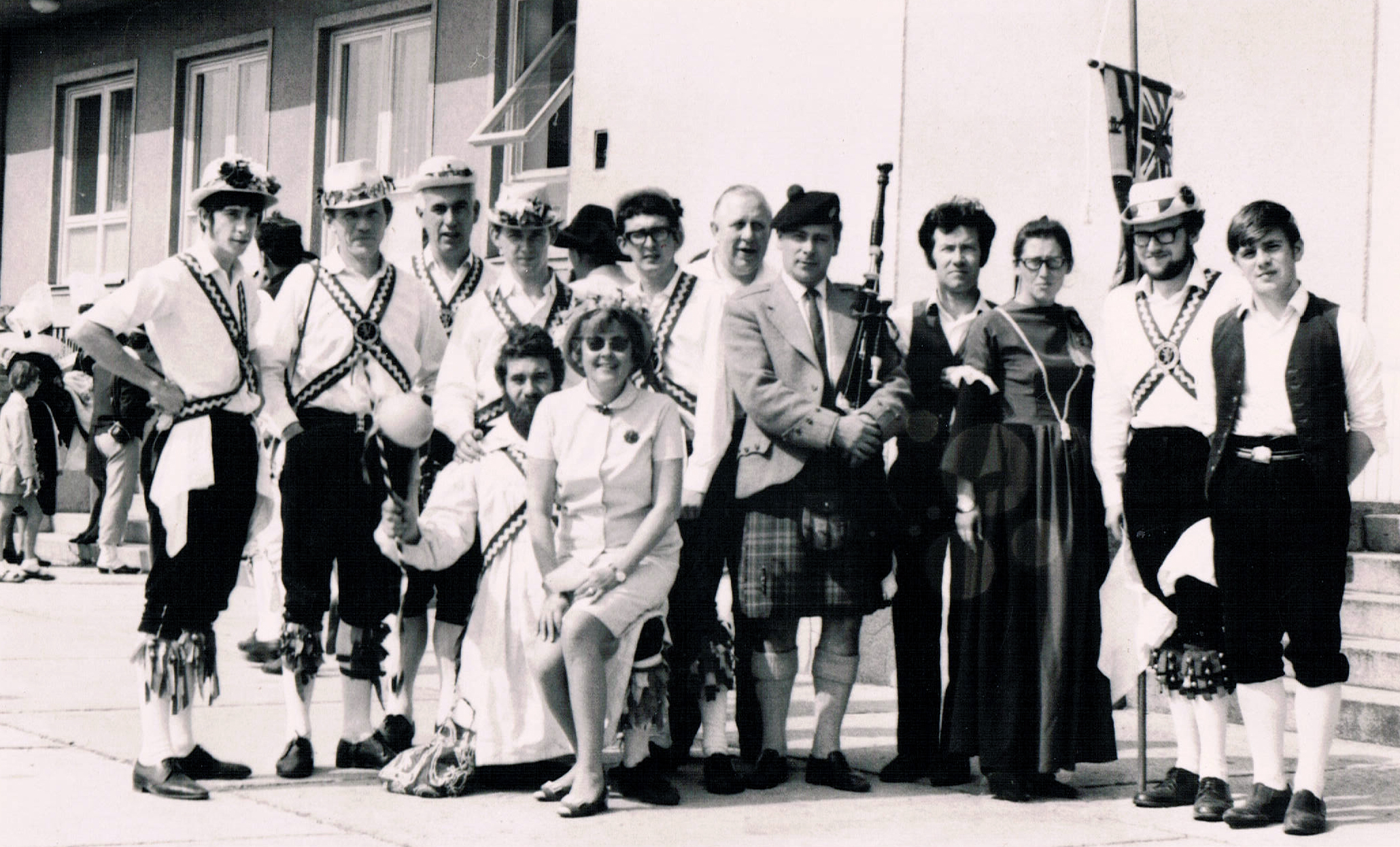
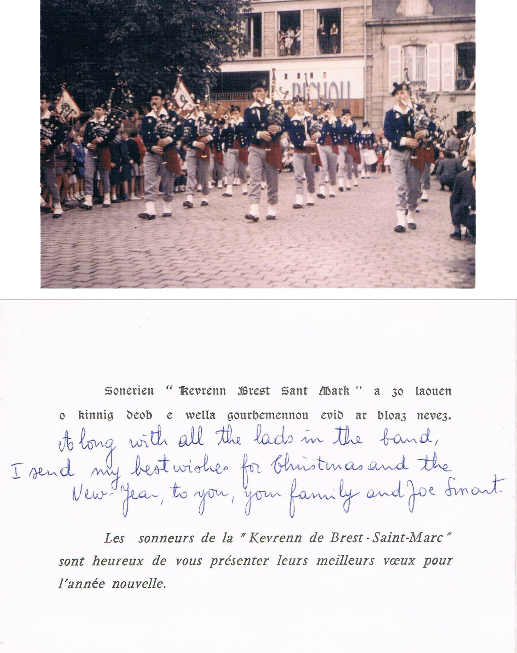
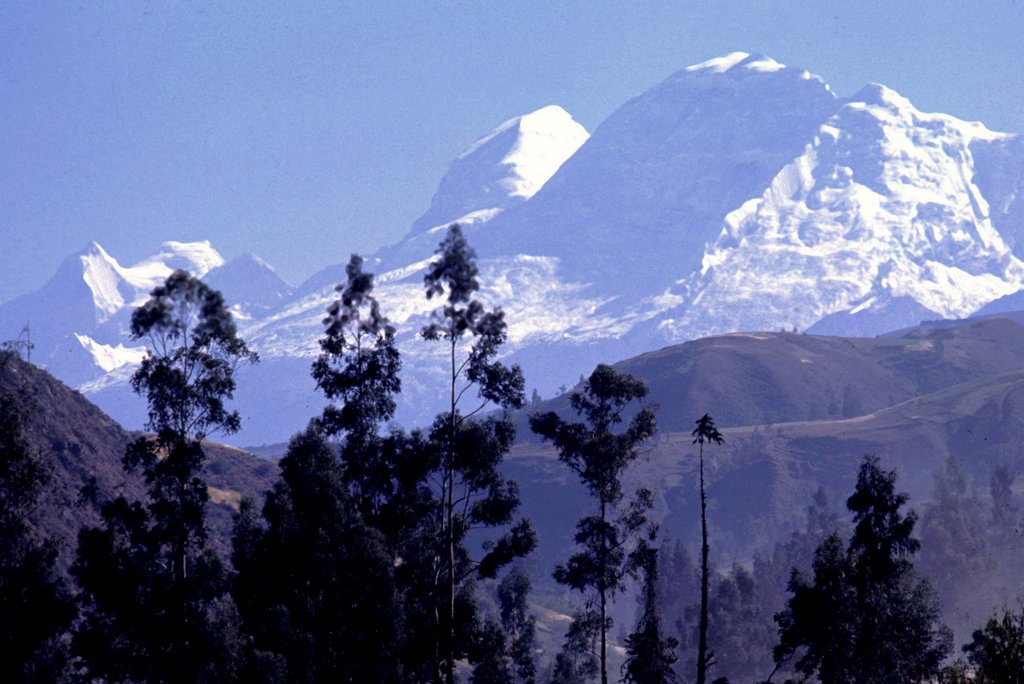

 The volcanoes are spectacular, and my potato work took me almost every week to the slopes of the Irazú volcano, the main potato growing area of the country, and about 50 km from Turrialba. It dominates the horizon from San Jose, and its most famous recent activity was in 1963 on the day that President Kennedy landed in San José for a state visit. That eruption lasted for more than a year. But the volcanic activity is the basis of deep and rich soils on the slopes of the volcano.
 Costa Rica has had an interesting history. After a short civil war in 1948 the armed forces were abolished, and the country invested heavily in social programs and education. It also established a nation-wide network of national parks, and has one of the biggest proportions of land dedicated to national parks of any country. In April 1980 Steph, Hannah and me were staying at the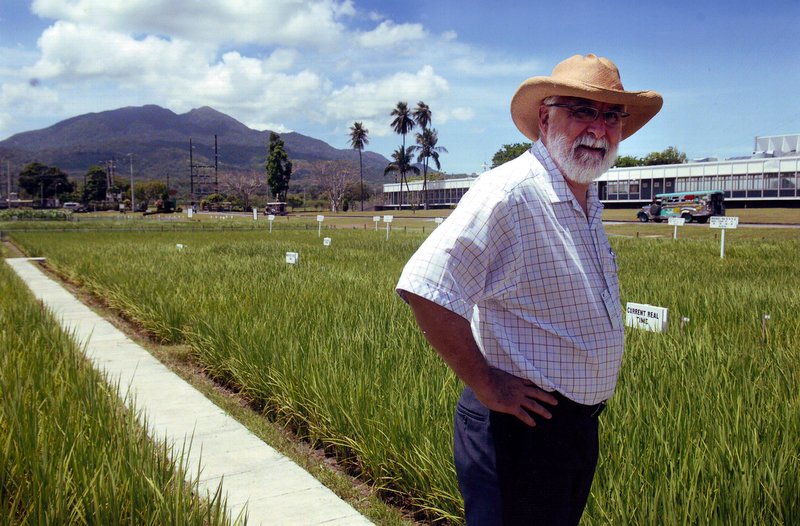
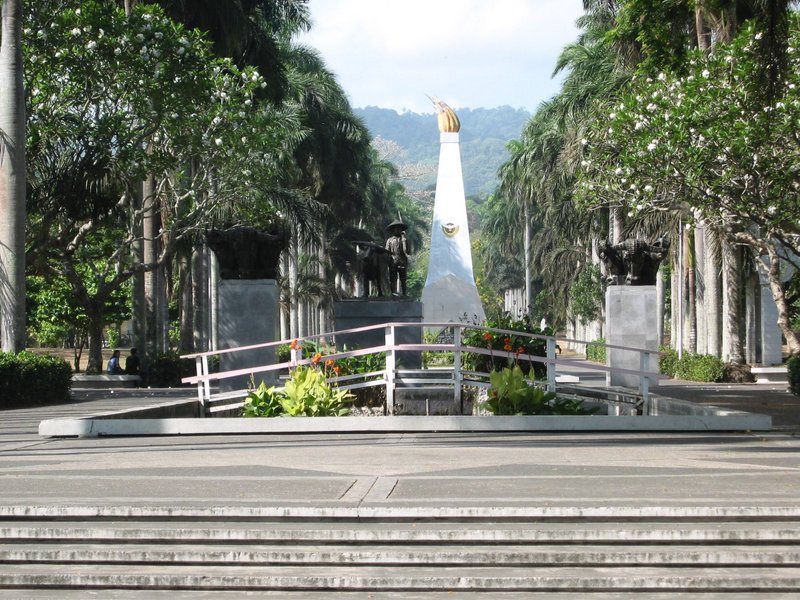
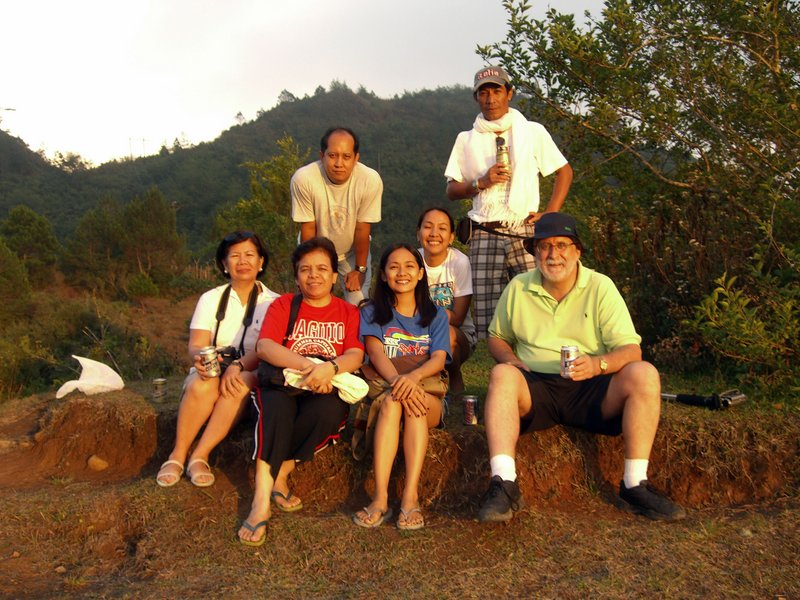
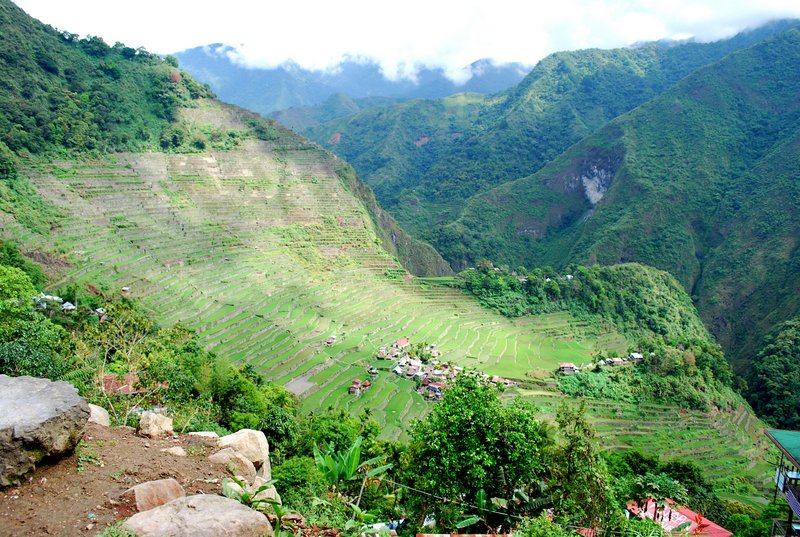
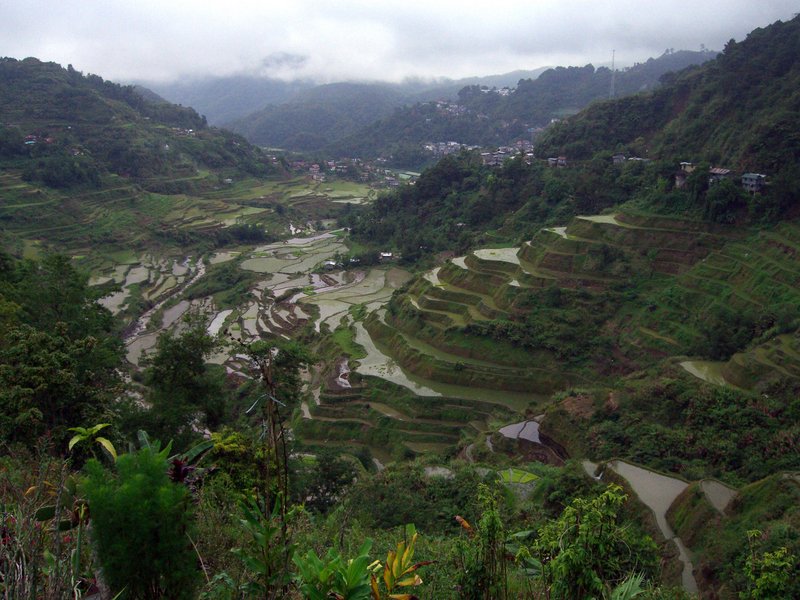
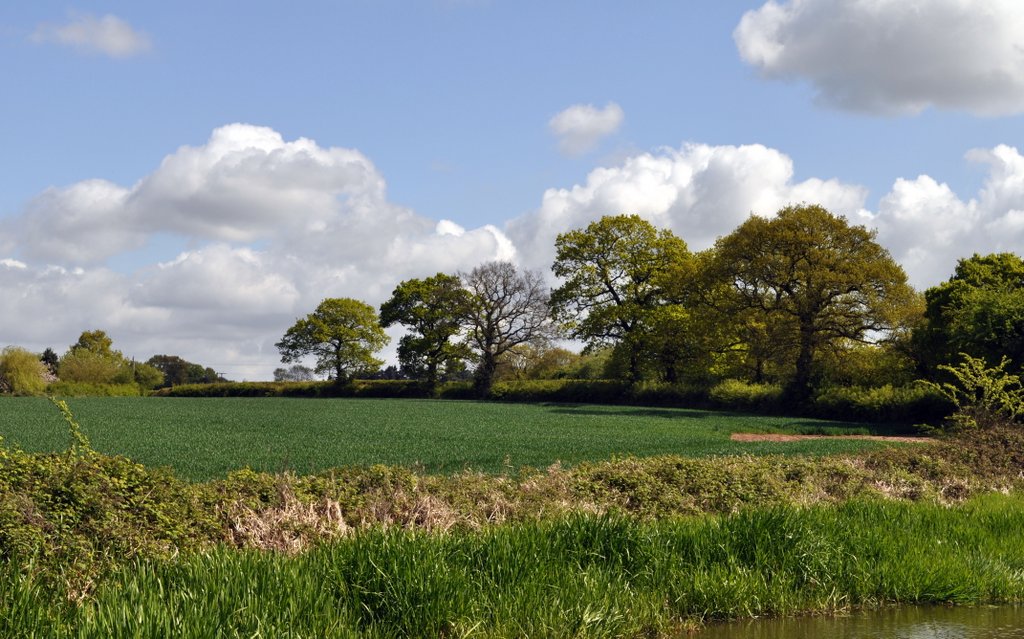
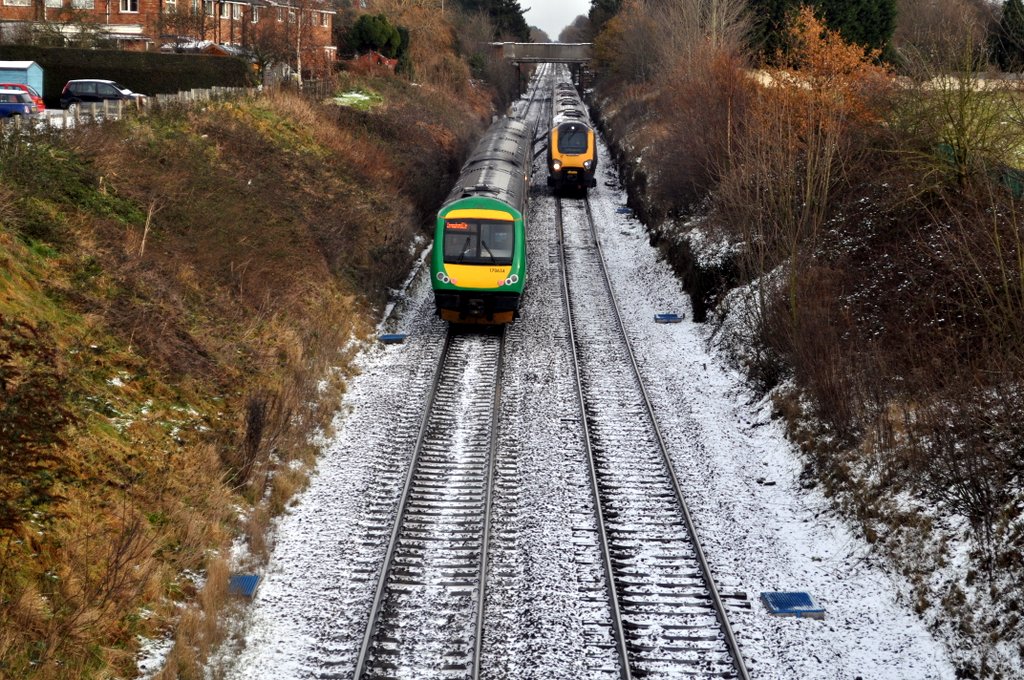

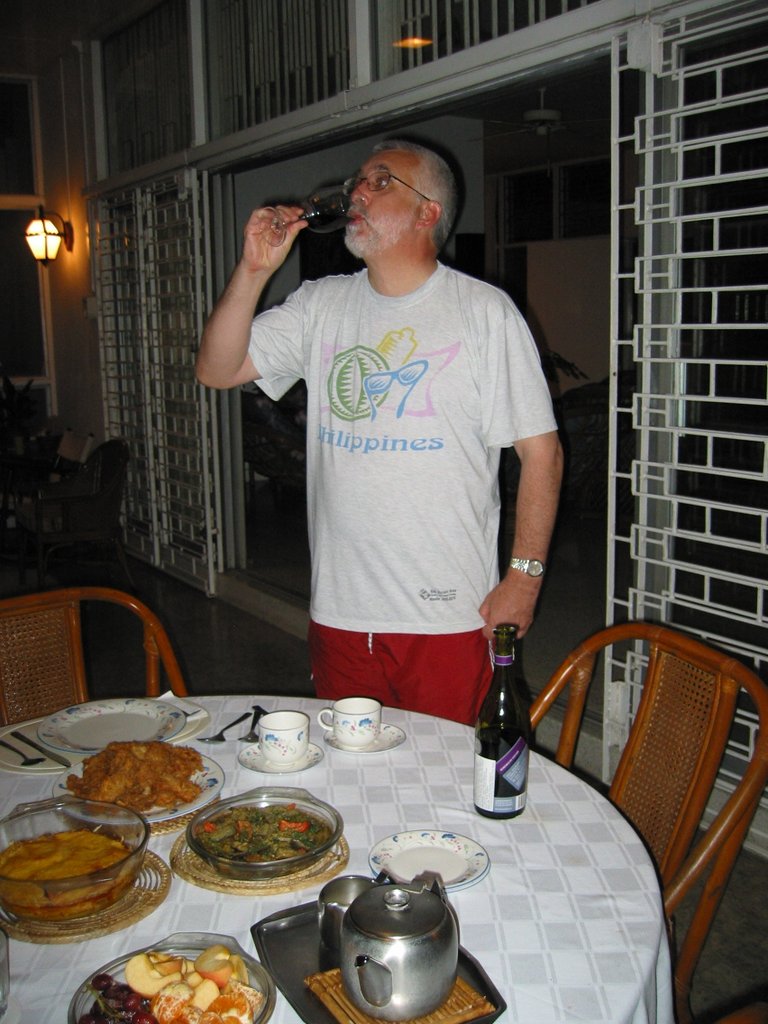


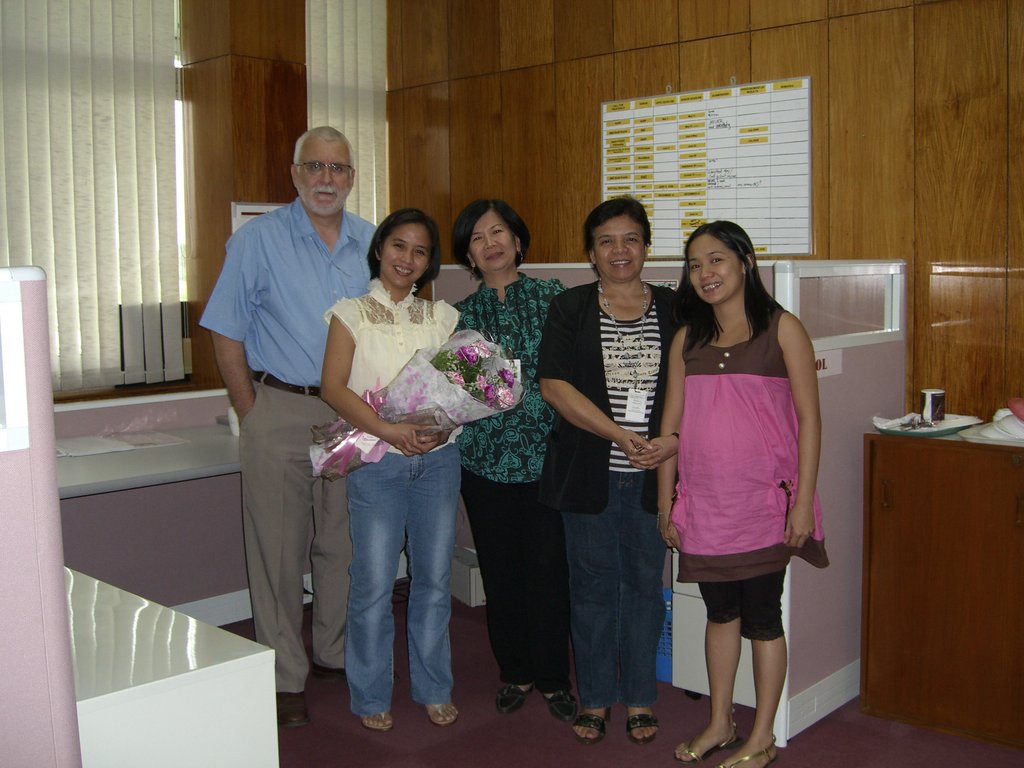



 A balanced diet . . .