What’s in a name? Well, not a lot it seems when it comes to crop germplasm. It’s a particular ‘bee in the bonnet’ I’ve had for many years.
We use names for everything. In the right context, a name is a ‘shorthand’ as it were for anything we can describe. In the natural world, we use a strict system of nomenclature (in Latin of all languages) – seemingly, to the non-specialist, continually and bewilderingly revised. Most plants and animals also have common names, in the vernacular, for everyday use. But while scientific nomenclature follows strict rules, the same can’t be said for common names.
Stretching an analogy
However, let me start by presenting you with an analogy. Take these two illustrious individuals for example.
Michael Jackson
Michael Jackson
We share the same name, though I doubt anyone would confuse us. Certainly not based on our phenotypes – what we look like. In any case, I’m WYSIWYG. Our ‘in common’ name implies no relationship whatsoever.
What about identical monozygotic twins, such as Marian and Val Brown? Dressing alike, they became celebrities in their adopted city of San Francisco from the 1970s until their deaths. Same genetics, but different names.
Maybe I’m stretching the analogy too much. I just want to hammer home the idea that sharing the same name should not imply common genetics. And different names might mask common genetics.
Naming crop varieties
So let’s turn to the situation in crop germplasm resources.
I had found in my doctoral research that apparently identical Andean potato varieties – based on morphology and tuber protein profiles – might have the same name or, if sourced from different parts of the country, completely different names given by local communities. And it also was not uncommon to find potatoes that looked very different having the same name – often based on some particular morphological characteristic. When we collected rice varieties in Laos during the 1990s, we described how Laotian farmers name their varieties [1].
During the 1980s my University of Birmingham colleague Brian Ford-Lloyd and I, with Susan Juned, studied somaclonal variation in the potato cv. Record. We received a sample of 50 or so tubers of Record, and fortunately decided to give each individual tuber its own ID number. The number of somaclones generated from each tuber was very different, and we attributed this to the fact that seed potatoes in the UK are ultimately produced from different tissue culture stocks. This suggested that there had been selection during culture for types that responded better to tissue culture per se [2]. The implication of course is that potato cv. Record (and many others) is actually an amalgam of many minor variants. I recently read a paper about farmer selection of somaclonal variants of taro (Colocasia esculenta) and cassava (Manihot esculenta) in Vanuatu.
Dropping the ID
But there is a trend – and a growing trend at that – to rely too much on names when it comes to crop germplasm. What I’ve found is that users of rice germplasm (and especially if they are rice breeders) rely too heavily on the variety name alone. And I’d be very interested to know if curators of other germplasm collections experience the same issue.
Why does this matter, and how to resolve this dilemma?
During the 1990s when we were updating the inventory of samples (i.e. accessions) in the International Rice Genebank Collection at IRRI, we discovered there were multiple accessions of several IRRI varieties, like IR36, IR64 or IR72. I’m not sure why they had been put into the collection, but they had been sourced from a number of countries around Asia.
We decided to carefully check whether the accessions with the same name (but different accession numbers) were indeed the same. So we planted a field trial to carefully measure a whole range of traits, not just morphological, but also some growth ones such as days to flowering. I should hasten to add that included among the accessions of each ‘variety’ was one accession added to the genebank collection at the time the variety had been released – the original sample of each.
We were surprised to discover that there were significant differences between accessions of a variety. I raised this issue with then head of IRRI’s plant breeding department, the eminent Indian rice breeder Dr Gurdev Khush. Rather patronizingly, I thought, he dismissed my concerns as irrelevant. As a rice breeder with several decades of experience and the breeder responsible for their release, he assured me that he ‘knew’ what the varieties should look like and how they ought to perform. I think he regarded me as a ‘rice parvenu’.
It seemed to me that farmers had made selections from within these varieties that had been grown in different environments, but then had kept the same name. So it was not a question of ‘IR36 is IR36 is IR36‘. Maybe there was still some measure of segregation at the time of original release in an otherwise genetically uniform variety.
I have a hunch that some of the equivocal results from different labs during the early rice genome research using the variety Nipponbare can be put down to the use of different seed sources of Nipponbare.
Germplasm requests for seeds from the International Rice Genebank Collection often came by variety name, like Nipponbare or Azucena for example. But which Nipponbare or Azucena, since the there are multiple samples of these and many others in the collection?
What I also discovered is that when it comes to publication of their research, many rice scientists frequently omit to include the germplasm accession numbers – the unique IDs. Would ‘discard’ be too strong an indictment?
I was reviewing a manuscript just a few days ago, of a study that included rice germplasm from IRRI and another genebank. There was a list of the germplasm, by accession/variety name but not the accession number. Now how irresponsible is that? If someone else wanted to repeat or extend that study (and there are so many other instances of the same practice) how would they know which actual samples to choose? There is just this belief – and it beggars belief – that germplasm samples with the same name are genetically the same. However, we know that is not the case. It takes no effort to provide the comprehensive list of germplasm accession numbers alongside variety names.
Accession numbers should be required
I’m on the editorial board of Genetic Resources and Crop Evolution. I have proposed to the Editor-in-Chief that any manuscript that does not include the germplasm accession numbers (or provenance of the germplasm used) should be automatically sent back to the authors for revision, and even rejected if this information cannot be provided, whatever the quality of the science! Listing the germplasm accession numbers should become a requirement for publication.
Draconian response? Pedantic even? I don’t think so, since it’s a fundamental germplasm management and use issue.
~~~~~~~~~~~~~~~~~~~~~~~~~~~~~~~~~~~~~~~~~~~~~
[1] Appa Rao, S., C. Bounphanousay, J.M. Schiller & M.T. Jackson, 2002. Naming of traditional rice varieties by farmers in the Lao PDR. Genetic Resources and Crop Evolution 49, 83-88.
[2] Juned, S.A., M.T. Jackson & B.V. Ford-Lloyd, 1991. Genetic variation in potato cv. Record: evidence from in vitro “regeneration ability”. Annals of Botany 67, 199-203.
Yesterday evening I heard the sad news that an old friend and someone who was very influential at important stages of my career, had passed away peacefully at his home on 30 March, at the age of 76.
21 June 1938 – 30 March 2015
Professor J T Williams (JT to his friends, or simply Trevor) played an important role during the late 70s and throughout the 80s in establishing an international network of genebanks that today underpin world food security.
The Birmingham years
I first met Trevor in September 1970 when I joined the 1-year MSc course on Conservation and Utilization of Plant Genetic Resources at the University of Birmingham. There’s no need to write about the course here as I have done so elsewhere on my blog. Short and stocky, a whirlwind of energy – and an inveterate chain smoker – Trevor joined the Department of Botany in 1968 or 1969, having been recruited by head of department Jack Hawkes to become the Course Tutor for that genetic resources course (which opened its doors in September 1969 and continued to train students over more than three decades).
L to R: Prof. Jack Hawkes, Dr Mike Jackson, and Dr Trevor Williams. Graduation Day, 12 December 1975, University of Birmingham
One of Trevor’s main teaching responsibilities was a course on taxonomic methods that inspired me so much that very quickly I decided that I wanted to write my dissertation under his supervision. Fortunately, Trevor was quite happy to take on this role, and by November 1970 we had agreed on a topic: on the origin and diversity of lentils (Lens culinaris). I’d indicated an interest in working on grain legumes, a hangover, I guess, from my Southampton undergraduate days where Joe Smartt, a leading grain legume specialist, had encouraged me to apply to the Birmingham course. But why how did we settle on lentils? Trevor and I worked our way through the various genera of the Fabaceae in Flora Europaea until we came to Lens and read this concise statement under the cultivated lentil, L. culinaris: Origin not known. Well, that piqued our curiosity and we set about acquiring seed samples of as many different varieties from a wide geographical range as possible.
In 1971-72 my wife Steph also worked with Trevor for her dissertation on growth and reproductive strategies in a range of grain legumes – lentil and chickpea among them. While Trevor supervised several MSc students during his years at Birmingham, I believe he had only one PhD student – another close friend, Emeritus Professor Brian Ford-Lloyd, and together they carried out a pioneering study of the genus Beta (beets!) When I moved to the University of Birmingham in 1981, I was assigned Trevor’s old office in the Department of Plant Biology (formerly Botany).
Cambridge and Bangor
Trevor took his first degree in Natural Sciences from Cambridge University (Selwyn College, I believe), followed by a PhD at the University College of North Wales (now Bangor University) under the eminent ecologist and plant population biologist, Professor John Harper. Trevor then moved to Switzerland (I don’t remember where), and took a higher doctoral degree on the study of plant communities, or phytosociology. I’m also not sure if this was supervised by Josias Braun-Blanquet, the most influential phytosociologist of the time.
The move to Rome
In about 1977 Trevor was recruited to become the Executive Secretary of the International Board for Plant Genetic Resources that was founded under the auspices of the FAO in 1974. He remained with IBPGR until 1990. Following his retirement from IBPGR, it became the International Plant Genetic Resources Institute (IPGRI), then Bioversity International in 2006.Under his tenure, IBPGR sponsored a large number of collecting missions around the world – this was the germplasm collecting decade – as well sponsoring training opportunities for genetic resources specialists, not least to the MSc course at Birmingham. Although IBPGR/IPGRI remained under the auspices of FAO until the early 1990s, it had become part of the network of international agricultural research centers under the CGIAR. And Trevor served as Chair of the Center Directors for at least one year at the end of the 1980s. In 1989 the Birmingham course celebrated its 20th anniversary; IBPGR sponsored a special reunion and refresher course at Birmingham and in Rome for a number of past students. We also recognized the unique contribution of IBPGR and Trevor joined us for those celebrations – which I have written about elsewhere in my blog.
L to R: Richard Lester (behind), Professor Ray Smallman, (Vice Principal), Mike Jackson, Brian Ford-Lloyd, Professor Jack Hawkes, Professor Jim Callow, Professor Trevor Williams
Professors Jack Hawkes and Jim Callow in the center of the photograph.
Current and past MSc students join course staff and university dignitaries at the tree planting ceremony.
At the 20th anniversary dinner. L to R: Prof. Jack Hawkes, Prof. Jim Callow, Prof. George Morrison, Dr Mike Jackson, Prof. Ray Smallman, Prof. Trevor Williams
Trevor with a group of past students at the 20th anniversary refresher course
Adi Damania (now at UC-Davis) sent me the photo below, of IBPGR staff on 2 December 1985, and taken at FAO Headquarters in Rome.
Sitting from L to R: Dorothy Quaye, Murthy Anishetty, unknown, J. Trevor Willams, Jean Hanson, unknown, Jane Toll. Standing L to R: Unknown, Adi Damania, unknown, unknown, Jeremy Watts, Merril, unknown, George Sayour, Pepe Esquinas-Alcazar, unknown, Chris Chapman, John Peeters, Jan Konopka, unknown temp, unknown, John Holden, Dick van Sloten.
After IBPGR In the 1990s Trevor spent some years helping to organize the International Network for Bamboo and Rattan (INBAR) as a legal entity with its headquarters in Beijing, China. And it was there in about 1995 or 1996 or so that our paths crossed once again. I was visiting the Institute of Botany in Beijing with one of my staff from IRRI’s Genetic Resources Center, Dr Bao-Rong Lu. One evening, after a particularly long day, we were relaxing in the hotel bar that overlooked the foyer and main entrance. As we were chatting, I noticed someone crossed the foyer and into the dining room who I thought I recognized. It was Trevor, and I joined him to enjoy more than a few beers until late into the night. I didn’t have any further contact with Trevor until one evening in January or February 2012. It was about 7.30 pm or so when the phone rang. It was Trevor ringing to congratulate me on my appointment as an OBE in the New Year’s Honours List. We must have chatted for over 30 minutes, and it was great to catch up. That was the last time I spoke with him, and even then he told me his health was not so good.
But let’s not be too sad at Trevor’s passing. Instead let’s celebrate the man and his enormous contribution to the conservation of plant genetic resources worldwide. His important role will be remembered and recognized for decades to come. I feel privileged that I knew and worked with him. His incisive intellect and commitment to the conservation of genetic resources and community made him one of my role models. Thank you, Trevor, for your friendship, words of wisdom, and above all, your encouragement – not only to me, but to your many students who have since contributed to the cause of genetic conservation.
Remembering Trevor – updates
Trevor’s funeral was held on Wednesday 22 April at 13:30, at St Chad’s Church, Handforth, Cheshire. His sister Wendy asked that in lieu of sending flowers, donations could be made to the Millennium Seed Bank at Kew. Jill Taylor, Development Officer at the Kew Foundation has set up an ‘account fund’ in Trevor’s name – that way she can collate the donations and be able to provide the family with a total amount raised. She will of course make sure that the whole amount is used for the work of the Millennium Seed Bank. All donations can be sent for Jill’s attention:
Jill Taylor Kew Foundation 47 Kew Green Richmond TW9 3AB
Tel: 020 8332 3248
Cheques should be made payable to ‘Millennium Seed Bank’
Donations can also be made online using this live link – https://thankqportal.kew.org/portal/public/donate/donate.aspx If you donate online, please also email Jill at commemorative@kew.org so that she can assign it to Trevor’s ‘fund’. That email inbox is monitored by a small group so will be attended even if Jill is away.
Brian Ford-Lloyd and I attended Trevor’s funeral, along with Roger Croston, also a Birmingham MSc course alumnus and a collector for IBPGR for about two years from 1980 or so.
Trevor’s sister, the Reverend Wendy Williams (celebrating 55 years since she was ordained) gave a beautiful eulogy, highlighting Trevor’s strong Christian faith – something neither Brian, Roger or I were aware of – and the charitable work he was involved with in Washington, DC after he left IBPGR, but also in Rome during his IBPGR years. Click on the image below to read the Service of Thanksgiving.
c. 1980 British passport
UN laissez-passer photo from FAO
Certificate of Appreciation from IBPGR Board when Trevor stepped down in 1990
Certificate of Honour from the Royal Government of Thailand
IBPGR 10th anniversary plaque
With Brian Ford-Lloyd looking at some JTW memorabilia
Obituaries
Here’s the link to the obituary that was published on 1 May in the UK’s Daily Telegraph broadsheet newspaper.
An obituary was published online on 1 July in the international journal Genetic Resources and Crop Evolution. Click here to read. And another in the Indian Journal of Plant Genetic Resources.
A biography of Trevor was published online (on 13 June 2024) in the Oxford Dictionary of National Biography. Click here to read.
In September 1969, the first ever one-year course on plant genetic resources conservation and use (leading to the graduate Master of Science degree) was launched at the University of Birmingham, in the Department of Botany. It was the brainchild of Professor Jack Hawkes, an internationally-renowned potato taxonomist, and one of the leading lights in the 1960s of the emerging genetic resources conservation movement.
Twenty years on, and Brian Ford-Lloyd and I wrote a short article for some newsletter or other – unfortunately I didn’t keep a record of which one. I think everyone was surprised that the course was still going strong and attracting many students. After all, Sir Otto Frankel had told Jack Hawkes in 1968 or thereabouts that the course would meet its demand within 20 years.
In September 1989, to mark the 20th anniversary of the course’s foundation and the first intake of students, the International Board for Plant Genetic Resources¹ (IBPGR) sponsored a refresher course of about three weeks for a small number of students at Birmingham and at IBPGR headquarters in Rome, Italy. During the Birmingham component, the participants also visited the Welsh Plant Breeding Station² in Aberystwyth, the Vegetable Genebank³ at the National Vegetable Research Station, Wellesbourne, and the Royal Botanic Gardens – Kew at Wakehurst Place in Sussex.
L to R: Elizabeth Acheampong (Ghana), ?? (Indonesia), Trevor Williams, Gordana Radovic (Yugoslavia), Zofia Bulinska-Radomska (Poland), Singh (India), Carlos Arbizu (Peru), Carlos Carpio (Philippines), EN Seme (Kenya), Andrea Clausen (Argentina), Songkran Chitrakong (Thailand), Joseph Okello ? (Uganda)
To mark the occasion, a rather rare medlar tree (Mespilus germanica) was planted during a special ceremony attended by several university dignitaries as well as Professor Hawkes as the first course director, and Professor Jim Callow who became head of the Department of Plant Biology (formerly Department of Botany) and Mason Professor of Botany, and the second course director in 1982 after Hawkes’ retirement. IBPGR Director Professor Trevor Williams (formerly the MSc course tutor at Birmingham before his move to Rome in the late 1970s) was another of the honored guests.
Current and past MSc students join course staff and university dignitaries at the tree planting ceremony.
Professors Jack Hawkes and Jim Callow in the center of the photograph.
L to R: Richard Lester (behind), Professor Ray Smallman, (Vice Principal), Mike Jackson, Brian Ford-Lloyd, Professor Jack Hawkes, Professor Jim Callow, Professor Trevor Williams
And that same evening, the Dean of Science at that time, Professor George Morrison hosted a dinner to celebrate the MSc Course attended by course staff and past students.
L to R: Ray Smallman, Trevor Williams, Jack Hawkes, Jim Callow, George Morrison
L to R: Jack Hawkes, Jim Callow, George Morrison, Mike Jackson, Ray Smallman, Trevor Williams
L to R: Mike Lawrence (staff), Singh (India), Joseph Okello (Uganda), Richard Lester (staff), Zofia Bulinska-Radomska (Poland)
L to R: Brian Ford-Lloyd (course tutor), Elizabeth Acheampong (Ghana), John Newbury (staff), Gordana Radovic (Yugoslavia), Dave Marshall (staff), Carlos Carpio (Philippines), Songkran Chitrakon (Thailand)
L to R: Andrea Clausen (Argentina), Dave Astley (Vegetable Genebank, Wellesbourne), Carlos Arbizu (Peru), ??, EN Seme (Kenya), Mike Kearsey (staff)
In 1996 there was another get-together of PGR students who had passed through Birmingham over the previous 27 years, including someone from the very first intake in 1969, Mr Trevor Sykes from Canada. I was a member of the second intake in September 1970. But this get-together had not been arranged. We had come together at the FAO International Technical Conference on Plant Genetic Resources in Leipzig, Germany. Most were members – leaders even – of national delegations to the conference. Thus was the impact – and continuing impact – of this important training course conducted over more than 30 years at the University of Birmingham.
Birmingham PGR students at the Leipzig conference in 1996. Trevor Sykes (class of 1969) is wearing the red tie, in the middle of the front row, standing next to Andrea Clausen (Argentina) on his left.
Front row, L to R: Quat Ng (IITA [Malaysia]); Elizabeth Acheampong (Ghana); Rashid Anwar ? (Pakistan); Ayfer Tan (Turkey); Eliseu Bettencourt (Portugal); Trevor Sykes (Canada-UK); Andrea Clausen (Argentina); Athena Della (Cyprus); Rosa Kambuou (Papua New Guinea); Lyndsey Withers (IPGRI [UK – taught in vitro conservation]); Elizabeth Matos (Angola [UK]); Nestor Altoveros (Philippines).
Second row, L to R: Jane Toll (IPGRI [UK]); Franck Attere (IPGRI [Benin]); KPS Chandel (India); Jean Hanson (ILRI [UK]); Herta Kolberg (Namibia); George Ayad (IPGRI [Egypt]); Eltahir Mohamed (Sudan); Samuel Bennett-Lartey (Ghana); Ladislav Dotlacil (Czech Republic); Albert Cox (Gambia); Joseph Okello (Uganda); Mike Jackson (IRRI [UK]); Didier Balma (Burkina Faso); Unknown; Stephen Smith (Pioneer Hi-Bred International Inc. [UK]); Jean-Marie Fondoun (Cameroon); Lázló Holly (Hungary); Mahamadou Ibrahim ? (Niger); Wilson Marandu (Tanzania); Geoff Hawtin (IPGRI – Director General [UK]); EN Seme (Kenya); Luis Gusmão (Portugal).
Missing: Raul Castillo (Ecuador) and Zofia Bulinska-Radomska (Poland) – who were working on a draft document when I had organized this photo opportunity.
~~~~~~~~~~~~~~~~~~~~~~~~~~~~~~~~~~~~~
¹ IBPGR became the International Plant Genetic Resources Institute (IPGRI) in October 1991. In 2006, IPGRI merged with the International Network for Bananas and Plantains (INIBAP) to form Bioversity International.
² Now part of the Institute of Biological, Environmental and Rural Sciences at Aberystwyth University.
³ Now the Genetic Resources Unit at the Warwick Crop Centre, University of Warwick.
For the past week I have been at the headquarters of the International Rice Research Institute (IRRI) in Los Baños in the Philippines, where I worked for almost 19 years until my retirement in April 2010. I had to attend two meetings in preparation for the 4th International Rice Congress (IRC2014) that will be held at the end of October in Bangkok, Thailand. The first meeting, from Monday to Wednesday, was the SciCom Exec to finalize the content and structure of the scientific conference. The IRC2014 Organizing Committee met on Thursday and Friday. We were kept busy from morning to night, although there were opportunities for some social gatherings, and I also took full advantage of staying in IRRI’s Guesthouse to enjoy the nearby swimming pool every morning at 6 am.
But I’m getting ahead of myself. My journey began on Friday 8 August, traveling on Emirates Airlines from Birmingham to Manila via Dubai (BHX-DXB-MNL). There were minimal delays at BHX, and we landed more or less on time in DXB around midnight local time.
Enjoying my first (?) G & T
My starter for ten . . .
The stopover was about three hours, and by the time I’d cleared security, checked out Duty Free, and made my way to the EK lounge in Terminal 3, there wasn’t too long to wait before we were boarding the next flight to Manila. That wasn’t a good flight. It was comfortable enough, but there was turbulence the whole flight – not severe by any stretch of the imagination, except for the occasional sharp bump – and just persistent enough to prevent me from settling. Added to that, a large gentleman across the aisle from me settled to sleep immediately after take-off from DXB, and snored the whole way to Manila! After landing in Manila NAIA Terminal 1, I had passed through immigration and customs in less than 20 minutes, but traffic congestion around the airport (it was around 5:15 pm on Saturday), and during the 65 km drive to Los Baños, delayed our arrival at the Guesthouse until almost 8 pm.
Meeting old friends
Despite the busy schedule of meetings, I was able to catch up with the many old friends at IRRI. I was given an office in my former DPPC unit, now called DRPC.
On Tuesday night I was treated to dinner at Sulyap Gallery Café and Restaurant in San Pablo, about 10 km south of Los Baños. And we had a lovely evening: great company, great food. What more can you ask for?
L to R: Eric, Zeny, me, Vel, Corints and Yeyet
On Wednesday, Yeyet and her husband Christian took me out to dinner in Los Baños. They were married in March, and had invited me to be one of their sponsors or ninong. Of course I wasn’t able to travel then, but I did send a short video message that was played during the wedding reception. It was a complete surprise to everyone (except Vel with whom I’d made the arrangements to receive and show the video).
On Thursday and Friday nights the IRC2014 committees got together to relax.
Checking out the genebank
Our meetings finished by Friday lunchtime, so I took advantage of some ‘free’ time in the afternoon to visit the International Rice Genebank in the TT Chang Genetic Resources Center, and meet my former staff and colleagues.
Now the genebank is really the only place in Los Baños where you can chill out. The Active Collection is kept around 2-3C, but the Base Collection is maintained at a decidedly frosty -18C. Since I left IRRI in 2010, a new and much larger cold room to house the Base Collection was added to the genebank infrastructure, with funding from the World Bank. Seeds are still stored in vacuum-sealed aluminium cans, but nowadays, everything is neatly bar-coded. (I was even shown a new tablet-based scoring system, complete with photos and descriptions, for germplasm characterization).
Pola, Ato, and Soccie – the ‘Three Musketeers’
Mel – handling seeds in the seed drying room, maintained at 15C and 15% RH
Ruaraidh Sackville Hamilton and Ato posing patiently in the Base Collection at -18C while I took my photos
Vacuum-sealed aluminum cans in the Base Collection.
Despite the fact that I had responsibility for the genebank for a decade from 1991, and obviously it’s my ‘baby’, I’m immensely proud of the staff and their conscientious attitude in conserving this extremely important germplasm collection.
Out and about on the farm – Typhoon Glenda
This morning (Sunday) I decided to take a tour of the IRRI Experiment Station, not only to see all the various rice breeding plots and experiments, but to visit the wild species screenhouses on the Upland Farm, and see what damage the recent Typhoon Glenda had caused.
‘You can take the man out of IRRI, but you can’t take IRRI out of the man’. Wandering around the farm, looking at all the fields and labs where I worked for almost 19 years it was hard not to feel really nostalgic. But when I visited IRRI last November, it was almost 4 years then since I had retired and I had been away long enough to have made ‘the separation’. Nevertheless, IRRI and its work has become part of my DNA, and I really do get a thrill wandering through the fields. Rice breeding and science is a numbers game, and IRRI plays that game to the highest proficiency. The field plots are immaculate, and surprisingly so considering the severity of Typhoon Glenda which apparently hung around the Los Baños area for more than 6 hours. There must have been some extremely turbulent vortices to have caused the damage that it did, although this time, there was little if no rain damage. Typhoon Glenda was a ‘dry’ typhoon compared to many.
Damage to the south side of Chandler Hall
The roof of the Service Building was ripped off
This quite new greenhouse, used in the C4 project, received severe damage
Many of the greenhouses received some damage to the roof and side panels
Many of the famous pili trees along Pili Drive from UPLB to IRRI were uprooted
Me and some of the GRC field staff inside one of the wild species screenhouses
Multiplying wild rices
Inside the wild rices screenhouse – some plants in the foreground are flowering
Soccie keeps this wild rice nursery in fantastic shape
Submergence tolerant rice varieties, showing variants with the SUB1 gene after a period of flooding – these are the green plants
IRRI is now using bar coding in the field for all its breeding lines
INGER demonstration plots – the variation between varieties is striking
Rice-maize rotation field plots
Demonstration plots of IR varieties, with iconic Mt Makiling in the distance
An Iranian feast
On Sunday evening, I met up with an old friend and former staff member, Bita, who now works for Accenture in Manila. Bita is originally from Iran, but moved to the Philippines when she was eleven. Both her parents are rice scientists. So Bita grew up in Los Baños, went to UPLB, married and had four lovely children, and has now opened an authentic Iranian restaurant in Los Baños called Everyday Kabab.
I had a lovely meal of dips and naan bread (check out Bita’s garlic and yoghurt dip) followed by chicken and beef kababs, prepared using Bita’s secret recipe. She also serves a traditional cherry drink from Iran; it’s neither sweet nor sour, but very refreshing. And Everyday Kabab is growing in popularity among the LB community – it certainly began to fill up while I was there.
And finally, another surprise . . .
Once we’d finished early on Friday afternoon and I left GRC, I returned to the Guesthouse for some rest, and to work in a more comfortable location. At least I could wear shorts and a T-shirt. But I hadn’t been in my room much more than 30 minutes when the phone rang, and to my surprise, it was Lilia Tolibas, our helper who worked for us for 18 years. Although working mostly in Manila these days, Lilia still has family ties in Los Baños, and had heard I was in town. And she came specially to see me.
We had a good chat for almost an hour, and it was then I heard about her misfortune during last November’s Typhoon Yolanda that hit her home town of Tacloban so badly. After we had left, she built a small house in Tacloban and moved many of her belongings there. But the tidal wave that hit the town destroyed her house, and sadly one of her sisters drowned. She works for the American Chamber of Commerce in Manila and they were quickly offering humanitarian relief. They found her family, and quickly also found her sister’s body who was given a decent burial, a dignity not afforded to so many victims. Lilia is still waiting for her compensation from the government from the humanitarian relief that so many countries donated. It’s a scandal that this is not being released to the victims and families.
Flying home . . .
Tomorrow night, Monday, my EK flight to DXB departs at 23:55 from the ‘new’ Terminal 3 at NAIA. I say ‘new’ advisedly since it was constructed almost a decade ago but, until now, had not be used by the major airlines. Emirates transferred to Terminal 3 last Friday. Let’s hope that this NAIA experience is far superior to many I’ve had out of the decrepit Terminal 1. I should be home in the UK by early afternoon on Tuesday.
A busy week, yes. Fruitful? Yes. Many things accomplished? Yes. Now it’s time to complete the final tasks and before we know it we’ll all be heading off to the congress in Bangkok at the end of October.
There are occasions, I hasten to add, when a frontal lobotomy might have been a better option.
I’m not a very good committee sort of person, and I have quite a low tolerance level for poorly planned and chaired meetings. A particular grouch of mine is an unrealistic agenda. I remember one meeting more than 15 years ago that had an agenda with 14 or more items for discussion. After almost three hours we’d only worked our way through a couple of these. I don’t think we ever did get back to some of the points – although they must have merited some attention having been included in the first place. Better for the meeting chair to seek endorsement of various options by email than wasting everyone’s time (and at what dollar cost) sitting around a table getting nowhere. It’s no wonder that some organizations have taken radical measures in the way they organize meetings – and who they invite. Oh, and woe betide a meeting convener who hadn’t organized coffee and cookies!
Some meetings also appear to challenge the very laws of physics: time stands still (or even seems to go backwards), while other meetings expand to fill the available time and space. Much better in my opinion, on many occasions, is simply to bring together a group of informed folks to carefully work up some options, and actually get something done than sitting around ‘democratically’ and interminably discussing pros and cons – and in many instances identifying just what isn’t possible. Frustrating!
Over the decades I’ve had to sit through my fair share of meetings that I wish someone else had been deputed to attend. Perhaps the most mind-numbingly depressing meetings were those of the FAO Commission on Genetic Resources for Food and Agriculture I often had to attend on behalf of IRRI in the 1990s. Having accepted a job offer at IRRI at the end of January 1991, I couldn’t actually join the institute until the beginning of July as I had teaching and examining commitments until then at the University of Birmingham. But in April 1991 IRRI asked me if I would travel to Rome and represent the institute at the Commission’s meeting that year. I’d only been to Rome once before, so was quite keen to visit again, as well as get a better perspective on what was happening in genetic resources internationally. After attending several more meetings during that decade, my enthusiasm quickly waned.
The Commission has just celebrated its 30th anniversary, and has (and I quote directly from its web site) ‘. . . provided a unique intergovernmental forum to reach global consensus on policies relevant to biodiversity for food and agriculture. It has prepared global assessments, negotiated global plans of action, codes of conduct and other instruments relevant for the conservation and sustainable use of genetic resources for food and agriculture.’
No doubt. There have been achievements and agreements – but at what cost and at what pace? The Commission meets periodically – usually at FAO headquarters in Rome – to discuss and agree (and I use that word advisedly) policies relating to the management and use/exchange of genetic resources for food and agriculture.
Forum? Read ‘talking shop’, because that was what it felt like on many occasions, square brackets [ ] notwithstanding. It’s a wonder that anything is ever agreed in these international meetings when so many different perspectives, by country or even geopolitical blocks, ‘confront’ one another. In the early 1990s there was clearly an expectation among several countries that their genetic resources would make them rich. After all, this was the decade of the Convention on Biological Diversity that set frameworks for the exchange and use of biodiversity and the expected benefits that would stream therefrom.
Negotiation by committee. I don’t even recall how many years it took to agree a revised set of genebank standards, for example – something that you would never imagine, in a thousand years, could be controversial. Always detailed scrutiny of the draft language of any document/agreement in the five official languages of the United Nations (and the French always complaining that the English and French versions of drafts did not agree). And of course constant use of the famous square brackets – enclosing text that had yet to be agreed. Again, it fades into the mists of boredom how often I had to sit (as a mere observer) through discussions of [ ]-enclosed text. International diplomacy – don’t you just appreciate it? Get two lawyers in the same room and there’s trouble – and lawyers were prominent in many of the delegations of FAO members. While agreements were completed or policies approved, it always seemed like an eleventh hour thing, with discussions continuing late into the night before agreement was reached, and after what appeared earlier in the day as irreconcilable positions were overcome as one [ ] after another was removed.
And it was at these Commission meetings that I first thought that a frontal lobotomy might just be happy release. The two saving graces about the whole experience were the many opportunities of visiting and getting to know Rome, its sites and excellent restaurants; and some of the friendships I made with delegates to the Commission from around the world. Not all totally hopeless, after all.
It’s taken just over two and half years, more than 2,400 emails, and many, many hours of editing. But Plant Genetic Resources and Climate Change, edited by myself, Brian Ford-Lloyd and Martin Parry will be published by CABI on 11 December.
Brian was first approached by CABI commissioning editor Vicki Bonham in April 2011. He was reluctant to take on the book by himself, but suggested to Vicki that the project would be feasible if he could persuade Martin and me to be co-editors. I was on vacation in the USA at the time, visiting the Grand Canyon and other locations in Arizona and New Mexico when Brian first contacted me about the possible project. Getting involved in a new book was the last thing on my mind.
The next steps were to produce an outline of the book and find authors whose arms we could twist to contribute a chapter. In the end the book has 16 chapters, as I have described elsewhere. Only two authors let us down and never completed a chapter before we met our deadline with CABI. The contract with CABI was signed in February 2012, and we submitted the final edited chapters by the end of March this year. After that things moved quite fast. We completed the review of page proofs by mid-September, and the figures a couple of weeks later. Early on we agreed I should take on the role of managing editor as I was the only one who was fully ‘retired’ at that time.
Martin Parry
And on Monday this week, David Porter (Books Marketing Manager at CABI) and his colleague Sarah Hilliar came up to Birmingham to video Brian and me (and two other authors, Nigel Maxted and Jeremy Pritchard of the University of Birmingham) for a short promotional video about the book. Unfortunately, Martin Parry was unable to join us.
So now the hard work is over and Plant Genetic Resources and Climate Change is about to be published. There are many interesting key messages, and the preface provides an excellent guide to the rest of the book.
Our new 16 chapter book on plant genetic resources has 34 contributors who agree that enhanced use of plant genetic resources is critically important for mitigating against the effects of climate change. The book reveals strong positive messages for the future, but also some substantial negative ones if improvements to conservation and the use of plant genetic resources for food and agriculture (PGRFA) by plant breeders do not happen soon.
Positive messages:
While the latest IPCC report (and Betts and Hawkins, Chapter 3) ‘confirms’ that climate change is a reality – and it will affect agriculture – already we can compare regions and see what the scale of the agricultural challenge is, and extrapolate to what will be the situation in the future (Parry, Chapter 4; Berry et al., Chapter 5).
Even though climate change will exacerbate the problem of food insecurity – and some of the poorest countries will be affected worst (Zeigler, Chapter 1) – the good news is that breeders are confident they will be able to produce the next generation of ‘climate-adapted crops’. To adapt crops to new climate conditions it is now universally agreed that breeders need access to sources of genetic diversity – and tools to use this diversity more efficiently and effectively. The good news is that major sources of genetic diversity are already conserved in ex situ genebanks.
It is also good news that it’s now possible through novel molecular and bioinformatic approaches to more carefully identify valuable genes and track their progress in breeding. New technologies – molecular and bioinformatic – should massively improve exploitation of PGRFA provided those resources still survive. Seed genebanks will lead to DNA sequence genebanks and then on to in silico genebanks and the creation of the ‘digital plant’ (McNally, Chapter 10) enabling the modelling of the ‘ideal plant’ for whatever conditions prevail.
Good news also is that breeders are already addressing climate change constraints and using germplasm for submergence, drought, salinity, heat, and pests and diseases, and making progress which gives optimism for the future (Chapters 12 to 16). Drought, submergence, heat and salinity are all environmental stresses that are likely to increase as a result of climate change. For example, rice has 25 related wild species, and 22 of these have already contributed genes to new stress tolerant varieties (Zeigler, Chapter 1).
We now have good evidence indicating that some plants in their natural environments can adapt genetically to changing conditions very rapidly – easily within 20 or 30 years and within the timescale of climate change. So as well as conservation in genebanks, plant genetic resources need to be conserved in situ in natural reserves (Maxted et al., Chapter 7) or on farms (Bellon and van Etten, Chapter 8) so that new genes can evolve and provide a greater armory against climate change than afforded just by germplasm ‘frozen’ in genebanks (Ford-Lloyd et al., Chapter 2).
Issue for concern:
International mechanisms are in place, through the International Treaty, for breeders to share germplasm for the benefit of society. But there are still political issues constraining the use of plant genetic resources currently conserved (Ford-Lloyd et al., Chapter 2). ‘Ready access’ to genetic resources has been jeopardized by the International Treaty. But, the International Treaty is the only instrument we have for allowing for the exchange and then use of PGRFA so we have to make the best of it (Moore and Hawtin, Chapter 6).
Enhanced use of PGRFA can help reduce the increasing risk of hunger predicted by climate change, but does not detract from the need to reduce or stabilize greenhouse gas emissions which would have the greatest effect on reduction of increasing world hunger (Parry, Chapter 4).
It is clear that up to now, use of PGRFA by breeders has been neither systematic nor comprehensive, and the vast majority of crop wild relatives remain untapped (Maxted et al., Chapter 7).
Critically, we know virtually nothing about how many landraces are currently being grown and fulfilling their potential for adapting to changes in the environment, so there is a need for a step change (Ford-Lloyd et al., Chapter 2).
As much as 20% of all plants, not just crop wild relatives, are now estimated to be threatened with extinction. Even within Europe substantial numbers of crop wild relatives are threatened or critically endangered in International Union for Conservation of Nature (IUCN) terms. However, it is the genetic diversity within species that is of greater value for crop improvement, and this diversity is almost certainly being lost (genetic erosion) at a much greater rate than the species themselves, and yet their conservation is far from sufficient (Maxted etal., Chapter 7).
Relatively few crop wild relatives (9%) are conserved in genebanks, and even fewer conserved in natural reserves. So, currently there is no guarantee that the genes we need for combating climate change will be available in newly adapted forms when we need them.
Would you like to purchase a copy? You can order online from CABI. When ordering from CABI online purchasers can use this code (CCPGRCC20) for a 20% discount off the retail price. The discount code is valid until 31 December 2013. The standard prices are £85.00, U5$160.00, or €11 0.00. The discounted prices are £68, $128, or €88 .
THE CONTRIBUTORS
Susan J. ARMSTRONG Senior Lecturer, School of Biosciences, University of Birmingham, Edgbaston, Birmingham, B15 2TT, UK
Mauricio R. BELLON Principal Scientist, Bioversity International, Via dei Tre Denari 472/a, Maccarese, Rome, Italy
Pam BERRY Senior Research Fellow, Environmental Change Institute, University of Oxford, Dyson Perrins Building, South Parks Road, Oxford, OX1 3QY, UK
Richard A. BETTS Professor and Head of the Climate Impacts, Met Office Hadley Centre, FitzRoy Road, Exeter, Devon EX1 3PB, UK
Helen BRAMLEY Research Associate, Institute of Agriculture, The University of Western Australia, 35 Stirling Highway, Crawley, WA 6009, Australia
Joana Magos BREHM Collaborator, Centre for Environmental Biology, University of Lisbon, Portugal and Research Assistant, School of Biosciences, University of Birmingham, Edgbaston, Birmingham, B15 2TT, UK
Colette BROEKGAARDEN Postdoctoral Fellow, Wageningen UR Plant Breeding, PO Box 16, 6700 AJ Wageningen, The Netherlands
Salvatore CECCARELLI Former Barley Breeder, International Center for Agricultural Research in the Dry Areas (ICARDA), Aleppo, Syria (now retired)
Maduraimuthu DJANAGUIRAMAN Postdoctoral Research Associate, Department of Agronomy, 2004 Throckmorton Plant Science Center, Kansas State University, Manhattan, KS 66506, USA
Johannes M.M. ENGELS Honorary Research Fellow, Bioversity International, Via dei Tre Denari 472/a, Maccarese, Rome, Italy
William ERSKINE Professor and Director, International Centre for Plant Breeding Education and Research (ICPBER) and Centre for Legumes in Mediterranean Agriculture (CLIMA), The University of Western Australia, 35 Stirling Highway, Crawley WA 6009, Perth, Australia
Jacob van ETTEN Theme Leader – Climate Change Adaptation, Bioversity International, Regional Office of the Americas, CIAT, Recta Cali – Palmira Km. 17, Palmira, Colombia
Brian FORD-LLOYD Emeritus Professor, School of Biosciences, University of Birmingham, Edgbaston, Birmingham, B15 2TT, UK
Ed HAWKINS NERC Advanced Research Fellow, National Centre for Atmospheric Science, Department of Meteorology, University of Reading, Earley Gate, PO Box 243, Reading, RG6 6BB, UK
Geoffrey HAWTIN Former Director General, International Plant Genetic Resources Institute (IPGRI), Maccarese, Rome, Italy (now retired)
Abdelbagi M. ISMAIL Principal Scientist – Plant Physiology, International Rice Research Institute (IRRI), DAPO 7777, Manila 1301, Philippines
Michael JACKSON Former Head of the Genetic Resources Center and Director for Program Planning and Communications, International Rice Research Institute (IRRI), DAPO Box 7777, Manila 1301, Philippines (now retired)
Shelagh KELL Research Fellow, School of Biosciences, University of Birmingham, Edgbaston, Birmingham, B15 2TT, UK
David J. MACKILL Adjunct Professor, Department of Plant Sciences, University of California, Davis, CA 95616, USA and former Principal Scientist – Rice Breeding, International Rice Research Institute (IRRI), DAPO 7777, Manila 1301, Philippines
Al Imran MALIK Research Associate, Centre for Legumes in Mediterranean Agriculture (CLIMA) and Institute of Agriculture, The University of Western Australia, 35 Stirling Highway, Crawley, WA 6009, Australia
Nigel MAXTED Senior Lecturer in Genetic Conservation, School of Biosciences, University of Birmingham, Edgbaston, Birmingham, B15 2TT, UK
Kenneth L. McNALLY Senior Scientist II – Molecular Genetics and Computational Biology, International Rice Research Institute (IRRI), DAPO Box 7777, Manila 1301, Philippines
Mary A. MGONJA Principal Scientist and Program Leader (Genetic Resources Enhancement and Management), International Crops Research Institute for the Semi-Arid Tropics (ICRISAT), Regional Office for Eastern and Southern Africa, United Nations Avenue, World Agroforestry Centre, Gigiri PO Box 39063-00623, Nairobi, Kenya
Samarendu MOHANTY Head, Social Sciences Division, International Rice Research Institute (IRRI), DAPO Box 7777 Manila 1301, Philippines
Gerald MOORE Former Legal Counsel, Food and Agriculture Organization of the United Nations (FAO), Rome, Italy (now retired)
Helen OUGHAM Former Reader, Institute of Biological, Environmental and Rural Sciences, Aberystwyth University, Penglais, Aberystwyth, Ceredigion, SY23 3DA, UK(now retired)
Martin PARRY Visiting Professor, Grantham Institute and Centre for Environmental Policy, Imperial College London, London, SW7 2AZ, UK
P.V. Vara PRASAD Associate Professor and Director of K-State Center for Sorghum Improvement, Department of Agronomy, 2004 Throckmorton Plant Science Center, Kansas State University, Manhattan, KS 66506, USA
Jeremy PRITCHARD Senior Lecturer and Head of Education,School of Biosciences, University of Birmingham, Edgbaston, Birmingham, B15 2TT, UK
Julian RAMIREZ-VILLEGAS Doctoral Researcher, Institute for Climatic and Atmospheric Science (ICAS), School of Earth and Environment, University of Leeds, Leeds, UK, CGIAR Research Program on Climate Change, Agriculture and Food Security (CCAFS), Cali, Colombia, and International Center for Tropical Agriculture (CIAT), Cali, Colombia
Ian D. THOMAS Research Scientist, Institute of Biological, Environmental and Rural Sciences, Aberystwyth University, Penglais, Aberystwyth, Ceredigion, SY23 3DA, UK
Hari D. UPADHYAYA Principal Scientist, Assistant Research Program Director – Grain Legumes, and Head – Gene Bank, International Crops Research Institute for the Semi Arid Tropics (ICRISAT), Patancheru 502 324, Andhra Pradesh, India
Ben VOSMAN Senior Scientist – Resistance Breeding, Wageningen UR Plant Breeding, PO Box 16, 6700 AJ Wageningen, The Netherlands
Robert S. ZEIGLER Director General, International Rice Research Institute (IRRI), DAPO Box 7777, Manila 1301, Philippines
THE CHAPTERS
1. Food security, climate change and genetic resources Robert S. Zeigler
2. Genetic resources and conservation challenges under the threat of climate change Brian Ford-Lloyd, Johannes M.M. Engels and Michael Jackson
3. Climate projections Richard A. Betts and Ed Hawkins
4. Effects of climate change on potential food production and risk of hunger Martin Parry
5. Regional impacts of climate change on agriculture and the role of adaptation Pam Berry, Julian Ramirez-Villegas, Helen Bramley, Samarandu Mohanty and Mary A. Mgonja
6. International mechanisms for conservation and use of genetic resources Gerald Moore and Geoffrey Hawtin
7. Crop wild relatives and climate change Nigel Maxted, Shelagh Kell and Joana Magos Brehm
8. Climate change and on-farm conservation of crop landraces in centres of diversity Mauricio R. Bellon and Jacob van Etten
9. Germplasm databases and informatics Helen Ougham and Ian D. Thomas
10. Exploring ‘omics’ of genetic resources to mitigate the effects of climate change Kenneth L. McNally
11. Harnessing meiotic recombination for improved crop varieties Susan J. Armstrong
12. High temperature stress Maduraimuthu Djanaguiraman and P.V..Vara Prasad
13. Drought Salvatore Ceccarelli
14. Salinity William Erskine, Hari D. Upadhyaya and Al Imran Malik
15. Response to flooding: submergence tolerance in rice Abdelbagi M. Ismail and David J. Mackill
16. Effects of climate change on plant-insect interactions and prospects for resistance breeding using genetic resources Jeremy Pritchard, Colette Broekgaarden and Ben Vosman
THE EDITORS
MICHAEL JACKSON retired from the International Rice Research Institute (IRRI) in 2010. For 10 years he was Head of the Genetic Resources Center, managing the International Rice Genebank, one of the world’s largest and most important genebanks. Then, for nine years, he was Director for Program Planning and Communications. He was also Adjunct Professor of Agronomy at the University of the Philippines-Los Baños. During the 1980s he was Lecturer in the School of Biological Sciences at the University of Birmingham, focusing on the conservation and use of plant genetic resources. From 1973-81 he worked at the International Potato Center, in Lima, Perú and in Costa Rica. He now works part-time as an independent agricultural research and planning consultant. He was appointed OBE in The Queen’s New Year’s Honours 2012, for services to international food science.
BRIAN FORD-LLOYD is Emeritus Professor of Conservation Genetics at the University of Birmingham, former Director of the University Graduate School, and former Deputy Head of the School of Biosciences. During his tenure as Director of the University Graduate School he aimed to ensure that doctoral researchers throughout the University were provided with the opportunity, training and facilities to undertake internationally valued research that would lead into excellent careers in the UK and overseas. He drew from his experience of having successfully supervised over 40 doctoral researchers from the UK and many other parts of the world in his chosen research area which included the study of the natural genetic variation in plant populations, and agricultural plant genetic resources and their conservation.
MARTIN PARRY is Visiting Professor at The Centre for Environmental Policy, Imperial College London, and also Visiting Research Fellow at The Grantham Institute at the same university. Until September 2008 he was Co-Chair of Working Group II (Impacts, Adaptation and Vulnerability), of the Intergovernmental Panel on Climate Change (IPCC) based at the Hadley Centre for Climate Prediction and Research, UK Meteorological Office. Previously he was Director of the Jackson Environment Institute (JEI), and Professor of Environmental Science at the University of East Anglia (1999-2002); Director of the JEI and Professor of Environmental Management at University College London (1994-99); foundation Director of the Environmental Change Institute and Professor of Geography at the University of Oxford (1991-94); and Professor of Geography at the University of Birmingham (1989-91). He was appointed OBE in The Queen’s New Year’s Honours 1998, for services to the environment and climate change.
June 1815. British and allied troops muster in Brussels (then part of the United Netherlands) as the Duke of Wellington prepares to meet Napoleon at the Battle of Waterloo.
The troops are in good spirits, the social life of high society thrives, even as troops march to the front, with officers being called away to their regiments from the Duchess of Richmond’s Ball on the eve of the battle. The weather is fine, although it would deteriorate dramatically over the course of the battle in the next day or so.
Arriving in Belgium, one soldier commented on the productivity of the local agriculture: I could not help remarking the cornfields today . . . they had (as I thought) a much finer appearance than I had seen in England, the rye in particular, it stood from six to seven feet high, and nearly all fields had high banks around them as if intended to let water in and out, or to keep water out altogether – but the rich appearance of the country cannot fail to attract attention.
Another cavalry officer wrote: I never saw such corn [probably referring to wheat] 9 or 10 feet high in some fields, and such quantities of it. I only wonder how half of it is ever consumed.
These are among the many contemporary commentaries in Nick Foulkes’ entertaining account of the social build-up to Waterloo. So what does all this have to do with the beauty (and wonder) of diversity?
Landrace varieties
Well, they are actual descriptions, almost 200 years old, of the cereal varieties being grown in the vicinity of Brussels. Once upon a time, not too long ago before plant breeding started to stir up genetic pools, all our crops were like those described by soldiers off to fight Boney. We often refer to them as farmer, traditional or landrace varieties which have not been subjected to any formal plant breeding. You also hear the terms ‘heritage’ or ‘heirloom’ varieties, especially for vegetables and the like. Landrace varieties are highly valued in farming systems around the world – and the basis of food security for many farmers who grow them. However, in many others they have been replaced by highly-bred and higher yielding varieties that respond to inorganic fertilizers. The Green Revolution varieties released from the 1970s onwards, such as the dwarf wheat and rice varieties championed by pioneers such as Dr Norman Borlaug, bought time when the world faced starvation in some countries.
Now I’ve been in the business of studying the diversity of crops and their wild relatives almost all my professional life: describing it; assessing its genetic value and potential; and making sure that all this genetic treasure is available for future generations through conservation in genebanks.
The nature of diversity
But it wasn’t until the early 20th century – with the work of Nikolai Vavilov and his Russian colleagues, and others that followed in their footsteps – that we really began to understand the nature and geographical distribution of diversity in crops. Today, we’ve gone the next step, by unraveling the secrets of diversity at the molecular level.
This diversity has its genetic basis of course, but there is an environmental component, as well as the important interaction of genes and environment. And I’m using a wide definition of ‘environment’ – not just the physical environment (which we think of in terms of growing conditions governed by geography, altitude, soil and climate) but also the pest and disease environment in which crops (and their wild relatives) evolved and were selected by farmers over centuries to better fit their farming systems. Landrace varieties that are still grown today in some parts of the world (or conserved in genetic resources collections) are extremely important sources of genes for adaptation to a changing climate for instance, or resistance to pests and diseases, as we have highlighted in our forthcoming book.
My own work on potatoes, rice and different grain legumes aimed to understand their patterns and origins of diversity, as well as the breeding systems which molded and released that diversity. I’ve been fortunate to have the great opportunity of working with or meeting many of the pioneers of the genetic resources movement, as I have described in other posts in this blog. But at the beginning of my career I became interested in studying crop diversity after reading the scientific papers of a group of botanists, Jens Clausen, David Keck and William Hiesey at Stanford University (and others in Europe) who undertook research to understand patterns of variation in different plant species and its genetic and physiological underpinning.
These Californian pioneers studied several plant species found across California (including Achillea spp. and Potentilla spp.), from the coast to the high sierra, and planted seeds from each of the populations in different experiment stations or ‘experimental gardens’ as they came to be known. They described and determined the physiological and climatic responses in these species – and the genetic basis – of their adaptation to the different environments. The same species even had recognizable morphological variants typical of different habitats.
Experimental gardens established by Clausen Keck and Hiesey at three sites across California to study variation in plant species.
Interesting research has also been carried out in the UK on the tolerance of grasses to heavy metals on mine spoil heaps. Population differentiation occurs within very short distances even though there may be no morphological differences between tolerant and non-tolerant forms. Researchers from Aberystwyth have collected grasses all over Europe and have found locally-adapted forms in rye grass (Lolium) for example, which have been used to improve pasture grasses for British agriculture. But such differences in these and many other crops can often only be identified following cultivation in field trials where the variation patterns can be compared under the same growing conditions (following the principles and methods established by Clausen and his co-workers), and the data analysed using the appropriate statistical tests.
I began my work on genetic resources in 1970. I quickly realized that this was the area of plant science that was going to suit me. If I wasn’t already hooked before I moved to Peru, my work there at CIP on potato landrace varieties in the Andes (where the potato originated) convinced me I’d made the right decision. The obvious differences between crop varieties are most often seen in those parts of the plant which we eat – the tubers, seeds and the like, the parts which have probably undergone most selection by humans, for the biggest, the tastiest, the sweetest, the best yielder. Other traits that adapt a variety to its environment are more subject to natural selection.
Patterns of diversity are so different from one crop species to another. In potatoes it’s as though a peacock were showing off for its mate – you can hardly miss it, with the colorful range of tuber shapes but also including differences in the color of the tuber flesh. Modern varieties are positively boring in comparison. Who wouldn’t enjoy a plate of purple french fries, or a yellow potato in a typical Peruvian dish like papa a la huancaina. Such exuberant diversity is also seen in maize cobs, in beans, and the squashes beloved of Americans for their Halloween and Thanksgiving displays.
Many of the other cereals, such as wheat, barley, and rice are much more subdued in their diversity. It’s much more subtle – it doesn’t hit you between the eyes like potatoes – such as the arrangement of the individual grains, bearded or not, and color, of course. When I first started work with rice landraces in 1991, I was a little disappointed about the variation patterns of this important crop. Little did I know or realize. Comparing just a small sample of the 110,000 varieties in the IRRI genebank collection side-by-side it was much easier to appreciate the breadth of their diversity, in growing period, in height, in form and color, as I have shown in the video included in another post. Just check the field plantings of rice landrace varieties from minute 02:45 in the video. Now there are color differences between the various grains, which most people never see because they purchase their rice after it has been milled.
From a crop improvement point of view, this easily observable diversity is less important. It’s the diversity for yield, for resistance to pests and diseases, and the ability to grow under a wide range of conditions – drought, submergence, increased salinity – that plant breeders seek to use. And that’s why the worldwide efforts to collect and conserve this diversity – the genetic resources being both crop varieties and their related wild species – is so important. I was privileged to lead one of the major genetic resources programs at the International Rice Research Institute in the Philippines for 10 years. But the diversity programs of the other centers of the CGIAR collectively represent one of the world’s most important genetic resources initiatives. Now the Global Crop Diversity Trust (which has recently moved its headquarters from Rome to Bonn in Germany) is not only providing some global leadership and involving many countries that are depositing germplasm in the Svalbard Global Seed Vault, but also providing financial support to place germplasm conservation on a sustainable basis.
Crop diversity is wonderful to admire, but it’s so much more important to study and use it for the benefit of society. I spent almost 40 years doing this, and I don’t have any regrets at all that my career moved in this direction. Not only did I get to do something I really enjoyed, I met some incredible scientists all over the world.
A perspective from 25 years ago
In April 1989, Brian Ford-Lloyd, Martin Parry and I organized a workshop on plant genetic resources and climate change at the University of Birmingham. A year later, Climatic Change and Plant Genetic Resources was published (by Belhaven Press), with eleven chapters summarizing perspectives on climatic change and how it might affect plant populations, and its expected impact on agriculture around the world.
We asked whether genetic resources could cope with climate change, and would plant breeders be able to access and utilize genetic resources as building blocks of new and better-adapted crops? We listed ten consensus conclusions from the workshop:
The importance of developing collection, conservation and utilization strategies for genetic resources in the light of climatic uncertainty should be recognised.
There should be marked improvement in the accuracy of climate change predictions.
There must be concern about sea level rises and their impact on coastal ecosystems and agriculture.
Ecosystems should be preserved thereby allowing plant species – especially crop species and their wild relatives – the flexibility to respond to climate change.
Research should be prioritized on tropical dry areas as these might be expected to be more severely affected by climate change.
There should be a continuing need to characterize and evaluate germplasm that will provide adaptation to changed climates.
There should be an increase in screening germplasm for drought, raised temperatures, and salinity.
Research on the physiology underlying C3 and C4 photosynthesis should merit further investigation with the aim of increasing the adaptation of C3 crops.
Better simulation models should drive a better understanding of plant responses to climate change.
Plant breeders should become more aware of the environmental impacts of climate change, so that breeding programs could be modified to accommodate these predicted changes.
Climate change perspectives today
There is much less scepticism today about greenhouse gas-induced climate change and what its consequences might be, even though the full impacts of climate change cannot yet be predicted with certainty. On the other hand, the nature of weather variability – particularly in the northern hemisphere in recent years – has left some again questioning whether our climate really is warming. But the evidence is there for all to see, even as the sceptics refuse to accept the empirical data of increases in atmospheric CO2, for example, or the unprecedented summer melting of sea ice in the Arctic and the retreat of glaciers in the Alps.
Over the past decade the world has experienced a number of severe climate events – wake-up calls to what might be the normal pattern in the future under a changed climate – such as extreme drought in one region, or unprecedented flooding in another. Even the ‘normal’ weather patterns of Western Europe appear to have become disrupted in recent years leading to increased stresses on agriculture.
Some of the same questions we asked in 1989 are still relevant. However, there are some very important differences today from the situation then. Our understanding of what is happening to the climate has been refined significantly over the past two decades, as the efforts of the International Panel on Climate Change (IPCC) have brought climate scientists worldwide together to provide better predictions of how climate will change. Furthermore, governments are now taking the threat of climate change seriously, and international agreements like the Kyoto Protocol to the United Nations Framework on Climate Change, which came into force in 2005 and, even with their limitations, have provided the basis for society and governments to take action to mitigate the effects of climate change.
A new book from CABI It is in this context, therefore, that our new book Plant Genetic Resources and Climate Change was commissioned to bring together, in a single volume, some of the latest perspectives about how genetic resources can contribute to achieving food security under the challenge of a changing climate. We also wanted to highlight some key issues for plant genetic resources management, to demonstrate how perspectives have changed over two decades, and discuss some of the actual responses and developments.
Food security and genetic resources
So what has happened during the past two decades or so? In 1990, world population was under 6 billion, but today there are more than 1 billion additional mouths to feed. The World Food Program estimates that there are 870 million people in the world who do not get enough food to lead a normal and active life. Food insecurity remains a major concern. In an opening chapter, Robert Zeigler (IRRI) provides an overview on food security today, how problems of food production will be exacerbated by climate change, and how – in the case of one crop, rice – access to and use of genetic resources have already begun to address many of the challenges that climate change will bring.
Expanding on the plant genetic resources theme, Brian Ford-Lloyd (University of Birmingham) and his co-authors provide (in Chapter 2) a broad overview of important issues concerning their conservation and use, including conservation approaches, strategies, and responses that become more relevant under the threat of climate change.
Climate projections
In three chapters, Richard Betts (UK Met Office) and Ed Hawkins (University of Reading), Martin Parry (Imperial College – London), and Pam Berry (Oxford University) and her co-authors describe scenarios for future projected climates (Chapter 3), the effects of climate change on food production and the risk of hunger (Chapter 4), and regional impacts of climate change on agriculture (Chapter 5), respectively. Over the past two decades, development of the global circulation models now permits climate change prediction with greater certainty. And combining these with physiological modelling and geographical information systems (GIS) we now have a better opportunity to assess what the impacts of climate change might be on agriculture, and where.
Sharing genetic resources
In the 1990s, we became more aware of the importance of biodiversity in general, and several international legal instruments such as the Convention on Biological Diversity (CBD) and the International Treaty on Plant Genetic Resources for Food and Agriculture were agreed among nations to govern access to and use of genetic resources for the benefit of society. A detailed discussion of these developments is provided by Gerald Moore (formerly FAO) and Geoffrey Hawtin (formerly IPGRI) in Chapter 6.
Crop wild relatives, in situ and on-farm conservation
In Chapters 7 and 8, we explore the in situ conservation of crop genetic resources and their wild relatives. Nigel Maxted and his co-authors (University of Birmingham) provide an analysis of the importance of crop wild relatives in plant breeding and the need for their comprehensive conservation. Mauricio Bellon and Jacob van Etten (Bioversity International) discuss the challenges for on-farm conservation in centres of crop diversity under climate change.
Informatics and the impact of molecular biology
Discussing the data management aspects of germplasm collections, Helen Ougham and Ian Thomas (Aberystwyth University) describe in Chapter 9 several developments in genetic resources databases, and regional projects aimed at facilitating conservation and use. Two decades ago we had little idea of what would be the impact of molecular biology and its associated data today on the identification of useful crop diversity and its use in plant breeding. In Chapter 10, Kenneth McNally (IRRI) provides a comprehensive review of the present and future of how genomics and other molecular technologies – and associated informatics – are revolutionizing how we study and understand diversity in plant species. He also provides many examples of how responses to environmental stresses that can be expected as a result of climate change can be detected at the molecular level, opening up unforeseen opportunities for precise germplasm evaluation, identification, and use. Susan Armstrong (University of Birmingham, Chapter 11) describes how a deeper understanding of sexual reproduction in plants, specifically the processes of meiosis, should lead to better use of germplasm in crop breeding as a response to climate change.
Coping with climate change
In a final series of five chapters, responses to a range of abiotic and biotic stresses are documented: heat (by Maduraimuthu Djanaguiraman and Vara Prasad, Kansas State University, Chapter 12); drought (Salvatore Ceccarelli, formerly ICARDA, Chapter 13); salinity (including new domestications) by William Erskine, University of Western Australia, and his co-authors in Chapter 14; submergence tolerance in rice as a response to flooding (Abdelbagi Ismail, IRRI and David Mackill, University of California – Davis, Chapter 15); and finally plant-insect interactions and prospects for resistance breeding using genetic resources (by Jeremy Pritchard, University of Birmingham, and co-authors, Chapter 16).
Why this book is timely and important
The climate change that has been predicted is an enormous challenge for society worldwide. Nevertheless, progress in the development of scenarios of climate change – especially the development of more reliable projections of changes in precipitation – now provide a much more sound basis for using genetic resources in plant breeding for future climates. While important uncertainty remains about changes to variability of climate, especially to the frequency of extreme weather events, enough is now known about the range of possible changes (for example by using current analogues of future climate) to provide a basis for choosing genetic resources in breeding better-adapted crops. Even the challenge of turbo-charging the photosynthesis of a C3 crop like rice has already been taken up by a consortium of scientists worldwide under the leadership of the International Rice Research Institute in the Philippines.
Unlike the situation in 1989, estimates of average sea level rise, and consequent risks to low lying land areas, are now characterised by less uncertainty and indicate the location and scale of the challenges posed by inundation, by soil waterlogging and by land salinization. Responses to all of these challenges and the progress achieved are spelt out in detail in several chapters in this volume.
We remain confident that research will continue to demonstrate just what is needed to mitigate the worst effects of climate change; that germplasm access and use frameworks – despite their flaws – facilitate breeders to choose and use genetic resources; and that ultimately, genetic resources will be used successfully in crop breeding for climate change thereby enhancing food security.
Would you like to buy a copy? The authors will receive their page proofs any day now, and we should have the final edits made by the middle of September. CABI expects to publish Plant Genetic Resources and Climate Change in December 2013. Already this book can be found online through a Google search even though it’s not yet published. But do go to the CABI Bookshop – the book has been priced at £85 (or USD160 and €110). If you order online I’m told there is a discount on the list price.
_______________________________________________________
* This post is based on the Preface from the forthcoming CABI book.
At the end of March I submitted to CABI all 16 manuscripts and associated figures for our book on Plant Genetic Resources and Climate Change.
These are now being checked and moving through the various production phases. We hope that the book will be published in the last quarter of 2013. I gather that the target price will be around £85 – but that has yet to be confirmed. The book will be around 300+ pages.
Rationale and audience: The collection and conservation of plant genetic resources have made significant progress over the past half century, and many large and important collections of crop germplasm have been established in many countries. A major threat to continuing crop productivity is climate change, which is expected to bring about disruptions to patterns of agriculture, to the crops and varieties that can be grown, and some of the constraints to productivity – such as diseases and pests, and some abiotic stresses – will be exacerbated. This book will address the current state of climate change predictions and its consequences, how climate change will affect conservation and use of crop germplasm, both ex situ and in situ, as well as highlighting specific examples of germplasm research related to ‘climate change threats’. All of this needs to take place under a regime of access to and use of germplasm through international legal instruments such as the Convention on Biological Diversity and the International Treaty on Plant Genetic Resources for Food and Agriculture. This book will be essential reading for plant breeders and physiologists, as well as those involved with germplasm conservation per se. In particular it will be a companion volume to the recently published CABI volume Climate Change and Crop Production (2010) by MP Reynolds (ed.), but of interest to the same readership as Crop Stress Management and Global Climate Change (2011) by JL Araus and GA Slafer (eds.) and Climate Change Biology (2011) by JA Newman et al.
Chapters, authors and their affiliations:
Preface Michael Jackson, Brian Ford-Lloyd and Martin Parry The Editors
1. Food security, climate change and genetic resources Robert S. Zeigler
IRRI
2. Genetic resources and conservation challenges under the threat of climate change Brian Ford-Lloyd, Johannes M.M. Engels and Michael Jackson
University of Birmingham, Bioversity International, and formerly IRRI (now retired)
3. Climate projections Richard A. Betts and Ed Hawkins
UK MetOffice and University of Reading
4. Effects of climate change on potential food production and risk of hunger Martin Parry
Imperial College
5. Regional impacts of climate change on agriculture and the role of adaptation
Pam Berry, Julian Ramirez-Villegas, Helen Bramley, Samarandu Mohanty and Mary A. Mgonja
University of Oxford, University of Leeds and CIAT, University of Western Australia, IRRI, and ICRISAT
6. International mechanisms for conservation and use of genetic resources Gerald Moore and Geoffrey Hawtin
Formerly FAO and formerly IPGRI (now retired)
7. Crop wild relatives and climate change Nigel Maxted, Shelagh Kell and Joana Magos Brehm
University of Birmingham
8. Climate change and on-farm conservation of crop landraces in centres of diversity Mauricio R. Bellon and Jacob van Etten
Bioversity International
9. Germplasm databases and informatics Helen Ougham and Ian D. Thomas
University of Aberystwyth
10. Exploring ‘omics’ of genetic resources to mitigate the effects of climate change Kenneth L. McNally
IRRI
11. Harnessing meiotic recombination for improved crop varieties Susan J. Armstrong
University of Birmingham
12. High temperature stress Maduraimuthu Djanaguiraman and P.V. Vara Prasad
Kansas State University
14. Salinity William Erskine, Hari D. Upadhyaya and Al Imran Malik
University of Western Australia, ICRISAT, and UWA
15. Response to flooding: submergence tolerance in rice Abdelbagi M. Ismail and David J. Mackill
IRRI and University of California – Davis
16. Effects of climate change on plant-insect interactions and prospects for resistance breeding using genetic resources Jeremy Pritchard, Colette Broekgaarden and Ben Vosman
University of Birmingham and Wageningen UR Plant Breeding
The editors: Michael Jackson retired from the International Rice Research Institute (IRRI) in 2010. For 10 years he was Head of the Genetic Resources Center, managing the International Rice Genebank, one of the world’s largest and most important genebanks. For nine years he was Director for Program Planning and Communications. He was Adjunct Professor of Agronomy at the University of the Philippines-Los Baños. During the 1980s he was Lecturer in the School of Biological Sciences at the University of Birmingham, focusing on the conservation and use of plant genetic resources. From 1973-81 he worked at the International Potato Center, in Lima, Perú and in Costa Rica. He now works part-time as an independent agricultural research and planning consultant. He was appointed OBE in The Queen’s New Year’s Honours 2012, for services to international food science.
Brian Ford-Lloyd is Emeritus Professor of Conservation Genetics at the University of Birmingham, former Director of the University Graduate School, and former Deputy Head of the School of Biosciences. As Director of the University Graduate School he aimed to ensure that doctoral researchers throughout the University were provided with the opportunity, training and facilities to undertake internationally valued research that would lead into excellent careers in the UK and overseas. He drew from his experience of having successfully supervised over 40 doctoral researchers from the UK and many other parts of the world in his chosen research area which included the study of the natural genetic variation in plant populations, and agricultural plant genetic resources and their conservation.
Martin Parry is Visiting Professor at The Centre for Environmental Policy, Imperial College London, and also Visiting Research Fellow at The Grantham Institute at the same university. Until September 2008 he was Co-Chair of Working Group II (Impacts, Adaptation and Vulnerability), of the Intergovernmental Panel on Climate Change (IPCC) based at the Hadley Centre for Climate Prediction and Research, UK Meteorological Office. Previously he was Director of the Jackson Environment Institute (JEI), and Professor of Environmental Science at the University of East Anglia (1999-2002); Director of the JEI and Professor of Environmental Management at University College London (1994-99), foundation Director of the Environmental Change Institute and Professor of Geography at the University of Oxford (1991-94), and Professor of Geography at the University of Birmingham (1989-91). He was appointed OBE in The Queen’s New Year’s Honours 1998, for services to the environment and climate change.
A couple of weekends ago, my wife baked a particularly delicious apple pie for dessert, and last week she made some apple pancakes, using the variety Bramley Seedling.
Grown only in the UK, the Bramley is a ‘cooking apple’ that makes the best pies. It produces large, green fruits (in this photo the apples are about 4 inches, 10 cm in diameter, but they can come much larger) that are just too tart to eat raw – well, for me at least. I’m not really sure if there’s a tradition of using special cooking varieties elsewhere, but in many of the countries I’ve visited, dessert apples are used in apple pies, which are somewhat too sweet for my palate.
Professional chefs and home cooks alike have long recognised that Bramleys are the best apple for cooking. But why is that? As with most things there is a scientific explanation . . .
In all foods, flavour is mostly determined by the level of sweetness and sharpness. In apples this is characterised by the balance between sugar and malic acid.
Dessert apples, or ‘eating apples’, have lower levels of acid and higher sugar content, giving them the sweet flavour that makes them delicious to eat – but also means they tend to lose their ‘appley’ flavour when cooked.
Bramley apples, however, are unique because they contain a higher acid content and lower sugar levels to produce a stronger, tangier tasting apple whose flavour is retained when cooked.
Texture is also important and Bramleys are again unique in producing a ‘melt in the mouth’ moist texture when cooked, while dessert apples can produce a chewy, dissatisfying texture because they contain up to 20% more dry matter than the Bramley.
The Good Housekeeping Institute, respected for its independent research work, has confirmed Bramley’s superiority over dessert apple varieties when cooked in popular recipes.
So where did this wonder apple come from? The Bramley Seedling was first grown from seed in the small Nottinghamshire town of Southwell in 1809. Here is a potted history of the Bramley, from the experiencenottinghamshire website:
The first tree grew from pips planted by a young girl, Mary Ann Brailsford in the 19th century. When a Mr Bramley bought the house and garden years later, he was approached by Henry Merryweather, who asked for cuttings from the tree. Mr Bramley agreed under the condition that the produce be named after him, and thus the Bramley apple was born. The original Bramley apple tree which stemmed from Mary Ann’s seeds, is still bearing fruit at over 200 years old, and has become a bit of a global tourist attraction. It can be found in the same garden in Southwell to this day.
But this heritage tree has faced some challenges – being blown over in a storm, and disease. Scientists from the University of Nottingham came to the rescue and, through tissue culture, produced 12 clones which are now grown in a small orchard on the Nottingham University Park.
So as we enjoyed our pie recently, I began waxing lyrical about all the wonderful apple varieties we’d seen at Berrington Hall (a National Trust property) in Herefordshire last year. Herefordshire is famous for its cider apples, and on our Berrington visit there was a display of old varieties.
There is certainly increased interest in the heritage varieties. The UK National Fruit Collection is kept at Brogdale, near Faversham in Kent (east southeast of London), and the University of Reading is responsible for its curation and maintenance. The Brogdale web site gives this useful information: [The National Fruit Collection] includes over 3,500 named apple, pear, plum, cherry, bush fruit, vine and cob nut cultivars. The collection is owned by the Department for the Environment, Food and Rural Affairs (Defra) and is part of an international programme to protect plant genetic resources for the future.
Yet, around 1990 the whole collection was under threat of closure, but was saved after HRH The Prince of Wales got involved.
So where did all these apple varieties come from? Wild apples grow in the mountains of west and central Asia, and Nikolai Vavilov reported great diversity in apples and other rosaceous tree fruits in the region of Almaty (‘City of Apples’) in Kazakhstan. The species Malus sieversii is now seen as the wild relative of the cultivated apple. The apple genome was sequenced in 2010 (based on the Golden Delicious variety), apparently confirming the progenitor status of M. sieversii. With all this diversity in the wild populations there must have been much outcrossing between forms and introgression. Yet, European orchards are often quite uniform because apple trees were cultivated through grafting.
Apples were taken to North America in colonial times. Do you know the story of Johnny Appleseed? I first heard the story when I was a small boy. Born John Chapman (26 September 1774 – 18 March 1845), he introduced and established nurseries of apple seedlings in several states (Pennsylvania, Ohio, Indiana, and Illinois). At one time, North American orchards were considered to be much more diverse than their European counterparts, and the Johnny Appleseed story certainly gives credence to this notion.
It’s also good to know that science is actively devoted to the preservation of heritage varieties around the world. Where would we be without that apple a day to keep the doctor away?
In March this year, I posted a story about the International Rice Genebank (IRG) at the International Rice Research Institute (IRRI) in Los Baños, the Philippines. Now, I thought it would be interesting to describe some of my early challenges when I joined IRRI as head of the Genetic Resources Center (GRC) in July 1991.
Running a genebank is not one of your run-of-the-mill endeavors even though the individual technical aspects that make up genebank operations are relatively straightforward – for rice, at least. It’s their integration into a seamless, smooth and efficient whole, to ensure long-term genetic conservation, that is so demanding.
This is how the genebank is running, more or less, today:
Before I joined IRRI I’d never actually managed a genebank, although I had trained in genetic conservation, worked in South America on potato genetic resources, and spent a decade teaching various aspects of genetic resources conservation and use at the University of Birmingham.
My predecessor at IRRI was Dr Te-Tzu Chang, known to everyone as ‘TT’. He joined IRRI in 1962 and over the years had built the germplasm collection to about 75,000 or so accessions by the time I joined the institute, as well as leading IRRI’s upland rice breeding efforts.
Following in the footsteps of such a renowned scientist was, to say the least, quite a challenge. I was also very conscious of the great loyalty that the genebank staff had to TT. But I had to look at the genebank through a fresh pair of eyes, and make changes I thought necessary and appropriate to what it did and how it was managed.
Upping-the-game I spent several months learning about rice (since I’d never worked on this important crop until then), about the workings of the genebank (in July 1991 it was still called the International Rice Germplasm Center), and assessing the genebank staff for possible new roles. I asked a lot of questions, and slowly formulated a plan of the changes I thought were necessary to significantly up-the-game, so to speak, of genetic resources conservation at IRRI.
From the outset, the local staff were rather wary of this assertive Brit who IRRI Management had brought in to deliver change. After all, most of them had only ever worked for TT. Here I was, asking lots of questions and expecting straight answers. But until I arrived on the scene – with rather a different management approach and style – they’d been used to a regime under which they were merely expected to follow instructions, and were given little if any individual responsibility.
Elaborating the best personnel structure with sufficient staff was a critical issue from the outset, just as important as upgrading genebank operations and the physical infrastructure. I was determined to eliminate duplication of effort across staff working in different (sometimes overlapping) areas of the genebank, who seemed to be treading on each other’s toes, with little or no accountability for their actions. In 1991, it was clear to me that making progress in areas such as seed viability testing, germplasm regeneration, data management, and curation of the wild rices would be hard going if we had to depend on just the existing staff. Furthermore, many of the genebank facilities were showing their age.
So I was fortunate to persuade IRRI Management that the genebank should be one of its priorities in the institute-wide plan for an infrastructure upgrade. I developed several initiatives to enhance the conservation of rice, eliminate geographical gaps in the collection, as far as possible, through a major collecting program, as well as begin research about on farm conservation, seed conservation, and the taxonomy of the wild rices. In November 1993, the Swiss Development Cooperation (SDC) approved a five year project, which eventually ran until early 2000, and provided a grant of more than USD 3.2 million. Click on the CD image to read the Final Report published in July 2000, just a few weeks after the project ended. We also released this on an interactive CD, with the Final, Annual and Interim Reports, copies of published papers, etc., all collecting trip reports, and those about the various training courses, as well as some 1000 images showing all aspects of the project.
I should add that starting research on rice genetic resources had been one of the conditions I made when accepting the headship of GRC.
Quite quickly I’d also come to the conclusion that I needed a focal person in the genebank who would in effect become the genebank manager, as well as other staff having responsibility for the different genebank operations, such as seed viability testing, regeneration, characterization, the wild rices, and data management. I just felt that I needed to be able to go to a single person to get information and answers rather than several staff each with only part of what I needed.
By the end of 1991 I’d named Flora ‘Pola’ de Guzman as the genebank manager. She had a background in seed technology, so seemed the right person to take on this important role. Pola is now a Senior Manager, the highest level among the national staff, although in 1991 she was only a Research Assistant.
I placed all field operations under Renato ‘Ato’ Reaño, who also took direct responsibility for germplasm multiplication and regeneration, while Tom Clemeno managed the characterization efforts of GRC.
Socorro ‘Soccie’ Almazan became the curator of the wild rice collection and manager of the special quarantine screenhouses where all the wild rices had to be grown – at a site about 4.5 km away across the IRRI experiment station.
Adelaida ‘Adel’ Alcantara became the lead database specialist (supported by Myrna Oliva, Evangeline ‘Vangie’ Guevarra, and Nelia Resurreccion).
And two staff, Amita ‘Amy’ Juliano (who sadly succumbed to cancer in 2004) and Ma. Elizabeth ‘Yvette’ Naredo (now Dr Naredo since 16 October 2012) moved over to full-time research activities related to rice taxonomy.
One of my staff concerns was what to do with Genoveva ‘Eves’ Loresto. I needed to find her a role that took her away from any direct supervision over the others. She helped me with the overall infrastructure changes, liaising with contractors, but once we had the SDC funding secured, I was able to ask Eves to take on a major project management role, as well having her lead the germplasm conservation training courses we organized in many of the 23 countries that were project partners. Eves eventually retired from IRRI in 2000.
A ‘new’ genebank In terms of infrastructure, we had opportunity to make many changes. We remodelled the data management suite, giving each staff member proper workstations, and constantly upgrading when possible the computers they used. I made it clear to everyone that the database staff would have first access to any computer upgrades, and their machines would filter down to other staff whose work depended less on using a computer. And of course in 1991 (and for some years afterwards) the PC revolution was only just beginning to have an effect on everyone’s day-to-day activities.
Seed drying was one of my concerns. Before my arrival seed drying was done on batch driers immediately after harvest, with no precise temperature control but certainly above 40°C; or in ovens well over the same temperature. We designed and had installed a seed drying room with a capacity for 15 tonnes of seeds, at 15°C and 15% RH, and seeds dried slowly over about two weeks to reach equilibrium moisture content suitable for long-term conservation.
Incidentally, in recent research [1] supervised by Dr Fiona Hay, GRC’s resident seed physiologist, initial drying for up to four days in a batch drier before slower drying at 15°C and 15% RH seems to have a beneficial effect on viability.
We doubled the size of the wild rices screenhouses, and converted the large short-term storage room in the genebank to a seed cleaning and sorting laboratory for about 20 technicians. Previously they’d been squeezed into a small room not much more that 4m square. Another general purpose room was converted to a dedicated seed testing laboratory, and a bank of the latest spec incubators installed. We converted a couple of other rooms to cytology and tissue culture (for low viability seeds or for embryo rescue) laboratories. Finally, in the mid 90s we opened a molecular marker laboratory, initially studying RAPD and RFLP/AFLP markers, but it’s now taken off in a big way, and a whole range of markers are used [2, 3], led by Dr Ken McNally (who was my last appointment to GRC before I moved from there to become one of IRRI’s directors in 2001).
We were also fortunate in the mid 90s to have a very successful collaboration with the University of Birmingham (and the John Innes Centre in Norwich, UK) to explore the use of molecular markers to study rice germplasm, funded in the UK by the Department for International Development (DfID). One of the most significant achievements was to demonstrate – in one of the first studies of its kind – the predictive value of molecular markers (RAPD) for quantitative traits, the basis of what is now known as association genetics [4]
Today, the genebank has an Active Collection (using hermetically-sealed high quality aluminium foil packs, based on advice from seed physiology colleagues Roger Smith and Simon Linington at Kew’s Wakehurst Place) at about 2-3°C, and a Base Collection (a much smaller room, with two sealed aluminium cans, about 150 g, per accession) maintained at -18°C. In recent years a third cold room has been added.
The herbarium of the wild species was also expanded significantly, and provides an invaluable resource for both the conservation and taxonomy research of the wild rices.
The challenge of data management There are two cultivated species of rice: Oryza sativa (commonly referred to as Asian rice) and O. glaberrima, found mainly in West Africa. There are also more 20 species of wild Oryza, and several genera in the same broad taxonomic group as rice, some of which have been looked by breeders as sources of useful genes; because of their genetic distance from rice, however, their use in breeding is both complex and complicated.
I discovered – to my great surprise – that, in effect, there were three rice collections in the genebank, all managed differently. One of the fundamental issues I grappled with immediately was the need for a functional database system encompassing all the germplasm, not three separate systems that could hardly communicate with each other. These had been developed on an Oracle platform (and an old version that we didn’t have the resources to upgrade). But more fundamentally, database structures and data coding were neither compatible nor consistent across the cultivated and wild species. Many database field names were not the same, nor were the field lengths. Let me give just one fundamental example – the accession number. For O. sativa and the wild species this was a numeric field (but not the same length) while for O. glaberrima, it was alphanumeric! Even the crop descriptors (now updated) were not the same across the collection. For example, the code value for ‘white’ was not consistent. As you can imagine making all the database conversions to achieve consistency and harmony was not without its pitfalls – without losing any data – but we did it. We also went on to develop a comprehensive genebank data management system, the IRGCIS, linking germplasm and genebank management modules with passport, characterization, and evaluation data.
Seed conservation The FAO Genebank Standards provide guidelines to manage many different operations of a genebank, including seed drying. The drying of rice seeds to a low moisture content and storage at low temperature (as indicated earlier) presents few problems, as such. What is more of a challenge is the multiplication and regeneration of rice germplasm in a single environment at Los Baños in the Philippines, especially for less adapted lines like the japonicarices that are more temperate adapted. We began a collaboration with Professor Richard Ellis at the University of Reading and a leading expert in the whole area of seed conservation. To assist with this research looking at the seed production environment and its effect on seed quality and viability in storage, I hired a germplasm expert from ICRISAT in Hyderabad, Dr N Kameswara Rao, who had completed his PhD with Richard and Professor Eric Roberts a few years earlier. We had already decided to multiply or regenerate germplasm only during the Los Baños dry season (from December to May) when the nights are cooler in the first part of this growing season, and the days are generally bright and sunny. We had anecdotal evidence that seed quality was higher from rice grown at this time of the year than in the so-called wet season, from about July onwards (and the main rice growing season in the Philippines) which is characterized by overcast and wet days, often with a much higher pest and disease pressure. In parallel approaches at Reading (in more or less controlled environments) and in Los Baños, we looked at the response of different rice lines to the growing conditions, and their viability after seed ageing treatments, and confirmed the regeneration approach we had taken on pragmatic grounds. Incidentally, we also moved all field characterization to the wet season, which gave us the advantage of having the field technicians concentrating on only one major operation in each growing season, rather than being split between two or more per season and at different sites on the experiment station.
Germplasm collecting In 1992 the Convention on Biological Diversity was agreed at the Rio Earth Summit, and is now the legal basis for the biodiversity activities of 193 parties (192 countries plus the European Union) that have ratified the convention, or formally agreed to accept its provisions. For many years, uncertainty over access to and use of biodiversity placed a major block on germplasm collecting activities – but not for rice. Through the SDC-funded project referred to above, we successfully sponsored collecting missions in most of the 23 countries, mainly for traditional varieties in the Asian countries and Madagascar, and for wild rices in these, several eastern and southern African countries, and Costa Rica. We based one staff member, Dr Seepana Appa Rao in the Lao People’s Democratic Republic (Lao PDR). Over more than four years, the various teams collected more than 25,000 samples of rice, and with other donations to the IRG, the collection now stands at more than 110,000 accessions.
Appa Rao and his Lao counterparts visited almost every part of that country, and collected more than 13,000 samples, and in the process learned a great deal about rice variety names and management approaches used by Lao farmers. Duplicates of this valuable germplasm were sent to IRRI, and Lao breeders immediately began to study these varieties with a view to using them to increase the productivity of rice varieties grown by Lao farmers. I believe this is one of the few good examples, within a national program, of an organic link between conservation and use. Regrettably in many national programs conservation and use efforts are often quite separated, so germplasm remains locked up in genebanks that some commentators refer to as ‘germplasm mausoleums’, fortunately not the case with IRRI nor the other CGIAR Consortium centers.
An active research program In addition to the molecular marker research described earlier, our research focus was on the AA genome wild and cultivated rices, germination standards for wild rices, and on farm conservation.
In 1991, there was a British researcher in the IRGC, Dr Duncan Vaughan, who undertook collecting trips for wild rices, and made some preliminary taxonomic studies. When Duncan moved to the National Institute of Agrobiological Sciences in Tsukuba, Japan in 1993, I hired Dr Bao-Rong Lu, a Chinese national who had completed his PhD on wheat cytogenetics with Professor Roland von Bothmer at the Swedish University of Agricultural Sciences. Bao-Rong stayed at IRRI until 2000, when he moved to Shanghai to become Professor in Biology/Genetics, and Chairman of the Department of Ecology and Evolutionary Biology at Fudan University. He developed an active group working on the wild rices, and also made several collecting trips to Indonesia, Cambodia, and Australia, among other countries, to collect wild rice species.
In 1995 the genetic resources literature was full of papers advocating the virtues and necessity of both in situ conservation of wild species, and the on farm conservation or management of farmers’ varieties as a parallel to conservation, ex situ, in a genebank. While I was neither for or against on farm conservation, I was very concerned that this approach was being ‘pushed’ – at the expense of ex situ conservation, or so it seemed – without really having any empirical evidence to support the various ideas being put around. So I decided to do something about this, and hired a population geneticist and a social anthropologist to study the dynamics of farmer-managed systems in the Philippines, Vietnam, and eastern India. Geneticist Dr Jean-Louis Pham joined IRRI on secondment from IRD (Institut de recherche pour le développement, formerly ORSTOM) in Montpellier, France until 2000 when he returned to IRD.
There were two social anthropologists. Dr Mauricio Bellon, from Mexico, joined in 1995 and stayed for a couple of years before moving to CIMMYT in Mexico; he’s currently with Bioversity International in Rome. He was replaced by Dr Steve Morin from Nebraska in the USA. When the SDC-funded rice biodiversity project ended in 2000, Steve stayed on for a couple of years in IRRI’s Social Sciences Department, but is now with USAID in the Middle East.
Two important findings from this on farm research concern development of different cropping systems options to permit farmers to continue to grow their own ‘traditional’ varieties while increasing productivity; and responses of farmers to loss of diversity after natural disasters (such as typhoons in the case of the Philippines), and how different approaches are applicable for long-term conservation and adaptation.
The new century After I left GRC in May 2001 to become IRRI’s Director for Program Planning and Communications, my successor as head of GRC, Dr Ruaraidh Sackville Hamilton, joined IRRI in August 2002. An evolutionary biologist, Ruaraidh is a graduate of Cambridge University, and came to IRRI from the Institute for Grassland and Environmental Research (IGER), now part of the Institute of Biological, Environmental and Rural Sciences at Aberystwyth University.
Fiona Hay joined IRRI in 2009 from the Millennium Seed Bank at Kew, and Ken McNally, who originally joined IRRI in the 1990s as a post-doctoral fellow working on perennial rice, has taken GRC’s molecular research from strength to strength for over a decade, and this has been accelerated by the completion of the rice genome and identification of whole suites of molecular markers.
I am gratified to know that many of the changes I made in GRC are still in place today, even though Ruaraidh has made further improvements, such as the bar coding of all germplasm accessions, and a re-jigging of some of the laboratories to accommodate greater priority on seed physiology and molecular research. Ruaraidh has further championed links with the International Treaty on Plant Genetic Resources for Food and Agriculture, and securing long-term financial support.
A major step forward came about three to four years ago when the Global Crop Diversity Trust began to support the International Rice Genebank. When the Global Seed Vault at Svalbard was opened in 2008, the first samples placed inside were from the International Rice Genebank.
~~~~~~~~~~~~~~~~~~~~~~~~~~~~~~~~~~~~
[1] Crisostomo, S., Hay, F.R., Reaño, R. and Borromeo, T. (2011) Are the standard conditions for genebank drying optimal for rice seed quality? Seed Science and Technology 39, 666-672.
[2] McCouch, S.R., McNally, K.L., Wang, W. and Sackville Hamilton, R. (2012) Genomics of gene banks: a case study in rice. American Journal of Botany 99, 407-423.
[3] McNally, K.L., Bruskiewich, R., Mackill, D., Buell, C.R., Leach, J.E. and Leung, H. (2006) Sequencing multiple and diverse rice varieties. Connecting whole-genome variation with phenotypes. Plant Physiology 141, 26–31.
[4] Virk, P.S., Ford-Lloyd, B.V., Jackson, M.T., Pooni, H.S., Clemeno, T.P. and Newbury, H.J. (1996) Predicting quantitative variation within rice using molecular markers. Heredity 76, 296-304.
In 1989, my former colleagues at the University of Birmingham, Brian Ford-Lloyd and Martin Parry, and I organized a two-day symposium on genetic resources and climate change. The papers presented were published in Climatic Change and Plant Genetic Resources by Belhaven Press (ISBN 1 85293 102 7), edited by me and the other two.
In 1989 the whole idea of climate change was greeted with a considerable dose of scepticism – indeed, the book was ahead of its time. The various chapters covered predictions of climate change, impacts on agriculture, ecological and physiological effects, and how climate change would impact on genetic resources and conservation strategies.
In a particularly prescient chapter, the late Professor Harold Woolhouse discussed how photosynthetic biochemistry is relevant to adaptation to climate change. Two decades later the International Rice Research Institute (IRRI) based in the Philippines is leading a worldwide effort to turbocharge the photosynthesis of rice, by converting the plant from so-called C3 to C4 photosynthesis.
Today, our understanding and acceptance of climate change rests on much more solid foundations, and the scientific community is looking at ways to adapt to this particular challenge. And access to and use of plant genetic resources will be an important approach in this endeavour.
A new book on plant genetic resources and climate change will be published in 2013 by CABI. Brian, Martin and I are joining forces once again to bring this exciting volume to publication. We are planning 19 chapters in three sections:
Overviews 1. Food security (Bob Zeigler – IRRI) 2. Germplasm conservation (lead author: Brian Ford-Lloyd – University of Birmingham) 3. Predicting climate changes (Richard Betts – UK Met Office) 4. Effect on productivity (Martin Parry – Imperial College, London) 5. Future growing conditions (lead author: Pam Berry – University of Oxford) 6. Susceptibility of species (lead author: Castaneda Alvarez – Bioversity International) 7. International mechanisms for conservation and use of genetic resources (lead author: Gerald Moore – formerly FAO)
Technologies for conservation and enhancing use 8. In situ conservation of wild relatives (Nigel Maxted – University of Birmingham) 9. On farm conservation (lead author: Mauricio Bellon – Bioversity International) 10. Molecular technologies (Ken McNally – IRRI) 11. Databases and informatics (lead author: Helen Ougham – University of Aberystwyth) 12. Releasing novel variation (Sue Armstrong – University of Birmingham) 13. Provenance breeding (Wayne Powell – University of Aberystyth)
Challenges 14. Temperature (lead author: PV Vara Prasad – Kansas State University) 15. Drought (Salvatore Ceccarelli – formerly ICARDA) 16. Salinity (lead author: Willie Erskine – University of Western Australia) 17. Submergence (lead author: Abdelbagi Ismail – IRRI) 18. Pests and diseases (lead author: Jeremy Pritchard – University of Birmingham)
A final chapter (19), by the editors, will provide a synthesis of the many issues raised in the individual chapters.
The Editors
Michael Jackson is the Managing Editor for this book. He retired from the International Rice Research Institute (IRRI) in 2010. For 10 years he was Head of the Genetic Resources Center, managing the International Rice Genebank, one of the world’s largest and most important genebanks. For nine years he was Director for Program Planning and Communications. He was Adjunct Professor of Agronomy at the University of the Philippines-Los Baños. During the 1980s he was Lecturer in the School of Biological Sciences at the University of Birmingham, focusing on the conservation and use of plant genetic resources. From 1973-81 he worked at the International Potato Center, in Lima, Perú and in Costa Rica. He now works part-time as an independent agricultural research and planning consultant. He was appointed OBE in The Queen’s New Year’s Honours 2012, for services to international food science.
Brian Ford-Lloyd is Professor of Conservation Genetics at the University of Birmingham, Director of the University Graduate School, and Deputy Head of the School of Biosciences. As Director of the University Graduate School he aims to ensure that doctoral researchers throughout the University are provided with the opportunity, training and facilities to undertake internationally valued research that will lead into excellent careers in the UK and overseas. He draws from his experience of having successfully supervised over 40 doctoral researchers from the UK and many other parts of the world in his chosen research area which includes the study of the natural genetic variation in plant populations, and agricultural plant genetic resources and their conservation.
Martin Parry is Visiting Professor at The Centre for Environmental Policy, Imperial College London, and also Visiting Research Fellow at The Grantham Institute at the same university. Until September 2008 he was Co-Chair of Working Group II (Impacts, Adaptation and Vulnerability), of the Intergovernmental Panel on Climate Change (IPCC) based at the Hadley Centre for Climate Prediction and Research, UK Meteorological Office. Previously he was Director of the Jackson Environment Institute (JEI), and Professor of Environmental Science at the University of East Anglia (1999-2002); Director of the JEI and Professor of Environmental Management at University College London (1994-99), foundation Director of the Environmental Change Institute and Professor of Geography at the University of Oxford (1991-94), and Professor of Geography at the University of Birmingham (1989-91). He was appointed OBE in The Queen’s New Year’s Honours 1998, for services to the environment and climate change.
Botanist. That’s right. Not plant scientist or plant biologist. Botanist!
Call me old-fashioned, but I prefer the term ‘botany’ to ‘plant sciences’ or ‘plant biology’ that are now preferentially used to give the study of plants a more ‘modern’ image.
And I’m proud that I received my university education in botany: BSc at Southampton (combined with geography, 1970), and MSc (in genetic resources, 1971) and PhD (botany – biosystematicsof potatoes, 1975) at Birmingham. By the time I returned to teach at the University of Birmingham in 1981, the Department of Botany had already become the Department of Plant Biology, a decision made in the late 1970s in the hope of attracting more undergraduates to study plant courses offered as part of the biological sciences degree.
Botany has had a bit of a bad press, I guess. And there has been a significant decline in teaching plant sciences at university level in the UK.
For one thing there’s an image issue. It’s often seen as old-fashioned, the purview of enthusiastic Victorian amateurs like country parsons collecting and studying wild flowers, and perhaps not relevant for today’s society. Nothing could be further from the truth. Given that food security is dependent upon the productivity of agricultural systems – all life depends on plants in one way or another – the study of plants is essential for humanity’s survival.
In an interesting article [1], Grierson et al. (2011) ask what are the 100 most important questions for plant science research. They also propose that “We need to radically change our culture so that ‘plant scientist’ (or, if we can rehabilitate the term, ‘botanist’) can join ‘doctor’, ‘vet’ and ‘lawyer’ in the list of top professions to which our most capable young people aspire.”
I’ve had a successful career over 40 years based on botany, one way or the other. So why did I become a botanist in the first place? In high school, I didn’t study biology until I began my GCE Advanced Level courses in 1965. Biology was not taught at my school in earlier years, and only accepted a handful of students for the advanced course. I’d always had an interest in natural history, particularly bird watching, and had harboured ideas at one time of becoming a professional ornithologist. But over the two years of the biology ‘A level’, I came to realize there was likely to be a more secure future in plants, and even the possibility of getting into agriculture in some way, better still if that would take me overseas.
Southampton University was not my first choice, but once I’d attended an interview there, I knew that was where I wanted to study. As a botany-geography undergraduate, I knew that there would be a focus on plant ecology, even though we took the full honours course for two years, and selected modules in the final year. My tutor was Dr Joyce Lambert, Reader in Ecology, who had studied the origin of the Norfolk Broads in the east of England, and shown that they were actually man-made, the result of medieval peat diggings that became flooded. Just before I went to Southampton (and for the rest of her career at Southampton – she retired in 1979) she began working on multivariate methods to study plant communities (with former head of department Bill Williams, who had left Southampton in 1966 to join CSIRO in Australia). I even completed my dissertation on an assessment of vegetation sampling techniques based on quadrat size related to the height of the vegetation (not really a success). I made this study in the Back Forest area of the Roaches in the Staffordshire Moorlands. I measured quadrats along a 200 m transect from open heath to larch-oak woodland dropping steeply to the Black Brook and River Dane. I used a tape recorder with a thumb switch microphone to record the presence and absence of species in each quadrat, using a checklist of species.
Joe Smartt
As a final year student, however, my interests had already begun to turn from ecology. I took courses on plant speciation and plant breeding with geneticist DrJoe Smartt, and a special course in flowering plant taxonomy offered by Professor Vernon Heywood of Reading University. Southampton’s own taxonomist, Leslie Watson had emigrated to Australia in 1969, and it was felt that a botany degree without any taxonomy component was not complete. Heywood travelled down from Reading once a week for 10 weeks, giving two lectures each time. This was not one of my specific elective courses for examination, but I decided to sit in and listen – and I was hooked. Linking what I heard in Heywood’s lectures with the plant speciation and plant breeding courses, and ecology was the foundation for my career-long study of plant variation, and entry into the world of plant genetic resources.
But there was one research endeavour that really fired my imagine – and it’s as good today as when it was originally published in the 1930s, 40s and 50s. In a ground-breaking series of experiments, geneticist/ecologist Jens Clausen, taxonomist David Keck, and plant physiologist William Hiesey, from the Carnegie Institute of Washington located on the campus of Stanford University, studied the adaptation of plants to their environments, the variation in plant populations, and the genetical and physiological basis of the variation they observed.
Establishing a series of experimental stations across California, they undertook transplant experiments in a range of species such as Achillea and Potentilla, to understand the nature of variation and species, and published in a series of monographs Experimental Studies on the Nature of Species.
Similar work had been carried out in Scandinavia by Turesson and in Scotland by Gregor, but the Californian group was, in my estimation, pre-eminent. Thus was the concept of the ecotype established. And the methods of experimental taxonomy and genecology which they developed are used to study the nature of variation in the genetic resources of crop plants conserved in genebanks around the world – and certainly the approach I took with my own work on lentils and grasspea (Lathryus sativus), potatoes, and rice.
Diversity in rice seeds
Another influence was Missouri Botanical Garden geneticist Edgar Anderson (left). If you’ve not read his highly entertaining and readable Plants, Man & Life, then grab yourself a copy.
But the most influential concept he developed was introgressive hybridization, the merging of plant species populations through crossing and backcrossing – a phenomenon we believe to have played a major role in the evolution of many crop plants.
Joe Smartt encouraged me to follow a career in plant genetic resources. In fact he was the one who suggested I should apply for a place on the Birmingham MSc course on Conservation and Utilization of Plant Genetic Resources, founded by Jack Hawkes in 1969. Joe had studied the cytogenetics of groundnut (= peanut, Arachis spp.) under Walter C Gregory at North Carolina State University, and joined the Department of Botany at Southampton in 1967. He had also spent time in Northern Rhodesia (= Zambia) working on groundnuts in the 1950s.
And the rest is history, as they say, and I spent the rest of my career studying genetic resources and agriculture in many different countries (Peru, Costa Rica, Canary Islands, Philippines and other countries in Asia).
Some of my own interests have included the species relationships of triploid potatoes, and we have looked at the compatibility relationships between wild and cultivated forms.
These photos show the growth of pollen tubes in compatible (left) and incompatible (right) crosses between wild potato species.
Pollen tubes growing in compatible and incompatible crosses between potato species.
In potatoes and rice we made tens of thousands of crosses to understand the biological relationships between different species.
It’s important to make many crosses when the chances of success are quite low. And we have looked at the morphological and biochemical variation in different plant populations – the ability to study species relationships at the molecular level is throwing a whole new perspective on plant speciation; applications of GIS permit easier mapping of diversity.
One of the concepts that has guided much of my work with genetic resources is the genepool concept developed by Illinois geneticists Harlan and de Wet in 1971 [2]. This allows one to assess the relationship between crops and their wild relatives based on crossability, and the accessibility of different genetic resources that can be used in crop improvement.
I’ve been very fortunate in my career choices – all because of my decision to become a botanist. Who says that botany is an old-fashioned science? Just look through the 100 science challenges I referred to earlier on and you will see just how and why it’s ever more important that we invest in the study of plants.
[1] C. S. Grierson, S. R. Barnes, M. W. Chase, M. Clarke, D. Grierson, K. J. Edwards, G. J. Jellis, J. D. Jones, S. Knapp, G. Oldroyd, G. Poppy, P. Temple, R. Williams, and R. Bastow, 2011. One hundred important questions facing plant science research. New Phytologist 192 (1): 6-12.
[2] J.R. Harlan and J.M.J. de Wet, 1971. Toward a rational classification of cultivated plants. Taxon 20: 509-517.
When the late Professor Jack Hawkes (right) was appointed to a lectureship in botany at the University of Birmingham in 1952, he had already been working on potatoes for more than a decade. And immediately prior to arriving in Birmingham he’d spent three years in Colombia helping to establish a national potato breeding program. From then until his retirement in 1982 – and indeed throughout the 1980s – Birmingham was an important center for potato studies.
The potato germplasm that Hawkes collected (with EK Balls and W Gourlay in the 1938-39 expedition to South America) eventually formed the basis of the Empire then Commonwealth Potato Collection, maintained at the James Hutton Institute in Scotland. Throughout the 50s, 60s, 70s, and 80s Jack also had a large collection of wild potato (Solanum) species at Birmingham. This was a special quarantine collection; in the 1980s for potato quarantine purposes, Birmingham was effectively outside the European Union! For more than two decades Jack was assisted by horticultural technician Dave Downing, seen in the photo below. At the end of the 1980s we decided to donate the seed stocks from Jack’s collection to the Commonwealth Potato Collection, and it went into quarantine in Scotland. As the various lines were tested for viruses diseases they were introduced into the main collection. Jack used this collection to train a succession of PhD students on the biosystematics of potatoes. I continued with this tradition after I joined the University of Birmingham in 1981. My first student graduated in 1982 (after I had taken over supervision from Jack).
Horticultural technician Dave Downing, who worked with the Hawkes collection at Birmingham for more than two decades.
Here is the list of University of Birmingham PhD students who worked on potatoes, as far as I can remember. All of them from 1975 (with the exception of Ian Gubb) had also attended the MSc course on genetic resources:
Richard Lester (UK), 1962. Taught at Makerere University in Uganda, before joining the Dept. of Botany at Birmingham in 1969. Retired in 2002, and died in 2006. Studied the biochemical systematics of Mexican wild Solanum species. The species Solanum lesteri is named after him.
Richard Tarn (UK), 1967. Emigrated to Canada in 1968, and joined Agriculture Canada as a potato breeder in Fredericton, New Brunswick. Retired in 2008. Studied the origin of ploidy levels in wild species.
Katsuo Armando Okada (Argentina), 1970 (?). Retired. Was with IBPGR for a while in the 1980s (?) in Colombia. Studied the origin of Solanum x rechei from Argentina.
Phillip Cribb (UK), 1972. He joined the Royal Botanic Gardens – Kew, and became a renowned orchid taxonomist. Studied the origin of the tetraploid Solanum tuberosum ssp. andigena.
Mike Jackson (UK), 1975. Studied the triploid cultigen Solanum x chaucha. Joint with CIP and Roger Rowe.
David Astley (UK), 1975. Became the curator of the vegetable genebank at Wellesbourne (now the Warwick Crop Centre). Studied the Bolivian wild species Solanum sucrense. The species S. astleyi is named after Dave.
Zosimo Huaman (Peru), 1976. He returned to the International Potato Center (CIP) in Lima, and continued working with the germplasm collection until December 2000; he then began work with several NGOs on biodiversity issues in Peru. Studied the origin of the diploid cultigen Solanum x ajanhuiri. Joint with CIP and Roger Rowe.
Peter Schmiediche (Germany), 1977. He continued working with CIP as a potato breeder (for resistance to bacterial wilt), and was later CIP’s regional leader based in Indonesia. Now retired and sharing his time between Texas (where his children settled) and his native Berlin. Studied the bitter potatoes Solanum x juzepczukii (3x) and S. x curtilobum (5x). Joint with CIP and Roger Rowe.
Luis Lopez (Colombia), 1979. Studied wild species in the Series Conicibaccata.
Lenny Taylor (UK), late 1970s. I don’t remember his thesis topic, but I think it had something to do with tetraploid forms. He joined the Potato Marketing Board (now the Potato Council) but I’ve lost contact.
Lynne Woodwards (UK), 1982. Studied the Mexican tetraploid Solanum hjertingii, which does not show enzymic blackening in cut tubers.
Rene Chavez (Peru), 1984. He returned to the University of Tacna, Peru, but also spent time at CIAT in Cali, Colombia studying a large wild cassava (Manihot spp.) collection. He sadly died of cancer a couple of years ago. Studied wide crossing to transfer resistance to tuber moth and potato cyst nematode. Joint with CIP and Peter Schmiediche.
Elizabeth Newton (UK), 1987? Studied sexually-transmitted viruses in potato. Joint with former CIP virologist Roger Jones (now at the University of Western Australia) at the MAFF Harpenden Laboratory.
Denise Clugston (UK), 1988. Studied embryo rescue and protoplast fusion to use wild species in potato breeding.
Carlos Arbizu (Peru), 1990. An expert on minor Andean tuber crops, he came from the University of Ayacucho. Spent time working in the germplasm program at CIP. Studied the origin and value of resistance to spindle tuber viroid in Solanum acaule. Joint with CIP and principal virologist Luis Salazar (who gained his PhD while studying at the Scottish Crop Research Institute in Dundee).
Ian Gubb (UK), 1991. Studied the biochemical basis of non-blackening in Solanum hjertingii. Joint with the Food Research Institute, Norwich.
Susan Juned (UK), 1994. Now a sustainable technology consultant, Sue is an active local government councillor, and has stood for election to parliament on a couple of occasions for the Liberal Democrats. Studied somaclonal variation in potato cv. Record; this commercial contract research was commissioned by United Biscuits.
David Tay (Malaysia), 2000. He worked in Australia and then was Director of the USDA Ornamental Plant Germplasm Center in Columbus, Ohio, but returned to CIP as head of the genetic resources unit in 2007. He’s now left CIP. I think he worked on diploid cultivated species. Joint with CIP. Not sure why his PhD is dated 2000, as he’d been in CIP in the late 70s.
I also supervised several MSc students who completed dissertations on potatoes (Reiner Freund from Germany, and Beatrice Male-Kayiwa and Nelson Wanyera from Uganda).
The Birmingham link with CIP is rather interesting. In the early 70s, staff at CIP seemed to have a graduate degree in the main from one of four universities: Cornell, North Carolina State, Wisconsin, or Birmingham.
Besides the Birmingham PhD students who went on to work at CIP, my wife Stephanie (MSc 1972, who had been working with the Commonwealth Potato Collection from November 1972 – June 1973 when it was still based at the Scottish Plant Breeding Station – now closed) joined the Breeding and Genetics Dept. at CIP in July 1973.
Roger Rowe, who had been in charge of the US potato genebank in Sturgeon Bay, Wisconsin, also joined CIP in July 1973 as head of the Breeding and Genetics Dept. He co-supervised (with Jack Hawkes) a number of Birmingham PhD students.
With the closure of Jack’s collection at Birmingham we were able to develop other potato research ideas since there were no longer any quarantine restrictions. In 1984 we secured funding from the Overseas Development Administration (now the Department for International Development – DfID) to work on single seed descent (SSD) from diploid potatoes to produce true potato seed (TPS). Diploids are normally self-incompatible, but evidence from a range of species had shown that such incompatibility could be broken and transgressive segregants selected. The work was originally started in collaboration with the Plant Breeding Institute (PBI) in Cambridge, but when the Thatcher government privatized the PBI and sold it to Monsanto in 1988, we continued the work at Birmingham. After a further year we hit a ‘biological brick wall’ and decided that the resources needed would be too great to warrant continued effort. This paper reflects our philosophy on TPS [1]. Another paper [2] spells out the approach we planned.
[1] Jackson, M.T., 1987. Breeding strategies for true potato seed. In: G.J. Jellis & D.E. Richardson (eds.), The Production of New Potato Varieties: Technological Advances. Cambridge University Press, pp. 248-261.
[2] Jackson, M.T., L. Taylor & A.J. Thomson, 1985. Inbreeding and true potato seed production. In: Report of a Planning Conference on Innovative Methods for Propagating Potatoes, held at Lima, Peru, December 10-14, 1984, pp. 169-179.
Ms. Genoveva ‘Eves’ Loresto passed away in Cebu on 5 April after a long battle with cancer.
In 2000, Eves retired after 37 years of outstanding, long, and valuable service to the International Rice Research Institute (IRRI). Her many contributions to the well-being of the Institute and the awards she received are too numerous to recount. She was ever-willing to share her experience with colleagues. She will be missed by her many friends and former colleagues.
Eves joined IRRI in January 1963 (less than three years after the institute had been founded) as a Student Assistant in Plant Breeding, and rose through the ranks over the years to the position of Senior Associate Scientist in 1994 in the TT Chang Genetic Resources Center (GRC). In May 1997, she was appointed as Project Scientist and Assistant Coordinator of the SDC-funded project Safeguarding and Preservation of the Biodiversity of the Rice Genepool. Throughout her career at IRRI, she trained more than 400 national program staff in different aspects of germplasm conservation and use.
For many years, Eves worked as assistant to the late Dr TT Chang in upland rice breeding, conducting studies on drought tolerance and developing methodologies involving patterns of root development to screen germplasm for drought. She was a member of the team that bred the upland rice variety Makiling that was released in 1990.
When I joined IRRI in July 1991 I had been set a major goal by IRRI management to bring about significant changes to the operations of the International Rice Genebank (International Rice Germplasm Center as it was called then) and, with the creation of the Genetic Resources Center, the whole field of genetic resources conservation received a much higher profile in the institute and internationally. After a period of observation and analysis, it became clear to me that the changes needed could be made if we had a flatter management structure in GRC, with individual members of staff given responsibility and accountability for the different genebank operations, such as germplasm multiplication, characterization, and conservation per se, shown in this short video.
This is what we did, but it left me with the issue of how best to employ Eves’ considerable experience and expertise since other staff took on the genebank operations.
I asked Eves to take a broader strategic responsibility, and act as a liaison with many of our national partners. Once we received financial support through the SDC-funded biodiversity project, Eves moved into a project management role, helping to monitor progress as well taking a major role in training. In particular, she was responsible for conducting training courses on rice germplasm collection and conservation in Bangladesh, Bhutan, Cambodia, Indonesia, Lao PDR, Madagascar, Malaysia, Mozambique, Myanmar, Nepal, Philippines, and Vietnam. Her involvement in these activities was invaluable and much appreciated by those who participated.
Eves training Bhutanese staff in rice collecting
We certainly felt a gap in the GRC team when Eves retired in 2000. It would have been very difficult for me to make the needed changes to GRC and successfully wrap-up the biodiversity project without Eves’ support. And for that I shall forever remain grateful to her.
The University of Birmingham, a major English university, received its royal charter in 1900, although a predecessor medical college was founded in Birmingham in 1825.
Kenneth Mather FRS
Although strong in the various biological sciences – with leading botany, zoology, microbiology, and genetics departments (now combined into a School of Biosciences), Birmingham never had an agriculture faculty. Yet its impact on agriculture worldwide has been significant.
For decades it had one of the strongest genetics departments in the world, with luminaries such as Professor Sir Kenneth Mather FRS* and Professor John Jinks FRS**, leading the way in cytology, and population and quantitative genetics.
John Jinks FRS
In fact, genetics at Birmingham was renowned for its focus on quantitative genetics and applications to plant breeding. For many years it ran a one-year MSc course in Applied Genetics.
The head of the department of botany and Mason Professor of Botany during the 1960s was Jack Heslop-Harrison FRS*** whose research and reviews on genecology would make such valuable contributions to the field of plant genetics resources.
Jack Hawkes
Professor Jack Hawkes OBE succeeded Heslop-Harrison as Mason Professor of Botany in 1967, although he’d been in the department since 1952. Jack was a leading taxonomist of the tuber-bearings Solanums – potatoes! Since 1938 he had made several collecting expeditions to the Americas (often with his Danish colleague JP Hjerting) to collect and study wild potatoes. And it was through his work on potatoes that Jack became involved with the newly-founded plant genetic resources movement under the leadership of Sir Otto Frankel. Jack joined a Panel of Experts at FAO, and through the work of that committee plans were laid at the end of the 1960s to collect and conserve the diversity of crop plants and their wild relatives worldwide, and establish an international network of genebanks.
FAO Panel of Experts, 1960s
The culmination of that initiative – four decades later – was the opening in 2008 of the Svalbard Global Seed Vault.
Jack wondered how a university might contribute effectively to the various genetic resources initiatives, and decided that a one-year training course leading to a masters degree (MSc) would be the best approach. With support from the university, the course on Conservation and Utilization of Plant Genetic Resources took its first intake of four students (from Australia, Brazil, Candada, and the UK) in September 1969. I joined the course in September 1970, alongside Ayla Sencer from Izmir, Turkey, Altaf Rao from Pakistan, Folu Dania Ogbe from Nigeria, and Felix Taborda-Romero from Venezuela. Jack invited many of the people he worked with worldwide in genetic resources to come to Birmingham to give guest lectures. And we were treated to several sessions with the likes of Dr Erna Bennett from FAO and Professor Jack Harlan from the University of Illinois.
From the outset, Frankel thought within 20 years everyone who needed training would have passed through the course. He was mistaken by about 20 years. The course remained the only formal training course of its kind in the world, and by 2008 had trained over 1400 MSc and 3-month short course students from more than 100 countries, many becoming genetic conservation leaders in their own countries. Although the course, as such, is no longer offered, the School of Biosciences still offers PhD opportunities related to the conservation, evaluation and use of genetic resources.
The first external examiner (for the first three years) was Professor Hugh Bunting, Professor of Agricultural Botany at the University of Reading. Other examiners over the years have included Professor Eric Roberts (Reading) and Professor John Cooper FRS (Aberystwyth) and directors of Kew, Professor Sir Arthur Bell and Professor Sir Peter Crane FRS. Students were also able to carry out their dissertation research over the years at other institutions, such as Kew-Wakehurst Place (home of the Millennium Seed Bank) and the Genetic Resources Unit, Warwick Crop Centre (formerly the National Vegetable Genebank at Wellesbourne) where the manager for many years was Dr Dave Astley, a Birmingham graduate from the 1971 intake.
And what has been the impact of training so many people? Most students returned to their countries and began work in research – collecting and conserving. In 1996, FAO presented a report, The State of the World’s Plant Genetic Resources, to the Fourth International Technical Conference on Plant Genetic Resources held in Leipzig, Germany, in June 1996, and published in 1998. Many Birmingham graduates attended that conference as members of national delegations, and some even headed their delegations. In the photo below, everyone is a Birmingham graduate, with the exception of Dr Geoff Hawtin, Director General (fourth from the right, at the back) and Dr Lyndsey Withers, Tissue Culture Specialist (seventh from the right, front row) from IPGRI (now Bioversity International) that provided scholarships to students from developing countries, and guest lectures. Two other delegates, Raul Castillo (Ecuador) and Zofia Bulinska-Radomska (Poland), are not in the photo, since they were occupied in delicate negotiations at the time.
Birmingham graduates and affiliate staff at the FAO conference in Leipzig, June 1996
Dr J Trevor Williams (r). Behind him is Professor Jim Callow, Mason Professor of Botany. Behind Jim Callow is Jack Hawkes, and to his right (behind the tree) is Brian Ford-Lloyd. I am second from the left.
In 1969, two new members of staff were recruited to support the new MSc course. Dr J Trevor Williams (shown on the right in this photo taken at the 20th anniversary meeting at Birmingham in November 1989) acted as the course tutor, and lectured about plant variation.
Dr Richard Lester (who died in 2006) was a chemotaxonomist and Solanaceae expert. Trevor left Birmingham at the end of the 70s to become Executive Secretary, then Director General of the International Board for Plant Genetic Resources (which in turn became IPGRI, then Bioversity International).
Brian Ford-Lloyd (right, now Professor of Conservation Genetics and Director of the university Graduate School) joined the department in 1979 and was the course tutor for many years, and contributing lectures in data management, among others.
With the pending retirement of Jack Hawkes in September 1982, I was appointed in April 1981 as a lecturer to teach evolution of crop plants, agroecology, and germplasm collecting among others, and to supervise dissertation research. I eventually supervised more than 25 MSc students in 10 years, some of whom continued for a PhD under my supervision (Susan Juned, Denise Clugston, Ghani Yunus, Javier Francisco-Ortega) as well as former students from Peru (René Chavez and Carlos Arbizú) who completed their PhD on potatoes working at CIP while registered at Birmingham. I was also the short course tutor for most of that decade.
IBPGR provided funding not only for students, but supported the appointment of a seed physiologist, Dr Pauline Mumford until 1990. This was my first group of students who commenced their studies in September 1981. Standing are (l to r): Reiner Freund (Germany), Pauline Mumford, and two students from Bangladesh. Seated (l to r) are: Ghani Yunus (Malaysia), student from Brazil, Ayfer Tan (Turkey), Margarida Texeira (Portugal), student from Indonesia. Missing from that photo is Yen-Yuk Lo from Malaysia.
MSc students from Malaysia, Germany, Uruguay, Turkey, Portugal, Indonesia and Bangladesh. Dr Pauline Mumford, seed physiologist, stands in the second row.
The course celebrated its 20th anniversary in November 1989, and a group of ex-students were invited to Birmingham for a special workshop, sponsored by IBPGR. In the photo below are (l to r): Elizabeth Acheampong (Ghana), Indonesia, Trevor Williams, Yugoslavia, Zofia Bulinska-Radomska (Poland), India, Carlos Arbizu (Peru), Philippines, ??, Andrea Clausen (Argentina), Songkran Chitrakon (Thailand), ??.
Trevor Williams and former students at Birmingham in 1989 on the 20th anniversary of the MSc course
We also planted a medlar tree (Mespilus germanica); this photo was taken at the tree planting, and shows staff, past and current students.
Medlar planting to commemorate the 20th anniversary of the MSc course
After I resigned from the university to join IRRI in 1991, Dr Nigel Maxted (right) was appointed as a lecturer, and has continued his work on wild relatives of crop plants and in situ conservation. He has also taken students on field courses to the Mediterranean several times.
I was privileged to attend Birmingham as a graduate student (I went on to complete a PhD under Jack Hawkes’ supervision) and become a member of the faculty. The University of Birmingham has made a very significant contribution to the conservation and use of plant genetic resources around the world.
Graduation December 1975
Today, hundreds of Birmingham graduates are involved daily in genetic conservation or helping to establish policy concerning access to and use of genetic resources around the world. Their work has ensured the survival of agrobiodiversity and its use to increase the productivity of crops upon which the world’s population depends.
* Mather was Vice Chancellor (= CEO) of the University of Southampton when I was an undergraduate there from 1967-1970. After retirement from Southampton, Mather returned to Birmingham and had an office in the Department of Genetics. In the late 1980s when I was teaching at Birmingham, and a member of the Genetics Group, I moved my office close-by Mather’s office, and we would frequently meet to discuss issues relating to genetic resources conservation and use. He often told me that a lot of what I mentioned was new to him – especially the genepool concept of Harlan and de Wet, which had been the basis of a Genetics Group seminar by one of my PhD students, Ghani Yunus from Malaysia, who was working on Lathyrus sativus, the grasspea. Mather and I agreed to meet a few days later, but unfortunately we never met since he died of a heart attack in the interim.
** John Jinks was head of department when Nobel Laureate Sir Paul Nurse applied to the university in 1967. Without a foreign language qualification it looked like he would not be offered a place. Until Jinks intervened. Paul Nurse often states that had it not been for John Jinks, he would not have made it to university. Jinks was the head of the Agricultural Research Council when he died in 1987. He was chair of the interview panel when I was appointed to a lectureship in plant biology at Birmingham in April 1981.
*** Heslop-Harrison became Director of the Royal Botanic Gardens, Kew, 1970-1976.
During the mid-90s, the International Rice Research Institute (IRRI) coordinated a major program (funded by the Swiss Agency for Development and Cooperation or SDC) to collect and conserve rice varieties in more than 20 countries by visiting areas that had not been extensively collected in previous decades. The aim was to ensure the long-term survival of varieties that had been nurtured by farmers and their husbands for generations. Over a five year period from 1996, more than 25,000 rice samples were collected, and stored in the International Rice Genebank at IRRI, increasing the collection there by approximately 25%. About half of the samples (some 13,000) came from the Lao People’s Democratic Republic (Lao PDR). An IRRI staff member, Dr Seepana Appa Rao (formerly with the International Crops Research Institute for the Semi-Arid Tropics – ICRISAT) spent four years traveling throughout the country, alongside Lao scientists, to make the first comprehensive collections of rice germplasm.
Appa Rao and Lao scientists collecting upland rice in the Lao PDR
Duplicates samples are now conserved at IRRI, but very quickly after collection, Lao breeders started to screen the germplasm for useful traits, and use different materials to increase productivity.
Rice farmers in the Lao PDR still grow thousands of different rice varieties, from the lowland paddy fields with their patchwork of varieties to the sloping fields of the uplands where one can see many different varieties grown in complex mixtures, shown in the photos below. The complexity of varieties is also reflected in the names given by farmers [1].
A patchwork of rice varieties in a farmer’s field in the Lao PDR.
A Lao rice farmer showing some of the rice varieties she grows
And germplasm collecting was repeated in Bangladesh, Bhutan, Cambodia, Indonesia, Malaysia, Myanmar, Nepal, Philippines, Thailand and Vietnam in Asia, and countries in East and southern Africa including Uganda and Madagascar, as well as Costa Rica in Central America (for wild rices). We invested a lot of efforts to train local scientists in germplasm collecting methods. Long-time IRRI employee (now retired) and genetic resources specialist, Eves Loresto (right), visited Bhutan on several occasions.
IRRI from the air
When I first joined IRRI in July 1991—to head the Genetic Resources Center—I discovered that many aspects of the genebank procedures and operations were outdated or inefficient, and we set about a program of renovation and upgrading (that has been a continuous process ever since, as new technologies supersede those used before). The genebank holds more than 113,000 samples, mainly of cultivated rice varieties, with perhaps as many as 70% or so unique. Duplicate safety samples are stored at the USDA National Center for Genetic Resources Preservation in Fort Collins, Colorado, and at the Svalbard Global Seed Vault (which is owned by Norway and managed in partnership between the Norwegian Ministry of Agriculture and Food, the regional genebank NordGen, and the Crop Trust). In fact, the first seeds into the Svalbard vault came from IRRI when it opened in February 2008!
The genebank now has three storage vaults (one was added in the last couple of years) for medium-term (Active) and long-term (Base) conservation. Rice varieties are grown on the IRRI farm, and carefully dried before storage. Seed viability and health is always checked, and resident seed physiologist, Fiona Hay (right, formerly at the Millennium Seed Bank at Kew) is investigating factors which affect long-term storage of rice seeds.
They say a picture is worth a thousand words – so rather than describe how this genebank runs, do take the time to watch a 14 minute video which shows all the various operations for both cultivated and wild rices.
In 1994 there was a major review of CGIAR center genebanks. In preparation for that review we wrote a genebank operations manual, which still describes how and why the genebank works. I felt that this would be a useful legacy for whoever came after my tenure as head of the genebank. Operations can always evolve and change – but here is a basis for how rice is conserved in the most important genebank for this crop.
[1] Appa Rao, S, C Bounphanousay, JM Schiller & MT Jackson, 2002. Naming of traditional rice varieties by farmers in the Lao PDR. Genetic Resources and Crop Evolution 49, 83‐88.
In the 1960s the world faced a huge challenge: how to feed an ever-increasing population, especially in the poorer, developing countries with large agriculture-based societies.
One man, Dr Norman Borlaug(1914-2009), had the vision – and the energy – to do something about this, and spent his entire career, right up until the day he died at the age of 94, applying the best of plant science, and being a tireless advocate for agricultural research for development.
Widely hailed as one of the greatest Americans of the 20th century, Borlaug was awarded the Nobel Peace Prize in 1970 for his work in breeding and releasing high-yielding varieties of wheat, in what became known as the Green Revolution. In 2007 he was awarded the US Congressional Gold Medal.
For many years Borlaug was head of the Wheat Program at the International Maize and Wheat Improvement Center (CIMMYT) near Mexico City (a sister center to the International Rice Research Institute, IRRI, where I worked for 19 years). Exploiting wheat genetic resources, and producing short-strawed wheat varieties that yielded much higher than farmers’ landrace varieties, Borlaug has been credited with saving over a billion lives.
Even after retiring from CIMMYT he continued to travel the world, pushing for the resources to make a difference to people’s lives. And in the last years of his life he pushed for a greater effort to bring a Green Revolution to Africa that had largely been bypassed in earlier decades.
Borlaug often said that he’d been awarded the Nobel Peace Prize because there was no such prize for agriculture. So he set about to rectify that and helped to set up the World Food Prize in 1986, which has been recognizing laureates each year since 1987 (five scientists associated with the International Rice Research Institute – IRRI – have won the prize including two former directors general, two plant breeders, and a member of the institute’s Board of Trustees).
In April 1999, I met Norman Borlaug for the first and only time, during his visit to IRRI. As one of IRRI’s department heads I was invited to an ‘audience’ with Dr Borlaug. I remember it was a Friday morning, and a group of us met with him – maybe 10 or so staff – ostensibly for a round-table discussion. However, the meeting turned into what I thought was a rambling and confused monologue by Borlaug, and we all came away rather disappointed and disillusioned. Quite frankly, I had the distinct impression that Borlaug (who was about 80 at the time) had lost his marbles. Consequently, I was not looking forward to a one-on-one session the following day to show him around the rice genebank (something I was expected to do rather often whenever VIPs visited the institute), especially since there would be no support staff on duty to show how we ran things.
With Norman Borlaug inside the cold room of the International Rice Genebank at IRRI.
How wrong first impressions can be! Our meeting had been scheduled for just 30 minutes. After 3 hours we decided to call a halt and let him move on to other colleagues who were waiting (im)patiently to meet him.
Discussing genetic conservation and related issues with Dr Borlaug was a delight. He was no longer ‘the great man’ expected to ‘perform’ in front of an audience, so-to-speak. Instead, we met as fellow scientists with a passion for agricultural research, for the conservation of genetic resources, and how these could be used for the benefit of humanity.
Dr Richard L Sawyer, Director General of CIP, 1971-1991
It also helped that we knew several people in common, such as Jack Hawkes and John Niederhauser (who had been a Rockefeller Foundation colleague of Borlaug’s in Mexico), and of course Richard Sawyer (right), the first Director General of the International Potato Center (CIP) in Peru, where I had worked from 1973-1981.
The memory of that meeting has stayed with me. Borlaug’s energy and vision has inspired many scientists to embrace the challenge of agricultural research for development. His legacy endures through the World Food Prize Foundation and several other awards that bear his name.
In an interesting twist to the Borlaug story, American illusionists and comedians, Penn and Teller, have taken a sceptical look – through their Showtime network television show Bullshit! – at the role of pressure groups who are against the use of genetic modification (GM) to produce more food. In the video below (which contains some STRONG language) both pro- and anti-GM views are presented, and Norman Borlaug is featured (starting at about 1:50). It’s well worth spending 10 minutes to listen to the different perspectives. Borlaug’s arguments are compelling.
Nikolai Ivanovich Vavilov (1887-1943). Not a name familiar to many people. Vavilov is, however, one of my scientific heroes.
Until I began graduate school in September 1970, when I joined the MSc course at the University of Birmingham on Conservation and Utilization of Plant Genetic Resources, I’d never even heard of him. In fact, looking back, I’m rather surprised that his name didn’t crop up once during my undergraduate years. I’d been encouraged to apply for a place on the Birmingham course by a lecturer in genetics at Southampton University, Dr Joe Smartt. But Vavilov and his work was not on the curriculum of botany courses that I took.
In preparation for Birmingham, I’d been advised to purchase and absorb a book that was published earlier that year, edited by Sir Otto Frankel and Erna Bennett [1] on genetic resources, and dedicated to NI Vavilov. And I came across Vavilov’s name for the first time in the first line of the Preface written by Frankel, and in the first chapter on Genetic resources by Frankel and Bennett. I should state that this was at the beginning of the genetic resources movement, a term coined by Frankel and Bennett at the end of the 60s when they had mobilized efforts to collect and conserve the wealth of diversity of crop varieties (and their wild relatives) – often referred to as landraces – grown all around the world, but were in danger of being lost as newly-bred varieties were adopted by farmers. The so-called Green Revolution had begun to accelerate the replacement of the landrace varieties, particularly among cereals like wheat and rice.
Thus began my fascination with Vavilov’s work, and a career in genetic resources in a broad sense that was to last 40 years until my retirement in 2010.
Vavilov was a botanist, geneticist and plant breeder who rose to the top of agricultural research in the Soviet Union who, through his many expeditions around the world (described in the book Five Continents [2], published posthumously in English in 1997) assembled a vast array of diversity in many crop species. Vavilov developed two seminal theories of crop evolution, which have influenced the science of genetic resources ever since.
The first was his Centers of Diversity and Origin, in which he stated that “the place of origin of a species of a cultivated plant is to be found in the area which contains the largest number of genetic varieties of this plant.” While we now appreciate that this was an oversimplification, his ideas about the origin of crop diversity have been the foundation for much of the genetic resources exploration carried out in subsequent decades.
The second was his Law of Homologous Series in the Case of Variation, published in Russian in 1920 and in English in 1922. I applied this concept in my search for pest resistance in wild potatoes, which I presented at a Symposium organized by the Linnean Society of London and the Institute of Archaeology, University College, London in 1987 to celebrate the centenary of Vavilov’s birth [3].
Vavilov died of starvation in prison at the relatively young age of 55, following persecution under Stalin through the shenanigans of the charlatan Trofim Lysenko. Lysenko’s legacy also included the rejection of Mendelian genetics in the Soviet Union for many years. Eventually Vavilov was rehabilitated, long after his death, and he was commemorated on postage stamps at the time of his centennial.
Although never having the privilege of knowing Vavilov, I do feel that I met him vicariously through three people I have known, who did meet him, and I worked with two of these for many years.
First, Sir Otto Frankel FRS (left), who I first met at a genetic resources meeting in Jakarta in the mid-80s, was an eminent wheat breeder and geneticist, and one of the founders of the genetic resources movement. Originally from Austria, he had escaped before the Nazis came to power, and moved to New Zealand and Australia afterwards. Frankel visited Vavilov in Leningrad (now St Petersburg again) in 1935.
Professor Jack Hawkes(right), Mason Professor of Botany at the University of Birmingham and my PhD supervisor, travelled to Leningrad in 1938 to consult with Vavilov’s colleague, SM Bukasov, about the potatoes he had collected in South America. He wrote about his meeting with Vavilov, which he presented at the Vavilov Symposium referred to above [4].
Dr John S Niederhauser (left) was an eminent plant pathologist who spent many years researching the potato late blight fungus in Mexico. He was awarded the World Food Prize in 1990. I worked for several years with John in the 1970s when I was regional leader for the International Potato Center in Costa Rica, and we were developing and implementing what turned out to be the first consortium, PRECODEPA (Cooperative Regional Potato Program – in four Central American countries, Mexico and the Dominican Republic), of the Consultative Group on International Agricultural Research (CGIAR). As a young man of about 17, so John told me, he’d asked a travel agent how far he would be able to travel (return) from San Francisco with the money he had available: Leningrad was the destination. Walking around a research garden there one day, he was approached by a kindly gentleman – Vavilov as it turned out – who offered him the chance to work for a few weeks harvesting germplasm evaluation trials on one of his institute’s research stations in the Soviet southeast.
What all three emphasised – in their writings or related to me personally – was Vavilov’s friendliness, generosity of spirit, his boundless energy, and above all, his humanity, and that he treated everyone as an equal, even young persons as Hawkes and Niederhauser were when they met him.
Vavilov’s legacy endures. He is recognized as one of the giants of 20th century biology. And he has been an inspiration for countless students of genetic resources conservation and use.
[1] Frankel, OH & E Bennett (eds), 1970. Genetic Resources in Plants – their Exploration and Conservation. IBP Handbook No 11. International Biological Programme, London and Blackwell Scientific Publications, Oxford and Edinburgh. pp. 554. SBN 632 05730 0.
[2] Vavilov, NI, 1997. Five Continents. International Plant Genetic Resources Institute, Rome, Italy. pp. 198. ISBN 92-9043-302-7.
[3] Jackson, MT, 1990. Vavilov’s Law of Homologous Series – is it relevant to potatoes? Biological Journal of the Linnean Society 39, 17-25.
[4] Hawkes, JG, 1990. NI Vavilov – the man and his work. Biological Journal of the Linnean Society 39, 3-6.


 What about identical monozygotic twins, such as Marian and Val Brown? Dressing alike, they became celebrities in their adopted city of San Francisco from the 1970s until their deaths. Same genetics, but different names.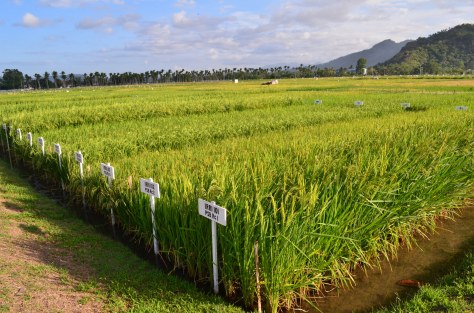


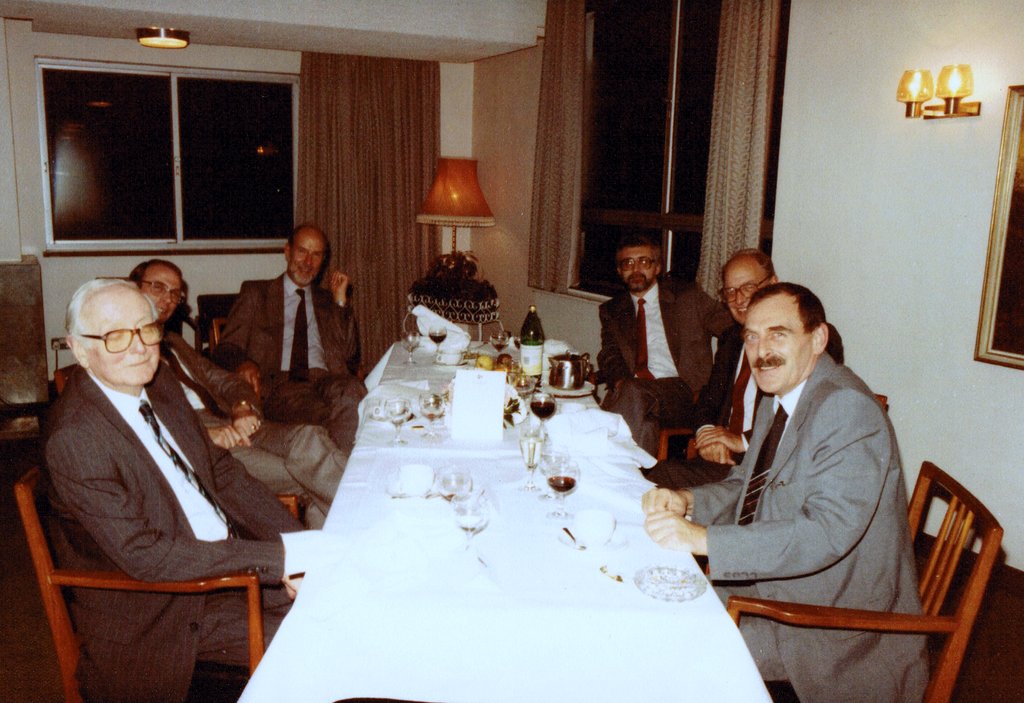

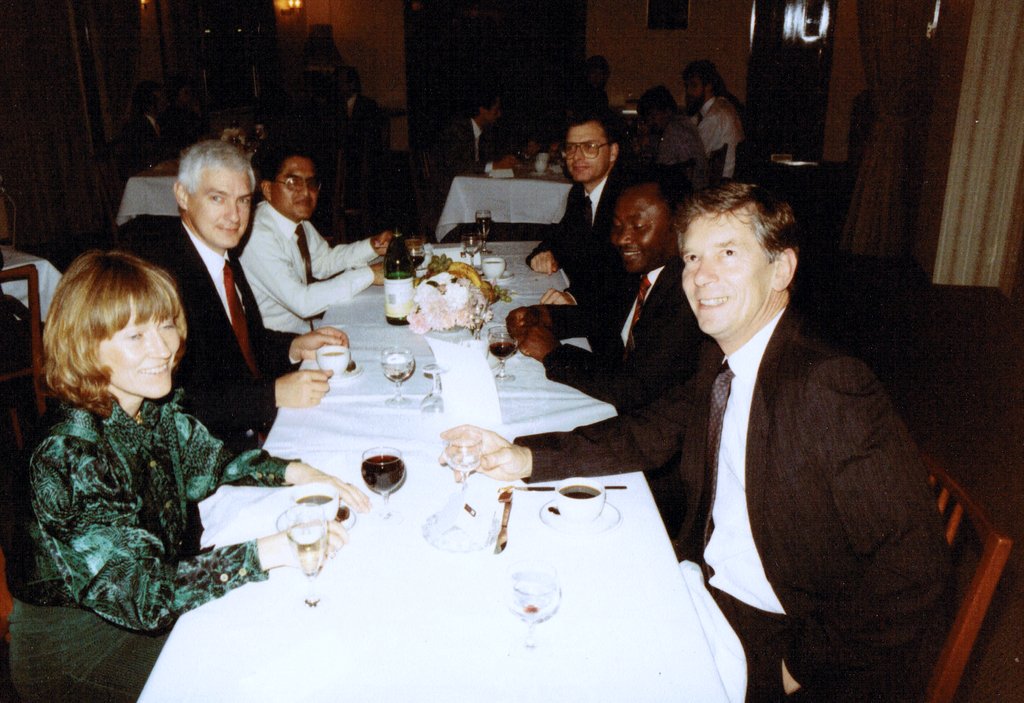
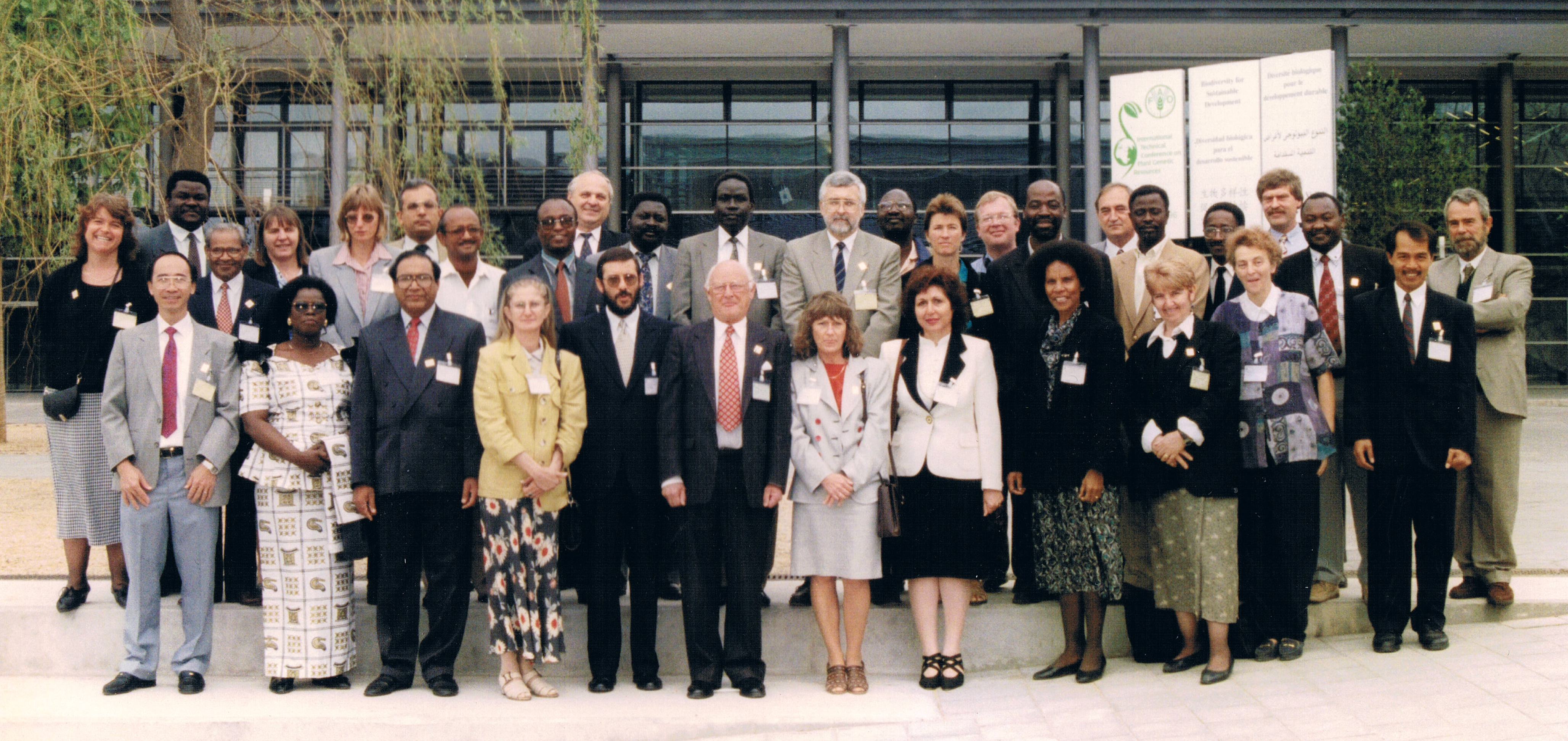
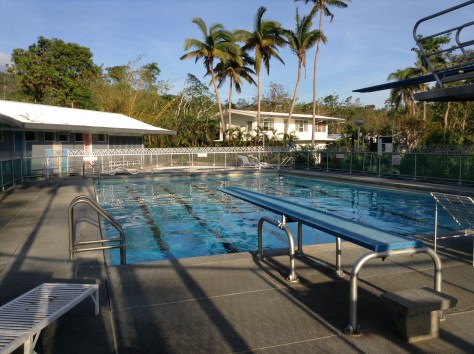


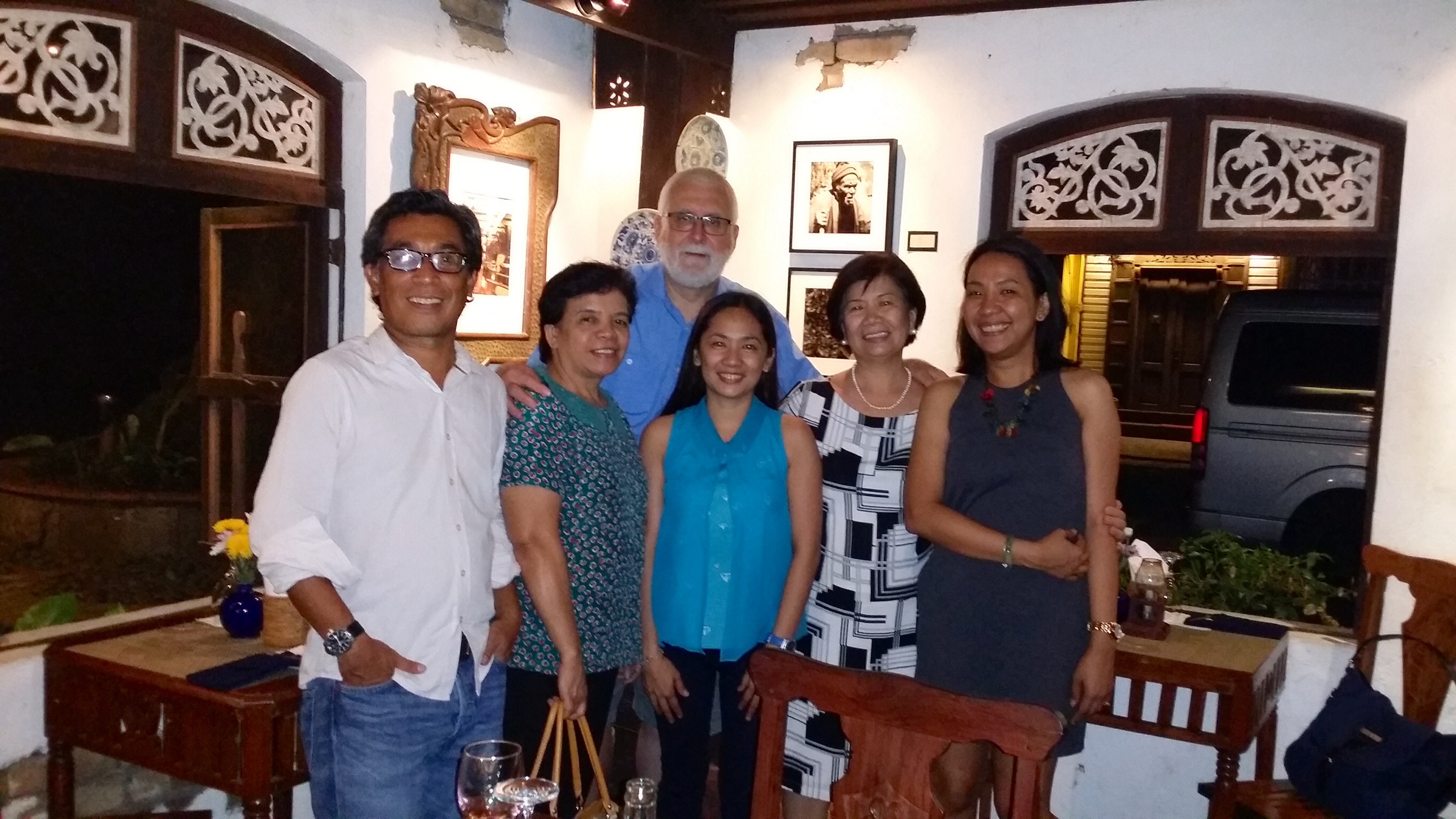



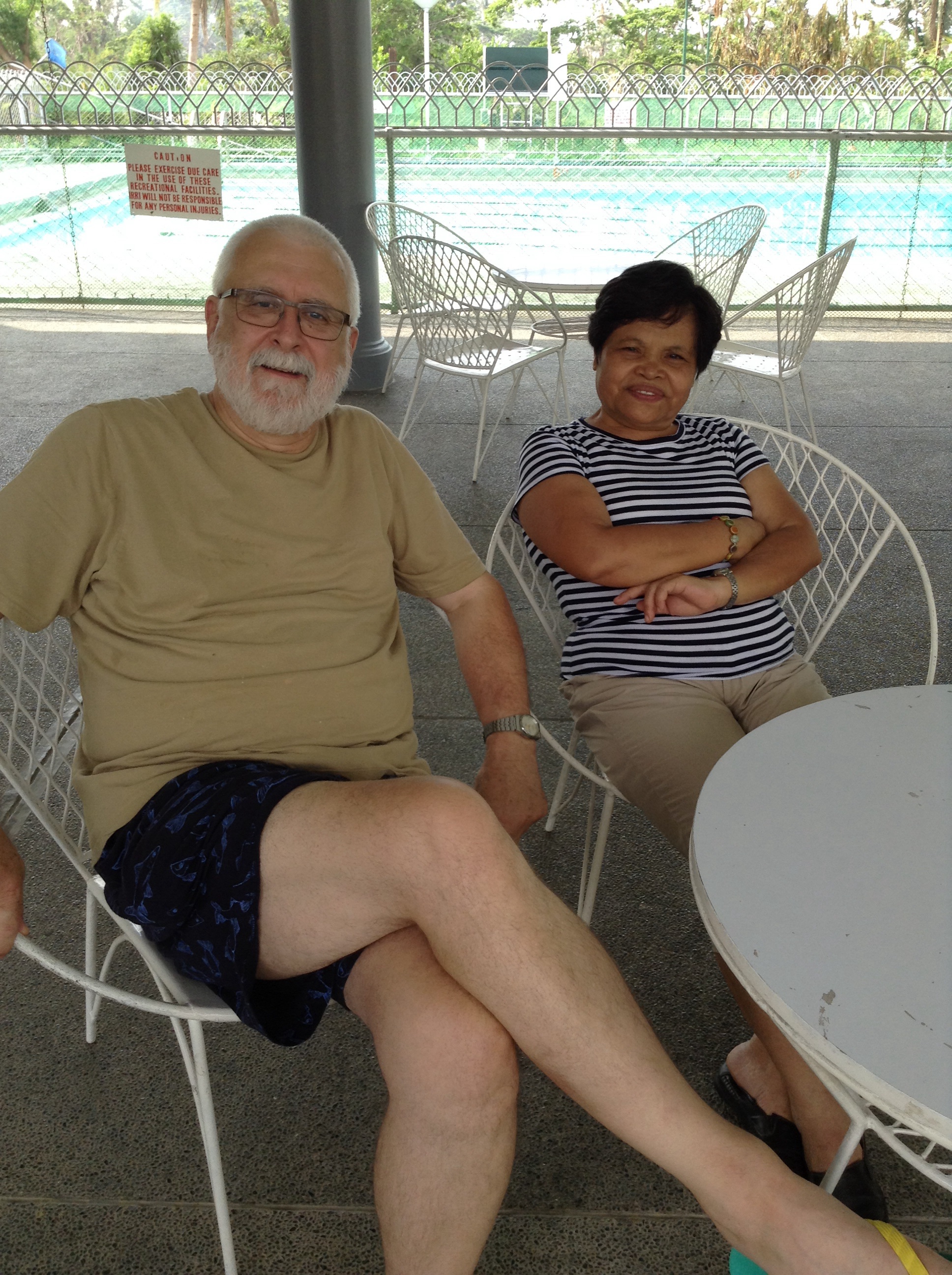
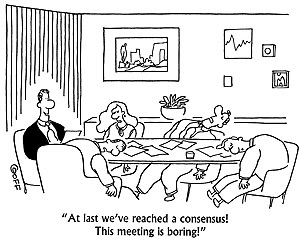 I’m not a very good committee sort of person, and I have quite a low tolerance level for poorly planned and chaired meetings. A particular grouch of mine is an unrealistic agenda. I remember one meeting more than 15 years ago that had an agenda with 14 or more items for discussion. After almost three hours we’d only worked our way through a couple of these. I don’t think we ever did get back to some of the points – although they must have merited some attention having been included in the first place. Better for the meeting chair to seek endorsement of various options by email than wasting everyone’s time (and at what dollar cost) sitting around a table getting nowhere. It’s no wonder that some organizations have taken radical measures in the way they organize meetings – and who they invite. Oh, and woe betide a meeting convener who hadn’t organized coffee and cookies!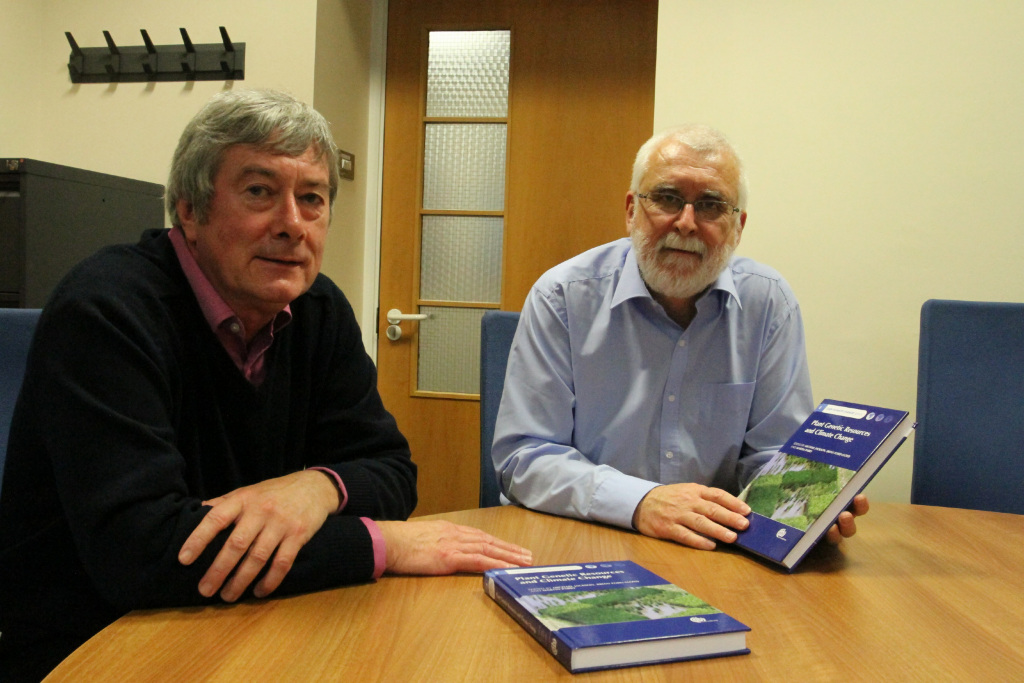
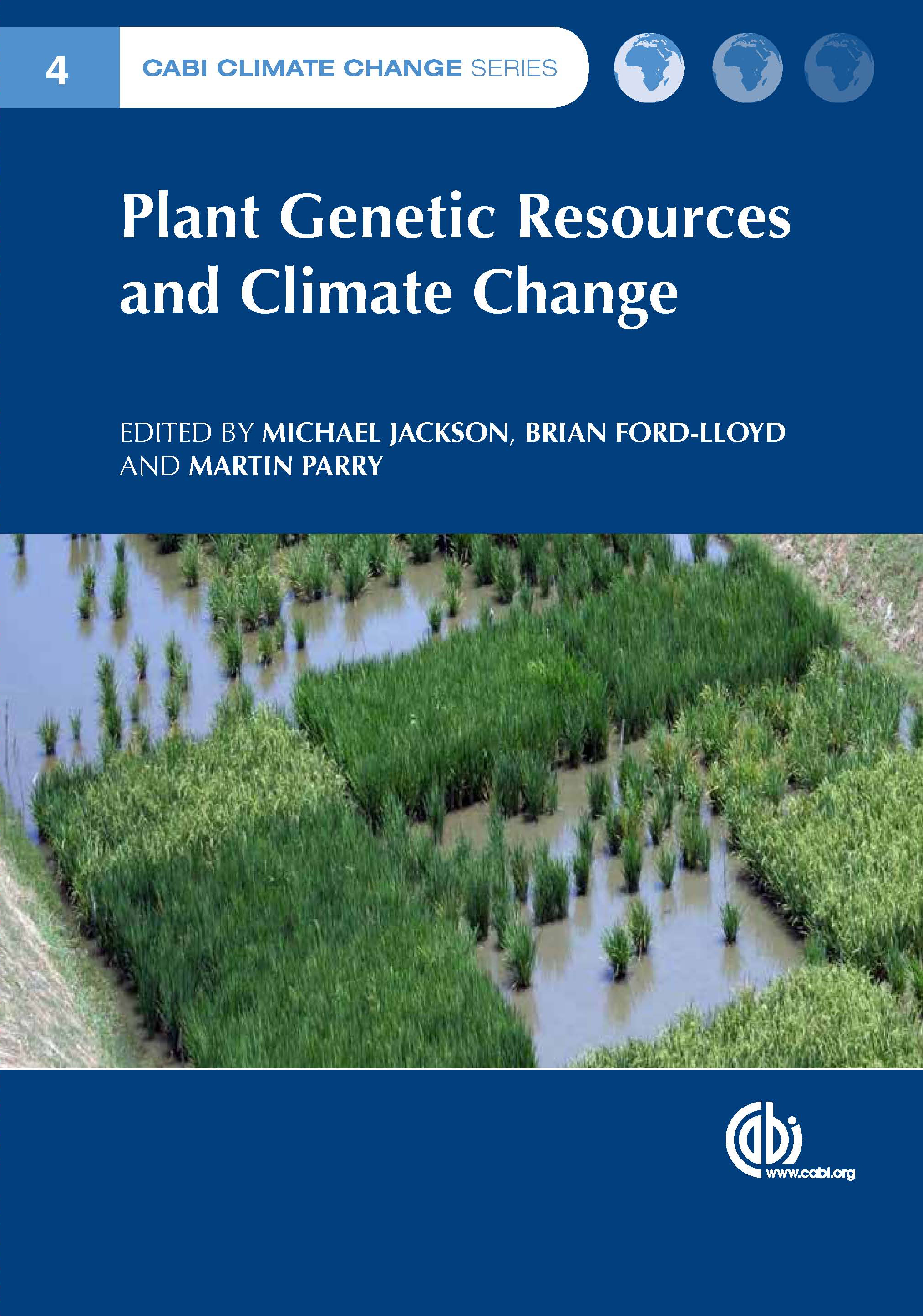

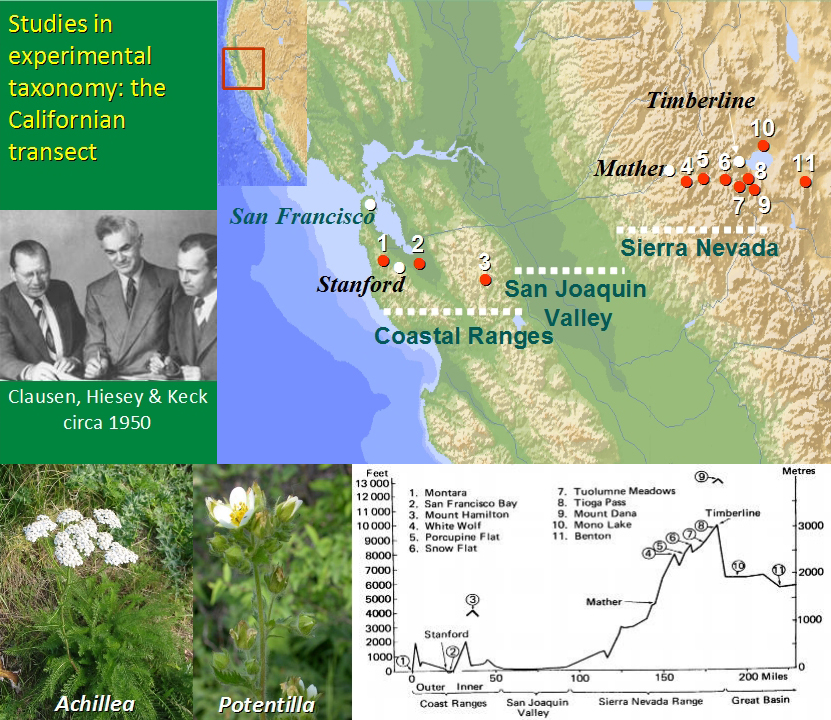
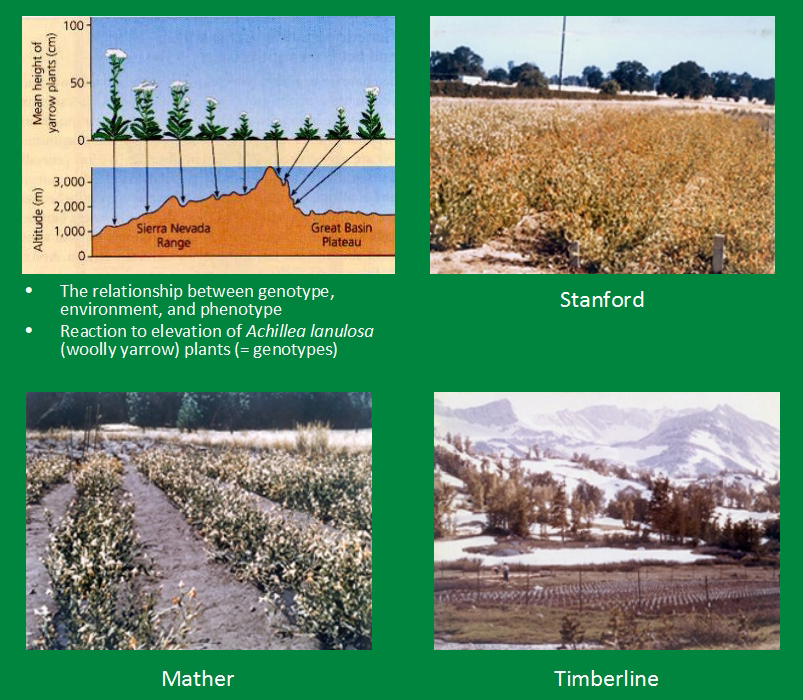
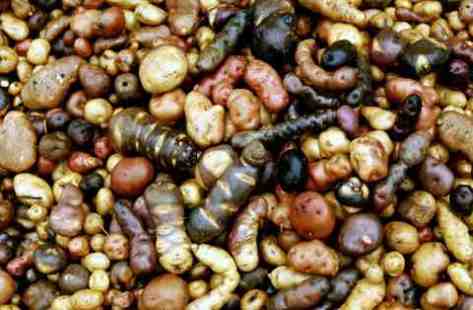


 Grown only in the UK, the Bramley is a ‘cooking apple’ that makes the best pies. It produces large, green fruits (in this photo the apples are about 4 inches, 10 cm in diameter, but they can come much larger) that are just too tart to eat raw – well, for me at least. I’m not really sure if there’s a tradition of using special cooking varieties elsewhere, but in many of the countries I’ve visited, dessert apples are used in apple pies, which are somewhat too sweet for my palate.

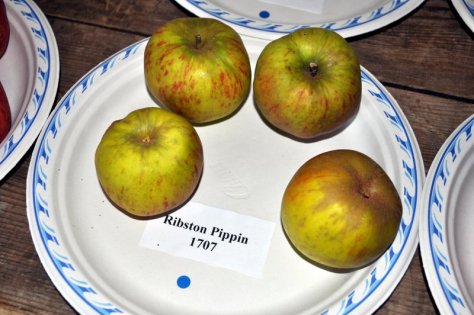

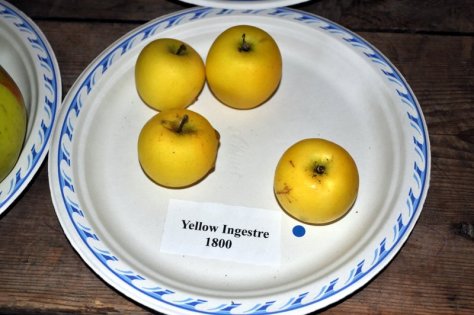

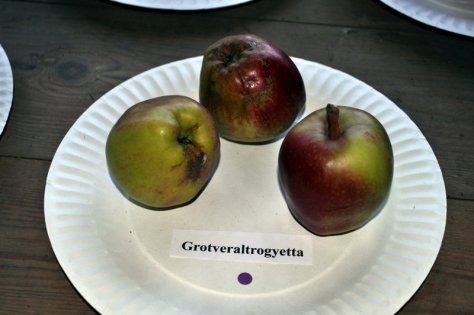
 Apples were taken to North America in colonial times. Do you know the story of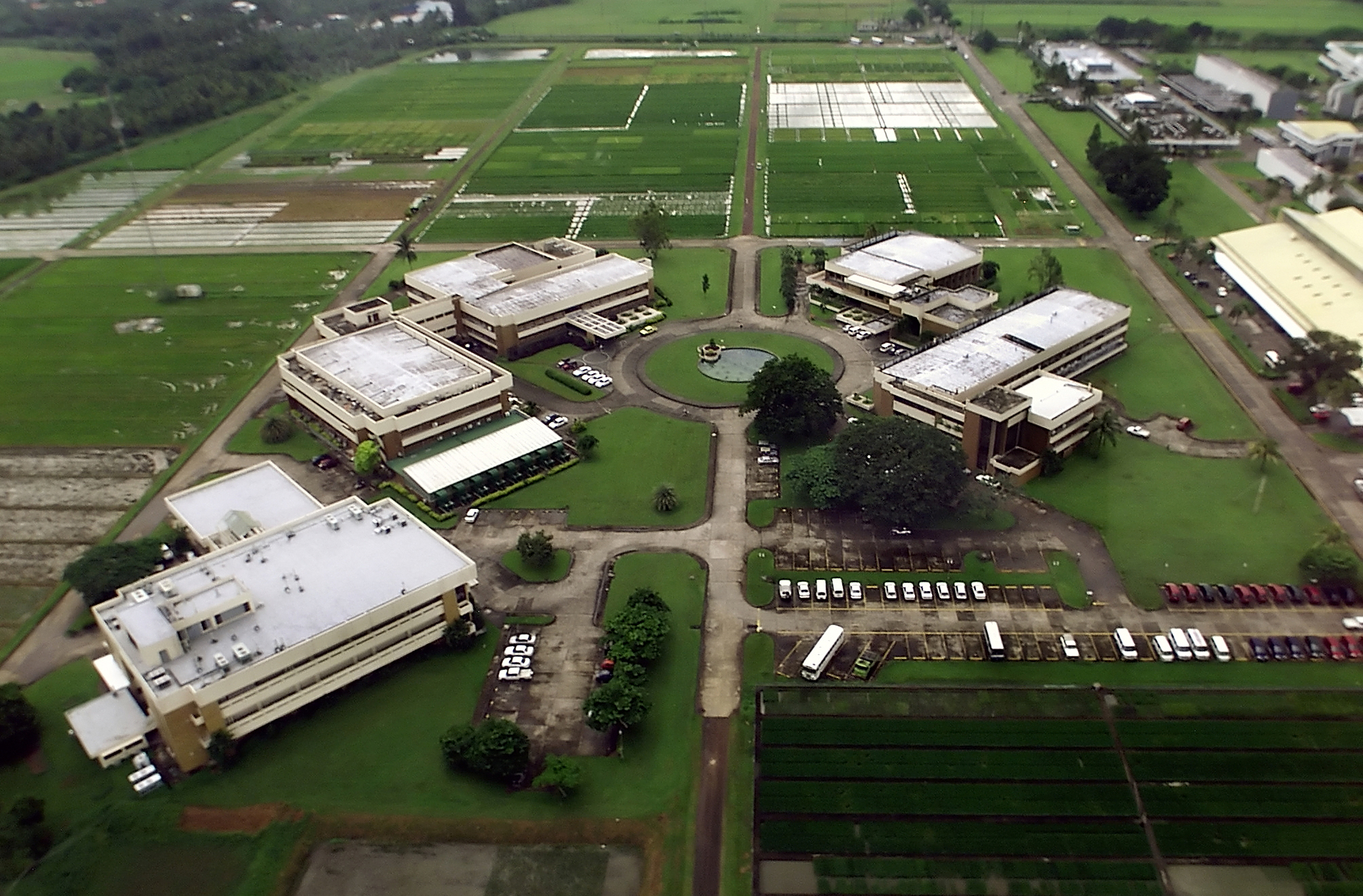
 My predecessor at IRRI was Dr Te-Tzu Chang, known to everyone as ‘TT’. He joined IRRI in 1962 and over the years had built the germplasm collection to about 75,000 or so accessions by the time I joined the institute, as well as leading IRRI’s upland rice breeding efforts.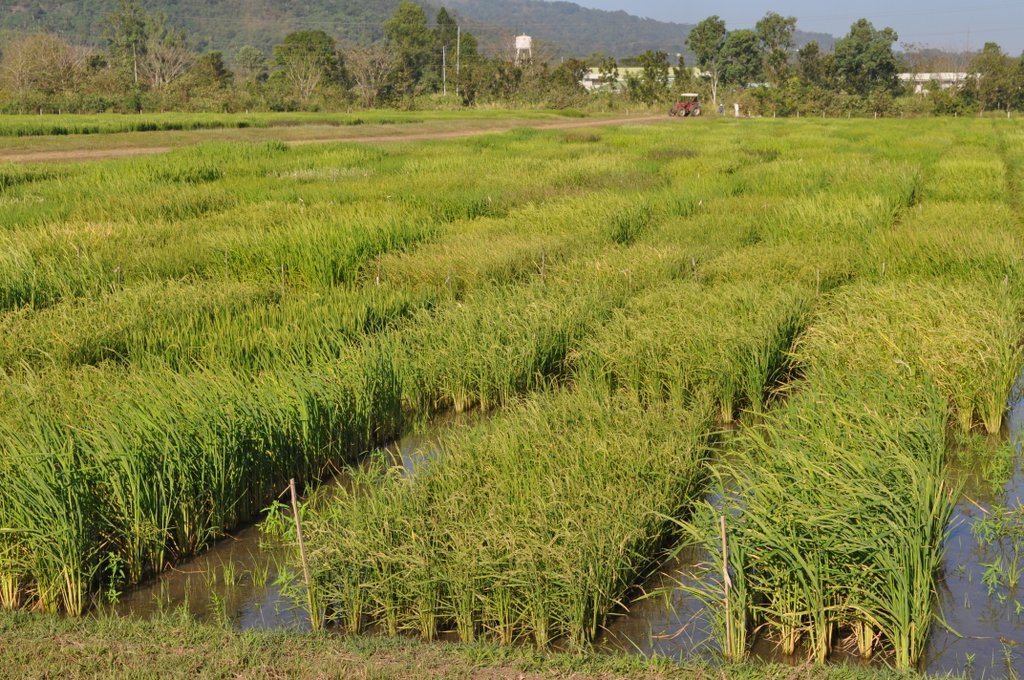


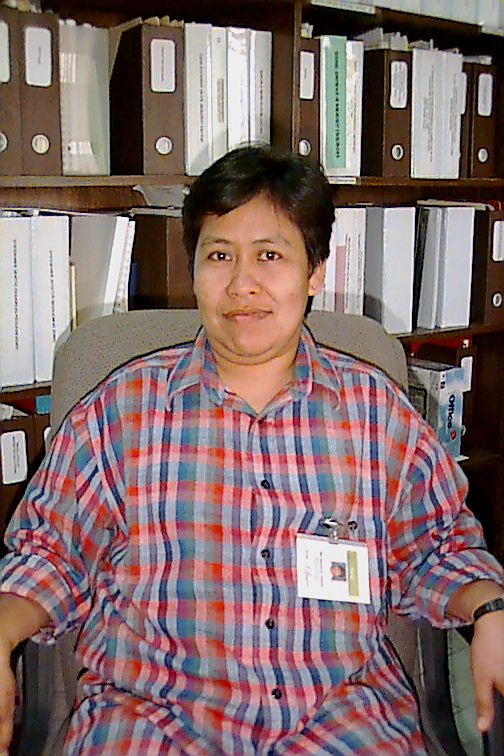

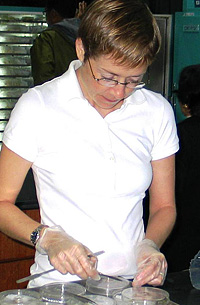
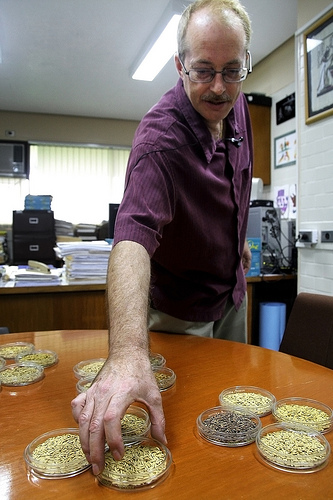
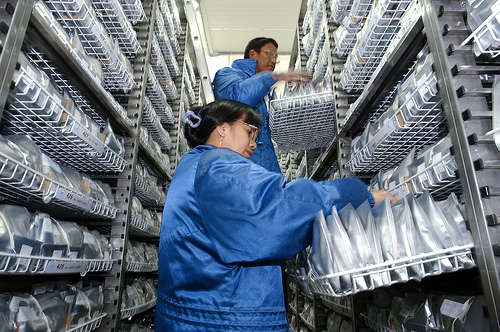


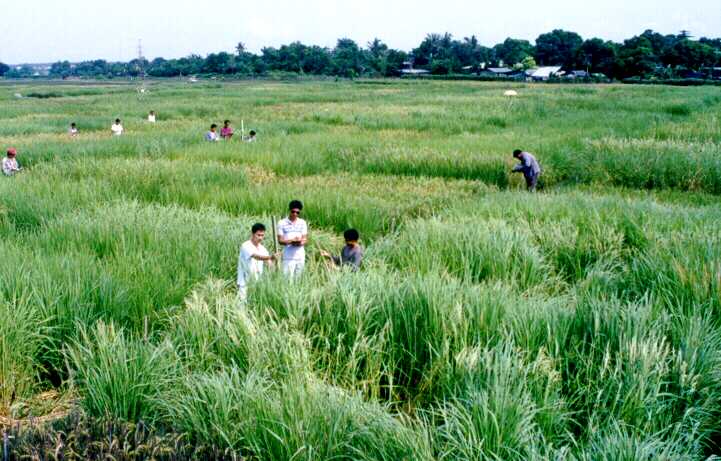
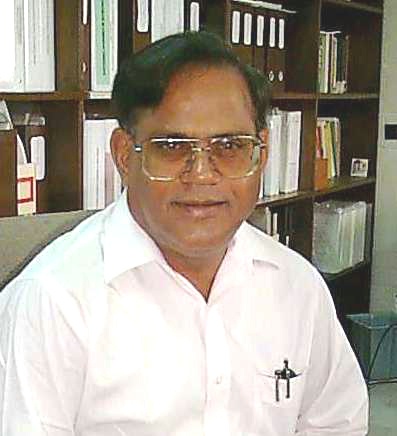
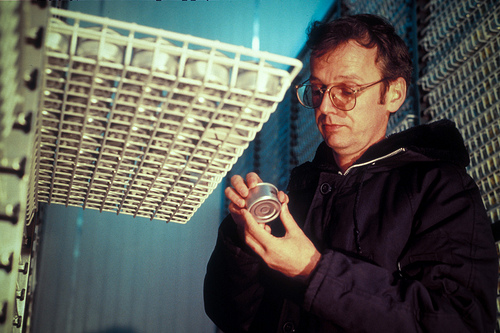
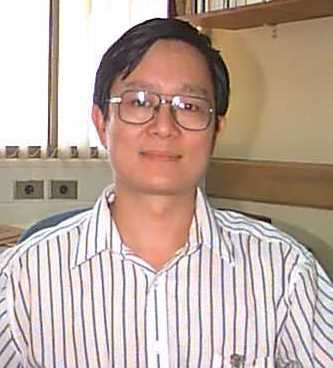

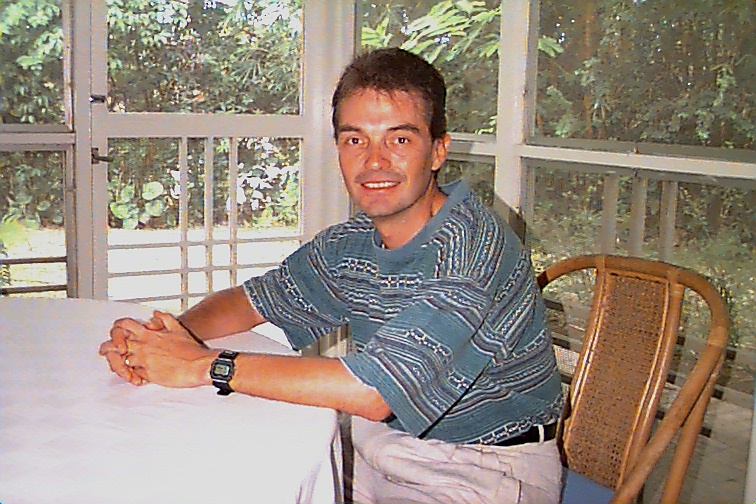
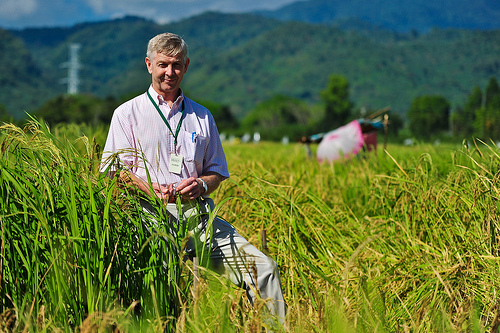
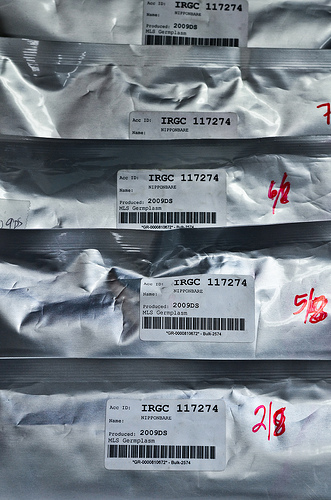
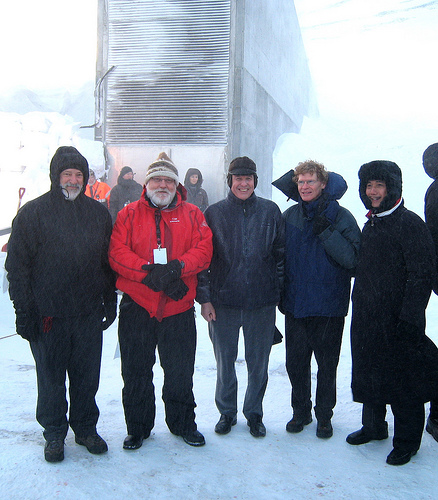
 In 1989, my former colleagues at the University of Birmingham, Brian Ford-Lloyd and Martin Parry, and I organized a two-day symposium on genetic resources and climate change. The papers presented were published in Climatic Change and Plant Genetic Resources by Belhaven Press (ISBN 1 85293 102 7), edited by me and the other two.
 In a particularly prescient chapter, the late Professor Harold Woolhouse discussed how photosynthetic biochemistry is relevant to adaptation to climate change. Two decades later the International Rice Research Institute (IRRI) based in the Philippines is leading a worldwide effort to turbocharge the photosynthesis of rice, by converting the plant from so-called C3 to C4 photosynthesis.
 Michael Jackson is the Managing Editor for this book. He retired from the International Rice Research Institute (IRRI) in 2010. For 10 years he was Head of the Genetic Resources Center, managing the International Rice Genebank, one of the world’s largest and most important genebanks. For nine years he was Director for Program Planning and Communications. He was Adjunct Professor of Agronomy at the University of the Philippines-Los Baños. During the 1980s he was Lecturer in the School of Biological Sciences at the University of Birmingham, focusing on the conservation and use of plant genetic resources. From 1973-81 he worked at the International Potato Center, in Lima, Perú and in Costa Rica. He now works part-time as an independent agricultural research and planning consultant. He was appointed OBE in The Queen’s New Year’s Honours 2012, for services to international food science.
 Brian Ford-Lloyd is Professor of Conservation Genetics at the University of Birmingham, Director of the University Graduate School, and Deputy Head of the School of Biosciences. As Director of the University Graduate School he aims to ensure that doctoral researchers throughout the University are provided with the opportunity, training and facilities to undertake internationally valued research that will lead into excellent careers in the UK and overseas. He draws from his experience of having successfully supervised over 40 doctoral researchers from the UK and many other parts of the world in his chosen research area which includes the study of the natural genetic variation in plant populations, and agricultural plant genetic resources and their conservation.
 Martin Parry


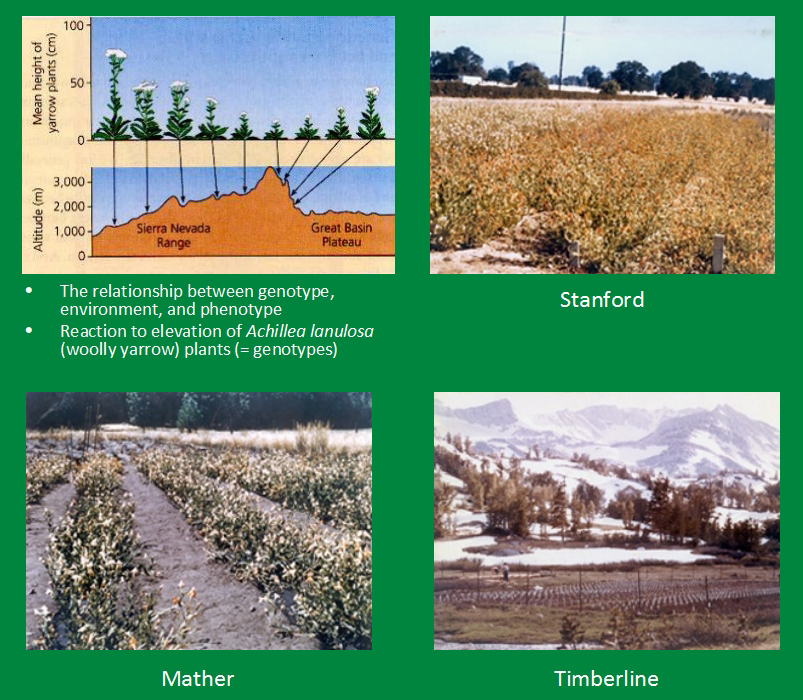

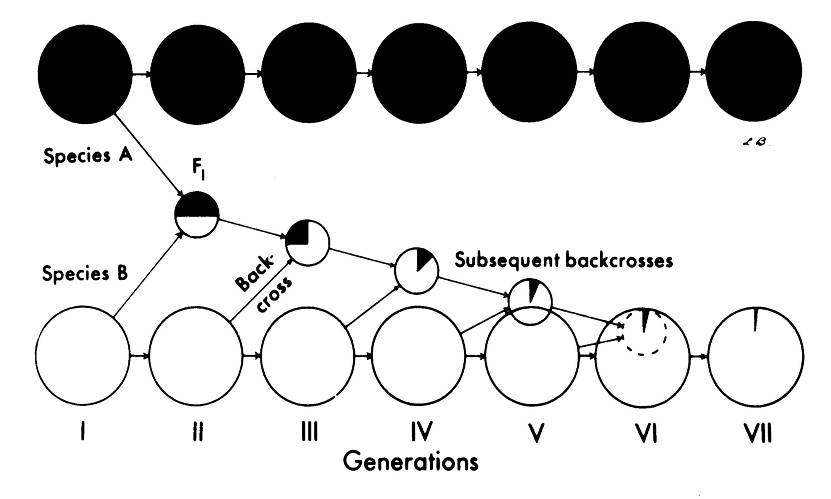
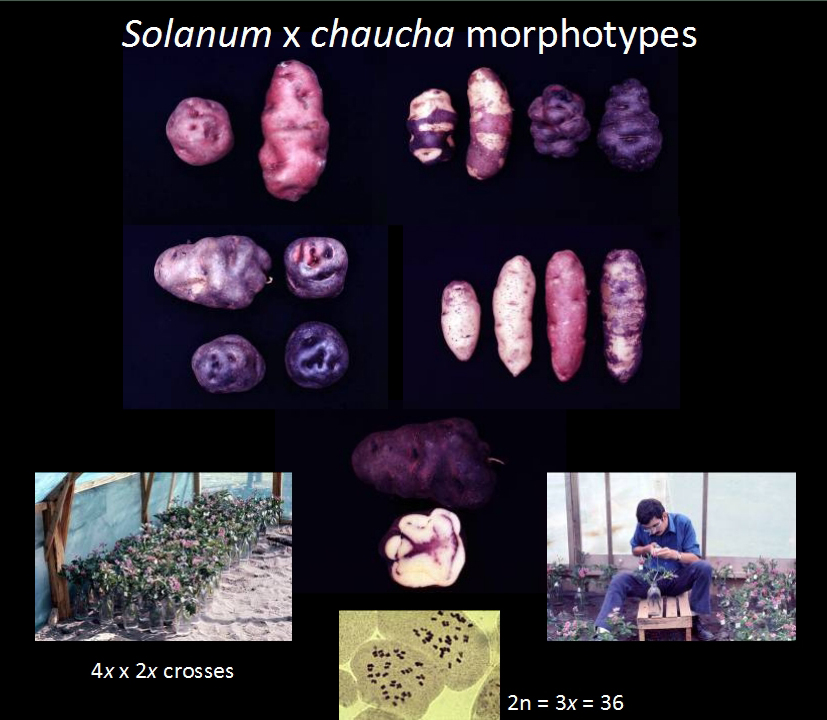
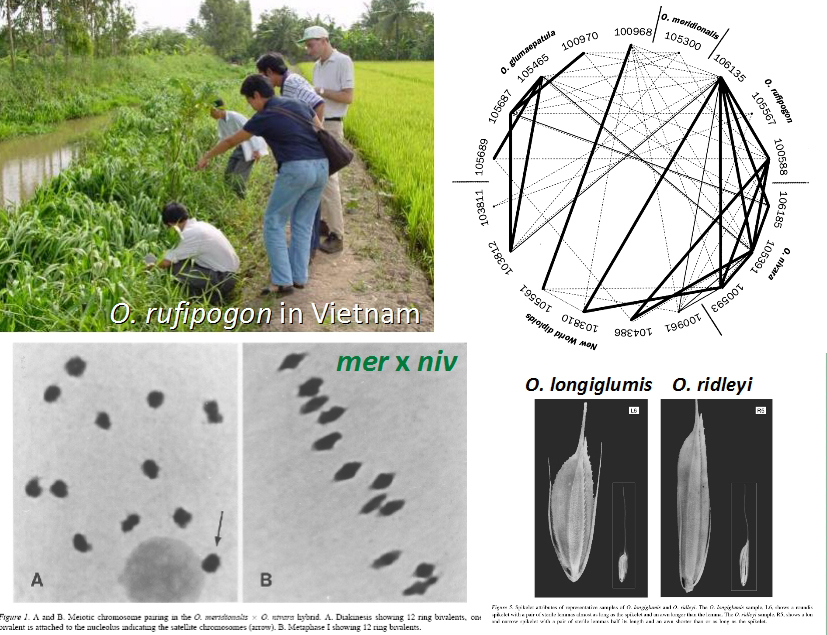
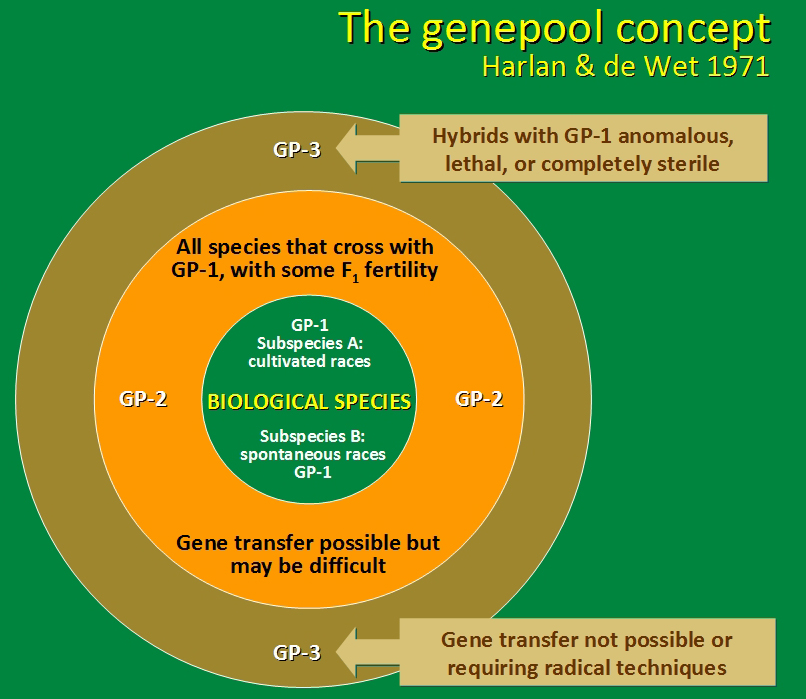
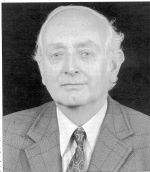 When the late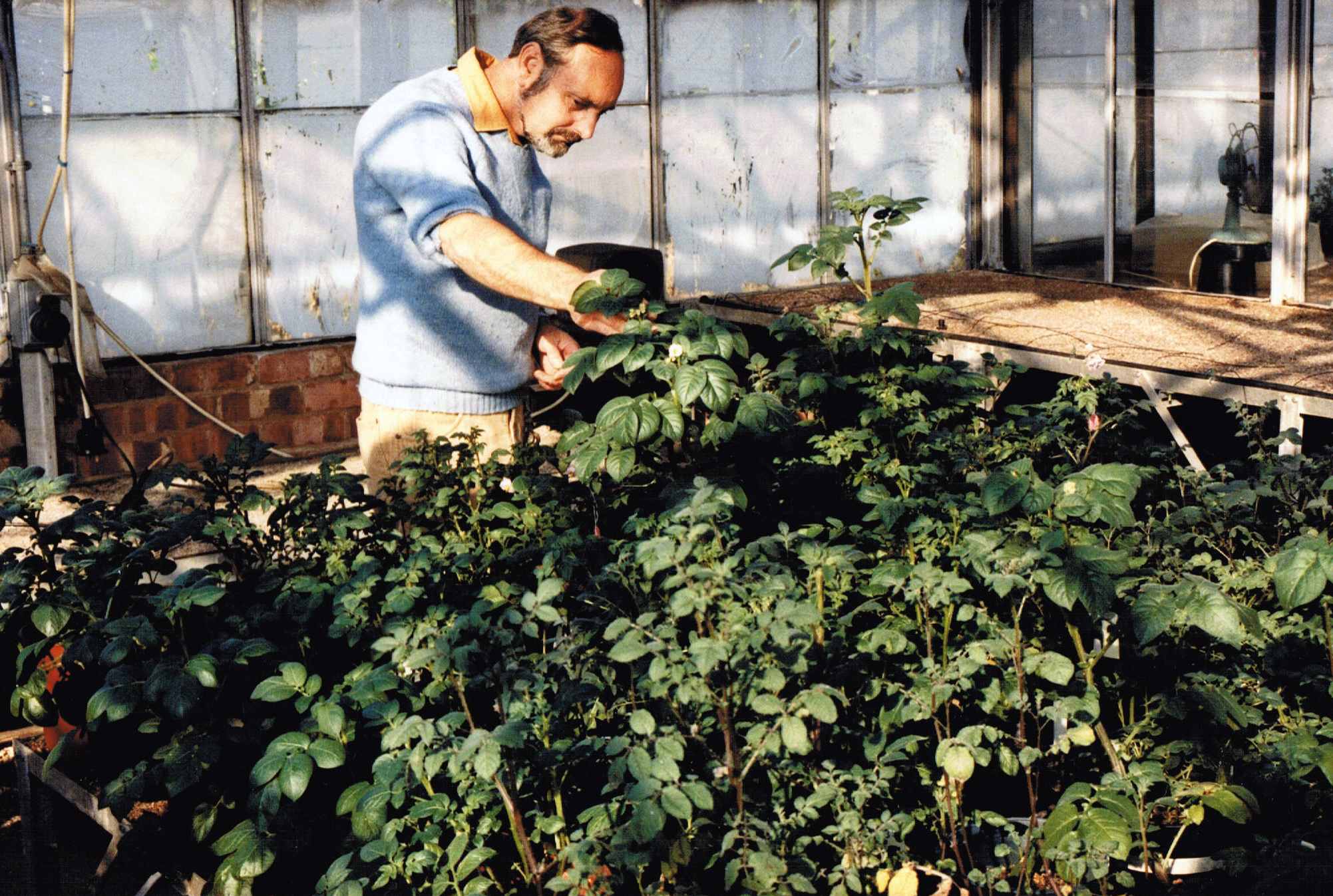
 Here is the list of University of Birmingham PhD students who worked on potatoes, as far as I can remember. All of them from 1975 (with the exception of Ian Gubb) had also attended the MSc course on genetic resources:
 Richard Lester (UK), 1962. Taught at Makerere University in Uganda, before joining the Dept. of Botany at Birmingham in 1969. Retired in 2002, and died in 2006. Studied the biochemical systematics of Mexican wild Solanum species. The species Solanum lesteri is named after him.
 Katsuo Armando Okada (Argentina), 1970 (?). Retired. Was with IBPGR for a while in the 1980s (?) in Colombia. Studied the origin of Solanum x rechei from Argentina.
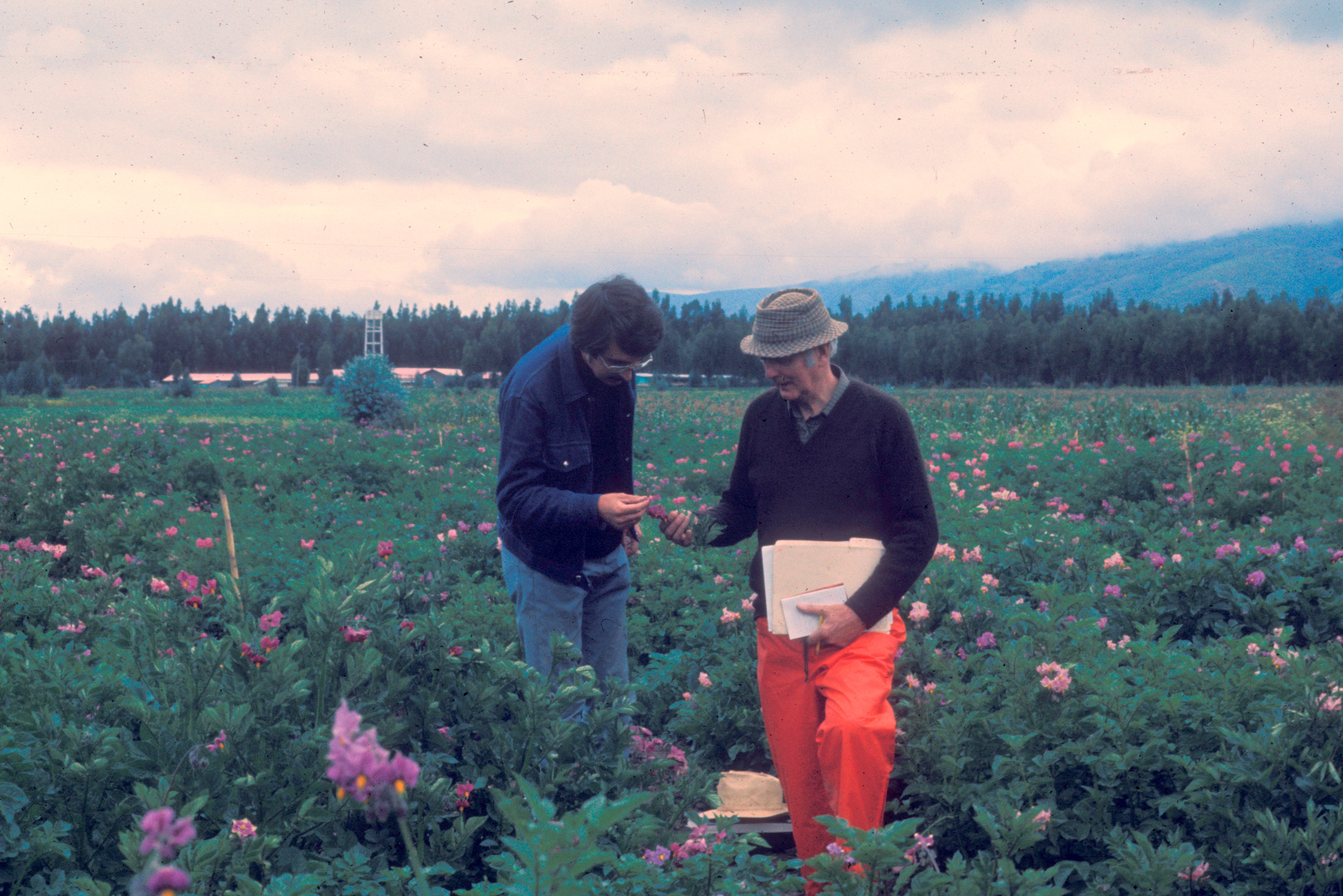
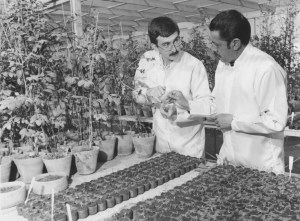
 David Astley (UK), 1975. Became the curator of the vegetable genebank at Wellesbourne (now the
 Peter Schmiediche (Germany), 1977. He continued working with CIP as a potato breeder (for resistance to bacterial wilt), and was later CIP’s regional leader based in Indonesia. Now retired and sharing his time between Texas (where his children settled) and his native Berlin. Studied the bitter potatoes Solanum x juzepczukii (3x) and S. x curtilobum (5x). Joint with CIP and Roger Rowe.
 Carlos Arbizu (Peru), 1990. An expert on minor Andean tuber crops, he came from the University of Ayacucho. Spent time working in the germplasm program at CIP. Studied the origin and value of resistance to spindle tuber viroid in Solanum acaule. Joint with CIP and principal virologist Luis Salazar (who gained his PhD while studying at the
  Susan Juned (UK), 1994. Now a sustainable technology consultant, Sue is an active local government councillor, and has stood for election to parliament on a couple of occasions for the Liberal Democrats. Studied
  David Tay (Malaysia), 2000. He worked in Australia and then was Director of the USDA Ornamental Plant Germplasm Center in Columbus, Ohio, but returned to CIP as head of the genetic resources unit in 2007. He’s now left CIP. I think he worked on diploid cultivated species. Joint with CIP. Not sure why his PhD is dated 2000, as he’d been in CIP in the late 70s.
 Roger Rowe, who had been in charge of the
  Ms. Genoveva ‘Eves’ Loresto passed away in Cebu on 5 April after a long battle with cancer.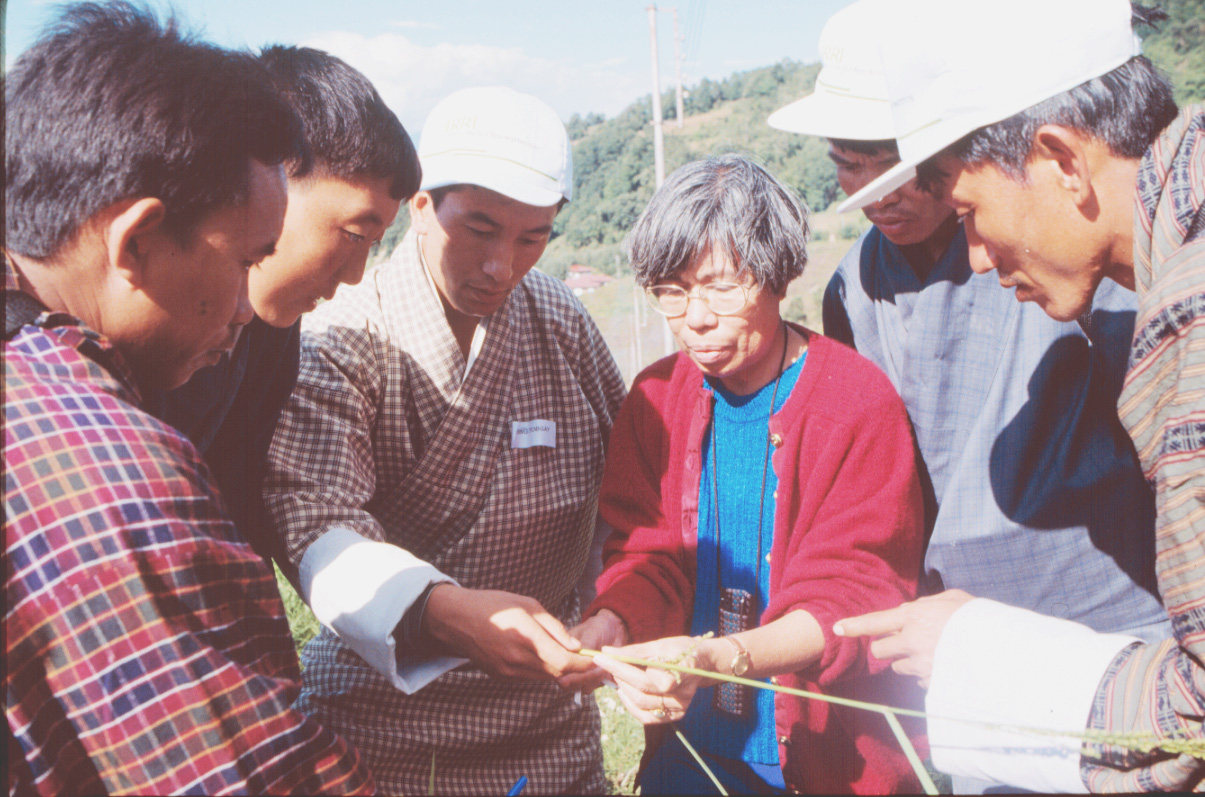
 The
The 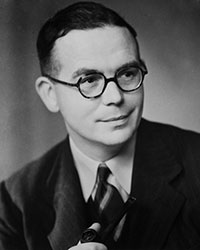
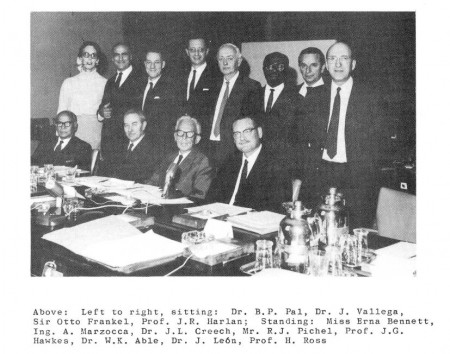


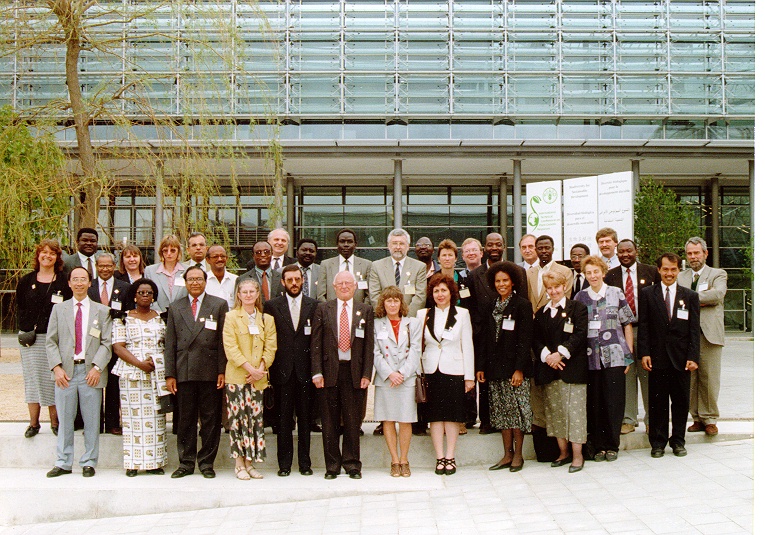
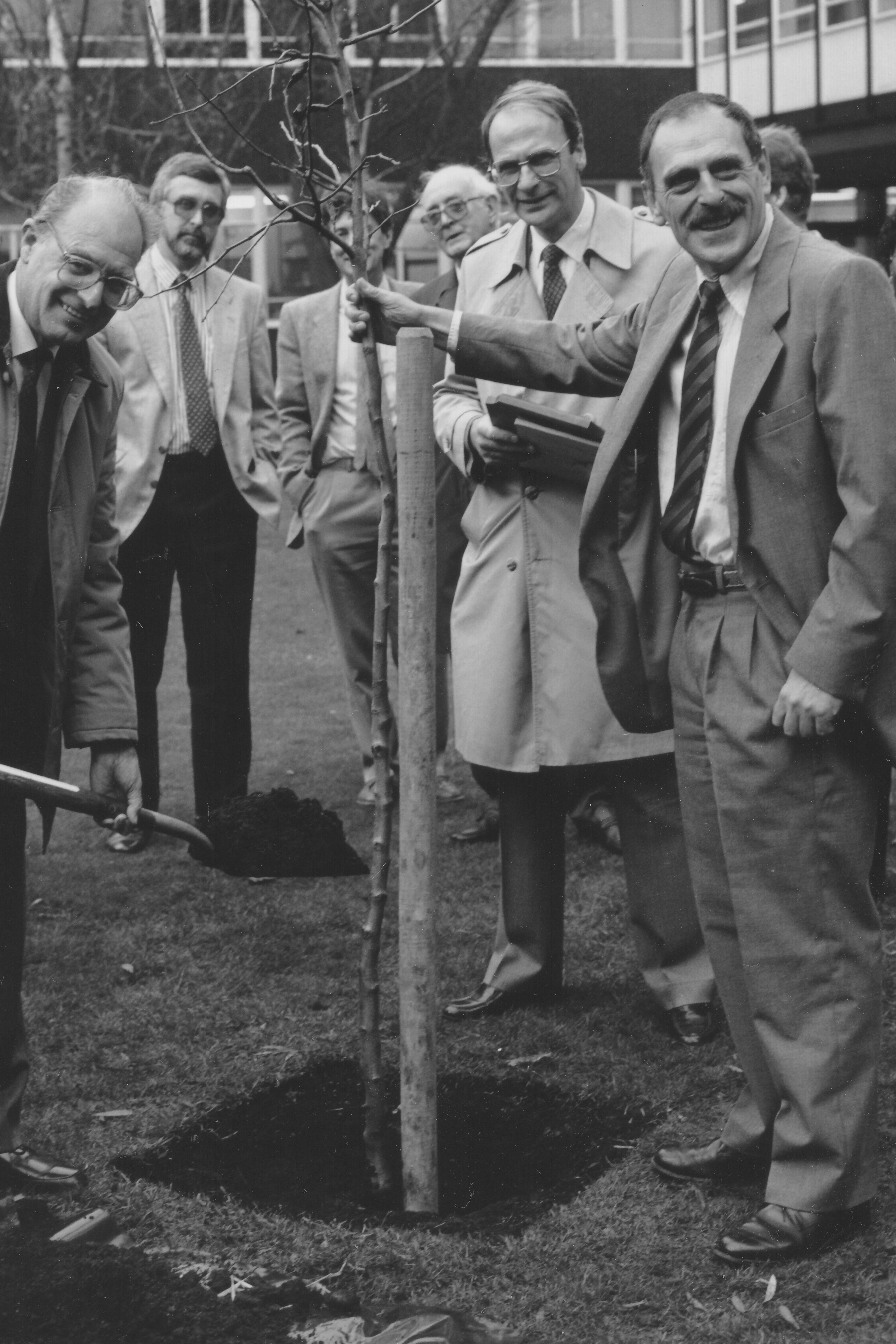
 Brian Ford-Lloyd (right, now Professor of Conservation Genetics and Director of the university Graduate School) joined the department in 1979 and was the course tutor for many years, and contributing lectures in data management, among others.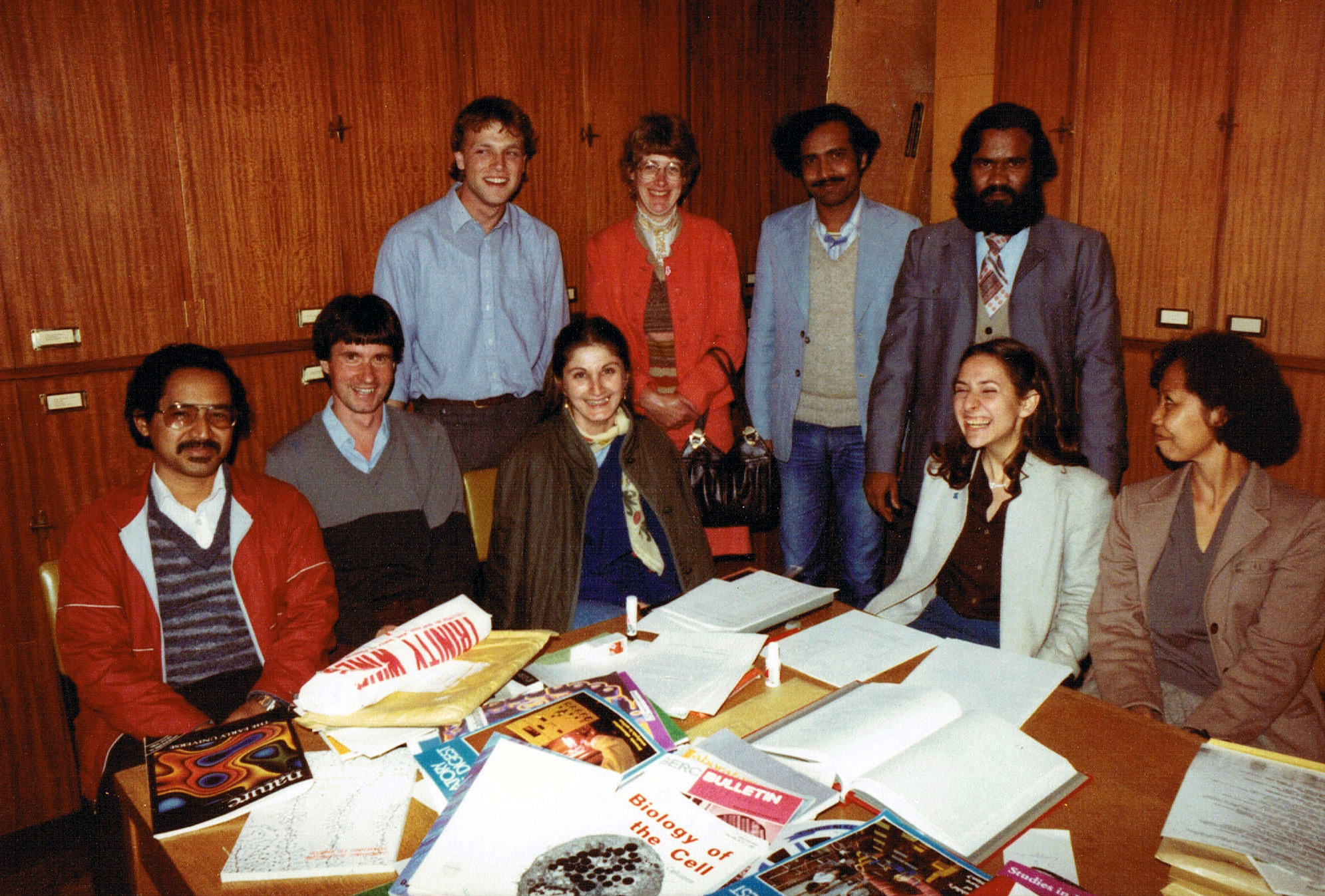

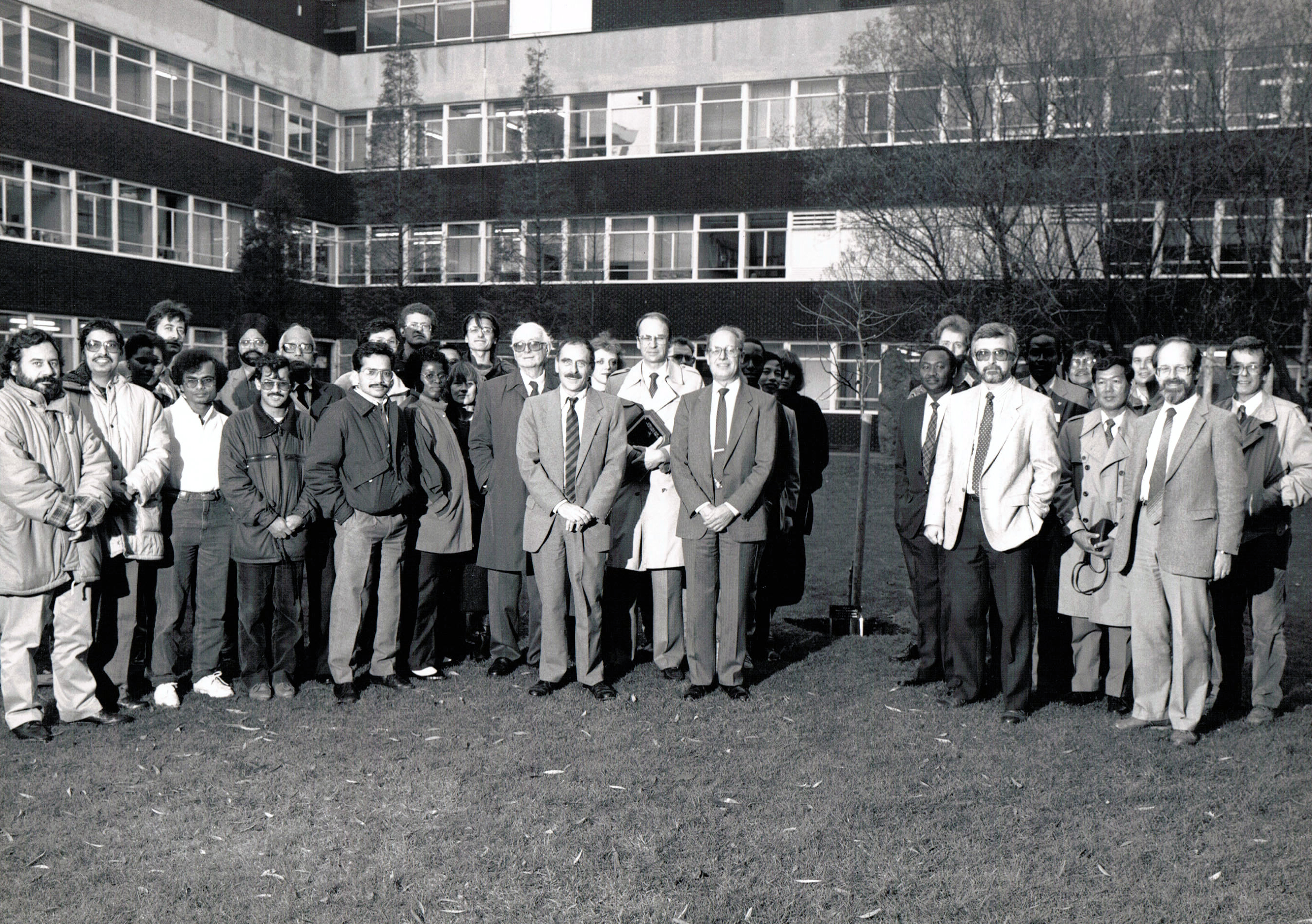
 After I resigned from the university to join IRRI in 1991, Dr Nigel Maxted (right) was appointed as a lecturer, and has continued his work on wild relatives of crop plants and in situ conservation. He has also taken students on field courses to the Mediterranean several times.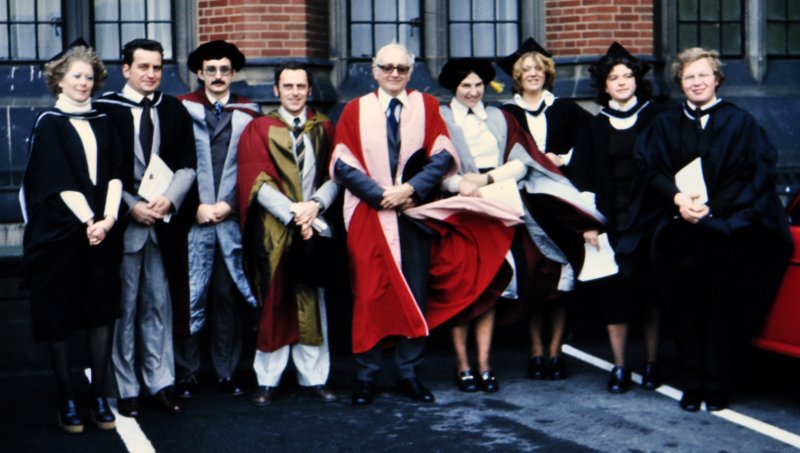
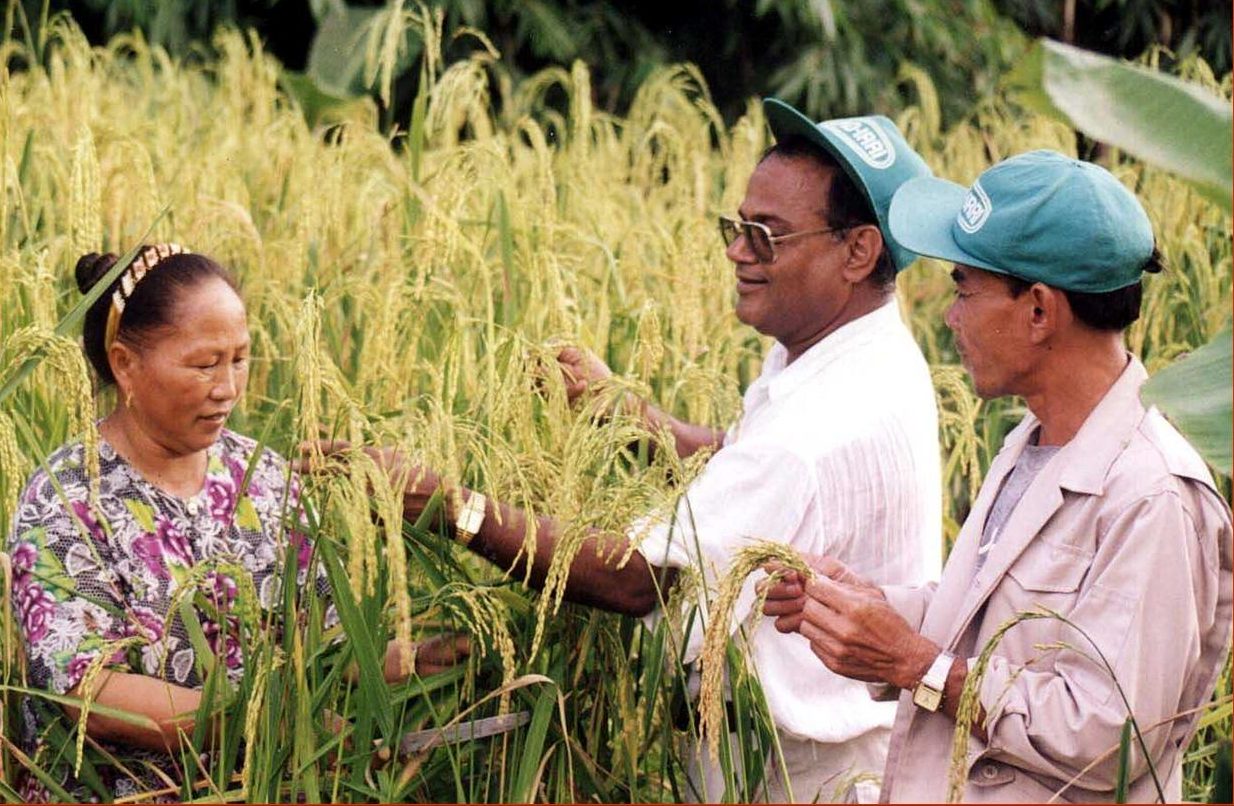
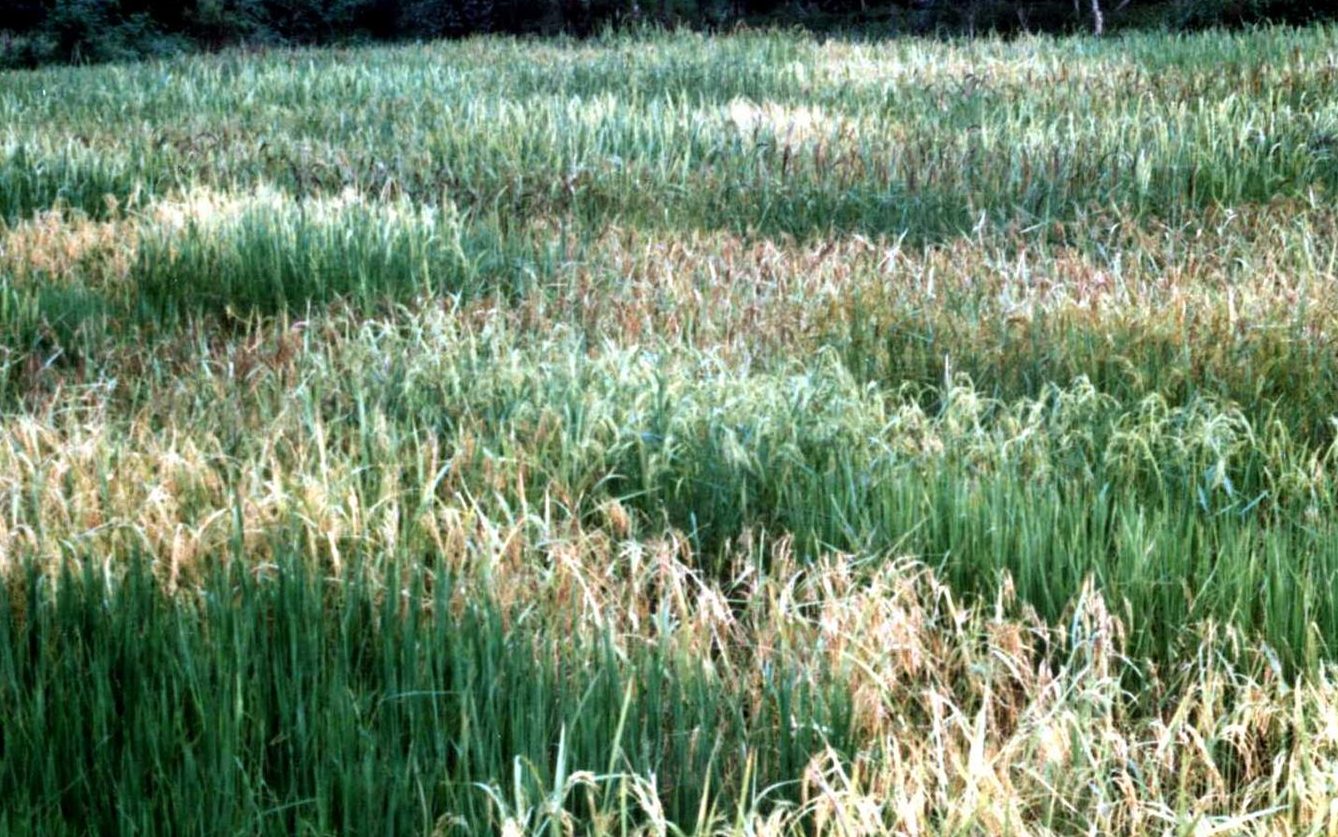

 And germplasm collecting was repeated in Bangladesh, Bhutan, Cambodia, Indonesia, Malaysia, Myanmar, Nepal, Philippines, Thailand and Vietnam in Asia, and countries in East and southern Africa including Uganda and Madagascar, as well as Costa Rica in Central America (for wild rices). We invested a lot of efforts to train local scientists in germplasm collecting methods. Long-time IRRI employee (now retired) and genetic resources specialist, Eves Loresto (right), visited Bhutan on several occasions.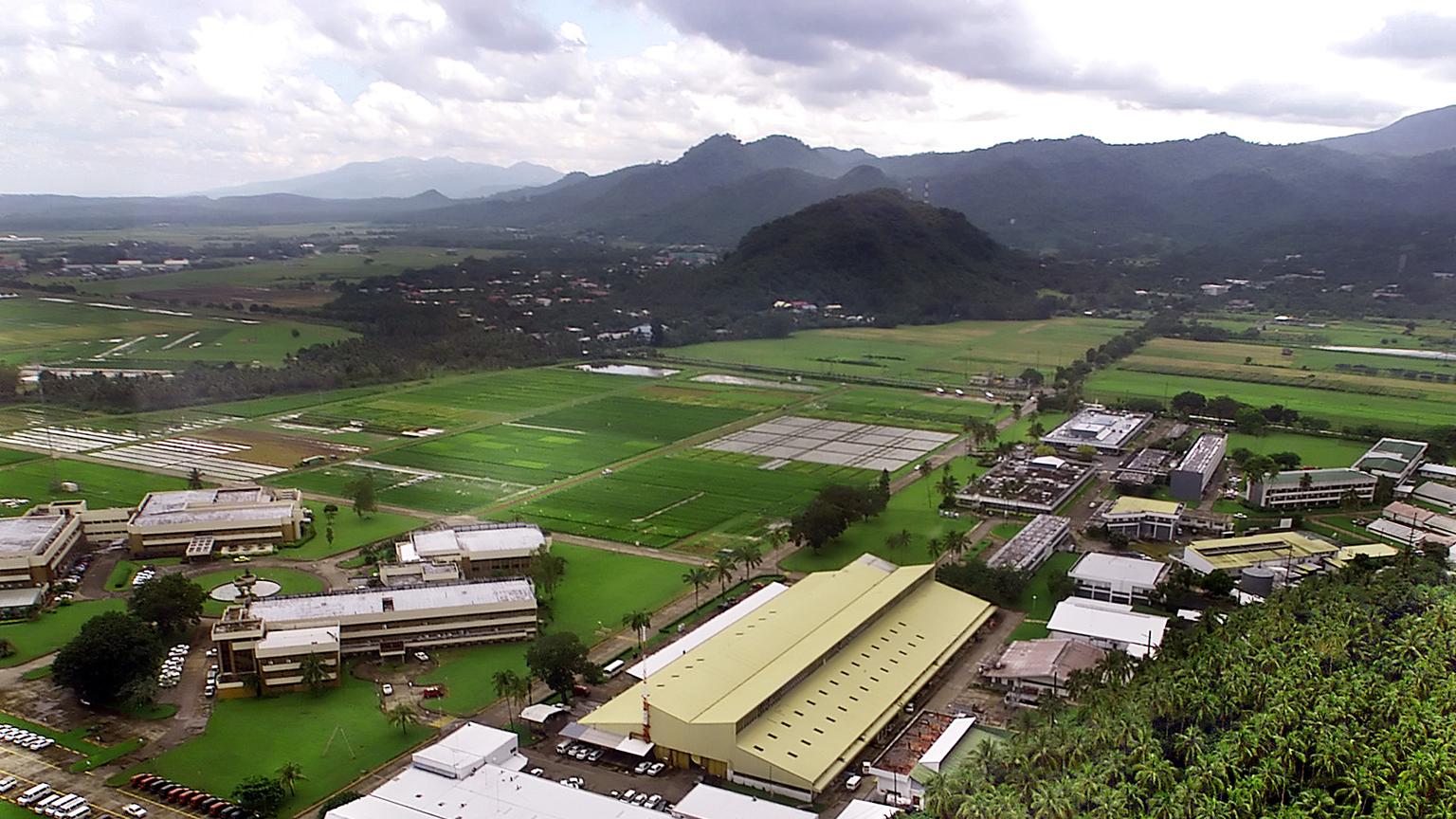
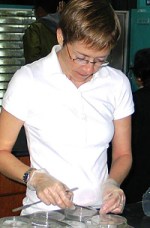 The genebank now has three storage vaults (one was added in the last couple of years) for medium-term (Active) and long-term (Base) conservation. Rice varieties are grown on the IRRI farm, and carefully dried before storage. Seed viability and health is always checked, and resident seed physiologist, Fiona Hay (right, formerly at the
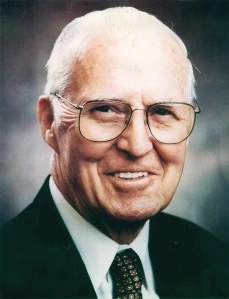 In the 1960s the world faced a huge challenge: how to feed an ever-increasing population, especially in the poorer, developing countries with large agriculture-based societies.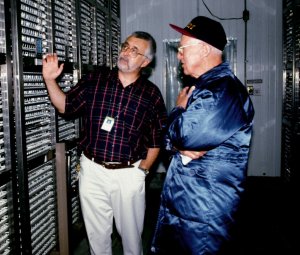

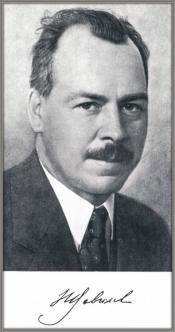
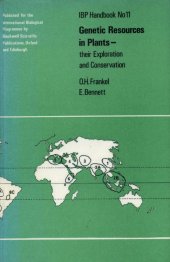 In preparation for Birmingham, I’d been advised to purchase and absorb a book that was published earlier that year, edited by Sir Otto Frankel and Erna Bennett [1] on genetic resources, and dedicated to NI Vavilov. And I came across Vavilov’s name for the first time in the first line of the Preface written by Frankel, and in the first chapter on Genetic resources by Frankel and Bennett. I should state that this was at the beginning of the genetic resources movement, a term coined by Frankel and Bennett at the end of the 60s when they had mobilized efforts to collect and conserve the wealth of diversity of crop varieties (and their wild relatives) – often referred to as landraces – grown all around the world, but were in danger of being lost as newly-bred varieties were adopted by farmers. The so-called Green Revolution had begun to accelerate the replacement of the landrace varieties, particularly among cereals like wheat and rice.
 Vavilov died of starvation in prison at the relatively young age of 55, following persecution under Stalin through the shenanigans of the charlatan Trofim Lysenko. Lysenko’s legacy also included the rejection of Mendelian genetics in the Soviet Union for many years. Eventually Vavilov was rehabilitated, long after his death, and he was commemorated on postage stamps at the time of his centennial.
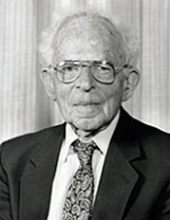 First,
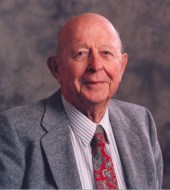
 A balanced diet . . .