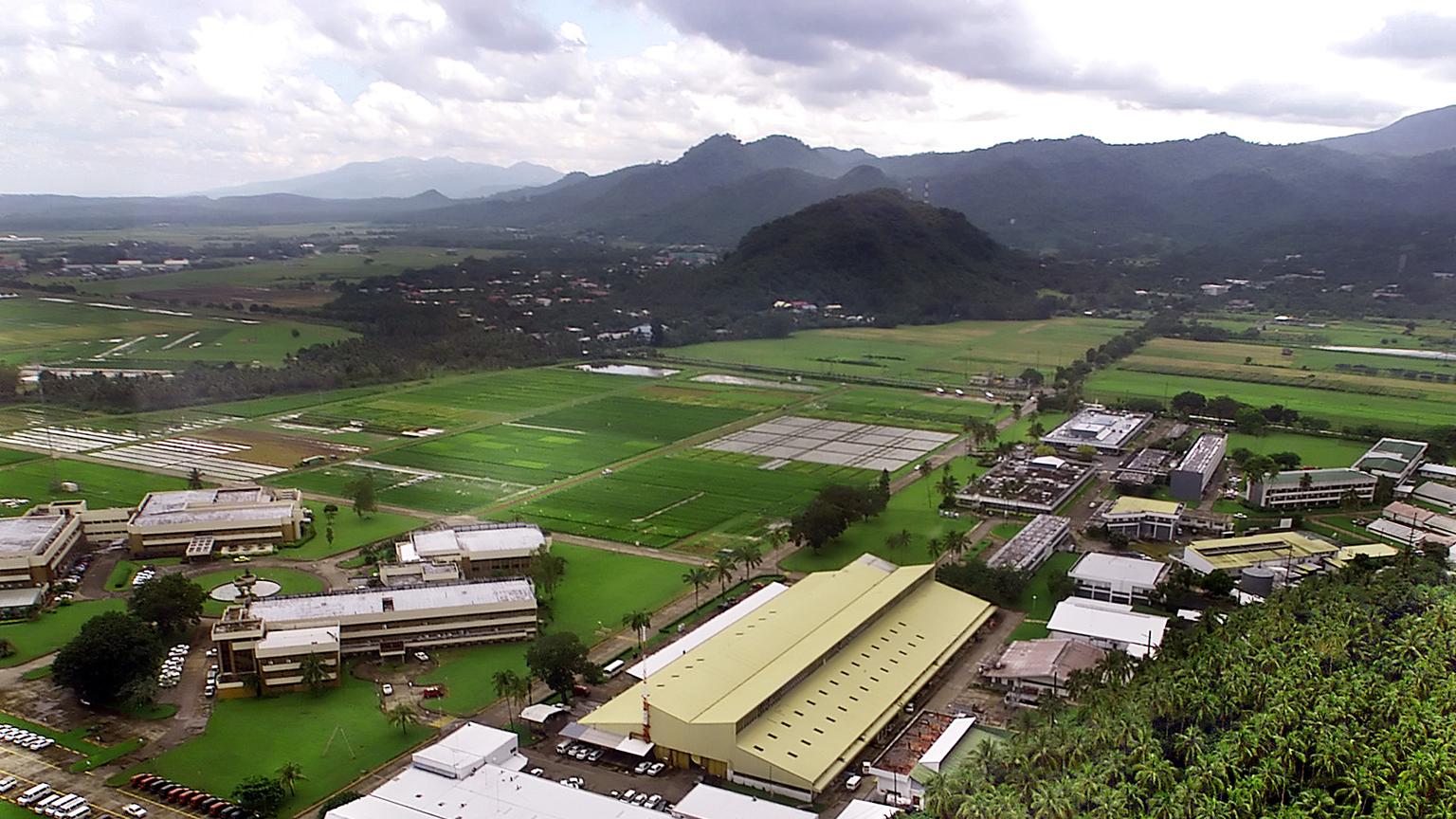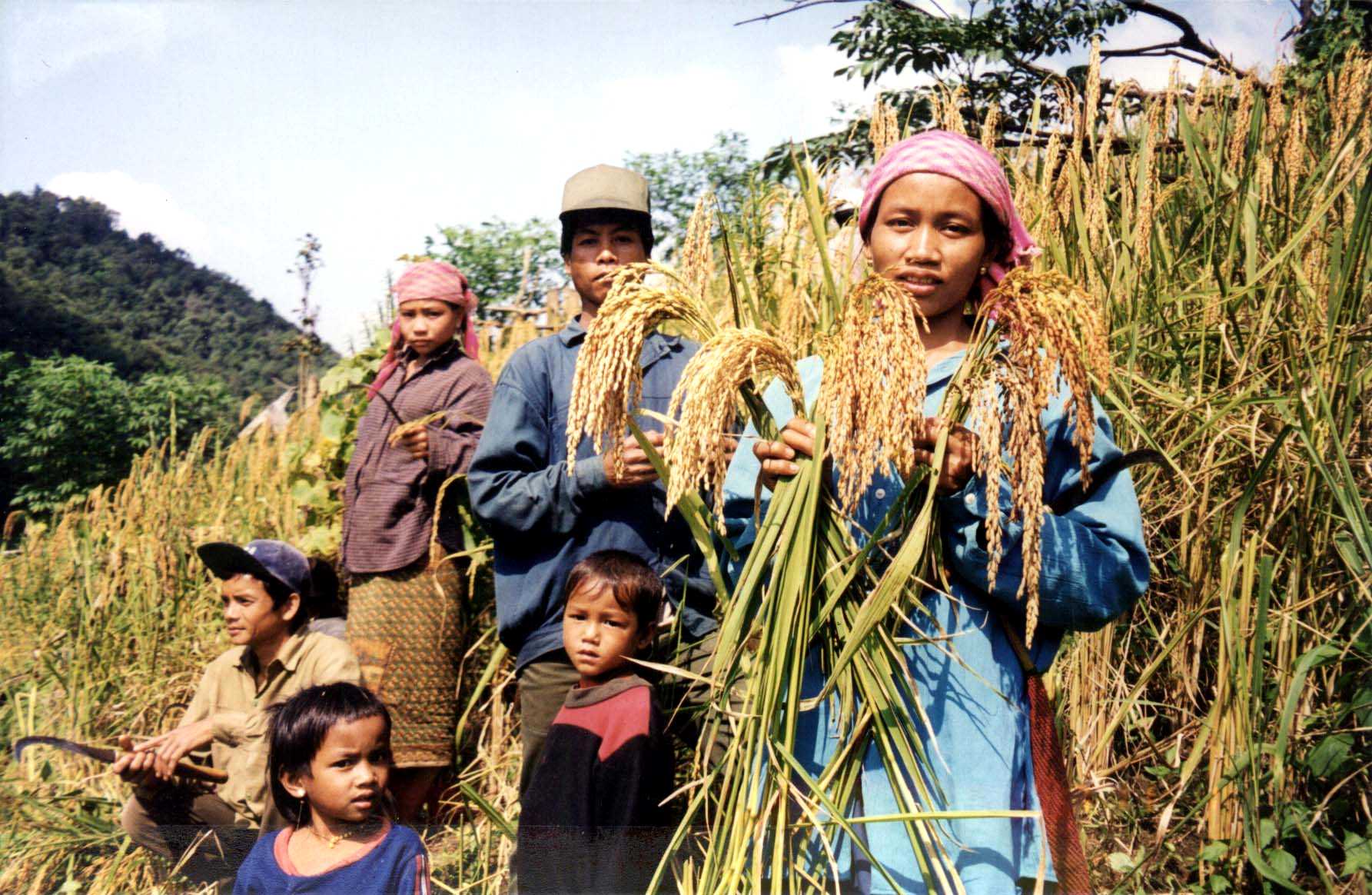
Research impact is all around – or at least it should be.

I believe it was IRRI’s former head of plant pathology Dr Tom (Twng-Wah) Mew who first coined this aphorism to describe IRRI’s philosophical approach to research (and I paraphrase):

It’s not only necessary to do the right science,
but to do the science right.

I couldn’t agree more, and have blogged elsewhere about the relevance of IRRI’s science. But this is science or research for development (or R4D as it’s often abbreviated) and best explained, perhaps by the institute’s tagline or slogan:

Rice Science copy

This is not science in a vacuum, in an ivory tower seeking knowledge for knowledge’s sake. This is research to solve real problems: to reduce poverty and increase food security. I don’t really like the distinction that’s often made between so-called pure or basic science, and applied science. Surely it’s a continuum? Let me give you just one example from my own research experience.

I have also blogged about the problem of bacterial wilt of potatoes. It can be a devastating disease, not only of potatoes and other solaneaceous crops like tomatoes and eggplants, but also of bananas. While the research I carried out was initially aimed at identifying better adapted potatoes resistant to bacterial wilt, very much an ‘applied’ perspective, we also had to investigate why the bacterium was surviving so long in the soil in the apparent absence of susceptible hosts. This epidemiological focus fed into better disease control approaches.

But in any case, the only distinction that perhaps really matters is whether the science is ‘good’ or ‘bad’.

Why is rice science so crucial? Because rice is the world’s most important staple food, feeding more than half of the global population on a daily basis, even several times a day in some Asian countries. IRRI’s science focuses on gains for rice farmers and those who eat rice, research that can potentially affect billions of people. It’s all about impact, at different levels. While not all impact is positive, however, it’s important to think through all the implications and direction of a particular line of research even before it starts. In other words ‘What does success look like?‘ and how will research outputs become positive outcomes?

Now I don’t claim to be an expert in impact assessment. That’s quite a specialized field, with its own methodologies. It wasn’t until I changed careers at IRRI in 2001 and became the Director for Program Planning and Communications (DPPC) that I fully came to understand (or even appreciate) what ex ante and ex post impact meant in the context of R4D. I was fortunate as DPPC to call upon the expertise of my Australian colleague, Dr Debbie Templeton, now back in her home country with the Australian Center for International Agricultural Research (ACIAR).
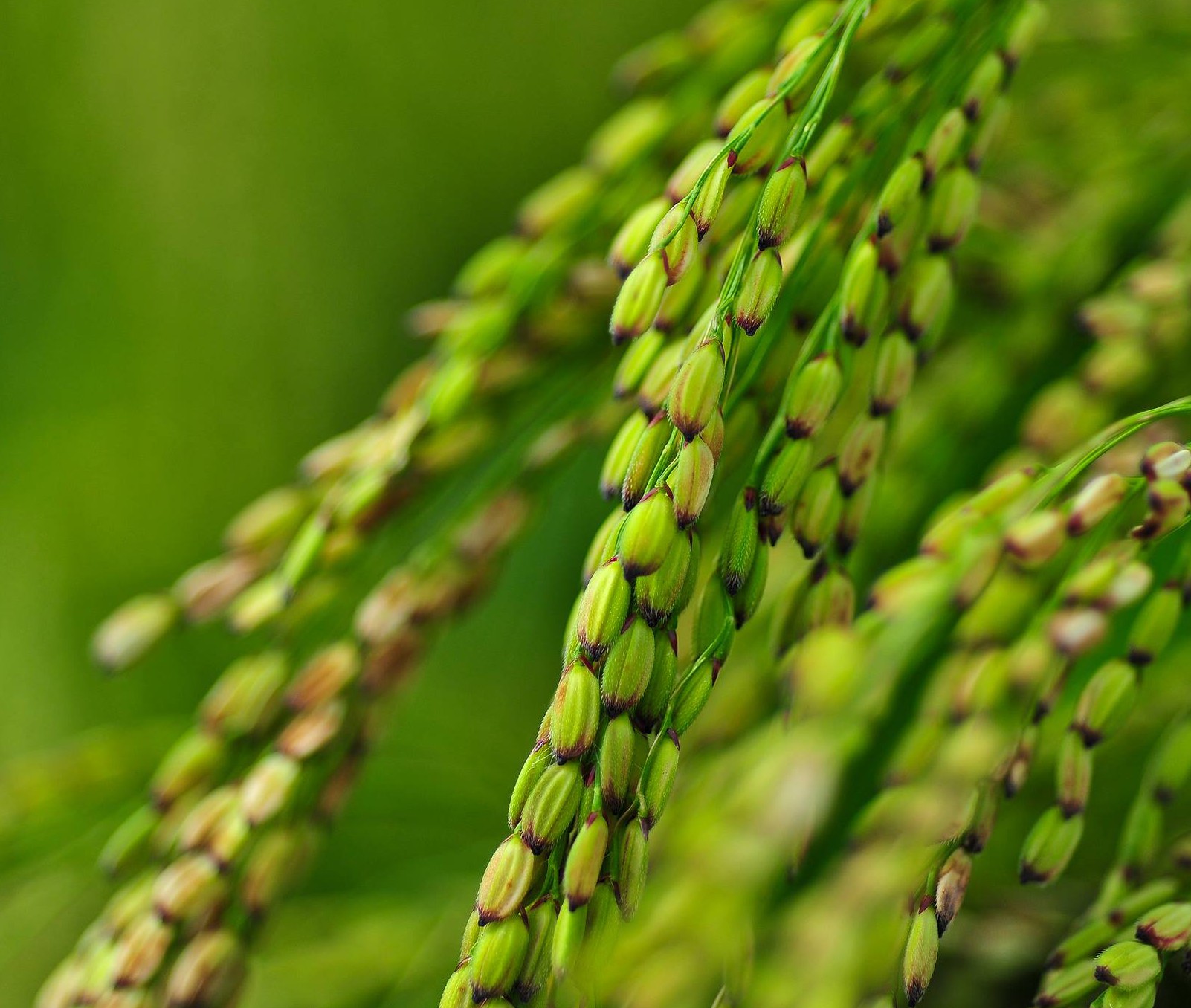

11222449_888009937912763_3115952232097675704_oRice Science for a Better World?

IRRI has a prestigious scientific reputation, and deservedly so. It strives hard to maintain that reputation.

IRRI scientists publish widely in international journals. IRRI’s publication rate is second-to-none. On occasion IRRI has been criticized, censured almost, for being ‘obsessed with science and scientific publication’. Extraordinary! What for heaven’s sake does ‘Research’ in the name ‘International Rice Research Institute’ stand for? Or for that matter, in the name ‘CGIAR’ or ‘Consultative Group on International Agricultural Research’?

What our erstwhile colleagues fail to grasp, I believe, is that scientific publication is a consequence of doing good science, not an objective in itself. Having recruited some of the best scientists, IRRI provides an environment that brings out the best in its staff to contribute effectively to the institute’s common goals, while permitting them to grow professionally. Surely it must be the best of both worlds to have scientists contributing to a worthwhile and important research agenda, but knowing that their work is also esteemed by their scientific peers?

But what is the ‘right science’? Well, it depends of course.

IRRI is not an academic institution, where scientists are expected to independently pursue their own interests, and bring in large sums of research funding (along with the delicious overheads that administrators expect). All IRRI scientists contribute—as breeders, geneticists, pathologists, molecular biologists, economists, or whatever—to a common mission that:

. . . aims to reduce poverty and hunger, improve the health of rice farmers and consumers, and ensure environmental sustainability of rice farming. We do these through collaborative research, partnerships, and the strengthening of the national agricultural research and extension systems, or NARES, of the countries we work in.

IRRI’s research agenda and policies are determined by a board of trustees, guided by input from its partners, donors, end users such as farmers, and its staff. IRRI aims to meet five goals, aligned with the objectives of the Global Rice Science Partnership (GRiSP), that coordinates rice research among more than 900 international partners, to:

  • Reduce poverty through improved and diversified rice-based systems.
  • Ensure that rice production is stable and sustainable, does minimal harm to the environment, and can cope with climate change.
  • Improve the nutrition and health of poor rice consumers and farmers.
  • Provide equitable access to information and knowledge on rice and help develop the next generation of rice scientists.
  • Provide scientists and producers with the genetic information and material they need to develop improved technologies and enhance rice production.

Rice Science for a Better World, indeed.

International agricultural research like IRRI’s is funded from the public purse, in the main, though the Bill & Melinda Gates Foundation has become a major player supporting agricultural research over the past decade. Tax dollars, Euros, British pounds, Swiss francs, or Japanese yen are donated—invested even—through overseas development assistance budgets like USAID in the USA, the European Commission, DfID in the UK, SDC in Switzerland, and several institutions in Japan, to name just a handful of those donor agencies committed to finding solutions to real problems through research. Donors want to see how their funds are being used, and the positive benefits that their investments have contributed to. Unfortunately donors rarely share the same vision of ‘success’.

One of the challenges that faces a number of research organizations however, is that their research mandates fall short of effectively turning research outputs into research outcomes or impact. But having an idea of ‘what success looks like’ researchers can be in a better position to know who to partner with to ensure that research outputs become outcomes, be they national scientists, civil society organizations, NGOs, and the like.

As I said, when I became DPPC at IRRI, my office managed the process of developing and submitting research project funding proposals, as well as reporting back to donors what had been achieved. I had to get this message across to my research scientist colleagues: How will your proposed research project benefit farmers and rice consumers? This was not something they expected.

Quite early on in my DPPC tenure, I had a wake-up call after we had submitted a proposal to the Asian Development Bank (ADB), at their request I should add, to support some work on rice genomics. The science described in the proposal was first rate. After mulling over our proposal for a couple of months, I received a phone call from our contact at ADB in Manila who was handling the internal review of the proposal. He asked me to add a paragraph or two about how this work on rice genomics would benefit rice consumers otherwise ADB would not be able to consider this project in its next funding round.

So I went to discuss this apparent conundrum with the scientist involved, and explained what was required for ADB approval. ‘How will rice genomics benefit rice farmers and consumers?‘, I asked him. ‘I can’t describe that‘ he relied, somewhat woefully. ‘Well‘, I replied, ‘unless we can tell ADB how your project is going to benefit farmers etc, then your proposal is dead in the water‘.

After some thought, and based on my simplistic explanation of the impact pathway, he did come up with quite an elegant justification that we could submit to ADB. Despite our efforts, the project was not funded by ADB. The powers-that-be decided that the research was too far removed from the ultimate beneficiaries. But the process in itself was useful. It helped us to understand better how we should pitch our proposals and what essential elements to show we had thought things through.

Now the graphic below is obviously a simplistic representation of a complex set of issues. The figure on the left represents a farmer, a community, a situation that is constrained in some way or other, such as low yield, diseased crops, access to market, human health issues, and the like. The objective of the research must be clearly defined and described. No point tilting at the wrong windmills.

The solid black and dashed red line represents the impact pathway to a better situation, turning research outputs into outcomes. The green arrow represents the point on that impact pathway where the research mandate of an institute often ends—before the outcome is delivered and adopted. How to fill that gap?

Individual research projects produce outputs along the impact pathway, and outputs from one project can be the inputs into another.

Whatever the impact pathway, it’s necessary to describe what success looks like, an increase in production over a specified area, release and adoption of disease resistant varieties, incomes of X% of farmers in region Y increased by Z%, or whatever.
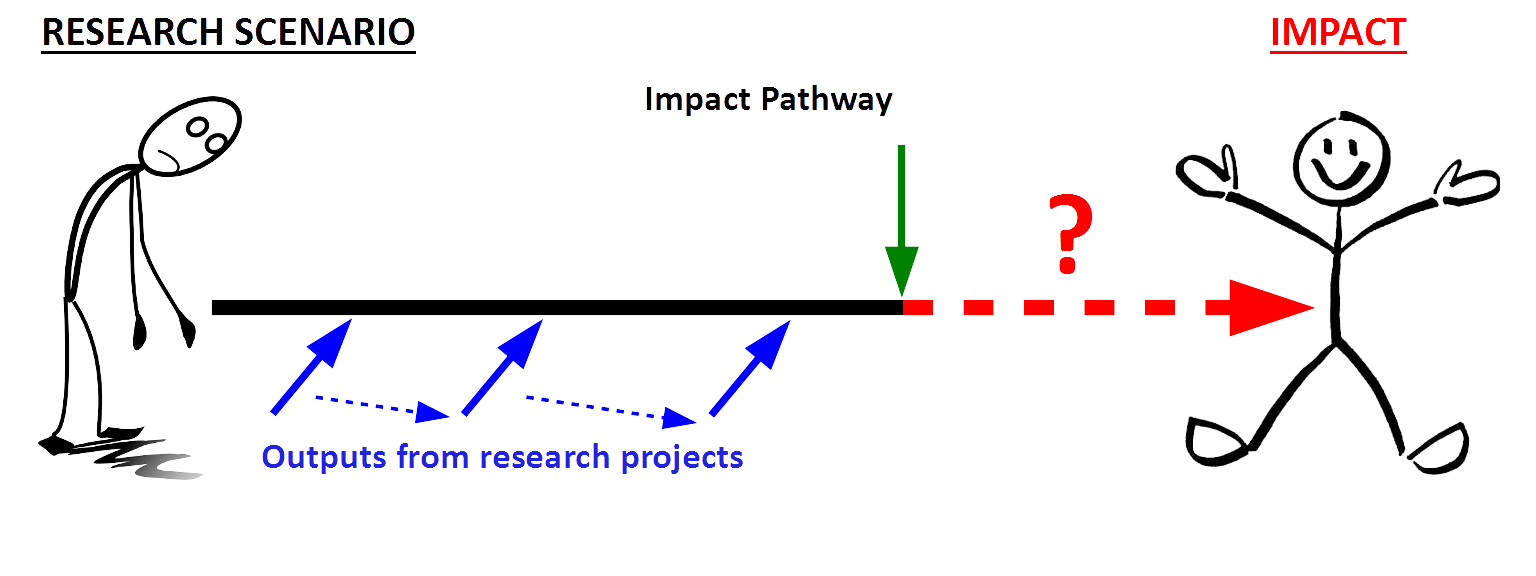
Impact pathway

Let me highlight two IRRI projects. One has already shown impact after a research journey of almost two decades. The other, perhaps on-going for the same time period, has yet to show impact. I’m referring to submergence tolerant or ‘scuba rice‘, and ‘Golden Rice’, respectively.
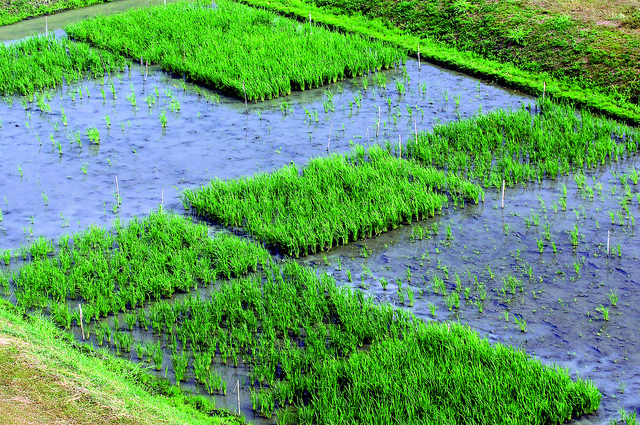
9203724733_3f71432126_zFor the development of scuba rice it was first necessary to identify and characterize genes conferring submergence tolerance—many years in the laboratory even before the first lines were tested in the field and the proof of concept realized. It didn’t take long for farmers to see the advantage of these new rice varieties. They voted with their feet! So, in a sense, the farmers themselves managed the dashed red line of the impact pathway. Scuba rice is now grown on more than 2.5 million hectares by 10 million farmers in India and Bangladesh on land that could not consistently support rice crops because of flooding.
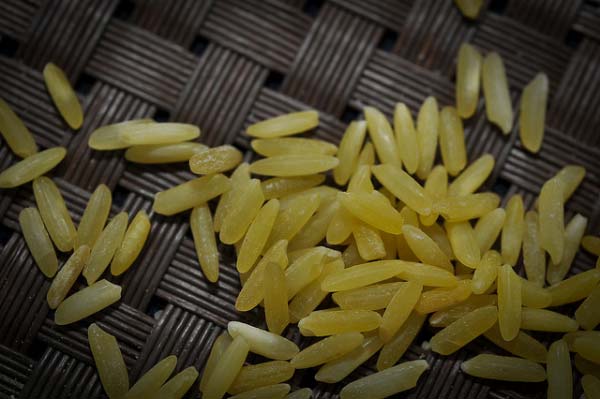
golden-riceGolden Rice has the potential to eradicate the problem of Vitamin A deficiency, which can lead to blindness. As I mentioned earlier, rice is eaten by many people in Asia several times a day. It’s the perfect vehicle to enhance the Vitamin A intake. Varieties have been produced, the proof of concept completed, yet Golden Rice is not yet grown commercially anywhere in those countries that would benefit most. The dashed red line in my impact pathway diagram is the constraint. Golden Rice is a GMO, and the post-research and pre-release regulatory framework has not been surmounted. Pressure groups also have delayed the testing of Golden Rice lines, even destroying field experiments that would provide the very data they are so ‘afraid’ of. Thus its impact is more potential than real. Donors have been patient, but is there a limit to that patience?

Keeping donors on-side
What I also came to realize early on is that it’s so necessary to engage on a regular basis with donors, establish a good working relationship, visit them in their offices from time-to-time, sharing a drink or a meal. Mutual confidence builds, and I found that I could pick up the phone and talk through an issue, send an email and get a reply quickly, and even consulted by donors themselves as they developed their funding priorities. It’s all part of research management. Donors also like to have ‘good news stories’. Nowadays, social media such as Facebook and Twitter, blogging even, also keep them in the loop. After all donors have their own constituencies—the taxpayers—to keep informed and onside as well.

Achieving impact is not easy. But if you have identified the wrong target, then no amount of research will bring about the desired outcome, or less likely to do so. While impact is the name of the game, good communications is equally important. They go hand-in-hand.

The ‘tourism’ of genebanks

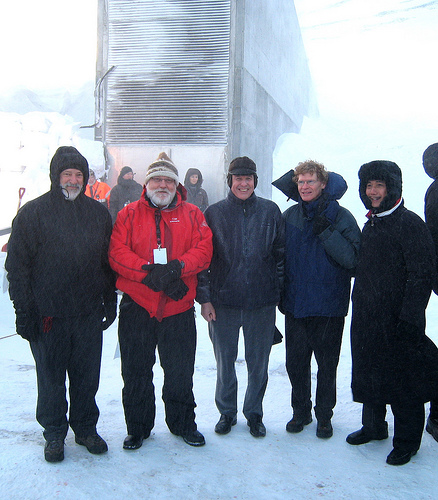
Even though I managed a large genebank for ten years, I still don’t fully understand why seeing lots and lots of packets of seeds in a cold store at -18C—essentially a very large refrigerator—holds such a fascination for so many people. There’s nothing particularly glamorous about that, but it just seems everyone wants to walk inside and see for themselves. In a tropical country like the Philippines this is a novel experience, of course. Not so at the Svalbard Global Seed Vault inside the Arctic Circle. I guess there are times of the year when it must be colder outside than in. There again, that genebank has a particular attraction and significance*.

Let’s hope that when visitors do visit a genebank they see more than just packets of seeds on cold shelves, and get to appreciate just what it entails to conserve these important varieties and wild species, and why that is important for society at large. And of course, they should finish their genebank visit with a little more understanding about genetic diversity, how it came about, and how plant breeders can tap into this gene pool to breed new crop varieties.

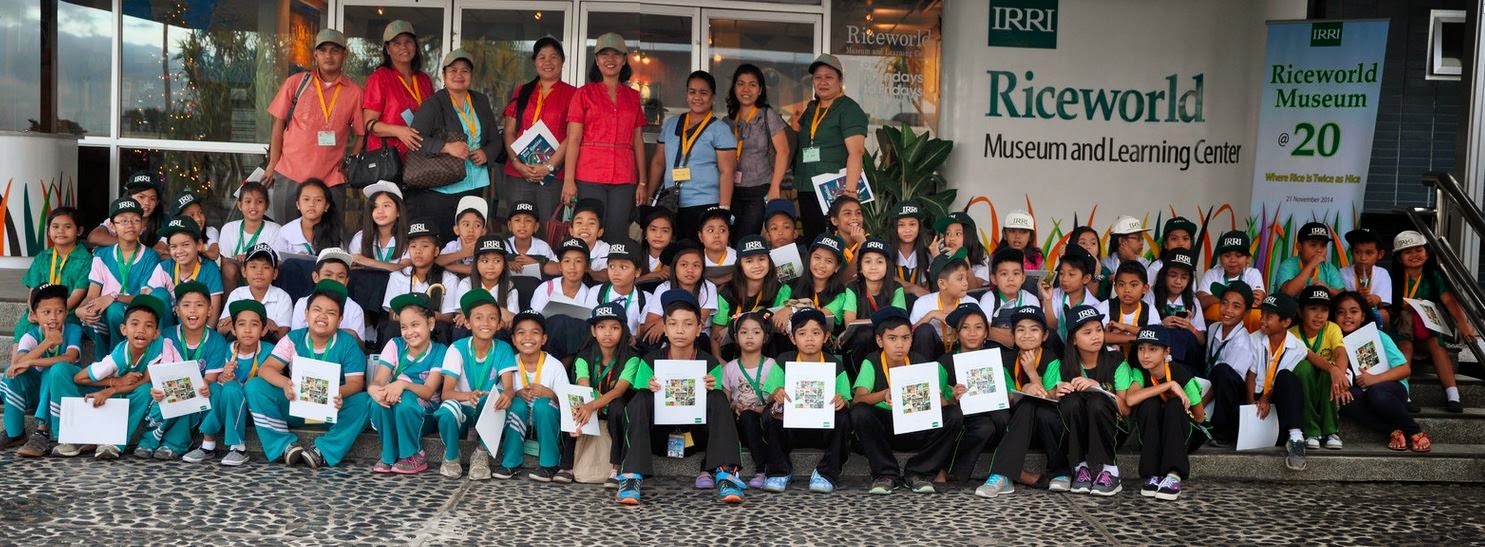
The International Rice Research Institute (IRRI) receives thousands of visitors each year. Most of them are parties of Filipino schoolchildren, however, who come to learn what rice and rice agriculture is all about. Not surprising really, given that many children raised in urban environments have little idea where their food comes from. But a visit to the genebank is no longer part of their visit.

Rice museum and children

That was not always the case. At the start of my tenure as head of the genebank in 1991, I had the impression that most of the visitors to the institute were given, or seemingly entitled to, a tour of the International Rice Genebank (IRG). Now, most visitors are shown the Riceworld Museum and Learning Center (developed with support from the German government) where there is a display of the genebank’s work.

But if you are one of the ‘chosen’, a tour of the genebank can still be part of your visitor program. In this gallery (courtesy of IRRI) my former colleague and successor as head of the Genetic Resources Center (GRC), Dr Ruaraidh Sackville Hamilton, describing what the genebank is all about to participants of the 6th Meeting of the APEC Policy Partnership on Science, Technology and Innovation, who visited IRRI on 12 August 2015.

So why was free access to the genebank restricted?

A few months after I joined IRRI, I needed to talk to one of my staff. Going downstairs to the ground floor, I saw a line of 50 or more high school/university students filing in through the front door of the building, a line that snaked its way around the corridors and into the genebank itself. My colleagues in the institute’s Visitors Service felt they had carte blanche permission to take any number of visitors into the genebank, at any time.

Not only was the front door of the building open, but also every door between there and the -18C long-term storage vault, notwithstanding that it must have been over 30C outside with humidity approaching 90% or more. Although the configuration of the various genebank rooms and laboratories has changed since 1991, they were (and remain) temperature and humidity controlled. It made no sense to me to have hordes of visitors passing through, leaving all the doors open to the outside in their wake. This had to stop. And it soon did, with visitors scheduled in a more coordinated way.

However, I soon realized that if I hosted all these visitors myself, that’s about all I would be attending to daily. So I roped in the other genebank international staff and senior Filipinos to take their share of handling the visitor load (burden on some occasions). As head of GRC, I would generally host only the VIPs.

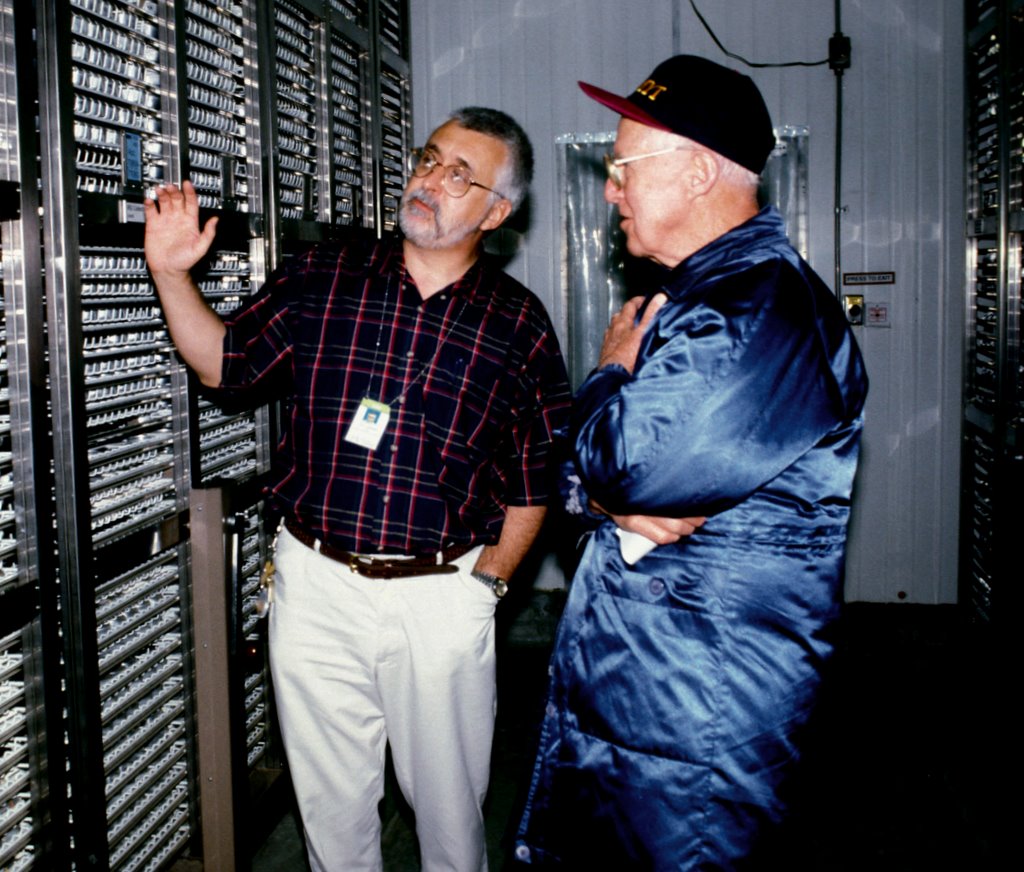
So who were (and are) these VIPs? Well they ranged from royalty (HRH Princess Maha Chakri Sirindhorn of Thailand, Prince Albert of Monaco, and HRH The Duke of Gloucester from the UK); heads of state (from the Philippines, India, Lao People’s Democratic Republic, Myanmar to name just a few, even disgraced former President Fujimori of Peru); heads of government and other politicians (from Bangladesh, Vietnam for example, and the Philippines of course); ambassadors and other members of the diplomatic community in the Philippines; Nobel Laureates such as Norman Borlaug (Peace, 1970) and Joseph Stiglitz (Economics, 2001); heads and representatives of donor agencies to IRRI; eminent scientists; and germplasm specialists with a particular interest in seeing how IRRI tackled the challenge of managing such a large germplasm collection. Usually I had just 10-15 minutes at most to describe why conserving rice seeds was so important for the future of rice agriculture—after all, rice is the staple food of half the world’s population. Most visitors had never been inside in a genebank before, let alone seen the diversity of rice varieties, or in fact realized that such diversity even existed.

In 1994 or 1995,GRC held a one-day Open House for over 1000 IRRI staff and colleagues from the nearby University of the Philippines Los Baños. It was then we made the world map from rice grains of different shapes, sizes and colors that you can see in a couple of the photos above. A duplicate of that map is also on display in the Riceworld Museum and Learning Center. Some of the other cartoon display materials showing how seeds are dried and stored are still on display in the genebank, but have been updated periodically.

Here is a small selection of some of the people I met. I wish I had a better record of all those VIPs I met over a decade in GRC.

Heads of State

Politicians

Nobel Laureates

There’s no doubt however that explaining the role and work of the genebank to these visitors is not only necessary, but it is actually a rather important aspect of genebank management. These visitors are ‘genebank ambassadors’ and can spread the good word about the strategic importance of genetic conservation. Time (mostly) well spent!

~~~~~~~~~~~~~~~~~~~~~~~~~~~~
*I’m waiting for my invitation to visit.

When is white not white? When it’s green, of course.

Or maybe another color altogether. Then again, I could ask when tall is actually short, or a whole host of apparently contradictory questions.

What a conundrum.

No, this isn’t some fiction. It was the reality I faced when I took up the reins as head of IRRI’s Genetic Resources Center (GRC) in July 1991 and asked for a demonstration of the ‘genebank data management system’.

free-images-for-websites-computer_clipart1A large germplasm collection, or was it?
The International Rice Genebank (IRG) at IRRI holds the world’s largest and (almost certainly) the most genetically diverse collection of rice varieties of Asian rice (Oryza sativa), African rice (O. glaberrima) and wild species of rice (not only Oryza species, but representatives from related genera).

Besides providing the very best conditions to ensure the long-term survival of these precious seed samples (as I blogged about recently), it’s also essential to document, curate, and easily retrieve information about the germplasm stored in the genebank. That’s quite a daunting prospect, especially for a collection as large as the International Rice Genebank Collection (IRGC), with over 126,600 samples or accessions at the last count¹. (During my tenure as head of GRC, the collection actually grew by about 25% or so, with funding for germplasm collecting from the Swiss government.)

I discovered that the three rice types—Asian, African and wild species—were being managed essentially as three separate germplasm collections, each with its own data management system. What a nightmare! It was almost impossible to get a quick answer to any simple question, such as ‘How many accessions are there in the genebank from Sri Lanka?’ It took three staff to query the databases, formulating their queries in slightly different ways because of the different database structures.

But why was it necessary to ask such questions, and require a rapid response? In 1993 the Convention on Biological Diversity (CBD) came into force. I had anticipated that IRRI would receive an increasing number of requests from different countries about the status and disposition of rice germplasm from each that was conserved in the IRG. Until we had an effective data management system we would have to continue trawling through decades of paperwork to find answers. And indeed there was an increase in such requests as countries became concerned that their germplasm might be misappropriated in some way or other. I should say that the changes we subsequently implemented put IRRI in good stead when the International Treaty on Plant Genetic Resources for Food and Agriculture came into force, with its requirements to track all germplasm flows and use. But I’m getting ahead of myself.

It made no sense to me that the rice types should be managed as separate collections, since once in the same genebank vaults seeds were stored under identical conditions.  So, as I indicated elsewhere on this blog, I appointed Flora de Guzman as genebank manager with overall responsibility for the entire rice collection, and started to study various aspects of germplasm regeneration and seed conservation. Since the wild rices had a special nursery screenhouse for multiplication of seed stocks (a requirement of the Philippines Quarantine Service), another member of staff became curator of the wild species on a day-to-day basis.

The data management challenge
In 1991 the IRG had three very competent data management staff: Adel Alcantara, Vanji Guevarra, and Myrna Oliva, soon to be joined by a technical assistant, Nelia Resurreccion.

Due to the lack of oversight for data management, I realized the trio were each doing their own thing for the sativas, the glaberrimas, and the wild species, so to speak, with limited reference to what the others were doing. To make any significant improvements to data management, it would be necessary to build a single data system for all germplasm in the genebank. I thought this would be quite a straightforward undertaking, taking maybe a couple of months or so. How wrong I was! It was much more complex than I had, in my naivety, envisaged.

Back in 1991, PC technology was still in its infancy; well maybe approaching juvenility. The databases were managed using ORACLE on a VAX mainframe. More nightmares! Fortunately, with some investment in office design and furniture, providing each staff with a proper workstation, and the ability to work better as a team, and more powerful PCs, we were able to migrate the new data management systems to local servers. We left the VAX behind, but unfortunately still had an ORACLE legacy that was far more difficult to ditch. I also wanted to develop an online data management system that would permit researchers at IRRI, and eventually around the world, to access germplasm data for themselves rather than always having to request information from genebank staff. This was the less than ideal situation when I joined IRRI. In fact, in order to access genebank data then it was necessary to make a request in writing that was approved by the head of the genebank, then Dr TT Chang. I put a stop to that right away. Because data had been accumulated using public funds they should be made freely available henceforth to anyone.  Direct and unhindered access to genebank data was my goal.

The underlying problem
However, the three databases could not ‘talk’ to one another, because their structures and data were different for the three ‘collections’. Let me explain.

There are basically two types of germplasm data, what we call passport data, and characterization and evaluation data. The passport data include such pieces of information as the identity of germplasm (often referred to as the accession number), the donor number and the collector’s number, for example. These data are, or should be, unique to a piece of germplasm or an accession. But passport data also include information about the date of acquisition, when it was first stored in the genebank, who has requested a seed sample, and when. Of course there’s a great deal more, but these examples suffice to explain something of the nature of these data.

Characterization (qualitative) and evaluation (mainly quantitative) data describe various aspects (or traits as they are known) of rice plants such as leaf and grain color, or plant height, days to flowering, and resistance or tolerance to pests and diseases, using agreed sets of descriptors and scoring codes or actual measurements. The International Board for Plant Genetic Resources (IBPGR, which became the International Plant Genetic Resources Institute, then Bioversity International) had developed these crop descriptors, and the first—for rice—was published jointly with IRRI in 1980 (and revised and updated in 2007).

An essential condition for a successful data management system therefore is that information is recorded and stored consistently. In order for the three databases to talk to each other, we had to correct any differences in database structure, such as the naming and structure of database fields, as well as consistent use of codes, units, etc. for the actual information. This is what we discovered.

Take the most basic (and one of the most important) database field for accession number, for example. In one database, this field was named ‘ACC_NO’, in another ‘ACCNO’. And the structure was different as well. For the sativas it was a five digit numeric field; for the glaberrimas, a six digit numeric field; and for the wild species, a seven digit alphanumeric field. No wonder the databases couldn’t talk to each other at the most basic level.

But why were there three structures? The field name was easily resolved, incidentally. Well, when the collection was first established, the accession numbers from ‘00001’ to ‘99999’ were reserved for the O. sativa accessions. Then the the numbers from ‘100000’ and above were assigned to O. glaberrima and the wild species. However, thirteen wild species samples were found to be mixtures of two species. So they were divided and each given a suffix ‘A’ or ‘B’, such as ‘100569A’ and ‘100569B’ (not actual numbers, just illustrative). That meant that the wild species now had a seven digit alphanumeric field. Why one of the mixture wasn’t just assigned a new six digit number—as we did—I’ll never understand. Then we had to convert the O. sativa accession number into a six digit numeric field (‘000001’ etc.) and, with a consistent field name across databases (‘ACCNO’ perhaps), we could then link databases for the first time. In 1991, there was a gap between the sativa numbers (perhaps between ‘80000’ and ‘99999’) before the other accessions started at ‘100000’. Irrespective of rice type, we just inserted consecutive numbers as we received new samples, until there were no gaps at all in the sequence.

White is white, yeah?
Now imagine achieving consistency right across the databases for all fields. We found that a character was often recorded/coded in different ways between rice types. So in one, the color ‘white’ might have been coded as a ‘1’, but as a ‘5’ in another. Or ‘1’ was ‘green’ in another database. And so it went on. We had to convert all codes to a meaningful and consistent description, each independent of the other. So ‘1’ was converted in one database to ‘white’ and ‘5’ to ‘white’ as well, etc. Having made all these conversions, with very careful cross checking along the way, and regular data back-ups, we finally had consistent field names and structures, and recording/coding of data for the entire germplasm collection. I don’t remember exactly how long this took, but it must have been between 18 months and two years.

The next step
IRGCISBut once completed, we could move on to the next phase of developing an online system to access genebank data, the International Rice Genebank Collection Information System (IRGCIS), with inputs from the former System-wide Genetic Resources Program (SGRP), an initiative of all the CGIAR centers with genebanks and genetic resources activities.

IRGCIS is a comprehensive system that manages the data of all rice germplasm conserved at IRRI.  It is designed to manage the genebank operations more efficiently. It links all operations associated with germplasm conservation and management from acquisition of samples through seed multiplication, conservation, characterization, rejuvenation and distribution to end-users.

The system aims to:

  • Assist the genebank staff in day-to-day activities.
  • Facilitate recording, storage and maintenance of germplasm data.
  • Allow the request of desired seeds and provide direct access to information about accessions in the genebank.

The data that are accessible are:

  • Passport data.
  • Morpho-agronomic descriptions.
  • Evaluation data on the International Rice Genebank Collection.
  • Germplasm availability.

A couple of years after IRGCIS, work began to develop the International Rice Information System (IRIS) as part of the International Crop Information System (ICIS) for the management of improved germplasm, breeding lines and the like, with full genealogy data. INGER also developed the INGERIS, but to tell the truth I’m not sure exactly where IRRI is these days with regard to cross system integration and the like.

But as I mentioned earlier, of one thing I am certain. Had we not taken the fundamental steps to clean up our data management act almost 25 years ago, we would not have had an effective platform to respond to global germplasm initiatives like the International Treaty or CBD, nor take advantage relatively easily of new data management software and hardware. It did require that broad perspective in the first instance. That I could bring to the party even though I didn’t have the technical know-how to undertake the detailed work myself.

~~~~~~~~~~~~~~~~~~~~~~~~~~~~~~~~~~~~

¹ Source: the International Rice Genebank Collection Information System (IRGCIS), 8 June 2015.

I used to be uncertain, but now I’m not so sure (updated 5 December 2015)

Regular visitors to my blog will, by now, know that for many years from July 1991 I worked at the International Rice Research Institute (IRRI) in Los Baños in the Philippines, south of Manila. For the first 10 years, I was head of the Genetic Resources Center (GRC), having particular responsibility for the International Rice Genebank (now supported financially by the Global Crop Diversity Trust). Elsewhere on this blog I have written about the genebank and what it takes to ensure the long-term safety of all the germplasm samples (or accessions as they are known) of cultivated rices and related wild species of Oryza.

Well, consider my surprise, not to say a little perplexed, when I recently read a scientific paper¹ that had just been published in the journal Annals of Botany by my former colleagues Fiona Hay (IRRI) and Richard Ellis (University of Reading), with their PhD student Katherine Whitehouse, about the beneficial effect of high-temperature drying on the longevity of rice seeds in storage. Now this really is a big issue for curators of rice germplasm collections, let alone other crop species perhaps.

So why all the fuss, and why am I perplexed about this latest research? Building on a paper published in 2011 by Crisistomo et al. in Seed Science & Technology², this most recent research¹ provides significant evidence, for rice at least, that seed drying at a relatively low temperature and relative humidity, 15C and 15RH—the genebank standard for at least three decades—may not be the best option for some rice accessions, depending on the moisture content of seeds at the time of harvest. It’s counter-intuitive.

But also because germplasm regeneration and production of high quality seeds is one aspect of germplasm conservation most likely to be impacted by climate change, as Brian Ford-Lloyd, Jan Engels and I emphasized in our chapter in Genetic Resources and Climate Change.

To explain further, it’s necessary to take you back 24 years to when I first joined IRRI.

20150202-klaus-lampe

Dr Klaus Lampe, IRRI Director General 1988-1995

The first six months or so
The Director General in 1991, Dr Klaus Lampe, encouraged me to take a broad view of seed management services at IRRI, specifically the operations and efficiency of the International Rice Genebank (IRG). It was also agreed that I should develop research on the germplasm collection and its conservation, something that had not been considered when the GRC Head position was advertised in September 1990. I should add that in negotiating and accepting the GRC position, I had insisted that GRC should have a research arm, so to speak. I guess I was in a fairly strong negotiating position.

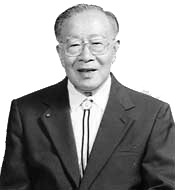
Dr TT Chang, first head of the International Rice Germplasm Center at IRRI

Dr TT Chang

Once at IRRI, I didn’t rush into things. After all, I had never run a genebank before let alone work on rice, although much of my career to that date had been involved in various aspects of germplasm conservation and use. But after about six months, I reckon I’d asked enough questions, looked at how the genebank was running on a day-to-day basis. I had developed a number of ideas that I thought should vastly enhance the long-term conservation of rice germplasm, but at the same time allow all the various operations of the genebank run smoothly and hopefully more efficiently. In one sense, managing the individual aspects or operations of a genebank are quite straight-forward. It’s bringing them all together that’s the tricky part.

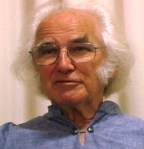
There was another ‘delicate’ situation to address, however. All the Filipino staff had worked for only one person for many years, my predecessor as head of the genebank (then known as the International Rice Germplasm Center, or IRGC), Dr TT Chang. It’s not an understatement to say that many of these staff were fiercely loyal to Dr Chang (loyalty being one of their greatest virtues), firmly fixed in their ways, and didn’t feel—or maybe understand—that changes were desirable or even necessary. It was a classic change management situation that I was faced with. I needed to help them evaluate for themselves the current genebank management focus, and propose (with more than a little encouragement and suggestions from me) how we might do things differently, and better.

Some radical changes
But I don’t think anyone foresaw the radical changes to the management of the genebank that actually emerged. The genebank was ‘the jewel in IRRI’s crown’, the facility that every visitor to the institute just had to see. It seemed to run like clockwork—and it did, in its own way.

Staffing and responsibilities
Apart from several staffing issues, I was particularly concerned about how rice germplasm was being regenerated in the field, and how it was handled prior to medium-and long-term storage in the genebank. There were also some serious germplasm data issues that needed tackling—but that’s for another blog post, perhaps.

In terms of genebank operations, it was clear that none of the national staff had responsibility (or accountability) for their various activities. In fact, responsibilities for even the same set of tasks, such as germplasm regeneration or characterization, to name just two, were often divided between two or more staff. No-one had the final say. So very quickly I appointed two staff, Flora ‘Pola’ de Guzman and Renato ‘Ato’ Reaño to take charge of the day-today management of the seed collection (and genebank facilities per se) and germplasm regeneration, respectively. Another staff, Tom Clemeno, was given responsibility for all germplasm characterization.

Working in the field
But what seemed rather strange to me was the regeneration of rice germplasm at a site, in rented fields, some 10km east of the IRRI Experiment Station, at Dayap. This meant that everything—staff, field supplies, etc.—had to be transported there daily, or even several times a day. It made no sense to me especially as the institute sat in the middle of a 300 ha experiment station, right on the genebank’s doorstep. In fact, the screenhouse for the wild rice collection had been constructed on one part of the station known as the Upland Farm. To this day I still don’t understand the reasons why Dr Chang insisted on using the site at Dayap. What was the technical justification?

Also the staff were attempting to regenerate the germplasm accessions all year round, in both ‘Dry Season’ (approximately December to May) and the ‘Wet Season’ (June to November). Given that the IRRI experiment station has full irrigation backup, it seemed to me that we should aim to regenerate the rice accessions in the Dry Season when, under average conditions, the days are bright and sunny, and nights cooler, just right for a healthy rice crop, and when the best yields are seen. The Wet Season is characterized obviously by day after day of continuous rainfall, often heavy, with overcast skies, and poor light quality. Not to mention that Wet Season in the Philippines is also ‘typhoon season’. So we separated the regeneration (Dry Season) from the characterization (Wet Season) functions.

But could we do more, particularly with regard to ensuring that only seeds of the highest quality are conserved in the genebank?  That is, to increase the longevity of seeds in storage—the primary objective of the genebank, after all, to preserve these rice varieties and wild species for future generations? And in the light of the latest research by Katherine Whitehouse, Fiona and Richard, did we make the right decisions and were we successful?

Seed environment and seed longevity
That’s where I should explain about the research collaboration with Richard Ellis at that time (Ellis et al. 1993; Ellis & Jackson 1995), and helpful advice we received from Roger Smith and Simon Linington, then at Kew’s Wakehurst Place (and associated with the founding of the Millennium Seed Bank).

Dr N Kameswara Rao

Dr N Kameswara Rao, now head of the genebank at the International Center for Biosaline Agriculture (ICBA) in the UAE-Dubai.

I hired a post-doctoral fellow, Dr N Kameswara Rao, on a two-year assignment from sister center ICRISAT (based in Hyderabad).  Kameswara Rao had completed his PhD at Reading under seed physiologist Professor Eric Roberts.

We set about studying the relationship between the seed production environment and seed longevity in storage, and the effect of sowing date and harvest time on seed longevity in different rice types, particularly hard-to-conserve temperate (or japonica) rice varieties (Kameswara Rao & Jackson 1996a; 1996b; 1996c; 1997). And these results supported the changes we had proposed (and some even implemented) to germplasm regeneration and seed drying.

In 1991, the IRG did not have specific protocols for germplasm generation such as the appropriate harvest dates, and seed drying appeared to me to be rather haphazard, hazardous even. Let me explain. Immediately after harvest, rice plants in bundles (stems, leave and grains) were dried on flat bed dryers before threshing, heated by kerosene flames, for several days. Following threshing, and before final cleaning and storage, seeds were dried in small laboratory ovens at ~50C. It seemed to me that rice seeds were being cooked. So much for the 15C/15RH genebank standard for seed drying!

During the renovation of institute infrastructure in the early 1990s we installed a dedicated drying room³, with a capacity for 9000 kg, in which seeds could be dried to an equilibrium 6% moisture content (MC) or thereabouts, after a week or so, under the 15/15 regime.

A rethink
Now this approach has been apparently turned on its head. Or has it?

To read the headlines in some reports of the Whitehouse et al. paper, you would think that the 15/15 protocol had been abandoned altogether. This is not my reading of what they have to report. In fact, what they report is most encouraging, and serves as a pointer to others who are engaged in the important business of germplasm conservation.

In her experiments, Katherine compared seeds with different initial MC harvested at different dates that were then dried either under the 15/15 conditions, or put through up to six cycles of drying on a batch drier, each lasting eight hours, before placing them in the 15/15 seed drying room to complete the drying process, before different seed treatments to artificially age them and thereby be able to predict their longevity in storage before potential germination would drop to a dangerous level.

This is what Katherine and her co-authors conclude: Seeds harvested at a moisture content where . . . they could still be metabolically active (>16.2%) may be in the first stage of the post-mass maturity, desiccation phase of seed development and thus able to increase longevity in response to hot-air drying. The genebank standards regarding seed drying for rice and, perhaps, for other tropical species should therefore be reconsidered.

Clearly seeds that might have a higher moisture content at the time of harvest do benefit from a period of high temperature drying. Because of the comprehensive weather data compiled at IRRI over decades, Katherine was also able to infer some of the field conditions and seed status of the Kameswara Rao experiments. And although the latest results do seem to contradict our 1996 and 1997 papers, they provide very strong support for the need to investigate this phenomenon further. After all, Katherine studied only a small sample of rice accessions (compared to the 117,000+ accessions in the genebank).

The challenge will be, if these results are confirmed in independent rice studies—and even in other species, to translate them into a set of practical genebank standards for germplasm regeneration and drying and storage for rice. And it must be possible for genebank managers to apply these new standards easily and effectively. After all many are not so fortunate as GRC to enjoy the same range of facilities and staff support.

I’m really pleased to see the publication of this research. It’s just goes to demonstrate the importance and value of research on genebank collections, whatever the crop or species. Unfortunately, not many genebank are in this league, so it behoves the CGIAR centers to lead from the front; something I’m afraid that not all do, or are even able to do. Quite rightly they keep a focus on managing the collections. But I would argue that germplasm research is also a fundamental component of that management responsibility. Brownie points for IRRI for supporting this role for almost a quarter of a century. And for Fiona as well for ensuring that this important work got off the ground. Good luck to Katherine when she comes to defend her thesis shortly.

A recent seminar
On 12 November, Fiona gave a seminar at IRRI in the institute’s weekly series, titled How long can rice seeds stay alive for? In this seminar she explores changes that have been made to genebank operations over the years and the extent to which these did or did not affect the potential longevity of rice seeds in the genebank. She talks in some detail about the benefits of initial ‘high temperature’ drying that appears to increase potential longevity of seeds. As I queried with her in a series of emails afterwards, it’s important to stress that this high temperature drying does not replace drying in the 15/15 drying room. Furthermore, it will be necessary at some stage to translate these research findings into a protocol appropriate for the long term conservation of rice seeds at -18C.

Fiona has graciously permitted me to post her PowerPoint presentation in this blog, and the audio file that goes with it. You’ll have to open the PPT file and make the slide changes as you listen to Fiona speaking. I’ve done this and it’s actually quite straightforward to follow along and advances the slides and animations in her PPT. Click on the image below to download the PPT file. Just open it then set the audio file running.

Fiona Hay seminar title

Here’s the audio file.


I am also pleased to see that the CGIAR genebanks have also established a seed longevity initiative under the auspices of the Global Crop Diversity Trust. You can read more about it here.

Seed storage – an interesting anecdote
In 1992 we implemented the concept of Active (+3-4C) and Base (-18C) Collections in the IRG. Before then all rice seeds were stored in small (20g if I remember correctly) aluminium cans. We retained the cans for the Base Collection: once sealed we could expect that they would remain so for the next 50 years or more. But in the Active Collection there was no point having cans, if they had to be opened periodically to remove samples for distribution, and could not be re-sealed.

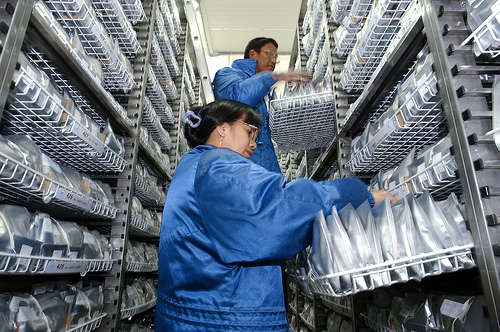
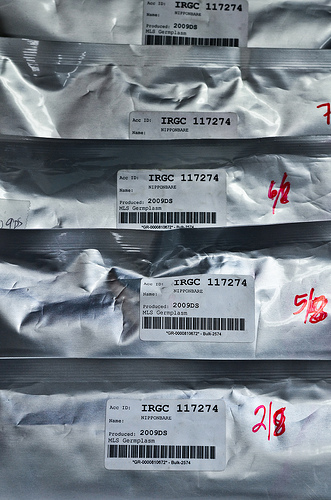
So we changed to laminated aluminium foil packs. Through my contacts at Kew – Wakehurst Place (home of the Millennium Seed Bank), Roger Smith and Simon Linington, we identified a manufacturer in the UK (from near Manchester I believe) who could make packs of different sizes, using a very high quality and tough laminate of Swedish manufacture (originally developed to mothball armaments). It had an extremely low, if not zero, permeability, and was ideal for seed storage. Unfortunately by the time we made contact, the company had gone into liquidation, but the former managing director was trying to establish an independent business. On the strength of a written commitment from IRRI to purchase at least 250,000 packs, and probably more in the future, this gentleman was able to secure a bank loan, and go into business once again. And IRRI received the seed storage packages that it ordered, and still uses as far as I know. The images below show genebank staff handling both aluminium cans in the Base Collection and the foil packs in the Active Collection. You can see the Active Collection in the video below at minute 1:09.

~~~~~~~~~~~~~~~~~~~~~~~~~~~~
¹ KJ Whitehouse, FR Hay & RH Ellis, 2015. Increases in the longevity of desiccation-phase developing rice seeds: response to high-temperature drying depends on harvest moisture content. Annals of Botany doi:10.1093/aob/mcv091.

² S Crisostomo, FR Hay, R Reaño and T Borromeo, 2011. Are the standard conditions for genebank drying optimal for rice seed quality? Seed Science & Technology 39: 666-672.

³ If you would like to see what the seed drying room looks like, just go to minute 9:40 in the video below:


Opportunities delayed: INGER @ 40

I don’t expect that the International Network for the Genetic Evaluation of Rice (INGER) will be familiar to many readers of this blog. Nor will the International Rice Testing Program (IRTP), the forerunner of INGER from 1975 to 1989.

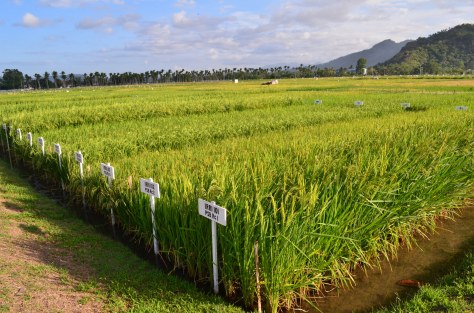
INGER demonstration plots - the variation between varieties is striking

INGER demonstration plots – the diversity among these rice varieties is striking.

INGER is undoubtedly a rice germplasm exchange and testing network success story. You only have to look at the statistics on varieties tested, the number of testing sites, the collaboration between scientists, etc. to see the scope of what IRTP-INGER has achieved over its lifetime. More importantly, however, is the significant number of rice varieties that have been selected from INGER trials and released in one country even though they were bred in another. It’s also interesting to note how many varieties from Sri Lanka have been adopted in other countries through INGER.

rt-logoMany examples are highlighted in a recent article, INGER@40—and the crossroads, that just appeared in IRRI’s flagship magazine riceTODAY. Not only can the value of rice germplasm exchange be quantified in terms of millions (probably billions) of dollars of increased productivity of rice agriculture, but also think about how new varieties have benefited rice farmers and those who eat rice every day (or several times a day).
When IRTP-INGER was founded in 1975, it was fortunate to receive substantial funding each year from the United Nations Development Program (UNDP). That funding lasted for 20 years, but was both IRTP-INGER’s boon and its bane.

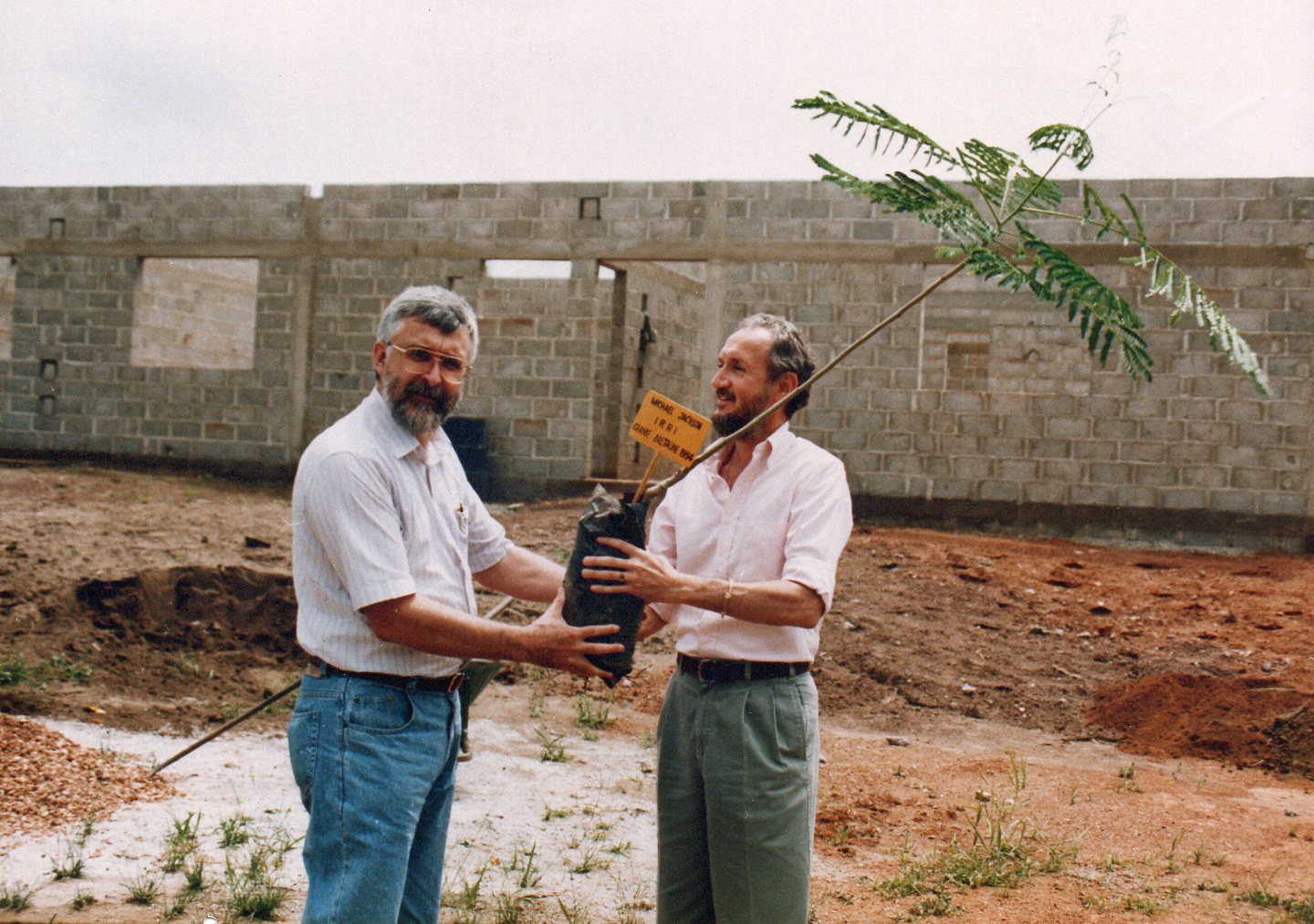
By the mid-1990s when UNDP support came to an end, it was always going to be difficult to find a donor to step in and provide long-term funding at the same level. And believe me, it was a struggle to persuade donors to emulate UNDP. Because the INGER model presented to donors was the one that UNDP has decided to discontinue funding, it was analogous to trying to sell a second-hand car rather than a brand new model with all the extras. We needed some bridging funds, and I was heavily involved in persuading a couple of IRRI’s donors, from Germany and Switzerland, to stump up USD1.5 million following review of a project proposal and a presentation to donors in Washington, DC in October 1994. However, the long-term funding situation was not resolved. Earlier that year I had made a review of INGER in Africa for the Directors General of IRRI and Africa Rice (WARDA as it then was), Drs Klaus Lampe and Eugene Terry, and made my first visit to Africa Rice headquarters in Bouaké, Ivory Coast. In the photo below, I planted a tree at the Bouaké site. I wonder if it’s still there. The other person in the photo is economist Dr Peter Matlon, who was DDG-Research in 1994, and later became Chair of the Board of Trustees.

In my opinion, INGER could—and should—have been more. According to the riceTODAY article, INGER is today, 40 years after it was founded, at ‘the crossroads’. But it was already at a crossroads almost 25 years ago when it became clear that UNDP support would end. Opportunities were not seized then, I contend, to bring about radical and efficient changes to the management and operations of this important rice germplasm network, but without losing any of the benefits of the previous 20 years. I also believed it should be possible to add even more scientific value.

Did we miss an opportunity?
But first, a little background, as it’s relevant to what subsequently took place—or rather didn’t.

In 1990 IRRI Management made the decision to reorganize the institute’s rice germplasm conservation and exchange activities. The Genetic Resources Center (GRC) was established bringing together INGER, the International Rice Germplasm Center (IRGC, the genebank), and the Seed Health Unit (SHU) into a single organizational unit, but with these three retaining their identities and functions. Recruitment for a founding head of GRC began in September 1990, and I was appointed from 1 July 1991. By then a decision had already been made (wisely in my opinion) to keep the SHU as an separate unit, given its important role of ‘policing’ the health of incoming rice germplasm and that being exported to other rice programs around the globe, under the auspices of the Plant Quarantine Service of the Philippines. We quickly lost the name International Rice Germplasm Center (how was it possible to have a center within a center?), and on my appointment GRC comprised the International Rice Genebank and INGER. While I was given overall responsibility for all GRC facilities and staff, the head of INGER (then Dr DV Seshu) ran the network on a daily basis, as I did the International Rice Genebank.

And it was through my role in GRC that I became involved in discussions about the future of INGER. I had joined IRRI from The University of Birmingham, where I had been a member of the Plant Genetics Group. Birmingham had a fine reputation for quantitative genetics, and my colleagues there had a lot of experience in running germplasm evaluation trials. Actually they had been trialing populations of tobacco for decades to understand the nature of quantitative variation in their experimental lines. With my colleagues Brian Ford-Lloyd and Martin Parry I’d also spearheaded discussions (controversial at the time) about climate change and how genetic resources could contribute towards adaptation. I had proposed a system of germplasm testing in Europe.

So with this dual focus, I felt that with a re-jigging of the INGER trials it would be possible to increase the data value of a smaller number of precision trials without losing the valuable germplasm testing and selection opportunities for breeders. There’s considerable evidence to demonstrate that it’s not necessary to run hundreds of trials to achieve a thorough evaluation and analysis of genotypes and their performance in different environments. Two trials are better than one, of course, four better than two. And twenty better than ten. More than twenty and the ‘Law of Diminishing Returns’ apparently kicks in, so my Birmingham quantitative genetics colleagues advised me.

A new approach to germplasm testing
In a nutshell, my proposal was to identify key sites across a range of rice-growing environments, characterize them thoroughly, keep careful weather data at each site, and trial germplasm there using different experimental designs as appropriate in order to develop a critical analysis of germplasm performance across environments, or genotype x environment interaction. With quality data being collated for analysis by IRRI—and rapidly—it would then be possible to predict and propose a smaller set of varieties to be tested more widely by breeders round the globe at their own sites. They would no longer be ‘required’ to test a large number of germplasm lines, most of which would not be suitable for their conditions in any case. Nor would INGER be ‘burdened’ with the costly distribution of a large amount of seeds in multiple trials annually.

During my travels many breeders had told me, off the record so-to-speak, that they found the large trials a burden. And as early as 1992 I’d had discussions with a post-doctoral fellow at IRRI (I can’t remember his name) how we might use geographical information systems (GIS), or perhaps I should say proto-GIS, to enhance and rationalize germplasm testing across multiple sites.

Just imagine what we could achieve today in terms of germplasm testing. There are now sophisticated GIS applications, satellite imagery, as well as all the molecular approaches to characterize germplasm lines even before they’ve been tested in the field. As early as 1995 we had shown that molecular markers could be used to predict the performance of germplasm. Think what might be possible today with the application of various ‘omics’ technologies*.

Let’s not delay
I don’t think that I’ve done particular justice to the ideas I raised almost a quarter of a century ago. Nor am I suggesting that they are necessarily the only or appropriate ones. But different ideas did—and still do—need to be put on the table. Unfortunately, at that time institutional politics, vested interests and, I have to say, some unimaginative leadership of the network for at least a decade or so after Dr Seshu retired, did not permit consideration in any meaningful way, let alone introduction, of a new strategy and approach for INGER.

In that sense I feel it was an opportunity (or opportunities) delayed. By now we could have had almost 25 years of solid and reliable data for G x E analyses that would stand up to critical scientific scrutiny. I just hope that when the time comes for further discussions about the future of INGER, as indicated in the riceTODAY article, that the new opportunities are not squandered. The network and its benefits are too important.

But the network has to be fit for purpose. It has to demonstrate its relevance and adopt new approaches. Only then can it contribute more effectively to the ‘Big Data’ approach highlighted in a recent Thomson Reuters web publication.

~~~~~~~~~~~~~~~~~~~~~~~~~~~~~~~
* My former IRRI colleague Ken McNally wrote an excellent chapter for our Genetic Resources and Climate Change book in 2014. My friend Rodomiro Ortiz has just published a book on plant breeding and ‘omics’.

Don’t put all your eggs in one basket . . . or your seeds in a single genebank

On 20 May 2015, a long article was published in The Guardian about the Svalbard Global Seed Vault (SGSV), popularly—and rather unfortunately—known as the ‘Doomsday Vault’. I’ve recently been guilty of using that moniker simply because that’s how the vault has come to be known, rightly or wrongly, in the media.

Authored by US-based environment correspondent of The Guardian, Suzanne Goldenberg, the article had the headline grabbing title: The doomsday vault: the seeds that could save a post-apocalyptic world.

You get a flavor of what’s in store, however, from the very first paragraph. Goldenberg writes: ‘One Tuesday last winter, in the town nearest to the North Pole, Robert Bjerke turned up for work at his regular hour and looked at the computer monitor on his desk to discover, or so it seemed for a few horrible moments, that the future of human civilisation was in jeopardy.’

Turns out there was a relatively minor glitch in one of the supplementary cooling systems of this seed repository under the Arctic permafrost where millions of seeds of the world’s most important food staples and other species are being stored, duplicating the germplasm conservation efforts of the genebanks from which they were sent. Hardly the stuff of Apocalypse Now. So while making a favorable case for the need to store seeds in a genebank like the Svalbard vault, Goldenberg ends her introduction with this somewhat controversial statement: ‘Seed banks are vulnerable to near-misses and mishaps. That was the whole point of locating a disaster-proof back-up vault at Svalbard. But what if there was a bigger glitch – one that could not be fixed by borrowing a part from the local shop? There is now a growing body of opinion that the world’s faith, in Svalbard and the Crop Trust’s broader mission to create seed banks, is misplaced. [The emphasis in bold is mine.] Those who have worked with farmers in the field, especially in developing countries, which contain by far the greatest variety of plants, say that diversity cannot be boxed up and saved in a single container—no matter how secure it may be. Crops are always changing, pests and diseases are always adapting, and global warming will bring additional challenges that remain as yet unforeseen. In a perfect world, the solution would be as diverse and dynamic as plant life itself.’ 

I have several concerns about the article—and the many comments it elicited that stem, unfortunately, from lack of understanding on the one hand and ignorance and prejudice on the other.

  • Goldenberg gives the impression that it’s an either/or situation of ex situ conservation in a genebank versus in situ conservation in farmers’ fields or natural environments (in the case of crop wild relatives).
  • There is a perception apparently held by some that the development of the SGSV has been detrimental to the cause of in situ conservation of crop wild relatives.
  • Because there is no research or use of the germplasm stored in the SGSV, then it only has an ‘existence value’. Of course this does not take into account the research on and use of the same germplasm in the genebanks from which it was sent to Svalbard. Therefore Svalbard by its very nature is assumed to be very expensive.
  • The role of Svalbard as a back-up to other genebank efforts is not emphasized sufficiently. As many genebanks do not have adequate access to long-term conservation facilities, the SGSV is an important support at no cost directly to those genebanks as far as I am aware. However, Svalbard can never be a panacea. If seeds of poor quality (i.e less than optimum viability) are stored in the vault then they will deteriorate faster than good seeds. As the saying goes: ‘Junk in, junk out’.
  • The NGO perspective is interesting. It seems it’s hard for some of our NGO colleagues to accept that use of germplasm stored in genebanks actually does benefit farmers.Take for example the case of submergence tolerant rice, now being grown by farmers in Bangladesh and other countries on land where a consistent harvest was almost unheard of before. Or the cases where farmers have lost varieties due to natural disasters but have had them replaced because they were in a genebank. My own experience in the Cagayan valley in the northern Philippines highlights this very well after a major typhoon in the late 1990s devastated the rice agriculture of that area. See the section about on farm management of rice germplasm in this earlier post. They also still harbour a concern that seeds in genebanks are at the mercy of being expropriated by multinationals. In the comments, Monsanto was referred to many times, as was the issue of GMOs. I addressed this in the comment I contributed.

I added this comment that same day on The Guardian web site:
‘For a decade during the 1990s I managed one of the world’s largest and most important genebanks – the International Rice Genebank at the International Rice Research Institute (IRRI) in the Philippines. Large, because it holds over 116,000 samples of cultivated varieties and wild species of rice. And important, because rice is the most important food staple feeding half the world’s population several times daily.

The Svalbard Global Seed Vault (SGSV), the so-called ‘Doomsday Vault’ in Spitsbergen, holds on behalf of IRRI an almost complete duplicate set of samples (called ‘accessions’), in case something should happen to the genebank in Los Baños, south of Manila. I should add that for decades the USDA has also held a duplicate set in its genebank at Fort Collins in Colorado, under exactly the same ‘black box’ terms as the SGSV.

Germplasm is conserved so that it can be studied and used in plant breeding to enhance the productivity of the rice crop, to increase its resilience in the face of climate change, or to meet the challenge of new strains of diseases and pests. The application of molecular biology is unlocking the mysteries of this enormous genetic diversity, making it accessible for use in rice improvement much more efficiently than in past decades.

Many genebanks round the world and the collections they manage do not have access to long-term and safe storage facilities. This is where the SGSV plays an important role. Genebanks can be at risk from a whole range of natural threats (earthquakes, typhoons, volcanic eruptions, etc.) or man-made threats: conflicts, lack of resources, and inadequate management that can lead to fires, flooding, etc. Just take the example of the International Rice Genebank. The Philippines are subject to the natural threats mentioned, but the genebank was designed and built to withstand these. The example of the ICARDA genebank in Aleppo highlights the threat to these facilities from being located in a conflict zone.

To understand more about what it means to conserve a crop like rice please visit this post on my blog.  There is an enlightening 15 minute video there that I made about the genebank.

It is not a question of taking any set of seeds and putting them into cold storage. Only ‘good’ seeds will survive for any length of time under sub-zero conditions. Many studies have shown that if stored at -18C, seeds with initial high viability may be stored for decades even hundreds of years. The seeds of many plant species – including most of the world’s most important food crops like rice, wheat, maize and many others conform to this pattern. What I can state unequivocally is that the seeds from the genebanks of the world’s most important genebanks, managed like that of IRRI under the auspices of the Consultative Group on International Agricultural Research (CGIAR), have been routinely tested for viability and only the best sent to Svalbard.

Prof. Phil Pardey, University of Minnesota

Prof. Phil Pardey, University of Minnesota

The other aspect of Goldenberg’s otherwise excellent article are the concerns raised by a number of individuals whose ‘comments’ are quoted. I count both Phil Pardey and Nigel Maxted among my good friends, and it seems to me that their comments have been taken completely out of context. I have never heard them express such views in such a blunt manner. Their perspectives on conservation and use, and in situ vs. ex situ are much more nuanced as anyone will see for themselves from reading their many publications. The SEARICE representative I do not know, but I’ve had many contacts with her organization. It’s never a question of genebank or ex situ conservation versus on-farm or in situ conservation. They are complementary and mutually supportive approaches. Crop varieties will die out for a variety of reasons. If they can be stored in a genebank so much the better (not all plant species can be stored successfully as seeds, as was mentioned in Goldenberg’s article). The objection to genebanks on the grounds of permitting multinationals to monopolize these important genetic resources is a red herring and completely without foundation.

So the purpose of the SGSV is one of not ‘putting all your eggs in one basket’. Unfortunately the name ‘Doomsday Vault’ as used by Goldenberg has come to imply a post cataclysm world. It’s really much more straightforward than that. The existence of the SGSV is part of humanity’s genetic insurance policy, risk mitigation, and business continuity plan for a wise and forward-thinking society.’

Over the next couple of days others chipped in with first hand knowledge of the SGSV or genetic conservation issues in general.

Simon Jeppsonsiminjeppson is someone who has first-hand knowledge and experience of the SGSV, and he wrote: ‘I’m currently working as the project coordinator of the Svalbard Global Seed Vault on behalf of NordGen and I just wanted to add some of my reflections on this article some of the comments.

This article is an interesting read but a rather unbalanced one. The temperature increase that is described as putting the world heritage in jeopardy is a misconception. There has been a background study used as a worst case scenario during the planning stage of the Svalbard Global Seed Vault based on the seeds stored in the old abandoned mine shaft mentioned. These results were published in 2003 and even the most recent data (after 25 years in permafrost conditions prevailing in the same mountain without active cooling) shows that all samples are still viable. Anyone curious about this can for themselves try out various storage temperatures and find out the predicted storage time for specific crops at: http://data.kew.org/sid/viability/

Further I have some reflections regarding some of the recently posted comments. The statement “Most seed resources for plant breeding come from farmers’ fields via national seed stores in developing countries: these countries are not depositing in Svalbard.” is wrong; more than 60% of the deposited material originates from developing countries. Twenty-three of depositors represent national or regional institutes situated in developing counties, 12 are international centers and 28 are from developed countries according to IMF. This data is readily available at: http://www.nordgen.org/sgsv

Finally, a comment about the statement that “Seeds will not be distributed – only ever sent back to the institute that provided them. The reason is that seeds commonly have seed-borne diseases, sometimes nasty viruses and the rest.” This statement is also a misconception. The seeds samples stored in the vault are of the same seed lots already readily distributed worldwide from the depositing institutes. There are more than 1750 plant genetic institutes many of them distributing several thousand samples every year.’

maxted-nigel-Cropped-110x146Nigel Maxted is a senior lecturer in the School of Biosciences at the University of Birmingham. As I suspected, when I commented on Goldenberg’s article, Nigel’s contribution to the discussion was taken out of context. He commented: ‘I believe I have been mis-quoted in this article, I do think the Svalbard genebank is worthwhile and I hope the Trust reach their funding goal, even though ex situ does freeze evolution for the accessions included, it provides our best chance of long-term stability for preserving agrobiodiversity in an increasingly unstable world.

I was trying to make a more nuanced point to Suzanne, that I strongly support complementary conservation that involves both in situ and ex situ actions. However at the moment if we compare the financial commitment to in situ and ex situ conservation of agrobiodiversity, globally over 99% of funding is spent on ex situ alone, therefore by any stretch of the imagination can we be considered to be implementing a complementary approach? I was used to make a point and I suppose it would be naive of me to complain, but I hope one day we will stop trying to create an artificial dichotomy between the two conservation strategies and wake up to the need for real complementary conservation. Conservation that includes a balanced range of in situ actions as well to conservation agrobiodiversity before it is too late for us all.’

HawtinGeoff Hawtin is someone who knows what he’s talking about. As Director General of the International Plant Genetic Resources Institute for just over a decade from 1991, and the founding Executive Secretary of the Global Crop Diversity Trust, Geoff had several telling comments: ‘As someone who has worked for the last 25 years to help conserve the genetic diversity of our food crops, I welcome the article by Suzanne Goldenberg in spite of its very many inaccuracies and misconceptions. She rightly draws attention to the plight of what is arguably the world’s most important resource in the fight against food and nutritional insecurity. If this article results in more attention and funds being devoted to safeguarding this resource—whether on farm or in genebanks—it will have served a useful purpose.

The dichotomy between in situ and ex situ conservation is a false one. The two are entirely complementary and both approaches are vital. For farmers around the world the genetic diversity of their landraces and local varieties is their lifeblood—a living resource that they can use and mould to help meet their current and future needs and those of their families.

But we all live in a world of rapid and momentous change and a world in which we all depend for our food on crops that may have originated continents away. The diversity an African farmer—or plant breeder—needs to improve her maize or beans may well be found in those regions where these crops were originally domesticated – in this case in Latin America, where to this day genetic diversity of these two crops remains greatest. Without the work of genebanks in gathering and maintaining vast collections of such genetic diversity, how can such farmers and breeders hope to have access to the traits they need to develop new crop varieties that can resist or tolerate new diseases and pests, or that can produce higher yields of more nutritious food, or that are able to meet the ever growing threats of heat, drought and flooding posed by climate change?

Scientists have been collecting genetic diversity since at least the 1930s, but efforts expanded significantly in the 1970s and 80s in response to growing recognition that diversity was rapidly disappearing from farmers fields in many parts of the world as a result of major shifts in agricultural production systems and the introduction and adoption of new, higher yielding varieties. Today, thanks to these pioneering efforts, diversity is being conserved in genebanks that no longer exists in the wild or on farmers’ fields.

The common misconception that the Svalbard Global Seed Vault exists to save the world following an apocalyptic disaster is perpetuated, even in the title of the article. In reality, the SGSV is intended to provide a safety-net as a back-up for the world’s more than 1,700 genebanks which themselves, as pointed out in the article, are often far from secure. At a cost of about £6 million to build and annual running and maintenance costs of less than £200,000 surely this ranks as the world’s most inexpensive yet arguably most valuable insurance policy.’

Susan_BragdonFinally, among the genetic resources experts, Susan Bragdon made the following comments: ‘I think the author overstates the fierce debates between the proponents of ex situ and in situ conservation. Most would agree that both are needed with in situ being complemented by ex situ.

The controversy over money is because funders are not understanding this need for both and may feel they have checked off that box by funding Svalbard (which is perhaps better seen as an insurance policy—one never hopes to have to use one’s insurance policy.) Svalbard is of course sexier than the on-farm development and conservation of diversity by small scale farmers around the world. Donors can jet in, go dog sledding, see polar bears. Not as sexy to visit most small-scale farms but there are more and more exceptions (e.g., the Potato Park in Peru)

Articles like this set up a false choice between ex situ and in situ which is simply not shared except by a few loud voices. We need to work together to create the kind of incentives that make small scale farming in agrobiodiverse settings an attractive life choice.’

In her staff biography on the Quaker United Nations Office web page, it relates that ‘from 1997-2005 Susan worked with the International Plant Genetic Resources Institute as a Senior Scientist, Law & Policy, on legal and policy issues related to plant genetic resources and in particular managed projects on intellectual property rights, Farmers’ Rights, biotechnology and biological diversity, and on developing decision-making tools for the development of policy and law to manage plant genetic resources in the interest of food security.’

Comments are now closed on The Guardian website for this article. I thought it would useful to bring together some of the expert perspectives in the hope of balancing the arguments—since so many readers had taken the ‘apocalypse’ theme at face value— and making them more widely available.

When I have time, I’ll address some of the perspectives about genebank standards.

What’s in a name? I’m on a germplasm ID crusade!

What’s in a name? Well, not a lot it seems when it comes to crop germplasm. It’s a particular ‘bee in the bonnet’ I’ve had for many years.

We use names for everything. In the right context, a name is a ‘shorthand’ as it were for anything we can describe. In the natural world, we use a strict system of nomenclature (in Latin of all languages) – seemingly, to the non-specialist, continually and bewilderingly revised. Most plants and animals also have common names, in the vernacular, for everyday use. But while scientific nomenclature follows strict rules, the same can’t be said for common names.

Stretching an analogy
However, let me start by presenting you with an analogy. Take these two illustrious individuals for example.

We share the same name, though I doubt anyone would confuse us. Certainly not based on our phenotypes – what we look like. In any case, I’m WYSIWYG. Our ‘in common’ name implies no relationship whatsoever.

Marian_and_Vivian_BrownWhat about identical monozygotic twins, such as Marian and Val Brown? Dressing alike, they became celebrities in their adopted city of San Francisco from the 1970s until their deaths. Same genetics, but different names.
Maybe I’m stretching the analogy too much. I just want to hammer home the idea that sharing the same name should not imply common genetics. And different names might mask common genetics.

Naming crop varieties
So let’s turn to the situation in crop germplasm resources.

I had found in my doctoral research that apparently identical Andean potato varieties – based on morphology and tuber protein profiles – might have the same name or, if sourced from different parts of the country, completely different names given by local communities. And it also was not uncommon to find potatoes that looked very different having the same name – often based on some particular morphological characteristic. When we collected rice varieties in Laos during the 1990s, we described how Laotian farmers name their varieties [1].

During the 1980s my University of Birmingham colleague Brian Ford-Lloyd and I, with Susan Juned, studied somaclonal variation in the potato cv. Record. We received a sample of 50 or so tubers of Record, and fortunately decided to give each individual tuber its own ID number. The number of somaclones generated from each tuber was very different, and we attributed this to the fact that seed potatoes in the UK are ultimately produced from different tissue culture stocks. This suggested that there had been selection during culture for types that responded better to tissue culture per se [2]. The implication of course is that potato cv. Record (and many others) is actually an amalgam of many minor variants. I recently read a paper about farmer selection of somaclonal variants of taro (Colocasia esculenta) and cassava (Manihot esculenta) in Vanuatu.

Dropping the ID
But there is a trend – and a growing trend at that – to rely too much on names when it comes to crop germplasm. What I’ve found is that users of rice germplasm (and especially if they are rice breeders) rely too heavily on the variety name alone. And I’d be very interested to know if curators of other germplasm collections experience the same issue.

Why does this matter, and how to resolve this dilemma?

During the 1990s when we were updating the inventory of samples (i.e. accessions) in the International Rice Genebank Collection at IRRI, we discovered there were multiple accessions of several IRRI varieties, like IR36, IR64 or IR72. I’m not sure why they had been put into the collection, but they had been sourced from a number of countries around Asia.

13572539893_3f4b43dfd2_k

We decided to carefully check whether the accessions with the same name (but different accession numbers) were indeed the same. So we planted a field trial to carefully measure a whole range of traits, not just morphological, but also some growth ones such as days to flowering. I should hasten to add that included among the accessions of each ‘variety’ was one accession added to the genebank collection at the time the variety had been released – the original sample of each.

We were surprised to discover that there were significant differences between accessions of a variety. I raised this issue with then head of IRRI’s plant breeding department, the eminent Indian rice breeder Dr Gurdev Khush. Rather patronizingly, I thought, he dismissed my concerns as irrelevant. As a rice breeder with several decades of experience and the breeder responsible for their release, he assured me that he ‘knew’ what the varieties should look like and how they ought to perform. I think he regarded me as a ‘rice parvenu’.

It seemed to me that farmers had made selections from within these varieties that had been grown in different environments, but then had kept the same name. So it was not a question of ‘IR36 is IR36 is IR36‘. Maybe there was still some measure of segregation at the time of original release in an otherwise genetically uniform variety.

I have a hunch that some of the equivocal results from different labs during the early rice genome research using the variety Nipponbare can be put down to the use of different seed sources of Nipponbare.

Germplasm requests for seeds from the International Rice Genebank Collection often came by variety name, like Nipponbare or Azucena for example. But which Nipponbare or Azucena, since the there are multiple samples of these and many others in the collection?

What I also discovered is that when it comes to publication of their research, many rice scientists frequently omit to include the germplasm accession numbers – the unique IDs. Would ‘discard’ be too strong an indictment?

I was reviewing a manuscript just a few days ago, of a study that included rice germplasm from IRRI and another genebank. There was a list of the germplasm, by accession/variety name but not the accession number. Now how irresponsible is that? If someone else wanted to repeat or extend that study (and there are so many other instances of the same practice) how would they know which actual samples to choose? There is just this belief – and it beggars belief – that germplasm samples with the same name are genetically the same. However, we know that is not the case. It takes no effort to provide the comprehensive list of germplasm accession numbers alongside variety names.

Accession numbers should be required
I’m on the editorial board of Genetic Resources and Crop Evolution. I have proposed to the Editor-in-Chief that any manuscript that does not include the germplasm accession numbers (or provenance of the germplasm used) should be automatically sent back to the authors for revision, and even rejected if this information cannot be provided, whatever the quality of the science! Listing the germplasm accession numbers should become a requirement for publication.

Draconian response? Pedantic even? I don’t think so, since it’s a fundamental germplasm management and use issue.

~~~~~~~~~~~~~~~~~~~~~~~~~~~~~~~~~~~~~~~~~~~~~
[1] Appa Rao, S., C. Bounphanousay, J.M. Schiller & M.T. Jackson, 2002. Naming of traditional rice varieties by farmers in the Lao PDR. Genetic Resources and Crop Evolution 49, 83-88.
[2] Juned, S.A., M.T. Jackson & B.V. Ford-Lloyd, 1991. Genetic variation in potato cv. Record: evidence from in vitro “regeneration ability”. Annals of Botany 67, 199-203.


Getting to know IRRI . . .

IRRI-logoand the CGIAR
The International Rice Research Institute (IRRI), based in Los Baños, Philippines (about 65 km south of Manila), was founded in 1960, the first of what would become a consortium of 15 international agricultural research institutes funded through the Consultative Group on International Agricultural Research (CGIAR).

IRRI from the air

Listen to CGIAR pioneers Dr Norman Borlaug and former World Bank President (and US Defense Secretary) Robert McNamara talk about how the CGIAR came into being in 1971.

I spent almost 19 years at IRRI, more than eight years at a sister center in Peru, the International Potato Center (CIP), and worked closely with another, Bioversity International (formerly known as the International Board for Plant Genetic Resources – IBPGR – from its foundation in 1974 to October 1991, when it became the International Plant Genetic Resources Institute – IPGRI – until 2006).

Who funds IRRI and the other centers of the CGIAR?
IRRI and the other centers receive much of their financial support as donations from governments through their overseas development assistance budgets. In the case of the United Kingdom, the Department for International Development (DFID)is the agency responsible for supporting the CGIAR, it’s USAID in the USA, and the Swiss Agency for Development and Cooperation (SDC) in Switzerland, for example. In the last decade, the Bill & Melinda Gates Foundation has become a major donor to the CGIAR.

During my second career at IRRI, from May 2001 until my retirement at the end of April 2010 I was responsible, as Director for Program Planning and Communications (DPPC), for managing the institute’s research portfolio, liaising with the donor community, and making sure, among other things, that the donors were kept abreast of research developments at IRRI. I had the opportunity to visit many of the donors in their offices in the capitals of several European countries and elsewhere. However, very few of the people responsible for the CGIAR funding in the donor agencies had actually visited IRRI (or, if they had, it wasn’t in recent years). One thing that did concern me in working with some donors was their blinkered perspectives on what constituted research for development, and the day-to-day challenges that an international institute like IRRI and its staff face. I guess that’s not surprising really since some had never worked outside their home countries let alone undertake field research.

International Centers Week 2002
In those days, the CGIAR used to hold its annual meeting – International Centers Week – in October, and for many years this was always held at the World Bank in Washington, DC. But from about 2000 or 2001, it was decided to move this annual ‘shindig’ outside the Bank to one of the countries where a center was located. In October 2002, Centers Week came to Manila in the Philippines, hosted by the Department of Agriculture.

What an opportunity, one that IRRI was not going to ignore, to have many of the institute’s donors visit IRRI and see for themselves what this great institution was all about. Having seen the initial program that would bring several hundred delegates to Los Baños over two days – on the 28th (visiting Philippine institutions) and 29th October (at IRRI) but returning to Manila overnight in between – we decided to invite as many donors as wished to be our guests overnight. Rumour had it that the Chair of the CGIAR then, Ian Johnson (a Vice President of the World Bank) and CGIAR Director Dr Franscisco Reifschneider, were not best pleased about this IRRI ‘initiative’.

Most donors did accept our invitation, and we hosted a dinner reception on the Monday evening, returning some of the hospitality we’d been offered during our visits to donor agencies. This also gave our scientists a great chance to meet with the donors and talk about their science. Most (but not all scientists) are the best ambassadors for their research and the institute; however, some just can’t avoid using technical jargon or see past the minutiae of their scientific endeavors.

As the dinner drew to a close, I spread word that the party would continue at my house, just a short distance from IRRI’s Guesthouse. As far as I remember about a dozen or so donor friends followed me down the hill, and we continued our ‘discussions’ into the small hours. Just after dawn I staggered out of bed and, with a rather ‘thick head’, went to see the ‘damage’ in our living room, where I found a large number of empty glasses, and several empty whisky, gin and wine bottles. A good time was had by all! Unfortunately it was also pouring with rain, which did nothing to lift my spirits. Our program for the day had been developed around a series of field visits – we didn’t have an indoor Plan B in case of inclement weather.

However, I’m getting ahead of myself. Let me tell you how did we went about organizing the IRRI Day on the 29th October.

Getting organized
12213957474_757eaf1d74_oRon Cantrell, IRRI’s Director General in 2002 asked me to organize IRRI Day. But what to organize and who to involve? We decided very early on that, as much as possible, to show our visitors rice growing in the field, but with some laboratory stops where appropriate or indeed feasible, taking into account the logistics of moving a large number of people through relatively confined spaces.
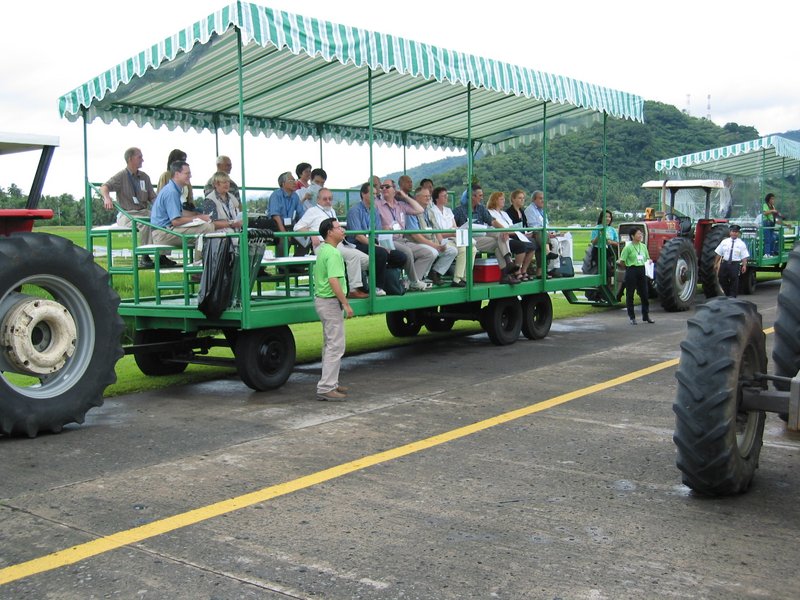
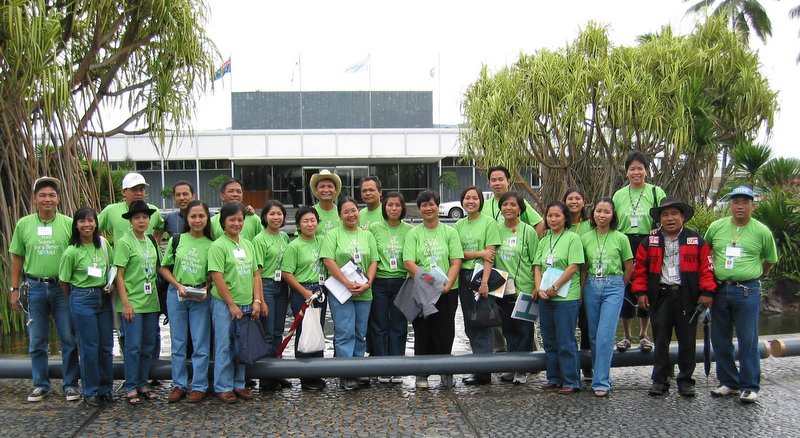
How to move everyone around the fields without having the inconvenience getting on and off buses? In 1998 I had attended a symposium to mark the inauguration of the Dale Bumpers National Rice Research Center in Stuttgart, Arkansas (self-proclaimed Rice and Duck Capital of the World). To visit the various field plots we were taken around on flat-bed trailers, towed by a tractor. We sat on straw bails, and each trailer also had an audio system. It was easy to hop on and off at each of the stops along the tour. However, we had nothing of that kind at IRRI and, in any case, we reckoned that any trailers would need some protection against the sun – or worse, a sudden downpour.

And that’s how I began a serious collaboration with our Experimental Farm manager, Joe Rickman to solve the transport issue.

rickman-about

Joe Rickman

We designed and had constructed at least 10 trailers, or bleachers as they became known. As far as I know these are still used to take visitors around the experimental plots when appropriate.

20021029008

So, transport solved. But what program of field and laboratory visits would best illustrate the work of the institute? In front of the main entrance to IRRI are many demonstration plots with roads running between them where we could show research on water management, long-term soil management, rice breeding, and pest management. We also opened the genetic transformation and molecular biology labs and, I think, the grain quality lab. I just can’t remember if the genebank was included. The genebank is usually on the itinerary for almost all visitors to IRRI but, given the numbers expected on IRRI Day, and that the labs are environment controlled – coll and low humidity – I expect we decided to by-pass that.

The IRRI All Stars
From the outset I decided that we would need staff to act as guides and hosts, riding the trailers, providing a running commentary between ‘research stations’. I put word out among the local staff that I was looking to recruit about 20-30 staff to act as tour guides; I also approached several staff who I knew quite well and who I thought would enjoy the opportunity of taking part. What amazed me is that several non-research staff approached me asking if they could participate, and once we’d made the final selection, we had both human resources and finance staff among the IRRI All Stars.

L-R: Carlos Casal, Jr., Josefina Narciso, Ato Reano, (???), Arnold Manza, Crisel Ramos, Varoy Pamplona, Lina Torrizo, (???), Jessica Rey, Caloy Huelma, Beng Enriquez, Joe Roxas, (???), Sylvia Avance, (???), Mark Nas, Ofie Namuco, Estella Pasuquin, (???), Ninay Herradura, Lily Molina, Tom Clemeno, Joel Janiya.

The IRRI All Stars L-R: Carlos Casal, Jr., Josefina Narciso, Ato Reano, Reycel Maghirang-Rodriguez, Arnold Manza, Crisel Ramos, Varoy Pamplona, Lina Torrizo, Tina Cassanova, Jessica Rey, Caloy Huelma, Beng Enriquez, Joe Roxas, Remy Labuguen, Sylvia Avance, Ailene Garcia-Sotelo, Mark Nas, Ofie Namuco, Estella Pasuquin, Ria Tenorio, Ninay Herradura, Lily Molina, Tom Clemeno, Joel Janiya.

Once we had a trailer available, then we began planning and practising in earnest. I wanted my colleagues to feel confident in their roles, knowledgeable about what everyone would see in the field, as well as feeling comfortable fielding any questions thrown at them by the visitors.

I think some of the All Stars felt it was a bit of a baptism by fire. I was quite tough on them, and encouraged everyone to critique each other’s ‘performance’. And things got tougher once we had the research scientists in the field strutting their stuff during the practice runs. My guides were merciless in their comments to colleagues about their research explanations. Not only did we reduce the jargon to a manageable level, but soon everyone appreciated that they had to be able to explain not only what they were researching, but why it was important to rice farmers. And in doing so, to actually talk to their audience, making eye contact and engaging with them.

It was worth all the time and effort we spent before IRRI Day. Because on the day itself, everyone shone. I don’t think I’ve been prouder of my colleagues. After the early morning rain, the clouds parted and by 9 am when we started the tours, it was a glorious Los Baños day at IRRI. The feedback from the delegates, especially the donor representatives, was overwhelming. Many had, as I mentioned earlier, a blinkered view of research for development, and rice research in particular. More than a few had a ‘Damascene experience’. Many had never even seen a rice paddy before. I believe that IRRI’s stock rose among the donor community during the 2002 International Centers Week – due in no small part to their very positive interactions with IRRI’s research staff and the All Stars.

On reflection, we had a lot of fun at the same time. It was extremely rewarding to see how positive all the staff were about contributing to the success of IRRI Day. But that’s the IRRI staff for you. Many a visitor has mentioned as they leave what a great asset are the staff to IRRI’s success. I know from my own 19 years there. In fact we had so much fun that just over a week later we held another IRRI Day for all staff, following the same route around the field and listening to the same researchers.

Using camera-mounted drones, it’s now possible to give IRRI’s visitors a whole new perspective.


Safeguarding rice biodiversity . . .

lao294I can’t claim it was the most successful project that IRRI – the International Rice Research Institute – ever managed. That would be too arrogant by half.

But by mid-2000 we successfully finished a project, Safeguarding and Preservation of the Biodiversity of the Rice Genepool, funded by the Swiss Agency for Development and Cooperation (SDC), that significantly enhanced the long-term conservation of rice genetic resources.

The SDC was extremely generous, and funded much of the proposed budget, donating USD3.286 million. Approved for funding in November 1993, we didn’t actually begin any of the project activities in earnest until 1995. That was because we spent 1994 ‘selling’ the project to our colleagues in national genetic resources programs and their superiors in the target countries, holding a series of planning meetings, and forming a Steering Committee, as well as recruiting several staff.

irri002

So the effective period of the project were the five years between 1995 and 1999, with a no-cost extension taking the project past its original end date of November 1998. But, as far as the SDC was concerned, this was never a problem. We kept everyone regularly updated on progress and achievements, and in any case, the donor had insisted that time was spent at the project’s initiation bringing everyone on board. It was certainly time well spent. This was particularly so in 1993-94. Why? Well in December 1993 the Convention on Biological Diversity (CBD) came into force (having been opened for signature at the Rio Earth Summit in June 1992) – just a few weeks after our rice biodiversity project was given the green light. And since the collection of rice varieties and wild species was a major component of the project, we weren’t sure just how committed several countries would be to participate in the project, let alone share their germplasm with others or send a duplicate sample of all collected germplasm for long-term preservation in the International Rice Genebank at IRRI. The negotiations leading to the CBD had certainly opened many cans of worms in terms of access to and use of germplasm, and to what extent germplasm had a strictly commercial value. While so-called ‘agricultural biodiversity’ (the landrace crop varieties, among others) was not the main focus of the CBD, this international treaty did provide the legal framework for access to germplasm, during the period leading up to the CBD, there had been a drop-off in the number of germplasm collecting expeditions, particularly those that were internationally-led. And of course, this was years before the International Treaty on Plant Genetic Resources for Food and Agriculture had been negotiated to provide the legal framework for germplasm exchange and use.

I think it says a lot for the international standing and reputation of IRRI that we encountered remarkably little opposition (especially among Asian nations) to the idea of participating in a collaborative concerted effort to collect and preserve as much rice biodiversity as possible. Essentially to try and fill the gaps in earlier germplasm collecting efforts. It seemed to us that this was the moment to seize. Civil conflicts were a thing of the past in several countries, infrastructure had improved providing access to areas and regions that had previously been inaccessible. In any case, with the rapid development that some countries were undergoing, we feared that unless something was done, then and there, there might not be an opportunity again in the foreseeable future, and valuable germplasm might be lost. The project had three components on germplasm collecting, on farm conservation, and training.

For germplasm collecting, we recruited two staff: Dr Seepana Appa Rao from India (who had spent much of his career at one of IRRI’s sister centers, ICRISAT in Hyderabad) and Dr Sigrid Liede from Germany. Existing IRRI staff Dr Bao-Rong Lu, a taxonomist from China and Ms Eves Loresto also took on important collecting and training responsibilities.

For the on farm conservation work, geneticist Dr Jean-Louis Pham from France was seconded to IRRI from his home institute IRD for five years. Two social anthropologists, Dr Mauricio Bellon from Mexico and Dr Stephen Morin from the USA worked in the project.

Within six months of the end of the project, we had submitted our final report and an interactive CD containing all the germplasm collecting and training reports, publications, and up to 1000 images (with a descriptive spreadsheet with live links to each image). Just click on the CD image below to automatically download a zip file (approximately 460 MB). Extract or copy the folders and files in the zip file to a new folder Rice Biodiversity on your computer, and click on the Start file. (There is a Read me! file in case you need more instructions.) Unfortunately it’s not possible to open the files interactively directly from the zip file here – you have to download. But that’s where you will find all the detail.

biod-cd

So below, I’ve included just a few highlights of what the project achieved, and its impact.

Collection and ex situ conservation of wild and cultivated rices
Germplasm collectors made one hundred and sixty-five collecting trips, lasting from just a few days to several weeks, in 22 countries between 1995 and 1999. A total of 24,718 samples of cultivated rice (Oryza sativa) was collected, and 2,416 samples of 16 wild Oryza species, weedy types and putative hybrids, and some unclassified samples; there were also samples of at least four species from three related genera.

The collecting effort in the Lao PDR was particularly impressive, with more than 13,000 samples of cultivated and wild rice now safely conserved in the local genebank and in the IRG. The collecting activities in sub-Saharan Africa focused almost entirely on wild species, and in general the number of samples collected was not high. The resource investment to collect this material was quite high but realistic given the somewhat sparse geographical distribution of the species populations, and the difficulties in collecting.

By the end of the project, more than 80% of the cultivated rice samples and 68% of the wild had been sent to the International Rice Genebank at IRRI for long-term conservation. All the details can be seen here.

On farm management of traditional rice varieties
In 1994, IRRI organized a workshop about on farm conservation of genetic resources. The participants agreed on the need to develop its scientific basis,because on farm  conservation of genetic resources was strongly advocated in international forums, but there was limited understanding of what this approach really meant. We therefore felt that more research should be conducted to understand farmers’ management of crop diversity and its genetic consequences. This was especially true in the case of rice for which very limited knowledge was available. So we set out to:

  • increase knowledge on farmers’ management of rice diversity, the factors that influence it, and its genetic implications; and
  • identify strategies to involve farmers’ managed systems in the overall conservation of rice genetic resources.

We developed research sites and teams in northern Luzon, Philippines, in central Vietnam, and in Orissa, India. And always we had that mix of geneticists and social scientists to provide a broad perspective on the dynamics of rice agriculture in terms of on farm management/conservation.

The contribution of this IRRI-coordinated project for on-farm conservation was to:

  • bring hard data and facts to the debate on the use and relevancy of on-farm conservation of rice genetic resources, and on the impact of deployment of modern varieties on biodiversity;
  • identify avenues for the implementation of on-farm conservation strategies;
  • explore the role that research institutions could play in the future;
  • develop methodologies and competencies in the assessment of rice diversity and its management by farmers through partnership with national programs;
  • increase the awareness and understanding of issues related to on-farm conservation and the value of local diversity both in NARS and local development agencies;
  • share its experience, with other researchers through the participation to various conferences and meetings, publication of papers, organization of a workshop, and collaboration with other projects.

An important ‘spin-off’ from the research concerned the restoration of germplasm in areas where varieties had been lost. During the course of the research, a major typhoon hit northern Luzon in the Philippines where we were working with farmers. During that season almost all of rice agriculture was wiped out, and many farmers no longer had access to the varieties they had previously grown, and none were available through official Department of Agriculture channels. Fate was on our side. In a previous season, project staff had samples a wide range of varieties from the farmers at the project sites, taken them to Los Baños, grown them out for morphological and genetic characterization and, in the process, multiplying the seed stocks. We were able to provide each farmer with up to 1 kg of seeds of each variety on request, and in total we sent back about 20 tonnes of seeds. Not all farmers wanted their indigenous varieties and changed over completely to modern, high-yielding varieties.

Strengthening of germplasm conservation by national agricultural research systems (NARS) and non-government organizations/ farmers’ organizations (NGOs/FOs)
Between 1995 and 1999, we ran 48 courses or on-the-job training opportunities in 14 countries and at IRRI headquarters in the Philippines. The training encompassed field collection and conservation, characterization, wild rice species, data management and documentation, genebank management, seed health, analysis of socioeconomic data, and molecular analysis of germplasm. And we trained more than 670 national program personnel. IRRI staff were involved in the management, coordination, and presentation of almost all the training activities.

However, the story doesn’t end there.

smc3_R.-Hamilton

Dr Ruaraidh Sackville Hamilton

While some gaps remain for germplasm collection and duplication of germplasm at IRRI, these issues have been taken up by my successor as head of the TT Chang Genetic Resources Center, Dr Ruaraidh Sackville Hamilton. Even so, the size of the International Rice Genebank Collection (IRGC) had increased by about 25% by 2000, not bad for a period when discussions in international fora (the CBD and the FAO Commission on Genetic Resources for Food and Agriculture) had put the brakes on germplasm sharing. Most of the national collections in Asia are now duplicated at IRRI, although some important Indian germplasm has never been duplicated, and I believe this remains the case still. The Africa Rice Center and IRRI have also cross-duplicated African germplasm, but I don’t have the latest information on this nor on the status with the International Center for Tropical Agriculture (CIAT) in Cali, Colombia.

Since the biodiversity project ended, the International Treaty mentioned earlier has also come into force and rice is one of the important crops specifically covered by that treaty.

To ensure the long-term conservation of rice germplasm at IRRI, there was a significant investment during the early 1990s to refurbish and upgrade the genebank as well as enhancing the actual conservation procedures followed. In recent years another sub-zero storage vault for long-term conservation was added to the genebank.

When I joined IRRI as head of the Genetic Resources Center in 1991 there was already in place an agreement with the USDA-ARS National Center for Genetic Resources Preservation for the ‘black box’ safety duplication of the entire IRRI collection – and that continues today.

In February 2008 a significant dimension was added to global crop germplasm conservation efforts with the opening of the Svalbard Global Seed Vault under the auspices of the Global Crop Diversity Trust (and the Government of Norway) – photos courtesy of the Global Crop Diversity Trust.

The whole IRRI collection – including those samples collected during the SDC-funded project – are now safely sitting under the permafrost in Spitsbergen, inside the Arctic Circle.

In this video, you can see genebank staff at IRRI preparing all the seed samples to send to Svalbard.

And in the next video, the late Professor Wangari Maathai (Nobel Peace Prize Laureate in 2004 and at that time a Board Member of the Global Crop Diversity Trust) and the Prime Minister of Norway, H.E. Mr Jens Stoltenberg carry the first box of germplasm – from IRRI no less – into the seed vault.

The work to safeguard rice biodiversity is never-ending. But a great deal has been achieved. Being part of a global network of genebanks – some in several Asian countries focusing specifically on rice  – IRRI’s contribution is extremely important.

20100211020

The broad genetic diversity of rice and its wild relatives is safe for the future, and I’m very proud to have played my part in that effort.

Spreading the good news about rice . . . the 4th International Rice Congress

Over the past 18 months I’ve been busy organizing a major science conference – on rice – that was held in Bangkok, Thailand during the last week of October. That’s one of the reasons I have been less active on this blog; I was running another about the science conference at the same time! Sponsored by the International Rice Research Institute (IRRI), the 4th International Rice Congress brought together rice researchers from all over the world. Previous congresses had been held in Japan, India and last time, in 2010, in Hanoi, Vietnam (for which I also organized the science conference). This fourth congress, known as IRC2014 for short, had three main components:

  • The Global Rice Market and Trade Summit (bringing together about 130 representatives of the rice industry). It was organized by IRRI’s Head of Social Sciences, Dr Sam Mohanty.
Source: IRRI

Dr Bob Zeigler, IRRI Director General, addressing delegates to the Global Rice Market and Trade Summit

  • An Exhibition.

Organizing IRC2014 Overall chair of IRC2014 was Dr V Bruce J Tolentino, IRRI’s Deputy Director General (Communication and Partnerships), with Thailand’s Dr Peeradet Tongumpai, Director, Agricultural Research Development Agency (ARDA) as Co-Chair.

But the science conference was undoubtedly the main reason for most delegates being at IRC2014 that week. Held at the Bangkok International Trade and Exhibition Centre (BITEC), this venue was chosen for its convenient location (about half distance between downtown Bangkok and the international airport), proximity to public transport (the BTS), and its excellent facilities. Way back at the beginning of 2013 IRRI management asked me if I would like to organize the science conference in Bangkok, having taken on that role in 2009 before I retired from IRRI and for six months after I left. From May 2013 until IRC2014 was underway, I made four trips to the Far East, twice to Bangkok and three times to IRRI. We formed a science committee, and I was fortunate to have a group of very professional scientists assisting in the planning and delivery of the science conference. Thai rice pathologist Dr Poonsak Mekwatanakarn [1] became my Co-Chair, and IRRI rice root biologist Dr Amelia Henry was the Deputy Chair, and the three of us formed an Executive Committee.

The committee was supported by two staff from Kenes Asia (the conference organizers): Ms Warapa ‘Art’ Saipow, Project Manager and Ms Tanawan ‘Mint’ Pipatpratuang, Associate Project Manager and direct liaison to the science committee. From IRRI, two staff in Bruce Tolentino’s office, Mon Oliveros and Yuan Custodio, also supported the committee.

Our ambitions for the science conference were set high. We wanted to encourage as many rice scientists from around the world to make the trip to Bangkok and share their research with their peers. And I believe we did achieve that. More than 1400 delegates attended IRC2014, from 69 countries. The science program had five components:

  • A Keynote Address, delivered by IRRI Director General Dr Bob Zeigler on Tuesday 28 October, on the topic The Second Green Revolution Has Begun: Rice Research and Global Food Security
  • Four plenary speakers (five had been invited but one had to pull out at the very last minute due to a medical emergency)
  • Nine symposia on closely-defined topics (such as rice root biology, rice in the mega deltas of Asia, or climate-ready rice), all with invited speakers, 62 in total.
  • Seven general science themes (genetic resources, value chains, cropping systems, etc), including temperate rice, with almost 150 papers selected on merit in a blind review.
  • Three science poster sessions, with about 670 posters on display throughout the three days of the conference.

On all three days there were six parallel sessions of oral papers, with an additional forum about funding agricultural research on the first afternoon, and a workshop on drip irrigation on the second afternoon. Some IRC2014 highlights At the Opening Ceremony on the Tuesday afternoon (28 October), we were treated to an impressive display of Thai dancing, and there were speeches from His Excellency Petipong Pungbun Na Ayudhya, Minister of Agriculture and Cooperatives, and from Privy Counselor Amphon Senanarong, representing His Majesty King Bhumibol Adulyadej of Thailand.

During the actual science conference, 29-31 October, attendance at the various sessions was good, with only one or two reporting low numbers. There was also ample opportunity for delegates to network.

On Saturday 1 November, many delegates took advantage of one of the post-conference tours, that mixed both rice research and production visits as well as some Bangkok tourism. These videos highlights some of the different activities at the conference.

One of the main highlights – for me at least – was the opportunity we had to recognize 29 Young Rice Scientists (YRS) from 19 countries who had submitted papers and that had been selected in the blind review. Each YRS had to be 35 years or younger, working in rice research or conducting research for a graduate degree. We also put a special sticker with each poster authored by a Young Rice Scientist.

The initiative was highly appreciated by young scientists especially but also among all delegates at IRC2014. This was a great opportunity for young scientists – the next generation – to compete on equal terms with their peers and longer-established scientists. In this video, a couple of the YRS speak about what the award meant to them. Incidentally, each YRS received a return ticket to Bangkok, conference registration, a ticket to the congress dinner, and five nights accommodation in a hotel.


[1] I heard on 7 August 2020 that Dr Poonsak passed away in Bangkok on 5 August. Very sad news.

Chilling in Los Baños . . .

For the past week I have been at the headquarters of the International Rice Research Institute (IRRI) in Los Baños in the Philippines, where I worked for almost 19 years until my retirement in April 2010. I had to attend two meetings in preparation for the 4th International Rice Congress (IRC2014) that will be held at the end of October in Bangkok, Thailand. The first meeting, from Monday to Wednesday, was the SciCom Exec to finalize the content and structure of the scientific conference. The IRC2014 Organizing Committee met on Thursday and Friday. We were kept busy from morning to night, although there were opportunities for some social gatherings, and I also took full advantage of staying in IRRI’s Guesthouse to enjoy the nearby swimming pool every morning at 6 am.

But I’m getting ahead of myself. My journey began on Friday 8 August, traveling on Emirates Airlines from Birmingham to Manila via Dubai (BHX-DXB-MNL). There were minimal delays at BHX, and we landed more or less on time in DXB around midnight local time.

The stopover was about three hours, and by the time I’d cleared security, checked out Duty Free, and made my way to the EK lounge in Terminal 3, there wasn’t too long to wait before we were boarding the next flight to Manila. That wasn’t a good flight. It was comfortable enough, but there was turbulence the whole flight – not severe by any stretch of the imagination, except for the occasional sharp bump – and just persistent enough to prevent me from settling. Added to that, a large gentleman across the aisle from me settled to sleep immediately after take-off from DXB, and snored the whole way to Manila! After landing in Manila NAIA Terminal 1, I had passed through immigration and customs in less than 20 minutes, but traffic congestion around the airport (it was around 5:15 pm on Saturday), and during the 65 km drive to Los Baños, delayed our arrival at the Guesthouse until almost 8 pm.

Meeting old friends
Despite the busy schedule of meetings, I was able to catch up with the many old friends at IRRI. I was given an office in my former DPPC unit, now called DRPC.

On Tuesday night I was treated to dinner at Sulyap Gallery Café and Restaurant in San Pablo, about 10 km south of Los Baños. And we had a lovely evening: great company, great food. What more can you ask for?

L to R: Eric, Zeny, me, Vel, Corints and Yeyet

L to R: Eric, Zeny, me, Vel, Corints and Yeyet

On Wednesday, Yeyet and her husband Christian took me out to dinner in Los Baños. They were married in March, and had invited me to be one of their sponsors or ninong. Of course I wasn’t able to travel then, but I did send a short video message that was played during the wedding reception. It was a complete surprise to everyone (except Vel with whom I’d made the arrangements to receive and show the video).

On Thursday and Friday nights the IRC2014 committees got together to relax.

Checking out the genebank
Our meetings finished by Friday lunchtime, so I took advantage of some ‘free’ time in the afternoon to visit the International Rice Genebank in the TT Chang Genetic Resources Center, and meet my former staff and colleagues.

Now the genebank is really the only place in Los Baños where you can chill out. The Active Collection is kept around 2-3C, but the Base Collection is maintained at a decidedly frosty -18C. Since I left IRRI in 2010, a new and much larger cold room to house the Base Collection was added to the genebank infrastructure, with funding from the World Bank. Seeds are still stored in vacuum-sealed aluminium cans, but nowadays, everything is neatly bar-coded. (I was even shown a new tablet-based scoring system, complete with photos and descriptions, for germplasm characterization).

Despite the fact that I had responsibility for the genebank for a decade from 1991, and obviously it’s my ‘baby’, I’m immensely proud of the staff and their conscientious attitude in conserving this extremely important germplasm collection.

Out and about on the farm – Typhoon Glenda
This morning (Sunday) I decided to take a tour of the IRRI Experiment Station, not only to see all the various rice breeding plots and experiments, but to visit the wild species screenhouses on the Upland Farm, and see what damage the recent Typhoon Glenda had caused.

‘You can take the man out of IRRI, but you can’t take IRRI out of the man’. Wandering around the farm, looking at all the fields and labs where I worked for almost 19 years it was hard not to feel really nostalgic. But when I visited IRRI last November, it was almost 4 years then since I had retired and I had been away long enough to have made ‘the separation’. Nevertheless, IRRI and its work has become part of my DNA, and I really do get a thrill wandering through the fields. Rice breeding and science is a numbers game, and IRRI plays that game to the highest proficiency. The field plots are immaculate, and surprisingly so considering the severity of Typhoon Glenda which apparently hung around the Los Baños area for more than 6 hours. There must have been some extremely turbulent vortices to have caused the damage that it did, although this time, there was little if no rain damage. Typhoon Glenda was a ‘dry’ typhoon compared to many.

An Iranian feast
On Sunday evening, I met up with an old friend and former staff member, Bita, who now works for Accenture in Manila. Bita is originally from Iran, but moved to the Philippines when she was eleven. Both her parents are rice scientists. So Bita grew up in Los Baños, went to UPLB, married and had four lovely children, and has now opened an authentic Iranian restaurant in Los Baños called Everyday Kabab.

I had a lovely meal of dips and naan bread (check out Bita’s garlic and yoghurt dip) followed by chicken and beef kababs, prepared using Bita’s secret recipe. She also serves a traditional cherry drink from Iran; it’s neither sweet nor sour, but very refreshing. And Everyday Kabab is growing in popularity among the LB community – it certainly began to fill up while I was there.

And finally, another surprise . . . 
Once we’d finished early on Friday afternoon and I left GRC, I returned to the Guesthouse for some rest, and to work in a more comfortable location. At least I could wear shorts and a T-shirt. But I hadn’t been in my room much more than 30 minutes when the phone rang, and to my surprise, it was Lilia Tolibas, our helper who worked for us for 18 years. Although working mostly in Manila these days, Lilia still has family ties in Los Baños, and had heard I was in town. And she came specially to see me.

We had a good chat for almost an hour, and it was then I heard about her misfortune during last November’s Typhoon Yolanda that hit her home town of Tacloban so badly. After we had left, she built a small house in Tacloban and moved many of her belongings there. But the tidal wave that hit the town destroyed her house, and sadly one of her sisters drowned. She works for the American Chamber of Commerce in Manila and they were quickly offering humanitarian relief. They found her family, and quickly also found her sister’s body who was given a decent burial, a dignity not afforded to so many victims. Lilia is still waiting for her compensation from the government from the humanitarian relief that so many countries donated. It’s a scandal that this is not being released to the victims and families.

Flying home . . .
Tomorrow night, Monday, my EK flight to DXB departs at 23:55 from the ‘new’ Terminal 3 at NAIA. I say ‘new’ advisedly since it was constructed almost a decade ago but, until now, had not be used by the major airlines. Emirates transferred to Terminal 3 last Friday. Let’s hope that this NAIA experience is far superior to many I’ve had out of the decrepit Terminal 1. I should be home in the UK by early afternoon on Tuesday.

A busy week, yes. Fruitful? Yes. Many things accomplished? Yes. Now it’s time to complete the final tasks and before we know it we’ll all be heading off to the congress in Bangkok at the end of October.

Around the world in 40 years . . . Part 5. Under African skies.

Over the years I’ve had the opportunity of visiting a number of African countries, my first being Ethiopia in early 1993. From then until my retirement in 2010, I made a number of forays into that continent linked to my work in international agricultural research, including South Africa, Zambia, Mozambique, Madagascar, Kenya, Nigeria, Ivory Coast, and Morocco.

Ethiopia
In 1993 I attended my first meeting of the CGIAR Inter-Center Working Group on Genetic Resources (ICWG-GR), hosted by what was then the International Livestock Center for Africa (ILCA) in Addis Ababa (now ILRI-Ethiopia). After several days couped up in a tiny meeting room we did manage a field trip and I traveled down into the Rift Valley to visit ILCA’s research station at Debre Zeit. There was also lots of Eragrostis tef – teff -to see growing in the fields – a small-grained, indigenous cereal that is used to make injera, a fermented flat bread. There – but also on the ILCA campus in Addis – the bird life is truly magnificent. Beside a lake in Debre Zeit the fish eagles were as common as sparrows in the trees.

In early 2010 I was ‘asked’ to attend a CGIAR planning meeting in Addis for just one day. I flew all the way from the Philippines for one day! However, my departure flight on the second day didn’t leave until the evening, so I spent much of the day relaxing or walking around the campus bird-watching – buzzards two-a-penny, beautiful long-tailed flycatchers chasing one another through the scrub, and flocks of brilliantly colored bee-eaters on the open ground, just to mention a few. Having lived in the Philippines for almost 20 years seeing so many bird species was truly a delight, because where we lived in Los Baños was essentially an ‘avian desert’. But it has become much better – see the latest issue of Rice Today.

South Africa
Although I had passed through Jo’burg in South Africa on a couple of occasions, I did spend a week in Durban in May 2001 to attend a meeting of the CGIAR. All delegates had been warned to take care when walking around outside, but that didn’t prevent some Malaysians being mugged right outside the hotel entrance. And one of my colleagues found himself in the middle of a gun battle when he took a walk along the sea front. We did have a day trip to visit agricultural research in Pietermaritzburg so that gave an opportunity to see something of the country. The day of activities in Pietermaritzburg was opened by a member of the Zulu royal family, and I can still remember the shivers up my neck as a choir sang the South African national anthem, Nkosi Sikelel.

And as with my Rift Valley trip in Ethiopia and in Kenya on another occasion, it reinforced this perspective that Africa is a continent of huge landscapes.

Mozambique
I first visited Mozambique in about 1995 when I was setting up a large rice biodiversity project funded by the Swiss government. I spent much of my time in Maputo, with just one short field trip. One thing that has stayed in my memory are the Danger – Landmines! warning signs, a consequence and reminder of the various conflicts that dogged Mozambique in previous decades.

Until recently, IRRI’s regional office for Eastern and Southern Africa was based in Maputo (now transferred to Burundi). Here’s IRRI’s former regional leader Joe Rickman talking about rice research and development in the region.

Mozambique was also the venue for the CGIAR to hold its annual meeting in 2008.

Zambia
Again this was another biodiversity-related trip, specifically to meet scientists at the SADC Plant Genetic Resources Centre in Lusaka, where a couple of my former MSc students from Birmingham were working. The genebank had been set up in a collaborative project with the Nordic Genebank in Sweden, and I took a number of ideas away from that visit about low-cost, appropriate technology genebank design that I introduced to several genebank programs in Asia.

On my last day, I had a late afternoon flight to Nairobi, Kenya, but no other commitments. I’d been struggling with a draft of a paper that IRRI had committed me to write for German-published GeoJournal (IRRI had been given the opportunity of a special issue). I decided to use my several ‘free’ hours in Lusaka to make some headway with my draft. After an early breakfast – and with just a couple of ‘comfort breaks’ over the next six or seven hours, I finally drafted almost 40 pages of single-spaced hand-written text. I’d brought along a sheaf of plain paper (I hate using ruled paper) and a bunch of sharp HB pencils. When I came to have the draft typed up ready for editing I surprised myself by actually making very few changes. This was the result.

Kenya
I’ve spent time in Nairobi on three occasions, although I passed through the airport on a couple of others. The first time I flew in for 48 hours en route to Nigeria. In 1998, the ICWG-GR met, hosted by the World Agroforestry Centre, and we held our meeting upcountry near Mt Kenya. Not that we got to see much of it as it was shrouded in cloud almost all of the time. Nor did we see any big game.

L to r: Bent Skovmand (CIMMYT, deceased), Lindsey Innes (consultant), Joel Cohen (ISNAR), Roger Pullin (ICLARM), Jane Toll (SGRP), ??, Wanda Collins (CIP), Paula Bramel (ICRISAT), Jan Valkoun (ICARDA), Maria Zimmerman (FAO-TAC), Mike Jackson (IRRI), Tim Boyle (CIFOR), Cary Fowler (FAO), Jean Hanson (ILRI), Daniel Debouck (CIAT), ??, Randy Barker (IWMI), Geoff Hawtin (IPGRI), Quat Ng (IITA), Masa Iwanaga (IPGRI), ??, ??, Tony Simons (World Agroforestry Centre-WAC), Ian Dawson (WAC)

But the meeting was successful and the Group awarded me about USD200,000 to organize a meeting the following year in The Hague on Genebanks and Comparative Genetics, a first for the CGIAR!

The CGIAR held its annual meeting in Nairobi in 2003 – I managed to lose my mobile phone. At all these meetings there are opportunities to visit agricultural research projects. The one I joined had to do with range land ecology, i.e. big game! That was a popular outing with many delegates, and eventually took us into the Nairobi National Park that really does come right up to the outskirts of the city. This was the only time that I have ever seen big game in the wild: rhinos, buffalo, giraffes, cheetahs, and wildebeest and zebra, of course. This park does not have elephants, unfortunately; you have to travel to some of the other reserves to see those.


Nigeria
Another CGIAR center, IITA, is based at Ibadan, and I guess I must have been there maybe half a dozen times. Ibadan is about 170 km north-north-east of Lagos, a three-hour drive. IITA has a marvelous 1,000 ha campus. It was once quite isolated from Ibadan (now one of the largest cities in sub-Saharan Africa) but over the years the city has sprawled right up to the IITA boundary fences. In addition to its experimental fields, there is some virgin rainforest, and even a lake stocked with Nile perch – angling is a favorite IITA sport. But there are miles of roads to wander, and I always found the IITA campus a place of great relaxation after work hours. It was just the threat of malaria that always used to worry me. The ICWG-GR met there in the 90s, and one day we took an excursion into the forest looking for wild yams.

With Jan Valkoun (ICARDA), Willy Roca (CIP), Murthi Anishetty (FAO) and Quat Ng (IITA).

An overnight stay in the IITA-Lagos guest-house is a must if a flight arrives in the evening. There is no shuttle service – for obvious security reasons – at night. And even during the day, a second vehicle, riding shotgun – literally, but also carrying luggage would accompany a passenger vehicle on the trip from Lagos to Ibadan.

Lagos airport was always a cause for concern, especially on departure, where both immigration and customs officials would be looking for a ‘gift’, and searching one’s hand-luggage for any suitable item. Always a source of tension, although by the time of my last visit, maybe around 2000, the situation had improved beyond any comparison with my first visit in 1994.

Being met at the airport in Lagos was always a relief, and IITA staff were immensely helpful. I remember one occasion when I was flying in from Abidjan, Ivory Coast. On arrival at Abidjan airport I was informed that my ‘confirmed’ flight would not be departing. In fact it had ‘never existed’, but I could fly on the next flight later that evening, with intermediate stops in Accra (Ghana), Lomé (Togo), and Cotonou (Benin). I hadn’t been able to contact IITA to let them know of the changes in my travel plans, and was praying that someone would be at the airport. My sense of anxiety was not helped when, on arrival in Lagos, and just before the immigration desk, this man in plain clothes stepped out and demanded my passport. I’d always been advised not to hand over my passport unless the person could provide some means of identity. After showing some hesitation to comply with the ‘request’ I was threatened with dire consequences. Who this man was I never found out. On collecting my luggage and departing the customs area it was a huge relief to see someone wearing an IITA cap – my meeter and greeter.

Ivory Coast
The Africa Rice Center (formerly known as WARDA – the West Africa Rice Development Association) had its headquarters in Bouaké until it was forced to abandon the site and leave the country when the civil war commenced in 2002. It relocated to the IITA sub-station in Benin, just over the international border from Lagos in Nigeria. While it has hopes to return to Bouaké some day, personally I think that day is a long way off.

On two occasions I flew from Abidjan on the coast to Bouaké, but have traveled south by road via the capital Yamoussoukro, where a former president built one of the largest Catholic basilicas in the world, and one to rival St Peter’s in Rome.

Under the then Director General, Eugene Terry and Deputy Peter Matlon, I found WARDA to be a small but dynamic institute, well-focused on its regional mandate, but in awe of its bigger rice sister, the International Rice Research Institute in the Philippines. I believe that some of the work I undertook on a joint mission commissioned by Terry and IRRI Director General Klaus Lampe, helped to improve relations between them. They certainly couldn’t have dipped much lower at that time in the mid-90s.

Madagascar
I visited Madagascar just the once, in the late 90s, although I had tried to get there a couple of years earlier, but had to cancel, even as I was in Jo’burg waiting for a flight because the schedules was totally disrupted and I had no idea when I’d be able to travel.

Again it was related to my rice biodiversity project. We supported a major program to collect both wild and cultivated rices, one of the major staples of Madagascar. Having seen something of the incredible wealth of indigenous animal species through some of David Attenborough’s TV specials, it would have been great to go beyond rice and see what else this fascinating island has to offer. Regrettably there was no chance, but a couple of short trips, on incredible bad roads, from the capital Antananarivo to a rice research station in the boondoks allowed me to see something of the countryside.

Morocco
And that’s more than I can say bout my one and only visit to Morocco in 2005 when the CGIAR held its annual meeting in Marrakesh. I went down with a nasty cold not long after I arrived, and because of some pressing commitments, I had to spend much of my time locked away in my room finalizing a research project proposal to an important donor worth several million dollars. You can imagine where my DG saw my priorities! So most of the time, I only saw the hotel.

But I did manage to visit the market on one afternoon, and pick up some silver beads for Steph that she has subsequently used in her beading projects.

1-20051204014

Where good science matters . . . and it’s all relevant

A well-deserved reputation
It was early November. However, I can’t remember which year. It must be well over a decade ago. I was on my way to a scientific meeting in the USA – via Kuala Lumpur where I’d been invited to participate in a workshop about intellectual property rights.

My flight from Manila arrived quite late at night, and a vehicle and driver were sent to KL airport to pick me up. On the journey from the airport my driver became quite chatty. He asked where I was from, and when I told him I was working in the Philippines on rice, he replied ‘You must be working at IRRI, then‘ (IRRI being the International Rice Research Institute in Los Baños in the Philippines). I must admit I was rather surprised. However, he had once been the chauffeur of Malaysia’s Minister of Agriculture. No wonder then that he knew about IRRI.
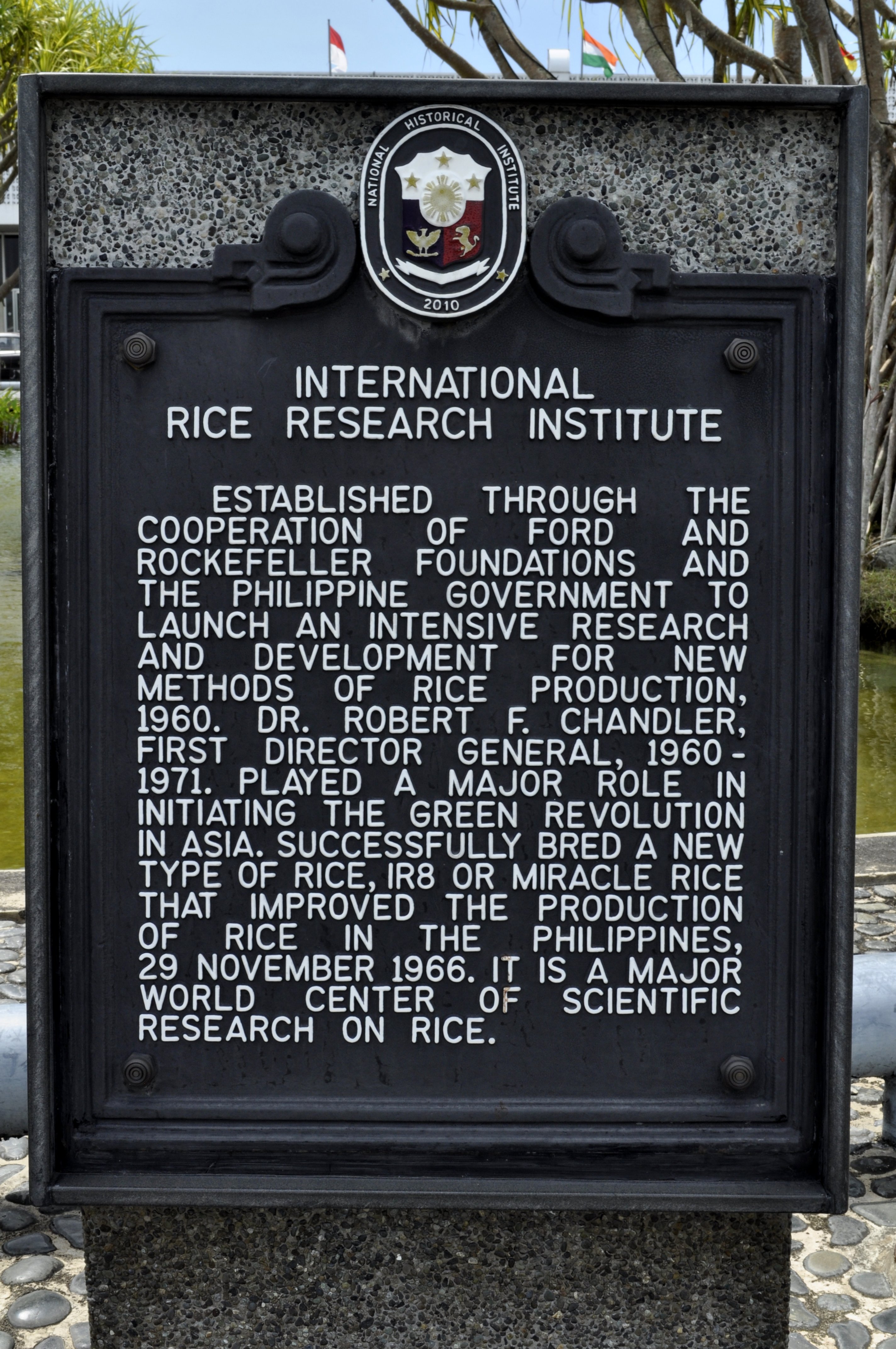
One of the national historical markers dedicated on 14 April 2010, the 50th anniversary of IRRI's founding

One of the national historical markers dedicated on 14 April 2010, the 50th anniversary of IRRI’s founding

IRRI’s reputation has spread far and wide since its foundation in 1960, and IRRI is now one of the world’s premier agricultural research institutes. Its reputation is justified. At the forefront of technologies to grow more rice and more sustainably, IRRI can be credited with saving millions of people around the world from starvation, beginning in the 1960s with the launch of the Green Revolution in Asia (see a related story about Green Revolution pioneer, Norman Borlaug). Now its work touches the lives of half the world’s population who depend on rice every day. No wonder IRRI is such an important place. But over the decades it has had to earn its reputation.

On a recent visit

20130504057 IRRI

The main entrance in front of the admin buildings, between Chandler Hall (on the left) and the FF Hill Building (on the right, where I worked for almost a decade)

Between Chandler Hall and the FF Hill Building, with Mt Makiling in the distance

A view south over the long-term trail plots and others, looking towards Mt Banahaw

A view south over the long-term trial plots, looking towards Mt Banahaw, with the entrance gate to IRRI on the right, and the research labs off to the left

Some of the research labs, with the NC Brady building on the right, home to the International Rice Genebank

Some of the research labs, with the NC Brady building on the right, home to the International Rice Genebank

I was there recently, exactly three years after I had retired. And the place was buzzing, I’m pleased to say. There was such an optimistic outlook from everyone I spoke to. Not that it wasn’t like that before, but over the past decade things have moved along really rather nicely. That’s been due not only to developments in rice research at IRRI and elsewhere, but also because the institute has had the courage to invest in new approaches such as molecular genetics as just one example, and people. That was an aspect that I found particularly gratifying – lots of young scientists beginning their careers at IRRI and knowing that it will be a launching pad to opportunities elsewhere.

I was visiting in connection with the 4th International Rice Congress that will take place in Bangkok, Thailand during the last week of October 2014. I’ve been asked to chair the committee that will develop the scientific conference. We expect to have a program of more than 200 scientific papers covering all aspects of rice science and production, as well as a number of exciting plenary speakers.

IRRI’s strengths
You only have to look at IRRI’s scientific publication record – and where its scientists are publishing – to appreciate the quality of the work carried out in Los Baños and at other sites around the world (primarily but not exclusively in Asia) in collaboration with scientists working in national research programs. IRRI’s soon-to-retire senior editor  Bill Hardy told me during my recent visit that by the beginning of May this year he had already edited more journal manuscripts than he did in the first six months of 2012. And IRRI has a very good strike rate with its journal submissions.

IRRI’s research is highly relevant to the lives of rice farmers and those who depend on this crop, ranging from the most basic molecular biology on the one hand to studies of adoption of technologies conducted by the institute’s social scientists. It’s this rich range of disciplines and multidisciplinary efforts that give IRRI the edge over many research institutes, and keep it in the top league. IRRI scientists can – and do – contemplate undertaking laboratory and field experiments that are just not possible almost anywhere else. And it has the facilities (in which it has invested significantly) to think on the grand scale. For example, it took more than 30,000 crosses with a salt-tolerant wild rice to find just a single fertile progeny. And in research aimed at turbocharging the photosynthesis of rice, a population of 1 million mutant sorghum plants was studied in the field, with only eight plants selected after all that effort. Both of these are discussed in a little more detail below. In 2012, IRRI made its 100,000th cross – rice breeding remains a mainstay of the institute’s work, keeping the pipeline of new varieties primed for farmers.

Take a look at this 11½ minute video in the skies above IRRI’s 252 hectare experimental farm. In the first few minutes, the camera pans eastwards along Pili Drive over the institute’s main administrative buildings, before heading towards the research laboratory and glasshouse complex. In the middle sequence, with the Mt Banahaw volcano in the distance (due south from Los Baños) you can see the extensive experimental rice paddies with rice growing in standing water. In the final segment, the camera sweeps over the ‘upland’ farm, with dormant Mt Makiling in the distance, and showing the multiplication plots from the International Rice genebank, before heading (and closing) over the genebank screen houses where the collection of wild Oryza species is maintained. It’s certainly an impressive sight.


Taking a long-term view

You can’t get much longer-term than conservation of rice genetic resources in the institute’s genebank. This is the world’s largest collection of rice genetic resources, and I was privileged to head the genebank and genetic resources program for a decade from 1991. I’ve written about this in more detail elsewhere in my blog.

Explaining how rice seeds are stored in the International Rice Genebank to Nobel Laureate Norman Borlaug

Explaining how rice seeds are stored in the International Rice Genebank to Nobel Laureate Dr Norman Borlaug

In 1963 (just three years after IRRI was founded) long-term experimental plots were laid out to understand the sustainability of intensive rice cropping. In these next videos soil scientist Dr Roland Buresh explains the rationale behind these experiments. They are the tropical equivalent of the Broadbalk classic experiment (and others) at Rothamsted Experiment Station just north of London in the UK, established in the mid-19th century.

And in this next video you can watch a time-lapse sequence from field preparation to harvest of two crops in the long-term trials.

Making rice climate ready
Three areas of work are closely linked to the problem of climate change, and highlight how IRRI is at the forefront of agricultural research.

Rice varieties with and without the SUB1 gene after a period of inundation

Rice varieties with and without the SUB1 gene after a period of inundation

Scuba rice. Although rice grows in standing water, it will die if inundated for more than a few days. But several years ago, a gene was found in one rice variety that allowed plants to survive about two weeks under water. In a collaborative project with scientists from the University of California, the gene, named SUB1, has been bred into a number of varieties that are grown widely throughout Asia – so-called mega-varieties – and which are already bringing huge benefits to the farmers who have adopted them in India and Bangladesh. In this video, the effect of the SUB1 gene can easily be seen. Much of the work was supported by the Bill & Melinda Gates Foundation, and has (as stated on the Foundation’s web site) ‘exceeded our expectations’.

Careful with the salt. Recently, IRRI announced that breeders had made crosses between a wild species of rice, Oryza coarctata (formerly known as Porteresia coarcata – which already indicates how remote it is from cultivated rice) to transfer salt tolerance into commercial varieties. Building on the wide hybridization work of Dr Darshan Brar (who retired in 2012), Dr KK Jena has achieved the impossible. After thousands of crosses, and culture of embryos on culture medium, he now has a plant that can be used as a ‘bridge species’ to transfer salt tolerance. As IRRI Director General Bob Zeigler explained to me, ‘Now we have fertile crosses with all the wild rices, we can tap into 10 million years of evolution‘. I couldn’t have expressed it better myself!

Boosting output. Lastly, since 2008 IRRI has led the C4 Consortium, a network of scientists around the world who are studying how photosynthesis in rice (which is quite inefficient in an environment where temperature and CO2 levels are increasing) could be modified to make it as efficient as maize or sorghum that already have a different process, known as C4 photosyntheis (just click on the image below for a full explanation). This work is also funded by the Bill & Melinda Gates Foundation and the UK government.

There are so many examples I could describe that show the importance and relevance of IRRI’s research for development. I think it’s the breadth of approaches – from molecule to farmer’s field (it’s even working with farmers to develop smartphone apps to help with fertilizer management) – and the incredible dedication of all the people that work there that makes IRRI such a special place. Now part of the Global Rice Science Program (GRiSP) funded through the CGIAR Consortium, IRRI’s work with a wide range of partners goes from strength to strength.

There’s no doubt about it. Joining IRRI in 1991 was the second best career decision I ever made. The best career move was to get into international agricultural research in the first place, way back in 1971. What a time I had!

Rice for the world . . .

Conferences are an important part of any scientist’s annual plans. You could attend a conference almost on any subject, and held in almost any part of the world. Many scientific societies hold annual meetings, and sometimes specialist meetings in between. When I was an active potato scientist in the 1970s I did manage to attend at least one Annual Meeting of the Potato Association of America. The 63rd Annual Conference was held in Vancouver, Canada on the campus of the University of British Columbia, 22-27 July 1979, and I was working for the International Potato Center in Central America at the time. I was able to combine this work trip with some vacation, and my wife Steph and 15 month old daughter Hannah came along. We had two or three days in San Francisco on the way north (my only visit to that wonderful city, apart from an overnight airport stop), several days in Vancouver (where the sun shone brightly all the time we were there), followed by a road trip through the Canadian Rockies to Edmonton, Alberta to spend a few days with my elder brother Ed and his wife Linda. From there we went on to Madison, Wisconsin to visit with Profs. Luis Sequeira and Arthur Kelman at the university, to discuss my work on bacterial wilt of potatoes. And then we flew home to Costa Rica via Chicago and Miami.

When I was with IRRI I managed to attend four or five annual meetings of the Tri-Societies (ASA-CSSA-SSSA): the Agronomy Society of America, the Crop Science Society of America, and the Soil Science Society of America, a huge shindig of several thousand attendees. I was a member of Division C-8 of the CSSA on genetic resources and was invited a few times to present my rice research.

IRC 2014 logo finalFor rice, however, there is only one meeting of significance, and that’s the International Rice Congress, with the 4th Congress (IRC2014) scheduled to take place in Bangkok, Thailand from 27-31 October 2014. And I have been taken on as a consultant by the International Rice Research Institute (IRRI) to lead the development of the congress science program. Before I retired from IRRI in 2010 I had a similar role for the 3rd Congress (IRC2010) that was held in Hanoi, Vietnam in early November 2010. Planning had begun in early 2009, and after retiring I completed my role from my home in the UK.
I’m excited to be involved in IRC2014, not only because the congress is a prestigious meeting for rice science, bringing together rice scientists from all over the world (there were more than 2000 attendees in 2010), but it will help keep me up to date with latest advances in the rice world.

Planning is at an early stage, and a possible theme will be Rice for the World . . . watch this space; I’ll link to the official congress website when it’s up. I’ll be going out to Thailand at the end of April for a few days to meet with colleagues at Kenes Asia, the company that will handle all the logistics for IRC2014. Then it’s on to IRRI in Los Baños in the Philippines for about 10 days. Hopefully at the end of that trip we’ll have a science support committee in place, ad the broad structure of the science sessions mapped out. Of course there’s an enormous amount of work to arrive at a final scientific program, not least determining the detailed structure of the program – along scientific themes or disciplines, geographical regions, or even rice ecosystems. Lots of points to discuss and decisions to make.

bitecThe congress will be held at BITEC – the Bangkok International Trade & Exhibition Centre. Hopefully I’ll have chance to visit the venue during my two days in Bangkok. That’s very important to get a much better idea of just what is possible in terms of parallel sessions, space for poster sessions, and the all important plenary or plenaries. I haven’t been to Bangkok for many years and although traffic congestion is still bad, getting around has improved considerably, I’m led to believe, following the opening of the Skytrain.

Once the congress website is up and running, and there’s more to report about the science program at IRC2014, I’ll be making regular updates. Do come back.

It was 40 years ago today . . .

News item in The Birmingham Post, 2 January 1973

News item in The Birmingham Post, 2 January 1973

One evening in February 1971 I received a phone call from Professor Jack Hawkes who was head of the Department of Botany at the University of Birmingham, and Course Director for the MSc on Conservation and Utilization of Plant Genetic Resources. I’d begun my studies at Birmingham in September 1970 after graduating some months earlier from the University of Southampton with a BSc in environmental botany and geography. He asked me if I was interested in working in Peru for a year. Well, it had been my ambition for many years to visit Peru, and here was my chance.

Jack was a world-renowned authority on the potato, its taxonomy and origins in the Andes of South America. And on the day that he phoned me, he had just returned from a two month expedition to Bolivia to collect samples of wild potato species. He had been joined on that expedition by his close collaborator from Denmark, Dr Peter Hjerting, and one of his PhD students, Phillip Cribb (who went on to become an orchid expert at the Royal Botanic Gardens – Kew).

Dr Richard L Sawyer, Director General of CIP, 1971-1991

Dr Richard L Sawyer, Director General of CIP, 1971-1991

The expedition also received logistical support from the North Carolina State University-Peru USAID project, led at that time by Dr Richard Sawyer who would go on to found and become the first Director General of the International Potato Center (CIP) in October 1971.

Peruvian potato expert, Dr Zosimo Huaman

While in Lima at the start and end of the expedition, Jack has stayed with Richard and his wife Norma. Richard talked of his vision to found CIP, and that he wanted to send a young Peruvian to study on the MSc course at Birmingham. That was Zosimo Huaman, who would go on to complete his PhD with Jack, and stay with CIP for the next 20 or more years. Zosimo was helping to manage a collection of native varieties of potato from Peru that the USAID project had taken over, and which would pass to CIP once that institute was open for business.

But if Zosimo went off to the UK, who would look after the potato collection? Richard asked Jack if he knew of anyone from Birmingham who might be interested in going out to Peru, just for a year, while Zosimo was completing his master’s studies. ‘I think I know just the person’, was Jack’s reply. And that’s how Jack came to phone me that February evening over 40 years ago.

But it wasn’t quite that simple.

There was the question of funding to support my year-long appointment, and Richard Sawyer was hoping that the British government, through the then Overseas Development Administration (now the Department for International Development – DfID) might cough up the support. The intention was for me to complete my MSc and fly out to Peru in September 1971. In the event, however, my departure was delayed until January 1973.

By February 1971, an initiative was already under way that would lead to the formation of the Consultative Group on International Agricultural Research (CGIAR) later that same year, and the ODA was contemplating two issues: whether to join the CGIAR, and whether to fund a position at CIP on a bilateral basis, or on a multilateral basis if it became a member of the CGIAR. But that decision would not be made before my expected move to Peru in September.

At what became a pivotal meeting in London in mid-1971, Jack argued – convincingly as it turned out – that he’d identified a suitable candidate, me, to join CIP’s genetic resources program, and that if some funding support was not found quickly, I’d likely find a job elsewhere. And so ODA agreed to support me at Birmingham on a Junior Research Fellowship for 15 months until December 1972, and that if negotiations to join the CGIAR went smoothly, I could expect to join CIP in January 1973. In the interim, Richard Sawyer did come through Birmingham and I had the chance to meet him, and for him to give me the once over. All seemed set for a January 1973 move to Peru, and I settled down to begin a PhD study under Jack’s supervision, working on the group of triploid potatoes known as Solanum x chaucha.

Mike discussing potato taxonomy with renowned Peruvian potato expert, Prof. Carlos Ochoa

Steph checking potatoes in the CIP germplasm collection in one of the screenhouses at La Molina

Although I went on to the CIP payroll on 1 January 1973, I didn’t fly out to Peru until the 4th (a Thursday). After spending Christmas with my parents in Leek, then a couple of days in London with my girlfriend Stephanie (who joined me in Peru in July 1973, where we were married in October, and she joined CIP’s staff as well) I spent a couple of nights in Birmingham with Jack and his wife Barbara before we set out on the long journey to Lima.

In those days, the ‘direct’ route to Peru from the UK was with BOAC from London-Heathrow, with three intermediate stops: in St John’s, Antigua in the Caribbean; in Caracas, Venezuela; and finally in Bogotá, Colombia. We finally arrived in Lima late at night, were met at Jorge Chavez airport by plant pathologist Ed French, and whisked off to our respective lodgings: me to the Pension Beech on Los Libertadores in the San Isidro district of Lima, and Jack to stay with the Sawyers. Thus began my association with CIP – for the next eight and a half years (I moved to Costa Rica in April 1976), and with the CGIAR until my retirement in 2010.

Celebrating the 20th anniversary of the Birmingham genetic resources MSc course in 1989. R to L: Trevor Williams, Jim Callow (Mason Professor of Botany), Jack Hawkes, Brian Ford-Lloyd, Mike Jackson, not sure

After CIP I returned to the UK to teach at the University of Birmingham. By then, many of the overseas MSc students were being supported by another of the CGIAR institutes, the International Board for Plant Genetic Resources, IBPGR (later to become the International Plant Genetic Resources Institute, IPGRI, then Bioversity International) based in Rome. A former Birmingham faculty member, Dr Trevor Williams (who had supervised my master’s thesis) was the first Director General of IBPGR. I maintained my links with CIP, and for a number of years had a joint research project with it and the Plant Breeding Institute in Cambridge on true potato seed. I also took part in a very detailed project review for CIP in about 1988.

In 1991 I joined the International Rice Research Institute (IRRI) in the Philippines, which was founded in 1960, and is the oldest of the 15 centers that are part of the CGIAR Consortium. I was head of IRRI’s Genetic Resources Center for 10 years, followed by almost nine as Director for Program Planning and Communications.

The CGIAR gave me a great career. I was able to work for excellent scientific research organizations that had noble goals to reduce rural poverty, increase food security, ensure better nutrition and health, and manage resources sustainably. As a small cog in a big wheel it’s hard to fathom what contribution you might be making. But I often thought that if people were going to bed less hungry each night, then we were making a difference. This does not diminish the scale of the continuing problems of poverty and food security problems in the developing world, which are all-too-often exacerbated by civil strife and conflict in some of the most vulnerable societies. Nevertheless, I feel privileged to have played my part, however small. It was my work with the CGIAR that led to my appointment as an OBE by HM The Queen in 2012, for services to international food science.

The Night Before Christmas

Twas the night before Christmas,
when all through the house
Not a creature was stirring,
not even a mouse . . .

Are you familiar with this delightful poem? It’s been around for a long time, and was first published – anonymously – in 1823. For many decades there was uncertainty, controversy even, as to the poem’s author.

Although authorship has been claimed by the family of Henry Livingston, Jr. (1748-1828), the most widely accepted author is Clement Clarke Moore (1779-1863), an American professor of Oriental and Greek Literature at Columbia College, the forerunner of Columbia University.

Well, whoever wrote The Night Before Christmas, it has become a firm favorite in households around the world. It also gave us the images of Santa that are familiar everywhere.

And just recently, I came across a rather dog-eared copy of the poem that I remember from my childhood. According to my eldest brother Martin, he thinks it has been in our family since 1942 or thereabouts, before I was born.

Anyway, I used to read it to my daughters when they were small. I heard from a friend recently on Facebook who told me (after I’d posted a copy of the book), ‘My father has read this to us every year on Xmas Eve since I can remember. Still does and the youngest kid is 47!‘ What a lovely tradition.

Just click on the next image to open a copy (a PDF file) of the version that the Jacksons have treasured since the dark days of the Second World War.

But can you believe that a Canadian publisher released an updated version in September having deleted references to and images of Santa smoking a pipe, arguing it would limit children’s exposure to images of smoking? Whatever next!

And talking of traditions – well, we celebrated many at IRRI in the Philippines during my years there. As the staff are from all over the world, we had many opportunities to come together and enjoy each other’s festivals, mostly in the last quarter of the year: the Hindu festival of light, or diwali;  the Chinese mooncake festival; the end of Ramadan, or Eid-ul-Fitr; Halloween (with lots of trick or treats); Thanksgiving on the fourth Thursday in November; and Christmas and New Year, of course.

The Philippines is a great place to celebrate Christmas – it’s so exuberant. We always listened out for the first Christmas music in the malls, often by the last weekend in August or first weekend in September. And the spirit of Christmas continues until the following February. The parol is one of the visual delights among Filipino Christmas decorations – which you can see during the opening and ending sequences of this video (and just watching it makes me feel very nostalgic and appreciate how much I enjoyed living and working in the Philippines).

I just had to have a parol to take back to the UK when I retired in 2010, and since then it has been hung in our porch at Christmas for everyone to enjoy. But this is filmed against a background of snow – so different from the tropical conditions in Manila!

Getting back to Christmas at IRRI. A number of staff take their annual leave from mid-December, especially those from the Antipodes, and parts of Asia. So it became a tradition for the Director General and his wife to host a Christmas party on the second Sunday of December, especially for all the children, and have Santa Claus make an appearance and distribute presents to one and all. One of the happiest responsibilities I had for about a decade was to dig out my Santa suit each year – and my make-up, and put in an appearance as Santa. From about mid-September onwards I’d let my beard and moustache grow so that by early December it was quite bushy. Although my hair and beard are mostly white now, a little make-up always added to the impression. During the 1990s, the role of Santa had been taken by my old friend, the late Bob Huggan, and then Bob Zeigler (now Director General) when he was a Program Leader.
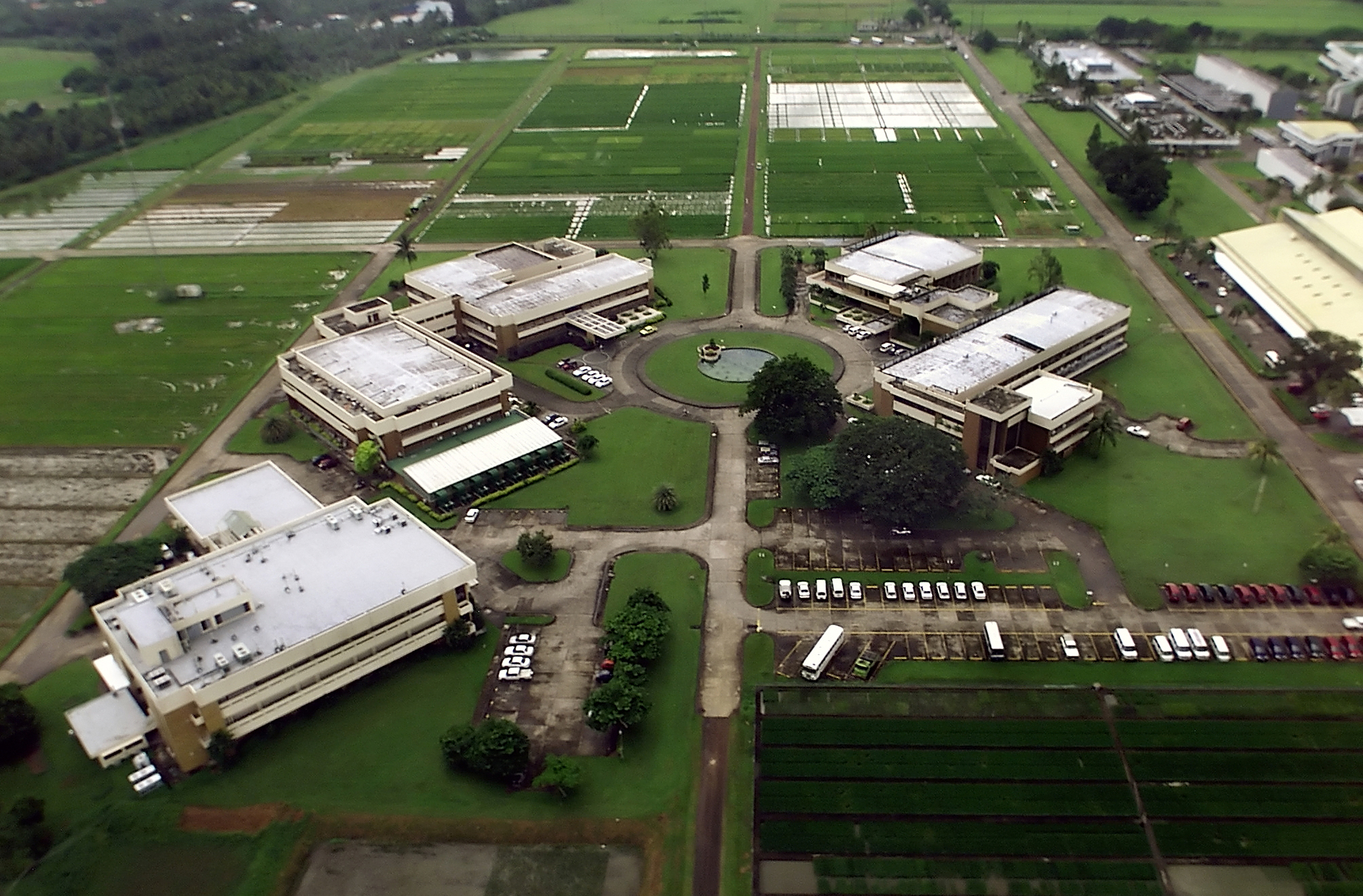
No reindeer and sleighs in the Philippines – so we had to improvise. On a couple of occasions I arrived by tricycle. Another time it was on the front of a jeepney. In 2008, it was a water buffalo or carabao. Here are four videos (all made by my good friend and colleague Gene Hettel, Head of IRRI’s Communication and Publications Services), from 2003 to 2008, of Santa’s arrival at the IRRI Christmas Party at Staff Housing.

Happy days! Merry Christmas! Ho, ho, ho . . . 

Running a genebank for rice . . .

In March this year, I posted a story about the International Rice Genebank (IRG) at the International Rice Research Institute (IRRI) in Los Baños, the Philippines. Now, I thought it would be interesting to describe some of my early challenges when I joined IRRI as head of the Genetic Resources Center (GRC) in July 1991.

Running a genebank is not one of your run-of-the-mill endeavors even though the individual technical aspects that make up genebank operations are relatively straightforward – for rice, at least. It’s their integration into a seamless, smooth and efficient whole, to ensure long-term genetic conservation, that is so demanding.

This is how the genebank is running, more or less, today:

Before I joined IRRI I’d never actually managed a genebank, although I had trained in genetic conservation, worked in South America on potato genetic resources, and spent a decade teaching various aspects of genetic resources conservation and use at the University of Birmingham.

My predecessor at IRRI was Dr Te-Tzu Chang, known to everyone as ‘TT’. He joined IRRI in 1962 and over the years had built the germplasm collection to about 75,000 or so accessions by the time I joined the institute, as well as leading IRRI’s upland rice breeding efforts.
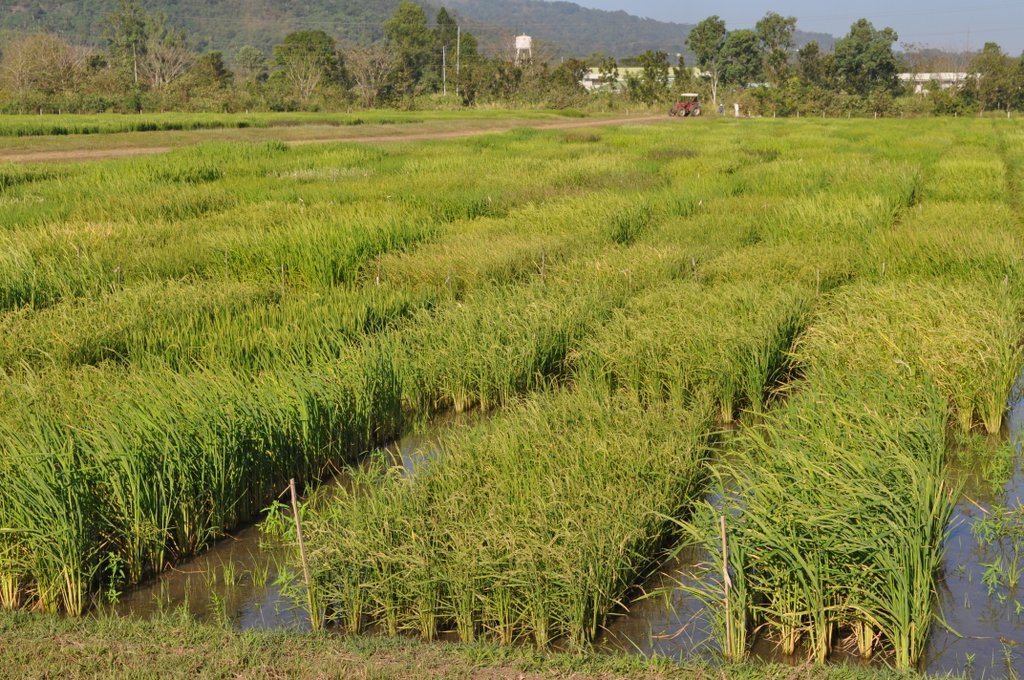
Following in the footsteps of such a renowned scientist was, to say the least, quite a challenge. I was also very conscious of the great loyalty that the genebank staff had to TT. But I had to look at the genebank through a fresh pair of eyes, and make changes I thought necessary and appropriate to what it did and how it was managed.

Upping-the-game
I spent several months learning about rice (since I’d never worked on this important crop until then), about the workings of the genebank  (in July 1991 it was still called the International Rice Germplasm Center), and assessing the genebank staff for possible new roles. I asked a lot of questions, and slowly formulated a plan of the changes I thought were necessary to significantly up-the-game, so to speak, of genetic resources conservation at IRRI.

From the outset, the local staff were rather wary of this assertive Brit who IRRI Management had brought in to deliver change. After all, most of them had only ever worked for TT. Here I was, asking lots of questions and expecting straight answers. But until I arrived on the scene – with rather a different management approach and style – they’d been used to a regime under which they were merely expected to follow instructions, and were given little if any individual responsibility.

Elaborating the best personnel structure with sufficient staff was a critical issue from the outset, just as important as upgrading genebank operations and the physical infrastructure. I was determined to eliminate duplication of effort across staff working in different (sometimes overlapping) areas of the genebank, who seemed to be treading on each other’s toes, with little or no accountability for their actions. In 1991, it was clear to me that making progress in areas such as seed viability testing, germplasm regeneration, data management, and curation of the wild rices would be hard going if we had to depend on just the existing staff. Furthermore, many of the genebank facilities were showing their age.

So I was fortunate to persuade IRRI Management that the genebank should be one of its priorities in the institute-wide plan for an infrastructure upgrade. I developed several initiatives to enhance the conservation of rice, eliminate geographical gaps in the collection, as far as possible, through a major collecting program, as well as begin research about on farm conservation, seed conservation, and the taxonomy of the wild rices. In November 1993, the Swiss Development Cooperation (SDC) approved a five year project, which eventually ran until early 2000, and provided a grant of more than USD 3.2 million. Click on the CD image to read the Final Report published in July 2000, just a few weeks after the project ended. We also released this on an interactive CD, with the Final, Annual and Interim Reports, copies of published papers, etc., all collecting trip reports, and those about the various training courses, as well as some 1000 images showing all aspects of the project.

I should add that starting research on rice genetic resources had been one of the conditions I made when accepting the headship of GRC.

Quite quickly I’d also come to the conclusion that I needed a focal person in the genebank who would in effect become the genebank manager, as well as other staff having responsibility for the different genebank operations, such as seed viability testing, regeneration, characterization, the wild rices, and data management. I just felt that I needed to be able to go to a single person to get information and answers rather than several staff each with only part of what I needed.

By the end of 1991 I’d named Flora ‘Pola’ de Guzman as the genebank manager. She had a background in seed technology, so seemed the right person to take on this important role. Pola is now a Senior Manager, the highest level among the national staff, although in 1991 she was only a Research Assistant.

I placed all field operations under Renato ‘Ato’ Reaño, who also took direct responsibility for germplasm multiplication and regeneration, while Tom Clemeno managed the characterization efforts of GRC.

Socorro ‘Soccie’ Almazan became the curator of the wild rice collection and manager of the special quarantine screenhouses where all the wild rices had to be grown – at a site about 4.5 km away across the IRRI experiment station.

Adelaida ‘Adel’ Alcantara became the lead database specialist (supported by Myrna Oliva, Evangeline ‘Vangie’ Guevarra, and Nelia Resurreccion).

And two staff, Amita ‘Amy’ Juliano (who sadly succumbed to cancer in 2004) and Ma. Elizabeth ‘Yvette’ Naredo (now Dr Naredo since 16 October 2012) moved over to full-time research activities related to rice taxonomy.

One of my staff concerns was what to do with Genoveva ‘Eves’ Loresto. I needed to find her a role that took her away from any direct supervision over the others. She helped me with the overall infrastructure changes, liaising with contractors, but once we had the SDC funding secured, I was able to ask Eves to take on a major project management role, as well having her lead the germplasm conservation training courses we organized in many of the 23 countries that were project partners. Eves eventually retired from IRRI in 2000.

A ‘new’ genebank
In terms of infrastructure, we had opportunity to make many changes. We remodelled the data management suite, giving each staff member proper workstations, and constantly upgrading when possible the computers they used. I made it clear to everyone that the database staff would have first access to any computer upgrades, and their machines would filter down to other staff whose work depended less on using a computer. And of course in 1991 (and for some years afterwards) the PC revolution was only just beginning to have an effect on everyone’s day-to-day activities.

Seed drying was one of my concerns. Before my arrival seed drying was done on batch driers immediately after harvest, with no precise temperature control but certainly above 40°C; or in ovens well over the same temperature. We designed and had installed a seed drying room with a capacity for 15 tonnes of seeds, at 15°C and 15% RH, and seeds dried slowly over about two weeks to reach equilibrium moisture content suitable for long-term conservation.

Incidentally, in recent research [1] supervised by Dr Fiona Hay, GRC’s resident seed physiologist, initial drying for up to four days in a batch drier before slower drying at 15°C and 15% RH seems to have a beneficial effect on viability.

We doubled the size of the wild rices screenhouses, and converted the large short-term storage room in the genebank to a seed cleaning and sorting laboratory for about 20 technicians. Previously they’d been squeezed into a small room not much more that 4m square. Another general purpose room was converted to a dedicated seed testing laboratory, and a bank of the latest spec incubators installed. We converted a couple of other rooms to cytology and tissue culture (for low viability seeds or for embryo rescue) laboratories. Finally, in the mid 90s we opened a molecular marker laboratory, initially studying RAPD and RFLP/AFLP markers, but it’s now taken off in a big way, and a whole range of markers are used [2, 3], led by Dr Ken McNally (who was my last appointment to GRC before I moved from there to become one of IRRI’s directors in 2001).

We were also fortunate in the mid 90s to have a very successful collaboration with the University of Birmingham (and the John Innes Centre in Norwich, UK) to explore the use of molecular markers to study rice germplasm, funded in the UK by the Department for International Development (DfID). One of the most significant achievements was to demonstrate – in one of the first studies of its kind – the predictive value of molecular markers (RAPD) for quantitative traits, the basis of what is now known as association genetics [4]

Today, the genebank has an Active Collection (using hermetically-sealed high quality aluminium foil packs, based on advice from seed physiology colleagues Roger Smith and Simon Linington at Kew’s Wakehurst Place) at about 2-3°C, and a Base Collection (a much smaller room, with two sealed aluminium cans, about 150 g, per accession) maintained at -18°C. In recent years a third cold room has been added.

The herbarium of the wild species was also expanded significantly, and provides an invaluable resource for both the conservation and taxonomy research of the wild rices.

The challenge of data management
There are two cultivated species of rice: Oryza sativa (commonly referred to as Asian rice) and O. glaberrima, found mainly in West Africa. There are also more 20 species of wild Oryza, and several genera in the same broad taxonomic group as rice, some of which have been looked by breeders as sources of useful genes; because of their genetic distance from rice, however, their use in breeding is both complex and complicated.

I discovered – to my great surprise – that, in effect, there were three rice collections in the genebank, all managed differently. One of the fundamental issues I grappled with immediately was the need for a functional database system encompassing all the germplasm, not three separate systems that could hardly communicate with each other. These had been developed on an Oracle platform (and an old version that we didn’t have the resources to upgrade). But more fundamentally, database structures and data coding were neither compatible nor consistent across the cultivated and wild species. Many database field names were not the same, nor were the field lengths. Let me give just one fundamental example – the accession number. For O. sativa and the wild species this was a numeric field (but not the same length) while for O. glaberrima, it was alphanumeric! Even the crop descriptors (now updated) were not the same across the collection. For example, the code value for ‘white’ was not consistent. As you can imagine making all the database conversions to achieve consistency and harmony was not without its pitfalls – without losing any data – but we did it. We also went on to develop a comprehensive genebank data management system, the IRGCIS, linking germplasm and genebank management modules with passport, characterization, and evaluation data.

Seed conservation
The FAO Genebank Standards provide guidelines to manage many different operations of a genebank, including seed drying. The drying of rice seeds to a low moisture content and storage at low temperature (as indicated earlier) presents few problems, as such. What is more of a challenge is the multiplication and regeneration of rice germplasm in a single environment at Los Baños in the Philippines, especially for less adapted lines like the japonica rices that are more temperate adapted. We began a collaboration with Professor Richard Ellis at the University of Reading and a leading expert in the whole area of seed conservation. To assist with this research looking at the seed production environment and its effect on seed quality and viability in storage, I hired a germplasm expert from ICRISAT in Hyderabad, Dr N Kameswara Rao, who had completed his PhD with Richard and Professor Eric Roberts a few years earlier. We had already decided to multiply or regenerate germplasm only during the Los Baños dry season (from December to May) when the nights are cooler in the first part of this growing season, and the days are generally bright and sunny. We had anecdotal evidence that seed quality was higher from rice grown at this time of the year than in the so-called wet season, from about July onwards (and the main rice growing season in the Philippines) which is characterized by overcast and wet days, often with a much higher pest and disease pressure. In parallel approaches at Reading (in more or less controlled environments) and in Los Baños, we looked at the response of different rice lines to the growing conditions, and their viability after seed ageing treatments, and confirmed the regeneration approach we had taken on pragmatic grounds. Incidentally, we also moved all field characterization to the wet season, which gave us the advantage of having the field technicians concentrating on only one major operation in each growing season, rather than being split between two or more per season and at different sites on the experiment station.

Germplasm collecting
In 1992 the Convention on Biological Diversity was agreed at the Rio Earth Summit, and is now the legal basis for the biodiversity activities of 193 parties (192 countries plus the European Union) that have ratified the convention, or formally agreed to accept its provisions. For many years, uncertainty over access to and use of biodiversity placed a major block on germplasm collecting activities – but not for rice. Through the SDC-funded project referred to above, we successfully sponsored collecting missions in most of the 23 countries, mainly for traditional varieties in the Asian countries and Madagascar, and for wild rices in these, several eastern and southern African countries, and Costa Rica. We based one staff member, Dr Seepana Appa Rao in the Lao People’s Democratic Republic (Lao PDR). Over more than four years, the various teams collected more than 25,000 samples of rice, and with other donations to the IRG, the collection now stands at more than 110,000 accessions.

Appa Rao and his Lao counterparts visited almost every part of that country, and collected more than 13,000 samples, and in the process learned a great deal about rice variety names and management approaches used by Lao farmers. Duplicates of this valuable germplasm were sent to IRRI, and Lao breeders immediately began to study these varieties with a view to using them to increase the productivity of rice varieties grown by Lao farmers. I believe this is one of the few good examples, within a national program, of an organic link between conservation and use. Regrettably in many national programs conservation and use efforts are often quite separated, so germplasm remains locked up in genebanks that some commentators refer to as ‘germplasm mausoleums’, fortunately not the case with IRRI nor the other CGIAR Consortium centers.

An active research program
In addition to the molecular marker research described earlier, our research focus was on the AA genome wild and cultivated rices, germination standards for wild rices, and on farm conservation.

In 1991, there was a British researcher in the IRGC, Dr Duncan Vaughan, who undertook collecting trips for wild rices, and made some preliminary taxonomic studies. When Duncan moved to the National Institute of Agrobiological Sciences in Tsukuba, Japan in 1993, I hired Dr Bao-Rong Lu, a Chinese national who had completed his PhD on wheat cytogenetics with Professor Roland von Bothmer at the Swedish University of Agricultural Sciences. Bao-Rong stayed at IRRI until 2000, when he moved to Shanghai to become Professor in Biology/Genetics, and Chairman of the Department of Ecology and Evolutionary Biology at Fudan University. He developed an active group working on the wild rices, and also made several collecting trips to Indonesia, Cambodia, and Australia, among other countries, to collect wild rice species.

In 1995 the genetic resources literature was full of papers advocating the virtues and necessity of both in situ conservation of wild species, and the on farm conservation or management of farmers’ varieties as a parallel to conservation, ex situ, in a genebank. While I was neither for or against on farm conservation, I was very concerned that this approach was being ‘pushed’ – at the expense of ex situ conservation, or so it seemed – without really having any empirical evidence to support the various ideas being put around. So I decided to do something about this, and hired a population geneticist and a social anthropologist to study the dynamics of farmer-managed systems in the Philippines, Vietnam, and eastern India. Geneticist Dr Jean-Louis Pham joined IRRI on secondment from IRD (Institut de recherche pour le développement, formerly ORSTOM) in Montpellier, France until 2000 when he returned to IRD.

There were two social anthropologists. Dr Mauricio Bellon, from Mexico, joined in 1995 and stayed for a couple of years before moving to CIMMYT in Mexico; he’s currently with Bioversity International in Rome. He was replaced by Dr Steve Morin from Nebraska in the USA. When the SDC-funded rice biodiversity project ended in 2000, Steve stayed on for a couple of years in IRRI’s Social Sciences Department, but is now with USAID in the Middle East.

Two important findings from this on farm research concern development of different cropping systems options to permit farmers to continue to grow their own ‘traditional’ varieties while increasing productivity; and responses of farmers to loss of diversity after natural disasters (such as typhoons in the case of the Philippines), and how different approaches are applicable for long-term conservation and adaptation.

Click here to see a full list of publications.

The new century
After I left GRC in May 2001 to become IRRI’s Director for Program Planning and Communications, my successor as head of GRC, Dr Ruaraidh Sackville Hamilton, joined IRRI in August 2002. An evolutionary biologist, Ruaraidh is a graduate of Cambridge University, and came to IRRI from the Institute for Grassland and Environmental Research (IGER), now part of the Institute of Biological, Environmental and Rural Sciences at Aberystwyth University.

Fiona Hay joined IRRI in 2009 from the Millennium Seed Bank at Kew, and Ken McNally, who originally joined IRRI in the 1990s as a post-doctoral fellow working on perennial rice, has taken GRC’s molecular research from strength to strength for over a decade, and this has been accelerated by the completion of the rice genome and identification of whole suites of molecular markers.

I am gratified to know that many of the changes I made in GRC are still in place today, even though Ruaraidh has made further improvements, such as the bar coding of all germplasm accessions, and a re-jigging of some of the laboratories to accommodate greater priority on seed physiology and molecular research. Ruaraidh has further championed links with the International Treaty on Plant Genetic Resources for Food and Agriculture, and securing long-term financial support.

A major step forward came about three to four years ago when the Global Crop Diversity Trust began to support the International Rice Genebank. When the Global Seed Vault at Svalbard was opened in 2008, the first samples placed inside were from the International Rice Genebank.


~~~~~~~~~~~~~~~~~~~~~~~~~~~~~~~~~~~~

[1] Crisostomo, S., Hay, F.R., Reaño, R. and Borromeo, T. (2011) Are the standard conditions for genebank drying optimal for rice seed quality? Seed Science and Technology 39, 666-672.

[2] McCouch, S.R., McNally, K.L., Wang, W. and Sackville Hamilton, R. (2012) Genomics of gene banks: a case study in rice. American Journal of Botany 99, 407-423.

[3] McNally, K.L., Bruskiewich, R., Mackill, D., Buell, C.R., Leach, J.E. and Leung, H. (2006) Sequencing multiple and diverse rice varieties. Connecting whole-genome variation with phenotypes. Plant Physiology 141, 26–31.

[4] Virk, P.S., Ford-Lloyd, B.V., Jackson, M.T., Pooni, H.S., Clemeno, T.P. and Newbury, H.J. (1996) Predicting quantitative variation within rice using molecular markers. Heredity 76, 296-304.

Proud to be a botanist

Botanist. That’s right. Not plant scientist or plant biologist. Botanist!

Call me old-fashioned, but I prefer the term ‘botany’ to ‘plant sciences’ or ‘plant biology’ that are now preferentially used to give the study of plants a more ‘modern’ image.

And I’m proud that I received my university education in botany: BSc at Southampton (combined with geography, 1970), and MSc (in genetic resources, 1971) and PhD (botany – biosystematics of potatoes, 1975) at Birmingham. By the time I returned to teach at the University of Birmingham in 1981, the Department of Botany had already become the Department of Plant Biology, a decision made in the late 1970s in the hope of attracting more undergraduates to study plant courses offered as part of the biological sciences degree.

Botany has had a bit of a bad press, I guess. And there has been a significant decline in teaching plant sciences at university level in the UK.

For one thing there’s an image issue. It’s often seen as old-fashioned, the purview of enthusiastic Victorian amateurs like country parsons collecting and studying wild flowers, and perhaps not relevant for today’s society. Nothing could be further from the truth. Given that food security is dependent upon the productivity of agricultural systems – all life depends on plants in one way or another – the study of plants is essential for humanity’s survival.

In an interesting article [1], Grierson et al. (2011) ask what are the 100 most important questions for plant science research. They also propose that “We need to radically change our culture so that ‘plant scientist’ (or, if we can rehabilitate the term, ‘botanist’) can join ‘doctor’, ‘vet’ and ‘lawyer’ in the list of top professions to which our most capable young people aspire.”

I’ve had a successful career over 40 years based on botany, one way or the other. So why did I become a botanist in the first place? In high school, I didn’t study biology until I began my GCE Advanced Level courses in 1965. Biology was not taught at my school in earlier years, and only accepted a handful of students for the advanced course. I’d always had an interest in natural history, particularly bird watching, and had harbored ideas at one time of becoming a professional ornithologist. But over the two years of the biology ‘A level’, I came to realize there was likely to be a more secure future in plants, and even the possibility of getting into agriculture in some way, better still if that would take me overseas.

Southampton University was not my first choice, but once I’d attended an interview there, I knew that was where I wanted to study. As a botany-geography undergraduate, I knew that there would be a focus on plant ecology, even though we took the full honours course for two years, and selected modules in the final year. My tutor was Dr Joyce Lambert, Reader in Ecology, who had studied the origin of the Norfolk Broads in the east of England, and shown that they were actually man-made, the result of medieval peat diggings that became flooded. Just before I went to Southampton (and for the rest of her career at Southampton – she retired in 1979) she began working on multivariate methods to study plant communities (with former head of department Bill Williams, who had left Southampton in 1966 to join CSIRO in Australia). I even completed my dissertation on an assessment of vegetation sampling techniques based on quadrat size related to the height of the vegetation (not really a success). I made this study in the Back Forest area of the Roaches in the Staffordshire Moorlands. I measured quadrats along a 200 m transect from open heath to larch-oak woodland dropping steeply to the Black Brook and River Dane. I used a tape recorder with a thumb switch microphone to record the presence and absence of species in each quadrat, using a checklist of species.

As a final year student, however, my interests had already begun to turn from ecology. I took courses on plant speciation and plant breeding with geneticist Dr Joe Smartt, and a special course in flowering plant taxonomy offered by Professor Vernon Heywood of Reading University. Southampton’s own taxonomist, Leslie Watson had emigrated to Australia in 1969, and it was felt that a botany degree without any taxonomy component was not complete. Heywood travelled down from Reading once a week for 10 weeks, giving two lectures each time. This was not one of my specific elective courses for examination, but I decided to sit in and listen – and I was hooked. Linking what I heard in Heywood’s lectures with the plant speciation and plant breeding courses, and ecology was the foundation for my career-long study of plant variation, and entry into the world of plant genetic resources.

But there was one research endeavor that really fired my imagine (and others) – and it’s as good today as when it was originally published in the 1930s, 40s and 50s. In a ground-breaking series of experiments, geneticist/ecologist Jens Clausen, taxonomist David Keck, and plant physiologist William Hiesey, from the Carnegie Institute of Washington located on the campus of Stanford University, studied the adaptation of plants to their environments, the variation in plant populations, and the genetical and physiological basis of the variation they observed.

Establishing a series of experimental stations across California, they undertook transplant experiments in a range of species such as Achillea and Potentilla, to understand the nature of variation and species, and published in a series of monographs Experimental Studies on the Nature of Species.

Similar work had been carried out in Scandinavia by Turesson and in Scotland by Gregor, but the Californian group was, in my estimation, pre-eminent. Thus was the concept of the ecotype established. And the methods of experimental taxonomy and genecology which they developed are used to study the nature of variation in the genetic resources of crop plants conserved in genebanks around the world – and certainly the approach I took with my own work on lentils and grasspea (Lathryus sativus), potatoes, and rice.

Another influence was Missouri Botanical Garden geneticist Edgar Anderson. If you’ve not read his highly entertaining and readable Plants, Man & Life, then grab yourself a copy.

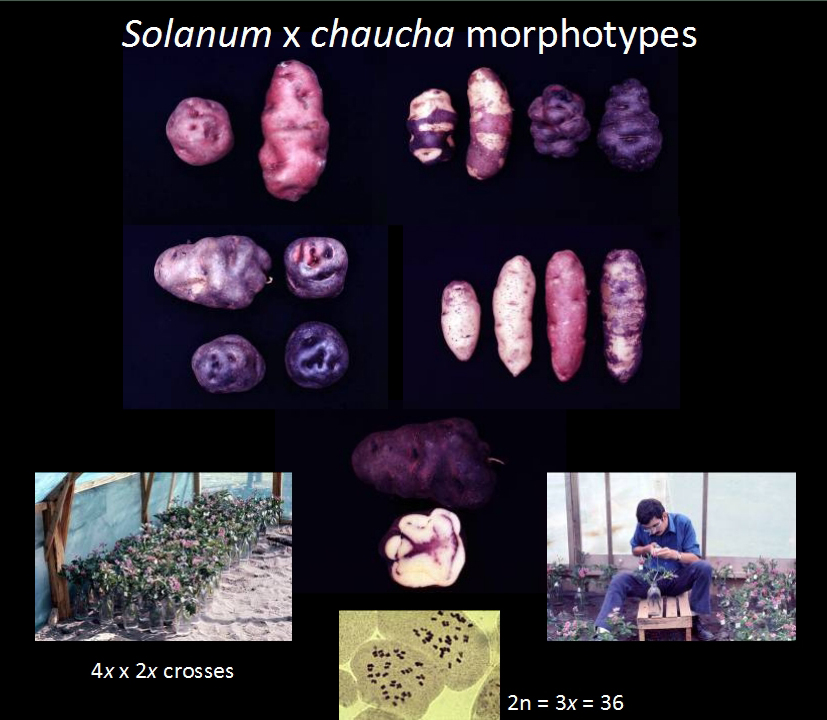
But the most influential concept he developed was introgressive hybridization, the merging of plant species populations through crossing and backcrossing – a phenomenon we believe to have played a major role in the evolution of many crop plants.

Joe Smartt encouraged me to follow a career in plant genetic resources. In fact he was the one who suggested I should apply for a place on the Birmingham MSc course on Conservation and Utilization of Plant Genetic Resources, founded by Jack Hawkes in 1969. Joe had studied the cytogenetics of groundnut (= peanut, Arachis spp.) under Walter C Gregory at North Carolina State University, and joined the Department of Botany at Southampton in 1967. He had also spent time in Northern Rhodesia (= Zambia) working on groundnuts in the 1950s.

And the rest is history, as they say, and I spent the rest of my career studying genetic resources and agriculture in many different countries (Peru, Costa Rica, Canary Islands, Philippines and other countries in Asia).

Some of my own interests have included the species relationships of triploid potatoes, and we have looked at the compatibility relationships between wild and cultivated forms.

These photos show the growth of pollen tubes in compatible (left) and incompatible (right) crosses between wild potato species.

In potatoes and rice we made tens of thousands of crosses to understand the biological relationships between different species.

It’s important to make many crosses when the chances of success are quite low. And we have looked at the morphological and biochemical variation in different plant populations – the ability to study species relationships at the molecular level is throwing a whole new perspective on plant speciation; applications of GIS permit easier mapping of diversity.

One of the concepts that has guided much of my work with genetic resources is the genepool concept developed by Illinois geneticists Harlan and de Wet in 1971 [2]. This allows one to assess the relationship between crops and their wild relatives based on crossability, and the accessibility of different genetic resources that can be used in crop improvement.

I’ve been very fortunate in my career choices – all because of my decision to become a botanist. Who says that botany is an old-fashioned science? Just look through the 100 science challenges I referred to earlier on and you will see just how and why it’s ever more important that we invest in the study of plants.

[1] C. S. Grierson, S. R. Barnes, M. W. Chase, M. Clarke, D. Grierson, K. J. Edwards, G. J. Jellis, J. D. Jones, S. Knapp, G. Oldroyd, G. Poppy, P. Temple, R. Williams, and R. Bastow, 2011. One hundred important questions facing plant science research. New Phytologist 192 (1): 6-12.

[2] J.R. Harlan and J.M.J. de Wet, 1971. Toward a rational classification of cultivated plants. Taxon 20: 509-517.

All about Eves . . .

Ms. Genoveva ‘Eves’ Loresto passed away in Cebu on 5 April after a long battle with cancer.
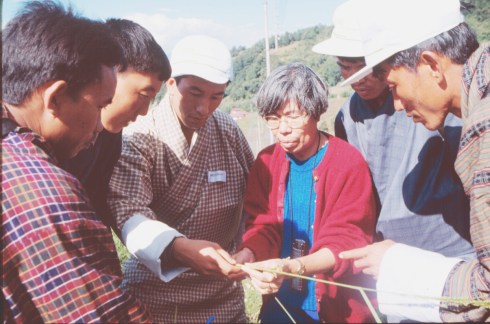
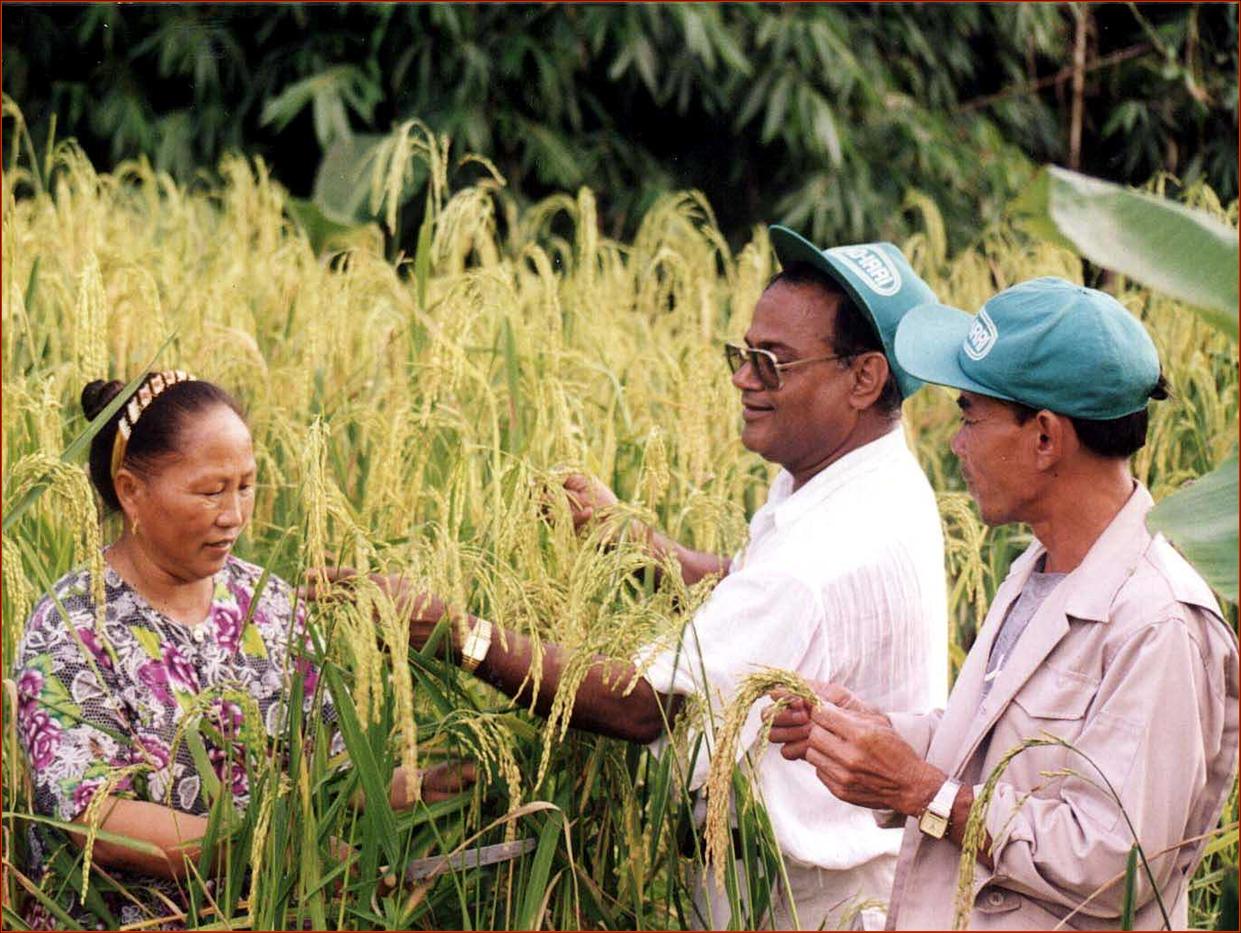
In 2000, Eves retired after 37 years of outstanding, long, and valuable service to the International Rice Research Institute (IRRI). Her many contributions to the well-being of the Institute and the awards she received are too numerous to recount. She was ever-willing to share her experience with colleagues. She will be missed by her many friends and former colleagues.

Eves joined IRRI in January 1963 (less than three years after the institute had been founded) as a Student Assistant in Plant Breeding, and rose through the ranks over the years to the position of Senior Associate Scientist in 1994 in the TT Chang Genetic Resources Center (GRC). In May 1997, she was appointed as Project Scientist and Assistant Coordinator of the SDC-funded project Safeguarding and Preservation of the Biodiversity of the Rice Genepool. Throughout her career at IRRI, she trained more than 400 national program staff in different aspects of germplasm conservation and use.

For many years, Eves worked as assistant to the late Dr TT Chang in upland rice breeding, conducting studies on drought tolerance and developing methodologies involving patterns of root development to screen germplasm for drought. She was a member of the team that bred the upland rice variety Makiling that was released in 1990.

When I joined IRRI in July 1991 I had been set a major goal by IRRI management to bring about significant changes to the operations of the International Rice Genebank (International Rice Germplasm Center as it was called then) and, with the creation of the Genetic Resources Center, the whole field of genetic resources conservation received a much higher profile in the institute and internationally. After a period of observation and analysis, it became clear to me that the changes needed could be made if we had a flatter management structure in GRC, with individual members of staff given responsibility and accountability for the different genebank operations, such as germplasm multiplication, characterization, and conservation per se, shown in this short video.

This is what we did, but it left me with the issue of how best to employ Eves’ considerable experience and expertise since other staff took on the genebank operations.

I asked Eves to take a broader strategic responsibility, and act as a liaison with many of our national partners. Once we received financial support through the SDC-funded biodiversity project, Eves moved into a project management role, helping to monitor progress as well taking a major role in training. In particular, she was responsible for conducting training courses on rice germplasm collection and conservation in Bangladesh, Bhutan, Cambodia, Indonesia, Lao PDR, Madagascar, Malaysia, Mozambique, Myanmar, Nepal, Philippines, and Vietnam. Her involvement in these activities was invaluable and much appreciated by those who participated.

Eves training Bhutanese staff in rice collecting

We certainly felt a gap in the GRC team when Eves retired in 2000. It would have been very difficult for me to make the needed changes to GRC and successfully wrap-up the biodiversity project without Eves’ support. And for that I shall forever remain grateful to her.

Investing in diversity . . . the IRRI genebank

During the mid-90s, the International Rice Research Institute (IRRI) coordinated a major program (funded by the Swiss Agency for Development and Cooperation – SDC) to collect and conserve rice varieties in more than 20 countries by visiting areas that had not been extensively collected in previous decades. The aim was to ensure the long-term survival of varieties that had been nurtured by farmers and their husbands for generations. Over a five year period from 1996, more than 25,000 rice samples were collected, and stored in the International Rice Genebank at IRRI, increasing the collection there by approximately 25%. About half of the samples (some 13,000) came from the Lao People’s Democratic Republic (Lao PDR). An IRRI staff member, Dr Seepana Appa Rao (formerly with the International Crops Research Institute for the Semi-Arid Tropics – ICRISAT) spent four years traveling throughout the country, alongside Lao scientists, to make the first comprehensive collections of rice germplasm.

Duplicates samples are now conserved at IRRI, but very quickly after collection, Lao breeders started to screen the germplasm for useful traits, and use different materials to increase productivity.

Rice farmers in the Lao PDR still grow thousands of different rice varieties, from the lowland paddy fields with their patchwork of varieties to the sloping fields of the uplands where one can see many different varieties grown in complex mixtures, shown in the photos below. The complexity of varieties is also reflected in the names given by farmers [1].

And germplasm collecting was repeated in Bangladesh, Bhutan, Cambodia, Indonesia, Malaysia, Myanmar, Nepal, Philippines, Thailand and Vietnam in Asia, and countries in East and southern Africa including Uganda and Madagascar, as well as Costa Rica in Central America (for wild rices). We invested a lot of efforts to train local scientists in germplasm collecting methods. Long-time IRRI employee (now retired) and genetic resources specialist, Eves Loresto, visited Bhutan on several occasions.


The IRRI Genebank


When I first joined IRRI in July 1991 – to head the Genetic Resources Center – I discovered that many aspects of the genebank procedures and operations were outdated or inefficient, and we set about a program of renovation and upgrading (that has been a continuous process ever since, as new technologies supersede those used before). The genebank holds more than 113,000 samples, mainly of cultivated rice varieties, with perhaps as many as 70% or so unique. Duplicate safety samples are stored at the USDA National Center for Genetic Resources Preservation in Fort Collins, Colorado, and at the Svalbard Global Seed Vault (operated by the Global Crop Diversity Trust). In fact, the first seeds into the Svalbard vault came from IRRI when it opened in February 2008!

The genebank now has three storage vaults (one was added in the last couple of years) for medium-term (Active) and long-term (Base) conservation. Rice varieties are grown on the IRRI farm, and carefully dried before storage. Seed viability and health is always checked, and resident seed physiologist, Fiona Hay (formerly at the Millennium Seed Bank at Kew) is investigating factors which affect long-term storage of rice seeds.

They say a picture is worth a thousand words – so rather than describe how this genebank runs, do take the time to watch a 14 minute video which shows all the various operations for both cultivated and wild rices.

In 1994 there was a major review of CGIAR center genebanks. In preparation for that review we wrote a genebank operations manual, which still describes how and why the genebank works. I felt that this would be a useful legacy for whoever came after my tenure as head of the genebank. Operations can always evolve and change – but here is a basis for how rice is conserved in the most important genebank for this crop.

[1] Appa Rao, S, C Bounphanousay, JM Schiller & MT Jackson, 2002. Naming of traditional rice varieties by farmers in the Lao PDR. Genetic Resources and Crop Evolution 49, 83‐88.