Safeguarding rice biodiversity . . .

lao294I can’t claim it was the most successful project that IRRI – the International Rice Research Institute – ever managed. That would be too arrogant by half.

But by mid-2000 we successfully finished a project, Safeguarding and Preservation of the Biodiversity of the Rice Genepool, funded by the Swiss Agency for Development and Cooperation (SDC), that significantly enhanced the long-term conservation of rice genetic resources.

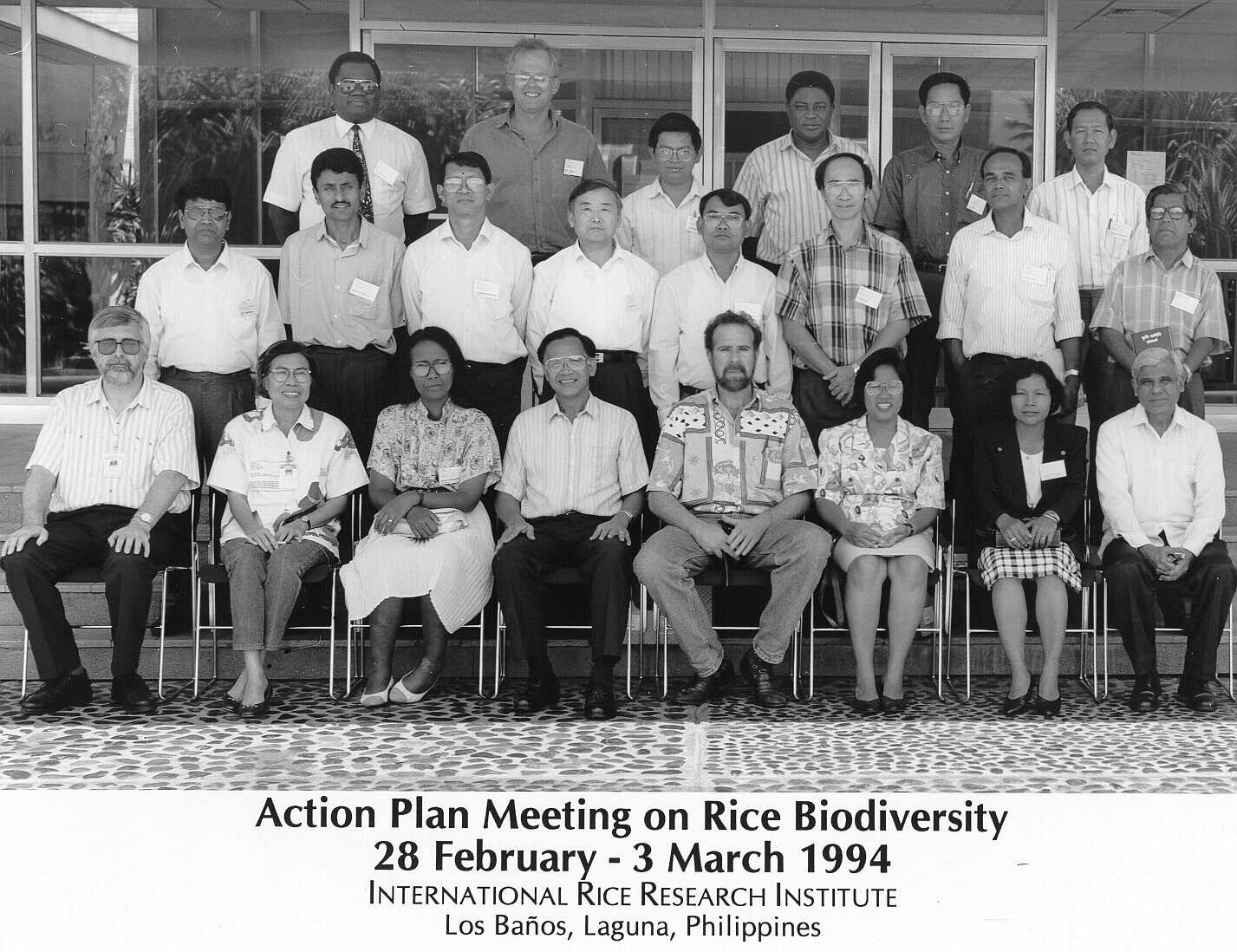
The SDC was extremely generous, and funded much of the proposed budget, donating USD3.286 million. Approved for funding in November 1993, we didn’t actually begin any of the project activities in earnest until 1995. That was because we spent 1994 ‘selling’ the project to our colleagues in national genetic resources programs and their superiors in the target countries, holding a series of planning meetings, and forming a Steering Committee, as well as recruiting several staff.
irri002

So the effective period of the project were the five years between 1995 and 1999, with a no-cost extension taking the project past its original end date of November 1998. But, as far as the SDC was concerned, this was never a problem. We kept everyone regularly updated on progress and achievements, and in any case, the donor had insisted that time was spent at the project’s initiation bringing everyone on board. It was certainly time well spent. This was particularly so in 1993-94. Why? Well in December 1993 the Convention on Biological Diversity (CBD) came into force (having been opened for signature at the Rio Earth Summit in June 1992) – just a few weeks after our rice biodiversity project was given the green light. And since the collection of rice varieties and wild species was a major component of the project, we weren’t sure just how committed several countries would be to participate in the project, let alone share their germplasm with others or send a duplicate sample of all collected germplasm for long-term preservation in the International Rice Genebank at IRRI. The negotiations leading to the CBD had certainly opened many cans of worms in terms of access to and use of germplasm, and to what extent germplasm had a strictly commercial value. While so-called ‘agricultural biodiversity’ (the landrace crop varieties, among others) was not the main focus of the CBD, this international treaty did provide the legal framework for access to germplasm, during the period leading up to the CBD, there had been a drop-off in the number of germplasm collecting expeditions, particularly those that were internationally-led. And of course, this was years before the International Treaty on Plant Genetic Resources for Food and Agriculture had been negotiated to provide the legal framework for germplasm exchange and use.

I think it says a lot for the international standing and reputation of IRRI that we encountered remarkably little opposition (especially among Asian nations) to the idea of participating in a collaborative concerted effort to collect and preserve as much rice biodiversity as possible. Essentially to try and fill the gaps in earlier germplasm collecting efforts. It seemed to us that this was the moment to seize. Civil conflicts were a thing of the past in several countries, infrastructure had improved providing access to areas and regions that had previously been inaccessible. In any case, with the rapid development that some countries were undergoing, we feared that unless something was done, then and there, there might not be an opportunity again in the foreseeable future, and valuable germplasm might be lost. The project had three components on germplasm collecting, on farm conservation, and training.

For germplasm collecting, we recruited two staff: Dr Seepana Appa Rao from India (who had spent much of his career at one of IRRI’s sister centers, ICRISAT in Hyderabad) and Dr Sigrid Liede from Germany. Existing IRRI staff Dr Bao-Rong Lu, a taxonomist from China and Ms Eves Loresto also took on important collecting and training responsibilities.

For the on farm conservation work, geneticist Dr Jean-Louis Pham from France was seconded to IRRI from his home institute IRD for five years. Two social anthropologists, Dr Mauricio Bellon from Mexico and Dr Stephen Morin from the USA worked in the project.

Within six months of the end of the project, we had submitted our final report and an interactive CD containing all the germplasm collecting and training reports, publications, and up to 1000 images (with a descriptive spreadsheet with live links to each image). Just click on the CD image below to automatically download a zip file (approximately 460 MB). Extract or copy the folders and files in the zip file to a new folder Rice Biodiversity on your computer, and click on the Start file. (There is a Read me! file in case you need more instructions.) Unfortunately it’s not possible to open the files interactively directly from the zip file here – you have to download. But that’s where you will find all the detail.
biod-cd

So below, I’ve included just a few highlights of what the project achieved, and its impact.

Collection and ex situ conservation of wild and cultivated rices
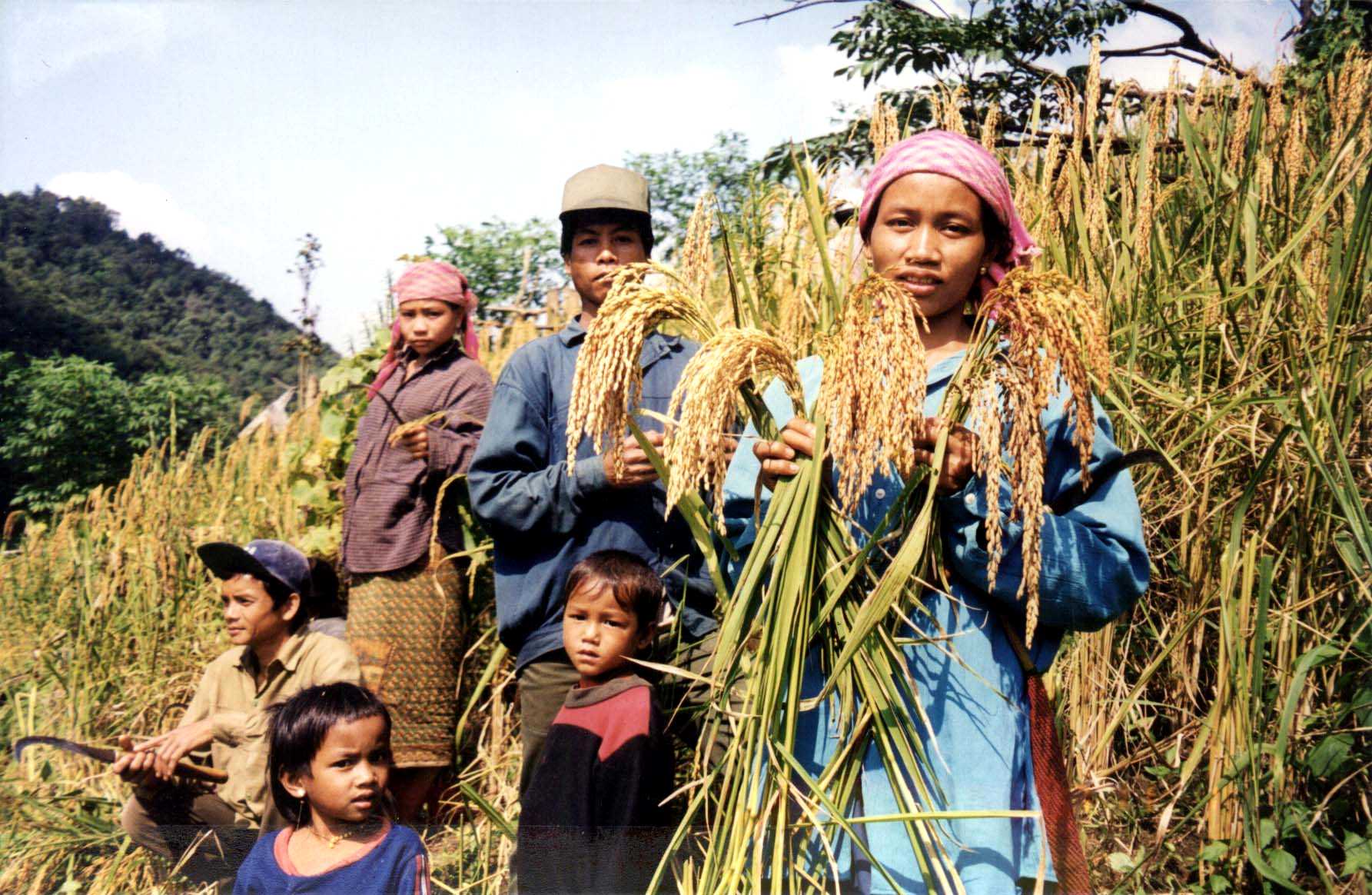
Germplasm collectors made one hundred and sixty-five collecting trips, lasting from just a few days to several weeks, in 22 countries between 1995 and 1999. A total of 24,718 samples of cultivated rice (Oryza sativa) was collected, and 2,416 samples of 16 wild Oryza species, weedy types and putative hybrids, and some unclassified samples; there were also samples of at least four species from three related genera.

The collecting effort in the Lao PDR was particularly impressive, with more than 13,000 samples of cultivated and wild rice now safely conserved in the local genebank and in the IRG. The collecting activities in sub-Saharan Africa focused almost entirely on wild species, and in general the number of samples collected was not high. The resource investment to collect this material was quite high but realistic given the somewhat sparse geographical distribution of the species populations, and the difficulties in collecting.

By the end of the project, more than 80% of the cultivated rice samples and 68% of the wild had been sent to the International Rice Genebank at IRRI for long-term conservation. All the details can be seen here.

On farm management of traditional rice varieties
In 1994, IRRI organized a workshop about on farm conservation of genetic resources. The participants agreed on the need to develop its scientific basis,because on farm  conservation of genetic resources was strongly advocated in international forums, but there was limited understanding of what this approach really meant. We therefore felt that more research should be conducted to understand farmers’ management of crop diversity and its genetic consequences. This was especially true in the case of rice for which very limited knowledge was available. So we set out to:

  • increase knowledge on farmers’ management of rice diversity, the factors that influence it, and its genetic implications; and
  • identify strategies to involve farmers’ managed systems in the overall conservation of rice genetic resources.

We developed research sites and teams in northern Luzon, Philippines, in central Vietnam, and in Orissa, India. And always we had that mix of geneticists and social scientists to provide a broad perspective on the dynamics of rice agriculture in terms of on farm management/conservation.

The contribution of this IRRI-coordinated project for on-farm conservation was to:

  • bring hard data and facts to the debate on the use and relevancy of on-farm conservation of rice genetic resources, and on the impact of deployment of modern varieties on biodiversity;
  • identify avenues for the implementation of on-farm conservation strategies;
  • explore the role that research institutions could play in the future;
  • develop methodologies and competencies in the assessment of rice diversity and its management by farmers through partnership with national programs;
  • increase the awareness and understanding of issues related to on-farm conservation and the value of local diversity both in NARS and local development agencies;
  • share its experience, with other researchers through the participation to various conferences and meetings, publication of papers, organization of a workshop, and collaboration with other projects.

An important ‘spin-off’ from the research concerned the restoration of germplasm in areas where varieties had been lost. During the course of the research, a major typhoon hit northern Luzon in the Philippines where we were working with farmers. During that season almost all of rice agriculture was wiped out, and many farmers no longer had access to the varieties they had previously grown, and none were available through official Department of Agriculture channels. Fate was on our side. In a previous season, project staff had samples a wide range of varieties from the farmers at the project sites, taken them to Los Baños, grown them out for morphological and genetic characterization and, in the process, multiplying the seed stocks. We were able to provide each farmer with up to 1 kg of seeds of each variety on request, and in total we sent back about 20 tonnes of seeds. Not all farmers wanted their indigenous varieties and changed over completely to modern, high-yielding varieties.

Strengthening of germplasm conservation by national agricultural research systems (NARS) and non-government organizations/ farmers’ organizations (NGOs/FOs)
Between 1995 and 1999, we ran 48 courses or on-the-job training opportunities in 14 countries and at IRRI headquarters in the Philippines. The training encompassed field collection and conservation, characterization, wild rice species, data management and documentation, genebank management, seed health, analysis of socioeconomic data, and molecular analysis of germplasm. And we trained more than 670 national program personnel. IRRI staff were involved in the management, coordination, and presentation of almost all the training activities.

However, the story doesn’t end there.

smc3_R.-Hamilton

Dr Ruaraidh Sackville Hamilton

While some gaps remain for germplasm collection and duplication of germplasm at IRRI, these issues have been taken up by my successor as head of the TT Chang Genetic Resources Center, Dr Ruaraidh Sackville Hamilton. Even so, the size of the International Rice Genebank Collection (IRGC) had increased by about 25% by 2000, not bad for a period when discussions in international fora (the CBD and the FAO Commission on Genetic Resources for Food and Agriculture) had put the brakes on germplasm sharing. Most of the national collections in Asia are now duplicated at IRRI, although some important Indian germplasm has never been duplicated, and I believe this remains the case still. The Africa Rice Center and IRRI have also cross-duplicated African germplasm, but I don’t have the latest information on this nor on the status with the International Center for Tropical Agriculture (CIAT) in Cali, Colombia.

Since the biodiversity project ended, the International Treaty mentioned earlier has also come into force and rice is one of the important crops specifically covered by that treaty.

To ensure the long-term conservation of rice germplasm at IRRI, there was a significant investment during the early 1990s to refurbish and upgrade the genebank as well as enhancing the actual conservation procedures followed. In recent years another sub-zero storage vault for long-term conservation was added to the genebank.

When I joined IRRI as head of the Genetic Resources Center in 1991 there was already in place an agreement with the USDA-ARS National Center for Genetic Resources Preservation for the ‘black box’ safety duplication of the entire IRRI collection – and that continues today.

In February 2008 a significant dimension was added to global crop germplasm conservation efforts with the opening of the Svalbard Global Seed Vault under the auspices of the Global Crop Diversity Trust (and the Government of Norway) – photos courtesy of the Global Crop Diversity Trust.

The whole IRRI collection – including those samples collected during the SDC-funded project – are now safely sitting under the permafrost in Spitsbergen, inside the Arctic Circle.

In this video, you can see genebank staff at IRRI preparing all the seed samples to send to Svalbard.

And in the next video, the late Professor Wangari Maathai (Nobel Peace Prize Laureate in 2004 and at that time a Board Member of the Global Crop Diversity Trust) and the Prime Minister of Norway, H.E. Mr Jens Stoltenberg carry the first box of germplasm – from IRRI no less – into the seed vault.

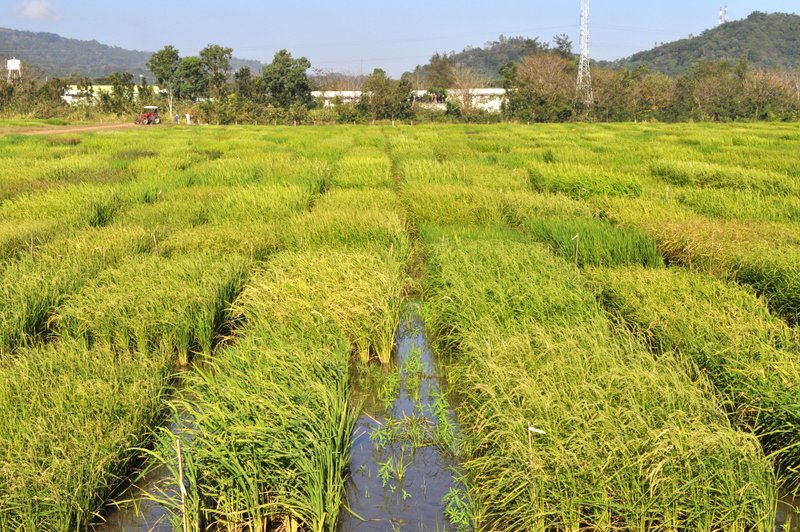
The work to safeguard rice biodiversity is never-ending. But a great deal has been achieved. Being part of a global network of genebanks – some in several Asian countries focusing specifically on rice  – IRRI’s contribution is extremely important.
20100211020

The broad genetic diversity of rice and its wild relatives is safe for the future, and I’m very proud to have played my part in that effort.
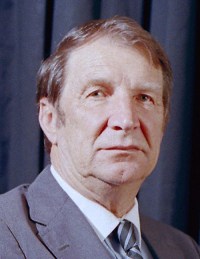
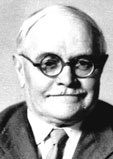
Dr Richard L Sawyer (1921-2015), first Director General of the International Potato Center (CIP)

Sawyer3I opened my email this morning to find one with the sad news that Richard Sawyer, the first Director General of the International Potato Center (CIP) had died at his home in North Carolina on 9 March. He was 93, just a week short of his 94th birthday.
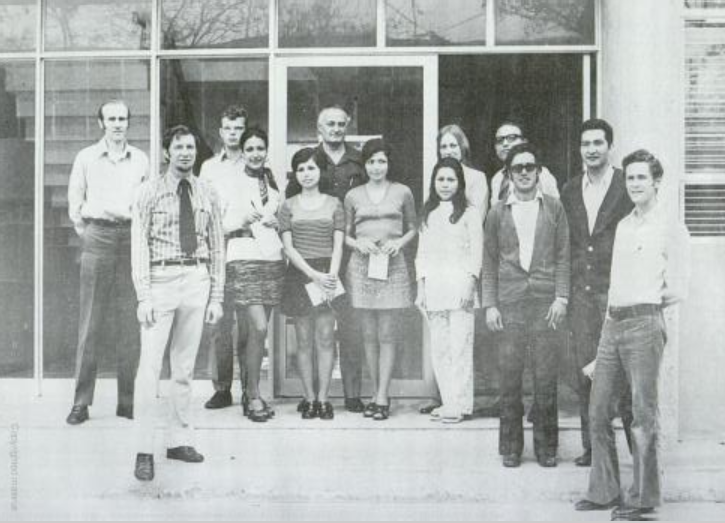
Richard was my first boss from January 1973 when I joined the International Potato Center (CIP) as an associate taxonomist in Lima, Perú. In fact, Richard was one of the first Americans I had ever met, and it was quite an eye-opener, as a young British graduate, to be working for an organization led by an American.

I first met Richard in early summer 1971 or thereabouts, while I was a graduate student at the University of Birmingham. My major professor, and head of the Department of Botany at the university was renowned potato taxonomist Jack Hawkes. Jack had made a collecting expedition for wild potatoes to Bolivia in the first couple months of 1971. And his trip was supported by the USAID-funded North Carolina State University – Peru potato project. Richard had been in Lima since 1966 as head of that mission. I believe that Jack stayed in Lima with Richard and his wife, and had the opportunity to discuss with Richard how the recently-founded MSc course on Conservation and Utilization of Plant Genetic Resources could support the genetic resources activities at what would soon become the International Potato Center. Richard wanted to send a young Peruvian scientist (Zosimo Huaman) for training at Birmingham, but wondered if Jack had anyone in mind who could accept a one-year assignment in Peru while Zosimo was away in Birmingham studying for his MSc degree.

During a visit to meet with potential donors for the fledgling CIP in the UK, Richard came up to Birmingham from London to discuss some more about training possibilities, and the one-year assignment. And Jack invited me to meet Richard. I remember quite clearly entering Jack’s office, and my first impression of Richard Sawyer. “Good grief,” I thought to myself, “I’ve come to meet Uncle Sam!” At that time, Richard sported a goatee beard and, to my mind, was the spitting image of ‘Sam’.

I eventually moved to Lima in January 1973, and spent the next eight happy and scientifically fruitful years with CIP in Perú and Central America.

cip4

CIP staff in 1972, taken a few months before I joined the center. L to r: Ed French, Richard Sawyer, John Vessey, ??, Rosa Rodriguez, Carlos Bohl, Sr., Haydee de Zelaya, Rosa Mendez, Heather ??, Oscar Gil, Javier Franco, Luis Salazar, David Baumann

A family man. There are several things I remember specially about Richard. When I joined CIP he had recently remarried, and was devoted to his young wife Norma who was expecting their son Ricardo Jr. The Sawyers hosted a cocktail at their San Isidro apartment during that first week I was in Lima for the participants of a potato genetic resources and taxonomy planning workshop. Almost the whole staff of CIP had been invited – we were so few that everyone could easily fit into their apartment.

During that workshop we traveled to Huancayo to see the germplasm collection, and Richard drove one of the vehicles himself. Staying at the Turista hotel in the center of Huancayo, we spent that first night drinking pisco sours and playing dudo for a couple of hours.

Richard practiced what he preached. He was very supportive of CIP scientists and their families, and always encouraged his staff to maintain a healthy balance between work and home. At 4 pm each day he was the first out of the office and on to the frontón court; he was very competitive.

A TPS incident. I remember one (potentially disastrous) incident, in about 1978 or 1979, during the annual review meeting held in Lima, and in which all staff from around the world also participated. I came down to Lima from Costa Rica where I was leading CIP’s Region II Program (Mexico, Central America and the Caribbean). After several presentations about the emerging technology of true potato seed (TPS) during the first couple of days, the then Director of Research, Dr Ory Page from Canada, opened the floor for general comments and questions. I’d been storing up some comments and, nothing venture, nothing gained, stuck my hand up and began to make several critical comments about the TPS program and how it was not currently applicable to the farmers of Central America.

Well, as they say, the ‘proverbial’ hit the fan. Richard was seated immediately in front of me, among the CIP staff. He turned on me, and gave me a public dressing down. I decided not to accept this quietly, and responded as vigorously. As tempers began to fray, the Chair of the CIP Board Program Committee, British scientist Dr Glyn Burton, suspended the meeting. Richard stormed out to his office, followed by Dr Ken Brown, head of Regional Research and my immediate boss who was upset at Richard’s reaction. Several colleagues came up to me during the enforced break, and while they might have concurred with my point of view, felt that I had burned my bridges at CIP, and was likely to lose my job.

Far from it. A couple of days later, Richard came looking for me and apologized for how he’d behaved towards me; he told me that I’d had every right to question aspects of CIP’s research. I think this whole incident strengthened the relationship I had with Richard, and he was very supportive. It also indicated to me that Richard was a supremely confident person, and a strong leader.

Moving on. In 1980, a teaching position opened at the University of Birmingham. I was keen to apply, but felt I had to discuss the various options first. Ken Brown advised me to talk directly with Richard, and it was fortunate that I was already back in Lima, having left Costa Rica in November just before the Birmingham position was announced. Richard strongly encouraged me to apply for the Birmingham lectureship, but at the same time offering me a new five-year contract with CIP should I fail with my application. Now that was, as you can imagine, an unbelievable way to approach a job interview. I was offered the position and resigned from CIP in March 1981 to return to the UK.

But that wasn’t the end of my relationship with CIP. The UK Department for International Development (then the Overseas Development Institute) supported my research project with CIP on TPS of all things during the 1980s. And I also carried out a couple of consultancies for CIP, the more significant being an evaluation of a Swiss-funded seed potato project in Perú, during which I always had the opportunity to meet with Richard. He was always interested in what I was up to and how the family was getting on. After all, my wife Stephanie had also personally been offered a position at CIP by Richard from July 1973.

Richard’s legacy. There are so many things I could point out, but three come most readily to my mind:

  • Richard was a compassionate individual, very supportive of his staff and their families. But having a clear vision, he could also be determined and make the tough decisions. This served CIP extremely well during his tenure.
  • He placed the conservation of the germplasm collection and its use at the heart of CIP’s strategy and research. Later this was expanded to include sweet potatoes and several ‘minor’ Andean tuber crops. Focusing only on potato for the first decade enabled CIP to establish and maintain a strong research program, that had the strong foundation for expansion into other tuber crops.
  • His vision of regional research and collaboration with potato researchers around the world – and the use of CIP funding to support these scientists as part of CIP’s core research program – was not always appreciated around the CGIAR in the early 1970s. It was innovative, and CIP was able to have an early impact on and bring new technologies to potato programs and systems right around the world. The establishment of PRECODEPA in 1978 was one of these important initiatives. Not only did Richard persevere, but he showed that this model of collaboration was one applicable to other centers and their mandate crops. It is the modus operandi today.

It is always sad when a colleague and friend passes away. While we – his family, friends and former colleagues – mourn his passing, let us also celebrate a life of service to international agriculture by this extraordinary individual. It has been my privilege to count Richard Sawyer as a friend and mentor. My life has certainly been profoundly changed by knowing and working with him.

Deepest condolences to his wife Norma, son Ricardo Jr., his daughters from his first marriage, and all his family.

The humble spud

Humble? Boiled, mashed, fried, roast, chipped or prepared in many other ways, the potato is surely the King of Vegetables. And for 20 years in the 1970s and 80s, potatoes were the focus of my own research.
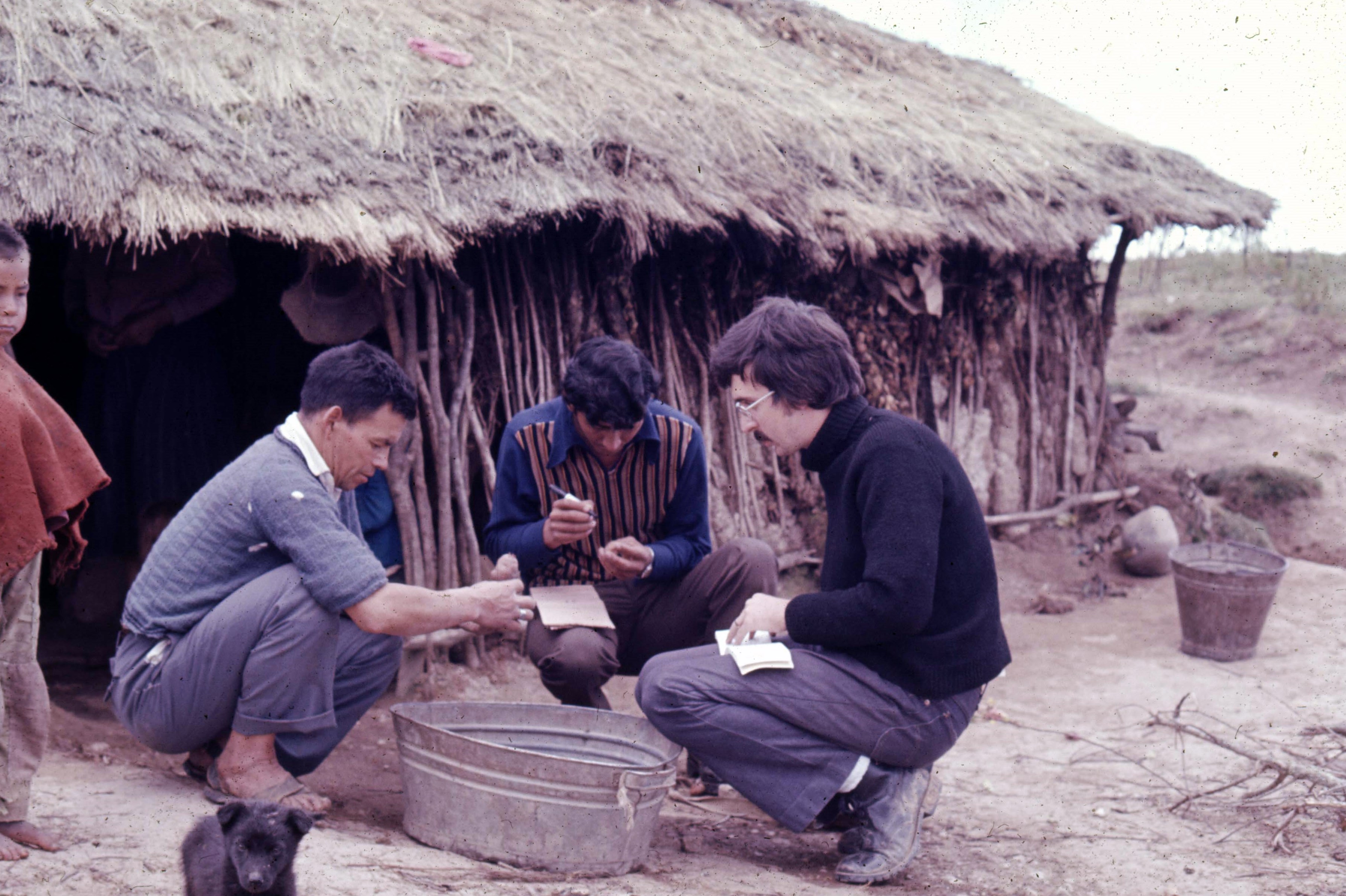
The potato (Solanum tuberosum) has something scientifically for everyone: the taxonomist or someone interested in crop diversity, geneticist or molecular biologist, breeder, agronomist, plant pathologist or entomologist, seed production specialist, biotechnologist, or social scientist. So many challenges – so many opportunities, especially since many potatoes are polyploids; that is, they have multiple sets of chromosomes, from 2x=24 to 6x=72.

MTJ collecting cultivated potatoes in 1974Much of my own work – both in the Andes of Peru in the early 70s and once I was back in Birmingham during the 80s – focused on potato genetic resources, understanding the evolutionary dynamics of speciation, and the distribution and breeding value of wild potatoes.

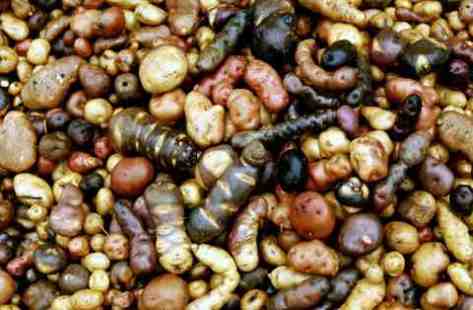
If you’re interested in species diversity, then the potato is the crop for you. In South America there are many indigenous varieties integral to local farming systems at high altitude. Grown alongside other crops such as oca (Oxalis tuberosa) and other Andean tubers of limited distribution, quinoa, and introduced crops such as barley and faba bean (that must have been brought to South America by the Spanish in the 16th century and afterwards). In a recent series on BBC TV (The Inca – Masters of the Cloud), archaeologist and South American expert Dr Jago Cooper repeatedly talked about the wonders of Incan agriculture as one of the foundations of that society yet, disappointingly chose not to illustrate anything of indigenous agriculture today. Farmers still grow potatoes and other crops on the exactly the same terraces that the Incas constructed hundreds of years ago (see my post about Cuyo Cuyo, for example). The continued cultivation of native potato varieties today is a living link with the Incas.

Native varieties of potato from Peru

Native cultivated potatoes are found throughout the Andes from Colombia and Venezuela in the north, south through Ecuador, Peru, Bolivia and Chile, and into northern Argentina. One of the main centres of diversity lies in the region of Lake Titicaca that straddles the border between Peru and Bolivia.

Another important centre of diversity is in the island of Chiloé , southeast of Puerto Montt, a well-known potato growing region of Chile.

The wild tuber-bearing Solanums have a much wider distribution, from the USA south through Mexico and Central America, and widely in South America. And from the coast of Peru to over 4000 m in the high Andes. They certainly have a wide ecological range. But how many wild species are there? Well, it depends who you follow, taxonomy-wise.

SM Bukasob

SM Bukasov

Some of the earliest studies (in the 1930s) were made by Russian potato experts SM Bukasov and SV Juzepczuk, contemporaries of the great geneticist and plant breeder, Nikolai I Vavilov.

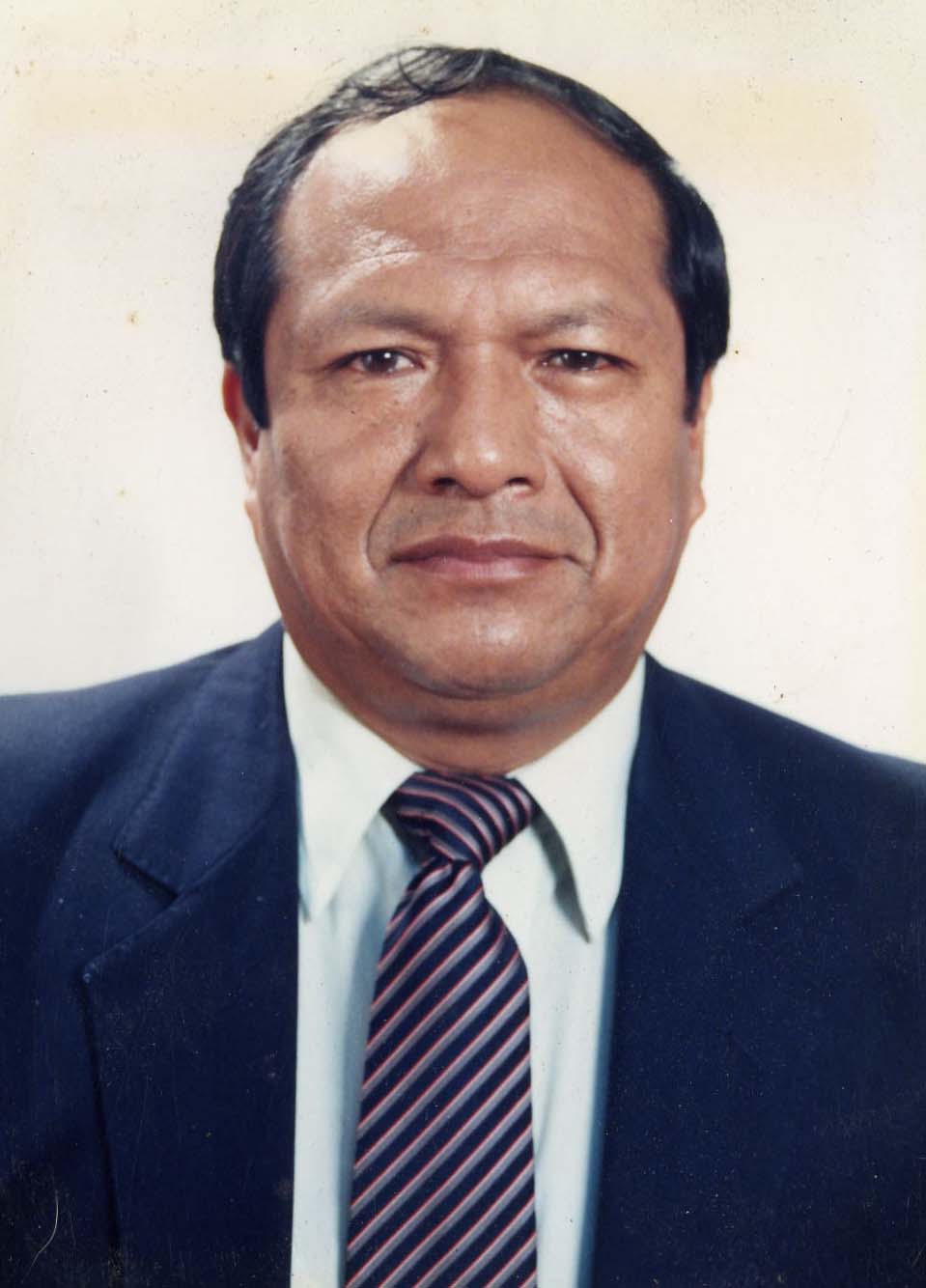
In 1938, a young Cambridge graduate, Jack Hawkes (on the left below), visited the Soviet Union to meet with Bukasov (and Vavilov) as he would soon be joining a year-long expedition to the Americas to collect wild and cultivated potatoes. His PhD thesis (under the supervision of Sir Redcliffe Salaman) was one of the first taxonomies of wild potatoes. By 1963, Hawkes had published a second edition of A Revision of the Tuber-Bearing Solanums. By 1990 [1] the number of wild species that he recognized had increased to 228 and seven cultivated ones. Hawkes (and his Danish colleague Peter Hjerting) focused much of their effort on the wild potatoes of the southern cone countries (Argentina, Brazil, Paraguay and Uruguay) [2] and Bolivia [3]. Working at the National Agrarian University and the International Potato Center (CIP) in La Molina, Lima, Peru, potato breeder and taxonomist Carlos Ochoa (on the right below) spent several decades exploring the Andes of his native country, and discovered many new species. But he also produced monographs on the potatoes of Bolivia [4] and Peru [5].

Both Hawkes and Ochoa – rivals to some extent – primarily used plant morphology to differentiate the species they described or recognized, but also using the tools of biosystematics (crossing experiments) and a detailed knowledge of species distributions and ecology.

MTJ and JGH collecting wild potatoes

March 1975, somewhere above Canta in Lima Province. Probably a small population of Solanum multidissectum = S. candolleanum (that now includes S. bukasovii)

I made only one short collecting trip with Jack Hawkes, in March 1975 just before I returned to Birmingham to defend my PhD thesis. Travelling in the Andes between Cerro de Paso, Huanuco and Lima, at one point he asked me to stop our vehicle. “There are wild potatoes near here,” he told me. “To be specific, I think we’ll find Solanum bukasovii”. And within minutes, he had. That’s because Jack had a real feel for the ecology of wild potatoes; he could almost smell them out. I’m sure Carlos Ochoa was just the same, if not more so.

Spooner_David_hs10_9951

David Spooner

The potato taxonomist’s mantle was taken up in the early 1990s by USDA Agricultural Research Service professor David Spooner at the University of Wisconsin. Over two decades, and many field expeditions, he has published an impressive number of papers on potato biology. More importantly, he added molecular analyses to arrive at a comprehensive revision and understanding of the diversity of the tuber-bearing Solanums. In fact, in December 2014, Spooner and his co-authors published one of the most important papers on the biodiversity of wild and cultivated potatoes, recognizing just 107 wild and four cultivated species [6]. For anyone interested in crop evolution and systematics, and potatoes in particular, I thoroughly recommend you take the time to look at their paper (available as a PDF file).


~~~~~~~~~~~~~~~~~~~~~~~~~~~~~~~~~~
[1] Hawkes, JG. 1990. The Potato – Evolution, Biodiversity and Genetic Resources. Belhaven Press, London.
[2] Hawkes, JG & JP Hjerting. 1969. The Potatoes of Argentina, Brazil, Paraguay, and Uruguay – A Biosystematic Study. Annals of Botany Memoirs No. 3, Clarendon Press, Oxford.
[3] Hawkes, JG & JP Hjerting. 1989. The Potatoes of Bolivia – Their Breeding Value and Evolutionary Relationships. Clarendon Press, Oxford.
[4] Ochoa, CM. 1990. The Potatoes of South America: Bolivia. Cambridge University Press.
[5] Ochoa, CM. 2004. The Potatoes of South America: Peru. Part 1. The Wild Species. International Potato Center, Lima, Peru.
[6] Spooner, DM, M Ghislain, R Simon, SH Jansky & T Gavrilenko. 2014. Systematics, diversity, genetics, and evolution of wild and cultivated potatoes. Bot. Rev. 80:283–383
DOI 10.1007/s12229-014-9146-y.


First impressions: two weeks in 1967

It was the first week of October, or thereabouts. 1967. I was headed to Southampton to begin a three-year undergraduate course in botany and geography at the city’s university.

Like all students in the UK, I’d applied for admission to six courses at different universities: King’s College, London (geography); Aberystwyth (zoology and geography); Southampton (botany and geography); York (biology); Queen Mary College (combined sciences); and Newcastle (botany and geography). I don’t really remember my priority list, but I do know that King’s was my first choice and Southampton was my third. I had interviews at King’s, Southampton, Queen Mary, and York; I never heard from the other two before I made my choice. The interview at York was a disaster. I was asked to describe Krebs Cycle, not something with which I was at all au fait. In fact, at a later date – at Birmingham – I came across something that an obviously bored student had written on a bench in one of the lecture rooms in the School of Biological Sciences: ‘I wouldn’t know Krebs Cycle if it ran me over‘. I couldn’t have agreed more!

Because I’d been off school with flu, I wasn’t able to make interviews at several universities on the dates requested around February or so in 1967, so had to try and reschedule these. My dad and I drove to the various campuses, and in fact ended up visiting York, King’s, and Southampton in the same week! The King’s interview went quite well, and I was offered a place. I can’t remember now who interviewed me, only that he was a Professor of Geography and had taught my elder brother Ed (1964-1967, in the Joint School of Geography between the London School of Economics and King’s).

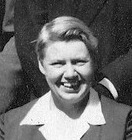
Joyce Lambert in 1964

The day I visited Southampton was a bright sunny day, and even warm for that time of the year. In those days, the Department of Geography was housed in the Hartley Building (which also housed the library and various administrative departments), and I had a 1 hour interview with Dr Joyce Lambert* from the Department of Botany and Dr Brian Birch from Geography. The interview must have gone well because a few weeks later I received a conditional offer in the post. My place at Southampton was guaranteed if I received the necessary exam grades.

I accepted that offer. In fact, almost as soon as I walked through the front door of the Hartley Building I knew I would accept an offer from Southampton. I just had this immediate feeling of well-being. And my instinct didn’t let me down. I had three wonderful undergraduate years there.

In the late 60s, Southampton was still quite a small university, with only about 4500 undergraduates. After all it had received its own charter only in 1952; prior to that its degrees had been awarded by the University of London. Today there are more than 16,000, and the expansion has been phenomenal over the past 45 years since I graduated. A medical school opened not long after I graduated, and the botany department merged with other life sciences and moved to another campus location about a mile away. The Centre for Biological Sciences is now back on the main campus.At the end of my first year, in 1968 or early 1969, the geography department (now geography and environment) moved to a new building (part of that late 60s expansion that benefitted Southampton), but is now housed in the Shackleton Building, actually the old botany building 44 where I studied for three years.

However, to return to that first week in 1967. I may have difficulties these days remembering what I did last week, but my early memories of Southampton are crystal clear.

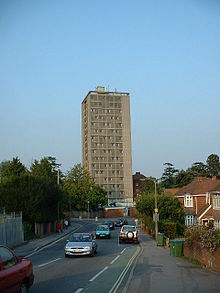
The tower block of South Stoneham House. I had a room on the west-facing sixth floor (shown here from Woodmill Lane) in my first year, and a south-facing room on the 13th floor in my second year. This block, constructed in the 60s, has been decommissioned because of an asbestos problem.

I was lucky to secure a place in one of the halls of residence, South Stoneham House, and had sent a trunk with clothes and other belongings on ahead of my arrival. The Students Union had organised a special train from London Waterloo to carry new undergraduates – or Freshers – to Southampton, and arrange transport at the other end to everyone’s accommodation. I stopped with my brother Ed for a couple of nights in London. He had just started his first job after graduating from LSE that summer. I bought his bicycle and on the day of my train to Southampton, I hopped on that bike and rode it through the rush hour traffic from his flat in Kilburn across the Thames to Waterloo. I left it at the station and returned to the flat to collect my suitcase. At Waterloo I retrieved my bike from the Left Luggage office, deposited it on the train and then searched for a seat. In those days, railway carriages were generally not open plan as they are today, but had a corridor down one side and compartments with seat for eight passengers. I remained close friends with three of the other seven in that compartment for the rest of my time at Southampton, and have kept in touch with one, Neil Freeman, ever since. We were even assigned rooms on the same floor at South Stoneham House.

Neil studied law, and in fact my close circle of friends was generally outside either botany or geography. Another law student who became a good friend was Malcolm Forster. I did lose contact with him but did come across his name a couple of years ago and briefly made contact then. Recently, however, he came across one of my blog posts and left a comment.

They often say that first impressions last longest. Well, these two in February and October 1967 certainly remained with me. Choosing Southampton over other universities was one of the best decisions I’ve ever made. Three great years, and good friendships. What more can you ask for?

~~~~~~~~~~~~~~~~~~~~~~~~~~~~~
* Who received the nickname ‘Blossom’ from several generations of botany students.

Spreading the good news about rice . . . the 4th International Rice Congress

Over the past 18 months I’ve been busy organizing a major science conference – on rice – that was held in Bangkok, Thailand during the last week of October. That’s one of the reasons I have been less active on this blog; I was running another about the science conference at the same time! Sponsored by the International Rice Research Institute (IRRI), the 4th International Rice Congress brought together rice researchers from all over the world. Previous congresses had been held in Japan, India and last time, in 2010, in Hanoi, Vietnam (for which I also organized the science conference). This fourth congress, known as IRC2014 for short, had three main components:

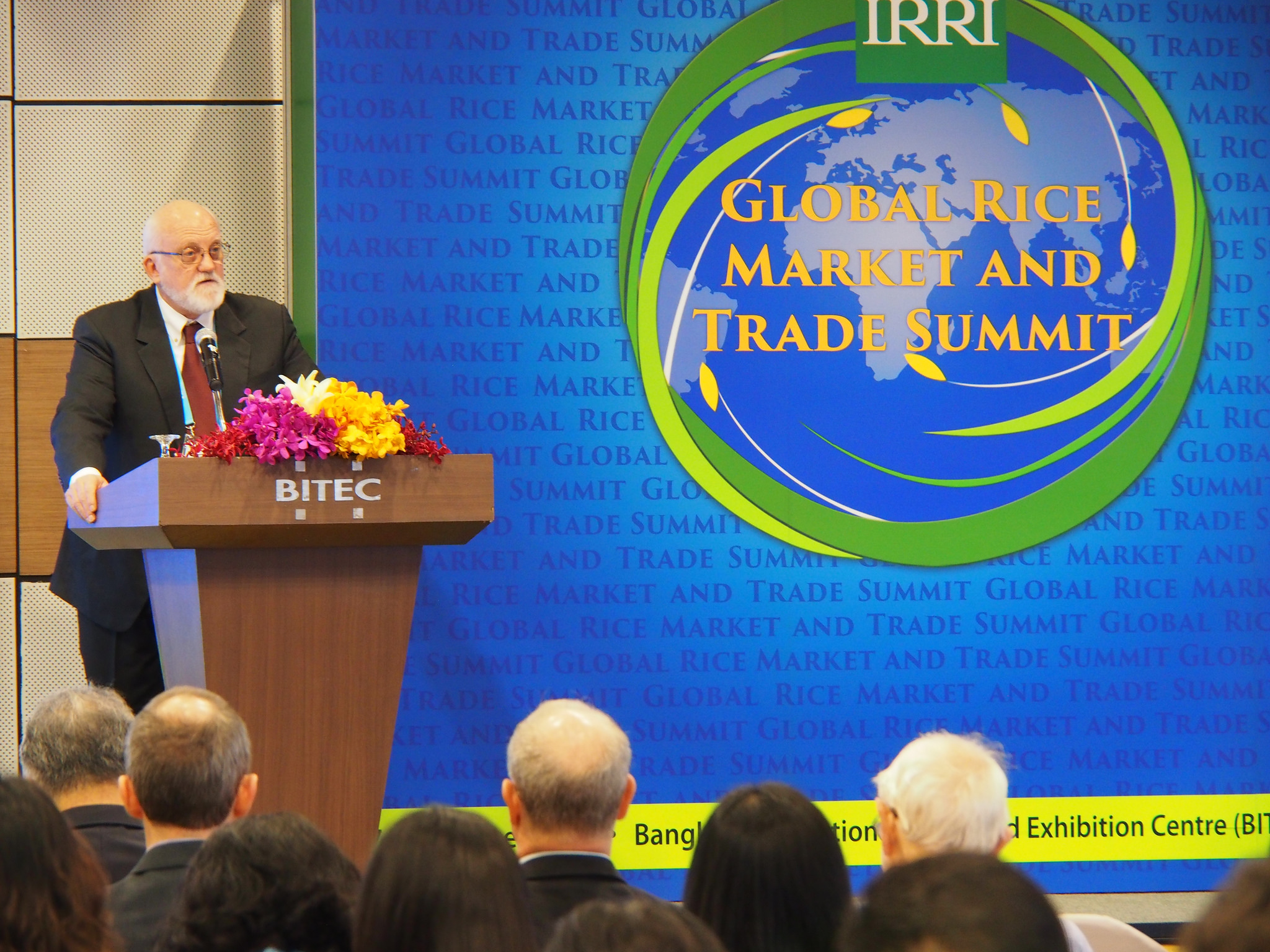
  • The Global Rice Market and Trade Summit (bringing together about 130 representatives of the rice industry). It was organized by IRRI’s Head of Social Sciences, Dr Sam Mohanty.
Source: IRRI

Dr Bob Zeigler, IRRI Director General, addressing delegates to the Global Rice Market and Trade Summit

  • An Exhibition.

Organizing IRC2014 Overall chair of IRC2014 was Dr V Bruce J Tolentino, IRRI’s Deputy Director General (Communication and Partnerships), with Thailand’s Dr Peeradet Tongumpai, Director, Agricultural Research Development Agency (ARDA) as Co-Chair.

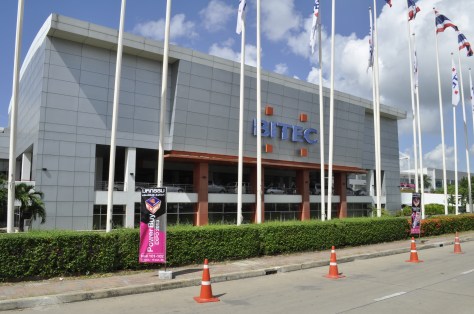
But the science conference was undoubtedly the main reason for most delegates being at IRC2014 that week. Held at the Bangkok International Trade and Exhibition Centre (BITEC), this venue was chosen for its convenient location (about half distance between downtown Bangkok and the international airport), proximity to public transport (the BTS), and its excellent facilities. Way back at the beginning of 2013 IRRI management asked me if I would like to organize the science conference in Bangkok, having taken on that role in 2009 before I retired from IRRI and for six months after I left. From May 2013 until IRC2014 was underway, I made four trips to the Far East, twice to Bangkok and three times to IRRI. We formed a science committee, and I was fortunate to have a group of very professional scientists assisting in the planning and delivery of the science conference. Thai rice pathologist Dr Poonsak Mekwatanakarn [1] became my Co-Chair, and IRRI rice root biologist Dr Amelia Henry was the Deputy Chair, and the three of us formed an Executive Committee.

The committee was supported by two staff from Kenes Asia (the conference organizers): Ms Warapa ‘Art’ Saipow, Project Manager and Ms Tanawan ‘Mint’ Pipatpratuang, Associate Project Manager and direct liaison to the science committee. From IRRI, two staff in Bruce Tolentino’s office, Mon Oliveros and Yuan Custodio, also supported the committee.

Our ambitions for the science conference were set high. We wanted to encourage as many rice scientists from around the world to make the trip to Bangkok and share their research with their peers. And I believe we did achieve that. More than 1400 delegates attended IRC2014, from 69 countries. The science program had five components:

  • A Keynote Address, delivered by IRRI Director General Dr Bob Zeigler on Tuesday 28 October, on the topic The Second Green Revolution Has Begun: Rice Research and Global Food Security
  • Four plenary speakers (five had been invited but one had to pull out at the very last minute due to a medical emergency)
  • Nine symposia on closely-defined topics (such as rice root biology, rice in the mega deltas of Asia, or climate-ready rice), all with invited speakers, 62 in total.
  • Seven general science themes (genetic resources, value chains, cropping systems, etc), including temperate rice, with almost 150 papers selected on merit in a blind review.
  • Three science poster sessions, with about 670 posters on display throughout the three days of the conference.

On all three days there were six parallel sessions of oral papers, with an additional forum about funding agricultural research on the first afternoon, and a workshop on drip irrigation on the second afternoon. Some IRC2014 highlights At the Opening Ceremony on the Tuesday afternoon (28 October), we were treated to an impressive display of Thai dancing, and there were speeches from His Excellency Petipong Pungbun Na Ayudhya, Minister of Agriculture and Cooperatives, and from Privy Counselor Amphon Senanarong, representing His Majesty King Bhumibol Adulyadej of Thailand.

During the actual science conference, 29-31 October, attendance at the various sessions was good, with only one or two reporting low numbers. There was also ample opportunity for delegates to network.

On Saturday 1 November, many delegates took advantage of one of the post-conference tours, that mixed both rice research and production visits as well as some Bangkok tourism. These videos highlights some of the different activities at the conference.

One of the main highlights – for me at least – was the opportunity we had to recognize 29 Young Rice Scientists (YRS) from 19 countries who had submitted papers and that had been selected in the blind review. Each YRS had to be 35 years or younger, working in rice research or conducting research for a graduate degree. We also put a special sticker with each poster authored by a Young Rice Scientist.

The initiative was highly appreciated by young scientists especially but also among all delegates at IRC2014. This was a great opportunity for young scientists – the next generation – to compete on equal terms with their peers and longer-established scientists. In this video, a couple of the YRS speak about what the award meant to them. Incidentally, each YRS received a return ticket to Bangkok, conference registration, a ticket to the congress dinner, and five nights accommodation in a hotel.


[1] I heard on 7 August 2020 that Dr Poonsak passed away in Bangkok on 5 August. Very sad news.

Chilling in Los Baños . . .

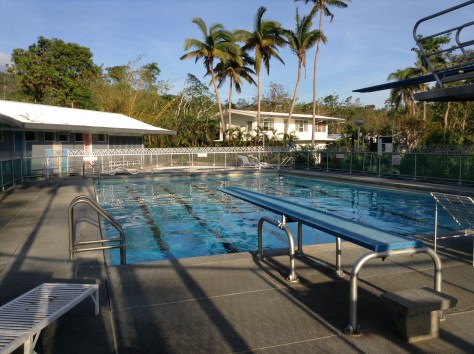
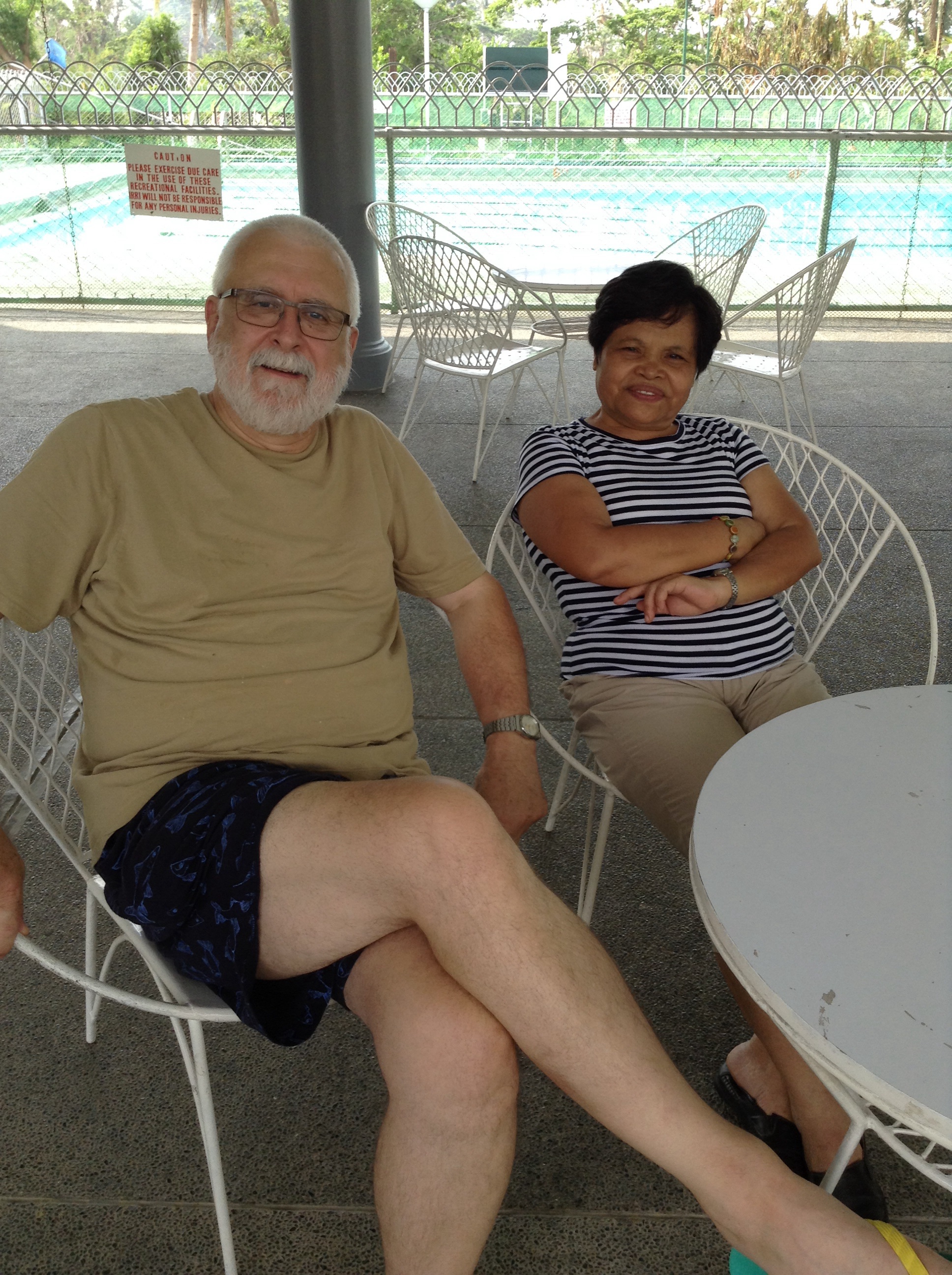
For the past week I have been at the headquarters of the International Rice Research Institute (IRRI) in Los Baños in the Philippines, where I worked for almost 19 years until my retirement in April 2010. I had to attend two meetings in preparation for the 4th International Rice Congress (IRC2014) that will be held at the end of October in Bangkok, Thailand. The first meeting, from Monday to Wednesday, was the SciCom Exec to finalize the content and structure of the scientific conference. The IRC2014 Organizing Committee met on Thursday and Friday. We were kept busy from morning to night, although there were opportunities for some social gatherings, and I also took full advantage of staying in IRRI’s Guesthouse to enjoy the nearby swimming pool every morning at 6 am.

But I’m getting ahead of myself. My journey began on Friday 8 August, traveling on Emirates Airlines from Birmingham to Manila via Dubai (BHX-DXB-MNL). There were minimal delays at BHX, and we landed more or less on time in DXB around midnight local time.

The stopover was about three hours, and by the time I’d cleared security, checked out Duty Free, and made my way to the EK lounge in Terminal 3, there wasn’t too long to wait before we were boarding the next flight to Manila. That wasn’t a good flight. It was comfortable enough, but there was turbulence the whole flight – not severe by any stretch of the imagination, except for the occasional sharp bump – and just persistent enough to prevent me from settling. Added to that, a large gentleman across the aisle from me settled to sleep immediately after take-off from DXB, and snored the whole way to Manila! After landing in Manila NAIA Terminal 1, I had passed through immigration and customs in less than 20 minutes, but traffic congestion around the airport (it was around 5:15 pm on Saturday), and during the 65 km drive to Los Baños, delayed our arrival at the Guesthouse until almost 8 pm.

Meeting old friends
Despite the busy schedule of meetings, I was able to catch up with the many old friends at IRRI. I was given an office in my former DPPC unit, now called DRPC.

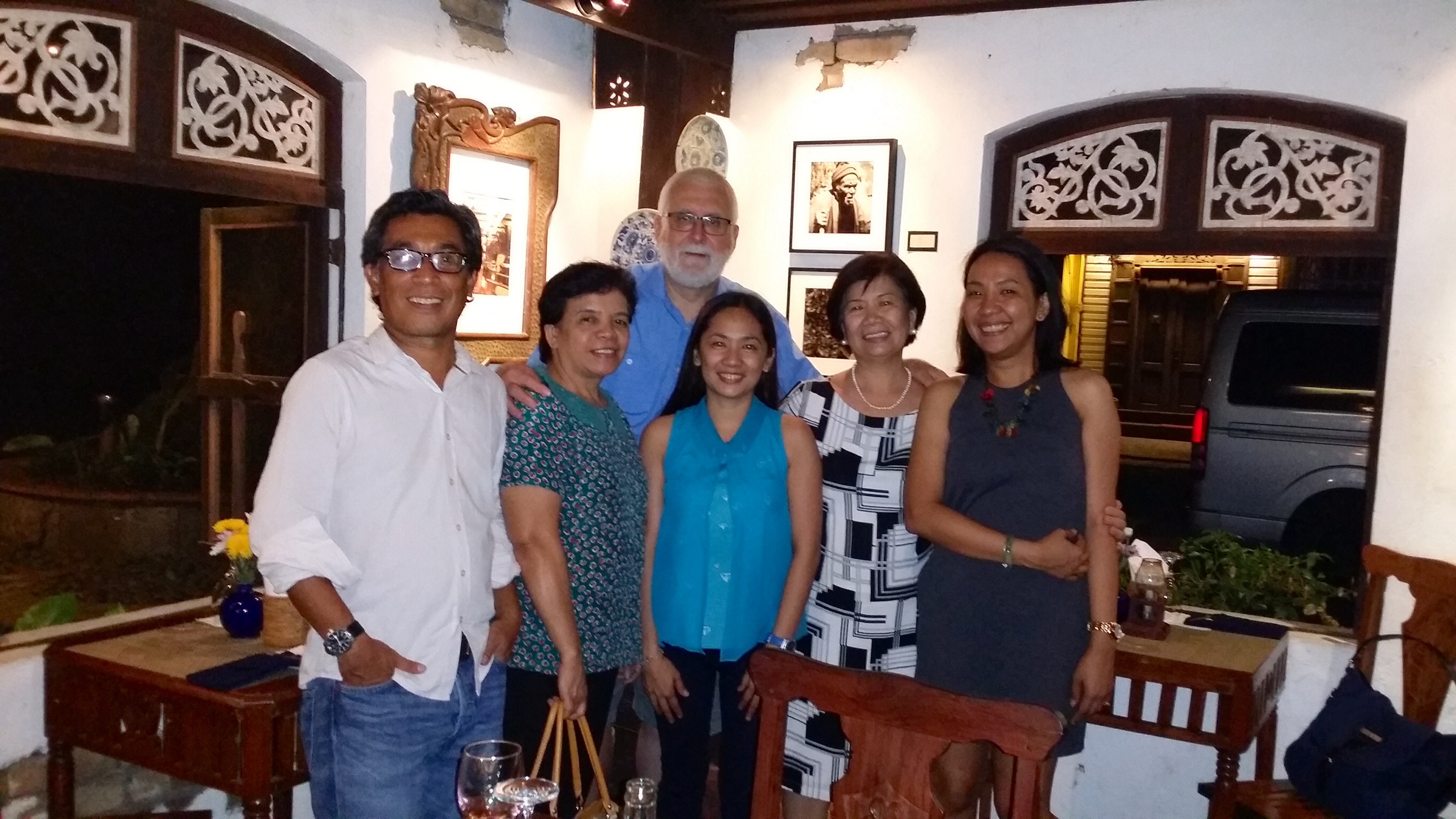
On Tuesday night I was treated to dinner at Sulyap Gallery Café and Restaurant in San Pablo, about 10 km south of Los Baños. And we had a lovely evening: great company, great food. What more can you ask for?

L to R: Eric, Zeny, me, Vel, Corints and Yeyet

L to R: Eric, Zeny, me, Vel, Corints and Yeyet

On Wednesday, Yeyet and her husband Christian took me out to dinner in Los Baños. They were married in March, and had invited me to be one of their sponsors or ninong. Of course I wasn’t able to travel then, but I did send a short video message that was played during the wedding reception. It was a complete surprise to everyone (except Vel with whom I’d made the arrangements to receive and show the video).

On Thursday and Friday nights the IRC2014 committees got together to relax.

Checking out the genebank
Our meetings finished by Friday lunchtime, so I took advantage of some ‘free’ time in the afternoon to visit the International Rice Genebank in the TT Chang Genetic Resources Center, and meet my former staff and colleagues.

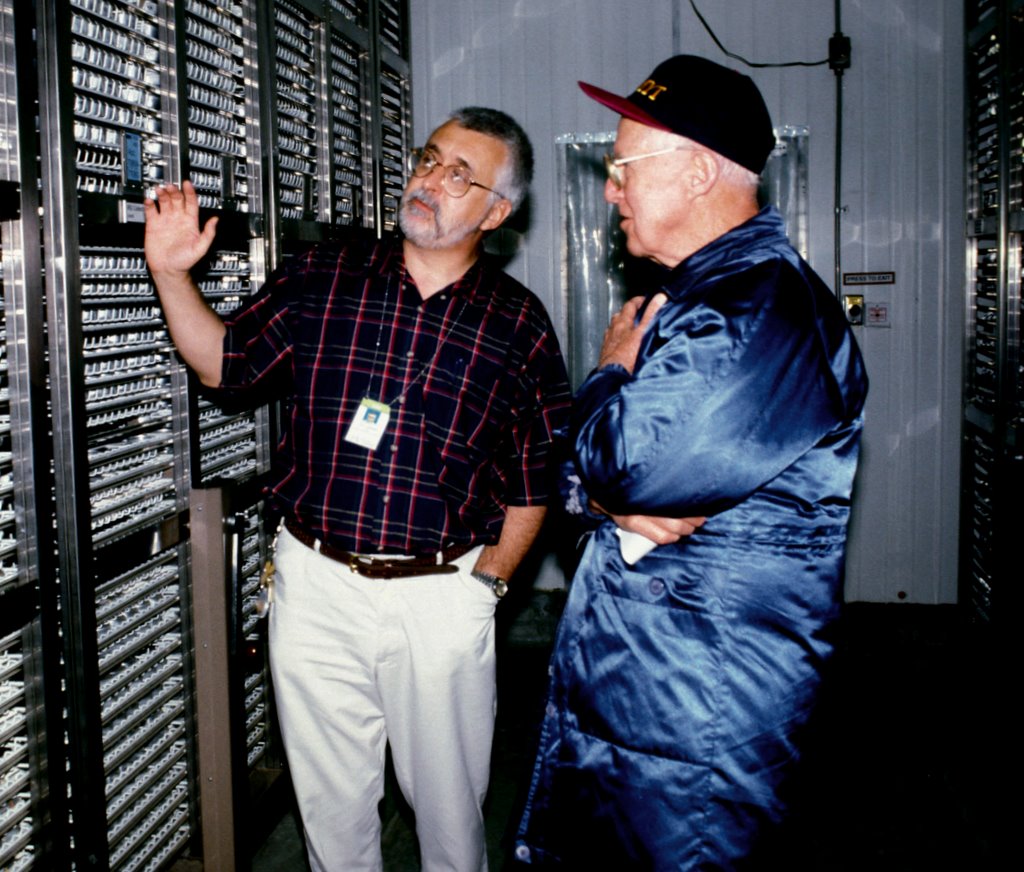
Now the genebank is really the only place in Los Baños where you can chill out. The Active Collection is kept around 2-3C, but the Base Collection is maintained at a decidedly frosty -18C. Since I left IRRI in 2010, a new and much larger cold room to house the Base Collection was added to the genebank infrastructure, with funding from the World Bank. Seeds are still stored in vacuum-sealed aluminium cans, but nowadays, everything is neatly bar-coded. (I was even shown a new tablet-based scoring system, complete with photos and descriptions, for germplasm characterization).

Despite the fact that I had responsibility for the genebank for a decade from 1991, and obviously it’s my ‘baby’, I’m immensely proud of the staff and their conscientious attitude in conserving this extremely important germplasm collection.

Out and about on the farm – Typhoon Glenda
This morning (Sunday) I decided to take a tour of the IRRI Experiment Station, not only to see all the various rice breeding plots and experiments, but to visit the wild species screenhouses on the Upland Farm, and see what damage the recent Typhoon Glenda had caused.

‘You can take the man out of IRRI, but you can’t take IRRI out of the man’. Wandering around the farm, looking at all the fields and labs where I worked for almost 19 years it was hard not to feel really nostalgic. But when I visited IRRI last November, it was almost 4 years then since I had retired and I had been away long enough to have made ‘the separation’. Nevertheless, IRRI and its work has become part of my DNA, and I really do get a thrill wandering through the fields. Rice breeding and science is a numbers game, and IRRI plays that game to the highest proficiency. The field plots are immaculate, and surprisingly so considering the severity of Typhoon Glenda which apparently hung around the Los Baños area for more than 6 hours. There must have been some extremely turbulent vortices to have caused the damage that it did, although this time, there was little if no rain damage. Typhoon Glenda was a ‘dry’ typhoon compared to many.

An Iranian feast
On Sunday evening, I met up with an old friend and former staff member, Bita, who now works for Accenture in Manila. Bita is originally from Iran, but moved to the Philippines when she was eleven. Both her parents are rice scientists. So Bita grew up in Los Baños, went to UPLB, married and had four lovely children, and has now opened an authentic Iranian restaurant in Los Baños called Everyday Kabab.

I had a lovely meal of dips and naan bread (check out Bita’s garlic and yoghurt dip) followed by chicken and beef kababs, prepared using Bita’s secret recipe. She also serves a traditional cherry drink from Iran; it’s neither sweet nor sour, but very refreshing. And Everyday Kabab is growing in popularity among the LB community – it certainly began to fill up while I was there.

And finally, another surprise . . . 
Once we’d finished early on Friday afternoon and I left GRC, I returned to the Guesthouse for some rest, and to work in a more comfortable location. At least I could wear shorts and a T-shirt. But I hadn’t been in my room much more than 30 minutes when the phone rang, and to my surprise, it was Lilia Tolibas, our helper who worked for us for 18 years. Although working mostly in Manila these days, Lilia still has family ties in Los Baños, and had heard I was in town. And she came specially to see me.

We had a good chat for almost an hour, and it was then I heard about her misfortune during last November’s Typhoon Yolanda that hit her home town of Tacloban so badly. After we had left, she built a small house in Tacloban and moved many of her belongings there. But the tidal wave that hit the town destroyed her house, and sadly one of her sisters drowned. She works for the American Chamber of Commerce in Manila and they were quickly offering humanitarian relief. They found her family, and quickly also found her sister’s body who was given a decent burial, a dignity not afforded to so many victims. Lilia is still waiting for her compensation from the government from the humanitarian relief that so many countries donated. It’s a scandal that this is not being released to the victims and families.

Flying home . . .
Tomorrow night, Monday, my EK flight to DXB departs at 23:55 from the ‘new’ Terminal 3 at NAIA. I say ‘new’ advisedly since it was constructed almost a decade ago but, until now, had not be used by the major airlines. Emirates transferred to Terminal 3 last Friday. Let’s hope that this NAIA experience is far superior to many I’ve had out of the decrepit Terminal 1. I should be home in the UK by early afternoon on Tuesday.

A busy week, yes. Fruitful? Yes. Many things accomplished? Yes. Now it’s time to complete the final tasks and before we know it we’ll all be heading off to the congress in Bangkok at the end of October.

Study botany and the world’s your oyster . . .

You bet!

Botany or banking? Is there really a serious choice? I saw a report last year in which botany graduates received higher initial salaries after graduation than many other professions, ranking third after medicine and dentistry, in the UK. That’s hard to believe really. Bankers might certainly reach for the giddy heights in terms of salary packages (and bonuses) but I’m sure that more botanists go to bed each night with a clearer conscience than bankers. And when was the last time you heard of a botanist being reviled by society at large? Well, perhaps if you are in the GM business . . . ?

Not convinced? Well let me tell you why. There is, however, a small caveat. It might be more appropriate to talk about ‘plant sciences’ in the widest sense, because many of the people I’ve met over the decades who do scientific research on and about plants didn’t necessarily study botany per se at university. I don’t think that diminishes my point, however. In the UK, I don’t think there’s a single botany department any longer in the university sector. They all morphed into ‘plant sciences’ or ‘plant biology’ (supposedly more appealing names) or became part of  biological sciences departments. If you were lucky there might be a ‘plants stream’. Botany appears to be in a healthier position in North America.

Plant scientists, it seems, are in great demand. And the traditional image of a botanist couldn’t be further from reality. Whether employed as molecular biologists, geneticists or biochemists (the distinctions are diminishing by the day), plant or crop physiologists, plant breeders, plant pathologists, ecologists, biodiversity and conservation specialists, or even taxonomists, there’s never been a greater need for people to study plants. After all, life on earth depends on plants. Where would we be if we could not successfully grow the crops needed for survival, to adapt to climate change, to keep one step ahead of evolving pathogens, or simply try and understand this wonderful world of ours and its glorious diversity?

Botany has been my ticket to a successful and fruitful career. It’s taken me to many countries in the Americas, Europe, Africa, Asia, and Oceania over four decades – as plant hunter, researcher, teacher, project manager, and speaker. I worked on two important plant species: potato (Solanum tuberosum) and rice (Oryza sativa) and their wild relatives as a taxonomist, germplasm expert, seed physiologist, agronomist, plant breeder, and plant pathologist. My work has been both lab and field based. What more could I have asked for? And I’ve worked with some inspiring colleagues who came to work on potatoes and rice – and other crops – through one avenue or another, not necessarily as botanists, but perhaps through an interest in and love of plants as part of agriculture.

I can’t deny that I have been fortunate – when opportunities arose I was well-placed to take advantage. I studied with some inspiring heavyweights in my chosen fields. But a love and study of plants has made me a happy person – on the whole.

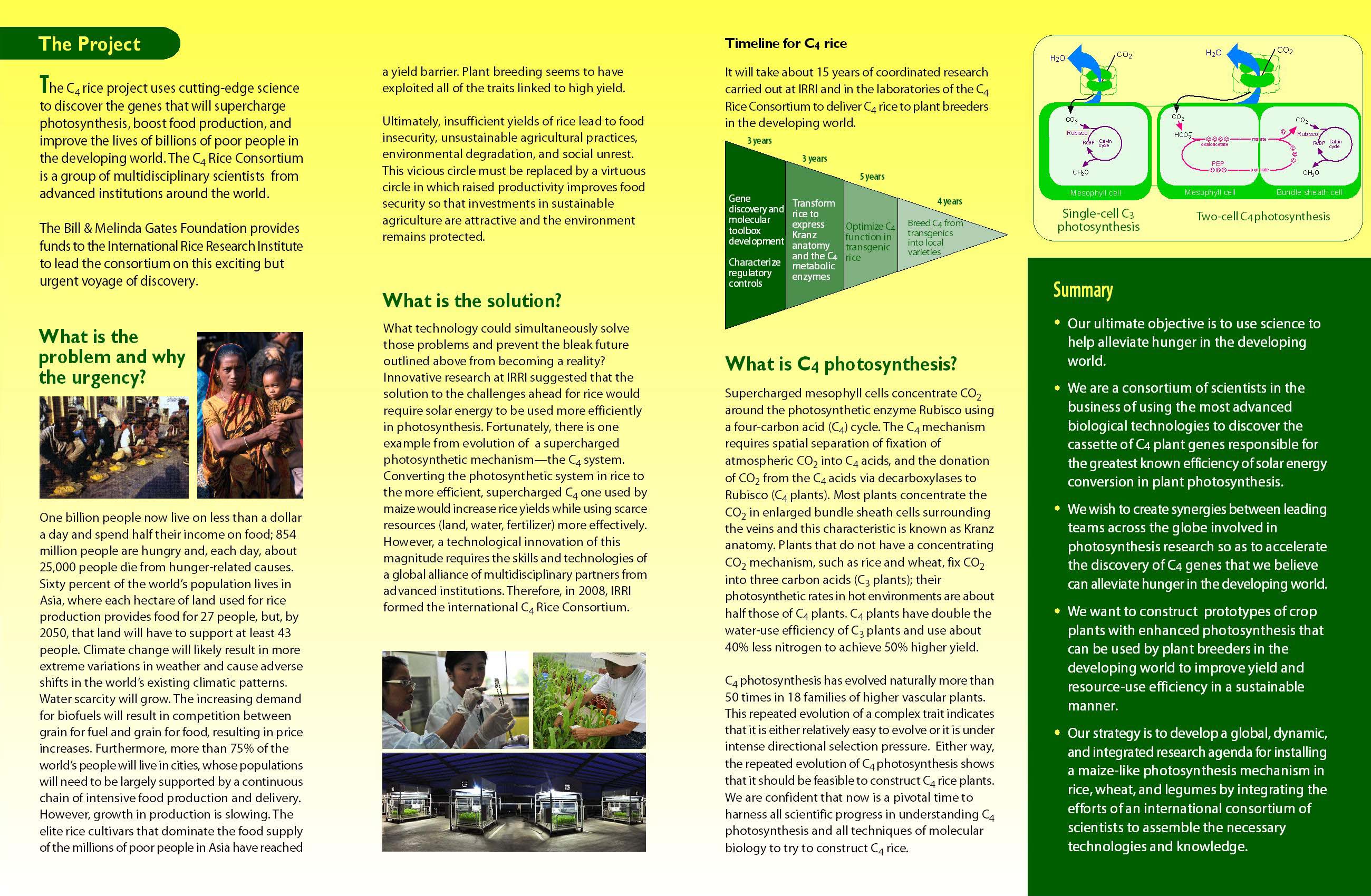
I was out and about yesterday on one of my daily walks. It was a beautiful day, Spring was definitely in the air (at last), and the hedgerows were creeping back into life. In one spot, the bedstraws (Galium spp.) were in their first flush of new growth,  profusely spreading over the bank beside the road, and responding to milder days we have begun to experience recently (in any case it really has been a mild winter). And it was that sight that made me think back to my student days in the late 60s as an undergraduate at Southampton University. There were times when I did wonder if I’d ever use again some of things we were taught and how relevant they might become – like plant anatomy, for example. It’s interesting to know how important anatomy studies have become in the search for and development of a C4 rice to make its photosynthesis more efficient. Researchers at IRRI have studied the leaf anatomy of hundreds of samples of wild rice species, since C4 photosynthesis in plants is associated with the specialized Kranz anatomy.

As an undergraduate I took several plant ecology courses with Dr Joyce ‘Blossom’ Lambert who had worked on and discovered the origin of the Norfolk Broads in East Anglia, UK – not as natural lakes but flooded peat diggings abandoned by the 14th century. But once I’d discovered the ‘link’ between ecology and genetics, I was hooked, and that led to my focus on the conservation and use of plant genetic resources. The rest, as they say, is history . . . 

Something for your Christmas stocking – Plant Genetic Resources and Climate Change hits the shelves 11 December!

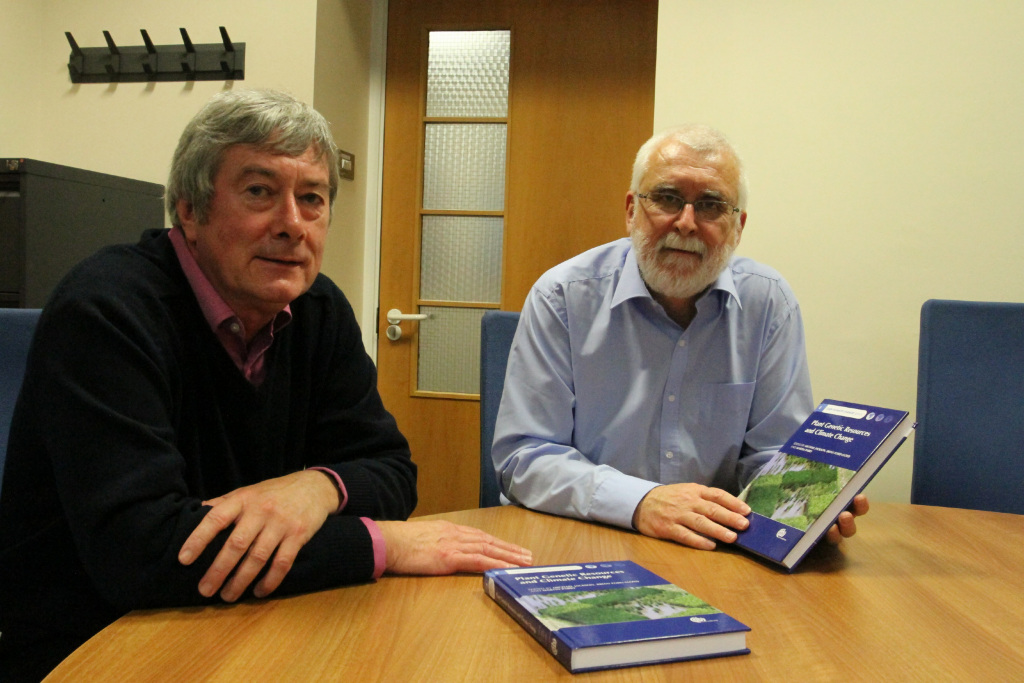
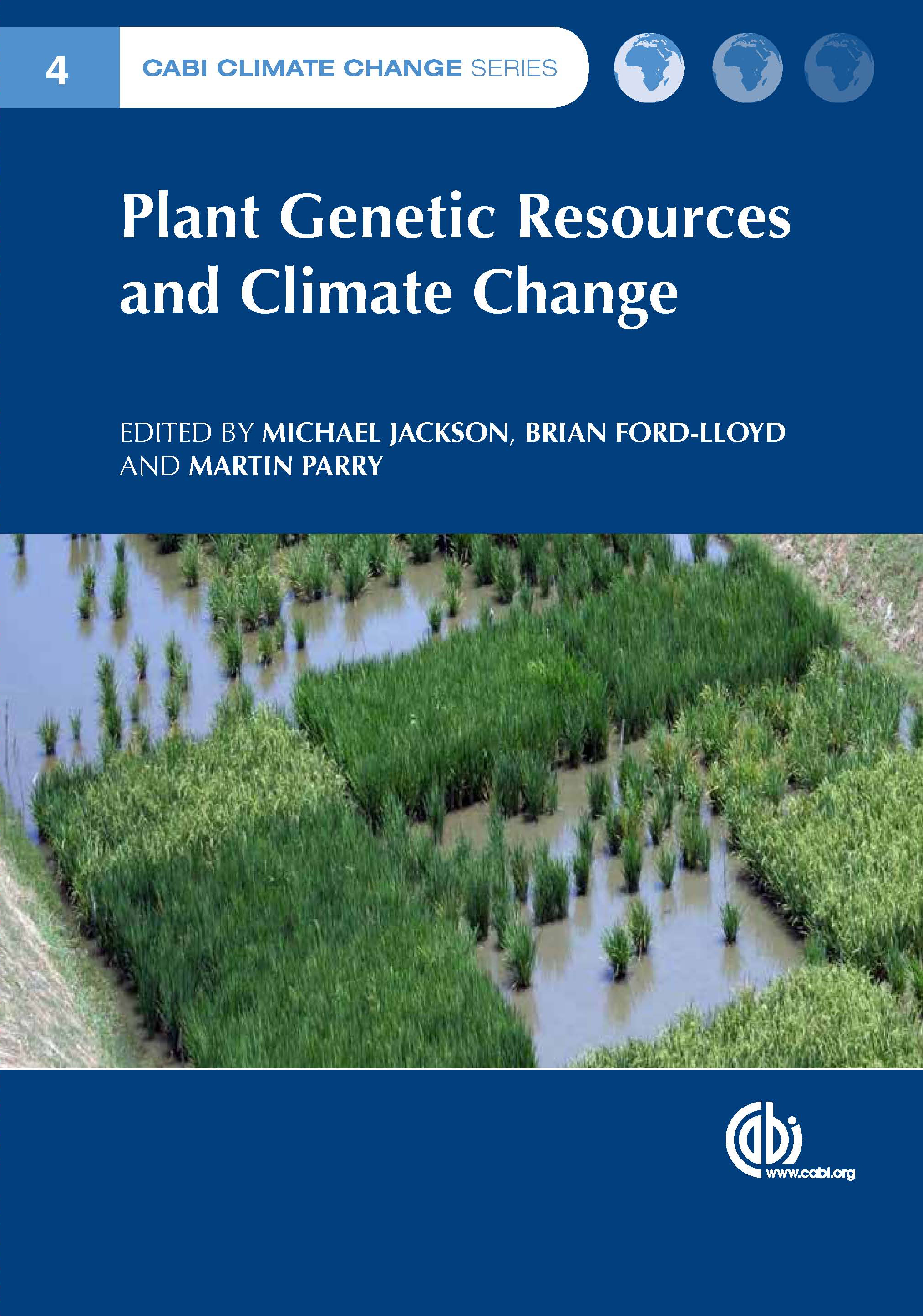
It’s taken just over two and half years, more than 2,400 emails, and many, many hours of editing. But Plant Genetic Resources and Climate Change, edited by myself, Brian Ford-Lloyd and Martin Parry will be published by CABI on 11 December.

Brian was first approached by CABI commissioning editor Vicki Bonham in April 2011. He was reluctant to take on the book by himself, but suggested to Vicki that the project would be feasible if he could persuade Martin and me to be co-editors. I was on vacation in the USA at the time, visiting the Grand Canyon and other locations in Arizona and New Mexico when Brian first contacted me about the possible project. Getting involved in a new book was the last thing on my mind.

The next steps were to produce an outline of the book and find authors whose arms we could twist to contribute a chapter. In the end the book has 16 chapters, as I have described elsewhere. Only two authors let us down and never completed a chapter before we met our deadline with CABI. The contract with CABI was signed in February 2012, and we submitted the final edited chapters by the end of March this year. After that things moved quite fast. We completed the review of page proofs by mid-September, and the figures a couple of weeks later. Early on we agreed I should take on the role of managing editor as I was the only one who was fully ‘retired’ at that time.

Martin Parry

And on Monday this week, David Porter (Books Marketing Manager at CABI) and his colleague Sarah Hilliar came up to Birmingham to video Brian and me (and two other authors, Nigel Maxted and Jeremy Pritchard of the University of Birmingham) for a short promotional video about the book. Unfortunately, Martin Parry was unable to join us.

So now the hard work is over and Plant Genetic Resources and Climate Change is about to be published. There are many interesting key messages, and the preface provides an excellent guide to the rest of the book.

Plant Genetic Resources and Climate Change: available mid-December 2013

Our new 16 chapter book on plant genetic resources has 34 contributors who agree that enhanced use of plant genetic resources is critically important for mitigating against the effects of climate change. The book reveals strong positive messages for the future, but also some substantial negative ones if improvements to conservation and the use of plant genetic resources for food and agriculture (PGRFA) by plant breeders do not happen soon.

Positive messages:

  • While the latest IPCC report (and Betts and Hawkins, Chapter 3) ‘confirms’ that climate change is a reality – and it will affect agriculture – already we can compare regions and see what the scale of the agricultural challenge is, and extrapolate to what will be the situation in the future (Parry, Chapter 4; Berry et al., Chapter 5).
  • Even though climate change will exacerbate the problem of food insecurity – and some of the poorest countries will be affected worst (Zeigler, Chapter 1) – the good news is that breeders are confident they will be able to produce the next generation of ‘climate-adapted crops’. To adapt crops to new climate conditions it is now universally agreed that breeders need access to sources of genetic diversity – and tools to use this diversity more efficiently and effectively. The good news is that major sources of genetic diversity are already conserved in ex situ genebanks.
  • It is also good news that it’s now possible through novel molecular and bioinformatic approaches to more carefully identify valuable genes and track their progress in breeding. New technologies – molecular and bioinformatic – should massively improve exploitation of PGRFA provided those resources still survive. Seed genebanks will lead to DNA sequence genebanks and then on to in silico genebanks and the creation of the ‘digital plant’ (McNally, Chapter 10) enabling the modelling of the ‘ideal plant’ for whatever conditions prevail.
  • Good news also is that breeders are already addressing climate change constraints and using germplasm for submergence, drought, salinity, heat, and pests and diseases, and making progress which gives optimism for the future (Chapters 12 to 16). Drought, submergence, heat and salinity are all environmental stresses that are likely to increase as a result of climate change. For example, rice has 25 related wild species, and 22 of these have already contributed genes to new stress tolerant varieties (Zeigler, Chapter 1).
  • We now have good evidence indicating that some plants in their natural environments can adapt genetically to changing conditions very rapidly – easily within 20 or 30 years and within the timescale of climate change. So as well as conservation in genebanks, plant genetic resources need to be conserved in situ in natural reserves (Maxted et al., Chapter 7) or on farms (Bellon and van Etten, Chapter 8) so that new genes can evolve and provide a greater armory against climate change than afforded just by germplasm ‘frozen’ in genebanks (Ford-Lloyd et al., Chapter 2).

Issue for concern:

  • International mechanisms are in place, through the International Treaty, for breeders to share germplasm for the benefit of society. But there are still political issues constraining the use of plant genetic resources currently conserved (Ford-Lloyd et al., Chapter 2). ‘Ready access’ to genetic resources has been jeopardized by the International Treaty. But, the International Treaty is the only instrument we have for allowing for the exchange and then use of PGRFA so we have to make the best of it (Moore and Hawtin, Chapter 6).

  • Enhanced use of PGRFA can help reduce the increasing risk of hunger predicted by climate change, but does not detract from the need to reduce or stabilize greenhouse gas emissions which would have the greatest effect on reduction of increasing world hunger (Parry, Chapter 4).

  • It is clear that up to now, use of PGRFA by breeders has been neither systematic nor comprehensive, and the vast majority of crop wild relatives remain untapped (Maxted et al., Chapter 7).

  • Critically, we know virtually nothing about how many landraces are currently being grown and fulfilling their potential for adapting to changes in the environment, so there is a need for a step change (Ford-Lloyd et al., Chapter 2).

  • As much as 20% of all plants, not just crop wild relatives, are now estimated to be threatened with extinction. Even within Europe substantial numbers of crop wild relatives are threatened or critically endangered in International Union for Conservation of Nature (IUCN) terms. However, it is the genetic diversity within species that is of greater value for crop improvement, and this diversity is almost certainly being lost (genetic erosion) at a much greater rate than the species themselves, and yet their conservation is far from sufficient (Maxted etal., Chapter 7).

  • Relatively few crop wild relatives (9%) are conserved in genebanks, and even fewer conserved in natural reserves. So, currently there is no guarantee that the genes we need for combating climate change will be available in newly adapted forms when we need them.

Would you like to purchase a copy? You can order online from CABI. When ordering from CABI online purchasers can use this code (CCPGRCC20) for a 20% discount off the retail price. The discount code is valid until 31 December 2013. The standard prices are £85.00, U5$160.00, or €11 0.00. The discounted prices are £68, $128, or €88 .

THE CONTRIBUTORS

Susan J. ARMSTRONG
Senior Lecturer, School of Biosciences, University of Birmingham, Edgbaston, Birmingham, B15 2TT, UK

Mauricio R. BELLON
Principal Scientist, Bioversity International, Via dei Tre Denari 472/a, Maccarese, Rome, Italy

Pam BERRY
Senior Research Fellow, Environmental Change Institute, University of Oxford, Dyson Perrins Building, South Parks Road, Oxford, OX1 3QY, UK

Richard A. BETTS
Professor and Head of the Climate Impacts, Met Office Hadley Centre, FitzRoy Road, Exeter, Devon EX1 3PB, UK

Helen BRAMLEY
Research Associate, Institute of Agriculture, The University of Western Australia, 35 Stirling Highway, Crawley, WA 6009, Australia

Joana Magos BREHM
Collaborator, Centre for Environmental Biology, University of Lisbon, Portugal and Research Assistant, School of Biosciences, University of Birmingham, Edgbaston, Birmingham, B15 2TT, UK

Colette BROEKGAARDEN
Postdoctoral Fellow, Wageningen UR Plant Breeding, PO Box 16, 6700 AJ Wageningen, The Netherlands

Salvatore CECCARELLI
Former Barley Breeder, International Center for Agricultural Research in the Dry Areas (ICARDA), Aleppo, Syria (now retired)

Maduraimuthu DJANAGUIRAMAN
Postdoctoral Research Associate, Department of Agronomy, 2004 Throckmorton Plant Science Center, Kansas State University, Manhattan, KS 66506, USA

Johannes M.M. ENGELS
Honorary Research Fellow, Bioversity International, Via dei Tre Denari 472/a, Maccarese, Rome, Italy

William ERSKINE
Professor and Director, International Centre for Plant Breeding Education and Research (ICPBER) and Centre for Legumes in Mediterranean Agriculture (CLIMA), The University of Western Australia, 35 Stirling Highway, Crawley WA 6009, Perth, Australia

Jacob van ETTEN
Theme Leader – Climate Change Adaptation, Bioversity International, Regional Office of the Americas, CIAT, Recta Cali – Palmira Km. 17, Palmira, Colombia

Brian FORD-LLOYD
Emeritus Professor, School of Biosciences, University of Birmingham, Edgbaston, Birmingham, B15 2TT, UK

Ed HAWKINS
NERC Advanced Research Fellow, National Centre for Atmospheric Science, Department of Meteorology, University of Reading, Earley Gate, PO Box 243, Reading, RG6 6BB, UK

Geoffrey HAWTIN
Former Director General, International Plant Genetic Resources Institute (IPGRI), Maccarese, Rome, Italy (now retired)

Abdelbagi M. ISMAIL
Principal Scientist – Plant Physiology, International Rice Research Institute (IRRI), DAPO 7777, Manila 1301, Philippines

Michael JACKSON
Former Head of the Genetic Resources Center and Director for Program Planning and Communications, International Rice Research Institute (IRRI), DAPO Box 7777, Manila 1301, Philippines (now retired)

Shelagh KELL
Research Fellow, School of Biosciences, University of Birmingham, Edgbaston, Birmingham, B15 2TT, UK

David J. MACKILL
Adjunct Professor, Department of Plant Sciences, University of California, Davis, CA 95616, USA and former Principal Scientist – Rice Breeding, International Rice Research Institute (IRRI), DAPO 7777, Manila 1301, Philippines

Al Imran MALIK
Research Associate, Centre for Legumes in Mediterranean Agriculture (CLIMA) and Institute of Agriculture, The University of Western Australia, 35 Stirling Highway, Crawley, WA 6009, Australia

Nigel MAXTED
Senior Lecturer in Genetic Conservation, School of Biosciences, University of Birmingham, Edgbaston, Birmingham, B15 2TT, UK

Kenneth L. McNALLY
Senior Scientist II – Molecular Genetics and Computational Biology, International Rice Research Institute (IRRI), DAPO Box 7777, Manila 1301, Philippines

Mary A. MGONJA
Principal Scientist and Program Leader (Genetic Resources Enhancement and Management), International Crops Research Institute for the Semi-Arid Tropics (ICRISAT), Regional Office for Eastern and Southern Africa, United Nations Avenue, World Agroforestry Centre, Gigiri PO Box 39063-00623, Nairobi, Kenya 

Samarendu MOHANTY
Head, Social Sciences Division, International Rice Research Institute (IRRI), DAPO Box 7777 Manila 1301, Philippines

Gerald MOORE
Former Legal Counsel, Food and Agriculture Organization of the United Nations (FAO), Rome, Italy (now retired)

Helen OUGHAM
Former Reader, Institute of Biological, Environmental and Rural Sciences, Aberystwyth University, Penglais, Aberystwyth, Ceredigion, SY23 3DA, UK(now retired)

Martin PARRY
Visiting Professor, Grantham Institute and Centre for Environmental Policy, Imperial College London, London, SW7 2AZ, UK

P.V. Vara PRASAD
Associate Professor and Director of K-State Center for Sorghum Improvement, Department of Agronomy, 2004 Throckmorton Plant Science Center, Kansas State University, Manhattan, KS 66506, USA

Jeremy PRITCHARD
Senior Lecturer and Head of Education,School of Biosciences, University of Birmingham, Edgbaston, Birmingham, B15 2TT, UK

Julian RAMIREZ-VILLEGAS
Doctoral Researcher, Institute for Climatic and Atmospheric Science (ICAS), School of Earth and Environment, University of Leeds, Leeds, UK, CGIAR Research Program on Climate Change, Agriculture and Food Security (CCAFS), Cali, Colombia, and International Center for Tropical Agriculture (CIAT), Cali, Colombia

Ian D. THOMAS
Research Scientist, Institute of Biological, Environmental and Rural Sciences, Aberystwyth University, Penglais, Aberystwyth, Ceredigion, SY23 3DA, UK

Hari D. UPADHYAYA
Principal Scientist, Assistant Research Program Director – Grain Legumes, and Head – Gene Bank, International Crops Research Institute for the Semi Arid Tropics (ICRISAT), Patancheru 502 324, Andhra Pradesh, India

Ben VOSMAN
Senior Scientist – Resistance Breeding, Wageningen UR Plant Breeding, PO Box 16, 6700 AJ Wageningen, The Netherlands

Robert S. ZEIGLER
Director General, International Rice Research Institute (IRRI), DAPO Box 7777, Manila 1301, Philippines

THE CHAPTERS

1. Food security, climate change and genetic resources
Robert S. Zeigler

2. Genetic resources and conservation challenges under the threat of climate change
Brian Ford-Lloyd, Johannes M.M. Engels and Michael Jackson

3. Climate projections
Richard A. Betts and Ed Hawkins

4. Effects of climate change on potential food production and risk of hunger
Martin Parry

5. Regional impacts of climate change on agriculture and the role of adaptation
Pam Berry, Julian Ramirez-Villegas, Helen Bramley, Samarandu Mohanty and Mary A. Mgonja

6. International mechanisms for conservation and use of genetic resources
Gerald Moore and Geoffrey Hawtin

7. Crop wild relatives and climate change
Nigel Maxted, Shelagh Kell and Joana Magos Brehm

8. Climate change and on-farm conservation of crop landraces in centres of diversity
Mauricio R. Bellon and Jacob van Etten

9. Germplasm databases and informatics
Helen Ougham and Ian D. Thomas

10. Exploring ‘omics’ of genetic resources to mitigate the effects of climate change
Kenneth L. McNally

11. Harnessing meiotic recombination for improved crop varieties
Susan J. Armstrong

12. High temperature stress
Maduraimuthu Djanaguiraman and P.V..Vara Prasad

13. Drought
Salvatore Ceccarelli

14. Salinity
William Erskine, Hari D. Upadhyaya and Al Imran Malik

15. Response to flooding: submergence tolerance in rice
Abdelbagi M. Ismail and David J. Mackill

16. Effects of climate change on plant-insect interactions and prospects for resistance breeding using genetic resources
Jeremy Pritchard, Colette Broekgaarden and Ben Vosman 

THE EDITORS

MICHAEL JACKSON retired from the International Rice Research Institute (IRRI) in 2010. For 10 years he was Head of the Genetic Resources Center, managing the International Rice Genebank, one of the world’s largest and most important genebanks. Then, for nine years, he was Director for Program Planning and Communications. He was also Adjunct Professor of Agronomy at the University of the Philippines-Los Baños. During the 1980s he was Lecturer in the School of Biological Sciences at the University of Birmingham, focusing on the conservation and use of plant genetic resources. From 1973-81 he worked at the International Potato Center, in Lima, Perú and in Costa Rica. He now works part-time as an independent agricultural research and planning consultant. He was appointed OBE in The Queen’s New Year’s Honours 2012, for services to international food science.

BRIAN FORD-LLOYD is Emeritus Professor of Conservation Genetics at the University of Birmingham, former Director of the University Graduate School, and former Deputy Head of the School of Biosciences. During his tenure as Director of the University Graduate School he aimed to ensure that doctoral researchers throughout the University were provided with the opportunity, training and facilities to undertake internationally valued research that would lead into excellent careers in the UK and overseas. He drew from his experience of having successfully supervised over 40 doctoral researchers from the UK and many other parts of the world in his chosen research area which included the study of the natural genetic variation in plant populations, and agricultural plant genetic resources and their conservation.

MARTIN PARRY is Visiting Professor at The Centre for Environmental Policy, Imperial College London, and also Visiting Research Fellow at The Grantham Institute at the same university. Until September 2008 he was Co-Chair of Working Group II (Impacts, Adaptation and Vulnerability), of the Intergovernmental Panel on Climate Change (IPCC) based at the Hadley Centre for Climate Prediction and Research, UK Meteorological Office. Previously he was Director of the Jackson Environment Institute (JEI), and Professor of Environmental Science at the University of East Anglia (1999-2002); Director of the JEI and Professor of Environmental Management at University College London (1994-99); foundation Director of the Environmental Change Institute and Professor of Geography at the University of Oxford (1991-94); and Professor of Geography at the University of Birmingham (1989-91). He was appointed OBE in The Queen’s New Year’s Honours 1998, for services to the environment and climate change.

The beauty (and wonder) of diversity

June 1815. British and allied troops muster in Brussels (then part of the United Netherlands) as the Duke of Wellington prepares to meet Napoleon at the Battle of Waterloo.

The troops are in good spirits, the social life of high society thrives, even as troops march to the front, with officers being called away to their regiments from the Duchess of Richmond’s Ball on the eve of the battle. The weather is fine, although it would deteriorate dramatically over the course of the battle in the next day or so.

Arriving in Belgium, one soldier commented on the productivity of  the local agriculture: I could not help remarking the cornfields today . . . they had (as I thought) a much finer appearance than I had seen in England, the rye in particular, it stood from six to seven feet high, and nearly all fields had high banks around them as if intended to let water in and out, or to keep water out altogether – but the rich appearance of the country cannot fail to attract attention.

Another cavalry officer wrote: I never saw such corn [probably referring to wheat] 9 or 10 feet high in some fields, and such quantities of it. I only wonder how half of it is ever consumed.

These are among the many contemporary commentaries in Nick Foulkes’ entertaining account of the social build-up to Waterloo. So what does all this have to do with the beauty (and wonder) of diversity?

Landrace varieties
Well, they are actual descriptions, almost 200 years old, of the cereal varieties being grown in the vicinity of Brussels.  Once upon a time, not too long ago before plant breeding started to stir up genetic pools, all our crops were like those described by soldiers off to fight Boney. We often refer to them as farmer, traditional or landrace varieties which have not been subjected to any formal plant breeding. You also hear the terms ‘heritage’ or ‘heirloom’ varieties, especially for vegetables and the like. Landrace varieties are highly valued in farming systems around the world – and the basis of food security for many farmers who grow them. However, in many others they have been replaced by highly-bred and higher yielding varieties that respond to inorganic fertilizers. The Green Revolution varieties released from the 1970s onwards, such as the dwarf wheat and rice varieties championed by pioneers such as Dr Norman Borlaug, bought time when the world faced starvation in some countries.

Now I’ve been in the business of studying the diversity of crops and their wild relatives almost all my professional life: describing it; assessing its genetic value and potential; and making sure that all this genetic treasure is available for future generations through conservation in genebanks.

The nature of diversity
But it wasn’t until the early 20th century – with the work of  Nikolai Vavilov and his Russian colleagues, and others that followed in their footsteps – that we really began to understand the nature and geographical distribution of diversity in crops. Today, we’ve gone the next step, by unraveling the secrets of diversity at the molecular level.

This diversity has its genetic basis of course, but there is an environmental component, as well as the important interaction of genes and environment. And I’m using a wide definition of ‘environment’ – not just the physical environment (which we think of in terms of growing conditions governed by geography, altitude, soil and climate) but also the pest and disease environment in which crops (and their wild relatives) evolved and were selected by farmers over centuries to better fit their farming systems. Landrace varieties that are still grown today in some parts of the world (or conserved in genetic resources collections) are extremely important sources of genes for adaptation to a changing climate for instance, or resistance to pests and diseases, as we have highlighted in our forthcoming book.

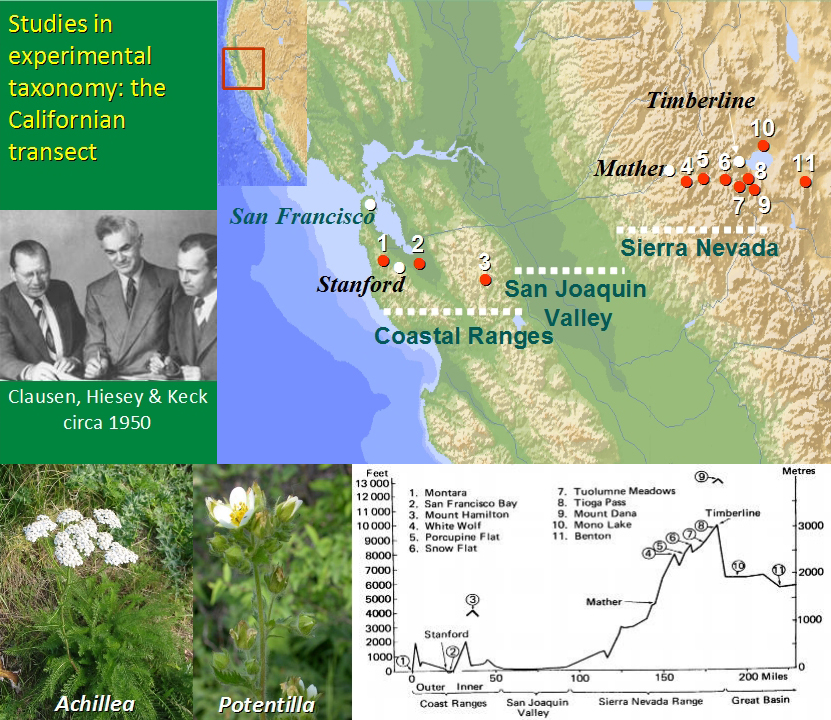
My own work on potatoes, rice and different grain legumes aimed to understand their patterns and origins of diversity, as well as the breeding systems which molded and released that diversity. I’ve been fortunate to have the great opportunity of working with or meeting many of the pioneers of the genetic resources movement, as I have described in other posts in this blog. But at the beginning of my career I became interested in studying crop diversity after reading the scientific papers of a group of botanists, Jens Clausen, David Keck and William Hiesey at Stanford University  (and others in Europe) who undertook research to understand patterns of variation in different plant species and its genetic and physiological underpinning.

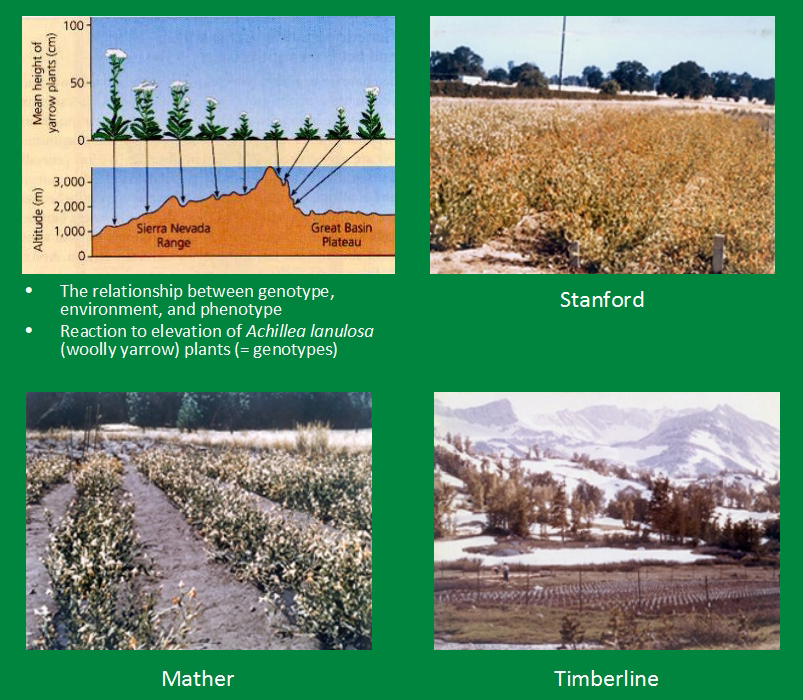
These Californian pioneers studied several plant species found across California (including Achillea spp. and Potentilla spp.), from the coast to the high sierra, and planted seeds from each of the populations in different experiment stations or ‘experimental gardens’ as they came to be known. They described and determined the physiological and climatic responses in these species – and the genetic basis – of their adaptation to the different environments. The same species even had recognizable morphological variants typical of different habitats.

Experimental gardens established by Clausen Keck and Hiesey at three sites across California to study variation in plant species.

Interesting research has also been carried out in the UK on the tolerance of grasses to heavy metals on mine spoil heaps. Population differentiation occurs within very short distances even though there may be no morphological differences between tolerant and non-tolerant forms. Researchers from Aberystwyth have collected grasses all over Europe and have found locally-adapted forms in rye grass (Lolium) for example, which have been used to improve pasture grasses for British agriculture. But such differences in these and many other crops can often only be identified following cultivation in field trials where the variation patterns can be compared under the same growing conditions (following the principles and methods established by Clausen and his co-workers), and the data analysed using the appropriate statistical tests.

I began my work on genetic resources in 1970. I quickly realized that this was the area of plant science that was going to suit me. If I wasn’t already hooked before I moved to Peru, my work there at CIP on potato landrace varieties in the Andes (where the potato originated) convinced me I’d made the right decision. The obvious differences between crop varieties are most often seen in those parts of the plant which we eat – the tubers, seeds and the like, the parts which have probably undergone most selection by humans, for the biggest, the tastiest, the sweetest, the best yielder. Other traits that adapt a variety to its environment are more subject to natural selection.

Patterns of diversity are so different from one crop species to another. In potatoes it’s as though a peacock were showing off for its mate – you can hardly miss it, with the colorful range of tuber shapes but also including differences in the color of the tuber flesh. Modern varieties are positively boring in comparison. Who wouldn’t enjoy a plate of purple french fries, or a yellow potato in a typical Peruvian dish like papa a la huancaina. Such exuberant diversity is also seen in maize cobs, in beans, and the squashes beloved of Americans for their Halloween and Thanksgiving displays.

Many of the other cereals, such as wheat, barley, and rice are much more subdued in their diversity. It’s much more subtle – it doesn’t hit you between the eyes like potatoes – such as the arrangement of the individual grains, bearded or not, and color, of course. When I first started work with rice landraces in 1991, I was a little disappointed about the variation patterns of this important crop. Little did I know or realize. Comparing just a small sample of the 110,000 varieties in the IRRI genebank collection side-by-side it was much easier to appreciate the breadth of their diversity, in growing period, in height, in form and color, as I have shown in the video included in another post. Just check the field plantings of rice landrace varieties from minute 02:45 in the video. Now there are color differences between the various grains, which most people never see because they purchase their rice after it has been milled.

From a crop improvement point of view, this easily observable diversity is less important. It’s the diversity for yield, for resistance to pests and diseases, and the ability to grow under a wide range of conditions – drought, submergence, increased salinity – that plant breeders seek to use. And that’s why the worldwide efforts to collect and conserve this diversity – the genetic resources being both crop varieties and their related wild species – is so important. I was privileged to lead one of the major genetic resources programs at the International Rice Research Institute in the Philippines for 10 years. But the diversity programs of the other centers of the CGIAR collectively represent one of the world’s most important genetic resources initiatives. Now the Global Crop Diversity Trust (which has recently moved its headquarters from Rome to Bonn in Germany) is not only providing some global leadership and involving many countries that are depositing germplasm in the Svalbard Global Seed Vault, but also providing financial support to place germplasm conservation on a sustainable basis.

Crop diversity is wonderful to admire, but it’s so much more important to study and use it for the benefit of society. I spent almost 40 years doing this, and I don’t have any regrets at all that my career moved in this direction. Not only did I get to do something I really enjoyed, I met some incredible scientists all over the world.

Science matters to us all . . .

Hailed by some as the new David Attenborough (who, over five decades or more, has brought some of the most iconic programs about the natural world to the small screen), Manchester University and CERN physics Professor Brian Cox seems to be on TV almost every other week. He’s almost become the ‘rock star’ of TV science – which is apt since in his youth (he’s not exactly in his dotage now, being only 45) he was a member of the group D:Ream (I have to admit to never having heard of them before despite their 1993 song,Things Can Only Get Better, being adopted by Britain’s New Labour during the 1997 General Election campaign).

I’m not one of Cox’s greatest fans. He’s good when he sticks to his own specialty of physics and similar (even though I have a hard time following him – and he’s obsessed with very large numbers, billions and billions, which I can’t get my head around). His 2011 series Wonders of the Universe was quite compelling. I found him less convincing in his early 2013 series, Wonders of Life (when he slipped into ‘David Attenborough’ mold). I find his constant simpering smile quite off-putting, but I guess it’s rather unfair to condemn him for that.

Last week he began a new three-part series, Science Britannica, in which he celebrates British science and explores the contributions of British science and scientists to making our world a better place.

Brian Cox is a natural broadcaster, and his enthusiasm for science does come across. It is quite likely that the upsurge of interest in science subjects among schoolchildren can be attributed to the popular following of his TV programs. However, the one thing that I do admire most, are his clear and simple explanations of what science is (and what it isn’t), how science is carried out (and how it can be and is sometimes carried out badly). In short, his explanation of the ‘scientific method’ is key in today’s world of conflicting ideas, perspectives and policy – that may be based on sound scientific evidence. Or maybe not. Based on empiricism, development of hypotheses, experimentation and peer review, science provides an insight into how the world operates. And this is so important, as I have pointed out recently in this blog. It’s particularly relevant, say, to the acceptance or rejection of anthropogenic climate warming. The rejection of genetically modified crops without sound scientific basis is another reason to be concerned about the misunderstanding of science. These and more Brian Cox has tackled in the first two parts of the Science Britannica series.

Given my enthusiasm for explaining the importance of science, I was very disturbed yesterday to read about the ‘fear of science’ among House Republicans in the US Congress, blocking the appointment of a US Science Laureate. Read the story here.

I came to science late, in one sense. So I don’t count myself in the same league as those scientists who have focused their entire careers seeking knowledge. I kept my study options quite broad until I went to graduate school. And although my botany PhD finally gave me a sense of scientific purpose, I’ve always had a broader perspective than just one relatively narrow area of science. But, I am passionate about science communication, so I am pleased that my alma mater, the University of Birmingham, has appointed Alice Roberts as Professor of Public Engagement in Science. Animal behaviorist Richard Dawkins (and now mathematician Marcus du Sautoy) was the Simonyi Professor for the Public Understanding of Science at Oxford University.

One of the best lectures I’ve ever heard about the importance of science (doing the right science, and doing the science right) was the 2012 Richard Dimbleby Lecture on the BBC delivered by President of the Royal Society and Nobel Laureate (and 1970 University of Birmingham biology alumnus!) Professor Sir Paul Nurse. He explains, in a remarkable feat of oratory what science means to him, and why we need to continue to invest in science and scientists. I couldn’t agree more. His lecture is worth 45 minutes of anyone’s time.

Would I eat genetically-modified foods? Damn right I would! (Updated 2020-02-18 & 2021-01-08)

MC900436915Eat genetically-modified foods? I’ve been eating them all my life and I haven’t noticed any negative effects yet.
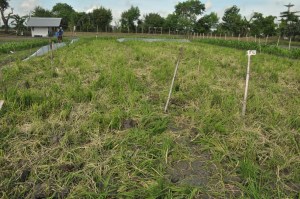
There’s hardly a food plant that we grow today that hasn’t undergone some sort of genetic modification. Let’s take the potato as a good example. I can’t think of any modern potato variety that does not have one or more wild species in its pedigree somewhere. These have been used for their disease resistance, among other reasons, such as Solanum demissum from Mexico to control the late blight pathogen Phytophthora infestans (the culprit in the Irish Potato Famine of the 1840s). That’s just one species – plenty more have also been crossed with modern potato varieties. There are also good examples from rice for submergence tolerance or salt tolerance using distantly-related wild species.

That’s genetic modification. Plain and simple. I guess most people don’t even realize. It’s what plant breeding is all about: taking different varieties or species (and their genes), crossing them (where possible) to make a hybrid, and selecting the best from the ‘DNA soup’. To increase the precision of conventional plant breeding, molecular markers are often now used to follow the transfer of useful characteristics or traits in conventional plant breeding populations.

GMO – genetically modified organism. An emotive term for some. For others, like me, genetic engineering is one of the tools in the arsenal for feeding a world population of 7+ billion – that’s growing rapidly – especially under a changing climate. Genetic engineering is even more precise than conventional plant breeding for moving genes (DNA) between species. However, there has been a lot of scare-mongering – and more – when it comes to GMOs. 

Now you might ask why I’ve focused on this topic all of a sudden. Well, on 8 August 2013, a field trial of Golden Rice (that contains beta carotene, a source of Vitamin A) in the south of Luzon, Philippines was vandalized by anti-GM activists (and maybe a few farmers), and destroyed.* This field trial was part of the important humanitarian research undertaken by the International Rice Research Institute (IRRI) and its partners in the Philippines, the Department of Agriculture and PhilRice (the Philippines Rice Research Institute) to develop biofortified rice varieties that can deliver Vitamin A and other micronutrients sustainably without having resort to supplementation or commercial fortification, which are expensive and only effective as long as such initiatives are funded.

In the video below, IRRI Deputy Director General, Dr Bruce Tolentino explains what happened on 8 August and why Golden Rice is so important for people who suffer from Vitamin A deficiency.

While GM crops are widely grown in the USA and some other countries, there has been significant public resistance in Europe, and particularly in the UK. I can understand, however, why the general public in the UK was – and is – wary. In the 1980s there were a couple of important food scares: a major foot and mouth outbreak in farm livestock; and BSE or ‘mad cow disease’. Furthermore, one or two commercial companies were attempting to commercialize some GM crops – without taking the time to explain why, how, and what for. The public lost faith in the ‘trust us’ line put out by the government of the day.

Environmental groups conducted major campaigns against even the testing of genetically-modified crops, let alone their commercialization. Very soon the activists had seized the initiative; the label of ‘Frankenstein foods’ stuck. An opportunity was lost, since scientists didn’t adequately step up to the plate and explain, in language that the average man in the street could understand, what GM technology was all about, and its importance. In the early days of GM research there were some inherent risks (such as the use of antibiotic markers to identify plants carrying the gene of interest); and some issues such as the ‘escape’ of genes from GMOs into wild plant populations. GM techniques have moved on, new approaches for identification of transgenic plants developed. But field research – based on the soundest of scientific principles, methods and ethics, generating good empirical data – is still needed to answer many of the environmental questions.

The vandalized Golden Rice field trial in Bicol, southern Luzon, Philippines

I do question the motives of some activists. Are they really concerned about real or perceived negative health and environmental impacts of GMOs? Or is the real issue that GM technology (as they see it) is in the hands of big agrochemical companies like Monsanto, Du Pont, Syngenta and others – an anti-capitalist campaign. In many countries much of the GM research is actually carried out by universities and publicly-funded research organizations such as the John Innes Centre in the UK.

I’ve had my own run-ins with these activists. In the early 1990s, then IRRI Director General Klaus Lampe opened a dialogue with a number of groups in the Philippines. He invited many anti-GM activists to IRRI for a two-day dialogue. I remember ‘challenging’ one prominent activist and future presidential candidate Nicanor Perlas about his anti-biotechnology campaign. As we analysed his perspectives, it became clear that his major concern was ‘genetic engineering’ – not biotechnology as a whole. I suggested to him that we could agree to disagree about genetic engineering (I appreciated there were risks, but as a scientist I wanted to study and evaluate those risks), but we should and could agree about the value of many of other biotechnology tools such as tissue culture, somaclones, or embryo rescue, among others. He concurred. Yet a few days after the meeting, he published a two page diatribe against ‘biotechnology’ (not just genetic engineering) in one of the Manila broadsheets. I find such actions (and positions) disingenuous, and typical of the lack of understanding that many of these people really have about GM. Just listen to the points of view presented by the activists in this Penn and Teller video (Eat This! Season 1. Episode 11. April 4, 2003). I already posted this before in my story about the late Nobel Laureate Norman Borlaug – but it’s worth repeating here. Just be careful – there is some strong language.

Here are a couple of classic quotes from Borlaug from that video:
Producing food for 6.2 billion people, adding a population of 80 million more a year, is not simple. We better develop an ever improved science and technology, including the new biotechnology, to produce the food that’s needed for the world today. And in response to the fraction of the world population that could be fed if current farmland was converted to organic-only crops: We are 6.6 billion people now. We can only feed 4 billion. I don’t see 2 billion volunteers to disappear.

Nevertheless, it is good to see the condemnation by the scientific community and media worldwide of the destruction of the Golden Rice field trial two weeks ago. In particular, it’s gratifying to hear that Mark Lynas, a well-respected British writer, journalist and environmental activist has turned his back on the anti-GMO lobby. He recently traveled to the Philippines to find out more for himself about Golden Rice research and the damage to the field trial.

Here are some of the media reports from around the world: in the New York Times; Slate; the Philippine Star; AGProfessional; Science 2.0; the BBC; and change.org. Even Fox News got in on the act in its characteristic over-the-top way! Here is an interesting piece about GM in general, published a couple of days ago in Forbes.

* Read this report by Mark Lynas after his visit to the Philippines recently.


Golden Rice has now been approved in the Philippines. Read this news story from the IRRI website, dated 18 December 2019:

After rigorous biosafety assessment, Golden Rice “has been found to be as safe as conventional rice” by the Philippine Department of Agriculture-Bureau of Plant Industry. The biosafety permit, addressed to the Department of Agriculture – Philippine Rice Research Institute (DA-PhilRice) and International Rice Research Institute (IRRI), details the approval of GR2E Golden Rice for direct use as food and feed, or for processing (FFP).

PhilRice Executive Director Dr. John de Leon welcomed the positive regulatory decision. “With this FFP approval, we bring forward a very accessible solution to our country’s problem on Vitamin A deficiency that’s affecting many of our pre-school children and pregnant women.”

Despite the success of public health interventions like oral supplementation, complementary feeding, and nutrition education, Vitamin A deficiency (VAD) among children aged 6 months to 5 years increased from 15.2 percent in 2008 to 20.4 percent in 2013 in the Philippines. The beta-carotene content of Golden Rice aims to provide 30 to 50 percent of the estimated average requirement (EAR) of vitamin A for pregnant women and young children.

“IRRI is pleased to partner with PhilRice to develop this nutrition-sensitive agricultural solution to address hidden hunger. This is the core of IRRI’s purpose: to tailor global solutions to local needs,” notes IRRI Director General Matthew Morrell. “The Philippines has long recognized the potential to harness biotechnology to help address food and nutrition security, environmental safety, as well as improve the livelihoods of farmers.”

The FFP approval is the latest regulatory milestone in the journey to develop and deploy Golden Rice in the Philippines. With this approval, DA-PhilRice and IRRI will now proceed with sensory evaluations and finally answer the question that many Filipinos have been asking: What does Golden Rice taste like?

To complete the Philippine biosafety regulatory process, Golden Rice will require approval for commercial propagation before it can be made available to the public. This follows from the field trials harvested in Muñoz, Nueva Ecija and San Mateo, Isabela in September and October 2019.

The Philippines now joins a select group of countries that have affirmed the safety of Golden Rice. In 2018, Food Standards Australia New Zealand, Health Canada, and the United States Food and Drug Administration published positive food safety assessments for Golden Rice. A biosafety application was lodged in November 2017 and is currently undergoing review by the Biosafety Core Committee in Bangladesh.

***

About the Healthier Rice Program
Together with its national partners, the Healthier Rice Program at IRRI is working to improve the nutritional status in countries across Asia and Africa, where rice is widely grown and eaten. Delivering essential micronutrients through staple foods like rice offers a sustainable and complementary approach to public health interventions for micronutrient deficiency, which affects 2 billion people worldwide. In addition to Golden Rice, research is being conducted on high iron and zinc rice (HIZR) to help address iron-deficiency anemia and stunting.


8 January 2021: gene editing
There was an important news item in The Guardian yesterday, reporting that the UK’s head of DEFRA (Department for  Environment, Food & Rural Affairs) George Eustice MP had indicated that gene editing of crops and livestock might be permitted in the UK before long, and that he was launching a consultation into this, and was quickly welcomed by many in the UK scientific community like Professor Sophien Kamoun, a plant pathologist at the John Innes Centre in Norwich who tweeted his support.

Under strict EU rules, gene editing had been classified as genetic modification and therefore banned. Now that the UK has left the EU, it can decide for itself how to harness the power of these biotechnology tools.

Don’t get me wrong. I was—and remain—a strong supporter of EU membership, but on the issue of GMOs and other biotechnology tools, I believe the European Commission and the courts got it very wrong. We need these powerful tools so we can harness the genetic resources to improve crops and livestock in a fraction of the time that would be needed using more conventional methods. Doubt remains, however, whether foods produced using any of these techniques could, for the foreseeable future, be exported to any EU countries.

Immediately after announcing the consultation, the usual opponents of any biotechnology, such as GeneWatch UK condemned this development. I’m sure it won’t be long before the likes of Friends of the Earth and Greenpeace add their voices in opposition.

The technique of gene editing (more correctly the CRISPR/Cas9 technique) was discovered and developed by Emmanuelle Charpentier and Jennifer A. Doudna who were awarded the Nobel Prize in Chemistry 2020 last October. That’s how important the scientific community believes this technology is.

Emmanuelle Charpentier and Jennifer Doudna

In a press release that announced the award of this prize, the Royal Swedish Academy of Sciences stated that Charpentier and Doudna had . . . discovered one of gene technology’s sharpest tools: the CRISPR/Cas9 genetic scissors. Using these, researchers can change the DNA of animals, plants and microorganisms with extremely high precision. This technology has had a revolutionary impact on the life sciences, is contributing to new cancer therapies and may make the dream of curing inherited diseases come true.

My hope is that the proposed DEFRA consultation can be conducted in a calm and collected way. Although I fear that emotions will once again take the debate off in unwelcome directions. Even on Channel 4’s new program last night, presented Jon Snow referred to genetically-modified foods as ‘Frankenfoods’ Use of this terminology does not help one iota.

Plant Genetic Resources and Climate Change – publication by the end of the year*

A perspective from 25 years ago
In April 1989, Brian Ford-Lloyd, Martin Parry and I organized a workshop on plant genetic resources and climate change at the University of Birmingham. A year later, Climatic Change and Plant Genetic Resources was published (by Belhaven Press), with eleven chapters summarizing perspectives on climatic change and how it might affect plant populations, and its expected impact on agriculture around the world.

We asked whether genetic resources could cope with climate change, and would plant breeders be able to access and utilize genetic resources as building blocks of new and better-adapted crops? We listed ten consensus conclusions from the workshop:

  1. The importance of developing collection, conservation and utilization strategies for genetic resources in the light of climatic uncertainty should be recognised.
  2. There should be marked improvement in the accuracy of climate change predictions.
  3. There must be concern about sea level rises and their impact on coastal ecosystems and agriculture.
  4. Ecosystems should be preserved thereby allowing plant species – especially crop species and their wild relatives – the flexibility to respond to climate change.
  5. Research should be prioritized on tropical dry areas as these might be expected to be more severely affected by climate change.
  6. There should be a continuing need to characterize and evaluate germplasm that will provide adaptation to changed climates.
  7. There should be an increase in screening germplasm for drought, raised temperatures, and salinity.
  8. Research on the physiology underlying C3 and C4 photosynthesis should merit further investigation with the aim of increasing the adaptation of C3 crops.
  9. Better simulation models should drive a better understanding of plant responses to climate change.
  10. Plant breeders should become more aware of the environmental impacts of climate change, so that breeding programs could be modified to accommodate these predicted changes.

Climate change perspectives today
There is much less scepticism today about greenhouse gas-induced climate change and what its consequences might be, even though the full impacts of climate change cannot yet be predicted with certainty. On the other hand, the nature of weather variability – particularly in the northern hemisphere in recent years – has left some again questioning whether our climate really is warming. But the evidence is there for all to see, even as the sceptics refuse to accept the empirical data of increases in atmospheric CO2, for example, or the unprecedented summer melting of sea ice in the Arctic and the retreat of glaciers in the Alps.

Over the past decade the world has experienced a number of severe climate events – wake-up calls to what might be the normal pattern in the future under a changed climate – such as extreme drought in one region, or unprecedented flooding in another. Even the ‘normal’ weather patterns of Western Europe appear to have become disrupted in recent years leading to increased stresses on agriculture.

Some of the same questions we asked in 1989 are still relevant. However, there are some very important differences today from the situation then. Our understanding of what is happening to the climate has been refined significantly over the past two decades, as the efforts of the International Panel on Climate Change (IPCC) have brought climate scientists worldwide together to provide better predictions of how climate will change. Furthermore, governments are now taking the threat of climate change seriously, and international agreements like the Kyoto Protocol to the United Nations Framework on Climate Change, which came into force in 2005 and, even with their limitations, have provided the basis for society and governments to take action to mitigate the effects of climate change.

A new book from CABI
It is in this context, therefore, that our new book Plant Genetic Resources and Climate Change was commissioned to bring together, in a single volume, some of the latest perspectives about how genetic resources can contribute to achieving food security under the challenge of a changing climate. We also wanted to highlight some key issues for plant genetic resources management, to demonstrate how perspectives have changed over two decades, and discuss some of the actual responses and developments.

Food security and genetic resources
So what has happened during the past two decades or so? In 1990, world population was under 6 billion, but today there are more than 1 billion additional mouths to feed. The World Food Program estimates that there are 870 million people in the world who do not get enough food to lead a normal and active life. Food insecurity remains a major concern. In an opening chapter, Robert Zeigler (IRRI) provides an overview on food security today, how problems of food production will be exacerbated by climate change, and how – in the case of one crop, rice – access to and use of genetic resources have already begun to address many of the challenges that climate change will bring.

Expanding on the plant genetic resources theme, Brian Ford-Lloyd (University of Birmingham) and his co-authors provide (in Chapter 2) a broad overview of important issues concerning their conservation and use, including conservation approaches, strategies, and responses that become more relevant under the threat of climate change.

Climate projections
In three chapters, Richard Betts (UK Met Office) and Ed Hawkins (University of Reading), Martin Parry (Imperial College – London), and Pam Berry (Oxford University) and her co-authors describe scenarios for future projected climates (Chapter 3), the effects of climate change on food production and the risk of hunger (Chapter 4), and regional impacts of climate change on agriculture (Chapter 5), respectively. Over the past two decades, development of the global circulation models now permits climate change prediction with greater certainty. And combining these with physiological modelling and geographical information systems (GIS) we now have a better opportunity to assess what the impacts of climate change might be on agriculture, and where.

Sharing genetic resources
In the 1990s, we became more aware of the importance of biodiversity in general, and several international legal instruments such as the Convention on Biological Diversity (CBD) and the International Treaty on Plant Genetic Resources for Food and Agriculture were agreed among nations to govern access to and use of genetic resources for the benefit of society. A detailed discussion of these developments is provided by Gerald Moore (formerly FAO) and Geoffrey Hawtin (formerly IPGRI) in Chapter 6.

Crop wild relatives, in situ and on-farm conservation
In Chapters 7 and 8, we explore the
in situ conservation of crop genetic resources and their wild relatives. Nigel Maxted and his co-authors (University of Birmingham) provide an analysis of the importance of crop wild relatives in plant breeding and the need for their comprehensive conservation. Mauricio Bellon and Jacob van Etten (Bioversity International) discuss the challenges for on-farm conservation in centres of crop diversity under climate change.

Informatics and the impact of molecular biology
Discussing the data management aspects of germplasm collections, Helen Ougham and Ian Thomas (Aberystwyth University) describe in Chapter 9 several developments in genetic resources databases, and regional projects aimed at facilitating conservation and use. Two decades ago we had little idea of what would be the impact of molecular biology and its associated data today on the identification of useful crop diversity and its use in plant breeding. In Chapter 10, Kenneth McNally (IRRI) provides a comprehensive review of the present and future of how genomics and other molecular technologies – and associated informatics – are revolutionizing how we study and understand diversity in plant species. He also provides many examples of how responses to environmental stresses that can be expected as a result of climate change can be detected at the molecular level, opening up unforeseen opportunities for precise germplasm evaluation, identification, and use. Susan Armstrong (University of Birmingham, Chapter 11) describes how a deeper understanding of sexual reproduction in plants, specifically the processes of meiosis, should lead to better use of germplasm in crop breeding as a response to climate change.

Coping with climate change
In a final series of five chapters, responses to a range of abiotic and biotic stresses are documented: heat (by Maduraimuthu Djanaguiraman and Vara Prasad, Kansas State University, Chapter 12); drought (Salvatore Ceccarelli, formerly ICARDA, Chapter 13); salinity (including new domestications) by William Erskine, University of Western Australia, and his co-authors in Chapter 14; submergence tolerance in rice as a response to flooding (Abdelbagi Ismail, IRRI and David Mackill, University of California – Davis, Chapter 15); and finally plant-insect interactions and prospects for resistance breeding using genetic resources (by Jeremy Pritchard, University of Birmingham, and co-authors, Chapter 16).

Why this book is timely and important
The climate change that has been predicted is an enormous challenge for society worldwide. Nevertheless, progress in the development of scenarios of climate change – especially the development of more reliable projections of changes in precipitation – now provide a much more sound basis for using genetic resources in plant breeding for future climates. While important uncertainty remains about changes to variability of climate, especially to the frequency of extreme weather events, enough is now known about the range of possible changes (for example by using current analogues of future climate) to provide a basis for choosing genetic resources in breeding better-adapted crops. Even the challenge of turbo-charging the photosynthesis of a C
3 crop like rice has already been taken up by a consortium of scientists worldwide under the leadership of the International Rice Research Institute in the Philippines.

Unlike the situation in 1989, estimates of average sea level rise, and consequent risks to low lying land areas, are now characterised by less uncertainty and indicate the location and scale of the challenges posed by inundation, by soil waterlogging and by land salinization. Responses to all of these challenges and the progress achieved are spelt out in detail in several chapters in this volume.

We remain confident that research will continue to demonstrate just what is needed to mitigate the worst effects of climate change; that germplasm access and use frameworks – despite their flaws – facilitate breeders to choose and use genetic resources; and that ultimately, genetic resources will be used successfully in crop breeding for climate change thereby enhancing food security.

Would you like to buy a copy?
The authors will receive their page proofs any day now, and we should have the final edits made by the middle of September. CABI expects to publish Plant Genetic Resources and Climate Change in December 2013. Already this book can be found online through a Google search even though it’s not yet published. But do go to the CABI Bookshop – the book has been priced at £85 (or USD160 and €110). If you order online I’m told there is a discount on the list price.

_______________________________________________________
* This post is based on the Preface from the forthcoming CABI book.

Dr Joe Smartt

Dr Joe SmarttJoe Smartt, an old and dear friend, passed away peacefully in his sleep on Friday 7 June, in Southampton, UK, just three months shy of his 82nd birthday. He had been in poor health for several years, and towards the end of 2012 he’d moved into a care home. I last visited Joe in July 2012, and although he was essentially bed-ridden by then, we sat and reminisced over old times while drinking many mugs of tea (a ‘Joe favorite’!).

Groundnuts and beans
A geneticist by training, Joe obtained his BSc from Durham University, took a diploma in tropical agriculture from Cambridge University, and spent time in Northern Rhodesia (now Zambia) working on groundnuts. He completed his PhD in the Department of Genetics at North Carolina State University (NCSU) in 1965, submitting a thesis Cross-compatibility relationships between the cultivated peanut Arachis hypogaea L. and other species of the genus Arachis.

In 1967 he was appointed to a Lectureship in the Department of Botany at the University of Southampton, and remained there until his retirement in 1996, having been appointed Reader in Biology in 1990, and awarded the DSc degree by the university in 1989 for his significant work on grain legumes – the area of scientific endeavour for which he will perhaps be best remembered. He authored two books on grain legumes, edited a major volume on groundnuts, and was invited to co-edit a second edition of the important Evolution of Crop Plants with the late Professor Norman Simmonds. In the late 60s he worked on cross compatibility relationships of Phaseolus beans, and also published a series of strategically important synthesis articles on grain legumes, which did much to re-energize interest in their development and improvement.

In the latter part of his career Joe turned his attention to the genetics and breeding of goldfish, co-editing one book and authoring another two which became essential texts for goldfish enthusiasts.

L to r: Russell Meredith, Mike Jackson, Steve Jordan, and Joe

Sticks, bells and hankies
I first met Joe in 1968, which might seem strange as I began my undergraduate studies at Southampton in 1967 in the Departments of Botany and Geography. Joe taught a second year class on genetics, so it wasn’t until the autumn term in October 1968 that I was faced with ‘Smartt genetics’. But by then I had made myself known to him, as I have described in another post on this blog. Joe and I were the co-founders of the first Morris side at the university in autumn 1968 – the Red Stags, and our common interest in traditional music (particularly bagpipe music – see this post) was the basis of a friendship that lasted more than 45 years. Many’s the time Joe and I sat down with a beer or a wee dram to enjoy many of the LPs from his extensive music library.

A friend indeed
But Joe was more than a friend – he was a mentor whose opinions and advice I sought on several occasions. In fact, it was a suggestion from him in February 1970 that I apply to the University of Birmingham for a new MSc course under the direction of Professor Jack Hawkes that got me into genetic resources conservation and use in the first place, and the start of a successful career in international agricultural research lasting more than 40 years.

Physically, Joe was a big man – but a gentle person and personality. I’ve seen him slightly cross, but I never saw him angry. It seemed to me that he had the most equitable of temperaments. He married Pam in 1970, and they had two daughters, Helena and Fran (about the same ages as my two daughters), and both have been very successful academically. Joe often told me of his pride in what they had achieved. I know that was a source of great comfort to him in his latter years as his health declined.

While I feel sadness at his passing, I can also celebrate the many scientific contributions he made, and his true friendship over so many decades. He will be missed by many colleagues in legume and goldfish circles, but particularly by his family and friends. Friends like Joe come along very few times in one’s lifetime. It’s been my luck – and privilege – to be among his.


I wrote this obituary in 2013:

Jackson, MT (2013). Dr. Joseph Smartt (1931–2013). Genet Resour Crop Evol 60, 1921–1922 (doi:10.1007/s10722-013-0044-7


Click here to read the Order of Service for Joe’s funeral on 21 June 2013 in Southampton. Several homilies were delivered during the service by Joe’s brother and his daughters Helen and Fran. You can read them here.

Where good science matters . . . and it’s all relevant

A well-deserved reputation
It was early November. However, I can’t remember which year. It must be well over a decade ago. I was on my way to a scientific meeting in the USA – via Kuala Lumpur where I’d been invited to participate in a workshop about intellectual property rights.

My flight from Manila arrived quite late at night, and a vehicle and driver were sent to KL airport to pick me up. On the journey from the airport my driver became quite chatty. He asked where I was from, and when I told him I was working in the Philippines on rice, he replied ‘You must be working at IRRI, then‘ (IRRI being the International Rice Research Institute in Los Baños in the Philippines). I must admit I was rather surprised. However, he had once been the chauffeur of Malaysia’s Minister of Agriculture. No wonder then that he knew about IRRI.
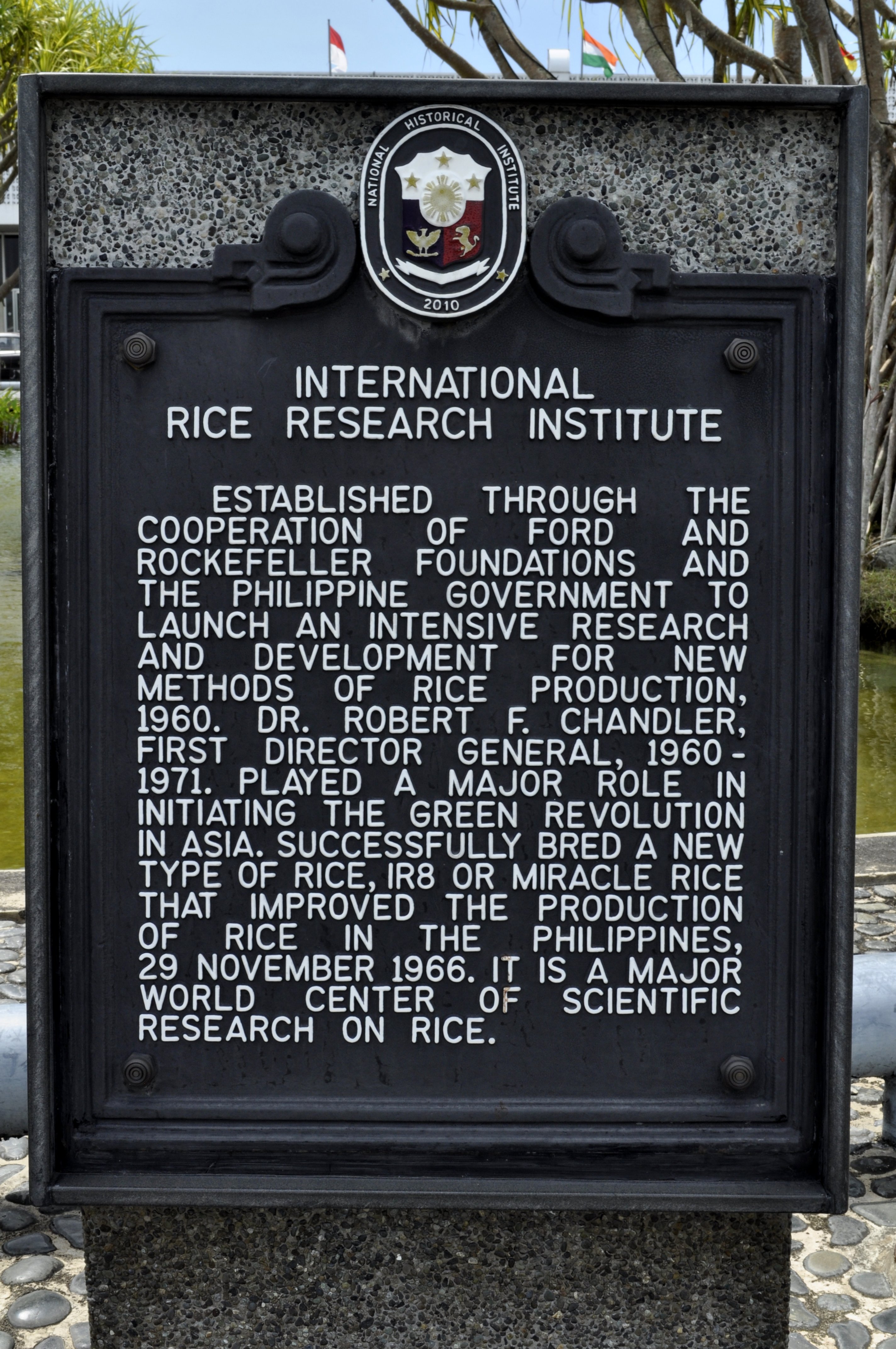
One of the national historical markers dedicated on 14 April 2010, the 50th anniversary of IRRI's founding

One of the national historical markers dedicated on 14 April 2010, the 50th anniversary of IRRI’s founding

IRRI’s reputation has spread far and wide since its foundation in 1960, and IRRI is now one of the world’s premier agricultural research institutes. Its reputation is justified. At the forefront of technologies to grow more rice and more sustainably, IRRI can be credited with saving millions of people around the world from starvation, beginning in the 1960s with the launch of the Green Revolution in Asia (see a related story about Green Revolution pioneer, Norman Borlaug). Now its work touches the lives of half the world’s population who depend on rice every day. No wonder IRRI is such an important place. But over the decades it has had to earn its reputation.

On a recent visit

20130504057 IRRI

The main entrance in front of the admin buildings, between Chandler Hall (on the left) and the FF Hill Building (on the right, where I worked for almost a decade)

Between Chandler Hall and the FF Hill Building, with Mt Makiling in the distance

A view south over the long-term trail plots and others, looking towards Mt Banahaw

A view south over the long-term trial plots, looking towards Mt Banahaw, with the entrance gate to IRRI on the right, and the research labs off to the left

Some of the research labs, with the NC Brady building on the right, home to the International Rice Genebank

Some of the research labs, with the NC Brady building on the right, home to the International Rice Genebank

I was there recently, exactly three years after I had retired. And the place was buzzing, I’m pleased to say. There was such an optimistic outlook from everyone I spoke to. Not that it wasn’t like that before, but over the past decade things have moved along really rather nicely. That’s been due not only to developments in rice research at IRRI and elsewhere, but also because the institute has had the courage to invest in new approaches such as molecular genetics as just one example, and people. That was an aspect that I found particularly gratifying – lots of young scientists beginning their careers at IRRI and knowing that it will be a launching pad to opportunities elsewhere.

I was visiting in connection with the 4th International Rice Congress that will take place in Bangkok, Thailand during the last week of October 2014. I’ve been asked to chair the committee that will develop the scientific conference. We expect to have a program of more than 200 scientific papers covering all aspects of rice science and production, as well as a number of exciting plenary speakers.

IRRI’s strengths
You only have to look at IRRI’s scientific publication record – and where its scientists are publishing – to appreciate the quality of the work carried out in Los Baños and at other sites around the world (primarily but not exclusively in Asia) in collaboration with scientists working in national research programs. IRRI’s soon-to-retire senior editor  Bill Hardy told me during my recent visit that by the beginning of May this year he had already edited more journal manuscripts than he did in the first six months of 2012. And IRRI has a very good strike rate with its journal submissions.

IRRI’s research is highly relevant to the lives of rice farmers and those who depend on this crop, ranging from the most basic molecular biology on the one hand to studies of adoption of technologies conducted by the institute’s social scientists. It’s this rich range of disciplines and multidisciplinary efforts that give IRRI the edge over many research institutes, and keep it in the top league. IRRI scientists can – and do – contemplate undertaking laboratory and field experiments that are just not possible almost anywhere else. And it has the facilities (in which it has invested significantly) to think on the grand scale. For example, it took more than 30,000 crosses with a salt-tolerant wild rice to find just a single fertile progeny. And in research aimed at turbocharging the photosynthesis of rice, a population of 1 million mutant sorghum plants was studied in the field, with only eight plants selected after all that effort. Both of these are discussed in a little more detail below. In 2012, IRRI made its 100,000th cross – rice breeding remains a mainstay of the institute’s work, keeping the pipeline of new varieties primed for farmers.

Take a look at this 11½ minute video in the skies above IRRI’s 252 hectare experimental farm. In the first few minutes, the camera pans eastwards along Pili Drive over the institute’s main administrative buildings, before heading towards the research laboratory and glasshouse complex. In the middle sequence, with the Mt Banahaw volcano in the distance (due south from Los Baños) you can see the extensive experimental rice paddies with rice growing in standing water. In the final segment, the camera sweeps over the ‘upland’ farm, with dormant Mt Makiling in the distance, and showing the multiplication plots from the International Rice genebank, before heading (and closing) over the genebank screen houses where the collection of wild Oryza species is maintained. It’s certainly an impressive sight.


Taking a long-term view

You can’t get much longer-term than conservation of rice genetic resources in the institute’s genebank. This is the world’s largest collection of rice genetic resources, and I was privileged to head the genebank and genetic resources program for a decade from 1991. I’ve written about this in more detail elsewhere in my blog.

Explaining how rice seeds are stored in the International Rice Genebank to Nobel Laureate Norman Borlaug

Explaining how rice seeds are stored in the International Rice Genebank to Nobel Laureate Dr Norman Borlaug

In 1963 (just three years after IRRI was founded) long-term experimental plots were laid out to understand the sustainability of intensive rice cropping. In these next videos soil scientist Dr Roland Buresh explains the rationale behind these experiments. They are the tropical equivalent of the Broadbalk classic experiment (and others) at Rothamsted Experiment Station just north of London in the UK, established in the mid-19th century.

And in this next video you can watch a time-lapse sequence from field preparation to harvest of two crops in the long-term trials.

Making rice climate ready
Three areas of work are closely linked to the problem of climate change, and highlight how IRRI is at the forefront of agricultural research.

Rice varieties with and without the SUB1 gene after a period of inundation

Rice varieties with and without the SUB1 gene after a period of inundation

Scuba rice. Although rice grows in standing water, it will die if inundated for more than a few days. But several years ago, a gene was found in one rice variety that allowed plants to survive about two weeks under water. In a collaborative project with scientists from the University of California, the gene, named SUB1, has been bred into a number of varieties that are grown widely throughout Asia – so-called mega-varieties – and which are already bringing huge benefits to the farmers who have adopted them in India and Bangladesh. In this video, the effect of the SUB1 gene can easily be seen. Much of the work was supported by the Bill & Melinda Gates Foundation, and has (as stated on the Foundation’s web site) ‘exceeded our expectations’.

Careful with the salt. Recently, IRRI announced that breeders had made crosses between a wild species of rice, Oryza coarctata (formerly known as Porteresia coarcata – which already indicates how remote it is from cultivated rice) to transfer salt tolerance into commercial varieties. Building on the wide hybridization work of Dr Darshan Brar (who retired in 2012), Dr KK Jena has achieved the impossible. After thousands of crosses, and culture of embryos on culture medium, he now has a plant that can be used as a ‘bridge species’ to transfer salt tolerance. As IRRI Director General Bob Zeigler explained to me, ‘Now we have fertile crosses with all the wild rices, we can tap into 10 million years of evolution‘. I couldn’t have expressed it better myself!

Boosting output. Lastly, since 2008 IRRI has led the C4 Consortium, a network of scientists around the world who are studying how photosynthesis in rice (which is quite inefficient in an environment where temperature and CO2 levels are increasing) could be modified to make it as efficient as maize or sorghum that already have a different process, known as C4 photosyntheis (just click on the image below for a full explanation). This work is also funded by the Bill & Melinda Gates Foundation and the UK government.

There are so many examples I could describe that show the importance and relevance of IRRI’s research for development. I think it’s the breadth of approaches – from molecule to farmer’s field (it’s even working with farmers to develop smartphone apps to help with fertilizer management) – and the incredible dedication of all the people that work there that makes IRRI such a special place. Now part of the Global Rice Science Program (GRiSP) funded through the CGIAR Consortium, IRRI’s work with a wide range of partners goes from strength to strength.

There’s no doubt about it. Joining IRRI in 1991 was the second best career decision I ever made. The best career move was to get into international agricultural research in the first place, way back in 1971. What a time I had!

Plant Genetic Resources and Climate Change – in the production phase at last

At the end of March I submitted to CABI all 16 manuscripts and associated figures for our book on Plant Genetic Resources and Climate Change.

These are now being checked and moving through the various production phases. We hope that the book will be published in the last quarter of 2013. I gather that the target price will be around £85 – but that has yet to be confirmed. The book will be around 300+ pages.

Plant Genetic Resources - cover design

Rationale and audience:
The collection and conservation of plant genetic resources have made significant progress over the past half century, and many large and important collections of crop germplasm have been established in many countries. A major threat to continuing crop productivity is climate change, which is expected to bring about disruptions to patterns of agriculture, to the crops and varieties that can be grown, and some of the constraints to productivity – such as diseases and pests, and some abiotic stresses – will be exacerbated. This book will address the current state of climate change predictions and its consequences, how climate change will affect conservation and use of crop germplasm, both ex situ and in situ, as well as highlighting specific examples of germplasm research related to ‘climate change threats’. All of this needs to take place under a regime of access to and use of germplasm through international legal instruments such as the Convention on Biological Diversity and the International Treaty on Plant Genetic Resources for Food and Agriculture. This book will be essential reading for plant breeders and physiologists, as well as those involved with germplasm conservation per se. In particular it will be a companion volume to the recently published CABI volume Climate Change and Crop Production (2010) by MP Reynolds (ed.), but of interest to the same readership as Crop Stress Management and Global Climate Change (2011) by JL Araus and GA Slafer (eds.) and Climate Change Biology (2011) by JA Newman et al.

Chapters, authors and their affiliations:

Preface
Michael Jackson, Brian Ford-Lloyd and Martin Parry
The Editors

1. Food security, climate change and genetic resources
Robert S. Zeigler
IRRI

2. Genetic resources and conservation challenges under the threat of climate change
Brian Ford-Lloyd, Johannes M.M. Engels and Michael Jackson
University of Birmingham, Bioversity International, and formerly IRRI (now retired)

3. Climate projections
Richard A. Betts and Ed Hawkins
UK MetOffice and University of Reading

4. Effects of climate change on potential food production and risk of hunger
Martin Parry
Imperial College

5. Regional impacts of climate change on agriculture and the role of adaptation
Pam Berry, Julian Ramirez-Villegas, Helen Bramley, Samarandu Mohanty and Mary A. Mgonja
University of Oxford, University of Leeds and CIAT, University of Western Australia, IRRI, and ICRISAT

6. International mechanisms for conservation and use of genetic resources
Gerald Moore and Geoffrey Hawtin
Formerly FAO and formerly IPGRI (now retired)

7. Crop wild relatives and climate change
Nigel Maxted, Shelagh Kell and Joana Magos Brehm
University of Birmingham

8. Climate change and on-farm conservation of crop landraces in centres of diversity
Mauricio R. Bellon and Jacob van Etten
Bioversity International

9. Germplasm databases and informatics
Helen Ougham and Ian D. Thomas
University of Aberystwyth

10. Exploring ‘omics’ of genetic resources to mitigate the effects of climate change
Kenneth L. McNally
IRRI

11. Harnessing meiotic recombination for improved crop varieties
Susan J. Armstrong
University of Birmingham

12. High temperature stress
Maduraimuthu Djanaguiraman and P.V. Vara Prasad
Kansas State University

13. Drought
Salvatore Ceccarelli
Formerly ICARDA (now retired)

14. Salinity
William Erskine, Hari D. Upadhyaya and Al Imran Malik
University of Western Australia, ICRISAT, and UWA

15. Response to flooding: submergence tolerance in rice
Abdelbagi M. Ismail and David J. Mackill
IRRI and University of California – Davis

16. Effects of climate change on plant-insect interactions and prospects for resistance breeding using genetic resources
Jeremy Pritchard, Colette Broekgaarden and Ben Vosman
University of Birmingham and Wageningen UR Plant Breeding

The editors:
Michael Jackson retired from the International Rice Research Institute (IRRI) in 2010. For 10 years he was Head of the Genetic Resources Center, managing the International Rice Genebank, one of the world’s largest and most important genebanks. For nine years he was Director for Program Planning and Communications. He was Adjunct Professor of Agronomy at the University of the Philippines-Los Baños. During the 1980s he was Lecturer in the School of Biological Sciences at the University of Birmingham, focusing on the conservation and use of plant genetic resources. From 1973-81 he worked at the International Potato Center, in Lima, Perú and in Costa Rica. He now works part-time as an independent agricultural research and planning consultant. He was appointed OBE in The Queen’s New Year’s Honours 2012, for services to international food science.

Brian Ford-Lloyd is Emeritus Professor of Conservation Genetics at the University of Birmingham, former Director of the University Graduate School, and former Deputy Head of the School of Biosciences. As Director of the University Graduate School he aimed to ensure that doctoral researchers throughout the University were provided with the opportunity, training and facilities to undertake internationally valued research that would lead into excellent careers in the UK and overseas. He drew from his experience of having successfully supervised over 40 doctoral researchers from the UK and many other parts of the world in his chosen research area which included the study of the natural genetic variation in plant populations, and agricultural plant genetic resources and their conservation.

Martin Parry is Visiting Professor at The Centre for Environmental Policy, Imperial College London, and also Visiting Research Fellow at The Grantham Institute at the same university. Until September 2008 he was Co-Chair of Working Group II (Impacts, Adaptation and Vulnerability), of the Intergovernmental Panel on Climate Change (IPCC) based at the Hadley Centre for Climate Prediction and Research, UK Meteorological Office. Previously he was Director of the Jackson Environment Institute (JEI), and Professor of Environmental Science at the University of East Anglia (1999-2002); Director of the JEI and Professor of Environmental Management at University College London (1994-99), foundation Director of the Environmental Change Institute and Professor of Geography at the University of Oxford (1991-94), and Professor of Geography at the University of Birmingham (1989-91). He was appointed OBE in The Queen’s New Year’s Honours 1998, for services to the environment and climate change.

Rice for the world . . .

Conferences are an important part of any scientist’s annual plans. You could attend a conference almost on any subject, and held in almost any part of the world. Many scientific societies hold annual meetings, and sometimes specialist meetings in between. When I was an active potato scientist in the 1970s I did manage to attend at least one Annual Meeting of the Potato Association of America. The 63rd Annual Conference was held in Vancouver, Canada on the campus of the University of British Columbia, 22-27 July 1979, and I was working for the International Potato Center in Central America at the time. I was able to combine this work trip with some vacation, and my wife Steph and 15 month old daughter Hannah came along. We had two or three days in San Francisco on the way north (my only visit to that wonderful city, apart from an overnight airport stop), several days in Vancouver (where the sun shone brightly all the time we were there), followed by a road trip through the Canadian Rockies to Edmonton, Alberta to spend a few days with my elder brother Ed and his wife Linda. From there we went on to Madison, Wisconsin to visit with Profs. Luis Sequeira and Arthur Kelman at the university, to discuss my work on bacterial wilt of potatoes. And then we flew home to Costa Rica via Chicago and Miami.

When I was with IRRI I managed to attend four or five annual meetings of the Tri-Societies (ASA-CSSA-SSSA): the Agronomy Society of America, the Crop Science Society of America, and the Soil Science Society of America, a huge shindig of several thousand attendees. I was a member of Division C-8 of the CSSA on genetic resources and was invited a few times to present my rice research.

IRC 2014 logo finalFor rice, however, there is only one meeting of significance, and that’s the International Rice Congress, with the 4th Congress (IRC2014) scheduled to take place in Bangkok, Thailand from 27-31 October 2014. And I have been taken on as a consultant by the International Rice Research Institute (IRRI) to lead the development of the congress science program. Before I retired from IRRI in 2010 I had a similar role for the 3rd Congress (IRC2010) that was held in Hanoi, Vietnam in early November 2010. Planning had begun in early 2009, and after retiring I completed my role from my home in the UK.
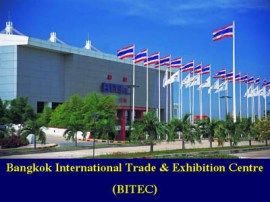
I’m excited to be involved in IRC2014, not only because the congress is a prestigious meeting for rice science, bringing together rice scientists from all over the world (there were more than 2000 attendees in 2010), but it will help keep me up to date with latest advances in the rice world.

Planning is at an early stage, and a possible theme will be Rice for the World . . . watch this space; I’ll link to the official congress website when it’s up. I’ll be going out to Thailand at the end of April for a few days to meet with colleagues at Kenes Asia, the company that will handle all the logistics for IRC2014. Then it’s on to IRRI in Los Baños in the Philippines for about 10 days. Hopefully at the end of that trip we’ll have a science support committee in place, ad the broad structure of the science sessions mapped out. Of course there’s an enormous amount of work to arrive at a final scientific program, not least determining the detailed structure of the program – along scientific themes or disciplines, geographical regions, or even rice ecosystems. Lots of points to discuss and decisions to make.

bitecThe congress will be held at BITEC – the Bangkok International Trade & Exhibition Centre. Hopefully I’ll have chance to visit the venue during my two days in Bangkok. That’s very important to get a much better idea of just what is possible in terms of parallel sessions, space for poster sessions, and the all important plenary or plenaries. I haven’t been to Bangkok for many years and although traffic congestion is still bad, getting around has improved considerably, I’m led to believe, following the opening of the Skytrain.

Once the congress website is up and running, and there’s more to report about the science program at IRC2014, I’ll be making regular updates. Do come back.

From car park to cathedral . . . missing no longer!

King Richard III

King Richard III

It’s been a remarkable six month or so journey. Who would have believed that when archaeologists from the University of Leicester began digging up a municipal car park in the the city in August 2012 – on the supposedly wild goose chase to find the remains of the last Plantagenet king, Richard III – that they would have been so incredibly successful. And in such a short time.

I’ve been fascinated by the unfolding story of the dig, and the extraordinary ‘appliance of science’ to arrive at irrefutable conclusions. From all appearances, the project has demonstrated remarkable teamwork among staff at the university (primarily the Departments of Archaeology & Ancient History and Genetics) and the King Richard III Society. And the team reached out to other experts to fill in the gaps, so to speak.

Last week there was a fascinating TV program that filled in some of the details about how the discovery of the skeleton came about, and how the people involved went about to confirm its identity.

Of course, one has to pay credit to Philippa Langley of the King Richard III Society who seems to have been the driving force behind the whole project – and believed! But the project also seems to be a good example of ‘the perfect storm’ – so many things came together at the same time.

It was long believed that King Richard had been buried in Leicester, probably at the Greyfriars Friary that disappeared after the Reformation in the sixteenth century. But where to begin to look in a city that had been paved over for centuries.

Piece of luck, number 1. It seems there is still a good coincidence between today’s streets and those of medieval times. Overlaying maps, the team was able to focus in on a part of the city that is still known as Greyfriars, in fact to a municipal car park. And the archaeology team opened three trenches. Almost immediately they uncovered human remains. But were they the remains of King Richard III? That’s where the appliance of science came to the fore. However, as one of the archaeology team pointed out, opening a trench just 50 cm to one side or the other and they would have missed the skeleton altogether.

So what was the evidence that this really was King Richard III?

  • The skeleton appeared to have been buried in haste, possibly with wrists bound together, and showing considerable trauma such as fatal blows to the skull.
  • The spine showed severe twisting or scoliosis which Richard was known to suffer from, although there was no evidence of a withered left arm (another piece of Tudor propaganda?).
  • On closer analysis, however, there were features of the skeleton which suggested that it might be female (subsequently disproved), such as shape of the pelvis and slender forearms. Apparently Richard was reported, even in his own lifetime, to be somewhat ‘slender’.
  • Careful CT scans were made of the skeleton before cleaning, and 3D images of the skull were used by Professor Caroline Wilkinson, Professor of Craniofacial Identification at the University of Dundee to attempt a facial reconstruction (that was revealed after the skeleton’s identity was confirmed as that of Richard III).
  • Carbon dating evidence was rather interesting. From unadjusted data it appeared that the person had died some decades before Richard did at the Battle of Bosworth in August 1485. However, it seems that this person had a diet rich in fish and seafood (a sign of affluence) and this made the skeleton appear older than it was. An adjusted date covered the 1485 period.
  • Then there’s the genealogical data. Some years earlier, direct descendants of Richard III’s elder sister, Anne of York, had been traced (over 18 generations). In fact several descendants have been traced, but some wish to remain anonymous. One was a Canadian cabinet maker living in London, who is the great, great, great . . . nephew of Richard III. And this leads on to the most exciting aspect – the DNA analysis.

  • Genetic fingerprinting was ‘invented’ at the University of Leicester by Professor Sir Alec Jeffreys FRS in the 1980s. And it turns out that there are several lines of research in the Department of Genetics at Leicester studying lines of descent and their correlation with surnames. Using mitochondrial DNA (mtDNA), which is inherited only through the female side, geneticist Dr Turi King was able to show unequivocally that there was a perfect match between the mtDNA of the skeleton and our Canadian cabinet maker, thus proving that the skeleton was indeed that of King Richard III. Perfect matches were also made with another descendant of Anne of York, and the skeleton was confirmed as ‘male’ through analysis of Y chromosome DNA.

So many different strands of interest and expertise came together in this exciting project, and all at the right time. The team has to be congratulated for all their efforts – it really has been a most exciting story to follow. Now let’s see where they do finally decide to re-bury the king: Leicester or York (which is lobbying hard). I think Leicester will win out.

Update (18 March 2015)
Well, Leicester has ‘won’ if that’s the correct description, and the remains of Richard III will be interred next week – with all appropriate honour – in Leicester Cathedral. And rightly so. The hoo-ha of where he should be buried has certainly demeaned this incredible project.

Anyway, to cut a long story short, as I was surfing through the web pages of The Guardian earlier this morning, I came across a link where you can find much more information about the whole Richard III project since I first wrote this particular blog post just two years ago.


The missing monarchs . . .

Although I studied botany and geography as an undergraduate, and then went on to complete graduate degrees in botany, I have often hankered to become an historian. For the past decade much of my reading material has been history – I devour almost anything that looks interesting, and I actively seek out books by authors who I have already enjoyed. And when I retired I did consider taking another undergraduate degree in history.

I find the 18th century a particularly interesting one, because of the significant social changes and transition from an rural-agricultural society to an urban-industrial one. But I don’t focus on that century exclusively.

I have begun to find medieval history rather fascinating, and it comes to mind that the 15th century must be the most violent perhaps in our history. The century began with the usurpation of Richard II’s throne by Henry IV, there was a continuation of the wars with the French, with remarkable success under Henry V (despite the success at Agincourt in 1415, all was lost less than a generation later under the more pacific Henry VI), and of course the Wars of the Roses between the Yorkists and the Lancastrians.

The most brutal and bloody battle of those wars was the Battle of Towton in March 1461, when Yorkist Edward IV defeated the troops of Henry VI. It’s said that more than 28,000 soldiers lost their lives. But despite its tragic cost, I read somewhere that there was proportionately greater loss of life during the English Civil Wars from 1642-1651 than in any other conflict in these islands. No doubt the Black Death of the late 14th century must also have been a serious genetic bottleneck for the population at large to survive.

But I digress. We know the burial sites for all English monarchs from William the Conqueror until the accession of James VI and I in 1603, for the Stuart kings and queens of both England and Scotland, and monarchs of the United Kingdom from 1714 onwards when George I (great grandson of James VI and I through his eldest daughter Elizabeth of Bohemia, the so-called Winter Queen) came to the throne.

With the exception of two – but that may be about to change.*

Richard_III_earliest_surviving_portraitI refer of course to Edward V (never-crowned elder son of Edward IV, and one of the Princes in the Tower) and Richard III.
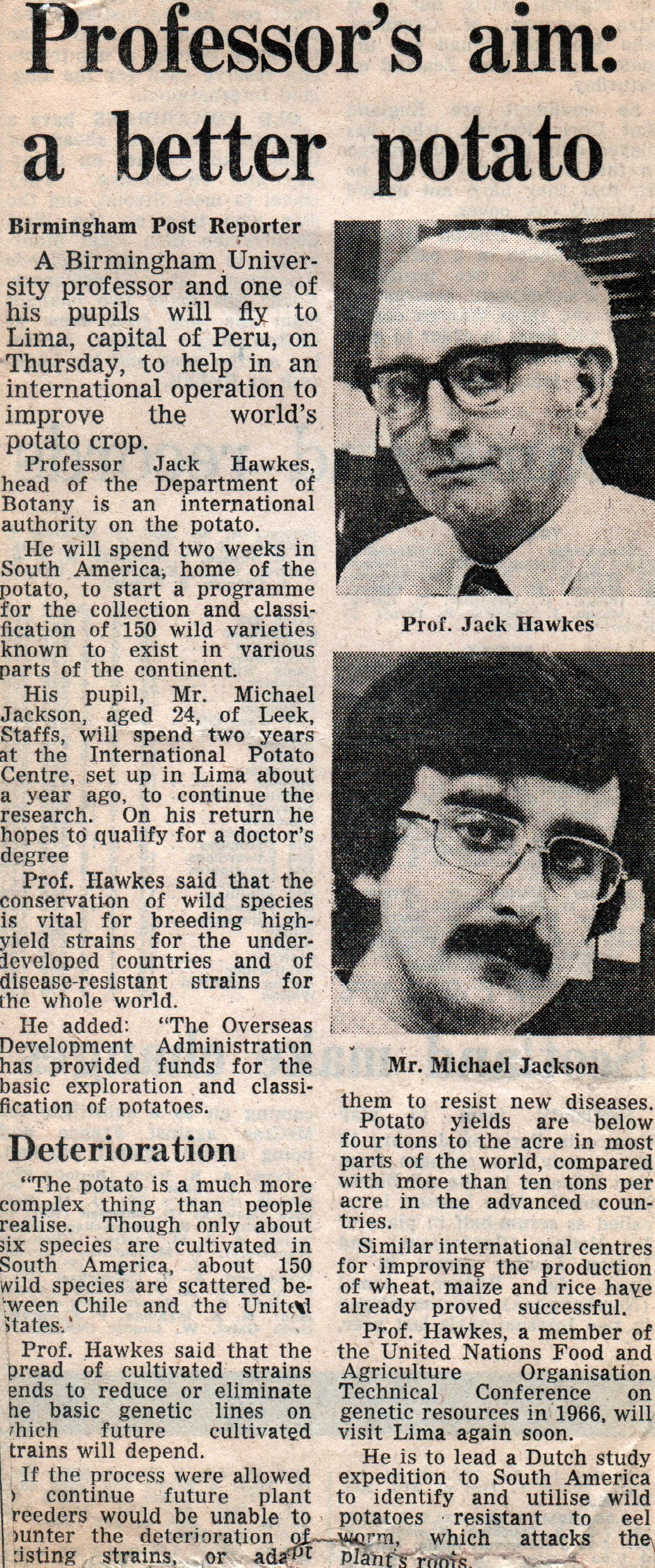
It’s always thought that the princes, Edward and his brother Richard, were murdered on the orders of Richard III when he, shall we say, extended his powers as Lord Protector, and had himself crowned king in 1483. Although skeletons thought to be those of the princes were found in the Tower in 1674 and later re-interred in Westminster Abbey on the orders of Charles II, we cannot be sure that these remains are theirs.

Our image of Richard III – who was widely admired, and loved even, in his northern lands during his lifetime – comes down to us from Shakespeare and Tudor propaganda. After the Battle of Bosworth Field in 1485, when Richard III was killed, Henry Tudor (who became Henry VII) established the Tudor dynasty on the flimsiest of claims, and he and his son, Henry VIII, did their best to eliminate any possible Yorkist rivals (and any others who might have a better claim to the throne than themselves). Best not to think of Laurence Olivier’s cinema portrayal of Shakespeare’s Richard III, although I fear that’s the wicked image many of us continue to carry in our minds.  Of course there are those who have always felt that Richard III was maligned.

http://youtu.be/px5hvNWoVLE

Now although there’s a tomb for Richard III in Leicester Cathedral, there’s no body – it was lost after Bosworth, but reportedly buried in Greyfriars priory in Leicester that was subsequently destroyed, and now the site of a car park.

And that’s what we hope to find out very soon. Bringing together the best of modern science: GIS, geophys (as Time Team‘s Tony Robinson would say) to explore underground structures, carbon dating, and DNA analysis (presumably of mitochondrial DNA), a team of archaeologists from the University of Leicester descended some months ago on Greyfriars car park in the city. Very soon they discovered a skeleton that had obviously undergone some trauma, as well as showing a deformation of the spine, or scoliosis, that Richard was reported to suffer from.

Could these be the remains of Richard III, and if so, where should he be reburied? Soon we will find out, once the carbon dating and DNA analysis are completed by the beginning of February. How exciting! Reports leaking to the media are definitely supporting the Richard III identity. Here’s a link to a recent interview given by the project team.

If we have found our last remaining monarch, where should he be buried? The Ministry of Justice will make a decision, it’s said, next week. In any case, one of the conditions of the excavation and exhumation of the skeleton was that any remains would be re-interred in Leicester. And as I mentioned earlier, he already has a tomb in the cathedral, albeit empty. The residents of York would like him buried in York Minster, and there are those who argue he should be buried alongside other monarchs in Westminster Abbey in London. After all, that’s where Richard’s queen, Anne, is buried.

So, fingers crossed, we’ll soon have an answer to a long-standing mystery, and one that modern science is helping to solve.

* Today (4 February 2013) the archaeologists at the University of Leicester have announced that the skeleton unearthed in the Greyfriars carpark in Leicester is indeed that of King Richard III.

It was 40 years ago today . . .

News item in The Birmingham Post, 2 January 1973

News item in The Birmingham Post, 2 January 1973

One evening in February 1971 I received a phone call from Professor Jack Hawkes who was head of the Department of Botany at the University of Birmingham, and Course Director for the MSc on Conservation and Utilization of Plant Genetic Resources. I’d begun my studies at Birmingham in September 1970 after graduating some months earlier from the University of Southampton with a BSc in environmental botany and geography. He asked me if I was interested in working in Peru for a year. Well, it had been my ambition for many years to visit Peru, and here was my chance.

Jack was a world-renowned authority on the potato, its taxonomy and origins in the Andes of South America. And on the day that he phoned me, he had just returned from a two month expedition to Bolivia to collect samples of wild potato species. He had been joined on that expedition by his close collaborator from Denmark, Dr Peter Hjerting, and one of his PhD students, Phillip Cribb (who went on to become an orchid expert at the Royal Botanic Gardens – Kew).

Dr Richard L Sawyer, Director General of CIP, 1971-1991

Dr Richard L Sawyer, Director General of CIP, 1971-1991

The expedition also received logistical support from the North Carolina State University-Peru USAID project, led at that time by Dr Richard Sawyer who would go on to found and become the first Director General of the International Potato Center (CIP) in October 1971.

Peruvian potato expert, Dr Zosimo Huaman

While in Lima at the start and end of the expedition, Jack has stayed with Richard and his wife Norma. Richard talked of his vision to found CIP, and that he wanted to send a young Peruvian to study on the MSc course at Birmingham. That was Zosimo Huaman, who would go on to complete his PhD with Jack, and stay with CIP for the next 20 or more years. Zosimo was helping to manage a collection of native varieties of potato from Peru that the USAID project had taken over, and which would pass to CIP once that institute was open for business.

But if Zosimo went off to the UK, who would look after the potato collection? Richard asked Jack if he knew of anyone from Birmingham who might be interested in going out to Peru, just for a year, while Zosimo was completing his master’s studies. ‘I think I know just the person’, was Jack’s reply. And that’s how Jack came to phone me that February evening over 40 years ago.

But it wasn’t quite that simple.

There was the question of funding to support my year-long appointment, and Richard Sawyer was hoping that the British government, through the then Overseas Development Administration (now the Department for International Development – DfID) might cough up the support. The intention was for me to complete my MSc and fly out to Peru in September 1971. In the event, however, my departure was delayed until January 1973.

By February 1971, an initiative was already under way that would lead to the formation of the Consultative Group on International Agricultural Research (CGIAR) later that same year, and the ODA was contemplating two issues: whether to join the CGIAR, and whether to fund a position at CIP on a bilateral basis, or on a multilateral basis if it became a member of the CGIAR. But that decision would not be made before my expected move to Peru in September.

At what became a pivotal meeting in London in mid-1971, Jack argued – convincingly as it turned out – that he’d identified a suitable candidate, me, to join CIP’s genetic resources program, and that if some funding support was not found quickly, I’d likely find a job elsewhere. And so ODA agreed to support me at Birmingham on a Junior Research Fellowship for 15 months until December 1972, and that if negotiations to join the CGIAR went smoothly, I could expect to join CIP in January 1973. In the interim, Richard Sawyer did come through Birmingham and I had the chance to meet him, and for him to give me the once over. All seemed set for a January 1973 move to Peru, and I settled down to begin a PhD study under Jack’s supervision, working on the group of triploid potatoes known as Solanum x chaucha.

Mike discussing potato taxonomy with renowned Peruvian potato expert, Prof. Carlos Ochoa

Steph checking potatoes in the CIP germplasm collection in one of the screenhouses at La Molina

Although I went on to the CIP payroll on 1 January 1973, I didn’t fly out to Peru until the 4th (a Thursday). After spending Christmas with my parents in Leek, then a couple of days in London with my girlfriend Stephanie (who joined me in Peru in July 1973, where we were married in October, and she joined CIP’s staff as well) I spent a couple of nights in Birmingham with Jack and his wife Barbara before we set out on the long journey to Lima.

In those days, the ‘direct’ route to Peru from the UK was with BOAC from London-Heathrow, with three intermediate stops: in St John’s, Antigua in the Caribbean; in Caracas, Venezuela; and finally in Bogotá, Colombia. We finally arrived in Lima late at night, were met at Jorge Chavez airport by plant pathologist Ed French, and whisked off to our respective lodgings: me to the Pension Beech on Los Libertadores in the San Isidro district of Lima, and Jack to stay with the Sawyers. Thus began my association with CIP – for the next eight and a half years (I moved to Costa Rica in April 1976), and with the CGIAR until my retirement in 2010.

Celebrating the 20th anniversary of the Birmingham genetic resources MSc course in 1989. R to L: Trevor Williams, Jim Callow (Mason Professor of Botany), Jack Hawkes, Brian Ford-Lloyd, Mike Jackson, not sure

After CIP I returned to the UK to teach at the University of Birmingham. By then, many of the overseas MSc students were being supported by another of the CGIAR institutes, the International Board for Plant Genetic Resources, IBPGR (later to become the International Plant Genetic Resources Institute, IPGRI, then Bioversity International) based in Rome. A former Birmingham faculty member, Dr Trevor Williams (who had supervised my master’s thesis) was the first Director General of IBPGR. I maintained my links with CIP, and for a number of years had a joint research project with it and the Plant Breeding Institute in Cambridge on true potato seed. I also took part in a very detailed project review for CIP in about 1988.

In 1991 I joined the International Rice Research Institute (IRRI) in the Philippines, which was founded in 1960, and is the oldest of the 15 centers that are part of the CGIAR Consortium. I was head of IRRI’s Genetic Resources Center for 10 years, followed by almost nine as Director for Program Planning and Communications.

The CGIAR gave me a great career. I was able to work for excellent scientific research organizations that had noble goals to reduce rural poverty, increase food security, ensure better nutrition and health, and manage resources sustainably. As a small cog in a big wheel it’s hard to fathom what contribution you might be making. But I often thought that if people were going to bed less hungry each night, then we were making a difference. This does not diminish the scale of the continuing problems of poverty and food security problems in the developing world, which are all-too-often exacerbated by civil strife and conflict in some of the most vulnerable societies. Nevertheless, I feel privileged to have played my part, however small. It was my work with the CGIAR that led to my appointment as an OBE by HM The Queen in 2012, for services to international food science.